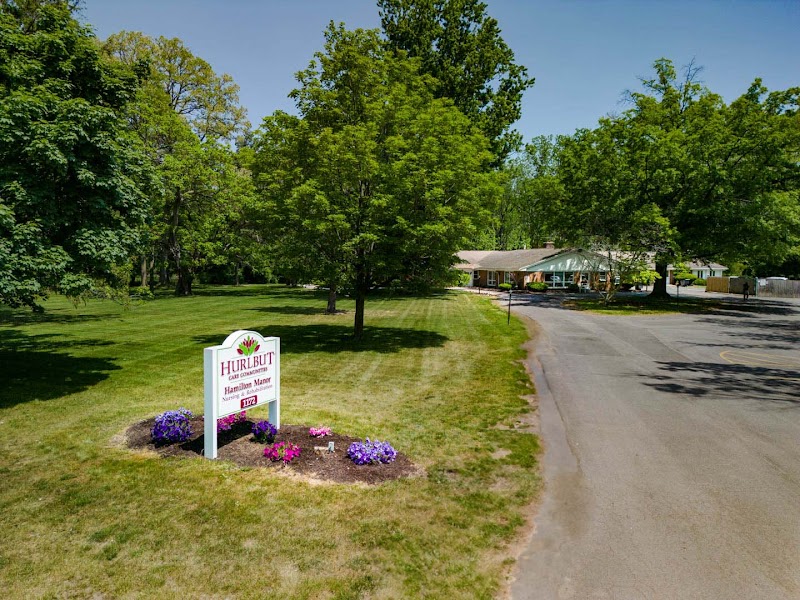
Hamilton Manor Nursing Home
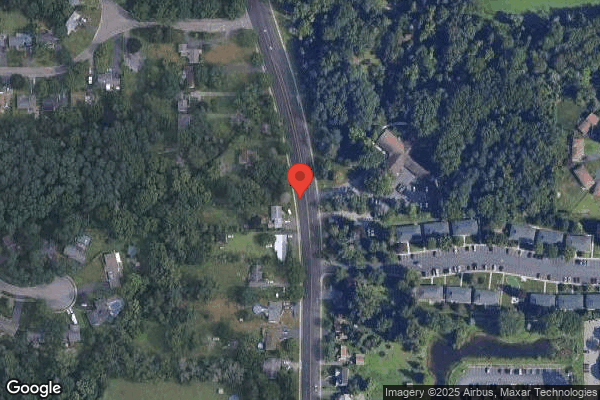
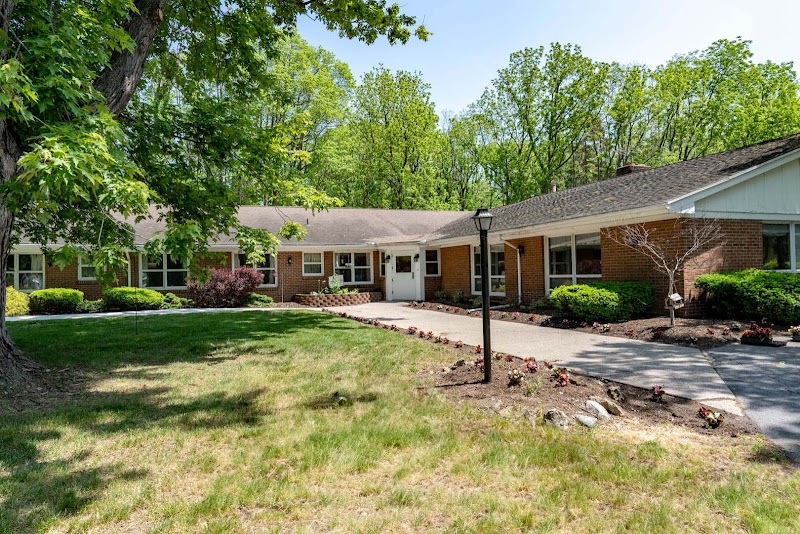
1172 Long Pond Road, Rochester, NY 14626 (585) 225-0450
For profit - Corporation 40 Beds HURLBUT CARE Data: November 2025
Trust Grade
80/100
#185 of 594 in NY
Last Inspection: June 2025

Inspected within the last 6 months. Data reflects current conditions.

Overview

Hamilton Manor Nursing Home in Rochester, New York, has a Trust Grade of B+, meaning it is recommended and above average compared to other facilities. It ranks #185 out of 594 in the state, placing it in the top half of New York facilities, and #13 out of 31 in Monroe County, indicating a competitive local standing. However, the facility's performance is worsening, with issues increasing from 2 in 2024 to 3 in 2025. Staffing is a concern, with a 51% turnover rate, which is higher than the state average, and the RN coverage is lower than 75% of New York facilities, potentially impacting the quality of care. There have been specific incidents, such as inadequate housekeeping leading to a dirty utility room, failure to create timely care plans for newly admitted residents, and a lack of appropriate care plans for a resident with dementia, which raises concerns about the overall environment and care provided. While there are no fines on record, which is a positive aspect, families should weigh these strengths and weaknesses carefully when considering this nursing home.
Trust Score
B+
80/100
In New York
#185/594
Top 31%
Safety Record
Low Risk
No red flags
Inspections
Getting Worse
2 → 3 violations
Staff Stability
⚠ Watch
51% turnover. Above average. Higher turnover means staff may not know residents' routines.
Penalties
✓ Good
No fines on record. Clean compliance history, better than most New York facilities.
Skilled Nurses
⚠ Watch
Each resident gets only 26 minutes of Registered Nurse (RN) attention daily — below average for New York. Fewer RN minutes means fewer trained eyes watching for problems.
Violations
○ Average
8 deficiencies on record. Average for a facility this size. Mostly minor or procedural issues.
★★★★☆
4.0
Overall Rating
★★★☆☆
3.0
Staff Levels
★★★☆☆
3.0
Care Quality
★★★★☆
4.0
Inspection Score
Stable
2024: 2 issues
2025: 3 issues

The Good

  • Full Sprinkler Coverage · Fire safety systems throughout facility
  • No fines on record

Facility shows strength in fire safety.

The Bad

Staff Turnover: 51%

Near New York avg (46%)

Higher turnover may affect care consistency

Chain: HURLBUT CARE

Part of a multi-facility chain

Ask about local staffing decisions and management

The Ugly 8 deficiencies on record

Jun 2025 2 deficiencies
CONCERN (D)

Potential for Harm - no one hurt, but risky conditions existed

Deficiency F0744 (Tag F0744)

Could have caused harm · This affected 1 resident

Based on observations, interviews, and record review conducted during the Recertification Survey from 06/12/2025 to 06/18/2025, the facility did not ensure a resident who displayed or was diagnosed wi...

Read full inspector narrative →
Based on observations, interviews, and record review conducted during the Recertification Survey from 06/12/2025 to 06/18/2025, the facility did not ensure a resident who displayed or was diagnosed with dementia received appropriate treatment and services to maintain their highest practicable physical, mental, and psychosocial well-being for one (1) (Resident #22) of one (1) resident reviewed for dementia care. Specifically, the facility did not ensure the development and implementation of a person-centered care plan that included interventions specific to Resident #22's dementia, did not address the resident's behaviors, goals, or interventions required and did not address the use antipsychotic medication or the monitoring of. The finding is: The facility policy Care Plans, Comprehensive Person-Centered, revised March 2022, included a comprehensive, person-centered care plan that includes measurable objectives and timetables to meet the resident's physical, psychosocial and functional needs is developed and implemented for each resident. Resident #22 had diagnoses that included dementia (without behavioral disturbance, psychotic disturbance, mood disturbance, and anxiety), hypothyroid (low levels of thyroid hormone in the blood), and hypertension. The Minimum Data Set (a resident assessment), dated 04/09/2025, documented the resident had severe cognitive impairment and received several medications including but not limited to psychotropic medications (medication used to treat mental illness that require close monitoring due to possible severe side effects) and exhibited wandering behaviors. Additionally, the assessment documented a gradual dose reduction had not been attempted nor had the physician documented a gradual dose reduction was clinically contraindicated. Review of Resident #22's Comprehensive Care Plan did not include any mention of the resident's behaviors with goals or interventions for staff to utilize and did not include use of multiple psychotropic medications and monitoring for side effects, goals or attempting a gradual dose reduction if indicated for the care of a resident with dementia. During multiple observations 06/13/2025 through 06/17/2025 morning and afternoon, Resident #22 was ambulating in the hallway (using a walker at times and other times not) or sitting in the main entryway. During an interview on 06/17/2025 at 11:48 AM Certified Nurse Aide #1 stated Resident #22 is easily agitated and staff need to use a calm approach. Additionally, Resident #22 required frequent reminders to use their walker. During an interview on 06/17/2025 at 11:51 AM Licensed Practical Nurse #1 stated Resident #22 exhibits behaviors such as swatting at staff, frightens easily, wanders, and becomes agitated at times. During an interview on 06/17/2025 at 12:10 PM the Social Worker stated the facility had not developed a person-centered plan of care to include psychotropic medication use and non-pharmacological interventions. During an interview on 06/17/2025 at 12:36 PM, the Director of Nursing stated they and the Social Worker are responsible to develop resident care plans. The Director of Nursing said the facility had not developed a person-centered plan of care to include psychotropic medication use, goals, and interventions to include monitoring of medications, behaviors, and nonpharmacological interventions. 10 NYCRR 415.12
CONCERN (D)

Potential for Harm - no one hurt, but risky conditions existed

Drug Regimen Review (Tag F0756)

Could have caused harm · This affected 1 resident

**NOTE- TERMS IN BRACKETS HAVE BEEN EDITED TO PROTECT CONFIDENTIALITY** Based on interviews and record review conducted during a Recertification Survey from 06/12/2025 to 06/18/2025, the facility did ...

Read full inspector narrative →
**NOTE- TERMS IN BRACKETS HAVE BEEN EDITED TO PROTECT CONFIDENTIALITY** Based on interviews and record review conducted during a Recertification Survey from 06/12/2025 to 06/18/2025, the facility did not ensure the Medication Review Regimen policy to address the pharmacist reported irregularities was implemented within the required times frame for two (2) (Residents #22, #23 and #28) of five (5) residents reviewed for drug regimen reviews. Specifically, the consultant pharmacist's reported irregularities were not acted upon by facility's Medical Director, attending physician or designee in a timely manner. The findings include but are not limited to: 1. Resident #23 had diagnoses that included dementia with behavioral disturbance, diabetes (a group of diseases that affects how the body uses blood sugar), and hypertensive heart disease with heart failure (condition resulting from chronic high blood pressure causing heart complications). The Minimum Data Set (a resident assessment tool), dated 04/15/2025, documented the resident had severe cognitive impairment and received several medications including an antipsychotic (medication to treat mental illnesses), an anticoagulant (a blood thinner to prevent blood clots), and a diuretic (medication that increases urine production and helps lower blood pressure and fluid retention). In a medical progress note dated 01/22/2025, the Medical Director documented that a failed gradual dose reduction of Zyprexa (antipsychotic medication) due to an increase of accusatory behaviors. The resident was restarted on Zyprexa 2.5 milligrams daily. Recommend against future gradual dose reduction due to risk of recurrence and patient being on comfort measures. The Consultant Pharmacist Medication Regimen Review note, dated 02/15/2025, included See Report. Review of Resident #23's electronic medical record did not include the Pharmacist report and the facility was unable to provide the report. The Pharmacist's Note to Attending Physician/Prescriber, dated 03/16/2025, documented a recommendation for a gradual dose reduction of Zyprexa to 2.5 mg every other day. The recommendation was not signed and dated as reviewed by the medical provider until 05/14/2025 in which the medical provider agreed with the recommendation. The Pharmacist's Note to Attending Medication Regimen Review note, dated 04/24/2025, included See Report. Review of Resident #23's electronic medical record did not include the Pharmacist's report, and the facility was unable to provide the report. 2. Resident #22 had diagnoses that included dementia, hypothyroid (low thyroid hormone), and hypertension. The Minimum Data Set, dated [DATE], documented the resident had severe cognitive impairment and received several medications including an antipsychotic, an anticoagulant, a diuretic, and an antidepressant (medication to treat depression). The Consultant Pharmacist Medication Regimen Review notes, dated 04/15/2025 and 05/22/2025, included See Report. Review of Resident #22's electronic medical record did not include either of the Pharmacist's reports and the facility was unable to provide the reports. During an interview on 06/17/2025, the Director of Nursing stated they were responsible to ensure the Pharmacist's recommendations were addressed and they were unaware there was an issue with recommendations not being addressed. The Director of Nursing stated the facility needed to improve their medication regimen review process as the process fell apart with staff changes. During a telephone interview on 06/17/2025 at 1:28 PM, the Physician Assistant stated they were responsible to review the Pharmacist's recommendations monthly, but that they were just informed of this by a colleague within the past month. They stated they have not been receiving the recommendations monthly. During a telephone interview on 06/17/2025 at 1:38 PM, the Pharmacist stated there has been a delay in getting responses from the facility providers on recommendations identified during the monthly medication regimen reviews. During an interview on 06/18/2025, the Administrator stated they were unaware the Pharmacist recommendations were not being addressed. 10 NYCRR 415.18(c)(2)
Jan 2025 1 deficiency
CONCERN (D) 📢 Someone Reported This

A family member, employee, or ombudsman was alarmed enough to file a formal complaint

Potential for Harm - no one hurt, but risky conditions existed

Accident Prevention (Tag F0689)

Could have caused harm · This affected 1 resident

**NOTE- TERMS IN BRACKETS HAVE BEEN EDITED TO PROTECT CONFIDENTIALITY** Based on interviews and record review conducted during an Abbreviated Survey (NY00336619), for one (Resident #1) of three reside...

Read full inspector narrative →
**NOTE- TERMS IN BRACKETS HAVE BEEN EDITED TO PROTECT CONFIDENTIALITY** Based on interviews and record review conducted during an Abbreviated Survey (NY00336619), for one (Resident #1) of three residents reviewed, the facility did not ensure adequate supervision and monitoring systems were in place to prevent a resident from elopement (when a resident leaves the facility without supervision with a possible threat to their health and safety). Specifically, Resident #1 had mild cognitive impairment with a history of wandering and eloped from the facility during a power outage. Resident #1 was absent from the facility for approximately two hours and was found approximately one mile away. This is evidenced by the following: The undated facility policy, Elopement, included if a resident is found to be at risk for elopement, an individualized care plan will be developed. If a resident does leave the building the Missing Resident Plan (emergency procedure used to locate a missing resident), will be put into effect immediately. The facility procedure Elopement Prevention Protocol, dated 02/04/2021, included if a resident cannot be located within the unit, the nurse in charge shall be responsible to notify the Director of Nursing and Administrator. Resident #1 had diagnosis that included dementia, Parkinson's Disease and insomnia (a sleep disorder characterized by difficulty falling or staying asleep). The Minimum Data Set Resident Assessment, dated 06/04/2024, revealed Resident #1 was cognitively intact and had no wandering behavior. Review of the Comprehensive Care Plan, dated 09/08/2022, revealed Resident #1 could walk independently without devices (walker) and was at risk for elopement due to asking for door codes and to go outside alone. Interventions included, but were not limited to, routine checks/observations of the resident and a wander guard (a bracelet that triggers alarms at monitored doors to help protect a resident from elopement) applied to the left ankle. Review of an interdisciplinary progress note, dated 03/20/2025, Registered Nurse #1 documented they were notified by a Certified Nursing Assistant that Resident #1 was not in their bed. After a thorough search of the facility, the resident could not be located and 911 was called. Registered Nurse #1 documented that Resident #1 was located on Long Pond Road, fully dressed, and unharmed. Review of the facility investigation, dated 03/20/2024, revealed there was a power outage at approximately 1:00 AM that lasted approximately 2 hours and 15 minutes. The staff performed a head count at 2:00 AM and at 3:30 AM, Resident #1 was not in their room. The staff on shift called 911 and the police escorted Resident #1 back to the facility at 5:15 AM. The investigation findings included Registered Nurse #1 failed to notify Maintenance and the Leadership Team of the power outage. Review of a Police Report, dated 03/20/2024, included during the timeframe from 2:39 AM to 5:01 AM, Resident #1 was reported by Registered Nurse #1 as a missing person and was found on the corner of [NAME] Ridge Road and [NAME] Drive (approximately one mile from the facility). During an interview on 01/24/2025 at 1:06 PM, the Director of Maintenance stated when the power goes out the generator would automatically turn on, but the door alarms were not connected to the generator and would not work. The Director of Maintenance stated if the power went out, they were supposed to be notified but had not been notified at the time of this incident. During an interview on 01/24/2025 at 4:37 PM, the Administrator stated if the power went out, that staff should call Maintenance and the Director of Nursing. Staff should immediately monitor the emergency exits, complete a headcount and round (routine checks/observations) on all residents. The Administrator stated this elopement incident was a procedure failure. 10 NYCRR 415.12(h)(2)
Feb 2024 2 deficiencies
CONCERN (E)

Potential for Harm - no one hurt, but risky conditions existed

Safe Environment (Tag F0584)

Could have caused harm · This affected multiple residents

Based on observations and interviews conducted during a Recertification Survey it was determined that for two (Wings one and three) of three wings, the facility did not provide housekeeping and mainte...

Read full inspector narrative →
Based on observations and interviews conducted during a Recertification Survey it was determined that for two (Wings one and three) of three wings, the facility did not provide housekeeping and maintenance services necessary to maintain a safe, clean, comfortable, and homelike environment. Specifically, exhaust ventilation in required areas was not provided or was not functional. The findings are: Observations on 2/7/24 at 10:06 AM included a soiled utility room directly adjacent to a clean utility room with a shared a partial wall. The shared wall was observed to have approximately one-foot openings near the top and bottom. In the center between the two rooms was a ceiling exhaust fan that was not functional. The clean utility room was observed to contain storage of nursing supplies and oxygen concentrators, and the soiled utility room contained black plastic garbage receptacles and a flushing rim sink (hopper). In an interview at this time the Maintenance Manager stated that they have a couple of fan motors that they could use to replace the broken one. Observations on 2/7/24 at 10:35 AM included a closet between resident rooms five and six (Wing One) that contained a hazardous waste (sharps) collection box. In an interview at this time the Maintenance Manager stated that the exhaust fan in this room was inoperable. The Maintenance Manager also stated that they had checked it yesterday, but it has a different motor than some supplies that they have on hand. Observations on 2/7/24 at 11:15 AM included a shower room by the wing three cross-corridor smoke barrier doors. There were two bins holding 40-gallon bags of soiled linen labeled whites and colors and a 32-gallon covered plastic trash receptacle. The shower room was also observed to be equipped with a ceiling exhaust ventilation fan that only turned on with a light switch and there was no other mechanical ventilation in the room. Observations on 2/7/24 at 1:25 PM included a shower room by the Wing one cross-corridor smoke barrier doors. There were two 40-gallon bins of soiled linen and a green trash receptacle stored within the shower room. The shower room was also observed to be equipped with a ceiling exhaust ventilation fan that only turns on with a light switch and there was no other mechanical ventilation in the room. The light and exhaust fan were observed to be off at the time of these observations. During an interview on 2/9/24 at 11:07 a laundry staff member stated that the soiled linens are kept in the shower rooms, and they pick them up periodically to bring down to the laundry room. The laundry staff member also stated that laundry is processed seven days a week during the daytime only. Observations on 2/12/24 at 9:10 AM included a shower room by the Wing one cross-corridor smoke barrier doors contained storage of two bags of soiled linen and a green garbage tote. In an interview at this time, the Maintenance Manager stated that the soiled linens have always been in the shower rooms and there is not enough room in the soiled utility room. 10NYCRR: 415.29, 415.29(h)(1,2), 415.29(j)(1), 415.29(j)(6)(ii), 10NYCRR: 713-1.9(d), 10NYCRR: Part 70, Subpart 70-2.2(g)(2)(v)
CONCERN (E)

Potential for Harm - no one hurt, but risky conditions existed

Deficiency F0655 (Tag F0655)

Could have caused harm · This affected multiple residents

**NOTE- TERMS IN BRACKETS HAVE BEEN EDITED TO PROTECT CONFIDENTIALITY** Based on interviews and record reviews conducted during the Recertification Survey, it was determined for 9 (Resident #9, #16, #...

Read full inspector narrative →
**NOTE- TERMS IN BRACKETS HAVE BEEN EDITED TO PROTECT CONFIDENTIALITY** Based on interviews and record reviews conducted during the Recertification Survey, it was determined for 9 (Resident #9, #16, #20, #26, #33, #35, #38, #40, #41) of 12 residents reviewed for Baseline Care Plans, the facility did not ensure a Baseline Care Plan was developed and implemented for each newly admitted resident that included the instructions needed to provide effective care within 48 hours of a resident's admission and that a summary of the Baseline Care Plan was provided to the resident and/or their representative. Specifically, Residents #26, #33 and #38 did not have a Baseline Care Plan developed and implemented within 48 hours of their admission. For Resident #9, #16, #26, #33, #35, #38, #40, and #41, the facility could not provide documented evidence that the residents or their representatives (including for residents who had severely impaired cognition) had been provided with a written summary of the Baseline Care Plan that included, but not limited to, a summary of the resident's physician and dietary orders. The evidence includes but is not limited to the following: The facility policy and procedure Baseline Resident Care Plan, dated 11/28/17, documented that a Baseline Care Plan would be developed within 48 hours of a resident's admission. The Baseline Care Plan would include the minimum health information necessary to properly care for a resident. A copy of the Baseline Care Plan, which included but was not limited to, a summary of the resident's medications and dietary instructions would be provided to the resident and/or their representative. 1.Resident # 38 was admitted to the facility 7/21/23 and had diagnoses including congestive heart failure with a cardiac pacemaker, chronic kidney disease, and polyneuropathy (malfunction of multiple nerves). The Minimum Data Set Resident Assessment, dated 7/28/23, revealed the resident was cognitively intact. The facility was unable to provide documented evidence that a Baseline Care Plan had been developed and implemented within 48 hours of Resident #38's admission. During an interview on 2/9/24 at 3:07 PM, Social Worker #1 stated that Resident #38 was admitted on a Friday while they were off and that they had not completed a Baseline Care Plan for them. 2.Resident #26 was admitted to the facility on [DATE] and had diagnoses including vascular dementia with mood disturbance, adult failure to thrive, history of falls, and bradycardia (a slower than normal heart rate). The Minimum Data Set Resident Assessment, dated 10/29/23, revealed the resident had severely impaired cognition. Review of Resident #29's Baseline Care Plan revealed the care plan was created 10/26/23. The facility was unable to provide documented evidence that they had provided a written summary of the Baseline Care Plan to the resident or their representative or that anyone had reviewed the information with them. 3.Resident #33 was admitted to the facility on [DATE] and had diagnoses including Alzheimer's dementia with psychotic disturbances, dysphagia (difficulty swallowing foods or liquids), and bilateral hearing loss. The Minimum Data Set Resident Assessment, dated 11/5/23, revealed the resident had severely impaired cognition. Review of the Baseline Care Plan, dated 10/30/23, revealed the care plan was created 11/2/23. The facility was unable to provide documented evidence that they had provided a written summary of the Baseline Care Plan to the resident or their representative or that anyone had reviewed the information with them. During an interview on 2/9/24 at 12:59 PM, the Administrator stated after reviewing the Baseline Care Plans, they had found that many of the care plans had no documentation that they had been provided to the resident or their representative. During an interview on 2/9/24 at 3:07 PM, Social Worker #1 stated that Baseline Care Plans were usually mailed to family members and a call was made to the representative to review the care plan. Social Worker #1 stated they would then write a progress note in the medical record that stated the Baseline Care Plan was discussed and provided to the resident and representative. During an interview on 2/12/24 at 11:09 AM, the Interim Director of Nursing stated that the Baseline Care Plan should be completed by Social Work when a resident was admitted and should include a review of the resident's level of care at the time of admission, medication orders, and the care to be provided by the facility. A copy of the Baseline Care Plan should be provided to the resident if they were able to understand it or to the representative if the resident was unable to understand. The Interim Director of Nursing stated there should be a progress note in the resident's medical record stating that the Baseline Care Plan and the required information had been provided to the resident or their representative. 10 NYCRR 415.11
May 2022 3 deficiencies
CONCERN (D)

Potential for Harm - no one hurt, but risky conditions existed

Deficiency F0578 (Tag F0578)

Could have caused harm · This affected 1 resident

**NOTE- TERMS IN BRACKETS HAVE BEEN EDITED TO PROTECT CONFIDENTIALITY** Based on observations, interviews, and record reviews conducted during the Recertification Survey, from 4/27-[DATE], it was dete...

Read full inspector narrative →
**NOTE- TERMS IN BRACKETS HAVE BEEN EDITED TO PROTECT CONFIDENTIALITY** Based on observations, interviews, and record reviews conducted during the Recertification Survey, from 4/27-[DATE], it was determined that the facility did not ensure for 1 (Resident #13) of 13 residents reviewed had the right to request, refuse, and/or discontinue treatment, to participate in or refuse to participate in experimental research, and to formulate an advance directive that would be honored. Specifically, the physician's orders did not match the resident's Medical Orders for Life Sustaining Treatment (MOLST) wishes. Review of the facility policy MOLST - Medical Orders for Life Sustaining Treatment and Advance Directives dated as last reviewed on [DATE], revealed that a MOLST will be reviewed monthly by the nurse to ensure that each resident's code status is current and has been included on the physician's order sheet. Resident #13 was admitted to the facility on [DATE] with diagnoses including chronic obstructive pulmonary disease (COPD), depression, and anxiety. The Minimum Data Set assessment dated [DATE], revealed the resident was cognitively intact. The physician orders, dated [DATE], and the electronic medical record (EMR) documented that Resident #13 was a Full Code (indicating wishes for cardio-pulmonary resuscitation (CPR). Review of a medical progress note, dated [DATE], revealed Resident #13 was educated on the aspects of changing their code status as desired, and verbalized their wishes for Do Not Resuscitate (DNR)/Do Not Intubate (DNI) and signed the completed MOLST form. Review of the MOLST form, dated [DATE], and signed by Resident #13 revealed the resident's wishes were DNR/DNI. During an interview on [DATE] at 11:03 a.m., the Licensed Practical Nurse (LPN) stated that if a resident was coding (cessation of heart function and/or breathing), they would look at their arm bracelet and that a blue color bracelet represented the resident's wishes as full code and a white color bracelet represented wishes for DNR. The LPN stated they would look at the resident's hard chart or EMR to determine a resident's code status if they were not able to determine the residents code status via a bracelet. During an observation and interview on [DATE] at 10:37 a.m., Resident #13 was observed not wearing am arm bracelet and stated they have a bracelet, but they do not wear it because it's too big for their wrist. During an interview on [DATE] at 2:34 p.m., the Director of Nursing (DON) stated they were unsure what the colors represented on the residents' arm bracelets as it relates to code status. The DON stated that the facility does not have a formal code status system and that it is the nurse's responsibility to ensure that residents are wearing their bracelets. The DON stated that the social worker or business office is responsible for entering a resident's code status into the EMR and that if a resident were to have a change in code status, the nurses or provider should enter that updated information into the EMR. When interviewed on [DATE] at 10:05 a.m., the DON stated they did not have a set expectation as to where staff should refer to regarding code status but would expect the chart or the EMR. The DON concluded by stating that the initiation of the colored bracelets was put into place before they started working at the facility and that the process needed to be updated. 10 NYCRR 415.3 (e)(1)(ii)
CONCERN (D)

Potential for Harm - no one hurt, but risky conditions existed

Comprehensive Care Plan (Tag F0656)

Could have caused harm · This affected 1 resident

Based on observations, interviews and record reviews conducted during the Recertification Survey on 4/27/22 to 5/2/22, it was determined that the facility did not develop and implement a Comprehensive...

Read full inspector narrative →
Based on observations, interviews and record reviews conducted during the Recertification Survey on 4/27/22 to 5/2/22, it was determined that the facility did not develop and implement a Comprehensive Care Plan (CCP) that included measurable objectives to meet the resident's medical, nursing and psychosocial needs that include the resident's goals, desired outcomes and preferences to attain or maintain the resident's highest practicable well-being. Specifically, there was a lack of care planning to address the use and monitoring of an anti-coagulant (blood thinner medication used to prevent strokes). This is evidenced by the following: The Long Term Care Facility Resident Assessment Instrument 3.0, dated October 2019, also referred to as the Minimum Data Set (MDS) Assessment manual includes in Section N, medications, that a resident's medications are an integral part of the care provided to residents of nursing homes. They are administered to try to achieve various outcomes. Residents taking medications in these medication categories (that include anti-coagulant or blood thinner medications) are at risk of side effects that can adversely affect health, safety, and quality of life. Target symptoms and goals for use of these medications should be established for each resident and should be evaluated routinely. Possible adverse effects of these medications should be well understood by nursing staff who should be observant for these adverse effects. Systematic monitoring of each resident taking any of these medications to identify adverse consequences early should be implemented. Resident #24 had diagnoses that included Parkinson's disease, hypertension, and atrial fibrillation (irregular heart rate that may increase the risk of blood clots and stroke). The MDS Assessment, dated 4/5/22, documented that the resident was cognitively intact and received an anticoagulant medication on 7 out of 7 days. Review of the current physician orders included Warfarin (anti-coagulant medication) 1 milligram (mg) every other day and Warfarin 1.5 mg every other day. The medical record contained no documented evidence that a comprehensive care plan had been created for management and the monitoring of a resident on a prescribed anticoagulant medication. During an interview on 4/28/22 at 11:18 a.m., the Certified Nursing Assistant, stated they did not know what an anticoagulant medication was or what to look for until after additional insight from the Unit Manager who was nearby. During an interview on 4/29/22 at 10:26 a.m., the Registered Nurse (RN) Unit Manager stated the Director of Nursing (DON) was responsible for developing care plans and that residents should be care planned for a diagnosis that they are receiving a medication for. The RN Unit Manager stated medications that can have serious side effects including an anticoagulant should be monitored. During an interview on 4/29/22 at 1:35 p.m., the DON stated they develop the clinical components of a resident's care plan and that they do not care plan for all medications. The DON stated that they only care plan for the use of an anticoagulant medication if the resident is observed to be experiencing bruising or bleeding. [10NYCRR 415.11 (c)(1)]
CONCERN (D)

Potential for Harm - no one hurt, but risky conditions existed

Deficiency F0836 (Tag F0836)

Could have caused harm · This affected 1 resident

Based on observations, interview, and record review conducted during the Standard Recertification Survey completed on 5/2/22, it was determined that the facility did not operate in compliance with all...

Read full inspector narrative →
Based on observations, interview, and record review conducted during the Standard Recertification Survey completed on 5/2/22, it was determined that the facility did not operate in compliance with all applicable State regulations and codes. Specifically, a fire incident was not reported to the New York State Department of Health (NYSDOH) and was not properly documented. The findings are: 1. On 4/27/22 at 9:35 a.m. the surveyor asked the Environmental Services Director (ESD) if there had been any fires since the last survey. The ESD stated that last winter there was a small fire in the furnace room for the kitchen. On 4/27/22 at 11:10 a.m. it was observed that there was a door leading to a small furnace room outside the facility adjacent to the kitchen. Further interview with the ESD on 4/29/22 at 9:25 a.m. included that the fire department and fire marshal inspected the furnace after it was repaired and said it was OK, but the ESD did not think that the incident was reported. 2. Record review on 4/29/22 at 9:50 a.m. revealed a service report from the furnace repair vendor dated 12/9/21 and included that the furnace located in the outside closet next to the kitchen had a melted control board and capacitor, and it looked like the relay in the board overheated. 3. During an interview on 4/29/22 at 9:53 a.m., a food service employee in the kitchen stated that they were in the kitchen at the time of the fire incident and that it was during the breakfast meal. Additionally, the food service employee stated that smoke came into the kitchen, and they got all of the residents out of the adjacent dining room. 4. During an interview on 4/29/22 at 9:56 a.m. the administrator stated that the fire incident was outside the facility and thought that it did not need to be reported. There was no documentation provided to show that a written report of an investigation containing all pertinent information was generated for the fire incident. The New York State Title Ten Part 415, Minimum Standards for Nursing Homes, requires nursing homes shall maintain a procedure to investigate fires. A written report of the investigation containing all pertinent information shall be made. The report shall remain on file for not less than six years. The New York State Department of Health (NYSDOH) Nursing Home Incident Reporting Manual requires smoke and fire in any area of the building, including unexpected situations that require evacuation or relocation of residents within the building, to be reported to the NYSDOH. 10NYCRR: 415.29(a)(3) NYS Incident Reporting Manual p.25
Understanding Severity Codes (click to expand)
Life-Threatening (Immediate Jeopardy)
J - Isolated K - Pattern L - Widespread
Actual Harm
G - Isolated H - Pattern I - Widespread
Potential for Harm
D - Isolated E - Pattern F - Widespread
No Harm (Minor)
A - Isolated B - Pattern C - Widespread

Questions to Ask on Your Visit

  • "Can I speak with families of current residents?"
  • "What's your RN coverage like on weekends and overnight?"

Our Honest Assessment

Strengths
  • • Grade B+ (80/100). Above average facility, better than most options in New York.
  • • No major safety red flags. No abuse findings, life-threatening violations, or SFF status.
  • • No fines on record. Clean compliance history, better than most New York facilities.
Concerns
  • • No significant concerns identified. This facility shows no red flags across CMS ratings, staff turnover, or federal penalties.
Bottom line: Generally positive indicators. Standard due diligence and a personal visit recommended.

About This Facility

What is Hamilton Manor Nursing Home's CMS Rating?

CMS assigns Hamilton Manor Nursing Home an overall rating of 4 out of 5 stars, which is considered above average nationally. Within New York, this rating places the facility higher than 99% of the state's 100 nursing homes. This rating reflects solid performance across the metrics CMS uses to evaluate nursing home quality.
How is Hamilton Manor Nursing Home Staffed?
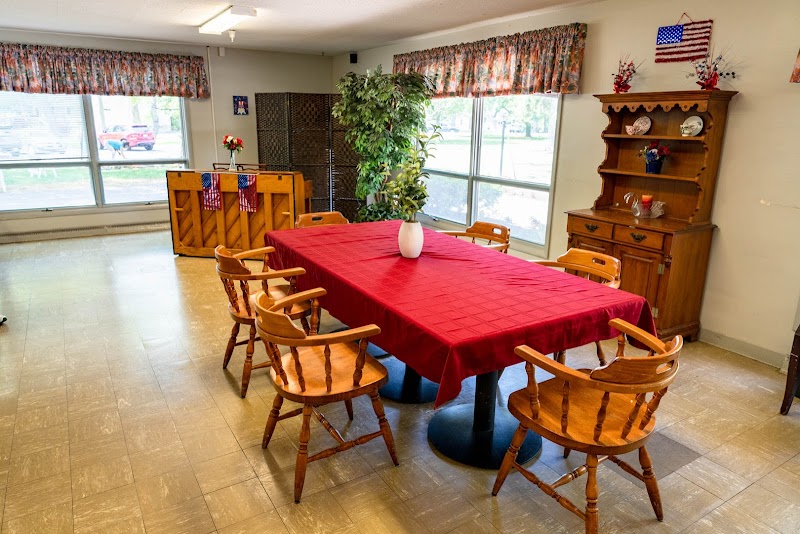
CMS rates Hamilton Manor Nursing Home's staffing level at 3 out of 5 stars, which is average compared to other nursing homes. Staff turnover is 51%, compared to the New York average of 46%.

What Have Inspectors Found at Hamilton Manor Nursing Home?

State health inspectors documented 8 deficiencies at Hamilton Manor Nursing Home during 2022 to 2025. These included: 8 with potential for harm.

Who Owns and Operates Hamilton Manor Nursing Home?

Hamilton Manor Nursing Home is owned by a for-profit company. For-profit facilities operate as businesses with obligations to shareholders or private owners. The facility is operated by HURLBUT CARE, a chain that manages multiple nursing homes. With 40 certified beds and approximately 36 residents (about 90% occupancy), it is a smaller facility located in Rochester, New York.

How Does Hamilton Manor Nursing Home Compare to Other New York Nursing Homes?

Compared to the 100 nursing homes in New York, Hamilton Manor Nursing Home's overall rating (4 stars) is above the state average of 3.1, staff turnover (51%) is near the state average of 46%, and health inspection rating (4 stars) is above the national benchmark.

What Should Families Ask When Visiting Hamilton Manor Nursing Home?

Based on this facility's data, families visiting should ask: "Can I visit during a mealtime to observe dining assistance and food quality?" "How do you handle medical emergencies, and what is your hospital transfer rate?" "Can I speak with family members of current residents about their experience?"

Is Hamilton Manor Nursing Home Safe?

Based on CMS inspection data, Hamilton Manor Nursing Home has a clean safety record: no substantiated abuse findings (meaning no confirmed cases of resident harm), no Immediate Jeopardy citations (the most serious violation level indicating risk of serious injury or death), and is not on the Special Focus Facility watch list (a federal program monitoring the lowest-performing 1% of nursing homes). The facility has a 4-star overall rating and ranks #1 of 100 nursing homes in New York. While no facility is perfect, families should still ask about staff-to-resident ratios and recent inspection results during their visit.

Do Nurses at Hamilton Manor Nursing Home Stick Around?

Hamilton Manor Nursing Home has a staff turnover rate of 51%, which is 5 percentage points above the New York average of 46%. Moderate turnover is common in nursing homes, but families should still ask about staff tenure and how the facility maintains care continuity when employees leave.

Was Hamilton Manor Nursing Home Ever Fined?

Hamilton Manor Nursing Home has no federal fines on record. CMS issues fines when nursing homes fail to meet care standards or don't correct problems found during inspections. The absence of fines suggests the facility has either maintained compliance or corrected any issues before penalties were assessed. This is a positive indicator, though families should still review recent inspection reports for the full picture.

Is Hamilton Manor Nursing Home on Any Federal Watch List?

Hamilton Manor Nursing Home is not on any federal watch list. The most significant is the Special Focus Facility (SFF) program, which identifies the bottom 1% of nursing homes nationally based on persistent, serious quality problems. Not being on this list means the facility has avoided the pattern of deficiencies that triggers enhanced federal oversight. This is a positive indicator, though families should still review the facility's inspection history directly.