Latta Road Nursing Home West
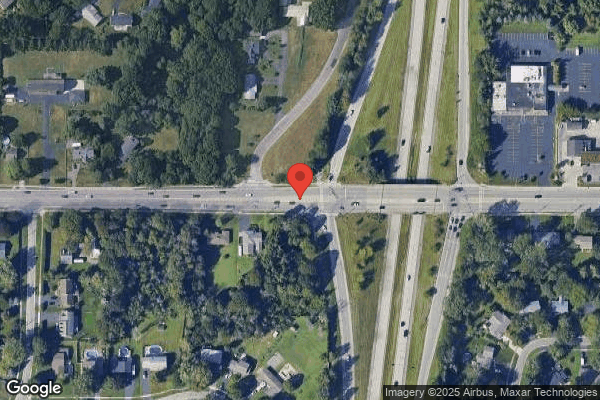
2100 Latta Road, Rochester, NY 14612 (585) 225-0910
For profit - Individual 40 Beds HURLBUT CARE Data: November 2025
Trust Grade
85/100
#63 of 594 in NY
Last Inspection: January 2025

Within standard 12-15 month inspection cycle. Federal law requires annual inspections.

Overview

Latta Road Nursing Home West has a Trust Grade of B+, indicating it is above average and recommended for care. It ranks #63 out of 594 facilities in New York, placing it in the top half of nursing homes in the state, and #3 out of 31 in Monroe County, meaning only two local options are better. However, the facility's trend is worsening, with reported issues increasing from 1 in 2023 to 2 in 2025. Staffing is a concern with a 67% turnover rate, much higher than the state average of 40%, and while there are no fines recorded, the facility has less RN coverage than 89% of New York facilities, which could impact resident care. Specific issues noted include inadequate food safety practices in the kitchen, such as improper sanitizer levels and temperature controls, as well as a medication error rate exceeding acceptable limits, which could potentially harm residents. Overall, while there are notable strengths, families should be aware of the facility's weaknesses and recent troubling findings.

Trust Score
B+
85/100
In New York
#63/594
Top 10%
Safety Record
Low Risk
No red flags
Inspections
Getting Worse
1 → 2 violations
Staff Stability
⚠ Watch
67% turnover. Above average. Higher turnover means staff may not know residents' routines.
Penalties
✓ Good
No fines on record. Clean compliance history, better than most New York facilities.
Skilled Nurses
⚠ Watch
Each resident gets only 24 minutes of Registered Nurse (RN) attention daily — below average for New York. Fewer RN minutes means fewer trained eyes watching for problems.
Violations
✓ Good
Only 4 deficiencies on record. Cleaner than most facilities. Minor issues only.
★★★★★
5.0
Overall Rating
★★★☆☆
3.0
Staff Levels
★★★★☆
4.0
Care Quality
★★★★★
5.0
Inspection Score
Stable
2023: 1 issues
2025: 2 issues

The Good

  • 4-Star Quality Measures · Strong clinical quality outcomes
  • Full Sprinkler Coverage · Fire safety systems throughout facility
  • No fines on record

Facility shows strength in quality measures, fire safety.

The Bad

Staff Turnover: 67%

21pts above New York avg (46%)

Frequent staff changes - ask about care continuity

Chain: HURLBUT CARE

Part of a multi-facility chain

Ask about local staffing decisions and management

Staff turnover is elevated (67%)

19 points above New York average of 48%

The Ugly 4 deficiencies on record

Jan 2025 2 deficiencies
CONCERN (D)

Potential for Harm - no one hurt, but risky conditions existed

Unnecessary Medications (Tag F0759)

Could have caused harm · This affected 1 resident

Based on observations, interviews, and record review conducted during the Recertification Survey from 01/14/2025 to 01/21/2025, for one (Resident #13) of two residents reviewed, the facility did not e...

Read full inspector narrative →
Based on observations, interviews, and record review conducted during the Recertification Survey from 01/14/2025 to 01/21/2025, for one (Resident #13) of two residents reviewed, the facility did not ensure a medication error rate of five percent or less. There were two medication errors for 26 opportunities resulting in a medication error rate of 7.7 percent. Specifically, during an observation of medication administration Resident #13's physician's orders were not followed for the administration of one medication and a second medication was administered without a prescribed dose included in the physician's order. This is evidenced by the following: The Medication Error Protocol, dated February 2020, documented in part that the nursing staff and medical provider shall try to prevent medication errors and adverse consequences and shall strive to identify and manage them appropriately when they occur. An example of a medication error includes orders received from a medical provider not transcribed promptly or accurately. 1. Resident #13 had diagnoses that included Parkinson's disease, atrial fibrillation (irregular, rapid heart rate that can cause poor blood flow), and type two diabetes. The Minimum Data Set Resident Assessment, dated 12/16/2024, documented the resident was cognitively intact. Review of current physician's orders as of 01/16/2025 revealed midodrine five milligrams one time daily for orthostatic blood pressure (blood pressure that changes from sitting to standing) with parameters to hold the medication for a systolic blood pressure greater than 90 and a Vitamin B12 tablet in the morning. There was no dose listed for the Vitamin B12. During an observation of medication administration on 01/16/2025 at 9:37 AM, Licensed Practical Nurse #2 obtained and documented Resident #13's blood pressure of 124/82. Licensed Practical Nurse #2 then administered the midodrine five milligrams and the Vitamin B12 at a dose of 1000 micrograms. During an interview on 01/16/2025 at 11:37 AM, Licensed Practical Nurse #2 stated the midodrine five milligrams should be held if Resident #13's systolic blood pressure was greater than 90. When Resident #13's blood pressure was reviewed at this time, Licensed Practical Nurse #2 stated they should not have given the medication. Additionally, Licensed Practical Nurse #2 stated if a physician's order did not include a dose, a note should be entered in the medical provider's log making them aware that the order was incomplete, and the medication should not be given until the medical provider verified the order. Licensed Practical Nurse #2 generated the list of medications that had been administered revealing the Vitamin B12 medication had been given without a dose ordered by the medical provider. During an interview on 01/16/2025 at 11:49 AM, Nurse Practitioner #1 stated the nurse should check the parameters and if the parameters indicated to hold the medication for a systolic blood pressure greater than 90, and the resident's blood pressure was 124/82, the medication should not have been given. The Nurse Practitioner stated if documentation showed that the medication had been held enough times, they would reach out to the family and discuss the possibility of discontinuing it. Nurse Practitioner #1 stated all physician's orders should have a dose included and nursing staff should not proceed without a dose. Nurse Practitioner #1 stated it was an error on their end, and the nurse administering the medication should have brought it to their attention. During an interview on 01/16/2025 at 3:25 PM, the Director of Nursing stated the nurse should check the resident's blood pressure, read the physician's order, and follow the ordered parameters. The Director of Nursing stated they were not aware there were physician's orders that did not have a dose included because upon entering an order, the system should not allow you to save the documentation if the order was incomplete. The Director of Nursing stated the nurse should have called the medical provider to verify the order prior to giving the medication. 10 NYCRR 415.12(m)(1)
CONCERN (D)

Potential for Harm - no one hurt, but risky conditions existed

Food Safety (Tag F0812)

Could have caused harm · This affected 1 resident

Based on observations, interview, and record review conducted during the Recertification Survey from 01/14/2025 to 01/21/2025, the facility did not maintain the kitchen in accordance with professional...

Read full inspector narrative →
Based on observations, interview, and record review conducted during the Recertification Survey from 01/14/2025 to 01/21/2025, the facility did not maintain the kitchen in accordance with professional standards for food service safety. Specifically, an exhaust hood and filters were dirty, and a dishwashing machine was not functioning properly to sanitize dishware. The findings are: Record review of the undated daily cleaning lists revealed there was no documented cleaning of the kitchen exhaust hood and filters. During observations on 1/14/2025 at 8:55 AM and again on 1/15/2025 at 12:00 PM, the exhaust hood and filters above the cooking range in the main kitchen had visible accumulation of grease and dust. During an interview at this time, the Kitchen Supervisor stated their vendor comes in to clean the hood once a year in September, and staff should clean the hood as well when it needs it. During observations on 01/14/2025 at 8:47 AM, a low temperature dishwashing machine in the main kitchen was not functioning as designed. The label on the machine read wash at 120 degrees Fahrenheit and rinse at 120 degrees Fahrenheit with chlorine sanitization. Further observations included the chlorine sanitizer did not inject into the dish machine while in operation and the Kitchen Supervisor had to manually depress the dispenser button to introduce sanitizer into the machine. During an interview at this time, the Kitchen Supervisor stated they just noticed the sanitizer was not automatically dispensing during a cycle and needed to manually activate the dispensing unit to add sanitizer. During observations on 01/15/2025 at 12:06 PM, the low temperature dishwashing machine in the main kitchen was not functioning properly. The chlorine sanitizer did not automatically dispense during a cycle and the dispensing line was observed to be leaking sanitizer when activated manually. During an interview at this time, the Kitchen Supervisor stated the dish washer was still not functioning properly and the vendor had yet to get back to them. The Kitchen Supervisor also stated that when manually operating the sanitizing dispenser, they noticed the hose was leaking sanitizer so that would need to be addressed, and may be why sanitizer measurements were erratic. The Kitchen Supervisor also stated that instead of having to manually use the dispenser and measure sanitizer levels each time, it was decided to use disposable utensils and plates and wash with the three-bay sink until the dish machine could be addressed. 10NYCRR: 415.14(h), 14-1.95, 14-1.96(c), 14-110(d), 14-113(a), 14-1.175(b)
Jun 2023 1 deficiency
CONCERN (E)

Potential for Harm - no one hurt, but risky conditions existed

Food Safety (Tag F0812)

Could have caused harm · This affected multiple residents

**NOTE- TERMS IN BRACKETS HAVE BEEN EDITED TO PROTECT CONFIDENTIALITY** Based on observations, interview, and record review conducted during the Recertification Survey completed 6/2/23 to 6/7/23, it w...

Read full inspector narrative →
**NOTE- TERMS IN BRACKETS HAVE BEEN EDITED TO PROTECT CONFIDENTIALITY** Based on observations, interview, and record review conducted during the Recertification Survey completed 6/2/23 to 6/7/23, it was determined that for one of one kitchen the facility did not store, prepare, distribute, and serve food in accordance with professional standards for food service safety. Specifically, dish machine sanitizer levels were inadequate, and temperature controlled for safety (TCS) foods were not held at proper temperatures. The findings are: 1. Observations and interviews during the initial tour of the main kitchen on 6/2/23 between 8:30 a.m. and 10:00 a.m. included a [NAME] brand low-temperature mechanical dish washing machine. When tested after running, the sanitizer (chlorine based) level was zero. In an interview at this time the food service director (FSD) stated that the dish machine is checked every day but not this morning and they keep a log but could not readily locate them. The FSD also stated that they would call their vendor. 2. Observations and interviews during the follow-up visit to the main kitchen on 6/5/23 between 11:50 a.m. and 1:30 p.m. included a 'Nor-Lake' refrigeration unit full of beverages, including: a gallon of milk (a TCS food) at 50 degrees (°) Fahrenheit (F) and a half-gallon of chocolate milk (a TCS food) at 47°F, both of which were located on the bottom shelf of the cooler. During an interview at this time the FSD stated that the milk was placed into the cooler at 11:00 a.m. The surveyor verified that the ThermoWorks Thermapen One digital thermometer was accurate using the ice-point method. The thermometer read 32°F after being placed in a cup of ice water. 3. On 6/7/23 at 12:15 p.m., monthly records of the dish machine were provided for review via email. The logs for January through June of 2023 included that before each meal dietary aides should check the dish machine using test strips, and chlorine should read 50-100ppm (parts per million). The dish machine logs on 6/1/23 included: 'isn't coming out' and 'not working', and the logs for breakfast on 6/2-6/4/23 did not include a check mark or any other indication that the sanitizer level was between 50 and 100ppm. 10NYCRR: 415.14(h), 14-1.31(c), 14-1.40(a), 14-1.44, 14-1.112, 14-1.113
Dec 2021 1 deficiency
CONCERN (D)

Potential for Harm - no one hurt, but risky conditions existed

Pharmacy Services (Tag F0755)

Could have caused harm · This affected 1 resident

Based on interviews, and record review conducted during the Recertification Survey, completed on 12/22/21, it was determined that for one (wing one) of two wings reviewed for medication storage, the f...

Read full inspector narrative →
Based on interviews, and record review conducted during the Recertification Survey, completed on 12/22/21, it was determined that for one (wing one) of two wings reviewed for medication storage, the facility did not ensure that an accurate reconciliation of all controlled substances was maintained. Specifically, the Controlled Substance Record sheets which included reconciliation of narcotic medications and the signatures of staff members for each shift-to-shift narcotic count were not completed to validate the correct controlled substance count. This is evidenced by the following: The facility policy and procedure for Accounting for Narcotic Medications dated July 2011 documented that the facility will ensure that narcotic medications are properly accounted for in compliance with regulatory requirements and standard of practice. At each shift change or change of incoming nurse responsible for passing medications, all narcotics are counted by the incoming and outgoing licensed nurses and the correct count attested to on the Narcotic Count Verification form. The outgoing and incoming nurses must visualize the Index prior to beginning the count, as well as during the count to assure that each resident has the appropriate medications. If a discrepancy is found at any time during a count with the Resident Index form and the Narcotic Count Sheet, the supervisor will be notified, and an investigation will begin. During medication storage review on 12/22/21 at 9:33 a.m., the wing one shift-to- shift narcotic count sheets revealed multiple missing signatures to verify that the narcotic counts were properly completed by two nurses. From 10/3/21 to 10/29/21 there were 19 missing signatures, from 11/1/21 to 11/30/21, there were 18 missing signatures and from 12/1/21 to 12/22/21, there were 4 missing signatures. During an interview on 12/22/21 at 9:40 a.m., the Licensed Practical Nurse (LPN) said staff are expected to sign off the narcotic count at each shift to ensure the narcotic count is correct. The LPN said there should be no unsigned areas on the narcotic sheets. During an interview on 12/22/21 at 9:53 a.m., with the Director of Nursing (DON) and the Administrator, both stated that they were not aware the narcotic count sheets were not always signed off by both oncoming and outgoing staff. The DON said that they have not done audits of the narcotics sheets since they had started working at the facility several months prior. The Administrator stated that it is the policy of the facility for staff to sign off the narcotic sheets for each shift. 10NYCRR 415.18(b)(1)(2)(3)
Understanding Severity Codes (click to expand)
Life-Threatening (Immediate Jeopardy)
J - Isolated K - Pattern L - Widespread
Actual Harm
G - Isolated H - Pattern I - Widespread
Potential for Harm
D - Isolated E - Pattern F - Widespread
No Harm (Minor)
A - Isolated B - Pattern C - Widespread

Questions to Ask on Your Visit

  • "Why is there high staff turnover? How do you retain staff?"
  • "Can I speak with families of current residents?"
  • "What's your RN coverage like on weekends and overnight?"

Our Honest Assessment

Strengths
  • • Grade B+ (85/100). Above average facility, better than most options in New York.
  • • No major safety red flags. No abuse findings, life-threatening violations, or SFF status.
  • • No fines on record. Clean compliance history, better than most New York facilities.
  • • Only 4 deficiencies on record. Cleaner than most facilities. Minor issues only.
Concerns
  • • 67% turnover. Above average. Higher turnover means staff may not know residents' routines.
Bottom line: Generally positive indicators. Standard due diligence and a personal visit recommended.

About This Facility

What is Latta Road Nursing Home West's CMS Rating?

CMS assigns Latta Road Nursing Home West an overall rating of 5 out of 5 stars, which is considered much above average nationally. Within New York, this rating places the facility higher than 99% of the state's 100 nursing homes. This rating reflects solid performance across the metrics CMS uses to evaluate nursing home quality.

How is Latta Road Nursing Home West Staffed?

CMS rates Latta Road Nursing Home West's staffing level at 3 out of 5 stars, which is average compared to other nursing homes. Staff turnover is 67%, which is 21 percentage points above the New York average of 46%. High turnover can affect care consistency as new staff learn residents' individual needs.

What Have Inspectors Found at Latta Road Nursing Home West?

State health inspectors documented 4 deficiencies at Latta Road Nursing Home West during 2021 to 2025. These included: 4 with potential for harm.

Who Owns and Operates Latta Road Nursing Home West?

Latta Road Nursing Home West is owned by a for-profit company. For-profit facilities operate as businesses with obligations to shareholders or private owners. The facility is operated by HURLBUT CARE, a chain that manages multiple nursing homes. With 40 certified beds and approximately 33 residents (about 82% occupancy), it is a smaller facility located in Rochester, New York.

How Does Latta Road Nursing Home West Compare to Other New York Nursing Homes?

Compared to the 100 nursing homes in New York, Latta Road Nursing Home West's overall rating (5 stars) is above the state average of 3.1, staff turnover (67%) is significantly higher than the state average of 46%, and health inspection rating (5 stars) is much above the national benchmark.

What Should Families Ask When Visiting Latta Road Nursing Home West?

Based on this facility's data, families visiting should ask: "How do you ensure continuity of care given staff turnover, and what is your staff retention strategy?" "Can I visit during a mealtime to observe dining assistance and food quality?" "How do you handle medical emergencies, and what is your hospital transfer rate?" "Can I speak with family members of current residents about their experience?" These questions are particularly relevant given the facility's high staff turnover rate.

Is Latta Road Nursing Home West Safe?

Based on CMS inspection data, Latta Road Nursing Home West has a clean safety record: no substantiated abuse findings (meaning no confirmed cases of resident harm), no Immediate Jeopardy citations (the most serious violation level indicating risk of serious injury or death), and is not on the Special Focus Facility watch list (a federal program monitoring the lowest-performing 1% of nursing homes). The facility has a 5-star overall rating and ranks #1 of 100 nursing homes in New York. While no facility is perfect, families should still ask about staff-to-resident ratios and recent inspection results during their visit.

Do Nurses at Latta Road Nursing Home West Stick Around?

Staff turnover at Latta Road Nursing Home West is high. At 67%, the facility is 21 percentage points above the New York average of 46%. High turnover means new staff may not know residents' individual needs, medications, or preferences. It can also be disorienting for residents, especially those with dementia who rely on familiar faces. Families should ask: What is causing the turnover? What retention programs are in place? How do you ensure care continuity during staff transitions?

Was Latta Road Nursing Home West Ever Fined?

Latta Road Nursing Home West has no federal fines on record. CMS issues fines when nursing homes fail to meet care standards or don't correct problems found during inspections. The absence of fines suggests the facility has either maintained compliance or corrected any issues before penalties were assessed. This is a positive indicator, though families should still review recent inspection reports for the full picture.

Is Latta Road Nursing Home West on Any Federal Watch List?

Latta Road Nursing Home West is not on any federal watch list. The most significant is the Special Focus Facility (SFF) program, which identifies the bottom 1% of nursing homes nationally based on persistent, serious quality problems. Not being on this list means the facility has avoided the pattern of deficiencies that triggers enhanced federal oversight. This is a positive indicator, though families should still review the facility's inspection history directly.