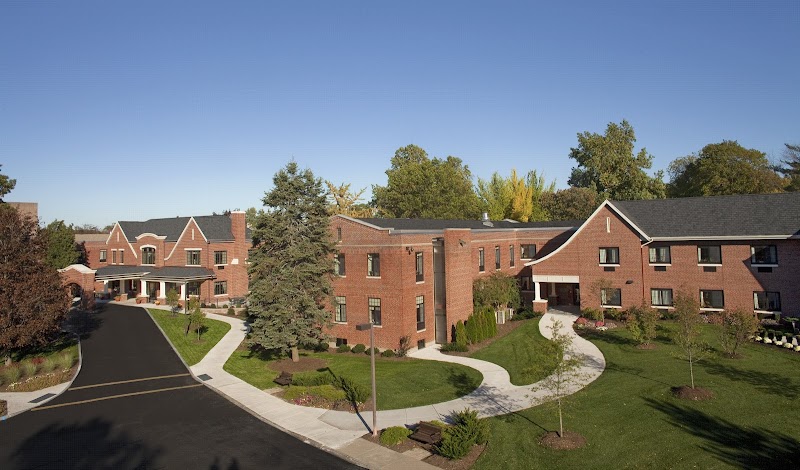


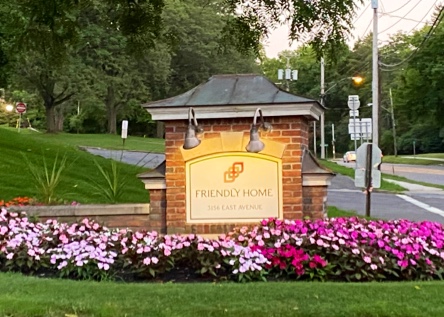
The Friendly Home

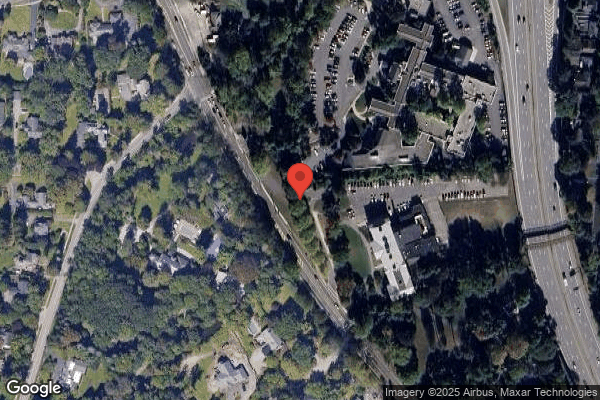
3156 East Avenue, Rochester, NY 14618 (585) 381-1600
Non profit - Corporation 200 Beds Independent Data: November 2025
Trust Grade
65/100
#358 of 594 in NY
Last Inspection: December 2023

Within standard 12-15 month inspection cycle. Federal law requires annual inspections.

Overview

The Friendly Home has a Trust Grade of C+, indicating a decent rating that is slightly above average, but still in the lower tier. It ranks #358 out of 594 nursing homes in New York, placing it in the bottom half, and #19 out of 31 in Monroe County, meaning there are only a few local facilities that are better. The facility's condition is worsening, with the number of issues identified increasing from 4 in 2022 to 7 in 2023. Staffing is a relative strength here, with a 4 out of 5-star rating and a 47% turnover rate, which is similar to the state average, but the RN coverage is concerning as it is lower than 86% of New York facilities, potentially impacting care quality. While there have been no fines, which is positive, some serious concerns were found, including inadequate screening for newly hired employees to prevent abuse and failure to maintain proper infection control protocols, raising questions about resident safety.

Trust Score
C+
65/100
In New York
#358/594
Bottom 40%
Safety Record
Low Risk
No red flags
Inspections
Getting Worse
4 → 7 violations
Staff Stability
⚠ Watch
47% turnover. Above average. Higher turnover means staff may not know residents' routines.
Penalties
✓ Good
No fines on record. Clean compliance history, better than most New York facilities.
Skilled Nurses
⚠ Watch
Each resident gets only 29 minutes of Registered Nurse (RN) attention daily — below average for New York. Fewer RN minutes means fewer trained eyes watching for problems.
Violations
⚠ Watch
14 deficiencies on record. Higher than average. Multiple issues found across inspections.
★★★☆☆
3.0
Overall Rating
★★★★☆
4.0
Staff Levels
★★★★☆
4.0
Care Quality
★★★☆☆
3.0
Inspection Score
Stable
2022: 4 issues
2023: 7 issues

The Good

  • 4-Star Staffing Rating · Above-average nurse staffing levels
  • 4-Star Quality Measures · Strong clinical quality outcomes
  • Full Sprinkler Coverage · Fire safety systems throughout facility
  • No fines on record

Facility shows strength in staffing levels, quality measures, fire safety.

The Bad

3-Star Overall Rating

Near New York average (3.1)

Meets federal standards, typical of most facilities

Staff Turnover: 47%

Near New York avg (46%)

Higher turnover may affect care consistency

The Ugly 14 deficiencies on record

Dec 2023 7 deficiencies
CONCERN (D)

Potential for Harm - no one hurt, but risky conditions existed

Deficiency F0688 (Tag F0688)

Could have caused harm · This affected 1 resident

**NOTE- TERMS IN BRACKETS HAVE BEEN EDITED TO PROTECT CONFIDENTIALITY** Based on observations, interviews and record reviews conducted during the Recertification Survey, it was determined that for one...

Read full inspector narrative →
**NOTE- TERMS IN BRACKETS HAVE BEEN EDITED TO PROTECT CONFIDENTIALITY** Based on observations, interviews and record reviews conducted during the Recertification Survey, it was determined that for one (Resident #53) of six residents reviewed for Activities of Daily Living, the facility did not ensure that a resident with limited range of motion received the appropriate treatment and services to prevent further decline. Specifically, Resident #53 had contractures (deformities that result when muscles, joints, tendons, or other tissues tighten or shorten) to both hands and was not provided the hand devices (hand rolls) per their plan of care to prevent a decline. Additionally, the facility could not provide documented evidence that Resident #53 received range of motion per their plan of care. This is evidenced by the following: Resident #53 had diagnoses including central nervous system lymphoma (malignant cancer cells that affect the brain and/or spinal cord), brain tumor (swelling caused by an abnormal growth of tissue), and encephalopathy (a disease that affects brain function). The Minimum Data Set Assessment, dated 9/29/23, revealed the resident had severely impaired cognition, required total assistance from staff for activities of daily living, and had a functional limitation in range of motion to both upper extremities. The current Plan of Care (used by the Certified Nursing Assistant to provide care) included range of motion to the right ankle and right shoulder for contractures in the morning and evening and bilateral (affecting both sides) hand devices that may be removed for hygiene and self-care. An Occupational Therapy Discharge summary, dated [DATE], documented recommendations for nursing assistance with all activities of daily living, including assistance with the use of hand devices to both upper extremities during daytime hours and passive range of motion to right and left shoulder to prevent further contractures. In a medical note, dated 12/12/23 at 5:22 PM, Physician #1documented the resident had contractures of both hands. During observations on 12/19/23 at 10:55 AM; 12/21/23 at 11:13 AM, 12:39 PM, and 3:30 PM; and on 12/22/23 at 8:30 AM, 11:55 AM, and 2:28 PM, Resident #53 was not wearing the recommended bilateral hand devices. The devices were observed on the resident's dresser in their room during all the observations. During an interview on 12/22/23 at 9:30 AM, Registered Nurse #2 Nurse Manager stated the Certified Nursing Assistants were expected to follow the resident's Plan of Care. There was no system in place for staff to document when range of motion was performed, and it was assumed that a resident was assisted with range of motion if it was documented on the Plan of Care to be done. During an interview on 12/22/23 at 2:25 PM, Certified Nursing Assistant #2 stated Resident #53 was to get out of bed at 10:00 AM and back to bed at 2:00 and had no need for range of motion. Certified Nursing Assistant #2 stated they always referred to the Plan of Care to ensure there were no updates. During an interview on 12/26/23 at 8:37 AM, the Rehabilitation Director stated Resident #53 was totally dependent on staff for their activities of daily living and the current recommendation was for range of motion twice daily. They said they expected that the Certified Nursing Assistants assisted the resident with range of motion in the morning and evening when performing care. During an observation and interview on 12/26/23 at 9:00 AM, the Rehabilitation Director and Licensed Occupational Therapist #1 were in Resident #53's room and confirmed the hand devices located on the resident's dresser were the recommended equipment for the resident. The Rehabilitation Director stated they would expect that Resident #53 would be assisted out of bed and the hand devices used during daytime hours. When interviewed at 10:24 AM, the Rehabilitation Director stated Resident #53 needed the hand devices to prevent further decline. During an interview on 12/26/23 at 10:09 AM, Licensed Practical Nurse #3 Clinical Coordinator stated the bilateral hand devices and range of motion were a part of the Plan of Care and they expected that Resident #53 would have the bilateral hand devices on daily and that range of motion would be done per the resident's care plan. 10 NYCRR 415.12(e)(2)
CONCERN (D)

Potential for Harm - no one hurt, but risky conditions existed

Tube Feeding (Tag F0693)

Could have caused harm · This affected 1 resident

Based on observations, interviews and record reviews conducted during the Recertification Survey, it was determined that for one (Resident #53) of one resident reviewed for tube feedings (nutrition ad...

Read full inspector narrative →
Based on observations, interviews and record reviews conducted during the Recertification Survey, it was determined that for one (Resident #53) of one resident reviewed for tube feedings (nutrition administered via a tube inserted directly into the stomach via the abdomen due to the residents' inability to consume food and drink by mouth), the facility did not provide appropriate treatment and services to prevent potential complications for a resident who receives enteral feedings (tube feedings), as outlined by the resident's person-centered comprehensive care plan and physician orders. Specifically, the facility was unable to provide documented evidence that the resident had received the correct tube feeding and water intakes as ordered by the physician to ensure the necessary nutrition and prevent complications. This is evidenced by the following: The January 2023 facility policy, Gastrostomy (feeding) Tube Feeding, included that all patients with Gastrostomy tubes will have their intake and output measured each shift. The amount of tube feeding, and water administered should be documented at the end of the shift by the Registered Nurse or Licensed Practical Nurse and recorded on the Intake and Output Record. Resident #53 has current diagnoses including dysphagia (difficulty swallowing), a gastrostomy tube, and pulmonary congestion (excess fluid in the lungs). The Minimum Data Set Assessment, dated 9/29/23, revealed the resident had severely impaired cognition and received 51% or more of their calories via tube feedings. The current Comprehensive Care Plan for tube feedings, included interventions for calculating caloric needs, fluid requirements (that were based on adjusted body weight), tube feed tolerance and hydration status, and recording intake and output. Current physician orders included the resident was to have nothing by mouth and had a feeding tube with feedings to include: a. Glucerna 1.5 calories (nutritional supplement) via gastrostomy tube, to start the tube feeding at 4:00 PM at 60 milliliters per hour for 16 hours and stop the tube feeding at 8:00 AM for a total of 960 milliliters per day. b. Give 200 milliliters of water flushes via the gastrostomy tube every four hours and 30 milliliters water flush before and after feedings and 10 milliliters between medications. Review of a medical note dated 12/18/23 the Nurse Practitioner documented Resident #53 was evaluated for reported fever, dyspnea (difficulty breathing), and runny nose, chest radiograph was concerning for pulmonary congestion (a condition caused by too much fluid in the lungs). Review of the November 2023 and December 2023 Intake and Output Records revealed that from 11/1/23 to 11/30/23 there was no documented intakes (Glucerna or water) on 42 shifts of 90 shifts (3 shifts per day). From 12/1/23 to 12/20/23 there was no documented intakes for 32 shifts of 60 shifts. The 24-hour daily total of intake for every day 11/1/23 through 12/20/23 was blank. During an observation and interview on 12/21/23 at 3:54 PM, Licensed Practical Nurse #4 was unable to start the tube feeding at 4:00 PM. When interviewed at this Licensed Practical Nurse #4 stated that Resident #53's feding tube was clogged and they were attempting to unclog the tube. At 4:23 PM the feeding still had not been started. During an interview on 12/26/23 at 9:10 AM, the Registered Dietitian stated the residents current tube feed and ordered water flushes (additional water provided to a resident in their daily regimen), were monitored through the Intake and Output Record and were reviewed daily to make sure the resident was getting the adequate amount of tube feeding and flushes (and prevent complications). The Registered Dietitian stated that when the Intake and Output Records are not completed the unit nursing staff should be notified and in the past the Director of Nursing has been involved with the issue of incomplete documentation. Review of the Intake Record for November 2023 and December 2023 with the surveyor, the Registered Dietician stated that they had brought it to the attention of the Unit Nurse Manager. The Unit Nurse Manager was not available for interview. During an interview on 12/26/23 at 10:09 AM Licensed Practical Nurse #3 Clinical Coordinator stated that tube feeding documentation was the nurse's responsibility. Review of the Intake Records from November 2023 and December 2023 with the surveyor, Licensed Practical Nurse #3 Clinical Coordinator stated that incomplete Intake and Output Records have been an issue in the past, that the Nurse Manager had addressed it and that the staff should be written up for not completing the records. 10 NYCRR 415.12(g)(2)
CONCERN (D)

Potential for Harm - no one hurt, but risky conditions existed

Deficiency F0761 (Tag F0761)

Could have caused harm · This affected 1 resident

**NOTE- TERMS IN BRACKETS HAVE BEEN EDITED TO PROTECT CONFIDENTIALITY** Based on observations, interviews, and record reviews conducted during the Recertification Survey, it was determined that for tw...

Read full inspector narrative →
**NOTE- TERMS IN BRACKETS HAVE BEEN EDITED TO PROTECT CONFIDENTIALITY** Based on observations, interviews, and record reviews conducted during the Recertification Survey, it was determined that for two of five medication carts reviewed for medication storage, the facility did not ensure that all drugs and biological were properly stored in accordance with State and Federal Laws. Specifically, two expired medications were stored in medication cart #1on [NAME] Place resident care unit and a medication cart on [NAME] Place had multiple loose unlabeled pills. In addition, one of the medication drawers in the cart on [NAME] Place contained a large amount of debris at the bottom of the drawer. This is evidenced by the following: During an observation on 12/21/23 at 12:03 PM on [NAME] Place, medication cart #1 had a bottle, approximately one-quarter filled, of bisacodyl (laxative) tablets with an expiration date of September 2023 and a full bottle of sorbitol solution (laxative) with an expiration date of August 2023 were stored in the cart. During an observation and interview on 12/21/23 at 9:18 AM on [NAME] Place, there were more than 15 loose, unlabeled pills of varying colors, sizes and shapes stored in a drawer in medication cart #2. Additionally, medication cart #2 was found to have approximately one-quarter inch of scoopable debris covering the bottom of the drawer. When interviewed, License Practical Nurse #2 stated they were unable to identify any of the pills at the bottom of the medication drawer (or the debris) and all nurses were responsible to keep the medication cart clean. During an interview on 12/21/23 at 9:34 AM, Registered Nurse #1/Nurse Manager stated every nurse was responsible for checking the medication carts for cleanliness and expired medications. During an interview on 12/21/21 at 12:26 PM, License Practical Nurse #1 stated they checked medications for expiration dates at the time they administered them. They stated it was the night shift nurse's responsibility to check the medication cart for expired medications. During an interview on 12/26/23 at 12:53 PM, Licensed Practical Nurse #3/Clinical Coordinator stated the night shift nurse was responsible for checking the medication carts and rooms for expired medications once monthly and when found they should be removed. 10 NYCRR 415.18(e)(1-4)
CONCERN (D)

Potential for Harm - no one hurt, but risky conditions existed

Deficiency F0882 (Tag F0882)

Could have caused harm · This affected 1 resident

Based on record review and interviews conducted during a Recertification Survey, the facility did not ensure that the individual designated as the facility's current Infection Preventionist (individua...

Read full inspector narrative →
Based on record review and interviews conducted during a Recertification Survey, the facility did not ensure that the individual designated as the facility's current Infection Preventionist (individual responsible for the facility's Infection Prevention and Control Program) had completed specialized training in infection prevention and control. Specifically, the facility's designated Infection Preventionist did not have documented evidence of completing specialized infection prevention and control training. This is evidenced by the following: The facility policy, Infection Control Program, dated 12/13/23, defined the Infection Preventionist as a person whose primary training was either in nursing, medical technology, microbiology, or epidemiology and who had acquired additional training in infection control. The policy revealed the Infection Preventionist was responsible for monitoring the rate of infections, maintaining records of all communicable diseases and nosocomial (infections that developed during the process of receiving health care) infections, and defining, analyzing, and reporting incidents related to failures in infection control practices to the Director of Health Services, Medical Director, and Quality Assessment and Assurance committee. During an interview on 12/21/23 at 12:31 PM, the Assistant Director of Nursing/Infection Preventionist stated they were the facility's designated Infection Preventionist. While they were working on obtaining the required infection control and prevention training, they had not completed the specialized training. During an interview on 12/22/23 at 9:15 AM, the Director of Health Services (Director of Nursing) stated that they were not responsible for managing the facility's infection prevention and control program and the Assistant Director of Nursing was the designated Infection Preventionist. The Assistant Director of Nursing had been in the Infection Preventionist role since the end of July 2023, had been working on the required infection control and prevention training, but had not completed the specialized training. The Director of Health Services stated they would expect the person responsible for managing the infection prevention and control program to have completed the required training. 10 NYCRR 415.19(a)
CONCERN (D)

Potential for Harm - no one hurt, but risky conditions existed

Room Equipment (Tag F0908)

Could have caused harm · This affected 1 resident

**NOTE- TERMS IN BRACKETS HAVE BEEN EDITED TO PROTECT CONFIDENTIALITY** Based on observation, interview, and record review conducted during the Recertification Survey, it was determined that for one o...

Read full inspector narrative →
**NOTE- TERMS IN BRACKETS HAVE BEEN EDITED TO PROTECT CONFIDENTIALITY** Based on observation, interview, and record review conducted during the Recertification Survey, it was determined that for one of one main kitchen the facility did not properly maintain essential equipment. Specifically, a high-temperature mechanical dish machine did not reach the required final rinse temperature to properly sanitize dishes. The findings are: Observations on 12/19/23 at 9:27 AM included facility staff starting breakfast dishes by running them through the [NAME]-brand mechanical dish washing machine in the main kitchen. Further observations included that after several racks of dishes were run through the machine, the final rinse temperature displayed on the temperature screen after each of four runs was: 140 degrees Fahrenheit, 141 degrees Fahrenheit, 146 degrees Fahrenheit, and 144 degrees Fahrenheit, respectively. Additional observations included dietary staff removing dishes that had come out of the machine onto the clean side drainboard and place them away, even though the dish machine had not reached a proper final rinse sanitization temperature (180 degrees Fahrenheit). In an interview at this time, the Dining Services Director stated that it was a high temperature machine and that the rinse temperature was showing low. The Dining Services Director further stated that they would contact their dish machine vendor to look at the machine. In an interview on 12/21/23 at 8:32 AM, the Director of Facilities stated that their vendor came in to look at the dish machine, said nothing was wrong with the machine, and perhaps it was a fluctuation in the temperature of the water being supplied by the kitchen's boiler. The Director of Facilities further stated that they have a sensor that measures the boiler supply temperature which is graphed and indicated with a yellow line on the graph. The Director of Facilities provided the surveyor with a printout of boiler supply temperatures from 11/20/23 through 12/20/23. Review of the graphic printout included that the boiler supply temperatures fluctuated significantly throughout this time period, ranging from approximately 80 degrees Fahrenheit to approximately 146 degrees Fahrenheit. The Director of Facilities stated that the boiler was set at about 140 degrees Fahrenheit previously, and this morning they turned it up to 160 degrees Fahrenheit after seeing the fluctuations in temperature on the printout for the boiler supply temperature. On 12/21/23 at 9:07 AM it was observed that the manufacturer's nameplate located on the [NAME]-brand mechanical dish machine identified that the required final rinse temperature should be 180 degrees Fahrenheit. In an interview at this time, the Dining Services Director stated that they noticed they were having issues with the rinse temperature at breakfast and lunch, and that dinner was okay. Record review on 12/21/23 at 9:59 AM revealed a service report from the facility dish machine vendor dated 12/20/23 which included the following notes: 1) Upon arrival I found the incoming water temp was at 125 degrees which is why when they are running the unit constantly and are not reaching the required final rinse temp of 180 degrees. 2) Spoke with (Dining Services Director) and the head engineer and they are looking into the issue as the printout of the 3 month temps on the kitchen water supply have been dipping to a low of 85 degrees and not maintaining the 140 degrees needed for the unit to work properly. 3) Unit temps when running up to 5 racks at once maintains all temps but after that it starts to dip down. 10NYCRR: 415.29(b), 415.14(h); Subpart 14-1.112(a), 14-1.113(a), 14-1.113(b)
CONCERN (E)

Potential for Harm - no one hurt, but risky conditions existed

Abuse Prevention Policies (Tag F0607)

Could have caused harm · This affected multiple residents

Based on record review and interview conducted during the Recertification Survey, it was determined that for four (Employees #1, #3, #4, and #5) of five newly hired employees the facility did not impl...

Read full inspector narrative →
Based on record review and interview conducted during the Recertification Survey, it was determined that for four (Employees #1, #3, #4, and #5) of five newly hired employees the facility did not implement written policies and procedures to prevent abuse, neglect, exploitation, and misappropriation of resident property related to screening prospective employees. Specifically, the results of a nurse aide registry abuse screening were not documented for newly hired employees prior to starting work. The findings are: A review of facility policy, Administrative Policy #20A Abuse Prohibition, last reviewed November 22, 2022, included that it is the responsibility of Human Resources to screen all potential employees for a history of abuse, neglect or mistreatment of residents. On 12/20/23 from 9:03 AM to 9:47 AM, newly hired employee files were provided to the surveyor for review and included the following: 1) Employee #1 was hired on 10/2/23 as a Dining Services Associate and the results for a nurse aide registry screen for prior abuse findings were dated 10/19/23. 2) Employee #3 was hired on 11/6/23 as a Member Care Assistant and the results for a nurse aide registry screen for prior abuse findings were dated 12/20/23. 3) Employee #4 was hired on 12/4/23 as a Laundry Assistant and the results for a nurse aide registry screen for prior abuse findings were dated 12/20/23. 4) Employee #5 was hired on 11/20/23 as a Unit Secretary and the results for a nurse aide registry screen for prior abuse findings were dated 12/20/23. During an interview on 12/20/23 at 9:26 AM, the [NAME] President of Human Resources stated that a nurse aide registry screen was printed for Employee #1 prior to today because they realized they were a Certified Nursing Assistant in the past. The [NAME] President of Human Resources further stated that they would look into the other employees to see what happened with their nurse aide registry screen. During an interview on 12/20/23 at 2:31 PM, the [NAME] President of Human Resources stated that they felt confident that the nurse aide registry screen was completed for the other employees prior to hire because it is part of the facility process to do this. The [NAME] President of Human Resources also stated that they asked the staff member who checks Prometric (used to run the nurse aide registry screening) and was told that since the results were blank, the form (which shows the date and results of the check) was not printed. The [NAME] President of Human Resources further stated that they have a checklist where they record that Prometric is checked for new employees and provided the checklists to the surveyor for review. Review of form titled, FSL New Hire Onboarding Checklist, for Employees #1, #3, #4, and #5 included that under section Day of New Hire Appointment that a box next to Print Prometric was checked for each employee. Further review of this form included that there was no documentation of the results of the nurse aide registry screen for prior abuse findings for Employees #1, #3, #4, and #5 prior to or on their date of hire. In an additional interview at this time, the [NAME] President of Human Resources stated that they do not have the printout of the original Prometric results. 10NYCRR: 415.4(b)
CONCERN (E)

Potential for Harm - no one hurt, but risky conditions existed

Infection Control (Tag F0880)

Could have caused harm · This affected multiple residents

Based on record review and interviews conducted during a Recertification Survey, the facility did not maintain an infection prevention and control program designed to provide a safe, sanitary, and com...

Read full inspector narrative →
Based on record review and interviews conducted during a Recertification Survey, the facility did not maintain an infection prevention and control program designed to provide a safe, sanitary, and comfortable environment and to help prevent the development and transmission of communicable diseases and infections and an antibiotic stewardship program (processes to ensure that individuals are receiving appropriate antibiotics, at the correct dose, and for the proper length of time) that included antibiotic use protocols and a system to monitor antibiotic use. Specifically, the facility could not provide evidence of on-going surveillance and tracking of infections since June 2023 and there was no evidence that the facility had been maintaining an antibiotic stewardship program. This is evidenced by the following: The Facility Assessment, dated October 2023, documented that the facility's infection prevention and control program included surveillance and tracking of infections to monitor for trends and clusters, investigate contributing factors, provide staff education, and monitoring to reduce further spread of infection. Additionally, the program was to ensure the careful use and management of antibiotic use through antibiotic stewardship. The facility policy, Infection Control-Antibiotic Stewardship, dated October 2022, revealed the careful use and management of antibiotics was required to reduce adverse outcomes for residents. Additionally, Infection Prevention Nurse was to track all antibiotics in real time, observe for trends, and prepare written reports that included antibiotic utilization and compliance with facility protocols. Review of Infection Control Tracking forms (line list- a tracking tool used to monitor infections and antibiotic use) provided by the facility included January 2023, February 2023, April 2023, May 2023, and June 2023. There was no documented evidence for the tracking of infections or antibiotic use from July 2023 to December 22, 2023. During an interview on 12/21/23 at 12:31 PM, the Assistant Director of Nursing/Infection Preventionist stated that the line list was managed electronically in a shared drive (a folder used to store and access files for use by more than one individual) and they were unable to locate the line list. The Assistant Director of Nursing/Infection Preventionist stated the Information Technology department had been working to locate the line list but was also unable to locate the folder. During an interview on 12/22/23 at 9:15 AM, the Director of Health Services (Director of Nursing) stated they would expect the Infection Preventionist to maintain a line list to appropriately monitor and prevent the spread of infections. The facility had an infection control tracking system in a shared drive, but no one was able to access it. The Director of Health Services thought the Infection Preventionist had been tracking the current COVID-19 cases and other infections but was unsure how this had been documented since they were unable to access the shared drive. 10 NYCRR 415.19(a)(1-3)
Mar 2022 4 deficiencies
CONCERN (D)

Potential for Harm - no one hurt, but risky conditions existed

Safe Transfer (Tag F0626)

Could have caused harm · This affected 1 resident

**NOTE- TERMS IN BRACKETS HAVE BEEN EDITED TO PROTECT CONFIDENTIALITY** Based on interviews and record review conducted during a Recertification and complaint investigation (#NY00270684) Survey, compl...

Read full inspector narrative →
**NOTE- TERMS IN BRACKETS HAVE BEEN EDITED TO PROTECT CONFIDENTIALITY** Based on interviews and record review conducted during a Recertification and complaint investigation (#NY00270684) Survey, completed on 3/2/22, it was determined that for one (Resident #346) of three residents reviewed, the facility did not permit a resident to return to the facility following an acute transfer to the hospital. Specifically, the resident was transferred to the hospital and upon receiving a referral from the hospital for a readmission, the facility determined they could not meet the resident's needs without proper notification per the regulation. This is evidenced by the following: Resident # 346 was admitted to the facility on [DATE] and had diagnoses including leukocytosis (acute elevation of white blood cell count) and heart failure. The Minimum Data Set (MDS) assessment dated [DATE] revealed the resident was cognitively intact. A discharge MDS assessment dated [DATE] was coded as discharge, return not anticipated. A medical provider note, dated 1/14/21, documented an evaluation of Resident #346 for acute leukocytosis and the need to transfer the resident to the hospital. The plan was reviewed with the resident who agreed with the transfer to the hospital on 1/14/21. A review of the facility 'Notice of Transfer or Discharge form, dated 1/15/21, included that Resident #346 was transferred to the hospital. The notice did not include the medical reason for transfer or discharge, did not indicate if it was a transfer (short term) or a permanent discharge notice, did not include any reason why the facility could not meet the resident's needs upon readmission requests and did not include appropriate appeal timeframes. The form was signed by a facility representative and dated as mailed on 1/18/21. Review of a Social Work progress note, dated 1/28/21 and labeled as 'late entry', documented that Resident #346's representative left a message on 1/15/21 that a bed hold was requested for one day and would let the facility know further after discussing with the hospital. When interviewed 3/1/22 at 8:47 a.m. The Director of Social Work (DSW) stated that if the resident/representative does not hold the bed they are no longer considered their resident and a discharge notice is not provided. When asked to clarigy, the DSW stated if the facility decided not to readmit the resident, they should be given a discharge notice and rights to appeal. When interviewed on 3/1/22 at 8:59 a.m. The Admissions Coordinator (AC) stated that a resident transfer (to the hospital) becomes a discharge when the family gives up the bed hold and a discharge notice and right to appeal should be provided by Social Work. The AC stated Resident #346 was not offered a bed (readmission) because there was a medical issue, something the facility could not meet. When interviewed on 3/1/22 at 11:10 a.m., The DSW stated they did receive a hospital referral for readmission but felt they could not meet the resident's needs. After a complaint was filed, a notice of discharge and appeal rights, dated 1/28/21, was provided to the resident representative. A readmission 'statement of intent' dated, 1/29/21 documented the facility's intent to readmit the resident provided the resident's clinical needs could be met and the resident provided proof of Medicaid eligibility was issued after surveyor intervention. Resident #346 did not return to the facility. 415.3 (h)(4)(iii)
CONCERN (D)

Potential for Harm - no one hurt, but risky conditions existed

Comprehensive Care Plan (Tag F0656)

Could have caused harm · This affected 1 resident

Based on observations, interviews and record review conducted during a Recertification Survey, completed on 3/2/22, it was determined that for 2 Residents (#22 and #106) of 26 residents reviewed for c...

Read full inspector narrative →
Based on observations, interviews and record review conducted during a Recertification Survey, completed on 3/2/22, it was determined that for 2 Residents (#22 and #106) of 26 residents reviewed for care planning, the facility did not develop and implement a comprehensive person- centered care plan that included measurable objectives to meet the resident's medical, nursing, mental and psychological needs as identified in the comprehensive assessments. Specifically, Resident #22's Comprehensive Care Plan (CCP) did not include the resident's suprapubic (SP) urinary catheter or congestive heart failure with edema (excess fluid), and Resident #106 CCP did not include the use of a psychotropic (medications that affect mental function and behavior) medication. This was evidenced by: 1.Resident #22 had diagnoses that included Parkinson's disease, urinary retention, and heart failure. The Minimum Data Set (MDS) Assessment, dated 11/11/21, revealed the resident was moderately impaired cognitively, had an indwelling urinary catheter and had recevied a daily diuretic (medication to reduce excess fluid). The Care Area Assessment Summary (CAAS-provides guidance to the facility about specific areas of concern for a resident as identified on the MDS Assessment that may need interventions included in the CCP) included that the resident had an indwelling urinary catheter and to proceed to the CCP. Review of the current CCP revealed Resident #22 was risk for skin breakdown and interventions included that the resident used a urinal independently, spilling on occasion and instructions for staff to ensure the urinal is emptied. The CCP included an activities of daily living deficit with an intervention that included the resident had a Foley catheter (a tube going into the bladder via the urethra vs a SP catheter that goes into the bladder via the abdomen.) The Resident Plan of Care (care plan used by the Certified Nursing Assistants for daily care), dated January 2019, included that Resident #22 required total assist with dressing, had a SP catheter and for the nurse to change over from a leg bag to drainage bag and vice versa and to elevate legs when in recliner. The current physician orders included torsemide (a diuretic medication), below the knee TED (thrombo-embolic deterrent stockings-used to prevent blood clots) stockings to both lower extremities daily to apply in the am and remove in the pm for leg edema (excess fluid). Physician orders also included catheter care. During an observation on 2/24/22 at 10:00 a.m., Resident #22 was sitting in a recliner chair with both feet on the floor. Both feet were swollen with edema. The resident was holding a urinary catheter tubing in their hand, the drainage bag was not covered and sitting on the floor. During an observation on 2/28/22 at 9:13 a.m., Resident #22 was sitting in the recliner with their legs elevated wearing yellow skid socks and no TED stockings. In an interview on 2/28/22 at 1:24 p.m., the Licensed Practical Nurse (LPN) stated the care provided to the SP catheter should include cleansing the SP catheter site and applying a dry sterile dressing, monthly changes by the Nurse Practitioner, flushing the tube as needed and changing the drainage bag. In an interview on 2/28/22 at 1:29 p.m. the Registered Nurse Manager (RNM) stated they were responsible for developing the CCP and that they should include areas identified in the CAAS if relevant. The RNM stated Resident #22's SP catheter and the diagnoses for it should be included in the CCP. The RNM stated if a resident had edema and on a diuretic, depending on etiology, it should also be addressed on the CCP. 2.Resident #106 had diagnoses that included vascular dementia with behavioral disturbances, a fracture of the leg and cerebral ischemia (impaired blood flow to the brain). The MDS Assessment, dated 1/20/22, documented that Resident #106 had dementia, received an antipsychotic medication daily, and per staff assessment, had poor memory, poor recall and had moderately impaired decision-making skills. Review of the CAAS revealed that Resident #106 was on psychotropic medications and instructions to proceed to a care plan. Review of the current physician orders and a physician progress note, dated 2/15/22, revealed that Resident #106 had vascular dementia with behaviors and was on quetiapine (an antipsychotic medication that is also considered a psychotropic medication). Review of the CCP, dated 1/14/22, did not address the resident's use of a psychotropic medications, measurable goals or person-centered nonpharmacological approaches to use. During random observations on 2/28/22 and 3/1/22 during the day shift, Resident#106 was seen well-groomed, taking part in activities both in and out of their room. No behaviors were observed. During an interview 2/28/22 at 2:16 p.m., RNM #2 stated that psychotropic medications and interventions should have been added to Resident #106's CCP. During an interview on 2/28/22 at 2:10 p.m., the Staff Educator, and Acting Director of Nursing (ADON), stated the development and revisions of the CCP were completed by the RNM. The ADON stated they expected the CCP to be developed based on the initial assessments, ongoing assessments and revisions completed based on the resident's response to the CCP. The ADON stated a SP catheter should be addressed on the CCP for potential problems, catheter management and signs and symptoms of potential problems. The ADON stated they would expect heart failure to be addressed on CCP as there was a potential alteration in fluid status and breathing. The ADON also stated they would expect psychotropic medications, especially an antipsychotic, and their clinical indications to be addressed on the care plan. [10NYCRR 415.11 (c)(1)]
CONCERN (E)

Potential for Harm - no one hurt, but risky conditions existed

Accident Prevention (Tag F0689)

Could have caused harm · This affected multiple residents

**NOTE- TERMS IN BRACKETS HAVE BEEN EDITED TO PROTECT CONFIDENTIALITY** Based on observations and interview conducted during the Recertification Survey completed on 3/2/22, it was determined that for ...

Read full inspector narrative →
**NOTE- TERMS IN BRACKETS HAVE BEEN EDITED TO PROTECT CONFIDENTIALITY** Based on observations and interview conducted during the Recertification Survey completed on 3/2/22, it was determined that for four ([NAME], Porter, [NAME], and [NAME]) of six resident units and one of one main lobby, the facility did not ensure that the resident's environment remained free of accident hazards. Specifically, hot liquids were accessible to residents and a heating surface exceeding 125°F was not adequately protected from accidental contact. The findings are: The facility policy, Dining Services Policy #49 Coffee on the Neighborhoods, effective July 2017 with a revision date of July 2019, included: Coffee will be available on the neighborhoods for Members, Families, and Staff. The temperature of the coffee will be monitored regularly to ensure safety of the Members. The coffee machines are set to dispense coffee at 155-160°F. The policy also included that dining services associates are responsible for the following procedure: Check the temperature of the coffee from the machine daily by dispensing 2 cups of coffee and recording the temperature of the 2nd cup. Record the temperature on the temperature sheet. If the temperature exceeds 160°F, contact Dining Services Management and the Nurse Supervisor on the neighborhood and lock out the machine. 1. Observations and interviews on 2/24/22 from 9:23 a.m. to 3:50 p.m. revealed the following: a) There was a 'Folgers' coffee and hot water dispensing machine in the [NAME] Unit dining area across from the nurse station, and the hot water was 183°F (degrees Fahrenheit) using a digital ThermaWorks Thermapen. When interviewed, a dining services representative stated that the machine stays on all the time. When interviewed, Licensed Practical Nurse (LPN) #1 stated that they have some resident who wander, but they never used the machine. b) There was a 'Folgers' coffee and hot water dispensing machine in the [NAME] Place dining area and the hot water was 169°F using a digital ThermaWorks Thermapen. When interviewed, Registered Nurse Manager (RNM) #1 stated there are some residents who wander, but the evening and night shift staff have a key and turn the machines off. c) There was a 'Folgers' coffee and hot water dispensing machine in the [NAME] North dining area and the hot water was 185°F using a digital ThermaWorks Thermapen. When interviewed, LPN #2 stated that the machines are kept locked out except during meal service. d) There was a 'Folgers' coffee and hot water dispensing machine in the [NAME] Place dining area across from the nurse station and the hot water was 167°F using a digital ThermaWorks Thermapen. At this time the Thermpen was checked for proper calibration using crushed ice and water, and the device read 32°F. When interviewed, the Registered Nurse (RN) stated there are a few residents who wander and if any resident wants coffee, they are encouraged to ask staff for help. e) There was a 'Folgers' coffee and hot water dispensing machine in the [NAME] Place dining area across from the nurse station and the hot water was 167°F using a digital ThermaWorks Thermapen. When interviewed, RNM #2 stated that they do not have anyone on the unit that was a wandering concern. During an interview on 2/24/22 at 4:10 p.m., the Director of Dining Services (DDS) stated that they had stopped using the coffee machines during the COVID outbreak when there was no communal dining or visitation, and that they had just started using them again a few weeks ago. When asked for current temperature logs, the DDS stated that there were none because they haven't been taking temperatures. The DDS also stated that the nurses on the units are supposed to lock out the machines daily around 7-7:30 p.m. 2. On 2/24/22 at 11:18 a.m. and 3:48 p.m., and on 2/25/2022 at 8:50 a.m. a gas fireplace was observed to be in operation without a barrier. The glass panel was 283°F on 2/24/22 and 276° F on 2/25/22 when using a digital ThermaWorks Thermapen. The open area that included the gas fireplace had upholstered chairs and was located across from the Admissions Office. During an interview on 2/24/22 at 11:15 a.m., a maintenance staff member stated that the lobby receptionist used a remote control to turn the fireplace on and off. During an interview on 2/25/22, the Director of Building Services stated that the fireplace was being used as a secondary heat source for the lobby personnel. 10NYCRR: 415.29(a)(1)
MINOR (B)

Minor Issue - procedural, no safety impact

Transfer Notice (Tag F0623)

Minor procedural issue · This affected multiple residents

**NOTE- TERMS IN BRACKETS HAVE BEEN EDITED TO PROTECT CONFIDENTIALITY** Based on interview and record review during a Recertification Survey, and complaint investigation (#NY00270684), completed on 3/...

Read full inspector narrative →
**NOTE- TERMS IN BRACKETS HAVE BEEN EDITED TO PROTECT CONFIDENTIALITY** Based on interview and record review during a Recertification Survey, and complaint investigation (#NY00270684), completed on 3/2/22, it was determined that for two (Residents #146 and #346) of three residents reviewed, the facility did not provide evidence that a valid written notification of transfer or discharge was sent to the residents or resident representatives in a timely manner. Specifically, Resident #146 was not provided a notice of transfer or discharge following a hospital admission and Resident #346 was not provided a valid notice of discharge that included the reason for the discharge, complete and correct appeal information and did not supply evidence of a reason for inabilty to return as per the regulations. This is evidenced by the following: 1.Resident #346 had diagnoses included leukocytosis (acute elevatation of white blood cell count), dysphagia (difficulty swallowing) and heart failure. The Minimum Data Set (MDS) Assessment, dated 12/7/20, revealed the resident was cognitively intact. Review of the physician progress note, dated 1/14/21, revealed Resident #346 was being seen for leukocytosis and weight loss and the decision was made to transfer the resident to the hospital on 1/14/21. Review of the 'Notice of Transfer or Discharge' form, signed by the facility on 1/15/21 did not include whether it was a transfer (short term with a return anticipated) or discharge (permanent discharge with a return not anticipated), the reason for transfer or discharge, or accurate appeal notice. The form indicated it was mailed on 1/18/21. When interviewed on 3/1/22 at 8:47 a.m. and again at 11:10 a.m., the Director of Social Work (DSW) stated that when a resident is transferred to the hospital, the admissions office calls the hospital to see if the resident had been admitted and follows up with the family. The DSW said that if the resident/representative wants to hold the bed then a notice of transfer and bed hold is provided and if the resident/representative does not want to hold the bed they are no longer our resident so typically no discharge notice is provided. The DSW later stated that if the facility decides not to readmit the resident, then a discharge notice and appeal rights should be sent. After reviewing the Notice of Transfer or Discharge form for Resident #346 the DSW stated that the form was not complete, that no reason for the transfer was identified and that you could not tell if the resident was a transfer or a discharge. The DSW said they thought that the reason the facility chose not to re-admit Resident #346 was related to the resident's respiratory needs. In an interview on 3/1/22 at 8:59 a.m., the Admissions Coordinator stated that transfers to the hospital become discharges when the resident or family give up the bed hold. The Admissions Coordinator said that Resident #346 was not offered a bed for readmission from the hospital as there was a medical issue the facility could not meet. Review of the resident's Electronic Medical Record did not reveal any reason for the facility's inability to care for Resident #346 if readmission was requested. 2.Resident #146 was admitted to the facility on [DATE] with diagnoses that included a recent COVID-19 infection, encephalopathy (disease that affects brain function), and malnutrition. The MDS Assessment, dated 12/6/21, revealed the resident was cognitively intact. The MDS assessment dated [DATE] revealed that the resident was transferred to the hospital with a return not anticipated. Review of a physician progress note, dated 12/8/21, revealed that Resident #146 was transferred to the hospital for a significant change in condition, as evidenced by a facial droop and right sided upper and lower extremity weakness. The facility was unable to provide documented evidence that Resident #146 or their representative was notified in writing of the resident's transfer or discharge from the facility and the reason for transfer or discharge. In an interview on 3/1/22 at 3:25 p.m. the Admissions Coordinator stated that their only role for notice of transfer or discharges is when covering for Social Work and they attempt to do it within 24 hours of the transfer or discharge. The Admissions Coordinator stated that they did not have any evidence that a written transfer or discharge notice was provided to Resident #146 or their family. Resident #146 did not return to the facility. 10 NYCRR 415.3(h)(1)(iii)(a-c)
Sept 2019 3 deficiencies
CONCERN (D)

Potential for Harm - no one hurt, but risky conditions existed

Comprehensive Care Plan (Tag F0656)

Could have caused harm · This affected 1 resident

**NOTE- TERMS IN BRACKETS HAVE BEEN EDITED TO PROTECT CONFIDENTIALITY** Based on observations, interviews and record reviews conducted during the Recertification Survey, it was determined that for one...

Read full inspector narrative →
**NOTE- TERMS IN BRACKETS HAVE BEEN EDITED TO PROTECT CONFIDENTIALITY** Based on observations, interviews and record reviews conducted during the Recertification Survey, it was determined that for one of seven residents reviewed for unnecessary medications and one of eight residents reviewed for skin conditions, the facility did not develop a person-centered care plan that included measurable objectives and interventions to meet the residents' medical, physical, and nursing needs. Specifically, Resident #32 did not have a care plan developed for the use of an antidepressant, and Resident #151 did not have a care plan developed for a non-healing wound. This is evidenced by the following: 1. Resident #32 was originally admitted to the facility on [DATE] and had diagnoses including dementia without behavioral disturbance, repeated falls and a recent (June 2019) fractured right tibia (shin bone) with surgical repair. The Minimum Data Set (MDS) Assessment, dated 6/24/19, revealed that the resident's cognitive skills for daily decision making were moderately impaired and the resident used an antidepressant daily. The physician order, dated 5/3/19, directs to start Trazadone (antidepressant) 25 milligrams (mgs) every evening for insomnia. The current September 2019 physician orders include Trazadone 25 mgs every evening. The Member Plan of Care (directs daily cares), dated 8/22/19, and the Comprehensive Care Plan (CCP) did not include the use of an antidepressant. When interviewed on 9/17/19 at 10:32 a.m. and 11:12 a.m., Registered Nurse (RN) Manager #1 said the resident has been having trouble sleeping. RN Manager #1 reviewed the care sheet and said there were no interventions in place to promote sleep. She said that she was responsible for developing the CCP, and usually develops a care plan for psychotropic drug use, including resident specific behaviors and interventions. RN Manager #1 said that she did not develop a CCP for the use of Trazadone. 2. Resident #151 was admitted to the facility on [DATE] and has diagnoses including arthritis, atrial fibrillation and basal cell carcinoma. The MDS Assessments, dated 5/21/19 and 8/14/19, revealed that the resident had severely impaired cognition, an active diagnosis of a nonhealing wound, and received an application of a nonsurgical dressing. The Nursing admission form, dated 5/14/19, revealed a 3.0 centimeter (cm) by 2.0 cm Stage II (partial thickness skin loss) area on the right shin that was covered with an Aquacel foam. The Nurse Practitioner's progress note, dated 7/24/19, revealed that the resident was admitted to the facility in May 2019 with a wound to the right shin. Since admission an Aquacel AG (silver impregnated antimicrobial dressing used to kill wound bacteria) foam dressing had been utilized to treat the wound. The wound was a dime size open area with 25 percent slough. The non-healing right lower leg wound was unlikely to heal, and the goal was to prevent infection and to continue the current dressing. The CCP, dated 5/14/19, and the Member Plan of Care did not include the non-healing wound. In an observation on 9/11/19 at 2:08 p.m., the resident had a dressing on the right shin. When interviewed on 9/16/19 at 3:35 p.m., RN Manager #2 stated the non-healing wound should be addressed as a skin issue in the CCP. In an interview on 9/17/19 at 8:48 a.m., the Director of Nursing stated the wound should be addressed as a skin issue in the CCP. [10 NYCRR 415.11(c)(1)]
CONCERN (D)

Potential for Harm - no one hurt, but risky conditions existed

Deficiency F0688 (Tag F0688)

Could have caused harm · This affected 1 resident

**NOTE- TERMS IN BRACKETS HAVE BEEN EDITED TO PROTECT CONFIDENTIALITY** Based on observations, interviews and record reviews conducted during the Recertification Survey, it was determined that for one...

Read full inspector narrative →
**NOTE- TERMS IN BRACKETS HAVE BEEN EDITED TO PROTECT CONFIDENTIALITY** Based on observations, interviews and record reviews conducted during the Recertification Survey, it was determined that for one (Resident #146) of five residents reviewed for positioning, the facility did not ensure that each resident received appropriate treatment and services to maintain or prevent further decrease in Range of Motion. Specifically, the resident was not wearing a palm protector for a severe hand contracture. This is evidenced by the following: Resident #146 was admitted to the facility on [DATE] with diagnoses including stroke, septicemia and Non-Alzheimer's dementia. The Minimum Data Set Assessment, dated 8/14/19, included that the resident had severely impaired cognition, and was totally dependent on staff for care. Review of an Occupational Therapy evaluation, dated 5/13/19, revealed that the resident was admitted to the facility for long term care, had impaired Range of Motion in both upper extremities and has a left hand palm protector to maximize skin integrity and reduce the risk of worsening contractures. The evaluation included that the resident was not appropriate for therapy as he was functionally at baseline and dependent for all care. Review of the Certified Nursing Assistant (CNA) Care Card, dated 8/22/19, included under assistive devices that the resident had 'splints/braces/prothesis.' There was no further information/instructions regarding the 'splints/braces/prothesis'. Observations conducted on 9/11/19 at 9:16 a.m., on 9/16/19 at 9:10 a.m. and again at 11:01 a.m. during morning care, the resident was observed in bed. Both of the resident's hands were severely contracted, clenched shut, and the resident was not wearing splints/braces/prothesis or palm protectors on either hand. When asked to observe the resident's palms for skin integrity, the CNA had difficulty opening both palms causing the resident to yell out in pain. When asked if opening his hands was painful, the resident clearly stated yes and nodded his head. The nurse was notified to request pain medication before completing care. When interviewed at that time, the CNA stated that sometimes she puts washcloths in his hands, but it was hard to do as the resident moans a lot. In an observation on 9/16/19 at 12:17 p.m., the resident continued with no splints or washcloths in either hand. When interviewed on 9/16/19 at 2:34 p.m., the CNA stated that the resident used to have splints for his hands but she has not seen them for a few weeks. The CNA said she told someone that the splints were missing and was told they would be replaced but she could not remember who she told. There were no splints or palm protectors in the resident's room. Interviews conducted on 9/17/19 included the following: a. At 9:49 a.m. and again at 11:20 a.m., the Registered Nurse (RN) Manager stated that she thought the resident had a splint for one hand. The RN Manager said she was not aware that it was missing. The RN Manager said she would expect staff to notify her of missing equipment. b. At 11:32 a.m., the Occupational Therapist (OT), along with the Director of Therapy, stated that they would expect staff to follow instructions on the care card. They said therapy should be notified of any missing equipment. The OT stated that she completed the resident's evaluation, and the resident had a palm protector for one hand. The OT said she would expect staff to continue using the palm protector for skin protection and to prevent further deterioration. c. At 12:45 p.m., the RN Assistant Manager stated that therapy normally gives nursing an order and then that information gets added to the care card and the Treatment Administration Record (TARs). She said nursing did not get an order for the splint (palm protector) from therapy so it did not get printed on the TARs. She said that the Nurse Manager usually completes the CNA care cards upon admission or the admitting nurse, but she did not know who documented splints on the resident's care card. d. At 12:51 p.m., the LPN stated that she was not aware that the resident had any splints or palm protectors. [10 NYCRR 415.12(e)(2)]
CONCERN (D)

Potential for Harm - no one hurt, but risky conditions existed

Infection Control (Tag F0880)

Could have caused harm · This affected 1 resident

**NOTE- TERMS IN BRACKETS HAVE BEEN EDITED TO PROTECT CONFIDENTIALITY** Based on observations, interviews and record reviews conducted during the Recertification Survey, it was determined that for one...

Read full inspector narrative →
**NOTE- TERMS IN BRACKETS HAVE BEEN EDITED TO PROTECT CONFIDENTIALITY** Based on observations, interviews and record reviews conducted during the Recertification Survey, it was determined that for one (Resident #48) of five residents reviewed for pressure ulcer care, the facility did not provide care using appropriate infection control practices. Specifically, a staff member did not use appropriate hand hygiene practices while providing care. This is evidenced by the following: Resident #48 was admitted to the facility on [DATE] and had diagnoses including dementia, heart failure and an open lesion of the foot. The Minimum Data Set assessment dated [DATE] revealed that the resident had severely impaired cognition and was dependent on staff for all care. Review of a wound evaluation note, dated 9/11/19 and signed by the Registered Nurse (RN) Manager, revealed that the resident had a deep tissue injury wound of the left heel measuring approximately 3 centimeters (cm) by 2.5 cm and was first noted on 9/4/19. Review of current physician orders revealed instructions to apply Aquacel AG (wound treatment commonly used for treating open infected wounds) to a left heel ulcer daily. During observation of care on 9/16/19 at 9:25 a.m., the Licensed Practical Nurse (LPN) collected dressing supplies and entered the resident's room. Without washing her hands or applying hand sanitizer, the LPN donned gloves, repositioned the resident for wound care and removed a soiled dressing from the resident's left heel. The dressing contained a moderate amount of brownish green foul-smelling thick drainage. The wound bed was open, dusky and covered with a mixture of slough (dead tissue) and beefy red tissue. With the same gloves, the LPN proceeded to wash the area with a wound cleanser and apply a clean dressing. After removal of the soiled gloves the LPN repositioned the resident and touched multiple environmental surfaces (i.e. linens, table, call bell, door handle) and left the resident's room without washing her hands or using hand sanitizer. When interviewed at that time, the LPN stated that she was taught to change her gloves after removing a soiled dressing and to wash her hands after removing her gloves. She said she forgot. In an interview on 9/16/19 at 3:16 p.m., the Infection Control Nurse stated that after removing wound dressings, staff should wash their hands and change their gloves before applying a new dressing. She said she expects staff to wash their hands after removing gloves and before leaving a resident's room after care. When interviewed on 9/17/19 at 11:23 a.m., the RN Manager stated that she expects staff to change their gloves prior to applying a clean dressing. The RN Manager said she expects staff to wash their hands as soon as they remove their gloves and before leaving a room. [10 NYCRR 415.19(b)(4)]
Understanding Severity Codes (click to expand)
Life-Threatening (Immediate Jeopardy)
J - Isolated K - Pattern L - Widespread
Actual Harm
G - Isolated H - Pattern I - Widespread
Potential for Harm
D - Isolated E - Pattern F - Widespread
No Harm (Minor)
A - Isolated B - Pattern C - Widespread

Questions to Ask on Your Visit

  • "Can I speak with families of current residents?"
  • "What's your RN coverage like on weekends and overnight?"

Our Honest Assessment

Strengths
  • • No major safety red flags. No abuse findings, life-threatening violations, or SFF status.
  • • No fines on record. Clean compliance history, better than most New York facilities.
Concerns
  • • 14 deficiencies on record. Higher than average. Multiple issues found across inspections.
Bottom line: Mixed indicators with Trust Score of 65/100. Visit in person and ask pointed questions.

About This Facility

What is The Friendly Home's CMS Rating?

CMS assigns The Friendly Home an overall rating of 3 out of 5 stars, which is considered average nationally. Within New York, this rating places the facility higher than 0% of the state's 100 nursing homes. This mid-range rating indicates the facility meets federal standards but may have areas for improvement.

How is The Friendly Home Staffed?

CMS rates The Friendly Home's staffing level at 4 out of 5 stars, which is above average compared to other nursing homes. Staff turnover is 47%, compared to the New York average of 46%.

What Have Inspectors Found at The Friendly Home?

State health inspectors documented 14 deficiencies at The Friendly Home during 2019 to 2023. These included: 13 with potential for harm and 1 minor or isolated issues.

Who Owns and Operates The Friendly Home?

The Friendly Home is owned by a non-profit organization. Non-profit facilities reinvest revenue into operations rather than distributing to shareholders. The facility operates independently rather than as part of a larger chain. With 200 certified beds and approximately 172 residents (about 86% occupancy), it is a large facility located in Rochester, New York.

How Does The Friendly Home Compare to Other New York Nursing Homes?

Compared to the 100 nursing homes in New York, The Friendly Home's overall rating (3 stars) is below the state average of 3.1, staff turnover (47%) is near the state average of 46%, and health inspection rating (3 stars) is at the national benchmark.

What Should Families Ask When Visiting The Friendly Home?

Based on this facility's data, families visiting should ask: "Can I visit during a mealtime to observe dining assistance and food quality?" "How do you handle medical emergencies, and what is your hospital transfer rate?" "Can I speak with family members of current residents about their experience?"

Is The Friendly Home Safe?

Based on CMS inspection data, The Friendly Home has a clean safety record: no substantiated abuse findings (meaning no confirmed cases of resident harm), no Immediate Jeopardy citations (the most serious violation level indicating risk of serious injury or death), and is not on the Special Focus Facility watch list (a federal program monitoring the lowest-performing 1% of nursing homes). The facility has a 3-star overall rating and ranks #100 of 100 nursing homes in New York. While no facility is perfect, families should still ask about staff-to-resident ratios and recent inspection results during their visit.

Do Nurses at The Friendly Home Stick Around?

The Friendly Home has a staff turnover rate of 47%, which is about average for New York nursing homes (state average: 46%). Moderate turnover is common in nursing homes, but families should still ask about staff tenure and how the facility maintains care continuity when employees leave.

Was The Friendly Home Ever Fined?

The Friendly Home has no federal fines on record. CMS issues fines when nursing homes fail to meet care standards or don't correct problems found during inspections. The absence of fines suggests the facility has either maintained compliance or corrected any issues before penalties were assessed. This is a positive indicator, though families should still review recent inspection reports for the full picture.

Is The Friendly Home on Any Federal Watch List?

The Friendly Home is not on any federal watch list. The most significant is the Special Focus Facility (SFF) program, which identifies the bottom 1% of nursing homes nationally based on persistent, serious quality problems. Not being on this list means the facility has avoided the pattern of deficiencies that triggers enhanced federal oversight. This is a positive indicator, though families should still review the facility's inspection history directly.