CARMEL RICHMOND HEALTHCARE AND REHAB CENTER
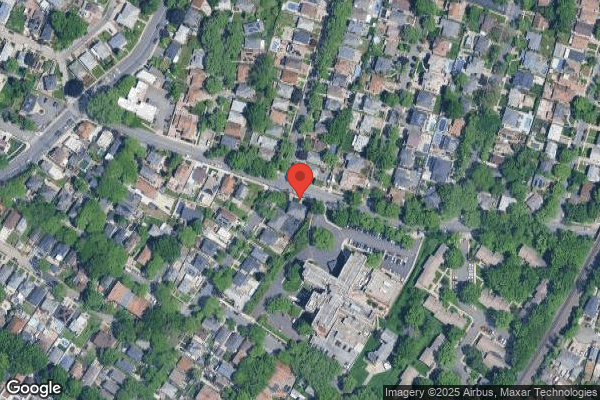
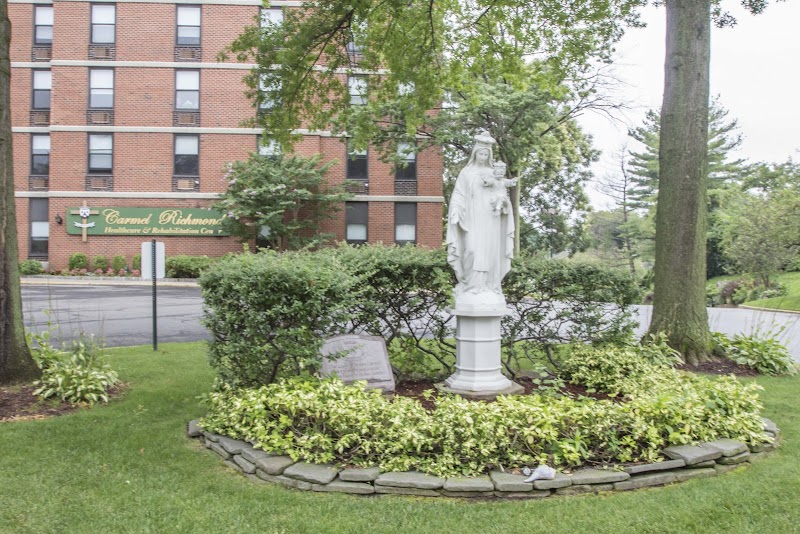
88 OLD TOWN ROAD, STATEN ISLAND, NY 10304 (718) 979-5000
Non profit - Corporation 300 Beds ARCHCARE Data: November 2025
Trust Grade
93/100
#17 of 594 in NY
Last Inspection: August 2024

Within standard 12-15 month inspection cycle. Federal law requires annual inspections.

Overview

Carmel Richmond Healthcare and Rehab Center has received an impressive Trust Grade of A, indicating they are excellent and highly recommended for care. They rank #17 out of 594 facilities in New York and #1 out of 10 in Richmond County, placing them in the top tier of nursing homes. However, the facility is experiencing a worsening trend, with issues increasing from 2 in 2019 to 3 in 2024. Staffing is average with a 3/5 rating and a 27% turnover rate, which is better than the state average, and they have no fines on record, suggesting a stable environment. However, there are some concerns, including a failure to report an incident involving a resident with lacerations and not completing important assessments for residents with pressure injuries, indicating areas for improvement in their care protocols.

Trust Score
A
93/100
In New York
#17/594
Top 2%
Safety Record
Low Risk
No red flags
Inspections
Getting Worse
2 → 3 violations
Staff Stability
✓ Good
27% annual turnover. Excellent stability, 21 points below New York's 48% average. Staff who stay learn residents' needs.
Penalties
✓ Good
No fines on record. Clean compliance history, better than most New York facilities.
Skilled Nurses
✓ Good
Each resident gets 56 minutes of Registered Nurse (RN) attention daily — more than average for New York. RNs are trained to catch health problems early.
Violations
✓ Good
Only 5 deficiencies on record. Cleaner than most facilities. Minor issues only.
★★★★★
5.0
Overall Rating
★★★☆☆
3.0
Staff Levels
★★★★★
5.0
Care Quality
★★★★★
5.0
Inspection Score
Stable
2019: 2 issues
2024: 3 issues

The Good

  • 5-Star Quality Measures · Strong clinical quality outcomes
  • Low Staff Turnover (27%) · Staff stability means consistent care
  • Full Sprinkler Coverage · Fire safety systems throughout facility
  • No fines on record
  • Staff turnover is low (27%)

    21 points below New York average of 48%

Facility shows strength in quality measures, staff retention, fire safety.

The Bad

Chain: ARCHCARE

Part of a multi-facility chain

Ask about local staffing decisions and management

The Ugly 5 deficiencies on record

Aug 2024 3 deficiencies
CONCERN (D) 📢 Someone Reported This

A family member, employee, or ombudsman was alarmed enough to file a formal complaint

Potential for Harm - no one hurt, but risky conditions existed

Report Alleged Abuse (Tag F0609)

Could have caused harm · This affected 1 resident

**NOTE- TERMS IN BRACKETS HAVE BEEN EDITED TO PROTECT CONFIDENTIALITY** Based on record review and interview conducted during the Recertification Survey from 07/31/2024 to 08/07/2024, the facility did...

Read full inspector narrative →
**NOTE- TERMS IN BRACKETS HAVE BEEN EDITED TO PROTECT CONFIDENTIALITY** Based on record review and interview conducted during the Recertification Survey from 07/31/2024 to 08/07/2024, the facility did not ensure that all alleged violations involving abuse, neglect, including injuries of unknown source were reported immediately, but not later than 2 hours after the allegation was made, if the events that cause the allegation involve abuse or result in serious bodily injury, or not later than 24 hours if the events that cause the allegation do not involve abuse and do not result in serious bodily injury, to the New York State Department of Health. This was evident in 1 (Resident #132) of 6 residents reviewed for accidents, out of 38 total sampled residents. Specifically, the facility did not report to the New York State Department of Health an unwitnessed incident on 07/21/2024 when Resident #132 was observed on the floor with lacerations to the forehead and nose bridge. The findings are: The facility policy titled Identification, Investigation Protection and Reporting Physical Abuse, Mistreatment and Neglect of Residents with a revision date of 06/2024 documented that it is the facility's policy to make all employees aware of their responsibility to identify and report resident abuse. The purpose of the policy was to provide directions for identifying, reporting and investigating cases or suspected cases of resident physical abuse, mistreatment, neglect or misappropriation of resident property. The policy stated that all alleged violations involving abuse, neglect, exploitation or mistreatment, including injuries of unknown source and misappropriation of Resident property, are reported immediately, but not later than 2 hours after the allegation is made. Resident #132 had diagnoses of Atrial Fibrillation, Heart Failure, and Benign Prostatic Hyperplasia. The Minimum Data Set assessment dated [DATE] documented that Resident #132 had moderately cognitive impairment. Resident #132 can independently roll left and right in bed, independently sit on side of bed to lie flat in bed, independently move from lying on the back to sit on the side of the bed with no back support, requires supervision with sit to stand and transfers. The 24 Hour Report- Falls dated 07/21/2024 at 4:22 AM completed by the Registered Nurse documented Resident #132 had an unwitnessed fall. Resident was found lying on their left side on the floor beside their bed. Resident stated they do not remember how they end up on the floor. Laceration was noted on the center of Resident's forehead and nose bridge. The facility form titled Tracking Quality Data for Improving Patient Safety documented that Resident #132 was observed on the floor by the nurse, unwitnessed, on 07/21/2024 at 4:00 AM. Resident was found with laceration to the center of their forehead and nose bridge, there was no change in level of consciousness. Staff written statements documented that Resident #132 was last toileted at 2:30 AM and was last seen by staff sleeping in bed at 3:00 AM. Resident #132 was sent to the emergency department for evaluation. The facility's summary of investigation concluded that the investigation revealed there was no cause to believe an alleged resident abuse, mistreatment, or neglect had occurred. The Hospital Patient Information and Transfer form dated 07/23/2024 documented Resident #132's primary diagnosis was status post fall, nasal bone fracture, forehead and nasal lacerations repaired. There was no documented evidence the facility reported Resident #132's unwitnessed fall incident, resulting in nasal bone fracture and lacerations, to the New York State Department of Health. During an interview on 08/02/2024 at 10:30 AM, Registered Nurse #1 stated Resident #132 was found on the floor with injury sustained to the head. They stated they believe that the injury was from the fall. During an interview on 08/05/2024 at 11:02 AM, the Director of Nursing stated that the incident was not reported to the New York State Department of Health because the investigation revealed that there was a fall even though it was not witnessed by the staff. They stated that any allegation of abuse or injury of unknown origin have to be reported within 2 hours to the New York State Department of Health. 10 NYCRR 415.4(b)(2)
CONCERN (D)

Potential for Harm - no one hurt, but risky conditions existed

Deficiency F0637 (Tag F0637)

Could have caused harm · This affected 1 resident

**NOTE- TERMS IN BRACKETS HAVE BEEN EDITED TO PROTECT CONFIDENTIALITY** Based on record review and interview conducted during the Recertification Survey from 07/31/2024 to 08/07/2024, the facility fai...

Read full inspector narrative →
**NOTE- TERMS IN BRACKETS HAVE BEEN EDITED TO PROTECT CONFIDENTIALITY** Based on record review and interview conducted during the Recertification Survey from 07/31/2024 to 08/07/2024, the facility failed to ensure that a Significant Change in Status Assessment was completed within 14 days after a determination had been made in the resident's status from baseline occurred. This was evident in 1 (Resident # 167) of 1 resident reviewed for pressure ulcer / injury out of 35 total sampled residents. Specifically, on 06/30/2024, Resident #167 was identified with an unstageable pressure injury to the sacrum and deep tissue pressure injury to the left heel. The facility did not have a Significant Change in Status Assessment completed after the change in condition was identified. The findings are: The facility policy titled Minimum Data Set Completion with a revised date of 10/2023 stated that the Minimum Data Set is completed on all residents according to a mandated assessment schedule. The purpose of the policy was to ensure all Minimum Data Set assessments are completed in a timely manner and transmitted to the Centers for Medicare & Medicaid Services. The policy documented that the Minimum Data Set Coordinator determines if a resident has a significant change in condition. If the resident meets the criteria for a change in condition, the Minimum Data Set Coordinator notifies the team of the change in assessment and proceeds with a Significant Change assessment. The Coordinator ensures all assessments are submitted to the Centers for Medicare and Medicaid Services within 14 days of completion. Resident #167 was admitted to the facility on with diagnoses including Stroke, Hypertension, and Diabetes Mellitus. The Quarterly Minimum Data Set assessment dated [DATE] documented that Resident #167 had severely impaired cognition. The assessment documented that Resident #167 had no pressure ulcers/injuries and had no venous or arterial ulcers present. The wound / skin assessment note dated 06/30/2024 documented Resident #167 had unstageable pressure injury to the sacrum and deep tissue pressure injury to the left heel. The medical record lacked documented evidence that a Significant Change in Status Assessment was completed within 14 days after Resident #167's pressure ulcers / injuries were identified. During an interview on 08/05/2024 at 10:15 AM, the Minimum Data Set Coordinator stated that a significant change Minimum Data Set assessment must be completed if there was a significant change in a resident's condition. They stated they do not know why Resident #167's significant change assessment was overlooked. The Coordinator stated they have not received the wound tracker report from the Wound Care Nurse. 415.11(a)(3)(ii)
CONCERN (D) 📢 Someone Reported This

A family member, employee, or ombudsman was alarmed enough to file a formal complaint

Potential for Harm - no one hurt, but risky conditions existed

Food Safety (Tag F0812)

Could have caused harm · This affected 1 resident

Based on observation, record review, and interview conducted during the Recertification Survey from 07/31/2024 to 08/07/2024, the facility did not ensure that food was stored, prepared, and distribute...

Read full inspector narrative →
Based on observation, record review, and interview conducted during the Recertification Survey from 07/31/2024 to 08/07/2024, the facility did not ensure that food was stored, prepared, and distributed in accordance with professional standards for food service safety. This was evident during the Kitchen Task observation. Specifically, 1.) 2 boxes containing 20 (14 ounces) packages of bratwurst in the kitchen refrigerator and the freezer in the emergency food area were stored beyond the best by date, and 2.) potentially hazardous food were not maintained at an acceptable temperature to limit the growth of pathogen. The findings are: The facility's policy on Food and Supply Storage with a revised date of 03/2024 documented all food, non-food items and supplies used in food preparation shall be stored in such a manner as to prevent contamination to maintain the safety and wholesomeness of the food for human consumption. Most, but not all, products contain an expiration date. The words sell by, best by, enjoy -by or use-by should precede the date. Foods past the use-by, sell-by, best-by, or enjoy by date should be discarded. The facility's policy on Food Handling Guidelines with a revised date of 01/2024 documented that temperature of food shall be monitored using accurate thermometers. The cold food preparation documented that prior to preparation, chill potentially hazardous ingredients to 41 degrees Fahrenheit for food that will be eaten without further cooking. Examples include salads, sandwiches, cut leafy greens and produce and reconstituted food. Products are chilled again after preparation to 41 degrees Fahrenheit before being served. 1.) On 07/31/2024 between 9:20 AM and 10:05 AM, during the tour of the main kitchen and emergency food storage area with the Food Service Director, a box containing 10 (14-ounce) packages of smoked bratwurst with a best by date of 05/18/2024 were in the kitchen meat refrigerator. During the tour of the emergency food storage area and freezer with Patient Food Services Utility Worker #1, a box of frozen smoked bratwurst with a best by date of 05/18/2024 were in the meat refrigerator. During an interview on 07/31/2024 at 10:11 AM, Patient Food Services Utility Worker #1 stated that the food's best by date is the expiration date. They stated they must get rid of food items that are expired. During an interview on 08/02/2024 at 10:12 PM, The Chef Manager stated they are usually in the kitchen at 5:30- 6:00AM in the morning and had not noticed any items out of date. During an interview on 08/06/2024 at 11:14 AM, the Food Service Director stated rounds were done daily in the kitchen which includes checking for expired food items. These checks were done daily on the units and the main kitchen. 2). During an observation on the 2nd floor with the Chef Manager on 08/02/2024 from 11:26 AM to 11:28 AM, temperature of 2 egg salad sandwiches were taken. The first sandwich had a temperature of 62.2 degrees Fahrenheit, and the 2nd sandwich had a temperature of 57.9 degrees Fahrenheit. On 08/02/2024 from 12:18 PM to 12:25 PM, an observation of the 6th floor unit refrigerator with the Chef Manager revealed the following: the unit refrigerator had a temperature of 40 degrees Fahrenheit, an egg salad sandwich had a temperature of 66 degrees Fahrenheit, and a tuna sandwich had a temperature of 66.6 degrees Fahrenheit. The egg salad sandwiches were stamped Prepared food, not reheated. Prepared 8/2/2024 at 10:24 AM. During an interview on 08/02/2024 at 11:29 AM, Patient Food Services Utility Worker #3 stated they made the sandwiches and placed them in the freezer at 9:00 AM. They stated they had never taken the temperature of the sandwiches. During an interview on 08/02/2024 at 11:28AM, the Chef Manager stated that the sandwiches should be below 41 degrees Fahrenheit. They stated that the sandwiches were made earlier at 10:24 AM. During an interview on 08/06/2024 at 11:19AM, the Food Service Director stated that sandwiches are made daily and are wrapped and placed in the freezer to get the temperature below 41 degrees Fahrenheit. They stated that sandwiches are brought up the last minute after lunches are brought to the units. They stated they have not noticed any problems with the temperature. 10 NYCRR 415.14(h)
Oct 2019 2 deficiencies
CONCERN (D)

Potential for Harm - no one hurt, but risky conditions existed

MDS Data Transmission (Tag F0640)

Could have caused harm · This affected 1 resident

Based on record review and staff interview conducted during the recertification survey, the facility did not ensure Minimum Data Set (MDS) 3.0 assessments were electronically transmitted to the Qualit...

Read full inspector narrative →
Based on record review and staff interview conducted during the recertification survey, the facility did not ensure Minimum Data Set (MDS) 3.0 assessments were electronically transmitted to the Quality Improvement Evaluation System (QIES) Assessment Submission and Processing (ASAP) system in a timely manner. Specifically, a discharge assessment was not transmitted within 14 days after completion. This was evident for 1 of 1 resident reviewed for the Resident Assessment task. (Resident # 4). The finding is: Resident #4 was discharged from the facility on 06/22/2019. Nursing progress note dated 6/22/19 documented resident was discharged home accompanied by ambulette attendants. Medications were reviewed and discharge instruction was given. Review of the medical record revealed no documented evidence that a discharge MDS assessment had been completed. On 10/07/2019 at 11:30 AM, the State Agent (SA) requested the discharge MDS. MDS Coordinator # 2 processed and transmitted the discharge assessment on 10/07/2019. On 10/08/2019 at 10:33 AM, an interview was conducted with MDS Coordinator #1. MDS Coordinator #1 stated the discharge was inadvertently inactivated. A 30-day assessment was completed on 06/25/2019 for billing purposes, although the resident was actually discharged on 06/22/2019. The discharge assessment was missed. On 10/09/2019 at 2:45 PM, MDS Coordinator #2 was interviewed. MDS Coordinator #2 stated when residents are scheduled for discharge, the information is automatically populated in the Sigma Care (a type of electronic medical record) and is displayed on the dash board. When staff goes into the record pending assessments are automatically displayed. Then the discharge MDS is generated. MDS Coordinator #2 further stated that because the resident had a previous discharge and readmission, the discharge assessment opened on the wrong date and we did not catch the correct discharge date . The facility policy and procedure is that discharge assessments should be transmitted 14 days from completion. 415.11
CONCERN (D)

Potential for Harm - no one hurt, but risky conditions existed

Assessment Accuracy (Tag F0641)

Could have caused harm · This affected 1 resident

**NOTE- TERMS IN BRACKETS HAVE BEEN EDITED TO PROTECT CONFIDENTIALITY** 2. Resident #276 was admitted to the facility on [DATE] with diagnoses that included Anxiety Disorder, Depression, and Hypertens...

Read full inspector narrative →
**NOTE- TERMS IN BRACKETS HAVE BEEN EDITED TO PROTECT CONFIDENTIALITY** 2. Resident #276 was admitted to the facility on [DATE] with diagnoses that included Anxiety Disorder, Depression, and Hypertension. The Annual Minimum Data Set 3.0 (MDS) dated [DATE] documented the resident had moderately impaired cognition with an active diagnosis of Anxiety Disorder and received antianxiety medication for seven days. The Quarterly Minimum Data Set 3.0 (MDS) dated [DATE] and 7/15/17 documented a diagnosis of Anxiety Disorder. The Quarterly Minimum Data Set 3.0 (MDS) dated [DATE] documented the resident had moderately impaired cognition and received antianxiety medication for seven days. Psychiatrist Progress note dated 9/27/19 documented the resident with a diagnosis of Generalized Anxiety D/O (Disorder) and was prescribed Buspar 15 mg TID (three times daily). There was no documented evidence that the resident's diagnosis of Anxiety Disorder was captured on the 9/19/19 MDS assessment. On 10/09/19 at 08:34 AM, an interview was conducted with the MDS Coordinator who stated the diagnosis of Anxiety Disorder was overlooked on the Quarterly MDS dated [DATE]. The MDS Coordinator also stated the diagnosis of the resident is determined through review of the Physician's History and Physical, the diagnoses listed in Sigma (electronic record) and also the Nurse Practitioner's notes and should have been included on the MDS. 415.11(b) Based on observation, record review and interview, the facility did not ensure that the Minimum Data Set 3.0 (MDS) accurately reflected the resident's status. Specifically, (1) a resident with no pressure ulcer during the assessment period was documented on the MDS as having an unhealed Stage 2 pressure ulcer and, (2) a diagnosis of Anxiety Disorder was not captured on the MDS of a resident receiving anti-anxiety medication. This was evident for 2 residents reviewed out of a total investigation sample of 38 residents. (Resident # 117 and 276). The findings are: 1. Resident #117 was admitted to the facility on [DATE] with diagnoses that included Alzheimer's Disease, Non-Alzheimer's Dementia, Peripheral Vascular Disease, Aphasia, Cerebrovascular Accident, and Hemiplegia. The Quarterly Minimum Data Set (MDS) dated [DATE] documented the resident is totally dependent on two staff persons for bed mobility, transfer and toilet use. The MDS also documented that the resident had one unhealed Stage 2 pressure ulcer. The Comprehensive Care Plan (CCP) for Skin Integrity: at Risk for Skin Breakdown updated 7/24/19 documented: resident is at high risk for skin breakdown. The CCP monitoring/Evaluation note updated 10/09/19 documented: Resident has a skin breakdown as evidenced by Stage 1 to inner left gluteal fold. Review of the quarterly updates on Comprehensive Care Plan (CCP) for Skin Integrity since 01/2016 to 10/2019 contained no documentation that the resident had a Stage 2 pressure ulcer. Nursing Progress note dated 10/8/19 documented: Resident noted to have small reddened area approx. 4 cm x 2 cm irregular shaped redness. Remains incontinent of bowel and bladder. Turned and positioned. Evaluated by NP. Hydrocolloid patch applied. Nurse Practitioner progress note dated 10/8/19 documented: Seen and examined for staff report of redness on left buttock noted this (morning) am. Has a H/O (history) of same. Exam reveals small irregular area of erythema. Skin is intact. The Matrix for Providers (CMS-822) printed 10/3/2019 contained no documentation that the resident had a pressure ulcer. There was no documented evidence that the resident had a Stage 2 pressure ulcer. On 10/08/19 at 08:46 AM, an interview was conducted with the Registered Nurse/Unit Manager (RN#4). RN #4 stated that resident has no pressure ulcer at present but only skin redness on the left buttock which was first developed on 7/27/19 and healed. RN #4 stated that the redness is noted on and off due to Moisture Associated Skin Damage (MASD) and is usually treated with ointment and cream with good effect. The present treatment is being applied every 3 days as per order. Skin is assessed on shower days and documented in the treatment section of the skin assessment progress note. Residents with PRESSURE ULCER are followed up by the wound doctor weekly to evaluate and assess the PRESSURE ULCER status and document it on the assessment progress note for other staff to know the current status. The resident is not on weekly MD wound round assessment list because she has no pressure ulcer. RN#4 also stated that resident had skin redness/excoriation that developed to stage 2 pressure ulcer long time ago but has been healed since May this year. RN stated that the coding on the current MDS indicating stage 2 PRESSURE ULCER is an error done by the MDS assessor. On 10/09/19 at 08:15 AM, an interview was conducted with the Registered Nurse RN/ MDS Coordinator (RN #3). RN #3 stated that the tools used during the quarterly MDS review to ensure that the resident's condition is consistent with the information in the progress notes and plan of care are the weekly decubitus round notes, the care plans, the push notes, from the morning reports if there is any newly developed issues, from the dieticians' notes if there is new skin breakdown and if there is any issues unresolved. RN #3 also stated that to ensure that each portion of the assessment is accurate, everything is checked with Point Right - the weekly documentation of the wound assessment, MD orders, treatment records, and current care plans are also checked during the assessment period. RN #3 further stated that the MDS coordinator does not go through every section for accuracy, the RN or the interdisciplinary team (IDT) member that does the assessment is expected to check for the accuracy of the section completed while the MDS coordinator checks and review for the completion of the entire assessment and submit for [NAME]. RN stated that the error noted in the resident's current MDS was not captured by the assessor and by the coordinator before final submission. RN #3 stated that the MDS will be modified and re-submitted immediately.
Understanding Severity Codes (click to expand)
Life-Threatening (Immediate Jeopardy)
J - Isolated K - Pattern L - Widespread
Actual Harm
G - Isolated H - Pattern I - Widespread
Potential for Harm
D - Isolated E - Pattern F - Widespread
No Harm (Minor)
A - Isolated B - Pattern C - Widespread

Questions to Ask on Your Visit

  • "Can I speak with families of current residents?"
  • "What's your RN coverage like on weekends and overnight?"

Our Honest Assessment

Strengths
  • • Grade A (93/100). Above average facility, better than most options in New York.
  • • No major safety red flags. No abuse findings, life-threatening violations, or SFF status.
  • • No fines on record. Clean compliance history, better than most New York facilities.
  • • Only 5 deficiencies on record. Cleaner than most facilities. Minor issues only.
Concerns
  • • No significant concerns identified. This facility shows no red flags across CMS ratings, staff turnover, or federal penalties.
Bottom line: Generally positive indicators. Standard due diligence and a personal visit recommended.

About This Facility

What is Carmel Richmond Healthcare And Rehab Center's CMS Rating?

CMS assigns CARMEL RICHMOND HEALTHCARE AND REHAB CENTER an overall rating of 5 out of 5 stars, which is considered much above average nationally. Within New York, this rating places the facility higher than 99% of the state's 100 nursing homes. This rating reflects solid performance across the metrics CMS uses to evaluate nursing home quality.

How is Carmel Richmond Healthcare And Rehab Center Staffed?

CMS rates CARMEL RICHMOND HEALTHCARE AND REHAB CENTER's staffing level at 3 out of 5 stars, which is average compared to other nursing homes. Staff turnover is 27%, compared to the New York average of 46%. This relatively stable workforce can support continuity of care.

What Have Inspectors Found at Carmel Richmond Healthcare And Rehab Center?

State health inspectors documented 5 deficiencies at CARMEL RICHMOND HEALTHCARE AND REHAB CENTER during 2019 to 2024. These included: 5 with potential for harm.
Who Owns and Operates Carmel Richmond Healthcare And Rehab Center?

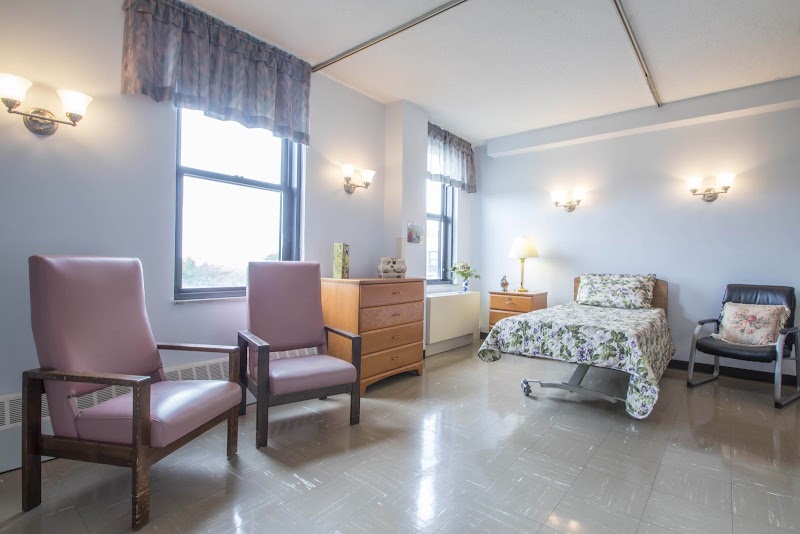
CARMEL RICHMOND HEALTHCARE AND REHAB CENTER is owned by a non-profit organization. Non-profit facilities reinvest revenue into operations rather than distributing to shareholders. The facility is operated by ARCHCARE, a chain that manages multiple nursing homes. With 300 certified beds and approximately 276 residents (about 92% occupancy), it is a large facility located in STATEN ISLAND, New York.
How Does Carmel Richmond Healthcare And Rehab Center Compare to Other New York Nursing Homes?

Compared to the 100 nursing homes in New York, CARMEL RICHMOND HEALTHCARE AND REHAB CENTER's overall rating (5 stars) is above the state average of 3.1, staff turnover (27%) is significantly lower than the state average of 46%, and health inspection rating (5 stars) is much above the national benchmark.

What Should Families Ask When Visiting Carmel Richmond Healthcare And Rehab Center?

Based on this facility's data, families visiting should ask: "Can I visit during a mealtime to observe dining assistance and food quality?" "How do you handle medical emergencies, and what is your hospital transfer rate?" "Can I speak with family members of current residents about their experience?"

Is Carmel Richmond Healthcare And Rehab Center Safe?

Based on CMS inspection data, CARMEL RICHMOND HEALTHCARE AND REHAB CENTER has a clean safety record: no substantiated abuse findings (meaning no confirmed cases of resident harm), no Immediate Jeopardy citations (the most serious violation level indicating risk of serious injury or death), and is not on the Special Focus Facility watch list (a federal program monitoring the lowest-performing 1% of nursing homes). The facility has a 5-star overall rating and ranks #1 of 100 nursing homes in New York. While no facility is perfect, families should still ask about staff-to-resident ratios and recent inspection results during their visit.

Do Nurses at Carmel Richmond Healthcare And Rehab Center Stick Around?

Staff at CARMEL RICHMOND HEALTHCARE AND REHAB CENTER tend to stick around. With a turnover rate of 27%, the facility is 19 percentage points below the New York average of 46%. Low turnover is a positive sign. It means caregivers have time to learn each resident's needs, medications, and personal preferences. Consistent staff also notice subtle changes in a resident's condition more quickly. Registered Nurse turnover is also low at 29%, meaning experienced RNs are available to handle complex medical needs.

Was Carmel Richmond Healthcare And Rehab Center Ever Fined?

CARMEL RICHMOND HEALTHCARE AND REHAB CENTER has no federal fines on record. CMS issues fines when nursing homes fail to meet care standards or don't correct problems found during inspections. The absence of fines suggests the facility has either maintained compliance or corrected any issues before penalties were assessed. This is a positive indicator, though families should still review recent inspection reports for the full picture.

Is Carmel Richmond Healthcare And Rehab Center on Any Federal Watch List?

CARMEL RICHMOND HEALTHCARE AND REHAB CENTER is not on any federal watch list. The most significant is the Special Focus Facility (SFF) program, which identifies the bottom 1% of nursing homes nationally based on persistent, serious quality problems. Not being on this list means the facility has avoided the pattern of deficiencies that triggers enhanced federal oversight. This is a positive indicator, though families should still review the facility's inspection history directly.