MASONIC CARE COMMUNITY OF NEW YORK


2150 BLEECKER STREET, UTICA, NY 13501 (315) 798-4800
Non profit - Corporation 320 Beds Independent Data: November 2025
Trust Grade
65/100
#298 of 594 in NY
Last Inspection: May 2024

Within standard 12-15 month inspection cycle. Federal law requires annual inspections.

Overview

Masonic Care Community of New York has a Trust Grade of C+, indicating it is slightly above average but still has room for improvement. In terms of rankings, it stands at #298 out of 594 nursing homes in New York, placing it in the bottom half, but it ranks #3 out of 17 in Oneida County, meaning only two local facilities are better. The facility is improving, with the number of issues decreasing from 8 in 2021 to 7 in 2024. Staffing is a strength, with a 4 out of 5-star rating and a turnover rate of 31%, which is well below the state average. However, there is less RN coverage than 81% of New York facilities, which raises some concern. There have been some specific incidents that families should consider. For example, the facility did not have a clear process for residents to file grievances, as six residents reported they were unaware of how to do so. Additionally, seven out of 16 residents were not adequately offered fluids to maintain hydration, which is a critical aspect of their care. Finally, two residents were found to be self-administering medications without proper assessments, which could pose safety risks. While there are strengths in staffing and a trend towards improvement, these concerns highlight areas that need attention.

Trust Score
C+
65/100
In New York
#298/594
Top 50%
Safety Record
Low Risk
No red flags
Inspections
Getting Better
8 → 7 violations
Staff Stability
○ Average
31% turnover. Near New York's 48% average. Typical for the industry.
Penalties
✓ Good
No fines on record. Clean compliance history, better than most New York facilities.
Skilled Nurses
⚠ Watch
Each resident gets only 26 minutes of Registered Nurse (RN) attention daily — below average for New York. Fewer RN minutes means fewer trained eyes watching for problems.
Violations
⚠ Watch
16 deficiencies on record. Higher than average. Multiple issues found across inspections.
★★★☆☆
3.0
Overall Rating
★★★★☆
4.0
Staff Levels
★★★★☆
4.0
Care Quality
★★★☆☆
3.0
Inspection Score
Stable
2021: 8 issues
2024: 7 issues

The Good

  • 4-Star Staffing Rating · Above-average nurse staffing levels
  • 4-Star Quality Measures · Strong clinical quality outcomes
  • Full Sprinkler Coverage · Fire safety systems throughout facility
  • No fines on record
  • Staff turnover below average (31%)

    17 points below New York average of 48%

Facility shows strength in staffing levels, quality measures, fire safety.

The Bad

3-Star Overall Rating

Near New York average (3.1)

Meets federal standards, typical of most facilities

Staff Turnover: 31%

15pts below New York avg (46%)

Typical for the industry

The Ugly 16 deficiencies on record

May 2024 7 deficiencies
CONCERN (D)

Potential for Harm - no one hurt, but risky conditions existed

Deficiency F0554 (Tag F0554)

Could have caused harm · This affected 1 resident

Based on observation, record review, and interview during the recertification survey conducted 5/13/2024 -5/17/2024, the facility did not ensure a resident's ability to safely self-administer medicati...

Read full inspector narrative →
Based on observation, record review, and interview during the recertification survey conducted 5/13/2024 -5/17/2024, the facility did not ensure a resident's ability to safely self-administer medications was clinically appropriate for 2 of 6 residents (Residents #96 and #155) reviewed. Specifically, Resident #96 was observed with prescribed eye drops and nasal sprays at their bedside and there was no documented evidence the resident had an assessment or order to self-administer the medications. Additionally, Resident #155 was observed with prescribed eye drops at their bedside and did not have an assessment or order to self-administer the medications. Findings include: The facility policy Self-Administration of Medication Program reviewed 11/2016 documented the interdisciplinary team would determine if a resident was clinically appropriate for self-administration of medications, and reviewed on a quarterly and significant change basis. That decision would be documented in the resident's record. A physician order was needed prior to initiation of the program specifying the specific medications the resident would be self-administering. Resident education would be done. The unit nurse would monitor at all times if the medications were taken and document accordingly. 1) Resident #96 had diagnoses including Parkinson's disease, bipolar disorder, and chronic obstructive pulmonary disease. The 12/28/2023 Minimum Data Set assessment documented the resident understood and was able to make self-understood, wore corrective lenses, had full cognition, choice was important, used a walker or wheelchair, and was set-up only for eating. The 11/10/2023 through 5/3/2024 vision consults documented the resident was seen for previous cataract surgeries. Eye drops were ordered. There was no documentation the resident was able to self-administer the eye drops. The 1/23/2024, 3/13/2024 and 4/1/2024 30/60 day physician progress notes by the Medical Director did not document the resident had the ability to self-administer medications. The 3/23/2024 physician orders by Nurse Practitioner #16 documented: - Fluticasone propionate (steroid medication) 50 micrograms per actuation nasal spray, instill 1 spray by nasal route daily in each nostril for allergic rhinitis; and, - Cough drops 2.7 milligrams give 1 by mucous membrane as needed and may leave at bedside to be used as needed. There was no order to leave fluticasone propionate at the bedside for self-administration. The 3/23/2024 comprehensive care plan documented the resident was non-compliant, had Parkinson's Disease, had impaired vision, had cataract removal, had bipolar disease, refused medications at times, could self-administer polyethylene glycol 3350 (brand name, Miralax, a laxative) and would self-administer nebulizer treatments safely. Interventions included provide supervision as appropriate, eyeglasses, give medications as prescribed, may keep post-operative eye drops at bedside and self-administer per instructions, educate on importance of medication consistencies, encourage to take medications, report concerns to medical provider, prepare laxative per order for self-administration, set up nebulizer machine for resident to self-administer nebulizer treatment, and follow up 30 minutes post self-administration to ensure all medication administered. The care plan did not document the resident could self-administer nasal spray or eye drops. The 3/27/2024 Nurse Practitioner #16 readmission after elective surgery note did not document the resident was able to self-administer medications. The 5/3/2024 physician orders by the Medical Director documented: - FML Liquifilm 0.1% eye drops instill one drop in each eye 2 times per day for macular degeneration (loss in the center of field of vision). - Muro 128 5% eye ointment instill in each eye once daily at bedtime to lower lid for macular degeneration. - Refresh celluvisc 1% eye gel in dropperette instill one drop in each eye once daily for dry eye syndrome; and, - Zaditor 0.025% (0.035%) eye drops instill 1 drop in each eye 2 times per day for macular degeneration. There was no order to leave at bedside for self-administration. The April 2024 and May 2024 Medication Administration Records documented the eye drops were administered as ordered. On 5/13/2024 at 12:04 PM, Resident #96 was observed in their room with eye drops on the bedside table. On 5/15/2024 at 8:48 AM, the resident was observed sitting in their recliner with multiple prescription nasal sprays and eye drops on the bedside table. The resident stated they self-administered the eye drops and nasal sprays. During a follow-up observation at 10:41 AM, the resident was not in their room. The eye drops and nasal sprays remained on the bedside table next to the recliner. On 5/16/2024 at 9:25 AM, the resident was again observed to have eye drops and nasal sprays left on the bedside table. When interviewed on 5/16/2024 at 10:20 AM, Licensed Practical Nurse #14 stated they were not sure if the resident was allowed to self-administer medications, was not sure if there was a physician order, and had informed the nurse manager they needed one. The nurse would ask the resident if they took the eye drops and nasal sprays, and then would sign in the Medication Administration Record as given. During a follow-up interview at 2:48 PM, Licensed Practical Nurse #14 stated they asked the resident why the eye drops and nasal sprays were in the room. The resident had then thrown them in the garbage. They should have removed the medications from the room instead of letting the resident throw them away. The resident would not give the medications to the nurse. The resident had a lot of home medications delivered to them and staff had to check to ensure the resident did not have any in the room. When interviewed on 5/16/2024 at 3:16 PM, Registered Nurse Manager #15 stated any resident wishing to self-administer medications needed a physician order specifically for that medication. An assessment was done for competency. Resident #96 had a post-operation order to self-administer the eye drops that was discontinued. The manager did not know why the nurses were leaving the nasal sprays and eye drops in the room and did not know the resident preferred to self-administer them. 2) Resident #155 had diagnoses including dementia and glaucoma. The 4/20/2024 Minimum Data Set assessment documented the resident had difficulty seeing, wore corrective lenses, had moderately impaired cognition, and required moderate to maximum assistance with most activities of daily living. The 4/5/2024 physician orders by the Medical Director documented: - Lumigan 0.01% eye drops instill 1 drop in each eye at bedtime for high ocular pressure and please wait 5 -10 minutes between administering other eye drops. - Rhopressa 0.02% eye drops instill 1 drop in each eye at bedtime for high ocular pressure and please wait 5 - 10 minutes between administering other eye drops. - Timolol Maleate 0.5% eye drops instill 1 drop in each eye twice a day for high ocular pressure and please wait 5 - 10 minutes between administering other eye drops. - Patanol 0.1% eye drops instill 1 drop in each eye twice a day for high ocular pressure and please wait 5 -10 minutes between administering other eye drops. - Pilocarpine 1% eye drops instill 1 drop in each eye four times a day for high ocular pressure and please wait 5 - 10 minutes between administering other eye drops; and, - Nurse to administer all eye drops. Please do not leave eye drops at bedside. The 4/5/2024 comprehensive care plan documented the resident had impaired vision and had glaucoma. Interventions included report visual changes, wore corrective glasses, refer to eye specialist if needed, administer eye medication per orders, and could keep eye drops at bedside with nursing to observe resident taking them as prescribed. The 4/1/2024 30/60 day physician progress note by the Medical Director documented the resident was upset they were not allowed to self-administer eye drops. The Medical Director had explained the difficulty of administering the eye drops appropriately. The resident's cognition was getting worse. The resident was not accepting the reality of their decline. The plan was for nursing to continue administering the eye drops. The 4/8/2024 30/60 day physician progress note by the Medical Director documented the resident had short-term memory deficits, denied vision changes, and was on multiple eye drops. The note did not document the resident could self-administer eye drops. The April 2024 and May 2024 Medication Administration Records documented all eye drops were administered as ordered. The 5/5/2024 at 7:31 AM interdisciplinary progress note by Licensed Practical Nurse #23 documented the resident had eye drops in their nightstand drawer and was not allowed to have them there or self-administer them. They tried to remove them from the drawer on evening and night shifts and were unsuccessful due to the resident's refusal. The nurse did administer the eye drops. When interviewed on 5/15/2024 at 10:52 AM, Resident #155 stated they used to have their eye drops in the room. The nurse took them out and now they did not know their scheduled administration times. When interviewed on 5/16/2024 at 10:20 AM, Licensed Practical Nurse #14 stated the resident was not allowed to have medications in their room. The resident was allowed to have the eye drops in the room in the past but was getting more confused. They were not allowed to keep medicatons in their room starting about 2 - 3 months ago. They were not sure how the resident got the eye drops in their room but the resident would not give them back to nursing. They administered the eye drops to the resident and sometimes left them in the room. Sometimes they let the resident self-administer the eye drops when they were agitated, but only under supervision. They knew they were not supposed to do that as there was no order for self-adminstration of the eye drops. When interviewed on 5/16/2024 at 3:16 PM, Registered Nurse Manager #15 stated any resident wishing to self-administer medications needed a physician order specifically for that medication. An assessment was done for competency. Currently, Resident #155 did not have an order to self-administer eye drops. The unit nurse should not leave them bedside without an order to do so. The care plan should not contain reference to self-administer the eye drops if the resident did not have a current order to do so. When interviewed on 5/17/2024 at 8:32 AM, Nurse Practitioner #16 stated they could assess the resident and determine if they were capable to self-administer medications. An order was then entered into the electronic medical record allowing the self-administration of that particular medication. When interviewed on 5/17/2024 at 9:02 AM, Assistant Director of Nursing #2 stated care plans should be accurate and up-to-date. Care plans were reviewed quarterly and with significant changes. Resident #155's care plan should have been updated as it was confusing as to whether the resident was able to self-administer the eye drops or not. No medications should be left at bedside unless the resident had a self-administration order for that specific medication, as another resident could enter the room and take the medication not prescribed them. There was also no way of knowing if the resident was taking the medication as ordered. 10NYCRR 415.3(e)(1)(vi)
CONCERN (D)

Potential for Harm - no one hurt, but risky conditions existed

Comprehensive Care Plan (Tag F0656)

Could have caused harm · This affected 1 resident

Based on record review and interview during the recertification survey conducted 5/13/2024 - 5/17/2024, the facility did not ensure a comprehensive, person-centered care plan was developed and impleme...

Read full inspector narrative →
Based on record review and interview during the recertification survey conducted 5/13/2024 - 5/17/2024, the facility did not ensure a comprehensive, person-centered care plan was developed and implemented to meet a resident's medical and nursing needs for 1 of 5 residents (Resident #170) reviewed. Specifically, Resident #170 did not have a comprehensive, person-centered care plan that included anticoagulant (blood thinner) therapy. Findings include: The facility policy Interdisciplinary Comprehensive Care Plans (IDCP), reviewed 2/2022, documented a person-centered interdisciplinary care plan would be developed by the Interdisciplinary Care Team to identify a resident's problems, strengths and needs, and incorporate their personal and cultural preferences. The interdisciplinary care plan would be used to ensure services were provided to assist the resident achieve or maintain their highest practicable physical, mental, and psychosocial well-being. Resident #170 had diagnoses that included long-term use of anticoagulants, personal history of other venous thrombosis (blood clot) and embolism (block in blood flow due to clot), and personal history of pulmonary embolism (blocked lung artery). The 2/28/2024 Minimum Data Set assessment documented the resident was cognitively intact, was on an anticoagulant with an indication noted, and was supervision to independent for most activities of daily living. The comprehensive care plan, dated 11/21/2022, documented the resident was at low risk for falls. The interventions included to monitor the environment for fall hazards, to encourage non-skid socks and to assist to the bathroom at 4:00 AM daily. The comprehensive care plan did not include the resident received anticoagulant medication or any interventions related to the anticoagulant medication use. Physician orders dated 2/1/2022 and renewed 4/16/2024 documented the resident took one apixaban (brand name Eliquis, a blood thinner) 2.5 milligram tablet by mouth two times per day related to a personal history of other venous thrombosis and embolism. During an interview on 5/16/2024 at 12:29 PM, Certified Nurse Aide #12 stated they knew how to care for a resident based on their plan of care, which was located in a resident's electronic health record. There was also a copy of the care plan posted in a resident's closet. Residents on anticoagulant medication needed to be monitored for bruising. The nurse manager was responsible for the plans of care which were then distributed to the staff so they knew how to care for a resident. During an interview on 5/16/2024 at 12:39 PM, Licensed Practical Nurse #13 stated staff knew how to care for a resident based on their care plan, which was located in the certified nurse aide book and in each resident room in a resident's closet. If a resident was on anticoagulant medication, they were to monitor with routine labs and monitor for bruising. They were unsure if anticoagulant interventions were on Resident #170's plan of care. During an interview and record review on 5/16/2024 at 3:16 PM, Nurse Manager #15 stated they were responsible for ensuring the development of and the updating of comprehensive care plans with input from other departments in the facility. The care plan was a snapshot of the specific care needs of a resident. Care plans were reviewed annually to verify if the interventions were still appropriate. If a resident was on anticoagulant therapy, it would be a part of the care plan. There was a specific template for an anticoagulant therapy care plan in the electronic medical record that they utilized. Nurse Manager #15 then reviewed Resident #170's plan of care and stated the template for anticoagulant therapy had not been initiated, which meant there was no care plan related to anticoagulant therapy. Resident #170 should have had a care plan for anticoagulant therapy. During an interview on 5/17/2024 at 9:02 AM, Assistant Director of Nursing #2 stated the purpose of a resident's care plan was to inform the staff of what they needed to know about a resident and how to care for that resident. If a resident was on anticoagulant therapy, they should have had a care plan that addressed it. Care plans were updated quarterly and as needed, and should always be accurate and up-to-date. If a care plan was not up-to-date or accurate, the resident could be provided the wrong care. 10NYCRR 415.11(c)(1)
CONCERN (D)

Potential for Harm - no one hurt, but risky conditions existed

Pressure Ulcer Prevention (Tag F0686)

Could have caused harm · This affected 1 resident

Based on observation, record review, and interview during the recertification survey conducted 5/13/2024-5/17/2024, the facility did not ensure residents with pressure ulcers received necessary treatm...

Read full inspector narrative →
Based on observation, record review, and interview during the recertification survey conducted 5/13/2024-5/17/2024, the facility did not ensure residents with pressure ulcers received necessary treatment and services, consistent with professional standards of practice, to promote wound healing, prevent infection, and prevent new ulcers from developing for 1 of 4 residents (Resident #106) reviewed. Specifically, Resident #106 was ordered to have bilateral heel float boots on 4/29/2024 and did not receive the left boot until 5/12/2024. The undated facility policy Skin Assessment for Admissions or Change of Condition: Skin Prevention Protocol documented there were three categories for a resident's skin that required physician orders and care plan interventions: high risk, moderate risk, and a skin tear. High risk included orders for a pressure guard mattress, specialty cushion, heel float boots (brand name Skil-Care) to bilateral feet when in bed, skin prep to heels, and an occupational therapy referral to recommend positioning aides. Interventions geared towards skin and skin protocol would be documented on the care plan. Moderate risk orders included a standard gel wheelchair cushion, physical and occupational evaluation for moderate skin risk, barrier cream and lotion to skin. The undated facility policy Resident Care Guide: AOD Point of Care documented the resident care guide would be reviewed by the assigned caregiver prior to delivery of care to a resident. Staff would provide care in accordance with the resident care guide located on the kiosk and in the resident's room. Any care that was not given would be reported to the nurse and the reason documented in the resident's chart. The resident's care guide would include resident-specific skin care interventions, which included pressure relieving devices. Resident #106 diagnoses included peripheral vascular disease (a circulation disorder), diabetes mellitus type 2 with diabetic neuropathy, and heart failure. The 4/17/2024 Minimum Data Set assessment documented the resident was cognitively intact, was dependent for toileting, lower body dressing, putting on/taking off footwear, and transfers, had one or more pressure ulcers: one was unstageable, and one was an unstageable deep tissue injury, was at risk for developing pressure ulcers, and had two venous and arterial ulcers. The resident had a pressure-reducing device for the wheelchair and the bed, nutrition/hydration intervention, pressure ulcer/injury care, application of non-surgical dressings, applications of medications/ointments, and application of dressings to feet. The comprehensive care plan initiated 3/18/2024 documented the resident was at high risk for skin breakdown related to decreased mobility, obesity, and comorbidities. Interventions included heel protection by having heels propped up by pillows and heel float boots to left and right foot on at all times except for hygiene. The care plan also documented the resident's basic care needs and preferences for daily routine would be honored. Interventions included a pressure-relieving cushion in their chair for comfort and positioning and was dependent on one assist for footwear. The 4/29/2024 wound care follow-up consult note documented the left heel deep tissue injury was stable in size and appeared to be resolving. There was no sign of on-going pressure injury. The recommendation for the left heel was for skin prep and bilateral heel float boots (brand name Skil-Care) while in bed. Further instructions documented heel cup for protection and support bandage (brand name Tubigrip) daily to the left heel. The 4/29/2024 physician's order by Nurse Practitioner #19 documented the resident was to have bilateral lower extremity heel float boots (brand name Skil-Care) on at all times except for during the skin checks on every shift. The May 2024 Medication Administration Record nursing comments documented the following for the resident's order for bilateral heel float boots: - On 5/1/2024 on the 11:00 PM to 7:00 AM shift by Licensed Practical Nurse #21: The resident had only the right one on and the left one was not found. - On 5/6/2024 on the 11:00 PM to 7:00 AM shift by Licensed Practical Nurse #21: The resident had only the right one on and the left one was not found - On the 5/10/24 on the 11:00 PM to 7:00 AM shift by Licensed Practical Nurse #22: The resident only had the right one on. The resident stated they had never had a second one. The supervisor was notified. A 5/11/2024 at 7:16 AM interdisciplinary progress note by Registered Nurse Supervisor #20 documented the resident had an order for bilateral heel float boots but only had one boot for the lower right extremity. They were unable to locate another heel float boot in the nursing emergency storage closet. During an observation and interview on 5/13/2024 at 12:33 PM, Resident #106 was observed wearing bilateral blue, soft heel float boots. They stated they had gone to a wound clinic appointment a few weeks ago (4/29/2024) for their foot wound. It took the facility two weeks to get the heel float boot for their left foot that was recommended by the wound care clinic. They had received the second boot this past weekend (5/12/2024). A 5/14/2024 at 4:26 PM interdisciplinary progress note by Registered Nurse Unit Manager #15 documented that during the resident's skin check it was noted the resident's left heel had a 0.1 centimeter x 0.1 centimeter yellow, sloughing (dead/dying tissue) dry scab, the left great toe had a small, yellow fluid-filled blister, and there was fresh blood draining from the skin between the toes. A new order for a protecting cream (brand name Eucerin) was obtained. During an interview on 5/16/2024 at 2:53 PM, Licensed Practical Nurse #14 stated the resident received their heel float boot for the right foot right away but did not receive their left heel float boot until a couple of days ago. They were unsure why the resident had not received the left heel float boot sooner. They and the other nurses had marked the resident had bilateral heel float boots in place in the medication administration record when they should not have, as the resident had only had one heel float boot. They should have charted the resident only had the right heel float boot. The resident told them they had been asked by a couple of managers why they only had one heel float boot, but no one had provided the second heel float boot. The nurse managers usually provided the heel float boots to the nursing staff for the residents who had them ordered. They were aware the heel float boots were kept in the nursing storage room on the second floor but had not gone to get a second heel float boot for the resident. During an interview on 5/16/2024 at 3:16 PM, Registered Nurse Unit Manager #15 stated the heel float boots were in the clean utility room and in the laundry room. If there were no heel float boots available, the unit secretary would order more from central supply, and they would be delivered to the unit the same day. Resident #106 needed two heel float boots as that was the order they had entered. They did not always go and retrieve the heel float boots when they entered the order as they expected the floor nurses to obtain them for the resident. They received an electronic message on 5/11/2024 from the floor nurse that stated the resident had still not received the left heel float boot from when the order was entered on 4/29/2024. They retrieved a heel float boot on 5/12/2024 from the second floor storage room as the supervisor on duty on 5/11/2024 was unable to locate one. The nurses should not have been signing off that the resident had both heel float boots when the resident only had the right heel float boot. They should had documented the resident only had the right heel float boot and then gone and retrieved a left heel float boot. The resident had bad skin and was highly susceptible to new skin issues and breakdown. The resident was on their radar for skin issues and went to the wound clinic regularly. During an interview on 5/17/2024 at 8:32 AM, Nurse Practitioner #16 stated it was an issue if a resident had an order entered on 4/29/2024 for bilateral heel float boots but did not receive the left heel float boot until 5/12/2024. They expected to be notified if there was a delay in obtaining the heel float boots. They performed medical rounds once weekly so there was opportunity for it to be discussed with nursing. Resident #106 was at risk for skin breakdown without wearing the second heel float boot that was ordered. Medical orders needed to be followed. If there was a reason why they could not be followed, a medical provider needed to be notified. During an interview on 5/17/2024 at 9:02 AM, Assistant Director of Nursing #2 stated it was an issue if an order for bilateral heel float boots was entered on 4/29/2024 but the resident did not receive one of the heel float boots until 5/12/2024. The resident could potentially have skin breakdown or the wound worsening on the heel that did not have the heel float boot. If a heel float boot was not available, the nursing staff should have notified the nurse manager, or the nurse supervisor during an off-shift, so they could get the ordered heel float boot. 10NYCRR 415.12(c)(1)
CONCERN (D)

Potential for Harm - no one hurt, but risky conditions existed

Deficiency F0700 (Tag F0700)

Could have caused harm · This affected 1 resident

Based on observation, record review, and interview during the recertification survey conducted 5/13/2024 -5/17/2024, the facility did not ensure residents were assessed for risk of entrapment from bed...

Read full inspector narrative →
Based on observation, record review, and interview during the recertification survey conducted 5/13/2024 -5/17/2024, the facility did not ensure residents were assessed for risk of entrapment from bed rails prior to installation, review the risks and benefits of bed rails with the resident or resident representative, or obtain informed consent prior to the installation of bed rails for 1 of 1 residents (Resident #40) reviewed. Specifically, for Resident #40, there was no documented evidence of a bed rail assessment prior to bed rail installation, that the risks and benefits of bed rails were explained to the resident or their representative, or that consent was obtained prior to bed rail installation. Findings include: The undated facility policy Bed Rail Policy documented the facility would utilize approaches to identify and reduce safety risks and hazards commonly associated with bed rail use, including individual bed rail evaluations. Residents would be screened upon admission, readmission or change of condition. Prior to the installation of bed rails the following would be done: - The resident would be assessed for risk of entrapment from bed rails. Bed rails would not be used when a resident could not raise and lower them easily and would not be used for staff convenience or discipline. - If the Interdisciplinary Team had determined that bed rails were safe and appropriate for use, the risks and benefits of bed rail use would be reviewed with the resident and/or resident representative, and informed consent would be obtained and documented. - A physician order would be obtained for bed rail use, including the medical symptom contributing to the need. - Use of the bed rail would be indicated on the care plan. 1) Resident #40 had diagnoses including polyneuropathy (nerve damage impacting sensation and coordination), vascular dementia, and morbid obesity. The 4/25/2024 Minimum Data Set assessment documented the resident was cognitively intact, had functional limitation with range of motion with impairment of one arm, was dependent for rolling side to side, sit to lying, lying to sitting on edge of the bed, and transfers, and did not use bed rails. The 11/1/2021 admission bed rail assessment documented the rationale for potential use of bed rails and included the resident was non-ambulatory due to a left above-the-knee amputation and a right below-the-knee amputation. Assist rails on both sides of the upper bed were recommended to increase the resident's independence. There was no current, documented bed rail assessment for the use of half bed rails and no informed consent for use of half bed rails. The 5/13/2024 comprehensive care plan documented the resident was dependent of two-person hands-on assistance with rolling from left to right. Staff could use a slide sheet for repositioning. There was no documentation in the care plan for bed rail use. There were no physician orders for the use of bed rails. Resident #40 was observed: - On 5/13/2024 at 10:58 AM, in bed with half bed rails up on both sides of the bed. - On 5/14/2024 at 8:52 AM, in bed with half bed rails up on both sides of the bed. - On 5/15/2024 at 11:04 AM, in bed with both half bed rails up on both sides of the bed. When interviewed, the resident stated they did not use the bed rails very often and they were used to keep them from falling out of bed. During an interview on 5/15/2024 at 9:45 AM, Certified Nurse Aide #5 stated Resident #40 had bed rails to pull themselves up in bed and to keep them from falling out of bed. They believed bed rails were documented in the care plan and there was an order for them. Bed rails could be dangerous. If the resident got stuck they could break a bone. During an interview on 5/15/2024 at 9:53 AM, Registered Nurse Unit Manager #3 stated bed rails were utilized for repositioning, enhanced mobility, and independence. Physical therapy completed and documented the assessment for bed rails, and then maintenance installed them. Bed rails were documented in the care plan and did not require a physician order. They required consent by either the resident or their representative after risks and benefits were discussed with the resident as bed rails could cause entrapment, strangulation, skin tears, broken bones, or bruising. An admission assessment had been completed on 11/1/2021 for assist rails, and they were not sure if a periodic reassessment was required by nursing or physical therapy. The facility used two types of bed rails: assist rails and half bed rails. Resident #40 had half bed rails for positioning and had a bed rail assessment completed for assist rails. The manager stated that half bed rails carried a bigger risk for injury than assist rails. During an interview on 5/15/2024 at 10:27 AM Assistant Director of Nursing #2 stated bed rails were used to increase bed mobility and independence after being assessed by physical therapy. Physical therapy assessed the ability of a resident to use the bed rails safely and the bed rails had to increase a resident's function. The risks and benefits were reviewed with a resident or their representative and a consent form was to be signed prior to usage. Bed rails could cause injuries such as skin tears and entrapment. Bed rails were documented on a resident's care plan and were reassessed quarterly, on readmission, and with any change in condition for continued ability and necessity. During an interview on 5/15/2024 at 10:50 AM Director of Physical Therapy #4 stated each resident was screened on admission to determine if bed rails were appropriate for turning and positioning. If it was determined bed rails were appropriate, they would notify the nurse manager. They reviewed with the resident or their representative the risks of the bed rails which included injuries or entrapment. If bed rails were appropriate, they would be added to the care plan by nursing. There was a specific form in the electronic health record that they filled out for the bed rail assessment. Residents were reassessed quarterly or with change of condition to make sure bed rail use was still appropriate. The risk/benefit and consent was required by regulation and half bed rails carried a greater risk than a hand assist rail due to size. 10NYCRR 415.12(h)(1)(2)
CONCERN (D)

Potential for Harm - no one hurt, but risky conditions existed

Deficiency F0760 (Tag F0760)

Could have caused harm · This affected 1 resident

Based on record review and interviews during the recertification survey conducted 5/13/2024 - 5/17/2024 the facility did not ensure that residents were free of any significant medication errors for 1 ...

Read full inspector narrative →
Based on record review and interviews during the recertification survey conducted 5/13/2024 - 5/17/2024 the facility did not ensure that residents were free of any significant medication errors for 1 of 1 residents (Resident #28) reviewed. Specifically, Resident #28 did not receive four consecutive doses of carbidopa - levodopa (brand name Rytary, used to treat Parkinson's Disease) on 5/11/2024 -5/12/2024 as physician ordered. Findings include: The 5/2024 revised Medication Administration policy documented if medication was not available at the time it was to be administered, the nurse was to notify the Nurse Manager/Supervisor. The Nurse Manager/Supervisor would explore alternative methods for obtaining medication such as the backup medication storage (Omnicell), contacting the pharmacy or contacting medical for an alternate medication. Resident #28 was admitted to the facility with diagnoses including Parkinson's Disease. The 4/10/2024 Minimum Data Set assessment documented the resident was cognitively intact, used a walker and wheelchair for mobility, and required partial to moderate assistance with upper and lower body dressing, personal hygiene, and ambulation. A 4/25/2024 physician order documented carbidopa - levodopa 23.75 milligrams - 95 milligrams capsule extended release; give two capsules by mouth three times daily at 8:00 AM, 1:00 PM and 6:00 PM. The May 2024 Medication Administration Record documented carbidopa - levodopa 23.75 milligrams - 95 milligrams was not administered due to being unavailable on: - 5/11/2024 at 6:00 PM. - 5/12/2024 at 8:00 AM. - 5/12/2024 at 1:00 PM. - 5/12/2024 at 6:00 PM. Interdisciplinary progress notes documented: - On 5/11/2024 at 10:23 PM by Licensed Practical Nurse #9: Carbidopa - levodopa 23.75 milligrams - 95 milligrams capsule extended release was out. Pharmacy called, awaiting delivery, supervisor aware. - On 5/11/2024 at 10:37 PM by Registered Nurse Supervisor #10: Resident missing last dose of carbidopa - levodopa 23.75 milligrams - 95 milligrams that evening. Pharmacy notified. Medication not provided on last run of pharmacy. - On 5/12/2024 at 1:52 PM by Registered Nurse Supervisor #11: Call placed to pharmacy because resident had still not received their carbidopa -levodopa 23.75 milligrams - 95 milligrams. Per pharmacy a new prescription was sent out and the medication would arrive on the next pharmacy run. There was no progress note by nursing documenting that medical was notified of the missed doses of carbidopa -levodopa 23.75 milligrams - 95 milligrams. During an interview on 5/14/2024, Licensed Practical Nurse #18 stated medications were reordered by the nurses as needed. Residents should not run out of medication; sometimes if a pill was dropped or wasted, they may run out of medicaton. If a medication was not available, pharmacy needed to be called. They would check and see if it was available in the backup medication storage (Omnicell), then notify the supervisor. The supervisor was supposed to communicate with medical for instructions. Parkinson's Disease medications were supposed to be given to prevent worsening of tremors, rigidity, and difficulty moving. During an interview on 5/14/2024 at 2:05 PM, Registered Nurse Unit Manager #3 stated medications were reordered by the nurses when they noticed them getting low. The medications came in 30-days at a time and pharmacy was supposed to automatically refill. If a nurse noticed a medication was low, they should reorder right on the Medication Administration Record. If a medication was unavailable, they needed to call the pharmacy to get the medication there as soon as possible. The medication carbidopa -levodopa 23.75 milligrams - 95 milligrams for Resident #28 was not available in the backup medication storage. If a resident was going to miss a dose, medical should have been notified. If that medication was missed for a dose or more than one dose, it could potentially worsen symptoms such as tremors or movement difficulty. Pharmacy sometimes made emergency medication runs. Medical should have been notified of Resident # 28 not receiving their carbidopa -levodopa 23.75 milligrams - 95 milligrams. Physician # 17 was on call, and they were not sure if they were notified. During an interview on 5/14/2024 at 2:40 PM, Physician #17 stated they were on call the weekend of 5/11/2024 - 5/12/2024. If a resident missed a medication, they should have been notified. They were not notified of Resident #28 missing doses of their Parkinson's Disease medication. Missing four doses consecutively of a medication for Parkinson's' Disease could have caused difficulty swallowing, movement difficulty, or increased tremors. It could have negatively affected the resident's quality of care and life. During an interview on 5/14/2024 at 2:47 PM, Registered Nurse Supervisor #11 stated they were the weekend supervisor 5/11/2024 - 5/12/2024. If a resident was missing medications, they would have checked the backup medication storage, then called pharmacy. Medical should be notified of any medications missed. They were notified the morning of 5/12/2024 that Resident #28 missed their medication for Parkinson's Disease for two doses. They called pharmacy and were notified that the dosage had changed, pharmacy fixed the error, and it would be delivered the evening of 5/12/2024. They did not notify medical. Medical should have been notified of the missed doses as they may had wanted to change orders or give further instructions. They were not aware of the effects the carbidopa - levodopa 23.75 milligrams - 95 milligrams was supposed to have on the resident. They believed it was facility policy to notify medical of missed medications. During an interview on 5/15/2024 at 9:18 AM, Licensed Practical Nurse #9 stated all nurses were responsible for making sure medications were available. Resident #28 had enough carbidopa -levodopa 23.75 milligrams - 95 milligrams for 2 doses on 5/11/2024. They notified the nursing supervisor and wrote a note. On 5/12/2024 at 6:00 PM there was still no carbidopa -levodopa 23.75 milligrams - 95 milligrams for Resident #28. There was a progress note that a supervisor had called pharmacy, but no physician recommendations were documented. The medication was for Parkinson's' Disease and helped decrease Resident #28's tremors. If they did not receive the medication as ordered, their tremors could worsen. Medical should have been notified of the missed medication. The 5/12/2024 6:00 PM dose was not given. The evening supervisor was aware and stated they would administer a one-time dose when it came in. There was no dose documented as being given on 5/12/2024 evening shift. 10 NYCRR 415.12(m)(2)
CONCERN (D)

Potential for Harm - no one hurt, but risky conditions existed

Infection Control (Tag F0880)

Could have caused harm · This affected 1 resident

Based on observation and interview during the recertification surveys conducted 5/13/2024-5/17/2024 the facility did not ensure an infection prevention and control program designed to provide a safe, ...

Read full inspector narrative →
Based on observation and interview during the recertification surveys conducted 5/13/2024-5/17/2024 the facility did not ensure an infection prevention and control program designed to provide a safe, sanitary, and comfortable environment was established and maintained to help prevent the development and transmission of communicable diseases and infections for 1 of 3 residents (Resident #15) reviewed. Specifically, Resident #15 had a urinary catheter bag resting on the floor without a barrier for multiple days of survey. Findings include: The undated facility policy Catheter Care - Nurses Aides Role documented the external catheter tube needed to be kept as clean as possible. The drainage bag should never touch the floor. Resident #15 had diagnoses including urinary retention and a history of urinary tract infections. The 4/27/2024 Minimum Data Set assessment documented the resident had moderately impaired cognition, was dependent with toilet hygiene, was dependent with transfers, and had an indwelling urinary catheter (a tube inserted into the bladder to collect urine). The 11/8/2023 updated comprehensive care plan documented the resident had a suprapubic urinary catheter (a type of urinary catheter surgically inserted through the skin to the bladder), needed assistance with daily care, was non-ambulatory, and was on long-term antibiotics for urinary tract infection prevention. Interventions included keep the drainage system below bladder level, monitor for symptoms of urinary tract infection, maintain cleanliness and dressing around catheter site, two staff assist with mechanical lift transfers, ensure the drainage bag was emptied at the end of every shift, and provide toileting assistance after meals and as needed. Resident #15 had the following physician orders: - 8/1/22: change catheter drainage bag every 2 weeks and as needed, and catheter care every shift and as needed. - 3/23/23: 16-French (size) with 10 milliliter balloon suprapubic catheter. - 4/26/23: enhanced barrier precautions due to indwelling urinary catheter. - 12/17/23: cleanse suprapubic catheter site with normal saline, apply antibiotic ointment and cover with a 2 x 2 gauze and border dressing; and, - 3/7/24: registered nurse only to change the suprapubic catheter every 6 weeks. When interviewed on 5/13/24 at 11:03 AM, Resident #15 stated the suprapubic catheter caused a burning feeling around the site. The site was covered with a dry 4 x 4 gauze dressing. There were mucous shreds observed in the catheter tubing. The drainage bag was hanging from the door side of the recliner the resident was sitting in, the bag was uncovered, and the bottom of the drainage bag was resting on the bare floor. During follow-up observations at 11:54 AM and 1:30 PM, the resident continued sitting in the recliner and the bottom of the drainage bag remained on the bare floor. On 5/14/24 at 9:02 AM and 1:52 PM, Resident #15 was sitting in a recliner in their room. The catheter drainage bag was hanging from the door side of the recliner and the bottom of the bag was resting on the bare floor. There was no barrier between the catheter drainage bag and the floor. On 5/15/2024 at 9:31 AM and 1:13 PM, Resident #15 was sitting in a recliner in their room. The catheter drainage bag was hanging from the door side of the recliner and the bottom of the drainage bag was again resting on the floor without a barrier. When interviewed on 5/16/2024 at 10:45 AM, Certified Nurse Aide #6 stated catheter drainage bags were to be covered with a privacy bag for dignity, below bladder level, and should not touch the floor at any time to prevent infection. The drainage bags had a port on the bottom that staff cleansed with alcohol wipes to prevent infection prior to and after emptying the bag. Staff usually put a plastic container under the drainage bag in the event it leaked and used as a barrier from the floor. Staff hung the bag from the side of the recliner or bed, and the aide did not realize the bag was touching the floor. The aide stated it was an infection risk if the bottom of the bag rested on the bare floor as germs could travel from the port, into the bag, up the tube and into the body. When interviewed on 5/16/2024 at 11:13 AM, Licensed Practical Nurse #7 stated catheter drainage bags were supposed to hang in a privacy bag, not touching the floor, and below bladder level. The privacy bags were to prevent contamination and ensure dignity. The nurse was not sure if the privacy bags were permeable or non-permeable. The catheter tubing was not supposed to touch the floor for infection control purposes. The nurse noticed on 5/16/2024 that the bottom of the bag was resting on the floor, so they put the drainage bag in a privacy bag and set that in a plastic container. The resident had a history of urinary tract infections. Staff received infection control training yearly that included catheter care. If the bottom of the drainage bag was on the floor without a barrier, it was possible that germs from the floor could enter the bag and travel into the body causing an infection. When interviewed on 5/16/2024 at 3:15 PM, the Registered Nurse Infection Preventionist stated they had heard a resident did not have their catheter bag in a privacy bag, which was permeable. Catheter drainage bags were to hang from a non-moveable area, off the floor, and in a privacy bag. Infection control education was done yearly and included catheter care. The drainage bags were not supposed to touch the floor, as they could potentially leak. If they touched the floor, germs could enter from the opening, travel up the tube, and enter the body thereby causing an infection. All unit nursing staff should check drainage bag positioning when performing resident care. 10NYCRR 415.12(d)(1)
CONCERN (E)

Potential for Harm - no one hurt, but risky conditions existed

Grievances (Tag F0585)

Could have caused harm · This affected multiple residents

Based on record review and interviews during the recertification survey conducted 5/13/2024 -5/17/2024, the facility did not ensure they had a process in place for residents to have their grievances a...

Read full inspector narrative →
Based on record review and interviews during the recertification survey conducted 5/13/2024 -5/17/2024, the facility did not ensure they had a process in place for residents to have their grievances addressed appropriately for 6 of 8 anonymous residents. Specifically, 6 anonymous residents present at the Resident Council meeting stated they did not know how to file a grievance. Additionally, the facility did not have a process for residents to file a grievance anonymously. Findings include: The facility policy Resident Grievances, dated 11/2016, documented every resident of the facility and/or their resident representative had the right to voice grievances to the facility without fear of reprisal or discrimination. Grievances included those with respect to care and treatment which had been provided as well as those which had not been provided, the behavior of staff and of other residents, and other concerns regarding their stay at the facility. The facility would make prompt efforts to resolve a grievance. All complaints and/or grievances presented by a resident and/or the resident representative would be forwarded to the Director of Social Services as the designated Grievance Official and documented on the Resident Grievance Form. The form would be completed by the staff involved in the grievance which included the resolution. The facility policy did not state how residents were informed of their right to file a grievance or how to do so anonymously. The grievance log for year 2024 documented one grievance in total for the facility. On 5/14/2024 at 10:44 AM the grievance policy was observed in the front lobby inside a locking glass wall case in the upper right top corner which was above head height when standing. During a Resident Council Meeting on 5/13/2024 at 3:33 PM, 6 anonymous residents stated they did not know how to file a grievance. They had verbalized concerns to the social workers in the facility regarding whether their unit had a process to file a grievance. 2 anonymous residents stated they did not hear back about a resolution to their concerns or questions. During an interview on 5/16/2024 at 10:39 AM, the Social Services Director stated they did not have too many formal complaints in the facility. Formal complaints were considered grievances, so many concerns did not always come directly to them. Grievances or concerns were a team approach. If a grievance was received, the Administrator reviewed the grievance which then got distributed to the appropriate parties. The social services department was responsible for interviewing alert and oriented residents residing on the households. They were unaware of how residents were educated on the grievance process. If there was a concern, they informed the resident and/or resident's family the process of a grievance investigation. Nursing was responsible for any action in regards to concerns with the nursing staff, and did not always know the outcome. A concern did not always rise to the level of a grievance; it would still be investigated but not documented on a formal grievance form. If a resident wanted to file an anonymous grievance, they could call the Department of Health. Any staff member could provide that number to a resident. They were not aware of any internal process to file an anonymous grievance. During an interview on 5/17/2024 at 9:27 AM, Licensed Practical Nurse #13 stated they were unsure of the process for residents to file a grievance but knew there was a form that would be filled out. They thought residents had to speak with the Ombudsman as part of the process of filing a grievance. During an interview on 5/17/2024 at 9:30 AM, Certified Nurse Aide #12 stated they were unsure of how a resident filed a grievance. They thought residents would have to speak to the nurse manager or the social worker. During an interview on 5/17/2024 at 9:32 AM, the Administrator stated they had two different processes for addressing resident grievances in the facility. The first process was for formal written grievances, which were addressed with a letter provided to the complainant stating the outcome. The second process was for family and resident concerns, such as a family member wanting a resident to attend more activities, which did not rise to the level of a grievance. They had never had a resident file an anonymous grievance. If a resident had an anonymous grievance they wanted to file, they were encouraged, during resident council meetings, to call the Ombudsman. They would have to check with the admissions department to see if the right to file grievances was addressed in the admission packet. If it was not addressed in the admission packet, they would have to check with the social workers to see if it was reviewed during the admission meeting. 10NYCRR 415.3(C)(1)(ii)
Dec 2021 8 deficiencies
CONCERN (D)

Potential for Harm - no one hurt, but risky conditions existed

Safe Environment (Tag F0584)

Could have caused harm · This affected 1 resident

Based on observation and interview during the recertification survey conducted 12/1/21-12/7/21, the facility failed to provide residents with a safe, clean, comfortable, and homelike environment for 2...

Read full inspector narrative →
Based on observation and interview during the recertification survey conducted 12/1/21-12/7/21, the facility failed to provide residents with a safe, clean, comfortable, and homelike environment for 2 of 18 nursing units (Buffalo and Amherst) and 1 of 1 (Resident #88) resident reviewed. Specifically, the Buffalo Unit dining room had a missing section of flooring material and there were sections of floor in Buffalo Unit resident room D101 and in Amherst Unit resident room D201 that were uneven and potential tripping hazards. Resident #88 was observed on multiple days in a soiled Broda (type of geriatric positioning chair) chair. Findings include: The undated facility policy Guidelines for Household Equipment Cleaning documents each household was responsible for the cleaning of household equipment. Cleaning assignments were specific and completed per schedule (weekly, monthly, and quarterly). Wheelchairs/specialty chairs will be cleaned on a weekly basis by the 11-7 shift certified nurse aide (CNA). All scheduled cleaning will be verified completed by staff documentation on the cleaning sheets located on each household in the cleaning folder. The Neighborhood Manager will review sheets weekly and forward completed sheets monthly to the Infection Control Nurse. FLOORING During an observation on 12/1/21 at 11:45 AM, the Buffalo Unit dining room had a 3-inch x 8-inch section of damaged/missing floor with the old floor visible. The damaged flooring was a potential tripping hazard. During an interview on 12/7/21 at 11:06 AM, the Director of Plant Operations stated they were not aware of the section of missing floor tile in the Buffalo Unit dining room, and it was a potential tripping hazard. They stated there were no work orders for the flooring, and the quarterly rounding of the facility had been suspended since the COVID-19 pandemic approximately two years ago. During an observation on 12/2/21 at 2:30 PM, there were floor expansion joints that went through Buffalo Unit resident room D101 and the hall located outside the room and through Amherst Unit resident room D101 and the hall located outside the room. These expansion joints joined two different buildings together and were approximately 17 feet long. These sections of the floor were uneven and potential tripping hazards. During an interview on 12/6/21 at 5:05 PM, the Director of Plant Operations stated the expansion joint that separated the two buildings was approved during original construction of the buildings. The Director stated there were potential fall risk concerns with both sides of the floor expansion joints being uneven at different floor levels. The Director of Plant Operations had not heard of any resident falling due to the uneven floors in/near resident rooms D101 and D201 and had not heard of any resident concerns with the expansion joint. During an observation on 12/7/21 at 2:32 PM, the depth measurement of the Buffalo Unit floor expansion joint ranged from 3/8 inch to 1/2 inch. During an observation on 12/7/21 at 2:34 PM, the depth measurement for the Amhurst Unit floor expansion joint was 1/4 inch. BRODA CHAIR Resident #88 had diagnoses including failure to thrive, weight loss and neurocognitive disorder. The 9/25/21 Minimum Data Set (MDS) assessment documented the resident had severe cognitive impairment and required extensive assistance with all activities of daily living (ADLs). The comprehensive care plan (CCP) documented the resident required assistance of 2 people with transfers using the total mechanical lift into the Broda chair. The resident was observed sitting in their Broda chair with dried, crusty debris on the right side of the chair: - On 12/1/21 at 11:16 AM. - On 12/2/21 at 10;00 AM. - On 12/3/21 at 10:15 AM. During an interview with certified nurse aide (CNA) #12 on 12/3/21 at 10:17 AM, they stated they were assigned to Resident #88 today and did not notice the resident's soiled chair. They stated it was the responsibility of the 11 PM-7 AM shift to clean the Broda chairs. The CNA stated any staff that noticed the chairs were dirty when they were transferring the residents into the chairs should clean them. CNA #12 stated it was important to keep the chairs clean for the residents' dignity. During an interview with licensed practical nurse (LPN) #10 on 12/3/21 at 10:23 AM, they stated they did not notice the resident's chair was soiled. The LPN stated it was the responsibility of the 11 PM-7 AM shift to clean resident equipment. LPN #10 stated the CNA assigned to the resident or any staff who noticed that a resident was sitting in a dirty chair should clean the chair. During an interview with registered nurse (RN) Unit Manager #15 on 12/3/21 at 10:28 AM, they stated it was the responsibility of housekeeping to keep the chairs clean. The RN stated housekeeping would be notified if a chair was dirty, but all staff should be keeping resident chairs clean when they noticed they were dirty. During an interview on 12/3/21 at 10:32 AM, housekeeper #11 stated it was not the responsibility of housekeeping to clean resident chairs. It was the responsibility of the staff caring for the residents to notice an unclean chair and clean the chair. During an interview on 12/7/21 at 12:02 PM, the Director of Nursing (DON) stated it was the responsibility of the 11 PM-7 AM shift to clean the resident chairs. The DON stated it is also was the responsibility of any staff that observed a resident sitting in a dirty chair to clean the chair by wiping off the debris with soap and water, then taking a sanitizing wipe and cleaning the chair. The DON expected staff to have residents sitting in clean chairs for resident dignity. 10NYCRR 415.29(j)(1)
CONCERN (D)

Potential for Harm - no one hurt, but risky conditions existed

Comprehensive Care Plan (Tag F0656)

Could have caused harm · This affected 1 resident

Based on observation, record review, and interview during the recertification survey conducted 12/1/21 through 12/7/21, the facility failed to develop and implement a comprehensive person-centered car...

Read full inspector narrative →
Based on observation, record review, and interview during the recertification survey conducted 12/1/21 through 12/7/21, the facility failed to develop and implement a comprehensive person-centered care plan for each resident, that includes measurable objectives and timeframes to meet a resident's medical, nursing, and mental and psychosocial needs for 1 of 3 residents (Resident #187) reviewed. Specifically, Resident #187 was care planned for the use of an extra-large (XL) mechanical lift sling (used when transferring a resident from surface to surface) and staff transferred the resident using a large size sling. Findings Include: The facility policy Interdisciplinary Comprehensive Care Plans (IDCP) revised 11/2016 documented the IDCP will be completed in conjunction with the MDS (Minimum Data Set) assessment, each discipline will be responsible to evaluate the resident and identify strengths and needs, will be reviewed/updated as changes occur, and as changes occur, and any changes in the resident care plan will be reflected in the resident profile. The facility policy Safe Patient Handling and Mobility revised 5/16/17 documents to use lifts/transfer devices/methods for all resident lifts and transfers per plan of care. Lift Transfer Competencies are performed on an annual basis and includes identifying sling/harness and identifying size when indicated. The undated resident care procedure titled Liko Viking Lift (Model M) documents indication for use of the lift will be indicated on resident's plan of care, including sling size. The facility Viking lift procedure revised 12/2015 documented determine the proper sling based on resident size and weight, head control, upper body strength, and coordination, overall muscle tone lower extremity amputation, toileting needs, intended use comfort and other special needs. The colored stripe on the sling is color coded for the size. This stripe is also a guide to place on the midline (spine) of the resident's back when applying this sling. Resident #187 was admitted to the facility with diagnoses including cerebral vascular accident (CVA, stroke) with right hemiplegia (paralysis). The 9/25/21 Minimum Data Set (MDS) assessment documented the resident had severely impaired cognition, was totally dependent on 2 staff for transfers, had functional limitation in range of motion (ROM) of the right upper and lower extremity, weighed 248 pounds and was 6 feet 1 inch tall. The comprehensive care plan (CCP), initiated 9/24/19, documented the resident required a mechanical lift for transfers using assistance of 2 and an X-Large sling. The CCP, revised 5/12/20, documented the resident was being transferred with the mechanical lift from bed to recliner by 2 certified nurse aides (CNA) when loop from the lift slid causing the resident to tip out of sling and on floor on their right side. Interventions included ensure straps are secured in place prior to lifting. Care instructions with a start date of 12/24/20 documented the resident transferred with a mechanical lift with assistance of 2 and an X-large sling. During an observation on 12/6/21 at 10:31 AM, CNAs #34 and #35 were preparing the resident for transfer out of bed and into the wheelchair. CNA #35 took the green lift pad with a blue stripe from the resident's chair and placed it under the resident with assistance from CNA #34. The resident was transferred into the wheelchair using the mechanical lift. The resident did not display any symptoms of discomfort during the transfer. CNAs #34 and #35 stated in an interview at that time, they did not know what size lift pad the resident was care planned for and did not know what size pad the resident had underneath them. Both CNAs #34 and #35 looked at the activity of daily living task sheet in the resident's closet and stated it documented an X-large lift pad was to be used. There was a color code key observed on the mechanical lift that documented that a blue stripe on the sling indicated it was a size large. An X-large sling would have a black stripe. The resident was observed to be transferred with a sling with a blue stripe. During an interview on 12/6/21at 10:45 AM with licensed practical nurse (LPN) #38, they stated the CNAs should be using the sling size that the resident was care planned for. The correct sling size should be posted in each resident room on their closet door. The LPN stated it was the responsibility of the CNAs to check the instruction sheet to make sure that they were using the correct size sling to avoid possible injury. During an interview on 12/06/21 at 10:50 AM with registered nurse (RN) Unit Manager #9, they stated that they were not sure how a resident was measured for the appropriate size sling but thought it would go by weight. They stated that it was the responsibility of the CNA to follow the ADL care guide posted on the resident's closet door to use the proper size sling. The RN stated that if the proper size sling was not used there was a chance for injury. The RN referred to the resident's care plan and stated the resident should be transferred using an X-large sling which would have a black stripe on it. During an interview on 12/06/21 at 11:05 AM with the Assistant Director of Nursing (ADON), they stated it was the responsibility of the occupational therapist (OT) to measure the resident for the appropriate size sling for mechanical lifts and thought it was based on the resident's weight. The ADON stated it was important to use the appropriate size sling so the resident would not fall out of it and get injured. The ADON stated the resident should be reevaluated for the proper sling size every quarter when the MDS reassessment was completed and based on resident weight and any significant change that occurs and the size would be included in the CCP. During an interview on 12/06/21 at 11:13 AM with the Director of Physical Therapy they stated physical therapy only makes the recommendation for what type of lift should be used for transfers. They stated it was the responsibility of nursing to size the resident for the lift pad based on their weight and then document it on the care plan. The Director stated the appropriate size sling must be used to prevent falls out of the sling which could cause injury During an interview on 12/06/21 at 12:15 PM the Director of Nursing (DON) stated it was the combined responsibility of therapy and nursing to fit a resident to a lift sling. They stated therapy would determine the type of lift and the Nurse Managers would check the resident's weight and document on the care plan what size sling to use. They stated it was important that residents have the right size sling to prevent accidents and falls and it would be documented on the care plan. They stated that the resident did have the wrong sling in their room. There was a size large green sling with a blue stripe in the resident's room and the resident's CCP documented an X-large sling was required for transfers. 10NYCRR 415.11(c)(1)
CONCERN (D)

Potential for Harm - no one hurt, but risky conditions existed

Accident Prevention (Tag F0689)

Could have caused harm · This affected 1 resident

Based on observation, record review and interview during the recertification and abbreviated (NY00257278) surveys conducted from 12/1/21-12/7/21, the facility failed to ensure the environment remained...

Read full inspector narrative →
Based on observation, record review and interview during the recertification and abbreviated (NY00257278) surveys conducted from 12/1/21-12/7/21, the facility failed to ensure the environment remained as free of accident hazards as possible and that each resident received adequate supervision and assistance devices to prevent accidents for 1 of 7 residents (Resident # 164 and #78) reviewed. Specifically, Resident #164 had a fall from a mechanical lift and a complete and thorough investigation was not completed. Findings include: The facility policy Accidents/Incidents/Near Misses reviewed 8/2021, documented the purpose was to provide documentation of accident/incident or a near miss so that it can be investigated with the goal of reducing the risk of reoccurrence. An incident is defined as any happening not consistent with the routine of the facility. Falls and equipment malfunction are both listed as examples of incidents. Any Immediately identifiable causes or hazards will be addressed/rectified, and interventions will be placed on the care plan when it was appropriate to do so. An incident report was completed by licensed personnel for all injuries. All sections must be completed and signed as indicated. The Neighborhood Manager/Shift Supervisor was responsible for ensuring the legibility and completeness of the incident report. Statements from appropriate staff will be obtained and reviewed/initialed by Neighborhood Manager/Supervisor. The facility policy Resident Care Procedure for Liko Viking Lift (Model M) revised 12/2015, documented: - Prior to using the Viking Lift, it was required that residents be assessed by the facility's professional staff (registered nurse [RN] or Therapy Department) to determine suitability for the lifting procedure. - Indication for use of the Viking lift will be indicated on resident's plan of care, including sling size. - At least two certified nurse aides (CNAs) or licensed/certified personnel are to be used for all lifting preparation, transferring from, and transferring to procedures. - Prior to any lift, inspect the lift and sling to make certain no parts are missing or excessively worn and all functional parts of the lift operate freely. If a deficiency is noted, do not use the lift. - Verify resident status (is the Viking Lift applicable for this resident?) - Verify resident's weight (450 pound (lbs.) or less) - Determine the proper sling. The colored stripe on the sling is color coded for the size. This stripe is also a guide to place on the midline (spine) of the resident's back when applying the sling. The facility policy Safe Patient Handling and Mobility revised 5/16/17, documented licensed professionals (Medical, Nurse Practitioner (NP), RN, Physical Therapist (PT), and Occupational Therapist (OT) assess resident and determine appropriate lift/transfer method. Unlicensed assistive staff can lift/transfer resident after assessment was completed/documented. Staff should use lifts/transfers devices/methods for all resident lifts and transfers per plan of care. Resident #164 had diagnoses including hemiplegia (one-sided paralysis) following cerebral infarction (stroke), dementia and fractured left femur (thigh bone). The 10/23/2 Minimum Data Set (MDS) assessment documented the resident had severely impaired cognition, required extensive assistance of 2 for bed mobility, dressing, toilet use and personal hygiene and was totally dependent on 2 for transfers. The 7/2/21 Resident ADL (activities of daily living)/Daily Care list (care instructions) documented the resident required total assistance for transfers. The resident required a mechanical lift for transfers, sling size medium and two people to assist. The 7/2/21 comprehensive care plan (CCP) documented mechanical lift for transfers with a medium sling size. The 7/12/21 CCP documented the resident was at risk for falls with a fall on 7/12/21 from the mechanical lift with recommendations for bed rest and occupational and physical therapy (OT/PT) evaluation. A progress note by licensed practical nurse (LPN) #31 dated 7/12/21 documented at 1:15 PM, staff were assisting the resident out of bed using the mechanical lift, the resident was leaning to the side and slid out. Staff attempted to assist in safe landing. The nurse practitioner (NP) and the RN supervisor (RNS) came to the unit to assess the resident. The RNS #3 progress note dated 7/12/21 documented they responded to the resident room to assess after a fall and the lift pad was still attached to the lift. After injury was ruled out a new lift pad was obtained to lift the resident from the floor. There was no documentation as to why a new lift sling was obtained or verification of the correct size or condition of the lift sling used during the fall. The 7/12/21 incident report completed by LPN #31 documented the resident fell through a hole of the lift pad while being transferred out of bed. The report documented a new lift pad was obtained for transfer off the floor. There was no documentation regarding the size of the sling used for the initial transfer which resulted in the resident sliding out of the sling. The 7/12/21 incident investigation initiated by RNS #3 included statements by CNAs #33 and #34. - CNA #33 documented during the transfer the resident started to slip through the sling and then started to lean over. CNA #34 caught the resident and lowered them to the floor. The sling was an old sling, and the resident may have needed to be reevaluated for a different size. - CNA # 34 documented during the transfer the resident began to slide bottom first out of the lift pad. They were able to slow the fall by grabbing on to the resident's ankles, and slowly lowered the resident to the floor. The CNA documented sling may have needed to be changed or reevaluated by therapy for a new sling. A new sling was obtained to lift the resident from the floor. There was no documentation the care plan was reviewed or revised. There was no documented evidence included in the investigation that the lift sling used was the correct size, and without excessive wear. During an interview on 12/6/21 at 9:58 AM, CNA #33 stated mechanical lift training was done during their orientation in April. The sling size for each resident was in their care plan and it was important to use the correct size to make sure the residents did not fall or that it was not too small and to make sure it did not pinch or pull on skin or a catheter. The correct sling size could be found in the resident care plan. The CNA stated during the transfer of the resident with CNA #34 on 7/12/21 the sling was placed underneath the resident and they believed it was a large size sling used during the transfer. Staff were supposed to follow the resident's care plan. RN supervisor # 3 did not ask what size pad was used and the resident was not moved until the RN assessment was complete. During an interview on 12/6/21 at 10:39 AM, CNA #34 stated their last lift training was two months ago, it consisted of hands-on training. The lift slings were the same style on every floor and the pad size could be found in the resident's care plan in their closet or on the computer. The CNA stated they were transferring the resident with CNA #33 from the bed to the chair using a lift and as they lifted the resident from the bed the resident started to slide out. The CNA stated the sling may have been old. They stated they thought they replaced the lift pad and were unable to remember what size lift pad was used. During an interview on 12/6/21 at 10:50 AM, RNS #3 stated the sling size was determined by height and weight upon admission, and with any significant change in weight. The resident's transfer status and if needed lift pad size information was listed in the care plan which was posted in the resident's closet and in the computer. They stated they were called to the unit to assess the resident after a fall from a lift on 7/12/21. They did not remember determining what size lift pad was used and they were supposed to look for care plan violations at the time of an incident. The incident report was filled out and any care plan violations should have been included. During an interview on 12/7/21 at 11:50 AM, the Director of Nursing (DON) stated when an incident investigation was done, care plan compliance should be determined. If there was no mention of lift pad size used, it was assumed the correct size was used, and best practice would be to verify if the correct size was used. 10NYCRR 415.12(l)(1)
CONCERN (D)

Potential for Harm - no one hurt, but risky conditions existed

Staffing Information (Tag F0732)

Could have caused harm · This affected 1 resident

Based on observation and interview during the recertification and abbreviated surveys (NY00275746) conducted 12/1/21-12/7/21, the facility failed to post on a daily basis at the beginning of each shif...

Read full inspector narrative →
Based on observation and interview during the recertification and abbreviated surveys (NY00275746) conducted 12/1/21-12/7/21, the facility failed to post on a daily basis at the beginning of each shift, the current resident census and the total number and the actual hours worked by licensed and unlicensed nursing staff directly responsible for resident care per shift, in a prominent place readily accessible to residents and visitors for 5 of 5 days reviewed. Specifically, the facility did not post the most current, daily resident census and nurse staffing information as required. Findings include: The daily resident census and nurse staffing information was observed posted in the glass cabinet of the main lobby and was one day late for each of the five days of survey. - On 12/1/21 at 10:02 AM the daily resident census and staffing information posted was dated 11/30/21. - On 12/2/21 at 11:09 AM the daily resident census and staffing information posted was dated 12/1/21. - On 12/3/21 at 8:02 AM the daily resident census and staffing information posted was dated 12/2/21. - On 12/6/21 at 8:39 AM and at 10:43 AM the daily resident census and staffing information posted was dated 12/5/21. During an interview on 12/6/21 at 4:14 PM, the facility Administrator stated the daily resident census and staffing information was put in the glass cabinet in the main lobby on weekdays by the staffing coordinator. On weekends, the nursing supervisor put the daily resident census and staffing information in the glass cabinet. On 12/07/21 at 9:11 AM the daily resident census and staffing information posted was dated 12/6/21. During an interview on 12/7/21 at 11:53 AM the Director of Nursing (DON) stated on weekends the nursing supervisor on each shift was responsible for compiling the resident census and staffing list. The evening shift nursing supervisor completed it during the weekday. During an interview on 12/7/21 at 12:00 PM staffing coordinator #29 stated they faxed the resident census and staffing information to the receptionist. They tried to have this done before 8 AM. The receptionist then put the resident census and staffing information in the glass cabinet in the main lobby. They stated after they sent it to the receptionist, they did not know what happened to the information. During an interview on 12/7/21 at 12:04 PM, receptionist #30 stated the staffing coordinator was new. Previously, the staffing coordinator would hand the receptionist the daily resident census and staffing information. The receptionist then would place the resident census and staffing information in the glass cabinet in the main lobby for that day. The staffing coordinator could be faxing the resident census and staffing information, but there were multiple receptionists and it had not been consistent for a while. They stated the current (12/7/21) resident census and staffing information was not currently available to view. 10NYCRR 415.13
CONCERN (D)

Potential for Harm - no one hurt, but risky conditions existed

Deficiency F0760 (Tag F0760)

Could have caused harm · This affected 1 resident

Based on record review and interview during the recertification survey conducted from 12/1/21- 12/7/21, the facility failed to ensure residents were free of any significant medication errors for 1 of ...

Read full inspector narrative →
Based on record review and interview during the recertification survey conducted from 12/1/21- 12/7/21, the facility failed to ensure residents were free of any significant medication errors for 1 of 7 residents reviewed (Resident #240). Specifically, Resident #240's blood pressure medication was administered, and the resident's blood pressure was not obtained prior to administration per physician ordered parameters. Findings include: The facility policy Medication Administration revised 11/2019 documents any medication that requires parameters, for example blood pressure, pulse, or glucose levels, will be documented in the electronic record per policy. Resident #240 had diagnoses including congestive heart failure (CHF) and atrial fibrillation (abnormal heartbeat) and orthostatic hypotension (low blood pressure when standing up from sitting or lying down). The 11/18/21 Minimum Data Set (MDS) assessment documented the resident had intact cognition and required supervision with setup or one-person physical assistance with most activities of daily living (ADL). A physician order dated 10/5/21 documented a renewed order for midodrine (used to treat low blood pressure) 10 milligrams (mg) give one tablet by mouth every 8 hours, hold for systolic blood pressure greater than 140 (SPB, top number of blood pressure reading). The medication was scheduled every day at 4:00 AM; 12:00 PM; and 8:00 PM for CHF and orthostatic hypotension. The November 2021 and December 2021 medication administration record (MAR) documented Midodrine 10 mg, give 1 tablet by mouth every 8 hours (at 4:00 AM, 12:00 PM and 8:00PM) for orthostatic hypotension and CHF, hold for SBP >140 and document if the resident is sitting or lying down when blood pressure was taken. The start date was documented as 4/9/20. The MAR documented the medication was given but did not include blood pressures (the area to record blood pressures was blank) on 11/1, 11/10, 11/14,11/15, 11/17, 11/18, 11/19 and 11/28/21 at 8 PM. On 12/1/21 at 4:00 AM and at 8:00 PM the MAR documented the medication was administered and a blood pressure reading was not documented. During an interview on 12/1/21 at 11:38 AM, Resident #240 stated when they received their 4:00 AM medications, the nurse did not check their blood pressure and/or or check heart rate. They stated the medication was for blood pressure control and they knew there was an ordered parameter. During an interview on 12/6/21 at 5:21 PM, registered nurse (RN) Unit Manager #3 stated they do not do audits on medication administration. The resident's blood pressure should be taken if the physician order included blood pressure parameters. They stated the resident received midodrine to keep their blood pressure up and the staff should hold the medication if the resident's SBP >140. The staff should follow the physician orders. During an interview on 12/07/21 at 8:12 AM, licensed practical nurse (LPN) #5 stated when a resident was on blood pressure or heart medications, staff should always check the blood pressure. LPN #5 stated if they were working on more than two households (nursing units), they may have forgotten a blood pressure. LPN #5 stated they had not taken Resident #240's blood pressure yet because the medicine was due at 5 AM and 12:00 PM. They stated if they did not document a blood pressure in the evening at 8 PM it was because they did not have time to take the blood pressure. LPN #5 stated it was important to check the resident's blood pressure and follow parameters because the pressure could become too high or may be too low. During an interview on 12/7/21 at 9:24 AM, the Medical Director stated they were familiar with the resident's medical history and the resident's blood pressure had been stable. If there were physician orders to take the blood pressure, then the staff needed to take the blood pressure and follow the orders. During an interview on 12/07/21 at 11:49 AM, the Director of Nursing (DON) stated the nursing staff should follow the physician orders and take a blood pressure every time to make sure the blood pressure was within the parameters. The medication was ordered to help the resident's blood pressure stay elevated. If the resident's blood pressure was too high, the nurse should check to make sure the resident was okay and on the appropriate dose of medicine. The DON stated nursing staff should always follow physician orders. 10NYCRR 415.12(m)(2)
CONCERN (D)

Potential for Harm - no one hurt, but risky conditions existed

Deficiency F0761 (Tag F0761)

Could have caused harm · This affected 1 resident

**NOTE- TERMS IN BRACKETS HAVE BEEN EDITED TO PROTECT CONFIDENTIALITY** Based on observation and interview during the recertification survey conducted 12/1/21-12/8/21 the facility failed to ensure dru...

Read full inspector narrative →
**NOTE- TERMS IN BRACKETS HAVE BEEN EDITED TO PROTECT CONFIDENTIALITY** Based on observation and interview during the recertification survey conducted 12/1/21-12/8/21 the facility failed to ensure drugs and biologicals were labeled in accordance with currently accepted professional standards, and include the appropriate accessory and cautionary instructions, and the expiration date when applicable for 2 of 9 medication carts (Forestport and [NAME] households) reviewed. Specifically, the Forestport medication cart had stock medications that were expired or outdated beyond the manufacturer expiration date and the [NAME] medication cart had resident insulin pens that were not labeled with an opened date. Findings include: During an observation of the [NAME] medication cart on 12/2/21 at 2:55 PM, there were two open insulin pens (Lispro Kwik pen and Humalog Kwik pen) that were not labeled with the date they were opened. During the observation, licensed practical nurse (LPN) #5 stated the insulin pens were used for current residents and the pens were considered expired because they were not labeled with the date they were opened. The LPN stated the insulin pens were only good for 28 days once opened. During an observation of the Forestport medication cart on 12/2/21 at 3:17 PM, there was a vial of Lispro insulin that was not labeled with the date it was opened. There was an open bottle of ibuprofen (non-steroidal anti-inflammatory) 200 milligram (mg) open with a manufacturer expiration date of 11/21. During the observation, LPN #14 stated the insulin that was not dated with the opened date was considered expired. They stated the ibuprofen was expired. The LPN stated there was no designated shift to check for expired medications, and the night shift usually stocked the cart. LPN #14 stated every medication nurse was to check for expired medications prior to administration. The nurse that opens a new vial should label the vial and the box with the opened date. When interviewed on 12/6/21 at 9:30 AM, registered nurse (RN) Unit Manager #13 stated LPNs were responsible for checking for expired medications daily when administering each medication and when getting a new medication out of overstock storage. The 11 PM-7 AM night shift nurse was supposed to check the overstock and medication cart on a weekly basis and document the weekly checks on a medication cart check form. The RN stated the nurse opening a vial of insulin was supposed to date the vial when opened, and the insulin vials were good for 28 days once opened. If the vial or the box was not dated, then staff should discard the unlabeled vial and open a new one. The insulin was considered expired if there was no opened date as the 28-day time frame could not be determined. A stock medication should be discarded at the end of the expiring month otherwise it should be discarded on the day of manufacturer expiration date. When interviewed on 12/6/21 at 12:22 PM, the Director of Nursing (DON) stated every shift should check for expired medications. The 11PM-7 AM shift completed weekly checks and pharmacy came through quarterly and randomly to check for expired medications. Household managers checked the medication carts quarterly for expired medications for quality assurance. Expired medications should be discarded shortly before the expiration date. The DON stated Insulin vials should be dated by the nurse at time they were opened. Staff should write on the vial in pen the date opened and the date due to expire. If the insulin was not dated, it should be discarded. Insulin was food for 28 days once opened. 10NYCRR 415.18(d)(e) (2-4)
CONCERN (D)

Potential for Harm - no one hurt, but risky conditions existed

Food Safety (Tag F0812)

Could have caused harm · This affected 1 resident

**NOTE- TERMS IN BRACKETS HAVE BEEN EDITED TO PROTECT CONFIDENTIALITY** Based on record review, observation and interview during the recertification survey conducted from 12/1/21-12/7/21, the facility...

Read full inspector narrative →
**NOTE- TERMS IN BRACKETS HAVE BEEN EDITED TO PROTECT CONFIDENTIALITY** Based on record review, observation and interview during the recertification survey conducted from 12/1/21-12/7/21, the facility failed to store, prepare, distribute, and serve food in accordance with professional standards for food service safety for 1 of 1 main kitchen and two resident unit kitchenettes (Buffalo and [NAME] Units) reviewed. Specifically, there were dented cans of food in the main kitchen dry storage room; and the Buffalo Unit and [NAME] Unit kitchenette refrigerators contained undated and unlabeled foods Findings include: The resident assistant (RA) Training Form #4 Sanitation Before, During, & After Meal Service dated 2/2021 documents the refrigerators must not be over full. Please discard items that are not labeled or dated, expired and/or not necessary. The undated facility Food from Home procedures documents any food which is not to be eaten right away should be transported in a clean, sealed container. The container should be small enough to fit into the household/resident refrigerator. Food must be labeled, dated, and stored in the refrigerator immediately upon arrival. If the food is not used within 2 days, it will be discarded. Dented Cans During observations in the main kitchen on 12/1/21 at 10:00 AM and 12/2/21 at 9:03 AM, there were two dented food cans; one red cabbage 104 ounce (oz) can, and 1 pineapple 104 oz can located in the main kitchen dry storage room. During an interview on 12/2/21 at 9:08 AM, the Food Service Director stated that dry food containers should be checked every time food gets delivered to the facility. They stated that there was a section where the dented containers were kept before getting picked up by the food vendor. During an interview on 12/2/21 at 9:20 AM, food service worker #22 stated food containers were checked as they were put on the shelves. If a container was dented or bulging on top or bottom it would be removed and placed on the dented container shelf. Undated and Unlabeled Food During an observation on 12/1/21 at 11:35 AM, the Buffalo Unit kitchenette refrigerator contained an undated plastic container of peppers with a residents name on it, an undated plastic container of soup with a resident's name on it, and multiple sliced pieces of cake on a plate that was undated. During an interview on 12/1/21 at 11:40 AM, registered nurse (RN) #7 stated they was not aware of undated food in the Buffalo Unit kitchenette refrigerator and had never been told to check the contents of the unit refrigerators for dates. During an interview on 12/2/21 at 9:08 AM, the Food Service Director stated that the cake pieces found in the Buffalo Unit kitchenette refrigerator may not have been labeled because they were made that day for a meal. They stated that when food is brought in from outside of the facility, it should be labeled with a resident name and the date it entered the facility. Food items brought in for residents during meals should be documented in the (RA) temperature logs, as RAs were initially responsible for labeling food. The RAs, certified nurse aides (CNA) and RNs should all be looking for undated food items in refrigerators. During an observation on 12/2/21 at 4:25 PM, the [NAME] Unit kitchenette refrigerator contained undated containers of macaroni salad and puff pastry and an undated parfait that had a best by date of 11/30/21, and an undated container of carrots and celery sticks that had a best by date of 11/30/21. During an interview on 12/2/21 at 4:25 PM, RA #23 stated they checked for undated/outdated food in the [NAME] Unit kitchenette refrigerator every day before the end of their 3 PM-11 PM shift. RA #23 stated they had been off for the last 4 days. During an interview on 12/2/21 at 4:35 PM, registered dietitian (RD) #20 stated that the RAs, RDs, CNAs, and diet technicians should all be checking for undated/outdated food items in unit refrigerators. RD #20 stated that they would randomly check the kitchenette refrigerators for undated/outdated food items and the facility policy was to discard food 3 days after it was brought into the facility. During an interview on 12/7/21 at 1:26 PM, the Food Service Director stated RAs were responsible for checking dates of food brought into the facility from family members, and every day the refrigerators were checked by multiple staff. During an interview on 12/07/21 at 1:30 PM, RA #24 stated that they saw the resident name on the food items, and assumed they were dated. They stated that the dates of the food would have been checked before the food was given to the resident. If the food was past the date it would have been discarded. RA #24 stated they checked the contents of the refrigerators every day during the day shift. 10NYCRR 415.14(h)
CONCERN (E)

Potential for Harm - no one hurt, but risky conditions existed

Deficiency F0807 (Tag F0807)

Could have caused harm · This affected multiple residents

Based on observation and interview during the recertification survey conducted 12/1/21-12/7/21, the facility failed to ensure each resident received drinks, including water and other liquids consisten...

Read full inspector narrative →
Based on observation and interview during the recertification survey conducted 12/1/21-12/7/21, the facility failed to ensure each resident received drinks, including water and other liquids consistent with resident needs and preferences and sufficient to maintain resident hydration for 7 of 16 residents reviewed. Specifically, Residents #3, 53, 91, 92, 185, 232, and 258 on the Saranac Unit were not offered hot beverages or an equivalent substitution. This is evidenced by: The facility policy Diet and Menus Food Preferences dated 10/1/2017, documented providing preferred food and fluids enhanced and maintained the resident's quality of life and nutritional status. The Residence Aide (RA) job description revised 3/2008 documented the RA preformed a variety of activities and services necessary to meet the needs and comforts of the residents including meal service. The RA observes the residents at meal times and reports any needs or concerns. The RA reads and follows the resident's meal tickets and notifies the nurse, diet technician (DT) or registered dietitian (RD) when a resident indicates a desire to alter meal or snack preferences. During the dinner meal observation on the Saranac Unit on 12/2/21 from 5:15 PM until 6 PM, Resident #3's, 53's, 91's, 92's, 185's, 232's and 258's meal tickets all documented 6 ounces (oz) of hot beverage (decaffeinated tea, tea, coffee, decaffeinated coffee, or nectar thick hot tea). None of the residents received the hot beverages listed on their meal tickets and none were provided an alternate 6 oz beverage in place of the hot beverage. During an interview with RA #16 on 12/2/21 at 5:57 PM, they stated they only provided 1 resident with a hot beverage and no other residents received a hot beverage. The RA stated it was recommended that they follow the meal ticket, as it tells them what the residents should receive at mealtime. The RA was unsure why they had not provided the other residents with a hot beverage or another beverage equal to 6 oz. During the lunch meal observation on the Saranac Unit on 12/3/21 from 11:37 AM until 1:07 PM, Resident #3's, 53's, 91's, 92's, 185's and 232's meal tickets all documented 6 oz of hot beverage (decaffeinated tea, tea, coffee or decaffeinated coffee). None of the residents received the hot beverages listed on their meal tickets and none were provided an alternate 6 oz beverage in place of the hot beverage. During an interview with RA #17 on 12/3/21 at 11:37 AM, they stated they knew what to provide each resident at mealtime by reading the meal tickets. The RA stated they also provided the residents with their beverages at mealtime. If a resident wanted to change anything regarding their menu the RA would let the clinical nutrition staff know verbally or by writing it on the resident's meal ticket. The meal tickets were generated by the computer system in the main kitchen. During an interview with diet technician (DT) #18 on 12/3/21 at 12:28 PM they stated they would put the resident's food and beverage preferences into the computer system. Meal preferences were provided by either the resident or the resident's representative. The DT stated the RAs served the residents their meals and beverages. If a resident did not want a food item or beverage listed on their meal ticket, they should be offered a like item or the equivalent beverage in ounces. The DT stated the RAs should let clinical nutrition staff know if the resident wanted to update their meal preferences. The RAs should be serving what is on the meal ticket. During a follow up interview with RA #17 on 12/3/21 at 12:57 PM, they stated they did not typically work on the Saranac Unit. The RA stated Resident #3 said they just wanted their cold beverage, and they did not provide or offer Resident's # 53, 91, 92, 185, and 232 a hot beverage or an equivalent. During an interview with the Food Service Director on 12/7/21 at 9:26 AM they stated they were overseeing the RAs with the help of the clinical nutrition staff at this time. The RA Coordinator usually oversees the RAs, but that position was currently vacant. The RAs went through an extensive 2-week training which included how to read meal tickets and what to do if a resident would like to change their preferences. They expected the RAs to offer the residents a hot beverage if it was listed on their meal ticket or an equal fluid amount substitution. They were unaware residents on the Saranac Unit were not offered a hot beverage for 2 meals. During an interview with DT #18 on 12/7/21 at 9:50 AM, they stated it was important for the RAs to provide the residents with the items listed on their meal tickets or to offer an equal substitution. Fluid intakes were important to maintain the resident's nutritional needs. The DT stated they were unaware the residents on the Saranac Unit were not provided with a hot beverage or equivalent substitution. During an interview with registered dietitian (RD) #20 on 12/7/21 at 10:02 AM, they stated they oversaw the high-risk residents on the Saranac Unit. The RAs were supposed to follow the resident's meal tickets and offer substitutions for meal and fluids. They should be offering the residents hot beverages if it was listed on their meal ticket. It was important to provide or offer the residents with the fluids listed on their meal tickets, as this was where the majority of the resident's hydration was provided. The RD stated if the residents did not receive or were not offered the fluids on their meal ticket it could possibly lead to hydration issues. The RD stated they were unaware the residents on the Saranac Unit were not receiving hot beverages and the residents loved their coffee. During an interview with the Clinical Nutrition Manager RD #1 on 12/7/21 at 10:08 AM, they stated the clinical nutrition staff helped to support the training of the RAs. The RAs were expected to provide the residents what was listed on their meal tickets including beverages. If a resident declined what was on the meal ticket, then the RA should offer the resident an equivalent substitution. If a resident was not provided or offered the fluids on their meal ticket it could impact the resident's hydration status. They were unaware the residents on the Saranac Unit were not offered their hot beverage or an equal substitution. 10NYCRR415.14(d)(4)
May 2019 1 deficiency
CONCERN (D)

Potential for Harm - no one hurt, but risky conditions existed

Quality of Care (Tag F0684)

Could have caused harm · This affected 1 resident

**NOTE- TERMS IN BRACKETS HAVE BEEN EDITED TO PROTECT CONFIDENTIALITY** Based on record review, and interview during the recertification and abbreviated survey (NY00237575), the facility did not ensur...

Read full inspector narrative →
**NOTE- TERMS IN BRACKETS HAVE BEEN EDITED TO PROTECT CONFIDENTIALITY** Based on record review, and interview during the recertification and abbreviated survey (NY00237575), the facility did not ensure treatment and care was provided in accordance with professional standards of practice for 1 of 1 resident (Resident #406) reviewed for change in condition. Specifically, when Resident #406 was admitted to the facility his diabetic status was not addressed timely. Findings include: Resident #406 was admitted to the facility on [DATE] and had diagnoses including insulin dependent diabetes. The hospital Discharge summary dated [DATE] documented the resident's diagnoses included insulin-dependent diabetes mellitus. His medications included insulin using a sliding scale (units of insulin given based on blood glucose levels) and Lantus (long acting insulin) 10 units at bedtime. The hospital discharge medication reconciliation dated 1/10/2019 documented to administer insulin Aspart (rapid acting insulin) 4 times daily using a sliding scale, before meals and at bedtime. Physician orders dated 1/10/2019 at 5:01 PM documented to obtain the resident's glucose level (finger sticks) twice daily. The physician orders did not include any insulin orders. The medication administration record (MAR) documented the only glucose level obtained for the resident from 1/11/2019 - 1/13/2019 was on 1/11/2019 at 8:07 AM and the result was 211milligram/deciliter (mg/dl) (normal range 70-100 mg/dl). A nursing progress note completed by registered nurse (RN) #3 and dated 1/13/2019 at 4:09 PM documented a new order was obtained for glucose levels 3 times daily and Levemir (long acting insulin) 10 units at bedtime. During an interview with Unit Manager RN #2 on 5/30/2019 at 11:31 AM, she stated the physician would evaluate the resident on the day of admission. She and the physician would review the hospital documentation to determine medications and orders. The hospital documentation included a medication list and a discharge summary. The physician would verbally tell her the medication orders and she would input them into the computer. She recalled Resident #406 as he was transferred to another unit right before he passed away. She reviewed the resident's medical record and stated the resident was supposed to have his glucoses levels checked twice daily. She stated she did not know why the glucose was only done once on 1/11/2019 and it appeared the order was put in the computer wrong. It looked like it was a one-time order instead of twice daily. She did not know why the Lantus was not ordered. She stated the sliding scale insulin was not ordered as the facility did not order insulin sliding scales for residents. During an interview with the physician on 5/30/2019 at 12:30 PM, she stated she would usually follow the orders from the hospital. When a resident was admitted to the facility, they were evaluated by the physician the same day. Hospital discharge summaries and medication reconciliation records were reviewed to determine admission orders. She would address a resident with diabetes by ordering routine glucose levels and give parameters as to when to call the physician. She did not order insulin with sliding scales as studies had shown that it places resident at risk for hypoglycemia (low blood glucose) and she felt that it was better to be hyperglycemic (high blood glucose) than hypoglycemic. She reviewed the resident's record and stated she did not know why his glucose was not done as ordered. She did not know why the long acting insulin was not started until 3 days after the resident's admission and it should have been started when he was admitted . The resident's finger sticks should have been done twice a day. During an interview with the resident's family member on 5/31/2019 at 11:06 AM, she stated the resident had been a diabetic for several years and had been managed on both short and long acting insulin. When the resident went to the facility they did not check his blood glucose or giving him any insulin. On 1/13/2019, the family member asked the nurse if they were checking the resident's glucose. The nurse checked the resident's chart and stated they were not checking his glucose, and it must have been overlooked. The nurse then called the doctor to get the orders. During an interview with RN #3 on 5/31/2019 at 11:20 AM, she stated she was the nursing supervisor on 1/13/2019 and she could not recall specifics but for some reason she had assessed the resident as he was having some sort of issue. She had checked his glucose level, could not remember the results and she was not sure if she documented the results. She had looked in the resident's chart and noticed that he was receiving insulin prior to being admitted . She called the physician and obtained an order for insulin and to monitor the resident's glucose level. 10NYCRR 415.12
Understanding Severity Codes (click to expand)
Life-Threatening (Immediate Jeopardy)
J - Isolated K - Pattern L - Widespread
Actual Harm
G - Isolated H - Pattern I - Widespread
Potential for Harm
D - Isolated E - Pattern F - Widespread
No Harm (Minor)
A - Isolated B - Pattern C - Widespread

Questions to Ask on Your Visit

  • "Can I speak with families of current residents?"
  • "What's your RN coverage like on weekends and overnight?"

Our Honest Assessment

Strengths
  • • No major safety red flags. No abuse findings, life-threatening violations, or SFF status.
  • • No fines on record. Clean compliance history, better than most New York facilities.
  • • 31% turnover. Below New York's 48% average. Good staff retention means consistent care.
Concerns
  • • 16 deficiencies on record. Higher than average. Multiple issues found across inspections.
Bottom line: Mixed indicators with Trust Score of 65/100. Visit in person and ask pointed questions.

About This Facility

What is Masonic Care Community Of New York's CMS Rating?

CMS assigns MASONIC CARE COMMUNITY OF NEW YORK an overall rating of 3 out of 5 stars, which is considered average nationally. Within New York, this rating places the facility higher than 0% of the state's 100 nursing homes. This mid-range rating indicates the facility meets federal standards but may have areas for improvement.
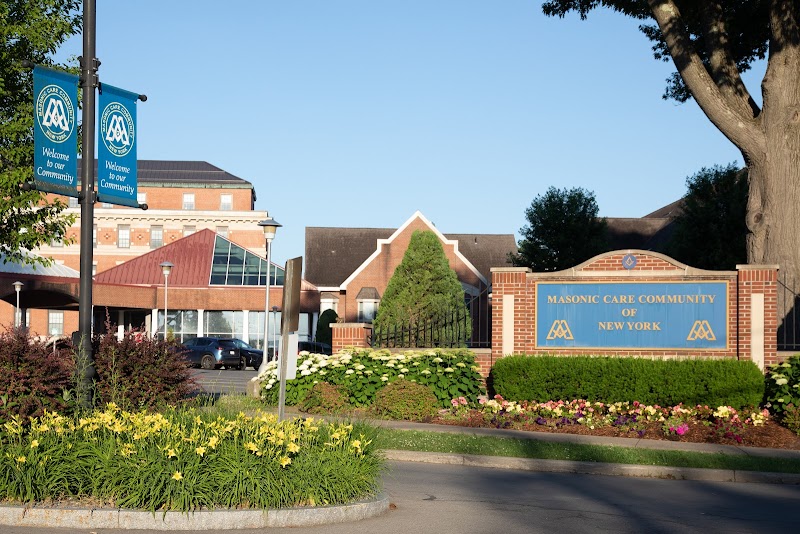
How is Masonic Care Community Of New York Staffed?

CMS rates MASONIC CARE COMMUNITY OF NEW YORK's staffing level at 4 out of 5 stars, which is above average compared to other nursing homes. Staff turnover is 31%, compared to the New York average of 46%. This relatively stable workforce can support continuity of care.

What Have Inspectors Found at Masonic Care Community Of New York?

State health inspectors documented 16 deficiencies at MASONIC CARE COMMUNITY OF NEW YORK during 2019 to 2024. These included: 16 with potential for harm.

Who Owns and Operates Masonic Care Community Of New York?

MASONIC CARE COMMUNITY OF NEW YORK is owned by a non-profit organization. Non-profit facilities reinvest revenue into operations rather than distributing to shareholders. The facility operates independently rather than as part of a larger chain. With 320 certified beds and approximately 265 residents (about 83% occupancy), it is a large facility located in UTICA, New York.

How Does Masonic Care Community Of New York Compare to Other New York Nursing Homes?

Compared to the 100 nursing homes in New York, MASONIC CARE COMMUNITY OF NEW YORK's overall rating (3 stars) is below the state average of 3.1, staff turnover (31%) is significantly lower than the state average of 46%, and health inspection rating (3 stars) is at the national benchmark.

What Should Families Ask When Visiting Masonic Care Community Of New York?

Based on this facility's data, families visiting should ask: "Can I visit during a mealtime to observe dining assistance and food quality?" "How do you handle medical emergencies, and what is your hospital transfer rate?" "Can I speak with family members of current residents about their experience?"

Is Masonic Care Community Of New York Safe?

Based on CMS inspection data, MASONIC CARE COMMUNITY OF NEW YORK has a clean safety record: no substantiated abuse findings (meaning no confirmed cases of resident harm), no Immediate Jeopardy citations (the most serious violation level indicating risk of serious injury or death), and is not on the Special Focus Facility watch list (a federal program monitoring the lowest-performing 1% of nursing homes). The facility has a 3-star overall rating and ranks #100 of 100 nursing homes in New York. While no facility is perfect, families should still ask about staff-to-resident ratios and recent inspection results during their visit.

Do Nurses at Masonic Care Community Of New York Stick Around?

MASONIC CARE COMMUNITY OF NEW YORK has a staff turnover rate of 31%, which is about average for New York nursing homes (state average: 46%). Moderate turnover is common in nursing homes, but families should still ask about staff tenure and how the facility maintains care continuity when employees leave.

Was Masonic Care Community Of New York Ever Fined?

MASONIC CARE COMMUNITY OF NEW YORK has no federal fines on record. CMS issues fines when nursing homes fail to meet care standards or don't correct problems found during inspections. The absence of fines suggests the facility has either maintained compliance or corrected any issues before penalties were assessed. This is a positive indicator, though families should still review recent inspection reports for the full picture.

Is Masonic Care Community Of New York on Any Federal Watch List?

MASONIC CARE COMMUNITY OF NEW YORK is not on any federal watch list. The most significant is the Special Focus Facility (SFF) program, which identifies the bottom 1% of nursing homes nationally based on persistent, serious quality problems. Not being on this list means the facility has avoided the pattern of deficiencies that triggers enhanced federal oversight. This is a positive indicator, though families should still review the facility's inspection history directly.