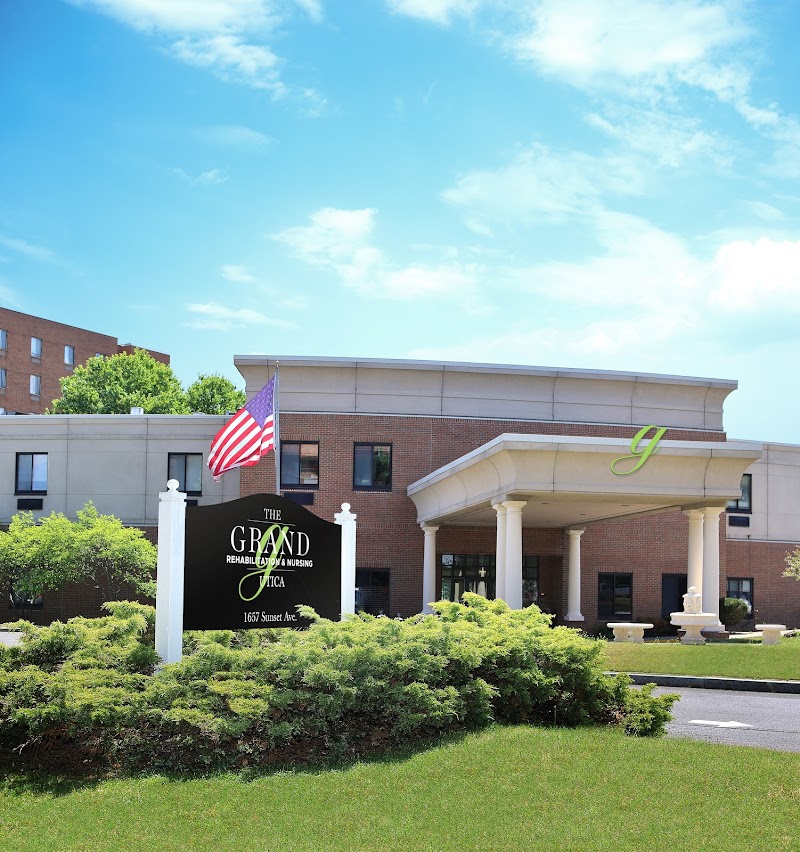
THE GRAND REHABILITATION AND NURSING AT UTICA

1657 SUNSET AVE, UTICA, NY 13502 (315) 797-7392
For profit - Corporation 220 Beds THE GRAND HEALTHCARE Data: November 2025 3 Immediate Jeopardy citations
Trust Grade
0/100
#576 of 594 in NY
Last Inspection: June 2025

Inspected within the last 6 months. Data reflects current conditions.

Overview

The Grand Rehabilitation and Nursing at Utica has a Trust Grade of F, indicating significant concerns about the quality of care provided. Ranking #576 out of 594 facilities in New York places it in the bottom half, and #15 of 17 in Oneida County means only two local options are worse. While the facility is showing improvement, reducing issues from 22 in 2024 to 16 in 2025, it still has critical problems, including a disturbing incident where food safety standards were not met, leading to potential health risks for residents. Staffing is a concern with a rating of 2/5 stars and a turnover rate of 42%, which is average but suggests instability. Additionally, the facility has incurred $21,958 in fines, indicating compliance issues that are higher than 78% of other facilities in New York, and there is less RN coverage than 85% of state facilities, which may impact the quality of care.

Trust Score
F
0/100
In New York
#576/594
Bottom 4%
Safety Record
High Risk
Review needed
Inspections
Getting Better
22 → 16 violations
Staff Stability
○ Average
42% turnover. Near New York's 48% average. Typical for the industry.
Penalties
○ Average
$21,958 in fines. Higher than 65% of New York facilities. Some compliance issues.
Skilled Nurses
⚠ Watch
Each resident gets only 21 minutes of Registered Nurse (RN) attention daily — below average for New York. Fewer RN minutes means fewer trained eyes watching for problems.
Violations
⚠ Watch
51 deficiencies on record. Higher than average. Multiple issues found across inspections.
★☆☆☆☆
1.0
Overall Rating
★★☆☆☆
2.0
Staff Levels
★★★☆☆
3.0
Care Quality
★☆☆☆☆
1.0
Inspection Score
Stable
2024: 22 issues
2025: 16 issues

The Good

  • Full Sprinkler Coverage · Fire safety systems throughout facility
  • No fines on record
  • Staff turnover below average (42%)

    6 points below New York average of 48%

Facility shows strength in fire safety.

The Bad

1-Star Overall Rating

Below New York average (3.0)

Significant quality concerns identified by CMS

Staff Turnover: 42%

Near New York avg (46%)

Typical for the industry

Federal Fines: $21,958

Below median ($33,413)

Minor penalties assessed

Chain: THE GRAND HEALTHCARE

Part of a multi-facility chain

Ask about local staffing decisions and management

The Ugly 51 deficiencies on record

3 life-threatening
Jun 2025 16 deficiencies 1 IJ (1 facility-wide)
CRITICAL (L) 📢 Someone Reported This

A family member, employee, or ombudsman was alarmed enough to file a formal complaint

Immediate Jeopardy (IJ) - the most serious Medicare violation

Food Safety (Tag F0812)

Someone could have died · This affected most or all residents

⚠️ Facility-wide issue

Based on observations, interviews, and record review during the recertification survey conducted 5/27/2025 - 6/05/2025, the facility failed to ensure food was stored, prepared, distributed, and served...

Read full inspector narrative →
Based on observations, interviews, and record review during the recertification survey conducted 5/27/2025 - 6/05/2025, the facility failed to ensure food was stored, prepared, distributed, and served in accordance with professional standards for food service safety in the main kitchen. Specifically, following a wastewater back up from the grease trap and drains flooding the main kitchen on 5/27/2025, the facility failed to adequately address wastewater cleanup including monitoring, evaluating, and sanitizing as necessary, cooking equipment and appliances in the main kitchen. Additionally, there was no detectable level of sanitizer in the 3-bay sink and dishwasher to adequately sanitize dishware. This resulted in Immediate Jeopardy to resident health and safety for all 215 residents of the facility. Findings include: The facility policy Food Receiving and Storage, last reviewed 1/2025, documented the facility would maintain clean food storage areas at all times. The undated facility policy Sanitization, documented the food service area should be maintained in a clean and sanitary manner; all kitchens, kitchen areas, and dining areas should be kept clean, free from litter and rubbish; all equipment should be maintained in good repair; sanitizing of environmental surfaces must be performed with one of the following solutions: 50-100 parts per million chlorine solution, 150-200 parts per million quaternary ammonium compound, or 12.5 parts per million iodine solution; manual washing and sanitizing would employ a three step process for washing, rinsing, and sanitizing: sanitize with hot water or chemical sanitizing solution that consisted of chlorine 50 parts per million for 10 seconds, iodine 12.5 parts per million for 30 seconds, or quaternary ammonium compound 150-200 parts per million for time designated by the manufacturer. The policy's dishwasher specifications did not match those found on the facility dish machine. The undated facility policy Cleaning Dishes/Dish Machine, documented dishes and cookware were washed and sanitized after each meal and the dish machine gauges would be checked throughout the wash cycle to assure proper temperatures. Wastewater back up: During an observation and interview on 5/27/2025 at 10:43 AM, scattered areas of water were on the floor in the food preparation area of the main kitchen. The 3-bay sink area had a large amount of standing murky water. Staff were standing in the water while washing items in the sinks. The dish machine area had a large amount of water and food debris on the floor. Staff were trying to remove the standing wastewater into drains using a tool with a flat, smooth rubber blade (a squeegee). [NAME] #4 stated when the sinks drained, they would get backed up causing the water to come back out. They stated that did not happen often and there was a company out in the parking lot that was coming in to suck out the drain. Facility work orders documented the following: - On 3/21/2025 at 3:13 PM, the facility dish machine was clogged and not draining properly; this was closed out on 3/21/2025 at 5:53 PM - On 3/28/2025 at 10:49 AM, the 3-bay sink water not staying in when drains were closed; this was closed out on 5/28/2025 at 2:13 PM with the comment the vendor cleaned out the drains and grease trap. - On 4/25/2025 at 4:41 PM, sinks are backing up and flooding the floors; this was closed out on 5/28/2025 at 2:13 PM with the comment the vendor cleaned out the drains and grease trap. - On 5/20/2025 at 2:36 PM, the drain in the dish room was clogged. Additional notes included the drain was snaked and was only able to reduce the level of water in the 6-inch drain by almost a foot. The snake would have to be done again the next day and may need to be addressed by a professional plumber. This was closed out on 5/20/2025 at 6:40 PM. - On 5/26/2025 the grease trap and drain by the dish machine was backing up; this was closed out on 5/27/2025 at 11:42 AM with the comment the supervisor had been notified to contact an outside plumbing vendor. A 5/27/2025 septic and sewer vendor invoice documented the grease trap line was jetted and pumped; the tank was over full and had not been pumped in over a year. The vendor recommended pumping every two (2) months. The following observations were made in the main kitchen on 5/28/2025: - at 9:18 AM, a puddle of gray water was under the shelving of the middle walk-in cooler and floors were stained with dried food, debris and spills. - at 9:27 AM, puddles of wastewater were under the 3-bay sink with a floor fan blower unit left from drying the floors on 5/27/2025. - at 9:30AM, the cover to the grease trap located by the 3-bay sink was rusted and chipped. -at 11:58 AM, the fan by the side exit was blowing across the floor towards the cookline and walk-in coolers. Standing water in front of the 3-bay sink was visibly tracked into the walk-in coolers as staff wheeled carts in and out. The floor was wet from the 3-bay sink to the back exit, the walk-in coolers, the cookline, and through to the dish area. During an interview on 5/28/2025 at 11:45 AM, Dietary Aide #7 stated when they came in that morning at 7:00 AM, there was water backed up in the kitchen. The pipe was clogged under the 3-bay sink, which was on the same drain line as the dish machine. The water was backing up out of the drain under the dish machine and around the 3-bay sink from the black plate (rusty lid of the grease trap). They stated the water that had backed-up from the drains was not clean water, it contained all the liquids that drained from the dish machine and did not smell clean. There was a very strong odor when they opened the grease trap to clean it out. They stated to clean up the water, floors were mopped, squeegeed and a no rinse floor cleaner was applied. Everyone in the kitchen stepped in the water puddles and they assumed the water was tracked throughout the kitchen. During an interview and observation on 5/28/2025 at 12:01 PM, [NAME] #4 stated they worked on 5/27/2025 and the grease trap was clogged causing water to back up. The water was in the back corner of the kitchen, and they squeegeed it to the drain by the walk-in coolers and out the back door into the parking lot. The water came from the clogged grease trap. The water was not clean; it was gray in color and smelled when the grease trap cover was removed. The vendor came in and suctioned out the grease trap. Breakfast was prepared and served on 5/27/2025 during the wastewater back up and they continued to cook while the wastewater was being cleaned up. They tried to avoid the area to not track wastewater across the kitchen, but some did get tracked across the kitchen including the walk-in coolers, behind the cook line, under and around the prep tables and cooking equipment. They assumed there was some aerosolization (fine spray) of the wastewater as it was suctioned up and nothing was done to prevent it from spreading around the kitchen. After the drain was cleared, the lid was put back on and the floors were hosed down with the no rinse floor cleaner. They stated a good portion of the kitchen was washed and sanitized. A review of the no rinse floor cleaner product label did not document it sanitized or disinfected surfaces. The product's safety data sheet documented the product use was a floor cleaner and did not document it was a sanitizer or disinfectant. During an observation on 5/28/2025 at 12:01 PM, there was a dried pattern present on the parking lot where the liquid from the kitchen had previously flowed. The back exit passageway had dried debris and grease on the floor. During an interview on 5/28/2025 at 12:31 PM, the Director of Nutritional Services stated they worked 5/27/2025 and there was a backup in the grease trap in the kitchen. It started Sunday night, and because Monday was a holiday, the vendor was unable to come out until Tuesday. The trap backed up before and the company recommended the trap be cleaned every two (2) months, but Corporate only allowed it to be done every three (3) months. The backed-up water was not clean and smelled when the grease trap was opened. Staff continued to cook while the wastewater was cleaned up and stepped in the puddles and tracked the water where they walked including the food service and cook line areas, the coolers, and the storage rooms. After the drain was cleared, it was hosed down and squeegeed out the door. They washed and sanitized the floors in the walk-in coolers, under and around the food prep tables and cooking equipment. They stated to prevent the wastewater from being spread around the kitchen they tried to maintain the puddles and squeegee them out the door, but nothing was done to contain the spray. During an interview on 5/28/2025 at 2:41 PM, the Administrator stated they were made aware Monday night (5/26/2025) of the wastewater water backup in the kitchen by the Director of Nutritional Services but was unsure of the exact time. The vendor was called but was not immediately available to respond due to the holiday, and they would come the following morning. The vendor arrived Tuesday (5/27/2025) morning and fixed it. The kitchen was then cleaned per their policy. During an interview on 6/5/2025 at 10:07 AM, the Director of Nutritional Services stated the grease trap was supposed to be clean. The lid should not have been rusted. A vendor came in two (2) months ago and told them that chunks of rust were falling into the grease trap causing it to clog more often and recommended it be cleaned every two (2) months. They stated they overheard the vendor say the grease trap needed to be replaced. Dishwasher: The manufacturer's specifications listed on the facility's dish machine Model ADC-66 documented the following operational requirements: Hot water sanitizing: - final sanitizing rinse minimum temperature was 180 degrees Fahrenheit. - pumped rinse tank minimum temperature was 160 degrees Fahrenheit. - wash tank minimum temperature was 160 degrees Fahrenheit. Chemical Sanitizing: - final rinse minimum temperature was 120 degrees Fahrenheit. - pumped rinse tank minimum temperature was 120 degrees Fahrenheit. - wash tank minimum temperature was 140 degrees Fahrenheit. - sanitizer required: 50 parts per million available chlorine. - to convert from hot water sanitizing to chemical sanitizing, adjustments shall be conducted by the manufacturer or its authorized service agent. The March 2025 High Temperature Conveyor Style Dish Machine Temperature Log documented temperatures were to be taken 3 times a day with each meal served, breakfast, lunch, and dinner. The temperatures were not checked on 3/12/2025, 3/17/2025, and 3/31/2025. The April 2025 High Temperature Conveyor Style Dish Machine Temperature Log documented temperatures were not checked on 4/5/2025 at lunch and dinner, 4/6/2025, 4/20/2025, 4/24/2025, and 4/28/2025. The May 2025 High Temperature Conveyor Style Dish Machine Temperature Log documented the dish machine was broken from 5/16/2025 - 5/21/2025. There were no documented temperatures on 5/26/2025 and 5/28/2025 - 5/31/2025. During an interview on 5/28/2025 at 1:24 PM, Dietary Aide #9 stated the dish machine was supposed to be emptied between meals and the temperature was checked to make sure it was hot enough. They thought the temperature was supposed to be around 170-180 degrees Fahrenheit, and the rinse temperature was lower, but they were not sure and did not normally perform those checks. Temperatures should be documented but they were unsure if it was done today. During an observation on 5/28/2025 at 1:29 PM, the dish machine wash temperature was 142 degrees Fahrenheit, the final rinse gauge did not move and was stuck below 90 degrees Fahrenheit. During an interview on 5/28/2025 at 1:34 PM, the Director of Nutritional Services stated the dish machine was high temperature sanitization, but it was not heating up yesterday and they were told to use the chemical sanitizer. They did not have anything to check the level of sanitizer to know what the level was, and they were not aware of the required level of chemical sanitizer. The vendor who maintained the machine came in monthly, but they had not come in yet this month. During an observation on 5/28/2025 at 1:38 PM, the final rinse water was checked with a chlorine test strip, and it did not detect any chlorine. Confirmation was made the chemical in use was a chlorine-based sanitizer. During an observation on 5/30/2025 at 4:04 PM, the dish machine was not reaching required temperatures. The 5/28/2025 report from the commercial cleaning vendor documented a backup pump was installed for chemical sanitation to be used if the temperature of the dishwasher got below 180 degrees Fahrenheit. They recommended the use of chlorine sanitation if the temperature went below 180 degrees Fahrenheit. 3-Bay sink: The May 2025 3-compartment sink (3-bay sink) Log documented testing was performed on 5/29/2025-5/31/2025 and ranged from 200-400 parts per million with a standard of 200-400. No documented testing was performed prior to 5/29/2025. The June 2025 3-compartment sink parts per million log documented testing was performed on 6/1/2025 and 6/2/2025 and ranged from 200-400 parts per million with a standard of 200-400. During an interview on 5/28/2025 at 1:50 PM, Dietary Aide/Dishwasher #6 stated they did not do any sanitizer checks and thought it was regulated by the faucet for the right amounts. They did not know how to check the level of the sanitizer and had never seen it done. During an observation on 5/28/2025 at 1:51 PM, the sanitizer level in the sanitizing bay water of the 3-bay sink was measured with the surveyor's test strips. The strip was dipped for one second and after waiting 5-10 seconds, there was no change in color which indicated sanitizer was not detected. It was confirmed that the bottle attached to the pump was a quaternary sanitizer (type of disinfectant). The sanitizing equipment on the 3-bay sink was not working properly and dishes were not sanitized properly. During an interview on 5/28/2025 at 1:54 PM, the Director of Nutritional Services stated they did not do any sanitizer level checks on the 3-bay sink. During an observation on 5/28/2025 at 6:35 PM, sanitizer level was measured at the 3-bay sink and was over 500 parts per million; the required amount was between 200 and 400 parts per million. During an observation and an interview on 5/30/2025 at 11:32 AM, Dietary Aide #11 dipped a chemical test strip in the sanitizer water of the 3-bay sink. The strip turned a dark green which was darker than the darkest green on the chemical strip container's color chart. The darkest green on the color chart indicated the level detected was 400 parts per million. Dietary Aide #11 stated the results were normal. During an observation on 5/30/2025 at 5:22 PM, Dietary Aide/Dishwasher #6 was setting up the 3-bay sink. They drained the third sink, refilled it by adjusting both the black knob for the sanitizer pump and the faucet for the water. When tested, their test strip and the surveyor's test strip did not register any sanitizer. During an observation on 6/2/2025 at 4:36 PM, Dietary Aide #30 filled the 3-bay sink by turning on the cold water and the sanitizer pump. They stated, the test strip was yellow and not right. They checked the jug, which was visibly not pumping correctly with mostly air bubbling through, but they did not identify the jug was empty. The sanitizer level was tested with a result of 0-150 parts per million on the yellow end of the scale. During an interview on 5/28/2025 at 4:22 PM, the Administrator stated there was no way to know for sure if the dishes and equipment were properly sanitized if the dishwasher and 3-bay sink did not have sanitizer or a way to check the levels of chemical sanitizer. They had fixed the 3-bay sink and planned to wash dishes there until the dish machine was fixed. During an interview on 6/2/2025 at 12:15 PM, Dietary Supervisor #35 stated they used Knoxville (disinfectant) for sanitizer in the 3-bay sink and the levels on the test strips should have been between 200-400 parts per million. The Disinfectant+Sanitizer+Virucide product label documented the product was used as a sanitizer on dishes, glassware, utensils and on food processing equipment at 200-400 parts per million. Clean up: During an observation on 5/28/2025 at 2:40 PM, Dietary Aide #7 was preparing cut watermelon, and an unidentified staff member was preparing cold cuts. During an interview on 5/28/2025 at 6:07 PM, The Director of Nutritional Services stated the cold cuts served were sliced two days ago. When asked when the sanitizer stopped working in the 3-bay sink they stated yesterday there was pink stuff in there but did not know what the level was because they did not test it. They stated that they did not know what level was required to safely sanitize the dishes, nor did they have the means to test the level of sanitizer. They stated the slicer was cleaned and sanitized properly two days ago and was washed in the 3-bay sink. The wastewater began backing up on Sunday 5/25/2025 (three days prior). They stated it was barely backing up, was just bubbling a little and there were only small puddles. During an observation and interview on 5/28/2025 at 6:11 PM, the Administrator stated they were pulling the sandwiches from the food carts. Unidentified staff stated carts were sent to the 6th floor and were told by the Administrator to call the 6th floor, pull the carts back down, and not serve any of the sandwiches. During an observation on 5/28/2025 at 9:07 PM, the walk-in cooler had prepped watermelon, tuna fish, and large amounts of food prepped for service from earlier in the day. Lettuce and whole basil leaves were in the 2-bay sink opened and exposed. During an observation on 5/28/2025 at 9:17 PM, the Director of Nutritional Services voluntarily discarded the items from the walk-in coolers that were prepped in the kitchen over the past three days. At 9:26 PM, content of walk-in coolers was placed in garbage cans and discarded in the dumpsters. During an observation and interview on 5/29/2025 at 9:20 AM, the Director of Maintenance from a sister facility was hosing down racks outside in the back parking lot over a storm drain. They stated they were told to start hosing the racks down in the parking lot and they were unaware they could not be washed outside. They were unaware they were producing wastewater that had to be contained and disposed of properly. During an interview on 5/29/2025 at 9:33 AM, the Administrator and the Corporate Educator were unaware the wastewater could not go into the sanitary sewer in the parking lot. During a follow up interview on 6/5/2025 at 10:32 AM, the Director of Nutritional Services stated it was not okay to squeegee wastewater into the parking lot because it could contaminate the area, people walked through it, it was a high traffic area, and people were going in and out. They should not have dumped the wastewater into the public sewers because it could have polluted the sewers more than they already were. During an interview on 5/28/2025 at 2:41 PM, the Administrator stated the kitchen, silverware, dishes and utensil should have been cleaned with disinfectant daily and per their policy. If there was no sanitizer in the 3-bay sink and/or the dishwasher they were not sanitized properly which could cause bacteria to grow and the residents could get sick. If the food service area was contaminated by wastewater and it was not cleaned/sanitized properly bacteria could grow around the kitchen. If the 3-bay sink and dishwasher did not have sanitizer in them anything that went through them was not cleaned or sanitized properly. During an interview on 5/28/2025 at 2:45 PM, the Director of Nursing stated they were not aware of the wastewater back-up in the kitchen. If the food service production area was contaminated by wastewater the food could be contaminated and if served, the residents could get sick. The kitchen should be cleaned and sanitized with the proper sanitizer before food preparation. They should have been made aware of the issue so they could monitor for any resident illness. During a phone interview on 5/28/2025 at 2:45 PM, the Medical Director stated if residents received unclean plates or food, or there was improper sanitizing of the kitchen it could cause risk of gastroenteritis or infections. During an interview on 5/28/2025 at 2:59 PM, the Infection Control Nurse stated if the kitchen was not properly sanitized, pathogens could get to the residents and cause gastrointestinal issues. Everything should be sanitized, and they expected kitchen supervisors to know the proper means to do so and what the proper temperature and sanitizer ranges were. Food should not be prepared if the sanitization was not done, and they should have been notified so they could consult and educate if needed. NYCRR10 415.14(h) ___________________________________________________ An Immediate Jeopardy in F-812 was issued to the Administrator on 5/28/2025 at 6:22 PM. The Immediate Jeopardy was removed on 6/03/2025 at 5:39 PM prior to the completion of the survey. The facility performed the following steps to lift the Immediate Jeopardy: - As of 5/28/2025 at 10:22 PM, the facility's immediate plan was reviewed and accepted. - As of 5/30/25 at 10:46 AM the kitchen had been cleared and the facility was able to resume full use of the kitchen except for the dishwasher that had not been corrected. - As of 5/30/2025 at 4:00 PM, 85% of all food service and dietary staff had been educated on kitchen sanitation procedures. - As of 5/31/2025 at 3:45 PM, 100% of all food service and dietary staff had been educated on kitchen sanitation procedures. - Staff education was verified onsite during interviews on 6/2/2025. Multiple food service and dietary staff were interviewed to determine retention of education provided and were able to accurately report content of the education. - As of 6/03/2025 at 9:16 AM, staff was able to successfully demonstrate proper chemical sanitation level of 200-400 parts per million for the 3-bay sink for dishware sanitizing.
CONCERN (D)

Potential for Harm - no one hurt, but risky conditions existed

Deficiency F0554 (Tag F0554)

Could have caused harm · This affected 1 resident

Based on observations, record review, and interviews during the recertification survey conducted 5/28/2025-6/5/2025, the facility did not ensure a resident's ability to safely self-administer medicati...

Read full inspector narrative →
Based on observations, record review, and interviews during the recertification survey conducted 5/28/2025-6/5/2025, the facility did not ensure a resident's ability to safely self-administer medications was clinically appropriate for 2 of 2 residents (Residents #20 and #144) reviewed. Specifically, Resident #20 had medications left in their room and Resident #144 had an inhaler (used for breathing difficulty) at their bedside, without physician orders to self-administer medications or documented evidence they were assessed to determine their ability to safely self-administer medications. Findings include: The facility policy Medications Brought to the Facility by the Resident/Family, revised 1/2025, documented the facility would not permit residents and families to bring medications into the facility. If the medication was not otherwise available and was determined to be essential, and brought in from the outside, the Director of Nursing with the support of the attending physician and consultant pharmacist shall check to ensure the medication was ordered by the attending physician, documented on the physician's order sheet, and labeled in accordance with established policies. The facility policy Self-Administration of Medications, last reviewed 1/2025, documented residents had the right to self-administer medications if the interdisciplinary team determined it was clinically appropriate and safe for the resident to do so. The staff and the nurse practitioner assessed each resident's physical and mental ability to administer medications to themselves. Staff were to identify and give to the Charge Nurse any medications found at the bedside that are not authorized for self-administration, for return to the family or responsible party. 1) Resident #20 had diagnoses including chronic obstructive pulmonary disease (lung disease), mild intellectual disabilities, and schizoaffective disorder. The 4/24/2025 Minimum Data Set documented the resident had intact cognition, required supervision or was independent for activities of daily living, and had a scheduled pain medication regiment. The Comprehensive Care Plan initiated 11/2/2021 documented the resident had an alteration in comfort related to the aging process. Interventions included to administer medications as ordered and to report to the nurse any complaints of pain or requests for pain treatment. The 11/11/2024 physician's order documented 325 milligram acetaminophen, two tablets by mouth every 6 hours as needed for pain or fever. There was no documented evidence the resident was assessed to safely self-administer medications. During an observation and interview on 6/2/2025 at 10:53 AM Resident #20 had two round, white pills in a clear medication cup sitting on their bedside table. Resident #20 stated the pills were acetaminophen the nurse had given them that morning. The medication administration record documented two tablets of acetaminophen were administered at 10:13 AM by Licensed Practical Nurse #48. During an interview on 6/2/2025 at 11:00 AM, Licensed Practical Nurse #48 stated the medications in the cup at the resident's bedside were acetaminophen. They signed for the resident's medication when they took the pills out. They stated the resident was eating so they left the medication for the resident to take when they were done with their meal. The resident always took their medication, and they usually went back and checked to make sure the resident took the medication. If the resident did not take their medication at the time, it was given it could affect the time the resident could have their next dose. It was also possible another resident could wander into Resident #20's room and take the medication. The medication administration record documented two tablets of acetaminophen were administered on 6/2/2025 with an updated time of 11:12 AM by Licensed Practical Nurse #48. 2) Resident #144 had diagnoses including chronic respiratory failure, anxiety disorder, and sleep apnea (pauses in breathing during sleep). The 4/4/2025 Minimum Data Set assessment documented the resident was cognitively intact, required maximum to set up assistance for the activities of daily living, and had shortness of breath while lying flat. The comprehensive care plan initiated 6/25/2024 documented the resident had an alteration in respiratory system related to chronic respiratory failure. Interventions included observe the resident's secretions color, consistency, and odor and report abnormalities to the medical provider and to observe the resident's vital signs as ordered and report vital signs not within normal limits. The 9/6/2024 physician order documented Breztri Aerosphere Inhalation Aerosol 160-9-4.8 micrograms per actuation, 2 puffs inhaled orally two times a day for anti-asthmatic. Resident may use medication from home as not on formulary, please rinse mouth after use. There was no documented physician order the resident could self-administer medications. During an observation and interview on 5/29/2025 at 1:39 PM, there was a battery box in Resident #144's room containing a Breztri 160 microgram/9 microgram/4.8 microgram inhaler with no pharmacy label. The resident stated the facility's prescription had run out at one point, so they filled the prescription they had at home and brought it in. They stated they took two puffs twice a day around breakfast and dinner time. The nurses did not bring the inhaler into them, and they kept it at their bedside, so it did not get lost. The nurses asked if they had administered their inhaler, but no one asked them to demonstrate how to use it. During an observation and interview on 6/02/2025 at 11:20 AM, the resident was up in their wheelchair and their inhaler was not in the box. They stated they did not know where it was and did not have it to use that morning. The 6/2025 medication administration record documented Breztri inhalation aerosol 2 puffs inhale two times a day for antiasthmatic, resident may use medication from home as not on formulary. The medication was signed as given on 6/2/2025 at 8:00 AM by Licensed Practical Nurse #48. During an interview on 6/03/2025 at 2:00 PM, Licensed Practical nurse #49 stated no residents on the third floor were able to have medications at their bedside. If a resident was allowed to have medications at their bedside or to self-administer, there would be a physician's order. They did not see any medications at Resident #144's bedside that morning and they did not have an order to keep their inhaler at their bedside. They looked for the resident's Breztri inhaler and was unable to locate it. Licensed Practical Nurse #49 stated it could not be reordered and the resident could use their own as it was not in their formulary, but they did not know if that meant the resident could keep it at their bedside. If the resident was able to keep it at their bedside, it was the nurse's responsibility to ensure the resident had it, there was enough medication, and it was being utilized properly. During an interview on 6/03/2025 at 2:25 PM, Certified Nurse Aide #54 stated they saw an inhaler in a tissue box on Resident #144's beside table but never saw the resident use it. During an interview on 6/3/2025 at 2:35 PM, Licensed Practical Nurse Unit Manager #5 stated when Resident #144 brought their inhaler in from home, the inhaler should be kept in the medication cart. Resident #144 was never approved to have medications at their bedside. During an interview on 6/5/2025 at 10:48 AM, the Director of Nursing stated if a resident's medication came in from home, the medication had to be kept in the medication cart with an order the resident's family supplied the medication. The order for family to provide the medication did not mean the resident could self-administer the medication or that it could be kept at the resident's bedside. The resident should be assessed to self-administer or keep a medication at bedside to ensure it was administered appropriately. Medications should never be left at a resident's bedside to take later as the resident may not take the medication or another person may walk in and take the medication. 10 NYCRR 415.3 (f)(1)(vi)
CONCERN (D)

Potential for Harm - no one hurt, but risky conditions existed

Deficiency F0578 (Tag F0578)

Could have caused harm · This affected 1 resident

**NOTE- TERMS IN BRACKETS HAVE BEEN EDITED TO PROTECT CONFIDENTIALITY** Based on observations, record review, and interviews during the recertification survey conducted 5/27/2025-6/5/2025, the facilit...

Read full inspector narrative →
**NOTE- TERMS IN BRACKETS HAVE BEEN EDITED TO PROTECT CONFIDENTIALITY** Based on observations, record review, and interviews during the recertification survey conducted 5/27/2025-6/5/2025, the facility did not ensure resident advance directives (instructions relating to the provision of health care when an individual is incapacitated) were accurately documented for 1 of 1 resident (Resident #55) reviewed. Specifically, Resident #55 did not have physician orders for advance directives and advance directives documented throughout the medical record did not reflect the resident's wishes to receive cardio-pulmonary resuscitation in the event of an emergency. Findings include: The facility policy Medical Orders for Life Sustaining Treatment, revised 1/2025, documented adequate information would be given to residents concerning resident rights, medical situations for decision making, and explanation of forms and procedures for making advance medical directives. Do not resuscitate (allow natural death) and do not intubate (placing a breathing tube) orders were reviewed every 30 days for the first 90 days following admission. Any changes in the residents wishes would be brought to the physician's attention by the social worker. Resident #55 had diagnoses including hypertension (high blood pressure), diabetes, and bipolar disorder (mental illness). The 3/17/2025 Minimum Data Set Assessment documented the resident was cognitively intact and had advance directives of do not resuscitate and do not intubate. The 3/13/2025 hospital discharge summary documented the resident's advance directives were do not resuscitate and do not intubate. The facility admission Record (face sheet) documented the resident was admitted on [DATE] with advance directives of full code (attempt cardio-pulmonary resuscitation). The 3/13/2025 at 5:12 PM admission evaluation by Registered Nurse #20 documented the resident was admitted from the hospital with advance directives of do not resuscitate and do not intubate. The resident's advance directives would be revised and reviewed as needed. A 3/14/2025 Statement of Capacity for Medical Decision Making signed by Nurse Practitioner #21 documented the resident had capacity to make their own decision regarding resuscitation and any supplemental advance directives. Physician orders dated 3/13/2025-5/31/2025 did include advance directives. The admission care plan initiated 3/13/2025 and revised on 3/21/2025 documented advance directives were do not resuscitate and do not intubate. A 3/14/2025 Social Worker #55 progress note documented they reviewed advance directives with the resident, and their code status remained do not intubate and do not use non-invasive ventilation or mechanical ventilation. A 3/14/2025 at 9:49 PM Social Worker #55 progress note documented advance directives were reviewed with the resident and were do not intubate and do not use non-invasive ventilation or mechanical ventilation. There was no documentation regarding the resident's wishes for cardio-pulmonary resuscitation. A 3/15/2025 Physician #22 progress note documented the resident was seen per nursing request for review of laboratory reports. The resident's code status was do not intubate and do not use non-invasive ventilation or mechanical ventilation. There was no documented evidence the medical provider reviewed advance directives with the resident to include their wishes for cardio-pulmonary resuscitation. The 3/28/2025 at 1:51 PM Social Worker #18 care plan meeting progress note documented the resident was requesting their Medical Orders for Life-Sustaining Treatment be changed. There was no documented evidence the resident had an active Medical Order for Life Sustaining Treatment or what the resident's wishes were for cardio-pulmonary resuscitation. There were no additional social work progress notes referencing the resident's advance directives from 3/28//2025-5/27/2025. During an interview on 5/27/2025 at 9:58 AM the resident stated no one talked to them about their wishes but they wanted to receive cardio-pulmonary resuscitation if anything ever happened. A 5/27/2025 at 7:30 PM Social Worker #19 progress note documented they attempted to review medical orders for life sustaining treatment with the resident. The resident was not interested in completing one at that time and understood they would remain a full code. There was no documented evidence the resident had an order for cardio-pulmonary resuscitation (full code). During an interview on 6/3/2025 at 9:16 AM Licensed Practical Nurse Unit Manager #23 stated Resident #55 was a do not resuscitate/do not intubate between 3/2025 and 5/2025. The discharge paperwork from the hospital documented the resident had advance directives of do not resuscitate/do not intubate. That information was copied into the electronic medical record upon admission. There was no advance directive order in the electronic medical record for the resident until 5/28/2025. They stated Resident #55 was opposed to completing a medical orders for life sustaining treatment document. The advance directive preference should have been communicated to the physician so they could place an admission order. They stated at some point, the do not resuscitate was removed and the electronic medical record only documented do not intubate. Licensed Practical Nurse Unit Manager #23 stated there was no documentation of discussion between any discipline and the resident to validate the change. During an interview on 6/3/2025 at 10:14 AM Social Worker #18 stated on admission the resident was approached regarding their code status preference however declined completing a medical order for life sustaining treatment. The code status was unclear on admission and was not clarified since their admission. They stated there were no corresponding orders or documented conversations with the resident regarding their code status preference. The social worker stated not having clear and concise advance directives could lead to a misinterpretation of a residents wishes. During an interview on 6/3/2025 at 2:23 PM the Director of Nursing stated the social worker assessed the resident's code status upon admission and would typically complete a medical order for life-sustaining treatment document. Resident # 55 had a do not resuscitate /do not intubate order per the hospital documentation. The Director of Nursing stated the information from the hospital discharge summary was copied into the facility's electronic medical record and the status was carried over regardless of a corresponding order. They did not know why the status was changed from do not resuscitate/do not intubate to do not intubate only. They stated advance directives should be correlated with a physician's order. The change on 5/28/2025 to full code status occurred after the facility became aware documentation of advance directives was incomplete. They stated a lack of clear, complete, and accurate documentation regarding code status could cause confusion during an emergency and potentially result in the wrong treatment being rendered. During an interview on 6/4/2025 at 1:27PM Registered Nurse #20 stated the resident was alert and oriented on admission. They entered the do not resuscitate/do not intubate code status into the batched orders on 3/13/2025 based on discharge documentation from the hospital. They stated they did not document their conversation with the resident regarding their desired code status and the resident's physician typically reviewed code status the following day. During a telephone interview on 6/5/2025 at 10:32 AM the Medical Director stated do not intubate meant not placing a breathing tube. A resident with a do not intubate status was typically considered full code unless otherwise specified. In the absence of medical orders for life sustaining treatment, the resident's wishes should be known and documented. They stated the social worker usually discussed code status with the resident, completed the medical orders for life sustaining treatment, and the physician would sign it. An order reflecting the resident's wishes should be entered into the electronic medical record. They stated the resident's status had changed from do not resuscitate/do not intubate, to do not intubate only, and then to full code without supporting documentation or orders. Conversations with the resident regarding advance directives should be supported with documentation and an order should be entered in the resident's record. They stated unclear code status could lead to inappropriate treatment. 10NYCRR 400.21(c)
CONCERN (D) 📢 Someone Reported This

A family member, employee, or ombudsman was alarmed enough to file a formal complaint

Potential for Harm - no one hurt, but risky conditions existed

Deficiency F0627 (Tag F0627)

Could have caused harm · This affected 1 resident

Based on observations, record review, and interviews during the recertification and abbreviated (NY00358322) surveys conducted 5/27/2025-6/5/2025, the facility did not allow one (1) of three (3) resid...

Read full inspector narrative →
Based on observations, record review, and interviews during the recertification and abbreviated (NY00358322) surveys conducted 5/27/2025-6/5/2025, the facility did not allow one (1) of three (3) residents (Resident #185) to return to the facility to their previous room or immediately upon the first availability of a bed. Specifically, Resident #185 was not accepted back to the facility in a timely manner once cleared by the hospital for discharge Findings included: The facility policy Bed Reservation (Bed Hold), dated 5/29/2019, documented if a resident left the facility due to hospitalization, the facility was not obligated to hold the bed until the resident's return unless prior arrangements had been made for a bed hold. In the absence of a bed hold, the resident may be placed in any appropriate semi-private bed at the facility at the time of return from the hospital, provided a bed was available. The facility policy Discharging of the Resident, revised 1/2025, documented discharge planning involved the interdisciplinary team working with the resident. The facility must permit the resident to remain in the facility, and not discharge the resident unless, the health and safety of the resident was endangered. The medical record must support the basis for discharge such as indicating what needs could not be met. Residents who were sent to an emergent acute care setting, such as a hospital, must be permitted to return to the facility. Resident #185 had diagnoses including bipolar disorder, schizoaffective disorder, and intermittent explosive disorder (mental health disorders). The 10/6/2024 admission Minimum Data Set assessment documented the resident had modified independence with daily decision making; depressive symptoms; physical behaviors directed towards others; verbal behaviors directed towards others; other behavioral symptoms not directed towards others; wandered; was independent or required set-up assistance with all activities of daily living; received an antipsychotic and antianxiety medication; and wore a wander detection device. The 9/11/2024 Pre-admission Screening and Resident Review documented the resident had a serious mental illness and was recommended for a Level II evaluation. The 9/20/2024 Pre-admission Screening and Resident Review Level II recommendations/skilled services documented the resident had needs of daily nursing support, medication administration assistance, therapy for strengthening, and a nursing facility appeared to be the best choice of placement in the least restrictive setting. The 9/26/2024 pre-admission hospital psychiatry note documented the resident had a history of incarceration, polysubstance use disorder, schizoaffective disorder, homelessness, seizure disorder, and neurocognitive impairment. The resident was seen for psychotropic medication management and behavioral control. The resident had conflicting emotions about acceptance to a nursing home and anxiety about their unknown future. The resident demonstrated chronic impulsivity and poor frustration tolerance. The resident had been redirectable. There were no contraindications for discharge to the next accepting facility. There was no indication for psychiatric admission at that point. Progress notes documented the following: - on 10/7/2024 at 5:31 AM by Licensed Practical Nurse #36 the resident was placed on high risk for elopement. - on 10/8/2024 at 1:31 PM by Licensed Practical Nurse #37 the resident was yelling at staff they wanted to go outside and became verbally abusive. Staff attempted to and were unable to redirect. - on 10/9/2024 at 9:14 AM by Licensed Practical Nurse #37 the resident was yelling and became verbally abusive to staff. Staff were unable to redirect the resident. - on 10/10/2024 at 8:15 AM by Licensed Practical Nurse #36 the resident was at the nursing station, became upset as they wanted a cup of iced coffee, could not get one, and threw a cup of ice water at the nurse. - on 10/10/2024 at 2:36 PM by Licensed Practical Nurse #37 the resident was screaming and swearing at other residents. When attempting to redirect the resident, the resident pushed staff. The resident walked down the hall screaming they were going to hurt someone and hit them with a soda can. The social worker was made aware and went to speak with the resident. - on 10/10/2024 at 3:00 PM by Social Worker #38 the resident was expressing distress in the unit hallway and agreed to meet with the social worker in their office. The resident expressed frustrations and a desire to return home. The 10/10/2024 facility Transfer/Discharge Notice documented the resident was sent to the hospital for aggressive behavior and assaulting staff. The notice documented the facility was not able to meet the resident's needs. The 10/10/2024 hospital emergency room report documented the resident was admitted to the emergency room due to the resident being aggressive and throwing a cup of coffee at facility staff. The emergency room staff reported the resident did not want to go to the hospital, was frustrated, and stated the facility did not take care of their needs. Upon assessment, the resident was not in acute distress. The resident was alert and oriented to person, place, and time. The emergency room physician documented they spoke with facility staff (unidentified) and the facility told them the resident could not come back until they were evaluated by the hospital psychiatric team. The 10/14/2024 at 4:55 PM hospital Psychiatrist #39 progress note documented the resident was upset, frustrated, and anxious. The resident asked to be returned to the facility and had no unsafe behaviors. The resident did not appear manic or psychotic. There were no safety concerns. The resident was stable for discharge from the hospital. The hospital had tried to optimize medications. The 10/15/2024 at 3:45 PM Hospital Case Manager #40 progress note documented the facility's hospital liaison told them the Medical Director would not take the resident back unless a psychiatric admission was done. The 10/17/2024 at 11:55 AM Hospital Case Manager #40 progress note documented they spoke with the facility's hospital liaison who told them the facility Medical Director would not accept the resident back without a psychiatric admission. The psychiatric provider was to contact the Medical Director at the facility to discuss the situation. The 10/17/2024 at 11:55 AM Hospital Case Manager #40 progress note documented they were trying to get the resident discharged back to the facility and the resident wanted to return there. The resident was willing to be discharged to other facilities in the area if the facility did not want to take them back. The hospital liaison told the case worker that they were unaware of the provider calling the facility's Medical Director. The 10/17/2024 at 3:46 PM hospital psychiatrist #39 progress note documented the resident was anxious, was redirectable, and had no aggressive behaviors since 10/12/2024. The resident did not meet the criteria for psychiatric admission. The agitation appeared to be caused by medication induced delirium. The resident was cleared for discharge from a psychiatric standpoint and was appropriate for long term placement. The 10/18/2024 at 1:09 PM Hospital Caseworker #41 progress note documented multiple messages were left for the facility's Administrator to call the hospital back. The case manager spoke with the facility's Director of Admissions who told them the Administrator no longer needed to talk to the provider and the facility would accept the resident back if a private room was available which could be the following week. The case worker suggested another sister facility and the Director stated they would reach out and see if a private room was available in a sister facility. The 10/21/2024 at 4:26 PM Hospital Case Manager #40 progress note documented they spoke with the facility's Administrator who told them there were no private rooms available yet for the resident. The 10/23/2024 at 2:38 PM Hospital Case Manager #40 progress note documented they spoke with the facility's hospital liaison who told them there were no private rooms available yet for the resident. The 10/24/2024 at 1:28 PM Hospital Caseworker #41 progress note documented they called the New York State Department of Health hotline phone number and spoke with them regarding the facility unwilling to take the resident back. The 10/25/2024 at 4:01 PM Hospital Case Manager #40 progress note documented was discharged back to the facility. The 10/25/2024 hospital discharge summary documented the resident's discharge diagnoses were hypertensive urgency, acute kidney injury, hyperammonemia, acute psychosis, obesity and agitation. The resident was sent to the local hospital for aggressive behaviors and was seen by psychiatry. The resident was being discharged . The 10/25/2024 at 4:30 PM Registered Nurse #42 admission note documented the resident was sent to the hospital for behaviors and aggression. The resident was picked up from the hospital by the Administrator. The resident was currently aggressive/combative/resisting care/refusing care and had the potential for violence. The 10/29/2024 at 12:40 PM, Medical Director progress note documented the resident was seen per nursing request for behavioral issues. The resident was recently admitted and discharged from the hospital. The resident was consulted with the hospital inpatient psychiatric. A psychiatric consult was required for the resident's underlying aggressive behaviors. During an interview and observation on 5/27/2025 at 2:34 PM, Resident #185 stated they were upset. Unit staff attempted to calm the resident as the resident stated they did not want to be at the facility and began crying. Staff offered snacks as redirection and the resident accepted. On 5/29/2025 at 9:45 AM, Resident #185 was ambulating down the hallway of the main activities room on the second floor and headed towards elevator. The resident was pleasant with a stoic face while greeting all persons passing in the hallway. On 5/29/2025 at 12:37 PM, Resident #185 was sitting in the unit dining room with their head down on their hands on the table. There were other residents in the room watching TV. The resident did not exhibit any behaviors. During an interview on 5/27/2025 at 2:47 PM, Hospital Caseworker #41 stated the facility would not take the resident back when the hospital determined the resident was ready for discharge back to the facility. The resident would not be taken back due to behaviors and the facility filled the resident's bed when they were sent to the hospital. The caseworker stated no other facility would accept the resident due to behaviors, the hospital stabilized the resident, and the hospital physician gave the resident discharge clearance on 10/16/2024. During a telephone interview on 6/3/2025 at 10:25 AM, Registered Nurse #42 (no longer employed by facility) stated the admissions team made the decisions to accept residents back to the facility. Residents were allowed back if a bed was available. The resident had a history of throwing things at staff and being inappropriate with other residents. The nurse thought the resident was not a danger to self or others. The resident was sent to the hospital in 10/2024. The hospital told the facility the resident was only under observation. During an interview on 6/3/2025 at 2:55 PM, the Administrator stated once a resident was admitted to the hospital, the regular discharge process would be done. The resident was very behavioral during their initial stay, and those behaviors caused the facility to send them to the hospital. The behaviors were uncontrollable, and the facility felt they could not manage the behaviors. The facility did not want to take the resident back until the hospital admitted the resident for a psychiatric stay and stabilization. The hospital kept telling the facility they performed a psychiatric evaluation, and the resident did not meet the criteria for a psychiatric admission. The facility refused to accept the resident back to the facility without a psychiatric evaluation being done until they received a call from the New York State Department of Health telling them to take the resident back. The facility did not agree with the hospital determination. During an interview on 6/4/25 at 11:01 AM, the Director of Social Services stated they were unaware of any concerns regarding the resident's return from the hospital, the resident stated they would like to be transferred to an area they considered home, and referrals had been sent without any acceptance. The resident had psychiatric services while at the facility and continued to do so. During a telephone interview on 6/4/2025 at 11:39 AM, the Director of Admissions stated the facility was usually aware of a resident's history prior to admission. Resident #185 had a previous psychiatric history prior to the first admission. The director did not know the specifics about the 10/2024 hospital admission other than the facility wanted a psychiatric evaluation done and a private bed for the resident when they returned to the facility. The facility took the resident back the day the hospital called and said the resident was ready for discharge. There was no documentation about communication with the facility as the department did not write progress notes. They stated they were not aware of any facility staff saying the resident was not allowed to return from the hospital and should have been made aware by facility staff. During an interview on 6/4/2025 at 2:46 PM, the Director of Nursing stated they were not in communication with the hospital staff but did speak to the Department of Health staff the day the resident returned to the facility. The Department of Health staff told them to take the resident back immediately as the resident was being discharged from the hospital and that was the facility's obligation. Once a resident was admitted to the hospital, the facility did not communicate with them and the hospital liaison did all the hospital communicating. They stated the hospital liaison informed the facility the hospital was waiting for a psychiatric evaluation to be done prior to sending the resident back. They stated they never said the facility would not take the resident back. If a resident was gone from the facility past midnight, they were automatically discharged from the facility system. Staff should have written a progress note as to why the resident was sent to the hospital and about any hospital communication. The facility was obligated to admit a resident back once sent to the hospital unless the resident did not want to return. During an interview on 6/5/2025 at 2:04 PM, the Administrator stated the Admissions department, and the Hospital Liaison had no formal documents or progress notes regarding hospital communication. The Administrator made the decision the resident needed a private room upon readmission due to agitation and behaviors, and felt it was the most beneficial setting. There were no private rooms available at the time the hospital called and said the resident was ready for discharge. It took about a day to open a private room for the resident. They did not do so prior to the call from the Department of Health as it was taking time to match up resident that could move from a private to semiprivate room. 10 NYCRR 415.3(h)(4)(iii)
CONCERN (D)

Potential for Harm - no one hurt, but risky conditions existed

Comprehensive Care Plan (Tag F0656)

Could have caused harm · This affected 1 resident

**NOTE- TERMS IN BRACKETS HAVE BEEN EDITED TO PROTECT CONFIDENTIALITY** Based on observations, record review, and interviews during the recertification and abbreviated (NY00370441) surveys conducted 5...

Read full inspector narrative →
**NOTE- TERMS IN BRACKETS HAVE BEEN EDITED TO PROTECT CONFIDENTIALITY** Based on observations, record review, and interviews during the recertification and abbreviated (NY00370441) surveys conducted 5/27/2025 -6/5/2025, the facility did not develop and implement a comprehensive person-centered care plan for each resident to include services provided to maintain the resident's highest practicable physical well-being for two (2) of five (5) residents (Residents #56 and #11) reviewed. Specifically, Resident #56 did not have a care plan for managing their peripherally inserted central catheter (intravenous line); and Resident #11's care plan did not reflect their current dialysis schedule or correct dialysis access site location. Findings include: The facility policy Comprehensive Person-Centered Care Plans, revised 1/2025, documented a comprehensive care plan was developed for each resident and included measurable objectives and timeframes to meet the resident's physical, mental, and psychosocial well-being. Assessments of the resident were ongoing, and care plans were revised when information about the resident and their condition changed. The comprehensive care plan was reviewed and updated by the interdisciplinary team when there was a significant change in the resident's condition, at least quarterly, and when the resident had been readmitted to the facility from a hospital stay. 1) Resident #56 had diagnoses including knee replacement, infection and inflammatory reaction due to internal joint prosthesis, and aftercare following joint replacement surgery. The 3/17/2025 Minimum Data Set assessment documented the resident had moderately impaired cognition and was independent with most activities of daily living. The 5/23/2025 hospital discharge summary documented Resident #56 underwent an incision and drainage (draining fluid from an infected joint) of the left knee. The resident was being discharged back to the facility with a peripherally inserted central catheter with a minimum of 6 weeks of intravenous (through a vein) antibiotic therapy. The 5/23/2025 physician order documented cefazolin (antibiotic) sodium solution reconstituted 1 gram. Use 2 gram intravenously three times a day for infection for 38 days until 7/1/2025; heparin lock flush solution 100 units/milliliter use 500 units intravenously every 12 hours as needed for peripherally inserted central catheter line. The orders did not include monitoring and maintenance of the peripherally inserted central catheter site The Comprehensive Care Plan initiated 5/15/2025 and revised on 5/27/2025 documented the resident was receiving antibacterial therapy for a wound infection. Interventions included monitoring for side effects of antibiotic use, the efficacy of the antibiotic, and any adverse reactions during or after its use. The Comprehensive Care Plan did not include interventions for management and monitoring of the peripherally inserted central catheter. During an observation on 5/27/2025 at 2:45 PM, Resident #56 had a peripherally inserted central catheter in their right upper arm with a dressing dated 5/23/2025. During an interview on 6/3/2025 at 10:49 AM, Certified Nurse Aide #46 stated Resident #56 had an intravenous line in their arm. They were unsure if it should have been in the resident's care plan, but it would be nice if it was included so the certified nurse aides would know it was there. During an interview on 6/3/2025 at 2:40 PM, Licensed Practical Nurse Manager #47 stated Resident #56 had a peripherally inserted central catheter in their right upper arm that was used for administering antibiotics and it was managed by the registered nurses. The licensed practical nurses were only able to monitor the central catheter, they could not administer the antibiotics or change the dressing. They were unaware it was not in the resident's care plan but thought it should be, so all staff knew it was there, how to monitor it, how often dressing changes were needed, and what complications to look for like bleeding or infection. Care plans were reviewed/updated during care plan meetings. They monitored care plans daily, but they had to notify a registered nurse to make any changes or initiate a care plan. During an interview on 6/4/2025 at 11:39 AM, Infection Control Nurse #32 stated they only initiated and monitored care plans that had to do with antibiotics because they tracked them, and they would discontinue the care plan when the antibiotic was completed. They thought Resident #56 should have a care plan for their peripherally inserted central catheter, so staff knew how to properly care for it. During an interview on 6/4/2025 at 2:47 PM, Assistant Director of Nursing #3 stated registered nurses were responsible for initiating and updating all care plans and licensed practical nurses could only review them. Resident #56 should have a care plan for their peripherally inserted central catheter with interventions, so staff knew to monitor for signs and symptoms of infection, dressing change schedule, what antibiotic they were on, and how to properly care for the line. 2) Resident #11 had diagnoses including end stage renal (kidney) disease and dependence on renal dialysis (procedure that removes waste products and excess fluid from the blood). The 4/27/2025 Minimum Data Set assessment documented the resident was cognitively intact and received renal dialysis. The 4/22/2025 physician order documented monitor [NAME] catheter (catheter placed into a large vein used for dialysis) to the left chest for signs and symptoms of infection. The 5/24/2025 physician order documented the resident attended dialysis three times a week on Tuesday, Thursday, and Saturday. Pick up time at 9:25 AM for a chair time of 10:25 AM. The Comprehensive Care Plan initiated on 6/30/2022 and revised on 8/11/2024 documented the resident went to dialysis related to chronic kidney disease. Interventions included encourage resident to go to scheduled dialysis appointments, dialysis on Monday, Wednesday, and Friday at 11:30 AM, and monitor hemodialysis catheter on the right chest for bleeding every Monday. The Comprehensive Care Plan was not revised to reflect the resident's updated dialysis schedule or the correct dialysis access site location to the left chest. During an interview on 5/27/2025 at 4:19 PM, Resident #11 stated they had been on dialysis for 2 years, they went to dialysis that morning at 9:15 AM and they usually returned between 2:30 PM and 3:00 PM. They stated their dialysis access site was on the left side of their chest. During an interview on 6/3/2025 at 9:21 AM, Certified Nurse Aide #51 stated they referenced resident's care plans daily, they included information on how to care for them, and care plans changed all the time. They did not think dialysis was on Resident #11's care plan and when they looked at the Kardex (resident care instructions) their dialysis days were not listed. During an interview on 6/3/2025 at 9:52 AM, Licensed Practical Nurse #52 stated care plans were important because they contained everything about the resident the staff needed to know to provide appropriate care. Dialysis days and the dialysis access site location should be listed correctly in Resident #11's care plan. During an interview on 6/3/2025 at 10:12 AM, Registered Nurse Unit Manager #53 stated they had care plan meetings every 3 months and they reviewed them any chance they had. It was important for care plans to be updated with accurate information for resident safety and so staff knew what instructions to follow so they could provide the best care to the residents. Resident #11's dialysis interventions were not accurate, they should have reviewed them when the resident transferred to their unit. If someone referenced the dialysis care plan, it was incorrect information. 10NYCRR 415.11(c)(1)
CONCERN (D) 📢 Someone Reported This

A family member, employee, or ombudsman was alarmed enough to file a formal complaint

Potential for Harm - no one hurt, but risky conditions existed

Deficiency F0657 (Tag F0657)

Could have caused harm · This affected 1 resident

**NOTE- TERMS IN BRACKETS HAVE BEEN EDITED TO PROTECT CONFIDENTIALITY** Based on interview and record review during the recertification and abbreviated surveys (NY00352395) conducted 5/27/2025-6/5/202...

Read full inspector narrative →
**NOTE- TERMS IN BRACKETS HAVE BEEN EDITED TO PROTECT CONFIDENTIALITY** Based on interview and record review during the recertification and abbreviated surveys (NY00352395) conducted 5/27/2025-6/5/2025, the facility did not ensure that each resident and/or resident representative participated in the development of the comprehensive care plan for one (1) of one (1) resident (Resident #214) reviewed. Specifically, there was no documented evidence Resident #214 participated in the development of their Comprehensive Care Plan or was invited to attend their initial comprehensive care plan meeting. The facility policy Care Planning-Interdisciplinary Team, revised 1/2025, documented the resident care plan was developed by the Care Planning/Interdisciplinary Team based on the resident's comprehensive assessment and the resident was encouraged to participate in development and revisions. The facility policy Discharging of the Resident, revised 1/2025, documented discharge planning began at admission; was based on the resident's assessment; and goals for care would involve direct communication with the resident. The facility policy Care Plans, Comprehensive Person-Centered, reviewed 1/2025, documented the Interdisciplinary Team in conjunction with the resident would develop and implement a comprehensive, person-centered care plan for each resident and each resident's comprehensive person-centered care plan would be consistent with the resident's rights to participate in the development and implementation of their plan of care; including the right to participate in the planning process and to see the care plan. Resident #214 was admitted with a diagnosis of right femur (leg) fracture. The 5/13/2025 Minimum Data Set assessment documented the resident had moderately impaired cognition; required partial assistance with most activities of daily living; and an active discharge plan was occurring for the resident to return to the community. The Comprehensive Care Plan initiated 5/19/2025, and revised on 5/22/2025, documented the resident's placement was short term. Interventions included facilitate discharge planning with all disciplines via a comprehensive care plan meeting. The 5/12/2025 Occupational Therapist #57's Evaluation and Plan of Treatment documented the resident would like to return home to live with their sons. The 5/15/2025 at 11:14 AM Social Worker #55's progress note documented the resident was cognitively intact and planned to discharge back home where they lived with their two sons. There was no documented evidence of a Comprehensive Care Plan Interdisciplinary Team meeting attendance sheet, a care plan meeting invitation for Resident #214, a 48-hour signed baseline care plan, or any additional progress notes regarding conversations with the resident or their family regarding their plan of care including discharge goals. During an interview on 5/27/2025 at 11:46 AM Resident #214 stated they did not attend a care plan meeting and did not know when they were going home. No one told them anything and they asked staff every day about it. They went to therapy every day and were told they were doing well. They were worried about their two sons who were at home and was anxious to get home. During an interview on 6/2/2025 at 2:50 PM Licensed Practical Nurse Manager #5 stated the Admissions Nurse did the initial care plans and social work scheduled the care plan meetings. All residents, regardless of their cognition, should be invited to care plan meetings. Discharges were discussed on Tuesdays at the Utilization Review meetings. They were not aware of discharge planning meetings being held with residents but anything that was discussed at the Utilization Review meetings should be communicated to the resident and the family. During a follow up interview on 6/3/2025 at 1:09 PM, Licensed Practical Nurse Manager #5 stated they believed Resident #214 just had a care plan meeting last week but after they checked the schedule stated they had not. The resident was discussed during Utilization Review meetings. The social worker should talk to the resident whenever they spoke to their family and regarding anything discussed at the Utilization Review meetings. It was important for residents be involved in care plan meetings because they had the right to know what was going on with their care. During an interview on 6/4/2025 at 10:08 AM Social Worker #55 stated they scheduled the care plan meetings, hand delivered an invite letter to the residents and placed a phone call invite to the family. All residents were invited regardless of cognition and the care plan attendance sheet was signed at the meeting. The discharge planning process started at admission. They always asked the resident what their discharge plan was then discussed that at their care plan meeting. There were on going conversations with the residents regarding their discharge that would be documented in a note. If a resident voiced that they wanted to go home and was alert and oriented, they would bring it to the team so they could try to accommodate the resident and make it a safe discharge. Resident #214's discharge plan changed. Initially, the resident said they wanted to go home with their sons, but then the sister called and said the resident was going home with them. They checked with the resident who said they wanted to go with the sister, so they had help. They brought that change to the team and their supervisor. Those conversations were about a week ago but were not documented; they were unsure why they did not document it. They had not yet had a care plan or discharge meeting and did not see an upcoming meeting on the schedule. During an interview on 6/4/2025 at 10:52 AM the Director of Social Work stated their department scheduled the care plans based on the list the Minimum Data Set Coordinator put out. New admission care plan meetings were scheduled within a couple weeks of admission. They did not think Resident #214 had a meeting yet and did not see them on the schedule. They always told their social workers to document everything, including conversations with residents, because if they did not, it did not happen. During an interview on 6/4/2025 at 11:34 AM the Minimum Data Set Coordinator stated new admissions had to have a care plan meeting within 21 days or less from their admission date. When a new admission came in, they entered a care plan review date in the system for 21 days later. Social Work then sent out the schedule based on those dates. Resident #214 was admitted on [DATE]. Their care plan meeting should have been on or before 5/28/2025. They did not enter this date so unfortunately it did not get done. Care plan meetings should be timely so the Interdisciplinary Team could meet with the resident and the family so they knew what the plan was, could interact with their care, understand their care, and have some input regarding their discharge. 10 NYCRR 415.11(c)(2)(iii)
CONCERN (D) 📢 Someone Reported This

A family member, employee, or ombudsman was alarmed enough to file a formal complaint

Potential for Harm - no one hurt, but risky conditions existed

ADL Care (Tag F0677)

Could have caused harm · This affected 1 resident

Based on observations, record review, and interviews during the recertification and abbreviated (NY00370441) surveys conducted 5/27/2025-6/5/2025, the facility did not ensure residents who were unable...

Read full inspector narrative →
Based on observations, record review, and interviews during the recertification and abbreviated (NY00370441) surveys conducted 5/27/2025-6/5/2025, the facility did not ensure residents who were unable to carry out activities of daily living received the necessary services to maintain grooming and personal hygiene for one (1) of six (6) residents (Resident #123) reviewed. Specifically, Resident #123 was not assisted with washing their hair or genital care as planned. Findings include: The facility policy Resident Care with Activities of Daily Living, last reviewed 1/2025, documented the facility was to accurately assist with residents' needs to support basic activities of daily living function. The supervisor was to be notified if the resident refused care and to report other information in accordance with facility policy and professional standards of practice. Resident #123 had diagnoses including urinary tract infection and neuromuscular dysfunction of the bladder (impairment of nerves and muscles that control the bladder). The 4/26/2025 Minimum Data Set assessment documented the resident was cognitively intact, had an indwelling catheter (a tube that removes urine from the bladder), required substantial/maximal assistance with showering/bathing, toileting hygiene and lower body dressing, and did not reject care. The Comprehensive Care Plan initiated 10/4/2023, and revised 4/23/2025, documented the resident required assistance with self-care and mobility related to a urinary tract infection. Interventions included substantial/maximal assistance for bathing/showering, partial/moderate assistance for personal hygiene, and morning and night care/bathing. The 12/26/2024 Urology consult progress note documented to cleanse the genital area twice a day with soap and water, pat the area dry, and return the foreskin (loose fold of skin on the penis) to the correct position. The 1/20/2025-4/22/2025 physician order documented to cleanse the foreskin twice a day with soap and water and pat dry. The 1/28/2025 Urology consult progress note documented to cleanse the genital area daily and return the foreskin to the correct position. The February 2025 Treatment Administration Record documented cleanse the foreskin twice a day with soap and water and pat dry. The treatment was documented as not completed: - on 2/3/2025 at 8:00 PM. - on 2/7/2025-2/9/2025 at 8:00 PM. The March 2025 Treatment Administration Record documented cleanse the foreskin twice a day with soap and water and pat dry. The treatment was documented as not completed: - on 3/5/2025 at 8:00 AM. The April 2025 Treatment Administration Record documented cleanse the foreskin twice a day with soap and water and pat dry, with a discontinue date of 4/22/2025. The treatment was documented as not completed: - on 4/13/2025-4/21/2025 at 8:00 AM. - on 4/6/2025 at 8:00 PM. - on 4/9/2025-4/10/2025 at 8:00 PM. - on 4/13/2025-4/21/2025 at 8:00 PM. The resident Kardex (care instructions) active as of 5/29/2025 documented AM/PM care/bathing; substantial/maximal assistance with shower/bathing; and shower/bath on Monday and Thursday. The following observations were made of Resident #123: - on 5/27/2025 at 12:29 PM, seated in their wheelchair wearing a hospital gown, their long hair was greasy and looked wet with comb lines through it. There were white flakes near the scalp. - on 5/27/2025 at 1:27 PM, lying in bed, their long hair was greasy and looked wet. They stated they had not been cleaned up for the day, they did not recall their last shower or their shower day, and they usually were cleaned up while they were in bed. - on 5/28/2025 at 9:22 AM, lying in bed, their long hair was greasy and looked wet with comb lines through it. - on 5/29/2025 at 9:44 AM, lying in bed wearing a hospital gown, their long hair was greasy and looked wet with comb lines through it. There were white flakes near the scalp. The resident stated they had not yet been cleaned up for the day. - on 5/30/2025 at 8:42 AM, lying in bed wearing a hospital gown, their long hair was greasy, looked wet, and had comb lines through it. The certified nurse aide flow sheet documented the resident received substantial/maximal assistance with shower/bathing: - on 5/27/2025 at 2:46 AM and 1:59 PM. - on 5/28/2025 at 2:42 AM, 1:59 PM, and 7:42 PM. - on 5/29/2025 at 5:15 AM. During an observation and interview on 5/30/2025 at 10:07 AM, Certified Nurse Aide #60 was completing morning care on Resident #123. The resident had white build up on their penis when the foreskin was pulled back. The suprapubic urinary catheter (inserted into the bladder to drain urine) had brown build up around the insertion site. The resident's hair was long and greasy and appeared wet. Certified Nurse Aide #60 stated Resident #123's hair looked like it had not been washed in 3-4 days and had an odor when they washed it. The certified nurse aide stated the resident's genital area looked like it had not been cleaned in days and had a lot of white buildup. Residents were supposed to be washed twice a day, so their skin was kept clean and to prevent skin breakdown. During an interview on 6/2/2025 at 11:33 AM, Licensed Practical Nurse #52 stated the certified nurse aides completed morning care which included getting the resident up, mouth care, and washing the resident. If Resident #123's genitals were not cleaned routinely it put them at risk for urinary tract infections and skin irritation. The resident's hair should be washed to prevent scalp irritation even if they did not receive a shower. If a resident refused care they should be notified. They stated Resident #123 never refused care. During an interview on 6/2/2025 at 11:46 AM, Registered Nurse Unit Manger #53 stated a bed bath consisted of washing the residents face, underarms, and their bottom part which included their penis. The certified nurse aides should document the care in the kiosk and if the resident refused care, they should document the refusal and notify the nurse. When completing care on Resident #123 it was important to wash all areas including their penis to prevent infection. 10NYCRR 415.12(a)(3)
CONCERN (D)

Potential for Harm - no one hurt, but risky conditions existed

Pressure Ulcer Prevention (Tag F0686)

Could have caused harm · This affected 1 resident

Based on record review, observations, and interviews during the recertification survey conducted 5/27/2025 - 6/5/2025, the facility did not ensure a resident with pressure ulcers received the necessar...

Read full inspector narrative →
Based on record review, observations, and interviews during the recertification survey conducted 5/27/2025 - 6/5/2025, the facility did not ensure a resident with pressure ulcers received the necessary treatment and services, consistent with professional standards of practice, to promote wound healing, prevent infection and prevent new ulcers from developing for 1 (one) of 3 (three) residents reviewed (Resident #96). Specifically, Resident #96 had pressure ulcers that were not monitored or have treatment/management interventions in place. The facility policy Repositioning, revised 1/2025, documented the purpose was to provide guidelines for the evaluation of resident repositioning needs, to aid in the development of an individualized care plan for repositioning, to promote comfort for all bed- or chair-bound residents and to prevent skin breakdown, promote circulation and provide pressure relief for residents; repositioning was critical for a resident who was immobile or dependent upon staff for repositioning; and repositioning was a common, effective intervention for preventing skin breakdown, promoting circulation, and providing pressure relief. The facility policy Pressure Ulcer/Injury Risk Assessment, revised 1/2025, documented the purpose of a structured risk assessment was to identify all risk factors and then determine which could be modified and which could not, or which could be immediately addressed and which would take time to modify; risk factors that increased a resident's susceptibility to develop or to not heal pressure ulcers included decreased mobility, decreased functional ability and cognitive impairment; a resident-centered care plan and interventions based on the risk factors identified in the assessments would be developed; and the condition of the resident's skin (i.e., the size and location of any red or tender areas) and notification of the attending physician if a new skin alteration was noted should be recorded in the resident's medical record. Resident #96 had diagnoses including impulse disorder, left sided paralysis following a stroke, and aphasia (difficulty speaking). The 5/29/2025 Minimum Data Set assessment documented the resident had severely impaired decision making skills; was dependent for most activities of daily living; was at risk for developing pressure ulcers; did not have a pressure ulcer; and had pressure relieving devices for bed and chair. The 5/14/2025 Licensed Practical Nurse Unit Manager #5's Weekly Skin Monitoring note documented there was a new pressure ulcer on the resident's right knee (front). The 5/14/2025 Admissions Registered Nurse #20 Initial Wound Assessment documented: - a left 2nd toe Stage 2 (partial thickness skin loss) pressure ulcer measuring 0.5 x 0.6 x 0.1 centimeters; cause was unknown; plan was bacitracin (antibiotic ointment). - a right outer knee unstaged (full thickness skin loss when the base of the wound cannot be visualized) pressure ulcer measuring 10.5 x 7.0 x 0.1 centimeters; cause was resident flailed their legs and scraped their right leg along the wall; measurement was a cluster measurement of four separate areas; and plan was application of bacitracin to keep the wound moist while continuing to heal. The Comprehensive Care Plan initiated 12/7/2021 documented the resident was at risk for developing a pressure ulcer related to immobility and incontinence. Interventions included monitor/document/report to the physician as needed any changes in skin status. The comprehensive care plan did include current skin impairments or preventative measures including pressure reduction for the bed or chair. The 5/15/2025 at 9:48 PM Physician Assistant #63 progress note documented they were notified by the facility to review a clinical alert from 5/14/2025 for a new skin alteration noted. Per nursing note right knee (front) - pressure areas. Will continue to monitor. The 5/16/2025 physician order documented cleanse right knee with normal saline, apply antibiotic ointment, and keep open to air every shift. The 5/20/2025 at 12:38 PM Nurse Practitioner #21 progress noted documented the resident had no skin rashes, lesions, or ulcers. The 5/23/2025 the Assistant Director of Nursing #64 Narrative Assessment documented they assessed areas of skin concerns and did not see any areas of pressure. There were scabs from trauma obtained from the resident banging their leg against the wall. No treatment was needed at that time as areas were scabbed over. There was no documented evidence of an assessment of the left second toe. The following observations were made of Resident #96: - on 5/29/2025 at 2:39 PM in bed continually moving their legs and repeatedly hitting their right lower leg/lateral (outside) knee against the wall. The resident had a scabbed, nickel sized area to the lateral side of right knee and two red, nickel sized discolored areas adjacent to it. The areas were in alignment with where the resident was hitting their leg against the wall. - on 5/30/2025 at 10:12 AM in bed with a wedge like cushion placed just below the right upper siderail between the wall and the bed. The wedge did not reach the foot of the bed or provide any protection from the resident hitting their leg on the wall. - on 5/30/2025 at 11:24 AM lying on their back, the wedge cushion was sitting on the chair across the room. There was nothing to protect the resident from hitting their leg on the wall. - on 6/3/2025 at 9:28 AM in bed kicking their legs and hitting them against the wall. There was no cushion placed between the bed and the wall. The foot of the bed was pulled away from the wall about 6 inches creating a space between the mattress/bed frame and the wall. The resident, in between kicks, positioned their right lower leg in this space with direct contact with the corner of the wall. - on 6/3/2025 at 9:38 AM, Licensed Practical Nurse #49 was in the resident's room to reposition them. Licensed Practical Nurse #49 attempted to push the bed against the wall, but they could not get the head of the bed to move. They left the room leaving a space between the bed and the wall and without any protection from the resident hitting their leg on the wall. - on 6/3/2025 at 9:42 AM in bed moving their legs and hitting the lateral side of their right leg against the wall in the area where the dried scab was. During an interview on 5/27/2025 at 1:53PM, the resident's family member stated they put a wedge cushion between the bed and the wall so the resident would not kick the wall when they got restless. During an interview on 6/3/2025 at 10:10 AM, Certified Nurse Aide #66 stated beds were against the wall per resident preference. They did not put the bed fully against the wall because of the outlet and possibly popping the cord from it. They thought Resident #96's bed was against the wall as a precaution because the resident favored, and got closest to, the right side of the bed. The resident hit their leg against the wall and got red spots from that. They thought the wedge cushion was on the resident's care plan. During an interview and observation on 6/3/2025 at 10:20 AM, Licensed Practical Nurse Manager #5 stated if a bed was supposed to be against the wall it should be as close to the wall as possible. The position of the bed along with wedge cushions and positioning devices should be on the care plan. If a resident was prone to developing a skin issue, they should get an order for something like skin prep (skin protectant) and a positioning device. Resident #96 wiggled all the time. Their bed was against the wall for safety and to prevent a fall out of bed. They hit their right knee on the wall, so a wedge cushion was used to prevent them from hitting the wall. About two weeks ago they had a skin tear like area on their right leg caused from hitting the wall. The wedge cushion intervention had been in place before that skin tear was discovered. After referring to the medical record they stated the area was called a pressure change. They believed the wedge cushion was on the resident's care plan and if it was on their care plan it should be in place. The resident was observed with Licensed Practical Nurse Manager #5 who stated the bed was pulled away from the wall, there was nothing to protect the resident's leg from the wall and there should be a wedge cushion. The scaly, scabbed are on the resident's knee was what they observed two weeks ago. During a follow up interview and observation on 6/4/2025 at 9:11 AM Licensed Practical Nurse Manager #5 stated weekly skin checks were done on shower days. If there was an abnormality it would trigger on the dashboard for a registered nurse (any registered nurse) to do an assessment. Additionally, they talked about skin issues in morning report. They would have to notify the family and physician if a treatment was needed. Pressure wounds were then monitored weekly by the wound doctor/team on Wednesdays. Non pressure wounds were monitored weekly by the in house wound team that included a registered nurse. When there was a new skin area, an attempt to determine the cause would be done and interventions put in place. A root cause, treatments and preventative interventions were important to prevent wounds from getting worse and to prevent recurrence. They stated Resident #96, at one point, had an area on their toe. Upon observation of the resident with Licensed Practical Nurse Manager #5, the resident was in bed. The resident had a pea sized dark, scabbed- like area on top of the left second toe and dried, red, blood-like material between the 2nd and 3rd toe; the source of which could not be visualized due to the resident continually moving their legs. Licensed Practical Nurse Manager #5 stated Admissions Registered Nurse #20 did a follow up on 5/14/2025 to their 5/14/2025 note regarding the knee and added the toe pressure ulcer as part of their findings. They did not see anything had been done with that since then and did not recall Admissions Registered Nurse #20 talking to them about it. If they had, they would have put in an order and reported it to the Assistant Director of Nursing #64 who would then let the wound doctor know. There was no documentation the doctor knew about the skin impairments. They did not see anything in the resident's care plan to protect their leg or anything regarding their toe. Staff would not know about the use of the wedge or other interventions if they were not listed in the care plan. During an interview on 6/4/2025 at 11:01 AM, Admissions Registered Nurse #20 stated they did weekly skin rounds on Wednesdays with the doctor for anything pressure related. If a licensed practical nurse noted a pressure ulcer, they would let the Assistant Director of Nursing know and the wound would be assessed, and treatments put in place if needed. They noted a Stage 2 on Resident #96's toe on 5/14/2025. There was not any documentation regarding what was being done with the area or if it was followed by the wound team. They should have reported it to Assistant Director of Nursing #64 so it would be followed on wound rounds. During an interview on 6/4/2025 at 2:53 PM, Assistant Director of Nursing #3 stated Assistant Director of Nursing #64 monitored wounds. New pressure ulcers needed to be investigated, and interventions discussed. Pressure ulcers should be monitored weekly on Wednesdays. There should be a skin care plan problem with goals and interventions based on what the investigation uncovered. During an interview on 6/5/2025 at 10:48 AM the Director of Nurses stated if there was a new pressure ulcer it was reported at morning meeting or sent in an email if it was discovered after that day's morning meeting. Assistant Director of Nursing #64 would do the registered nurse assessment and determine whether it should be followed by the wound doctor or just the wound team. Any skin areas should have an investigation done to try and find out why it happened, and an intervention put in place to reduce the risk of getting more areas or existing areas getting worse. They received wound reports and were not aware of Resident #96's pressure ulcer until just recently. The Admissions Nurse did an assessment on 5/14/2025 documenting a Stage 2 on their left second toe. The plan was to apply bacitracin and keep moist until healed. There had been no assessment or treatment to the area since it was noted on 5/14/2025, no investigation into what caused it, and therefore no interventions. 10NYCRR 415.12(c)(1)
CONCERN (D)

Potential for Harm - no one hurt, but risky conditions existed

Accident Prevention (Tag F0689)

Could have caused harm · This affected 1 resident

Based on observations, record review, and interviews during the recertification survey conducted 5/27/2025-6/5/2025, the facility did not ensure the resident environment remained free of accident haza...

Read full inspector narrative →
Based on observations, record review, and interviews during the recertification survey conducted 5/27/2025-6/5/2025, the facility did not ensure the resident environment remained free of accident hazards for one (1) of four (4) residents (Resident #91) reviewed. Specifically, Resident #91 who resided on the Dementia Care Unit had cough drops at their bedside not ordered by the medical provider. Findings include: The facility policy Medications Brought to the Facility by the Resident/Family, revised 1/2025, documented the facility would not permit residents and families to bring medications into the facility. Residents and families had to report to the nursing staff any medications they wanted to bring or have brought into the facility. If the medication was not otherwise available and was determined to be essential to the resident's life, health, safety, or well-being, the Director of Nursing, nursing staff, the attending physician, and the consultant pharmacist checked to ensure state law and regulations allow the use, the medications had been ordered by the resident's attending physician and documented on a physician's order sheet, and the contents of each container was labeled in accordance with established policies. The facility policy Administering Medications, revised 1/2025, documented medications were to be administered in a safe and timely manner, and as prescribed. Only staff licensed or permitted by the state to prepare, administer and document the administration of medications were able to do so. Residents may self-administer their own medications only if the Attending Physician with the Interdisciplinary Care Planning Team, determined they had the decision-making capacity to do so safely. The facility policy, Self-Administration of Medications, reviewed 1/2025, documented residents had the right to self-administer medications if the interdisciplinary team had determined that it was clinically appropriate and safe for the resident to do so. Staff were to identify and give to the Charge Nurse any medications found at the bedside that were not authorized for self-administration, for return to the family or responsible party. Resident #91 had diagnosis including dementia with severe agitation, paranoid schizophrenia, and delusional disorder. The 2/20/2025 Minimum Data Set documented the resident had impaired short-term and long-term memory, severely impaired daily decision making, rejected care 1 to 3 days, and required supervision or was independent for all activities of daily living. The Comprehensive Care Plan, initiated 5/29/2024, documented the resident had long term, non-correctable impaired cognitive function or thought processes related to dementia. Interventions included administer medications as ordered; provide a safe, clutter free environment, and modify as needed to meet the resident's needs; and provide simple directions to the resident in a non-rushed manner and allow resident time to process directions. On 6/24/2024 behavioral interventions included stop sign outside door to limit other residents from entering the room. During observations on 5/28/2025 at 9:19 AM Licensed Practical Nurse Unit Manager #10 removed a bag of cherry cough drops from Resident #91 in the dining room and brought them to the resident's room. The bag had the resident's full name across the front of the bag. At 9:35 AM, the resident's door was shut there was bag of cough drops on the resident's overbed table and the stop sign on the resident's door was not in place. At 10:15 AM, the resident's door was open, there was no stop sign across the doorway, and the bag of cough drops was on the overbed table. The resident was putting several cough drops in their pockets and stated they did not have a cough; they just liked the cough drops. There was no documented physician order for cough drops or self-medication of cough drops. During an observation on 5/29/2025 at 9:35 AM the resident was lying in bed with their head at the foot of the bed with blanket over them. The door to the resident's door was open with no stop sign across the doorway. There was a bag of cough drops on the overbed table. At 12:09 PM, the resident's door was open, the stop sign was not across the doorway, and a bag of cough drops was on the resident's overbed table. During an observation on 5/29/2025 at 2:10 PM, Certified Nurse Aide #27 retrieved the bag of cough drops from the resident's room and put them behind the nurses' station. During an interview on 5/29/2025 at 2:04 PM, Certified Nurse Aide #27 stated residents wandered in and out of each other's rooms on the unit. The residents grabbed things from other resident rooms and staff attempted to redirect residents away from taking items that did not belong to them. They were unaware why the resident had a bag of cough drops in their room and it was possible the resident's spouse brought them. The resident should not have a bag of cough drops in their room as they could choke if they were consuming them unsupervised. If the bag of cough drops was left unattended in their room, other residents could access the bag and could choke or take them when they were not supposed to. During an interview on 5/29/2025 at 2:10 PM, Licensed Practical Nurse #28 stated all medicated items needed orders and cough drops were considered medicated items. On the Dementia Unit, residents could not self-administer cough drops. They were aware Resident #91 had cough drops as they saw them in the dining room. Licensed Practical Nurse Unit Manager #10 had put the resident's name on the bag of cough drops and they thought the Unit Manager was building trust putting them in the resident's room and then they would be removed. They believed they came from the resident's spouse. If Resident #91 was self-administering cough drops the resident could choke. They were also a medicated item and not supposed to be eaten like candy. If the bag of cough drops was left unattended in the resident's room, other residents could access the bag and could choke. They did not make the provider aware the resident had cough drops. During an interview on 5/29/2025 at 2:18 PM, Licensed Practical Nurse Unit Manager #10 stated all medicated items needed physician orders and cough drops were considered medicated items. Resident #91 did not have an order to self-administer cough drops and did not have the cognitive ability to self-administer cough drops. If Resident #91 administered their own cough drops, they could choke or take too many. They did not inform the provider the resident had cough drops they were self-administering. Licensed Practical Nurse Unit Manager #10 stated they saw the bag of what they assumed was candy and removed it from the dining room so the resident did not give any to residents who could not have candy. They put the resident's name on the bag and put them in the resident's room without realizing they were cough drops. They realized they were cough drops when the certified nurse aide brought them behind the nurses' station today. Another resident could access the cough drops in Resident #91's room and could choke. During an interview on 6/4/2025 at 2:37 PM, the Director of Nursing stated a resident could have over the counter medication if they were evaluated to safely self-administer medications. The resident's unit was a memory care unit that had a lot of residents with a dementia diagnosis. There were no residents allowed to have their own medications in their room or self-administer medications. There were residents who wandered and took things from other resident rooms. Depending on the medication, it could harm a resident it was not prescribed for. The resident did not have an order for the cough drops. Another resident on the unit could choke on the cough drops. Staff should have noticed the cough drops and removed them. 10 NYCRR 415.12(h)(1)(2)
CONCERN (D)

Potential for Harm - no one hurt, but risky conditions existed

Deficiency F0692 (Tag F0692)

Could have caused harm · This affected 1 resident

Based on observations, record review, and interviews during the recertification survey conducted 5/27/2025 - 6/5/2025, the facility did not ensure residents were evaluated for hydration care consisten...

Read full inspector narrative →
Based on observations, record review, and interviews during the recertification survey conducted 5/27/2025 - 6/5/2025, the facility did not ensure residents were evaluated for hydration care consistent with the resident's comprehensive assessment for 1 (one) of 3 (three) residents (Resident #144) reviewed. Specifically, Resident #144's hydration needs were not reassessed or reviewed for adequacy by clinical nutrition staff after they were diagnosed with urinary tract infections. Findings include: The facility policy Resident Hydration and Prevention of Dehydration, last reviewed 1/2025, documented the dietitian would assess all residents for hydration adequacy at least quarterly, and more often as necessary per resident need; the dietitian, nursing staff, and the physician would assess factors that may contribute to inadequate fluid intake; nursing would monitor and document fluid intake and the dietitian would be kept informed of status; and the interdisciplinary team would update the care plan and document resident response to interventions until team agrees that fluid intake and relating factors are resolved. Resident #144 had a diagnosis of dysuria (difficulty urinating) and diabetes. The 4/4/2025 Minimum Data Set assessment documented the resident had intact cognition; required setup assistance with eating; and was frequently incontinent of bowel and bladder. The Comprehensive Care Plan initiated 6/19/2024, and revised 4/18/2025, documented the resident was at risk for malnutrition related to diabetes and morbid obesity with a goal to be adequately nourished and hydrated via intake from meals, fluids, and nourishments greater or equal to 75%. Interventions included monitor meal consumption records. The 6/18/2024 physician order documented record fluid intake three times a day, at the end of each shift. The 2/3/2025 Physician #76 progress note documented the resident had burning with urination. The plan was to obtain a urinalysis (a test for a urinary tract infection), Levaquin (antibiotic) 500 milligrams once a day for seven days for infection and encourage the resident to increase fluid intake. The 2/5/2025 urine culture result documented growth of greater than 100,000 colony forming units/milliliter Escherichia coli extended-spectrum beta-lactamase (an antibiotic-resistant bacteria) and was sensitive to Levaquin. There were no documented nursing progress notes referencing the resident's diagnosis of a urinary tract infection. There was no documented evidence Resident #144's care plan was updated, or fluid needs were reassessed by the registered dietitian when the resident was diagnosed with a urinary tract infection. The 2/18/2025 at 9:39 AM Registered Dietitian #62 progress note documented a significant weight loss; oral fluid intake was being monitored every shift; and estimated fluid needs were 1818-1944 milliliters (1 milliliter /kilocalorie). Medical progress notes documented the following: - on 2/20/2025 at 3:42 PM by Nurse Practitioner #77 the resident reported urinary frequency, urinary urgency and dysuria and the plan was to send a urine specimen for analysis and culture. - on 2/21/2025 at 2:45 PM by Physician #22 awaiting urine test results; ensure the resident drank enough water; and an order for 240 milliliters of additional water during each medication pass. - on 2/22/2025 at 2:33 PM by Physician #22 the resident was seen for increasing confusion for a possible urinary tract infection. Awaiting results of urinalysis. The plan was to ensure the resident drank enough water and an additional 240 cubic centimeters of water during medication pass was ordered. - on 2/25/2025 at 4:06 PM by Nurse Practitioner #77 the resident complained of urinary frequency, urinary urgency and dysuria for the past couple of days and would be started on Cipro (antibiotic) 500 milligrams twice daily for seven days. - on 2/26/2025 at 3:07 PM Nurse Practitioner #77 the antibiotic was switched from Cipro to Levaquin 500 milligrams once a day for six days for infection. There was no documented evidence Resident #144's care plan was updated, fluid intake was reviewed for adequacy, and fluid needs were reassessed by the registered dietitian when the resident was diagnosed with several urinary tract infections. The 4/4/2025 at 2:05PM Registered Dietitian #62 annual nutrition progress note documented a weight loss that may be related to edema; oral fluid intake was being monitored every shift; and estimated fluid needs were 2000-2400 milliliters (1milliliter/kcal). There was no documentation if the resident was meeting their estimated fluid requirements. The 4/21/2025 at 11:18 AM physician order documented an order for Bactrim DS (an antibiotic) 800-160 MG every 12 hours for 10 days for a urinary tract infection. There was no documented evidence Resident #144's care plan was updated, fluid intake was reviewed for adequacy, and fluid needs were reassessed by the registered dietitian when the resident was diagnosed with several urinary tract infections. The 5/16/2025 Registered Dietitian #62 progress note documented a significant weight loss through 180-day review; current body weight was 273.4 pounds; oral fluid intake was being monitored every shift; and estimated fluid needs were 1818-1944 milliliters (1milliliter/kcal). There was no documentation if the resident was meeting their estimated fluid requirements and had chronic urinary tract infections. The 5/21/2025 physician order documented the resident was to receive nitrofurantoin100mg (an antibiotic) two times a day for seven days for a urinary tract infection. The May 2025 Medication Administration Record documented daily fluid intake totals were at most 1320 milliliters a day. There was no documented evidence Resident #144's care plan was updated, fluid intake was reviewed for adequacy, and fluid needs were reassessed by the registered dietitian when the resident was diagnosed with several urinary tract infections. During an interview on 6/3/2025 at 2:25 PM, Certified Nurse Aide #54 stated Resident #144 had urinary tract infections and drank a little water but preferred soda and juices. They did not do intake and output monitoring for urinary tract infections, so they were unsure how much the resident drank. During an interview on 6/3/2025 at 2:35 PM, Licensed Practical Nurse Manager #5 stated new urinary tract infections were reported at morning meeting. The registered dietitian made sure the resident was meeting their fluid needs and was not dehydrated. Strict intake and output monitoring was not routinely done for urinary tract infections. The dietitian was responsible for following the intakes and if there was a problem the registered dietitian would communicate that to them. Resident #144 had a history of urinary tract infections. They had no interaction with the dietitian regarding the resident and there was not a urinary tract infection specific care plan other than providing good incontinence care. During an interview on 6/4/2025 at 1:25 PM, Registered Dietitian #62 stated the facility had a lot of urinary tract infections and new infections were reported during morning meeting. They liked to add more fluids to those residents and, additionally, the nurses tried to add 240 milliliters of fluid twice a day with medication pass. For residents on an antibiotic, fluid needs would be 30-35milliliters/kilogram higher in addition to what the nurses were doing on the unit, but they did not necessarily recalculate their fluid needs or write a note. They did not know if a resident was meeting their recommended fluid requirements because they could not see fluid intake data; they only knew what was being provided to drink. They based fluid intake on the percentage of food intake and if that percentage was good, they assumed the fluid intake was as well. Because formal intake and output monitoring were not part of the process at the facility, they did not think they needed to know if they were meeting specific recommendations. Resident #144 had frequent urinary tract infections and based on their meal intake, which was usually 75%, they assumed the resident drank well. If on an antibiotic a resident would need an additional 30-35 milliliters/kilogram of fluid. They did not write progress notes about the resident's urinary tract infections or recalculate their fluid needs when prescribed an antibiotic. If the resident's intake was poor, they would see the resident and write a note. During an interview on 6/4/2025 at 2:53 PM, Assistant Director of Nursing #3 stated new urinary tract infections were reported at morning meeting and should have dietitian involvement. They did not see much involvement from the dietitian but thought they looked at the chart and identified if a resident might need more fluids. The nurses documented those fluids on the medication administration record, but it did not always reflect the exact amount taken. If the dietitian recommended extra fluids, there should be a progress note. Fluid intakes should be reviewed to make sure the residents received what they needed. During an interview on 6/5/2025 at 10:48 AM, the Director of Nursing stated registered nurses generated and updated care plans. They expected active diagnoses, including infections/recurrent infections, to have a care plan. New urinary tract infections were reported at morning report. The aides were able to enter in the Kiosk the number of milliliters the residents took in. The dietitian did not usually document or have much involvement with urinary tract infections and did not monitor fluid intake; usually the nurses did that. If the provider added on extra fluids the dietitian might get involved especially if that resident was on a fluid restriction. They were not sure if the dietitian recalculated fluid needs for a resident being treated for a urinary tract infection and thought they should be looking at the fluid intakes to determine if they were meeting their fluid needs. 10NYCRR415.12(i)(1)
CONCERN (D) 📢 Someone Reported This

A family member, employee, or ombudsman was alarmed enough to file a formal complaint

Potential for Harm - no one hurt, but risky conditions existed

Respiratory Care (Tag F0695)

Could have caused harm · This affected 1 resident

Based on observations, record review, and interviews during the recertification and abbreviated (NY00372942) surveys conducted 5/27/2025-6/6/2025, the facility did not ensure residents received respi...

Read full inspector narrative →
Based on observations, record review, and interviews during the recertification and abbreviated (NY00372942) surveys conducted 5/27/2025-6/6/2025, the facility did not ensure residents received respiratory care consistent with professional standards of practice for one (1) of one (1) resident (Resident #57) reviewed. Specifically, Resident #57 did not receive bilevel positive airway pressure (BiPAP/a device to assist with breathing) as ordered. Findings include: The facility policy Continuous Positive Airway Pressure /Bilevel Positive Airway Pressure, last reviewed 1/2025, documented, Continuous Positive Airway Pressure /Bilevel Positive Airway Pressure, was provided for support of spontaneous breathing for residents with continuous positive airway pressure with or without supplemental oxygen. Resident #57 had diagnoses including chronic respiratory failure, obstructive sleep apnea (stops breathing while sleeping), obstructive pulmonary disease (restricted airway). The 4/16/2025 Minimum Data Set assessment documented the resident had intact cognition, was dependent for most activities of daily living, and received bilevel positive airway pressure and oxygen therapy. Physician orders documented: - on 11/18/2024 bilevel positive airway pressure device at bedtime for chronic obstructive pulmonary disease and sleep apnea. - on 2/25/2025 check functioning of bilevel positive airway pressure every evening and night shift. - on 2/26/2025 continuous 3 Liters of oxygen via nasal canula. The Comprehensive Care Plan revised 2/25/2025 documented the resident had an altered respiratory system related to chronic obstructive pulmonary disease and sleep apnea. Interventions included continuous bilevel positive airway pressure therapy at bedtime. The 2/2025 Treatment Administration Record documented from 2/15/2025 - 2/27/2025, the bilevel positive airway pressure with 3 Liters oxygen every evening was not administered and was documented as broken. The 2/19/2025 progress note by Nurse Practitioner #17 documented there had been a change in the resident's condition including lethargy(sleepiness), slowness to respond, dyspnea (shortness of breath), bradycardia (slow heart rate) and hypoxia (low oxygen saturation level). The Nurse Practitioner documented they were informed the resident had not used their bilevel positive airway pressure device in recent days as it was broken. They ordered a transfer to the hospital for evaluation of the resident's altered mental status and hypoxia. The resident's symptoms were consistent with hypercapnic respiratory failure (lung failure from unsafe levels of carbon dioxide). The 2/19/2025 hospital admission summary documented Resident #57 had a history of chronic obstructive pulmonary disease, chronic hypoxia, and hypercapnic respiratory failure, sleep apnea with nocturnal bilevel positive airway pressure device use. The resident presented to the emergency department for an evaluation of worsening shortness of breath, cough and had not used bilevel positive airway pressure device in three days as it was broken. The resident was found to have chronic obstructive pulmonary disease with acute exacerbation, sepsis due to a urinary tract infection and lower respiratory tract infection. During observation and interview on 5/29/2025 at 1:56 PM, Resident #57 was lying in their bed in the with oxygen in place. The bilevel positive airway pressure device was observed on the bedside table. The resident described how the machine had fallen off the table and cracked this past winter and stated they had been without it for over a week. Resident #57 explained they had been hospitalized due to too much carbon dioxide in their blood. During an interview on 6/02/2025 at 10:44 AM Respiratory Therapist #16 stated they recalled a time in February when Resident #57 bilevel positive airway pressure device was broken. The resident was hospitalized with chronic obstructive pulmonary disease. They stated the resident was retaining carbon dioxide which is why the bilevel positive airway pressure device was important as the carbon dioxide was reduced by using the bilevel positive airway pressure device. During an interview on 6/03/2025 at 12:42 PM Employee #12 from the purchasing department stated on 2/20/2025 the vender had delivered a replacement positive airway pressure device for Resident #57 however it was not the correct device, and it was returned. The correct bilevel positive airway pressure device was delivered on 2/27/2025. During an interview on 6/03/2025 at 2:00 PM the Director of Nursing stated nursing staff were expected to promptly report any broken breathing equipment to the purchasing department for replacement. They found out about the broken bilevel positive airway pressure device on 2/20/2025. The Director of Nursing stated there had not been a plan in place in the absence of the bilevel positive airway pressure device. The physician responsible for Resident #57 was not made aware of the broken bilevel positive airway pressure device until 2/19/2025 according to the chart, and the physician should have been notified when it broke. It was important to maintain breathing equipment for residents because not doing so could result in negative outcomes including respiratory failure. During a telephone interview on 6/04/25 at 11:33 AM Respiratory Therapy Director #14 stated respiratory equipment issues should be reported to them so they could assess the situation and make recommendations while the resident was without the device. They had not been made aware of any issues related to resident #57s bilevel positive airway pressure device not functioning on 2/15/2025. A resident with an order for bilevel positive airway pressure device should not go one day without it. During a telephone interview on 6/04/2025 at 11:40 AM Licensed Practical Nurse #15 stated they had received report from a nurse from the prior shift of whom they could not recall, that stated the residents bilevel positive airway pressure device was broken. Licensed Practical Nurse did not apply the bilevel positive airway pressure device and documented in the comment section of the Treatment Administration Record that it was broken. A provider had not been notified of the broken device and they should have been. During a telephone interview on 6/05/2025 at10:20 AM Physician #29 stated they had not been made aware that between the dates of 2/15/2025 and 2/27/2025 resident #57s bilevel positive airway pressure device was broken. Physician #29 stated they would have requested the help of respiratory therapy who would have been able to work on a solution if they had they been notified. They noted they would have increased the monitoring of the resident with knowledge of the situation. Interruptions in care should have been brought to the attention of the medical team and all other proper disciplines able to help resolve the situation and avoid interruption of care. A resident not having their bilevel positive airway pressure device could certainly result in hypoxia and carbon dioxide retention and most likely was a contribution factor in their decline. 10 NYCRR 415.12(k)(6)
CONCERN (D)

Potential for Harm - no one hurt, but risky conditions existed

Deficiency F0761 (Tag F0761)

Could have caused harm · This affected 1 resident

Based on observations, record review, and interviews during the recertification survey conducted 5/27/2025-6/5/2025, the facility did not ensure drugs and biologicals were stored in accordance with cu...

Read full inspector narrative →
Based on observations, record review, and interviews during the recertification survey conducted 5/27/2025-6/5/2025, the facility did not ensure drugs and biologicals were stored in accordance with currently accepted professional standards for one (1) of five (5) medication carts (4th floor cart) and one (1) of four (4) medication storage rooms (4th floor medication room). Specifically, the 4th floor medication cart and medication room had expired stock medications and biologicals. Findings include: The facility policy Storage of Medications, last reviewed 1/2025, documented the facility would not use discontinued, outdated, or deteriorated drugs or biologicals. All such drugs would be returned to the pharmacy or destroyed. During a 4th floor medication room storage observation on 5/29/2025 at 1:43 PM with Licensed Practical Nurse #49, the following were observed: - 1 unopened 12-ounce bottle of antacid with a manufacturer's expiration date of 2/2025. - 1 unopened 12-ounce bottle of antacid with a manufacturer's expiration date of 3/2025. - the medication refrigerator had 1 opened multidose vial of tuberculin 5 tuberculin units/0.1 milliliters with a manufacturer's expiration date of May 2026. Neither the vial nor box contained an opened date. Licensed Practical Nurse #49 stated the bottles of antacid were expired. The vial of tuberculin should have an opened date written on it and was good for 30 days when opened. The vial was considered expired as they did not know when it was opened. They stated the Unit Manager did weekly audits on the medication carts and medication rooms which included checking for expired medications. They stated they did not know why the expired medications were not removed. During a 4th floor medication storage observation with Licensed Practical Nurse #49 on 5/29/2025 at 1:50 PM, the following were observed: - an opened bottle of Dairy Aid (a lactase enzyme supplement) with a manufacturer's expiration of 4/2025 and a handwritten opened date of 12/6. - an opened bottle of guaifenesin (expectorant) 400 milligrams with a manufacturer's expiration date of 4/2025 and a handwritten open date of 3/8/2025. Licensed Practical Nurse #49 stated that both medications were expired, they should have been discarded, and no residents had received those medications that day. During an interview on 6/2/2025 at 2:49 PM, Licensed Practical Nurse #49 stated she gave Resident #571 their tuberculin test from the undated vial. The resident had no adverse effects. They stated they should not have given the tuberculin test from the undated vial, they forgot to check to see when the open date was, and if the medication was expired, the test could be less effective. During an interview on 6/3/2025 at 12:49 PM, Licensed Practical Nurse Unit Manager #50 stated they brought the open tuberculin vial from another nursing unit and did not remember seeing an open date on it. The vial should have an opened date written on it and was only good for 30 days once opened. After 30 days, it lost its potency and was considered expired. They stated they expected unit staff to dispose of the vial if an open date could not be confirmed. Nurses should not use opened and undated vials. During an interview on 6/4/2025 at 2:37 PM, the Director of Nursing stated medication nurses should check for expired medications when administering medications. Unit Managers checked for expired medications weekly per the audit. The Purchasing department should check the central supply area monthly for expired stock medications. Vials should be dated when opened and were only good for 30 days. If the vials did not have an opened date written on them, they were considered expired and should be discarded. A tuberculin test could be inaccurate if done with an expired test. 10NYCRR 415.18(d)
CONCERN (D)

Potential for Harm - no one hurt, but risky conditions existed

Infection Control (Tag F0880)

Could have caused harm · This affected 1 resident

Based on observations, record review, and interviews during the recertification survey conducted 5/27/2025 - 6/5/2025, the facility did not ensure they established and maintained an infection preventi...

Read full inspector narrative →
Based on observations, record review, and interviews during the recertification survey conducted 5/27/2025 - 6/5/2025, the facility did not ensure they established and maintained an infection prevention and control program designed to provide a safe, sanitary, and comfortable environment and to help prevent the development and transmission of communicable diseases and infections for three (3) of three (3) residents (Resident #33, #118, and #211) reviewed. Specifically, Resident #118's urinary drainage bag was observed uncovered and lying directly on the floor; and Residents #33 and #211 were administered eye drops by Licensed Practical Nurse #49 who did not perform hand hygiene or don gloves. Additionally, the facility did not conduct legionella (a bacteria that causes Legionnaire's disease, a type of pneumonia) testing as required. Findings include: The facility policy Administering Medications, last reviewed 1/2025, documented staff should follow established facility infection control procedures (handwashing, antiseptic technique, gloves, isolation precautions, etc.) for administration of medications, as applicable. The facility policy Legionella Water Management Program, revised 5/2023 documented the purpose of the water management program was to identify areas in the water system where legionella bacteria could grow and spread, and to reduce the risk of Legionnaire's disease. The facility policy Legionella Management Plan, last reviewed 3/3/2025, documented Legionella may develop and proliferate in potable water systems. To control the hazards, the facility was to inspect at 90 days intervals for the first 4 samplings then yearly. If the percentage of positive test sites was above 30%, the system should be re-sampled no sooner than 7 days and no later than 4 weeks after disinfection. If still above 30%, short term control measures were to be redone, and monitoring resumed as before. Long term control measures were based on facility determination and in accordance with direction of a qualified professional for persistent results. 1) Resident #118 had diagnoses including neurogenic bladder (impairment of nerves that control the bladder) and acute kidney failure. The 4/1/2025 Minimum Data Set assessment documented the resident had moderately impaired cognition, was dependent with activities of daily living, and had an indwelling urinary catheter. The Comprehensive Care Plan initiated 5/20/2024, and revised 11/4/2024, documented the resident had an indwelling urinary drainage device related to neurogenic bladder. Interventions included monitor for signs and symptoms of a urinary tract infection, monitor output, and to maintain the urinary drainage bag below the level of the bladder. The 7/1/2024 physician order documented indwelling catheter 16 French (size of tube) 10 milliliter balloon (used to anchor the device in the bladder), change monthly and as needed. Resident #118 was observed: - on 5/30/2025 at 11:36 AM, lying in bed with their uncovered urinary drainage bag resting directly on the bare floor on the window side of the bed. There was no barrier between the drainage bag and the floor. - on 6/3/2025 at 10:11 AM, 10:55 AM, and 2:35 PM, lying in bed with their uncovered urinary drainage bag resting directly on the bare floor on the window side of the bed. There was no barrier between the drainage bag and the floor. During an interview on 6/3/2025 at 2:44 PM, Licensed Practical Nurse Unit Manager #47 stated they thought the certified nurse aides received catheter training upon hire. The certified nurse aides were responsible for emptying the urinary drainage bag, keeping the tubing below the level of the bladder, and covering the urinary drainage bag with a blue privacy cover to maintain the resident's dignity. It was important to keep Resident #118's urinary drainage bag off the floor because it was an infection control issue. If the bag had a blue privacy cover it might helped prevent the germs from getting directly onto the urinary drainage bag. During an interview on 6/3/2025 at 2:52 PM, Certified Nurse Aide #51 stated they cared for Resident #118 during the day shift on 6/3/2025. They received catheter training during yearly in-services. They were responsible for completing catheter care during their shift which included ensuring the urinary drainage bag was covered to maintain the resident's dignity. They were not aware the urinary drainage bag was touching the floor and if they saw it on the floor, they should pick it up immediately and cover it with a blue dignity bag. It was important to keep the urinary drainage bag off the floor because the floor was dirty, and it could lead to an infection. During an interview on 6/4/2025 at 11:39 AM, Infection Control Nurse #32 stated the certified nurse aides were responsible for covering the urinary drainage bag with a blue privacy bag and ensuring the urinary drainage bag was kept off the floor. Resident #118 had a history of urinary tract infections so it was important to keep their urinary drainage bag off the floor because bacteria could travel up and into the bladder causing an infection. During an interview on 6/4/2025 at 2:43 PM, Assistant Director of Nursing #3 stated certified nurse aides were responsible for ensuring the urinary catheter drainage bag was covered with a privacy bag and ensuring the urinary drainage bag did not touch the floor at any time. It was important for the urinary drainage bag to be kept off the floor because of infection control issues which could lead to a urinary tract infection. 2) Resident #33 had diagnoses including glaucoma, left eye myopia (nearsightedness), and diabetes. The 3/1/2025 comprehensive Minimum Data Set assessment documented the resident was cognitively intact and had severely impaired vision. The 8/1/2024 revised Comprehensive Care Plan documented the resident was legally blind and refused medications or care at times. Interventions included administer medications as ordered, arrange referrals to eye physicians/vision consultants, and review medications for side effects affecting vision. Resident #33's 6/2025 Mediation Administration Record documented Licensed Practical Nurse #49 administered the following eye drops for the scheduled 8:00 AM time frame: - Ensure all eye drops were given 5 minutes apart to avoid drugs washing. - dorzolamide hydrochloride 2% solution instill 1 drop in both eyes three times a day for glaucoma. - polyvinyl alcohol-povidone 1.4-0.6% instill 1 drop in both eyes four times a day for dry eyes; and - timolol maleate 0.5% solution instill 1 drop in both eyes twice a day for glaucoma. Resident #211 had diagnoses including stroke. The 4/4/2025 Minimum Data Set assessment documented had moderately impaired cognition. Physician orders documented Resident #211's 6/2025 Medication Administration Record documented Licensed Practical Nurse #49 administered the following eye drops for the scheduled 8:00 AM time frame: - dorzolamide hydrochloride-timolol maleate 2-0.5% solution instill 1 drop in both eyes two times a day for glaucoma; and - latanoprost solution 0.005% instill 1 drop both eyes two times a day for glaucoma. During a medication administration observation on 6/3/2025 at 9:17 AM, Licensed Practical Nurse #49 entered Resident #33's room, applied gloves and administered timolol maleate eye drops and stated they would return to administer the second set of eye drops to Resident #33. Licensed Practical Nurse #49 left the room, removed their gloves and performed hand hygiene. Licensed Practical Nurse #49 then administered Resident #211's eye drops without donning gloves. Licensed Practical Nurse #49 entered Resident #33's room at 9:21 AM, did not perform hand hygiene or don gloves and administered polyvinyl alcohol-povidone eye drops to Resident #33. During an interview on 6/3/2025 at 9:22 AM Licensed Practical Nurse #49 stated they did not wear gloves nor perform hand hygiene between administering the eyedrops to Residents #33 and #211 and should have. They stated they should wear gloves when administering eye drops to prevent cross contamination between residents from hand to eyes and hand hygiene should be performed between residents for the same reason. During an interview on 6/3/2025 at 10:40 AM, Licensed Practical Nurse Manager #5 stated nurses should wash their hands between residents to prevent cross contamination that could lead to infection. The medication nurses should not go from one resident to another administering eye drops without wearing gloves or performing hand hygiene as it was an infection control concern. During an interview on 6/3/2025 at 11:42 AM, Infection Control Nurse #32 stated staff should wash their hands before and after providing eye drops and wear gloves while administering the drops to prevent possible cross contamination of germs between residents. During an interview on 6/5/2025 at 10:48 AM, the Director of Nursing stated gloves should be worn while administering eye drops and hands should be washed between residents so that possible infections would not be spread from one to the other. 3) Facility Legionella testing was done at random facility sites as follows: - on 2/23/2024 resulting in above acceptable limits in 6 of 18 sites tested (33.3%). - on 6/17/2024 not detected results for all previously sites tested. There were no test results for 115 days (almost 4 months). - on 1/28/2025 not detected results for all previously tested sites; and - on 3/27/2025 not detected results for all previously tested sites. During an interview on 6/5/2025 at 10:38 AM, the Director of Maintenance stated the Regional Director of Facilities was responsible for the facility's Legionella program. The director did not know who the test results went to, and the Regional Director covered Legionella testing for all the facilities in the region. The water should be tested from different areas within the facilities. During an interview on 6/5/2025 at 10:52 AM, the Regional Facilities Director stated they were responsible for the facility's Legionella program. Legionella testing was done quarterly and there was a failure in 2023. There was also 1 gap last year in 2024 as a bottle had leaked in shipping. The 2/23/2024 test was a bad test. Test results were usually obtained within 2-3 weeks posttest. The 1/25/2025 was late due to contaminated sample during shipping. Quarterly was to be done every 3 months. After the 2/23/2024 results, it should have been retested immediately after the facility received the results. The next results obtained were from the 6/17/2024 sample. The facility only used 1 vendor. The Corporate Administrative Assistant left employment in the fall of 2024 and all the vendor emails were going to them. There was a dispute with the vendor and the samples were not going to be sent until that dispute was settled. They stated they were not sure what the dispute was, as the administrative assistant oversaw that. They were now in contact with the vendor and dealt with them directly. Once tests resulted in an over 30% detectable amount, testing was to be done quarterly for a year. Once 4 negative results were obtained, then it went to annually testing. During an interview on 6/3/2025 at 11:42 AM, Infection Control Nurse #32 stated they were supposed to be involved in the Legionella testing process and were not aware of any issues. They stated testing was to be done annually. They stated they should be made aware of abnormal tests, but did not know at what percentage they were to be notified. Once Legionella was detected, the facility was to switch to residents only using bottled water for drinking and bathing. They stated the maintenance department was responsible for testing procedures for Legionella. During an interview on 6/5/2025 at 1:40 PM, the Administrator stated they were not employed at the facility in 2/2024 and was not aware of the reportable results. The Administrator stated they were not aware of any residents experiencing symptoms of Legionella. The Regional Facilities Director was responsible for the testing and reporting of abnormal results. 10 NYCRR 415.19
CONCERN (E)

Potential for Harm - no one hurt, but risky conditions existed

Safe Environment (Tag F0584)

Could have caused harm · This affected multiple residents

Based on observations, record review, and interviews during the recertification survey conducted 5/27/2025 -6/5/2025 the facility did not ensure a safe, clean, comfortable, and homelike environment fo...

Read full inspector narrative →
Based on observations, record review, and interviews during the recertification survey conducted 5/27/2025 -6/5/2025 the facility did not ensure a safe, clean, comfortable, and homelike environment for one (1) of one (1) main kitchen, and two (2) of seven (7) resident unit refrigerators (Units 3 and 6). Specifically, the main kitchen had multiple unclean surfaces, broken tiles and wall strips, food items were not labeled or dated, and the walk-in freezer had ice buildup; Units 3 and 6 refrigerators were outside acceptable temperatures for food safety; and the Unit 6 ice machine had white build up. Findings include: The undated facility policy Sanitization, documented the food service area would be maintained in a clean and sanitary manner. All kitchens, kitchen areas, and dining areas shall be kept clean and free from litter and rubbish. All utensils, counters, shelves, and equipment were to be kept clean, maintained in good repair, and were to be free from breaks, corrosions, open seams, cracks, and chipped areas that may affect their use or proper cleaning. Ice machines would be drained, cleaned, and sanitized per the manufacturer's instructions and facility policy. Kitchen and dining room surfaces not in contact with food shall be cleaned on a regular schedule and frequently enough to prevent accumulation of grime. The facility policy Food Receiving and Storage, last reviewed 1/2025 documented food storage areas were to always be clean. When food was delivered it was inspected for safe transport and quality prior to being accepted. Non-refrigerated food, disposable dishware, and napkins were stored in dry storage which was temperature and humidity controlled, free of insects and rodents, and kept clean. All foods stored in the refrigerator or freezer would be covered, labeled, and dated. The facility policy Refrigerators and Freezers, last reviewed 1/2025, documented staff ensured safe refrigerator and freezer maintenance, temperatures, and sanitation. Acceptable temperature ranges were 35 degrees Fahrenheit to 40 degrees Fahrenheit for refrigerators and less than 0 degrees Fahrenheit for freezers. Monthly tracking sheets for the refrigerators included time, temperature, initials, and action taken. The action taken was only to be completed if the temperatures were not acceptable. Food service supervisors or designated employee checked and recorded refrigerator and freezer temperatures daily. The supervisor was to immediately act if the temperatures were out of range. Main Kitchen: The following observations were made in the main kitchen: - on 5/27/2025 at 10:27 AM, the refrigerator to the left of the entrance to the kitchen had 4 trays of clear liquid cups with lids and one tray of varying cups. The cups contained clear, yellow, and red liquids with no labels. The toaster had yellow dried splatter on the left side. The steam table had left over food debris in four out five of the pan holders and was cracked and peeling on the outer layer. The tray line had dried food splatters and the wall behind the tray line had orange dried splatter. The meat slicer had residual food on it, the stove had dried food, and the floor around the stove had dark residue. - on 5/27/25 10:43 AM the kitchen sink was dripping water while the taps were turned off. There was dried splatter on the underside and legs of the sink. The two-bay fryer had dark oil and old French fries on the right bay. There was a yellow-colored film on top of the oil. The left bay was empty and was covered with brown grease and grime. The front and underneath the fryer had dried platter. The big soup pot had dried splatter out the outside of the bowl and the unit itself. The floor grate in front of the soup pot had chunky white matter on it. The walk-freezer had ice buildup and food debris on the floor. The fridge to the left had a tray labeled Feeding prep 5/27 with 3 containers of cottage cheese that were not labeled or dated. The fridge to the right had 3 trays of meat on the bottom shelf in a clear bag that were not labeled, and a box of open bacon that was not labeled. - on 5/28/2025 at 9:18 AM, there was a stand mixer with food splatter, significant cooked on food debris in the deep fryer, and a puddle of gray water under the shelving in the middle of the walk-in cooler. The dry storage to the right of the cooler had stained floors with dried on food debris and spills. There were numerous broken floor tiles in the dish washing area and along the walls. One of the refrigerators had yogurt and whipped cream on the floor. The walk-in freezer had built up ice and debris on the floor. - on 6/3/2025 at 11:32 AM, the floor entering dry storage had a missing transition strip and the floor was cracked and peeling. There was a puddle of water under the wire rack in the dry storage and boxes of paper products on the floor. There were rust spots on the floor in the dry storage room next to the slicer. The corner wall strips on the wall between the dish machine and the tray line area were broken and peeling away from the wall. At 11:43 AM, the walk-in freezer floor had food debris and was sticky. The drain next to the 3 bay sinks was covered with duct tape and had chipped floor tiles around it. - on 6/3/2025 at 12:04 PM there were frozen oral nutritional supplements in a bin in double sink prep area with cold water running over them. [NAME] #4 stated they were trying to thaw them in time for lunch as they were delivered frozen. They were left unattended with water running over them. - on 6/3/2025 at 12:07 PM, Dietary Aide #9 checked the puddle of water under the wire rack in the dry storage. They stated they believed it was from the water gallons that were stacked nearby. The quality in which the gallons were shipped was not good. The third box from the bottom held the gallons of water and was saturated and falling apart. The two boxes below were also damp. The box second from the bottom had two of six gallons of water partially empty. - on 6/5/2025 at 10:09 AM the dry storage area next to the dietary services office had shelves with rust that housed paper products. During an interview on 6/5/2025 at 10:07 AM, the Director of Food Services stated they put in work orders for the chipped tiles, rusty surfaces, and corner protectors that were coming away from the wall. After the work order was placed, it was out of their hands. They stated they put the work order in around December 2024. They ensured those areas were clean by hosing them down and tried to squeegee them. They were looking to obtain a floor machine for a deeper clean. All surfaces should be cleanable. The fryers were cleaned at least once a week, twice if they were utilized a lot. It was important they were cleaned for safety, to prevent cross contamination and bacteria. There should not have been a buildup of grease on the fryer or old French fries. The floor drain was covered with duct tape as a wheel of a kitchen cart fell into it. Maintenance was informed and that was the fix they put in, but it should not be covered with duct tape. It was a safety issue. There should not be any rusty surfaces in the kitchen as it could fall into the food and cause harm. It was okay the oral nutritional had cold water running over the cartons, but they should not have been submerged in water as it could affect the product and make the cartons soggy. Some of the jugs in the dry storage were deflated and they should have been discarded. Wet boxes could mold and attract fruit flies. Units 3 and 6: The May 2025 temperature log for the Unit 3 resident refrigerator did have documented temperatures for 5/4/2025, 5/16/2025 to 5/18/2025, and 5/22/2025 to 5/23/2025. The temperatures of the refrigerator were above 41 degrees Fahrenheit for every day documented in May except 5/3/2025. During observations on 5/29/2025 at 9:30 AM, the refrigerator on Unit 3 behind the nurses' station thermometers read 52 and 46 degrees Fahrenheit. The upper back wall had ice buildup and the temperature setting in the refrigerator was set to 7, the warmest setting. The temperature log was filled out for every day except 5/16/2025-5/18/2025 and 5/22/2025-5/23/2025. All the temperatures documented ranged from 46-51 degrees Fahrenheit except for 5/3/2025 which was 40 degrees Fahrenheit. The refrigerator contained a bag of individual creamers, an undated bottle of creamer, 3 bottles of salad dressing, 5 juices, unopened bottles of oral nutritional supplement, 7 containers of snack pack puddings, and two packages of fish filets. The refrigerator had both staff and resident personal food items in it. During an interview and observation on 5/29/2025 at 9:30 AM Licensed Practical Nurse #5 stated the refrigerator behind the nurses' station was utilized for resident items. Refrigerator temperatures should be monitored daily and the one behind the nurses' station was monitored twice a day. The acceptable range for the refrigerator was on the temperature log. The temperature should not be above 41 degrees Fahrenheit. If the refrigerator was above 41 degrees, it would not be cold enough and the food could spoil. They expected if the refrigerator was out of the appropriate temperature range, it was reported to the supervisor. No one had reported any concerns with the refrigerator to them. The ice buildup should be taken care of by either maintenance or the kitchen staff. They checked the log to ensure the refrigerator temperatures were within range. They stated when they checked the log that morning, the temperature was a little over what it should be at 50 degrees Fahrenheit. The items in the refrigerator were probably not good but it was all staff items. They noted the setting of the temperature knob and turned it down. They stated the half and half creamers, juice, bottles of oral nutritional supplements, soda, and pudding were all resident items. The May 2025 refrigerator temperature log for the sixth floor documented the temperature range for the refrigerator was less than 41 degrees Fahrenheit; and notify the supervisor immediately if the temperatures were above standard. There were no documented temperatures recorded for 5/10/2025, 5/19/2025, and 5/21/2025. The temperatures were above 41 degrees Fahrenheit on 5/11/2025 at 50 degrees, 5/15/2025 at 51 degrees, 5/18/2025 at 58 degrees, and 5/23/2025 at 45 degrees. The May 2025 work orders for the sixth floor documented one work order related to the refrigerator prior to 5/29/2025 was on 5/22/2025 regarding the refrigerator needing a new lock. During observations on 5/27/2025 at 12:23 PM and 5/28/2025 at 9:21 AM, the Unit 6 ice machine had white buildup in the collection tray. There were no documented work orders for the Unit 6 ice machine. During an observation and interview on 5/29/2025 at 9:26 AM, the refrigerator on Unit 6 was 58 degrees Fahrenheit. The milk temperature was taken and verified with Registered Nurse Unit Manager #53 and was 55.8 degrees Fahrenheit. Registered Nurse Unit Manager #53 was unsure what the milk temperature was supposed to be. They stated the refrigerator should be under 40 degrees Fahrenheit. The thermometer in the read 57 degrees Fahrenheit and the housekeeper was there to clean the fridge shortly beforehand. Temperatures in the refrigerator were to be maintained so nothing spoiled, and staff should throw out anything that was not marked or dated. They were unaware of who checked the refrigerator temperature daily. During an interview on 5/29/2025 at 9:31 AM, Licensed Practical Nurse #52 stated dietary checked the refrigerator and the temperature of the refrigerator. At 10:08 AM, Licensed Practical Nurse #52 stated there was something wrong with the refrigerator as it had built up ice. During an observation on 5/29/2025 at 10:18 AM the thermometer in the Unit 6 refrigerator was moved to the top shelf and read 58 degrees Fahrenheit. During an interview and observation on 5/29/2025 at 10:41 AM, there were three temperature gauges in the Unit 6 refrigerator: one on the top shelf, one on the second shelf that read 52 degrees Fahrenheit, and one on the bottom shelf that read 54 degrees Fahrenheit. The butter in the sixth-floor refrigerator measured 66.6 degrees Fahrenheit in the presence of Certified Nurse Aide #60. Certified Nurse Aide #60 stated they were never educated on how to take a temperature and had never taken one before. If food was outside safe temperature ranges, residents could get sick. At 10:53 AM, the half and half dairy product measured 61.5 degrees Fahrenheit. During a follow up interview on 5/29/2025 at 10:55 AM Registered Nurse Unit Manager #53 stated the refrigerator temperatures were not appropriate as the refrigerator was supposed to be under 40 degrees Fahrenheit. They stated all food should be disposed of as residents could get sick if the food was not kept at the right temperature. During a telephone interview on 6/3/2025 at 2:14 PM, Dietary Aide #61 stated they delivered the nourishments in the morning. They were responsible for checking the temperature on the unit refrigerator. They were to look at the temperature gauge in the refrigerator and mark it on the log with their initials. The normal temperature for the unit refrigerators was between 30 to 40 degrees Fahrenheit. If the refrigerator was about 40 degrees Fahrenheit, the food would need to be disposed of, and they would have to inform their supervisor of the issue. The sixth-floor refrigerator was not functioning properly. They left some of the log days blank because the refrigerator was about 50 degrees Fahrenheit. They informed the Director of Food Service the refrigerator was not working. If the food was too warm, the residents could get sick. During an interview on 6/3/2025 at 2:32 PM, the Director of Food Service stated the refrigerators on the units were checked by dietary staff when they were stocked. The temperature of the refrigerator was documented on the log attached to the refrigerator. The temperature should be between 30 to 40 degrees Fahrenheit. If the refrigerator was out of range, they should throw out the items in the refrigerator and contact maintenance. They should be informed as well. Nothing was to go into the refrigerator until it was at the appropriate temperature. If the temperature was not recorded, it meant the temperature was not taken. It was important to check the temperature of the refrigerators to ensure the food did not spoil and people did not get sick. The third and sixth floor refrigerators were not working properly since the middle of May. They had been informed by a staff member the refrigerators were not working properly. The food items were disposed of, and maintenance was informed. They were unsure if a work order was placed but the nursing staff on the units were aware. They checked the temperature logs at the end of the month and then filed them. They had not reviewed the temperature logs for May yet. The temperatures taken on the third and sixth floor were out of range. The temperature should always be documented even if it was out of range and the items disposed of. 10NYCRR 415.14
CONCERN (E) 📢 Someone Reported This

A family member, employee, or ombudsman was alarmed enough to file a formal complaint

Potential for Harm - no one hurt, but risky conditions existed

Deficiency F0804 (Tag F0804)

Could have caused harm · This affected multiple residents

Based on observations and interviews during the recertification survey conducted 5/27/2025-6/6/2025, the facility did not ensure residents were provided food and drink that was palatable, flavorful, a...

Read full inspector narrative →
Based on observations and interviews during the recertification survey conducted 5/27/2025-6/6/2025, the facility did not ensure residents were provided food and drink that was palatable, flavorful, and at an appetizing temperature for two (2) of (2) two meals reviewed (Lunch meals on 6/3/2025 and 6/4/2025). Specifically, food was not served at palatable and appetizing temperatures during the lunch meal on 6/3/2025 and 6/4/2025. Additionally, six residents (Resident #64, #103, #138, #152, #161, and #173) stated the food did not taste good and was cold. Findings include: Resident interviews included the following: - on 5/27/2025 at 10:59 AM Resident #103 stated the food was not good. - on 5/27/2025 at 11:44 AM, Resident #161 stated the food was not good and was warm. - on 5/27/2025 at 12:11 PM, Resident #173 stated the food was normally cold. - on 5/27/2025 at 12:17 PM, Resident #138 stated the food was not good and sometimes it was half cooked and sometimes it was raw. - on 5/27/2025 at 12:32 PM, Resident #152 stated they did not like the food except for the pudding. - on 5/28/2025 at 9:45 AM Resident #64 stated they did not receive the food they requested, and the food was never warm. They stated the dinner the prior evening was under cooked rice and hard shells. They stated their family member helped supply them with food for their room because they disliked the food. During an observation on 6/3/2025 at 1:45 PM, Resident #175's meal was tested in the presence of Licensed Practical Nurse #50. A replacement meal was ordered for the resident. Food temperatures and tastes were as follows: - Diced pears were 62 degrees Fahrenheit and tasted bland - Cranberry Juice was 55 degrees Fahrenheit - Apple Juice was 59 degrees Fahrenheit - Water was 63 degrees Fahrenheit - Cheeseburger was 120 degrees Fahrenheit, was lukewarm and tasted bland. - Mixed vegetables were 114 degrees Fahrenheit, were lukewarm and tasted bland. During an observation on 6/4/25 2:02 PM Certified Nurse Assistant #65 removed a tray from the meal cart stating a resident had refused their tray and it was available as a test tray. Food temperatures and tastes were as follows: - Zucchini and spaghetti/chicken cacciatore were bland tasting and warm - Fortified mashed potatoes were 125 degrees Fahrenheit - Zucchini was 130 degrees Fahrenheit - Spaghetti with chicken cacciatore in a red sauce was 132.9 degrees Fahrenheit. During an interview on 6/4/2025 at 2:09 PM Certified Nurse Assistant #65 stated when the meal cart arrived on the unit, they passed meal trays. When a resident complained of their food being cold, they heated it in the microwave for about one minute. They stated they were unsure what temperature hot foods and cold foods should be served. During an interview on 6/4/2025 at 2:12 PM Licensed Practical Nurse #49 stated the meal trays arrived on the enclosed carts and the food was transported on covered hot plates. Once they removed the food from the hotplate they served the resident. They stated if a resident complained about the food temperature, they reheated it in the microwave. During an interview on 6/5/2025 at 10:23 AM the Food Service Director stated test trays were completed by the dietary supervisors. During that process they removed a tray from the tray line to assure all item were present. They checked the temperature of the tray and made sure the food had the appropriate consistency, look appealing and tasted flavorful. They stated it was expected the food was appealing and enjoyable. They stated hot foods should be served between 176 and 180 degrees Fahrenheit and cold foods should be at 40 degrees Fahrenheit or lower. The Food Service Director stated the temperatures taken during the two test trays was unacceptable. They stated plate warmers were utilized under the plates during transit, and they checked the temperature of the food on the tray line to ensure it was hot enough to be served. Once the cart was full, they immediately delivered the cart to the unit. They had no control of the speed at which the staff served the food once it reached the unit. 10NYCRR 415.14(d)(2)
CONCERN (E)

Potential for Harm - no one hurt, but risky conditions existed

Administration (Tag F0835)

Could have caused harm · This affected multiple residents

Based on observations, record review, and interviews during the recertification and extended surveys conducted 5/27/2025- 6/5/2025 the facility did not ensure it was administered in a manner that enab...

Read full inspector narrative →
Based on observations, record review, and interviews during the recertification and extended surveys conducted 5/27/2025- 6/5/2025 the facility did not ensure it was administered in a manner that enabled it to use its resources effectively and efficiently to attain or maintain the highest practicable physical, mental, and psychosocial well-being of each resident. Specifically, administration failed to ensure that residents received appropriate quality of care by allowing the following deficient practices to exist, placing residents at risk for serious injury, serious harm, serious impairment, or death, F 812 Food and Nutrition Services. The facility failed to adequately address wastewater cleanup including monitoring, evaluating, and sanitizing cooking equipment and appliances in the main kitchen. Additionally, there was no detectable level of sanitizer in the 3-bay sink and dishwasher to adequately sanitize dishware. Findings include: The facility Quality Assessment and Performance Improvement Plan reviewed 1/2025, documented the program's purpose was to evaluate the residents experience of the services provided to them to determine how the experience could improve and for continuous improvement in the delivery of care. The quality appropriateness and effectiveness of resident care, including identification of trends in performance would be monitored, evaluated, and assessed for improvement in all areas including nursing services, food and nutrition services, infection control, social services, rehabilitation services, recreational services, maintenance, and housekeeping and laundry services. The program would identify system breakdowns and deficits in an effort to improve performance. The program would be led by the governing body and administration. The administrator would ensure a leadership role and encourage input from facility staff, residents, and their families. Food and Nutrition Services, Refer to the citation under F812 The facility's failure to properly clean and sanitize multiple kitchen services after contamination by wastewater placed all 215 residents who received meals at the facility at risk for illness related to potential contamination of food and food service products. During an interview on 5/28/2025 at 12:31 PM, the Director of Nutritional Services stated they worked 5/27/2025 and there was a backup in the grease trap in the kitchen. It started Sunday night (5/25/2025), and because Monday was a holiday, the vendor was unable to come until Tuesday 5/27/2025. The trap backed up before and the company had recommended the trap be cleaned every two months, but Corporate only allowed it to be done every three months. The backed up water was not clean and smelled when the grease trap was opened. Staff continued to cook while the sewage was cleaned up and stepped in the puddles and tracked the water where they walked including the food service and cook line areas, the coolers, and the storage rooms. After the drain was cleared, it was hosed it down and squeegeed out the door. They washed and sanitized the floors in the walk-in coolers, behind the cookline, the cooking and preparation equipment, under and around the food preparation tables and cooking equipment. They stated to prevent the wastewater from being spread around the kitchen they tried to maintain the puddles and squeegee them out the door, but nothing was done to contain the resulting spray. At 1:34 PM, the Director of Nutritional Services stated the dish machine did not heat up yesterday and they were told to use the chemical sanitizer. They did not have anything to check the level of sanitizer to know what the level was. They stated they did not conduct any sanitizer level checks on the 3-bay sink. During an interview on 5/28/2025 at 2:41 PM, the Administrator stated the kitchen, silverware, dishes and utensils should have been cleaned with disinfectant daily and per their policy. If there was no sanitizer in the 3- bay sink and/or the dishwasher the items were not sanitized properly which could cause bacteria to grow and the residents could get sick. If the food service area was contaminated by wastewater and it was not cleaned/sanitized properly bacteria could grow around the kitchen. If the 3-bay sink and dishwasher did not have sanitizer any item that went through them was not cleaned or sanitized properly. At 4:22 PM, the Administrator stated there was no way to know for sure if the dishes and equipment were properly sanitized if the dishwasher and 3-bay sink did not have appropriate sanitizer. During an interview on 5/28/2025 at 2:45 PM, the Director of Nursing stated they were not aware of the wastewater back up in the kitchen. If the food service production area was contaminated by sewage the food could be contaminated and if served, the residents could get sick. They expected the kitchen to be cleaned and sanitized with the proper sanitizer if there was seepage before food prep was done. They would want to be made aware so they could monitor for any resident illness. During an interview on 5/28/2025 at 2:59 PM, the Infection Control Nurse stated if the kitchen was not properly sanitized, pathogens could get to the residents and cause gastrointestinal issues. Everything should be sanitized, and they expected kitchen supervisors to know the proper means to do so and what the proper temperature and sanitizer ranges were. Food should not be prepared if the sanitization was not done, and they should be notified so they could consult and educate if needed. 10 NYCRR 483.70(i)
Jul 2024 1 deficiency 1 IJ
CRITICAL (J) 📢 Someone Reported This

A family member, employee, or ombudsman was alarmed enough to file a formal complaint

Immediate Jeopardy (IJ) - the most serious Medicare violation

Quality of Care (Tag F0684)

Someone could have died · This affected 1 resident

Based on record review and interview during the abbreviated survey (NY00343878), the facility failed to provide residents with treatment and care in accordance with professional standards of practice ...

Read full inspector narrative →
Based on record review and interview during the abbreviated survey (NY00343878), the facility failed to provide residents with treatment and care in accordance with professional standards of practice for 3 of 6 residents reviewed (Residents #1, #5, and #6). Specifically, - Resident #1 had an unwitnessed fall, the medical provider was not notified timely of the fall or outcome of the assessment, and there was no evidence neurological checks were implemented. Subsequently, the resident experienced a significant change in condition, the medical provider ordered the resident to be sent to the hospital, and Emergency Medical Services was not notified immediately for transportation. The resident was transferred to the hospital where they expired from asphyxiation (loss of oxygen) due to choking on their dentures. - Resident #5 had unwitnessed falls and neurological assessments were not initiated or completed. - Resident #6 sustained a fall with a head injury and neurological assessments were not continued after the initial assessment. The facility's failure to complete timely assessments, notify Emergency Medical Services timely, and respond timely to a change in condition for Resident #1 placed 204 residents in the facility at risk. This resulted in actual harm that was Immediate Jeopardy and Substantial Quality of Care to resident health and safety. Findings include: The facility policy, Neurological Evaluation, effective 10/1997 and revised 10/2023, documented a neurological evaluation was indicated upon physician order; following an unwitnessed fall; following a fall or other accident/injury involving head trauma, or when indicated by resident condition. The policy did not document the frequency or duration of the neurological checks. The Neurological Monitoring Sheet (data recording for neurological checks) dated 10/2019 documented neurological checks were to be completed every 15 minutes x 4; every 30 minutes x 4; every hour x 4; every 4 hours x 8; and every 8 hours x 4. The monitoring sheet included pupil evaluation, hand grips, lower extremity evaluation, mental status, headache, and vital signs (blood pressure, heart rate, respiration rate). The facility policy, Change in a Resident's Condition or Status, reviewed 1/2024, documented the nurse would notify the resident's attending physician or physician on call after an accident or incident involving the resident or a significant change in the resident's physical/emotional/mental condition (need to alter the resident's medical treatment significantly). A significant change of condition was noted as a major decline or improvement in the resident's status that would not normally resolve without intervention by staff or by implementing standard disease-related clinical interventions; impacted more than one area of the resident's health status; required interdisciplinary review and/or revision to the care plan, and ultimately was based on judgement of the clinical staff and the guidelines outlined in the Resident Assessment Instrument. 1) Resident #1 had diagnoses including Alzheimer's disease and a prior stroke. The 5/1/2024 Minimum Data Set assessment documented the resident had severely impaired cognition; required supervision/touch assistance with oral hygiene; was independent with rolling left to right and chair/bed-to-chair transfers; held food in their mouth/cheeks or residual food in their mouth after meals; was on a therapeutic diet; did not have any falls since the last assessment; and did not have loosely fitting full or partial dentures. The 10/24/2023 dental note documented the resident had a well-fitting upper complete denture. The 11/8/2023 comprehensive care plan documented the resident had oral/dental health problems related to being edentulous (no teeth), utilized an upper denture, and they were at risk for falls. Interventions included the resident was independent with eating, needed supervision/touch assistance with transfers and with oral hygiene, they needed denture care, and staff were to anticipate needs. The 11/30/2023 cardiology consult documented the resident was seen for follow-up for their implantable cardioverter defibrillator (device in the chest that monitors heart rate and delivers electrical shocks, when needed, to restore a regular heart rhythm). The 5/13/2024 at 7:33 PM Accident/Incident Report completed by Registered Nurse Supervisor #4 documented the resident had an unobserved fall in their room. The resident was found on the floor on the side of the bed without injury. Nurse Practitioner #5 was notified at 8:12 PM and Emergency Medical Services transferred the resident to the hospital at 9:14 PM. The 5/13/2024 at 8:21 PM Registered Nurse Supervisor #4 progress note documented the resident slipped and had an unwitnessed fall. They were able to wiggle their hands and legs. There was no external rotation of the resident's legs (when a joint is rotated outward from the body, indicating injury). The resident was pursed lip breathing (inhaling through the nose with mouth closed and exhaling through tightly pressed lips) when oxygen was placed . Blood pressure was 81/40 (resident's blood pressure ranged 96/50 to 128/92 from 5/4/2024-5/12/2024), pulse 67 beats per minute (normal 60-100), respirations 19 breaths per minute (normal 12-16), oxygen saturation level 95% (resident's normal range was 90-95% without oxygen administration). The resident was now not speaking and that is a change in the assessment. The resident had a pacemaker (an implanted device used to treat irregular heart rhythms) and per the nurse, while taking vitals, the resident's left arm lit up. Nurse Practitioner #5 ordered the resident was to be sent to the hospital. The 5/13/2024 at 8:25 PM Nurse Practitioner #5's progress note documented they were called by Registered Nurse Supervisor #4 for an unwitnessed fall. The resident slipped on spilled water. The resident was initially responsive then suddenly became unresponsive. Staff reported the resident's arm lit up and Nurse Practitioner #5 noted they were not sure what that could have been. The resident was only responsive to painful stimuli, and there was no visible trauma to their head. The resident was positive for COVID-19, and they ordered the resident to be transferred to the hospital. There was no documented evidence the facility was aware of the resident's implantable cardioverter defibrillator. The 5/13/2024 at 9:17 PM Registered Nurse Supervisor #4's progress note documented they were called to the unit for an unwitnessed fall. Upon entering the room, the resident was on the floor, had their head propped on a pillow against the end table, was wearing non-skid socks, but the floor was wet near the bed. The resident was short of breath and 4 liters of oxygen was placed via nasal cannula. Oxygen saturation level was 95% with the oxygen on. The resident was able to lift their arms and wiggle their fingers and follow commands. The resident then started acting odd, stiffening up, and not responding or following commands. The resident was placed in bed and an assessment was completed. Licensed Practical Nurse #2 reported when they checked the resident's pulse prior to their arrival, they noticed the resident's left arm lit up. The resident had a pacemaker. The resident reacted to sternal rub (rubbing the knuckles on the breastbone to cause painful stimuli to see if there is a reaction from an unconscious person) and was swinging their hands at them. Nurse Practitioner #5 was notified and ordered the resident to be transferred to the hospital. The resident left at 9:14 PM. The undated, unsigned Investigative Summary documented on 5/13/2024 at 7:33 PM, the resident was found by Licensed Practical Nurse #2 on the floor near their bed next to a small puddle of water. Licensed Practical Nurse #2 paged Registered Nurse Supervisor #4 who found the resident alert and oriented with no visible signs of a head injury. The resident was transferred to the bed, could follow commands, and the source of water was unclear with no visible leaks to the toilet/sink . During the assessment, the resident appeared short of breath and oxygen was placed at 4 liters per minute bringing their oxygen saturation level up to 95%. The resident became hypotensive (low blood pressure) and only responded to a sternal rub. The on-call medical provider, Nurse Practitioner #5, was notified, and the resident was sent to the hospital at approximately 9:14 PM. The hospital called back and said the resident died from respiratory arrest at 9:59 PM. Based on information, it appeared the resident suffered a fall after experiencing cardiac/respiratory arrest related to pre-existing conditions and acute COVID-19 diagnosis . Abuse, neglect, mistreatment was ruled out. The Prehospital Care Report completed by Emergency Medical Services documented: - at 8:58 PM, they received a call from the facility and were enroute and arrived at the facility at 9:02 PM. - at 9:05 PM, the resident was clammy, cold, cyanotic (bluish color caused by low oxygen), capillary refill was above 4 seconds (the time it takes for blood to refill after applying pressure, normal 1-2 seconds), and the resident was unresponsive. - at 9:10 PM, 15 liters per minute of oxygen was applied via a non-rebreather (oxygen mask that delivers high concentrations of oxygen) with unchanged resident response. - at 9:20 PM, intravenous (administered through a vein) Versed (sedative) was administered and a foreign body was removed from the resident's airway. - at 9:22 PM, oxygen at 15 liters per minute via a non-rebreather with improved resident response. The narrative note attached to the report documented they were dispatched to the facility for a fall with possible pacemaker damage. Upon arrival, the resident was found lying in bed. The resident had dentures in their mouth, and they (unclear if referring to staff or Emergency Medical Services) could not get them out. The resident was not responsive and only responded when trying to remove the dentures manually. The dentures were in the back of the throat causing a partial airway obstruction. They attempted to open the resident's airway with modified jaw thrust and grabbing the dentures with forceps, though they were unable to open. The resident was then given Versed for sedation and the dentures were removed. The resident's pupils were now fixed and dilated (not moving and large, sign of serious life-threatening condition). Care was transferred from Emergency Medical Services to the hospital. The 5/13/2024 hospital report documented the resident arrived at the hospital at 9:29 PM, was unresponsive and cyanotic with pupils fixed and dilated. The resident suffered cardiac arrest shortly after arrival and cardiopulmonary resuscitation was unsuccessful. The resident expired. The resident's 5/13/2024 death certificate, signed by Medical Examiner #5 documented the resident's manner of death was an accident, the immediate cause of death was from asphyxiation due to choking on dentures. During a telephone interview on 6/20/2024 at 10:35 AM, Certified Nurse Aide #1 stated the resident wore dentures and needed assistance of 1 with oral hygiene and putting in and removing dentures daily. The resident walked well with a walker. Dentures typically were removed at bedtime, around 7:30 PM. They never noticed any issues with the resident's dentures not fitting correctly. They were assigned to the resident's care on 5/13/2024 and they showered the resident before dinner and brought their dinner tray around 6:00 PM to 6:30 PM. They and Licensed Practical Nurse #2 heard a thump (did not recall the time) and the resident's roommate yelled out for them. The resident was on found on the floor and they stayed with the resident while Licensed Practical Nurse #2 called the Supervisor. They did not see the resident the remainder of the night after the fall and left their shift at 8:00 PM. During a telephone interview on 6/24/2024 at 8:56 AM, Licensed Practical Nurse #2 stated when a resident had an unwitnessed fall, the Supervisor was notified, and neurological checks were started immediately and done every 15 minutes for the first hour. There was a sheet they used to document neurological checks. If a resident had a change in condition, they notified the Registered Nurse or Supervisor, and the Registered Nurse/Supervisor assessed the resident and called the medical provider immediately. If orders were obtained to send the resident to the hospital, then Emergency Medical Services was notified immediately. Resident #1wore dentures, needed assistance to put them in and remove them and the aides assisted with that care. They were notified on 5/13/2024 by the resident's roommate the resident fell, and they did not recall the time. They found the resident lying on their back and when they asked the resident if they were okay, the resident stated no and tried to get themself off the floor. They put a pillow under the resident's head and had the certified nurse aide stay with the resident while they got supplies to do vital signs and call the Supervisor. The resident's oxygen saturation level was close to 60% or below so they applied oxygen and the oxygen saturation improved to 95%. They were not sure if the resident hit their head. The resident did not want to talk and that was not their normal behavior. The resident did follow all Registered Nurse Supervisor #4's requests during the assessment. Licensed Practical Nurse #2 did the original set of neurological checks on the resident and reported them to Registered Nurse Supervisor #4, but they did not start the neurological check sheet. They thought the resident was sent to the hospital quickly and that was why neurological checks did not continue. They believed the medical provider was notified immediately as well as Emergency Medical Services. They stated at one point, they noticed the resident's top denture was sliding down in their mouth and when they attempted to remove them, the resident closed their mouth and would not allow removal. They did not recall what time that occurred and did not recall notifying anyone about the dentures. During a telephone interview on 6/24/2024 at 9:57 AM and 5:51 PM, Registered Nurse Supervisor #4 stated after a resident had an unwitnessed fall, they were supposed to be monitored with vital signs and neurological checks and how often those were done was dependent on how the medical provider ordered them. When a resident had a change in condition, the Director of Nursing and the medical provider should be notified. If a medical provider ordered a resident to be sent to the hospital for a change in condition, it would take Registered Nurse Supervisor #3 quite a while to do the transfer paperwork. They did not specify what quite a while meant. On 5/13/2024, the resident was found on the floor. They were not sure how the resident was acting when they assessed them because they did not know the resident's baseline. There were no injuries, and a quick neurological check was done and was normal. The nurse on the unit reported the resident was acting odd when they did vital signs before Registered Nurse Supervisor #4 got to the floor. Licensed Practical Nurse #2 reported when doing the resident's pulse, their whole arm lit up. Registered Nurse Supervisor #4 wondered if that had something to do with the resident's pacemaker. The pacemaker appeared to be in the correct position when they checked. The resident was found short of breath with pursed lip breathing during the assessment, but they knew the resident had chronic obstructive pulmonary disease (lung disease). Oxygen was applied and the resident's oxygen saturation improved to 95%. They did not notify the physician at that time because the resident was answering questions appropriately, had no injuries, and they were not planning to send them to the hospital. After getting the resident in bed, they left the unit. They did not recall if they left monitoring instructions with Licensed Practical Nurse #2 however it was standard procedure for nurses to do neurological checks and vital signs after an unwitnessed fall . They did not recall if they were notified to return to the unit or if they were checking on the resident however, about a half hour later, the resident would no longer respond verbally to questions, they had a blank stare and continued pursed lip breathing. They did a sternal rub and the resident only responded to pain. They told staff they were sending the resident to the hospital and that was when they notified Nurse Practitioner #6 of the fall and change in condition. Registered Nurse Supervisor #4 stated they did not notify Emergency Medical Services until they had all the transfer paperwork completed because it only took Emergency Medical Services 5 minutes to arrive once called. They stated they also needed to go to another unit to tend to one or two other residents peripherally inserted central catheters before they sent Resident #1 out. Nobody notified them the resident's dentures were loose in their mouth and they should have been notified. During an interview on 6/26/2024 at 11:47 AM, the Director of Nursing stated they reviewed and completed the 5/13/2024 investigation. Based on the documentation from the nursing progress notes, they understood the events occurred in succession. They were not aware of any significant gaps in time from when the resident's change of condition was noted, to the medical provider notification, to calling for emergency medical services. If Registered Nurse #4 was made aware of concerns related to the resident's condition immediately after the fall, the medical provider should have been notified at that time. When the resident had a change in condition and their arm was noted to have lit up, the medical provider should have been notified immediately. Once the provider directed staff to send the resident to the hospital, they should have called for an ambulance immediately. They were not made aware that Licensed Practical Nurse #2 observed the resident's dentures loose in their mouth, and stated they should have notified the supervisor immediately. During an interview on 6/26/2024 at 1:49 PM, Nurse Practitioner #5 stated they expected to be notified of a fall immediately after the initial assessment. If a resident experienced a change from their baseline condition, such as low oxygen and pursed lip breathing after a fall, they expected to be notified immediately. Following their order to send the resident to the hospital, they expected nursing staff to notify Emergency Medical Services immediately for transport. The 39-minute time frame to notify the Nurse Practitioner after Resident #1's fall was not timely, it was an excessive amount of time that passed. Waiting 46 minutes to call Emergency Medical Services following the Nurse Practitioner's order to send to the hospital was also not timely. Staff should have called Emergency Medical Services immediately after receiving the order. During an interview on 6/27/2024 at 1:05 PM, the Administrator stated they were involved in the review of Resident #1's fall and hospitalization on 5/13/2024. Based on the documentation from the nursing progress notes, they understood the events occurred in succession. They were not aware of any significant gaps in time from when the resident's change of condition was noted, to the medical provider notification, to calling for Emergency Medical Services. Forty-six minutes was not timely to notify Emergency Medical Services following an order to send the resident to the hospital. The Administrator was not aware the resident's vital signs and neurological status were not monitored pending hospital transfer and they expected monitoring to occur during that time. They thought events happened quickly and there were no time delays in provider notification or hospital transport. 2) Resident #5 had diagnoses including dementia. The 5/28/2024 admission Minimum Data Set assessment documented the resident's cognition was intact and they required partial to moderate assistance with rolling left to right and with chair to bed transfers. The resident had no falls prior to admission and had one fall since admission. The 5/22/2024 comprehensive care plan documented the resident was at risk for falls. Interventions included staff were to anticipate needs. The 5/28/2024 at 10:30 AM Assistant Director of Nursing #12's progress note documented they were called to the unit because the resident was found on the floor. The resident was attempting to get out of bed by themselves and slid to the floor. They were observed sitting on the floor with no apparent injuries. The resident was educated to ask for help. There was no documented evidence neurological checks were initiated or completed. The 5/28/2024 Accident/Incident Review Checklist (checklist of items reviewed during the investigation) and Summary of the Investigation completed by Assistant Director of Nursing #15 documented the resident fell with no injuries and fall precautions were initiated. Multiple documents were noted as reviewed including staff statements, the care plan, and Fall Risk Evaluation. Neurological assessments were not documented as reviewed. The 5/28/2024 at 12:22 PM Physician #13's progress note documented the resident was seen for a fall earlier in the day and the plan was to continue monitoring and neurological checks. The 5/28/2024 comprehensive care plan documented the resident had an actual fall. Interventions included non-slip shoes, clutter free environment, and call bell in reach. The 5/29/2024 at 3:07 PM Physician Assistant #14's progress note documented a fall follow-up and continued vital sign monitoring and neurological checks per facility policy. The 6/18/2024 at 8:03 AM Assistant Director of Nursing #12's progress note documented the resident was found on the floor . The resident was trying to reach for a blanket, the mattress slid over the bed frame causing them to roll out of bed and they had a small abrasion to the knee. There was no documented evidence neurological checks were initiated or completed. The 6/18/2024 Accident/Incident Review Checklist and Summary of the Investigation completed by Assistant Director of Nursing #15 documented the resident's mattress slid off the frame as they reached for an item and the plan was to have maintenance look at the bed frame. Multiple documents were documented as reviewed however neurological checks were not documented as reviewed. During a telephone interview on 7/1/2024 at 12:23 PM, Assistant Director of Nursing #12 stated neurological checks were initiated after unwitnessed falls. The initial check was completed by the assessing nurse and the remaining checks were completed by floor nurses. On 5/28/2024, the resident denied hitting their head and if a resident was alert and oriented, they took their word for it that they did not hit their head. The same was true for the 6/18/2024 fall with the resident stating they did not hit their head. They were not aware the facility policy documented neurological checks for unwitnessed falls. During a telephone interview on 7/1/2024 at 12:34 PM, Assistant Director of Nursing #15 stated the purpose of the Accident/Incident Review Checklist was to ensure all documents were readily accessible and to ensure the packet was completed. Neurological checks were instituted at the time of the fall and continued per policy. If a resident was alert and oriented and could tell you they did not hit their head, then neurological checks were not continued , and this was why the Accident/Incident Review Checklist did not contain neurological checks on 5/28/2024 and 6/18/2024. They were not aware the facility policy documented that neurological checks were completed for all unwitnessed falls. 3) Resident #6 had diagnoses including dementia, diabetes, and urinary tract infection. The 5/29/2024 Minimum Data Set assessment documented the resident had severe cognitive impairment and had behavioral symptoms including rejection of care. The resident required substantial assistance for bed mobility and was dependent for transfers. The resident had one fall with no injury since the last assessment. The 6/21/2024 Accident and Incident Report completed by Registered Nurse Supervisor #16 documented at 10:15 PM, the resident had an unobserved fall in their room. The resident had a hematoma (pooling of blood from broken blood vessel) on their right forehead and complained of pain in the area. The resident's vital signs were documented and there was no documentation related to a neurological assessment. The 6/22/2024 at 12:52 AM Registered Nurse Supervisor #16's progress note documented the resident was found on the floor and had a 2-centimeter hematoma on their right forehead with faint bruising noted and neurological checks were intact. The on-call medical provider was notified and ordered to send the resident to the hospital for evaluation due to the resident taking a blood thinner. Upon arrival of Emergency Medical Services, the resident refused to go to the hospital, and they were unable to transport the resident. The medical provider was notified and stated to continue neurological checks and notify them of any change in condition. There were no documented neurological checks following Registered Nurse Supervisor #16 initial assessment as noted in the 6/22/2024 at 12:52 AM progress note. There was no documented evidence of attempts to obtain neurological checks or of refusal by the resident. The Accident/Incident Review Checklist, completed by Assistant Director of Nursing #15 documented the resident had a fall on 6/21/2024 at 10:15 PM. The section to verify documentation included 7 items: fall risk evaluation, change in condition form, pain evaluation, registered nurse assessment, care plan updates, neurological assessment, and supervisor summary. All items were checked except for neurological assessment. The section to verify attachment of copies included the 7 items and neurological assessment not checked. There was no documentation related to the lack of neurological assessments in the checklist review. The 6/22/2024 at 12:52 PM and 6/23/2024 at 10:22 AM electronic Medication Administration notes entered by Licensed Practical Nurse #18 documented the resident refused to have their vital signs taken. There was no documented evidence of neurological assessments or attempts to complete neurological assessments from 6/22/2024 to 6/23/2024. There was no documented evidence of neurological check monitoring sheets. During an interview on 7/1/2024 at 1:18 PM, Licensed Practical Nurse #18 stated neurological checks were to be completed according to the time intervals on the neurological flow sheet. The Supervisor initiated the neurological checks, and the floor nurses continued them. When Resident #6 fell on 6/21/2024, the Licensed Practical Nurse stated they were not working at the time. They worked the day shift on 6/22/2024 and day and evening shifts on 6/23/2024 and there was a neurological check sheet. The resident did not refuse when Licensed Practical Nurse #18 did the checks. Neurological check sheets were completed on paper and the nurse recalled there were some prior refusals noted on the sheet. When it was completed, the flow sheet went back to the Supervisor. During an interview on 7/1/2024 at 1:29 PM, Registered Nurse Supervisor #16 stated on 6/21/2024, they initiated a neurological check sheet for Resident #6. They then turned it over to Licensed Practical Nurse #17, who reported the resident refused to have the checks done. The Registered Nurse Supervisor stated the refusals were documented on the neurological flow sheet. When completed, the sheet was to be turned in with the fall packet. The Registered Nurse Supervisor stated they had since heard someone had trouble locating the neurological check sheet. During an interview on 7/1/2024 at 1:50 PM, Assistant Director of Nursing #15 stated when they reviewed Resident #6's 6/21/2024 fall, they noted the missing neurological check sheet. They asked Registered Nurse Supervisor #16 and the regular floor nurse (unidentified) who stated they could not recall initiating it or completing it and were unaware of where the sheet was. The Assistant Director of Nursing stated they were unable to locate a neurological sheet and did not believe one was done. The resident was initially going to be sent out to the hospital and it was likely a neurological check sheet was not initiated. 10 NYCRR 415.12 --------------------------------------------------------------------------------------------------------------------- Immediate Jeopardy was identified, and the Administrator was notified on 6/27/2024 at 3:04 PM. Immediate Jeopardy was removed on 6/28/2024 at 12:25 PM prior to survey exit based on the following corrective actions taken: - 93% of nursing staff (registered nurses, licensed practical nurses, certified nurse aides) were educated on calling the medical provider after a change in condition, completing neurological checks, immediacy of calling Emergency Medical Services after receiving an order to send to the hospital, and completing assessments including checking the airway. - The facility had a plan to educate the remaining staff prior to the start of their next shift. - Post-tests were issued and reviewed. - Staff education sign in sheets were reviewed and compared to the current nursing staff list and no discrepancies were identified. - 100% of nursing staff working 6/29/2024 received education. - Staff education was verified during an onsite visit 6/29/2024, multiple nursing staff on multiple units were interviewed. - Staff were able to report content of education and confirmed day received and the facility staff who presented the education (Assistant Directors of Nursing or Educator).
Feb 2024 21 deficiencies
CONCERN (D) 📢 Someone Reported This

A family member, employee, or ombudsman was alarmed enough to file a formal complaint

Potential for Harm - no one hurt, but risky conditions existed

Resident Rights (Tag F0550)

Could have caused harm · This affected 1 resident

**NOTE- TERMS IN BRACKETS HAVE BEEN EDITED TO PROTECT CONFIDENTIALITY** Based on observation, record review, and interview during the recertification and abbreviated (NY00300181, NY00323751, and NY003...

Read full inspector narrative →
**NOTE- TERMS IN BRACKETS HAVE BEEN EDITED TO PROTECT CONFIDENTIALITY** Based on observation, record review, and interview during the recertification and abbreviated (NY00300181, NY00323751, and NY00325885) surveys conducted 1/24/2024 - 2/1/2024, the facility did not ensure the residents' rights to a private space for 2 of 13 residents (Residents #3 and #44) reviewed. Specifically, Residents #3 and #44 did not have keys to access a privately locked space. Findings include: The facility policy Locked Drawers and Keys revised 1/2024 documented residents were informed of their right to a locked drawer in which they could store their belongings. Nursing and social work was responsible for ensuring residents were notified upon admission that a key for the locked drawer could be obtained from the maintenance department. If a key was lost or no longer worked, staff informed the maintenance department to repair or replace the key and in the interim the facility offered an alternate space for belongings to be locked. Maintenance was responsible to keep track of room changes and switched keys as needed. During an anonymous meeting on 1/24/2024 at 1:53 PM, 9 of 12 residents present stated they had not always had access to a locked space. Monthly meeting minutes documented residents discussed and requested access to keys/locked spaces in November 2023, December 2023 and January 2024. 1) Resident #44 was admitted to the facility with diagnoses including cirrhosis of the liver (a condition where the liver was scarred or permanently damaged) and chronic obstructive pulmonary disease (a disease causing airflow blockage and breathing problems). The Minimum Data Set assessment dated [DATE] documented the resident was cognitively intact and required substantial/ maximum assistance with most activities of daily living. During an interview on 1/25/2024 at 2:38 PM, the resident stated they were never offered a key for their locked drawer. During a follow-up interview on 1/30/2024 at 9:12 AM, the resident stated they would have taken a key, if offered, to lock up their purse. 2) Resident #3 was admitted to the facility with diagnoses including lack of coordination and history of falling. The Minimum Data Set assessment dated [DATE] documented the resident had moderate cognitive impairment and required supervision for most activities of daily living. During an observation and interview on 1/26/2024 at 9:21 AM, the resident stated they were never asked if they wanted a key for their locked drawer. The top drawer of their dresser was observed to have an open space where the lock would be located. During an interview on 1/30/2024 at 8:17 AM with registered nurse unit manager #4, they stated the top dresser drawer had a lock and maintenance had the keys. Many residents had asked for keys and a maintenance request would be electronically entered for a key. It was the residents' rights to have access to a locked space that made them feel secure. The admissions department was responsible to inform the residents on how to obtain a key upon admission. During an interview on 1/30/2024 at 9:18 AM with social worker #45, they stated all residents should have availability to a locked space in their room with a key. Residents received keys on admission, they knew most residents did not have the availability to a locked space, and this was often brought up in monthly resident council meetings. During an interview on 1/30/2024 at 11:00 AM with the Regional Director of Facilities, the request for a key was entered electronically by staff. All residents should receive a key on admission as it was their right. If staff noticed there was no key, they should submit a maintenance request to obtain one. Part of the room orientation process was to ensure residents had a key for their locked drawers. It was important residents had a secure space for their belongings as part of their home-like environment. They confirmed there had been four key requests in the electronic maintenance request log (11/1/2023, 11/8/2023, 12/13/2023 and 12/19/2023). During an interview on 1/30/2024 at 1:13 PM with the Director of Admissions, they stated residents were supposed to have a locked drawer with a key located in their room upon admission. The concierge was responsible for making sure rooms were ready for admission and providing a key to a locked drawer was part of the process. If the key was missing, they should put in a maintenance request. Residents should have the availability of a locked drawer so they felt secure when leaving their rooms without fear of missing any personal property. During an interview on 1/30/2024 at 1:34 PM with concierge #54, they stated they were responsible for getting rooms ready for admissions which included making sure a key existed for a locked drawer. If there was not a key maintenance was notified. They double-checked the presence of keys prior to new admissions. It was important for residents to have a key to a locked drawer so they felt at home, had a safe place to lock up their valuables and would not be afraid their personal items would go missing. The new admission rooms had keys approximately half of the time and the facility averaged 7 - 8 admissions per week. Residents should have a key without having to ask for one. 10NYCRR 415.5
CONCERN (D)

Potential for Harm - no one hurt, but risky conditions existed

Deficiency F0577 (Tag F0577)

Could have caused harm · This affected 1 resident

Based on observation and interview during the recertification survey conducted 1/24/2024 - 2/1/2024, the facility did not ensure the results of the most recent Federal/State survey were posted in a pl...

Read full inspector narrative →
Based on observation and interview during the recertification survey conducted 1/24/2024 - 2/1/2024, the facility did not ensure the results of the most recent Federal/State survey were posted in a place readily accessible to residents, family members and legal representatives of residents. Specifically, the most recent survey results and plan of correction were in a binder in a file bin on the wall, approximately 4-feet off the ground, around the corner from the main front lobby desk, and not easily accessible. There were no notices posted advising the residents, family members and legal representatives of the survey results location. Findings Include: During the Resident Council Meeting on 1/24/2024 at 1:53 PM, 10 anonymous residents stated they did not know where the binder of previous survey results was located. During an observation 1/24/2024 at 3:53 PM, a binder with 3 years of past surveys/complaints was around the corner of the lobby in a plastic file bin on the wall. There were no signs posted throughout the facility identifying the location of survey results. During an interview on 1/26/2024 at 8:44 AM, receptionist #64 stated they just started working in November 2023, did not know where the survey results binder was kept and they had never seen a sign that indicated where the binder was located. During an interview on 1/26/2024 at 9:05 AM, the Administrator stated past survey results were located in the main lobby area, and for transparency, it would be important for residents, family, and the public to know of past survey results. The residents, families and public had the right to know where past survey results were located. They thought the admission agreement indicated where past survey results were located. Survey results were reviewed in Resident Council and they were not aware that signs needed to be posted in the facility to indicate where the survey results were specifically located. 10NYCRR 415.3(1)(c)(1)(v)
CONCERN (D) 📢 Someone Reported This

A family member, employee, or ombudsman was alarmed enough to file a formal complaint

Potential for Harm - no one hurt, but risky conditions existed

Investigate Abuse (Tag F0610)

Could have caused harm · This affected 1 resident

Based on record review and interview during the recertification and abbreviated (NY00299391 and NY320041) surveys conducted 1/24/2023-2/1/2024, the facility did not ensure all alleged violations invol...

Read full inspector narrative →
Based on record review and interview during the recertification and abbreviated (NY00299391 and NY320041) surveys conducted 1/24/2023-2/1/2024, the facility did not ensure all alleged violations involving abuse, neglect, or mistreatment were thoroughly investigated for 2 of 4 residents (Resident #134 and 400) reviewed. Specifically, Resident #135 had injuries of unknown origin that were not thoroughly investigated, and Resident #400 was provided a regular consistency sandwich on a ground consistency diet and was later found unresponsive on the floor and the incident was not investigated. Findings included: The facility policy Accident and Incident Investigation and Reporting reviewed 1/2023 documented all accidents or incidents involving residents should be investigated and reported to the Administrator. The Nurse Supervisor, charge nurse, or Department Director should promptly initiate the investigation and include all pertinent information. Witness statements should be obtained. The Report of Incident/Accident form was to be submitted to the Director of Nursing within 24 hours. The Director of Nursing would ensure the Administrator received a copy of the form. The form would then be reviewed by the safety committee for trends. The facility policy Abuse Investigation and Reporting reviewed 1/2023 documented all reports of resident abuse, neglect, mistreatment, and/or injuries of unknown origin would be promptly reported to local, state, and federal agencies and thoroughly investigated by the facility's management. The administrator would assign the investigation to an appropriate person, and ensure any further abuse, neglect, or mistreatment be prevented. All alleged violations involving abuse, neglect, mistreatment, including injuries of an unknown source would be reported by the facility administrator or designee to the following persons or agencies including the State licensing agency, the local/ state ombudsman, and the resident representative. Reporting of alleged abuse or serious bodily harm would be reported immediately, but not later than 2 hours, and within 24 hours if there was no alleged abuse or serious bodily harm. 1) Resident #135 was admitted with diagnoses including dementia with agitation and impulse disorder. The 6/17/2022 Minimum Data Set assessment documented the resident had severely impaired cognition, did not reject care, did not wander, required supervision with transfers and walking in their room, supervision and assistance of 1 with walking in the corridor and with locomotion on and off the unit, required extensive assistance of 2 with dressing, toilet use, personal hygiene, and bathing, was occasionally incontinent of bladder and bowel, had no falls since admission/entry or reentry or the prior assessment, and had no skin issues. The 6/11/2021 comprehensive care plan documented the resident was at risk for skin alterations. Interventions included skin observations. The 6/23/2021 comprehensive care plan documented the resident had behaviors including being physically aggressive/abusive, wandering, and was resistive/ combative with care. Interventions included distract from wandering by offering pleasant diversions, document all behaviors, and attempt to identify patterns. On 6/1/2022, nurse practitioner #19 documented the resident had dry fragile skin and had scattered areas of senile purpura (discolored areas on older skin from fragile blood vessels) and had no open areas. The 6/8/2022-7/3/2022 Weekly Skin Monitoring notes completed by licensed practical nurse Unit Manager #13 documented the resident's skin was intact. On 7/3/2022 Psychiatric-Mental Health Nurse Practitioner #76 documented the resident was seen for a follow up. The resident was restless and had intrusive behavior with other residents. The resident went into other resident rooms and took belongings. When the resident was redirected, they became combative. The 7/6/2022-7/13/2022 Weekly Skin Monitoring notes completed by licensed practical nurse Unit Manager #13 documented the resident's skin was intact. On 7/19/2022 at 3:25 PM, licensed practical nurse #12 documented the facility's Ombudsman was in to investigate a complaint from 7/18/2022. On 7/19/2022 at 4:58 PM, registered nurse #34 documented the resident presented with a change of condition. They had 2 small old bruises to their left forearm. This started on 7/19/2022 in the afternoon. The resident was not on any anticoagulant medications. The skin evaluation documented the resident had a contusion (bruise) that was associated with a recent fall. The resident had no other complaints and had no pain to their left forearm. Medical and family were made aware. There was no documented evidence the resident had a recent fall. On 7/19/2022 at 6:45 PM, registered nurse Supervisor #15 documented they were called to unit to complete an assessment of the resident due to bruising. 2 old ecchymotic (bruises) areas to their lower inner forearm were found, the upper bruise measured 2.5 centimeters by 1.5 centimeters and the lower bruise measured1 centimeter by 1 centimeter. Both areas were noted in the late stages of healing and no other bruises were observed on the resident. The 7/19/2022 facility investigation, initiated by licensed practical nurse Unit Manager #13, was documented as ongoing. The resident had 2 light-colored old bruises to their left forearm. The resident ambulated independently, and staff were to continue to anticipate needs. The resident continued to wander in and out of rooms and bumped into things. Staff statements were obtained, and no one was aware of the bruising. The nursing supervisor was made aware, and the resident was assessed. Nurse practitioner #19, the Director of Nursing, the Administrator, and the family were also notified. The investigation did not document that abuse, neglect or mistreatment was ruled out. On 7/28/2022, nurse practitioner #19 documented they were asked to see the resident for a skin concern to their left upper arm. The resident had scratch marks and did not recall how it occurred. This was a new area since yesterday. The resident's skin remained dry, fragile, and intact. No new orders were needed. During an interview on 1/26/2024 at 1:34 PM, certified nurse aide #29 stated they had annual abuse training. If they noticed any changes in resident's skin, they would alert the nurse. They had never observed any bruising on Resident #135 and never heard of any abuse concerns regarding the resident. The resident used to wander the unit and into other resident's rooms. During an interview on 1/26/2024 at 1:28 PM licensed practical nurse #12 stated they received annual abuse training. If they noticed any bruising on a resident, they would start a bruise sheet, report it to the nurse, document the skin issues, and start an accident and incident report. They would ask a registered nurse to assess the resident as well. They stated the resident used to walk independently. They recalled a family member reporting some bruising but did not recall much else. They would tell a nurse if they were made aware of any abuse accusations. During an interview on 1/26/2024 at 1:39 PM, licensed practical nurse Unit Manager #13 stated if staff noticed any bruising on a resident, they should alert a nurse. Residents' skin was observed daily during care and weekly on shower days. If a resident had bruising, they should be assessed by a registered nurse and medical should be made aware. Staff should document in the medical chart what they observed. They stated Resident #135's family member reported the bruises, the resident was assessed by registered nurse Supervisor #15, and an incident report was started. During a telephone interview on 1/29/2024 at 2:49 PM, registered nurse Supervisor #15 stated if staff observed an injury of unknown origin, they should alert a nurse. A registered nurse should assess the resident and an investigation should be started and medical should also be notified. They could not recall any specific incident with Resident #135. They stated if they were asked to assess the resident, they would document their findings. They did not have any involvement to determine if abuse, neglect, or mistreatment was ruled out. During an interview on 1/29/2024 at 1:16 PM, registered nurse #34 stated residents should have their skin checked at least weekly on shower days and if staff observed any bruising they should alert the nurse, document their findings, and medical should be notified. An investigation should be started to determine the cause of the bruising. Once the investigation was completed it would be reviewed in morning report with the interdisciplinary team. They had started the investigation for bruising reported on 7/19/2022 and they were unable to determine the cause of the bruising. They expected medical to document if they were made aware of any injuries of unknown origin and they did not. They stated they were unsure why they documented the area was from a recent fall, as no fall had occurred. They stated the interdisciplinary team ruled out abuse, neglect, and mistreatment during morning meetings. The investigation did not indicate abuse, neglect, or mistreatment was ruled out. During a telephone interview on 1/29/2024 at 2:17 PM nurse practitioner #19 stated they would want to be made aware of injuries of unknown origin. Staff should document any new skin alterations. They might not see a resident right away for noted bruising depending on the severity of the bruising. They stated they did not recall being involved to rule out abuse, neglect, or mistreatment for Resident #135. They stated they did see the resident on 7/28/2022 for scratches, which they documented. During an interview on 1/30/2024 at 10:07 AM the Director of Nursing stated staff received yearly abuse training and if they noticed any bruising on a resident, they should alert a nurse. The resident should be assessed by a registered nurse and medical should be notified. An incident report should be started to determine cause of the bruising. The incident report did not document that abuse, neglect, or mistreatment was ruled out. 2) Resident #400 had diagnoses of dysphagia (difficulty swallowing), stroke, and disturbances of salivary secretions. The 9/9/2023 Minimum Data Set assessment documented the resident was cognitively intact, required supervision with set-up for eating, had a mechanically altered diet, did have a swallowing disorder, required supervision for locomotion on/off unit, and had a wander detection device. A 3/18/2022 speech language pathologist #17 dysphagia therapy discharge progress note documented chopped consistency was no longer appropriate and the resident was downgraded to ground consistency. Physician orders documented: - on 3/18/2022 a regular diet with chopped textures and thin liquids for pleasure feedings. - on 9/5/2023 aspiration (inhaling food into lungs) precautions related to dysphagia with meals and every shift The comprehensive care plan initiated on 11/11/2019 and revised 8/29/2023 documented the resident was non-compliant with their diet, got thin liquids from the refrigerator, would drink water from the faucet and eat food not consistent with their diet consistency from the garbage. Interventions included to re-educate on safety concerns of not adhering to their diet and re-direct them to the appropriate diet. The comprehensive care plan initiated 10/9/2019 and revised 11/15/2023 documented the resident had dysphagia, altered consistency of solids and liquids provided at meals as accepted. Interventions included a regular ground diet with thin liquids. The 10/24/2023 registered dietitian #36 progress note documented the resident was on a regular diet with ground texture and required supervision with touching assistance for eating. The 11/13/2023 at 6:35 AM nursing progress note by licensed practical nurse Unit Manager #8 documented the resident had loss of solids and liquid from their mouth when eating or drinking and should follow up for a possible swallow disorder. The 11/14/2023 at 6:35 PM registered nurse (RN) Supervisor #15 progress note documented they responded to a code blue at 6:35 PM that was at the first-floor tower elevators. Upon arrival, Resident #400 was found lying down face first on the floor. Resident #400 was then turned over, was found to have no injuries, and no blood was noted to be anywhere. Resident #400 was found absent of a pulse and respirations. Resident #400 was pronounced deceased at 7:09 PM. The Director of Nursing, the physician, and the Health Care Proxy (appointed to make health care decisions) were notified. There was no documentation of an accident/incident report regarding the resident's unattended death in a non-residential area. During a telephone interview on 1/29/2024 at 2:50 PM, registered nurse Supervisor #15 stated nurses were responsible to start incident reports. On 11/14/2023 they received a phone call to go to the back door elevator, Resident #400 was found on the floor, the resident was rolled over, and the resident was cold and bluish color. There was no pulse. Registered nurse Supervisor #15 started chest compressions as they did not know what the resident's code status was. There was nothing visible in the resident's mouth or throat when they checked. The resident had white bubbly foam in the back of their throat. They thought the resident had a heart attack. The supervisor told staff to immediately get the resident's chart to determine advanced directives. Compressions were stopped once they determined the resident was a do not resuscitate. The supervisor thought they began to collect witness statements and start and incident report after the ambulance staff arrived. Staff informed the supervisor that the resident was coming out of the kitchen area. The supervisor stated they called the Director of Nursing shortly after the incident. When reinterviewed on 1/30/2024 at 1:10 PM, the supervisor stated nothing was ejected from the resident's mouth when compressions were done, and they did not remember if witness statements were obtained. During an interview on 1/29/2024 at 5:46 PM, Dietary Supervisor #20 stated on 11/14/2023 the resident went into the kitchen and asked staff for a sandwich. They were in the back kitchen room when a new dietary aide gave the resident a regular textured bologna sandwich. At that time, they were not aware the resident was given an incorrect consistency sandwich. When they discovered the resident had been given a regular bologna sandwich and was on a ground diet, they verbally reprimanded the aide and reminded them to not give residents any food without first checking the diet order. The Dietary Supervisor stated they were never asked to complete a witness statement. During an interview on 1/30/2024 at 10:46 AM, dietary aide #24 stated they were working in the kitchen cleaning on 11/14/2023 when Resident #400 came in and asked for a bologna sandwich. Dietary aide #24 stated unit helper #26 was in the kitchen and told the dietary aide to give the resident the bologna sandwich. They stated a few minutes later the unit helper returned and stated the resident died. Registered nurse Supervisor #15 came into the kitchen and informed them that the resident had choked on the sandwich and stated residents should not be given any food without first checking their diet orders. During an interview on 1/30/2024 at 11:00 AM, Director of Nursing stated they did not have an investigation regarding Resident #400's death. They only had a statement from registered nurse Supervisor #15. They showed the surveyor a handwritten note from registered nurse #15. When reinterviewed at 3:44 PM, the Director of Nursing stated they did not know who found the resident by the elevator, or what the resident was doing prior to being found on the floor. They were aware of the resident being found on the floor and a code blue being called. They did not know if the nursing supervisor obtained witness statements, when the resident was last seen by staff, what the resident was doing prior to the incident, or specific details regarding the incident. The purpose of an investigation was to determine who found the resident and the circumstances surrounding the incident. Incident reporting was determined by the interdisciplinary team, based on the New York State Department of Health Reporting Guidelines manual, and there were timelines for reporting certain incidents. During an interview on 1/30/2024 at 11:16 AM, unit helper #26 stated they had worked on the evening the resident died. They stated they were in the kitchen near the tray line getting coffee when they heard a code blue. They had just seen Resident #400 a few minutes prior and did not tell anyone to give them a sandwich. Unit helper #26 stated they were unaware the resident had expired until the next day. During a telephone interview on 1/30/2024 at 4:30 PM, licensed practical nurse #37 stated they had found the resident lying on the floor near the first-floor tower elevator. They stated they were never asked to write a witness statement or asked what happened. During an interview on 2/1/2024 at 1:36 PM, the Administrator stated a full investigation would have determined who found the resident on the floor and the facility did not traditionally perform an investigation for a code blue. The Administrator was not aware until recently that the resident was given the wrong consistency sandwich and they should have been made aware. 10NYCRR 415.4(b)
CONCERN (D) 📢 Someone Reported This

A family member, employee, or ombudsman was alarmed enough to file a formal complaint

Potential for Harm - no one hurt, but risky conditions existed

Quality of Care (Tag F0684)

Could have caused harm · This affected 1 resident

**NOTE- TERMS IN BRACKETS HAVE BEEN EDITED TO PROTECT CONFIDENTIALITY** Based on observation, record review, and interview during the recertification and abbreviated surveys (NY00325885, NY00328424 an...

Read full inspector narrative →
**NOTE- TERMS IN BRACKETS HAVE BEEN EDITED TO PROTECT CONFIDENTIALITY** Based on observation, record review, and interview during the recertification and abbreviated surveys (NY00325885, NY00328424 and NY00331016) conducted 1/24/2024-2/1/2024, the facility did not ensure residents received treatment and care in accordance with professional standards of practice for 3 of 7 residents (Residents #38, #64, #80) reviewed. Specifically, - Resident #38 received rapid-acting insulin (starts to lower glucose levels 15 minutes after injection) greater than one hour before meals. - Resident #64 was observed with a vacuum assisted wound closure device (a type of therapy used for wound healing) that was not functioning. - Resident #80 was found on the floor, was not assessed by a qualified professional timely, did not receive a physician ordered X-ray immediately as ordered, and was diagnosed with a right hip fracture. Findings include: The facility policy Lab and Diagnostic Test Results Protocol revised 1/2022 documented the physician would identify and order diagnostic and lab testing based on diagnostic and monitoring needs. Staff processed test requisitions and arranged for tests. The facility policy Assessing Falls and Their Causes reviewed 1/2024 documented if a resident was found on the floor without a witness, nursing staff obtained and recorded vital signs and evaluated for possible injuries. Nursing repositioned the resident after their assessment ruled out a significant injury; if there was evidence of a significant injury nursing provided the appropriate first aide. Nursing notified the provider immediately with a significant injury or change in condition and by next office day without a significant injury or change in condition. Nursing staff observed for delayed complications of a fall for approximately 48 hours after an observed or suspected fall and documented findings in the medical record. Documentation included any signs or symptoms of pain, swelling, deformity and/or decreased mobility and any changes in level of responsiveness/ consciousness. The facility policy Negative Pressure Wound Therapy reviewed 1/2024 documented staff verified that the resident had an order for this procedure, establish negative pressure and therapeutic time settings as ordered. Staff documented time setting and negative pressure settings as read on the vacuum assisted wound closure device. Staff documented the date and time the vacuum assisted wound closure device was started or stopped along with the name and initials of the person who performed the procedure. Staff needed to report any problems. The facility policy Insulin Administration reviewed 1/2024 did not include guidance for administering short acting insulin before meals. 1) Resident #38 had diagnoses including diabetes. The 11/6/2023 Minimum Data Set assessment documented the resident had intact cognition and received insulin injections daily. The comprehensive care plan initiated 1/7/2020 documented the resident required insulin injections daily, staff was to monitor them for hyperglycemia (high blood glucose) and hypoglycemia (low blood glucose), they received a therapeutic diet, and blood glucose was monitored per physician orders. The January 2024 Medication Administration Record documented Novolog (rapid-acting insulin) Flexpen inject 10 units subcutaneously before meals for diabetes at 6:30 AM, 12:30 PM, and 4:30 PM. During an observation on 1/26/2024 at 11:40 AM licensed practical nurse #7 administered Novolog insulin injection to the resident and documented it was given in the Medication Administration Record. During an observation on 1/26/2024 at 1:34 PM the lunch trays were delivered to the unit and at 1:45 PM the resident received their meal tray and began eating. This was 1 hour and 54 minutes after they received their insulin. During an interview on 1/30/2024 at 9:34 AM, licensed practical nurse #7 stated insulin should be administered at mealtimes. If their blood sugar check was high, then the resident could receive it earlier. Resident #38's blood glucose resulted 286 and they received both insulins ordered. They stated the resident received a long-acting insulin which worked through the day and regulated their glucose levels and one short acting insulin, Novolog. Novolog started working fast, within 15 minutes and peaked near 30 minutes and reduced their glucose levels Resident #38 routinely received their insulins, long or short acting together near 8:00 AM and their short acting again routinely near 11:00 AM. If the resident received insulin without food their blood glucose could bottom out and they could have symptoms including sweating, confusion, and feeling clammy. They stated staff were aware of the signs of hypoglycemia and knew to alert a nurse and provide appropriate snacks. During an interview on 1/30/2024 at 10:25 AM licensed practical nurse Unit Manager #47 stated short acting insulin should be administered no earlier than 30 minutes prior to mealtime, as it started lowering the blood glucose levels within 15 minutes. Mealtimes were scheduled at specific times, but they were typically late. When meals were late, and a resident had already received insulin they should be offered a snack, or they could become hypoglycemic. Resident #38 had Novolog insulin scheduled for 8:30 and 12:30 during the daytime, breakfast arrived at the unit after 9:00 and lunch after 1:00 PM, so 8:00 AM and 11:30 AM would both be too early to administer insulin. Nurses did not routinely check on the residents after they administered the ordered medications, and the resident would report to staff when they did not feel well. During an interview on 2/1/2024 at 1:37 PM, nurse practitioner #18 stated Novolog Insulin was a short acting insulin and should be administered 15 minutes prior to eating a meal. When a resident received insulin and they did not have a meal, they should be monitored more closely. Administering a short acting insulin greater than an hour prior to mealtime was not acceptable for the safety of the residents. 2) Resident #64 had diagnoses including cerebral infarction (stroke), spondylopathy (spinal disorder), and diabetes. The 1/8/2024 Minimum Data Set assessment dated documented the resident was cognitively intact, required assistance of two for transferring and toileting, had an infected diabetic foot ulcer, and received application of dressings to their feet. The physician order dated 1/22/2024 documented vacuum assisted wound closure device set to 125 mmHg (millimeters of mercury) on the left foot, change three times per week on Monday, Wednesday, and Friday and as needed if dressing comes off. Check for placement/integrity and function every shift for verification. The comprehensive care plan initiated on 1/12/2024 documented the resident had an actual alteration in skin integrity related to a diabetic foot wound located on the left foot. Interventions included vacuum assisted wound closure device therapy and follow up with a wound care team outside of the facility. Resident #64 was observed in their room with the vacuum assisted wound closure device on their left foot not operating on 1/25/2024 at 8:30 AM and at 9:50 AM. During an interview on 1/26/2024 at 9:52 AM, licensed practical nurse #51 stated the vacuum assisted wound closure device was used to promote wound healing when charged and working properly with the ordered settings displayed on the machine. If the numbers were not displayed, the device was either off or the battery had died. They stated it was nursing's responsibility to make sure the wound vac was functioning. If they noticed a wound vac was not working, they would notify their supervisor. During an interview on 1/29/2024 at 10:10 AM, registered nurse supervisor #48 stated it was nursing's responsibility to check the function of the vacuum assisted wound closure device every shift and document on the medication administration record. If the vacuum assisted wound closure device was not functioning there could be increased drainage, delayed wound healing, and even increased potential for infection. During an interview on 1/30/2024 at 8:21 AM, licensed practical nurse Unit Manager #5 stated if a vacuum assisted wound closure device was not functioning staff should notify the nurse. If the vacuum assisted wound closure device was not properly placed or if it had been off for longer than two hours, the wound drainage could sit on the skin causing damage and increase the chance of infection. Staff should never turn on a vacuum assisted wound closure device without knowing how long it had been off. During an interview on 2/1/2024 at 9:27 AM, occupational therapist #52 stated they turned on the vacuum assisted wound closure device for Resident #64 sometime on 1/25/2024. They were not sure if this was under their scope of practice and turned it on instinctively when they noticed it was not functioning. They were not sure how long the vacuum assisted wound closure device was off prior to turning it on. During an interview on 2/1/2024 at 9:43 AM, licensed practical nurse Unit Manager #5 stated if a vacuum assisted wound closure device was not functioning, they would take the dressing off before restarting it as the suction could shift and not provide the necessary treatment for wound healing. If a vacuum assisted wound closure device was not on properly, drainage could sit on the skin causing an infection and worsening of the wound. They stated during Resident #64's dressing change on 1/29/2024 they noted the skin was moist and started to break down. During an interview on 2/1/2024 at 9:59 AM physician #63 stated if the vacuum assisted wound closure device was off for over two hours staff should remove the dressing and place a new dressing. If the device was off there was a potential for bacterial overgrowth and delayed wound healing. They would want to be notified if a vacuum assisted wound closure device was off for an undetermined amount of time or over two hours and they were not notified about Resident #64. During an interview on 2/1/2024 at 10:25 AM, the Director of Nursing stated if a vacuum assisted wound closure device did not have numbers displayed on the screen, it was not working and nursing staff was expected to put a dressing on the wound and notify the medical provider. It was nursing's responsibility to make sure the vacuum assisted wound closure device was functioning properly. If the vacuum assisted wound closure device was not functioning drainage could pool and cause an infection and further skin breakdown. They expected rehab staff to notify nursing if they noticed a non-functioning vacuum assisted wound closure device. 3) Resident #80 was admitted with diagnoses including dementia and repeated falls. The 1/25/2022 Minimum Data Set Assessment documented the resident had severely impaired cognition, required limited assistance with transfers, walking in their room, on the unit, and in the corridor. The resident was not steady, was only able to stabilize with staff assistance and used a walker. The resident did not have any falls since admission/entry, reentry, or the prior assessment. The 10/1/2019 comprehensive care plan documented the resident had an increased risk for falls related to their diagnosis of dementia. Interventions included encourage use of assistive device: Hemi-walker (designed for use with one hand) and non-slip footwear when out of bed. The undated care instructions documented staff encouraged the resident to use their Hemi walker and wear non-slip footwear when out of bed. The resident required supervision or touching assistance when walking 10-150 feet and with walking 50 feet with two turns. The 4/26/2022 Quarterly evaluation completed by licensed practical nurse Unit Manager #13 documented the resident did not have any pain that impacted their mobility, the resident reported no pain, and had no history of falls in the past 6 months. On 4/27/2022 at 2:27 PM, Licensed practical nurse #33 documented a late entry note for the evening of 4/26/22 at 9:38 PM. They documented they were made aware by another resident that Resident #80 was on the floor. When they approached Resident #80, they appeared to be sleeping. Once they called out the resident's name they responded. The resident's vital signs were within normal limits, the resident did not complain of pain or discomfort, and their range of motion was within normal limits. The supervisor was made aware of the incident. There was no documented evidence Resident #80 was assessed by a qualified professional after being discovered on the floor and transferred off the floor. On 4/27/2022: - At 5:37 AM, licensed practical nurse #35 documented the resident complained of right leg pain during morning care. They did not observe any bruising, swelling, or redness at that time. The resident required assistance of 2 for incontinence care. - At 7:33 AM, licensed practical nurse #32 documented the resident presented with signs and symptoms of pain in their right hip. The resident was unable to stand, and STAT (immediate) hip x-ray was ordered. - At 8:16 AM, registered nurse #4 (former Assistant Director of Nursing/ current Minimum Data Set Assessment nurse) documented it was reported to them the resident complained of right hip pain. They assessed the limb with licensed practical nurse Unit Manager #13 and the resident did not want their leg touched. The leg was straight with a clear turn to the right. Medical was notified and a STAT x-ray of the right hip was ordered. - At 1:33 PM, licensed practical nurse Unit Manager #13 documented the resident was sent to the hospital due to x-ray not being completed since it was ordered at 7:00 AM. The x-ray company was called twice, but they were unable to provide a time the x-ray would be completed. On 4/27/2022, nurse practitioner #19 documented they were asked to evaluate the resident for complaints of right hip pain. Per nursing, the resident was found on the floor that morning. The resident was unable to answer questions due to cognitive impairment. The resident had obvious evidence of facial grimacing upon palpation of the right hip/ thigh area. The 4/27/2022 Nursing Home to Hospital Transfer Form completed by licensed practical nurse Unit Manager #13 at 1:37 PM, documented the reason for transfer was other right hip pain. x-ray ordered but not estimated time of arrival. There was no documented evidence that licensed practical nurse #33 notified the supervisor or medical that the resident was found on the floor on the evening of 4/26/2022, this resulted in the resident not being assessed until the morning of 4/27/2022. There was no documented evidence that licensed practical nurse Unit Manager informed the medical provider the STAT x-ray was not completed in a timely manner. The facility's Summary of Investigation completed on 4/27/2022 at 1:00 PM, by registered nurse #4 documented Upon video review Resident #80 was observed wandering in and out of rooms and Resident #80 entered Resident #87's room. Resident #87 pushed Resident #80 out of their room and onto the floor. The investigation revealed there was reasonable cause to believe that resident abuse, neglect, mistreatment may have occurred. Staff statements included: -Licensed practical nurse #33 documented on 4/26/2022 at 9:38 PM, they were made aware the resident was on the floor by another resident. The resident did not complain of pain upon approach, and they were lying on the floor sleeping. Their vital signs were within normal limits, there were no issues with range of motion, and no injuries were noted. Prior to this the resident was up and wandering the hallway. They had alerted licensed practical nurse Supervisor #47. The statement did not include the time licensed practical nurse supervisor #47 was notified. - certified nurse aide #31 documented on 4/26/22 at 9:15 PM, Resident #80 was observed sleeping on the floor in front of room [ROOM NUMBER]. They last saw the resident at 8:00 PM in their bed sleeping. At the time of the incident the resident was wearing non-skid socks. During an interview on 1/29/2024 at 10:04 AM, registered nurse #4 stated on 4/27/2022 Resident #80 complained of pain and they assessed the resident in the morning when they were made aware. After they assessed the resident, they viewed the facility's video footage. The footage revealed Resident #80 wandered into Resident #87's room. Resident #87 pushed Resident #80 onto the floor on 4/26/2022 around 9:37 PM. Another resident alerted staff the resident was on the ground. Licensed practical nurse #33 and certified nurse aide #31 helped the resident off the floor brought them back to their room. They expected staff to alert a supervisor or medical if a resident has an unwitnessed fall or was found on the floor. Licensed practical nurses could not assess resident's as it was out of their scope of practice. It was important for the supervisor and medical to be aware so the resident could be assessed to rule out any injuries, such as fractures. During an interview on 1/29/2024 at 11:41 AM, licensed practical nurse #47 stated if a resident was found on the ground or had an unwitnessed fall, they expected staff to notify the supervisor. Either the supervisor or the nurse reporting the incident should notify medical or the on call registered nurse. The resident should not be moved until they were assessed by a registered nurse or medical gave orders. Licensed practical nurses could not assess residents. Both the nursing supervisor and the nurse reporting the incident should document in the chart. They stated they recalled being asked about the incident with Resident #80 being found on the floor because licensed practical nurse #33 documented they made them aware, but they stated they were never made aware of the incident. During a telephone interview on 1/29/2024 at 2:11 PM, nurse practitioner #19 stated when they worked at the facility there was an on call medical provider from 7:00 PM-7:00 AM. If staff found a resident on the floor or a resident had an unwitnessed fall, medical or the registered nurse should be made aware. It was important for medical or the registered nurse to be informed to rule out any injuries. They assessed Resident #80 when they were requested by nursing and an x-ray was ordered and they documented their findings in a medical note. During an interview on 1/30/2024 at 9:12 AM, the Director of Nursing stated if a resident had an unwitnessed fall staff should alert the nursing supervisor and medical should also be made aware. Licensed practical nurses could not assess residents and that needed to be completed by a registered nurse or medical. They stated when licensed practical nurse #33 and certified nurse aide #31 found Resident #80 on the floor they should not have gotten them up and they should have notified the supervisor or medical and documented the incident. Documentation should be completed on the date of the event and should include what happened and who was notified. If a physician ordered a STAT x-ray, they expected it to be completed within 1- 2 hours of being ordered. If it could not be completed in that time the resident should be sent to the hospital. They stated there was no documentation of the incident in the resident's chart until the next day. Licensed practical nurse #33 stated they did call licensed practical nurse Supervisor #47, but there was no documentation this occurred. Licensed practical nurse #33 should have also reported the incident to the oncoming shift so the resident could be monitored. At 7:33 AM, a STAT x-ray was ordered, but the x-ray was not completed at the facility despite the x-ray company being notified twice. The resident was sent out at 1:30 PM, this was a long time to wait to obtain an x-ray. During an interview with licensed practical nurse Unit Manager #13 on 2/1/2024 at 12:03 PM, they stated a STAT- x-ray should be completed as quickly as possible. They stated they made the former Assistant Director of Nursing and nurse practitioner aware the x-ray was not completed. They finally got the orders to send the resident out to the hospital at 1:30 PM. 10NYCRR 415.12
CONCERN (D) 📢 Someone Reported This

A family member, employee, or ombudsman was alarmed enough to file a formal complaint

Potential for Harm - no one hurt, but risky conditions existed

Pressure Ulcer Prevention (Tag F0686)

Could have caused harm · This affected 1 resident

Based on observation, record review, and interview during the recertification and abbreviated (NY00322708 and NY00325885) surveys conducted 1/24/2024-2/1/2024, the facility did not ensure residents wi...

Read full inspector narrative →
Based on observation, record review, and interview during the recertification and abbreviated (NY00322708 and NY00325885) surveys conducted 1/24/2024-2/1/2024, the facility did not ensure residents with pressure ulcers received necessary treatment and services, consistent with professional standards of practice, to promote wound healing, prevent infection, and prevent new ulcers from developing for 1 of 4 residents (Resident #24) reviewed. Specifically, Resident #24 was observed in their bed with their air mattress (a specialty mattress that provides air flow to relieve pressure) not functioning. Findings include: The facility policy Use of Low Air Loss Mattress revised 1/2022, documented residents would be assessed for the appropriateness of an air mattress based on risk factors and/or the existence of actual or history of pressure injuries. An air mattress would be provided to prevent skin breakdown, promote circulation, and provide pressure relief and reduction. Staff would check at least daily that the air mattress was on, was set appropriately, and functioning. If malfunctioning, staff would notify a supervisor and alternate pressure relieving measures would be initiated while the mattress was repaired. Resident #24 was admitted to the facility with diagnoses including hemiplegia (paralysis on one side) affecting the left nondominant side, aphasia (difficulty speaking), and nontraumatic subarachnoid hemorrhage (brain bleed). The 12/3/2023 Minimum Data Set assessment documented the resident had severely impaired cognition, was dependent on staff for bed mobility and transfers, was at risk for developing pressure ulcers, had one Stage 3 (full-thickness skin loss) pressure ulcer that was not present on admission, received pressure ulcer care, and had a pressure reducing device for the bed. The 12/5/2023 physician order documented air mattress check hoses, proper functioning, and settings every shift, alternating with a weight of 200 pounds. The comprehensive care plan initiated on 7/8/2021 documented the resident was at risk for impaired skin integrity related to contractures, immobility, and incontinence of bowel and bladder. Interventions included apply protective/preventative skin care, keep skin clean and dry, and monitor skin condition daily during care and report changes. On 12/5/2023 the care plan was updated to include apply alternating air mattress (an alternating air flow mattress designed to prevent and treat pressure wounds) setting of 200 pounds, nursing to check every shift for function and correct settings. The 1/24/2024 registered nurse #65 wound progress note documented the resident had a pressure ulcer to the right buttock that was closed or suspected deep tissue injury (deep red, maroon, or purple discoloration due to underlying tissue damage). The area remained fragile and was under observation. Interventions included repositioning, pressure relieving wheelchair cushion, and a specialty mattress. Resident #24 was observed lying in bed, the air mattress control panel lights were not on, and the mattress was not functioning: -on 1/24/2024 at 1:58 PM. -on 1/25/2024 at 9:44 AM and 2:48 PM. -on 1/26/2024 at 9:53 AM and 1:00 PM. The January 2024 treatment administration record documented air mattress checks every shift. Check hoses, proper functioning, and alternating with a weight of 200 pounds. The air mattress was documented as checked: from 1/24/2024 day, evening, and night shift through the 1/26/2024 day shift. - on 1/24/2024 by licensed practical nurse #9 from 6:00 AM-2:00 PM; by licensed practical nurse #84 from 2:00 PM-10:00 PM; by licensed practical nurse #85 from 10:00 PM-6:00 AM. - on 1/25/2024 by licensed practical nurse #9 from 6:00 AM-2:00 PM and 2:00 PM-10:00 PM; by licensed practical nurse #84 from 10:00 PM-6:00 AM. - on 1/26/2024 by licensed practical nurse #9 from 6:00 AM-2:00 PM; by licensed practical nurse #84 from 2:00 PM-10:00 PM and 10:00 PM-6:00 AM. During an interview on 1/26/2024 at 1:03 PM, certified nurse aide #66 stated Resident #24 was on an air mattress set to their weight because they had a sore on their back side that had recently closed. They stated they would look to see if air mattresses were on and functioning during rounds. If they observed an air mattress not working, they would tell a nurse. They did not notice during morning care that Resident #24's air mattress was not working and did not recall the last time it was working. They stated it was important to check the air mattress because if it was not working Resident #24 could get new skin breakdown or reopen their old wound. During an interview on 1/26/2024 at 1:11 PM, licensed practical nurse #9 stated all direct care staff were responsible for checking to ensure air mattresses were in place and functioning properly. The medication nurses had to sign off every shift that the air mattress was in working condition and the settings were correct. They did not recall the last time they checked Resident #24's air mattress but if they had signed it off in the treatment administration record it meant they observed the air mattress working. They stated it was important to check the air mattress as ordered because it could put the resident at risk for further skin breakdown if they had to lie on a deflated mattress with a metal bedframe underneath for too long. During an interview on 1/26/2024 at 1:33 PM, registered nurse Unit Manager #10 stated all air mattresses needed a physician order, and the order would include what kind of mattress and the correct setting which went by the resident's weight. They stated all staff who provided direct care should be checking to ensure air mattresses were functioning properly and the medication nurses had to sign off every shift that it was in working order and set correctly. They stated they were not aware that Resident #24's air mattress was not working. If it was observed not working a nurse should have been notified immediately. They stated If a nurse signed it off in the treatment administration record, that meant the nurse observed the air mattress to be working. They stated it was important to ensure Resident #24's air mattress was always in working condition to protect the newly healed wound area and to prevent further skin breakdown. During an interview on 2/1/2024 at 1:26 PM, the Director of Nursing stated air mattresses promoted wound healing and relieved pressure to bony prominences to prevent skin breakdown. The nurses were responsible for checking the proper functioning of air mattresses and they had to document their findings in the treatment administration record every shift. If a mattress was not working, they expected staff to get the resident out of bed, remove it, and call maintenance to get a new one. They expected if a resident had an air mattress it should be turned on and functioning properly. If Resident #24's mattress was not functioning properly they were at risk for new pressure ulcers or worsening wounds. 10NYCRR 415.12(c)(1)
CONCERN (D) 📢 Someone Reported This

A family member, employee, or ombudsman was alarmed enough to file a formal complaint

Potential for Harm - no one hurt, but risky conditions existed

Accident Prevention (Tag F0689)

Could have caused harm · This affected 1 resident

Based on observation, record review, and interview during the recertification and abbreviated (NY00299391, NY00322708, and NY00331016) surveys conducted 1/24/2024-2/1/2024, the facility did not ensure...

Read full inspector narrative →
Based on observation, record review, and interview during the recertification and abbreviated (NY00299391, NY00322708, and NY00331016) surveys conducted 1/24/2024-2/1/2024, the facility did not ensure each resident received adequate supervision to prevent accidents and the environment remained free of accident hazards for 2 of 10 residents (Residents #128 and #400) reviewed. Specifically, Resident #400 was given food not consistent with their physician ordered diet, and Resident #128 had an unidentified medication on the floor of their room. Findings include: The facility policy Administering Medications revised 1/2024, documented for residents unavailable to receive medication on the medication pass, the nurse was to return to the missed resident to administer the medication. If a drug was withheld or refused, the individual administering the medication shall initial and circle the medication administration record space for that specific medication. The individual administering the medications must sign for them in the medication administration record prior to giving the next ones. Residents were able to self-administer their own medications only with a physician order. The facility policy, Food Consistencies and Definitions reviewed 1/2024 documented ground foods were foods with a moist, soft texture. A ground diet was to have meats that were ground, and nothing pureed. The facility policy, Serving Snacks (Between Meal and Bedtime), revised 1/2024, documented to check the snack to be sure it was the correct diet order and food consistency was appropriate to the resident's ability to chew and swallow. 1)Resident #400 had diagnoses of dysphagia (difficulty swallowing), stroke, and disturbances of salivary secretions. The 9/9/2023 Minimum Data Set assessment documented the resident was cognitively intact, required supervision with set-up for eating, had a mechanically altered diet, required supervision for locomotion on/off unit and had a wander detection device. A 3/18/2022 speech language pathologist #17 dysphagia therapy discharge progress note documented chopped consistency was no longer appropriate and the resident was downgraded to ground consistency. Physician orders documented: - on 3/18/2022 a regular diet with chopped textures and thin liquids for pleasure feedings. - on 9/5/2023 aspiration (inhaling food into lungs) precautions related to dysphagia with meals and every shift. The comprehensive care plan initiated 10/9/2019 and revised 11/15/2023 documented the resident had dysphagia, altered consistency of solids and liquids provided at meals as accepted. Interventions included a regular ground diet with thin liquids. The comprehensive care plan initiated on 11/11/2019 and revised 8/29/2023 documented the resident was non-compliant with their diet, got thin liquids from the refrigerator, would drink water from the faucet and eat food not consistent with their diet consistency from the garbage. Interventions included to re-educate on safety concerns of not adhering to their diet and re-direct them to the appropriate diet. The 10/24/2023 registered dietitian #36 progress note documented the resident was on a regular diet with ground texture and required supervision with touching assistance for eating. The 11/13/2023 at 6:35 AM nursing progress note by licensed practical nurse Unit Manager #8 documented the resident had loss of solids and liquid from their mouth when eating or drinking and should follow up for a possible swallow disorder. The 11/14/2023 at 6:35 PM registered nurse Supervisor #15 progress note documented they responded to a code blue at 6:35 PM that was at the first-floor tower elevators. Upon arrival, Resident #400 was found lying down face first on the floor. Resident #400 was then turned over, was found to have no injuries, and no blood was noted to be anywhere. Resident #400 was found absent of a pulse and respirations. Resident #400 was pronounced deceased at 7:09 PM. The Supervisor thought the resident expired due to a heart attack. There was no documented evidence of an accident/incident report regarding the resident's death. During a telephone interview on 1/29/2024 at 2:50 PM, registered nurse Supervisor #15 stated on 11/14/2023 they received a phone call to go to the back door elevator where Resident #400 was found on the floor. The resident was rolled over, was cold and a bluish color, and did not have a pulse. Registered nurse Supervisor #15 started chest compressions as they did not know what the resident's code status was. There was nothing visible in the resident's mouth or throat when they checked. The resident had white bubbly foam in the back of their throat. They thought the resident had a heart attack. Staff informed them the resident was seen coming out of the kitchen area. When reinterviewed on 1/30/2024 at 1:10 PM, the Supervisor stated nothing was ejected from the resident's mouth when compressions were done. They did not remember if witness statements were obtained. During an interview on 1/29/2024 at 5:46 PM, Dietary Supervisor #20 stated on 11/14/2023 the resident went into the kitchen and asked staff for a sandwich. They were in the back kitchen room and thought a new dietary aide gave the resident a regular texture bologna sandwich. Dietary Supervisor #20 stated they verbally reprimanded the aide and reminded them to not give the resident any food without first checking the resident's diet order. During an interview on 1/30/2024 at 10:46 AM, dietary aide #24 stated they were working in the kitchen cleaning on 11/14/2023 when Resident #400 came in and asked for a bologna sandwich. Dietary aide #24 stated unit helper #26 was in the kitchen and told the dietary aide to give the resident a sandwich. They stated a few minutes later the unit helper returned to the kitchen and stated the resident died. Registered nurse Supervisor #15 came into the kitchen and informed them that the resident had choked on the sandwich and stated residents should not be given any food without first checking their diet orders. During an interview on 1/30/2024 at 11:16 AM unit helper #26 stated they had worked on the evening of 11/14/2023 when the resident died. They stated they were in the kitchen near the tray line getting coffee when they heard a Code Blue page. They stated they had just seen Resident #400 a few minutes prior. They did not tell anyone to give the resident a sandwich. Unit helper #26 stated they were unaware the resident had expired until the next day when they heard the resident's death was caused by a sandwich. During an interview on 1/30/2024 at 7:14 PM certified nurse aide #27 stated they could not recall if they cared for the resident on 11/14/2023. The resident wandered all over the facility. Certified nurse aide #27 stated the resident would eat food from the garbage and was redirected several times. They did not see the resident on the evening they passed. During an interview on 1/31/2024 at 10:14 AM, the Director of Food Services #21 stated all dietary staff were trained by pairing them with a seasoned dietary worker. That training included how to read a meal ticket and food consistency. There were food consistency posters with examples throughout the kitchen area. Dietary aide #24 had received education on diet consistency. Dietary staff were aware that they were supposed to check a resident's diet order before giving them any food. During an interview on 1/31/2024 at 1:44 PM, registered nurse Educator #11 stated food consistency education was reviewed during general orientation by the speech therapist and included dietary staff. The Educator told all staff not to give a resident any food until they checked the resident's dietary orders first. Questions about a dietary order or consistency were to be directed to nursing staff. Dietary staff also received education from the dietary department regarding dietary specific topics. During an interview on 2/1/2024 at 10:25 AM, the Director of Nursing stated they were unaware the dietary aide gave the resident a regular sandwich. It was common for the resident to wander the building, get food from garbage cans and eat the food. The food was not always the resident's ordered consistency and staff could only reeducate the resident. The resident was care planned for non-compliance. The garbage cans were to be changed frequently. When interviewed on 2/1/2024 at 1:36 PM, the Administrator stated they were not aware until recently that the resident was given the wrong consistency sandwich and they should have been made aware. 2) Resident #128 was admitted to the facility with diagnoses including chronic obstructive pulmonary disease (lung disease), epilepsy (seizure disorder), and dependent on renal dialysis (process filtering the blood). The 12/21/2023 Minimum Data Set assessment documented the resident was cognitively intact, required supervision and setup for most activities of daily living, had no behavioral symptoms, and did not reject care. The 11/7/2023 to 1/30/2024 physician orders documented the resident received the following medications: - Keppra (anti-seizure) 750 milligrams two times a day for seizures; - Tylenol (pain reliever) 1000 milligrams every eight hours as needed for pain; - omeprazole (lower stomach acids) 20 milligrams two times a day for acid reflux; - venlafaxine (antidepressant) 75 milligrams daily in the morning for depression; - Trazadone (antidepressant and sleep aid) 50 milligrams daily at bedtime for anxiety and sleep; - Plavix (blood thinner) 75 milligrams daily in the morning for blood thinner; - Eliquis (blood thinner) 2.5 milligrams two times a day for blood clots; - Midodrine (to increase blood pressure) 5 milligrams three times a day for low blood pressure; - rosuvastatin calcium (cholesterol control) 10 milligrams daily at bedtime for high cholesterol; and - Renvela (removes phosphorus in the blood) 800 milligrams three times a day for high phosphorus in the blood. During observations on 1/24/2024 at 10:26 AM and 1/25/2024 at 8:58 AM, there was an oval peach pill on the floor in Resident #128's room. The pill was visible from the hallway. During an interview on 1/25/2024 at 8:58 AM, Resident #128 stated the medication on their floor looked like their seizure pill and it must have been from the previous day. They stated the nurse would give them their cup of medications and leave the room before they took all of them. During an interview on 1/30/2024 at 11:05 AM, certified nurse aide #61 stated they had not seen any pills on the resident's floor, and they would have notified the charge nurse immediately if they did. They stated it would be important to notify the nurse and remove the pill so that other residents would not take them. During an interview on 1/30/2024 at 11:17 AM, housekeeper #59 stated they frequently cleaned the floor in Resident #128's room, and they had not seen any pills on the floor. They stated if they did, they would pick it up and bring it to the nurse because it could be detrimental if another resident found it. During an interview on 1/30/2024 at 11:48 AM, licensed practical nurse #9 stated they had a few residents who wandered on the unit. They stated they waited until Resident #128 took all their pills before they exited the room, and Resident #128 never refused their medications. They stated they were not aware of any pills on the resident's floor and would have disposed of the medication if they saw it and notify the Unit Manager. The resident could be at risk if they missed a dose of an important medication and other residents could be at risk if they took a medication not prescribed to them. During an interview on 1/30/2024 at 12:05 PM, registered nurse Unit Manager #10 stated they expected the medication nurse to wait until the resident took all the pills before exiting the room. They stated they were not aware of any pills on Resident #128's floor. If a medication was found, it should be discarded, and the provider notified. During an interview on 2/1/2024 at 1:26 PM, the Director of Nursing stated if a medication was found on the floor in a resident's room they should ask the resident about it, verify it with the medication nurse, discard the pill, and call the provider if a dose was missed. They stated the potential danger of the resident not getting their medication as ordered could negatively impact their medical diagnosis. During an interview on 2/1/2024 at 1:38 PM, Nurse Practitioner #18 stated they only allowed alert and oriented residents to self-administer certain medications like inhalers and Resident #128 was not able to self-administer. They expected the nurse to stay in the room until all the medications were taken and they would want to be notified if medications were missed. They stated complications could arise if the resident missed a dose or other residents took a medication not prescribed to them. 10NYCRR 415.12 (h)(1)
CONCERN (D) 📢 Someone Reported This

A family member, employee, or ombudsman was alarmed enough to file a formal complaint

Potential for Harm - no one hurt, but risky conditions existed

Deficiency F0692 (Tag F0692)

Could have caused harm · This affected 1 resident

Based on observation, interview, and record review during the recertification and abbreviated (NY00299391 and NY00322708) surveys conducted 1/24/2024-2/1/2024, the facility did not ensure residents ma...

Read full inspector narrative →
Based on observation, interview, and record review during the recertification and abbreviated (NY00299391 and NY00322708) surveys conducted 1/24/2024-2/1/2024, the facility did not ensure residents maintained acceptable parameters of nutritional status for 1 of 8 residents (Resident #184) reviewed. Specifically, Resident #184 had a significant weight loss, their nutritional interventions were not reassessed, and the resident had additional weight loss. Additionally, there was no documented evidence medical was made aware of the resident's significant weight loss. Findings include: The facility policy Nutritional Assessment revised 1/2024 documented a nutritional assessment, including current nutritional status and risk factors for impaired nutrition, would be conducted for each resident. The registered dietitian along with the interdisciplinary team would conduct nutritional assessments for each resident upon admission and as indicated by a change in condition that places the resident at risk for impaired nutrition. The nutritional assessment would be a systemic multidisciplinary process that included gathering and interpreting data and using that data to help define meaningful interventions for the resident at risk for or with impaired nutrition. The facility policy Weight Assessment and Intervention revised 1/2024 documented the dietitian would review the unit weight record for the month to identify significant weight changes. Negative trends would be evaluated by the treatment team whether or not the criteria for significant weight change had been met. The threshold for significant weight unplanned and undesired weight loss was: - 5% weight loss at 1 month was considered significant, greater than 5% was considered severe. - 7.5% weight loss at 3 months was considered significant, greater than 7.5% was considered severe. - 10% weight loss at 6 months was considered significant, greater than 10% was considered severe. Interventions for undesirable weight loss would be based on careful consideration that included resident choices and preferences, nutrition and hydration needs of the resident, environmental and functional factors, medications, and the use of supplementation. Resident #184 was admitted with diagnoses including hypertension and history of falling. The 11/19/2023 Minimum Data Set assessment documented the resident had severely impaired cognition, did not reject care, required supervision or touching assistance with eating, weighed 126 pounds, did not have significant weight change in the past 30 or 180 days, and received a therapeutic diet. The 9/21/2023 physician order documented the resident was to receive a no added salt, regular consistency diet. The 9/21/2023, comprehensive care plan documented the resident had a nutritional problem or potential nutritional problem related to Alzheimer's dementia with behavior disturbance. Interventions included to provide supervision and assistance with tray set up at meals, encourage meals in the dining room, monitor meal consumption, provide diet as order, and provide fortified pudding at lunch. On 9/21/2023, the resident's weight was documented as 133.4 pounds. The 9/21/2023 registered dietitian #36 admission nutrition assessment documented the resident had no noted edema (fluid retention), received a no added salt regular consistency diet, was independent with eating after tray set up, had consumed 76-100% of their meals, and weighed 133 pounds. Their estimated nutritional needs were 25-30 calories per kilogram of weight, 1-1.2 grams of protein per kilogram of body weight, and 1 milliliter of fluid per kilogram of body weight. Nutritional interventions included fortified pudding at lunch and meal preferences were obtained from their significant other. On 9/22/2023, physician #40 documented the resident received a no added salt regular consistency diet, wandered the unit, and had lower extremity edema. The resident was at risk for malnutrition and the plan was to continue with dietary recommendations, and monitor weights. On 10/1/2023, the resident's weight was documented as 125.8 pounds (a 5.7%/ 7.6 pound weight loss in 10 days). On 10/3/2023, registered dietitian #39 documented the resident's current body weight was 125.8 pounds and they had a significant/ unplanned weight loss of 5.7%/7.6 pounds in the past 30 days. Weight loss was probably related to diagnosis of dementia with behaviors, possibly new environment, and consuming less than 50% of their meals on multiple occasions. They continued a no added salt regular consistency diet and was independent at meals after tray set up. Weight stabilization was the goal at this time. Their estimated needs were increased to 30-35 calories per kilogram of body weight, 1-1.2 grams of protein per kilogram of body weight, and 1 milliliter of fluid per kilogram of body weight. The resident was at risk for malnutrition related to dementia. Interventions included fortified pudding at lunch, diet as ordered, and 120 milliliters of Boost Very High Calorie (nutritional supplement) would be added 3 times daily at medication pass. The 10/3/2023 physician order documented the resident was to receive 120 milliliters of Boost Very High Calorie three times daily. On 11/1/2023, the resident's weight was documented as 126.2 pounds. On 11/17/2023, registered dietitian #79's quarterly nutrition assessment documented the resident weighed 126.2 pounds; the resident's weight had been stable in the 30 days but had 7.2 pounds loss in 2 months since admission. Weight loss was attributed to behaviors, less than 50% of intakes at meals, new environment, and diagnosis of dementia. The resident remained on a new added salt regular consistency diet, was independent at meals with set up assistance. The resident received 120 milliners of Boost Very High Calorie 3 times daily and fortified pudding at lunch. Weight stabilization was the goal at this time. The resident was at risk for malnutrition related to diagnosis of dementia. On 12/1/2023, the resident's weight was documented as 121.8 pounds (8.7%/ 11.6 pound loss since admission). There was no documented evidence the medical provided was notified of the significant weight loss. On 12/13/2023, registered dietitian #36 documented the resident weighed 121.8 pounds, had a significant/ undesired weight loss at 3 months of 8.7%/11.6 pounds. Their weight had been stable for the past 30 days. The resident had no nutritional concerns at this time, remained on a no added salt regular consistency diet, received supervision or touching assistance at meals, and intakes were 51-100% at meals. Their estimated nutritional needs were 28-32 calories per kilogram of body weight, 1-1.2 grams of protein per kilogram body weight, and 1 milliliter of fluid per kilogram of body weight. The resident remained at risk for malnutrition related to diagnosis of dementia. Interventions included to provide diet as ordered, 120 milliliters of Boost Very High Calorie 3 times daily, and fortified pudding at lunch. On 12/13/2023, the comprehensive nutritional care plan was updated. The resident had significant unplanned and undesired weight loss through 90 days. The resident's weight had been stable through the past 30 days. No new interventions were documented. On 1/1/2024, the resident's weight was documented as 118.2 pounds (11.39%/ 15.2 pound weight loss since admission). There was no documented evidence the medical provided was notified of the significant weight loss. On 1/17/2024, registered dietitian #36 documented the resident weighed 118.2 pounds and had a significant unplanned weight loss at 3 months 8.7%/11.2 pounds. The resident's weight had been stable for the past 30 days. The resident received Boost Very High Calorie 3 times daily and fortified pudding at lunch. Weight loss was possible due to increased physical activity related to walking on the unit. The resident was consuming 51-100% of meals, received a no added salt regular consistency diet, and required supervision or touching assistance at meals. Their estimated nutritional needs were 29-34 calories per kilogram of body weight, 1-1.2 grams of protein per kilogram of body weight, and 1 milliliter of fluid per kilogram of body weight. The resident remained at risk for malnutrition related to their diagnosis of dementia. There was no documented evidence nutritional interventions were reassessed for effectiveness after the resident continued to lose weight. The undated certified nurse aide care instructions documented the resident was to eat in the dining room, provide supervision or touching assistance at meals, received fortified pudding at lunch, offer a bedtime snack, monitor intakes, and if intakes decreased notify the registered dietitian and medical. The resident received a no added salt regular consistency diet. During an observation on 1/26/2024 at 9:16 AM the resident was observed seated at table in the dining room with staff providing assistance. The resident consumed 100% of their bacon, 75-100% of their French toast, 100% of hot chocolate and 0% of their cold cereal and milk. From 11:22 AM-12:02 PM, the resident was wandering on the unit hallway. At 1:17 PM, the resident was observed in the main dining room for lunch receiving assistance from staff. During an interview on 2/1/2024 at 10:11 AM registered dietitian #26 stated significant weight changes were 5% or more in 1 month, 7.5% or more in 3 months, and 10.5% or more at 6 months. Weights were reviewed monthly by the registered dietitian, and they discussed significant weight changes in morning report with the interdisciplinary team and during the facility's monthly weight meeting. If a resident had a significant weight change a weight note was completed and the resident's nutritional needs were reassessed, and nutritional interventions were reviewed. If they noticed the nutritional interventions currently in place were not effective, they would discuss the current interventions with the interdisciplinary team and determine if additional interventions were needed or if current interventions needed to be revised. They provided medical staff with a copy of the resident's weights each month and sometimes medical attended the monthly weight meeting. They stated Resident #184 wandered the unit a lot and their weight had stabilized after a significant loss. The resident's meal intakes were good. They stated they had not revised the resident's nutritional interventions since October of 2023 and felt the current nutritional interventions remained appropriate. During an interview on 2/1/2024 at 1:32 PM, nurse practitioner #19 stated the registered dietitian informed them of significant weight changes and provided them with a monthly weight report. Sometimes they attended the monthly weight meetings. They were not aware Resident #184 had a significant weight loss and if they were made aware, they would have addressed it in a medical note. They wanted to be made aware of significant weight changes. 10NYCRR 415.12(i)(1)
CONCERN (D)

Potential for Harm - no one hurt, but risky conditions existed

Tube Feeding (Tag F0693)

Could have caused harm · This affected 1 resident

Based on observation, record review and interview during the recertification survey conducted 1/24/2024-2/1/2024, the facility did not ensure that a resident being fed by enteral means (tube placed in...

Read full inspector narrative →
Based on observation, record review and interview during the recertification survey conducted 1/24/2024-2/1/2024, the facility did not ensure that a resident being fed by enteral means (tube placed in the stomach for feedings) received the appropriate treatment and services to prevent complications for 3 of 3 residents (Residents #2, #24, and #134) reviewed. Specifically, Residents #2, #24, and #134 did not have their tube feeding formula labeled with a date and time. Findings include: The facility policy Enteral tube feeding via gravity effective 10/1997 and revised 1/2024, documented when administering a tube feeding on the formula label document initials, date, and time the formula was hung/administered, and initial that the label was checked against the order. 1) Resident #2 was admitted to the facility with diagnoses including alcohol induced dementia and dysphagia (difficulty swallowing). The 10/17/2023 Minimum Data Set assessment documented the resident had severely impaired cognition, was totally dependent on staff for eating, did not have swallowing disorder, had a feeding tube, received a mechanically altered diet, and received 51% or more of total calories through a tube feeding. The comprehensive care plan dated 10/11/2023 documented the resident required an enteral tube feeding related to dysphagia through a percutaneous endoscopic gastrostomy tube (feeding tube). Physician orders dated 10/27/2023 documented Resident #2 received Jevity 1.2 (tube feeding formula) via percutaneous endoscopic gastrostomy tube at 124 cubic centimeters per hour to start at 7:00 AM and stop at 7:00 PM. Resident #2 was observed: - on 1/24/2024 at 10:02 AM in a recliner with their tube feeding running and not labeled. The pump showed a transfusion rate of 124 milliliters/ hour and 1791 milliliters had infused. - on 1/30/2024 at 11:53 AM in a recliner with their tube feeding running and not labeled. The pump showed an infusion rate of 124 milliliters per hour. The January 2024 medication administration record documented Jevity 1.2 via percutaneous endoscopic gastrostomy tube via pump at 124 cubic centimeters per hour for 12 hours. Start at 7:00 AM stop at 7:00 PM for total volume of 1488 cubic centimeters. - on 1/24/2024 licensed practical nurse Unit Manager #13 documented they administered the tube feeding at 7:00 AM. - on 1/30/2024 licensed practical nurse #12 documented they administered the tube feeding at 7:00 AM. During an interview on 1/30/2024 at 1:28 PM, licensed practical nurse #12 stated when they hung a tube feeding, they elevated the head of the bed, made sure the tube was in the correct place, checked for residual and hung the feeding with the bag labeled. They stated the tube feeding leaked and they had to hang a new feeding this morning. They did not label the new feeding and should have labeled it with the correct date and rate. During an interview on 1/30/24 at 1:40 PM, licensed practical nurse Unit Manager #13 stated tube feedings required the name of the enteral feeding, the time/date the feeding was hung, the rate, and the name of the nurse who hung the feeding. They stated they forgot to label the tube feeding because they were being pulled in many directions. The stated it was important to label the tube feeding to make sure it was the correct rate for the feeding and that was it not an old tube feeding. 2) Resident #24 was admitted to the facility with diagnoses including left sided hemiplegia (paralysis on one side of the body was paralyzed), aphasia (difficulty speaking), and nontraumatic subarachnoid hemorrhage (bleeding in the brain). The 12/3/2023 minimum data set assessment documented the resident had severely impaired cognition, did have a swallowing disorder, had a feeding tube, and received 51% or more of total calories through a feeding tube. The comprehensive care plan initiated on 5/23/2022 documented the resident required a tube feeding related to dysphagia (difficulty swallowing). Physician orders dated 3/29/2023 documented Osmolite 1.2 (tube feeding formula) via gastrostomy tube at 65 milliliters per hour to begin at 1:00 PM for 20 hours, remove at 9:00 AM. During an observation on 1/24/2024 at 11:15 AM, Resident #24's tube feeding was hanging and had been stopped as ordered. The tube feeding formula was not labeled with a date or time or initials of nursing staff who administered the feeding. The January 2024 medication administration record documented Osmolite 1.2 via gastrostomy tube at a rate of 65 milliliters per hour to begin at 1:00 PM for 20 hours. Remove at 9:00 AM. The medication administration record was signed by registered nurse Unit Manager #10 at 1:00 PM on 1/23/2024. During an interview on 1/30/2024 at 11:42 AM, licensed practical nurse #9 stated the nurse that was passing medications was responsible for hanging tube feedings. They stated after the order was verified to confirm the enteral feeding solution and rate, they prepared the feeding for administration. They stated the tube feeding was not labeled on 1/24/2024 and the tube feeding was hung the evening prior (on 1/23/2024). They notified the Nurse Manager when they noticed the feeding was not labeled. If the tube feeding was not labeled, it could be an infection control risk or even a risk for aspiration (food enters the lungs by accident) by feeding the incorrect amount of formula. When they noticed a tube feeding that was not labeled, they should discard and start a new feeding with an accurate label. During an interview on 1/30/2024 at 12:14 PM, registered nurse Unit Manager #10 stated the medication nurse was responsible for hanging the tube feedings. They stated they were not notified the tube feeding for Resident #24 was not properly labeled on 1/24/2024. If a feeding was left hanging too long, it could cause bacterial growth and put the resident at risk. 3) Resident #134 was admitted to the facility with diagnoses including cerebral palsy (abnormal brain development), dysphagia (difficulty swallowing), and dehydration (lack of body water). The 12/8/2023 Minimum Data Set assessment documented the resident had severely impaired cognition, did not have a swallowing disorder, had a feeding tube, and received 51% or more of their total calories through a feeding tube. The comprehensive care plan initiated on 12/8/2023 documented the resident had nutritional and hydration problems related to multiple comorbidities and received all nutritional needs with feedings through a jejunostomy tube (feeding tube placed in the small intestine). Medical orders dated 10/17/2023 documented Resident #134 was to receive Nutren 2.0 (tube feeding formula) or Resource 2.0 (tube feeding formula) via Jejunostomy tube at 60 cubic centimeters per hour to start at 5:00 AM and stop at 7:00 PM. Resident #134 was observed in their room in bed with their hung tube feeding not labeled with a date, time, or staff initial's on 1/24/2024 at 1:20 PM and at 2:33 PM. The January 2024 Medication Administration Record documented Two Cal enteral feeding two times a day for nutritional feeding, may substitute Nutren 2.0 or Resource 2.0 via jejunostomy tube at 60 cubic centimeters per hour. The feeding was administered by licensed practical nurse #32 at 5:00 AM on 1/24/2024. During an interview on 1/26/2024 at 9:52 AM, licensed practical nurse #51 stated tube feedings were required to be labeled with the name of the enteral feeding, the name of the nurse starting the tube feeding, and the date/time the tube feeding was started. They stated new formula was used every day and if a tube feeding was not labeled it could not be verified and could be the wrong enteral feeding. During an interview on 1/26/2025 at 10:35 AM, licensed practical nurse Unit Manager #5 stated all tube feedings should be labeled with the time and the name of feeding that was hung. If a tube feeding was not labeled, they could not verify if a resident received their feeding each day. They expected the tube feeding for Resident #134 to be labeled every day. During an interview on 1/29/2024 at 10:10 AM, registered nurse #48 stated when a resident received a tube feeding, they were hung by nursing. A new bag was hung every day and labeled with the name of the enteral feeding, the date/time hung, and nurse's initials who hung the feeding. If the tubing was not labeled, the tube feeding bag, enteral feeding, and tubing should be discarded and a new tube feeding should be hung. If the tube feeding was not labeled there could be bacterial growth and could be the wrong enteral feeding. During an interview on 2/1/2024 at 10:25 AM, the Director of Nursing stated a tube feeding should be labelled. The label included the name of the enteral feeding solution, the number of milliliters of solution in the bag, date, time, and signature when hung. They expected all tube feedings to be labeled to ensure accuracy. 10NYCRR 415.12(g)(2)
CONCERN (D)

Potential for Harm - no one hurt, but risky conditions existed

Deficiency F0700 (Tag F0700)

Could have caused harm · This affected 1 resident

Based on observation, record review, and interview during the recertification survey conducted 1/24/2024-2/1/2024, the facility did not ensure residents were assessed for risk of entrapment from bed r...

Read full inspector narrative →
Based on observation, record review, and interview during the recertification survey conducted 1/24/2024-2/1/2024, the facility did not ensure residents were assessed for risk of entrapment from bed rails prior to installation, review the risks and benefits of bed rails with the resident or resident representative, or obtain informed consent prior to the installation of bedrails for 3 of 3 residents (Residents #88, #160 and #192) reviewed. Specifically, for Residents #88, #160 and #192, there was no documented evidence there were bed rail assessments prior to bed rail installation, the risks and benefits of bed rails were explained to the residents or their representatives, or that consents were obtained prior to bed rail installation. Findings include: The facility policy Proper Use of Side Rails effective 10/2018 with a review date of 1/2024, included: - Side rails were used to treat a resident's medical symptoms or to assist with mobility and transfer. - An assessment would be made to determine the resident's symptoms, risk of entrapment and reason for using side rails. - Consent for using restrictive devices would be obtained from the resident or legal representative per facility protocol. - Less restrictive interventions would be incorporated in the care plan. - The risks and benefits of side rails would be considered for each resident. 1) Resident #160 had diagnoses including Alzheimer's disease. The 11/9/2023 Minimum Data Set assessment documented the resident had severely impaired cognition, had no upper and lower extremity impairments, rolled to the left and right independently, and a bed rail was not used. The comprehensive care plan, initiated on 11/6/2023, documented the resident used a 1/4 right bed rail for bed controls (non-restraint). Interventions included the resident would be shown how to use bed controls and the 1/4 right bed rail was for bed functioning. Physician's orders dated 11/6/2023 by nurse practitioner #19 documented right, 1/4 bed rails for bed functioning. The resident care instructions dated 1/30/2024 documented 1/4 right bed rail for bed functioning. During an observation on 1/25/2024 at 2:43 PM the resident was observed lying in their bed with a 1/4 bed rail on the right side of the bed. During an interview on 1/25/2023 at 3:13 PM certified nurse aide #55 stated they did not know why the resident had a 1/4 right bed rail. They left and said they would ask licensed practical nurse #56. They returned shortly after and stated the resident used the 1/4 right bed rail for bed mobility. The risks of having bed rails could be the resident getting hung up or hurt. They had been a certified nurse aide for 3 months and had received education on bed rails. During an interview on 1/25/2023 at 3:19 PM licensed practical nurse #56 stated they did not know for sure what the resident used the 1/4 right bed rail for but thought it was for bed mobility. The bed controls for the bed were a part of the bed rail. The resident had come from another unit with the bed rail already on the bed. They were not sure if the bed rail could be removed from the bed. Some of the risks associated with a bed rail were the resident could become entangled in the bed rail or get bumped by the bed rail. During an interview on 1/26/2023 at 9:10 AM, registered nurse Supervisor #57 stated the resident did not have a bed rail assessment. The facility considered that type of bed rail for bed functioning (the controls for the bed were built into the bed rail). The facility did not consider that type of bed rail as a mobility bed rail. The therapy department staff were the ones who assessed residents for bed rails. During a follow-up interview on 1/26/2023 at 9:12 AM, licensed practical nurse #56 stated the resident was more active in their room at night. An observation of the resident's bed at that time revealed the resident lying in their bed with the 1/4 right bed rail attached to the bed. Licensed practical nurse #56 demonstrated how the 1/4 right bed rail could be lowered using a handle on the outside part of the bed rail. If the 1/4 right bed rail was lowered, the resident would not be able to use the bed controls. During an interview on 1/29/2024 at 9:42 AM, certified nurse aide #58 stated they had never seen the resident use the 1/4 right bed rail and that the resident would not know how to use the bed control function built into it. The 1/4 right bed rail that the resident had on their bed was one of the older types of bed rails in the facility. There was no documented evidence that a bed rail assessment was completed, a risk and benefits of bed rails was completed with the resident or the resident's representative, or that informed consent was obtained prior to the installation of bed rails. 2) Resident #192 had diagnoses including chronic obstructive pulmonary disease (lung disease) and fracture of the left tibia (a bone in the lower leg). The 12/23/2023 Minimum Data Set assessment documented the resident had intact cognition, had no upper extremity impairment, lower extremity impairment on one side, rolled to the left and right with supervision or touching assistance, and a bed rail was not used. The comprehensive care plan with a start date of 12/19/2023 documented the resident had a 1/4 right bed rail for increased independence and mobility (non-restraint) for impaired bed mobility. Interventions included educate resident on how to safely move in bed with assist of bed rails. During an observation on 1/26/2024 at 12:08 PM the resident's bed had a 1/4 right bed rail. During an interview on 1/29/2024 at 9:47 AM, certified nurse aide #62 stated they had never observed the resident using their 1/4 right bed rail. The resident care instructions as of 1/30/2024 documented right, 1/4 bed rail for bed mobility. Physician orders dated 1/2/2024 documented right, 1/4 bed rail for bed mobility. There was no documented evidence that a bed rail assessment was completed, a risk and benefits of the bed rail was completed with the resident or the resident's representative, or that informed consent was obtained prior to the installation of the bed rail. 3) Resident #88 had diagnoses including end-stage renal (kidney) disease and legal blindness. The 11/7/2023 Minimum Data Set assessment documented the resident had intact cognition, had no upper and lower extremity impairments, rolled to the left and right independently, and a bed rail was not used. The comprehensive care plan with a review date of 11/7/2023 documented the resident's bed would be positioned with one side against the wall per their personal preference. Ensure the bed was flush against the wall with the brakes engaged. There was no documentation regarding the 1/4 left bed rail. The resident's interdisciplinary team physical restraint form dated 11/10/2023 by registered nurse #57 documented the resident did not have a bed rail and did not have any restraints. During an observation and interview on 1/29/2024 at 9:44 AM the resident's bed was pushed against the wall on the left side and there was a 1/4 left bed rail. Certified nurse aide #62 stated they had never seen the resident use the 1/4 left bed rail and that maybe they used it to stand. During an observation on 1/29/2024 at 11:20 AM the resident's bed was positioned with the left side of the bed pushed against the wall, with a 1/4 left bed rail. The resident care instructions as of 1/30/2024 documented the resident had a left, 1/4 bed rail for bed control (non-restraint). There was no documented evidence that a bed rail assessment was completed, a risk and benefits of the bed rail was completed with the resident or the resident's representative, or that informed consent was obtained prior to the installation of the bed rail. During an interview on 1/26/2024 at 11:20 AM, the Director of Therapy stated all residents were assessed for bed rails upon admission. If they did not need bed rails for mobility, and only for the bed functioning device, they would not necessarily receive a bed rail assessment. If a resident did not have that particular type of bed rail raised (in the up position) then they would not be able to reach the bed controls for their bed. A possible risk with bed rails was entrapment. During a follow-up interview on 1/30/2024 at 8:48 AM the Director of Therapy re-stated that all residents were evaluated for bed rails upon admission, and if a resident needed a bed rail for mobility an initial bed mobility evaluation was done. They usually wrote a note for the residents who needed a bed rail for mobility and then they would be re-evaluated quarterly. If a resident was a heavy assist with care in their bed, then they would not need the bed rails because they would not be able to use them. If a resident needed bed rails for mobility, they would reach out to nursing for them to generate a maintenance request for the bed rail attachment. When the interdisciplinary team held a review meeting for a new admission they would discuss if a resident needed bed rails. They kept a spreadsheet of all the residents that had bed rails. For Resident #88, they had no order for bed rails, and they should not have a bed rail; for Resident #192 there was no order for bed rails; and, for Resident #160 they stated they had done therapy screens on them, and they were functionally independent with bed mobility. Resident #160 needed their specific bed rail for the bed controls on their bed. If their bed rail was lowered, they would not be able to use the bed function device. They had asked administration how long the facility had the bed rails with the bed functioning device built in and they were told those particular bed rails were there when they bought the building. The facility was in the process of obtaining newer bed rails. There were a couple of different kinds of bed rails in the building. They were not aware of any specific bed rail assessment, risk and benefit discussion regarding bed rails or the need of informed consent for bed rails. 10 NYCRR 415.12(h)(1)(2)
CONCERN (D)

Potential for Harm - no one hurt, but risky conditions existed

Deficiency F0726 (Tag F0726)

Could have caused harm · This affected 1 resident

Based on record review and interview during the recertification survey conducted 1/24/2024-2/1/2024, the facility did not ensure nursing staff had the appropriate competencies and skills sets to provi...

Read full inspector narrative →
Based on record review and interview during the recertification survey conducted 1/24/2024-2/1/2024, the facility did not ensure nursing staff had the appropriate competencies and skills sets to provide nursing and related services to assure resident safety and attain or maintain the highest practicable physical, mental and psychosocial well-being of each resident, as determined by resident assessments and individual plans of care and considering the number, acuity and diagnoses of the facility's resident population in accordance with facility assessment for 3 of 8 staff personnel records (Licensed practical nurse #67, licensed practical nurse #68, and registered nurse #69) reviewed. Specifically, licensed practical nurse #67, licensed practical nurse #68 and registered nurse #69 did not receive annual competencies that covered key skill-set areas as outlined in the 2023 facility assessment and per regulations. Findings include: The Facility Assessment Year 2023 received during the survey entrance conference, documented nurse competencies in the facility included: resident assessment and examinations; specialized care (which included catheterization insertion, colostomy care, oxygen administration, suctioning, post-operation care and dialysis care); caring for persons with Alzheimer's or other dementia; medication administration; caring for residents with mental and psychosocial disorders, and infection control. The facility policy Competent Nursing Services with a review date of 1/2024 documented: - The facility must ensure licensed nurses had specific competencies and skill sets necessary to care for residents' needs as identified through resident assessments and described in the plan of care. - Competencies would be evaluated on a regular basis via observation of care rendered, and periodic audits of topics such as, but not limited to: resident rights, person-centered care, communication, basic nursing skills, basic restorative services, skin and wound care, medication management, pain management, infection control, identification of changes in condition and cultural competency. - The facility would determine and address the amount and types of training based on the facility assessment regarding the staff competencies that were necessary to provide the level and types of care needed for the resident population. - Competencies would be assessed using a standard tool/audit form, observation, or return demonstration. Nursing Personnel Records Reviewed for Most Current Annual Competencies with Dates: 1) Licensed Practical Nurse #67: - Donning and Doffing Personal Protection Equipment: form blank. - Insertion of Urinary Catheters: 6/28/2023. - Small Volume Nebulizer Therapy: 6/28/2023. - Tube Feedings/Enteral Feedings: 6/28/2023. - Dressing Change Clean/Aseptic Technique: 6/28/2023. - Insulin pen: 12/20/2023. - Blood Glucose Meter: 12/20/2023. - Alcohol Based Hand Rub: 12/20/2023. 2) Licensed Practical Nurse #68: - Alcohol Based Hand Rub: 12/20/2023. - Handwashing: 12/20/2023. - Tube Feedings/Enteral Feedings: 6/27/2023. - Small Volume Nebulizer Therapy: 6/28/2023. - Blood Glucose Meter: 6/28/2023. - Insulin pen: 6/28/2023. - Clean Wound-Dressing Treatments Administration: 6/28/2023. - Insertion of Urinary Catheters: 6/28/2023. 3) Registered Nurse #69: - Tracheostomy Care: 3/8/2021. - Handwashing: no date. - Alcohol Based Hand Rub: no date. - Donning Personal Protection Equipment: 3/2/2021. - Removing Personal Protection Equipment: 3/8/2021. - Resident Lifter: 3/2/2021. - Blood Glucose Meter: 3/8/2021. - Insulin Pen: 3/8/2021. - Insulin Administration: 3/8/2021. - Small Volume Nebulizer Therapy: 3/8/2021. - Tube Feedings/Enteral Feedings: 3/8/2021. - Insertion of Urinary Catheters: 3/8/2021. During an interview on 1/30/2024 at 10:55 AM with the Education Coordinator they stated if a resident required a nurse to perform a specific skill based on their needs, they would have the nurse perform the skill until they were deemed competent. They learned about residents' changes in condition from the 24-hour report, morning report, or from a supervisor. In order for nurses to be appropriately assigned to meet the needs of residents based on their care plans staff would need a competency. For example, if a resident had a vacuum-assisted closure (wound VAC) device for a wound, nurses would need a competency for that. They had been present with nurses in the past when a resident had a vacuum-assisted closure device and the nurses had not been comfortable applying the device or did not have strong skills. They had been present with nurses for other treatments on residents who had urinary catheters or wound dressing treatments to make sure they were implementing the procedure correctly. Training of staff was ongoing, for example, if there was an incident with a resident, staff would be retrained soon after. They were responsible for nurse competency oversight and nurses should be evaluated on their competencies yearly, at a minimum. They had skills checklists for some nursing competencies but there should also be pre- and post-tests. They understood there should be more of a paper trail with nurse competencies, and that having a spreadsheet and training sign-in sheets was not enough to prove competencies with the nurses. 10 NYCRR 415.26(c)(1)(iv) .
CONCERN (D) 📢 Someone Reported This

A family member, employee, or ombudsman was alarmed enough to file a formal complaint

Potential for Harm - no one hurt, but risky conditions existed

Menu Adequacy (Tag F0803)

Could have caused harm · This affected 1 resident

**NOTE- TERMS IN BRACKETS HAVE BEEN EDITED TO PROTECT CONFIDENTIALITY** Based on observation, interview, and record review during recertification and abbreviated (NY00323751) surveys conducted 1/24/20...

Read full inspector narrative →
**NOTE- TERMS IN BRACKETS HAVE BEEN EDITED TO PROTECT CONFIDENTIALITY** Based on observation, interview, and record review during recertification and abbreviated (NY00323751) surveys conducted 1/24/2024 - 2/1/2024, the facility did not ensure menus were followed for 1 of 3 residents (Resident #64) reviewed. Specifically, Resident #64 had missing menu items from their meal trays and did not receive double entrees as care planned. Findings include: The facility policy Accuracy and Quality of Tray Line Service dated 1/2024 documented tray line positions and set-up procedures would be planned for efficient and orderly delivery. All meals would be checked for accuracy by the food/nutrition staff and the service staff prior to serving of meals. The meal would be checked to ensure that foods were served as listed on the menu. The director of food and nutritional services or designee would be responsible for assuring that all foods needed for meal assembly were present at the appropriate time. Each meal would be checked for proper portion sizes. Resident #64 was admitted to the facility with diagnoses including cerebral infarction (stroke) and type 2 diabetes mellitus. The Minimum Data Set assessment dated [DATE] documented the resident was cognitively intact and required set-up or clean-up assistance only for eating. The comprehensive care plan initiated on 1/6/2024 documented the resident had nutritional problems related to increased metabolic needs for wound healing with type 2 diabetes mellitus and chronic disease. Interventions included identify/nonor food preferences, provide diet and consistency per medical order, a no added salt/no concentrated sweets diet, regular texture, nectar thick consistency and double entrees every meal. Physician orders dated 1/11/2024 documented no added salt/no concentrated sweets diet, regular texture and nectar consistency. During an interview on 1/24/2024 at 1:34 PM, Resident #64 stated that they were supposed to get a double entree with their meals and did not receive them on 1/24/2024 for breakfast and lunch. Most days they never received a double entree. During an observation on 1/26/2024 at 8:19 AM, the breakfast meal ticket documented: 1 package black pepper, two packages diet sugar, 2 slices crispy bacon, 2 slices french toast, one package diet syrup, 1 package margarine, 1 cold cereal, 3 slices toast, 1 package diet jelly, 1 package margarine, 2 packages ketchup, 8 ounces nectar thick milk, 6 ounces nectar thick coffee, 4 ounces nectar thick orange juice, weighted utensils, and double portion entree. Nectar thick coffee was missing from the tray and they did not receive a double entree. During an interview on 1/26/2024 at 9:28 AM, certified nursing assistant #78 stated trays were often missing items including double entrees. Double entrees were ordered for residents with weight loss or those that had wounds and needed the nutrients for wound healing. During an interview on 1/26/2024 at 9:52 AM licensed practical nurse #51 stated they received a lot of complaints from residents about their meals. Meals often had missing items. Resident #64 had a wound and if they did not get their double entrees it could impact their wound healing. During an interview on 1/26/2024 at 10:35 AM, licensed practical nurse Unit Manager #5 stated meals often had missing items including double entrees. Resident #64 was ordered double entrees for wound healing and should have received them. When items were not on the menu but included on the meal tray it could be dangerous because the resident could have an allergy or be a choking risk. During an interview on 1/29/2024 at 10:10 AM registered nurse Supervisor #48 stated meal trays frequently had missing items including double entrees. Residents were usually ordered double entrees for wound healing or if they were malnourished. During an observation on 1/29/2024 at 12:08 PM the lunch meal ticket documented: nectar thick 2 packages non-dairy creamer, 1 package black pepper, 2 packages diet sugar, 12 ounces chicken ala king, 4 ounces white rice, 1/2 cup mixed vegetables, 1/2 cup mixed fruit, 6 ounces nectar thick coffee, 8 ounces nectar thick diet ginger ale, 4 ounces nectar thick cranberry juice, weighted utensils, and double portion entree. There was nectar milk on the tray that was not on the ticket. Nectar thick water for coffee and nectar thick ginger ale was missing from the tray and they did not receive a double entree. During an observation and interview on 1/30/2024 at 8:15 AM the breakfast meal ticket documented: 1 package black pepper, two packages diet sugar, 2 slices crispy bacon, 2 slices french toast, one package diet syrup, 1 package margarine, 1 cold cereal, 3 slices toast, 1 package diet jelly,1 package margarine, 2 packages ketchup, 8 ounces nectar thick milk, 6 ounces nectar thick coffee, 4 ounces nectar thick orange juice , weighted utensils, and double portion entree. The resident did not receive a double entree. The resident stated their 1/29/2024 dinner included ground pork which was not their ordered food consistency. During an interview on 1/31/2024 at 10:24 AM the Director of Food Services stated tray accuracy was completed by the supervisor with tickets while food was being plated on the main kitchen tray line. It was important to make sure diet orders and menus were followed to prevent weight loss and other medical issues that could negatively impact a resident. During an interview on 2/01/2024 at 11:00 AM Registered Dietician #36 stated residents had reported missing items from their trays and all items were expected to be on the trays. During an interview on 2/1/2024 at 1:26 PM, the Director of Nursing stated they did not expect to see items on a resident's meal tray that were not on their meal ticket because there could be safety concerns such as being a choking risk or having an allergy to a food item. Kitchen staff should verify the accuracy of a meal ticket and tray before it went to the unit and nursing should be double checking the accuracy prior to the meal tray being providing to a resident. 10NYCRR 415.14(c)(1-3)
CONCERN (D)

Potential for Harm - no one hurt, but risky conditions existed

Administration (Tag F0835)

Could have caused harm · This affected 1 resident

**NOTE- TERMS IN BRACKETS HAVE BEEN EDITED TO PROTECT CONFIDENTIALITY** Based on observations and interview during the recertification and abbreviated surveys post survey revisit conducted 4/4/2024-4/...

Read full inspector narrative →
**NOTE- TERMS IN BRACKETS HAVE BEEN EDITED TO PROTECT CONFIDENTIALITY** Based on observations and interview during the recertification and abbreviated surveys post survey revisit conducted 4/4/2024-4/9/2024, the facility did not ensure it was administered in a manner that enabled it to use it resources effectively and efficiently to attain or maintain the highest practicable physical, mental, and psychosocial well-being of each resident. Specifically, the call bell system for Unit 2 was not functioning properly (see F 919); foods were not maintained at palatable and safe temperatures (see F 804); medication refrigerator temperatures were not consistently logged to ensure maintenance of safe temperatures for medications and education regarding medication refrigerator temperatures and logbooks was not completed as planned (see F 761); and resident areas had fruit flies and floors in disrepair (see F 584). Findings include: The 1/2024 facility policy and procedure Quality Assurance and Performance Improvement Program documented the objective was to provide means to establish and implement performance improvement projects to correct identified negative or problematic indicators and establish systems through which to monitor and evaluate corrective actions. The Quality Assurance and Performance Improvement committee reported directly to the administrator. The Quality Assurance and Performance Improvement plan described the process for identifying and correcting quality deficiencies. The undated job description for Administrator documented that the Administrator was responsible for the maintenance of a safe, sanity, and pleasant environment for all residents, visitors, volunteers, and for good working conditions for employees. The provision of quality health care and daily living services for residents in conformance with state and federal laws, as well as promotes respect for the individuals and protection of their basic rights. Call Bell System There were non-functioning call lights on Unit 2 in resident rooms/bathrooms 241, 243, 245, 246, 248, 249, 251, 261, 263, 266, 270, 271, and 274. Refer to citation text under F 919. Food Temperatures 1 lunch tray had hot food items that were not maintained at safe and palatable temperatures. Refer to citation text under F 804. Medication Refrigerator Temperatures - 1 refrigerator temperature was out of range with medication present. - 1 refrigerator temperature logbook was incomplete for 2 out of 5 days. - Staff education was not provided regarding medication refrigerator temperatures as planned. Refer to citation text under F 761. Homelike Environment - 3 resident rooms had floors in disrepair. - 1 shower room with missing floor tiles. - 1 resident room had fruit flies. Refer to citation text under F 584. During an interview on 4/5/2024 at 9:04 AM, the Administrator stated the call bell system did not function and staff were aware it was not functioning. They stated the call bell system was for the residents and not the staff. The plan of correction for F 919 Resident Call System from the statement of deficiencies during the recertification survey did not have a repair date. They stated the facility was in compliance for their plan of correction based on the unit's plan of hourly rounding. During a follow up interview on 4/9/2024 at 11:11 AM, the Administrator stated the only work orders completed for the resident's room were done based on the plan of correction from the previous recertification survey. There had not been any follow up work orders placed for repairs to the floor or missing tiles. The Administrator stated that the Director of Housekeeping was responsible for maintaining the cleaning audit weekly and creating work orders for any issues in room [ROOM NUMBER]. The audit tool did not include information regarding pest control, and there was no documentation related to pest control and the room observed with fruit flies. The Administrator stated they did not know why Unit 2 had 2 medication refrigerators, and 1 logbook sheet, as they were aware of only one medication refrigerator on that unit. The post-survey education was created by the Facility Nurse Educator and approved by the Administrator and the Corporate Nurse before being taught to the staff by the Facility Nurse Educator. The Administrator stated that medication refrigerator monitoring education could only be confirmed by competency. The post-survey education did not include questions related to medication refrigerator monitoring, so competency could not be verified for the staff in the facility. The Administrator stated food temperature concerns were routine discussions in the Quality Assurance and Performance Improvement meetings. Food should always be served at a palatable temperature, and some days were better than others. The facility had a per diem Supervisor that quit, and they were able to hire a new Food Service Supervisor about 2 weeks ago. The staffing was improving, but many staff members were still training. 10 NYCRR 415.26
CONCERN (D)

Potential for Harm - no one hurt, but risky conditions existed

Room Equipment (Tag F0908)

Could have caused harm · This affected 1 resident

Based on observation, record review, and interview during the recertification survey conducted 1/24/2024 - 2/1/2024, the facility did not ensure facility equipment was maintained in proper operating c...

Read full inspector narrative →
Based on observation, record review, and interview during the recertification survey conducted 1/24/2024 - 2/1/2024, the facility did not ensure facility equipment was maintained in proper operating condition for 1 of 7 resident floors (5th floor). Specifically, the fifth floor ice machine was not functional. Findings include: The facility could not provide any work orders that documented the fifth floor ice machine was not working. During an observation on 1/24/2024 at 1:00 PM, the fifth floor ice machine dispensed water but not ice. During an observation on 1/26/2024 at 12:25 PM and during a follow-up observation on 1/30/2024 at 1:24 PM, the fifth floor ice machine had been removed from the unit dining room, and there was no ice on the unit. During an interview on 1/30/2024 at 1:26 PM, the Corporate Director of Facilities stated the ice machine was removed from the fifth floor dining room on 1/26/2024 and was not returned to the floor because the facility was awaiting parts. They were not sure how ice was currently being brought to the fifth floor. It was important that all resident floors had ice availability for resident use. During an interview on 1/30/24 at 1:30 PM, licensed practical nurse #51 stated since the ice machine had been taken off the floor, staff would go to another floor or call the kitchen for a pitcher of ice. The ice machine had been acting up and was fixed within the last 3 months, they would have to get ice for the next meal shift, and it would take time to get the ice from another floor which in turn would slow other tasks down on the floor. It was important for resident floors to have water and ice availability on each floor for residents' use. 10NYCRR 415.29
CONCERN (E) 📢 Someone Reported This

A family member, employee, or ombudsman was alarmed enough to file a formal complaint

Potential for Harm - no one hurt, but risky conditions existed

Safe Environment (Tag F0584)

Could have caused harm · This affected multiple residents

**NOTE- TERMS IN BRACKETS HAVE BEEN EDITED TO PROTECT CONFIDENTIALITY** Based on observation and interview during the recertification and abbreviated (NY00299391, NY00325885, and NY00331016) surveys c...

Read full inspector narrative →
**NOTE- TERMS IN BRACKETS HAVE BEEN EDITED TO PROTECT CONFIDENTIALITY** Based on observation and interview during the recertification and abbreviated (NY00299391, NY00325885, and NY00331016) surveys conducted 1/24/2024 - 2/1/2024, the facility did not ensure residents had the right to a safe, clean, comfortable, and homelike environment for 18 isolated areas (resident rooms 263, 266, 270, and 273; second floor south hallway; second floor south dining room; second floor activities room kitchenette; second floor west shower room; second floor west lounge bathroom; second floor west soiled utility room; second floor south telephone room; second floor south closet near social workers office; resident rooms [ROOM NUMBERS]; third floor shower room; fifth floor hallway near resident room [ROOM NUMBER]; sixth floor hallways near elevator; and, resident room [ROOM NUMBER]). Specifically: - On multiple floors the halls, walls, and ceilings were in disrepair. - The hot water in second floor south dining room did not work. - The second floor activities room kitchenette had a broken paper towel holder and damaged packaged terminal air conditioner unit covers. - The second floor west lounge bathroom had a toilet wrapped with medical tape. - Resident room [ROOM NUMBER] had a broken electric bed plug. - Resident room [ROOM NUMBER] had a missing duplex outlet cover, a broken cabinet, and there was an unapproved electrical device in the room. - Resident room [ROOM NUMBER] was not maintained in a safe and homelike manner and fruit flies were observed. - The fifth floor hallway near resident room [ROOM NUMBER] had a broken duplex outlet cover. - Resident room [ROOM NUMBER] was not maintained in a safe and homelike manner. - The sixth floor hallway near the elevators had an unclean food cart. Findings include: The undated Resident Rights handbook documented the facility created an environment that promoted maintenance or enhancement of the residents' quality of life. The 10/26/2023 - 1/30/2024 Pest Control Logs did not document fruit flies in resident room [ROOM NUMBER]. The facility could not provide work orders for any of the findings found during tour of the facility. Observations were made on the following floors: Second floor: - On 1/24/2024 at 10:02 AM and during follow-up 2/1/2024 at 12:21 PM, resident room [ROOM NUMBER] had a gap between the packaged terminal air conditioner unit and the wall it was installed in and there was a missing 3-foot section of chair rail on one of the walls. - On 1/24/2024 at 10:29 AM and during follow-up on 1/26/2024 at 9:48 AM and 2/1/2024 at 12:35 PM, resident room [ROOM NUMBER] had missing cove base (trim between the wall and floor) molding under the heater unit and there were 1/8-inch gaps between some sections of the flooring material. Also, a door knob was damaged, and the wall behind the toilet in resident room [ROOM NUMBER] bathroom was damaged with a loose cove base. - On 1/24/2424 at 11:08 AM resident room [ROOM NUMBER] floor had 1/8-inch gaps between sections of the flooring material, and missing sections of flooring. Also, there was a missing quad outlet cover. - On 1/24/2024 at 12:31 PM and during follow-up on 1/26/2024 at 9:48 AM, the second floor south dining room hand washing sink hot water did not work and only cold water came out. - On 1/24/2024 at 12:43 PM the second floor south hallway had several stained ceiling tiles. - On 1/24/2024 at 12:53 PM the second floor south dining room had some curtains that were not properly attached and hanging loosely. During follow-up on 2/1/2024 at 12:13 PM, the ceiling paint near the window casing behind the curtains was peeling. - On 1/25/2024 at 3:10 PM the second floor activities room kitchenette paper towel holder cover was missing. Both packaged terminal air conditioner unit covers within this area were damaged. - On 1/25/2024 at 3:30 PM and during follow-up on 2/1/2024 at 12:02 PM, the second floor west shower room wall mixing valve cover plate was loose with an exposed hole in the wall. - On 1/25/2024 at 3:45 PM the second floor west lounge bathroom had a toilet with a closed lid and the lid was wrapped shut with medical tape. During follow-up on 2/1/2024 at 12:02 PM, the medical tape had been cut and partially removed with remnants left behind. - On 1/25/2024 at 4:00 PM and during follow-up on 2/1/2024 at 12:04 PM, the second floor west soiled utility room had a damaged 6-inch x 2-foot section of wall. - On 1/26/2024 at 9:39 AM the second floor south telephone room packaged terminal air conditioner unit cover was not attached to the packaged terminal air conditioner unit, and the gap between the packaged terminal air conditioner unit and the wall was not sealed. - On 1/26/2024 at 9:43 AM the second floor south closet near the social worker's office had broken ceiling tile pieces on the floor with unclean curtains on the floor around and on top of the ceiling pieces. - On 1/26/2024 at 9:45 AM the second floor south shower room floor had multiple missing floor tiles, and there was a damp, unclean folded towel under the toilet. - On 2/1/2024 at 12:18 PM resident room [ROOM NUMBER] had an electric bed and the ground for the electrical plug was broken. Third floor: On 1/24/2024 at 12:12 PM and during follow-up on 1/26/2024 at 12:56 PM and 2/1/2024 at 11:46 AM, resident room [ROOM NUMBER] had over fifty cups of juice, plastic containers of milk and salad on the window sill. Also, there were 15 coffee cups with lids on a bedside stand and the room was unclean. There were two fruit flies observed on 1/24/2024 at 12:12 PM and three fruit flies observed on 1/26/2024 at 12:56 PM. - On 1/25/2024 at 3:05 PM the third floor shower room walls around an old tub had multiple holes in them, and there was a bent, packaged terminal air conditioner heater filter being stored in the room. - On 1/26/2024 at 11:05 AM and during follow-up on 1/26/2024 at 12:40 PM, resident room [ROOM NUMBER] had a missing duplex outlet cover. The room had a cabinet with a missing access door, and the door was leaning against the wall. The room had an unapproved electrical heated blanket that was plugged in and on top of a resident. Fifth floor: - On 1/26/2024 at 12:24 PM the fifth floor hallway near resident room [ROOM NUMBER] had a duplex outlet that was broken. A computer laptop wire was plugged in to the top outlet plug which was loose, and the bottom outlet blocked the laptop wire from entering it. Sixth floor: - On 1/24/2024 at 9:43 AM and during follow-up on 02/1/2024 at 11:44 AM, the sixth floor hallway near the elevators had a food cart with wire shelving which was encrusted with dried debris. - On 1/24/2024 at 1:30 PM and during follow-up on 2/1/2024 at 11:50 AM, resident room [ROOM NUMBER] had multiple, stacked boxes and other items on the ground, and there was dust and debris throughout the room. During an interview on 2/1/2024 at 12:44 PM, the Housekeeping Director stated all housekeeping staff had been trained on how to use the work order system, and were not sure if the work order system was included during staff orientation. All housekeeping staff was trained every six months to a year but it was not documented. They were not aware of any work orders for the findings during survey and housekeeping staff would usually notify the Housekeeping Director directly or write it down on their task sheet. They did not have access to the work orders submitted, and would visually check each resident floor during daily rounding to see if any maintenance concerns had been fixed. It was important to ensure the facility was maintained in a clean and homelike manner for the residents, so that the facility was safe for residents and staff. During an interview on 2/1/2024 at 12:57 PM, the Corporate Director of Facilities stated they were not aware of any of the findings found during tour of the facility. All maintenance staff had been trained on how to use the work order system and they were not sure if the work order system was included during staff orientation. All staff on the resident floors should know how to submit a work order or at least communicate to someone who did know how to submit a work order, and they would have expected work orders to be made for all of the findings. They were aware that a resident room could fall into a state of disrepair over time. They were not aware of the hoarding conditions of resident rooms [ROOM NUMBERS]. It was important for the facility to be maintained in a clean and homelike manner so that the facility was safe for all residents and staff. 10NYCRR 415.29(j)(1)
CONCERN (E) 📢 Someone Reported This

A family member, employee, or ombudsman was alarmed enough to file a formal complaint

Potential for Harm - no one hurt, but risky conditions existed

Deficiency F0761 (Tag F0761)

Could have caused harm · This affected multiple residents

Based on observation, record review, and interview during the recertification and abbreviated (NY00328424) surveys conducted 1/24/2024-2/1/2024, the facility did not ensure drugs and biologicals were ...

Read full inspector narrative →
Based on observation, record review, and interview during the recertification and abbreviated (NY00328424) surveys conducted 1/24/2024-2/1/2024, the facility did not ensure drugs and biologicals were labeled and stored in accordance with currently accepted professional principles, and include the expiration date when applicable for 3 of 5 medication carts (4th floor, 6th floor and 7th floor) and 7 of 7 medication refrigerators (2 South, 2 West, 3rd floor, 4th floor, 5th floor, 6th floor and 7th floor) reviewed. Specifically, the 4th floor medication cart had eye drops for Resident #61 and Resident #136 without labeled open dates or discard dates; the 6th floor medication cart had eye drops for Resident #9 without labeled open or discard dates, and opened house stock cough syrup without labeled open date or discard date; and the 7th floor medication cart had eye drops for Resident #74 and Resident #94, and two insulin pens for Resident #105 that were not labeled with open or discard dates. Additionally, medication refrigerators on 2 South, 2 West, 3rd floor, 4th floor, 5th floor, 6th floor, and 7th floor did not have consistent documentation that temperatures were monitored or maintained. Findings include: The facility policy Storage of Medications revised 1/2024 documented nursing staff was responsible that medication storage was maintained in a safe and sanitary manner. The facility was not to use discontinued or outdated medications. Medications that required refrigeration were stored in the refrigerator in the drug room and all containers that had missing, incomplete, improper, or incorrect labels were returned to the pharmacy. The facility policy Medication Cart revised 1/2024 documented all medications were stored per the manufacturer's recommendations including temperature. All vials and bottles were dated when opened and expiration dates were visible on all medications and were discarded by the expiration date. The facility policy Medication Refrigerator revised 1/2024 documented a refrigerator temperature log was maintained daily. All vials and bottles were dated when opened and discarded per the recommended timeframe. The facility policy Stock/ House Medications revised 1/2024 documented medication containers were dated upon opening and discarded per manufacturer's recommendation after opening. Floor stock expiration dates were checked by nursing at the time of administration and periodically checked by a designee. The Pharmacy Medications with Shortened Discard Dates document revised 11/29/2023, documented Basaglar and Novolog insulin pens were to be discarded 28 days from the open date. Latanoprost eye drops were to be discarded 42 days from the open date. Artificial tears were to be discarded 4 days after foil pack was opened. Dorzolamide/ Timolol, Brimodine, Olopatadine and Systane eye drops as well as cough syrup were not included in the list. Directions at the top of the document provided a phone number to call the pharmacy for any medication not listed to determine the appropriate discard date. MEDICATION CARTS During an observation of the 4th floor medication cart on 11/26/2024 at 11:17 AM with licensed practical nurse #9, Resident #61 had opened artificial tear eye drops without an opened or expiration/ discard date on the label, and Resident #136 had three types of eye drops (latanoprost 0.005%, dorzolamide/timolol 2-0.5% and brimonidine 0.2%) that were opened and not labeled with opened or discard dates. Licensed practical nurse #9 stated all these medications should have an open date and pointed to the attached yellow sticker for the documented open/expiration dates that was blank. During an interview on 11/26/2024 at 11:27 AM 4th floor registered nurse Unit Manager #10, stated whoever opened the medication was responsible for documenting an opened date or a discard date. Without an opened date, the expiration date was unknown, and residents should not receive expired medications. Registered nurse Unit Manager #10 stated it was important opened and expired dates were documented for resident safety and appropriate medical treatment and expired medications may not work. During an observation of the 6th floor medication cart on 1/26/2024 at 11:47 AM with licensed practical nurse #67, Resident #9 had olopatadine 0.2% eye drops and Systane eye drops with no opened or expiration/ discard dates. House stock cough suppressant syrup was opened without an open or expired/ discard by date. Licensed practical nurse #67 stated all eye drops should be dated when opened or there was no way to know when they were expired. They stated house stock was supposed to be dated when opened as well. During an interview on 1/26/2024 at 11:55 AM 6th floor registered nurse Unit Manager #57, stated medications were labeled with an open date so staff would know the expiration date and when a medication should no longer be used. Residents should not have received expired medications as they could have an adverse reaction. During an observation of the 7th floor medication cart on 1/26/2024 at 12:03 PM with licensed practical nurse #6, Resident #74 had artificial tear eye drops that were not labeled with an opened or expiration/ discard date, Resident #94 had latanoprost 0.005% eye drops that were not labeled with an open or expiration/ discard date, and Resident #105 had an insulin Basaglar Kwik pen and insulin Novolog pen that did not have open or expiration/ discard dates. Licensed practical nurse #6 stated medications were dated when opened so an expiration date was known. If residents received expired medications, it could make them sick, they could have an adverse reaction and hospitalization may be required. During an interview on 1/26/2024 at 12:10 PM with registered nurse Supervisor #48 they stated staff was expected to date and time any medication when it was opened. The length of time a medication was good for varied by medication and without an open date, there would be no way of knowing if a medication was still good. Medications without an open date should not be administered because it would be unknown if they were good or expired. If a resident received a medication that was no longer good, it may no longer be effective, and the integrity of the medication could be compromised. During an interview on 1/26/2024 at 1:11 PM with Assistant Director of Nursing #65, all medications were labeled with an open date. This included over the counter house stock medications, eye drops, and insulins. Whoever opened the medication was responsible for labelling it with an open date. If a medication was opened but not labeled, it should be discarded. Medications without an open date were not to be administered. Open dates should be checked prior to medications being administered to verify that they were still good. Unit managers completed medication cart audits weekly and pharmacy completed medication cart audits at least annually. MEDICATION REFRIGERATOR TEMPERATURES Medication refrigerator temperature logs for December 2023-January 2024 did not document the medication refrigerator temperature was checked on the following units and dates: - 2 [NAME] on 12/10/2023, 12/11/2023, and 12/16/2023. There was no documented evidence of a temperature log for January 2024. - 2 South on 12/2/2023, 12/9/2023, 12/10/2023, 12/16/2023, 12/17/2023, 12/23/2023, 12/24/2023, 12/25/2023, 12/30/2023, 12/31/2023, 1/1/2024, 1/6/2024, 1/20/2024, and 1/21/2024. - 3rd floor on 1/1/2024 - 4th floor- there was no documented evidence of a temperature log for December 2023. - 5th floor on 12/1/2023, 12/4/2023, 12/6/2023, 12/7/2023, 12/8/2023, 12/9/2023, 12/11/2023, 12/12/2023, 12/13/2023, 12/14/2023, 12/16/2023, 12/17/2023, 12/192023, 12/20/2023, 12/21/2023, 12/22/2023, 12/23/1023, 12/24/2023, 12/26/2023, 12/27/2023, 12/28/2023, 12/29/2023, 12/30/2023, 12/31/2023, 1/1/2024, 1/3/2024, 1/4/2024, 1/5/2024, 1/6/2024, 1/7/2024, 1/8/2024, 1/9/2024, 1/11/2024, 1/15/2024, 1/16/2024, 1/17/2024, 1/22/2024, 1/23/2024, and 1/25/2024. - 6th floor on 1/26/2024 - 7th floor on 12/1/2023, 12/9/2023, 12/10/2023, 1/7/2024, 1/16/2024, 1/21/2024, 1/22/2024, 1/24/2024, 1/25/2024, and 1/26/2024. During an interview on 1/26/2024 at 11:36 AM licensed practical nurse #51 stated the medication refrigerator temperature was checked by the overnight shift and they did not check the refrigerator on the day shift. If appropriate medication temperatures were not maintained the medications could become spoiled and the residents should not receive them. During an interview on 11/26/2024 at 11:37 AM licensed practical nurse Unit Manager #5 stated they expected the nightshift staff to check and document the medication refrigerator temperatures but did not expect the day shift staff to check if it was not completed by the nightshift. It was important for the medication refrigerator temperature to be checked because medications had to be maintained at certain temperatures, so they did not spoil. No medications should be administered without verification that they were not spoiled by verifying appropriate refrigerator temperatures documented on the log. Without daily temperature documentation, there was no way of knowing if the medications were still good. During an interview on 11/26/2024 at 12:10 PM registered nurse Supervisor #48 stated the medication refrigerator temperatures were checked by the overnight shift licensed practical nurses and the Unit Manager was expected to verify the temperature was checked. If the refrigerator temperature was not accurate the medications such as insulins, eye drops, or vaccines may not be effective and could cause harm. Bacteria could grow in the medication. Without a completed temperature log staff would have no idea if the medications were still good and if temperatures were missing from the log, nothing should be administered from the refrigerator. During an interview on 1/26/2024 at 1:11 PM the Assistant Director of Nursing #65 stated daily medication refrigerator temperatures were checked weekly on the nightshift and the Unit Manager was responsible for checking that the log was completed. This was important because medications such as insulin needed to be kept at a certain temperature or they could spoil. If the temperatures were not being logged, there would be no way of verifying if a medication was safe to administer. Medications should not be administered to residents if the proper and safe temperatures could not be verified, and they should have been discarded. 10NYCRR 415.18(d)
CONCERN (E) 📢 Someone Reported This

A family member, employee, or ombudsman was alarmed enough to file a formal complaint

Potential for Harm - no one hurt, but risky conditions existed

Deficiency F0804 (Tag F0804)

Could have caused harm · This affected multiple residents

Based on observation and interview during the recertification and abbreviated (NY00323751) surveys conducted 1/24/2024 - 2/1/2024, the facility did not ensure each resident received and the facility p...

Read full inspector narrative →
Based on observation and interview during the recertification and abbreviated (NY00323751) surveys conducted 1/24/2024 - 2/1/2024, the facility did not ensure each resident received and the facility provided food and drink that was palatable, flavorful, and at an appetizing temperature for 2 of 2 meals reviewed (1/25/2024 breakfast and 1/26/2024 lunch meals). Specifically, food was not flavorful and was not served at palatable and appetizing temperatures. Findings include: The facility's policy Dining Experience, revised 1/2024, documented the kitchen would provide nourishing, palatable, and attractive meals that met the individuals' daily nutritional needs and food and beverage preference. During an interview on 1/24/2024 at 10:01 AM, Resident #98 stated they did not eat breakfast because the eggs were always cold. During an interview on 1/24/2024 at 10:10 AM, Resident #31 stated the food was always cold. During an interview on 1/24/2024 at 12:53 PM, Resident #185 stated that the food was cold most of the time. During an observation on 1/25/2024 at 8:30 AM, a breakfast tray was delivered to Resident #98. The tray was tested, and a replacement was ordered for the resident. At 8:30 AM, the food temperatures were measured with the following results: the eggs were 96 degrees Fahrenheit; the hash browns were 96 degrees Fahrenheit; and the milk was 59 degrees Fahrenheit. The food was not hot or palatable. During an observation and interview on 1/25/2024 at 8:45 AM, Resident #67 stated their breakfast meal was cold and asked licensed practical nurse Unit Manager #5 to heat it in the microwave. The breakfast meal was heated in the microwave by licensed practical nurse Unit Manager #5. During an observation on 1/26/2024 at 12:06 PM, a lunch tray was delivered to Resident #185. The tray was tested, and a replacement was ordered for the resident. At 12:06 PM, the food temperatures were measured with the following results: the fish was 141 degrees Fahrenheit; the stuffing was 126 degrees Fahrenheit; the peas/carrots were 114 degrees Fahrenheit; and the milk was 48 degrees F. The peas/carrots and stuffing were not hot or palatable. During an interview on 1/26/2024 9:28 AM, certified nursing assistant #78 stated residents often complained that food was cold. When food was cold they heated it in the microwave until it reached the temperature of 80 degrees Fahrenheit. During an interview on 1/26/2024 at 9:52 AM, licensed practical nurse #51 stated the residents always complained about the food. Complaints included missing items, not being cooked thoroughly, and being cold. It was important for residents to get hot food to prevent malnutrition. During an interview on 1/26/2024 at 10:35 AM, licensed practical nurse #5 stated the food was often cold. When the residents complained the food was cold they heated it in the microwave to reach 165 degrees Fahrenheit. Food was necessary to promote wound healing and overall health. During an observation on 1/26/2024 at 12:25 PM, Resident #185 stated the beef was tough and not cooked thoroughly and the stuffing was bland, thick and sticky. During an interview on 1/31/2024 at 7:57 AM, the Food Service Director stated hot food items were required to get to the residents at 140 degrees Fahrenheit or higher, and that cold food items were required to get to the residents at 41 degrees Fahrenheit or lower. Hot food items including eggs at 96 degrees Fahrenheit, hash browns at 96 degrees Fahrenheit, and peas and carrots at 126 degrees Fahrenheit were not held at approved temperatures and were not palatable. The Food Service Director stated that the milk served at 59 degrees Fahrenheit and 48 degrees Fahrenheit was not held at approved temperatures and was not palatable. The hot and cold food item temperatures were required to be maintained so the residents could have palatable food. 10NYCRR 415.14(d)(2)
CONCERN (E)

Potential for Harm - no one hurt, but risky conditions existed

Deficiency F0809 (Tag F0809)

Could have caused harm · This affected multiple residents

Based on observation, record review, and interview during the recertification survey conducted 1/24/2024 - 2/1/2024 the facility did not ensure each resident received at least three meals daily at reg...

Read full inspector narrative →
Based on observation, record review, and interview during the recertification survey conducted 1/24/2024 - 2/1/2024 the facility did not ensure each resident received at least three meals daily at regular times comparable to normal mealtimes in the community or in accordance with resident needs, preferences, requests and plans of care for 4 of 6 nursing floors (2 [NAME] and 2 South floors, 3rd floor, 5th floor, and 6th floor) observed. Specifically, resident meal trays were delivered to nursing floors up to 43 minutes after the scheduled mealtimes. Findings include: The facility policy Frequency of Meals revised 1/2024 documented each resident would receive at least three meals daily, at times comparable to typical mealtimes in the community, or in accordance with resident needs, preferences, requests, and the plan of care. The 2 South meal delivery times documented Breakfast at 8:30 AM, Lunch at 12:30 PM, Dinner at 5:30 PM. The following observations were made on 2 South: - on 1/24/2024 at 12:57 PM the lunch meal cart arrived on the floor. At 12:58 PM the first lunch tray was served to a resident. - on 1/26/2024 at 12:58 PM the first lunch meal cart arrived on the floor. At 1:04 PM the second meal cart arrived on the floor. The 2 [NAME] floor meal delivery times documented Breakfast at 8:15 AM, Lunch at 12:15 PM, Dinner at 5:15 PM. The following observation was made on 2 West: - on 1/24/2024 at 12:40 PM the lunch meal cart arrived on the floor. - on 1/25/2024 at 8:58 AM the breakfast meal cart arrived on the floor. The 3rd floor meal delivery times documented Breakfast at 9:00 AM, Lunch at 1:00 PM, Dinner at 6:00 PM. The following observation was made on the 3rd floor: - on 1/24/2024 at 1:28 PM the lunch cart arrived on the floor. - on 1/25/2024 at 9:36 AM the breakfast cart arrived on the floor. - on 1/26/2024 at 1:34 PM the lunch cart arrived on the floor. The 5th floor meal delivery times documented Breakfast at 7:45 AM, Lunch at 11:45 AM, Dinner at 4:45 PM. The following observation was made on the 5th floor: - on 1/25/2024 at 8:28 AM the breakfast cart arrived on the floor. At 8:30 AM the first resident meal tray was served. The 6th floor meal delivery times documented Breakfast at 7:30 AM, Lunch at 11:30 AM, Dinner at 4:30 PM. The following observations were made on the 6th floor: - on 1/24/2024 at 11:57 AM the lunch cart arrived on the floor. At 12:04 PM lunch trays were being passed to residents eating in their rooms (low 600s) hall. At 12:07 PM lunch trays were being passed to residents eating in rooms 616-622. At 12:09 PM lunch trays were being passed to residents eating in the lounge across from nurse's station. At 12:10 PM residents in the main 6th floor dining room were yelling out where is the food?. At 12:13 PM residents in the main 6th floor dining room were served their meal trays. During an interview on 1/24/24 at 1:28 PM 3rd floor certified nurse aide #71 stated they went down to the kitchen that day to bring back the lunch cart because kitchen staff were taking too long to bring it up to the floor. During an interview on 1/26/2024 at 9:52 AM 5th floor licensed practical nurse #51 stated residents complained a lot about late meals. Meals were late mostly on the evening shift. During an interview on 1/26/2024 at 12:55 PM 2 South unit helper #80 stated lunch was supposed to come at 12:30 PM, they were unsure what was going on and no staff reported to them why the lunch meal was late. During an interview on 1/26/2024 at 12:57 PM 2 South certified nurse aide #81 stated they did not know where the lunch meal was, and no one told them the lunch meal was going to be late. During an interview on 1/26/2024 at 12:59 PM dietary aide #82 stated they had worked at the facility for 6 years and brought meal carts to the floors. They thought the lunch meal cart was supposed to be delivered to 2 South at 12:30 PM. They were running behind but did not know why. It was important for resident meals to be delivered at the scheduled times and that 30 -45 minutes was too long to wait for meals. During an interview on 1/26/2024 at 1:06 PM dietary aide #83 stated they usually delivered meal carts to the floors. They were not sure what times the meal carts were supposed to be delivered to the floors, were not sure if they were running late and hoped the meal carts were not too late. During an interview on 1/26/2024 at 1:07 PM licensed practical nurse Unit Manager #13 stated lunch on 2 South was supposed to be served at 12:30 PM. They were not aware the lunch meal was going to be late. It was important for meals to be served on time on the dementia floor because the residents had a routine, which could affect their medication and activities of daily living care schedules. It was a long time for the residents to wait for a meal. During an interview on 1/26/2024 at 1:21 PM licensed practical nurse #12 stated the lunch meal was late that day and they were not aware the meal was going to be late. If they had known the meal was going to be late, they would not have taken the residents into the dining room as early. Timely meals were a routine and routine was important on the dementia floor. Late lunch meals could cause the residents to be too full for dinner. Late meals could also affect the activity schedule. There was supposed to be a sensory sounds activity that day at 1:30 PM but would have to be rescheduled for later. During an interview on 1/29/2024 at 10:10 AM registered nurse Supervisor #48 stated meals were often late on all the floors which was a problem for diabetic residents as they could receive their insulin too early. This could cause those residents to have low blood sugar before the meals arrived. During an interview on 1/30/2024 at 8:14 AM 2 [NAME] registered nurse Unit Manager #4 stated the breakfast meal was supposed to be served between 8:30 AM and 8:45 AM and the lunch meal was supposed to be served at 12:30 PM. They did not think the mealtimes were posted anywhere on the floor. They would consider meals to be late if they were served half an hour past the scheduled mealtime. Meals could be late if there were call-outs from the kitchen staff. Sometimes an electronic message was sent to the floors if a meal was going to be late. During an interview on 1/31/24 at 10:26 AM the Food Service Director stated any resident meals served greater than 20 minutes past the scheduled mealtimes without notification to the floors was unacceptable. The allowable time between night and breakfast meals was 14 hours. If meals were going to be delayed, they should be notifying the nursing staff. It was important that meals were served in a timely manner so that food could be served at a palatable temperature and taste. If nursing was notified that the meal delivery time was running late, they could call the kitchen for a sandwich for a diabetic resident so that the insulin schedule could be followed. During an interview on 2/1/2024 at 10:25 AM the Director of Nursing stated it was important for meals to be served on time due to the diabetic residents in the facility. If diabetic residents received their insulin too early and the meal trays were late, they could become hypoglycemic (low blood sugar). They expected if meal trays were going to be late the kitchen would notify the floors and let them know the times the food carts would be arriving so that a resident's insulin could be held until the meal trays arrived. During an interview on 2/1/2024 at 10:51 AM Registered Dietitian #79 stated if meals were served consistently late it could affect the residents' routines and schedules. Kitchen staff should notify the Nurse Managers on the floors if the meals were going to be served late. 10 NYCRR 415.14(f)(3)(4)
CONCERN (E) 📢 Someone Reported This

A family member, employee, or ombudsman was alarmed enough to file a formal complaint

Potential for Harm - no one hurt, but risky conditions existed

Food Safety (Tag F0812)

Could have caused harm · This affected multiple residents

Based on observation, record review, and interview during the recertification and abbreviated (NY00325885) surveys conducted 1/24/2024-2/1/2024, the facility did not ensure the facility stored, prepar...

Read full inspector narrative →
Based on observation, record review, and interview during the recertification and abbreviated (NY00325885) surveys conducted 1/24/2024-2/1/2024, the facility did not ensure the facility stored, prepared, distributed, and served food in accordance with professional standards for food service safety for 1 of 1 kitchens (the main kitchen) reviewed. Specifically, multiple areas of the main kitchen were unclean; the steamer, a hand wash sink, and the high temperature were in disrepair; there was a an expired package of hot dog rolls and an expired jar of peanut butter; there was an unlabeled package of bread crumbs; there was an undated bag of chocolate mix and two opened containers of chicken paste with no opened date; there was a dented can of pears and a dented can of an unknown product; and there was three sections of sheet cake that were not covered. Findings include: A facility policy Cleaning & Sanitation of Dining and Food Service Areas, last reviewed 1/2024, documented: - Cleaned after each use - all appliances, all small equipment, counters, stove tops (range and griddle), dishes, pots and pans. - Twice per month - ovens. - Monthly - freezers, drawers, shelves. An undated Dietary Aide Task policy documented that a dietary aide was responsible for: - Maintaining a clean kitchen, workspace, and cleaning dishes. - Following cleaning schedules and adhering to them on each shift. - Cleaning the dining room, kitchen, storage area, refrigeration equipment and freezers as directed and scheduled. - Assisting the manager, dietitian, and diet tech to maintain high quality food, safety and sanitation. An undated Dietary [NAME] Task job description documented that a dietary cook was responsible for: - Assisting in cleaning up and kitchen maintenance. - Maintaining stock rooms, walk-in coolers, and keeping freezers organized and cleaned. - Reviewing cleaning schedule and assuring cleaning schedule was adhered to. - Responsible for cleanliness of work area. The following observations were made in the main kitchen on 1/24/2024 between 9:21 AM - 10:41 AM: - The stove top burner area had food debris in it and was not clean. - A section of metal outer shell for the steamer was on and the inside wires and parts of the steamer were exposed. - The inside of the double oven was not clean. - The top of of the double oven had three unclean metal grates. - A rolling cart next to the double had 3 layers of sheet cake that were not dated and not covered. - The inside of the deep fryer had sticky debris and was not clean, and there were french fries in the deep fryer. - The scoops for the sugar bin and flour bin were stored within the bins. - The floor under the freezer shelves had various debris and were not clean. - The clean dish rack had 4 stained and unclean pots, and the outside of multiple coffee carafes were unclean. - The hand wash sink by the dish machine was not properly affixed to the wall. - The coffee station cart area had two 16-ounce chicken base paste containers with no opened date, there was multiple lids sitting on an unclean surface, there was an unclean coffee carafe, and there was a package of hot dog rolls with the best use by date of 1/16/2024. - The high temperature dish machine gauge indicated that the wash side water was 130 Fahrenheit. - The dry storage room contained unlabeled bread crumbs, an opened peanut butter container dated 8/18/2023, an opened 5-pound bag of chocolate mix that was not dated, there was a dented #10 can with no label on it and there was a dented #10 can of pears. During an interview on 1/24/2024, at 10:41 AM, the Food Service Director stated that the grease in the fryer looked like it had been there longer than a week. The french fries in the deep fryer were from the dinner the night before and should have been taken out after that meal. During an observation on 1/25/2024, between 7:15 AM and 7:30 AM, the temperature gauge read 170 degrees Fahrenheit and the high temperature dish machine wash side water within the machine had a temperature of 130 degrees Fahrenheit. During an interview on 1/31/24 at 8:13 AM, the Food Service Director stated the following: - They toured the kitchen daily and that included checking the environment; - they were aware the double oven could become dirty quickly, confirmed that it was not cleaned timely, and the double oven should have been cleaned weekly; - the undated and uncovered sheet cakes near the double oven would immediately be discarded and new sheet cakes would be made for that lunch service, was aware that the layers of sheet cake should have been covered and was not sure why they were not covered; - the dented and unlabeled cans of food in the dry storage room should have been moved to the dented cart section of the room; - they were not aware that the sink was not affixed to the wall and should have been; - that the exposed wires and parts within the metal steamer should not have been visible, were not cleanable, and the missing metal section on the floor next to it should have been properly attached to the device; - was aware the scoops were not allowed to be kept in the sugar or flour bins and that each scoop should be separately stored in a clean manner; - that all food items within the dry storage room were required to have an identifier of what they were, that the five pound bag of chocolate mix should have had an open date, and the opened peanut butter should have been discarded after five days; - the opened containers of chicken paste was required to have an open date and should have been discarded since there was no date; - the hot dog rolls with expiration date of 1/16/2024 should have already been discarded before the tour of the kitchen and was immediately discarded upon observation; - the dish machine broke down the same time as the federal survey started on 1/24/2024, was fixed on 1/26/2024 when the new part arrived, was converted from a high temperature system to a low temperature chemical system after the breakfast service on 1/24/2024, and a work order was made that day; - the deep fryer should be emptied, cleaned and refilled weekly; - the kitchen cooking surfaces including the clean dish area, the coffee station, and the stove top area should be wiped down and cleaned daily; and, - it was important to ensure that the main kitchen was maintained in a clean manner so food products and items sent up to the residents were clean and safe, and that the main kitchen was clean for the kitchen staff. 10NYCRR 415.14(h)
CONCERN (E)

Potential for Harm - no one hurt, but risky conditions existed

Infection Control (Tag F0880)

Could have caused harm · This affected multiple residents

Based record review and interview during the recertification survey conducted 1/24/2024 - 2/1/2024, the facility did not ensure to establish and maintain an infection prevention and control program de...

Read full inspector narrative →
Based record review and interview during the recertification survey conducted 1/24/2024 - 2/1/2024, the facility did not ensure to establish and maintain an infection prevention and control program designed to provide a safe, sanitary, and comfortable environment and to help prevent the development and transmission of communicable diseases and infections. Specifically, the required quarterly Legionella (type of bacteria that causes Legionnaire's disease) water testing was not completed after 30% of the annual water samples detected Legionella. Findings include: The facility's Legionella Management Plan, Potable Water System, dated December 2022, documented if detected levels of Legionella was greater than 30% it would require immediate implementation of short-term control measures and the water system should be re-sampled no later than 4 weeks after disinfection to determine the efficacy of the treatment. Documentation included procedures to be followed, directives issued, testing performed and procedures for disinfection that prevented exposure to contaminated water. The facility policy Legionella Water Management Program, revised 1/2024, documented the purpose was to identify areas in the water system where Legionella bacteria could grow and spread and to reduce the risk of Legionnaire's disease. The water management program would be reviewed at least once a year or sooner if the control limits were not consistently met. The facility's annual Legionella testing was completed on 4/5/2023 and resulted in more than 30% of their samples positive with Legionella detected. There was no documented evidence treatment of the water supply, and the required quarterly Legionella water testing, was completed 4/5/2023 - 1/25/2024. During an interview on 1/25/2024 at 4:45 PM, the Corporate Director of Facilities stated if greater than 30% of water samples tested positive for Legionella they were required to then test quarterly. It was important to test water for Legionella to mitigate the risk for potential Legionella exposure. 10 NYCRR 415.19(a)
CONCERN (E)

Potential for Harm - no one hurt, but risky conditions existed

Deficiency F0919 (Tag F0919)

Could have caused harm · This affected multiple residents

**NOTE- TERMS IN BRACKETS HAVE BEEN EDITED TO PROTECT CONFIDENTIALITY** Based on observation, record review, and interview during the recertification survey conducted 1/24/2024-2/1/2024 the facility d...

Read full inspector narrative →
**NOTE- TERMS IN BRACKETS HAVE BEEN EDITED TO PROTECT CONFIDENTIALITY** Based on observation, record review, and interview during the recertification survey conducted 1/24/2024-2/1/2024 the facility did not ensure they were adequately equipped to allow residents to call for staff assistance through a communication system which relayed the call directly to a staff member for 2 of 6 units (Unit 2 and Unit 3) reviewed. Specifically, non-functioning call lights were observed on Unit 2 in resident rooms 266, 274, 269, 263, 261, 250, 248, 245, 241, the second floor south shower room, and the second floor dining room; and, on Unit 3 resident room [ROOM NUMBER]. Findings include: The facility policy Answering the Call Light reviewed by the facility 1/2024 documented: - Be sure the call light was plugged in at all times. - Be sure the call light was within easy reach of the resident. - Report all defective call lights to the nurse supervisor promptly. On 1/24/2024 the following observations were made on Unit 2: - At 10:02 AM resident room [ROOM NUMBER] bathroom had no call light cord. - At 10:31 AM resident room [ROOM NUMBER] bathroom call light cord was tied up with plastic glove and a spoon. - At 10:42 AM resident room [ROOM NUMBER] bathroom had no call light cord. - At 11:08 AM resident room [ROOM NUMBER] bathroom call light was approximately 10 inches long and more than 6 inches above the floor (not long enough). - At 11:16 AM resident room [ROOM NUMBER] bathroom had no call light cord. - At 11:24 AM the Unit 2 south shower room had no call light string on the side with the shower chair. - At 11:25 AM resident room [ROOM NUMBER] bathroom had no call light cord. - At 11:35 AM resident room [ROOM NUMBER] bathroom call light was 8 inches in length and more than 6 inches above the floor (not long enough). - At 11:40 AM resident room [ROOM NUMBER] bathroom call light cord was the correct length but was tied to the glove holder. - At 11:47 AM resident room [ROOM NUMBER] bathroom had no call light cord. - At 12:58 PM the Unit 2 dining room had no call light cord. On 1/26/2024 the following observation was made on unit 3: - At 12:47 PM resident room [ROOM NUMBER] bathroom call light cord was 3 inches long and not accessible to the resident when seated on the toilet. During an interview on 1/30/24 at 12:16 PM the Corporate Director of Facilities stated they were not aware of the missing call light cords and the short call light cords on Units 2 and 3. The call light cords were required to be no less than 6 inches from the floor. Staff working on the residents' units were the primary witnesses of the call light cords and should be aware that call light cords were required. Work orders should be made for short or missing call light cords, and all staff were trained to submit a work order if they saw an issue. They stated they could not find any call light cord work orders for the last three months on Unit 2. During an interview on 1/30/24 at 1:03 PM licensed practical nurse #12 stated staff were trained to submit work orders, and they could be submitted under the work order icon on the computer. They were not aware of any missing call lights as no certified nurse aides or other staff mentioned this to them. If there was no call light a resident could not use it to ask for assistance. Call lights should be readily available for residents to request assistance. 10 NYCRR 415.29
CONCERN (F) 📢 Someone Reported This

A family member, employee, or ombudsman was alarmed enough to file a formal complaint

Potential for Harm - no one hurt, but risky conditions existed

Deficiency F0678 (Tag F0678)

Could have caused harm · This affected most or all residents

**NOTE- TERMS IN BRACKETS HAVE BEEN EDITED TO PROTECT CONFIDENTIALITY** Based on observation, record review, and interview during the recertification and abbreviated survey (NY00332276) conducted [DAT...

Read full inspector narrative →
**NOTE- TERMS IN BRACKETS HAVE BEEN EDITED TO PROTECT CONFIDENTIALITY** Based on observation, record review, and interview during the recertification and abbreviated survey (NY00332276) conducted [DATE]-[DATE], the facility failed to ensure resident preferences and physician orders related to cardiopulmonary resuscitation (perform chest compressions in the event of a cardiac arrest), and other advance directive issues were communicated throughout the facility so that staff knew immediately what action to take or not to take when an emergency arose. Specifically, staff were unable to consistently identify resident code status indicators in the event of cardiac arrest. On [DATE], Resident #400 was found without a pulse in a non-residential area of the facility. Staff did not know the resident's code status and initiated cardiopulmonary resuscitation (chest compressions). The resident had a physician order documenting do not attempt resuscitation (allow natural death). In addition, resident code status identification bracelets were documented as being in place and were observed not in place for Residents #2, #16, #64, #87, #126, and #185. This resulted in no actual harm with potential for more than minimal harm that is not immediate jeopardy but Substandard Quality of Care with the potential to affect all 202 residents in the facility during a cardiac emergency. Findings include: The facility policy titled Advance Directives, reviewed by the facility 1/2024, documented advance directives would be respected in accordance with state law and facility policy. Upon admission, the resident would be provided information and formulate an advance directive. If unable to do so, the resident's legal representative would be given the information and formulate the advance directives. Information about the advance directives would be displayed prominently in the medical record. The plan of care would be consistent with those wishes. The resident would not be treated against their wishes. Do not resuscitate indicated that in the event of cardiac or respiratory failure, no cardiopulmonary resuscitation was to be used. The policy did not address code status identification bands. The facility policy titled Emergency Procedure-Cardiopulmonary Resuscitation reviewed by the facility 1/2024 documented if an individual was found unresponsive and not breathing normally, a licensed staff member certified in cardiopulmonary resuscitation would initiate cardiopulmonary resuscitation unless it was known that the resident had a do not attempt resuscitation order. If a resident's do not attempt resuscitation status was unclear, cardiopulmonary resuscitation would be initiated until it was determined there was a do not attempt resuscitation order. The policy did not address code status identification bands. Resident #400 had diagnoses including atrial fibrillation (abnormal heartbeat), schizophrenia and high blood pressure. The [DATE] Minimum Data Set assessment documented the resident had intact cognition and required supervision with most activities of daily living. Resident #400's Medical Orders for Life Sustaining Treatment was verbally consented to by the resident's Health Care Proxy (a person designated to make health care decisions) on [DATE] at 12:47 PM and signed by the nurse practitioner on [DATE] and documented the resident's resuscitation instructions were do not resuscitate (allow natural death). The [DATE] at 6:35 PM registered nurse supervisor #15 progress note documented they responded to a code blue (medical emergency) at 6:35 PM that was at the first floor tower elevators. Upon their arrival, Resident #400 was found lying down face first on the floor. Resident #400 was found absent of a pulse and respirations. Resident #400 was pronounced deceased at 7:09 PM. During a telephone interview on [DATE] at 2:50 PM, registered nurse supervisor #15 stated Resident #400 was found on the floor by the back door elevator and had no pulse. They stated they started chest compressions as they did not know what the resident's code status was. There was no identification band on the resident, and they told staff to immediately get the resident's chart. Resident #400's [DATE] medication administration record documented check resident's identification band to be in place and intact, do not resuscitate/do not intubate. The last shift signed for was by licensed practical nurse #7 on the [DATE] day shift. During an observation on Unit 7 on [DATE] at 1:12 PM a poster at the nurse's station titled Wristband Dots documented: blue is diabetic. purple is do not resuscitate. yellow is fall. red is allergies. Resident #2's Medical Orders for Life Sustaining Treatment form documented a verbal consent was obtained from the resident's decision maker on [DATE] and was signed by the nurse practitioner on [DATE]. The form documented Do Not Attempt Resuscitation. On [DATE] at 11:53 AM and at 2:41 PM, Resident #2 was observed not wearing an identification band. Resident #2's 1/2024 medication administration record documented check resident's identification band to be in place and intact every shift. The record documented the check was done and signed for by staff every shift on [DATE]. Resident #16's Medical Orders for Life Sustaining Treatment was signed by the resident and the nurse practitioner on [DATE] and documented Do Not Attempt Resuscitation. On [DATE] at 1:38 PM Resident #16 was observed not wearing an identification band. Resident #64's [DATE] physician order documented Full code. On [DATE] at 1:32 PM Resident #64 was observed not wearing an identification band. Resident #87's Medical Orders for Life Sustaining Treatment was verbally consented to by the resident on [DATE] and signed by the nurse practitioner on [DATE] and documented attempt cardiopulmonary resuscitation. On [DATE] at 11:53 AM Resident #87 was observed not wearing an identification band. Resident #126's Medical Orders for Life Sustaining Treatment was signed by the resident and the nurse practitioner on [DATE] and documented Do Not Attempt Resuscitation. On [DATE] at 3:26 PM, Resident #126 was observed not wearing an identification band. Resident #126's 1/2024 medication administration record documented check resident's identification band to be in place and intact every shift for monitoring. Staff signed for the band every shift through the [DATE] day shift. Resident #185's Medical Orders for Life Sustaining Treatment was signed by the resident [DATE], was not signed by a medical provider, and documented attempt cardiopulmonary resuscitation. A physician order dated [DATE] documented the resident was a full code. On [DATE] at 1:32 PM Resident #185 was observed not wearing an identification band. During an interview on [DATE] at 1:12 PM licensed practical nurse #6 stated code status was documented on a wristband with colors. Blue meant do not resuscitate and they did not know what red meant. They stated they signed for identification bands during their shift. They could not always tell code status by the bracelet because the colors could fade in the shower. They stated even with a bracelet they would initiate cardiopulmonary resuscitation. During an interview on [DATE] at 2:40 PM licensed practical nurse Unit Manager #5 stated the Medical Orders for Life Sustaining Treatment would determine code status. The resident bracelets just told the resident's name on some floors but on the 5th floor it included code status. The bracelets had different color stickers for do not resuscitate and altered consistency, but the stickers fell off. If a nurse was documenting they signed for placement of a bracelet and they did not, they would not know the resident's code status. They stated they did not know what the colors meant but they could look at the poster at the nursing station. A certified nurse aide had told them there was a template on the back of their name badge. During an interview on [DATE] at 2:41 PM licensed practical nurse #12 stated to find a resident's code status they looked in the Medical Orders for Life Sustaining Treatment book or in the computer. They stated the residents used to have plastic bracelets that were labeled with the code status, but they were not sure if they were still using them. The identification bands checked in the treatment administration record were for resident identification and not code status. During an interview on [DATE] at 2:45 PM certified nurse aide #28 stated they would know a resident's code status by asking the nurse to check the chart, looking at the list at the nursing desk, or looking at the resident's bracelet. They stated the bracelets were color coded, but they did not know what the colors meant and had not been educated. During an interview on [DATE] at 2:49 PM, registered nurse #10 stated the residents were given an identification bracelet when they were admitted to the facility. The bracelet had the resident's name, code status, and other identification factors on different colored stickers. They stated most of the residents did not keep their bracelets in place so they would check the medical orders for life sustaining treatment and the order for code status. They stated the medication nurses should check the resident's bracelet every shift and document it in the record. They stated all units had a chart on the wall by the nurse's station that listed the meaning of the colored dots that were on the bracelets, and it was also on the back of their name badges. During an interview on [DATE] at 2:52 PM Education Coordinator #11 stated if a resident had a purple dot on their wrist bracelet it meant the resident was a do not resuscitate, and if there was no colored dot it meant the resident was a full code. Staff were also trained to check the resident's electronic medical record for code status. If a resident did not have a bracelet staff should notify the Unit Manager for a replacement. All staff name badges had an area on the back that explained the color codes on the bracelets, and this was all reviewed during staff orientation. During an interview on [DATE] at 2:55 PM licensed practical nurse Unit Manager #13 stated they determined code status by looking at the computer, the Medical Orders for Life Sustaining Treatment book, and there was also a bracelet the residents wore. They stated the bracelet was paper but the residents on their unit did not keep them on. If a resident was a do not resuscitate the bracelet would be purple. If a nurse documented in the medication administration record the bracelet was checked it meant the resident was wearing it. During an interview on [DATE] at 2:58 PM certified nurse aide #39 stated they would look at the resident's bracelet to determine code status. They stated there was blue and purple on the bracelets and they did not know what the colors meant. They stated they would also check the Medical Orders for Life Sustaining Treatment if needed. During an interview on [DATE] at 3:16 PM, licensed practical nurse #16 stated each resident should be wearing an identification band that identified their advance directive status. If a resident was found on the floor unresponsive, staff were to call a code blue and check the identification band for code status. They did not remember if Resident #400 had an identification band on [DATE]. They stated they did not always check for the bands when signing for them and usually checked only residents that had a habit of removing them. During an interview on [DATE] at 3:44 PM, the Director of Nursing stated staff should document in the medication administration record every shift for checking and placement of each resident's identification band. There should be a progress note made if a resident refused the band. Each Unit Manager was responsible for applying an identification band and ensuring the identification bands, physician's orders, and Medical Orders for Life Sustaining Treatment forms matched. The identification bands were an added step to quickly identify a resident's code status. During an interview on [DATE] at 4:30 PM licensed practical nurse #37 stated they would look at the Medical Orders for Life Sustaining Treatment or in the computer to determine code status. Every resident was supposed to have a bracelet that was checked every shift. During an interview on [DATE] at 11:13 AM, nurse practitioner #18 stated all residents in the facility should have an advance directive order so that staff knew whether the resident wished to be resuscitated in the event of cardiac arrest. Ramifications of initiating cardiopulmonary resuscitation included causing unnecessary bodily harm, broken ribs, and injuries to the person's internal organs if they were to be resuscitated. During a telephone interview on [DATE] at 3:04 PM, physician #40 stated cardiopulmonary resuscitation should not be initiated if a resident was a Do Not Attempt Resuscitation, as that was not their wish. All residents in the facility had Medical Orders for Life Sustaining Treatment. Staff should follow all advance directives orders. 10 NYCRR 415.3(e)(2)(iii)
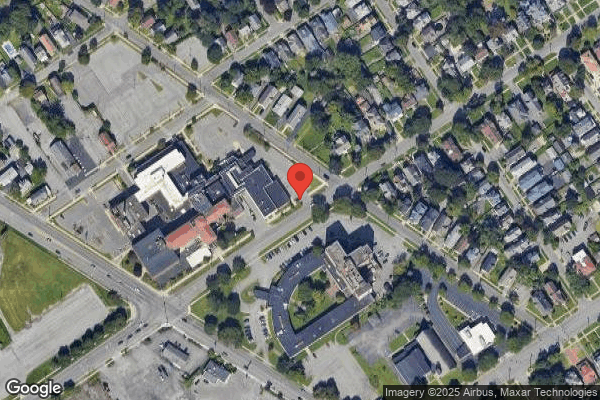
Aug 2023 1 deficiency
CONCERN (D) 📢 Someone Reported This

A family member, employee, or ombudsman was alarmed enough to file a formal complaint

Potential for Harm - no one hurt, but risky conditions existed

Safe Environment (Tag F0584)

Could have caused harm · This affected 1 resident

**NOTE- TERMS IN BRACKETS HAVE BEEN EDITED TO PROTECT CONFIDENTIALITY** Based on observation, interview, and record review during an abbreviated survey (NY00321085) the facility did not maintain a saf...

Read full inspector narrative →
**NOTE- TERMS IN BRACKETS HAVE BEEN EDITED TO PROTECT CONFIDENTIALITY** Based on observation, interview, and record review during an abbreviated survey (NY00321085) the facility did not maintain a safe, clean, comfortable, and homelike environment for 2 of 7 nursing units (Unit 2 [NAME] and Unit 7). Specifically, there were active and old roof leaks that caused water damage and water infiltration into two resident areas on Units 2 [NAME] and Unit 7 (corridor adjacent to Resident room [ROOM NUMBER], clean linen room on Unit 2 West, and Resident room [ROOM NUMBER]). Findings include: Review of the roof vendor quote dated 3/23/2023, documented the need for roof repairs and clean up as well as replacement of materials. Observations made on 8/9/2023 at 12:26 PM on Unit 2 [NAME] included: - an active roof leak within the corridor adjacent to Resident room [ROOM NUMBER] and the cross-corridor fire doors. - A 33 gallon trash can under a cut out section of ceiling (approximately 1 foot x 3 feet) to catch leaking roof water. There was also water on the floor around the trash can. - A small trash can adjacent to Resident room [ROOM NUMBER] catching a small drip coming through a ceiling mounted corridor call bell light and small trash can adjacent to the alcove in the corridor catching another small drip coming out of a ceiling mounted call bell light. - In an adjacent clean linen room, 2 ceiling tiles were removed and there was active water leaking onto a blanket on the floor and a bed pan on the floor. The floor was wet around the bed pan. When observed on 8/9/2023 at 12:47 PM, Resident room [ROOM NUMBER] had rippled paint from water penetration around the window edges and window sill. The paint was peeling, sagging, and bubbled. When interviewed on 8/9/2023 at 12:20 PM, the Administrator stated there was a section of ceiling on Unit 2 [NAME] that was leaking and water damaged from a roof leak. The water leaking occurred about 2 weeks ago and a section of ceiling was cut out to examine where the water was coming from and to get a water catch in place. Maintenance tried to remediate the leak and there was still a small leak coming from that area of the roof. They received a quote for the roof to be repaired a few months ago and they were awaiting approval. The roof leak also spread to an adjacent clean linen room where they set up water catches. They were trying to do their best to mitigate the leaks until they could do the repairs. When observed on 8/9/2023 at 1:00 PM, there was water pooling around the temporary ice and water shield patches that were placed on the roof over the leaking areas of Unit 2 West. In addition, there was a leaking condensation line from one of the Roof Top Units (RTU) pooling water against the unit and at the seams where it penetrated the roof. When interviewed on 8/9/2023 at 1:21 PM, the Director of Maintenance stated there was a rubber roof on the building that had visible wear. The leaks were penetrating around the RTUs. They covered the sections that looked to be contributing to the leaking with a torched ice and water shield and seam tape. There were 3 different sections that were addressed. The roof leak affected Unit 2 [NAME] about 2-3 weeks ago and they were awaiting approval of a roof vendor quote to address the roof. They stated Maintenance staff will continue to try and mitigate the leaks and collect the water until a vendor can address the roof. They stated the ceiling should not be leaking and should be addressed. They also stated the the condensation line for the RTU should be lengthened and replaced and that could also be contributing to some water penetration. When interviewed on 8/21/2023 at 2:40 PM, the Administrator stated they were awaiting approval to have the roof vendor repair the roof. Resident room [ROOM NUMBER] was being addressed and repainted and Maintenance staff believed the issues in that room were from a previous leak. Maintenance staff put plastic runs in place from the roof leaks on Unit 2 [NAME] going from the ceiling to garbage cans to collect the water and addressed some pooling run off from a RTU by replacing the drainage line. The main leak adjacent to Resident room [ROOM NUMBER] will continue to have the plastic runs in place to drain the water into the garbage bins until the roof can be replaced. 10 NYCRR 415.29(j)(1)
Dec 2021 12 deficiencies 1 IJ (1 facility-wide)
CRITICAL (L)

Immediate Jeopardy (IJ) - the most serious Medicare violation

Food Safety (Tag F0812)

Someone could have died · This affected most or all residents

⚠️ Facility-wide issue

Based on observation, interview, and record review during the recertification survey conducted on 12/13/21-12/21/21, the facility failed to store, prepare, distribute, and serve food in accordance wit...

Read full inspector narrative →
Based on observation, interview, and record review during the recertification survey conducted on 12/13/21-12/21/21, the facility failed to store, prepare, distribute, and serve food in accordance with professional standards for food service safety affecting the entire facility. Specifically, the facility failed to maintain a walk-in cooler in operating condition and was found to have an ambient air temperature above 45 degrees Fahrenheit (F). Milk from that walk-in cooler was found to be at 59.5 degrees F and was to be served to residents (required temperature: 45 F or less per New York State, NYS, code and 41 F or less per Food and Drug Administration, FDA, food code). Additional food product in a stand-up cooler that came from the improperly functioning walk-in cooler contained cottage cheese which was measured at 52 degrees F. The milk from the line was pulled at 12:45 PM. Unit 3 was called at 12:52 PM and the dairy products were not removed from the resident trays. Fifty-seven residents (Residents #6, 22, 24, 34, 38, 41, 49, 50, 54, 69, 71, 75, 76, 79, 86, 89, 96, 98, 100, 101, 102, 103, 105, 122, 123, 125, 129, 131, 143, 145, 147, 151, 152, 156, 161, 166, 168, 172, 178, 180, 184, 188, 198, 200, 202, 206, 208, 215, 216, 218, 221, 222, 223, 424, 425, 426, and 427) received potentially hazardous foods. The thermometer in the walk-in cooler was reading 39 F and there was not a process in place to calibrate the thermometer in the walk-in cooler. In addition, the seal to the cooler was ripped and torn. Adulterated food was found in the functioning walk-in cooler which included bags of spoiled lettuce and moldy garnishes. Hot food was not held at proper temperatures. During lunch service, meatballs, mashed potatoes, and red sauce were held at 123-129 F. (Required temperature: 140 F or above per NYS code and 135 F or above per FDA food code). The facility was unaware and informed by the surveyor. A leaking pipe from the compressor in the freezer was causing ice to build up and contaminate food products. A pan of leftover corned beef (wrapped in foil) was adulterated when the ice came in contact with the food. The facility's failure to properly maintain the kitchen puts 212 of the 216 residents at immediate risk for serious illness caused by consumption of potentially contaminated food and drink. This resulted in Immediate Jeopardy to resident health and safety. Findings include: Review of the undated test tray audit tool noted acceptable delivery temperatures must be 40 degrees Fahrenheit (F) (cold) and 140 degrees F or above for (hot). Review of the undated Food Receiving and Storage Policy documented refrigerated foods must be stored below 41 degrees F unless otherwise specified by law. Review of the undated Food Preparation and Service policy documented foods should be held above and out of the danger zone between 41 degrees F and 135 degrees F to prohibit the rapid growth of pathogenic organisms that cause food born illness. Review of the undated sanitization policy noted under bullet 1 all kitchen, kitchen areas and dining areas shall be kept clean. Under bullet 2 all utensils, counters, shelves and equipment shall kept clean and good repair. Food temperature concerns: Kitchen: The daily refrigerator temperature logs for the facility's large walk-in coolers for the month of 12/2021 documented temperatures should be maintained at or below 40 degrees F, temperatures should be checked and recorded once a day (at the opening of the operation or during other stable time) and should be checked using the accurate internal probe. All temperatures recorded were within acceptable range. When observed on 12/14/21 at 11:50 AM, walk-in cooler #2's ambient air temperature was measured to be 50 degrees F. Butter, that was in the cooler, measured 53 degrees F. When observed on 12/14/21 at 12:06 PM, the following food items were removed from walk-in cooler #2, had temperatures that were out of range (over 41 degrees F), and were voluntarily discarded by the Food Service Director: - Cold cut turkey and ham was 55 degrees F. - A tray of egg salad was 53 degrees F. - A 6 inch tray of ham salad was 53 degrees F. - A tray of ground sausage was 55 degrees F and was labeled and dated on 12/13/21. - A container of tomato sauce was 52 F and was dated 12/13/21. - A large tray of stewed tomatoes, labeled and dated 12/11/21, measured 47 degrees F. - A box of cubed cheese was 55 degrees F. - A 4 inch deep hotel pan of hard boiled eggs was 52 degrees F. - A 4 inch deep hotel pan of rigatoni was 51 degrees F. - A case of shell eggs was 47 degrees F. - 7 boxes of shredded cheddar and mozzarella cheese were 44 degrees F. When interviewed on 12/14/21 at 11:30 AM, the Food Service Director stated they thought they had 8 hours to fix the temperature issues with the foods in walk-in cooler #2. The State surveyor intervened and stated food may be out of temperature for up to 2 hours for preparation, or service. The Food Service Director then stated they would discard the foods that were out of temperature because they were not sure how long the cooler was out of temperature. When observed on 12/14/21 at 12:43 PM, whole milk was in a glass in a standup cooler at the end of the tray line in the kitchen. The doors to the stand up cooler were open and the milk was 59.5 degrees F. At 12:44 PM, the surveyor informed the Food Service Director of the milk temperature and the Food Service Director stated they were going to remove milk from the meal service. At 12:45 PM, the milk in the standup cooler was removed from the cooler and a nectar-thick milk was checked and was 50 degrees F. At that time, milk from the standup cooler had been delivered to the nursing units and the Food Service Director stated they would ask the registered dietitian (RD) to call the units to remove the milk from the resident meal trays that had been delivered. The Food Service Director stated it was the first time they were aware of issues with milk temperatures and when they did test trays, the milk was usually around 43 degrees F. At 12:50 PM, the Food Service Director was observed removing items from the standup cooler at the tray line. The stand up cooler also contained cottage cheese which was measured at that time to be 52 degrees F. At 12:55 PM, the Food Service Director stated in an interview, Units 2S, 2W, 4, 5, and 7 had been served lunch trays already and Units 3 and 6 had not been served yet. When interviewed on 12/14/21 at 12:58 PM, dietary aide #49 stated the milk in the standup cooler during the tray line had been poured before 11 AM or maybe 10 AM that day and was moved from walk-in cooler #2 to the standup cooler. They stated after the trayline was done, the milk went from the standup cooler back into walk-in cooler #2. Additionally, at the time of the interview, the Food Service Director(who was present) stated walk-in cooler #2's door did not seal, but it could be pushed closed. During interview on 12/14/21 at 1:01 PM, the Administrator and Assistant Administrator were notified by the surveyor of the issues with the dairy products' temperatures and they stated they would call the units to ensure the items were removed from service on Units 2S, 2W, 4, 5, and 7. At 1:29 PM, a ham sandwich in walk-in cooler #2 was measured at of temperature of 53 degrees F. A turkey sandwich from a pan at the top of walk-in cooler #2 was measured at 76 degrees F. These were placed in the cooler after lunch service by a staff member. Unit 4 Observations on Unit 4 on 12/14/21 included: - at 12:39 PM, a milk from Resident #71's tray was 64 degrees F. - At 12:41 PM, a milk from Resident #105's tray was 65 degrees F. Unit 3: When observed at 12:49 PM, the residents on Unit 3 had milk on their meal trays and staff were not observed to remove milk from the meal trays. - At 12:52 PM, Resident #178 was assisted by certified nurse aide (CNA) #32; the resident consumed two sips of milk. Licensed practical nurse (LPN) #14 answered a telephone call and hung up the phone. - No milk was observed to be removed from residents' trays. - At 1:01 PM, Resident #178's milk was taken for a temperature and was 64 degrees F. On 12/14/21 at 1:08 PM, the meal trays were removed from the resident rooms on Unit 3. The surveyor told the unit staff to ensure no milk products were left in the resident's rooms. When interviewed on 12/14/21 at 1:15 PM. LPN #14 stated the telephone call they received at 12:52 PM was to tell them to remove all milk from the residents' trays but at the end of the call, the person on the other end of the phone told LPN #14 to forget about it and not to remove the milk. LPN #14 stated Residents #75, 123, 22, 54, and 129 had consumed all the milk on their lunch trays. LPN #14 stated they did not know who the person was on the other end of the phone. Unit 2S: When observed on 12/14/21 at 12:56 PM, the lunch meal cart arrived to Unit 2S. At 1:01 PM, a carton of milk was removed from Resident #168's lunch meal tray by the surveyor. The temperature of the milk was 73.1 degrees F. At that time, the surveyor asked LPN Manager #2 to remove all milk products from the residents' meal trays. An additional 14 residents (Residents #98, 100, 122, 145, 151, 152, 166, 168, 184, 188, 202, 206, 216, 218) had milk and milk products on their meal trays, which were removed prior to being served to residents (at the surveyor's direction). LPN Manager #2 stated in an interview at that time, they were not aware there was an issue with the temperature of milk and milk products in the building until the surveyor informed them. Unit 6: When observed on 12/14/21 at 1:29 PM, lunch meal was delivered to Unit 6. Included with the lunch meal were 2 ham sandwiches for residents, the temperature between the ham slices was measured to be 78.8 F. Staff were notified, and both sandwiches were disposed of. On 12/14/21 at 1:43 PM, the Administrator and Food Service Director were notified by the surveyor of the ham and turkey sandwich temperatures. They stated the sandwiches would be removed from service. On 12/14/21 at 2:06 PM, the Director of Nursing (DON) provided a list of residents who consumed dairy products from lunch. The DON stated the residents would be assessed by the registered nurse (RN) and nurse practitioner (NP). When interviewed on 12/14/21 at 2:46 PM, dietetic technician (DT) #19, stated the Food Service Director asked them to call Unit 2S at 1 PM to determine if they had received their lunch meals yet. DT #19 stated they called Unit 2S, were unsure who they spoke to, and was told the unit had not received their lunch meal cart at that time. They let the Food Service Direct know Unit 2 South had not received their meal cart yet at the time that they called. DT #19 stated they were unsure why they were asked to call Unit 2S, but did overhear discussions regarding milk product temperatures. They stated after lunch, they attended a care plan meeting until 2 PM and after the meeting, they informed the registered dietitians (RD) about the Food Service Director asking them to call Unit 2 South and about the discussions they overheard regarding the milk product temperatures. When interviewed on 12/14/21 at 2:49 PM, RD #21 stated they were not asked to call any of the units at lunch today and was informed by DT #19 at 2 PM, about the discussion in the main kitchen regarding milk product temperatures. When interviewed on 12/14/21 at 2:50 PM, RD #22 stated they were not asked to call any units during lunch that day and were informed by DT #19 at 2 PM about the discussion in the main kitchen regarding milk product temperatures. RD #22 stated the RDs completed a basic monthly main kitchen sanitation audit which included observing if the cooler and freezer temperature logs were filled out. They did not check or take any temperatures of food items in the coolers or freezer. RD #22 stated the last monthly audit completed was in 11/21 and the 12/21 audit was due 1/7/22. When interviewed on 12/14/21, the Food Service Director stated: - at 2:53 PM, walk-in cooler temperatures were recorded daily around 7 AM. Staff constantly open and close refrigerators, but occasionally will leave the cooler open for a short time when they are busy. Temperatures were read off a similar thermometer as is in the walk-in cooler, located in the back on the bottom. - At 2:55 PM, the Food Service Director stated they randomly checked the cold food including thickened drinks, salad, and cold sandwiches. They stated they did not record any of the random temperatures that were measured of cold food items. When interviewed on 12/15/21 at 4:26 PM, nurse practitioner (NP) #4 stated it was a concern if residents had consumed items that were served at a suboptimal level. The residents who had been identified as consuming the dairy products were assessed on that day. The milk could have bacteria depending on how warm it got. If a resident had an adverse reaction from the milk, they would likely exhibit gastrointestinal symptoms such as diarrhea. The symptoms were likely to occur within 24 hours and the facility would continue to monitor. When interviewed on 12/15/21 at 4:39 PM, the Medical Director stated the impacts of dairy products being out of temperature depended on how long they were out of temperature. Typical side effects would be gastrointestinal issues such as nausea and diarrhea. They stated NP #4 was onsite everyday and would follow up with the residents involved. The Medical Director was not made aware of the issues with the consumed dairy products on 12/14/21. Thermometer concerns: When interviewed on 12/14/21 at 11:30 AM and 11:57 AM, the Food Service Director stated they usually record the walk-in coolers' internal temperatures each morning approximately at 7 AM. They go by the temperature reading on the hanging manual thermometer maintained in the walk ins. That morning, they stated they recorded a temperature of 38 degrees F. When observed on 12/14/21 at 12:45 PM, the internal ambient air temperature of walk-in cooler #2 was measured to be 55 degrees F. The prepared milks in cups stored within the tray line holding refrigerators were measured to be between 55-60 degrees. The hanging manual thermometer within walk-in cooler #2 indicated the temperature of the cooler was 39 degrees F. The internal temperature of ham cold cut was measured to be 51 degrees F, located in walk-in cooler #2. When interviewed on 12/14/21 at 2:55 PM, the Food Service Director stated they do not calibrate the hanging thermometers in the coolers, nor do they check the temperature of any products in the coolers. Adulterated Food: When observed on 12/14/21 at 11:40 AM, there was a case containing lettuce that appeared rotten and partially liquefied, located on top shelf of the rack on the left side in walk-in cooler #1. The bagged lettuce was stamped by the manufacturer with the date of 11/29/21. When interviewed on 12/14/21 at 11:40 AM, the Food Service Director stated the bagged salad was dated 12/17/21 but may have been frozen in transport. They voluntarily discarded the entire box. This produce box also contained unwrapped herbs that were wilted and rotting and pre-bagged salad mixes. The Food Service Director stated in an interview at that time, the cooks and food preparation staff usually notified the Food Service Director when foods were spoiled or rotten, and then they throw the food away. When interviewed on 12/14/21 at 2:55 PM, the Food Service Director stated the food service supervisors were responsible for food inspections in the cooler to make sure nothing was rotten and/or expired. They stated supervisors go through to check and make sure things are dated, and the Food Service Director will go through and check to make sure all items were dated. The Food Service Director stated they also made sure everything was labeled and added that there were no calibration or accuracy checks being done prior to today. They stated they had never taken random food temperatures of items in the walk-in coolers. Hot holding violations: When observed on 12/14/21 at 11:30 AM, the following food temperatures were measured on the service line, and were out of acceptable range for hot holding: - Red sauce was 128 degrees F. - Meatballs were 123 degrees F. - Mashed potatoes were 129 degrees F. - The steam table units were on and water within the steam tables measured at 158 degrees F. At the time of the observation, the Food Service Director stated the facility recorded food temperatures when items were put into the steam tables. Review of the temperature recordings documented by the facility at the start of meal service revealed each item measured had a temperature recorded as greater than 160 degrees F. After these temperatures were brought to the attention of the Food Service Director, for correction, the items were removed from service and reheated to 165 degrees F. When interviewed on 12/14/21 at 11:30 AM, the Food Service Director stated that the initial cooking temperatures were logged by the cook who was also doing the reheating. They thought that maybe these items being uncovered could have affected their temperatures. They stated the probe thermometers used by the cook's were calibrated daily. When interviewed on 12/14/21 at 2:55 PM, the Food Service Director stated they did random hot food checks and hot food should be at least 140 degrees F for hot holding. The Food Service Director stated if the foods were not 140 degrees F but were close, they would reheat the food item. The Food Service Director stated today they did their random check on the tuna noodle casserole and the peas. They stated there was not a policy for taking food product temperatures. Staff monitored temperatures on tray line periodically, but the Food Service Director will usually check them as well. They stated they did not record any of the random temperatures they took. The Food Service Director stated they did not check food temperatures again during the tray line or when food left the kitchen. The steam tables were turned on in the morning at 5:30 AM and they stayed on all day. The steam tables were set to high which was 10. The staff did not check the temperature of the water in the wells, they looked for the presence of steam from the steam table. Physical Contamination and Cleanliness: Review of the monthly kitchen audits documented on 3/26/21, the ice machine was clean with no lime, rust or mildew, ice scoop was stored appropriately outside of the machine. The 3/26/21 audit was completed by Regional RD #43. The 10/5/21, 11/5/21 and 12/6/21 kitchen audits did not mention the ice machine or the ice scoop storage. The 10/5/21, 11/5/21, and 12/6/21 audits were completed by RD #22. The weekly cleaning audits documented there was a different area or item of the kitchen cleaned each day on weekly rotations. The ice machine was not included in this rotation. When observed on 12/13/21 at 10:28 AM, the ice machine adjacent to the kitchen showed signs of dark spotty mold like substance on the inside on both sides of upper section of the unit. The top and outside of ice machine was unclean with food spills and was sticky. The ice scoop was noted to be in a plastic holder attached to the wall adjacent to the ice machine. The wall and the scoop holder attached to the wall that the scoop was in contact with was unclean and soiled. At the time of the observation, the Food Service Director stated daily cleanings were done by food service workers and then monthly deep cleans were performed. The walk-in freezer was observed on 12/13/21 at 10:34 AM, and the following was present: - frost was puddling under the condenser fans unit. - A 3 foot x 3 foot sheet of ice was present on the floor below the storage racks and main aisle between the racks. - Four boxes of food product were wet from dripping condensate on the outside and there was ice buildup. - There were 2 large sheet trays under the fans collecting condensate water and the water was frozen solid and spilling over the trays. At the time of the observation of the walk-in freezer on 12/13/21 at 10:34 AM, the Food Service Director stated in an interview, the walk-in freezer had been in the condition it was in for about 2-3 weeks. The Food Service Director stated they replaced the sheet pans each day when they were full of ice build-up from the dripping condensate. An HVAC (heating ventilation and air conditioning) vendor came in initially and the Food Service Director stated they hoped they would be back today (12/13/21). The Food Service Director stated the vendor stated they needed to wrap the line with installation to stop the condensation from dripping from the condenser unit. Observations in the kitchen on 12/13/21 at 10:44 AM, included: - Floors and walls in the food preparation areas and underneath and in front of the stoves/ovens were unclean and soiled with food debris. - Black soiled flooring was present in several areas and all the grout between flooring tiles was blackened. - Improper air drying and storage was observed behind the 3 bay sink area. The Food Service Director stated in an interview at that time, that section was a clean drying area for dishware. Numerous sheet trays and deep trays were present in this section and were being improperly air dried with water droplets on the outside and inside surfaces. These items were stored tight together. - Floors in front of and underneath the dish machine were not smooth and easily cleanable. The floor was missing tiles and grout and a 10 foot x 10 foot section contained standing water with unclean food debris and spillage under and between tiles. - The juice machine was unclean with juice spills on the lines. Under the machine was sticky and juice was draining into a cut plastic bucket. - Walk-in cooler #2 had pieces of sliced cold cut turkey on the floor, racks, and shelves. The floor also contained other food debris and was unclean. At the time of the observation on 12/13/21 at 10:44 AM, the Food Service Director stated in an interview, all items on the racks should be clean and air dried before moving them to be stacked and stored in that area. He further stated the spray gun and juice machine were cleaned every night. The tiles in the dish machine area have been black in color for at least three months. The grout gets filled and it wears away and needed to be done again. The Food Service Director stated maintenance replaced the grout when needed. Observations on 12/14/21 at 11:37 AM, (one day after initial inspection) included: - the kitchen floors remained unclean and soiled with food debris and black grout, including under and behind major appliances on the cook lines. - The stored dishware, behind the 3 bay sink section, including the pans and trays were stored wet and stacked together without being fully air dried. All items were stacked with water collecting inside and in between one another. - The dish washing area contained broken, missing floor tiles, and grout had food debris and milk spillage in the grout spaces and under floor. - The walk-in freezer contained a large sheet of ice formation on the floor under the storage racks approximately 8 feet x 4 feet. The sheet pans were full of ice under condenser fans. There were two 10 pound (lb) boxes of sausage, a 10 lb box of strudel, and a 14 lb box of pizza crusts covered in dripping refrozen unclean condensate ice water. When observed on 12/14/21 at 12:11 PM, the hand washing sink did not have paper towels in the dispenser. In addition, the can opener was unclean and soiled with a black sticky substance. The can holder and the blade were also unclean and soiled with the black sticky substance. When interviewed on 12/14/21 at 12:50 PM, the Food Service Director stated they were planning to move the food products that were wet and encased in the ice dripping from the compressor lines. The Food Service Director stated they were planning get the food out of the walk-in freezer today and the food had been there for about a week. The Food Service Director stated the majority of the facility's food stock turned over within one week to 9 days. At the time of the interview, there was corned beef in a foil pan wrapped in aluminum foil and labeled with a date of 11/9/21 and 2 cases Italian sausage (ground) heavily encased in ice and affecting the packaging. Meatballs and similar product cases were also compromised and encased in ice. The foil pan of corned beef wrapped in foil was voluntarily discarded due to the ice encasing it, the aluminum foil covering was partially ripped open and the condensate ice/water was in contact with the food product. When interviewed on 12/14/21 at 2:53 PM, the Food Service Director stated a HVAC repair person should be coming tonight (12/14/21) to look at the walk-in cooler #2 and the walk-in freezer. The freezer issues have been going on for 3 months and started approximately 9/9/21. On 10/15/21, the condensation lines were wrapped on the roof and more was needed. They were not aware of the walk-in cooler #2 having issues with holding temperature. Review of kitchen maintenance log confirmed the dates of 9/9/21 for reporting freezer leak and HVAC vendor coming out. It also identified the condensation lines were wrapped on the roof. -------------------------------------------------------------------------------------------------------------------------------------------- Immediate Jeopardy was identified, and the facility Administrator was notified on 12/14/21 at 5:43 PM. The Immediate Jeopardy was removed on 12/15/21 at 4:42 PM, based upon the following corrective actions taken: - The freezer was repaired on 12/14/21 at approximately 7:00 PM. - Walk-in cooler #2 was found by the vendor to be cooling properly. The door/seal was broken and repair was planned. Use of walk-in cooler #2 was stopped until the repair could be made. - The facility implemented a plan to check accuracy of the thermometers in the walk-in coolers. - Drinks were maintained cold on the trayline in a pan with ice and the facility was no longer using the stand-up coolers during service. - Sandwiches were transported to the units in an Igloo cooler to the units instead of on a tray in the Cambro/hot box. - Kitchen staff were educated on hot holding temperatures and temperatures in the cooler. 100% of currently working staff were educated. - Education signage was placed throughout the kitchen on hot holding temperatures, refrigeration, and proper storage of food. - The heat to the kitchen was turned off which improved the ambient temperature of the kitchen. - A detailed cleaning schedule was posted and to be followed. - Monitoring of residents who consumed dairy products: with shift-to-shift report for 5 days and on the 24 hours report. 10NYCRR 415.14(h)
CONCERN (D)

Potential for Harm - no one hurt, but risky conditions existed

Deficiency F0604 (Tag F0604)

Could have caused harm · This affected 1 resident

**NOTE- TERMS IN BRACKETS HAVE BEEN EDITED TO PROTECT CONFIDENTIALITY** Based on observation, record review and interview during the recertification survey conducted 12/13/21-12/21/21, the facility fa...

Read full inspector narrative →
**NOTE- TERMS IN BRACKETS HAVE BEEN EDITED TO PROTECT CONFIDENTIALITY** Based on observation, record review and interview during the recertification survey conducted 12/13/21-12/21/21, the facility failed to ensure 1 of 2 residents (Resident #31) reviewed was free from physical restraints. Specifically, Resident #31's restraint was not released at least every 2 hours and at meals as care planned. Findings include: The 3/2020 Use of Restraints policy documented restraints shall only be used for the safety and well-being of the resident(s) and only after other alternatives have been tried unsuccessfully. Restraints shall only be used upon written order of a physician. Care plans for residents in restraints will reflect interventions that not only address the immediate medical symptom(s), but the underlying problems that may be causing the symptom(s). Care plans shall also include the measures taken to systemically reduce or eliminate the need for restraint use. Resident #31 was admitted to the facility with diagnoses of dementia with behavioral disturbance, restlessness, and anxiety. The 3/12/21 and 6/8/21 Minimum Data Set (MDS) assessments documented the resident used a trunk restraint daily. The 9/8/21 MDS assessment documented the resident was severely cognitively impaired; required extensive assistance with most activities of daily living (ADL), and restraints were not documented as used. A restraint assessment dated [DATE] was conducted by the interdisciplinary team (IDT) and documented the resident was to have a lap buddy (cushioned lap restraint) that was to be released every 2 hours for toileting, range of motion (ROM), and nourishment. The comprehensive care plan (CCP), updated 10/30/21, documented the resident was at risk to fall due to confusion, decreased mobility, and gait/balance problems. The resident used a physical restraint due to poor safety awareness and throwing self on floor. The resident had a lap buddy in place in wheelchair when out of bed, it was to be released every 2 hours for repositioning, ADLs, and feeding, beginning 6/15/20. Staff were to ensure restraint release was completed, evaluate restraint use including risk/benefit, alternatives and need; and report any adverse effects to medical doctor/nurse. The certified nurse aide (CNA) care instructions, active 12/2021, documented the resident was to have a lap buddy in the wheelchair while out of bed, to be released every 2 hours for repositioning, ADLs, and feeding. The physician's orders, active 12/13/21, documented the resident had a lap buddy in wheelchair that was to be released every 2 hours for repositioning, ADLs, and feeding. The resident was observed sitting in their wheelchair with a lap buddy in place: - On 12/13/21 at 2:00 PM. Lunch trays were on the unit and the resident received assistance from staff with the meal. - On 12/14/21 at 9:15 AM, while CNA #59 was feeding/assisting the resident with their breakfast meal. - On 12/15/21 during a continuous observation from 11:53 AM to 2:38 PM. The resident was not offered personal care and the lap buddy was not released during the lunch meal by assistant nurse aide (ANA) #43. During an interview with CNA #59 on 12/17/21 at 1:28 PM, they stated the resident had a restraint, a lap buddy, to prevent them from tipping forward in their wheelchair. It would then be removed when the resident went back to bed. They were not aware it was to be removed at other times. They did not remove it at meals, and they fed the resident on 12/14/21 and did not remove it. They stated they signed off in the electronic record the restraint was removed every 2 hours when out of bed in wheelchair. During an interview with ANA #43 on 12/17/21 at 3:43 PM, they stated the resident could not walk or communicate their needs. The resident was to be repositioned every 2 hours to prevent pressure sores. They assisted the resident out of bed to their wheelchair on 12/15/21. They stated the lap buddy was to be used any time the resident was in the wheelchair to prevent them from falling forward. The electronic record documented to check lap buddy was in place every 2 hours. During an interview with registered nurse (RN) #30 on 12/17/21 at 1:45 PM, they stated the lap buddy was used when out of bed. When the resident was eating their meal, it was to be taken off, for comfort. During an interview with the Director of Rehabilitation on 12/20/21 at 3:27 PM, they stated physical or occupational therapy would assess need for a lap buddy and conduct quarterly screens to see if the restraint remained necessary and to maintain optimal safety. The resident was initially assessed in 6/2020 related to a fall from their chair. At that time, it was recommended a lap buddy be put into place. They reassessed the lap buddy on 6/8/21 and it was to remain as ordered. The resident was unable to rise from wheelchair and the lap buddy would be considered a restraint. The therapy department did not care plan for the release of the lap buddy. During an interview with Assistant Director of Nursing (ADON) #8 on 12/20/21 at 3:51 PM, they stated physical therapy determined whether a restraint was needed for a resident, determine its' safety, and discussed restraints with medical. Assessments were ongoing and all restraints were to be released at least every 2 hours to reposition. Unit Managers were responsible for communicating the plan to staff. The resident's unit had not had a Unit Manager for a while. If there was not a Unit Manager, the ADON would communicate this. It would be noted in the care plan and in the care instructions visible to the CNAs. The lap buddy would have instructions to release every 2 hours for ADLs and feeding. The lap buddy should not have been in place when the resident was being fed. 10NYCRR 415.4(a)(5)
CONCERN (D)

Potential for Harm - no one hurt, but risky conditions existed

ADL Care (Tag F0677)

Could have caused harm · This affected 1 resident

Based on observation, record review, and interview during the recertification and abbreviated surveys (NY00281850, NY00270904, NY00269162 and NY00281169) conducted on 12/13/21-12/21/21, the facility f...

Read full inspector narrative →
Based on observation, record review, and interview during the recertification and abbreviated surveys (NY00281850, NY00270904, NY00269162 and NY00281169) conducted on 12/13/21-12/21/21, the facility failed to ensure 1 of 7 residents (Resident #2) reviewed received the necessary services to maintain good nutrition. Specifically, Resident #2 was not assisted with meals timely. Findings include: Resident #2 had a diagnosis including dysphagia (difficulty swallowing). The 11/26/21 Minimum Data Set (MDS) assessment documented the resident was severely cognitively impaired; required extensive assistance with eating; had a 5% weight loss in the last month; and was not on a prescribed weight-loss regimen. The 11/22/21 physician's orders documented the resident was on a regular diet with pureed texture and nectar thickened liquids. The 12/7/21 comprehensive care plan (CCP) documented the resident was at risk for malnutrition, needed an altered consistency diet, and required extensive assistance with eating. The care instructions, active 12/20/21, documented the resident required extensive assistance with eating, was on swallowing precautions, and received double portions at meals. During a meal observation on 12/13/21: - At 2:00 PM, the lunch trays arrived to the unit. - At 2:25 PM, the resident was sitting with their meal, not eating, with no staff assisting. - At 2:38 PM, a certified nurse aide (CNA) went into the resident's room to provide care. - At 2:48 PM, the resident remained seated with their meal tray in the room, untouched, and no staff had offered to assist. - At 2:55 PM, staff member went into the resident's room to assist them with their meal. The ADL report had no documentation eating assistance was provided by staff for the lunch meal on 12/13/21. During a meal observation on 12/14/21: - At 9:19 AM, a CNA was bringing the meal carts to the unit. - At 9:45 AM, the resident's meal tray was brought to their room by CNA #58. The resident was sitting in the room at that time and was not offered meal assistance. - The resident remained seated in their room with meal untouched without staff assistance, through 10:30 AM. During an interview with CNA #58 on 12/14/21 at 10:35 AM, CNA #58 stated they went into the room and asked the resident if they were hungry at breakfast on 12/14/21. The resident did not respond, closed their eyes, and started to drift off to sleep. CNA #58 stated the resident was assigned to their care. They stated the meal cart arrived to the unit at 9:45 AM, and they passed the resident their meal tray. They could not recall what time they passed it. They stated 50 minutes was not a long time to wait for their meal as there was no way the staff could feed everyone that needed assistance on time. The ADL report had no documentation eating assistance was provided by staff for the breakfast meal on 12/14/21. During an interview with registered nurse (RN) #30 on 12/14/21 at 10:51 AM, they stated they helped assist residents with meals occasionally. They did not assist with meals that morning. They were unaware the resident had to wait for their meal, if they knew they would have helped. 10NYCRR 415.12(a)(3)
CONCERN (D)

Potential for Harm - no one hurt, but risky conditions existed

Deficiency F0692 (Tag F0692)

Could have caused harm · This affected 1 resident

**NOTE- TERMS IN BRACKETS HAVE BEEN EDITED TO PROTECT CONFIDENTIALITY** Based on observation, record review and interview during the recertification survey conducted on 12/13-12/21/21, the facility fa...

Read full inspector narrative →
**NOTE- TERMS IN BRACKETS HAVE BEEN EDITED TO PROTECT CONFIDENTIALITY** Based on observation, record review and interview during the recertification survey conducted on 12/13-12/21/21, the facility failed to ensure 1 of 4 residents reviewed (Resident #145) maintained acceptable parameters of nutritional status. Specifically, Resident #145 had a significant weight loss which was not reassessed timely by clinical nutrition staff. Findings include: The facility's revised 1/2021, Weight Assessment and Intervention policy documented: - Nursing staff will weigh residents. - Weights will be recorded in each unit's weight book and in the resident's medical record. - Any weight change of 5% or more since the last weight assessment will be taken the next day for confirmation. If the weight is verified, nursing will immediately notify the registered dietitian (RD) in writing. Verbal notification must be confirmed in writing. - The RD will review the unit's weights by the 15th of the month. - Negative weight trends will be evaluated by the treatment team whether criteria for significant weight change has been met. - The threshold for significant unplanned weight and undesired weight loss is based on 5% loss at one month 7.5% loss at 3 months, and 10% loss at 6 months. - Assessment information shall be reviewed by the interdisciplinary team (IDT) and conclusions shall be made regarding the resident's target weight, estimated daily caloric and fluid needs compared to current intakes, the relationship medical conditions and weight, and whether weight can stabilize, or improvement can be anticipated. - The IDT will also look into whether medications, cognitive or functional decline, and environmental factors (such as noise and distraction related to dining) may have contributed to weight loss. - The resident's care plan shall address, if possible, the cause of weight loss, goals and benchmarks for improvement, and timeframe for monitoring and re-assessment. - Care planning interventions for undesirable weight loss shall be based on careful consideration including resident food choices and preferences, nutritional and hydration needs, functional factors that may inhibit the resident's inability to eat independently, environmental factors that may inhibit appetite or desire to participate in meals, the use of supplements and artificial nutrition. - The RD will discuss undesirable weight loss with resident or representative. Resident #145 had diagnoses including major depressive disorder and dementia. The 10/31/21 Minimum Data Set (MDS) assessment documented the resident was severely cognitively impaired; required extensive assistance with eating, weighed 131 pounds, and did not have any significant weight changes. The resident's weight record documented the resident weighed in pounds (lbs.): - On 7/23/21 - 147 lbs. - On 8/2/21 - 140 lbs. - On 9/3/21 - 140 lbs (7 lbs./4.7% loss in 2 months) On 9/20/21, the nurse practitioner's progress note documented the resident was down 7 lbs. in the past month and a half. The resident's diuretic medication would be discontinued as there was no evidence of edema at this time and they would start the resident on 2 Calorie HN at med pass and monitor the resident's weight in 2 weeks. The 9/2021 medical order documented the resident was started on 2 Calorie HN (oral nutrition supplement) at 120 milliliters (ml) twice daily on 9/21/21 and received a regular ground (mechanically altered) diet. The comprehensive care plan (CCP) documented on 9/20/21, 120 ml of 2 Calorie HN at medication pass was added. The resident's weight record documented on 10/3/21, the resident weighed 130.8 lbs. (9.2 lbs. loss/ 6.5% loss over 1 month). On 10/25/21, the NP's progress note documented they saw the resident for a routine follow up and nursing staff reported no new issues. They noted the resident's weight as 130.8 lbs. On 10/29/21, RD # 21 documented the resident was on a ground regular diet and received 4 ounces (oz.) of 2 Calorie HN twice daily, providing an additional 476 calories and 20 grams of protein to promote adequate intakes and weight gain. The resident's current weight was 130.8 lbs., the resident needed extensive assistance at meals, supplement intakes averaged 50 -75%, and meal intakes averaged 75% at meals. A re-weight was requested and pending. The resident had a potential weight loss of 9.2 lbs./ 6.6% since 9/3/21. The resident's nutritional needs would be reassessed once re-weight was obtained. The CCP, revised 10/29/21, documented the resident had a potential nutritional problem related to the past medical history of depression and dementia. Interventions included encouraging and monitoring oral intakes, they were an extensive assistance with meals, honor food preferences, monitor meal consumption, monitor weights, observe for chewing/ swallowing problems, provide a ground regular diet, and report any significant weight changes to medical and IDT team. On 10/30/21, the CCP was updated to reflect that the 2 Calorie HN at med pass provided an additional 476 calories and 20 grams of protein. The resident's weight record documented on 11/3/21, the resident weighed 123.4 lbs. (7.4 lbs. loss/ 5.6% loss over one month and 16.6 lbs./ 11.8% loss over 3 months). On 11/6/21, The resident's attending physician's progress note documented the resident was a seen for a routine visit and weighed 123.4 lbs. The resident's appetite varied, which was a common side effect of the resident's advanced dementia. They were down 7 lbs. from last month, nutrition will follow closely, and unit staff will continue to encourage intakes at all meals and supplements. The resident's weight record documented the resident weighed in lbs.: - On 12/1/21 - 112.3 lbs. - On 12/10/21 - 113.8 lbs. (9.6 lbs. loss/ 7.7% loss over one month and 26.2 lbs. loss/ 18.7% loss over 3 months). The undated certified nursing assistant (CNA) care instructions ([NAME]) documented the resident required extensive assistance at meals, received a ground regular diet, snacks were to be offered in the evening, intakes were to be monitored, and the RD and medical provider were to be notified if the resident had decreased intakes. Resident #145 was observed walking up and down the length of the 2S unit hallway on 12/13/21 at 10:53 AM, 11:08 AM, and at 11:24 AM. Resident #145 was observed eating lunch in the lounge area of the 2S unit with the assistance of CNA #27 on 12/13/21 at 1:40 PM. The resident ate 50% of their ground roasted chicken, 50% of their spinach, 100% of their vanilla pudding, 100% of their juice, and 50% of their milk. Resident #145 was observed walking up and down the length of the 2S unit hallway on 12/14/21 at 8:51 AM and 12/15/21 at 12:00 PM. Resident #145 was observed eating lunch in the lounge area of the 2 South unit with the assistance of CNA #27 on 12/15/21 at 12:57 PM. The resident ate 75% of their broccoli, 75% of their ground chicken tenders, 100% of their juice and 100% of their milk. Resident #145 was observed walking up and down the length of the 2S unit hallway on 12/16/21 at 12:03 PM, 12/17/21 at 10:14 AM, and 12/20/21 at 8:48 AM. During an interview on 12/17/21 at 12:39 PM, CNA #27 stated monthly weights were due by the 7th of the month and if a re-weight was needed, the nurse would let them know. During an interview on 12/17/21 at 12:49 PM, LPN #23 stated the CNAs obtained the residents' monthly weights by the 7th of the month. Any nurse could document the weights in the record. If re-weights were needed, the RD would let the Unit Manager know in morning report. Weights were also discussed during the CCP meetings. If a resident had a weight change of 5 lbs., a re-weight was obtained. During an interview on 12/17/21 at 12:55 PM, LPN #2 stated the RD provided the Unit Manager with a list of re-weights or missing weights. The RD informed the Unit Managers of this in morning report, via email, via phone call, or in CCP meetings. During an interview on 12/20/21 at 9:23 AM, LPN #2 reviewed the unit's weight book and stated the IDT team was aware of the resident's weight loss. They obtained the resident's re-weight in 10/21. The 10/21 re-weights for the resident were documented in the weight book as 132.6 lbs. and 132.5 lbs., which was a loss of 7.4 lbs. or 7.5 lbs. The 11/21 re-weight documented in the weight book was 123.4 lbs. During an interview with diet technician (DT) #19 on 12/20/21 at 10:12 AM, they stated the nursing department obtained the resident's weights and entered the information into the computer system. During an interview with RD #22 on 12/20/21 at 10:13 AM, they stated the RDs completed the high-risk nutrition assessment and weight notes. Nursing obtained and entered the weights. If a resident had a significant weight change of 5% or more at one month, 7.5% or more at 3 months, and 10% or more at six months, the RD should complete a weight note. The weight note should document if the significant weight change was planned or unplanned along with any interventions. Re-weights were requested on any resident that had a 5 lbs. weight change each month. Re-weights were requested in morning report, via email, or by calling the Unit Manager. If they requested a re-weight, they would document a re-weight was requested in the medical record. RD #22 reviewed Resident #145's weight record and stated the resident had a significant weight loss in 10/21 and they did not see a re-weight in medical record. The resident also had a significant weight change in 11/21 and a re-weight was not requested. They were unsure how the significant weight loss was missed. If a resident refused to be weighed nursing staff should document their refusal in the medical record. During an interview with Regional RD #43 on 12/20/21 at 10:29 AM, they stated initial weights were due by the 7th of the month. Weight notes were due by the 15th of the month. They expected staff to write a weight note documenting the significant weight change and along with any interventions. The resident's CCP should also be updated if there was a significant weight change. There should have been a weight note documented regarding Resident #145's significant weight loss. Weights were important because a clinical indicator of the resident's nutritional status. During an interview with the Director of Nursing (DON) #7 on 12/20/21 at 11:57 AM, they reported they were the RN who oversaw the resident's unit. The CNAs obtained the resident's monthly weights, and the nurses entered the resident's weights into the medical record. The nurses on the unit were made aware of the need for re-weights by the RD. They expected staff to document if a resident refused to be weighed. If a resident had a significant weight change, they would also expect a note to be documented and the CCP to be reviewed and if needed updated. 10 NYCRR 415.12(i)1
CONCERN (D)

Potential for Harm - no one hurt, but risky conditions existed

Menu Adequacy (Tag F0803)

Could have caused harm · This affected 1 resident

Based on observation, interview, and record review during the recertification survey conducted on 12/13/21- 12/21/21, the facility failed to ensure the menu was prepared in advance, followed, and refl...

Read full inspector narrative →
Based on observation, interview, and record review during the recertification survey conducted on 12/13/21- 12/21/21, the facility failed to ensure the menu was prepared in advance, followed, and reflect, based on reasonable efforts, input from the residents for 4 of 35 residents reviewed (Residents #28, 91, 111, and 215). Specifically, Residents #28, 91, and 111 received a substitution of peas instead of spinach at the 12/13/21 lunch without documented rationale for the substitution. Resident #28 received incorrect items at 2 meals and Resident #215's meal preferences were not honored, and they received foods they did not like. Finding included: The 1/2021 Food Services policy and procedure documented individual food preferences will be assessed upon admission and communicated to the interdisciplinary team. Upon the resident's admission (or within 24) hours after his/her admission the dietitian or nursing staff will identify a resident's food preferences. MENU NOT FOLLOWED: 1) The 2021 Fall/Winter Menu Week 2 Menu documented the vegetable served for lunch meal on 12/13/21 was spinach. The vegetable to be served for dinner on 12/15/21 was steamed broccoli. There were no alternate options listed for the vegetables. The undated facility Test Tray audit form documented the meal tray should be checked that all food items reflect the portion, and the food item consistencies were accurate as stated on Mealtracker (tray ticket). Resident #28 was admitted to the facility with diagnoses including hyponatremia (low sodium level in the blood) and abnormal gait and mobility (difficulty walking). The 12/10/21 Minimum Data Set (MDS) assessment documented the resident was cognitively intact and required set-up only for meals. Resident #91 was admitted to the facility with diagnoses including pneumonia and chronic obstructive pulmonary disease (COPD). The 10/15/21 MD documented the resident was cognitively intact and required limited assistance for meals. Resident #111 was admitted to the facility with diagnosis including diabetes. The 10/23/21 MDS documented the resident was cognitively intact and required set-up only for meals. During an interview on 12/13/21 at 12:50 PM, Residents #28 and #111 stated the kitchen did not always send what they ordered, and their meal slip did not match what was on their trays. During the lunch meal observation on 12/13/21 at 1:03 PM, Residents #28, 91, and 111's meal tickets documented spinach and they were served peas. There was no signage or notification to indicate there was a menu item substitution at the lunch meal. During the observation, Resident #28 stated they did not like peas. During an interview on 12/15/21 at 1:34 PM, Resident #28 stated that the supper meal on 12/14/21 was supposed to be chicken salad sandwich, and they were provided two slices of white bread in a plastic baggie with a packet of peanut butter and packet of margarine. The resident did not eat the bread and it was observed on the resident's bedside tray table during the interview. During an interview on 12/16/21 at 8:45 AM, Resident #28 stated the supper meal on 12/15/21 had peas as the vegetable again. During an interview on 12/20/21 at 12:18 PM, the Food Service Director stated when changes were made to the menu, they let their Registered Dietitian (RD) know, and the Food Service Director would check to see what food item could be used as a substitute. If there was a change, the dietetic technician (DT) would notify the nursing staff on the units. The Food Service Director stated if there was something wrong with a meal tray, nursing staff would have to communicate that to the kitchen. The nursing staff did not usually call the kitchen about incorrect tray items. During an interview on 12/20/21 at 12:20 PM, dietary aide #39 stated they checked meal tickets for accuracy during the tray line. If there was a missing or incorrect item, they would let the rest of the line know to make the correction. Once the trays were corrected or changed, they were loaded into the carts and sent to the units. During an interview on 12/20/21 at 1:06 PM, dietary aide #40 stated they were working on 12/13/21 and but did not receive any call from the nursing staff that they need to make resident tray corrections or that any food items were missing. They had spinach for lunch and if the resident had spinach on their meal ticket, they should have received spinach, not peas. FOOD PREFERENCES: 2) Resident #215 had diagnoses including diabetes and anemia. The 11/23/21 Minimum Data Set (MDS) assessment documented the resident was moderately cognitively impaired and required supervision with eating. On 11/22/21 registered dietitian (RD) #22's progress note documented the resident was independent with eating after tray set-up and meal preferences were up to date and will be updated. An 11/22/21 RD #22's admission nutritional assessment documented the resident meal preferences were up to date and would be updated. The 12/6/21 comprehensive care plan (CCP) documented the resident had a nutritional problem and was at risk of malnutrition. Staff were to provide set up and assistance with feeding, monitor meal consumption records, and identify/honor food preferences. During an interview with the resident on 12/13/21 at 11:56 AM, they stated they did not like oatmeal, yet they received it almost daily. They were served meals they would not select themselves. The resident stated no one had taken their food preferences. During an interview with the resident on 12/14/21 at 9:27 AM, they stated they received oatmeal that morning. They told someone the first week they were at the facility they did not like it and could not recall who they told. The resident stated it was wasteful for them to receive foods they did not like, and they would want their preferences taken. The resident meal tickets documented the resident received oatmeal on 12/14, 12/18, and 12/21/21. During an interview with dietetic technician (DT) #19 on 12/21/21 at 11:27 AM, they stated themselves or the RD would interview residents on admission. At that time, they would note their preferences. They were not very familiar with the resident and they had not interviewed them. During an interview with RD #22 on 12/21/21 at 11:40 AM, they stated when a resident was newly admitted they would go to meet the resident; find out their dislikes and bring the menu and alternatives to them. They stated DT #19 could go over the menu items. Food preferences would be entered into the facility's meal tracker. They reviewed the resident's electronic medical record during the interview. RD #22 stated they did not see the resident. They stated it may have been a week they had a lot of admissions and the DT may have seen the resident. If the RD was unable to get to the resident, they would get information from the staff and that was probably what happened. They stated they were not aware the resident did not like oatmeal. 10NYCRR 415.14(c)(1-3)
CONCERN (D)

Potential for Harm - no one hurt, but risky conditions existed

Deficiency F0804 (Tag F0804)

Could have caused harm · This affected 1 resident

Based on observation, interview, and record review during the recertification survey conducted on 12/13/21 through 12/21/21, the facility failed to provide food and drink that is palatable and at a sa...

Read full inspector narrative →
Based on observation, interview, and record review during the recertification survey conducted on 12/13/21 through 12/21/21, the facility failed to provide food and drink that is palatable and at a safe and appetizing temperature for 1 of 2 test trays reviewed. Specifically, a breakfast tray was served at unpalatable temperatures to Resident #2 and Residents #6, 28, #103, 111, and 133 reported receiving food at unpalatable temperatures. Findings include: The undated Test Tray Audit form documents acceptable temperatures of hot foods including entrees and hot cereals should be 140 degrees Fahrenheit (F) or above; and cold foods including beverages should be 40 degrees. Resident interviews included: - On 12/13/21 at 2:24 PM on Unit 2 West, Resident #28 stated the hot food was not served hot. - On 12/13/21 at 2:32 PM on Unit 2 West, Resident #111 stated the food did not arrive on time and was cold at times. - On 12/14/21 at 8:48 AM on Unit 7, Resident #133 stated the food was unbelievably bad, the hot food was not hot, and the cold foods were semi-warm. Ice cream was often melted by the time it was served. - On 12/14/21 at 8:41 AM on Unit 5, Resident #6 stated they could not get a hot meal at the facility. - On 12/14/21 at 10:35 AM on Unit 5, Resident #103 on Unit 5 stated the food was bad and not hot. On 12/14/21 at 9:25 AM, the meal trays for Unit 6 were being delivered. Resident #2 was served their breakfast meal at 9:45 AM. At 10:35 AM, certified nurse aide (CNA) #58 asked Resident #2 if they were hungry and went to assist the resident with their meal. The meal was taken for a test tray at that time. The nectar-thick orange juice was 70 degrees F, the pureed sausage with gravy was 107 degrees F, the oatmeal was 108 degrees F, and the nectar-thick milk was 67 degrees F. The food tasted lukewarm. CNA #58 stated 50 minutes was not a long time for a resident to wait for assistance with their meal as they had a lot of residents to assist. CNA #28 requested a new breakfast tray for Resident #2 at the time the food temperatures were being taken. During an interview on 12/20/21 at 12:31 PM, the Food Service Director stated the temperatures of the test tray on 12/14/21 were not acceptable including the orange juice at 70 degrees F, oatmeal at 108 degrees F, sausage at 107 degrees F, and milk at 68 degrees F. The Food Service Director stated the tray was out of their hands once it was delivered to the units and at that point, nursing was responsible for the food. 10NYCRR 415.14(d)(2)
CONCERN (D)

Potential for Harm - no one hurt, but risky conditions existed

Deficiency F0836 (Tag F0836)

Could have caused harm · This affected 1 resident

Based on observation and interview during the recertification survey conducted on 12/13/21-12/21/21, the facility failed to operate and provide services in compliance with all applicable Federal, Stat...

Read full inspector narrative →
Based on observation and interview during the recertification survey conducted on 12/13/21-12/21/21, the facility failed to operate and provide services in compliance with all applicable Federal, State, and local laws, regulations and codes affecting 1 of 7 units (Unit 2S) reviewed. Specifically, the Unit 2S dining room's heat was not working, residents were displaced to their rooms and hallways for meals, and the facility did not report the heat outage to the New York State Department of Health (NYS DOH) as required. Findings include: On 12/13/21 at 10:38 AM, the Unit 2S dining room was observed to be locked. On 12/13/21 at 10:40 AM, licensed practical nurse (LPN) Manager #2 stated the dining room was closed because the heat was not working. Residents were to eat in their rooms or the hallways. At 12:25 PM, LPN Manager #2 stated there were 16 residents who typically ate in the dining room that were currently eating in the hallway due to the closed dining room. LPN #2 stated the dining room had been closed for 2 to 3 weeks. When observed on 12/13/21 at 4:10 PM, the Unit 2S dining room was locked and cold. The packaged terminal air conditioner (PTAC, heating/cooling system) unit was not in operation and not functioning. During an interview with Director of Plant Operations #50 on 12/14/21 at 9:18 AM, they stated they had been having a problem with the heat and temperatures in the Unit 2S dining room since the end of 10/2021. The heat and temperatures were all over the place and would not stay constant. They contacted a vendor who confirmed there were issues with the heat exchangers, and they needed to be replaced. They ordered new heat exchangers on 11/19/21. They were told it would take 5 weeks as they were on back order. They were notified this date the part would arrive in 10-17 days. The Administrator was present during the interview and stated they did not deem the incident reportable as the facility was still providing services and feeding residents. Per request, an itemized receipt dated 11/19/21 was provided and it documented 2 heat exchangers were ordered. During an interview with the Administrator on 12/20/21 at 2:17 PM, they stated they did not have a policy for reporting environmental incidents and they used the New York State (NYS) reporting manual as guidance. They did not feel the change in service warranted a report to the NYS DOH. 10NYCRR 400.2
CONCERN (D)

Potential for Harm - no one hurt, but risky conditions existed

Deficiency F0840 (Tag F0840)

Could have caused harm · This affected 1 resident

Based on observation, interview, and record review during the recertification survey conducted 12/13/21-12/21/21, the facility failed to furnish services by a person or agency outside the facility if ...

Read full inspector narrative →
Based on observation, interview, and record review during the recertification survey conducted 12/13/21-12/21/21, the facility failed to furnish services by a person or agency outside the facility if the facility does not employ a qualified professional to furnish a specific service for 2 of 3 residents (Residents #6 and 175) reviewed. Specifically, Resident #6 missed a virtual medical appointment; and Resident #175's outpatient nephrology appointment was canceled, the cancellation was not communicated, and the resident went to the canceled appointment with a family member. Findings include: The 1/2021 Consultations policy documents the facility is responsible to provide consultation services for any resident as needed. The facility assumes responsibility for obtaining services that meet professional standards. The attending physician will write an order for a consult and the reason in the medical record. Designated staff will schedule the consult; if using outside consultant, the employee will arrange the appointment, transportation, and notification of resident designated representative. The facility will provide escort to an appointment if a designated representative declines to attend. The policy did not document a process for virtual consults. 1) Resident #6 was admitted to the facility with diagnoses including Parkinson's disease (a degenerative neurological disease) and seizures. The 11/24/21 Minimum Data Set (MDS) assessment documented the resident was cognitively intact, required limited assistance or supervision for most activities of daily living (ADL), and was in frequent pain. The 8/17/21 comprehensive care plan (CCP) documented the resident required assistance with ADLs related to musculoskeletal impairment. The 10/4/21 provider order documented the resident had a neurology appointment scheduled on 12/9/21 at 2:00 PM. The 11/23/21 nurse practitioner (NP) #4's progress note documented the resident had questionable Parkinson's and reported pain. The plan was for the resident to continue to see neurology and had an upcoming appointment in 12/2021. The 12/9/21 psychiatric NP #47's progress note documented the resident had a neurology appointment later that day; the resident was looking forward to speaking with the neurologist and was hopeful it would help with their tremors. There was no documentation the resident attended the 12/9/21 neurology consult appointment. The 12/2021 nursing progress notes did not document the resident had or attended a neurology appointment. On 12/14/21 at 8:42 AM, the resident was observed in a recliner in their room. The resident was noticeably tremoring in their upper extremities and leg throughout the 5-minute interview. The resident stated their tremors had been worse for the previous 3 days and they were in pain because of the tremors. During an interview on 12/20/21 at 1:15 PM, the outpatient neurology receptionist #45 stated the resident had a virtual appointment scheduled for 12/9/21 to address their tremors. The neurologist was present on the virtual appointment and the facility never logged on to have the resident participate. The neurologist was ready, the appointment did not occur, and was rescheduled for12/27/21. During an interview on 12/21/21 at 8:43 AM, licensed practical nurse (LPN) Nurse Manager #46 stated they helped set up outpatient appointments and kept track in an appointment book. An order was entered in the electronic record, so staff were aware. Unit clerk #48 was notified, and they updated the calendar for appointments for the whole facility. The resident had a virtual appointment set up for 12/9/21 and the order had been entered by the Assistant Director of Nursing (ADON). On 12/9/21, the LPN waited with the resident for the virtual appointment to start with the outpatient neurology office and the resident was not contacted for the appointment. The LPN found out after the missed appointment that the link had been sent to the ADON and the LPN stated they did have access to that link. The LPN rescheduled the appointment with their email as the contact. The resident was having issues with their tremors and they had a diagnosis that required attention. NP #4 had been following the resident and requested the neurology appointment. During an interview on 12/21/21 at 9:05 AM, ADON #8 stated they had been providing registered nurse (RN) Unit Manager coverage for the resident's unit. If NP #4 scheduled the appointment, the nurses entered the order and let the ADON know. If the consult was being completed via video, the consultant's office would email the ADON or the Unit Manager with the video link that could be accessed on the tablets or laptop for the resident. The resident had an in-person appointment scheduled at first, which was changed to virtual due to transportation and a long commute. The ADON did not think they were working at the facility the day of the scheduled virtual appointment but had heard the appointment had been missed. The resident was aware they had a virtual appointment. The ADON thought LPN Manager #46 may not have had access to the appointment. The ADON stated if the LPN and the resident were waiting for the neurology office virtual appointment someone should have called when they were not contacted. It was a system breakdown for the resident. During an interview on 12/21/21 at 9:19 AM, unit clerk #48 stated they would set up appointments for residents upon request. They kept a calendar of all the appointments for residents, the reason for the appointment, and kept track of any canceled appointments. The unit clerk looked at the calendar for 12/9/21 for the resident, which noted the appointment had been changed from in person to virtual on 12/9/21. The nurses typically set up the virtual appointments and the unit clerk had not been notified the appointment had been missed. 2) Resident #175 was admitted to the facility with diagnosis including diabetes mellitus and chronic kidney disease. The 9/16/21 Minimum Data Set (MDS) assessment documented the resident was cognitively intact and required supervision for most activities of daily living (ADLs). The 10/2021 Treatment Administration Record (TAR) documented the resident had a nephrology appointment on 10/28/21 at 11:30 AM and the resident would be going to the appointment with their family member. The 10/28/21 licensed practical nurse (LPN) Manager #46's progress note documented the resident had left for an appointment. The appointment was canceled on 10/25/21 due to high risk of exposure/quarantine at the facility. The resident's family member called the facility to confirm the cancellation upon arrival to the outpatient office. The office would call to reschedule the appointment. There was no other documentation the appointment had been canceled. During an interview on 12/13/21 at 2:43 PM, the resident stated they went to an appointment with their family member on 10/28/21. When they arrived at the appointment, they found out it had been canceled 4 days earlier. The resident stated they had not been told the appointment had been canceled prior to arriving at the office. During an interview on 12/16/21 at 3:43 PM, nephrology receptionist #52 stated the office did not have a notation about the appointment on 10/28/21 and did not know who had cancelled the appointment. The resident was seen on 12/9/21 via telehealth as the office was not seeing nursing home residents in person due to the pandemic. During an interview on 12/21/21 at 8:43 AM, LPN Unit Manager #46 stated they helped set up outpatient appointments and kept track in an appointment book. An order was entered in the electronic record, so the staff were aware. Unit clerk #48 was notified, and they updated the calendar for appointments for the whole facility. Resident #175 had gone on an appointment with their family member and discovered the appointment was canceled when they arrived at the appointment on 10/28/21. The LPN stated they were working at the facility at that time and had no information that the appointment had been canceled. If the office called the facility when the LPN was not at the desk, there was no tracking of who took the call. During an interview on 12/21/21 at 9:05 AM, ADON #8 stated they had been providing registered nurse (RN) Unit Manager coverage for the resident's unit. If NP #4 scheduled the appointment, the nurses entered the order and let the ADON know so they could set up transportation. If the appointment was canceled, the office would call the facility; many offices had the ADON's phone number, or they would contact unit clerk #48 to notify the nurses and the resident. The ADON was not aware the resident had an appointment that was canceled. During an interview on 12/21/21 at 9:19 AM, unit clerk #48 stated they would set up appointments for residents upon request. They kept a calendar of all the appointments for residents, the reason for the appointment, and kept track of any canceled appointments. The unit clerk looked at the calendar for the resident on 10/28/21, which documented an outpatient appointment where the resident's representative was providing transport. The calendar did not document the appointment had been canceled and the unit clerk was not aware the resident had shown up to the appointment to discover it had been canceled. The Unit Clerk stated that the nephrology office had switched to telehealth visits from in person after the appointment had been scheduled due to the pandemic. The unit clerk stated they should have been notified the appointment was canceled, which would have saved the resident from going out. 10NYCRR 415.26(e)
CONCERN (D)

Potential for Harm - no one hurt, but risky conditions existed

Infection Control (Tag F0880)

Could have caused harm · This affected 1 resident

Based on observation, record review and interview during the recertification and abbreviated surveys (NY00272513) conducted 12/13/21-12/21/21, the facility failed to establish and maintain an infectio...

Read full inspector narrative →
Based on observation, record review and interview during the recertification and abbreviated surveys (NY00272513) conducted 12/13/21-12/21/21, the facility failed to establish and maintain an infection prevention and control program designed to provide a safe, sanitary, and comfortable environment to help prevent the development and transmission of communicable diseases and infections for 1 of 2 residents (Resident #83) reviewed. Specifically, registered nurse (RN) #30 did not change gloves after removing an old dressing and cleansing a wound and did not perform hand hygiene between glove changes during wound care for Resident #83. Findings include: The facility policy Wound Care reviewed 1/2021, documented the following procedural steps; arrange supplies, wash, and dry hands thoroughly, put on exam gloves, remove dressing, pull glove over dressing and discard into appropriate receptacle, wash, and dry hands thoroughly, put on gloves, apply treatment as indicated, discard all soiled laundry in soiled laundry container, remove disposable gloves and discard into designated container, wash, and dry hands thoroughly. Resident #83 was admitted to the facility with diagnoses including type 2 diabetes, peripheral vascular disease (PVD, impaired circulation), and chronic ulcer of the right lower limb. The 10/10/21 Minimum Data Set (MDS) assessment documented the resident had intact cognition had two Stage 2 pressure ulcers (partial thickness loss of skin layers), one venous ulcer, and received daily wound care with the application of nonsurgical dressings. The comprehensive care plan (CCP) initiated 11/12/21, documented the resident had an alteration in skin integrity with an actual pressure ulcer. Interventions included to apply treatment as ordered by provider, monitor dressing daily to ensure it is clean, dry, and intact, and monitor wound daily for signs and symptoms of infection. The physician order dated 10/8/21 documented to cleanse right outer ankle wound with wound cleanser, apply Anasept (wound cleanser) to wound bed, sprinkle collagen packet onto wound bed, apply calcium alginate (absorbent dressing for wound healing), cover with an abdominal binder pad, wrap with bulky wrap and secure with tape and change the dressing daily. The physician order dated 11/7/21 documented to cleanse left lower leg wound with wound cleanser, use silver alginate to pack wound and tunnel, cover with a DPD (wound dressing) every day. The 11/2021 Treatment Administration Record (TAR) documented cleanse right outer ankle wound with wound cleanser, apply Anasept to wound bed, sprinkle collagen packet onto wound bed, apply calcium alginate, cover with an abdominal binder pad, wrap with bulky wrap and secure with tape, change the dressing daily with a start date of 10/8/21. During an observation on 12/14/21 at 11:20 AM, RN #30 performed wound care treatment for Resident #83's right outer ankle wound and left below-knee amputation (BKA) wound. RN #30 put on clean gloves and placed a barrier on the resident's bed. The RN removed the old dressing from the right ankle wound then removed their gloves. The RN put on a clean pair of gloves and did not perform hand hygiene between glove changes. The RN cleansed the ankle wound, applied wound powder, covered the wound with alginate, applied an abdominal pad and wrapped the ankle in gauze dressing. The RN then taped and dated the dressing, removed their gloves, and put on a clean pair of gloves to treat the second wound on the left leg. The RN did not perform hand hygiene between changing gloves. The RN removed the dressing to the left leg wound, cleansed the area with wound spray and applied skin prep to the wound edges and did not perform hand hygiene or change gloves after removing the old dressing. The RN removed their gloves and applied new gloves without performing hand hygiene and applied alginate to the wound base, wrapped the wound with gauze and taped and dated the dressing. During an interview with RN #30 on 12/14/21 at 11:40 PM, the RN stated they had performed hand hygiene before gathering supplies but did not wash their hands in between glove changes. The RN stated they should have washed their hands or disinfected them in between the old and new glove change and hand hygiene should be performed before beginning a treatment. The RN stated after removing old dressings, gloves should be removed, and hand hygiene performed before putting on new gloves. The RN stated hand sanitizer was allowed if the gloves or hands were not visibly soiled. The RN stated if these practices were not followed the risk of infection would be increased. During an interview on 12/20/21 at 10:00 AM, Infection Control RN #9 stated they were new to the facility and not thoroughly familiar with all the facility policies. They stated that during wound care hand hygiene should be performed after removing dirty gloves and before applying clean gloves. They also stated hand sanitizer could be used if hands were not visibly soiled. 10NYCRR 415.19(b)(4)
CONCERN (D)

Potential for Harm - no one hurt, but risky conditions existed

Deficiency F0886 (Tag F0886)

Could have caused harm · This affected 1 resident

**NOTE- TERMS IN BRACKETS HAVE BEEN EDITED TO PROTECT CONFIDENTIALITY** Based on observation, record review, and interview during the recertification survey conducted on 12/13/21-12/21/21, the facilit...

Read full inspector narrative →
**NOTE- TERMS IN BRACKETS HAVE BEEN EDITED TO PROTECT CONFIDENTIALITY** Based on observation, record review, and interview during the recertification survey conducted on 12/13/21-12/21/21, the facility failed to conduct testing based on parameters set forth by the Secretary for 3 of 4 residents (Residents #76, 132, and 156) reviewed. Specifically, Residents #76, 132 and 156 were identified as having a close contact with a COVID-19 positive staff member (certified nurse aide, CNA, #54) and were not tested per the outbreak testing guidelines on Day 2. Findings include: The 9/10/21 Centers for Disease Control (CDC) Interim Infection Prevention and Control Recommendations to Prevent SARS-CoV-2 Spread in Nursing Homes documents residents with close contact with someone with SARS-CoV-2 infection, regardless of vaccination status, should have a series of two viral tests for SARS-CoV-2 infection. In these situations, testing is recommended immediately (but not earlier than 2 days after the exposure) and, if negative, again 5-7 days after the exposure. During an interview on 12/16/21 at 10:30 AM, the Administrator stated they had one COVID-19 positive staff member who had resulted positive on 12/15/21 around 9:30 PM. The staff member had worked during the day shift on 12/14/21 and 12/15/21, was vaccinated and asymptomatic, and they believe they were exposed in the community. The Administrator stated Infection Control/Registered Nurse (IC/RN) #9 was following up for the next steps. The 12/16/21 electronic mail communication at 10:44 AM, from New York State (NYS) Epidemiologist #55 addressed to Infection Control registered nurse (IC RN) #9, COVID-19 Tracker/Coordinator #15, IC RN/Staff Educator #10, and 2 facility regional staff documented there were 4 potentially exposed residents, and they should be tested for COVID-19 on Day 2 from the date they were exposed. During an interview on 12/16/21 at 12:10 PM, IC RN #9 stated certified nurse aide (CNA) #54 worked on 12/15/21 and tested positive for COVID-19 after their shift. The facility determined 4 residents were potentially exposed to CNA #54 having been within 6 feet of the staff member for more than 15 minutes during a 24-hour period. Those residents were Residents #76, 103, 132, and 156. CNA #54 and the residents had been asymptomatic. IC RN #9 stated the facility communicated with the state epidemiologist, who recommended they monitor the residents for any COVID-19 symptoms. There was no documentation Residents #76, 132, and 156 were tested for COVID-19 from 12/16/21 through 12/19/21. During an interview on 12/21/21 at 9:12 AM, COVID-19 Tracker/Coordinator #15 stated Residents #76, 132, and 156 were not tested for COVID-19 on 12/17/21. IC RN #9 let them know when residents needed to be tested and they tracked the COVID-19 data for resident testing. During an interview on 12/21/21 at 10:10 AM, IC RN #9 stated Residents #76, 132, and 156 were exposed to CNA #54 on 12/15/21. The residents were not tested on [DATE] or Day 2 after their exposure as they were asymptomatic, fully vaccinated, and had low exposure. When asked about the electronic communication from NYS Epidemiologist #55, they stated it was an oversight that the residents were not tested. 10NYCRR 415.19
CONCERN (D)

Potential for Harm - no one hurt, but risky conditions existed

Safe Environment (Tag F0921)

Could have caused harm · This affected 1 resident

**NOTE- TERMS IN BRACKETS HAVE BEEN EDITED TO PROTECT CONFIDENTIALITY** Based on observation, interview, and record review during the recertification and abbreviated surveys (NY00273974) conducted fro...

Read full inspector narrative →
**NOTE- TERMS IN BRACKETS HAVE BEEN EDITED TO PROTECT CONFIDENTIALITY** Based on observation, interview, and record review during the recertification and abbreviated surveys (NY00273974) conducted from12/13/21-12/21/21, the facility failed to provide a safe, functional, sanitary, and comfortable environment for residents, staff, and the public for 1 of 7 resident units (2S Unit). Specifically, the 2S Unit (secured dementia unit) elevator was not disabled by the presence of a wander alert bracelet (used to alert staff of resident wandering). Subsequently, Resident #184 was able to take the elevator to the first floor, unsupervised, while wearing a wander alert bracelet. Findings include: The facility policy Wander Guard System revised 1/2021 documented: - The facility would provide and maintain a secure environment to prevent negative outcomes for residents who exhibit unsafe wandering and or elopement behaviors. - The Wander Alert system will alarm when a wanderer or potential eloper attempts to leave the facility unaccompanied. - Alarms are placed on all exits on the first floor, on all exits on the units, and on the elevators. - Maintenance or designee will check at least daily that all points of the wander guard alarm system are functioning properly. The revised 1/2021 Secured Dementia Unit policy documented: - The facility will maintain as needed a separate part of the building that is designated for residents who have Alzheimer's and other types of dementia, and special care. - All staff working on this unit will be trained on the proper way for entering and exiting the secured locations. Education will include but is not limited to protocols to check before and after exiting for residents that may have maneuvered through the exit, alerting superiors if a resident is noted to have left through an exit unauthorized, reporting a malfunctioning alarm, wander bracelet, or any other unplanned event. Resident #184 had diagnoses including vascular dementia and schizophrenia. The 11/15/2020 Minimum Data Set (MDS) assessment documented the resident had moderately impaired cognition, did not wander, required supervision while walking in the room, in the corridor, and a wander/ elopement alarm was used daily. The comprehensive care plan (CCP) initiated 6/26/17 and revised 9/13/19 documented the resident was at risk for wandering into unsafe areas or for elopement out of the building without supervision and could also be exit seeking. Interventions included check placement of Wander Guard each shift. The 11/15/20, Registered Nurse/Unit Manager (RN/UM) Quarterly Assessment documented the resident was at risk for elopement. The undated [NAME] (care instructions) documented the resident required supervision while ambulating on the unit and to check the placement of the resident's Wander Guard each shift. On 12/13/20 at 9:51 AM, licensed practical nurse (LPN) #2's progress note documented the resident was constantly exit seeking, trying to punch the code in at the exit doors and pushing on them. The resident was able to make it off the unit and down to the 1st floor yesterday (12/12/20) at 2 PM. The resident was retrieved by staff. Unit staff were unaware the elevator went down to the 1st floor with the resident on it. The resident's wander guard was intact. During an observation on 12/13/21 at 11:45 AM the surveyor entered the elevator on 2S and traveled to the first floor without a code for activation. Resident #184 was observed on 12/13/21 at 2:03 PM wearing a wander alert device on their left ankle. During an interview with LPN #2 on 12/17/21 at 11:15 AM they stated, residents with wander guards could enter the elevator when the door was open. If someone on the 1st floor called for the elevator, the elevator would move. LPN #2 stated that was how Resident #184 was able to get downstairs via the elevator in 12/2020. The LPN stated the elevator alarmed and continued to alarm while traveling to the 1st floor and would not stop alarming unless someone entered the code to clear it. On 12/20/21 at 8:52 AM, during an interview with LPN #23, they stated residents had left the 2S Unit previously. When resident #184 got off the unit, the resident had entered the elevator and traveled down to the 1st floor when someone on the 1st floor called the elevator. The elevator did not stop movement while the resident was on it and the Wander Guard alarm bracelet was in place. The resident was able to take the elevator to the 1st floor unnoticed and staff did not realize they were gone until they were brought back to the unit. On 12/20/21 at 11:24 AM, during an interview with the Director of Nursing (DON), they stated residents should not be able to leave the 2S Unit via the elevator. The elevator should not allow residents with a Wander Guard bracelet to get down to the 1st floor. They were unaware Resident #184 was able to take the elevator to the 1st floor while wearing their Wander Guard alarm bracelet. The DON stated if they were aware, they would have notified the maintenance department and the Wander Guard alarm system should have been checked to ensure it was working properly. During an observation on 12/21/21 at 9:30 AM the elevator went from the main floor (1st floor) to the 2S secured unit. On the 1st floor the elevator opened into a non-resident area. The Maintenance Supervisor's office and staff lockers were adjacent to the corridor at the elevator bank. During an observation on 12/21/21 at 9:48 AM, Maintenance Supervisor #65 tested the 2S Unit elevator door alarm. The Wander Guard alarm sounded when a wander guard entered the elevator. After 45 seconds to 1 minute, the elevator was able to move to the 1st floor. The wander guard alarm continued to sound when the elevator was called to the 1st floor. Maintenance Supervisor #65 stated they were unaware the elevator would go to the 1st floor when a Wander Guard alarm bracelet was present in the elevator and the alarm was sounding. On 12/21/21 at 10:09 AM, during an interview with Director of Plant Operations #50, they stated they were unaware that the elevator would travel to the 1st floor with a Wander Guard. At 10:19 AM, Director of Plant Operations #50 was observed to call the Wander Guard alarm vendor. After the telephone conversation, Director of Plant Operations #50 stated the Wander Guard alarm did not have a time out feature (the amount of the time the door remains open before it closes automatically when not in use) and the vendor recommended the facility contact the elevator vendor. On 12/21/21 at 10:20 AM, during an interview with certified nurse aide (CNA) #62 they stated they were unaware the elevator would go down to the 1st floor from the 2S Unit with a resident who wore a Wander Guard. On 12/21/21 at 10:25 AM, during an interview with Director of Plant Operations #50 they stated they were unaware that a resident had been able to get to the 1st floor from the 2S Unit in the elevator with a Wander Guard on. 10NYCRR 415.29
CONCERN (E)

Potential for Harm - no one hurt, but risky conditions existed

Accident Prevention (Tag F0689)

Could have caused harm · This affected multiple residents

Based on observation, record review, and interview during the recertification and abbreviated (NY00269688 and NY00273974) surveys conducted on 12/13-12/21/21, the facility failed to ensure 2 of 13 res...

Read full inspector narrative →
Based on observation, record review, and interview during the recertification and abbreviated (NY00269688 and NY00273974) surveys conducted on 12/13-12/21/21, the facility failed to ensure 2 of 13 residents (Residents #184, and 224) reviewed received adequate supervision and assistance devices to prevent accidents and/or their environments remained as free of accident hazards as possible. Specifically, - Resident #184 exited the secure unit (2S) undetected and made it to a non-resident area, and the incident was not thoroughly investigated, nor was a plan implemented to prevent further unsafe wandering. Resident #184 subsequently eloped from the facility and was found walking in the roadway by the local police after certified nurse aide (CNA) #24 did not appropriately respond when the wander guard system (to alert staff of resident wandering) alarmed. - Resident #224 had a fall in their bathroom on a wet floor. The accident hazard was not addressed timely to prevent falls and the incident was not investigated to ensure a plan was implemented to prevent reoccurrence. Findings include: The 1/2021 revised Elopement policy documented: - Staff shall investigate and report all cases of missing residents. Staff shall promptly report any resident who tries to leave the premises or who is suspected of being missing to the Charge Nurse or Director of Nursing (DON). - When a missing resident returns to the facility, the DON or Charge Nurse shall exam the resident for injuries, contact the attending physician and report findings, notify resident's legal representative, complete and file an incident report, and document relevant information in the resident's medical chart. The 1/2021 revised Wander Guard System policy documented: - The facility would provide and maintain a secure environment to prevent negative outcomes for residents who exhibit unsafe wandering and or elopement behaviors. - Residents identified at risk will be elevated for the benefit of wearing a wander guard bracelet (wearable alarm that emits a sound to alert staff if a resident is wandering into a potentially unsafe area. - The Wander Alert system will alarm when a wanderer or potential eloper attempts to leave the facility unaccompanied. - Alarms are placed on all exits on the first floor, on all exits on the units, and on the elevators. The revised 1/2021 Secured Dementia Unit policy documented: - The facility will maintain as needed a separate part of the building that is designated for residents who have Alzheimer's and other types of dementia, and special care. - All residents upon admission, readmission, change of condition will assessed by the interdisciplinary team (IDT). The assessment will include if a resident poses a risk to themselves or others, exhibits wandering behaviors that cannot be redirected, and where less restrictive measures have been unsuccessful. - All staff working will be trained on the protocols for entering and exiting the secured locations. Education will include but is not limited to protocols to check before and after exiting for residents that may have maneuvered through the exit, alerting superiors if a resident is noted to have left through an exit unauthorized, reporting a malfunctioning alarm, wander bracelet, or any other unplanned event. Prior to 4/1/21, the facility's Elopement Prevention and Management Training documented: - An elopement is the resident actually exiting the facility unsupervised, without permission and unobserved. All three components must be present to constitute an actual elopement otherwise it is considered an attempted elopement. - Preventions included care plan interventions and wander bracelet placement and function checked each shift. - Alert devices are checked for placement and function at least every shift by both certified nurse aides (CNA) and licensed practical nurse (LPN). The facility's revised 1/2021, Resident Accident and Incident policy documented all accidents or incidents shall be investigated and reported to the Administrator. The nurse Supervisor/Charge Nurse and/or the department director or Supervisor shall promptly initiate and document the investigation of the accident or incident. A complete accident and incident should included the date, time, injuries, circumstances surrounding the accident or incident, location of accident or incident, the individual's account of what happened names of witness and their account of the accident or incident, condition of the person, any corrective action taken, follow up information and the signature of the person completing the report. The DON shall ensure that the Administrator receives a copy of the Accident/Incident Report. Accident and Incident reports will be reviewed by the safety committee for trends related to accidents or safety hazards in the facility to analyze any resident vulnerabilities. 1) Resident #184 had diagnoses including vascular dementia and Schizophrenia. The 11/15/2020 Minimum Data Set (MDS) assessment documented the resident had moderately impaired cognition, did not wander, required supervision while walking in the room and in the corridor, and had a wander/elopement alarm used daily. The comprehensive care plan (CCP) documented: - On 9/13/19, the resident was at risk for wandering or elopement and the resident could be exit seeking. Interventions included medications as ordered, checking placement of the wander guard each shift, and determining the cause of behaviors. Staff were to distract the resident from wandering by offering pleasant diversions and activities of interest. All behaviors were to be documented and attempt made to identify patterns to target interventions. - On 10/25/19, resident required assistance with activities of daily living (ADL) related to confusion and dementia and required supervision with locomotion on and off the unit. On 9/15/20 psychiatric nurse practitioner (NP) #67's progress note documented the resident occasionally exhibited exit seeking behaviors but was noted to be redirectable most of the time. The resident was alert and ambulatory. At times, the resident was exit seeking and could be persistent with their demands. At the time of the exam, the resident was mostly focused on their desire to leave the long-term care (LTC) setting. However, their judgment was extremely impaired, and they are not able to live independently. The 11/15/20, registered nurse (RN)/Unit Manager (UM) quarterly assessment documented the resident was at risk for elopement related to being ambulatory, expressing a desire to leave, making prior attempts to leave, being difficult to redirect, and related to medications and diagnoses. The assessment documented residents at risk should have elopement prevention protocols followed and documented on the CCP. On 11/20/20 nurse practitioner (NP) #4's progress note documented per nursing staff, the resident continued to exit seek. On 11/23/20 at 2:41 PM, licensed practical nurse (LPN) #2's progress note documented the resident was exiting seeking all day and stated they were going to a city in another state. On 12/12/20 at 9:25 PM, LPN #61's progress note documented the resident was exit seeking at zone doors and elevator, resistive to redirection, cursing, and combative. Wander guard was intact and there were no further behaviors at this time. On 12/13/20 at 9:51 AM, LPN #2's progress note documented the resident was constantly exit seeking, trying to push the codes to the exits, and pushing on the doors. The resident was able to get off the unit and onto the 1st floor yesterday. Unit staff were unaware the elevator went down with the resident on it. The wander guard was intact. There was no documented evidence the 12/12/20 incident of the resident getting off the secured unit was investigated. There was no evidence the CCP was reviewed or updated following the incident to prevent further unsafe wandering or elopements. The 2/13/21 Annual MDS assessment documented the resident had moderately impaired cognition, wandered 1- 3 days during the assessment period, required supervision while walking in the room, in the corridor, was unsteady and required human assistance to stabilize during transitions and walking, and a wander/elopement alarm was used daily. On 3/14/21, psychiatric NP #67's progress notes documented the resident at times could be exit seeking, actually succeeded getting in getting out of the door, persistent with their demands, appeared anxious, had impaired short-term memory, was focused on leaving long-term care, their judgement was extremely impaired, and they were not able to live independently. On 4/1/21 at 3:53 PM, the local police department's report documented they responded to an intersection near the facility for a welfare check and located an individual who seemed disoriented, not dressed for the weather, and walking in the roadway. The individual was identified as Resident #184, and the resident was returned to the facility. On 4/1/21 at 4:11 PM, Director of Nursing's (DON) #7 assessment documented the resident was noted to have abrasions to bilateral knees, the left palm of their hand, and right pinky finger. All areas were cleansed, and Bactrian (antibiotic ointment) ointment was applied. The physician updated, there were no new orders, and staff would continue to monitor. The 4/1/21 facility Accident and Incident Report documented: - the resident eloped on 4/1/21 at 3:25 PM. After reviewing the camera footage, the door alarm on the secured 2S Unit was alarming at 3:25 PM. The resident had leaned on the delayed egress door for 15 seconds and exited. - CNA #24 cleared the alarm without checking the stairwell. - The resident was found by the local police walking down the sidewalk and was brought back to the facility. - The resident was assessed and medical was aware and the plan was to monitor the resident. - The resident had abrasions to their knees and reported they fell. - The resident's wander guard alarm was present and noted to be functioning properly. Statements included with the Accident and Incident Report documented: - CNA #24 documented on 4/1/21, the resident was not on their assignment and they last saw the resident lying in bed. The resident was independent with transfers. CNA #24 noted they were the only staff member on the unit at the time of the elopement. They were sitting behind the nurse's station desk when they heard the door alarm sound. They checked the door near the beauty salon and then realized it was the door alarm going off. They ran down the hallway and cleared the door alarm code. CNA #24 documented they were unaware they could leave the other residents unattended on the unit to check outside. - LPN # 23 documented on 4/1/21, the resident was found by the local police department and brought back to the facility. LPN #23's statement did not include where they were at the time of the incident. The 4/2/21 (untimed), investigation summary written by the former Assistant Administrator documented they were notified that a local police officer was in the lobby with Resident #184. The cameras were reviewed, and it was discovered the resident approached the door at 3:25 PM and did not return. CNA #24 was noted to check the alarming door, cleared the code, and did not check the stairwell. During an interview with LPN #2 on 12/17/21 at 11:15 AM, they stated: - during 12/2020, they were not the Unit Manager but was a staff nurse on the unit. - If a resident was in the elevator on 2S and someone called the elevator to the 1st floor, the wander guard system would alarm but the elevator would move and go to the 1st floor. - In 12/2020, that was how the resident was able to take the elevator to the 1st floor and they were returned to the unit by staff. The unit staff were unaware the resident had left the unit until someone brought them back. - The incident happened at the end of their shift and they thought the nurse working the next shift would have handled the incident including notifying the Supervisor and completing an Incident Report. - LPN #2 documented a late progress note on 12/13/20 when they returned to work. - LPN #2 stated they were not employed by the facility when the resident eloped on 4/1/21. During an interview with LPN #23 on 12/20/21 at 8:52 AM, they reported: - the wander guard alarm sounded if a resident was close to the door or trying to exit through the door. - Staff were supposed to respond to any alarm going off. - If a resident pushing on the delayed egress fire door it would open after 15 seconds. - A code was needed to open the elevator door to get off the 2 South secured unit, but if someone took the elevator from the 1st floor to the second floor it would remain open for a few seconds and someone could get on the elevator. LPN #23 stated staff were supposed to remain the area to make sure no residents were able to get into the elevator while it was open. If a resident with a wander guard was able to get on the elevator, the wander guard alarm would sound but if someone called the elevator to the 1st floor, the elevator would move. LPN #23 stated this type of incident occurred with Resident #184 in 12/2020. They were able to take the elevator to the 1st floor and was brought back to the unit. A Supervisor should have been called when this happened, and it should have been documented. - On 4/1/21, LPN #23 thought they were the only nurse working the unit. They were unaware the resident had left the building and the DON brought the resident to the unit after the incident sand they were unsure how long the resident was gone. During a telephone interview with CNA #24 on 12/20/21 at 10:50 AM, they stated: - if an alarm sounded on the secured 2 South secured unit, staff was supposed to respond, check the area, go outside if needed, and let a nurse know the alarm was sounding. - Resident #184 had exit seeking behaviors from time to time. - On 4/1/21, CNA #24 was the only staff member on the unit when the alarm sounded. All other staff were on breaks. They heard the door alarm sound, checked the door near the beauty salon, and then went to the fire exit door. They did not know Resident #184 was able to get out of the building and were unsure how long the resident was gone. They did not know they could leave the residents unattended and go outside to check to see if a resident was able to get outside. They did not tell anyone the alarm had gone off because there was no staff to tell as they were alone on the unit. - They were made aware Resident #184 had gotten outside when they were brought back to the unit. During an interview with the DON #7 on 12/20/21 at 11:24 AM, they reported if an alarm was sounding, staff should respond to the alarm. Typically, a resident was nearby and required redirection. If there was not a resident around and the alarm was sounding, staff should check the area, including the outside, let a nurse know if they are unaware, and a head count should be completed to determine if a resident missing. In 12/20, either the DON or Assistant Director of Nursing (ADON) were overseeing the 2 South secured unit. They stated residents with wander guard bracelets should not be able to leave the secured unit via the elevator. The DON stated they were unaware Resident #184 was able to leave the secured 2 South secured unit via elevator to the 1st floor in 12/2020. The DON stated the unit nurse should have let the Supervisor, ADON, or DON know when this happened and if they were made aware, they would have completed an Incident Report to determine how the incident had occurred. The DON also stated the resident's CCP would have been reviewed and possibly updated if needed. The DON stated on 4/1/21, when the video footage was reviewed, it was determined Resident #184 leaned on the delayed egress fire door for 15 seconds and the door opened. During this time, the alarm was sounding. CNA #24 cleared the code and did not check the surrounding areas to determine if any residents were able to exit the 2 South secured unit. The resident was brought back to the facility after being found outside by a police officer. They were unsure how much time had elapsed from when the resident was last seen on the video footage to being brought back by the police. They stated that information was not included in the investigation and it should have been noted to get a clear picture of the investigation. They also reported it was not determined if CNA #24's report of being left alone on the unit was looked into. The DON completed the 4/1/21 investigation and reviewed it with the facility's team. During an interview the former Assistant Administrator on 12/20/21 at 3:17 PM, they stated on 4/1/21, they received a call from the receptionist who reported the police had found a resident. They did not recall the time the police brought the resident back to the facility and did not document that information. The DON completed the facility investigation, and they wrote their summary after the investigation was completed. investigation. 2) Resident #224 had diagnoses including chronic obstructive pulmonary disease (COPD), heart failure, and major depressive disorder. The 2/3/21 Minimum Data Set (MDS) assessment documented the resident was cognitively intact and required limited assistance of 1 staff member for toileting and walking in room. The 2/18/20 comprehensive care plan (CCP) documented the resident walked 10 feet in their room and was toileted with limited assistance of staff. The 1/6/21 at 6:45 PM, Assistant Director of Nursing (ADON) #8's progress note documented the resident fell on the floor coming out of the bathroom due to a puddle on the floor. It was reported to maintenance. The 1/6/21 at 10:07 PM, licensed practical nurse (LPN) #3's progress note documented the resident fell at 6:34 PM and LPN #3 notified the Nursing Supervisor. LPN #3 noted the resident had an abrasion to the left knee and the resident was provided an icepack and wound cleanser to the area. The resident complained of pain related to the fall and the Nursing Supervisor was aware. The 1/7/21 nurse practitioner (NP) #4's progress note documented the visit was related to a follow up post fall. The resident had complaints of some pain in the left leg, was ambulating without difficulty, but leg was slightly sore. There was no documentation an Accident/Incident report was completed for the fall to determine if the leak had been reported and addressed to prevent further falls. During an interview with Plant Operation Director on 12/16/21 at 1:46 PM, they stated there were no work orders found for the leak in the resident's bathroom. They stated this incident happened prior to their working at the facility, and they did not know anything about it. During an interview with LPN #3 on 12/17/21 at 10:03 AM, they stated they did not recall the resident or the incident. During an interview with ADON #8 on 12/17/21 at 10:07 AM, they stated they remembered an incident where there was water in a resident's room and a resident had an unwitnessed fall. They would expect an Accident/Incident report be completed and did not recall if they had completed one. They thought they had started one and did not think the resident was injured. During an interview with certified nurse aide (CNA) #5 on 12/17/21 at 1:17 PM, they stated the resident had an issue with the bathroom flooding at least daily/every other day. They remembered going into the resident's room to assist another CNA, but could not recall who the CNA was, who they could not recall, in assisting the resident off the floor. They stated they had found the resident on the floor and the resident had a bruise on their knee. They had retrieved towels, cleaned the water up on the floor, and notified maintenance. At the time of the event, there were maintenance folders available for reporting, but it was an emergency they would call maintenance and the Nursing Supervisor. During an interview with CNA #6 on 12/17/21 at 1:27 PM, they stated when they entered the resident's room on the day of the incident, the resident was on the floor and the floor was wet with a lot of water, and there was another CNA whom they could not recall in the room. They did not recall if the resident was injured. They thought maintenance and the Nursing Supervisor were called by another staff person. There was a maintenance book to record any maintenance requests. However, when there was a maintenance emergency they were contacted on the phone. During an interview with the Director of Nursing (DON) on 12/17/21 at 1:58 PM, they stated an Accident/ Incident report should have been completed when the incident occurred. The nurse would have initiated the report and the RN Supervisor would have completed the assessment of the resident. The report would then be turned into the Unit Manager for any additional follow up. Lastly, the report would go to the ADON or DON for review in morning meeting. If there was overflowing water the receptionist and housekeeping should have been called immediately. If after an hour maintenance did not respond, the Director of Maintenance and Housekeeping should have been called. 10NYCRR 415.12 (h)(2)
Understanding Severity Codes (click to expand)
Life-Threatening (Immediate Jeopardy)
J - Isolated K - Pattern L - Widespread
Actual Harm
G - Isolated H - Pattern I - Widespread
Potential for Harm
D - Isolated E - Pattern F - Widespread
No Harm (Minor)
A - Isolated B - Pattern C - Widespread

Questions to Ask on Your Visit

  • "What changes have you made since the serious inspection findings?"
  • "Can I speak with families of current residents?"
  • "What's your RN coverage like on weekends and overnight?"

Our Honest Assessment

Strengths
  • • 42% turnover. Below New York's 48% average. Good staff retention means consistent care.
Concerns
  • • Multiple safety concerns identified: 3 life-threatening violation(s), Special Focus Facility. Review inspection reports carefully.
  • • 51 deficiencies on record, including 3 critical (life-threatening) violations. These warrant careful review before choosing this facility.
  • • $21,958 in fines. Higher than 94% of New York facilities, suggesting repeated compliance issues.
  • • Grade F (0/100). Below average facility with significant concerns.
Bottom line: This facility is on CMS's Special Focus list for poor performance. Consider alternatives strongly.

About This Facility

What is The Grand Rehabilitation And Nursing At Utica's CMS Rating?

CMS assigns THE GRAND REHABILITATION AND NURSING AT UTICA an overall rating of 1 out of 5 stars, which is considered much below average nationally. Within New York, this rating places the facility higher than 0% of the state's 100 nursing homes. A rating at this level reflects concerns identified through health inspections, staffing assessments, or quality measures that families should carefully consider.

How is The Grand Rehabilitation And Nursing At Utica Staffed?

CMS rates THE GRAND REHABILITATION AND NURSING AT UTICA's staffing level at 2 out of 5 stars, which is below average compared to other nursing homes. Staff turnover is 42%, compared to the New York average of 46%. This relatively stable workforce can support continuity of care. RN turnover specifically is 58%, which is notably high. RNs provide skilled clinical oversight, so turnover in this role can affect medical care quality.

What Have Inspectors Found at The Grand Rehabilitation And Nursing At Utica?

State health inspectors documented 51 deficiencies at THE GRAND REHABILITATION AND NURSING AT UTICA during 2021 to 2025. These included: 3 Immediate Jeopardy (the most serious level, indicating potential for serious harm or death) and 48 with potential for harm. Immediate Jeopardy findings are rare and represent the most serious regulatory concerns. They require immediate corrective action.

Who Owns and Operates The Grand Rehabilitation And Nursing At Utica?

THE GRAND REHABILITATION AND NURSING AT UTICA is owned by a for-profit company. For-profit facilities operate as businesses with obligations to shareholders or private owners. The facility is operated by THE GRAND HEALTHCARE, a chain that manages multiple nursing homes. With 220 certified beds and approximately 215 residents (about 98% occupancy), it is a large facility located in UTICA, New York.

How Does The Grand Rehabilitation And Nursing At Utica Compare to Other New York Nursing Homes?

Compared to the 100 nursing homes in New York, THE GRAND REHABILITATION AND NURSING AT UTICA's overall rating (1 stars) is below the state average of 3.0, staff turnover (42%) is near the state average of 46%, and health inspection rating (1 stars) is much below the national benchmark.

What Should Families Ask When Visiting The Grand Rehabilitation And Nursing At Utica?

Based on this facility's data, families visiting should ask: "What changes have been made since the serious inspection findings, and how are you preventing similar issues?" "Can you walk me through typical staffing levels on day, evening, and night shifts?" "Can I visit during a mealtime to observe dining assistance and food quality?" "How do you handle medical emergencies, and what is your hospital transfer rate?" These questions are particularly relevant given the facility's Immediate Jeopardy citations and the below-average staffing rating.

Is The Grand Rehabilitation And Nursing At Utica Safe?

Based on CMS inspection data, THE GRAND REHABILITATION AND NURSING AT UTICA has documented safety concerns. Inspectors have issued 3 Immediate Jeopardy citations (the most serious violation level indicating risk of serious injury or death). The facility is currently on the Special Focus Facility watch list (a federal program monitoring the lowest-performing 1% of nursing homes nationwide). The facility has a 1-star overall rating and ranks #100 of 100 nursing homes in New York. Families considering this facility should ask detailed questions about what corrective actions have been taken since these incidents.

Do Nurses at The Grand Rehabilitation And Nursing At Utica Stick Around?

THE GRAND REHABILITATION AND NURSING AT UTICA has a staff turnover rate of 42%, which is about average for New York nursing homes (state average: 46%). Moderate turnover is common in nursing homes, but families should still ask about staff tenure and how the facility maintains care continuity when employees leave.

Was The Grand Rehabilitation And Nursing At Utica Ever Fined?

THE GRAND REHABILITATION AND NURSING AT UTICA has been fined $21,958 across 1 penalty action. This is below the New York average of $33,298. While any fine indicates a compliance issue, fines under $50,000 are relatively common and typically reflect isolated problems that were subsequently corrected. Families should ask what specific issues led to these fines and confirm they've been resolved.

Is The Grand Rehabilitation And Nursing At Utica on Any Federal Watch List?

THE GRAND REHABILITATION AND NURSING AT UTICA is currently an SFF Candidate, meaning CMS has identified it as potentially qualifying for the Special Focus Facility watch list. SFF Candidates have a history of serious deficiencies but haven't yet reached the threshold for full SFF designation. The facility is being monitored more closely — if problems continue, it may be added to the official watch list. Families should ask what the facility is doing to address the issues that led to this status.