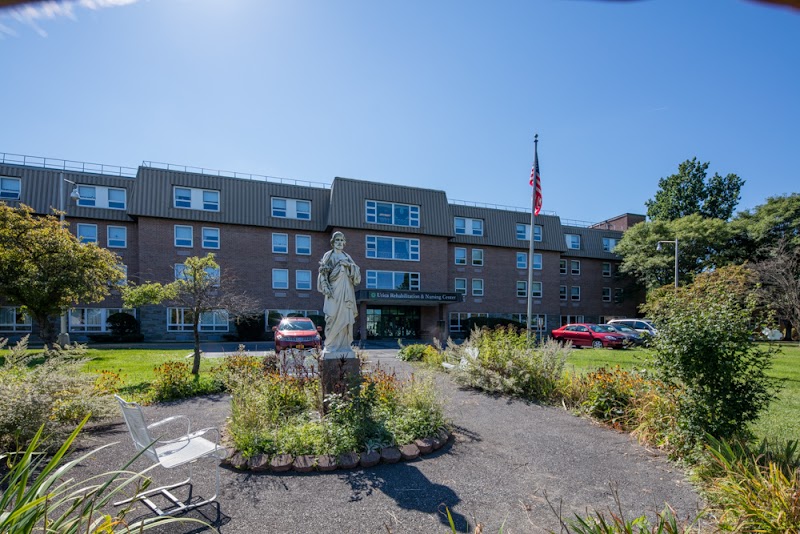
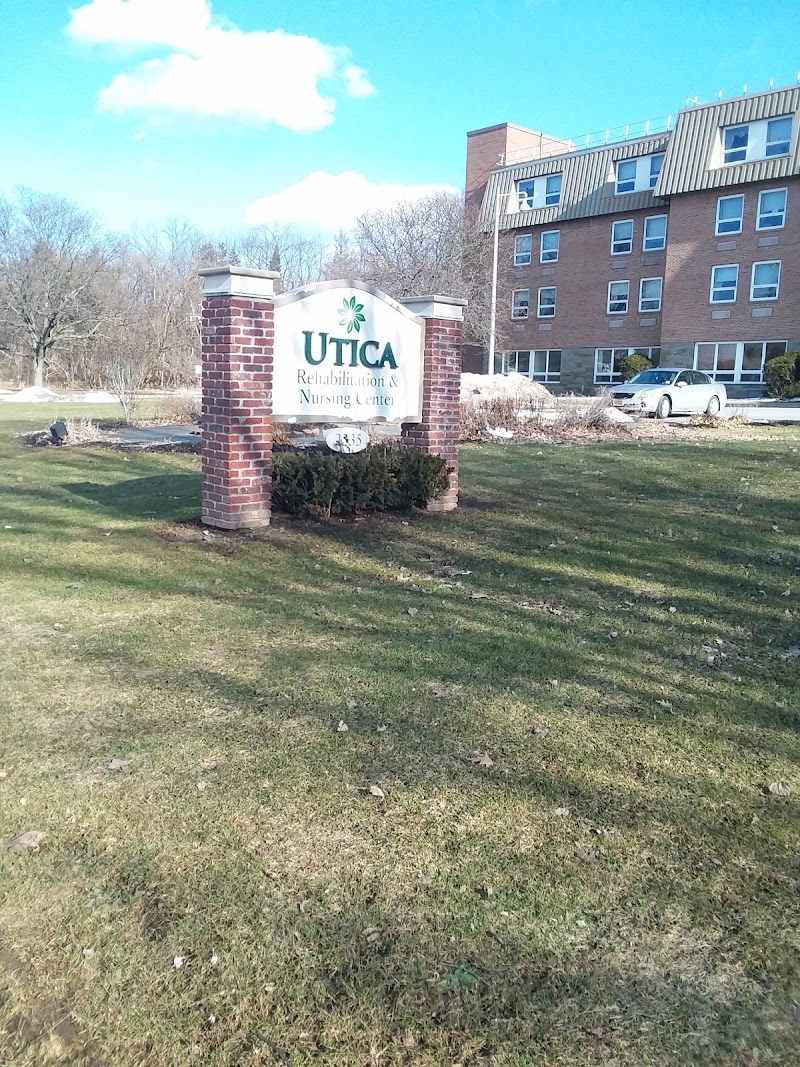
UTICA REHABILITATION & NURSING CENTER

2535 GENESEE STREET, UTICA, NY 13501 (315) 797-1230
For profit - Limited Liability company 120 Beds PERSONAL HEALTHCARE, LLC Data: November 2025 3 Immediate Jeopardy citations
Trust Grade
0/100
#467 of 594 in NY
Last Inspection: February 2025

Within standard 12-15 month inspection cycle. Federal law requires annual inspections.

Overview

Utica Rehabilitation & Nursing Center has received a Trust Grade of F, indicating significant concerns about the facility's quality of care. It ranks #467 out of 594 in New York, placing it in the bottom half of facilities in the state, and #7 out of 17 in Oneida County, meaning only six local options are better. The facility's situation is worsening, with the number of reported issues increasing from 6 in 2024 to 13 in 2025. Staffing is a mixed bag, with a rating of 3 out of 5 stars, but a concerning turnover rate of 70%, significantly higher than the state average of 40%. The facility has also incurred fines totaling $197,425, which is higher than 98% of New York facilities, indicating serious compliance issues. There are some strengths, such as the quality measures rating of 5 out of 5 stars, suggesting that some aspects of resident care are excellent. However, the inspector found critical incidents, including a failure to protect residents from sexual abuse, as one resident was found engaging in inappropriate behavior without adequate interventions. Additionally, residents were exposed to serious hazards, including consuming cleaning solutions stored in unlabeled containers, leading to significant harm. Overall, while there are some positive aspects, the severe deficiencies reported raise significant concerns for families considering this facility for their loved ones.

Trust Score
F
0/100
In New York
#467/594
Bottom 22%
Safety Record
High Risk
Review needed
Inspections
Getting Worse
6 → 13 violations
Staff Stability
⚠ Watch
70% turnover. Very high, 22 points above average. Constant new faces learning your loved one's needs.
Penalties
✓ Good
$197,425 in fines. Lower than most New York facilities. Relatively clean record.
Skilled Nurses
○ Average
Each resident gets 38 minutes of Registered Nurse (RN) attention daily — about average for New York. RNs are the most trained staff who monitor for health changes.
Violations
⚠ Watch
39 deficiencies on record. Higher than average. Multiple issues found across inspections.
★★☆☆☆
2.0
Overall Rating
★★★☆☆
3.0
Staff Levels
★★★★★
5.0
Care Quality
★☆☆☆☆
1.0
Inspection Score
Stable
2024: 6 issues
2025: 13 issues

The Good

  • 5-Star Quality Measures · Strong clinical quality outcomes
  • Full Sprinkler Coverage · Fire safety systems throughout facility
  • No fines on record

Facility shows strength in quality measures, fire safety.

The Bad

2-Star Overall Rating

Below New York average (3.1)

Below average - review inspection findings carefully

Staff Turnover: 70%

24pts above New York avg (46%)

Frequent staff changes - ask about care continuity

Federal Fines: $197,425

Well above median ($33,413)

Significant penalties indicating serious issues

Chain: PERSONAL HEALTHCARE, LLC

Part of a multi-facility chain

Ask about local staffing decisions and management

Staff turnover is very high (70%)

22 points above New York average of 48%

The Ugly 39 deficiencies on record

3 life-threatening
Feb 2025 13 deficiencies 1 IJ
CRITICAL (J)

Immediate Jeopardy (IJ) - the most serious Medicare violation

Accident Prevention (Tag F0689)

Someone could have died · This affected 1 resident

Based on observations, record review, and interviews during the recertification survey conducted 2/3/2025- 2/11/2025, the facility failed to ensure the resident environment was free of accident hazard...

Read full inspector narrative →
Based on observations, record review, and interviews during the recertification survey conducted 2/3/2025- 2/11/2025, the facility failed to ensure the resident environment was free of accident hazards for three (3) of eight (8) residents (Residents #72, #75, and #98) reviewed. Specifically, Residents #72, #75, and #98 were served and Residents #72 and #98 consumed a cleaning solution stored in the kitchenette refrigerator in an unlabeled pitcher. This resulted in physical and psychosocial harm to Resident #72 that was Immediate Jeopardy and Substandard Quality of Care with the likelihood of serious harm, serious impairment, serious injury, or death to Residents #72, #75, and #98 and the additional 107 residents in the facility. Findings included: The facility policy, Food Receiving and Storage, dated 6/12/2023, documented foods shall be received and stored in a manner that complies with safe food handling practices. All foods stored in the refrigerator or freezer would be covered, labeled, and dated with use by date. Pesticides and other toxic substances and drugs should not be stored in the kitchen area or in the storerooms for food or food preparation equipment and utensils. Soaps, detergents, cleaning compounds, or similar substances should be stored in separate storage areas from food storage and labeled clearly. The Safety Data Sheet (a fact sheet describing the chemical properties of a product) for Orange- multipurpose cleaner/degreaser documented the chemical may cause eye and skin irritation. Acute hazard effects with ingestion may include irritation to the mouth, throat, and gastrointestinal system. Symptoms include nausea, vomiting, diarrhea, and cramps. The chemical should be stored in an original container, away from direct sunlight in a dry, cool and well-ventilated area, away from food and drinks. 1) Resident #72 had diagnoses including end stage renal (kidney) disease, hypertension (high blood pressure), and diabetes. The 11/28/2024 Minimum Data Set assessment (health screening tool) documented the resident was cognitively intact and required set up or clean up assistance with eating. The 9/18/2024 comprehensive care plan documented the resident required set up by staff to eat their meals. The 1/27/2025 at 6:30 PM Interim Director of Nursing progress note documented the resident inadvertently ingested a gulp of a diluted cleaning solution. The resident was assessed with no complaints of pain, denied any nausea or vomiting, vital signs were stable and there were no concerns other than the resident stated they had a terrible taste in their mouth. The 1/27/2025 Resident Accident/Incident Report for Resident #72 completed by the Interim Director of Nursing documented that on 1/27/2025 at 5:30 PM, Resident #72 was in the dining room and was inadvertently served a cup with a cleaning solution in it. The resident did not consume the entire cup, took a gulp and realized something was wrong. The incident was not witnessed. The resident was assessed without injury. The Medical Director and Poison Control were contacted for further directions. Upon investigation it was determined a pitcher was brought up from the kitchen that appeared to be a diluted mixture of an orange cleaner. As soon as it was identified, staff immediately assessed all the drinks that were served and found three (3) cups with suspect liquid. Residents were assessed with no negative findings or signs and symptoms of psychological harm. Resident #98 took a sip and immediately spit it out and stated it did not taste good. Resident #75 did not drink any of the liquid and had a full cup in front of them. The pitchers were not labeled. Staff education was done regarding proper mixing of chemicals and proper storage and labeling of pitchers. A full house audit was immediately conducted to ensure all pitchers were properly labeled and no other pitchers contained the mixture. The incident was not reported to the Department of Health. The investigation concluded there was no cause to believe resident abuse or mistreatment occurred. The investigation was signed by the Administrator on 2/4/2025. Nurse Practitioner progress notes for Resident #72 documented: -On 1/28/2025 at 9:45 AM Nurse Practitioner #30 documented a late entry progress note. On 1/27/2025 the resident inadvertently ingested a gulp of a diluted cleaning solution. The resident was assessed with no complaints of pain, denied nausea/vomiting, vital signs were stable. The resident had no concerns other than a terrible taste in their mouth. The Medical Director was updated. Nurse Practitioner #30 documented they were made aware on 1/28/2025. Poison control was called after the incident and continued monitoring was recommended. No acute abnormalities and the resident was asymptomatic. -On 1/29/2025 by Nurse Practitioner #30, the resident was complaining of intermittent nausea without vomiting or diarrhea. The resident was examined, and physical exam demonstrated no acute abnormalities. Labs were ordered and they included complete blood count, comprehensive metabolic panel, ammonia, magnesium, lipase, and amylase. -On 1/30/2025 by Nurse Practitioner #32, the resident was referred to them by the Nurse Manager. The resident had an incident, and they accidently swallowed some cleaning fluid. The resident did express some anxiety after the incident, but there were no serious consequences reported. -On 2/3/2025 by Nurse Practitioner #30, the resident complained to the nursing staff of having an intermittent sore throat. The resident stated they had an intermittent sore throat during meals for the last 24 hours. The resident's sore throat was intermittent, and they declined medications for the sore throat. -On2/4/2025 by Nurse Practitioner #30, the resident no longer complained of a sore throat. If they developed dysphagia (difficulty swallowing, respiratory compromise/distress), they would recommend a swallow evaluation, chest x-ray, and diet downgrade. During an interview on 2/5/2025 at 4:44 PM, Resident #72 stated on 1/27/2025 they were in the dining room eating. They picked up what they thought was apple juice and it was a little on the yellow side, but they did not think there was anything wrong with it. They took a big swallow, and their mouth burned and was sore. After they swallowed the liquid, they thought it tasted terrible and was spoiled. They stated since then their mouth was sore on and off and it was very hard to swallow because it hurt, but it was getting better. Since then, they only took small sips of fluids instead of taking a full swallow because they were little fearful when drinking. No one told them the liquid was cleaning solution. They stated they were really scared after they drank it because they felt really yucky, and they told the others not to drink it. 2) Resident #75 had diagnoses including hypertension and gastroesophageal reflux disease (acid backup into the esophagus). The 12/4/2024 Minimum Data Set assessment documented the resident had moderately impaired cognition and required set up and clean up assistance with eating. The 9/24/2024 comprehensive care plan documented the resident required limited assistance for eating. The 1/27/2025 at 6:30 PM, Interim Director of Nursing progress noted documented the resident received a cup with a diluted cleaning solution in the cup. They were unable to determine if any had been consumed by the resident. The cup appeared to be full at the time it was removed from the resident. The 1/27/2025 Resident Accident/Incident Report for Resident #75 completed by the Interim Director of Nursing documented on 1/27/2025 at 5:30 PM Resident #75 was served a cup of liquid containing cleaning solution. The cup did not appear to have any of its contents gone and was removed immediately. The resident was unable to state their version of the event. The resident was assessed without negative findings. The Medical Director and Poison Control were notified, and the plan was to follow recommendations. Staff were educated regarding proper mixing and storage of chemicals and labeling of pitchers. The 1/28/2025 Nurse Practitioner #22 progress note did not include documented evidence they were notified the resident was served a cup containing cleaning solution or the resident was evaluated for possible side effects. 3) Resident #98 had diagnoses including dementia and anxiety. The 1/2/2025 Minimum Data Set assessment documented the resident had severely impaired cognition and required set up and clean up assistance with eating. The 7/3/2024 comprehensive care plan documented the resident required supervision for eating. The 1/27/2025 at 6:30 PM, Interim Director of Nursing progress note documented the resident received a cup of liquid that contained diluted cleaning solution. The resident stated they took a sip but did not swallow it because it tasted funny. The 1/27/2025 Resident Accident/Incident Report for Resident #98 completed by the Interim Director of Nursing documented on 1/27/2025 at 5:30 PM Resident #98 was inadvertently served a cup of liquid that contained cleaning solution. The resident stated they only took a sip but did not swallow the liquid because it tasted awful. The resident was assessed without negative findings. The Medical Director and Poison Control were notified, and the plan was to follow recommendations. Staff were educated regarding proper mixing and storage of chemicals and labeling of pitchers. The 1/28/2025 Nurse Practitioner #22 progress note documented the resident had chemical exposure, appears to adverse events, staff did assist and would continue to monitor. Investigative written statements for the incident involving Residents #72, #75, and #98 included: -On 1/27/2025 at 6:30 PM, Dietary Supervisor #35 documented they were checking the floor to make sure they were fine serving. They went to the 3rd floor and noticed the juice looked odd. They thought it looked like cranberry ginger ale. They smelled the liquid, and it had a chemical smell. They checked all the cups, and some residents had some of the liquid and Resident #72 said they drank it. They reported the occurrence to Licensed Practical Nurse #2. -On 1/27/2025 at 7:57 PM, Food Service Aide #34 documented they went upstairs to pour drinks; the liquid was in a juice container in the refrigerator along with other drinks. They did not remember it being there that morning. They assumed it was juice, poured the liquid, it looked like a light apple juice or cranberry mix, and put it on the cart with the other juices. They did not notice a scent. The container was not labeled or dated. They thought it was a new pitcher since it was not there that morning. The summary of the 1/27/2025 investigation reviewed on 2/4/2025 by the Administrator documented there was concern that possible cleaning solution was served to the residents at dinner on the third floor. Upon investigation, it was determined that a pitcher was brought up from the kitchen that appeared to be, based on its color and odor, a diluted mixture of Orange Cleaner. The staff immediately assessed all the drinks that were served to find three (3) cups with suspicious liquid which were immediately removed. The residents were assessed and there were no negative findings or signs and symptoms of psychological harm. The pitcher used to serve the liquid was not labeled. Staff education was done regarding proper mixing of chemical and proper storage and labeling of pitchers. A full house audit was immediately conducted to ensure all pitchers were properly labeled and no other pitchers were found with this mixture. Poison Control was contacted, and the Administrator and Medical Director were made aware. During an interview on 2/5/2025 at 10:12 AM, Food Service Aide #34 stated they worked on the third-floor dining room on the evening of 1/27/2025. They worked the 6:30 AM - 2:30 PM shift and then came in at 4:00 PM for extra time. They were not sure how cleaning fluid got into the juice pitcher. They took pitchers from the main kitchen downstairs and filled them up with juice in the main kitchen and brought them up to the dining room for meals. They stated on 1/27/2025 they went to the third floor kitchenette refrigerator to get more juice, and they poured six (6) mini cups of juice from the pitcher. They stated this was not a pitcher they put in the refrigerator during the day, and it looked like a mix of cranberry and apple juice. Certified nurse aides sometimes mixed the juices. They did not smell it, but the pitcher did not have a label on it and usually everything was labeled. They stated they should not have poured from the unlabeled pitcher. They stated the Dietary Cook/Supervisor #35 came to the unit to check on staff and asked what was in the pitcher as it looked like it had bubbles in it, and it smelled like soap. Food Service Aide #34 stated all cleaning products should stay in their original containers, and it was not safe to place chemicals into food service containers/pitchers. During an interview on 2/5/2025 at 11:08 AM, Dietary Cook/Supervisor #35 stated on 1/27/2025 they checked on the staff in all three dining rooms, and when they went to the 3rd floor, they asked the food service aide what was in the pitcher, because it looked funny. They stated it smelled like chemical cleaner. They reported this to the nursing staff and all the cups of juice were removed. Resident #72 had already drank some of the liquid. They told all food service aides to check the drinks in the refrigerator to ensure they were labeled and to get rid of anything unlabeled. Cleaning products should all have their own containers. All juice pitchers should be labeled and dated. If the pitcher was not labeled staff should pour it out. They found the pitcher used to pour the chemical under the coffee cart, the interim Director of Nursing removed it from the floor, brought it to the kitchen and began an incident report. They did not know how the cleaning product got in the refrigerator. During an interview on 2/5/2025 at 11:55 AM, the Food Service Director stated food service staff called them and reported they found liquid, believed to be diluted Orange cleaner in cups that were served to residents. They were not sure how a cleaning product ended up in a juice pitcher. The juice pitchers were clear and should have lids. Food service staff were required to dispense juice from the kitchen into pitchers, label the pitchers with the type of juice and the date, and put a lid on the pitcher before they were delivered to the units. They stated the food service aide should not have served this liquid to the resident because it did not have a label. Food Service Aide #34 received training on 1/29/2025 about cleaning products and food safety. During a telephone interview on 2/5/2025 at 4:30 PM, the Medical Director stated they were made aware on 1/27/2025 during the evening meal that three (3) residents were served cleaning solution as juice. They were not sure how this happened and told the Director of Nursing to call Poison Control. Housekeeping and maintenance should oversee where cleaning chemicals were stored, and they should be labeled, and in the appropriate containers. Cleaning products should not be in a refrigerator. They stated it could be harmful for a resident to swallow a cleaning chemical. During an interview on 2/5/2025 at 4:42 PM, the Administrator stated they were made aware of the incident on the evening of 1/27/2025 when three (3) residents ingested a cleaning chemical. The three residents were assessed that night and found to be okay. Nursing staff called Poison Control and Resident #72 was seen by the doctor every day to monitor. The Administrator stated they were not updated as to what the chemical was. Housekeeping should store chemicals in locked closet. All cleaning supplies should be behind locked doors and labeled. If nursing staff found food or drink items in an unlabeled container they should throw it away. Cleaning chemicals should not be stored in a refrigerator. The Interim Director of Nursing did an in-service that night on storage and mixing of chemicals and all the dietary staff received the education. They were unsure what the liquid was, and they still had not figured out how a cleaning product got in the kitchenette refrigerator. During an interview on 2/5/2025 at 4:51 PM, the Interim Director of Nursing stated on 1/25/2025 they received a call from nursing staff that residents were served cleaning solution during the evening meal. They went to the unit and had all beverages removed from the dining room. They went back through the dining room and looked at all the pitchers and pulled all poured drinks off the tables. They assessed all three (3) residents. There was no evidence Resident #75 drank the liquid, Resident #98 said they spit it out, and Resident #72 said they took a gulp of the liquid, and it did not taste right. Dietary Cook/Supervisor #35 pulled and dumped all the pitchers. They called the Medical Director and Poison Control. They did not have pictures of the pitcher, but it looked like the Orange cleaning solution but a lighter color. The residents did not have access to the kitchenettes, only nursing and food service staff did. If staff found an unlabeled container of liquid in a pitcher it should not be served and should be discarded. The Poison Control center said the Orange chemical was not likely to cause harm. They stated they were 100% sure the liquid was Orange cleaner because they smelled it, and it had a very distinct smell. They were unable to determine how the liquid got into the unit refrigerator. 10 NYCRR 415.12(h)(1)(2) ____________________________________________________ Immediate Jeopardy was identified, and the facility Administrator was notified on 2/6/2025 at 2:49 PM. The facility Administrator was notified on 2/7/2025 at 4:10 PM, that Immediate Jeopardy was removed on 2/7/2025 at 3:28 PM based upon the following corrective actions taken: - On 2/6/2025 at 6:38 PM, the Administrator provided an immediacy removal plan that was initiated on 2/6/2025 at 5:38 PM when all the chemicals were removed from the kitchenettes and secured in the locked service closet on the first-floor service corridor. All food service staff were to be educated on the process of taking cleaning chemicals from the secured chemical closet after meal service to clean the kitchenettes, and no chemicals were to be left in the kitchenettes. All staff were educated that any unlabeled drinks were to be disposed of immediately. The Certified nurse aides, food service staff, licensed practical nurses, and registered nurses were educated with emphasis on the fact drinks were to be identified with a label and date. The facility would educate 100% of staff prior to the start of their next scheduled shift. - On 2/7/2025 at 5:30 AM, the Dietary Cook/Supervisor completed an audit of all three kitchenettes to ensure there were no unsecured cleaning agents, or unlabeled drinks. At 9:00 AM, the Director of Food Services completed floor round and confirmed there were no chemical bottles in the kitchenettes, at 10:11 AM, the Food Service Director completed an audit of the first-floor kitchen and removed unsecured cleaning agents and placed them in the locked first floor corridor kitchen closet. At 10:47 AM, 86 of 147 employees (59%) were educated and the plan was to continue to educate employees over the phone and prior to their next scheduled shift. - On 2/7/2025 at 3:28 PM, 85% of staff, 125 had been educated about storing cleaning products in the kitchen and kitchenettes, labeling all resident drinks in pitchers with the date and juice type, and immediately disposing of anything unlabeled in a pitcher.
CONCERN (D)

Potential for Harm - no one hurt, but risky conditions existed

Safe Environment (Tag F0584)

Could have caused harm · This affected 1 resident

Based on observations, record review, and interviews during the recertification survey conducted 2/3/2025-2/11/2025, the facility did not ensure a safe, clean, comfortable, and homelike environment fo...

Read full inspector narrative →
Based on observations, record review, and interviews during the recertification survey conducted 2/3/2025-2/11/2025, the facility did not ensure a safe, clean, comfortable, and homelike environment for 3 of 5 resident units (Units 2 North, 2 South, and 3 South) reviewed. Specifically, the stove/oven in Unit 2's activity room had accessible and operational knobs; Resident #31 on Unit 3 had an unclean tube feeding pole; and Resident #6 on Unit 4 had an improperly secured enabler bar (a device attached to the bed to aid in positioning). Findings include: The facility policy, Resident Rights dated 10/2017, documented the facility would maintain a safe, sanitary, clean, comfortable and homelike environment for the residents. The facility policy, Cleaning and Disinfection of Resident-Care Items and Equipment, revised 5/2023, documented resident care equipment, including reusable items and durable medical equipment would be cleaned and disinfected according to current Center for Disease Control recommendations for disinfection and the Occupational Safety and Health Administration Bloodborne Pathogens Standard. Unit 2- Teresian Room/Oven The following observations were made on Unit 2 in the Teresian Room: - On 2/2/2025 at 12:27 PM, there was a stove with an artificial plant in the middle of the four burners. The stove was operational and became hot when the knobs were turned on. - On 2/3/2025 at 2:42 PM, an activity was taking place in the Teresian room with 2 activity staff present. The stove was plugged in, and the burners were hot when tested. From 5:51 PM- 6:06 PM, the Teresian room doors were closed and unlocked. - On 2/4/2025 at 1:58 PM, the Teresian room was in use by residents and staff playing bingo. The oven was used and there were cookies on a baking pan on top of the stove. - On 2/4/2025 at 3:51 PM, the Teresian room door was closed and unlocked. There were baked cookies on top of the stove. There were no staff or residents in the room. During an interview on 2/5/2025 at 3:15 PM, the Director of Activities stated the second floor Teresian room was the main activity room. The room was never locked, but the doors were closed between 4:00 PM and 5:00 PM, when the activity staff left the facility. The oven and stove were used by the facility activity staff during baking activities. The oven was always plugged in and ready to be used. The activity room was not locked because the door in the back of the Teresian room was the fire exit. Residents were not permitted to go in the Teresian room unless there was staff present. They stated the residents had access to the room since it was unlocked and the plugged in stove/oven could be unsafe if residents entered the room unsupervised. During an interview on 2/5/2025 at 5:10 PM, the Director of Environmental Services stated the stove was not a safety stove/oven. It was accessible to staff and residents, and they were not aware of any safety features. This stove/oven was installed with the facility renovations. The oven doors did not have a safety lock. Unit 3 -Unclean Resident Medical Equipment Resident #31's tube feeding pole (used to hold tube feeding formula) was observed with a large amount of splattered, tan residue on the base and lower portion of the pole: - on 2/3/2025 at 10:36 AM, - on 2/4/2025 at 9:56 AM, - on 2/4/2025 at 2:51 PM, - on 2/5/2025 at 11:24 AM. During an interview on 2/5/2025 at 12:38 PM, Licensed Practical Nurse Unit Manager #15 stated housekeeping was responsible for keeping equipment clean, including tube feeding poles, but nursing should clean them if needed. Resident #31's pole was unclean and could be growing bacteria. Anyone who noticed it was dirty should have cleaned it. It was undignified for the resident to have dirty equipment. During an interview on 2/5/2025 at 1:50 PM, Housekeeper #6 stated every resident room was cleaned every day and included the cleaning of equipment poles. They cleaned Resident #31's room two days ago and did not notice the pole was dirty. They noticed it today and planned to clean it. It was important to keep poles clean to keep the germs off. During an interview on 2/7/2025 at 2:35 PM, the Director of Environmental Services stated resident rooms were cleaned every day and included equipment poles. In between cleaning they should be wiped down by nursing or environmental services. It was a joint effort to keep equipment clean. If nurses spilled something on a pole, they expected them to wipe it up. It was important to keep equipment clean for infection prevention purposes. Unit 4- Resident Enabler Bar Not Maintained Resident #6's Comprehensive Care Plan initiated 12/27/2023 documented the resident had an activities of daily living self-care deficit related to limited mobility. Interventions included limited assistance of 1 for bed mobility, bed with bilateral enabler bars. The following observations were made: - on 2/3/2025 at 10:20 AM, Resident #6 was in bed watching television. Their enabler bar on the window side of the bed was not connected to the bed. The bar moved up and down and was not tight to the frame. - on 2/5/2025 at 9:42 AM, Resident #6's enabler bar on the widow side of the bed, had black electrical tape wrapped around the curve of the bar. The bar was not in the upright position. The bottom of the enabler bar was missing a bolt to keep it in the up position. Resident #6 stated the bar was broken, and the staff were aware that it was broken. - on 2/6/2025 at 8:57 AM, Resident #6's enabler bar was missing the bolt and was not connected to the bed. The enabler bar was hanging down on the side of the bed and unable to be used. - on 2/7/2025 at 12:56 PM, the enabler bar on the window side of the bed was not connected to the bed and unable to be used. Facility work orders dated 8/11/2024-2/7/2025 did not include an open or completed work order for Resident #6's broken/or unsecure enabler bar. During an interview on 2/7/2025 at 2:04 PM, Maintenance Worker #42 stated they were made aware of work orders or broken equipment through a computerized work order program. They did not receive a work order for Resident #6's enabler bar. Maintenance worker #42 observed Resident #6's enabler bar on the window side of the bed, and stated the bar was not attached. They stated the bar could not be used if it was not properly attached to the bed. During an interview on 2/7/2025 at 2:26 PM, Certified Nurse Aide #7 stated they noticed Resident #6's enabler bar was not attached on one side and it had been that way for a while. They did not submit a work order because sometimes residents had one bar on and one bar off. During an interview on 2/10/2025 at 10:31 AM, Registered Nurse Unit Manager #28 stated staff could put work orders in the computer when something needed to be repaired. They were not aware of Resident #6 enabler bar not being attached to the window side of the bed. They said that was the resident's strong side and the enabler bar should be in place for safety. During an interview on 2/10/2025 at 1:44 PM, the Director of Environmental Services stated they inspected beds biannually, and the enabler bars were part of the inspection. They did not have a record of request to fix Resident #6's enabler bar. All the beds were inspected in September 2024. Resident #6's bed was inspected on 9/3/2024 and there no side rails or enabler bars in place. 10 NYCRR 415.29(j)(1)
CONCERN (D)

Potential for Harm - no one hurt, but risky conditions existed

Deficiency F0692 (Tag F0692)

Could have caused harm · This affected 1 resident

Based on observation, record reviews, and interviews during the recertification survey conducted 2/3/2025-2/11/2025, the facility did not ensure residents maintained acceptable parameters of nutrition...

Read full inspector narrative →
Based on observation, record reviews, and interviews during the recertification survey conducted 2/3/2025-2/11/2025, the facility did not ensure residents maintained acceptable parameters of nutritional status for 2 of 3 residents (Residents #6 and #31) reviewed. Specifically, clinical nutrition staff did not assess Resident #6 following significant weight changes; and Resident #31's ordered enteral feeding (a feeding tube) water flushes were not provided as ordered. Findings include: The facility policy, Nutrition Assessment, revised 3/17/2023, documented a full nutrition assessment would be completed on each resident after admission and no less than every three months thereafter to assess and evaluate the need for nutrition care according to each person's individual medical condition, needs, desires, and rights. The registered dietitian would complete or cosign initial nutritional assessments, annual nutritional assessments, and significant change assessments. All pertinent information and the rationale for the nutritional plan of care would be evaluated/summarized. The facility policy Gastrostomy Tube Feeding, revised 12/2019, documented the flow rate on the feeding pump would be adjusted according to the physician's order. The procedure documented review physician order for feeding and flushing. 1) Resident #6 had diagnoses including hypertension (high blood pressure), congestive heart failure (insufficient pumping), and adult failure to thrive (overall physical decline). The 9/27/2024 Minimum Data Set assessment documented the resident had moderately impaired cognition, did not reject care, required setup or clean up assistance with eating, weighed 209 pounds, had weight loss of 5% or more in the last month or loss of 10% or more in last 6 months, was not on a physician-prescribed weight-loss regimen, and received a mechanically altered diet. The Comprehensive Care Plan documented: - 12/27/2023 the resident required supervision at meals. - 1/5/2024 the resident had a nutritional problem related to a history of intakes at meals of less than 75% and a diagnosis of failure to thrive. Interventions included regular diet with thin liquids, monitor intakes and record at each meal, provide supplements as ordered, and weigh per policy. The resident's weight record documented: - on 6/28/2024 238.1 pounds. - on 7/25/2024 209 pounds (12.1% weight loss in 1 month) The was no documented evidence the resident's nutritional needs were re-assessed after the significant weight loss of 29.1 pounds/ 12.1% in 1 month. There was no documented evidence the resident was weighed in 8/2024. A 9/2/2024 Nurse Practitioner #22 progress note documented the resident was seen for a 60 day follow up visit. The resident received 2 milligrams of bumetanide (diuretic) one time daily for heart failure and had edema (fluid retention). There was no documentation of the resident's weight loss. The resident's weight record documented they weighed 209 pounds on 9/7/2024. The 9/17/2024 Nurse Practitioner #24 progress note documented the resident's body mass index was 31.77 (obese) and their last weight was obtained on 9/7/2024. No edema was noted. The resident had protein calorie malnutrition as noted by a weight loss greater than 7.5% over the past 3 months with a documented weight loss from 238.1 pounds on 6/28/2024 to 209 pounds on 9/7/2024. The resident was to continue a mechanically soft diet, protein supplements, and would continue to be followed by dietary staff. Intakes were to be monitored at every meal and if weight loss continued both dental and speech evaluations would be considered. The 9/27/2024 Nurse Practitioner #24 progress note documented the resident had a 30-pound weight loss since 7/25/2024. Recent laboratory values were reviewed, the resident had no edema present on exam, and they would attempt to decrease 2 milligrams of Bumetanide (diuretic) one time daily to 1 milligram once daily. The 9/27/2024 physician order documented to provide 0.5 tablet of 2 milligrams of Bumetanide (diuretic) one time daily for heart failure. The 9/29/2024 physician orders documented weekly weights on Mondays and was discontinued on Monday 9/30/2024. The 9/29/2024 Diet Technician #29 Quarterly Nutrition Assessment documented the resident received a regular diet, mechanically soft with finely chopped fruit and vegetables, and thin liquids. Supplements included 6 ounces of fortified cereal at breakfast, 4 ounces of ice cream at lunch and dinner, and 30 milliliters of liquid protein once daily. Their weight was 209 pounds, a 34-pound decrease/ 14% loss at 6 months. The resident had no documented edema (fluid retention), their estimated nutritional needs were based on their actual body weight of 209 pounds and were 1880 calories, 76 - 95 grams protein, and 2375 - 2700 milliliters of fluids. The resident would be placed on weekly weights related to significant weight decrease. The resident's weight record documented they weighed 240.4 pounds on 10/1/2024 (a 15% weight increase in one month). The 10/2/2024 Comprehensive Care Plan documented the resident had a potential for fluid deficit/dehydration related to diuretic (water pill) usage. Interventions included to provide medications as ordered and monitor/document side effects. The resident's weight record documented they weighed 240.4 pounds on 10/2/2024, 10/3/2024, and 10/4/2024. On 10/6/2024 Diet Technician #29 documented they were aware of several re-weights documenting weight of 240.4 pounds and they were going to strike out inaccurate recorded weight of 209 pounds on 7/25/2024 and 9/7/2024. There was no documented evidence the resident's nutritional needs were reassessed after a 31.4 pound/ 13% gain after their 9/27/2024 nutrition assessment was completed. On 10/7/2024 the resident's record documented they weighed 233.7 pounds. There was no documented evidence the resident had a re-weight obtained after a weight loss of 6.7 pounds in 3 days. The 10/12/2024 Medical Director progress note documented they saw the resident for a 60 day follow up. The resident received 1 milligram of Bumex (diuretic) once daily, had no edema (fluid retention), weighed 234 pounds, their weight was stable, and the resident requested their diet order be upgraded to a regular diet. On 10/14/2024 the resident's record documented they weighed 204.4 pounds. There was no documented evidence the resident was re-weighed, or their nutritional needs were re-assessed after a documented weight loss of 29.7 pound/ 12.7% weight loss in 2 weeks. The 10/16/2024 Nurse Practitioner #22 progress note documented the resident received 1 milligram of Bumex (diuretic) once daily, had no edema (fluid retention), and weighed 234 pounds. The note did not address the residents weight loss of 29.7 pound/ 12.7% weight loss in 2 weeks. The 10/16/2024 physician order documented the resident was to consume all meals in the dining room for monitoring. The 10/27/2024 Diet Technician #29 progress note documented the resident was re-weighed on 10/24/2024, 10 days after the 10/14/2024 recorded weight of 204.4 pounds. The resident had a documented weight loss of 29.7 pound/ 12.7% weight loss. The resident weighed 204.4 pounds, had a significant weight loss of 12.5% at 1 month. The resident continued weekly weights. Medical notes documented edema on 10/3/2024, but the resident currently had no noted edema. Weight loss was likely related to fluid fluctuations related to edema. The resident had potential for weight fluctuations related to fluid status changes. There was no documented evidence the resident's nutritional needs were re-assessed. The 12/3/2024 Medical Director progress note documented the resident weighed 206 pounds, had no edema (fluid retention), and was down 40 pounds in the last year. This was likely related to Bumex (diuretic). The resident appeared nutritionally sound. The 1/2/2025 Registered Dietitian #10 Annual Nutritional Assessment documented the resident was on a regular diet with thin liquids. Their documented weight on 12/30/2024 was 199.8 pounds, they were 118% of their recommended weight range, their weight ranged from 200-204 pounds over the past 3 months, they were down 38.3 pounds/16.1% over the past six months, there were some weights struck out in error, and the weight loss rationale was unknown. The resident had edema at times, and currently had no edema. The resident continued weekly weights. Intakes were adequate to meet their estimated needs, and they would discontinue the liquid protein supplement. During an observation on 2/3/2025 at 1:05 PM, the resident was in the main dining room. Their plate included beef stroganoff, carrots, and noodles, a slice of cake, and 2 cups of juice. At 1:42 PM, the resident consumed 100% of their cake and 100% of their juice, and 0-25% of the beef stroganoff, noodles, and carrots. No staff encouragement was observed. During an interview and observation on 2/5/2025 at 3:16 PM, the resident stated they were hungry and did not eat lunch because they thought they slept through the meal. At 3:18 PM, the resident turned on their call bell and an unidentified staff responded. The resident stated they were hungry. At 3:22 PM the unidentified staff brought the resident their meal tray. During an observation on 2/6/2025 at 8:53 AM, an unidentified staff asked the resident if they wanted to go to the dining room and the resident replied no and they just wanted cranberry juice. At 8:59 AM, Nurse Aide in Training #44 brought the resident their cranberry juice and told the resident if they were going to eat, they needed to eat in the dining room. The resident stated they just wanted their juice. At 9:16 AM, an unidentified staff attempted to bring the resident out into the hallway to eat and they refused and wanted to return to their room. At 9:30 AM, the resident was observed in the dining room eating bacon and eggs. During an interview on 2/7/2025 at 2:45 PM Registered Nurse Unit Manager #28 stated all residents should be weighed the same way, either standing or sitting. The dietitian or diet technician let staff know if a resident needed to have a re-weight obtained. Staff should obtain the re-weight within 24 hours. They stated Resident #6 had a poor appetite and their diet was upgraded to regular consistency to help improve with intakes. They were unsure why the weights had been struck from the record and thought the weight changes could be related to staff not taking the resident's wheelchair weight into consideration. During a telephone interview on 2/10/2025 at 10:07 AM Diet Technician #29 stated the weight lists were sent out every Sunday and Wednesday. The nurses entered the resident's weights into the computer and the computer generated a note if the resident had a significant weight change. If a resident had a significant weight change or a weight was missing, they sent an email to the Nurse Manager to obtain a re-weight. Resident #6 weighed 238.1 pounds in July 2024 and weighed 209 pounds in September 2024. In October 2024 their weight was between 233- 240 pounds. They stated medical saw the resident and noted edema and diuretic usage, and a nutrition note was completed. They did not believe the resident weighed 209 pounds in September 2024 and spoke to the Nurse Manager about it. The resident's intakes were documented as stable. They stated they did not re-assess the resident's needs after they had a significant weight gain in October 2024, and it was important to assess the resident nutritional needs to ensure optimal nutritional status. During an interview on 2/10/2025 at 11:31 AM Registered Dietitian #10 stated Diet Technician #29 followed the resident's weights and did quarterly assessments. They stated they saw the residents on an annual basis and with a significant change. If a resident had a significant weight change the diet technician should let them know and Diet Technician #29 did not discuss Resident #6's weight changes with them. They thought Diet Technician #29 struck out the recorded weight of 209 pounds because it was inaccurate and did not see the medical note attributing the weight loss to the usage of diuretics. The resident's chart did not document they were reviewed for their significant weight changes. It was difficult to follow weight trends if there were missing weights. 2) Resident #31 had a diagnosis of intracerebral hemorrhage (bleeding in the brain) and dysphagia (difficulty swallowing). The11/21/2024 Minimum Data Set assessment documented the resident had severely impaired cognition, was dependent for most activities of daily living, did not have a swallowing disorder, had a feeding tube, and had an average daily fluid intake of 501 cubic centimeters or more. The Comprehensive Care Plan revised 8/25/2023 documented the need for a feeding tube related to dysphagia and an activities of daily living self-care performance deficit. Interventions included assistance with tube feeding and water flushes. The Comprehensive Care Plan revised 8/30/2023 documented the resident had the potential for dehydration. Interventions included monitor and report any signs of dehydration and monitor lab work as ordered. Physician orders documented: - 8/24/2023 the resident was to have nothing by mouth. - 2/28/2024 full strength Glucerna 1.2 (tube feeding formula) at 60 cubic centimeters per hour for 24 hours the resident was to receive 30 milliliters of water every hour via auto flush via the feeding tube (24 hours/day). The 11/26/2024 at 2:23 PM Registered Dietitian #10 quarterly nutritional assessment documented the resident was to receive 30 milliliters of water every hour and their estimated fluid needs were 1925-2310 milliliters a day. The following observations were made of the resident's water flush settings on their feeding pump: -on 2/3/2025 at 10:36 AM 30 milliliters every 4 hours. -on 2/5/2025 at 11:24 AM 30 milliliters every 2 hours. -on 2/6/2025 at 8:30 AM 30 milliliters every 4 hours. -on 2/6/2025 at 2:13 PM 30 milliliters every 4 hours. The February 2025 medication administration record documented the resident received 30 milliliters of water flush every hour via auto flush every shift from 2/3/2025-2/6/2025. During an observation on 2/6/2025 at 8:30 AM, Licensed Practical Nurse #1 entered Resident #31's room, and placed the feeding tube pump on hold while they administered the resident's medications. Licensed Practical Nurse #1 restarted the pump. The pump was set at 30 milliliters water flush every 4 hours. During an interview on 2/5/2025 at 12:13 PM, Licensed Practical Nurse Manager #15 stated the resident was receiving 30 milliliters of water flushes every 2 hours via the pump. During an interview and observation on 2/6/2025 at 2:15 PM, Licensed Practical Nurse Manager #15 stated the fluid recommendations were made by the registered dietitian and required a physician order. They expected nurses to check the pump settings were correct when signing the medication administration record. Resident #31's water flush was set for 30 milliliters every 4 hours but should have been set to 30 milliliters every 2 hours. After changing the pump to 30 milliliters every 2 hours, they checked the order and stated the order was 30 milliliters every 1 hour and was effective on 2/28/2024. The nurses were signing the resident received 30 milliliters of water every one hour when they did not. It was important the resident's water flush settings were correct otherwise they could become dehydrated. During an interview on 2/10/2025 at 11:03 AM, Registered Dietitian #10 stated they were responsible for determining a resident's feeding and fluid needs. They made that determination based on variables such as height, weight, and laboratory values. Their recommendations required a physician order, and it was the responsibility of nursing to make sure the resident received what was recommended. Resident #31 had been stable and had no issues with weight loss or dehydration. The resident depended solely on the gastrostomy tube for hydration and nutrition and should have been receiving 30 milliliters of water every hour. They were at risk for dehydration due to their dependence on staff, and staff should always ensure the resident was getting the necessary fluids. The resident's fluid needs were 1925-2310 milliliters a day. If the resident's pump had been set at 30 milliliters every 4 hours that would have decreased their 24-hour fluid intake and the resident would not meet their hydration needs. Inadequate fluid could cause overall health decline, constipation, and dehydration. 10NYCRR415.12(i)(1)
CONCERN (D)

Potential for Harm - no one hurt, but risky conditions existed

Staffing Information (Tag F0732)

Could have caused harm · This affected 1 resident

Based on observations and interviews during the recertification survey conducted 2/3/2025-2/11/2025, the facility did not post daily current resident census and the total number, and the actual hours ...

Read full inspector narrative →
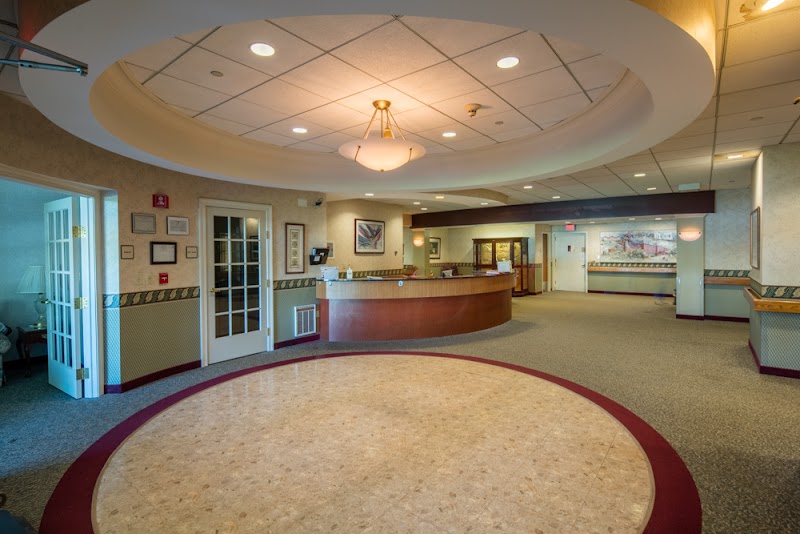
Based on observations and interviews during the recertification survey conducted 2/3/2025-2/11/2025, the facility did not post daily current resident census and the total number, and the actual hours worked by licensed and unlicensed nursing staff directly responsible for resident care per shift in a prominent location readily accessible to residents and visitors for 6 of 6 days reviewed. Specifically, daily nurse staffing was not posted daily at the beginning of the shift as required on 2/3/2025, 2/4/2025, 2/5/2025, 2/6/2025, 2/7/2025 and 2/10/2025 as required. Findings include: The facility policy, Staffing, effective 4/1/2022, documented staffing was evaluated at the beginning of the shift and adjusted as needed by the Nurse Manager/designee. Staffing analysts were available and supported the designee during hours they were available and included providing timely accurate data to the staffing office when needs changed, and daily full-time equivalent was posted in the glass display case by the night supervisor with updates made by the shift supervisors as needed. The daily nurse staffing and resident census information was not posted in the main lobby, on the main entrance doors, or on the reception desk during the following observations: - on 2/3/2025 at 9:15 AM. - on 2/4/2025 at 8:00 AM. - on 2/5/2025 at 8:31 AM. - on 2/6/2025 at 7:40 AM. - on 2/7/2024 at 8:20 AM. - on 2/10/2025 at 8:15 AM. During an interview on 2/10/2025 at 9:25 AM, the Administrator stated staffing, and the resident census should be posted in the front lobby. They stated things came up missing from the front desk. During an interview on 2/10/2025 at 10:02 AM, Human Resources/Staffing Scheduler #25 stated they were aware staffing should be posted. They observed the front desk and stated posted staffing was not where it was supposed to be. They stated it should have been posted there, and it was usually in a clear frame on the receptionist desk. They did not what happened to it. They stated it was important to have daily nurse staffing posted to know what the facility census was and to ensure a registered nurse was in the building. 10 NYCRR 415.13
CONCERN (D)

Potential for Harm - no one hurt, but risky conditions existed

Deficiency F0800 (Tag F0800)

Could have caused harm · This affected 1 resident

Based on observation, record review, and interviews during the recertification survey conducted 2/3/2025-2/11/2025, the facility did provide each resident with a nourishing, well-balanced diet that co...

Read full inspector narrative →
Based on observation, record review, and interviews during the recertification survey conducted 2/3/2025-2/11/2025, the facility did provide each resident with a nourishing, well-balanced diet that considered the preferences of each resident for 1 of 2 residents (Resident #24) reviewed. Specifically, Resident #24 was not provided their preferred meal choices. Findings include: The facility policy, Obtaining/Recording Food Preferences, effective 4/5/2020, documented the facility identified and recorded each resident's food/beverage preferences to coordinate meal preparation/service to promote adequate nutrition. The food service director, diet technician, or registered dietitian would complete a dietary interview with the resident and complete sections on likes and dislikes and information would be entered into the nutrition management system for incorporation into meal tickets. During the interview residents would be provided with a copy of the cycle menu and the alternate menu. The facility policy, Substitutions, dated 1/2022, documented all substitutions were noted on the menu and filed in accordance with established dietary policies and residents' likes and dislikes would be considered when making substitutions. Resident #24 had diagnoses of diabetes and chronic obstructive pulmonary disease (lung disease). The 1/23/2025 Minimum Data Set assessment documented the resident had intact cognition, required set up assistance for eating, and did not receive a therapeutic diet. The Comprehensive Care Plan documented: - revised 11/15/2022 the resident had diabetes and was non-complaint with their diet and frequently ordered out. Interventions included offer substitutions for foods not eaten. had a nutritional problem or potential nutritional problem related to diabetes. Interventions included to provide and serve supplements as ordered. - revised 10/27/2024 the resident had nutritional problems related to therapeutic diet, history of non-compliance, and ordered take-out food frequently. Interventions included encourage diet compliance, no added salt, low concentrated sweets, regular texture diet, meals in room, monitor intake, and provide and serve supplements as ordered. The 1/21/2025 at 7:08 PM Dietetic Technician #29 Quarterly Nutritional Assessment documented the resident was to receive 4 fried eggs and 4 ounces of yogurt at breakfast. The resident had weight fluctuations due to fluid changes. During an observation and interview with Resident #24 on 2/6/2025 at 9:44 AM, the resident's breakfast meal ticket documented 4 fried eggs, yogurt, and cold cereal. The resident's tray had one fried egg, and no yogurt or cold cereal. Resident #24 stated if they received the yogurt and cereal they would have eaten it. During an interview on 2/6/2025 at 9:48 AM, Certified Nurse Aide #7 stated the dietary department put all the food on the trays and the aides checked for accuracy and served the trays to the resident. Sometimes it was a mixture of both departments placing food items on the tray. They delivered Resident #24's breakfast that day and did not notice the cereal and yogurt were missing. The resident should have received four fried eggs but did not. If the items were short the resident would not receive the calories they needed. During an interview on 2/6/2025 at 9:55 AM, Dietary Aide #39 stated they thought they gave Resident #24 four fried eggs but may have confused them with another resident. During an interview on 2/7/2025 at 1:09 PM, Resident #24 stated staff did not ask them what they wanted to drink, did not provide them a menu, and did not tell them about food alternatives. They asked for soup and salads, and they would not get them, or they would receive a salad that only had lettuce. They felt it was important to have the option of choosing their meals. During an interview on 2/7/2025 at 1:20 PM Certified Nurse Aide #12 stated residents often asked what was being served for that day and they would have to ask dietary staff because menus were not posted anywhere. Activities used to hand out menus, but they did not think they were doing that anymore. There was always an alternate such as hot dogs or hamburgers and they usually ran out of the alternatives. They had never seen an alternate list but knew there was always a soup and a sandwich option too. During an interview on 2/7/2025 at 1:28 PM, Unit Manager #15 stated they used to have the menu and substitutes posted on a bulletin board in the dining room, but they were removed when the remodeling started and were never put back up. Residents asked them every day what was being served for each meal. The dietary ticket was based on dietary preferences and Resident #24 should get what was on their ticket. During an interview on 2/10/2025 at 10:47 AM, Dietetic Technician #29 stated menus were distributed to residents on admission. Menus and a list of alternatives were previously posted on the units, but because of the remodeling they were taken down and never went back up. Residents could ask for a menu or call downstairs to find out what was on the menu. It was important for residents to know what was on the menu so they could ask for something different. Resident #24 ordered out a lot and asked for extra food. They usually wanted something different than what was on their ticket. The items listed on their ticket should be provided. 10NYCRR 415.14
CONCERN (E)

Potential for Harm - no one hurt, but risky conditions existed

Comprehensive Care Plan (Tag F0656)

Could have caused harm · This affected multiple residents

Based on record review and interviews during the recertification survey conducted 2/3/2025-2/11/2025, the facility did not develop and implement a comprehensive person-centered care plan to meet a res...

Read full inspector narrative →
Based on record review and interviews during the recertification survey conducted 2/3/2025-2/11/2025, the facility did not develop and implement a comprehensive person-centered care plan to meet a resident's medical, nursing, mental, and psychosocial needs identified in the comprehensive assessment for 3 of 5 residents (Residents #59, #88, and #100) reviewed. Specifically, Resident #59's person-centered comprehensive care plan did not include the diagnoses of type 2 diabetes mellitus (the body does not use insulin properly causing high blood sugars) or the use of insulin (used to treat high blood sugars); Resident #88's person-centered comprehensive care plan did not include use of an anticoagulant (blood thinner); and Resident #100's person-centered comprehensive care plan did not include the diagnoses of diabetes or the use of insulin, anticoagulant, or psychotropic (used to treat mood/ behaviors) medications. Findings include: The facility policy, Comprehensive Care Planning, revised 2/2019, documented an individualized or person-centered comprehensive care plan was initiated by a registered nurse upon admission for all residents. The comprehensive care plan included measurable objectives that met the resident's medical, nursing, and psychosocial needs identified from admission assessments, and the Minimum Data Set assessments (a health status tool). The interdisciplinary team reviewed and revised care plans quarterly after the Minimum Data Set assessment was completed, with a significant change, following hospital return, annually, and as needed. Appropriate care plans were initiated based on nursing assessment findings and medical conditions. 1) Resident #59 had diagnoses including type 2 diabetes mellitus with hyperglycemia (high blood sugar). The 1/9/2025 Minimum Data Set assessment documented the resident was cognitively intact, had medically complex conditions, and received daily insulin injections. Physician orders documented the following orders for diabetes mellitus: - On 3/22/2023 metformin hydrochloride (regulates blood sugar) 1000 milligrams orally twice a day. - On 3/24/2023 Tresiba (long-acting insulin) 20 units subcutaneous (given in the fatty tissue under the skin) injection at bedtime. - On 12/19/2024 Insulin Lispro (short acting insulin) 22 units subcutaneous injection three times a day. - On 1/1/2024 weekly fingerstick (to test blood sugar levels) before meals and at bedtime. Call provider if blood sugar was lower than 60 or higher than 450. - On 1/24/2025 Ozempic (helps manage blood sugar) 1 milligram subcutaneous injection every Friday. A 10/24/2024 at 7:29 PM Nurse Practitioner #46 progress note documented the resident's A1C (a blood test that measures the average blood glucose over the past 2-3 months) level was maintained at the recommended level. Interventions included educate the resident and caregivers on signs and symptoms of hypoglycemia and appropriate management of symptoms related to diabetes. There was no documented evidence of a person-centered comprehensive care plan that included the diagnosis of diabetes with the need for insulin administration and oral diabetic agents, and monitoring for hyperglycemia and hypoglycemia (low blood sugar). During an interview on 2/10/2025 at 9:46 AM, Certified Nurse Aide #12 stated they were not sure what diabetes was but thought it had to do with sugar. If a resident was diabetic, it might be on their plan of care. They were supposed to reference the plan of care daily. They were not sure if Resident #59 was diabetic or what specifically they should monitor the resident for. During an interview on 2/10/2025 at 9:56 AM, Licensed Practical Nurse #4 stated if a resident was diabetic, it should be on their care plan because it indicated how to care for that resident. Insulin was a high-risk medication and too much insulin could drop the blood sugar and not enough could cause higher blood sugars. The Unit Manager was responsible for updating the care plans. During an interview on 2/10/2025 at 10:53 AM, Licensed Practical Nurse Unit Manager #15 stated Resident #59 was a diabetic and was on insulin. The resident did not have a diabetic care plan and should. The initial assessment should have triggered a diabetic care plan. The care plan would carry over to the care instructions for the certified nurse aides to know what signs and symptoms to monitor for. Care plans were reviewed quarterly, and they were not sure why this was missed for nearly two years. They reviewed care plans at the care plan meetings and at the weekly risk meetings. 2) Resident #88 had diagnoses including atrial fibrillation (irregular heartbeat). The 12/20/2024 Minimum Data Set assessment documented the resident had severe cognitive impairment, required partial/moderate assistance with most activities of daily living, had one fall with injury, and was on an anticoagulant. The 5/29/2024 physician order documented Eliquis (blood thinner) 2.5 milligram tablet by mouth two times a day for atrial fibrillation. There was no documented evidence of a person-centered comprehensive care plan that included the use of an anticoagulant for a diagnosis of atrial fibrillation and monitoring for symptoms of anticoagulant use. During an interview on 2/10/2025 at 9:41 AM, Licensed Practical Nurse #26 stated if a resident was on an anticoagulant, the resident was monitored for bruising. They stated they did not know how to look at a care plan and if they had a question regarding the resident's care, they asked the certified nurse aides. During an interview on 2/10/2025 at 10:31 AM, Registered Nurse #28 stated use of an anticoagulant medication should be on the care plan, so staff knew to look for signs of bleeding or bruising. These residents were more fragile. Most of the care plans were initiated upon admission. They tried to update them during care planning meetings. Resident #88 came from another floor, so they did not catch there was not a care plan for anticoagulant use. 3) Resident #100 had diagnoses including diabetes mellitus, long term use of insulin, Parkinson's disease (a progressive neurological disease), and atrial fibrillation (irregular heartbeat). The 1/1/2025 Minimum Data Set assessment documented the resident had moderate cognitive impairment, did not exhibit behaviors, had medically complex conditions, was on an anticoagulant, received daily insulin injections and was on an antipsychotic since admission and a gradual dose reduction was documented as clinically contraindicated on 11/18/2024. Physician orders documented: - On 10/2/2024 Eliquis 5 milligram tablet by mouth twice daily for atrial fibrillation and fingerstick four times a day for diabetes mellitus monitoring. Contact provider if blood sugar less than 60 or greater than 450. - On 10/3/2024 dapagliflozin propanediol (used to control blood sugar) one 10 milligram tablet by mouth once a day for diabetes mellitus. - On 11/6/2024 Lantus (long-acting insulin) 10 units subcutaneously once daily for diabetes mellitus. - On 11/13/2024 quetiapine (antipsychotic) 25 milligram tablet, two tablets by mouth at bedtime for behaviors. - On 11/14/2024 quetiapine 25 milligram tablet by mouth once daily for behaviors. - On 11/26/2024 Bydureon (injectable, used to control blood sugars) 2 milligrams subcutaneously once daily on Tuesdays for diabetes mellitus. There was no documented evidence of a person-centered comprehensive care plan that included the use of an anticoagulant for a diagnosis of atrial fibrillation, the use of antipsychotic medications, or the diagnosis of diabetes with the need for insulin administration. During an interview on 2/7/2025 at 1:22 PM, Registered Nurse Unit Manager #36 stated they did not know if high-risk medications should be included in the care plan. High risk medications were important to be reviewed. If a resident was on a blood thinner and they fell, they could bleed. Psychotropic medications would be important to ensure behaviors were appropriately monitored. Insulin was important to ensure blood sugars were appropriately managed as they effected the entire body system. Resident #100 was on high-risk medications including an anticoagulant, psychotropic, and insulins and probably should be care planned for these medications because the care plan indicated interventions to care for the resident. The Minimum Data Set nurse was responsible to ensure care plans were initiated on admission and after care plan meetings. During an interview on 2/10/2025 at 9:44 AM, Minimum Data Set Licensed Practical Nurse #31 stated high risk medication care plans were initiated by the registered nurse Unit Managers, and they only completed the triggered portions. Care plans were discussed during the interdisciplinary team meetings. The purpose of a care plan was to ensure staff knew what care the resident needed, medications taken and potential side effects, and any disorders so the appropriate resident care was provided. High risk medications should have been included in the care plan because they required monitoring. During a telephone interview on 2/10/2025 at 11:43 AM, the Interim Director of Nursing stated the Nurse Managers were responsible for care plans, but the entire interdisciplinary team was involved. High risk medications such as insulin, anticoagulants, and psychotropics should be updated by nursing. The care plan should be reflective and alert staff for interventions or approaches to be implemented. A licensed practical nurse Unit Manager could update the care plan, but a registered nurse needed to initiate the care plan. During the care plan meetings staff should review diagnoses and medications to ensure the care plan was current and up to date. 10NYCRR 415.11(c)(1)
CONCERN (E)

Potential for Harm - no one hurt, but risky conditions existed

Deficiency F0761 (Tag F0761)

Could have caused harm · This affected multiple residents

Based on observations, record review, and interviews during the recertification survey conducted 2/3/2025-2/11/2025, the facility did not ensure drugs and biologicals were stored in accordance with cu...

Read full inspector narrative →
Based on observations, record review, and interviews during the recertification survey conducted 2/3/2025-2/11/2025, the facility did not ensure drugs and biologicals were stored in accordance with currently accepted professional standards for 3 of 4 medication carts (4th floor North, 4th floor South, and 3rd floor North medication carts). Specifically, the 4th floor medication carts (North and South carts) and the 3rd floor North medication cart had expired stock medications and insulin. Findings include: The facility policy, Storage and Maintenance of Medications, dated 10/2020 documented medications with shortened expiration dates, to include insulin and ophthalmic drops, must be dated when opened. Medications must be checked regularly for expiration dates and deterioration. Expired medications were to be removed from use. The overnight nurse was responsible for checking the medication carts, medication cabinets, and the refrigerator weekly for expired medications. During a medication storage observation on 2/4/2025 at 1:04 PM with Licensed Practical Nurse #13, the 3rd floor North medication cart's top drawer had the following medications: - Resident #17 had a Anoro Ellipta inhaler (used to treat lung disease) with no opened date and the medication was discontinued on 1/7/2025. - Resident # 86 had atropine eye drops with no opened date and the medication was discontinued on 12/24/2024. - Resident # 31 had tobramycin (antibiotic) 0.3% eye drops discontinued on 1/1/2025. - Resident # 11 had a Humalog quick insulin pen with no pharmacy label and no opened date and only the resident's name was written on the pen cap with a sharpie. - an unlabeled 30 milliliter plastic medicine cup was filled to the top with round white round tablets. Licensed Practical Nurse #13 stated they were acetaminophen (pain reliever) 500 milligram tablets. During an interview on 2/4/2025 at 1:17 PM, Licensed Practical Nurse #13 stated each medication should be labeled with the opened date, as that was considered the expiration date. Insulins expired within 28 to 60 days depending on the type of insulin. Opened expiration dates for eye drops, inhalers, and nose sprays varied based on the medication. An expired medication may not have the desired effect. By writing the opened date on the medication, it would alert the nurse if the medication was past the expiration date and should not be given. They stated they administered Resident #17 their Anoro Ellipta inhaler and Resident #11 their Humalog insulin that morning. During an additional interview at 1:34 PM, Licensed Practical Nurse #13 stated the acetaminophen was in the clear medicine cup when they came in that morning. The facility only purchased big bottles of the acetaminophen and was split between the 2 medication carts. One cart kept the large bottle and the other put them in a medicine cup for easier accessibility. The nurse stated they did not administer any medicine from the medicine cup that shift. During a medication storage observation and interview with Licensed Practical Nurse #26 on 2/4/2025 at 1:48 PM, the 4th floor North top drawer of the medication cart contained the following medications: - an opened bottle of Geri Care mucus relief with a manufacturer's expiration date of 9/2024 and a handwritten opened date of 11/2024 on the side of the bottle. - an opened bottle of aspirin 81 milligrams with no manufacturer's expiration date or opened date. Licensed Practical Nurse #26 stated they were not sure who was assigned to check the medications for expired dates, but each nurse should check them prior to administering a medication to a resident. The nurses were able to get new bottles of stock medication from the medication room or central supply if needed. During a medication storage observation and interview with Licensed Practical Nurse #27 on 2/4/2025 at 2:09 PM, the 4th floor South top drawer of the medication cart had an opened bottle of aspirin 81 milligrams that did not contain a manufacturer's expiration date and had a handwritten opened date of 1/17/2025 on the side of the bottle. Licensed Practical Nurse #27 stated the medication was considered expired since there was no readable expiration date on it. Each nurse was supposed to check expiration dates of each medication prior to giving it to a resident. An expired medication may not be effective. They stated Resident #77 received the medication that morning and was not sure why the expiration date was not checked. During an interview on 2/4/2025 at 2:18 PM, Registered Nurse Manager #28 stated each nurse was supposed to check each medication's expiration date prior to giving it to the resident. The Geri care mucus relief should never have been open as was expired prior to the opening date. They were not sure who was responsible for checking medication carts and rooms. 10NYCRR 415.18(d)
CONCERN (E)

Potential for Harm - no one hurt, but risky conditions existed

Food Safety (Tag F0812)

Could have caused harm · This affected multiple residents

Based on observations, record review, and interviews during the recertification survey conducted 2/3/2025-2/11/2025, the facility did not ensure that food was stored, prepared, distributed, and served...

Read full inspector narrative →
Based on observations, record review, and interviews during the recertification survey conducted 2/3/2025-2/11/2025, the facility did not ensure that food was stored, prepared, distributed, and served in accordance with professional standards for food service safety for 2 of 3 unit kitchenettes (Units 3 and 4) and the main kitchen. Specifically, there were unclean surfaces in the Units 3 and 4 floor kitchenettes and main kitchen; moldy bread in the 4th floor kitchenette; and inaccurate thermometers in the walk-in cooler off the kitchen and the economy refrigerator in the main kitchen. Findings include: The undated facility policy, Cleaning and Sanitizing of Small Equipment, documented small equipment such as blender bases, vegetable choppers, and grinder slicers were cleaned and sanitized to prevent the spread of harmful bacteria to residents and staff. The undated facility policy, Food and Supply Storage documented all food and supply items were held and stored safely and securely and maintained quality and protected against contamination, spoilage, and theft. All storage areas were kept clean and in good working condition at all times. The undated facility policy, Procedure-Freezer and Refrigeration, documented coolers and freezers were thermostatically controlled and monitored for proper temperature control by appropriate properly working thermometers. Refrigerator temperatures were maintained between 33 -41 degrees Fahrenheit. Freezers were maintained at 0 degrees Fahrenheit or below. Temperatures of all coolers and freezers were documented twice daily on the appropriate logs. During operating hours, the temperatures were observed throughout the day. Any deviation outside the appropriate temperature range was immediately reported to the supervisor or director. MAIN KITCHEN The following observations were made in the main kitchen on 2/3/2025: - At 9:21 AM, there were multiple sugar packets, food scraps, and other debris on the floor in the dry storage room. - At 9:24 AM, there were two cases of frozen vegetables and packaging debris on the freezer floor. The walk-in cooler just outside of the freezer had food debris and packaging debris on the floor. - At 9:26 AM, there was debris and grime, behind, under, and around the ice cream freezer and dried food debris on the slicer. - At 9:28 AM, there was dried debris under and around the kitchen cook line and dried on spills in and under the economy refrigerator at the end of the cook line. The ice machine's scoop was directly on top of the ice inside the machine and there was an empty pitcher on top of the ice machine. - At 9:39 AM, the walk-in freezer had food and packaging debris under the shelving. The following observations were made in the main kitchen on 2/4/2025: - At 1:07 PM, there was food debris in the walk-in freezer. - At 1:08 PM, the mop boards were in disrepair along the back wall to the left of the dry storage room. There were dried food spills and debris under the cook line equipment. - At 1:17 PM, the walk-in cooler off the kitchen measured at 38 degrees Fahrenheit and the thermometer in the cooler read 32 degrees Fahrenheit while the exterior thermometer read 20 degrees Fahrenheit. There was food debris and packaging on the floor under the shelving. - At 1:28 PM, the slicer had dried food debris. - At 1:29 PM, there was grease, grime, and food debris behind the coffee maker. - At 1:40 PM, the economy refrigerator contents measured between 43-45 degrees Fahrenheit, and the thermometer read 30 degrees Fahrenheit. KITCHENETTES: The following observation was made in the third-floor kitchenette on 2/4/2025: - At 12:40 PM, there were food spills and debris in the white residential refrigerator. The following observations were made of the fourth-floor kitchenette on 2/4/2025: - At 12:17 PM, there was a small amount of orange colored liquid spilled in the cooler. - At 12:18 PM, there was moldy bread in the cabinet behind the service line. TEMPERATURE LOGS The February 2025 facility temperature logs documented the following out of range temperatures of the small walk-in cooler: -on 2/4/2025 24 degrees Fahrenheit -on 2/5/2025-2/7/2025 32 degrees Fahrenheit -on 2/8/2025 and 2/9/2025 there were no documented temperatures -on 2/10/2025 30 degrees Fahrenheit -on 2/11/2025 32 degrees Fahrenheit. During an interview on 2/4/2025 at 1:22 PM, The Food Service Director stated they went by the thermometers on the outside of the cooler. They agreed the thermometers did not match and were not accurate. They should be accurate, but they only looked at them and there were no other checks in place. During a telephone interview on 2/10/2025 at 12:46 PM, the Food Service Director stated the cooks did rounds of the kitchen coolers, units, and storage areas when they came in for the day. The dietary aides were responsible to ensure the kitchenettes were cleaned and mopped after each shift. There should not be moldy bread in the kitchenettes because it could make someone sick. The kitchen was supposed to be cleaned after using equipment or tables. The walk-in cooler floors and floors under and around the equipment were cleaned daily by the dishwasher. The slicer should have been cleaned by the cook after each use. The tiles along the walls, missing mop boards, and missing tiles on the electrical/ janitor's closet were not smooth and therefore not easy to clean. It was important kitchen preparation equipment and service areas were kept clean and easily cleanable for sanitation and prevention of bacteria growth that could make the residents sick. 10NYCRR 415.14(h)
CONCERN (F)

Potential for Harm - no one hurt, but risky conditions existed

Deficiency F0575 (Tag F0575)

Could have caused harm · This affected most or all residents

Based on observations and interviews during the recertification survey conducted 2/3/2025-2/11/2025, the facility did not ensure a list of names, addresses, and telephone numbers of all pertinent Stat...

Read full inspector narrative →
Based on observations and interviews during the recertification survey conducted 2/3/2025-2/11/2025, the facility did not ensure a list of names, addresses, and telephone numbers of all pertinent State agencies and advocacy groups were posted in a form and manner accessible to residents and resident representatives. Specifically, 13 out of 13 anonymous residents present at the resident group meeting stated they did not know where to find the Ombudsman and New York State Nursing Home Complaint Hotline information. Additionally, there were no posted Ombudsman program or New York State Nursing Home Complaint Hotline numbers or posters observed in the facility. The findings include: The facility policy Resident Rights, dated 10/2017, documented the facility posted the names, addresses, and telephone numbers of all pertinent State agencies and advocacy groups which included State Survey Agency, the Ombudsman, and the Medicaid Fraud Control Unit in a manner and form accessible and understandable to all residents and the resident representatives. The posting also contained a statement that the resident may file a complaint with the State Survey Agency concerning any violation of state or federal nursing facility regulation. During a resident group meeting on 2/3/2025 at 1:46 PM, 13 anonymous residents stated they did not know where to locate the contact information for the Ombudsman or the New York Nursing Home State Complaint Hotline. There were no New York State Nursing Home Complaint Hotline or Ombudsman Program postings observed: - on 2/3/2025 at 2:44 PM and 2/10/2025 at 3:54 PM in the main lobby. - on 2/5/2025 at 9:52 AM, 2/6/2025 at 9:34 AM, and 2/7/2025 at 12:57 PM on the 4th floor. During an interview on 2/07/2025 at 1:05 PM, the Social Services Director stated the New York State Nursing Home Complaint Hotline number, and the Ombudsman contact information were in the resident handbook given on admission. The signs for the State Complaint Hotline and the Ombudsman were not re-posted since the renovation. They were aware access to the numbers for both the State Complaint Hotline and the Ombudsman was a resident right. During an interview on 2/10/2025 at 12:49 PM, the Administrator stated during the facility's construction process the signs for the New York State Nursing Home Complaint Hotline and the Ombudsman were taken down. The signs they had were water damaged from being in storage or were missing. They were in the process of ordering some more signage and received new Ombudsman posters the week before, but they were not put up. They made paper versions of the signs and hung them up, but they were taken down either when the construction moved to that area or by residents on those halls. They stated it was important for the residents to have access to the New York State Nursing Home Complaint Hotline and the Ombudsman contact information because it was a resident right. 10 NYCRR 415.3 (d)(2)(i)(b)
CONCERN (F)

Potential for Harm - no one hurt, but risky conditions existed

Deficiency F0577 (Tag F0577)

Could have caused harm · This affected most or all residents

Based on observations and interviews during the recertification survey conducted 2/3/2025-2/11/2025, the facility did not ensure the results of the most recent Federal and State surveys were posted in...

Read full inspector narrative →
Based on observations and interviews during the recertification survey conducted 2/3/2025-2/11/2025, the facility did not ensure the results of the most recent Federal and State surveys were posted in a place readily accessible where individuals who wished to examine the survey results did not have to ask for them. Specifically, the facility state inspection binder located in the front lobby did not include the most recent (3/3023) standard health survey results and any subsequent complaint survey results, and there was no posted notification of the availability of the previous 3 years of survey reports. Findings Include: The facility policy, Resident Rights, dated 10/2017, documented the residents had the right to examine the reports of any surveys, certifications, and complaint investigations made regarding the facility during the 3 proceeding years which included any plans of correction. The results were posted in a place that was readily accessible to residents, family members, and legal representatives. The facility posted the notice of availability of such report in a prominent and accessible area of the facility. The following observations were made of the facility state inspection binder: - on 2/4/2025 at 2:16 PM The New York State inspection results were at wheelchair height in a labeled black half inch binder in the lobby next to the receptionist. The binder contained the 3/7/2023 Life Safety survey results. There were no health survey results from 3/2023 or subsequent complaint survey results in the binder. There was no posted notification of the availability of survey reports during the 3 preceding years. - on 2/10/2025 at 11:23 AM The New York State inspection results were in the lobby on the side of the front desk. The book contained the star rating for the facility from the Medicare website and the statement of deficiencies with plan of correction for the 3/7/2023 Life Safety survey. There were no health survey results from 3/2023 or subsequent complaint survey results in the binder. There was no posted notification of the availability of survey reports during the 3 preceding years. During an interview on 2/10/2025 at 11:24 AM, Receptionist #20 stated the New York State inspection black half inch binder was the only binder they had that contained the state inspections. They were only in charge of making sure the binder was on the counter, not of the contents inside the binder. At 12:19 PM, they stated the Administrator was responsible for the contents of the binder. During an interview on 2/10/2025 at 12:49 PM, the Administrator stated the binder that contained the state inspections was their responsibility. They had just added the last complaint results recently, the star rating to the book within the last week and had verified all the correct information was in there. They only checked the binder when they added or changed information in the binder. The binder should include the last survey results and anything in-between that date and the next survey. 10NYCRR 415.3(1)(c)(1)(v)
CONCERN (F)

Potential for Harm - no one hurt, but risky conditions existed

Grievances (Tag F0585)

Could have caused harm · This affected most or all residents

Based on observations, record review, and interviews during the recertification survey conducted 2/3/2025-2/11/2025, the facility did not ensure a process was in place for residents to have their grie...

Read full inspector narrative →
Based on observations, record review, and interviews during the recertification survey conducted 2/3/2025-2/11/2025, the facility did not ensure a process was in place for residents to have their grievances addressed for 13 of 13 anonymous residents present at the resident group meeting. Specifically, all 13 residents stated they did not know who the grievance officer was or how to file a grievance. Findings include: The facility policy, Grievances, revised 2/2020, documented residents had the right to voice their grievances and concerns with the expectation of resolution. The Director of Social Services or the resident's social worker was designated as the Grievance Official. A copy of the grievance policy was provided upon admission. Information on how to file a grievance was given upon admission and was prominently posted in locations throughout the facility. Specific information to be included was the right to file a grievance anonymously, contact information for the grievance official with whom the grievance could be filed, a reasonable timeframe, the right to obtain a written decision, and independent entities for which a grievance could be filed such as the pertinent State Agency, Quality Improvement organization, and the Ombudsman. During a resident meeting on 2/03/2025 at 1:46 PM, 13 of 13 anonymous residents stated they were unsure of who the grievance officer was, did not know how to file a grievance, and were not given the facility's grievance policy. During an interview on 2/07/2025 at 1:05 PM, the Social Services Director stated they were the Grievance Officer, and it was communicated to residents through the handbook they received at admission. Residents filed a grievance by the Social Services Director going to speak with the resident and asking them if they wanted the Social Services Director to fix the issue or file a formal grievance. The only way a resident was able to file a grievance was by talking to the Social Services Director. If a resident wanted to file a grievance anonymously, the Social Services Director would not put their name on the form. They were aware it was a resident's right to file grievances anonymously and if a resident wanted to file a grievance anonymously and exclude them as well, they had the complaint hotline number they could call. During an interview on 2/10/2025 12:49 PM, the Administrator stated if a resident wanted to file a formal grievance, they went to the Social Services Director who was the Grievance Official. A form was filled out and then it went to the responsible department head. The grievance was not closed until all departments involved provided an answer to their part of the grievance. If the Social Services Director was not available, Social Worker #38 was responsible for grievances. Any supervisor could also take a complaint and inform the Social Services Director of the issue for a grievance. The residents knew who the Grievance Officer was as it was listed in the welcome packet. They stated they did not have signs that listed who the grievance officer was or how to file a grievance. They did not know how residents who did not have resident handbook were aware of how to file a grievance or who the grievance officer was. They did not know how a resident would file a grievance anonymously and was not aware it was a resident right to be able to file a grievance anonymously. 10NYCRR 415.3(C)(1)(ii)
CONCERN (F)

Potential for Harm - no one hurt, but risky conditions existed

Pharmacy Services (Tag F0755)

Could have caused harm · This affected most or all residents

Based on observations, record review, and interviews during the recertification survey conducted 2/3/2025 - 2/11/2025, the facility did not ensure a system of records and accounts of all controlled dr...

Read full inspector narrative →
Based on observations, record review, and interviews during the recertification survey conducted 2/3/2025 - 2/11/2025, the facility did not ensure a system of records and accounts of all controlled drugs was maintained for 1 of 3 nursing units (Unit 3) reviewed. Specifically, a controlled substance reconciliation (a system of recordkeeping that ensures an accurate inventory by accounting for controlled medications that were received, dispensed, and administered) was not performed between the oncoming and outgoing nurse; the narcotic count log form was completed and signed without a count being performed; narcotic keys were not transferred between nurses in a secured manner; and Resident #65's Controlled Substance Record was not accurately reconciled after the medication was administered to the resident. Findings include: The facility policy, Storage and Maintenance of Medications, revised 5/2019, documented medications and biologicals were stored safely, securely, and properly and the medication supply was accessible only to licensed nursing personnel, pharmacy personnel, or staff members lawfully authorized to administer medications. The facility policy, Management of Controlled Medications, dated 11/2019 documented the facility ensured all controlled medications were maintained in a manner to guarantee accountability, security, and accessibility; at every change of shift, the outgoing and incoming nurses, together, would do a physical count of the remaining medication, assuring that the amount present matched the amount documented on the Resident Narcotic Record; and proper storage of controlled drugs were kept in a double-locked medication area and the nurse would carry the keys on their person at all times. The 1/30/2025 physician order for Resident #65 documented Klonopin 0.5 milligrams (clonazepam; a narcotic anti-anxiety medication) twice a day. The February 2025 Medication Administration Record documented Resident #65 was administered one clonazepam 0.5 milligram tablet on 2/3/2025 at 8:00 PM by Licensed Practical Nurse #43. During an observation on 2/4/2025 at 1:29 PM, the narcotic compartment of the Unit 3 North medication cart contained fifty-two (52) clonazepam 0.5 milligram tablets labeled with Resident #65's name. Resident #65's Controlled Substance Record form documented there should have been fifty-three (53) clonazepam 0.5 milligram tablets. During an interview on 2/4/2025 at 1:29 PM, Licensed Practical Nurse #13 stated the reason for the discrepancy between the number of pills in the medication pack and what was listed on the Controlled Substance Record form was due to a nurse not signing out the clonazepam the night before on 2/3/2025. The Controlled Substances Shift to Shift Count Log documented the oncoming medication nurse, Licensed Practical Nurse #1, and the outgoing medication nurse, Licensed Practical Nurse #2 signed the count had been done on 2/4/2025 at 6:00 AM for 8 different narcotic prescriptions, including Resident #65's clonazepam which documented fifty-four (54) tablets were present. During an interview on 2/4/2025 at 1:35 PM, Licensed Practical Nurse #1 stated all narcotics had to be counted off with another nurse before transferring narcotic keys to each other. They stated they came in at 6:00 AM that day to relieve Licensed Practical Nurse #2. They did not count narcotics with each other. Instead, Licensed Practical Nurse #2 handed them the narcotic keys and left because their ride was waiting. Before leaving, Licensed Practical Nurse #2 filled out the pill count on the Controlled Substances Shift to Shift Count Log form and signed it. Licensed Practical Nurse #1 stated they cosigned the log form after Licensed Practical Nurse #2 left for the day. They not noticed Resident #65's clonazepam count was incorrect because they did not look at their Controlled Substance Record to verify. They stated there were times on the night shift when a supervisor also worked as a floor nurse and had narcotic keys for the Third floor. The supervisor left those keys on the Second floor so when the day shift nurses arrived, they could pick up the keys and start the medication pass. A count with the supervisor was done later when the supervisor came to the unit. Counting narcotics was important because someone could lose their license, medications could go missing, and residents may not have the medications they needed. During an interview on 2/6/2025 at 2:23 PM, Licensed Practical Nurse Unit Manager #15 stated anytime there was a transfer of narcotic keys a count should be performed, but did not always happen. Currently, because there was not a full time 10:00 PM - 6:00 AM Nurse Supervisor, floor nurses were being utilized as both the house supervisor and a unit nurse. At 6:00 AM, the nurse should stay until they counted narcotics with the oncoming day nurse. If there was not a nurse to relieve them at 6:00 AM some nurses left the narcotic keys on the Second floor nursing station desk for the day shift nurse to pick up when they arrived. There was always a nurse in the building, but some were not agreeable to counting off narcotics on a floor they were not assigned to. It was not uncommon for them to get calls at 6:00 AM from one of the nurses asking them to come and count off the narcotics so they could leave. They spoke to the Director of Nursing twice within the last couple of weeks to address the issue. They stated the Director of Nursing was working on holding those nurses accountable and told them they could do the same to address the issue. Performing a count before transferring keys was important because the count could have been incorrect and could have fallen on whomever accepted those keys. If someone did not count, they should not sign the log sheets indicating that they had. During an interview on 2/7/2025 at 2:18 PM, Licensed Practical Nurse #14 stated they worked the day shift on Second floor. Many nurses came in whenever they wanted rather than coming in right at the change of shift. If the outgoing night nurse did not want to wait or could not wait for their replacement, they brought the narcotic keys to the Second floor nursing station, placed them behind the computer, gave a brief resident report to the Second floor day nurse and left. The keys were not secured and were accessible to anyone who wanted them. That practice had been going on for quite a while. They were not asked by other floor nurses to count off with them but would have if they had been asked. Narcotic keys should not be left unattended as narcotics could go missing and it could be considered abandonment. During an interview on 2/10/2025 at 11:28 AM, the Corporate Regional Director of Nursing stated anytime there was an exchange of narcotic keys there had to be a count and verification the count was correct. That was important to ensure that all narcotics were accounted for. If a nurse needed to leave and did not have someone to relieve them, they should call the supervisor and could not just leave. They were recently made aware of an issue of a nurse leaving without counting. That nurse left the narcotic keys on the Supervisor's desk on the Second floor which was kept locked if no one was in there. They spoke with that nurse, verified the count was correct, and was not aware of any ongoing issues. There were no problems with missing keys or with diversion. Nurses should not fill out the narcotic count sheets and sign it without counting and no one should be leaving without counting. During a follow up interview on 2/10/2025 at 3:38 PM, Licensed Practical Nurse Unit Manager #15 stated the Supervisor used the Second floor Nurse Manager's office. The key to that office was not on the floor nurses' narcotic key rings and therefore they would not have access to that office unless someone left it open. Their experience was the keys were always left at the nursing station not in the Second floor Nurse Manager's office. 10NYCRR 415.18
CONCERN (F)

Potential for Harm - no one hurt, but risky conditions existed

Infection Control (Tag F0880)

Could have caused harm · This affected most or all residents

Based on observations, record review, and interviews during the recertification survey conducted 2/3/2025-2/11/2025, the facility did not establish and maintain an infection prevention and control pro...

Read full inspector narrative →
Based on observations, record review, and interviews during the recertification survey conducted 2/3/2025-2/11/2025, the facility did not establish and maintain an infection prevention and control program designed to provide a safe, sanitary, and comfortable environment and to help prevent the development and transmission of communicable diseases and infections for 2 of 2 units (Units 2 and 3) observed. Specifically, Units 2 and 3 floors did not have proper signage for transmission based precautions, and personal protective equipment was not readily accessible. Additionally, Licensed Practical Nurse #37 performed gastrostomy tube (feeding tube) care without wearing required personal protective equipment, and Resident#31's suction equipment was not maintained or stored in a sanitary manner. Findings included: The undated facility policy, Standard Precautions for Infection Control, documented gloves were to be worn when touching blood, body fluids, secretions, excretions, and contaminated items. Gowns were worn to protect skin and prevent soiling of clothing during procedures that were likely to generate splashes or sprays of blood, body fluids, secretions, and excretions. The undated facility policy, Contact Precautions for Infection Control, documented all personnel having direct contact with a resident on contact precautions was required to follow all standard and isolation precautions procedures. Contact precautions were used for specific residents known or suspected of having infected or colonized (germs present with no signs or symptoms) microorganisms that could be transmitted during direct care. An appropriate sign would be placed on the door of the resident's room. Gowns and gloves would be worn for potential direct resident contact. The facility policy, Cleaning and Disinfection of Resident Care Items and Equipment, revised 5/2023, documented devices such as respiratory equipment would be free from all microorganisms. The policy did not document how often the equipment should be disinfected or cleaned. The facility policy, Enhanced Barrier Precautions- Multidrug-Resistant Organisms, dated 4/1/2024, documented signage must be posted on the door or wall outside of the resident's room indicating enhanced barrier precautions and required personal protective equipment. A personal protective equipment station would be set up. The station placement should be near or outside the resident's room. Put on gowns and gloves before or upon entry to that room. Position waste receptacle inside the resident room and near the exit for discarding personal protection equipment. 1) Resident #100 had diagnoses including stroke, diabetes, and Parkinson's (a progressive neurological disorder). The 1/1/2025 Minimum Data Set assessment documented the resident had moderately impaired cognition, had a feeding tube, and a Stage 2 (partial thickness skin loss) pressure ulcer. The 2/3/2025 physician order documented contact isolation for Extended-spectrum beta-lactamases (antibiotic resistant organism) and Methicillin-resistant Staphylococcus aureus (antibiotic resistant organism). During an observation on 2/3/2025 at 10:12 AM, Resident #100's room had no precautionary signs or personal protective equipment on the door/doorway. During an interview on 2/7/2025 at 2:49 PM, the Director of Environmental Services #8 stated they were given a list of residents on contact precautions and enhanced barrier precautions on 2/3/2025 and they ensured the appropriate signs were placed outside the room doors. Any resident on contact/droplet precautions should have a full personal protective equipment station on their door. Anyone on enhanced barrier precautions should have a sign on the door and the equipment should kept in the clean linen room for staff to use. Equipment was also kept in the unit treatment cart. They stated prior to 2/3/2025, they stated their department was only responsible for ensuring the personal protective equipment was supplied to the units. They stated the nursing department performed random audits of the equipment and signage but did not know how often. They did not know why signs were not in place for Resident #100's room on 2/3/2025. During an interview on 2/10/2025 at 9:17 AM, Licensed Practical Nurse Infection Preventionist stated the nurses on the floor were responsible for ensuring the appropriate precautions signs were placed outside each resident's door that was on precautions. The Director of Environmental Services was responsible for putting up the personal protective equipment stations when a work order was submitted by the nurse who entered the physician order for precautions. Enhanced barrier precautions were for any resident with indwelling tubes or treatments. Residents were on contact precautions if they had an active infection. Enhanced barrier precautions and contact precautions meant staff should wear a gown and gloves with direct resident contact and a surgical mask should be worn with droplet precautions. These should be worn to prevent cross contamination of germs. All precautions rooms should have a red biohazard bags for soiled items. The Licensed Practical Nurse Infection Preventionist did not know why the proper signage and equipment were not readily available to staff. During an interview on 2/10/2025 at 9:54 AM, Registered Nurse Manager #28 stated the Unit Managers were responsible for ensuring signage and personal protective equipment stations were up. Environmental services supplied the units with the equipment stations. They did not know why the appropriate signage and stations were not in place on 2/3/2025. They stated if signage was missing, they should call the Infection Preventionist for signs and the Director of Environmental Services for personal protective equipment supplies and stations. Staff were required to wear gowns and gloves to provide direct care for any resident on contact or enhanced barrier precautions. They should also wear a surgical mask for residents on droplet precautions. The purpose of personal protective equipment was to prevent cross contamination of germs. During a wound treatment observation and interview on 2/10/2025 at 1:32 PM, Licensed Practical Nurse #37 went to the clean linen room and there was no personal protective equipment. They then went to the Unit Manager's office for the supplies. They obtained surgical masks from the nursing station and went to Resident #100's room. The door had a contact precautions sign in place, and there was no personal protective equipment station on or near the resident's door. The contact precaution sign documented staff were to wear a gown and gloves when providing care. The nurse put on a gown and gloves, performed the wound treatment, removed the personal protective equipment, and place the items in a regular garbage bag. There were no red biohazard bags available. The nurse stated the required equipment was supposed to be on the door and usually was in the clean linen room. 2) Resident #31 had a diagnosis of intracerebral hemorrhage (bleeding in the brain) and dysphagia (difficulty swallowing). The 11/21/2024 Minimum Data Set assessment documented the resident had severely impaired cognition, was dependent for most activities of daily living, and had a feeding tube. Physician orders documented: - on 8/24/2023 oral care every shift. - on 7/25/2024 the resident was on enhanced barrier precautions. The 7/25/2024 Comprehensive Care Plan documented the resident was on enhanced barrier precautions due to a tube feeding. Interventions included using gown and gloves when performing high contact activities including care of device or any activity with close contact. During an observation on 2/3/2025 at 10:36 AM, Resident #31 had an enhanced barrier precaution sign outside their door. The following observations of Resident #31's suction equipment were made on 2/3/2025 at 10:36 AM, 2/4/2025 at 9:56 AM, and 2/5/2025 at 11:24 AM: -the suction canister, tubing and Yankauer (a type of oral suction catheter) were connected, not dated, and sitting on the resident's nightstand. -the collection canister contained approximately 200 milliliters of clear, frothy fluid. -the Yankauer catheter was laying directly on the nightstand and not in a protective sleeve. During an observation on 2/5/2025 at 12:13 PM, Licensed Practical Nurse Manager #15 entered Resident #31's room to administer 1:00 PM medications. They applied a pair of latex gloves, disconnected the tube feeding, administered medications through the tube, flushed the tube, then reconnected the feeding tube. They performed a dressing change to the resident's gastrostomy tube site. They did not put on a gown prior to performing those activities. During an interview on 2/5/2025 at 12:26 PM, Licensed Practical Nurse Manager #15 stated residents who received a tube feed had an as needed suction order. If a suction collection canister was dirty or full it should be changed on evenings and the whole machine was washed and set up to dry every Sunday evening. The Yankauer should be left in the packaging sleeve or in a baggie dated and timed in between uses. Resident #31's canister was dirty; the tubing and canister were not dated; and the Yankauer was sitting next to the canister uncovered and undated. If the Yankauer was being set directly on their table it could be exposed to a multitude of organisms and bacteria and could cause illness. The resident was on enhanced barrier precautions because of their tube feeding. The dressing change and medication administration were considered high contact activity, and they should have worn a gown when they performed those activities. That was important to protect both themselves and the resident from exposure. During an interview on 2/7/2025 at 2:48 PM, the Licensed Practical Nurse Infection Preventionist stated the suction canister, and tubing should be changed after each use and the Yankauer should be changed daily, dated when opened, placed back in the packaging and remain covered between uses, and should not be sitting on a table unprotected. The suction collection canister should be changed and not sitting for several days with sputum in it. It could harbor germs and bacteria that could then enter the resident and lead to sickness. The resident should be on enhanced barrier precautions for the indwelling tube feed. Changing the gastrostomy dressing and administering medications and feeding via the tube was considered high contact activity. Nurses should not perform those activities without the required personal protective equipment on. That was important because it protected staff and the resident and prevented the introduction of any germs. 10 NYCRR 415.19(a)(b)
Oct 2024 6 deficiencies 2 IJ (1 affecting multiple)
CRITICAL (J) 📢 Someone Reported This

A family member, employee, or ombudsman was alarmed enough to file a formal complaint

Immediate Jeopardy (IJ) - the most serious Medicare violation

Quality of Care (Tag F0684)

Someone could have died · This affected 1 resident

**NOTE- TERMS IN BRACKETS HAVE BEEN EDITED TO PROTECT CONFIDENTIALITY** Based on record review and interview during the abbreviated survey (NY00340854, NY00335730, NY00340963, NY00330996, and NY003440...

Read full inspector narrative →
**NOTE- TERMS IN BRACKETS HAVE BEEN EDITED TO PROTECT CONFIDENTIALITY** Based on record review and interview during the abbreviated survey (NY00340854, NY00335730, NY00340963, NY00330996, and NY00344094), the facility failed to ensure residents received treatment and care in accordance with professional standards of practice, the comprehensive person-centered care plan, and the residents' choices for 6 of 12 residents reviewed (Residents #1, #2, #3, #4, #5, and #6). -Resident #3, had episodes of vaginal/rectal bleeding, was not assessed by a qualified professional, and the medical provider was not notified timely of the bleeding (8 hours and 15 minutes following onset of bleeding). The provider ordered STAT (immediate) labs, the blood specimen could not be obtained from the resident, and the provider was not notified timely. - Resident #2 had an intact left heel blister and a treatment was ordered. There was no documentation the resident's wound was monitored or assessed after the treatment was ordered, and the care plan was not updated to include interventions. - Resident #1's ordered Lidocaine Pain Patch was not obtained or administered timely. - Resident #4, a cognitively impaired resident, was found in Resident #5's room engaging in a sexual act and Residents #4 and #5 were not assessed timely by a qualified professional. - Resident #5 was pulled from their wheelchair to the floor by Resident #6 and was not assessed timely by a qualified professional. The facility's failure to complete timely assessments, notify the provider, and respond timely to Resident #3's change in condition placed 113 residents in the facility at risk. This resulted in actual harm that was Immediate Jeopardy and Substantial Quality of Care to resident health and safety. Findings include: The facility policy, STAT Orders, dated 6/2022, documented a STAT order was a medical order that needed to be executed immediately due to the urgency of the resident's medical condition. The provider determined the resident's condition required immediate medical intervention, and the provider clearly designated the order was STAT when issued either verbally or in writing. The nurse performed the ordered action as quickly as possible, and documented the exact time the intervention was performed. Any issues related to STAT order execution, such as delays, must be reported to the Director of Nursing for review and potential process improvements. The facility policy, Laboratory, Radiology and Other Diagnostic Services, revised 11/2020 documented if a STAT blood draw was required, the nursing supervisor could draw the lab, call the currier for pick up, or call the lab technician to draw STAT. The medical provider would be notified if a lab test could not be obtained in a timely manner. The medical provider would send resident to the hospital or emergency room as needed for follow up. The facility policy, Change in Resident Condition, dated 3/7/2022 documented the Nurse Manager/Nursing Supervisor/designee would notify the resident's medical provider or medical provider on-call when there was significant change in the resident's physical/emotional/mental condition, or any situation which required a change in the resident's plan of care, medication, or treatment regimen; including the following: need for restraints, exacerbation of known condition, onset of new condition, abnormal labs, behavior, intake and output, appetite, weight loss, appointments, elopement and skin breakdown. A significant change of condition was a major decline or improvement in the resident's status that would not normally resolve itself without intervention by staff or by implementing standard disease-related clinical interventions. 1) Resident #3 had diagnoses including cerebral infarction (stroke), anemia in chronic kidney disease, and atrial fibrillation (irregular heart rhythm). The 11/28/2023 admission Minimum Data Set assessment documented the resident has moderately impaired cognition, required substantial/maximal assistance with activities of daily living, and did not take anticoagulants (blood thinner). The 12/19/2023 physician order documented clopidogrel bisulfate (anticoagulant medication-blood thinner) 75 milligrams one time daily for stroke and aspirin (blood thinner) 81 milligrams daily for stroke. The 12/20/2023 Medication Administration Record documented clopidogrel bisulfate and aspirin were administered at 8:00 AM and scheduled again in 24 hours (12/21/24 at 8:00 AM). A 12/20/2023 at 9:55 PM Licensed Practical Nurse #17 progress note documented Resident #3 was noted with loose bloody stools and the supervisor (unidentified) was notified. There was no documented evidence the resident was assessed by a qualified professional until the following morning, over 11 hours after onset of bleeding, and no evidence the provider was notified until over 8 hours after the onset of bleeding. There was no evidence of a plan for continued monitoring of bleeding or when staff should notify the provider. The resident was prescribed anticoagulant medications and there was no evidence the medication was reviewed by the provider to determine if it should be held. The 12/20/2023 Perfect Serve Interaction Detail Report (on-call provider call log) documented no calls were received regarding the resident. During a telephone interview on 9/16/2024 at 10:13 AM, Licensed Practical Nurse #17 stated they could not recall what supervisor they notified on 12/20/2023 or if the supervisor assessed the resident. They were not sure if a provider was notified. The 12/20/2023 nursing schedule documented Registered Nurse Supervisor #12 was the evening shift Supervisor. During an interview on 9/16/2024 at 10:21 AM, Registered Nurse Supervisor #12 stated if they were notified about the resident's bleeding on the 12/20/2023 evening shift, they would have assessed the resident, called the provider, and documented a progress note. They stated they first heard about the resident's bleeding episode the next day. A 12/21/2023 at 5:41 AM, Licensed Practical Nurse #18 progress note documented the resident continued to bleed copious amounts of blood from the vaginal area. Licensed Practical Nurse Supervisor #19 was notified and saw the resident. The 12/21/2023 at 5:49 AM Licensed Practical Nurse Supervisor #19 documented the resident continued with one episode of loose bloody stools. The 12/21/2023 at 6:10 AM Licensed Practical Nurse Supervisor #19 progress note documented Nurse Practitioner #21 was called, and they were awaiting a return call. The 12/21/2023 at 6:27 AM provider order entered by Licensed Practical Nurse Supervisor #19 documented to hold clopidogrel and aspirin, and STAT Complete Blood Count (blood test) and Basic Metabolic Panel (blood test). The 12/21/2023 untimed Nurse Practitioner #20 note documented the resident was seen that morning for blood in their brief and bleeding that started last night. The on-call provider was notified overnight (6:24 AM) and ordered to hold clopidogrel and aspirin and obtain STAT blood work. Staff were not able to draw labs this morning due to difficulty and staff stated the resident's fingers were blue. Staff showed them a saturated brief filled with blood and reported the resident had been passing large clots. Assessment: quite pale, fingers cool and capillary refill delay (indicative of poor blood flow). The plan was to send the resident to the hospital. There was no documented evidence a provider was notified timely that STAT labs could not be obtained. The 12/29/2023 hospital discharge summary documented the resident was admitted on [DATE] with gastrointestinal bleeding with acute blood loss anemia and received 3 Units of packed red blood cells (blood transfusion). During a telephone interview on 9/16/2024 at 12:57 PM, Nurse Practitioner #20 stated when the resident had their first episode of bleeding on 12/20/2023, they expected the resident to be assessed, the assessment documented, and a provider notified. If they had been notified, they would have held the resident's clopidegrel and aspirin, ordered vital signs, and ordered STAT labs. They would have also considered sending the resident to the hospital. They assessed the resident on 12/21/2023 around 9:30 AM and was shown the resident's blood and urine filled brief. STAT labs were to be drawn immediately, and they expected to be notified if the labs could not be obtained. A provider was not notified timely. During a telephone interview on 9/17/2024 at 2:16 PM, former Registered Nurse Manager #13 stated STAT labs should be obtained within an hour and if staff were not able to obtain the lab, they should notify a provider. They were not aware a provider was not called when the resident's STAT lab could not be obtained, and the provider should have been notified. During a telephone interview on 9/25/2024 at 11:33 AM, the Medical Director stated if a resident was found with rectal bleeding, they expected the resident to be assessed. If that resident was on anticoagulants and was stable during the middle of the night, staff did not need to notify a provider until the morning. However, if a resident's brief was full of blood and vital signs were abnormal, they expected to be notified. They believed the facility contracted with a local lab and the turnaround times for STAT labs was defined by the lab. When it took over 8 hours for a provider to be notified of the resident's bleeding, they stated there was a breakdown in communication between nursing staff and it was the supervisor's responsibility to assess the resident when notified. If the Registered Nurse Supervisor did not assess the resident, they expected the licensed practical nurse to reach out to the next person in the chain of command. They reviewed the resident's record recently and did not see any signs the resident was unstable on 12/20/2023 and 12/21/2023 and the resident's vital signs and oxygen levels were stable. Procedurally, they thought there was an issue however from a clinical standpoint, they did not find any concerns with the resident during chart review. 2) The facility policy, Pressure Injury Prevention and Management/Wound Rounds, revised 12/2023, documented when a resident had an actual pressure injury identified, the nurse in conjunction with the Comprehensive Care Plan Team would review and revise the preventative care plan interventions, implement a care plan for the care of the actual pressure ulcer, and conduct periodic evaluation of the care plan interventions with additional revisions, as appropriate. The nurse was responsible for initiating a Skin Tracking Assessment Sheet. The Registered Nurse Manager/designee was responsible for monitoring and assessing healing/deterioration, minimally on a weekly basis, during Pressure Injury/Wound Rounds. Resident #2 had diagnoses including dementia and heart failure. The 2/21/2024 Minimum Data Set assessment documented the resident had severely impaired cognition, required partial/moderate assistance with rolling right/left, was dependent with transfers, was at risk for pressure ulcers, and had no unhealed pressure ulcers. The 2/22/2024 Comprehensive Care Plan documented the resident had potential for skin impairment and was incontinent. Interventions included turning and positioning every 2 hours, pressure relieving cushion in wheelchair and pressure relieving mattress, and check and change every 3 hours. The 3/4/2024 at 8:40 PM Registered Nurse Supervisor #12 progress note documented the resident had a left heel fluid filled blister found during care. Skin prep (protective skin barrier) was to be applied twice daily. The resident's foot was to be elevated and soft boots applied while at rest. The 3/4/2024 physician order documented to apply skin prep to left heel blister twice daily and leave open to air twice daily. There was no documented evidence the resident's Comprehensive Care Plan was updated to include the skin impairment, or to elevate the resident's foot and apply soft boots at rest. The 3/6/2024 Nurse Practitioner #20 progress note documented the resident's skin was visualized dry and intact and was fragile secondary to natural effects of aging. There was no documentation the resident had a left heel blister. Nursing progress notes dated 3/7/2024 to 3/18/2024 did not include assessments or monitoring of the resident's left heel blister. The March 2024 Treatment Administration Record documented the resident received skin prep twice daily to their left heel blister from 3/5/2024-3/18/2024. There were 3 opportunities the treatment was not documented as completed. A 3/19/2024 at 2:50 PM former Registered Nurse Supervisor #13 progress note documented the resident was discharged to home with ARC (a national organization that advocates for people with intellectual and developmental disabilities) caregivers. The resident was in stable condition and had no noted skin issues, During a telephone interview on 9/17/2024 at 12:15 PM, Registered Nurse Supervisor #12 stated when a resident was found with a potential pressure ulcer, the provider should be notified to get a treatment order. The Nurse Manager and the Director of Nursing, who oversaw wound care, should also be notified. The team would become aware of skin impairments during morning report as notes were reviewed there. A blister on a bony prominence could lead to a pressure ulcer. On 3/4/2024, they left a note for the Nurse Manager in their office, and they notified the Director of Nursing about the blister on Resident #2's heel. They were not aware the resident's wound had no further follow up and it should have. The care givers should have been made aware of the blister upon discharge so they could continue care. During a telephone interview on 9/26/2024 at 10:39 AM, the Director of Nursing stated when a resident was found with a skin impairment a registered nurse needed to assess and notify the provider for a treatment order. The Nurse Manager was responsible for notifying the wound provider who would assess the resident on wound rounds. They stated they did not recall if they were notified by Registered Nurse Supervisor #12 of the resident's skin impairment and did not recall if the resident's skin impairment was reviewed during morning report the day after the note was written, all progress notes were reviewed during morning report. They stated the resident's skin impairment was a pressure ulcer and should have been monitored weekly by the wound provider. The resident's care plan should have been updated to include interventions noted in Registered Nurse Supervisor #12's note. During a telephone interview on 9/26/2024 at 12:13 PM, former Registered Nurse Manager #13 stated wounds should be assessed and the provider notified to determine a treatment. An Incident Report was also needed when a new wound was found. They did not recall if Registered Nurse Supervisor #12 notified them of the resident's skin issue. The resident should have followed up with the wound care provider and they were not sure why they did not. 3) Resident #1 had diagnoses including dementia and osteoarthritis. The 7/4/2024 Minimum Data Set assessment documented the resident had intact cognition, was independent with most activities of daily living, received a scheduled pain regimen, had occasional pain, and pain occasionally made it hard to sleep at night. The 6/27/2023 physician order documented Lidocaine Pain Relief Patch 4%, apply to back topically one time a day for back pain and remove per schedule. The 7/27/2023 Comprehensive Care Plan documented the resident had potential for pain. Interventions included to administer analgesics as per orders. A 4/5/2024 Medical Director progress note documented the resident had arthritis and pain appeared controlled with the use of Tylenol, Lidocaine Patch, and Voltaren gel. The 5/2024 and 6/2024 Medication Administration Record documented Lidocaine Pain Relief External Patch 4%, apply to back topically one time a day at 8:00 AM and remove at 8:00 PM. The Lidocaine Pain Relief Patch 4% was documented as not available on: - 5/1, 5/4, 5/5, 5/6, 5/24 and 5/27/2024 by Licensed Practical Nurse #4; - 5/2, 5/9, 5/23, 5/26, 6/4-6/7, 6/11, 6/13, 6/14, 6/20, and 6/25/2024, by Licensed Practical Nurse #28; - 5/12/2024 by Registered Nurse Supervisor #12; - 5/13/2024 by Licensed Practical Nurse #29; - 5/14/2024 by Licensed Practical Nurse #9; and - 5/3 and 6/9/2024 by Licensed Practical Nurse #30. The resident was on a leave of absence with family from 5/15/2024 through 5/21/2024. There were no corresponding nursing notes documenting why the Lidocaine Pain Relief Patch was not available. During a telephone interview on 9/25/2024 at 10:32 AM, Licensed Practical Nurse #28 stated they let a Supervisor or Nurse Manager know if a medication or treatment was not available. They did not recall any issues with the Lidocaine Pain Patches not being available and stated the resident refused the patches most of the time and they should have documented it as a refusal and not as unavailable. During a telephone interview on 9/25/2024 at 12:40 PM, Licensed Practical Nurse Manager #3 stated if a medication was unavailable, the provider should be notified to determine if there was an alternative that could be used. Lidocaine Pain Patches were ordered in bulk by the facility through a distributer and not obtained through the pharmacy. When a resident refused a medication, the nurse would choose option 4 on the Medication Administration Record. This indicated refusal and prompted the nurse to document a note. Option 9 on the Medication Administration Record indicated not available, other, see progress notes, and prompted the nurse to document a progress note. Licensed Practical Nurse Manager #3 reviewed the Medication Administration Record during the telephone interview and stated Licensed Practical Nurse #4 mostly documented on the May 2024 and June 2024 Medication Administration Record the Lidocaine Patch was not available with no corresponding note. Licensed Practical Nurse #28 documented the Lidocaine Patch was on order and there were no corresponding notes. They stated they were only made aware on one occasion in May or June the Lidocaine Patch was not available. During a telephone interview on 9/25/2024 at 4:02 PM, Licensed Practical Nurse #4 stated when a medication or treatment was not available, they ordered it, let the Nurse Manager know or notified the pharmacy. They stated the resident's Lidocaine Pain Patch was frequently unavailable. They believed they let Licensed Practical Nurse Manager #3 know. During a telephone interview on 9/26/2024 at 10:39 AM, the Director of Nursing stated if a medication or treatment was not available the pharmacy should be notified. They were not aware the resident had multiple instances when their Lidocaine Patch was not available. During a telephone interview on 9/26/2024 at 12:13 PM, former Registered Nurse Manager #13 stated the facility utilized a warehouse to order multiple over the counter medications and treatments that were kept in Central Supply. There were issues with ordering those supplies because staff in charge changed hands over the course of several months and supplies ran out. Registered Nurse Manager #13 stated they were made aware that resident's Lidocaine Patch had run out. They checked with Central Supply when they were told, and Central Supply told them the supplies were on order. The physician should have been notified for an alternate treatment. They stated they told the Director of Nursing and the Assistant Director of Nursing on multiple occasions of the shortage. 10 NYCRR 415.12 ----------------------------------------------------------------------------------------------------------------------------------------------------------------------------------------------------------------------------- Immediate Jeopardy was identified, and the Administrator was notified on 9/18/2024 at 4:28 PM. Immediate Jeopardy was removed on 9/20/2024 at 5:17 PM prior to survey exit based on the following corrective actions taken: - As of 9/20/2024, 83% of nursing staff (registered nurses, licensed practical nurses, and certified nurse aides) and therapy staff had been educated on recognizing a change in condition, actions for staff to take when a change in condition was identified, notification of the registered nurse, notification of the medical provider, monitoring and follow-up, and follow-up responsibilities. - The remaining staff would be educated prior to the start of their next shift. - Staff education sign in sheets were reviewed and compared to the current nursing/therapy staff list and no discrepancies were identified. - 100% of nursing staff and therapy staff currently working on 9/20/2024 received education. - Staff education was verified during an onsite visit on 9/20/2024, multiple nursing staff on multiple units along with therapy staff were interviewed. - Staff were able to report content of education. - 30 days of 24-hour reports were reviewed to identify other affected residents related to change in condition.
CRITICAL (K) 📢 Someone Reported This

A family member, employee, or ombudsman was alarmed enough to file a formal complaint

Immediate Jeopardy (IJ) - the most serious Medicare violation

Free from Abuse/Neglect (Tag F0600)

Someone could have died · This affected multiple residents

Based on record review and interviews during the abbreviated survey (NY00330966), the facility failed to ensure that residents were free from sexual abuse and failed to protect residents from further ...

Read full inspector narrative →
Based on record review and interviews during the abbreviated survey (NY00330966), the facility failed to ensure that residents were free from sexual abuse and failed to protect residents from further abuse for 1 of 7 residents (Residents #4) reviewed. Specifically, Resident #5 had intact cognitive function, a history of sexually inappropriate behaviors, and continued to exhibit sexually inappropriate behaviors, including making verbal sexual requests to residents. There were no documented interventions to address the resident's ongoing behaviors or to protect other residents from abuse. Resident #4, a cognitively impaired resident, was found in Resident #5's room engaging in a sexual act. Resident #4 was not assessed timely, notifications to their representative, medical provider, and the police were not made timely, and interventions to protect Resident #4 and other vulnerable residents were not implemented timely. The facility's failure to protect residents from sexual abuse resulted in harm that is Immediate Jeopardy and Substantial Quality of Care for Resident #4 which had the likelihood to affect 114 residents in the facility. Findings include: The facility policy, The Seven Components of a Systematic Approach to Abuse Prohibition, effective 8/2020, documented: - Verbal abuse was defined as the use of oral, written, or gestured language in a derogatory and disparaging manner. - Sexual abuse included, but was not limited to, the use of sexual coercion, sexual harassment, or sexual assault. - Prevention of Abuse included: identify, correct, and intervene in situations in which abuse, neglect, and/or misappropriation of resident property is more likely to occur. This included an analysis of the assessment, care planning, and monitoring of residents with needs and behaviors, which might lead to conflict or neglect, such as residents with a history of aggressive behaviors, entering other residents' rooms, self-injurious behaviors, communication disorders, and those who require heavy nursing care and/or are totally dependent on staff. Resident #4 had diagnoses including dementia and anxiety disorder. The 12/1/2023 Minimum Data Set assessment documented the resident had severe cognitive impairment, exhibited behaviors of wandering, and was independent for transfers and walking. Resident #5: Resident #5 had diagnoses including cerebral infarction (stroke), dementia, and impulse disorder. The 10/11/2023 Minimum Data Set assessment documented the resident had intact cognition, exhibited verbal behaviors toward others which impacted others by significant intrusion of privacy or activity and significant disruption of care or the living environment, was independent with propelling their wheelchair, and required supervision for transfers. The residents Medical Orders for Life Sustaining Treatment documented the resident made their own decision related to resuscitation and preferred medical interventions. Resident #5 signed as the decision-maker on 12/22/2022. Resident #5's admission records included medical and psychiatric provider notes from the long-term care facility from where they were transferred. On 8/21/2023 and 9/11/2023, Nurse Practitioner # 25 (also a provider for the current facility) documented the resident made very explicit inappropriate comments to residents and staff. The resident was redirected and stated they could not help themselves. The 8/30/2023 progress note from Resident #5's prior facility, completed by Psychiatric Nurse Practitioner #24 (also a provider at the current facility) documented the resident had a history of sexually inappropriate behaviors, a history of touching other residents in a sexual manner and remained verbally inappropriate. Staff were advised to ignore the resident's comments and keep the resident away from female residents. The resident appeared to have impulse control disorder and was noted to make very explicit vulgar sexual comments to female staff. The resident was prescribed Depakote (seizure medication sometimes used for psychiatric disorders) and failed a trial of Tagamet (antacid sometimes used to treat hypersexuality) for sexually inappropriate behaviors. The 10/6/2023 at 2:50 PM facility admission Evaluation completed by Registered Nurse Supervisor #13 documented the resident was alert and oriented to person, place, and time, was able to understand and be understood. The 10/7/2023 Social Worker #23 progress note documented a Brief Interview for Mental Status was completed. The resident's score was 14 (range 0-15, a score of 13-15 indicates intact cognitive function). The 10/9/2023 at 8:04 PM Licensed Practical Nurse #11 progress note documented the resident was very inappropriate to another (unidentified) resident, asking them for sexual favors. The 10/9/2023 at 3:03 PM Social Worker #23 progress note documented they met with the resident after multiple reports of inappropriate comments to staff. On 10/9/2023 Nurse Practitioner #25 (who was also the resident's provider at their prior facility) documented in a progress note the resident was transferred from another facility. Staff reported the resident had been sexually inappropriate with female staff since their admission. The resident continued to do so despite being asked not to. This was an ongoing issue while at the previous facility. The 10/10/2023 at 9:51 AM Director of Social Services progress note documented they reviewed reports from the previous facility and determined Resident #5 did not do well with roommates and did not get along with peers. The Director of Social Services offered the resident a private room on the fourth floor (unit designated for residents with dementia). The resident agreed and was moved to the fourth floor. The Comprehensive Care Plan initiated 10/11/2023 documented the resident made sexual comments toward staff and others, related to dementia, ineffective coping skills, mental/emotional illness, and poor impulse control. Interventions included: administer medications as ordered; analyze key times places, circumstances, triggers, what de-escalates behavior and document; assess and anticipate needs, food, thirst, toileting needs, comfort level, body positioning, pain; positive feedback for good behavior; psychiatric/psychology consult as needed; and redirect when inappropriate. On 10/28/2023, Psychiatric Nurse Practitioner #24 documented Resident #5 attempted to touch female residents inappropriately and was noted to make frequent very explicit vulgar sexual comments to female staff. On 11/1/2023 at 12:08 PM, Licensed Practical Nurse #10 documented the resident made sexual comments to two (unidentified) female residents stating, come sit on my mustache. When addressed, the resident stated one of the residents showed them their breasts. There was no documented evidence of an investigation of the 11/1/2023 incident or of the identification of the two residents involved. The 11/2/2023 at 2:12 PM Director of Social Services progress note documented they spoke to the resident about recent reports of speaking inappropriately in a sexual manner. Today, a resident (later identified as Resident #4 in an interview) was reportedly wandering into Resident #5's room and Resident #5 requested Resident #4 disrobe. Staff intervened, and Resident #5 said they could not help themselves. The Director of Social Services suggested they learn to change this behavior as this would lead to someone pressing charges and the resident certainly would not want to deal with that at this age. Resident #5 agreed and assured the Director of Social Services they would change. The Director of Social Services suggested if the resident could not change, the next step would be issuing a discharge notice. There was no documented evidence of steps taken to protect Resident #4 following the report of Resident #5 asking them to undress in their room. There were no documented interventions for Resident #5 to address Resident #4 or any other residents who may wander into Resident #5's private room. The 11/10/2023 at 1:37 PM Licensed Practical Nurse Manager #3 documented Resident #5 was moved to the south end of the Fourth Floor, the male end of the unit. The 11/13/2023 at 8:19 PM Social Worker #23 progress note documented the resident continued to make vulgar comments to staff and to other residents. The social worker told the resident if they continued to make others feel uncomfortable in the dining room, the resident would be asked to eat in their room. When speaking to the resident about their behavior, they often brushed it off. The 11/14/2023 Nurse Practitioner #20 progress note documented the resident had ongoing sexual inappropriate behaviors at the current and former facility. They were managed with Depakote for impulse control disorder. Nursing staff did not think the Depakote was effective and the resident frequently made sexually inappropriate comments to staff and residents. The resident had been found asking female residents with dementia for sexual favors. The plan was to start Tagamet, monitor behaviors closely, and continue follow-up with psychiatry. The 11/15/2023 Psychologist #26 evaluation documented Resident #5 was referred for making sexually inappropriate comments to staff and residents. Staff were particularly concerned that Resident #5 was inviting female residents with dementia to go to their room, apparently for sexual favors. The resident admitted to making comments, found it funny, and reported they had no interest in changing their behavior. The resident was at moderate risk of sexual offense with concern about them sexually abusing non-consenting demented females. Recommendations included close supervision, refrain from overreaction, as any reaction could reinforce their behavior, keep them busy, encourage them to work on model cars. There was no documented evidence of steps taken to address Psychologist #26's recommendations and no documented evidence the evaluation was reviewed by the Director of Social Services, nursing staff, or the medical provider. There were no documented care plan updates or interventions. The 12/2023 Documentation Survey Report documented the resident exhibited sexually inappropriate behaviors on 12/7, 12/16, 12/17, 12/23, 12/26, and 12/29/2023. The 12/17/2023 at 10:22 PM Licensed Practical Nurse #16 progress note documented the resident asked another (unidentified) resident to go to their room and sleep with them. The 12/20/2023 at 8:17 PM, Social Worker #23 documented they met with Resident #5 again over their inappropriate language. The resident often agreed they would no longer make these comments but continued with this behavior. The social worker reminded the resident they could be in a lot of trouble if they continued with this behavior. The 12/30/2023 at 5:30 PM Licensed Practical Nurse #16 progress note documented staff reported a resident was observed in Resident #5's room, acts being performed by the other resident, and they were taken out of the room immediately. The supervisor was made aware. The untimed 12/30/2023 Resident Accident/Incident Report documented Resident #5 was observed with another resident (Resident #4) in their bed. Certified Nurse Aide #15 was assigned to Resident #5 and Resident Assistant #14 and reported the occurrence. There was no documented statement from Resident #5 and their mental status was noted as oriented, with behaviors present noted as perversion (sexual behaviors that are considered abnormal, repulsive, or obsessive). Registered Nurse Supervisor #12 was notified on 12/30/2023 at 4:59 PM. The report included recommendations for preventative measures, and documented actions taken were a comprehensive psychiatric evaluation, placement in a psychiatric facility, and one-to-one staff monitoring. The care plan and the certified nurse aide accountability were updated, a psychiatric referral was made, and abuse and neglect were not suspected. This section of the report was signed by Registered Nurse Supervisor #12, dated 12/30/2023. The medical provider was notified on 12/31/2023 at 7:50 AM, and Resident #4's relative was notified on 12/31/2023 at 7:15 AM. The form was signed by Registered Nurse Supervisor #12 and dated 12/31/2023 at 7:15 AM. There was no documented evidence Resident #4 was assessed immediately following the incident. There was no documented evidence Resident #4's family and medical provider were notified on 12/30/2023, or that the police were notified on 12/30/2023. There was no documented evidence that Resident #5 was placed on one-to-one supervision or moved to another unit on 12/30/2023. There was no documented evidence of steps taken to protect Resident #4 and other residents on 12/30/2023. Resident Assistant #14's written statement, dated 12/31/2023, documented they found Resident #4 on Resident #5's bed and Resident #4 had their hand on Resident #5's penis. Resident Assistant #14 asked Resident #4 to go with them and had to get another staff member as Resident #5 had their hand on Resident #4's hand and said [Resident #4] does it so good. Certified Nurse Aide #15's written statement, dated 12/31/2023, documented on 12/30/2023 at 10:45 AM, they were notified by Resident Assistant #14 that Resident #4 was in Resident #5's room. Certified Nurse Aide #15 went to Resident #5's room and observed Resident #4 playing with [Resident #5's] private parts. Certified Nurse Aide #15 took Resident #4 out of the room and reported to the nurse. The 12/31/2023 at 7:18 AM Registered Nurse Supervisor #12 progress note documented Resident #4's representative was notified of the incident. The 12/31/2023 at 7:52 AM Registered Nurse Supervisor #12 progress note documented Nurse Practitioner #27 was notified of the new incident involving Resident #5. The Nurse Practitioner was informed that administration was currently deliberating a plan of action, and the resident was on one-to-one supervision. The undated/unsigned Investigative Summary documented on 12/30/2023 at approximately 10:45 AM, Certified Nurse Aide #15 entered Resident #5's room and witnessed Resident #5 on their bed with their pants pulled down, penis exposed, and Resident #4 sitting on the side of the bed with their hand on Resident #5's penis. Certified Nurse Aide #15 immediately escorted Resident #4 from the room, and Resident #5 stated Resident #4 was doing a good job. Resident #5 had a history of sexual comments directed at staff. All recommendations by psychiatric providers were carried out. Resident #4 had advanced dementia and often ambulated the halls of the unit. The residents were separated and assessed with no signs of distress or injuries. Resident #5 was placed on one-to-one monitoring. The police were notified, and a police report was filed. During an interview with Licensed Practical Nurse #10 on 9/11/2024 at 1:00 PM, they stated Resident #5 asked staff and residents for sexual favors almost daily while on the Fourth Floor. The resident appeared to be aware of their inappropriate behaviors, such as looking around for staff when they made inappropriate comments to other residents. The nurse was unaware of the reason Resident #5 was on the unit, which was primarily for residents with dementia. It was common for multiple residents to walk the unit, often going in and out of other resident rooms, including Resident #4. Resident #4 did not seek out attention in an inappropriate manner and did not exhibit sexually inappropriate behaviors. Licensed Practical Nurse #10 observed Resident #4 wandering into Resident #5's room prior to 12/30/2023. Licensed Practical Nurse #10 could not recall the 2 female residents noted in their 11/1/2023 progress note. They recalled the incident and thought they reported it to a supervisor. One of the female residents was moved to the Third Floor to keep them away from Resident #5. The nurse was unaware of any interventions to address Resident #5's behaviors or to address Resident #4 wandering into rooms. It was expected residents who wandered were monitored, but there was nothing specific such as making sure they did not go into Resident #5's room. During an interview on 9/16/2024 at 3:31 PM the Director of Social Services stated when Resident #5 was admitted , they had intact cognitive function and made their own healthcare decisions. The decision to move Resident #5 to the Fourth Floor was based on their potential to have an altercation with a roommate and they were provided with a private room. They were aware of Resident's #5's history, and knew they had to be worried about females on the unit. They determined the resident's behavior toward females could be better managed than a potential physical altercation with roommates. Resident #5 received constant counseling and reminders about their inappropriate behaviors, and they thought the resident understood. The verbal intervention was not effective as the resident continued to exhibit a pattern of sexually inappropriate behaviors. There were no other interventions in place to protect other residents or address Resident #5's behaviors. The Director of Social Services stated their 11/2/2023 progress note about Resident #5 asking a female resident to undress was referring to Resident #4. Resident #4 was known to wander at times. They were unaware of any interventions put in place to protect Resident #4 after the 11/2/2023 incident, aside from redirection. The Director of Social Services was responsible for behavioral care planning and coordination of behavioral health services. The Director of Social Services reviewed Resident #5's 11/15/2023 evaluation completed by Psychologist #26. They did not recall if there were any recommendations and did not recall discussing Resident #5 with the psychologist. When asked if steps should have been taken to address Psychologist #26's note that Resident #5 was at risk of sexually offending on demented, non-consenting females, the Director of Social Services stated they were unaware of how to respond. They were unaware of the reason Resident #5 remained on the Fourth Floor despite the risk to female residents with dementia. During an interview on 9/16/2024 at 4:51 PM, the Administrator stated the residents on the Fourth Floor primarily had dementia. Generally, a resident with intact cognitive function would not be placed on the Fourth Floor. Resident #5 was at risk being on the Fourth Floor due to their history of sexually inappropriate behaviors and intact cognition. The residents on the Fourth Floor were at risk of being abused due to cognitive decline and being more vulnerable. Resident #5 should have been moved from the Fourth Floor following incidents when they were inappropriate or attempted to be sexually inappropriate with female residents. Additionally, following the 11/15/2023 Psychologist #26 evaluation, the resident was not appropriate to remain on the Fourth Floor. The Administrator stated staff should have acted sooner to prevent sexual abuse. During a telephone interview on 9/17/2024 at 12:09 PM, Registered Nurse Supervisor #12 stated on 12/30/2023, they were notified of the incident at the time as noted on the incident report and assessed Resident #4 then. They did not recall the incident occurring at 10:45 AM, as they responded at 4:59 PM. The Registered Nurse Supervisor was unaware of the reason the notifications and interventions were all documented on 12/31/2023 and stated they addressed everything on 12/30/2023. During a telephone interview on 9/19/2024 at 9:57 AM, Licensed Practical Nurse #16 stated on 12/30/2023, they were alerted by Resident Assistant #14 that Resident #4 was in Resident #5's room engaging in a sexual act. Certified Nurse Aide #15 walked Resident #4 out of the room and the nurse called Registered Nurse Supervisor #12. The supervisor arrived and spoke to Resident #5 and assessed Resident #4. The nurse could not recall the time the supervisor arrived. They could not recall if the police were notified, if Resident #5 was moved to another floor, or if one-to-one supervision was implemented on 12/30/2023 or 12/31/2023. Resident #4 often walked about the unit halls and went in and out of other resident rooms. Resident #5 appeared to have intact cognitive function and Licensed Practical Nurse #16 was unaware of the reason they were moved to a unit with residents with dementia. Resident #5 required ongoing redirection for their inappropriate comments to residents. The nurse was unaware of any other interventions in place to address residents who wandered into other rooms or to monitor Resident #5 when near female residents. During an interview on 9/20/2024 at 12:27 PM, Licensed Practical Nurse Manager #3 stated they covered the Fourth Floor from 10/2023 through 12/2023. They were aware of Resident #5's sexually inappropriate behaviors when the resident was moved to the Fourth Floor. Resident #5 frequently asked female residents for sexual favors and asked them to go into Resident #5's room. Licensed Practical Nurse Manager #3 was aware of Psychologist #26's evaluation on 11/15/2023 as they read it in the resident's record. The psychologist did not speak to nursing staff related to their evaluations and there was no process for evaluations to be communicated to medical or social services staff. The Nurse Manager attempted to address the concerns noted in the evaluation with the Director of Social Services who stated Resident #5 was not going to change. The Nurse Manager was concerned that Resident #5 was at risk to abuse females with dementia on the Fourth Floor and discussed their concerns with the Director of Social Services multiple times. The Nurse Manager also addressed their concerns at morning meetings when multiple department managers were in attendance. The resident remained on the Fourth Floor despite the Nurse Manager's concerns. There were no specific steps taken to protect the residents on the Fourth Floor, as the social services staff responded by going and speaking to Resident #5. During an interview with Certified Nurse Aide #15 on 9/20/2024 at 4:13 PM, they stated Resident #5 exhibited sexually inappropriate behaviors since they were moved to the Fourth Floor in 10/2023. Resident #5 asked female residents for sexual favors, attempted to, or did touch them, and asked female residents with dementia to go in their room. They constantly redirected Resident #5 and reported their concerns multiple times. The resident remained on the unit and the aide was unaware of any interventions in place, aside from monitoring and redirection. On 12/30/2023, Resident Assistant #14 approached Certified Nurse Aide #15 at the nurse's desk and stated Resident #4 was in Resident #5's room. Certified Nurse Aide #15 went to Resident #5's room, which was toward the far end of the hall. The nurse aide observed Resident #4 sitting on the edge of the bed, Resident #5 was lying on the bed with their pants down and Resident #4 was touching Resident #5's penis. The aide immediately brought Resident #4 out of the room and reported to Licensed Practical Nurse #16. Certified Nurse Aide #15 was certain this occurred prior to lunch, as they noted the time in their statement of 10:45 AM. They did not work past 2:00 PM, and it could not have occurred later in the afternoon. The aide did not recall seeing a supervisor come to the unit following the incident. The following day, on 12/31/2023, Resident #5 remained on the unit and there was no one-to-one supervision for Resident #5. 10NYCRR 415.4(b)(1)(i) _____________________________________________________________________________________ Immediate Jeopardy was identified, and the Administrator was notified on 9/16/2024 at 7:08 PM. Immediate Jeopardy was removed on 9/20/2024 at 5:17 PM prior to survey exit based on the following corrective actions taken: 1. A comprehensive review of the past 90 days of all current residents' records (progress notes, incidents) was completed on 9/20/2024, by the Corporate RN. The review included direct care staff interviews by the Corporate RN to identify any potential unidentified behavioral concerns. 2. A review of all behavioral consults the past 30 days was completed by 9/20/2024 to ensure any recommendations were for addressed. 3. A Regional Administrator/Licensed Master Social Worker and telehealth psychology services were identified for availability for consultation as needed. 4. As of 9/20/2024, 100% of all staff currently working have been educated on abuse, sexual abuse prevention, responding to abuse, signs of abuse, steps to take to protect residents, and reporting abuse. 5. As of 9/20/2024, 86% of the total staff population have received education, with education planned to continue until 100% is reached. 6. As of 9/20/2024, 100 % of all supervisors were educated on response to abuse allegations, including documentation and protection of residents. 7. The remaining staff will be educated prior to the start of their next shift or upon return from their leave. 8. Staff education sign in sheets were reviewed and compared to the current staff list and no discrepancies were identified. 9. Staff education was verified during an onsite visit 9/20/2024. Multiple staff including nursing, therapy, dietary, housekeeping, and activities were interviewed. 10. Staff were able to report content of education and confirmed the day they received the education and the facility staff who presented the education (Corporate Registered Nurse, Educator/Assistant Director of Nursing, and the Director of Social Services.)
CONCERN (E) 📢 Someone Reported This

A family member, employee, or ombudsman was alarmed enough to file a formal complaint

Potential for Harm - no one hurt, but risky conditions existed

Investigate Abuse (Tag F0610)

Could have caused harm · This affected multiple residents

Based on record review and interviews during abbreviated surveys (NY00330966, NY00344094, and NY00344130), the facility did not ensure allegations of abuse and neglect were thoroughly investigated for...

Read full inspector narrative →
Based on record review and interviews during abbreviated surveys (NY00330966, NY00344094, and NY00344130), the facility did not ensure allegations of abuse and neglect were thoroughly investigated for 4 of 6 residents (Residents #4, #5, #6, and #9) reviewed, and an additional 6 unidentified residents. Specifically, facility investigations did not identify concerns related to: - Resident #4, a cognitively impaired resident, was found in Resident #5's room engaging in a sexual act and was not assessed by a qualified professional timely, protective interventions were not implemented timely, police, family, and the medical provider were not notified timely, and a staff member left the residents after discovering them engaged in a sexual act. Cross referenced in F 600 Free from Abuse and Neglect and F 684 Quality of Care. - Resident #5 was involved in a physical altercation with Resident #6, they were not assessed by a qualified professional timely and a staff member documented they notified a supervisor who declined to assess the resident at the time. Cross referenced in F 684 Quality of Care. - Resident #9 was given vaccinations by an unqualified staff member who was not suspended pending the investigation. - Resident #5 had sexually inappropriate behaviors toward other residents documented in their medical record on 6 instances. The 6 residents involved were not identified and there were no corresponding investigations related to the incidents. Cross referenced in F 600 Free from Abuse and Neglect. Findings include: The facility policy, Seven Components of a Systematic Approach to Abuse Prohibition, effective 8/2020 documented: - Verbal abuse was defined as the use of oral, written, or gestured language in a derogatory and disparaging manner. - Sexual abuse included, but was not limited to, the use of sexual coercion, sexual harassment, or sexual assault. - The facility requires reporting of any potential violation to administration, will take immediate action to address actual occurrences. - The facility will immediately initiate, and conduct a thorough investigation, that includes appropriately managing the investigation to ensure a factual and objective accounting of the events to determine if potential abuse, neglect, mistreatment has occurred. - Protect residents during abuse investigations. Employees accused of participating in the alleged abuse will be immediately reassigned to duties that do not involve resident contact or will be suspended until the findings of the investigation have been reviewed by the Administrator. 1) Resident #4 had diagnoses including dementia and anxiety disorder. The 12/1/2023 Minimum Data Set assessment documented the resident had severe cognitive impairment and exhibited behaviors of wandering. The resident was independent for transfers and walking. Resident #5 had diagnoses including cerebral infarction, dementia, and impulse disorder. The 10/11/2023 Minimum Data Set assessment documented the resident had intact cognition and exhibited verbal behaviors toward others. The resident's behaviors impacted others by significant intrusion of privacy or activity and significant disruption of care or the living environment. The 12/30/2023 untimed Resident Accident/Incident Report documented Resident #5 was observed with another resident (Resident #4) in Resident #5's bed. Certified Nurse Aide #15 was assigned to Resident #5 and Resident Assistant #14 reported the occurrence. There was no documented statement from Resident #5, their mental status was noted as oriented, with behaviors present noted as perversion. Registered Nurse Supervisor #12 was notified on 12/30/2023 at 4:59 PM. The medical provider was notified on 12/31/2023 at 7:50 AM, and Resident #4's relative was notified on 12/31/2023 at 7:15 AM. The form was signed by Registered Nurse Supervisor #12 and dated 12/31/2023 at 7:15 AM. The 12/30/2023 at 5:30 PM Licensed Practical Nurse #16 progress note documented staff reported a resident was observed in Resident #5's room, acts being performed by the other resident, and they were taken out of the room immediately. The Supervisor was made aware. There was no documented evidence Resident #4 was assessed immediately following the incident. There was no documented evidence Resident #4's family and medical provider were notified on 12/30/2023, or that the police were notified on 12/30/2023. There was no documented evidence Resident #5 was placed on one-to-one supervision or moved to another unit on 12/30/2023. There was no documented evidence of steps taken to protect Resident #4 and other residents on 12/30/2023. Resident Assistant #14's statement dated 12/31/2023 documented they found Resident #4 on Resident #5's bed and Resident #4 had their hand on Resident #5's penis. Resident Assistant #14 asked Resident #4 to go with them and had to go get another staff member due to Resident #5 having their hand on Resident #4's hand and said [Resident #4] does it so good. Certified Nurse Aide #15's written statement dated 12/31/2023 documented on 12/30/2023 at 10:45 AM, they were notified by Resident Assistant #14 that Resident #4 was in Resident #5's room. Certified Nurse Aide #15 went to Resident #5's room and observed Resident #4 playing with [Resident #5's] private parts. Certified Nurse Aide #15 took Resident #4 out of the room and reported to the nurse. When the aide went to work the following morning, the night shift staff were not aware of the incident, and it was not reported to them and was not charted until 12/31/2023. The 12/31/2023 at 7:18 AM Registered Nurse Supervisor #12 progress note documented Resident #4's representative was notified of the incident. The 12/31/2023 at 7:52 AM Registered Nurse Supervisor #12 progress note documented Nurse Practitioner #27 was notified of the new incident involving Resident #5. The Nurse Practitioner was informed that administration was currently deliberating a plan of action, and the resident was on one-to-one supervision. During a telephone interview with Registered Nurse Supervisor #12 on 9/17/2024 at 12:09 PM, they stated on 12/30/2023, they were notified of the incident at the time as noted on the incident report and assessed the resident at that time. They did not recall the incident occurring at 10:45 AM, as they responded at 4:59 PM. The Registered Nurse Supervisor was unaware of the reason the notifications and interventions were all documented on 12/31/2023 and stated they addressed everything on 12/30/2023. During an interview with Certified Nurse Aide #15 on 9/20/2024 at 4:13 PM they stated on 12/30/2023, Resident Assistant #14 approached Certified Nurse Aide #15 at the nurse's desk and stated Resident #4 was in Resident #5's room. Certified Nurse Aide #15 went to Resident #5's room, which was toward the far end of the hall. The nurse aide observed Resident #4 sitting on the edge of the bed, Resident #5 was lying on the bed with their pants down and Resident #4 was touching Resident #5's penis. The aide immediately brought Resident #4 out of the room and reported to the nurse. Certified Nurse Aide #15 was certain this occurred prior to lunch, as they noted the time in their statement of 10:45 AM. They did not work past 2:00 PM, and it could not have occurred later in the afternoon. The aide did not recall seeing a supervisor come to the unit following the incident. The aide stated they noted in their written statement that staff on the 12/30-12/31/2023 night shift were not aware of the incident when they went to work on 12/31/2023 in the morning. Resident #5 remained on the unit and there was no one-to-one supervision for Resident #5. Certified Nurse Aide #15's 12/30/2024 time sheet documented they clocked out at 2:09 PM. During a telephone interview on 9/19/2024 at 9:57 AM, Licensed Practical Nurse #16 stated on 12/30/2023, they were alerted by Resident Assistant #14 that Resident #4 was in Resident #5's room engaging in a sexual act. Certified Nurse Aide #15 walked Resident #4 out of the room and the nurse called Registered Nurse Supervisor #12. They could not recall the time of day and thought it was near the end of the day shift. They stated they notified the supervisor right after the incident was reported to them. The nurse did not recall if there was a delay in the supervisor responding to the unit, or if Resident #5 was moved to another floor and if 1:1 supervision was implemented. During a telephone interview with the Director of Nursing and the Administrator on 10/4/2024 at 12:38 PM, they stated investigations were utilized to rule abuse and systemic issues that may have contributed. On 12/30/2023, Resident #4 should have been assessed immediately following the incident. In the absence of the Director of Nursing and Administrator following the incident on 12/30/2023, Registered Nurse Supervisor #12 was responsible to ensure timely notifications, assessment, and interventions. They did not address the discrepancies in the times and days of the notification to family, medical, and police. The notifications should have been made the day of the incident and the protective interventions should have been put in place immediately. 2) Resident #5 had diagnoses including cerebral infarction, dementia, and impulse control disorder. The 5/16/2024 Minimum Data Set assessment documented the resident had moderate cognitive impairment and exhibited behaviors of rejection of care 1 to 3 days of the assessment period. The resident required partial/moderate assistance for walking and was independent with wheelchair mobility. Resident #6 had diagnoses including dementia, impulse disorder, and expressive language disorder. The 5/2/2024 Minimum Data Set assessment documented the resident had severe cognitive impairment and did not exhibit behavioral symptoms. The resident utilized a manual wheelchair and was independent with wheelchair mobility. The 6/3/2024 Resident Accident/Incident Reports for Residents #5 and #6 documented: - on 6/2/2024 at 6:15 PM, Resident #5 was speaking loudly to another resident. When Resident #5 left the dining room, Resident #6 took Resident #5's hand, they were pulling back and forth, as Licensed Practical Nurse #9 separated them, Resident #5 slid from their wheelchair. - Registered Nurse Supervisor #33 was notified on 6/2/2024 at 6:15 PM. The Director of Nursing was noted as having completed the assessment with no injuries noted. Physician #32 was notified on 6/2/2024 at 7:00 PM, with no new orders. - The residents' representatives were notified on 6/3/2024 at 10:00 AM. - The Nurse Manager/Nurse Supervisor signature line was signed by the Director of Nursing on 6/3/2024. - Licensed Practical Nurse #9's written statement documented on 6/2/2024 at 5:45 PM, in the common area (area outside the dining room), Resident #5 was arguing with another resident. The nurse asked them to stop, and Resident #6 wheeled out of the dining room and grabbed Resident #5's hand. The residents were tugging, and the nurse grabbed both residents, and Resident #5 slipped out of the chair to the floor. The supervisor (later identified as Registered Nurse Supervisor #33) was notified by Licensed Practical Nurse #9 and the supervisor stated they were leaving, and the next supervisor was arriving at 7:00 PM. Resident #5 stated they were all right and staff helped them to the chair. There were no documented progress notes for Residents #5 or #6 on 6/2/2024. There was no documented evidence Residents #5 was assessed by a qualified professional prior to or after being assisted off the floor following the incident on 6/2/2024. There was no documented evidence Residents #6 was assessed by a qualified professional following the incident on 6/2/2024. The 6/2/2024 Nursing Schedule documented Registered Nurse Supervisor #33 was the supervisor until 5:00 PM. There was no supervisor included on the schedule for the 2:00 PM to 10:00 PM shift. Registered Nurse Supervisor #33's 6/2/2024 time sheet documented they clocked out at 6:21 PM. The 6/3/2024 at 2:59 PM Registered Nurse Supervisor #13's progress note in Resident #6's record, documented they physically assessed the resident. No injuries were noted. The 6/3/2024 at 3:02 PM Registered Nurse Supervisor #13's progress note in Resident #5's record, documented they physically assessed the resident. No injuries were noted. The unsigned, undated Investigative Summary documented on 6/2/2024 at 6:15 AM, Resident #6 took Resident #5's hand and pulled them out of their wheelchair. The residents were immediately separated and assessed with no negative findings. The investigation summary did not address the delay in assessment or notification of the residents' representatives. It did not address the statement from Licensed Practical Nurse #9 that the supervisor on duty declined to respond to the unit to assess the residents. During an interview on 9/10/2024 at 4:10 PM Licensed Practical Nurse #9 stated on 6/2/2024, they witnessed the altercation between Residents #5 and #6. Resident #5 was heard yelling in the dining room with another resident and then exited the dining room to the common area where the nurse was located. As Resident #5 exited the dining room, Resident #6 came out after them, yelled something and grabbed Resident #5's arm, and Resident #5 fell out of their wheelchair. They called Registered Nurse Supervisor #33, who stated they were leaving and told the licensed practical nurse to call the supervisor who was coming on the next shift. The licensed practical nurse was upset by this, and this was the reason they included it on their statement. The nurse stated another Registered Nurse whose name they could recall arrived and assessed Resident #5 prior to getting them back into the wheelchair. During an interview on 9/20/2024 at 3:43 PM Registered Nurse Supervisor #3 stated on 6/2/2024, they did not assess Residents #5 or #6 following the resident-to-resident altercation. When Registered Nurse Supervisor #33 was asked about it (by facility management), they looked in their calendar, as they kept notes about their activities while on duty to ensure they had a record. They stated there were no notes related to being called to assess any residents following an altercation or a fall. They were not notified of an incident on 6/2/2024 at 6:15 PM and would not tell a nurse to call the next supervisor. They were unaware of the reason their name was on the incident reports. If they had been notified near the time they were leaving, they would have stayed and responded to the resident or if they notified another supervisor, they would document it to ensure someone else could assess the residents. During a telephone interview with the Director of Nursing and the Administrator on 10/4/2024 at 12:38 PM, they stated Residents #5 and #6 should have been assessed immediately following the incident. There was no documented assessment on 6/2/2024 and that the was the reason the Director of Nursing completed the assessments on 6/3/2024. If there was no Registered Nurse Supervisor available in the building, the nurse should have called the medical provider before assisting the resident from the floor and this should be documented. They were unaware if Licensed Practical Nurse #9 notified a medical provider. They addressed Registered Nurse Supervisor #33 for reportedly not responding prior to the end of their shift. The medical provider and family/resident representatives should have been notified on 6/2/2024 after the incident. The investigation was not thoroughly completed and should have addressed the delays in notification and assessment. 3) Resident #9 had diagnoses including acute pulmonary edema and type 2 diabetes. The 5/1/2024 Minimum Data Set assessment documented the resident had intact cognition. The resident was up to date on their pneumococcal vaccination and received their influenza vaccination on 4/29/2024. The Investigation Summary completed by the Administrator documented: - on 4/30/2024, Certified Occupational Therapy Assistant #34 observed Certified Nurse Aide #1 giving an injection to Resident #9. The occupational therapy assistant immediately reported to their supervisor, who then reported it to the Director of Nursing. - The Director of Nursing identified that Licensed Practical Nurse #2 was assigned to the resident. The nurse admitted they had given Certified Nurse Aide #1 the instruction to administer the injection. - Licensed Practical Nurse #2's written statement, dated 5/6/2024 at 1:00 PM, documented they instructed the certified nurse aide to give the injection. - Certified Nurse Aide #1 was questioned and admitted to giving the injection at the direction of Licensed Practical Nurse #1. - The resident was assessed and found to have no negative result. - Both employees were suspended immediately, and the incident was reported to the Office of Professions on 5/14/2024. - Certified Occupational Therapy Assistant #34's written statement, dated 4/30/2024 documented they observed Certified Nurse Aide #1 giving Resident #9 an injection in their left arm. The facility investigation did not address: - the type of vaccination the certified nurse aide administered; - the discrepancies in the Medication Administration Records (showing the influenza and pneumonia vaccinations given 4/29/2024 and not signed on 4/30/2024, the date it was noted they were given per the Director of Nursing's 4/30/2024 progress note, or that the COVID-19 vaccination was given 5/1/2024) and the Immunization Report (showing influenza and pneumonia vaccinations given 4/29/2024 and COVID-19 immunization given 4/30/2024); - the 5/1/2024 struck out progress note entered by the Assistant Director of Nursing related to the administration of the COVID-19 vaccine; - the medication error, duplication of vaccine administration; - the lack of medical provider notification related to the medication error; - the lack of disclosure to the resident related to the medication error and the unqualified staff who administered the vaccination; and - the delayed suspension of Certified Nurse Aide #1 following an allegation. Certified Nurse Aide #1's timecard documented: - on 4/30/2024, they clocked in at 6:20 AM, and clocked out at 7:39 PM, - on 5/1/2024, the clocked in at 6:07 AM, and clocked out at 2:04 PM. The 4/30/2024 Daily Nursing Schedule documented Certified Nurse Aide #1 was scheduled for the 6:00 AM to 2:00 PM and the 2:00 PM to 10:00 PM shifts on the second floor. There was a check by their name for both shifts, indicating they were present for the shift. The 5/1/2024 Daily Nursing Schedule documented Certified Nurse Aide #1 was scheduled for the 6:00 AM to 2:00 PM, on the second floor. There was a check by their name, indicating they were present for the shift. During a telephone interview on 9/25/2024 at 3:08 PM, Resident #9 stated they received the flu and pneumonia vaccine, one in each arm. They remembered the staff who administered the vaccinations but was unsure if they were a nurse or an aide. There was no one with the staff member when they administered the vaccines. During a telephone interview on 9/26/2024 at 9:15 AM, Certified Occupational Therapy Assistant #34 stated on 4/30/2024, they entered Resident #9's room at some time before lunch and observed Certified Nurse Aide #1 administer an injection in Resident #9's left arm. The aide was alone in the room with the resident and the therapy assistant did not observe a nurse in the area. They immediately reported to their supervisor, who was directly across the hall, and they (both the Certified Occupational Therapy Assistant and their supervisor) immediately went to the Director of Nursing to report the incident. The therapy aide did not overhear Certified Nurse Aide #1 or Resident #9 say anything and did not address either one at that time. They were certain this occurred on 4/30/2024, as there was no delay in reporting or giving their statement. During a telephone interview on 10/2/2024 at 9:09 AM Certified Nurse Aide #1 stated they administered one vaccination to Resident #9 on 4/30/2024 under the direction of Licensed Practical Nurse #2. They administered one vaccination and could not recall the type of vaccination they administered. They stated they were called to the Administrator's office shortly after giving the immunization and took responsibility for their actions. They completed their shift that day, returned the following day and worked their shift, and was then suspended pending outcome of the investigation. During a telephone interview with the Director of Nursing and the Administrator on 10/4/2024 at 12:38 PM, they stated on 4/30/2024, the incident was immediately reported, and the investigation began immediately. The Director of Nursing and the Administrator spoke to Licensed Practical Nurse #2 and Certified Nurse Aide #1 as soon as it was reported. The employees refrained from commenting about the incident at that time. They were both suspended pending the investigation. The Administrator and Director of Nursing were unaware of the reason Certified Nurse Aide #1's timecards showed they worked until 7:39 PM on 4/30/2024, as they were suspended near the end of the first shift (approximately 2:00 PM). They were unaware of the reason Certified Nurse Aide #1's timecard showed they worked on 5/1/2024, as they were still under suspension and should not have worked. 10NYCRR 415.4(b)(3)
CONCERN (E) 📢 Someone Reported This

A family member, employee, or ombudsman was alarmed enough to file a formal complaint

Potential for Harm - no one hurt, but risky conditions existed

Deficiency F0657 (Tag F0657)

Could have caused harm · This affected multiple residents

Based on record review and interviews during the abbreviated survey (NY00330966) the facility did not ensure that Comprehensive Care Plans were reviewed and revised to meet the needs of each resident ...

Read full inspector narrative →
Based on record review and interviews during the abbreviated survey (NY00330966) the facility did not ensure that Comprehensive Care Plans were reviewed and revised to meet the needs of each resident for 3 of 12 residents (Residents #4, #5, and #13) reviewed. Specifically, Resident #5 exhibited sexually inappropriate behaviors and did not have an individualized care plan to address their behaviors. When their behaviors continued, the care plan was not updated to ensure protection of other residents. Residents #4 and #13 were at risk of being sexually abused and their care plans were not updated to prevent abuse. Findings include: The facility policy, Comprehensive Care Planning, revised 5/2023, documented: - the comprehensive care plan would be prepared by an Interdisciplinary Team that included: the resident/representative, social services, nursing, activities, dietary, rehabilitation, and medical. - The Interdisciplinary Team would review and revise the care plan quarterly, with significant change, annually, and as needed. - A licensed practical nurse may gather data for the care plan and make entries related to episodic short-term care plans. - The care plan must be individualized. - The care plan would be kept current buy all disciplines on an ongoing basis. Disciplines were responsible for updating their respective care plan on a continual basis. 1) Resident #5 had diagnoses including cerebral infarction (stroke), dementia, and impulse disorder. The 10/11/2023 Minimum Data Set assessment documented the resident had intact cognition, exhibited verbal behaviors toward others that impacted others by significant intrusion of privacy or activity and significant disruption of care or the living environment. Resident #5's admission records included medical and psychiatric provider notes from the long-term care facility from where they were transferred. On 8/21/2023 and 9/11/2023, Nurse Practitioner # 25 (also a provider for the current facility) documented the resident made very explicit inappropriate comments to residents and staff. The resident was redirected and stated they could not help themself. On 8/30/2023, Psychiatric Nurse Practitioner #24 from the resident's prior facility (also a provider for the current facility) documented the resident had a history of sexually inappropriate behaviors, a history of touching other residents in a sexual manner and remained verbally inappropriate. Staff were advised to ignore their comments and keep the resident away from female residents. The resident appeared to have impulse control disorder and was noted to make very explicit vulgar sexual comments to female staff. The 10/9/2023 at 8:04 PM Licensed Practical Nurse #11 progress note documented the resident was very inappropriate to another (unidentified) resident, asking them for sexual favors. The 10/9/2023 Social Worker #23 progress note documented they met with the resident after multiple reports of inappropriate comments to staff. The Comprehensive Care Plan initiated 10/11/2023 documented the resident would make sexual comments toward staff and others related to dementia, ineffective coping skills, mental/emotional illness, and poor impulse control. Interventions included: administer medications as ordered; analyze key times places, circumstances, triggers, what de-escalates behavior and document; assess and anticipate needs, food, thirst, toileting needs, comfort level, body positioning, pain; positive feedback for good behavior; psychiatric/psychology consult as needed; and redirect when inappropriate. The care plan did not address the resident's specific behaviors of asking other residents for sexual favors or their history of touching residents in a sexual manner. On 10/28/2023, Psychiatric Nurse Practitioner #24 documented Resident #5 attempted to touch female residents inappropriately and was noted to make frequent very explicit vulgar sexual comments to female staff. On 11/1/2023 at 12:08 PM, Licensed Practical Nurse #10 documented the resident made sexual comments to two (unidentified) female residents stating, come sit on my mustache. When addressed, the resident stated one of the residents showed them her breasts. The 11/2/2023 at 2:12 PM Director of Social Services progress note documented they spoke to the resident about recent reports of speaking in an inappropriately in a sexual manner, Today, a resident (later identified as Resident #4 in an interview) was reportedly wandering into Resident #5's room and Resident #5 requested they (Resident #4) disrobe. The Director of Social Services suggested if the resident could not change, the next step would be issuing a discharge notice. There were no documented interventions for Resident #5 to address Resident #4 or any other residents who may wander into Resident #5's private room. The 11/10/2023 at 1:37 PM Licensed Practical Nurse Manager #3 documented Resident #5 was moved to the south end of the fourth floor, the male end of the unit. The 11/13/2023 at 8:19 PM progress note entered by Social Worker #23 documented the resident continued to make vulgar comments to staff and other residents. The 11/14/2023 Nurse Practitioner #20 progress note documented the resident had ongoing sexual inappropriate behaviors at the current facility and former. They had been found asking female residents with dementia for sexual favors. The 11/15/2023 Psychologist #26 evaluation documented Resident #5 was referred for making sexually inappropriate comments to staff and residents. Staff were particularly concerned that Resident #5 was inviting female residents with dementia to go to their room, apparently for sexual favors. The resident admitted to making comments, found it funny, and reported they had no interest in changing their behavior. The resident was at moderate risk of sexual offending with concern about them sexually abusing non-consenting demented females. Recommendations included close supervision, refrain from overreaction, as any reaction could reinforce their behavior, keep them busy, encourage them to work on model cars. There was no documented evidence of steps taken to address Psychologist #26's recommendations. The 12/17/2023 at 10:22 PM Licensed Practical Nurse #16 progress note documented the resident asked another (unidentified) resident to go to their room and sleep with them. The 12/20/2023 at 8:17 PM, Social Worker #23 documented they met with Resident #5 again over their inappropriate language. The social worker reminded the resident they could be in a lot of trouble if they continued with this behavior. The 12/30/2023 at 5:30 PM Licensed Practical Nurse #16 progress note documented staff reported a resident was observed in Resident #5's room, acts being performed by the other resident, and they were taken out of the room immediately. The comprehensive care plan initiated 1/1/2024 documented: - The resident was abusive toward others, acted out impulsively, attempted to extort or manipulate others for personal gain, demonstrated inappropriate sexual behaviors, was abusive to caregivers. The resident often made sexual advances toward staff and other residents. On 12/30/2023, they had sexually inappropriate behaviors with another resident. Interventions included involve family and notify of incident, medication per physician order and monitor effectiveness, psychiatry consult and follow up as needed, room change/floor change, and 1:1 supervision. The care plan was updated on 1/22/2024 to remove 1:1 supervision and added 15-minute checks. -The resident's room was changed from the fourth floor to the third floor on due to sexually inappropriate behaviors with another resident. Nursing progress notes on 2/19/2024, 3/23/2024, 4/12/2024, and 4/22/2024 documented the resident continued to make sexually inappropriate comments to staff. The 4/24/2024 Social Worker #23 progress note documented they spoke to the resident about their inappropriate comments to staff. The 5/12/2024 at 9:21 PM Licensed Practical Nurse #17 progress note documented the resident was verbally abusive to residents and staff in the dining room. The Comprehensive Care Plan was last updated on 6/7/2024 to address physical and verbal resident-to-resident altercations. The 7/15/2024 at 2:46 PM Registered Nurse Supervisor #13 progress note documented Resident #5 was overheard asking a peer in the dining room for a kiss. Before leaving the dining room, the resident (Resident #13) leaned over and kissed Resident #5 on the lips. The residents were counseled individually on appropriate behaviors. The 7/15/2024 at 3:18 PM Director of Social Services note documented Resident #5 was a recipient of a sign of affection from a peer (Resident #13). They reminded Resident #5 they had been spoken to many times about encouraging such behavior from peers. Resident #5 denied their instigation. The Director of Social Services emphasized the brevity of the situation including the possibility of family making charges against Resident #5. There was no documented evidence of review of Resident #5's care plan, or of person-centered interventions to address their ongoing behaviors toward other residents. 2) Resident #4 had diagnoses including dementia and anxiety disorder. The 12/1/2023 Minimum Data Set assessment documented the resident had severe cognitive impairment, exhibited behaviors of wandering, and was independent with transfers and walking. Resident #4's comprehensive care plan initiated 10/6/2022 documented: - the resident was at risk of wandering related to a diagnosis of dementia, was disoriented to place, had impaired safety awareness, and wandered without regard of a specific destination. Interventions included: distract from wandering by offering pleasant diversions, structured activities, food, conversation, television, books, walking outside, reorientation, toileting. The resident preferred visits with family and reminiscent therapy. - The resident had the potential to be abused by others and was a victim of resident abuse previously. The resident was vulnerable due to cognitive disabilities, touched other residents when passing, bumped into other residents, liked to push other residents in their wheelchairs, was unable to perceive harmful situations, and unable to communicate needs effectively. On 5/23/2023, there was a resident-to-resident incident. Interventions included: attempt to respect resident's personal space, invite to activities/remove to room when bothersome to others, and remove to quiet environment when showing sign of potential of abuse. The 11/2/2023 at 2:12 PM Director of Social Services progress note (documented in Resident #5's record) included a resident (later identified as Resident #4 during an interview) was reportedly wandering into Resident #5's room and Resident #5 requested they (Resident #4) disrobe. There was no documented Comprehensive Care Plan updates or interventions related to Resident #4 being at risk of sexual abuse by another resident on the unit who made an inappropriate sexual request. The Resident Accident/Incident Report documented on 12/30/2023, Resident #4 was observed in Resident #5's bed, engaging in a sexual act. 3) Resident #13 had diagnoses including Alzheimer's Disease. The 4/23/2024 Minimum Data Set assessment documented the resident had severe cognitive impairment and did not exhibit behavioral symptoms. The 7/15/2024 at 2:39 PM Registered Nurse Supervisor #13 progress note documented the resident was eating lunch when a peer (Resident #5) asked the resident for a kiss, before leaving the room, Resident #13 leaned over and kissed Resident #5 on the lips. Both residents were counseled individually by staff regarding appropriate behaviors. Seating changes were made to prevent recurrence. Resident #13 was slightly standoffish with staff but accepting of the information. The 7/15/2024 at 3:10 PM Director of Social Services progress note documented Resident #13 gave a peer (Resident #5) a kiss during the lunch meal. The Director of Social Services noted Resident #13 grinned and was blushing like a schoolgirl when they spoke to the resident, and it was a positive seeing them smile. The Director of Social Services added that they suspected the peer (Resident #5) was giving Resident #13 some positive attention, and they were aware of Resident #5's reputation. The Director of Social Services noted their fear was Resident #13 would feel like they were being punished for expressing affection. The situation would bear some monitoring. The comprehensive care plan last updated 8/31/2024 did not include any documented updates or interventions related to Resident #13 being at risk of abuse by another resident on the unit who made an inappropriate sexual request. During an interview on 9/20/2024 at 12:27 PM Licensed Practical Nurse Manager #3 stated they were aware of Resident #5's sexually inappropriate behaviors when the resident was moved to the fourth floor. Resident #5 frequently exhibited behaviors of asking female residents for sexual favors and asking them to go into Resident #5's room. There were no specific steps taken to protect the residents on the fourth floor, as the social services staff responded by speaking to Resident #5. When Resident #5 moved to the third floor, they exhibited the same behaviors. The Nurse Manager was unaware of any new interventions aside from monitoring and seat assignments in the dining room. Resident #13 was cognitively impaired, described as a people pleaser, and would often do anything asked of them. On 7/15/2024, when Resident #5 asked Resident #13 for a kiss, it appeared innocent, and their seats were changed. There were no care plan updates for either resident, although there should have been. It was a potential trigger for Resident #5, due to their history, and could be interpreted as a signal to continue to try and engage Resident #13 in sexual favors. During a telephone interview on 9/19/2024 at 9:57 AM Licensed Practical Nurse #16 stated on 12/30/2023, they were alerted by Resident Assistant #14 that Resident #4 was in Resident #5's room engaging in a sexual act. Resident #4 often walked about the unit halls and went in and out of other resident rooms. Resident #5 required ongoing redirection for their inappropriate comments to residents. The nurse was unaware of any other interventions in place to address residents who wandered into other rooms or to monitor Resident #5 when near female residents. During an interview on 9/16/2024 at 3:31 PM the Director of Social Services stated they were responsible for behavioral care planning. When asked if behavioral care plans were discussed at the interdisciplinary team meetings, they stated if that meant hey [name, Director of Social Services] make a behavioral care plan for this, then yes. The Director of Social Services was aware of Resident's #5's history, stating they knew they had to be worried about females on the unit. Resident #5 received constant counseling and reminders about their inappropriate behaviors and the Director of Social Services thought the resident understood. The verbal intervention was not effective as the resident continued to exhibit a pattern of sexually inappropriately behaviors. There were no other interventions in place to protect other residents or address Resident #5's behaviors. The Director of Social Services stated their 11/2/2023 progress note about Resident #5 asking a female resident to undress was referring to Resident #4. Resident #4 was known to wander at times. They were unaware of any interventions put in place to protect Resident #4 after the 11/2/2023 incident, aside from redirection. If a resident made sexual comments or sexual requests to other residents, this was indicative of a potential for abuse. Resident #5 received ongoing reminders about their inappropriate behaviors and the resident did not care to acknowledge it. The Director of Social Services stated in Resident #5's defense, sometimes it was innocent, and Resident #5 was labeled. They stated when Resident #5 kissed another resident (later identified as Resident #13), they were showing affection and the other resident felt wonderful because they got some attention. During an interview on 9/16/2024 at 4:51 PM the Administrator stated Social Services was responsible for maintaining behavioral care plans, and nurses could update or add interventions. If interventions were not effective, it should be addressed in morning meetings, at care plan meetings, or discussed with the team as soon as possible. A resident who made sexually inappropriate verbal requests to other residents had the potential for abuse. A care plan should be implemented to address the resident making the request as well as the resident who was asked. Residents who had cognitive impairments were vulnerable to abuse. Resident #4 should have had a specific care plan to address the potential to be victimized due to wandering into other rooms. The intervention of the Director of Social Services speaking to Resident #5 repeatedly was not sufficient to address their behaviors. The care plan was not individualized to address Resident #5's behaviors. 415.11(c)(2)(ii-iii)
CONCERN (E) 📢 Someone Reported This

A family member, employee, or ombudsman was alarmed enough to file a formal complaint

Potential for Harm - no one hurt, but risky conditions existed

Deficiency F0745 (Tag F0745)

Could have caused harm · This affected multiple residents

Based on record review and interviews during the Abbreviated Survey (NY00330966), the facility did not ensure medically related social services were provided to attain or maintain the highest practica...

Read full inspector narrative →
Based on record review and interviews during the Abbreviated Survey (NY00330966), the facility did not ensure medically related social services were provided to attain or maintain the highest practicable physical, mental, and psychosocial well-being for 3 of 7 residents (Residents #4, #5, and #13) reviewed. Specifically: - Resident #5 had intact cognitive function, a known history of sexually inappropriate behaviors, was at risk for sexually abusing cognitively impaired residents, and was moved to a unit with cognitively impaired residents. The resident did not have person-centered mental/behavioral health interventions, responses to inappropriate behaviors were ineffective and punitive in nature, and the licensed psychologist's recommendations were not implemented into the resident's plan of care. - Resident #4 had a behaviors of wandering, resided on the same unit as Resident #5, and had instances of wandering into Resident #5's room. There were no documented interventions from social services to address Resident #4's risk of going into Resident #5's room. - Resident #13 who had cognitive impairment, had an improper request from Resident #5 that was not addressed by social services appropriately and there were no documented interventions from social services to address the Resident #13's risk related to Resident #5. -Additionally, the facility's social work staff did not have academic degrees or licensure in the field of social work, and the facility's contracted Licensed Master Social Worker was not contacted at any time for consultation related to Resident #5's high-risk behaviors. Findings include: The facility's job description for the Director of Social Services documented they were responsible for: - Monitoring other social services staff to ensure compliance with documentation and overall comportment with the facility. - Participation in daily or weekly management team meetings to discuss resident status, census changes, or resident complaints or concerns. - Ensuring delivery of compassionate quality care as evidenced by resident/resident representative feedback, observation, and chart review. - Exercising overall supervision of resident assessments and care plans to ensure department's compliance. - Collaborating with physicians, consultants, community agencies and institutions to improve the quality of services and to resolve identified problems. - Monitoring complaint reports daily for allegations of potential abuse, neglect, exploitation, and participates in these investigations. The facility policy, Behavioral Health Service, Including Substance Abuse, effective 2/2023, documented: - The resident and/or representative were included in the comprehensive assessment process along with the interdisciplinary team and outside sources, as indicated. - The care plan shall: have interventions that were person-centered, evidence-based, culturally competent, trauma-informed, and in accordance with professional standards of practice; provide for meaningful activities which promoted engagement and positive, meaningful relationships; accounted for the resident's experiences and preferences; and be reviewed and revised as needed, such as when interventions were not effective or when the resident experienced a change in condition. - If a behavioral contract was used, it would only be used with residents who had the capacity to understand it. A contract would only be used as a method of encouraging the resident to follow their plan of care, and not as a system of reward and punishment. The contract would not conflict with resident rights or other requirements of participation. - The Social Services Director served as the facility's contact person for questions regarding behavioral services provided by the facility and outside sources such as physician, psychiatrists, or neurologists. The facility policy, Abuse Prevention, Component 3, effective 8/2020, documented prevention strategies included: - Identify residents whose personal histories and diagnoses rendered them at risk for abusing other residents. Develop strategies to prevent occurrences and monitor for changes that would trigger abusive behavior. Systematically reassess these interventions to monitor their effectiveness. - Ensure adequate assessment, care planning and monitoring of residents with needs and behaviors with potential for conflict or neglect. In particular, focus on residents with history of aggressive, wandering, or self-injurious behaviors, residents with limited communication, and residents who were heavily dependent on staff for their care needs. 1) Resident #5 had diagnoses including cerebral infarction (stroke), dementia, and impulse disorder. The 10/11/2023 Minimum Data Set assessment documented the resident had intact cognition and exhibited verbal behaviors toward others which impacted others by significant intrusion of privacy or activity and significant disruption of care or the living environment. Resident #5's admission records included medical and psychiatric provider notes from the long-term care facility from where they were transferred. On 8/21/2023 and 9/11/2023, Nurse Practitioner # 25 (also a provider for the current facility) documented the resident made very explicit inappropriate comments to residents and staff. The resident was redirected and stated they could not help themselves. On 8/30/2023, Psychiatric Nurse Practitioner #24 from the resident's prior facility documented the resident had a history of sexually inappropriate behaviors, a history of touching other residents in a sexual manner and remained verbally inappropriate. The 10/7/2023 Social Worker #23 progress note documented a Brief Interview for Mental Status was completed. The resident's score was 14 (range 0-15, a score of 13-15 indicates intact cognitive function). The 10/9/2023 at 8:04 PM Licensed Practical Nurse #11 progress note documented the resident was very inappropriate to another (unidentified) resident, asking them for sexual favors. The 10/10/2023 at 9:51 AM Director of Social Services progress note documented they reviewed reports from the previous facility and determined Resident #5 did not do well with roommates and did not get along with peers since admission. The Director of Social Services offered the resident a private room on the fourth floor (unit designated for residents with dementia). The resident agreed and was moved to the fourth floor. The Comprehensive Care Plan initiated 10/11/2023 documented the resident made sexual comments toward staff and others, related to dementia, ineffective coping skills, mental/emotional illness, and poor impulse control. Interventions included: administer medications as ordered; analyze key times places, circumstances, triggers, what de-escalates behavior and document; assess and anticipate needs, food, thirst, toileting needs, comfort level, body positioning, pain; positive feedback for good behavior; psychiatric/psychology consult as needed; and redirect when inappropriate. On 11/1/2023 at 12:08 PM, Licensed Practical Nurse #10 documented the resident made sexual comments to two (unidentified) female residents stating, come sit on my mustache. When addressed, the resident stated one of the residents showed them their breasts. The 11/2/2023 at 2:12 PM Director of Social Services progress note documented they spoke to the resident about recent reports of speaking inappropriately in a sexual manner. Today, a resident (later identified as Resident #4 in an interview) was reportedly wandering into Resident #5's room and Resident #5 requested they (Resident #4) disrobe. Staff intervened, and Resident #5 said they could not help themselves. The Director of Social Services suggested they learn to change this behavior as this would lead to someone pressing charges and the resident certainly would not want to deal with that at this age. The Director of Social Services suggested if the resident could not change, the next step would be to issue a discharge notice. There was no documented evidence of steps taken to protect Resident #4 following the report of Resident #5 asking them to undress in their room. There were no documented interventions for Resident #5 to address Resident #4 or any other residents who may wander into Resident #5's private room. The 11/13/2023 at 8:19 PM progress note entered by Social Worker #23 documented the resident continued to make vulgar comments to staff and other residents. The social worker told the resident if they continued to make others feel uncomfortable in the dining room, the resident would be asked to eat in their room. When speaking to the resident about their behavior, the resident often brushed it off. The 11/15/2023 Psychologist #26 evaluation documented Resident #5 was referred for making sexually inappropriate comments to staff and residents. Staff were particularly concerned that Resident #5 was inviting female residents with dementia to go to their room, apparently for sexual favors. The resident admitted to making comments, found it funny, and reported they had no interest in changing their behavior. The resident was at moderate risk of sexual offense with concern about them sexually abusing non-consenting demented females. Recommendations included close supervision, refrain from overreaction, as any reaction could reinforce their behavior, keep them busy, and encourage them to work on model cars. There was no documented evidence of steps taken to address Psychologist #26's recommendations and no documented evidence the evaluation was reviewed by the Director of Social Services. The 12/17/2023 at 10:22 PM Licensed Practical Nurse #16 progress note documented the resident asked another (unidentified) resident to go to their room and sleep with them. The 12/20/2023 at 8:17 PM Social Worker #23 progress note documented they met with Resident #5 again over their inappropriate language. The resident often agreed they would no longer make these comments but continued with this behavior. The social worker reminded the resident they could be in a lot of trouble if they continued with this behavior. The 12/30/2023 at 5:30 PM Licensed Practical Nurse #16 progress note documented staff reported a resident was observed in Resident #5's room, acts being performed by the other resident, and they were taken out of the room immediately. The supervisor was made aware. The Monthly Licensed Master Social Work Consultant Reports Documented: - 10/2023, pending issues discussed with the Director of Social Services included a resident rights issue, via email or phone call. - 11/2023, pending issues discussed with the Director of Social Services included resident behaviors/screen process, via email or phone call. -12/2023, there were no, pending issues discussed with the Director of Social Services. Resident #5 was not included in any of the Monthly Licensed Master Social Work Consultant Reports. There was no documented evidence the Director of Social Services consulted with the Psychiatric Nurse Practitioner or Psychologist #26 related to the ongoing behavioral concerns with Resident #5. The 1/1/2024 at 2:00 PM Social Worker #23 progress note documented they met with Resident #5 after recent inappropriate behaviors with another resident. The resident stated they had no memory of this event; it did not occur, and they could not state the reason they were moved to the third floor. The Comprehensive Care Plan initiated 1/1/2024 documented: - The resident was abusive toward others, acted out impulsively, attempted to extort or manipulate others for personal gain, demonstrated inappropriate sexual behaviors, was abusive to caregivers. The resident often made sexual advances toward staff and other residents. On 12/30/2023, they had sexually inappropriate behaviors with another resident. Interventions included involve family and notify of incident, medication per physician order and monitor effectiveness, psychiatry consult and follow up as needed, room change/floor change, and 1:1 supervision. The care plan was updated on 1/22/2024 to remove 1:1 supervision and added 15-minute checks. -The resident's room was changed from the fourth floor to the third floor due to sexually inappropriate behaviors with another resident. Nursing progress notes on 2/19/2024, 3/23/2024, 4/12/2024, and 4/22/2024 documented the resident continued to make sexually inappropriate comments to staff. The 5/12/2024 at 9:21 PM Licensed Practical Nurse #17 progress note documented the resident was verbally abusive to residents and staff in the dining room. The 5/25/2024 at 11:44 AM Social Worker #23 progress note documented they met with Resident #5 to complete a behavioral contract. The social worker did not feel the resident would have the ability to recall the contract or the rules set in place. The 5/27/2024 Behavioral Contract documented: - Resident #5's goals: no inappropriate comments toward others, not engaging in arguments with other residents, and call staff if they had an issue with someone. - Rewards if goals were met: positive reinforcements such as extra snacks (chips, cake, chocolate). - The ways the resident knew they were upset and when they felt angry. - The successful coping strategies: going back to their room to relax, leave the situation The contract was signed by Resident #5 and Social Worker #23 on 5/27/2024. The 7/15/2024 at 2:46 PM Registered Nurse Supervisor #13 progress note documented Resident #5 was overheard asking a peer in the dining room for a kiss. Before leaving the dining room, the resident (Resident #13) leaned over and kissed Resident #5 on the lips. The residents were counseled individually on appropriate behaviors. The 7/15/2024 Director of Social Services progress note documented they were made aware that Resident #5 was the recipient of a sign of affection from a peer (later identified as Resident #13). The Director of Social Services reminded the resident they had been spoken to many times for encouraging such behavior from peers. The Director of Social Services emphasized the brevity of the situation including the possibility of family making charges against the resident. There was no documented evidence of review of Resident #5's care plan, or of person-centered interventions to address their ongoing behaviors toward other residents. 2) Resident #4 had diagnoses including dementia and anxiety disorder. The 12/1/2023 Minimum Data Set assessment documented the resident had severe cognitive impairment, exhibited behaviors of wandering, and was independent for transfers and walking. Resident #4's comprehensive care plan initiated 10/6/2022 documented: - the resident was at risk of wandering related to a diagnosis of dementia, was disoriented to place, had impaired safety awareness, and wandered without regard of a specific destination. Interventions included: distract from wandering by offering pleasant diversions, structured activities, food, conversation, television, books, walking outside, reorientation, toileting. The resident preferred visits with family and reminiscent therapy. - The resident had the potential to be abused by others and was a victim of resident abuse previously. The resident was vulnerable due to cognitive disabilities, touched other residents when passing, bumped into other residents, liked to push other residents in their wheelchairs, was unable to perceive harmful situations, and unable to communicate needs effectively. On 5/23/2023, there was a resident-to-resident incident. Interventions included: attempt to respect resident's personal space, invite to activities/remove to room when bothersome to others, and remove to quiet environment when showing sign of potential of abuse. The 11/2/2023 at 2:12 PM Director of Social Services progress note (documented in Resident #5's record) included a resident (later identified as Resident #4 during an interview) was reportedly wandering into Resident #5's room and Resident #5 requested they (Resident #4) disrobe. There was no documented updates or interventions related to Resident #4 being at risk of sexual abuse by another resident on the unit who made an inappropriate sexual request. The Resident Accident/Incident Report documented on 12/30/2023, Resident #4 was observed in Resident #5's bed, engaging in a sexual act. 3) Resident #13 had diagnoses including Alzheimer's Disease. The 4/23/2024 Minimum Data Set assessment documented the resident had severe cognitive impairment and did not exhibit behavioral symptoms. The 7/15/2024 at 2:39 PM Registered Nurse Supervisor #13 progress note documented the resident was eating lunch when a peer (Resident #5) asked the resident for a kiss, before leaving the room, Resident #13 leaned over and kissed Resident #5 on the lips. Both residents were counseled individually by staff regarding appropriate behaviors. Seating changes were made to prevent recurrence. Resident #13 was slightly standoffish with staff but accepting of the information. The 7/15/2024 at 3:10 PM Director of Social Services progress note documented Resident #13 gave a peer (Resident #5) a kiss during the lunch meal. The Director of Social Services noted Resident #13 grinned and was blushing like a schoolgirl when they spoke to the resident, and it was a positive seeing them smile. The Director of Social Services added that they suspected the peer (Resident #5) was giving Resident #13 some positive attention, and they were aware of Resident #5's reputation. The Director of Social Services noted their fear was Resident #13 would feel like they were being punished for expressing affection. The situation would bear some monitoring. The Comprehensive Care Plan last updated 8/31/2024 did not contain any documented updates or interventions related to Resident #13 being at risk of abuse by another resident on the unit who made an inappropriate sexual request. During an interview on 9/16/2024 at 3:31 PM the Director of Social Services stated they were responsible for behavioral care planning and behavioral healthcare referrals and oversight. When Resident #5 was admitted , they had intact cognitive function and made their own healthcare decisions. The decision to move Resident #5 to the fourth floor was based on their potential to have an altercation with a roommate and provided them a private room. The Director of Social Services was aware of Resident's #5's history, and they knew they had to be worried about females on the unit. The Director of Social Services stated their 11/2/2023 progress note about Resident #5 asking a female resident to undress was referring to Resident #4. Resident #4 was known to wander at times. They were unaware of any interventions put in place to protect Resident #4 after the 11/2/2023 incident, aside from redirection. If a resident made sexual comments or sexual requests to other residents, this was indicative of a potential for abuse. Resident #5 received ongoing reminders about their inappropriate behaviors and the resident did not care to acknowledge it. The Director of Social Services reviewed Resident #5's 11/15/2023 evaluation completed by Psychologist #26. They did not recall if there were any recommendations and did not recall discussing Resident #5 with the psychologist. When asked if steps should have been taken to address Psychologist #26's note that Resident #5 was at risk of sexually offending on demented, non-consenting females, the Director of Social Services stated they were unaware of how to respond. They were unaware of the reason Resident #5 remained on the fourth floor despite the risk to female residents with dementia. The Director of Social Services stated in [Resident #5's] defense, sometimes it was innocent, but [Resident #5] was labeled. They stated when Resident #5 kissed another resident (later identified as Resident #13), as a social worker, they knew it was not ok due to their history, but nobody was doing anything wrong showing affection and the other resident felt wonderful because [they] got some attention. When asked if behavioral care plans were discussed at the interdisciplinary team meetings, they stated if that meant hey [name, Director of Social Services] make a behavioral care plan for this, then yes. The Director of Social Services addressed Resident #5's behaviors by talking to them about it. The resident received constant counseling and reminders about their inappropriate behaviors. The verbal intervention was not effective as the resident continued to exhibit a pattern of sexually inappropriately behaviors. There were no other interventions in place to protect other residents or address Resident #5's behaviors. The Director of Social Services stated they did not reach out to Psychologist #26 related to Resident #5's ongoing behaviors. When asked if they had a Licensed Social Work Consultant from 10/2023 through 2024, they stated they did not know how to respond and preferred to refrain from answering. When asked if the facility employed a Licensed Social Work consultant, did the Director of Social Services ever speak to them about Resident #5's behaviors, and they stated they had not. During an interview with the Administrator on 9/16/2024 at 4:51 PM, they stated Social Services was responsible for maintaining behavioral care plans. If interventions were not effective, it should be addressed in morning meetings, at care plan meetings, or discussed with the team as soon as possible. A resident who made sexually inappropriate verbal requests to other residents had the potential for abuse. A care plan should be implemented to address the resident making the request as well as the resident who was asked. Residents who had cognitive impairments were vulnerable to abuse. The intervention of the Director of Social Services speaking to Resident #5 repeatedly was not sufficient to address their behaviors. The care plan was not individualized to address Resident #5's behaviors. The Administrator stated the Social Services response to Resident #5 and the other residents at risk of abuse was not sufficient. They expected that Psychologist #26's recommendations were discussed and acted upon. The Director of Social Services should have consulted with the Licensed Social Work Consultant. During an interview on 9/26/2024 at 2:00 PM Licensed Master Social Worker #36 stated they were contracted to provide consultation, audits, review of high-risk residents, referrals for services as needed, recommendations, interventions/care-planning review, and any other consultation as needed by the facility. When they first initiated their services, the Licensed Social Worker went to the facility on at least two occasions to make introductions and provide their contact information. They spoke to the Director of Social Services to review means of contact, including video conferencing, emails, phone calls, and on-site visits as needed. The Licensed Social Worker Consultant attempted to contact the Director of Social Services several times since the start of their services and received no response. They had never been contacted by the Director of Social Services or any other social worker at the facility to address any high-risk residents or behavioral concerns. The consultant reviewed resident records remotely and selected them randomly each month. They had not contacted the facility's Administrator related to having no communication from the facility's Social Services Department and having no reports of suggested resident records to review. After their first year, they heard from someone in the corporate office who asked for more detail in their monthly reports. They did not address a means to select records to review and continued to select them randomly each month. The reports noted they were reviewed or discussed with the Director of social Services based on the format of the form and the consultant emailing the reports to the facility. During an interview with Social Worker #23 on 10/2/2024 at 11:48 AM, they stated they worked at the facility part time, mostly evenings and weekends. They reported directly to the Director of Social Services who primarily oversaw the residents behavioral/social services needs in the facility. Resident #5 had sexually inappropriate behavior and the social worker addressed them by talking to the resident about it. Sometimes they told the resident they could get into trouble to let the resident know the severity of their behaviors. Talking to the resident was not effective and they could not recall any other interventions to address Resident #5's behaviors or the safety of the other residents. When they reviewed the Behavioral Contract on 5/27/2023, the Social Worker did not know if it was effective. During a follow up interview on 10/7/2024 at 1:00 PM the Administrator stated they were unaware of the means the Licensed Social Work Consultant selected records to review or how contact was facilitated with the Director of Social Services. If the Director of Social Services did not contact the Licensed Social Work Consultant, that would not be a concern, as they had in-house behavioral healthcare providers. The Administrator stated it was appropriate to tell the resident of the possible consequences of their behavior, such as discharge or police involvement. When the Director of Social Services addressed the incident on 7/15/2024 with Resident #13, the Administrator stated it could have been viewed as a positive interaction for a resident who may have been depressed. Resident #5's behaviors at that time were not as they had been in the past and they were not as worried the resident would act out as they had before. During a telephone interview on 10/7/2024 at 3:52 PM Psychologist #26 stated their only involvement with Resident #5 was on 11/15/2023 when they completed the comprehensive evaluation. They were not notified by the facility for any follow up consultation related to Resident #5's behaviors. They stated their recommendations should have been followed and they could not comment on any additional steps the facility could have taken to address the resident's behaviors. The psychologist stated the only recommendation they had at this time was for the facility staff to make sure they reviewed their evaluations. 10 NYCRR 483.40 (d)
CONCERN (E) 📢 Someone Reported This

A family member, employee, or ombudsman was alarmed enough to file a formal complaint

Potential for Harm - no one hurt, but risky conditions existed

Administration (Tag F0835)

Could have caused harm · This affected multiple residents

**NOTE- TERMS IN BRACKETS HAVE BEEN EDITED TO PROTECT CONFIDENTIALITY** Based on record review, and interview during the abbreviated survey (NY00330966, NY00335730, NY00340854, NY00340963, NY00344094,...

Read full inspector narrative →
**NOTE- TERMS IN BRACKETS HAVE BEEN EDITED TO PROTECT CONFIDENTIALITY** Based on record review, and interview during the abbreviated survey (NY00330966, NY00335730, NY00340854, NY00340963, NY00344094, and NY00344130), the facility failed to ensure it was administered in a manner that ensured residents received appropriate quality of care, allowing the following deficient practices to exist, placing residents at risk for serious injury, serious harm, serious impairment, or death: F 684 Quality of Care and F 600 Free from Abuse and Neglect. Specifically, facility Administration, including the Director of Nursing and Director of Social Services did not ensure: - residents were free from sexual abuse and did not ensure residents were protected from further abuse and all alleged violations were thoroughly investigated; - Comprehensive Care Plans were reviewed and revised to meet the needs of each resident; - residents received treatment and care in accordance with professional standards of practice, the comprehensive person-centered care plan, and the residents' choices; and - medically-related social services were provided to attain or maintain the highest practicable physical, mental, and psychosocial well-being. Findings include: The facility policy, Quality Assurance and Performance Improvement Program-Governance and Leadership, effective 10/2022, documented the Administrator, whether a member of the Quality Assurance and Performance Improvement Committee or not, was ultimately responsible for the Quality Assurance and Performance Improvement program and for interpreting its results and findings to the governing body. The committee would include: the Administrator or designee in a leadership role, Director of Social Services, Director of Nursing, Medical Director or designee, Infection Preventionist, in addition to other staff (board member, owner, leadership) and representatives from facility departments. The facility policy, Analyzing Occurrences of Abuse, Neglect, Mistreatment and Misappropriation of Resident Property, effective 10/2022, documented the Quality Assurance and Performance Improvement Committee would review all reports of abuse, neglect, mistreatment, during their regularly scheduled meetings. Cases of physical or sexual abuse required immediate corrective action and tracking by the Quality Assurance and Performance Improvement Committee. Free from Abuse and Neglect, refer to the citation text under F600. Resident #5 had a history of sexually inappropriate behaviors, and continued to exhibit sexually inappropriate behaviors and there were no documented interventions to protect residents from abuse. Resident #4, a cognitively impaired resident, was found in Resident #5's room engaging in a sexual act. Interventions to protect Resident #4 and other vulnerable residents were not implemented timely. The facility's failure to protect residents from sexual abuse resulted in harm that was Immediate Jeopardy and Substantial Quality of Care for Resident #4 which had the likelihood to affect 114 residents in the facility. During an interview on [DATE] at 3:31 PM the Director of Social Services stated they were aware of Resident #5's history of sexually inappropriate behavior when they arranged to have the resident moved to the fourth floor (primarily for residents with dementia). When asked if they had concerns with Resident #5 being on the fourth floor, the Director of Social Services stated they did. Following multiple reports of Resident #5's sexually inappropriate behaviors, including making a sexual request to Resident #4, the Director of Social Services stated they spoke to the resident. There were no other interventions in place to address their behaviors or the safety of the residents on the unit. When the licensed psychologist evaluated the resident and made specific recommendations, the Director of Social Services did not recall the recommendations and stated they did not know how to respond the surveyor's question about steps that could have been taken to prevent abuse. During an interview on [DATE] at 4:51 PM the Administrator stated Resident #5 should have been moved from the fourth-floor following incidents when they were inappropriate or attempted to be sexually inappropriate with female residents. Additionally, following the [DATE] licensed psychologist evaluation, the resident was not appropriate to remain on the fourth floor. The Administrator stated staff should have acted sooner to prevent sexual abuse. Investigate/Prevent/Correct Alleged Violations, refer to the citation text under F610. Facility investigations did not identify concerns related to: - Resident #4, a cognitively impaired resident, was found in Resident #5's room engaging in a sexual act and was not assessed by a qualified professional timely, protective interventions were not implemented timely, police, family, and the medical provider were not notified timely, and a staff member left the residents after discovering them engaged in a sexual act. - Resident #5 was involved in a physical altercation with Resident #6, they were not assessed by a qualified professional timely and a staff member documented they notified a supervisor who declined to assess the resident at the time. - Resident #9 was given vaccinations by an unqualified staff member who was not suspended pending the investigation. - Resident #5 had sexually inappropriate behaviors toward other residents documented in their medical record on 6 instances. The 6 residents involved were not identified and there were no corresponding investigations related to the incidents. During a telephone interview on [DATE] at 12:38 PM with the Director of Nursing and the Administrator, they stated on [DATE], Resident #4 should have been assessed immediately following the incident. In the absence of the Director of Nursing and Administrator following the incident o on [DATE], Registered Nurse Supervisor #12 was responsible to ensure timely notifications, assessment, and interventions. They did not address the discrepancies in the times and days of the notification to family, medical, and police. The notifications should have been made the day of the incident and the protective interventions should have been put in place immediately. The Administrator and Director of Nursing stated Residents #5 and 6 should have been assessed immediately following the incident on [DATE]. The medical provider and family/resident representatives should have been notified on [DATE] after the incident. The investigation was not thoroughly completed and should have addressed the delays in notification and assessment. Regarding the [DATE] incident, they were unaware of the reason Certified Nurse Aide #1's timecard showed they continued to work on [DATE] and [DATE] following notification of the allegation of administering an injection to a resident. The aide was suspended on [DATE] and should not have worked. During a follow up interview on [DATE] at 1:00 PM the Administrator stated all reportable incidents, most of the Accident/Incident Reports, falls, and recurring issues were addressed at the monthly Quality Assessment and performance Improvement Committee. They could not recall what was addressed at the committee related to the [DATE] sexual abuse incident. When incidents were reviewed, the committee revived the incident only, and did not review the record for background information. The Administrator expected the background record review of the incident to have been included in the investigation, where any discrepancies would be identified and addressed. Care Plan Timing and Revision, refer to the citation text under F657. Resident #5 exhibited sexually inappropriate behaviors and did not have an individualized care plan to address their behaviors. When their behaviors continued, the care plan was not updated to ensure protection of other residents. Residents #4 and #13 were at risk of being sexually abused and their care plans were not updated to prevent abuse. During an interview on [DATE] at 3:31 PM the Director of Social Services stated they were responsible for behavioral care planning. The verbal intervention was not effective as Resident #5 continued to exhibit a pattern of sexually inappropriately behaviors. There were no other interventions in place to protect other residents or address Resident #5's behaviors. They were unaware of any interventions put in place to protect Resident #4 after Resident #5 asked them to remove their clothing when Resident #4 went into Resident #5's room, aside from redirection. If a resident made sexual comments or sexual requests to other residents, this was indicative of a potential for abuse. The Director of Social Services stated in Resident #5's defense, sometimes it was innocent, and Resident #5 was labeled. They stated when Resident #5 kissed another resident (later identified as Resident #13), they were showing affection and the other resident felt wonderful because they got some attention. During an interview on [DATE] at 4:51 PM the Administrator stated if interventions were not effective, it should be addressed in morning meetings, at care plan meetings, or discussed with the team as soon as possible. Residents who had cognitive impairments were vulnerable to abuse. Resident #4 should have had a specific care plan to address the potential to be victimized due to wandering into other rooms. The intervention of the Director of Social Services speaking to Resident #5 repeatedly was not sufficient to address their behaviors. The care plan was not individualized to address Resident #5's behaviors. During a follow up interview on [DATE] at 1:00 PM the Administrator stated they were uncertain if the Director of Social Services addressed the [DATE] incident with Residents #5 and #13 appropriately, stating it was possibly not appropriate. If Resident #5 had improved behaviors over the past year, then they were not worried the resident would act out. If Resident #13 was previously depressed and had a positive reaction from Resident #5's attention, they could understand that the Director of Social Services was happy to see a positive response. Quality of Care, refer to citation text under F684. Resident #3, had episodes of vaginal/rectal bleeding, was not assessed by a qualified professional, and the medical provider was not notified timely of the bleeding (8 hours and 15 minutes following onset of bleeding). The provider ordered STAT (immediate) labs, the blood specimen could not be obtained from the resident, and the provider was not notified timely. The facility's failure to complete timely assessments, notify the provider, and respond timely to Resident #3's change in condition placed 113 residents in the facility at risk. This resulted in actual harm that was Immediate Jeopardy and Substantial Quality of Care to resident health and safety. Resident #2 had an intact left heel blister, and a treatment was ordered. There was no documentation the resident's wound was monitored or assessed after the treatment was ordered, and the care plan was not updated to include interventions. Resident #1's ordered Lidocaine Pain Patch was not obtained or administered timely. Resident #4, a cognitively impaired resident, was found in Resident #5's room engaging in a sexual act and Residents #4 and #5 were not assessed timely by a qualified professional. Resident #5 was pulled from their wheelchair to the floor by Resident #6 and was not assessed timely by a qualified professional. During a telephone interview on [DATE] at 11:33 AM, the Medical Director stated they reviewed Resident #3's record recently and did not see any signs the resident was unstable on [DATE] and [DATE]. Procedurally, they thought there was an issue however from a clinical standpoint, they did not find any concerns with the resident during chart review. During a telephone interview on [DATE] at 10:39 AM, the Director of Nursing stated. they did not recall if Resident #2's skin impairment was reviewed during morning report the day after the note was written, all progress notes were reviewed during morning report. They stated the resident's skin impairment was a pressure ulcer and should have been monitored weekly by the wound provider. The Director of Nursing stated if a medication or treatment was not available the pharmacy should be notified. They were not aware Resident #1 had multiple instances when their Lidocaine Patch was not available. Provision of Medically Related Social Services, refer to the citation text under F745. Resident #5 had intact cognitive function, a known history of sexually inappropriate behaviors, was at risk of sexually abusing cognitively impaired residents, and was moved to a unit with cognitively impaired residents. The resident did not have person-centered mental/behavioral health interventions, responses to inappropriate behaviors were ineffective and punitive in nature, the licensed psychologist's recommendations were not implemented into the resident's plan of care. Resident #4 had a behaviors of wandering, resided on the same unit as Resident #5, had instances of wandering into Resident #5's room, and there were no documented interventions from social services to address their risk of going into Resident #5's room. Resident #13 had cognitive impairment and an inappropriate request from Resident #5 was not addressed by social services appropriately and there were no documented interventions from social services to address their risk related to Resident #5. Additionally, the facility's social work staff did not have academic degrees or licensure in the field of social work, and the facility's contracted Licensed Master Social Worker was not contacted at any time for consultation related to Resident #5's high-risk behaviors. During an interview on [DATE] at 3:31 PM the Director of Social Services stated they were responsible for behavioral care planning and behavioral healthcare referrals and oversight. They were aware of Resident #5's history, stating they knew they had to be worried about females on the unit. When asked if steps should have been taken to address the psychologist's note that Resident #5 was at risk of sexually offending on demented, non-consenting females, the Director of Social Services stated they were unaware of how to respond. They were unaware of the reason Resident #5 remained on the fourth floor despite the risk to female residents with dementia. The Director of Social work spoke to Resident #5 repeatedly about their behaviors and did not address further intervention when the verbal approach was ineffective. The Director of Social Services did not seek consultation from the facility's contracted Licensed Master Social Worker or the licensed psychologist. They stated when Resident #5 kissed another resident (later identified as Resident #13), as a social worker, they knew it was not ok due to their history, but nobody was doing anything wrong showing affection and the other resident felt wonderful because [they] got some attention. During an interview on [DATE] at 1:00 PM the Administrator stated they oversaw the role and duties of the Director of Social Services. The Administrator reviewed the work of the Director of Social Service if concerns came to their attention, such as an overdue assessment, an issue from a family member, or if they were notified of an issue that arose from a care plan meeting or family meeting. The Administrator stated the Director of Social Services could utilize the facility's Licensed Master Social Work Consultant for review of challenging issues. They were unaware of the extent of the consultant's involvement or that the Director of Social Services did not consult with them. The Administrator stated if the Director of Social Services referred to their in-house psychiatric provider, that would be a better option than reaching out to the consultant. 10NYCRR 415.26(a)
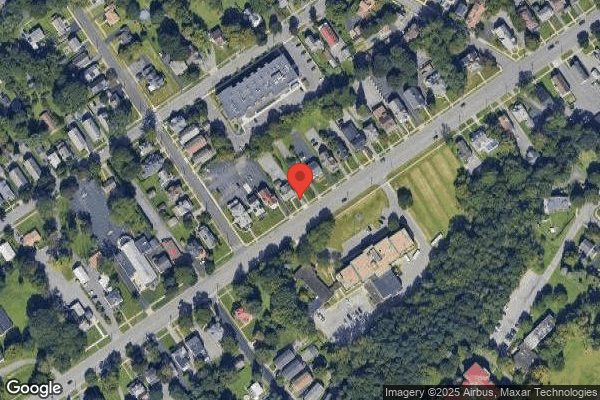
Oct 2023 1 deficiency
CONCERN (D) 📢 Someone Reported This

A family member, employee, or ombudsman was alarmed enough to file a formal complaint

Potential for Harm - no one hurt, but risky conditions existed

Deficiency F0925 (Tag F0925)

Could have caused harm · This affected 1 resident

Based on record review, observation, and interview during the abbreviated survey (NY00325469), the facility did not maintain an effective pest control program so that the facility was free of pests fo...

Read full inspector narrative →
Based on record review, observation, and interview during the abbreviated survey (NY00325469), the facility did not maintain an effective pest control program so that the facility was free of pests for 1 of 3 units (2nd floor kitchenette and 2nd floor Teresian room). Specifically, fruit flies were observed in the 2nd floor kitchenette and the 2nd floor Teresian room. Findings include: The monthly third party vendor pest control records dated 8/8/2023 to 10/4/2023 did not document any fruit fly sightings. The following observations were made on 10/18/2023: - from 12:20 PM to 12:47 PM, the 2nd floor kitchenette had fruit flies. - from 12:47 PM to 1:00 PM the 2nd floor Teresian room had fruit flies near the handwash sink. - from 2:35 PM to 2:55 PM the 2nd floor kitchenette had approximately 25 live fruit flies. In the 2nd floor Teresian room, near the handwash sink, there were approximately 75 live fruit flies, and multiple dead fruit flies on a hanging fly strip. The handwash sink was leaking water onto the shelf under the sink. The plumbing pipe was not connected to the sink and water flowed from the sink directly onto the shelf unit and the floor. During an interview on 10/18/2023 at 1:20 PM, maintenance worker #3 stated there were fruit flies in the facility this past summer and their numbers started dropping in the beginning of September 2023. They stated in the last two weeks, more fruit flies had been observed on the 2nd and 3rd floors. Maintenance worker #3 stated if staff saw a pest, they should report it to the Administrator. During an interview on 10/23/2023 at 3:00 PM, the Activities Director stated a leak in front of the 2nd Teresian room sink started two weeks ago, they were aware of the towel placed on the floor in front of the sink, and they usually did not use that sink. They stated they told a maintenance worker about the leak but did not send an email to the Administrator and did not submit a work order. The Activities Director stated there was a big uptick in the number of fruit flies in the 2nd floor Teresian room within the last two weeks, they discussed this during the daily morning report, and had been told by someone in the facility that the increase in fruit flies was coming from the drains because of the remodeling being done in the facility. They stated one of the housekeepers placed a fly strip over the sink to try to eliminate the fruit flies. During an interview on 10/23/2023 at 3:38 PM, the Administrator stated they were not aware of any work orders regarding the water leak in the 2nd floor Teresian room. They stated they become aware of fruit flies in the 2nd floor kitchenette yesterday. They stated they were not aware of the fruit flies in the 2nd floor Teresian room until being told by the surveyor on 10/23/2023. They stated that the Activities Director's office had been renovated approximately 5 weeks ago and the bathroom on the opposite side of the leaking sink was renovated two weeks ago. During a second interview on 10/24/2023 at 11:17 AM, the Administrator stated the Activities Director should have filled out a work order from the maintenance book that was located behind the 2nd floor nursing station. They stated all staff had been in-serviced on the use of the maintenance book after the facility's plan of correction in March 2023. The Administrator stated that once they were made aware of the fruit flies in the 2nd floor Teresian room, a fly strip and two fruit fly traps were placed in the sink area. During an interview on 10/24/2023 at 11:51 AM, maintenance worker #3 stated they were not aware of the leaking water in the 2nd floor Teresian room. They stated there were maintenance logbooks located at each nursing station where staff could fill out a work order. They checked this maintenance logbook several times a day. They stated they were not aware of the fruit flies in the 2nd floor Teresian room or in the 2nd floor kitchenette. Maintenance worker #3 stated the pests seen in 2nd floor Teresian room and 2nd floor kitchenette should have been reported and the pest control vendor would have been notified as required. 10NYCRR 415.29(j)(5)
Mar 2023 13 deficiencies
CONCERN (D)

Potential for Harm - no one hurt, but risky conditions existed

Resident Rights (Tag F0550)

Could have caused harm · This affected 1 resident

**NOTE- TERMS IN BRACKETS HAVE BEEN EDITED TO PROTECT CONFIDENTIALITY** Based on observation, interview and record review during the recertification survey conducted 3/1/23-3/8/23, the facility failed...

Read full inspector narrative →
**NOTE- TERMS IN BRACKETS HAVE BEEN EDITED TO PROTECT CONFIDENTIALITY** Based on observation, interview and record review during the recertification survey conducted 3/1/23-3/8/23, the facility failed to protect and promote the rights of the resident including protecting residents' private space for 3 of 3 residents (Residents #34, 44, and 83) reviewed. Specifically, Residents #34, 44, and 83 requested a key for their room's locked drawer and the key was not provided. Findings include: The facility policy Personal Belongings, revised 9/2022, documented each resident will be offered a locked drawer upon admission and issued a key if they choose. 1) Resident #34 was admitted with diagnoses including chronic obstructive pulmonary disease (COPD, a disease that blocks airflow), diabetes, and heart failure. The 8/4/22 Minimum Data Set (MDS) assessment documented the resident had moderately impaired cognition, required supervision for most activities of daily living (ADLs), and found it very important to take care of their own personal belongings or things. During an interview on 3/7/23 at 8:49 AM, Resident #34 stated that they were never asked if they wanted a key for their bedside stand and they would like one to keep their belongings safe. 2) Resident #83 was admitted to the facility with diagnoses including hemiplegia (muscle weakness or partial paralysis on one side of the body) and hypertension (high blood pressure). The 12/12/22 Minimum Data Set (MDS) assessment documented the resident was cognitively intact and required limited assistance with most activities of daily living. The Activities Comprehensive assessment dated [DATE] documented that it was very important to the resident that they take care of their own personal belongings or things. During an interview on 3/1/23 at 3:23 PM, Resident #83 stated that they would like a locked drawer. They had asked for a key because they previously had missing items but had never gotten a key. During a follow up interview on 3/6/23 at 9:20 AM Resident #83 stated that they were told that their request for a key was written in a maintenance book. They did not recall when they were told the request was written in the maintenance book, but it was a while ago. They stated that no one had talked to them about getting a key. 3) Resident #44 was admitted to the facility with diagnoses including borderline personality disorder and anxiety. The 10/7/22 Minimum Data Set (MDS) assessment documented the resident was cognitively intact, required supervision or limited assistance for most activities of daily living (ADLs), and it was very important to take care of their own belongings or things, and somewhat important to have a place to lock their belongings. During an interview on 3/1/23 at 10:05 AM, Resident #44 stated they did not have a key for their locked drawer. They stated that maintenance said there was only one key and more had to be obtained. They stated that they kept asking for a key and had not received one. During an interview on 3/6/23 at 1:38 PM, registered nurse (RN) #9 stated that residents had locked drawers. RN #9 stated that only the resident had the key for their specific drawer and maintenance had a master key. RN #9 stated that residents normally received a key upon admission to the facility. RN #9 stated that a dementia resident may not have a key due to not knowing how to use it, but it should still be available to them. RN #9 stated they did not have any knowledge of issues or concerns related to the locked drawers and the availability of keys. During an interview on 3/6/23 at 1:46 PM, the Director of Maintenance stated residents had locked drawers with a key, and maintenance had a master key. They stated if a new key was needed, the lock could be brought to a hardware store and a new key would be cut. The Director stated that every key was unique, and maintenance had the only key that could access multiple private drawers. During an interview on 3/8/23 at 12:43 PM, the Director of Social Services (DSS) stated that every resident had a drawer that should lock. If a resident asked for a key, the request was documented in the communication book and maintenance would obtain the key. Some residents did not want a key on admission and could ask for a key later in their stay. The facility had a period where new keys had to be made and the facility was waiting for some, but the Director stated that issue had been resolved. The Director was unaware of any residents waiting for keys. 10NYCRR 415.5(a)
CONCERN (D)

Potential for Harm - no one hurt, but risky conditions existed

Deficiency F0554 (Tag F0554)

Could have caused harm · This affected 1 resident

Based on observation, interview, and record review during the recertification survey conducted 3/1/23-3/8/23, the facility failed to ensure self-administration of medications was determined to be clin...

Read full inspector narrative →
Based on observation, interview, and record review during the recertification survey conducted 3/1/23-3/8/23, the facility failed to ensure self-administration of medications was determined to be clinically appropriate for 1 of 8 residents (Resident #46) reviewed. Specifically, Resident #46 had 6 medications left on their bedside table and was not assessed for the ability to safely self-administer medications and did not have a medical order to self-administer medications. Findings include: The facility policy Administration of Medications- General, effective 11/18/22, documented residents may self-administer their own medications only if the attending physician, in conjunction with the interdisciplinary care team, had determined they had decision-making capacity to do so. Resident #46 was admitted to the facility with diagnoses including cerebral vascular accident (CVA, stroke) affecting the right side and unspecified dementia. The 10/26/23 Minimum Data Set (MDS) assessment documented the resident was cognitively intact and required extensive assistance with most activities of daily living (ADLs), and supervision with set up help only for eating. The comprehensive care plan (CCP) documented: - on 6/26/20 the resident had ADL self-care deficits related to hemiplegia and activity intolerance. Interventions included limited assistance of 1 for personal hygiene, and set-up for eating. - on 1/30/23 the resident had decreased vision with interventions including monitor for changes in ability to perform ADLs. There was no documented evidence the resident was able to safely self-administer medications. Physician's orders did not document the resident was able to self-administer medications. The 3/2023 Medication Administration Record (MAR) documented on 3/6/23 at 8:00 AM, the resident received aspirin 81 milligrams (mg, blood thinner), acyclovir 800 mg (anti-viral medication), Protonix 20 mg (used to treat acid reflux), prednisone 5 mg (steroid), Prozac 40 mg (antidepressant), and fludrocortisone acetate 0.1 mg (corticosteroid used to help control sodium and fluid in the body). During an observation on 3/6/23 at 8:26 AM, the resident was observed in bed. The resident had a plastic cup on their bedside table with 6 pills in it. The resident stated they had been unable to take the pills with water and wanted to eat breakfast first, so the nurse left the pills at the resident's bedside. During an interview on 3/6/23 at 8:45 AM, licensed practical nurse (LPN) #29 stated around 7:45 AM or 7:50 AM, they gave the resident acyclovir, Protonix, prednisone, Prozac, and fludrocortisone. While handing the pills to the resident, the resident's roommate asked for an as needed medication from the nurse. The LPN stated they left to go get the roommate's medication and had planned to go back into the room. Resident #46 did not take the medications when they handed them to the resident. The LPN stated they forgot to go back to the resident's room. The resident did not have an order to leave medications at the bedside or to self-administer medications. It was dangerous to leave medications at the bedside because a resident could wander into the room and take the medications that were intended for someone else. During an interview on 3/7/23 at 11:22 AM, LPN Unit Manager #12 stated there were no residents on the unit that were able to self-administer medications and medications should never be left at the bedside. Medications needed to be consumed before the nurse left the room. LPN Unit Manager #12 stated LPN #29 had reported to them they had left the resident's medications, stated they were distracted, and it was wrong. If medications were left at the bedside the resident may not take the medications. They stated there were wandering residents on the unit who could help themselves to the medications, or staff had the potential to take the medications. During an interview on 3/7/23 at 1:08 PM, the Director of Nursing (DON) stated no medications were to be left at the bedside. The nurse should give the medications and wait for the resident to take them. If a resident did not want the medications at that time, the nurse should remove the medications and approach the resident at a different time. It was a safety issue for wandering residents and the resident could miss taking important medications. 10NYCRR 415.3(e)(1)(vi)
CONCERN (D)

Potential for Harm - no one hurt, but risky conditions existed

Deficiency F0578 (Tag F0578)

Could have caused harm · This affected 1 resident

**NOTE- TERMS IN BRACKETS HAVE BEEN EDITED TO PROTECT CONFIDENTIALITY** Based on observation, interview, and record review during the recertification and abbreviated (NY00310048) surveys conducted [DA...

Read full inspector narrative →
**NOTE- TERMS IN BRACKETS HAVE BEEN EDITED TO PROTECT CONFIDENTIALITY** Based on observation, interview, and record review during the recertification and abbreviated (NY00310048) surveys conducted [DATE]-[DATE], the facility failed to ensure the resident's right to formulate an advance directive for 1 of 1 (Resident #94) reviewed. Specifically, Resident #94's Medical Orders for Life-Sustaining Treatment (MOLST) documented that Resident #94 consented to a Do Not Resuscitate (DNR, allow natural death) and the physician's order in the electronic medical record (EMR) documented Cardiopulmonary Resuscitation (CPR, perform chest compressions to restart the heart). Findings include: The facility policy Advanced Directives-General, revised 07/2019, documented if the resident had a DNR order upon admission to the facility, a physician's order was obtained within 24 hours, and it was continued in the facility. If the resident did not have a DNR order but would like one, the Social Worker coordinated completing the necessary DNR paperwork and obtaining a physician's order. Upon admission the Social Worker would review the resident's wishes for advance directives. If the resident did not have advance directives the Social Worker would review them with the Resident/HCP (Health Care Proxy, someone appointed by the resident to make health decisions if the resident was not capable) and ensure that an appropriate DNR/MOLST indicating the resident's wishes was completed and placed in their chart. An order must be put in place for a DNR. The Resident/HCP had the right to change their chosen advance directives at any time. A resident who did not have advance directives may initiate them and a resident who had advance directives may change or rescind them. In addition, for those with CPR status a green name band would be applied and for those with DNR status a red name band would be applied. Resident #94 had diagnoses of diabetes, chronic obstructive pulmonary disease (COPD, lung disease), and respiratory failure. The Minimum Data Set (MDS) assessment dated [DATE] documented the resident had intact cognition. The [DATE] MOLST documented the resident had resuscitation instructions of DNR, was signed by the resident, and was witnessed by registered nurse (RN) Director of Nursing (DON) and the Director of Social Services. The MOLST was signed by nurse practitioner (NP) #27 on [DATE] and was reviewed and renewed on [DATE] by the medical provider. Physician's orders dated [DATE] documented the resident's code status was CPR: Cardiopulmonary Resuscitation and was entered by the DON. The comprehensive care plan (CCP) initiated [DATE] documented the resident wished for advance directives of full code and a MOLST was completed. The resident's wishes would be honored. Interventions included to check for the name/code status band placement every shift and the MOLST was in place. During an interview on [DATE] at 10:01 AM Resident #94 stated that they had a green (CPR) code status band given to them at admission, but they did not wear it. The resident stated they wished to have CPR performed. During an interview on [DATE] at 10:24 AM licensed practical nurse (LPN) #55 stated that a resident's code status was in the Medication Administration Record (MAR) and was also in the electronic medical record (EMR) in the resident's profile. LPN #55 stated that residents had bracelets that dictated their code status via color that was found on the residents' wrists or wheelchair. If the bracelet was not present, they would check the MAR in an emergency. During an interview on [DATE] at 10:23 AM RN #9 stated a resident's code status was documented on the MOLST which was kept in a binder behind the nursing station. The MOLST was also scanned into the EMR under the MISC tab and recorded on the homepage for the resident's profile in the EMR. RN #9 stated if a resident was found not breathing, the code status should be checked in the EMR if the resident was not wearing a code status wrist band. RN # 9 stated that the hard copy MOLST was checked last as it was the hardest to get to. During an interview on [DATE] at 12:43 PM, the Director of Social Services stated the process for advance directives was to confirm that the resident came in with a MOLST or a Health Care Proxy. They stated if a MOLST was present on admission and the resident was cognizant, the intake questioning would verify that the MOLST matched the resident's wishes. They stated if an advance directive did not come with the resident, a MOLST was completed because that was used to confirm code status. The Director stated for those with CPR status a green name band was applied and for DNR status a red name band was applied. The Director stated they expected the order in the computer to be reviewed at the same time the MOLST was to ensure accuracy. The Director stated they completed the original MOLST with resident #94. They stated there was an error between the signed MOLST order and the physician's order entered in the EMR. It was important for the order in the electronic medical record and the MOLST to match to ensure the resident's wishes were honored. During an interview on [DATE] at 11:29 AM the DON stated the process for checking for advance directives with a new admission included an email sent by the admissions department with the code status information and the hard copy of the MOLST would come in the hospital packet. The DON stated if they entered the orders for the incoming resident, they would verify the code status from the electronic hospital record. The DON stated that neither they nor the nurses doing an admission verified with cognizant residents that their MOLST was correct, and it was the responsibility of the social worker. They stated verification of the MOLST or completion of a new MOLST should be done within 48 hours of admission. The order in the electronic record was entered by a nurse or the NP. The DON stated the MOLST should be reviewed with the resident by the provider and the order in the EMR should be verified for accuracy. The DON verified Resident #94's MOLST order in the electronic medical record against the scanned MOLST and stated they had signed the MOLST and entered the physician's order into the EMR and they did not match. The DON stated that a MOLST that did not match the physician's order in the EMR was a safety concern because the resident could receive CPR when they did not want it or not receive CPR if they did want it. 10NYCRR 400.21(c)
CONCERN (D)

Potential for Harm - no one hurt, but risky conditions existed

Deficiency F0582 (Tag F0582)

Could have caused harm · This affected 1 resident

Based on record review and interview during the recertification survey conducted 3/1/23-3/8/23 the facility failed to inform each resident and/or their designated representative of changes to services...

Read full inspector narrative →
Based on record review and interview during the recertification survey conducted 3/1/23-3/8/23 the facility failed to inform each resident and/or their designated representative of changes to services covered by Medicare and potential financial liability for services provided during a non-covered stay for 2 of 3 residents (Residents #11 and 105) reviewed. Specifically, Residents #11 and 105 had facility-initiated discharges from Medicare Part A services when benefit days were not exhausted and they remained in the facility, and were not provided with the SNF (Skilled Nursing Facility) ABN(Advanced Beneficiary Notice), CMS (Centers for Medicaid and Medicare Services) Form 10055 as required. Findings include: The facility policy Accounts Receivable dated 2017 documented the MDS (Minimum Data Set) Coordinator would work with the financial coordinator to give residents Medicare cut letters in a timely fashion. NOMNC (Notice of Medicare Non-Coverage) and SNF ABN letters must both be given to a resident on Medicare Part A who still had days, but was being cut, and would be staying in the facility under custodial care. 1) Resident #11 was admitted to the facility with diagnoses including coronary artery disease (CAD), heart failure and diabetes mellitus. The 1/11/23 Minimum Data Set (MDS) documented it was a PPS (Prospective Payment System) Part A Discharge (end of stay) assessment. The resident's Medicare stay began on 11/3/22 and ended on 1/11/23. There was no documented evidence a SNF ABN, Form CMS-10055 was issued to the resident or the resident's representative prior to 1/11/23 when Medicare A coverage ended. 2) Resident #105 was admitted to the facility with diagnoses including dementia, CAD (coronary artery disease), and cerebral vascular accident (CVA, stroke). The 12/31/22 Minimum Data Set (MDS) documented it was a PPS (Prospective Payment System) Part A Discharge (end of stay) assessment. The resident's Medicare stay began on 10/4/22 and ended on 12/31/22. There was no documented evidence a SNF ABN, Form CMS-10055 was issued to the resident or the resident's representative prior to 12/31/22 when Medicare A coverage ended. During an interview on 3/6/23 at 10:28 AM the Financial Coordinator stated they completed the NOMNC form at least 48 hours in advance any time a resident was going home or being cut from therapy. Before they started in this role, an MDS staff person used to fill them out. They were not sure if there was a facility policy on how to fill out the NOMNCs or ABNs. They were not aware the ABN form was not completed for Residents #11 and 105 as they did not realize the form needed to be completed for residents remaining in the facility. They were informed by the Finance Supervisor on 3/2/23 that Residents #11 and 105 did not receive their ABNs. During an interview on 3/6/23 at 2:40 PM the MDS Coordinator stated they were familiar with the NOMNC and ABN forms. Residents should be issued these forms within 48 hours of being cut from Medicare Part A. They stated the facility provided those forms to residents who were going to stay at the facility, and not to those residents who were discharged home. They did not review the forms to make sure they were filled out properly as the Financial Coordinator did that. They assumed the NOMNCs and ABNs were filled out and provided to the residents accordingly. During an interview on 3/6/23 at 3:18 PM the Administrator stated the NOMNC and ABN were the Medicare Part A cut letters given to residents three days prior to the exhaustion of benefits. The ABN form should be given with the NOMNC form. The new corporate compliance policy included checking on the process of the NOMNCs and ABNs being filled out accurately. When Residents #11 and 105 did not receive their SNF ABNs, it was likely due to the task being split up between several staff after the previous MDS coordinator left and staff were unsure of what duties other staff were completing. 10NYCRR 415.3(g)(2)(iii)
CONCERN (D) 📢 Someone Reported This

A family member, employee, or ombudsman was alarmed enough to file a formal complaint

Potential for Harm - no one hurt, but risky conditions existed

Deficiency F0657 (Tag F0657)

Could have caused harm · This affected 1 resident

**NOTE- TERMS IN BRACKETS HAVE BEEN EDITED TO PROTECT CONFIDENTIALITY** Based on observation, record review, and interview during the recertification and abbreviated (NY00275812) surveys conducted 3/...

Read full inspector narrative →
**NOTE- TERMS IN BRACKETS HAVE BEEN EDITED TO PROTECT CONFIDENTIALITY** Based on observation, record review, and interview during the recertification and abbreviated (NY00275812) surveys conducted 3/1/23-3/8/23, the facility failed to review and revise the comprehensive care plan (CCP) for 2 of 5 (Residents #74 and 84) residents reviewed. Specifically, Resident #74 was a victim in multiple resident to resident abuse incidents and there were no care planned interventions to prevent further abuse; and Resident #84 had a physician order for protective boots to prevent heel pressure and they were not included in the CCP. Findings include: The facility policy Comprehensive Care Planning revised 2/2019, documented the interdisciplinary team would review and revise the care plan quarterly following MDS (Minimum Data Set, an assessment for all residents in Medicare or Medicaid certified facilities) completion, with a significant change, return following hospital admission, annually, and as needed. 1)Resident #74 was admitted to the facility with diagnoses including Alzheimer's dementia. The 1/26/23 MDS assessment documented the resident had severe cognitive impairment, required extensive assistance of one for most activities of daily living (ADLs), and exhibited verbal behavioral symptoms towards others. The comprehensive care plan (CCP) initiated on 10/6/22 documented Resident #74 had the potential to be abused by others and was vulnerable due to cognitive and physical disabilities. Interventions initiated and last revised on 10/6/22 included all staff and others should respect the resident's personal space and remove the resident to a quiet environment when showing signs of potential abuse. The CCP documented the resident was involved in incidents with other residents: - On 1/17/23, 1/18/23 and 2/11/23, the resident was inappropriately touched by another resident. There were no updated interventions after the 1/17/23, 1/18/23, and 2/11/23 incidents to protect the resident from future abuse. - On 3/2/23, Resident #74 was struck with a towel by Resident #78. Resident #78's CCP did not include new or additional interventions to protect them from resident-to-resident abuse. The untimed, undated, unsigned investigative summary documented: - On 3/2/23 at approximately 3:30 PM, Resident #78 entered Resident #74's room. CNA #22 followed resident #78 into the room and attempted to redirect Resident #78 out as this was not their room. Resident #78 had been holding a towel and at that time began swinging it around and had unintentionally hit Resident #74 in the face with the towel. Resident #78 was escorted out of the room. Both residents were assessed and with no injuries or signs of psychological distress. The emergency contacts, providers, Director of Nursing (DON) and Administrator were updated. SW #26 met with both residents and stated neither resident could recall the incident or give details due to progression of dementia. There was no prior history of incident between them. Care plans were reviewed with no failure to follow plan of care noted. Due to the fact Resident #74 was hit by a towel that was an incidental, non-aggressive act that was not intended to cause harm, nor did harm occur, abuse was ruled out. - The immediate response and plan to prevent recurrence was to escort Resident #78 out of Resident #74's room. Both residents were assessed with no injuries or signs of psychological harm. The SW met with both residents and the facility psychiatric Nurse Practitioner would plan to follow up with both residents on their next visit. There was no documented evidence of CCP interventions to protect Resident #74 from further abuse. A progress note dated 3/2/23 at 5:03 PM by registered nurse (RN) #9 documented they were requested to assess Resident #74 related to a resident-to-resident altercation at approximately 3:40 PM. Another resident (Resident #78) entered Resident #74's room and staff approached Resident #78 to redirect them out of the room. Resident #78 took a towel that was in their hand and hit Resident #74 across their face with the towel. Resident #74 did not have any injuries or marks on their face, denied pain, was not able to recall the incident, and their emergency contact and provider were notified. There were no documented updates to Resident #74's CCP to protect them from further abuse. A progress note dated 3/3/23 at 3:57 PM by social worker #26 documented they followed up with Resident #74 regarding the incident (on 3/2/23) with Resident #78. Social worker #26 documented due to the current mental status of Resident #74, they were unable to recall the event or give details. Resident #74 was at baseline with no signs of distress. They would continue to monitor. There was no documentation Resident #74's care plan was updated. The following observations were made of Resident #74: - on 3/3/23 at 9:57 AM, sitting unsupervised in the sun/tv room in a scoot chair, leaning forward with their eyes closed. - 3/7/23 at 4:02 PM, sitting unsupervised in their scoot chair in the corner near the nursing station. - 3/8/23 at 11:24 AM, sitting unsupervised in their scoot chair in the sun/tv room, with their head down toward their chest and eyes closed. There were 5 other residents seated and standing in the sun/TV room. There were no staff observed in the sun/TV room. During an interview on 3/8/23 at 10:14 AM, licensed practical nurse (LPN) Unit Manager #17 stated the 3/2/23 incident between Residents #74 and 78 was witnessed by CNA #22 and reported to them. They said it was important for staff to protect Resident #74 because the resident was not able to speak up for themselves and staff were responsible for protecting vulnerable residents. They stated Resident #74's care instructions should be updated with ways to protect the resident once the investigation was completed and the IDT met. They were not allowed to make the decisions to update the care plan and instructions until after the IDT meeting. Currently, to protect Resident #74 from any further incidents, staff continued to redirect Resident #78 away from Resident #74 when Resident #78 seemed anxious or agitated and this was not documented on Resident #74's care plan. During an interview on 3/8/23 at 2:02 PM, the DON stated they determined the 3/2/23 incident was not abuse because Resident #78 had not maliciously hit Resident #74. They were going to put a stop sign on Resident #74's door when they were in the room resting and they had the SW meet with Resident #74. Resident #74 should not be left alone and the sun/tv room should be monitored by nursing staff. The care plan should have been updated by the SW. They did not have an IDT meeting. During an interview on 3/8/23 at 2:24 PM, SW #26 stated they documented the 3/2/23 incident occurred on the care plan. On 3/3/23 they documented on Resident #74's care plan that they had been struck with a towel by another resident. They did not add any interventions to prevent the resident from any future incidents. They were not usually responsible for adding interventions, this would be done by nursing. They stated the incident was reviewed the following morning and the Assistant Director of Nursing (ADON) would have been responsible to add interventions to the care plan. 2)Resident #84 was admitted to the facility with diagnoses including Parkinson's disease (a progressive neurological disorder) and a left femur (thigh bone) fracture. The 2/1/23 Minimum Data Set (MDS) assessment documented the resident had moderate cognitive impairment, required extensive assistance with most activities of daily living (ADLs), had five Stage 1 (intact skin with redness) pressure ulcers, and one deep tissue injury (DTI, purple or maroon area of intact skin), had skin and ulcer treatments including pressure reducing device for bed and chair, turning/repositioning program, and pressure ulcer/injury care. The 1/24/23 physician's orders documented to maintain bilateral protective booties to feet while in bed every shift. The resident's CCP documented the following on 11/21/22, the resident had a self-care performance deficit, and required extensive assistance with dressing and extensive assistance with bed mobility. The resident had a potential/actual risk for skin impairment due to decreased mobility. Interventions included pressure relieving wheelchair cushion and mattress. The bilateral protective booties were not included on the CCP. The undated [NAME] (care instructions) documented the resident required extensive assistance for dressing and bed mobility. The bilateral protective booties were not listed on the care instructions. The following observations were made of Resident #84: - on 3/2/23 at 10:28 AM, the resident was in bed and was not wearing protective booties on either foot. There was a padded blue boot laying on closet floor, and a padded boot on the closet shelf. - on 3/6/23 at 9:17 AM and 11:19 AM, the resident was lying in bed and was not wearing the bilateral protective booties. The booties were laying on the floor at the resident's bedside. During an interview on 3/8/23 at 9:21 AM, certified nurse aide (CNA) #24 stated information for resident care was found on the computer in the [NAME] (care instructions). The [NAME] contained instructions for transfers, allergies, assistance levels, low bed, fall risk, turn, and position, and special equipment such as protective booties. The CNA stated the resident had booties to wear and they believed the wearing schedule was 2 hours on, then 2 hours off. The resident frequently kicked the boots off themselves. During an interview on 3/8/23 at 9:39 AM, CNA #16 stated the resident was supposed to wear protective booties when they were in bed due to pressure areas. The resident would frequently remove them. The CNA had never put them on the resident. They stated physical therapy (PT) told them the resident should wear the protective booties and they were not sure what the care instructions documented. During an interview on 3/8/23 at 9:53 AM, registered nurse (RN) Unit Manager #9 stated the resident came back from the hospital on 1/24/23 with staged pressure areas. Preventive measures included bilateral protective booties that were to be worn while in bed, regardless of the time of day. When the resident was in their bed, the booties should be on. They stated the care plan did not include the boots. If the CCP was not updated, the care instructions would not include the use of the protective booties. The protective booties were ordered upon readmission on [DATE]. The MDS Coordinator normally does care plan updates, and as a Unit Manager they could also update the care plans. The electronic treatment administration record had the protective booties listed as being checked by nursing every shift. The CNAs should be aware of the boots to help ensure the resident was wearing them. When interviewed on 3/8/23 at 10:34 AM, RN MDS coordinator #25 stated care planning was done by all interdisciplinary team members. RN Unit Managers should put readmission orders in the CCP. If missed, they should have been caught during the care plan meeting. If the protective boots were not on the CCP, then the current care instructions would not contain the information for the CNAs. It was important the CNAs knew about the need for the protective booties because these were used for preventive skin care measures. The lack of protective booties could contribute to worsening of or acquiring a new pressure area. 10 NYCRR 415.11(c)(2)(iii)
CONCERN (D) 📢 Someone Reported This

A family member, employee, or ombudsman was alarmed enough to file a formal complaint

Potential for Harm - no one hurt, but risky conditions existed

ADL Care (Tag F0677)

Could have caused harm · This affected 1 resident

**NOTE- TERMS IN BRACKETS HAVE BEEN EDITED TO PROTECT CONFIDENTIALITY** Based on observation, record review, and interview during the recertification and abbreviated (NY00275411, NY00278832, NY0028409...

Read full inspector narrative →
**NOTE- TERMS IN BRACKETS HAVE BEEN EDITED TO PROTECT CONFIDENTIALITY** Based on observation, record review, and interview during the recertification and abbreviated (NY00275411, NY00278832, NY00284096, NY00278700, NY00290397 and NY00287038) surveys conducted 3/1/23-3/8/23, the facility failed to ensure residents who were unable to carry out activities of daily living (ADLs) received the necessary services to maintain good nutrition, grooming, and personal and oral hygiene for 3 of 6 residents (Residents #46, 74 and 108) reviewed. Specifically, Resident #46 was not repositioned and set up at 2 meals as planned; Resident #74 was observed on multiple occasions with food on their clothing and face, and their hair appeared greasy and unwashed; and Resident #108 was left in bed for meals and not set up as care planned. Findings include: The facility policy Activities of Daily Living (ADLs) revised 12/4/2021, documented residents would be provided care and treatment services to ensure that their ADLs did not diminish unless the circumstances of their clinical condition demonstrate that diminishing ADLs were unavoidable. Appropriate care and services would be provided for residents who were unable to carry out ADLs independently, according to the plan of care including the appropriate support and assistance with hygiene, mobility, elimination, dining, and communication. The facility's undated meal service duties documented during the serving of the meals the certified nurse aide (CNA) staff passed out the meal, salad, and dessert to the appropriate resident and would assist residents where needed. 1) Resident #46 was admitted to the facility with diagnoses including cerebral vascular accident (CVA, stroke) affecting the right side and major depressive disorder. The 1/26/23 Minimum Data Set (MDS) assessment documented the resident was cognitively intact, required extensive assistance with bed mobility, supervision with setup help only for eating, had functional limitation in range of motion of upper extremity on one side, and had a significant weight loss. The 6/25/20 physician order documented the resident was on a regular diet with thin liquids. The comprehensive care plan (CCP) updated 4/12/22 documented the resident had an ADL deficit related to fatigue and hemiplegia (paralysis on one side of the body). Interventions included set-up by staff to eat and limited assistance of 1 for bed mobility. The CCP revised 2/1/23 documented the resident had nutritional problems related to poor intake, refusal of meals, and weight loss. Interventions included meals served in the resident's room and monitor intake. The undated [NAME] (care instructions) documented the resident's meals were served in their room, the resident required set-up by staff to eat, and to provide lids for hot beverages. The following observations were made of Resident #46: - On 3/1/23 at 12:45 PM, the resident was sitting in their wheelchair in their room next to the closet. Their meal tray was on the other side of the bed, out of reach, and food items were not set-up or opened. The resident stated they preferred to eat in their room. - On 3/3/23 at 9:48 AM, the resident was lying in bed, slouched, leaning to the right side, with their tray table partially over their lap. They were putting sugar and creamer in their coffee using their right hand only. - at 12:54 PM, the resident was lying in bed, slouched, and leaning to the right and the head of the bed was slightly elevated. Certified nurse aide (CNA) #15 placed the lunch tray on the table and left the room without setting up the meal. During an interview on 3/3/23 at 12:54 PM, CNA #15 stated they did not offer to sit the resident in their chair and the resident just lies there in bed all day, it takes about 30 minutes for them to start eating. During the interview CNA #15 went back into the resident's room and asked the resident, who was in bed slouching to the right-side, if they were ok to eat, and the resident said they were. CNA #15 exited the room and stated they did not boost the resident up in bed because the resident said they were ok. The CNA stated the resident never really wanted to eat anyway. During an observation on 3/6/23 at 8:26 AM, the resident was lying in bed. Their breakfast tray had been left on the bedside table which was partially over the resident's lap. The resident was attempting to the pull the tray table closer to them to reach their drinks. During interview on 3/7/23 at 11:22 AM, licensed practical nurse (LPN) Unit Manager #12 stated the resident was able to verbalize their needs to staff, but the staff should encourage the resident to get out of bed for every meal. They had educated their staff that if a resident refused to get out of bed for a meal they should be repositioned and sitting up in bed. Position was important for the resident to be independent when eating and drinking and for safety reasons. During an interview on 3/7/23 at 1:19 PM, the Director of Nursing (DON) stated staff should have repositioned the resident, so they were sitting up with their meal in front of them and made sure that they were able to reach all their food items safely. 2) Resident #74 was admitted to the facility with diagnoses including Alzheimer's Disease. The Minimum Data Set (MDS) assessment dated [DATE] documented the resident was not able to complete the interview for cognition and required extensive assistance for most activities of daily living (ADLs). The comprehensive care plan revised on 10/6/22 documented the resident had an ADL self-care deficit and required extensive assistance with activities of daily living (ADLs) related to immobility, confusion, and dementia. The resident required extensive assistance of one for personal hygiene and oral care. The undated [NAME] (care instructions) documented the resident required extensive assistance of one for weekly showering and bathing, dressing, eating, and personal hygiene including oral care. Resident #74 was observed: - on 3/1/23 at 10:29 AM, sitting in an unclean scoot chair with greasy hair. - on 3/7/23 at 4:02 PM, sitting slouched forward in a scoot chair that had old/dried white food material on the left arm rest. The resident's hair appeared greasy and uncombed; there was food on the left side of their face and chin, and their blue t-shirt had food down the front; and their brown pants had food debris on the right leg. - on 3/8/23 at 8:49 AM, sitting in their scoot chair in the sunroom with combed hair that appeared greasy; and their blue t-shirt had food debris down the middle front. The certified nurse aide (CNA) completed care tasks dated 3/1/23-3/8/23 documented the 3/7/23 Tuesday evening shower was not completed for the resident. There was no documentation that personal hygiene was completed on the 3/2/23 evening shift, the 3/3/23 day and evening shifts, the 3/4/23 night shift, the 3/5/23 day shift, the 3/6/23 evening shift, and the 3/7/23 day and evening shifts. During an interview on 3/8/23 at 8:54 AM, CNA #18 stated Resident #74 required total care, meaning the resident required complete assistance with bathing, feeding, dressing, getting out of bed, and sitting in a chair. The resident was scheduled for a shower on Tuesday evenings. They were unable to review the electronic record to verify if the shower was completed. During an interview on 3/8/23 at 10:34 AM, licensed practical nurse (LPN) Unit Manager #17 stated the resident required extensive assistance of one. Daily grooming was to be completed by nursing staff and included head to toe bathing, washing faces, brushing teeth, brushing hair, and cleaning eyes and ears. Residents were to have their hair washed on their shower day once a week. The LPN Unit Manager stated after meals residents' faces should be cleaned of food debris, and if their clothing was soiled during the meal staff should change the clothing. Resident #74's shower was scheduled to be completed on Tuesday evening shift and should have been completed and their hair should have been washed. It was important to complete the resident's grooming and personal hygiene because being well kept was good for dignity, health, and wellness. 3) Resident #108 was admitted to the facility with diagnoses including cerebral infarction (stroke). The 1/23/23 Minimum Data Set (MDS) assessment documented the resident was cognitively intact and required extensive assistance for activities of daily living (ADLs). The 1/25/23 comprehensive care plan (CCP) documented the resident was receiving a mechanical soft diet due to dysphagia (difficulty swallowing). The 2/6/23 revised CCP documented the resident required supervision of 1 for all meals and was to be out of bed for all meals. The 2/16/23 Speech Therapy Recertification & Updated Plan of Treatment documented the resident's current diet consistency was mechanical soft, chopped fruits and vegetables with thin liquids. The resident was on aspiration precautions. The undated [NAME] (care instructions) documented the resident required supervision of 1 for eating and should be out of bed for all meals. On 3/6/23 at 9:24 AM, the resident was observed in bed with a breakfast tray on an overbed table. A certified nurse aide (CNA) repositioned the resident for breakfast. The resident tried to eat a whole sausage patty by stabbing it with a fork. The resident was unable to use their left side and was unable to cut their food. The syrup for their pancakes was unopened and the pancakes and sausage were uncut. During an interview on 3/8/23 at 9:30 AM, certified nurse aide (CNA) #16 stated the resident needed assistance with set up for meals which included cutting up food and opening containers. The resident could feed themself with their right hand, but their left arm did not work. The resident was not supposed to eat in their room as it was a choking hazard. The CNA stated they let the resident eat in bed on 3/6/23 because it was the resident's shower day. They did not cut up the resident's sausage for them and the resident should have received ground sausage. During an interview on 3/8/23 at 9:44 AM, registered nurse (RN) #9 stated the resident's assistance level was documented on the CNA care card. Set up assistance for a meal included ensuring all drinks were provided, cutting up food, condiment cups were opened, and bread was buttered. The resident's sausage patty should have been cut up for them. The resident was on aspiration precautions and should not eat alone in their room. The RN was not aware the resident ate breakfast alone in their room on 3/6/23. The dangers of eating alone in their room included aspiration, choking, pneumonia, and death. During an interview on 3/8/23 at 12:35 PM, the Director of Nursing (DON) stated set up for meals meant ensuring the resident was properly positioned and their food was cut up. The resident should not have been left in their room alone to eat while on an altered diet and an aspiration risk. 10NYCRR 415.12(a)(3)
CONCERN (D)

Potential for Harm - no one hurt, but risky conditions existed

Deficiency F0761 (Tag F0761)

Could have caused harm · This affected 1 resident

Based on observation, interview, and record review during the recertification survey conducted 3/1/23-3/8/23, the facility failed to store and label drugs and biologicals in accordance with currently ...

Read full inspector narrative →
Based on observation, interview, and record review during the recertification survey conducted 3/1/23-3/8/23, the facility failed to store and label drugs and biologicals in accordance with currently accepted professional principles, and include the appropriate accessory and cautionary instructions, and the expiration dates when applicable for 1 of 6 medication carts (2 South) reviewed. Specifically, the 2 South medication cart had 1 insulin pen that was not labeled with a date opened or when it would expire. Findings include: The facility policy Storage and Maintenance of Medications revised 5/2019, documented medications with shortened expiration dates (i.e., insulin's, injections, ophthalmic drops, etc.) must be dated when opened. Medication must be checked regularly for expiration dates and deterioration. Expired medications were to be removed from use and returned to the pharmacy. The overnight medication nurse was responsible for checking the medication cabinet, medication carts, and the refrigerator for expired medications every week. Medications that were no longer in use were returned to the pharmacy and were destroyed or credited where applicable in accordance with State and Federal regulations. During an observations of the 2 south medication cart on 3/2/23 at 2:59 PM with licensed practical nurse (LPN) #6, one Levemir (long-acting insulin) pen prescribed for a specific resident did not have an opened date or expiration date documented on the pen or the bag it was stored in. LPN #6 stated all nurses were responsible for making sure there were no expired medications. Insulin pens should be labeled with the resident name, the date opened and the expiration date. The LPN stated it was important to know the date the insulin was opened as insulin expired 30 days after opening. They stated they had administered the insulin to the resident on 3/1/23 and had not noticed there was no date opened documented on the pen. The LPN stated expired medications had the potential to not be effective. 10NYCRR 415.18(d)(e) (2-4)
CONCERN (D) 📢 Someone Reported This

A family member, employee, or ombudsman was alarmed enough to file a formal complaint

Potential for Harm - no one hurt, but risky conditions existed

Deficiency F0804 (Tag F0804)

Could have caused harm · This affected 1 resident

Based on record review, observation, and interview during the recertification and abbreviated (NY00277501) surveys conducted from 3/1/23-3/7/23, the facility failed to ensure each resident receives an...

Read full inspector narrative →
Based on record review, observation, and interview during the recertification and abbreviated (NY00277501) surveys conducted from 3/1/23-3/7/23, the facility failed to ensure each resident receives and the facility provides food and drink that is palatable, attractive, and at a safe and appetizing temperature for 2 of 2 meals reviewed (3/2/23 and 3/3/23 lunch meals). Specifically, food was not served at palatable and appetizing temperatures. Findings include: The undated facility policy Meal Tray Assembly and Distribution documented that effective equipment would be utilized and procedures established to maintain food at proper temperatures during meal service. Nursing staff would ensure trays were accurate according to the resident's meal ticket before assistance with providing the tray to the resident. The undated facility policy Meal Temperature Recording documented the facility was to obtain and record temperatures of food prior to serving to residents to ensure safety and quality of the food. During an observation on 3/2/23 at 12:33 PM, a resident meal tray was tested on the second floor unit. A replacement tray was requested for the resident. Food temperatures were measured and included; biscuits and gravy 108 Fahrenheit (F), chicken 119 F, and mixed vegetables 117 F. During an interview on 3/2/23 at 12:40 PM, kitchen supervisor #57 stated that hot food should be served at 140 F or higher. During an observation on 3/3/23 at 12:41 PM, a resident meal tray was tested on the third floor unit. A replacement tray was requested for the resident. Food temperatures were measured and included: pureed fish 107 F, and pureed spinach 104 F. During an interview on 3/6/23 at 1:33 PM, the Food Service Director stated that hot food should be served at 140 F or higher, and they had done test trays weekly. They stated that they would ask the server to make a tray with the items on the steam table, would then cover the plate, and then take temperatures of the food items for 15 minutes at 5 minute intervals. The Food Service Director stated that biscuits and gravy, chicken, mixed vegetables, pureed fish, and pureed spinach served at under 140 F were not acceptable. 10NYCRR 415.14(d)(2)
CONCERN (D)

Potential for Harm - no one hurt, but risky conditions existed

Deficiency F0806 (Tag F0806)

Could have caused harm · This affected 1 resident

Based on observation, interview, and record review during the recertification survey conducted from 3/1/23 to 3/8/23, the facility failed to ensure each resident received food that accommodated reside...

Read full inspector narrative →
Based on observation, interview, and record review during the recertification survey conducted from 3/1/23 to 3/8/23, the facility failed to ensure each resident received food that accommodated resident allergies, intolerances, and preferences for 2 of 7 (Resident #59 and 108) reviewed. Specifically, Residents #59 and 108 were served foods they were allergic to. Findings include: The undated facility policy titled Meal Service Duties documented the dietary aide expedited the meals at the steam table. The certified nurse aide (CNA) passed out the meal. The policy did not document checking the trays for accuracy or allergies. 1) Resident #59 was admitted to the facility with diagnoses including type II diabetes mellitius. The 1/30/23 Minimum Data Set (MDS) assessment documented the resident had moderately impaired cognition, required extensive assistance for most activities of daily living (ADL), and supervision for eating. The 3/3/23 Breakfast Tray Ticket documented the resident had an allergy to eggs and no eggs. The breakfast items listed did not include eggs. On 3/3/23 at 8:43 AM, the resident's breakfast tray was observed to have scrambled eggs with cheese. The resident stated at that time, they could not eat eggs because they were allergic. The 3/8/23 Breakfast Tray Ticket documented the resident had an allergy to eggs and no eggs. The breakfast items listed did not include eggs. On 3/8/23 at 9:04 AM, the resident's breakfast tray was observed with eggs which the resident did not eat. During an interview on 3/8/23 at 9:04 AM, licensed practical nurse (LPN) #39 stated it was the responsibility of the staff delivering the tray to check the tray ticket for accuracy and allergies. LPN #39 was assisting with serving at breakfast and did not catch the error. During an interview on 3/8/23 at 9:11 AM, dietary aide #40 stated they plated the foods based on the tray ticket. The resident's tray documented they had an egg allergy and they should not have received eggs. LPN #39 was reading the tickets to them and said regular. so the dietary aide put eggs on the plate. They did not read the ticket themselves. The certified nurse aides (CNA) were supposed to check the tickets and plates before delivering the tray to the residents. During an interview on 3/8/23 at 10:44 AM, registered dietitian (RD) #41 stated resident allergies were documented on the tray tickets to protect residents from allergic reactions. The food provided and ticket should match. During an interview on 3/8/23 at 10:54 AM, the Food Service Director stated tray tickets documented resident allergies. The dietary aide plated the food; the CNA delivered the food and would double check for accuracy. An allergic reaction which could be severe could occur if the resident was provided with a food item they were allergic to. 2) Resident #108 was admitted to the facility with diagnoses including cerebral infarction (stroke). The 1/23/23 Minimum Data Set (MDS) assessment documented the resident was cognitively intact and required extensive assistance for activities of daily living (ADL) including eating. The 3/1/23 Lunch Ticket documented the resident had an allergy to beans. The vegetable was documented as chopped asparagus. On 3/1/23 at 12:29 PM, the resident was observed at lunch. The resident's plate had green beans. During an interview on 3/8/23 at 10:16 AM, registered nurse (RN) #9 stated the dietary staff plated the food and the CNA who delivered the food should perform the final check, which included allergies. If a resident was served food item they were allergic to, there was a risk of a reaction such as anaphylaxis (throat closing and difficulty breathing), swelling, or rashes. During an interview on 3/8/23 at 10:44 AM, registered dietitian (RD) #41 stated resident allergies were documented on the tray tickets to protect residents from allergic reactions. The tray and ticket should match. If a resident had an allergy to beans, they should not have been served green beans. During an interview on 3/8/23 at 10:54 AM, the Food Service Director stated tray tickets documented resident allergies. The dietary aide plated the food; the CNA delivered the food and would double check for accuracy. An allergic reaction which could be severe could occur if the resident was provided with food item they were allergic to. 10NYCRR 415.14(d)(3)(4)
CONCERN (D) 📢 Someone Reported This

A family member, employee, or ombudsman was alarmed enough to file a formal complaint

Potential for Harm - no one hurt, but risky conditions existed

Infection Control (Tag F0880)

Could have caused harm · This affected 1 resident

**NOTE- TERMS IN BRACKETS HAVE BEEN EDITED TO PROTECT CONFIDENTIALITY** Based on observation, record review and interview during the recertification survey and abbreviated surveys (NY00310048 and NY00...

Read full inspector narrative →
**NOTE- TERMS IN BRACKETS HAVE BEEN EDITED TO PROTECT CONFIDENTIALITY** Based on observation, record review and interview during the recertification survey and abbreviated surveys (NY00310048 and NY00284096) conducted 3/1/23-3/8/23, the facility did not establish and maintain an infection prevention and control program designed to provide a safe, sanitary, and comfortable environment and to help prevent the development and transmission of communicable diseases and infections for 1 of 1 resident (Resident #84) reviewed. Specifically, during Resident #84's wound and gastrostomy (a surgical opening into the stomach for a feeding tube) treatment observation, licensed practical nurse (LPN) #8 did not remove soiled gloves or perform hand hygiene after the removal of soiled dressings and application of a treatment and a clean dressing. Findings include: The facility policy Clean/Aseptic Dressing Change dated 10/2020, documented clean/aseptic dressing technique would be performed when medically indicated or directed by the physician. The procedure included to wash hands/apply hand sanitizer, put on gloves, remove old dressing, and throw away in proper receptacle, remove gloves, and wash hands/use hand sanitizer, put on gloves, cleanse wound, apply new dressing, remove gloves, and wash hands. Resident #84 was admitted to the facility with diagnoses including methicillin-resistant staphylococcus aureus (MRSA, an antibiotic resistant bacteria) and extended spectrum beta-lactamase (ESBL, an antibiotic resistant bacteria), and had a gastrostomy (G-tube). The 2/1/23 Minimum Data Set (MDS) assessment documented the resident had moderate cognitive impairment, required extensive assistance to total dependence with all activities of daily living (ADLs), did not have a multidrug-resistant organism (MDRO), had one or more unhealed pressure ulcers, received pressure ulcer care, and had a feeding tube. The comprehensive care plan (CCP) documented: - on 9/13/21 the resident had potential/actual impairment to skin integrity related to a fungal rash at their G-tube site. - on 11/2021 the resident required nutrition to be administered via feeding tube related to dysphagia (difficulty swallowing). Interventions included provide local care to G-tube site as ordered and monitor for signs and symptoms of infection. - on 1/21/23 the resident had MDRO including MRSA and ESBL. Interventions included contact and droplet isolation. Physician's orders documented: - on 10/6/22 cleanse area to G-tube daily and prn (as needed) with soap and water. Apply a split dressing to the area every day. - on 1/25/23 maintain contact precautions for ESBL at G-tube site, droplet precautions for ESBL in sputum (saliva/mucus from respiratory tract). - on 3/1/23 treatments to bilateral heels; to left heel apply a thin layer of zinc, cover with padded dressing and secure with wrap; to right heel apply skin prep (a protective barrier) in the morning. The 3/7/23 [NAME] (care instructions) documented the resident was on contact and droplet isolation, staff were to wear gowns and masks when changing contaminated linen and during treatment. During an observation on 3/6/23 at 11:19 AM licensed practical nurse (LPN) #8 entered the resident's room after donning (putting on) a gown and eye protection. The resident was in bed, their protective boots were laying on the floor at the bedside. There were no dressings present on either foot, and a split gauze was present at the G-tube site. The LPN performed hand hygiene, and donned clean gloves. The split gauze dressing was removed from the G-tube site and was soiled with a small amount of dried brownish colored drainage. The LPN cleansed the dried brownish colored drainage from around G-tube site. Wearing the same gloves the LPN applied a new split gauze to the G-tube site. Without changing gloves or performing hand hygiene the LPN applied skin prep to the resident's intact right heel. The resident's left heel had a small circular scabbed area which was being treated as a pressure injury. Without changing gloves or performing hand hygiene the LPN cleansed the left heel with saline moistened gauze and applied a layer of zinc. The LPN was still wearing the same gloves they had donned upon entering the room. As the LPN began to wrap the left heel with stretch gauze, the gauze dropped to the floor. The LPN doffed (removed) their PPE and went to get another elastic gauze from the cart outside the room. They donned a clean gown, reentered room, performed hand hygiene, applied clean gloves, and completed the dressing. During an interview on 3/6/23 at 11:40 AM LPN #8 stated they should have washed their hands after the resident's G-tube site dressing was removed and before applying a new split gauze. They stated hand hygiene and clean gloves should have been donned before performing any treatments to other areas. It was especially important due to ESBL at the G-tube site. Not washing hands between dressings could spread infection. They stated their orientation was short, and they had only been at the facility for one week. The LPN stated they were nervous and forgot to wash their hands. During an interview on 3/8/23 at 9:53 AM, registered nurse (RN) Unit Manager #9 stated that Resident #84 had an infection at the G-tube site and in their sputum, and was on transmission-based precautions, both contact and droplet. RN #9 stated the resident had daily dressing changes to their G-tube site and heels. Hand hygiene and donning and doffing of gloves should be performed in between dressings to prevent the spread of infection. During an interview on 3/8/23 at 9:40 AM, Infection Control Preventionist Nurse (ICP) #19 stated contact precautions were used to prevent the transmission of disease. When doing a dressing change, LPN #8 should have washed their hands prior to the dressing change, thrown away all dirty dressing supplies, removed their dirty gloves and performed hand hygiene before donning clean gloves and moving on to the next dressing change. They stated this was important so the (MRSA) or other pathogens (bacteria) were not transmitted from one site to another. ICP #19 stated it was important not to have germs from one area spread onto another area. 10 NYCRR 415.19(a)(b)
CONCERN (E) 📢 Someone Reported This

A family member, employee, or ombudsman was alarmed enough to file a formal complaint

Potential for Harm - no one hurt, but risky conditions existed

Safe Environment (Tag F0584)

Could have caused harm · This affected multiple residents

**NOTE- TERMS IN BRACKETS HAVE BEEN EDITED TO PROTECT CONFIDENTIALITY** Based on record review, observation, and interview during the recertification and abbreviated surveys (NY00278700, NY00277501, a...

Read full inspector narrative →
**NOTE- TERMS IN BRACKETS HAVE BEEN EDITED TO PROTECT CONFIDENTIALITY** Based on record review, observation, and interview during the recertification and abbreviated surveys (NY00278700, NY00277501, and NY00284096) conducted 3/1/23-3/7/23, the facility failed to provide a safe, clean, comfortable, and homelike environment for 3 of 3 nursing units (second, third, and fourth floors), for 5 resident rooms (rooms 315, 316, 324, 423, and 421), and for 16 resident common areas (hall wall near room [ROOM NUMBER], hall walls between rooms [ROOM NUMBERS], fourth floor sun room, fourth floor housekeeping door frame, hall walls between rooms [ROOM NUMBERS], hall wall near room [ROOM NUMBER], fourth floor north fire barrier door frame, third floor shower room, third floor tub room, third floor nursing station, second floor staff bathroom, second floor shower room, second floor tub room, hall wall behind the south unit fire barrier door, second floor kitchenette, and the main laundry room). Specifically, there were unclean and/or damaged floors, walls and ceilings on resident nursing units, resident rooms, and common areas. Findings include: The following observations were made on the fourth floor on 3/1/23: - at 11:24 AM, the hall wall near resident room [ROOM NUMBER] had a 1 foot x 1 foot section of wallpaper that was peeling. - at 11:30 AM, both sides of the hall walls between resident rooms [ROOM NUMBERS] were stained/unclean. - at 11:35 AM, the fourth floor sunroom had a 1 foot x 4 foot damaged section at the bottom of the wall. - at 11:44 AM, the housekeeping door frame had a peeling plastic covering. - at 11:55 AM, both sides of the hall walls between resident rooms [ROOM NUMBERS] were stained/unclean. - at 11:58 AM, the hall wall near resident room [ROOM NUMBER] had a loose handrail with missing screws. - at 12:00 PM, the north fire barrier door frame had a peeling plastic covering. The following observations were made on the third floor on 3/1/23: - at 1:00 PM, resident rooms [ROOM NUMBERS] had half-walls of protective plastic material touched up with different color paint that made them look unclean and not homelike. - at 1:35 PM, the shower room's ceiling was stained with unknown debris. - at 1:37 PM, the tub room had a 3 foot x 5 foot section of floor tile (1 foot x 1 foot tiles) that was peeling and chipped. Water was able to seep below the tiles, loosen the water based glue, and cause the tiles to come off. There was a 2 foot x 3 foot section of solid ceiling over the tub that was damaged/peeling. - at 1:55 PM, resident room [ROOM NUMBER] had a half-wall of protective plastic material touched up with different color paint that made it look unclean and not homelike. - at 2:00 PM, the nursing station's water cooler outer shell was broken/damaged. The following observations were made on the second floor on 3/1/23: - at 2:25 PM, the staff bathroom had a damaged wall behind the toilet, and the plumbing pipes for the toilet were leaking. - at 2:35 PM, the shower room had a 1 foot x 3 foot section of solid ceiling that was damaged/cracked. - at 2:48 PM, the hall wall behind the south unit fire barrier door hold open device had a 9 inch x 2 inch hole. The following observations were made in the second floor kitchenette on 3/2/23: - at 12:10 PM, the kitchenette had an unclean/stained floor. - at 12:55 PM, the kitchenette had an unclean/stained steam table. During an interview on 3/2/23 at 12:45 PM, the Food Service Director stated the dining room, and the kitchenettes were supposed to be cleaned by housekeeping staff. They stated that the inside of the steamtables were supposed to be cleaned daily and that was identified in the task sheets. The following observations were made in resident room [ROOM NUMBER] on 3/2/23: - at 10:04 AM, the call bell cord was laying on the floor, unplugged from the call bell station, and the call light was not on in the hallway. - at 10:30 AM, the tap call bell had a short in the wire. The call bell cover was loose from the wall and when placed in the wall position the call bell worked, and when placed at an angle the call bell would not work. During an observation on 3/3/23 at 2:40 PM, the main laundry room dryer area had a section of wall with rust stain discoloration. During an interview on 3/7/23 at 10:16 AM certified nurse aide (CNA) #43 stated the walls in resident rooms 315, 316 and 324 could use a paint job and the walls had not been painted in the last year. The ceiling in the shower room needed to be fixed as a pipe burst two weeks ago, and the facility had not yet fixed it. The CNA stated the third floor tub room's damaged ceiling was caused by a water leak and had not been repaired. They stated that they would report issues verbally to the person in charge and the Unit Manager, and document in the maintenance book which was kept in a bin by the nursing station. During an interview on 3/7/23 at 11:06 AM, housekeeper #44 stated there were many environmental issues. They were aware of the stained/unclean wall carpet in the fourth floor hallway, the damaged section of wall in the fourth floor sunroom, the peeling material on the fourth floor housekeeping door frame, and the loose handrail in the hall near resident room [ROOM NUMBER]. They stated the handrail in the hall near resident room [ROOM NUMBER] had been loose for about 6 months and they had reported this concern to the Maintenance Director. Environmental concerns were reported on log sheets. The log sheet included a room of the day check, and the housekeeping supervisor had access to the housekeeping log sheets. If a resident had a concern, they would tell the Unit Manager. During an interview on 3/7/23 at 11:27 AM, licensed practical nurse (LPN) #45 stated they were aware of the stained/unclean wall carpet in the fourth floor hallway between resident rooms [ROOM NUMBERS], it had been damaged for months, and the maintenance department was aware of this. They stated any environmental concerns identified by staff or residents would be written in a maintenance logbook, and the maintenance department would check and fix what they could. The maintenance logbook was behind the nursing station, nursing staff should write in it when a concern was found, and all staff had access to it. During an interview on 3/7/23 at 11:40 AM, CNA #46 stated they were aware the second floor tub room had a plastered ceiling that had been damaged and had been like that since August 2022. Any environmental concerns identified by staff or residents should be written in the maintenance logbook or staff should tell a nurse who would decide if the maintenance department was needed to fix it immediately. The following observations were made on 3/7/23: - at 11:56 AM, the second floor tub room ceiling was damaged. - at 11:58 AM, the second floor shower room ceiling was damaged. During an interview on 3/7/23 at 11:59 AM, LPN #39 stated the second floor tub room ceiling was damaged for over a year since they were hired. The hole in the hall wall by the south unit fire barrier door had been fixed a few different times and the hole had probably been there a couple of months. They stated any environmental concerns identified by staff or residents would be reported and logged in the maintenance work order book and the book was accessible to all staff. During an interview on 3/7/23 at 4:10 PM, Housekeeping Supervisor #48 stated that if housekeeping staff had an environmental concern, they would go to the Housekeeping Supervisor who would then contact the maintenance department. Housekeeping staff should write environmental concerns in the maintenance logbook located behind the nursing station on each floor. They stated the mismatched paint colors on the walls in resident rooms [ROOM NUMBER] was not homelike and had looked like that for over three years. If a room needed painting they would document on the room of the day form. The room of the day included checking everything in the room including lights, cleanliness, and overall environment. If there was damage to the room, they would let maintenance know. During an interview on 3/7/23 at 2:44 PM, the Maintenance Director stated they were not aware of the damage to the second floor staff bathroom wall, the shower room ceiling, the tub room ceiling, or the hole in the wall by the fire barrier;, the third floor mismatched wall material/paint in rooms 315, 316, 324; or the fourth floor sunroom floor, housekeeping door frame, the loose handrail outside room [ROOM NUMBER], or the plastic covering the north fire barrier. Those issues were not reported to them by residents or staff. They stated the ceiling in the third floor shower room was damaged by frozen pipes a few weeks ago, they had fixed the pipes, but left the ceiling in disrepair because that was supposed to be part of an upcoming renovation project. They stated the hall outside room [ROOM NUMBER], and from 425 to 427 had damage to the wall covering because a contractor wanted to look at the wall surface, so they peeled that down. They had tried to re-glue the covering, but a resident kept tearing it down. 10 NYCRR 415.29(j)(1)
CONCERN (E)

Potential for Harm - no one hurt, but risky conditions existed

Food Safety (Tag F0812)

Could have caused harm · This affected multiple residents

Based on observation, interview, and record review during the recertification survey conducted 3/1/23-3/8/23, the facility failed to ensure food was stored, prepared, and served in accordance with pro...

Read full inspector narrative →
Based on observation, interview, and record review during the recertification survey conducted 3/1/23-3/8/23, the facility failed to ensure food was stored, prepared, and served in accordance with professional standards for food service safety in the facility's main kitchen. Specifically, soup in the walk-in cooler was not cooled properly; there was unclean equipment and unclean surfaces; the faucet for the three bay sink was in disrepair; and dented cans were available for use in storage areas. Findings include: The undated facility kitchen cleaning policy Cleaning Lists documented there was a rotating cleaning list to ensure that the kitchen was kept in proper sanitary compliance with all federal and local health codes. The Director of Dietary would be responsible for creating a rotating cleaning list, in addition to any daily routine cleaning, and would include all aspects of the department and the frequency of cleaning. The Director of Dietary would ensure all tasks were completed as scheduled. The undated facility policy Cooling of Food documented all cooked foods not prepared for immediate service should be cooled as quickly as possible to eliminate the possibility of bacteria development. The first step was to reduce the temperature from 135 degrees Fahrenheit (F) to 70 F within two hours, and from 70 F to 41 F or colder within an additional four hours. The total cooling time should never exceed six hours. The undated facility policy Food and Supply Ordering/Accepting Food Deliveries documented dented cans would be inspected by the Director of Dietary who would determine if they needed to be returned to the manufacturer due to questionable, or obvious seal breakage. The Kitchen Closing List revised on 1/26/23 documented the kitchen floor was to be swept and mopped daily when the kitchen was closed. The undated facility policy Food and Supply Storage documented all food items would be stored in a clean and sanitary storage area, such as dry storage, the cooler, and the freezer. All storage areas were to be kept clean and in good working condition at all times. Any properly handled leftovers or unused food would be stored in appropriate containers, labeled with the name and date of production, and needed to be used within 72 hours or discarded. 1) Improper Cooling of Soup During an observation with the Food Service Director on 3/2/23 at 11:46 AM, the walk-in cooler contained a five gallon bucket of cheeseburger soup labeled 2/28 / 3/2, Cheeseburger Soup. The soup's temperature measured at 51 F. The Food Service Director stated the five gallon bucket of cheeseburger soup was left over from Tuesday's (2/28/23) dinner, it was a popular soup, and would be reused if a resident called down and requested soup. They stated the soup would have been placed in the cooler by one of the night cooks on 2/28/23. During a follow-up interview on 3/2/23 at 1:00 PM the Food Service Director stated they typically kept soups and chilis as leftovers for 3 days because the residents requested them. After 3 days they would get rid of the soups. They stated the cheeseburger soup in the walk-in cooler was made for dinner on 2/28/23 and then put in the cooler after meal service. They stated staff were trained on the cooling process which consisted of decreasing the temperature of the product to 40 F or below within four hours. For soup they put an ice paddle (a large freezable spatula used to rapidly cool liquid food products) in the product until it came down to temperature and then put it in the cooler. The cooks were responsible for checking the temperature of the food during that process, but the cooling process temperatures were not recorded. The Food Service Director stated the cheeseburger soup was not cooled properly because it had been in the cooler for two days and measured above 50 F. They stated the procedure was to discard the item if it was not cooled properly. During an interview on 3/2/23 at 1:41 PM cook #50 stated they were not aware of the cheeseburger soup in the cooler, because they were off the day that was made. They stated they cooled soups by using the ice paddle. They would put the paddle in the container of the product to bring down the temperature, and then put the container it in the cooler. They stated when cooling the food, it should be below 160 F, or at room temperature, and once it was at 100 F, they considered it cool and would put the food in the walk-in cooler. 2) Unclean Equipment and Surfaces During an observation on 3/2/23 at 12:09 PM the back of mechanical slicer on the food preparation table in the middle of the main kitchen was soiled with dried food debris. During an interview on 3/2/23 at 1:10 PM the Food Service Director stated they were not sure when the mechanical slicer was last used, but they knew it was not used on this day. The slicer was supposed to be cleaned after each use. The slicer should be taken apart and run through the dish machine. During an observation on 3/1/23 at 10:00 AM the reach-in, walk-in freezer had frozen vegetables on the floor. The floor behind the cookline equipment was unclean, and full of debris. The small storage room, located beside the cookline, had a hole in the plaster ceiling, a hole in the floor that was covered with tape, and an 8 inch by 10 inch hole in the wall. Those areas were not smooth or easily cleanable and offered harborage areas for pests. During observations on 3/2/23 the following was observed: - at 11:46 AM the shelving of the reach-in, walk-in cooler was rusty, not smooth, or easily cleanable, and the vent was dusty. The freezer portion connected to the walk-in cooler had food debris on the floor and under the shelving. - at 11:55 AM there were chipped/broken floor tiles by the cook line, vents missing from the exhaust hood, and food debris and greasy build up behind cookline equipment on the floor and wall. Behind the cookline and along the floor there was dried on debris from a previous spill. The storage area beside the cookline had dried on debris in the corner and beneath a wire rack. - at 12:08 PM there were food spills and debris in the upright double door freezer. - at 12:16 PM there was a brown, sticky liquid puddle with open sugar packets under the racks behind the dry storage room. - at 12:26 PM there were puddles under the dish machine; one small broken half missing wall tile (6 inch x 6 inch); blue puddles of liquid beneath the dish machine; and an old glove stuck along the base of the wall. - at 12:30 PM there was a dried dark puddle under the canned soda in the caged alcove beside the office opposite the walk-in cooler and freezer. During an interview on 3/2/23 at 1:10 PM, the Food Service Director stated all food service staff were responsible to clean the kitchen floors and storage areas. They stated the coolers, walk-in coolers, and walk-in freezers were supposed to be cleaned daily by the cooks. If something was spilled in the kitchen or storage areas, it should be cleaned up that day. The dried debris behind the end of the cookline and in the storage room was from water that came up from the kitchen drains when a vendor was on site fixing a plumbing issue in February 2023. 3) Three Bay Sink Faucet During observations on 3/1/23 at 10:00 AM and 3/2/23 at 3:50 PM the three bay sink faucet was leaking and the continuous leak was directed into the basin of the sink by a plastic water bottle that was cut like a funnel. During an interview on 3/3/23 at 10:33 AM, the Food Service Director stated they had tried to get the part for the faucet to stop leaking for about 3 months but corporate had said the leak would be addressed during an upcoming renovation project. They stated they did not have any documentation regarding the faucet replacement. During an interview on 3/7/23 at 2:44 PM, the Maintenance Director stated that they were not aware of the leak from the three bay sink faucet until 3/1/23. They stated that if the kitchen staff had an issue that needed to be fixed, they should document it in the maintenance logbook located on the second floor at the nursing station. The facility's second floor maintenance logs from the past 6 months did not have any documented issues for the kitchen. 4) Dented Cans The following observations were made on 3/2/23: - at 12:00 PM the second floor kitchenette had a 10 ounce can of soup that was dented on the top seam. - at 12:19 PM there was a dented #10 can (a type of can) of diced pears on the top shelf of the dry storage rack. The dent came to a sharp point on the side of the can. There was a dented #10 can of diced peaches on the rack with the dent down the side, from the top seam all the way through the bottom seam. During an interview on 3/2/23 at 1:10 PM, the Food Service Director stated that they did not use dented cans in the facility. They stated if they identified a damaged can, they contacted their food representative to request a replacement. The dented cans were discarded or held in a separate location. 10NYCRR 415.14(h)
CONCERN (E) 📢 Someone Reported This

A family member, employee, or ombudsman was alarmed enough to file a formal complaint

Potential for Harm - no one hurt, but risky conditions existed

Deficiency F0925 (Tag F0925)

Could have caused harm · This affected multiple residents

**NOTE- TERMS IN BRACKETS HAVE BEEN EDITED TO PROTECT CONFIDENTIALITY** Based on record review, observation, and interview during the recertification and abbreviated (NY00284096) surveys conducted 3/1...

Read full inspector narrative →
**NOTE- TERMS IN BRACKETS HAVE BEEN EDITED TO PROTECT CONFIDENTIALITY** Based on record review, observation, and interview during the recertification and abbreviated (NY00284096) surveys conducted 3/1/23-3/7/23, the facility failed to maintain an effective pest control program so that the facility was free of pests for five isolated areas (the main kitchen, the fourth floor kitchenette, resident room [ROOM NUMBER], the second floor nursing station, and the second floor hallway between resident rooms [ROOM NUMBERS]). Specifically, there was fruit fly infestation observed in the main kitchen, the fourth floor kitchenette, resident room [ROOM NUMBER], the second floor nursing station, and the second floor hallway between resident rooms [ROOM NUMBERS]. Findings include: The facility third party vendor pest control records documented: - on 10/12/2022 under General Comments, no insect activity found in this inspection except for fruit fly activity. Please note that improving the sanitation practices: using covered garbage containers/emptying it frequently, containing product spillage, keeping the kitchen floor free from food debris would reduce the fruit fly's activity markedly. Observation information documented debris was present. Food debris was in the dining room and kitchen area(s). The kitchen in the main building had debris present and open food containers. The recommendation was to clean the area and remove debris and clean and sanitize the area. - on 12/5/2022 under General Comments, no insect activity found in this inspection. Observation information included debris was present. Food debris was in the dining room, and kitchen area(s). The kitchen in the main building had debris present and open food containers. The following observations were made: - on 3/1/23 at 10:00 AM there were 10 fruit flies near the main kitchen handwash sink, 30 fruit flies near the main kitchen juice dispenser, and 10 fruit flies near the main kitchen dish machine area. - on 3/1/23 at 12:15 PM, there were 10 fruit flies in the fourth floor kitchenette. - on 3/1/23 at 1:46 PM, there were 4 fruit flies in resident room [ROOM NUMBER]. - on 3/1/23 at 2:48 PM, there were 2 fruit flies near the second floor nursing station. - on 3/2/23 at 3:21 PM, there was a fruit fly in the hall across from resident room [ROOM NUMBER]. - on 3/3/23 at 10:36 AM, and on 3/6/23 at 9:01 AM, there was a fruit fly in the hallway across from resident room [ROOM NUMBER]. - on 3/6/23 at 11:09 AM, there was a fruit fly in the hallway across from resident room [ROOM NUMBER]. During an interview on 3/7/23 at 1:41 PM, the Food Service Director stated they had an occasional pest problem with fruit flies. They stated maintenance and a third party vendor came through to treat the drains, garbage bins, the garbage disposal, and anywhere there would be garbage sitting. They stated no one had ever shared the vendor reports with them, and they were not aware of the vendor's recommendations to reduce fruit fly activity. During an interview on 3/7/23 at 3:45 PM, the Administrator stated that in the last two months they had not heard of any fruit flies on the unit floors. They stated the pest control vendor had inspected the facility quarterly and the vendor had not identified any fruit flies during the most recent inspection in 12/2022. The Administrator stated if a pest was sighted by staff, the pest control vendor would be called immediately and come onsite to investigate. 10NYCRR 415.29(j)(5)
Sept 2020 6 deficiencies
CONCERN (D)

Potential for Harm - no one hurt, but risky conditions existed

Accident Prevention (Tag F0689)

Could have caused harm · This affected 1 resident

**NOTE- TERMS IN BRACKETS HAVE BEEN EDITED TO PROTECT CONFIDENTIALITY** Based on observation, record review and interview during the recertification and abbreviated (NY00260410) surveys the facility d...

Read full inspector narrative →
**NOTE- TERMS IN BRACKETS HAVE BEEN EDITED TO PROTECT CONFIDENTIALITY** Based on observation, record review and interview during the recertification and abbreviated (NY00260410) surveys the facility did not ensure each resident received adequate supervision and assistance devices to prevent accidents for 2 of 5 residents (Residents #56 and 87) reviewed. Specifically, Resident #56 was care planned to be out of bed for meals and was left in bed, received the incorrect food consistency, was not supervised during the meal, and was not assessed timely when it was discovered the wrong consistency had been consumed. Resident #87 had a physician order for aspiration precautions and was observed during multiple meals eating alone in the back corner of their room. Findings include: The facility policy Aspiration Precautions effective 7/2018 documented the resident on aspiration precautions will be monitored during mealtimes. Residents will be identified as at risk for aspiration during meals in bold and capitalized on their meal tickets, as well as on their care plan and care guide. 1) Resident #56 had diagnoses including dementia, chronic obstructive pulmonary disease (COPD), anxiety disorder, and Parkinson's disease (a progressive neurological disease). The 7/3/20 Minimum Data Set (MDS) assessment documented the resident had severe cognitive impairment, required extensive assistance of 2 for bed mobility, transfers, dressing, and hygiene, supervision with set up assistance for eating and the resident had a mechanically altered therapeutic diet. The comprehensive care plan (CCP) initiated 7/30/19 documented the resident had activities of daily living (ADL) self-care performance deficits, required set up for meals with intermittent supervision and must sit in a regular chair for meals. The 10/10/19 update documented the resident required set up, intermittent supervision, must sit in a scoot chair for meals and utilized a divided dish. The 9/6/19 CCP documented the resident had a nutritional problem related to a mechanical diet with chewing and swallowing difficulty. Interventions included pureed food with nectar thick liquids and a lip plate for meals. The 10/27/19 speech therapy discharge summary documented to facilitate safety and efficiency, recommended strategies during oral intake including guided bolus/utensil placement, alternation of liquids/solids, alternation of temperatures and tastes, rate modification and blous size modifications. The resident should be closely supervised. Physician's orders dated 4/24/20 documented NAS (no added salt) diet, pureed texture, mildly thick/nectar liquids consistency. The [NAME] (care instructions) dated 7/12/20 documented the resident's diet was pureed, mildly thick/nectar liquids, and a lip plate for meals. The resident required set up by 1 staff, intermittent supervision to eat and was to be up in a scoot chair for meals. The second-floor assignment sheet for the 7/12/20 6 AM-2 PM shift documented there were 2 CNAs on that shift and neither was assigned to Resident #56. The Resident Accident/Incident report dated 7/12/20 at 9:45 PM, completed by registered nurse supervisor (RNS) #10 documented: - CNA #11 reported the resident was found to have regular consistency lunch tray on the overbed table that was partially eaten. Drink cups were thin liquids and were emptied. At 9:30 PM, the CNA came to get the RN to check on the resident who was coughing continuously and spitting up yellow sputum. Oxygen saturation was 80% on room air, oxygen on at 2 liters, the resident was sent out to hospital at 10:45 PM by oncoming RN #13. - Staff statements included LPN #15, who last saw the resident at 12:15 PM in bed; and CNA #12 last saw the resident at 9:45 PM. LPN#15's statement documented she worked 6 AM to 10 PM on 7/12/20, and was told around 9 PM the resident [#56] was aspirating and that had regular food consistency which was usually nectar consistency. The supervisor [RN#10] mentioned this to me, I asked her when the resident had the regular food, she said around lunch time that day. I was not aware of this. The undated Investigation Summary included with the Accident and Incident Report documented: - CNA #11 entered the resident's room early on the 2 PM-10 PM shift and noticed the resident with a tray on the table over the resident. The tray had empty drink cups, a couple of bites of ham loaf was eaten and a piece of pie including the crust was eaten. - CNA #12 assisted the resident with supper and reported they did not eat much, coughed once, and seemed congested. - At 9:20 PM, CNA #11 saw the resident had vomited, RNS #10 was notified and assessed the resident. The physician was notified, and RNS #13 assessed at the beginning of her shift (10 PM-6 AM) and noted the resident with further change of condition. The physician was updated again, and the resident was sent to the hospital and admitted with aspiration pneumonia. - The resident was to have pureed food with nectar thick liquids and received a regular consistency tray. The liquid consistency was unknown as the cups were empty, the meal ticket on the tray was correct. - The resident is set up for meals with intermittent supervision and to sit in a scoot chair for meals. - Although the resident was care planned for a scoot chair for meals and was not up, the resident was appropriately positioned in bed and therefore not a contributing factor in aspiration. Staff were disciplined and educated regarding following the plan of care. - During education with CNA #9, it was discovered the plan of care for CNAs does not have the [NAME] button to display shortened care plan version. Roles checked and corrected to include [NAME] button, permission of all CNAs was audited and corrected if necessary. Nursing progress notes documented: - On 7/12/20 at 10:48 PM, report received from previous supervisor (RNS #10) and CNA. The resident aspirated earlier today, upon immediate assessment resident was on oxygen 2 liters (L), was lethargic and minimally responsive, color was gray and lips dusky. The lungs were very diminished right side with coarse rhonchi and a harsh congested cough. Oxygen increased to 15 L non-rebreather, oxygen saturation on 15 L is 89. The physician was notified and order to send to emergency room obtained. The resident left the facility at 10:42 PM. - On 7/12/20 at 11:00 PM, RNS #10 noted she was asked to check on the resident who was continuously coughing. CNA #3 then told the RNS that she found a tray with a regular diet on the resident's over bed table. The tray was half eaten and the drinks, which were thin liquids, were empty. The resident was on a pureed diet. The resident's lung sounds had rhonchi to the right lung. The physician was notified and wanted a chest x-ray, oxygen put on at 2 L, and for the resident to be seen by the physician's assistant (PA) first thing in the morning. The oncoming supervisor (RNS #13) assessed the resident and sent to the hospital. - On 7/13/20 at 2:48 AM, the resident was admitted to the hospital with aspiration pneumonia. The 7/12/20 at 10:53 PM the hospital emergency department physician note documented: - The resident was on pureed food and thickened liquid diet, per the facility was given the wrong tray and aspirated on food. The resident was hypoxic on room air. The resident had shortness of breath, was not able to be relieved, coughing worsened it, oxygen and sitting up and changing positions was ineffective. The resident was admitted with aspiration pneumonia of the right lung. A Disciplinary Action Report dated 7/13/20 documented dietary aide #18 served a resident a tray that was not the proper consistency. The resident aspirated and was sent to the hospital. Tickets must be followed for resident safety. A Disciplinary Action Report dated 7/15/20 documented CNA #9 did not ensure the resident was up in the scoot chair for the meal as care planned, did not remove the tray from the room within 2 hours for prevention of food borne illness, and was re-educated. A Disciplinary Action Report dated 7/15/20 documented CNA #14 did not ensure the resident was up in the scoot chair for the meal as care planned, did not remove the tray from the room within 2 hours for prevention of food borne illness, and was re-educated. On 9/3/20 from 12:18 PM to 12:42 PM, Resident #56 was observed in a scoot chair, at a dining room table. The resident had a divided dish with pureed foods and thickened drinks. The resident ate independently, and consumed his food and drinks rapidly. On 9/8/20 at 11:27 AM, CNA #9 was interviewed and stated she and CNA #14 were the only 2 CNAs on the unit during the 7/12/20 6 AM-2 PM shift and there was one nurse. Resident #56 required 2 for care, she and CNA #14 provided the morning care and did not get the resident up. She was unaware the resident was supposed to be up for meals and was aware the resident was on a pureed diet with thickened liquids. Intermittent supervision meant the resident needed to be checked on during the meal. She did not check on the resident during the meal, as she left for a lunch break before the remaining trays were passed. She could not recall if she provided any care to the resident for the remainder of the shift. She worked a double shift, and the second part of the shift worked on the other end of the hall. The CNA stated it was a very hectic day and she could not recall if she brought the resident the lunch tray. The only other staff passing trays was CNA #14, as LPN #15 was passing medications. During a telephone interview on 9/8/201 at 12:26 PM, CNA #14 stated she could not recall if she passed the lunch tray to the resident. When passing trays, dietary set up the tray and nursing staff brought them to the residents. At that time, all residents were in their rooms due to isolation precautions. The resident required assistance with set up and she could not recall the reason the resident was in bed, but it was probably because they were so short staffed. She could not recall providing any care to the resident or seeing the resident during or following lunch. During a telephone interview on 9/8/20 at 12:47 PM, LPN #15 stated she was the only nurse on the unit on 7/12/20 during the 6 AM-2 PM shift and worked until 10 PM that day. She had no knowledge the resident received a lunch tray with the wrong consistency until the CNA did rounds around 9 PM when the resident had a change of condition. She did not pass any trays that day and no staff reported to her the resident was in bed or received a tray of regular consistency good. She stated it was noted on the whiteboard at the nurse's desk if a resident was to be up for meals and on aspiration precautions. Intermittent supervision meant the resident should be checked on at least every 10-15 minutes while eating. During a telephone interview on 9/8/20 at 12:51 PM, CNA #11 stated she worked the evening shift, 2 PM-10 PM on 7/12/20. Near the beginning of her shift, she found the resident with a tray on the over bed table and the resident was in bed. The tray contained partially eaten food and empty drink cups. She removed the tray and immediately reported it to the nurses on the unit, there were 2 at the desk, she could not recall who was working then or what the response was. She did not see a supervisor after she reported the incident. The CNA knew as soon as she saw the tray it was wrong, as she was very familiar with the resident and knew they ate well, ate fast, and tended to guzzle drinks. The resident was to be monitored during meals, up in the scoot chair, and in view of staff. The CNA knew this due to her experience with the resident and it was on the care plan. She later checked the resident and found him to be coughing and sounded congested, she reported it to a nurse and could not recall to whom it was reported. LPN #21 was interviewed via telephone on 9/9/20 at 9:30 AM and stated she could not recall any events on 7/12/20 related to Resident #56 aspirating, if any staff reported any concerns to her, or the condition of the resident. During a telephone interview on 9/11/20 at 9:03 AM, SLP #6 stated she screened the resident on 6/30/20, noting no changes to the current plan of pureed food and nectar thickened liquids. The last evaluation was 10/27/19, when the resident was discharged from therapy services. The resident required close supervision for oral intake. There were no other SLP evaluations after 10/27/19 and the resident remained at risk of aspiration and required supervision with meals. The level of supervision or risk could not be reduced without another SLP evaluation. The resident was not safe to eat in bed unsupervised due to aspiration risk, cognitive decline, and the tendency to gulp drinks and eat rapidly. With isolation precautions in place, the resident should have at least been up in a chair in the doorway to the room in order for staff to monitor meal consumption. If the resident remained in bed, staff should have remained to supervise. During a telephone interview with RNS #10 on 9/15/20 at 3:33 PM, she stated she worked 6 PM to 10 PM on 7/12/20. Upon arrival, there was no report of Resident #56 having received the wrong consistency food or having any symptoms of aspiration (coughing, vomiting, difficulty breathing). At approximately 9:00 PM, staff reported the resident did not look well. Upon assessment, CNA #11 was in the room speaking to the supervisor as she was assessing the resident's condition, and mentioned she found a regular tray with some items eaten and the thin liquids gone. The CNA did not say she reported it to anyone prior to that time. Had it been reported earlier, the RNS would have assessed the resident immediately During an interview on 9/17/20 at 12:00 PM, the Director of Nursing (DON) stated there was a care plan violation due to the CNAs not getting the resident out of bed, providing the wrong tray, and not supervising the meal. She was unable to determine who brought the tray to the resident and both CNAs were disciplined. Intermittent supervision meant the resident required some assistance and she expected staff to have checked on the resident throughout the meal. The DON stated during the education, she discovered CNA #9, who had been employed for approximately 2 months at the time, did not have the ability to view the [NAME] based on permissions settings in the electronic system. She stated she expected the CNA to have reported that she was unable to view care instructions. The LPN would typically monitor meals in the dining room, and with all residents in their rooms, it was difficult to monitor, as she was also passing medications. When CNA #11 arrived on the second shift and found the tray, she did not report the findings to a nurse. It was not until later when the resident was found vomiting, the CNA was in the room with RNS #10 and mentioned finding the tray while the RNS assessed the resident. She stated the assessment was not timely because the CNA did not report finding the tray with the wrong consistency until hours later. The resident should have been assessed, monitored, and the physician notified immediately when the it was discovered the resident consumed the wrong consistency food and drinks. 2) Resident #87 was admitted to the facility with diagnoses including Alzheimer's disease, dysphagia (difficulty swallowing) following cerebrovascular disease and thyroid cancer. The 8/21/20 Minimum Data Set (MDS) assessment documented the resident had moderate cognitive impairment, required supervision with one-person assistance for eating and had complaints of difficultly or pain with swallowing. Physician orders dated 7/15/19 documented the resident was to receive a mechanical soft consistency diet with finely chopped fruits and vegetables and nectar thick liquids. On 7/17/19 the physician order was updated to include aspiration precautions. The comprehensive care plan (CCP) revised on 7/16/19 documented the resident received a mechanical diet alteration related to dysphagia. Interventions included aspiration precautions and monitor/document/report any signs or symptoms of dysphagia during meals. The CCP initiated on 7/24/19 documented the resident required set up and supervision by staff to eat, was on aspiration precautions and required verbal cues at meals to double swallow to clear residue and throat clears if vocal quality was wet or gurgled. A speech language pathologist (SLP) progress note dated 12/24/19 documented the resident should alternate liquids and solids, modify rate and bolus size, ensure effortful swallow in upright posture during meals. The resident required close supervision for oral intake. The SLP discharge summary for dates of service 5/6/20-8/24/20 documented intake protocol included maximal upright positioning, slow rate, alternating liquids/solids, effortful swallow and small bites/sips. The resident required distant supervision for oral intake. The resident [NAME] (care instructions) active on 9/17/20 documented aspiration precautions and the resident required verbal cues at meals to double swallow to clear residue and throat clears if vocal quality was wet or gurgled. The resident was observed eating unsupervised in the back corner of their room, located at the end of the hallway, during the following times: -On 9/14/20 at 12:27 PM; -On 9/15/20 from 12:28 PM to 12:40 PM; -On 9/16/20 at 12:15 PM the resident received the lunch tray. At 12:20 PM an unidentified staff looked in the resident's room and stated, I just wanted to make sure you got your tray and walked down the hall. At 12:21 PM the resident was heard coughing briefly and remained sitting in the corner of the room. The resident's meal ticket did not include information about aspiration precautions. At 12:23 PM an unidentified staff member came to the resident's door, said hello to the resident and walked away. The resident continued to eat alone until completion of the meal at 12:28 PM. During an interview with certified nursing assistant (CNA) #1 on 9/17/20 at 10:43 AM she stated Resident #87 was on a mechanical soft diet with thick liquids and had worked with the SLP on and off. She did not think the resident was on aspiration precautions as there was not a suction machine in the resident's room. If a resident were on aspiration precautions they should be supervised and someone should sit with them during the entire meal, while they ate. She stated the resident used to eat in the dining room until COVID-19 kept them from using the dining room. There would always be staff around in the dining room to provide supervision. During an interview with licensed practical nurse (LPN) #3 on 9/17/20 at 11:00 AM she stated Resident #87 required nectar thick liquids, was noncompliant and would drink water from the tap in the bathroom. The resident was on aspiration precautions. If a resident was on aspiration precautions, they should be monitored with supervision during eating. She stated the resident would often eat in the doorway of the room and staff would keep an eye out. Staff would usually drop off the tray and peek in during meals. During an interview with registered nurse (RN) Unit Manager #4 on 9/17/20 at 11:10 AM she stated she was the manager on a different nursing unit and was overseeing Resident #87's unit for now. She stated if a resident was on aspiration precautions they were at risk for aspirating food or fluid into their lungs or choking. If a resident were on aspiration precautions someone would have to watch the resident during feeding since the dining rooms were closed on the second floor. The resident should sit in the doorway with supervision or with someone in the room. During an interview with SLP #6 on 9/17/20 at 11:35 AM she stated aspiration precautions were used when a resident was at risk for aspirating food or fluid. The resident should be out of bed, supervised either distance or close, and be in eyesight of someone. She stated when she made recommendations it would be forwarded to the resident unit and dietary and translated to the meal ticket. When the resident was eating someone should be in the doorway, distant supervision and walking around to make sure the resident was not coughing. She stated the resident was independent with their swallowing strategies. It has been difficult with isolation on the resident's unit and no dining room. Resident #87 should be eating in the doorway with staff supervision. During an interview with diet technician/Food Service Director #7 on 9/17/20 at 12:42 PM she stated the resident was on aspiration precautions and required supervision at all meals. Someone should be with the resident during meals. Close supervision would mean sitting at the same table and distant supervision would mean in eyesight. Aspiration precautions would be listed on the resident [NAME] and meal ticket. She was unsure why the resident's meal ticket did not indicate aspiration precautions. 10 NYCRR 415.12(h)(2)
CONCERN (D)

Potential for Harm - no one hurt, but risky conditions existed

Deficiency F0692 (Tag F0692)

Could have caused harm · This affected 1 resident

Based on observation, interview, and record review during the recertification and abbreviated (NY00256494) surveys the facility did not ensure each resident maintained acceptable parameters of nutriti...

Read full inspector narrative →
Based on observation, interview, and record review during the recertification and abbreviated (NY00256494) surveys the facility did not ensure each resident maintained acceptable parameters of nutritional status for 1 of 8 residents (Resident #24) reviewed. Specifically, Resident #24 had a significant weight loss and was not reassessed timely to address the weight loss, decreased meal intakes, and difficulty chewing. Findings include: There was no documented facility policy addressing subsequent nutritional assessments after the completion of an intitial assessment. Resident #24 had diagnoses including chronic obstructive pulmonary disease (COPD), polyosteoarthritis, and hypertension. The 8/28/20 Minimum Data Set (MDS) assessment documented the resident had moderate cognitive impairment, required supervision and set up assistance with meals, had no weight loss or gain of over 5% in the last 30 days and did not have signs or symptoms of possible swallowing disorder. The oral/dental status section was not completed. The 1/13/20 dietary progress note documented the resident's recommended diet was NAS (no added salt), whole and thin liquids and preferences were obtained (no pork, no orange juice). The comprehensive care plan (CCP) initiated 1/23/20 documented the resident had a nutritional problem related to therapeutic diet restriction and need for mechanically altered consistency of solids. Interventions included monitor intake, record every meal, and monitor for signs of malnutrition. The residents weight record documented: - 5/1/20: 167.2 pounds (lbs.) - 6/3/20: 177.1 lbs. (5.92% increase in one month); - 6/9/20: 176.4 lbs. - 6/10/20: 178 lbs. - 6/18/20: 178.2 lbs. - 6/23/20: 179 lbs. - 7/14/20: 163.3 lbs. (8.36% decrease in one month); - 7/27/20: 165.3 lbs. - 8/3/20: 164.2 lbs. - 8/11/20: 163.4 lbs. Meal consumption records documented: - In 6/2020, intake amounts for 26 out of 90 meals were not recorded, the resident consumed 76%-100% of most meals. - In 7/2020, intakes for 57 out of 93 meals were not documented, the resident consumed 0-25% of 17 meals, 26-50% of 2 meals, and over 51% of 17 meals. - In 8/2020, intakes for 50 of the 93 meals were not recorded, the resident consumed 0-25% of 3 meals, 26-50% of 11 meals, and over 51% of 29 meals. Dietary progress notes documented: - On 6/10/20, the resident's weight was 176 lbs. a significant gain of 5.5% in 1 month. The interdisciplinary team (IDT) was alerted of the weight gain and requested assessment of the resident for possible edema (fluid retention) and an order for Lasix (diuretic) was noted. There was no edema per the 5/5/20 nurse practitioner (NP) notes. Intake at meals was 100%. Dietary would watch weights weekly at that time. - On 8/10/20, the monthly weight was 164 lbs. stable, continue with the current plan of care. - On 8/14/20, aware of consistency change, regular solids to mechanical soft, changes were made to the meal profile and care plan. There were no documented dietary progress notes regarding the 6/23-7/14/20 weight loss or the multiple undocumented meal intakes. There was no documented evidence a nutritional assessment was completed to address the resident's significant weight loss from 6/23/20-7/14/20. The nurse practitioner (NP) progress note dated 7/9/20 documented the resident was refusing bath/shower, did not want food, and had not eaten in a few days per nursing staff. The NP was unaware, offered options, the resident adamantly declined, became agitated, and wanted to be somewhere else. Nursing progress notes documented: - on 7/8/20, the resident had been refusing meals on the 6 AM-2 PM shift; - on 7/9/20, refused to be weighed and refused dinner; - on 7/15/20, the resident refused breakfast and all fluids; - on 7/27/20, the resident was not getting out of bed and eating meals as they had before, weight started to decrease as the resident was not eating; and - on 7/30/20, the resident's appetite was poor that morning. There was no documentation from 6/4/20-7/8/20 regarding the resident's loss of appetite or meal refusals. The SLP (speech language pathology) Evaluation and Plan of Treatment dated 8/14/20 documented the resident was referred for chewing and swallowing difficulties. Nursing progress notes documented: - On 8/14/20, a skilled dysphagia (difficulty swallowing) evaluation was completed. The recommendation was to downgrade to mechanical-soft solids, maintain thin liquids; - On 8/20/20, the resident complained of having difficulty with swallowing food and medications; The physician's order dated 8/14/20 documented NAS diet, mechanical soft texture, thin liquids. The 8/31/20 quarterly nutrition assessment documented: - from 6/3-6/23/20 the resident's weight was 176-179 lbs. - from 7/14 - 7/27/20, the resident's weights were 163 and 165 lbs. - from 8/3-8/28/20, the resident's weights were 163-166 lbs. - suggested body weight was 166 lbs. actual weight; - meal acceptance was approximately 70%; and - the resident made changes with the diet technician (DT) frequently. There was no documentation to address the 6/23-7/14/20 weight loss, undocumented meal intakes, or difficulty with chewing or swallowing. The 8/26/20 SLP Discharge Summary documented the resident received treatment due to difficulty with mastication (chewing) of soft solids, decreasing overall oral intake and interest in eating. When interviewed on 9/14/20 at 10:14 AM, the resident stated they were dissatisfied with most of the food provided. The food was often cold, was a ground textured diet but the vegetables often came pureed and ran into the other food on the plate. The resident reported they felt weak, had lost weight, and often refused meals. The resident could not recall anyone checking in about meals or to update preferences. On 9/14/20 at 12:48 PM, the resident's lunch was observed. The meal included spaghetti with ground meat balls and sauce, pureed broccoli and vanilla pudding. The pureed broccoli was on the same plate as the spaghetti and running into the spaghetti. The resident stated the meal would not be consumed. Meal temperatures taken at that time were not palatable. The meal ticket included bread and butter, which was not provided on the tray and the resident stated they would have liked to have the bread. On 9/15/20 at 12:40 PM, the resident was observed in their room with the lunch meal. The resident stated they were not going to eat the meal, and no one had offered an alternative. When interviewed on 9/17/20 at 11:50 AM, CNA #22 stated the resident did not like to eat much, did not like the food, sometimes got alternatives, and did not like the pureed foods. Typically, the resident would eat crispy rice cereal and milk. All meal intakes were supposed to be completed in the CNA documentation and it was often not completed by agency staff. She told nursing staff when the resident did not eat and did not see any dietary staff on the floor to check menu preferences. When interviewed on 9/17/20 at 12:45 PM, the DT stated the weight difference from 6/2020-7/2020 was significant, however it was the resident's usual weight range prior to the weight increase from 5/2020-6/2020. She was unable to determine the reason the resident gained weight and the resident returned to the weight range in the 160's that was the prior normal. Residents should be assessed immediately when there was a significant weight gain or loss. Assessments included review of meal intakes, updating preferences, and discussing with the nursing staff and resident other contributing factors. There was no assessment following the weight loss as the DT was waiting on re-weights and thought there may have been differences in the scales on the different floors, or a scale was not functioning properly. She stated the resident used to come see her often and make requests, get cookies, and visit the vending machine. She could not recall how long it had been since the resident last visited her to get the snacks or request menu changes. It had been at least a couple of months. Since the noted weight loss, the DT had not visited the resident to inquire about preferences, dietary concerns, or other possible factors to address the weight loss. She had not reviewed the resident's intakes and was not aware of the missing intake documentation. She stated based on the weight change, missing intake documentation and questions regarding the scales, she should have reassessed to determine what was going on. She was not aware the resident was unhappy with meals and refusing meals. 10NYCRR 415.12 (i)(1)
CONCERN (D)

Potential for Harm - no one hurt, but risky conditions existed

Deficiency F0761 (Tag F0761)

Could have caused harm · This affected 1 resident

**NOTE- TERMS IN BRACKETS HAVE BEEN EDITED TO PROTECT CONFIDENTIALITY** Based on observation, record review and interview during the recertification survey the facility did not ensure drugs and biolog...

Read full inspector narrative →
**NOTE- TERMS IN BRACKETS HAVE BEEN EDITED TO PROTECT CONFIDENTIALITY** Based on observation, record review and interview during the recertification survey the facility did not ensure drugs and biologicals used in the facility were labeled in accordance with currently accepted professional principles, and include the appropriate accessory and cautionary instructions, and the expiration date when applicable for 1 of 3 (Unit 4) medication carts and 1 of 2 (Unit 2) medication storage rooms observed. Specifically, the Unit 4 medication cart and the Unit 2 medication storage room refrigerator had open vials of medications/biologicals that were not labelled with the date opened. Findings include: The 11/2019 facility Storage and Maintenance of Medication Policy documented medications with expiration dates must be dated when opened. If a medication is past the time frame, the medication will be discarded. Medications must be checked regularly, and expired or deteriorated medications must be disposed of. Refrigerated medications are kept in closed labeled containers. During a medication cart observation on [DATE] at 10:50 AM, the Unit 4 medication cart contained an open vial of Lidocaine (used for numbing) 1% solution 200 mg/ml for injection. There was no date documenting when the vial had been opened. During a medication storage room observation on [DATE] at 11:14 AM, the Unit 2 medication refrigerator contained an open vial of Tuberculin Purified Protein Derivative (used for detecting tuberculosis) 5 TU/0.1 ml. There was no date documenting when the vial had been opened. During an interview [DATE] at 10:55AM licensed practical nurse (LPN) #23 stated once a vial of Lidocaine was opened, the policy was to discard it after 72 hours. If the vial was not dated when opened it should have been discarded. LPN #23 was unsure of who was responsible for stocking and checking medications in the cart. During an interview [DATE] at 11:19 AM LPN #25 stated she was unsure of the policy regarding dating an open medication vial, but it should be discarded after 28 days. She stated the vial needed to be discarded it was not dated. 10NYCRR 415.18(d)(e)(1-4)
CONCERN (D)

Potential for Harm - no one hurt, but risky conditions existed

Food Safety (Tag F0812)

Could have caused harm · This affected 1 resident

Based on observation, record review and interview during the recertification survey, the facility did not store, prepare, distribute and serve food in accordance with professional standards for food s...

Read full inspector narrative →
Based on observation, record review and interview during the recertification survey, the facility did not store, prepare, distribute and serve food in accordance with professional standards for food service safety for 1 of 1 kitchen (main kitchen) and 2 of 3 nourishment refrigerators (3rd and 4th floor). Specifically, the walk-in cooler and the dry food storage room in the main kitchen were soiled and unclean. The 3rd and 4th floor nourishment refrigerators were soiled and the 3rd floor nourishment refrigerator contained unlabeled food. Findings include: The facility policy Food Brought in by Families/Visitors effective 3/19/20 documented perishable foods must be stored in re-sealable containers with lids or sealable bags in the refrigerator. All containers will be labeled with the residents' name and date. These items are good for 48 hours only and will be discarded after such time. There was no facility policy for kitchen or food storage cleaning procedures. 1) Main kitchen: During observations on 9/14/2020 at 9:30 AM and 9/15/2020 at 11:30 AM, the floor in the walk-in cooler was unclean and soiled with food debris under the shelving units on the left when entering the cooler. There was spilled sticky liquids on the floor. During observations on 9/14/2020 at 9:34 AM and 9/15/2020 at 11:30 AM, there was approximately a 1-foot long section of a black substance along the floor meeting at the bottom of the wall under a baker's rack in the dry food storage room. In addition, the commercial #10 can opener was soiled with black sticky food debris. 2) Nourishment refrigerators: During observations on 9/14/2020 at 10:13 AM and 9/15/2020 at 12:15 PM, there was sticky spilled yellowish liquid on the bottom of the 3rd floor nourishment refrigerator. There were two brown paper bags in the bottom of the refrigerator that contained resident food wrapped in tin foil. One bag had a resident name on the outside and one had no labeling. Neither bag was labeled with the date the food was received or the food contained in the bags. During observations on 9/14/2020 at 10:25 AM and 11:43 AM and 9/15/2020 at 1:26 PM, the inside of the 4th floor nourishment refrigerator was unclean with food debris and spilled sticky liquids on the bottom and on the shelves and drawers. When interviewed on 9/15/2020 at 3:00 PM, the Food Service Director stated she was not aware of the food being held in the 3rd floor refrigerator. Staff should be labeling the food with a name, date, and what the food was. Food service staff was responsible for the cleaning of the nourishment refrigerators and the labeling was the responsibility of the staff that placed the food to be stored. She stated the 4th floor refrigerator was unclean and soiled, and she needed to have a work order put in because the seals were hanging off and not in good working order. She stated there were no cleaning schedules or procedures in place. She expected that floors were cleaned daily to include the walk-in cooler floors and storage rooms. Counters and equipment should be cleaned throughout the day. 10NYCRR 415.29 (j)(1)
CONCERN (D)

Potential for Harm - no one hurt, but risky conditions existed

Deficiency F0919 (Tag F0919)

Could have caused harm · This affected 1 resident

**NOTE- TERMS IN BRACKETS HAVE BEEN EDITED TO PROTECT CONFIDENTIALITY** Based on observation, record review and interview during the recertification survey, the facility did not ensure they were adequ...

Read full inspector narrative →
**NOTE- TERMS IN BRACKETS HAVE BEEN EDITED TO PROTECT CONFIDENTIALITY** Based on observation, record review and interview during the recertification survey, the facility did not ensure they were adequately equipped to allow residents to call for staff assistance through a communication system which relays the call directly to a staff member or to a centralized staff work area for 1 of 1 resident (Resident #7) reviewed. Specifically, the call system unit at the bedside for Resident #7 was not operational and there was no call system cord installed on the unit for resident access. Findings include: Resident #7 had diagnoses including hemiplegia and hemiparesis (weakness and paralysis) affecting right dominant side and chronic obstructive pulmonary disease (COPD). The 9/1/20 Minimum Data Set (MDS) assessment documented the resident had moderate cognitive impairment, required supervision and set up help for walking in the room, toileting, and personal hygiene. The comprehensive care plan (CCP) initiated 3/2/20 documented the resident was at high risk for falls. Interventions included to ensure the call light was in reach, encourage the resident to use it, and promptly respond to all requests for assistance. The resident required a safe environment with a working and reachable call light. The 8/19/20 nursing progress note documented the resident was transferred to a new room on the third floor. The [NAME] (care instructions) dated 9/15/20 documented the resident required limited assistance of one staff for dressing and walking with a quad cane, and extensive assistance of one staff for toileting. On 9/14/20 at 10:40 AM, the resident's room was observed to have no call bell cord at the wall. The resident had no tap bell in the room. When interviewed on 9/14/20 at 10:41 AM, the resident stated they never had a call bell in the room, they would use it if there was one, they took them self to the bathroom, and did not use a bedside urinal. If the resident needed assistance, they would walk to the hall and get someone. When asked what the resident would do if they were unable to get to the doorway and needed assistance, they shrugged their shoulders. The resident stated it bothered them to not have the call bell. When observed on 9/14/20 at 12:25 PM and 2:12 PM, there was no nurse call system cord installed on the beside unit within the resident's room. At 2:12 PM the call bell unit was not functional (no activation or communication with panel) when tested by the Director of Environmental Services. When interviewed on 9/15/20 at 2:12 PM, The Director of Environmental Services stated they perform random room audits and they check call bells and their function. He stated he was unaware the call cord was missing and that the unit was not functioning. He stated there was a work order book behind each nursing station that staff could add any issues that needed to be addressed. When interviewed on 9/15/20 at 2:14 PM, registered nurse (RN) unit manager #4 stated she was unaware the resident had not had a call cord or that the call bell unit did not work. She stated the resident moved from the 4th floor during the second half of last month. The third-floor work order binder had no documentation regarding the call bell for Resident #7's room. 10NYCRR 415.29
CONCERN (E)

Potential for Harm - no one hurt, but risky conditions existed

Deficiency F0804 (Tag F0804)

Could have caused harm · This affected multiple residents

**NOTE- TERMS IN BRACKETS HAVE BEEN EDITED TO PROTECT CONFIDENTIALITY** Based on observation and interview during the recertification and abbreviated (NY00256494) surveys, the facility did not provide...

Read full inspector narrative →
**NOTE- TERMS IN BRACKETS HAVE BEEN EDITED TO PROTECT CONFIDENTIALITY** Based on observation and interview during the recertification and abbreviated (NY00256494) surveys, the facility did not provide food and drink that was palatable, attractive, and at a safe and appetizing temperature for 2 of 2 meal trays tested. Specifically, food was not served at palatable and safe temperatures. Findings include: The facility policy Food Temperature effective 7/2018 did not include required serving temperatures for hot and cold food. The following was observed during the lunch meal on 9/14/20: - At 12:46 PM, a small uninsulated cart was brought down the hall near Resident #24's room; - At 12:48 PM, a lunch tray was brought to Resident #24 in their room. The resident's tray was tested, and a replacement tray was requested. - At 12:49 PM, food temperatures on the meal test tray were as follows: - spaghetti with meat sauce was measured at 125.8 degrees Fahrenheit (F); - pureed broccoli was measured at 95.2 degrees F; and - milk was measured at 53.7 degrees F. When interviewed on 9/14/2020 at 12:49 PM, Resident #24 stated the food was cold to the touch. The resident stated they rarely received food that was very warm and did not usually receive all the items on the meal ticket. When interviewed on 9/14/2020 at 10:00 AM, food service aide #3 on the 3rd floor stated residents in their rooms were served first and then the dining room residents were served last. When observed on 9/15/2020 at 12:15 PM, the following temperatures were measured to be outside acceptable ranges during a randomly selected test tray during the 3rd floor lunch dining room service: - Seafood [NAME] was measured at 123 degrees F. - cooked carrots were measured at 121 degrees F. When interviewed on 9/15/20 at 11:45 AM, the Food Service Director stated the kitchen was called if there were any issues with food temperatures on the units and the kitchen staff would reheat the foods to 165 degrees F and send the food back up to the floor. Residents in their rooms were served first, then the dining rooms. Service would begin at about 12:00 PM and was expected to finish around 12:45 PM. Food should be held in the steam tables and the temperatures should be at least 140 degrees F. When interviewed on 9/15/20 at 12:11 PM, food service aide #4 stated steam tables were turned on around 11:00 AM and food was served at about 12:00 PM. Food service aides then took temperatures and recorded them for each meal. If the temperatures were not in range, they were to call the kitchen to have them reheat the food. 10NYCRR 415.14(d)(1)(2)
Understanding Severity Codes (click to expand)
Life-Threatening (Immediate Jeopardy)
J - Isolated K - Pattern L - Widespread
Actual Harm
G - Isolated H - Pattern I - Widespread
Potential for Harm
D - Isolated E - Pattern F - Widespread
No Harm (Minor)
A - Isolated B - Pattern C - Widespread

Questions to Ask on Your Visit

  • "What changes have you made since the serious inspection findings?"
  • "Why is there high staff turnover? How do you retain staff?"
  • "Can I speak with families of current residents?"
  • "What's your RN coverage like on weekends and overnight?"

Our Honest Assessment

Strengths
  • • Licensed and certified facility. Meets minimum state requirements.
Concerns
  • • Multiple safety concerns identified: 3 life-threatening violation(s), Special Focus Facility, $197,425 in fines. Review inspection reports carefully.
  • • 39 deficiencies on record, including 3 critical (life-threatening) violations. These warrant careful review before choosing this facility.
  • • $197,425 in fines. Extremely high, among the most fined facilities in New York. Major compliance failures.
  • • Grade F (0/100). Below average facility with significant concerns.
Bottom line: This facility is on CMS's Special Focus list for poor performance. Consider alternatives strongly.

About This Facility

What is Utica Rehabilitation & Nursing Center's CMS Rating?

CMS assigns UTICA REHABILITATION & NURSING CENTER an overall rating of 2 out of 5 stars, which is considered below average nationally. Within New York, this rating places the facility higher than 0% of the state's 100 nursing homes. A rating at this level reflects concerns identified through health inspections, staffing assessments, or quality measures that families should carefully consider.

How is Utica Rehabilitation & Nursing Center Staffed?

CMS rates UTICA REHABILITATION & NURSING CENTER's staffing level at 3 out of 5 stars, which is average compared to other nursing homes. Staff turnover is 70%, which is 24 percentage points above the New York average of 46%. High turnover can affect care consistency as new staff learn residents' individual needs. RN turnover specifically is 72%, which is notably high. RNs provide skilled clinical oversight, so turnover in this role can affect medical care quality.

What Have Inspectors Found at Utica Rehabilitation & Nursing Center?

State health inspectors documented 39 deficiencies at UTICA REHABILITATION & NURSING CENTER during 2020 to 2025. These included: 3 Immediate Jeopardy (the most serious level, indicating potential for serious harm or death) and 36 with potential for harm. Immediate Jeopardy findings are rare and represent the most serious regulatory concerns. They require immediate corrective action.

Who Owns and Operates Utica Rehabilitation & Nursing Center?

UTICA REHABILITATION & NURSING CENTER is owned by a for-profit company. For-profit facilities operate as businesses with obligations to shareholders or private owners. The facility is operated by PERSONAL HEALTHCARE, LLC, a chain that manages multiple nursing homes. With 120 certified beds and approximately 110 residents (about 92% occupancy), it is a mid-sized facility located in UTICA, New York.

How Does Utica Rehabilitation & Nursing Center Compare to Other New York Nursing Homes?

Compared to the 100 nursing homes in New York, UTICA REHABILITATION & NURSING CENTER's overall rating (2 stars) is below the state average of 3.1, staff turnover (70%) is significantly higher than the state average of 46%, and health inspection rating (1 stars) is much below the national benchmark.

What Should Families Ask When Visiting Utica Rehabilitation & Nursing Center?

Based on this facility's data, families visiting should ask: "What changes have been made since the serious inspection findings, and how are you preventing similar issues?" "How do you ensure continuity of care given staff turnover, and what is your staff retention strategy?" "Can I visit during a mealtime to observe dining assistance and food quality?" "How do you handle medical emergencies, and what is your hospital transfer rate?" These questions are particularly relevant given the facility's Immediate Jeopardy citations and the facility's high staff turnover rate.

Is Utica Rehabilitation & Nursing Center Safe?

Based on CMS inspection data, UTICA REHABILITATION & NURSING CENTER has documented safety concerns. Inspectors have issued 3 Immediate Jeopardy citations (the most serious violation level indicating risk of serious injury or death). The facility is currently on the Special Focus Facility watch list (a federal program monitoring the lowest-performing 1% of nursing homes nationwide). The facility has a 2-star overall rating and ranks #100 of 100 nursing homes in New York. Families considering this facility should ask detailed questions about what corrective actions have been taken since these incidents.

Do Nurses at Utica Rehabilitation & Nursing Center Stick Around?

Staff turnover at UTICA REHABILITATION & NURSING CENTER is high. At 70%, the facility is 24 percentage points above the New York average of 46%. Registered Nurse turnover is particularly concerning at 72%. RNs handle complex medical decisions and coordinate care — frequent RN changes can directly impact care quality. High turnover means new staff may not know residents' individual needs, medications, or preferences. It can also be disorienting for residents, especially those with dementia who rely on familiar faces. Families should ask: What is causing the turnover? What retention programs are in place? How do you ensure care continuity during staff transitions?

Was Utica Rehabilitation & Nursing Center Ever Fined?

UTICA REHABILITATION & NURSING CENTER has been fined $197,425 across 2 penalty actions. This is 5.6x the New York average of $35,053. Fines at this level are uncommon and typically indicate a pattern of serious deficiencies, repeated violations, or failure to correct problems promptly. CMS reserves penalties of this magnitude for facilities that pose significant, documented risk to resident health or safety. Families should request specific documentation of what issues led to these fines and what systemic changes have been implemented.

Is Utica Rehabilitation & Nursing Center on Any Federal Watch List?

UTICA REHABILITATION & NURSING CENTER is currently an SFF Candidate, meaning CMS has identified it as potentially qualifying for the Special Focus Facility watch list. SFF Candidates have a history of serious deficiencies but haven't yet reached the threshold for full SFF designation. The facility is being monitored more closely — if problems continue, it may be added to the official watch list. Families should ask what the facility is doing to address the issues that led to this status.