WYOMING COUNTY COMMUNITY HOSPITAL S N F

400 NORTH MAIN STREET, WARSAW, NY 14569 (585) 786-2233
Government - County 138 Beds Independent Data: November 2025
Trust Grade
88/100
#132 of 594 in NY
Last Inspection: March 2024

Within standard 12-15 month inspection cycle. Federal law requires annual inspections.

Overview

Wyoming County Community Hospital SNF in Warsaw, New York, has a Trust Grade of B+, indicating it is above average and recommended for families considering care options. It ranks #132 out of 594 facilities in the state, placing it in the top half, and is the best option in Wyoming County. However, the facility is experiencing a worsening trend, with issues increasing from 1 in 2023 to 4 in 2024. Staffing is a relative strength with a turnover rate of 29%, which is below the state average, but RN coverage is concerning, as it is less than that of 86% of New York facilities. While there have been no fines, the inspector found that the facility failed to screen agency staff properly, did not respect a resident's right to refuse an influenza vaccine, and neglected to provide necessary grooming services to residents, highlighting both strengths and weaknesses in care quality.

Trust Score
B+
88/100
In New York
#132/594
Top 22%
Safety Record
Low Risk
No red flags
Inspections
Getting Worse
1 → 4 violations
Staff Stability
✓ Good
29% annual turnover. Excellent stability, 19 points below New York's 48% average. Staff who stay learn residents' needs.
Penalties
✓ Good
No fines on record. Clean compliance history, better than most New York facilities.
Skilled Nurses
⚠ Watch
Each resident gets only 27 minutes of Registered Nurse (RN) attention daily — below average for New York. Fewer RN minutes means fewer trained eyes watching for problems.
Violations
⚠ Watch
16 deficiencies on record. Higher than average. Multiple issues found across inspections.
★★★★★
5.0
Overall Rating
★★★★☆
4.0
Staff Levels
★★★★★
5.0
Care Quality
★★★★☆
4.0
Inspection Score
Stable
2023: 1 issues
2024: 4 issues

The Good

  • 4-Star Staffing Rating · Above-average nurse staffing levels
  • 5-Star Quality Measures · Strong clinical quality outcomes
  • Low Staff Turnover (29%) · Staff stability means consistent care
  • Full Sprinkler Coverage · Fire safety systems throughout facility
  • No fines on record
  • Staff turnover is low (29%)

    19 points below New York average of 48%

Facility shows strength in staffing levels, quality measures, staff retention, fire safety.

The Bad

No Significant Concerns Identified

This facility shows no red flags. Among New York's 100 nursing homes, only 1% achieve this.

The Ugly 16 deficiencies on record

Mar 2024 4 deficiencies
CONCERN (D) 📢 Someone Reported This

A family member, employee, or ombudsman was alarmed enough to file a formal complaint

Potential for Harm - no one hurt, but risky conditions existed

Deficiency F0578 (Tag F0578)

Could have caused harm · This affected 1 resident

Based on interview and record review conducted during a Complaint investigation (#NY00325918) during a Standard survey completed on 3/1/24, the facility did not ensure that a resident has the right to...

Read full inspector narrative →
Based on interview and record review conducted during a Complaint investigation (#NY00325918) during a Standard survey completed on 3/1/24, the facility did not ensure that a resident has the right to refuse treatment for one (Resident #114) of two residents reviewed for choices. Specifically, Resident #114's Health Care Proxy did not give consent for an influenza vaccine, and the resident received it. The finding is: Review of the policy and procedure titled Influenza and Pneumococcal Vaccination dated 6/28/21 revealed that all residents having capacity to make health care decisions, and all legal representatives of residents lacking capacity to make health care decisions will be educated regarding the risks and benefits of receiving these vaccinations utilizing the What You Need to Know vaccine information sheets from the CDC. (The influenza information sheet is updated yearly.) In the event the resident or legal representative declines these vaccines, a declination form indicating the reason declined will be completed and filed in the permanent record. Resident #114 had diagnoses including dementia, aphasia (a language disorder that affects a person's ability to communicate) and anxiety disorder. Review of the Minimum Data Set (a resident assessment tool) dated 8/1/23 revealed the resident was severely cognitively impaired, usually understood, and usually understands. Review of the Health Care Decision Making Capacity Determination form for Resident #114 dated 1/18/23 revealed the resident lacks any personal medical decision-making capacity caused by severe dementia. Review of the Activating Health Care Proxy/Surrogate Decision Maker form for Resident #114 dated 1/26/23 documented, on 1/26/23 the resident's named health care proxy or guardian was informed of the decision on the resident's medical decision-making capacity and has stated willingness to act on their behalf for medical decision as needed, name of health care proxy notified. Review of the Health Care Proxy form for Resident #114 dated 5/19/23 revealed the Health Care Proxy would go into effect when the resident could not make their own health care decisions. Review of the Influenza Vaccine form dated 9/22/23, revealed Unit Coordinator Licensed Practical Nurse #4 received a verbal declination from Resident #114's Health Care Proxy. The form was signed by Unit Coordinator Licensed Practical Nurse #4 and was not signed by the Health Care Proxy or any witnesses. Review of the Order Review Report dated 10/11/23 for Resident #114 revealed an order for Fluad Quadrivalent (influenza vaccine) Prefilled Syringe 0.5 millimeters, inject one time only for encounter for immunization. The Medication Administration Record dated 10/1/23 - 10/31/23 documented Resident #114 received the Fluad Quadrivalent on 10/12/23 at 9:15 AM, administered by Assistant Director of Nursing Registered Nurse #4. Review of the Clinical-Immunizations form for Resident #114 revealed influenza, consented, and confirmed by Assistant Director of Nursing Registered Nurse #4, immunization administered on 10/12/23. Review of the Medication Incident Report Form dated 10/12/23 revealed Resident #114 received Influenza vaccine in error, Health Care Proxy declined vaccination, but consented to prophylactic treatment. Review of the Grievance / Concern Form dated 10/12/23 for Resident #114 revealed, received message to call Resident #114's Health Care Proxy, stated they were very angry because upon visiting today they were told Resident #114 received the influenza vaccine. Health Care Proxy stated they declined the vaccine for Resident #114, and it shouldn't have been given. Health Care Proxy stated Resident #114 told them they no longer wanted any vaccines last year. Review of the Grievance Resolution Response form dated 10/16/23 for Resident #114 revealed, complaint reviewed by Director of Nursing and Administrator. Consent form reviewed, influenza vaccine administration record reviewed, statements / interviews obtained from staff. It was determined that the influenza vaccine was given in error to Resident #114. Review of consent shows verbal declination was given by Health Care Proxy. Resident #114 being monitored for any adverse reactions. Influenza vaccination consent process will be reviewed prior to next vaccine administration for necessary changed to prevent future errors. During an interview on 2/29/24 at 10:23 AM, Licensed Practical Nurse #4 Unit Supervisor stated Resident #114 did not have capacity and the Health Care Proxy was activated on 1/26/23. Licensed Practical Nurse #4 Unit Supervisor stated they had a verbal discussion with the Health Care Proxy on 9/22/23 and they had verbally declined the influenza vaccination for Resident #114. They had signed and documented it was a verbal declination on the Influenza Vaccine form and forwarded the form to Assistant Director of Nursing Registered Nurse #4 for review. They stated that upon review of the resident's medical record Licensed Practical Nurse #7 entered an order for the influenza vaccine in Resident #114's medical record on 10/11/23. The Assistant Director of Nursing Registered Nurse #4 administered the influenza vaccination on 10/12/23 and Resident #114 should not have received the Influenza vaccine. During an interview on 2/29/24 at 11:07 AM, Licensed Practical Nurse #7 stated the Assistant Director of Nursing Registered Nurse #4 reviewed the Influenza Vaccine form and provided a document on an unidentified list that Resident #114 was to have an Influenza vaccine, therefore they wrote an order for the Influenza vaccine to be administered in Resident #114's medical record. During an interview on 2/29/24 at 11:48 AM, the Assistant Director of Nursing Registered Nurse #4 stated they received a blanket order from Nurse Practitioner #1 to write influenza vaccine orders for residents that had consents to receive the vaccination. They stated they misread Resident #114's Influenza Vaccine form and believed the Health Care Proxy consented for the vaccine. They documented Resident #114 was to receive the influenza vaccination and had the unit write the orders based on their tracking list, that they do not keep. They stated when Resident #114's Health Care Proxy filed a Grievance concerning receiving the influenza vaccine, they reviewed the Influenza Vaccine form again and realized the Health Care Proxy declined the influenza vaccination as indicated in writing as a verbal declination and only consented to treat the resident if they contracted influenza or the facility had an influenza outbreak. They stated Resident #114 should not have received the influenza vaccine and was administered in error. During an interview on 2/29/24 at 12:06 PM, Nurse Practitioner #1 stated they provide a blanket order to the facility for influenza vaccinations and would have expected the facility to have reviewed the Influenza Vaccine form carefully and have honored Resident #114's Health Care Proxy decision to decline the vaccine. During an interview on 2/29/24 at 12:14 PM, the Director of Nursing stated the Assistant Director of Nursing Registered Nurse #4 is responsible to monitor and track influenza vaccination consents and misread Resident #114's Influenza Vaccine form and administered the influenza vaccine in error. The Director of Nursing stated Resident #114's Health Care Proxy provided a verbal declination to the influenza vaccine and the resident should not have received the vaccine. During an interview on 2/29/24 at 12:39 PM, the Administrator stated Resident #114 did not have capacity, the Health Care Proxy had provided a verbal declination to the influenza vaccine and the Assistant Director of Nursing Registered Nurse #4 provided the influenza vaccination in error to the resident and would have expected the influenza declination to have been honored. During an interview on 2/29/24 at 12:57 PM, the Medical Director stated they were aware Resident #114 received the influenza vaccine in error after the Health Care Proxy had provided a verbal declination and would have expected the influenza declination to have been honored. 10 NYCRR 415.3(f)(1)(ii)
CONCERN (D)

Potential for Harm - no one hurt, but risky conditions existed

ADL Care (Tag F0677)

Could have caused harm · This affected 1 resident

**NOTE- TERMS IN BRACKETS HAVE BEEN EDITED TO PROTECT CONFIDENTIALITY** Based on observation, interview, and record review conducted during a Standard survey completed on 3/1/24, the facility did not ...

Read full inspector narrative →
**NOTE- TERMS IN BRACKETS HAVE BEEN EDITED TO PROTECT CONFIDENTIALITY** Based on observation, interview, and record review conducted during a Standard survey completed on 3/1/24, the facility did not ensure that each resident who was unable to carry out activities of daily living received the necessary services to maintain grooming and personal hygiene for two (Residents #22 and #88) of four residents reviewed. Specifically, Resident #22 had thick dark debris under their fingernails and was observed on multiple occasions to eat their meals with their fingers; Resident #88 had long, jagged fingernails with dark debris underneath. Additionally, staff did not provide nail care for Resident #88 when they requested it. The findings are: The policy and procedure titled Bath Routine dated 5/27/2021 documented the bath routine included a shampoo, body cleansing and nail care. 1. Resident #22 had diagnoses that included dementia, fibromyalgia (a chronic disorder that causes pain throughout the body), and depression. The Minimum Data Set ( a resident assessment tool) dated 12/27/23 documented the resident was usually understood, usually understands, and had severe cognitive impairment. The Minimum Data Set documented resident #22 did not exhibit rejection of care and required substantial/maximal assistance for personal hygiene. The comprehensive care plan dated 11/8/23 documented Resident #22 had an activity of daily living self-care performance deficit related to dementia. Interventions included substantial/maximal assistance for personal hygiene. The treatment administration record dated 2/1/24-2/29/24 documented Resident #22's nails were observed on their shower days on 2/5/24, 2/12/24, 2/20/24 and 2/26/24. The nursing progress notes dated 2/6/24-2/29/24 revealed no documented refusals of care for Resident #22. During an observation on 2/26/24 from 12:33 PM until 12:46 PM, Resident #22's fingernails were long with dark debris under them; the fingernail on the right middle finger was jagged. Resident #22 was eating carrots and spaghetti using their fingers and at times their fingers entered their mouth when feeding themselves. During an observation on 2/27/24 at 7:54 AM, Resident #22's fingernails were long and had dark debris underneath them. Resident #22 was in the dining room eating toast with their fingers. During an observation on 2/28/24 from 7:53 AM until 8:04 AM, Resident #22's fingernails were long and had dark debris underneath them. Resident #22 was eating toast and scrambled eggs with their fingers. Resident #22's index and middle fingers entered their mouth when they were feeding themselves. During an observation and interview on 2/29/24 at 10:33 AM, Certified Nurse Aide #3 observed Resident #22's nails and stated Resident #22's nails were dirty and needed to be cleaned. Certified Nurse Aide #3 stated it was the responsibility of the staff who gave the shower on 2/26/24 to complete nail care. Certified Nurse Aide #3 stated if they noticed dirty nails, they would clean them, but they did not check Resident #22's nails on 2/29/24. Certified Nurse Aide #3 stated Resident #22's nails should have been cleaned whenever they were dirty; not only on their shower day. During an observation and interview on 2/29/24 at 10:54 AM, Licensed Practical Nurse #5 observed Resident #22's nails and stated Resident #22's nails absolutely need to be cleaned and trimmed. Licensed Practical Nurse #5 stated normally nail care was done with showers but could have been done any day and any shift. Licensed Practical Nurse #5 stated it looked like Resident #22 needed to have their nails soaked in warm water to get them clean. Licensed Practical Nurse #5 stated, at times, Resident #22 could be resistive with care, but staff should have reapproached Resident #22 when that happened. Licensed Practical Nurse #5 stated Resident #22 should have had their nails cleaned before they ate their meals because they used their fingers to pick up their food. Licensed Practical Nurse #5 stated there was a risk for germs and bacteria to enter Resident #22's mouth. Licensed Practical Nurse #5 stated they were not sure what was under Resident #22's fingernails; it could have been food, feces, or something else. Licensed Practical Nurse #5 stated it was the responsibility of all staff to make sure all of the residents' nails were cleaned and trimmed. Licensed Practical Nurse #5 stated they signed off the treatment administration record for nail care on 2/26/24 without looking at Resident #22's fingernails because they thought the certified nurse aide completed nail care. During an interview on 2/29/24 at 12:49 PM, Licensed Practical Nurse #6 stated it was expected nail care was completed on shower days. Licensed Practical Nurse #6 stated Resident #22 should have had their nails cleaned prior to meals because Resident #22 did not always use utensils to eat their food and Resident #22 had a history of playing with their bowel movement. Licensed Practical Nurse #6 stated all nursing staff was responsible to ensure the residents had clean nails and hands. During an interview on 2/29/24 at 3:07 PM, Director of Nursing stated nails were supposed to be clipped and filed weekly on shower days, at a minimum, and checked every day for cleanliness. Director of Nursing stated it was expected that nails and hands were cleaned prior to meals because it was both a dignity concern and an infection control problem. Director of Nursing stated the nurses and certified nurse aides should have documented in the nursing notes if a resident refused care. 2. Resident #88 had diagnoses that included hemiplegia and hemiparesis (weakness or the inability to move one side of body) following unspecified cerebrovascular disease (brain attack, interruption of blood flow to the cells of the brain) affecting left dominant side, acute kidney failure, and chronic obstructive pulmonary disease. The Minimum Data Set, dated [DATE] documented Resident #88 had moderately impaired cognition, no rejection of care, and required supervision touch assist with hygiene. The comprehensive care plan dated 1/5/24 documented the resident had an activity of daily living self- care performance deficit related to musculoskeletal impairment and required supervision/touch assist with personal hygiene and substantial/ maximal assist to shower/bathe self. There was no documentation the resident had a history of refusing care. The treatment administration record dated 2/1/24- 2/29/24 documented Resident #88's skin and nails were observed on 2/25/24. During an observation and interview on 2/26/24 at 12:41 PM, Resident #88's fingernails were long, had jagged edges with brown debris under all nails on both hands. Resident #88 stated their left thumb nail was long, and poking into my skin on my left hand. Resident #88's left thumb nail was observed to be long and thick. Resident #88 stated that they requested a therapist to trim their nails on Friday (2/23/24), and it had not been completed. During an observation on 2/27/24 at 3:50 PM, the fingernails on Resident #88's left hand were long, had jagged edges, with brown debris present. During an observation on 2/28/24 at 8:25 AM, Resident #88 was in bed eating breakfast. The resident's left hand fingernails were long, jagged, with brown debris present. During a telephone interview on 2/28/24 at 10:17 AM, Licensed Practical Nurse #3 stated they signed the treatment record that Resident #88's skin and nails were checked, but they did not recall what the resident's nails looked like. License Practical Nurse #3 stated they may have signed the treatment administration record in error. During an interview on 2/28/24 at 11:00 AM, Certified Nurse Aide #1 stated they gave Resident #88 a shower on Monday 2/26/24. They noticed Resident #88's nails were dirty, and stated Resident #88 refused to have their nails trimmed. They stated when residents refused, they would tell a nurse, but they weren't sure if they told a nurse about this resident's refusal on 2/26/24. Certified Nurse Aide #1 stated that nail care was important for sanitary reasons, would cause infection and injury prevention. During an interview on 2/28/24 at 11:06 AM, Licensed Practical Nurse #1 stated residents got their nails trimmed on shower days and as needed. Licensed Practical Nurse #1 stated if residents refused nail care, the Certified Nurse Aide should notify the nurse, so they can document it in the treatment administration record or progress notes. Licensed Practical Nurse #1 stated nail care was important because it was part of hygiene and to prevent injury to the skin from pressure applied by long fingernails. During an observation and interview on 2/28/24 at 11:13 AM, Licensed Practical Nurse #2 stated Resident #88's fingernails should be checked on shower days and as needed. Licensed Practical Nurse #2 observed Resident #22's fingernails and stated that Resident # 88 nails had gunk on both of their hands, their fingernails were dirty and long. They would expect the aides to tell them when the resident refused, so they could document the refusal. Nail care was important for good hygiene, and to prevent infection. During an interview on 2/28/24 at 11:27 AM, Physical Therapy Assistant #1 stated Resident #88 requested their nails to be trimmed a couple days ago as their left thumb nail was poking into their left hand. The Physical Therapy Assistant #1 stated they reported it to unknown nursing staff at the nurses' station. Physical Therapy Assistant #1 stated Resident #88's nails were thick and long, and they were told they weren't allowed to trim residents' nails. During an interview on 2/28/24 at 11:35 AM, Registered Nurse Unit Coordinator #1 stated they expected nursing staff to look at resident's nails daily for overall health. Registered Nurse Unit Coordinator #1 stated Certified Nurse Aides were responsible for nail care on shower days, and as needed. Registered Nurse Unit Coordinator #1 stated if a resident refused their nails to be trimmed, they expected the nursing staff to reapproach and document if it was not done. During an interview on 3/1/24 at 8:51 AM, the Director of Nursing stated they expected nail care to be done at a minimum on resident's shower day and as needed for dignity and infection control. The Director of Nursing stated if a resident requested their nails to be trimmed, they would expect the nursing staff to complete in a timely manner. The Director of Nursing stated if a resident refused nail care, they expected the nurses to document it in the progress notes. The Director of Nursing stated if residents refused frequently, they would expect the resident's care plan to be updated to reflect a refusal of care. 10 NYCRR 415.12(a)(3)
CONCERN (D)

Potential for Harm - no one hurt, but risky conditions existed

Incontinence Care (Tag F0690)

Could have caused harm · This affected 1 resident

Based on observation, interview, and record review conducted during a Standard survey completed on 3/1/24, the facility did not ensure that appropriate treatment and services were provided to prevent ...

Read full inspector narrative →
Based on observation, interview, and record review conducted during a Standard survey completed on 3/1/24, the facility did not ensure that appropriate treatment and services were provided to prevent urinary tract infection (UTI) for a resident with a suprapubic urinary catheter (a tube inserted into the bladder, through the abdomen, to drain urine) for one (Resident #40) of one resident reviewed. Specifically, Resident #40 had a history of urinary tract infections and was observed on several occasions with the urinary catheter drainage bag, catheter drainage port, and catheter tubing lying directly on the floor in the resident's room. The finding is: The policy and procedure titled Catheter Care - Foley/Suprapubic Urinary Drainage Bag - Emptying dated 1/13/22 documented catheter care is performed with am/pm care and as needed to prevent potential complications that can arise from the presence of an indwelling catheter; Providing regular perineal (the area between the anus and genitalia), preventing catheter related trauma are important interventions to reduce risk of catheter associated urinary tract infection; Drainage bags are to be placed below the level to avoid backflow of urine into the bladder; Never place the drainage bag on the floor. Resident #40 had diagnoses which included benign prostatic hyperplasia (BPH - enlargement of the prostate), neuromuscular dysfunction of bladder (bladder with diminished sensation), and history of urinary tract infections. The Minimum Data Set (MDS - a resident assessment tool) dated 1/31/24 documented Resident #40 had severe cognitively impairment, had an indwelling urinary catheter, and had a urinary tract infection in the past 30 days. The Comprehensive Care Plan documented that Resident #40 had a suprapubic catheter related to benign prostatic hyperplasia (date initiated 5/19/21) and staff were to provide incontinent care every 2 to 4 hours and as needed. The Certified Nursing Assistant (CNA) care plan dated 3/1/24 did not include interventions for catheter care. The physician Order Listing Report, dated 3/1/24, included Foley (indwelling urinary catheter) Care per protocol. The Physician Progress Note, dated and signed by Nurse Practitioner #1 on 1/23/24, documented urinalysis (urine test to detect urinary tract infection, kidney disease, and diabetes) performed 1/23/24 was highly suspicious for infectious process and an antibiotic was initiated. During observations on 2/26/24 at 9:25 AM; on 2/29/24 at 12:45 PM and 3:34 PM; and on 3/1/24 at 7:48 AM, Resident #40's urinary catheter drainage bag, catheter drainage port, and catheter tubing were observed lying directly on the floor in the resident's room. During an interview on 3/1/24 at 7:53 AM, Certified Nursing Assistant #4, stated the urinary drainage bag, drainage port, and tubing should not touch the floor, as germs from the floor can migrate up the tubing causing contamination. During an interview on 3/1/24 at 7:56 AM, Licensed Practical Nurse #8 stated the urinary drainage bag, drainage port, and tubing should not be lying directly on the floor secondary to infection control. During an interview on 3/1/24 at 8:00 AM, Licensed Practical Nurse #4, Unit Manager, stated Resident #40 had a history of urinary tract infections. Additionally, the urinary drainage bag, drainage port, and tubing were contaminated from lying directly on the floor and bacteria can travel up the tubing into the bladder causing a urinary tract infection. During an interview on 3/1/24 at 8:51 AM, the Director of Nursing stated they expected catheter care to be performed at a minimum of daily as it is part of daily hygiene for dignity and infection control. The Director of Nursing stated catheter bags and tubing should not be touching the floor due to infection control; that there could be a potential for a resident to develop a urinary tract infection if touching the floor. The Director of Nursing stated that catheter bags have hooks present and privacy bags can be used to secure to equipment to prevent catheter bags from touching the floor. The Director of Nursing stated they expected catheter equipment that has touched the ground to be cleansed with alcohol, or the catheter bag be changed for infection control. 10NYCRR 415.12(d)(1)
CONCERN (D)

Potential for Harm - no one hurt, but risky conditions existed

Deficiency F0700 (Tag F0700)

Could have caused harm · This affected 1 resident

**NOTE- TERMS IN BRACKETS HAVE BEEN EDITED TO PROTECT CONFIDENTIALITY** Based on observation, interview, and record review conducted during the Standard survey completed 3/1/24, the facility did not e...

Read full inspector narrative →
**NOTE- TERMS IN BRACKETS HAVE BEEN EDITED TO PROTECT CONFIDENTIALITY** Based on observation, interview, and record review conducted during the Standard survey completed 3/1/24, the facility did not ensure residents were assessed for risk of entrapment from bed rails prior to installation, review the risks and benefits of bed rails with the resident or resident representative, and obtained informed consent prior to the installation of bed rails for two (Resident # 88, and #100) of two residents reviewed for bed rails. Specifically, Residents #88 and #100 were not assessed for risk of entrapment from bed rails, there was no documented evidence the risks and benefits of bed rails were reviewed and that consents were obtained prior to bed rail use. The findings are: The policy and procedure, titled Bed Mobility Assistive Devices dated 9/19//2022 documented to Assess the resident for risk of entrapment from bed mobility assistive device prior to installation, review the risk and benefits with resident and resident representative-assessment will occur quarterly, annually, or a significant change in condition prior to care plan meeting. The bed operations manual dated 09/2014 provided by Clinical Engineer #1 on 2/29/24 at 3:00 PM documented equipment on bed frame were siderails. The operations manual documented a warning that the design of the siderails keep the patient from rolling off the product. The operator must determine the degree on restraint necessary to make sure that the patient is safe. Failure to use the side rails as intended could result in serious injury. 1. Resident #88 had diagnoses that included hemiplegia and hemiparesis (weakness or the inability to move one side of body) affecting their left dominant side, acute kidney failure, and chronic obstructive pulmonary disease. The Minimum Data Set (MDS- a resident assessment tool) dated 1/31/24 documented Resident #88 was understood, cannot recall, and had moderate cognitive impairments. Resident #88's required assist with bed mobility and did not use a bed rail. The comprehensive care plan dated 1/22/24 documented Resident #88 was non-ambulatory and used grab bars in bed. The [NAME] (guide used by staff to provide care) dated 2/28/24 documented Resident #88's bed mobility. The resident required the following: lying to sitting on side of bed partial/moderate assist with increased time to assist with grab bars. The Bed Mobility Equipment Assessment Form dated 1/25/24 documented Resident #88 a need for bed mobility assist rail. There was no documented evidence that informed consent was obtained. Additionally, there was no documented evidence entrapment risks and benefits of a bed mobility device were reviewed with the resident or resident representative. During an observation on 2/26/24 at 9:06 AM Resident #88 was lying in bed sleeping, with two 1/2 bed rails in the up position at the head of their bed. During an observation on 2/28/24 at 8:25 AM Resident #88 was lying in bed with two ½ bed rails in the up position at head of their bed. During an observation on 2/28/24 at 10:19 AM there were two ½ bed rails in the up position at the head of Resident #88's bed. Certified Nurse Assistant #2 stated to the resident that they were going to assist them sit up. Certified Nurse Assistant #2 put both of their arms around Resident # 88 and pulled them up to a sitting position at the edge of bed. Resident # 88 did not use and was not given instructions to use the bed rails to assist them with sitting up. During an observation on 2/29/24 at 8:23 AM and 3/1/24 at 10:00 AM, Resident #88 was lying in bed and had two bed rails in the up position at the head of their bed. During an interview on 2/28/24 at 12:15 PM, Certified Nurse Assistant #2 stated only a few residents had bed rails, and they must be care planned to use them. Additionally, residents must have assessment done by nursing when bed rails were used, and it was important for safety. Certified Nurse Assistant #2 stated Resident #88 siderails were permanently attached to the bed. During and observation and interview on 2/28/24 at 12:20 PM, Licensed Practical Nurse #1 stated they used enablers on the unit, and they were for bed mobility. Licensed Practical Nurse #1 stated a bed mobility equipment assessment would be completed prior to the rails being placed and they would be put on by maintenance if determined appropriate. Licensed Practical Nurse #1 identified and stated Resident #88's bed rails were 1/2 rails and stated would not be considered a restraint. They stated Resident #88 was care planned for bed mobility rails, as they help the resident pull themselves up in bed. During an interview on 2/29/24 at 11:25 AM and 3:15 PM, Registered Nurse #1 Unit Coordinator stated they evaluated the need for the bed mobility devices and documented the assessment on the Bed Mobility Equipment Assessment Form. Bed mobility devices were installed so that residents could turn and position themselves and to promote independence. The Registered Nurse Unit Coordinator #1 stated they do not obtain a written consent for bed rails, and there would be no documentation regarding an evaluation of entrapment risks. 2. Resident #100 had diagnoses that included displaced bimalleolar fracture of lower leg (ankle fracture), Parkinson's Disease, hypothyroidism (thyroid disease). The Minimum Data Set, dated [DATE] documented Resident #100 was cognitively intact and was usually understood and understands. Resident #100's bed mobility was documented as dependent. The comprehensive care plan dated 2/27/24 documented Resident #100 was non-ambulatory. The [NAME] dated 3/1/24 documented Resident #100 was dependent on two staff assist for bed mobility and rolling left and right. The Bed Mobility Equipment Assessment Form dated 3/2023 to 2/2024 documented a need for a bed mobility assist rail. There was no documented evidence that informed consent was obtained, entrapment risks, or benefits of a bed mobility device were reviewed with the resident or resident representative. During an observation on 2/28/24 at 8:55 AM Resident #100 was in bed and had two ½ side rails at head of bed in the up position. During an observation on 2/29/24 at 8:04 AM Resident #100 was in bed and had two ½ side rails at the head of bed in the up position. During an interview on 2/29/24 at 2:51 PM, Clinical Engineer #1 stated the hospital beds were (formal name) beds and serviced annually. The beds have four side rails. The lower ones get locked in the down position so they cannot be used. The upper side rails were 42 inches long and were permanently fixed to the bed and the mattresses were a standard fit. Additionally, Clinical Engineer #1 stated the other beds have enablers, which may be removed easier. During an interview on 2/29/24 at 3:24 PM, Licensed Practical Nurse #4 Unit Manager stated they use bed mobility devices on Peach unit and call them enablers. Licensed Practical Nurse Unit Manager #4 stated the bed mobility devices promote independence for residents, there was no consent needed and residents were care planned for them. Additionally, Licensed Practical Nurse Unit Manager #4 stated the bed mobility devices would be a restraint if the resident was confined to bed, or unable to use them. Licensed Practical Nurse #4 stated Resident #100 was on a hospital bed with rails, that they came from the Aqua Unit and Resident #100 had a bed mobility assessment done. During an interview on 2/29/24 at 3:49 PM, the Director of Nursing identified in the (formal name) bed manual and stated, that reads side rails. They stated they were not aware that those beds were being used and should have been aware. The Director of Nursing stated they signed the policy in 2022 for bed mobility assist device. The Director of Nursing stated there should be a risk assessment when side rails are were used as a restraint for safety concerns. The Director of Nursing stated they use enablers, which were not a restraint. The Director of Nursing stated they would expect the need to assess for risk of entrapment, measurements, consents to be completed for the residents with side rails and enablers. During an observation and interview on 3/1/24 at 10:21 AM, Clinical Engineer #1 stated Resident #100's bed had permanent rails, in hospital they were referred to as bed rails, in the nursing home there were enablers, the manual refers to them as bed rails. During an interview on 3/1/24 at 9:42 AM, Physical Therapist #1 stated an enabler was used for resident mobility, was not a permanent structure, and they were U shaped. Physical Therapist #1 stated they evaluate the resident's for the use of bed mobility devices. Physical Therapist #1 stated there were other beds in the facility which were hospital beds. The foot rails were not used, and top rails would be enablers. Physical Therapist #1 stated that in hospital, they were referred to as bed rails and were permanent. Over here in the nursing home they were called enablers. Physical therapy #1 stated they do not document any risks or benefits, and not aware of any informed consents. 10 NYCRR 415.12 (h)(1)
Jun 2023 1 deficiency
CONCERN (D) 📢 Someone Reported This

A family member, employee, or ombudsman was alarmed enough to file a formal complaint

Potential for Harm - no one hurt, but risky conditions existed

Report Alleged Abuse (Tag F0609)

Could have caused harm · This affected 1 resident

**NOTE- TERMS IN BRACKETS HAVE BEEN EDITED TO PROTECT CONFIDENTIALITY** Based on interview and record review conducted during an Abbreviated survey (Complaint # NY00311282) completed on 6/14/23, the f...

Read full inspector narrative →
**NOTE- TERMS IN BRACKETS HAVE BEEN EDITED TO PROTECT CONFIDENTIALITY** Based on interview and record review conducted during an Abbreviated survey (Complaint # NY00311282) completed on 6/14/23, the facility did not ensure that all alleged violations including abuse are reported immediately, but not later than 2-hours after the allegation is made, if the events that cause the allegation involve abuse or result in serious bodily injury, to the appropriate officials (including the State Survey Agency) for two (Resident #1 and 2) of 3 residents reviewed. Specifically, Residents #1 reported alleged resident-to-resident abuse and it was not reported timely to the New York State (NYS) Department of Health (DOH) as required. This finding is: The policy and procedure (P&P) titled Abuse Prohibition and Reporting Protocol, dated 10/4/22, documented, Reporting / Response - Administration will report all alleged violations and all substantiated incidents to the state agency and to all other agencies as required and take all necessary corrective actions depending on the results of the investigation. Ensure that all alleged violations involving abuse, neglect, or mistreatment, including injuries of unknown source are reported immediately to NYS DOH but not later than 2 hours after the allegation is made if the events that cause the allegation involve abuse or results in serious bodily injury or not later than 24 hours if the events that cause the allegation do not involve abuse and do not result in serious bodily injury, to the Administrator of the facility and other officials in accordance with the State Law through established procedures. 1. Resident #1 had diagnosis including schizoaffective disorder, anxiety disorder and depression. The Minimum Data Set (MDS - a resident assessment tool) dated 12/24/22 documented Resident #1 was cognitively intact, understands, and was understood. Additionally, exhibited no behaviors. Resident #1's comprehensive care plan (CCP), dated 2/18/22, documented physical aggression received, complains of soreness in chest. Interventions included follow facility protocols for treatment of injury should resident develop one. Resident #2 had diagnosis including dementia with agitation, diabetes mellitus type 2, and hypertension. The MDS dated [DATE] documented Resident #2 had severe cognitive impairment and wandering behaviors. The undated CCP documented Resident #2 was an elopement risk/wanderer related to disoriented to place, impaired safety awareness, wanders aimlessly, and significantly intrudes on the privacy or activities (dated 11/30/22). Interventions included anticipate needs, distract from wandering by offering diversions, structured activities, food, conversation, television, books, intervene as necessary to protect the rights and safety or others, divert attention, speak in calm manner, remove from situation and wander-guard in place. During an interview on 6/13/23 at 1:32 PM, Resident #1 stated Resident #2 picked up their wheelchair (w/c) three times and threw it at them. Resident #1 stated the w/c hit them in the chest. Resident #1 stated they reported the incident to the staff at the nurse's station. Resident #1 stated at the time their chest hurt, but there was no visible injury until days later when staff noticed a bruise where the chair hit them. Resident #1 stated they were afraid of Resident #2. Resident #1's Progress Notes dated 2/18/23 through 2/24/23 included the following: - 2/18/23 12:29 PM, Licensed Practical Nurse (LPN) #1 documented, Resident alert with confusion at times, resident came out to nurses' station and stated that a resident just wandered into their room and picked up their w/c and smashed it into their chest multiple times, resident had complaints of (c/o) pain on their chest from the hits, supervisor notified. - 2/18/23 3:59 PM, Nursing Supervisor Registered Nurse (RN) #1 documented, Resident came out to nurses' desk and self-reported that co-resident had come into their room while they were sleeping, and without provocation, picked up this resident's w/c and threw it at him three times. Resident endorses some soreness in their chest, no physical signs, or symptoms (s/s) injury. Residents separated; this resident's door was closed. Writer notified Nurse Practitioner (NP) #1, updated resident's brother, notified Administrator, Director of Nursing (DON), and Social Worker (SW) #1 Department Director. - 2/20/23 2:24 PM, Social Worker (SW) #1 documented, met with resident to discuss report of a co-resident wandering in his room and throwing a w/c at him. Resident described the situation as such, stating they were in their bed and co-resident picked up the w/c and threw it at them 3 times, hitting them in the chest. The resident stated they feel nervous it will happen again and stop sign mesh gate for doorway offered and agreed. - 2/21/23 10:29 AM, RN #2 documented, bruise noted right upper chest above nipple faint greenish/purple in color, measured 1.5 centimeters (cm) by 3 cm. Denies any c/o pain or discomfort upon palpitation. NP into see new order for chest x-ray. - 2/21/23 4:17 PM, NP #1 documented, Acute Visit. Resident to Resident. Seen today for evaluation after a resident to resident, according to the resident they were sitting in their room when another resident wandered in, became angry, lifted the w/c above their head and threw it at their chest. Resident states it happened 2 more times. On examination there is a small area of ecchymosis (bruising) to the right anterior chest just above the nipple. There is associate tenderness to palpation in this region. Facility incident report #1805 Physical dated 2/18/23 at 12:05 PM Nursing Supervisor RN #1 documented resident (#1) came out to nurse's desk and self-reported that co-resident had come into their room while they were sleeping and without provocation, picked up this resident's w/c and threw it at them three times, resident (#1) endorses some soreness in their chest. No physical s/s of injury. Mental Status documented, oriented to person, place, situation, and time; no witnesses found; family notified 2/18/23 at 12:15 PM and NP #1 notified on 2/18/23 at 3:58 PM. Facility Event Form dated 2/18/23 documented, Summary of Event 'Resident reported to staff that co-resident came into their room, picked up their w/c and threw it at them three times unprovoked. Resident sustained no injury, endorses some chest soreness'. Conclusion 'Reportable investigation completed per NYS DOH guideline. Signatures identified as the Director of Nursing (DON) and Administrator. An e-mail dated 2/21/23 at 4:32 PM, provided by Administrator, documented Nursing Home Facility Incident Report Successfully Submitted 2/21/23 at 4:31 PM; documented Resident #1 stated 'They threw a w/c at me and hit me in the chest three times.' RN assessment revealed no noted injuries or re- marks to resident #1 chest area, resident offered no complaints of pain at that time. On February 21, 2023, it was noted that Resident #1 had a noted / faded 1.5 cm x 3.5 cm greenish discoloration to right upper chest above the nipple line. After interview of Resident #1 who was involved in the resident contact, it was determined that Resident #1's discoloration of the upper chest area may have been a result of w/c handle being pushed into Resident #1's chest by co-resident (Resident #2) during the February 18th incident. During an interview on 6/14/23 at 11:50 AM, LPN #1 stated Resident #1 reported Resident #2 threw a w/c at them 3 times. LPN #1 stated the incident was a resident-to-resident allegation of abuse, and the facility had to report the allegation to the DOH but was uncertain of the time frames. During an interview on 6/14/23 at 12:21 PM, Nursing Supervisor RN #1 stated they considered the incident between Resident #1 and #2 to be a resident-to-resident allegation of abuse and completed the incident report. RN #1 stated they do not have access for reporting facility incidents to the DOH, therefore they would have expected either the DON or Administrator to have reported the allegation of abuse to the DOH. RN #1 stated the facility was to report any allegations of abuse within 2 hours of the allegation. RN #1 stated the incident occurred on 2/18/23 and if the facility did not report the allegation until 2/21/23 then it was a delay in reporting the allegation of abuse to the DOH. During an interview on 6/14/23 at 1:15 PM, the DON reviewed the P&P Abuse Prohibition and Reporting Protocol dated 10/4/22 and stated when Resident #1 voiced the allegation of abuse it should have been reported within 2 hours because it was an allegation of abuse. Therefore, the facility failed to report the allegation of abuse within 2 hours per the regulation. During an interview on 6/14/23 at 1:35 PM, the Administrator stated allegations of abuse were to be reported to the DOH within 2 hours of the reported allegation of abuse. The Administrator stated the incident was not reported to the DOH until 2/21/23 when they realized the incident reported to them on 2/18/23 was a resident-to resident allegation of abuse. 10 NYCRR 415.4 (b)(4)
Mar 2022 3 deficiencies
CONCERN (D)

Potential for Harm - no one hurt, but risky conditions existed

Report Alleged Abuse (Tag F0609)

Could have caused harm · This affected 1 resident

**NOTE- TERMS IN BRACKETS HAVE BEEN EDITED TO PROTECT CONFIDENTIALITY** Based on interview and record review conducted during the Standard survey (Complaint #NY00283011), completed on 3/11/22, the fac...

Read full inspector narrative →
**NOTE- TERMS IN BRACKETS HAVE BEEN EDITED TO PROTECT CONFIDENTIALITY** Based on interview and record review conducted during the Standard survey (Complaint #NY00283011), completed on 3/11/22, the facility did not ensure that all alleged violations involving abuse, neglect, or mistreatment are reported immediately, but not later than 2-hours after the allegation if the events that cause the allegation involve abuse or result in serious bodily injury to other officials (including to the State Survey Agency) for two (Resident #102 and Resident #39) of two residents reviewed for abuse. Specifically, the facility did not report an allegation of sexual abuse between Resident #102 and Resident #39 on 9/9/21 at 11:30 PM to the New York State Department of Health (NYS DOH) as required. The findings are: The facility policy and procedure (P&P) titled Abuse Prohibition and Reporting Protocol revised 2/24/21 documented all information obtained will be reviewed by Administration, to determine if there is sufficient evidence for a prudent person to believe that physical abuse, mistreatment, or neglect has occurred in the facility. If determined reportable the facility must report the results of the investigation to the DOH at that time, whether or not the interval investigation is complete. Reporting/Response- Administration will report all alleged violations and all substantiated incidents to the state agency and all other agencies as required and take all necessary corrective actions depending on the results of the investigation. 1. Resident #102 had diagnoses including nontraumatic intracerebral hemorrhage (bleeding into the brain), aphagia (difficulty with ability to communicate), and depression. The Minimum Data Set (MDS-resident assessment tool) dated 9/8/21 documented Resident #102 was cognitively intact, usually understood and understands. 2. Resident #39 had diagnoses including dementia without behavioral disturbance, cognitive communication deficit, and blindness left eye. The MDS dated [DATE] documented Resident #39 had severe cognitive impairment, sometimes understood, and understands. Disorganized thinking continuously present. Review of the ACTS (Aspen Complaint/Incidents Tracking System) Complaint/Incident Investigation Report completed by the Director of Nursing (DON) documented date/time of occurrence as 9/9/2021 at 11:30 PM. Submitted by the facility as 9/10/2021 at 4:05 PM. Review of Social Work (SW) statement documented on 9/10/21 at 1:15 PM they were approached by the Physical Therapist (PT) regarding an allegation of sexual abuse Resident #102 reported. Review of the statement signed by Certified Nurse Aide (CNA) #2 regarding an allegation of sexual abuse Resident #102 reported, documented a date of 9/10/21 at 1:00 PM. During an interview on 3/10/22 at 1:32 PM, CNA #2 stated they believed Resident #102 reported an allegation of sexual abuse on the day shift and they reported it to the nurse. Follow up interview on 3/11/22 at 11:44 AM, CNA #2 stated Resident #102 had a visitor in their room and it was Resident #102's visitor who reported allegation to them first. Resident #102 then reported the allegation of sexual abuse to them. CNA #2 stated that once Resident #102 reported the allegation of sexual abuse to them they reported it to RN #1. RN #1 then had me write a statement. CNA #2 further stated that they wrote statement shortly after reporting it to RN #1, late morning. CNA #2 believed visitor was in Resident #102's room before lunch. During an interview on 3/10/22 at 1:49 PM, the SW stated they were unable to recall whom reported the sexual abuse allegation to them. They came in the morning of 9/10/21 to a voicemail message on the phone stating Resident #102 claimed their roommate Resident #39 had touched them. SW stated they did not recall the date or time the voice message was left. SW further stated that they believed it was early morning when they first saw Resident #102, they wanted to make sure Resident #102 felt safe. SW also stated they know they talked to the unit manager of their findings related to the sexual abuse allegation. During an interview on 3/10/22 at 5:07 PM, the DON stated they were not notified until the day after the allegation of sexual abuse was made. The DON could not recall when the incident date and time was reported to DOH, stating they would not have just picked that date and time to report. On 3/11/22 at 12:45 PM, the DON stated they had 24 hours to report allegations of sexual abuse to the state. During an interview on 3/11/22 at 11:50 AM, RN #1 stated they did not recall initiating an incident report, nor why they didn't initiate a report. RN #1 stated they should have documented on both Resident #102 and Resident #39 in their chart and completed an incident/accident report. RN #1 further stated they were not aware of the time the sexual abuse allegation was made by Resident #102. During an interview on 3/11/22 at 1:00 PM, the Administrator stated allegations of abuse should be reported within 24 hours to the state. Stated they did not know what time the allegation of sexual abuse occurred but that it was reported to the state within 2 hours of them being notified. 415.4(b)(4)
CONCERN (D)

Potential for Harm - no one hurt, but risky conditions existed

Deficiency F0688 (Tag F0688)

Could have caused harm · This affected 1 resident

**NOTE- TERMS IN BRACKETS HAVE BEEN EDITED TO PROTECT CONFIDENTIALITY** Based on observation, interview, and record review during the Standard survey completed on 3/11/22, the facility did not ensure ...

Read full inspector narrative →
**NOTE- TERMS IN BRACKETS HAVE BEEN EDITED TO PROTECT CONFIDENTIALITY** Based on observation, interview, and record review during the Standard survey completed on 3/11/22, the facility did not ensure that a resident with limited range of motion receives appropriate treatment and services to increase range of motion and/or to prevent further decrease in range of motion. Specifically, one (Resident # 37) of one resident observed for position/ mobility did not have their feet supported by the foot plate of the chair, or a positioning device, while sitting in a broda (positioning chair that prevents skin breakdown) chair and the resident had a decline in measurements/ range of motion (ROM). The finding is: Facility policy and procedure titled Therapy Consults dated 10/2012 documented a guideline for therapy consult would include wheelchair positioning and/or questions regarding whether the wheelchair is properly fitted to the resident. Once a potential problem is identified an initiation of the consult can be performed by any interdisciplinary (IDT) staff member. 1. Resident #37 was admitted with diagnoses including dementia, diabetes, and osteoarthritis (gradual wearing down of cartilage in joints). The Minimum Data Set (MDS- a resident assessment tool) dated 12/21/22 documented Resident #37 had severe cognitive impairment. Additionally, it documented the resident was extensive assist to total dependence of two staff for activities of daily living (ADLs) with functional limitation in range of motion (ROM) with impairment of both lower extremities. There was no decline in functional ROM with prior MDS. Review of Clinical Physician Orders documented an order for Occupational Therapy (OT) evaluation for wheelchair (w/c) positioning dated 12/1/21 with an end date of 12/7/21. Review of the comprehensive care plan (CCP) documented the following: Date initiated 9/2/20-limited physical mobility related to (r/t) Alzheimer's with intervention: Non-ambulatory; Date initiated 7/21/21- dependent in broda geri-chair. Date initiated 9/9/20-ADL self-care performance deficit r/t Alzheimer's with intervention: transfer full mechanical lift with two staff assist on medium sling. Date initiated 9/14/20-Actual fall without injury r/t poor communication/comprehension, unsteady gait with intervention: Physical Therapy (PT) consult for strength and mobility. Date initiated 12/16/21-OT evaluation for chair positioning as needed. Review of the Care Card for CNA (certified nurse aide-guide used by staff to provide care) last updated 3/11/22 documented under Equipment: Chair that resident uses broda with chair cushion. Ambulation/ROM: documented the resident was non ambulatory. Therapy Services documented Physical, Occupational and Speech Therapy as needed (PRN). Review of Annual Physical Therapy (PT) Review dated 11/24/21, signed by the Physical Therapist, documented the following: Left knee flexion (bending) 125, extension (straightening) 0. Left ankle dorsiflexion (DF-backward bending toward the body) -10. Left ankle plantar flexion (PF- bending downward away from the body) within functional limit (WFL). Right knee flexion 122, extension 0. Right ankle DF 12, PF WFL. Goal documented resident will not develop further complications of immobility. Review of OT Evaluation and Plan of Treatment dated 12/1/21-12/7/21, signed by the Occupational Therapist, documented the following: Trial use of broda chair, secondary to poor positioning in w/c, for improved posture/ability for staff to provide pressure relief when out of bed (OOB). Review of OT Treatment Encounter Notes documented the following: -12/2/21 Physician's order received, evaluation completed, and plan of treatment developed on this date. Issued broda w/c with staff education regarding use. Demonstrates improved posture/midline positioning and appears more comfortable. Monitored multiple times during day for positioning. Demonstrates improved posture in newly issued chair. Staff education on use of broda chair for positioning. -12/3/21 Continues to demonstrate improved posture in newly issued broda w/c. -12/6/21 Monitored in broda chair, demonstrates improved posture, tolerates midline position for greater than three hours. -12/7/21 Continue to monitor in newly issued broda chair. Demonstrates ability to maintain midline position. Review of OT Discharge summary dated [DATE] documented issued broda chair for trial with significant improvement in posture and appearance of comfort. Staff compliant with positioning in broda chair. Intermittent observations from 3/7/22 through 3/11/22 revealed the following: -3/7/22 at 11:35 AM Resident in common area/TV lounge sitting in broda chair with bilateral lower extremities (BLE) resting on straps of chair, feet dangling and unsupported by footplate/footrest of chair. Resident wearing non -skid socks. -3/08/22 08:24 AM Resident at table in dining room for breakfast, sitting in broda chair BLE resting on straps of chair with feet dangling unsupported by footplate of chair. Resident wearing non-skid socks. -3/08/22 12:00 PM Resident being transported from TV lounge to dining room in broda chair. BLE resting on straps of chair with feet dangling unsupported by footplate of chair. Resident wearing non-skid socks. -3/08/22 2:54 PM Resident observed in bedroom, resting in broda chair. Chair slightly reclined. BLE resting on straps of chair with feet dangling unsupported by footplate of chair. Resident wearing non-skid socks. -3/09/22 10:08 AM Resident sitting in hallway near nurses' station, in broda chair. BLE resting on straps of chair with feet dangling unsupported by footplate of chair. Resident wearing non-skid socks. -3/09/22 10:20 AM CNA #1 transporting resident, in broda chair, to music activity. BLE resting on straps of chair with feet dangling unsupported by footplate of chair. Resident wearing non-skid socks. -3/09/22 11:57 AM Resident observed in common area/tv lounge with peers. Resident sitting in broda chair. BLE resting on straps of chair with feet dangling unsupported by footplate of chair. Resident wearing non-skid socks. -3/10/22 08:38 AM Resident in common area in broda chair. BLE resting on straps of chair with feet dangling unsupported by footplate of chair. Resident wearing non-skid socks. -3/11/22 09:49 AM Resident sitting in broda chair in common lounge. BLE resting on straps of chair with feet dangling unsupported by footplate of chair. Resident wearing non-skid socks. During an interview on 3/11/22 at 10:14 AM, the PT stated the resident was transitioned from the w/c to broda chair in December 2021 due to gradual medical decline, positioning, and safety. The PT stated broda chairs have foot plates at the base of the chair that are adjustable, can be pulled up, and feet should be supported on the foot plate for multiple reasons, including comfort and to prevent contractures. During an interview on 3/11/22 at 10:21 AM, the OT stated they had worked with the resident when the resident was transitioned to the broda chair. The OT stated broda chairs have adjustable foot plates and feet should be supported in the chair on the foot plate for comfort and to allow an opportunity for the resident to reposition themselves, if able. Additionally, the OT stated resident #37 is full mechanical lift so we would want their feet supported to prevent contractures. At 10:35 AM, the OT stated ideally, I would like the aides to notice and notify the nurse or therapy, but they may not always notice positioning issues. It looks like a pressure reduction cushion was added to the broda chair seat and that may have caused the resident's feet to not reach the foot plate as it did initially. This foot plate is adjusted all the way up to the shortest position, the resident may need a positioning device for their feet to be supported. During an observation and interview on 3/11/22 at 10:42 AM, CNA #1 assigned to resident #37, stated the resident had been in the broda chair for a couple of months. CNA #1 stated, their (resident #37) feet aren't touching the footrest (plate) and should definitely be supported. I did not notice before, but I should tell the charge nurse and they would put in a therapy referral for therapy consult. During observation and interview on 3/11/22 at 10:47 AM, Licensed Practical Nurse (LPN) #1 Unit Coordinator observed the resident and stated, I would expect staff to notify me, so the resident's feet don't drop. The resident will need something like a bolster or build up to support their feet. I will call therapy and put in a referral. During an interview on 3/11/22 at 11:06 PM, the Director of Reimbursement/Quality/SNF Rehab, with the Administrator, stated a cushion should not be used in a broda chair and feet should be supported by the foot plate on the chair. We will have to do education regarding broda chairs and positioning. If staff think a resident needs a pressure reduction cushion they should refer to therapy. During an interview on 3/11/22 at 12:47 PM, the Director of Nursing (DON) stated resident's feet should be supported for many reasons. Pain, edema, pressure relief. I would expect staff to follow therapy recommendations to nursing for positioning. Review of PT Review dated 3/11/22 documented the following: Left knee flexion 115, extension -31; resistive to motion into extension-draws left knee up into flexion. Left ankle dorsiflexion -18. Left ankle plantar flexion 61, WFL. Right knee flexion 115, extension -50; resistive to attempts to move into extension draw right knee into flexion. Right ankle DF 3, PF 50 WFL. During interview on 3/11/22 at 1:37 PM, the PT stated the knee resistance and decline could be expected from osteoarthritis, but the ankle decline could be positional, from the feet not being supported in the broda chair. 415.12(e)(2)
CONCERN (E)

Potential for Harm - no one hurt, but risky conditions existed

Abuse Prevention Policies (Tag F0607)

Could have caused harm · This affected multiple residents

Based on interview and record review during the Standard survey completed on 3/11/22, the facility did not implement written policies and procedures for screening employees that would prohibit and pre...

Read full inspector narrative →
Based on interview and record review during the Standard survey completed on 3/11/22, the facility did not implement written policies and procedures for screening employees that would prohibit and prevent abuse, neglect, and exploitation of residents and misappropriation of resident property. Specifically, the facility did not provide documentation that verified 16 (one Agency Registered Nurse (RN#4), seven Agency Licensed Practical Nurses (LPNs #4, 8, 9,10,11,12,13), and eight Agency Certified Nurse Aides (CNAs #7,8,9,10,11,12,13,14,15) of 16 agency employees that worked in the facility and were subject to the New York State Nurse Aide Registry had been screened through the New York State Nurse Aide Registry prior to their first date worked at the facility. The finding is: According to the facility policy and procedure titled, Abuse Prohibition and Reporting Protocol, dated 2/24/21, all employees, volunteers, and consultants will be checked through the Nurse Aide Registry for any findings of abuse and/or neglect. Review of a list of agency staff members who actively worked at the facility revealed the list contained 16 names: one RN, seven LPNs and eight CNAs. According to the list, the start dates for these 16 active agency staff members ranged from 3/15/21 to 1/31/22. The facility provided Nurse Aide Registry verification sheets on 3/9/22 and 3/10/22 for the 16 active agency staff members. Review of the Nurse Aide Registry verification sheets reveled they were all dated 3/9/22 and 3/10/22. During an interview on 3/9/22 at 3:00 PM, the Director of Nursing (DON) stated the facility did not have Nurse Aide Registry verification sheets for any of the active agency staff members before today. The DON further stated the facility utilized agency staff from multiple staffing agencies and the staffing agencies provided the Nurse Aide Registry verification sheet when a CNA started, but the staffing agencies did not provide Nurse Aide Registry verification sheets for licensed employees. The DON additionally stated the facility began using a new staffing agency recently and that staffing agency had not supplied any Nurse Aide Registry verification sheets. The DON stated the facility currently had eight active agency CNAs and they were all from the new staffing agency. The DON sated the Nurse Aide Registry checks should be done prior to start of work at the facility. They stated for facility employees, the Nurse Aide Registry is checked and a verification sheet is printed prior to the start of each new facility employee, including licensed and unlicensed individuals, and this is done by the facility's Human Resources department. During an interview on 3/9/22 at 3:30 PM, the Administrator stated exclusion checks are performed prior to the start of each new agency staff member. At this time, the Administrator provided documentation of exclusion checks performed for two active agency CNAs and two active agency LPNs. Review of the exclusion checks revealed they indicated whether or not an individual's name appeared on the Office of Inspector General's List of Excluded Individuals/Entities. During an interview on 3/10/22 at 2:45 PM, the DON stated the facility had been using agency staff on and off for several years, and agency staff are used on all four resident units and are used on both shifts, which are 6:30 AM to 7:00 PM and 6:30 PM to 7:00 AM. During an interview on 3/10/22 at 4:07 PM, the Administrator stated the facility had no policies and procedures related to the use of agency staff. Additionally, at this same time, the DON stated Nurse Aide Registry checks are the responsibility of the facility's Human Resource department for new facility staff and they are the responsibility of the staffing agency for new agency staff. The DON stated the Acting Scheduler reviews the paperwork that the staffing agencies send to the facility regarding new agency employees. During an interview on 3/10/22 at 4:20 PM, the Acting Scheduler stated they had been working in the role of Scheduler on and off since September 2020 and one of their duties was to check incoming paperwork for new agency employees. The Acting Scheduler stated there was no checklist to use when reviewing the paperwork, but there were several documents that they routinely looked for, including identification, proof of certification/license, and exclusion check, but not a Nurse Aide Registry sheet. 415.4(b)(1)(ii)(a)(b)
Feb 2019 8 deficiencies
CONCERN (D)

Potential for Harm - no one hurt, but risky conditions existed

Deficiency F0552 (Tag F0552)

Could have caused harm · This affected 1 resident

**NOTE- TERMS IN BRACKETS HAVE BEEN EDITED TO PROTECT CONFIDENTIALITY** Based on interviews and record review conducted during the Recertification Survey and complaint investigation (#NY00233654), it ...

Read full inspector narrative →
**NOTE- TERMS IN BRACKETS HAVE BEEN EDITED TO PROTECT CONFIDENTIALITY** Based on interviews and record review conducted during the Recertification Survey and complaint investigation (#NY00233654), it was determined for one (Resident #54) of one resident reviewed for notification, the facility did not ensure that the resident and/or responsible party was informed, in advance, by the physician, Nurse Practitioner, or professional of the risks and benefits of proposed care, of treatment and treatment alternatives or treatment options, and to choose the alternative or option that he or she preferred. Specifically, the resident was prescribed and administered a narcotic medication without the resident and/or responsible party being informed. This is evidenced by the following: Resident #54 was admitted to the facility on [DATE] and has diagnoses including dementia, chronic obstructive pulmonary disease, and congestive heart failure. The Minimum Data Set (MDS) Assessment, dated 12/24/18, revealed that the resident was cognitively intact. A progress note, dated 2/11/18, revealed that the Social Worker had completed a Brief Interview of Mental Status with the resident who scored a 6 out of 15 (severely impaired cognition). The Nurse Practitioner (NP) note, dated 1/25/19, revealed that the resident reported increased shortness of breath at rest. The NP notes documented next to Review of Systems limited due to resident's cognitive limitations. The plan included to add Morphine 5 milligrams (mg) by mouth/sublingual (SL - under tongue) every 12 hours for reports of increased shortness of breath at rest. There was no documentation that the resident and/or responsible party had been informed of the plan to add Morphine or made aware of the risks and benefits and afforded the right to choose preferred treatment. A physician order, dated 1/29/19, included to administer Morphine 20 mg/milliliter (ml), give 5 mg (0.25 ml) SL every 12 hours for diagnoses of oxygen dependent chronic obstructive pulmonary disease and congestive heart failure. A second physician's order, dated 2/1/19, included to discontinue the first order and to begin administering Morphine 20 mg/ml, give 10 mg (0.5 ml) SL every 12 hours. A review of the nursing progress notes, from 1/28/19 through 2/3/19, did not include any documentation that the resident and or family member was notified that the resident was ordered Morphine and of the risks and benefits of the medication prior to administration on 1/29/19 or prior to the increase of the Morphine dosage on 2/1/19. A nursing progress note, dated 2/5/19, revealed that the Health Care Proxy (HCP) shared concerns about the resident and does not want the resident to continue with Morphine. A NP note, last amended 2/7/19, revealed that the NP had a lengthy discussion with the HCP on 2/6/19 regarding the resident being on Morphine. The resident's progressive decline since the death of his wife, as well as his complaint of air hunger occurring at night which has notably improved since 1/28/19 when the routine Morphine was initiated. Family members believe that the Morphine was doing more harm than good and requested that it be stopped. The Morphine was discontinued per family request. When interviewed on 2/11/19 at 1:30 p.m., the Registered Nurse (RN) Unit Coordinator said that after reviewing the electronic medical record, she was unable to find any documentation that the resident's HCP was notified prior to the resident starting Morphine. She said she remembers speaking to the HCP about the Morphine but she was not sure if it was prior to the resident beginning the Morphine or when exactly it was. She stated that she had spoken to the family in-depth about the resident being on Morphine and the benefits for air hunger, but the family was not willing to listen and requested the Morphine be discontinued. When interviewed on 2/12/19 at 8:44 a.m., the family member said that she was not the HCP but would be the second person notified and that the family members are in constant communication. The family member stated that none of the family were notified before the resident was placed on Morphine. The family member stated that the longer the resident was on the Morphine, the more confused he got and that is why the HCP requested that he not take any more. During an interview with the Director of Nursing (DON) on 2/11/19 at 11:15 a.m., the DON reviewed the electronic medical record and said she was unable to find documentation that the responsible party was notified prior to the resident starting Morphine. [10 NYCRR 415.3(e)(1)]
CONCERN (D)

Potential for Harm - no one hurt, but risky conditions existed

Deficiency F0655 (Tag F0655)

Could have caused harm · This affected 1 resident

**NOTE- TERMS IN BRACKETS HAVE BEEN EDITED TO PROTECT CONFIDENTIALITY** Based on interviews and record reviews conducted during the Recertification Survey, it was determined that for 9 (Residents #47,...

Read full inspector narrative →
**NOTE- TERMS IN BRACKETS HAVE BEEN EDITED TO PROTECT CONFIDENTIALITY** Based on interviews and record reviews conducted during the Recertification Survey, it was determined that for 9 (Residents #47, #49, #96, #100, #103, #115, #123, #225, and #227) of 11 residents reviewed for Baseline Care Plans, the facility did not consistently develop a thorough Baseline Care Plan within 48 hours of admission that included instructions needed to provide effective person-centered care. This is evidenced by, but not limited to, the following: Review of the facility policy, Comprehensive Assessment Minimum Data Set (MDS) Assessment 3.0/Care Plans, dated 6/28/17, revealed a Baseline Care Plan will be developed within 48 hours. 1. Resident #227 was admitted to the facility on [DATE], with diagnoses including prostate cancer, bone cancer, and the use of a Peripherally Inserted Central Catheter (PICC) line to administer an antibiotic for an infection. The MDS Assessment, dated 2/12/19, revealed the resident was cognitively intact. An Individual Resident Care Plan Develop within 48 hours of admission form, dated 1/11/19, was signed as completed on 1/18/19. Sections that were blank included: Social Work, Initial Goals determined by the Resident/Resident Representative, resident specific Occupational and Physical Therapy goals, and a section for Problems with Goals and Approaches. The medical orders were not attached to the form and there were no staff signatures for participation in the development of the Baseline Care Plan. When interviewed on 2/11/19 at 9:06 a.m. and 10:55 a.m., the Registered Nurse Manager (RNM) said she could not find a Baseline Care Plan for the resident. The RNM said the only care plan she could find was dated 1/18/19. 2. Resident #49 was admitted to the facility on [DATE] and had diagnoses including chronic respiratory failure with hypoxia (oxygen deficiency), use of a tracheostomy, and a gastrostomy feeding tube. The MDS Assessment, dated 10/15/18, revealed the resident was cognitively intact. The Individual Resident Care Plan Develop within 48 hours of admission form, dated 10/8/18, was signed as completed on 10/8/18. The sections of the form which were incomplete included: Discharge Plans, Therapy Services, and Social Work. Additionally, sections that were blank included Initial Goals determined by the Resident/Resident Representative and Problems, Goals, and Interim Approaches. A list of medications were not attached to the form. When interviewed on 2/11/19 at 9:06 a.m., the RNM said the Baseline Care Plan did not include initial goals or dietary information other than nothing by mouth. 3. Resident #47 was admitted to the facility on [DATE] and has diagnoses including cerebral vascular accident with hemiplegia, aphasia, and unspecified dementia without behaviors. The MDS Assessment, dated 12/10/18, revealed that the resident had moderately impaired cognition and received antipsychotic and antidepressant medications. The Individual Resident Care Plan Develop within 48 hours of admission form, dated 12/3/18 and 12/4/18, was not completed for therapy services, admission list of medications, and initial goals. When interviewed on 2/8/19 at 2:07 p.m., the RN Unit Coordinator stated the admitting coordinator or supervisor are responsible for developing the Baseline Care Plan. She stated she developed the Certified Nursing Assistant (CNA) Care Card. During an interview on 2/8/19 at 1:09 p.m., the RN Director of Education stated the CNA Care Card is the Baseline Care Plan which is developed within 48 hours.
CONCERN (D)

Potential for Harm - no one hurt, but risky conditions existed

Comprehensive Care Plan (Tag F0656)

Could have caused harm · This affected 1 resident

**NOTE- TERMS IN BRACKETS HAVE BEEN EDITED TO PROTECT CONFIDENTIALITY** Based on observations, interviews, and record reviews conducted during the Recertification Survey, it was determined that for on...

Read full inspector narrative →
**NOTE- TERMS IN BRACKETS HAVE BEEN EDITED TO PROTECT CONFIDENTIALITY** Based on observations, interviews, and record reviews conducted during the Recertification Survey, it was determined that for one of seven residents reviewed for unnecessary medications and one of three residents reviewed for tube feedings, the facility did not develop a comprehensive person-centered care plan for each resident that addressed the resident's medical, physical, mental, and psychosocial needs. The issues involved the lack of development of a care plan for the use of an antipsychotic medication (Resident # 47), and the lack of a care plan for a resident's non-complaince with their diet order (Resident #49). This is evidenced by the following: 1. Resident #47 was admitted to the facility on [DATE] and had diagnoses including superficial siderosis (a disease of the central nervous system), cerebral vascular accident with hemiplegia, and unspecified dementia without behaviors. The Minimum Data Set (MDS) Assessment, dated 12/10/18, revealed that the resident had moderately impaired cognition, no behaviors or wandering, and received antipsychotic and antidepressant medications. The admission physician orders, dated 12/3/18, included Seroquel (an antipsychotic) and Sertraline (an antidepressant) for depression. The Comprehensive Care Plan (CCP), dated 12/3/18, revealed that the resident was at risk for depression and received an antidepressant medication. The CCP did not include the use of an antipsychotic medication. The admission history and physical, dated 12/4/18, documented the resident had increased agitation at home due to a chronic and progressive disease. Medications prior to admission included Seroquel and Sertraline which would be continued. The resident will be monitored for increased signs of depression. During observations conducted from 2/7/19 through 2/12/19 between 9:00 a.m. and 3:00 p.m., the resident was sitting in the dining room reading, visiting, or looking out the window. When interviewed on 2/8/19 at 1:23 p.m. and on 2/12/19 at 9:38 a.m., the Registered Nurse (RN) Unit Coordinator stated that the resident did not have any behaviors. She stated the resident was on Seroquel but she did not know what target symptoms the medication was intended to address. After review of the physician orders, she stated that the antipsychotic medication was being used for depression. The RN Unit Coordinator stated she did not know what depressive symptoms the resident exhibited. She said she was responsible for developing the CCP, and it should address the use of the psychotropic medications including the non-pharmacological interventions and the target symptoms. 2. Resident #49 was originally admitted to the facility on [DATE] with diagnoses including chronic respiratory failure with hypoxia and a gastrostomy (opening into the stomach) tube feeding. The resident was readmitted to the facility on [DATE] with a jejunostomy feeding tube (J-tube, a permanent feeding tube placed in the small intestine). The MDS Assessment, dated 11/1/18, revealed that the resident was cognitively intact. The MDS Assessment, dated 12/10/18, revealed that the resident required the use of a feeding tube, received 50 percent or greater of calories through the tube feeding and 501 cubic centimeters (cc) of fluid or more per day via tube feeding. The CCP for nutrition, dated 10/19/18, revealed that the resident may have 2 ounces of ice chips as ordered and one 4-ounce pudding thick liquid or pureed item at the noon meal and for an afternoon snack with supervision. There was no CCP in place for non-compliance with the diet order. Physician orders, dated 12/28/18, revealed that the resident may have 2 ounces of ice chips as requested and one 4-ounce pureed item or pudding thick liquid at lunch and for an afternoon snack with supervision. Observations and interviews conducted on 2/8/19 included the following: a. At 12:45 p.m., the resident was wheeling himself to the gift shop on the ground floor (he lives on the first floor). The resident said they have stuff in there that he cannot get elsewhere. About ten minutes later, the resident was observed sitting outside of the ground floor conference room eating a donut. The surveyor notified the Director of Nursing (DON). The DON said she would take care of it as the resident needs to be supervised when eating. She said that she believed the resident was on a pureed diet. b. At 2:00 p.m., a Registered Nurse Manager (RNM) said the resident had told staff that he was going off the unit to get something he could not get elsewhere but staff did not know it was going to be a donut. The RNM said that the resident's non-compliance with his diet has been discussed before but he just continues to do what he wants. When interviewed on 2/12/19 at 9:42 a.m., the RNM said the resident's CCP lacks a problem for non-compliance with his diet and there should be a problem for safety issues related to his non-compliance. [10 NYCRR 415.11(c)(1)]
CONCERN (D)

Potential for Harm - no one hurt, but risky conditions existed

Deficiency F0657 (Tag F0657)

Could have caused harm · This affected 1 resident

**NOTE- TERMS IN BRACKETS HAVE BEEN EDITED TO PROTECT CONFIDENTIALITY** Based on observations, interviews, and record reviews conducted during the Recertification Survey, it was determined that for on...

Read full inspector narrative →
**NOTE- TERMS IN BRACKETS HAVE BEEN EDITED TO PROTECT CONFIDENTIALITY** Based on observations, interviews, and record reviews conducted during the Recertification Survey, it was determined that for one of three residents reviewed for pressure ulcers, and one of one resident reviewed for dental, the facility did not ensure the Comprehensive Care Plan were revised to reflect the current status of each resident. The issues involved the lack of care plan revision for actual pressure ulcers (Resident # 92), and the lack of care plan revisions for the use of dentures (Resident #66). This is evidenced by the following: The facility policy, Comprehensive Assessment and Care Plans, dated 6/28/17, revealed that care plans will be reviewed at least every three months and updated as needed. The resident's Comprehensive Care Plan (CCP) shall be reviewed and updated by each responsible discipline as needed to ensure appropriate problem, goals, and interventions are in place. 1. Resident #92 was admitted to the facility on [DATE] and had diagnoses that included quadriplegia, chronic ulcers, and a pacemaker. The Minimum Data Set (MDS) Assessment, dated 12/27/18, revealed that the resident had severely impaired cognition, required the extensive assistance of staff for care, and had three pressure ulcers - one Stage I (intact-non-blanchable redness), one Stage II (partial thickness skin loss), and one Stage III (full thickness skin loss). The CCP, dated 7/10/15, revealed that the resident was at risk for an alteration in skin integrity as the resident has a history of healed Stage II and Stage III pressure ulcers. The CCP, dated 12/17/15, revealed the resident had a deep tissue injury. The physician note, dated 6/6/18, documented that the resident had a history of long standing recurring pressure ulcers of the sacral ischial (lower buttock) area. The Nurse Practitioner (NP) note, dated 10/19/18, documented that the staff reported that the resident's buttock pressure ulcer was improving. The Registered Nurse (RN) note, dated 1/17/19, revealed that the resident had a pressure ulcer on the left buttock, right buttock, and right hip. In a readmission note, dated 1/18/19, the NP documented that the resident had a sacral wound. During an observation of pressure ulcer care on 2/12/19 at 10:05 a.m., the resident had two pressure ulcers (one on the left ischium and one on the right ischium). When interviewed on 2/12/19 at 10:28 a.m., the Registered Nurse (RN) Unit Coordinator stated she was responsible for the development and revision of the CCP. She stated that the resident had two healing Stage III pressure ulcers on his right and left lower buttocks (ischial area). The RN Unit Coordinator stated that the areas heal and then reopen. She stated that the CCP does not reflect the resident's current skin status and should be revised to reflect the resident's current pressure ulcers. 2. Resident #66 was admitted to the facility on [DATE] with diagnoses including diabetes mellitus, dysphagia, and major depressive disorder. The MDS Assessment, dated 1/18/19, revealed that the resident was cognitively intact. The Dental Progress Note, dated 8/31/18, revealed that the resident was edentulous (no natural teeth) and had full upper and lower dentures. The Individualized Resident Care Plan, dated 1/30/19, and the current CCP, revealed that the resident has her own teeth and needs assistance with oral care twice daily. Observations conducted from 2/6/19 through 2/12/19 between the hours of 9:00 a.m. and 3:00 p.m., revealed that the resident was edentulous and was not wearing dentures. Interviews conducted on 2/8/19 included the following: a. At 11:55 a.m., the Certified Nursing Assistant (CNA) said that the resident does not have her own teeth. She said she would inform the Nurse Manager so that the resident's care card could be updated. b. At 12:25 p.m., the Licensed Practical Nurse (LPN) stated she completes the quarterly MDS Assessments for the unit, and she talked to the resident when she completed her assessments. She said that on 12/6/18 she documented that the resident had her own teeth, and on 1/14/19, she documented that the resident wears dentures. The LPN said that the resident's Care Card and CCP need to be updated to include the use of dentures. [10 NYCRR 415.11(c)(2)(iii)]
CONCERN (D)

Potential for Harm - no one hurt, but risky conditions existed

Quality of Care (Tag F0684)

Could have caused harm · This affected 1 resident

**NOTE- TERMS IN BRACKETS HAVE BEEN EDITED TO PROTECT CONFIDENTIALITY** Based on interviews and record reviews conducted during the Recertification Survey, it was determined that for one (Resident #29...

Read full inspector narrative →
**NOTE- TERMS IN BRACKETS HAVE BEEN EDITED TO PROTECT CONFIDENTIALITY** Based on interviews and record reviews conducted during the Recertification Survey, it was determined that for one (Resident #29) of one resident reviewed for abuse, the facility did not ensure that the resident received treatment and care in accordance with professional standards, the comprehensive person-centered care plan, and the resident's choices. The issue involved the lack of administration of bowel medications. This is evidenced by the following: The facility policy, Bowel Protocol, dated effective 2/13/17, revealed that when it is noted that the resident has not had a sufficient bowel movement in two days, the evening nurse will initiate Milk of Magnesia (MOM) 30 milliliters (ml) as needed times one based on admission standing orders. If the resident does not have results following the MOM, a Bisacodyl Suppository is to be administered on day three by the night nurse based on admission standing orders. If the resident again does not have results, a Travad (ready for use enema) is to be administered by the day nurse on day four based on admission standing orders. If no results, notify physician as needed. Resident #29 was admitted to the facility on [DATE] and had diagnoses including severe intellectual disabilities, unspecified kyphosis, hip contracture and constipation. The Minimum Data Set (MDS) Assessment, dated 11/20/18, revealed the resident was unable to complete the interview for cognitive status and required the extensive assistance of one for toileting. The MDS Assessment, dated 9/17/18, revealed that the resident had severely impaired cognition. The current Comprehensive Care Plan revealed to monitor bowel elimination and utilize bowel protocol per physician order. The December 2019 physician's orders included Miralax powder daily as needed for constipation, MOM as needed if no bowel movement for two days, Bisacodyl suppository as needed if no bowel movement for three days, and enema ready for use if no bowel movement for four days (if no bowel movement by day five, notify the physician). A review of the Bowel Movement and Size Roster, from 12/29/18 through 1/5/19, revealed that the resident was without a bowel movement from 12/29/18 until 1/3/19. A review of the Electronic Medication Administration Records (EMAR) for December 2018 and January 2019 revealed that the resident had not received as needed bowel medications on 12/31/18, 1/1/19, and 1/2/19 per physician's order. It was documented that the resident received an enema on 1/3/19. The nursing progress notes, from 12/29/18 through 1/3/19, did not include documentation of the resident having a bowel movement, receiving any of the prescribed bowel medications, or of the physician being contacted on day five with no bowel movement. A nursing progress note, dated 1/3/19, revealed that the resident had been administered an enema due to no bowel movement in five days. A second progress note documented that the enema had been effective. When interviewed on 2/12/19 at 10:35 a.m., the Registered Nurse Unit Coordinator stated that the resident's bowel movements are documented in the computer. She said the night nurse waits until after midnight, reviews the bowel movement report for the unit, and administers medications as needed. During an interview on 2/12/19 at 11:41 a.m., the Director of Nursing (DON) said that if a resident does not have a bowel movement, she would expect the nurses to follow the bowel protocol. She said if the resident refused the medications, she would expect staff to reapproach the resident more than once on the same day. The DON reviewed the Bowel Movement Report for the resident and then said the resident had not had a bowel movement for five days. The DON stated that per the Bowel Protocol the resident should not have received the enema on day five without the physician being called first. [10 NYCRR 415.12]
CONCERN (D)

Potential for Harm - no one hurt, but risky conditions existed

Accident Prevention (Tag F0689)

Could have caused harm · This affected 1 resident

**NOTE- TERMS IN BRACKETS HAVE BEEN EDITED TO PROTECT CONFIDENTIALITY** Based on observations, interviews, and record review, conducted during the Recertification Survey, it was determined that for on...

Read full inspector narrative →
**NOTE- TERMS IN BRACKETS HAVE BEEN EDITED TO PROTECT CONFIDENTIALITY** Based on observations, interviews, and record review, conducted during the Recertification Survey, it was determined that for one (Resident #100) of seven residents reviewed for accidents, the facility did not ensure that the resident's environment remained as free of accident hazards as possible. The issues involved the lack of a smoking assessment for safety and the lack of a resident specific care plan for smoking. This is evidenced by the following: Resident#100 was admitted to the facility on [DATE] for rehabilitation with diagnoses including a new joint replacement surgery and nicotine dependence and withdrawal. The Minimum Data Set Assessment, dated 1/13/19, revealed the resident had moderately impaired cognition. The Smoking Regulations and Safety form, dated 1/4/19 and signed by the resident and a Social Worker (SW), includes all residents will be deemed to be supervised until a smoking assessment is completed by the team and care planned accordingly. A smoking blanket/apron is provided and should be used by residents when smoking. The blanket/apron is placed on the resident's lap and against the chest or abdomen to prevent live ashes from burning their clothing and/or causing other injury. There was no documentation that a smoking assessment had been completed. The Comprehensive Care Plan (CCP) for smoking, dated 1/14/19, included to monitor the resident during smoking for safety needs, assist to and from the smoking room, and that the resident needs to abide by the facility smoking rules. The Certified Nursing Assistant (CNA) Care Card, updated 2/6/19, does not include smoking. A review of nursing progress notes, from 12/30/18 through 1/27/19, included a note, dated 1/26/19, that revealed the resident dropped her cigarette on her shirt. The staff reported that the resident had a smoking apron on at that time. During an observation on 2/11/19 at 11:06 a.m., Licensed Practical Nurse (LPN) #2 was wheeling the resident back to her room after smoking. There were several clumps of white cigarette ashes visible on the resident's black pants. When interviewed at that time, LPN #2 said that is why the resident needs to wear the smoking apron. LPN #2 said she had taken the resident to the smoking room. At 1:35 p.m., the resident was in the smoking room and was not wearing a smoking apron. A family member was outside the smoking room, talking on a cell phone. When interviewed on 2/7/19 at 10:59 a.m., the resident said she smokes three to four times a day and she is not supervised when smoking. The resident said that the nurse holds on to her smoking supplies. She said that she does not wear a smoking apron because she is not careless when smoking. Interviews conducted on 2/11/19 included the following: a. At 10:15 a.m., LPN #1 said that SW is responsible for performing the smoking assessment. b. At 10:44 a.m., a SW said she could not find that a physical smoking assessment had been completed but she would keep looking. c. At 10:54 a.m., a Registered Nurse Manager (RNM) said that a physician order was not required to smoke if the smoking assessment and the CCP are completed. d. At 11:05 a.m., CNA #1 said there was nothing regarding smoking on the CNA Care Card and there should be. e. At 11:11 a.m., LPN #2 said information on resident smoking should be included on the CNA care card as staff need to know. [10 NYCRR 415.12(h)(1-2)]
CONCERN (D)

Potential for Harm - no one hurt, but risky conditions existed

Tube Feeding (Tag F0693)

Could have caused harm · This affected 1 resident

**NOTE- TERMS IN BRACKETS HAVE BEEN EDITED TO PROTECT CONFIDENTIALITY** Based on observations, interviews, and record reviews conducted during the Recertification Survey, it was determined that for th...

Read full inspector narrative →
**NOTE- TERMS IN BRACKETS HAVE BEEN EDITED TO PROTECT CONFIDENTIALITY** Based on observations, interviews, and record reviews conducted during the Recertification Survey, it was determined that for three of three residents reviewed for tube feedings, the facility did not have a mechanism in place to ensure that the administration of enteral nutrition and additional water ordered for flushes was consistent with and followed physician orders (Residents #30 and #49), and the amount of bolus tube feeding was not accurately measured (Resident #103). This is evidenced by the following: 1. Resident #49 was originally admitted to the facility on [DATE] with diagnoses including chronic respiratory failure with hypoxia and a gastrostomy (opening into the stomach) tube feeding and readmitted on [DATE] with a jejunostomy feeding tube (j-tube a permanent feeding tube placed in the small intestine). The Minimum Data Set (MDS)Assessment, dated 12/10/18, revealed the resident had unplanned weight loss, required the use of a feeding tube, received 50 percent or greater of calories through the tube feeding, and 501 cubic centimeters (cc) of fluid or more per day via tube feeding. The Comprehensive Care Plan (CCP) for Feeding Tubes, dated 11/19/18, directs the use of the feeding tube for all nutritional and medication intake. Approaches include to check for residual contents prior to each feeding, monitor intake and output and record, and report any significant fluid balance discrepancy to the physician. Physician orders, dated 12/28/18, included Vital AF (a peptide-based therapeutic nutrition that provides complete, balanced nutrition for long- or short-term tube feeding with ingredients to help manage inflammation, impaired gastrointestinal (GI) function, and/or GI intolerance) 1.2 calories per milliliter (ml) at 130 ml/hour, start at 7:00 p.m. and end at 7:00 a.m. to provide 1,560 ml per day and provide 100 ml water flush every six hours via j-tube. Additionally, may have 2 ounces of ice chips as requested and one 4-ounce pureed item or pudding thick liquid at lunch and afternoon snack with supervision. Review of the February 2019 Treatment Administration Record (TAR) revealed that the resident should receive Vital AF 1.2 at 130 ml/hour for 12 hours, start at 7:00 p.m. and end at 7:00 a.m., and give 100 ml water flush every six hours at 4:00 a.m., 10:00 a.m., 4:00 p.m., and 10:00 p.m. The actual (total) volume of tube feeding and water flushes administered were not documented. A review of the February 2019 Medication Administration Record (MAR) revealed medications are also routinely scheduled to be given at 6:00 a.m., 9:00 a.m., 12:00 noon, 1:00 p.m., 6:00 p.m., 8:00 p.m., 9:00 p.m., and 12:00 midnight without orders for water to be used or documentation. Observations and interviews conducted on 2/7/19 included the following: a. At 9:09 a.m., the resident said his usual weight is 205 pounds (lbs), and he has lost 50 lbs in the last nine months. b. At 9:21 a.m., the tube feeding pump had been turned off. There was a bag of tube feeding nutrient, (capacity approximately 500 ml), about 1/2 full, hanging from the intravenous pole. The label was dated 2/6/19, and it was documented that the feeding was hung at 9:30 p.m., and the rate was 130 ml per hour. There was no other information on the label. Observations and interviews conducted on 2/11/19 included the following: a. At 8:55 a.m., the tube feeding pump was turned off. There was a bag of tube feeding nutrient hung which was almost half full (approximately 250 ml). The label on the bag was entirely blank. b. At 10:07 a.m., Licensed Practical Nurse (LPN) #1 said the feeding pump is turned off at 7:00 a.m. She said the resident occasionally asks for it to be turned off in the early morning. At that time, the resident was resting in bed. He said if he feels full, depending on what he ate during the day, he will ask staff to stop the feeding. LPN #1 turned the pump on and read the display. The resident received 200 ml of water and 2,174 ml of tube feeding. She said the rate was set to 130 ml per hour. LPN #1 said she was told at morning report that the tube feeding had been stopped at the resident's request in the early morning. LPN #1 said the volume of water flush and tube feeding delivered per the pump was wrong. She said per the orders, he should be getting 400 ml water flush and only 1,560 ml tube feeding daily. Both the resident and LPN #1 said they did not know if anyone was evaluating the resident's request to stop the tube feeding. c. At 1:41 p.m., a Registered Dietitian (RD) said the resident has a history of weight loss but has started to show a positive weight gain trend. She said the current tube feeding order delivers 1,560 ml tube feeding in 12 hours and flushes are given 100 ml every six hours. The RD said she knew that the tube feeding was being turned off, but staff had not met yet to determine what to do. When interviewed on 2/12/19 at 9:42 a.m., the RNM said the team was aware of the resident's request to stop the tube feeding at night, but there has not been any discussion or change in care yet. She said LPN #1 told her that the pump display was inconsistent with the physician order. The RNM said the nurses sign for the starting and stopping of the tube feeding but do not verify the actual amount given. 2. Resident #30 was admitted to the facility on [DATE] and has diagnoses including intracranial injury with the use of a gastrostomy tube for feeding. The MDS Assessment, dated 2/12/19, revealed the resident had severely impaired cognition, use of a feeding tube, received 50 percent or greater of calories through the tube feeding and 501 cc fluid or more per day via tube feeding. Physician orders, dated 2/11/19, directed Jevity (a calorically dense, fiber-fortified therapeutic nutrition that provides complete, balanced nutrition for long- or short-term tube feeding) 1.5 at 80 ml/hour to run continuously from 4:00 p.m. to 9:00 a.m. to provide1,360 ml and give 100 ml water flush every four hours. The current CCP for Feeding Tubes includes approaches to check for gastric residuals and administer feedings per physician orders. Review of the February 2019 TAR revealed that the resident should receive Jevity 1.5 at 80 ml/hour continuously from 4:00 p.m. to 9:00 p.m. and to give 100 ml water flush every four hours at 12 midnight, 4:00 a.m., 8:00 a.m., 12 noon, 4:00 p.m., and 8:00 p.m. The actual volume of tube feeding and water flushes administered are not documented. A review of the February 2019 MAR revealed medications are also routinely scheduled to be given at 6:00 a.m., 9:00 a.m., 2:00 p.m., 6:00 p.m., and 9:00 p.m. without orders for water to be used or documentation. Observations and interviews conducted on 2/8/19 included the following: a. At 9:01 a.m., LPN #2 said she takes the tube feeding down at 9:00 a.m. and discards it. At that time, the resident was in bed and the tube feeding was still running. The bag of tube feeding was labeled with the resident's name and dated 2/7/19, 4:00 p.m. start. LPN #2 read the pump display and said the rate was set at 80 ml/hour and flush to give 100 ml every four hours. She said the resident had received 3,359 ml tube feeding and 1,004 ml of water flushes. b. At 9:13 a.m., LPN #2 said she had stopped the pump and the display read 3,387 ml of tube feeding was given. LPN #2 said the resident's pump runs for 16 hours at 237 ml per hour. c. At 9:41 a.m., LPN #2 said the resident gets 100 ml water every four hours and she gives an additional 50 ml water before and after each med pass. LPN #2 said the resident gets Juven (a modular powder used to promote wound healing) which she mixes with 8 ounces of water. LPN #2 mixed and administered the Juven at that time. Observations and interviews conducted on 2/11/19 included the following: a. At 8:51 a.m., the tube feeding pump was running, and the display read 80 ml/hour, 501 ml water flush given, and 1,753 ml tube feeding was given. There was no labeling of any kind on the bag. b. At 9:36 a.m., LPN #1 said she had turned the pump off at around 9:00 a.m. She said she had not cleared the feeding pump but when she starts the feeding again at 4:00 p.m., she will enter that amount in the chart. LPN #1 said each 12-hour shift is responsible to monitor the amount of tube feeding and water given on that shift. LPN #1 said she does not think that anyone is responsible to monitor the total amounts given in 24 hours. c. At 9:57 a.m., LPN #1 was asked by the surveyor to turn the pump on. The display read that the resident received 301 ml of water flush and 927 ml of tube feeding. LPN #1 said the label was blank so how could she know what tube feeding nutrient was hung or when. 3. Resident #103 was admitted to the facility on [DATE] with diagnosis of cancer of the larynx with a gastrostomy feeding tube. The MDS Assessment, dated 1/14/19, revealed the resident was cognitively intact, used a feeding tube, received 50 percent or greater of calories through the tube feeding and 501 cc fluid or more per day via tube feeding. Physician orders, dated 12/18/18, directed to give Jevity 1.2 calorie, 355 ml bolus (single dose given all at once) at 6:00 a.m., 10:00 a.m., 1:00 p.m. and 4:00 p.m., and give 40 ml water flush before and after each feed. An additional order, dated 12/18/18, directs to give Jevity 1.2 237 ml bolus but no time was specified. Review of the February 2019 MAR revealed that the bolus tube feeding was to be given at 6:00 a.m., 1:00 p.m., and 7:00 p.m The 9:00 p.m. feeding was discontinued on 2/5/19. There was no February 2019 TAR for the tube feeding administration. During an observation on 2/8/19 at 1:35 p.m., LPN #2 said she had assembled two containers, 8 ounces each, of Jevity 1.2 to give via bolus. She said the resident gets 355 mls of tube feeding at 10:00 a.m., 1:00 p.m., and 4:00 p.m. with 40 mls flush before and after each time, then gets 237 mls at 9:00 p.m. LPN #2 administered one full container of the tube feeding and then said she knows to give about 3/4 of the remaining container. LPN #2 said that she does not measure. LPN #2 said she has talked with dietary to evaluate to change to two full containers but that has not happened. The label on each container of Jevity 1.2 reads 237 mls (237 x 0.75 = 178; 237 + 178 = 415 mls given). When interviewed on 2/12/19 at about 9:42 a.m., the RNM said nurses are expected to measure out and administer the tube feeding per physician order. [10 NYCRR 415.12(g)(2)]
CONCERN (D)

Potential for Harm - no one hurt, but risky conditions existed

Infection Control (Tag F0880)

Could have caused harm · This affected 1 resident

**NOTE- TERMS IN BRACKETS HAVE BEEN EDITED TO PROTECT CONFIDENTIALITY** Based on observations, interviews, and record reviews conducted during the Recertification Survey, it was determined that for on...

Read full inspector narrative →
**NOTE- TERMS IN BRACKETS HAVE BEEN EDITED TO PROTECT CONFIDENTIALITY** Based on observations, interviews, and record reviews conducted during the Recertification Survey, it was determined that for one (Resident #92) of three residents reviewed for pressure ulcer care, the facility did not provide care using appropriate infection control technique. Specifically, a staff member did not follow standard infection control practices in multiple areas related to dressing changes. This is evidenced by the following: The facility procedure for dressings, located in the Mosby's Skills and Procedure Manual, included after donning gloves and removing the dressing, dispose of the gloves and soiled dressing, and perform hand hygiene. Cleanse the wound, perform hand hygiene, blot dry, dispose of gloves, and perform hand hygiene. Apply clean gloves and apply dressing as ordered. Resident #92 was admitted to the facility on [DATE] and had diagnoses that included quadriplegia, chronic ulcers, and a pacemaker. The Minimum Data Set Assessment, dated 12/27/18, revealed the resident had severely impaired cognition, requited the extensive assistance of staff for care, and had three pressuer ulcers, one Stage I (intact, nonblanchable redness), one Stage II (partial thickness skin loss), and one Stage III (full thickness skin loss). Physician orders, dated 1/17/19, included to cleanse the right and left ischium (lower buttocks) wounds with pressurized normal saline, pat dry, pack wounds with 4 x 4 gauze, and cover with mesh overlay four times a day. Also, cleanse the area around the nephrostomy tube with warm soapy water, apply triple antibiotic ointment, and cover the site with a split dressing once a day. During an observation of care on 2/12/19 at 10:05 a.m., the Licensed Practical Nurse (LPN) removed the gauze packing from the two ischial wounds. The LPN changed her gloves and proceeded to cleanse the left ischial wound and then the right ischial wound. She changed her gloves, packed the two wounds with saline gauze, and applied barrier cream to the surrounding tissue of the open wounds. The gauze fell out of the wounds and onto the bed. The LPN picked the gauze up and placed it back into the wounds. The LPN removed her soiled gloves and applied clean ones. While the LPN was trying to apply the resident's mesh underwear the gauze pads fell out onto the bed again. The LPN picked them up and placed them back in the wounds. The LPN covered both wounds, applied the mesh underwear, and then proceeded to remove the suprapubic dressing. She cleansed the area around the tube, applied a dressing, and then removed her gloves and washed her hands. When interviewed at that time, the LPN said she usually washes her hands after the treatments are completed. Interviews conducted on 2/12/19 included the following: a. At 10:28 a.m., the Registered Nurse (RN) Unit Coordinator stated that staff should wash their hands between each treatment. She said if the packings fall out of the wound, she would expect the nurse to start the treatment again. b. At 11:59 a.m., the infection prevention RN said that the nurses should perform hand hygiene before starting a dressing change and after removing the soiled dressings. She said the nurse should have removed her gloves and washed her hands before applying the new dressing. She said the nurses should wash their hands and apply new gloves between each treatment. She said if the packing falls out of the wound, the treatment should be started again. [10 NYCRR 415.19(b)(4)]
Understanding Severity Codes (click to expand)
Life-Threatening (Immediate Jeopardy)
J - Isolated K - Pattern L - Widespread
Actual Harm
G - Isolated H - Pattern I - Widespread
Potential for Harm
D - Isolated E - Pattern F - Widespread
No Harm (Minor)
A - Isolated B - Pattern C - Widespread

Questions to Ask on Your Visit

  • "Can I speak with families of current residents?"
  • "What's your RN coverage like on weekends and overnight?"

Our Honest Assessment

Strengths
  • • Grade B+ (88/100). Above average facility, better than most options in New York.
  • • No major safety red flags. No abuse findings, life-threatening violations, or SFF status.
  • • No fines on record. Clean compliance history, better than most New York facilities.
  • • 29% annual turnover. Excellent stability, 19 points below New York's 48% average. Staff who stay learn residents' needs.
Concerns
  • • 16 deficiencies on record. Higher than average. Multiple issues found across inspections.
Bottom line: Generally positive indicators. Standard due diligence and a personal visit recommended.

About This Facility

What is Wyoming County Community Hospital S N F's CMS Rating?

CMS assigns WYOMING COUNTY COMMUNITY HOSPITAL S N F an overall rating of 5 out of 5 stars, which is considered much above average nationally. Within New York, this rating places the facility higher than 99% of the state's 100 nursing homes. This rating reflects solid performance across the metrics CMS uses to evaluate nursing home quality.
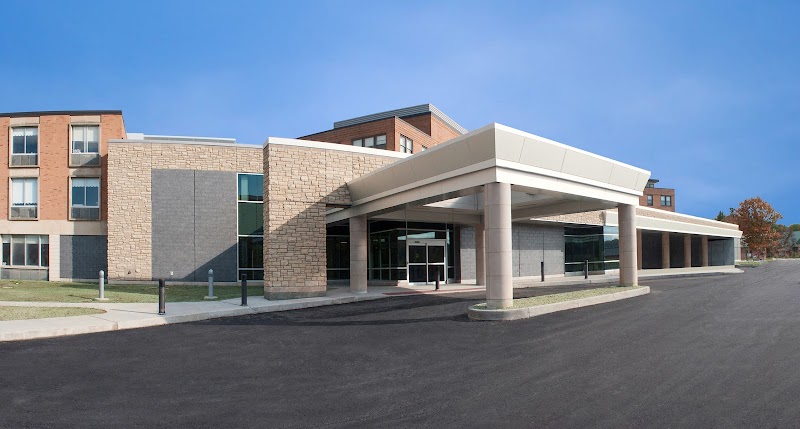
How is Wyoming County Community Hospital S N F Staffed?

CMS rates WYOMING COUNTY COMMUNITY HOSPITAL S N F's staffing level at 4 out of 5 stars, which is above average compared to other nursing homes. Staff turnover is 29%, compared to the New York average of 46%. This relatively stable workforce can support continuity of care.

What Have Inspectors Found at Wyoming County Community Hospital S N F?

State health inspectors documented 16 deficiencies at WYOMING COUNTY COMMUNITY HOSPITAL S N F during 2019 to 2024. These included: 16 with potential for harm.
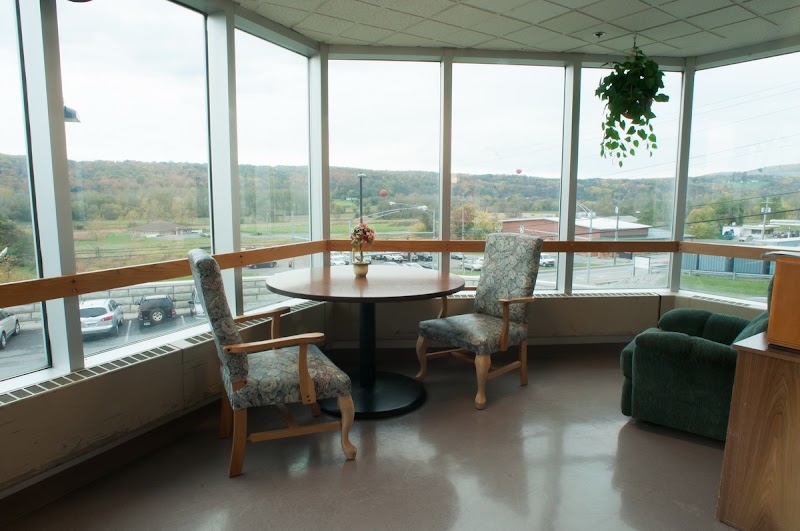
Who Owns and Operates Wyoming County Community Hospital S N F?

WYOMING COUNTY COMMUNITY HOSPITAL S N F is owned by a government entity. Government-operated facilities are typically run by state, county, or municipal agencies. The facility operates independently rather than as part of a larger chain. With 138 certified beds and approximately 136 residents (about 99% occupancy), it is a mid-sized facility located in WARSAW, New York.
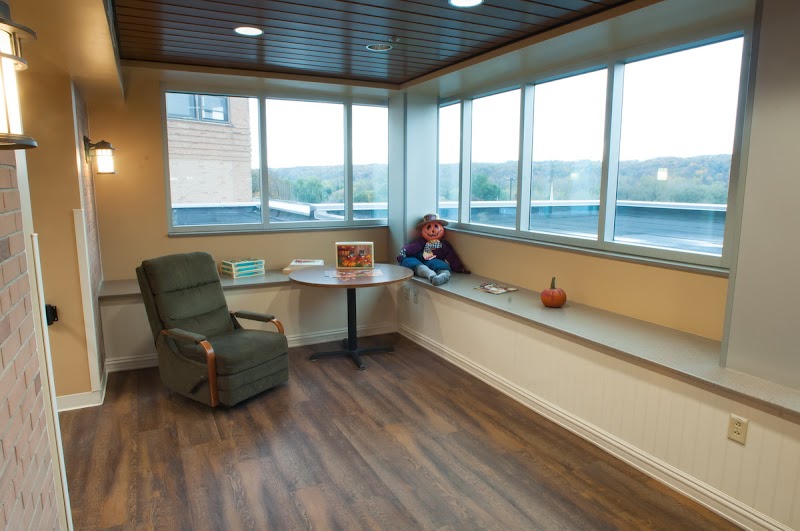
How Does Wyoming County Community Hospital S N F Compare to Other New York Nursing Homes?

Compared to the 100 nursing homes in New York, WYOMING COUNTY COMMUNITY HOSPITAL S N F's overall rating (5 stars) is above the state average of 3.1, staff turnover (29%) is significantly lower than the state average of 46%, and health inspection rating (4 stars) is above the national benchmark.

What Should Families Ask When Visiting Wyoming County Community Hospital S N F?

Based on this facility's data, families visiting should ask: "Can I visit during a mealtime to observe dining assistance and food quality?" "How do you handle medical emergencies, and what is your hospital transfer rate?" "Can I speak with family members of current residents about their experience?"

Is Wyoming County Community Hospital S N F Safe?

Based on CMS inspection data, WYOMING COUNTY COMMUNITY HOSPITAL S N F has a clean safety record: no substantiated abuse findings (meaning no confirmed cases of resident harm), no Immediate Jeopardy citations (the most serious violation level indicating risk of serious injury or death), and is not on the Special Focus Facility watch list (a federal program monitoring the lowest-performing 1% of nursing homes). The facility has a 5-star overall rating and ranks #1 of 100 nursing homes in New York. While no facility is perfect, families should still ask about staff-to-resident ratios and recent inspection results during their visit.

Do Nurses at Wyoming County Community Hospital S N F Stick Around?

Staff at WYOMING COUNTY COMMUNITY HOSPITAL S N F tend to stick around. With a turnover rate of 29%, the facility is 17 percentage points below the New York average of 46%. Low turnover is a positive sign. It means caregivers have time to learn each resident's needs, medications, and personal preferences. Consistent staff also notice subtle changes in a resident's condition more quickly. Registered Nurse turnover is also low at 7%, meaning experienced RNs are available to handle complex medical needs.

Was Wyoming County Community Hospital S N F Ever Fined?

WYOMING COUNTY COMMUNITY HOSPITAL S N F has no federal fines on record. CMS issues fines when nursing homes fail to meet care standards or don't correct problems found during inspections. The absence of fines suggests the facility has either maintained compliance or corrected any issues before penalties were assessed. This is a positive indicator, though families should still review recent inspection reports for the full picture.

Is Wyoming County Community Hospital S N F on Any Federal Watch List?

WYOMING COUNTY COMMUNITY HOSPITAL S N F is not on any federal watch list. The most significant is the Special Focus Facility (SFF) program, which identifies the bottom 1% of nursing homes nationally based on persistent, serious quality problems. Not being on this list means the facility has avoided the pattern of deficiencies that triggers enhanced federal oversight. This is a positive indicator, though families should still review the facility's inspection history directly.