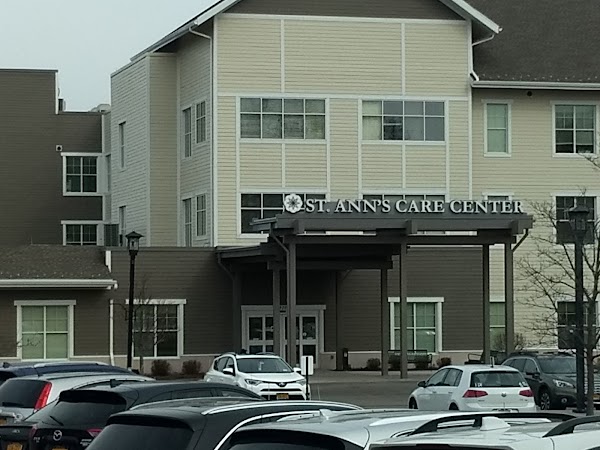
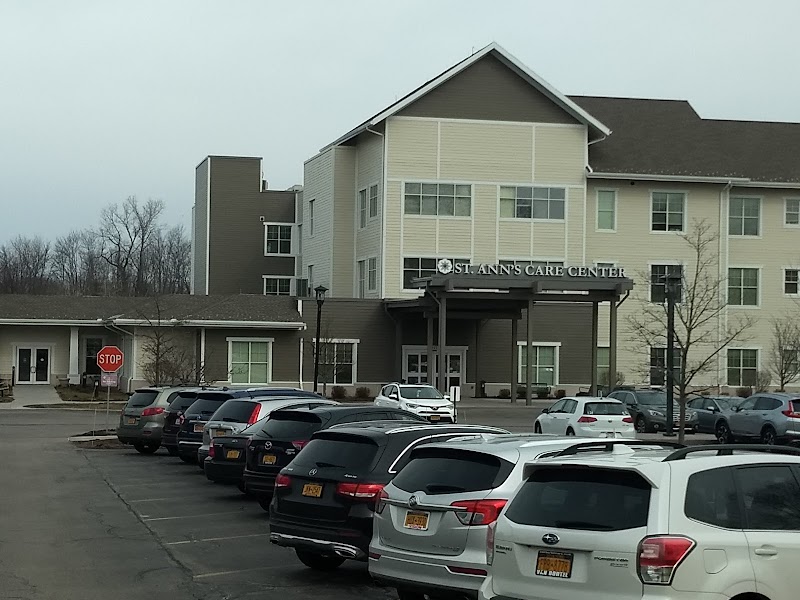
St. Ann's Community

920 Cherry Ridge Boulevard, Webster, NY 14580 (585) 697-6800
Non profit - Corporation 72 Beds Independent Data: November 2025
Trust Grade
80/100
#234 of 594 in NY
Last Inspection: May 2024

Within standard 12-15 month inspection cycle. Federal law requires annual inspections.

Overview

St. Ann's Community in Webster, New York, has a Trust Grade of B+, indicating it is above average and recommended for families considering care options. It ranks #234 out of 594 facilities in New York, placing it in the top half, and #16 out of 31 in Monroe County, suggesting there are only a few local options that perform better. The facility's trend is stable, with the same number of issues reported in both 2022 and 2024, and it has no fines on record, which is a positive sign. Staffing is rated 4 out of 5 stars, but the turnover rate is average at 47%, meaning some staff members may not stay long enough to build strong relationships with residents. However, there are some concerns, including that several newly admitted residents did not receive timely summaries of their Baseline Care Plans, which are essential for addressing their immediate healthcare needs. Additionally, the facility did not complete necessary screenings for some new employees to prevent potential abuse or neglect, and hazardous chemicals were found unsecured in areas accessible to residents, posing safety risks. Overall, while St. Ann's has strengths in certain areas, families should be aware of these weaknesses when making their decision.

Trust Score
B+
80/100
In New York
#234/594
Top 39%
Safety Record
Low Risk
No red flags
Inspections
Holding Steady
4 → 4 violations
Staff Stability
⚠ Watch
47% turnover. Above average. Higher turnover means staff may not know residents' routines.
Penalties
✓ Good
No fines on record. Clean compliance history, better than most New York facilities.
Skilled Nurses
○ Average
Each resident gets 36 minutes of Registered Nurse (RN) attention daily — about average for New York. RNs are the most trained staff who monitor for health changes.
Violations
○ Average
8 deficiencies on record. Average for a facility this size. Mostly minor or procedural issues.
★★★★☆
4.0
Overall Rating
★★★★☆
4.0
Staff Levels
★★★☆☆
3.0
Care Quality
★★★★☆
4.0
Inspection Score
Stable
2022: 4 issues
2024: 4 issues

The Good

  • 4-Star Staffing Rating · Above-average nurse staffing levels
  • Full Sprinkler Coverage · Fire safety systems throughout facility
  • No fines on record

Facility shows strength in staffing levels, fire safety.

The Bad

Staff Turnover: 47%

Near New York avg (46%)

Higher turnover may affect care consistency

The Ugly 8 deficiencies on record

May 2024 4 deficiencies
CONCERN (D)

Potential for Harm - no one hurt, but risky conditions existed

Quality of Care (Tag F0684)

Could have caused harm · This affected 1 resident

**NOTE- TERMS IN BRACKETS HAVE BEEN EDITED TO PROTECT CONFIDENTIALITY** Based on observations, interviews, and record review conducted during the Recertification Survey, for one (Residents #2) of one ...

Read full inspector narrative →
**NOTE- TERMS IN BRACKETS HAVE BEEN EDITED TO PROTECT CONFIDENTIALITY** Based on observations, interviews, and record review conducted during the Recertification Survey, for one (Residents #2) of one resident reviewed the facility did not ensure residents received treatment and care in accordance with professional standards of practice. Specifically, Resident #2 had several extended periods of time without a documented bowel movement, did not receive appropriate interventions to manage their bowel patterns, and did not have a comprehensive care plan in place to address a diagnosis of constipation. This is evidenced by the following: The facility policy and procedure, Bowel Management, date 1/28/19 included that Nursing would monitor the bowel regimen where appropriate and establish a care plan to ensure the Elder (Resident) was having regular bowel patterns. The electronic documentation system bowel management report would be reviewed daily. If an Elder had no bowel movement after more than six shifts, the staff nurse should initiate the as needed bowel regimen as ordered or notify the medical provider or supervisor. If the as needed regimen was started for no bowel movement and there were no results in 24 hours, the medical provider should be notified. Resident #2 had diagnoses including constipation, dehydration, and dementia. The Minimum Data Set Resident assessment dated [DATE] revealed the resident had moderately impaired cognition, was independent with toilet transfers, was always continent of bowel, and required assistance with toileting hygiene. Review of current physician orders included the following medications to treat constipation: sennosides-docusate sodium (stool softener + laxative) once daily, polyethylene glycol (laxative) once daily, Dulcolax (laxative) suppository daily as needed (for constipation), and magnesium hydroxide (laxative) once daily as needed (for constipation) and polyethylene glycol (laxative) once daily as needed (for constipation). Review of the current comprehensive care plan did not include measurable goals or interventions to address Resident #2's constipation or bowel management and did not address a history of, or current refusals of care. Review of the current Resident Care Summary (care plan used by the Certified Nursing Assistants for daily care needs) included to keep the toilet turned off and document bowel movements as necessary. Review of the bowel movement report (documentation of the resident's bowel movements, consistency and continence) in the resident's electronic medical record from 4/11/24 to 4/17/24 revealed Resident #2 had 16 consecutive shifts during this timeframe where no bowel movement had been recorded. Review of Medication Administration Records from 4/11/24 to 4/17/24 revealed routine medications to treat constipation were administered daily as ordered. Polyethylene glycol as needed was administered on 4/16/24 at 6:36 AM with no results documented. Review of a nurisng progress note authored by Registered Nurse #2 on 4/16/24 at 2:54 PM, revealed Resident #2 had no bowel movements and a scheduled bowel medication was administered. Review of a progress note authored by Licensed Practical Nurse #3 on 4/17/24 at 1:15 PM, revealed that polyethylene glycol and prune juice had been administered at 9:30 AM after no bowel movements had been recorded for 17 shifts and results were pending. Resident #2 was also offered a Dulcolax suppository but refused the medication. Review of the bowel movement report from 4/25/24 to 4/30/24 revealed 11 consecutive shifts during this timeframe where no bowel movement had been recorded. Review of Medication Administration Record from 4/25/24 to 4/30/25 revealed routine medications to treat constipation were administered daily as ordered. Polyethylene glycol as needed was administered on 4/28/24 at 9:32 PM with no results documented. Magnesium hydroxide as needed was administered on 4/29/24 at 6:00 PM with no results documented. Review of a nursing progress note authored by Licensed Practical Nurse #4 on 4/29/24 at 7:42 AM, revealed Resident #2 had no recorded bowel movement for 10 shifts. The resident refused bowel medications that morning but had received an as needed dose of polyethylene glycol the previous evening with no results. Review of a nursing progress note authored by Licensed Practical Nurse #5 on 4/30/24 at 6:00 AM, revealed Resident #2 had no bowel movement in 11 shifts and refused bowel medications. Review of the bowel movement report from 5/1/24 to 5/6/24 revealed no documented bowel movements for 13 consecutive shifts. Review of the Medication Administration Record from 5/1/24 to 5/6/24 revealed routine medications to treat constipation were administered daily as ordered. There were no as needed bowel medications administered during this time. During an interview on 5/2/24 at 9:52 AM, Resident #2 stated they had been experiencing constipation and was taking polyethylene glycol but could not seem to find relief. During an interview on 5/6/24 at 11:57 AM, Licensed Practical Nurse #1 stated that Resident #2 received routine medications daily to treat constipation. Upon review of the bowel movement report at that time, Licensed Practical Nurse #1 stated the resident had not had a bowel movement for 18 shifts. Licensed Practical Nurse #1 stated that the Certified Nursing Assistants were responsible for documenting when a resident had a bowel movement, and that nursing should follow the bowel protocol after nine shifts with no bowel movement. During an interview on 5/6/24 at 12:30 PM, Certified Nursing Assistant #1 stated their responsibility was to document whether a resident had a bowel movement, the characteristics of the bowel movement, and if the resident was continent or incontinent. During an interview on 5/6/24 at 12:44 PM, Registered Nurse Manager #1 stated the nurses should print the bowel movement report daily which included residents who did not have a bowel movement in the previous three days or nine shifts based on what staff documented. Registered Nurse Manager #1 stated Resident #2 was independent with toileting and that the toilet could be turned off, so staff could keep track of bowel movements. Resident #2's last documented bowel movement was on 4/30/24. Registered Nurse Manager #1 stated they would have expected the floor nurse or the supervisor to have added Resident #2 to the bowel movement list (residents who had not had a bowel movement for than nine shifts and would need the bowel protocol initiated and/or medical notified). During an interview on 5/8/24 at 10:01 AM, Licensed Practical Nurse #1 stated they were supposed to run the bowel movement report in the morning but that they did not run it that day. Licensed Practical Nurse #1 stated that it could have been a lack of documentation from the Certified Nursing Assistants or that Resident #2 may have had bowel movements that staff had not been aware of. During an interview on 5/8/24 at 10:27 AM, the Director of Nursing stated the bowel report should be reviewed every shift by the floor nurse or supervisor, and any resident who had no bowel movement in more than six shifts should be started on the bowel protocol. 10 NYCRR 415.12
CONCERN (D) 📢 Someone Reported This

A family member, employee, or ombudsman was alarmed enough to file a formal complaint

Potential for Harm - no one hurt, but risky conditions existed

Deficiency F0760 (Tag F0760)

Could have caused harm · This affected 1 resident

**NOTE- TERMS IN BRACKETS HAVE BEEN EDITED TO PROTECT CONFIDENTIALITY** Based on interviews, and record review conducted during the Recertification Survey and complaint investigation (#NY00327781), it...

Read full inspector narrative →
**NOTE- TERMS IN BRACKETS HAVE BEEN EDITED TO PROTECT CONFIDENTIALITY** Based on interviews, and record review conducted during the Recertification Survey and complaint investigation (#NY00327781), it was determined that for one (Resident #271) of six residents reviewed for unnecessary medications, the facility did not ensure that the resident was free from significant medication errors. Specifically, Resident #271 received an incorrect dose of a medication for Parkinson's disease for an extended period of time, in a dose that exceeded the recommended maximum daily dose and not as recommeded by the specialist. This is evidenced by the following: The facility policy and procedure, Internal and External Consults and Clinics, revised 7/25/22, included that any orders, reports, or notes received from an outside clinician upon return of the resident are given to nursing for review. The nursing team will read the note/recommendations and/or email the note/reconditions to the provider for review. The orders, notes, and reports are scanned into the medical record after being dated and signed off by the medical provider. The facility policy and procedure, Medical Provider Telephone Orders, revised 6/3/22, included that telephone orders may be given by a medical provider to a nurse, pharmacist or occupational therapist, physical therapist, or speech therapist. The order is read back to the medical provider who initiated it along with the elder/patient name, medical record number, location, and room number. The order must be electronically signed by the person accepting the order. Resident #271 had diagnoses including Parkinson's disease, hallucinations and delusional disorder, and a history of frequent falls. The Minimum Data Set Resident assessment dated [DATE] revealed that the resident had severely impaired cognition. An Offsite Appointment Referral for Resident #271, dated 10/2/23 and signed by the neurologist, directed to see the After Visit Summary. The After Visit Summary, dated 10/2/23 included recommendations to stop pramipexole 1.5 milligrams three times a day and to start pramipexole extended relief tablet 3 milligrams once daily for Parkinson's disease with dyskinesia (involuntary movements). Review of Resident #271's electronic health record revealed a telephone order from Physician Assistant #1 to Senior Licensed Practical Nurse #1 dated 10/2/23 for pramipexole 1.5 milligrams, 2 tablets (3 milligrams) three times daily (a total of 9 milligrams daily) starting 10/2/23. The electronic telephone order was not signed until 11/14/23 by Physician #1. Review of Resident #271's Treatment Administration Records revealed that the resident received 3 milligrams of pramipexole three times a day (for a total of 9 milligrams daily vs 3 milligrams daily as recommended) for 30 days in October 2023 and for 6 days in November 2023. In a Clinical Note Report- Medication Review dated 10/12/23, Pharmacy Consultant #1 documented a medication review had been completed. No irregularities or recommendations were identified in the review. In a Medication Incident Report dated 11/7/23 and a Facility investigation dated 11/8/23, the Director of Nursing documented that Physician #1, during a preparation for a regulatory visit, identified that the pramipexole order was entered into Resident #271 electronic health record incorrectly as 3 milligrams three times a day instead one time a day. The report included that the telephone order had been signed off by Physician Assistant #1 on 10/3/24. The Summary of Findings included that Senior Licensed Practical Nurse #1 called the Physician's Assistant about the order change after the resident's appointment with the specialist, took the verbal order regarding the medication change and entered it incorrectly. The Medication Incident Report summary included that the order had not been read back to the Physician Assistant #1 at the time of inputting the order into the electronic health record system. In a 30/60 Day Regulatory Visit Note, dated 11/8/23, Physician #1 documented that Resident #271 was seen by neurology in October and that the Neurologist wanted a reduction in the pramipexole. Physician #1 documented the dose was not decreased but mistakenly increased. During the visit, Resident #271 had said that they felt that they had been hallucinating more and that the hallucinations were worse in the past month. The note included that the resident had a fall the previous day resulting in a head laceration. When interviewed on 5/6/24 at 11:54 AM, the Director of Nursing (with Senior Licensed Practical Nurse #1 present) stated that the error occurred on 10/2/23 when the resident was seen by an off-site neurologist who recommended a medication dosage change. The Director of Nursing stated the Senior Licensed Practical Nurse #1called Physician Assistant #1 and received a telephone order. Senior Licensed Practical Nurse #1 then transcribed the medication order incorrectly for more medication instead of less. After reviewing the electronic order, the Director of Nursing stated that the order had not been signed until 11/14/23 when Physician #1 electronically signed it. The Director of Nursing stated that they (facility) had a meeting to determine the root cause analysis of the error and it was determined that it was human error. During an interview on 5/6/24 at 12:17 PM, Senior Licensed Practical Nurse #1 stated that they reviewed what the recommended dose change was on the neurology consult form with Physician's Assistant #1 during a telephone call but then transcribed a different dose. After review of the telephone order Senior Licensed Practical Nurse #1 stated the electronic order appeared not to have been signed off until 11/14/23 by Physician #1 (and not by Physician Assistant #1). On 5/7/24 at 10:28 AM Pharmacist #1 stated that the electronic health record system does provide an alert if an order exceeds the recommended dose. Pharmacist #1 stated that the alert would have occurred during the original filling of the medication. Pharmacist #1 stated that the order came in towards the end of the day and may have been missed due to alert fatigue on the pharmacist's part. Pharmacist #1 stated that they had completed the Medication Review on 10/12/23 and had missed that the pramipexole had been ordered at a dose that exceeded the recommended daily dose. When interviewed via telephone on 5/7/24 at 10:34 AM, Physician's Assistant #1 stated that the Senior Licensed Practical Nurse #1 had called them when they got the note back from the neurology consult and read the recommendations to them. Physician Assistant#1 approved the recommendation and Senior Licensed Practical Nurse #1 input the order into the electronic health record. The order should then go to their inbox to be signed. Physician's Assistant #1 recalled that they had approved the recommendation for the change but could not recall if they had signed the telephone order for it but if they had signed the electronic telephone order, their name and the date signed would be on the order. Physician's Assistant #1 stated that the process now requires the full consult note before approving and signing an order. Physician's Assistant #1 stated that the side effects from higher doses of pramipexole could include nervousness, restlessness, weight loss, and worsening Parkinson's symptoms but could not say that they saw anything acutely different with Resident #271 due to the increased dosage. Based on the following corrective actions, it was determined that the facility implemented a plan of care to correct the non-compliance effective 11/22/23 and no further plan of correction is required: - A Medication Incident Report and investigation was started on 11/7/23. - An education referral was provided to Senior Licensed Practical Nurse #1 on 11/7/23. - On 11/7/23 the order for pramipexole 1.5 milligrams, 2 tablets (3 milligrams) three times daily was discontinued. Pramipexole extended relief 3 milligrams one time daily was ordered on 11/7/23 to begin on 11/13/23. - Resident #271 was assessed by medical team on 11/7/23 and 11/8/23. - The facility policy and procedure, Internal and External Consults and Clinics, was reviewed on 11/8/23. - The medication error was reported to The New York State Department of Health on 11/9/23. - Education was provided to all nursing staff responsible for taking orders from medical team. - The medical team was provided with education regarding having nurses read back orders and/or scan/email orders to provider prior to entering orders into the electronic health record. 10 NYCRR 415.12(m)(2)
CONCERN (D)

Potential for Harm - no one hurt, but risky conditions existed

Deficiency F0761 (Tag F0761)

Could have caused harm · This affected 1 resident

Based on observations, interviews, and record review conducted during a Recertification Survey, the facility did not ensure that all drugs and biologicals were properly stored in accordance with State...

Read full inspector narrative →
Based on observations, interviews, and record review conducted during a Recertification Survey, the facility did not ensure that all drugs and biologicals were properly stored in accordance with State and Federal Laws for one (third-floor resident unit) of two medication rooms reviewed. Specifically, numerous controlled medications (drugs that are regulated by law due to their potential for abuse or addiction), including narcotics and opioids were observed unsecured and not in a double locked cabinet per the regulations. This is evidenced by the following. The facility policy Medications-Storage, Distributions, Administration and Wasting of Controlled Substances, dated 4/11/22 documented that controlled substances must be stored, distributed, and administered in a safe, secure manner with total compliance with all legal and regulatory requirements. The narcotics supply is to be kept under two locks at all times, and all controlled substances are to be returned to the medication room narcotic cabinet and double-locked after a medication pass. During an observation and interviews on 5/7/24 at 8:48 AM of the third-floor medication room with Registered Nurse Manager #1, the narcotic (controlled medications) cabinet double doors were open and unlocked, leaving the controlled narcotic medications unsecured. Registered Nurse Manager #1 stated the controlled medication cabinet doors should not be unlocked. Licensed Practical Nurse #1 returned to the third-floor medication room at this time and stated they had left the narcotic cabinet unlocked because they were in a hurry. The cabinet contained numerous bags of controlled substances including pain medications, narcotics, opioids and anti-anxiety medications. In an interview on 5/8/24 at 10:01 AM, Licensed Practical Nurse #1 stated that the narcotic medication cabinet doors should not be left unlocked and that the doors should only be unlocked when counting the medications with another nurse or when receiving a pharmacy delivery. In an interview on 5/8/24 at 10:30 AM, the Director of Nursing stated that the controlled medication cabinet doors should always be kept locked. 10 NYCRR 415.18(e)(1-4)
CONCERN (E)

Potential for Harm - no one hurt, but risky conditions existed

Deficiency F0655 (Tag F0655)

Could have caused harm · This affected multiple residents

**NOTE- TERMS IN BRACKETS HAVE BEEN EDITED TO PROTECT CONFIDENTIALITY** Based on interviews and record review conducted during a Recertification Survey, the facility did not ensure that newly admitted...

Read full inspector narrative →
**NOTE- TERMS IN BRACKETS HAVE BEEN EDITED TO PROTECT CONFIDENTIALITY** Based on interviews and record review conducted during a Recertification Survey, the facility did not ensure that newly admitted resident's and/or their representatives were provided with a written summary of a Baseline Care Plan that included the minimum healthcare information necessary to properly care for the immediate needs of the resident (including but not limited to initial goals, admission orders, dietary, therapy and social services) for 9 (Residents #2, #7, #31, #40, #53, #55, #56, #57 and #58) of 11 residents reviewed. Specifically for all residents identified the facility did not provide the resident or their representative with a summary of a Baseline Care Plan in a timely manner. This is evidenced by, but not limited to the following: The current facility policy, Care Planning-Interdisciplinary, dated 7/12/22, included a baseline care plan is initiated and completed with 48 hours of admission and developed before the comprehensive assessment. Prior to the scheduled care plan meeting a copy of the residents Baseline or their Comprehensive Care Plan, a medication list, and their care card (care plan used by the Certified Nursing Assistants for daily care) will be offered to the resident and/or designated family member. A note will be written into the electronic health record to confirm this information was provided. 1. Resident #58 was admitted to the facility on [DATE] with diagnoses including Alzheimer's disease, depression, and diabetes. The Minimum Data Set Resident assessment dated [DATE] included that the resident was severely impaired cognitively. Review of Resident #58's Care Plan Report (also known as a Comprehensive Care Plan or a Baseline Care Plan), dated 6/16/23, revealed no documented evidence that the Care Plan Report (utilized as a Baseline Care Plan) had been implemented within 48 hours of admission or that a written summary of their initial care needs (that included admission orders, dietary, therapy and social services) had been provided to the resident or their representative. Review of Resident #58's electronic health record from 5/25/23-present revealed no documented evidence that any summary of the resident's initial care (that included admission orders, dietary, therapy and social services) had been provided to the resident and/or the resident representative after admission to the facility. 2. Resident #56 was admitted to the facility on [DATE] with diagnoses including atrial fibrillation (irregular heart rate), depression, and fall with a fracture. The Minimum Data Set Resident assessment dated [DATE] included that the resident was moderately impaired cognitively. Review of Resident #56's Care Plan Report, dated 10/19/23, revealed no documented evidence that the Care Plan Report or a summary of care (that included admission orders, dietary, therapy and social services) was provided to the resident or the resident representative. In a Clinical Note Report dated 12/15/23, Social Worker #1 documented that Resident #56's and the resident's family were given copies of their care plan, their care card, and a medication list at the initial family meeting on 12/13/23, 55 days after the Care Plan Report was initiated. 3. Resident #55 was admitted to the facility 2/15/24 with diagnoses including dementia, pressure ulcer of right foot, and diabetes mellitus. The Minimum Data Set Resident assessment dated [DATE] included that the resident was cognitively intact. Review of Resident #55's Care Plan Report, dated 2/15/24, revealed no documented evidence that a summary of care (including admission orders, dietary, therapy and social services) was provided to the resident or the resident representative. In a Clinical Notes Report, dated 4/15/24 Social Worker #1 documented that an initial family meeting was held on 3/27/24 and that the family was provided with copies of Resident #55's care plan, care card, and medication list (41 days after the Care Plan Report was initiated). During an interview on 5/8/24 at approximately 9:15 AM, Social Worker #1 stated that a Baseline Care Plan is done within 24 hours and that Social Work is responsible for providing it to the resident and/or family. Social Work #1 stated that there was no documentation in the electronic health record that the Baseline Care Plan had been offered until the initial care plan family meeting (for these residents). Social Worker #1 said that the Baseline Care Plan is converted to the Comprehensive Care Plan within 21 days and then that care plan is provided to the family at the initial care plan meeting (usually within 21 days) as the family would rather have the Comprehensive Care Plan instead of the Baseline Care Plan. During an interview on 5/8/24 at 11:18 AM, the Director of Nursing stated the Social Worker was responsible to make sure the resident and/or resident representative received a copy of the Baseline Care Plan. 10 NYCRR 415.11
Aug 2022 4 deficiencies
CONCERN (D)

Potential for Harm - no one hurt, but risky conditions existed

Safe Environment (Tag F0584)

Could have caused harm · This affected 1 resident

**NOTE- TERMS IN BRACKETS HAVE BEEN EDITED TO PROTECT CONFIDENTIALITY** Based on observations, interviews, and record review, conducted during the Recertification Survey, completed on 8/29/22, it was ...

Read full inspector narrative →
**NOTE- TERMS IN BRACKETS HAVE BEEN EDITED TO PROTECT CONFIDENTIALITY** Based on observations, interviews, and record review, conducted during the Recertification Survey, completed on 8/29/22, it was determined that the facility did not provide a safe, clean, comfortable, and homelike environment for three of three residents reviewed. Specifically, Residents #3, #7, and #63 were observed on multiple days occupying wheelchairs with cracks, peeling material, and exposed padding. This is evidenced by: 1.Resident #7 had diagnoses including arthritis, osteoporosis, anxiety, and depression. The Minimum Data Set Assessment (MDS), dated [DATE], documented that Resident #7 was cognitively intact and required the use of a wheelchair. The resident also required extensive assistance from staff for transfers. During and observation and interview on 8/24/22 at 9:22 a.m., Resident #7 was sitting in a wheelchair. The left arm fabric of the wheelchair was peeled off esposing the foam padding. Residnet #7 stated at this time that they had had the wheelchair for a quite awhile. During an observation on 8/25/22 at 10:11 a.m., Resident #7 was observed sitting in their wheelchair. The left arm rest continued to be cracked, peeling, and the foam was exposed. During an observation on 8/26/22 at 8:52 a.m., Resident #7 was observed self-propelling in the same wheelchair. The left arm rest still had cracked peeling material and exposed foam. In an interview on 8/26/22 at 10:46 a.m., Licensed Practical Nurse (LPN) #1 stated that environmental services are responsible for cleaning the wheelchairs every three months and that maintenance is responsible for fixing the wheelchairs. 2.Resident #3 had diagnoses including status post cerebral vascular accident (stroke), Parkinson's disease, and seizure disorder. The MDS Assessment, dated 5/23/22, revealed the resident had severely impaired cognition, required the use of a wheelchair and the assist of staff for transfers. In an observation on 8/24/22 at 10:13 a.m., Resident #3 was seated in a reclined wheelchair. The padded cushion attached to the left arm rest had a tear in the fabric along the entire length of the bottom edge exposing the white foam padding. The padded cushion attached to the right arm rest had an approximately six-inch tear along the bottom edge of the cushion exposing the white foam padding. 3.Resident #63 had diagnoses including dementia and kidney disease. The MDS Assessment, dated 7/28/22, revealed that the resident had severely impaired cognition, required the use of a wheelchair and extensive assist of staff for transfers. During observations on 8/25/22 at 3:27 p.m., and again on 8/26/22 at 3:39 p.m., with LPN #2 the left arm rest of Resident #63's wheelchair was cracked . LPN #2 stated at this time that the facility practice is to notify the Resident Care Coordinator of such equipment issues. During an observation on 8/29/22 at 10:48 am, the left arm rest on Resident #63's wheelchair remained cracked. During an interview and observation on 8/29/22 at 10:25 a.m., the Director of Nursing (DON) stated that the Certified Nursing Assistants should call maintenance for repairs on the wheelchairs. The DON stated that if the cushions are in poor repair, they should be replaced. The DON stated that the cushions on Resident #3's wheelchair were put in place by Occupational Therapy and that they would make OT aware that they needed to be replaced. In an interview on 8/29/22 at 10:47 a.m., the Facility Manager stated that they only check on the condition of the wheelchairs if they receive a notification from the nursing staff stating that the wheelchair is in disrepair. The Facility Manager stated that they do not perform audit checks for the condition of the facility wheelchairs. 10NYCRR 415.29(j)(1)
CONCERN (D)

Potential for Harm - no one hurt, but risky conditions existed

Deficiency F0657 (Tag F0657)

Could have caused harm · This affected 1 resident

Based on observations, interviews, and record review conducted during a Recertification Survey, completed on 8/29/22, it was determined that for one (Resident #40) of one resident reviewed for positio...

Read full inspector narrative →
Based on observations, interviews, and record review conducted during a Recertification Survey, completed on 8/29/22, it was determined that for one (Resident #40) of one resident reviewed for position/mobility and one (Resident # 23) of one resident reviewed for pressure ulcers, the facility did not review and revise the resident's care plan (with input from the resident or resident representative to the extent possible) to reflect the resident's current needs. Specifically, Resident #40's Comprehensive Care Plan (CCP) was not revised to reflect the discontinued use of hand splints and washcloths for hand contractures and Resident #23's CCP did not reflect the history of and current presence and treatment of existing pressure ulcer. This was evidenced by the following: The facility policy, Care Planning-Interdisciplinary, revised 7/12/22, included that the Care Plan was reviewed and updated with any change in status (minimally, quarterly). 1.Resident #40 had diagnoses including dementia, contractures of left and right hand, and anxiety. The Minimum Data Set Assessment, dated 7/9/22, revealed the resident was severely impaired cognitively, required extensive assistance from staff for bed mobility, transfer, personal hygiene, eating and dressing and required total assistance of staff for bathing. Review of the current CCP revealed Resident #40 had contractures that required application of splints related to bilateral hand contractures. The Resident Care Card (care plan used by the Certified Nursing Assistants (CNAs) for daily care), dated 8/15/22, included for staff to ensure that gauze was in place on Resident #40's right hand between thumb and pointer finger to prevent skin breakdown and to have one rolled washcloth placed into each palm for contracture management as the resident tolerated. The Resident Care Card did not include use of foam. The Occupational Therapy (OT) Treatment note, dated, 6/16/22 summarized that the therapist discontinued the use of hand splints due to worsening hand contractures and skin breakdown. Physician orders included the following: a. On 6/19/22 to apply gauze between fingers and palms and apply rolled wash cloths to both palms twice daily dated. b. ON 8/4/22 orders changed to include to daily remove old 4x4s drain sponges, cleanse between fingers and all open areas with betadine, rinse with normal saline, dry completely, apply gauze sponges between each finger and between fingers and palms c. On 8/17/22 orders added (after cleansing and drying) to apply Zeasorb (anti-fungal powder) to a non-adherent foam and apply to palm of both hands and must be done by two people. During observations on 8/25/22 at 11:53 a.m., on 8/26/22 at 8:87 a.m., and again on 8/29/22 at 11:57 a.m., Resident #40 was observed without hand splints, and had white gauze sticking out of the hands and between fingers. The foam (as ordered on 8/17/22) was not visible. During an interview on 8/25/22 at 3:03 p.m., the CNA stated that they used powdered gauze for Resident #40's hands. 2.Resident #23 had diagnoses including Parkinson's disease and dementia. The MDS Assessment, dated 6/16/22, documented that the resident was severely impaired cognitively, was at risk for developing a pressure ulcer, had one stage 3 pressure ulcer and was receiving skin and ulcer treatments. Review of the current CCP revealed that Resident #23 was at risk for skin breakdown, with preventative interventions that included but not limited to, turning and positioning every two hours while in a chair and every one hour while in bed, weekly skin checks, prompt incontinence care and treatments as ordered. The CCP did not include a history of pressure ulcers or any current pressure ulcer with related goals and interventions. Physician orders, dated 6/16/22, included instructions to cleanse natal cleft area (buttocks) with normal saline, pat dry and apply a thick layer of extra protective cream (EPC) with a Q-tip to the open area two times a day and as needed (PRN). Review of multiple Wound Care notes beginning in February 2022, revealed that a pressure ulcer was first identified on 2/3/22. Various treatments were utilized including Hydro gel (gel that promotes wound healing), Alginate (absorbs wound fluid) and foam dressing, silver nitrate (cauterizes infected wound tissue), and autolytic debridement (removal of dead tissue through use of body's own enzymes). Review of the Regulatory Visit note dated 7/27/22 at 2:30 p.m., included that the pressure ulcer was resolved. Review of the Weekly Skin Observation Notes dated 7/26, 8/2, 8/9, and 8/23/22, revealed a pressure ulcer to the natal cleft area that received daily treatment. During an observation of wound treatment by the Licensed Practical Nurse (LPN) #1 on 8/26/22 at 1:13 p.m., Resident #23 had a 1cm by 0.5cm open area to the natal cleft next to a dime-sized purplish area (indicative of potential breakdown). During an interview on 08/26/22 at 3:46 p.m., LPN #2 stated that the Resident Care Coordinator (RCC) was responsible for creating and updating the care plans. LPN #2 stated that nursing staff would let the RCC know if there were any changes that would necessitate updating the care plan. During an interview on 8/29/22 at 10:10 a.m., the Director of Nursing (DON) stated that the RCC and the DON were responsible for creating and updating resident care plans. The DON stated that Resident #23 was receiving treatment for a natal cleft ulcer and that a pressure ulcer should be included on the resident's CCP but was not. The DON stated that Resident #40's treatment of gauze with cornstarch would be included under the Treatment per order intervention on the care plan. The DON said that the CCP should have been updated to remove the splints related to Resident #23 Problem: Contractures. [10 NYCRR 415.11(c)(2)(iii)]
CONCERN (E)

Potential for Harm - no one hurt, but risky conditions existed

Abuse Prevention Policies (Tag F0607)

Could have caused harm · This affected multiple residents

Based on record review and interviews conducted during the Recertification Survey completed on 8/29/22, it was determined that for two (Employees #2 and #4) of five employee files reviewed, the facili...

Read full inspector narrative →
Based on record review and interviews conducted during the Recertification Survey completed on 8/29/22, it was determined that for two (Employees #2 and #4) of five employee files reviewed, the facility did not implement written policies and procedures to prevent abuse, neglect, exploitation, and misappropriation of resident property related to screening prospective employees. Specifically, a nurse aide registry (NAR) abuse screening was not completed prior to new employees beginning work. The findings are: On 8/26/22 from 10:30 a.m. to 11:55 a.m., documentation related to five recently hired employees was reviewed. The records included that employee #2 was hired as a Beauty Technician on 6/28/22. The documentation provided included a nurse aide registry abuse screening for employee #2 dated 3/8/21. Additionally, employee #4 was hired on 6/6/22 as a Care Partner and the NAR screening was dated 8/24/22. During an interview at this time, the Human Resources (HR) Manager stated that a NAR screening wasn't done originally for employee #4, and was done when the surveyors came in. During interviews on 8/26/22 at 11:27 a.m. and 3:10 p.m., the HR Manager stated that employee #2 was transferred from an affiliated facility and a nurse aide registry check was not re-run. Additionally, the HR Manager stated that there was no policy in place for a NAR check when someone transfers from one of their facilities to another. On 8/29/22 at 8:55 a.m. the facility policy NSG-07 titled 'Resident Abuse/Neglect/Mistreatment policy was reviewed. The policy included: 'Employee screening: During the pre-employment process, the Human Resources Department clears potential employees through the Nursing home Nurse Aide Registry. Additionally, the facility policy HR-24 titled 'Background Verification and Drug Testing' was reviewed and included: 'All new hires must be checked through the CNA registry prior to employment to ensure a safe environment for our residents and staff. 10 NYCRR: 415.4(b)(1)(ii)(b)
CONCERN (E)

Potential for Harm - no one hurt, but risky conditions existed

Accident Prevention (Tag F0689)

Could have caused harm · This affected multiple residents

Based on observation and interviews conducted during the Recertification Survey completed on 8/29/22, it was determined that the facility did not ensure that the environment remained as free of accide...

Read full inspector narrative →
Based on observation and interviews conducted during the Recertification Survey completed on 8/29/22, it was determined that the facility did not ensure that the environment remained as free of accident hazards as possible. Specifically, on six of six resident care units, hazardous chemicals were stored in unlocked rooms and accessible to 57 residents including many with dementia and/or wandering behaviors. This is evidenced by the following: Review of facility policy Storage and handling of toxic and potentially hazardous chemicals, medications and treatment procedures, dated 12/22/94 included that the policy statement was to insure the protection and safety of elders/patients, all toxic and potentially hazardous chemical, medications, and treatment products will be store in designated locked areas when not in direct use. Section A: Cleaning Supplies #3: Return the cleaning supplies to a locked cupboard, at no time are cleaning supplies to be left out where they could be assessable to elders/patients. Section B: Treatment Items #1: Obtain treatment item from locked treatment cart, medication cart, or locked cabinet in clean utility room. #2: Use treatment item, only as directed, always keeping the item in possession unless the elder/patient is on self-administered treatment per MD order. #3: Return treatment item to locked treatment care, medication cart, or locked cabinet in clean utility room. 1.In an observation on 8/25/22 at 11:00 a.m., on the Blossom Hall resident care unit, the laundry room doors were unlocked. One and ½ gallons of Clothesline Fresh 11 enzyme laundry detergent was sitting on top of dryers. An observation of the soiled linen room revealed the door marked with a biohazard symbol and was unlocked. One bottle of Carbona stain and spot remover was sitting on top of washer. 2.In an observation on 8/25/22 at 11:15 a.m., on the Heritage resident care unit, the laundry room door was unlocked. One and ½ gallons of Clothesline Fresh 11 enzyme laundry detergent sitting on top of dryers. An observation of the soiled linen room revealed the door, marked with a biohazard symbol, was unlocked. Two bottles of Carbona stain and spot remover were sitting on top of washer. 3. Observations on 8/25/22 at 11:30 a.m. through 12:00 p.m., of the second and third floor resident care units (Peach Tree, Magnolia, Hydrangea and Cherry Grove) revealed laundry room doors that were unlocked and contained gallons of Clothesline Fresh 11 enzyme laundry detergent sitting on top of dryers or on the counter tops. 4.In an observation on 08/26/2022 at 8:30 a.m. on the Blossom Hall resident care unit, the laundry room door was unlocked. One and ½ gallons of Clothesline Fresh 11 enzyme laundry detergent remained sitting on top of dryers and 1 gallon sitting on the countertop. An observation of the soiled linen room door, marked with a biohazard symbol, was unlocked. One bottle of Carbona stain and spot remover was sitting on top of the washer. 5.In an observation on 8/26/2022 at 8:40 a.m., on the Heritage resident care unit, the laundry room door was unlocked. One and ½ gallons of Clothesline Fresh 11 enzyme laundry detergent remained sitting on top of the dryers. An observation of the soiled linen room door, marked with a biohazard symbol, revealed the door was unlocked. Two bottles of Carbona stain and spot remover remained sitting on top of washer. 6.In an observation on 8/26/2022 at 8:55 a.m. of the dirty utility room on the Magnolia unit revealed the door was unlocked and one can of Airlift fresh scent (aerosol) air freshener was sitting on the countertop. All laundry rooms contained locked cabinets that were empty and unlocked. During an interview on 8/25/22 at 11:30 am, the Social Worker stated that some residents are allowed to do their own laundry on the housing units without supervision. During an interview on 8/26/22 at 8:30 a.m., the LPN stated both the Heritage and Blossom units have residents that have dementia and have been known to wander in and out of rooms. The LPN said that the dirty utility room was unlocked and that chemicals that had a danger warning were accessible to residents. The LPN said the laundry room doors did not contain a lock and that detergents and stain removers with danger labels were accessible to residents and should be locked in the cabinets. During an interview on 8/26/22 at 8:58 a.m., the Director of Nursing (DON) stated that every unit in the building contained elders that either have dementia or wandering behaviors and that they had not realized that the cleaning chemicals utilized in the laundry and on the unit should be locked due to their hazard identifications. The DON verbalized that according to the label the chemical products identified could be dangerous if swallowed or placed in eyes. Review of Safety Data Sheet, Spartan Chemical Company, product Orange Tough 15 cleaning agent: skin corrosion/irritation category 2, serious eye damage category 1, and skin sensitization category 1. Chemical is labeled Danger with hazard statement; causes skin irritation, causes serious eye damage, may cause an allergic reaction, harmful if swallowed, inhalation of vapors or mist may cause respiratory irritation, keep out of reach of children. Review of Safety Data Sheet, Spartan Chemical Company, Clothesline Fresh enzyme laundry detergent (11), with hazard identification; acute toxicity-inhalation, category 4, serious eye damage/eye irritation category 2B, respiratory sensitization. Label identification Danger, keep out of reach of children, harmful if inhaled, causes eye irritation, may cause allergy or asthma symptoms or breathing difficulties if inhaled. Review of Safety Data Sheet, Spartan Chemical Company, Airlift Fresh Scent (aerosol), label identification, keep out of reach of children, inhalation of vapors or mist may cause respiratory irritation, may be harmful if swallowed, may cause eye irritation and may cause skin irritation. Review of Safety Data Sheet, Carbona Stain Devils: coffee, tea, wine and juice spot remover, with hazard identification; skin category 1, serious eye damage category 1 and skin sensitization category 1. Chemical is labeled Danger, harmful if swallowed, inhalation of vapors or mist may cause respiratory irritation, keep out of reach of children. 10 NYCRR 415.12(h)(1)
Understanding Severity Codes (click to expand)
Life-Threatening (Immediate Jeopardy)
J - Isolated K - Pattern L - Widespread
Actual Harm
G - Isolated H - Pattern I - Widespread
Potential for Harm
D - Isolated E - Pattern F - Widespread
No Harm (Minor)
A - Isolated B - Pattern C - Widespread

Questions to Ask on Your Visit

  • "Can I speak with families of current residents?"
  • "What's your RN coverage like on weekends and overnight?"

Our Honest Assessment

Strengths
  • • Grade B+ (80/100). Above average facility, better than most options in New York.
  • • No major safety red flags. No abuse findings, life-threatening violations, or SFF status.
  • • No fines on record. Clean compliance history, better than most New York facilities.
Concerns
  • • No significant concerns identified. This facility shows no red flags across CMS ratings, staff turnover, or federal penalties.
Bottom line: Generally positive indicators. Standard due diligence and a personal visit recommended.

About This Facility

What is St. Ann'S Community's CMS Rating?

CMS assigns St. Ann's Community an overall rating of 4 out of 5 stars, which is considered above average nationally. Within New York, this rating places the facility higher than 99% of the state's 100 nursing homes. This rating reflects solid performance across the metrics CMS uses to evaluate nursing home quality.

How is St. Ann'S Community Staffed?

CMS rates St. Ann's Community's staffing level at 4 out of 5 stars, which is above average compared to other nursing homes. Staff turnover is 47%, compared to the New York average of 46%.

What Have Inspectors Found at St. Ann'S Community?

State health inspectors documented 8 deficiencies at St. Ann's Community during 2022 to 2024. These included: 8 with potential for harm.

Who Owns and Operates St. Ann'S Community?

St. Ann's Community is owned by a non-profit organization. Non-profit facilities reinvest revenue into operations rather than distributing to shareholders. The facility operates independently rather than as part of a larger chain. With 72 certified beds and approximately 71 residents (about 99% occupancy), it is a smaller facility located in Webster, New York.

How Does St. Ann'S Community Compare to Other New York Nursing Homes?

Compared to the 100 nursing homes in New York, St. Ann's Community's overall rating (4 stars) is above the state average of 3.1, staff turnover (47%) is near the state average of 46%, and health inspection rating (4 stars) is above the national benchmark.

What Should Families Ask When Visiting St. Ann'S Community?

Based on this facility's data, families visiting should ask: "Can I visit during a mealtime to observe dining assistance and food quality?" "How do you handle medical emergencies, and what is your hospital transfer rate?" "Can I speak with family members of current residents about their experience?"

Is St. Ann'S Community Safe?

Based on CMS inspection data, St. Ann's Community has a clean safety record: no substantiated abuse findings (meaning no confirmed cases of resident harm), no Immediate Jeopardy citations (the most serious violation level indicating risk of serious injury or death), and is not on the Special Focus Facility watch list (a federal program monitoring the lowest-performing 1% of nursing homes). The facility has a 4-star overall rating and ranks #1 of 100 nursing homes in New York. While no facility is perfect, families should still ask about staff-to-resident ratios and recent inspection results during their visit.

Do Nurses at St. Ann'S Community Stick Around?

St. Ann's Community has a staff turnover rate of 47%, which is about average for New York nursing homes (state average: 46%). Moderate turnover is common in nursing homes, but families should still ask about staff tenure and how the facility maintains care continuity when employees leave.

Was St. Ann'S Community Ever Fined?

St. Ann's Community has no federal fines on record. CMS issues fines when nursing homes fail to meet care standards or don't correct problems found during inspections. The absence of fines suggests the facility has either maintained compliance or corrected any issues before penalties were assessed. This is a positive indicator, though families should still review recent inspection reports for the full picture.

Is St. Ann'S Community on Any Federal Watch List?

St. Ann's Community is not on any federal watch list. The most significant is the Special Focus Facility (SFF) program, which identifies the bottom 1% of nursing homes nationally based on persistent, serious quality problems. Not being on this list means the facility has avoided the pattern of deficiencies that triggers enhanced federal oversight. This is a positive indicator, though families should still review the facility's inspection history directly.