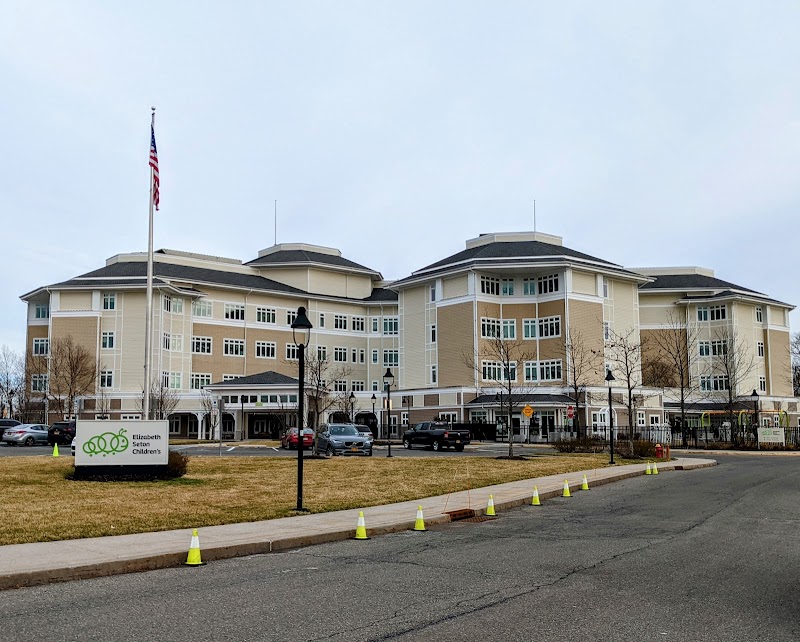
ELIZABETH SETON CHILDREN'S CENTER
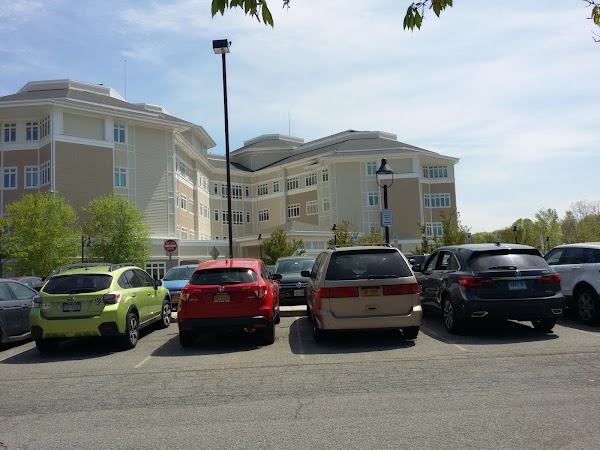

300 CORPORATE BLVD SOUTH, YONKERS, NY 10701 (914) 294-6300
Non profit - Corporation 169 Beds Independent Data: November 2025
Trust Grade
95/100
#30 of 594 in NY
Last Inspection: August 2023

Over 2 years since last inspection. Current conditions may differ from available data.

Overview

The Elizabeth Seton Children's Center has an impressive Trust Grade of A+, which indicates it is an elite facility providing top-tier care. It ranks #30 out of 594 facilities in New York, placing it comfortably in the top half of the state. The facility's performance has been stable, with two issues reported in both 2019 and 2023, suggesting consistent care quality over time. Staffing is a strong point here, with a 5-star rating and a low turnover rate of 22%, well below the state average, which means that staff members are experienced and familiar with the residents. However, there are some concerns, including issues with food safety practices and maintaining a clean garbage storage area, which were noted in the recent inspection. Overall, while the facility excels in many areas, families should be aware of these specific concerns as they consider care options.

Trust Score
A+
95/100
In New York
#30/594
Top 5%
Safety Record
Low Risk
No red flags
Inspections
Holding Steady
2 → 2 violations
Staff Stability
✓ Good
22% annual turnover. Excellent stability, 26 points below New York's 48% average. Staff who stay learn residents' needs.
Penalties
✓ Good
No fines on record. Clean compliance history, better than most New York facilities.
Skilled Nurses
✓ Good
Each resident gets 368 minutes of Registered Nurse (RN) attention daily — more than 97% of New York nursing homes. RNs are the most trained staff who catch health problems before they become serious.
Violations
✓ Good
Only 4 deficiencies on record. Cleaner than most facilities. Minor issues only.
★★★★★
5.0
Overall Rating
★★★★★
5.0
Staff Levels
★★★★★
5.0
Care Quality
★★★★★
5.0
Inspection Score
Stable
2019: 2 issues
2023: 2 issues

The Good

  • 5-Star Staffing Rating · Excellent nurse staffing levels
  • 5-Star Quality Measures · Strong clinical quality outcomes
  • Low Staff Turnover (22%) · Staff stability means consistent care
  • Full Sprinkler Coverage · Fire safety systems throughout facility
  • No fines on record
  • Staff turnover is low (22%)

    26 points below New York average of 48%

Facility shows strength in staffing levels, quality measures, staff retention, fire safety.

The Bad

No Significant Concerns Identified

This facility shows no red flags. Among New York's 100 nursing homes, only 1% achieve this.

The Ugly 4 deficiencies on record

Aug 2023 2 deficiencies
CONCERN (D)

Potential for Harm - no one hurt, but risky conditions existed

Garbage Disposal (Tag F0814)

Could have caused harm · This affected 1 resident

Based upon observation, record review, and interviews conducted during the recertification survey on 7/31/2023 - 8/4/2023, the facility did not ensure that the garbage storage area was maintained in a...

Read full inspector narrative →
Based upon observation, record review, and interviews conducted during the recertification survey on 7/31/2023 - 8/4/2023, the facility did not ensure that the garbage storage area was maintained in a sanitary condition. Specifically, the ground under the loading dock located near the door to the trash compactor was heavily littered with solid debris including two (2) treatment items labeled with personal health information. The findings are: An Environmental Services (ES) policy and procedure dated 12/2008 and titled Non-Hazardous Waste Removal documented the policy is To remove all trash from the facility in a safe and sanitary condition., and the purpose is To provide residents, staff, and visitors with a sanitary and comfortable environment and endeavor to prevent the development and transmission of infection. Procedures included that assigned housekeeping staff collect trash per schedule removing and sealing the clear plastic liners from each wastebasket, each sealed plastic liner is placed in a large trash bin on wheels, the trash is wheeled to/emptied into a dumpster at least twice each day and more frequently as indicated, and the dumpster is removed/replaced every 10-14 days. Observation on 8/02/2023 at 11:39 AM revealed that the ground area under the the loading dock located near the door to the trash compactor was heavily littered with solid debris inclusive of: a. 13 oral syringes in a variety of sizes ranging from 4 milliliters to 20 milliliters which had been used as evidenced by no substance observed in the oral syringes and the black stopper was at the top of the syringes. b. One approximately 12 inch length of clear tubing with a white connector attached. c. One approximately 24 inch length of red tubing with a green connector attached. d. An opened plastic bag labeled Piston enteral feeding syringe which was labeled with personal health information (residents' name) e. One empty 50 ml bottle of sodium bicarbonate injection without a stopper. f. One empty 2 oz. tube of desitin labeled with personal health information (residents' name) g. One capped 100 ml, half filled bottle of sterile saline. h. A variety of snack food wrappers and plastic utensils. During interviews on 8/02/2023 at 11:52 AM and 12:21 PM, the Director of Environmental Services (ES) stated that none of the debris should have been on the ground, the ES department was responsible for checking and cleaning up after themselves each time staff get rid of garbage, it is everyone's job, and there were no scheduled rounds or logs for monitoring the trash compactor area for cleanliness. During an interview on 8/02/23 at 11:59 AM the Lead Environmental Worker stated that they were responsible to check the compactor area daily by 9AM, and today when they checked they did not look at the the area under the loading dock. During an interview on 8/2/2023 at 1:25 PM the Director of Nursing (DON) stated that the red tubing and clear tubing are suctioning catheters which are used either orally, through the tracheostomy tube, or nasally, and the tubing should be discarded in the regular garbage. DON stated that housekeeping is responsible to tie the bags of garbage, and the tubing may have been on the ground if the bag was not closed properly. DON stated that any medication or treatment items labeled with identifying resident information should have a de-identifier label sticker, which will obliterate the personal information, before being discarded in the regular garbage. 415.14(h)
CONCERN (E)

Potential for Harm - no one hurt, but risky conditions existed

Food Safety (Tag F0812)

Could have caused harm · This affected multiple residents

Based upon observation, interview, and record review conducted during the recertification survey on 7/31/2023 - 8/4/2023, the facility did not ensure that foods were stored, prepared, distributed, and...

Read full inspector narrative →
Based upon observation, interview, and record review conducted during the recertification survey on 7/31/2023 - 8/4/2023, the facility did not ensure that foods were stored, prepared, distributed, and served in accordance with professional standards for food service safety. Specifically, 1. unwrapped, uncooked ground beef was stored in a walk-in refrigerator, 2. an unsecured chest freezer located in a hallway near the kitchen contained foods intended for consumption by residents which were not labeled with expiration dates or use by dates, and 3. A dietary staff member was observed checking food temperatures prior to meal service and did not properly sanitize the thermometer. The findings are: During the initial and follow up tours of the kitchen on 7/31/2023 at 9:33 AM and on 8/2/2023 at 10:55 am the following were observed: 1. Observation on 7/31/23 at 9:57 AM revealed approximately one pound of ground beef stored in a walk in refrigerator. The ground beef was not adequately wrapped, and one side of the beef was open to the air and to contamination. In an interview conducted at that time the Food Service Supervisor (FSS) stated that the ground beef should have been fully covered so that it did not drip into other foods, so other foods do not fall into it, and to prevent cross contamination. 2. Observation on 8/02/23 at 10:55 AM revealed a large chest freezer was found located in the hallway near the kitchen. Signage on the chest freezer documented: Emergency Kitchen Supply: Please do not touch/open. The chest freezer was unsecured and easily accessible. In an interview on 8/02/23 12:29 PM the Food Service Director stated that the food service supervisor was responsible for: a. the use of the chest freezer, and b. for managing the contents of the chest freezer. At that time the contents of the chest freezer which were intended for use by residents were checked and revealed the following: a. Thirty-six (36) 4-6 oz. containers of kosher puree chicken with a received date of 7/13/2023 were not labeled with a use by or expiration date. b. Thirty-six (36) 4-6 oz. containers of kosher puree chicken with a received date of 7/26/2023 were not labeled with a use by or expiration date. In an interview on 8/2/2023 at 12:32 PM the FSS stated that the chest freezer is currently being used for freezer overflow and contained some kosher foods used for the residents in that building. The FSS stated that the unit is not locked and should be locked to prevent anyone from tampering with the food. The FSS stated they did not have any documented monitoring of the freezer to ensure it is secured against tampering. The FSS stated that they are responsible to ensure all foods in the freezer are labeled with the date the food item was received, name of the food item, and the expiration date/discard date of the item. In an interview on 8/2/2023 at 1:12 PM the FSD stated that they need to do a better job of determining expiration dates, and discard the items on that date. 3. A facility policy and procedure dated 12/2022 and titled Food temperature documented Method for measuring temperatures: a clean, rinsed, sanitized and air-dried thermometer .is needed. Observation on 8/04/23 at 11:57 AM revealed the Dietary Aide checking food temperatures prior to meal service for the six (6) residents receiving meals. The Dietary Aide was observed dipping the probe tip of the thermometer into a cup of water and wiping the probe dry with a paper napkin. Surveyor stopped the Dietary Aide before they could proceed to insert the probe into the food. In an interview at that time the Dietary Aide stated that they dip the thermometer into the warm water to kill the bacteria, and then wipe with a paper napkin to wipe the water or excess food from the thermometer. 415,14(h)
Sept 2019 2 deficiencies
CONCERN (D)

Potential for Harm - no one hurt, but risky conditions existed

Food Safety (Tag F0812)

Could have caused harm · This affected 1 resident

**NOTE- TERMS IN BRACKETS HAVE BEEN EDITED TO PROTECT CONFIDENTIALITY** Based on observation, interview and record review conducted during the recertification survey, the facility did not ensure that ...

Read full inspector narrative →
**NOTE- TERMS IN BRACKETS HAVE BEEN EDITED TO PROTECT CONFIDENTIALITY** Based on observation, interview and record review conducted during the recertification survey, the facility did not ensure that food brought in from the outside was handled according to professional standards of practice. Specifically, food items found in the refrigerators on resident units were either outdated or not labeled and dated. This was evident on 2 of 8 resident units ([NAME] Park and [NAME] Park). The findings are: Leftovers and Food Safety Often when we cook at home or eat in a restaurant, we have leftovers. To ensure that leftovers are safe to eat, make sure the food is cooked to a safe temperature and refrigerate the leftovers promptly. Not cooking food to a safe temperature and leaving food out at an unsafe temperature are the two main causes of foodborne illness. Safe handling of leftovers is very important in reducing foodborne illness. Follow the USDA Food Safety and Inspection Service's recommendations for handling leftovers safely. Store Leftovers Safely Leftovers can be kept in the refrigerator for 3 to 4 days or frozen for 3 to 4 months. Although safe indefinitely, frozen leftovers can lose moisture and flavor when stored for longer times in the freezer. https://www.fsis.usda.gov/wps/portal/fsis/topics/food-safety-education/get-answers/food-safety-fact-sheets/safe-food-handling/leftovers-and-food-safety/ct_index Refrigerators on resident units were checked on 9/23/19 between 1:30 and 2:00PM. On the [NAME] Park unit a container of homemade soup was dated 9/16/19 (7 days old). The RN unit manager was interviewed at that time. He stated food from the outside can be kept for about a week. When asked about the policy for keeping food from the outside he produced a Policy and Procedure - Food from Outside that indicated the following; All food/homemade tube feeds in refrigerator will be discarded after 5 days by Environmental Services. In an interview with the Director of Environmental services at that time he stated his staff are aware of how long food can be kept but they do not discard any of the food. He stated they are instructed to bring it to the attention of the nursing staff. The refrigerator on the [NAME] Park unit was checked on 9/23/19 at 2:00PM. Two containers of food brought in from home for a resident were not dated. The resident's father was present at the time and stated he thought the food had been brought in over the previous weekend. In an interview with the Food Service Supervisor on 9/23/19 at 2:15PM she stated that food should be labeled and dated and discarded after 3 days. In an interview with the Director of Nutrition Services on 9/23/19 at 2:30PM she stated there have been a lot of issues related to food brought in by families that was discarded by nursing staff when outdated. The policy was updated to have Environmental Services discard the food to avoid conflict with the families. She was unaware that this was not being done. 415.14(h)
MINOR (B)

Minor Issue - procedural, no safety impact

Transfer Notice (Tag F0623)

Minor procedural issue · This affected multiple residents

Based on record review and interview conducted during the recertification survey, the facility did not ensure that the Ombudsman was being notified of resident transfers. This was evident for 2 reside...

Read full inspector narrative →
Based on record review and interview conducted during the recertification survey, the facility did not ensure that the Ombudsman was being notified of resident transfers. This was evident for 2 residents reviewed for hospitalization (Resident #19 and #156). The findings are: 1. A Nursing Progress Note dated 7/21/19 indicated Resident #19 was sent to the hospital with an elevated heart rate and fever. The Nursing Progress Note dated 7/25/19 indicated the resident returned to the facility with a diagnosis of Urosepsis. 2. A Nursing Progress Note dated 7/19/19 indicated Resident #156 was vomiting coffee ground material and was transferred to the hospital. The Nursing Progress Note dated 8/28/19 indicated the resident returned to the facility following hospitalization where a G/J Tube (Gastrostomy/Jejunostomy - required for feeding and administration of medications) was placed. There was no documented evidence in the medical records of both residents that the Ombudsman was notified of either transfer. In an interview with the Director of Social Work on 9/19/19 at 10:26 AM, regarding notification to the Ombudsman, she stated she only sends notification to the Ombudsman if the resident is discharged from the facility to home or to another facility. 415.3(h)(1)(iv)(a-e)
Understanding Severity Codes (click to expand)
Life-Threatening (Immediate Jeopardy)
J - Isolated K - Pattern L - Widespread
Actual Harm
G - Isolated H - Pattern I - Widespread
Potential for Harm
D - Isolated E - Pattern F - Widespread
No Harm (Minor)
A - Isolated B - Pattern C - Widespread

Questions to Ask on Your Visit

  • "Can I speak with families of current residents?"
  • "What's your RN coverage like on weekends and overnight?"

Our Honest Assessment

Strengths
  • • Grade A+ (95/100). Above average facility, better than most options in New York.
  • • No major safety red flags. No abuse findings, life-threatening violations, or SFF status.
  • • No fines on record. Clean compliance history, better than most New York facilities.
  • • Only 4 deficiencies on record. Cleaner than most facilities. Minor issues only.
Concerns
  • • No significant concerns identified. This facility shows no red flags across CMS ratings, staff turnover, or federal penalties.
Bottom line: Generally positive indicators. Standard due diligence and a personal visit recommended.

About This Facility

What is Elizabeth Seton Children'S Center's CMS Rating?

CMS assigns ELIZABETH SETON CHILDREN'S CENTER an overall rating of 5 out of 5 stars, which is considered much above average nationally. Within New York, this rating places the facility higher than 99% of the state's 100 nursing homes. This rating reflects solid performance across the metrics CMS uses to evaluate nursing home quality.
How is Elizabeth Seton Children'S Center Staffed?

CMS rates ELIZABETH SETON CHILDREN'S CENTER's staffing level at 5 out of 5 stars, which is much above average compared to other nursing homes. Staff turnover is 22%, compared to the New York average of 46%. This relatively stable workforce can support continuity of care.

What Have Inspectors Found at Elizabeth Seton Children'S Center?

State health inspectors documented 4 deficiencies at ELIZABETH SETON CHILDREN'S CENTER during 2019 to 2023. These included: 3 with potential for harm and 1 minor or isolated issues.
Who Owns and Operates Elizabeth Seton Children'S Center?

ELIZABETH SETON CHILDREN'S CENTER is owned by a non-profit organization. Non-profit facilities reinvest revenue into operations rather than distributing to shareholders. The facility operates independently rather than as part of a larger chain. With 169 certified beds and approximately 164 residents (about 97% occupancy), it is a mid-sized facility located in YONKERS, New York.
How Does Elizabeth Seton Children'S Center Compare to Other New York Nursing Homes?

Compared to the 100 nursing homes in New York, ELIZABETH SETON CHILDREN'S CENTER's overall rating (5 stars) is above the state average of 3.1, staff turnover (22%) is significantly lower than the state average of 46%, and health inspection rating (5 stars) is much above the national benchmark.

What Should Families Ask When Visiting Elizabeth Seton Children'S Center?

Based on this facility's data, families visiting should ask: "Can I visit during a mealtime to observe dining assistance and food quality?" "How do you handle medical emergencies, and what is your hospital transfer rate?" "Can I speak with family members of current residents about their experience?"

Is Elizabeth Seton Children'S Center Safe?

Based on CMS inspection data, ELIZABETH SETON CHILDREN'S CENTER has a clean safety record: no substantiated abuse findings (meaning no confirmed cases of resident harm), no Immediate Jeopardy citations (the most serious violation level indicating risk of serious injury or death), and is not on the Special Focus Facility watch list (a federal program monitoring the lowest-performing 1% of nursing homes). The facility has a 5-star overall rating and ranks #1 of 100 nursing homes in New York. While no facility is perfect, families should still ask about staff-to-resident ratios and recent inspection results during their visit.

Do Nurses at Elizabeth Seton Children'S Center Stick Around?

Staff at ELIZABETH SETON CHILDREN'S CENTER tend to stick around. With a turnover rate of 22%, the facility is 24 percentage points below the New York average of 46%. Low turnover is a positive sign. It means caregivers have time to learn each resident's needs, medications, and personal preferences. Consistent staff also notice subtle changes in a resident's condition more quickly. Registered Nurse turnover is also low at 22%, meaning experienced RNs are available to handle complex medical needs.

Was Elizabeth Seton Children'S Center Ever Fined?

ELIZABETH SETON CHILDREN'S CENTER has no federal fines on record. CMS issues fines when nursing homes fail to meet care standards or don't correct problems found during inspections. The absence of fines suggests the facility has either maintained compliance or corrected any issues before penalties were assessed. This is a positive indicator, though families should still review recent inspection reports for the full picture.

Is Elizabeth Seton Children'S Center on Any Federal Watch List?

ELIZABETH SETON CHILDREN'S CENTER is not on any federal watch list. The most significant is the Special Focus Facility (SFF) program, which identifies the bottom 1% of nursing homes nationally based on persistent, serious quality problems. Not being on this list means the facility has avoided the pattern of deficiencies that triggers enhanced federal oversight. This is a positive indicator, though families should still review the facility's inspection history directly.