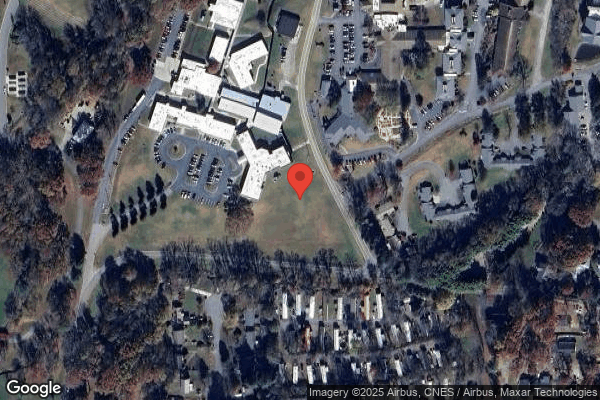
Highland Farms

200 Tabernacle Road, Black Mountain, NC 28711 (828) 669-6473
Non profit - Corporation 60 Beds Independent Data: November 2025
Trust Grade
83/100
#37 of 417 in NC
Last Inspection: August 2025

Inspected within the last 6 months. Data reflects current conditions.

Overview

Highland Farms in Black Mountain, North Carolina, has a Trust Grade of B+, indicating it is above average and recommended for care. It ranks #37 out of 417 nursing homes in the state, placing it in the top half, and #3 out of 19 in Buncombe County, meaning only two local facilities are ranked higher. The facility is improving, with issues decreasing from 4 in 2024 to 3 in 2025, and it boasts excellent staffing, with a 5/5 rating and a turnover rate of 42%, which is lower than the state average. However, it has received $4,271 in fines, which is average, and there have been some concerns, such as inappropriate food storage and a failure to properly monitor a resident's return after hospitalization. Despite these weaknesses, the facility has strong RN coverage, exceeding that of 91% of North Carolina facilities, ensuring better oversight of resident care.

Trust Score
B+
83/100
In North Carolina
#37/417
Top 8%
Safety Record
Low Risk
No red flags
Inspections
Getting Better
4 → 3 violations
Staff Stability
○ Average
42% turnover. Near North Carolina's 48% average. Typical for the industry.
Penalties
✓ Good
$4,271 in fines. Lower than most North Carolina facilities. Relatively clean record.
Skilled Nurses
✓ Good
Each resident gets 66 minutes of Registered Nurse (RN) attention daily — more than 97% of North Carolina nursing homes. RNs are the most trained staff who catch health problems before they become serious.
Violations
⚠ Watch
14 deficiencies on record. Higher than average. Multiple issues found across inspections.
★★★★★
5.0
Overall Rating
★★★★★
5.0
Staff Levels
★★★★★
5.0
Care Quality
★★★☆☆
3.0
Inspection Score
Stable
2024: 4 issues
2025: 3 issues

The Good

  • 5-Star Staffing Rating · Excellent nurse staffing levels
  • 5-Star Quality Measures · Strong clinical quality outcomes
  • Full Sprinkler Coverage · Fire safety systems throughout facility
  • No fines on record
  • Staff turnover below average (42%)

    6 points below North Carolina average of 48%

Facility shows strength in staffing levels, quality measures, fire safety.

The Bad

Staff Turnover: 42%

Near North Carolina avg (46%)

Typical for the industry

Federal Fines: $4,271

Below median ($33,413)

Minor penalties assessed

The Ugly 14 deficiencies on record

Aug 2025 3 deficiencies
CONCERN (D)

Potential for Harm - no one hurt, but risky conditions existed

Deficiency F0559 (Tag F0559)

Could have caused harm · This affected 1 resident

**NOTE- TERMS IN BRACKETS HAVE BEEN EDITED TO PROTECT CONFIDENTIALITY** Based on record review, and responsible party (RP) and staff interviews, the facility failed to notify the Responsible Party in ...

Read full inspector narrative →
**NOTE- TERMS IN BRACKETS HAVE BEEN EDITED TO PROTECT CONFIDENTIALITY** Based on record review, and responsible party (RP) and staff interviews, the facility failed to notify the Responsible Party in advance of a room change for 1 of 1 resident reviewed for transfer to a new room in the facility (Resident #4).The findings included:Resident #4 was admitted to the facility on [DATE].The Minimum Data Set (MDS) quarterly assessment dated [DATE] revealed Resident #4 was moderately cognitively impaired. Review of a note written by the Social Service Director dated 5/20/2025 revealed the Social Service Director called and left the Responsible Party (RP) a voice mail informing them of the room change for Resident #4 and an email was sent. There was no documentation in the social service notes that indicated notification to the residents or RP of reason for the room change.A review of an email sent on 5/20/2025 at 10:23 AM by the Social Service Director to the Responsible Party revealed the email was delivered on 5/20/2025 and indicated that a voice mail was left for the RP that Resident #4 would be moving to another room due to various reasons. The email further stated the reason was because Resident #4 struggled with having short term roommates coming and going and would get mean. Review of Resident #4 electronic medical record (EMR) indicated that Resident #4 was moved to a different room on 5/20/2025.A telephone interview was conducted on 8/11/2025 at 3:21 PM with the RP of Resident #4. The RP stated Resident #4 was in her room for over a year that was at the window, and she was able to view the RP's place of work. The RP stated that Resident #4 had refused to move to another room. The RP indicated she was notified of the room change after the room change occurred. An interview was conducted with the interim Social Service Director on 8/13/2025 at 2:42 PM. The interim Social Service Director stated she was not employed at facility at the time of Resident #4's room change. The Social service Director explained there was general discussion about room changes in the morning management staff meeting. The interim Social Service Director stated sometimes she called the RP about a room change. An interview conducted with the MDS Coordinator on 8/13/2025 at 2:42 PM revealed the facility's policy for room change was the resident that caused the conflict in the room was the resident that changed rooms. The MDS Coordinator stated that the facility did not need permission to change the resident's room.An interview was conducted on 8/14/2025 at 2:24 PM with the Director of Nursing (DON) who stated the room change was discussed during the morning meeting. She was not aware of Resident #4 declining to move to a different room. The DON indicated the facility needed to come up with a different solution for those residents who refused to move rooms.An interview with the Administrator on 8/14/2025 at 8:02 AM revealed the RP was notified of Resident #4's room change by email. The Administrator indicated that she had not spoken to the RP or received a response from the RP about the move. Her understanding was she had to only notify the RP of the room change and she was not aware that Resident #4 had voiced she did not want to move.
CONCERN (D)

Potential for Harm - no one hurt, but risky conditions existed

Accident Prevention (Tag F0689)

Could have caused harm · This affected 1 resident

**NOTE- TERMS IN BRACKETS HAVE BEEN EDITED TO PROTECT CONFIDENTIALITY** Based on observations, record review, Security Officer interview, Independent Living (IL) Resident interview, and staff intervie...

Read full inspector narrative →
**NOTE- TERMS IN BRACKETS HAVE BEEN EDITED TO PROTECT CONFIDENTIALITY** Based on observations, record review, Security Officer interview, Independent Living (IL) Resident interview, and staff interviews, the facility failed to supervise a severely cognitively impaired resident who was known to wander and used a wander guard so staff could monitor whereabouts. On 5/25/2025, Nurse #3 disarmed the service hallway exit doors and overrode the wander guard system. Resident #3 exited the healthcare center and entered a service hallway to the old assembly room area in the independent living area of the continuing care retirement community without staff supervision. Resident #3 was returned to the healthcare center by an IL Resident and the Lead [NAME] without injury. This deficient practice affected 1 of 5 residents reviewed for accidents (Resident #3).The findings included:Resident #3 was admitted to the facility on [DATE] with a diagnosis of senile degeneration of the brain, dementia, and history of falling.Resident #3's care plan dated 2/08/2025 revealed a care plan for wander guard related to diagnosis of dementia and occasional wandering and risk for wandering and injury. Interventions included education to the staff, approach in a calm, gentle manner; assure resident is safe, redirect resident from other resident rooms or if entering unsafe areas, or leaving health center unescorted, use familiar objects to reorient to residents room, seek to reassure and redirect, seek to redirect with an activity task as agreeable, asses for physiological needs or pain when wandering and advise nurse as needed, fall into step with resident and determine where resident is going, validate need to find something or something as appropriate, apply wander guard to right wrist, and monitor whereabouts when wandering.Resident #3's quarterly Minimum Data Set (MDS) assessment dated [DATE] coded Resident #3 as severely cognitively impaired. The MDS indicated Resident #3 exhibited wandering behavior daily. The MDS further indicated Resident #3 used a walker and could walk 50 feet with supervision or touching assistance and used a wheelchair for mobility throughout the facility.Resident #3's physician orders in May 2025 and current physician orders revealed a wander guard order dated 5/15/2025 to be checked twice daily in the morning and at night for placement and function. The order further revealed the wander guard to be placed on the right wrist. A telephone interview conducted on 8/14/2025 at 11:23 AM with Nurse #4 revealed she was assigned to Resident #3 on 5/24/2025 from 7:00 PM until the morning of 5/25/2025 7:00 AM. Nurse #4 stated Resident #3 was lying in her bed at approximately 6:30 AM. Nurse #4 indicated when she left the faciity on 5/25/2025 around 7:15 AM she did not see Resident #3 in the hallway. A telephone interview was conducted with Nurse Aide (NA) #5 on 8/15/2025 at 1:48 PM which revealed NA #5 was assigned to Resident #3 on the night of 5/24/2025 until the morning of 5/25/2025 at 7:00 AM. NA #5 stated she was unable to recall any events on 5/25/2025 nor the last time she had checked on Resident #3. NA #5 stated she normally would get Resident #3 up and out of bed and assist with dressing around 6:30 AM. NA #5 stated sometimes the resident would walk to the dining room or to the front lobby but would come back to her room. NA #5 confirmed she had seen Resident #3 attempt to go out the service entry doors in the past, but because they were locked, she would turn around and come back to her room. NA #5 stated she believed the wander guard for Resident #3 was on her ankle.Elopement event documentation written by Nurse #1 for Resident #3 from 5/25/2025 was reviewed. The documentation revealed there was evidence of an elopement event, notification to the attending physician and resident representative, and written education with staff. There was no evidence of injury to Resident #3 as a skin check was performed upon return to the healthcare center.An interview was conducted with Nurse #1 on 8/12/2025 at 3:30 PM. Nurse #1 stated the event dated 5/25/2025 occurred in the early morning at approximately 7:39 AM after reviewing the healthcare center surveillance footage. Nurse #1 was able to recall the events of the elopement event after the review of the healthcare center surveillance footage. Nurse #1 stated Resident #3 was sitting in the front lobby in her wheelchair near the double doors that lead to the service hallway when Nurse #1 came into work. There was another nurse (Nurse #3) that came into the healthcare center to clock out using the front entrance. Nurse #3 proceeded to the service hallway entry doors and entered the code on the keypad disarming the service hallway entry doors as well as overriding the wander guard system. Nurse #3 was able to proceed through the double doors and clock out. When Nurse #3 finished clocking out, Nurse #3 entered the code on the keypad disarming the service hallway exit doors as well as overriding the wander guard system. Nurse #3 came back through the service hallway entry doors and did not ensure the doors were closed all the way. Resident #3 was still sitting in her wheelchair and was able to self-propel in her wheelchair to exit from the healthcare center through the service hallway entry doors. Nurse #1 did not recall the alarm sounding on the doors for the wander guard due to the keypad overriding the wander guard system. Nurse #1 expressed Resident #3 was heading in the direction of the beauty shop through the service hallway that leads to the Independent Living section of the campus. Resident #3 was returned to the healthcare center by an IL Resident and Lead Cook. Nurse #1 explained she became aware Resident #3 was missing from the facility when Resident #3 was returned to the healthcare center. Upon Resident #3's return, Nurse #1 stated she notified the representative, completed a skin check on the resident, and called Resident #3's provider.A telephone interview was conducted with Nurse #3 on 8/13/2025 at 3:36 PM. Nurse #3 stated she was clocking out from working night shift on 5/25/2025 and saw Resident #3 sleeping in her wheelchair in the front lobby by the service hallway entry doors. Nurse #3 stated she thought she was sitting there waiting on her son for church. Nurse #3 explained she did not watch the doors of the service hallway close all the way and Resident #3 was able to get through the doors and into the service hallway entry way. Nurse #3 revealed she was shown the video surveillance footage and was able to see Resident #3 getting into the service hallway. An interview with an Independent Living (IL) Resident was completed on 8/13/2025 at 1:43 PM. The IL Resident stated he was outside walking his dog on 5/25/2025 approximately 7:30 AM. He stated he saw Resident #3 in the enclosed glass vestibule area outside of the doors leading into the old assembly room (this section of the campus was located on the other end of the service hallway that leads to the beauty shop in Independent Living). He stated Resident #3 was turning around trying to get back through the doors of the old assembly room. The IL Resident stated the doors were closing on her, so he went and helped her through the doors. He stated she was in her wheelchair, and she began propelling herself very quickly down the hallway near the beauty shop. The IL Resident went back home and dropped his dog off and came back approximately 5 to 6 minutes later to check on Resident #3. The IL Resident stated Resident #3 was in the same area he brought her back in (old assembly room area) and did not make it back to the healthcare center. The IL Resident then took Resident #3 down the service hallway to the doors that lead to the healthcare center. The IL Resident began knocking on the door. He said the Lead [NAME] came to the door from the kitchen which was off the service hallway, and the IL Resident asked the Lead [NAME] if he knew Resident #3. The Lead [NAME] confirmed that he did. The IL Resident stated both he and the Lead [NAME] brought Resident #3 back to a nurse in the healthcare center. The IL Resident did not recall the time he returned Resident #3 to the healthcare center. An interview conducted with Lead [NAME] on 8/13/2025 at 10:24 AM revealed the IL Resident was coming through the service hallway with Resident #3 and asked him if he knew Resident #3. The Lead [NAME] stated the IL Resident stated he saw Resident #3 caught in between the outside doors of the old assembly room. The Lead [NAME] assisted Resident #3 to a nurse on duty. The Lead [NAME] could not recall the time, or which nurse he returned Resident #3 to in the healthcare center. The Lead [NAME] was unable to state whether Resident #3 had any injury. The Lead [NAME] verified Resident #3 was cooperative with returning to the healthcare center on 5/25/2025. Resident #3's electronic medical record revealed no current elopement assessment prior to the elopement event on 5/25/2025.An interview was conducted with the Director of Nursing (DON) on 8/14/2025 at 2:10 PM. The DON stated the initial reason for the wander guard for Resident #3 was she had wandered into areas outside of the healthcare center since placement in the facility. The DON explained the elopement assessments were not completed from January 2025 to May 2025 due to change over in team members and the electronic medical record system. She stated the assessments were not populating for completion in the old electronic medical record system. An observation was conducted on 8/12/2025 at 2:45 PM of Resident #3 in her room. Resident #3 was observed to be wearing a wander guard bracelet to her right wrist.An interview was conducted with Nurse #2 on 8/12/2025 at 2:45 PM. The Nurse indicated she was responsible for Resident #3 today (8/12/2025). Nurse #2 stated Resident #3 wore elbow protectors due to rubbing her elbows and the wander guard was probably underneath the elbow pads this morning. Nurse #2 indicated Resident #3 would walk occasionally. Nurse #2 voiced Resident #3 would either walk with walker independently or self-propel her wheelchair and sit in the front lobby. Nurse #2 further indicated the wander guard on Resident #3 was checked every shift. Nurse #2 communicated she was provided with education on wandering and elopement but did not work the morning shift on the day of the incident.An interview with the Administrator regarding the video surveillance of 5/25/2025, on 8/13/2025 at 9:54 AM revealed the video surveillance was maintained for a 30-day timeframe. After 30 days, the video surveillance was recorded over for the next 30-day cycle. An interview with the Security Officer of the campus on 8/13/2025 at 10:01 AM revealed he was able to view the video when Resident #3 exited the health care center on 5/25/2025. He stated Nurse #3 went to clock out at the time clock and Resident #3 slipped in between the doors. He stated he could not view anything else. The Security Officer did verify the doors were on a timer locking system at night. The Security Officer verified there was a magnetic system in place for the facility doors as well as a timer for the doors at night for residents and staff safety. The Security Officer provided documentation that the video was unable to be captured from the elopement event on 5/25/2025, and the footage had been recorded over as it was over the 30-day timeframe.The Wander Management System facility protocol provided by the Maintenance Supervisor revealed the facility used two parts in their system. All doors leading in and out of the healthcare center have a wander guard alarm system that made an audible alarm. The second form of protection was a magnetic lock (utilizes a magnetic force to secure a door) system. All doors were locked with a magnetic lock system 24 hours a day except for the two doors visible from the reception desk which remain unlocked between 8:00 AM and 8:00 PM daily, then locked from 8:00 PM until 8:00 AM.An observation was conducted on 8/14/2025 at 1:35 PM with the Maintenance Technician. He demonstrated the activation of the wander guard system on the service hallway entry doors with a wander guard. The Maintenance Technician stated the service hallway entry doors would lock when reaching within six feet of the service hallway entry doors. There was an audible sound when the wander guard was close to the service hallway entry doors. The Maintenance Technician further demonstrated the disabling of the wander guard alarm by activating the keypad code on both sides of the service hallway entry doors and with a wander guard showing entry into the service hallway.A joint interview was conducted with the Administrator and the Director of Nursing (DON) on 8/14/2025 at 2:10 PM. They both verified every resident received an elopement assessment upon admission determining the risk for elopement. They stated this was a standard of care and practice. Each resident would then receive a quarterly review. The DON stated the loss of some team members, and receiving a new updated electronic medical record system caused some assessments to be missed. The DON stated elopement assessments were to be completed upon admission for each resident, quarterly, and as indicated. The DON further stated she believed Resident #3 left through the service hallway entry because the staff were allowing Resident #3 to sit up front four days prior, so they no longer allowed Resident #3 to sit in the front lobby.An interview conducted with the Administrator on 8/14/2025 at 2:10 PM revealed the Receptionist was responsible for monitoring the service hallway entry doors while on duty (8:00 AM to 5:00 PM). The Administrator stated the Receptionist would make sure a resident did not get through the service hallway entry doors. The Administrator confirmed the wander guard alarm for the service hallway entry doors did not alarm on 5/25/2025 for Resident #3 because the keypad had been overridden by Nurse #3 when she exited the service hallway after clocking out for work and re-entering the healthcare center. The Administrator confirmed Nurse #3 did not ensure the doors were closed completely after exiting the service hallway and proceeding to exit the front of the healthcare center on 5/25/2025 leading to the elopement event for Resident #3.
CONCERN (E)

Potential for Harm - no one hurt, but risky conditions existed

Food Safety (Tag F0812)

Could have caused harm · This affected multiple residents

Based on observations and staff interviews the facility failed to label and date leftover food stored for use in 1 of 1 walk in cooler and 1 of 1 walk-in freezer and failed to discard expired food ite...

Read full inspector narrative →
Based on observations and staff interviews the facility failed to label and date leftover food stored for use in 1 of 1 walk in cooler and 1 of 1 walk-in freezer and failed to discard expired food items in 1 of 1 dry goods storage room. These practices had the potential to affect food served to residents. The findings included:a. During an initial observation of the facility's kitchen with the Dietary Manager (DM) on 08/11/2025 at 10:37AM the walk-in cooler was noted to have the following concerns:- An open to air and unlabeled ripped plastic bag of cooked chicken fillets on a shelf available for use.- An opened and unlabeled plastic wrapped bag of thin sliced potatoes on a shelf available for use. b. During an initial observation of the facility's kitchen with the Dietary Manager (DM) on 08/11/2025 at 10:43AM the walk-in freezer was noted to have frozen angel food cake on a tray wrapped in plastic, labeled 7/1 use by 7/21 on a shelf, available for use. c. The dry goods storage room was observed in the presence of the Dietary Manager on 08/11/2025 at 11:03AM with the following concerns:- Two plastic bags of cornflakes labeled 5/5 use by 8/5 on a shelf, available for use.- A plastic bin with off-white powder labeled poultry gravy powder dated 4/23 use by 7/23 on a shelf, available for use.An interview with the Dietary Manager on 08/11/2025 at 10:54AM revealed that he understood that items were not stored correctly. The Dietary Manager disposed of food items. He continued by showing the FDA Refrigerator and Freezer Storage Chart posted outside the walk-in freezer and stated he would have to train the staff to get labels properly created. The Dietary Manager stated labels and dates on opened food items should be checked weekly.An interview with the campus Food Service Director on 08/14/2025 at 10:14AM revealed the Dietary Manager should check dates and labels every day that he worked. He further stated the kitchen was in transition and some duties had been assigned to others to assist in the management of the kitchen. The Food Service Director stated staff received education related to proper labeling, storing and dating in June 2025. An interview with the Administrator on 08/14/2025 at 3:00PM revealed that kitchen staff should follow food safety standards and policies.
Aug 2024 4 deficiencies
CONCERN (D)

Potential for Harm - no one hurt, but risky conditions existed

Deficiency F0726 (Tag F0726)

Could have caused harm · This affected 1 resident

**NOTE- TERMS IN BRACKETS HAVE BEEN EDITED TO PROTECT CONFIDENTIALITY** Based on observations, record review, and staff interviews the facility failed to provide competent nursing staff when 2 of 4 nu...

Read full inspector narrative →
**NOTE- TERMS IN BRACKETS HAVE BEEN EDITED TO PROTECT CONFIDENTIALITY** Based on observations, record review, and staff interviews the facility failed to provide competent nursing staff when 2 of 4 nursing staff (Nurse #1 and Medication Aide #1) were not educated on the facility's glucometer disinfection policy and procedures. Findings included: a. An observation was conducted on 8/21/24 at 4:30 PM of Nurse #1 performing a blood glucose check. After performing the blood glucose check Nurse #1 returned the glucometer to the top drawer of the medication cart without disinfecting the glucometer. An interview with was conducted on 8/21/24 at 4:40 PM with Nurse #1. She said she had not cleaned the glucometer after performing the blood glucose check because she had not been aware that she needed to do so. Nurse #1 said she had worked at the facility for about 3 months and that she had not received education or training on glucometer disinfection. Nurse #1's employee file revealed there was no record of education on glucometer disinfection. b. An interview was conducted with Medication Aide #1 on 8/22/23 at 9:44 AM. She said that she had worked at the facility as a Medication Aide for about a year and a half. Medication Aide #1 said she was assigned to the back [NAME] hall and that she currently did not have any residents on her assigned hall who received capillary blood glucose checks. She said that glucometers were assigned for individual resident use and were labeled with the resident's name. Medication Aide #1 said glucometers were stored in the top drawer of the medication cart. She said that during her orientation on the medication cart she had been told to clean glucometers after each use. Medication Aide #1 said that she had been told she could use a disinfectant wipe or an alcohol wipe to clean the glucometer. Medication Aide #1 said she used an alcohol prep pad to wipe off the glucometer after using it. She said she used the alcohol prep pad because it was right there on the medication cart and convenient. Medication Aide #1's employee file revealed there was no record of education on glucometer disinfection. An interview was conducted with the Director of Nursing (DON) on 8/22/24 at 10:52 AM. The DON stated she was unable to provide training records on glucometer disinfection for Nurse #1 and Medication Aide #1. She said there were not records Nurse #1 or Medication Aide #1 had received training on glucometer disinfection. The DON stated that nursing staff should be educated during new hire orientation and annually on glucometer disinfection procedures. The DON explained the Staff Development Coordinator completed new hire orientation and nurse education. She said that education on glucometer disinfection was currently not in place. The DON stated that education on glucometer disinfection had used to be part of the facility's new hire nurse orientation, and she was unsure how it had fallen out of the orientation process. The Staff Development Coordinator (SDC) was unavailable for interview. An interview was conducted with the Administrator on 8/22/24 at 12:37 PM. The Administrator stated that education on glucometer disinfection should be completed during new hire orientation. She said there had been a turnover in the SDC position and that may be why the education on glucometer disinfection had been missed in the new hire orientation process.
CONCERN (D)

Potential for Harm - no one hurt, but risky conditions existed

Infection Control (Tag F0880)

Could have caused harm · This affected 1 resident

Based on observations, record review, and staff interviews the facility failed to implement their policy and procedures for glucometer disinfection when Nurse #1 failed to disinfect a resident (Reside...

Read full inspector narrative →
Based on observations, record review, and staff interviews the facility failed to implement their policy and procedures for glucometer disinfection when Nurse #1 failed to disinfect a resident (Resident #201) glucometer after performing a capillary blood glucose test. This deficient practice occurred for 1 of 1 resident (Resident #201) reviewed for infection prevention and control. The findings included: The facility policy dated 5/29/24 and entitled Glucometer Disinfection read in part: The purpose of this procedure is to provide guidelines for the disinfection of capillary-blood glucose sampling devices to prevent transmission of blood borne disease to resident and employees. The facility will ensure blood glucometers will be cleaned and disinfected after each use and according to manufacturer's instructions. The glucometers will be disinfected with a wipe pre-saturated with an EPA registered healthcare disinfectant that is effective against Human Immunodeficiency Virus (HIV) (blood borne virus), Hepatitis C (blood borne virus), and Hepatitis B (blood borne virus). Glucometers will be cleaned and disinfected after each use and according to manufacturer's instructions regardless of whether they are intended for single resident or multiple resident use. The glucometer User Instruction Manual read in part: Clean the outside of the meter with a damp cloth only. Dirt, dust, blood, control solution, or water entering the meter could cause damage. Do not store your meter or test strips near bleach or cleaners that contain bleach. An observation was completed on 8/21/22 at 4:40 PM of Nurse #1 performing a blood glucose test for Resident #201. Nurse #1 removed the glucometer from the top drawer of her medication cart. The glucometer was stored in the manufacturer's zippered storage bag and labeled with Resident #201's name. Nurse #1 gathered supplies (an alcohol pad, lancet, and test strips). Nurse #1 was accompanied as she carried the glucometer and supplies down to Resident #201's room. After entering the room, the nurse put the glucometer and supplies down on the resident's bed. While wearing gloves, the nurse wiped the resident's finger with an alcohol pad, used a lancet to obtain a drop of blood from her finger and applied the blood to the test strip inserted into the glucometer. Once the blood glucose results were obtained, Nurse #1 discarded the trash and lancet, and returned to the medication cart with the glucometer. She placed the glucometer back into the manufacturer's zippered storage bag and zipped the bag closed and returned the glucometer to the top drawer of the medication cart. There were disinfectant wipes present in the bottom drawer of the medication cart. An interview was performed with Nurse #1 on 8/21/24 at 4:30 PM. Nurse #1 said that glucometers were for individual use and not shared. Nurse #1 stated that she had never been told she needed to clean/ disinfect the glucometer after it had been used. Nurse #1 said she had not received any education from the facility on glucometer cleaning/ disinfection procedures. Nurse #1 stated that she had not cleaned/disinfected the glucometer after performing Resident #201's because it was an individual glucometer, and she had not been aware that she needed to do so. An interview was performed with the Director of Nursing (DON) on 8/22/24 at 10:52 AM. The Director of Nursing stated that glucometers needed to be disinfected after each use regardless of if they were for individual use because they were touched by staff and could cause the transmission of blood borne pathogens. The DON explained that the manufacturer instructions for the current glucometer the facility used said to clean the glucometer with a damp cloth, because the glucometer was intended for home use. She said that the facility should clean/ disinfect glucometers per manufacturer instructions and that the facility should use a glucometer that could be cleaned/ disinfected according to manufacture instructions using an environmental protective agency (EPA) approved product that was effective against blood borne pathogens. An interview was conducted with the Administrator on 8/22/24 at 12:37 PM. The Administrator stated that glucometers should be disinfected after each use. She said an EPA approved disinfectant should be used to disinfect the glucometer after each use to kill blood borne pathogens.
CONCERN (D)

Potential for Harm - no one hurt, but risky conditions existed

Deficiency F0883 (Tag F0883)

Could have caused harm · This affected 1 resident

**NOTE- TERMS IN BRACKETS HAVE BEEN EDITED TO PROTECT CONFIDENTIALITY** Based on record review, resident and staff interviews the facility failed to administer a pneumococcal vaccine to a resident who...

Read full inspector narrative →
**NOTE- TERMS IN BRACKETS HAVE BEEN EDITED TO PROTECT CONFIDENTIALITY** Based on record review, resident and staff interviews the facility failed to administer a pneumococcal vaccine to a resident who had consented for the vaccine to be administered. This deficient practice occurred for 1 of 5 residents reviewed for Pneumococcal Immunizations (Resident #18). The findings included: Resident #18 was admitted to the facility on [DATE]. The quarterly Minimum Data Assessment (MDS) dated [DATE] revealed Resident #18 was cognitively intact. It was not documented on the MDS that she had received the pneumonia vaccine. Review of Resident #18's medical record revealed a form titled Resident Vaccine Consent Form. The pneumococcal vaccine was marked under the section entitled check vaccines consented to be given. The vaccine consent signature section indicated verbal consent was provided by Resident #18's family during a video conference and was dated 7/18/24. Review of Resident #18's medical record revealed there was no documentation that a pneumococcal vaccine had been administered. There was no prior pneumococcal immunization history documented in Resident #18's medical record. Review of the standing orders attached to Resident #18's August 2024 physician orders revealed there was a standing order that read: May give pneumococcal vaccine on admission according to acceptable standards of clinical practice or unless medically contraindicated. An interview was conducted on 8/21/24 at 3:53 PM with Resident #18. She said she remembered the pneumococcal vaccine being offered to her and the consent form being completed. She said she had probably received a Pneumonia Vaccine in the past but that she did not recall when. Resident #18 said she had wanted the newest pneumococcal vaccine and that she was waiting on the facility to give it. An interview with the Director of Nursing (DON) was conducted on 8/22/24 at 10:52 AM. The DON said there was no record that a pneumonia vaccine had been administered to Resident #18 while at the facility. The DON said the facility did not have any past pneumonia vaccine history for Resident #18. The DON explained she expected the pneumococcal vaccine to be offered to residents on admission and a consent/ declination form to be completed. The DON stated the Infection Preventionist (IP) was responsible for obtaining immunization history of residents, offering immunizations, and completing the immunization consent/ declination form with residents/ families on admission and annually. The DON explained once consent for the pneumococcal vaccine was obtained, she expected the vaccine to be given to the resident ideally by the next day. The DON stated she thought the IP had been bogged down with other things and had not communicated well. She explained that the IP had made changes to the immunization process that she had thought would be okay. The DON said the IP had not discussed or communicated the changes with her and that the pneumococcal vaccine being administered for Resident #18 had been missed. The IP was currently on leave and unavailable for interview. An interview was conducted with the Administrator on 8/22/24 at 12:37 PM. The Administrator said the pneumococcal vaccine should be offered to residents on admission. The Administrator said if Resident #18 had wanted the pneumococcal vaccine that the vaccine should had been administered to her. She said there was an issue with the process that Resident #18's pneumococcal vaccine being given had been missed.
CONCERN (D)

Potential for Harm - no one hurt, but risky conditions existed

Deficiency F0887 (Tag F0887)

Could have caused harm · This affected 1 resident

**NOTE- TERMS IN BRACKETS HAVE BEEN EDITED TO PROTECT CONFIDENTIALITY** Based on record review, resident and staff interviews the facility failed to offer and provide a COVID-19 vaccine to 1 of 5 resi...

Read full inspector narrative →
**NOTE- TERMS IN BRACKETS HAVE BEEN EDITED TO PROTECT CONFIDENTIALITY** Based on record review, resident and staff interviews the facility failed to offer and provide a COVID-19 vaccine to 1 of 5 residents reviewed for COVID-19 immunizations (Resident #42). The findings included: Resident #42 was admitted to the facility on [DATE]. The admission Minimum Data Set Assessment (MDS) dated [DATE] revealed Resident #42 had moderate cognitive impairment. Review of Resident #42's medical record revealed he had last received a COVID-19 vaccine prior to admission on [DATE]. There was no documentation in the medical record that indicated the COVID-19 vaccine had been offered to Resident #42. An interview was conducted on 8/21/24 at 3:40 PM with Resident #42. He stated that the facility had not discussed or offered the COVID-19 vaccine with him since his admission to the facility. Resident #42 said that it had been more than a year since he had last received a COVID-19 vaccine. He said he had not received the newest recommended COVID-19 vaccine. Resident #42 said that if he was able to get the COVID-19 vaccine at the facility he wanted to receive it. An interview was conducted with the Director of Nursing (DON) on 8/22/24 at 10:52 AM. The DON said there was no record of where the COVID-19 vaccine had been offered to Resident #42. The DON explained she expected the COVID-19 vaccine to be offered to residents on admission and a consent/ declination form to be completed. The DON stated the Infection Preventionist (IP) was responsible for obtaining immunization history of residents, offering immunizations, and completing the immunization consent/ declination form with residents/ families on admission and annually. The DON explained once consent for the COVID-19 vaccine was obtained, the facility would coordinate with the pharmacy for the vaccine to be administered. The DON stated she thought the IP had been bogged down with other things and had not communicated well. She explained that the IP had made changes to the immunization process that she had thought would be okay. The DON said the IP had not discussed or communicated the changes with her and that the COVID-19 vaccine being offered to Resident #42 had been missed. The IP was on leave during the survey and unavailable for interview. An interview was conducted with the Administrator on 8/22/24 at 12:37 PM. The Administrator said the COVID-19 vaccine should be offered to residents on admission. The Administrator said if Resident #42 had wanted a COVID-19 vaccine then the vaccine should had been administered to him.
Apr 2023 7 deficiencies
CONCERN (D) 📢 Someone Reported This

A family member, employee, or ombudsman was alarmed enough to file a formal complaint

Potential for Harm - no one hurt, but risky conditions existed

Comprehensive Assessments (Tag F0636)

Could have caused harm · This affected 1 resident

**NOTE- TERMS IN BRACKETS HAVE BEEN EDITED TO PROTECT CONFIDENTIALITY** Based on record review and staff interviews, the facility failed to complete care area assessments to address underlying causes ...

Read full inspector narrative →
**NOTE- TERMS IN BRACKETS HAVE BEEN EDITED TO PROTECT CONFIDENTIALITY** Based on record review and staff interviews, the facility failed to complete care area assessments to address underlying causes and contributing factors for the triggered areas for 1 of 5 residents reviewed for unnecessary medication. (Residents #33). The findings included: Resident #33 was admitted to the facility on [DATE]. Review of Section V (Care Area Assessment Summary) for the significant change in status Minimum Data Set (MDS) dated [DATE] revealed 8 care areas had been triggered. Five of the care area assessments (CAAs) triggered did not contain any analysis addressing the nature of Resident #33's condition, the presence of causes and contributing factors, risk factors related to the care area, and the reasons for a decision to proceed with care planning. The incomplete CAAs consisted of psychotropic drug use, activities of daily livings functional and rehabilitation potential, urinary incontinence and indwelling catheter, falls, and pressure ulcer/injury. The most recent quarterly MDS dated [DATE] assessed Resident #33 with severe impaired cognition, minimal hearing difficulty, and impaired vision. He received insulin daily and antidepressant 6 days during the 7-day assessment periods. During an interview conducted on 04/25/23 at 1:32 PM, the MDS Coordinator explained she worked as the MDS Coordinator since 01/18/23. The former MDS Coordinator would have been responsible for completing the CAA summaries for Resident #33. She acknowledged that the CAAs, especially the analysis of findings was incomplete without description of the problems, causes and contributing factors, risk factors, and reasons to proceed with care planning. During an interview conducted on 04/26/23 at 3:30 PM, the Resident Care Coordinator stated he started to review the MDS Coordinator's work and signed off the completed MDS before submission since mid-January 2023. He clarified that the former MDS Coordinator had signed and submitted Section V for the MDS dated [DATE]. He acknowledged that the analysis of findings was incomplete. He stated it should have contained at least a description of the problems, causes and contributing factors, risk factors, and reasons to proceed with care planning. He added he would complete and re-submit the MDS as soon as possible. Attempt to interview the former MDS Coordinator on 04/27/23 at 2:37 PM was unsuccessful. She was not available and did not return the call. On 04/27/23 at 3:28 PM, a joint interview was conducted with the Director of Nursing and the Administrator. Both stated all the CAAs must be individualized. It was their expectation for the MDS Coordinator to complete all the CAAs comprehensively before submission.
CONCERN (D) 📢 Someone Reported This

A family member, employee, or ombudsman was alarmed enough to file a formal complaint

Potential for Harm - no one hurt, but risky conditions existed

Drug Regimen Review (Tag F0756)

Could have caused harm · This affected 1 resident

**NOTE- TERMS IN BRACKETS HAVE BEEN EDITED TO PROTECT CONFIDENTIALITY** Based on record review and interviews with the resident, staff, Consultant Pharmacist, Nurse Practitioner (NP), and Medical Dire...

Read full inspector narrative →
**NOTE- TERMS IN BRACKETS HAVE BEEN EDITED TO PROTECT CONFIDENTIALITY** Based on record review and interviews with the resident, staff, Consultant Pharmacist, Nurse Practitioner (NP), and Medical Director (MD), the Consultant Pharmacist failed to identify drug irregularities and provide recommendations for 1 of 5 residents reviewed for unnecessary medications (Residents #7). The findings included: Resident #7 was admitted to the facility on [DATE] with diagnoses included hyperlipidemia. Review of physician's orders dated 03/07/20 revealed Resident #7 had an order to receive 1 tablet of atorvastatin 20 milligrams (mg) once daily for hyperlipidemia since its initiation. Review of Resident #7's medical records revealed her last lipid panel was completed on 09/08/20. No subsequent lipid panel had been documented since then. The quarterly Minimum Data Set (MDS) dated [DATE] assessed Resident #7 with moderate impaired cognition. A review of medication administration records (MARs) on 04/24/23 indicated Resident #7 had received atorvastatin 20 mg once daily at bedtime as ordered since its initiation on 03/07/20. Review of Resident #7's medical records on 04/26/23 revealed the Consultant Pharmacist had conducted medication regimen reviews (MRRs) monthly the past 12 months. No recommendations related to cholesterol monitoring or lipid panel had been made to the physician. During an interview conducted on 04/26/23 at 12:14 PM, Nurse #1 confirmed Resident #7 had received atorvastatin daily for the past 12 months. She measured Resident #7's vital signs on regular basis and indicated they were within the normal limits. An interview was conducted with the Medical Record Coordinator on 04/26/23 at 12:28 PM. She confirmed the last lipid panel for Resident #7 was completed on 09/08/20. She could not find any lipid panels documented for Resident #7 after 2020. During an interview conducted on 04/26/23 at 12:40 PM, Resident #7 could not recall any lipid panels being completed in the past year but stated she had been taking cholesterol lowering medication daily the past few years. A phone interview was conducted with the NP on 04/26/23 at 12:57 PM. She stated it would be clinically beneficial for Resident #7 to have a lipid panel as it had not been done since 2020. She had not noticed the lipid panel was not being completed for Resident #7 for more than 1 year and she expected the CP to alert her. A phone interview was conducted with the NP on 04/26/23 at 12:57 PM. She stated it would be clinically beneficial for Resident #7 to have a lipid panel as it had not been done since 2020. She did not notice a lipid panel had not being completed for Resident #7 more than a year. During a phone interview conducted on 04/26/23 at 1:04 PM, the MD expected the facility to conduct a lipid panel for Resident #7 at least once per year according to the published lipid guidelines. It was his expectation for the CP to recommend the lipid panel when it had not been in place for more than 1 year. During a phone interview conducted with the Consultant Pharmacist on 04/26/23 at 3:07 PM, he acknowledged that he had performed MRR monthly for Resident #7 the past few years. He did not notice Resident #7's lipid panel was not in place since 09/08/20. He stated Resident #7 was diagnosed with hyperlipidemia. She needed to have lipid panel completed at least once every year. During a joint interview with the Director of Nursing and the Administrator on 04/27/23 at 3:28 PM, both expected the Consultant Pharmacist to identify all drug irregularities during MRRs and provided recommendations to the provider according to the published lipid guidelines to ensure all the required labs were completed in timely manner.
CONCERN (D) 📢 Someone Reported This

A family member, employee, or ombudsman was alarmed enough to file a formal complaint

Potential for Harm - no one hurt, but risky conditions existed

Deficiency F0757 (Tag F0757)

Could have caused harm · This affected 1 resident

**NOTE- TERMS IN BRACKETS HAVE BEEN EDITED TO PROTECT CONFIDENTIALITY** Based on record review and interviews with the resident, staff, Consultant Pharmacist, Nurse Practitioner (NP), and Medical Dire...

Read full inspector narrative →
**NOTE- TERMS IN BRACKETS HAVE BEEN EDITED TO PROTECT CONFIDENTIALITY** Based on record review and interviews with the resident, staff, Consultant Pharmacist, Nurse Practitioner (NP), and Medical Director (MD), the facility failed to monitor the cholesterol level for 1 of 5 residents reviewed for unnecessary medications (Residents #7). The findings included: Resident #7 was admitted to the facility on [DATE] with diagnoses included hyperlipidemia. Review of physician's orders dated 03/07/20 revealed Resident #7 had an order to receive 1 tablet of atorvastatin 20 milligrams (mg) once daily for hyperlipidemia since its initiation on 03/07/20. Review of Resident #7's medical records revealed her last lipid panel was completed on 09/08/20. No subsequent lipid panel had been documented since then. The quarterly Minimum Data Set (MDS) dated [DATE] assessed Resident #7 with moderately impaired cognition. A review of medication administration records (MARs) on 04/24/23 indicated Resident #7 had received atorvastatin 20 mg once daily at bedtime as ordered since its initiation. During an interview conducted on 04/26/23 at 12:14 PM, Nurse #1 confirmed Resident #7 had received atorvastatin daily the past 12 months. She measured Resident #7's vital signs on regular basis and indicated they were within the normal limits. An interview was conducted with the Medical Record Coordinator on 04/26/23 at 12:28 PM. She confirmed the last lipid panel for Resident #7 was completed on 09/08/20. She could not find any lipid panels documented for Resident #7 after 2020. During an interview conducted on 04/26/23 at 12:40 PM, Resident #7 could not recall any lipid panels being completed in the past year but stated she had been taking cholesterol lowering medication daily the past few years. A phone interview was conducted with the NP on 04/26/23 at 12:57 PM. She stated it would be clinically beneficial for Resident #7 to have a lipid panel as it had not been done since 2020. She did not notice a lipid panel had not being completed for Resident #7 more than a year. During a phone interview conducted on 04/26/23 at 1:04 PM, the MD expected the facility to complete a lipid panel for Resident #7 at least once per year according to the published lipid guidelines. During a phone interview conducted with the Consultant Pharmacist on 04/26/23 at 3:07 PM, he acknowledged that he had performed medication regimen review (MRR) monthly for Resident #7 in the past few years. He did not notice Resident #7's lipid panel was not in place since 09/08/20. He stated Resident #7 was diagnosed with hyperlipidemia. She needed to have lipid panel completed at least once every year. During a joint interview with the Director of Nursing and the Administrator on 04/27/23 at 3:28 PM, both expected the Consultant Pharmacist to identify all drug irregularities during MRRs and provided recommendations to the provider according to the published lipid guidelines to ensure all the required labs were completed in timely manner.
CONCERN (D) 📢 Someone Reported This

A family member, employee, or ombudsman was alarmed enough to file a formal complaint

Potential for Harm - no one hurt, but risky conditions existed

QAPI Program (Tag F0867)

Could have caused harm · This affected 1 resident

Based on record review and staff interviews, the facility's Quality Assessment and Assurance (QAA) Committee failed to maintain implemented procedures and monitor interventions previously put in place...

Read full inspector narrative →
Based on record review and staff interviews, the facility's Quality Assessment and Assurance (QAA) Committee failed to maintain implemented procedures and monitor interventions previously put in place following the annual recertification survey conducted on 07/28/21. This was for one deficiency originally cited in July 2021 in the area of Drug Regimen is Free from Unnecessary Drugs and was subsequently recited on the current annual recertification survey of 04/27/23. The duplicate citation during two federal surveys of record shows a pattern of the facility's inability to sustain an effective QAA program. The findings included: This tag was cross referenced to: During the annual recertification survey conducted on 04/27/23, the facility failed to monitor the cholesterol level for 1 of 5 residents reviewed for unnecessary medications (Residents #7). F757: During the annual recertification survey conducted on 07/28/21, the facility failed to follow the parameter set by the physician to hold the diuretic as ordered for 1 of 5 sampled residents reviewed for unnecessary medications. An interview was conducted on 04/27/23 at 5:30 PM with the Administrator. The Administrator revealed since she started in August 2022 there were several changes in administrative staff. The Administrator revealed Performance Improvement Plans (PIP) were put in place when issues were identified that included ongoing monitoring and in-service training of staff.
CONCERN (E) 📢 Someone Reported This

A family member, employee, or ombudsman was alarmed enough to file a formal complaint

Potential for Harm - no one hurt, but risky conditions existed

Safe Transfer (Tag F0626)

Could have caused harm · This affected multiple residents

**NOTE- TERMS IN BRACKETS HAVE BEEN EDITED TO PROTECT CONFIDENTIALITY** Based on record review and interviews with the Medical Director, Responsible Party, and staff the facility failed to allow a res...

Read full inspector narrative →
**NOTE- TERMS IN BRACKETS HAVE BEEN EDITED TO PROTECT CONFIDENTIALITY** Based on record review and interviews with the Medical Director, Responsible Party, and staff the facility failed to allow a resident who experienced delusions and exit seeking behaviors to return to the facility following a hospital admission using the resident's behaviors prior to transfer as a basis for their decision for 1 of 1 resident reviewed for hospitalization (Resident #252). Resident #252 remained in the hospital from [DATE] through 11/09/22 waiting for placement to another facility. The findings included: Resident # 252 was admitted to the facility 08/02/22 with diagnoses including Parkinson's disease and dementia. Review of the care plan started on 08/05/22 identified Resident #252 as having impaired decision making related to his dementia that included behaviors and being at risk for elopement. Interventions included: to provide a consistent physical environment and daily routine; determine where the resident was going and validate his need to find someone or something; provide close monitoring when restless and wandering; redirect from other resident rooms, unsafe areas, and exits; and apply a wander guard device. Review of the admission Minimum Data Set (MDS) dated [DATE] revealed Resident #252 was assessed as having moderately impaired cognition. The MDS indicated Resident #252 experienced hallucinations and wandering behaviors that occurred 1 to 3 days during the lookback period. Review of the most recent Medical Director (MD) note revealed on 08/12/22 Resident #252 was evaluated for management of Parkinson's disease and hypertension. The MD's note indicated Resident #252 was admitted to the facility due to increased falls and confusion while at home and was admitted to the facility for further care. The MD noted Resident #252 has had episodes of confusion and remained on divalproex (an anticonvulsant medication used for the treatment of mania) and requested a psychiatric consultant. Review of a psychotherapy progress note dated 08/19/22 revealed Resident #252 was evaluated to address increased compliance with his treatment plan, reduction in assaultive or inappropriate behaviors, and stabilization of a depressed mood. The note included the facility staff's description of behaviors were agitation that was spontaneous and aggressive behavior triggers varied and the presence of depression. Resident #252's appearance/behaviors described during the evaluation were the presence of tremors, being cooperative with poor insight and anxious. The psychotherapist treatment plan was to continue individual psychotherapy 1 to 4 times a month to help maintain the current level of independence. Review of a psychotherapy progress noted dated 08/22/22 revealed during the evaluation Resident #252 was described as less agitated, calmer but confused. The note indicated he was actively engaged and cognitively capable of benefiting towards the goals of his treatment and the psychotherapist wanted to continue with the current plan. Review of a progress written on 08/24/22 at 4:48 PM by Nurse #2 revealed Resident #252 was outside in the courtyard shaking the gate in attempt to force it open. He had also indicated a thief had come in his room and taken the bedrails off the bed. The on-call provider was contacted and provided an order to administer 1 milligram of alprazolam (an antianxiety medication) now for agitation. Resident #252's emergency contact was called to help intervene and a nurse staff member was able to talk to Resident #252 and get him to leave the gate and come inside and return to his room. Resident #252 took his prescribed medications, including the alprazolam. Review of the progress note written on 08/25/22 at 2:31 PM by Nurse #2 revealed Resident #252 exited his room wearing only pants and tried to force his way into another resident's room. Staff were able to prevent his entry. Resident #252 then tried to push on a back door and was redirected towards his room. He also tried to push a laundry cart over onto an employee and continued to push on exit doors. Attempts to redirect failed and he entered the courtyard where he ran and tried to jump over and climb the fence. Nurse #2 obtained a physician order and administered an intramuscular injection of haloperidol (an antipsychotic medication) 1 milligram and Resident #252 was placed in bed. Review of the progress note written on 08/25/22 at 3:31 PM by the Social Worker (SW) revealed Resident #252 was experiencing a severe delusion and believed he was under siege and observed holding a handful of flowers he believed to be a hand grenade. He repeatedly kicked a door to the outside and stated, they are everywhere, nowhere is safe, and we have to get out of here. The note indicated the SW reduced the noise level and calmly repeated they were safe and was able to calm Resident #252 until he became catatonic with his eyes open and fixed and in a frozen physical position. Emergency Medical Service (EMS) was called and transported Resident #252 to the emergency department. The SW note indicated she was concerned for Resident #252's safety and the safety of other residents and staff. Review of the discharge MDS dated [DATE] revealed Resident #252 had an unplanned discharge to the hospital and was expected to return to the facility. Review of the facility-initiated notice of transfer/discharge revealed the date the notice was given to the Responsible Party was on 08/25/22 and the date the facility expected Resident #252 to transfer/discharge from the facility was by 09/23/22. The reasons Resident #252 was being transferred/discharged were listed as follows: it was necessary for the welfare and needs that could not be met in the facility; the safety of individuals in the facility were endangered due to clinical or the behavioral status; and the health of individuals in the facility would otherwise be endangered. The notice indicated the facility planned to transfer/discharge Resident #252 home with caregivers or to a special care unit with skilled nursing services. The notice was signed by the Administrator on 08/25/22. Review of the EMS report dated 08/29/22 revealed Resident #252 was transferred from the facility on 08/25/22 to the geriatric psychiatric unit of the hospital. The psychiatric unit called EMS on 08/29/22 requesting Resident #252 be transported to the emergency department of the hospital for review of unusual cycling behavior from being combative to unresponsive and back again. The EMS report described Resident #252's behavior during their assessment was combative with accurate fist swings that appear to be aimed at providers. Gentle restraint was used to prevent Resident #252 from harming himself or providers and he returned to having a decrease in his level of consciousness and was transported to the emergency department at the hospital. Review of the first hospital referral sent to the facility dated 08/30/22 revealed the facility declined to allow Resident #252 to return. The reasons the facility provided indicated the care needs exceeded current staffing capability and behavioral issues. Review of the facility census dated 08/30/22 revealed the facility had beds available to readmit Resident #252. A second hospital referral was sent to the facility on [DATE]. The facility's response dated 09/12/22 indicated there was no bed available and the facility had no contract with Resident #252's insurance carrier and declined to allow him to return. A third hospital referral was sent to the facility on [DATE]. On 09/20/22 the facility's response indicated there was no bed available, care needs exceeded current staffing capabilities, behavioral issues, and declined to allow Resident #252 to return. A fourth hospital referral was sent to the facility on [DATE]. The facility's response indicated they were unable to meet the needs of Resident #252 and declined to allow him to return. Review of the hospital Discharge summary dated [DATE] revealed Resident #252 was admitted on [DATE] for episodes of syncope (a loss of consciousness commonly known as fainting). The summary indicated he was transferred from the facility on 08/25/22 and admitted to hospital's geriatric psychiatric unit. On 08/29/22 he was transferred from the geriatric psychiatric unit to the hospital's emergency department for evaluation of syncope episodes and cardiac monitoring and was admitted . The summary indicated the family elected for comfort care measure and Resident #252 remained at the hospital waiting for placement at a skilled nursing facility or inpatient hospice. The summary also indicated placement had been challenging given funding and prior behaviors. Placement was found at a another skilled nursing facility that provided the same nursing services as the facility he was discharged from. Resident #252 was not admitted to a locked unit at the new skilled nursing facility. He was discharged from the hospital on [DATE] in stable condition to the new skilled nursing facility. His discharge diagnoses included syncope with no recurrence, mild acute kidney failure that was resolved, Parkinson's disease that was stable, and dementia with behavioral disturbances. An interview on 04/25/23 at 3:17 PM was conducted with the Responsible Party (RP) of Resident #252. The RP revealed the facility declined to allow Resident #252 to return after being discharged to the hospital. The RP revealed the reason he was given was because the facility couldn't handle Resident #252's behavior episodes and attempts to elope from the facility. The RP stated the Administrator and facility's Interdisciplinary Team were adamant about not letting the resident return and didn't help locate another facility after discharge and he was told Resident #252 was not coming back to the facility. An interview was conducted on 04/26/23 at 1:38 PM with the second listed Emergency Contact for Resident #252. The Emergency Contact revealed she worked at the facility when Resident #252 was admitted until his discharge and her title was the Director of Nursing (DON). The Emergency Contact/DON revealed she was aware of the facility's transfer/discharge policy and explained if the resident's needs could be met the facility was required to allow Resident #252 to return. The Emergency Contact/DON revealed she received the transfer/discharge notice from the SW after Resident #252 was transferred to the hospital. She revealed when the hospital sent the referral to the facility, she reviewed the history and physical and did not find any changes that would prevent the facility from readmitting Resident #252 and shared with the Administrator there were no behaviors on the hospital report. An interview was conducted on 04/26/23 at 11:03 AM with Social Worker (SW). The SW confirmed the DON at that time was also listed as Resident #252's second Emergency Contact. The SW stated the facility could not manage Resident #252's care due to his psychotic behaviors. The SW revealed after Resident #252 was discharged from the facility it was not her role to make the decision if he could return or not. During an interview on 04/26/23 at 12:25 PM the Administrator revealed the facility declined the hospital referrals for Resident #252 to be readmitted and she was aware his Emergency Contact/DON wanted him to return to the facility. The Administrator described Resident #252's behaviors prior to his discharge from the facility as trying to climb over fences in the courtyard and rip open the gate; running down the hallways full speed and almost impossible to stop and bring him back to reality. The Administrator revealed the decision not to allow Resident #252 to return were based on those behaviors of exit seeking, difficultly to redirect, the fact the facility did not have a locked unit or enough staff to provide the 1 on 1 supervision he needed and decided it was not safe for Resident #252, the staff, or other residents for him to return to the facility. During an interview on 04/27/23 at 11:09 AM the Medical Director (MD) described Resident #252 as having a lot of confusion that included being agitated with combative behaviors and wanting to leave the facility. The MD stated Resident #252 was an elopement risk and more appropriate for a locked unit. The MD revealed he was not included in the decision not to allow Resident #252 to return to the facility.
CONCERN (E) 📢 Someone Reported This

A family member, employee, or ombudsman was alarmed enough to file a formal complaint

Potential for Harm - no one hurt, but risky conditions existed

Food Safety (Tag F0812)

Could have caused harm · This affected multiple residents

Based on observations and staff interviews the facility failed to remove expired food from 1 of 1 dry food storage rooms and from 1 of 4 kitchen refrigerators (lift top refrigerator). This practice ha...

Read full inspector narrative →
Based on observations and staff interviews the facility failed to remove expired food from 1 of 1 dry food storage rooms and from 1 of 4 kitchen refrigerators (lift top refrigerator). This practice had the potential to affect food served to residents. Findings included. A. On 4/24/23 at 8:49 AM an observation of the dry goods storage room in the kitchen with the Dietary Manager (DM) revealed one opened package of pancake mix with the date 3/12 use by 4/12 written on it. The DM immediately removed the package of pancake mix and stated that a kitchen staff was assigned to check the dry storage food area for expired food 5 days every week in the evenings. The DM said pancake mix was overlooked when the dry goods storage room was checked the previous Friday. B. On 4/24/23 at 9:17 AM an observation of a reach-in flip top refrigerator found an opened 1-gallon milk container, with an expiration date of 4/17/23 printed on the container. The DM immediately removed the milk container. He stated all refrigerators in the kitchen are checked nightly for any expired food items and disposed of. The expired milk was overlooked by the assigned staff the previous night. The Administrator stated on 4/27/23 at 4:04 PM that all food items in the kitchen should be checked for expiration dates and expired food products should be disposed.
MINOR (B) 📢 Someone Reported This

A family member, employee, or ombudsman was alarmed enough to file a formal complaint

Minor Issue - procedural, no safety impact

MDS Data Transmission (Tag F0640)

Minor procedural issue · This affected multiple residents

**NOTE- TERMS IN BRACKETS HAVE BEEN EDITED TO PROTECT CONFIDENTIALITY** Based on record review and interviews with staff, the facility failed to complete and transmit the discharge Minimum Data Set (M...

Read full inspector narrative →
**NOTE- TERMS IN BRACKETS HAVE BEEN EDITED TO PROTECT CONFIDENTIALITY** Based on record review and interviews with staff, the facility failed to complete and transmit the discharge Minimum Data Set (MDS) within 14 days of the discharge date for 2 of 3 residents reviewed for resident assessments (Resident #61 and #341). The findings included: 1. Resident #61 was admitted to the facility on [DATE]. Review of Resident #61's medical record revealed the last completed Minimum Data Set (MDS) assessment was an admission MDS dated [DATE]. There was no discharge assessment completed. Review of a nurse progress note revealed on 12/09/22 Resident #61 was discharged to his home. During an interview on 04/25/23 at 2:06 PM the MDS Coordinator revealed she was new to her position as of January 2023. She explained the facility recognized resident assessments were not being completed or scheduled in accordance with the regulations. The MDS Coordinator stated she would complete the discharge MDS assessment for Resident #61. During an interview on 04/27/23 at 4:55 PM the Administrator explained the MDS Coordinator did not identify the missing discharge MDS assessment for Resident #61. The Administrator explained the facility currently has a fulltime MDS Coordinator and no longer used a remote MDS Coordinator and she expected resident assessments to be completed and transmitted in accordance with the regulations. 2. Resident #341 was admitted to the facility on [DATE]. Review of Resident #341's medical record revealed the last completed Minimum Data Set (MDS) assessment was an admission MDS dated [DATE]. There was no discharge assessment completed. Review of a nurse progress note dated 01/10/23 indicated Resident #341 was discharged to her home on [DATE]. During an interview on 04/25/23 at 2:06 PM the MDS Coordinator revealed she was new to her position as of January 2023. She explained the facility recognized resident assessments were not being completed or scheduled in accordance with the regulations. The MDS Coordinator stated she would complete the discharge MDS assessment for Resident #341. During an interview on 04/27/23 at 4:55 PM the Administrator explained the MDS Coordinator did not identify the missing discharge MDS assessment for Resident #341. The Administrator explained the facility currently has a fulltime MDS Coordinator and no longer used a remote MDS Coordinator and she expected resident assessments to be completed and transmitted in accordance with the regulations.
Understanding Severity Codes (click to expand)
Life-Threatening (Immediate Jeopardy)
J - Isolated K - Pattern L - Widespread
Actual Harm
G - Isolated H - Pattern I - Widespread
Potential for Harm
D - Isolated E - Pattern F - Widespread
No Harm (Minor)
A - Isolated B - Pattern C - Widespread

Questions to Ask on Your Visit

  • "Can I speak with families of current residents?"
  • "What's your RN coverage like on weekends and overnight?"

Our Honest Assessment

Strengths
  • • Grade B+ (83/100). Above average facility, better than most options in North Carolina.
  • • No major safety red flags. No abuse findings, life-threatening violations, or SFF status.
  • • $4,271 in fines. Lower than most North Carolina facilities. Relatively clean record.
  • • 42% turnover. Below North Carolina's 48% average. Good staff retention means consistent care.
Concerns
  • • 14 deficiencies on record. Higher than average. Multiple issues found across inspections.
Bottom line: Generally positive indicators. Standard due diligence and a personal visit recommended.

About This Facility

What is Highland Farms's CMS Rating?

CMS assigns Highland Farms an overall rating of 5 out of 5 stars, which is considered much above average nationally. Within North Carolina, this rating places the facility higher than 99% of the state's 100 nursing homes. This rating reflects solid performance across the metrics CMS uses to evaluate nursing home quality.

How is Highland Farms Staffed?

CMS rates Highland Farms's staffing level at 5 out of 5 stars, which is much above average compared to other nursing homes. Staff turnover is 42%, compared to the North Carolina average of 46%. This relatively stable workforce can support continuity of care.

What Have Inspectors Found at Highland Farms?

State health inspectors documented 14 deficiencies at Highland Farms during 2023 to 2025. These included: 13 with potential for harm and 1 minor or isolated issues.

Who Owns and Operates Highland Farms?

Highland Farms is owned by a non-profit organization. Non-profit facilities reinvest revenue into operations rather than distributing to shareholders. The facility operates independently rather than as part of a larger chain. With 60 certified beds and approximately 48 residents (about 80% occupancy), it is a smaller facility located in Black Mountain, North Carolina.

How Does Highland Farms Compare to Other North Carolina Nursing Homes?

Compared to the 100 nursing homes in North Carolina, Highland Farms's overall rating (5 stars) is above the state average of 2.8, staff turnover (42%) is near the state average of 46%, and health inspection rating (3 stars) is at the national benchmark.

What Should Families Ask When Visiting Highland Farms?

Based on this facility's data, families visiting should ask: "Can I visit during a mealtime to observe dining assistance and food quality?" "How do you handle medical emergencies, and what is your hospital transfer rate?" "Can I speak with family members of current residents about their experience?"

Is Highland Farms Safe?

Based on CMS inspection data, Highland Farms has a clean safety record: no substantiated abuse findings (meaning no confirmed cases of resident harm), no Immediate Jeopardy citations (the most serious violation level indicating risk of serious injury or death), and is not on the Special Focus Facility watch list (a federal program monitoring the lowest-performing 1% of nursing homes). The facility has a 5-star overall rating and ranks #1 of 100 nursing homes in North Carolina. While no facility is perfect, families should still ask about staff-to-resident ratios and recent inspection results during their visit.

Do Nurses at Highland Farms Stick Around?

Highland Farms has a staff turnover rate of 42%, which is about average for North Carolina nursing homes (state average: 46%). Moderate turnover is common in nursing homes, but families should still ask about staff tenure and how the facility maintains care continuity when employees leave.

Was Highland Farms Ever Fined?

Highland Farms has been fined $4,271 across 1 penalty action. This is below the North Carolina average of $33,122. While any fine indicates a compliance issue, fines under $50,000 are relatively common and typically reflect isolated problems that were subsequently corrected. Families should ask what specific issues led to these fines and confirm they've been resolved.

Is Highland Farms on Any Federal Watch List?

Highland Farms is not on any federal watch list. The most significant is the Special Focus Facility (SFF) program, which identifies the bottom 1% of nursing homes nationally based on persistent, serious quality problems. Not being on this list means the facility has avoided the pattern of deficiencies that triggers enhanced federal oversight. This is a positive indicator, though families should still review the facility's inspection history directly.