Peak Resources - Pinelake

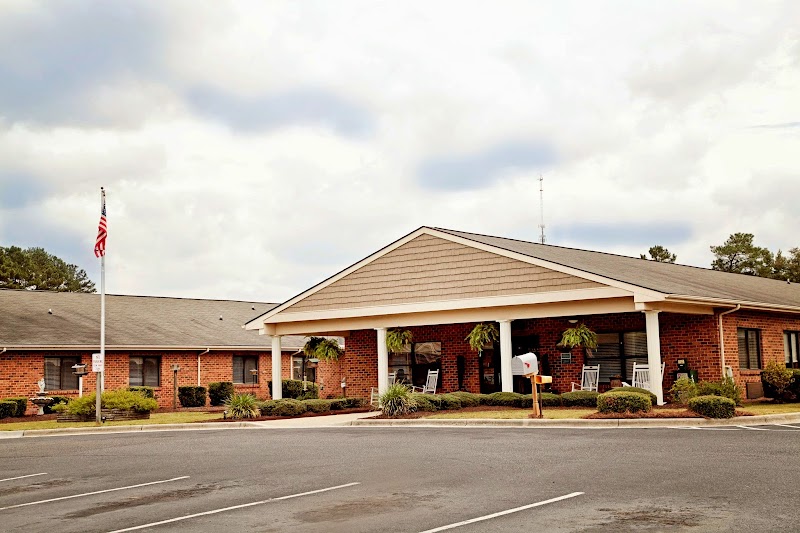
801 Pinehurst Avenue, Carthage, NC 28327 (910) 947-5155
For profit - Corporation 108 Beds PEAK RESOURCES, INC. Data: November 2025
Trust Grade
68/100
#112 of 417 in NC
Last Inspection: August 2024

Within standard 12-15 month inspection cycle. Federal law requires annual inspections.

Overview

Peak Resources - Pinelake in Carthage, North Carolina has a Trust Grade of C+, indicating it is slightly above average, though not exceptional. It ranks #112 out of 417 facilities in North Carolina, placing it in the top half, and #2 out of 7 in Moore County, meaning it has just one local competitor that performs better. The facility is showing improvement, with reported issues decreasing from 5 in 2023 to 2 in 2024. Staffing is a concern, rated at only 2 out of 5 stars, with a turnover rate of 44%, which is slightly better than the state average but still indicates challenges in retaining staff. The facility has incurred $7,901 in fines, an average amount, which suggests some compliance issues. They provide more RN coverage than many facilities, ensuring better oversight of resident care. Specific incidents highlighted by inspectors include a serious fall resulting in a hip fracture for a resident during incontinence care, and failures to properly address repeated resident concerns during council meetings. While there are notable strengths, such as good RN coverage and an improving trend, families should weigh these against the staffing challenges and past incidents.

Trust Score
C+
68/100
In North Carolina
#112/417
Top 26%
Safety Record
Moderate
Needs review
Inspections
Getting Better
5 → 2 violations
Staff Stability
○ Average
44% turnover. Near North Carolina's 48% average. Typical for the industry.
Penalties
○ Average
$7,901 in fines. Higher than 71% of North Carolina facilities. Some compliance issues.
Skilled Nurses
⚠ Watch
Each resident gets only 23 minutes of Registered Nurse (RN) attention daily — below average for North Carolina. Fewer RN minutes means fewer trained eyes watching for problems.
Violations
⚠ Watch
17 deficiencies on record. Higher than average. Multiple issues found across inspections.
★★★★☆
4.0
Overall Rating
★★☆☆☆
2.0
Staff Levels
★★★☆☆
3.0
Care Quality
★★★★☆
4.0
Inspection Score
Stable
2023: 5 issues
2024: 2 issues

The Good

  • Full Sprinkler Coverage · Fire safety systems throughout facility
  • No fines on record
  • Staff turnover below average (44%)

    4 points below North Carolina average of 48%

Facility shows strength in fire safety.

The Bad

Staff Turnover: 44%

Near North Carolina avg (46%)

Typical for the industry

Federal Fines: $7,901

Below median ($33,413)

Minor penalties assessed

Chain: PEAK RESOURCES, INC.

Part of a multi-facility chain

Ask about local staffing decisions and management

The Ugly 17 deficiencies on record

1 actual harm
Aug 2024 2 deficiencies
CONCERN (D)

Potential for Harm - no one hurt, but risky conditions existed

Deficiency F0637 (Tag F0637)

Could have caused harm · This affected 1 resident

**NOTE- TERMS IN BRACKETS HAVE BEEN EDITED TO PROTECT CONFIDENTIALITY** Based on staff interviews and record review, the facility failed to identify the need for a significant change Minimum Data Set ...

Read full inspector narrative →
**NOTE- TERMS IN BRACKETS HAVE BEEN EDITED TO PROTECT CONFIDENTIALITY** Based on staff interviews and record review, the facility failed to identify the need for a significant change Minimum Data Set (MDS) for a resident with declines in weight, skin condition and activities of daily living. This was for 1 (Resident #37) of 20 residents reviewed for comprehensive MDS completion. The findings included: Resident #37 was admitted on [DATE] with Dementia, Diabetes and Congestive Heart Failure. He was diagnosed with Osteomyelitis on 7/25/24. His previous quarterly MDS dated [DATE] indicated Resident #37 was not coded for any weight loss, a weight of 220 pounds, no skin conditions, requiring supervision for bed mobility, lying to sit to stand , stand to sit to lying, toileting transfers, ambulation and not coded for the use of a wheelchair. Review of a wound consult note dated 6/12/24 read Resident #37 developed a diabetic ulcer to his right first and second toes. Review of another wound consult note dated 7/24/24 read Resident #37 was diagnosed with Osteomyelitis of his right first and second toes and a midline intravenous catheter was ordered and placed for intravenous antibiotics on 7/26/24. Resident #37 most recent quarterly MDS dated [DATE] indicated Resident #37 was coded for unprescribed weight loss, a weight of 207, an infected diabetic foot ulcer, coded for the use of antibiotics, intravenous medications, substantial to maximum assistance with bed mobility, lying to sit and sit to lying, total dependence for sit to stand, stand to sit, toilet transfers, not applicable for ambulation and requiring partial to moderate staff assistant in a wheelchair. An interview was completed on 8/21/24 at 9:40 AM with MDS Nurse #1 who reviewed the areas of change from her 5/14/24 quarterly assessment to the most recent quarterly assessment dated [DATE]. She stated a significant change MDS should have been completed rather than a quarterly MDS on 7/29/24 and was definitely needed for Resident #37. An interview was completed on 8/21/24 at 10:00 AM with the Administrator. He reviewed the areas of change in Resident #37 and stated a significant change MDS should have already been completed on Resident #37 and he would see that one was started as of today.
MINOR (B)

Minor Issue - procedural, no safety impact

Staffing Information (Tag F0732)

Minor procedural issue · This affected multiple residents

Based on record review and staff interviews, the facility failed to display accurate Posted Nurse Staffing Information for 4 out of 30 days reviewed. The findings included: A review of the Staff Sched...

Read full inspector narrative →
Based on record review and staff interviews, the facility failed to display accurate Posted Nurse Staffing Information for 4 out of 30 days reviewed. The findings included: A review of the Staff Schedule/Assignment Sheet for 07/19/24 revealed 10 Nursing Assistants (NA)s worked from 7:00 AM until 7:00 PM. A review of the Posted Nurse Staffing for the 7:00 AM-7:00 PM shift on 7/19/24 revealed 11 NAs worked. On 07/21/24 during the 7:00 AM until 7:00 PM shift, the Staff Schedule/Assignment Sheet revealed 8 NAs worked and the Posted Nurse Staffing revealed 10 NAs worked. Additionally, the Staff Schedule/Assignment Sheet revealed 3 Licensed Practical Nurses (LPN)s worked and the Posted Nurse Staffing revealed 4 LPNs worked. The Staff Schedule/Assignment Sheet revealed 1 Registered Nurse (RN) worked and the Posted Nurse Staffing revealed 2 RNs worked. During the 7:00 PM until 7:00 AM shift, the Staff Schedule/Assignment Sheet revealed 5 NAs worked and the Posted Nurse Staffing revealed 7 NAs worked. The Staff Schedule/Assignment Sheet revealed 4 LPNs worked and the Posted Nurse Staffing revealed 2 LPNs worked. The Staff Schedule/Assignment Sheet revealed no RN worked and the Posted Nurse Staffing revealed 1 RN worked. On 07/22/24 during the 7:00 AM until 7:00 PM shift, the Staff Schedule/Assignment Sheet revealed 10 NAs worked and the Posted Nurse Staffing revealed 8 NAs worked. Additionally, the Staff Schedule/Assignment Sheet revealed 2 RNs worked and the Posted Nurse Staffing revealed 1 RN worked. During the 7:00 PM until 7:00 AM shift, the Staff Schedule/Assignment Sheet revealed 7 NAs worked and Posted Nurse Staffing revealed 6 NAs worked, and the Staff Schedule/Assignment Sheet revealed 1 RN worked and Posted Nurse Staffing revealed 2 RNs worked. On 07/23/24 during the 7:00 AM until 7:00 PM shift, the Staff Schedule/Assignment Sheet revealed 8 NAs worked and the Posted Nurse Staffing revealed 11 NAs worked. The Staff Schedule/Assignment Sheet revealed 4 LPNs worked and the Posted Nurse Staffing revealed 3 LPNs worked. The Staff Schedule/Assignment Sheet revealed 1 RN worked and the Posted Nurse. Staffing revealed 2 RNs worked. During the 7:00 PM until 7:00 AM shift, the Staff Schedule/Assignment Sheet revealed 6 NAs worked and the Posted Nurse Staffing revealed 5 NAs worked. The assignment sheet revealed 3 LPNs worked and the Posted Nurse Staffing revealed 2 LPNs worked. The Staff Schedule/Assignment Sheet revealed no RN worked and the Posted Nurse Staffing revealed 2 RNs worked. An interview on 08/21/24 at 8:59 AM was conducted with the Human Resource Coordinator. She stated she was responsible for completing the daily staff posting sheet based on the actual working assignment sheet for the day and posting them in a viewable area. She verified that the number of licensed and unlicensed staff and the total hours worked for licensed and unlicensed staff were incorrect for 4 out of 30 days. She verified staffing sheets for 7/19/24, 7/21/24, 7/22/24 and 7/23/24 did not match the staff posting sheets. She then stated for the staffing sheet on 07/19/24 an unlicensed staff was counted twice which made the count incorrect. She explained it appeared on 07/21/24 and 07/22/24 she got the dates mixed up which resulted in the number of licensed and unlicensed staff and the total hours worked to be incorrect. She verified the staff posting sheets compared to the assignment sheets for 07/23/24 did not match and stated she was not sure what happened and why the count was incorrect. An interview was conducted on 08/21/24 at 8:39 AM with the Administrator. He stated he expected the daily nurse staff sheets, and the assignment sheets should accurately reflect the correct number of staff working.
Nov 2023 5 deficiencies 1 Harm
SERIOUS (G) 📢 Someone Reported This

A family member, employee, or ombudsman was alarmed enough to file a formal complaint

Actual Harm - a resident was hurt due to facility failures

Accident Prevention (Tag F0689)

A resident was harmed · This affected 1 resident

**NOTE- TERMS IN BRACKETS HAVE BEEN EDITED TO PROTECT CONFIDENTIALITY** Based on record review, observations and staff interviews, the facility failed to provide care in a safe manner during incontine...

Read full inspector narrative →
**NOTE- TERMS IN BRACKETS HAVE BEEN EDITED TO PROTECT CONFIDENTIALITY** Based on record review, observations and staff interviews, the facility failed to provide care in a safe manner during incontinence care that resulted in a fall with a right hip fracture (Resident #17). This was for 1 of 6 residents reviewed for accidents. The findings included: Resident #17 was admitted to the facility on [DATE] with diagnoses that included vascular dementia, seizure disorder and a history of a stroke resulting in left-sided weakness. The annual Minimum Data Set (MDS) assessment dated [DATE] indicated Resident #17 had moderately impaired cognition and was dependent on one staff member for personal hygiene and toileting tasks. A quarterly MDS assessment dated [DATE] indicated Resident #17 was dependent on one staff member for toileting tasks. Resident #17 was care planned on 7/21/23 for an actual fall. The interventions included: - emergency room visit and staff education implemented on 7/21/23. - Concave mattress implemented on 7/26/23. A nursing note dated 7/20/23 at 7:22 PM read a Nurse Aide (NA) reported a witnessed fall while doing personal care with Resident #17. The NA attempted to roll Resident #17 as part of care and was observed rolling out of bed and onto the floor. Resident #17 was complaining of right hip and right head pain. She was alert and oriented. The physician was notified and provided an order to send to the emergency room (ER) for further evaluation. Review of the hospital records from 7/20/23 through 7/26/23 indicated that Resident #17 was seen in the ER following a fall from the bed while she was being changed and was found to have a closed fracture of the right hip. Surgical intervention was completed on 7/21/23. A review of the Summary of Investigation dated 7/21/23 indicated Resident #17's incident occurred at 6:30 PM and that during incontinence care the NA attempted to roll Resident #17 as part of care and rolled out of the bed and onto the floor. She had complaints of right hip and head pain. During the assessment the right hip appeared to be externally rotated and her right leg was shortened. The interventions included sending Resident #17 to the ER, staff education on turning and rolling residents in the bed and initiating a two person assist with incontinence care for Resident #17. On 11/28/23 at 1:23 PM, an interview occurred with Resident #17 who was able to recall the details of the incident on 7/20/23. She verified that prior to the fall from the bed only one NA assisted her with incontinence care. Stated on 7/20/23, the NA was providing incontinence care, rolled her to the right side of her body and she just kept rolling and ended up on the floor. A phone interview occurred with NA #3 on 11/28/23 at 3:24 PM. She explained on 7/20/23 she was providing incontinence care to Resident #17, rolled her to face the window and her back towards the NA. NA #3 stated she had one hand on Resident #17's side and was using the other hand to provide hygiene, when suddenly Resident #17 lunged forward. NA #3 tried to hold onto Resident #17 was but unsuccessful and ended up falling to the floor. NA #3 stated she immediately retrieved the nurse. A phone interview occurred with Nurse #1 on 11/29/23 at 3:07 PM. She recalled Resident #17's fall on 7/20/23 and explained she was retrieved by the NA. When she entered the room, Resident #17 was lying on the floor beside her bed. She was able to recall the aide and resident both stated incontinence care was being rendered when the fall occurred. During the assessment it was noted her leg was turned inwards and appeared shorter than the other one. Resident #17 was complaining of leg pain as well. 911 was called immediately for further evaluation at the ER. The corrective action for the past non-compliance dated 7/20/23 was as follows: NA #3 went into Resident #17's room to change her and when turning Resident #17 away from her she rolled out of bed. Nurse #1 was called to the room to assess Resident #17 who was lying on her right side on the floor beside her bed. The nursing staff called 911 for an ER evaluation. Under further assessment by the ER, Resident #17 was found to have a right hip fracture. The physician, Director of Nursing (DON) and Resident #17's responsible party were notified of the fall and being sent to the ER for evaluation. Identification of Other Residents: On 7/21/23, the DON, clinical supervisor, staff development coordinator and therapy completed a 100% audit of all the residents in the facility to assess if they need to be a one person or two-person assistance for incontinence care and bed mobility. 26 out of 83 residents were deemed to need two-person assistance with Activities of Daily Living (ADLs). On 7/21/23 the MDS Nurse updated the care plans and resident profiles to reflect the residents that needed two-person assistance with ADLs. 100% of all care plans were in compliance for the level of needed assistance. Systemic Changes: Education began on 7/20/23 at 6:55 PM by Nurse Supervisor #1 to NA #3, all the current staff working and the on-coming staff for the 7:00 PM shift regarding bed positioning and safe provision of care. Education needed to be completed no later than 7/21/23 for all licensed nurses and aides, or the staff person would not be allowed to work until the training was completed. Quality Assurance: The DON, nurse supervisor, staff development coordinator and MDS nurse were responsible for the ongoing monitoring of proper rolling procedures and safe provision of care were completed weekly for four weeks and monthly for two months. The monitoring included observations of 4 or more aides on various shifts to include the weekends. Reports were presented to the monthly quality assurance (QA) committee to ensure compliance and corrective action. The date of compliance was 7/21/23. As part of the validation process, the plan of correction was reviewed and verified through review of the audit sheet, the in-service records, and staff interviews. An observation was conducted on 11/29/23 of staff completing incontinence care to Resident #17. Two staff members were present to provide the necessary care. Other observations were conducted on 11/27/23, 11/28/23 and 11/29/23 of staff completing care on residents while they were in the bed. Staff were observed to provide the necessary care with either one or two people as stated in the care plan and resident profiles. Interviews with the staff involved with the incident dated 7/20/23 were completed and with current staff. Interviews revealed they had received in-service education on the provision of safe care with incontinence care. The validation process verified the facility's date of compliance of 7/21/23.
MINOR (B)

Minor Issue - procedural, no safety impact

Transfer Notice (Tag F0623)

Minor procedural issue · This affected multiple residents

**NOTE- TERMS IN BRACKETS HAVE BEEN EDITED TO PROTECT CONFIDENTIALITY** 4. Resident #17 was admitted to the facility on [DATE]. A quarterly Minimum Data Set (MDS) assessment dated [DATE] indicated Re...

Read full inspector narrative →
**NOTE- TERMS IN BRACKETS HAVE BEEN EDITED TO PROTECT CONFIDENTIALITY** 4. Resident #17 was admitted to the facility on [DATE]. A quarterly Minimum Data Set (MDS) assessment dated [DATE] indicated Resident #17 had moderately impaired cognition. Resident #17's medical record revealed she was transferred to the hospital on 7/20/23 and was readmitted back to the facility on 7/26/23. There was no documentation that a written notice of transfer was provided to the resident and/or responsible party (RP). The Administrator was interviewed on 11/28/23 at 2:20 PM and stated when a resident was transferred to the hospital the bed hold policy was sent with them, the RP would be notified via phone regarding the transfer and nursing notes would indicate the reason for the transfer. He indicated he was unaware that written notifications regarding the reason for the hospital transfer was required. 5. Resident #87 was admitted to the facility on [DATE]. The admission Minimum Data Set (MDS) assessment dated [DATE] indicated Resident #87 had severe cognitive impairment. Resident #87's medical record revealed she was transferred to the hospital on [DATE] and did not return to the facility. There was no documentation that a written notice of transfer was provided to the resident and/or responsible party (RP). The Administrator was interviewed on 11/28/23 at 2:20 PM and stated when a resident was transferred to the hospital the bed hold policy was sent with them, the RP would be notified via phone regarding the transfer and nursing notes would indicate the reason for the transfer. He indicated he was unaware that written notifications regarding the reason for the hospital transfer was required. Based on record review, Responsible Party (RP) and staff interviews, the facility failed to notify the resident and/or RP in writing for a transfer to the hospital for 5 (Resident #90, #49, #39, #17, #87) of 6 residents reviewed for hospitalization. The findings included: 1. Resident #90 was admitted to the facility on [DATE]. Review of a quarterly Minimum Data Set, dated [DATE] indicated Resident #90 was coded for moderate cognitive impairment. Resident #90's medical record revealed she was transferred to the hospital on 9/30/22 and readmitted back to the facility on [DATE]. There was no documentation that a written notice of transfer was provided to the resident and/or RP. Resident #90's medical record revealed she was transferred to the hospital on 3/22/23 and she did not return to the facility. There was no documentation that a written notice of transfer was provided to the resident and/or RP. A telephone interview was completed on 11/27/23 at 2:46 PM with Resident #90's RP. She stated she did not recall receiving anything in writing from the facility about the reason Resident #90 was transferred to the hospital on 9/30/22 and 3/22/23 but was notified in person. An interview on 11/28/23 at 2:20 PM was completed with the Administrator. He stated when a resident was transferred to the hospital the bed hold policy was sent with them, the RP would be notified via phone regarding the transfer and nursing notes would indicate the reason for the transfer. The Administrator stated he was unaware that written notifications regarding the reason for the hospital transfer were required. 2. Resident #49 was admitted to the facility 7/21/22. Review of the quarterly Minimum Data Set, dated [DATE] indicated Resident #49 was coded for severe cognitive impairment. Resident #49's medical record revealed she was transferred to the hospital on 9/4/22 and readmitted back to the facility on 9/8/23. There was no documentation that a written notice of transfer was provided to the resident and/or RP. A telephone interview was completed on 11/29/23 at 9:50 AM with Resident #49's Responsible Party (RP). She stated she did not recall receiving anything in writing from the facility about the reason Resident #49 was transferred to the hospital on 9/4/23 but the facility did call her. An interview on 11/28/23 at 2:20 PM was completed with the Administrator. He stated when a resident was transferred to the hospital the bed hold policy was sent with them, the RP would be notified via phone regarding the transfer and nursing notes would indicate the reason for the transfer. The Administrator stated he was unaware that written notifications regarding the reason for the hospital transfer were required. 3. Resident #39 was admitted to the facility on [DATE]. Review of the quarterly Minimum Data Set, dated [DATE] indicated Resident #39 was coded for severe cognitive impairment. Resident #39's medical record revealed she was transferred to the hospital on [DATE] and readmitted to the facility on [DATE]. There was no documentation that a written notice of transfer was provided to the resident and/or RP. A telephone interview was completed on 11/29/23 at 11:55 AM with Resident #39's Responsible Party (RP). He stated he did not recall receiving anything in writing from the facility about the reason Resident #39 was transferred to the hospital on [DATE] but the facility did call him. An interview on 11/28/23 at 2:20 PM was completed with the Administrator. He stated when a resident was transferred to the hospital the bed hold policy was sent with them, the RP would be notified via phone regarding the transfer and nursing notes would indicate the reason for the transfer. The Administrator stated he was unaware that written notifications regarding the reason for the hospital transfer were required.
MINOR (B)

Minor Issue - procedural, no safety impact

Assessment Accuracy (Tag F0641)

Minor procedural issue · This affected multiple residents

**NOTE- TERMS IN BRACKETS HAVE BEEN EDITED TO PROTECT CONFIDENTIALITY** Based on record reviews and staff interviews, the facility failed to code the Minimum Data Set (MDS) assessment accurately in th...

Read full inspector narrative →
**NOTE- TERMS IN BRACKETS HAVE BEEN EDITED TO PROTECT CONFIDENTIALITY** Based on record reviews and staff interviews, the facility failed to code the Minimum Data Set (MDS) assessment accurately in the area of medications for 2 of 5 residents reviewed for unnecessary medications (Residents #22 and #73). The findings included: 1. Resident #22 was admitted to the facility on [DATE] with diagnoses that included type 2 diabetes. The admission MDS assessment dated [DATE] indicated Resident #22 had received 5 days of an insulin injection, however the assessment was not coded for hypoglycemic (medications to treat diabetes) medications or an indication present for its use. On 11/29/23 at 1:30 PM, an interview occurred with the MDS Nurse. She reviewed the MDS assessment dated [DATE] and confirmed she should have marked Resident #22 as receiving a hypoglycemic medication and that there was an indication for its use in his medical record. She felt it was an oversight. During an interview with the Administrator on 11/29/23 at 3:30 PM, he indicated he expected the MDS assessment to be coded accurately. 2. Resident #73 was admitted to the facility on [DATE] with diagnoses that included type 2 diabetes. A quarterly MDS assessment dated [DATE] indicated Resident #73 had received 7 days of an insulin injection, however the assessment was not coded for hypoglycemic (medications to treat diabetes) medications or an indication present for its use. On 11/29/23 at 1:30 PM, an interview occurred with the MDS Nurse. She reviewed the MDS assessment dated [DATE] and confirmed she should have marked Resident #22 as receiving a hypoglycemic medication and that there was an indication for its use in his medical record. She felt it was an oversight. During an interview with the Administrator on 11/29/23 at 3:30 PM, he indicated he expected the MDS assessment to be coded accurately.
MINOR (B)

Minor Issue - procedural, no safety impact

Deficiency F0657 (Tag F0657)

Minor procedural issue · This affected multiple residents

**NOTE- TERMS IN BRACKETS HAVE BEEN EDITED TO PROTECT CONFIDENTIALITY** Based on record review and staff interviews, the facility failed to revise the care plan in the area of planned disposition for ...

Read full inspector narrative →
**NOTE- TERMS IN BRACKETS HAVE BEEN EDITED TO PROTECT CONFIDENTIALITY** Based on record review and staff interviews, the facility failed to revise the care plan in the area of planned disposition for 1 of 18 resident's (Resident #16) reviewed. The findings included: Resident # 16 was admitted to the facility on [DATE] with diagnoses that included atrial fibrillation (irregular heart rate) and history of intracerebral hemorrhage (stroke) with hemiparesis (paralysis of one side). The resident's medical record indicated the resident was transitioned to comfort care 11/2/2023. The resident's active physician orders included atropine for terminal secretions, Ativan for terminal agitation, and morphine for pain. Resident #16's care plan was last revised 11/27/2023. The care plan included a focus for comfort measures dated 10/11/2023. The care plan also included a focus for discharge planning dated 10/4/2023 which included the resident was to be discharged from the facility. Interventions included arrange for home modifications, follow up appointment with primary care provider, and make referrals for home care as needed. On 11/29/2023 at 12:45PM an interview was conducted with the Minimum Data Set (MDS) Nurse. She reviewed Resident #16's care plan and stated she should have revised the care plan. The resident was on comfort measures and there was no intention to discharge him home at that time. She stated it was an oversight and she would update the care plan immediately. During an interview with the Administrator on 11/30/2023 at 8:45AM he stated he believed the failure to revise the care plan was and error and had been updated as of that date.
MINOR (B)

Minor Issue - procedural, no safety impact

QAPI Program (Tag F0867)

Minor procedural issue · This affected multiple residents

Based on observations, record review, resident and staff interviews the facility's Quality Assurance and Performance Improvement (QAPI) committee failed to maintain implemented effective procedures an...

Read full inspector narrative →
Based on observations, record review, resident and staff interviews the facility's Quality Assurance and Performance Improvement (QAPI) committee failed to maintain implemented effective procedures and monitor the interventions that the committee put into place following recertification survey dated 4/8/21 for two deficiencies in the area of accurate Minimum Data Set (MDS) coding at F641 and in the supervision to prevent accidents at F689. Also, the recertification survey dated 9/22/22 for one deficiency in the area of care plan revision F657. The continued failure of the facility during three federal surveys of record showed a pattern of the facility's inability to sustain an effective QAPI program. Findings included. This tag is cross referenced to: F641- Based on record reviews and staff interviews, the facility failed to code the Minimum Data Set (MDS) assessment accurately in the area of medications for 2 of 5 residents reviewed for unnecessary medications (Residents #22 and #73). During a recertification survey dated 4/8/21, the facility failed to code the Minimum Data Set (MDS) assessment accurately in the activities of daily living (ADLs), bowel and bladder and medications. F657-Based on record review and staff interviews, the facility failed to revise the care plan in the area of planned disposition for 1 of 18 resident's reviewed. During a recertification survey dated 9/22/22, the facility failed to individualize the care plan for a resident reviewed for accidents. F689 - Based on record review, observations and staff interviews, the facility failed to provide care in a safe manner during incontinence care that resulted in a fall with a right hip fracture (Resident #17). This was for 1 of 6 residents reviewed for accidents. During a recertification survey dated 4/8/21, the facility failed to prevent a resident who had cognitive impairment and known wandering behaviors from exiting the facility unsupervised at night. The resident exited the facility unsupervised and self-propelled himself by wheelchair approximately 0.16 miles away from the facility on a roadway that had no sidewalks. An interview was completed on 11/29/23 at 3:20 PM with the Administrator. He was unable to offer any reason for the repeat citation for accurate MDS coding and care plan revision. He also stated the facility completed a complete plan of correction at the time of the incident involving unsafe incontinence care resulting in a fall with injury.
Sept 2022 10 deficiencies
CONCERN (D)

Potential for Harm - no one hurt, but risky conditions existed

Deficiency F0554 (Tag F0554)

Could have caused harm · This affected 1 resident

**NOTE- TERMS IN BRACKETS HAVE BEEN EDITED TO PROTECT CONFIDENTIALITY** Based on observations, staff and resident interviews and record review, the facility failed to assess and obtain Physician order...

Read full inspector narrative →
**NOTE- TERMS IN BRACKETS HAVE BEEN EDITED TO PROTECT CONFIDENTIALITY** Based on observations, staff and resident interviews and record review, the facility failed to assess and obtain Physician orders for the self-administration of an as needed (prn) inhaler and a scheduled inhaler for 1 (Resident #23) of 1 residents reviewed for the self-administration. The findings included: Resident #23 was admitted on [DATE] with a diagnosis of Chronic Obstructive Pulmonary Disease (COPD). Her quarterly Minimum Data Set (MDS) dated [DATE] indicated she was cognitively intact. Review of Resident #23's care plan edited on 7/25/22 read she request to keep her prn inhaler at the bedside. Interventions included to evaluate for her continued ability to self-administer the inhaler at least quarterly. An observation was completed on 9/19/22 at 11:32 AM. Resident #23 was in bed and lying on her over the bed table were observed 2 inhalers ( Combivent and Ventolin). They were not in original box indicating the prescribers directions for use. Resident #23 stated she was allowed to keep both inhalers at her bedside due to her COPD. Review of Resident #23's September 2022 Physician orders included an order dated 7/22/22 for Combivent Respimat 2 puffs for inhalation three times daily for COPD and another order dated 9/12/22 for Ventolin 2 puff for inhalation every 6 hours as needed for wheezing or shortness of breath. There were no orders for the self-administration of either inhalers. An interview was completed on 9/21/22 at 10:40 AM with MDS Nurse #1. She stated Resident #23 had been assessed previously on 4/7/21 for the self-administration of her Ventolin inhaler but when she went out to the hospital on 9/22/21, the self-administration order was discontinued. MDS Nurse #1 stated previously the process for residents who self-administrated any medication were assessed by the previous Director of Nursing (DON) to ensure the resident was safe to self-administer and aware of the need to safely store the medication. She stated she was uncertain if the current DON was responsible for obtaining the order and completing the self-administration assessment. An interview was completed on 9/21/22 at 2:37 PM with Nurse #8. She stated Resident #23 administered her own inhalers and kept them at her bedside. She stated she was not aware who was responsible to assess and obtain Physician orders for the self-administration of medications. An interview as completed on 9/21/22 at 2:40 PM with the DON. She stated she had been the facility DON since December 2021 and was informed yesterday by MDS Nurse #1 that the previous DON completed the self-administration assessments and obtained the Physician order. She stated she had not been doing it. An interview was completed on 9/22/22 at 10:30 AM with the Administrator and the DON. Both stated it was their expectation that a self-administration assessment be completed anytime a resident request to self-administer any medication, routinely reassess and obtain a Physician order. An interview was completed on 9/22/22 at 10:50 AM with the Medical Director. He stated it was his expectation that the facility complete and routinely reassess and obtain an order for the safety of Resident #23's self-administration of her inhalers.
CONCERN (D)

Potential for Harm - no one hurt, but risky conditions existed

Quality of Care (Tag F0684)

Could have caused harm · This affected 1 resident

**NOTE- TERMS IN BRACKETS HAVE BEEN EDITED TO PROTECT CONFIDENTIALITY** Based on record reviews, resident and staff interviews, the facility failed to provide treatments as ordered by the physician fo...

Read full inspector narrative →
**NOTE- TERMS IN BRACKETS HAVE BEEN EDITED TO PROTECT CONFIDENTIALITY** Based on record reviews, resident and staff interviews, the facility failed to provide treatments as ordered by the physician for a non-pressure related surgical wound on the left hip for 1 of 2 residents reviewed for wounds (Resident #236). The findings included: Resident #236 was admitted on [DATE] with diagnoses that included stage 3 pressure injury to the sacrum, deep tissue injury (DTI) to the right great toe, and non-pressure related surgical wound to the left hip. The resident's Minimum Data Set (MDS) was not available. Resident #236's baseline care plan dated 9/12/2022 had a focus for pressure injury, stage 3, to the sacrum, deep tissue injury to the right great toe, and non-pressure related surgical wound to the left hip. The resident's active physician's orders revealed an order dated 9/8/2022 to clean surgical wound to right hip with normal saline, pack with Dakins soaked gauze, and cover with dry dressing twice daily. Resident #236's September 2022 Medication Administration Record (MAR) was reviewed and revealed the wound care to the resident's left hip had not been documented as completed or refused on the following dates: 9/8/2022 (7:00 PM to 7:00 AM) 9/9/2022 (7:00 PM to 7:00 AM) 9/10/2022 (7:00 PM to 7:00 AM) Review of nursing progress notes did not indicate Resident #236 refused wound care treatment on 9/8/2022, 9/9/2022 or 9/10/2022. On 9/19/2022 at 10:56 AM an interview was conducted with Resident #236. He stated wound care to his left hip was not completed twice daily. Attempts to contact Nurse #10, assigned to Resident #236 on night shift 9/8/2022 were not successful. Nurse #10 documented she did not complete wound care because wound care order did not specify what strength of Dakins solution to use on the wound. On 9/21/2022 at 1:28 PM a telephone interview was conducted with Nurse #9. She stated she was assigned to Resident #236 on 9/9/2022 and she did not complete the wound treatment to the left hip because there was no clarification to what strength of Dakins solution to use on the wound. She further stated she did not call anyone or look at the resident's discharge summary for clarification. Attempts to contact Nurse #7, assigned to Resident #236 on night shift 9/10/2022 were not successful. Nurse #7 documented she did not complete wound care due to waiting on clarification. On 9/22/2022 at 10:33 AM an interview was conducted with the Director of Nursing (DON). She stated to her knowledge there was only one strength of Dakins solution on the treatment cart. She further stated she expected nursing staff to call her or the treatment nurse immediately if wound care orders needed clarification.
CONCERN (D)

Potential for Harm - no one hurt, but risky conditions existed

Respiratory Care (Tag F0695)

Could have caused harm · This affected 1 resident

**NOTE- TERMS IN BRACKETS HAVE BEEN EDITED TO PROTECT CONFIDENTIALITY** Based on record review, observations, and staff interviews, the facility failed to obtain a Physician's order for a resident's u...

Read full inspector narrative →
**NOTE- TERMS IN BRACKETS HAVE BEEN EDITED TO PROTECT CONFIDENTIALITY** Based on record review, observations, and staff interviews, the facility failed to obtain a Physician's order for a resident's use of continuous oxygen (Residents #33 and #68). This was for 2 of 2 residents reviewed for respiratory care. The findings included: 1. Resident #33 was initially admitted to the facility on [DATE] with the most recent readmission date of 9/9/22. Her diagnoses included chronic obstructive pulmonary disease (COPD) and coronary artery disease. An admission Minimum Data Set (MDS) assessment, dated 7/7/22, indicated Resident #33 had severe cognitive impairment. Review of the nursing progress notes revealed on 8/21/22, Resident #33 had low oxygen saturations and was started on oxygen at 2 liters flow by nasal cannula. On 8/22/22 Resident #33 was sent to the emergency room (ER) for further evaluation of shortness of breath and increased fatigue and was admitted to the hospital and readmitted to the facility on [DATE]. Review of the August 2022 physician orders included an order for oxygen at 2 liters via nasal cannula to maintain oxygen saturations above 90% every shift, as needed. The order was dated 8/21/22 and discontinued on 8/29/22. There were no orders for oxygen at 2 liters from 8/29/22 to 8/31/22. Review of the hospital Discharge summary dated [DATE] revealed Resident #33 would be on 2 liters of oxygen due to COPD. A nursing progress note dated 9/4/22 indicated Resident #33 was transferred to the hospital for a condition unrelated to her COPD and was readmitted to the facility on [DATE]. Review of the hospital Discharge summary dated [DATE] indicated Resident #33 was on 2 liters of oxygen due to her COPD. A review of the September 2022 physician orders did not include an order for the use of oxygen at 2 liters. A review of Resident #33's medical record revealed physician progress notes dated 9/15/22 and 9/19/22 indicated oxygen was in place at 2 liters. In an observation on 9/19/22 at 9:40 AM, Resident #33 was lying in bed with oxygen running at 2 liters via concentrator. Resident #33 was observed lying in bed watching TV on 9/20/22 at 3:05 PM. Oxygen was being used at 2 liters via a concentrator. In an interview on 9/20/22 at 3:50 PM, the Clinical Care Coordinator (CCC) stated oxygen could be initiated as needed per standing orders when a resident was in need, however the physician should be notified after oxygen was started and an order written for the use of oxygen. She stated Resident #33 was using oxygen continuously. After reviewing Resident #33's medical record, the CCC confirmed an order for oxygen was not in place and felt like it had fallen off the physician orders due to recent hospitalizations. 2. Resident #68 was admitted to the facility on [DATE] with multiple diagnosis including dementia and basal cell carcinoma of skin. The quarterly Minimum Data Set (MDS) assessment dated [DATE] indicated that Resident #68 had severe cognitive impairment. Review of Resident #68's doctor's orders revealed that there was no order for the use of oxygen. A nurse's note dated 9/9/22 at 6:59 PM revealed that Resident #68's oxygen saturation was 83% at bedtime and oxygen at 2 liters (L) per minute was administered via nasal canula (written by Nurse # 4). Nurse #4 was interviewed on 9/21/22 at 11:18 AM. She verified that she was assigned to Resident #68 on 9/9/22 and remembered starting the oxygen due to low oxygen saturation. Nurse #4 reported that the facility has a standing order to start the oxygen at 2L per minute. She also indicated that she should have written the order for the use of the oxygen, but she forgot. Resident #68 was observed in bed on 9/19/22 at 10:47 AM and at 4:05 PM on oxygen at 3L/ minute via nasal canula. On 9/20/22 at 3:40 PM, MDS Nurse #1 observed and verified that Resident #68 was on oxygen at 3L per minute. Interview with the Registered Nurse (RN) Supervisor was conducted on 9/20/22 at 3:50 PM. She stated that the facility has a standing order for the use of oxygen. She indicated that the nurses could start the oxygen using the standing order, but the nurse must notify the physician and must write an order for the use of the oxygen including how many liters of oxygen per minute. The RN Supervisor reviewed Resident #68's doctor's orders and verified that that was no order for the use of the oxygen. She stated that she would ensure an order was written for the use of the oxygen for Resident #68. The Director of Nursing (DON) was interviewed on 9/22/22 at 10:38 AM. The DON stated that nurses were expected to write an order for the use of oxygen. She revealed that the facility has a standing order to use oxygen at 2L per minute via nasal canula and could be titrated, but it needs to have a doctor's order.
CONCERN (E)

Potential for Harm - no one hurt, but risky conditions existed

Deficiency F0565 (Tag F0565)

Could have caused harm · This affected multiple residents

Based on record review, resident, and staff interviews, the facility failed to communicate the facility's efforts to address group concerns verbalized during Resident Council meetings and to resolve r...

Read full inspector narrative →
Based on record review, resident, and staff interviews, the facility failed to communicate the facility's efforts to address group concerns verbalized during Resident Council meetings and to resolve repeat concerns for 4 of 4 consecutive months (May 2022, June 2022, July 2022, and August 2022). Findings included: Resident Council minutes dated 05/25/22 indicated residents had voiced concerns related to items listed on the meal ticket was not served, and condiments not provided on the meal trays. There was no evidence of the facility's response to the concerns voiced during the previous meeting had been reviewed or discussed. Resident Council minutes dated 06/23/22 indicated residents had voiced concerns related to Nursing Assistants (NAs) not returning to assist with requests and having more diabetic snacks available. There was no evidence of the facility's response to the concerns voiced during the previous meeting had been reviewed or discussed. Resident Council minutes dated 07/20/22 revealed a repeated concern of items listed on the meal ticket was not served. There was no evidence of the facility's response to the concerns voiced during the previous meeting had been reviewed or discussed. Resident Council minutes dated 08/20/22 indicated residents had voiced concerns related to being hurried by NAs when using the restroom and noodles being served without an accompanying side or entrée. There was no evidence of the facility's response to the concerns voiced during the previous meeting had been reviewed or discussed. The facility's concern log revealed no documented concerns from the Resident Council from May 2022 through August 2022. On 09/21/22 at 9:25AM an interview was conducted with the Resident Council group which consisted of 7 of 8 residents that participated in Resident Council regularly (Residents #76, #32, #18, #30, #11, #16 and #42). The group stated they did not receive feedback from staff when group concerns were voiced. They further voiced they have complained multiple times regarding snacks not being delivered or offered to them, call lights not answered in a timely manner, not receiving ice/water consistently, and not being able to choose the time of their scheduled shower. The residents present for the Resident Council interview expressed verbalize the same things every month, but nothing gets resolved. During an interview on 09/20/22 at 4:39PM the Activities Director (AD) revealed that when she received a complaint during the Resident Council meeting, she would write the grievance up with the resident name that first voiced the complaint. The AD further explained she did not document the complaint as a group grievance. The AD would then provide the individual grievance to the department that it related to. The responsible department would address the issues on the grievance and return the grievance forms to the Social Worker. The facility's response to the concerns voiced during the previous meeting were not reviewed or discussed during the following month's meeting. She was not aware of any repeat concerns voiced at the Resident Council meetings. An interview with the Social Worker on 09/21/22 at 2:26PM revealed that if a complaint was made in Resident Council the Activities Director would write the grievance form up with the individuals name who was making the original complaint. She stated if more than one individual was voicing a concern, the AD would write a separate grievance for each person. Group grievances were not captured during the Resident Council meeting. The grievance was then given to the department head that was responsible for the area of concern and then returned to her after completion for filing. She stated there was not a separate binder dedicated to Resident Council meetings, only individual grievances. Interview with the Director of Nursing (DON) and the Administrator on 09/22/22 at 10:31AM revealed that their expectation was for the AD to fill out a grievance for each person that had a complaint/grievance and distribute them to the department head to address. If more than 1 resident complained, then a grievance for each individual resident was to be filled out. The grievances should be resolved and then reviewed at the next Resident Council meeting. They were not aware of any repeat concerns voiced at the Resident Council meetings.
CONCERN (E)

Potential for Harm - no one hurt, but risky conditions existed

Pressure Ulcer Prevention (Tag F0686)

Could have caused harm · This affected multiple residents

**NOTE- TERMS IN BRACKETS HAVE BEEN EDITED TO PROTECT CONFIDENTIALITY** Based on record review, observations and interviews, the facility failed to ensure alternating pressure reducing mattresses were...

Read full inspector narrative →
**NOTE- TERMS IN BRACKETS HAVE BEEN EDITED TO PROTECT CONFIDENTIALITY** Based on record review, observations and interviews, the facility failed to ensure alternating pressure reducing mattresses were set according to the residents' weights for 3 of 10 residents (Residents #236, #78 and #68) reviewed for pressure injuries. The findings included: 1. Resident #236 was admitted on [DATE] with diagnoses that included stage 3 pressure injury to the sacrum, deep tissue injury (DTI) to the right great toe, and non-pressure related injury to the left great toe. The resident's Minimum Data Set (MDS) was not available. Resident #236's baseline care plan dated 9/12/2022 had a focus for pressure injury, stage 3, to the sacrum. The resident's medical record included a visit summary by the Wound Care Physician dated 9/14/2022. The summary indicated Resident #236 had a full thickness injury to the sacrum that measured .05 x .05 x 0.2 centimeters (cm). The etiology of the injury was pressure, and it was stage 3. During a wound care observation on 9/20/2021at 11:50 AM the resident was on an alternating pressure reducing mattress. The mattress was set on 250 pounds (lbs). After the wound care observation, the treatment nurse was interviewed. When asked how the alternating pressure reducing mattress should be set, she stated it should be set to the resident's weight. The treatment nurse observed the mattress to be set at 250 lbs. and stated she thought the resident was 250 lbs. She stated she checked the mattress for function, but she did not check the settings. She further stated the nursing supervisor was responsible for making sure the mattresses were set correctly according to the resident's weight. Resident #236's medical record indicated he was weighed on 9/16/2022 and was 188.7 lbs. On 9/20/2022 at 3:50 PM an interview was conducted with the nursing supervisor. She stated she was responsible for checking the alternating pressure reducing air mattresses for proper settings. She further stated she completed a check weekly. She checked the mattresses last week but had not checked them this week. She did not know why or how the mattress settings got changed. An interview was conducted with the Wound Care Physician on 9/21/2022 at 11:55 AM. He stated the alternating pressure reducing mattresses should be set according to the resident's weight unless the manufacturer's recommendations stated otherwise. On 9/22/2022 at 10:33 AM, an interview was conducted with the Director of Nursing (DON). She stated the staff may have turned the settings up when they provided incontinence care and forgot to place them back on the correct setting when they were done. She stated she expected the alternating pressure reducing mattresses to be set according to the resident's weight. 2. Resident #78 was admitted to the facility on [DATE] with diagnoses that included intracerebral hemorrhage and a pressure ulcer of the sacral region. Resident #78's active physician orders included an order dated 7/26/19 for a pressure relieving specialty mattress. Assess for inflation and proper functioning twice a day. Resident #78's weight on 7/13/22 was 145.2 pounds (lbs.). A quarterly Minimum Data Set (MDS) assessment dated [DATE] indicated Resident #78 had severely impaired decision-making skills. She was coded with one stage 4 pressure ulcer and had a pressure reducing device to the bed. Resident #78's weight on 9/16/22 was 152.0 lbs. On 9/19/22 at 10:00 AM, an observation was made of Resident #78 while she was lying in bed. The alternating pressure reducing mattress machine was set at 350 lbs. per weight setting. The machine had settings of 50 lbs., 100 lbs., 150 lbs., 200 lbs., 250 lbs., 300 lbs., and 350 lbs. and indicated to set according to the resident's weight per pounds. Resident #78 was observed lying in bed on 9/20/22 at 10:00 AM. The alternating pressure reducing mattress machine was set at 350 lbs. On 9/20/22 at 2:45 PM, an interview occurred with the Treatment Nurse and Nurse #6, who stated when they checked the alternating pressure reducing mattresses, they were ensuring the lines were connected and the machine was functioning properly but was unaware of the weight settings. Both nurses verified the weight was set at 350 lbs. and should have been set according to Resident #78's weight. An interview was conducted with the Wound Care Physician on 9/21/22 at 11:55 AM. He stated the alternating pressure reducing mattresses should be set according to the resident's weight unless the manufacturer's recommendations stated otherwise. On 9/22/2022 at 10:33 AM, an interview was conducted with the Director of Nursing (DON). She stated the staff may have turned the settings up when they provided incontinence care and forgot to place them back on the correct setting when they were done. She stated she expected the alternating pressure reducing mattresses to be set according to the resident's weight. 3. Resident #68 was admitted to the facility on [DATE] with multiple diagnosis including dementia and basal cell carcinoma of skin. The quarterly Minimum Data Set (MDS) assessment dated [DATE] indicated that Resident #68 had severe cognitive impairment and she needed extensive assistance with bed mobility. The assessment further indicated that the resident had stage 3 and unstageable pressure ulcers and she weighed 97 pounds (lbs.). Resident #68 had doctor's orders dated 9/12/22 to clean area to the right hip and coccyx with normal saline, apply calcium alginate and cover with dry dressing daily. Resident #68's care plan dated 9/19/22 was reviewed. One of the care plan problems was unstageable pressure ulcers to the left hip and coccyx. The goals were for the pressure ulcers to decrease in size and not to exhibit signs of infection. Resident #68 was observed in bed on 9/19/22 at 10:47 AM and at 4:05 PM and on 9/20/22 at 9:45 AM. She had an alternating pressure relieving mattress and the weight setting was at 350 lbs. The Treatment Nurse was interviewed on 9/20/22 at 3:45 PM, She stated that the Registered Nurse (RN) Supervisor was responsible for checking the pressure relieving mattress for proper functioning. She reported that Resident #68's pressure relieving mattress was supposed to be set according to the resident's weight. The RN Supervisor was interviewed on 9/20/22 at 3:50 PM. She verified that she was responsible for checking the pressure relieving mattress for proper functioning. She reported that she checks the pressure relieving mattresses weekly but did not get the chance to check them this week. The RN Supervisor indicated that Resident #68's pressure relieving mattress should have been set according to her weight. The Director of Nursing was interviewed on 9/22/22 at 10:38 AM. The DON indicated that she expected the pressure relieving mattress to be set according to the manufacturer's instruction. She stated that Resident #68's pressure relieving mattress should have been set according to her weight. She added that nursing assistants might have turned the knob of the pressure relieving mattress to firm during care and forgot to turn it back to the correct setting.
CONCERN (E)

Potential for Harm - no one hurt, but risky conditions existed

Food Safety (Tag F0812)

Could have caused harm · This affected multiple residents

Based on observation and staff interview, the facility failed to ensure the vent filters and sprinkler pipe under the kitchen exhaust hood were free of grease buildup. The failure had the potential to...

Read full inspector narrative →
Based on observation and staff interview, the facility failed to ensure the vent filters and sprinkler pipe under the kitchen exhaust hood were free of grease buildup. The failure had the potential to affect food served to the residents. The findings included: An initial kitchen tour was completed on 9/19/22 at 9:15 AM with Dietary Manager (DM) #1. She stated she was filling in for DM #3 who was out on medical leave. The exhaust hood over the cooking surfaces revealed amber to dark brown grease build up on the vent filters. Also observed on the sprinkler pipe located to the far right of the hood over the fryer was what appeared to be several suspended drops of dark brown grease suspended from the pipe. There was a label on this end of the exhaust hood. DM #1 stated the label indicated the hood was last professionally cleaned in May 2022 and due again November 2022. Another interview was completed on 9/19/22 at 12:15 PM with DM #1. She stated she took down the vent filters and cleaned them since our previous observation. She stated in her facility, she took the vent filters down every 2 weeks and cleaned them whether they were dirty or not because 6 months was too long to go in between cleaning. Another observation was completed on 9/21/22 at 11:12 AM with the Dietary District Manager (DDM). The vent filters were clean and free of obvious grease buildup. The sprinkler pipe appearance over the fryer was unchanged. The DDM stated his contract agency were not allowed to touch the sprinkler pipes or sprinkler heads. He stated the vent filters were professionally cleaned every 6 months and should be cleaned as needed for grease buildup in between professional cleanings. An interview was completed on 9/21/22 at 4:20 PM with the Administrator. He stated the dietary department were contracted and he was not aware that the vent filters and sprinkler pipe over the fryer had significant grease buildup on 9/19/22 but he felt the failure was due to the lack of consistent leadership. He stated he asked his Maintenance Supervisor (MS) to check the exhaust hood and vent filters monthly. An interview was completed on 9/22/22 at 8:20 AM with MS. He stated he added checking the vent filters on the exhaust hood to his weekly computer generated list of items to do to ensure they were clean. MS stated he also cleaned the sprinkler pipe over the fryer as well. A telephone interview was completed on 9/22/22 at 8:32 AM with DM #3. She stated she went out on medical leave on 9/1/22 and prior to her leave, she cleaned the vent filters weekly.
CONCERN (E)

Potential for Harm - no one hurt, but risky conditions existed

QAPI Program (Tag F0867)

Could have caused harm · This affected multiple residents

Based on record review, observation and Physician, resident and staff interviews, the facility's Quality Assurance and Performance Improvement (QAPI) committee failed to maintain implemented procedure...

Read full inspector narrative →
Based on record review, observation and Physician, resident and staff interviews, the facility's Quality Assurance and Performance Improvement (QAPI) committee failed to maintain implemented procedure and monitor interventions the committee put into place following the 4/8/21 recertification and complaint survey, 2/24/21 complaint survey and 8/22/19 recertification and complaint survey. This was for 5 deficiencies that were cited in the areas of Resident self-administration of medication, previously cited on 4/8/21 recertification and complaint survey, and recited on the current recertification and complaint survey of 9/22/22. In addition, Care Plan timing and revision, Respiratory/Tracheostomy care and Food Precurement, Store/Prepare/Serve-Sanitary were also cited during the recertification and complaint survey on 8/22/19 and Treatment/Services to Prevent/Heal pressure ulcers was cited on the complaint survey of 2/24/21 and recited on current recertification and complaint survey of 9/22/22. The duplicate citations during the 3 federal surveys of record showed a pattern of the facility ' s inability to sustain an effective QAPI program. Findings included: 1. F686 - Based on record review, observation and interview, the facility failed to ensure the alternating pressure reducing mattresses were set according to the residents' weights for 3 (Residents #236, #78 & #68) of 10 residents reviewed for pressure injuries. During a complaint survey of 2/24/21, the facility failed to assess and to obtain a treatment order when the pressure ulcer was first identified for 1 (Resident #1) of 3 sampled residents reviewed for pressure ulcers. In an interview with the Administrator on 9/22/22 at 10:23 AM, he stated that the facility had experienced some challenges due to nursing shortages and turnover in management staff, which may have contributed to this repeat citation. 2. F695 - Based on record reviews, observations, resident, staff and Physician interviews, the facility failed to obtain a Physician's order for a resident's use of continuous oxygen (Residents #33 and #68). This was for 2 of 2 residents reviewed for respiratory care. During the recertification and complaint survey of 8/22/19, the facility failed to administer continuous oxygen as ordered for 1 (Resident #3) of 2 residents reviewed for respiratory care. In an interview with the Administrator on 9/22/22 at 10:23 AM, he stated that the facility had experienced some challenges due to nursing shortages and turnover in management staff. He added that the facility was utilizing agency nurses and nursing aides and he just hired a Staff Development Coordinator (SDC) who would be providing education to the staff. 3. F812 - Based on observation and staff interview, the facility failed to ensure the vent filters and sprinkler pipe under the exhaust hood were free of grease buildup. The failure had the potential to affect food served to the residents. During the recertification and complaint survey of 8/22/19, the facility failed to allow the meal trays to air dry before stacking together and ready for use for 14 meal trays observed. In an interview with the Administrator on 9/22/22 at 10:23 AM, he stated that the facility had a contracted dietary service. They are responsible for the sanitation in the kitchen including vent filters and sprinkle pipes under the exhaust hood. He reported that the Dietary Manager (DM) was on medical leave and there was no consistent DM in the kitchen to monitor. The Administrator indicated that the maintenance director would start to monitor and clean the exhaust hood routinely and as needed. 4. F554 - Based on observations, staff and resident interviews and record review, the facility failed to assess and obtain Physician orders for the self-administration of an as needed (prn) inhaler and a scheduled inhaler for 1 (Resident #23) of 1 resident reviewed for the self-administration. During the recertification and complaint survey of 4/8/21, the facility failed to assess and obtain a physician's order for the self-administration of an inhaler found in Resident #71's possession and failed to assess for the self-administration of an ointment for Resident #71. This was for 1 of 1 resident reviewed for self-administration of medications. In an interview with the Administrator on 9/22/22 at 10:23 AM, he stated that the facility had experienced some challenges due to nursing and administrative staff turnover. He added that the turnover in the administrative staff might have contributed to this repeat citation. 5. F657 - Based on record review and staff interviews, the facility failed to review and revise the care plan in the area of falls. This was for 1 (Resident #139) of 11 residents reviewed for accidents. During the recertification and complaint survey of 8/22/19, the facility failed to review and revise the care plan in the area of psychotropic medications for 1 (Resident #36) of 5 residents reviewed for unnecessary medications. In an interview with the Administrator on 9/22/22 at 10:23 AM, he stated that the facility had experienced some challenges due to nursing and administrative staff turnover. He added that one of the MDS Nurses acted as the Director of Nursing (DON) temporarily until a full time DON was hired and this might have contributed to this repeat citation.
MINOR (B)

Minor Issue - procedural, no safety impact

Staffing Information (Tag F0732)

Minor procedural issue · This affected multiple residents

Based on record review and staff interview, the facility failed to ensure the nurse staffing data that were posted daily were accurate for 7 of 30 days reviewed. Findings included: The daily nurse sta...

Read full inspector narrative →
Based on record review and staff interview, the facility failed to ensure the nurse staffing data that were posted daily were accurate for 7 of 30 days reviewed. Findings included: The daily nurse staffing data, and the daily nursing assignments were reviewed from 8/20/22 through 9/20/22 with the Human Resources (HR) staff. The daily staffing data, and the daily nursing schedule did not match on 7 (8/27/22, 8/28/22, 9/3/22, 9/4/22, 9/6/22, 9/17/22 and 9/18/22) of 30 days reviewed. 8/27/22 -2 Registered Nurses (RNs) on nurse staffing data - 1 RN on schedule 8/28/22 - 2 RNs on nurse staffing data - 1 RN on schedule 9/3/22 - 2 RNs on nurse staffing data - 1 RN on schedule 9/4/22 - 2 RNs on nurse staffing data - 1 RN on schedule 9/6/22 - 2 RNs on nurse staffing data - 1 RN on schedule 9/17/22 - 2 RNs on nurse staffing data - 1 RN on schedule 9/18/22 - 2 RNs on nurse staffing data - 1 RN on schedule The HR staff member was interviewed on 9/22/22 at 8:40 AM. She stated that she was responsible for completing and posting the nurse staffing data daily except on Saturday and Sunday. She indicated that she completes the nurse staffing form for the weekend and the RN Supervisor was supposed to check for accuracy before posting. She verified that the nurse staffing data on 8/27/22, 8/28/22, 9/3/22, 9/4/22, 9/6/22, 9/17/22 and 9/18/22 were not accurate on the number of RNs in the building. The Administrator was interviewed on 9/22/22 at 10:23 AM. He reported that currently, he did not have a weekend RN Supervisor. He will ensure that the RN working on the weekend will be responsible for checking the nurse staffing data for accuracy before posting.
MINOR (B)

Minor Issue - procedural, no safety impact

Medical Records (Tag F0842)

Minor procedural issue · This affected multiple residents

**NOTE- TERMS IN BRACKETS HAVE BEEN EDITED TO PROTECT CONFIDENTIALITY** 2. Resident #236 was admitted on [DATE] with diagnoses that included stage 3 pressure injury to the sacrum, deep tissue injury (...

Read full inspector narrative →
**NOTE- TERMS IN BRACKETS HAVE BEEN EDITED TO PROTECT CONFIDENTIALITY** 2. Resident #236 was admitted on [DATE] with diagnoses that included stage 3 pressure injury to the sacrum, deep tissue injury (DTI) to the right great toe, and non-pressure related injury to the left great toe. The resident's Minimum Data Set (MDS) was not available. Resident #236's baseline care plan dated 9/12/2022 had a focus for pressure injury, stage 3, to the sacrum, deep tissue injury to the right great toe, and non-pressure related injury to the left great toe. The resident's active physician's orders revealed an order dated 9/8/2022 to cleanse wound to left heel, cover with calcium alginate, and cover with dry dressing daily. He also had an active order dated 9/8/2022 to apply absorbase ointment (skin protectant and barrier cream) to the resident's sacrum twice daily. Resident #236's September 2022 Medication Administration Record (MAR) was reviewed and revealed the wound care to the resident's right heel and sacrum had not been documented as completed or refused for 9/10/2022 day shift. Review of nursing progress notes did not indicate Resident #236 refused wound care treatment on 9/10/2022. On 9/22/2022 at 9:08 AM an interview was conducted with the Director of Nursing. She stated she was assigned to Resident #236, day shift on 9/10/2022. She stated she completed the wound treatments but did not document them on the resident's MAR. It was an oversight. She further stated she expected wound care treatments to be completed or documented as completed. Based on record review, observations, and staff interviews, the facility failed to have accurate medical records for 3 of 10 residents reviewed for wound care (Resident #286, #236 and #68). The findings included: 1. Resident #286 was admitted to the facility on [DATE] with diagnoses that included type 2 diabetes and osteomyelitis (infection of the bone). The baseline care plan dated 9/9/22 included surgical wound to right groin. Resident #286's active physician orders revealed an order dated 9/9/22, to cleanse the right groin surgical wound with normal saline. Pack the wound with Dakin's (a solution with anti-infective properties) 0.5% soaked gauze and cover with a dry dressing twice a day. The September 2022 Medication Administration Record (MAR) was reviewed and revealed the right groin wound care had not been documented as completed or refused by the resident on the following days: - Day shift (7:00 AM to 7:00 PM) on 9/13/22, 9/15/22 and 9/16/22. - Evening shift (7:00 PM to 7:00 AM) on 9/9/22 and 9/11/22. Review of the nursing progress notes from 9/8/22 until 9/21/22 revealed Resident #286 did not refuse surgical wound care. A phone interview was completed with Nurse #5 on 9/21/22 at 11:25 AM, who scheduled for the day shift on 9/16/22. She explained wound care had been completed after the medication pass and Resident #286 had accepted. Nurse #5 stated she had forgotten to document the wound care as completed on the MAR. On 9/21/22 at 1:00 PM, an interview occurred with Nurse #6, who was scheduled for the day shift on 9/13/22 and 9/15/22. She reviewed the missing documentation for surgical care to Resident #286 and stated she recalled completing the wound care but had forgotten to document as completed on the MAR. On 9/21/22 at 1:23 PM, a phone interview was conducted with Nurse #9 who had been scheduled for the evening shift on 9/9/22. She was able to recall the surgical wound to Resident #286's groin area and could not remember the resident refusing wound care. She verified the date in question and stated she forgot to sign the wound care as completed on the MAR. A phone interview took place on 9/22/22 at 7:45 AM, with Nurse #7 who had been scheduled for the evening shift on 9/11/22. She was able to recall completing Resident #286's wound care after the medication pass, but must have forgotten to document the surgical wound care as completed on the MAR. The Director of Nursing was interviewed on 9/22/22 at 10:33 AM, and indicated she expected the nursing staff to complete wound care as ordered ensuring it was documented as completed or refused by the resident. 3. Resident #68 was admitted to the facility on [DATE] with multiple diagnosis including dementia. The quarterly Minimum Data Set (MDS) assessment dated [DATE] indicated that Resident #68 had severe cognitive impairment. Resident #68 had doctor's order dated 8/12/22 to paint deep tissue injury (DTI) to right 5th toe with betadine daily, on 8/19/22 to clean left dorsal foot with normal saline, apply xeroform and cover with transparent dressing daily, on 9/1/22 to paint left 1st toe with betadine daily and on 9/8/22 to clean right posterior heel wound with normal saline, apply calcium alginate (used to treat wounds with moderate to heavy exudates), cover with silicone foam dressing daily. Review of the September 2022 Treatment Administration Records (TARs) revealed that there was no nurse's initial to indicate that treatment was provided to Resident #68's pressure wounds on 9/9/22, 9/10/22, 9/12/22 and 9/16/22. The TARs revealed that Nurse #5 was assigned to Resident #68 on 9/9/22, 9/10/22 and 9/12/22 and the Treatment Nurse was assigned to the resident on 9/16/22. Nurse #5 was interviewed on 9/21/22 at 11:26 AM. She indicated that she was aware that nurses were responsible to provide the treatment when the Treatment Nurse was not available to provide the treatment. She verified that she was assigned to Resident #68 on 9/9/22, 9/10/22 and 9/12/22. She reported that she provided the treatment but missed to initial the TARs. The Treatment Nurse was interviewed on 9/21/22 at 11:30 AM. She reported that she was assigned to work on the floor on 9/16/22 and was assigned to the resident. She reported that she provided the treatments but forgot to the sign the TARs. The Director of Nursing (DON) was interviewed on 9/22/22 at 10:23 AM. The DON stated that she expected nursing to put their initials on the TARs to indicate that treatments were provided.
MINOR (C)

Minor Issue - procedural, no safety impact

Grievances (Tag F0585)

Minor procedural issue · This affected most or all residents

**NOTE- TERMS IN BRACKETS HAVE BEEN EDITED TO PROTECT CONFIDENTIALITY** 4. Resident #36 was admitted on [DATE] with diagnoses that included chronic kidney disease. Resident #36's quarterly Minimum Dat...

Read full inspector narrative →
**NOTE- TERMS IN BRACKETS HAVE BEEN EDITED TO PROTECT CONFIDENTIALITY** 4. Resident #36 was admitted on [DATE] with diagnoses that included chronic kidney disease. Resident #36's quarterly Minimum Data Set (MDS) dated [DATE] indicated the resident was cognitively intact. The facility's grievance log for February 2022 through August 2022 revealed Resident #36 filed the following grievances: On 2/24/2022 Resident #36 filed a grievance regarding food. She stated the food was bland and did not have any seasoning. She also stated dietary had failed to provide snacks for residents. On 3/28/2022 Resident #36 filed a grievance regarding food. She stated the meat served to her was tough and dry. On 5/25/2022 Resident #36 filed a grievance regarding condiments with meals. She stated the kitchen did not put condiments on the meal trays for residents. Meals were served without any condiments. An interview was conducted with Resident #36 on 9/19/2022 at 11:14 AM. She stated she did not get a written resolution for the grievances she filed regarding food and the food had not changed nor had the facility provided snacks as requested. On 9/21/2022 at 9:41 AM an interview was conducted with the Social Worker (SW). She stated she maintains the grievance log and all the grievance forms. The grievance form was given to the appropriate department head to investigate and resolve. After the investigation, the department head contacted the person filling the grievance. If the person filing the grievance wanted a copy of the investigation and findings, action/resolution, a copy of the grievance form was given to them. She did not recall anyone requesting a copy of the grievance form. On 9/21/2022 at 9:58 AM an interview was conducted with the Director of Nursing (DON). She stated the SW gave her grievance forms. She investigated the grievance. After the investigation, she would call the person who filed the grievance and discuss the result of her investigation and what actions were taken. The DON did not provide a written copy of the grievance to the complainant and did not know regulations stipulated a written copy should have been provided. Based on record reviews and resident, family and staff interviews, the facility failed to provide a written grievance response summary for 5 of 8 residents reviewed for grievances (Residents #33, #62, #23, #36 and #68). The findings included: A review of the facility grievance policy, dated 11/28/16, included, in part, the resident, or person filing the grievance and/or complaint on behalf of the resident, will be informed of the findings of the investigation and the actions that will be taken to correct any identified problems. Such report will be made orally by the administrator, or his or her designee. The resident will be offered a copy of the written grievance decision. 1. Resident #33 was originally admitted to the facility on [DATE]. An admission Minimum Data Set (MDS) assessment dated [DATE], indicated Resident #33 had severe cognitive impairment. Review of the facility grievance logs from November 2021 until September 2022 indicated one grievance was initiated on 7/18/22 for Resident #33, by the responsible party (RP), regarding dissatisfaction with the room. The form indicated the Social Worker (SW) spoke with the family member with a resolution on 7/19/22 and was signed by the Administrator on 7/19/22. The form indicated a verbal resolution was provided. There was no indication a written summary was provided, offered, or requested by/to the RP. On 9/21/22 at 9:41 AM, an interview was conducted with the SW, who stated she logged all the grievance forms, and concerns were investigated by the appropriate department head. She went on to explain after the department head completed the investigation they would call/or speak with the person filing the grievance and provided the resolution verbally. A written copy was only provided to the ones that requested it, but she couldn't remember anyone that had requested a copy recently. A phone interview occurred with Resident #33's RP on 9/21/22 at 3:22 PM, who stated she had received verbal resolution of the past grievance concern but had not been offered or provided a summary in writing. The Administrator was interviewed on 9/22/22 at 10:33 AM and stated he was unaware a written summary of the grievance was not being provided at all times. The Administrator added, it was his expectation for the facility to adhere to the regulatory guidance regarding written grievance response summaries. 2. Resident #62 was admitted to the facility on [DATE]. A quarterly MDS assessment dated [DATE] indicated Resident #62 was cognitively intact. Review of the facility grievance logs from November 2021 until September 2022 indicated three grievance forms were initiated by the RP for Resident #62 on 3/17/22 regarding missing items, facility communication and room changes. The forms indicated the appropriate department heads spoke with the RP on 3/21/22 regarding the resolutions and were signed by the Administrator on 3/21/22. The forms indicated only a verbal resolution was provided. There were no indications written summaries were provided, offered, or requested by/to the RP/resident. On 9/21/22 at 9:41 AM, an interview was conducted with the SW, who stated she logged all the grievance forms, and it was investigated by the appropriate department head. She went on to explain after the department head completed the investigation they would call/or speak with the person filing the grievance and provided the resolution verbally. A written copy was only provided to the ones that requested it, but she couldn't remember anyone that had requested one recently. On 9/21/22 at 2:00 PM, an interview occurred with Resident #62 who stated he had not received anything in writing regarding the concerns his RP had voiced. A phone interview occurred with Resident #62's RP on 9/21/22 at 3:19 PM, who stated she could only recall getting verbal notification of the grievance resolutions. The Administrator was interviewed on 9/22/22 at 10:33 AM and stated he was unaware a written summary of the grievance was not being provided at all times. The Administrator added, it was his expectation for the facility to adhere to the regulatory guidance regarding written grievance response summaries. 3. Resident #23 was admitted on [DATE] with a diagnosis of Chronic Obstructive Pulmonary Disease (COPD). Her quarterly Minimum Data Set, dated [DATE] indicated she was cognitively intact and exhibited no behaviors. Review of the facility grievance list included written intakes on behalf of Resident #23 on 7/26/22, 8/2/22 and 9/11/22. The grievance form indicated Resident #23 was provided verbal investigation findings and actions but nothing was provided in writing. An interview was completed on 9/20/22 at 4:30 PM with Resident #23. She confirmed the Social Worker (SW) completed grievances on her behalf for the dates listed above. Resident #23 stated she did not receive anything in writing about her grievance, but the SW did follow up with her verbally. An interview was completed on 9/21/22 at 9:41 AM with the SW. She stated she was responsible for keeping up with and assigning the grievances to the appropriate department head to investigate and intervene. After the investigation, the department head would follow up with the person filling the grievance and if the person filing the grievance wanted a copy of the investigation findings, action/resolution, a copy the grievance form was given to him/her. The SW stated she did not provide a copy of the grievance investigations with resolutions to Resident #23. An interview was completed on 9/22/22 at 10:30 AM with the Administrator. He stated he thought the SW was providing a written response to each grievance, but he recently found out she only provided the written resolution if it was requested. 5. Resident #68 was admitted to the facility on [DATE] with multiple diagnosis including dementia. The quarterly Minimum Data Set (MDS) assessment dated [DATE] indicated that Resident #68 had severe cognitive impairment. Review of the facility's grievance log revealed that Resident #68's family member had reported 5 grievances in the last 4 months. The grievance reporting forms revealed that on 5/23/22, a family member had reported a grievance regarding lack of activities of daily living (ADL) care, on 7/1/22 regarding food/dietary concerns, on 8/30/22 regarding lack of ADL care, 9/2/22 regarding lack of ADL care and on 9/15/22 regarding lack of ADL care. The grievance reporting forms dated 5/23/22, 8/30/22 and 9/2/22 revealed that investigation findings, action/resolution and the grievance decision were reported/given to the person filing the grievance verbally on 5/25/22, and 9/4/22. The grievance reporting forms dated 7/1/22 and 9/15/22 revealed that investigation findings, action/resolution and the grievance decision were reported to the person filing the grievance on 5/25/22, and 9/4/22. The report did not indicate whether the forms were reported/given verbally or in writing. A family member of Resident #68 was interviewed on 9/21/22 at 9:36 AM. The family member stated that she had reported grievances to the facility staff on 5/23/22, 7/1/22, 8/30/22, 9/2/22 and 9/15/22. She indicated that a staff member had called and told her what actions were taken to correct her grievances. She stated that she had never received any responses in writing regarding her grievances and she would prefer to have a copy of the grievance report with the resolution. The Social Worker (SW) was interviewed on 9/21/22 at 9:41 AM. The SW stated that she was responsible for the grievance and keeps all the grievance forms. She reported that the grievance form was given to the department head (depends on the type of grievance) to investigate and to resolve the grievance. The department head would call the person filing the grievance and discuss the resolution. After the investigation, the completed form was returned to the SW for filing. If the person filing the grievance wants a copy of the grievance form, a copy is provided. The Director of Nursing (DON) was interviewed on 9/21/22 at 9:58 AM. The DON stated that the SW was responsible for the grievance. The SW gives her the grievance form if the grievance was related to nursing. She then investigates and takes action to resolve the grievance. She calls the person filing the grievance. She submitted back the completed grievance form to the SW. The Administrator was interviewed on 9/22/22 at 10:23 AM. The Administrator stated that he expected the SW to provide a copy of the completed grievance form to the person filing the grievance. He indicated that he was not aware that the SW was not providing a written copy of the grievance form with the resolution to the person filing the grievance.
Understanding Severity Codes (click to expand)
Life-Threatening (Immediate Jeopardy)
J - Isolated K - Pattern L - Widespread
Actual Harm
G - Isolated H - Pattern I - Widespread
Potential for Harm
D - Isolated E - Pattern F - Widespread
No Harm (Minor)
A - Isolated B - Pattern C - Widespread

Questions to Ask on Your Visit

  • "Can I speak with families of current residents?"
  • "What's your RN coverage like on weekends and overnight?"

Our Honest Assessment

Strengths
  • • 44% turnover. Below North Carolina's 48% average. Good staff retention means consistent care.
Concerns
  • • 17 deficiencies on record, including 1 serious (caused harm) violation. Ask about corrective actions taken.
Bottom line: Mixed indicators with Trust Score of 68/100. Visit in person and ask pointed questions.

About This Facility

What is Peak Resources - Pinelake's CMS Rating?

CMS assigns Peak Resources - Pinelake an overall rating of 4 out of 5 stars, which is considered above average nationally. Within North Carolina, this rating places the facility higher than 99% of the state's 100 nursing homes. This rating reflects solid performance across the metrics CMS uses to evaluate nursing home quality.

How is Peak Resources - Pinelake Staffed?

CMS rates Peak Resources - Pinelake's staffing level at 2 out of 5 stars, which is below average compared to other nursing homes. Staff turnover is 44%, compared to the North Carolina average of 46%. This relatively stable workforce can support continuity of care. RN turnover specifically is 60%, which is notably high. RNs provide skilled clinical oversight, so turnover in this role can affect medical care quality.

What Have Inspectors Found at Peak Resources - Pinelake?

State health inspectors documented 17 deficiencies at Peak Resources - Pinelake during 2022 to 2024. These included: 1 that caused actual resident harm, 8 with potential for harm, and 8 minor or isolated issues. Deficiencies causing actual harm indicate documented cases where residents experienced negative health consequences.

Who Owns and Operates Peak Resources - Pinelake?

Peak Resources - Pinelake is owned by a for-profit company. For-profit facilities operate as businesses with obligations to shareholders or private owners. The facility is operated by PEAK RESOURCES, INC., a chain that manages multiple nursing homes. With 108 certified beds and approximately 88 residents (about 81% occupancy), it is a mid-sized facility located in Carthage, North Carolina.

How Does Peak Resources - Pinelake Compare to Other North Carolina Nursing Homes?

Compared to the 100 nursing homes in North Carolina, Peak Resources - Pinelake's overall rating (4 stars) is above the state average of 2.8, staff turnover (44%) is near the state average of 46%, and health inspection rating (4 stars) is above the national benchmark.

What Should Families Ask When Visiting Peak Resources - Pinelake?

Based on this facility's data, families visiting should ask: "Can you walk me through typical staffing levels on day, evening, and night shifts?" "Can I visit during a mealtime to observe dining assistance and food quality?" "How do you handle medical emergencies, and what is your hospital transfer rate?" "Can I speak with family members of current residents about their experience?" These questions are particularly relevant given the below-average staffing rating.

Is Peak Resources - Pinelake Safe?

Based on CMS inspection data, Peak Resources - Pinelake has a clean safety record: no substantiated abuse findings (meaning no confirmed cases of resident harm), no Immediate Jeopardy citations (the most serious violation level indicating risk of serious injury or death), and is not on the Special Focus Facility watch list (a federal program monitoring the lowest-performing 1% of nursing homes). The facility has a 4-star overall rating and ranks #1 of 100 nursing homes in North Carolina. While no facility is perfect, families should still ask about staff-to-resident ratios and recent inspection results during their visit.

Do Nurses at Peak Resources - Pinelake Stick Around?

Peak Resources - Pinelake has a staff turnover rate of 44%, which is about average for North Carolina nursing homes (state average: 46%). Moderate turnover is common in nursing homes, but families should still ask about staff tenure and how the facility maintains care continuity when employees leave.

Was Peak Resources - Pinelake Ever Fined?

Peak Resources - Pinelake has been fined $7,901 across 1 penalty action. This is below the North Carolina average of $33,158. While any fine indicates a compliance issue, fines under $50,000 are relatively common and typically reflect isolated problems that were subsequently corrected. Families should ask what specific issues led to these fines and confirm they've been resolved.

Is Peak Resources - Pinelake on Any Federal Watch List?

Peak Resources - Pinelake is not on any federal watch list. The most significant is the Special Focus Facility (SFF) program, which identifies the bottom 1% of nursing homes nationally based on persistent, serious quality problems. Not being on this list means the facility has avoided the pattern of deficiencies that triggers enhanced federal oversight. This is a positive indicator, though families should still review the facility's inspection history directly.