Swift Creek Health Center
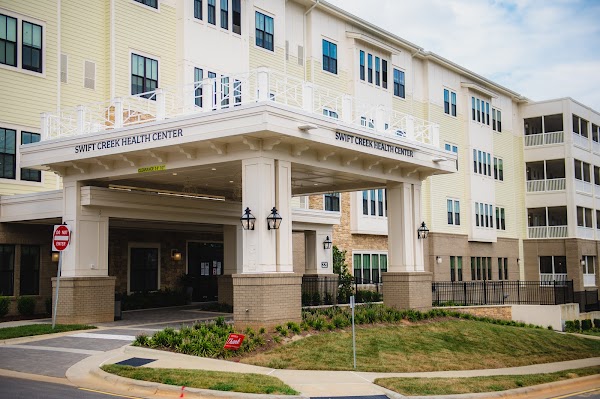
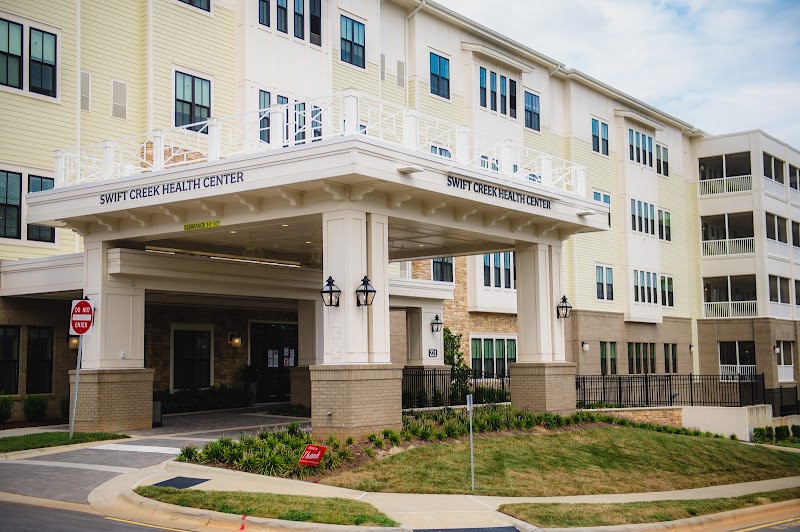
221 Brightmore Drive, Cary, NC 27511 (984) 200-3688
For profit - Corporation 3 Beds Independent Data: November 2025
Trust Grade
80/100
#125 of 417 in NC
Last Inspection: June 2025

Inspected within the last 6 months. Data reflects current conditions.

Overview

Swift Creek Health Center has a Trust Grade of B+, which means it is above average and recommended for families considering care options. It ranks #125 out of 417 facilities in North Carolina, placing it in the top half, and #8 out of 20 in Wake County, indicating there are only a few local options that are better. Unfortunately, the facility is showing a worsening trend, with issues increasing from 2 to 3 in the past two years. Staffing is a concern, as it received a poor 0/5 star rating, although the turnover rate is impressively low at 0%, which is much better than the state average. Additionally, there have been no fines against the facility, which is a positive sign, but there are specific incidents of concern, such as failing to submit required staffing data, not providing residents with the right to rescind arbitration agreements within 30 days, and not ensuring proper assessments and consent for safety equipment used by residents. Overall, while there are strengths in stability and no fines, the facility needs significant improvement in staffing and compliance practices.
Trust Score
B+
80/100
In North Carolina
#125/417
Top 29%
Safety Record
Low Risk
No red flags
Inspections
Getting Worse
2 → 3 violations
Staff Stability
○ Average
Turnover data not reported for this facility.
Penalties
✓ Good
No fines on record. Clean compliance history, better than most North Carolina facilities.
Skilled Nurses
○ Average
RN staffing data not reported for this facility.
Violations
✓ Good
Only 5 deficiencies on record. Cleaner than most facilities. Minor issues only.
★★★★☆
4.0
Overall Rating
☆☆☆☆☆
0.0
Staff Levels
★★☆☆☆
2.0
Care Quality
★★★★☆
4.0
Inspection Score
Stable
2023: 2 issues
2025: 3 issues

The Good

  • Full Sprinkler Coverage · Fire safety systems throughout facility
  • No fines on record

Facility shows strength in fire safety.

The Bad

No Significant Concerns Identified

This facility shows no red flags. Among North Carolina's 100 nursing homes, only 0% achieve this.

The Ugly 5 deficiencies on record

Jun 2025 2 deficiencies
CONCERN (D)

Potential for Harm - no one hurt, but risky conditions existed

Deficiency F0700 (Tag F0700)

Could have caused harm · This affected 1 resident

**NOTE- TERMS IN BRACKETS HAVE BEEN EDITED TO PROTECT CONFIDENTIALITY** Based on observations, record review, and staff interviews, the facility failed to ensure alternatives were attempted, a risk as...

Read full inspector narrative →
**NOTE- TERMS IN BRACKETS HAVE BEEN EDITED TO PROTECT CONFIDENTIALITY** Based on observations, record review, and staff interviews, the facility failed to ensure alternatives were attempted, a risk assessment was conducted and informed consent was obtained before bilateral grab bars were utilized on the bed for 1 of 2 residents reviewed for bedrails (Resident #1). Findings included: Resident #1 was admitted to the facility on [DATE] with a diagnosis of dementia. A review of Resident #1's annual Minimum Data Set (MDS) assessment dated [DATE] revealed she was severely cognitively impaired. She had functional limitation in range of motion on one side of her upper extremities, and both sides of her lower extremities. She required substantial/maximal assistance with rolling left to right in bed. Resident #1 was dependent in going from lying to sitting on the edge of the bed, and for transfers. Bed rails were not used as a physical restraint. A review of Resident #1's comprehensive care plan revealed a focus area for the use of grab bars while in bed to enable Resident #1 to maintain as much independence with bed mobility as possible with increased risk for complications including entrapment and injuries related to grab bar use. The goal, last revised and dated 6/16/25, was Resident #1's risk for injuries/complications related to the use of grab bars would be minimized through the next review. Interventions included to assess for the continued need for grab bar use, and the possibility of reducing to less restrictive device to aid with bed mobility (Device/Bed Rail Assessment Quarterly) and grab bars on both sides of bed. On 6/16/25 at 10:43 AM Resident #1 was observed in her recliner chair. Her bed was observed to have grab bars in place at the head of the bed on the left and right side. These metal grab bars measured approximately 6 inches in width and were in the upright position. A review of Resident #1's medical record did not reveal any evidence of attempted alternatives, a Device/Bedrail assessment or an informed consent for the use of the grab bars on Resident #1's bed. On 6/18/25 at 7:35 AM Resident #1 was observed in her recliner chair. Her bed was observed to have grab bars in place at the head of her bed on the left and right side. On 6/18/25 at 7:39 AM an interview with the Director of Nursing (DON) indicated she was familiar with Resident #1. She stated Resident #1 had grab bars on her bed for quite some time. She went on to say Resident #1 used the grab bars at times to assist with turning and repositioning. She stated the facility's process prior to the use of grab bars was for a risk assessment to be completed, and if grab bars were determined to be appropriate, a consent from the resident or their representative would be obtained. The DON stated documentation of these things should be in the resident's medical record. She reported if grab bars were implemented, they should also be reassessed quarterly using a Device/Bedrail assessment. In a follow up interview with the DON on 6/18/25 at 8:52 AM she reported she had looked through Resident #1's medical record and had not been able to find a completed Device/Bedrail assessment or an informed consent for Resident #1's grab bars. She stated the facility's previous DON would have been responsible for ensuring these were in place before implementing grab bars for Resident #1. She reported the use of grab bars and ensuring a Device/Bedrail assessment and informed consent were in place was not something she had reviewed since she took over the role of DON at the facility in May of 2025. On 6/18/25 at 8:01 AM an interview with Nurse Aide (NA) #1 indicated he was assigned to care for Resident #1 on the 7:00 AM to 3:00 PM shift that day. He stated he was familiar with Resident #1 and had cared for her regularly for at least the past year. NA #1 reported Resident #1 liked to get up early, and he usually assisted her up into her recliner chair when he first came onto his shift. He stated prior to him assisting Resident #1 up into her chair this morning, she had been in her bed. He reported Resident #1 had grab bars on both sides at the head of her bed and had these as long as he had been caring for her. He stated Resident #1 sometimes was able to use the bars, in particular the right one, to assist herself when he turned and repositioned her in her bed. On 6/18/25 at 8:59 AM a telephone interview with Nurse #1 indicated she had been the facility's DON from June 2024 until just a few weeks ago. She reported she would have been responsible for ensuring that a Device/Bedrail assessment and informed consent were in place if a resident had grab bars on their bed. She stated she did not know how this had been missed for Resident #1. On 6/18/25 at 12:42 PM a telephone interview with the Administrator indicated the facility should have a process in place to ensure alternatives were attempted, a risk assessment was completed, and informed consent was obtained prior to the use of grab bars or any bed rail for a resident. She reported the documentation of these things should be in the resident's medical record.
CONCERN (F)

Potential for Harm - no one hurt, but risky conditions existed

Staffing Data (Tag F0851)

Could have caused harm · This affected most or all residents

Based on record review and staff interview, the facility failed to submit the Payroll Based Journal (PBJ) data for the 4th quarter in fiscal year (FY) 2024 and 1st quarter in fiscal year 2025 for 2 of...

Read full inspector narrative →
Based on record review and staff interview, the facility failed to submit the Payroll Based Journal (PBJ) data for the 4th quarter in fiscal year (FY) 2024 and 1st quarter in fiscal year 2025 for 2 of 4 quarters reviewed. Findings included: Review of the Centers for Medicare and Medicaid Services (CMS) PBJ Staffing Data Report Certification and Survey Provider Enhanced Reports (CASPER Report 1705D) revealed no data was submitted for: - July 1 - September 30 (FY Quarter 4 2024) - October 1 - December 31 (FY Quarter 1 2025) During an interview on 6/17/25 at 3:06 PM Administrator #2, who was working as the Administrator of the facility during the quarters with missing data, stated shortly after they reduced their bed count from 28 to 3 beds, they were reevaluating all the software they were using and thought they did not need a specific software used by the facility. Administrator #2 stated what they did not know was that this software would pull in the information from payroll and was then used by corporate to submit their PBJ data. Administrator #2 indicated when they stopped using this software for those two quarters, they thought corporate was sending their PBJ data and it was not being sent.
Mar 2025 1 deficiency
CONCERN (D) 📢 Someone Reported This

A family member, employee, or ombudsman was alarmed enough to file a formal complaint

Potential for Harm - no one hurt, but risky conditions existed

Deficiency F0583 (Tag F0583)

Could have caused harm · This affected 1 resident

**NOTE- TERMS IN BRACKETS HAVE BEEN EDITED TO PROTECT CONFIDENTIALITY** Based on record review, family interview, and staff interview, the facility failed to protect a resident's right to privacy for ...

Read full inspector narrative →
**NOTE- TERMS IN BRACKETS HAVE BEEN EDITED TO PROTECT CONFIDENTIALITY** Based on record review, family interview, and staff interview, the facility failed to protect a resident's right to privacy for 1 (Resident #2) of 3 residents reviewed for the provision of privacy. Findings included: Resident #2 was admitted to the certified section of the facility on 8/21/2024 with a diagnosis of dementia and a progressive neurodegenerative disorder. Documentation on an admission Minimum Data Set assessment dated [DATE] revealed Resident #2 was severely cognitively impaired. Documentation in the nursing progress notes dated 9/23/2024 at 2:49 PM revealed Resident #2 was observed lying on the floor, had no apparent injuries, but was sent to the emergency room after reporting hitting her head. An interview was conducted with Nurse Aide (NA) #1 on 3/12/2025 at 1:45 PM and the following information was revealed. NA #1 was a private sitter hired by the family of Resident #1 and employed by the facility on an as-needed basis. NA #1 arrived at the facility on 9/23/2024 to act as a sitter for Resident #1 and found the Responsible Party (RP #1) for Resident #1 was also visiting Resident #1. While RP #1 and NA #1 were talking in the room of Resident #1 she heard a loud noise in the hallway. RP #1 and NA #1 rushed out of the room and saw Resident #2 had fallen out of her wheelchair. NA #2 came out of another resident's room and NA #1 told NA #2 that she would stay with Resident #2 while NA #1 went to get the floor nurse. NA #2 heard RP #1 taking photographs with her phone. NA #2 and Nurse #1 arrived to assess and assist Resident #2. NA #1 revealed she did not tell anyone about RP #1 taking photographs nor did she see the photographs. NA #1 stated she had only ever taken photographs of Resident #1 at the request of RP #1. RP #1 was interviewed on 3/12/2025 at 2:01 PM. RP #1 revealed the following information. RP #1 was with Resident #1 and NA #1 when they heard a clunk. RP #1 and NA #1 ran out to the hallway, and they saw a woman on the floor. RP #1 stated I took a photo of the woman on the floor. I still have it. NA #1 called for help and another nurse aide (NA #2) came out of another room. NA #1 told NA #2 to get a nurse. RP #1 then took photographs of Resident #2 on the ground and a photograph of the name label on her door so she, could report it. NA #2 was no longer employed by the facility and was unavailable for an interview. Nurse #1 was interviewed on 3/12/2025 at 2:45 PM. Nurse #1 stated she was exiting the restroom when NA #2 found her to tell her Resident #2 fell in the dining area on 9/23/2024. Nurse #1 revealed she did not see RP #1 take any photographs of Resident #2 and was never told that photographs were taken. The Administrator was interviewed on 3/12/2025 at 1:52 PM. The Administrator stated she was not made aware that photos were taken of Resident #2 on the floor. The Administrator stated it was the facility policy staff were not to take photographs of the residents. The Administrator revealed it was likely NA #1 did not report that the photographs had been taken by RP #1 because she was worried, she would lose her position as a private sitter for RP #1. The Administrator stated the facility no longer allows the nurse aides to work in the facility as a private sitter and a nurse aide for the facility simultaneously. An interview was conducted with the power of attorney (POA) for Resident #2 on 3/12/2025 at 3:52 PM. The POA for Resident #2 revealed the following information. Resident #2 would have been very upset if she knew someone had taken her photo while on the floor after a fall. She was a very private person. When Resident #2 was admitted the POA was asked if photographs of Resident #2 could be taken to create brochures or an advertisement for the facility. The POA for Resident #2 stated he told the facility, Absolutely not. The POA revealed Resident #2 was very private and was embarrassed by her debilitating physical condition. The Director of Nursing was interviewed on 3/13/2205 at 9:30 AM. The Director of Nursing stated the facility staff are not allowed to take photographs of the residents for any reason. The Director of Nursing indicated the staff must immediately report to her if they know of someone taking pictures of other residents without their permission and who are not their family members.
Apr 2023 2 deficiencies
CONCERN (D)

Potential for Harm - no one hurt, but risky conditions existed

Deficiency F0578 (Tag F0578)

Could have caused harm · This affected 1 resident

**NOTE- TERMS IN BRACKETS HAVE BEEN EDITED TO PROTECT CONFIDENTIALITY** 3. Resident #126 was admitted to the facility on [DATE]. The quarterly Minimum Data Set (MDS) dated [DATE] had Resident #126 cod...

Read full inspector narrative →
**NOTE- TERMS IN BRACKETS HAVE BEEN EDITED TO PROTECT CONFIDENTIALITY** 3. Resident #126 was admitted to the facility on [DATE]. The quarterly Minimum Data Set (MDS) dated [DATE] had Resident #126 coded as cognitively intact. The care plan dated 03/14/2023 had focus of being admitted as Do Not Resuscitate (DNR). An interview with Resident #126 was conducted on 04/11/2023 at 10:17 AM. The resident stated she had a DNR order but did not recall being asked about an advanced directive when she was admitted . An interview with the admission Coordinator was conducted on 04/11/23 at 3:14 PM. The admission Coordinator stated she was taught an advanced directive was a DNR and was not aware there was more to an advanced directive. An interview with the Administrator was conducted on 04/12/2023 at 10:52 AM. The Administrator stated when there was a new admission, residents or the Responsible Party (RP) for the resident were asked if they had an advanced directive. If they did, then they were asked to bring in the forms to be placed in the resident's chart. She reported residents and/or their RP didn't always bring in the forms. Based on records reviews,resident interview and staff interviews, the facility failed to have Advance Directives(AD) in the residents' records for 3 of 7 sampled residents. (Resident #10, Resident #14 and Resident # 125). Findings included: 1. Resident #10 was admitted to the facility on [DATE]. Quarterly Minimum Data Set (MDS) dated [DATE] indicated Resident#10's cognition was intact. Review of the computerized clinical record for Resident #10 revealed no advanced directive noted in the resident's medical record. A review of the form Advance Directive dated 03/17/2023 reviewed in Resident#10's clinical record did not indicate if the resident wanted to formulate an advance directive or refused. During the interview with Residen t#10 on 04/11/2023 at 11:30 AM, the resident indicated she did not recall signing an Advance Directive form during the admission. Resident#10 indicated she was admitted at the facility for a short-term stay. During the interview with Director of Nursing (DON) on 04/12/2023 at 01:04 PM, she stated that the Admission's Coordinator reviews the advance directive forms with the residents or responsible party during the admission to the facility. The DON further indicated she did not find the advance directive in Resident #10's medical record and there was no documentation found that stated the resident refused. She added that the expectation was that the advanced directive should have been scanned in Resident #10's computerized clinical record or a note indicating the resident's refusal to formulate an advance directive. During the interview with admission Coordinator on 04/12/23 at 02:42 PM, she stated after the residents were admitted and they need to implement an advance directive, she would give a form from the admission packet that indicated how to formulate an advance directive. She added most of the families did not bring the advance directives form back to the facility. The admission Coordinator indicated moving forward she would document in the resident's record if the family refused to bring back the advance directives form. During the interview with the Administrator on 04/13/2023 at 10:30 AM, she stated the advanced directives should have been in Resident #10's clinical record or a note indicating refusal. The Administrator further stated the AC would ensure the residents' advanced directives were placed in the medical records if a resident had formulated one. 2. Resident #14 was admitted to the facility on [DATE]. Quarterly Minimum Data Set (MDS) dated [DATE] indicated Resident #14's cognition was moderately impaired. Review of the computerized clinical record for Resident #14 revealed no advanced directive noted in the resident's medical record. A review of the form Advance Directive dated 02/13/2023 reviewed in Resident#14's clinical record did not indicate if the resident wanted to formulate an advance directive or refused. During the interview with Director of Nursing (DON) on 04/12/2023 at 01:04 PM, she stated that the Admission's Coordinator reviews the advance directive forms with the residents or responsible party during the admission to the facility. The DON further indicated she did not find the advance directive in Resident #14's medical record and there was no documentation found that stated the resident refused. She added that the expectation was that the advanced directive should have been scanned in Resident #14's computerized clinical record or a note indicating the resident's refusal to formulate an advance directive. During the interview with admission Coordinator on 04/12/23 at 02:42 PM, she stated after the residents were admitted and they need to implement an advance directive, she would give a form from the admission packet that indicated how to formulate an advance directive. She added most of the time the family did not bring the advance directives form back to the facility. The admission Coordintor indicated moving forward she would document in the resident's record if the family refused to bring back the advance directives form. During the interview with the Administrator on 04/13/2023 at 10:30 AM, she stated the advanced directives should have been in Resident #14's clinical record or a note indicating refusal. The Administrator further stated the AC would ensure the residents' advanced directives were placed in the medical records if a resident had formulated one.
CONCERN (E)

Potential for Harm - no one hurt, but risky conditions existed

Deficiency F0847 (Tag F0847)

Could have caused harm · This affected multiple residents

Based on a review of the facility arbitration agreement and administrative staff interviews, the facility failed to provide an arbitration agreement that granted the resident or their representative t...

Read full inspector narrative →
Based on a review of the facility arbitration agreement and administrative staff interviews, the facility failed to provide an arbitration agreement that granted the resident or their representative the right to rescind the agreement within 30 days of signing it. This agreement was provided in the admission packet and signed during the admission process for all residents residing in the facility. The findings included: A review of the facility arbitration agreement titled, Resident and Facility Arbitration Agreement, was conducted. The Arbitration agreement stated, the resident understand that he/ she has the right to revoke this arbitration Agreement by written notice delivered and received by facility withing fourteen (14) days of signing this arbitration Agreement. The arbitration agreement did not indicate that the resident or representative had the right to rescind the agreement in 30 days. An interview with the admission Coordinator (AC) was conducted on 04/12/2023 at 02:27 PM. The AC stated the residents or resident representative are required to sign the arbitration agreements on admission. The agreements were explained in the language they understood and when a resident or residents' responsible party signs the agreement, it states they understood the agreement. The AC also stated she did not know the residents had 30 days to rescind the agreement. An interview was conducted with the Administrator on 04/13/2023 at 1:01 PM, She revealed that both she and the admission Coordinator reviewed the arbitration agreement, and it did not indicate the resident or representative had the right to rescind the agreement in 30 days. The Administrator indicated she was not aware of the regulatory requirements of the resident or representative and had the right to rescind the agreement in 30 days. The Administrator indicated the Corporate will update the arbitration agreements to ensure that it indicates the resident or resident representative had the right to rescind the agreement in 30 days.
Understanding Severity Codes (click to expand)
Life-Threatening (Immediate Jeopardy)
J - Isolated K - Pattern L - Widespread
Actual Harm
G - Isolated H - Pattern I - Widespread
Potential for Harm
D - Isolated E - Pattern F - Widespread
No Harm (Minor)
A - Isolated B - Pattern C - Widespread

Questions to Ask on Your Visit

  • "Can I speak with families of current residents?"
  • "What's your RN coverage like on weekends and overnight?"

Our Honest Assessment

Strengths
  • • Grade B+ (80/100). Above average facility, better than most options in North Carolina.
  • • No major safety red flags. No abuse findings, life-threatening violations, or SFF status.
  • • No fines on record. Clean compliance history, better than most North Carolina facilities.
  • • Only 5 deficiencies on record. Cleaner than most facilities. Minor issues only.
Concerns
  • • No significant concerns identified. This facility shows no red flags across CMS ratings, staff turnover, or federal penalties.
Bottom line: Generally positive indicators. Standard due diligence and a personal visit recommended.

About This Facility

What is Swift Creek Health Center's CMS Rating?

CMS assigns Swift Creek Health Center an overall rating of 4 out of 5 stars, which is considered above average nationally. Within North Carolina, this rating places the facility higher than 99% of the state's 100 nursing homes. This rating reflects solid performance across the metrics CMS uses to evaluate nursing home quality.
How is Swift Creek Health Center Staffed?

Detailed staffing data for Swift Creek Health Center is not available in the current CMS dataset.

What Have Inspectors Found at Swift Creek Health Center?

State health inspectors documented 5 deficiencies at Swift Creek Health Center during 2023 to 2025. These included: 5 with potential for harm.

Who Owns and Operates Swift Creek Health Center?

Swift Creek Health Center is owned by a for-profit company. For-profit facilities operate as businesses with obligations to shareholders or private owners. The facility operates independently rather than as part of a larger chain. With 3 certified beds and approximately 2 residents (about 67% occupancy), it is a smaller facility located in Cary, North Carolina.

How Does Swift Creek Health Center Compare to Other North Carolina Nursing Homes?

Compared to the 100 nursing homes in North Carolina, Swift Creek Health Center's overall rating (4 stars) is above the state average of 2.8 and health inspection rating (4 stars) is above the national benchmark.

What Should Families Ask When Visiting Swift Creek Health Center?

Based on this facility's data, families visiting should ask: "Can I visit during a mealtime to observe dining assistance and food quality?" "How do you handle medical emergencies, and what is your hospital transfer rate?" "Can I speak with family members of current residents about their experience?"

Is Swift Creek Health Center Safe?

Based on CMS inspection data, Swift Creek Health Center has a clean safety record: no substantiated abuse findings (meaning no confirmed cases of resident harm), no Immediate Jeopardy citations (the most serious violation level indicating risk of serious injury or death), and is not on the Special Focus Facility watch list (a federal program monitoring the lowest-performing 1% of nursing homes). The facility has a 4-star overall rating and ranks #1 of 100 nursing homes in North Carolina. While no facility is perfect, families should still ask about staff-to-resident ratios and recent inspection results during their visit.

Do Nurses at Swift Creek Health Center Stick Around?

Swift Creek Health Center has not reported staff turnover data to CMS. Staff turnover matters because consistent caregivers learn residents' individual needs, medications, and preferences. When staff frequently change, this institutional knowledge is lost. Families should ask the facility directly about their staff retention rates and average employee tenure.

Was Swift Creek Health Center Ever Fined?

Swift Creek Health Center has no federal fines on record. CMS issues fines when nursing homes fail to meet care standards or don't correct problems found during inspections. The absence of fines suggests the facility has either maintained compliance or corrected any issues before penalties were assessed. This is a positive indicator, though families should still review recent inspection reports for the full picture.

Is Swift Creek Health Center on Any Federal Watch List?

Swift Creek Health Center is not on any federal watch list. The most significant is the Special Focus Facility (SFF) program, which identifies the bottom 1% of nursing homes nationally based on persistent, serious quality problems. Not being on this list means the facility has avoided the pattern of deficiencies that triggers enhanced federal oversight. This is a positive indicator, though families should still review the facility's inspection history directly.