Southwood Nursing and Retirement
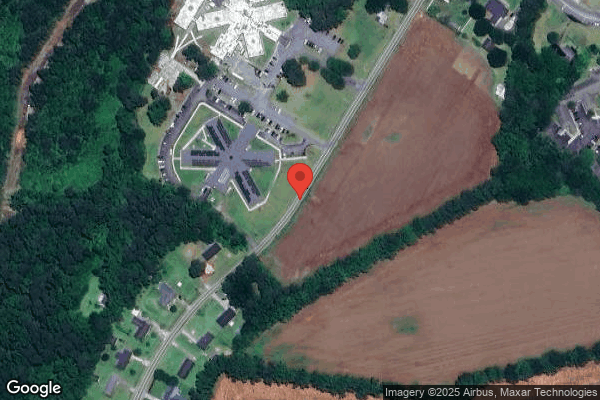
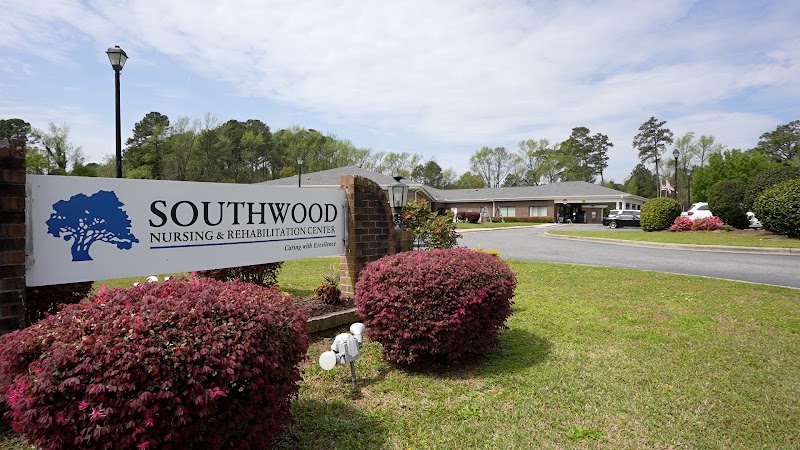
180 Southwood Drive, Clinton, NC 28328 (910) 592-8165
For profit - Corporation 100 Beds LIBERTY SENIOR LIVING Data: November 2025
Trust Grade
63/100
#124 of 417 in NC
Last Inspection: January 2025

Within standard 12-15 month inspection cycle. Federal law requires annual inspections.

Overview

Families considering Southwood Nursing and Retirement in Clinton, North Carolina, should note that it has a Trust Grade of C+, indicating a decent quality of care that is slightly above average. It ranks #124 out of 417 facilities in North Carolina, placing it in the top half, and is the best option out of the two nursing homes in Sampson County. The facility's performance has been stable, with three issues reported in both 2024 and 2025. Staffing is a weakness, with a below-average rating of 2 out of 5 stars and a turnover rate of 57%, which is slightly above the state average. On a concerning note, the facility has been fined $8,512, which is typical compared to other facilities, but it has less RN coverage than 90% of its peers, potentially impacting the quality of care. Specific incidents include a serious failure to use a mechanical lift during a transfer, resulting in a resident suffering a fractured femur, and issues with food safety procedures that could affect residents’ health. Overall, while there are some strengths, families should weigh these concerns carefully.

Trust Score
C+
63/100
In North Carolina
#124/417
Top 29%
Safety Record
Moderate
Needs review
Inspections
Holding Steady
3 → 3 violations
Staff Stability
⚠ Watch
57% turnover. Above average. Higher turnover means staff may not know residents' routines.
Penalties
⚠ Watch
$8,512 in fines. Higher than 78% of North Carolina facilities, suggesting repeated compliance issues.
Skilled Nurses
⚠ Watch
Each resident gets only 17 minutes of Registered Nurse (RN) attention daily — below average for North Carolina. Fewer RN minutes means fewer trained eyes watching for problems.
Violations
○ Average
10 deficiencies on record. Average for a facility this size. Mostly minor or procedural issues.
★★★★☆
4.0
Overall Rating
★★☆☆☆
2.0
Staff Levels
★★★★☆
4.0
Care Quality
★★★★☆
4.0
Inspection Score
Stable
2024: 3 issues
2025: 3 issues

The Good

  • 4-Star Quality Measures · Strong clinical quality outcomes
  • Full Sprinkler Coverage · Fire safety systems throughout facility
  • No fines on record

Facility shows strength in quality measures, fire safety.

The Bad

Staff Turnover: 57%

11pts above North Carolina avg (46%)

Frequent staff changes - ask about care continuity

Federal Fines: $8,512

Below median ($33,413)

Minor penalties assessed

Chain: LIBERTY SENIOR LIVING

Part of a multi-facility chain

Ask about local staffing decisions and management

Staff turnover is elevated (57%)

9 points above North Carolina average of 48%

The Ugly 10 deficiencies on record

2 actual harm
Jan 2025 3 deficiencies
CONCERN (D) 📢 Someone Reported This

A family member, employee, or ombudsman was alarmed enough to file a formal complaint

Potential for Harm - no one hurt, but risky conditions existed

Quality of Care (Tag F0684)

Could have caused harm · This affected 1 resident

**NOTE- TERMS IN BRACKETS HAVE BEEN EDITED TO PROTECT CONFIDENTIALITY** Based on record review, Resident interview and staff interviews, the facility failed to obtain the blood sugar (BS) level and ad...

Read full inspector narrative →
**NOTE- TERMS IN BRACKETS HAVE BEEN EDITED TO PROTECT CONFIDENTIALITY** Based on record review, Resident interview and staff interviews, the facility failed to obtain the blood sugar (BS) level and administer a Residents' insulin medication as ordered by the physician to treat hyperglycemia (a side effect of too much glucose (sugar) in the blood). This affected 1 of 5 residents reviewed for medication administration (Resident #25). The findings included: Resident #25 was readmitted to the facility on [DATE] with diagnoses including type 2 diabetes mellitus. The 5-day Minimum Data Set (MDS) dated [DATE] had Resident #25 coded as cognitively intact and was receiving insulin injections. The care plan dated 10/28/2024 had focus of a diagnosis of diabetes mellitus with risk for complications with interventions to include administration of diabetes medication as ordered by doctor and to monitor blood glucose levels as ordered by physician. A review of the physician order dated 10/28/2024 revealed Humalog Solution (Humalog is a fast-acting insulin that starts to work about 15 minutes after injection and peaks in about 1 hour and keeps working for 2-4 hours). Inject as per sliding scale subcutaneously before meals for diabetes. Give 30 minutes before meals, 8:00 AM, 11:30 AM and 4:30 PM. If BS is: 8 - 150 = 8 units 151 - 200 = 10 units 201 - 250 = 12 units 251 - 300 = 14 units 301 - 350 = 16 units 351 - 400 = 18 units 401+ Call provider Hours On 10/30/2024 there was no documentation in the medical record for 11:30 AM. An interview with the DON was conducted on 01/23/2025 at 2:46 PM. The DON stated on 10/30/2024 Resident #25 had an appointment and her Responsible Party (RP) came to pick her up. The Resident had gotten her BS checked at 11:05 AM and it was 128. The DON also stated she was not able to administer the Resident her sliding scale of 8 units because the RP came and got the Resident and left the building. The DON also stated she failed to document why there was a missed dosage of insulin. On 11/16/2024 at 8:00 AM and at 11:30 AM, the MAR revealed Resident #25's BS was documented as 312 and 16 units of insulin was administered. An interview with Nurse #1 was conducted on 01/23/2025 at 12:53 PM. The nurse stated she was the Nurse for Resident #25 on 11/16/2024. The Nurse also stated she followed the orders for Residents that needed BS checks. She got their BS and documented on a report sheet and then entered the amount in the MAR. If the Resident needed coverage, then she would gather her supplies and administer the dosage according to the sliding scale order. This documentation went straight to the MAR. The Nurse further stated the morning blood sugar documentation in the MAR was the accurate BS and she did not administer a second dose of 16 units of insulin at lunch time. If there was another BS level with the same amount at different times, then she would question it, especially since the Resident Received 16 units of Humalog at 8:30 AM. She could not recall what was happening at the facility at that time to make her put the same amounts in the MAR but the 11:30 AM BS could not be accurate, and she must have missed obtaining the BS. An interview with the DON was conducted on 01/23/2025 at 2:46 PM. The DON stated on 11/16/2024, there was documentation of 16 units of insulin administered at 8:00 AM and 11:30 AM, but Nurse #1 would not administer a BS that was the same value after that much time had passed, so it had to be documented incorrectly. The DON stated she did not know how it happened, but Nurse #1 did not usually make documentation errors. The DON also stated her expectation was that they exercise accurate documentation according to the Residents orders. An interview with Resident #25 was conducted on 01/24/2025 at 9:07 AM. The Resident stated she had a couple of BS and insulin coverages missing but it did not cause her any issues. An interview with the Medical Director (MD) was conducted on 01/24/2025 at 2:14 PM. The MD stated she was familiar with Resident #25, and the Resident had type 2 diabetes mellitus and insulin was needed to help regulate hyperglycemia in the blood. The missed BS and the missing dose of insulin did not cause a negative reaction for the Resident. The MD also stated she expected the staff to follow physician orders. An interview with the Administrator was conducted on 01/24/2025 at 3:05 PM. The Administrator stated she expected the nursing staff to administer the Residents' medications accordingly.
CONCERN (D)

Potential for Harm - no one hurt, but risky conditions existed

Respiratory Care (Tag F0695)

Could have caused harm · This affected 1 resident

**NOTE- TERMS IN BRACKETS HAVE BEEN EDITED TO PROTECT CONFIDENTIALITY** Based on observations, record review, and resident, staff and Nurse Practitioner interviews, the facility failed to administer o...

Read full inspector narrative →
**NOTE- TERMS IN BRACKETS HAVE BEEN EDITED TO PROTECT CONFIDENTIALITY** Based on observations, record review, and resident, staff and Nurse Practitioner interviews, the facility failed to administer oxygen at the physician prescribed rate for 1 of 3 residents reviewed for respiratory care (Resident #38). The findings included: Resident #38 was admitted to the facility on [DATE] with diagnoses which included chronic respiratory failure with hypoxia (an absence of enough oxygen in the tissues to sustain bodily functions) and dependence on supplemental oxygen. A review of Resident #38's Physician Orders read, O2 [oxygen] at 2L [liters] continuous via nasal cannula (tubing that delivers oxygen from an oxygen source to the resident's nose) and was written on 11/21/23. A review of Resident #38's quarterly Minimum Data Set (MDS), dated [DATE], revealed the resident was cognitively intact and was on oxygen therapy A review of Resident #38's Care Plan, last revised 12/26/24, revealed a focus of altered respiratory status/difficulty breathing related to an old healing trach [tracheostomy] site and a focus of receives oxygen therapy. Interventions included provide oxygen as needed. An observation of Resident #38 was made on 01/21/25 at 10:39 A.M. Resident #38 was observed awake, alert and sitting up in her bed. She was receiving oxygen via nasal cannula. The oxygen concentrator was placed next to her bed and was set to deliver oxygen at 1.5L per minute. A second observation and interview of Resident #38 was made on 01/21/25 at 12:36 P.M. Resident #38 was sitting up in her bed, awake and alert. Her oxygen concentrator was still set to deliver her oxygen at 1.5 L per minute. Resident #38 said it was supposed to be set at 2L per minute and denied changing the setting. She stated she was unaware of who changed the setting on the concentrator. An interview was conducted with Nurse #1 on 01/21/25 at 2:56 P.M. Nurse #1 stated she was unaware of Resident #38's oxygen concentrator 1.5L setting and confirmed she had not changed the setting. Nurse #1 explained she had checked Resident #38's oxygen saturation using a pulse oximeter around 11:00 A.M. and it had been 97%. She stated that she had checked the oxygen concentrator setting earlier that morning and it had been set correctly at 2L per minute. She was unaware of who might have changed the setting. An observation of Resident #38's oxygen concentrator setting was conducted with Nurse #1 on 01/21/25 at 3:00 P.M. The oxygen concentrator remained at the 1.5L setting. Nurse #1 checked Resident #38's oxygen saturation using a pulse oximeter which read 94%. Nurse #1 was observed changing the setting on the oxygen concentrator to 2L and Resident #38's oxygen saturation was rechecked and had improved to 97%. A telephone interview with Nurse Practitioner (NP #1) was conducted on 01/24/25 at 3:35 P.M. NP #1 indicated Resident #38 did not experience any respiratory distress when the oxygen concentrator had been set at 1.5L per minute. NP #1 stated it was her expectation nurses follow the physician's orders for oxygen therapy. An interview with the Director of Nursing (DON) was conducted on 01/24/25 at 11:02 A.M. The DON stated it was her expectation nursing staff adhered to policy and procedures for residents on oxygen therapy, making sure they check the physician's orders and apply the prescribed setting on the oxygen concentrators. An interview with the Administrator was conducted on 01/24/25 at 2:00 P.M. The Administrator stated it was her expectation that nursing staff taking care of residents who are on oxygen therapy ensure the oxygen concentrators are set to the physician order for oxygen.
CONCERN (D)

Potential for Harm - no one hurt, but risky conditions existed

Medical Records (Tag F0842)

Could have caused harm · This affected 1 resident

**NOTE- TERMS IN BRACKETS HAVE BEEN EDITED TO PROTECT CONFIDENTIALITY** Based on record review and staff interviews, the facility failed to have a complete and accurate electronic medical record (EMR)...

Read full inspector narrative →
**NOTE- TERMS IN BRACKETS HAVE BEEN EDITED TO PROTECT CONFIDENTIALITY** Based on record review and staff interviews, the facility failed to have a complete and accurate electronic medical record (EMR) for a Resident with type 2 diabetes mellitus. This affected 1 of 5 residents reviewed for medical record accuracy (Resident #25). The findings included: Resident #25 was admitted to the facility on [DATE] with diagnoses including type 2 diabetes mellitus. A review of the October and November Medication Administration Record (MAR) revealed an order for Humalog Solution (Humalog is a fast-acting insulin that starts to work about 15 minutes after injection and peaks in about 1 hour and keeps working for 2-4 hours). Inject as per sliding scale subcutaneously before meals for diabetes. Give 30 minutes before meals, 8:00 AM, 11:30 AM and 4:30 PM. If BS is: 8 - 150 = 8 units 151 - 200 = 10 units 201 - 250 = 12 units 251 - 300 = 14 units 301 - 350 = 16 units 351 - 400 = 18 units 401+ Call provider Hours On 10/30/2024 at 8:00 AM, the MAR revealed Resident #25's BS was 172, and 10 units of insulin were administered, there was no documentation for 11:30 AM. An interview with the DON was conducted on 01/23/2025 at 2:46 PM. The DON stated on 10/30/2024 at 11:30 AM, Resident #25's BS was 128. She was not able to administer the Resident's sliding scale of 8 units because the RP came to take the Resident to an appointment and left the building before administering the medication. The DON also stated she did let the RP know she needed the coverage. The DON further stated she was supposed to document the Residents' 11:30 AM BS and missed dosage of insulin in the MAR but failed to do so. On 11/16/2024 at 8:00 AM and at 11:30 AM, the MAR revealed Resident #25's BS was documented as 312 and 16 units of insulin was administered. An interview with Nurse #1 was conducted on 01/23/2025 at 12:53 PM. The nurse stated she was the Nurse for Resident #25 on 11/16/2024 and the morning blood sugar documentation in the MAR at 8:30 AM was the accurate blood sugar level. She could not recall what was happening at the facility at that time to make her put the same amounts in the MAR twice, but the 11:30 AM blood sugar on 11/16/2024 could not be accurate. An interview with the DON was conducted on 01/23/2025 at 2:46 PM. The DON stated on 11/16/2024, Nurse # 1 would not have given 16 units of insulin twice and it had to be documented incorrectly. She did not know how it happened, but Nurse #1 did not usually make documentation errors. The DON also stated her expectation was that they exercise accurate documentation according to physicians' orders. An interview with the Administrator was conducted on 01/24/2025 at 3:05 PM. The Administrator stated she expected the nursing staff to document the EMRs accurately.
Jul 2024 2 deficiencies 2 Harm
SERIOUS (G) 📢 Someone Reported This

A family member, employee, or ombudsman was alarmed enough to file a formal complaint

Actual Harm - a resident was hurt due to facility failures

Accident Prevention (Tag F0689)

A resident was harmed · This affected 1 resident

**NOTE- TERMS IN BRACKETS HAVE BEEN EDITED TO PROTECT CONFIDENTIALITY** Based on record reviews, Physician, staff and Resident interviews, the facility failed to provide a safe transfer when Nurse Aid...

Read full inspector narrative →
**NOTE- TERMS IN BRACKETS HAVE BEEN EDITED TO PROTECT CONFIDENTIALITY** Based on record reviews, Physician, staff and Resident interviews, the facility failed to provide a safe transfer when Nurse Aide (NA) #7 failed to utilize a mechanical lift when transferring Resident #2. She was transferred to hospital and diagnosed with a fractured femur. Resident #2 expressed the knee felt like it had been bashed and it was painful. This was for 1 of 3 residents reviewed for falls (Resident #2). The findings included: Resident #2 was admitted to the facility on [DATE] with diagnoses which included coronary artery disease, heart failure, end-stage renal disease and osteoporosis. A review of the care plan that was revised on 9/20/23 revealed Resident #2 required full mechanical lift equipped with the green sling for all transfers with 2 staff during transfers. A review of a quarterly Minimum Data Set (MDS) dated [DATE] revealed Resident #2 was cognitively intact and was dependent with transfers from bed to the chair. Review of an incident report initiated dated 5/27/24 revealed Resident #2 was transferred with Nurse Aide #7 when Resident # 2 expressed discomfort in her left leg at the knee area and was lowered to the floor, by the Nurse Aide #7. Nurse #3 was notified, and Resident #2 was transported to hospital by Emergency Services. Review of the hospital Emergency Department Physician note dated 5/26/24 revealed left knee pain after a fall that morning. The results of the X-ray revealed total knee joint replacement with intact hardware. No evidence of acute fracture or dislocation. Record review of the medication order and administration record (MAR) for May 2024 revealed Resident #2 received Tramadol 50 MG (milligrams) by mouth every 6 hours for pain. On 5/27/2024 she received a dose at 6:00AM for a pain level of seven with effective relief. A dose of 50MG was administered at 12:00 PM and 6:00 PM with a pain level of zero. On 5/28/27 at 12:00PM and 6:00AM doses were administered, for a pain level of zero. Resident #2 was out of the facility on 5/28/24 at 12:00PM. She returned to the facility, and she had a pain level of seven and was administered a dose of Tramadol 50 MG by mouth at 6:00PM, which was effective. Review of hospital history and physical dated 5/29/24 revealed a CT scan (computed tomography scan was diagnostic imagining that used an x-ray and computers to view cross sections of the anatomy to identify injury) identified a fracture in the distal lateral left femoral metaphysis (a weight -bearing part of the lower end of the femur, or the thighbone, that forms the top of the knee joint). Resident #2 was not a candidate for surgery and was discharged back to the facility with a brace on her knee. An interview via telephone on 6/19/24 at 2:29 PM Agency Nurse Aide #7 (NA) revealed this was the first time she had worked in this facility. She had finished Resident #2's morning bath, Resident #2 then asked to sit in the recliner. NA #7 stated she wanted to get help, but she felt pressured to move Resident #2 to the chair. Resident #2 stated that she could stand. She had Resident # 2 put her arms around her neck and stood her up. Resident #2 complained of knee pain and stated to sit her on the floor. Another NA came into the room and was asked by NA #7 to assist with moving Resident #2. The NA expressed that she would go get the nurse and did not assist with moving the resident. Resident #2 was sent to the hospital. NA #7 stated afterwards NA# 5 told her that Resident #7 used a mechanical lift for transfer. She indicated that being rushed was why she did not use a mechanical lift or ask for help. An interview was conducted on 6/20/24 at 10:24 AM with Resident #2. She stated that NA #7 had finished her bath and she wanted to sit in the recliner. She told NA #7 to get help. NA #7 stated she didn't see anyone in the hall. Resident #2 stated she again told NA #7 to get the nurse to help. NA #7 looked out the door and stated she didn't see anyone. NA #7 moved the recliner from the bathroom to beside the bed and stood her up. When she stood up her knee hurt like someone had 'bashed' it. NA #7 put her on the floor and her knee 'hit' the floor and the pain was terrible. The nurse came into the room and called 911. Interview with Nurse #3 on 6/20/24 at 11:38 AM revealed when she walked into Resident #2's room Resident #2 was sitting on the floor next to the bed, she stated that she knew Nurse Aide #7 was new and she told her she needed the mechanical lift and told her to get the nurse. NA #7 stated she did not have help. Nurse #3 stated NA #7 did not say why she did not use the mechanical lift. An interview with Nurse Aide #5 on 6/20/24 at 11:42 AM revealed Nurse Aide #7 came out into the hall and asked for assistance, and when she entered the room, Resident #2 was on the floor. Nurse Aide #7 asked for help to get Resident #7 up off the floor. Nurse Aide #5 returned with Nurse #3, who called Emergency Services. An interview with the facility Physician on 6/20/24 at 3:37 PM revealed after Resident #2 fell on 5/26/24 the hospital documentation revealed no injury to the knee. The pain was addressed with medication. Resident #2 continued to complain of knee pain the evening of 5/27/24 during a visit. Another x-ray with a mobile x-ray provider was ordered. The morning of 5/28/24 Resident #2 went to a scheduled appointment. Resident #2 returned to the facility with complaints of knee pain and was sent to a different hospital before the mobile x-ray was obtained. The CT scan identified a fracture. Resident #2 was not a surgical candidate, and a knee brace was continued. The Physician indicated that the facility provided appropriate care. The physician did state the fracture was a result of the fall on 5/26/24. The facility provided the following Corrective Action Plan with a completion date of 6/3/24. The facility identified concerns regarding Resident #2's fall caused by the lack of orientation education of Nurse Aide #7 that was required of all new agency staff. 1. Corrective action for resident(s) affected by the alleged deficient practice: On 5/26/24 Resident #2 was immediately assessed by Nurse #3. The Medical Director and Patient Representative was notified, and orders were obtained to send Resident #2 to hospital for further evaluation. After hospital discharge 6/3/24 Resident #2 returned to the facility and remained in a knee brace and continued with pain medication ordered as needed. 2. Corrective action for residents with the potential to be affected by the alleged deficient practice. On 5/28/24 the Director of Nursing and Administrator identified residents that were potentially impacted by this practice by completing interviews with resident with BIMS of 13 or greater to identify any concerns of unreported falls or concerns with method used for transferring. This was completed on 5/28/2024. The results included: No identified concerns. The Unit Manager completed body audits for residents with BIMS 12 or less to identify any concerns of post fall injuries and indications of any further falls or incidents that did not have a corresponding incident report. This was completed on 5/28/24. The results included: No identified concerns. On 5/28/24 all residents were assessed for falls by the Director of Nursing, Assistant Director of Nursing or the MDS Coordinator. Then care plans were reviewed to ensure accuracy, task initiated and [NAME] accuracy. This was completed on 5/29/2024. The results included: 15/70 residents noted with additional required interventions. On 5/28/2024 the facility Interdisciplinary team implemented corrective action for those residents which includes updated care plan and [NAME]. On 5/28/24 the Director of Nursing reviewed incident reports for the last 14 days to ensure that no other adverse events occurred due to inaccurate transfer status and that the MD and family were notified. This was completed on 5/28/2024. The results included: 0/9 residents were identified as having no concerns. On 5/28/2024 the Director of Nursing and Staff Development Coordinator assessed all residents who sustained a fall in the past 14 days for adequate pain control and potential injuries. This was completed on 5/28/2024. The results included there were no identified concerns. On 5/28/24 the Director of Nursing and Staff Development Coordinator reviewed resident progress notes for the past 14 days to ensure that incident reports were completed for fall events. This was completed on 5/28/2024. The results included: There were no identified concerns. On 5/28/24 the Director of Nursing and Interdisciplinary team determined no implemented corrective action were needed for those residents which includes completion of incident report, notification to Medical Director/Patient Representative and assessment for any change in condition. 3. Measures /Systemic changes to prevent reoccurrence of alleged deficient practice: On 5/28/24, the Staff development Coordinator began in servicing all full time, part time and prn Registered Nurses, Licensed practical Nurse, Nurse Aides and medication aide staff (including agency) on Transfer safety and Fall prevention and post fall process. This training will include all current staff including the agency. This training included: - Importance of checking [NAME] prior to any Resident Transfer - How to check the [NAME] - Importance of following [NAME] to ensure resident safety. - Reporting adverse events - What are the common causes of falls? -Identifying Falls Risk - General Falls Prevention Strategies - What should I do if I see a resident fall or see a resident on the floor? - Nursing immediate actions - Post Fall Documentation and Ongoing Assessment - Completing the incident report On 5/30/2024 Education was added for: - Handling resident behaviors - The Director of Nursing will ensure that any of the above-mentioned staff who does not complete the in-service training by 5/30/2024 will not be allowed to work until the training is completed. Monitoring Procedure to ensure that the plan of correction is effective, and that specific deficiency cited remains corrected and/or in compliance with regulatory requirements. 4. Monitoring Procedure to ensure that the plan of correction is effective, and that specific deficiency cited remains corrected and/or in compliance with regulatory requirements. The Director of Nursing will monitor by observation audits the transfer safety, and audits of fall prevention and Agency Orientation process weekly for 2 weeks and monthly for 3 or until resolved. Reports will be presented to the weekly Quality Assurance committee by the Administrator or Director of Nursing to ensure corrective action initiated as appropriate. Compliance will be monitored, and an ongoing auditing program reviewed at the weekly Quality Assurance Meeting. The weekly Quality Assurance Meeting is attended by the Administrator, Director of Nursing, Minimum data set Coordinator, Therapy, Health Information management, and the Dietary Manager. All items listed on this self-imposed action plan were complete and implemented on 5/28/24with ongoing monitoring to ensure compliance. This includes the action plan and any potential citation associated with this action plan should be considered past noncompliance as of 6/3/24. The corrective action plan was validated on 6/20/24 and concluded the facility implemented an acceptable corrective action plan. Interviews conducted with staff revealed the facility provided education and training on patient transfers and the utilization of lifts. The ongoing monitoring audits were validated as completed on 6/3/24. The facility's corrective action plan's completion date was verified as 6/3/24.
SERIOUS (G) 📢 Someone Reported This

A family member, employee, or ombudsman was alarmed enough to file a formal complaint

Actual Harm - a resident was hurt due to facility failures

Deficiency F0726 (Tag F0726)

A resident was harmed · This affected 1 resident

**NOTE- TERMS IN BRACKETS HAVE BEEN EDITED TO PROTECT CONFIDENTIALITY** Based on Physician, staff, resident interviews and record review the facility failed to ensure 1 of 4 agency Nurse Aides (NAs) i...

Read full inspector narrative →
**NOTE- TERMS IN BRACKETS HAVE BEEN EDITED TO PROTECT CONFIDENTIALITY** Based on Physician, staff, resident interviews and record review the facility failed to ensure 1 of 4 agency Nurse Aides (NAs) interviewed were oriented on the first day of assignment to the facility kiosk system, [NAME] and residents' transfer method. NA #7 did not use a mechanical lift with assistance to transfer Resident #2 to her recliner. Resident #2 was transferred to the hospital and diagnosed with a fractured femur. This was for 1 of 3 residents reviewed for falls (Resident #2). Findings included: This tag was cross referenced to F 689: Based on record reviews, Physician, staff and Resident interviews, the facility failed to provide a safe transfer when Nurse Aide (NA) #7 failed to utilize a mechanical lift when transferring Resident #2. She was transferred to hospital and diagnosed with a fractured femur. Resident #2 expressed the knee felt like it had been bashed and it was painful. This was for 1 of 3 residents reviewed for falls (Resident #2). An interview via telephone on 6/19/24 at 2:29 PM Agency Nurse Aide (NA) #7 revealed 5/26/24 was the first time she had worked in this facility. NA #7 stated afterwards another NA# 5 told her that Resident #7 used a mechanical lift for transfer. She indicated she had no competency training prior to starting her assignment. An interview with the Scheduler on 6/20/24 at 9:15 AM revealed she did not have an orientation competency packet for NA #7. The Scheduler stated she had not prepared an orientation competency packet for the nursing staff to provide orientation training to NA #7 because she came in to replace another agency staff that called out. When an agency staff worked for the first time on a weekend or after hours, the charge nurse signed off with the agency staff on the orientation packets. The Scheduler confirmed Agency Nurse #3 was the charge nurse on 5/26/24. Interview with Agency Nurse #3 on 6/20/24 at 11:38 AM revealed she was the charge nurse on 5/26/24. On the weekends, a new agency staff had a packet at the nursing station, and she helped agency staff members to complete the orientation packet. The orientation packet included instructions on how to use the kiosk system (used to provide patient care information and view transfer information). NA #7 did not have an orientation packet as she was called in to cover a shift. During an interview on 6/20/24 at 4:44 PM the Assistamt Director of Nursing (ADON) indicated she had not come into the facility to complete an orientation packet with NA #7. The charge nurse in the facility was tasked with orientation. The ADON indicated NA #7 contacted the IT (information technology) department to get access to the medical record and time clock. An interview on 6/20/24 at 8:45 AM with the Director of Nursing revealed when staff reported to work for the first time an orientation packet was reviewed and signed off by the agency staff and the Scheduler prior to the staff member working the floor. On weekends the charge nurse reviewed the packets with the agency staff before they began work. There was no orientation packet available for NA #7 on 5/26/24. An interview with the Administrator on 6/19/24 at 3:00 PM revealed all agency staff were trained with an orientation packet before work. The facility identified that Nurse Aide #7 did not get the orientation packet and was not trained by the Scheduler or the nursing staff. The Administrator explained there was no orientation packet available for NA #7 on 5/26/24, and it was a weekend. The procedure for training agency staff was put into place after this accident.
Jan 2024 1 deficiency
CONCERN (D) 📢 Someone Reported This

A family member, employee, or ombudsman was alarmed enough to file a formal complaint

Potential for Harm - no one hurt, but risky conditions existed

ADL Care (Tag F0677)

Could have caused harm · This affected 1 resident

**NOTE- TERMS IN BRACKETS HAVE BEEN EDITED TO PROTECT CONFIDENTIALITY** Based on observations, staff, and resident interviews the facility failed to provide a dependent resident with nail care and fac...

Read full inspector narrative →
**NOTE- TERMS IN BRACKETS HAVE BEEN EDITED TO PROTECT CONFIDENTIALITY** Based on observations, staff, and resident interviews the facility failed to provide a dependent resident with nail care and facial shaving for 1 of 3 residents (Resident #9) reviewed for Activities of Daily Living (ADL) care. The findings included: Resident #9 was admitted into the facility on [DATE] with diagnoses of type 2 diabetes mellitus with diabetic neuropathy, hypertensive heart disease with heart failure, chronic pain, and spinal stenosis. A review of Resident #9's care plan dated 10/25/22 with a revision on 8-17-23 included a problem of ADL Self Care Performance Deficit status post history of left hip fracture and surgical left hip fixation nailing with a goal of will receive staff assistance with all aspects of daily care to ensure that all needs are met over the next 90 days. The interventions in part included: required staff assistance with grooming and personal hygiene. A review of Resident #9's quarterly Minimum Data Set, dated [DATE] indicated Resident #9 was severely cognitively impaired, had no behaviors or refusal of care and was dependent on staff for her personal hygiene. An observation and interview conducted on 1/2/24 at 10:30 AM with Resident #9. A dark substance was observed under each nail of both hands and white facial hair approximately 1/2 inches long was observed on her chin. Resident #9 stated her nails need to be cleaned but I can't do it myself. An observation on 1/2/24 at 2:30 PM revealed that Resident #9's nails and facial hair remained unchanged. Observations conducted on 1/3/24 at 11:00 AM and 3:30 PM revealed that Resident #9's nails and facial hair remained unchanged. An observation on 1/4/24 at 9:00 AM revealed that Resident #9's nails and facial hair remained unchanged. An interview with Nurse #1 conducted on 1/4/24 at 11:10 AM indicated that fingernails should be cleaned at least once a week and facial hair from female residents removed when it was noticed. She further indicated that any nursing assistant or nurse was able to clean a resident's fingernails and shave a resident, however it was usually the nursing assistants assigned to the resident who performed the task. She also indicated that she had not noticed Resident #9's nail or facial hair when passing medications. An interview with Nurse #2 conducted on 1/4/24 at 11:15 AM revealed that fingernails and facial hair should be noticed by the nurse on that hall during skin checks and on shower days by the nursing assistant giving the shower. At any time, facial hair or dirty fingernails were noticed removal of facial hair or cleaning the fingernails should be performed by the staff member who noticed it, or the nursing assistant informed so she could take care of the issue. An interview with Nursing Assistant #1 assigned to Resident #9 was conducted on 1/4/24 at 11:20 AM indicated that she checked her assigned residents' fingernails and facial hair daily and if needed she the cleaned the fingernails and removed the facial hair that day. She further indicated that she usually checked the residents assigned to her in the afternoons. She stated that this was the first day she had been assigned to Resident #9 in over a week. An observation on 1/4/24 at 12:15 PM revealed that the dark substance from Resident #9's nails had been removed but the facial hair remained. An interview with the Director of Nursing and Administrator conducted on 1/4/24 at 11:30 AM indicated that fingernails and facial hair should be taken care of each day by either the nurse or nursing assistant assigned to the hall. The Director of Nursing further indicated that she tried to monitor residents' personal hygiene weekly and unfortunately Resident #9 was simply missed by everyone. The Director of Nursing and Administrator both revealed that there had been no issues regarding facial hair or nails that they could remember.
Sept 2022 4 deficiencies
CONCERN (D)

Potential for Harm - no one hurt, but risky conditions existed

Deficiency F0685 (Tag F0685)

Could have caused harm · This affected 1 resident

**NOTE- TERMS IN BRACKETS HAVE BEEN EDITED TO PROTECT CONFIDENTIALITY** Based on observation, record review, and resident and staff interviews, the facility failed to ensure a resident identified with...

Read full inspector narrative →
**NOTE- TERMS IN BRACKETS HAVE BEEN EDITED TO PROTECT CONFIDENTIALITY** Based on observation, record review, and resident and staff interviews, the facility failed to ensure a resident identified with hearing difficulties was referred for treatment to maintain hearing ability for 1 of 1 resident (Resident #266) reviewed for communication. Findings included: Resident #266 was admitted to the facility on [DATE]. Resident #266's significant change Minimum Data Set (MDS) dated [DATE] indicated she was cognitively intact. Resident #266 had minimal difficulty with hearing without a hearing aid. A Care Area Assessment indicated a referral to another discipline was warranted for hearing difficulty. A Care Plan dated 8/25/22 focused on communication problem related to hearing deficit/wax build up/no hearing aids included a goal for Resident #266 to maintain current level of communication through the review period. Interventions included anticipate needs as much as possible, review factors effecting underlying cause of communication deficit. An interview and observation were conducted on 9/7/22 at 8:50 AM of Resident #266 with difficulty hearing the surveyor and frequently requested repeat of words and answered questions inappropriately. Resident #266 admitted to being hard of hearing and would love to have hearing aids. She indicated the facility had not discussed hearing aids with her recently, but she had some many years ago. She stated she did not think she could afford new hearing aids. Resident #266 indicated that she did not like the group activities because of her difficulty hearing in crowds. She added that she liked to watch TV and do word searches in her room as well. She reported she was content with these activities in her room. During an interview on 9/7/22 at 2:40 PM, the Social Worker revealed she spoke with Resident #266 weekly, and she had not mentioned wanting hearing aids. She did indicate Resident #266 was hard of hearing. The Social Worker revealed she was new to the facility and was unsure if Resident #266 had seen a hearing specialist in the past. During an interview on 9/8/22 at 9:00 AM, Nurse Aid #1 indicated that Resident #266 was hard of hearing but could communicate without difficulty. She did not recall Resident #266 having trouble understanding or making her needs known. During an interview on 9/8/22 at 1:20 PM, the MDS nurse indicated that she had marked yes for a referral to another specialist but had not discussed with Resident #266 a referral to a hearing specialist. She indicated she should have discussed this with Resident #266 and gotten a referral if requested. The MDS Nurse indicated that she worked with the social worker to get appointments with the facility's hearing specialist or an outside agency. During an interview on 9/8/22 at 4:45 PM, the Administrator revealed if a resident triggered in the MDS for a hearing problem, they should be referred to a hearing specialist. The MDS nurse and the social worker worked together to get appointments as needed.
CONCERN (D)

Potential for Harm - no one hurt, but risky conditions existed

Deficiency F0761 (Tag F0761)

Could have caused harm · This affected 1 resident

Based on observations and staff interviews, the facility failed to secure a medication for one of four medication carts observed (medication cart #1). Findings included: On 9/7/22 at 10:30 AM through ...

Read full inspector narrative →
Based on observations and staff interviews, the facility failed to secure a medication for one of four medication carts observed (medication cart #1). Findings included: On 9/7/22 at 10:30 AM through 10:36 AM, a continuous observation was made. Nurse #1 was observed preparing medications. The nurse locked medication cart #1, leaving a bottle of Fluticasone Spray (nasal spray) on top of medication cart #1. Nurse#1 stated she had to store the nasal spray in another medication cart (medication cart #2). Nurse #1 was observed left the bottle of Fluticasone spray on top of the medication cart #1 and then proceeded to go into a resident's room where medication cart #1 was out of direct sight of Nurse #1. Nurse #1 returned to medication cart #1 and the bottle of Fluticasone Spray (nasal spray) was still observed on top of medication cart #1. An interview with Nurse #1 was conducted on 9/7/22 at 10:36 AM. Nurse #1 stated the bottle of nasal spray should not have been left on top of medication cart #1 unattended. Nurse #1 proceeded to pick up the bottle and gave it to Medication Aide #1 to store in medication cart #2. An interview with the Director of Nursing (DON) on 9/7/22 at 3:40 PM was conducted. The DON stated medications should not be left unattended on top of medication carts. During an interview conducted on 9/8/22 at 11:51 AM, the Administrator stated nurses should complete their medication pass in compliance with medication administration and medication storage.
CONCERN (F)

Potential for Harm - no one hurt, but risky conditions existed

Food Safety (Tag F0812)

Could have caused harm · This affected most or all residents

Based on observations and staff interviews, the facility failed to date leftover food stored for use in one of one kitchen walk-in refrigerator and failed to date leftover food in one of one nourishme...

Read full inspector narrative →
Based on observations and staff interviews, the facility failed to date leftover food stored for use in one of one kitchen walk-in refrigerator and failed to date leftover food in one of one nourishment room (300 hall) refrigerator. This had the potential to effect 70 of 70 residents. Findings included: 1. A tour was conducted on 9/6/22 at 9:50 AM with the facility's cook of the kitchen walk-in refrigerator. Observations were made of a large container of tomato sauce with no label, a large container of tomato soup with no label, and a bag of cheese with no label. During an interview on 9/6/22 at 9:55 AM, the cook indicated staff should be labeling everything in the walk-in refrigerator with the date opened and the discard date. Staff monitored the refrigerators daily. An observation was made on 9/7/22 at 9:50 AM of the walk-in refrigerator with the dietary manager present of a container of mixed vegetables with no label. During an interview on 9/7/22 at 9:55 AM, the dietary manager revealed the cook should check the refrigerators daily and sign off on the task list. Staff should label every item placed in the walk-in refrigerator with the date it was opened and the discard date. During an interview on 9/8/22 at 9:35 AM, the Administrator revealed the dietary manager should be monitoring the walk-in refrigerator to ensure items are labeled and dated. 2. A tour was conducted on 9/6/22 at 10:15 AM of the facility's 300 hall nourishment room with the cook present. Observations were made of a Styrofoam to-go box of food with a resident's name and room number with no date, another Styrofoam to-go box of food with a resident's room number and no date, a bag of meat with a resident's name and room number with no date. During an interview on 9/6/22 at 10:15 AM, the cook revealed housekeeping staff was responsible for discarding food from the nourishment room refrigerator. Nursing staff was responsible for labeling with the resident's name and date. During an interview on 9/7/22 at 3:30 PM, the housekeeping manager revealed housekeeping staff monitored the nourishment room refrigerators daily and should discard any food that was not dated. He revealed he had not audited the nourishment room in about a month. During an interview on 9/8/22 at 9:35 AM, the Administrator revealed the housekeeping manager should be monitoring the nourishment room refrigerator to ensure items are labeled and dated. Nursing staff was responsible for labeling and dating items placed in the nourishment room refrigerator.
CONCERN (F)

Potential for Harm - no one hurt, but risky conditions existed

Infection Control (Tag F0880)

Could have caused harm · This affected most or all residents

Based on record review and staff interviews, the facility failed to develop and implement a Legionella Prevention program. This had the potential to effect 70 of 70 residents. Findings included: Rev...

Read full inspector narrative →
Based on record review and staff interviews, the facility failed to develop and implement a Legionella Prevention program. This had the potential to effect 70 of 70 residents. Findings included: Review of the Emergency Preparedness and Infection Control Programs with review date 8/2/22 revealed the facility did not have a procedure or program for water safety management for Legionella. During an interview on 9/8/22 at 4:10 PM, the Maintenance Director indicated he had received an email from corporate with changes regarding water safety management for Legionella, but they had not implemented the changes. The facility did not complete risk assessment as recommended by corporate. During an interview on 9/8/22 at 4:30 PM, the Administrator revealed she was not aware of the new requirement. She indicated the was involved in the Emergency Preparedness review in August 2022 but water safety management was not reviewed.
Understanding Severity Codes (click to expand)
Life-Threatening (Immediate Jeopardy)
J - Isolated K - Pattern L - Widespread
Actual Harm
G - Isolated H - Pattern I - Widespread
Potential for Harm
D - Isolated E - Pattern F - Widespread
No Harm (Minor)
A - Isolated B - Pattern C - Widespread

Questions to Ask on Your Visit

  • "Why is there high staff turnover? How do you retain staff?"
  • "Can I speak with families of current residents?"
  • "What's your RN coverage like on weekends and overnight?"

Our Honest Assessment

Strengths
  • • Licensed and certified facility. Meets minimum state requirements.
Concerns
  • • 10 deficiencies on record, including 2 serious (caused harm) violations. Ask about corrective actions taken.
  • • 57% turnover. Above average. Higher turnover means staff may not know residents' routines.
Bottom line: Mixed indicators with Trust Score of 63/100. Visit in person and ask pointed questions.

About This Facility

What is Southwood Nursing And Retirement's CMS Rating?

CMS assigns Southwood Nursing and Retirement an overall rating of 4 out of 5 stars, which is considered above average nationally. Within North Carolina, this rating places the facility higher than 99% of the state's 100 nursing homes. This rating reflects solid performance across the metrics CMS uses to evaluate nursing home quality.

How is Southwood Nursing And Retirement Staffed?

CMS rates Southwood Nursing and Retirement's staffing level at 2 out of 5 stars, which is below average compared to other nursing homes. Staff turnover is 57%, which is 11 percentage points above the North Carolina average of 46%. High turnover can affect care consistency as new staff learn residents' individual needs.

What Have Inspectors Found at Southwood Nursing And Retirement?

State health inspectors documented 10 deficiencies at Southwood Nursing and Retirement during 2022 to 2025. These included: 2 that caused actual resident harm and 8 with potential for harm. Deficiencies causing actual harm indicate documented cases where residents experienced negative health consequences.

Who Owns and Operates Southwood Nursing And Retirement?

Southwood Nursing and Retirement is owned by a for-profit company. For-profit facilities operate as businesses with obligations to shareholders or private owners. The facility is operated by LIBERTY SENIOR LIVING, a chain that manages multiple nursing homes. With 100 certified beds and approximately 86 residents (about 86% occupancy), it is a mid-sized facility located in Clinton, North Carolina.

How Does Southwood Nursing And Retirement Compare to Other North Carolina Nursing Homes?

Compared to the 100 nursing homes in North Carolina, Southwood Nursing and Retirement's overall rating (4 stars) is above the state average of 2.8, staff turnover (57%) is significantly higher than the state average of 46%, and health inspection rating (4 stars) is above the national benchmark.

What Should Families Ask When Visiting Southwood Nursing And Retirement?

Based on this facility's data, families visiting should ask: "How do you ensure continuity of care given staff turnover, and what is your staff retention strategy?" "Can you walk me through typical staffing levels on day, evening, and night shifts?" "Can I visit during a mealtime to observe dining assistance and food quality?" "How do you handle medical emergencies, and what is your hospital transfer rate?" These questions are particularly relevant given the facility's high staff turnover rate and the below-average staffing rating.

Is Southwood Nursing And Retirement Safe?

Based on CMS inspection data, Southwood Nursing and Retirement has a clean safety record: no substantiated abuse findings (meaning no confirmed cases of resident harm), no Immediate Jeopardy citations (the most serious violation level indicating risk of serious injury or death), and is not on the Special Focus Facility watch list (a federal program monitoring the lowest-performing 1% of nursing homes). The facility has a 4-star overall rating and ranks #1 of 100 nursing homes in North Carolina. While no facility is perfect, families should still ask about staff-to-resident ratios and recent inspection results during their visit.

Do Nurses at Southwood Nursing And Retirement Stick Around?

Staff turnover at Southwood Nursing and Retirement is high. At 57%, the facility is 11 percentage points above the North Carolina average of 46%. High turnover means new staff may not know residents' individual needs, medications, or preferences. It can also be disorienting for residents, especially those with dementia who rely on familiar faces. Families should ask: What is causing the turnover? What retention programs are in place? How do you ensure care continuity during staff transitions?

Was Southwood Nursing And Retirement Ever Fined?

Southwood Nursing and Retirement has been fined $8,512 across 2 penalty actions. This is below the North Carolina average of $33,164. While any fine indicates a compliance issue, fines under $50,000 are relatively common and typically reflect isolated problems that were subsequently corrected. Families should ask what specific issues led to these fines and confirm they've been resolved.

Is Southwood Nursing And Retirement on Any Federal Watch List?

Southwood Nursing and Retirement is not on any federal watch list. The most significant is the Special Focus Facility (SFF) program, which identifies the bottom 1% of nursing homes nationally based on persistent, serious quality problems. Not being on this list means the facility has avoided the pattern of deficiencies that triggers enhanced federal oversight. This is a positive indicator, though families should still review the facility's inspection history directly.