Whispering Pines Nursing & Rehab Center
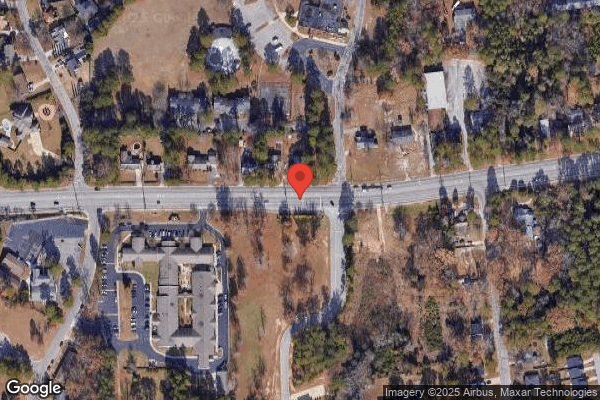
523 Country Club Drive, Fayetteville, NC 28301 (910) 488-0711
For profit - Corporation 86 Beds CENTURY CARE MANAGEMENT Data: November 2025
Trust Grade
83/100
#74 of 417 in NC
Last Inspection: April 2025

Within standard 12-15 month inspection cycle. Federal law requires annual inspections.

Overview

Whispering Pines Nursing & Rehab Center has a Trust Grade of B+, which means it is above average and recommended for families looking for care. It ranks #74 out of 417 facilities in North Carolina, placing it in the top half of the state, and #5 out of 10 in Cumberland County, indicating that only a few local facilities perform better. The facility is improving, having reduced its issues from two in 2024 to none in 2025. Staffing is rated at 3 out of 5 stars, with a turnover rate of 51%, which is average compared to the state; however, RN coverage is concerning as it is lower than 81% of facilities in North Carolina. Specific incidents include a resident suffering a serious arm fracture due to improper transfer methods and the facility's failure to maintain effective quality improvement practices, which raises concerns about ongoing safety and care standards. Overall, while there are strengths in the facility's ratings and improvements, families should remain aware of these serious findings and the need for better staffing oversight.

Trust Score
B+
83/100
In North Carolina
#74/417
Top 17%
Safety Record
Moderate
Needs review
Inspections
Getting Better
2 → 0 violations
Staff Stability
⚠ Watch
51% turnover. Above average. Higher turnover means staff may not know residents' routines.
Penalties
○ Average
$8,512 in fines. Higher than 55% of North Carolina facilities. Some compliance issues.
Skilled Nurses
⚠ Watch
Each resident gets only 26 minutes of Registered Nurse (RN) attention daily — below average for North Carolina. Fewer RN minutes means fewer trained eyes watching for problems.
Violations
✓ Good
Only 3 deficiencies on record. Cleaner than most facilities. Minor issues only.
★★★★★
5.0
Overall Rating
★★★☆☆
3.0
Staff Levels
★★★★★
5.0
Care Quality
★★★★★
5.0
Inspection Score
Stable
2024: 2 issues
2025: 0 issues

The Good

  • 5-Star Quality Measures · Strong clinical quality outcomes
  • Full Sprinkler Coverage · Fire safety systems throughout facility
  • No fines on record

Facility shows strength in quality measures, fire safety.

The Bad

Staff Turnover: 51%

Near North Carolina avg (46%)

Higher turnover may affect care consistency

Federal Fines: $8,512

Below median ($33,413)

Minor penalties assessed

Chain: CENTURY CARE MANAGEMENT

Part of a multi-facility chain

Ask about local staffing decisions and management

The Ugly 3 deficiencies on record

1 actual harm
Feb 2024 2 deficiencies 1 Harm
SERIOUS (G) 📢 Someone Reported This

A family member, employee, or ombudsman was alarmed enough to file a formal complaint

Actual Harm - a resident was hurt due to facility failures

Accident Prevention (Tag F0689)

A resident was harmed · This affected 1 resident

**NOTE- TERMS IN BRACKETS HAVE BEEN EDITED TO PROTECT CONFIDENTIALITY** Based on record review, Nurse Practitioner, and staff interviews, the facility failed to provide care safely when Nursing Assist...

Read full inspector narrative →
**NOTE- TERMS IN BRACKETS HAVE BEEN EDITED TO PROTECT CONFIDENTIALITY** Based on record review, Nurse Practitioner, and staff interviews, the facility failed to provide care safely when Nursing Assistant (NA) #1 and NA #2 transferred a resident who was dependent on staff assistance and unable to bear weight from his bed to chair by holding the resident under his arms. Resident #62 sustained an acute displaced left humeral (long bone in the arm between shoulder and elbow) neck fracture requiring use of a sling, orthopedic follow up, and resulted in pain for 1 of 3 residents reviewed for supervision to prevent accidents (Resident #62). Findings included: Resident #62 was admitted to the facility on [DATE] and his most recent re-admission to the facility was on 1/23/23. His diagnoses included dementia, heart failure, osteoarthritis, and Parkinson's disease. Resident #62's Care Guide summary (no date) indicated he was totally dependent with transfers; he was non weight bearing and he required a sling lift for transfers. Resident #62's care plan initiated 1/23/23 indicated he was at risk for falls related to history of falls, increased weakness/decreased endurance, safety/impaired or decreased safety awareness. He displayed poor safety awareness and insight and was very impulsive in behavior. History of falls: 12/3/19 fall with no injury, 12/9/19 fall with no injury, 12/17/19 fall with no injury, 2/3/20 fall with no injury, 2/8/20 fall with no injury, 11/15/21 fall with no injury, 12/5/21 fall with no injury, and 3/20/23 fall with no injury. Interventions included: before transfers ensure floor surrounding bed is free from obstacles, whether in bed or chair ensure proper and safe body alignment, positioning and parameters for resident to maximize safety, assist to change position frequently for comfort. Resident #62's quarterly Minimum Data Set (MDS) assessment dated [DATE] revealed he was assessed as cognitively intact. Resident #62 was dependent for transfers and required the assistance of 2 or more people. Resident #62 was coded as not exhibiting behavioral symptoms and not exhibiting rejection of care behaviors. He was coded as utilizing a manual wheelchair and was dependent on staff to utilize the wheelchair. He had no pain and was not receiving opioids. He was coded as having had a fall without injury. During an interview on 2/14/24 at 1:52 PM with NA #1, she stated she was told by Nurse #1 to transfer Resident #62 from the bed to the chair since his feet were hanging off the bed on 9/1/23 during the third shift that began at 11:00 PM and ended on 9/2/23 at 7:00 AM. She transferred Resident #62 from the bed to the chair with NA #2 without using the mechanical lift. She (NA #1) indicated she stood on one side of Resident #62 and NA #2 stood on the opposite side and they supported him by the arms and transferred him to the chair. NA #1 stated Resident #62 did not bear any weight or assist with the transfer. NA#1 verbalized she was aware based on Resident #62's Care Guide that he required a mechanical lift for transfers, but they went ahead with the transfer without obtaining the lift anyway since Resident #62's feet were off the bed. NA #1 verbalized Resident #62 did not complain of any pain during the transfer or after the transfer on 9/1/23 during the third shift that began at 11:00 PM and ended on 9/2/23 at 7:00 AM. Attempts to interview NA #2 were unsuccessful. During an interview on 2/15/24 at 8:07 AM with Nurse #1, she stated she had asked NA #1 and NA#2 on 9/1/23 11:00 - 7:00 AM shift to transfer Resident #62 to the chair since he had his foot hanging out of the bed. She stated they got Resident #62 out of bed because he was agitated and had his foot hanging off the bed. Nurse #1 verbalized she realized NA #1 and NA #2 had not used the mechanical lift to transfer Resident #62 out of bed because there was no sling under him when she came back to check on him shortly after he was transferred. She explained that he was seated at the Nurse's station. He did not complain of pain on 9/1/23 during the11:00 PM - 7:00 AM shift. During an interview on 2/15/24 at 8:07 AM with Nurse #1 she stated she became aware of pain/injury on 9/2/23 during the shift that began at 11:00 PM and ended on 9/3/23 at 7:00 AM when Resident #62 reported 4 out of 10 pain level to the right shoulder. Tylenol was administered for pain and was effective. An x-ray was done on 9/3/23 and showed he had a fracture to the left humerus. Resident #62 no longer resided at the facility and was unavailable for interview. A physician's order dated 9/3/23 indicated order stat (immediate) x-ray, 2 view of the left shoulder. Resident #62's x-ray radiology interpretation dated 9/3/23 findings indicated a fracture involving left humeral neck with slight medial displacement and mild osteoporosis. The impression was acute displaced left humeral neck fracture. A physician's order dated 9/3/23 indicated place arm in a sling and refer to Orthopedist next week. Nursing progress note dated 9/3/23 indicated Resident #62 requested pain medication, Tylenol (acetaminophen) was given and was effective. Resident #62's September 2023 Medication Administration Record (MAR) indicated a pain evaluation on a scale of 0 to 10 was conducted on each shift. Resident #62's pain level on 9/3/23 7:00 AM - 3:00 PM shift was documented as 4 out of 10, 3:00 PM - 11:00 PM shift was documented as 3 out of 10 and 11:00 PM - 7:00 AM shift was 0 out of 10. On 9/5/23 at 9:03 AM pain level was documented as 7 out of 10 and 650 milligram acetaminophen was administered. The pain level was documented as 0 or 1 out of 10 all the other days in September 2023. Resident #62's Emergency Department (ED) after visit Summary dated 9/5/23 indicated Resident #62 was seen at the ED for a shoulder injury. The diagnosis was encounter for closed fracture of left humeral head. Discharge instructions were to follow up with bone doctor, continue to use sling in place to avoid further bone injury and use over the counter pain medication. A physician's order dated 9/7/23 indicated to monitor sling in place to Resident #62's left arm every shift. Resident #62's Orthopedics assessment plan dated 9/27/23 indicated initial encounter for nondisplaced fracture of upper end of left humerus. The note stated he will continue with sling for comfort, extra strength Tylenol 2 tablets 3 times a day can be used for pain, follow up in 3 weeks. The physician's order dated 9/7/23 related to sling monitoring every shift was discontinued on 10/25/23. Facility Investigative Summary Review submitted on 9/7/23 by facility Administrator for Resident #62 indicated the resident complained of pain in his right shoulder on 9/3/23 at approximately 6:00 AM and he had swelling to the right shoulder. The resident stated the pain began about two days ago. An in-house x-ray was performed on 9/3/23 at approximately 4:05 PM, the x-ray report revealed a fracture involving the left humeral neck with slight medial displacement. Resident #62 was ordered a sling and ordered to follow up with orthopedic doctor. Staff investigations indicated Resident #62 was agitated on the night of 9/1/23 and Nurse #1 noted him with his foot hanging off the bed. Nurse #1 told Nursing Assistant #1 (NA #1) and Nursing Assistant #2 (NA #2) to get Resident #62 out of bed. NA #1 and NA #2 transferred Resident #62 from bed to chair without the lift. Facility actions indicated staff were in-serviced on transfer policy-not lifting/handling resident limbs, [NAME] following completing transfers and reporting incidents/accidents. On 9/2/23 education was initiated by the charge nurse with the nursing assistants (NA #1 and NA #2) who transferred the resident without the lift. Re-education again on 9/3/23 and on 9/7/23 one on one return demonstration and re-education was completed by the Director of Nursing with the two nursing assistants who provided the wrong transfer ensuring they check the [NAME] before transfers and they must follow the plan of care. An interview was conducted with the Nurse Practitioner on 2/14/24 at 12:43 PM. She stated that an x-ray was ordered when Resident #62 complained of right shoulder pain (9/3/23) which showed a fracture to the left humerus. An order was given for the Resident to wear a sling. Pain was managed with Tylenol, and he was sent to the ED when he had increased pain (9/5/23). The ED and orthopedics discharge indicated to continue with same treatment, to wear sling and pain medication as needed. The NP stated NA #1 and NA #2 should have used the lift to transfer Resident #62 on 9/1/23 to ensure it was a safe transfer. An interview was conducted with the facility Administrator and Corporate Consultant on 2/15/24 at 2:20 PM. The Administrator stated Resident #62 complained of right shoulder pain on 9/3/23 and an X-ray was done on 9/3/23 which showed an acute fracture to the left humeral neck. The doctor gave an order to place the arm in a sling, pain medication and follow up with orthopedics the following week. The Administrator verbalized the facility completed a 24-hour report on 9/3/23 and conducted an investigation. The investigation revealed NA #1 and NA #2 had transferred Resident #62 from the bed to the chair on 9/1/23 during the third shift that began at 11:00 PM and ended on 9/2/23 at 7:00 AM without utilizing the mechanical lift. The Administrator explained, the 2 NAs stood on each side of Resident #62 and supported the Resident under his arms and transferred the Resident to the chair, Resident #62 did not bear any weight during the transfer. Resident #62 was sent to the Emergency Department (ED) on 9/5/23 due to increased pain. Diagnosis at the ED on 9/5/23 was closed fracture of the left humeral head. The Administrator stated under no circumstances should facility staff transfer Residents by their body limbs such as arms or legs. She further stated NA #1 and NA #2 should have used the lift to transfer Resident #62 on 9/1/23. The facility provided the following plan of correction with a compliance date of 9/8/23: 1. Corrective action for resident(s) affected: - On 9/3/23, Resident complained of pain to right shoulder pain. Nurse notified the doctor of the pain and an order was received for an x-ray to the left shoulder. The nurse instructed staff to get Resident out of bed to prevent him from trying to get up on his own. The two nursing assistants were interviewed, and they did get resident up into the chair without the mechanical lift, shortly after coming onto shift on 9/1/23 at approximately 11:20 pm. Staff got resident up and placed at the nurse's station. Resident had snack and was placed back to bed by the nursing assistants and the nurse using the mechanical lift. Charge Nurse verbally educated nursing assistants that they were supposed to use the lift. Charge Nurse did demonstrate proper use of the lift and assisted the nursing assistants with safe transfer of the resident back into bed according to the Resident's plan of care on 9/2/23 when the resident was put back to bed. - On 9/3/23 X-ray revealed fracture to the left shoulder. The doctor was notified of the results of x-ray and ordered sling to the left arm and Tylenol. - On 9/5/23 Resident reported increased pain and the doctor gave the order to send to the emergency room (ER) for evaluation. ER report stated closed fracture of humeral head, no dislocation on 9/5/23 x-ray, and no new orders were given from previous facility doctor's orders. ER stated to follow-up with orthopedics doctor. 2. Corrective action for resident(s) with the potential to be affected. - On 9/2/23, education began by the charge nurse with the nursing assistants who transferred the resident without the lift. Reeducation again on 9/3/23, and on 9/7/23, one on one return demonstration and re-education was completed by the Director of Nursing with the two nursing assistants who provided the wrong transfer ensuring they check the [NAME] before transfers and they must follow the plan of care. - In-service was conducted with all other staff beginning 9/3/23 on the no-lift policy (no lifting residents by body parts such as arms, legs) and additional in-servicing was added on 9/7/23 checking the [NAME] before transfers, and incident/accident reporting and protocols. 3. What measures/systems will be put into place to ensure the deficient practice does not occur again? - Facility implemented a Transfer Audit tool to monitor compliance with resident transfers to ensure residents are transferred according to the plan of care. 4. How will performance be monitored and how often? - Transfer audit log audits will be completed weekly x4 and monthly x3 thereafter by the Executive Director and quarterly thereafter to ensure compliance. Findings of the transfer audit compliance will be presented to the Quality Assurance Committee quarterly. Any non-compliance will be addressed by the QA Committee and the plan will be modified as needed. Compliance Date: 9/8/23 On 2/16/24 the facility's plan of correction was validated by the following: Audits conducted by the facility were reviewed and were found to be completed according to the plan of correction. Auditing started 9/3/23 and was completed on 12/27/23. Staff interviews with NAs and nurses verified education was provided on reviewing the [NAME] prior to providing care for residents. The training content included: locate and identify transfer status for resident, demonstrate proper mechanical pad placement, demonstrate proper use of mechanical lift from bed to chair/chair to bed, demonstrate proper stand and pivot technique with one/two person using gait belt and education on importance of facility no lift policy. The Director of Nursing (DON), Quality Assurance Nurse and Corporate Consultant verbalized they had conducted the initial training. Training check off sheets were noted to have DON's signature as the instructor. In-service for all facility staff started 9/3/23 and was completed on 9/7/23. The facility Executive Director (Administrator) stated she was responsible for ensuring all new hires were in-serviced. The Director of Nursing or Designee was responsible for transfer audits and monitoring compliance to ensure residents are transferred according to the plan of care. Transfer audits were noted to have been completed by DON and Quality Assurance Nurse. On 2/16/24 at 12:01 PM NA #3 and NA #4 were observed transferring a resident utilizing the mechanical lift according to the plan of care. The facility's plan of correction was validated to be completed as of 9/8/23.
CONCERN (D)

Potential for Harm - no one hurt, but risky conditions existed

QAPI Program (Tag F0867)

Could have caused harm · This affected 1 resident

Based on record review, Nurse Practitioner, and staff interviews, the facility's Quality Assurance and Performance Improvement (QAPI) Committee failed to maintain implemented procedures and monitor in...

Read full inspector narrative →
Based on record review, Nurse Practitioner, and staff interviews, the facility's Quality Assurance and Performance Improvement (QAPI) Committee failed to maintain implemented procedures and monitor interventions that the committee put into place following the focused infection control and complaint investigation survey of 8/18/22. This was for one deficiency in the area of Accidents/Hazards (F689) that was recited on the current recertification and complaint investigation survey of 2/16/24. The continued failure during two federal surveys of record shows a pattern of the facility's inability to sustain an effective QAPI program. Findings included: This tag is cross referenced to: F689: Based on record review, Nurse Practitioner, and staff interviews, the facility failed to provide care safely when Nursing Assistant (NA) #1 and NA #2 transferred a resident who was dependent on staff assistance and unable to bear weight from his bed to chair by holding the resident under his arms. Resident #62 sustained acute displaced left humeral (long bone in the arm between shoulder and elbow) neck fracture requiring use of a sling, orthopedic follow up, and experienced pain for 1 of 3 residents reviewed for supervision to prevent accidents (Resident #62). During the focused infection control and complaint investigation survey of 8/18/22 the facility was cited at F689 for failing to ensure a resident, who was on an anticoagulant, did not fall from bed while care was being rendered with the bed in the elevated position. An interview was conducted on 2/16/24 at 12:59 PM with facility Administrator and Corporate Consultant. The Administrator stated the QAPI committee met monthly and committee members included: Administrator, Medical Director, Director of Nursing (DON), Nurse Manager, Dietary Manager, Dietician, Admissions Coordinator, Minimum Data Set (MDS) Coordinator, Environmental Services Director, Treatment Nurse, Social Services Director, Therapy Director, and Activities Director. The Administrator stated the committee discussed ongoing identified concerns to include prevention of accidents.
Oct 2022 1 deficiency
CONCERN (D)

Potential for Harm - no one hurt, but risky conditions existed

Comprehensive Assessments (Tag F0636)

Could have caused harm · This affected 1 resident

**NOTE- TERMS IN BRACKETS HAVE BEEN EDITED TO PROTECT CONFIDENTIALITY** Based on record review and staff interviews, the facility failed to accurately code a resident's Minimum Data Set (MDS) assessme...

Read full inspector narrative →
**NOTE- TERMS IN BRACKETS HAVE BEEN EDITED TO PROTECT CONFIDENTIALITY** Based on record review and staff interviews, the facility failed to accurately code a resident's Minimum Data Set (MDS) assessment for 1 of 17 assessments reviewed (Resident #26). The findings included: Resident #26 was admitted to the facility on [DATE] with diagnoses that included, in part, bipolar disorder, insomnia due to other mental disorder ad unspecified dementia with behavioral disturbance. A review of Resident #26's significant change MDS, dated [DATE], revealed the facility had indicated Resident #26 had not been evaluated for a level II Preadmission Screening and Resident Review (PASSR) for question A1500. A review of Resident #26's medical record revealed a PASSR Level II Determination Letter Notification, dated 07/27/2021, with no expiration date. During an interview with the MDS Coordinator on 10/14/22 at 11:10 a.m., the coordinator stated Resident #26 was assessed as a PASSR Level II. The coordinator explained due to human error she had answered no to the question (A1500) on the assessment when she should have answered yes. The coordinator stated she had submitted a corrected assessment after it was brought to her attention. During an interview with the Administrator on 10/14/22 at 11:06 a.m., the Administrator explained the assessment had been coded incorrectly possibly due to human error. The Administrator stated it was her expectation that residents' MDS assessments are coded accurately.
Understanding Severity Codes (click to expand)
Life-Threatening (Immediate Jeopardy)
J - Isolated K - Pattern L - Widespread
Actual Harm
G - Isolated H - Pattern I - Widespread
Potential for Harm
D - Isolated E - Pattern F - Widespread
No Harm (Minor)
A - Isolated B - Pattern C - Widespread

Questions to Ask on Your Visit

  • "Can I speak with families of current residents?"
  • "What's your RN coverage like on weekends and overnight?"

Our Honest Assessment

Strengths
  • • Grade B+ (83/100). Above average facility, better than most options in North Carolina.
Concerns
  • • 3 deficiencies on record, including 1 serious (caused harm) violation. Ask about corrective actions taken.
Bottom line: Generally positive indicators. Standard due diligence and a personal visit recommended.

About This Facility

What is Whispering Pines Nursing & Rehab Center's CMS Rating?

CMS assigns Whispering Pines Nursing & Rehab Center an overall rating of 5 out of 5 stars, which is considered much above average nationally. Within North Carolina, this rating places the facility higher than 99% of the state's 100 nursing homes. This rating reflects solid performance across the metrics CMS uses to evaluate nursing home quality.

How is Whispering Pines Nursing & Rehab Center Staffed?

CMS rates Whispering Pines Nursing & Rehab Center's staffing level at 3 out of 5 stars, which is average compared to other nursing homes. Staff turnover is 51%, compared to the North Carolina average of 46%. RN turnover specifically is 56%, which is notably high. RNs provide skilled clinical oversight, so turnover in this role can affect medical care quality.

What Have Inspectors Found at Whispering Pines Nursing & Rehab Center?

State health inspectors documented 3 deficiencies at Whispering Pines Nursing & Rehab Center during 2022 to 2024. These included: 1 that caused actual resident harm and 2 with potential for harm. Deficiencies causing actual harm indicate documented cases where residents experienced negative health consequences.

Who Owns and Operates Whispering Pines Nursing & Rehab Center?

Whispering Pines Nursing & Rehab Center is owned by a for-profit company. For-profit facilities operate as businesses with obligations to shareholders or private owners. The facility is operated by CENTURY CARE MANAGEMENT, a chain that manages multiple nursing homes. With 86 certified beds and approximately 70 residents (about 81% occupancy), it is a smaller facility located in Fayetteville, North Carolina.

How Does Whispering Pines Nursing & Rehab Center Compare to Other North Carolina Nursing Homes?

Compared to the 100 nursing homes in North Carolina, Whispering Pines Nursing & Rehab Center's overall rating (5 stars) is above the state average of 2.8, staff turnover (51%) is near the state average of 46%, and health inspection rating (5 stars) is much above the national benchmark.

What Should Families Ask When Visiting Whispering Pines Nursing & Rehab Center?

Based on this facility's data, families visiting should ask: "Can I visit during a mealtime to observe dining assistance and food quality?" "How do you handle medical emergencies, and what is your hospital transfer rate?" "Can I speak with family members of current residents about their experience?"

Is Whispering Pines Nursing & Rehab Center Safe?

Based on CMS inspection data, Whispering Pines Nursing & Rehab Center has a clean safety record: no substantiated abuse findings (meaning no confirmed cases of resident harm), no Immediate Jeopardy citations (the most serious violation level indicating risk of serious injury or death), and is not on the Special Focus Facility watch list (a federal program monitoring the lowest-performing 1% of nursing homes). The facility has a 5-star overall rating and ranks #1 of 100 nursing homes in North Carolina. While no facility is perfect, families should still ask about staff-to-resident ratios and recent inspection results during their visit.

Do Nurses at Whispering Pines Nursing & Rehab Center Stick Around?

Whispering Pines Nursing & Rehab Center has a staff turnover rate of 51%, which is 5 percentage points above the North Carolina average of 46%. Moderate turnover is common in nursing homes, but families should still ask about staff tenure and how the facility maintains care continuity when employees leave.

Was Whispering Pines Nursing & Rehab Center Ever Fined?

Whispering Pines Nursing & Rehab Center has been fined $8,512 across 1 penalty action. This is below the North Carolina average of $33,164. While any fine indicates a compliance issue, fines under $50,000 are relatively common and typically reflect isolated problems that were subsequently corrected. Families should ask what specific issues led to these fines and confirm they've been resolved.

Is Whispering Pines Nursing & Rehab Center on Any Federal Watch List?

Whispering Pines Nursing & Rehab Center is not on any federal watch list. The most significant is the Special Focus Facility (SFF) program, which identifies the bottom 1% of nursing homes nationally based on persistent, serious quality problems. Not being on this list means the facility has avoided the pattern of deficiencies that triggers enhanced federal oversight. This is a positive indicator, though families should still review the facility's inspection history directly.