Maple Grove Health and Rehabilitation Center
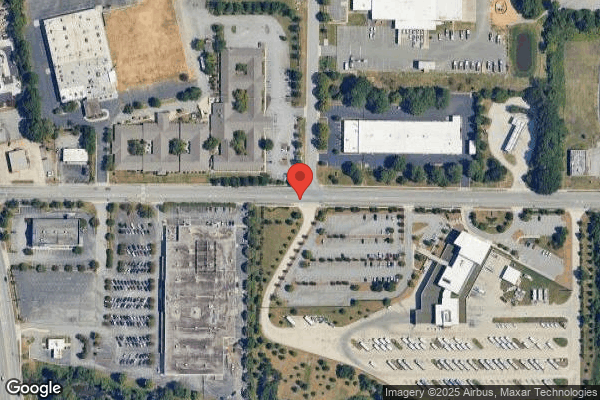
308 West Meadowview Road, Greensboro, NC 27406 (336) 230-0534
For profit - Limited Liability company 210 Beds PRINCIPLE LONG TERM CARE Data: November 2025 2 Immediate Jeopardy citations
Trust Grade
11/100
#176 of 417 in NC
Last Inspection: June 2025

Inspected within the last 6 months. Data reflects current conditions.

Overview

Maple Grove Health and Rehabilitation Center has received a Trust Grade of F, indicating significant concerns about the quality of care provided. Ranking #176 out of 417 facilities in North Carolina places it in the top half, but this is overshadowed by its poor trust grade. The facility's trend is improving, having reduced its issues from 5 in 2024 to none in 2025, which is encouraging. Staffing remains a concern with a turnover rate of 61%, significantly higher than the state average of 49%, although it does provide good RN coverage, exceeding 89% of other facilities. However, the facility has faced serious incidents, including a critical failure to provide necessary care to a resident, resulting in hospitalization for sepsis and the presence of maggots, highlighting severe issues that families should consider carefully.

Trust Score
F
11/100
In North Carolina
#176/417
Top 42%
Safety Record
High Risk
Review needed
Inspections
Getting Better
5 → 0 violations
Staff Stability
⚠ Watch
61% turnover. Above average. Higher turnover means staff may not know residents' routines.
Penalties
○ Average
$143,383 in fines. Higher than 75% of North Carolina facilities. Some compliance issues.
Skilled Nurses
✓ Good
Each resident gets 45 minutes of Registered Nurse (RN) attention daily — more than average for North Carolina. RNs are trained to catch health problems early.
Violations
⚠ Watch
24 deficiencies on record. Higher than average. Multiple issues found across inspections.
★★★☆☆
3.0
Overall Rating
★★★☆☆
3.0
Staff Levels
★★★★★
5.0
Care Quality
★★☆☆☆
2.0
Inspection Score
Stable
2024: 5 issues
2025: 0 issues

The Good

  • 5-Star Quality Measures · Strong clinical quality outcomes
  • Full Sprinkler Coverage · Fire safety systems throughout facility
  • No fines on record

Facility shows strength in quality measures, fire safety.

The Bad

3-Star Overall Rating

Near North Carolina average (2.8)

Meets federal standards, typical of most facilities

Staff Turnover: 61%

15pts above North Carolina avg (46%)

Frequent staff changes - ask about care continuity

Federal Fines: $143,383

Well above median ($33,413)

Significant penalties indicating serious issues

Chain: PRINCIPLE LONG TERM CARE

Part of a multi-facility chain

Ask about local staffing decisions and management

Staff turnover is elevated (61%)

13 points above North Carolina average of 48%

The Ugly 24 deficiencies on record

2 life-threatening 1 actual harm
Mar 2024 5 deficiencies 1 Harm
SERIOUS (G)

Actual Harm - a resident was hurt due to facility failures

Deficiency F0685 (Tag F0685)

A resident was harmed · This affected 1 resident

**NOTE- TERMS IN BRACKETS HAVE BEEN EDITED TO PROTECT CONFIDENTIALITY** Based on observation, record review and interviews with the resident and staff, the facility failed to provide a cognitively dep...

Read full inspector narrative →
**NOTE- TERMS IN BRACKETS HAVE BEEN EDITED TO PROTECT CONFIDENTIALITY** Based on observation, record review and interviews with the resident and staff, the facility failed to provide a cognitively dependent resident with access to a hearing amplifier to accommodate a hearing deficit. This deficient practice occurred for 1 of 1 resident reviewed for accommodation of needs (Resident #96). The reasonable person concept was applied for Resident #96 due to his inability to hear what was happening around him. A reasonable person would feel social isolation, loneliness, and frustration. Findings included: Resident #96 was admitted to the facility on [DATE] with the diagnosis of Alzheimer's disease. A review of the most recent comprehensive Minimum Data Set (MDS) dated [DATE] revealed Resident #96 had moderately impaired cognition and moderately impaired hearing with the use of a hearing device. Resident #96's care plan revised on 12/14/23 revealed a focus area for inability to express emotion, listen and share information; auditory alteration/deficit characterized by decreased lack of hearing related to hearing deficit, uses hearing amplifier. The interventions included use of pocket talker to hear. On 2/26/24 at 9:49 AM an observation and interview were conducted with Resident #96. He was observed sitting on the side of the bed in a quiet room. Resident #96 indicated that he had a hard time hearing and could not recall when he last had access to a hearing amplifier but thought he had one at one time. A review of the Pace of the Triad Primary Comprehensive Assessment progress note dated 11/9/23 revealed a chronic medical condition of severe hard of hearing. The Pace Nurse Practitioner (Pace NP #1) indicated in this note that Resident #96's was severely hard of hearing, and the hearing loss was chronic and ongoing. Pace NP #1 revealed that Resident #96 was examined using a pocket talker which was effective and without the pocket talker, hearing loss did appear to significantly affect Resident #96's ability to communicate and/or perform Activities of Daily Living (ADL's). Pace NP #1 further revealed that in previous notes hearing aides were not tolerated however hearing loss was adequately addressed using the pocket talker which Resident #96 tolerated well and was at his bedside for as needed use. A review of psychiatric note dated 1/26/24 indicated that during Resident #96's treatment visit he was observed to be hard of hearing and repeatedly said I don't know, and I can't hear you. On 2/28/24 at 9:07 AM an interview was conducted with the Activity Director. She indicated that Resident #96 was hard of hearing and that she must raise her voice for him to hear her. She further revealed that she was not aware of any available hearing devices and had not used or offered any hearing devices such as a hearing amplifier during activities. On 2/28/24 at 9:19 AM an interview was conducted with Nursing Assistant (NA) #1, and she indicated that she was familiar with Resident #96 and that he had a hard time hearing but was able to hear if she raised her voice. She further indicated that she was not aware if he had hearing aids or a hearing amplifier available. On 2/28/24 at 9:27 AM an interview was conducted with Resident 96's assigned medication aide (Medication Aide #1) and she indicated that Resident #96 was hard of hearing and that she had to raise her voice for him to hear but he was able to hear. She further revealed that she could not recall if Resident #96 had hearing aids or hearing amplifier available. On 2/28/24 at 9:39 AM an interview was conducted with Social Worker #1, and she revealed that Resident #96 was hard of hearing, and she had to raise her voice for him to hear her and she did not use any hearing devices when speaking with him. A follow up interview was conducted on 2/28/24 at 10:06 am and she indicated that she went to Resident #96's room and located a hearing amplifier in his room inside the drawer of his bedside table. On 2/28/24 at 3:27 PM a follow up visit was made to Resident #96 with Unit Manager #1 present. Unit Manger #1 was able to locate the hearing amplifier in the bedside table drawer and asked Resident #96 while using a raised voice if he would allow the use of the hearing amplifier so she could talk with him. Resident #96 responded by nodding head yes and reached hand out to hold the base of the amplifier. Unit Manager #1 then offered the headset to Resident #96, and he leaned his head toward Unit manager #1 to accept the hearing device but Unit Manager #1 realized that the left earpiece of the amplifier was dangling loose. Unit Manager #1 attempted to reattach it, but attempts were not successful. Unit Manager #1 explained to Resident #96 that the amplifier was broken, and she would have to get him a new one and he agreed by nodding his head yes. A follow up interview was conducted with Resident #96 on 2/29/24 at 1:56 PM and he indicated that he would like for staff to use the hearing amplifier so that I can hear better. On 2/29/24 an interview was attempted with the Pace of the Triad Medical Director as DNP #1 was not available. Attempts to interview the Pace of the Triad Medical Director were not successful. An interview was conducted with the Administrator on 2/29/24 at 1:19 PM. She indicated that the hearing amplifier was listed as an intervention on Resident #96's care plan and care guide but that it was up to the staff to determine if they felt they needed the device to effectively communicate with Resident #96. She further revealed that she was not made aware by Unit Manager #1 that the hearing amplifier was broken at that time.
CONCERN (D)

Potential for Harm - no one hurt, but risky conditions existed

Deficiency F0637 (Tag F0637)

Could have caused harm · This affected 1 resident

**NOTE- TERMS IN BRACKETS HAVE BEEN EDITED TO PROTECT CONFIDENTIALITY** Based on medical record review and staff interviews the facility failed to complete a significant change in status assessment fo...

Read full inspector narrative →
**NOTE- TERMS IN BRACKETS HAVE BEEN EDITED TO PROTECT CONFIDENTIALITY** Based on medical record review and staff interviews the facility failed to complete a significant change in status assessment for 1 of 1 resident reviewed for significant change (Resident #70). Findings included: Resident #70 was admitted to the facility on [DATE] with diagnoses of dementia. Review of the quarterly Minimum Data Set (MDS) dated [DATE] revealed Resident #70 required supervision with eating, upper body dressing, lower body dressing partial /moderate staff assistance for oral hygiene, toileting hygiene, putting on/taking off footwear, and personal hygiene. Resident #70 was independent in the mobility areas of roll left and right, sit to lying, lying to sit, sit to stand, chair and bed transfer. Resident #70 had no weight loss. Review of the quarterly MDS dated [DATE] revealed Resident #70 was dependent on staff in the following areas of mobility: eating, oral hygiene, toileting, shower/bathing, upper body dressing, lower body dressing, putting on and taking off footwear, and personally hygiene. In the area of Mobility, Resident #70 required substantial/maximal assistance to roll left and right and was dependent on staff for sit to lying, lying to sit, sit to stand, chair/bed to chair transfer, and tub shower transfer. Resident #70 was assessed to have had weight loss and was not on a physician-prescribed weight loss regimen. A review of Resident #70's MDS assessments revealed a Significant Change in Status Assessment had not been completed after the noted decline in activity of daily living in eating, dressing, personal hygiene, chair and bed transfers and weight loss. An interview on 5/17/23 at 1:30 PM the MDS Nurse #1 stated that a Significant Change in Status Assessment should be done whenever there is a change in two or more areas of improvement or decline. MDS Nurse #1 further revealed that a Significant Change in Assessment should have been completed on 1/18/23 assessment and must have been overlooked. An interview on 2/29/24 at 1:18 PM with the Administrator revealed that a Significant Change in Assessment should be completed per MDS guidelines.
CONCERN (D) 📢 Someone Reported This

A family member, employee, or ombudsman was alarmed enough to file a formal complaint

Potential for Harm - no one hurt, but risky conditions existed

ADL Care (Tag F0677)

Could have caused harm · This affected 1 resident

**NOTE- TERMS IN BRACKETS HAVE BEEN EDITED TO PROTECT CONFIDENTIALITY** Based on observations, record review, and interviews with resident and staff, the facility failed to provide nail care to a resi...

Read full inspector narrative →
**NOTE- TERMS IN BRACKETS HAVE BEEN EDITED TO PROTECT CONFIDENTIALITY** Based on observations, record review, and interviews with resident and staff, the facility failed to provide nail care to a resident who needed extensive assistance from staff for Activities of Daily Living (ADL). This deficient practice affected 1 of 7 residents (Resident # 90) reviewed for ADLs. Findings included: Resident #90 was admitted to the facility on [DATE] with diagnoses of hemiplegia (paralysis of one side of the body). Review of the annual Minimum Data Set (MDS), dated [DATE], revealed Resident #90 was cognitively intact and required extensive assistance with personal hygiene. Review of Resident #90's care plan revised 01/25/24 revealed a need for Activities of Daily Living (ADL)/Personal Care with the following intervention including the resident required assistance for personal hygiene, and grooming. During observation and interview on 02/26/24 at 12:03 pm, Resident #90 was observed lying in bed with fingernails on both hands that were about ½ inch long. Resident #90 stated he wanted his nails clipped and would ask the staff. An observation was conducted on 02/27/24 at 12:41 pm of Resident #90 lying in bed and his nails remained long. Resident #90 stated he did not ask to have his nails clipped and would ask his nurse today. On 02/28/24 at 10:25 am an observation was made of Resident #90 and his nails remained long on both hands. Resident #90 stated he had asked the Nurse to clip his nails on 02/27/24, however he did not remember what nurse he had asked. An interview was conducted on 02/28/24 at 10:59 am with the MDS Nurse and she indicated residents' nails were usually clipped when the Nursing Assistant (NA) provided ADL care, unless they had diabetes. The MDS Nurse was in the room and verified with Resident #90 he asked to have his fingernails clipped on 02/27/24 by the nurse, and the nurse he asked said okay, but never clipped them. A review of Resident #90's Activities of Daily Living documentation from December 2023 to present revealed no documentation that showers had been provided and no refusals noted. Attempt to contact NAs who were assigned to work with Resident #90 on 02/26/24 and 02/27/24 was unsuccessful. An interview was conducted 02/29/24 at 11:16 am with the Nurse (Nurse #2) who was assigned to Resident #90 on 02/26/24 and 02/27/24 and she indicated the Resident did not request to have his nails clipped. She indicated staff had not informed her Resident needed his nails clipped. Nurse #2 stated she did not notice Resident #90 needed his nails clipped or she would have clipped them. An interview was conducted with the Administrator and Director of Nursing (DON) on 02/29/24 at 3:08 pm. The DON indicated Resident #90's fingernails were clipped on 02/28/24 and his nails should be clipped if he requested them to be clipped.
CONCERN (D) 📢 Someone Reported This

A family member, employee, or ombudsman was alarmed enough to file a formal complaint

Potential for Harm - no one hurt, but risky conditions existed

QAPI Program (Tag F0867)

Could have caused harm · This affected 1 resident

Based on observations, resident and staff interviews and record review, the facility's Quality Assurance and Performance Improvement committee (QAPI) failed to maintain implemented procedures and moni...

Read full inspector narrative →
Based on observations, resident and staff interviews and record review, the facility's Quality Assurance and Performance Improvement committee (QAPI) failed to maintain implemented procedures and monitor interventions the committee put into place following the annual recertification and complaint surveys dated 1/18/22 and current survey 3/06/24 in the area of accurately coding Minimum Date Set (MDS). The facility also failed to maintain implemented procedures and monitor interventions the committee put in place following the annual recertification and complaint surveys conducted on 1/18/22, 1/27/23 and the current survey 03/06/24, in the area of Activity of Daily Living (ADL) care provided for dependent residents. The continued failure during three federal surveys of record showed a pattern of the facility's inability to sustain an effective QAPI program. Findings included: This citation is cross referenced to: 1 F 641 Based on record reviews and staff interviews, the facility failed to accurately code the Minimum Data Set (MDS) assessment in the area hearing, speech, and vision for 1 of 1 resident reviewed for communication. (Resident #96). During the previous recertification and complaint survey date 1/18/22 the facility failed to accurately code the nutrition section of the minimum data set (MDS) for 2 of 5 residents reviewed for Nutrition 2 F 677 Based on observations, record review, and interviews with resident and staff, the facility failed to provide nail care to a resident who needed extensive assistance from staff for Activities of Daily Living (ADL). This deficient practice affected 1 of 7 residents (Resident # 90) reviewed for ADLs. During the previous recertification and survey on 1/27/23 the facility failed to provide showers, nail care, and mouth care to residents who needed extensive and/or were dependent on staff for Activities of Daily Living (ADL). During the previous recertification and complaint survey on 1/18/22, the facility failed to provide a haircut (Resident #71) for 1 of 3 activity of daily living dependent residents reviewed. During an interview on 2/29/24 at 3:23 PM, the Administrator stated the Quality Assurance (QAPI)) committee, regarding the repeated deficiencies the Administrator stated the old plan of correction would be revisited and analyzed to see where the failures and breakdowns happened. This would help analyze the cause of repeat deficiency. The Administrator indicated once the plan was put in place, audits and the monitoring phase would be completed. She further indicated that sporadically monitoring and auditing throughout the year should be continued to ensure the repeated deficiencies do not recur. Repeated concerns were also discussed in QAPI meeting and the QAPI committee would see how the approach can be changed if needed. This could be education and training of staff or revision of the approach or new approach if needed.
MINOR (B)

Minor Issue - procedural, no safety impact

Assessment Accuracy (Tag F0641)

Minor procedural issue · This affected multiple residents

**NOTE- TERMS IN BRACKETS HAVE BEEN EDITED TO PROTECT CONFIDENTIALITY** Based on record reviews and staff interviews, the facility failed to accurately code the Minimum Data Set (MDS) assessment in th...

Read full inspector narrative →
**NOTE- TERMS IN BRACKETS HAVE BEEN EDITED TO PROTECT CONFIDENTIALITY** Based on record reviews and staff interviews, the facility failed to accurately code the Minimum Data Set (MDS) assessment in the area hearing, speech and vision for 1 of 1 resident reviewed for communication. (Resident #96). The findings included: Resident #96 was admitted to the facility on [DATE] with diagnosis of hearing deficit. A review of Resident #96's electronic medical record (EMR) included Pace of the Triad Primary Comprehensive Assessment progress note dated 11/9/23. This assessment revealed a chronic medical condition of severe hard hearing. The Pace Nurse Practitioner (Pace NP #1) indicated in this note that Resident #96's was severely hard of hearing, and the hearing loss was chronic and ongoing. Resident #96's most recent Minimum Data Set (MDS) assessment dated [DATE] revealed the resident had moderately impaired cognition and coded the resident as not having a hearing deficit. Resident #96's care plan revised on 12/14/23 by MDS Nurse #1 revealed a focus area for inability to express emotion, listen and share information; auditory alteration/deficit characterized by decreased lack of hearing related to hearing deficit, uses hearing amplifier. The interventions included use of pocket talker to hear. An interview was conducted with MDS nurse #1 on 02/28/24 11:08 AM. She revealed that she completed this assessment, and she thought Resident #96 could hear adequately. She further indicated that she did not realize he had been previously assessed to have hearing impairment at the time of the assessment nor was she aware of having access to hearing amplifier/pocket talker. MDS Nurse #1 then confirmed that she was the MDS Nurse that revised the hearing care plan on 12/14/23 which indicated that Resident #96 had a hearing deficit and the intervention of the use of a hearing amplifier. The MDS Nurse #1 then indicated that she might have coded this section incorrectly. An interview on 2/29/24 at 1:19 PM with the Administrator revealed that Resident #96's hearing should be assessed per MDS guidelines.
Sept 2023 2 deficiencies
CONCERN (D) 📢 Someone Reported This

A family member, employee, or ombudsman was alarmed enough to file a formal complaint

Potential for Harm - no one hurt, but risky conditions existed

Abuse Prevention Policies (Tag F0607)

Could have caused harm · This affected 1 resident

**NOTE- TERMS IN BRACKETS HAVE BEEN EDITED TO PROTECT CONFIDENTIALITY** Based on record review and staff and resident interviews, the facility failed to implement their policy for immediately notifyin...

Read full inspector narrative →
**NOTE- TERMS IN BRACKETS HAVE BEEN EDITED TO PROTECT CONFIDENTIALITY** Based on record review and staff and resident interviews, the facility failed to implement their policy for immediately notifying the Administrator of an allegation of abuse for 1 of 4 residents reviewed for abuse (Resident #4). Findings included: The facility abuse policy, last revised 10/15/22, read in part, Any employee who witnesses or suspects that abuse, neglect, exploitation, or misappropriate of property has occurred will immediately report the alleged incident to their supervisor, who will immediately report the incident to the Administrator. The Administrator will ensure for all allegation that involves abuse or results in serious bodily injury, the Division of Health Service Regulation, Health Care Personnel Section, and Adult Protective Services are notified immediately but no later than 2 hours after the allegation is received, and determination of alleged abuse is made. Resident #4 was admitted to the facility on [DATE] with diagnoses that included dementia, mild with other behavioral disturbances. The Minimum Data Set, dated [DATE] showed Resident #4 was moderately cognitively impaired. An interview was conducted with the hospice social worker on 8/31/23 at 2:30pm. She revealed that while she was visiting Resident #4 on 6/6/23, Resident #4 reported an allegation of physical abuse but that it was not something that had occurred recently and that she had made Unit Manger #1 aware of the allegation that day. An interview was conducted with Unit Manager #1 on 8/31/23 at 3:37 PM. She revealed that she was notified on 6/6/23 by the hospice social worker that Resident #4 had made an allegation of physical abuse. Resident # 4 was immediately assessed and found no signs of abuse and that she did not tell the previous Administrator as she had thought the hospice social worker had already made her aware. Review of facility's 24-hour Initial Allegation Report to the state agency revealed that the Administrator was made aware of the incident on 6/9/23. An interview was conducted with the previous Administrator on 8/31/23 at 1:59 PM. She stated that she was made aware of the allegation on 6/9/23 and immediately initiated the investigation and the allegation was not substantiated. During an interview with the current Administrator on 8/31/23 12:05pm, she indicated that all staff members need to follow the facility abuse protocols and that the Administrator should be notified immediately when there is an allegation of abuse. The facility provided the following corrective action plan with a completion date of 6/13/23. On 5/30/23, an Inservice was started with all staff by the DON (Director of Nursing) on abuse, resident rights, and customer service emphasizing abuse reporting to the Administrator. On 6/9/23, it was decided by the Administrator to expand the education to hospice services due to a hospice employee's late reporting of an allegation that occurred on 6/6/23. On 6/13/23, quizzes were initiated by the SDC with all employees to ensure a successful understanding of the education on abuse, resident rights, and burnout. Any staff member who did not pass the quiz after 3 attempts was not allowed to work until they were reeducated and successfully passed. The quizzes were completed on 6/13/23. After 6/13/23, all staff that had not worked, taken and passed the quiz, completed it upon their next scheduled shift. The Administrator ensured all areas of concern were addressed. The decision to QAPI late reporting was made by the Administrator on 6/9/23. Starting 6/12/23, The IDT (Interdisciplinary Team) began reading progress notes 5x per week x 4 weeks during the Cardinal Meetings (the clinical meeting), including notes from the weekend, to identify any allegations of abuse. The purpose is to ensure appropriate interventions are in place and allegations are reported in a timely manner. The Administrator and DON are in attendance of the cardinal IDT meetings and will ensure the abuse process is followed and staff reeducated as necessary for all identified areas of concern. The QAPI committee met during the July QAPI and reviewed reportable allegations to determine trends and/or issues that may need further interventions and the need for additional monitoring. Completion Date: 6/13/23 The Corrective Action Plan was validated on 8/31/23 and concluded the facility had implemented an acceptable corrective action plan on 6/13/23. Interviews with current nursing staff including hospice staff revealed the facility had provided education and training on abuse, notification of supervisor immediately, ensure resident is safe and the Administrator is the Abuse Coordinator. The audits conducted starting on 5/31/23 revealed residents were asked about abuse and if they had been abused. Skin checks were completed for all non-alert and oriented residents on 5/29/23. The audits continued through the validation date. Staff quizzes related to abuse were also reviewed and completed. QAPI committee minutes reviewed, and the reportable allegations were reviewed at that time. On 8/31/23 there was sufficient evidence to support the facility's Corrective Action Plan was implemented and carried out by 6/13/23.
CONCERN (D) 📢 Someone Reported This

A family member, employee, or ombudsman was alarmed enough to file a formal complaint

Potential for Harm - no one hurt, but risky conditions existed

Deficiency F0757 (Tag F0757)

Could have caused harm · This affected 1 resident

**NOTE- TERMS IN BRACKETS HAVE BEEN EDITED TO PROTECT CONFIDENTIALITY** Based on record reviews and interviews with the consultant pharmacist, Nurse Practitioner, Medical Director, and a representativ...

Read full inspector narrative →
**NOTE- TERMS IN BRACKETS HAVE BEEN EDITED TO PROTECT CONFIDENTIALITY** Based on record reviews and interviews with the consultant pharmacist, Nurse Practitioner, Medical Director, and a representative of the facility's contracted pharmacy, the facility failed to ensure there was an appropriate indication for prescribing an oral antibiotic shown to be ineffective against systemic infections for a resident with a surgical wound infection. This occurred for 1 of 4 residents (Resident #2) reviewed for the provision of care according to professional standards. The findings included: Resident #2 was admitted to the facility on [DATE] from another skilled nursing facility. His cumulative diagnoses included a history of a myocardial infarction (heart attack) and status post coronary artery bypass graft (a surgical procedure used to treat coronary artery disease). The resident's electronic medical record (EMR) included a Nursing Progress Note dated 4/28/23 which reported Resident #2 was being seen by a wound clinic for treatment of a surgical wound to his sternum (breastbone). A culture of the surgical wound was obtained by the facility on 5/3/23 with the laboratory results reported on 5/5/23. The lab culture was positive for methicillin resistant staphylococcus aureus (MRSA). Resident #2 was sent out to the hospital Emergency Department (ED) on 5/9/23 for placement of a peripherally inserted central catheter (PICC) line for antibiotic therapy. A review of the resident's ED Provider Note dated 5/9/23 reported intravenous (IV) vancomycin (an antibiotic) was indicated to treat his MRSA wound infection. Resident #2's physician orders and May 2023 Medication Administration Record (MAR) documented the resident received IV vancomycin as ordered from 5/10/23 to 5/13/23. A Nursing Progress Note dated 5/26/23 at 9:49 PM reported his PICC line was removed on 5/26/23. A review of the resident's weekly Skin/Wound/Treatment Note dated 7/12/23 at 1:30 PM reported the area to Resident #2's chest wound was healed. Resident #2's EMR included a Nurse Practitioner (NP) Progress Note dated 7/26/23. The note indicated Resident #2 was seen for an acute visit due to the reopening of his sternal incision. It read, in part: .He [Resident #2] reports he was taking a shower when he noticed scab removed from upper sternal incision in area of previous wound and noticed area had drainage. Review of chart revealed wound culture on [5/3/23] with MRSA growth from sternal incisional wound, which had 3 days IV tx [treatment] of vancomycin at that time and now same area has reopened; therefore will extend treatment of abx [antibiotic] therapy to be sure infection resolved . The Assessment and Plan included #2 (of 3) which noted, .Recurrent MRSA infection, sternal incision, reopening of skin, ordered vancomycin therapy; will repeat culture if no improvement to r/o [rule out] multiple organisms . A physician's order was received on 7/26/23 for 500 milligrams (mg) vancomycin to be given by mouth twice daily for MRSA wound infection for 10 days and new orders were initiated for daily wound treatments to the surgical incision. Resident #2's July 2023 and August 2023 MARs documented the resident received the oral formulation of vancomycin as ordered from 7/26/23 to 8/5/23. According to Lexi-comp, a comprehensive medication database used by medical professionals, the indications for IV vancomycin therapy include the treatment of skin / soft tissue MRSA infections and surgical site MRSA infections. However, the oral administration of vancomycin was reported as, Ineffective for treating systemic infections. Vancomycin was documented as being poorly absorbed into the body when it is taken orally. The full prescribing information for oral vancomycin from the National Library of Medicine of the National Institutes of Health (NIH) indicated vancomycin is administered orally only for the treatment of enterocolitis (inflammation that occurs throughout the intestine) caused by Staphylococcus aureus (including methicillin-resistant strains) and for the treatment of antibiotic-associated pseudomembranous colitis (a severe inflammation of the inner lining of the large intestine) caused by C. difficile (a specific type of bacteria). Orally administered vancomycin is not effective for other types of infection. A telephone interview was conducted on 8/31/23 at 9:50 AM with the Nurse Practitioner who prescribed the oral vancomycin for Resident #2 on 7/26/23. Although the NP no longer worked at the facility, she recalled Resident #2 and explained that she ordered oral vancomycin for this resident because she thought it would be a first-line choice based on his history. The NP stated she thought she had used the oral formulation of vancomycin prophylactically (as a preventative treatment) in the past and only a couple of times before for a localized infection. When asked if she was aware that oral vancomycin was not effective against systemic infections due to its poor absorption, the NP indicated she was not. A review of Resident #2's EMR included weekly Skin/Wound/Treatment Notes dated 8/2/23 and 8/9/23. These notes each revealed the resident's wound was improving. The resident's most recent Minimum Data Set (MDS) assessment was a quarterly assessment dated [DATE]. The assessment reported Resident #2 had intact cognition. He was independent with walking, locomotion, and eating. The resident required supervision only for the remainder of his Activities of Daily Living. The MDS reported Resident #2 had a surgical wound. A weekly Skin/Wound/Treatment Notes dated 8/16/23 reported Resident #2's wound continued to be described as improving. On 8/17/23, the facility's consultant pharmacist authored a Note to Attending Physician/Prescriber. The note read, in part: Resident had order on 7/26/23 for oral vancomycin bid [twice daily] x [times] 10 days for the treatment of MRSA Wound infection. Please note that oral Vancomycin is not effective in the treatment of any infection other than c-difficile. An MRSA wound infection would require IV Vancomycin (or oral Zyvox [an antibiotic] as another option). Please evaluate current wound infection to see if re-treatment is necessary. Resident #2 was sent out to the hospital on 8/22/23. A review of his hospital History and Physical notes dated 8/22/23 reported the resident's chronic sternal wound did not appear to be acutely infected at that time. A telephone interview was conducted on 8/31/23 at 11:10 AM with the consultant pharmacist who assumed responsibility for reviewing Resident #2's medications each month. The pharmacist discussed her 8/17/23 Note to Attending Physician/Prescriber. During the interview, the pharmacist reiterated the information documented in her communication to the provider, stating oral vancomycin would not be an effective treatment against any infections other than C. difficile. An interview was conducted with the facility's Medical Director (who was also a Medical Doctor or MD) on 8/30/23 at 5:00 PM. During the interview, the MD was asked if she had a concern related to the use of oral vancomycin for the treatment of a skin/wound infection when it was known to be ineffective against systemic infections. The MD adamantly stated she did not. The MD reported she much preferred using an oral antibiotic before escalating the treatment to an intravenous antibiotic. During a follow-up interview conducted on 8/30/23 at 5:15 PM, the MD again stated she did not think that an intravenous antibiotic was warranted when the oral vancomycin was prescribed. She reiterated her desire was to always use an oral antibiotic before opting to use an IV antibiotic formulation. A telephone interview was conducted on 8/31/23 at 12:11 PM with a [NAME] President (VP) of the facility's contracted pharmacy. During the conversation, the VP reported he had been made aware of the concern regarding oral vancomycin having been prescribed as treatment for a wound infection. The VP reported the pharmacy would need to conduct education with the healthcare professionals to increase their awareness of the differing indications for oral vancomycin versus intravenous vancomycin.
Jan 2023 14 deficiencies
CONCERN (D) 📢 Someone Reported This

A family member, employee, or ombudsman was alarmed enough to file a formal complaint

Potential for Harm - no one hurt, but risky conditions existed

Resident Rights (Tag F0550)

Could have caused harm · This affected 1 resident

**NOTE- TERMS IN BRACKETS HAVE BEEN EDITED TO PROTECT CONFIDENTIALITY** Based on record review, observation resident and staff interviews the facility failed to treat Resident #392, 1 of 1 resident re...

Read full inspector narrative →
**NOTE- TERMS IN BRACKETS HAVE BEEN EDITED TO PROTECT CONFIDENTIALITY** Based on record review, observation resident and staff interviews the facility failed to treat Resident #392, 1 of 1 resident reviewed for catheter care, with dignity. The facility failed to have Resident #239's catheter bag covered for privacy and dignity. The findings included: Review of Resident #392's medical record revealed she was originally admitted to the facility on [DATE] with most recent readmission on [DATE]. Her diagnoses included chronic kidney disease, sepsis, urinary tract infection. Review of Resident #392's Minimum Data Set (MDS) assessment dated [DATE] revealed she was cognitively intact and required supervision to extensive assistance with all activities of daily living, such as, turning in bed, transferring, eating, toileting, bathing, and personal hygiene. Resident #392 also required an indwelling urinary catheter. On 01/23/23 at 12:04 PM Resident #392 was observed sitting in her wheelchair in the doorway of her room. Her catheter bag was hanging from the side of her wheelchair with the bag uncovered. From the hallway the catheter bag was observed to contain dark amber urine. No privacy bag observed on the wheelchair or in the Resident's room. On 01/23/23 at 12:50 PM Resident #392 was observed ambulating in her wheelchair in the hallway with the uncovered urine catheter bag hanging from her wheelchair. Dark amber urine was again visible due to no privacy cover on the urine catheter bag. During an interview and observation on 01/23/23 at 3:24 PM Resident #392 was observed in her wheelchair in the vending area. Her catheter bag was enclosed in a privacy bag. She revealed the catheter bag was covered after staff observed surveyors looking at her catheter bag in the hallway. She further revealed the catheter bag had not been covered since her admission. She stated she would have liked for her catheter bag to have been covered since her admission so that her urine was not visible to other residents and visitors. An interview with NA #7 on 01/26/23 at 3:26 PM revealed she was typically assigned to Resident #392's hall and was familiar with the Resident. She said she did not remember a time when the Resident's urine catheter bag was covered with a privacy bag. NA #7 stated she would normally make sure the bag was below the bladder, free of kinks and covered in a privacy bag. She further stated she observed a resident with an uncovered catheter bag, she could obtain a bag from central supply or ask a nurse for one. During an interview with the Senior Administrator on 01/26/23 at 3:26 PM revealed there should be no reason for a resident not to have a privacy cover on their catheter bag. She stated her expectation was urine catheter bags would be covered at all times with a privacy bag to ensure the resident's privacy was protected. In an interview with the facility Administrator on 01/27/23 at 10:10 AM he stated that the facility did not want the Resident's urine to be in plain sight. He further stated it was his expectation for catheter bags to be covered with a privacy cover to maintain the Resident's dignity and privacy.
CONCERN (D) 📢 Someone Reported This

A family member, employee, or ombudsman was alarmed enough to file a formal complaint

Potential for Harm - no one hurt, but risky conditions existed

ADL Care (Tag F0677)

Could have caused harm · This affected 1 resident

**NOTE- TERMS IN BRACKETS HAVE BEEN EDITED TO PROTECT CONFIDENTIALITY** 2. Resident #79 was admitted to the facility on [DATE] with diagnosis of hemiparesis. Review of the admission minimum data set ...

Read full inspector narrative →
**NOTE- TERMS IN BRACKETS HAVE BEEN EDITED TO PROTECT CONFIDENTIALITY** 2. Resident #79 was admitted to the facility on [DATE] with diagnosis of hemiparesis. Review of the admission minimum data set (MDS), dated [DATE], revealed Resident #79 to be cognitively intact and require total assistance with bathing, dressing, and transfers. Review of Resident #79's care plan dated 11/26/22 with a revision date of 1/24/23 revealed a focus for Activities of Daily Living/Personal are with the following interventions: the resident required total care for personal hygiene including nail care and bathing. During observation and interview on 1/24/23 at 9:13am, Resident #79 was observed lying in bed with fingernails on both hands that were very long, jagged and hair that was matted to his head. Resident #79 stated he had asked the nursing staff (unable to recall names) for assistance with trimming his fingernails and showers. An interview with Unit Manager #1 was conducted on 1/24/23 at 10:28 AM. She stated the daily shower list was located at the nurses' station in a binder. She also stated that the NAs were to view the list in the AM to see who has showers due for the day. She stated there has been times that some residents did not get their scheduled showers due to the facility being short staffed. She stated they will try to get staff to stay over to complete the task or staff would complete the shower the next day, but it did not always occur. If the resident refuses a shower the NA would tell the nurse, the nurse will ask the resident and if the resident continued to refuse the NA and nurse would document refusal. A review of the facility shower schedule was completed on 1/25/23 at 9:11am. Resident #79 was not listed anywhere on this schedule and handwritten note at the bottom stating that Resident #79's room number was missing. During an observation on 1/25/23 at 11:49am Resident # 79's long fingernails and matted hair remained unchanged. An interview was conducted with NA #13 on 01/25/23 at 11:49 AM. He indicated that he was the NA assigned to resident #79 and had completed am care this morning. NA #13 was not aware Resident #79's fingernails were long or that he needed a shower. He indicated that he has only worked at this facility for 2 days but that he checks the shower book to know which of his residents are on the schedule for a shower and nails are trimmed as needed. He reviewed the shower book and stated that he did not see Resident #79 assigned to a shower day. A review of Resident #79's Activities of Daily Living documentation from November 2022 to present revealed no documentation that showers had been provided and no refusals noted. A review of the grievance logs from November 2022 to present revealed a grievance submitted by Resident #79 on 12/27/22 with a complaint that he had not gotten a shower. The resolution was that staff were to be educated that about making sure residents are given showers on schedule. An interview was conducted with the Administrator on 01/27/23 at 10:10 AM. He revealed since he has been the administrator at this facility, he has not experienced any staffing problems that would interfere with staff's ability to perform their duties to provide resident care. He stated he has not seen any indication of decreased staffing and administrative nurses have not been pulled to work in a NA role. He further stated staff say that they are short to relieve themselves of the responsibility to provide showers. The administrator said his expectation was for the facility to honor the resident's preference for shower or bath by providing person-centered care. Based on observations, record review, and resident and staff interview ' s the facility failed to provide showers, nail care, and mouth care to residents who needed extensive and/or were dependent on staff for Activities of Daily Living (ADL). This was for 2 of 2 residents (Resident #79 and #80) reviewed for ADL ' s. The findings include: 1. Resident #80 was admitted to the facility on [DATE] with diagnoses that included hemiplegia (complete paralysis) and hemiparesis (partial weakness) to one side of the body following a cerebral infarction (stroke), contractor (a fixed tightening of muscle, tendons, ligaments, or skin) of left hand, and Parkinson ' s Disease. Review of Significant Change Minimum Data Set (MDS) assessment, dated 01/13/23, revealed Resident #80 ' s cognition was severely impaired. The resident required extensive assist of one person for bed mobility and toilet use, and she was totally dependent of one person for personal hygiene and bathing. Resident #80 had functional limitations in range of motion (ROM) on one side of upper and lower extremities. Her dental status was coded indicating she had no obvious or likely cavities or broken natural teeth. Review of Resident #80 ' s care plan dated 11/08/22 with a revision date of 12/10/22 revealed a focus for Activities of Daily Living with the following interventions: Personal Hygiene/Grooming-Provide total care for wash and dry face, skin, nails, hands, and perineum, and Bathing-total dependence with one person assist. During observation on 01/23/23 at 11:13 AM, Resident #80 was observed lying in bed with mouth open. Tongue, teeth, gums and between teeth and side of mouth with dry brown/yellowish/white substance noted. Substance appears hard on tongue and teeth. Lips appear dry and cracked. An observation and interview with Nurse #5 were conducted on 01/23/23 at 03:48 PM. Observation of Resident #80 revealed she was lying in bed with mouth open. Tongue, teeth, gums and between teeth and side of mouth with dry brown/yellowish/white substance noted. Substance appears hard on tongue and teeth. Lips appeared soft and shiny. Interview with Nurse #5 was conducted. She stated that resident is a mouth breather and keeps her mouth open all the time. She stated she gets mouth care every shift (7am-3pm, 3pm-11pm, and 11pm-7am). Nurse #5 assessed residents ' mouth and stated it normally looks like that because her mouth gets dry from having mouth open. During observation on 01/24/23 at 09:45 AM, Resident #80 was observed in bed. Head of bed elevated, Resident #80 was observed lying in bed with mouth open. Tongue, teeth, gums and between teeth and side of mouth with dry brown/yellowish substance noted. Continues to appear hard on tongue. Lips appear dry and cracked. During observation and interview with Nursing Assistant (NA)/Medication Aide #9 were conducted on 01/25/23 at 04:15 PM. Resident #80 was observed in bed. Head of bed elevated, mouth open, mucous membranes moist with small amount of yellowish/brown material on it. Teeth with yellowish substance on them. Lips appeared soft and shiny. During interview with NA/Medication Aide #9 she indicated she checks the shower chart prior to going to her assigned area to see who is scheduled a shower during her shift. She stated she includes mouth care in morning care. During observation on 01/26/23 at 11:20 Resident #80 was observed in bed. Head of bed elevated, mouth open, mucous membranes moist with small amount of yellowish/brown material on it. Teeth slightly improved. On 01/27/23 at 11:13 AM an interview was conducted with the Administrator. He stated his expectation was for mouth care to be performed every shift and more frequently with a resident that received nothing by mouth and was a mouth breather. On 01/27/23 at 11:25 AM an interview was conducted with Nurse #2. She stated she performs mouth care on Resident #80 at least three times during her shift. She also stated she appeared to have a small amount of dried blood between her bottom teeth and bottom lip that she attempted to get off but did not want to hurt her mouth. She further stated the resident needed frequent mouth care due to her mouth breathing. She always keeps her mouth open which dries her mouth out. Observation of Resident #80 and interview was conducted on 01/27/23 at 11:35 AM with the Director of Nursing (DON). She confirmed Resident #80 ' s tongue and mouth were open, mucous membranes moist with yellowish/brown material on it and her teeth had a yellowish substance on them. She stated mouth care did need to be performed. She also stated it was her expectation that nurses, and Nursing Assistants (NA ' s) perform mouth care on residents every shift. She further stated when a resident received nothing by mouth and was considered a mouth breather, that resident would require more frequent mouth care. Her expectation would be for mouth care to be more preformed more frequent and a mouth lubricant to be administered.
CONCERN (D) 📢 Someone Reported This

A family member, employee, or ombudsman was alarmed enough to file a formal complaint

Potential for Harm - no one hurt, but risky conditions existed

Pressure Ulcer Prevention (Tag F0686)

Could have caused harm · This affected 1 resident

**NOTE- TERMS IN BRACKETS HAVE BEEN EDITED TO PROTECT CONFIDENTIALITY** Based on record review, observations, and staff interviews, the facility failed to ensure the alternating pressure reducing air...

Read full inspector narrative →
**NOTE- TERMS IN BRACKETS HAVE BEEN EDITED TO PROTECT CONFIDENTIALITY** Based on record review, observations, and staff interviews, the facility failed to ensure the alternating pressure reducing air mattress was set according to the resident's weight for 1 of 2 residents reviewed for pressure ulcers (Resident #80). The findings include: Resident #80 was admitted to the facility on [DATE] with diagnoses that included cerebral infarction (stroke) and a stage IV coccyx pressure ulcer. Resident #80's active physician orders included an order dated 12/18/22 for an alternating pressure air mattress to the bed. Nursing to check setting every day and night shift. Settings: Weight 90-150lbs, Medium firm, 10 minutes cycle time, Alternate. Review of Significant Change Minimum Data Set (MDS) assessment, dated 01/13/23, revealed Resident #80 ' s cognition was severely impaired, one stage 4 pressure ulcer, one Deep Tissue Injury (DTI), and a pressure reducing device to the bed. Resident #80's weight on 1/2/2023 was 133.0 pounds (lbs). Review of Resident #80 ' s care plan dated 11/08/22, last reviewed 12/16/22, included a focus area that read; admitted with pressure ulcers, and at risk for skin breakdown or development of further pressure ulcers related to high risk for pressure ulcer. One of the interventions included to place resident on pressure relieving products such as pressure relieving mattresses-settings at 90-150 pounds (lbs), medium firm and at 10 minutes cycle, and chair cushions as appropriate. A review of Resident #80's medical record revealed ongoing wound care was provided to a coccyx pressure ulcer since 11/08/22 and to a Deep Tissue Injury (DTI) to the right outer arch of foot since 12/14/22. Review of the operational manual for the alternation air/low loss mattress indicated the pressure level of the air mattress was according to the health care professional recommendations. The January 2023 Medication Administration Record (MAR) revealed nursing staff had been documenting the alternating pressure air mattress was functioning properly. An observation occurred of Resident #80 on 01/23/23 at 11:14 AM and at 12:48 PM. She was lying in bed with her eyes closed. The alternating pressure reducing air mattress was set on firm and to cycle every 15 minutes. An observation occurred of Resident #80 on 01/23/23 at 03:40 PM. She was lying in bed with her eyes closed. The alternating pressure reducing air mattress was set on firm and to cycle every 15 minutes. An observation and interview were conducted on 01/23/23 at 03:50 PM. She was lying in bed with her eyes open. The alternating pressure reducing air mattress was set on firm and to cycle every 15 minutes. An interview was conducted with Nurse #5. She confirmed the air mattress was set on firm and was cycling every 15 minutes and the nurses are to check the air pressure settings and cycling time every shift. She stated she would have to look at the order to clarify the ordered settings. On 01/25/23 at 10:10 AM an interview was conducted with the Director of Nursing (DON). She stated the facility does not have a wound Nurse Practitioner (NP) or a wound physician at this time. She also stated residents were treated by the facility Wound Care Nurse Monday through Friday. She further stated she expected the alternating pressure reducing mattress machine to be set according to the resident's weight as stated on the machine. On 01/25/23 at 10:10 AM an interview was conducted with the Wound Nurse. She stated the air mattress settings were checked by the nurses during rounds and she checked them when she did wound care. She indicated she had not preformed wound care yet therefore she had not checked the settings of the air mattress. On 01/27/23 at 11:13 AM an interview was conducted with the Administrator. He stated his expectation was for the air mattress to be set according to what the order reads
CONCERN (D)

Potential for Harm - no one hurt, but risky conditions existed

Deficiency F0729 (Tag F0729)

Could have caused harm · This affected 1 resident

**NOTE- TERMS IN BRACKETS HAVE BEEN EDITED TO PROTECT CONFIDENTIALITY** Based on record review, review of the Nurse Aide Registry forms and staff interviews the facility failed to verify with the Nort...

Read full inspector narrative →
**NOTE- TERMS IN BRACKETS HAVE BEEN EDITED TO PROTECT CONFIDENTIALITY** Based on record review, review of the Nurse Aide Registry forms and staff interviews the facility failed to verify with the North Carolina (NC) Nurse Aide Registry a Nursing Assistant's (NA#12) certification for 1 of 3 employees reviewed (NA #12). The findings included: NA #12 was hired by the facility on [DATE] to work with residents in need of care and treatment. A review of NA #12's personal file indicated that NA #12's Nurse Aide Certification had expired on [DATE]. A review of the staffing schedule sheet from [DATE], to [DATE], revealed NA #12 had worked during the timeframe of the schedules reviewed. On [DATE] at 4:00 PM an interview was conducted with the Senior Administrator, and she presented the NC Nurse Aide Registry form dated [DATE] and it verified NA #12's Nurse Aide Certification had expired on [DATE]. The Senior Administrator indicated that the facility contacted NC Nurse Aide Registry and was informed that NA#12's certification had expired. The Senior Administrator indicated that on [DATE], the facility had contacted NA #12 and informed her she would be unable to return to work until her certification with the Nurse Aide Registry was current. On [DATE] at 9:05AM during an interview with the receptionist she verified on [DATE] she was assigned the task to monitor and check the Nurse Aide Registry to ensure the current NA's working had current certifications on file. The Receptionist stated she knew NA #12 had worked for the facility for years, but she had no knowledge of NA #12's certification information prior to being assigned the task to verify the NA's certification status.
CONCERN (D)

Potential for Harm - no one hurt, but risky conditions existed

Deficiency F0887 (Tag F0887)

Could have caused harm · This affected 1 resident

**NOTE- TERMS IN BRACKETS HAVE BEEN EDITED TO PROTECT CONFIDENTIALITY** Based on record review and interviews with staff the facility failed to maintain a resident's record of refusal or if contraindi...

Read full inspector narrative →
**NOTE- TERMS IN BRACKETS HAVE BEEN EDITED TO PROTECT CONFIDENTIALITY** Based on record review and interviews with staff the facility failed to maintain a resident's record of refusal or if contraindicated for the vaccine for COVID-19 for 2 of 5 residents reviewed for COVID-19 vaccination status (Resident #44 and #242). Findings included: Review of the policy, Principle Covid-19 Guidelines, last revised 10/2022, revealed in part, that residents are encouraged to remain up to date with all recommended COVID-19 vaccinations. 1. Resident #44 was admitted to the facility on [DATE]. Review of Resident #44's medical records revealed no documentation that the COVID-19 vaccine was contraindicated, administered, or refused. An interview was conducted on 01/26/23 at 10:02 AM with the Infection Control Preventionist/Assistant Director of Nursing (ICP/ADON). She stated if a resident refused a vaccine she would add refused under immunizations in the electronic record. She also stated that the facility does not currently have a consent/refusal form for the COVID-19 vaccine. An interview was conducted on 01/27/23 at 11:35 AM with the Director of Nursing (DON). She stated a new consent/refusal form should be filled out and filed in the resident ' s chart. She also stated the administration of a vaccine should be documented on the Medication Administration Record (MAR). 2. Resident #242 was admitted to the facility on [DATE]. Review of Resident #242's medical records revealed no documentation the COVID-19 vaccine was contraindicated, administered, or refused. An interview was conducted on 01/26/23 at 10:02 AM with the Infection Control Preventionist/Assistant Director of Nursing (ICP/ADON). She stated if a resident refused a vaccine she would add refused under immunizations in the electronic record. She also stated that the facility does not currently have a consent/refusal form for the COVID-19 vaccine. An interview was conducted on 01/27/23 at 11:35 AM with the Director of Nursing (DON). She stated a consent/refusal form should be filled out and filed in the resident ' s chart. She also stated the administration of a vaccine should be documented on the Medication Administration Record (MAR).
CONCERN (E)

Potential for Harm - no one hurt, but risky conditions existed

Deficiency F0565 (Tag F0565)

Could have caused harm · This affected multiple residents

Based on record review, resident and staff interviews, and review of the Resident Council Minutes, the facility failed to record and respond to concerns voiced by residents during Resident Council mee...

Read full inspector narrative →
Based on record review, resident and staff interviews, and review of the Resident Council Minutes, the facility failed to record and respond to concerns voiced by residents during Resident Council meetings for 8 of 12 months (April, May, July, August, September, October, November and December 2022). Findings included: The Resident Council minutes were reviewed for April, May, July, August, September, October, November and December 2022 and revealed no concerns or grievances were documented from residents. The minutes indicated Resident #18, Resident #32, Resident #47, Resident # 48, Resident#52, Resident #67, Resident #73, Resident #87 and Resident # 392 attended these meetings. The identified Residents were interviewable with a BIMS (brief interview mental status) greater than 11. On 01/24/23 at 10:30 am a Resident Council meeting was held and attended by Resident #67, Resident #48, Resident # 86, Resident #392, Resident #18, Resident #47, Resident #52, Resident #50, Resident #65 and Resident #73. During the meeting the residents were notified that based on review of the Resident Council minutes for April, May, July, August, September, October, November and December no concerns were voiced by the residents. The residents in attendance reported this was not true and that concerns had been reported each meeting for the last year. Resident #48 stated that concerns with smoking, staffing, food, bathing and missing items were ongoing concerns that had been reported for months. The residents stated the Activity Director told them at the beginning of each meeting grievances and concerns were not reported in the minutes. The residents also stated that their concerns had not been addressed and they were unaware of efforts to resolve their concerns as they remained ongoing. During the meeting, Resident # 32 explained the Council Members voiced grievances and concerns during the meetings, however the concerns and grievances were never resolved by the facility. Resident #32 added the facility has had five Administrators within the year, and nothing was being done for our concerns. During an interview with the Activity Director on 01/24/23 at 4:00 pm, the Activity Director stated she oversaw the Resident Council meetings and documented the minutes but not concerns or grievances. She stated she was told by the Administrator not to document concerns and grievances in the minutes but on a separate concerns form. The Activity Director provided the January 2023 concern form from the Resident Council meeting and no concerns were recorded. The Administrator was interviewed on 01/26/23 at 1:13 pm. The Administrator indicated that the Resident Council members could voice grievances and concerns in the meeting but if there were private issues, they were having they could come to him or the SW individually. He stated he did attend the Resident Council meeting in January 2023. He indicated that he expected the residents to feel free to voice their concerns and grievances, during their Resident Council meetings and any concerns or grievances to be documented in the Council minutes as well as a grievance form filed.
CONCERN (E)

Potential for Harm - no one hurt, but risky conditions existed

Deficiency F0760 (Tag F0760)

Could have caused harm · This affected multiple residents

**NOTE- TERMS IN BRACKETS HAVE BEEN EDITED TO PROTECT CONFIDENTIALITY** Based on observation, record reviews, psychiatric nurse practitioner and staff interviews, the facility failed to administer dul...

Read full inspector narrative →
**NOTE- TERMS IN BRACKETS HAVE BEEN EDITED TO PROTECT CONFIDENTIALITY** Based on observation, record reviews, psychiatric nurse practitioner and staff interviews, the facility failed to administer duloxetine hydrochloride (an antidepressant medication) for eleven days as ordered by the psychiatric nurse practitioner for 1 of 5 sampled residents (Resident# 27) reviewed for unnecessary drugs. Findings included: Resident #27 was admitted to the facility on [DATE] with diagnoses which included: major depressive disorder, disorganized schizophrenia, and bipolar disorder. The quarterly assessment dated [DATE] indicated Resident #27 was severely, cognitively impaired; had no behaviors; and, received antipsychotic and antidepressant medications. The care plan dated 12/17/22 revealed Resident #27's use of psychotropic drugs (antipsychotic, antidepressant) with the potential for side effects of cardiac, neuromuscular, gastrointestinal systems related to his psychological diagnoses. Interventions included: evaluate effectiveness and side effects of medications for possible reduction of psychotropic drugs; and monitor his mood/behaviors (anxiety, agitation, hallucinations, depression) with documentation per facility policy. The Psychiatry Follow Up Note dated 1/11/23 recommended Resident #27 receive a GDR (gradual dose reduction) of duloxetine hydrochloride from 60mg (milligrams) per day to 30mg per day; and staff to monitor the resident's sleep, appetite, weight, mood and behavior. Review of the clinical records revealed an order was written on 1/14/23 by the psychiatric nurse practitioner for Resident #27 to receive 30mg duloxetine hydrochloride capsule delayed release particles, everyday. The review of the January 2023's medication administration record (MAR) indicated duloxetine hydrochloride 60mg was discontinued and last administered to Resident #27 on 1/14/23. The MAR also revealed Resident #27 was to begin receiving duloxetine hydrochloride 30mg per day on 1/15/23 pending confirmation and to discontinue the medication on 1/16/23. The January 2023 MAR indicated Resident #27 did not receive any dosage of duloxetine hydrochloride from 1/15/23 through 1/25/23 (eleven days). On 1/23/23 at 4:01 p.m., Resident #27 was observed sitting quietly in his room feeding himself a sandwich and drinking water while watching a television show. The resident was alert and verbally pleasant. Resident #27 showed no disruptive behaviors and voice or showed any signs of pain. During a telephone interview on 1/27/23 at 9:56 a.m., the Psychiatric Nurse Practitioner stated that she had been working closely with Resident #27's family with tapering his medications. She revealed she wrote an order for Resident #27's 60mg duloxetine hydrochloride to be changed to 30mg duloxetine hydrochloride on 1/14/23. She indicated that during an onsite visit on 1/25/23 she discovered the medication had been discontinued. The Psychiatric Nurse Practitioner stated she reported the discrepancy to the Director of Nursing. She stated that she rewrote the order for the 30 mg duloxetine hydrochloride on 1/25/23 after assessing the Resident #27. She concluded the 11 days without the medication in his system did not appear to affect Resident #27 in a negative way. On 1/27/23 at 10:35 a.m., the Director of Nursing (DON) confirmed the Psychiatric Nurse Practitioner had informed her someone had discontinued Resident #27's duloxetine hydrochloride order for 30mg per day on 1/15/23. An interview with Unit Manager #1 on 1/27/23 at 1:00 p.m. revealed she created the Psychiatric Nurse Practitioner's telephone order to discontinue Resident #27's 30mg duloxetine hydrochloride on 1/14/23 and she confirmed the order by reviewing the pending orders in the electronic MAR.
CONCERN (E)

Potential for Harm - no one hurt, but risky conditions existed

Deficiency F0847 (Tag F0847)

Could have caused harm · This affected multiple residents

**NOTE- TERMS IN BRACKETS HAVE BEEN EDITED TO PROTECT CONFIDENTIALITY** Based on record review, resident representative interviews and staff interviews, the facility failed to explain to resident repr...

Read full inspector narrative →
**NOTE- TERMS IN BRACKETS HAVE BEEN EDITED TO PROTECT CONFIDENTIALITY** Based on record review, resident representative interviews and staff interviews, the facility failed to explain to resident representatives that the binding arbitration agreement was not a condition of admission for 3 of 3 residents who entered into an Arbitration Agreement with the facility. (Resident #89, Resident #492, and Resident #493). The findings included: The Resident and Facility Arbitration Agreement, last revised on 08/01/22, included a statement that executing this agreement is not a precondition of admission. a. Resident #89 was readmitted to the facility on [DATE]. A review of Resident #89's admission assessment dated [DATE] indicated that Resident #89 had severe cognitive impairment. During an interview with the resident representative on 1/27/23 at 1:20pm she indicated that the admission coordinator explained the process of arbitration and that this needed to be signed to admit Resident #89. b. Resident #492 was admitted to the facility on [DATE] with a diagnosis of dementia. During an interview with the resident representative on 1/27/23 at 10:29am she indicated that she could not recall who met with her to sign the admission paperwork, but it was explained as a requirement of admission. c. Resident #493 was admitted to the facility on [DATE] with a diagnosis of dementia. During an interview with the resident representative on 1/27/23 at 10:27am she revealed that she met with Medical Records Staff member filling in for admission. The arbitration process was explained and that it was required for admission. A telephone interview was conducted with the Admissions Coordinator on 1/27/23 at 9:58am. She indicated that she is responsible for completing the admission paperwork which included the arbitration agreements, with residents or resident representatives but that other departments fill in when she is not available. She further revealed that she understood the arbitration agreement to be required for admission and was not aware that the agreement stated it was not a precondition of admission. An interview was conducted with the facility administrator on 1/27/23 at 11:05am. He indicated that he is an interim administrator but that it is his expectation for the arbitration agreement to explained to the person and ensure their understanding before signing the agreement and it is not a requirement for admission.
CONCERN (E)

Potential for Harm - no one hurt, but risky conditions existed

QAPI Program (Tag F0867)

Could have caused harm · This affected multiple residents

Based on observations, resident and staff interviews and record review, the facility's quality assurance (QA) process failed to implement, monitor, and revise as needed the action plan developed for t...

Read full inspector narrative →
Based on observations, resident and staff interviews and record review, the facility's quality assurance (QA) process failed to implement, monitor, and revise as needed the action plan developed for the recertification and complaint surveys dated 2/4/20 and 1/18/22 and for complaint survey on 8/18/21 in order to achieve and sustain compliance. This was for recited deficiencies on a recertification survey on 1/27/23. The deficiencies were in the area of notice requirements before transfer/ discharge, Activity of Daily Living (ADL) care provided for dependent residents and residents free of significant medication errors. The continued failure during four federal surveys of record showed a pattern of the facility's inability to sustain an effective quality assurance program. The findings included: This tag is cross-referenced to: 1. F623 -Based on record review and staff interviews, the facility failed to provide the resident and/or Responsible Party (RP) written notification of the reason for a hospital transfer for 3 of 3 residents reviewed for hospitalization (Residents #342, #442 and #80). During the previous recertification and complaint survey on 2/4/20, the facility failed to provide written notification to the resident, resident's representative, and the ombudsman when a resident was transferred or discharged from the facility. This was evident for 3 of 4 residents reviewed for hospitalization and discharge. 2. F677 - Based on observations, record review, and resident and staff interview ' s the facility failed to provide showers, nail care, and mouth care to residents who needed extensive and/or were dependent on staff for Activities of Daily Living (ADL). This was for 2 of 2 residents (Resident #79 and #80) reviewed for ADL' s. During the previous recertification and complaint survey on 1/18/22, the facility failed to provide a haircut for 1 of 3 activity of daily living dependent residents reviewed. 3. F760 - Based on observation, record reviews, psychiatric nurse practitioner and staff interviews, the facility failed to administer duloxetine hydrochloride (an antidepressant medication) for eleven days as ordered by the psychiatric nurse practitioner for 1 of 5 sampled residents (Resident# 27) reviewed for unnecessary drugs. During the previous complaint survey on 8/18/21, the facility failed to send medication with a resident who left the facility for the weekend including medications for hypertension and pain management. This occurred for 1 of 3 residents reviewed for medication error. The administrator was unavailable for the Quality Assurance interview. An interview with the Mobile Administrator assisting in the survey was conducted on 1/27/23 at 1:49 PM. The Mobile Administrator stated the Quality Assurance (QA) committee does 1) identifies areas of concern, 2) does a root cause analysis, 3) develops a plan, audits, and monitors that plan and 4) discusses the outcome. System change and addition task would put in place as needed to resolve the issue. The Mobile Administrator further stated that if there were repeated deficiencies that were identified then the area of concern would become a focus area. The old plan would be revisited and analyzed to see where the failures, and where the breakdown happened. The root cause would be revisited and new interventions, monitoring tools would be put in place. Audit / education would be completed as needed. The team would continuously monitor until the deficient area concerns have been resolved.
CONCERN (E)

Potential for Harm - no one hurt, but risky conditions existed

Deficiency F0883 (Tag F0883)

Could have caused harm · This affected multiple residents

**NOTE- TERMS IN BRACKETS HAVE BEEN EDITED TO PROTECT CONFIDENTIALITY** Based on staff interviews and record review, the facility failed to offer a pneumococcal (pneumonia) vaccine for 1 of 5 resident...

Read full inspector narrative →
**NOTE- TERMS IN BRACKETS HAVE BEEN EDITED TO PROTECT CONFIDENTIALITY** Based on staff interviews and record review, the facility failed to offer a pneumococcal (pneumonia) vaccine for 1 of 5 residents (Resident #69) reviewed for immunizations. Findings included: Resident #69 was admitted to the facility on [DATE]. Review of the Quarterly Minimum Data Set (MDS) dated [DATE] revealed Resident #69 was severely cognitively impaired. Further review revealed the MDS coded the pneumonia vaccine as not up to date and that the pneumonia vaccine was not offered. Review of the policy titled Infection Control Guidelines, which had a revision date of 03/10/20, read in part; There are two pneumococcal (Pneumonia) vaccines recommended for adults. These vaccines are the pneumococcal conjugate 13 vaccine (PCV 13) and the pneumococcal polysaccharide 23 vaccine (PPSV23). These vaccine recommendations are established by the Centers for Disease and Control (CDC) and the Advisory Committee on Immunization Practices (ACIP). Pneumonia vaccines are given on admission unless contraindicated was noted on the consent/release form. A review of Resident #69's medical record revealed there was no documentation to indicate whether the resident received the pneumococcal vaccine. Consent signed by family on 6/21/22 was noted in Resident #69 ' s electronic medical record. No refusal form or nursing note revealing refusal was on file. An interview was conducted on 01/26/23 at 10:02 AM with the Infection Control Preventionist/Assistant Director of Nursing (ICP/ADON). She stated if a resident refused a vaccine she would add refused under immunizations in Point Click Care (PCC). She stated if a resident refused a vaccine, it should be documented in the nursing notes and a refusal form signed. An interview was conducted on 01/27/23 at 11:35 AM with the Director of Nursing (DON). She stated if a resident originally consented/refused to receive a vaccine but later refused/consulted, she expected nursing to document the consent/refusal in the nursing notes. She also stated a new consent/refusal form should be filled out and filled in chart. She further stated the administration of a vaccine should be documented on the Medication Administration Record (MAR).
CONCERN (F)

Potential for Harm - no one hurt, but risky conditions existed

Food Safety (Tag F0812)

Could have caused harm · This affected most or all residents

Based on observations and staff interviews, the facility failed to ensure dishware was stored and stacked clean and dry; The facility also failed to ensure the food items not provided by the facility ...

Read full inspector narrative →
Based on observations and staff interviews, the facility failed to ensure dishware was stored and stacked clean and dry; The facility also failed to ensure the food items not provided by the facility were dated and labeled with the residents' names, dates and room numbers when stored in the snack/nourishment refrigerators; and food items served to but refused by residents were not stored in 1 of 3 residents' nourishment rooms. These practices had the potential to affect food served to residents. Findings included: 1. On 1/25/23 at 11:40 a.m., during an observation of the meal service tray line preparation, 44-food stained and/or greasy plates were stacked in the plate warmer located ready for use next to steamtable. There were also 3-sectioned/divided plates with dried food stains, one of which was also chipped stacked on the meal service trayline. There were 4-large muffin tins with dried food debris and greasy stains and 1-large (6deep) steamtable pan with dried food stains stacked on the storage rack next to clean and dry pots and pans. The Dietary Consultant removed the identified soiled dishware and rewashed the plates and put the soiled pans in the 3-compartment sink. 2. On 1/25/23 at 12:15 p.m., accompanied by the Assistant Dietary Manager, the 100/200 hall nourishment room was observed. The refrigerator contained one (20 oz.) resealed bottle of soda and one unopened 8 ounce container of organic whole milk that were not labeled with a resident's name and date of storage. Also, stored in the top cabinet above the sink in the nourishment were 5(.75oz) sealed single serve dry cereals. On 1/25/23 at 12:20 p.m., the Assistant Dietary Manager revealed the container of organic milk in the refrigerator was not purchased by the facility's dietary services. He also stated that the dietary department did not store cereals in the nourishment rooms, cereals were only served on residents' meal trays during breakfast. He discarded the container of organic milk and the 5-containers of cereals into the trash bin.
CONCERN (F)

Potential for Harm - no one hurt, but risky conditions existed

Garbage Disposal (Tag F0814)

Could have caused harm · This affected most or all residents

Based on an observation and staff interviews, the facility failed to ensure the area surrounding 1 of 1 trash compactor remained free from standing water and refuse. These unsanitary practices had the...

Read full inspector narrative →
Based on an observation and staff interviews, the facility failed to ensure the area surrounding 1 of 1 trash compactor remained free from standing water and refuse. These unsanitary practices had the potential to affect the environment of the residents. Findings included: During an observation, accompanied by the Dietary Manager (DM) on 1/23/23 at 10:05 a.m., there was a mattress with puddles of water floating on top, lying on the ground next to the trash compactor. Also, there was a large pool of standing water and leaves beneath and surrounding the trash compactor. On 1/23/23 at 10:06 a.m., the DM stated the leaves should have been raked from beneath the trash compactor so the rainwater could drain. The DM indicated she had no knowledge why a mattress was placed on the ground next to the compactor. During an interview on 1/27/23 at 11:10 a.m., the Administrator stated that his expectation was for the facility's environmental and dietary staff to check and ensure the trash compactor and the surrounding area were free from debris when they disposed of trash from the facility.
MINOR (B) 📢 Someone Reported This

A family member, employee, or ombudsman was alarmed enough to file a formal complaint

Minor Issue - procedural, no safety impact

Transfer Notice (Tag F0623)

Minor procedural issue · This affected multiple residents

**NOTE- TERMS IN BRACKETS HAVE BEEN EDITED TO PROTECT CONFIDENTIALITY** Based on record review and staff interviews, the facility failed to provide the resident and/or Responsible Party (RP) written ...

Read full inspector narrative →
**NOTE- TERMS IN BRACKETS HAVE BEEN EDITED TO PROTECT CONFIDENTIALITY** Based on record review and staff interviews, the facility failed to provide the resident and/or Responsible Party (RP) written notification of the reason for a hospital transfer for 3 of 3 residents reviewed for hospitalization (Residents #342, #442 and #80). The findings included: 1. Resident #342 was admitted to the facility on [DATE]. A Modification of admission Minimum Data Set (MDS) assessment dated [DATE], indicated Resident #342 was cognitively intact. A review of Resident #342's medical record revealed she was transferred to the hospital on [DATE] for nausea and vomiting and was expected to return to the facility. There was no documentation that a written notice of transfer was provided to the resident and/or the RP for the reason of the transfer. On 01/26/23 at 11:36 AM an interview was conducted with Unit Manager #1. She stated it was the nurses ' responsibility to send the notification in writing to the resident and family for the reason of the discharge to the hospital. On 01/26/23 at 11:37 AM an interview was conducted with Assistant Director of Nursing/Infection Control Preventionist (ADON/ICP). She stated it was the nurses ' responsibility to send the notification in writing to the resident and RP for reason of a discharge to the hospital. On 01/26/23 at 12:16 PM an interview was conducted with the Clinical Director. She stated she was unable to locate notification in writing of discharge to the hospital for Resident #342 ' s hospital transfer on 04/24/2022. On 01/26/23 at 12:23 PM an interview was conducted with Nurse #7. She stated she had worked at the facility through agency since December. She also stated the information that she sent to the emergency room with a resident included the face sheet, vital signs, information on why they are being sent to the emergency room (ER), last labs, and list of medications. She then stated she was not familiar with an envelope at the nurses' station that contained the written notice of transfer for the resident and/or the RP. She further stated she thought the Social Worker, Assistant Director of Nursing, or the Unit Manager would send that information to the RP. On 01/26/23 at 12:26 PM an interview was conducted with Nurse #3. She stated she has worked at the facility for a year and half. She also stated the information that she sent to the emergency room with a resident included the face sheet, vital signs, change in condition evaluation form, last labs, nursing notes, and a list of the residents ' medications. She then stated she does not know about an envelope at the nurses' station that contained the bed hold policy or a written notice of transfer for the resident and/or RP. She preceded to state she thought the Social Worker, Assistant Director of Nursing, or the Unit Manager would send that information to family. On 01/26/23 at 04:43 PM The facility provided a folder that listed the information to be sent with the resident to the hospital. The folder did not list a written reason for transport for the resident or the RP. On 01/27/2023 at 10:00 AM an interview was conducted with the Senior Administrator. She stated the facility had not been sending written notification of a hospital transfer to the resident or the RP. She also stated the facility was unaware the written notification was to be sent. On 01/27/23 at 11:13 AM an interview was conducted with the Administrator. He stated the business office was to follow up with family the day after the hospital transfer by phone and they are to send a written letter to the RP giving the reason for the transfer. 2. Resident #442 was admitted to the facility on [DATE]. Resident #442's medical record revealed he was transferred to the hospital on [DATE]. There was no documentation that a written notice of transfer was provided to the resident and/or the RP for the reason of the transfer. A Significant Change Minimum Data Set (MDS) assessment dated [DATE], indicated Resident #442 was severely cognitively impaired. On 01/26/23 at 11:36 AM an interview was conducted with Unit Manager #1. She stated it was the nurses ' responsibility to send the notification in writing to the resident and family for the reason of the discharge to the hospital. On 01/26/23 at 11:37 AM an interview was conducted with Assistant Director of Nursing/Infection Control Preventionist (ADON/ICP). She stated it was the nurses ' responsibility to send the notification in writing to the resident and RP for reason of a discharge to the hospital. On 01/26/23 at 12:23 PM an interview was conducted with Nurse #7. She stated she had worked at the facility through agency since December. She also stated the information that she sent to the emergency room with a resident included the face sheet, vital signs, information on why they are being sent to the emergency room (ER), last labs, and list of medications. She then stated she was not familiar with an envelope at the nurses' station that contained the written notice of transfer for the resident and/or the RP. She further stated she thought the Social Worker, Assistant Director of Nursing, or the Unit Manager would send that information to the RP. On 01/26/23 at 12:26 PM an interview was conducted with Nurse #3. She stated she has worked at the facility for a year and half. She also stated the information that she sent to the emergency room with a resident included the face sheet, vital signs, change in condition evaluation form, last labs, nursing notes, and a list of the residents ' medications. She then stated she does not know about an envelope at the nurses' station that contained the bed hold policy or a written notice of transfer for the resident and/or RP. She preceded to state she thought the Social Worker, Assistant Director of Nursing, or the Unit Manager would send that information to family. On 01/26/23 at 04:43 PM The facility provided a folder that listed the information to be sent with the resident to the hospital. The folder did not list a written reason for transport for the resident or the RP. On 01/27/2023 at 10:00 AM an interview was conducted with the Senior Administrator. She stated the facility had not been sending written notification of a hospital transfer to the resident or the RP. She also stated the facility was unaware the written notification was to be sent. On 01/27/23 at 11:13 AM an interview was conducted with the Administrator. He stated the business office was to follow up with family the day after the hospital transfer by phone and they are to send a written letter to the RP giving the reason for the transfer. 3. R Resident #80 was admitted to the facility on [DATE]. Resident #80's medical record revealed she was transferred to the hospital on [DATE] for a nosebleed. There was no documentation that a written notice of transfer was provided to the resident and/or the RP for the reason of the transfer. A Significant Change Minimum Data Set (MDS) assessment dated [DATE], indicated Resident #80 was severely cognitively impaired. On 01/26/23 at 11:36 AM an interview was conducted with Unit Manager #1. She stated it was the nurses ' responsibility to send the notification in writing to the resident and family for the reason of the discharge to the hospital. On 01/26/23 at 11:37 AM an interview was conducted with Assistant Director of Nursing/Infection Control Preventionist (ADON/ICP). She stated it was the nurses ' responsibility to send the notification in writing to the resident and RP for reason of a discharge to the hospital. On 01/26/23 at 12:23 PM an interview was conducted with Nurse #7. She stated she had worked at the facility through agency since December. She also stated the information that she sent to the emergency room with a resident included the face sheet, vital signs, information on why they are being sent to the emergency room (ER), last labs, and list of medications. She then stated she was not familiar with an envelope at the nurses' station that contained the written notice of transfer for the resident and/or the RP. She further stated she thought the Social Worker, Assistant Director of Nursing, or the Unit Manager would send that information to the RP. On 01/26/23 at 12:26 PM an interview was conducted with Nurse #3. She stated she has worked at the facility for a year and half. She also stated the information that she sent to the emergency room with a resident included the face sheet, vital signs, change in condition evaluation form, last labs, nursing notes, and a list of the residents ' medications. She then stated she does not know about an envelope at the nurses' station that contained the bed hold policy or a written notice of transfer for the resident and/or RP. She preceded to state she thought the Social Worker, Assistant Director of Nursing, or the Unit Manager would send that information to family. On 01/26/23 at 04:43 PM The facility provided a folder that listed the information to be sent with the resident to the hospital. The folder did not list a written reason for transport for the resident or the RP. On 01/27/2023 at 10:00 AM an interview was conducted with the Senior Administrator. She stated the facility had not been sending written notification of a hospital transfer to the resident or the RP. She also stated the facility was unaware the written notification was to be sent. On 01/27/23 at 11:13 AM an interview was conducted with the Administrator. He stated the business office was to follow up with family the day after the hospital transfer by phone and they are to send a written letter to the RP giving the reason for the transfer.
MINOR (B)

Minor Issue - procedural, no safety impact

Deficiency F0625 (Tag F0625)

Minor procedural issue · This affected multiple residents

**NOTE- TERMS IN BRACKETS HAVE BEEN EDITED TO PROTECT CONFIDENTIALITY** Based on staff interviews and record review, the facility failed to provide notice of the bed hold policy prior to transfer for ...

Read full inspector narrative →
**NOTE- TERMS IN BRACKETS HAVE BEEN EDITED TO PROTECT CONFIDENTIALITY** Based on staff interviews and record review, the facility failed to provide notice of the bed hold policy prior to transfer for 3 of 3 resident reviewed for hospitalizations (Residents #342, #442, #80). The findings included: 1. Resident #342 was admitted to the facility on [DATE]. A Modification of admission Minimum Data Set (MDS) assessment dated [DATE], indicated Resident #342 was cognitively intact. A review of Resident #342's medical record revealed she was transferred to the hospital on [DATE] for nausea and vomiting and was expected to return to the facility. There was no documentation that the bed hold policy was given to the resident and/or the Responsible Party. On 01/26/23 at 11:36 AM an interview was conducted with Unit Manager #1. She stated it was the nurses ' responsibility to send the bed hold policy to the hospital with the resident at time of transfer. On 01/26/23 at 11:37 AM an interview was conducted with Assistant Director of Nursing/Infection Control Preventionist (ADON/ICP). She stated it was the nurses ' responsibility to send the bed hold policy to the hospital with the resident at time of transfer. On 01/26/23 at 12:16 PM an interview was conducted with the Clinical Director. She stated she was unable to locate documentation that the bed hold policy for Resident #342 ' s was sent with her during the hospital transfer on 04/24/2022. On 01/26/23 at 12:23 PM an interview was conducted with Nurse #7. She stated she had worked at the facility through agency since December. She also stated the information that she sent to the emergency room with a resident included the face sheet, vital signs, information on why they are being sent to the emergency room (ER), last labs, and list of medications. She then stated she was not familiar with an envelope at the nurses' station that contained the bed hold policy. She further stated she thought the Social Worker, Assistant Director of Nursing, or the Unit Manager would get that information to the resident and/or the Responsible Party. On 01/26/23 at 12:26 PM an interview was conducted with Nurse #3. She stated she has worked at the facility for a year and half. She also stated the information that she sent to the emergency room with a resident included the face sheet, vital signs, change in condition evaluation form, last labs, nursing notes, and a list of the residents ' medications. She then stated she does not know about an envelope at the nurses' station that contained the bed hold policy for the resident and/or Responsible Party. She preceded to state she thought the Social Worker, Assistant Director of Nursing, or the Unit Manager would send that information to family. On 01/26/23 at 04:43 PM The facility provided a folder that listed the information to be sent with the resident to the hospital. The folder did not list that a bed hold policy was to be sent with the resident. On 01/27/23 at 11:13 AM an interview was conducted with the Administrator. He stated the business office was to follow up with family the day after the hospital transfer by phone and they are to send a copy of the bed hold policy to the Responsible Party. 2. Resident #442 was admitted to the facility on [DATE]. Resident #442's medical record revealed he was transferred to the hospital on [DATE]. There was no documentation that the bed hold policy was given to the resident and/or the Responsible Party. A Significant Change Minimum Data Set (MDS) assessment dated [DATE], indicated Resident #442 was severely cognitively impaired. On 01/26/23 at 11:36 AM an interview was conducted with Unit Manager #1. She stated it was the nurses ' responsibility to send the bed hold policy to the hospital with the resident at time of transfer. On 01/26/23 at 11:37 AM an interview was conducted with Assistant Director of Nursing/Infection Control Preventionist (ADON/ICP). She stated it was the nurses ' responsibility to send the bed hold policy to the hospital with the resident at time of transfer. On 01/26/23 at 12:23 PM an interview was conducted with Nurse #7. She stated she had worked at the facility through agency since December. She also stated the information that she sent to the emergency room with a resident included the face sheet, vital signs, information on why they are being sent to the emergency room (ER), last labs, and list of medications. She then stated she was not familiar with an envelope at the nurses' station that contained the bed hold policy. She further stated she thought the Social Worker, Assistant Director of Nursing, or the Unit Manager would get that information to the resident and/or the Responsible Party. On 01/26/23 at 12:26 PM an interview was conducted with Nurse #3. She stated she has worked at the facility for a year and half. She also stated the information that she sent to the emergency room with a resident included the face sheet, vital signs, change in condition evaluation form, last labs, nursing notes, and a list of the residents ' medications. She then stated she does not know about an envelope at the nurses' station that contained the bed hold policy for the resident and/or Responsible Party. She preceded to state she thought the Social Worker, Assistant Director of Nursing, or the Unit Manager would send that information to family. On 01/26/23 at 04:43 PM The facility provided a folder that listed the information to be sent with the resident to the hospital. The folder did not list that a bed hold policy was to be sent with the resident. On 01/27/23 at 11:13 AM an interview was conducted with the Administrator. He stated the business office was to follow up with family the day after the hospital transfer by phone and they are to send a copy of the bed hold policy to the Responsible Party. 3. Resident #80 was admitted to the facility on [DATE]. Resident #80's medical record revealed she was transferred to the hospital on [DATE] for a nosebleed. There was no documentation that the bed hold policy was given to the resident and/or the Responsible Party. A Significant Change Minimum Data Set (MDS) assessment dated [DATE], indicated Resident #80 was severely cognitively impaired. On 01/26/23 at 11:36 AM an interview was conducted with Unit Manager #1. She stated it was the nurses ' responsibility to send the bed hold policy to the hospital with the resident at time of transfer. On 01/26/23 at 11:37 AM an interview was conducted with Assistant Director of Nursing/Infection Control Preventionist (ADON/ICP). She stated it was the nurses ' responsibility to send the bed hold policy to the hospital with the resident at time of transfer. On 01/26/23 at 12:23 PM an interview was conducted with Nurse #7. She stated she had worked at the facility through agency since December. She also stated the information that she sent to the emergency room with a resident included the face sheet, vital signs, information on why they are being sent to the emergency room (ER), last labs, and list of medications. She then stated she was not familiar with an envelope at the nurses' station that contained the bed hold policy. She further stated she thought the Social Worker, Assistant Director of Nursing, or the Unit Manager would get that information to the resident and/or the Responsible Party. On 01/26/23 at 12:26 PM an interview was conducted with Nurse #3. She stated she has worked at the facility for a year and half. She also stated the information that she sent to the emergency room with a resident included the face sheet, vital signs, change in condition evaluation form, last labs, nursing notes, and a list of the residents ' medications. She then stated she does not know about an envelope at the nurses' station that contained the bed hold policy for the resident and/or Responsible Party. She preceded to state she thought the Social Worker, Assistant Director of Nursing, or the Unit Manager would send that information to family. On 01/26/23 at 04:43 PM The facility provided a folder that listed the information to be sent with the resident to the hospital. The folder did not list that a bed hold policy was to be sent with the resident. On 01/27/23 at 11:13 AM an interview was conducted with the Administrator. He stated the business office was to follow up with family the day after the hospital transfer by phone and they are to send a copy of the bed hold policy to the Responsible Party.
Dec 2022 3 deficiencies 2 IJ (1 affecting multiple)
CRITICAL (J) 📢 Someone Reported This

A family member, employee, or ombudsman was alarmed enough to file a formal complaint

Immediate Jeopardy (IJ) - the most serious Medicare violation

Deficiency F0925 (Tag F0925)

Someone could have died · This affected 1 resident

**NOTE- TERMS IN BRACKETS HAVE BEEN EDITED TO PROTECT CONFIDENTIALITY** Based on observations, record review and staff, Hospital Nurse, Emergency Medical Services Staff and Pest Control Representative...

Read full inspector narrative →
**NOTE- TERMS IN BRACKETS HAVE BEEN EDITED TO PROTECT CONFIDENTIALITY** Based on observations, record review and staff, Hospital Nurse, Emergency Medical Services Staff and Pest Control Representative interviews the facility failed to implement fly reduction measures to protect vulnerable residents with wounds from the development of maggots and failed to ensure doors to the outside were not left open allowing the entry of flies into the facility. This resulted in 1 of 3 residents (Resident #1) reviewed for wound care developing maggots on her abdominal pannus (the area of excess skin and fat that hangs over the pubic region), buttocks, perineum (the thin layer of skin between the vaginal opening and anus), every fold of the groin, and sacral wound. Immediate Jeopardy began on 12/3/2022, when Resident #1 was discovered to have maggots on her mattress, sheets, abdominal pannus, buttocks, perineum, every fold of the groin, and stage IV sacral wound. The Immediate Jeopardy was removed on 12/10/2022 when the facility provided and implemented a credible allegation of immediate jeopardy removal. The facility remained out of compliance at a lower scope and severity of D (no actual harm with potential for more than minimal harm that is not immediate jeopardy) to ensure the monitoring systems put into place are effective and education was completed. The findings included: Resident #1 was admitted to the facility on [DATE] with diagnoses that included, bipolar disorder, juvenile rheumatoid arthritis with systemic involvement, chronic obstructive pulmonary disease, obesity, and type II diabetes mellitus. A review of the quarterly Minimum Data Set (MDS) assessment dated [DATE] indicated Resident #1 was cognitively intact, was always incontinent of bowel and bladder, required extensive assistance of one staff member for bed mobility and dressing, and was totally dependent on staff for toilet use and bathing. The assessment further indicated Resident #1 had two stage 2 pressure ulcers and one stage 4 pressure ulcer. A review of Resident #1's electronic medical record revealed, on December 3, 2022, the Resident was transferred to an acute care hospital due to a change in the level of consciousness. A review of the Emergency Medical Services (EMS) documentation was conducted for Resident #1 for the date of service on 12/3/2022. The Resident was moved onto the stretcher bed and during the transfer, the EMS staff observed a strong stench like necrotic tissue (the death of body cells or tissue through disease or injury). The sheet under the Resident was soiled with red and yellow stains. During the transfer maggots fell onto the mattress from the Resident's sheets. An interview was conducted with EMS Staff #1 on 12/12/2022 at 1:27 p.m. and revealed on 12/3/2022 the team arrived at the facility to pick up a resident that was not responding. He stated upon arrival the room had a strong odor. He added when the team transferred Resident #1 to the stretcher, maggots fell off of the sheet back onto the bed. A review of the Hospital records for Resident #1 revealed she arrived at the emergency room on [DATE] and staff observed maggots on the Resident's abdominal pannus, buttocks, perineum, and every fold of the groin. An interview was conducted with Hospital Nurse #1 on 12/12/2022 at 3:22 p.m. and revealed he had been the nurse assigned to Resident #1 on 12/3/2022. He indicated he was in the room while two emergency room technicians rolled the resident to remove the sheets from the nursing facility. He was able to visualize a stage 4 sacral pressure ulcer with no dressing in place, open to air, and maggots were present on her skin folds, buttocks, and in the wound. He added the respiratory status of the Resident was the priority because she was being treated as a code sepsis (sepsis is defined as the body's overwhelming and life-threatening response to an infection that can lead to tissue damage, organ failure, and death. Code sepsis was designed to facilitate early recognition of severe sepsis and rapidly deliver a bundle of care) and therefore the wound care to remove the maggots from her skin and wound was conducted in the critical care area. An observation was conducted of the facility on 12/8/2022 at 2:10 p.m. and a recreational room was located between the 100 hall and the 200 hall. A door to the courtyard was open with a ½ inch gap open to the outside. The doors to enter the recreational room from the hall, were open. No flies were observed in the recreational room. An interview was conducted with Resident #3 on 12/8/2022 at 2:31 p.m. The Resident was cognitively intact. When asked if he had seen any flies at the facility, he stated he had seen flies multiple times in the last month but had not seen any during the current week due to the cooler and wet weather. When the Resident was asked if he had seen where the flies came from, he stated to look at the meal tray situation. He lifted a meal tray and stated it was from the previous night. The tray was observed to be in a Styrofoam food container with the lid closed. The Resident opened the tray and it contained a sandwich and broccoli and cheddar soup. Another tray with two sandwiches was present and he revealed it was from two days ago. The Resident resided on the same hall as Resident #1 on the opposite side of the nursing station and was not in close proximity to Resident #1's room. An observation was conducted of the 200 hall on 12/8/2022 at 2:50 p.m. and a Geri chair was stored in the hall, maroon in color. In the back storage area of the chair a crushed piece of food that looked like bread, the size of the palm of a hand was in the compartment with a soiled washcloth that had yellow dried stains and a dried out wet wipe. An interview was conducted with Resident #4, on 12/8/2022 at 2:52 p.m. Resident #4 had moderate cognitive impairment. She was the roommate of Resident #1. She revealed she had observed flies in the facility since she had moved to her current room and had seen a lot of fruit flies at night. She added that Resident #1 did not eat very much, and staff sometimes left her meal tray in the room overnight. The flies like to fly around her food and stuff. She added that a staff member came around on 12/8/2022 spraying the hall area but did not enter their room. An observation of Resident #1's room was conducted on 12/8/2022 at 2:52 p.m. and there were no flies present. Resident #1 was not present in the facility at the time of the investigation. An interview was conducted on 12/8/2022 at 4:12 p.m. with Nurse #1 and she indicated the family of Resident #1 would bring the Resident food, trying to get her to eat, and then the meal trays would be left in the room. She added the Resident would yell loudly if staff removed the food trays. She added that she had seen flies in the room on several occasions for the last three months and Resident #1 owned her own fly swatter that her family provided. An observation was conducted on 12/8/2022 at 4:30 p.m. of the 300 hall that connected to the 100 hall. A door to the courtyard was observed to be propped open. Nurse #1 was present during the observation, and she revealed some of the independent smokers of the facility would enter the courtyard from the day room side, closer to the nursing station on the 200 hall. She added this was a longer walk so when the residents leave the courtyard, they exit through the door on the 300 hall. This door was observed propped open at that time. She assisted in counting the square foot tiles to Resident #1's room and it was 40 feet from the Resident's room. She added that the smokers had been educated in the past to not prop open the doors, but it had continued to occur. A review of the pest reports for September - November 2022 revealed: September 27, 2022: five pest summary locations had miscellaneous flies found and totaled 155. The exterior of the facility assessment had a recommendation to reroute the downspouts to prevent standing water and attraction by pest. The status was listed as pending with an initial date of 8/23/2022. October 24, 2022: five pest summary locations had miscellaneous flies found and totaled 100. The general comments area identified two missing fly traps. The exterior of the facility had a recommendation to reroute the downspouts to prevent standing water and attraction by pest. The status was listed as pending with an initial date of 8/23/2022. November 22, 2022: five pest summary locations had miscellaneous flies found and totaled 120. The exterior recommendation continued to state, downspouts not directed away from the foundation. Please reroute downspouts to prevent standing water and attraction by pest. The status was listed as pending with an initial date of 8/23/2022. An interview was conducted with the pest control representative on 12/8/2022 at 5:13 p.m. He revealed he visited the facility monthly and does an exterior inspection, recommended treatment as needed and then would do an interior inspection with a pest control treatment. He stated he had electronic fly traps present in the facility and since the facility had begun construction, three fly traps had been missing. He demonstrated, by walking to the locations, the three missing fly traps. One was beside the door in the recreational room, and one was on the opposite side of the courtyard, by the door to the 300 hall. He pointed to the two screws that were present on the wall where the fly trap device hung previously. An electrical outlet was beneath the area of the missing fly trap. The third device that was missing, was in an area that residents are not currently residing. He added that he had not identified a pest issue with flies in the facility. An interview was conducted with the Administrator on 12/8/2022 at 4:58 p.m. and he revealed he had been employed at the facility a few months. He stated he had been made aware of maggots at the facility for Resident #1 on 12/6/2022 when the admission Coordinator logged into the hospital system to review when the Resident might be returning. He stated at that point, the team became aware of the maggots and deep cleaned Resident #1's room. He stated no flies were present at that time. He revealed education to the staff and residents would be conducted immediately to not prop doors open. The Administrator provided copies of the pest control visit reports for the previous three months and stated a Maintenance Director would normally be the person working with the Pest control representative and reviewing the reports, but the facility did not have a Maintenance Director and he was covering that role. A follow up interview was conducted with the Administrator on 12/8/2022 at 5:42 p.m. and he revealed he ordered eight fly traps to replace the missing ones on 12/7/2022 by telephone to the pest control representative. An interview was conducted with the Administrator and Corporate consultant on 12/9/2022 at 3:00 p.m. and the corporate consultant stated the missing fly traps cannot be installed until an electrician reviews the devices. The Administrator was notified of immediate jeopardy on 12/09/2022 at 5:00 p.m. Alleged date of IJ removal: 12/10/2022 Credible Allegation of IJ removal: * Recipients who have suffered or are likely to suffer, a serious adverse outcome as a result of the non-compliance. On 12/3/22, at approximately 9:30 am, Resident #1 had a change in condition, with a decreased level of consciousness, shallow respirations, and a temperature of 99.9. The nurse made the physician aware with an order to send the resident to the emergency room for evaluation. EMS arrived at the facility to transport the resident to the emergency department. The emergency medicine technician notified Nurse #1 that there were larvae on resident #1 sheets. The nurse notified the Administrator. The Administrator instructed housekeeping to deep clean resident #1's room and replace the mattress. On 12/3/22, the Administrator initiated an investigation to determine the root cause of the larvae. The facility's failure to implement fly reduction measures including ensuring doors are not propped open resulted in development of larvae on the groin pannus skin folds, buttocks, wound, and perineal area on 12/3/2022. All residents with wounds have the potential to be affected related to non-compliance with maintaining an effective pest control system. On 12/7/2022, the Director of Nursing, Assistant Director of Nursing, Staff Development Coordinator, and Treatment Nurse initiated an audit to visualize all current residents with wounds. This audit was to ensure there were no signs and symptoms of worsening of the wound and no larvae in the wound bed. There were no other areas of concern identified during the audit. The audit was completed on 12/7/22. * Actions taken to alter the process or system failure to prevent a serious adverse outcome for occurring or recurring On 12/3/2022, a 100% audit of all resident rooms, common areas, and all entrances to the facility was completed by the Maintenance Director to identify any concerns related to pest control. There were no other areas of concern identified during the audit. On 12/3/22, the maintenance director did not observe any doors propped open. On 12/7/2022, the Administrator contacted the Pest Control Company for additional treatment. On 12/7/2022, the Administrator contacted Support Services to order air curtains for the main entrance and both courtyards used for smoking, to aid in the prevention of flies entering the center. Support Services indicated that the air curtains would arrive by approximately 12/13/2022 due to being a special order, with subsequent installation by Support Services after receipt of items. The Administrator will oversee the process to ensure the timely completion of the receipt and installation of the air curtains. On 12/8/2022, the contracted pest control company arrived, inspected the facility for pests, and treated the perimeter of the building with a chemical solution to kill and deter flies. Wall-mounted fly lights were ordered on 12/8/2022 by the pest control company to be placed near the four courtyard doors, the exit door nearest resident #1 room, near the lobby entrance, and the 500/700 hallway. The pest control company indicated the wall-mounted fly lights would arrive approximately 12/12/2022, and the Support Services will install the wall-mounted fly lights once received. The Administrator will oversee the process to ensure the timely completion of the receipt and installation of the wall-mounted fly lights On 12/8/22, the Administrator conducted a resident council meeting with 16 residents in attendance with the discussion of pest prevention, including not propping doors open. On 12/9/22, the education was reviewed with all other alert and oriented residents that did not attend the resident council meeting by the Administrator. On 12/8/22, the Administrator checked all exit doors to ensure no doors were propped open for a point of entry for pests. There were no other identified areas of concern. On 12/9/22, the Maintenance Director placed an alarm on the courtyard #1 door (the door that's 40 feet from the affected resident's room) to alert staff when residents access the courtyard so they can ensure doors are closed to prevent the point of entry for pests. On 12/9/22, the Maintenance Director adjusted the courtyard #2 door closure to ensure the door closes properly and sealed to prevent the point of entry for pests. On 12/7/2022, 100% in-service was initiated by the Staff Development Coordinator with the Administrator, Medical Records, Accounts Receivable, Nurses, Nursing Assistants, Housekeeping staff, Social Worker, Accounts Payable, Therapy Staff, Maintenance Staff, receptionist, Medical Records or Supply Clerk in regards to Pest Control to include (1) Prevention of pest control concerns and (2) reporting pest control concerns into the Maintenance Work Order tracking System and notification of Administrator, Director of Nursing and the Maintenance Director. In-service will be completed by 12/8/2022. After 12/8/2022, the Administrator will ensure the in-services are mailed to any remaining staff who has not worked and not received the in-service with instructions to review, sign the in-service, and return to the Staff Development Coordinator or Director of Nursing prior to next scheduled work shift. All contracted staff including agency that has not worked, will receive the in-service upon the next scheduled shift. Staff Development Coordinator will monitor the schedule for new assigned agency staff to ensure they are educated prior to their scheduled shift. On 12/9/2022, 100% in-service was initiated by the Staff Development Coordinator with the Administrator, Medical Records, Accounts Receivable, Nurses, Nursing Assistants, Housekeeping staff, Social Worker, Accounts Payable, Therapy Staff, Maintenance Staff, receptionist, Medical Records and Supply Clerk regarding to ensure the point of entry for pests including doors are not left open by staff or residents. In-service will be completed by 12/9/2022. After 12/9/2022, the Administrator will ensure the in-services are mailed to any remaining staff who has not worked and not received the in-service with instructions to review, sign the in-service, and return to the Staff Development Coordinator or Director of Nursing prior to next scheduled work shift. All staff will be required to sign an in-service sheet on arrival to their next scheduled shift. The Educator will review the education and validate staff knowledge and understanding of the education. All contracted staff including agency that has not worked, will receive the in-service upon the next scheduled shift. Staff Development Coordinator will monitor the schedule for new assigned agency staff to ensure they are educated prior to their scheduled shift. On 12/9/22, the Administrator began daily courtyard door monitoring for the identified doors to ensure the doors are not propped opened. *Date of corrective action completion 12/10/2022 On 12/13/2022 the facility's credible allegation for Immediate Jeopardy removal was validated. The validation was evidenced by record review of in-services given to staff, and audits completed by staff management. Pest control invoices were available showing extra services conducted. Installation of air curtains and fly lights were seen already installed or being installed. Validation was also evidenced by interview of staff members from different departments. Observations made on 12/13/2022 from 1:00 pm until 3:00 pm revealed that no pests were found in the facility. Three new air curtains were either installed or being installed on tour, bringing that number to five. New fly lights were installed bringing the number of such lights to 13. A door that residents could prop open had an alarm installed on it to prevent this from being done. The facility's in-service records were available and reviewed. There was documentation that in-services had been completed per the facility's alleged credible allegation of compliance. The facility's audits were also reviewed. There was documentation that audits had been completed. Different staff members from different departments were interviewed and reported that they had attended in-service training on Pest Control. Their signatures were verified on the in-service training records. Staff members were able to report specific details of the training they had received. The immediate jeopardy was removed on 12/10/2022.
CRITICAL (K) 📢 Someone Reported This

A family member, employee, or ombudsman was alarmed enough to file a formal complaint

Immediate Jeopardy (IJ) - the most serious Medicare violation

Deficiency F0742 (Tag F0742)

Someone could have died · This affected multiple residents

**NOTE- TERMS IN BRACKETS HAVE BEEN EDITED TO PROTECT CONFIDENTIALITY** Based on record review, staff, family, and the Psychiatric Mental Health Nurse Practitioner (PMHNP) interviews, the facility fai...

Read full inspector narrative →
**NOTE- TERMS IN BRACKETS HAVE BEEN EDITED TO PROTECT CONFIDENTIALITY** Based on record review, staff, family, and the Psychiatric Mental Health Nurse Practitioner (PMHNP) interviews, the facility failed to provide care and treatment to a resident who had a mental health diagnosis and had an increase in a behavior of refusing food, activities of daily living care (ADL), and pressure ulcer treatments for greater than two weeks. The facility did not actively pursue options to address the mental health issue when the resident had an increase in the refusal of food, ADL care, and treatment of the pressure ulcer. The increase in the refusals continued until the Resident was discovered to be unresponsive on 12/3/2022 and was sent to an acute care hospital. During the transfer of the Resident to the hospital the Resident was discovered to have maggots in her bed and in her skin folds that included the sacral pressure ulcer. The Resident was diagnosed with sepsis at the hospital and required intubation (the insertion of an artificial airway), antibiotics, and had an unplanned weight loss. The facility did not obtain a psychiatric review of the Resident's decision-making status or intent of self harm for 1 of 3 residents (Resident #1) reviewed for pressure ulcers. The immediate jeopardy started on 11/16/2022 when Resident #1 refused all pressure ulcer dressing changes to a stage 4 sacral pressure ulcer. Immediate Jeopardy was removed on 12/10/2022 when the facility implemented a credible allegation of immediate jeopardy removal. The facility will remain out of compliance at a lower scope and severity of E (No actual harm with potential for more than minimal harm that is not immediate jeopardy) to ensure the monitoring of the systems put into place and to complete facility employee training. The findings included: Resident #1 was admitted to the facility on [DATE] with diagnoses that included, bipolar disorder, juvenile rheumatoid arthritis with systemic involvement, chronic obstructive pulmonary disease, and type II diabetes mellitus. The Resident was [AGE] years old. A review of the Psychiatry notes revealed Resident #1 was seen for an initial visit on 8/26/2022 for psychiatric medication management. The PMHNP documented the staff reported no behavioral concerns at that time. The Resident reported no depression, no auditory visual hallucinations, and denied suicidal ideation and homicidal ideation. The Resident reported her sleep and appetite were appropriate. The Resident reported a history of emotional and verbal abuse by her ex-husband. The medication reviewed was Cymbalta, a medication used to treat depression and generalized anxiety. This was the only Psychiatry consult visit in the electronic medical record. A review of the physician orders included Cymbalta HCL capsule delayed release 30 milligram (mg) give one capsule by mouth two times a day for depression related to bipolar disorder. A review of Resident #1's Medication Administration Record (MAR) for November 2022 documented the Cymbalta 30 mg dose was administered as ordered. The electronic medical record documented Resident #1 weighed 225.0 pounds on 9/14/2022. She did not have another documented weight since 7/7/2020, 223.2 pounds. A review of the quarterly Minimum Data Set (MDS) assessment dated [DATE] indicated Resident #1 was cognitively intact for decision making, was always incontinent of bowel and bladder, required extensive assistance of one staff member for bed mobility and dressing, and was totally dependent on staff for toilet use and bathing. The Resident had documented behaviors of rejection of care, 1 to 3 days, during the lookback period. The assessment further indicated Resident #1 had two stage 2 pressure ulcers and one stage 4 pressure ulcer. Resident #1's care plan, dated 10/20/2022, had focused areas with interventions as follows: 1) Resident #1 had a problematic manner in which the Resident acts characterized by inappropriate behavior: Resistive to treatment/care related to activities of daily living (ADL), refusing incontinence care, refuses medication, refuses to be weighed, refuses medical procedures, refuses showers, refuses grooming of hair. The interventions included to document care being resisted per facility protocol and notify physician of patterns in behavior. 2) Actual development of pressure ulcers related to episodes of resisting care from staff with examples of ADL care, repositioning, and wound care. Risk of further decline of wounds due to treatment refusal. Interventions included to notify appropriate personnel of changes in eating or drinking patterns. 3) Resident has a PASRR (preadmission screening and resident review) that does not expire due to a diagnosis of Bipolar. The goal read, the facility will monitor as needed to identify any changes in condition through the next review and the interventions were to monitor. 4) Resident has psychotropic drugs with the potential for or characterized by side effects of cardiac, neuromuscular, gastrointestinal systems, or due to a diagnosis of bipolar disorder. The goal read; the Resident would show minimal/no side effects of medications taken through the next review. The interventions included to observe the Resident's mental status functioning on an ongoing basis. An interview was conducted with Administrator #2 on 12/08/2022 at 3:20 p.m. and she reported she was an Administrator at another location but in October 2022 she was covering for Administrator #1 while he was out of work. She explained she became aware Resident #1 had been refusing all care and had refused Activities of Daily living (ADL) care with urine dripping onto the floor. At that time, she met with the Resident to discuss that refusing care was within her rights but allowing the room to become so unsanitary that it can become a health risk to other residents was not acceptable. She stated she listened to the Resident and negotiated an acceptable time the Resident would be ready to have her ADL care and wound care conducted. She further revealed, when the staff came to provide the care, the Resident's oxygen saturation dropped very low, and emergency medical services had to be called. The Resident was transferred to the hospital. She stated she was not working at the facility when the Resident returned. Resident #1 was discharged to the hospital on [DATE] and readmitted to the facility on [DATE]. A review of the hospital discharge record dated 10/25/2022, documented Resident #1 was sent to the emergency department on 10/20/2022 for an evaluation of her sacral wound and hypoxia (an absence of enough oxygen in the tissues to sustain bodily functions). The reported history from the facility was the Resident had been refusing wound care checks for the last two weeks. On the day of the admission, when the facility staff rolled the Resident to address her sacral wound, her oxygen saturation dropped to 50% on 5 liters of oxygen. At the hospital, the emergency room staff reported foul-smelling purulent drainage from the stage 4 sacral wound. Resident #1 was discharged to the hospital on [DATE] and was readmitted to the facility on [DATE]. A review of the hospital discharge record dated 11/12/2022 documented, according to the report from the skilled nursing facility, Resident #1 had a recent history of refusing all sacral pressure ulcer care at the facility. A review of Resident #1's physician orders for treatments included 1) clean sacrum, apply calcium alginate with silver, cover with a proximal dressing every Monday, Wednesday, and Friday until healed. The order was started on 11/14/2022 with an indefinite stop date, 2) Cleanse bilateral lower extremities with normal saline, apply xeroform to open areas, cover with ABD, wrap with Kerlix and Coban three times a week, on Monday, Wednesday, and Friday. A review of the Treatment Administration Record (TAR) for Resident #1 had documented Resident #1 refused all treatments for the stage 4 sacral pressure ulcer from 11/16/2022 through discharge on [DATE]. The wound care to the bilateral lower extremities was documented as administered. An interview was conducted with Resident #4, on 12/8/2022 at 2:52 p.m. Resident #4 had moderate cognitive impairment. She was the roommate of Resident #1. She revealed she had observed flies in the facility since she had moved to her current room and had seen a lot of fruit flies at night. She added that Resident #1 does not eat very much, and staff sometimes leave her meal tray in the room overnight. The flies like to fly around her food and stuff. She added Resident #1 would not let the staff give her any care, that included turning her, changing her sheets, and wound care. She stated she informed staff that she did not like the smell in the room. An interview was conducted, on 12/08/2022 at 4:12 p.m., with Nurse #1 and she revealed she had provided wound treatments for Resident #1 for several months. She stated during the last part of October 2022 the Resident had begun to refuse the wound care constantly. She revealed when the Resident was readmitted on [DATE] she allowed the unit manager to assess the wound on 11/15/2022. After that assessment, the Resident refused all dressing changes to her sacral stage 4 pressure ulcer. The Nurse added she felt like she had to beg the Resident to do any care for her and sometimes came back six times a day to request permission to complete dressing changes. She indicated success with the lower extremity leg wraps/dressing changes but no success with the sacral dressing changes. The Resident had been refusing almost all ADL care and this was an increase in the frequency of the Resident's previous refusal pattern. She added the physician and family had been made aware in the past of the refusal. When asked if the Physician or Psychiatry provider had been updated since the last admission, she stated the refusals would be documented on the chart. She added the family had been successful in the past when the Resident refused but she had not personally called the family since the 11/12/2022 admission. She reported the family had brought the Resident food, trying to get her to eat because the Resident would refuse to eat her meal trays. An interview was conducted with the Director of Rehabilitation (DOR) on 12/08/2022 at 3:43 p.m. and she reported the Occupational therapy and physical therapy department had been working with Resident #1. She added they had worked with the Resident in the past and had picked her back up for therapy after her last readmission, on 11/12/2022. She revealed, prior to 11/12/2022, the staff would update the Resident in the morning that she would have therapy that day. The therapist would then check with the nursing assistant and nurse to see if they would assist the Resident to be ready for her therapy appointment. The Resident would refuse therapy in the past, but the therapist had usually been able to work with her on bed mobility, rolling side to side, and other bed bound areas. She reported that since the last hospital stay and readmission, the refusals had gotten worse and the resident was refusing to be changed, dressed, groomed or anything. She added the facility had recently changed her mattress, but it took several staff members to convince the Resident she needed a fresh mattress because of the urine saturation. An interview was conducted with the primary care provider (PCP), on 12/08/2022 at 5:21 p.m. and he revealed Resident #1 had refused care for her wounds in the past and that she would make perfectly good sense when talking with her but when he began to discuss wound care, she would immediately begin to refuse care. He stated education regarding the consequences of refusal of care were provided to the Resident on multiple occasions that included the risk of infection or death. When asked if he had been informed the Resident had an increase in refusals of care during November 2022, he stated he had been informed in the past and he could not say if he had or had not been informed in November. An interview was conducted with Resident #1's daughter, on 12/09/2022 at 11:19 a.m. She revealed the staff do not update the family on her mother's condition. She reported the last time she received a phone call from the facility was when her mother was going to be transferred to the hospital on [DATE]. At that time, she had not received a phone call regarding her mother's refusal of care or to update the family on her status, since the previous hospital admission and discharge. She stated she had not been informed that her mother had an increase in the number of refusals for care and had not been called during November regarding the refusals. She indicated that the staff would call her, in the past, and request she speak with her mother to convince her to allow care, and this had not occurred in a while. She stated the talks with a family member had previously been successful. An interview was conducted with the PMHNP on 12/09/2022 at 1:07 p.m. and she revealed she had seen Resident #1 on 8/26/2022 and this had been her last appointment with the Resident. She added the staff had not contacted her in October 2022 or November 2022 to provide an update that the Resident had an increase in a behavior of refusing care. She revealed if she had been made aware the Resident was refusing wound care treatments for a stage 4 pressure ulcer, greater than 2 weeks, she would have reviewed the medications and considered recommending an inpatient treatment to have her mental status be evaluated. She stated she had serious concerns when she was not updated regarding psychiatric behavior changes, even if the behavior was a known previous behavior but had increased in frequency because this can lead to a decline in overall health. Sometimes adding interventions or treatments for anxiety can help. She stated a resident refusing wound care for even one week, with a stage 4 pressure ulcer could lead to severe infections and a decline in health, and for an oriented resident this would be considered self-harm and required an inpatient evaluation. An interview was conducted with the facility Social Worker on 12/09/2022 at 2:08 p.m. and revealed she had not informed the psychiatry provider of a need to visit Resident #1 because staff had not informed her the refusals occurring for the Resident were an increase from her prior refusals. She added that the Psychiatric provider services were discontinued on 11/19/2022 and a new provider was implemented. She stated she had requested the clinical nursing staff to provide her a list of what residents should be seen by the new provider and Resident #1 was not included on the list. A review of the electronic medical record for Resident #1 documented she was discovered unresponsive by staff on 12/3/2022 and 911 was called. The Resident was sent to an acute care hospital. A review of the Emergency Medical Services (EMS) documentation was conducted for Resident #1 for the date of service on 12/3/2022. The Resident was moved onto the stretcher bed and during the transfer, the EMS staff observed a strong stench like necrotic tissue (the death of body cells or tissue through disease or injury). The sheet under the Resident was soiled with red and yellow stains. During the transfer maggots fell onto the mattress from the Resident's sheets. An interview was conducted with EMS staff #1 on 12/12/2022 at 1:27 p.m. and revealed on 12/3/2022 the team arrived at the facility to pick up a resident that was not responding. He stated upon arrival the room had a strong odor. He added when the team transferred Resident #1 to the stretcher, maggots fell off of the sheet back onto the bed. A review of the hospital discharge records revealed Resident #1 was admitted on [DATE] with a diagnosis of Sepsis, altered mental status, and staff documented observing maggots on the Resident's abdominal pannus, buttocks, perineum, and every fold of the groin. She required intubation for her respiratory status and was admitted to the critical care unit. The Resident's weight for the hospital admission was 91.7 kilograms (201.74 pounds). An interview was conducted with Hospital Nurse #1 on 12/12/2022 at 3:22 p.m. and revealed he had been the nurse assigned to Resident #1 on 12/3/2022. He indicated he was in the room while two emergency room technicians rolled the resident to remove the sheets from the nursing facility. He was able to visualize a stage 4 sacral pressure ulcer with no dressing in place, open to air, and maggots were present on her skin folds, buttocks, and in the wound. He added the respiratory status of the Resident was the priority because she was being treated as a code sepsis (sepsis is defined as the body's overwhelming and life-threatening response to an infection that can lead to tissue damage, organ failure, and death. Code sepsis was designed to facilitate early recognition of severe sepsis and rapidly deliver a bundle of care) and therefore the wound care to remove the maggots from her skin and wound was conducted in the critical care area. An interview was conducted with Administrator #1 on 12/09/2022 at 3:00 p.m. and he revealed he had not been aware the refusals of behavior had increased from the Resident's history, and it was his expectation that psychiatry services be consulted for all residents with a known history of mental illness with a change in behavior. The Administrator was notified of immediate jeopardy on 12/09/2022 at 5:00 p.m. Credible Allegation of IJ removal: Recipients who have suffered or are likely to suffer, a serious adverse outcome as a result of the non-compliance. Resident #1 who has a Diagnosis of Bipolar Disorder, had an increase in behaviors of refusing care including incontinence care from 1-3 days per week. Resident had a daily refusal of wound care for 17 days, from November 16, 2022, through December 3, 2022. The resident developed maggots in the wound that she consistently refused care for, and she was noted to have decrease in meal intake, resulting in weight loss. Psychiatry services and the family were not notified of the consistent refusals and self-injurious behaviors. The facility did not coordinate with the psychiatry provider, related to the resident's unresolved self-injurious behaviors of refusals of ADL care, incontinence care and wound care, to establish new interventions and the facility's failure to implement fly reduction measures including ensuring doors are not propped open resulted in development of maggots on the groin pannus skin folds, buttocks, wound, and perineal area on 12/3/2022. On 12/3/22, at approximately 9:30 am, Resident #1 had a change in condition, with a decreased level of consciousness, shallow respirations, and a temperature of 99.9. The nurse made the physician aware with an order to send the resident to the emergency room for evaluation. EMS arrived at the facility to transport the resident to the emergency department. The emergency medicine technician notified Nurse #1 that there were maggots on resident #1 sheets. The nurse notified the Administrator. The Administrator instructed housekeeping to deep clean resident #1's room and replace the mattress. On 12/3/22, the Administrator initiated an investigation to determine the root cause of the maggots. The emergency room notes indicate that maggots were identified in the resident's groin pannus skin folds, buttocks, wound, and perineal area. All residents with mental disorders and/or who have a history or trauma and/or post-traumatic stress disorder that are at risk related to non-compliance with wound care, ADL care, and nutritional intake have the potential to be affected. On 12/7/2022, the Director of Nursing, Assistant Director of Nursing, Staff Development Coordinator, and Treatment Nurse reviewed wounds for all residents, including residents with mental disorders and/or who have a history of trauma and/or post-traumatic stress disorder that are at risk related to non-compliance with wound care to the point of extreme detriment up to including potential self-harm and self-injurious behavior. The purpose of the audit is to ensure all identified residents are receiving the necessary treatment. There were no identified areas of concern. The audit was completed on 12/7/22. On 12/7/2022, the Director of Nursing, Assistant Director of Nursing, Staff Development Coordinator, and Treatment Nurse assessed all residents including residents with mental disorders and/or who have a history of trauma and/or post-traumatic stress disorder that are at risk related to non-compliance with ADL care. The purpose of the audit is to ensure all identified residents are receiving the necessary treatment. There were no identified areas of concern. The audit was completed on 12/7/22. On 12/9/2022, the Director of Nursing, Assistant Director of Nursing, Staff Development Coordinator, and Treatment Nurse reviewed meal intake for 72 hours to identify residents' mental disorders and/or who have a history of trauma and/or post-traumatic stress disorder that are at risk related to non-compliance with nutritional intake. The purpose of the audit is to ensure all identified residents are receiving the necessary treatment. The Director of Nursing will ensure all residents identified with concerns will be referred to psych services, nutritional services, and physician notification. * Actions taken to alter the process or system failure to prevent a serious adverse outcome for occurring or recurring On 12/9/2022, the Director of Nursing, Assistant Director of Nursing, Staff Development Coordinator, and Treatment Nurse reviewed progress notes x 30 days and current diagnosis to identify residents with mental disorders and/or who have a history of trauma and/or post-traumatic stress disorder that are at risk related to non-compliance with wound care, ADL care, and nutritional intake, to the point of extreme detriment up to including potential self-harm and self-injurious behavior. The purpose of the audit is to ensure all identified residents are receiving the necessary physical and mental health treatment. The Director of Nursing or Assistant Director of Nursing will meet with the psych NP before resident visit to discuss newly referred residents and residents already on case load, with potential for self-harm and self-injurious behavior, to ensure psych services understands the urgency and the behaviors are addressed. Behaviors including refusals will be monitored through the morning clinical meetings by review of the progress notes and behavior documentation 5 x per week by the Director of Nursing and Assistant Director of Nursing and referrals will be made by social services to psych services related to consistent refusals and self-injurious behaviors. The Social Worker is in attendance of the morning clinical meeting where the discussion will take place on the urgency of the referral. On 12/9/2022, 100% in-service was initiated by the Staff Development Coordinator with the Nurses, Treatment Nurse and Nursing Assistants regarding refusals of care, alternatives to treatment, notifications, recognizing mental disorders, referrals to psych services, and documentation. The focus of the in-services is to train staff to address early refusals of care, worsening mental health issues, providing alternatives to treatment, and proper notification through documentation of refusals prior to a resident displaying self-harm and self-injurious behavior. In-service will be completed by 12/9/2022. On 12/9/22, the in-services were sent by the Administrator to the remaining staff who had not worked via care feed (an electronic communication system for staff). All contracted staff including agency that has not worked, will receive the in-service upon the next scheduled shift. All staff will be required to sign an in-service sheet on arrival to their next scheduled shift. The Educator will review the education and validate staff knowledge and understanding of the education. All contracted staff including agency that has not worked, will receive the in-service upon the next scheduled shift. Staff Development Coordinator will monitor the schedule for new assigned agency staff to ensure they are educated prior to their scheduled shift. * Date of corrective action completion 12/10/2022 On 12/13/2022 the facility's credible allegation for Immediate Jeopardy removal was validated. The validation was evidenced by record review of in-services given to staff, and audits completed by staff management. Validation was also evidenced by interview of staff members from different departments. The facility's in-service records were available and reviewed. There was documentation that in-services had been completed per the facility's alleged credible allegation of compliance. The facility's audits were also reviewed. There was documentation that audits had been completed. Different staff members from different departments were interviewed and reported that they had attended in-service training on residents who are non-compliant or refuse treatment. Their signatures were verified on the in-service training records. Staff members were able to report specific details of the training they had received. The immediate jeopardy was removed on 12/10/2022.
CONCERN (D) 📢 Someone Reported This

A family member, employee, or ombudsman was alarmed enough to file a formal complaint

Potential for Harm - no one hurt, but risky conditions existed

Notification of Changes (Tag F0580)

Could have caused harm · This affected 1 resident

**NOTE- TERMS IN BRACKETS HAVE BEEN EDITED TO PROTECT CONFIDENTIALITY** Based on record review, staff, and family interviews, the facility failed to notify the family when a resident (Resident #1), wi...

Read full inspector narrative →
**NOTE- TERMS IN BRACKETS HAVE BEEN EDITED TO PROTECT CONFIDENTIALITY** Based on record review, staff, and family interviews, the facility failed to notify the family when a resident (Resident #1), with a known mental health diagnosis, had an increase in a behavior of refusing activities of daily living (ADL) care needs and refused pressure ulcer treatment to a stage 4 sacral pressure ulcer for greater than two weeks. This occurred in 1 of 1 resident reviewed for notification of change. The findings included: Resident #1 was admitted to the facility on [DATE] with diagnoses that included, bipolar disorder, juvenile rheumatoid arthritis with systemic involvement, chronic obstructive pulmonary disease, and type II diabetes mellitus. The Resident was [AGE] years old. A review of the quarterly Minimum Data Set (MDS) assessment dated [DATE] indicated Resident #1 was cognitively intact for decision making, was always incontinent of bowel and bladder, required extensive assistance of one staff member for bed mobility and dressing, and was totally dependent on staff for toilet use and bathing. The Resident had documented behaviors of rejection of care, 1 to 3 days, during the lookback period. The assessment further indicated Resident #1 two stage 2 pressure ulcers and one stage 4 pressure ulcer. Resident #1's care plan, dated 10/20/2022, had a focus area that read, Resident # 1 had a problematic manner in which she acts, characterized by inappropriate behavior, resistive to treatment/care related to activities of daily living (ADL), refusing incontinence care, medications, being weighed, medical procedures, showers, and grooming of hair. The interventions included to document the care being resisted per facility protocol and to elicit family input for best approaches. A review of the Treatment Administration Record (TAR) for Resident #1 had documented Resident #1 refused all treatments for the stage 4 sacral pressure ulcer from 11/16/2022 through discharge on [DATE]. The wound care to the bilateral lower extremities was documented as administered. An interview was conducted, on 12/08/2022 at 4:12 p.m., with Nurse #1 and she revealed she had provided wound treatments for Resident #1 for several months. She stated during the last part of October 2022 the Resident had begun to refuse the wound care constantly. She revealed when the Resident was readmitted on [DATE] she allowed the unit manager to assess the wound on 11/15/2022. After that assessment, the Resident refused all dressing changes to her sacral stage 4 pressure ulcer. The Nurse added she felt like she had to beg the Resident to do any care for her and sometimes came back 6 times a day to request permission to complete dressing changes. She indicated success with the lower extremity leg wraps/dressing changes but no success with the sacral dressing changes. The Resident had been refusing almost all ADL care and this was an increase in the frequency of the Resident's previous refusal pattern. She added the physician and family had been made aware in the past of the refusal. She added the family had been successful in the past when the Resident refused but she had not personally called the family since the 11/12/2022 admission. An interview was conducted with the Director of Rehabilitation (DOR) on 12/08/2022 at 3:43 p.m. and she reported the Occupational therapy and physical therapy department had been working with Resident #1. She added they had worked with the Resident in the past and had picked her back up for therapy after her last readmission, on 11/12/2022. She revealed, prior to 11/12/2022, the staff would update the Resident in the morning that she would have therapy that day. The therapist would then check with the nursing assistant and nurse to see if they would assist the Resident to be ready for her therapy appointment. The Resident would refuse therapy in the past, but the therapist had usually been able to work with her on bed mobility, rolling side to side, and other bed bound areas. She reported that since the last hospital stay and readmission, the refusals had gotten worse and the resident was refusing to be changed, dressed, groomed or anything. She added the facility had recently changed her mattress, but it took several staff members to convince the Resident she needed a fresh mattress because of the urine saturation. An interview was conducted with Resident #1's family member, on 12/09/2022 at 11:19 a.m. She revealed the staff do not update the family on her mother's condition. She reported the last time she received a phone call from the facility was when her mother was going to be transferred to the hospital on [DATE]. At that time, she had not received a phone call regarding her mother's refusal of care or to update the family on her status, since the previous hospital admission and discharge. She stated she had not been informed that her mother had an increase in the number of refusals for care and had not been called during November regarding the refusals. She indicated that the staff would call her, in the past, and request she speak with her mother to convince her to allow care, and this had not occurred in a while. She stated the talks with a family member had previously been successful. She revealed the family desired to be kept updated and if she was not available at the time a call was placed, the family had provided multiple emergency contacts. A review of Resident #1's electronic emergency contact list included three emergency contacts provided by the Resident. An interview was conducted with the facility Social Worker on 12/09/2022 at 2:08 p.m. and revealed staff had not informed her the refusals occurring in November 2022, for Resident #1, were an increase from her prior refusals. She added she had not informed the family of the refusals of care and wound care treatment and had only spoken with the family regarding Resident #1's desire to begin a discussion about Palliative care.
Understanding Severity Codes (click to expand)
Life-Threatening (Immediate Jeopardy)
J - Isolated K - Pattern L - Widespread
Actual Harm
G - Isolated H - Pattern I - Widespread
Potential for Harm
D - Isolated E - Pattern F - Widespread
No Harm (Minor)
A - Isolated B - Pattern C - Widespread

Questions to Ask on Your Visit

  • "What changes have you made since the serious inspection findings?"
  • "Why is there high staff turnover? How do you retain staff?"
  • "Can I speak with families of current residents?"
  • "What's your RN coverage like on weekends and overnight?"

Our Honest Assessment

Strengths
  • • Licensed and certified facility. Meets minimum state requirements.
Concerns
  • • Multiple safety concerns identified: 2 life-threatening violation(s), 1 harm violation(s), $143,383 in fines, Payment denial on record. Review inspection reports carefully.
  • • 24 deficiencies on record, including 2 critical (life-threatening) violations. These warrant careful review before choosing this facility.
  • • $143,383 in fines. Extremely high, among the most fined facilities in North Carolina. Major compliance failures.
  • • Grade F (11/100). Below average facility with significant concerns.
Bottom line: Trust Score of 11/100 indicates significant concerns. Thoroughly evaluate alternatives.

About This Facility

What is Maple Grove Health And Rehabilitation Center's CMS Rating?

CMS assigns Maple Grove Health and Rehabilitation Center an overall rating of 3 out of 5 stars, which is considered average nationally. Within North Carolina, this rating places the facility higher than 99% of the state's 100 nursing homes. This mid-range rating indicates the facility meets federal standards but may have areas for improvement.
How is Maple Grove Health And Rehabilitation Center Staffed?

CMS rates Maple Grove Health and Rehabilitation Center's staffing level at 3 out of 5 stars, which is average compared to other nursing homes. Staff turnover is 61%, which is 15 percentage points above the North Carolina average of 46%. High turnover can affect care consistency as new staff learn residents' individual needs.

What Have Inspectors Found at Maple Grove Health And Rehabilitation Center?

State health inspectors documented 24 deficiencies at Maple Grove Health and Rehabilitation Center during 2022 to 2024. These included: 2 Immediate Jeopardy (the most serious level, indicating potential for serious harm or death), 1 that caused actual resident harm, 18 with potential for harm, and 3 minor or isolated issues. Immediate Jeopardy findings are rare and represent the most serious regulatory concerns. They require immediate corrective action.
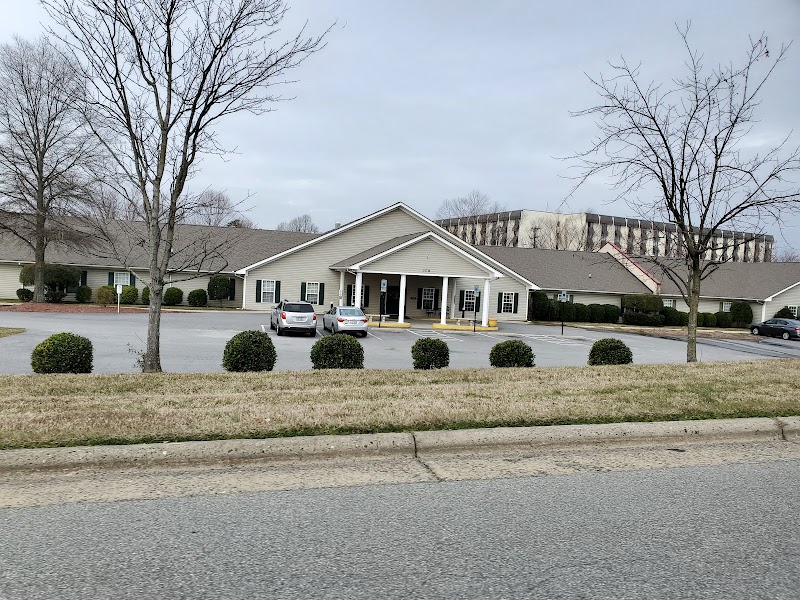
Who Owns and Operates Maple Grove Health And Rehabilitation Center?

Maple Grove Health and Rehabilitation Center is owned by a for-profit company. For-profit facilities operate as businesses with obligations to shareholders or private owners. The facility is operated by PRINCIPLE LONG TERM CARE, a chain that manages multiple nursing homes. With 210 certified beds and approximately 97 residents (about 46% occupancy), it is a large facility located in Greensboro, North Carolina.

How Does Maple Grove Health And Rehabilitation Center Compare to Other North Carolina Nursing Homes?

Compared to the 100 nursing homes in North Carolina, Maple Grove Health and Rehabilitation Center's overall rating (3 stars) is above the state average of 2.8, staff turnover (61%) is significantly higher than the state average of 46%, and health inspection rating (2 stars) is below the national benchmark.

What Should Families Ask When Visiting Maple Grove Health And Rehabilitation Center?

Based on this facility's data, families visiting should ask: "What changes have been made since the serious inspection findings, and how are you preventing similar issues?" "How do you ensure continuity of care given staff turnover, and what is your staff retention strategy?" "Can I visit during a mealtime to observe dining assistance and food quality?" "How do you handle medical emergencies, and what is your hospital transfer rate?" These questions are particularly relevant given the facility's Immediate Jeopardy citations and the facility's high staff turnover rate.

Is Maple Grove Health And Rehabilitation Center Safe?

Based on CMS inspection data, Maple Grove Health and Rehabilitation Center has documented safety concerns. Inspectors have issued 2 Immediate Jeopardy citations (the most serious violation level indicating risk of serious injury or death). The facility has a 3-star overall rating and ranks #1 of 100 nursing homes in North Carolina. Families considering this facility should ask detailed questions about what corrective actions have been taken since these incidents.

Do Nurses at Maple Grove Health And Rehabilitation Center Stick Around?

Staff turnover at Maple Grove Health and Rehabilitation Center is high. At 61%, the facility is 15 percentage points above the North Carolina average of 46%. High turnover means new staff may not know residents' individual needs, medications, or preferences. It can also be disorienting for residents, especially those with dementia who rely on familiar faces. Families should ask: What is causing the turnover? What retention programs are in place? How do you ensure care continuity during staff transitions?

Was Maple Grove Health And Rehabilitation Center Ever Fined?

Maple Grove Health and Rehabilitation Center has been fined $143,383 across 2 penalty actions. This is 4.2x the North Carolina average of $34,513. Fines at this level are uncommon and typically indicate a pattern of serious deficiencies, repeated violations, or failure to correct problems promptly. CMS reserves penalties of this magnitude for facilities that pose significant, documented risk to resident health or safety. Families should request specific documentation of what issues led to these fines and what systemic changes have been implemented.

Is Maple Grove Health And Rehabilitation Center on Any Federal Watch List?

Maple Grove Health and Rehabilitation Center is not on any federal watch list. The most significant is the Special Focus Facility (SFF) program, which identifies the bottom 1% of nursing homes nationally based on persistent, serious quality problems. Not being on this list means the facility has avoided the pattern of deficiencies that triggers enhanced federal oversight. This is a positive indicator, though families should still review the facility's inspection history directly.