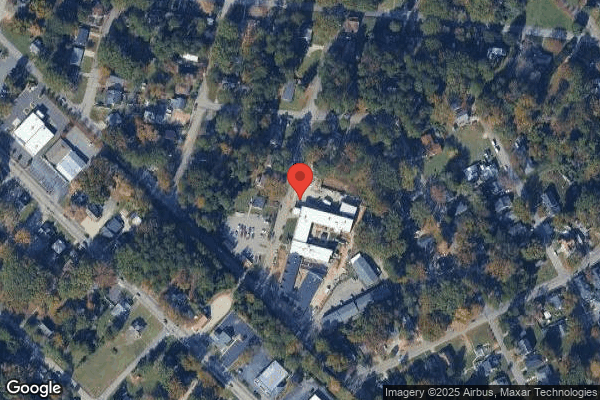
Kerr Lake Nursing and Rehabilitation Center

1245 Park Avenue, Henderson, NC 27536 (252) 492-7021
For profit - Limited Liability company 92 Beds PRINCIPLE LONG TERM CARE Data: November 2025 2 Immediate Jeopardy citations
Trust Grade
44/100
#169 of 417 in NC
Last Inspection: November 2024

Within standard 12-15 month inspection cycle. Federal law requires annual inspections.

Overview

Kerr Lake Nursing and Rehabilitation Center has received a Trust Grade of D, indicating below-average performance with some significant concerns regarding care. It ranks #169 out of 417 facilities in North Carolina, placing it in the top half overall, and it is the top facility among three in Vance County. However, the trend is worsening, with the number of issues increasing from 4 in 2023 to 5 in 2024. Staffing is a relative strength, earning 4 out of 5 stars with a turnover rate of 26%, which is significantly lower than the state average, suggesting that staff are familiar with the residents. Nonetheless, the facility has incurred $32,269 in fines, which is concerning, and indicates compliance problems that should be taken seriously. Specific incidents from recent inspections raise alarms about resident safety. For example, one resident with severe cognitive impairment ingested soap, leading to an allergic reaction that required emergency medical treatment. Additionally, another resident fell from the bed during care, resulting in serious injuries including fractures and lacerations. While the nursing home has some strong points, such as relatively stable staffing, these critical incidents highlight serious weaknesses that families should carefully consider.

Trust Score
D
44/100
In North Carolina
#169/417
Top 40%
Safety Record
High Risk
Review needed
Inspections
Getting Worse
4 → 5 violations
Staff Stability
✓ Good
26% annual turnover. Excellent stability, 22 points below North Carolina's 48% average. Staff who stay learn residents' needs.
Penalties
○ Average
$32,269 in fines. Higher than 50% of North Carolina facilities. Some compliance issues.
Skilled Nurses
○ Average
Each resident gets 33 minutes of Registered Nurse (RN) attention daily — about average for North Carolina. RNs are the most trained staff who monitor for health changes.
Violations
⚠ Watch
11 deficiencies on record. Higher than average. Multiple issues found across inspections.
★★★☆☆
3.0
Overall Rating
★★★★☆
4.0
Staff Levels
★★★☆☆
3.0
Care Quality
★★★☆☆
3.0
Inspection Score
Stable
2023: 4 issues
2024: 5 issues

The Good

  • 4-Star Staffing Rating · Above-average nurse staffing levels
  • Low Staff Turnover (26%) · Staff stability means consistent care
  • Full Sprinkler Coverage · Fire safety systems throughout facility
  • No fines on record
  • Staff turnover is low (26%)

    22 points below North Carolina average of 48%

Facility shows strength in staffing levels, staff retention, fire safety.

The Bad

3-Star Overall Rating

Near North Carolina average (2.8)

Meets federal standards, typical of most facilities

Federal Fines: $32,269

Below median ($33,413)

Moderate penalties - review what triggered them

Chain: PRINCIPLE LONG TERM CARE

Part of a multi-facility chain

Ask about local staffing decisions and management

The Ugly 11 deficiencies on record

2 life-threatening
Nov 2024 2 deficiencies
CONCERN (D)

Potential for Harm - no one hurt, but risky conditions existed

Medication Errors (Tag F0758)

Could have caused harm · This affected 1 resident

**NOTE- TERMS IN BRACKETS HAVE BEEN EDITED TO PROTECT CONFIDENTIALITY** 2. Resident #23 was admitted to the facility on [DATE] with diagnoses that included anxiety. A Physician order dated 8/22/24 in...

Read full inspector narrative →
**NOTE- TERMS IN BRACKETS HAVE BEEN EDITED TO PROTECT CONFIDENTIALITY** 2. Resident #23 was admitted to the facility on [DATE] with diagnoses that included anxiety. A Physician order dated 8/22/24 indicated Xanax 0.25 milligrams (mg) 1 tablet by mouth every 8 hours as needed (PRN) for anxiety was ordered without a stop date. The quarterly Minimum Data Set (MDS) assessment dated [DATE] revealed the Resident was severely cognitively impaired. The MDS revealed the resident was coded for taking an antianxiety medication. An interview was conducted on 11/6/24 at 11:00 AM with the Director of Nursing (DON). She indicated she was aware all PRN psychotropic medications required an initial 14 day stop date, and the Physician then reevaluated the resident at the end of the medication regimen for continued use. A telephone interview was completed on 11/6/24 at 11:10 AM with the Pharmacy Consultant. She indicated PRN psychotropic medications required an initial 14 day stop date. The Pharmacy Consultant continued to state the Physician then reevaluated the Resident for continued use of the medication and documented the rationale for extending the medication. A telephone interview was completed on 11/6/24 at 11:56 AM with Physician #2. He revealed all PRN psychotropic medications that were ordered should have included a 14 day stop date. The Physician stated he then revaluated the resident and extended the medication for a time frame he felt was appropriate. Physician #2 stated he was unable to state why the medication order did not include a stop date. An interview was completed on 11/6/24 at 1:45 PM with the Administrator. She stated it was her expectation all PRN psychotropic medications have a stop date included in the order. Based on record review, staff interview, Consultant Pharmacist interview and Medical Director interview, the facility failed to complete a Dyskinesia Identification System Condensed User Scale (DISCUS) assessment (used for monitoring side effects of antipsychotic medication) for a resident who received multiple antipsychotic medications (Resident #57), ensure an as needed (PRN) antipsychotic order was limited to a 14-day duration (Resident #57), and ensure orders for PRN antianxiety medication were time limited in duration (Resident #23) for 2 of 6 residents reviewed for unnecessary medications. The findings included: 1. Resident #57 was admitted on [DATE] with diagnoses that included vascular dementia with agitation, generalized anxiety disorder, and manic episode. 1a. Review of the medical record revealed a DISCUS assessment was conducted on 1/25/24 when Resident #57 was admitted . A physician's order dated 3/7/24 indicated Risperdal (an antipsychotic medication) 0.5 milligrams (mg) one tablet twice daily for anxiety/dementia with behavioral disturbance. A physician's order dated 3/18/24 indicated Zyprexa (an antipsychotic medication) 5mg by mouth one time only for agitation for 1 Day. A physician's order dated 3/19/24 indicated Haloperidol (an antipsychotic medication) 0.5 mg one time only for agitation. A physician's order dated 3/19/24 indicated Zyprexa 5mg at bedtime for agitation related to vascular dementia and manic episode. A physician's order dated 3/20/24 indicated Haloperidol 0.5 mg every eight hours as needed for anxiety and dementia with other behavioral disturbances. A physician's order dated 4/3/24 indicated Haloperidol 0.5 mg every eight hours as needed for anxiety and dementia with other behavioral disturbances. A physician's order dated 6/7/24 and revised 6/8/24 indicated Zyprexa 2.5 MG every Tuesday, Thursday, and Saturday for anxiety, agitation. Administer at 11:00 AM prior to dialysis every Tuesday, Thursday, and Saturday. Review of Resident # 57's electronic medical record from 3/7/24 to 11/5/24 revealed no documentation regarding the completion of a DISCUS assessment. Review of the most recent Significant Change Minimum Data Set (MDS) dated [DATE] revealed Resident #57 had severe cognitive impairment and no behaviors during the lookback period. Resident #57 was further coded as change in behavior improved. Resident #57 was coded as received antipsychotic medications during the assessment lookback period. Review of the care plan last reviewed on 5/16/2024 revealed Resident #57 used psychotropic medications with the potential or characterized by side effects of cardiac, neuromuscular, gastrointestinal systems as evidenced by or/due to diagnosis of antipsychotic use anxiety, depression, psychophysiological insomnia, manic episode, vascular dementia with mood disorder and agitation. The goal was for Resident #57 to receive the lowest therapeutic dose through the next review. The interventions included administer medications per physician's orders, monitor resident's mood/behaviors with documentation per facility policy and notify physician of any significant changes. A telephone interview was conducted on 11/06/24 at 11:10 AM with the Consultant Pharmacist who revealed the facility was required to complete a DISCUS assessment on all residents that were prescribed an antipsychotic medication upon initiation of the medication and periodically if the medication changes. The Consultant Pharmacist stated Resident #57 had been overlooked and confirmed that she would have recommended that Resident #57 had another DISCUS assessment completed. An interview was conducted with the Director of Nursing (DON) on 11/06/24 at 03:12 PM. The DON stated the admission nurse was responsible for initiating the admission DISCUS. She further stated the DISCUS assessment was to be conducted upon admission, every six months and then there was a change in the medication. During an interview on 11/06/24 at 03:17 PM the Administrator stated the DISCUS assessment was missed due to a breakdown in their process and communication. She further stated expected the DISCUS assessment would be completed per the schedule. 1b. A physician's order dated 4/3/24 indicated Haloperidol 0.5 mg every eight hours as needed for anxiety and dementia with other behavioral disturbances. The Haloperidol order was discontinued on 6/3/24. Review of the Medication Administration Record (MAR) revealed Resident #57 received PRN Haloperidol on 4/7/24 and 5/12/24. A phone interview was conducted with the Medical Director on 11/6/24 at 8:36 AM. She stated orders for PRN antipsychotic medication should have a 14 day stop date. The Medical Director stated the order should be reevaluated after 14 days to see if the medication was still needed. The Medical Director further stated if the medication was still needed a new order had to be written. A telephone interview was conducted on 11/06/24 at 11:10 AM with the Consultant Pharmacist. She stated PRN antipsychotic medications are required to be reevaluated every 14 days. The pharmacist stated if the provider wished to continue the antipsychotic medication a new order had to be written. Review of Resident's #57's medical record with the Consultant Pharmacist confirmed there was no reevaluation of Resident #56 and that the 4/3/24 Haloperidol order extended past the 14-day duration. An interview was conducted with the Director of Nursing (DON) on 11/06/24 at 03:12 PM. The DON stated she expected the pharmacist to review PRN antipsychotic medications for stop dates or rationales for continued use.
CONCERN (E)

Potential for Harm - no one hurt, but risky conditions existed

Drug Regimen Review (Tag F0756)

Could have caused harm · This affected multiple residents

**NOTE- TERMS IN BRACKETS HAVE BEEN EDITED TO PROTECT CONFIDENTIALITY** Based on record review, staff interview and Consultant Pharmacist interview, the Consultant Pharmacist failed to identify and re...

Read full inspector narrative →
**NOTE- TERMS IN BRACKETS HAVE BEEN EDITED TO PROTECT CONFIDENTIALITY** Based on record review, staff interview and Consultant Pharmacist interview, the Consultant Pharmacist failed to identify and report a medication irregularity on 7 Monthly Medication Reviews when Dyskinesia Identification System Condensed User Scale (DISCUS) assessments (used for medication monitoring of side effects of antipsychotic medication) were not completed for a resident who received Risperdal, Haloperidol and Olanzapine (antipsychotic medications). The Consultant Pharmacist also failed to identify and address an order for as needed (PRN) Haloperidol that extended beyond the 14-day limit for 1 of 6 residents reviewed for unnecessary medications. (Resident #57) The findings included: 1. Resident #57 was admitted on [DATE] with diagnoses that included vascular dementia with agitation, generalized anxiety disorder, and manic episode. a. Review of the medical record revealed a DISCUS assessment was conducted on 1/25/24 when Resident #57 was admitted . A physician's order dated 3/7/24 indicated Risperdal (an antipsychotic medication) 0.5 milligrams (mg) one tablet twice daily for anxiety/dementia with behavioral disturbance. Risperdal was discontinued on 3/24/24. A physician's order dated 3/18/24 indicated Olanzapine (an antipsychotic medication) 5 mg by mouth one time only for agitation for 1 Day. A physician's order dated 3/19/24 indicated Haloperidol (an antipsychotic medication) 0.5 mg one time only for agitation. A physician's order dated 3/19/24 indicated Olanzapine 5 mg at bedtime for agitation related to vascular dementia and manic episode. The Olanzapine 5 mg order remains active. A physician's order dated 3/20/24 indicated Haloperidol 0.5 mg every eight hours as needed for anxiety and dementia with other behavioral disturbances. The Haloperidol order was discontinued on 4/3/24. Review of the Medication Administration Record (MAR) revealed Resident #57 received Haloperidol on 3/28/24 and 3/29/24. A physician ' s order dated 4/3/24 indicated Haloperidol 0.5 mg every eight hours as needed for anxiety and dementia with other behavioral disturbances. The Haloperidol order was discontinued on 6/3/24. Review of the Medication Administration Record (MAR) revealed Resident #57 received Haloperidol on 4/7/24 and 5/12/24. Review of the Monthly Medication Regimen (MRR) for Resident #57 completed on 4/4/24 revealed no recommendations for completion of a DISCUS assessment. Review of the Monthly Medication Regimen (MRR) for Resident #57 completed on 5/3/24 revealed no recommendations for completion of a DISCUS assessment. A physician's order dated 6/7/24 and revised 6/8/24 indicated Olanzapine 2.5 mg every Tuesday, Thursday, and Saturday for anxiety, agitation. Administer at 11:00 AM prior to dialysis every Tuesday, Thursday, and Saturday. Review of the Monthly Medication Regimen (MRR) for Resident #57 completed on 6/10/24 revealed no recommendations for completion of a DISCUS assessment. Review of the Monthly Medication Regimen (MRR) for Resident #57 completed on 7/8/24 revealed no recommendations for completion of a DISCUS assessment. Review of the Monthly Medication Regimen (MRR) for Resident #57 completed on 8/2/24 revealed no recommendations for completion of a DISCUS assessment. Review of the Monthly Medication Regimen (MRR) for Resident #57 completed on 9/11/24 revealed no recommendations for completion of a DISCUS assessment. Review of the Monthly Medication Regimen (MRR) for Resident #57 completed on 10/4/24 revealed no recommendations for completion of a DISCUS assessment. Review of the most recent Significant Change Minimum Data Set (MDS) dated [DATE] revealed Resident #57 had severe cognitive impairment and was administered antipsychotic medications during the assessment lookback period. Further review of Resident #57's medical record revealed no other discus assessments were completed since admission. A telephone interview was conducted on 11/06/24 at 11:10 AM with the Consultant Pharmacist who revealed the facility was required to complete a DISCUS assessment on all residents that were prescribed an antipsychotic medication upon initiation of the medication and periodically if the medication changes. The Consultant Pharmacist stated the DISCUS assessment was used to monitor residents on antipsychotic medications for abnormal involuntary movements associated with the long-term use of antipsychotic agents. The Consultant Pharmacist stated Resident #57 had been overlooked and confirmed that she would have recommended that Resident #57 had another DISCUS assessment completed. An interview was conducted with the Director of Nursing (DON) on 11/06/24 at 03:12 PM. She stated the DISCUS assessment was to be conducted upon admission, every six months and when there was a change in the medication to monitor for abnormal involuntary movement disorders. The DON stated she expected the pharmacist to identify irregularities of antipsychotic medications by ensuring DISCUS assessments were completed for residents on antipsychotic medications. During an interview on 11/06/24 at 03:17 PM, the Administrator stated she expected the Consultant Pharmacist to review residents on antipsychotic medications during the Monthly Medication Regimen (MRR) for medication side effects and make recommendations for the completion of the DISCUS assessment to identify abnormal involuntary movements. b. A physician's order dated 4/3/24 indicated Haloperidol 0.5 mg every eight hours as needed for anxiety and dementia with other behavioral disturbances. The Haloperidol order was discontinued on 6/3/24. Review of the Medication Administration Record (MAR) revealed Resident #57 received PRN Haloperidol on 4/7/24 and 5/12/24. Pharmacy consultant monthly medication regimen reviews dated 4/4/24 and 5/3/24. revealed no recommendations related to the duration of Resident #57's PRN Haloperidol prescribed on 4/3/24 with a 6/7/24 stop date. A phone interview was conducted with the Medical Director on 11/6/24 at 8:36 AM. She stated orders for PRN antipsychotic medication should have a 14 day stop date. The Medical Director stated the order should be reevaluated after 14 days to see if the medication was still needed. The Medical Director further stated if the medication was still needed a new order had to be written. A telephone interview was conducted on 11/06/24 at 11:10 AM with the Consultant Pharmacist. She stated PRN antipsychotic medications are required to be reevaluated every 14 days. The pharmacist stated if the provider wished to continue the antipsychotic medication a new order had to be written. Review of Resident's #57's medical record with the Consultant Pharmacist confirmed there was no reevaluation of Resident #56 and that the 4/3/24 Haloperidol order extended past the 14-day duration. An interview was conducted with the Director of Nursing (DON) on 11/06/24 at 03:12 PM. The DON stated she expected the pharmacist to review PRN antipsychotic medications for stop dates or rationales for continued use.
May 2024 3 deficiencies 1 IJ
CRITICAL (J) 📢 Someone Reported This

A family member, employee, or ombudsman was alarmed enough to file a formal complaint

Immediate Jeopardy (IJ) - the most serious Medicare violation

Accident Prevention (Tag F0689)

Someone could have died · This affected 1 resident

**NOTE- TERMS IN BRACKETS HAVE BEEN EDITED TO PROTECT CONFIDENTIALITY** Based on record review and interviews with staff, Responsible Party (RP), Medical Director, Poison Control Center, and Hospital ...

Read full inspector narrative →
**NOTE- TERMS IN BRACKETS HAVE BEEN EDITED TO PROTECT CONFIDENTIALITY** Based on record review and interviews with staff, Responsible Party (RP), Medical Director, Poison Control Center, and Hospital Physician, the facility failed to provide a safe environment to prevent an avoidable accident for 1 of 3 residents reviewed for supervision to prevent accidents (Resident #1). Resident #1 had severe cognitive impairment, was dependent on staff for assistance, and was allergic to ingredients that were commonly found in shampoos, skin care products, and soap. On 4/23/24 Resident #1 had access to a bar of soap (Soap #1), she ingested the soap, and had an allergic reaction which included mouth and lip swelling and was transferred to the Emergency Department (ED) for further treatment. Resident #1 required intubation (a tube placed down throat into the trachea to facilitate airflow) and mechanical ventilation (a form of life support that helps you breathe when you cannot breathe on your own) in the ED and continued to decline despite medical interventions. Resident #1 was placed on comfort measures and according to the death certificate expired on 4/26/24 from complications of anaphylactic shock (a severe, potentially fatal allergic reaction that is rapid in onset and requires immediate medical attention) due to accidental ingestion of soap. The findings included: Review of a hospital Discharge summary dated [DATE] Resident #1 had no known drug allergies. Resident #1 was admitted to the facility on [DATE] with diagnoses which included dementia. Record review of the census data revealed Resident #1 was transferred to the hospital on 2/09/22 and returned to the facility on 2/19/22. Review of the hospital Discharge summary dated [DATE] revealed Resident #1 had allergies to cocamidopropyl betaine (a product derived from raw coconut oil and is used in many personal care items to create a thick lather when combined with water often found in products such as shampoo, skin care products, and soaps), chloroxylenol (an antiseptic and disinfectant agent used for skin disinfection found in antibacterial soaps), and erythromycin (antibiotic). Record review of Resident #1's allergy list on revealed an allergy to erythromycin was entered on 2/19/22 and an intolerance to perfume was entered into the record on 5/31/22. The cocamidopropyl betaine and the chloroxylenol were not listed on Resident #1's medical record as allergies. The Minimum Data Set (MDS) annual assessment dated [DATE] revealed Resident #1 had severe cognitive impairment, had adequate vision with corrective lenses, and was not coded for behaviors. Resident #1 was dependent upon staff for all activities of daily living (ADLs) which included eating and movement throughout the facility. Resident #1 was not coded for use of mobility devices. Resident #1's care plan last revised 2/28/24 revealed a care plan was in place for decline in intellectual functioning related to dementia and was at risk for unmet needs with an intervention to allow resident sufficient time to verbalize needs. Resident #1 had a care plan for risk for inability to focus on objects, discriminate color, and adjust to changes in light and dark related to impaired peripheral (side) vision with an intervention to ensure eyeglasses were clean and worn. The nursing progress note dated 3/19/24 at 8:03 pm by Nurse #1 revealed Resident #1 was observed with a large amount of chewed up tissue in her mouth. Nurse #1 removed all paper and small items from Resident #1's reach. The nursing progress note dated 4/23/24 at 10:16 pm by Nurse #1 revealed that at approximately 8:00 pm she was notified that Resident #1 ate soap and was observed with swollen lips and face. Nurse #1 assessed Resident #1 and administered a dose of epinephrine (an emergency medication used to decrease the body's allergic reaction by relaxing the muscles in airway to make breathing easier) by injection. Resident #1 was transferred to the emergency department (ED) via ambulance at 8:20 pm. A telephone interview was conducted on 4/30/24 at 1:27 pm with Nurse #1 who revealed she was notified by Nurse Aide (NA) #2 that Resident #1's face and lips were swollen. Nurse #1 stated when she entered the room, she did observe some small particles on Resident #1's lips and in her mouth but she was unable to determine what it was. She stated she did not know Resident #1 had eaten Soap #1 until NA #2 reported she had found the soap in Resident #1's hand. Nurse #1 reported she administered an epinephrine injection to Resident #1 because it was apparent that Resident #1 had an anaphylactic reaction (a severe, potentially fatal allergic reaction that is rapid in onset and requires immediate medical attention) after eating Soap #1. Nurse #1 stated she had previously witnessed Resident #1 place non-food items in her mouth, but it was not a frequent occurrence. Nurse #1 stated she was aware of Resident #1's allergies to erythromycin and perfume but she stated that she thought the perfume allergy was related to spray perfume and lotions, but she did not think it would include soap. A telephone interview was conducted on 4/30/24 at 11:47 am with NA #2 who revealed she was assigned to Resident #1 on the evening of 4/23/24 when Soap #1 was ingested. NA #2 stated she was providing care to Resident #1's roommate with the curtain pulled when Resident #1 began talking funny and was not sounding right so she pulled the curtain and observed Resident #1's face and lips were swollen. NA #2 stated she immediately went to Resident #1 and grabbed her hand and that was when she saw the bar of Soap #1 in Resident #1's hand. She stated she knew it was Soap #1 because of the strong smell of the soap. NA #2 stated once she realized what happened her heart dropped because she knew Resident #1 was allergic to Soap #1. NA #2 reported she yelled for Nurse #1 and stayed with Resident #1 until Nurse #1 arrived. NA #2 stated she knew Resident #1's roommate used Soap #1, but she did not use Soap #1 on her shift and did not observe it on the bedside table in the room prior to the incident. She stated she did not know how Resident #1 was able to get the soap because she was not able to move herself around the room. NA #2 stated she had recently returned to work at the facility, and this was the first time she had provided care to Resident #1 since her return which was about two months prior. NA #2 stated she knew Resident #1 well from her previous employment with the facility and was aware of the allergy to Soap #1 since her previous time of employment. NA #2 stated she had received education from the facility during her previous time of employment and prior to providing care to Resident #1 regarding the allergy to Soap #1. NA #2 stated she thought there was a sign posted in the room about Resident #1's soap allergy. A follow-up interview was conducted on 4/30/24 at 12:37 with NA #2 who reported she was now not sure if she was told or knew about Resident #1's allergy to Soap #1, but stated she was aware of Resident #1's allergy to perfume. An additional interview was conducted on 5/01/24 at 2:43 pm with NA #2 who reported when she saw Resident #1 had eaten Soap #1, she knew she had an allergic reaction because her lips and mouth were swollen so that may be why she previously reported that Resident #1 had an allergy to Soap #1. NA #2 stated she was aware Resident #1 was not allowed to have soap and that was why she stated in her earlier interview that Resident #1 had an allergy. NA #2 stated she knew of Resident #1's allergy to perfume and since Soap #1 had such a strong scent that may be what made her think she had an allergy and made her so upset when Resident #1 ate the soap. NA #2 stated that all the staff were aware to use only Soap #2 (a mild soap used for sensitive skin) for Resident #1 and she stated the facility had provided an in-service about it. She reported that when she was cleaning up after the incident, she did observe the empty clear plastic cup with soap residue on Resident #2's bedside table but did not see it prior to the incident. She stated she did not recall Resident #1 being close enough to the table to be able to reach the cup and Resident #1 was not able to move herself around the room, so she was not sure how she got the soap. NA #2 stated she gave incorrect information during the first interview because she had just woken up and was confused. The hospital record with an admission date of 4/23/24 indicated Resident #1 presented to the emergency department from the facility after ingesting a bar of soap with associated lip swelling. While in the ED Resident #1's lip swelling continued to progress to angioedema (swelling under the skin associated with an allergic reaction) with respiratory difficulty and was intubated and placed on a ventilator. Resident #1 was admitted to the intensive care unit and listed as critically ill with acute respiratory failure and a high probability of sudden clinically life-threatening deterioration in condition. Resident #1 suffered a heart attack on 4/25/24 and was determined not to be a candidate for medical intervention. Resident #1 continued to decline despite medications to maintain blood pressure and mechanical ventilation for breathing and expired on 4/26/24. The Certificate of Death revealed Resident #1 expired on 4/26/24 and the immediate cause of death was determined to be complications of anaphylactic shock due to accidental ingestion of soap. A telephone interview was conducted on 5/01/24 at 8:44 am with the Hospital Physician who revealed Resident #1 was admitted to intensive care under his services after the ingestion of soap and anaphylactic shock. The Hospital Physician reported although it was not common to see such a severe reaction to the ingestion of soap products to this extent, but it was possible. He stated Resident #1's reported allergy to perfumes could have been the initial trigger to cause the severe anaphylaxis reaction. The Hospital Physician stated the hospital was unable to determine how much of the soap Resident #1 ingested, but any amount of soap ingested could pose a concern for a fragile resident. The Hospital Physician stated the stress of the severe anaphylaxis due to the soap ingestion triggered the additional events, including intubation, need for mechanical ventilation, and the increased stress on the heart muscle which led to the heart attack, and ultimately Resident #1's death. During a telephone interview on 4/30/24 at 4:12 pm Resident #1's RP reported she had multiple conversations with facility staff, including nurses and NAs, regarding the allergy to soap and perfume. The RP stated the facility was aware soap and perfume was an allergy which caused Resident #1 to have swelling. She stated she specifically told the facility that soaps such as Soap #1 were not allowed to be used due to her history of skin cancer and her soap allergy. She stated when she visited the facility, she would often find other soap products in Resident #1's drawers or on her bedside table and she would throw them away. The RP reported that Resident #1's roommate had Soap #1 and she often observed the bar of Soap #1 left out by the staff within reach of Resident #1. The RP stated the staff were aware Resident #1 had an allergy to Soap #1 and was only to use Soap #2 for her personal care needs. The RP stated Soap #2 was a gentle soap specifically for sensitive skin. The RP stated that although Resident #1 did not remain in the same room throughout her time at the facility she remained in the same area, she had the same staff provide her care, and they were all aware of the soap allergy. She stated the facility had a sign posted on the wall in the room about not using soap due to allergy, but stated when she went to pick up Resident #1's personal items the sign was no longer on the wall. The RP stated that Resident #1 had vomited multiple times at the hospital, and she stated it was such a strong fragrance that she was able to smell Soap #1 from the hall. The RP stated Resident #1 continued to worsen and the RP was forced to make the decision to try no further life saving measures. A telephone interview was conducted on 4/30/24 at 3:50 pm with the Poison Control Center who revealed when someone had an allergy, each use or interaction with that allergen or biproduct could increase the risk for more severe and possibly an anaphylaxis reaction. The Poison Control Center stated that derivatives (substances created from chemical reaction from another component) from natural products, surfactants (chemical compounds created from natural products or synthetic chemical compounds), fragrance, dyes, or components of the products used to create soap products had the potential to induce an allergic reaction when ingested. The Poison Control Center reported that if bar soap was ingested most often would cause gastrointestinal system issues such as nausea, vomiting, and diarrhea, but for some a more severe allergic reaction could occur based on the individual and their health condition. The Poison Control Center stated if a bar of soap was ingested there could be a potential for an allergic reaction which is why the soap products have warning labels that state the products are for external use only. A telephone interview was conducted on 4/30/24 at 12:00 pm with NA #1 who was assigned to Resident #1 during the 7:00 am-3:00 pm shift on 4/23/24. NA #1 stated she provided Resident #1 and her roommate with a bed bath during her shift that day. She stated she used Soap #1 for the roommate and when she was finished bathing Resident #1's roommate she placed Soap #1 in a cup and put it back in the top drawer of the roommate's dresser. She stated Resident #1 was unable to move herself around the room in her geriatric chair (a large, padded chair with wheels that reclines for comfort and positioning), and she does not know how she would have been able to get Soap #1 from the drawer. NA #1 stated she was not sure if Resident #1 had any allergies, but she stated she was aware Resident #1 was only allowed to have Soap #2 when care was provided. NA #1 stated she had received information in the past from the facility about only using Soap #2 for Resident #1 and she stated there was a sign in the room to use only Soap #2, but she was not sure if it was because of an allergy. A telephone interview was conducted on 4/30/24 at 12:09 pm with NA #3 who worked on 4/23/24 during the 3:00 pm-11:00 pm shift. NA #3 stated she was not assigned to Resident #1 during the shift on 4/23/24 but had assisted NA #2 to provide care in the room. She stated she was alerted by NA #2 that Resident #1 had eaten Soap #1, but she reported she was not in the room when it occurred. NA #3 stated she had provided care to Resident #1 in the past and was aware of a perfume allergy but was not able to recall it being reported as an allergy to soap. NA #3 stated she was aware that Resident #1 was to use only Soap #2 and she was not to use other soap products when providing care. NA #3 stated she did observe a clear plastic cup with a bar of soap on Resident #1's roommate's bedside table when she was in the room prior to the incident. NA #3 stated Resident #1 was not able to move herself around the room, but she was unable to recall if Resident #1 was sitting close to the cup with the bar of Soap #1. During an interview on 4/30/24 at 12:24 pm with the Supply Clerk she revealed the facility did not supply residents with bar soap which included Soap #1, but she stated families did bring in items for resident use. The Supply Clerk stated she was familiar with Resident #1's perfume allergy and that she had Soap #2 which was for sensitive skin, available in the resident's room and store room for bathing needs. During an interview on 4/30/24 at 12:49 pm with NA #4 she revealed she had provided care to Resident #1 and was aware of an allergy to soaps because the nurse told them, but she could not recall what specific soap. NA #4 stated she used only Soap #2 for Resident #1, but she did not recall seeing a sign about an allergy to Soap #1 for Resident #1. NA #4 stated Resident #1's roommate used Soap #1 and it was put back in the top drawer of the dresser when staff were done using it. An interview was conducted on 4/30/24 at 1:09 pm with the Medical Director who revealed she was notified of Resident #1's ingestion of soap and her being sent to the ED due to an allergic reaction. She stated Resident #1 had very sensitive skin and used gentle skin products that she was aware of, but she stated she was not aware of an actual allergy to soap or perfume. The Medical Director stated she was not aware of Resident #1 having an allergic reaction of any kind related to soap or perfumes prior. The Medical Director stated generally an intolerance to perfume would not necessarily correspond to an actual allergy, but she would have to review the medical record before being able to state if Resident #1 had any allergies. During an interview with the Director of Nursing (DON) and Administrator on 5/01/24 at 2:49 pm the DON revealed she was not aware of Resident #1's allergy to soap and further stated that perfume was not a true allergy but an intolerance. She stated when the Nurse Aides saw perfume listed, they did not understand the difference between an allergy and an intolerance, so they were reporting they were aware of an allergy to perfume when it was not an allergy. The DON stated she was not aware of any education provided to staff regarding Resident #1's reported soap allergy. The DON stated she did not recall any conversation with Resident #1's RP regarding the use of specific soap or an allergy to soap and she did not recall a sign being posted in the Resident #1's room about a soap allergy. The Administrator revealed she was not aware Resident #1 had any prior behaviors of eating non-food items and would not have expected Resident #1 to ingest soap prior to the event. She stated she was unsure how the facility could have prevented the incident because to her knowledge Resident #1 had not demonstrated this type of behavior prior to this incident. The Administrator and DON stated they were unable to determine how Resident #1 obtained Soap #1 and what happened to make Resident #1 eat it. The Administrator was notified of immediate jeopardy on 4/30/24 at 5:10 pm. The facility provided the following corrective action plan with a completion date of 4/25/24: 1. Address how corrective action will be accomplished for those residents found to have been affected by the deficient practice: Resident #1 has a diagnosis of dementia, and allergies include erythromycin, perfume, chloroxylenol (an antiseptic and disinfectant agent used for skin disinfection found in antibacterial soaps), and cocamidopropyl betaine (a product used in many personal care items to create a thick lather when combined with water often found in products such as shampoo, skin care products, and soaps). The chloroxylenol, cocamidopropyl betaine was not listed in the resident's clinical record. On 4/23/24, at 8:00 pm, the Certified Nursing Assistant (CNA) #2 entered Resident #1's room and observed Resident #1 with a swollen red face, swollen lips, and was difficult to understand. Resident #1 had a piece of her roommate's soap (Soap #1) in her hand. The resident refused to open her mouth for CNA #2. CNA #2 immediately notified the nurse, and upon assessment, a small particle of soap was observed in Resident #1's mouth. The nurse notified the physician, and orders were received to administer an Epi-pen (a pen used to treat life-threatening, allergic emergencies) and to call 911. The Epi-pen was administered, and Resident #1 was transferred to the local Emergency Department with a diagnosis of anaphylaxis (life-threatening allergic reaction). While in the emergency department, Resident #1's lip swelling continued to progress to angioedema (swelling under the skin associated with an allergic reaction) with respiratory difficulty and was intubated (a tube placed down the throat into the trachea to facilitate airflow) and placed on a ventilator (a machine that helps a person breath with when intubated). Resident # 1 expired in the hospital on 4/26/24. Following the incident, the Administrator immediately initiated an investigation. The investigation was completed 4/24/24. It could not be determined how the resident obtained the soap. 2. Address how the facility will identify other residents having the potential to be affected by the same deficient practice: On 4/23/24, the Administrator completed an audit of all resident's rooms utilizing a resident census to ensure all soaps, lotions, medications, and shampoos were stored in appropriate containers and not easily accessible to cognitively impaired residents with behaviors of ingesting non-edible items/ objects when not supervised and in use. All other items were stored in appropriate containers or in drawers. On 4/24/24, the Second Shift Patient Care Coordinator initiated interviews with all alert and oriented residents to ensure all identified allergies are reflected in the clinical records for staff reference, including the demographics, and resident care guide. The interviews were completed by 4/24/24. There were no other concerns. On 4/24/24, the Second Shift Patient Care Coordinator initiated interviews with all resident representatives for all non-alert and oriented residents to ensure all identified allergies are reflected in the clinical records for staff reference, including the demographics, and resident care guide. The interviews were completed by 4/24/24 for all resident representatives who were able to be reached. Four additional concerns were identified during the audit. The Patient Care Coordinator updated the resident record for all newly identified allergies. After 4/24/24, the Registered Nurse (RN) Unit Managers tracked and followed up with the families who could not be reached. The RN Unit Managers updated the clinical records for all identified areas of concern during the interviews. The audit was completed on 4/24/24 with one resident representative (RR) not able to be reached. The facility continued attempts to reach the RR. The RR responded on 4/30/24 with no additional allergies reported. On 4/24/24, the Second Shift Patient Care Coordinator completed an audit of all residents identified with a soap allergy to ensure that the allergen was not present in the room. There were no identified areas of concern during the audit. On 4/24/24, the Administrator initiated an audit of all residents' admission and readmission records to ensure all identified preadmission allergies are reflected in the facility's clinical records for staff reference, including the demographics and resident care guide. There were no areas of concern identified during this audit. The audit was completed by 4/24/24. On 4/24/24, the Staff Development Coordinator (SDC) initiated interviews with all staff regarding the following: Do you know any resident who has ingested a non-edible item/ object? If yes, resident name, date of event, actions taken? The SDC will immediately forward the interviews with identified behaviors to the Director of Nursing. The Director of Nursing (DON) upon receipt of the interview will ensure that all residents identified with behaviors of ingesting non-edible item/ object have been addressed, including an assessment of the resident, removal or proper storage of the object, implementation of intervention depending on the root cause, physician and resident representative notification, documentation in the clinical record, and the behavior is reflected on the care plan. The interviews will be completed by 4/24/24. After 4/24/24, the SDC will monitor staff completion, and all staff that have not worked and received the interview will complete it upon their next scheduled shift. The Director of Nursing was notified of this responsibility by the Administrator on 4/24/24. On 4/24/24, the Unit Managers reviewed all current residents' progress notes from 3/1/24-4/23/24. The purpose of the audit is to ensure that all residents identified with behaviors of ingesting non-edible items/ objects have been addressed, including an assessment of the resident, removal or proper storage of the object, implementation of an intervention depending on the root cause, physician and resident representative notification, and the behavior is reflected on the care plan/care guide. There were no additional areas of concern noted during the audit. The audit was completed by 4/24/24. On 4/24/24, a resident council meeting was conducted by the Activity Staff with alert and oriented residents with education on how to properly store soaps, lotions, shampoo, and chemicals when not in use. On 4/24/24, the Activity Staff provided individual education to all alert and oriented residents who did not attend the resident council meeting. 3. Address what measures will be put into place or systemic changes made to ensure that the deficient practice will not recur: On 4/23/24, an in-service was initiated with all staff (from all departments) by the Director of Nursing regarding ensuring all soaps, lotions, medications, and shampoos are stored in appropriate containers and not easily accessible to cognitively impaired residents with behaviors of ingesting non-edible items/ objects when not supervised and in use. On 4/24/24, an in-service was initiated by the SDC with all staff (from all departments) regarding immediately reporting to the nurse resident's behaviors of ingesting non-edible items/ objects (which would include new behaviors and prior behaviors). On 4/24/24, the Director of Nursing initiated an in-service with all nurses regarding the following: 1.) what to do when a resident ingests non-edible items/ objects to include but not limited to assessment of the resident, notification of 911 as necessary, removal or proper storage of the object, implementation of an intervention depending on the root cause, physician and resident representative notification, documentation in the progress notes, ensuring the behavior is reflected on the resident care plan/care guide, and 2.) reviewing resident's admission and readmission records and speaking with the families on admission or readmission to identify all allergies and ensure the allergies are reflected in the clinical records including the demographics, and resident care guide. All in-services for staff that worked were completed by 4/24/24. After 4/24/24, the SDC will monitor staff completion and all nursing staff that have not worked and received the in-services will complete it upon their next scheduled shift/prior to working. All newly hired staff will be educated during orientation by the SDC regarding the following: 1.) ensuring all soaps, lotions, medications, and shampoos are stored in appropriate containers and not easily accessible to cognitively impaired residents with behaviors of ingesting non-edible items/ objects when not supervised and in use and 2.) immediately reporting to the nurse resident's behaviors of ingesting non-edible items/ objects. Additionally, newly hired nurses will receive education during orientation by the SDC regarding the following: 1.) what to do when a resident ingest non-edible items/ objects to include but not limited to assessment of the resident, notification of 911 as necessary, removal or proper storage of the object, implementation of an intervention depending on the root cause, physician and resident representative notification, documentation in the progress notes, ensuring the behavior is reflected on the resident care plan/care guide, and 2.) reviewing resident's admission and readmission records and speaking with the families on admission or readmission to identify all allergies and ensure the allergies are reflected in the clinical records including the demographics, and resident care guide. The SDC was notified of this responsibility by the Administrator on 4/24/24. 4. Indicate how the facility plans to monitor its performance to make sure that solutions are sustained: The decision to monitor the system for residents ingesting non-edible items/ objects and allergies was made on 4/24/24 by the Administrator and Director of Nursing and presented to the Quality Assurance (QA) Committee on 4/24/24. The Unit Managers will review progress notes 5 x per week x 4 weeks, then weekly x 1 month to identify residents that ingest non-edible items/ objects and ensure completion of an assessment of the resident, notification to 911 as necessary, removal or proper storage of the object, implementation of an intervention depending on the root cause, physician and resident representative notification, documentation in the progress notes and the behavior is reflected on the care plan utilizing an audit tool. The audit will be discussed during the cardinal Interdisciplinary (IDT) meeting (clinical meeting) and written on the audit tool by the Activity Staff with oversite by the Administrator and/or Director of Nursing. The Director of Nursing will immediately implement corrective actions upon identification of areas of concern including retraining of staff. The Unit Managers were notified of this responsibility by the Director of Nursing on 4/24/24. The Treatment Nurse will monitor resident rooms to ensure inedible materials including soaps are in appropriate containers and stored properly and identified allergens are not present in the resident's room daily x 1-week, biweekly x 3 weeks, and then weekly x 4 weeks and document on a resident census. The Administrator will immediately ensure all areas of concern are addressed during the audit. The Treatment Nurse was notified of this responsibility by the Administrator on 4/24/24. The Minimum Data Set (MDS) Nurse will review all admission and readmission records weekly x 8 weeks to ensure all preadmission allergies are reflected in the facility's clinical records including the demographics, and resident care guide for staff reference. The MDS Nurse will update the records accordingly and the Director of Nursing will immediately retrain the nurse upon notification for all identified areas of concern. The MDS Nurse was notified of this responsibility on 4/24/24. The Administrator and/or DON will present the findings of the audit tools to the Quality Assurance Performance Improvement (QAPI) Committee monthly for 2 months for review to determine trends and/or issues that may need further interventions and the need for additional monitoring. Date of immediate jeopardy removal and corrective action completion: 4/25/24. Onsite validation was completed on 5/01/24 through record review, staff interviews, resident interviews, and observations of resident rooms. Record review of the staff education logs was completed with no areas of concern identified. Staff were interviewed to validate the in-service was completed on putting away all personal care items including soaps, lotions, and shampoo when not in use. Staff interviews validated the completion of the education regarding identification and reporting resident behaviors of ingesting non-edible items or objects, and steps to take when the behavior was observed. Staff interviews were conducted and validated the education was completed regarding confirmation and documentation of resident allergies upon admission and readmission. Resident Council Meeting Minutes and signature log were reviewed. Record review of the facility audits of personal care items was conducted and validated by observations of random resident rooms for personal care items which included soap, lotions, and shampoo to be stored properly and not within reach of cognitively impaired residents. Interviews were conducted with those residents identified by the facility as alert and oriented and with documented allergies to confirm the allergies listed were correct. No concerns were identified. A review was completed of the resident progress note audit with no identified concerns noted. The Quality Assurance and Performance Improvement (QAPI) ad-hoc (special and immediate meeting held for a specific situation) meeting minutes from 4/24/24 were reviewed. The facility's immediate jeopardy removal date of 4/[TRUNCATED]
CONCERN (D) 📢 Someone Reported This

A family member, employee, or ombudsman was alarmed enough to file a formal complaint

Potential for Harm - no one hurt, but risky conditions existed

Quality of Care (Tag F0684)

Could have caused harm · This affected 1 resident

**NOTE- TERMS IN BRACKETS HAVE BEEN EDITED TO PROTECT CONFIDENTIALITY** Based on record review, staff interviews, Responsible Party (RP) interview, and Medical Director interview, the facility failed ...

Read full inspector narrative →
**NOTE- TERMS IN BRACKETS HAVE BEEN EDITED TO PROTECT CONFIDENTIALITY** Based on record review, staff interviews, Responsible Party (RP) interview, and Medical Director interview, the facility failed to identify and enter reported allergies into the medical record for 1 of 3 residents reviewed for allergies (Resident #1). The findings included: Review of a hospital Discharge summary dated [DATE] Resident #1 had no known drug allergies. Resident #1 was admitted to the facility on [DATE] with diagnoses which included dementia. Record review of the census data revealed Resident #1 was transferred to the hospital on 2/09/22 and returned to the facility on 2/19/22. Review of the hospital Discharge summary dated [DATE] revealed Resident #1 had allergies to cocamidopropyl betaine (a product derived from raw coconut oil and is used in many personal care items to create a thick lather when combined with water often found in products such as shampoo, skin care products, and soaps), chloroxylenol (an antiseptic and disinfectant agent used for skin disinfection found in antibacterial soaps), and erythromycin (antibiotic). The hospital discharge summary reported the allergies to cocamidopropyl betaine and chloroxylenol were identified by a positive patch test (a skin allergen test when allergens were placed on the skin to identify allergies). Record review of Resident #1's allergy list revealed an allergy to erythromycin was entered on 2/19/22 and an intolerance to perfume was entered into the record on 5/31/22. The cocamidopropyl betaine, chloroxylenol were not listed on Resident #1's medical record as allergies. A telephone interview was conducted with Nurse #2 on 4/30/24 at 1:20 pm who revealed she entered the intolerance to perfume into the electronic medical record based on a report from Resident #1's Responsible Party (RP) and she did not recall any other allergies being reported. Nurse #2 was unable to recall if Resident #1 had any other allergies. The Minimum Data Set (MDS) annual assessment dated [DATE] revealed Resident #1 had severe cognitive impairment. During a telephone interview on 4/30/24 at 4:12 pm Resident #1's RP reported she had multiple conversations with facility staff, including nurses and Nurse Aides (NAs), regarding the allergy to soap and perfume. She stated the facility was aware soap and perfume was an allergy. The RP stated the staff were aware Resident #1 had an allergy to Soap #1 and the staff was only to use Soap #2 for her personal care needs. Resident #1's RP stated Soap #2 was a gentle liquid soap specifically for sensitive skin. A telephone interview was conducted on 4/30/24 at 12:00 pm with NA #1. She stated she was not sure if Resident #1 had any allergies, but she stated she was aware Resident #1 was only allowed to have Soap #2 when care was provided. NA #1 stated she had received information in the past from the facility about only using Soap #2 for Resident #1 and she stated there was a sign in the room to use only Soap #2, but she was not sure if it was because of an allergy. A telephone interview was conducted on 4/30/24 at 12:09 pm with NA #3 who had provided care to Resident #1 in the past and was aware of a perfume allergy but was not able to recall it being reported as an allergy to soap. NA #3 stated she was aware that Resident #1 was to use only Soap #2 and she was not to use other soap products. During an interview on 4/30/24 at 12:49 pm with NA #4 she revealed she had provided care to Resident #1 and was aware of an allergy to soaps because the nurse told them, but she could not recall what specific soap. An interview with the Medical Director was conducted on 4/30/24 at 1:09 pm who revealed she was notified of Resident #1's ingestion of soap and her being sent to the ED due to an allergic reaction. The Medical Director stated if Resident #1 had allergies listed on the hospital discharge record the facility staff should have documented them in the medical record, and if the staff was not sure of the allergy they should have attempted to confirm with the family. The Medical Director stated she would have to review the medical record before being able to state if Resident #1 had any allergies. During an interview on 5/01/24 at 2:49 pm with the Director of Nursing (DON) and the Administrator the DON stated the nurse that completed the admission was responsible for entering any allergies. The DON stated the normal process of admission review was that the next day an admission audit tool was checked by another nurse to confirm the admission was completed. The DON stated she was not aware of Resident #1's reported use of a specific soap or any allergy to soap products. The DON and Administrator were unable to state why Resident #1's allergies were not placed on the medical record as documented on the hospital discharge summary. The facility provided the following corrective action plan with a completion date of 4/25/24: 1. Address how corrective action will be accomplished for those residents found to have been affected by the deficient practice: Resident #1 has a diagnosis of dementia, and allergies include erythromycin, perfume, chloroxylenol (an antiseptic and disinfectant agent used for skin disinfection found in antibacterial soaps), and cocamidopropyl betaine (a product used in many personal care items to create a thick lather when combined with water often found in products such as shampoo, skin care products, and soaps). The chloroxylenol, cocamidopropyl betaine was not listed in the resident's clinical record 2. Address how the facility will identify other residents having the potential to be affected by the same deficient practice: On 4/24/24, the Second Shift Patient Care Coordinator initiated interviews with all alert and oriented residents to ensure all identified allergies are reflected in the clinical records for staff reference, including the demographics, and resident care guide. The interviews were completed by 4/24/24. There were no other concerns. On 4/24/24, the Second Shift Patient Care Coordinator initiated interviews with all resident representatives for all non-alert and oriented residents to ensure all identified allergies are reflected in the clinical records for staff reference, including the demographics, and resident care guide. The interviews were completed by 4/24/24 for all resident representatives who were able to be reached. Four additional concerns were identified during the audit. The Patient Care Coordinator updated the resident record for all newly identified allergies. After 4/24/24, the Registered Nurse (RN) Unit Managers tracked and followed up with the families who could not be reached. The RN Unit Managers updated the clinical records for all identified areas of concern during the interviews. The audit was completed on 4/24/24 with one resident representative (RR) not able to be reached. The facility continued attempts to reach the RR. The RR responded on 4/30/24 with no additional allergies reported. On 4/24/24, the Second Shift Patient Care Coordinator completed an audit of all residents identified with a soap allergy to ensure that the allergen was not present in the room. There were no identified areas of concern during the audit. On 4/24/24, the Administrator initiated an audit of all residents' admission and readmission records to ensure all identified preadmission allergies are reflected in the facility's clinical records for staff reference, including the demographics and resident care guide. There were no areas of concern identified during this audit. The audit was completed by 4/24/24. 3. Address what measures will be put into place or systemic changes made to ensure that the deficient practice will not recur: On 4/24/24, the Director of Nursing initiated an in-service with all nurses regarding reviewing resident's admission and readmission records and speaking with the families on admission or readmission to identify all allergies and ensure the allergies are reflected in the clinical records including the demographics, and resident care guide. All in-services for staff that worked were completed by 4/24/24. After 4/24/24, the SDC will monitor staff completion and all nursing staff that have not worked and received the in-services will complete it upon their next scheduled shift/prior to working. All newly hired staff will be educated during orientation by the SDC regarding reviewing resident's admission and readmission records and speaking with the families on admission or readmission to identify all allergies and ensure the allergies are reflected in the clinical records including the demographics, and resident care guide. The SDC was notified of this responsibility by the Administrator on 4/24/24. 4. Indicate how the facility plans to monitor its performance to make sure that solutions are sustained: The decision to monitor the system for residents' allergies was made on 4/24/24 by the Administrator and Director of Nursing and presented to the Quality Assurance (QA) Committee on 4/24/24. The Treatment Nurse will monitor resident rooms to ensure identified allergens are not present in the resident's room daily x 1-week, biweekly x 3 weeks, and then weekly x 4 weeks and document on a resident census. The Administrator will immediately ensure all areas of concern are addressed during the audit. The Treatment Nurse was notified of this responsibility by the Administrator on 4/24/24. The Minimum Data Set (MDS) Nurse will review all admission and readmission records weekly x 8 weeks to ensure all preadmission allergies are reflected in the facility's clinical records including the demographics, and resident care guide for staff reference. The MDS Nurse will update the records accordingly and the Director of Nursing will immediately retrain the nurse upon notification for all identified areas of concern. The MDS Nurse was notified of this responsibility on 4/24/24. The Administrator and/or DON will present the findings of the audit tools to the Quality Assurance Performance Improvement (QAPI) Committee monthly for 2 months for review to determine trends and/or issues that may need further interventions and the need for additional monitoring. Date of corrective action completion: 4/25/24. Onsite validation was completed on 5/01/24 through record review, staff interviews, resident interviews, and observations of resident rooms. Record review of the staff education logs was completed with no areas of concern identified. Staff were interviewed to validate the in-service was conducted and validated the education was completed regarding confirmation and documentation of resident allergies upon admission and readmission. Interviews were conducted with those residents identified by the facility as alert and oriented and with documented allergies to confirm the allergies listed were correct. No concerns were identified. The Quality Assurance and Performance Improvement (QAPI) ad-hoc (special and immediate meeting held for a specific situation) meeting minutes from 4/24/24 were reviewed. The facility's corrective action plan was validated to be completed as of 4/25/24.
CONCERN (D) 📢 Someone Reported This

A family member, employee, or ombudsman was alarmed enough to file a formal complaint

Potential for Harm - no one hurt, but risky conditions existed

QAPI Program (Tag F0867)

Could have caused harm · This affected 1 resident

Based on record review and interviews with staff, Responsible Party (RP), Medical Director, Poison Control Center, and Hospital Physician, the facility's Quality Assessment and Assurance (QAA) Committ...

Read full inspector narrative →
Based on record review and interviews with staff, Responsible Party (RP), Medical Director, Poison Control Center, and Hospital Physician, the facility's Quality Assessment and Assurance (QAA) Committee failed to maintain implemented procedures and monitor the interventions the committee put into place following the 3/28/23 complaint investigation survey. This was for one recited deficiency on the current complaint investigation survey of 5/01/24 in the area of Provide Supervision to Prevent Accidents (F689). The continued failure during two federal surveys of record shows a pattern of the facility's inability to sustain an effective QAA program. The findings included: This tag is cross-referenced to: F689: Based on record review and interviews with staff, Responsible Party (RP), Medical Director, Poison Control Center, and Hospital Physician, the facility failed to provide a safe environment to prevent an avoidable accident for 1 of 3 residents reviewed for supervision to prevent accidents (Resident #1). Resident #1 had severe cognitive impairment, was dependent on staff for assistance, and was allergic to ingredients that were commonly found in shampoos, skin care products, and soap. On 4/23/24 Resident #1 had access to a bar of soap (Soap #1), she ingested the soap, and had an allergic reaction which included mouth and lip swelling and was transferred to the Emergency Department (ED) for further treatment. Resident #1 required intubation (a tube placed down throat into the trachea to facilitate airflow) and mechanical ventilation (a form of life support that helps you breathe when you cannot breathe on your own) in the ED and continued to decline despite medical interventions. Resident #1 was placed on comfort measures and according to the death certificate expired on 4/26/24 from complications of anaphylactic shock (a severe, potentially fatal allergic reaction that is rapid in onset and requires immediate medical attention) due to accidental ingestion of soap. During the 3/28/23 complaint investigation survey the facility failed to provide incontinent care safely for a resident who required extensive staff assistance which resulted in bruises to all extremities and the left side of the face, a laceration on left forehead 0.5 centimeters (cm) in length, multiple skin tears to the upper right arm, fractures of the left and right distal femurs (fracture of the thigh bone that occur just above the knee joint), a right lateral tibia plateau fracture (a break of the larger lower leg bone below the knee), and suffered pain of the face and lower extremities. An interview was conducted on 5/01/24 at 2:49 pm with the Administrator who revealed the facility's QAA committee had completed the education and auditing and resolved the plan of correction for the previous deficient practice. The Administrator stated she was not aware Resident #1 had any prior behaviors of eating non-food items and would not have expected Resident #1 to ingest soap prior to the event.
Aug 2023 3 deficiencies
CONCERN (D)

Potential for Harm - no one hurt, but risky conditions existed

Deficiency F0578 (Tag F0578)

Could have caused harm · This affected 1 resident

**NOTE- TERMS IN BRACKETS HAVE BEEN EDITED TO PROTECT CONFIDENTIALITY** Based on record review and staff interviews, the facility failed to determine upon readmission to the facility a resident's code...

Read full inspector narrative →
**NOTE- TERMS IN BRACKETS HAVE BEEN EDITED TO PROTECT CONFIDENTIALITY** Based on record review and staff interviews, the facility failed to determine upon readmission to the facility a resident's code status for 1 of 4 residents reviewed for advanced directives (Resident #55). The findings included: Resident # 55 was admitted to the facility on [DATE] with diagnoses which included vascular dementia, diabetes, and stroke. Resident #55 was discharged to the hospital on 8/08/23 and was readmitted to the facility on [DATE]. Record review of the admission progress note dated 8/10/23 at 8:42 pm by the admission Nurse revealed no information regarding Resident #55's code status. Record review of Resident #55's physician orders revealed no order for code status. Review of Resident #55's paper chart on 8/22/23 at 11:51 am with Unit Manager #2 revealed no physician order or documentation about Resident #55's code status. An interview was conducted with Unit Manager #2 on 8/22/23 at 11:53 am who confirmed she did not find a physician order for Resident #55's code status in his electronic health record or his paper chart. Unit Manager #2 stated she did review his paper hospital discharge record dated 8/10/23 and saw he was a full code at the time of discharge from the hospital. She reported Resident #55's code status was expected to be reassessed upon admission and a physician order was required. She stated she believed the admission Nurse was responsible to enter the order but would have to confirm with the Director of Nursing. Unit Manager #2 was unable to state why Resident #55's code status order was not in place since his 8/10/23 readmission to the facility. During an interview with Nurse #3 on 8/22/23 at 12:39, who was assigned to Resident #55, revealed the admission Nurse or the Unit Manager enters physician orders upon admission to the facility. An interview with the admission Nurse was conducted on 8/22/23 at 3:16 pm who revealed a resident's code status was normally discussed with the resident or resident family by the Social Worker and they would enter the code status order. The admission Nurse stated that admission orders were reviewed by the Unit Managers to confirm that all physician orders were in place, but she was unable to state why Resident #55 did not have a code status order. An interview was conducted with the Social Worker on 8/22/23 at 3:54 pm who revealed she was responsible to confirm code status orders for those residents readmitting to the facility. The Social Worker was unable to state how Resident #55's code status order was missed. During an interview on 8/23/23 at 9:52 am with the Director of Nursing (DON) she revealed the admission Nurse, or the Social Worker were responsible to confirm and enter resident code status orders. The DON was unable to state how Resident #55's code status order was missed during the admission process. An interview on 8/23/23 at 1:16 pm the Administrator revealed the Social Worker was responsible to address the resident code status if she was present in the facility at the time of the admission and when she was not present the admission Nurse was responsible to confirm the code status and enter the order.
CONCERN (D)

Potential for Harm - no one hurt, but risky conditions existed

Notification of Changes (Tag F0580)

Could have caused harm · This affected 1 resident

**NOTE- TERMS IN BRACKETS HAVE BEEN EDITED TO PROTECT CONFIDENTIALITY** Based on record review, staff interviews, Responsible Party interview, and Medical Director interview, the facility failed to no...

Read full inspector narrative →
**NOTE- TERMS IN BRACKETS HAVE BEEN EDITED TO PROTECT CONFIDENTIALITY** Based on record review, staff interviews, Responsible Party interview, and Medical Director interview, the facility failed to notify the residents Responsible Party and failed to notify the physician of a change in condition for 1 of 1 resident reviewed for change in condition (Resident #69). Findings included: Resident #69 was admitted to the facility on [DATE]. The Minimum Data Set (MDS) quarterly assessment dated [DATE] revealed Resident #69 had severe cognitive impairment with unclear speech. During a telephone interview on 8/21/23 at 12:00 pm Resident #69's Responsible Party (RP) #2 revealed that on the morning of 8/01/23 Resident #69 experienced an episode of unresponsiveness at the facility and the facility had not notified either RP #1 or RP #2 of the change in condition until RP #1 arrived at the facility after 3:00 pm. Record review of Resident #69's nursing notes for 8/01/23 during the 7:00 am - 3:00 pm shift revealed no documentation regarding Resident #69's morning episode of unresponsiveness, no notification to the physician, and no notification to Resident #69's Responsible Party (RP) was documented in the medical record. An interview was conducted on 8/22/23 at 12:12 pm with Nurse Aide (NA) #1, who was assigned to Resident #69 during the 7:00 am - 3:00 pm shift on 8/01/23, revealed he put Resident #69 in her wheelchair at approximately 10:00 am and she was observed shortly thereafter, leaned over with her head down while sitting in the wheelchair and he was unable to wake her up. NA #1 stated he reported his observation to the nurse but was unable to recall which nurse he reported to, but he stated several nursing staff members came to check on Resident #69. NA #1 stated Resident #69 was put back to bed and remained in her bed the rest of his shift. An interview was conducted on 8/22/23 at 12:22 pm with Nurse #2 who was assigned to Resident #69 on 8/01/23 during the 7:00 am-3:00 pm shift revealed Resident #69 had an episode of unresponsiveness in the morning while sitting in her wheelchair in the dining room. Nurse #2 stated the staff placed Resident #69 back to bed and staff obtained vital signs and she was assessed, and she did not have any further episodes during her shift. Nurse #2 stated Unit Manager #2 was also notified by the Medication Aide of the episode, and she came to the unit to assess on Resident #69 around lunch time. Nurse #2 stated Resident #69 had similar episodes of unresponsiveness in the past and they would lay her down in bed, monitor her, and she would return to her baseline. Nurse #2 stated she was unable to remember if she notified the family and the physician of the episode in the morning but if she did it would be documented in the medical record. A telephone interview was conducted with the Medication Aide on 8/22/23 at 7:15 pm who revealed she was assigned to Resident #69 on 8/01/23 for the 7:00 am-3:00 pm shift. The Medication Aide stated that around 10:00 am Resident #69 was in her wheelchair and she was just different, she stated Resident #69 was in (responding to voices she knew) and out of it (no movement), and she was leaning more than her normal posture. She stated she wanted Resident #69 put back to bed to prevent a possible fall out of her wheelchair due to her leaning, so they put her in bed. Medication Aide notified Nurse #2, who was assigned to Resident #69, and she came to assess Resident #69. She stated she remembered vital signs were taken but did not recall if Nurse #2 notified the family or the physician of the episode. The Medication Aide stated that Resident #69 began to respond to staff more after being returned to bed and did not have any further episodes on her shift. During an interview on 8/23/23 at 9:55 am the Director of Nursing revealed Nurse #2 was responsible to notify the physician and RP for Resident #69's change in condition that occurred on 8/01/23 during the 7:00 am-3:00 pm shift. An interview was conducted on 8/23/23 at 8:19 am with the Medical Director who revealed Resident #69 had a history of similar episodes of unresponsiveness in the past, but she expected the facility to notify her of any new episodes as they occurred. The Medical Director stated she did not receive notification of Resident #69's morning episode of unresponsiveness on 8/01/23 from staff at the facility. The Medical Director stated the failure of the facility to notify her of the morning episode of unresponsiveness on 8/01/23 did not cause harm to Resident #69 and it would not have changed her plan of care for the facility to notify Resident #69's RP and allow for the RP to make the decision to monitor at the facility or send to hospital for further evaluation due to the previous history of Resident 69's episodes of unresponsiveness. An interview was conducted on 8/23/23 at 1:18 pm with the Administrator who revealed that Nurse #2 was responsible to notify the physician and the RP for Resident #69's change of condition on the morning of 8/01/23.
CONCERN (D)

Potential for Harm - no one hurt, but risky conditions existed

Incontinence Care (Tag F0690)

Could have caused harm · This affected 1 resident

**NOTE- TERMS IN BRACKETS HAVE BEEN EDITED TO PROTECT CONFIDENTIALITY** Based on observation, record review, staff interviews, and Medical Director interview, the facility failed to obtain a physician...

Read full inspector narrative →
**NOTE- TERMS IN BRACKETS HAVE BEEN EDITED TO PROTECT CONFIDENTIALITY** Based on observation, record review, staff interviews, and Medical Director interview, the facility failed to obtain a physician order for the use of an indwelling urinary catheter for 1 of 2 residents reviewed for catheter (Resident #56). Findings included: Resident #56 was admitted to the facility on [DATE] with diagnoses which included presence of urogenital implants (material injected into urethra to help control urine leakage) and urinary retention. Resident #56 was discharged from the facility on 8/07/23 and returned to the facility on 8/11/23. The most recent Minimum Data Set (MDS) discharge assessment dated [DATE] revealed Resident #56 was coded for an indwelling urinary catheter. The admission progress note dated 8/11/23 at 6:40 pm by the admission Nurse revealed Resident #56 had an indwelling urinary catheter in place upon admission to the facility. During an observation on 8/21/23 at 11:20 am Resident #56 was observed with an indwelling urinary catheter. Record review of Resident #56's physician active orders revealed no order for an indwelling urinary catheter. An interview was conducted on 8/22/23 at 3:12 pm with the admission Nurse who revealed she completed Resident #56's admission assessment and stated Resident #56 required a physician order for the indwelling urinary catheter. The admission Nurse stated when a resident was admitted with an indwelling urinary catheter either her or the Treatment Nurse were responsible to enter the physician order. The admission Nurse stated miscommunication between her and the Treatment Nurse regarding who would enter the order may have caused Resident #56's indwelling urinary catheter physician order to be missed upon admission. During an interview on 8/22/23 at 3:38 pm the Treatment Nurse stated she normally entered the indwelling urinary catheter orders but was unable to remember if she was present when Resident #56 returned to the facility. She stated if she was not present at the time of Resident #56's admission, the admission Nurse was responsible to enter the physician order. The Treatment Nurse reported a physician order was required for Resident #56's indwelling urinary catheter but she was unable to state how the order was missed. An interview was conducted with the Director of Nursing (DON) on 8/23/23 at 9:49 am who revealed Resident #56's indwelling urinary catheter order was just missed due to miscommunication between the admission Nurse and Treatment Nurse. The DON stated admission orders were reviewed on new admission during the clinical meeting and stated the indwelling urinary catheter order for Resident #56 was overlooked when the order review was completed. An interview was conducted on 8/23/23 at 1:00 pm with Unit Manager #1 who revealed she completed a review of physician orders for all residents that were located on her unit daily, but she was unable to state how Resident #56's indwelling urinary catheter order was missed. During an interview on 8/23/23 at 8:22 am the Medical Director revealed Resident #56 required a physician order for an indwelling urinary catheter. The Medical Director stated Resident #56 had an indwelling urinary catheter in place prior to her discharge and she was followed by urology, but she stated a new order for the indwelling urinary catheter was required when she returned to the facility.
Mar 2023 1 deficiency 1 IJ
CRITICAL (J) 📢 Someone Reported This

A family member, employee, or ombudsman was alarmed enough to file a formal complaint

Immediate Jeopardy (IJ) - the most serious Medicare violation

Accident Prevention (Tag F0689)

Someone could have died · This affected 1 resident

**NOTE- TERMS IN BRACKETS HAVE BEEN EDITED TO PROTECT CONFIDENTIALITY** Based on staff interviews, Physician interview, observation, and record review, the facility failed to provide incontinent care ...

Read full inspector narrative →
**NOTE- TERMS IN BRACKETS HAVE BEEN EDITED TO PROTECT CONFIDENTIALITY** Based on staff interviews, Physician interview, observation, and record review, the facility failed to provide incontinent care safely for a resident who required extensive staff assistance for 1 (Resident #1) of 3 residents reviewed for accidents. On 3/22/23 during incontinent care provided by Nursing Assistant (NA) #1, Resident #1 rolled off of the bed hitting her face on the nightstand and landing on the floor. Resident #1 sustained bruises to all extremities and the left side of her face, a laceration on left forehead 0.5 centimeters (cm) in length, multiple skin tears to her upper right arm, fractures of the left and right distal femurs (fracture of the thigh bone that occur just above the knee joint), a right lateral tibia plateau fracture (a break of the larger lower leg bone below the knee), and she suffered pain in her face and lower extremities. The findings included: Resident #1 was admitted on [DATE] with cumulative diagnoses of osteoporosis and dementia. The quarterly Minimum Data Set (MDS) dated [DATE] indicated Resident #1 had moderate cognitive impairment, required extensive assistance of 1 with bed mobility, toileting, and personal hygiene. The MDS did not code the resident as having behavioral symptoms or refusal of care. The MDS indicated the resident was always incontinent of bladder and bowel. Resident #1's care plan revised on 03/16/2023 indicated Resident # 1 had a focus of urinary incontinence related to: Physical immobility. The intervention included peri care after each incontinent episode. The care plan also indicated a focus area of the resident requiring assistance to maintain maximum function of self-sufficiency for transferring from one position to another and personal hygiene related to physical limitation. The incident report completed by Director of Nursing (DON) dated 03/22/2023 revealed Resident #1 had a fall from bed while being changed by staff. The resident fell onto her side with eye pain and right knee pain. NA #1 stated while changing her, the resident began turning over onto the floor and she was unable to catch her. The resident's position on the floor was left lateral with her head resting on the floor with NA #1 by her side. Resident #1 had a moderate amount of bleeding from the laceration to her forehead and swelling to her left eye. Later during assessment, multiple skin tears were noted on resident's upper right arm and increased swelling to right knee. The investigation of the incident dated 03/22/2023 completed by Director of Nursing (DON) revealed Nursing Assistant (NA)#1 entered Resident #1's room to provide incontinent care. NA #1 had turned and positioned the resident from side to side to remove soil brief and placed a new brief and disposable pads under the resident without difficulty. NA #1 left the resident lying on the left side in the center of the bed. Resident #1 remained safely in the center of bed for approximately 5 minutes before NA #1 returned to complete care. NA #1 resumed incontinent care. Resident #1 was still lying on the left side in center of bed with right leg crossed over her left leg and slightly in front of the resident. While NA #1 was attempting to place a clean brief under the resident, she noted the resident's right leg slid forward and off the edge of the bed. NA #1 grabbed the resident's right upper arm/shoulder but was unable to stop the resident's forward motion. Resident #1 began to roll off the bed landing onto the floor. Resident#1 was noted lying on her left side almost on her stomach and lying on her left arm with her feet toward the foot of the bed and her head toward the head of the bed resulting in multiple injuries. Resident#1 was immediately assessed by nursing staff and 911 notified. Resident #1 was transferred to the local hospital emergency room for further evaluation and treatment. Resident #1 was alert to self and verbal with staff at time of transfer. Review of Nursing Assistant (NA)#1's statement dated 03/24/2023 revealed the NA #1 went in resident's room around 1:55 PM on 3/22/23 to check on Resident#1. The resident had stool present in her brief. She gathered supplies and moved the bed so she could stand between the bed and the wall to provide care. She rolled the resident from side to side to remove the brief. Resident#1 continued to have stool. NA #1 indicated she placed the resident in the center of the bed on her left side facing the door with an incontinent pad and brief underneath her. She lowered the bed and returned in 5-6 minutes. The resident was still on her left side. She raised the bed back up to about waist height. She had her left hand on the resident and cleaned her with her right hand and removed the dirty brief. She indicated as she was wiping, the resident said ouch when she wiped over the reddened area that had been there before. NA #1 looked up, the resident's right leg was crossed over her left leg and her leg had dipped off the bed a little and her whole body started to roll off the bed. She grabbed Resident #1's right shoulder where her hand had been placed on her shoulder. When Resident #1 rolled from bed, NA #1 ran around the bed and checked the resident. The resident was laying on her left side, almost on her stomach. There was blood on her face and mouth. She placed a pillow under Resident #1's head and towel on her forehead. She went to doorway and yelled code green (a fall with an injury). During the phone interview on 03/27/2023 at 12:44 PM, NA #1 reported that she was in the resident's room giving care on 03/22/2023. Resident#1 needed to be changed due to having a loose stool. NA #1stated the resident was lying on the left side facing the door and her left hand was holding the resident's shoulder. She indicated the resident's right leg was extended over the left leg. NA #1 stated when she positioned the incontinent pad under the resident, she observed the resident's right leg dipped off the bed then the resident slid down and fell to the floor. NA #1 indicated She was standing next to the wall when cleaning the resident, so she ran around the bed and went to the door and called code green which meant the resident fell with an injury. She indicated that the resident moved her leg when placing the incontinent pad underneath, her then she started rolling and she could not stop her from falling to the floor. She indicated she had been in serviced on how to properly turn and repositioned the residents at the facility. Review of Nurse #2's witness statement dated 03/23/2023 revealed the nurse was the first to respond to the code green called by NA #1 for Resident #1. The nurse entered the room, the resident was already on the floor on her left side, lying on her left arm. Her head was tilted to the left. NA #1 who was her nurse aide was kneeling in front of her with a washcloth to her head, covering a laceration. Resident #1's left eye was swollen and there was a laceration to forehead, bruising under her left eye and her mouth had a bloody top and bottom lip. The nurse was unable to tell if it was coming from inside her mouth or from the resident biting her lips. The nurse then went to NA #1 who stated she was giving care and the resident weight shifted. Nurse #2 was unavailable for an interview. During an interview on 03/27/2023 at 11:02 AM, Nurse #1 who was assigned to Resident#1 reported on 03/22/2023 at approximately 2:15PM, she heard NA #1 yelling code green meaning a fall with an injury and heard call 911. Nurse #1 reported that she got the paperwork together and called the resident's son. She then went to the resident's room and saw 2 staff members (Unit Manager (UM)#1 and UM#2) in the room applying a bandage to the resident's head. She saw the resident positioned on the floor on her back, right leg over her left, and a bruise under the left eye. Review of Unit Manager (UM)#1's witness statement dated 03/23/2023 indicated she was in the hall helping another resident when she heard the code green announced. When she got to the room the resident was lying on her left side and was complaining of eye pain. NA #1 was kneeling on the floor holding pressure with a washcloth to the resident's head. NA #1 stated while changing the resident, the resident began turning over onto the floor and she was unable to catch her. Resident #1's head was resting on the floor with NA #1 by her side. Resident #1 had moderate amount of bleeding from a laceration to her forehead and swelling to her left eye. During the assessment of Resident #1, multiple skin tears were noted on resident's upper right arm and increased swelling to her right knee. The resident was semi undressed, and brief was not fastened with noted stool. The bed was about waist height and the foot was raised 2-3 inches. The resident was able to state her name and that her eye hurt. The room had adequate lighting and the floor appeared dry and free of hazards. Nursing staff responded rapidly assessing the resident and obtaining vital signs of Blood Pressure (BP) 110/ Heart Rate (HR) 74, respiration 24, and Oxygen (O2) 89%. Resident #1 was placed on O2 via Nasal Cannula (NC) @ 2 Liters (L). The nursing staff completed the head-to-toe assessment and bandaged her head to stop the bleeding. Resident #1 was transferred into stretcher and care turned over to Emergency Medical Services (EMS). During an interview on 03/27/2023 at 11:34 AM, UM #1 stated that she responded to a code green with everyone else. When she got to the resident's room, she observed the resident was lying on her left side, NA #1 was kneeling on the floor holding pressure with a washcloth to the resident's head. UM #1 reported she performed an assessment on the resident's cognition and the resident was able to state her name but did not know where she was. UM #1 reported that she assessed the resident, and she noticed the bleeding from a laceration to her forehead and swelling to right knee. She reported the resident indicated her head was hurting. UM #1 also indicated NA #1 stated to her that while she was changing the resident, she started rolling over and she could not stop the resident from falling to the floor. Review of UM #2's witness statement dated 03/23/2023 indicated she entered Resident#1's room and noticed her lying on her left side with her right leg over her left leg. NA #1 was applying pressure to the resident's forehead using a washcloth. The resident had skin tears on her arm, but UM #1 indicated she could not remember which arm. After she assessed that the blood was coming from the deep laceration on her forehead, she took over from NA #1 and began applying pressure with the washcloth. She also cleaned the inside of the resident's mouth, but there was blood on her lips. She cleaned her forehead with additional gauze, then applied (elastic) wrap to the laceration and applied more pressure. She did not notice any abnormalities when assessing her pupils. She asked the resident her name, and she stated her name but stated she did not know where she was. She assessed her upper body while UM #1 assessed her bottom. She attempted to get a blood pressure reading on Resident #1's right arm unsuccessfully. She got a fluctuating pulse oximeter reading 86-89% while UM #1 was getting BP. Then EMS arrived in the room and asked EMS to confirm their oxygen saturation reading, which was 89-90%. During an interview on 03/27/2023 at 12:01 PM, UM #2 stated on 03/22/2023 she heard code green, and she ran to Resident#1's room. She then observed the resident lying on the left side in front of her bed. NA #1 was down on the floor using a washcloth to apply pressure on the resident's forehead. UM #2 reported that she took over from NA #1 and started applying pressure with the washcloth. She also assessed the resident's cognition. The resident stated her name but did not recall where she was. UM #2 reported that she applied the elastic band on the resident's laceration on her forehead to control the bleeding. Review of the emergency room report dated 03/22/2023 revealed the resident was given fentanyl (a narcotic medication) for pain and was given fluids because she was hypotensive (low blood pressure). The resident sustained bruises on all extremities and the left side of her face. She complained of pain in her face and her right and left leg. There was a laceration on her left forehead 0.5 centimeters in length. The report indicated left and right distal fracture and a right lateral tibia plateau fracture. Facial and head Computed Tomography (CT) scans did not show any acute except for laceration on the left forehead. During the phone interview with the Physician on 03/27/2023 at 2:10 PM, she stated the ER report indicated the resident had multiple fractures in lower extremities. The physician reported the resident had a history of a right tibia fracture and verified this was fractured again from the fall. The physician added the CT scan was done and it did not identify head injuries. During an interview on 03/27/2023 at 3:30PM, the Director of Nursing (DON) indicated that NA #1's turning and repositioning skill checks had been done when she was hired and annually. The DON indicated NA #1 had no history of not following instructions in reference to turning and repositioning residents at the facility. She stated when NA #1 was providing care to Resident#1, she rolled and fell from bed to floor due to the positioning of the resident's right leg which shifted during the care. The DON also added after the resident's fall incident, she educated all the NAs to ensure that residents were kept in center of bed and to maintain proper safety when turning and positioning residents at the facility. During an interview on 03/27/2023 at 3:35 PM, the Administrator revealed that they had completed an investigation on how the resident fell from bed to the floor and they determined that the resident rolled due to the position of the resident's leg that shifted when NA #1 was providing incontinent care. She added that the NAs at the facility had been in serviced in keeping the resident in center of bed. The administrator also added the NAs had been in serviced in paying attention to resident safety when turning and repositioning residents when providing care. She indicated they also informed the NAs to report to the unit managers if they need more than 1 person to assist with turning and repositioning residents. The Administrator indicated the NAs have also been in serviced that while providing care to residents they needed to monitor residents' leg movements to prevent the residents from rolling from bed to the floor. The Administrator and DON were notified of the Immediate Jeopardy on 03/27/2023 at 03:05 PM. The corrective action for the past non-compliance dated 03/24/2023 was as follows: Address how corrective action will be accomplished for those residents found to have been affected by the deficient practice. Resident #1 is alert and oriented to self with a brief interview for mental status (BIMs) of 9 of 15 indicating resident cognition as moderately impaired. Resident #1 can verbalize needs. Diagnoses include Osteoporosis, Dementia, Anxiety, Hypertensive Heart Disease, blindness right eye, Major Depressive Disorder, Convulsions, Cardiomegaly (enlarge heart), Hypokalemia (low potassium which affects heart health), Hypomagnesemia (low magnesium which affect bones and leads to osteoporosis and heart disease), Psychosis, diabetes, and Anemia. Resident #1 has a history of a right tibial fracture with delayed/nonunion healing requiring the use of a bone stimulator to electronically stimulate bone growth and help heal broken. Resident #1 is receiving cholecalciferol (Vitamin D3, used to treat bone disorders), Calcium Citrate, Magnesium and Vitamin D for Osteoporosis and bone health. Resident #1's seizures are controlled with Keppra. Last Keppra level 3/16/23 was 62. Resident #1's fall risk assessments determined Resident #1 not to be at risk/or low risk for falls. It had been over a year since Resident #1's last fall. No previous falls while being assisted during care. Per Minimum Data Set Nurse (MDS) assessment 3/10/23 for bed mobility and toileting was extensive assistance of one person. Resident #1's height/weight is appropriate for her bed. On 3/22/23 at approximately 1:55pm Nursing Assistant (NA) #1 went in to check on Resident #1. Resident #1 had stool present in brief. NA #1 gathered supplies and moved the bed so NA #1 could stand between the bed and the wall to provide care. NA #1 rolled Resident #1 from side to side to remove brief and provide incontinent care. Resident #1 was continuing to have bowel movement; it was very loose. NA #1 decided Resident #1 needed more time to have bowel movement and placed Resident #1 in the center of the bed. The resident was positioned on the left side facing the door with right leg positioned over the left leg and slightly forward with an incontinence pad and brief underneath the resident. NA #1 lowered the bed and left the room. The foot of the bed was slightly raised 2-3 inches. On 3/22/23 at approximately 2:00pm NA #1 entered Resident #1's room to complete incontinent care. The bed was close to the wall. Resident #1 continued to be lying on left side, brief and pad were underneath Resident #1, with right leg crossed over left leg and slightly forward. The foot of the bed was elevated 2-3 inches. NA #1 unlocked bed and angled away from wall (just enough to get behind bed), then locked bed. NA #1 raised bed to about waist height, then placed remote of bed close to the Resident #1's head on the right side. NA #1 placed left hand on Resident #1 just below her right shoulder and provided incontinent care to Resident #1 using the right hand. NA #1 pulled out and rolled soiled brief and placed a new rolled pad/brief under Resident #1 using right hand while left hand remained on right arm. NA #1 saw the movement of Resident #1's legs. NA #1 looked up and observed Resident #1's right leg dipped off the bed a little and the resident's whole body started to roll. Resident #1's right leg first went off the bed. NA #1 tried to grab Resident #1's right shoulder. Resident #1 continued to roll. Resident #1's side of her face hit her nightstand, then her right knee hit the ground first, then the left knee. Resident #1 landed on left side mostly on stomach. The bed remote, brief and incontinence pad had come off bed with Resident #1, and Resident #1 was lying on the remote. Her brief was unfastened. NA #1 immediately ran around the bed; Resident #1 was on the left side almost on her stomach. Resident #1 had blood on her face. NA #1 placed a pillow under Resident #1's head, then went to doorway and called code green. NA #1 returned to Resident #1's side and held a towel against her head over laceration. Nurse #1 responded and assessed Resident #1 and noted Resident #1 was lying on the left side of his left arm. Her head was toward the bedside table and feet toward bathroom door. Resident #1's head was tilted to the left. Resident #1's left eye was swollen with a laceration to the forehead, bruise under left eye, and bloody mouth (top and bottom lip). Nurse #1 was unable to tell if blood was coming from Resident #1's mouth or the resident biting her lips. NA #1 told Nurse #1 she was providing care and Resident #1's weight shifted. Nurse #1 then went to doorway and called to charge nurse to call 911. License Practical Nurse (LPN) notified 911 and then went to assist with incident. Therapy staff member responded to assist, retrieved blanket from bed and covered resident #1. Nurse #2 responded to the incident and assessed resident #1. Resident #1 had multiple skin tears noted on upper right arm and increased swelling to right knee. Resident #1 was semi undressed, and brief not fastened. Resident #1 was able to state her name and that her eye was hurting. The room had adequate lighting. Vital signs were obtained with no significant findings, except for O2 (oxygen) saturation (O2 sat) at 89%. Resident #1 was placed on O2 at 2 liters per minute (lpm), head to toe assessment was completed and a bandage placed on the resident's head to stop the bleeding. Nurse #3 came to assist. Nurse #3 took over to apply pressure to the head with washcloth and cleaned inside Resident #1's mouth with gauze. Nurse #3 then cleaned the resident's forehead with gauze and secure dressing and applied additional pressure. Her pupils were assessed with no abnormalities. Nurse #3 asked Resident #1 her name and resident #1 was able to state her name. Resident #1 was not able to state where she was but was able to say in Henderson. Nurse #3 assisted with head-to-toe assessment. Nurse #2 attempted to get Blood Pressure (BP) reading on right arm unsuccessfully. Pulse oximeter fluctuating between 86-89%. Nurse #4 and Director of Nursing responded and assisted with preparation for transfer. On 3/22/23 at approximately 2:25pm Emergency Medical Services (EMS) arrived, took over care and assessed resident #1. EMS confirmed O2 sat 86-89%. EMS staff placed draw sheet under Resident #1. Incontinent care was provided by facility staff and EMS prior to lifting resident #1 onto the gurney. On 3/22/23 at approximately 2:30pm EMS left facility with resident #1. Resident was alert to self and verbal with staff at time of transfer. Address how the facility will identify other residents having the potential to be affected by the same deficient practice. On 3/22/23, the Director of Nursing (DON) and unit managers completed an audit of all residents' positioning in bed. This audit was to identify any resident who was not positioned in the center of bed and away from the edge of bed following care. No concerns were identified during the audit. On 3/22/23, DON initiated a Resident Care Audit on turning and positioning in bed with return demonstration to include NA #1. This audit was to ensure staff used appropriate techniques with turning and positioning during care, to ensure that the resident is positioned in the center of bed during care and following care and that the NA monitored position in bed during care to include when placing brief/pad under resident to prevent falls. The Resident Care Audit with required return demonstration will be conducted with all nurses and nursing assistants by 3/24/2023. After 3/24/2023, any nurse or nursing assistant who has not completed the return demonstration will complete upon the next scheduled work shift. The DON and Unit Managers will immediately address all areas of concern identified during the audit to include education of staff and/or repositioning residents when indicated. On 3/22/2023, the Unit Managers completed an audit of all residents to ensure the bed is the appropriate size for weight and stature. No concerns were identified during the audit. On 3/23/2023, the Social Worker conducted interviews with all alert and oriented residents in the facility to identify any resident concerns related to turning and repositioning during care as well as appropriate bed size. No concerns were identified during the interviews. Address what measures will be put into place or systemic changes made to ensure that the deficient practice will not recur. On 3/22/23, DON initiated an audit of all care guides for assistance required for bed mobility. This audit is to ensure care guides accurately reflect the number of staff required for turning and repositioning resident in bed for safety. Audit will be completed by 3/24/2023. Any areas of concern identified during the audit will be immediately addressed by DON to include revision of the care guide as needed and education of staff. On 3/23/2023, DON reviewed progress notes for the past 14 days. This audit is to identify any residents with acute change to ensure acute change was addressed and safety interventions were initiated when indicated. The DON addressed all concerns identified during the audit. Audit was completed by 3/24/23. On 3/23/23, the Facility Consultant completed an audit of all incident reports from 2/1/2023 to 3/23/23. This audit is to identify any falls during care. There were no additional concerns identified. On 3/22/2023, the DON and Staff Development Coordinator (SDC) initiated an in-service with all nurses and nursing assistants to include NA #1 regarding turning and re-positioning during care. Emphasis on procedure for turning and positioning resident when providing care, positioning resident in the center of the bed following care when turning and positioning to prevent falls/injury. In-service will be completed by 3/24/2023. After 3/24/2023, any nurse or nursing assistant that has not received the in-service will receive it prior to the next scheduled work shift. All newly hired nurses and nursing assistants will be in-service by the Staff Development Coordinator (SDC) during orientation regarding turning and positioning. Indicate how the facility plans to monitor its performance to make sure that solutions are sustained. Resident care audits on turning and positioning will be completed by the Staff Development Coordinator (SDC) and Unit Managers with 10% of NAs to include NA #1 weekly x 2 weeks, then 5 % of NA's weekly x 2 weeks to ensure correct turning and positioning techniques are used during resident care, that the resident is positioned center of bed during care and following care and that the NA monitored position in bed during care to include when placing brief/pad under resident to prevent falls. Any areas of concern identified during the audits will be immediately addressed by the SDC and/or Unit Managers to include repositioning of residents and staff re-training. The DON will review and initiate the Resident Care Audit Tool weekly x 4 weeks to ensure all areas of concern have been addressed. The DON will forward the Resident Care Audit Tool to the Quality Assurance Performance Improvement (QAPI) Committee monthly x 1 month. The QAPI Committee will meet monthly x 1 month and review the Resident Care Audit Tools to determine trends and / or issues that may need further interventions put into place and to determine the need for further and / or frequency of monitoring. The date of compliance was 03/25/2023. Onsite validation was completed on 03/27/2023 through staff interviews, observation, and record review. The review of the in-service training revealed the staff were educated on 03/22/2023 until 03/24/2023 to ensure that they kept residents in the center of bed when providing care. Also, staff were educated on turning and repositioning residents in bed to maintain safety. Staff were interviewed to validate in-services completed on education provided to ensure that they kept residents in center of bed when providing care. No issues were identified. Observation was conducted on 03/27/2023 of staff completing care on resident while lying in the bed. The staff positioned and repositioned the resident appropriately. A review of care audits for turning and repositioning for staff was reviewed and it was revealed it was complete on 03/24/2023. Review of the completed resident questionnaire related to being turned and repositioned appropriately by staff dated 03/23/2023 and no concerns were identified. The care guide was updated for the residents who require extensive assistance with bed mobility verified and no issues identified. Review of progress notes for the previous 14 days was completed on 3/24/23 which identified residents with acute change and safety interventions were identified was verified and no concerns identified. The validation process verified the facility's date of compliance of 03/25/2023.
Apr 2022 2 deficiencies
CONCERN (D)

Potential for Harm - no one hurt, but risky conditions existed

Food Safety (Tag F0812)

Could have caused harm · This affected 1 resident

**NOTE- TERMS IN BRACKETS HAVE BEEN EDITED TO PROTECT CONFIDENTIALITY** Based on observation and staff interviews, the facility failed to discard expired milk, buttermilk, and heavy cream. This occurr...

Read full inspector narrative →
**NOTE- TERMS IN BRACKETS HAVE BEEN EDITED TO PROTECT CONFIDENTIALITY** Based on observation and staff interviews, the facility failed to discard expired milk, buttermilk, and heavy cream. This occurred for 1 of 1 walk-in refrigerators. The findings included: During the initial tour of the kitchen with the Dietary Manager (DM) on [DATE] at 10:41 AM, the following items were observed and available for use in the walk-in refrigerator: - Observations of 4 quarts of whole cultured buttermilk dated [DATE], 7 heavy cream quarts dated [DATE], and 49 cartons of 2% milk dated [DATE] in walk in fridge During a follow-up tour of the kitchen with the DM on [DATE] at 8:39 AM, the expired milk items remained in the walk-in refrigerator. During an interview with the DM on [DATE] at 8:39 AM, he revealed kitchen staff would have never used the expired milk items. They remained in the walk-in refrigerator because he was waiting for the milk delivery man to discard the expired milk for account credit. During an interview with the Administrator on [DATE] at 9:27 AM, she stated her expectation was that expired perishable items in the walk-in fridge would have been removed or separated immediately so that they were not used mistakenly.
CONCERN (F)

Potential for Harm - no one hurt, but risky conditions existed

Room Equipment (Tag F0908)

Could have caused harm · This affected most or all residents

Based on record review, observations and staff interviews the facility failed to maintain the dish machine in safe operating condition for 71 of 71 residents. The findings included: The Installation,...

Read full inspector narrative →
Based on record review, observations and staff interviews the facility failed to maintain the dish machine in safe operating condition for 71 of 71 residents. The findings included: The Installation, Operation, and Service Manual for the dishwasher was reviewed. It stated the minimum water requirements were wash and rinse temperatures of 120 degrees Fahrenheit (F). An observation on 4/18/21 at 10:29 AM was made of the dish machine in the kitchen, the wash cycle gauge read 110 degrees F after 5 run cycles with the Dietary Manager (DM) present. He stated the gauge might have been broken, and most of the dishes were washed by hand in the 3-part sink. During a follow-up interview with the DM on 4/19/22 at 8:33 AM, he revealed the dishwasher was able to meet the minimum temperature but needed to be run constantly. He stated the dishwasher had not been serviced within the last 2 years because kitchen staff preferred to use the use the 3-part sink. All meals were served in styrofoam containers with plastic utensils. On 4/19/22 at 12:27 PM, an interview was conducted with the Administrator. She revealed the dishwasher needed to be run several times to meet minimum wash temperature, but some of the kitchen staff preferred to wash dishes by hand. The Administrator indicated the facility had discussed the styrofoam containers and plasticware with Resident Council several times, but they did not have any complaints. She stated she was not aware the dishwasher was not meeting minimum wash temperature even after 5 cycles. During a follow-up interview with the Administrator on 4/21/22 at 9:27 AM, she stated a plate thermometer had been ordered and was scheduled to be delivered on 4/25/22 to determine if the dishwasher gauge was broken.
Understanding Severity Codes (click to expand)
Life-Threatening (Immediate Jeopardy)
J - Isolated K - Pattern L - Widespread
Actual Harm
G - Isolated H - Pattern I - Widespread
Potential for Harm
D - Isolated E - Pattern F - Widespread
No Harm (Minor)
A - Isolated B - Pattern C - Widespread

Questions to Ask on Your Visit

  • "What changes have you made since the serious inspection findings?"
  • "Can I speak with families of current residents?"
  • "What's your RN coverage like on weekends and overnight?"

Our Honest Assessment

Strengths
  • • 26% annual turnover. Excellent stability, 22 points below North Carolina's 48% average. Staff who stay learn residents' needs.
Concerns
  • • Multiple safety concerns identified: 2 life-threatening violation(s), $32,269 in fines. Review inspection reports carefully.
  • • 11 deficiencies on record, including 2 critical (life-threatening) violations. These warrant careful review before choosing this facility.
  • • $32,269 in fines. Higher than 94% of North Carolina facilities, suggesting repeated compliance issues.
  • • Grade D (44/100). Below average facility with significant concerns.
Bottom line: Trust Score of 44/100 indicates significant concerns. Thoroughly evaluate alternatives.

About This Facility

What is Kerr Lake Nursing And Rehabilitation Center's CMS Rating?

CMS assigns Kerr Lake Nursing and Rehabilitation Center an overall rating of 3 out of 5 stars, which is considered average nationally. Within North Carolina, this rating places the facility higher than 99% of the state's 100 nursing homes. This mid-range rating indicates the facility meets federal standards but may have areas for improvement.

How is Kerr Lake Nursing And Rehabilitation Center Staffed?

CMS rates Kerr Lake Nursing and Rehabilitation Center's staffing level at 4 out of 5 stars, which is above average compared to other nursing homes. Staff turnover is 26%, compared to the North Carolina average of 46%. This relatively stable workforce can support continuity of care.

What Have Inspectors Found at Kerr Lake Nursing And Rehabilitation Center?

State health inspectors documented 11 deficiencies at Kerr Lake Nursing and Rehabilitation Center during 2022 to 2024. These included: 2 Immediate Jeopardy (the most serious level, indicating potential for serious harm or death) and 9 with potential for harm. Immediate Jeopardy findings are rare and represent the most serious regulatory concerns. They require immediate corrective action.

Who Owns and Operates Kerr Lake Nursing And Rehabilitation Center?

Kerr Lake Nursing and Rehabilitation Center is owned by a for-profit company. For-profit facilities operate as businesses with obligations to shareholders or private owners. The facility is operated by PRINCIPLE LONG TERM CARE, a chain that manages multiple nursing homes. With 92 certified beds and approximately 68 residents (about 74% occupancy), it is a smaller facility located in Henderson, North Carolina.

How Does Kerr Lake Nursing And Rehabilitation Center Compare to Other North Carolina Nursing Homes?

Compared to the 100 nursing homes in North Carolina, Kerr Lake Nursing and Rehabilitation Center's overall rating (3 stars) is above the state average of 2.8, staff turnover (26%) is significantly lower than the state average of 46%, and health inspection rating (3 stars) is at the national benchmark.

What Should Families Ask When Visiting Kerr Lake Nursing And Rehabilitation Center?

Based on this facility's data, families visiting should ask: "What changes have been made since the serious inspection findings, and how are you preventing similar issues?" "Can I visit during a mealtime to observe dining assistance and food quality?" "How do you handle medical emergencies, and what is your hospital transfer rate?" "Can I speak with family members of current residents about their experience?" These questions are particularly relevant given the facility's Immediate Jeopardy citations.

Is Kerr Lake Nursing And Rehabilitation Center Safe?

Based on CMS inspection data, Kerr Lake Nursing and Rehabilitation Center has documented safety concerns. Inspectors have issued 2 Immediate Jeopardy citations (the most serious violation level indicating risk of serious injury or death). The facility has a 3-star overall rating and ranks #1 of 100 nursing homes in North Carolina. Families considering this facility should ask detailed questions about what corrective actions have been taken since these incidents.

Do Nurses at Kerr Lake Nursing And Rehabilitation Center Stick Around?

Staff at Kerr Lake Nursing and Rehabilitation Center tend to stick around. With a turnover rate of 26%, the facility is 20 percentage points below the North Carolina average of 46%. Low turnover is a positive sign. It means caregivers have time to learn each resident's needs, medications, and personal preferences. Consistent staff also notice subtle changes in a resident's condition more quickly. Registered Nurse turnover is also low at 25%, meaning experienced RNs are available to handle complex medical needs.

Was Kerr Lake Nursing And Rehabilitation Center Ever Fined?

Kerr Lake Nursing and Rehabilitation Center has been fined $32,269 across 2 penalty actions. This is below the North Carolina average of $33,402. While any fine indicates a compliance issue, fines under $50,000 are relatively common and typically reflect isolated problems that were subsequently corrected. Families should ask what specific issues led to these fines and confirm they've been resolved.

Is Kerr Lake Nursing And Rehabilitation Center on Any Federal Watch List?

Kerr Lake Nursing and Rehabilitation Center is not on any federal watch list. The most significant is the Special Focus Facility (SFF) program, which identifies the bottom 1% of nursing homes nationally based on persistent, serious quality problems. Not being on this list means the facility has avoided the pattern of deficiencies that triggers enhanced federal oversight. This is a positive indicator, though families should still review the facility's inspection history directly.