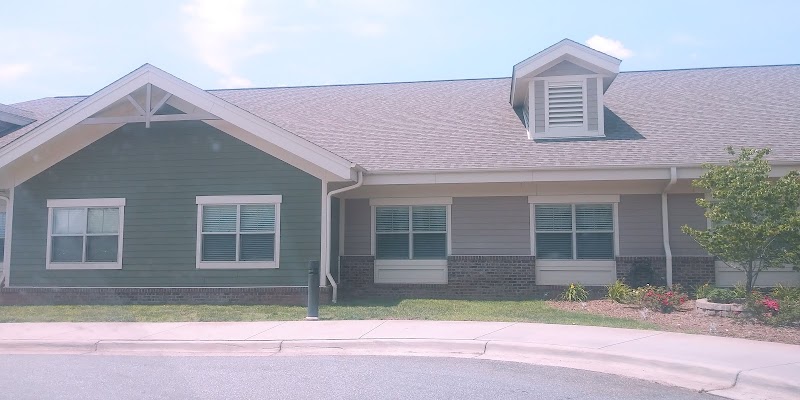
Trinity Ridge

2140 Medical Park Drive, Hickory, NC 28602 (828) 322-6995
Non profit - Corporation 120 Beds LUTHERAN SERVICES CAROLINAS Data: November 2025
Trust Grade
70/100
#208 of 417 in NC
Last Inspection: March 2025

Within standard 12-15 month inspection cycle. Federal law requires annual inspections.

Overview

Trinity Ridge in Hickory, North Carolina has a Trust Grade of B, indicating it is a good choice for families, as it falls into the solid category of care facilities. It ranks #208 out of 417 in the state, placing it in the top half, but it is #5 out of 6 in Catawba County, meaning there is only one local option rated higher. Unfortunately, the facility's performance is worsening, having increased from 1 issue in 2023 to 3 issues in 2025. Staffing is a concern, rated at 1 out of 5 stars with a turnover rate of 45%, which is slightly better than the state average. However, the facility has reported no fines, which is a positive sign. Specific incidents noted by inspectors include a failure to accurately document a resident's medication assessments, leading to potential misuse of antipsychotic medications, and two medication errors that exceeded the acceptable rate. Additionally, staff did not consistently follow hand hygiene protocols during wound care, which can increase the risk of infection. While there are strengths, such as the low number of fines, these deficiencies highlight areas for improvement.

Trust Score
B
70/100
In North Carolina
#208/417
Top 49%
Safety Record
Low Risk
No red flags
Inspections
Getting Worse
1 → 3 violations
Staff Stability
○ Average
45% turnover. Near North Carolina's 48% average. Typical for the industry.
Penalties
✓ Good
No fines on record. Clean compliance history, better than most North Carolina facilities.
Skilled Nurses
○ Average
RN staffing data not reported for this facility.
Violations
✓ Good
Only 4 deficiencies on record. Cleaner than most facilities. Minor issues only.
★★★☆☆
3.0
Overall Rating
★☆☆☆☆
1.0
Staff Levels
★★★☆☆
3.0
Care Quality
★★★★☆
4.0
Inspection Score
Stable
2023: 1 issues
2025: 3 issues

The Good

  • Full Sprinkler Coverage · Fire safety systems throughout facility
  • No fines on record
  • Staff turnover below average (45%)

    3 points below North Carolina average of 48%

Facility shows strength in fire safety.

The Bad

3-Star Overall Rating

Near North Carolina average (2.8)

Meets federal standards, typical of most facilities

Staff Turnover: 45%

Near North Carolina avg (46%)

Typical for the industry

Chain: LUTHERAN SERVICES CAROLINAS

Part of a multi-facility chain

Ask about local staffing decisions and management

The Ugly 4 deficiencies on record

Mar 2025 3 deficiencies
CONCERN (D)

Potential for Harm - no one hurt, but risky conditions existed

Assessment Accuracy (Tag F0641)

Could have caused harm · This affected 1 resident

**NOTE- TERMS IN BRACKETS HAVE BEEN EDITED TO PROTECT CONFIDENTIALITY** Based on record review and staff interviews, the facility failed to accurately code a Medicare 5-day Minimum Data Set assessment...

Read full inspector narrative →
**NOTE- TERMS IN BRACKETS HAVE BEEN EDITED TO PROTECT CONFIDENTIALITY** Based on record review and staff interviews, the facility failed to accurately code a Medicare 5-day Minimum Data Set assessment for the use of antipsychotics for 1 of 5 residents reviewed for unnecessary medications (Resident #87). The findings included: Resident #87 was initially admitted to the facility on [DATE] with diagnoses that included dementia with behaviors and cognitive communication deficit. Resident #87 subsequently readmitted to the facility on [DATE] after a brief hospitalization. Review of Resident #87's Medicare 5 day Minimum Data Set (MDS) assessment dated [DATE] revealed he was not receiving antipsychotic medications. Review of Resident #87's physician orders revealed an order dated 03/07/25 for Seroquel Oral tablet (antipsychotic medication) 25 milligrams (mg). The order was for Resident #87 to take ½ of a tablet, one time a day for mood disorder. Review of Resident #87's medication administration record revealed he received Seroquel 25mg starting on 03/07/25. During an interview with MDS Nurse #1 on 03/27/25 at 11:09 AM, she reported when she completed Minimum Data Set assessments, she reviewed residents' medication administration records and physician orders. She stated she was aware that Resident #87 was taking Seroquel at the time she completed the Minimum Data Set assessment and must have miscoded it in error. An interview with the Director of Nursing, on 03/27/25 at 11:22 AM, revealed Resident #87 had discharged from the facility and when he returned, he came back with a new physician order for Seroquel. She reported MDS nurses typically reviewed all of a resident's medications when they complete the Minimum Data Set assessments. She indicated that Resident #87's Minimum Data Set assessment dated [DATE] should have accurately represented his current use of an antipsychotic medication. During an interview with the Administrator on 03/27/25 at 12:03 PM, she indicated she expected resident Minimum Data Set assessments to accurately reflect the individual resident and their care needs and that included the medications that particular resident was currently taking.
CONCERN (D)

Potential for Harm - no one hurt, but risky conditions existed

Unnecessary Medications (Tag F0759)

Could have caused harm · This affected 1 resident

**NOTE- TERMS IN BRACKETS HAVE BEEN EDITED TO PROTECT CONFIDENTIALITY** Based on observations, record reviews, manufacturer's instructions, and staff and Consultant Pharmacist interviews, the facility...

Read full inspector narrative →
**NOTE- TERMS IN BRACKETS HAVE BEEN EDITED TO PROTECT CONFIDENTIALITY** Based on observations, record reviews, manufacturer's instructions, and staff and Consultant Pharmacist interviews, the facility failed to have a medication error rate of less than 5% as evidenced by 2 medication errors out of 28 opportunities, resulting in a medication error rate of 7.14% for 1 of 5 residents observed during the medication administration (Residents #25). The findings included: The manufacturer's instructions for prefilled Lantus insulin pen indicated that priming the insulin pen each time was an important step to ensure there were no air bubbles in the insulin and the full dose of insulin was given. Priming the insulin pen: 1. Dial up 2 units: turn the dose selector dial to 2 units, 2. Prime the pen: Press the injection button to let out any air bubbles and ensure the insulin is flowing correctly, 3. Check for a drop of insulin: you should see a drop of insulin on the tip of the needle, 4. Repeat if necessary. Resident #28 was admitted to the facility on [DATE] with diagnoses that included diabetes mellitus. Review of Resident #28's physician orders revealed an order dated 06/24/25 for Lantus insulin Pen injector, inject 85 units subcutaneously one time a day for diabetes mellitus. On 03/26/25 at 9:08 AM an observation was made of Nurse #1 as she removed a Lantus prefilled insulin pen from the medication cart, placed a needle on the pen and turned the dose selector to 30 units in preparation for the injection. The Nurse removed another needle from the medication cart and explained that she would need to inject Resident #28 twice because her total dose of insulin was 85 units and that was too much to inject all 85 units at one time. The Surveyor accompanied Nurse #1 to Resident #28's room where the Nurse injected the Resident with the Lantus insulin without priming the insulin pen per the manufacturer's instructions. Nurse #1 then removed the needle from the prefilled insulin pen and applied the other needle then turned the dose selector to 55 units and proceeded to inject Resident #28 with the second dose of insulin again without priming the insulin pen. An interview was conducted with the Consultant Pharmacist on 03/27/25 at 12:08 PM. The Pharmacist explained that it was important to prime the insulin pen before every injection so that air bubbles were removed to ensure the total amount of insulin was delivered. The Pharmacist indicated that air bubbles can take up space that could prevent the correct dosage of insulin from being administered. Multiple attempts were made to interview Nurse #1, but the attempts were unsuccessful. Interviews were conducted with the Director of Nursing (DON) and the Administrator on 03/27/25 at 12:50 PM. The DON explained that Nurse #1 had attended the skills training which included how to utilize insulin pens therefore she could not address why Nurse #1 did not prime the insulin pen each time she gave the injection. The DON stated it was important that insulin pens be primed before injecting to remove the air bubbles and ensure all the ordered insulin dose was given to the resident.
CONCERN (D)

Potential for Harm - no one hurt, but risky conditions existed

Infection Control (Tag F0880)

Could have caused harm · This affected 1 resident

Based on observations, record reviews and staff interviews, the facility failed to follow their Hand Hygiene policy and procedure when the Director of Nursing did not perform hand hygiene after removi...

Read full inspector narrative →
Based on observations, record reviews and staff interviews, the facility failed to follow their Hand Hygiene policy and procedure when the Director of Nursing did not perform hand hygiene after removing gloves and donning a clean pair of gloves while providing wound care to Resident #71 and Nurse #2 did not perform hand hygiene after removing gloves and donning a clean pair of gloves while providing wound care to Resident #62 for 2 of 3 staff members observed for infection control practices (Director of Nursing and Nurse #2). The findings included: A review of the facility's Hand Hygiene policy and procedure last revised 10/12/23 revealed in part: Hand Hygiene: Policy: Practicing hand hygiene is a simple yet effective way to prevent infections. Performing hand hygiene can prevent the spread of germs, including those that are resistant to antibiotics. All teammates are trained and regularly inserviced on the importance of hand hygiene in preventing the transmission of infections. Teammates are expected to follow hand hygiene procedures to help prevent the spread of infections to other staff members, residents, and visitors. Note: Hand Hygiene means cleaning hands by using either handwashing (washing hands with soap and water), antiseptic hand wash, antiseptic hand rub (i.e., alcohol-based hand sanitizer including foaming or gel), or surgical hand antisepsis. Procedures: 4. Before donning gloves and after removing gloves. 1. On 03/25/25 at 11:25 AM an observation was made of the Director of Nursing (DON) providing wound care to Resident #71 who had a stage 3 pressure ulcer on his coccyx. The Resident was positioned on his right side in preparation for the treatment and the previous wound dressing had been removed. The DON washed her hands and donned clean gloves and gown. The DON cleansed the pressure ulcer with wound cleanser-soaked gauze from the inside of the wound outward, then doffed her gloves and without sanitizing her hands donned a clean pair of gloves. The DON then applied and sealed the ordered dressing with an island dressing and doffed her gloves and gown, washed her hands with soap and water, gathered her supplies and trash and left the room. Interviews were conducted with the Director of Nursing (DON) and the Administrator simultaneously on 03/27/25 at 1:42 PM. The DON explained she did not realize that she did not sanitize her hands between glove changes and stated she should have sanitized her hands after doffing her gloves and prior to donning clean gloves. 2. On 03/26/25 at 11:40 AM an observation was made of Nurse #2 providing wound care to Resident #62 with the Director of Nursing (DON) assisting. Resident #62 had a stage 4 pressure ulcer on her right foot. Nurse #2 sanitized her hands and donned a clean gown and gloves and removed the dressing from the right foot ulcer and threw the old dressing in the trash can. Nurse #2 then proceeded to doff her gloves and without sanitizing her hands donned clean gloves and cleansed the pressure ulcer with wound cleanser-soaked gauze from the inside outward and applied the ordered dressing followed by an island dressing. Nurse #2 then covered the right foot with an ABD pad and wrapped it with gauze. Nurse #2 then doffed her gloves and washed her hands before donning clean gloves. The Director of Nursing removed the dressing from Resident #62's (2) stage 3 sacral pressure ulcers then doffed her gloves and washed her hands with soap and water after the end of the treatment. Nurse #2 cleansed the pressure ulcers with wound cleanser-soaked gauze from the inside outward and then doffed her gloves and without sanitizing her hands, donned clean gloves. Nurse #2 then applied the ordered dressing and an island dressing then doffed her gown and gloves and washed her hands with soap and water, gathered her supplies and trash and left the room. Multiple attempts were made to interview Nurse #2 but the attempts were not successful. Interviews were conducted with the Director of Nursing (DON) and the Administrator simultaneously on 03/27/25 at 1:42 PM. The DON explained she did not realize that Nurse #2 did not sanitize her hands between glove changes and stated she should have sanitized her hands after doffing her gloves and prior to donning clean gloves.
Nov 2023 1 deficiency
CONCERN (D) 📢 Someone Reported This

A family member, employee, or ombudsman was alarmed enough to file a formal complaint

Potential for Harm - no one hurt, but risky conditions existed

Resident Rights (Tag F0550)

Could have caused harm · This affected 1 resident

**NOTE- TERMS IN BRACKETS HAVE BEEN EDITED TO PROTECT CONFIDENTIALITY** Based on observations, record review, and staff interview the facility failed to maintain the dignity of a cognitively impaired ...

Read full inspector narrative →
**NOTE- TERMS IN BRACKETS HAVE BEEN EDITED TO PROTECT CONFIDENTIALITY** Based on observations, record review, and staff interview the facility failed to maintain the dignity of a cognitively impaired resident (Resident #43) when a Nurse Aide made an inappropriate sexual comment about the resident's son. A reasonable person would not want another person making inappropriate sexual comments about their family members. This was for 1 of 1 resident reviewed for dignity and respect. The findings included: Resident #43 was admitted to the facility on [DATE] with diagnoses that included Alzheimer's disease, dementia with behaviors, depression, and insomnia. A review of Resident #43's annual Minimum Data Set assessment dated [DATE] revealed resident was severely impaired with no psychosis, behaviors, rejection of care, or instances of wandering. A review of Resident #43's care plan, last updated on 11/10/23 revealed a care plan for I have cognitive deficits and do not consistently recognize my needs. Interventions included to use Resident #43's name, identify yourself at each interaction, face Resident #43 when speaking, and to make eye contact when speaking to her. Interventions also included to provide Resident #43 with necessary cues and to stop and return if agitated. Review of a facility provided allegations of abuse, neglect, or misappropriation revealed Resident #43 was involved in an altercation with a nurse aide (Nurse Aide #1) in which Resident #43 used a racial slur directed towards NA #1 and in return, NA #1 got into Resident #43's face and told her she would have sex with Resident #43's son so Resident #43 would have interracial grandbabies. This interaction was reported to the facility by Resident #43's sitter (Sitter #1) several days after the interaction. An interview with Sitter #1 on 11/29/23 at 1:38 PM revealed she was not the sitter who was present with Resident #43 at the time of the incident. She reported Sitter #2 was there and notified her of the interaction between NA #1 and Resident #43. Sitter #1 reported Resident #43 was really bad about using derogatory racial slurs towards persons of color and that it was her understanding that Resident #43 used a racial slur towards NA #1 and that NA #1 moved close to Resident #43's face and asked Resident #43 if she would like it if NA #1 had intercourse with Resident #43's son and had an interracial child. Sitter #1 reported Sitter #2 contacted her after the incident and asked her to come in early because Resident #43 was upset. Sitter #1 reported when she arrived at the facility, Resident #43 was still upset but Sitter #1 was able to get her to take a nap and when she awoke, Resident #43 had no recollection of the interaction with NA #1. During an interview with Sitter #2 on 11/29/23 at 3:19 PM, she reported she had sat with Resident #43 for almost 4 years and that she remembered the incident well. Sitter #2 reported Resident #43 had been a little aggressive and disruptive that afternoon. She reported she and the staff decided to remove Resident #43 from the dining room as she was disrupting other residents and she, NA #1, and Restorative Aide #1 took Resident #43 back to her room. She reported once they got Resident #43 to her room, Resident #43 uttered a racial slur directed towards NA #1. She stated NA #1 retorted that she would have intercourse with Resident #43's son and have an interracial child. Sitter #2 reported she felt the interaction was inappropriate and it upset Resident #43. She also reported she ended up reporting the incident to Sitter #1 when she came to the facility. Sitter #2 verified she did not report the incident to any staff members. During an interview with Restorative Aide #1 on 11/29/23 at 1:55 PM, he reported he remembered very little about the incident. He stated he believed that Resident #43 had been irritated and aggressive that day and he, NA #1, and Sitter #2 had removed Resident #43 from the dining room because she was disturbing other residents. Restorative Aide #1 reported when they got Resident #43 to her room, she directed a racial slur towards NA #1 who responded that she would go and try to date Resident #43's son and have an interracial child. Restorative Aide #1 stated Resident #43 became more agitated and upset after the interaction. He stated he reported the incident to the Assistant Director of Nursing (ADON). An interview with the ADON on 11/29/23 at 3:42 PM, she reported she was made aware several days after the incident occurred when Sitter #1 informed her of the incident between Resident #43 and NA #1. She stated as soon as she was informed, she notified the Administrator. She reported NA #1 was also immediately suspended pending the results of the facility's investigation. She stated the facility investigated the incident as possible verbal abuse. She reported when she interviewed NA #1, she denied doing anything inappropriate even after being confronted with the statements from the other staff and visitors that were present at the time of the incident that verified the incident occurred. The ADON reported NA #1 was subsequently terminated and they completed education on the importance of ensuring interactions were respectful and appropriate. She also reported the incident was placed in the quality assurance plan and had been monitored. During an interview with the DON on 11/29/23 at 4:50 PM, she reported she was made aware of the incident between Resident #43 and NA #1 after it occurred as she was out of the facility at the time. She stated it was her understanding that Resident #43 directed a racial slur towards NA #1 and NA #1 retorted, telling Resident #43 that she would have intercourse with Resident #43's son and have an interracial child. She reported she knew there was an investigation into the incident and that NA #1 was ultimately terminated. She also reported the administration provided education to all staff on the importance of ensuring all interactions with residents were appropriate, interviewed alert and oriented residents, and included the incident in the facility quality assurance process. The DON also stated the facility had been randomly monitoring interactions between staff and residents in the middle of provided care and would continue to randomly monitor the interactions for 3 months. The DON reported the interaction was completely unacceptable and she expected her staff to treat all residents with respect and dignity. During an interview with the Administrator on 11/29/23 at 4:57 PM, she reported she was aware of an incident between NA #1 and Resident #43, where NA #1 told Resident #43 that she would have intercourse with her son and have an interracial child after Resident #43 directed a racial slur towards NA #1. The Administrator reported the facility investigated the incident and ultimately terminated NA #1. She also reported the incident was placed into the facility's quality assurance program and random interactions between staff and residents during care were being monitored. She also reported the facility administration completed education to the staff regarding appropriate interactions with residents and what to do if a resident is belligerent or aggressive in the facility and reported the incident to the state agency. She reported while the facility continued to monitor interactions between staff and residents, she felt the facility was back in compliance effective 08/21/23. Multiple attempts to reach NA #1 via telephone were unsuccessful. Review of facility provided monitoring tools revealed the facility had completed a 24 hour and 5 working day report upon notification of the incident and completion of their investigation. The investigation revealed written statements from all parties involved, a termination notification for NA #1, education with sign-in sheets for all staff in the facility regarding appropriate interactions towards residents and what to do when a resident is agitated, interviews with alert and oriented residents, and finally monitoring tools for ongoing monitoring to ensure the issue was resolved with random observations of interactions between staff and residents during care. The facility indicated they were back in compliance on 08/21/23. While onsite during the recertification survey the plan of correction submitted by the facility was validated by interviews with staff who confirmed that they had received education regarding what to do when a resident is agitated and expectations of appropriate interactions towards residents at all times, review of skin checks and interviews, and monitoring tools. The facility date of compliance of 08/21/23 was validated.
Understanding Severity Codes (click to expand)
Life-Threatening (Immediate Jeopardy)
J - Isolated K - Pattern L - Widespread
Actual Harm
G - Isolated H - Pattern I - Widespread
Potential for Harm
D - Isolated E - Pattern F - Widespread
No Harm (Minor)
A - Isolated B - Pattern C - Widespread

Questions to Ask on Your Visit

  • "Can I speak with families of current residents?"
  • "What's your RN coverage like on weekends and overnight?"

Our Honest Assessment

Strengths
  • • No major safety red flags. No abuse findings, life-threatening violations, or SFF status.
  • • No fines on record. Clean compliance history, better than most North Carolina facilities.
  • • Only 4 deficiencies on record. Cleaner than most facilities. Minor issues only.
  • • 45% turnover. Below North Carolina's 48% average. Good staff retention means consistent care.
Concerns
  • • No major red flags. Standard due diligence and a personal visit recommended.
Bottom line: Mixed indicators with Trust Score of 70/100. Visit in person and ask pointed questions.

About This Facility

What is Trinity Ridge's CMS Rating?

CMS assigns Trinity Ridge an overall rating of 3 out of 5 stars, which is considered average nationally. Within North Carolina, this rating places the facility higher than 99% of the state's 100 nursing homes. This mid-range rating indicates the facility meets federal standards but may have areas for improvement.

How is Trinity Ridge Staffed?

CMS rates Trinity Ridge's staffing level at 1 out of 5 stars, which is much below average compared to other nursing homes. Staff turnover is 45%, compared to the North Carolina average of 46%. This relatively stable workforce can support continuity of care.

What Have Inspectors Found at Trinity Ridge?

State health inspectors documented 4 deficiencies at Trinity Ridge during 2023 to 2025. These included: 4 with potential for harm.

Who Owns and Operates Trinity Ridge?

Trinity Ridge is owned by a non-profit organization. Non-profit facilities reinvest revenue into operations rather than distributing to shareholders. The facility is operated by LUTHERAN SERVICES CAROLINAS, a chain that manages multiple nursing homes. With 120 certified beds and approximately 110 residents (about 92% occupancy), it is a mid-sized facility located in Hickory, North Carolina.

How Does Trinity Ridge Compare to Other North Carolina Nursing Homes?

Compared to the 100 nursing homes in North Carolina, Trinity Ridge's overall rating (3 stars) is above the state average of 2.8, staff turnover (45%) is near the state average of 46%, and health inspection rating (4 stars) is above the national benchmark.

What Should Families Ask When Visiting Trinity Ridge?

Based on this facility's data, families visiting should ask: "Can you walk me through typical staffing levels on day, evening, and night shifts?" "Can I visit during a mealtime to observe dining assistance and food quality?" "How do you handle medical emergencies, and what is your hospital transfer rate?" "Can I speak with family members of current residents about their experience?" These questions are particularly relevant given the below-average staffing rating.

Is Trinity Ridge Safe?

Based on CMS inspection data, Trinity Ridge has a clean safety record: no substantiated abuse findings (meaning no confirmed cases of resident harm), no Immediate Jeopardy citations (the most serious violation level indicating risk of serious injury or death), and is not on the Special Focus Facility watch list (a federal program monitoring the lowest-performing 1% of nursing homes). The facility has a 3-star overall rating and ranks #1 of 100 nursing homes in North Carolina. While no facility is perfect, families should still ask about staff-to-resident ratios and recent inspection results during their visit.

Do Nurses at Trinity Ridge Stick Around?

Trinity Ridge has a staff turnover rate of 45%, which is about average for North Carolina nursing homes (state average: 46%). Moderate turnover is common in nursing homes, but families should still ask about staff tenure and how the facility maintains care continuity when employees leave.

Was Trinity Ridge Ever Fined?

Trinity Ridge has no federal fines on record. CMS issues fines when nursing homes fail to meet care standards or don't correct problems found during inspections. The absence of fines suggests the facility has either maintained compliance or corrected any issues before penalties were assessed. This is a positive indicator, though families should still review recent inspection reports for the full picture.

Is Trinity Ridge on Any Federal Watch List?

Trinity Ridge is not on any federal watch list. The most significant is the Special Focus Facility (SFF) program, which identifies the bottom 1% of nursing homes nationally based on persistent, serious quality problems. Not being on this list means the facility has avoided the pattern of deficiencies that triggers enhanced federal oversight. This is a positive indicator, though families should still review the facility's inspection history directly.