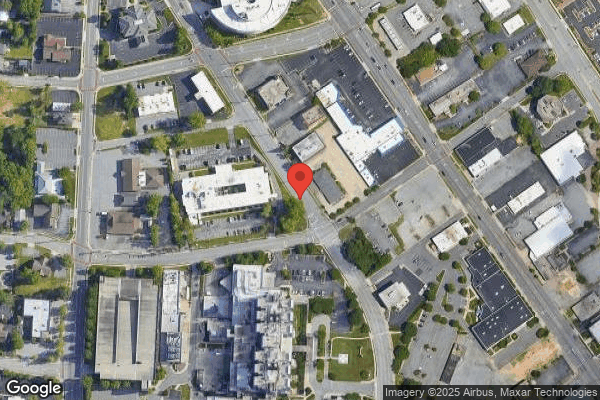
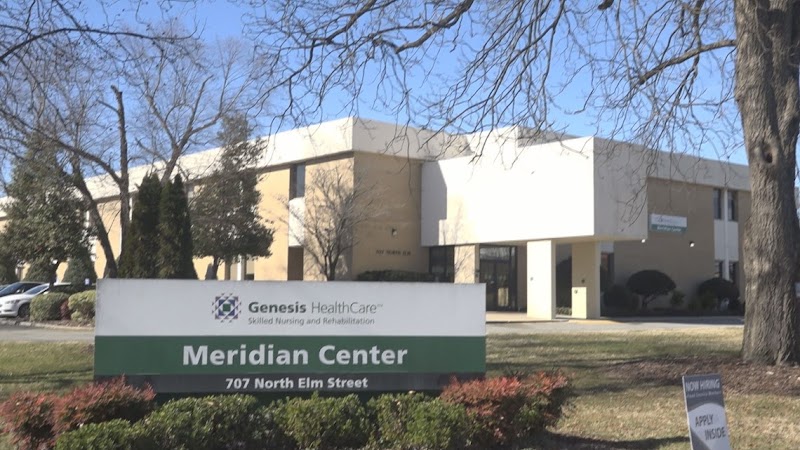
Meridian Center

707 North Elm Street, High Point, NC 27262 (336) 885-0141
For profit - Limited Liability company 199 Beds GENESIS HEALTHCARE Data: November 2025 3 Immediate Jeopardy citations
Trust Grade
0/100
#360 of 417 in NC
Last Inspection: August 2025

Inspected within the last 6 months. Data reflects current conditions.

Overview

Meridian Center has received a Trust Grade of F, which means it has significant concerns and is performing poorly. It ranks #360 out of 417 facilities in North Carolina, placing it in the bottom half, and #19 out of 20 in Guilford County, indicating that there is only one local option that is better. The facility's performance has remained stable, with 9 issues reported in both 2024 and 2025. Staffing is a weakness, as the facility has a turnover rate of 58%, which is higher than the state average, and it has received concerning fines totaling $106,562, higher than 77% of other facilities in North Carolina. Additionally, there have been serious incidents, including a resident falling out of a shower chair and suffering multiple fractures, and another resident being transported unsafely, which could have led to severe injuries. While the facility shows some good quality measures with a 4/5 rating, the overall picture remains troubling.

Trust Score
F
0/100
In North Carolina
#360/417
Bottom 14%
Safety Record
High Risk
Review needed
Inspections
Holding Steady
9 → 9 violations
Staff Stability
⚠ Watch
58% turnover. Above average. Higher turnover means staff may not know residents' routines.
Penalties
✓ Good
$106,562 in fines. Lower than most North Carolina facilities. Relatively clean record.
Skilled Nurses
⚠ Watch
Each resident gets only 17 minutes of Registered Nurse (RN) attention daily — below average for North Carolina. Fewer RN minutes means fewer trained eyes watching for problems.
Violations
⚠ Watch
29 deficiencies on record. Higher than average. Multiple issues found across inspections.
★☆☆☆☆
1.0
Overall Rating
★☆☆☆☆
1.0
Staff Levels
★★★★☆
4.0
Care Quality
★☆☆☆☆
1.0
Inspection Score
Stable
2024: 9 issues
2025: 9 issues

The Good

  • 4-Star Quality Measures · Strong clinical quality outcomes
  • Full Sprinkler Coverage · Fire safety systems throughout facility
  • No fines on record

Facility shows strength in quality measures, fire safety.

The Bad

1-Star Overall Rating

Below North Carolina average (2.8)

Significant quality concerns identified by CMS

Staff Turnover: 58%

11pts above North Carolina avg (46%)

Frequent staff changes - ask about care continuity

Federal Fines: $106,562

Well above median ($33,413)

Significant penalties indicating serious issues

Chain: GENESIS HEALTHCARE

Part of a multi-facility chain

Ask about local staffing decisions and management

Staff turnover is elevated (58%)

10 points above North Carolina average of 48%

The Ugly 29 deficiencies on record

3 life-threatening 1 actual harm
Aug 2025 9 deficiencies 2 IJ
CRITICAL (J) 📢 Someone Reported This

A family member, employee, or ombudsman was alarmed enough to file a formal complaint

Immediate Jeopardy (IJ) - the most serious Medicare violation

Accident Prevention (Tag F0689)

Someone could have died · This affected 1 resident

**NOTE- TERMS IN BRACKETS HAVE BEEN EDITED TO PROTECT CONFIDENTIALITY** Based on observation, record reviews, and interviews with staff, resident, and the Medical Director, the facility failed to ensu...

Read full inspector narrative →
**NOTE- TERMS IN BRACKETS HAVE BEEN EDITED TO PROTECT CONFIDENTIALITY** Based on observation, record reviews, and interviews with staff, resident, and the Medical Director, the facility failed to ensure safe securement per manufacturer recommendations of a resident during a van transport. On 2/21/25, Resident #8 was being transferred to dialysis in the facility's transportation van. When Transportation Driver #1 made a left turn, Resident #8 and the wheelchair she was seated in tipped over onto the floor of the van. The Transportation Driver called 911. Resident #8 complained of pain to the right side of her neck and face and was transported to the hospital via Emergency Medical Services (EMS). Resident #8 was receiving a blood thinner which increased her risk of bleeding. While at the hospital, Resident #8 was found to not have sustained any injuries but was admitted for one day to receive her missed dialysis treatment before returning to the facility. This practice had a high likelihood of causing a serious adverse outcome, including death or serious injury. This deficient practice was for 1 of 7 residents reviewed for accidents (Resident #8).Findings included: Review of the manufacturer's operating instructions dated 2014 for the facility's securement system used in the transportation van showed the following instructions for the use of the 4-Point Wheelchair Securement System: 1. Center wheelchair facing forward in Securement Zone and lock wheelchair brakes (or power off electric chair). 2. Attach four retractors into Floor Anchorage points and lock them in place, with an approximate distance of 48 to 54 between the front and rear retractors. 3. Completely pull out each webbing and attach J-hooks to compliant WC19 (a WC19 is a term used to describe a standard wheelchair designed to be used in vehicles) Chair Securement Points near seat level (or solid frame members) at an approximate 45-degree side angle. 4. Move wheelchair forward and back to remove webbing slack or manually tension webbing with retractor knobs. Resident #8 was admitted to the facility on [DATE] with diagnoses which included End-Stage Renal Disease (ESRD), congestive heart failure and atrial fibrillation. The physician's order dated 12/8/23 and the current medication administration records revealed Resident #8 received 2.5mg (milligrams) apixaban two times per day. Apixaban is an anticoagulant medication (blood thinner). The quarterly minimum Data Set (MDS) assessment dated [DATE] indicated Resident #8 was cognitively intact, received anticoagulant medication, had no falls, and received dialysis therapy. The review of the Incident Report prepared by Unit Manager #1 and the Interdisciplinary Team Review completed by Nurse #6, both dated 2/21/25 documented that as Resident #8 was transported to the dialysis center in the facility's transportation van, the resident's wheelchair turned over, onto its side. The Resident was assessed and transported to the Emergency Department for further evaluation. The Resident was unable to give a description of what had happened. There were no witnesses. There were no injuries observed at the time of the incident. Review of the Emergency Medical Services (EMS) Report dated 2/21/25 documented that upon EMS arrival on the scene, Resident #8 was observed on the floor of the transport van with a wheelchair turned on its' side and underneath the resident. The Resident was alert, speaking full sentences. Transportation Driver #1 informed EMS that he was transporting the Resident in her wheelchair in the van to the dialysis center and when the van turned a corner the Resident and her wheelchair overturned. The Resident complained of pain to the right side of her face and the right side of her neck. EMS freed the wheelchair from the safety straps and removed the wheelchair from under the resident. A cervical collar was placed on the Resident, and she was transferred to a stretcher and in the EMS unit where assessment and interview were completed. The Resident denied loss of consciousness, chest pain, shortness of breath, nausea and vomiting. The Resident revealed she was enroute to the dialysis center and her last dialysis treatment was on Wednesday, 2/19/25. The Resident denied any other injuries and was able to move lower extremities with no pain to pelvis/hips and had equal hand grip. The duration of head and neck pain was ten minutes. The Resident was transferred to the Emergency Department of the hospital, answering questions appropriately. Transportation Driver #1 was not available for interview during the survey. Review of the hospital Emergency Department assessment and plan dated 2/21/25 revealed Resident #8 was evaluated for right-sided head/neck pain due to resident stating her head and neck were injured by striking something inside the transport van on her way to the dialysis center. The result of the computed tomography (CT) scan of the resident's head and neck showed no acute intracranial pathology or cervical spine pathology. The Emergency Department physician contacted the resident's outpatient nephrologist and it was decided that it was too late in the day for the Resident to go to the dialysis center this day. Also, there was no indication that the Resident would be able to be transported from the nursing home to the dialysis center on 2/22/25 (Saturday). Because the Resident's next scheduled dialysis appointment would not be until 2/24/25 (Monday), the recommendation was for Resident #8 to be evaluated for admission to the hospital and receive her dialysis treatment on this night of 2/21/25. The hospital Discharge summary dated [DATE] revealed Resident #8 also reported right hip pain and the right hip x-ray showed no acute fracture or abnormality. The pain was mild and managed conservatively. The resident received her normal treatment of dialysis on Friday night (2/21/25) and would continue on her Mondays, Wednesdays, and Fridays schedule. There were no new physician orders made during this hospitalization. The summary indicated the Resident's condition was good at discharge and that she returned to the facility. During an interview on 8/12/2025 at 10:21 a.m., Resident #8 revealed that in February 2025 she had a fall in the facility's transportation van enroute to the dialysis center. She recalled that as the transportation van driver was making a left turn, her wheelchair fell sideways to the right in the van causing her to hit her neck and face. The resident did not recall what she hit her neck and face on. She stated she was hospitalized overnight. The Resident indicated the accident did not result in any fractures, but she had constant back pain since the accident. A second interview was conducted with Resident #8 while awaiting transport to the dialysis center on 8/13/25 at 10:23 a.m. The Resident was observed sitting upright in a wheelchair The Resident recalled that the February accident occurred at approximately 12:30 p.m. when Transportation Driver #1 made a left turn onto another street. She revealed she was the only passenger in the van. She stated that Transportation Driver #1 did not attempt to move or reposition her after the fall. The Resident stated EMS arrived and applied a neck brace and transported her to the hospital. She stated she believed Transportation Driver #1 must have turned the van too fast causing her wheelchair to turn over on its side. A telephone interview was conducted with the facility's Medical Director on 8/13/25 at 3:10 p.m. The Medical Director recalled being notified by the Administrator and the Director of Nursing of Resident #8's accident in the van the same day. She stated she reviewed the incident records, the hospital reports, including the x-rays which showed the Resident had no injuries as a result of the accident. The Medical Director indicated Resident #8 receiving blood thinner medication did not place her at risk of serious injury or death as a result of the minor accident. The Medical Director concluded the resident was sent to the hospital as a precaution following the accident. An interview was conducted with the Administrator on 8/12/25 at 3:45 p.m. He stated Transportation Driver #1 notified him of the accident and his call for EMS on 2/21/25 via telephone. The Administrator stated when he arrived on the scene of the accident, EMS was on-site. He revealed he observed Resident #8 in the facility's van, in her wheelchair, alert and verbal. He stated he interviewed Transportation Driver #1 at the scene of the accident and on return to the facility and Transportation Driver #1's account of the accident remained the same. The Transportation Driver #1 informed him (Administrator) that he was transporting Resident #8 to the dialysis center in the van and when he made a left turn onto another street, the Resident's wheelchair tilted over. Transportation Driver #1 reported he stopped the van and telephoned EMS then the facility. The Administrator stated Transportation Driver #1 insisted he had double checked the immobility of the Resident's wheelchair in the van to ensure no movement. The Administrator revealed Transportation Driver #1 was originally hired in June 2024 as the Maintenance Assistant but in January 2025 became one of two facility transportation drivers. The Administrator added Transportation Driver #1 was trained by the former Maintenance Director. The Administrator provided documentation of Transportation Driver #1's facility transportation training dated 1/13/25 and signed by Transportation Driver #1. This signed training documentation included: Vehicle Safety: Tips for Safely Transporting Patients in Wheelchairs; Authorized Driver Checklist; Vehicle Safety Competency; The Wheelchair tie down and Occupant Restraint System; Mobile Device Use Agreement for Drivers of Company Vehicles; and Procedures to Follow after a Vehicle Accident. The former Maintenance Director was interviewed on 8/15/25 at 11:03 a.m. and explained he was the Maintenance Director at the facility during the time of the accident involving the wheelchair turning over in the facility's van during transport. He revealed the van was purchased by the facility in January 2025 and after a complete inspection, he replaced the ratchets and straps before the van was used by the facility because they were old and loose. He stated that he inspected the facility's two transportation vans including the wheelchair securement systems, yearly. He stated that within twenty-four hours of the accident in February 2025, he inspected the van including having Transportation Driver #1 re-enact the securing method of the Resident's wheelchair in the van, as he did on the day of the accident. He stated that the demonstration concluded Transportation Driver #1 securely strapped Resident #8's wheelchair to the floor of the van; and inspection of the van identified no defective equipment. On 8/13//25 at 5:13 p.m., the Administrator was notified of immediate jeopardy. The facility implemented the following corrective action plan: 1. Address how corrective action will be accomplished for those residents found to havebeen affected by the deficient practice;Root cause analysis has revealed that on 02/21/2025 at approximately 11:57am, resident #8 sustained a fall while being transported to dialysis in the facility van. The facility Van driver stated as he was turning onto Meadow Pl at 6 miles per hour the wheelchair tipped over due to the ratchet system used to secure residents in place not properly adjusted to ensure that Resident #8 wheelchair was secured inside the facility van. Resident #8 (BIMS - 15) did not provide details regarding the incident as she only stated that she was having current back and neck pain. At the time of the incident, the van driver called Emergency Services. EMS and Fire Department arrived at the scene of the incident at 12:11pm. The incident occurred at the intersection of Ferndale Boulevard and Meadow Place. The resident was safely transported to the hospital by Emergency Medical Services at 12:25pm. Administrator, Resource Operator and Registered Nurse arrived at the scene of the incident at 12:11pm. It was observed by the facility's Administrator and Registered Nurse that resident #8 was strapped in her wheelchair via a facility van lapbelt. Resident #8's wheelchair was latched via the floor track ratcheting system x1 strap from the rear of the wheelchair to the left sided frame and x1 strap from the rear of the wheelchair to the right sided frame. Additionally, the wheelchair was latched by utilizing the floor ratcheting system x1 strap to the front frame of the right side of the wheelchair and x1 strap to the front frame of the left side of the wheelchair. Resident #8 was transported to hospital for evaluation on 02/21/2025 by Emergency Medical Services. The resident was assessed at the hospital. According to the hospital records, a CT of Resident #8's head and C-Spine. CT scan from hospital dated 02/21/2025 at 2:30 pm revealed no fractures to head or spine. Resident #8 was discharged from the hospital on [DATE] back to the facility. Upon her return, the Licensed Nurse assessed resident #8. A new order from the hospital for zofran 4MG was prescribed every 6 hours for nausea and vomiting. The facility van driver was interviewed by the facility Administrator at the facility. The van driver's statement revealed, Resident #8 was loaded into the van at 11:55am by the van driver. The facility van driver secured the wheelchair via 4 straps on the floor track ratcheting system and placed and secured the van's lapbelt on the resident. The van driver checked to ensure the wheelchair was secure prior to departing from the facility. The van driver departed from the facility heading to Kidney Center. Facility Van driver stated as he was turning onto Meadow Pl at 6 miles per hour the wheelchair tipped over. The facility Van driver stated he immediately called Emergency Services. The van driver stated that he was unaware of what caused the incident as he believed that he secured the resident's chair per the manufacturer's recommendation for the ratcheting system. The van driver stated that as he was making a left turn he heard the wheelchair tilt and immediately stopped the facility van. The facility van driver was placed on administrative leave pending investigation on 02/21/2025. A formal investigation was initiated by the Administrator on 02/21/2025. As a result of the investigation, it was determined that the ratchet system used to secure residents in the facility van was not properly used by the van driver per manufacturers recommendations on 2/21/25. On 02/21/2025, the Administrator reviewed the restraint manufacturer's instructions for how to secure a wheelchair and person to the facility van. The Administrator re-educated the Maintenance Director to include competency checks on 2 facility van drivers who transport facility residents on the center's Authorized Driver Checklist, Vehicle Safety Competency, Vehicle Safety Policy (SH413), Vehicle Safety: Tips for Safely Transporting Patients in Wheelchairs prior to the beginning of his next scheduled shift. From 02/22/2025 - 02/24/2025, an outsource transportation company was utilized to transport residents to medical appointments. The Maintenance Director re-educated to include competency checks on 2 facility van drivers who transport facility residents on the center's Authorized Driver Checklist, Vehicle Safety Competency, Vehicle Safety Policy (SH413), Vehicle Safety: Tips for Safely Transporting Patients in Wheelchairs prior to beginning their next scheduled shifts. The Medical Director and the Resident #8 responsible party were notified of the incident by the Administrator. The wheelchair for Resident #8 was inspected by the Maintenance and Therapy department to ensure proper functioning. No issues identified during either inspection. Following Resident #8 readmission from the hospital, Resident #8 was transported via facility van to medical appointments in a standard wheelchair. 2. Address how the facility will identify other residents having the potential to be affected by the same deficient practice; On 2/21/25, the Administrator reviewed a list of residents who have been transported by facility staff and all outsourced transportation companies in the last 30 days to ensure no other residents sustained an injury during transportation. No additional incidents were identified as a result of the audit. 3. Address what measures will be put into place or systemic changes made to ensure that the deficient practice will not recur; On 02/21/2025, an audit was conducted by the Administrator to ensure all facility van drivers were current on van safety education and skills competencies were up to date. No negative findings as a result of the audit. Education consisted of the center's Authorized Driver Checklist, Vehicle Safety Competency, Vehicle Safety Policy (SH413), Vehicle Safety: Tips for Safely Transporting Patients in Wheelchairs. On 02/21/2025, the Administrator and Maintenance Director inspected the ratcheting system and all seat belts in the facility van. All ratchet straps and seatbelts were in proper working order. The Administrator re-educated the Maintenance Director to include competency checks on 2 facility van drivers who transport facility residents on the center's Authorized Driver Checklist, Vehicle Safety Competency, Vehicle Safety Policy (SH413), Vehicle Safety: Tips for Safely Transporting Patients in Wheelchairs prior to the beginning of his next scheduled shift. Beginning 02/25/2025, the Administrator and Maintenance Director re-educated 2 facility van drivers on the center's Authorized Driver Checklist, Vehicle Safety Competency, Vehicle Safety Policy (SH413), Vehicle Safety: Tips for Safely Transporting Patients in Wheelchairs. The safety tips are comparable to the restraint manufacturer's instructions. Return demonstration was conducted by 2 van drivers to ensure proper methods are used while securing residents / wheelchairs in the van via the ratcheting system. Any van driver that was not educated will receive education prior to their next scheduled shift. Newly hired drivers will be trained upon hire in orientation by the Maintenance Director. 4. Indicate how the facility plans to monitor its performance to make sure that solutions are sustained. Effective 02/21/2025, the Administrator will audit resident transportations on 10 residents 2 times per week for 4 weeks, then 1 time per week for 8 weeks utilizing a monitoring tool to ensure residents are transported without incident regardless of the transportation organization and that all facility van drivers remain educated on facility van safety policies to include restraint manufacturer's instructions. On 02/21/2025, an ADHOC Quality Assurance Performance Improvement meeting was conducted by the Administrator with the interdisciplinary team members to review the root cause of the incident, discuss immediate measures to ensure all other residents are safe, education required for facility licensed van drives and how the center will ensure quality monitoring going forward to ensure no other residents are not safely transported regardless of the transportation organization. The Administrator will report the results of the monitoring to the QAPI committee to review audits and make recommendations to ensure compliance is maintained ongoing. The QAPI Committee will determine the need for further intervention and auditing beyond three months to assure compliance is sustained ongoing. Alleged date of Immediate Jeopardy Removal: 02/26/25The deficiency correction date is alleged to be 02/26/25. The facility's corrective action plan was validated by the following on 8/15/25: The facility provided audits of residents in wheelchairs who were interviewed if they felt safe with the wheelchair securing methods used in the transportation vans and if they felt safe with the driving of the transportation van drivers. Only 1 of the 2 facility van drivers were currently working at the facility. Transportation Driver #1 was currently on leave. The Maintenance Director also worked as a transportation van driver, documentation specified Transportation Driver #1, Transportation Driver #2, and the Maintenance Director received the training on the restraint system's manufacturer's instructions. The facility provided documentation of the restraint system's manufacturer's video of correct application of the use of the 4-Point Wheelchair Securement System in transport vans. This training included checklists, observations and audits that included return demonstration on securing a resident in their wheelchair inside the transportation van, and of and on loading of residents into the vans. Interviews with Transportation Driver #2 and the Maintenance Director verified they received the training with return demonstration of wheelchair securement system in the transportation van according to the restraint system's manufacturer instructions. The monitoring of all residents using the transport van was conducted and presented in the facility's QA meeting. An observation was conducted on 8/15/25 at 10:02 a.m. of Transportation Driver #2 as she secured three residents according to the restraint system's instructions. After securing the wheels of wheelchair to the floor of the transportation van and strapping Transportation Driver #2 tested the immobility of the wheels and the handles of each resident's wheelchair after with positive results of wheelchair immobility. Transportation Driver #2 stated she always tested both areas (top and bottom) of each wheelchair to ensure safety. The facility's IJ removal date and compliance date for the corrective action plan of 2/26/25 was validated.
CRITICAL (J) 📢 Someone Reported This

A family member, employee, or ombudsman was alarmed enough to file a formal complaint

Immediate Jeopardy (IJ) - the most serious Medicare violation

Infection Control (Tag F0880)

Someone could have died · This affected 1 resident

Based on observations, record reviews, and staff and Medical Director interviews, the facility staff failed to disinfect a shared blood glucose meter (glucometer) between residents in accordance with ...

Read full inspector narrative →
Based on observations, record reviews, and staff and Medical Director interviews, the facility staff failed to disinfect a shared blood glucose meter (glucometer) between residents in accordance with the instructions provided by the manufacturer of the disinfectant wipes used for 1 of 2 residents whose blood glucose levels were checked (Residents #135). This occurred while there was at least one resident with a known bloodborne pathogen in the facility. Shared glucometers can be contaminated with blood and must be cleaned and disinfected after each use with an approved product and procedure. Failure to use an Environmental Protection Agency (EPA)-approved disinfectant in accordance with the manufacturer potentially exposes residents to the spread of blood borne infections. Care must also be taken by personnel handling glucometers to protect the glucometers against cross-contamination via contact with other surfaces. Immediate Jeopardy began on 8/14/25 when Nurse #1 was observed performing blood glucose checks on residents using a shared glucometer without disinfecting per manufacturer's instructions. Immediate Jeopardy was removed on 8/20/25 when the facility implemented an acceptable credible allegation of Immediate Jeopardy removal. The facility will remain out of compliance at a lower scope and severity level of D (no actual harm with a potential for minimal harm that is not Immediate Jeopardy) to ensure monitoring of systems are put in place and to complete employee in-service training. The findings included:The facility's document entitled, Procedure: Fingerstick Glucose Measurement (Reviewed and Revised on 7/15/25) outlined the following process, in part:Step #22 (of 27): Clean and disinfect the blood glucose meter [glucometer] after use with EPA approved disinfectant, following manufacturer's instructions.Upon request, additional documents were provided by the facility in lieu of a Policy / Procedure for glucometer disinfection:---A Glucometer Cleaning & Disinfection Observation described the purpose of the observation as: Bloodborne pathogens such as Hep B [hepatitis B], Hep C [hepatitis C], and HIV [human immunodeficiency virus] can be transmitted to other patients if glucometers are not cleaned & disinfected. Such transmission has occurred in the past in LTC [long term care] facilities that do not use a cleaning & disinfecting procedure. The requirements of the observation included, in part: - .The glucometer is cleaned and disinfected after each use. If the nurse is unsure whether the glucometer is clean, it should be cleaned and disinfected before use. -The glucometer is wiped down with the product specified for use by the manufacturer. Products approved for the [brand name] meter include: [4 brands of disinfectant wipes, including the facility's disinfectant] -Staff clean & disinfect surfaces that come into contact with the glucometer (e.g., overbed tables, med [medication] carts, etc.).-The glucometer remains wet for the time specified in the directions on the cleaning and disinfecting product.---Clinical Competency Validation Fingerstick Glucose Measurement included step #19 (of 23): Cleans and disinfects the blood glucose meter after use with EPA approved disinfectant, following manufacturer's instructions.A Healthcare Professional Operator's Manual & In-Service Guide (Dated 2023) from the manufacturer of the facility's glucometer included a section on Cleaning and Disinfecting your [brand name of the glucometer]. It noted the following information, in part: Cleaning and disinfecting the meter and lancing device is very important in the prevention of infectious disease. Cleaning is the removal of dust and dirt from the meter and lancing device surface so no dust or dirt gets inside. Cleaning also allows for subsequent disinfection to ensure germs and disease causing agents are destroyed on the meter and lancing device surface. The products listed as having been validated for disinfecting the facility's glucometer included the brand of disinfectant wipes available for use at the facility. The manufacturer instructions for the glucometer used at the facility indicated the cleaning and disinfection procedure required the following step:#4 (of 6). To disinfect the meter, clean the meter with one of the validated disinfecting wipes.Wipe all external areas of the meter including both front and back surfaces until visibly clean. Avoid wetting the meter test strip port. Allow the surface of the meter to remain wet at room temperature for the contact time listed on the wipe's directions for use.The manufacturer's labeling of the brand of disinfectant wipes used at the facility was reviewed and read, in part: Kills HIV-1 [human immunodeficiency virus], HBV [hepatitis B virus], and HCV [hepatitis C virus] on precleaned environmental surfaces/objects previously soiled with blood/body fluids in health care settings or other settings in which there is an expected likelihood of soiling of inanimate surfaces/objects with blood/body fluids and in which the surfaces/objects likely to be soiled with blood/body fluids can be associated with the potential for transmission of HIV-1 (associated with AIDS), HBV, and HCV. The directions for use of the disinfectant wipes addressed the required contact time for disinfection. The manufacturer instructed that surface(s) should remain visibly wet for 30 seconds to kill the bacteria and viruses (as individually listed on the label), except a 1 minute contact time is required to kill Candida albicans (a fungus) and Trichophyton interdigitale (a fungus); a 2 minute contact time is required to kill Candida auris (a fungus); and a 3 minute contact time is required to kill Clostridium difficile spores (a resistant, dormant structure produced by C. diff bacterium).An observation of blood glucose monitoring was initiated on 8/14/25 at 11:25 AM with Nurse #1. The observation began as Nurse #1 prepared to conduct a blood glucose check for Resident #7. The nurse removed a (brand name) glucometer stored inside a plastic bag from the top right drawer of the medication cart and placed the glucometer on top of the medication cart. It could not be determined by observation whether the surface of the medication cart had been previously disinfected. Nurse #1 then collected additional supplies for monitoring, including alcohol wipes, a glucose strip, and a single-use lancet. At 11:26 AM, the Nurse was observed to insert the glucose strip into the meter. Immediately afterwards, she placed the meter back on top of the medication cart, donned gloves, picked up the glucometer and supplies, then entered Resident #7's room. Nurse #1 used the lancet to obtain a blood sample from the Resident, then placed the meter (with the glucose strip inserted) on top of Resident #7's bedside tray table while she wiped the remaining blood from the resident's finger. The resident's blood glucose result was 137. At 11:28 AM, Nurse #1 was observed as she removed her gloves while still in the resident's room, picked up the used glucometer, and returned to the medication cart. The Nurse obtained a (brand name) disinfectant wipe from the bottom drawer of the medication cart and wiped the glucometer with the disinfectant wipe for a count of 5 seconds. She then placed the glucometer on a paper towel on top of her medication cart. Upon inspection of the meter placed on the paper towel, the meter appeared to be completely dry and had no signs of being visibly wet. The nurse returned to Resident #7's room, washed her hands, then came back to the medication cart to prepare an as needed medication requested by the resident. A continuous observation of the medication cart and glucometer was conducted. On 8/14/25 at 11:35 AM, Nurse #1 moved the medication cart directly in front of another room to conduct a blood glucose check for Resident #135. The medication cart was positioned so that the nurse was at the doorway of the resident's room. At that time, Nurse #1 reported that she had to wait three (3) minutes before she could use the glucometer for another resident after having disinfected the meter. When asked to clarify, the nurse stated the shared glucometer needed to dry for 3 minutes before being used for another resident. Meanwhile, she collected the additional supplies needed for the blood glucose check, including alcohol wipes, a glucose strip, and a single-use lancet. Then, Nurse #1 picked up the shared glucometer and began to insert a glucose strip into the meter. The nurse was already directly in front of the doorway of Resident #135's room, therefore she was asked to stop at that time and review the labeling on the canister containing the disinfectant wipes used on the shared glucometer. When the canister was again pulled out of the medication cart, the directions for disinfection were read. While reviewing the manufacturer's directions on disinfectant wipes, Unit Manager #1 walked by the medication cart. At that time, the disinfection of the shared glucometer was discussed with the Unit Manager. When asked, the Unit Manager reported she herself typically wrapped a wet disinfectant wipe around the glucometer to meet the requirement of a 3-minute contact time. When asked to clarify, she confirmed the 3-minute contact time was the amount of time the shared glucometer remained in contact with a wet disinfectant wipe (not the drying time). An interview was conducted on 8/14/25 at 1:02 PM with the facility's Infection Preventionist (IP). The IP provided a copy of the facility's Procedure: Fingerstick Glucose Measurement (Reviewed and Revised on 7/15/25). During the interview, the IP detailed the steps outlined in the document and reported the education provided to the licensed nurses was based on that information. The IP stated she would expect the nurse to make sure a surface barrier was in place for the glucometer so the meter was not placed directly on a medication cart that may not be clean. She also reported that the glucometer should not be placed on resident property such as a bedside tray table inside a resident's room (because it's dirty) and that a used glucometer should be wrapped in paper towels prior to leaving the room. Additionally, the IP noted a glucometer should be cleaned according to the directions on the disinfectant wipes being used. The IP stated the contact time meant the time the glucometer was wet. She added that the nurse should wait until the glucometer was completely dry before using that glucometer again. When asked, the IP stated a glucometer should be disinfected between residents and after being used for the last resident having his or her blood glucose checked before replacing it into the storage bag kept on the medication cart. A telephone interview was conducted on 8/15/25 at 2:32 PM with the facility's Administrator and DON. During the interview, concerns encountered during the survey were addressed. When the observation of blood glucose monitoring and disinfection of a shared glucometer was discussed, the DON reported she would expect the nurses to wipe and disinfect the glucometer according to the instructions provided by the manufacturer of the disinfectant wipes. Upon further inquiry, the DON stated the contact time noted on the disinfectant wipes' canister referred to the actual contact time with a wet disinfectant wipe, not the drying time of the glucometer. Upon request, the facility provided a Diagnosis Report for its current residents on 8/18/25. The Diagnosis Report indicated 8 residents were identified as having at least one bloodborne pathogen, which included hepatitis C and HIV. A telephone interview was conducted on 8/19/25 at 10:55 AM with the facility's Medical Director. During the telephone interview, the Medical Director was asked what her thoughts were related to the observation of the failure to disinfect a shared glucometer in accordance with the manufacturer's instructions. The Medical Director stated she did not agree that this was an immediate jeopardy situation and declined to make any additional comments.The facility's Resource Operator of the Southeast Market was informed of the immediate jeopardy (IJ) by telephone on 8/18/25 at 1:45 PM (in the absence of the Administrator who was on leave). The facility provided the following plan for IJ removal:How will the corrective action be accomplished for those residents found to have been affected by the deficient practice?Resident #135 was not affected related to the shared blood glucose meter not being cleaned and disinfected according to manufacturer's instructions in between residents. The facility licensed nurse did not clean and disinfect the blood glucose meter per manufacturer recommendations prior to entering Resident # 135's room. The licensed nurse cleaned the glucometer for a time frame less than the manufacturer's instructions. The shared blood glucose meter for Resident #135 was not used to obtain a blood sugar check. The surveyor observing at the time the blood sugar was being obtained, the surveyor intervened and stopped the licensed nurse from using the blood glucose meter. Prior to the deficient practice, the facility licensed nurse was last educated on 2/10/25 on manufacturer instructions related to cleaning and disinfecting blood glucose meters. On 8/14/25, the Infection Preventionist re-educated the licensed nurse on shared blood glucose meters that can be contaminated with blood and must be cleaned and disinfected after each use with an approved EPA product and procedure in accordance with the manufacturer's instructions to prevent potentially exposing residents to the spread of blood borne infections with return demonstration. The EPA registered disinfectant manufacturer's instructions included the following: 3 minute contact time for Sporicidal, 2 minute contact time for Fungicidal, 1 minute contact time for Fungicidal and 30 second contact time for Virucidal and Bactericidal.A root cause analysis was conducted and based on the findings, the facility licensed nurse failed to follow the manufacturer instructions to clean and disinfect shared blood glucose meters prior to inserting a blood test strip. The facility licensed nurse was being observed by the surveyor to ensure infection control practices were being followed and the facility licensed nurse became anxious and nervous during the observation to perform blood sugar check. The Medical Director was immediately notified on 08/14/25 by the Director of Nursing via telephone of the facility Licensed Nurse failing to follow the contact time for cleaning and disinfecting blood glucose meters and inserting a blood test strip in the meter prior to full contact time. On 08/19/25, the Director of Nursing notified the local department via telephone of the facility Licensed Nurse failing to follow the manufacturer instructions to disinfect a shared blood glucose meter potentially exposing residents to the spread of blood borne pathogens. Specify the action the entity will take to alter the process or system failure to prevent a serious adverse outcome from occurring or recurring, and when the action will be complete.All residents requiring blood glucose monitoring have the potential to be affected by the deficient practice. A list of residents that have orders for blood glucose monitoring was obtained from Electronic Medical Record by the Director of Nursing on 8/18/25 to identify residents who require blood glucose monitoring to observe infection control practices related to cleaning and disinfecting the blood glucose meter according the manufacturer instructions for the EPA- registered disinfectant. 55 residents were identified with orders to obtain blood glucose monitoring. The Director of Nursing or the Infection Preventionist educated licensed nurses and medication aides to include agency licensed nurses and medication aides on cleaning and disinfecting of blood glucose meters after use per manufacturer instructions to prevent contamination and potential to spread blood borne pathogens and outcomes if the facility licensed nurse failed to do so on 08/18/25 - 08/19/25 in person with validation of understanding. Newly hired licensed nurses and medication aides to include newly hired agency licensed nurses and medication aides will be educated on cleaning and disinfecting of blood glucose meters upon hire by the Director of Nursing or Infection Preventionist. The Director of Nursing or the Infection Preventionist completed skilled competency check off through observation for licensed nurses and medication aides on the use of blood glucose meters to include cleaning and disinfecting according to manufacturer instructions on 08/18/25 - 08/19/25. The Director of Nursing or Infection Preventionist will conduct a skilled competency check off for newly hired staff to include newly hired agency staff on the use of blood glucose meters to include cleaning and disinfecting according to manufacturer instructions. On 8/18/25, individual glucometers were ordered by the Director of Nursing for each resident requiring blood glucose testing. An ADHOC Quality Assurance Performance Improvement Committee was held on 08/18/25 to formulate and approve a credible allegation of immediate jeopardy for removal of the deficient practice. Date of Removal of Immediate Jeopardy 8/20/25The facility's credible allegation of immediate jeopardy removal was validated on 8/20/25. A review was conducted of the education for glucometer disinfection procedures provided by the Director of Nursing and Infection Preventionist dated 8/18/25-8/19/25 for licensed nursing staff. Observations were conducted on 8/20/25 as three licensed nurses performed glucose blood checks for four residents. No infection control concerns were identified. Staff interviewed were able to verbalize the education and training provided in reference to the glucometer disinfection and the required disinfectant wet contact times for the glucometer. The immediate jeopardy removal date of 8/20/25 was validated.
CONCERN (D)

Potential for Harm - no one hurt, but risky conditions existed

Comprehensive Assessments (Tag F0636)

Could have caused harm · This affected 1 resident

**NOTE- TERMS IN BRACKETS HAVE BEEN EDITED TO PROTECT CONFIDENTIALITY** Based on record review and staff interview, the facility failed to complete an admission Minimum Data Set (MDS) assessment in th...

Read full inspector narrative →
**NOTE- TERMS IN BRACKETS HAVE BEEN EDITED TO PROTECT CONFIDENTIALITY** Based on record review and staff interview, the facility failed to complete an admission Minimum Data Set (MDS) assessment in the 14-day timeframe for 1 of 33 residents (Resident #190) reviewed for MDS assessments.Findings included:Resident #190 was admitted to the facility on [DATE] with diagnoses that included chronic kidney disease, type 2 diabetes, and hypertension.During the record review for Resident #190 it was noted the MDS admission assessment had an assessment reference date of 08/06/25, however it was not complete.An interview was conducted on 08/15/25 at 10:13 am with the MDS Coordinator and she verified Resident #190's MDS admission assessment was not completed and should have been completed by 08/12/25. She indicated she was running behind and would get it done.On 08/15/25 at 12:22 pm an interview was conducted with the Administrator, and he indicated that his expectation was for all MDS assessments to be completed on time.
CONCERN (D)

Potential for Harm - no one hurt, but risky conditions existed

Comprehensive Care Plan (Tag F0656)

Could have caused harm · This affected 1 resident

**NOTE- TERMS IN BRACKETS HAVE BEEN EDITED TO PROTECT CONFIDENTIALITY** Based on staff interviews and record review, the facility failed to develop a comprehensive care plan to address a resident's ne...

Read full inspector narrative →
**NOTE- TERMS IN BRACKETS HAVE BEEN EDITED TO PROTECT CONFIDENTIALITY** Based on staff interviews and record review, the facility failed to develop a comprehensive care plan to address a resident's needs as identified in the admission assessment for 1 of 36 residents (Resident #4) whose care plans were reviewed.The findings included: Resident #4 was admitted to the facility on [DATE]. The resident's cumulative diagnoses included diabetes and unspecified convulsions (seizure disorder).The resident's most recent Minimum Data Set (MDS) assessment was a comprehensive admission assessment dated [DATE]. A review of the MDS revealed the resident had intact cognition. She had impairment of range of motion of her upper and lower extremities on both sides of her body and utilized a walker for mobility. The resident required set-up or clean-up assistance for eating and personal hygiene; partial/moderate assistance for bed mobility and sit to stand; substantial/maximum assistance for bathing and dressing her upper body; and was dependent on staff for toileting and transfers. Resident #4 was assessed as always incontinent of bladder and bowel. She did not receive either a therapeutic diet or mechanically altered diet but was reported to be edentulous (had no natural teeth). Resident #4 was reported to be at risk for developing pressure ulcers/injuries but did not have an unhealed pressure ulcer/injury at the time of the MDS assessment.Resident #4's Care Area Assessments (CAAs) were reviewed and noted the following care areas were triggered:--Communication (CAA Worksheet dated 6/17/25). A question and answer posed on the CAA Worksheet read, Will Communication - Functional Status be addressed in the care plan? Yes.--Functional Abilities (CAA Worksheet dated 6/17/25). A question and answer posed on the CAA Worksheet read, Will Functional Abilities (Self-Care and Mobility) - Functional Status be addressed in the care plan? Yes.--Urinary Incontinence and Indwelling Catheter (CAA Worksheet dated 6/17/25). A question and answer posed on the CAA Worksheet read, Will Urinary Incontinence and Indwelling Catheter - Functional Status be addressed in the care plan? Yes.--Nutritional Status (CAA Worksheet dated 6/17/25). A question and answer posed on the CAA Worksheet read, Will Nutritional Status - Functional Status be addressed in the care plan? Yes.--Dehydration/Fluid Maintenance (CAA Worksheet dated 6/17/25). A question and answer posed on the CAA Worksheet read, Will Dehydration/Fluid Maintenance - Functional Status be addressed in the care plan? Yes.--Dental Care (CAA Worksheet dated 6/17/25). A question and answer posed on the CAA Worksheet read, Will Care - Functional Status be addressed in the care plan? Yes.--Pressure Ulcer/Injury (CAA Worksheet dated 6/17/25). A question and answer posed on the CAA Worksheet read, Will Pressure Ulcer/Injury - Functional Status be addressed in the care plan? Yes.A review of Resident #4's current care plan revealed the areas of focus identified in her comprehensive assessment and in accordance with the information provided by the CAAs were not included. The areas of focus which were not addressed or completed in the resident's current care plan included: Communication, Functional Abilities (Self-Care and Mobility), Urinary Incontinence, Nutritional Status, Dehydration/Fluid Maintenance, Dental Care, and Pressure Ulcer/Injury.An interview was conducted on 8/13/25 at 11:06 AM with the facility's MDS Coordinator related to Resident #4's care plan. Upon request, the MDS Coordinator reviewed Resident #4's. When asked, the MDS Coordinator reported the nursing staff typically completed an initial assessment and plan related to the resident's care upon his or her admission, and the MDS nurse would add to the care plan. Upon review of Resident #4's care plan, the MDS Coordinator confirmed the CAAs triggered for this resident indicated there were several areas of focus which still needed to be addressed in the care plan. She further explained by stating that when the CAA indicated a particular area of focus would be included in a care plan, then the comprehensive care plan needed to include it. The MDS Coordinator reported Resident #4's comprehensive care plan should have been completed by 6/24/25. When asked if Resident #4's comprehensive care plan was completed, the MDS Coordinator stated, No.A telephone interview was conducted on 8/15/25 at 2:32 PM with the facility's Administrator and Director of Nursing (DON). Upon inquiry, the Administrator reported he would expect a comprehensive care plan to be developed in a timely manner.
CONCERN (E)

Potential for Harm - no one hurt, but risky conditions existed

Deficiency F0561 (Tag F0561)

Could have caused harm · This affected multiple residents

**NOTE- TERMS IN BRACKETS HAVE BEEN EDITED TO PROTECT CONFIDENTIALITY** Based on record review and interviews with staff, residents, and the dialysis center Nurse Manager, the facility failed to provi...

Read full inspector narrative →
**NOTE- TERMS IN BRACKETS HAVE BEEN EDITED TO PROTECT CONFIDENTIALITY** Based on record review and interviews with staff, residents, and the dialysis center Nurse Manager, the facility failed to provide transportation back to the facility after hemodialysis was completed which caused the residents to wait up to 2 hours to return. The residents requested they be transported back to the facility and not wait, which made one resident late for dinner. This deficient practice affected 2 of 3 residents reviewed for dialysis (Residents #22 and #8). The findings included:1a.Resident #22 was admitted to the facility on [DATE] with the diagnosis of end stage renal disease (ESRD) dependent on hemodialysis. Resident #22's quarterly Minimum Data Set, dated [DATE] documented the resident had intact cognition. The care plan for Resident #22 dated 7/14/25 documented he had impaired renal function and was at risk for complications of hemodialysis. The interventions were hemodialysis on Monday, Wednesday and Friday and to watch for complications. On 08/12/25 at 9:41 am Resident #22 was interviewed. The resident stated he attends dialysis Monday, Wednesday, and Friday and was usually done at 3:30 pm. Resident #22 indicated at present there was only one van driver to pick up and when she was busy, he could wait up to 2 hours to be picked up to return to the facility and the dialysis center was across the street. Resident #22 stated there used to be two drivers, one for each of the two vans and When there were two drivers, I never had to wait 2 hours. The resident stated he has complained to the van driver that he does not want to wait to return to the facility and this problem had been going on for months. The resident commented he was late for dinner, and his tray was sitting on his table and was cold every time he returned late at 6:00 pm. 1b.Resident #8 was admitted to the facility on [DATE] with the diagnoses of ESRD and diabetes.The annual Minimum Data Set, dated [DATE] documented Resident #8 had an intact cognition. Resident #8's care plan dated 6/18/25 documented she had impaired renal function and was at risk for complication of hemodialysis. The interventions were hemodialysis Monday, Wednesday, and Friday and to watch for complications. On 8/15/25 at 10:25 am Resident #8 was interviewed. Resident #8 stated that her dialysis treatment was completed at about 3:00 pm and she was picked up at 5:00 pm or later and it was a 10-minute return ride back to the facility. The resident stated she had not missed dinner, but it was sitting in her room upon return. The resident commented she has had to wait up to 2 hours for pick up and wants to return after dialysis was completed. Resident #8 indicated the facility provided lunch in an insulated bag.On 8/12/25 at 2:40 pm the Administrator stated that one of the transportation staff that drove the van was absent on extended leave, since about March 2025 and there are two vans but one driver at present. On 08/14/25 at 2:32 pm an interview was conducted with the resident appointment Scheduler. The scheduler stated there was one transportation van driver, and the second driver was absent. The facility was using an outside vendor when there were multiple outside appointments to address. The Scheduler indicated if the facility driver was running late to pick up a resident, the maintenance staff were back up or an outside transport service would be called which would take about 30 to 40 minutes to reach the residents. The Scheduler stated there had not been a report that a resident was waiting for 2 hours to be picked up. On 08/15/25 at 10:17 am an interview was conducted with the dialysis center Nurse Manager. She stated there were three residents from the facility that attended hemodialysis on Monday, Wednesday, and Friday in the afternoon and sometimes the return transportation arrived as late as 6:00 pm. The residents were done with dialysis at approximately 3:30 to 4:00 pm. The Nurse Manager indicated the residents remained in the center with nursing supervision until the van arrived. She stated 6:00 pm was past the dialysis center closure time and the nursing staff had to remain with the residents until they were picked up by the facility transport and the center closed at 4:30 pm when residents were not waiting to be picked up. The Nurse Manager explained the facility was called when the residents were done and ready for pick up. The receptionist and transport person were notified by telephone that the residents were ready for pick up after each dialysis session. The interview further revealed the residents missed dinner, had a diagnosis of diabetes, and this was a concern. The problem of late pickups has gotten more frequent over the past couple of weeks. On 08/15/25 at 10:29 am an interview was conducted with the facility Receptionist. She stated the dialysis center sometimes called the main phone (receptionist) number for the van driver to pick up the residents from the dialysis center and the calls came in close to 4:00 pm. The Receptionist indicated sometimes there was a second request on the same day for pick up when the van driver had not arrived yet. She was not sure how long it was after she received the second call. The Receptionist noted the van driver had a mobile phone and sometimes the dialysis center would call the van driver directly. She was unaware how long the residents were waiting for pick up when there was a delay. On 8/15/25 at 11:17 am the facility transportation Van Driver was interviewed. She stated one of the van drivers had been absent for months and she was the only driver at this time. The Van Driver indicated she had to pick up residents in Greensboro and local (High Point) from dialysis on Monday, Wednesday and Friday. She stated that some days she was late picking up the local dialysis center residents. The Van Driver explained she picked up the Greensboro dialysis center residents from dialysis first. When she was late, the facility Scheduler was notified. The Van Driver stated sometimes an outside vendor was asked to pick up the residents from the local dialysis but there was not always availability and some days the vendor had no availability. She further stated there had been days that she was 2 hours late picking up the local dialysis residents including Residents #22 and Resident #8 when they had completed their dialysis. The Van Driver revealed Resident #8 stated he had not wanted to wait, and the concern was reported to the Scheduler. She further commented that maintenance staff was rarely available to drive the van for resident transportation, and it took 10 minutes to pick up and return the residents from the local dialysis center. On 8/15/25 at 1:05 pm the Maintenance Director was interviewed. He stated one of the van drivers had been out and there was one van driver at present. The Maintenance Director indicated there was limited use of the maintenance staff for driving. Previously, the van driver would review the schedule for resident appointments the day before and request the vendor assist with pick up from dialysis. When the request was made the day before this would ensure the vendor could provide services. The Maintenance Director noted the vendor would mostly likely not be able to provide services within an hour because this was too short notice; they would be booked. On 08/15/25 at 1:53 an interview was conducted with the Administrator. The Administrator stated the van delay to pick up residents from dialysis had been better and was now late again up to two hours occasionally. The Administrator stated he was not aware two residents transported for dialysis had concerns and would prefer to be picked up after treatment was finished and not wait two hours. The Administrator indicated there were two resident transportation vans but only one driver at present.
CONCERN (E)

Potential for Harm - no one hurt, but risky conditions existed

Deficiency F0646 (Tag F0646)

Could have caused harm · This affected multiple residents

**NOTE- TERMS IN BRACKETS HAVE BEEN EDITED TO PROTECT CONFIDENTIALITY** Based on staff interviews and record review, the facility failed to notify the North Carolina Medicaid Uniform Screening Tool (N...

Read full inspector narrative →
**NOTE- TERMS IN BRACKETS HAVE BEEN EDITED TO PROTECT CONFIDENTIALITY** Based on staff interviews and record review, the facility failed to notify the North Carolina Medicaid Uniform Screening Tool (NC MUST), that is the State Mental Health or Intellectual Disability Authority, when a significant change in condition was identified for a resident with a mental disorder or intellectual disability (Resident #39) and failed to request a Preadmission Screening and Resident Review (PASRR) re-evaluation for PASRR Level II residents identified to have a significant change in his or her physical or mental status (Resident #11 and Resident # 179). This deficient practice affected 3 of 3 residents reviewed who had a significant change in condition. The findings included: 1.Resident #39 was admitted to the facility on [DATE]. His cumulative diagnoses included a diagnosis of schizoaffective disorder. The resident's electronic medical record (EMR) included information from the North Carolina Medicaid Uniform Screening Tool (NC MUST). This record revealed Resident #39 was evaluated and found to have a PASRR Level I determination with a start date of 6/23/24. The PASRR Level I evaluation assessed the resident for the appropriateness of nursing facility placement and no further PASRR screening was required unless a significant change occurred with the individual’s status which suggests a diagnosis of mental illness or mental retardation or, if present, suggests a change in treatment needs for those conditions. The Level II designation specified there was no end date and no limitation unless the resident had a change in condition. Resident #39's electronic medical record revealed a change of condition progress note dated 1/26/25 which indicated Resident #39 had a change in behavioral symptoms related to agitation and psychosis. The progress note also indicated that the resident was ordered .5 milligrams of Risperdal, an antipsychotic medication, two times a day for agitation. Physician order dated 1/26/25 revealed a new order for Risperdal .5 milligrams to be administered two times a day for agitation. A psychiatric follow up evaluation note dated 1/27/25 indicated that the psychiatric provider was informed by nursing staff that Resident #39 exhibited manic-like behavior with agitation, paranoia, packing and change in sleep pattern. The provider further indicated that a new order of Xanax .5 milligrams every day was ordered for agitation. Physician order dated 1/27/25 revealed a new order for .5 milligrams of Xanax every day for agitation. An interview was conducted on 8/13/25 at 1:40 PM with the Social Services Director and Social Worker. They indicated that they did not realize Resident #39 had a significant change in condition related to his behaviors and therefore did not initiate a Level II screening. The Social Workers also indicated that a Level II PASRR screening should have been initiated for Resident #39 due to the change in behavior and treatment. A telephone interview was conducted with the Administrator on 8/15/2025 at 3:49 PM. He indicated that due to Resident #39 having a diagnosis of a serious mental illness with a change in behaviors and treatment he should have been screened for a level II PASRR. 2. Resident #11 was admitted to the facility on [DATE]. The resident’s cumulative diagnoses included schizophrenia and bipolar disorder. A PASRR Level II Determination Notification letter issued for Resident #11 (dated 2/23/17) was reviewed. The letter noted Resident #11 had a PASRR number ending with the letter “B,” which was indicative of a PASRR Level II determination with “No end date, No limitation unless change in condition. No specialized services required.” The resident’s quarterly Minimum Data Set (MDS) assessment dated [DATE] reported the resident had moderately impaired cognition with a mood severity score of 9 (indicative of mild depression). No signs / symptoms of a possible swallowing disorder were reported. Resident #11 was not assessed as having experienced a significant weight loss. Resident #11 was discharged to the hospital on 6/3/25 with re-entry to the facility on 6/7/25. The hospital Discharge summary dated [DATE] reported his discharge diagnoses included acute respiratory failure with hypoxia, aspiration pneumonia and dysphagia. The resident’s most recent MDS was a significant change in status assessment dated [DATE]. The MDS reported that Resident #11 was a PASRR Level II resident due to serious mental illness. He had moderately impaired cognition and a mood severity score of 15 (indicative of moderately severe depression). The MDS assessment indicated Resident #11 was experiencing signs / symptoms of possible swallowing disorder (coughing or choking during meals or when swallowing medications). The resident was also identified as having a significant weight loss without being on a physician-prescribed weight-loss regimen. A review of Resident #11’s Care Area Assessment (CAA) Worksheet for Functional Abilities (dated 6/25/25) indicated this problem/need was triggered due to the resident’s self-care and mobility deficits. Underlying problems were reported to include a diagnosis of pneumonia, mood decline, and nutritional problems. There was no update PASRR Level II referral after the resident’s significant change assessment. An interview was conducted on 8/13/25 at 10:58 AM with the facility’s MDS Coordinator. During the interview, the MDS Coordinator was asked if a referral was made to the State mental health authority for evaluation of a resident after he or she was identified as having a significant change in condition. At that time, the MDS Coordinator reported the facility’s Social Worker assumed responsibility to request a re-evaluation for a PASRR Level II resident having a significant change. The MDS Coordinator confirmed a re-evaluation would need to be done when a significant change in status MDS was completed due to a change in the resident’s mental or physical status. An interview was conducted on 8/13/25 at 12:00 PM with the facility’s Social Worker (SW) and Social Services Director. The SW and Director reported that up to this point, PASRR Level II residents were not referred to the State mental health authority for re-evaluation when an MDS assessment was initiated for a significant change unless there was a change in a psychiatric diagnosis or behavior. Therefore, a PASRR re-evaluation was not requested for Resident #11 after being identified as having a significant change in status. A telephone interview was conducted on 8/15/25 at 2:32 PM with the facility’s Administrator and Director of Nursing (DON). The Administrator reported that he became aware during the survey that a referral for re-evaluation for PASRR Level II residents was not always being made. The Administrator stated he would expect this to be done in accordance with the regulations. 3. Resident #179 was admitted to the facility on [DATE] with re-entry to the facility on 1/15/24 from a hospital. His cumulative diagnoses included schizophrenia, bipolar disorder, and adult failure to thrive. A PASRR Level II Determination Notification letter issued for Resident #179 (dated 2/8/24) was reviewed. The letter noted Resident #179 had a PASRR number ending with the letter “B,” which was indicative of a PASRR Level II determination with “No end date, No limitation unless change in condition. No specialized services required.” The resident’s most recent Minimum Data Set (MDS) was a significant change in status assessment dated [DATE]. The MDS reported that Resident #179 was a PASRR Level II resident due to serious mental illness. The resident was identified as having a significant weight loss without being on a physician-prescribed weight-loss regimen. A review of Resident #179’s Care Area Assessment (CAA) Worksheet for Functional Abilities (dated 4/17/25) indicated the resident was reported to have a declining change in condition related to “adult failure to thrive, multiple other health conditions.” There was no update PASRR Level II referral after the resident’s significant change assessment. An interview was conducted on 8/13/25 at 10:58 AM with the facility’s MDS Coordinator. During the interview, the MDS Coordinator was asked if a referral was made to the State mental health authority for evaluation of a resident after he or she was identified as having a significant change in condition. At that time, the MDS Coordinator reported the facility’s Social Worker assumed responsibility to request a re-evaluation for a PASRR Level II resident having a significant change. The MDS Coordinator confirmed a re-evaluation would need to be done when a significant change in status MDS was completed due to a change in the resident’s mental or physical status. An interview was conducted on 8/13/25 at 12:00 PM with the facility’s Social Worker (SW) and Social Services Director. The SW and Director reported that up to this point, PASRR Level II residents were not referred to the State mental health authority for re-evaluation when an MDS assessment was initiated for a significant change unless there was a change in a psychiatric diagnosis or behavior. Therefore, a PASRR re-evaluation was not requested for Resident #179 after being identified as having a significant change in status. A telephone interview was conducted on 8/15/25 at 2:32 PM with the facility’s Administrator and Director of Nursing (DON). The Administrator reported that he became aware during the survey that a referral for re-evaluation for PASRR Level II residents was not always being made. The Administrator stated he would expect this to be done in accordance with the regulations.
CONCERN (E)

Potential for Harm - no one hurt, but risky conditions existed

Food Safety (Tag F0812)

Could have caused harm · This affected multiple residents

Based on observations and staff interviews, the facility failed to ensure 1 of 2 kitchen icemakers was free from black and gray debris and wet mixing bowls were not stacked together before they were f...

Read full inspector narrative →
Based on observations and staff interviews, the facility failed to ensure 1 of 2 kitchen icemakers was free from black and gray debris and wet mixing bowls were not stacked together before they were fully dry. This had the potential to affect all residents who received ice and/or food that came into contact with the mixing bowls. An observation completed on 08/11/25 at 9:38 AM revealed 1 of the facility's 2 icemakers in the kitchen had black and gray debris running down the ice divider inside of the ice maker and then along the top ridge of the icemaker where the door opened and closed. The black and gray debris was wet in nature and appeared to be running down the divider and potentially dripping onto the ice. Additional observations at this time revealed 3 large metal mixing bowls that had recently been washed, nested together on a storage shelf. When pulled apart visible liquid drained from each of the bowls and onto the floor.An interview with the Dietary Manager on 08/11/25 at 9:46 AM revealed the ice maker was scheduled to be cleaned monthly by the maintenance department. The Dietary Manager stated he believed it was scheduled to be cleaned later that week. He also reported he did not know the ice machine was dirty and indicated he did not know what the black and gray substance was on the ice machine's divider and that he would not want that substance dripping into ice he was going to use. The Dietary Manager also reported that he tries to keep metalware separated until fully dry but insisted that there was not a lot of space to store the wet dishes. The Dietary Manager reported that the ice machine should be free from dirt and debris and that metalware should not be nested while still wet and should be fully dry before being stacked.An interview with the Maintenance Director on 08/12/25 at 1:02 PM revealed he was the staff member responsible for the routine maintenance and cleaning of the ice machines located in the kitchen. He reported he completed a deep cleaning of the ice machine once every 6 months and if requested through the maintenance service request system the facility utilized. He reported he believed it was the responsibility of the Dietary Manager and his staff to ensure that the ice machine was clean on a daily basis. The Maintenance Director reported he had most recently deep cleaned the ice machine approximately 3 weeks ago but stated be must have missed pulling out the divider panel and stated it had not been cleaned.An interview with the Administrator on 08/12/25 at 1:20 PM revealed he expected the ice machine to be cleaned as needed and to be free from dirt and debris. He also reported that metalware should be fully dry before being stacked or nested together.
MINOR (B)

Minor Issue - procedural, no safety impact

MDS Data Transmission (Tag F0640)

Minor procedural issue · This affected multiple residents

**NOTE- TERMS IN BRACKETS HAVE BEEN EDITED TO PROTECT CONFIDENTIALITY** Based on staff interviews and record review, the facility failed to submit a quarterly Minimum Data Set (MDS) assessment within ...

Read full inspector narrative →
**NOTE- TERMS IN BRACKETS HAVE BEEN EDITED TO PROTECT CONFIDENTIALITY** Based on staff interviews and record review, the facility failed to submit a quarterly Minimum Data Set (MDS) assessment within the required time limit for 1 of 4 residents (Resident #75) reviewed for the Resident Assessment facility task.The findings included:Resident #75 was admitted to the facility on [DATE]. The resident's electronic medical record (EMR) revealed her history of Minimum Data Set (MDS) assessments included the following, in part:--A quarterly MDS dated [DATE] was reported as electronically transmitted to the Centers for Medicare and Medicaid Services (CMS) database and accepted;--However, a quarterly MDS dated [DATE] was reported only as completed in Resident #75's EMR.An interview was conducted on 8/13/25 at 11:02 AM with the facility's MDS Coordinator. During the interview, the nurse reviewed Resident #75's history of MDS submissions. Upon this review, the MDS Coordinator noted the 6/11/25 quarterly MDS completed for Resident #75 should have been sent to CMS but was not. She stated, That's an error. The MDS Coordinator reported that although the MDS was completed timely, it was not submitted timely. A telephone interview was conducted on 8/15/25 at 2:32 PM with the facility's Administrator and Director of Nursing (DON). During the interview the Administrator reported he would expect MDS assessments to be transmitted timely.
MINOR (B)

Minor Issue - procedural, no safety impact

Assessment Accuracy (Tag F0641)

Minor procedural issue · This affected multiple residents

**NOTE- TERMS IN BRACKETS HAVE BEEN EDITED TO PROTECT CONFIDENTIALITY** Based on staff interviews and record reviews, the facility failed to accurately code the Minimum Data Set (MDS) assessment to re...

Read full inspector narrative →
**NOTE- TERMS IN BRACKETS HAVE BEEN EDITED TO PROTECT CONFIDENTIALITY** Based on staff interviews and record reviews, the facility failed to accurately code the Minimum Data Set (MDS) assessment to reflect whether anticonvulsant and anticoagulant medications were administered for 1 of 36 residents (Resident #4) whose MDS assessment was reviewed.The findings included:Resident #4 was admitted to the facility on [DATE]. The resident's cumulative diagnoses included diabetes and unspecified convulsions (seizure disorder).The resident's electronic medical record (EMR) included her Physician's Orders. These orders included, in part:--25 milligrams (mg) lamotrigine (an anticonvulsant medication) given as one tablet by mouth in the evening (Initiated 6/4/25). --75 mg pregabalin (an anticonvulsant medication) to be given as one capsule by mouth two times a day (Initiated 6/4/25). Further review of Resident #4's Physician's Orders and Medication Administration Record (MAR) did not reveal the resident received an anticoagulant at any time during the month of June 2025.The resident's admission Minimum Data Set (MDS) was dated 6/10/25. The medication section of this MDS assessment did not indicate Resident #4 received an anticonvulsant medication. Additionally, the assessment reported that she received an anticoagulant medication during the 7-day look back period. An interview was conducted on 8/13/25 at 11:06 AM with the facility's MDS Coordinator related to Resident #4's admission MDS. At that time, the MDS Coordinator reviewed the resident's admission MDS assessment and electronic medical record (EMR). When asked, the MDS Coordinator confirmed the resident did receive anticonvulsant medications but no anticoagulant medication during the 7-day look back period. The MDS Coordinator stated the MDS was inaccurately coded.A telephone interview was conducted on 8/15/25 at 2:32 PM with the facility's Administrator and Director of Nursing (DON). During the interview the Administrator reported he would expect the MDS assessments to be coded accurately.
Sept 2024 1 deficiency 1 IJ
CRITICAL (J) 📢 Someone Reported This

A family member, employee, or ombudsman was alarmed enough to file a formal complaint

Immediate Jeopardy (IJ) - the most serious Medicare violation

Accident Prevention (Tag F0689)

Someone could have died · This affected 1 resident

**NOTE- TERMS IN BRACKETS HAVE BEEN EDITED TO PROTECT CONFIDENTIALITY** Based on observations, record review, and staff, resident, and Nurse Practitioner (NP) interviews the facility failed to transfe...

Read full inspector narrative →
**NOTE- TERMS IN BRACKETS HAVE BEEN EDITED TO PROTECT CONFIDENTIALITY** Based on observations, record review, and staff, resident, and Nurse Practitioner (NP) interviews the facility failed to transfer a resident safely from a shower to the resident's room. On 06/12/24 Resident #1 was being pushed in a shower chair down the hall by Nursing Assistant (NA) #1 and the resident fell forward out of the chair hitting the floor. The fall resulted in the resident being sent out to the hospital for complaints of severe pain. Resident #1 indicated from a 1-10 (10 being the most pain) her pain level was an 11 in her lower extremities and wanted to be sent out to the hospital immediately. Resident #1 was admitted to the hospital on [DATE] and was diagnosed with a left tibial plateau fracture (top part of the shin bone), right foot great toe fracture, and an acute displaced (bones are out of alignment) spiral (broken by twisting force) fracture of the right femur (thigh bone) requiring surgical repair. This was for 1 of 3 residents reviewed for providing supervision to prevent accidents (Resident #1). Findings included: Resident #1 was admitted to the facility on [DATE] with diagnoses which included pain, debility, and abnormalities of gait and motion. Review of Resident #1's quarterly Minimum Data Set (MDS) dated [DATE] revealed Resident #1 was moderately cognitively impaired and was totally dependent with bathing and transfers. The MDS further revealed Resident #1 was coded for frequent pain and no impairment to range of motion. It was also indicated Resident #1 was coded for anticoagulants daily. Resident #1's MDS revealed the resident weighed 274 pounds (lb.) and was 62 inches in height. Review of Resident #1's care plan revised 06/05/24 revealed Resident #1 was at risk for falls related to impaired mobility, impaired balance, weakness, pain, oxygen tubing (trip hazard), anxiety and use of psychotropics drugs and pain medication. Review of progress note completed by Nurse #1 on 06/12/24 revealed Resident #1 was alert and oriented and was able to make needs known by staff. The note further revealed Resident #1 was being transported back to her room from a shower and the shower chair tilted over and the resident fell to the floor. The note indicated Resident #1 was assessed and Resident #1 appeared to be sluggish and the right hip was malformed. Nurse #1 and other staff attempted to assist Resident #1 off the floor using a mechanical life and Resident #1 screamed and cried of severe pain. The note revealed the Nurse Practitioner (NP), and Responsible Party (RP) were notified, and Resident #1 was sent to the hospital for evaluation and treatment. Review of incident report dated 06/12/24 revealed Resident #1 had fallen with severe pain to the bi-lower extremities. NA #1 reported that as she returned from the shower Resident #1 started to slide from the shower chair and NA #1 immediately reported she stopped to attempt to assist however the resident fell from chair. The incident report further revealed the location of the fall was the hall and predisposing factors were the rugs/carpeting and equipment. Review of Emergency Department note dated 06/12/24 revealed Resident #1 revealed she was in a shower chair that was being rolled across the floor when the wheels got stuck causing her to fall out of the chair. The note further revealed Resident #1 complained of severe right hip pain and bi-lateral knee pain. It was noted Resident #1's right leg was shortened and externally rotated. Resident #1 was given intravenous Fentanyl (narcotic analgesic) and Zofran (antiemetic). X-rays completed on 6/12/24 revealed Resident #1 sustained a left tibial plateau fracture, right foot great toe fracture, and an acute displaced spiral fracture of the right femur. An orthopedic surgeon was consulted and it was determined the femur fracture required surgical repair which would be completed the next day. Resident #1 returned to the facility on [DATE]. Interview conducted with Resident #1 on 09/03/24 at 12:10 PM revealed she had often showered in a shower chair and not had any issues before. Resident #1 further revealed she was only 5'2 and her feet were unable to touch the ground when she was sitting in the shower chair. Resident #1 stated on 06/12/24 she was leaving the shower room and, on the way back to her room NA #1 was pushing her fast pass the nurses' station. She felt the shower chair jerk when shower chair crossed over the threshold onto the carpeted hallway from the wood plank floor. Resident #1 indicated she felt like she went flying and hit her knees first and then went to her back. Resident #1 indicated from a 1-10 (10 being the most pain) her pain level was an 11 in her lower extremities and wanted to be sent out to the hospital immediately. Resident #1 stated she felt like the incident on 06/12/24 was a setback in being able to return home because of her physical mobility due to the injuries received. Resident #1 revealed she had a history of drug and alcohol abuse and was upset that she had to be on more pain medicine and was in more pain than before. A phone interview conducted with NA #1 on 09/04/24 at 3:15 PM revealed on 06/12/24 she was transferring Resident #1 back to her room in a shower chair and the shower chair felt like it got caught and jerked when she passed the threshold onto the carpet past the nurses station. NA #1 further revealed the shower chair tilted forward, and Resident #1 went to her knees and then onto her back. NA #1 indicated Resident #1 immediately started to yell in pain and Nurse #1 had the resident sent out to the hospital. NA #1 indicated she often showered Resident #1, and the resident had always been able to balance and had no issues in the shower chair during transfers. NA #1 indicated the shower chairs were often hard to push on the carpet and the wheels would sometimes get stuck. Interview conducted with Nurse #1 on 09/03/24 at 10:45 AM revealed on 06/12/24 she heard Resident #1 yelling ouch, ouch, it hurts, and observed Resident #1 laying on the hallway floor on her back past the nurse's station in front of the shower chair. Nurse #1 further revealed NA #1 reported she was pushing Resident #1 back to her room in the shower chair and the wheelchair tugged like the resident's leg got caught and caused the wheelchair to tip forward. Nurse #1 stated she assessed Resident #1 and decided to have the resident sent out to the hospital due to the resident being in severe pain. Nurse #1 revealed Resident #1 was alert and oriented and was able to voice her own needs and concerns. Nurse #1 also revealed Resident #1 was able to sit up without assistance and her feet did not touch the floor in the shower chair due to the resident's height. Interview conducted with the Director of Nursing (DON) on 09/03/24 at 11:10 AM revealed on 06/12/24 she was notified by a staff member that Resident #1 had fallen and found Resident #1 on the floor on her back with Nurse #1 and NA #1. The DON further revealed Nurse #1 had already assessed her and it was determined to send the resident out to the hospital due to the resident having pain in her legs. The DON further revealed NA #1 had reported to her that she had transferred the resident back to her room from the shower room and Resident #1 started to slide down in the chair onto the floor. The DON revealed she did not believe any fault in the incident but completed in-service training regarding transfers with staff and interventions included Resident #1 was changed to a shower bed for showers and footrests and safety belts added to shower chairs. A phone interview conducted with the prior Nurse Practitioner (NP) on 09/03/24 at 11:55 AM revealed she was not present in the facility on 06/12/24 but was notified Resident #1 had a fall. The NP further revealed Resident #1 had history of osteopenia and comorbidities but was able to sit up without assistance that she could recall. The NP further revealed she did not recall details of the incident that occurred on 06/12/24. An interview conducted with the Director of Rehab on 09/03/24 at 1:30 PM revealed Resident #1 was last seen for physical therapy in March 2024. It was further revealed Resident #1 was able to sit on the side of her bed with limited to no assistance with sitting up. The Director Rehab indicated the shower chair was appropriate for Resident #1. The Administrator was notified of immediate jeopardy on 09/04/24 at 6:00 PM. The facility provided the following credible allegation of immediate jeopardy removal. The corrective action plan was as followed: Date of Immediate Jeopardy Removal: 06/14/24 How will corrective action be accomplished for those residents found to have been affected by the deficient practice? On June 12, 2024 at 12:21pm, Nursing Assistant (NA) #1 was assisting resident #1 from the shower room back to her room as the resident was seated in the shower chair. Resident #1 fell out of the shower chair as she was being transported from the shower room to her room at an area on the carpeted hallway between the nurses' station and the resident's room. Nurse #1 immediately assessed resident #1 to include vital signs, neuro checks, and pain assessment. Nurse #1 noted Resident #1 to have increased pain to her lower extremities during assessment. Resident #1 was yelling and stating she was in pain. Resident #1 was unable to state specifically where her pain was located. The pain assessment conducted by Nurse #1 noted increased pain with movement to bilateral lower extremities by resident #1. A progress note dated June 12, 2024 at 12:21pm identified resident #1 right hip was malformed. Nurse #1 notified Nurse Practitioner (NP) and obtained an order to send resident #1 to the local hospital for further evaluation. Resident #1 was sent to the local hospital due to severe pain in bilateral lower extremities and her right hip being malformed. The center recognizes that all residents that utilize shower chairs, shower stretchers and wheelchairs have the potential to be affected from the noncompliance with shower chairs, shower stretchers and wheelchairs. A review of resident#1 hospital admission records dated June 12, 2024 at 2:26pm releveled resident #1 had a left tibial plateau fracture, right foot great toe fracture, tibia/fibula fracture of the right leg, and an acute displaced spiral fracture of the right femur. Resident #1 was admitted to the local hospital on June 12, 2024. Resident #1 underwent an open reduction internal fixation of the right distal femur intramedullary (IM) nail retrograde on June 13, 2024. How will the facility identify other residents having the potential to be affected by the same deficient practice? On 6/12/24, the Director of Nursing audited incidents that occurred between 5/12/24 and 6/12/24 to ensure no significant events with any other residents were identified. No additional residents were identified to have significant injuries. The audit revealed no similar events, no injuries to any other residents. On 6/12/24, the Director of Nursing and Unit Manager conducted a quality review to identify residents' mobility status as it relates to requiring the use of wheelchairs, shower stretchers and shower chairs. Identified residents' charts were reviewed to ensure no other significant events occurred during the transport by staff. What measures will be put into place or systemic changes made to ensure that the deficient practice will not occur? The Maintenance Director completed a quality review on 6/12/24 on shower chairs and shower stretchers to ensure safety mechanisms were properly installed to ensure resident safety while being transported to and from the shower rooms. The safety mechanism is a safety belt designed for PVC shower chairs equipped with a quick release buckle. The safety belts were installed on all shower chairs. On June 12, 2024, the Director of Nursing and/or Nursing Supervisor provided education to Licensed Nurses and Certified Nursing Assistants to include Agency Licensed Nurses and Agency Certified Nursing Assistants on Guidelines for Safe Bathing with the use of Shower Chair to prevent incidents and accidents as it relates to properly and safely transporting residents in shower chairs. The education provided to nursing staff includes shower chair use and description, safety instructions, guidelines for safe bathing with the use of a shower chair, stop and watch tool, and safety mechanism intended use. All newly hired Licensed Nurses and Certified Nursing Assistants to include newly hired Agency Licensed Nurses and Agency Certified Nursing Assistants will be educated during new hire orientation on Guidelines for Safe Bathing with the use of Shower Chair to prevent incidents and accidents as it relates to properly and safely transporting residents in shower chairs. The education provided to nursing staff includes shower chair use and description, safety instructions, guidelines for safe bathing with the use of a shower chair, stop and watch tool, and safety mechanism intended use. How will the facility monitor its corrective actions to ensure the deficient practice will not recur? Effective June 13, 2024, The Unit Manager and/or Director of Nursing will begin to observe a random sample of 8 residents per week for 4 weeks, then 5 residents per week for 4 weeks, then 3 residents per week for 4 weeks to ensure resident safety is maintained during transport in shower chairs by properly securing safety mechanisms on shower chairs. On June 12, 2024, when the deficient practice was identified, The Nursing Home Administrator arranged an ADHOC Quality Assurance Performance Improvement meeting to be conducted on June 13, 2024, in collaboration with the Medical Director to discuss the root cause analysis of the deficient practice, implement a plan of correction to include monitoring beginning on June 13, 2024, to ensure resident safety during transportation in shower chairs. The results of the quality monitoring will be brought to the monthly Quality Assurance meeting to ensure compliance of resident safety x 3 months. The improvement-monitoring schedule will be modified based on the findings of monitoring. On 09/04/24, the facility's corrective action plan for immediate jeopardy removal effective 06/14/24 was validated by the following: Staff interviews revealed they had received education provided to nursing staff includes shower chair use and description, safety instructions, guidelines for safe bathing with the use of a shower chair, stop and watch tool, and safety mechanism intended use. A quality review was conducted to identify residents' mobility status. The Maintenance Director completed a quality review on all shower chairs and shower stretchers to ensure safety mechanisms were properly installed to ensure resident safety while being transported to and from the shower rooms and safety belt were installed on all shower chairs. Audits of transfers had been conducted and will continue to be conducted to be reviewed that residents had been transferred safely in shower chairs and beds. The immediate jeopardy removal plan was verified as corrected by 6/14/24.
May 2024 8 deficiencies 1 Harm
SERIOUS (G) 📢 Someone Reported This

A family member, employee, or ombudsman was alarmed enough to file a formal complaint

Actual Harm - a resident was hurt due to facility failures

Accident Prevention (Tag F0689)

A resident was harmed · This affected 1 resident

**NOTE- TERMS IN BRACKETS HAVE BEEN EDITED TO PROTECT CONFIDENTIALITY** Based on record review, resident interview, staff interview and Nurse Practitioner interview, the facility failed to provide ass...

Read full inspector narrative →
**NOTE- TERMS IN BRACKETS HAVE BEEN EDITED TO PROTECT CONFIDENTIALITY** Based on record review, resident interview, staff interview and Nurse Practitioner interview, the facility failed to provide assistive devices to prevent accidents for 1 of 4 residents (Resident #110) reviewed for falls. Resident #110 fell out of bed, hit her head on the floor, yelled, and screamed of pain, sustaining a 36 centimeters [cm] full thickness curvilinear (crescent) wound to the lateral aspect of the right lower leg and the right first toenail was almost completely avulsed (torn off) with only attachments on the lateral proximal (from the side to the center) nail. Findings included: Resident #110 was admitted to the facility on [DATE] with diagnosis that included chronic respiratory failure, morbid obesity, chronic obstructive pulmonary disease (COPD) and hypertension (HTN). Resident #110's Quarterly Minimum Data Set (MDS) dated [DATE] revealed she was cognitively intact and with no behaviors. The quarterly assessment further indicated Resident #110 required extensive assistance of two persons physical assist with bed mobility, transfers, and total assistance of two persons physical assist with bathing. The care plan revised on 08/28/23, indicated Resident #110 required assistance with activities of daily living (ADL's) and mobility. The goal for this care plan was Resident #110 would improve the level of function in ADL's and mobility. The interventions included transfer/assist rail as an enabler for turning and repositioning in bed. This intervention was initiated on 03/01/23. The admission/readmission nursing documentation version-11 assessment that was completed on 11/23/23 by Nurse #3 at 02:42 pm was reviewed. The documentation indicated that the integumentary system was reviewed and revealed that Resident #110 had no new skin injury /wounds identified. The documentation further indicated that Resident #110 did have a previously noted skin injury/wound of a stage 1 to buttocks that was healing. No other skin injuries/wounds were identified in the assessment. An interview was conducted with Nurse #3 on 05/17/24 at 10:47 am. After a short hospital stay on 11/23/23, Nurse #3 indicated that she physically assessed Resident #110 upon readmission. Nurse #3 indicated her assessment revealed that Resident #110 only had a stage 1 to buttocks that was healing and no other skin injuries/wound. Nurse #3 indicated that stage 1 to buttocks was a preexisting wound. Nurse #3 indicated that Resident #110 did not have any pain on readmission. Review of incident report provided by facility, dated 11/24/23 at 09:04 pm indicated that Resident #110 had an incident in her room. The report indicated that NA #8 called Nurse #4 to Resident #110's room. Report indicated Resident #110 was on the floor closer to the window. Report indicated that Resident #110 denied hitting her head. Report indicated an extremely large amount of blood was noted and it was difficult to determine where the blood was coming from. Report indicated Resident #110 was face down and there was difficulty seeing where blood was coming from. Report indicated Resident #110 was repositioned on her back and a large flap of skin 7inches x 8 inches was noted. Report indicated Resident #110 toenail was almost off. Report indicated that Resident #110 stated she kept rolling when her position changed while rolling from back to left side. Report indicated Emergency Medical Services (EMS) called and Resident #110 transported to emergency room (ER) for evaluation. Report indicated that Resident #110 description of the incident was rolled out of bed while being changed. Review of eInteract (Situation, Background, Assessment and Recommendation) SBAR change in condition evaluation dated 11/24/23 and completed by Nurse #4 at 10:20 pm indicated Resident #110 had a fall and sustained a laceration. The evaluation further indicated that Resident #110 had a new onset of pain with a pain intensity of 10 (rated on a scale of 1-10, with 10 being the worst). The evaluation also indicated that pressure was applied to Resident #110's leg until emergency medical services (EMS) arrived. Review of progress note dated 11/24/23 at 10:36 pm, written by Nurse #4, indicated that NA #8 called Nurse #4 to Resident #110's room. Nurse #4 note indicated that Resident #110 was on the floor closer to the window. Note further indicated that Resident #110 was facedown, and an extremely large amount of blood noted. The eInteract change in condition evaluation guide assessment completed by Nurse #4 on 11/24/23 at 10:57 pm was reviewed. Evaluation indicated that Resident #110 had a fall at night that required sutures to the leg. Evaluation indicated physician orders obtained to transfer Resident #110 to the ER. Evaluation also indicated that Resident #110 had a very large laceration front/lateral right lower leg approximately 8inches x 7 inches and right toenail was hanging off. Evaluation also indicated that Resident #110 pain level was 10 (rate pain on a scale of 0 to 10. 0=no pain, 4-5=moderate pain, 10=excruciating pain). The evaluation indicated the exact location of Resident 110's pain was the right lower leg (front) that had a large flap of skin hanging off leg. Multiple attempts were made to reach Nurse #4 for an interview were unsuccessful. Interview was conducted with Resident #110 on 05/13/24 at 02:24 pm. Resident #110 indicated that she could not remember what happened on 11/24/23. Written statement from NA #8 dated 11/27/2023, used by the facility during their initial investigation, revealed NA #1 was providing ADL care to Resident #110 on 11/24/23 when Resident #110 fell out of bed. NA #8 indicated that she was assisting Resident #110 with turning to the left side of her bed. NA #8 further indicated that Resident #110 usually grabbed the side rail, but on this occurrence, Resident #110 did not grab rail and rolled off bed. An Interview was conducted with NA #8 on 05/16/24 at 12:52 pm. NA #8 Indicated recalled the fall that occurred while she was providing care to Resident #110 on 11/24/23. NA #8 indicated that Resident #110 bed did not have the ¼ bed rails raised in an up position even though it was supposed to. NA #8 indicated after she was done with washing the front side of Resident #110, she proceeded to turn and reposition Resident #110 towards Resident #110 left side. NA #8 stated she informed Resident #110 that she was going to assist her to turn towards Resident 110's left side. NA #8 indicated that she placed her right hand on Resident #110 right hip while her left hand was flipping Resident #110 over. NA #8 indicated that Resident #110 was noted to be reaching out to grab the ¼ bed rail but was not able to because it was not raised to an up position. NA #8 indicated that Resident #110's right leg kept going over while upper body was still in bed. NA #8 indicated she was not able to stop Resident #110 from flipping over. NA #8 indicated that Resident #110 fell out of bed and hit the floor. NA #8 indicated Resident #110 hollered and screamed in pain. NA #8 indicated that Nurse #4 came into Resident 110's room after hearing the hollering and screaming. NA #8 indicated that she did not review the plan of care for Resident #110 prior to providing care. NA #8 indicated that she had worked with Resident #110 multiple times and did not need to review plan of care. NA #8 indicated that she did not raise the ¼ bed rails into an up position, because they are usually up when she comes into Resident 110's room. Review of emergency department provider note completed on 11/25/23 at 12:35 am indicated that Resident #110 arrived at Hospital via EMS. Note indicated that Resident #110 presented with a large (36cm) full-thickness curvilinear wound to the lateral aspect of the right lower leg and the right first toenail was almost completely avulsed with only attachments on the lateral proximal nail. Note further indicated that these injuries occurred when staff were rolling Resident #110 and she fell out of the bed. Note also indicated that Resident #110 hit her head and was complaining of pain at the right first toenail where the nail was partially torn off. Nurse Practitioner (NP) progress note dated 11/27/23 was reviewed. NP note indicated that Resident #110 was being evaluated following an emergency department visit due to rolling out of bed causing laceration. Note further indicated that Resident #110 was readmitted with staples in her right lower leg and sutures in her right great toe. Indicated that Resident #110 reported increased pain due to injuries. Interview with NP was conducted on 5/16/24 at 05:01 pm. NP indicated that she evaluated Resident #110 on 11/27/23, after readmission back to facility. Indicated that Resident #110 indicated that she had rolled out of bed. Indicated that Resident #110 required a lot of help with moving in bed. Indicated that Resident #110 returned to facility with staples in her right lower leg and sutures in her right great toe. Indicated that Resident #110 reported increased pain due to injuries and ordered scheduled pain medication three times a day for three days for pain and resumed every 8 hours as needed. Attempts were made to reach the Medical Director. The administrator indicated that the Medical Director was out of the country and did not have a replacement. Administrator indicated that Nurse practitioner was available. An interview was conducted with the Director of Nursing (DON) on 05/17/24 at 12:35 pm. DON indicated that residents should be free from accidents. An interview was conducted with the Administrator on 05/17/24 at 12:51 pm. The Administrator indicated that all residents should be free from incidents and accidents.
CONCERN (D) 📢 Someone Reported This

A family member, employee, or ombudsman was alarmed enough to file a formal complaint

Potential for Harm - no one hurt, but risky conditions existed

Free from Abuse/Neglect (Tag F0600)

Could have caused harm · This affected 1 resident

**NOTE- TERMS IN BRACKETS HAVE BEEN EDITED TO PROTECT CONFIDENTIALITY** Based on observations, record and staff interviews the facility failed to protect a resident's right to be free from abuse when ...

Read full inspector narrative →
**NOTE- TERMS IN BRACKETS HAVE BEEN EDITED TO PROTECT CONFIDENTIALITY** Based on observations, record and staff interviews the facility failed to protect a resident's right to be free from abuse when Resident #420 struck Resident #133 with a cane. This affected 1 of 9 residents reviewed for abuse. The findings included: Resident #420 was admitted to the facility on [DATE] with diagnoses that included post-traumatic stress disorder (PTSD), unspecified psychosis not due to a substance or known physiological condition, insomnia, and major depressive disorder. Review of the quarterly Minimum Data Set (MDS) dated [DATE] revealed Resident #420 was cognitively intact with no behaviors. Resident #420's Care Plan dated 4/1/20 included the focus area of risk for distressed/fluctuating mood symptoms related to: neurocognitive disorder, encephalopathy, new environment, anxiety, PTSD, new roommate. Interventions included observe for signs of delirium, including delusions/hallucinations; notify physician/advance practitioner as needed; encourage Resident #420 to seek staff support for distressed mood. Resident #133 was admitted to the facility on [DATE] with diagnoses that included unspecified severe dementia with other behavioral disturbance and long term use of aspirin. Review of the quarterly MDS dated [DATE] revealed Resident #133 was severely cognitively impaired with no behaviors. Resident #133's Care Plan updated 6/11/23 included the focus area of risk for elopement due to history of wandering in residents' rooms. Interventions included divert resident/patient by giving alternative objects or activities and redirect resident/patient if near exits or doorways. Review of a Facility Reported Incident (FRI) 24-hour report dated 10/13/23 revealed that there was a resident to resident altercation. Resident #133 wandered into Resident #420's room and Resident #420 struck Resident #133 with her cane. Residents were immediately separated. Resident #133 was sent to the emergency room for further evaluation. This allegation type was classified as resident abuse. A review was completed of the 5-working day investigation report dated 10/18/23. The review revealed staff reported a resident-to-resident altercation. Resident #133 allegedly wandered into Resident #420's room, which startled Resident #420. Resident #420 struck Resident #133 with her cane multiple times. Residents were immediately separated. Police were called, skin assessments were completed, Resident #133 was noted with bruising and was sent to the emergency room. Resident #133's family was made aware of altercation. Alleged aggressor (Resident #420) was placed on 1:1 immediately and telehealth psych evaluation was conducted with new orders to send to the emergency room for further evaluation. Upon return of Resident #133 safety checks were initiated. Upon return of Resident #420, room change was completed and 1:1 was initiated. Clinical nurse practitioner, psych nurse practitioner and social work support continued. Resident #420 sustained medication adjustments. Family meeting was held with Assistant Administrator, Social Services Director, Nurse Practitioner, and Director of Nursing on 10/18/23. Allegation was substantiated. Resident #133 was noted as alert and confused, severely impaired, and had a history of dementia with behavioral disturbances, anxiety and care planned for wandering. Resident #420 was noted as alert with history of anxiety disorder, PTSD, psychosis, and major depressive disorder. A review of the hospital after visit summary on 10/13/23 for Resident #133 revealed there were no bony injuries, computed tomography scan (CT) revealed head and neck without any acute findings. Also, CT of pelvis without any acute findings. Resident #133 had soft tissue trauma to both knees and to the head. A review of the skin assessment on 10/13/23 for Resident #133 revealed that there was one hematoma above the right eye, one hematoma on the right knee, one hematoma on the left upper thigh, and three hematomas on the left knee. An observation and interview were conducted with Resident #133 on 5/14/24 at 2:40 PM. Resident #133 was sitting in a chair, spoke very low and unable to answer questions. Resident #420 no longer resided in the facility. A phone interview was conducted with Nurse #5 on 5/15/24 at 5:28 PM and revealed she didn't witness the incident, but heard some commotion on the hall, when she arrived on the hall the two residents were in the hall and Resident #420 had a cane in her hand and Resident #133 indicated Resident #420 beat her. Resident #133 was not crying; she had a knot on her head. The interview further revealed Nurse #5 was familiar with both residents and indicated Resident # 133 would wander around the facility and Resident #420 could be territorial of her space. Nurse #5 indicated that both residents were very pleasant, and the incident caught everyone off guard as there had been no altercations before. A phone interview was conducted with Nurse #6 on 5/15/24 at 5:48 PM and revealed she didn't see the incident, when she saw Resident #420 and Resident #130, they were in the hall and the incident had just occurred. Nurse #6 indicated that Resident #420 indicated she hit Resident #130 because she was startled that she came in her room. Resident #133 wasn't crying, but indicated that her head hurt, Nurse #6 gave Resident #133 acetaminophen. Residents were immediately separated. Resident #133 went to the hospital for evaluation. An interview was conducted with Nurse Aide #2 on 5/16/24 at 8:10 AM. Nurse Aide #2 revealed she worked the day of the incident, but she was doing patient care with another resident when the incident occurred. She was familiar with Resident #133 and worked with her regularly. Nurse Aide #2 indicated that sometimes Resident #133 would wander and if she saw her try to go in other resident's rooms, she would redirect her. Nurse Aide #2 further revealed that to her knowledge, this was the first time either resident had been in an altercation. An interview was conducted with Nurse #1 on 5/16/24 at 8:18 AM and revealed she was not working on the day of the incident but was familiar and had worked with both residents. The interview further revealed Resident #133 had dementia and sometimes would wander in and out of resident's rooms and in the hall and sometimes, due to her dementia, redirection was a little harder than other times. Resident #420 mostly kept to herself and there was never a problem, until that incident. Nurse #1revealed nothing like this had ever happened and they didn't see it coming, Resident #420 was protective over her room and things. An interview was conducted with the Social Worker on 5/16/23 at 8:23 AM and revealed she had worked with both residents and knew them well. Resident #133 had dementia and would wander up and down the halls and was easy to redirect. There had been no incidents like this before and they were shocked. Resident #420 kept to herself, saw a psychiatrist, and had a state appointed guardian; Resident #420 had experienced trauma in her life. Resident #420 was very neat, and her room was clutter free and she didn't want anyone messing in her room, unless they notified her first and then she would usually be okay with it. The Social Worker indicated on the day of the incident, she heard a commotion, because her office was close in proximity Resident #420's room and when she walked in the hall Resident #420 was telling Resident #133 to get away. The residents were immediately separated; responsible parties were notified, and police were notified. Police came and interviewed Resident #420 and were unable to interview Resident #133 due to her dementia. No charges were filed against Resident #420 due to her being a ward of the state. Both residents were sent to the hospital for evaluation. Psychiatry was notified and Resident #420 was seen on 10/13/23. Resident #420 had no injuries and Resident #133 had a knot on her head, but she didn't seem to be in any pain. An interview was conducted with Director of Nursing (DON) and Social Services Director on 5/16/24 at 8:43 AM and revealed they were familiar with both residents. DON revealed Resident #133 had dementia and would wander up and down the halls, Resident #420 was private, but she did like to attend activities. Resident #420 was never known to be aggressive. Interview with DON further revealed that after altercation, residents were immediately separated, and skin checks were performed. Social Services Director indicated Resident #420 had no injuries and Resident #133 had some bruising but had no pain. Both residents were sent to the hospital. Interview further revealed that the DON felt like this could not have been prevented and they had no way of knowing this was going to happen, but after it happened the facility took all measures to ensure safety. An interview was conducted with the former Administrator on 5/16/24 at 12:15 PM and revealed Resident #133 was pleasantly confused and would harmlessly wander the halls and she supposedly wandered into Resident #420's room. Resident #420 was startled, and it appeared that she hit Resident #133 with her cane. Residents were separated and both residents went to the hospital. Resident #133 didn't seem to be in any pain, there was a knot on her head and bruising on her leg. Interview further revealed that Resident #420 had never done anything like this before and they couldn't predict this, the incident was out of the blue. Resident #420 did indicate that Resident #133 startled her. The facility implemented the following Corrective Action Plan with a completion date of 10-18-23. On 10/13/23, Resident #133 with a history of dementia wandered in Resident #420's room resulting in a resident-to-resident physical encounter on 2 south. 10/13/24, the residents were immediately separated upon identification by staff, with an RN physical assessment completed both residents. 10/13/24, the aggressor female resident (Resident #420) was immediately placed on 1:1 and High Point Police Department called. Center arranged immediate FaceTime eval on 10/13/24 from the center psych provider and subsequently sent to hospital for further evaluation. 10/13/24, the victim's family was notified of the physical encounter and was offered room change to a homestead/secured unit which was declined. 10/13/24, the victim (Resident #133) was transferred out of the center post event for further evaluation. 10/13/23, Upon return resident (Resident #133) will be placed on safety checks related to wandering behaviors. On 10/13/23, Resident #133 with a history of dementia wandered in Resident #420's room resulting in a resident-to-resident physical encounter on 2 south. Both residents were immediately separated upon identification by staff, with an RN physical assessment completed. Immediate investigation of concerns began by center leadership the aggressor female resident (Resident #420) was immediately placed on 1:1 and High Point Police Department was called. The facility arranged immediate FaceTime eval on 10/13/24 from the center psych provider and subsequently sent to hospital for further evaluation. The victim's family was notified of the physical encounter and was offered room change to a homestead/secured unit which was declined. The victim (Resident #133) was transferred out of the center post event for further evaluation. Upon return resident (Resident #133) will be placed on safety checks related to wandering behaviors. On 10/13/23, Resident interviews were conducted on 2 south to identify any other residents with wandering behaviors noted by staff and/or residents, with no other resident identified. Review of residents on antipsychotics was completed to ensure behavior-monitoring tools were in place along with corresponding care task management behavioral monitoring. 10/14/24, Education provided to staff on Behaviors: Management of Symptoms, regarding ensuring resident safety by reporting, identifying, preventing and managing behavioral symptoms and importance of reporting and redirecting wandering residents. Administrator and/or Director of Nursing will interview five staff members per week for twelve weeks to validate staff knowledge of abuse and neglect reporting and notifying the supervisor if conflicts with a resident occur. Director of Nursing/Social Work or designee to complete 5 random audits weekly with residents and/or staff members to inquire and evaluate interaction/response to wandering and inquire as to any resident behaviors that need to be addressed x 6 weeks. Immediate action to be taken for any positive findings. Results of these audits/interviews will be brought before the Quality Assurance and Performance Improvement Committee monthly with the QAPI Committee responsible for ongoing compliance. The Administrator will interview five residents with a brief interview of mental status of eight or greater per week for twelve weeks to inquire if they have felt abused or have witnessed or suspected abuse / neglect. In the monthly Quality Assurance and Performance Improvement Meeting, the Interdisciplinary Team will review all resident to resident / abuse allegations to ensure appropriate interventions are in place and care plan updated x8 weeks. The Administrator will report the results of the monitoring to the QAPI committee to review audits and make recommendations to assure compliance is maintained ongoing. QAPI Committee will determine the need for further intervention and auditing beyond three months to assure compliance is sustained ongoing. The facility's alleged compliance date was 10/18/23. The Corrective Action Plan was validated onsite on 5/17/24 and concluded the facility had implemented an acceptable corrective action plan on 10/18/23. Interviews with current nursing staff revealed they received education on and training on abuse, neglect, reporting and resident to resident physical altercations. The audits conducted on 10/13/23 revealed residents were asked about residents with wandering behaviors with no other resident identified. On 5/17/24 there was sufficient evidence to support the facility's Corrective Action Plan that was implemented and carried out by 10/18/23.
CONCERN (D) 📢 Someone Reported This

A family member, employee, or ombudsman was alarmed enough to file a formal complaint

Potential for Harm - no one hurt, but risky conditions existed

Report Alleged Abuse (Tag F0609)

Could have caused harm · This affected 1 resident

c. A review of the Initial Allegation Report for an allegation of resident-to-resident altercation with no serious bodily injury was submitted on 10/13/23. The report indicated the facility became awa...

Read full inspector narrative →
c. A review of the Initial Allegation Report for an allegation of resident-to-resident altercation with no serious bodily injury was submitted on 10/13/23. The report indicated the facility became aware of the incident on 10/13/23 at 2:45 PM for Resident #133. The allegation details revealed Resident #133 wandered into another resident's room and was struck with a cane by the other resident. Both residents were immediately separated. The report indicated that law enforcement was notified on 10/13/23 at 3:48 PM. The initial report did not indicate that APS was notified. The Investigation Report completed on 10/18/23 for the 10/13/23 incident concerning Resident #133 did not indicate that APS was notified. During an interview on 5/16/24 at 12:15 PM with the former Administrator she indicated that the allegation was not reported to APS because she felt like the resident was safe and did not know that APS was required to be contacted. b. A review of the Initial Allegation Report for an allegation of abuse with no serious bodily injury was submitted on 10/19/23 at 6:12 pm. The report indicated the facility became aware of the incident on 10/19/23 at 9:00 am for Resident #319. The allegation details indicated Resident #319 alleged that a nurse grabbed his arm. The initial report indicated the alleged perpetrator was suspended and law enforcement was notified on 10/19/23 at 9:00 am. The initial report did not indicate that APS was notified. The Investigation Report completed on 10/25/23 for the 10/19/23 incident concerning Resident #319 indicated that APS was not notified. During an interview with the former Administrator on 5/14/24 at 1:15 pm she indicated that she did not know it was a requirement to contact APS and that she did not feel she needed to call APS because the resident was safe in the facility. Based on record review and staff interviews, the facility failed to report allegations of abuse to Adult Protective Services (APS). This deficient practice was for 3 of 3 residents reviewed for abuse. (Resident # 11, Resident #319, Resident #133). Finding included: a. A review of the Initial Allegation Report for an allegation of misappropriation of property submitted on 5/12/2024 at 2:17 p.m. indicated the facility became aware of an incident on 5/12/2024 at 6:42 a.m. for Resident #11. The allegation details revealed Resident #11 alleged that a staff member took Resident #11's earphones one day last week without permission. The initial report indicated local law enforcement was notified on 5/12/24 at 10:00 am. The initial report did not indicate whether APS was notified. The Investigation Report completed on 5/16/24 for the 5/12/24 incident concerning Resident #11 indicated APS was notified on 5/15/24. During an interview on 5/16/24 at 2:30 PM with the Regional Director of Clinical Services, he indicated that he assisted with a mock survey on 5/9/24 and they identified an issue with the facility not reporting abuse to APS. He educated the Administrator, the Assistant Administrator and the Director of Nursing (DON) on the reporting process to APS. During an interview on 5/16/24 3:24 PM with the Administrator he stated once he was made aware of the results of the audit, he initiated performance improvement plan to ensure that all required agencies are contacted per regulatory requirements, and this was completed 5/19/24. He stated that he was unaware that APS was not contacted about Resident #11's report until after the regulatory 24-hour period therefore, past non-compliance (PNC) can't be validated.
CONCERN (D) 📢 Someone Reported This

A family member, employee, or ombudsman was alarmed enough to file a formal complaint

Potential for Harm - no one hurt, but risky conditions existed

ADL Care (Tag F0677)

Could have caused harm · This affected 1 resident

**NOTE- TERMS IN BRACKETS HAVE BEEN EDITED TO PROTECT CONFIDENTIALITY** Based on record review, observations, resident, and staff interviews the facility failed to provide nail care to 1 of 7 resident...

Read full inspector narrative →
**NOTE- TERMS IN BRACKETS HAVE BEEN EDITED TO PROTECT CONFIDENTIALITY** Based on record review, observations, resident, and staff interviews the facility failed to provide nail care to 1 of 7 residents who were dependent on staff for assistance with activities of daily living (Resident #102). Findings included: Resident #102 was admitted to the facility on [DATE] with diagnoses that included a stroke, compressed spinal cord, and contracture of right elbow. Review of the quarterly Minimum Data Set (MDS) dated [DATE] revealed Resident #102 was cognitively intact and was assessed as being dependent on staff for personal hygiene. Resident #102's care plan dated 4/2/24 showed he needed assistance with activities of daily living related to quadriparesis from compressed spinal cord. Interventions included provide extensive assistance from one staff member for personal hygiene. An observation was made on 5/13/24 at 1:08 P.M. of Resident #102's fingernails. Resident #102 had a finger nail on his right fourth finger that was approximately 1 inch longer than the tip of his finger, the fingernail on his right fifth finger was approximately ½ an inch longer than the tip of the finger, fingernail on his first finger (thumb) was jagged, and the fingernail on his left third finger was half an inch long on half the nail and ¼ inch long on the other half of the nail where the nail was broken. Residents' right fingernails appeared to have a fungus and the nails had thickened and curved. An interview was conducted on 5/13/24 at 1:08 P.M. with Resident #102 who stated the person who normally cuts his nails had not been at the facility for a while and when they returned, they were unable to find the tool to cut his nail. Resident #102 stated he was unsure of the employee's name. During the interview, Resident #102 stated he wanted his nails cut and had been asking multiple people to please cut his nails because they had become too long. Resident #102 was unable to recall the names of the staff he had asked to cut his nails. An observation was made on 5/16/24 at 11:16 A.M. of Resident #102's fingernails. The nails on Resident #102's left hand and been trimmed and smooth. Resident #102's right hand nails were still long and curved. A follow up interview was conducted on 5/16/24 at 11:16 A.M. with Resident #102 who stated the nails on his right hand were last cut about 3-4 months ago by someone at the facility. Resident #102 explained when he told people his nails needed to be cut and the staff responded We'll try to see about getting someone to trim them and that was as far as it ever got. An interview was conducted on 5/16/24 at 12:56 P.M. with Nurse Aide (NA) #3 who had been assigned to provide care to Resident #102 5/14/24 through 5/16/24. NA #3 stated she cut Resident #102's nails on Tuesday, 5/14/24. NA #3 stated she was unable to cut Resident #102's right first and third fingernails due to fungus. NA #3 indicated reported to Nurse #2 Resident #102 had fungus on the nails of his right hand. The NA did not state if she reported the length of Resident #102's fingernails. An interview was conducted on 5/16/24 at 1:15 P.M. with Nurse #2, the assigned nurse for Resident #102 on Tuesday 5/14/24, who stated NA #3 had not reported Resident #102's long nails or him having a fungus on his fingernails to her during the shift. An interview was conducted on 5/16/24 at 12:18 P.M. with Unit Manager #1 who explained Resident #102 had a fungus on the nails of his right hand. Unit Manager #1 observed Resident #102's right hand with this writer and stated she was unaware the fourth fingernail on his right hand had grown to approximately one inch or that Resident #102 had requested staff to cut his fingernails. Unit Manager #1 stated staff should have brought this to her attention so his nails could have been trimmed. Unit Manager #1 indicated she was unaware of any employee using a special tool to cut his fingernails and she is unsure why his fingernail had grown this length without staff addressing his concern. An interview was conducted on 5/16/24 at 2:14 P.M. with the Director of Nursing (DON) who stated when Resident #102 had previously told her when his nails needed cutting and she would cut his fingernails. The DON indicated she had not recently cut his fingernails and she was unaware his fingernails had grown that long. During the interview, the DON stated she expected staff to frequently provide residents with nail care to prevent the unwanted growth of nails and when staff were unable to cut Resident #102's fingernails, it should have been reported to a manager so assistance could have been found to ensure his nails were trimmed.
CONCERN (D) 📢 Someone Reported This

A family member, employee, or ombudsman was alarmed enough to file a formal complaint

Potential for Harm - no one hurt, but risky conditions existed

Respiratory Care (Tag F0695)

Could have caused harm · This affected 1 resident

**NOTE- TERMS IN BRACKETS HAVE BEEN EDITED TO PROTECT CONFIDENTIALITY** 2. Resident # 86 was originally admitted to the facility on [DATE] with diagnoses that included chronic obstructive pulmonary di...

Read full inspector narrative →
**NOTE- TERMS IN BRACKETS HAVE BEEN EDITED TO PROTECT CONFIDENTIALITY** 2. Resident # 86 was originally admitted to the facility on [DATE] with diagnoses that included chronic obstructive pulmonary disease (COPD) and congestive heart failure (CHF). A review of the May 2024 physician orders included a physician's order dated 11/6/23 for oxygen at 4 liters via nasal cannula continuously. An annual Minimum Data Set (MDS) assessment dated [DATE] indicated Resident #86 was cognitively intact, had shortness of breath when lying flat and utilized oxygen. Resident #86's active care plan, last revised 4/30/24, included a focus area for being at risk for respiratory complications due to history of a tracheostomy, history of respiratory failure and COPD. One of the interventions included oxygen at 4 liters via nasal cannula continuously. On 5/13/24 at 2:20 PM, Resident #86 was observed lying in bed with her eyes closed. The oxygen regulator on the concentrator was set at 4.5 liters flow when viewed horizontally, eye level. Resident #86 was observed sitting up in bed eating her lunch on 5/14/24 at 12:20 PM and indicated she was to be on 4 liters of oxygen and did not adjust the regulator on her own. The oxygen regulator on the concentrator was set at 4.5 liters flow when viewed horizontally at eye level. An observation was made with Nurse #1 of Resident #86's oxygen concentrator on 5/15/24 at 10:25 AM, who stated the oxygen regulator on the concentrator was set at 4.5 liters when viewed horizontally at eye level. Nurse #1 adjusted the flow to administer 4 liters of oxygen as ordered. During an interview with the Director of Nursing on 5/15/24 at 11:37 AM, she indicated it was her expectation for oxygen to be delivered at the ordered rate. Based on observation, staff, resident and the Medical Director interviews and record review, the facility failed to obtain Physician orders for continuous oxygen for a resident with a diagnoses of chronic obstructive pulmonary disease (COPD) and Emphysema. The facility also failed to adminster oxygen at the ordered rate for Resident #86. This was for 2 (Resident #16 and Resident #86) of 3 residents reviewed for respiratory care. The findings included: 1. Resident #16 was admitted on [DATE] with cumulative diagnoses of COPD, Emphysema, shortness of breath and chronic pain syndrome. Review of Resident #16's admission orders dated 1/9/24 on hospice services with orders for continuous oxygen at 2 liters per minute (2L/M) Resident #16 care plan was revised on 2/13/24 for her COPD, bronchitis and Emphysema. An intervention dated 4/11/24 read to administer oxygen as ordered/indicated. She was also care planned revised on 3/5/24 for noncompliance with wearing her oxygen as ordered. The quarterly Minimum Data Set, dated [DATE] indicated she was cognitively intact, exhibited no behaviors, for hospice services and for the use of oxygen. An interview and observation was completed on 5/13/24 at 12:02 PM. Resident #16 was lying in bed wearing her oxygen with the nasal prongs and tubing below her chin. The oxygen concentrator was running at 2L/M. She denied shortness of breath but stated she required oxygen all the time due to her COPD. Resident #16 stated she removed her oxygen when she went outside to smoke and put it back on when she was done. Resident #16 stated she had been prescribed continuous oxygen since her admission. An interview was completed on 5/14/24 at 12:19 PM with Nurse #1. She stated Resident #16 was originally admitted to the facility on hospice services but the services were discontinued on 2/23/24 because it was determined she was not a candidate for the services. Nurse #1 stated the hospice orders included oxygen at 2L/M continuous admission but when hospice services ended, it was likely her orders for continuous oxygen were missed. Nurse #1 stated Resident #16 was noncompliant with wearing her oxygen and was also known to adjust the flow rate. She stated Resident #16 had been educated numerous times about the risk of increasing her oxygen flow rate. An interview was completed on 5/14/24 at 12:53 PM with Nurse #2. She stated Resident #16 was ordered continuous oxygen at 2 L/M but she was often noncompliant with wearing it as ordered. When asked to pull up the Physician's order for her oxygen, Nurse #2 stated she thought there were orders for Resident #16's oxygen but apparently there was not. She stated she was on continuous oxygen when she was on hospice but maybe it was discontinued when hospice ended. Nurse #2 stated she or Nurse #1 would contact the Physician for clarification. An interview was completed on 5/14/24 at 1:05 PM with the Medical Director. He stated he would address Resident #16's lack of oxygen orders and expected there to be orders for her continuous oxygen. An interview was completed on 5/16/24 at 10:30 AM with the Administrator. He stated it was the expectation that there was Physician orders for the use of continuous oxygen for Resident #16.
CONCERN (D) 📢 Someone Reported This

A family member, employee, or ombudsman was alarmed enough to file a formal complaint

Potential for Harm - no one hurt, but risky conditions existed

QAPI Program (Tag F0867)

Could have caused harm · This affected 1 resident

Based on staff interviews and record review, the facility's Quality Assurance and Performance Improvement committee (QAPI) failed to maintain implemented effective procedures and monitor the intervent...

Read full inspector narrative →
Based on staff interviews and record review, the facility's Quality Assurance and Performance Improvement committee (QAPI) failed to maintain implemented effective procedures and monitor the interventions the committee put into place following the recertification and complaint survey dated 07/19/21 and on complaint survey on 04/14/22 for F 677. An F 677 was subsequently recited during the recertification and complaint survey dated 05/17/24. The continued failure of the facility during three federal surveys of record showed a pattern of the facility's inability to sustain an effective QAPI program. Findings included. This tag is cross referenced to: F 677:Based on record review, observations, resident, and staff interviews the facility failed to provide nail care to 1 of 7 residents who were dependent on staff for assistance with activities of daily living (Resident #102). During a complaint investigation on 04/14/22, the facility failed to provide personal grooming for hair, face, and nails for 1 of 3 dependent residents. During a recertification and complaint investigation on 07/19/21,the facility failed to provide care for dependent residents for nail care, hair wash, and bathing/showers and for incontinence care for 4 of 9 residents reviewed for activities of daily living (ADL). Interview was conducted with the Administrator on 05/17/23 at 3:25 pm and he indicated that he expected all citations to be monitored through the center's QAPI program. Any repeat citation would require continuous monitoring through monthly QAPI meetings until the deficient practice has been resolved. After resolved, the center would continue to monitor the resolved issue through its quarterly QAPI meetings. Education would be completed to ensure staff are aware of expectations and these expectations would be tracked by way of auditing.
CONCERN (E) 📢 Someone Reported This

A family member, employee, or ombudsman was alarmed enough to file a formal complaint

Potential for Harm - no one hurt, but risky conditions existed

Deficiency F0561 (Tag F0561)

Could have caused harm · This affected multiple residents

**NOTE- TERMS IN BRACKETS HAVE BEEN EDITED TO PROTECT CONFIDENTIALITY** Based on observations, resident and staff interviews and record review, the facility failed to honor a resident's choice to rece...

Read full inspector narrative →
**NOTE- TERMS IN BRACKETS HAVE BEEN EDITED TO PROTECT CONFIDENTIALITY** Based on observations, resident and staff interviews and record review, the facility failed to honor a resident's choice to receive showers as scheduled or requested. This was for 1 (Resident #88) of 3 residents reviewed for choices. The findings included: Resident #88 was admitted on [DATE] with cumulative diagnoses of atrial fibrillation, cerebral vascular accident with left sided paralysis and chronic obstructive pulmonary disease (COPD). Review of the facility's Recreation Comprehensive assessment dated [DATE] read choosing between and bath or shower was very important to him. Resident #88 quarterly Minimum Data Set, dated [DATE] indicated he had moderate cognitive impairment, exhibited no behaviors, coded for impairment on one side for his upper and lower extremities and set up only for bathing. He was also coded with occasional bladder incontinence and always continent of bowels. Review of Resident #88's care plan last revised on 5/9/24 read he required extensive staff assistance for bathing. There was no care plan for the refusal of showers. An interview was completed with Resident #88 on 5/13/24 at 11:07 AM. His hair appeared to be oily and unwashed. He stated the staff do not give him his showers like they were supposed to. He stated his shower days and time was on Wednesdays and Saturdays on second shift. Resident #88 stated staff never showered him on third shift because he was sleeping at that time. An interview was completed with the Director of Nursing (DON) on 5/14/24 at 9:40 AM. She stated showers were given on first and second shifts only. She stated the only time a shower would be given on third shift would be for a resident with an extreme accident or going to the hospital for a procedure. She provided documentation that Resident #88's shower days were Wednesday and Saturdays on second shift. +Review of December 2023 bathing/shower records indicated Resident #88 received a shower on the following days: 12/6/23, 12/16/24 and 12/20/24. *12/8/23-documneted for 4:35 AM by Nursing Assistant (NA) #3. A telephone interview was attempted with NA #3 on 5/14/24 at 6:20 PM but the mailbox was full and she was no longer employed by the facility. There were a total of 3 showers for December 2023 with no documentation of any refusals. +Review of January 2024 bathing/shower records indicated Resident #88 received a shower on the following days: 1/2/24, 1/3/24, 1/13/24, 1/28/24 There were a total of 4 showers for January 2024 with no documentation of any refusals. +Review of February 2024 bathing/shower records indicated Resident #88 received a shower on the following days: 2/3/24, 2/10/24 *2/4/24-documented for 12:28 AM, 2/5/24 at 3:59 AM, 2/9/24 at 6:50 AM, 2/11/24 at 5:02 AM and 2/12/24 at 6:59 AM by NA # 5. A telephone interview was attempted with NA #5. Message left but no return calls at the time of exit. She was no longer employed by the facility. There were a total of 2 showers for February 2024 with no documentation of any refusals. +Review of March 2024 bathing/shower records indicated Resident #88 received a shower on the following days: 3/16/24, 3/27/24, 3/30/24 *3/8/24-documented for 4:42 AM by NA # 9. A telephone interview was attempted and a message was left for NA #9 on 5/15/24 at 6:44 PM with no return call at the time of exit. She was no longer employed by the facility. *3/16/24 at 11:59 AM-documented by NA # 7. A telephone interview was attempted to NA #7 but her mailbox was full. At the time of exit, she had not returned calls to the facility. There were a total of 3 showers for March 2024 with no documentation of any refusals. +Review of April 2024 bathing/shower records indicated Resident #88 received a shower on the following days:4/7/24, 4/10/24. 4/27/24 *4/15/24-documented at 3:55 AM and again at 3:57 AM by NA #6. A telephone interview was completed on 5/15/24 at 6:24 PM with NA #6. She stated she documented both showers on 4/15/24 on third shift in error because there were no showers given on third shift unless a resident was extremely soiled and Resident #88 was continent. *4/28/24-documented at 6:59 AM by NA #6. A telephone interview was completed on 5/15/24 at 6:24 24. She stated it was a documentation error and she did not complete a shower. There were a total of 3 showers for April 2024 with no documentation of any refusals. +Review of May 2024 from 5/1/24 to 5/15/24 bathing/shower records indicated Resident #88 received a shower on the following days: 5/1/24, 5/5/24, 5/8/24 *5/3/24-documented at 1:57 AM by NA #6. A telephone interview was completed on 5/15/24 at 6:24 24. She stated it was a documentation error and she did not complete a shower. *5/5/24 -documented at 12:45 AM by NA #6. A telephone interview was completed on 5/15/24 at 6:24 24. She stated it was a documentation error and she did not complete a shower. There were a total of 3 showers from 5/1/24 to 5/15/24 with no documentation of any refusals. An interview was completed on 5/14/24 at 12:19 with Nurse #1. She stated Resident #88 had left side paralysis and required staff assistance with some of his activities of daily living (ADLs). She stated he required extensive staff assistance with his showers and was not aware of any shower refusals. An interview was completed on 5/14/24 at 12:31 PM with NA #4. She stated Resident #88 required assistance with his showers, but he refused them at times. She stated his refusals were documented in the task section of the electronic medical record NA #4 also stated the aides were to let the nurse know of any shower refusals. Review of Resident #88's nursing notes from 12/4/23 to 5/15/24 did not include any notes regarding his refusals of his showers. An interview was completed on 5/15/24 at 2:35 PM with NA #1. She stated Resident #88 required extensive staff assistance with showering and rarely refused. An interview completed on 5/15/24 at 3:30 PM with NA #10. She stated Resident #88 did not refuse his showers and looked forward to them. An interview was completed with the Administrator on 5/16/24 at 10:30 AM. He stated Resident #88's shower preference were to honored.
MINOR (B)

Minor Issue - procedural, no safety impact

Deficiency F0657 (Tag F0657)

Minor procedural issue · This affected multiple residents

**NOTE- TERMS IN BRACKETS HAVE BEEN EDITED TO PROTECT CONFIDENTIALITY** Based on staff interviews and record review, the facility failed to revise the comprehensive care plan in the area of staff assi...

Read full inspector narrative →
**NOTE- TERMS IN BRACKETS HAVE BEEN EDITED TO PROTECT CONFIDENTIALITY** Based on staff interviews and record review, the facility failed to revise the comprehensive care plan in the area of staff assistance with dressing and bathing for 1 (Resident #88) of 15 residents reviewed for activities of daily living (ADLs). The findings included: Resident #88 was admitted on [DATE] with diagnoses including cerebral vascular accident with left sided paralysis. Resident #88 quarterly Minimum Data Set (MDS) dated [DATE] indicated he had moderate cognitive impairment, coded for set-up only assistance with bathing and independence with dressing his upper and lower extremities. Review of Resident #88's ADL care plan last revised on 5/9/24 read he required extensive staff assistance for dressing and bathing. An interview was completed on 5/15/24 at 10:20 AM with Resident #88. He stated he was able to dress himself and independently washed himself up in the sink in the room. An interview was completed on 5/15/24 at 2:35 PM with Nursing Assistant (NA) #1. She stated Resident #88 was able to wash up by himself and only required some assistance with setting up the supplies. She also stated he dressed himself independently. An interview was completed on 5/16/24 at 9:30 AM with the MDS Nurse. She stated Resident #88's care plan was last revised with new ADL interventions on 5/9/24. She reviewed her coding for his quarterly MDS dated [DATE] in the areas of dressing and bathing. The MDS Nurse stated Resident #88's comprehensive care plan for ADLs should have been revised to reflect his abilities with dressing and bathing. She stated it was an oversight. An interview was completed with the Administrator on 5/16/24 at 10:30 AM. He stated it was the expectation that Resident #88's care plan be an accurate reflection of his functional status.
Mar 2023 11 deficiencies
CONCERN (D)

Potential for Harm - no one hurt, but risky conditions existed

Assessment Accuracy (Tag F0641)

Could have caused harm · This affected 1 resident

**NOTE- TERMS IN BRACKETS HAVE BEEN EDITED TO PROTECT CONFIDENTIALITY** 2. Resident #49 was readmitted to the facility on [DATE]. Resident #49's quarterly Minimum Data Set (MDS) dated [DATE] revealed...

Read full inspector narrative →
**NOTE- TERMS IN BRACKETS HAVE BEEN EDITED TO PROTECT CONFIDENTIALITY** 2. Resident #49 was readmitted to the facility on [DATE]. Resident #49's quarterly Minimum Data Set (MDS) dated [DATE] revealed she had clear speech, was understood, and could understand. A Pain Assessment Interview was conducted and noted Resident #49 had no report of pain. The resident Brief Interview for Mental Status (BIMS) cognition assessment contained dashes (-) indicating the items were not assessed. The Staff Assessment for Mental Status indicated Resident #49 was unable to complete the BIMS assessment, had no memory problems and was independent with decision making. The Resident Mood Interview contained dashes (-) indicating the items were not assessed. The Staff Assessment for Resident Mood was conducted and did not indicate Resident #49 had any moods present. The MDS indicated Resident #49 had participated in the assessment. An interview was conducted on 3/9/22 at 1:30 pm with MDS Coordinator #1. He indicated Resident #49 was alert and able to conduct the cognition and mood assessments for the MDS. He stated the Social Worker was responsible for the cognition and mood assessments and he did not know why the staff assessment was conducted. During an interview with Social Worker #2 on 03/09/23 at 2:32 pm she stated the cognition and mood assessments were coded in error. She indicated Resident #49 was alert and oriented and should have been assessed, instead of conducting the staff assessment. During an interview with the Administrator on 03/09/23 she stated she would expect the MDS assessments to be completed accurately. Based on staff interviews and record reviews, the facility failed to accurately complete the Minimum Data Set (MDS) assessment for the following areas: Activities of Daily Living (Resident #25); mood (Resident #25 and Resident #49) and cognition (Resident #49). This occurred for 2 of 33 residents reviewed for MDS accuracy. The findings included: 1-a. Resident #25 was admitted to the facility on [DATE]. The resident's 8/25/21 hospital discharge summary indicated a percutaneous endoscopic gastrostomy (PEG) tube was placed due to his diagnosis of dysphagia (difficulty swallowing). A PEG tube is a feeding tube inserted through the skin and the stomach wall to provide nutrition. The resident received nothing by mouth (NPO). Resident #25's physician orders included Osmolite 1.5 (a liquid formulation used to provide sole-source nutrition via a tube feeding) to be administered as a continuous feeding via PEG tube at 50 milliliters (ml) per hour for 24 hours each day (Start Date 12/24/22). The resident was NPO. Review of the resident's electronic medical record (EMR) revealed his most recent Minimum Data Set (MDS) assessment was dated 12/27/22. The MDS reported Resident #25 received nutrition via a feeding tube. His assessment of functional status indicated the resident was totally dependent on staff for all of his Activities of Daily Living (ADLs) with the exception of requiring only limited assistance from staff for eating. An interview was conducted on 3/9/23 at 10:13 AM with MDS Nurse #1 and MDS Nurse #2. During the interview, the MDS nurses were asked to review the ADL section from Resident #25's quarterly MDS assessment dated [DATE]. Upon review, MDS Nurse #1 confirmed the resident's MDS indicated he received only limited assistance with eating. However, MDS Nurse #1 stated the MDS should have indicated Resident #25 was totally dependent on staff for eating since the tube feeding was his sole source of nutrition. MDS Nurse #2 reported a correction needed to be submitted for this 12/27/22 quarterly MDS. An interview was conducted on 3/9/23 at 11:12 AM with the facility's Director of Nursing (DON). During the interview, concerns regarding the inaccuracy of Resident #25's MDS was discussed. When asked, the DON reported she would expect the MDS assessments to be completed accurately. 1-b. Resident #25 was admitted to the facility on [DATE]. His cumulative diagnoses included dysphagia (difficulty swallowing) and placement of a percutaneous endoscopic gastrostomy (PEG) tube (a feeding tube inserted through the skin and the stomach wall to provide nutrition). Review of the resident's electronic medical record (EMR) revealed his most recent Minimum Data Set (MDS) assessment was dated 12/27/22. The MDS reported Resident #25 was rarely/never understood and he rarely/never understood others. The resident's cognition was assessed by staff to be severely impaired. The MDS assessment instructions indicated that if the resident was rarely/never understood, a staff assessment of resident mood should be completed. However, Resident's #25's MDS reported his mood was assessed by a Resident Mood Interview instead of a staff assessment. An interview was conducted on 3/9/23 at 10:13 AM with MDS Nurse #1 and MDS Nurse #2. During the interview, the MDS nurses were asked to review the Mood section from Resident #25's quarterly MDS assessment dated [DATE]. Upon review, MDS Nurse #2 reported if a resident was not able to be interviewed, a staff assessment would be indicated for completion of the Mood assessment. The MDS Nurses stated the facility's Social Worker was typically responsible to complete the Mood section of the MDS assessment. An interview was conducted on 3/9/23 at 10:41 AM with the facility's Social Worker. During the interview, the Social Worker reviewed the Mood section from Resident #25's MDS assessment dated [DATE]. The Social Worker reported the information in the Mood section was incorrect and a staff assessment should have been completed. An interview was conducted on 3/9/23 at 11:12 AM with the facility's Director of Nursing (DON). During the interview, concerns regarding the inaccuracy of Resident #25's MDS was discussed. When asked, the DON reported she would expect the MDS assessments to be completed accurately.
CONCERN (D)

Potential for Harm - no one hurt, but risky conditions existed

Comprehensive Care Plan (Tag F0656)

Could have caused harm · This affected 1 resident

**NOTE- TERMS IN BRACKETS HAVE BEEN EDITED TO PROTECT CONFIDENTIALITY** Based on observations, staff interviews, and record reviews, the facility failed to ensure a resident's comprehensive care plan ...

Read full inspector narrative →
**NOTE- TERMS IN BRACKETS HAVE BEEN EDITED TO PROTECT CONFIDENTIALITY** Based on observations, staff interviews, and record reviews, the facility failed to ensure a resident's comprehensive care plan reflected the interventions implemented for positioning and falls for 1 of 33 residents whose care plans were reviewed (Resident #132). The findings included: 1-a. Resident #132 was admitted to the facility on [DATE]. His cumulative diagnoses included a developmental disorder and non-Alzheimer's disease. A quarterly Minimum Data Set (MDS) assessment dated [DATE] indicated Resident #132 had severely impaired cognition. He required extensive assistance from staff for all of his Activities of Daily Living (ADLs) with the exception of being totally dependent on staff for toileting. The resident was reported to have one-Stage 3 pressure ulcer. Resident #132's care plan addressed the following area of focus, in part: --The resident is at risk for skin breakdown related to impaired mobility. Resident #132 was noted to have actual skin integrity impairment with a Stage 3 pressure ulcer on his sacrum (Date Initiated: 11/18/22; Revision on: 3/8/23). The interventions included the use of positioning pillows while in bed (Date Initiated 8/19/22). The care plan did not include the use of a perimeter bed or positioning wedge. An observation was conducted on 3/6/23 at 11:47 AM of Resident #132's room. The resident's bed was observed to have a perimeter mattress (a mattress designed with the height of its edges greater than the center) in place with a positioning wedge on the left side near the head of the bed. Another observation was made on 3/7/23 at 9:19 AM as Resident #132 was observed to be lying in bed. His bed had a perimeter mattress in place with a wedge placed on the upper left side of his bed. An observation of the resident's wound care was conducted on 3/8/23 at 9:35 AM as he was lying in his bed. During this observation, the resident was observed to have a perimeter mattress and a positioning wedge placed on the left upper side of the bed to aide in offloading and pressure reduction to his sacrum. Resident #132 was observed as being able to help turn himself when the nurse repositioned him for wound care. An interview was conducted on 3/9/23 at 4:15 PM with Nurse #1. Upon inquiry, the nurse confirmed Resident #132's perimeter mattress and wedge were utilized to assist with positioning due to his sacral pressure ulcer. An interview was conducted on 3/9/23 at 2:00 PM with the facility's Administrator and Director of Nursing (DON). Upon inquiry, the DON reported use of a perimeter mattress and positioning wedge should have been included in Resident #132's care plan. A follow-up interview was conducted on 3/9/23 at 2:30 PM with the facility's DON. During the interview, the DON confirmed the perimeter mattress and positioning wedge placed on Resident #132's bed were not care planned. Upon further inquiry, the DON stated the perimeter mattress was not restrictive. However, she reiterated it should have been on the resident's comprehensive care plan. Another interview was conducted on 3/9/23 at 3:06 PM with the DON. At that time, the DON was asked who assumed responsibility to make revisions on residents' care plans. The DON reported, It depends what it is and stated making revisions to a resident's care plan was a team effort. She also reported the interventions implemented would have been based on the Interdisciplinary Team's (IDT's) input. It would have been the nurse's responsibility to include the interventions on the resident's care plan. 1-b. Resident #132 was admitted to the facility on [DATE]. His cumulative diagnoses included a developmental disorder and non-Alzheimer's disease. A quarterly Minimum Data Set (MDS) assessment dated [DATE] indicated Resident #132 had severely impaired cognition. He required extensive assistance from staff for all of his Activities of Daily Living (ADLs) with the exception of being totally dependent on staff for toileting. Resident #132's care plan addressed the following areas of focus, in part: --The resident is at risk for falls related to impaired mobility (Date Initiated: 7/31/21; Revision on: 1/30/23). The planned interventions did not include the use of a fall mat placed on the floor next to his bed. An observation was conducted on 3/6/23 at 11:47 AM of Resident #132's room. A fall mat was observed to be placed on the left side of his bed. On 3/7/23 at 9:19 AM, Resident #132 was observed to be lying in bed. The fall mat was placed on the floor on the left side of his bed. During an interview conducted on 3/9/23 at 2:30 PM with the facility's Director of Nursing (DON), the DON recalled Resident #132's fall mat was initiated as a fall intervention from a previous fall several months ago. Upon review of the resident's care plan, the DON confirmed the fall mat was not included in his comprehensive care plan. However, she reported this intervention should have been care planned. A follow-up interview was conducted on 3/9/23 at 3:06 PM with the DON. At this time, the DON was asked who assumed responsibility to make revisions on residents' care plans. The DON reported this was a team effort. The DON also stated that she would typically take the lead to put fall interventions into the resident's comprehensive care plan.
CONCERN (D)

Potential for Harm - no one hurt, but risky conditions existed

Deficiency F0658 (Tag F0658)

Could have caused harm · This affected 1 resident

**NOTE- TERMS IN BRACKETS HAVE BEEN EDITED TO PROTECT CONFIDENTIALITY** Based on observations, record reviews, and staff, pharmacist, and Medical Director interviews, the facility failed to administer...

Read full inspector narrative →
**NOTE- TERMS IN BRACKETS HAVE BEEN EDITED TO PROTECT CONFIDENTIALITY** Based on observations, record reviews, and staff, pharmacist, and Medical Director interviews, the facility failed to administer medications separately and flush the tubing between each medication administered to a resident via a feeding tube for a resident that did not have a physician's order specifying a different flush schedule because of a fluid restriction. This occurred for 1 of 1 resident observed to receive medications through a feeding tube (Resident #25). The findings included: Resident #25 was admitted to the facility on [DATE]. The resident's 8/25/21 hospital discharge summary indicated a gastrostomy tube was placed due to his diagnosis of dysphagia (difficulty swallowing). A gastrostomy tube is a feeding tube inserted into the stomach to provide nutrition and a route for medication administration. The resident received nothing by mouth (NPO). Upon initiating the medication administration observation for Resident #25 on 3/8/23 at 9:28 AM, Nurse #7 reported a provider's order had been received which indicated all of the resident's medications could be crushed and administered together (cocktailed) via his gastrostomy tube. Nurse #7 was then observed as she placed 3 tablets into one medication cup in preparation for the med administration. These medications included: one tablet of 10 milligrams (mg) baclofen (a muscle relaxant); one tablet of 1000 Units cholecalciferol (a Vitamin D supplement); and one tablet of 20 mg famotidine (a medication to decrease gastric acid production). The nurse then poured 15 milliliters (ml) of a liquid multivitamin/mineral solution into a separate medication cup. On 3/8/23 at 9:32 AM, the nurse was observed as she placed the 3 tablets into a single plastic pouch, crushed the tablets together, then poured the crushed tablets back into a small medication cup. After entering Resident #25's room for the med administration, the nurse was observed as she flushed the resident's gastrostomy tubing with approximately 50 ml of plain water. Nurse #7 then poured approximately 10 ml of water into the small med cup containing the 3 crushed tablets and poured the crushed tablets mixed with water into the syringe. The nurse then added 5-10 ml water into the med cup three more times as she attempted to dissolve the remaining particles of the crushed tablets in the medication cup and instilled the medication solution into the syringe and tubing. After the crushed tablets mixed with water were administered to the resident, Nurse #7 poured the vitamin/mineral solution into the syringe for administration. No water flush was used between administering the crushed medications mixed in water and the vitamin/mineral liquid medication. Upon conclusion of the medication administration, the nurse flushed the tubing with plain water. The resident did not appear to have any discomfort with this flush. A review of Resident #25's current physician orders was conducted. These orders included the following, in part: --Enteral Feed: Flush tube with 15 ml of water before each medication pass every shift. Flush tube with at least 15 ml of water between each medication (Start Date 12/24/22). --All crushed meds may be administered together (cocktailed) for this resident due to the resident being NPO (Start Date 3/7/23). Further review of Resident #25's medical record revealed there was no documentation to indicate the resident was on a fluid-restriction or that he had difficulty tolerating free water flushes provided via his gastrostomy tube. An interview was conducted with Nurse #7 on 3/8/23 at 11:30 AM regarding the administration of Resident #25's medications via his gastrostomy tube. During the discussion, the nurse confirmed that no plain water flush was used between the crushed medications mixed in water and the liquid vitamin/mineral solution. When shown the active physician's order for the tube to be flushed between each medication, the nurse stated she didn't realize that order had not been discontinued. An interview was conducted on 3/8/23 at 11:45 AM with the facility's Administrator. During the interview, the concern(s) identified during the medication administration observations were discussed. The concerns included the failure of the nurse to provide a free water flush between the administration of the crushed medications mixed in water and the liquid vitamin/mineral solution for Resident #25 (in accordance with the physician's order). The standards of practice related to medication administration via an enteral tube and the cocktailing of medications were also discussed. A telephone interview was conducted on 3/8/23 at 1:35 PM with the facility's consultant pharmacist. During the interview, the pharmacist reported she has always instructed her facilities that if a resident was going to have an order from the physician to cocktail meds for medications administered via tube, the order needed to be individualized. She clarified this by further stating either the resident receiving the medications would need to be fluid-restricted or another contraindication to the water flushes identified (such as a resident becoming physically uncomfortable). An interview was conducted on 3/9/23 at 11:51 AM with the facility's Medical Director. During the interview, the crushing and mixing together of medications for administration to a resident via an enteral tube was discussed. The Medical Director reported a meeting was planned with the pharmacy consultant, facility, and herself to address this issue and to implement the practices as required and directed by the regulations. When asked, the Medical Director stated she had no questions with regard to this issue.
CONCERN (D)

Potential for Harm - no one hurt, but risky conditions existed

Tube Feeding (Tag F0693)

Could have caused harm · This affected 1 resident

**NOTE- TERMS IN BRACKETS HAVE BEEN EDITED TO PROTECT CONFIDENTIALITY** Based on observations, staff interviews, and hospital and facility record reviews, the facility failed to administer water flush...

Read full inspector narrative →
**NOTE- TERMS IN BRACKETS HAVE BEEN EDITED TO PROTECT CONFIDENTIALITY** Based on observations, staff interviews, and hospital and facility record reviews, the facility failed to administer water flushes via gastrostomy tube (a feeding tube inserted into the stomach) to provide hydration in accordance with the physician's orders for 1 of 1 residents reviewed for tube feedings (Resident #25). The findings included: Resident #25 was admitted to the facility on [DATE]. The resident's 8/25/21 hospital discharge summary indicated a percutaneous endoscopic gastrostomy (PEG) tube was placed due to his diagnosis of dysphagia (difficulty swallowing). A PEG tube is a feeding tube inserted through the skin and the stomach wall to provide nutrition. The resident received nothing by mouth (NPO). The resident's care plan included the following areas of focus, in part: --Resident #25 has an enteral feeding tube to meet nutritional needs related to his diagnosis of dysphagia with PEG tube placement 8/20/21 (Date Initiated: 8/25/21; Revision on 2/7/23). --Resident #25 is at risk for dehydration as evidence by all fluids provided via PEG tube (Date Initiated: 9/7/21). Resident #25's physician orders included: --Osmolite 1.5 to be administered as a continuous feeding via PEG tube at 50 milliliters (ml) per hour for 24 hours each day (Start Date 12/24/22). Osmolite 1.5 is a liquid nutritional product that provides complete, balanced nutrition for long- or short-term tube feeding for patients with increased calorie and protein needs, or for those with limited volume tolerance. The resident was NPO. --Flush tube with 200 ml of water every 6 hours. Total volume of water flushes = 800 ml/24 hours (excluding medication flushes). Total volume of nutrient plus flush = 2000 ml/24 hours as the sole source of hydration (Start Date 12/27/22). Review of the resident's electronic medical record (EMR) revealed his most recent Minimum Data Set (MDS) assessment was dated 12/27/22. The MDS reported Resident #25 received nutrition via a feeding tube. The tube feeding provided 51% or more of his total calories and 501 milliliters (ml) or more per day of his average fluid intake. A Progress Note dated 2/28/23 and authored by the facility's Nurse Practitioner revealed Resident #25 was started on an antibiotic to treat pneumonia. The diagnoses and free water intake were reported as having been discussed with the facility's Registered Dietitian (RD). A decision was made to temporarily increase the water flushes provided via PEG tube for a period of 5 days to assist with the resident's hydration. On 2/28/23, Resident #25's previously ordered water flushes (dated 12/27/22) were put on hold from 3/1/23 to 3/5/23. A new order was received to flush the resident's PEG tube with 200 ml of water every 4 hours. Total volume of water flushes = 1200 ml/24 hours (excluding medication flushes). Total volume of nutrient plus flush = 2400 ml/24 hours for 5 days to increase flushes related to the diagnoses of pneumonia (Start Date 2/28/23 at 4:00 PM). A review of Resident #25's physician orders and Medication Administration Record (MAR) revealed the rate of the water flush provided via tube should have been changed to include 200 ml of water every 6 hours on the evening of 3/5/23. A medication administration observation was conducted for Resident #25 on 3/8/23 at 9:32 AM. At that time, the resident's enteral feeding pump was observed to be set with a water flush of 200 ml water provided every 4 hours. A second observation of the enteral feeding pump's setting was conducted on 3/8/23 at 4:03 PM. The pump's setting remained at 200 ml water provided every 4 hours. A third observation of the pump's setting was conducted on 3/8/23 at 6:30 PM. This observation revealed the pump remained set at 200 ml water provided every 4 hours. An interview was conducted on 3/8/23 at 6:40 PM with the hall nurse (Nurse #3) assigned to care for Resident #25. Upon request, Nurse #3 reviewed the resident's current orders for water flushes to be provided via his PEG tube. The nurse reported his current orders indicated the PEG tube should be flushed with 200 ml of water every 6 hours. Accompanied by Nurse #3, an observation was conducted of the settings on the resident's enteral feeding pump. Nurse #3 confirmed the pump was set to provide 200 ml of water every 4 hours. The nurse was observed as she changed the setting on the enteral feeding pump to provide 200 ml of water every 6 hours. An interview was conducted on 3/9/23 at 11:12 AM with the facility's Director of Nursing (DON). During the interview, concern regarding the observed failure to provide water flushes via PEG tube in accordance with Resident #25's physician's orders was discussed. The resident's current physician orders were reviewed with the DON and Unit Manager #1 on 3/9/23 at 11:25 AM. Upon review, the DON and Unit Manager confirmed the resident's enteral feeding pump settings needed to provide 200 ml water every 6 hours in accordance with the physician's orders.
CONCERN (D)

Potential for Harm - no one hurt, but risky conditions existed

Unnecessary Medications (Tag F0759)

Could have caused harm · This affected 1 resident

**NOTE- TERMS IN BRACKETS HAVE BEEN EDITED TO PROTECT CONFIDENTIALITY** Based on observations, staff interviews, and record reviews, the facility failed to have a medication error rate of less than 5%...

Read full inspector narrative →
**NOTE- TERMS IN BRACKETS HAVE BEEN EDITED TO PROTECT CONFIDENTIALITY** Based on observations, staff interviews, and record reviews, the facility failed to have a medication error rate of less than 5% as evidenced by 2 medication errors out of 26 opportunities, resulting in a medication error rate of 7.6% for 2 of 4 residents (Resident #69 and Resident #25) observed during medication pass. The findings included: 1. Resident #69 was admitted to the facility on [DATE]. His cumulative diagnoses included paranoid schizophrenia. On 3/7/23 at 9:20 AM, Nurse #4 (an agency nurse) was observed as she prepared 8 oral medications for administration to Resident #69. As the nurse pulled loxapine (an antipsychotic medication) from the medication cart, she stated that she was giving two capsules of the medication to the resident. Nurse #4 was observed as she removed two capsules of 25 milligrams (mg) loxapine from a bubble pack medication card and placed them into a medication cup. A review of Resident #69's current physician's orders revealed his medications included the following, in part: loxapine capsule to be given as 75 milligrams (mg) by mouth two times a day for schizophrenia (Start Date 11/8/22). An interview was conducted with Nurse #4 on 3/7/23 at 1:40 PM. Upon request, the nurse pulled the loxapine bubble pack medication card from the med cart. It was noted there were 8 capsules remaining in the bubble pack card (originally containing #30 count). Nurse #4 stated she thought she gave 3 capsules to the resident for a total dose of 75 milligrams loxapine. The observation made during the med pass was then discussed, noting not only did the nurse state she was giving two capsules of the loxapine medication to the resident at the time she pulled the med from the cart, but she was also observed to pop two loxapine capsules out of the bubble pack card into the medication cup. When asked, Nurse #4 confirmed the medication order for the loxapine indicated 3 capsules should have been administered to the resident at the time of the med pass observation. An interview was conducted on 3/8/23 at 11:45 AM with the facility's Administrator. During the interview, the concern(s) identified during the medication administration observations were discussed. The concerns included the discrepancy between the dose of loxapine ordered by the physician (3 tablets for a total dose of 75 mg) and the dose observed to be administered (2 tablets for a total dose of 50 mg) to Resident #69. 2. Resident #25 was admitted to the facility on [DATE]. The resident's 8/25/21 hospital discharge summary indicated a percutaneous endoscopic gastrostomy (PEG) tube was placed due to his diagnosis of dysphagia (difficulty swallowing). A PEG tube is a feeding tube inserted through the skin and the stomach wall to provide nutrition and a route for medication administration. The resident received nothing by mouth (NPO). Upon initiating the medication administration observation for Resident #25 on 3/8/23 at 9:28 AM, Nurse #7 reported a provider's order had been received which indicated all of the resident's medications could be crushed and administered together (cocktailed) via his PEG tube. Nurse #7 was then observed as she placed 3 tablets into a medication cup together in preparation for the med administration. The three medications included: one tablet of 10 milligrams (mg) baclofen (a muscle relaxant); one tablet of 1000 Units cholecalciferol (a Vitamin D supplement); and one tablet of 20 mg famotidine (a medication to decrease gastric acid production). The nurse then poured 15 milliliters (ml) of a liquid multivitamin/mineral solution into a separate medication cup. On 3/8/23 at 9:32 AM, the nurse was observed as she placed the 3 tablets into a single plastic pouch, crushed the tablets together, then poured the crushed tablets back into a small medication cup. The nurse then entered Resident #25's room, washed her hands, and partially filled two plastic cups with 5-6 ounces of water from the sink. Paper towels were placed on the resident's bedside tray table and a large syringe (dated 3/8/23) was placed on the towels. At 9:34, the nurse briefly left the room to obtain a clean towel. She returned and again washed her hands and donned gloves. At 9:37 AM, the nurse cleaned Resident #25's PEG tube site with cleanser, dried the skin, and placed a clean gauze dressing over the site. She attached the syringe to the tubing and checked the resident's gastric (stomach) residual. Nurse #7 was then observed as poured approximately 50 ml of water from one of the cups into the syringe. The water appeared to slowly instill into the tubing; the nurse was observed to use the syringe's plunger to initiate instillation of the water from the syringe and through the tubing. At this time, Nurse #7 poured approximately 10 ml of water into the small med cup containing the 3 crushed tablets. She poured the contents of the crushed tablets mixed with water into the syringe; added approximately 5-10 ml water into the med cup three more times as she attempted to dissolve the remaining particles of the crushed tablets in the medication cup and instill the medication solution into the syringe and tubing. After the crushed tablets mixed with water were administered to the resident via his PEG tube, Nurse #7 poured the vitamin/mineral solution into the syringe for administration. No water flush was used between administering the crushed medications mixed in water and the vitamin/mineral liquid medication. Upon conclusion of the medication administration, the nurse poured approximately 50 ml of water (two times) into the syringe and tubing as a flush to finish the med administration. A review of Resident #25's current physician orders was conducted. These orders included the following, in part: --Enteral Feed: Flush tube with 15 ml of water before each medication pass every shift. Flush tube with at least 15 ml of water between each medication (Start Date 12/24/22). --All crushed meds may be administered together (cocktailed) for this resident due to the resident being NPO (Start Date 3/7/23). An interview was conducted with Nurse #7 on 3/8/23 at 11:30 AM regarding the administration of Resident #25's medications via his PEG tube. During the discussion, the nurse confirmed that no plain water flush was used between the administration of the crushed medications mixed in water and the liquid vitamin/mineral solution. When shown the active physician's order for the tube to be flushed between each medication, the nurse stated she didn't realize that order had not been discontinued. An interview was conducted on 3/8/23 at 11:45 AM with the facility's Administrator. During the interview, the concern(s) identified during the medication administration observations were discussed. The concerns included the failure of the nurse to provide a free water flush between the administration of the crushed medications mixed in water and the liquid vitamin/mineral solution for Resident #25 (in accordance with the physician's order). The standards of practice related to medication administration via a gastrostomy tube were also discussed in detail.
CONCERN (D)

Potential for Harm - no one hurt, but risky conditions existed

Menu Adequacy (Tag F0803)

Could have caused harm · This affected 1 resident

**NOTE- TERMS IN BRACKETS HAVE BEEN EDITED TO PROTECT CONFIDENTIALITY** Based on observations, staff, and registered dietitian (RD)interviews, and record reviews, the facility failed to provide all of...

Read full inspector narrative →
**NOTE- TERMS IN BRACKETS HAVE BEEN EDITED TO PROTECT CONFIDENTIALITY** Based on observations, staff, and registered dietitian (RD)interviews, and record reviews, the facility failed to provide all of the food items as specified by the planned menu for 1 of 1 residents (Resident # 23) during 2 of 3 meal observations conducted. This had the potential to affect other residents in the facility. The findings included: Resident #23 was readmitted to the facility on [DATE]. Review of the physician order's revealed Resident #23 received regular, Dysphagia puree texture diet, Honey Thick Liquids- consistency and double potions. The order also indicated the resident could have soft breads, biscuits and gravy, soft desserts and cereal as needed. Review of the Quarterly Minimum Data Set (MDS) assessment dated [DATE] revealed Resident #23 was assessed as moderately cognitively impaired and required total assistance with one-person physical assistance for Activity of Daily Living (ADL) including eating. On 3/6/23 at around 1:00 PM, the Dietary District manager was observed bringing a small pan of pureed beans to the second-floor satellite dining room. The Dietary District manager indicated the kitchen had forgotten to send the pureed beans to the dining room. He further indicated all residents on a pureed diet would be sent a bowl of pureed beans. During a lunch meal observation on 3/6/23 at 1:10 PM, Resident #23 was observed being feed by staff in his room. Review of Resident #23's meal/ tray ticket revealed the resident was on a regular- pureed diet with double portions and on honey thick liquids. The meal ticket indicated pureed turkey and swiss for sandwich, pureed bread, pureed seasoned potato wedges (no skin), puree seasoned green beans, apple sauce, honey like 2% milk - 16 oz. (ounces), Honey like sweet tea - 8 oz. and Honey like Apple juice 3/4 cup. Observation of the resident's tray revealed the resident was not served pureed seasoned green beans, 2% milk (honey thick) - 16 ounces (oz.), and apple juice (honey thick) - ¾ cup. During an interview on 3/6/23 at 1:13 PM, the unit manager #2 who was assisting the resident with feeding indicated she was unsure why the resident had not received the food items indicated on his meal ticket. On 3/6/23 at 1:45 PM, during an interview unit manager #2 stated the resident had not received a bowl of pureed beans and has consumed 100% of the tray that was served to him. The unit manger #2 further stated the resident consumed honey thick water and honey thick sweet tea and did not receive any milk or apple juice from the dietary department. During an observation and interview on 3/7/23 at 9:00 AM, Resident #23 was observed assisted with feeding in his room. Unit manager #2 was assisting resident with feeding. Review of Resident #23's meal/tray ticket revealed puree scrambled egg, puree apple pancakes, margarine -2 each, syrup 4 oz. puree grits, puree breakfast grilled ham slice, puree sausage link, brown gravy 1 oz. apple juice honey thick 3/4 cup and honey thick coffee 3/4 cup. Observation of the tray served to the resident revealed pureed apple pancakes, margarine -2 each, syrup, pureed sausage link with brown Gravy - 1 oz were not served to the resident. During an interview the unit manager #2 stated the resident did not receive any pureed pancakes or sausage links. The unit manager #2 stated the resident would receive only one of the option on the meal ticket and hence did not receive puree pancakes and puree sausage links and received only puree grits and puree ham. On 3/7/23 at 5:45 PM, during an interview with registered dietitian (RD), she stated the resident was regular pureed, honey thick liquids with double portions. She indicated the resident could not self-feed and was assisted with feeding. The RD stated Resident #23 should receive all the menu items indicated on the meal/ tray ticket for lunch meal on 3/6/23. Regarding breakfast on 3/7/23 the RD indicated the resident should receive eggs, pancakes, girts (resident preference) and ham. The sausage link (puree) on the meal ticket was the alternate meat option. The resident should also receive honey thick coffee and honey thick apple juice as beverages. The RD stated the dietary staff/ aide should review the tray tickets to ensure all the menu items printed on the ticket were available to the resident. If the item was not available, then the dietary aide should alert the dietary manager. If food indicated in the menu was unavailable it should be prepared, or equal nutrition substitution should be made and offered to the residents. During an interview on 3/8/23 at 12:50 PM, the dietary manager stated that when the kitchen was made aware that the puree trays did not have one food item listed on the menu, the kitchen immediately sent out the food item and the residents were provided the pureed green beans later. The dietary manager indicated the dietary staff checked the meal ticket prior to plating to ensure the tray was accurate. During an interview on 3/8/23 at 1:55 PM, the district dietary manager stated the staff in the main kitchen had to check the production sheet per location and send food items appropriately to the different dining areas where the food was served to the residents. The dietary staff was supposed to check if all items were available before plating the meals. If any food item was not available, then the staff should not plate and notify the kitchen about the unavailable item. Once the item was available, then all the pureed trays should have been plated. During an interview on 03/09/23 11:17 AM, the administrator stated the dietary staff should ensure the resident's food preference were honored and all menu item should be provided unless the resident had requested something different and was substituted per his request.
CONCERN (D) 📢 Someone Reported This

A family member, employee, or ombudsman was alarmed enough to file a formal complaint

Potential for Harm - no one hurt, but risky conditions existed

Deficiency F0806 (Tag F0806)

Could have caused harm · This affected 1 resident

**NOTE- TERMS IN BRACKETS HAVE BEEN EDITED TO PROTECT CONFIDENTIALITY** Based on observations, record review, and staff interviews the facility failed to honor the food and or beverage preferences for...

Read full inspector narrative →
**NOTE- TERMS IN BRACKETS HAVE BEEN EDITED TO PROTECT CONFIDENTIALITY** Based on observations, record review, and staff interviews the facility failed to honor the food and or beverage preferences for 3 of 3 residents observed during dining (Resident #120, Resident #62, and Resident #112). Findings included: 1. Resident #120 was admitted to the facility on [DATE]. Review of the quarterly minimum data set (MDS) assessment dated [DATE] for Resident #120 revealed the resident was assessed as cognitively impaired, needing supervision with one-person physical assistance with eating. Review of the care plan (12/28/22) revealed the resident was care planned for communication due to language barriers. Resident communicated using gestures and a communication book. During lunch meal observation on 3/6/23 at 1:20 PM, Resident #120 was observed consuming his lunch in his room. Review of the resident's meal ticket revealed chocolate milk (8 ounce). Observation of the resident's meal tray revealed there was no chocolate milk on the tray. When the resident was asked if he liked chocolate milk, he nodded his head indicating he liked chocolate milk. During an interview and observation on 3/6/23 at 1:25 PM, Nurse aide (NA) #4 stated she usually knew what the residents drank for beverages and offered those beverages. She indicated the meal tickets were wrong and not updated correctly. NA #4 indicated most of the residents did not drink milk and hence was not offered. NA further indicated that there was no chocolate milk on the cart and hence not offered to the resident. Observation of the beverage cart revealed multiple milk cartons but no chocolate milk. During lunch meal observation on 3/7/23 at 12:50 PM, Resident #120 was observed consuming his lunch in his room. Observation of the resident's meal tray and review of the meal ticket revealed there was no chocolate milk (8 ounce) on the tray. When the resident was asked if he received chocolate milk, he nodded his head indicating No. During lunch meal observation on 3/08/23 at 1:46 PM, Resident #120 was observed consuming his lunch in his room. Observation of the resident's meal tray revealed the resident did not receive chocolate milk (8 ounce) or the dessert for the day (vanilla ice cream). When asked if he liked ice cream, Resident #120 nodded he liked it and indicated he wanted it. During an interview on 3/8/23 at 1:20 PM, NA # 3 indicated she had served the lunch tray to the resident. NA #3 stated the meal tray distribution process was very confusing as one NA was serving drinks, one NA was serving meal trays and another NA was serving condiments and desserts. It was hard to keep track of what a resident received and did not receive. During an interview and observation on 3/8/23 at 12:50 PM, the Dietary Manager stated chocolate milk should be available on the beverage cart. Observation of the cart revealed there was no chocolate milk on the cart. The Dietary Manager stated the staff distributing the beverages should contact the kitchen if any item was unavailable to be offered to the resident. During an interview on 3/7/23 at 5:33 PM, the Registered Dietitian (RD) indicated Resident #120 was on a regular diet with double portions for breakfast. RD stated per resident's preference, the resident would receive assorted fruit juice, chocolate milk (8 ounce) and coffee for breakfast. For resident's lunch and dinner, the resident preferred chocolate milk and sweet tea. RD indicated the resident was able to communicate his needs by nodding or using signs. The resident cannot communicate in English but could respond to simple questions when asked. 2. Resident #62 was readmitted to the facility on [DATE]. Review of the quarterly MDS assessment dated [DATE] revealed Resident #62 was assessed as cognitively intact and needed supervision with set up help only for eating. During a lunch meal observation and interview on 3/06/23 at 1:00 PM, Resident #62 was observed consuming her lunch in her room. Review of the resident's tray card revealed 2% milk (4 ounce), 2 - unsweetened iced tea (8 ounce). Observation of the meal tray revealed the resident did not receive 2% milk (4 ounce). Resident #62 indicated she preferred to have milk with her meals, however, was offered only iced tea. She further indicated she never received any milk or juice with her meals. During an interview and observation on 3/6/23 at 1:25 PM, Nurse aide (NA) #4 stated she usually knew what the residents drank for beverages and offered those beverages. She indicated the meal tickets were wrong and not updated correctly. NA #4 indicated most of the residents did not drink milk and hence was not offered. Observation of the beverage cart revealed multiple milk cartons on the cart. During an interview on 3/7/23 at 5:33 PM, the Registered Dietitian (RD) indicated Resident #62 was on regular diet. RD stated Resident # 62's beverage preferences for breakfast was 2% milk, cranberry juice, and coffee. Lunch and dinner preferences were unsweetened iced tea. RD further stated the staff could ask what the resident preferred with her meals beside unsweetened iced tea. RD stated that recently changes were made as to how the meal ticket was printed. Previously the dietary department was not utilizing the nutrition software optimally and the meal ticket was only printing the resident's name, diet, and preferences. With the changes in system, food items in the menu, the default beverage options that include milk and assorted beverages were printed on the meal ticket along with the resident beverage preferences. If no preferences were indicated the staff serving the beverages needed to ask the resident their preferences for each meal. RD stated the resident's food and beverage preferences were updated frequently. 3. Resident #112 was admitted to the facility on [DATE]. Review of the annual MDS assessment dated [DATE] revealed Resident #62 was assessed as cognitively intact and needed supervision with set up help only for eating. During a lunch meal observation and interview on 3/06/23 at 1:15 PM, Resident #112 was observed consuming her lunch in her room. Review of the resident's tray card revealed 2% milk (16 ounce), Lemonade - (8 ounces), Cranberry juice -3/4 cup as beverages. Observation of the meal tray revealed the resident did not receive 2% milk, lemonade, and cranberry juice. The resident received iced tea (2 cups) with her meals. Resident #112 stated on few occasions she had some issues with her stomach and was not able to tolerate lemonade. She further stated on few occasions she could not tolerate milk. She indicated she preferred that the staff asked her the choice of beverage she would like instead of just serving her iced tea. During an interview and observation on 3/6/23 at 1:25 PM, Nurse Aide (NA) #4 stated she usually knew what the residents drank for beverages and offered those beverages. She indicated the meal tickets were wrong and not updated correctly. NA #4 indicated most of the residents did not drink milk and hence was not offered. Observation of the beverage cart revealed multiple milk cartons on the cart. There was no lemonade jug on the cart. During an interview on 3/7/23 at 5:08 PM, the Registered Dietitian (RD) indicated Resident #112 was on regular diet. RD stated Resident # 112's beverage preferences for breakfast were whole milk, and apple juice. Lunch and dinner the resident preferred cranberry juice and sweet tea. RD further stated the staff should ask what the resident preferred with her meals beside unsweetened iced tea. RD stated that recently changes were made as to how the meal ticket was printed. Previously the dietary department was not utilizing the nutrition software optimally and the meal ticket was only printing the resident's name, diet, and preferences. With the changes in system, food items in the menu, the default beverage options that include milk and assorted beverages were printed on the meal ticket along with the resident beverage preferences. If no preferences were indicated the staff serving the beverages needed to ask the resident their preferences for each meal. RD stated the resident's food and beverage preferences were updated frequently. During an interview on 03/09/23 11:17 AM, the Administrator stated the dietary staff should ensure the residents' food preference were honored and all items on the meal ticket should be provided unless the resident had requested something different and was substituted per his request.
CONCERN (D)

Potential for Harm - no one hurt, but risky conditions existed

Medical Records (Tag F0842)

Could have caused harm · This affected 1 resident

**NOTE- TERMS IN BRACKETS HAVE BEEN EDITED TO PROTECT CONFIDENTIALITY** 3. Resident #49 admitted to the facility on [DATE] and had diagnoses which included diabetes mellitus, chronic kidney disease, h...

Read full inspector narrative →
**NOTE- TERMS IN BRACKETS HAVE BEEN EDITED TO PROTECT CONFIDENTIALITY** 3. Resident #49 admitted to the facility on [DATE] and had diagnoses which included diabetes mellitus, chronic kidney disease, heart failure, depression, and hypertension. A review of Resident #49's pharmacy medication regimen reviews (MRR) consultation reports from March 2022 to February 2023 revealed the months of August 2022 and February 2023 recommendations were missing from the medical record. On 03/08/23 at 4:00 PM an interview was conducted with the Administrator, and she indicated she was unable to locate the pharmacy consult book and the recommendations that were made by the pharmacist for Resident #49 for August 2022 and February 2023. A second interview was conducted with the Administrator on 3/9/23 at 1:46 PM. The Administrator reported the facility could not find all the signed forms with the Physician's Responses to the pharmacist's recommendations. The Director of Nursing (DON) joined the interview and described the process the facility used to receive the pharmacist's Consult Reports, distribute them to the provider(s) for review, implement the recommendations (if accepted by the provider), and retain the Consult Report with the provider's response in residents' medical records. The DON reported she was aware both the pharmacist's recommendation(s) and signed provider's response needed to be readily available for review. Based on staff and consultant pharmacist interviews and record reviews, the facility failed to retain the consultant pharmacist's recommendations and provider responses in the resident's medical record or within the facility so the records were readily available for 3 of 5 residents reviewed for unnecessary medications (Resident #10, Resident #132, and Resident #49). The findings included: 1. Resident #10 was admitted to the facility on [DATE]. Her cumulative diagnoses included bipolar disorder, anxiety disorder, and adult failure to thrive. A review of Resident #10's electronic medical record (EMR) included the monthly Medication Regimen Reviews (MRRs) completed by the consultant pharmacist from March 2022 through February 2023. The resident's EMR revealed the following: --On 5/24/22, an MRR was performed by the pharmacist. The pharmacist's notation indicated, Comment / Recommendation noted - see report. The pharmacist's Consultation Report and signed provider response were not available for review. No additional information could be provided by the facility related to the consultant pharmacist's recommendations. --Monthly MRRs dated 7/14/22, 8/22/22, and 9/19/22 were included in Resident #10's EMR. The pharmacist made a notation for each of these MRRs which read, Comment / Recommendation noted - see report. The pharmacist's Consultation Reports and signed provider responses were not available for review. No additional information could be provided by the facility related to the consultant pharmacist's recommendations made on any of these dates. An interview was conducted with the facility's Administrator on 3/8/23 at 4:00 PM. During the interview, the Administrator revealed she was unable to locate the Pharmacy Consult book and all of the recommendations made by the consultant pharmacist. A second interview was conducted with the Administrator on 3/9/23 at 1:46 PM to discuss the MRR Consultation Reports completed by the pharmacist. When asked where the signed forms with the Physician's Responses to the pharmacist's recommendations were kept, the Administrator reported the facility could not find all of them. This interview continued on 3/9/23 at 2:00 PM with the Administration and Director of Nursing (DON). The DON described the process the facility used to receive the pharmacist's Consult Reports, distribute them to the provider(s) for review, implement the recommendations (if accepted by the provider), and retain the Consult Report with the provider's response in residents' medical records. The DON reported she was aware both the pharmacist's recommendation(s) and signed provider's response needed to be readily available for review. The DON and Administrator reported the facility had self-identified this issue and felt it had been corrected. A follow-up interview was conducted with the Administrator on 3/9/23 at 3:00 PM. During the interview, the Administrator reported the facility's plan of correction (POC) related to the failure to retain the consultant pharmacist's recommendations and provider responses was not as complete as it needed to be. The Administrator reported this POC would not be submitted for consideration. A telephone interview was conducted on 3/9/23 at 3:48 PM with the facility's consultant pharmacist. During the interview, the pharmacist was informed of concerns regarding the facility's failure to retain the pharmacist's Consult Reports and/or provider responses. The pharmacist reported she had been made aware of the concern and facility's work on addressing this issue. 2. Resident #132 was admitted to the facility on [DATE]. His cumulative diagnoses included a developmental disorder and non-Alzheimer's disease. A review of Resident #132's electronic medical record (EMR) included the monthly Medication Regimen Reviews (MRRs) completed by the consultant pharmacist from March 2022 through February 2023. The resident's EMR revealed the following: --On 6/17/22, an MRR was performed by the pharmacist. The pharmacist's notation indicated, Comment / Recommendation noted - see report. The pharmacist's Consultation Report (dated 6/17/22) read in part, Comment: [Resident #132] has received an antipsychotic, Zyprexa Zydis [an antipsychotic medication] 5 mg [milligrams] two times a day for Psychosis since 3/10/22. Recommendation: Please attempt a gradual dose reduction (GDR). The Physician's Response was not completed or signed by the provider. --On 9/19/22, an MRR was performed by the pharmacist. The pharmacist's notation indicated, Comment / Recommendation noted - see report. The pharmacist's Consultation Report and signed provider response were not available for review. No additional information could be provided by the facility related to the consultant pharmacist's recommendations. --On 11/17/22, an MRR was performed by the pharmacist. The pharmacist's notation indicated, Comment / Recommendation noted - see report. The pharmacist's Consultation Report and signed provider response were not available for review. No additional information could be provided by the facility related to the consultant pharmacist's recommendations. An interview was conducted with the facility's Administrator on 3/8/23 at 4:00 PM. During the interview, the Administrator revealed she was unable to locate the Pharmacy Consult book and all of the recommendations made by the consultant pharmacist. A second interview was conducted with the Administrator on 3/9/23 at 1:46 PM to discuss the MRR Consultation Reports completed by the pharmacist. When asked where the signed forms with the Physician's Responses to the pharmacist's recommendations were kept, the Administrator reported the facility could not find all of them. This interview continued on 3/9/23 at 2:00 PM with the Administration and Director of Nursing (DON). The DON described the process the facility used to receive the pharmacist's Consult Reports, distribute them to the provider(s) for review, implement the recommendations (if accepted by the provider), and retain the Consult Report with the provider's response in residents' medical records. The DON reported she was aware both the pharmacist's recommendation(s) and signed provider's response needed to be readily available for review. The DON and Administrator reported the facility had self-identified this issue and felt it had been corrected. A follow-up interview was conducted with the Administrator on 3/9/23 at 3:00 PM. During the interview, the Administrator reported the facility's plan of correction (POC) related to the failure to retain the consultant pharmacist's recommendations and provider responses was not as complete as it needed to be. The Administrator reported this POC would not be submitted for consideration. A telephone interview was conducted on 3/9/23 at 3:48 PM with the facility's consultant pharmacist. During the interview, the pharmacist was informed of concerns regarding the facility's failure to retain the pharmacist's Consult Reports and/or provider responses. The pharmacist reported she had been made aware of the concern and facility's work on addressing this issue.
CONCERN (E)

Potential for Harm - no one hurt, but risky conditions existed

Deficiency F0761 (Tag F0761)

Could have caused harm · This affected multiple residents

**NOTE- TERMS IN BRACKETS HAVE BEEN EDITED TO PROTECT CONFIDENTIALITY** Based on observations, staff interviews and record reviews, the facility failed to: 1) Discard an expired medication (Memory Car...

Read full inspector narrative →
**NOTE- TERMS IN BRACKETS HAVE BEEN EDITED TO PROTECT CONFIDENTIALITY** Based on observations, staff interviews and record reviews, the facility failed to: 1) Discard an expired medication (Memory Care Medication Store Room); 2) Discard an expired insulin pen and date an insulin pen as to when it was placed on the medication cart and/or opened to allow for the determination of their shortened expiration date (100 South Medication Cart A); 3) Store medications in accordance with the manufacturer's storage instructions (100 North Medication Cart A); and 4) Store a controlled substance medication in a container that was not clearly labeled with the minimum required information (100 North Medication Cart B). This occurred for 1 of 3 medication storage rooms and 3 of 5 medication carts observed. The findings included: 1. An observation was conducted on [DATE] at 4:15 PM of the Memory Care Medication Storage Room in the presence of Nurse #4. The observation revealed one opened multi-dose vial of Tuberculin PPD injectable medication (used for skin testing in the diagnosis of tuberculosis) was stored in the med room refrigerator. The outside of the manufacturer's box containing the vial of medication was dated [DATE]. Upon request, Nurse #4 examined the vial and manufacturer box. When Nurse #4 was asked how long the Tuberculin PPD injectable medication should be kept, the nurse stated she thought it could be kept for 30 days after opening. Nurse #4 reported the medication needed to be discarded. The manufacturer's storage instructions and labeling on the box for a multi-dose vial of Tuberculin PPD injectable medication indicated that once opened the product should be discarded after 30 days. An interview was conducted on [DATE] at 11:12 AM with the facility's Director of Nursing (DON) to discuss the findings of the medication storage observations. During the interview, the DON stated she would medications to be stored in accordance with the manufacturer's recommendations. 2. An observation was conducted on [DATE] at 9:50 AM of the 100 South Medication (Med) Cart A in the presence of the facility's Director of Nursing (DON). The observation revealed an opened insulin Lispro pen stored in a plastic bag on the cart was not labeled with the date it had been opened. The pharmacy label on the insulin pen indicated it was dispensed from the pharmacy on [DATE] for Resident #49. A yellow auxiliary sticker placed on the plastic bag read, Date opened [blank]. Expires [blank]. Refrigerate until opened. Discard unused med at 28 days. An interview was conducted with the DON at the time of the observation on [DATE] at 9:50 AM. The DON reported an insulin pen was supposed to be stored in the refrigerator until it was time to use it. She also stated she would expect an insulin pen to be dated either when it was put on the med cart or put into use (whichever occurred first) and discarded in accordance with the manufacturer's instructions. According to the product manufacturer, unopened insulin Lispro pens may be stored under refrigeration until the manufacturer's expiration date or at room temperature for 28 days. Prefilled pens that have been punctured (in use), should be stored at room temperatures and used within 28 days. 3) An observation was conducted on [DATE] at 10:02 AM of the 100 North Med Cart A in the presence of Nurse #5 and Unit Manager #2. The observation revealed 1 loose vial of 0.5 milligrams (mg) / 3 mg ipratropium/albuterol solution for inhalation dispensed for Resident #24 was found stored outside of the foil pouch on the med cart; the vial was not dated as to when it had been removed from the foil pouch. Storage instructions on the manufacturer's box indicated if a vial was removed from the foil pouch, it should be used within 2 weeks. An interview was conducted on [DATE] at 11:12 AM with the facility's Director of Nursing (DON) to discuss the findings of the medication storage observations. During the interview, the DON stated she would expect medications to be stored in accordance with the manufacturer's recommendations. 4) An observation was conducted on [DATE] at 10:15 AM of the 100 North Med Cart B in the presence of Nurse #6. The observation revealed a vial of medication stored in the controlled substance drawer had a printed label with most of the print appearing to be worn off. Parts of the labeling on the vial were unreadable. The manufacturer of the medication, prescription number, and dispensing pharmacy could not be read; the resident's name and name of the medication were difficult to read. Further inspection of the vial revealed it contained 23 tablets. These tablets included 12 white oval tablets and 11 peach oblong tablets. The markings on the tablets confirmed each was a 10 milligrams (mg) tablet of zolpidem (a controlled medication used to treat insomnia) from two different manufacturers. An interview was conducted with Nurse #6 at the time of the observation. When asked who this medication belonged to, Nurse #6 stated the medication was brought from home for Resident #116. However, the nurse also reported she could barely read the label because the print was very faint. Upon review of the controlled substance log kept on the 100 North Med Cart B, it was determined none of these tablets had been administered to Resident #116. Unit Manager #1 joined the nurse at the med cart upon conclusion of the med cart observation conducted on [DATE] at 10:15 AM. At that time, the Unit Manager reported the vial of tablets needed to be sent home with the resident's family.
CONCERN (E)

Potential for Harm - no one hurt, but risky conditions existed

Food Safety (Tag F0812)

Could have caused harm · This affected multiple residents

Based on observations, and staff interviews the facility failed to maintain a clean convention oven, walk-in refrigerator, walk-in freezer, and kitchen floor. The facility also failed to maintain clea...

Read full inspector narrative →
Based on observations, and staff interviews the facility failed to maintain a clean convention oven, walk-in refrigerator, walk-in freezer, and kitchen floor. The facility also failed to maintain clean nourishment room refrigerators, label and date leftover food for 2 of 3 nourishment refrigerators reviewed (nourishment refrigerator #2 on 200 hallway (Homestead) and refrigerator #3 (in Homestead dining area)). Findings included: 1. During an observation on 3/6/23 at 9:45 AM, the convention oven had large volume of a grease buildup, and dried food particles inside of the oven. The grease buildup was encrusted on doors and on shelves where food would be cooked. There was a large volume of dried grease buildup observed on the fronts of the oven and on the walls. The baking sheet pan inside the oven had large volume of dark brown grease built up on it. During an interview on 3/6/23 at 9:50 AM, the district dietary manager stated the convention oven needed to be cleaned and should not have grease built up in it. On 3/09/23 at 11:15 AM, the dietary manager stated the kitchen had cleaning schedule to clean the kitchen and kitchen equipment. This cleaning list was currently being updated and the dietary manager was working on it. The dietary manager indicated based on the cleaning schedule, the cook (both AM and PM cooks) were responsible to clean the ovens weekly. She indicated the cooks had not cleaned the oven the previous week and had not completed the task. The cook was unavailable to be interviewed. 2a. Observation of the walk-in refrigerator on 3/6/23 at 9:55 AM revealed sticky floors, on one side of the refrigerator floor under the food racks which stocked frozen meat for thawing, had a big dark pinkish red stain. On the other side of the walk-in refrigerator floor was a crushed juice cup. 2b. Observation of the walk-in freezer floor on 3/6/23 at 10:00 AM, the floor was sticky. There was ice on the floor below the compressor. The 2 white colored cardboard box with frozen food under the compressor had ice on them. During an interview on 3/6/23 at 10:00 AM, the district dietary manager indicated the walk-in refrigerator floor and walk-in freezer should have been cleaned. Review of the cleaning schedule revealed the dietary manager was responsible to clean the refrigerators and freezers both daily and weekly. During an interview on 3/9/23 at 11:15 AM, the dietary manager indicated the kitchen floors were cleaned daily. She further stated on 3/6/23, they had food delivered that morning and hence the floor was dirty. 4a. Observation of the nourishment refrigerator #2 (on the 200 hallway - Homestead) at 3/6/23 at 10:15 AM revealed a big cardboard box with Pizza printed on it and labeled for employee appreciation - third shift, the cardboard box was not dated. A dark colored covered cup, labeled 2/15 with food in it. The Dietary manager indicated the cup contained pudding that was to be used on medication cart. A grey plastic grocery bag with no label containing 2 oranges, 2 packs of crackers and a pack of tuna salad. The freezer contained a grey grocery plastic bag with 4 individual wrapped ice-cream sandwich with no label or expiration date. During an interview on 3/6/23 at 10:17 AM, the dietary manager indicated she was responsible for cleaning the nourishment refrigerators, however she had not been cleaning the refrigerators for past few days as the kitchen was having staffing issues and she was assigned to work in the kitchen. She indicated she was responsible to check and clear food in the nourishment refrigerator. She further indicated employees were not supposed to place personal food in the nourishment refrigerator. All food brought in by resident or resident's family should be labeled with resident's name and date the food was placed in the refrigerator. 4b. Observation of the nourishment refrigerator #3 (200 hallway -in Homestead dining room) at 3/6/23 at 10:20 AM revealed 3 clear plastic jugs with some colored fluids in the bottom with no label. The refrigerator floor and shelves had orange-colored stains on them. The freezer had three 8 oz. (ounce) water bottles with no label. One bottle was 3/4 filled with orange colored frozen liquid, one bottle was half filled with a whitish creamy frozen liquid, one bottle was 3/4 filled with water and frozen. The shelf and floor of the freezer had orange brownish colored stains on them. During an interview on 3/6/23 at 10:25 AM, the dietary manager indicated she was responsible for cleaning the nourishment refrigerators, however she had not been cleaning the nourishment refrigerators for past few days as the kitchen was having staffing issues and she was assigned to work in the kitchen. During an interview on 3/9/23 at 11:17 AM, the administrator stated all of the kitchen equipment and floors should be cleaned as per scheduled. The scheduled should be followed by the dietary staff. The administrator further stated employees/ staff should not place their personal food in resident's nourishment refrigerator and the nourishment refrigerators should be maintained clean. All food brought in by the residents or residents' family should be labeled with resident's name and date the food was placed in the nourishment refrigerator prior to placing food in the refrigerator. All foods should be discarded per policy.
CONCERN (E)

Potential for Harm - no one hurt, but risky conditions existed

QAPI Program (Tag F0867)

Could have caused harm · This affected multiple residents

Based on staff interviews and record review, the facility's quality assurance (QA) process failed to implement, monitor, and revise as needed the action plan developed for the recertification survey d...

Read full inspector narrative →
Based on staff interviews and record review, the facility's quality assurance (QA) process failed to implement, monitor, and revise as needed the action plan developed for the recertification survey dated 7/19/21 and complaint investigation on 4/14/21 to achieve and sustain compliance. This was for recited deficiencies on a recertification survey on 3/10/23. The deficiencies were in the areas of tube feeding management, pharmacy services, and dietary services. The continued failure during four federal surveys of record showed a pattern of the facility's inability to sustain an effective QA program. The findings included: This tag is cross-referenced to: F693 - Based on observations, staff interviews, and hospital and facility record reviews, the facility failed to administer water flushes via gastrostomy tube to provide hydration in accordance with the physician's orders for 1 of 1 resident reviewed for tube feeding management (Resident #25). During the previous recertification survey on 7/19/21, the facility failed to (1) store a tube feeding syringe with the plunger separated from the syringe, which created the potential for bacteria growth, for 1 of 1 resident and (2) administer enteral feeding as ordered. This occurred for 1 of 3 residents observed for tube feeding management. F761 - Based on observations, staff interviews and record reviews, the facility failed to: 1) Discard an expired medication (Memory Care Medication Store Room); 2) Discard an expired insulin pen and date an insulin pen as to when it was placed on the medication cart and/or opened to allow for the determination of their shortened expiration date (100 South Medication Cart A); 3) Store medications in accordance with the manufacturer's storage instructions (100 North Medication Cart A); and 4) Store a controlled substance medication in a container that was not clearly labeled with the minimum required information (100 North Medication Cart B). This occurred for 1 of 3 medication storage rooms and 3 of 5 medication carts observed. During the previous recertification survey on 7/19/21, the facility failed to store medications in accordance with the manufacturer's storage instructions in 1 of 5 medication carts observed (2 south Hall Cart) and failed to date insulin when opened for use in 1 of 5 medication carts (1 North Hall Cart). F806 - Based on observations, record review, and staff interviews the facility failed to honor the food and or beverage preferences for 3 of 3 residents observed during dining (Resident #120, Resident #62, and Resident #112). During the previous recertification survey on 7/19/21, the facility failed to provide the resident eggs in preferred form. The preference was printed on her dietary meal ticket but not provided on her meal tray for 1 of 6 halls observed during dining. F812 - Based on observations and staff interviews, the facility failed to maintain a clean convention oven, walk-in refrigerator, walk-in freezer, and kitchen floor. The facility also failed to maintain clean nourishment room refrigerators, label and date leftover food for 2 of 3 nourishment refrigerators reviewed (nourishment refrigerator #2 on 200 hallway (Homestead) and refrigerator #3 (in Homestead dining area). During the previous complaint investigation on 4/14/21, the facility failed to ensure the plate covers used to cover the residents prepared meal plates were dry. The facility additionally failed to ensure a staff member serving the resident's meal had on a hair restraint. This was evident for 1 of 1 meal service observation. An interview with the Administrator was conducted on 3/9/23 at 4:15 PM. She stated the QA committee discussed areas of concern monthly by tracking and trending with root cause analysis identified. The QA committee uses tools to develop plans, audits, and ongoing monitoring to discuss outcomes. The Administrator also stated the concerns were identified and prioritized in QA meetings. She indicated concerns were continuously monitored for best outcomes. Furthermore, the Administrator indicated she expected to not have repeated deficiencies and continues with standards per state regulations.
Understanding Severity Codes (click to expand)
Life-Threatening (Immediate Jeopardy)
J - Isolated K - Pattern L - Widespread
Actual Harm
G - Isolated H - Pattern I - Widespread
Potential for Harm
D - Isolated E - Pattern F - Widespread
No Harm (Minor)
A - Isolated B - Pattern C - Widespread

Questions to Ask on Your Visit

  • "What changes have you made since the serious inspection findings?"
  • "Why is there high staff turnover? How do you retain staff?"
  • "Can I speak with families of current residents?"
  • "What's your RN coverage like on weekends and overnight?"

Our Honest Assessment

Strengths
  • • Licensed and certified facility. Meets minimum state requirements.
Concerns
  • • Multiple safety concerns identified: 3 life-threatening violation(s), 1 harm violation(s), $106,562 in fines. Review inspection reports carefully.
  • • 29 deficiencies on record, including 3 critical (life-threatening) violations. These warrant careful review before choosing this facility.
  • • $106,562 in fines. Extremely high, among the most fined facilities in North Carolina. Major compliance failures.
  • • Grade F (0/100). Below average facility with significant concerns.
Bottom line: This facility has 3 Immediate Jeopardy findings. Serious concerns require careful evaluation.

About This Facility

What is Meridian Center's CMS Rating?

CMS assigns Meridian Center an overall rating of 1 out of 5 stars, which is considered much below average nationally. Within North Carolina, this rating places the facility higher than 0% of the state's 100 nursing homes. A rating at this level reflects concerns identified through health inspections, staffing assessments, or quality measures that families should carefully consider.

How is Meridian Center Staffed?

CMS rates Meridian Center's staffing level at 1 out of 5 stars, which is much below average compared to other nursing homes. Staff turnover is 58%, which is 11 percentage points above the North Carolina average of 46%. High turnover can affect care consistency as new staff learn residents' individual needs. RN turnover specifically is 62%, which is notably high. RNs provide skilled clinical oversight, so turnover in this role can affect medical care quality.

What Have Inspectors Found at Meridian Center?

State health inspectors documented 29 deficiencies at Meridian Center during 2023 to 2025. These included: 3 Immediate Jeopardy (the most serious level, indicating potential for serious harm or death), 1 that caused actual resident harm, 22 with potential for harm, and 3 minor or isolated issues. Immediate Jeopardy findings are rare and represent the most serious regulatory concerns. They require immediate corrective action.

Who Owns and Operates Meridian Center?

Meridian Center is owned by a for-profit company. For-profit facilities operate as businesses with obligations to shareholders or private owners. The facility is operated by GENESIS HEALTHCARE, a chain that manages multiple nursing homes. With 199 certified beds and approximately 171 residents (about 86% occupancy), it is a mid-sized facility located in High Point, North Carolina.

How Does Meridian Center Compare to Other North Carolina Nursing Homes?

Compared to the 100 nursing homes in North Carolina, Meridian Center's overall rating (1 stars) is below the state average of 2.8, staff turnover (58%) is significantly higher than the state average of 46%, and health inspection rating (1 stars) is much below the national benchmark.

What Should Families Ask When Visiting Meridian Center?

Based on this facility's data, families visiting should ask: "What changes have been made since the serious inspection findings, and how are you preventing similar issues?" "How do you ensure continuity of care given staff turnover, and what is your staff retention strategy?" "Can you walk me through typical staffing levels on day, evening, and night shifts?" "Can I visit during a mealtime to observe dining assistance and food quality?" These questions are particularly relevant given the facility's Immediate Jeopardy citations, the facility's high staff turnover rate, and the below-average staffing rating.

Is Meridian Center Safe?

Based on CMS inspection data, Meridian Center has documented safety concerns. Inspectors have issued 3 Immediate Jeopardy citations (the most serious violation level indicating risk of serious injury or death). The facility has a 1-star overall rating and ranks #100 of 100 nursing homes in North Carolina. Families considering this facility should ask detailed questions about what corrective actions have been taken since these incidents.

Do Nurses at Meridian Center Stick Around?

Staff turnover at Meridian Center is high. At 58%, the facility is 11 percentage points above the North Carolina average of 46%. Registered Nurse turnover is particularly concerning at 62%. RNs handle complex medical decisions and coordinate care — frequent RN changes can directly impact care quality. High turnover means new staff may not know residents' individual needs, medications, or preferences. It can also be disorienting for residents, especially those with dementia who rely on familiar faces. Families should ask: What is causing the turnover? What retention programs are in place? How do you ensure care continuity during staff transitions?

Was Meridian Center Ever Fined?

Meridian Center has been fined $106,562 across 5 penalty actions. This is 3.1x the North Carolina average of $34,144. Fines at this level are uncommon and typically indicate a pattern of serious deficiencies, repeated violations, or failure to correct problems promptly. CMS reserves penalties of this magnitude for facilities that pose significant, documented risk to resident health or safety. Families should request specific documentation of what issues led to these fines and what systemic changes have been implemented.

Is Meridian Center on Any Federal Watch List?

Meridian Center is not on any federal watch list. The most significant is the Special Focus Facility (SFF) program, which identifies the bottom 1% of nursing homes nationally based on persistent, serious quality problems. Not being on this list means the facility has avoided the pattern of deficiencies that triggers enhanced federal oversight. This is a positive indicator, though families should still review the facility's inspection history directly.