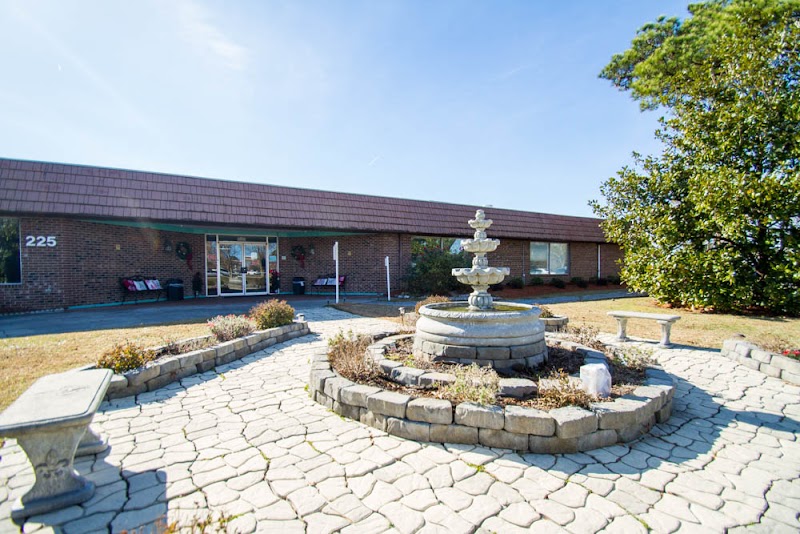
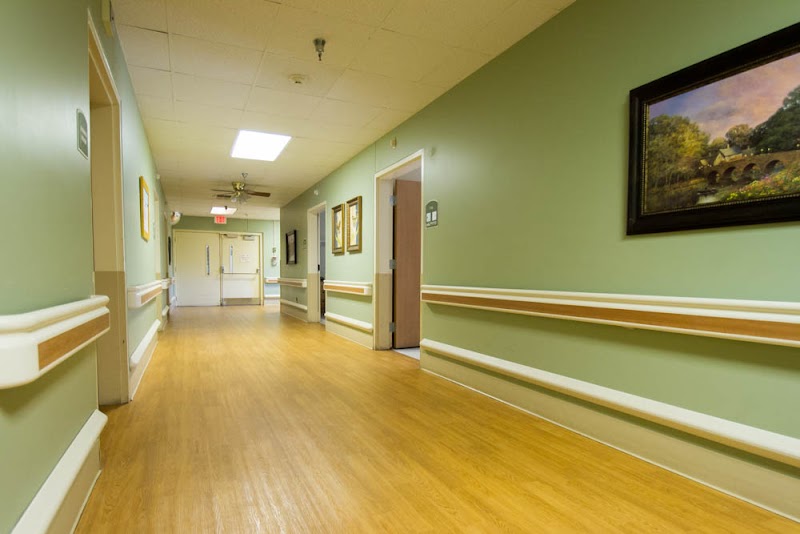
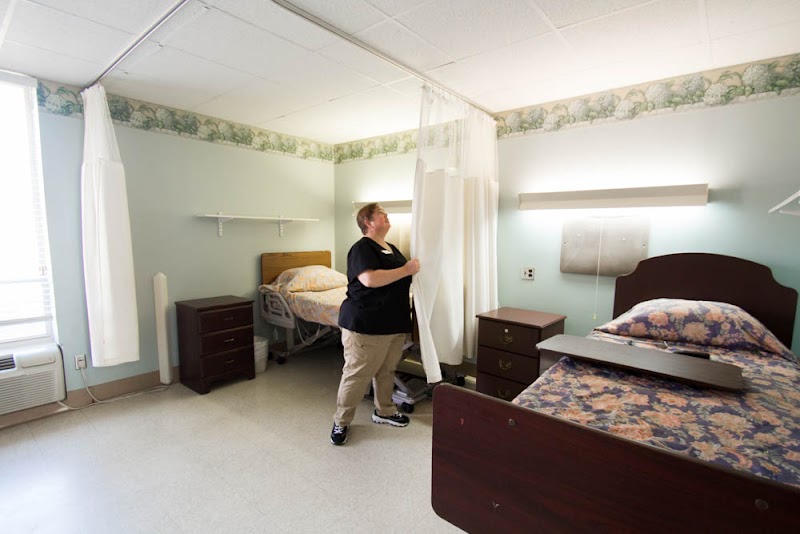
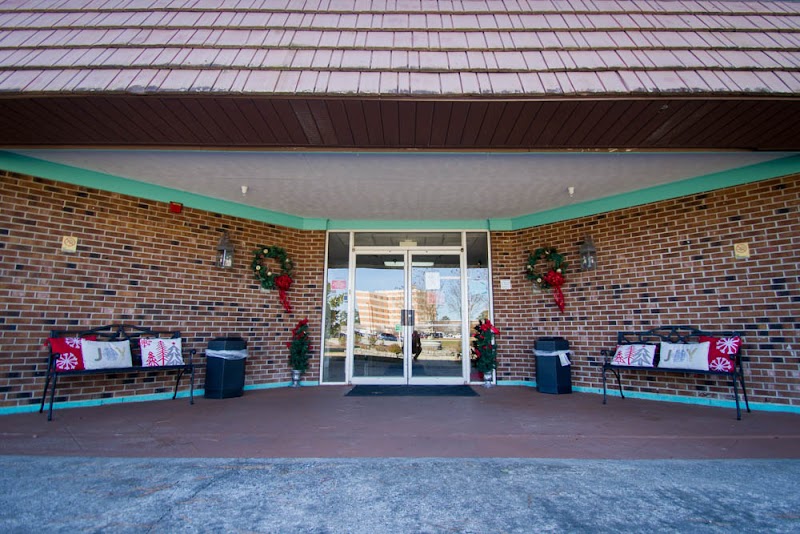
Premier Nursing and Rehabilitation Center

225 White Street, Jacksonville, NC 28546 (910) 353-7222
For profit - Limited Liability company 239 Beds PRINCIPLE LONG TERM CARE Data: November 2025
Trust Grade
45/100
#182 of 417 in NC
Last Inspection: April 2025

Within standard 12-15 month inspection cycle. Federal law requires annual inspections.

Overview

Premier Nursing and Rehabilitation Center in Jacksonville, North Carolina, has a Trust Grade of D, indicating below-average quality and some concerns about care. It ranks #182 out of 417 facilities in the state, placing it in the top half, and #2 out of 2 facilities in Onslow County, meaning only one other local option is available. The facility is improving, having reduced issues from 11 in 2024 to 7 in 2025. Staffing is average with a turnover rate of 45%, slightly better than the state average, and they provide adequate RN coverage, which is crucial for catching potential problems. However, the facility has faced significant fines totaling $60,918, highlighting some compliance issues; specific incidents include a resident being physically abused by another resident and failures in maintaining residents' care plans and cleanliness in the environment, which raises concerns about overall safety and quality of care. While there are strengths in staffing stability and improvements in issues, families should weigh these against the serious incidents and fines reported.

Trust Score
D
45/100
In North Carolina
#182/417
Top 43%
Safety Record
Moderate
Needs review
Inspections
Getting Better
11 → 7 violations
Staff Stability
○ Average
45% turnover. Near North Carolina's 48% average. Typical for the industry.
Penalties
✓ Good
$60,918 in fines. Lower than most North Carolina facilities. Relatively clean record.
Skilled Nurses
⚠ Watch
Each resident gets only 29 minutes of Registered Nurse (RN) attention daily — below average for North Carolina. Fewer RN minutes means fewer trained eyes watching for problems.
Violations
⚠ Watch
31 deficiencies on record. Higher than average. Multiple issues found across inspections.
★★★☆☆
3.0
Overall Rating
★★★☆☆
3.0
Staff Levels
★★☆☆☆
2.0
Care Quality
★★★☆☆
3.0
Inspection Score
Stable
2024: 11 issues
2025: 7 issues

The Good

  • Full Sprinkler Coverage · Fire safety systems throughout facility
  • No fines on record
  • Staff turnover below average (45%)

    3 points below North Carolina average of 48%

Facility shows strength in fire safety.

The Bad

3-Star Overall Rating

Near North Carolina average (2.8)

Meets federal standards, typical of most facilities

Staff Turnover: 45%

Near North Carolina avg (46%)

Typical for the industry

Federal Fines: $60,918

Above median ($33,413)

Moderate penalties - review what triggered them

Chain: PRINCIPLE LONG TERM CARE

Part of a multi-facility chain

Ask about local staffing decisions and management

The Ugly 31 deficiencies on record

1 actual harm
Apr 2025 7 deficiencies
CONCERN (D)

Potential for Harm - no one hurt, but risky conditions existed

Resident Rights (Tag F0550)

Could have caused harm · This affected 1 resident

**NOTE- TERMS IN BRACKETS HAVE BEEN EDITED TO PROTECT CONFIDENTIALITY** Based on observation, record review, and staff interviews, the facility failed to treat a resident with dignity when a nurse aid...

Read full inspector narrative →
**NOTE- TERMS IN BRACKETS HAVE BEEN EDITED TO PROTECT CONFIDENTIALITY** Based on observation, record review, and staff interviews, the facility failed to treat a resident with dignity when a nurse aide did not sit while feeding a resident who needed assistance with meals for 1 of 2 dining observations (Resident #51). The reasonable person concept was applied as individuals have the expectation of being treated with dignity and would not want staff to stand over them while assisting with meals. Findings included: Resident #51 was admitted to the facility on [DATE]. Her active diagnoses included dysphagia. Review of Resident #51's Minimum Data Set assessment dated [DATE] revealed she was assessed as severely cognitively impaired and totally dependent on staff for eating. Review of Resident #51's care plan dated 4/21/25 revealed she was dependent on staff for eating. During observation on 4/23/25 at 1:06 PM Nurse Aide #4 was observed assisting Resident #51 with lunch. The nurse aide was standing next to Resident #51 who was seated in her specialized wheelchair with her bedside table in front of her with her meal tray. Nurse Aide #4 was not at eye level with the resident. A chair was available in the room and the nurse aide did not use it. During an interview on 4/23/25 at 1:12 PM Nurse Aide #4 stated they could sit or stand when providing assistance with meals. The nurse aide stated she felt like standing today but they could sit when assisting as well. During an interview on 4/23/25 at 1:19 PM the Director of Nursing stated staff were to sit when assisting residents with meals for dignity reasons. She stated some residents may not care but you never know what standing next to the resident while feeding them might imply to the resident, especially a person with dementia. Sitting puts staff at the resident's eye level and is more personable.
CONCERN (D)

Potential for Harm - no one hurt, but risky conditions existed

Assessment Accuracy (Tag F0641)

Could have caused harm · This affected 1 resident

**NOTE- TERMS IN BRACKETS HAVE BEEN EDITED TO PROTECT CONFIDENTIALITY** Based on observations, record review, and resident and staff interviews, the facility failed to accurately code the Minimum Data...

Read full inspector narrative →
**NOTE- TERMS IN BRACKETS HAVE BEEN EDITED TO PROTECT CONFIDENTIALITY** Based on observations, record review, and resident and staff interviews, the facility failed to accurately code the Minimum Data Set (MDS) assessment in the areas of swallowing/nutritional status (Resident #39) and hospitalization (Resident #138). This was for 2 of 24 residents reviewed for accuracy of assessments. Findings included: 1. Resident #39 was admitted to the facility on [DATE]. A review of an admission nursing progress note for Resident #39 dated 10/2/24 at 6:45 PM revealed in part he had a percutaneous endoscopic gastrostomy feeding tube (a PEG tube is a feeding tube placed into the stomach through the abdominal wall). A review of a physician's order for Resident #39 dated 10/2/24 revealed to flush his tube every 4 hours with 100 cubic centimeters (cc) of water (H2O). A review of Resident #39's March 2025 Medication Administration Record (MAR) revealed documentation indicating 100 cc of H2O was administered via Resident #39's PEG tube every 4 hours at 12:00 AM, 4:00 AM, 8:00 AM, 12:00 PM, 4:00 PM, and 6:00 PM on 3/6/25 through 3/14/25 except on 3/9/25 at 2:00 PM when it was held. A review of Resident #39's quarterly Minimum Data Set (MDS) assessment dated [DATE] revealed he was not coded for having a feeding tube on admission or while a resident. He was not coded for receiving fluid intake via feeding tube. On 4/23/25 at 2:01 PM an interview with the Dietary Manager (DM) indicated she would have been responsible for coding the Swallowing/Nutrition section of Resident #39's quarterly MDS assessment dated [DATE]. She stated she was not aware that Resident #39 still had a PEG tube. On 4/23/25 at 3:39 PM an interview with the Director of Nursing (DON) indicated Resident #39's quarterly MDS assessment dated [DATE] should have accurately reflected the presence and use of his PEG tube. On 4/24/25 at 10:12 AM an interview with the Administrator indicated Resident #39's quarterly MDS assessment dated [DATE] should have been coded accurately at the time of the assessment. 2. Resident #138 was admitted to the facility on [DATE]. A review of Resident #138's Discharge MDS assessment dated [DATE] revealed his discharge location to be a short term general hospital. A review of the discharge Nurse's note written by the Unit Manager dated 2/10/25 indicated Resident #138 was discharged with his belongings, medications, discharge paperwork and medication list. The Unit Manager was not available for interview. In an interview with the Director of Nursing (DON) on 4/23/25 at 8:55 AM she stated Resident #138 was discharged home on 2/10/25. MDS Nurse #1 was interviewed on 4/23/25 at 9:08 AM. MDS Nurse #1 stated she had miscoded Resident #138's Discharge MDS assessment as going to a short stay general hospital when he actually went home on 2/10/25. She stated the error was made unintentionally. An interview with the Administrator was conducted on 4/23/25 at 10:41 AM. She stated she expected Resident #138's Discharge MDS assessment to be coded that he went home from the facility on 2/10/25.
CONCERN (D)

Potential for Harm - no one hurt, but risky conditions existed

Comprehensive Care Plan (Tag F0656)

Could have caused harm · This affected 1 resident

**NOTE- TERMS IN BRACKETS HAVE BEEN EDITED TO PROTECT CONFIDENTIALITY** Based on observation, record review, and resident, Responsible Party (RP) and staff interviews, the facility failed to implement...

Read full inspector narrative →
**NOTE- TERMS IN BRACKETS HAVE BEEN EDITED TO PROTECT CONFIDENTIALITY** Based on observation, record review, and resident, Responsible Party (RP) and staff interviews, the facility failed to implement the comprehensive care plan in the area of activities of daily living (Resident #27), and failed to develop an individualized, person-centered comprehensive care plan to include the use of a percutaneous endoscopic gastrostomy feeding tube (a PEG tube is a feeding tube placed into the stomach through the abdominal wall) (Resident #39), and the use of a noninvasive mechanical ventilator (a device to help with nighttime breathing for people with respiratory issues) (Resident #290 and Resident #71). This was for 1 of 5 residents reviewed for activities of daily living, 1 of 2 residents reviewed for tube feeding, and 2 of 4 residents reviewed for respiratory services. Findings included: 1. Resident #27 was admitted to the facility on [DATE] with a diagnosis of intracerebral hemorrhage (bleeding in the brain). A review of Resident #27's annual Minimum Data Set (MDS) assessment dated [DATE] revealed he did not speak. Resident #27 was severely cognitively impaired. It was very important to have his family member involved in discussions about his care. His family member was the daily and activity preferences primary respondent. He had functional limitation of range of motion on both sides of his upper and lower extremities. He was dependent on staff for all transfers and mobility. His family member participated in his assessment and goal setting. A review of Resident #27's comprehensive care plan dated last revised on 9/13/24 revealed a focus area for activities of daily living. The goal was for Resident #27's activities of daily living to be completed with staff support to maintain his highest level of functioning. An intervention was mobility dependent in Geri chair. The associated care guide revealed Resident #27 was to be up in his Geri chair by 10:00 AM and back to bed by 2:00 PM daily Monday through Friday. On 4/21/25 at 1:21 PM Resident #27 was observed in bed. No Geri chair was observed in his room. On 4/21/25 at 3:19 PM a telephone interview with Resident #27's RP indicated she participated in all his care plan discussions. She stated she had expressed her desire to have Resident #27 assisted up into his Geri chair daily. She went on to say she although she visited often, she had not really seen him up in his Geri chair regularly since Christmas. On 4/22/25 at 11:48 AM Resident #27 was observed in bed. No Geri chair was observed in his room. On 4/22/25 at 2:11 PM Resident #27 was observed in bed. No Geri chair was observed in his room. On 4/23/25 at 10:59 AM Resident #27 was observed in bed. No Geri chair was observed in his room. On 4/23/25 at 12:55 PM Resident #27 was observed in bed. No Geri chair was observed in his room. On 4/23/25 at 3:07 PM an interview with Nurse Aide (NA) #1 indicated she was assigned to care for Resident #27 on the 7:00 AM to 3:00 PM shift on 4/21/25. She reported she was familiar with Resident #27 and had cared for him previously. She stated she had not gotten Resident #27 up into a Geri chair on 4/21/24 because when she went to get him up, there had not been a Geri chair in his room. NA #1 stated that while she could have gone to the storage area to get one, she had not. On 4/23/25 at 1:05 PM an interview with NA #2 indicated he was assigned to care for Resident #27 on 4/22/25 on the 7:00 AM to 3:00 PM shift. He stated he had not gotten Resident #27 up into a Geri chair on 4/22/25. He reported he was familiar with Resident #27 and had cared for him previously. He reported that if Resident #27's family member came to visit and asked for Resident #27 to be up in a chair he would assist Resident #27. NA #2 stated while he did have access to Resident #27's care plan and care guide, he had not seen that it indicated Resident #27 should be up in his Geri chair daily. On 4/23/25 at 1:14 PM an interview with NA #3 indicated she was assigned to care for Resident #27 on the 7:00 AM to 3:00 PM shift on 4/23/25. She stated she was familiar with Resident #27 and had cared for him previously. She reported she had not gotten Resident #27 up into a Geri chair today. NA #2 indicated while she did have access to Resident #27's care plan and care guide that indicated he was to be assisted up into his Geri chair daily, she had not gotten him up yet because she had gotten busy with other things. On 4/23/25 at 3:39 PM an interview with the Director of Nursing (DON) indicated the NAs should be assisting Resident #27 up into a Geri chair in accordance with expressed preferences and his care plan. On 4/24/25 at 10:12 AM an interview with the Administrator indicated the NAs should be following resident's care plan and care guide when caring for resident's. 2. Resident #39 was admitted to the facility on [DATE] with a diagnosis of gastrostomy status. A review of an admission nursing progress note for Resident #39 dated 10/2/24 at 6:45 PM revealed in part he had a percutaneous endoscopic gastrostomy feeding tube (a PEG tube is a feeding tube placed into the stomach through the abdominal wall). A review of a physician's order for Resident #39 dated 10/2/24 revealed to flush his tube every 4 hours with 100 cubic centimeters (cc) of water (H2O). The resident had an oral diet ordered and did not receive routine nutrition via the PEG tube. A review of Resident #39's admission Minimum Data Set (MDS) assessment dated [DATE] revealed he had a feeding tube on admission, and while a resident. He received 501 cc per day or more of his average fluid intake per day via feeding tube. A review of the Care Area Assessment (CAA) on Resident #39's admission MDS assessment dated [DATE] revealed documentation indicating the CAA for feeding tube was triggered but not addressed in Resident #39's care plan. A review of Resident #39's comprehensive care plan, dated last revised on 2/7/25, did not reveal a focus area for the use of a feeding tube nor mention of his use of a feeding tube to receive nutrition or hydration. On 4/24/25 at 9:57 AM an observation of H2O flush via Resident #39's PEG tube by Nurse #2 was conducted. On 4/23/25 at 2:01 PM an interview with the Dietary Manager (DM) indicated she was responsible for addressing Resident #39's use of a PEG tube on his admission MDS assessment dated [DATE]. She reported that if the CAA for a feeding tube was triggered on the admission assessment, Resident #39's use of a feeding tube should have been reflected on his comprehensive his care plan. She stated she could not explain why it was not. On 4/23/25 at 3:39 PM an interview with the Director of Nursing (DON) indicated Resident #39 had a PEG tube since his admission to the facility on [DATE]. She stated if Resident #39's admission MDS assessment dated [DATE] reflected his use of a feeding tube and the CAA for this was triggered the DM should have included Resident #39's use of a feeding tube on his comprehensive care plan. On 4/24/25 at 10:12 AM an interview with the Administrator indicated if Resident #39's admission MDS assessment dated [DATE] reflected his use of a feeding tube and the CAA for this was triggered, his use of a feeding tube should have been included on his comprehensive care plan. 3. Resident #290 was admitted to the facility on [DATE] with diagnoses that included acute and chronic respiratory failure. The hospital discharge summary for Resident #290 dated 4/3/25 stated she needed to wear BiPAP machine (a device that delivers two levels of air pressure during inhalation and exhalation to help people with breathing difficulties) at night and with naps for obesity hypoventilation syndrome (a condition where a person breathes too shallowly, or their breathing is interrupted while sleeping due to obesity). In an interview with Resident #290 on 4/21/25 at 2:56 PM she stated she needed the BiPAP machine at night to help her breathe while she was sleeping. Resident #290 further stated staff helped her put the mask on at night and she can remove it herself in the morning. Resident #290 indicated the BiPAP machine was delivered to her room on 4/4/25 and she had been using it nightly since then. An interview with the Central Supply clerk was conducted on 4/23/25 at 8:38 AM. She stated Resident #290's BiPAP machine arrived on 4/4/25 and she delivered it to the resident's room herself. A review of the delivery order for Resident #290's BiPAP was reviewed. The delivery order was dated 4/4/25. Resident #290's Physician orders for the month of April 2025 revealed there was no order for BiPAP machine usage. Resident #290's comprehensive care plan dated 4/8/25 revealed no care plan that referenced BiPAP machine usage. Resident #290's admission Minimum Data Set (MDS) dated [DATE] revealed she was cognitively intact and had active diagnoses of respiratory failure and pneumonia. The MDS did not code Resident #290 as using a BiPAP machine. In an interview with the Minimum Data Set (MDS) Coordinator and MDS Nurse #2 on 4/22/25 at 2:27 PM they stated that comprehensive care plans were made by the MDS office based on the residents' MDS information. They further stated Resident #290 was not coded as using a BiPAP machine on her 5-day MDS assessment. MDS Nurse #2 indicated that when they go to make the care plan, a respiratory care section does not automatically populate. In this case, the MDS Nurse needed to either look back at the MDS assessment or rely on memory. MDS Nurse #2 revealed she was responsible for making the comprehensive care plan for Resident #290 and must have relied on memory as she missed adding the BiPAP machine usage. An interview was conducted with the Administrator and Director of Nursing on 4/22/25 at 2:52 PM. They stated that Resident #290 should have had a care plan for use of the BiPAP machine. They indicated Resident #290's BiPAP machine was delivered on 4/4/25 and that nursing could have added to the care plan at any time. 4. Resident #71 was admitted to the facility on [DATE] with diagnoses that included sleep apnea (sleep disorder characterized by repetitive pauses in breathing or reduced airflow during sleep). Resident #71's Physician orders for the month of April 2025 revealed there was no order for use of the CPAP machine. In an interview with Resident #71 on 4/22/25 at 11:38 AM she stated she wore the CPAP machine at night due to a diagnosis of sleep apnea and that she brought it from home when she was admitted . A nursing progress note dated 3/24/25 at 12:48 AM written by Nurse #3 stated Resident #71 was wearing her CPAP machine (CPAP- a machine that used mild air pressure to keep breathing airways open while sleeping). Nurse #3 was not able to be reached for interview. Resident #71 was observed using the CPAP machine while asleep on 4/22/25 at 8:45 AM. Resident #71's comprehensive care plan dated 3/24/25 revealed no reference to CPAP machine usage. Resident #71's 5-day Minimum Data Set (MDS) dated [DATE] revealed she was coded as needing a noninvasive mechanical ventilator (CPAP- a machine that used mild air pressure to keep breathing airways open while sleeping). In an interview with the Minimum Data Set (MDS) Coordinator and MDS Nurse #1 on 4/22/25 at 2:48 PM they stated that comprehensive care plans were made by the MDS office based on the residents' MDS information. They further stated Resident #71 was coded as using a CPAP machine on her 5-day MDS assessment. MDS Nurse #1 indicated that when they go to make the care plan, a respiratory care section does not automatically populate. In this case, the MDS Nurse needed to either look back at the MDS assessment or rely on memory. MDS Nurse #1 revealed she was responsible for making the comprehensive care plan for Resident #71 and must have relied on memory as she missed adding the CPAP machine usage. An interview was conducted with the Administrator and Director of Nursing on 4/22/25 at 2:52 PM. They stated that Resident #71 should have had a care plan for use of the CPAP machine. They indicated Resident #71 brought her CPAP from home when she was admitted to the facility and that nursing could have added to the care plan at any time.
CONCERN (D)

Potential for Harm - no one hurt, but risky conditions existed

Respiratory Care (Tag F0695)

Could have caused harm · This affected 1 resident

**NOTE- TERMS IN BRACKETS HAVE BEEN EDITED TO PROTECT CONFIDENTIALITY** 3. Resident #39 was admitted to the facility on [DATE] with a diagnosis of tracheostomy status. A review of a current physician'...

Read full inspector narrative →
**NOTE- TERMS IN BRACKETS HAVE BEEN EDITED TO PROTECT CONFIDENTIALITY** 3. Resident #39 was admitted to the facility on [DATE] with a diagnosis of tracheostomy status. A review of a current physician's order for Resident #39 dated as initiated on 12/12/24 revealed to administer 4 liters (L) of oxygen (O2) per minute via tracheostomy to maintain Resident #39's O2 saturations above 90 percent (%). A review of Resident #39's quarterly Minimum Data Set (MDS) assessment dated [DATE] revealed he was moderately cognitively impaired. His vision was adequate. He had no functional limitation in range of motion of his upper extremities. Resident #39 had functional limitation in range of motion of his lower extremities on both sides. He received oxygen therapy and tracheostomy care. A review of Resident #39's comprehensive care plan dated last reviewed on 4/11/25 revealed a focus area dated last revised on 10/15 24 for ineffective breathing pattern related to tracheostomy with O2 at 3L per minute via nasal cannula (NC). The goal was for Resident #39 to verbalize understanding of his disease process, treatments and the importance of compliance through the next review. An intervention was oxygen therapy at 3L via NC as ordered. On 4/21/25 at 2:44 PM an observation of Resident #39 in his room revealed he was receiving O2 via NC at 3L per minute. He was not in any respiratory distress. On 4/22/25 at 2:12 PM an observation of Resident #39 in his room revealed he was receiving O2 via NC at 3L per minute. He was not in any respiratory distress. On 4/23/24 at 11:02 AM an observation of Resident #39 in his room revealed he was receiving O2 via NC at 3L per minute. He was not in any respiratory distress. In an interview with Resident #39 at that time he stated the correct rate for his O2 was 4L. A review of Resident #39's Medication Administration Record (MAR) for April 2025 revealed documentation by Nurse #2 indicating Resident #39 was receiving O2 at 4L via his tracheostomy on the 7:00 AM to 3:00 PM shift on 4/21/25, 4/22/25, and 4/23/25 and his O2 saturations were 95%. On 4/23/25 at 12:56 PM an interview with Nurse #2 revealed she was assigned to care for Resident #39 on 4/21/25, 4/22/25, and 4/23/25 on the 7:00 AM to 3:00 PM shift. She stated she was very familiar with Resident #39 and had been his regular day shift nurse since November 2024. She reported Resident #39 was receiving O2 at 3L per minute via a NC. When asked to look at the current physician's order for Resident #39, she stated the current physician's order was for O2 at 4L per minute via his tracheostomy. She reported her documentation on his MAR for 4/21/25, 4/22/25, and 4/23/25 indicated she had verified he was receiving 4L per minute via tracheostomy when she checked his O2 saturation on her shift. Nurse #2 went on to say at one time Resident #39 had been receiving O2 via his tracheostomy, but he wouldn't keep it on. She stated she should have called Resident #39's medical provider to get his O2 order changed, but she just hadn't thought about it. She reported Resident #39 had not experienced any respiratory distress and his O2 saturations had remained above 90 %. On 4/23/25 at 1:20 PM an interview with the Medical Director indicated he was familiar with Resident #39 and was his facility physician. He stated Resident #39 liked to do things his way, and he didn't have any problem with that. He reported he would have gladly changed Resident #39's O2 order to 3L per minute via NC if someone had let him know this was Resident #39's preference, although he did not recall anyone asking for this. The Medical Director stated Resident #39's O2 saturation had been stable, and he did not feel Resident #39 had experienced any harm from wearing his O2 at 3L per minute via NC rather than 4L per minute via his tracheostomy. On 4/23/25 at 1:46 PM an interview with the MDS Coordinator indicated he was involved in the revision of Resident #39's care plan focus area for ineffective breathing on 10/15/24. He stated he recalled a discussion about Resident #39's preference for his O2 being 3L per minute via NC. He went on to say he had not been involved in the review of Resident #39's care plan focus area for ineffective breathing on 4/11/25. On 4/23/25 at 1:48 PM an interview with MDS Nurse #1 indicated she had participated in the review of Resident #39's care plan focus area for ineffective breathing on 4/11/25. She stated she should have updated this area to reflect that Resident #39's preference for O2 was 3L per minute via NC as that was not actually what the physician's order was. On 4/23/25 at 3:39 PM an interview with the Director of Nursing (DON) indicated Resident #39 did not like to wear his O2 via his tracheostomy collar and preferred to wear it via NC. She stated Nurse #1 should have called a medical provider and gotten Resident #39's O2 order changed. She reported his care plan focus area for ineffective breathing should have reflected wearing O2 at 3L per minute via NC was Resident #39's preference rather than as ordered. On 4/24/25 at 10:12 AM an interview with the Administrator indicated with regards to medical issues like O2 rates and routes she would have to defer to her nursing staff. She stated she did feel Nurse #1 should have called a medical provider and gotten the O2 order changed rather than just documenting on Resident #39's MAR verifying he was receiving his O2 at 4L per minute via his tracheostomy if he was not. Based on observations, record review, and resident, staff and Medical Director interviews the facility failed to obtain a physician's order for the use of a BiPAP machine (a device that delivers two levels of air pressure during inhalation and exhalation to help people with breathing difficulties) (Resident #290) and a physician's order for use of a CPAP machine (a machine that used mild air pressure to keep breathing airways open while sleeping) (Resident #71). The facility also failed to administer oxygen by tracheostomy (a surgical opening in the neck for breathing) in accordance with the Physicians order (Resident #39). This was for 3 of 4 residents reviewed for respiratory care (Resident #290, Resident #71 and Resident #39). Findings included: 1. Resident #290 was admitted to the facility on [DATE] with diagnoses that included acute and chronic respiratory failure. The hospital discharge summary for Resident #290 dated 4/3/25 stated she needed to wear a BiPAP machine (a device that delivers two levels of air pressure during inhalation and exhalation to help people with breathing difficulties) at night and with naps for obesity hypoventilation syndrome (a condition where a person breathes too shallowly, or their breathing is interrupted while sleeping due to obesity). A review of Resident #290's Physician orders for the month of April 2025 revealed there was no order for BiPAP machine usage. Review of Resident #290's admission Minimum Data Set (MDS) dated [DATE] revealed she was cognitively intact and had active diagnoses of respiratory failure and pneumonia. The MDS did not code Resident #290 as using a BiPAP machine. The BiPAP machine was observed at Resident #290's bedside on 4/21/25 at 2:56 PM. In an interview with Resident #290 on 4/21/25 at 2:56 PM she stated she needed the BiPAP machine at night to help her breathe while she was sleeping. Resident #290 further stated staff helped her put the mask on at night and she can remove it herself in the morning. Resident #290 indicated the BiPAP machine was delivered to her room on 4/4/25 and she had been using it nightly since then. In an interview with the Administrator and Director of Nursing on 4/22/25 at 2:53 PM they stated they did not know why Resident #290 did not have a Physician's order for use of the BiPAP machine, but that one should have been requested from the Medical Director or Nurse Practitioner on call when she was admitted . The Medical Director was interviewed on 4/23/25 at 11:43 AM. The Medical Director indicated he often does not see new admissions for a day or two after they arrive. He further indicated any orders needed would have been requested before he saw the resident. He stated he was unaware Resident #290 was using a BiPAP machine as those orders were not requested by nursing. 2. Resident #71 was admitted to the facility on [DATE] with diagnoses that included sleep apnea (sleep disorder characterized by repetitive pauses in breathing or reduced airflow during sleep). Resident #71's Physician orders for the month of April 2025 revealed there was no order for use of the CPAP machine. Review of a Nursing progress note dated 3/24/25 at 12:48 AM written by Nurse #3 stated Resident #71 was wearing her CPAP machine (CPAP- a machine that used mild air pressure to keep breathing airways open while sleeping). Nurse #3 was not able to be reached for interview. Review of Resident #71's 5-day Minimum Data Set (MDS) dated [DATE] revealed she was coded as using a noninvasive mechanical ventilator in the form of a CPAP machine. Resident #71 was observed using the CPAP machine while asleep on 4/22/25 at 8:45 AM. In an interview with Resident #71 on 4/22/25 at 11:38 AM she stated she wore the CPAP machine at night due to a diagnosis of sleep apnea and that she brought it from home when she was admitted . An interview was conducted with the Administrator and Director of Nursing on 4/22/25 at 2:52 PM. They stated that nursing should have requested an order for CPAP machine usage from the Medical Director or on-call Nurse Practitioner when Resident #71 was admitted . The Medical Director was interviewed on 4/23/25 at 11:43 AM. The Medical Director indicated he often does not see new admissions for a day or two after they arrive. He further indicated any orders needed would have been requested before he saw the resident. He stated he was unaware Resident #71 was using a CPAP machine as those orders were not requested by nursing.
CONCERN (D)

Potential for Harm - no one hurt, but risky conditions existed

Deficiency F0700 (Tag F0700)

Could have caused harm · This affected 1 resident

**NOTE- TERMS IN BRACKETS HAVE BEEN EDITED TO PROTECT CONFIDENTIALITY** Based on observations, record review, and resident and staff interviews the facility failed to attempt alternatives, assess entr...

Read full inspector narrative →
**NOTE- TERMS IN BRACKETS HAVE BEEN EDITED TO PROTECT CONFIDENTIALITY** Based on observations, record review, and resident and staff interviews the facility failed to attempt alternatives, assess entrapment risk, review risks and benefits and obtain informed consent prior to installing and utilizing bilateral quarter length side rails for 1 of 1 resident reviewed for side rails (Resident #290). Findings included: Resident #290 was admitted to the facility on [DATE] with diagnoses that included acute and chronic respiratory failure. Resident #290's 5-day Minimum Data Set (MDS) assessment dated [DATE] revealed she was cognitively intact and had impairment to bilateral upper and lower extremities. The MDS further revealed she needed substantial to maximum assistance with bed mobility. Resident #290 was observed lying in her bed with bilateral quarter length side rails in the raised position on 4/21/25 at 11:15 AM. In an interview with Resident #290 on 4/21/25 at 11:15 AM she stated she needed the side rails for bed mobility and positioning. A review of Resident #290's electronic medical record (EMR) revealed she was her own Responsible Party (RP). The EMR further revealed no evidence that the following was completed prior to the installation and usage of bilateral quarter length side rails: attempt alternatives, assess entrapment risk, review risks and benefits and obtain informed consent. An observation was conducted on 4/22/25 at 1:45 PM. Resident #290 was observed lying in her bed with bilateral quarter length side rails in the raised position. Resident #290 was observed lying in bed with bilateral quarter length side rails in the raised position on 4/23/25 at 2:50 PM. An interview with Nurse #1 on 4/23/25 at 11:28 AM she stated she was the admitting nurse for Resident #290 on 4/3/25. Nurse #1 indicated she did not do side rail assessments as they were completed by the Unit Manager. The Unit Manager could not be reached for interview. In an interview with the Director of Nursing (DON) on 4/23/25 at 12:34 PM she stated Nurse #1 should have completed the side rail assessment for Resident #290 upon admission. She further stated all Nurses were expected to complete all forms in the admissions packet when admitting a new resident to their hall. An interview was conducted with the Administrator on 4/23/25 at 2:49 PM. The Administrator stated that Resident #290 should have had a side rail assessment completed upon admission. She was unsure who was responsible for this task.
CONCERN (D)

Potential for Harm - no one hurt, but risky conditions existed

Medical Records (Tag F0842)

Could have caused harm · This affected 1 resident

**NOTE- TERMS IN BRACKETS HAVE BEEN EDITED TO PROTECT CONFIDENTIALITY** Based on observations, record review, and staff interviews, the facility failed to maintain an accurate medical record with rega...

Read full inspector narrative →
**NOTE- TERMS IN BRACKETS HAVE BEEN EDITED TO PROTECT CONFIDENTIALITY** Based on observations, record review, and staff interviews, the facility failed to maintain an accurate medical record with regards to documentation of actual oxygen (O2) administration rate and route. This was for 1 of 4 residents (Resident #39) reviewed for the accuracy of medical records related to respiratory care. Findings included: Resident #39 was admitted to the facility on [DATE] with a diagnosis of tracheostomy status. A review of a current physician's order for Resident #39 dated as initiated on 12/12/24 revealed to administer 4 liters (L) of oxygen (O2) per minute via tracheostomy to maintain Resident #39's O2 saturations above 90 percent (%). On 4/21/25 at 2:44 PM an observation of Resident #39 in his room revealed he was receiving O2 via NC at 3L per minute. He was not in any respiratory distress. On 4/22/25 at 2:12 PM an observation of Resident #39 in his room revealed he was receiving O2 via NC at 3L per minute. He was not in any respiratory distress. On 4/23/24 at 11:02 AM an observation of Resident #39 in his room revealed he was receiving O2 via NC at 3L per minute. He was not in any respiratory distress. In an interview with Resident #39 at that time he stated the correct rate for his O2 was 4L. A review of Resident #39's Medication Administration Record (MAR) for April 2025 revealed documentation by Nurse #2 indicating Resident #39 was receiving O2 at 4L via his tracheostomy on the 7:00 AM to 3:00 PM shift on 4/21/25, 4/22/25, and 4/23/25 and his O2 saturations were 95%. On 4/23/25 at 12:56 PM an interview with Nurse #2 indicated she was assigned to care for Resident #39 on 4/21/25, 4/22/25, and 4/23/25 on the 7:00 AM to 3:00 PM shift. She stated she was very familiar with Resident #39 and had been his regular day shift nurse since November 2024. She reported Resident #39 was receiving O2 at 3L per minute via a NC. When asked to look at the current physician's order for Resident #39, Nurse #1 stated the current physician's order was for O2 at 4L per minute via his tracheostomy. She reported her documentation on his MAR for 4/21/25, 4/22/25, and 4/23/25 7:00 AM to 3:00 PM shift indicated she had verified he was receiving 4L per minute via tracheostomy when she checked his O2 saturation on her shift. Nurse #2 went on to say at one time Resident #39 had been receiving O2 via his tracheostomy, but he wouldn't keep it on. She stated she should not have documented on Resident #39's MAR verifying he was receiving his O2 at 4L per minute via his tracheostomy if he was not. On 4/23/25 at 3:39 PM an interview with the Director of Nursing (DON) indicated Resident #39 did not like to wear his O2 via his tracheostomy collar and preferred to wear it via NC. She stated Nurse #1 should have called a medical provider and gotten the O2 order changed and not documented on Resident #39's MAR verifying he was receiving his O2 at 4L per minute via his tracheostomy if he was not. On 4/24/25 at 10:12 AM an interview with the Administrator indicated Nurse #1 should have called a medical provider and got the order changed rather than just documenting on Resident #39's MAR verifying he was receiving his O2 at 4L per minute via his tracheostomy if he was not.
CONCERN (D)

Potential for Harm - no one hurt, but risky conditions existed

Infection Control (Tag F0880)

Could have caused harm · This affected 1 resident

Based on observations, record review, and staff interviews, the facility failed to implement their policy for enhanced barrier precautions (EPB) when Nurse #4 failed to wear a gown when providing trac...

Read full inspector narrative →
Based on observations, record review, and staff interviews, the facility failed to implement their policy for enhanced barrier precautions (EPB) when Nurse #4 failed to wear a gown when providing tracheostomy (a surgical opening in the neck for breathing) care for Resident #27 and when Nurse #5 and Nurse #6 failed to wear a gown during a high contact care activity that included transfer and the provision skin care and hygiene for Resident #39 who had a tracheostomy. This was for 3 of 8 staff members observed for infection control practices. This had the potential to result in the risk of multidrug-resistant organism (MDRO) transmission. Findings included: A review of the facility's policy titled Enhanced Barrier Precautions dated last revised on 6/13/24 revealed in part the following: Enhanced Barrier Precautions are used in conjunction with standard precautions to reduce the risk of MDRO transmission during high-contact resident care activities. It includes the use of both gown and gloves. Enhanced Barrier Precautions apply to residents with any of the following: Presence of an indwelling medical device with or without the presence of an MDRO infection or colonization. Examples of indwelling medical devices: Tracheostomies. Resident care activities that are considered high contact include but are not limited to: Transferring. EBP should be utilized for transfers under the following circumstances: Providing hygiene. 1. On 4/22/25 at 4:05 PM a continuous observation of tracheostomy care was conducted for Resident #27 with Nurse #4. Personal Protective Equipment (PPE) supplies including gowns were observed outside Resident #27's room. An EBP sign was observed over the head of Resident #27's bed. Nurse #4 was observed to perform hand hygiene and don (apply) clean gloves prior to the start of the procedure. She was not wearing a gown. At 4:17 PM Nurse #4 was observed to remove Resident #27's tracheostomy collar, and as she attempted to remove Resident #27's tracheostomy inner cannula she was stopped and asked to step outside Resident #27's room. Nurse #4 replaced Resident #27's tracheostomy collar at 4:17 PM, remove her soiled gloves and performed hand hygiene at which time the continuous observation ended. On 4/22/25 at 4:18 PM an interview with Nurse #4 was conducted in the hall outside Resident #27's room. Nurse #4 indicated she had not been wearing a gown when she was performing tracheostomy care for Resident #27. She stated she had received education on the use of EBP for residents who had tracheostomies, and there were PPE supplies including gowns outside Resident #27's room. She reported EBP precautions were designed to prevent the spread of germs to Resident #27 during his tracheostomy care. Nurse #4 stated she did usually wear a gown during this care but had been nervous and had forgotten. On 4/23/25 at 3:39 PM an interview with the Director of Nursing (DON) indicated she had been made aware of the concern that Nurse #4 had not adhered to EBP precautions when providing tracheostomy care to Resident #27 on 4/22/25. She stated while Nurse #4 had previously received education on the use of EPB precautions, she had been reeducated immediately after the incident. The DON stated Nurse #4 should have been wearing a gown during Resident #27's tracheostomy care to prevent the spread of microorganisms to Resident #27. On 4/24/25 at 10:12 AM an interview with the Administrator indicated Nurse #4 should have followed EPB which included wearing a gown while performing tracheostomy care to Resident #27 to prevent the potential spread of microorganisms. 2. On 4/23/25 at 11:02 AM a continuous observation of skin care for a rash and abrasion was conducted for Resident #39 with Nurse #5 and Nurse #6. An EBP sign was observed at the entry of Resident #39's room. PPE including gowns were observed on the treatment cart. Nurse #5 and Nurse #6 were observed to perform hand hygiene and apply clean gloves prior to entering Resident #39's room. Resident #39 was observed to have a tracheostomy. Nurse #5 was observed to assist Resident #39 to transfer to a standing position and use a washcloth with soap and water to wash Resident #39's inner thighs and buttocks, rinse and dry the area. Nurse #6 was then observed to apply a barrier cream to the same area. While applying the cream to Resident #39's inner thigh and buttocks area, the right arm sleeve of Nurse #6's shirt was observed to contact the skin of Resident #39's back. Neither Nurse #5 nor Nurse #6 were observed to be wearing a gown during the activity. At 11:10 AM Nurse #5 and Nurse #6 were observed to remove their soiled gloves, perform hand hygiene, and exit Resident #39's room at which time the continuous observation ended. At 11:10 AM, in the hall outside of Resident #39's room, an interview was conducted with Nurse #5 and Nurse #6. Nurse #5 stated she had previously received education of the importance of EBP for residents who had an indwelling device such as a tracheostomy like Resident #39 did to prevent the potential spread of microorganisms, and she usually did wear a gown, but she had just not been thinking about it this time. She stated there were gowns available in the treatment cart outside Resident #39's room. Nurse #6 stated she did not usually wear a gown when providing skin treatments to Resident #39, because sometimes it made him nervous. On 4/23/25 at 3:39 PM an interview with the Director of Nursing (DON) indicated she was not aware of any issues with Resident #39 being nervous about staff wearing gowns when performing activities that required the use of EBP, and this was not currently reflected on his care plan. The DON stated if that were the case, she would expect the nurse to provide education to Resident #39 regarding the reason and importance of EBP, and if he was still resistant, the nurse should report this to her so she could speak with Resident #39. The DON indicated all nursing staff had been educated on the facility's EBP policy and should be adhering to this when providing care to residents such as Resident #39 who had a tracheostomy. On 4/24/25 at 10:12 AM an interview with the Administrator indicated nurses should be adhering to the facility's EBP policy when providing care to residents.
Mar 2024 11 deficiencies 1 Harm
SERIOUS (G) 📢 Someone Reported This

A family member, employee, or ombudsman was alarmed enough to file a formal complaint

Actual Harm - a resident was hurt due to facility failures

Free from Abuse/Neglect (Tag F0600)

A resident was harmed · This affected 1 resident

**NOTE- TERMS IN BRACKETS HAVE BEEN EDITED TO PROTECT CONFIDENTIALITY** Based on record review, staff, and Psychiatric Nurse Practitioner interviews, the facility failed to protect 2 of 5 residents' r...

Read full inspector narrative →
**NOTE- TERMS IN BRACKETS HAVE BEEN EDITED TO PROTECT CONFIDENTIALITY** Based on record review, staff, and Psychiatric Nurse Practitioner interviews, the facility failed to protect 2 of 5 residents' rights to be free from physical abuse (Residents #114 and #29). All residents involved resided in the memory care unit. Resident #99 struck the back of Resident #114's head on 9/8/23 and hit Resident #114's left jaw twice on 10/11/23. Both incidents occurred after Resident #114 wandered into Resident #99's room. Resident #114 had redness and a small amount of swelling to the left side of face after the second incident. Resident #99 slapped Resident #29 on the cheek after Resident #29 touched Resident #99's pants in the activity room. Resident #29 sustained no injuries. A reasonable person would not expect to be physically abused in their home and would experience feelings such as intimidation, fear, humiliation, embarrassment, and anxiety. This was for 2 of 5 residents reviewed for abuse. 1. Resident #99 was admitted to the facility on [DATE]. Resident #99's diagnoses included nontraumatic brain dysfunction, dementia, paranoid schizophrenia, anxiety disorder, hypertension, hallucinations, and major depressive disorder. Resident #99's Quarterly Minimum Data Set (MDS) assessment dated [DATE] revealed he was moderately cognitive impaired. Resident #99 was coded as exhibiting disorganized thinking and inattention. Resident #99's annual Minimum Data Set, dated [DATE] revealed he was cognitively intact, and he was coded for supervision or independence for most activities of daily living. Resident #99's care plan initiated on 2/22/2022 had a focus on resident's ineffective coping characterized by ineffective coping, verbal/physical aggression or agitation, or combativeness related to cognitive impairment/dementia or aggressive to other residents who wander into his room. This focus had an intervention that included the resident was placed on 1:1 continuous observation on 10/11/2023. Resident #99's care plan last revised on 2/16/24 had a focus on resident's ineffective coping characterized by verbal/physical aggression agitation, or combativeness related to cognitive impairment/dementia or aggressive to other residents who wander into his room. This focus had an intervention that included the resident was placed on 1:1 continuous observation on 10/11/2023. Review of physician's orders revealed no orders for Resident #99 to have a 1:1 sitter. a. Resident #114 was admitted to the facility on [DATE]. Resident #114's diagnoses included dementia, anxiety, irritability, and anger. Resident #114's most recent Quarterly Minimum Data Set (MDS) assessment dated [DATE] revealed he had severe cognitive impairment. The care plan created on 3/22/2023 indicated Resident #114 was allowed to wander on the unit and be redirected as needed from other residents' rooms. The Facility Reported Incident (FRI) dated 9/8/2023 revealed Resident #114 wandered into the room of Resident #99 leading to an altercation and Resident #99 reported to have struck Resident #114 at the back of the head. The report indicated Resident #114 was upset regarding the altercation but remained calm. The report revealed Resident #99 was placed om 1:1 monitoring, and Resident #114 placed on every 15 minutes check. The report further revealed a STOP sign was placed on Resident #99's door and that both resident's care plans were updated to reflect the additions. Resident #114's progress note completed by the Assistant Director of Nursing (ADON) on 9/8/2023 at 4:15 p.m. revealed she interviewed Resident #114 who disclosed being hit by Resident #99 and denied pain. The note further revealed the ADON completed a skin assessment and Resident #114 was noted with skin tear to right wrist and left base of head/neck. The note reveals she initiated a Neuro check and skin check placed. She further revealed she contacted the medical provider and responsible party for the resident. A review of the Facility Reported Incident (FRI) dated 10/11/2023 revealed Resident #114 wandered into the room of Resident #99 resulting in an altercation. Resident #99 hit Resident #114 twice on the left jaw to get him out of his room. Resident #114 was noted with redness and small amount of swelling to left side of face. Again, the report stated that Resident #99 was placed on 1:1 monitoring immediately, and Resident #114 placed on a 15-minute checks. The nursing progress incident note dated 10/11/2023 at 18:10 p.m. by the ADON revealed she assessed Resident #114 who had his left side of face red and slightly swollen. She further documented that Resident #114 was placed on observation every 15 minutes and the medical provider was notified of the incident and no new orders were given at that time. In an interview with Resident #114 on 3/19/2024 at 1:34 p.m. he stated he was fine and could not recall altercations he has been involved with Resident #99. During an interview with Resident #99 on 3/19/2024 at 2:21 p.m. he revealed he did not remember hitting Resident #114, but revealed he yells at anyone invading his space and property. He stated he has hit some residents to make them leave his room. In an interview with the Nurse Aide #8 (NA#8) on 3/21/2024 at 11:40 a.m. she revealed that on 10/11/2023 she was coming out of the shower room with another resident and saw Resident #114 stumble out of Resident #99's room backward. She revealed she caught the resident and sat him in the TV room. She stated Resident #99 reported Resident #114 wandered to his room and he had struck him twice on the side of the jaw to make him leave the room. NA#8 reported Resident #99 had removed the stop sign from his door. She revealed that during incidents of 9/8/2023 and 10/11/2023 no on 1:1 monitoring. During an interview with NA#8 on 3/21/2024 at 10:45 a.m. she stated Resident #114 and Resident #99 were not on 1:1 monitoring on 9/8/2023 and 10/11/2023, but they monitored the resident s as they went about. She revealed she was the medication technician during the incident of 9/8/2023 when a NA told her Resident #99 had hit Resident #114. She revealed she called a Nurse who attended to Resident #114. She further revealed there were no injuries during the two incidents and that Resident #99 had a psychiatric appointment on 10/23/2023 due to hitting resident #114 on 10/11/2023. Resident #114's Psychiatric Nurse Practitioner (NP) note dated 10/12/2023 at 8:00 a.m. revealed Resident #114 did not have any injuries noted to his face, but had his left cheek was red with no bruising or swelling. The NP noted that Resident #114 denied pain and staff reported Resident #114 to be at baseline and stable. An interview on 3/21/24 at 1:42 PM with the Psychiatric Nurse Practitioner (NP) revealed she had been notified of the incident between Resident #99 and Resident #29. She stated she had a meeting with the facility Administrator to discuss potential changes in Resident #99's care which included a move to a different facility. She stated that she was not aware he had a 1:1 sitter. An interview was conducted with the Director of Nursing (DON) on 3/22/2024 at 12:19 p.m. She revealed that Resident #99 had been placed on a 1:1 supervision on 9/8/2023 and 10/11/2023 to ensure safety of other residents in the unit. She revealed the changes for Resident #99 were care planned. She revealed the facility in coordination with the psychiatrist were working on moving Resident #99 to a larger area within the facility away from other residents on the dementia unit and possibly transfer to an inpatient psychiatric facility. The DON stated she was not sure when the 1:1 supervision for resident #99 stopped on both incidents. She revealed the 1:1 monitoring of Resident #99 at arm's length did not stop after the incident of 10/11/2023. An interview was conducted with the Administrator on 3/22/2024 at 12:29 p.m. who stated she had been at the facility for 3 weeks. She revealed Resident #99 will remain on 1:1 supervision, keep the stop sign posted on his door, and in the interim move Resident #99 to a safer area in the facility where no resident is wandering. She revealed Resident #99 was supposed to have remained on 1:1 monitoring due to his behavior. She revealed she was not sure why 1:1 monitoring for Resident #99 was stopped and when. Telephone calls to the prior Administrator on 3/20/2024 at 12:00 p.m. and 3:27 p.m., and on 3/21/2024 at 11:10 a.m. went unanswered. b. Resident #29 was admitted to the facility on [DATE] with diagnoses that included traumatic brain injury and non-Alzheimer's dementia. Resident #29's significant change Minimum Data Set, dated [DATE] revealed he was severely cognitively impaired, and he was coded for assistance or independence for most activities of daily living. A review of the Facility Reported Incident (FRI) dated 2/26/24 read in part Resident #29 was touching Resident #99 on the pant leg. Resident #99 stated Do not touch me and then slapped Resident #29 on the cheek. Staff separated both residents. The FRI continued that Resident #99 had a Brief Interview for Mental Status (BIMS is an assessment tool used to screen and identify cognitive condition) score of 13 in December. A St. Louis University Mental Status (SLUMS) was completed on 2/26/24 with a score of 10. (SLUMS is an assessment tool used to detect cognitive impairment. A score of 1-19 is defined as cognitive impairment and is indicative of dementia). A subsequent BIMS was also completed on 2/26/24 with a score of 6. (A score of 13-15 is cognitively intact and a score of 0-7 is severely impaired cognition.) The FRI continued that Resident #29 was monitored throughout the day and did not have any change in his daily routine to indicate mental anguish. An interview on 3/22/24 at 10:20 AM with Nursing Assistant (NA) #1 revealed she was the only facility staff person in the activities room during this incident. She stated she had not witnessed the incident as she was passing out the breakfast trays. She stated she heard the slap and turned to see what was going on. She then separated the residents and notified the nurse. NA #1 stated she thought that Resident #99's 1:1 sitter was out of the room in the hall. An interview was attempted with NA #3 who was assigned as a 1:1 sitter for Resident #99 on 2/26/24 but was unsuccessful. Nurse's progress note completed by Nurse #1 dated 2/26/24 at 10:53 AM for Resident #29 revealed no pain or skin concerns noted. Nurse's progress note completed by Nurse #1 dated 2/26/24 at 12:32 PM revealed Resident #99 reported Resident #29 was touching his pants leg. Resident #99 stated he told Resident #29 not to touch him and then slapped him on the face. The Nursing Assistant was across the room passing breakfast trays and was unable to intervene quick enough to prevent the physical altercation. The residents were moved to separate tables. An interview on 3/21/24 at 2:03 PM with Nurse #1 revealed she was the nurse on duty in the memory care unit on the day shift on 2/26/24. She stated she had not witnessed the incident between Resident #99 and Resident #29. She stated that Resident #99 had a 1:1 sitter due to a previous resident to resident incident and she did not know where Resident #99's 1:1 sitter was during the incident. Nurse #1 stated that Resident #29 quickly forgot what happened and had no injuries as a result of the slap. An interview on 3/21/24 at 1:42 PM with the Psychiatric Nurse Practitioner (NP) revealed she had been notified of the incident between Resident #99 and Resident #29. She stated she had a meeting with the facility Administrator to discuss potential changes in Resident #99's care which included a move to a different facility. She stated that she was not aware he had a 1:1 sitter. An interview on 3/22/24 at 8:10 AM with the Director of Nursing (DON) revealed that they were exploring options for Resident #99 to be relocated to a private room or to another facility, and his family had also discussed taking him home. She stated due to Resident #99's history of physical abuse the facility had continued the 1:1 sitter for Resident #99, and she felt they should continue the 1:1 sitter until they found another option for him. She stated that prior to the 2/26/24 incident Resident #99 had been in line-of-sight monitoring, but all staff had been educated to remain within arms' reach after the incident on 2/26/24. She clarified that staff were verbally educated that line-of-sight just meant to keep the resident within sight and arms reach meant to stay within physical reach of the resident. She stated this was just verbal instruction and the facility had no policy about 1:1 sitters. An interview on 3/22/24 at 8:33 AM with the Administrator revealed she believed that Resident #99 did not mean any harm, he just wanted Resident #29 to stop touching his pants leg. She stated that Resident #99's 1:1 sitter had been in line-of-sight and that was changed to within arms' reach after the incident on 2/26/24.
CONCERN (D) 📢 Someone Reported This

A family member, employee, or ombudsman was alarmed enough to file a formal complaint

Potential for Harm - no one hurt, but risky conditions existed

Report Alleged Abuse (Tag F0609)

Could have caused harm · This affected 1 resident

Based on record review and staff interviews, the facility failed to complete and submit an initial report for an abuse allegation within 2 hours of discovery to the state regulatory agency. The facili...

Read full inspector narrative →
Based on record review and staff interviews, the facility failed to complete and submit an initial report for an abuse allegation within 2 hours of discovery to the state regulatory agency. The facility also failed to notify the police department, or Adult Protective Services (APS) for staff to resident abuse (resident #350) for 1 of 3 residents investigated for facility reported incidents. Findings included: A facility grievance form dated 10/10/23 was filed by SW#1 on behalf of resident #350. A review of the form revealed the resident stated her hair was pulled and that a bruise on her right hand was caused by NA #5 because the resident did not want to go to bed. Resident #350 further stated that her parents were outside the locked door, and no one would let them in. The form further revealed SW #1 reported the incident to the Assistant Director of Nursing (ADON) and Administrator #2 immediately after taking the report from the resident. An interview with SW #1 on 3/20/24 at 11:10 AM revealed she visited Resident #350 on 10/10/23 and noticed a bruise on her right hand. SW #1 asked the resident how it happened, and the resident stated there was a fire drill in the night and NA#5 pulled her hand because she wanted the resident to go to bed but she didn't want to. SW #1 further stated she reported the concern for staff to resident abuse to the ADON and Administrator #3 on 10/10/23. The incident was reported to the state regulatory agency by Administrator #2 on 12/14/23. In an interview with the DON on 03/22/24 08:27 AM she stated she interviewed Resident #350 on 10/10/23 who stated there was a fire drill and NA #5 was trying to help her go to bed but she didn't want to go so the resident pulled her hand away. The DON asked Resident #350 if she thought NA #5 hurt her on purpose and she stated no. The DON indicated that the incident was not reported to the state regulatory agency, the police department or APS because Resident #350 was prone to delirium and the fire drill agitated her to the point she received an as needed medication to help calm her at 1:36 AM on 10/10/23. The DON further stated they did not think the bruise came from NA #5, but from banging on the doors during the fire drill. Administrators #2 and #3 were not available for interview. Administrator #1 stated in an interview on 03/22/24 at 9:00 AM that although she was not employed at the time of the incident, she would report any accusation of employee to resident abuse within 2 hours to the state regulatory agency as that is the policy for this company. She further stated she would report any allegations of abuse to the local police department and APS. The facility provided and implemented the following corrective action plan with a completion date of 1/2/24. 1. A police report was filed regarding abuse investigation for Resident #350 on 12/14/23 with no charges filed. APS was also notified on 12/14/23. 2. On 12/13/23, Quality Assurance (QA) nurse and Unit Manager initiated an audit of progress notes for the past 30 days to ensure all reportable events to include allegations of abuse and/or injuries of unknown origin were addressed and reported in a timely manner to the appropriate agencies. Any concerns identified during the audit would be immediately addressed by the Administrator and/or the Director of Nursing (DON) to include reporting appropriately to required agencies and providing retraining. 3. On 12/13/23, the Assistant Director of Nursing (ADON) and Unit Manager reviewed all risk management reports for the past 30 days to ensure all incidents meeting the criteria of reportable events were reported timely to the required agencies. Any concerns identified during the audit would be immediately addressed by the administrator and/or DON to include reporting appropriately and providing retraining. 4. On 12/13/13, the Administrator initiated an audit of all reportable investigative folders for the past 30 days. This audit is to ensure all required reportable events were reported timely and per guidelines. The Administrator would address all areas of concern identified during the audit to include reporting events per guidelines. 5. On 12/13/23, the facility nurse consultant completed an in-service with the Director of Nursing (DON) regarding facility policy on reportable events to include but not limited to abuse allegations that require immediate reporting to state, police, and APS even if allegations are not substantiated during the initial investigation. 6. The Interdisciplinary Team (IDT) would review Nurse progress notes 5x weekly x 4 weeks for any allegations of abuse to include allegations of abuse and/or injuries of unknown origin. This audit is to ensure the event is investigated and reported in a timely manner per guidelines. The Administrator will address all areas of concern identified during the monitoring process. 7. Quality Assurance tasks: Facility Administrator to monitor concern forms weekly x4 weeks to ensure any potential abuse, neglect, or misappropriation are reported timely. Nursing administrative team to review weekly skin sheets during IDT for injuries of unknown origin x 4 weeks. Social services to perform safe surveys with A&O residents weekly x 4 weeks. Social services to ensure psychosocial needs of the identified resident are met. Facility to place staff at each exit door during fire drills or times of operation. The corrective action plan was reviewed on 3/22/24. Interviews confirmed all staff responsible for reporting initial allegations of abuse were educated to notify the police and the state regulatory agency of allegations of abuse. Administrator #1 stated there was always a member of management on call to ensure reports are made in a timely manner. Review of the monitoring tools, staff education, and Performance Improvement Plan were reviewed. The corrective action was verified as completed on 1/2/24.
CONCERN (D) 📢 Someone Reported This

A family member, employee, or ombudsman was alarmed enough to file a formal complaint

Potential for Harm - no one hurt, but risky conditions existed

Assessment Accuracy (Tag F0641)

Could have caused harm · This affected 1 resident

**NOTE- TERMS IN BRACKETS HAVE BEEN EDITED TO PROTECT CONFIDENTIALITY** 3.a. Resident #348 was admitted to the facility on [DATE] with diagnoses that included abnormality of gait and mobility. A Nurs...

Read full inspector narrative →
**NOTE- TERMS IN BRACKETS HAVE BEEN EDITED TO PROTECT CONFIDENTIALITY** 3.a. Resident #348 was admitted to the facility on [DATE] with diagnoses that included abnormality of gait and mobility. A Nursing fall risk assessment dated [DATE] indicated Resident #348 was not at risk for falls. A review of Resident #348's admission Minimum Data Set (MDS) dated [DATE] indicated antidepressant medication had been received. The Care Area Assessment (CAA) for falls was triggered by specific answers in the MDS, which required further assessment and decision as to whether or not to address in the care plan. The CAA revealed Resident #348 was at risk for falls due to having received antidepressant medication and indicated falls were not addressed for the Care Plan. Interview with Nurse #6 (MDS nurse) on 3/21/24 at 9:05 AM revealed falls were triggered in the CAA dated 6/27/23 but the box to check for care planning was not filled in. She was unable to explain why the falls had not been care planned based on the CAA. 3.b. Resident #348 was admitted to the facility on [DATE] with diagnoses that included abnormality of gait and mobility. Facility documentation dated 7/20/23 indicated Resident #348 had sustained a fall without injury. A review of Resident #348's Quarterly Minimum Data Set (MDS) dated [DATE] did not indicate any falls since the prior assessment. During an interview with Nurse #6 (MDS nurse) on 3/21/24 at 9:05 AM she stated a fall that Resident #348 had on 7/20/23 should have been captured by the quarterly MDS on 8/9/23 which would have triggered it to be added to the care plan. She further stated she did not know how she missed the fall on 7/20/23, and it was her responsibility to complete the quarterly MDS for Resident #348 and update the care plan with changes. Based on staff interviews and record review the facility failed to accurately code the Preadmission Screening Resident Review (PASRR) status, falls, and hospice status the Minimum Data Set assessment for 3 of 29 minimum data set assessments reviewed. (Resident #110, Resident #348, and Resident #68) Findings included: 1. Resident #110 was admitted to the facility on [DATE]. Resident # 110's active diagnoses included psychophysiologic insomnia and bipolar disorder. Review of a PASRR Level II Determination Notification letter for Resident #110 dated 1/20/23 revealed Resident #110 was assessed to be a level II PASRR and Resident # 110's PASRR number ended in the letter B which meant Resident #110's Level II PASRR had no end date. Resident #110's most recent comprehensive Minimum Data Set (MDS) assessment dated [DATE] revealed she was coded to not be a level II PASRR. During an interview on 3/20/24 at 1:48 PM with the MDS Coordinator stated Resident #110 was a level II PASRR and the MDS dated [DATE] was coded in error. He concluded Resident #110 should have been coded as having a level II PASRR. During an interview on 3/20/24 at 1:57 PM Administrator #1 stated the PASRR should be coded accurately on the MDS assessment. 2. Resident #68 was admitted to the facility on [DATE] with diagnoses which included, in part, hemiplegia and hemiparesis following cerebral infarction affecting left non-dominant side. A review of Resident #68's significant change Minimum Data Set (MDS), dated [DATE], indicated that Resident #68 was severely cognitively impaired. Hospice Care was not indicated. A review of Resident #68's Care Plan, last revised 12/13/23, revealed a problem of has advanced directives with an intervention of resident/responsible party elected hospice. This intervention was initiated on 09/28/23. A review of Resident #68's Physician orders revealed an order, dated 12/22/23, which read, admit to hospice services effective 09/21/23. An interview was conducted with the MDS Coordinator nurse on 03/21/24 at 1:37 p.m. The nurse stated he completed the significant change MDS, dated [DATE], because Resident #68 was placed on hospice services. The nurse explained that he missed marking Hospice Care due to human error. A telephone interview was conducted with the Administrator on 03/27/24 at 8:38 a.m. The Administrator explained it was her expectation that a resident's MDS assessment accurately reflect a resident's current status.
CONCERN (D) 📢 Someone Reported This

A family member, employee, or ombudsman was alarmed enough to file a formal complaint

Potential for Harm - no one hurt, but risky conditions existed

Comprehensive Care Plan (Tag F0656)

Could have caused harm · This affected 1 resident

**NOTE- TERMS IN BRACKETS HAVE BEEN EDITED TO PROTECT CONFIDENTIALITY** Based on record review and staff interviews the facility failed to develop a person-centered care plan for 1 of 1 resident revie...

Read full inspector narrative →
**NOTE- TERMS IN BRACKETS HAVE BEEN EDITED TO PROTECT CONFIDENTIALITY** Based on record review and staff interviews the facility failed to develop a person-centered care plan for 1 of 1 resident reviewed for respiratory services (Resident #37). The findings included: Resident #37 was admitted to the facility on [DATE] with diagnoses that included heart failure and shortness of breath. A review of Resident #37's physician orders revealed an order dated 2/16/24 for supplemental oxygen at 2 liters per minute by nasal cannula to keep the oxygen saturation above 90%. The admission Minimum Data Set (MDS) dated [DATE] revealed Resident #37 received continuous supplemental oxygen. A review of Resident #37's comprehensive care plan revealed no care plan was developed related to oxygen use from admission through 3/21/24. Interview with Nurse #6 (MDS nurse) on 3/21/24 at 9:05 AM revealed supplemental oxygen use was triggered on the admission MDS and should have been part of the care plan. She stated the mistake was made by human error. An interview with Director of Nursing (DON) on 3/21/24 at 11:59 AM revealed supplemental oxygen should have been part of the initial care plan as the admission MDS indicated Resident #37 was admitted with oxygen. In an interview with the Administrator on 3/22/24 at 10:00 AM, she stated supplemental oxygen use would be care planned.
CONCERN (D) 📢 Someone Reported This

A family member, employee, or ombudsman was alarmed enough to file a formal complaint

Potential for Harm - no one hurt, but risky conditions existed

ADL Care (Tag F0677)

Could have caused harm · This affected 1 resident

**NOTE- TERMS IN BRACKETS HAVE BEEN EDITED TO PROTECT CONFIDENTIALITY** Based on observations, record review, and staff interviews the facility failed to keep a dependent resident's fingernails trimme...

Read full inspector narrative →
**NOTE- TERMS IN BRACKETS HAVE BEEN EDITED TO PROTECT CONFIDENTIALITY** Based on observations, record review, and staff interviews the facility failed to keep a dependent resident's fingernails trimmed for 1 of 6 residents reviewed for activities of daily living care (Resident #69). Findings included: Resident #69 was admitted to the facility on [DATE]. Her active diagnoses included contracture of left wrist, reduced mobility, lack of coordination, and diabetes mellitus. Review of Resident #69's Minimum Data Set assessment dated [DATE] revealed she was assessed as cognitively intact. She had no rejection of care documented in the assessment. She required maximal assistance with bathing, and moderate assistance with personal hygiene. Review of Resident #69's care plan dated 2/22/24 revealed she was care planned for activities of daily living care. The interventions included providing extensive physical assistance with personal hygiene and grooming. During observation on 3/19/23 at 3:54 PM Resident #69's left hand fingernails were observed to be long. During an interview on 3/20/24 at 8:20 AM Resident #69 stated she had asked for her nails to be cut on her left hand at some point recently, but it had not been done and she did not remember who she asked. She stated the nails on her left hand grew faster and needed to be trimmed more often but she was unable to trim her own nails due to her weakness, coordination, and inability to use her left hand. During observation on 3/20/24 at 8:20 AM Resident #69's left hand fingernails were observed to be long. During an interview on 3/20/24 at 11:04 AM Nurse Aide #10 stated Resident #69 was a diabetic so nurse aides could only file her nails down. She further stated nursing could clip diabetic resident's fingernails. She stated Resident #69 did not refuse to let her file her nails down in the past. Nurse aides should ask if residents want their nails done if they see residents' nails are long during morning care. The nurse aide stated she worked with Resident #69 on 3/16/24, 3/17/24, and 3/19/24 as well as today (3/20/24). She stated she did note that Resident #69's fingernails on her left hand were long on those days. She further stated she did not offer nail care or report the long nails to the nurse on those days. She stated she did not have a reason she did not offer nail care to Resident #69 or report to anyone that Resident #69 needed her nails done. During an interview on 3/20/24 at 11:13 AM the Director of Nursing stated even if an alert and oriented had long nails noted, she would want the aide to offer nail care. Upon observing Resident #69's nails she stated the left-hand fingernails were long especially compared to the resident's right hand and she or another nurse would trim them. She concluded nail care should have been offered to Resident #69 prior to now.
CONCERN (D) 📢 Someone Reported This

A family member, employee, or ombudsman was alarmed enough to file a formal complaint

Potential for Harm - no one hurt, but risky conditions existed

Accident Prevention (Tag F0689)

Could have caused harm · This affected 1 resident

**NOTE- TERMS IN BRACKETS HAVE BEEN EDITED TO PROTECT CONFIDENTIALITY** Based on record review and staff interview, the facility failed to investigate and analyze falls to determine causative factors ...

Read full inspector narrative →
**NOTE- TERMS IN BRACKETS HAVE BEEN EDITED TO PROTECT CONFIDENTIALITY** Based on record review and staff interview, the facility failed to investigate and analyze falls to determine causative factors and implement targeted interventions to reduce risk of further falls for 1 of 3 residents (Resident #348) reviewed for accidents. The findings included: Resident #348 was admitted to the facility on [DATE] with diagnoses that included abnormality of gait and mobility. A fall risk assessment dated [DATE] indicated Resident #348 was not at risk for falls. A review of Resident #348's admission Minimum Data Set (MDS) dated [DATE] indicated the resident was moderately cognitively impaired and had no fall history. He required extensive assistance with bed mobility and transfers, total assist with toileting, used a wheelchair for mobility and had no impairment in range of motion. The Care Area Assessment (CAA) dated 7/3/23 for the 6/20/23 MDS revealed Resident #348 was coded as at risk for falls due to having received antidepressant medication one or more of the last 7 days since admission. The CAA showed falls were not addressed in the Care Plan. Resident #348's comprehensive care plan that was developed based on the 6/20/23 admission MDS that triggered a CAA for fall risk, did not include any reference to fall risk. An interview with Quality Improvement (QI) Nurse on 3/22/24 at 9:14 AM revealed she was responsible for investigating fall incident risk management reports each day. These were sent to her when filled out by the Nursing staff and should be filled out after every fall. She stated that she finished the fall investigation if not complete. The QI nurse then took the incident report with investigation to the IDT meeting each morning where they discussed interventions and completed a root cause analysis. The interventions were then added to the care plan by MDS staff. Resident #348's Nurse progress note dated 7/20/23 at 4:32 PM revealed the resident had an unwitnessed fall and was found lying on the floor next to her bed by Nurse #4. The resident was assessed and was found to have no injury, but she did complain of right leg pain. The note then stated Resident #348 was sent to the hospital for evaluation. The resident's Responsible Party (RP) and Nurse Practitioner (NP) were notified. A review of a Nurse progress note dated 7/20/23 at 8:00 PM revealed Resident #348 returned from the hospital where they had found no fractures or other problems. There was no evidence an investigation into the cause of the fall had been completed for Resident #348's 7/20/23 fall. Nurse #5 was working with Resident #348 at the time of the fall on 7/20/23. In an interview with Nurse #5 on 3/22/24 at 10:05 AM, she stated she did not recall the resident. incident report with investigation to the IDT meeting each morning where they discussed interventions and completed a root cause analysis. The interventions were then added to the care plan by MDS staff. An interview with Director of Nursing (DON) on 3/21/24 at 11:59 AM revealed the system for fall reporting. The Nurse that was responsible for the resident filled out a risk management incident report after every fall, this report went to the QI Nurse, herself (the DON) and the Administrator. The risk management incident report was discussed in IDT each morning where interventions were discussed. QI Nurse completed any parts of the investigation that weren't completed such as interviews with witnesses. The risk management incident report was used to assess the reason a fall happened and to develop interventions to prevent future falls. The DON further stated Nursing was alerted on a quarterly basis for each resident to complete a fall assessment. The DON added that fall assessments were supposed to be completed after every fall. She explained that she did not know why Resident #348 only had one assessment done when a fall assessment should have been completed after each fall. The DON stated she did not know why no risk management incident reports were completed and that no one would know a fall needed to be investigated without the report. In an interview with the Administrator on 3/22/24 at 10:00 AM, she stated all falls were documented by the Nurse on a risk management incident report and this was forwarded to the QI nurse, the DON, and herself. She further stated the incident reports were then taken to IDT meeting each morning to be evaluated for the reason for the fall and interventions to prevent further falls were discussed. Afterwards, the care plan was updated. The Administrator further stated she did not know why a risk management incident report was not completed and that this report is what triggered the fall to be investigated for causative factors including witness interviews.
CONCERN (D)

Potential for Harm - no one hurt, but risky conditions existed

Respiratory Care (Tag F0695)

Could have caused harm · This affected 1 resident

**NOTE- TERMS IN BRACKETS HAVE BEEN EDITED TO PROTECT CONFIDENTIALITY** Based on observations, record review, and resident and staff interviews the facility failed to administer oxygen (O2) in accorda...

Read full inspector narrative →
**NOTE- TERMS IN BRACKETS HAVE BEEN EDITED TO PROTECT CONFIDENTIALITY** Based on observations, record review, and resident and staff interviews the facility failed to administer oxygen (O2) in accordance with the physician's order for 1 of 3 residents (Resident #44) reviewed for respiratory care. Findings included: Resident #44 was admitted to the facility on [DATE] with a diagnosis of dependence on supplemental oxygen. A review of Resident #44's admission Minimum Data Set (MDS) assessment dated [DATE] revealed he was cognitively intact. He was dependent for personal hygiene and required moderate assistance to go from lying to sitting. He received continuous oxygen therapy on admission and while a resident. A review of Resident #44's medical record revealed in part a physician's order dated 3/15/24 for O2 3 liters (L) per minute via nasal cannula (NC). On 3/19/24 at 3:13 PM an observation of Resident #44 revealed he was in bed. He was receiving O2 at 4L per minute via NC from an O2 concentrator that was positioned on his left side at the head of his bed. An interview with Resident #44 at that time indicated he was feeling well. He stated he thought he was supposed to be receiving O2 at 4L. A review of Resident #44's comprehensive care plan revealed in part a focus area last on 3/20/24 of potential for or actual ineffective breathing pattern with O2 at 3L per minute via NC. The goal was for Resident #44 to demonstrate an effective respiratory pattern of depth, rate, and rhythm. An intervention was O2 therapy as ordered. On 3/21/24 at 8:11 AM an observation of Resident #44 revealed he was asleep in his bed. He was observed to be receiving O2 at 4L per minute via NC from an O2 concentrator that was positioned on the left side at the head of his bed. On 3/21/24 at 1:57 PM an observation of Resident #44 revealed he was asleep in his bed. He was observed to be receiving O2 at 4L per minute via NC from an O2 concentrator that was positioned on the left side at the head of his bed. A review of Resident #44's March 2024 Medication Administration record revealed in part documentation on 3/21/24 for the 7AM-3PM shift by Nurse #3 that Resident #44 was receiving O2 at 3L per minute via NC. On 3/21/24 at 2:00 PM an interview with Nurse #3 indicated she was caring for Resident #44 on the 7AM-3PM shift that day. She stated she had cared for him before and was familiar with him. She went on to say that Resident #44's physician's order for O2 therapy was 3L per minute via NC. Nurse #3 indicated her documentation on Resident #44's MAR for her shift indicated this was what he had received. During an observation of Resident #44's O2 concentrator flow rate with Nurse #3 at the time of the interview, she confirmed Resident #44's O2 concentrator was delivering O2 at 4L per NC. Nurse #3 stated she thought she had checked Resident #44's O2 concentrator flow rate at around 8:00 AM that morning and it was set at 3L per minute but maybe she had checked another resident's O2 flow rate. She went on to say Resident #44 should not be receiving O2 at 4L per minute. On 3/21/24 at 2:11 PM an interview with Nurse Aide (NA) #6 indicated she was caring for Resident #44 on the 7AM-3PM shift that day. She stated she was familiar with him. She went on to say she provided care to Resident #44 this shift but had not adjusted his O2 concentrator flow rate. NA #6 stated NAs were not allowed to do this. She went on to say Resident #44 had wanted to stay in bed today and had not been out of bed. She further indicated there wasn't no way Resident #44 could have reached his O2 concentrator to adjust the flow rate from his bed. On 3/21/24 at 3:10 PM an interview with the Director of Nursing (DON) indicated Nurse #4 should have checked Resident #44's O2 flow rate to ensure the flow rate of his O2 was correct and he was receiving what the physician ordered. On 3/22/24 at 12:06 PM an interview with the Administrator indicated physician's orders should be followed for the administration of O2.
CONCERN (D)

Potential for Harm - no one hurt, but risky conditions existed

Deficiency F0761 (Tag F0761)

Could have caused harm · This affected 1 resident

Based on observations and staff interviews the facility failed to secure resident medications stored in an unattended medication cart (the 700-hall medication cart) for 1 of 7 medication carts. The f...

Read full inspector narrative →
Based on observations and staff interviews the facility failed to secure resident medications stored in an unattended medication cart (the 700-hall medication cart) for 1 of 7 medication carts. The findings included: a. A continuous observation of the 700-hall medication cart was conducted on 03/21/24 from 8:32 AM to 9:01 AM. The 700-hall medication cart was located two resident doors away from the end of the 700-hall section where it transitioned to the 800 hall. The medication cart was observed with the lock not engaged as evidenced by the red dot on the lock being visible. There was no staff member at the medication cart. Several staff members, residents, and visitors were observed walking past the medication cart. Nurse #7 came out of a resident room and returned to the medication cart at 8:44 AM. Nurse #7 was asked to open the top drawer and realized she had left the medication cart unlocked. Nurse #7 stated she usually locks her cart. b. A continuous observation of the 700-hall medication cart was conducted on 3/22/24 from 8:45 AM to 8:54 AM. The 700-hall medication cart was located two resident doors away from the end of the short hall of the 700 section where it transitioned to the 100 hall. The medication cart was observed with the lock not engaged as evidenced by the red dot on the lock being visible. There was no staff member at the medication cart. Several staff members, residents, and visitors were observed walking past the medication cart. When Nurse #7 returned at 8:52 AM and realized she had left the cart unlocked. She stated she was just inside the next room down. She further stated she knew the medication cart should be locked when she was not in front of it. An interview with the Director of Nursing (DON) on 03/21/24 at 11:57 AM was completed. The DON stated the medication cart should have been secured and locked unless the nurse was present at the cart. The DON further stated that the nurse assigned to the medication cart was responsible for it and ensuring that it was secured. An interview with the Administrator on 3/21/24 at 12:15 PM revealed medication carts should not be unlocked unless the Nurse was standing in front of it. The Administrator stated the nurse assigned to that medication cart was responsible for it for their entire shift.
CONCERN (D)

Potential for Harm - no one hurt, but risky conditions existed

QAPI Program (Tag F0867)

Could have caused harm · This affected 1 resident

Based on observations, record review and staff interview the facility's Quality Assessment and Assurance Committee (QAA) failed to maintain implemented procedures and monitor interventions that the co...

Read full inspector narrative →
Based on observations, record review and staff interview the facility's Quality Assessment and Assurance Committee (QAA) failed to maintain implemented procedures and monitor interventions that the committee had previously put in place following the recertification and complaint surveys of 1/7/22 and 3/3/23, and the complaint survey of 10/27/22. This was for 5 recited deficiencies in the areas of Accuracy of Assessments (F641), Develop/Implement Comprehensive Care Plans (F656), ADL Care Provided For Dependent Residents (F677), Free Of Accident/Hazards/Supervision/Devices (F689), Label/Store Drugs & Biologicals (F761) and Infection Control (F880). The continued failure during 2 or more federal surveys of record showed a pattern of the facility's inability to sustain an effective Quality Assurance Program. The tag is cross-referenced to: F641 - Based on staff interviews and record review the facility failed to accurately code the Preadmission Screening Resident Review (PASRR) status, falls, and hospice status the Minimum Data Set (MDS) assessment for 3 of 29 minimum data set assessments reviewed. (Resident #110, Resident #348, and Resident #68) During the recertification and complaint survey of 3/3/23 the facility failed to accurately code the MDS for smoking. During the recertification and complaint survey of 1/7/22 the facility was cited for failing to accurately code the MDS for urinary bladder and bowel. F656 - Based on record review and staff interviews the facility failed to develop a person-centered care plan for 1 of 1 resident reviewed for respiratory services (Resident #37). During the recertification and complaint survey of 3/3/23 the facility was cited for failing to develop a comprehensive person-centered care plan with measurable goals and interventions. During the recertification and complaint survey of 1/7/22 the facility was cited for failing to develop a comprehensive person-centered care plan for a resident with a known history of wandering. F677- Based on observation, record review and staff interviews the facility failed to keep a dependent resident's fingernails trimmed. During the complaint investigation on 10/27/22 the facility was cited for failing to 1a) assist a dependent resident with eating when a Nurse Aide was observed asking the resident if she wanted to eat instead of attempting to offer the food on the meal tray and instead offered a small amount of a nutritional supplement then placed the supplement on the bedside table and did not return to the resident; 1b) provide incontinence care to a dependent resident; and 2) provide an alternate meal choice during the lunch meal for a resident. F689 - Based on record review and staff interview, the facility failed to investigate and analyze falls to determine causative factors and implement appropriate interventions to reduce risk of further falls for 1 of 6 residents (Resident #348) reviewed for Supervision to Prevent Accidents. During the recertification and complaint survey of 3/3/23 the facility was cited for failing to comprehensively assess residents for fall risk, thoroughly investigate falls, and implement interventions to reduce the risk of falls for a resident with a history of falls, implementing interventions for a resident assessed as an unsafe smoker, secure smoking materials and assess the safety of a resident that was a known smoker. F761 - Based on observation and staff interview the facility failed to secure resident medications stored in an unattended medication cart (700 hall) for 1 of 7 med carts on 2 separate occasions. During the recertification and complaint survey of 3/3/23 the facility was cited for failing to label multi dose oral inhalers with resident's names and failed to record open dates on oral inhalers and on an insulin pen. F880 - Based on observations, record review and staff interviews the facility failed to implement their hand washing and alcohol-based hand sanitizer procedures as part of their infection control policies when Nurse Aide (NA) #4 failed to perform hand hygiene during meal delivery service after moving an overbed table and handling a bed control during 1 of 6 meal delivery service observations. This had the potential to result in cross contamination of microorganisms between residents. During the recertification and complaint survey of 1/7/22 the facility was cited for failing to follow facility policy and the Centers for Disease Control and Prevention (CDC) guidelines for personal protective equipment (PPE) for staff entering rooms with residents on Enhanced Droplet Contact Precautions (EDCP). During an interview on 3/22/24 at 12:15 PM the Administrator stated she was unaware of the reasons for previous tags as she was new to the facility as of 2/26/24 and was reviewing all QAA/QI (Quality Improvement) aspects for compliance and improvement. The Administrator further stated the QAA committee met monthly and reviewed risks and monitored areas of concern by following standard monitoring guidelines. The Administrator explained that to maintain compliance, the QAA committee would review areas of concern and tracked the audit results for up to 6 months. The committee used trends identified from the Interdisciplinary Team Meeting held each weekday morning as one resource to identify new opportunities for improvement of care areas within the facility. The Administrator indicated she was making cultural changes in the facility that would hopefully improve reporting of incidents, screening residents and refining processes to prevent further repeat citations.
CONCERN (D)

Potential for Harm - no one hurt, but risky conditions existed

Infection Control (Tag F0880)

Could have caused harm · This affected 1 resident

Based on observations, record review and staff interviews the facility failed to implement their hand washing and alcohol-based hand sanitizer procedures as part of their infection control policies wh...

Read full inspector narrative →
Based on observations, record review and staff interviews the facility failed to implement their hand washing and alcohol-based hand sanitizer procedures as part of their infection control policies when Nurse Aide (NA) #4 failed to perform hand hygiene during meal delivery service after moving an overbed table and handling a bed control during 1 of 6 meal delivery service observations. This had the potential to result in cross contamination of microorganisms between residents. Findings included: A review of the facility's procedures titled Handwashing Procedure and Alcohol Hand Sanitizer Procedure dated 4/2023 revealed in part the following, You should wash your hands before and after contact with residents [and] After handling contaminated items (soiled incontinent briefs, linens, trash etc.) An alcohol-based hand sanitizer may be used unless hands are visibly soiled. During a continuous observation of meal delivery service beginning on 3/19/24 at 12:33 PM on the 100 Hall NA #4 was observed to remove a meal from the meal cart, enter Resident #20's room and place his meal on his overbed table. NA #4 repositioned Resident #20's overbed table, handled Resident #20's bed control, and exited the room. Without performing hand hygiene NA #4moved the meal delivery cart farther down the 100 Hall, passing 2 hand sanitizer dispensers. She then removed Resident #112's meal from the delivery cart and was stopped after knocking on Resident #112's door before she entered Resident #112's room. An interview with NA #4 at that time indicated there had been hand sanitizer available on the 100 Hall. She stated she knew she should have performed hand hygiene after handling Resident #20's overbed table and bed controls before she removed Resident #122's meal from the delivery cart but she had been moving quickly and forgot. She stated she had been educated on performing hand hygiene during meal delivery service. On 3/21/23 at 2:56 PM an interview with the Director of Nursing indicated NA #4 should have performed hand hygiene after touching things in Resident #20's room before she removed another meal from the delivery cart. She stated NA #4 had infection control training in May 2023 and hand hygiene was something that was included. On 3/22/24 at 12:06 PM an interview with the Administrator indicated NA #4 should be performing hand hygiene after contact with a resident's environment for infection control purposes to avoid the spread of germs.
CONCERN (D)

Potential for Harm - no one hurt, but risky conditions existed

Deficiency F0883 (Tag F0883)

Could have caused harm · This affected 1 resident

**NOTE- TERMS IN BRACKETS HAVE BEEN EDITED TO PROTECT CONFIDENTIALITY** Based on record review and staff and resident interviews the facility failed to offer the flu vaccine during the flu season for ...

Read full inspector narrative →
**NOTE- TERMS IN BRACKETS HAVE BEEN EDITED TO PROTECT CONFIDENTIALITY** Based on record review and staff and resident interviews the facility failed to offer the flu vaccine during the flu season for 2 of 5 residents reviewed for immunizations (Resident #56, Resident #69). Findings included: 1. Resident #56 was admitted to the facility on [DATE]. Review of Resident #56's minimum data set assessment dated [DATE] revealed he was assessed as cognitively intact. He was documented to have not been offered the flu vaccine. Review of Resident #56's health record on 3/19/24 revealed there was no documentation of the flu vaccine being offered to Resident #56. During an interview on 3/21/24 at 12:25 PM the Director of Nursing stated when she reviewed Resident #56's vaccine record on 3/20/24 she noted that Resident #56 had not been documented to have been offered the flu vaccine during the current flu season. She stated Nurse #8 was responsible for offering the flu vaccines this flu season for Resident #56's hall as the Infection Control Nurse was new to the position and was not involved. She stated their process was for the administrative nurses to begin offering flu consents around September and October and get consents or declinations to prepare for the flu season. Resident #56 was in the facility during the flu season and staff should document consent or refusal in the residents' chart. She concluded upon review of Resident #56's health record after their vaccination status was questioned, she discovered there was no documentation of the flu being offered to the resident during the current flu season and it should have been done. During an interview on 3/21/24 12:52 PM Resident #56 stated he was not offered the flu vaccine during the current flu season until yesterday, 3/20/24. During an interview on 3/21/24 at 4:02 PM Nurse #8 stated she got so many consents at the beginning of this flu season that she could not remember if she offered the flu vaccine to Resident #56 and did not document it or if she did not offer the vaccine at all because it was a long time ago and she interviewed many residents at that time. 2. Resident #69 was admitted to the facility on [DATE]. Review of Resident #69's minimum data set assessment dated [DATE] revealed she was assessed as cognitively intact. She was documented to have not been offered the flu vaccine. Review of Resident #69's health record on 3/19/24 revealed there was no documentation of the flu vaccine being offered to Resident #69. During an interview on 3/21/24 at 12:25 PM the Director of Nursing stated when she reviewed Resident #69's vaccine record on 3/20/24 she noted that Resident #69 had not been documented to have been offered the flu vaccine during the current flu season. She stated Nurse #9 was responsible for offering the flu vaccines this flu season for Resident #69 as the Infection Control Nurse was new to the position and was not involved. She stated their process was for the administrative nurses to begin offering flu consents around September and October and get consents or declinations to prepare for the flu season. Resident #69 was in the facility during the flu season and staff should document consent or refusal in the residents' chart. She concluded upon review of Resident #69's health record after their vaccination status was questioned, she discovered there was no documentation of the flu being offered to the resident during the current flu season and it should have been done. During an interview on 3/21/24 at 12:49 PM Resident #69 stated she did not remember if she was offered the flu shot prior to 3/20/24 during the current flu season. During an interview on 3/21/24 at 4:04 PM Nurse #9 stated she believed she did offer the flu vaccine to Resident #69 but could not remember when and did not know why it was not documented. It would have been during the time when flu was being offered to everyone in either in September or October of 2023 when the task was assigned. She thought that the resident declined the vaccine but could not remember and did not document it so she could not say with 100% confidence.
Mar 2023 13 deficiencies
CONCERN (D)

Potential for Harm - no one hurt, but risky conditions existed

Deficiency F0583 (Tag F0583)

Could have caused harm · This affected 1 resident

**NOTE- TERMS IN BRACKETS HAVE BEEN EDITED TO PROTECT CONFIDENTIALITY** Based on record review, observations and staff interviews the facility failed to provide a resident with privacy when Resident #...

Read full inspector narrative →
**NOTE- TERMS IN BRACKETS HAVE BEEN EDITED TO PROTECT CONFIDENTIALITY** Based on record review, observations and staff interviews the facility failed to provide a resident with privacy when Resident #29 was observed lying in bed with his naked body exposed when door to the hallway was opened and the privacy curtain not pulled around the bed in a semi-private room. The deficient practice affected 1 of 1 resident reviewed for privacy. The reasonable person concept was applied to Resident #29 as residents have an expectation of privacy in their home environment. Findings included: Resident #29 was admitted to the facility on [DATE] with medical diagnoses which included in part intracerebral hemorrhage with and hemiparesis. Resident's 01/27/23 annual Minimum Data Set (MDS) assessment revealed that resident had severe cognitive impairments and needed extensive assistance with bed mobility, transfers, bathing, and toileting. Observation on 02/21/23 at 10:55 AM revealed upon knocking and entering Resident #29's room, resident was lying in bed naked with full frontal exposure. The privacy curtain was not pulled around the resident's bed. Resident #29 was in a semi-private room and his roommate was present. Interview on 02/21/23 at 11:05 AM with Nursing Aide (NA) #1 revealed she was a new NA and forgot to pull the privacy curtain around Resident #29 when she gave him a bed bath. Interview on 02/21/23 at 8:25 AM with the Administrator revealed that she expected that residents would not be exposed and their privacy would be maintained. The Administrator further stated that privacy curtains were to be utilized to prevent residents being exposed to other residents, staff, or visitors. Interview on 02/23/23 at 1:30 PM with the Director of Nursing (DON) revealed residents should not be exposed. The DON stated nursing staff should pull the privacy curtain around the resident whenever Activities for Daily Living (ADL) care, baths, wound care, or showers were given, which had the potential to expose the resident.
CONCERN (D)

Potential for Harm - no one hurt, but risky conditions existed

Assessment Accuracy (Tag F0641)

Could have caused harm · This affected 1 resident

**NOTE- TERMS IN BRACKETS HAVE BEEN EDITED TO PROTECT CONFIDENTIALITY** Based on record review and staff interviews the facility failed to accurately code the Minimum Data Set (MDS) assessment for 1 o...

Read full inspector narrative →
**NOTE- TERMS IN BRACKETS HAVE BEEN EDITED TO PROTECT CONFIDENTIALITY** Based on record review and staff interviews the facility failed to accurately code the Minimum Data Set (MDS) assessment for 1 of 31 residents reviewed for MDS accuracy (Resident #127). Findings included: Resident #127 was admitted to the facility on [DATE] with diagnoses to include rheumatoid arthritis and weakness. Review Resident #127's admission Minimum Data Set (MDS) assessment dated [DATE] revealed tobacco use was coded as no. Review of Resident 127's care plan revealed a plan of care for Safe and Independent Smoker was added on 02/19/2023. An interview and observation of Resident #127 smoking outside in the designated area occurred on 02/21/2023 at 01:25 PM. Resident #127 stated that she has been smoking since she was admitted to the facility in October. She further stated that she kept her cigarettes and lighter in her purse and the facility had never her asked her to turn her cigarettes in for safe keeping. An interview was conducted with the MDS Coordinator #1 on 02/23/2023 at 09:15 A.M. MDS Coordinator #1 stated that the smoking care plan for Resident #127 was initiated on 02/19/2023 after a smoking assessment was completed. She further stated that forgot to update Resident #127's MDS assessment. An interview was conducted with the Director of Nursing (DON) on 02/23/2023 at 11:55 A.M. The Director of Nursing stated he expected to MDS assessments to be accurate.
CONCERN (D)

Potential for Harm - no one hurt, but risky conditions existed

Deficiency F0658 (Tag F0658)

Could have caused harm · This affected 1 resident

Based on record review and staff, Consultant Pharmacist and Nurse Practitioner interviews, the facility failed to order and administer a diabetes medication as prescribed by the physician for 1 of 6 r...

Read full inspector narrative →
Based on record review and staff, Consultant Pharmacist and Nurse Practitioner interviews, the facility failed to order and administer a diabetes medication as prescribed by the physician for 1 of 6 residents reviewed for unnecessary medications (Resident #62). Findings included: Resident #62 was admitted to the facility 10/30/21 with medical diagnosis which included stroke with hemiplegia and diabetes. Resident#62's 11/18/22 quarterly care Minimum Data Set (MDS) revealed resident was cognitively intact, had diagnoses of diabetes and received insulin injections two days during the look back period. Resident #62 exhibited no rejection of care. Resident #62's 11/29/22 care plan revealed a focus of diabetes with potential for complications of hyper/hypoglycemia. Goal was Resident #62 would be free from any signs/symptoms of hyper/hypoglycemia through next review. Interventions included fingerstick blood sugar monitoring and medication as ordered by the physician. Review of the 1/24/23 consultant pharmacist Medication Regimen Review for Resident #62 indicated a recommendation to consider adding Januvia 100 milligrams (mg) daily for diabetes, discontinue Humalog Sliding scale insulin injections, and decrease fingerstick blood sugar checks from four times per day to twice per day before breakfast and at bedtime. The physician checked disagree with recommendations and wrote an order on the top portion of the medication regimen review form for Ozempic 0.5 mg give subcutaneously weekly. The form was signed by the physician and dated 2/4/23. There was no notation on the form that a nurse had reviewed or implemented the order. Review of the medication administration record (MAR) for Resident #62 for February 2023 revealed Ozempic 0.5 mg subcutaneous weekly was not listed. Review of the physician orders in the electronic health record for Resident #62 revealed the order for Ozempic written by the physician on 2/4/23 had not been entered. Interview on 2/21/23 at 3:00 PM with Unit Manager #1 revealed she had been in the position since October 2022. Unit Manager #1 stated the pharmacy recommendations were sent to the Director of Nursing (DON) who then sent them to Unit Manager #1 and Unit Manager #2. Unit Manager #1 stated she was responsible for all the Pharmacy Recommendations. Unit Manager #1 stated she gave the recommendations to Medical Records to send to the providers for review and approval. Once reviewed and signed by the provider, medical records returned the recommendations to the DON or Unit Manager #1. If there was a new order to be implemented, Unit Manager #1 stated she faxed it to the pharmacy and entered it into the electronic medical record. Unit Manager #1 stated she was not scheduled to work on 2/4/23 when the order for Ozempic for Resident #62 was received. Unit Manager #2 was responsible for transcribing the orders from the pharmacy recommendations in Unit Manager #1's absence. Interview on 2/21/23 at 3:11 PM with Unit Manager #2 revealed the DON received the pharmacy recommendations and Medical Records gave the recommendations to the provider for review and signature. Once signed the recommendations were returned to the unit managers to implement the orders. Unit Manager #2 reviewed Medication Administration Record for Resident #62 and verified the order for Ozempic for Resident #62 was not implemented. Unit Manager #2 did not recall seeing the pharmacy recommendation for Resident #62 and did not know if Unit Manager #1 had been off when the recommendation was received. Unit Manager #2 indicated she was responsible for transcribing the orders from the pharmacy recommendations in Unit Manager #1's absence. Interview on 2/22/23 at 9:41 AM with the Nurse Practitioner (NP) revealed the pharmacy recommendations were put on the desk in the office for her to review and address. NP stated that after she reviewed and addressed the pharmacy recommendations, the nurses were expected to enter the orders in the computer as written. NP stated that she expected pharmacy recommendations and any other physician orders were implemented as soon as possible after written. NP further stated a delay in implementing orders could result in a delay in obtaining a desired effect for a resident. In this case, a delay in initiating the Ozempic order was not a significant medication error, but it resulted in a delay in obtaining better glycemic control and reduction in blood glucose testing for Resident #62. Interview on 2/22/23 at 11:15 AM with the Consultant Pharmacist revealed the medication Ozempic was used as an adjunct therapy for diabetic glycemic control. The Consultant Pharmacist indicated a delay in initiating a physician order would result in a delay in achieving desired results. The pharmacist stated from a professional standpoint, she expected the facility would initiate physician orders as soon as possible after written. Interview on 2/22/23 at 4:00 PM with the DON revealed he expected pharmacy recommendations were addressed as soon as possible and orders from the recommendations were transcribed when received. Unit Manager #1 received the signed physician recommendations and was to transcribe the new orders written on the forms as soon as possible. Unit Manager #2 was responsible in Unit Manager #1's absence. The original copy of the pharmacy recommendation was sent to medical records to scan into the electronic medical record. There was not a process in place to check that all orders were transcribed prior to the recommendation form being scanned into the record. DON stated he was not aware that the 2/4/23 signed order for Ozempic for Resident #62 was not implemented and that he might need implement a system to ensure recommendations were addressed, and orders were transcribed timely.
CONCERN (E)

Potential for Harm - no one hurt, but risky conditions existed

Safe Environment (Tag F0584)

Could have caused harm · This affected multiple residents

**NOTE- TERMS IN BRACKETS HAVE BEEN EDITED TO PROTECT CONFIDENTIALITY** Based on observations and staff interviews the facility failed to: 1a) ensure the residents rooms were free from damaged drywall...

Read full inspector narrative →
**NOTE- TERMS IN BRACKETS HAVE BEEN EDITED TO PROTECT CONFIDENTIALITY** Based on observations and staff interviews the facility failed to: 1a) ensure the residents rooms were free from damaged drywall in 10 of 10 resident rooms noted to have drywall wall damage (101, 104, 114, 116, 203, 214, 217,303, 815, and 817), 1b) replace 1 of 1 missing privacy curtains in 1 of 4 shower rooms (300-Hall), and 1c) failed to replace broken or missing floor tiles next to shower drain in 1 of 4 shower rooms (100-Hall); 2a) clean and disinfect dried feces off a resident's room floor, and 2b) tell housekeeping staff to clean and disinfect the hallway area where Nursing Aide (NA) dropped soiled linen, for 2 of 2 resident rooms (room [ROOM NUMBER] and room [ROOM NUMBER]) that were observed for environment. Findings included: An initial tour of the facility was conducted on 02/20/23 at 10:30 AM., revealed damaged drywall in 10 of 10 resident rooms observed to have drywall wall damage (101, 104, 114, 116, 203, 214, 217,303, 815, and 817). 1a. An observation on 02/21/23 at 10:35 AM revealed 10 of 10 resident rooms were noted to have drywall wall damage next to resident beds (101, 104, 114, 116, 203, 214, 217,303, 815, and 817). An interview and facility tour of the facility was conducted with the Maintenance Director (MD) on 02/21/23 at 10:45 AM. The MD stated there were multiple areas on the 100, 200, and 800 halls that needed to be addressed, repaired, or replaced. He said he often work on the 100,200, and 800 hall repairs after his shift and on weekends, when he had the time. He stated he had one assistant but was still able to keep up with facility repairs. He said maintenance was responsible for repairing or replacing items in the facility. An interview was conducted with the Director or Nursing (DON) on 02/21/23 at 11:45 AM. The DON stated it was her expectation for all the residents to have a safe and homelike environment that was in good repair, and that she was aware of the dry wall dammage in a mumber of residents rooms that needed to be repaired. 1b. An observation on 02/23/23 at 9:45 AM revealed a missing privacy curtain in 1 of 4 shower rooms (300-Hall). And without the shower curtain in place, residents showering would be exposed to anyone in the adjacent shower cubical (which had a shower curtain), as well as to anyone opening the hallway door. 1c. An observation and follow-up interview on 02/23/23 at 9:45 AM with the MD revealed multiple one to two inch broken or missing floor tiles next to shower drain in 1 of 4 shower rooms (100-Hall). MD said over time water would seep-down through the missing or cracked tile, next to the drain, causing significant drywall damage, just like the drywall damaged by water in the closed off shower room, which they were still in the process of replacing the tile and drywall damaged by water seepage through broken and missing tile by the drain. A tour of the remaining 2 of 4 shower rooms (100-Hall and 300-Hall) revealed a missing privacy curtain in 1 of 4 shower rooms (300-Hall), revealed without the shower curtain in place, residents showering would be exposed to anyone in the adjacent shower cubical (which had a shower curtain), as well as to anyone opening the hallway door. The MD he followed-up on work orders placed in the electronic work order system (TELS) which was their building management platform disigned for senior living, and maintenance solutions. He stated he checked TELS work orders every morning, and added facility repairs when he had time. He stated he priortized work order requests based on resident safety concerns. He said none of the facility work orders in TELS were about facility repairs or drywall, only things like call bell repairs, wheelchair repairs, broken or clogged toilets, etc. He said, most of the facility, repairs he did after work or on the weekends. An interview was conducted with the Administrator on 02/21/23 at 11:35 AM. The Administrator stated it was her expectation for all the residents to have a safe and homelike environment that was in good repair, and that she was aware that the facility utilized the TELS electronic work order system and knew as well that there were a number of resident rooms with drywall damage that still needed repair, and were not homelike. An interview interview was conducted with the Regional [NAME] President (RVP) on 02/23/23 at 12:40 PM. He stated they identified during the survey period new areas of concern, which they identified during their own tour of the facility's shower rooms and resident rooms, which included: completing all 19-outstanding maintenance work orders, repair and paint damaged drywall in resident rooms, replace or repair broken tile in the shower rooms, and repair or replace any other identified physical physical plant concerns during the renovation. The RVP stated it was his expectation for all the residents to have a safe and homelike environment that was clean and in good repair. 2a. A review of the facility's bloodborne pathogens policy revealed how staff protect themselves from blood borne pathogens exposure by using all proper personal protection equipment (PPE), wear gloves, use new gloves in every room, wash/use gel on hands after using gloves, and disinfect after facility nursing staff had cleaned up blood spills/bodily fluid spills. During an environmental round on 02/19/23 at 11:00 AM room [ROOM NUMBER] was noted to have approximately 2-foot by 3-foot dried brown/black substance on the floor and on resident's bed sheet, which smelled like feces when dampened with water. There was only one resident residing in the room at the time of the observation. A second observation of room [ROOM NUMBER] occurred on 02/19/23 at 3:50 PM and was noted to still have dried brown/black substance on the floor and on resident's bed sheet. An interview was conducted on 02/19/23 at 4:00 PM with Administrator #1. The Administrator stated the brown/black substance in room might be feces, and he would get nursing to clean it up, then for housekeeping to disinfect the area. The Administrator said the dried soiled area should have been cleaned earlier that day. An interview was conducted on 02/20/23 at 9:15 AM with Nurse #1. Nurse #1 said on 02/19/23 around 4:00 PM she took a wet towel and cleaned up what she described as dry feces on the floor in room [ROOM NUMBER]. She said she first was notified of the feces on room [ROOM NUMBER]'s floor on 02/19/23 around 7:30 AM by the third shift night nurse. Nurse #1 said she observed the feces to be dried then. She said she told an aide to clean it up that morning, but they must have forgotten to do it. Nurse #1said housekeeping would follow and disinfect the area, after nursing staff first cleaned it up, being that it was bodily fluids. Nurse #1 stated, 3rd shift nursing staff should have cleaned the area first, and not to have left it for the 1st or 2nd shift nursing staff to take care of. An interview was conducted on 02/20/23 at 9:30 AM with Nursing Aide (NA) #2. NA #2 said she worked the 7:00 AM to 3:00 PM shift on the 100-hall. She said she did not work on 02/19/23, but if she did, she would have cleaned up the feces on room [ROOM NUMBER]'s floor, and then she would have contacted housekeeping to come clean and sanitize the area. NA #2 said she knew it was feces because the resident in room [ROOM NUMBER] had a history of defecating on the floor. She said if he did not get his way, or got angry about something, he would yell or scream, or defecate on the floor. An interview was conducted on 02/21/23 at 8:25 AM with Administrator #2. Administrator #2 said room [ROOM NUMBER]'s floor should have been cleaned up by the nursing staff, then mopped and disinfected by housekeeping prior to 4:00 PM on 02/19/23. She said there were no excuses for that dried brown/black substance (feces) to be left there and not cleaned up appropriately. 2b. An observation on 02/21/23 at 11:25 AM revealed Nursing Aide (NA) #3 exited room [ROOM NUMBER] carrying an unbagged bundle of soiled linen which consisted of bath towels and washcloths, which appeared to be wet, one bundle in each hand. The NA was observed to be walking toward a linen hamper about 15 feet away from the door to the room from which she exited. The NA made it about halfway when she dropped an uncounted number of washcloths which appeared to be soiled as evidenced by the presence of brown marks on them onto the linoleum floor halfway down the hall, prior to reaching the soiled linen container. The NA then picked up the soiled linen which she had dropped and proceeded to place the soiled linen in the laundry bin. The NA was then observed to leave the hall and the observation continued until 11:30 AM and no staff were observed to come to the area where the soiled linens were dropped to clean or sanitize the floor. An interview was conducted on 02/21/23 at 11:30 AM with NA #3. NA #3 revealed it was only her 2nd day as an NA and that she did not realize she needed to bag soiled linen or get housekeeping to mop and sanitize the area where she dropped the soiled linen. She explained, she did not bag soiled lined at her previous job and was still in training. She also stated she could not remember if she was ever trained on infection control. A review of facility document titled, Transcript for Nursing Aide (NA) #3 dated indicated: NA #3 received training on Principle bloodborne pathogen and biomedical waste management and completed Principal infection control training on 02/15/23 as evidenced by her initialing the document. An interview was conducted on 02/21/23 at 11:35 AM. Administrator #2. She stated it was her expectation that all staff fully follow all the facility's infection control policies, and that immediately after NA #3 dropped soiled linen in the hallway, she should have notified housekeeping to mop and disinfect the soiled area. An interview was conducted on 02/21/23 at 11:45 AM. Director of Nursing (DON). He stated NA #3 should have bagged soiled linen, prior to leaving room [ROOM NUMBER]. He stated NA should have notified housekeeping immediately after the soiled linen spill to come mop and sanitize the area of the spill.
CONCERN (E)

Potential for Harm - no one hurt, but risky conditions existed

Comprehensive Care Plan (Tag F0656)

Could have caused harm · This affected multiple residents

**NOTE- TERMS IN BRACKETS HAVE BEEN EDITED TO PROTECT CONFIDENTIALITY** Based on observation, record review and staff interviews the facility failed to develop and implement a comprehensive person-cen...

Read full inspector narrative →
**NOTE- TERMS IN BRACKETS HAVE BEEN EDITED TO PROTECT CONFIDENTIALITY** Based on observation, record review and staff interviews the facility failed to develop and implement a comprehensive person-centered care plan that addressed measurable goals and interventions for 4 of 6 residents (#8, #77 #123, #127) reviewed for care planning. Findings included: 1). Resident #8 was admitted to the facility on [DATE] with diagnoses which included in part: congestive heart failure, anxiety, depression, and dementia with behaviors. Resident #8's 12/25/22 admission Minimum Data Set (MDS) revealed resident with severe cognitive impairment, was sometimes able to make self understood and usually understands others. Resident #8 had the following behaviors coded: physical behaviors, other behavioral symptoms, behavioral symptoms which significantly interfered with care, put others at risk of physical injury, intruded on privacy or activities of others, significantly disrupted the care or living environment, and rejection of care. Resident #8 was coded as had one fall since admission and received antipsychotic, antidepressant, and diuretic medications. Resident #8's MDS assessment revealed the following Care Area Assessments (CAAs) were to be addressed: cognition, communication, incontinence, behavior, falls, nutrition, dehydration, pressure ulcers and psychotropic medication. Resident #8's MDS indicated on 12/29/22 decision was made to address each of the CAA areas in the care plan. Review of Resident #8's 1/10/23 care plan revealed the following triggered CAA areas were not addressed: communication, incontinence, dehydration.and falls. Interview on 2/23/23 at 9:55 AM with MDS Coordinator #1 revealed she had been in the position since August 2022. MDS Coordinator #1 stated the CAAs were used to determine areas to be care planned. MDS Coordinator #1 stated interventions in the care plan went into the care guide, a tool used by the nursing assistants to know a resident's care needs. MDS Coordinator #1 stated she tried to check to make sure the areas selected in the CAAs were included in the care plan, but she must have missed including communication, incontinence, dehydration and falls in Resident #8's care plan. Interview on 2/23/23 at 2:34 PM with the Director of Nursing (DON) revealed MDS Coordinator #1 was new to the position and was still learning the Resident Assessment Instrument (RAI) process. DON stated he expected care plans were accurate, reflected the resident's current condition and included areas addressed in the CAA's. 2). Resident #77 was admitted to the facility with diagnoses which included in part acute deep vein thrombosis, diabetes with hyperglycemia, and blindness. Resident #77's 1/30/23 admission MDS revealed resident was cognitively intact, had impaired vision, required assistance with bed mobility, transfers, eating and toileting, was frequently incontinent of bowel and bladder and had one fall since admission. Resident #77's MDS indicated resident had little interest or pleasure in doing things, was feeling down and had thoughts of being better off dead. Resident#77's 1/30/23 admission MDS assessment indicated the following Care Area Assessments (CAAs) were addressed with the decision to proceed to care plan: vision, activities of daily living, incontinence, psychosocial, mood, activities, falls, nutrition, and pressure ulcer. Resident #77's 2/6/23 care plan revealed the following CAA areas were not addressed: vision, incontinence, psychosocial and mood. Falls was added to the care plan on 2/20/23. Review of Resident #77's medical record revealed resident sustained falls on 1/29/23 and 2/6/23. Interview on 2/23/23 at 9:49 AM with the MDS Coordinator #1 revealed that she had been in the position since August and was still learning the MDS process. MDS Coordinator #1 stated falls as well as the other areas addressed in the CAAs should have been care planned for Resident #77. MDS Coordinator #1 stated falls focus was not entered into Resident #77's care plan until 2/20/23. MDS Coordinator stated that the areas that triggered CAAs including vision, psychosocial, mood and pressure ulcers should have been care planned. Interview on 2/23/23 at 1:36 PM with Social Worker (SW) #1revealed when a resident had mood and behavior indicators a Care Area Assessment (CAA) was triggered to determine decision to care plan that area. SW#1 stated after she completed the CAA, she put interventions in the care plan. SW #1 stated that psychosocial and mood should have been addressed in Resident #77's care plan as he made statements that he was depressed daily, had loss of pleasure and interest, had been feeling down and had thoughts of being better off dead. SW#1 reviewed Resident #77's care plan and stated psychosocial and mood focus was missed. Interview on 2/23/23 at 2:34 PM with the Director of Nursing (DON) revealed MDS Coordinator #1 was new to the position and was still learning the Resident Assessment Instrument (RAI) process. DON stated he expected care plans were accurate, reflected the resident's current condition and included areas addressed in the CAA's. 3). Resident #123 was admitted on [DATE] with diagnoses which included in part motor vehicle accident with spinal cord injury resulting in paraplegia, Stage 4 sacral decubitus, and major depression. Resident #123's 11/3/22 admission Minimum Data Set (MDS) revealed resident was cognitively intact. MDS indicated Resident #123 required extensive assistance with bed mobility and eating, total dependence with toileting and did not transfer. Resident #123 had a stage 4 pressure ulcer which was present on admission. MDS indicated resident had a catheter, was incontinent of bowel, received an antidepressant daily and had little interest or pleasure in doing things, feeling down, trouble sleeping and poor appetite. The following Care Area Assessments (CAAs) were noted on the 12/7/22 summary as proceed to care plan: activities of daily living, incontinence, psychosocial, activities, falls, nutrition, pressure ulcer and psychotropic medication. Resident #123's 12/1/22 care plan revealed the CAA areas psychosocial and falls were not addressed. Interview on 2/23/23 at 9:49 AM with the MDS Coordinator #1 revealed that she had been in the position since August and was still learning the MDS process. MDS Coordinator #1 stated the areas that triggered CAAs and were listed as proceed to care plan should have been care planned. MDS Nurse stated she expected psychosocial would be addressed in Resident #123's care plan. Interview on 2/23/23 at 1:36 PM with SW#1 revealed Resident #123 had mood indicators including loss of interest in doing things, loss of appetite, trouble sleeping and feeling down and these areas should have been addressed in the care plan. Interview on 2/23/23 at 2:16 PM with Director of Nursing revealed he expected care plans would be up to date and address the care areas. Care plans should be accurate and reflect the resident's current condition. 4. Resident #127 was admitted to the facility on [DATE] with diagnoses to include rheumatoid arthritis and weakness. Review of the admission Minimum Data Set (MDS) assessment date 10/10/2022 revealed Resident #127 was coded as no for tobacco use. Resident #127 was not on the list of smokers provided by the facility upon entrance 02/19/2023. Resident #127 was observed sitting in the smoking area smoking a cigarette on 02/19/2023 at 12:47 P.M. Review of the care plan for Resident #127 revealed a plan of care for smoking was initiated on 02/19/2023, and listed Resident #127 as a safe and independent smoker. Prior to 02/19/2023 there was no care plan that addressed smoking for Resident #127. An observation and interview of Resident #127 smoking in the smoking area outside occurred on 02/21/2023 at 01:25 P.M. Resident #127 stated that she had been smoking in the facility since she was admitted in October. She further stated that no one had ever asked her to turn her cigarettes and lighter in for safe keeping at the facility. An interview was completed with Nurse #9 on 02/22/2023 at 11:05 A.M. Nurse #9 stated that she had only worked at the facility for a few weeks and was still learning the residents. She further stated that she was aware that Resident #127 was a smoker. An interview was conducted with MDS Coordinator #1 on 02/23/2023 at 09:15 A.M. MDS Coordinator #1 stated that the plan of care for safe and independent smoker was initiated for Resident #127 on 02/19/2023. She further stated that is when she found out Resident #127 was a smoker. MDS Coordinator #1 stated that since she didn't work the floor, the only way she knew if a resident smoked or not was when the smoking assessment was completed. She explained there was no smoking assessment completed for Resident #127 prior to 02/19/2022. She indicated that she initiated plan of care for smoking as soon as she found out Resident #127 was a smoker. MDS Coordinator #1 stated that when the facility became aware that a surveyor was observing the smoking area on 02/19/2023, a smoking audit was completed on all the residents in the facility. She further stated that was when she became aware Resident #127 was a smoker. An interview was completed with the Director of Nursing (DON) on 02/23/2023 at 11:55 A.M. The DON stated that the care plan should be resident centered and updated in a reasonable time frame. He further stated that MDS Coordinator #1 had initiated the plan of care for smoking as soon as she became aware Resident was a smoker.
CONCERN (E)

Potential for Harm - no one hurt, but risky conditions existed

Deficiency F0687 (Tag F0687)

Could have caused harm · This affected multiple residents

**NOTE- TERMS IN BRACKETS HAVE BEEN EDITED TO PROTECT CONFIDENTIALITY** Based on record review, observations, and resident, staff, and physician interviews the facility failed to follow up on a Podiat...

Read full inspector narrative →
**NOTE- TERMS IN BRACKETS HAVE BEEN EDITED TO PROTECT CONFIDENTIALITY** Based on record review, observations, and resident, staff, and physician interviews the facility failed to follow up on a Podiatrist (foot doctor) order from June 2022 for diabetic shoes to help with protecting the resident's feet secondary to loss of sensation, weakness, and deformity which caused the resident frustration and the inability for the resident to get out of his room and ambulate with his walker for 1 of 1 resident (Resident #36) reviewed for diabetic foot care. Findings included: Resident #36 was admitted to the facility on [DATE] with diagnoses to include diabetes mellitus with diabetic polyneuropathy (numbness, pain, burning in feet due to peripheral nerve damage), depression, and generalized anxiety disorder. Review of the electronic medical record (EMR) for Resident #36 revealed a Podiatrist exam report dated and signed on 06/20/2022. The report read in part, Reason for Visit: Diabetic foot care. Patient presents for at risk foot care. Patient footwear evaluation was performed. Order written for diabetic shoes secondary to loss of protective sensation-with weakness, deformity, pre-ulcer callous but no history of ulceration. Follow-up: Diabetic Foot established patient exam in 2-3 months. The patient is receiving care pursuant to an order from the Primary Care Physician. Upon Primary Care Physician's review of the most current consult note and plan of care, should the Primary Care Physician not agree with medical necessity of both the care delivered and the proposed plan of care, Podiatrist is to be notified immediately. Review of the EMR revealed an order written by the Podiatrist on 06/20/2022 to have DME (durable medical equipment) Vendor or PT (physical therapy) department, measure for, order and dispense diabetic shoes and 3 pairs of heat molded/custom molded diabetic insoles. Review of a follow-up Podiatrist exam report dated 10/31/2022 read in part, Reason for Visit: Patient presents for diabetic foot care. Patient presents for at risk foot care. Footwear evaluation was performed. Patient was counseled on proper footwear. Details: Good diabetic footwear needed; order written for shoe. Follow up: Diabetic Foot established patient exam in 2-3 months. The patient is receiving care pursuant to an order from the Primary Care Physician. Upon Primary Care Physician's review of the most current consult note and plan of care, should the Primary Care Physician not agree with the medical necessity of both the care delivered and the proposed plan of care, Podiatrist is to be notified immediately. Review of a telemedicine Psychotherapy Progress note dated 11/04/22 revealed in part, He is frustrated about not yet having diabetic shoes after going to the store to get these. The writer stated that sometimes it takes a week or two to make a shoe and he will have them soon. Review of the quarterly Minimum Data Set (MDS) assessment dated [DATE] revealed Resident #36 was cognitively intact. Review of Resident #36's care plan updated on 12/30/2022 listed the following intervention for care to prevent falls: Resident to wear proper and non-slip footwear. Review of a telemedicine Psychotherapy Progress note dated 01/06/23 read in part, He complains about neuropathy symptoms and how this creates some limitations to his abilities, and it is frequently painful. Review of Resident #36's EMR revealed a nurse's health status note written by Nurse Practitioner #1 dated 01/20/2023 which read: Patient was seen and it was determined that orthopedic shoes would benefit patient. Review of a grievance made by Resident #36 dated 01/26/2023 read in part, Wants information about his diabetic shoes states it's been since Oct. and 2 different MDs supposed to be ordering his shoes. The written grievance response by the Grievance Official/Director of Nursing (DON) dated 01/27/2023 read in part, After an appropriate investigation supervised by the Grievance Official which included appropriate interviews . the diabetic shoes are pending the physician's examination and documentation of need. An interview was conducted with Resident #36 on 02/19/2023 at 12:37 P.M. Resident #36 stated that he was a diabetic and was supposed to have a new pair of diabetic shoes that were ordered by the Podiatrist in June 2022. He further stated that he used to ambulate with his walker and get out of his room more, but he was unable to do that anymore because he did not have his diabetic shoes. Resident #36 stated that he could no longer wear his old diabetic shoes because they were stretched out and did not fit properly. He indicated even though he was wearing the blue non-skid socks provided by the facility, he did not feel they provided enough protection for his feet or support when ambulating. Resident #36 stated he was always very careful with his feet because he had neuropathy which could lead to sores or loss of his foot or leg. Resident #36 further stated that he had complained to everyone about not getting his shoes. He stated 8 months was too long to wait for new diabetic shoes. An observation of Resident #36's old pair of diabetic shoes with orthotic insoles occurred with him on 02/19/2023 at 12:47 P.M. He stated that the shoes were stretched out and the heels no longer fit properly and rubbed on his foot. An interview was completed with the DON on 02/21/2023 at 11:35 A.M The DON stated that he became the DON in August 2022, and he didn't know why the shoes were not ordered in June 2022. The DON stated the Activities Director was the staff member who had received and investigated the grievance filed by Resident #36 regarding his diabetic shoes. He further stated that Social Worker (SW) #1 was the staff member that had been in communication with the physicians and the DME vendor. The DON indicated that the facility had a change in Medical Directors in October of 2022. He stated the facility had an interim Medical Director from October 2022 until December 2022 when the current Medical Director began working with the facility. The DON stated that he felt these changes had contributed to the delay in getting the diabetic shoes for Resident #36. An interview with the Activities Director occurred on 02/21/23 at 02:26 P.M. The Activities Director stated she had assisted Resident #36 with filling out the facility grievance form requesting information about his diabetic shoes. The Activities Director stated that the information regarding Resident #36's diabetic shoes was obtained from SW #1. An interview was conducted with Quality Improvement Nurse (QI) #1 on 02/21/23 at 03:32 P.M. QI Nurse #1 stated that she was not involved in getting Resident #36 his diabetic shoes. She further stated that physical therapy or the social worker would have that information. An interview was completed with SW #1 on 02/22/2023 at 09:45 A.M. SW #1 stated that she had been dealing with the DME Provider for months trying to get Resident #36's diabetic shoes. She further stated that she has been waiting to receive the appropriate documentation from the Physician to move forward with getting the shoes ordered. SW #1 indicated that the DME Vendor required the documentation be provided by a MD (Doctor of Medicine) or a DO (Doctor of Osteopathy), not a podiatrist or nurse practitioner (NP). SW #1 stated that she had asked the Medical Directors to provide the required documentation, but it had not been done yet. SW #1 further stated that 8 months was not a reasonable length of time for someone to have to wait to receive their diabetic shoes. An interview was completed with the Medical Director #2 on 02/22/2023 at 10:10 A.M. Medical Director #2 stated that he became the facility Medical Director in December 2022. He further stated that he had never been provided with any paperwork from the DME Vendor regarding the required documentation for Resident #36's diabetic shoes. He further stated that the Social Worker had asked him to write an order for the resident to see a Podiatrist for diabetic shoes and he had written the order on 01/03/23. The Medical Director #2 stated that Resident #36 was diabetic and had poor circulation in his feet and legs. He indicated that Resident #36 was at risk for diabetic foot ulcers and needed the diabetic shoes for skin protection and for safe ambulation. The Medical Director #2 stated that 8 months was an unreasonable amount of time for a diabetic resident to have to wait to get new diabetic shoes. He further stated he would provide the documentation needed by the DME Vendor in the chart today. An interview was completed with the DON on 02/23/2023 at 11:55 A.M. The DON stated that he had not personally been involved in the process of obtaining the necessary paperwork to get Resident #36 his diabetic shoes. He further stated that he felt the facility had made multiple efforts in the last 8 months to obtain diabetic shoes for Resident #36. The DON indicated that the delay was related to the turnover in medical directors and the DME Vendor. He stated that he did not think 8 months was a reasonable timeframe for Resident #36 to wait for new diabetic shoes. An interview was conducted with Administrator #2 on 02/23/2023 at 11:20 A.M. Administrator #2 stated that she was the Fill-In Administrator because the facility's Administrator was on vacation. She further stated that she did not know Resident #36 but that her expectation for residents that are diabetic is that they should receive the appropriate footwear to prevent diabetes complications. Administrator #2 indicated that 8 months was not a reasonable time frame for a resident to have to wait for new diabetic shoes.
CONCERN (E)

Potential for Harm - no one hurt, but risky conditions existed

Accident Prevention (Tag F0689)

Could have caused harm · This affected multiple residents

**NOTE- TERMS IN BRACKETS HAVE BEEN EDITED TO PROTECT CONFIDENTIALITY** Based on record review, observations and staff and physician interviews the facility failed to: 1) comprehensively assess reside...

Read full inspector narrative →
**NOTE- TERMS IN BRACKETS HAVE BEEN EDITED TO PROTECT CONFIDENTIALITY** Based on record review, observations and staff and physician interviews the facility failed to: 1) comprehensively assess residents for fall risk, thoroughly investigate falls and implement interventions to reduce the risk of falls for residents with a history of falls for 2 of 2 residents (Resident #8 and Resident #77) reviewed for falls; 2) ensure Resident #22, who was assessed as an unsafe smoker, had interventions implemented for safe smoking to include nursing staff to assist the resident to the designated smoking area, not leaving the resident unattended while smoking, and the use of a smoking apron; 3) secure smoking materials (Residents #22, #104, and #127); and 4) assess the safety of a resident who was a known smoker (Resident #127) for 3 of 4 residents reviewed for smoking. Findings included: 1). Resident #8 was admitted to the facility on [DATE] with diagnoses which included in part dementia with behaviors. Resident #8's 11/23/22 admission Fall Risk Evaluation was incomplete with predisposing diseases, medications, cognition, vision, and continence questions not answered. Evaluation indicated no follow up required. Minimum Data Set (MDS) assessment on 12/5/22 revealed Resident was discharged to the hospital with return anticipated. MDS assessment on 12/19/22 revealed Resident #8 was readmitted following hospitalization. A Falls Risk Evaluation completed on 12/19/22 indicated resident did not exhibit behaviors, was not at risk of falls and no follow up was required. Nursing progress note on 12/20/22 at 11:45 PM revealed Resident #8 was found lying on the floor on the right side with the bed in the lowest position. Immediate action taken following the fall revealed floor mat was placed at bedside. Incident report completed by Nurse #2 on 12/20/22 at 11:45 PM revealed there were no predisposing environmental, physiological, or situational factors that contributed to Resident #8's fall and no root cause was identified. There was no indication of interventions being implemented to address fall risk. Resident #8's 12/25/22 admission Minimum Data Set (MDS) revealed resident had severe cognitive impairment with impaired ability to make self understood and understand others, had behaviors, rejected care, and had one fall since admission with no injury. Resident #8 required extensive assist of 2 people with bed mobility and transfers occurred only once or twice with 2 person assist. Resident #8 was non ambulatory. Resident #8's Care Area Assessment (CAA) summary indicated falls would be addressed in the care plan. Nursing progress note written by the Staff Development Coordinator (SDC) who was assigned to Resident #8 on 1/1/23 at 1:26 PM revealed resident was found sitting on the floor by the bed with no injuries noted. The progress note indicated the bed was in low position but did not indicate if the floor mat (mattress) was present beside the bed. Immediate actions taken included resident was placed back in bed and care was rendered. Incident report completed by the SDC on 1/1/23 at 1:26 PM revealed there were no predisposing environmental, physiological, or situational factors, no witnesses and no root cause identified for Resident #8's fall. There was no indication of interventions being implemented to address fall risk. Interview on 2/23/23 at 9:46 AM with the Staff Development Coordinator (SDC) revealed he was assigned to Resident #8 on 1/1/23 when she fell. SDC did not recall if the floor mat was in place and did not recall implementing any fall prevention interventions following the incident. Multiple attempts to contact NA #4 who was assigned to Resident #8 on 1/1/23 when the resident fell were unsuccessful. Resident #8's 1/10/23 care plan revealed risk of falls, history of falls and fall prevention interventions including the floor mat were not listed. Nursing progress notes on 1/12/23 and 1/13/23 indicated Resident #8 was trying to scoot out of the bed and attempting to get up from the bed. Nursing progress note written by Nurse #2 on 1/15/23 at 12:30 AM revealed Resident #8 was found on the floor face down. Bed was in high position and the floor mat was on the floor but not close to the bed. Progress note indicated Resident #8 had history of moving the floor mat away from the bedside with her feet and used the bed remote to raise the bed to the high position. Following the fall Resident #8 was sent to the emergency room for evaluation and returned to the facility with right eye bruising and swelling and hematoma to the right cheekbone. Progress note indicated a bed mattress was placed beside the bed. Incident report completed by Nurse #2 on 1/15/23 at 12:30 AM indicated Resident #77 was sent to the emergency room due to obvious trauma to the right eye, cheek, and nose. Resident #8 was unable to give a description of the incident. Nurse #2 indicated Resident #8's bed was in the high position, at least waist high, when she entered the room. There was no indication of interventions being implemented to address fall risk and no root cause was identified. Nurse Practitioner (NP) progress note on 1/16/23 indicated Resident #8 was evaluated due to the fall on 1/15/23. NP note revealed Resident #8 had right eye bruising and swelling and right cheek hematoma. NP reviewed the CT (computerized tomography) scan results from the emergency room which indicated Resident #8 had a hematoma to the right cheek and forehead with no evidence of intracranial bleeding. Interview on 2/23/23 at 3:45 PM with Nurse #2 revealed she was assigned to Resident #8 on 12/20/22 and 1/15/23 when resident fell. Nurse #2 stated Resident #8 was a high fall risk with confusion and impaired safety awareness. Nurse #2 stated a floor mat was implemented at some point, but she could not recall when and that at times Resident #8 was able to kick the mat away from the bed. Nurse #2 stated when Resident #8 fell on 1/15/23 she had been in another room providing resident care when she heard a bed being raised. Nurse #2 stated she finished completing care and went to check on Resident #8. Nurse #2 stated when she arrived in Resident #8's room, resident was on the floor face down and the floor mat was on the floor but not near the bed. Nurse #2 indicated she did not initiate new interventions following the fall. Nurse #2 stated the nurse on the floor was able to initiate interventions, but it was usually the QI nurse that did this. Multiple attempts to contact NA #5 assigned to Resident #8 on 1/15/23 when the fall occurred were unsuccessful. Resident #8's care guide indicated an intervention initiated on 1/16/23 to maintain access for staff to bed controller for resident care. On 1/24/23 the intervention of a mattress to floor at bedside for safety was initiated on Resident #8's care guide. MDS assessment on 1/26/23 indicated Resident #8 was discharged with return anticipated. MDS assessment on 1/30/23 indicated Resident #8 reentered the facility. A 1/30/23 reentry Falls Risk Evaluation indicated Resident #8 was a fall risk and follow up was required. The evaluation did not indicate what follow up was initiated. Observations during the survey revealed Resident #8 was in bed and the thick foam mattress was across the room leaned up against the closet on 2/19/23 at 12:52 PM, 2/20/23 at 1:11 PM, 2/20/23 at 4:25 PM, 2/21/23 at 8:36 AM, and 2/23/23 at 12:42 PM. Interview on 2/20/23 at 4:29 PM with Nursing Assistant (NA) #1 revealed he was assigned to Resident #8 regularly. NA #1 stated he did not know if Resident #8 had any falls and what fall precautions were in place. NA #1 indicated the care guide listed fall interventions for residents. Interview on 2/23/23 at 9:44 AM with Nurse #1 revealed that following a fall, staff on the floor sometimes initiated interventions for fall prevention but it was usually the Quality Improvement (QI) Nurses and the interdisciplinary team that discussed falls and put interventions in place. Interview on 2/23/23 at 9:55 AM with MDS Coordinator #1 revealed she did not know why fall risk was not listed in Resident #8's 1/10/23 care plan when the Care Area Summary indicated falls were to be address. MDS Coordinator indicated the floor mat (mattress) should have been entered on Resident #8's care plan following the fall that occurred on 12/20/22 so that staff would be aware, and the falls focus should have been listed as well. Interview on 2/23/23 at 12:50 PM with Quality Improvement (QI) Nurse #1 revealed she completed an investigation of all falls. The investigation included obtaining witness statements and reviewing for recent changes but did not the identify root cause. QI Nurse #1 stated the investigation could take a while to complete. QI Nurse #1 stated she discussed each fall with the floor nurse and provided education to the resident regardless of their cognition. QI Nurse #1 stated she thought she might have talked to Resident #8 after one of the falls to remind her to use the call bell. QI Nurse #1 stated she determined interventions that needed to be implemented and added them to the care plan and care guide. QI Nurse #1 stated the floor mat was initiated for Resident #8 to prevent injury related to further falls, but she was not able to remember when. QI Nurse #1 did not know why it was not added to the care guide until 1/24/23 and was not aware of Resident #8 being able to move the floor mat (mattress). Interview on 2/23/23 at 2:34 PM with Director of Nursing (DON) revealed the floor nurse was to try to figure out the cause of the fall and initiate interventions immediately following the fall. DON stated QI Nurse #1 reviewed the falls, investigated them and was responsible for implementing new interventions including updating the care plan and care guide. DON stated the floor mat should have been added to the care plan and care guide following the fall that occurred on 12/20/22. DON stated the facility needed to improve the process of implementing interventions following a fall. Interview on 2/23/23 at 5:20 PM with the facility Medical Director revealed that after a resident sustained a fall, he expected the facility would review the fall, complete a new falls risk assessment, and evaluate factors that may have contributed to the fall including environment, medications, and medical conditions. The Medical Director revealed that it was imperative the facility had an awareness of what happened regarding the fall, followed the facility protocol, and implemented interventions to prevent future falls. In the case of a resident that sustained a fall with injury or harm it was particularly important to complete a root cause analysis of the fall and implement interventions as soon as possible to prevent further falls. 2). Resident #77 was admitted to the facility on [DATE] with diagnoses which included in part muscle weakness and blindness. 1/24/23 admission Fall Risk Evaluation indicated Resident #77 was bedfast, had no behaviors, was independent and continent with severely impaired vision and was not a fall risk. Evaluation indicated follow up was required. The evaluation did not specify what follow up was initiated. Nursing progress note on 1/29/23 at 2:00 PM indicated Resident #77 was heard yelling and was observed on the floor at the doorway of his room lying on his right side propped up on the right forearm, head pointed at the doorway and feet pointed towards the wall. Resident sustained a scraped area that was bleeding on his left buttock and a long scratch on the left hip. Progress note indicated Resident #77's wife, who was a resident in the same room and is alert and oriented, stated Resident #77 was reaching over to pick up a paper when he fell. Incident report completed on 1/29/23 at 1:52 PM by Nurse #9 revealed there were no witnesses to the incident. Incident report further indicated Resident #77 stated he went to the bathroom. There was no indication of interventions being implemented to address fall risk. Resident #77's 1/30/23 admission Minimum Data Set (MDS) assessment indicated resident was cognitively intact, visually impaired and required extensive assistance with bed mobility and toileting, supervision with 1 person physical assist for transfers and ambulation, was frequently incontinent of bowel and bladder and had one fall since admission to the facility. The Care Area Assessment for falls was addressed with the decision to proceed to care plan. Nursing progress note written by Nurse #2 on 2/6/23 revealed Resident #77 was found crawling on his hands and knees from the bathroom to his bed. No apparent injuries were noted. Resident #77 gave several stories regarding what happened including his legs gave out. Resident #77 was encouraged to use the call bell for assistance. Interview on 2/23/23 at 3:45 PM with Nurse #2 revealed Resident #77 was a high fall risk, was blind, did not use the call bell for assistance and had impaired safety awareness. Nurse #2 did not recall what safety interventions were implemented after Resident #77 fell. Nurse #2 stated she was assigned to Resident #77 on 2/6/23 when he was found on the floor. Nurse #2 stated she did not know how Resident #77 ended up on the floor, but he stated his legs gave out. Resident #77's care plan revealed falls focus was added to the care plan on 2/20/23. Interventions included: call bell pinned to gown when in bed, observe and intervene for factors causing falls, keep call bell within reach and answer timely and fall prevention intervention (specify) with no interventions specified. Interview on 2/23/23 at 9:49 AM with the MDS Coordinator #1 revealed the QI Nurse #1 completed the investigation regarding falls and implemented interventions. MDS Coordinator #1 stated falls should have been care planned for Resident #77 when the MDS was completed, and new interventions should have been entered after each fall. MDS Coordinator #1 indicated the interventions on the care plan transferred to the care guide which was used by the nursing assistants to determine each residents care. MDS Coordinator #1 acknowledged that high risk for falls, history of falls and fall interventions were not entered into Resident #77's care plan or care guide until 2/20/23. Interview on 2/23/23 at 12:50 PM with QI Nurse #1 revealed she talked to Resident #77 about one of his falls and reminded him to use the call light to ask for assistance. QI Nurse #1 could not recall any other interventions that were implemented or if she completed a root cause analysis for Resident #77 for fall prevention. Interview on 2/23/23 at 2:34 PM with Director of Nursing (DON) revealed the floor nurse implemented fall prevention interventions immediately following a fall. DON indicated QI Nurse #1 reviewed and investigated falls and implemented fall prevention interventions. QI Nurse #1 was responsible for making sure interventions were in place, updating the care plan or care guide and communicating the changes to staff. Follow up interview on 2/23/23 at 4:30 PM with the DON revealed that following the fall Resident #77 sustained on 1/29/23, education was provided to the resident to remind him to use the call bell. DON was unable to locate the investigation that was completed or the interventions that were implemented following the fall that Resident #77 sustained on 2/6/23. Interview on 2/23/23 at 5:20 PM with the facility Medical Director revealed that after a resident sustained a fall, he expected the facility would review the fall, complete a new falls risk assessment, and evaluate factors that may have contributed to the fall including environment, medications, and medical conditions. The Medical Director revealed that it was imperative the facility had an awareness of what happened regarding the fall, followed the facility protocol and implemented interventions to prevent future falls. In the case of a resident that sustained a fall with injury or harm it was particularly important to complete a root cause analysis of the fall and implement interventions as soon as possible to prevent further falls. 4. Review of the facility smoking policy read in part, Smoking materials for safe smokers will be required to be locked in the nurse's medication cart. When a resident wants to smoke, they must request the staff for a maximum of 2 cigarettes at a time and a lighter. After the resident is finished smoking, they must turn the lighter and any unsmoked cigarettes back in to the staff to be locked back in the medication cart. Resident #127 was admitted to the facility on [DATE] with diagnoses to include rheumatoid arthritis and muscle weakness. Review of the admission Minimum Data Set (MDS) assessment dated [DATE] revealed Resident #127 was cognitively intact and tobacco use was coded as no. Review of Resident #127's electronic medical record (EMR) revealed a nurse's note that read in part, Resident continues to smoke. Resident #127 was observed sitting in the smoking area smoking a cigarette on 02/19/2023 at 12:47 P.M. Review of the (EMR) revealed a smoking assessment was completed for Resident #127 on 02/19/2023 at 02:13 P.M. and she was coded as a safe and independent smoker. Review of Resident #127's care plan updated 02/19/2023 revealed a plan of care for safe and independent smoker with interventions to include: to provide resident education on smoking policy and assist resident in obtaining smoking materials from secured storage area upon request. An observation and interview with Resident #127 were conducted on 02/21/23 at 01:25 P.M. Resident #127 was sitting in the smoking area smoking a cigarette. Resident #127 stated that she had been smoking since she was admitted to the facility. She further stated that she kept her cigarettes and lighter in her purse. Resident #127 indicated the facility had never asked her to give them her cigarettes and lighter for safe storage. Resident #127 stated that she was going to give her lighter and cigarettes to the nurse today for safe storage. She further stated that her Responsible Party (RP) brought her cigarettes to her at the facility. An interview with Certified Medication Aide (CMA) #1 was conducted on 02/22/2023 at 11:00 A.M. CMA #1 stated that Resident #127's cigarettes and lighter were now locked in the medication cart. She further stated they didn't usually lock up the residents' smoking materials on this unit because they were all safe and independent smokers. An interview was completed with Nurse #9 on 02/22/2023 at 11:05 A.M. Nurse #9 stated that she had only worked at the facility for a few weeks and was still learning the residents. She further stated that she was aware that Resident #127 was a smoker. Nurse #9 further stated that Resident # 127's lighter and cigarettes were locked in the medication cart now. An interview was conducted with Unit Manager #1 on 02/22/2023 at 11:10 A.M. Unit Manager #1 stated that newly admitted residents should have a smoking assessment completed upon admission to the facility. Unit Manager #1 explained that Resident #127 was admitted on another unit in the facility, and it must have been missed on admission. She indicated that any nurse could conduct a smoking assessment and it should have been completed before 02/19/2023. Unit Manager #1 stated that all of the residents' smoking materials should be locked in the medication cart even the ones that were assessed to be safe and independent smokers. An interview was completed with Administrator #2 on 02/23/2023 at 11:20 A.M. Administrator #2 stated that she was the fill-in Administrator, because the facility Administrator was on vacation. She further stated that she was not familiar with Resident #127, but when a resident was identified as a smoker the smoking assessment should be completed. Administrator #2 indicated smoking assessments were very important in determining whether residents needed to be supervised in order to prevent accidents from occurring. Administrator #2 indicated that residents who smoked were supposed to turn their cigarettes and lighter into the facility staff when they finished smoking for safety reasons. An interview with the Director of Nursing (DON) occurred on 02/23/2023 at 11:55 A.M. The DON stated that a smoking assessment should have been completed for Resident #127 when she was admitted or as soon as she was identified as a smoker. He further stated that he did not know why the smoking assessment had not been completed prior to 02/19/2023. The DON indicated that the facility staff should have locked up Resident #127's smoking materials when she was identified as a smoker. 5) Resident #104 was admitted to the facility on [DATE]. Diagnoses included tobacco use. A smoking agreement was signed upon admission on [DATE] by Resident #104. The smoking agreement read, in part, a resident deemed as a safe unsupervised smoker will be permitted to smoke in the designated smoking area at a time of their choosing. Smoking materials for a safe smoker will still be required to be locked in the nurse's medication cart. When a resident wants to smoke, they may request for a maximum of 2 cigarettes at a time and a lighter. After the resident was finished with smoking, they must turn the lighter and any unsmoked cigarettes back to the staff to be secured in the medication cart. The Minimum Data Set 5 day admission assessment dated [DATE] revealed Resident #104 was cognitively intact. He was independent with set up only with all activities of daily living and was coded as a current tobacco user. A review of Resident #104's care plan dated 11/28/22 revealed Resident #104 was an independent and safe smoker of tobacco. Interventions included to assist resident in obtaining smoking materials from secured storage area upon request, observe for potential violations of the smoking policy and document and report observations to the Administrator or Administrative staff, provide education on smoking policy, and upon return from smoking ensure smoking materials were returned and secured in the storage area. A smoking assessment was completed on 12/22/22 and 01/23/23. Resident #104 was determined to be a safe and independent smoker. An observation of the medication storage cart with Nurse #5 on 02/22/23 at 11:23 AM revealed cigarettes with residents' names were stored on the bottom draw of the medication storage cart. There were no cigarettes for Resident #104 in the drawer. An interview was conducted with Nurse #5 on 02/22/23 at 11:23 AM. Nurse #5 revealed Resident #104 was an independent and safe smoker and would go outside frequently to smoke. During the interview, Resident #104 was noted to be in his room. Nurse #5 had shown where the cigarettes were stored and described which residents' the cigarettes belonged too. Nurse #5 stated Resident #104 kept his cigarettes and lighter on him and would return them at the end of the shift. Nurse #5 stated she was not aware of the policy that independent smokers needed to return their cigarettes and lighter when they were done with their smoke break. An observation of Resident #104 on 02/22/23 at 3:15 PM revealed he had a pack of cigarettes and a lighter sticking out of his pants pocket. During an interview with Resident #104 on 02/22/23 at 3:15 PM he reported he did not return his cigarettes and lighter to the nurse when he was done smoking outside. He stated he kept them on his person. Resident #104 added, he had rights, and he was not a prisoner. Resident #104 stated he probably signed the smoking agreement when he was admitted but he did not remember. Resident #104 stated he was aware of the facility's policy, but he was going to continue to carry his own cigarettes and lighter on him. An interview with the Director of Nursing (DON) on 02/22/23 at 4:10 PM revealed Resident #104 should be adhering to the smoking policy and if he was not going to return his cigarettes and lighter, he would be addressed about a 30 day discharge. The DON added, Resident #104 was aware of the policy and signed the smoking policy agreement upon admission. The DON stated Resident #104 needed to adhere to the policy for his safety and the safety of other residents. 3. Resident #22 was admitted to the facility on [DATE] with medical diagnoses which included, intellectual disabilities, and tobacco use Resident's 01/12/23 care plan revealed resident acted in a problematic way by inappropriate smoking related to decreased safety awareness. Resident's smoking interventions included: Nursing staff to assist resident to the designated smoking area during established/predetermined facility smoking times, not to leave resident unattended while smoking, supervise resident while smoking, document episodes of inappropriate smoking or potential smoking policy violations and report observations to Administrator and/or administrative staff, place smoking materials at nurses' station for storage, provide resident education on smoking policy, and provide a smoking apron for resident. Resident's 01/27/23 quarterly Minimum Data Set (MDS) assessment revealed resident had no cognitive impairments, was assessed as independent with locomotion on and off the unit, and he utilized a wheelchair. A nursing behavior note dated 02/17/23 at 2:49 PM for Resident #22 revealed resident went outside to smoke without supervision. Nurse did not provide resident with a cigarette and nurse did not know from whom resident obtained a cigarette. Resident was reminded of the importance of having staff supervision for continued smoking privilege. Resident's 02/19/23 smoking evaluation revealed resident was an unsafe smoker and required direct supervision while smoking. Resident was re-educated on the smoking policy and was given a copy of the policy. Observation on 02/20/23 at 9:40 AM revealed Resident #22 sitting outside in his wheelchair next to the exit door to the smoking area, lighting up, and smoking a cigarette without staff supervision in the smoking area or with the resident. Resident was without a smoking apron, was not in the designated smoking area, and was smoking within one foot from the exit door. Multiple interviews were attempted with Resident #22, but he declined to be interviewed. Interview on 02/20/23 at 9:45 AM with Quality Initiative (QI) nurse revealed she had no idea how Resident #22 got his cigarette. QI nurse also observed there was no sitter with him. Interview on 02/20/23 at 9:50 AM with the Director of Nursing (DON) revealed Resident #22 knew about the facility's smoking policy and was re-educated many times on it. He said the resident smoked outside without supervision before. DON said the resident should have been supervised by staff, should have had a smoking apron on, should have waited for staff to provide him with a cigarette and lighter, and should have smoked in the designated smoking area and not right next to the exit door. A Director of Nursing (DON) note dated 02/20/23 at 10:56 AM revealed she became aware that Resident #22 was outside in the smoking area smoking. Resident was a supervised smoker. Resident's nurse assisted resident to his room and asked the resident where he obtained a cigarette. Resident stated the cigarette came from his drawer in his room but would not disclose who he got the cigarette from. Resident also gave a lighter to the nurse to be locked up on the medication cart. Resident was re-educated on the smoking policy. Nursing note by DON dated 02/20/23 at 1:05 PM for Resident #22 revealed it was reported to his nurse that resident was outside smoking without supervision. Resident had been re-educated numerous times that he was not to go outside and smoke alone. Resident refused to comply with the smoking policy. Resident became upset when told that he must wait for someone to supervise him to go smoke. Resident began to use foul language and stated that he's a grown man and had the right to do what he wanted to do. Resident continued to state that other people go out to smoke when they want to, and he could too. Nurse reminded resident that he was not a safe smoker, and per facility policy, he had to be always supervised when smoking. Per DON, resident was to be on every 15-minute checks, to ensure resident was not going out to smoke without supervision and for resident's safety. Resident verbalized understanding that he was to wait for someone to take him out to smoke and that he was not to get cigarette butts off the ground nor was he to get cigarettes from other residents. Resident was also educated that his cigarette lighter was to be kept by the nurse or the staff taking him out to smoke at-all-times. Resident was aware that he was not to have a cigarette lighter on his person at any time. Interview on 02/21/23 at 8:25 AM with the Administrator revealed Resident #22's was one of their three supervised smokers and should have been supervised in the designated smoking area with a smoking apron on. She said the resident's smoking materials were expected to be housed and locked in the nurse's medication cart and would only be accessible with the aid of a staff member. She stated smoking was only allowed in the designated area and not outside next to the exit door to the smoking area.
CONCERN (E)

Potential for Harm - no one hurt, but risky conditions existed

Drug Regimen Review (Tag F0756)

Could have caused harm · This affected multiple residents

**NOTE- TERMS IN BRACKETS HAVE BEEN EDITED TO PROTECT CONFIDENTIALITY** Based on observations, record review, Nurse Practitioner, Pharmacist Consultant, and staff interviews the facility failed to imp...

Read full inspector narrative →
**NOTE- TERMS IN BRACKETS HAVE BEEN EDITED TO PROTECT CONFIDENTIALITY** Based on observations, record review, Nurse Practitioner, Pharmacist Consultant, and staff interviews the facility failed to implement a pharmacy recommendation which resulted in a resident (Resident #55) not receiving her daily dose of Victoza (a non-insulin medication to treat diabetes) for 21 days for 1 of 5 residents reviewed for unnecessary medications. Findings included: Resident #55 was admitted to the facility on [DATE]. Diagnoses included, in part, insulin dependent diabetes mellitus. The Minimum Data Set annual assessment dated [DATE] revealed the resident was cognitively intact and received 7 days of insulin during this assessment. Review of the physician orders revealed orders written on 12/19/22 to include Glargine Solution (long acting basal insulin) Pen Injector 100 units/milliliter (ml), inject 45 units subcutaneously every 12 hours and Humalog (short acting insulin) KwickPen Solution Pen Injector 100 units/ml, inject per sliding scale subcutaneously three times daily for diabetes mellitus. A care plan review updated on 12/21/22 revealed a plan of care for diabetes mellitus with potential for complications related to hyperglycemia (high blood sugar level) and hypoglycemia (low blood sugar level). Interventions included, in part, administer medication as ordered by the physician, monitor for signs and symptoms of hyper and hypoglycemia, discuss mealtimes, portion sizes, dietary restrictions, snacks allowed within dietary rotation and importance of benefits of compliance with nutritional regimen with resident. A Physician's order written on 12/24/22 revealed Trulicity Solution (a weekly injectable to improve blood sugars) Pen Injector 3 milligrams (mg)/0.5(ml), inject 3 mg subcutaneously one time a day every Saturday for diabetes mellitus. Review of a Drug Therapy Management Recommendation from the facility's pharmacy dated 01/17/23 for Resident # 55 revealed, in part, this resident received Trulicity 3 milligrams mg/0.5 ml. There is currently a nationwide shortage of Trulicity strengths of 3mg/0.5ml and 4.5 mg/0.5ml. Please consider changing Trulicity to Victoza subcutaneously daily. Discontinue Trulicity and one week later on the same day of the week, start Victoza 0.6 mg subcutaneously once daily for 1 week, then 1.2 mg subcutaneously once daily. The 0.6 mg dose is a starting dose intended to reduce gastrointestinal symptoms during initial titration and is not effective for glycemic control. This recommendation was agreed to and signed by Nurse Practitioner (NP) #1 on 01/23/23. A physician order written on 01/24/23 revealed Trulicity 3mg/0.5ml was discontinued. A physician's order written on 01/28/23 revealed Victoza subcutaneous Solution Pen Injector 18 mg/3ml, inject 0.6 mg subcutaneous one time a day every Saturday for diabetes mellitus. These orders were noted to be entered by Unit Manager #1. There was no actual physician order noted for Victoza subcutaneous Solution Pen Injector 18 mg/3ml, inject 1.2 mg daily. Review of the Medication Administration Record (MAR) for January 2023 revealed Victoza 18mg/3ml, inject 0.6 subcutaneous one time a day every Saturday related to diabetes with a start date of 01/28/23 and an end date of 02/04/23. The MAR indicated Resident #55 received a dose of 0.6 mg on Saturday, 01/28/23 and on Saturday, 02/04/23. Resident #55 did not receive the 0.6 mg dose daily for one week as ordered and missed 6 doses. Additionally, the MAR revealed Victoza 1.2 mg subcutaneous one time a day every Saturday starting 02/11/23. The MAR indicated Resident #55 received a dose of 1.2 mg on Saturday, 02/11/23 and Saturday, 02/18/23. Resident #55 did not receive the 1.2 mg dose daily as ordered and missed 15 doses. Resident #55's blood sugar results were reviewed from December 1, 2022, through February 22, 2023. The blood sugar results were at baseline with elevated results varying. Blood sugar results did not change as a result of Resident #55 missing 21 doses of the Liraglutide. Record review also revealed Resident #55 was non-compliant with her diet and was encouraged to eat sugar free desserts. An observation of Resident #55 on 02/19/23 at 11:45 AM revealed an alert and oriented resident sitting upright in her wheelchair eating chocolate chip cookies. There were noted to be packages of cookies on her nightstand. An interview with Nurse #8 on 02/20/23 at 10:20 AM revealed Resident #55 was on the sliding scale and her blood sugars were checked 3 times a day. Nurse #8 stated she has had no signs or symptoms of hyperglycemia or hypoglycemia. An interview was conducted with Unit Manager (UM) #1 on 02/21/23 at 2:45 PM. The Unit Manager stated after she received the signed Drug Therapy Management Recommendation from the Nurse Practitioner, she saw the Nurse Practitioner in the hall and asked her about the Victoza order and questioned if it should be administered every Saturday as the Trulicity was. The UM stated the NP instructed her to put the order in weekly like the Trulicity order. UM #1 stated she did not know if any other nurse reviewed the order after she put it into the computer system. An interview was conducted with Nurse Practitioner (NP) #1 on 02/22/23 at 9:40 AM. The NP stated Victoza was used to help treat diabetes and it was given daily. She stated she recalled the Drug Therapy Management Recommendation that was sent from the Pharmacy regarding the nationwide shortage of the Trulicity. She stated she reviewed the recommendation, agreed to the recommendation, and signed it. Once she signed it was given to the nurses to put the order in computer system. The NP added, she recalled having to look up the drug to see clarify the recommendations because she was not familiar with the drug. NP #1 stated Victoza was intended to be administered daily, not weekly. She stated she recalled having a discussion at the nurse's station regarding the nationwide shortage, but she did not instruct UM #1 to give the medication weekly on Saturdays like the Trulicity order was. NP #1 stated Resident #55 has had elevated blood sugars prior to the Trulicity order and continued to have them periodically, and added, she felt as though it was more diet related as opposed to not receiving the Victoza as ordered, but that the Victoza would help to keep the blood sugars stable. The NP stated once she signed the recommendation, she would have expected the nursing staff to fax it to the pharmacy and implement the orders as written. An interview was conducted with the Pharmacist Consultant on 02/22/23 at 11:15 AM. The Pharmacist Consultant stated the Drug Therapy Management Recommendation came directly from the pharmacy due to the shortage of the Trulicity. She stated the Victoza recommendation had the correct dosing and should have been administered daily. The Pharmacist Consultant added, it was a medication error that the order was implemented for once a week instead of daily. She stated in this particular case since Resident #55 was on a sliding scale with a short acting insulin 3 times a day for any elevated glucose levels, they (the blood sugars) would have also been treated because of her basal (long acting) insulin. She stated she did not feel it was harmful to the resident that she did not receive 21 doses of the Victoza and stated the resident's glucose may have been slightly better. She stated the long acting basal insulin and the fast acting insulin were the better medications for reducing blood sugar which she had been receiving. The Pharmacist Consultant stated the Victoza provided additional support and acted as an agonist and adjunct that was supposed to make the body's response to insulin improve. She stated it would not cause a huge increase in blood sugars even with residents who were not compliant with their diet. An interview was conducted with the Director of Nursing (DON) on 02/22/23 at 4:13 PM. He stated whenever a Drug Therapy Medication Recommendation was sent directly from the Pharmacy and was signed by the Physician or Nurse Practioner, it would become an order. He stated the signed recommendation would be given to the Unit Managers to put into the computer system and implement the order. He stated he was not sure how it was transcribed incorrectly because since July of 2022 he had implemented that three nurses should be confirming the orders to make sure the medication was transcribed to include right patient, right dose, right frequency, right route, and the right time to verify orders were entered correctly. The DON added, this was a medication error and further education needed to be provided to the Unit Managers and nursing staff to prevent this from reoccurring.
CONCERN (E)

Potential for Harm - no one hurt, but risky conditions existed

Medication Errors (Tag F0758)

Could have caused harm · This affected multiple residents

**NOTE- TERMS IN BRACKETS HAVE BEEN EDITED TO PROTECT CONFIDENTIALITY** Based on record review, staff, Nurse Practitioner and Consultant Pharmacist interviews, the facility failed to accurately transc...

Read full inspector narrative →
**NOTE- TERMS IN BRACKETS HAVE BEEN EDITED TO PROTECT CONFIDENTIALITY** Based on record review, staff, Nurse Practitioner and Consultant Pharmacist interviews, the facility failed to accurately transcribe and administer a medication used to treat depression resulting in 23 doses administered at a higher dose than ordered for 1 of 3 residents (Resident #8) reviewed for psychotropic medication (a medication used to treat behavior, mood, thoughts, or perception). Findings included: Resident #8 was readmitted to the facility on [DATE] with diagnoses which included in part dementia with behaviors, depression, and anxiety. The 1/30/23 discharge summary medication list for Resident #8 included an order for sertraline 50 milligrams (mg.) give 25 mg daily. A physician order dated 1/30/23 was entered by Quality Improvement (QI) Nurse #2 for sertraline 50 milligrams (mg.) give 1 tablet by mouth one time a day for depression admission Drug Regimen Review on 1/31/23 indicated the order for sertraline required clarification and noted the order on the discharge summary read sertraline 50 mg. with the direction to give 25 mg daily. Order in the computer reads 50 mg daily. Please clarify. A handwritten notation on the Drug Regimen Review stated hospital d/c order is 25 mg. give 50 mg. order in computer for 50 mg. to lessen pills. Initials of Unit Manager #1 and date of 2/1/23 were written on the bottom of page. Review of the Medication Administration Record (MAR) for January 2023 revealed sertraline 50 mg. once per day start date of 1/31/23 at 8:00 AM. The MAR indicated Resident #8 received sertraline 50 mg. once per day on 1/31/23. February 2023 MAR revealed sertraline 50 mg. once per day with start date of 1/31/23 and end date of 2/22/23. MAR indicated sertraline 50 mg. was received daily from 2/1/23 through 2/22/23. Nurse Practitioner progress note on 2/22/23 indicated the nurse reported a medication error since Resident #8 was readmitted on [DATE] in which the discharge summary medication list indicated sertraline 25 mg. daily. Order was transcribed as sertraline 50 mg. daily and Resident #8 received 50 mg. sertraline daily since 1/31/23. NP indicated to change dose of sertraline to 25 mg. daily. Interview on 2/22/23 at 10:00 AM with the Nurse Practitioner (NP) revealed when a resident was admitted or readmitted to the facility the nurses entered the medications from the discharge summary into the electronic health record. NP stated that she was not given a copy of the orders to review or verify when a resident was admitted or readmitted . NP stated she sometimes received a copy of the discharge summary at some point but not immediately upon the resident entering the facility. NP stated she did not verify the orders for Resident #8. NP stated she evaluated residents within 72 hours of admission or readmission to the facility. NP revealed the pharmacy drug reviews on admission or readmission were not given to her to review regularly. Sometimes she was provided with the pharmacy drug regimen review but not always. NP stated she was not provided with the 1/31/23 admission Drug Regimen Review for Resident #8 and was not asked to clarify the sertraline dose. NP indicated an increase in dose of the medication sertraline can have side effects including lethargy and decreased activity, intake, and appetite. Interview on 2/22/23 at 11:15 AM with the Consultant Pharmacist indicated the pharmacy used the discharge summary to compare the orders to determine if they have been entered into the computer correctly. When the pharmacy observed a discrepancy in an order, such as sertraline 50 mg. entered and the discharge summary indicated the order was for 25 mg, they alerted the facility for clarification via the admission Medication Regimen Review form. Administration of a higher dose of sertraline than ordered was a medication error and could result in side effects including increased sleepiness, nausea, diarrhea, and dizziness. Interview on 2/22/23 at 3:33 PM with Unit Manager #1 revealed she made the mistake with the sertraline order. Unit Manager #1 stated she looked at the order wrong when she indicated on the pharmacy admission medication regimen review that the sertraline did not need to be clarified. Unit Manager #1 stated she did not inform the provider that the sertraline dose required clarification. Unit Manager #1 stated when she received the admission Medication Regimen Review, she typically changed the orders if they required clarification and did not show them to the provider. Interview on 2/22/23 at 4:00 PM with the Director of Nursing (DON) revealed that the orders for a new admission or readmission to the facility were taken from the discharge summary. Admissions received the discharge summary from the hospital. The discharge summary was given to Unit Manager #1 to enter the orders into the computer and contact the provider to verify the orders. DON stated sometimes the nurse notified and verified the orders with the provider right away but not always. DON stated he expected the provider to be notified and the orders verified within 24 hours. DON stated he was not sure how the order was transcribed incorrectly because since July 2022 he had implemented a system that required three nurses to confirm the orders to make sure the medication was transcribed to include right patient, right medication, right dose, right frequency, right route, and the right time to ensure all orders were transcribed correctly. DON stated he was not aware that there had been a medication error made with Resident #8's medication.
CONCERN (E)

Potential for Harm - no one hurt, but risky conditions existed

Deficiency F0760 (Tag F0760)

Could have caused harm · This affected multiple residents

**NOTE- TERMS IN BRACKETS HAVE BEEN EDITED TO PROTECT CONFIDENTIALITY** Based on record review, staff, Nurse Practitioner and Consultant Pharmacist interviews, the facility failed to accurately transc...

Read full inspector narrative →
**NOTE- TERMS IN BRACKETS HAVE BEEN EDITED TO PROTECT CONFIDENTIALITY** Based on record review, staff, Nurse Practitioner and Consultant Pharmacist interviews, the facility failed to accurately transcribe and administer a medication used to treat hypertension (high blood pressure) resulting in 8 doses administered in error for 1 of 1 residents (Resident #8) reviewed for medication error. Findings included: Resident #8 was admitted to the facility on [DATE] with diagnoses which included in part hypertension (high blood pressure), atrial fibrillation, congestive heart failure and coronary artery disease. Discharge Summary 11/23/22 indicated Resident #8 was to receive metoprolol succinate (a long acting medication to treat high blood pressure)100 milligrams (mg) every morning. A physician order dated 11/23/22 was entered by Unit Manager #1 for metoprolol tartrate (a short acting form of the medication used to treat high blood pressure) 100 mg. for hypertension. Pharmacy admission Drug Regimen Review for Resident #8 on 11/25/22 revealed no hospital discharge summary was received in the pharmacy. Review of the Medication Administration Record (MAR) for November 2022 for Resident #8 revealed metoprolol tartrate 100 mg. in the morning for hypertension start date of 11/24/22 at 8:00 AM and end date of 12/1/22 at 11:31 AM. The MAR indicated Resident #8 received metoprolol tartrate 100 mg. once per day on 11/24/22, 11/25/22, 11/26/22, 11/27/22, 11/28/22, 11/29/22 and 11/30/22. December 2022 MAR revealed metoprolol tartrate 100 mg. once per day was received on 12/1/22. Nurse Practitioner (NP) progress note on 12/1/22 indicated Resident #8 was seen and evaluated regarding atrial fibrillation due to staff noted resident was not acting like herself and had an increased heart rate. NP progress note further indicated the NP reviewed the facility medication administration record and noted Resident #8 was receiving metoprolol tartrate 100 milligrams daily, but the discharge summary indicated Resident #8 was ordered metoprolol succinate 100 milligrams daily upon discharge. NP indicated that nursing was advised to review more closely, and order medications as prescribed by the physician. A physician order dated 12/1/23 was entered by Unit Manager #1 on 12/1/22 for metoprolol succinate extended release 100 mg. once per day. Metoprolol tartrate 100 mg. once per day was discontinued on 12/1/22. Interview on 2/21/23 at 2:43 PM with Unit Manager #1 revealed she was in the position since October 2022. Unit Manager #1 stated that she entered the orders for a new admission or readmission from the Discharge Summary. Unit Manager #1 stated she did not have a provider review or verify the medications listed on the Discharge Summary prior to entering them in the computer. Unit Manager [NAME] stated she did not recall why she entered metoprolol tartrate instead of metoprolol succinate as listed on the discharge summary for Resident #8 when resident was admitted on [DATE]. Interview on 2/22/23 at 10:00 AM with the Nurse Practitioner (NP) revealed when a resident was admitted or readmitted to the facility the nurses entered the medications from the discharge summary into the electronic health record. NP stated that she was not given a copy of the orders to review or verify when a resident was admitted or readmitted . NP stated she sometimes received a copy of the discharge summary at some point but not immediately upon the resident entering the facility. NP stated she did not verify the orders for Resident #8. NP stated she evaluated residents within 72 hours of admission or readmission to the facility. NP stated that there is a difference between metoprolol tartrate and metoprolol succinate. Metoprolol tartrate is an immediate acting medication whereas metoprolol succinate is a long acting or extended release and giving the incorrect form could result in changes in blood pressure and pulse. NP stated nurses needed to be careful when transcribing orders for medications that have more than one preparation and that can act differently. Interview on 2/22/23 at 10:58 AM with Consultant Pharmacist revealed there was a difference between metoprolol tartrate and succinate. Tartrate is a short acting preparation of the medication whereas succinate is a long acting or extended release form of the medication. Consultant Pharmacist stated the two medications are not interchangeable and that giving the wrong form of the medication constituted a medication error. Consultant Pharmacist stated that giving the short acting medication instead of the extended release could release in elevated blood pressures later in the day. Consultant Pharmacist stated the pharmacy completed admission drug regimen reviews and compared the medications that were entered into the electronic system with the discharge summary, however if they did not receive the discharge summary, as in the case of Resident #8, the review would be incomplete. Consultant Pharmacist stated that the admission drug review that was completed on 11/25/22 indicated the pharmacy did not receive the discharge summary. Interview on 2/22/23 at 4:00 PM with the Director of Nursing (DON) revealed that the orders for a new admission or readmission to the facility were taken from the discharge summary. Admissions received the discharge summary from the hospital. The discharge summary was given to Unit Manager #1 to enter the orders into the computer and contact the provider to verify the orders. DON stated sometimes the nurse notified and verified the orders with the provider right away but not always. DON stated he expected the provider to be notified and the orders verified within 24 hours. DON stated he was not sure how the order was transcribed incorrectly because since July 2022 he had implemented a system that required three nurses to confirm the orders to make sure the medication was transcribed to include right patient, right medication, right dose, right frequency, right route, and the right time to ensure all orders were transcribed correctly. DON stated he was not aware that there had been a medication error made with Resident #8's metoprolol.
CONCERN (E)

Potential for Harm - no one hurt, but risky conditions existed

Deficiency F0761 (Tag F0761)

Could have caused harm · This affected multiple residents

Based on observations, record review, staff interviews, and review of the manufacturers guidelines the facility failed to label multi dose oral inhalers with resident names and failed to record opened...

Read full inspector narrative →
Based on observations, record review, staff interviews, and review of the manufacturers guidelines the facility failed to label multi dose oral inhalers with resident names and failed to record opened dates on multi dose oral inhalers and on an insulin pen on 2 of 3 medication carts (300 and 400 hall medication carts) reviewed for medication storage. Findings included: 1. Review of the manufacturer's guidelines revealed to discard the Stiolto Respimat, the Striverdi Respimat, and the Combivent Respimat 3 months after the first use. The guidelines revealed the Trelegy oral inhaler should be discarded 6 weeks after opening and to record the opened date on the label of the inhaler. The Advair Diskus was to be discarded 30 days after removal from the protective foil pouch, and to discard Incruse 6 weeks after opening and to record the opened date on the inhaler. An observation of the 300-hall medication cart conducted on 02/19/23 at 4:15 PM with Nurse #3 revealed: two Stioloto Respimat oral inhalers (prescribed for treatment of chronic lung disease) that were not labeled with resident names. Further observations of the 300-hall medication cart on 02/19/23 at 4:15 PM with Nurse #3 revealed no opened dates on a Stioloto Respimat oral inhaler, a Trelogy Ellipta oral inhaler, and a Combivent oral inhaler (each prescribed for treatment of chronic lung disease) that were used with no opened dates. During an interview conducted with Nurse #3 on 02/19/23 at 4:15 PM she stated she was not aware the inhalers on the medication cart were not dated when they were opened. She acknowledged the inhalers had been used and stated the nurse who opened the inhaler should have recorded a date. She stated the nurses conducted routine checks of the medication carts to make sure all medications were labeled and dated and stated the inhalers were missed. 2. The manufacturers guidelines revealed the Tresiba insulin flex pen can be stored at room temperature for a maximum of 8 weeks (56 days) then discard. An observation of the 400-hall medication cart conducted on 02/19/23 at 4:30 PM with Nurse #4 revealed: a Striverdi Respimat oral inhaler, an Advair discus inhaler that was out of the foil pouch, and an Incruse oral inhaler that were used with no opened dates. Further observation revealed a Tresiba insulin flex touch pen that had been used with no opened date recorded. During an interview conducted with Nurse #4 on 02/19/23 at 4:30 PM she stated she was not aware the inhalers or the insulin pen on the medication cart were not dated when they were opened. She stated she had not administered the inhalers or the insulin during her shift and had not checked the medications for opened dates. She acknowledged the inhalers and the insulin pen had been used and stated they should have been dated once the medications were opened. An interview was conducted on 02/23/23 at 11:00 AM with the Director of Nursing (DON). He stated the medication carts were checked daily by the nurses to ensure medications were labeled and dated. He indicated the oral inhalers and the insulin pen had shortened expiration dates and should be labeled and dated when opened.
CONCERN (E)

Potential for Harm - no one hurt, but risky conditions existed

Food Safety (Tag F0812)

Could have caused harm · This affected multiple residents

Based on observations, and staff interviews the facility failed to discard milk cartons and nutritional supplements that were stored for use past the use by dates in 1 of 1 walk in refrigerators obser...

Read full inspector narrative →
Based on observations, and staff interviews the facility failed to discard milk cartons and nutritional supplements that were stored for use past the use by dates in 1 of 1 walk in refrigerators observed for food storage. This practice had the potential to affect all residents who consumed these products. The facility also failed to repair broken floor tiles in the kitchen adjacent to the dishwasher, and repair cracked, peeling paint hanging from the ceiling tiles above 2 of 3 the food preparation tables reviewed for sanitation. Findings included. 1)The initial tour of the kitchen conducted on 02/19/23 at 11:30 AM revealed 3 crates of milk cartons. One crate contained 32 milk cartons and each carton had a use by date of 02/17/23, a second crate contained 15 milk cartons each with a use by date of 02/18/23, a 3rd crate contained 50 milk cartons each with a use by date of 02/18/23. This was observed in the walk-in refrigerator. There was no label on the crates indicating the milk cartons had expired. Further observations conducted on 02/19/23 at 11:30 AM revealed 4 cases of nutritional supplements containing 27 supplements per case. Two of the cases had a use by date of November 2020, and 2 cases had a use by date of January 2021. This was observed in the walk-in refrigerator. During an interview conducted on 02/19/23 at 12:00 PM with the Assistant Dietary Manager he stated the milk company comes to pick up the milk cartons and stated they should have already picked them up since they were past the use by date. He stated he would remove the crates from the refrigerator so that staff would not use them. He stated there were currently no residents who received the nutritional supplements but stated the 4 cases should have been removed from the walk-in refrigerator by the use by date and he didn't know why they remained in the walk-in refrigerator. During an interview with the Dietary Manager on 02/23/23 at 1:00 PM she stated the milk cartons, and the nutritional supplements should have been removed from the walk-in refrigerator by the use by dates. She stated staff had been instructed to check for expired foods daily and these items were missed. She indicated further education on food storage would be provided to staff. During an interview conducted on 02/23/23 at 2:00 PM with Administrator #1, he stated the kitchen staff should have removed the milk cartons and the nutritional supplements from the walk-in refrigerator by the use by dates and to prevent the items from being served to residents. 2) During the initial tour of the kitchen on 02/19/23 at 11:30 AM observations revealed broken floor tiles adjacent to the dishwasher. The broken tiles contributed to water buildup in the floors causing an unsafe environment due to the water pooling in the broken areas of the tiles. 3) Further observations of the kitchen on 02/19/23 at 11:30 AM revealed the ceiling tiles had chipped and peeling paint hanging from the ceiling throughout the kitchen and above 2 of the food preparation tables, there were also large areas of stained and rusted tiles throughout the ceiling. An interview was conducted on 02/20/23 at 1:00 PM with the Dietary Manager. She stated she had notified the Maintenance Director on multiple occasions over at least the past year regarding the ceiling tiles and floor tiles needing to be replaced or repaired. She stated the broken floor tiles led to water build up in the cracks and water already pooled in the floor in that area because the broken tiles were at the sink and dishwasher. She stated the floor in that area stayed wet and indicated it was a safety hazard. An interview was conducted on 02/20/23 at 3:00 PM with the Maintenance Director. He stated he was aware of the ceiling and floor tiles needing repair but stated he had not had time to focus on those areas. He stated he continued to work on daily maintenance issues that were entered into the work order system and just had not taken the time to address the kitchen. He stated he planned to start replacing the ceiling tiles tonight after the kitchen closed and would start on the floor tiles. An interview was conducted on 02/22/23 at 4:00 PM with the Regional [NAME] President. He stated he conducted a walk-through of the kitchen and agreed the ceiling and floor tiles needed to be replaced. He stated he instructed the Maintenance Director to begin replacing the ceiling tiles today and indicated the floor tiles would be replaced as well.
CONCERN (E)

Potential for Harm - no one hurt, but risky conditions existed

QAPI Program (Tag F0867)

Could have caused harm · This affected multiple residents

Based on observations, record review, and staff interviews, the facility's Quality Assurance & Performance Improvement Program (QAPI) failed to maintain implemented procedures and monitor intervention...

Read full inspector narrative →
Based on observations, record review, and staff interviews, the facility's Quality Assurance & Performance Improvement Program (QAPI) failed to maintain implemented procedures and monitor interventions that the committee put into place following a recertification and complaint investigation of 01/07/22 and complaint investigations of 06/30/22 and 12/23/20. This was for 3 deficiencies that were originally cited in the areas of accurate coding of the Minimum Data Set assessments (F641), developing/implementing comprehensive care plans (F656), and drug regimen reviews/report irregularities (F756) and were subsequently recited on the current recertification survey of 03/03/23. The continued failure during 2 or more federal surveys of record shows a pattern of the facility's inability to sustain an effective Quality Assurance (QA) Program. Findings included: This tag is cross referenced to: a. F641: Based on record review and staff interviews the facility failed to accurately code the Minimum Data Set (MDS) assessment for 1 of 31 residents (Resident #127) reviewed for MDS accuracy. During the annual recertification and complaint survey of 01/07/22, the facility failed to accurately code a MDS assessment for wander/elopement and failed to accurately code a MDS assessment for urinary bladder and bowel. During an interview conducted on 02/23/23 at 4:00 PM with the Director of Nursing (DON) he stated the corrective actions regarding the accuracy of MDS assessments did not work due to changes in staffing and further training and education would be provided to the MDS nurse. The DON stated the plan of correction for the repeated deficiencies would be implemented and discussed in the next QA meeting scheduled for next week. He stated staff needed further training and education, and audits would be implemented after changes were made. b. F656: Based on record review and staff interviews the facility failed to develop and implement a comprehensive person-centered care plan that addressed measurable goals and interventions for 4 of 6 residents (#8, #77, #123 and #127) reviewed for care planning. During the annual recertification and complaint survey of 01/07/22, the facility failed to develop a comprehensive care plan for a resident with a known history of wandering. During a complaint survey on 12/23/20, the facility failed to implement a resident's care plan when staff transferred a resident from her wheelchair to her bed without using a mechanical lift. During an interview conducted on 02/23/23 at 4:00 PM with the DON, he stated the corrective actions regarding developing and implementing a comprehensive care plan did not work due to changes made in staffing and continued education was needed for the nurses. c. F756: Based on observations, record review, Nurse Practitioner, Consultant Pharmacist, and staff interviews the facility failed to implement a pharmacy recommendation which resulted in a resident (Resident #55) not receiving her daily dose of Victoza (a non-insulin medication to treat diabetes) for 21 days for 1 of 5 residents reviewed for unnecessary medications. During the complaint investigation survey on 06/30/22, the facility failed to act upon the Consultant Pharmacist's new admission medication regimen review (MRR) that identified Metformin (a medication used for the treatment of diabetes) 1000 milligrams twice daily listed on the hospital discharge summary was omitted from the facility's physician orders resulting in 12 missed doses of the medication reviewed for diabetic care. Resident #3 was unresponsive to verbal stimuli on 05/25/22 at 9:30 AM. Resident #3 was cool and clammy to touch with a blood sugar of HI indicating an abnormal reading with a level greater than 400 milligrams per deciliter. Resident #3 required hospitalization in the intensive care unit with a diagnoses of hyperglycemic state with a blood sugar reading of 711 milligrams per deciliter. During an interview conducted on 02/23/23 at 4:00 PM with the DON, he stated the unit facilitator in charge with managing pharmacy recommendations should receive orders back from the physician within 7 days, then the unit manager had 10 days to complete the recommendations. He stated more education was needed for the unit manager regarding the process.

Understanding Severity Codes (click to expand)
Life-Threatening (Immediate Jeopardy)
J - Isolated K - Pattern L - Widespread
Actual Harm
G - Isolated H - Pattern I - Widespread
Potential for Harm
D - Isolated E - Pattern F - Widespread
No Harm (Minor)
A - Isolated B - Pattern C - Widespread

Questions to Ask on Your Visit

  • "Can I speak with families of current residents?"
  • "What's your RN coverage like on weekends and overnight?"

Our Honest Assessment

Strengths
  • • 45% turnover. Below North Carolina's 48% average. Good staff retention means consistent care.
Concerns
  • • Multiple safety concerns identified: 1 harm violation(s), $60,918 in fines, Payment denial on record. Review inspection reports carefully.
  • • 31 deficiencies on record, including 1 serious (caused harm) violation. Ask about corrective actions taken.
  • • $60,918 in fines. Extremely high, among the most fined facilities in North Carolina. Major compliance failures.
  • • Grade D (45/100). Below average facility with significant concerns.
Bottom line: Trust Score of 45/100 indicates significant concerns. Thoroughly evaluate alternatives.

About This Facility

What is Premier Nursing And Rehabilitation Center's CMS Rating?

CMS assigns Premier Nursing and Rehabilitation Center an overall rating of 3 out of 5 stars, which is considered average nationally. Within North Carolina, this rating places the facility higher than 99% of the state's 100 nursing homes. This mid-range rating indicates the facility meets federal standards but may have areas for improvement.

How is Premier Nursing And Rehabilitation Center Staffed?

CMS rates Premier Nursing and Rehabilitation Center's staffing level at 3 out of 5 stars, which is average compared to other nursing homes. Staff turnover is 45%, compared to the North Carolina average of 46%. This relatively stable workforce can support continuity of care.

What Have Inspectors Found at Premier Nursing And Rehabilitation Center?

State health inspectors documented 31 deficiencies at Premier Nursing and Rehabilitation Center during 2023 to 2025. These included: 1 that caused actual resident harm and 30 with potential for harm. Deficiencies causing actual harm indicate documented cases where residents experienced negative health consequences.

Who Owns and Operates Premier Nursing And Rehabilitation Center?

Premier Nursing and Rehabilitation Center is owned by a for-profit company. For-profit facilities operate as businesses with obligations to shareholders or private owners. The facility is operated by PRINCIPLE LONG TERM CARE, a chain that manages multiple nursing homes. With 239 certified beds and approximately 137 residents (about 57% occupancy), it is a large facility located in Jacksonville, North Carolina.

How Does Premier Nursing And Rehabilitation Center Compare to Other North Carolina Nursing Homes?

Compared to the 100 nursing homes in North Carolina, Premier Nursing and Rehabilitation Center's overall rating (3 stars) is above the state average of 2.8, staff turnover (45%) is near the state average of 46%, and health inspection rating (3 stars) is at the national benchmark.

What Should Families Ask When Visiting Premier Nursing And Rehabilitation Center?

Based on this facility's data, families visiting should ask: "Can I visit during a mealtime to observe dining assistance and food quality?" "How do you handle medical emergencies, and what is your hospital transfer rate?" "Can I speak with family members of current residents about their experience?"

Is Premier Nursing And Rehabilitation Center Safe?

Based on CMS inspection data, Premier Nursing and Rehabilitation Center has a clean safety record: no substantiated abuse findings (meaning no confirmed cases of resident harm), no Immediate Jeopardy citations (the most serious violation level indicating risk of serious injury or death), and is not on the Special Focus Facility watch list (a federal program monitoring the lowest-performing 1% of nursing homes). The facility has a 3-star overall rating and ranks #1 of 100 nursing homes in North Carolina. While no facility is perfect, families should still ask about staff-to-resident ratios and recent inspection results during their visit.

Do Nurses at Premier Nursing And Rehabilitation Center Stick Around?

Premier Nursing and Rehabilitation Center has a staff turnover rate of 45%, which is about average for North Carolina nursing homes (state average: 46%). Moderate turnover is common in nursing homes, but families should still ask about staff tenure and how the facility maintains care continuity when employees leave.

Was Premier Nursing And Rehabilitation Center Ever Fined?

Premier Nursing and Rehabilitation Center has been fined $60,918 across 3 penalty actions. This is above the North Carolina average of $33,688. Fines in this range indicate compliance issues significant enough for CMS to impose meaningful financial consequences. Common causes include delayed correction of deficiencies, repeat violations, or care failures affecting resident safety. Families should ask facility leadership what changes have been made since these penalties.

Is Premier Nursing And Rehabilitation Center on Any Federal Watch List?

Premier Nursing and Rehabilitation Center is not on any federal watch list. The most significant is the Special Focus Facility (SFF) program, which identifies the bottom 1% of nursing homes nationally based on persistent, serious quality problems. Not being on this list means the facility has avoided the pattern of deficiencies that triggers enhanced federal oversight. This is a positive indicator, though families should still review the facility's inspection history directly.