NC State Veterans Home-Kinston

2150 Hull Road, Kinston, NC 28504 (252) 939-8000
Government - State 100 Beds Independent Data: November 2025 6 Immediate Jeopardy citations
Trust Grade
0/100
#363 of 417 in NC
Last Inspection: August 2024

Within standard 12-15 month inspection cycle. Federal law requires annual inspections.

Overview

The NC State Veterans Home-Kinston has a Trust Grade of F, indicating significant concerns about the quality of care provided, which is among the lowest possible ratings. It ranks #363 out of 417 facilities in North Carolina, placing it in the bottom half of all nursing homes in the state, and #3 out of 3 in Lenoir County, meaning there are no better local options. The facility is worsening, with issues increasing from 4 in 2024 to 6 in 2025. Staffing is a relative strength, rated 4 out of 5 stars, with a turnover rate of 42%, which is below the state average, suggesting that staff are familiar with the residents. However, the facility has concerning fines of $84,327, which is higher than many North Carolina facilities, indicating repeated compliance issues. Specific incidents of care failures include a resident who sustained a fall with a knee injury; staff failed to report this to medical providers or properly stabilize the resident. Another incident involved a cognitively impaired resident who fell and was not properly assessed or treated afterward, leading to further risk of harm. Overall, while there are some strengths in staffing, the facility has serious weaknesses that families should carefully consider.

Trust Score
F
0/100
In North Carolina
#363/417
Bottom 13%
Safety Record
High Risk
Review needed
Inspections
Getting Worse
4 → 6 violations
Staff Stability
○ Average
42% turnover. Near North Carolina's 48% average. Typical for the industry.
Penalties
⚠ Watch
$84,327 in fines. Higher than 95% of North Carolina facilities. Major compliance failures.
Skilled Nurses
✓ Good
Each resident gets 60 minutes of Registered Nurse (RN) attention daily — more than 97% of North Carolina nursing homes. RNs are the most trained staff who catch health problems before they become serious.
Violations
⚠ Watch
19 deficiencies on record. Higher than average. Multiple issues found across inspections.
★☆☆☆☆
1.0
Overall Rating
★★★★☆
4.0
Staff Levels
★★★☆☆
3.0
Care Quality
★☆☆☆☆
1.0
Inspection Score
Stable
2024: 4 issues
2025: 6 issues

The Good

  • 4-Star Staffing Rating · Above-average nurse staffing levels
  • Full Sprinkler Coverage · Fire safety systems throughout facility
  • No fines on record
  • Staff turnover below average (42%)

    6 points below North Carolina average of 48%

Facility shows strength in staffing levels, fire safety.

The Bad

1-Star Overall Rating

Below North Carolina average (2.8)

Significant quality concerns identified by CMS

Staff Turnover: 42%

Near North Carolina avg (46%)

Typical for the industry

Federal Fines: $84,327

Well above median ($33,413)

Moderate penalties - review what triggered them

The Ugly 19 deficiencies on record

6 life-threatening 1 actual harm
Jul 2025 4 deficiencies 4 IJ
CRITICAL (J) 📢 Someone Reported This

A family member, employee, or ombudsman was alarmed enough to file a formal complaint

Immediate Jeopardy (IJ) - the most serious Medicare violation

Notification of Changes (Tag F0580)

Someone could have died · This affected 1 resident

**NOTE- TERMS IN BRACKETS HAVE BEEN EDITED TO PROTECT CONFIDENTIALITY** Based on record review, and interviews with staff, Responsible Party, Manager at the facility's contracted x-ray company, and Ph...

Read full inspector narrative →
**NOTE- TERMS IN BRACKETS HAVE BEEN EDITED TO PROTECT CONFIDENTIALITY** Based on record review, and interviews with staff, Responsible Party, Manager at the facility's contracted x-ray company, and Physician the facility failed to ensure nursing staff reported a fall with injury to a physician/medical provider resulting in the physician/medical provider not having all relevant information as a treatment plan was developed and implemented. On [DATE] Resident # 1 sustained a fall while Nurse Aide # 1 and Nurse Aide # 2 were caring for him. The resident was crying in pain while on the floor and had obvious injury to his left knee. The on-call provider was erroneously informed that the resident had pain, warmth, and swelling to the left knee for no known reason. The provider's treatment plan included a STAT (right away) x-ray of the left knee but no orders for stabilization of the resident's leg. The knee was not stabilized, and nursing staff members continued to turn, reposition, and transfer the resident in and out of bed with a mechanical lift for more than 48 hours following the fall. The order for the x-ray of the left knee was not received by the x-ray services provider on [DATE] and this was not discovered by facility staff until [DATE] which further delayed medical treatment and interventions. A medical provider was not notified the STAT x-ray had not been completed on [DATE]. Following [DATE] at 12:45 PM there was no further documentation in the medical record that the physician or on-call provider were notified on [DATE] or [DATE] about further issues with the resident's leg for a further treatment plan. The x-ray was completed on [DATE] and revealed a femur fracture. On [DATE] Resident # 1 was sent to the hospital for an evaluation and the hospital x-ray showed a comminuted fracture (broken in three or more pieces) of the femur (thigh bone) as a result of the fall. A diagnostic test showed the fractured bones were in close proximity to the resident's leg arteries. The resident underwent surgery for stabilization purposes, was placed on hospice care, and expired on [DATE]. The facility also failed to notify Resident # 1's Responsible Party regarding the resident's fall and subsequent pain, warmth, and swelling which occurred on [DATE]. This was for one of three sampled residents reviewed for supervision to prevent falls (Resident #1). Example 1.b. is being cited at a scope and severity level of D. The findings included:1.a. Record review revealed Resident # 1 was admitted to the facility on [DATE]. Resident # 1's diagnoses included a history of stroke with left hemiplegia (paralysis) and hemiparesis (weakness), Parkinson's disease, chronic obstructive pulmonary disease, and muscle weakness.Review of nursing notes revealed no nursing narrative notes for the shift which began on [DATE] at 11:00 PM and ended at 7:00 AM.Nurse Aide (NA) # 1) was interviewed on [DATE] at 4:21 PM and again on [DATE] at 8:31 AM and reported the following information about the events of the shift which began on [DATE] at 11:00 PM and ended at 7:00 AM on [DATE]. She had not been working at the facility very long and had recently completed orientation as a new facility Nurse Aide. She had been working as a team with NA # 2 on the shift which began on [DATE] at 11:00 PM and ended at 7:00 AM on [DATE]. It was her first night working with Resident # 1. She and NA # 2 had entered the room around 6 something in the morning to get Resident # 1 out of the bed. They were preparing to transfer Resident # 1 with the sit-to-stand lift. They had placed the sling on the resident, and he was sitting on the side of the bed. Before they started to mechanically lift Resident # 1 up in the sling, he slid from the side of the bed onto the floor and landed on his knees. While on the floor Resident # 1 was crying and she could tell there was something wrong, and he had hurt his knee. She and NA # 2 manually lifted Resident # 1 back into the bed and NA # 2 called Nurse # 1 into the room. Nurse # 1 came into the room and said it looked like his knee was dislocated. When interviewed about whether Nurse # 1 knew that Resident # 1 had fallen, NA # 1 reported he knew. When asked if they had told Nurse # 1 the resident had fallen, NA # 1 reported she could not recall if verbally she told him but that he knew something had happened and reiterated without further explanation that Nurse # 1 knew Resident # 1 had fallen. After Nurse # 1 checked Resident # 1, Nurse # 1 helped her (NA #1) and NA # 2 transfer Resident # 1 from the bed to the chair using the sit-to-stand lift. After Resident # 1 was in the wheelchair, the Night Shift Supervisor (Nurse # 2) came to also check Resident # 1's leg. While in the wheelchair, Resident # 1 was still having some pain, but he was no longer crying. According to NA # 1, Nurse # 1 and NA # 2 wanted her (NA # 1) to not disclose that Resident # 1 had actually fallen. NA # 1 reported she had told the truth when she was further questioned about the incident by administrative staff members several days after the fall. NA # 2 was interviewed on [DATE] at 2:05 PM. According to NA # 2, Resident # 1 did not fall. NA # 2 reported the following information about caring for Resident # 1 on the shift which began at 11:00 PM on [DATE] and ended on [DATE] at 7:00 AM. Near the end of the shift she and NA # 1 were bathing Resident # 1. When they got to his knee, he would holler oh-oh indicating his knee hurt. She called out from the room for Nurse # 1 to come into the room. Nurse # 1 entered and did an assessment. Nurse # 1 then called the Night Supervisor (Nurse # 2). Before Nurse # 2 arrived, they asked Nurse # 1 to help them get Resident # 1 up to the wheelchair. They used a sit-to- stand lift. This was the lift that NA # 2 reported she always used as did other Nurse Aides. Nurse # 1 helped by making sure Resident # 1's leg did not touch up against the part of the lift as they transferred him and they gently put him in the chair. Nurse # 2 then came into the room and commented Resident # 1's knee might be dislocated. Nurse # 1 gave Resident # 1 some Tylenol and then she and Nurse # 1 placed Resident # 1 back in bed. When she left Resident # 1 was okay.Nurse # 1 was interviewed on [DATE] at 12:10 PM and on [DATE] at 4:37 PM and reported the following information. He had cared for Resident # 1 from 7:00 PM on [DATE] until 7:00 AM on [DATE]. When he arrived at the first of his shift, Resident # 1 had no form of complaint. Around 6:30 AM NA # 2 called him into the room by verbally calling out from the room. Resident # 1 was in bed when he entered. NA # 1 and NA # 2 said they were giving Resident # 1 a bed bath and when they touched his knee, Resident # 1 screamed. They paused the bed bath and called him (Nurse # 1). Resident #1's left knee was swollen. Nurse #1 indicated Resident # 1 had not fallen, and he was not screaming. He (Nurse # 1) called the Night Shift Supervisor (Nurse # 2) and asked him to come look at the resident's leg. While they waited for Nurse # 2, he assisted the Nurse Aides to place Resident # 1 in the wheelchair. Once Resident # 1 was in the wheelchair, Nurse # 2 arrived. Nurse # 2 thought the resident's knee might possibly be dislocated and it was not an emergency. Nurse # 2 told him (Nurse # 1) to continue his work, and that he (Nurse # 2) would make a notation and pass along to the dayshift nursing supervisor as well to follow up about the resident's swollen knee. Nurse # 1's relief nurse for him was Nurse # 3. When Nurse # 3 came on duty, he reported to Nurse # 3 about Resident # 1's left knee pain and told him to make sure the dayshift Nursing Supervisor (Nurse # 4) knew about the issue and there was follow up. He (Nurse # 1) did not communicate with the physician or on-call provider because Nurse # 2 had told him to let the day shift nurse follow up since it was almost time for shift change.Nurse # 2 (the Night Shift Nursing Supervisor) was interviewed on [DATE] at 7:30 AM and reported the following information. On the morning of [DATE] Nurse # 1 had asked him to look at Resident # 1's knee because he was screaming when he was assisted to the wheelchair, but it was not reported that the resident fell. Nurse #1 told Nurse #2 the resident had not fallen when he asked him to assess the resident. Nurse #2 indicated at the time he (Nurse # 2) entered the room; Nurse # 1 was in the room and two other staff members. The resident was not screaming. He (Nurse # 2) assessed Resident # 1's knee, checked pulses, and checked for a Homan's sign (a way of flexing the ankle to check for a blood clot). The resident did not say ouch when this was being done. Given that there was no fall or trauma reported, and no deviation noted from his assessment, he thought something pathological might be causing the swelling. Nurse #2 explained it was nearly shift change, and he instructed Nurse # 1 to look and see if the resident could receive anything for pain. He further instructed Nurse # 1 to document the issue and report to his (Nurse # 1's) relief nurse that was about to come on duty. He (Nurse # 2) in turn planned to report to the oncoming dayshift Nursing Supervisor, which he did. He (Nurse # 2) did not communicate with the physician or on-call provider because it was almost shift change and the plan was for the on-coming day shift nursing staff to follow up. Nurse # 3 was interviewed on [DATE] at 11:04 AM and reported the following information. He worked from 7:00 AM to 7:00 PM on [DATE]. When he arrived at work, Nurse # 1 reported Resident # 1 had some pain in his left knee. Nurse # 1 said, Let's see him. They both went into Resident # 1's room. Both his knees looked the same but one of his knees was more tender when palpated. When the left knee was touched, he would scream out in pain but say no words. He (Nurse # 3) asked Nurse # 1 when this had happened, and Nurse # 1 reported when Resident # 1 was being transferred from the bed to the chair. Nurse #3 indicated Nurse # 1 did not report any type of fall. Nurse #3 recalled while he was giving morning medications, he could hear Resident # 1 from the hallway yelling and screaming. He went to the room, and the restorative aide was in the room trying to take Resident # 1 to breakfast. Resident #1 seemed to be in pain and wanted to be left alone. He instructed the restorative aide to leave the resident alone and he spoke to the dayshift Nursing Supervisor (Nurse # 4). He asked Nurse # 4 if Resident # 1 had been in the facility supervisor's report at shift change about his knee, and she reported that he had. Later that day, Nurse # 4 told him (Nurse # 3) that she had contacted the provider and lab work, and an x-ray were ordered. He (Nurse #3), was not aware if the x-ray was to be done stat or routine. During the morning medication pass, Resident # 1 refused to take medications. Later he checked back with him a second time, and he did take his morning medications. The interview further revealed Resident #1's yelling in pain seemed to stop after around 10:00 AM. Following the nursing note on [DATE] at 9:02 AM, the next nursing note was entered on [DATE] at 12:45 PM. This was the first notation in the nursing notes that the physician/provider was contacted. At this time Nurse # 4 (the day shift Nursing Supervisor) documented Resident #1 was presenting with left knee pain, the following. Resident presenting with left knee pain, and swelling, warmth. No redness or open areas were noted and Resident #1 was afebrile. Orders were received from [the provider's secure messaging application for communication] for a Stat (right away) CBC (complete blood count), CMP (comprehensive metabolic panel), 2 view x-ray of left knee, and venous doppler of LLE (left lower extremity). It was documented Resident#1 had refused blood work X 2 attempts at this time. The provider was notified [through the facility's secure electronic messaging app] and Nurse #4 indicated she would continue to attempt.Record review revealed the details of the electronic communication between Nurse # 4 and the on-call NP (Nurse Practitioner) through the facility's secure electronic messaging system were filed in the resident's record. The record of communication was documented as follows: On [DATE] at 10:25 AM Nurse # 4 notified the on-call NP that Resident # 1's left knee and above was swollen and warm with no redness noted and there had been no fall or injury. Nurse # 4 also noted to the on-call NP she was attaching a picture and that Resident # 1 was complaining of pain and won't let anyone do anything with him due to the pain. The on-call NP responded electronically at 10:56 AM on [DATE] to draw stat blood work, obtain a 2-view x-ray of his left knee and a venous doppler of his left lower extremity. The on-call NP also responded electronically that the resident should be monitored for any acute changes and that there should be follow up with the primary provider. On [DATE] at 12:42 PM there was an electronic message sent to the on-call provider again through the secure electronic messaging app noting that Resident # 1 was refusing blood work at that time, the staff would continue to attempt, and they were not sure if Resident # 1 was going to allow the x-ray and doppler but they would let the x-ray company attempt it. The on-call provider responded electronically on [DATE] at 12:45 PM and instructed electronically to attempt the x-ray and doppler and notify the provider if he refused the doppler and x-ray.Nurse # 4 (the day shift Nursing Supervisor) was interviewed on [DATE] at 3:29 PM and reported the following information. Around 7:55 AM on [DATE] Nurse # 3 had asked her to look at Resident # 1's knee because he was having some pain and the night shift Nurse had already given him Tylenol. At the time she looked at Resident # 1's knee, he was not in distress or yelling. She saw no signs of a fracture. The area above his knee was swollen and warm. Usually the resident was nonchalant about things and on that day, he indicated it hurt a little. The facility had a means of communication where they can electronically communicate with a provider via a secure messaging system. They can send a message and upload pictures if needed. She communicated with the provider through this system and sent a picture of Resident #1's left knee and she received orders back. One of the orders was for an x-ray and she entered the order. Nurse #4 explained through the facility's system when it is entered as an order then it is automatically sent electronically to the x-ray company that does their x-rays. Nurse #4 indicated she also called the x-ray company. She was on duty on [DATE] and nothing was mentioned about Resident # 1, and she was off on [DATE]. Following [DATE] at 12:45 PM there was no further documentation in the record that the physician or on-call provider were notified on [DATE] or [DATE] about further issues with the resident's leg for a further treatment plan. Nurse # 1 had again cared for Resident # 1 on the shift which began at 7:00 PM and ended at 7:00 AM on [DATE]. Nurse # 1 was interviewed on [DATE] at 3:44 PM and reported the following information. According to Nurse # 1 Resident # 1 was in bed and did not complain of pain during his shift. Nurse # 1 reported that Nurse # 3 had told him that the x-ray company had been in and done the x-ray before he (Nurse #1) arrived at work at 7:00 PM.Nurse # 1 was interviewed on [DATE] at 3:44 PM and reported the following information about his shift which began at 7:00 PM on [DATE] and ended at 7:00 AM on [DATE]. The resident was not in pain that night. He (Nurse # 1) received the ultrasound report on his shift and saw they had not done any x-ray. He did not call the physician and report the x-ray was not done. He placed the ultrasound report in the medical provider's box for review. He passed along the shift report at 7:00 AM on [DATE] to Nurse # 5 that the ultrasound had been done, but an x-ray was supposed to have been done and for her (Nurse # 5) to tell one of the supervising nurses (Nurse # 8) on day shift.Restorative Aide # 2 was interviewed on [DATE] at 10:12 AM and reported the following information. On [DATE] she assisted NA # 9 in getting Resident # 1 out of bed with the total mechanical lift. At that time his knee was red and hot to the touch. Nurse # 5 checked it when they got him up. Later after lunch and before 3:00 PM she helped NA # 10 put him back to bed. There was a definite difference in his two legs by visibly looking at them and she was careful. In addition to talking to Nurse # 5 about his knee, she reported the concern to Nurse # 7 and Nurse # 7 looked into it further.Record review revealed the first nursing narrative note on [DATE] was entered at 1:54 PM by Nurse # 7 who documented, writer contacted mobile x-ray to obtain x-ray results; x-ray not performed. Order was refaxed and verbally requested STAT XR (x-ray) to L (left) knee.A manager for the provider of x-ray services at the facility was interviewed on [DATE] at 10:38 AM and reported the following information. Their records showed they never received a fax on [DATE] for an x-ray of the resident's leg. They had no record of a call about a needed x-ray or a fax until the date of [DATE] at 1:51 PM when their records showed Nurse # 7 called them.On [DATE] at 4:32 PM Nurse # 7 made a notation in the nursing narrative notes she had been called to the resident's room by the x-ray technician, and that there was a concern the resident's femur was broken. The X-ray technician did not feel comfortable further moving the resident. Attempts were made to notify the RP.Review of Resident # 1's record revealed documentation of an electronic message sent to the on-call Physician Assistant by Nurse # 7 on [DATE] at 4:15 PM through their secure app. Nurse # 7 communicated that they did not have a hard copy of the x-ray result but the technician stated she did not feel comfortable doing any more bone x-rays because the femur bone appeared fractured and unstable, and that a picture was being uploaded to the on-call provider. Nurse # 7 further noted she was sending the resident to the hospital. The on-call Physician Assistant responded electronically at 4:17 PM on [DATE] that the bone looked fractured and displaced and to notify the provider when the resident returned/ follow up with the primary physician.On [DATE] at 4:32 PM Nurse # 7 noted 911 was called. On [DATE] at 4:39 PM Nurse # 7 noted the resident was transferred to the hospital.According to staffing sheets, Nurse # 7 was assigned to care for Resident # 1 on [DATE] from 7:00 AM to 3:00 PM shift. Nurse # 7 was interviewed on [DATE] at 3:51 PM and reported the following information. She (Nurse # 7) had gotten supervisor's shift change report and there was nothing in supervisor's report about Resident # 1 having a problem. She was in a dining room at lunch helping assist with feeding residents when there was a phone call from the front desk saying that Resident # 1's family was wanting to show something to one of the supervisors. At the time, she was assisting with feeding residents and asked the front desk to call the other supervising nurse (Nurse # 8). She later asked Nurse # 8 what the family wanted and was told that the family had taken pictures of Resident # 1's leg and wanted to show them to someone. She (Nurse # 7) went to Resident # 1's medical record and reviewed the record. She saw at that point that the resident was supposed to have had an x-ray done on [DATE] and there were no results. She called the x-ray company, and they said they had not received the order, and it had not been done. The x-ray company planned to come that day right away. After looking at the medical record and calling x-ray she went to look at Resident # 1 and saw his left leg had minor bruises and was swollen. Resident #1 was not able to report what had happened. Nurse #7 explained, as a nurse she had seen fractured legs before, and from looking Resident # 1's she would not have thought the resident's leg was fractured just by looking at it. The x-ray company came that afternoon and did the x-ray. The technician alerted them that she could see the initial film was showing his leg was broken and that the technician did not feel comfortable moving him any further to continue. The physician/provider was called at that time, and the resident was transferred out to the hospital. Nurse # 8 was interviewed on [DATE] at 9:07 AM and reported the following information. On [DATE] she had not known anything about an x-ray needing to be done on Resident #1's leg or a problem with his leg. An x-ray technician called her and was at the facility that afternoon doing an x-ray. She (Nurse # 8) was in another part of the facility at the time when the x-ray technician called from Resident # 1's unit. The x-ray technician reported she could tell the resident's leg was fractured and did not feel comfortable continuing with the x-ray. At that time Nurse # 9 had taken over the resident's care at 3:00 PM on [DATE]. Nurse # 9 gave Resident # 1 some Tylenol and she (Nurse # 8) helped with transfer paperwork, and they had the resident sent to the hospital.Review of hospital records for Resident #1's hospital stay of [DATE] through [DATE] revealed the following information. There was a notation that the resident had extensive swelling, bruising and deformity to the distal femur. Hospital x-rays were done and showed Resident # 1 had a comminuted displaced fracture at the distal femoral shaft. (A comminuted fracture is one in which the bone breaks in three or more places and the femur is a leg bone). Labs were done and the resident's hemoglobin was 7.5 (Normal range for men 13.5 to 17.5). A CT (computerized tomography) scan showed that the fractured bones were in close proximity to the proximal popliteal and distal superficial femoral arteries (major artery in the thigh) in the resident's leg with no definite evidence of injury to the blood vessels. A discussion was held with Resident # 1's RP who was documented as saying that the resident had always wanted everything done for him and she wanted to talk to other family members before making a final decision about surgery. An orthopedic consult was obtained and the orthopedic recommended the resident's leg be placed in a left knee immobilizer and that surgery would be planned. Review of the orthopedic surgeon's note revealed surgery was done on [DATE] and it was more for comfort as opposed to fixation of the fracture. According to the orthopedic surgeon's note, the bone had not come through the skin until they took him to surgery and then the bone did so. The orthopedic surgeon noted the resident was in terrible pain. The surgeon also noted Resident # 1 had buttock wounds and debriding them would not improve his quality of life. Review of Resident # 1's hospital Discharge summary, dated [DATE], revealed Resident # 1 was discharged to a facility for comfort care.A review of hospice records revealed Resident # 1 expired on [DATE] at 9:42 PM while under hospice care.Resident # 1's facility physician, who serves as the facility medical director, was interviewed on [DATE] at 1:40 PM and again on [DATE] at 2:35 PM and reported the following information. She was out of town during the week when the on-call provider was contacted on [DATE]. For her or other providers, if the staff had reported that the resident had fallen and was yelling loudly enough to be heard in the hallway about his leg, then she or an on-call provider would have instructed the staff to get the x-ray, stabilize his leg, and not move him until the results were known. Without the x-ray, it would have been hard to tell what was wrong with the resident. The facility staff had not reported the fall, and they had delayed getting the x-ray. The physician was further interviewed about whether the bone fractured pieces could have severed the resident's leg arteries during the days he was not diagnosed and continued to be moved. The physician reported she was not an orthopedic physician, but she would think anything was possible. The physician reported that an undiagnosed comminuted femur fracture is in general associated with a difficult surgery and poor healing. The physician further reported prior to the fracture, the resident did have multiple diagnoses, and anyone could die unexpectedly at any moment, but Resident # 1's death was not expected to be imminent before he sustained the fracture. The physician felt the fracture had contributed to the resident's death which was earlier than expected. The medical director was interviewed about the resident's torn rotator cuff and reported that with normal aging some tears can also occur. As medical director, the Administrator had been in contact with her (the physician) and the facility had done a corrective action plan.The Administrator was interviewed on [DATE] at 3:00 PM and again on [DATE] at 6:00 PM revealing the following information. The reason the on-call provider was not informed about the fall initially was because Nurse # 1, NA # 1, and NA # 2 had not disclosed the fall. NA # 1 reported on [DATE] during the Administrator's investigation to the fracture that the resident had fallen. The Administrator reported the facility had done a corrective action plan.b. Resident # 1‘s RP (Responsible Party) was interviewed on [DATE] at 11:31 AM along with Resident # 1's second emergency contact relative who was listed on his chart. (The two were on speaker phone together). They reported the following information. Neither had been informed about any fall or problems with the resident's knee and knew nothing about any orders that had been given on [DATE]. The RP arrived on [DATE] and did not understand why he was in bed and therefore asked that they get him out of bed. She (the RP) stood outside while the NAs transferred Resident # 1. From the hallway she could hear Resident # 1 yelling as they got him out of bed. His knees had marks on them and were swollen. She talked to Nurse # 5 who told her she did not know anything. As she left, she showed someone at the front desk the pictures she had taken and her concern. Shortly after she arrived home, the facility called to tell her that they were sending Resident # 1 to the hospital. The Administrator was informed of Immediate Jeopardy on [DATE] at 12:45 PM. The facility provided the following corrective action plan.Address how corrective action will be accomplished for those residents found to have been affected by the deficient practice: The facility failed to notify the physician when a cognitively impaired resident (Resident #1) sustained a fall with obvious signs of injury on [DATE] between 6:00 and 7:00 AM. This resulted in the physician not having relevant information as a treatment plan was developed and implemented. The investigation began [DATE] when the Administrator was informed by Nurse #8 there was a fracture of unknown origin on Resident #1. The Administrator was informed by Nurse #8 the resident complained of left knee pain on the morning of [DATE] to NA #1 and NA #2 who were providing care to him. NA #1 and NA #2 notified Nurse #1 to come to the resident's room. Nurse #1 was informed by both NA #1 and NA #2 that the resident complained of pain in his left knee while they were giving him a bed bath. Resident #1 was unable to state how the fracture occurred when asked by Nurse #8 on [DATE].Nurse #1, NA #1 and NA #2 were interviewed by the Administrator on [DATE] stating Nurse # 1 assessed the resident in bed on [DATE] and determined both knees did not look the same. Nurse #1 called Nurse #2 to assess the resident's left knee. Nurse #2 entered the room and assessed the resident while the resident was in the chair. Nurse #2 noted no pain on palpation, but possible kneecap deviation in size. Nurse #3, the 7AM -7PM charge nurse for Resident #1, requested Nurse #4 assess resident's knees. The left knee was noted to be swollen above the kneecap. The resident was administered Tylenol the morning of [DATE] by Nurse #1 due to complaints of pain. Notification of Resident #1 experiencing knee pain was entered in the medical provider electronic software by Nurse #4 at 10:26 AM on [DATE]. Orders were received that included immediate Xray at10:56 AM. The Xray was positive for acute fracture with osteopenia on [DATE]. The resident was transported to the hospital on [DATE] for positive acute fracture of left femur. During an interview with NA #1 on [DATE] by the Administrator, NA #1 stated the resident had fallen to the floor from sitting on the side of the bed on [DATE]. NA #1 stated NA #2 and Nurse #1 assisted her in getting Resident #1 up from the floor and placing him in the chair. Nurse #2 entered the room to find the resident in the chair. Nurse #1 failed to report Resident #1's fall to the Medical Provider immediately after the fall. Nurse #1 was terminated on [DATE] for failure to report a fall. NA # 1 and NA # 2 were terminated on [DATE] for failure to report a fall. Address how the facility will identify other residents having the potential to be affected by the same deficient practice: All residents have the potential to suffer a serious outcome as a result of this non-compliance. The Quality Assurance Nurse (QA Nurse), Director of Health Services (DHS), Assistant Director of Nursing (ADON), wound nurse and Infection Control Nurse completed a 100% body audit related to skin and potential signs of new fractures with no new findings. The audit started on [DATE] and was completed on [DATE].The QA nurse completed an audit on all falls from [DATE] to [DATE] to include timely notification of physician and/or physician extender to ensure the medical provider was notified accordingly. The audit was completed on [DATE]. There were no issues identified that had not reported to the medical provider.The DHS and Senior Nurse Consultant reviewed the facility activity report in the electronic health records which includes change of conditions from [DATE] to [DATE]. There were no significant changes in conditions for any resident that had not been reported to the medical provider.Address what measures will be put into place or systemic changes made to ensure that the deficient practice will not recur. All Nurses, therapy and nurse assistants were in serviced by the Director of Healthcare Services (DHS), Quality Assurance (QA) nurse, and Assistant Director of Healthcare Services (ADHS) regarding changes in condition referring to a noticeable shift in a resident's physical or mental health status to include sudden changes in vital signs, altered mental status, change in eating habits, unusual pain or new onset of pain this includes any signs and symptoms of increasing pain, falls, difficulty breathing, unexpected weight gain or loss and any new skin issues (open areas, skin tears, redness, bruising and rashes). The nurse is responsible for notifying the Medical Provider face to face or via the electronic notification system. The nurse is responsible for notification of the responsible party either face to face or by telephone. Nurses are to notify the medical provider and the responsible party immediately once a change in condition has occurred. All staff members were in serviced on Immediate Reporting of Resident Events and Accidents involving a resident to their supervisor immediately, this includes falls, injuries, and other unexpected occurrences; this applies to all employees who interact with residents in any capacity. This is to ensure that all nursing home staff understand the critical importance of prompt reporting of resident events and accidents to ensure informed decision from the medical provider to promote and protect resident safety, comply with legal and regulatory requirements, and support continuous quality improvement. This in-service began on [DATE] and was completed on [DATE] with no staff working after [DATE] until education has been received. All in-services given in this plan of correction will be incorporated into the new hire orientation effective [DATE]. Staff will not work after [DATE] until they have been in-serviced on all applicable in services. The QA nurse provides in-services and obtaining signatures on all newly hired staff. The QA Nurse is tracking education and the DHS, ADHS, and nurse managers are providing all of the education after [DATE]. Indicate how the facility plans to monitor its performance to make sure that solutions are sustained. The decision to monitor and take to QA was made on [DATE]. The DHS or ADON will use the Facility Activity Report (FAR-includes all notes, resident ev[TRUNCATED]
CRITICAL (J) 📢 Someone Reported This

A family member, employee, or ombudsman was alarmed enough to file a formal complaint

Immediate Jeopardy (IJ) - the most serious Medicare violation

Free from Abuse/Neglect (Tag F0600)

Someone could have died · This affected 1 resident

**NOTE- TERMS IN BRACKETS HAVE BEEN EDITED TO PROTECT CONFIDENTIALITY** Based on record review, observations, and interviews with staff, Responsible Party, a Manager at the facility's contracted x-ray...

Read full inspector narrative →
**NOTE- TERMS IN BRACKETS HAVE BEEN EDITED TO PROTECT CONFIDENTIALITY** Based on record review, observations, and interviews with staff, Responsible Party, a Manager at the facility's contracted x-ray company, and Physician the facility failed to protect a severely cognitively impaired resident's right to be free of neglect after he sustained a fall with obvious injury on [DATE] between 6:00 AM and 7:00 AM. Nurse Aide # 1 and Nurse Aide # 2 were preparing to use a sit-to stand lift to transfer Resident # 1, who was totally dependent on staff for sitting balance and required a total mechanical lift for transfers, from the bed to the chair when the resident slid off the side of the bed and landed on his knees. The resident was crying while on the floor and Nurse Aide # 1 reported she could tell something was wrong. Resident # 1 was lifted to the bed without a nursing assessment. Once in bed, the resident was transferred by Nurse Aide # 1, Nurse Aide # 2, and Nurse # 1 to the wheelchair with the sit-to-stand lift. The fall was not disclosed to further staff members who were assigned to care for the resident or to the medical provider while the resident resided at the facility. Following the fall, Resident # 1 experienced swelling of his knee, pain, and warmth. Following the fall, due to a lack of communication and follow -up, the resident did not receive comprehensive assessment, treatment, and an x-ray was not completed on [DATE] as ordered. On [DATE] Resident # 1 was hospitalized and identified to have a comminuted fracture (broken in three or more pieces) of the femur as a result of the fall. A diagnostic test showed the fractured bones were in close proximity to the resident's leg arteries. The resident underwent surgery for stabilization purposes, was placed on hospice care, and expired on [DATE]. Resident # 1's physician reported that prior to Resident # 1's fall and fracture, his death was not expected to be imminent. Following the identification of the fracture on [DATE], Nurse Aide # 1, Nurse Aide # 2, and Nurse # 1 still did not come forward and disclose the fall. While investigating the fracture of unknown origin, the Administrator interviewed multiple staff members. Multiple days after the resident had been discharged , on [DATE] Nurse Aide # 1 reported to the Administrator the resident had fallen and there had been a plan to not disclose the fall although Nurse # 1, NA #2, and she knew the resident had been hurt. Nurse #1's, NA #1's, and NA #2's choice to deliberately withhold the fact that the resident fell despite Resident # 1 experiencing pain, warmth, and swelling following the fall was a complete disregard for the resident's needs, had a high likelihood of resulting in further injury, and constituted neglect. This was for one of one sampled resident reviewed for injuries which were initially reported to the state agency as being from an unknown cause (Resident # 1). The findings included: This tag is cross referenced to: F 580: Based on record review, and interviews with staff, Responsible Party, Manager at the facility's contracted x-ray company, and Physician the facility failed to ensure nursing staff reported a fall with injury to a physician/medical provider resulting in the physician/medical provider not having all relevant information as a treatment plan was developed and implemented. On [DATE] Resident # 1 sustained a fall while Nurse Aide # 1 and Nurse Aide # 2 were caring for him. The resident was crying in pain while on the floor and had obvious injury to his left knee. The on-call provider was erroneously informed that the resident had pain, warmth, and swelling to the left knee for no known reason. The provider's treatment plan included a STAT (right away) x-ray of the left knee but no orders for stabilization of the resident's leg. The knee was not stabilized, and nursing staff members continued to turn, reposition, and transfer the resident in and out of bed with a mechanical lift for more than 48 hours following the fall. The order for the x-ray of the left knee was not received by the x-ray services provider on [DATE] and this was not discovered by facility staff until [DATE] which further delayed medical treatment and interventions. A medical provider was not notified the STAT x-ray had not been completed on [DATE]. Following [DATE] at 12:45 PM there was no further documentation in the medical record that the physician or on-call provider were notified on [DATE] or [DATE] about further issues with the resident's leg for a further treatment plan. The x-ray was completed on [DATE] and revealed a femur fracture. On [DATE] Resident # 1 was sent to the hospital for an evaluation and the hospital x-ray showed a comminuted fracture (broken in three or more pieces) of the femur (thigh bone) as a result of the fall. A diagnostic test showed the fractured bones were in close proximity to the resident's leg arteries. The resident underwent surgery for stabilization purposes, was placed on hospice care, and expired on [DATE]. The facility also failed to notify Resident # 1's Responsible Party regarding the resident's fall and subsequent pain, warmth, and swelling which occurred on [DATE]. This was for one of three sampled residents reviewed for supervision to prevent falls (Resident #1). Example 1.b. is being cited at a scope and severity level of D.F 684: Based on record review, and interviews with staff, the facility's contracted x-ray company, Responsible Party, and Physician the facility failed to ensure nursing staff effectively communicated amongst themselves to ensure staff who cared for Resident #1 were aware of a fall with obvious injury that occurred and that Resident # 1 received comprehensive assessment and treatment. Resident # 1, who was severely cognitively impaired, sustained a fall on [DATE] between 6:00 AM and 7:00 AM. Night shift nursing staff members, who were assisting with Resident # 1 during the accident, were aware the resident was crying in pain as a result of the fall but did not disclose the fall. A comprehensive assessment was not completed prior to moving the resident after the fall. It was erroneously reported to the on-call medical provider and other nursing staff who cared for Resident # 1 in future shifts that the resident had pain and swelling to his left knee from no known cause. On [DATE] an x-ray was ordered when the provider was notified Resident # 1 had swelling, warmth, and pain to his left knee for no known reason. The x-ray was not completed until [DATE] which was over 48 hours after the fall and injury. The failure to communicate with other nursing staff and failure to obtain the x-ray as ordered resulted in a lack of ongoing assessment, monitoring, and treatment for over 48 hours. Nursing staff who were unaware of the fall continued to transfer, reposition, and provide care for the resident without professional stabilization of his leg despite indicators of problems with the resident's leg during this interim. On [DATE] Resident # 1 was hospitalized and identified to have a comminuted fracture (broken in three or more pieces) of the femur as a result of the fall. A diagnostic test showed the fractured bones were in close proximity to the resident's leg arteries. The resident underwent surgery for stabilization purposes, was placed on hospice care, and expired on [DATE]. Resident # 1's physician reported that prior to Resident # 1's fall and fracture, his death was not expected to be imminent. This was for one of three residents reviewed for professional actions and care provided by nursing staff following falls. F 689: Based on observation, record review and interviews with staff, and physician the facility failed to provide the necessary supervision to prevent accidents and provide care in a safe manner for a severely cognitively impaired resident totally dependent on staff for care and required a total mechanical lift for transfers. On [DATE] between 6:00 AM and 7:00 AM Nurse Aide #1 and Nurse Aide #2 were preparing to use a sit-to stand mechanical lift to transfer Resident # 1 from the bed to the chair. On [DATE] while seated on the side of the bed, the resident slid to the floor on his knees and was crying on the floor. The resident was manually lifted from the floor to the bed following the fall. NA #1 reported Nurse #1, who was the supervising nurse for NA # 1 and NA # 2, then helped them transfer Resident # 1 from the bed to the wheelchair with the sit-to-stand lift. On [DATE] Resident # 1 was hospitalized and identified to have a comminuted fracture (broken in three or more pieces) of the femur. A diagnostic test showed the fractured bones in close proximity to the resident's leg arteries. The resident underwent surgery for stabilization purposes, was placed on hospice care, and expired on [DATE]. Resident # 1's physician reported that prior to Resident # 1's fall and fracture, his death was not expected to be imminent. This was for one of three sampled residents reviewed for falls. During the interviews with Nurse Aide # 1 on [DATE] at 4:21 PM and on [DATE] at 8:31 AM the Nurse Aide reported the following. When Resident # 1 fell on [DATE] and Nurse Aide # 2 and Nurse # 1 did not want her to disclose the fall, she (Nurse Aide # 1) did not report it because she did not want any trouble. Nurse Aide #1 indicated she was new at the time. She knew that NA # 2 could be aggressive, and she worried retaliation would be taken out against her. Nurse Aide #1 stated she also worried they would find out where she lived to retaliate against her and she had been very worried about the whole situation. During the interview with the Administrator on [DATE] at 6:00 PM, the Administrator was interviewed regarding how she knew Nurse # 1 was not telling the truth when he said that the resident was in bed when he entered and he did not know about the fall and that Nurse Aide # 1 was correct when she reported Nurse # 1 did know. The Administrator reported the following. In watching the video cameras, when she saw one of the staff members come out in the hall and retrieve the vital sign machine directly after Nurse # 1 entered the room this indicated to her that he knew. She reported as a nurse herself, she knew it was standard nursing practice when a resident fell to obtain vital signs, and he was in the room for a while. When interviewed about why they would not disclose the fall, the Administrator further reported that the employees knew if they were found to be using the wrong type of mechanical lift that meant automatic termination. According to the Administrator they wanted to avoid termination and Nurse # 1 had personal relationships with many of the employees and that is why she felt he would cover for the Nurse Aides although he had not reportedly been in the room when the fall happened. The Administrator was informed of Immediate Jeopardy on [DATE] at 12:45 PM and presented the following corrective action plan. Address how corrective action will be accomplished for those residents found to have been affected by the deficient practice: The facility failed to protect a severely cognitively impaired resident (Resident # 1) from neglect.The resident complained of left knee pain approximately 6:10 AM and [DATE], to the two NA # 1 and NA # 2 who were providing care to him per the statements they gave on [DATE]. The NAs notified the Nurse # 1. Nurse # 1 entered the room per his statement and assessed Resident # 1 in the bed. He noted both knees did not look the same. Nurse # 1 called in Nurse # 2 to assess the resident. Nurse # 2 stated he assessed Resident # 1 in his wheelchair. He noted pain on palpation but noted a difference in kneecap size. Nurse # 3 was notified by Nurse # 1 of Resident # 1 having knee pain. Nurse # 1 administered Tylenol to Resident # 1 at 7:00 AM. NA # 1 and NA # 2 stated Nurse # 1 request Resident # 1 be moved from the bed to the chair before Nurse # 2 arrived since Resident # 1 was an early riser.Notification of the medical provider was entered in the electronic notification system for the medical provider at 10:45 AM by Nurse # 4. The order was for immediate Xray and Ultrasound. Labs were also ordered to rule out gout. Resident # 1 refused the labs on [DATE] and the medical provider was notified with no further orders given. On [DATE] Nurse # 7 was working with Resident # 1 and noted the Xray results had not been received by the facility. Nurse # 8 contacted the Xray company [DATE] and The Xray company stated they received the orders on [DATE], but one of the Xray personnel called out sick on 7/3 and the ultrasound was obtained on [DATE]. The Xray company stated there was a problem with their system that shows on the facility end the Xray has been received by the Xray company, but the Xray company cannot see the request for the Xray. On [DATE] an Xray order was faxed with a call from the facility to confirm the Xray request has been received. The Xray was completed by the Xray company on [DATE] and showed a comminuted fracture of the femur. The resident was sent to the Emergency Room. Resident # 1 underwent surgery for repair of the fracture, admitted to hospice services and expired.The Administrator continued the investigation into the injury of unknow origin. In written statements by Nurse # 1, NA # 1 and NA # 2, all included in their statements they had transferred, or helped transfer Resident # 1 using a lift that Resident #1 was not care planned to use safely. Nurse # 1, NA# 1 and NA # 2 continued to state Resident # 1 was not injured or did not fall the morning of [DATE]. On [DATE] the Administrator called in NA # 1 and NA # 2 to the facility to terminate them for using the incorrect lift on Resident # 1. Nurse # 1 was to be terminated over the phone by Human Resources on [DATE]. On [DATE], NA # 1 stated to the Administrator and DHS that Resident # 1 fell during the transfer on [DATE]. NA # 1 stated on [DATE] between 6:00 AM and 7:00 AM NA # 1 and NA # 2 were preparing to use a Sit-to-stand lift to transfer Resident # 1 from the bed to the chair. NA # 1 stated they provided morning care and prepared to transfer Resident # 1 to his wheelchair. NA # 1 stated she clipped the sit to stand belt around Resident # 1s waist, and he slid to the floor on his knees prior to securing the lift belt to the sit-to-stand lift. NA # 1 and NA # 2 reported to Nurse # 1 the resident had fallen from the bed to the floor. Nurse # 1 assessed Resident # 1 finding his knee swollen and then assisted NA # 1 and NA # 2 by lifting him from the floor manually and placing Resident # 1 into his wheelchair. This is where Nurse # 2 found Resident # 1 when he entered Resident # 1s room. Resident # 1 continued to have his care needs met and transferred back and forth from bed to chair on [DATE], [DATE] and [DATE] while his leg was fractured and was heard by staff call out in pain at times. The facility failed to ensure nursing staff effectively communicated amongst themselves to ensure staff who cared for resident # 1 were aware of a fall with obvious injury that occurred on [DATE] between 6:00 AM and 7:00 AM for a severely cognitively impaired and dependent resident. Nurse # 1, NA # 2, and NA # 3 failed to report Resident # 1 fell causing a comminuted fracture of his femur and delay in medical and pain management.On [DATE], Nurse # 1 and Nurse # 2 failed to document their assessments of Resident # 1. Those assessments were taken in statements on [DATE] by the Administrator. Nurse # 3 failed to pass on in report to Nurse # 1 the night of [DATE] that the ultrasound and Xray results ordered [DATE] had not been completed. This prevented 7A -7P Nurse # 6 from knowing there was an outstanding Xray on [DATE]. This miscommunication continued through the day of [DATE] when Nurse # 7 noted the Xray was not done and Nurse # 8 called the Xray company to order the Xray.NA #1, NA # 2 and Nurse # 1 were terminated on [DATE].Address how the facility will identify other residents having the potential to be affected by the same deficient practice: All residents have the potential to suffer a serious outcome as a result of this non-compliance. The Quality Assurance Nurse (QA Nurse), Director of Health Services (DHS), Assistant Director of Nursing (ADON), wound nurse and Infection Control Nurse completed a 100% body audit related to skin and potential signs of new fractures with no new findings. The body audits included assessment of the scalp, face, neck, ears, chest, abdomen, shoulders, back, elbows, arms, hands, sacrum, hips buttocks, legs, inner knees, ankles, feet, heels, toes, toenails, reddened areas or areas of discoloration. The audit started on [DATE] and completed [DATE]. The DHS and Senior Nurse Consultant reviewed facility activity report in the electronic health records which includes change of conditions from [DATE] to [DATE]. There were no significant changes in conditions for any residents that had not been reported to the medical provider.The QA nurse completed an audit on all falls from [DATE] to [DATE]. This audit also included timely notification of physician and/or physician extender - All falls during this period were reviewed to ensure the medical provider was notified immediately. A full assessment was completed on each resident in the audit. All significant information was reported to the physician or the physician extender without delay. None of the falls were related to mechanical lift transfer or incorrect transfer. The audit was completed [DATE]Address what measures will be put into place or systemic changes made to ensure that the deficient practice will not recur: All employees were in-serviced on abuse and neglect by the QA Nurse, Director of Health Services and the Assistant Director of Health Services. The Inservice included injuries of unknown origin can be a case of possible abuse or neglect and that other abuse indicators could be fractures of unknown origin, use of the incorrect lift, or complaints of pain without injury. The Inservice also included that untreated medical conditions could be indicators of neglect. Failure to report resident abuse or neglect will result in disciplinary action up to termination and your license or certification suspension or loss.The in-service included that the facility would take measures to ensure that its policies and procedures involving the prohibition and prevention of patient abuse, neglect, exploitation, mistreatment, and misappropriation of property are followed and that abuse or neglect of residents will not be tolerated. It is also the policy of this facility that there should be no retaliation for good faith reporting of occurrences or allegations of patient abuse, neglect, exploitation, mistreatment, or misappropriation of patient property. The in-service was initialed [DATE] and ended [DATE]. All staff in all departments were in-serviced by the DHS, ADHS and QA Nurse on immediate reporting of Resident Events and Accidents to their supervisor beginning [DATE] and completed [DATE]. All staff who did not receive the education by [DATE] are being tracked by the QA nurse to ensure every employee understands and signs the in services prior to working the floor. All in services have been incorporated into the new orientation program by the QA Nurse, DHS and ADHS. All RN and LPNs were in serviced on reporting resident changes in condition, to include falls, and that it is crucial to report any change in resident condition to a healthcare provider immediately face to face or via electronic notification system. The Inservice was started [DATE] and was completed [DATE].All Nurses were re-educated on Pain Management policy by the DHS, QA nurse, DHS, and ADHS. The Inservice was started on [DATE] and completed on [DATE]. This in-service was done as a precaution as the facility was not aware how the injury occurred until [DATE].All Nurses were re-educated on documentation of assessment notes and medication administration by the DHS and nurse managers beginning [DATE] and completed on [DATE]. All Nurses, therapy and NAs were re-educated by the DHS, QA nurse, and ADHS regarding: 1) changes in condition referring to a noticeable shift in a resident's physical or mental health status to include sudden changes in vital signs, altered mental status, change in eating habits, unusual pain or new onset of pain this includes any signs and symptoms of increasing pain, falls, difficulty breathing, unexpected weight gain or loss and any new skin issues (open areas, skin tears, redness, bruising and rashes); 2) the use of the Stop and Watch Tool (Stop and Watch forms are for any staff member to utilize and report to Nurse Manager, DHS, or ADHS any observed changes in residents and serve as a first indication of a change in condition and should be given attention; and 3) resident profiles (a resident profile is the care guide that NAs and the Nurses access electronically and includes how to care for resident). Additionally, all nurses and NAs were educated to check the resident profile regularly for any changes and updates to resident care. The in-service was started on [DATE] and completed on [DATE]All nurses were educated by the QA nurse on use of the 24-hour sheet /shift report. 24-hour sheet is a summary of all activities within the nursing dept. It includes any change in condition, family and or provider communication, follow up on any orders and results from the orders. The in-service was started on [DATE] and completed on [DATE]All nurses were educated by the QA nurse on use of the Supervisor Rounding Sheet/shift to shift report. The shift report is a communication tool that is used between the nurse ending his/her shift to communicate information to the oncoming nurse. This information includes any change in condition, provider changes, outstanding x ray/labs and pending results. This tool is signed by the nurse at the end of their shift along with oncoming nurse. The in-service was started on [DATE] and completed [DATE]. All nurses were in-serviced by the DHS, ADHS, QA Nurse on the Xray company process for completing x-ray and ultrasound orders. Nurses will continue to input orders electronically and will follow up with a phone call to ensure that the company has received the electronic order. The facility nurse is to contact the Xray company within two hours if the Xray company has not arrived to obtain the order Radiology test. This Inservice was started [DATE] and completed [DATE]. Staff will not work after [DATE] until they have been in-serviced on all applicable in services. The QA Nurse provides in-services and obtains signatures on all newly hired staff. The QA Nurse is tracking education and the DHS, ADHS, and nurse managers are providing all the education after [DATE]. Indicate how the facility plans to monitor its performance to make sure that solutions are sustained. The decision to monitor and take to QA was made on [DATE].The DHS, ADHS or QA Nurse will use the Mode of Transfer audit tool to ensure clinical staff are checking the resident profile and using the correct mode of transfer as stated in the resident profile by randomly auditing 5 staff per week on all shift including weekends by the DHS, QA Nurse or Nurse Manager 5 x per week x 4 weeks and two x per week x 4 weeks, then weekly x 4 weeks. The results will be submitted to the Executive QA committee monthly x 3. This team includes the Director of Health Services, Assistant Director of Health Services, Administrator, Quality Assurance Nurse and Wound Nurse. The Medical Director will attend no less than once quarterly. The DHS or Supervisor will print the Facility Activity Report (FAR BOOK) and EMAR and supervisor shift to shift report 5 days per week for use during the clinical meeting to pull change in condition, pertinent information, pain management issues, documentation of assessments, medication administration, event and falls over to the FAR audit tool. The QA Nurse or Nurse Manager will use the Facility Activity Report audit tool to ensure that change in condition information, physician and resident representative notification, and any other resident information that has been addressed on the FAR has been documented on the 24-hour shift report by the nurses. The nurses in charge have been in serviced to document all change in condition information on their 24-hour shift report The QA nurse or Nurse Manager will compare the FAR audit tool to the 24-hour shift to shift audit tool. The audit tool will determine if effective reports are given shift to shift and nurse signatures are present to validate reports are given and received. Identified discrepancies will be transferred to the 24-hour shift report and education provided to the nurse that did not put the required information on the 24-hour report sheet. The QA Nurse will use the FAR audit and the 24-hour shift report audit tool 5 x per week x 4 weeks and 2 x per week x 4 weeks, then weekly x 4 weeks. The results of the audits will be reviewed by the QA nurse weekly x 12 weeks. The results will be submitted to the Executive QA committee no less than monthly x 3. The QA nurse or Nurse Manager will use the Supervisor Shift to Shift Report Audit tool to audit change of shift report to each other. The supervisors have been educated to follow up with supervisors to ensure change in condition information is reported and change in condition information has been passed along to the medical provider and the responsible party. The audit tool will determine if effective reports are being used shift to shift and nurse signatures are present to validate reports are given and outstanding issues are moved forward for resolution. The tool will be used 5 x per week x 4 weeks and two x per week x 4 weeks, then weekly x 4 weeks. The results of the audits will be reviewed by the QA nurse weekly x 12 weeks. The results will be submitted to the Executive QA committee monthly x 3. The FAR audit tool, the 24-hour shift report audit tool and the Nurse Supervisor Shift to Shift report tool will all be used together to ensure there is as much change in condition information shared among the nursing staff and resolved to ensure resident needs are met. 5 x per week x 4 weeks and two x per week x 4 weeks, then weekly x 4 weeks. The results of the audits will be reviewed by the QA nurse weekly x 12 weeks. The results will be submitted to the Executive QA committee monthly x 3. The Radiology report from the electronic medical records system to audit Xray order results. The radiology report will be printed daily out of the electronic medical record from the order entered in the system for the Xray to ensure results are obtained as ordered. The radiology report will be used 5 x per week x 12 weeks. The results of the audits will be reviewed by the QA nurse weekly x 12 weeks. The results will be submitted to the Executive QA committee monthly x 3. The facility alleges compliance with the plan of correction [DATE]. Immediate Jeopardy removal date [DATE]. The facility's corrective action plan was validated by the following measures:On [DATE] from 9:50 AM through 11:55 AM multiple residents were interviewed regarding the care they received at the facility and residents reported they were pleased with care and services. There were no residents who reported medical conditions or pain issues that were not being addressed by the nursing staff. There were no residents who reported neglect or mistreatment. There were no residents with outward physical signs of bruising that might signify neglect. Residents were observed to appear well cared for. A family member of a cognitively impaired resident was interviewed on [DATE] at 5:00 PM and reporting she was pleased and referred to the nursing staff as perfect.A current resident, who required assessment and monitoring related to end of life needs, was placed on the sample. Interviews and record review revealed monitoring, assessment, and care were being provided per this additionally sampled resident's plan of care. Interviews with nursing staff revealed communication amongst direct care staff and supervising nurses was occurring for this additionally sampled resident. On [DATE] and [DATE] the facility presented audits per their corrective action plan and documentation of inservices per their corrective action plan with sign in sheets. Beginning on [DATE] staff members from different shifts were interviewed and reported they had attended inservice training and reported they were inserviced regarding communication (not waiting to communicate) and making sure there was follow up for residents when they noted something was wrong. Staff were able to report how to find resident care information to know residents' needs and the plan of care (to include transfers) which was to be followed. Current staff reported being inserviced on neglect and reported no further incidences of neglect of which they were aware. The facility's corrective action plan was validated with an Immediate Jeopardy removal date and compliance date of [DATE].
CRITICAL (J) 📢 Someone Reported This

A family member, employee, or ombudsman was alarmed enough to file a formal complaint

Immediate Jeopardy (IJ) - the most serious Medicare violation

Quality of Care (Tag F0684)

Someone could have died · This affected 1 resident

**NOTE- TERMS IN BRACKETS HAVE BEEN EDITED TO PROTECT CONFIDENTIALITY** Based on record review, and interviews with staff, the facility's contracted x-ray company, Responsible Party, and Physician the...

Read full inspector narrative →
**NOTE- TERMS IN BRACKETS HAVE BEEN EDITED TO PROTECT CONFIDENTIALITY** Based on record review, and interviews with staff, the facility's contracted x-ray company, Responsible Party, and Physician the facility failed to ensure nursing staff effectively communicated amongst themselves to ensure staff who cared for Resident #1 were aware of a fall with obvious injury that occurred and that Resident # 1 received comprehensive assessment and treatment. Resident # 1, who was severely cognitively impaired, sustained a fall on [DATE] between 6:00 AM and 7:00 AM. Night shift nursing staff members, who were assisting with Resident # 1 during the accident, were aware the resident was crying in pain as a result of the fall but did not disclose the fall. A comprehensive assessment was not completed prior to moving the resident after the fall. It was erroneously reported to the on-call medical provider and other nursing staff who cared for Resident # 1 in future shifts that the resident had pain and swelling to his left knee from no known cause. On [DATE] an x-ray was ordered when the provider was notified Resident # 1 had swelling, warmth, and pain to his left knee for no known reason. The x-ray was not completed until [DATE] which was over 48 hours after the fall and injury. The failure to communicate with other nursing staff and failure to obtain the x-ray as ordered resulted in a lack of ongoing assessment, monitoring, and treatment for over 48 hours. Nursing staff who were unaware of the fall continued to transfer, reposition, and provide care for the resident without professional stabilization of his leg despite indicators of problems with the resident's leg during this interim. On [DATE] Resident # 1 was hospitalized and identified to have a comminuted fracture (broken in three or more pieces) of the femur (thigh bone) as a result of the fall. A diagnostic test showed the fractured bones were in close proximity to the resident's leg arteries. The resident underwent surgery for stabilization purposes, was placed on hospice care, and expired on [DATE]. Resident # 1's physician reported that prior to Resident # 1's fall and fracture, his death was not expected to be imminent. This was for one of three residents reviewed for professional actions and care provided by nursing staff following falls (Resident #1). The findings included:Record review revealed Resident # 1 was admitted to the facility on [DATE]. Resident # 1's diagnoses included a history of stroke with left hemiplegia (paralysis) and hemiparesis (weakness), Parkinson's disease, chronic obstructive pulmonary disease, and muscle weakness. Resident # 1's quarterly Minimum Data Set Assessment, dated [DATE], coded Resident # 1 as severely cognitively impaired and as being totally dependent on staff for hygiene, bathing, dressing, turning in the bed, sitting up from a lying position, and transferring. He was not ambulatory and was assessed to be dependent on staff for wheelchair mobility. The resident was not coded as refusing care during the assessment period. A review of Resident # 1's care plan, last updated on [DATE], revealed Resident # 1 required a total mechanical lift for transfers. During an interview with the facility's Care Plan Nurse on [DATE] at 2:02 PM, the Care Plan nurse reported this information had been added to the care plan on [DATE]. The care plan also noted Resident # 1 was incontinent of both bowel and bladder which placed him at greater risk for pressure sores.Review of nursing notes revealed no nursing narrative notes for the shift which began on [DATE] at 11:00 PM and ended at 7:00 AM.Nurse Aide # 1 (NA # 1) was interviewed on [DATE] at 4:21 PM and again on [DATE] at 8:31 AM and reported the following information about the events of the shift which began on [DATE] at 11:00 PM and ended at 7:00 AM on [DATE]. She had not been working at the facility very long and had recently completed orientation as a new facility Nurse Aide. She had been working as a team with NA # 2 on the shift which began on [DATE] at 11:00 PM and ended at 7:00 AM on [DATE]. It was her first night working with Resident # 1. She and NA # 2 had entered the room around 6 something in the morning to get Resident # 1 out of the bed. They were preparing to transfer Resident # 1 with the sit-to-stand lift. She did not recall that it was her who had gotten the sit-to-stand lift. They had placed the sling on the resident, and he was sitting on the side of the bed. Before they started to mechanically lift Resident # 1 up in the sling, he slid from the side of the bed onto the floor and landed on his knees. While on the floor Resident # 1 was crying and she could tell there was something wrong, and he had hurt his knee. She and NA # 2 manually lifted Resident # 1 back into the bed and NA # 2 called Nurse # 1 into the room. Nurse # 1 came into the room and said it looked like his knee was dislocated. When interviewed about whether Nurse # 1 knew that Resident # 1 had fallen, NA # 1 reported he knew. When asked if they had told Nurse # 1 the resident had fallen, NA # 1 reported she could not recall if verbally she told him but that he knew something had happened and reiterated that Nurse # 1 knew Resident # 1 had fallen. According to NA # 1, Nurse # 1 and NA # 2 wanted her (NA # 1) to not disclose that Resident # 1 had actually fallen. After Nurse # 1 checked Resident # 1, Nurse # 1 helped her and NA # 2 use the sit-to-stand lift and transfer Resident # 1 from the bed to the chair. After Resident # 1 was in the wheelchair, the Night Shift Supervisor (Nurse # 2) came to also check Resident # 1's leg. While in the wheelchair, Resident # 1 was still having some pain, but he was no longer crying. NA # 1 reported she had not known the resident was not supposed to use the sit- to- stand lift. She felt very badly about what had happened, but right was right and wrong was wrong, and she told the truth when she was further questioned about the incident by administrative staff members several days after the fall. NA # 2 was interviewed on [DATE] at 2:05 PM and reported the following information about caring for Resident # 1 on the shift which began at 11:00 PM on [DATE] and ended on [DATE] at 7:00 AM. Near the end of the shift she and NA # 1 were bathing Resident # 1. When they got to his knee, he would holler oh-oh indicating his knee hurt. She called out from the room for Nurse # 1 to come into the room. Nurse # 1 entered and did an assessment. Nurse # 1 then called the Night Supervisor (Nurse # 2). Before Nurse # 2 arrived, they asked Nurse # 1 to help them get Resident # 1 up to the wheelchair. They used a sit-to- stand lift. This was the lift that NA # 2 reported she always used as did other Nurse Aides. Nurse # 1 helped by making sure Resident # 1's leg did not touch up against the part of the lift as they transferred him and they gently put him in the chair. Nurse # 2 then came into the room and commented Resident # 1's knee might be dislocated. Nurse # 1 gave Resident # 1 some acetaminophen and then she and Nurse # 1 placed Resident # 1 back in bed. When she left Resident # 1 was okay. Nurse # 1 was interviewed on [DATE] at 12:10 PM and on [DATE] at 4:37 PM and reported the following information. He had cared for Resident # 1 from 7:00 PM on [DATE] until 7:00 AM on [DATE]. When he arrived at the first of his shift, Resident # 1 had no form of complaint. Around 6:30 AM NA # 2 called him into the room by verbally calling out from the room. NA # 1 and NA # 2 said they were giving Resident # 1 a bed bath and when they touched his knee, Resident # 1 screamed. They paused the bed bath and called him (Nurse # 1). Resident # 1's left knee was swollen. Resident # 1 had not fallen, and he was not screaming. He (Nurse # 1) called the Night Shift Supervisor (Nurse # 2) and asked him to come look at the resident's leg. While they waited for Nurse # 2, the Nurse Aides asked him (Nurse # 1) for help to transfer Resident # 1 from the bed to the wheelchair. The two Nurse Aides used the sit-to-stand lift to transfer Resident # 1 from the bed to the wheelchair. He (Nurse # 1) had never received training on the mechanical lifts and did not use them. He helped by guiding Resident # 1's feet on the sit-to stand lift platform as they transferred him. Once Resident # 1 was in the wheelchair, Nurse # 2 arrived. Nurse # 2 thought the resident's knee might possibly be dislocated. It was not an emergency. Nurse # 2 asked him (Nurse # 1) to give Resident # 1 some Tylenol and tell the oncoming dayshift Nurse about the issue. Nurse # 1 had other blood work to draw and medications to give to other residents at that time. Nurse # 2 told him (Nurse # 1) to then continue his other work, and that he (Nurse # 2) would make a notation in the resident's record and also pass along to the dayshift nursing supervisor to follow up about the resident's swollen knee. He (Nurse # 1) then administered acetaminophen to Resident # 1 and continued with his work. The relief nurse for him was Nurse # 3. When Nurse # 3 came on duty, he reported to Nurse # 3 about Resident # 1's left knee pain and told him to make sure the dayshift Nursing Supervisor (Nurse # 4) knew about the issue and there was follow up. Nurse # 2 (the Night Shift Nursing Supervisor) was interviewed on [DATE] at 7:30 AM and reported the following information. On the morning of [DATE] near the end of the night shift, Nurse # 1 called him and asked him to come over. Nurse # 1 had not given a reason. When he entered the room, Nurse #1 was in the room and two other staff members. Resident # 1 was seated in his wheelchair. He (Nurse # 2) asked them what's up? and they said they wanted him (Nurse # 2) to look at Resident # 1's knee. They reported Resident # 1 was screaming when they got him in the wheelchair. They did not report any fall or any type of trauma. At the time he (Nurse # 2) entered the room, the resident was not screaming. He (Nurse # 2) assessed Resident # 1's knee, checked pulses, and checked for a Homan's sign (a way of flexing the ankle to check for a blood clot). The resident did not say ouch when this was being done. The left knee did look as if it was approximately 3 to 4 cm (centimeters) larger than the right knee. He also noted Resident # 1 looked mal-aligned in his wheelchair. Resident # 1 seemed twisted at the waist. He (Nurse # 2) asked the staff members how Resident # 1 got up and they reported they had used the sit-to-stand lift to place him in the wheelchair and that was how they do it. Given that there was no fall or trauma reported, and no deviation noted from his assessment, he thought something pathological might be causing the swelling. It was nearly shift change, and he instructed Nurse # 1 to look and see if the resident could receive anything for pain. He further instructed Nurse # 1 to document about the issue and report to his (Nurse # 1's) relief nurse that was about to come on duty. He (Nurse # 2) in turn planned to report to the oncoming dayshift Nursing Supervisor, which he did. NA # 3 was interviewed on [DATE] at 11:35 AM and reported the following information. She had arrived to work on [DATE] at 6:40 AM. She was not assigned to Resident # 1 but had to go by his room as she arrived to his unit where she was assigned. From the hallway she could see into Resident # 1's room that he was up in the wheelchair, and he was hollering hurt-hurt over and over again. He could be heard from the hallway. Nurse # 1 was seated near his room looking into the room. She asked Nurse # 1 what was wrong with Resident # 1 and Nurse # 1 replied the resident was hurting, he (Nurse # 1) had given Resident # 1 some acetaminophen, and the resident would be okay. She had not cared for Resident 1 that day, but she knew eventually he quietened down and could not be heard in the hallway.NA # 4 was interviewed on [DATE] at 3:35 PM and reported the following information. She had been assigned to care for Resident # 1 on the [DATE] shift from 7:00 AM to 3:00 PM. When she arrived at work, Resident # 1 was already up in the wheelchair, and he could be heard in the hallway as he yelled from his room. When asked what was wrong, he would just say, My leg, my hip. He could not tell her what else was wrong. He would just yell those words, and he would not allow her to touch him all day. When she would try to touch or care for him, he would say, no, no, no over and over. He quietened down some but before she left at 3:00 PM she could again hear him hollering. This was new for him. He did not routinely yell. She had asked NA # 2 before NA # 2 had left work at 7:00 AM what was wrong with him, and NA # 2 had said she did not know. She (NA # 4) told both Nurse # 3, who was caring for him on the dayshift on [DATE] and she told Nurse # 4 (the Nursing dayshift Supervisor.).Restorative Aide # 1 was interviewed on [DATE] at 10:10 AM and reported the following information. She had arrived at 8:00 AM and before she even entered Resident # 1's unit, she could hear Resident # 1 screaming to the top of his lungs in distress. He was screaming pain-help-help. He did not want to be touched and did not want to go to restorative dining for breakfast. He always went to restorative so that was unusual for him. At the time he was in his wheelchair and still in his pajamas. She had immediately informed Nurse # 4 (the dayshift Nursing Supervisor.) She left the room and checked back around 12:15 PM for restorative lunch. At lunch he still did not want to go to restorative dining or come out of his room. His speech was slurred but he would say no. He was not yelling at lunch, and she brought his tray to his room. He ate a little bit.The first notation in Resident # 1s narrative nursing notes for the date of [DATE] was documented at 9:02 AM. The Facility Care Plan Nurse documented at this time, This writer heard resident hollering out. Housekeeping staff reported he had been hollering for about 30 minutes. This writer went to check on resident. When asked what was wrong, he stated ‘you being in here, don't touch me.' Resident was sitting at bedside table with breakfast in front of him. He refuses to attend restorative dining and also refused going to dining room or allowing this writer to assist him with meal. Asked if they (as written) is anything I could do and he stated ‘no.' Floor nurse and supervisor are aware.The Facility's Care Plan Nurse was interviewed on [DATE] at 3:18 PM and reported the following information. Her office is on the hallway where Resident # 1 resided. When she arrived to work on the morning of [DATE] she could hear from the hallway hollering from his room. A housekeeping staff member reported he had been hollering like that for about 30 minutes. He had never done anything like that before. One of the restorative Nurse Aides reported Resident # 1 would not go to restorative dining. She checked on Resident # 1 and he would not allow for anyone to help him. Nurse # 3 was the dayshift Nurse on duty at the time, and he reported Resident # 1 had received Tylenol around 6:30 AM that morning and he (Nurse # 3) had told the day shift Nursing Supervisor (Nurse # 4). She (the Facility Care Plan Nurse) had a meeting that morning and left the unit. Approximately an hour and half later she noted Resident # 1 was quiet at that point.Nurse # 3 was interviewed on [DATE] at 11:04 AM and reported the following information. He worked from 7:00 AM to 7:00 PM on [DATE]. When he arrived at work, Nurse # 1 reported Resident # 1 had some pain in his left knee. Nurse # 1 said, Let's see him. They both went into Resident # 1's room. Both his knees looked the same but one of his knees was more tender when palpated. When the knee was touched, he would scream out in pain but say no words. He (Nurse # 3) asked Nurse # 1 when this had happened and Nurse # 1 reported when Resident # 1 was being transferred from the bed to the chair. Nurse # 1 did not report any type of fall. Nurse # 1 reported he had given Resident # 1 some acetaminophen around 6:30 AM. They continued on report about other residents. While he was giving morning medications, he could hear Resident # 1 from the hallway yelling and screaming. He went to the room, and the restorative aide was in the room trying to take Resident # 1 to breakfast. He seemed to be in pain and wanted to be left alone. He instructed the restorative aide to leave the resident alone and he spoke to the dayshift Nursing Supervisor (Nurse # 4). He asked Nurse # 4 if Resident # 1 had been in the facility supervisor's report at shift change, and she reported that he had. He (Nurse # 3) told Nurse # 4 that the resident needed something more for pain than acetaminophen. She (Nurse # 4) went to check the resident and he continued giving out medications. Later that day, Nurse # 4 told him (Nurse # 3) that she had contacted the provider and lab work and an x-ray were ordered. He (Nurse # 3) was not aware if the x-ray was to be done stat or routine. During morning medication pass, Resident # 1 refused to take medications. Later he checked back with him a second time, and he did take his morning medications. His yelling in pain seemed to stop after around 10:00 AM. He did not know NA # 4 was unable to touch him or care for him all dayshift. The resident did eat lunch and dinner that day. At the end of his shift he reported off at 7:00 PM to Nurse # 1 again. He let Nurse # 1 know that the x-ray still had not been done. Following the nursing note on [DATE] at 9:02 AM, the next nursing note was entered on [DATE] at 12:45 PM. At this time Nurse # 4 (the day shift Nursing Supervisor) documented the following. Resident presenting with left knee pain, swelling, warmth. No redness noted. No open areas noted. Afebrile. Received orders from [the provider's secure messaging application for communication] for Stat (right away) CBC (complete blood count), CMP (comprehensive metabolic panel), D Dimer (lab to detect a blood clot), Uric Acid level (lab to detect gout), 2 view x-ray of left knee, and venous doppler of LLE (left lower extremity). Resident has refused blood work X 2 attempts at this time. Notified [Provider through the facility's secure electronic messaging app] and will continue to attempt. Record review revealed the details of the electronic communication between Nurse # 4 and the on-call NP (Nurse Practitioner) through the facility's secure electronic messaging system. The record of communication was documented as follows: On [DATE] at 10:25 AM Nurse # 4 notified the on-call NP that Resident # 1's left knee and above was swollen and warm with no redness noted and there had been no fall or injury. Nurse # 4 also noted to the on-call NP she was attaching a picture and that Resident # 1 was complaining of pain and won't let anyone do anything with him due to the pain. The on- call NP responded electronically at 10:56 AM on [DATE] to draw stat blood work, obtain a 2 view x-ray of his left knee and a venous doppler of his left lower extremity. The on- call NP also responded electronically that the resident should be monitored for any acute changes and that there should be follow up with the primary provider. On [DATE] at 12:42 PM there was an electronic message sent to the on-call provider again through the secure electronic messaging app noting that Resident # 1 was refusing blood work at that time, the staff would continue to attempt, and they were not sure if Resident # 1 was going to allow the x-ray and doppler but they would let the x-ray company attempt it. The on-call provider responded electronically on [DATE] at 12:45 PM and instructed electronically to attempt the x-ray and doppler and notify the provider if he refused the doppler and x-ray.Nurse # 4 (the day shift Nursing Supervisor) was interviewed on [DATE] at 3:29 PM and reported the following information. Around 7:55 AM, Nurse # 3 had asked her to look at Resident # 1's knee because he was having some pain and the night shift Nurse had already given him Tylenol. At the time she looked at Resident # 1's knee, he was not in distress or yelling. She saw no signs of a fracture. The area above his knee was swollen and warm. Usually the resident was nonchalant about things and on that day he indicated it hurt a little. The facility has a means of communication where they can electronically communicate with a provider via way of a secure messaging system. They can send a message and upload pictures if needed. She communicated with the provider through this system and sent a picture of his knee. She received orders back. One of the orders was for a x-ray. She entered the order. Through the facility's system when it is entered as an order then it is automatically sent electronically to the x-ray company that completes the facility's x-rays. She also called the x-ray company. She was on duty on [DATE] and nothing was mentioned about Resident # 1. She was off on [DATE].On [DATE] at 2:00 PM the Administrator reported both the x-ray and blood work were ordered stat (right away).NA # 5 was interviewed on [DATE] at 4:05 PM and reported the following information. He cared for Resident # 1 on [DATE] during the 3:00 to 11:00 PM shift. In report, he had received information that the resident had been yelling and agitated. Between the hours of 3:00 to 4:00 PM he obtained help and placed Resident # 1 back in bed with the total mechanical lift. He was not yelling and did not seem in pain during the transfer with the total mechanical lift. The resident was soiled and in need of incontinent care. They had to turn him to provide the care and he did have pain with turning in the bed and would yell out. They were gentle. He let Nurse # 3 know about the pain with turning. After Resident # 1 was still in bed, the resident was calm.Nurse # 1 had again cared for Resident # 1 on the shift which began at 7:00 PM and ended at 7:00 AM on [DATE]. Nurse # 1 was interviewed on [DATE] at 3:44 PM and reported the following information. According to Nurse # 1 Resident # 1 was in bed and did not complain of pain during his shift. Nurse # 1 reported that Nurse # 3 had told him that the x-ray company had been in and done the x-ray before he (Nurse #1) arrived to work at 7:00 PM.Review of Resident # 1's MAR (Medication Administration Record) revealed no documented pain medication on [DATE] and [DATE]. Review of the MAR revealed nurses documented 0 for pain on both the day and night twelve hour shifts for [DATE] and [DATE].Record review revealed no narrative nursing notes for the date of [DATE].Nurse # 6 was assigned to care for Resident # 1 on [DATE] from 7:00 AM to 7:00 PM. Nurse # 6 was interviewed on [DATE] at 4:15 PM and reported the following information. She was helping an orienting nurse (Nurse # 5) on [DATE]. She (Nurse # 6) arrived to work a few minutes late and Nurse # 5 (the orienting nurse) had already received nursing report from Nurse # 1. Nurse # 5 reported to her (Nurse # 6) that Nurse # 1 said everyone was fine. She did not know anything had been wrong with Resident # 1's leg. She had not assessed Resident # 1's leg on [DATE] or done follow up since it was not brought to her attention there was a problem.Nurse # 5 was interviewed on [DATE] at 6:35 AM and again on [DATE] at 9:39 AM and reported the following information. She had been orienting as a new nurse to the facility on [DATE]. Nurse # 1 had not reported Resident # 1 was having pain in his leg and she had not looked at Resident # 1's leg. She did know Resident # 1 was due for an ultrasound and a x-ray. That part was in report. She was aware the x-ray company came in to do a test on [DATE]. She was still new and did not know all the protocols, was working in orientation with Nurse # 6, and thought that they would have done both tests at the same time. Resident # 1 seemed okay on [DATE].NA # 4 was interviewed on [DATE] at 10:03 AM. NA # 4 had been assigned to Resident # 1 on [DATE] from 7:00 AM to 3:00 PM. NA # 4 reported the following information. On [DATE] hollered now and again on [DATE] but not as badly as he had on [DATE]. He was up in the chair when she came on duty and he would not allow her to lay him down and provide incontinent care or other care during her dayshift. He would tell her no and to get away. She did not recall the specific nurse she spoke to on [DATE] but reported she had told a nurse he refused care still.NA # 7 was interviewed on [DATE] at 3:50 PM. NA # 7 had been assigned to Resident # 1 on [DATE] from 3:00 PM to 11:00 PM shift. NA # 7 reported the following information. Resident # 1 was up in the chair when she arrived to work. She and NA # 8 used the total mechanical lift to place him back in bed and he tolerated the transfer okay. A person from the x-ray company came to do the ultrasound on her shift. Resident # 1 did not whimper when she turned and changed him, and she did not notice bruising or anything wrong.NA # 8 was interviewed on [DATE] at 3:55 PM and reported she assisted NA # 7 in transferring Resident # 1 back to bed on the evening shift on [DATE]. NA # 8 reported Resident # 1 did good and did not flinch or holler.Nurse # 1 was interviewed on [DATE] at 3:44 PM and reported the following information about his shift which began at 7:00 PM on [DATE] and ended at 7:00 AM on [DATE]. The resident was not in pain that night. He (Nurse # 1) received the ultrasound report on his shift and saw they had not done any x-ray. He placed the ultrasound report in the medical provider's box for review. He passed along in shift report at 7:00 AM on [DATE] to Nurse # 5 (the orienting nurse) that the ultrasound (used to detect blood clots) had been done, but an x-ray was supposed to have been done and for her (Nurse # 5) to tell one of the supervising nurses (Nurse # 8) on day shift. NA # 2 was interviewed on [DATE] at 2:05 PM. NA # 2 had cared for Resident # 1 on the shift which began at 11:00 PM on [DATE] and ended at 7:00 AM on [DATE]. NA # 2 reported the following information. Resident # 1 was in bed when she came on duty. His thigh was swollen. He was not yelling or in pain. She knew to be careful and not turn him too much since his thigh was swollen. Near the end of the shift, she bathed him but did not get him out of bed because of the swelling. She explained this to the day shift Nurse Aide (NA # 9) who came on duty after her.NA # 9 was interviewed on [DATE] at 11:45 AM and reported the following information. She had cared for Resident # 1 from 7:00 AM to 11:00 AM (a partial shift). When she came on duty she noted that Resident # 1 was still in bed and this was unusual because he was normally assisted up out of bed by night shift. She talked to NA # 2 about why the resident was still in bed and NA # 2 said because his leg was swollen. She looked at Resident # 1's leg and his knee was swollen. She told him good morning and he did not complain of pain while lying in the bed. Later that morning, Resident # 1's family came to visit and wanted him up out of bed. She (NA #9), Restorative Aide #2, and Nurse # 5 helped get Resident # 1 out of bed while using the total care mechanical lift. When they would turn him to get him ready to get up and out of the bed, he would say Ah-my leg. Once in the chair, he did not complain.Restorative Aide # 2 was interviewed on [DATE] at 10:12 AM and reported the following information. Prior to helping NA #9 on [DATE], she had helped Resident # 1 with restorative dining on [DATE]. During that time, the resident had pants on and she could not see his knee. He told her, you know I broke my foot? At the time Resident # 1 said the comment, he had bunny boots (used for protection of his heels) and long pants on so that his leg was not visible. He was in and out with his thoughts and she mentioned his comment to Nurse # 6 at some point during the day, who said they did an ultrasound. He did not seem in pain when he made the comment to her on [DATE]. On [DATE] she assisted NA # 9 in getting Resident # 1 out of bed with the total mechanical lift. At that time his knee was red and hot to the touch. Nurse # 5 checked it when they got him up. They were extra careful because they did not know what was going on with his leg. If they touched his knee then he would make a noise and if you did not touch it then he was okay. On [DATE] during restorative dining at lunch, he would not eat. She (Restorative Aide # 2) asked him why he was not eating and he replied because he hurt. She asked him where he hurt and he reported his leg and his butt. Later after lunch and before 3:00 PM she helped NA # 10 put him back to bed with the total mechanical lift and he did okay. He did not yell out during the transfer back to bed. There was a definite difference in his two legs by visibly looking at them and she was careful. In addition to talking to Nurse # 5 about his knee, she reported the concern to Nurse # 7 and Nurse # 7 looked into it further.Resident # 1 ‘s Responsible Party (Family Member # 1) was interviewed on [DATE] at 11:31 AM along with Resident # 1's second emergency contact relative (Family Member # 2) who was listed on his chart. (The two were on speaker phone together). They reported the following information. Neither had been informed about any fall or problems with the resident's knee and knew nothing about any orders that had been given on [DATE]. Family Member # 1 arrived on [DATE] and did not understand why the resident was in bed and therefore asked that they get him out of bed. Family Member # 1 stood outside while the NAs transferred Resident # 1. From the hallway she could hear Resident # 1 yelling as they got him out of bed. His knees had marks on them and were swollen. She talked to Nurse # 5 who told her she did not know anything. As she left, she showed someone at the front desk the pictures she had taken and her concern. Shortly after she arrived home, the facility called to tell her that they were sending Resident # 1 to the hospital. Record review revealed the first nursing narrative note on [DATE] was entered at 1:54 PM by Nurse # 7 who documented, writer contacted mobile x-ray to obtain xray results; xray not performed. Order was refaxed and verbally requested STAT x-ray to L (left) knee.Review of Resident # 1's record revealed documentation of an electronic message sent to the on-call Physician Assistant by Nurse # 7 on [DATE] at 4:15 PM through their secure app. Nurse # 7 communicated that they did not have a hard copy of the x-ray result but the technician stated she did not feel comfortable doing any more bone x-rays because the femur bone appeared fractured and unstable, and that a picture was being uploaded to the on-call provider. Nurse # 7 further noted she was sending the resident to the hospital. The on-call Physician Assistant responded electronically at 4:17 PM on [DATE] that the bone looked fractured and displaced and to notify the provider when the resident returned/ follow up with the primary physician.On [DATE] at 4:16 PM Nurse # 9 documented on the MAR she administered 650 mg of acetaminophen per an as needed order. This was the only documented acetaminophen that date ([DATE]). On [DATE] at 4:32 PM Nurse # 7 made a notation in the nursing narrative notes she had been called to the resident's room by the x-ray technician, and that there was a concern the resident's femur was broken. The X-ray technician did not feel comfortable further moving the resident. Attempts were made to notify the RP.On [DATE] at 4:32 PM Nurse # 7 noted 911 was called. On [DATE] at 4:39 PM Nurse # 7 noted the resident was transferred to the hospital.According to staffing sheets, Nurse # 7 was assigned to care for Resident # 1 on [DATE] from 7:00 AM to 3:00 PM. Nurse # 7 was interviewed on [DATE] at 3:51 PM and reported the following information. On that day she was in charge of still training Nurse # 5 (the orientee nurse) on Resident # 1's unit. Nurse # 5 had already been orienting for five or six weeks at that time and said she was okay with the assignment which included Resident # 1. She (Nurse # 7) also shared responsibility with supervising the whole facility that day with another Supervisor Nurse (Nurse # 8). Nurse # 5 (the orientee Nurse) had gotten report at shift change on Resident # 1's unit. She (Nurse # 7) had gotten supervisor's shift change report and there was nothing in supervisor's report about Resident # 1 having a problem. She was in a dining room at lunch helping assist with feeding residents when there was a phone call from the front desk saying that Resident # 1s family was wanting to show something to one of the supervisors.[TRUNCATED]
CRITICAL (J) 📢 Someone Reported This

A family member, employee, or ombudsman was alarmed enough to file a formal complaint

Immediate Jeopardy (IJ) - the most serious Medicare violation

Accident Prevention (Tag F0689)

Someone could have died · This affected 1 resident

**NOTE- TERMS IN BRACKETS HAVE BEEN EDITED TO PROTECT CONFIDENTIALITY** Based on observation, record review and interviews with staff, and physician the facility failed to provide the necessary superv...

Read full inspector narrative →
**NOTE- TERMS IN BRACKETS HAVE BEEN EDITED TO PROTECT CONFIDENTIALITY** Based on observation, record review and interviews with staff, and physician the facility failed to provide the necessary supervision to prevent accidents and provide care in a safe manner for a severely cognitively impaired resident totally dependent on staff for care and required a total mechanical lift for transfers. On [DATE] between 6:00 AM and 7:00 AM Nurse Aide #1 and Nurse Aide #2 were preparing to use a sit-to stand mechanical lift to transfer Resident # 1 from the bed to the chair. On [DATE] while seated on the side of the bed, the resident slid to the floor on his knees and was crying on the floor. The resident was manually lifted from the floor to the bed following the fall. NA #1 reported Nurse #1, who was the supervising nurse for NA # 1 and NA # 2, then helped them transfer Resident # 1 from the bed to the wheelchair with the sit-to-stand lift. On [DATE] Resident # 1 was hospitalized and identified to have a comminuted fracture (broken in three or more pieces) of the femur (thigh bone). A diagnostic test showed the fractured bones in close proximity to the resident's leg arteries. The resident underwent surgery for stabilization purposes, was placed on hospice care, and expired on [DATE]. Resident # 1's physician reported that prior to Resident # 1's fall and fracture, his death was not expected to be imminent. This was for one of three sampled residents reviewed for falls (Resident #1). The findings included: Record review revealed Resident # 1 was admitted to the facility on [DATE]. Resident # 1's diagnoses included a history of stroke with left hemiplegia and hemiparesis, Parkinson's disease, chronic obstructive pulmonary disease, and muscle weakness.Review of an occupational therapy evaluation, dated [DATE], revealed the following information. The resident had balance problems and was assessed to need maximum assistance from staff to sit on the side of the bed. The resident was not assessed to have pain that interfered with his functional activity. He had impaired range of motion to his left shoulder, elbow/forearm, wrist, hand, thumb, and fingers. He also had impaired strength in his left shoulder, elbow/forearm, and wrist. He had problems with fine and gross motor coordination, strength, and attention.Resident # 1's quarterly Minimum Data Set Assessment, dated [DATE], coded Resident # 1 as severely cognitively impaired and as being totally dependent on staff for hygiene, bathing, dressing, turning in the bed, sitting up from a lying position, and transferring. He was not ambulatory and was assessed to be dependent on staff for wheelchair mobility.On [DATE] at 9:15 AM the Administrator provided a copy of Resident # 1's Nurse Aide care guide. According to the Administrator care guides were placed on the back of all residents' closet doors for the Nurse Aides to access. A review of Resident # 1's care guide revealed a notation it had been updated on [DATE] to reflect the resident was a total mechanical lift. The facility's Rehabilitation Director was interviewed on [DATE] at 3:50 PM and reported the following information regarding Resident # 1's physical capabilities and the types of lifts that the facility used. Resident # 1 had been experiencing a Parkinson's decline over the time he had resided at the facility. He had contracture of his hips, knees, ankles, and upper body and also suffered from tightness and rigidity from his Parkinson's disease. Resident # 1 would also hold his arms close into his body from the rigidity. He required a total mechanical lift for transfers. He could not bear weight. In order to utilize a sit- to- stand lift, an individual had to be able to bear a portion of their weight, and also be able to reach and hold onto the bars of the sit-to-stand mechanical lift. Also, with a sit-to-stand lift, a resident needed to be able to move smoothly up as the lift raised an individual from a seated position to a standing position prior to letting the individual down into a chair. Resident # 1's Parkinson's could cause sudden rigidity as the lift was moving him. A sit-to-stand lift was not an appropriate device for him.Review of physician orders revealed an order, dated [DATE], for 650 milligrams of acetaminophen every four hours as needed for pain.Review of nursing notes for Resident #1 revealed no nursing narrative notes for the shift which began on [DATE] at 11:00 PM and ended at 7:00 AM.Nurse Aide (NA) # 1 was interviewed on [DATE] at 4:21 PM and again on [DATE] at 8:31 AM and reported the following information about the events of the shift which began on [DATE] at 11:00 PM and ended at 7:00 AM on [DATE]. She had not been working at the facility very long and had recently completed orientation as a new facility Nurse Aide. She had been working as a team with NA # 2 on the shift which began on [DATE] at 11:00 PM and ended at 7:00 AM on [DATE]. It was her first night working with Resident # 1. She and NA # 2 had entered the room around 6 something in the morning to get Resident # 1 out of the bed. They were preparing to transfer Resident # 1 with the sit-to-stand lift. They had placed the sling on the resident, and he was sitting on the side of the bed. Before they started to mechanically lift Resident # 1 up in the sling, he slid from the side of the bed onto the floor and landed on his knees. While on the floor Resident # 1 was crying and she could tell there was something wrong, and he had hurt his knee. She and NA # 2 manually lifted Resident # 1 back into the bed and NA # 2 called Nurse # 1 into the room. Nurse # 1 came into the room and said it looked like his knee was dislocated. When interviewed about whether Nurse # 1 knew that Resident # 1 had fallen, NA # 1 reported he knew. When asked if they had told Nurse # 1 the resident had fallen, NA # 1 reported she could not recall if verbally she told him but that he knew something had happened. When asked how Nurse # 1 knew, NA # 1 reiterated without explaining further that Nurse # 1 knew Resident # 1 had fallen. According to NA # 1, Nurse # 1 and NA # 2 wanted her (NA # 1) to not disclose that Resident # 1 had actually fallen. After Nurse # 1 checked Resident # 1, Nurse # 1 helped her and NA # 2 use the sit-to-stand lift and transfer Resident # 1 from the bed to the chair. After Resident # 1 was in the wheelchair, the Night Shift Supervisor (Nurse # 2) came to also check Resident # 1's leg. While in the wheelchair, Resident # 1 was still having some pain, but he was no longer crying. NA # 1 reported she had not known the resident was not supposed to use the sit- to- stand lift. She felt very badly about what had happened, but right was right and wrong was wrong, and she told the truth when she was further questioned about the incident by administrative staff members days later after the fall. NA # 1 was further interviewed about why the sit-to-stand lift was used and further reported the following information. She did not recall being the one to get the lift. If she had known, she would not have intentionally used the wrong lift. In training she had been told the information was in the computer, but she did not recall being shown how to access the information. NA # 1 said, Maybe I should have known, but I didn't.NA # 2 was interviewed on [DATE] at 2:05 PM. According to NA # 2, Resident # 1 had never fallen and she and NA # 1 just noticed his knee was giving him pain. NA # 2 reported the following information about caring for Resident # 1 on the shift which began at 11:00 PM on [DATE] and ended on [DATE] at 7:00 AM. Near the end of the shift she and NA # 1 were bathing Resident # 1. When they got to his knee, he would holler oh-oh indicating his knee hurt. She called out from the room for Nurse # 1 to come into the room. Nurse # 1 entered and did an assessment. Nurse # 1 then called the Night Supervisor (Nurse # 2). Before Nurse # 2 arrived, they asked Nurse # 1 to help them get Resident # 1 up to the wheelchair. They used a sit-to- stand lift. This was the lift that NA # 2 reported she always used as did other Nurse Aides. She had been caring for Resident # 1 about a year, and she was just doing what other people did. Nurse # 1 helped by making sure Resident # 1's leg did not touch up against the part of the lift as they transferred him and they gently put him in the chair. Nurse # 2 then came into the room and commented Resident # 1's knee might be dislocated. Nurse # 1 gave Resident # 1 some acetaminophen and then she and Nurse # 1 placed Resident # 1 back in bed. When she left Resident # 1 was okay. NA # 2 was interviewed about whether she knew what was on Resident # 1's care guide on his door and she said she did not know. She had looked at his care guide one time when she was training.Nurse # 1 was interviewed on [DATE] at 12:10 PM and on [DATE] at 4:37 PM and reported the following information. He had cared for Resident # 1 from 7:00 PM on [DATE] until 7:00 AM on [DATE]. When he arrived at the first of his shift, Resident # 1 had no form of complaint. Around 6:30 AM NA # 2 called him into the room by verbally calling out from the room. NA # 1 and NA # 2 said they were giving Resident # 1 a bed bath and when they touched his knee, Resident # 1 screamed. They paused the bed bath and called him (Nurse # 1). Resident # 1's left knee was swollen. Resident # 1 had not fallen, and he was not screaming. He (Nurse # 1) called the Night Shift Supervisor (Nurse # 2) and asked him to come look at the resident's leg. While they waited for Nurse # 2, the Nurse Aides asked him (Nurse # 1) for help putting Resident # 1 in the wheelchair. The two nurse aides used the sit-to-stand lift to transfer Resident # 1 from the bed to the wheelchair. He (Nurse # 1) had never received training on the mechanical lifts and did not use them. He helped by guiding Resident # 1's feet on the sit-to stand lift platform as they transferred him. Once Resident # 1 was in the wheelchair, Nurse # 2 arrived. Nurse # 2 thought the resident's knee might possibly be dislocated. Nurse # 2 asked him (Nurse # 1) to give Resident # 1 some acetaminophen and tell the oncoming dayshift Nurse about the issue. Nurse # 1 had other blood work to draw and medications to give to other residents at that time. Nurse # 2 told him (Nurse # 1) to then continue his work, and that he (Nurse # 2) would make a notation and pass along to the dayshift nursing supervisor as well to follow up about the resident's swollen knee. He (Nurse # 1) then administered acetaminophen to Resident # 1 and continued with his work. The relief nurse for him was Nurse # 3. When Nurse # 3 came on duty, he reported to Nurse # 3 about Resident # 1's left knee pain and told him to make sure the dayshift Nursing Supervisor (Nurse # 4) knew about the issue and there was follow up. Nurse # 2 (the Night Shift Nursing Supervisor) was interviewed on [DATE] at 7:30 AM and reported the following information. On the morning of [DATE] near the end of the night shift, Nurse # 1 called him and asked him to come over. Nurse # 1 had not given a reason. When he entered the room, Nurse #1 was in the room and two other staff members. Resident # 1 was seated in his wheelchair. He (Nurse # 2) asked them what's up? and they said they wanted him (Nurse # 2) to look at Resident # 1's knee. They reported Resident # 1 was screaming when they got him in the wheelchair. They did not report any fall or any type of trauma. At the time he (Nurse # 2) entered the room, the resident was not screaming. He (Nurse # 2) assessed Resident # 1's knee, checked pulses, and checked for a Homan's sign (a way of flexing the ankle to check for a blood clot). The resident did not say ouch when this was being done. The left knee did look as if it was approximately 3 to 4 cm (centimeters) larger than the right knee. He also noted Resident # 1 looked mal-aligned in his wheelchair. Resident # 1 seemed twisted at the waist. He (Nurse # 2) asked the staff members how Resident # 1 got up and they reported they had used the sit-to-stand lift to place him in the wheelchair and that was how they do it. It was nearly shift change, and he instructed Nurse # 1 to look and see if the resident could receive anything for pain. He further instructed Nurse # 1 to document about the issue and report to his (Nurse # 1's) relief nurse that was about to come on duty. He (Nurse # 2) in turn planned to report to the oncoming dayshift Nursing Supervisor, which he did. Nurse # 2 was interviewed regarding what should have happened if the fall had been reported. Nurse # 2 reported a particular code is called over the intercom so that multiple staff members from different units would respond to help with assessment and care. Any resident that falls was supposed to be assessed for injuries and the environment was assessed at that time to see what contributed to the fall. The staff do a fall huddle to discuss if the resident is okay and what happened. Since Resident # 1's fall was not reported, this was not done.The first notation in Resident # 1's narrative nursing notes for the date of [DATE] was documented at 9:02 AM. The Facility Care Plan Nurse documented at this time, This writer heard resident hollering out. Housekeeping staff reported he had been hollering for about 30 minutes. This writer went to check on resident. When asked what was wrong, he stated ‘you being in here, don't touch me.' Resident was sitting at bedside table with breakfast in front of him. He refuses to attend restorative dining and also refused going to dining room or allowing this writer to assist him with meal. Asked if they (as written) is anything I could do and he stated ‘no.' Floor nurse and supervisor are aware.Following the nursing note on [DATE] at 9:02 AM, the next nursing note was entered on [DATE] at 12:45 PM by Nurse # 4 (the day shift Nursing Supervisor) who noted Resident # 1's knee was swollen, warm, and painful. Nurse # 4 further noted that labs, a x-ray of the left knee, and a venous doppler of the left lower extremity were ordered.Record review revealed documented details of the electronic communication between Nurse # 4 and the on-call NP (Nurse Practitioner) through the facility's secure electronic messaging system. The record of communication was documented as follows: On [DATE] at 10:25 AM Nurse # 4 notified the on-call NP that Resident # 1's left knee and above was swollen and warm with no redness noted and there had been no fall or injury. The on call NP responded electronically at 10:56 AM on [DATE] to draw stat blood work, obtain a 2 view x-ray of his left knee and a venous doppler of his left lower extremity. The on-call provider responded electronically on [DATE] at 12:45 PM and instructed electronically to attempt the x-ray and doppler and notify the provider if he refused the doppler and x-ray.Nurse # 4 (the day shift Nursing Supervisor) was interviewed on [DATE] at 3:29 PM and reported the following information. Around 7:55 AM, on [DATE] Nurse # 3 had asked her to look at Resident # 1's knee because he was having some pain and the night shift Nurse had already given him acetaminophen. At the time she looked at Resident # 1's knee, he was not in distress or yelling. She saw no signs of a fracture. The area above his knee was swollen and warm. Usually the resident was nonchalant about things and on that day he indicated it hurt a little. The facility has a means of communication where they can electronically communicate with a provider via way of a secure messaging system. They can send a message and upload pictures if needed. She communicated with the provider through this system and sent a picture of his knee. She received orders back. One of the orders was for a x-ray. She entered the order. Through the facility's system when it is entered as an order then it is automatically sent electronically to the x-ray company that does their x-rays. She also called the x-ray company. She was on duty on [DATE] and nothing was mentioned about Resident # 1. She was off on [DATE].NA # 5 was interviewed on [DATE] at 4:05 PM and reported the following information. He cared for Resident # 1 on [DATE] during the 3:00 to 11:00 PM shift. During his shift he had transferred the resident back to bed on [DATE] with assistance and a total care mechanical lift. Record review revealed no narrative nursing notes for the date of [DATE].NA # 7 was interviewed on [DATE] at 3:50 PM. NA # 7 had been assigned to Resident # 1 on [DATE] from 3:00 PM to 11:00 PM shift. NA # 7 reported the following information. Resident # 1 was up in the chair when she arrived to work. She and NA # 8 used the total mechanical lift to place him back in bed and she turned and repositioned the resident during her shift.NA # 9 was interviewed on [DATE] at 11:45 AM and reported the following information. She had cared for Resident # 1 from 7:00 AM to 11:00 AM (a partial shift). When she came on duty she noted that Resident # 1 was still in bed and this was unusual because he was normally assisted up out of bed by night shift. She talked to NA # 2 about why the resident was still in bed and NA # 2 said because his leg was swollen. She looked at Resident # 1's leg and his knee was swollen. She told him good morning and he did not complain of pain while lying in the bed. Later that morning, Resident # 1's family came to visit and wanted him up out of bed. She (NA #9), Restorative Aide #2, and Nurse # 5 helped get Resident # 1 out of bed while using the total care mechanical lift. When they would turn him to get him ready to get up and out of the bed, he would say Ah-my leg. Once in the chair, he did not complain.Record review revealed the first nursing narrative note on [DATE] was entered at 1:54 PM by Nurse # 7 who documented, writer contacted mobile x-ray to obtain x-ray results; x-ray not performed. Order was refaxed and verbally requested STAT XR (x-ray) to L (left) knee.Review of Resident # 1's record revealed documentation of an electronic message sent to the on-call Physician Assistant by Nurse # 7 on [DATE] at 4:15 PM through their secure app. Nurse # 7 communicated that they did not have a hard copy of the x-ray result but the technician stated she did not feel comfortable doing any more bone x-rays because the femur bone appeared fractured and unstable, and that a picture was being uploaded to the on-call provider. Nurse # 7 further noted she was sending the resident to the hospital. The on-call Physician Assistant responded electronically at 4:17 PM on [DATE] that the bone looked fractured and displaced and to notify the provider when the resident returned/ follow up with the primary physician.On [DATE] at 4:16 PM Nurse # 9 documented on the MAR she administered 650 mg of acetaminophen per an as needed order.On [DATE] at 4:32 PM Nurse # 7 made a notation in the nursing narrative notes she had been called to the resident's room by the x-ray technician, and that there was a concern the resident's femur was broken. The X-ray technician did not feel comfortable further moving the resident. Attempts were made to notify the RP.On [DATE] at 4:32 PM Nurse # 7 noted 911 was called. On [DATE] at 4:39 PM Nurse # 7 noted the resident was transferred to the hospital.Review of hospital records for Resident # 1's hospital stay of [DATE] through [DATE] revealed the following information. There was a notation that the resident had extensive swelling, bruising and deformity to the distal femur. Hospital x-rays were done and showed Resident # 1 had a comminuted displaced fracture at the distal femoral shaft. (A comminuted fracture is one in which the bone breaks in three or more places and the femur is a leg bone). A CT (computerized tomography) scan showed that the fractured bones were in close proximity to the proximal popliteal and distal superficial femoral arteries in the resident's leg with no definite evidence of injury to the blood vessels. An x-ray of the left shoulder, which was done while hospitalized , showed findings most likely compatible with complete rotator cuff tear. (The rotator cuff is a group of four tendons and muscles that stabilize and rotate the shoulder joint. These tendons connect the muscles to the bones of the shoulder, which allows stability of the shoulder joint). A discussion was held with Resident # 1's RP who was documented as saying that the resident had always wanted everything done for him and she wanted to talk to other family members before making a final decision about surgery. An orthopedic consult was obtained and the orthopedic recommended the resident's leg be placed in a left knee immobilizer and that surgery would be planned. Review of the orthopedic surgeon's note revealed surgery was done on [DATE] and it was more for comfort as opposed to fixation of the fracture. According to the orthopedic surgeon's note, the bone had not come through the skin until they took him to surgery and then the bone did so. The orthopedic surgeon noted the resident was in terrible pain. Review of Resident # 1's hospital Discharge summary, dated [DATE], revealed Resident # 1 was discharged for comfort care. The discharging physician noted that the resident had experienced a complicated hospital course and prior to being taken to surgery he had developed fevers. The resident's prognosis was discussed with the family before discharge and the resident was made comfort care.A review of hospice records revealed Resident # 1 expired on [DATE] at 9:42 PM while under hospice care.Resident # 1's facility physician, who serves as the facility Medical Director, was interviewed on [DATE] at 1:40 PM and again on [DATE] at 2:35 PM and reported the following information. She was out of town when the on-call provider was contacted on [DATE]. The facility staff had not reported the fall and they had delayed in getting the x-ray. For her or other providers, if the staff had reported that the resident had fallen and was yelling loudly enough to be heard in the hallway about his leg, then she or an on-call provider would have instructed the staff to get the x-ray, stabilize his leg, and not move him until the results were known. The physician reported in general an undiagnosed comminuted fracture femur fracture is associated with a difficult surgery and with poor healing. The physician further reported prior to the fracture, the resident did have multiple diagnoses and anyone could die unexpectedly at any moment, but Resident # 1's death was not expected to be imminent before he sustained the fracture. The physician felt the fracture had contributed to the resident's death which was earlier than expected. The medical director was interviewed about the resident's torn rotator cuff and reported that with normal aging some tears can also occur. As medical director, the Administrator had been in contact with her (the physician) and the facility had done a corrective action plan.The Administrator was interviewed on [DATE] at 3:00 PM and again on [DATE] at 6:00 PM revealing the following information. Initially she was informed about the fracture when it was identified on [DATE] and started an investigation. At the time, no one had reported a fall or trauma. Multiple staff were interviewed, which included NA # 1, NA # 2, and Nurse # 1. None of these three reported a fall, but she was able to determine through her investigation that the resident started having knee pain when they were caring for him. The facility was equipped with hall cameras, and she viewed the camera footage while doing the investigation. She saw that NA # 1 and NA # 2 went into Resident # 1's room on [DATE] with a sit-to-stand lift at 6:02 AM. This was not the correct lift for the resident. On the video after NA # 1 and NA # 2 were in the room, she could see Nurse # 1 enter the room. NA # 1 and NA # 2 were still in the room at the time. Soon after he went in, one of them came out and obtained a vital sign machine and they were in the room for awhile. None of these three staff members had reported the fall to Nurse # 2 (the Night Shift Nursing Supervisor) or to the physician. They all maintained that he had not fallen. She did suspend them during the investigation for using the wrong type of lift when it was established they had done so and further questioned them. On [DATE] Nurse Aide # 1 was honest and explained Resident # 1 had fallen and there had been a plan not to disclose the fall. Following the incident the facility had developed a corrective action plan as part of their quality assurance program.The Administrator was notified of immediate jeopardy on [DATE] at 2:01 PM. The Administrator presented the following corrective action plan.Identify how corrective action will be accomplished for those residents found to have been affected by the deficient practice: The resident was assessed and care planned for use of a mechanical lift for transfers. Resident #1 was identified to have a comminuted fracture of his femur on [DATE] as a result the fall. The resident experienced pain as a result of the fall with fracture. He was hospitalized , underwent surgery, placed on hospice, and expired. During an interview with NA #1 on [DATE] by the Administrator, NA #1 stated the resident had fallen to the floor from sitting on the side of the bed on [DATE]. NA #1 stated NA #2 and Nurse #1 assisted her in getting Resident #1 up from the floor and placing him in chair. Nurse #2 entered the room to find the resident in the chair. Nurse #1, NA #1 and NA #2 were terminated on [DATE].Address how the facility will identify other residents having the potential to be affected by the same deficient practice: All residents have the potential to suffer a serious outcome because of noncompliance.The Quality Assurance Nurse (QA Nurse), Director of Health Services (DHS), Assistant Director of Nursing (ADON), wound nurse and Infection Control Nurse completed a 100% body audit related to skin and potential signs of new fractures with no new findings. The audit started on [DATE] and completed [DATE].The QA nurse completed an audit on all falls from [DATE] to [DATE]. This audit also included notification of physician and/or physician extender - All falls during this time period were reviewed to ensure the medical provider was made aware of any falls or injuries. The audit was completed [DATE]. The DHS and Senior Nurse consultant reviewed facility activity report in the electronic health records which includes change of conditions from [DATE] to [DATE]. There were no significant changes in conditions for any resident that had not been reported to the medical provider.Address what measures will be put into place or systemic changes are made to ensure the deficient practice will not recur. All nurses, therapy and NAs were re-educated by the DHS, QA Nuse, and the ADHS regarding resident profiles (a resident profile is the care guide that NAs and the Nurses can access electronically and includes how to care for the resident). Additionally, all nurses and NAs were educated to check the resident profile regularly for any changes and updates to resident care. The in-service was started on [DATE] and completed on [DATE]. All Nurses and NAs were in-service by the DHS, QA Nurse and the ADHS regarding proper mode of resident transfer and types of transfers and mechanical lifts. The in-service included a checklist with a visual demonstration. The inservice was started on [DATE] and completed on [DATE].All in-services given in this plan of correction will be incorporated into the new hire orientation effective [DATE]. Staff will not work after [DATE] until they have been in-serviced on all applicable in-services. The QA Nurse will provide in-services and obtain signatures on all newly hired staff. The QA nurse is tracking education and the DHS, ADHS, and nurse managers are providing all the education after [DATE].Indicate how the facility plans to monitor its performance to make sure that solutions are sustained.The decision to monitor and take to QAPI was made on [DATE].The DHS or Nurse Manager will use the admission readmission Tool to ensure new admissions have accurate lift assessments, resident profiles and care plans to ensure mode of transfer is in the resident profile. The results of the audits will be reviewed by the QA Nurse weekly x 12 weeks. The results will be submitted to the Executive QA Committee monthly x 3. This team includes the Director of Health Services, Assistant Director of Health Services, Administrator, Quality Assurance Nurse and Wound Nurse. The Medical Director will attend no less than once quarterly.The DHS or Nurse Manager will use the Mode of Transfer Audit Tool to ensure clinical staff are checking the resident profile to ensure they are using the proper mode of transfer for each resident. Staff will be observed using the correct mode of transfer for the residents. The staff will also be asked to show the auditor how to find the correct mode of transfer in the resident profile. The tool will be used 5 x per week x 4 weeks and two x per week x 4 weeks, then weekly x 4 weeks. The observational audits will be conducted on varied days of the weeks to include weekends and varied shifts. The results of the audits will be reviewed by the QA Nurse weekly x 12 weeks. The results will be submitted to the Executive QA Committee monthly x 3. The facility alleges an immediate jeopardy removal date and compliance date of [DATE].The facility's corrective action plan was validated by the following measures:On [DATE] beginning at 9:50 AM an initial tour of the facility was conducted. Multiple residents were interviewed regarding the care they received at the facility and residents reported they were pleased with care and services. There were no residents who reported problems with transfers or accidents. Staff were observed present and responding to residents' needs. There were no residents who were observed with extensive bruising which might signify a severe accident. A family member of a cognitively impaired and dependent resident was interviewed on [DATE] at 5:00 PM and reporting she was pleased and referred to the nursing staff as perfect.On [DATE] and [DATE] the facility presented audits per their corrective action plan and documentation of in-services per their corrective action plan with sign in sheets. Staff members from different shifts were interviewed and reported they had attended in-service training. Staff members were able to voice where to find information regarding how a resident transferred and reported they had received training with the mechanical lifts. The facility's corrective action plan was validated with an Immediate Jeopardy removal date and compliance date of [DATE].
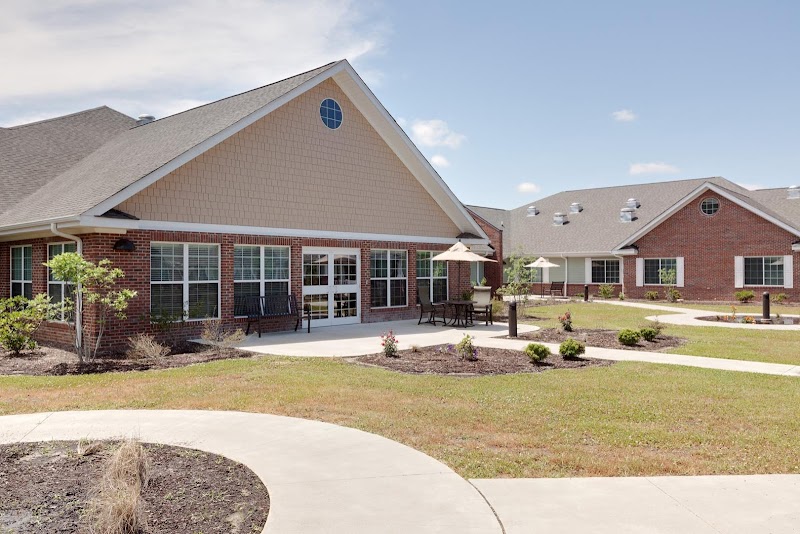
Jan 2025 2 deficiencies 2 IJ
CRITICAL (J) 📢 Someone Reported This

A family member, employee, or ombudsman was alarmed enough to file a formal complaint

Immediate Jeopardy (IJ) - the most serious Medicare violation

Notification of Changes (Tag F0580)

Someone could have died · This affected 1 resident

**NOTE- TERMS IN BRACKETS HAVE BEEN EDITED TO PROTECT CONFIDENTIALITY** Based on record reviews and interviews with facility staff, physician's office staff, Nurse Practitioner (NP), and Medical Direc...

Read full inspector narrative →
**NOTE- TERMS IN BRACKETS HAVE BEEN EDITED TO PROTECT CONFIDENTIALITY** Based on record reviews and interviews with facility staff, physician's office staff, Nurse Practitioner (NP), and Medical Director, the facility failed to notify the physician or nurse practitioner (NP) immediately of an unwitnessed fall with head injury for a resident prescribed an anticoagulant (blood thinner) in order for the physician to determine the necessary treatment plan. The resident fell on Saturday [DATE] and the physician was not notified until Monday [DATE]. Resident #1 continued to receive his anticoagulant medication. On [DATE], Resident #1 had an acute change in condition and was sent to the hospital. Resident #1's Glasgow Coma Scale (used to objectively describe the extent of impaired consciousness in all types of acute medical and trauma patients) in the hospital indicated he sustained a severe traumatic brain injury. He received treatment to reverse the effects of Eliquis (a blood thinner) and attempt to slow the bleeding. He was placed on a ventilator (a medical device that helps people breathe by moving air into and out of their lungs) and was transferred to a different hospital for a higher level of care. A computerized tomography (CT) scan revealed multiple abnormalities including a large subdural hematoma (brain bleed) measuring 3.7 centimeters (cm) with a 9 millimeter (mm) midline shift (displacement of brain tissue across the center line of the brain) and a small subfalcine and uncal herniation (types of brain herniations that are life threatening and occur when increased pressure inside the skull causes brain tissue to push through openings in the brain). The CT scan also found he had a fracture of the L1 vertebrae (a broken first lumbar bone in the spine). He died on [DATE] and the death certificate indicated the immediate cause of death was complications from a right side subdural hematoma with midline shift. The underlying cause was listed as blunt force injury of head and brain. This deficient practice was for 1 of 4 residents reviewed for notification of the physician (Resident #1). Immediate jeopardy began on [DATE] when Resident #1, who was prescribed an anticoagulant, had a fall with obvious signs of head injury and the physician was not notified. Immediate jeopardy was removed on [DATE] when the facility implemented an acceptable credible allegation of immediate jeopardy removal. The facility will remain out of compliance at a lower scope and severity of D to ensure education is completed and monitoring systems put in place are effective. The findings included: Resident #1 was admitted to the facility on [DATE] with diagnoses including atrial fibrillation (irregular heart beat), congestive heart failure, cognitive communication deficit, and hypertension (high blood pressure). Resident #1's medical record face sheet (a document that summarizes a patient's important information in a patient's medical record) indicated his code status was full code requesting full medical interventions in an emergency. Resident #1's admission Minimum Data Set (MDS) dated [DATE] indicated he had severe cognitive impairment and was taking an anticoagulant medication. Resident #1's physician orders dated [DATE] noted he was prescribed Eliquis (an anticoagulant) 2.5 milligrams (mg) twice a day. An event incident report written by Nurse #1 dated [DATE] indicated Resident #1 had an unwitnessed fall in his room. The report noted he was found by staff on the floor. Upon assessment, it was found he hit his head and had an abrasion to top left side of his head with an indentation. His vital signs were stable and he was able to move his arms and legs. He was placed back into his wheelchair. Nurse #1 noted he was alert and oriented. Nurse #1 asked if he needed or wanted to go to the hospital and he stated he did not. He stated his head hurt and he was given Tylenol per his request. Nurse #1 noted his neurological checks were within normal limits. Resident #1's nursing progress notes dated [DATE] at 2:00 PM written by Nurse #3 indicated Nurse #3 was alerted by a Nursing Assistant (NA) that Resident #1 was on the floor. When Nurse #3 entered his room, he was in the corner on the floor near the television. Resident #1 complained of having a headache and Nurse #3 noted Tylenol was given and no other issues were noted. Nurse #3 noted the physician communication log was updated on [DATE]. The Facility/Provider Communication Log documented an entry by Nurse #3 on [DATE] which noted Resident #1 had an unwitnessed fall with an indentation on top of his head. The NP wrote for staff to monitor Resident #1. In an interview on [DATE] at 11:08 AM, Nurse #3 said she was called to the room by NA #1. When she came to the room, Resident #1 was on the floor between the television cabinet and the wall. Nurse #3 said she assessed him and NA #1 assisted her with moving him into his wheelchair. She said Resident #1 had a small indentation that looked like when someone would press down into a soft mattress approximately the size of a nickel in his head where it had hit something. She said she knew Resident #1 was taking a blood thinner at the time of the fall. Nurse #3 said the nurse supervisor normally called the physician to notify them of a fall incident but that she wrote about the fall in the physician communication book kept at the nurses' station. A nursing progress note dated [DATE] at 2:04 PM written by Nurse #1 indicated Resident #1 had an unwitnessed fall and hit his head. She noted Resident #1 had an abrasion to the top left side of his head with a visible indentation. His vital signs were stable and he was able to move all of his extremities. Resident #1 was placed back in his wheelchair and was alert and oriented. Nurse #1 called the Director of Nursing (DON) and Resident #1 was asked if he needed or wanted to go to the hospital and Resident #1 stated no. Resident #1 stated his head hurt but for Nurse #1 to give him some Tylenol and he would be fine. Nurse #1 documented Tylenol was administered. Neurological checks were within normal limits. In an interview on [DATE] at 4:04 PM, Nurse #1 said she was notified by Nurse #3 that Resident #1 was found on the floor in his room. Nurse #1, who was the nurse supervisor that day, went to the unit and found Resident #1 was up in his wheelchair. Nurse #1 assessed Resident #1 neurologically and physically and all of his assessments were within normal limits. Nurse #1 said she called the Director of Nurses (DON), who told her to ask Resident #1 if he would like to go to the hospital and he said no, he ain't going to no hospital. Nurse #1 stated she knew he was on blood thinners and that hitting his head while on blood thinners could lead to uncontrolled bleeding and a brain bleed. She stated the physician or NP was usually notified of falls through the medical practice telemedicine program. She said she did not notify the telemedicine program about the fall and that notification was done by Nurse #3. In a phone interview on [DATE] at 2:42 PM, the Medical Records Coordinator at the medical practice said when she reviewed the notification records, there was no record of the facility notifying the medical practice regarding the fall on [DATE]. Resident #1's [DATE] Medication Administration Record documented he continued to receive Eliquis twice a day. Resident #1's Nurse Practitioner (NP) progress note dated [DATE] indicated he had two falls in the past week with the last one on [DATE]. Resident #1 complained of pain from the fall but said he did not hit his head and was doing well. The NP noted that staff had no acute concerns or requests at the time of the visit. In a phone interview on [DATE] at 4:07 PM, the NP said she came to the facility full-time Monday through Friday, but on the weekends the staff were to call the medical practice telemedicine service with any incidents or changes of condition. She remembered that Resident #1 was cognitively impaired and was not a reliable historian. She said when she came into the facility on [DATE], she learned about Resident #1's fall on [DATE]. She said Resident #1 reported he did not hit his head and appeared to be acting normally and at baseline. The NP said she found out later that visit (unrecalled when) that he had a small abrasion on the top of his head. She said she did not recall if she had assessed the abrasion that day. She said she was not aware of the fall on [DATE] until [DATE] when she reviewed the physician communication log. During the interview, she reviewed the telemedicine notification log on her phone and said the practice had not received a notification from the facility about Resident #1 on [DATE] or [DATE]. She said if she had known of the fall on [DATE] and that Resident #1 had a head injury, she would have reviewed the nursing assessments and weighed the risks and benefits of hospitalization or withholding his Eliquis to prevent bleeding. Resident #1's nursing progress notes dated [DATE] at 11:15 AM written by Nurse #3 documented she notified the nurse supervisor, Nurse #1, and informed her that Resident #1 was not opening his eyes and waking up. She noted Resident #1 responded to touch and would mumble but he would not open his eyes. In her interview on [DATE] at 11:08 AM, Nurse #3 said that after the fall on [DATE], Resident #1 was acting normally. On the morning of [DATE], she attempted to give him his morning medications and he would mumble for her to not bother him. She said that was not unusual for Resident #1 and she frequently had to attempt several times throughout the morning for him to take all of his medications. She had been told by NA #1 that Resident #1 had yelled at her that morning, which was not normal since he usually liked working with NA #1. NA #1 also came to get her at approximately 10:30-11:30 AM that morning saying Resident #1 wouldn't wake up. She went to Resident #1's room and saw he was significantly less responsive than normal when she called his name. He would move a little and moan but did not open his eyes. She said this was when she first noticed a change in his condition. She called for Nurse #1, who was the nurse supervisor that day, and told her of her concerns. Nurse #3 said she went back into Resident #1's room to monitor him and take his vitals. Nurse #1 came to the unit immediately and brought Nurse #2 with her. Nurse #3 said she stayed in the room for a few minutes during Nurse #1 and Nurse #2's assessments, but when they said he needed to go to the hospital, she left the room to get the hospital transfer paperwork done. Resident #1's nursing progress notes dated [DATE] at 12 noon written by Nurse #1 noted she went to assess Resident #1 after receiving a call from Nurse #3 that he was unresponsive. Nurse #1 noted she performed a sternal rub and Resident #1 would moan. Nurse #1 also noted Resident #1 had a temperature of 101.7 Fahrenheit (F). Nurse #1 noted she called the NP with her findings. The nurses repositioned him in bed and his blood pressure went up from 94/48 to 153/67. Resident #1 was still unresponsive but responded to pain. Nurse #1 noted she received an order from the NP to send Resident #1 to the emergency room (ER) for altered mental status and fever. In her interview by phone on [DATE] at 3:25 PM, Nurse #1 said she was called by Nurse #3 to go see Resident #1 because he was not waking up on [DATE] at approximately 11:00 AM. When she arrived on the unit with Nurse #2, Resident #1 would respond only to painful stimuli. She said she performed a sternal rub, which caused him to moan and move his arms a little, but not verbally respond or open his eyes. She said she called the NP directly on the NP's cell phone, described how the resident was responding, and the NP ordered him to be sent to the ER. Resident #1's Emergency Medical Services (EMS) Call Detail Report dated [DATE] noted they received a call for services for Resident #1 at 11:35 AM due to complaint of altered mental status and that Resident #1 was unconscious. Resident #1's hospital #1's ER report dated [DATE] noted he had fallen approximately four days prior and hit his head. He had a contusion (bruise) in the occipital area (back) of his head. The ER note documented that morning when he was woken up at approximately 7:30 AM and cussing out the staff and wanted to go back to sleep. He was later found at approximately noon unresponsive. The ER noted he was unresponsive with semi-purposeful movements where he would squeeze the hand. If he was given painful stimulus he would say nonsensible words but was in general not responding. The physician noted Resident #1 was given the two medications Andexxa and Tranexamic acid (TXA) to reverse the effects of Eliquis. He was intubated and assessed as scoring 3-8 on the Glasgow Coma Scale, which indicated he was comatose. He was placed on a ventilator to assist with his breathing and was transferred to a different hospital for a higher level of care. Resident #1's hospital #2's report dated [DATE] included results from a CT scan which revealed multiple abnormalities including a large subdural hematoma measuring 3.7 cm with a 9 mm midline shift and a small subfalcine and uncal herniation. The CT scan also found he had an acute fracture of the L1 vertebrae. The report noted he was evaluated by neurology and it was determined he was not a candidate for neurosurgery due to no expectation of a meaningful recovery. Resident #1 was placed on comfort care and expired on [DATE]. Resident #1's death certificate dated [DATE] indicated Resident #1 expired on [DATE] and noted the immediate cause of death was due to complications from right side subdural hematoma with midline shift. The underlying cause of death was listed as blunt force injury of head and brain. In an interview on [DATE] at 11:55 AM, the Medical Director, who was also Resident #1's physician, said Resident #1's death was preventable if the resident had gone to the hospital, but the facility couldn't force him to go, even if he didn't understand the risks versus benefits due to his cognitive impairment. She said the industry practice was to no longer immediately send a resident to the hospital after a fall, even if the resident hit their head, that the decision would depend on the severity of the head injury, the medical history of that particular resident, and the subsequent clinical assessments. She said she would not have stopped the Eliquis if she had received the fall report on [DATE]. She said because the Eliquis as a stroke prevention medication was new for him, she said he was at an increased risk of stroke if the Eliquis was held. She said because the neurological checks had been done appropriately, and there was no change in him medically until [DATE], she would not have done anything other than to monitor him during that time. She said she reviewed the physician communication log and the documentation written by the NP, and the facility did not notify the practice or providers on [DATE] or [DATE]. She said Resident #1's brain bleed wouldn't have shown symptoms until days later when it grew big enough to affect him which was why he appeared at baseline until [DATE]. In an interview on [DATE] at 5:55 PM, the DON said Nurse #3 updated the physician communication log after the fall on [DATE]. She said any nurse, including Nurse #3, should notify the physician either through the physician communication log or through the practice telemedicine notification system when there was a fall. She said the nursing staff determine which method to use to communicate with the physician, depending on if the resident had a change of condition. She said Resident #1 remained at his baseline after the fall, which was why Nurse #3 used the physician communication log to notify the provider. The NP came to the facility Monday through Friday and the physician did not regularly work on the weekends. The medical practice had on-call physicians for the weekends. When the DON was asked if staff should have notified the physician via the telemedicine notification system in order for the notification to be received on Saturday rather than using the communication log that would be viewed on Monday, she indicated the communication log notification was appropriate. The Administrator was notified of Immediate Jeopardy on [DATE] at 6:06 PM. The facility provided the following credible allegation of immediate jeopardy removal: Identify those recipients who have suffered, or are likely to suffer, a serious adverse outcome The facility failed to notify the physician immediately of a fall with head injury for a resident on an anticoagulant for the physician to determine the necessary treatment plan. The resident fell on [DATE] and the physician was not notified until [DATE]. Failure to notify the physician of the resident's fall with head injury while taking anticoagulant resulted in the resident being discharged to an acute care facility on [DATE] with a severe traumatic brain injury. Licensed nurses failed to understand the risk related to a resident having the potential for a severe injury while taking anticoagulants. Licensed nurses failed to understand that the physician or physician extender need to be notified when a resident has had a fall with a head injury and is being administered anticoagulants. Resident #1 passed away on [DATE]. All residents receiving anticoagulants are at risk of suffering a serious outcome. Specify the action the entity will take to alter the process or system failure to prevent a serious adverse outcome from occurring or recurring, and when the action will be complete. Beginning [DATE], the Director of Health Services or the Nurse Supervisor will review all events during the morning clinical meeting to verify the physician or the physician extender has been notified of changes in condition to include falls with head injury for residents on anticoagulants. The Director of Health Services or Clinical Competency Coordinator will educate all licensed nursing staff to immediately notify the physician or physician extender in person or by phone of a fall with head injury for a resident on an anticoagulant for the physician or physician extender to make an informed decision regarding continued use anticoagulant or need to transfer the resident to an acute care facility. The physician or physician extender should be notified immediately in person or by phone if any significant change in condition, to include falls with head injury, for residents prescribed an anticoagulant. Licensed nurses will be educated regarding health risk for residents on anticoagulants and the importance of notification of physician or physician extender in person or by phone. Staff education will be completed on [DATE] or prior to the staff working their next scheduled shift. The education will be added to the licensed nurse written orientation program. The immediate jeopardy was removed on [DATE]. Onsite validation of the immediate jeopardy removal plan was completed on [DATE]. Interviews with licensed nurses confirmed all licensed nurses were educated to immediately notify the physician or physician extender in person or by phone of a fall with head injury for a resident on an anticoagulant in order for the physician or physician extender to make the decision regarding continued use of anticoagulant or the need to transfer the resident to an acute care facility. Education included health risks for residents on anticoagulants and the importance of notification of the physician or extender in person or by phone. The immediate jeopardy removal date of [DATE] was validated.
CRITICAL (J) 📢 Someone Reported This

A family member, employee, or ombudsman was alarmed enough to file a formal complaint

Immediate Jeopardy (IJ) - the most serious Medicare violation

Quality of Care (Tag F0684)

Someone could have died · This affected 1 resident

**NOTE- TERMS IN BRACKETS HAVE BEEN EDITED TO PROTECT CONFIDENTIALITY** Based on record reviews and interviews with the Responsible Party (RP), staff, Nurse Practitioner (NP), and Medical Director, th...

Read full inspector narrative →
**NOTE- TERMS IN BRACKETS HAVE BEEN EDITED TO PROTECT CONFIDENTIALITY** Based on record reviews and interviews with the Responsible Party (RP), staff, Nurse Practitioner (NP), and Medical Director, the facility failed to: explain to the resident and RP the risk of life threatening consequences and the importance of hospital evaluation when a severely cognitively impaired resident who was prescribed an anticoagulant (blood thinner) had an unwitnessed fall with obvious signs of head injury and refused hospital evaluation; and to recognize the seriousness of a change in condition and immediately seek emergent medical care. On [DATE] Resident #1 had an unwitnessed fall and was assessed as having an abrasion with a small indentation on the top of his head described by Nurse #3 like when someone would press down into a soft mattress. The resident stated he ain't going to no hospital. The RP was notified of the fall by Nurse #3 who did not mention that the resident refused the hospital or explain the potential consequences of a serious head injury. The RP stated they did not understand the seriousness of the injury. Resident #1 continued to receive his anticoagulant medication. On [DATE], Resident #1 was noted with a change in behaviors at approximately 8:00 AM and between approximately 10:00 AM and 10:15 AM Nurse Aide (NA) #1 tried to wake the resident but he wouldn't open his eyes and his only response was grunting and mumbling incoherent words. Resident #1 was not assessed by a nurse until approximately 11:00 AM. Nurse #1 performed a sternal rub (a painful stimulus used to assess a patient's neurological status and responsiveness) to which the resident was only responsive to painful stimuli. The NP was contacted at 11:20 AM to report the change in condition and Emergency Medical Services (EMS) were contacted at 11:35 AM. Resident #1's Glasgow Coma Scale (used to objectively describe the extent of impaired consciousness in all types of acute medical and trauma patients) in the hospital indicated he sustained a severe traumatic brain injury. He received treatment to reverse the effects of Eliquis (anticoagulant) and attempt to slow the bleeding. He was placed on a ventilator (a medical device that helps people breathe by moving air into and out of their lungs) and was transferred to a different hospital for a higher level of care. A computerized tomography (CT) scan revealed multiple abnormalities including a large subdural hematoma (brain bleed) measuring 3.7 centimeters (cm) with a 9 millimeter (mm) midline shift (displacement of brain tissue across the center line of the brain) and a small subfalcine and uncal herniation (types of brain herniations that are life threatening and occur when increased pressure inside the skull causes brain tissue to push through openings in the brain). The CT scan also found he had a fracture of the L1 vertebrae (a broken first lumbar bone in the spine).He died on [DATE] and the death certificate indicated the immediate cause of death was complications from a right side subdural hematoma with midline shift. The underlying cause was listed as blunt force injury of head and brain. This deficient practice was for 1 of 4 residents reviewed for falls (Resident #1). Immediate jeopardy began on [DATE] when Resident #1, who was severely cognitively impaired and prescribed an anticoagulant, refused hospital evaluation following an unwitnessed fall with obvious signs of head injury and the facility failed to explain to the resident and RP the life-threatening consequences that could occur and the importance of hospital evaluation. Immediate jeopardy was removed on [DATE] when the facility implemented an acceptable credible allegation of immediate jeopardy removal. The facility will remain out of compliance at a lower scope and severity of D to ensure education is completed and monitoring systems put in place are effective. The findings included: Resident #1 was admitted to the facility on [DATE] with diagnoses including atrial fibrillation (irregular heart beat), congestive heart failure, cognitive communication deficit, and hypertension (high blood pressure). Resident #1's medical record face sheet (a document that summarizes a patient's important information in a patient's medical record) indicated his code status was full code requesting full medical interventions in an emergency. Resident #1's comprehensive care plan dated [DATE] revealed he would refuse care, was at risk for falls, and was taking an anticoagulant medication. Interventions for his anticoagulant use was to educate the resident and representative on risk and benefits of anticoagulation use. Resident #1's admission Minimum Data Set (MDS) dated [DATE] indicated he had severe cognitive impairment, would refuse care, and needed partial or moderate assistance from staff for his activities of daily living (ADLs). The MDS indicated he had not had any falls since his admission and was taking an anticoagulant medication. Resident #1's physician orders dated [DATE] noted he was prescribed Eliquis (an anticoagulant) 2.5 milligrams (mg) twice a day. An event incident report written by Nurse #1 dated [DATE] indicated Resident #1 had an unwitnessed fall in his room. The report noted he was found by staff on the floor. Upon assessment, it was found he hit his head and had an abrasion to top left side of his head with an indentation. His vital signs were stable and he was able to move his arms and legs. He was placed back into his wheelchair. Nurse #1 noted he was alert and oriented. Nurse #1 asked if he needed or wanted to go to the hospital and he stated he did not. He stated his head hurt and he was given Tylenol per his request. Nurse #1 noted his neurological checks were within normal limits. Nurse #1 noted she asked Resident #1 several times if he would like to go to the hospital and he continued to refuse. Resident #1's nursing progress notes dated [DATE] at 2:00 PM written by Nurse #3 indicated Nurse #3 was alerted by a Nursing Assistant (NA) that Resident #1 was on the floor. When Nurse #3 entered his room, he was in the corner on the floor near the television. Resident #1 complained of having a headache and Nurse #3 noted Tylenol was given and no other issues were noted. Nurse #3 noted the physician notification communication book was updated and she notified Resident #1's RP. A nursing progress note dated [DATE] at 2:04 PM written by Nurse #1 indicated staff called for a fall huddle, a meeting of all staff on the unit and the nurse supervisor to review a fall to discuss the fall and any possible contributing factors, due to Resident #1 being found on the floor. Nurse #1 noted he had an unwitnessed fall and hit his head. She noted Resident #1 had an abrasion to the top left side of his head with a visible indentation. His vital signs were stable and he was able to move all of his extremities. Resident #1 was placed back in his wheelchair and was alert and oriented. Nurse #1 called the Director of Nursing (DON) and Resident #1 was asked if he needed or wanted to go to the hospital and Resident #1 stated no. Resident #1 stated his head hurt but for Nurse #1 to give him some Tylenol and he would be fine. Nurse #1 documented Tylenol was administered. Neurological checks were within normal limits. Nurse #1 documented she asked him several times if would he like to go to the hospital and he continued to refuse. In an interview on [DATE] at 4:04 PM, Nurse #1 said she was notified by Nurse #3 that Resident #1 was found on the floor in his room. Nurse #1, who was the nurse supervisor that day, went to the unit and found Resident #1 was up in his wheelchair. Nurse #1 assessed Resident #1 neurologically and physically and all of his assessments were within normal limits. Nurse #1 said she called the Director of Nurses (DON), who told her to ask Resident #1 if he would like to go to the hospital and he said no, he ain't going to no hospital. Nurse #1 stated she knew he was on blood thinners and that hitting his head while on blood thinners could lead to uncontrolled bleeding and a brain bleed. She stated she explained to him about how the blood thinners he was taking could affect him by causing uncontrolled bleeding, but he continued to say he was not going to the hospital. In an interview on [DATE] at 11:08 AM, Nurse #3 said she was called to the room by NA #1. When she came to the room, Resident #1 was on the floor between the television cabinet and the wall. Nurse #3 said she assessed him and NA #1 assisted her with moving him into his wheelchair. She said Resident #1 had a small indentation that looked like when someone would press down into a soft mattress approximately the size of a nickel in his head where it had hit something. Nurse #3 said she called for a fall huddle and the staff did not identify any concerns. Nurse #3 said she was in the room when Nurse #1 called the DON and heard Resident #1 say he did not want to go to the hospital. He complained of having a headache and was given Tylenol. She said she brought Resident #1 out to the common area to better monitor him and to continue to perform neurological checks. She said she knew Resident #1 was taking a blood thinner at the time of the fall. Nurse #3 said she called Resident #1's RP to notify her of the fall and that he hit his head. Nurse #3 said she did not tell the RP that he had refused to go to the hospital or about the potential complications he could have due to being on a blood thinner. She said she could not think why she did not tell the RP. In an interview on [DATE] at 11:22 AM, NA #1 said when she found Resident #1 on the floor, he had hit his head on a sharp corner of his television cabinet. She said there was a dent in his head. After Nurse #3 assessed him, NA #1 helped her move Resident #1 back into his wheelchair. NA #1 said when she worked with him again later that shift, she told him he had a dent in his head and he should get it checked out. He told NA #1 he had hit his head harder than that and he was fine. In a phone interview on [DATE] at 10:13 AM, Resident #1's RP said Nurse #3 had notified her of the fall on [DATE]. She thought she remembered Nurse #3 saying Resident #1 did not want to go to the hospital, but also said she did not understand the potential risks of him falling and hitting his head while taking a blood thinner. She said she would have wanted him to go to the hospital if she had understood how serious the risks were from the fall. She said Resident #1 may have listened to her and gone to the hospital if she (the RP) was clearer about the seriousness of the situation. Resident #1's [DATE] Medication Administration Record documented he continued to receive Eliquis twice a day. Resident #1's Nurse Practitioner (NP) progress note dated [DATE] indicated he had two falls in the past week with the last one on [DATE]. Resident #1 complained of pain from the fall but said he did not hit his head and was doing well. The NP noted that staff had no acute concerns or requests at the time of the visit. In a phone interview on [DATE] at 4:07 PM, the NP remembered that Resident #1 was cognitively impaired and was not a reliable historian. She said he was able to make simple daily decisions but needed assistance otherwise. She said when she came into the facility on [DATE], she learned about Resident #1's fall on [DATE]. She said Resident #1 reported he did not hit his head and appeared to be acting normally and at baseline. The NP said she found out later that visit (unrecalled when) that he had a small abrasion on the top of his head. She said she did not recall if she had assessed the abrasion that day. She said she had reviewed the nurses' documentation of neurological checks and the results were normal. She said if she had known of the fall on [DATE] and that Resident #1 had a head injury, she would have reviewed the nursing assessments and weighed the risks and benefits of hospitalization or withholding his Eliquis to prevent bleeding. Resident #1's clinical documentation from [DATE]-[DATE] revealed he participated in physical and speech therapy and had vital signs and neurological checks that were within normal limits. In her interview on [DATE] at 11:22 AM, NA #1 said when she came into work on [DATE], she went and checked on Resident #1 at approximately 8:00 AM. She said she worked with Resident #1 regularly and had a good rapport with him. NA #1 said he would be agitated in the mornings and liked to sleep in. She said she was able to wake him in a way that would not agitate him and he was always nice to her. She said that morning, when she went to check on him, she attempted to wake him and he became immediately agitated and yelled at her. She said he had never acted like that with her prior to that morning and it was a change for him. She said at approximately 9:30-10:00 AM, the RP asked for assistance. The RP told her Resident #1 must have had a hard night and was still really sleepy. NA #1 said she went to the room and tried to wake him up. He hadn't eaten his breakfast that morning, which wasn't unusual as some days he would sleep through breakfast and eat later. When she tried to wake him, he wouldn't open his eyes and would just grunt and mumble incoherent words, which was abnormal, as he would usually wake easily and talk to the staff immediately when woken up. She said she went and notified Nurse #3 that Resident #1 was difficult to arouse and not responding at approximately 10:00-10:15 AM. In her phone interview on [DATE] at 10:13 AM, the RP said she arrived at the facility at approximately 9:00-9:30 AM on [DATE]. She said Resident #1 was asleep in bed. She said she was told by staff (name not recalled) that Resident #1 had cussed out one of the staff that morning. The RP said there were some staff members he was not as patient with, so he may have talked sharply to them. She said he had seemed the same since his fall on [DATE] and she had not noticed any changes in him. That morning she thought he was more sleepy than normal. Resident #1's progress notes dated [DATE] at 10:03 AM documented the Registered Dietitian (RD) noted she had attempted to visit with Resident #1 twice that morning but he had been sleeping. In an interview on [DATE] at 9:41 AM, the RD said Resident #1 was sleeping deeply when she tried to see him that morning, but the RP came to visit the resident during that time. She could not recall anything else about Resident #1's condition. Resident #1's nursing progress notes dated [DATE] at 11:15 AM written by Nurse #3 documented she notified the nurse supervisor, Nurse #1, and informed her that Resident #1 was not opening his eyes and waking up. She noted Resident #1 responded to touch and would mumble but he would not open his eyes. In her interview on [DATE] at 11:08 AM, Nurse #3 said that after the fall on [DATE], Resident #1 was acting normally. On the morning of [DATE], she attempted to give him his morning medications and he would mumble for her to not bother him. She said that was not unusual for Resident #1 and she frequently had to attempt several times throughout the morning for him to take all of his medications. She had been told by NA #1 that Resident #1 had yelled at her that morning, which was not normal since he usually liked working with NA #1. NA #1 also came to get her at approximately 10:30-11:30 AM that morning saying Resident #1 wouldn't wake up. She went to Resident #1's room and saw he was significantly less responsive than normal when she called his name. He would move a little and moan but did not open his eyes. She said this was when she first noticed a change in his condition. She called for Nurse #1, who was the nurse supervisor that day, and told her of her concerns. Nurse #3 said she went back into Resident #1's room to monitor him and take his vitals. Nurse #1 came to the unit immediately and brought Nurse #2 with her. Nurse #3 said she stayed in the room for a few minutes during Nurse #1 and Nurse #2's assessments, but when they said he needed to go to the hospital, she left the room to get the hospital transfer paperwork done. Resident #1's nursing progress notes dated [DATE] at 12 noon written by Nurse #1 noted she went to assess Resident #1 after receiving a call from Nurse #3 that he was unresponsive. Nurse #1 noted she performed a sternal rub and Resident #1 would moan. Nurse #1 also noted Resident #1 had a temperature of 101.7 Fahrenheit (F). Nurse #1 noted she called the NP with her findings. The nurses repositioned him in bed and his blood pressure went up from 94/48 to 153/67. Resident #1 was still unresponsive but responded to pain. Nurse #1 noted she received an order from the NP to send Resident #1 to the emergency room (ER) for altered mental status and fever. In her interview by phone on [DATE] at 3:25 PM, Nurse #1 said she was called by Nurse #3 to go see Resident #1 because he was not waking up on [DATE] at approximately 11:00 AM. When she arrived on the unit with Nurse #2, Resident #1 would respond only to painful stimuli. She said the RP was in the room and had commented on how they thought he was sleeping really deeply, as had the RD and other staff who had worked with Resident #1 that day. She said she performed a sternal rub, which caused him to moan and move his arms a little, but not verbally respond or open his eyes. She said she called the NP, described how the resident was responding, and the NP ordered him to be sent to the ER. In an interview on [DATE] at 11:49 AM, Nurse #2 said Nurse #1 asked her to go see Resident #1 with her due to a reported change of condition on [DATE] at approximately 11:00 AM. Nurse #2 said she asked the RP what was going on and she said she was having a hard time getting Resident #1 up. When Nurse #1 and Nurse #2 tried to wake him, he would just moan. She knew he had fallen a few days prior to [DATE] but did not recall when the falls were. Nurse #2 did not remember if Resident #1 taking blood thinners was mentioned at any time. In her phone interview on [DATE] at 4:07 PM, the NP said she received a phone call from Nurse #1 on [DATE] at 11:20 AM (time indicated in the call log) reporting that Resident #1 had a change in status. The NP said Nurse #1 described how she assessed Resident #1 and the NP said she was going to order a full clinical work-up including laboratory tests until Nurse #1 told her Resident #1 would only respond to the sternal rub. The NP said she then ordered that Resident #1 be sent out immediately to the ER. Resident #1's Emergency Medical Services (EMS) Call Detail Report dated [DATE] noted they received a call for services for Resident #1 at 11:35 AM due to complaint of altered mental status and that Resident #1 was unconscious. Resident #1's hospital #1's ER report dated [DATE] noted he had fallen approximately four days prior and hit his head. He had a contusion (bruise) in the occipital area (back) of his head. The ER note documented that morning when he was woken up at approximately 7:30 AM and cussing out the staff and wanted to go back to sleep. He was later found at approximately noon unresponsive. The ER noted he was unresponsive with semi-purposeful movements where he would squeeze the hand. If he was given painful stimulus he would say nonsensible words but was in general not responding. The physician noted Resident #1 was given the two medications Andexxa and Tranexamic acid (TXA) to reverse the effects of Eliquis. He was intubated and assessed as scoring 3-8 on the Glasgow Coma Scale, which indicated he was comatose. He was placed on a ventilator to assist with his breathing and was transferred to a different hospital for a higher level of care. Resident #1's hospital #2's report dated [DATE] included results from a CT scan which revealed multiple abnormalities including a large subdural hematoma measuring 3.7 cm with a 9 mm midline shift and a small subfalcine and uncal herniation. The CT scan also found he had an acute fracture of the L1 vertebrae. The report noted he was evaluated by neurology and it was determined he was not a candidate for neurosurgery due to no expectation of a meaningful recovery. Resident #1 was placed on comfort care and expired on [DATE]. Resident #1's death certificate dated [DATE] indicated Resident #1 expired on [DATE] and noted the immediate cause of death was due to complications from right side subdural hematoma with midline shift. The underlying cause of death was listed as blunt force injury of head and brain. In an interview on [DATE] at 11:55 AM, the Medical Director (MD), who was also Resident #1's physician, said Resident #1's death was preventable if the resident had gone to the hospital, but the facility couldn't force him to go, even if he didn't understand the risks versus benefits due to his cognitive impairment. She said the industry practice was to no longer immediately send a resident to the hospital after a fall, even if the resident hit their head, that the decision would depend on the severity of the head injury, the medical history of that particular resident, and the subsequent clinical assessments. She said she would not have stopped the Eliquis if she had received the fall report. She said because the Eliquis as a stroke prevention medication was new for him, she said he was at an increased risk of stroke if the Eliquis was held. She said because the neurological checks had been done appropriately, and there was no change in him medically until [DATE], she would not have done anything other than to monitor him during that time. The MD said she spoke with therapy, who told her that they had worked with him on [DATE] and he was at his baseline. She said Resident #1's brain bleed wouldn't have shown symptoms until days later when it grew big enough to affect him which was why he appeared at baseline until [DATE]. In an interview on [DATE] at 5:55 PM, the DON said Resident #1 did not show any changes from his baseline after the fall on [DATE] until [DATE]. She said Resident #1 had refused to go to the hospital after the fall when the nurse asked him. In an interview on [DATE] at 6:00 PM, the Administrator said the facility had monitored Resident #1 and he had no changes after the fall on [DATE]. She said when the staff noticed the changes of condition on [DATE], he was sent to the hospital immediately. The Administrator was notified of Immediate Jeopardy on [DATE] at 6:06 PM. The facility provided the following credible allegation of immediate jeopardy removal: Identify those recipients who have suffered, or are likely to suffer, a serious adverse outcome The facility failed to explain to the resident and the responsible party the life-threatening consequences that could occur and the importance of hospital evaluation when a severely cognitively impaired resident who was on a blood thinner had an unwitnessed fall with obvious signs of head injury and refused hospital evaluation on [DATE]. The resident's blood thinner continued to be administered. Staff did not recognize the seriousness of a significant change in condition and identify the need for urgent medical attention when resident was first identified with a change in condition on [DATE] at 8 AM. Resident #1 expired on [DATE]. All residents receiving anticoagulants are at risk of suffering a serious outcome. Specify the action the entity will take to alter the process or system failure to prevent a serious adverse outcome from occurring or recurring, and when the action will be complete. Education began [DATE] by the Director of Health Services to all licensed staff on identification of change in condition and what constitutes a change in condition. The education will include the use of the Interact Change in condition tool. Nurses will be educated regarding notification of physician when a change in resident condition occurs. The education will be added to the licensed nurse orientation. Licensed staff will be educated regarding a resident with any cognition level that refuses hospital transport once a physician and/or physician extender order has been received, that the physician and/or physician extender and resident representative must be notified of the refusal. Staff education will be complete by [DATE] or prior to the staff working their next scheduled shift. The education will be added to the licensed nurse orientation. Licensed staff will be educated in their responsibility to educate the resident and the resident representative regarding refusal of follow-up at an acute care facility to ensure the resident and resident representative are making an informed decision. The resident and resident representative education will be documented by the licensed nurse in the medical record. The Director of Health Services and the Administrator will be notified when a resident refuses an ordered transport to an acute care facility. Staff education will be complete by [DATE] or prior to the staff working their next scheduled shift. The education will be added to the licensed nurse orientation. Certified Nursing Assistants and the Therapy Department staff will be educated by the Director of Health Service or the Clinical Competency Coordinator on reporting to the licensed nurse, any changes they notice in a resident they feel are outside of the resident's usual behavior, physical appearance or vital signs. Staff education will be completed by [DATE] or prior to the staff working their next scheduled shift. The education will be added to the certified nursing assistant and Therapy Department orientation. The Supervisor and/or Director of Health Services will review events during morning meetings to ensure significant changes in condition are recognized by nursing staff, the need for urgent medical attention is recognized and physician and/or physician extender and family were notified of change of condition and/or refusal of transfer. The immediate jeopardy was removed on [DATE]. Onsite validation of the immediate jeopardy removal plan was completed on [DATE]. Interviews with licensed nurses confirmed all licensed nurses were educated on identification of a change in condition and what constitutes a change in condition. Education included use of the facility's Interact Change in Condition tool. Licensed nursing staff were also educated to notify a physician when a change in resident's condition occurs. Additional education was received regarding a resident with any cognition level that refuses hospital transport once an order is received. The physician or physician extender and resident representative must be notified of the refusal. Licensed nursing staff were also educated about their responsibility to educate the resident and the resident representative regarding the risk of refusal to ensure the resident and resident representative are making an informed decision. During interviews licensed nurses identified the Interact Change in Condition tool and its location. Interviews confirmed all therapy staff and nurse aides were educated on reporting to a licensed nurse any changes they notice in a resident they feel are outside of the resident's usual behavior, physical appearance or vital signs. Education included the key points of a change of condition which included: sudden changes in vital signs (like blood pressure, heart rate), altered mental status (confusion, lethargy), difficulty breathing, unusual pain, changes in appetite or fluid intake, new or worsening skin conditions, unexpected weight loss, falls, changes in bowel habits. Also included was the process for utilizing the facility's notification tool, Stop and Watch. Therapy staff and nurse aides were able to locate the tool and the procedure to complete the tool. The immediate jeopardy removal date of [DATE] was validated.
Aug 2024 2 deficiencies
CONCERN (D)

Potential for Harm - no one hurt, but risky conditions existed

Deficiency F0578 (Tag F0578)

Could have caused harm · This affected 1 resident

**NOTE- TERMS IN BRACKETS HAVE BEEN EDITED TO PROTECT CONFIDENTIALITY** 2. Resident #20 was admitted to the facility on [DATE] with diagnoses that included paroxysmal atrial fibrillation, osteoarthrit...

Read full inspector narrative →
**NOTE- TERMS IN BRACKETS HAVE BEEN EDITED TO PROTECT CONFIDENTIALITY** 2. Resident #20 was admitted to the facility on [DATE] with diagnoses that included paroxysmal atrial fibrillation, osteoarthritis, generalized muscle weakness, and difficulty in walking. The electronic medical record profile indicated Resident #20's code status as a Do Not Resuscitate (DNR). Review of Resident #20's physician orders dated [DATE] revealed he had an active DNR order in place. The DNR book kept at the nurse's station on Resident #20's hall/wing was reviewed. An effective, executed DNR status form was found. Review of Resident #20's revised active care plan dated [DATE] at 6:42 PM showed a focus area of do not attempt resuscitation. Further review of Resident #20's revised active care plan dated [DATE] at 6:42 PM indicated a focus area of attempt resuscitation. An interview was conducted on [DATE] at 4:16 pm with the Director of Nursing (DON). She stated the Registered Nurse (RN) Supervisor present at time of a resident's admission confirms code status. The RN supervisor would get a physician's order and consent form for DNR. The DON could not explain why Resident #20's care plan showed a discrepancy regarding his code status, adding the nurse who revised the care plan should have discontinued the full code status. An interview was conducted on [DATE] at 4:16 pm with the Social Worker (SW). She stated the documentation of a resident's care plan (CP) is reviewed, discussed, and updated quarterly in CP meetings. The SW could not explain why Resident #20's care plan showed a discrepancy regarding his code status. Based on staff interviews and record review, the facility failed to have accurate advanced directive documentation throughout the medical record for 2 of 7 residents reviewed for advanced directives (Residents #20 and #86). The findings included: 1. Resident #86 was admitted to the facility on [DATE] with diagnoses that included dementia and hypertension. The electronic medical record profile indicated Resident #86's code status as a full code. Review of Resident #86's physician orders dated [DATE] revealed he had an active full code order in place. Review of Resident #86's revised active care plan dated [DATE] revealed a goal which stated, If the patient/resident's heart stops, or if the patient/resident stops breathing, CPR WILL NOT be initiated in honor of the DNR wishes through the next review period. An interview was conducted [DATE] at 3:40 PM with Nurse #1 who reported Resident #86 had a code status of full code. An interview was conducted on [DATE] at 4:16 pm with the Director of Nursing (DON). She stated the Registered Nurse (RN) Supervisor present at time of a resident's admission confirms code status. The DON could not explain why Resident #86's care plan showed a discrepancy regarding his code status. She reported it would be corrected as soon as possible. An interview was conducted on [DATE] at 4:16 pm with the Social Worker (SW). She stated the documentation of a resident's care plan (CP) is reviewed, discussed, and updated quarterly in CP meetings. The SW could not explain why Resident #86's care plan showed a discrepancy regarding his code status.
MINOR (B)

Minor Issue - procedural, no safety impact

Assessment Accuracy (Tag F0641)

Minor procedural issue · This affected multiple residents

**NOTE- TERMS IN BRACKETS HAVE BEEN EDITED TO PROTECT CONFIDENTIALITY** 2. Resident #17 was admitted to the facility on [DATE] with diagnoses including myocardial infarction (heart attack). Physician ...

Read full inspector narrative →
**NOTE- TERMS IN BRACKETS HAVE BEEN EDITED TO PROTECT CONFIDENTIALITY** 2. Resident #17 was admitted to the facility on [DATE] with diagnoses including myocardial infarction (heart attack). Physician orders dated 8/17/2023 included Aspirin Delayed Release (an antiplatelet medication that causes blood cells not to clump together to form a clot) 81 milligrams(mg) daily. A review of the May 2024 Medication Administration Record recorded Resident #17 received Aspirin Delayed Release 81 mg daily from 5/01/2024 to 5/31/2024. Resident #17 continues to receive Aspirin Delayed Release 81 mg daily. The quarterly Minimum Data Set (MDS) assessment dated [DATE] indicated Resident #17 was cognitively intact and was not coded for antiplatelets. In an interview with MDS Nurse on 8/22/2024 at 9:58 a.m., she explained Resident #17's MDS dated [DATE] was not coded for antiplatelets because the medication, Aspirin Delayed Release, was a nonsteroidal anti-inflammatory drug (NSAID). After review of the Resident Assessment Instrument (RAI) guidelines, the MDS Nurse stated Aspirin Delayed Release was list as an antiplatelet, and Resident #17's MDS should had been coded for antiplatelets. The MDS Nurse stated not coding Resident #17's MDS for antiplatelets was an oversight on her part. In an interview with the Administrator on 8/22/2024 at 11:08 a.m., she stated Resident #17's MDS assessment should had been coded correctly for the use of antiplatelets according to the RAI guidelines. Based on record review and staff interviews the facility failed to accurately code behaviors (Resident #27) and antiplatelet use (Resident #17) for 2 of 24 resident assessments reviewed. The findings included: 1. Resident #27 was admitted to the facility on [DATE] with diagnoses that included dementia. Review of a nursing progress note dated 7/16/24 read in part, Resident #27 refused ADL (Activities of Daily Living) care, despite needing incontinence care. Resident #27's most recent quarterly Minimum Data Set (MDS) assessment dated [DATE] revealed he had severe cognitive impairment. Rejection of care was not indicated. An interview was conducted with MDS (Minimum Data Set) Nurse #1 on 8/21/24 at 4:48 PM who stated the facility social workers are responsible for completing the behavior section of the MDS assessment. During an interview with the Social Work Assistant on 8/21/24 at 4:49 PM she stated Resident #27 should have been coded for rejection of care and it was an oversight. She did not explain how she missed documentation of rejection of care. In an interview with the Administrator on 8/22/2024 at 11:08 a.m., she stated Resident #27's MDS assessment should had been coded correctly for behaviors.
Feb 2024 2 deficiencies 1 Harm
SERIOUS (G) 📢 Someone Reported This

A family member, employee, or ombudsman was alarmed enough to file a formal complaint

Actual Harm - a resident was hurt due to facility failures

Free from Abuse/Neglect (Tag F0600)

A resident was harmed · This affected 1 resident

**NOTE- TERMS IN BRACKETS HAVE BEEN EDITED TO PROTECT CONFIDENTIALITY** Based on observation, record review, and staff, physician, and police detective interviews, the facility failed to protect a cog...

Read full inspector narrative →
**NOTE- TERMS IN BRACKETS HAVE BEEN EDITED TO PROTECT CONFIDENTIALITY** Based on observation, record review, and staff, physician, and police detective interviews, the facility failed to protect a cognitively impaired resident's right to be free from abuse when a staff member hit the resident in the face for 1 of 1 resident investigated for employee to resident abuse (Resident #4). The findings included: Resident #4 was admitted to the facility on [DATE] with diagnoses which included, in part, vascular dementia with behavioral disturbance, muscle weakness, unspecified lack of coordination, auditory hallucinations and visual hallucinations. A review of Resident #4's quarterly Minimum Data Set (MDS), dated [DATE], revealed that Resident #4 was severely cognitively impaired, was sometimes understood and sometimes had the ability to understand others. The MDS indicated Resident #4 was dependent on staff for oral hygiene, toileting, shower/bathing, lower body dressing, putting on/taking off footwear and personal hygiene. The MDS indicated Resident #4 required substantial/maximal assistance with eating, upper body dressing and chair/bed-to-chair transfers. A review of Resident #4's Care Plan, last revised 12/27/23, revealed the following problems: --Resident is on the memory support unit due to elopement risk and current wandering behavior. Interventions included (a) avoid overstimulation, (b) maintain a calm environment and approach to the resident. --Resident requires assistance with activities of daily living (ADLs) and at risk for decline related to cognition status. Interventions included (a) bath assistance x 1 person, (b) dressing/grooming assistance x 1 person. --Resident has difficulty hearing. Interventions included (a) provide a quiet, non-hurried environment, free of background noises and distractions. --Resident has history of visual and auditory hallucinations. Interventions included (a) maintain a consistent routine, (b) provide safe, quiet, low-stimuli environment. --Resident has diagnosis of unspecified dementia without behavioral disturbance. Interventions included (a) support and reassure resident in new situations. Review of the Nurse Practitioner (NP) progress note, dated 02/07/24 revealed the following: --Chief Complaint: patient is being seen today for abuse discussion --History of Present Illness (HPI): Patient is seen today sitting up in his wheelchair in the dining room, eating lunch, appearing well and appropriate with a small bump and bruise to his right eyebrow. According to staff, a CNA was assisting resident with ADLs. There was some sort of altercation in patient's room in which CNA struck patient in the face. Patient denies pain, x-ray performed by the facility, no facial fracture present. Small hematoma noted. CNA has since been released from working at facility. Staff is to monitor patient closely and note any issues from incident and will notify providers if any such issues arise. No other issues to note, will continue to monitor. --Past behavioral health: .with history of dementia with behaviors . --Physical Exam: Skin - normal temp, hematoma to right eyebrow --Assessment / Plan: 1. Contusion of eye - staff to monitor site for s/s of worsening swelling and/or pain. No s/s of cellulitis or soft tissue infection noted; monitor neuro status . stable/monitor. --Diagnoses: .contusion of right eyelid and periocular area, sequela Review of Medical Doctor (MD) progress note dated 02/08/24: --Chief Complaint: .presenting with bruising on the right eye after an incident with staff. --HPI: . Patient's condition has been mostly stable since the last visit. However, two days ago, the patient was involved in an incident with staff, which is currently under investigation for potential abuse. The patient has developed bruising on his right eye, which is healing, and does not appear to be in any pain or distress. Due to the patient's advanced dementia, he is unable to provide a reliable review of systems . --Physical Exam: .Eye - conjunctiva normal, no traumatic injuries. Head, Ear, Nose, Throat - normocephalic, bruising around right eye . Review of Resident #4's facial bones x-ray, performed on 02/06/24, revealed a normal examination. Review of Resident #4's progress note, dated 02/06/24 at 2:12 p.m. by Nurse #2, revealed a normal neurological exam, bruise right eye with red discoloration. Review of the Initial Allegation Report, dated 02/06/24, indicated CNA was assisting other CNA's with a.m. care. It was reported that [name of Resident #4] was resisting care and swinging at staff . [name of nursing assistant #1] admits to hitting [name of Resident #4] back in the forehead. Other CNA reports hearing the 'sound' and seeing [name of Resident #4] holding his face. Details of physical or mental injury/harm indicated [name of Resident #4] with redness around right eye. The report was signed by Nurse #1. Review of the two hand-written statements by Nursing Assistant (NA) #1 read as follows: 1. I [name of NA #1] was helping [name of NA #2] with [room number of Resident #4] and he was hitting me in my head and face and side. I didn't (mean) to hit him back but my reflex I did in the forehead try to help him calm down with open hands not fist trying to get his attention to stop. Dated 02/06/24. 2. I [name of NA #1] went into said room to assist [name of NA #2] with resident in said room. [Name of Nurse #2] was in the room helping her. So I told her that I would help. She said ok. I began to help and said resident began hitting me and [name of NA #2] so we both talked to him to calm he down. Before finishing he began kicking and hitting again. I [name of NA #1] was trying to block him from still hurting me while trying to finish dressing him. I put up my hand which was open hand to his upper face which it made a hitting noise that's when staff asked what happened. I said he got me and I was trying to stop him from hurting himself and me. I put my hand out to block him from falling from bed onto the floor. This statement was not dated. Review of the handwritten statement by Nurse #2 read, Today, 2/6/2024, I was present in [room number of Resident #4] with aide and resident [name of Resident #4]. I was assisting aide w/AM care. Another aide, [name of NA #1] came in room and stated she would help with residents' care. I agreed and continued to do a quick skin assessment on [name of Resident #4] while the aides continued to get resident dressed. [Name of Resident #4] was sitting on the side of the bed, feet dangling. [Name of NA #1] was standing in front of him trying to put his shirt on. Resident was pushing aide off, I did not see if he hit her because I looked down to write down my skin assessment notes. I did state to let the resident calm down and attempt again to put his shirt on, when the resident calmed down a bit. After several seconds, I look up again and resident is blindly swinging and I witnessed [name of NA #1] hit resident w/a closed fist in the R eye. Resident then was holding his eye after. I immediately got up to intervene between the resident and aide, aide stated she was defending herself. I assessed resident's face, performed body audit, and asked aide to remove herself from his room so me and the other aide could de-escalate the situation. Resident was put in wheelchair, this writer checked vital signs on resident, which were normal. I then went to HR office to make them aware of event. Review of the handwritten statement by NA #2 read, On Tuesday February 6, I witnessed abuse from a aide. Me and the [name of Nurse #2] walked into [name of Resident #4] room and we started to provide patient care. Another aide [name of NA #1] walks in and told the nurse that she could help. [Name of Resident #4] started being combative. As we were getting him up he started swinging at aide. I did not visually see the aide hit resident but I heard a sound and seen the resident hold his face. Review of the Investigation Report, completed by the Administrator and dated 02/13/24, read in part, the accused employee was NA #1 and the resident was Resident #4. The report indicated the date of the incident was 02/06/24, the date and time the facility became aware of the incident was 02/06/24 at 8:30 a.m. The incident was reported to law enforcement on 02/06/24 at 9:30 a.m. The original allegation details included, Aide was assisting other aide and a nurse with morning care of a resident. It was reported that resident was resisting care and swinging at [name of NA #1]. [Name of NA #1] stated she did hit [name of Resident #4] in the forehead. Another aide reported hearing the 'sound' and seeing [name of Resident #4] holding his face. A description of the resident's injury/harm included redness around right eye. A summary of the facility's investigation read as follows: the accused aide was assisting the resident with dressing. The resident was sitting on the side of the bed and began swinging at the accused aide. The accused aide wrote in her statement that she was blocking the resident from hurting her and trying to keep him from falling forward to the floor and swung forward hitting him in the eye with an open hand. The nurse in the room stated she saw the accused aide draw her fist back and make contact with the resident's skin. The nurse in the room at the time stated she heard the accused make contact with the resident's skin. The other two aides in the room did not see the accused aide hit the resident. She only heard the sound and saw the resident holding his face. The other aide did not see or hear. Corrective actions following the incident included, the nurse immediately intervened in the incident. The aide was suspended and sent home. The aide has been terminated. Staff in-servicing on abuse began on 02/06/24. All residents and/or RPs were interviewed regarding abuse. Skin assessments were completed on all other residents in the facility. In-servicing was also started for staff regarding staff burnout, abuse, caring for combative residents. The facility substantiated the allegation of abuse and terminated NA #1 on 02/07/24 for abuse. An observation of Resident #4 was conducted on 02/13/24 at 1:39 p.m. Resident #4 was sitting in his wheelchair at a table in the common area of the locked dementia unit. He was appropriately dressed and appeared well-groomed. Resident #4 was alert and unable to answer any questions. No bruising or redness to his face, particularly his right eye area, was noted. A telephone interview was conducted with NA #1 on 02/14/24 at 1:16 p.m. NA #1 confirmed she worked at the facility on 02/06/24 from 7:00 a.m. until 3:00 p.m. and indicated she had not been assigned to care for Resident #4 on that date. NA #1 explained the nursing assistants on the dementia unit tend to help each other when assistance is needed and stated NA #2, who had been assigned to care for Resident #4, had mentioned earlier in their shift that she would need assistance providing morning care to Resident #4. NA #1 stated when she noticed NA #2 on her way to Resident #4's room, she had decided to go and help her. She explained when she entered the resident's room, Resident #4 was lying on his back in his bed and Nurse #2 was in the room assisting NA #2. NA #1 stated she told Nurse #2 that she would help NA #2 and after that, Nurse #2 moved back away from the resident but stayed in the room. NA #1 stated while she was assisting in the resident's care, NA #2 began talking with Nurse #2. NA #1 explained she continued providing care to the resident when he became combative, hitting and kicking out. NA #1 stated between her and NA #2, they managed to calm the resident and put his shirt on. NA #1 stated she sat Resident #4 up on the side of his bed while NA #2 talked with Nurse #2 and that the resident started acting up again, swinging his arms towards her trying to hit her. NA #1 stated she tried to explain to the resident what she was doing however he continued to swing his arms towards her. NA #1 indicated she held the resident's pants in her left hand and raised her right arm and hand in an attempt to block his arms from hitting her as well as to prevent him from hurting himself. NA #1 stated when she made that move, her right hand hit the right side of the resident's face near his eye and forehead. NA #1 stated both NA #2 and Nurse #2 asked her what happened as they had heard the noise of her hand touching the resident and indicated she said he got me and indicated she still had her hand up towards the resident's face. NA #1 stated Nurse #2 informed her that she would have to report the incident because the resident was going to have a bruise. NA #1 explained she did not say anything else however she indicated she finished getting the resident dressed, got him to stand and pivot into his wheelchair and then brought him to the table in the dayroom. NA #1 indicated a few minutes later the lady from Human Resources (HR) came to her on the dementia unit, told her to gather her belongings, and asked her to follow her to the HR office. NA #1 stated once she was there, she stated she was told to write a statement about the incident and was then asked to leave the premises. When asked why she had written two statements, NA #1 explained that when the HR lady asked her to write her first statement, she said she hit the resident. She admitted that while she did make contact with his face with her hand, she was adamant that she was blocking the resident from hitting her and from falling off the bed onto the floor. NA #1 explained after thinking about the incident more, she wanted to write another statement with more details about why she did what she did. A telephone interview was conducted with NA #2 on 02/15/24 at 10:16 a.m. NA #2 confirmed she worked from 7:00 a.m. to 3:00 p.m. on 02/06/24 and had been assigned to care for Resident #4 on that date. NA #2 explained she and Nurse #2 went to Resident #4's room to provide morning care to him before breakfast was served. NA #2 indicated the amount of assistance the resident requires depends on the day as some days he requires more assistance than others. NA #2 indicated the resident has dementia and can sometimes communicate with staff but mostly staff must anticipate his needs. On that morning as she and the nurse were in the resident's room, NA #1 entered and informed Nurse #2 that she would assist with his care. NA #2 indicated the nurse stepped back away from the resident but did not leave the room. NA #2 explained the resident became combative towards the end of his care as they were trying to get him into his wheelchair. NA #2 further explained she and NA #1 took a minute to allow the resident to calm down as this was what they had been trained to do. NA #2 indicated she had turned around, away from the resident, and began talking with NA #3, who had entered the room. NA #2 indicated NA #1 was still attempting to provide care to the resident while she and NA #3 were talking and she heard a noise and described it as a boom. She stated she did not know what that sound was and turned around, saw the resident was in his wheelchair and he was holding his head with one of his hands. NA #2 did not recall if the resident said anything or not and stated after, all staff left the room. NA #2 explained she and NA #3 discussed who was going to report the incident and thought Nurse #2 would since she was in the room at the time of the incident. NA #2 indicated NA #3 decided she would go to HR and report the incident and left the unit and NA #2 stated she followed her to the HR office. NA #2 stated she did not recall if NA #1 said anything at the time of the incident and stated she did not recall who pushed Resident #4 out of his room and into the common area of the unit. A telephone interview was conducted with Nurse #2 on 02/15/24 at 10:39 a.m. Nurse #2 confirmed she worked from 7:00 a.m. to 7:00 p.m. on 02/06/24 and had been assigned to care for Resident #4; she explained she had been suspended from work since the incident for not removing NA #1 from the unit immediately after the incident involving Resident #4. Nurse #2 explained around 8:00 a.m. on 02/06/24, NA #2 informed her she would need help with Resident #4's morning care, which is usual, and that she went to the resident's room to help. Nurse #2 explained that once she entered his room, he was lying in his bed. She stated the resident had dementia and required total care for his bed baths but his transfers from his bed to his wheelchair is a 2-person assist with no mechanical lift needed. The nurse detailed the care they provided noting that Resident #4 grunted and groaned during his bed bath and incontinent care however that was usual for him. Nurse #2 stated as she and NA #2 were finishing up, NA #1 entered the room and informed her that she would finish helping NA #2. Nurse #2 explained she stayed in the resident's room as she had to complete some assessments that were due for the resident such as his respiratory assessment and skin assessment. Nurse #2 described NA #1 and NA #2 being on either side of the resident's bed while she stood at the foot of the bed. She indicated the nursing assistants sat the resident on the side of his bed, facing his dresser and TV, and NA #1 was struggling while trying to put the resident's shirt on and the resident was saying, oh let me go, let me loose. Nurse #2 stated she informed NA #1 to step back and give him a second. Nurse #2 indicated she was looking at her notebook one minute and the next she looked up to see the resident had begun swinging his arms at NA #1. Then Nurse #2 stated she witnessed NA #1 make a fist with her right hand and strike the resident in his right eye area. Nurse #2 explained the resident said, oh, oh and was observed holding his face. Nurse #2 explained NA #1 immediately stated, it was self-defense, repeated it and then said, if anything happens, he hit himself on the bed. After that, Nurse #2 asked NA #1 if she was okay and what was going on and stated NA #1 said the resident had hit her and stated, that's why I said it was self-dense. Nurse #2 explained she and NA #2 assisted Resident #4 into his wheelchair and left his room, leaving NA #1 in the room. Nurse #2 stated this is where I could have done better and when asked to elaborate, she explained after leaving the room, she and NA #2 discussed the need to report the incident while in another resident's room and stated after approximately 15 minutes they left to report the incident to the HR director. Nurse #2 indicated when she returned to the unit, she saw Resident #4 sitting in his wheelchair at the table in the common area and he was holding his eye with his hand. She explained she assessed his face and there had been no obvious marks noted at that time; she stated as the day progressed, she noticed some swelling to the resident's right eye and some redness on his right lower orbital area. Nurse #2 stated she made a nurses' note about the incident and spoke with the Supervisor who advised her to continue to monitor him. Nurse #2 indicated the resident denied pain however did receive his scheduled doses of Tylenol at 9:00 a.m. and 2:00 p.m. When asked why she had been suspended from work, Nurse #2 indicated because she did not immediately remove NA #1 from the resident and/or unit after the incident. She explained the HR director came to the dementia unit around 8:20 a.m. and removed NA #1 off the unit. A telephone interview was conducted with NA #3 on 02/14/24 at 2:37 p.m. NA #3 confirmed she worked from 7:00 a.m. to 3:00 p.m. on 02/06/24 and had not been assigned to care for Resident #4. NA #3 explained she entered Resident #4's room to assist NA #2 with his morning care before breakfast but when she entered the room, NA #1 was already in the room providing assistance. NA #3 also indicated Nurse #2 was in the room. NA #3 stated that while she was in the room at the time of the incident that she did not see it occur. She stated that she did hear NA #1 say, well he caught me off guard and asked the others in the room what had happened. NA #3 stated NA #2 told her that NA #1 had punched Resident #4. NA #3 explained she told everyone that the incident had to be reported and stated she felt they were dragging their feet so she left the unit and reported the incident to the HR director. NA #3 stated she had to write a statement about the incident while in the HR office. An interview was conducted with the HR Director (HRD) on 02/15/24 at 9:53 a.m. The HRD explained NA #3 came to her office on 02/06/24 around 8:25 a.m. to report the incident that had occurred between NA #1 and Resident #4. She explained that NA #3 informed her that she had not seen the incident happen but was in the room when it occurred. She further explained that NA #3 related the information about the incident as she knew it, wrote her statement and then left after approximately 10 minutes. The HRD stated NA #2 and Nurse #2 then arrived to report the incident. The HRD explained she informed the two of them to return to the unit and write their statements. The HRD explained both the Administrator and the Director of Health Services (DHS) were both out of the facility on that date and she placed a call to the Performance Improvements Coordinator (PIC) and informed her of the abuse allegation; she indicated a text message had already been sent to the DHS. The HRD stated the DHS called her and informed her of the steps of the facility investigation she needed to begin to take. The HRD stated she went to the dementia unit and removed NA #1 from the unit, brought her to the HR office and asked her to write a statement about the incident. While NA #1 was writing her statement, a text message was received from the DHS who wanted to speak with NA #1 on the phone. The HRD placed NA #1 in the office located directly across from hers. The HRD did not stay to listen to their conversation. Afterwards, NA #1 returned to the HR office, retrieved her belongings and the HRD escorted her out of the building and observed her leaving the facility grounds. The HRD indicated she participated in the abuse in-services that were begun immediately. An interview was conducted with the Registered Nurse Supervisor on 02/15/24 at 11:22 a.m. The supervisor indicated she was the supervisor for the whole facility on 02/06/24 and worked from 7:00 a.m. until 3:00 p.m. The supervisor explained that she was not on the dementia unit at the time of the incident however she had been made aware of it when she entered the unit by Nurse #2 and NA #2. The supervisor stated the HRD came to the unit at that time and removed NA #1 from the unit and stated she went to assess Resident #4 who was sitting in his wheelchair at the table in the day room. She described Resident #4 as sitting with his head down like he was sleepy. She stated she talked with him and got him to look at her and she asked him if he was hurting and stated he shook his head no. She stated the area around his right eye was reddened but there had been no bruise evident at that time and no open areas. The supervisor stated she applied a cool pack to the area and that the resident really did not want to leave that in place. The supervisor indicated Nurse #2 called the resident's Responsible Party (RP) and an electronic communication was sent to the medical provider. The supervisor explained an investigation was immediately begun and an x-ray of the affected area was ordered. She further explained she re-assessed the resident several times throughout the rest of her shift and noted the area to be getting darker as the day progressed stating the area was red initially but it began to turn blue later in the day. The supervisor stated she participated in the planning of the in-services for all of the facility staff as well as completing the assigned in-services herself. An interview was conducted with the facility medical director (MD) on 02/15/24 at 12:49 p.m. The MD reported she evaluated Resident #4 on 02/08/24 and he had bruising on his face by his right eye and it appeared to be 2-3 days old with no other signs of trauma. The MD stated Resident #4 is cognitively impaired and was unable to offer any information about the incident. The MD stated the resident had a normal x-ray after the incident. The MD stated she felt the facility handled the incident appropriately and that she participated in the abuse in-services to the staff. A telephone interview was conducted with a detective from the local police department on 02/15/24 at 12:11 p.m. The detective indicated they received a call from the supervisor of the facility on 02/06/24 informing them of the alleged abuse of Resident #4 by NA #1. The detective stated they were informed the facility was conducting their own investigation of the incident, that no officer went to the facility, and there is no on-going investigation related to this incident. An interview was conducted with the DHS on 02/15/24 at 3:26 p.m. The DHS explained she was out of the facility on 02/06/24 but she had received a phone call from the HRD informing her of the abuse allegation involving NA #1 and Resident #4. The DHS explained she informed the HRD to remove NA #1 from the unit, get her to write a statement and then remove her from the premises. The DHS stated she also informed the HRD to call the police and begin an investigation into the incident. The DHS stated she then talked with Nurse #2 and told her to perform a body audit on Resident #4 as well as all the residents on the dementia unit. The DHS explained she returned to the facility and assisted with the ongoing investigation into the abuse allegation. The DHS indicated at the conclusion of their investigation, they determined the abuse did happen and NA #1 was terminated. The DHS stated she felt the abuse occurred because NA #1 did not know how to deal with a combative resident and explained they will be doing continuing education with the staff to help prevent this from happening to other staff and residents. An interview was conducted with the Administrator on 02/15/24 at 4:18 p.m. When asked why she thought NA #1 had abused Resident #4, the Administrator explained she was not sure as all staff had been trained on how to deal with combative residents. She stated, in hindsight, NA #1 may have experienced some personal burnout. The Administrator stated abuse of any kind will not be tolerated and that in the future, they will continue to educate the staff on abuse prevention and ensure the safety of the veterans in the facility.
CONCERN (D) 📢 Someone Reported This

A family member, employee, or ombudsman was alarmed enough to file a formal complaint

Potential for Harm - no one hurt, but risky conditions existed

Report Alleged Abuse (Tag F0609)

Could have caused harm · This affected 1 resident

Based on staff interview and record review, the facility failed to report an allegation of staff to resident abuse to Adult Protective Services for 1 of 1 resident investigated for employee to residen...

Read full inspector narrative →
Based on staff interview and record review, the facility failed to report an allegation of staff to resident abuse to Adult Protective Services for 1 of 1 resident investigated for employee to resident abuse (Resident #4). The findings included: Review of the Initial Allegation Report to the State Agency, completed by Nurse #1 on 02/06/24, indicated the allegation of staff to resident abuse occurred on 02/06/24. The facility became aware of the incident on 02/06/23 at 8:30 a.m. and reported it to the local law enforcement agency on 02/06/24 at 9:30 a.m. There was no indication on the report that the facility reported the incident to Adult Protective Services (APS). A review of the Investigation Report to the State Agency, completed by the Administrator and dated 02/13/24, did not indicate that the facility reported the incident to APS. A telephone interview was conducted with a detective from the local police department on 02/15/24 at 12:11 p.m. The detective confirmed they received a call from the supervisor of the facility on 02/06/24 informing them of the alleged abuse of Resident #4. An interview was conducted with the Administrator on 02/29/24 at 10:46 a.m. The Administrator confirmed she did not inform APS of the abuse allegation on 02/06/24 because the threat (i.e., the accused nursing assistant) to Resident #4 had been immediately removed from the facility on 02/06/24. The Administrator explained allegations of abuse are reported to the State agency and local law enforcement by herself or the Director of Health Services (DHS) depending on who is at the facility at the time of the incident. The Administrator further explained that typically, reports to APS are completed by the Social Worker. An interview was conducted with the Social Worker on 02/29/24 at 11:48 a.m. The Social Worker explained she had not been aware abuse allegations had to be reported to APS at the time of an abuse allegation therefore she did not report Resident #4's allegation of abuse on 02/06/24. The SW further explained that going forward, she will report any allegations of abuse to APS.
Jan 2022 9 deficiencies
CONCERN (D)

Potential for Harm - no one hurt, but risky conditions existed

Deficiency F0561 (Tag F0561)

Could have caused harm · This affected 1 resident

**NOTE- TERMS IN BRACKETS HAVE BEEN EDITED TO PROTECT CONFIDENTIALITY** Based on record review, staff, and resident interviews the facility failed to honor a resident's choice to smoke as scheduled or...

Read full inspector narrative →
**NOTE- TERMS IN BRACKETS HAVE BEEN EDITED TO PROTECT CONFIDENTIALITY** Based on record review, staff, and resident interviews the facility failed to honor a resident's choice to smoke as scheduled or as desired for 1 (Resident #427) of 2 residents who were identified as smokers. The findings included: Resident #427 was admitted to the facility on [DATE]. The admission Minimum Data Set, dated [DATE] revealed Resident #427 was moderately cognitively impaired. Resident #427 required extensive assistance for bed mobility, transfers, dressing, toilet use, and personal hygiene. She required supervision for locomotion in her wheelchair. She was coded for smoking. The care plan for Resident #427 revised on 1/4/22 indicated she needed supervision for smoking. The interventions included to provide adequate time to smoke at scheduled time. The care plan also indicated Resident #427 needed to participate in her decisions regarding tasks of daily life. The interventions included to provide opportunity to make decisions. On 1/4/22 at 1:30 PM the facility provided a list of the active smokers. The form listed resident #427 as a smoker. The form also listed the smoking times as 8:30 AM, 10:00 AM, 1:00PM and 5:00 PM. During an interview with Resident #427 on 1/4/22 at 4:16 PM she stated she was having difficulty getting staff to take her out to smoke. She said no one knew who was assigned to take her out. Resident #427 also said she can only go out 4 times per day and was only allowed 1 cigarette on most occasions. On 1/5/22 at 3:20 PM Nurse #6 stated the smoking times listed in Resident #427's room were not the same as those listed at the nursing station. She said she did not know why the times were different. The nurse pointed to a piece of folded white paper which read Charlie Unit 10 CNA, 2 (No additional information was written beside this time.), 6 (No additional information was written beside this time.) The last line of wording read Smoke Breaks The nurse said the nursing staff were only responsible to take the resident out at the 10:00 AM smoke break and other staff such as housekeeping, dietary or maintenance were responsible for the other smoking times. An observation of Resident #427's room on 1/5/22 at 3:30 PM revealed an undated piece of white paper with writing in black marker pinned to the cork bulletin board near her bed. The paper read Smoking Times 10:00 AM, 2:00 PM. 4:00 PM and 7:00 PM. There was no additional information on the piece of paper. On 1/6/22 at 1:15 PM Resident #427 was in the dining room. She said she went out to smoke this morning (1/6/22), but the staff were not able to tell her who was going to take her out at the 2:00 PM smoking time. On 1/7/22 at 11:00 AM Resident #427 stated she had a difficult time last night (1/6/22) trying to get assistance to go smoke. She said she wheeled herself out of her room to go to the smoking area a little before 7:00 PM. She said when she arrived no one was there so she wheeled herself around the unit to find someone to take her out to smoke. She said it was about 9:00 PM when a staff member saw her took her out to smoke that evening (1/6/22). The Social Worker (SW) was interviewed on 1/7/22 at 2:15 PM. She stated the resident council decided on the smoking times and she would tell the department heads of the smoking times. The SW said she took Resident #427 out to smoke the other evening. She said if nursing staff were busy, they could call the supervisor to get someone to assist the residents out to smoke. The nursing staff could use the walkie talkie to request someone to take the residents out to smoke. The SW said Resident #427 agreed to her smoking times and she did not know why the times listed at the nursing station were different. She said Resident #427 agreed to 4 times per day, but she did not remember the exact times and thought it was twice in the morning and twice in the evening. The SW added the last smoking time was earlier now because it was dark earlier and colder at night. She said each department had a list of the smoking times. On 1/7/22 at 2:20 PM Resident #427 was observed smoking in the smoking area. Housekeeping staff member #2 stated this was the first time he supervised for smoking. He said he retrieved the cigarettes and lighter from the nursing station. He said the resident was only allowed to smoke 1 cigarette at each smoking break. He added his supervisor was the person who informed him the resident was only allowed one cigarette per smoking time. On 1/7/22 at 2:45 PM the Housekeeping Manager stated he was not aware of the limitation of only 1 cigarette, but he knew the staff were busy and not able to let the residents smoke as many as they wanted. He added there had to be a limit. On 1/7/22 at 3:05 PM the Director of Nursing said the SW told her about Resident # 427 not being able to find someone to assist her with smoking the previous night (1/6/22) until about 9:00 PM. She said she would try to determine why the resident was not able to find someone to assist her with smoking. The DON added residents should not be limited for the number of cigarettes allowed per smoking time.
CONCERN (D)

Potential for Harm - no one hurt, but risky conditions existed

Deficiency F0657 (Tag F0657)

Could have caused harm · This affected 1 resident

**NOTE- TERMS IN BRACKETS HAVE BEEN EDITED TO PROTECT CONFIDENTIALITY** 2. Resident #34 was admitted to the facility on [DATE] with a diagnosis of diabetes mellitus and chronic obstructive pulmonary d...

Read full inspector narrative →
**NOTE- TERMS IN BRACKETS HAVE BEEN EDITED TO PROTECT CONFIDENTIALITY** 2. Resident #34 was admitted to the facility on [DATE] with a diagnosis of diabetes mellitus and chronic obstructive pulmonary disease. The quarterly minimum data set (MDS) dated [DATE] revealed Resident #34 was cognitively intact. He required extensive assistance with bed mobility. Transfers did not occur during the 7-day lookback period. The MDS also revealed Resident #34 had not received restorative care. Resident #34 had the following care plan added on 10/11/21 and updated 11/22/21: The patient was at risk for a decrease in bilateral upper extremity and bilateral lower extremity active range of motion. The goal for Resident #34 was documented as he/she would complete 3 sets of 10 repetitions of bilateral upper extremity and bilateral lower extremity active and assistive range of motion for all planes of movement 3 times a week to maintain active and assistive range of motion. Resident #34 was interview on 1/5/22 at 11:54 AM and stated he was not receiving restorative care. On 1/7/22 at 11:00 AM the restorative aide was interviewed, and she stated Resident #34 had received restorative care in the past but continued to refuse due to pain. She stated the resident was not receiving restorative care at this time. An interview was conducted with MDS Nurse #1 and MDS Nurse #2 on 1/7/22 at 11:13 AM. They both stated Resident #34 was not receiving restorative care. MDS Nurse #2 stated it was an oversight the care plan was not deleted from the resident's care plan. On 1/7/22 at 5:00 PM the Director of Nursing was interviewed. She stated all care plans should be updated appropriately for the residents. Based on record review, observations and staff and resident interviews, the facility failed to update the care plan for 2 of 27 residents reviewed when services for splint application and restorative therapy were not discontinued. (Resident # 33, #34) Findings included: 1. Resident #33 was admitted on [DATE]. His diagnoses included stroke and hemiplegia affecting his right dominant side. Occupational therapy (OT) discharge notes dated 5/14/2021 revealed Resident #33 had received right upper extremity splinting to decrease contractures during OT services and was to receive restorative care for right upper extremity splinting. OT re-evaluation notes dated 10/27/2021 revealed Resident #33 would benefit from splinting to decrease the risk of contracture for the right upper extremity. A goal was set to for Resident #33 to tolerate a right upper extremity resting hand splint for four hours in order to decrease the risk of contracture. The annual Minimal Data Set (MDS) assessment dated [DATE] indicated Resident #33 was severely cognitively impaired with impairment to the upper and lower extremities on one side of the body. The MDS further indicated Resident #33 required extensive assistance with all activities of daily living except eating and was receiving occupational therapy. The OT discharge summary notes dated 11/8/2021 revealed Resident #33's goal for splinting had not been met because Resident #33 refused OT services. Resident #33 was placed on the restorative program with splinting of the right upper extremity not included. The care plan dated 5/4/2021 indicated Resident #33 required assistance with application of a splint/brace to the right upper extremity. Interventions indicated Resident #33 required a resting hand splint to the right upper extremity five days per week or as tolerated for greater than or equal to three hours once a day. The care plan was dated reviewed last on 11/22/2021. A review of the physician's orders from May 2021 to January 2022 revealed no order for a splint application to the right upper extremity. On 1/4/2022 at 12:09 p.m., there was no splint/brace observed on Resident #33's right hand, and the right hand and wrist were observed contracted in the flexed (inward) position. On 1/6/2022 at 11:36 a.m. in an interview with the Director of Therapy, she stated Resident #33 was not supposed to be wearing a splint to the right upper extremity. She stated Resident #33 received OT services with a right upper extremity splint application until 5/14/2021. At that time, Resident #33 was placed on the restorative program to receive the right upper extremity splint. Due to Resident #33 refusing to wear the splint, OT services were restarted on 10/27/2021. During OT services, Resident #33 refused to wear the right upper extremity splint. When OT services were discontinued on 11/8/2021, due to Resident #33 refusing to wear the splint, OT did not recommend the use of the splint to the right upper extremity to the restorative program. She stated if splinting the right upper extremity was part of the care plan, the nursing staff would perform the splinting since it was not included in the restorative program, and the therapy department would not address the care plan. On 1/6/2022 at 9:53 a.m. in an interview with Nurse #3, she stated there was nothing in Resident #33's electronic medical record indicating the nursing staff to apply a splint to Resident #33's right upper extremity. On 1/7/2022 at 11:42 a.m. in an interview with OT #1, she stated the restorative program continued for a maximum of three months after OT services were discontinued, and Resident #33's restorative program for splinting the right upper extremity ended 8/14/2021. She stated when OT services were restarted on 10/27/2021, Resident #33 refused to wear the splint. She stated Resident #33 requested the right upper extremity splint application not be a goal and was not recommended as part of the restorative program upon discharge of OT services on 11/8/2021. On 1/7/2022 at 11:59 a.m. in a follow up interview with the Director of Therapy, she stated she was not able to change the care plan. She stated she attended the IDT meetings for therapy and provided updates on the residents. On 1/7/2022 at 10:39 a.m. in an interview with the Case Mix Director, she stated care plans were updated every three months at the care plan meeting and when there were changes in the resident's care during the interdisciplinary (IDT) team meetings. She stated her department did not initiate therapy care plans, and the care plan for splinting the right upper extremity was initiated by OT #1. She stated when the department was informed therapy services were discontinued, the plan of care was removed and stated she was not aware Resident #33's splint application had been discontinued. On 1/7/2022 at 5:41 p.m. in an interview with the Director of Nursing, she stated care plans were updated quarterly and at IDT resident care meetings. She stated Resident #33's care plan should had been resolved if the services were no longer needed.
CONCERN (D)

Potential for Harm - no one hurt, but risky conditions existed

Deficiency F0688 (Tag F0688)

Could have caused harm · This affected 1 resident

**NOTE- TERMS IN BRACKETS HAVE BEEN EDITED TO PROTECT CONFIDENTIALITY** Based on record review and staff interviews the facility failed to provide restorative services as specified in the plan of care...

Read full inspector narrative →
**NOTE- TERMS IN BRACKETS HAVE BEEN EDITED TO PROTECT CONFIDENTIALITY** Based on record review and staff interviews the facility failed to provide restorative services as specified in the plan of care for 1 of 2 residents reviewed for range of motion (Resident #72). The findings included: Resident #72 was admitted to the facility on [DATE] with diagnoses that included dementia and muscle weakness. Resident #72 ' s most recent Minimum Data Set assessment dated [DATE], a quarterly assessment revealed he was assessed to be severely cognitively impaired. He was assessed to be not steady during transitions and walking. Resident #72 ' s care plan for restorative services dated 12/13/21 revealed an intervention that read in part, will complete functional mobility of 50 feet with rollator walker with caregiver assist three times a week ' . The care plan specified this to be done by the nurse aide or restorative nursing. A second intervention read in part, will complete bilateral upper extremity/lower extremity strengthening for all planes of movement for 2 sets of 10 reps to maintain current functional strength 3 times a week. The care plan specified this to be done by the nurse aide or restorative nursing. The care plan revealed the interventions were edited by Minimum Data Set (MDS) Nurse #1 on 12/19/21. Record review revealed no documentation of restorative services received since 12/13/21. An interview with Restorative Aide #1 was conducted on 1/6/21 at 9:30 AM. She reported Resident #72 was not on her caseload and he was not receiving restorative services. Restorative Aide #1 stated she received her assignments from the MDS Nurse #1 who supervised the restorative services in the facility. During an interview with MDS Nurse #1 on 1/6/21 at 10:09 AM she stated she was unaware Resident #72 should be receiving restorative services. She further stated therapy staff placed restorative interventions on the care plan, but she was not notified. MDS Nurse #1 stated therapy staff train the restorative aides to perform restorative interventions with resident prior to services starting. She further stated she is either notified by an email from therapy services or the restorative aides let her know they have been trained. An interview was conducted with the Therapy Manager on 1/6/21 at 10:15 AM who stated Resident #72 was evaluated for services and the restorative aides received training on 12/13/21. The Therapy Manager stated the MDS Nurse is sent an email regarding the transition from therapy services to restorative services. She stated she was unsure if an email was sent to the MDS Nurse regarding Resident #72 as it would have been sent by the Occupational Therapist. She further stated the Occupational Therapist was not in the facility at the time. During an interview with the Administrator on 1/7/21 at 11:00 AM she indicated Resident #72 should have received restorative services as specified in Resident #72 ' s plan of care. She stated she was unsure how the referral from therapy to restorative services were missed.
CONCERN (D)

Potential for Harm - no one hurt, but risky conditions existed

Respiratory Care (Tag F0695)

Could have caused harm · This affected 1 resident

**NOTE- TERMS IN BRACKETS HAVE BEEN EDITED TO PROTECT CONFIDENTIALITY** Based on observations, record review and staff interviews, the facility failed to display cautionary safety signage indicating t...

Read full inspector narrative →
**NOTE- TERMS IN BRACKETS HAVE BEEN EDITED TO PROTECT CONFIDENTIALITY** Based on observations, record review and staff interviews, the facility failed to display cautionary safety signage indicating the use of oxygen for 1 of 1 resident reviewed for respiratory therapy. (Resident # 479) Findings included: The facility' policy Procedure: Guidelines for Oxygen Safety stated to post Oxygen in use signs over the bed and on the door of the room or according to facility policy. The sign should list warning, such as not smoking. Resident #479 was admitted on [DATE], and his diagnoses included chronic obstructive pulmonary disease and pneumonia. Physician's orders dated 12/29/2021 indicated Resident #479 was ordered oxygen at two liters per minute via nasal cannula to keep oxygen saturations greater than ninety percent every shift. On 1/6/2022 at 9:35 a.m., there was no oxygen in use cautionary safety signage observed on Resident #479's door. On 1/6/2022 at 10:50 a.m., there was no oxygen in use cautionary safety signage observed over Resident #479's bed. On 1/6/2022 at 11:10 a.m. in an interview with Nurse #3, she stated magnetic oxygen signs posted on the residents' doors indicated oxygen was in use in a resident's rooms. She stated Resident #479 did not have a cautionary safety sign on his door. On 1/7/2022 at 5:46 p.m. in an interview with the Director of Nursing, she stated Resident #479 should have had an oxygen in use sign on his door to communicate he was receiving oxygen. She stated several residents had been moved to different units, and the signage may have not been moved with the residents.
CONCERN (D)

Potential for Harm - no one hurt, but risky conditions existed

Infection Control (Tag F0880)

Could have caused harm · This affected 1 resident

Based on observations, record review and staff interviews, the facility failed to adhere to infection control measures related to COVID-19 when Housekeeper #1 was observed not removing an isolation go...

Read full inspector narrative →
Based on observations, record review and staff interviews, the facility failed to adhere to infection control measures related to COVID-19 when Housekeeper #1 was observed not removing an isolation gown before exiting 1 of 1 resident's room (Resident #56) that was on a person under investigation (PUI) unit. The facility also failed to adhere to infection control measures when Nurse #3 failed to change the nasal cannula tubing or clean or disinfect the nares of the nasal cannula tubing that was observed laying on the floor before reapplying the nasal cannula into the nares for 1 of 1 resident receiving oxygen. (Resident #479). This occurred during a global COVID-19 pandemic. Findings included: 1. The facility's, COVID-19 Isolation and Cohorting Process, dated revised 1/3/2022 stated in the Level II Person Under Investigation (PUI) Isolation Unit staff will have donned mask and eye protection before entering the PUI unit and gown and gloves were donned at the doorway of the resident's room. It stated gown and gloves were to be changed between residents and gloves should never be worn in the hallway and removed before exiting the resident's room. It stated extended reuse of gowns was not allowed on Level II PUI unit. On 1/4/2022 at 10:29 a.m. in an interview with the Administrator, she stated residents located on the PUI units had been exposed to staff testing positive for COVID-19. On 1/6/2022 at 3:02 p.m. Housekeeper #1 was observed on the hallway on the (PUI) unit wearing N-95, face shield, a white plastic isolation gown and gloves. She was filling a trash can sitting on top of her utility cart with trash bags. She entered Resident #56's room with the trash can and entered the bathroom. On 1/6/2022 at 3:10 p.m. Housekeeper #1 was observed exiting Resident #56's room wearing N-95 mask, face shield, the white plastic gown and performing hand sanitization before entering the dayroom. In an interview with Housekeeper #1 in the dayroom, she stated gloves were removed in Resident #56's room, and the isolation gown was to be removed in the hallway and placed in the large trash cans located in the halls. She stated she had received education on donning and doffing personal protective equipment (PPE) before entering and exiting resident's room. Housekeeper #1 was observed removing the isolation gown in the hallway, disposing the gown in the large trash can in the hallway and performing hand sanitization. She stated she had received a reminder on her phone this week to remove the PPE in the room. She stated, I forgot to do it. On 1/6/2022 at 3:30 p.m. in an interview with the Infection Preventionist, she stated Housekeeper #1 should have removed the isolation gown inside Resident #56's room and not in the hallway. She stated the facility's staff had received education several times throughout the COVID pandemic on donning and doffing PPE, and there was signage on the units addressing the use of PPE on the PUI units. On 1/7/2022 at 9:15 a.m. in an interview with the Housekeeping Manager, he stated the housekeeping staff were recently re-educated on donning and doffing PPE when residents were placed on the PUI units and had sent housekeeping staff a reminder this week on donning and doffing PPE on the PUI units. On 1/7/2022 at 5:46 p.m. in an interview with the Director of Nursing, she stated PUI units required gown, N-95 mask, eye protective wear and gloves before entering the residents' rooms, and the gowns and gloves are removed before exiting the residents' rooms. She stated Housekeeper #1 should have discarded the isolation gown in the Resident #56's room on the PUI unit. 2. The facility's, Guidelines for Oxygen Safety, policy stated to follow infection control precautions when caring for residents using oxygen, such as keeping the tubing, and/or cannula covered when not in use. Keep the tubing and delivery system off the floor. On 1/6/2022 at 10:50 a.m. the nares on the oxygen nasal cannula tubing was observed lying on the floor. Nurse #3 was observed picking the nasal cannula tubing off the floor and applying to Resident #479's nostrils without cleaning or disinfecting. On 1/6/2022 at 11:10 a.m. in an interview with Nurse #3, she stated oxygen tubing was changed when dirty or soiled. She stated the oxygen tubing on the floor should had been changed before reapplying. On 1/6/2022 at 3:40 p.m. in an interview with the Infection Preventionist, she stated oxygen tubing on the floor could not be cleaned, and Nurse #3 should have gotten new oxygen tubing for Resident #479 as a general infectious preventive measure. On 1/7/2022 at 5:56p.m. in an interview with the Director of Nursing, she stated oxygen tubing found on the floor required Nurse #3 to gather new tubing for Resident #479.
CONCERN (E)

Potential for Harm - no one hurt, but risky conditions existed

Abuse Prevention Policies (Tag F0607)

Could have caused harm · This affected multiple residents

**NOTE- TERMS IN BRACKETS HAVE BEEN EDITED TO PROTECT CONFIDENTIALITY** Based on record reviews and staff interviews the facility failed to implement the abuse policy with the requirements to report a...

Read full inspector narrative →
**NOTE- TERMS IN BRACKETS HAVE BEEN EDITED TO PROTECT CONFIDENTIALITY** Based on record reviews and staff interviews the facility failed to implement the abuse policy with the requirements to report abuse allegations to the state within 2 hours. This occurred for 1 of 6 residents (Resident #379) reviewed for abuse. Findings included: Review of the facility's Reporting patient abuse, neglect, exploitation, mistreatment, and misappropriation of property policy dated 7-29-19 documented in part; any allegation of abuse, neglect, exploitation, or mistreatment, including injuries of unknown source and misappropriation of patient property should be reported within 2 hours after the allegation was made. In the report include any other helpful information in determining the cause or condition of the resident's injuries. Resident #379 was admitted to the facility on [DATE] with multiple diagnoses that included dementia with behavioral disturbances. The quarterly Minimum Data Set (MDS) dated [DATE] revealed Resident #379 was severely cognitively impaired and did not code any behavioral issues. Review of the abuse reportable folder for Resident #379 revealed the abuse occurred on 6-8-21 at 5:46pm but was not faxed to the state agency until 6-9-21. The documentation indicated Resident #379 had allegedly hit another resident (Resident #32) on his chin and incident reports and body assessments were completed. The reportable also documented there were no witnesses present and no injury to either resident. The Administrator was interviewed on 1-7-22 at 8:55am. The Administrator explained the process for reporting abuse was staff would notify the nursing supervisor who would then notify the Director of Nursing (DON) and the DON would notify the Administrator. She stated she was aware abuse was to be reported within 2 hours of the allegation but explained she was on vacation when the incident occurred and could not remember when she was notified. The Administrator stated no one covered her position if she was not present and that staff would call her if needed. She discussed on going issues with reporting abuse allegations within the state mandate of 2 hours and stated the facility had a Plan of Corrections (POC) that was started in June 2021. She acknowledged 7 months was a long time for a POC to stay active but stated she has continued to find issues with reporting and explained the facility had staff who were not educated on the process of reporting abuse managing the process due to other staff not being available. The Director of Nursing (DON) was interviewed on 1-7-22 at 9:15am. The DON stated she was aware abuse allegations were to be reported to the state within 2 hours but said management was not being made aware of the abuse allegations until the next day and explained a POC was started. She further explained the continued problem with not reporting to the state within the 2 hours was due to staff absences and other staff not being educated on the process. The DON stated she did not remember the incident with Resident #379 or when she was notified. During a telephone interview with Nurse #1 on 1-7-22 at 10:01am, the nurse acknowledged she was the nurse on duty when the resident-to-resident abuse occurred. She explained she normally would inform the nursing supervisor immediately of any type of abuse but stated she did not inform the nursing supervisor when Resident #379 allegedly hit Resident #32 on the chin. Nurse #1 stated she was busy and neither resident had an injury. She also discussed not being aware of the time frame for reporting abuse. Nurse #2 was interviewed on 1-7-22 at 11:20am. Nurse #2 stated she was the nursing supervisor on duty 6-8-21 when the resident-to-resident abuse occurred. She said she was not made aware of the incident until the next day. She explained the nurse on duty (Nurse #1) should have reported the incident to her so a report could be filed. Nurse #2 acknowledged she was not aware of the time frame mandated by the state to report abuse.
CONCERN (E)

Potential for Harm - no one hurt, but risky conditions existed

Drug Regimen Review (Tag F0756)

Could have caused harm · This affected multiple residents

**NOTE- TERMS IN BRACKETS HAVE BEEN EDITED TO PROTECT CONFIDENTIALITY** Based on record review and interviews with the facility staff and the consulting Pharmacist the facility failed to act on the re...

Read full inspector narrative →
**NOTE- TERMS IN BRACKETS HAVE BEEN EDITED TO PROTECT CONFIDENTIALITY** Based on record review and interviews with the facility staff and the consulting Pharmacist the facility failed to act on the recommendations provided by the consulting Pharmacist in the Monthly Medication Review (MRR) for 1 of 5 residents reviewed for unnecessary medication review (Residents # 15). The findings include: 1. Resident #15 was admitted to the facility on [DATE]. His diagnoses included atrial fibrillation, vascular dementia, and psychotic disorder with delusions. A review of the physician's orders revealed Resident #15 received risperidone 0.25mg at 9:00 PM daily since 2/10/21. A review of the electronic medical record revealed an AIMS was completed on 3/16/21. There were no additional AIMS assessments since this date. Resident #15's care plan reviewed on 9/30/21indicated he received antipsychotic medication. The interventions included to monitor resident's behavior, response to medication and to monitor the resident's functional status. On 1/7/22 at 12:18 PM the Director of Nursing (DON) stated an AIMS assessment should be completed every 6 months. She said the AIMS assessment was generated from the orders to be completed and the hall cart nurse was responsible to complete the AIMS assessment. The DON reported the order populated and the nurse had to actually open the assessment form and complete it. She added if the order was ignored the AIMS may not get completed. The DON then said the consulting Pharmacist made recommendations so the Pharmacist should have realized the AIMS needed to be completed. On 1/7/22 at 12:57 PM the consulting Pharmacist stated a resident on risperidone should have an AIMS assessment completed every 6 months so if one was completed in March 2021 there should be one completed in September 2021. On 1/7/22 at 1:55 PM the consulting Pharmacist stated she sent AIMS recommendations to the DON via email. The consulting Pharmacist said she sent the DON an email requesting an AIMS in October and again on 12/30/21 when she spoke with the DON. On 1/7/22 at 1:59 the consulting Pharmacist provided a copy of the Nursing Recommendation from Pharmacist dated 10/27/21 for Resident #15 which read Please obtain an abnormal movement evaluation and place in the chart to monitor for side effects associated with antipsychotic drug therapy.
CONCERN (E)

Potential for Harm - no one hurt, but risky conditions existed

Medication Errors (Tag F0758)

Could have caused harm · This affected multiple residents

**NOTE- TERMS IN BRACKETS HAVE BEEN EDITED TO PROTECT CONFIDENTIALITY** 2. Resident #23 was admitted to the facility on [DATE]. His diagnoses included anxiety disorder, hypertension, and heart failure...

Read full inspector narrative →
**NOTE- TERMS IN BRACKETS HAVE BEEN EDITED TO PROTECT CONFIDENTIALITY** 2. Resident #23 was admitted to the facility on [DATE]. His diagnoses included anxiety disorder, hypertension, and heart failure. A review of the physician's orders revealed Resident #23 received risperidone 0.25mg twice daily since 5/24/21. A review of the electronic medical record revealed an AIMS was completed on 6/10/21. There were no additional AIMS assessments since this date. Resident #23's most recent Minimum Data Set (MDS) assessment dated [DATE], a quarterly assessment revealed Resident #23 was assessed as having moderate cognitive impairment. Resident #23 had no behaviors during the lookback period. He received antipsychotic, antianxiety, and antidepressant medication 7 times during the lookback period. Resident #23's care plan reviewed on 10/26/21 indicated he received antipsychotic medication. The interventions included to monitor resident's behavior, response to medication and to monitor the resident's functional status. On 1/7/22 at 12:18 PM the Director of Nursing (DON) stated an AIMS assessment should be completed every 6 months. She said the AIMS assessment was generated from the orders to be completed and the hall cart nurse was responsible to complete the AIMS assessment. She further stated if the resident had an AIMS assessment in June Resident #23 should have had an AIMS assessment in December. Based on record review and staff and consulting pharmacist interviews the facility failed to complete an AIMS (Abnormal Involuntary Movement Scale) assessment for 2 residents (Resident #15 & #23) who received psychotropic medications in a sample of 5 residents reviewed for unnecessary medications. The findings included: 1. Resident #15 was admitted to the facility on [DATE]. His diagnoses included atrial fibrillation, vascular dementia, and psychotic disorder with delusions. A review of the physician's orders revealed Resident #15 received risperidone 0.25mg at 9:00 PM daily since 2/10/21. A review of the electronic medical record revealed an AIMS was completed on 3/16/21. There were no additional AIMS assessments since this date. Resident #15's care plan reviewed on 9/30/21indicated he received antipsychotic medication. The interventions included to monitor resident's behavior, response to medication and to monitor his functional status. His care plan also included the areas of impaired memory related to vascular dementia and received antidepressant medication. The annual Minimum Data Set (MDS) dated [DATE] for Resident #15 revealed he was severely cognitively impaired. He had no behaviors, wandering or rejection of care during the look back period. He required supervision for bed mobility transfers and toileting. He was independent with locomotion and eating. He needed extensive assistance for dressing. He had no range of motion impairment. He received an antipsychotic, an antidepressant, and a diuretic 7 times during the look back period. On 1/7/22 at 12:18 PM the Director of Nursing (DON) stated an AIMS assessment should be completed every 6 months. She said the AIMS assessment was generated from the orders to be completed and the hall cart nurse was responsible to complete the AIMS assessment. The DON reported the order populated and the nurse had to actually open the assessment form and complete it. She added if the order was ignored the AIMS may not get completed. The DON then said the consulting Pharmacist made recommendations so the Pharmacist should have realized the AIMS needed to be completed. On 1/7/22 at 12:57 PM the consulting Pharmacist stated a resident on risperidone should have an AIMS assessment completed every 6 months so if one was completed in March 2021 there should be one completed in September 2021.
CONCERN (E)

Potential for Harm - no one hurt, but risky conditions existed

Menu Adequacy (Tag F0803)

Could have caused harm · This affected multiple residents

Based on observations, record review and interviews with dietary staff the facility failed to provide the correct portion of protein as specified by the planned menu for 1 of 1 lunch meal observed. Th...

Read full inspector narrative →
Based on observations, record review and interviews with dietary staff the facility failed to provide the correct portion of protein as specified by the planned menu for 1 of 1 lunch meal observed. The findings included: A review of the menu titled Thursday Week #1 Fall/Winter Menu revealed the noon meal consisted of Chicken [NAME] 3 ounces, over Pasta ½ cup for the regular diet. On 1/6/22 at 11:15 AM the Dietary Manager stated the paper on the window of his office provided the number of portions needed for each diet for each unit. The posted paper indicated A unit regular diet portions were 10, B unit regular diet was 19 portions, C unit regular diet was 16 portions and D unit was listed as 9 portions for the regular diet. On 1/6/22 at 11:50 AM [NAME] #1 was observed to remove 3 pieces of cooked boneless skinless chicken breast from the pan and place them on the cutting board where he then sliced the breast portions into strips. The strips of chicken were then placed into a serving pan containing pasta which was previously mixed with [NAME] sauce. After stirring the chicken into the pan, he obtained 2 additional portions of chicken, sliced it, and then placed it into the pan. After combing the chicken into the pasta, he placed the pan into the holding unit for the C unit. The cook then cut 5 cooked chicken breast and placed into another serving pan of pasta and placed the pan in the holding cart for the B unit. The cook cut 5 pieces of cooked chicken breast and placed into another serving pan of pasta and placed it into the holding cart for A unit. The cook cut up 4 pieces of cooked chicken breast and placed the sliced chicken into the pasta. This pan was placed into the holding cart for the D unit. On 1/6/22 at 12:00 PM the Dietary Manager asked [NAME] #1 how much chicken was used for each of the 4 serving pans of chicken alfredo. [NAME] #1 responded he placed 4-5 pieces of chicken in each of the pans. The Dietary Manager reported each cooked chicken breast was 4 ounces. He added that was not enough chicken and told the cook they needed to have more chicken in each of the 4 serving pans. On 1/7/22 at 9:45 the Registered Dietitian stated the residents were to receive 3 ounces of chicken as a requirement for meeting their nutritional needs. She said 4-5 pieces of chicken at 4 ounces each was not enough chicken to serve to the residents on any of the 4 units on regular diets. She added she was also concerned for the residents who should receive double meat portions at meals. She did not know how many residents should receive double meat portions.
Understanding Severity Codes (click to expand)
Life-Threatening (Immediate Jeopardy)
J - Isolated K - Pattern L - Widespread
Actual Harm
G - Isolated H - Pattern I - Widespread
Potential for Harm
D - Isolated E - Pattern F - Widespread
No Harm (Minor)
A - Isolated B - Pattern C - Widespread

Questions to Ask on Your Visit

  • "What changes have you made since the serious inspection findings?"
  • "What safeguards are in place to prevent abuse and neglect?"
  • "Can I speak with families of current residents?"
  • "What's your RN coverage like on weekends and overnight?"

Our Honest Assessment

Strengths
  • • 42% turnover. Below North Carolina's 48% average. Good staff retention means consistent care.
Concerns
  • • Multiple safety concerns identified: Federal abuse finding, 6 life-threatening violation(s), 1 harm violation(s), $84,327 in fines. Review inspection reports carefully.
  • • 19 deficiencies on record, including 6 critical (life-threatening) violations. These warrant careful review before choosing this facility.
  • • $84,327 in fines. Extremely high, among the most fined facilities in North Carolina. Major compliance failures.
  • • Grade F (0/100). Below average facility with significant concerns.
Bottom line: This facility has a substantiated abuse finding. Extreme caution advised. Explore alternatives.

About This Facility

What is Nc State Veterans Home-Kinston's CMS Rating?

CMS assigns NC State Veterans Home-Kinston an overall rating of 1 out of 5 stars, which is considered much below average nationally. Within North Carolina, this rating places the facility higher than 0% of the state's 100 nursing homes. A rating at this level reflects concerns identified through health inspections, staffing assessments, or quality measures that families should carefully consider.

How is Nc State Veterans Home-Kinston Staffed?

CMS rates NC State Veterans Home-Kinston's staffing level at 4 out of 5 stars, which is above average compared to other nursing homes. Staff turnover is 42%, compared to the North Carolina average of 46%. This relatively stable workforce can support continuity of care. RN turnover specifically is 56%, which is notably high. RNs provide skilled clinical oversight, so turnover in this role can affect medical care quality.

What Have Inspectors Found at Nc State Veterans Home-Kinston?

State health inspectors documented 19 deficiencies at NC State Veterans Home-Kinston during 2022 to 2025. These included: 6 Immediate Jeopardy (the most serious level, indicating potential for serious harm or death), 1 that caused actual resident harm, 11 with potential for harm, and 1 minor or isolated issues. Immediate Jeopardy findings are rare and represent the most serious regulatory concerns. They require immediate corrective action.

Who Owns and Operates Nc State Veterans Home-Kinston?

NC State Veterans Home-Kinston is owned by a government entity. Government-operated facilities are typically run by state, county, or municipal agencies. The facility operates independently rather than as part of a larger chain. With 100 certified beds and approximately 94 residents (about 94% occupancy), it is a mid-sized facility located in Kinston, North Carolina.

How Does Nc State Veterans Home-Kinston Compare to Other North Carolina Nursing Homes?

Compared to the 100 nursing homes in North Carolina, NC State Veterans Home-Kinston's overall rating (1 stars) is below the state average of 2.8, staff turnover (42%) is near the state average of 46%, and health inspection rating (1 stars) is much below the national benchmark.

What Should Families Ask When Visiting Nc State Veterans Home-Kinston?

Based on this facility's data, families visiting should ask: "What changes have been made since the serious inspection findings, and how are you preventing similar issues?" "What safeguards and monitoring systems are in place to protect residents from abuse or neglect?" "Can I visit during a mealtime to observe dining assistance and food quality?" "How do you handle medical emergencies, and what is your hospital transfer rate?" These questions are particularly relevant given the facility's Immediate Jeopardy citations and the substantiated abuse finding on record.

Is Nc State Veterans Home-Kinston Safe?

Based on CMS inspection data, NC State Veterans Home-Kinston has documented safety concerns. The facility has 1 substantiated abuse finding (meaning confirmed case of resident harm by staff or other residents). Inspectors have issued 6 Immediate Jeopardy citations (the most serious violation level indicating risk of serious injury or death). The facility has a 1-star overall rating and ranks #100 of 100 nursing homes in North Carolina. Families considering this facility should ask detailed questions about what corrective actions have been taken since these incidents.

Do Nurses at Nc State Veterans Home-Kinston Stick Around?

NC State Veterans Home-Kinston has a staff turnover rate of 42%, which is about average for North Carolina nursing homes (state average: 46%). Moderate turnover is common in nursing homes, but families should still ask about staff tenure and how the facility maintains care continuity when employees leave.

Was Nc State Veterans Home-Kinston Ever Fined?

NC State Veterans Home-Kinston has been fined $84,327 across 5 penalty actions. This is above the North Carolina average of $33,922. Fines in this range indicate compliance issues significant enough for CMS to impose meaningful financial consequences. Common causes include delayed correction of deficiencies, repeat violations, or care failures affecting resident safety. Families should ask facility leadership what changes have been made since these penalties.

Is Nc State Veterans Home-Kinston on Any Federal Watch List?

NC State Veterans Home-Kinston is not on any federal watch list. The most significant is the Special Focus Facility (SFF) program, which identifies the bottom 1% of nursing homes nationally based on persistent, serious quality problems. Not being on this list means the facility has avoided the pattern of deficiencies that triggers enhanced federal oversight. This is a positive indicator, though families should still review the facility's inspection history directly.