Scottish Pines Rehabilitation and Nursing Center
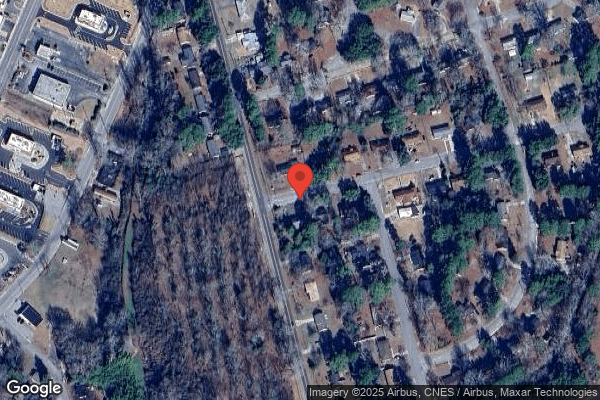
620 Johns Road, Laurinburg, NC 28352 (910) 361-4000
For profit - Corporation 149 Beds CENTURY CARE MANAGEMENT Data: November 2025
Trust Grade
83/100
#120 of 417 in NC
Last Inspection: October 2024

Within standard 12-15 month inspection cycle. Federal law requires annual inspections.

Overview

Scottish Pines Rehabilitation and Nursing Center has received a Trust Grade of B+, indicating it is above average and recommended for families considering care options. It ranks #120 out of 417 facilities in North Carolina, placing it in the top half, but only #2 out of 2 in Scotland County, meaning there is only one other local option that is better. The facility is improving, as it reduced its issues from 2 in 2023 to just 1 in 2024. Staffing appears to be a strength with a turnover rate of 26%, significantly lower than the state average, but it has concerning RN coverage, being below 96% of state facilities, which could impact resident care. There have been no fines reported, which is a positive sign, although there were some specific incidents noted, such as a resident receiving unnecessary medication doses and improperly stored medications that could pose risks for cognitively impaired residents. Overall, while there are strengths in staffing and compliance with fines, families should be aware of the RN coverage and some medication management concerns.

Trust Score
B+
83/100
In North Carolina
#120/417
Top 28%
Safety Record
Low Risk
No red flags
Inspections
Getting Better
2 → 1 violations
Staff Stability
✓ Good
26% annual turnover. Excellent stability, 22 points below North Carolina's 48% average. Staff who stay learn residents' needs.
Penalties
✓ Good
No fines on record. Clean compliance history, better than most North Carolina facilities.
Skilled Nurses
⚠ Watch
Each resident gets only 14 minutes of Registered Nurse (RN) attention daily — below average for North Carolina. Fewer RN minutes means fewer trained eyes watching for problems.
Violations
✓ Good
Only 4 deficiencies on record. Cleaner than most facilities. Minor issues only.
★★★★☆
4.0
Overall Rating
★★★☆☆
3.0
Staff Levels
★★☆☆☆
2.0
Care Quality
★★★★☆
4.0
Inspection Score
Stable
2023: 2 issues
2024: 1 issues

The Good

  • Low Staff Turnover (26%) · Staff stability means consistent care
  • Full Sprinkler Coverage · Fire safety systems throughout facility
  • No fines on record
  • Staff turnover is low (26%)

    22 points below North Carolina average of 48%

Facility shows strength in staff retention, fire safety.

The Bad

Chain: CENTURY CARE MANAGEMENT

Part of a multi-facility chain

Ask about local staffing decisions and management

The Ugly 4 deficiencies on record

Oct 2024 1 deficiency
CONCERN (E)

Potential for Harm - no one hurt, but risky conditions existed

Deficiency F0757 (Tag F0757)

Could have caused harm · This affected multiple residents

**NOTE- TERMS IN BRACKETS HAVE BEEN EDITED TO PROTECT CONFIDENTIALITY** Based on record review, staff, the Medical Director, and the Consultant Pharmacist interviews the facility failed to hold two an...

Read full inspector narrative →
**NOTE- TERMS IN BRACKETS HAVE BEEN EDITED TO PROTECT CONFIDENTIALITY** Based on record review, staff, the Medical Director, and the Consultant Pharmacist interviews the facility failed to hold two antihypertensive medications (Amlodipine Besylate and Carvedilol) that included parameters to hold the medication if the systolic blood pressure was less than 120 mm/hg ( millimeters of mercury). This resulted in a resident receiving 5 additional doses of Amlodipine Besylate 5 milligram (mg) tablets and 4 additional doses of Carvedilol 6.25 milligram tablets. There was no outcome from receiving the medications. This occurred for 1 of 5 residents (Resident #99) reviewed for medication administration. Findings included. Resident #99 was admitted to the facility on [DATE] with diagnoses that included Hypertension. The Minimum Data Set (MDS) admission assessment dated [DATE] revealed Resident #99 had mildly impaired cognition. He received limited assistance with activities of daily living (ADLs.). He had no rejection of care. A physicians order dated 09/11/24 for Resident #99 revealed Amlodipine Besylate 5 milligram (mg) tablets. Give 1 tablet orally one time a day related to Essential hypertension. Hold for systolic blood pressure less than 120 mm/hg (millimeters of mercury). Review of the Medication Administration Record (MAR) for Resident #99 dated October 2024 revealed Amlodipine Besylate 5 milligram (mg) tablets were administered on the following dates/times: 10/02/24 at 9:00 AM. The recorded blood pressure at 9:00 AM was 118/62 (systolic/diastolic). 10/03/24 at 9:00 AM. The recorded blood pressure at 9:00 AM was 112/62. 10/04/24 at 9:00 AM. The recorded blood pressure at 9:00 AM was 103/52. 10/07/24 at 9:00 AM. The recorded blood pressure at 9:00 AM was 114/60. 10/16/24 at 9:00 AM. The recorded blood pressure at 9:00 AM was 118/62. A physicians order dated 09/11/24 for Resident #99 revealed Carvedilol 6.25 milligram tablets. Give 1 tablet by mouth two times a day related to Essential hypertension. Hold for systolic blood pressure less than 120 mm/hg (millimeters of mercury). Review of the Medication Administration Record (MAR) for Resident #99 dated October 2024 revealed Carvedilol 6.25 milligram tablets were administered on the following dates/times: 10/02/24 at 9:00 AM. The recorded blood pressure at 9:00 AM was 118/62 (systolic/diastolic). 10/03/24 at 9:00 AM. The recorded blood pressure at 9:00 AM was 112/62. 10/07/24 at 9:00 AM. The recorded blood pressure at 9:00 AM was 114/60. 10/16/24 at 9:00 AM. The recorded blood pressure at 9:00 AM was 118/62. Review of the progress notes for Resident #99 from 09/11/24 through 10/16/24 revealed no documentation that the Amlodipine Besylate 5 milligram (mg) tablets or the Carvedilol 6.25 milligram tablets were held. An interview was conducted on 10/23/24 at 3:00 PM with Medication Aide #1 who signed off on the Amlodipine Besylate 5 milligram (mg) tablets and the Carvedilol 6.25 milligram tablets on 10/02, 10/03, 10/04, 10/07, and 10/16/24. She stated if the medications were checked off on the Medication Administration Record (MAR) as administered then she did give the medications. She stated she didn't realize the Amlodipine had hold parameters but knew the Carvedilol did have hold parameters. She stated the medications were administered in error. During an interview on 10/23/24 at 03:41 PM the Medical Director stated Resident #99 was on long term antihypertensive medications. He stated if Resident #99 was administered the medications with the systolic blood pressure less than 120 mm/hg then it would have no effect on this resident due to chronic use. He indicated staff should follow the medication orders and administer medications according to the physician orders. During an interview on 10/24/24 at 3:00 PM the Consultant Pharmacist stated there would be no harm in Resident #99 receiving the antihypertensive medications due to long term use. She stated it would be more concerning if he had consistently low pulse rate, but his pulse rate consistently remained 60-80 beats per minute. She indicated staff should be following the physician orders and administering medications as ordered and holding medications according to the order. During an interview on 10/24/24 at 3:29 PM the Director of Nursing (DON) stated Medication Aide #1 should have followed the physicians order and held both antihypertensive medications according to the parameters. She stated education would be provided.
Aug 2023 2 deficiencies
CONCERN (E)

Potential for Harm - no one hurt, but risky conditions existed

Assessment Accuracy (Tag F0641)

Could have caused harm · This affected multiple residents

**NOTE- TERMS IN BRACKETS HAVE BEEN EDITED TO PROTECT CONFIDENTIALITY** 3. Resident #5 was admitted to the facility 03/20/2019 with diagnosis to include Alzheimer's disease. The quarterly MDS assessm...

Read full inspector narrative →
**NOTE- TERMS IN BRACKETS HAVE BEEN EDITED TO PROTECT CONFIDENTIALITY** 3. Resident #5 was admitted to the facility 03/20/2019 with diagnosis to include Alzheimer's disease. The quarterly MDS assessment dated [DATE] revealed Resident #5 was coded as having a feeding tube and receiving more than 51% of her nutrition from parenteral feeding. Resident #5 was coded as being totally dependent on the assistance of 2 staff members for eating. A progress note written by the Registered Dietician dated 08/03/2023 read in part, Resident is NPO (nothing by mouth) and is receiving tube feeding of 237 milliliters (ml) bolus feeding, 4 times a day with 75 ml of free water flush before and after each bolus. An interview was conducted with MDS Nurse #1 on 08/09/2023 at 09:10 AM. MDS Nurse #1 stated that on the worksheet she used to code the MDS she had crossed out eating assistance of 2 staff members. She further stated that it was just an entry error that she had coded wrong. MDS Nurse #1 stated that she was going to correct the MDS and resubmit it. An interview was conducted with the DON on 08/09/2023 at 2:39 PM. The DON stated that MDS Nurse #1 had made a human error. She further stated that the MDS assessments should be coded accurately and submitted to the state on time. 4. Resident #108 was admitted to the facility on [DATE] with diagnoses to include hypertensive chronic kidney disease with stage 1 through stage 4 chronic kidney disease. He was discharged to the hospital on [DATE] and readmitted on [DATE]. Resident #108's discharge MDS assessment dated [DATE] was coded as discharged to the community. An interview was conducted with MDS Nurse #1 on 08/09/2023 at 09:06 AM. MDS Nurse #1 stated that Resident #108's MDS was coded wrong. She further stated that he was not discharged to the community, he was discharged to the hospital. MDS Nurse #1 stated that she was going to correct the MDS assessment and resubmit it to the state. An interview with the DON was competed on 08/09/2023 at 2:39 PM. The DON stated that Resident #108 was still residing in the facility and had not been discharged to the community. She further stated that MDS Nurse #1 had made a human error and was going to correct it. The DON indicated that the MDS assessments should be coded accurately and submitted to the state on time. Based on record review and staff interviews, the facility failed to code Minimum Data Set (MDS) assessments accurately for 4 of 22 residents whose MDS assessments were reviewed (Resident #59, Resident #19, Resident #5, and Resident #108). Findings included: 1. Resident #59 was admitted to the facility on [DATE] with a diagnosis of end stage renal disease. Review of a quarterly Minimum Data Set (MDS) assessment dated [DATE] documented that Resident #59 had not received dialysis treatments. In an interview with Resident #59 he stated he went to dialysis every Monday, Wednesday, and Friday morning at 6:00 AM. In an interview with MDS Nurse #1 on 08/09/23 at 2:40 PM she stated Resident #59 had been going to dialysis every Monday, Wednesday, and Friday since his admission in 2019. She noted he was on dialysis and meant to indicate he was currently receiving dialysis on the assessment but had not. She stated she did not know why except that it was human error. In an interview with the Administrator on 08/09/23 at 3:35 PM she stated she expected the MDS assessment to be accurate. 2. Resident #19 was readmitted to the facility on [DATE] with diagnoses that included, in part: gastrostomy (percutaneous endoscopic gastrostomy feeding tube or PEG tube) and dysphagia (difficulty swallowing). Review of a Registered Dietician (RD) note written on 05/24/23 documented the following: Resident is currently NPO (nothing by mouth) receiving enteral tube feeding of Vital 1.5 at 237 ML (8 oz) bolus feeding via gravity via PEG tube for every 6 hours with 100 ML water flush before and after of each bolus feeding . Resident additionally receiving nutritional supplement of 30 ML via feeding tube twice a day .to increase protein intake and skin integrity. Review of a quarterly MDS assessment dated [DATE] documented Resident #19 received 25% or less of her nutrition and 500 ML (Milliliters) or less of fluid daily by tube feeding. In an interview with the facility RD on 08/09/23 at 2:00 PM she stated that the nutrition section of the MDS assessments were completed by the RD. She noted she was new at the facility and had not completed this assessment. She stated Resident #19 was and had been NPO. She commented the MDS assessment should have been coded to reflect that the resident received all her nutrition and hydration (51% or more of nutrition and 500 ML or more of fluids daily) by tube feeding. In an interview with the administrator on 8/9/23 at 2:10 PM she stated the facility had not had consistent RD Consultants recently. She expected the MDS assessment to be completed correctly. In an interview with MDS Nurse #1 on 2/9/23 at 2:45 PM she stated the RD fills out the nutrition section. She reviewed the MDS and commented the resident was NPO and received all her nourishment and fluids via tube feeding. She stated she would correct the nutrition section.
CONCERN (E)

Potential for Harm - no one hurt, but risky conditions existed

Deficiency F0761 (Tag F0761)

Could have caused harm · This affected multiple residents

**NOTE- TERMS IN BRACKETS HAVE BEEN EDITED TO PROTECT CONFIDENTIALITY** Based on record review, observations, and staff interviews the facility failed to store medications securely when 1. a cognitive...

Read full inspector narrative →
**NOTE- TERMS IN BRACKETS HAVE BEEN EDITED TO PROTECT CONFIDENTIALITY** Based on record review, observations, and staff interviews the facility failed to store medications securely when 1. a cognitively impaired resident's (Resident #65) medications were observed on her bedside table, and 2. controlled substances were not stored in a permanently affixed compartment of the refrigerator in the only refrigerator used to store controlled medications (100, 200, 300 Hall medication storage room). Findings included: 1. Resident #65 was admitted to the facility on [DATE] with diagnoses to include hemiplegia (paralysis on one side of the body) and hemiparesis (muscle weakness on one side of the body) following cerebral infarction (stroke) affecting right dominant side, and vascular dementia. The quarterly Minimum Data Set (MDS) assessment dated [DATE] revealed Resident #65 was severely cognitively impaired. An observation of a Resident #65's room was completed on 08/07/2023 at 11:59 AM. The resident was lying in bed with her eyes closed. A plastic medication cup containing crushed medications and applesauce and a plastic cup of white liquid was noted to be sitting on the bedside table. There were no staff members observed in Resident #65's room. An observation of the hallway on 08/07/2023 at 12:00 PM revealed Nurse #1 was standing at the medication cart 4 rooms down on the opposite side of the hallway. An interview was completed with Nurse #1 on 08/07/2023 at 12:01 PM. Nurse #1 stated that she left the medications on Resident #65's bedside table because she was asleep, and she needed to be pulled up in the bed, before taking the medications. Nurse #1 indicated that she went to find someone to help pull Resident #65 up in bed and she forgot to take the medications with her. Nurse #1 stated the medication cup contained Resident #65's 9:00 AM medications which included lisinopril, vitamin D3, hydrochlorothiazide, donepezil, sertraline hydrochloride, and mirtazapine, and the cup of liquid was 120ml of weight support liquid. An interview with the Director of Nursing (DON) was completed on 08/08/2023 at 11:10 AM. The DON stated that Nurse #1 should not have left the cup of medications in Resident #65's room. She stated that Nurse #1 went to find someone to help her pull Resident #65 up in bed and just forgot to pick up the cup of medications. She further stated it was just a human error. An interview was conducted with the Administrator and the Director of Operations on 08/10/2023 at 10:23 AM. The Administrator stated she thought the breakdown in the process was caused by distractions and nerves. 2. An observation of the locked 100, 200, 300 hall medication storage room was completed with the DON on 08/08/2023 at 11:09 AM. The refrigerator designed for medication storage did not have a lock on it and contained a small metal box with a key lock on it and it was not permanently affixed to the refrigerator. The metal box contained 18 foil packages of dronabinol (dronabinol is one of the psychoactive compounds present in cannabis and is abusable and controlled Schedule III under the Controlled Substance Act). The DON stated the dronabinol was for a specific resident on the 100 hall, and it had to be kept in the refrigerator. She further stated that it was probably better to be safe than sorry because someone could remove the metal box. An interview was completed with the DON on 08/08/2023 at 2:17 PM. The DON stated that the old refrigerator in the 100. 200, 300 hall medication storage room broke a few weeks ago and that no one put a lock on the new refrigerator. She stated that maintenance had put a padlock on the refrigerator door and the metal box was now secured to the refrigerator.
Mar 2022 1 deficiency
CONCERN (E)

Potential for Harm - no one hurt, but risky conditions existed

Food Safety (Tag F0812)

Could have caused harm · This affected multiple residents

Based on observations and staff interviews the facility failed to remove food items stored ready for use by the use by date in 1 of 1 reach-in cooler, 1of 1 dry goods storage area and 1 of 1 walk-in r...

Read full inspector narrative →
Based on observations and staff interviews the facility failed to remove food items stored ready for use by the use by date in 1 of 1 reach-in cooler, 1of 1 dry goods storage area and 1 of 1 walk-in refrigerator. This practice had the potential to affect the food served to the residents. The findings included: 1. A. Initial observation of the kitchen reach in cooler on 3/28/22 at 11:57 AM revealed: · a 46-ounce bottle of nectar thick water with a sticker labeled use by 3/15/22. · A 46-ounce bottle of honey thick water with a sticker labeled use by 3/22/22. 2. Initial observation of the dry storage on 3/28/22 at 12:00 PM revealed: · a case of 1.5-ounce packages of raisins with an expiration date of 3/2/22 3. Initial observation of the walk-in refrigerator on 3/28/22 at 12:03 PM revealed: · a plastic bag with an opened package of sliced turkey breast with a sticker labelled use by 3/27/22 · a case of gelatin cups with an expiration date of 3/5/22 · An opened plastic bag containing rolls with no label and no opened date Interview with the Dietary Manager (DM) on 3/28/22 at 12:05 PM revealed that all items in the kitchen were checked weekly by the kitchen staff and that the dates were checked as the items were used. DM further stated that the expired items should have been noted during the weekly check and discarded then and that the rolls should have been labelled with an opened date and expiration date. Interview with the Administrator on 3/31/22 at 3:50 PM indicated that her expectation was that the dietary department ensured that there were no expired items served and that all expired items were discarded immediately.
Understanding Severity Codes (click to expand)
Life-Threatening (Immediate Jeopardy)
J - Isolated K - Pattern L - Widespread
Actual Harm
G - Isolated H - Pattern I - Widespread
Potential for Harm
D - Isolated E - Pattern F - Widespread
No Harm (Minor)
A - Isolated B - Pattern C - Widespread

Questions to Ask on Your Visit

  • "Can I speak with families of current residents?"
  • "What's your RN coverage like on weekends and overnight?"

Our Honest Assessment

Strengths
  • • Grade B+ (83/100). Above average facility, better than most options in North Carolina.
  • • No major safety red flags. No abuse findings, life-threatening violations, or SFF status.
  • • No fines on record. Clean compliance history, better than most North Carolina facilities.
  • • Only 4 deficiencies on record. Cleaner than most facilities. Minor issues only.
Concerns
  • • No significant concerns identified. This facility shows no red flags across CMS ratings, staff turnover, or federal penalties.
Bottom line: Generally positive indicators. Standard due diligence and a personal visit recommended.

About This Facility

What is Scottish Pines Rehabilitation And Nursing Center's CMS Rating?

CMS assigns Scottish Pines Rehabilitation and Nursing Center an overall rating of 4 out of 5 stars, which is considered above average nationally. Within North Carolina, this rating places the facility higher than 99% of the state's 100 nursing homes. This rating reflects solid performance across the metrics CMS uses to evaluate nursing home quality.

How is Scottish Pines Rehabilitation And Nursing Center Staffed?

CMS rates Scottish Pines Rehabilitation and Nursing Center's staffing level at 3 out of 5 stars, which is average compared to other nursing homes. Staff turnover is 26%, compared to the North Carolina average of 46%. This relatively stable workforce can support continuity of care.

What Have Inspectors Found at Scottish Pines Rehabilitation And Nursing Center?

State health inspectors documented 4 deficiencies at Scottish Pines Rehabilitation and Nursing Center during 2022 to 2024. These included: 4 with potential for harm.

Who Owns and Operates Scottish Pines Rehabilitation And Nursing Center?

Scottish Pines Rehabilitation and Nursing Center is owned by a for-profit company. For-profit facilities operate as businesses with obligations to shareholders or private owners. The facility is operated by CENTURY CARE MANAGEMENT, a chain that manages multiple nursing homes. With 149 certified beds and approximately 120 residents (about 81% occupancy), it is a mid-sized facility located in Laurinburg, North Carolina.

How Does Scottish Pines Rehabilitation And Nursing Center Compare to Other North Carolina Nursing Homes?

Compared to the 100 nursing homes in North Carolina, Scottish Pines Rehabilitation and Nursing Center's overall rating (4 stars) is above the state average of 2.8, staff turnover (26%) is significantly lower than the state average of 46%, and health inspection rating (4 stars) is above the national benchmark.

What Should Families Ask When Visiting Scottish Pines Rehabilitation And Nursing Center?

Based on this facility's data, families visiting should ask: "Can I visit during a mealtime to observe dining assistance and food quality?" "How do you handle medical emergencies, and what is your hospital transfer rate?" "Can I speak with family members of current residents about their experience?"

Is Scottish Pines Rehabilitation And Nursing Center Safe?

Based on CMS inspection data, Scottish Pines Rehabilitation and Nursing Center has a clean safety record: no substantiated abuse findings (meaning no confirmed cases of resident harm), no Immediate Jeopardy citations (the most serious violation level indicating risk of serious injury or death), and is not on the Special Focus Facility watch list (a federal program monitoring the lowest-performing 1% of nursing homes). The facility has a 4-star overall rating and ranks #1 of 100 nursing homes in North Carolina. While no facility is perfect, families should still ask about staff-to-resident ratios and recent inspection results during their visit.

Do Nurses at Scottish Pines Rehabilitation And Nursing Center Stick Around?

Staff at Scottish Pines Rehabilitation and Nursing Center tend to stick around. With a turnover rate of 26%, the facility is 20 percentage points below the North Carolina average of 46%. Low turnover is a positive sign. It means caregivers have time to learn each resident's needs, medications, and personal preferences. Consistent staff also notice subtle changes in a resident's condition more quickly.

Was Scottish Pines Rehabilitation And Nursing Center Ever Fined?

Scottish Pines Rehabilitation and Nursing Center has no federal fines on record. CMS issues fines when nursing homes fail to meet care standards or don't correct problems found during inspections. The absence of fines suggests the facility has either maintained compliance or corrected any issues before penalties were assessed. This is a positive indicator, though families should still review recent inspection reports for the full picture.

Is Scottish Pines Rehabilitation And Nursing Center on Any Federal Watch List?

Scottish Pines Rehabilitation and Nursing Center is not on any federal watch list. The most significant is the Special Focus Facility (SFF) program, which identifies the bottom 1% of nursing homes nationally based on persistent, serious quality problems. Not being on this list means the facility has avoided the pattern of deficiencies that triggers enhanced federal oversight. This is a positive indicator, though families should still review the facility's inspection history directly.