Lillington Health and Rehabilitation Center
1995 East Cornelius Harnett Boulevard, Lillington, NC 27546 (910) 983-5141
For profit - Corporation 129 Beds Independent Data: November 2025 2 Immediate Jeopardy citations
Trust Grade
0/100
#351 of 417 in NC
Last Inspection: May 2025

Inspected within the last 6 months. Data reflects current conditions.

Overview

Lillington Health and Rehabilitation Center has received a Trust Grade of F, indicating significant concerns about the quality of care provided. Ranked #351 out of 417 facilities in North Carolina, they are in the bottom half of all nursing homes in the state, and #4 out of 5 in Harnett County means there is only one local option that is better. The facility is worsening, with issues nearly tripling from 8 in 2024 to 19 in 2025. Staffing is a concern as they have less RN coverage than 82% of North Carolina facilities, although they report a low turnover rate of 0%, suggesting staff stability. The facility has faced $30,538 in fines, which is average, but it has documented critical incidents, including a resident suffering a serious injury without timely assessment and a failure to manage a wound infection properly, raising serious red flags about resident safety and care quality. Families should weigh these serious weaknesses against the low staff turnover when considering this facility.
Trust Score
F
0/100
In North Carolina
#351/417
Bottom 16%
Safety Record
High Risk
Review needed
Inspections
Getting Worse
8 → 19 violations
Staff Stability
○ Average
Turnover data not reported for this facility.
Penalties
✓ Good
$30,538 in fines. Lower than most North Carolina facilities. Relatively clean record.
Skilled Nurses
⚠ Watch
Each resident gets only 21 minutes of Registered Nurse (RN) attention daily — below average for North Carolina. Fewer RN minutes means fewer trained eyes watching for problems.
Violations
⚠ Watch
35 deficiencies on record. Higher than average. Multiple issues found across inspections.
★☆☆☆☆
1.0
Overall Rating
★☆☆☆☆
1.0
Staff Levels
★★★☆☆
3.0
Care Quality
★☆☆☆☆
1.0
Inspection Score
Stable
2024: 8 issues
2025: 19 issues

The Good

  • Full Sprinkler Coverage · Fire safety systems throughout facility
  • No fines on record

Facility shows strength in fire safety.

The Bad

1-Star Overall Rating

Below North Carolina average (2.8)

Significant quality concerns identified by CMS

Federal Fines: $30,538

Below median ($33,413)

Moderate penalties - review what triggered them

The Ugly 35 deficiencies on record

2 life-threatening 1 actual harm
Aug 2025 4 deficiencies
CONCERN (D) 📢 Someone Reported This

A family member, employee, or ombudsman was alarmed enough to file a formal complaint

Potential for Harm - no one hurt, but risky conditions existed

Deficiency F0627 (Tag F0627)

Could have caused harm · This affected 1 resident

**NOTE- TERMS IN BRACKETS HAVE BEEN EDITED TO PROTECT CONFIDENTIALITY** Based on record review, and interviews with staff, resident, family, and home health agency staff members, the facility failed t...

Read full inspector narrative →
**NOTE- TERMS IN BRACKETS HAVE BEEN EDITED TO PROTECT CONFIDENTIALITY** Based on record review, and interviews with staff, resident, family, and home health agency staff members, the facility failed to have an effective discharge planning process that ensured a referral with all required documentation was submitted to the home health agency Resident # 5 selected resulting in a delay of planned services when the resident was discharged . This was for one (Resident # 5) of one resident reviewed for discharge services.The findings included:Resident # 5's hospital Discharge summary, dated [DATE], revealed Resident # 5 had undergone a total left hip replacement surgery.Resident #5 was admitted to the facility on [DATE].Resident # 5's care plan, dated 7/28/25, noted Resident # 5 was expected to be at the facility for short term rehabilitation and return to the community setting. An intervention on the care plan noted upon discharge the resident was to be referred to community resources as indicated and per the resident or the resident's representative's preference.On 7/28/25 at 3:32 PM the Social Worker documented a discharge planning note which indicated the following information. The resident's family was involved in his care, and the resident planned to return home where he resided alone.Resident # 5's admission Minimum Data Set assessment, dated 7/31/25, revealed the resident was cognitively intact.On 8/5/25 (Tuesday) at 5:06 PM the Social Worker documented the following information. Resident # 5 was discharging home alone on 8/7/25 (Thursday). The family was aware and all equipment had been ordered. Home Health Agency # 2 was scheduled to begin services on 8/8/25 (Friday).On 8/7/25 (Thursday) at 5:02 PM the Social Worker documented the following information. The family had called and requested for the home health agency to be changed. They spoke to Home Health Agency # 1 and they would start care on 8/12/25 (which corresponded to the Tuesday following the resident's discharge the previous Thursday).According to the record, Resident # 5 was discharged home on 8/7/25 per order with home health services to be provided.Resident # 5's family member was interviewed on 8/7/25 at 3:53 PM and reported the following information. Other family members had utilized Home Health Agency # 1 in previous times and had been pleased. Therefore, Resident # 5 had wanted his home health services also provided by Home Health Agency # 1 when he was discharged . She (the family member) was helping Resident # 5 by making sure things were in place for him to go home. She (the family member) had spoken to the Social Worker on 8/4/25 (Monday) and requested that the home health referral be made to Home Health Agency # 1, and she thought this was to be set up for Resident # 5. On 8/6/25 she had left a message on the voice mail for the Social Worker to make sure everything was arranged and did not hear anything back. On the day of discharge, she learned that the referral had been sent to Home Health Agency # 2. She talked to the Social Worker who said they did not hear back from Home Health Agency # 1. She in turn called Home Health Agency # 1 and found they had not received any orders from the facility but were willing to accept him (Resident # 5) and provide services. She again let the facility know Resident # 5 wanted Home Health Agency # 1 and orders were sent to them on the day of discharge. The resident was safe and at home on the day of discharge but because the referral had not been sent in timely, Resident # 5 was having to wait on services until 8/12/25. The family member thought there should have been better communication.Resident # 5 was interviewed on 8/8/25 at 10:20 AM and reported the following information. He and his family member had talked to the Social Worker and conveyed that he wanted Home Health Agency # 1 to provide services when he went home. That had not been initially arranged and now he was having to wait until 8/12/25 for services to begin. In the interim, he was safe and had family to help until home health began.On 8/11/25 at 9:30 AM the Social Worker was interviewed and reported the following information. On 8/4/25 Resident # 5's family member did let her know that the resident preferred Home Health Agency # 1. She emailed the agency to see if they would accept the referral and did not hear back. She waited a few hours, emailed again, and did not hear back. She then made the referral to Home Health Agency # 2. She did not recall telling the resident or family about the change and she did not try to call Home Health Agency # 1 before switching the referral to another home health agency.A Scheduler at Home Health Agency # 1 was interviewed on 8/11/25 at 10:40 AM and reported the following information. They had a Healthcare Liaison who could take referrals, or the facility could call their general intake line and the information could be given to them. As the Scheduler she did not get any information related to Resident # 5 until 8/7/25 (the day of Resident # 5's discharge) and they let the facility know they could not be out until 8/12/25. Services were scheduled to begin on 8/12/25. The Scheduler was interviewed regarding if they could have started services by 8/8/25 (the day following discharge) if the facility had sent the referral information on 8/4/24 (Monday) when the family had requested services through them. The Scheduler reported that their home health agency could have done so.A Clinical Manager for Home Health Agency # 1 was interviewed on 8/11/25 at 10:50 AM and reported the services their company were to provide for Resident # 5 included physical therapy, a nurse, and an aide. They did not receive the referral information until 8/7/25 and notified the facility it would be 8/12/25 before they could start, and the facility reported that was acceptable to the resident. Home Health Agency # 1's Healthcare Liaison was interviewed on 8/11/25 at 1:30 PM and reported the following information. The facility had been given instructions on how to submit information about a referral. They (Home Health Agency # 1) initially needed to have information where the resident resided, insurance information, and date of discharge. They (Home Health Agency # 1) can then let the facility know what date they can start services. They also need other items as well which included the order for services, the resident's hospital discharge summary if the resident had been hospitalized prior to the facility residency, and the last facility provider's note. She received an initial email on 8/4/25 at 10:55 AM and all the information was not sent. She thought that they were going to send the rest of the information and then she received an email just a few short hours later saying the resident was referred to another home health agency. She did not receive a call. At times she was busy, but she tried to quickly return emails and phone calls and if the facility was not able to reach her, then their home health agency had a main office that took referrals. The main office referral line information was on their website and easily accessible.Home Health Agency # 1's main office was contacted on 8/11/25 at 11:46 AM and the intake employee reported that the intake office answered the phone every day, and if the facility had not been able to reach the Healthcare Liaison, then they should have been called.On 8/11/25 the facility provided the email correspondence between their Social Worker and Home Health Agency # 1 for the date of 8/4/25. The correspondence was as follows.On 8/4/25 at 10:55 AM the Social Worker emailed Home Health Agency # 1's Healthcare Liaison and wrote, I have [Resident # 5] that will be discharging home on Friday, he mentioned [Home Health Agency # 1]. I believe he has been a patient before, can you accept? The email did not show any attachments or further information provided to Home Health Agency #1.Four hours later on 8/4/25 at 2:55 PM the Social Worker emailed Home Health Agency # 1's Healthcare Liaison, I have found another company to accept, thank you.Interview with the Administrator on 8/11/25 at 1:23 PM revealed the Social Worker should have attempted to reach out again to Resident # 1's preferred home health agency when she did not hear back from the initial email on 8/4/25 and prior to making other arrangements.
CONCERN (D) 📢 Someone Reported This

A family member, employee, or ombudsman was alarmed enough to file a formal complaint

Potential for Harm - no one hurt, but risky conditions existed

Pharmacy Services (Tag F0755)

Could have caused harm · This affected 1 resident

**NOTE- TERMS IN BRACKETS HAVE BEEN EDITED TO PROTECT CONFIDENTIALITY** Based on record review and interviews with resident and staff the facility failed to ensure an accurate accounting and administr...

Read full inspector narrative →
**NOTE- TERMS IN BRACKETS HAVE BEEN EDITED TO PROTECT CONFIDENTIALITY** Based on record review and interviews with resident and staff the facility failed to ensure an accurate accounting and administration of a controlled pain medication. This was for one (Resident # 5) of three residents whose controlled pain medication records were reviewed. The findings include:Record review revealed Resident # 5 was admitted to the facility on [DATE] after being hospitalized for hip replacement surgery.Review of Resident # 5's admission Minimum Data Set assessment, dated 7/31/25, revealed the resident was cognitively intact.Review of physician orders revealed an order, dated 7/30/25, for Tramadol 50 mg (milligrams) two times a day for pain for 14 days. (Tramadol is a controlled pain medication and must be signed out of storage when removed with a notation of when the medication was removed and by whom.)Review of Resident # 5's August MAR (Medication Administration Record) revealed the resident's Tramadol was scheduled for 8:00 AM and 8:00 PM. According to the MAR Nurse # 1 placed a check mark by Resident # 5's 8:00 PM dose on 8/5/25 and the electronic MAR showed Nurse # 1 signed in the electronic record she did so at 9:49 PM. Review of Resident # 5's Controlled Drug receipt/ Record/ Disposition Form revealed Nurse # 5 had written she removed Tramadol on 8/5/25 at 9:00 PM and then she placed a line through the entry noting mistake. According to this Controlled Drug receipt/Record/ Disposition Form there was no Tramadol removed on 8/5/25 from Resident # 5's supply.Resident # 5 was interviewed on 8/8/25 at 10:20 AM and reported on the evening of 8/5/25 he needed his pain medication, and it was very late before it was administered. Resident # 5 reported he received the pain medication around 11:00 PM on 8/5/25.Nurse # 5 was interviewed on 8/8/25 at 11:56 AM and reported that she had administered Resident # 5's Tramadol on 8/5/25 around 8:30 PM or 9:00 PM. Nurse # 1 was further interviewed regarding where she had obtained the Tramadol given that there had been no Tramadol signed out from Resident # 5's supply. Nurse # 1 reported the following information. She had inadvertently removed the Tramadol from Resident #6's supply. Resident # 6 was also on Tramadol and received it on an as needed basis. She discovered the error around 7:00 AM on 8/6/25 at the end of her night-time shift. At that point she signed on Resident # 6's Controlled Drug receipt/ Record/ Disposition Form that she had removed a Tramadol dose from Resident # 6's supply but did not note she had signed it out for another resident. Nurse # 1 further reported when she administered the pain medication around 8:00 PM or 9:00 PM, Resident # 5 had not indicated he had needed anything for pain earlier than his scheduled dose.A review of Resident # 6's Tramadol Controlled Drug receipt/ Record/ Disposition Form revealed the form included Resident # 6's order at the top of the form. The order was for Tramadol 50 mg every eight hours as needed. Doses were signed out on 8/5/25 at 6:01 PM and again at 10:00 PM which indicated a span of 3 hours and 59 minutes between doses. There was no notation that this was an error or that the 10:00 PM dose was signed out for another resident.During the interview with Nurse # 1 on 8/8/25 at 11:56 AM, Nurse # 1 was interviewed regarding why she did not put 8:30 PM or 9:00 PM as the time on Resident # 6's Tramadol Controlled Drug receipt/ Record/ Disposition Form since this was the time she was reporting she had inadvertently made the mistake. Nurse # 1 reported the time between 6:01 PM (Resident # 6's last removed dose) and 8:30 PM would have been close in time so she put 10:00 PM instead.The DON (Director of Nursing) was interviewed on 8/8/25 at 12:20 PM and reported the following information. When an inadvertent mistake is made in controlled pain medications, then the nurse should call a supervisor and there should be two signatures noted on the Controlled Drug receipt/ Record/ Disposition Forms what had occurred so that the records were clear and accurate.The facility's Nurse Consultant was interviewed on 8/8/25 at 3:25 PM regarding the discrepancies regarding the differing times of administration being reported by Resident # 5 and Nurse # 1 when compared to the documentation on the MAR and the removal of the Tramadol from storage. According to the Nurse Consultant nurses should document the times controlled pain medications are administered and they should match the MAR and the Controlled Drug receipt/ Record/ Disposition Forms.
CONCERN (D) 📢 Someone Reported This

A family member, employee, or ombudsman was alarmed enough to file a formal complaint

Potential for Harm - no one hurt, but risky conditions existed

Room Equipment (Tag F0908)

Could have caused harm · This affected 1 resident

**NOTE- TERMS IN BRACKETS HAVE BEEN EDITED TO PROTECT CONFIDENTIALITY** Based on observation and interviews with staff, an employee at the local public health department and a commercial equipment ser...

Read full inspector narrative →
**NOTE- TERMS IN BRACKETS HAVE BEEN EDITED TO PROTECT CONFIDENTIALITY** Based on observation and interviews with staff, an employee at the local public health department and a commercial equipment service provider, the facility failed to ensure a mechanical dishwashing machine was operating correctly to prevent water leaking multiple feet throughout the kitchen floor on multiple days. This was for one of one dishwashing machines utilized by the facility to service dishes and trays for the entire facility. The findings included:On 8/5/25 at 12:45 PM an initial observation of the kitchen was made. At that time there was water on the floor spanning approximately 15 feet from the dishwasher. The Certified Dietary Manager (CDM) was interviewed at this time and reported the following information. They were currently using the dishwasher only to wash reusable trays (used to hold the disposable plates and utensils they were currently using to serve residents' meals). The facility had experienced mechanical problems with the dishwasher for several weeks. The dishwasher had two motors that lifted a mechanism to drain the contents of the dishwasher after each cycle. One of the motors was broken and on order. Therefore, when the dishwasher emptied, water would overflow onto the floor from the drain that did not work, and the staff would have to mop up the water.During a second observation of the kitchen on 8/6/25 at 10:40 AM the floor was observed to be wet again from the dishwasher. The wet area spanned approximately 15 feet away from the dishwasher. The CDM, who began facility employment on 6/23/25, was interviewed again and reported the following information. Since being employed at the facility, he thought the dishwasher was under a rental agreement, which he also thought entailed the rental company performing monthly service and maintenance checks. Since he had begun, the dishwasher had leaked numerous places. There were two areas at the top that had been squirting water towards the walls. A [NAME] eventually came and welded the holes. Part of the feed line had also separated from the dishwasher and was leaking. Therefore, it had been hard to tell how long the current problem with the motor being broken and causing water leakage had been occurring because there had been so many problems with the machine leaking. He did know that there had been multiple days of problems with the machine leaking water.A local Health Department Employee was interviewed on 8/6/25 at 9:23 AM and reported the following information. An inspection occurred on 7/1/25 by a colleague from the health department. The facility's dishwashing machine was not sanitizing on 7/1/25 at that visit. At that time the facility was directed to not use the dishwasher, use single service items for food service, and the three-compartment sink was to be used if needed for sanitation. She returned on 7/17/25 and the dishwasher was still broken and not sanitizing when checked. There was also water on the floor. The CDM had reported to her that they were waiting for the health department's report to fix the dishwashing machine. She did not understand why the facility needed the report to fix the dishwashing machine. Since 7/17/25 the health department had received information from the facility that a service provider had found that the hoses were not tied into the cleaning agents correctly on 7/18/25 and that issue had been repaired but the facility had also submitted to the health department that the dishwashing machine needed further repairs.On 8/8/25 at 8:52 AM the commercial service provider, who was at the facility on 7/18/25, was interviewed and reported the following information. The facility owned the machine, and it was not rented. They (the service provider) did not do any routine service for machines that were not under contract with them. Also, their company did not do repairs for the facility. Their role was to supply the chemical agents for the machine. When he arrived on 7/18/25 he checked the chemical agents. He also observed while there that the machine had water coming out of the backside also and the motor to the drain was making a loud chatter. The drain line making the chatter seemed to be locking up and therefore it would not drain correctly. The Administrator and the CDM were interviewed together on 8/8/25 at 11:00 AM and reported the following. The Administrator reported it had not been conveyed to her that the dishwashing machine was not rented and rather was owned by the facility. That week (the week of the survey) she had learned at one time the machine had been rented and during a corporate buyout the previous year, the dishwashing machine had somehow become the property of the facility. When the health department employee arrived on 7/1/25 it was her understanding that they would give her a written report of the problem and provide some education. She thought education would be a good idea and they wanted to cooperate and were waiting on the actual report from the health department to have the machine fixed. In the interim, excluding the reusable trays, they were using disposable single use food service items to serve food to residents. The CDM was interviewed again about dates when the dishwashing machine had been leaking and repaired and reported that when he arrived in June it was spurting water and needed to be welded and the feed line was broken and leaking at some point as well. He further reported that the service provider for the chemical agents who discovered the lines were crossed on 7/18/25 was the person who ordered the motor part for the malfunctioning drain. The CDM was interviewed regarding whether he was aware of the date the motor was ordered and who was supposed to actually replace the broken motor when it arrived. The CDM was not sure who the repair person was intended to be when the part was ordered.Review of a facility invoice revealed the dishwasher holes, which had been identified as needing repaired when the CDM was hired in June 2025, were repaired on 7/23/25 by a [NAME] company.
CONCERN (F) 📢 Someone Reported This

A family member, employee, or ombudsman was alarmed enough to file a formal complaint

Potential for Harm - no one hurt, but risky conditions existed

Food Safety (Tag F0812)

Could have caused harm · This affected most or all residents

**NOTE- TERMS IN BRACKETS HAVE BEEN EDITED TO PROTECT CONFIDENTIALITY** Based on observation and interviews with staff, an employee at the local public health department and a commercial equipment ser...

Read full inspector narrative →
**NOTE- TERMS IN BRACKETS HAVE BEEN EDITED TO PROTECT CONFIDENTIALITY** Based on observation and interviews with staff, an employee at the local public health department and a commercial equipment service provider, the facility failed to ensure their kitchen dishwashing machine had the cleaning and sanitation chemical agents connected correctly into the dishwashing machine and also failed to ensure water leaks from the dishwashing machine were repaired to prevent water leaking multiple feet throughout the kitchen floor on multiple days. During the time the dishwasher was not functioning correctly, the facility continued to use the machine to wash reusable meal trays. This was for one of one dishwashing machines utilized by the facility to provide clean dishes for all halls of the facility.The findings included:On 8/5/25 at 12:45 PM an initial observation of the kitchen was made. At that time there was water on the floor spanning approximately 15 feet from the dishwasher. The Certified Dietary Manager (CDM) was interviewed at this time and reported the following information. They were currently using the dishwasher only to wash reusable trays (used to hold the disposable plates and utensils they were currently using to serve residents' meals). The facility had experienced problems with the dishwasher for several weeks. The dishwasher had two motors that lifted a mechanism to drain the contents of the dishwasher after each cycle. One of the motors was broken and on order. Therefore, when the dishwasher emptied, water would overflow onto the floor from the drain that did not work, and the staff would have to mop up the water.During a second observation of the kitchen on 8/6/25 at 10:40 AM the floor was observed to be wet again from the dishwasher. The wet area spanned approximately 15 feet away from the dishwasher. The CDM, who began facility employment on 6/23/25, was interviewed again and reported the following information. Since being employed at the facility, he thought the dishwasher was under a rental agreement, which he also thought entailed the rental company performing monthly service and maintenance checks. Since he had begun, the dishwasher had leaked numerous places. There were two areas at the top that had been squirting water towards the walls. A [NAME] eventually came and welded the holes. Part of the feed line had also separated from the dishwasher and was leaking. Therefore, it had been hard to tell how long the current problem with the motor being broken and causing water leakage had been occurring because there had been so many problems with the machine leaking. He (the CDM) thought at the current time it was only leaking during the rinse cycle because he noticed the problem when the machine showed it was going into the rinse cycle, and therefore he thought the water on the floor was only rinse water. The CDM further reported the following. The local health department had performed an inspection on 7/1/25 and reported that the machine was not sanitizing and the facility was instructed to use single service items for food service to residents. Since 7/1/25 he had used single service items except for reusable trays because of the malfunctioning dish washer. The local health department had instructed them to use the three compartment sink for sanitation if needed. They had tried using the three compartment sink for the reusable trays but found that the trays did not air dry quickly enough to be available for the next meal delivery time. He was not able to order single service trays because he worked for a contracting company which required him to get supplies from a specific supply company. That supply company did not have single service trays. Therefore, since it had been identified by the local health department that the dishwashing machine was not sanitizing, he would manually open the machine and insert the sanitizer. When the machine leaked then the kitchen staff would mop the floor. According to the CDM, a service provider came in on 7/18/25 and identified that the lines from the soap, rinse, and sanitizing agents were not correctly fed into the machine which had led to the machine not sanitizing the trays. The chemical agents usually lasted for about 1 1/2 to 2 weeks before they needed to be changed. He did not know when the chemical agents had last been changed prior to the error of the crossed lines being detected on 7/18/25. Therefore, he could not say how many days the trays had been going through the machine and out to residents without being sanitized. He did know that there had been multiple days of problems with the machine leaking water.A local Health Department Employee was interviewed on 8/6/25 at 9:23 AM and reported the following information. An inspection occurred on 7/1/25 by a colleague from the health department. The facility's dishwashing machine was not sanitizing on 7/1/25 at that visit. At that time the facility was directed to not use the dishwasher, use single service items for food service, and the three-compartment sink was to be used if needed for sanitation. She returned on 7/17/25 and the dishwasher was still broken and not sanitizing when checked. There was no evidence that the facility was using disposable meal service items at that time. There was also water on the floor. The CDM had reported to her that they were waiting for the health department's report to fix the dishwashing machine. She did not understand why the facility needed the report to fix the dishwashing machine. Since 7/17/25 the health department had received information from the facility that a service provider had found that the hoses were not tied into the cleaning agents correctly on 7/18/25 and that issue had been repaired but the facility had also submitted to the health department that the dishwashing machine needed further repairs.On 8/8/25 at 8:52 AM the commercial service provider, who was at the facility on 7/18/25, was interviewed and reported the following information. Their role was to supply the chemical agents but they were not under contract to repair or maintain the machine. When he arrived on 7/18/25 he checked the chemical agents and the lines from the chemical agents that fed into the machine were crossed. The detergent line was feeding into where the sanitizer should have been fed into the machine, and the detergent was feeding into where the sanitizer should have been feeding into the machine. The machine had water coming out of the backside also and the motor to the drain was making a loud chatter. The drain line making the chatter seemed to be locking up and therefore it would not drain correctly. This service provider was interviewed regarding whether it would always be rinse water that was not draining since the CDM noticed that the water would overflow the drain when the machine turned to the rinse cycle. The service provider reported that it could be either dirty water or rinse water. This was because once the wash cycle was completed, the machine then would show as being in the rinse cycle, but it would be emptying dirty water before beginning the rinse cycle. The malfunctioning motor could hang up at anytime during the process.The Administrator and the CDM were interviewed together on 8/8/25 at 11:00 AM and reported the following. When the health department employee arrived on 7/1/25 it was her understanding that they would give her a written report of the problem and provide some education. She thought education would be a good idea. They wanted to cooperate and were waiting on the actual report from the health department to have the machine fixed. In the interim, excluding the reusable trays, they were using disposable single use food service items to serve food to residents.Review of a facility invoice revealed the dishwasher holes, which had been identified as leaking water on the floor when the CDM was hired in June 2025, were repaired on 7/23/25 by a [NAME] company.During an interview on 8/8/25 at 8:19 AM with the Health Department Employee, who visited the facility on 7/17/25, the Health Department employee reported the following. Dirty water overflowing from the dishwasher was a sanitation issue. The health department also considered overflowing rinse water onto the floor as a sanitation issue because the water could attract pests into the kitchen. The dishwasher should not be used if it was leaking water on the floor and/or was not sanitizing.
May 2025 15 deficiencies
CONCERN (D) 📢 Someone Reported This

A family member, employee, or ombudsman was alarmed enough to file a formal complaint

Potential for Harm - no one hurt, but risky conditions existed

Deficiency F0558 (Tag F0558)

Could have caused harm · This affected 1 resident

**NOTE- TERMS IN BRACKETS HAVE BEEN EDITED TO PROTECT CONFIDENTIALITY** Based on record review, observations and staff interviews, the facility failed to place a resident's adaptive flat call light de...

Read full inspector narrative →
**NOTE- TERMS IN BRACKETS HAVE BEEN EDITED TO PROTECT CONFIDENTIALITY** Based on record review, observations and staff interviews, the facility failed to place a resident's adaptive flat call light device within reach to allow for the resident to request assistance if needed for 1 of 4 residents reviewed for accommodation of needs (Resident #81). Findings included: Resident #81 was admitted to the facility on [DATE] with diagnoses including legal blindness. The quarterly Minimum Data Set (MDS) dated [DATE] indicated Resident #81 was moderately cognitively impaired, had no impairments with range of motion to both upper body extremities and was dependent on staff assistance for all mobility in and out of the bed. Resident #81's revised care plan dated 4/27/2025 indicated Resident #81 was legally blind. There was no intervention for keeping the call bell in the reach of Resident #81. On 5/19/2025 at 11:01 am, Resident #81 was observed lying in the bed with her head of the bed elevated and an adaptive flat call bell was observed attached to the upper right corner of the mattress cover with the call bell hanging toward the back side of the mattress. When Resident #81 was asked where the call ball was located, Resident #81 was observed moving her hands against the bed on each side of her body to search for the adaptive flat call bell. Resident #81 explained she was blind and stated she did not know where the call bell was located at that moment. When Resident #81 was informed where the adaptive call bell was located (hanging on the right corner of the mattress), Resident #81 stated she was unable to reach the adaptive flat call bell. Resident #81 needed assistance with incontinence care, and Nurse #2 was informed of the Resident #81 needs. On 5/20/2025 at 4:51 pm, Resident #81 was observed lying in the bed and the adaptive flat call bell was observed lying in a chair positioned four feet from the right side of the bed. Resident #81 was observed attempting to locate the call bell on the bed and stated she was unable to locate the adaptive flat call bell. Resident #81 stated they (nursing staff) put the call bell where they want to. On 5/20/2025 at 4:56 pm in an observation and interview with Nurse Aide (NA) #2 who was assigned Resident #81, she stated Resident #81 communicated her needs to staff when they were making rounds. NA #2 stated Resident #81 was checked every hour and when she was last in Resident #81's room thirty minutes ago, Resident #81's call bell was on the bed. NA #2 stated she had no idea Resident #81's call bell was in the chair and the call bell should be clipped to the bed in Resident #81's reach. NA #2 was observed moving the adaptive flat call bell to Resident #81's right side of the bed and informing Resident #81 where the adaptive flat call bell was located. NA #2 stated Resident #81 was unable to get out of bed independently to move the call bell into the chair beside the bed. On 5/21/2025 at 3:50 pm, Resident #81 was observed resting in the bed with a push button call bell positioned on the right side of the bed beside Resident #81. On 5/22/2025 at 8:38 am in an interview with Nurse #2, she stated Resident #81 was able to use the adaptive flat call bell to call for assistance as needed and had always known Resident #81 to use the adaptive flat call bell. She stated Resident #81's call bell was to be within reach for use and when the call bell was observed hanging from the right corner of the mattress (5/19/2025) and in the chair (5/20/2025), the call bell was not in the reach of Resident #81. On 5/22/2025 at 8:40 am in an interview with the Director of Nursing, she stated Resident #81 could use the adaptive flat call bell to call for assistance and Resident #81's adaptive flat call bell should be in the reach of Resident #8. The DON stated Resident #81's adaptive flat call bell should not have been changed to a push button call bell due to Resident #81's blindness and the possibility of Resident #81 missing the button to call for help. On 5/21/2025 at 8:49 am in an interview with Nurse #8, she stated Resident #81 required an adaptive flat call bell and the reason Resident #81 was observed with a push button call bell (5/22/2025) was because the adaptive flat call bell for Resident #81 and the push button call bell for Resident #81's roommate had been switched. On 5/23/2025 at 11:30 am in an interview with the Administrator, she stated Resident #81 adaptive flat call bell should be positioned within the reach of the resident
CONCERN (D) 📢 Someone Reported This

A family member, employee, or ombudsman was alarmed enough to file a formal complaint

Potential for Harm - no one hurt, but risky conditions existed

Free from Abuse/Neglect (Tag F0600)

Could have caused harm · This affected 1 resident

**NOTE- TERMS IN BRACKETS HAVE BEEN EDITED TO PROTECT CONFIDENTIALITY** Based on record review, and Physician and staff interviews, the facility failed to protect a resident's right to be free from ab...

Read full inspector narrative →
**NOTE- TERMS IN BRACKETS HAVE BEEN EDITED TO PROTECT CONFIDENTIALITY** Based on record review, and Physician and staff interviews, the facility failed to protect a resident's right to be free from abuse when a cognitively intact resident (Resident #326) hit a moderately cognitively impaired resident (Resident #325) on his arms with an ashtray holder. Resident #325 sustained 3 small skin tears on his left forearm, left elbow, left posterior arm, and right ring finger. This deficient practice affected 1 of 3 residents reviewed for abuse (Resident #325). The findings included: Resident #326 was admitted to the facility on [DATE] and was discharged on 11/7/24. His diagnoses included osteomyelitis, anxiety disorder, depression, and hallucinations. Resident #326's admission Minimum Data Set (MDS) assessment dated [DATE] revealed he was cognitively intact. He was independent with upper body dressing, rolling left and right, sitting to lying, lying to sitting on side of bed, picking up an object, wheeling 50 feet with 2 turns, and wheeling 150 feet. He required partial/moderate assistance with toileting hygiene, showering/bathing himself, lower body dressing, putting on/taking off footwear, and personal hygiene. He needed supervision/touch assistance to sit to stand, chair/bed to chair transfer, toilet transfer, and tub/shower transfer. Resident #326's revised care plan dated 10/7/24 revealed he exhibited behaviors that included throwing items at staff, cursing at staff, cursing at other residents, destroying others personal property, manipulative behaviors/ fabrication of stories, hitting staff and other residents. Interventions included 1:1 supervision, administering medications as ordered, diverting Resident #326 by giving him an alternative object or activity, listening and calming him. Resident #325 was admitted to the facility on [DATE] and was discharged on 1/3/25. His diagnoses included epidural hemorrhage with loss of consciousness, dementia, muscle weakness, abnormalities of gait and mobility, major depressive disorder, seizures, schizophrenia, and chronic pain syndrome. Resident #325's Minimum Data Set (MDS) dated [DATE] revealed he was moderately cognitively impaired. He was independent in the areas of eating, oral hygiene, toileting hygiene, upper and lower body dressing, putting on/taking off footwear, personal hygiene, rolling left and right, sitting to lying, lying to sitting on side of bed, toilet transfer, wheeling 50 feet with 2 turns, and wheeling 150 feet. He required set up/clean up assistance for tub/shower transfer. He needed supervision/touch assistance with shower/bathing himself, sitting to standing, chair/bed to chair transfer, walking 10 feet, and walking 50 feet with 2 turns. He required partial/moderate assistance to walk 150 feet. Resident #325's revised care plan dated 9/4/24 included the focus area of behaviors such as spitting on the floor and throwing briefs on the floor. Review of Resident #326's nursing progress note dated 9/30/24 at 10:40 AM entered by the Director of Nursing (DON) revealed Resident #326 was agitated and challenging with redirection. Resident #326 was medicated for pain and monitored closely for aggression. An emergency mental health tele-visit for Resident #326 was requested. Review of a Physician medical progress note dated 9/30/24 at 11:37 AM indicated during this visit Resident #326 was upset about his pain medication, used profanity and attempted to hit and throw things at the Physician. The Physician's progress note stated Resident #326 was asking for more anxiety medications. The Physician indicated psychiatry was seeing him and reportedly did not change his anxiety medications. The physician further indicated Resident #326 was upset his Physician would not increase his pain medication and started hitting, throwing things, and cursing at the Physician. An interview was conducted with Physician #1 on 5/22/25 at 11:31 AM. He stated Resident #326 always requested to have his pain medication increased. Physician #1 stated as he exited the room Resident #326 told him not to shut the door and then came after him in the hallway. Physician #1 stated Resident #326 attempted to hit him but instead punched his laptop twice. Physician #1 stated Resident #326 continued to follow him, and Physician #1 went into another resident room. Resident #326 came into the room and took one of the drawers out of a dresser and tried to hit Physician #1 with it. Physician #1 stated a physical therapist was near the room and attempted to intervene. Physician #1 indicated he was told later Resident #326 had an altercation in the courtyard. Regarding emergency mental health tele-visits, Physician #1 stated if a resident was experiencing a serious mental health emergency, that resident would be sent directly to the emergency room (ER). Otherwise, he stated, it was his expectation that a practitioner would see a resident within 24 hours. An interview with the Rehabilitation Director was conducted on 5/22/25 at 1:51 PM. He stated he and his Physical Therapy Assistant (PTA) saw Resident #326 yelling and belligerent. The Rehabilitation Director stated Resident #326 had cornered the provider in a resident room and was verbally abusive. He stated he removed Resident #326 from the room by pulling on the handles of his wheelchair. On 5/22/25 at 2:00 PM an interview was conducted with the Physical Therapy Assistant (PTA). He stated he heard a commotion, saw a provider (Physician #1) backing out of a room, and Resident #326 followed him and was verbally abusive and pushing the provider. The PTA stated he and the Rehabilitation Director walked to meet them. The provider backed into another resident's room and Resident #326 followed him and attempted to hit the provider. The PTA stated there was a resident in that room near the window. He stated the provider was positioned in the middle of the room in front of the resident in the bed by the window. He further stated it appeared that Resident #326 pulled on dresser drawers, while he was being backed out of the room. The PTA stated the Rehabilitation Director grabbed the back of Resident #326's wheelchair and backed him out of the room. The PTA stated it all happened very fast, in less than a minute. He added the provider was able to get out of the room and go down the hall. The PTA recalled that the Rehabilitation Director released the wheelchair and Resident #326 began pursuing the provider again. The PTA tried to talk to Resident #326 and distract him, however Resident #326 punched the PTA in the stomach and chest to continue to pursue the provider. The PTA talked to Resident #326 to calm him down. Both Resident #326 and the PTA went out to the courtyard and talked while Resident #326 smoked. The PTA stated the Social Worker came out to talk to Resident #326 and the police showed up. A review of the facility's Initial Allegation Report dated 9/30/24 revealed on 9/30/24 at 12:00 PM there was a resident-to-resident altercation. Resident #326 hit Resident #325 with a small table stand during an argument in the courtyard. The residents were separated immediately, and Resident #326 was placed on one-to-one supervision. Law enforcement was notified. Review of the witness statement from Medication Aide #1 dated 9/30/24 indicated she was outside with Resident #326 while he was smoking. Resident #326 and Resident #325 started to argue. Resident #326 picked up the ashtray stand and started hitting Resident #325. Medication Aide #1 attempted to grab the ashtray stand but a male housekeeper grabbed it. Medication Aide #1 brought Resident #326 inside and informed the nurse that Resident # 325 needed help. An interview was conducted on 5/22/25 at 9:15 AM with Medication Aide #1 who completed one to one observation of Resident #326 on 9/30/24. She stated she did not recall the incident between Resident #326 and Resident #325. A follow up interview was conducted with Medication Aide #1 on 5/23/25 at 10:34 AM. She stated she performed 15-minute checks on Resident #326 the morning of 9/30/24 after he had requested medications. She stated she was unsure what time he was placed on one-to-one observation. An interview with Housekeeping Staff #1 who witnessed the incident 9/30/24 was conducted on 5/21/25 at 7:03 PM. Housekeeping Staff #1 stated he was on the 500-hall taking out the garbage and was looking out the window toward the courtyard and saw a resident hit another resident with an ashtray holder. Housekeeping staff #1 stated he ran out and grabbed the ashtray holder out of the resident's hand, separated the residents, and went inside to report it to a staff member immediately. He was unsure which staff member he reported it to and did not recall seeing anyone else outside. An interview was conducted on 5/23/25 at 12:05 PM with Nurse #9 who was assigned to both Resident #326 and Resident #325 on 9/30/24. Nurse #9 stated she recalled there was an altercation because a housekeeper had reported the incident to her on 9/30/24. Nurse #9 was unsure if Resident #326 was on one-on-one observation prior to the incident, but stated he was supervised after the incident. Nurse #9 indicated when she was informed of the incident she assessed both residents for injuries. Resident #325 had skin tears on one arm. An interview was conducted with the Director of Nursing (DON) on 5/22/25 at 6:45 AM. She stated on 9/30/24 Resident #326 was checked on continuously and was kept at the nurse's station after he became agitated that morning. The DON indicated she was unsure how he could have left the nurse's station. Additional interventions included administering pain and antianxiety medications and 15-minute checks. The DON stated Resident #326's mental health practitioner saw him in person the next day on 10/1/24. She further stated that monitoring a resident closely entailed the resident was monitored every 15 minutes, and those logs were kept in a binder. She stated a safety attendant for one-to-one observations for Resident #326 were in effect until 11/7/24 for the duration of his stay. A review of Resident #326's one-to-one 15-minute monitoring logs 9/30/24 through 11/7/24. Resident #326's monitoring logs revealed he had 15-minute checks signed by staff. An interview was conducted with the Social Worker (SW) on 5/22/25 at 2:10 PM. He stated he saw Resident #326 after the incident with the provider (Physician #1) as well as after the incident with another resident. He stated they discussed his aggressive behavior in both instances. He stated he recalled Resident #326 was on one-to-one observation, however, was unsure of how long. The SW stated he could not recall anything further about the incidents that occurred on 9/30/24. Review of a psychiatry progress note dated 10/4/24 revealed Resident #326 was able to express insight into the altercation with Resident #325 and demonstrated emotional awareness and control. There were no changes made to Resident #326's medications. Recommendations included continued practice of calming techniques, redirection techniques, support, and redirection as needed. A review of the facility's investigation report dated 10/4/24 revealed in summary, Resident #325 sustained small skin tears on his left forearm, left elbow, left posterior arm, and right ring finger. Resident #325 declined to press charges. Resident #325 denied any lasting trauma because of the incident, stated he felt safe at the facility, and was not afraid of Resident #326. Resident #326 also denied a traumatic response to the incident, was placed on one-to-one observation, and received a mental health evaluation. This was completed by the Administrator. An interview was conducted with the Administrator on 5/22/25 at 3:47 PM. She stated interventions were put in place (15-minute observations and placing Resident #326 at the nurse's station) and was unsure why they did not prevent the incident.
CONCERN (D)

Potential for Harm - no one hurt, but risky conditions existed

Comprehensive Care Plan (Tag F0656)

Could have caused harm · This affected 1 resident

**NOTE- TERMS IN BRACKETS HAVE BEEN EDITED TO PROTECT CONFIDENTIALITY** Based on record review, observations and staff interviews, the facility failed to implement care planned interventions by not pl...

Read full inspector narrative →
**NOTE- TERMS IN BRACKETS HAVE BEEN EDITED TO PROTECT CONFIDENTIALITY** Based on record review, observations and staff interviews, the facility failed to implement care planned interventions by not placing fall mats at the bedside of a resident with a history of falls with major injuries. This occurred for 1 of 5 residents reviewed with care plan interventions for accidents (Resident #98). Findings included: Resident #98 was admitted to the facility on [DATE] with diagnoses of non-Alzheimer's dementia and Parkinson's disease (a movement disorder of the nervous system that worsens over time). A post fall report dated 3/24/2025 at 3:53 pm indicated Resident #98 had an unwitnessed fall and was found sitting on the floor next to the bed complaining of right hip pain on 9/23/2025 at 9:34 am. X-rays were obtained, and Resident #98 was transferred to the hospital on 3/24/2025. A care plan revised on 3/27/2025 indicated Resident #98 was a risk for falls related to the cognitive impairment. An intervention dated 3/23/2025 included fall mats upon return to the facility. Nursing documentation dated 3/27/2025 recorded Resident #98 returned to the facility from the hospital after having surgery for repair of a right hip fracture. The significant change Minimum Data Set assessment dated [DATE] indicated Resident #98 was severely cognitively impaired and was coded for recent surgery for repair of a fracture to the pelvis, hip, leg, knee or ankle. There was no documentation in the electronic medical record of any falls since re-admission on [DATE]. On 5/22/2025 at 6:35 am, Resident #98 was observed resting in the center of the bed with the bed positioned in the lowest position. There were no fall mats on the floor to either side of Resident #98's bed. On 5/22/2025 at 8:33 am, Resident #98 was observed still resting in the bed with no fall mats positioned on the floor on either side of Resident #98's bed. Fall mats were observed folded up in the left corner of the room. Medication Aide #1 was observed outside Resident #98's room at the medication cart. On 5/22/2025 at 8:33 am in an interview with the day shift (7:00 am to 7:00 pm) Medication Aide #1, she stated she had not been into Resident #98's room since receiving her assignment at 7:00 am and the fall mats should have been positioned down on the floor beside Resident #98's bed. Medication Aide #1 was observed entering Resident #98's room, gathering the folded fall mats from the left corner of the room and placing the fall mats to each side of Resident #98's bed. On 5/22/2025 at 8:35 am in an interview with Nurse #2, she stated Resident #98 was care planned for the use of fall mats at the side of the bed and she was not sure why the fall mats were not beside Resident #98's bed. She stated it was the responsibility of the nursing staff to ensure fall mats were positioned beside the bed when Resident #98 was in bed. On 5/22/2025 at 8:40 am in an interview with the Director of Nursing, she stated fall mats should have been beside the bed when Resident #98 was in the bed and it was the responsibility of all nursing staff to ensure fall mats were on the floor beside the bed.
CONCERN (D) 📢 Someone Reported This

A family member, employee, or ombudsman was alarmed enough to file a formal complaint

Potential for Harm - no one hurt, but risky conditions existed

Quality of Care (Tag F0684)

Could have caused harm · This affected 1 resident

**NOTE- TERMS IN BRACKETS HAVE BEEN EDITED TO PROTECT CONFIDENTIALITY** Based on record review, observations, and staff interviews and Nurse Practitioner interview, the facility failed to change a chr...

Read full inspector narrative →
**NOTE- TERMS IN BRACKETS HAVE BEEN EDITED TO PROTECT CONFIDENTIALITY** Based on record review, observations, and staff interviews and Nurse Practitioner interview, the facility failed to change a chronic wound dressing as ordered by the provider for 1 of 1 resident reviewed for venous wound care (Resident # 40). Findings included: Resident #40 was admitted to the facility on [DATE] with diagnoses including chronic idiopathic (arising spontaneously with unknown cause) venous hypertension with ulcer to the left lower extremity and pyoderma gangrenosum (a rare condition that causes large painful sores on the skin). Resident's #40's revised care plan dated 1/7/2025 included a focus for a chronic left lower leg vascular wound. Interventions included treatments per the Treatment Administration Record (TAR). The care plan also included a focus for behaviors due to Resident #40 refusing care that included wound care. The quarterly Minimum Data Set (MDS) assessment dated [DATE] indicated Resident #40 was moderately cognitively impaired. The MDS was coded for one venous/arterial ulcer and treatments included application of ointments, medications and nonsurgical dressings. A review of physician orders indicated on 3/20/2025 Resident #40 was ordered daily wound care that included to cleanse the left lower extremity wound with wound cleanser, pat dry, apply collagen soaked gauze followed by calcium alginate with silver to the open area, cover with ABD pads (highly absorbent pads for large wounds) and apply Kerlix (crinkle-weave bandage used for wound care). Physician orders dated 5/9/2025 included a change in the wound care order to cleanse the left lower extremity wound with Vashe (a pure hypochlorous acid solution used to fight bacteria and infection), pat dry, apply collagen particles (provides support for cell organization and faster tissue formation, helps maintain a moist environment and stimulated new tissue growth), cover with Xeroform (sterile, non-adherent wound dressing that prevent air for reaching the wound) and infections), apply ABD pads and wrap the wound with Kerlix every day shift. The Nurse Practitioner's wound documentation dated 5/14/2025 reported the left lower ulcer wound was improving without complications and measurements were recorded as 14.5 centimeters (cm) by 25 cm by 0.30cm with moderate odorless serosanguineous drainage. The frequency of dressing changes was recorded for daily dressing changes. A review of Resident #40's May 2025 TAR recorded the following order for wound care: Cleanse left lower extremity wound with Vashe, pat day, apply collagen particles, cover with Xeroform, apply ABD pads then wrap with kerlix every day shift for wound care and the order date was recorded as 5/9/2025 at 10:20 am. There was no wound care recorded provided to Resident #40's left lower leg wound for the following dates on Resident #40's May 2025 TAR: 5/10/2025, 5/11/2025, 5/17/2025 and 5/18/2025. There was no documentation in the electronic medical record (EMR) that wound care was provided to Resident #40 or Resident #40 refused wound care on 5/10/2025, 5/11/2025, 5/17/2025 and 5/18/2025. On 5/22/2025 at 8:54 am in a phone interview with Nurse #3, she explained she served as the nurse supervisor for nursing station #2 that included Resident #40's room. Nurse #3 explained on weekends there were medication aides assigned to Resident #40 to administer medications and as nurse supervisor she was responsible for Resident #40's wound care. Nurse #3 stated on 5/10/2025, 5/11/2025, 5/17/2025 and 5/18/2025 she did not provide or offer to provide wound care to Resident #40 because she thought Resident #40 received wound care on Monday, Wednesday and Friday. Nurse #3 stated she was not aware of the new order for left lower extremity wound care written on 5/9/2025 and explained the resident would communicate when there were new orders for wound care and nurses reviewed Resident #40's EMR for new wound care orders. Nurse #3 stated she had not checked Resident #40's EMR for wound care orders. On 5/23/2025 at 9:20 am in an interview with Nurse #2, she stated she had been the unit manager for nurse's station #2 that included Resident #40's room since the end of March 2025. Nurse #2 stated Resident #40's left lower extremity wound care had been ordered daily since March 2025 and could not recall a change in the frequency of Resident #40's wound care. On 5/19/2025 at 12:52pm, Resident #40's left lower extremity wound dressing was observed with moderate amount of dried light brown drainage to the outer wound dressing and moderate amount of dried yellowish brown stains to the under pad on the bed underneath the left lower extremity. There was no date or initials on the dressing indicating when the dressing was last changed. On 5/19/2025 at 12:52 pm, Resident #40's Representative stated the dressing to the left lower extremity was not changed on the weekend. Resident #40 confirmed that the left lower wound dressing was not changed on the weekend (5/17/2025 and 5/18/2025). On 5/20/2025 at 11:26 am, Nurse #6 and Nurse #7 were observed educating Resident #40 on the importance of daily wound care before Resident #40 consenting to treatment. Nurse #7 was observed assisting Resident #40 in participating in the wound care and wound care was conducted as ordered by the provider. The large open wound area to the left lower leg was observed with dark burgundy-red color tissue covered with a thin clear to white slough in areas. There was no odor noted. On 5/20/2025 at 12:02 pm in a interview with Nurse #7, she stated when she changed Resident #40's left lower extremity wound dressing on 5/19/2025, there was no date or initials on the old dressing and the wound dressing appeared to not have been changed on the weekend. On 5/22/2025 at 9:03 am in a phone interview with the Wound Nurse Practitioner, she stated Resident #40's refused wound care at times and had refused debridement of the left lower extremity wound to remove the slough. She explained Resident #40 was scheduled wound care three times a week (Monday, Wednesday and Friday) at one time and because Resident #40 would refuse wound care, she had changed the frequency of Resident #40's left lower extremity wound dressing from three times a week (Monday. Wednesday and Friday) to daily. She explained when Resident #40 was receiving wound care three times a week and refused wound care, the dressing to the left lower extremity wound would go three to four days without treatment. Therefore, to ensure Resident #40 was receiving lower extremity wound care more consistently, the wound nurse practitioner increased the wound care to daily to capture the performance of wound care more routinely. She explained the resident had been more cooperative and there was less time in between wound care dressing changes even when Resident #40 refused wound care with daily wound care. The Nurse Practitioner stated Nurse #3 should have attempted to perform wound care as ordered for Resident #40 on 5/10/2025, 5/11/2025, 5/17/2025 and 5/18/2025. On 5/23/2025 at 9:03 am in an interview with the Director of Nursing, she stated the nurse assigned to nursing station #2 was responsible for performing wound care to the assigned area on weekends. She stated Nurse #3 should have verified Resident #40 wound care orders and offered Resident #40 wound care as ordered on 5/10/2025, 5/11/2025, 5/17/2025 and 5/18/2025.
CONCERN (D) 📢 Someone Reported This

A family member, employee, or ombudsman was alarmed enough to file a formal complaint

Potential for Harm - no one hurt, but risky conditions existed

Accident Prevention (Tag F0689)

Could have caused harm · This affected 1 resident

**NOTE- TERMS IN BRACKETS HAVE BEEN EDITED TO PROTECT CONFIDENTIALITY** Based on observations, record review, and staff interviews, the facility failed to ensure a severely impaired resident with a di...

Read full inspector narrative →
**NOTE- TERMS IN BRACKETS HAVE BEEN EDITED TO PROTECT CONFIDENTIALITY** Based on observations, record review, and staff interviews, the facility failed to ensure a severely impaired resident with a diagnosis of dysphagia (difficulty swallowing) and a physician order for a pureed diet (foods that are smooth and pudding-like texture) did not have access to mechanically chopped food. A nursing assistant realized the resident had received mechanically chopped breakfast sausage on a meal tray and left it with the resident who was able to feed himself independently. This deficient practice occurred for 1 of 3 residents reviewed for accidents. The findings included: Resident #84 was admitted to the facility on [DATE] with diagnoses which included Progressive Supranuclear Palsy (a neurodegenerative disease involving the gradual deterioration of the brain), secondary Parkinsonism, and dysphagia (difficulty swallowing). Record review indicated Resident #84 had a Physician's Order, dated 1/16/25, for a Regular Diet, pureed texture, thin liquids consistency, and double protein for all meals. A review of Resident #84's quarterly Minimum Data Set (MDS), dated [DATE], revealed the resident to have the ability to understand others and to make himself understood. The MDS indicated he was severely cognitively impaired. He had no impairment in his upper extremities and required set up or clean-up assistance when eating. The MDS indicated Resident #84 had a swallowing disorder and was on a mechanically altered diet. A review of Resident #84's Care Plan, last revised on 4/16/25, indicated the following focuses: 1) at risk for injury related to his medical diagnoses and stated he pockets food at times (holding food in the mouth without swallowing it); 2) refuses to allow staff to assist with meals and eating; and 3) requires assistance with his Activities of Daily Living. Interventions included, in part, a therapeutic diet as ordered, staff assistance with meal setup, encouragement by staff to allow with assistance with his meals, cues and reminders to improve his meal intake, assurance that he is safe and if he became distressed to listen to him and try to calm him. An observation of Resident #84 was conducted on 5/23/25 at 8:36 AM. He was sitting up in his bed and was observed eating. A small bowl that contained grits, scrambled eggs and sausage had been placed on his overbed table which was positioned across his lap. The eggs and sausage appeared to have a mechanically chopped texture (foods that are ground into very small pieces making it easier for people who have difficulty chewing or swallowing eat) instead of pureed texture (foods that are smooth and pudding-like texture). He was observed using an adaptive spoon (a utensil with an easy-grip handle) to eat the grits. There was no tray or meal ticket on the table or in his room. Resident #84's nursing assistant (NA), NA #1, entered the room, introduced herself as the NA assigned to his care that day, and asked him if he was done eating and the resident indicated he was. An interview was conducted with NA #1 on 5/23/25 at 12:05 PM. NA #1 stated Resident #84 had orders for a pureed diet with double portions. When asked about his breakfast, NA #1 claimed she knew the resident's likes and dislikes very well and because she had fed him most of his breakfast, she had asked if he would like to eat some more, by himself and said he indicated he would like to do that. Instead of leaving everything, she had taken some of the remaining eggs and sausage from his plate and put them into his bowl of grits, placed the bowl on his overbed table and gave him his spoon. She then removed the tray and left him to eat on his own. When asked about the texture of the foods in the bowl, NA #1 explained that grits and eggs always had that consistency, but the sausage appeared to have been a mechanically chopped texture. NA #1 further explained she realized the sausage had not been pureed when she sat down to feed him and removed the dome from his plate. She stated she had planned on going to the kitchen to get him the pureed version of sausage, but said the resident told her that he did not want any sausage that morning, so she did not go to the kitchen. NA #1 could not explain why she put the sausage into the bowl of grits that she had left with the resident except for saying that because he had said he did not want to eat any sausage that morning she knew he would not eat it. When asked if she had reported Resident #84 received a mechanically chopped diet that morning, she initially said she had reported it to the Resource Nurse on the hall and then admitted she had not. An interview was conducted with the Resource Nurse, Nurse #4, on 5/23/25 at 11:15 AM. Nurse #4 explained Resident #84 had orders for a pureed diet and could feed himself, but it took a long time for him to eat. Nurse #4 stated he was unaware Resident #84 had received a mechanically chopped breakfast meal that morning and stated he would talk with the dietary department about the error. She stated she was unaware Resident #84 had received a mechanically chopped breakfast that morning. [NAME] #1 said she had placed the pureed sausage right beside the mechanically chopped sausage in the steam table and that they definitely looked different. An interview was conducted with the Director of Nursing (DON) on 5/23/25 at 11:50 AM. The DON stated it was her expectation that residents receive the food that had been ordered for them. An interview was conducted with the Administrator on 5/23/25 at 11:51 AM. The Administrator stated it was her expectation that residents receive the correct food consistency as ordered. The Administrator also stated a resident's safety should always be a priority for staff.
CONCERN (D)

Potential for Harm - no one hurt, but risky conditions existed

Deficiency F0761 (Tag F0761)

Could have caused harm · This affected 1 resident

**NOTE- TERMS IN BRACKETS HAVE BEEN EDITED TO PROTECT CONFIDENTIALITY** Based on observations and staff interviews, the facility failed to secure medications on an unattended wound care cart that stor...

Read full inspector narrative →
**NOTE- TERMS IN BRACKETS HAVE BEEN EDITED TO PROTECT CONFIDENTIALITY** Based on observations and staff interviews, the facility failed to secure medications on an unattended wound care cart that stored topical medications. The facility also failed to secure an unattended blood glucose cart that stored insulin. The blood glucose cart was not only observed to be unsecured and unattended but also had the key inserted into the lock. This deficient practice was found for 2 of 8 medication storage carts (wound cart and blood glucose cart). Findings included: 1. On 5/20/2025 at 11:25 am, Nurse #7 was observed gathering supplies from the wound care cart in preparation for Resident #40's wound care, proceeded to enter Resident #40's room, and allowed the door to remain open. The wound care cart was observed with the lock extended outward with tattered medical tape wrapped around the extended lock. The wound care cart was positioned in the hallway with the drawers and tape covered lock facing toward Resident #40's open door. Self-propelling residents in wheelchairs were observed around the nursing station located approximately twenty-two feet from the wound care cart. On 5/20/2025 at 11:25 am Nurse #6 (the designated Wound Nurse who was assisting Nurse #7 with Resident #40's wound care) was observed entering Resident #40's room behind Nurse #7 and closing Resident #40's door. On 5/20/2025 at 11:25 am in an interview with Nurse #6, she explained topical medications were stored in the wound care cart and the wound care cart would not lock. She stated in the last three weeks as the wound nurse she had been leaving the wound care cart unlocked in the hallway when providing residents' wound care in the room, and at times the resident door would be closed. She stated she did not have a key to the wound care cart and the Director of Nursing had the only key to the wound care cart. Nurse #6 could not explain why the medical tape was wrapped around the extended outward lock on the wound care cart. On 5/20/2025 continuous observation was conducted from 11:26 AM through 12:05 PM, Nurse #6 and Nurse #7 were observed to go into Resident #40's room while the wound care cart was left in the hallway and unlocked. Resident #40's door was observed closed while Nurse #6 and Nurse #7 were in Resident #40's room and the wound care cart was out of their sight while they were in Resident #40's room. Nurse #6 and Nurse #7 were observed providing Resident #40 wound care. At 12:05 pm, Nurse #6 and Nurse #7 opened the resident door and exited Resident #40's room. The wound care cart remained in the same position, in front of the resident room door, and remained unlocked. Self-propelling residents in wheelchairs were observed approximately twenty-two feet from the wound care cart at the nurse's station. On 5/20/2025 at 12:06 pm an observation was conducted of the wound care cart in the presence of Nurse #7. The following medications were observed in the unlocked wound care cart: Nystatin powder (antifungal medication), topical fungal and bacterial creams, topical bacterial ointments, wound cleanser (solution used to clean wounds and promote healing), betadine solution (antiseptic solution to disinfect wounds), Dakin's solution (topical antiseptic to clean infected wounds) and topical anesthetic spray. On 5/20/2025 at 12:25 pm in an interview with Nurse #7, she stated there was no key to lock the wound care cart when left unattended to perform wound care in residents' room and explained the wound care cart was kept in a locked medication room when not in use. She explained during the 2-3 times she had been assigned wound care in the last couple of weeks; the medical tape was wrapped around the extended outward lock which prevented the lock on the wound care cart to be pressed inward to lock and she was not able to lock the wound care cart when leaving the wound care cart unattended. Nurse #7 stated she had not mentioned to anyone the wound care cart would not lock when left unattended. Nurse #7 stated when the wound care cart was left unattended and not in sight, the wound care cart should have been locked due to storage of medications on the wound care cart. On 5/202/2025 at 12:41pm in an interview with the Director of Nursing, she explained the wound care cart should have been locked when left unattended and stated she did not know why or who placed the medical tape around the lock on the wound care cart. She stated the wound care nurse should have a key to the wound care cart and she had an extra key to unlock the wound care cart as needed. 2. On 5/21/2025 at 7:55 am, the blood glucose cart was observed on the 400 hall outside room [ROOM NUMBER] unattended with the lock extended outward (unlocked) with a key inserted into the lock. Self-propelling residents in wheelchairs were observed in the 400 hall. Nurse #5 was observed exiting room [ROOM NUMBER] and approaching the blood glucose cart. On 5/21/2025 at 7:57 am, Nurse #5 was observed exiting room [ROOM NUMBER] and approaching the blood glucose cart. In an interview with Nurse #5, she explained residents' insulin was stored on the blood glucose cart. Sixteen residents' insulin flex pens were observed on the blood glucose cart. There were no vials of insulin or syringes observed on the blood glucose cart. Nurse #5 stated the blood glucose cart should have been locked when unattended. Nurse #5 was unable to provide a reason why the blood glucose cart was left unlocked with the key in the lock. On 5/21/2025 at 8:50 am in an interview with the Director of Nursing (DON), she stated residents' insulin pens were stored on the blood glucose cart. The DON stated the blood glucose cart should have been locked and the key to the blood glucose cart should have been with Nurse #5 any time the blood glucose cart was left unattended.
CONCERN (D) 📢 Someone Reported This

A family member, employee, or ombudsman was alarmed enough to file a formal complaint

Potential for Harm - no one hurt, but risky conditions existed

Deficiency F0805 (Tag F0805)

Could have caused harm · This affected 1 resident

**NOTE- TERMS IN BRACKETS HAVE BEEN EDITED TO PROTECT CONFIDENTIALITY** Based on observations, record review, and resident, family and staff interviews, the facility failed to serve food in a form tha...

Read full inspector narrative →
**NOTE- TERMS IN BRACKETS HAVE BEEN EDITED TO PROTECT CONFIDENTIALITY** Based on observations, record review, and resident, family and staff interviews, the facility failed to serve food in a form that met the resident's needs for 1 of 1 resident (Resident #84) reviewed. Resident #84 had been ordered food that was pureed texture and was observed eating a mechanically chopped breakfast meal. The findings included: Resident #84 was admitted to the facility on [DATE] with diagnoses which included Progressive Supranuclear Palsy (a neurodegenerative disease involving the gradual deterioration of the brain), secondary Parkinsonism, and dysphagia (difficulty swallowing). Record review indicated Resident #84 had a Physician's Order, dated 1/16/25, for a Regular Diet, pureed texture, thin liquids consistency, double protein for all meals. A review of Resident #84's quarterly Minimum Data Set (MDS), dated [DATE], revealed the resident to have the ability to understand others and to make himself understood. The MDS indicated he was severely cognitively impaired. He had no impairment in his upper extremities and required setup or clean-up assistance when eating. The MDS indicated Resident #84 had a swallowing disorder and was on a mechanically altered diet. A review of Resident #84's Care Plan, last revised on 4/16/25, indicated the following focuses: 1) at risk for injury related to his medical diagnoses and stated he pockets food at times (holding food in the mouth without swallowing it); 2) refuses to allow staff to assist with meals and eating; and 3) requires assistance with his Activities of Daily Living. Interventions included, in part, a therapeutic diet as ordered, staff assistance with meal setup, encouragement by staff to allow with assistance with his meals, cues and reminders to improve his meal intake, assurance that he is safe and if he became distressed to listen to him and try to calm him. An interview was conducted with Resident #84's Responsible Party (RP) on 5/19/25 at 1:34 PM. The RP stated he and another family member visit the resident at the facility almost daily and while there, assist him with his lunch and supper meals. He explained the resident ate a pureed diet and took a long time to eat. The RP expressed concern that the resident had been brought solid food for a couple of his meals in January 2025. An observation of and interview with Resident #84 was conducted on 5/20/25 at 11:38 AM. He was observed sitting up in his wheelchair, in his room beside his bed. He was awake, alert and able to respond to yes and no questions by giving a thumbs-up for a yes answer and a thumbs-down for a no answer. When he was asked if he had ever been served food that was not in pureed form, he gave a thumbs up. When asked if that had happened often, he gave a thumbs down. When asked if the staff who had brought that regular consistency food to him in the past had realized the error and replaced it with the pureed version of that food, he gave a thumbs up. An observation of Resident #84 was conducted on 5/23/25 at 8:36 AM. He was sitting up in his bed and was observed eating. A small bowl that contained grits, scrambled eggs and sausage had been placed on his overbed table which was positioned across his lap. The eggs and sausage appeared to have a mechanically chopped texture (foods that are ground into very small pieces making it easier for people who have difficulty chewing or swallowing eat) instead of a pureed texture (foods that are smooth and pudding-like texture). He was observed using an adaptive spoon (a utensil with an easy-grip handle) to eat the grits. There was no tray or meal ticket on the table or in his room. Resident #84's nursing assistant (NA), NA #1, entered the room, introduced herself as the NA assigned to his care that day, and asked him if he was done eating and the resident indicated he was. An interview was conducted with NA #1 on 5/23/25 at 12:05 PM. NA #1 stated Resident #84 had orders for a pureed diet with double portions. When asked about his breakfast, NA #1 claimed she knew the resident's likes and dislikes very well and because she had fed him most of his breakfast, she had asked if he would like to eat some more, by himself, and said he indicated he would like to do that. Instead of leaving everything, she had taken some of the remaining eggs and sausage from his plate and put them into his bowl of grits, placed the bowl on his overbed table and gave him his spoon. She then removed the tray and left him to eat on his own. When asked about the texture of the foods in the bowl, NA #1 explained that grits and eggs always had that consistency, but the sausage appeared to have been a mechanically chopped texture. NA #1 further explained she realized the sausage had not been pureed when she sat down to feed him and removed the dome from his plate. She stated she had planned on going to the kitchen to get him the pureed version of sausage, but said the resident told her that he did not want any sausage that morning, so she did not go to the kitchen. NA #1 could not explain why she put the sausage into the bowl of grits that she had left with the resident except for saying that because he had said he did not want to eat any sausage that morning she knew he would not eat it. When asked if she had reported Resident #84 received a mechanically chopped diet that morning, she initially said she had reported it to the Resource Nurse on the hall and then admitted she had not. An interview was conducted with the Resource Nurse, Nurse #4, on 5/23/25 at 11:15 AM. Nurse #4 explained Resident #84 had orders for a pureed diet and could feed himself, but it took a long time for him to eat. He explained that nursing staff would assist him, if he allowed it, and said the resident would sometimes push away staff who are trying to feed him. Nurse #4 stated when the resident wants to feed himself, staff will make frequent checks on his progress and offer him verbal cues and encouragement to eat. Nurse #4 stated he was unaware Resident #84 had received a mechanically chopped breakfast meal that morning and stated he would talk with the dietary department about the error. An interview was conducted with the Dietary Manager (DM) on 5/23/25 at 11:27 AM. The DM explained the difference between a mechanically chopped food item and a pureed one. He stated that for mechanically chopped food, they have a machine that grinds the food into very small pieces. For pureed food, the food is blended to the consistency of applesauce and is smooth. The DM stated a resident's diet order is entered into their computer system and tray tickets that contain the order are printed out for each meal. He explained at mealtimes, one staff member calls out the diet order from the ticket and another staff member puts the correct consistency foods on the trays. The DM stated he had prepared all the breakfast trays that morning and could not offer an explanation as to how Resident #84 received a mechanically chopped diet that morning. The DM stated he had thought the pureed food appeared grainy instead of smooth that morning but did not question [NAME] #1 who had prepared the food that morning. An interview was conducted with [NAME] #1 on 5/23/25 at 11:34 AM. [NAME] #1 stated that you could see the difference between the different types of textures of the foods she prepared, explaining that mechanically chopped food was ground up food that had a bumpy texture while pureed food looked smooth, like baby food. She stated she was unaware Resident #84 had received a mechanically chopped breakfast that morning. [NAME] #1 said she had placed the pureed sausage right beside the mechanically chopped sausage in the steam table and that they definitely looked different. An interview was conducted with the Director of Nursing (DON) on 5/23/25 at 11:50 AM. The DON stated it was her expectation that residents receive the food that had been ordered for them. An interview was conducted with the Administrator on 5/23/25 at 11:51 AM. The Administrator stated it was her expectation that residents receive the correct food consistency as ordered.
CONCERN (E) 📢 Someone Reported This

A family member, employee, or ombudsman was alarmed enough to file a formal complaint

Potential for Harm - no one hurt, but risky conditions existed

Unnecessary Medications (Tag F0759)

Could have caused harm · This affected multiple residents

Based on observations, record review, and staff interviews the facility failed to maintain a medication error rate of less than 5% as evidenced by 4 errors out of 33 opportunities observed. The medica...

Read full inspector narrative →
Based on observations, record review, and staff interviews the facility failed to maintain a medication error rate of less than 5% as evidenced by 4 errors out of 33 opportunities observed. The medication error rate was 12.12%. Findings included: 1. Resident #101 had a doctor's order dated 4/18/25 for omeprazole oral suspension 10 milliliter via Gastrotomy (G) -tube two times a day for gastroesophageal reflux disease (GERD) and scheduled to be administered at 9:00 AM and 9:00 PM. On 5/20/25 at 9:33 AM, Resident #101 was observed during the medication administration. Nurse #4 was observed preparing and administering Resident #101's scheduled 9:00 AM medications. During this medication administration, Nurse #4 did not administer omeprazole oral suspension which was scheduled for 9:00 AM. On 5/20/25 at 10:01 AM, Nurse #4 was interviewed. He stated that he had not realized that Resident #101's omeprazole was out and needed to be refilled/reordered and he was going to call the provider about it after this interview. According to the manufacturers' instructions insulin lispro should be injected under the skin within 15 minutes before or right after a meal and a meal should be consumed within 10-20 minutes after insulin aspart is administered. 2a. Resident #59 had a doctor's order dated 2/28/25 for Humalog Kwik Pen subcutaneous solution pen injector 100 unit/milliliter (Insulin Lispro) inject as per sliding scale: 201 - 250 = 5 units; 251 - 300 = 8 units; 301 - 350 = 12 Units; 351 - 400 = 16 Units subcutaneously before meals and at bedtime related to type 2 diabetes mellitus with diabetic neuropathy. On 5/21/25 at 11:20 AM, Nurse #5 was observed checking Resident #59's blood sugar which was noted to be 244. Nurse #5 administered 5 units of insulin lispro to Resident # 59 at 11:24 AM. Resident #59 was observed receiving his lunch tray at 12:54 PM which was 1 hour 30 minutes after insulin was administered. Resident #59 sat up in bed and ate his lunch when he received his tray. 2b. Resident #21 had a doctor's order dated 2/25/25 for Insulin Lispro Injection Solution (Insulin Lispro) inject as per sliding scale: 150 - 169 = 1 unit; 170 - 189 = 2 units; 190 - 209 = 3 units; 210 - 229 = 4 units; 230 - 249 = 5 units; 250 - 269 = 6 units; 270 - 289 = 7 units; 290 - 300 = 8 units; 301+ = 9 units & notify provider, subcutaneously before meals and at bedtime related to type 2 diabetes mellitus with other specified complication. On 5/21/25 at 11:30 AM, Nurse #5 was observed checking Resident #21's blood sugar which was noted to be 180. Nurse #5 administered 2 units of insulin lispro to Resident #21 at 11:35 AM. Resident #21 was observed receiving her lunch tray at 1:03 PM which was 1 hour 28 minutes after insulin was administered. Resident #21 sat up in bed and ate her lunch when she received her tray. 2c. Resident #76 had a doctor's order dated 12/12/24 for Novolog Injection Solution 100 unit/milliliter (Insulin aspart) Inject as per sliding scale: 201 - 250 = 5 units; 251 - 300 = 8 units; 301 - 350 = 12 units; 351 - 400 = 16 units subcutaneously before meals and at bedtime for diabetes mellitus. On 5/21/25 at 11:42 AM, Nurse #5 was observed checking Resident #76's blood sugar which was noted to be 335. Nurse #5 administered 12 units of insulin aspart to Resident #76 at 11:48 AM. Resident #76 was observed receiving her lunch tray at 1:11 PM which was 1 hour 23 minutes after the insulin was administered. Resident #76 sat up in bed and ate her lunch when she received her tray. During an interview on 5/21/25 at 1:22 PM, Nurse #5 stated that since the blood sugar checks were scheduled for 11:00 AM she went ahead and checked the blood sugars and administered insulin at that time thinking the trays would be out shortly, but she was not sure of the exact time when the trays would be delivered to the residents. Nurse #5 indicated that now that she had thought about it, she should not have administered the insulin more than 30 minutes before the meal was served to the residents. During an interview on 5/21/25 at 1:32 PM with the facility Director of Nursing (DON), she indicated Nurse #5 should not have administered Resident #21, Resident #59 and Resident #76 insulins before she saw trays in the hallway because it was indicated to be administered before meals. The DON stated she expected fast acting insulin to be administered 15 - 30 minutes before the meal and that Nurse #5 needed to be reeducated regarding insulin timeframes. The DON verbalized Nurse #4 should have ensured Resident #101 had all her 9:00 AM scheduled medications and if there was an issue with reordering the medication the expectation was for nurses to reach out to the physician. During an interview on 5/22/25 at 2:13 PM with the facility Administrator, she indicated Nurse #5 should not have administered Resident #21, Resident #59 and Resident #76 insulins until the meal trays were within vicinity. The Administrator indicated she expected nurses to request medication refills from pharmacy ahead of time so that the residents did not run out of medications. She also indicated that if there was an issue obtaining the medication from the pharmacy, nurses should reach out to the physician for guidance ahead of time.
CONCERN (E) 📢 Someone Reported This

A family member, employee, or ombudsman was alarmed enough to file a formal complaint

Potential for Harm - no one hurt, but risky conditions existed

Deficiency F0760 (Tag F0760)

Could have caused harm · This affected multiple residents

Based on observations, record review, and staff and Medical Director interviews, the facility failed to assure the facility was free of significant medication errors when fast acting insulin (insulin ...

Read full inspector narrative →
Based on observations, record review, and staff and Medical Director interviews, the facility failed to assure the facility was free of significant medication errors when fast acting insulin (insulin lispro and insulin aspart) that starts to work approximately 15 minutes after injection to lower blood sugar levels was administered to 3 residents more than 1 hour before their meal tray was delivered. The significant medication errors could have resulted in adverse side effects for 3 of 8 residents observed for medication administration (Resident #59, Resident #21 and Resident #76). Findings included: According to the manufacturers' instructions insulin lispro should be injected under the skin within 15 minutes before or right after a meal and a meal should be consumed within 10-20 minutes after insulin aspart is administered. 1a. Resident #59 had a doctor's order dated 2/28/25 for Humalog Kwik Pen subcutaneous solution pen injector 100 unit/milliliter (Insulin Lispro) inject as per sliding scale: 201 - 250 = 5 units; 251 - 300 = 8 units; 301 - 350 = 12 Units; 351 - 400 = 16 Units subcutaneously before meals and at bedtime related to type 2 diabetes mellitus with diabetic neuropathy. On 5/21/25 at 11:20 AM, Nurse #5 was observed checking Resident #59's blood sugar which was noted to be 244. Nurse #5 administered 5 units of insulin lispro to Resident # 59 at 11:24 AM. Resident #59 was observed receiving his lunch tray at 12:54 PM which was 1 hour 30 minutes after insulin was administered. Resident #59 sat up in bed and ate his lunch when he received his tray. 1b. Resident #21 had a doctor's order dated 2/25/25 for Insulin Lispro Injection Solution (Insulin Lispro) inject as per sliding scale: 150 - 169 = 1 unit; 170 - 189 = 2 units; 190 - 209 = 3 units; 210 - 229 = 4 units; 230 - 249 = 5 units; 250 - 269 = 6 units; 270 - 289 = 7 units; 290 - 300 = 8 units; 301+ = 9 units & notify provider, subcutaneously before meals and at bedtime related to type 2 diabetes mellitus with other specified complication. On 5/21/25 at 11:30 AM, Nurse #5 was observed checking Resident #21's blood sugar which was noted to be 180. Nurse #5 administered 2 units of insulin lispro to Resident #21 at 11:35 AM. Resident #21 was observed receiving her lunch tray at 1:03 PM which was 1 hour 28 minutes after insulin was administered. Resident #21 sat up in bed and ate her lunch when she received her tray. 1c. Resident #76 had a doctor's order dated 12/12/24 for Novolog Injection Solution 100 unit/milliliter (Insulin aspart) Inject as per sliding scale: 201 - 250 = 5 units; 251 - 300 = 8 units; 301 - 350 = 12 units; 351 - 400 = 16 units subcutaneously before meals and at bedtime for diabetes mellitus. On 5/21/25 at 11:42 AM, Nurse #5 was observed checking Resident #76's blood sugar which was noted to be 335. Nurse #5 administered 12 units of insulin aspart to Resident #76 at 11:48 AM. Resident #76 was observed receiving her lunch tray at 1:11 PM which was 1 hour 23 minutes after the insulin was administered. Resident #76 sat up in bed and ate her lunch when she received her tray. During an interview on 5/21/25 at 1:22 PM, Nurse #5 stated that since the blood sugar checks were scheduled for 11:00 AM she went ahead and checked the blood sugars and administered insulin at that time thinking the trays would be out shortly, but she was not sure of the exact time when the trays would be delivered to the residents. Nurse #5 indicated that now that she had thought about it, she should not have administered the insulin more than 30 minutes before the meal was served to the residents. During an interview on 5/21/25 at 1:32 PM with the facility Director of Nursing (DON), she indicated Nurse #5 should not have administered Resident #21, Resident #59 and Resident #76 insulins before she saw trays in the hallway because it was indicated to be administered before meals. The DON stated she expected fast acting insulin to be administered 15 - 30 minutes before the meal and that Nurse #5 needed to be reeducated regarding insulin timeframes. An interview was conducted on 5/22/25 at 8:46 AM with the facility Medical Director. The Medical Director stated that nurses should not be administering insulin before residents' meals are ready. He indicated that the window for administering fast acting insulin should be 15-30 minutes before meals. The Medical Director explained that if the residents' blood sugar was well controlled and insulin was administered before the resident is ready to eat there was potential for the blood sugar to get really low, the resident to develop hypoglycemia, become unconscious and develop associated complications. During an interview on 5/22/25 at 2:13 PM with the facility Administrator, she indicated Nurse #5 should not have administered Resident #21, Resident #59 and Resident #76 insulins until the meal trays were within vicinity.
CONCERN (E) 📢 Someone Reported This

A family member, employee, or ombudsman was alarmed enough to file a formal complaint

Potential for Harm - no one hurt, but risky conditions existed

Food Safety (Tag F0812)

Could have caused harm · This affected multiple residents

Based on observations and staff interviews, the facility failed to remove leftover food stored past the use by date in 1 of 2 refrigerators observed (reach-in refrigerator). This practice had the pote...

Read full inspector narrative →
Based on observations and staff interviews, the facility failed to remove leftover food stored past the use by date in 1 of 2 refrigerators observed (reach-in refrigerator). This practice had the potential to affect food served to residents. The findings included: On 5/19/25 at 09:50 AM during the observation of the kitchen area with the Dietary Manager (DM) revealed leftover prepared food in the reach in refrigerator. The Dietary Manager reported leftover food was good for 48 hours after being prepared. The following leftover items observed were: - chicken soup in a stainless-steel container covered with plastic wrap dated 5/10/25 - diced ham in a stainless-steel container covered with plastic wrap dated 5/13/25 - spinach in a stainless-steel container covered with plastic wrap dated 5/13/25 - cauliflower puree in a stainless-steel container covered with plastic wrap dated 5/15/25 - sliced turkey in a stainless-steel container covered with plastic wrap dated 5/15/25 On 05/20/25 08:53 AM an interview with the Dietary Manager (DM) revealed that if there were leftovers, the leftovers were cooled down, wrapped and dated for the day the leftovers were prepared. The DM reported the leftovers were dated using a date dot label, that included the item name, date of prep, date of holding time (how long it was to be kept) and name of the staff who dated the item. The leftovers were kept no more than 48 hours per the DM. The DM indicated the cooks were responsible for checking the refrigerators daily and disposing of the leftover food after 48 hours. On 05/22/25 02:09 PM Interview with the Administrator revealed food storage should be done according to the facility's policy and food safety guidelines were followed.
CONCERN (F)

Potential for Harm - no one hurt, but risky conditions existed

Deficiency F0802 (Tag F0802)

Could have caused harm · This affected most or all residents

**NOTE- TERMS IN BRACKETS HAVE BEEN EDITED TO PROTECT CONFIDENTIALITY** Based on observation, staff interview, and record review the facility failed to have sufficient dietary staff to serve the break...

Read full inspector narrative →
**NOTE- TERMS IN BRACKETS HAVE BEEN EDITED TO PROTECT CONFIDENTIALITY** Based on observation, staff interview, and record review the facility failed to have sufficient dietary staff to serve the breakfast meal on time on 5/22/2025 for 7 of 7 halls. The findings included: Based on review of the meal serving times for the facility, breakfast was scheduled between 7:00 AM and 8:00 AM. On 05/22/2025 observations between 9:00 AM and 9:40 AM revealed breakfast carts arriving on the halls. On 5/23/2025 at 11:02 AM An interview was conducted with [NAME] #1. [NAME] #1's name was not on the schedule for 5/22/2025. [NAME] #1 (who prepared breakfast on 5/22/2025) revealed she usually did not work at the facility in the dietary department and only helped to fill the needs in the dietary department. She explained the facility called her on 5/22/2025 at 6:00 am to help because the facility did not have a cook on the morning of 5/22/2025. She explained she lived two hours away from the facility and arrived at 7:30 am on 5/22/2025 to help prepare the breakfast menu. On 5/22/2025 at 11:04 AM an interview with the Dietary Manager revealed the cook was scheduled to arrive at 5:30 am to start preparing breakfast meals. He stated on 5/22/2025 there were 3 dietary staff that included 1 cook and 2 dietary aides scheduled for 5/22/2025. The scheduled cook did not report to work, and he had to call in a cook from a sister facility in [NAME] to help cover the dietary department on 5/22/2025. He explained due to the cook not reporting to work and the cook from the sister facility not arriving at the facility until 7:34 am, the breakfast meal on 5/22/2025 did not arrive to the resident halls as scheduled. On 5/23/2025 at 2:11 pm an interview with the Administrator revealed her concerns with the dietary department and the elimination of some dietary staff. Due to the staff turnover in the dietary department and having to re-educate new dietary staff, the facility has been unable to obtain a consistent improvement in resident satisfaction with the dietary services.
CONCERN (F) 📢 Someone Reported This

A family member, employee, or ombudsman was alarmed enough to file a formal complaint

Potential for Harm - no one hurt, but risky conditions existed

Deficiency F0809 (Tag F0809)

Could have caused harm · This affected most or all residents

Based on record review, observations, and resident interviews and staff interviews, the facility failed to provide the breakfast meal on 5/22/2025 at times comparable to normal, scheduled mealtimes at...

Read full inspector narrative →
Based on record review, observations, and resident interviews and staff interviews, the facility failed to provide the breakfast meal on 5/22/2025 at times comparable to normal, scheduled mealtimes at the facility. This affected all residents that received food by mouth on 7 of 7 halls (Halls, 100,200, 300, 400, 500, 600 and 700). The facility had a census of 141. The findings included: Based on review of the meal serving times for the facility, breakfast was scheduled as follows: -the 700-hall breakfast time was 07:20 AM -the 200-hall breakfast time was 07:40 AM -the 300-hall breakfast time was 07:50 AM - the 400-hall breakfast time was 08:00 AM - the 100-hall breakfast time was 07:35 AM -the 500-hall breakfast time was 07:00 AM On 05/22/2025 at 09:00 AM an observation was made that 100 hall breakfast trays had not arrived at the 100 hall. Further observation revealed that the only trays that had arrived on any halls were 500 hall trays. Nursing staff were observed offering cereal and milk to residents due to the delay in receiving breakfast meal trays and there were no issues identified with diabetic residents receiving breakfast meal trays later than regularly scheduled The following carts arrived on the halls as follows: -700 hall breakfast cart arrived on the hall at 09:10 AM on 5/22/2025 -200 hall breakfast cart arrived on the hall at 09:19 AM on 5/22/2025 -the second breakfast cart for the 200-hall arrived at 0923 AM on 5/22/2025 -the 300/400 hall breakfast cart arrived at 09:27 AM on 5/22/2025 -the 400-hall breakfast cart arrived at 09:33 AM on 5/22/2025 -the 100-hall breakfast cart arrived at 09:40 AM on 5/22/2025 On 5/22/2025 at 09:13 AM a brief interview with the Dietary Manager revealed that two cooks had called out from work to the Dietary Manager. 05/22/25 at 09:06 AM an interview with Nurse Aide (NA) staff NA #1 revealed that breakfast trays normally were delivered to the hall between 08:00 AM and 08:15 AM. On 5/22/2025 at 11:52 AM an interview with the Dietary Manager revealed the reason the breakfast meal was late today was because two scheduled cooks called out and there was not enough time to schedule another staff. The Dietary Manager stated he was made aware at 7:00 AM. The Dietary Manager revealed that another team from a sister facility arrived and they were able to get started at 800 AM. On 5/23/2025 10:31 AM an interview with the Director of Nursing (DON) revealed that every staff understood when the trays were supposed to be on the hall. If trays are not seen and are late, staff would use the group chat on their phones to text management to communicate if trays were late as well as ask if snacks were available, for instance cereal and milk for breakfast. On 5/22/2025 02:09 AM An interview with the Administrator revealed that food trays are expected to be delivered on time. If the food trays are late, a snack should be offered to the residents.
CONCERN (F)

Potential for Harm - no one hurt, but risky conditions existed

Garbage Disposal (Tag F0814)

Could have caused harm · This affected most or all residents

Based on observations and staff interviews, the facility failed to close doors on the dumpsters to prevent possible pest and rodents entry for 4 of 4 dumpsters reviewed. The findings included: On 5/19...

Read full inspector narrative →
Based on observations and staff interviews, the facility failed to close doors on the dumpsters to prevent possible pest and rodents entry for 4 of 4 dumpsters reviewed. The findings included: On 5/19/25 at 09:50 AM during an observation with the Dietary Manager of the dumpster area, all doors to the four dumpsters were open. Debris was observed on the ground to the left of dumpster #4 consisting of paper and blue plastic gloves. On 5/19/25 at 10:38 AM, an observation of the dumpster area revealed the doors were still open on 4 of the 4 dumpsters. On 5/20/25 at 8:51 AM, an observation from the facility breezeway revealed the doors of dumpster #4 were open. On 5/20/25 at 8:53 AM, an interview with the Dietary Manager revealed he had not had any issues with pests, rodents or roaches, but had seen cats in the area. He stated that dietary and housekeeping were responsible for cleanliness and door closure of the dumpster area. On 05/21/25 at 9:21 AM, an interview with the Housekeeping Manager revealed that dietary and housekeeping were responsible for cleanliness and door closure of the dumpster area. On 5/22/2025 at 2:09 PM, an interview with the Administrator revealed her expectation that staff needed to maintain cleanliness around the dumpster area and close the doors of the dumpsters. The dietary staff and housekeeping staff were responsible for the dumpster areas. Dietary was mostly responsible for the dumpster areas since they are located closest to the dumpster area.
MINOR (B) 📢 Someone Reported This

A family member, employee, or ombudsman was alarmed enough to file a formal complaint

Minor Issue - procedural, no safety impact

Deficiency F0628 (Tag F0628)

Minor procedural issue · This affected multiple residents

**NOTE- TERMS IN BRACKETS HAVE BEEN EDITED TO PROTECT CONFIDENTIALITY** Based on record review and staff interviews, the facility failed to notify the resident representative in writing of the reason ...

Read full inspector narrative →
**NOTE- TERMS IN BRACKETS HAVE BEEN EDITED TO PROTECT CONFIDENTIALITY** Based on record review and staff interviews, the facility failed to notify the resident representative in writing of the reason for the transfer/discharge to the hospital and had not mailed a copy of the bed hold policy for 2 of 2 residents (Resident #73 and #45) reviewed for hospitalization. 1) Resident #73 was admitted into the facility on 9/16/21. A review of Resident #73's quarterly Minimum Data Set, dated [DATE] indicated that she was moderately cognitively impaired. A review of Resident #73's nursing progress notes revealed that she was discharged to the hospital on 3/12/25 and returned on 3/29/25. A review of Resident #73's medical record indicated that on 3/12/25 at both 2:03 PM and 5:20 PM Nurse #1 attempted to contact Resident #73's responsible party by telephone to inform them Resident #73 was transferred to the hospital but were unable to reach them. There was no documentation that a written notice of transfer or discharge was provided or notice of the bed-hold policy. An interview with the Admissions Staff #1 on 5/20/25 at 2:42 PM revealed that they called or attempted to call the families/resident representative on the day of transfer or the next business day if a resident was transferred after hours or on the weekend. They had not mailed any notices regarding the bed hold policy or written notification of transfer or discharge including the reason for the transfer to the families/resident representative. She stated that she was unaware that it was a requirement for these to be mailed. An interview with the Administrator on 05/20/25 02:55 PM indicated that the bed hold information and written notice of transfer or discharge including the reason for transfer should be mailed to the family/resident representative and given to the resident when sent to the emergency room or hospital. 2) Resident #45 was admitted into the facility on 3/8/24. A review of Resident #45's significant change Minimum Data Set, dated [DATE] indicated that she was severely cognitively impaired. A review of Resident #45's nursing progress notes revealed that she was discharged to the hospital on 5/17/25 and returned to the facility on 5/22/25. A review of Resident #45's medical record indicated Nurse #2 notified the resident representative was by telephone of the transfer to the hospital. There was no documentation that a written notice of transfer or discharge was provided or notice of the bed-hold policy. An interview with the Admissions Staff #1 on 5/20/25 at 2:42 PM revealed that they called or attempted to call the families/resident representative on the day of transfer or the next business day if a resident was transferred after hours or on the weekend. They had not mailed any notices regarding the bed hold policy or written notification of transfer or discharge including the reason for the transfer to the families/resident representative. She stated that she was unaware that it was a requirement for these to be mailed. An interview with the Administrator on 05/20/25 02:55 PM indicated that the bed hold information and written notice of transfer or discharge including the reason for transfer should be mailed to the family/resident representative and given to the resident when sent to the emergency room or hospital.
MINOR (B)

Minor Issue - procedural, no safety impact

Assessment Accuracy (Tag F0641)

Minor procedural issue · This affected multiple residents

**NOTE- TERMS IN BRACKETS HAVE BEEN EDITED TO PROTECT CONFIDENTIALITY** 2. Resident #98 was admitted to the facility on [DATE] with diagnoses including non-Alzheimer's dementia and Parkinson's disease...

Read full inspector narrative →
**NOTE- TERMS IN BRACKETS HAVE BEEN EDITED TO PROTECT CONFIDENTIALITY** 2. Resident #98 was admitted to the facility on [DATE] with diagnoses including non-Alzheimer's dementia and Parkinson's disease (a movement disorder of the nervous system that worsens over time. A discharge Minimum Data Set (MDS) assessment date 9/3/2024 indicated Resident #98 had an unplanned discharge to the hospital with return to the facility anticipated. An entry MDS assessment dated [DATE] indicated Resident #98 was re-admitted to the facility. A discharge Minimum Data Set (MDS) assessment dated [DATE] indicated Resident #98 had experienced a fall since admission or the prior assessment (last quarter MDS assessment was dated 2/9/2025) and was coded for one fall as a major injury. Nursing documentation dated 3/27/2025 recorded Resident #98 was re-admitted to the facility from the hospital post-surgical repairment of right hip fracture. The significant change MDS assessment dated [DATE] for Resident #98 was coded as the first assessment since the most recent re-admission [DATE]). In an interview with MDS Nurse #1 on 5/23/2025 at 1:25 pm, she stated the admission assessment on the significant change MDS assessment dated [DATE] was coded inaccurately. She stated the significant change MDS assessment should have been coded as the first assessment after a re-entry. In an interview with the Regional Director of Clinical Services, on 5/23/2025 at 1:30 pm, she stated it was the expectation of the facility that all MDS assessment should be coded accurately. Based on record reviews and staff interviews, the facility failed to code the Minimum Data Set (MDS) assessment accurately in the area of level 2 Pre-admission Screening and Resident Review (PASRR) (Resident #3) and admission assessment (Resident #98) for 2 out of 30 residents reviewed for accuracy in MDS assessments. The findings included: 1) Resident #3 was admitted into the facility on 7/15/24 with diagnoses of paranoid schizophrenia, anxiety disorder. A review of Resident #3's medical records included a PASSR Level 2 Determination Notification letter a document indicating a resident may need to utilize specialized services due to the presence of a serious mental illness and/or intellectual disability or related condition dated 4/17/25. A review of Resident #3's significant change MDS dated [DATE] indicated the resident was not currently considered by the state a level 2 PASRR and determined to have a serious mental illness and/or intellectual disability or related condition. An interview with the MDS Coordinator on 5/21/25 at 9:30 AM indicated she reviewed the PASRR information that was on the resident profile. She stated that at the time of the completion of the significant change MDS (dated 4/29/25) for Resident #3 this information had not been updated which resulted in the inaccuracy of the coding of the significant change MDS. An interview with Social Service on 5/21/25 at 10:30 AM revealed that the responsibility of changing the PASSR level in the resident profile was the Social Service Departments. He reviewed the resident profile of Resident #3 in the electronic medical record and noted the PASSR information had not been updated to reflect the change from a level 1 to a level 2 PASSR. An interview with the Administrator on 5/21/25 at 9:45 AM indicated Resident #3's MDS should have reflected Resident #3 was considered by the state a level 2 PASRR and it was social services responsibility to ensure resident profiles were updated with PASRR information when they received it.
Aug 2024 1 deficiency
MINOR (B) 📢 Someone Reported This

A family member, employee, or ombudsman was alarmed enough to file a formal complaint

Minor Issue - procedural, no safety impact

Medical Records (Tag F0842)

Minor procedural issue · This affected multiple residents

Based on record review and staff interviews the facility failed to maintain an accurate Treatment Administration Record (TAR) for wound care treatments for 1 of 1 resident (Resident #2) reviewed for a...

Read full inspector narrative →
Based on record review and staff interviews the facility failed to maintain an accurate Treatment Administration Record (TAR) for wound care treatments for 1 of 1 resident (Resident #2) reviewed for accurate medical records. The findings included: 1a. Review of Resident #2's medical record revealed a physician's order dated 7/19/24 that indicated apply alginate calcium with silver sodium (a highly absorbent antimicrobial pad that contains calcium and silver and is used to treat wounds) and Dakins solution (antiseptic solution used for wound cleaning and wound packing) daily to sacral wound. The order entered in the TAR stated as needed (PRN). Review of Resident #2's TAR revealed no documentation of Resident #2's sacral wound treatment from 8/1/24 to 8/26/24. 1b. Review of Resident #2's medical record revealed a physician's order dated 8/4/24 that indicated apply hydrogel impregnated dressing (a wound saturated with gel used to moisten and heal dry wounds) to left heel then cover with dry dressing daily. Review of Resident #2's TAR revealed no documentation of left heel wound treatment on 8/6/24, 8/7/24, 8/10/24, 8/11/24, 8/17/24, 8/18/24, 8/24/24, 8/25/24 and 8/26/24. During an interview with Nursing Assistant #2 (NA) #2 on 8/27/24 at 3:14 pm, NA #2 reported she completed wound treatments for Resident #2's left heel and sacral wound Monday- Friday daily per physician orders. She stated she had completed the treatments daily but may have forgotten to document on some of the days for the left heel wound. NA #2 stated she did not document the sacral wound treatments for August because the order was entered incorrectly in the TAR to indicate as needed (PRN) instead of daily but she completed the treatment daily according to the wound doctor's order. NA #2 stated she was supervised by Nurse #1 who was the current wound treatment nurse, but she could not recall if she had informed Nurse #1 that the order for the sacral wound was entered as PRN into the TAR instead of daily. During an interview on 8/27/24 at 3:55 pm with Nurse # 4, he stated he completed the wound treatments for Resident #2 on the weekends because the wound treatment nurse did not work on the weekends. Nurse #4 stated Resident #2 had a sacral and left heel wound which were to be completed daily according to the wound doctor treatment order dated 7/19/24. He reported that he completed the treatments on Saturday and Sunday dayshift but had forgotten to document. He also stated he did not realize the TAR stated PRN since the order stated daily. During an interview with Nurse #1 on 8/27/24 at 3:49 pm she revealed she became the wound treatment nurse approximately 3 weeks ago. Nurse #1 stated she entered wound treatment orders given by the Wound Doctor into the facility's documentation system, completed some of the wound treatments and supervised NA #2 who completed some of the wound dressings. Nurse #1 reported she was not aware that Resident #2's sacral wound treatment was not entered into the TAR correctly and that the treatments were not documented daily. She stated that the wound was improving as evidenced by the wound doctor's weekly wound evaluation documentation from 7/18/24 to 8/20/24. Nurse #2 stated that the sacral wound order was given prior to her assuming the responsibility of the wound treatment nurse but she should have ensured that it was documented correctly after she became the wound treatment nurse. An interview was conducted on 8/27/24 at 4:34 pm with the facility Administrator and Director of Nursing (DON). The DON stated she was not aware that Resident #2's sacral wound order was entered inaccurately and that the wound treatments were not documented in Resident #2's medical records. The DON reported that the facility had changed their documentation system in July 2024, and she could not tell if some of the information had not transferred correctly. She stated she expected nursing staff to make sure treatments were entered accurately as indicated. The Administrator stated nursing staff should have documented Resident #2's wound treatments accurately.
Apr 2024 7 deficiencies 1 Harm
SERIOUS (G) 📢 Someone Reported This

A family member, employee, or ombudsman was alarmed enough to file a formal complaint

Actual Harm - a resident was hurt due to facility failures

Quality of Care (Tag F0684)

A resident was harmed · This affected 1 resident

**NOTE- TERMS IN BRACKETS HAVE BEEN EDITED TO PROTECT CONFIDENTIALITY** Based on record review, observations, Responsible Party interview, staff interviews, and a Physician interview, the facility fai...

Read full inspector narrative →
**NOTE- TERMS IN BRACKETS HAVE BEEN EDITED TO PROTECT CONFIDENTIALITY** Based on record review, observations, Responsible Party interview, staff interviews, and a Physician interview, the facility failed to provide wound management to a skin tear that was recorded occurring initially on 3/12/2024 and reoccurring on 3/30/2024 for a resident. The resident's skin tear was reported infected on 4/3/2024 and was treated with antibiotics. There were no treatments for wound care ordered until 4/9/2024, and there were no weekly wound assessments (appearance and measurements of the wound) documented on the skin tear as of 4/26/2024 in the resident's medical record. This deficient practice occurred for 1 of 3 residents reviewed for skin conditions (Resident #118). Findings included: Resident #118 was admitted to the facility on [DATE] with diagnoses including a stroke. The care plan dated 2/23/2024 for Resident #118 included a focus for the risk for skin alterations and recorded there were scabbed wounds to the left lower extremity. Interventions included to assess the skin daily with routine care with baths and showers. Resident #118's care plan also included a focus for a potential in bleeding and bruising due to anticoagulation (receiving medications that prevent or break down blood clots) therapy. Interventions included gently handling the skin, observing for signs of bleeding that included changes in skin color, bruising and bleeding, and notifying the physician of bleeding or changes in skin condition. The admission Minimum Data Set (MDS) assessment dated [DATE] indicated Resident #118 was severely cognitively impaired, and there was no limitation of mobility to her lower extremities. The MDS further indicated Resident #118 had no skin conditions. A facility's incident report dated 3/12/2024 completed by Nurse #1 recorded Resident #118 had a small skin tear to right shin after a fall. Nurse #1 recorded the area was cleaned with normal saline, and a dressing was applied. Resident #118's weekly skin assessment since 3/15/2024 reported skin was not intact. Nursing documentation on 3/15/2024 at 4:33 p.m. by unknown nurse reported a right lower leg skin tear was covered with an ABD pad (non-woven thick absorbent dressing) and wrapped with kerlix (a gauze bandage used to dress wounds or absorb fluids) at the request of Resident #118's Responsible Rarty, and Treatment Nurse #1 was notified. Nursing documentation on 3/30/2024 at 6:12 p.m. by Nurse #2 reported the scab of an old skin tear to the right lower leg was removed with some bleeding when Resident #118 slipped out of her wheelchair to the floor. Nurse #2 documented cleansing the right lower leg with wound cleanser and applying a bandage. Nursing documentation on 4/3/2024 at 5:40 p.m. by Nurse #3 reported Resident #118's Responsible Party reported to Nurse #3 the right lower dressing was coming off. Nurse #3 documented there was serosanguineous drainage observed on the right lower leg dressing, and there was odor from a small open, whitish/yellow area to the right lower leg. Nurse #3 recorded the right lower leg was cleansed with wound cleaner, covered with an ABD pad, and wrapped with kerlix. Nurse #3 documented an order for doxycycline, an antibiotic, was received from Physician #1 for an infected wound. There were no further nursing assessments of Resident #118's right lower leg skin tear wound documented in her medical record. There was no assessment of Resident #118's right lower leg skin tear wound located in the physician progress notes in the medical record. There were no wound treatments recorded for Resident #118's right lower leg on the March 2024 Treatment Administration Record (TAR). A physician order dated 4/3/2024 requested Resident #118 receive doxycycline hyclate (an antibiotic) 100 milligrams(mg) twice a day for ten days for a wound infection. On 4/9/2024, a physician order was written by Treatment Nurse #1 to cleanse skin tear to Resident #118's left (should be right) lower leg with normal saline or wound cleanser, apply xeroform and cover with a dry dressing every other day. Resident #118's April 2024 Medication Administration Record recorded doxycycline hyclate 100mg was administered twice a day from 4/4/24 to 4/13/2024. The April 2024 Treatment Administration Record (TAR) recorded Resident #118's left (should be right) lower leg skin tear was cleansed with normal saline or wound cleanser, xeroform was applied and covered with a dry dressing every other day. On 4/26/2024 at 4:10 p.m., Nurse #4 and NA #1 were observed changing Resident #118's right lower leg dressing. An outer right lower leg wound was observed as an oblong shaped superficial area measuring 2 by 1 centimeters (cm) with light pink granulation tissue. An inner right lower leg wound was observed as a linear shaped open area measuring 3 by 1 cm with red granulated tissue. Both areas were cleansed with wound cleaner and patted dry, and xeroform and a kerlix dressing was applied. In an interview with Resident #118's Responsible Party (who was present during the dressing change of the right lower leg) on 4/26/2024 at 4:10 p.m., she stated on 4/3/2024 it was the outer right lower leg wound that was covered with pus. She explained the inner right lower leg wound was there also on 4/3/2024 and became infected later. She explained both wounds were looking better than a couple weeks ago. In a phone interview with Nurse #2 on 4/26/2024 at 3:25 p.m., she explained Resident #118 was on a blood thinner (prevent blot clots) medication and had a dark blue discolored area the size of a baseball to her right lower leg on 3/30/2024. She stated on 3/30/2024, a scabbed area in the center of the dark blue area came off with some bleeding. She explained she cleansed the skin tear to the right lower leg with wound cleanser and applied a dressing. She stated she reported Resident #1's skin tear directly to Treatment Nurse #1 verbally. She explained Treatment Nurse #1 was responsible for wound management (assessing the wound, ordering and providing treatments, and evaluating wound care) once a skin tear or wound was communicated. In a phone interview of 4/26/2024 at 6:34 p.m. with Nurse #3, she explained on 4/3/2024 she was not aware of Resident #118's right leg wound until Resident #118's Responsible Party reported the dressing to the right lower leg was off. She described the right lower leg wound as infected with a white material covering the wound. She explained she cleansed the area, applied a dressing and texted the physician. She stated based on her assessment of the wound Physician #1 started Resident #118 on antibiotics and did not order any further wound care. She stated she also notified either Treatment Nurse #1 or Nurse Aide #1 (NA who assisted Treatment Nurse #1 with wound care) who was in the facility at the time, Nurse #1 and the Director of Nursing of the wound. She stated the nursing staff had standard orders for wound care but since Resident #118's right leg wound was infected, she needed more than the standard wound care. She explained it was Treatment Nurse #1's responsibility to assess the wound, determine the type of wound care and obtain a physician order for wound care. In an interview with Nurse #1 on 4/26/2024 at 10:03 a.m., she explained there was a treatment communication binder at the nurse's station to notify Treatment Nurse #1 of changes in a residents' skin, and Treatment Nurse #1 was to assess and order treatments. Nurse #1 stated there was no documentation in the treatment communication binder Treatment Nurse #1 was notified of Resident #118's right lower leg skin wound. In an interview with Nurse Aide #1 on 4/26/2024 at 2:37p.m, she explained she helped Treatment Nurse #1 in providing wound care, and Treatment Nurse #1 was responsible for assessing Resident #1 wounds and calling the physician to develop a plan of care. She stated she only provided and documented the wound care as ordered, and since 4/9/2024 when an order was written, she had performed Resident #118's wound care to the right lower leg. She stated she was not able to recall whether she was informed about Resident #118's right lower leg skin tears prior to 4/9/2024. In an interview with Treatment Nurse #1 on 4/26/2024 at 9:47 a.m., she explained nursing staff were to notify her of skin tears or wounds by recording the wounds in the treatment communication book at the nurse's station, and she couldn't recall the staff notifying her of Resident #118's right lower leg wound. She stated Resident #118's treatments to the right lower leg started (4/9/2024) after she assessed the wounds. Treatment Nurse #1 stated she was unable to recall the exact date of her assessment of Resident #118's right lower leg wound. She stated skin tear wound assessments were not documented in the electric medical record under wound assessments, and she did not have any records documenting the appearance or measurement of Resident #118's right lower leg wounds. She explained when Resident #118's wound became infected that changed the requirement for assessing and documenting of Resident #118's right lower leg wounds, and she should had assessed and documented Resident #118's right lower leg wounds for wound management weekly in the nurse notes or under wound assessments in the electrical medical record. She stated there were standing physician's orders to use for treatment of skin tears. She explained Resident #118 was not followed by the wound physician and could not say that Physician #1 had seen the wounds to her right lower leg. In an interview with the Director of Nursing (DON) on 4/26/2024 at 9:45 a.m., she explained the nursing staff were to assess skin tears, apply a dressing and notify Treatment Nurse #1 by recording the skin tear or wound in the treatment communication binder at the nurse's station. She stated Treatment Nurse #1 was to assess the skin tear or wound and initiate wound care as indicated. After reviewing Resident #118's electric medical record, the DON stated she was unable to locate nursing documentation of the weekly assessments (appearance and measurements) of Resident #118's right lower leg skin tear wound by Treatment Nurse #1. She stated there was not a physician order for wound care written until 4/9/2024, and wound care had been documented as provided since 4/9/2024. In a follow up interview with the Director of Nursing on 4/26/2024 at 5:10 p.m., she recalled discussing Resident #118's use of antibiotics in clinical morning meetings for a comprised skin condition and explained Treatment Nurse #1 missed managing Resident #118's skin tear wound because Nurse #2 did not report the skin injury on the treatment communication book for Treatment Nurse #1, and the skin injury was not visual to the staff due to Nurse #1 applying a dressing. She stated nursing staff were to report changes in skin conditions to Treatment Nurse #1 by using the treatment communication book and not verbally communicating the changes because Treatment Nurse #1 could forget about the skin change. She explained based on the facility's plan of correction for wound management Treatment Nurse #1 was monitoring the treatment communication book at the nurse stations for reported changes in residents' skin daily and the shower sheets were checked daily for any new skin conditions observed on residents. The Director of Nursing stated she had not conducted any wound care monitoring to ensure a resident's wound care was initiated and/or conducted as ordered. In a phone interview with Physician #1 on 4/26/2024 at 9:31 a.m., he explained the effects of not assessing and implementing wound care to a skin tear would depend on the appearance of the skin tear wound and said he could not say that Resident #118 not receiving wound care to the right lower leg skin tear caused the skin tear to become infected. He stated when Resident #118's right lower leg was reported infected, she was started on antibiotics. He explained the Treatment Nurse #1 should had assessed Resident #118's open wound initially to implement wound care and continued to assess and document the appearance of Resident #118's right lower leg that would have shown the progression of healing or signs of infection.
CONCERN (D) 📢 Someone Reported This

A family member, employee, or ombudsman was alarmed enough to file a formal complaint

Potential for Harm - no one hurt, but risky conditions existed

Free from Abuse/Neglect (Tag F0600)

Could have caused harm · This affected 1 resident

**NOTE- TERMS IN BRACKETS HAVE BEEN EDITED TO PROTECT CONFIDENTIALITY** Based on record review, observation, resident interviews, and staff interviews, the facility failed to protect a resident's righ...

Read full inspector narrative →
**NOTE- TERMS IN BRACKETS HAVE BEEN EDITED TO PROTECT CONFIDENTIALITY** Based on record review, observation, resident interviews, and staff interviews, the facility failed to protect a resident's right to be free from physical abuse when a resident (Resident #8) was punched in the face multiple times with a closed fist by a resident who resided in the Assisted Living Facility (ALF) on the same campus. On the evening of 4/22/24 while in facility's courtyard, Resident #8 and the ALF resident engaged in a verbal disagreement that escalated into a resident-to-resident physical altercation that resulted in Resident #8 sustaining a small laceration to the left upper eye lid. This deficient practice was for 1 of 3 residents reviewed for physical abuse. Findings included: Resident #8 was admitted to the facility on [DATE] with diagnoses including anxiety, depression and non-Alzheimer's dementia. The care plan for Resident #8 dated 12/5/2023 included a focus for manipulative and inappropriate behaviors. Interventions included monitoring and documenting behaviors, not arguing with Resident #8 and talking in a calm voice when disruptive behaviors occurred. The quarterly Minimum Data Set (MDS) assessment dated [DATE] indicated Resident #8 was moderately cognitively impaired, exhibited disorganized thought processes, used a wheelchair and was independent with ambulation for 10 feet, 50 feet, and 150 feet. The MDS did not report Resident #8 displaying any behaviors toward others in the 7-day look back period. An observation conduced on 4/22/2024 at 12:28 p.m. revealed the facility's campus consisted of two separate buildings, the ALF and the Skilled Nursing Facility (SNF) that were connected by a long kitchen corridor. There was a keypad lock on the door to access the SNF from the kitchen corridor. ALF residents entered the SNF through the front entrance. The courtyard was located in the center of the SNF building. An incident report dated 4/22/2024 at 7:00p.m. completed by Nurse #1 reported there was a resident-to-resident altercation outside in the courtyard between Resident #8 and a resident who resided in the ALF. Resident #8 reported he had a disagreement with the ALF resident and then he (the ALF resident) walked up to him and punched him in the eye multiple times. Resident #8 had no complaints of pain and a small abrasion was noted to left eye with bruising. The left eye was cleaned with normal saline, antibiotic ointment and a bandaid was applied. Nursing documentation dated 4/22/2024 at 10:10 p.m. by Nurse #1 reported while Resident #8 was outside in the courtyard, a disagreement occurred between Resident #8 and the ALF resident, who resided in the adjoining Assisting Living Facility (ALF). The two residents were separated and the ALF resident went back to his home at the ALF. Resident #8 reported the ALF resident walked up and punched him in the eye multiple times. Nurse #1 documented treatment was provided to a small abrasion observed to Resident #8's bruised left eye. Nurse #1 further recorded Resident #8 had no complaints of pain, he did not feel threatened, he felt safe at the facility, and stated he did not want to press charges against the ALF resident. Nurse #1 further recorded the Director of Nursing was informed of the incident. On 4/24/2024 at 4:44 p.m. in an interview with Nurse Aide #5, she stated when she observed Resident #8 and the ALF resident fighting they were standing up and swinging with closed fists at each other in the courtyard on 4/22/2024. She indicated she ran out to the courtyard and separated the two residents with help of other staff members. She explained she helped Resident #8 back into his wheelchair and had him (Resident #8) report to the nurse's station for treatment of the cut on his left eyelid, and Nurse #4 was informed of the incident. She said she told the ALF resident, who was ambulatory and did not use a mobility device, to go back to the ALF and was escorted by a staff member to the front door of the SNF On 4/23/2024 at 3:45 p.m. in an interview with Nurse #4, she didn't know anything about the altercation between Resident #8 and the ALF resident on 4/22/2024 until Resident #8 came up to the nurse's station requesting something to cover his left eye and stated the ALF resident had hit him. She stated she called Nurse #1 to report the incident. On 4/23/2024 at 3:47p.m. in an interview with Nurse #1, she stated Nurse #4 called on 4/22/2024 at 7:05 p.m. to report the resident-to-resident altercation between Resident #8 and the ALF resident. She said she spoke to Resident #8 on the morning on 4/23/2024 who stated he was fine. She stated Resident #8 reported that although he thought about hitting the ALF resident first, he didn't because he decided violence was not the answer. On 4/23/2024 at 3:55 p.m. during an interview with Resident #8, a half inch laceration to the outside left eye lid was observed. The area was slightly swollen and observed red coloration to the corner of the left eye and side of his face. Resident #8 stated there were a bunch of people in the courtyard on the evening of 4/22/2024 and explained when he said something to Resident #25 on the other side of the courtyard, Resident #25 told him to mind his own business and that's when the ALF resident got up from the chair and walked over to him and started swinging his fist. He stated the ALF resident hit him several times with his closed fist and he raised his arms to block the punches. He explained he did not know he was bleeding until someone told him and that's when he went back inside from the courtyard to the nurse's station to receive treatment for the cut to the left eye. He stated he felt safe at the facility. Resident #8 denied having any other resident-to-resident altercations in the past with the ALF resident or other residents. On 4/24/2024 at 2:09 p.m. in an interview with Resident #25, she stated the ALF resident, Resident #57 and herself were outside in the courtyard on 4/22/2024 in the evening. She described Resident #8 as being loud verbally although he was sitting on the other side of the courtyard with other SNF residents. She stated when she asked Resident #8 if he could quiet down, he asked her if she could take her hearing aids out. She stated the ALF resident told Resident #8 to come over where he (the ALF resident) was sitting and say that. Resident #8 walked over to where they were sitting and the ALF resident hit Resident #8 several times. She stated Resident #8 and the ALF resident had stopped fighting when she saw staff at the entrance door to the courtyard to help Resident #8 back into the facility. She stated the ALF resident went back to the ALF where he resided. On 4/23/2024 at 4:21 p.m. in an interview with Resident #57, he stated the ALF resident, Resident #25 and himself were outside in the courtyard talking about the birds on 4/22/2024. He stated Resident #8 butted into their conversation from across the courtyard and the ALF resident told Resident #8 we didn't need his two-cents worth. Resident #8 told the ALF resident to shut his d*** ear. He stated when Resident #8 started to get up on the other side of the courtyard to walk over to where they were sitting, Resident #57 told Resident #8 not to start anything. He stated the ALF resident got out of his chair and met Resident #8 in the middle of the courtyard and told Resident #8 to say it again. He explained that was when Resident #8 swung at the ALF resident with a closed fist but did not hit the ALF resident because he moved out of the way. He stated the ALF resident defended himself and punched Resident #8 two to three times with his closed fist in the face. On 4/23/2024 at 2:55 p.m. in an interview with the Resident Care Coordinator of the ALF, she stated when the ALF resident went to the [NAME] nursing facility (SNF) on 4/22/2024 he was visiting a friend that used to live in the ALF. She explained she was notified by Nurse #1 about the resident-to-resident altercation between the ALF resident and Resident #8 sometime after 6:00 p.m. and was informed the ALF resident had been sent back to the ALF. She described the ALF resident as alert and oriented with some confusion at times (not knowing what town he lived in). He was able to independently perform his activities of daily living. She stated the ALF resident had been in an altercation with another resident in the past. On 4/23/2024 at 3:12 p.m. in an interview with the ALF resident, he stated he went to the SNF to visit Resident #57 and was the at SNF on 4/22/2024. He explained he (the ALF resident) and Resident #57 had gone into the courtyard to smoke and Resident #25 had joined them. He stated when Resident #8 started yelling at Resident #25 to hush, he told Resident #8 to hush and to leave Resident #25 alone. He stated Resident #8 informed the ALF resident that he knew karate and started walking toward him. Resident stated he told Resident #8 to leave him alone but Resident #8 came over to where he was sitting. He explained after Resident #8 swung his arm toward him and missed hitting him, he hit Resident #8 in the head a few times with his closed fist. He stated a nurse (name unknown) came out to the courtyard and directed him to return to his living quarters in the ALF. He stated no one had told him he could not go back to the SNF to visit. On 4/23/2024 at 4:08 p.m. in an interview with the DON, she stated she was notified by Nurse #1 on 4/22/2024 around 7:00p.m. of the physical resident-to-resident altercation between Resident #8 and the ALF resident. The DON explained residents from the ALF could visit SNF residents and be in the facility courtyard, and the facility was responsible in keeping all residents' safe. She said the ALF resident was sent back to the ALF after the altercation between the residents for the safety of the residents in the SNF, and Nurse #1 spoke with the Resident Care Coordinator at the ALF and informed her that the ALF resident was not allowed to come back to the SNF to visit. The DON stated based on her past experiences of abuse, physical abuse was when there was staff to resident abuse. She explained abuse was not when a resident-to-resident physical altercation occurred between two residents with behaviors and impaired judgments. She reported Resident #8 was known to speak stern and loud when talking with others and was not aware of Resident #8 having any past resident-to- resident physical altercations. On 4/23/2024 at 2:55 p.m. in an interview with the Administrator, he stated he was aware of the resident-to-resident physical altercation between Resident #8 and the ALF resident on the evening of 4/22/2024. He explained the ALF resident was the attacker, and Resident #8 was the victim. He stated the ALF resident was cognitively impaired and was not allowed to return to the skilled nursing facility. On 4/26/2024 at 5:40 p.m. in an interview with the Administrator, he stated a resident-to-resident altercation could be considered abuse if the act was performed willfully. He explained with the resident-to-resident altercation on 4/22/2024 resulting in a laceration to Resident #8's eyelid, it indicated willfulness and would be defined as abuse. He stated the nursing staff would need education on how to differentiate resident-to-resident altercations as abuse.
CONCERN (D) 📢 Someone Reported This

A family member, employee, or ombudsman was alarmed enough to file a formal complaint

Potential for Harm - no one hurt, but risky conditions existed

Deficiency F0745 (Tag F0745)

Could have caused harm · This affected 1 resident

**NOTE- TERMS IN BRACKETS HAVE BEEN EDITED TO PROTECT CONFIDENTIALITY** Based on record review, staff interviews, and a physician interview, the facility failed to schedule an appointment for a urolog...

Read full inspector narrative →
**NOTE- TERMS IN BRACKETS HAVE BEEN EDITED TO PROTECT CONFIDENTIALITY** Based on record review, staff interviews, and a physician interview, the facility failed to schedule an appointment for a urology consult as ordered by the physician for 1 of 1 resident (Resident #17) reviewed for medically related social services. Finding included: Resident #17 was initially admitted to the facility on [DATE] and his latest admission date was 1/22/2024. Resident #17 had diagnoses that included obstructive uropathy. Review of Resident #17's physician's orders showed an order dated 1/23/24 read follow up with urology. The quarterly Minimum Data Set (MDS) assessment dated [DATE] revealed Resident #17 was moderately cognitively impaired, and he had an indwelling catheter. Review of Resident #17's electronic medical record revealed no evidence of a urology appointment after 1/23/2024. An interview conducted on 4/24/24 at 3:19 P.M. with Medical Records Coordinator revealed she was responsible for scheduling appointments for Resident #17. She stated she was made aware residents needed to be scheduled for outside the facility appointments during clinical meetings and when she reviewed physician orders. Medical Records Coordinator stated she scheduled several appointments for Resident #17 and the follow up with urology was overlooked. An interview was conducted on 4/24/24 at 3:38 P.M. with the Director of Nursing (DON) who stated she was unaware Resident #17's appointment had not been scheduled and she explained the appointment should have been scheduled when the physician placed the order. The DON stated when a resident returned to the facility, all follow up appointments for the resident were discussed in the morning clinical meeting. During the interview, the DON stated the Medical Records Coordinator attended the meetings and further explained the follow up appointment information was written down in a book and available to the Medical Records Coordinator if she hadn't attended the meeting. The DON stated she felt as though the appointment for the urologist was overlooked and that's why it hadn't been scheduled. An interview was conducted on 4/26/24 at 10:45 A.M. with the Administrator who stated he expected Resident #17's urology appointment to be scheduled when the order was placed in January 2024. The Administrator stated the appointment was not scheduled because of an oversite. An interview was conducted on 4/26/24 at 9:26 A.M. with the Physician who stated the appointment should have been scheduled when the order was entered for Resident #17 to see the urologist. The Physician stated Resident #17's urology appointment was for evaluation of an enlarged prostate. The Physician further stated the urology appointment wasn't for an imminent problem and the appointment not being scheduled until April did not cause any harm to Resident #17.
CONCERN (E)

Potential for Harm - no one hurt, but risky conditions existed

Abuse Prevention Policies (Tag F0607)

Could have caused harm · This affected multiple residents

**NOTE- TERMS IN BRACKETS HAVE BEEN EDITED TO PROTECT CONFIDENTIALITY** Based on record review and staff interviews, the facility failed to implement the facility's abuse policy in the areas reporting...

Read full inspector narrative →
**NOTE- TERMS IN BRACKETS HAVE BEEN EDITED TO PROTECT CONFIDENTIALITY** Based on record review and staff interviews, the facility failed to implement the facility's abuse policy in the areas reporting, investigating, and/or protection in response to allegations of physical abuse. This deficient practice affected 2 of 3 residents reviewed for abuse (Resident #6 and Resident #8). Findings included: The facility's policy abuse, prevention, intervention, reporting and investigation dated February 2021 defined abuse as willful infliction of injury resulting in physical harm, pain or mental anguish, and stated abuse may be resident to resident, staff to resident or visitor to resident. The policy stated staff were state mandated reporters and must comply with state regulations regarding reporting suspected abuse with federal regulations regarding reporting any reasonable suspicion of crime against a resident or other individual receiving care by the facility. It stated all alleged violations involving abuse were reported immediately, but not later than 2 hours after the allegation was made to the Executive Director of the facility, and other officials (state agency, adult protective services). In addition, local law enforcement will be notified of any reasonable suspicion of crime against a resident in the facility. In staff to resident investigations, the accused employees were to be removed from resident contact immediately and may be suspended from duty until the results of the investigation were reviewed by Human Resource policy. If the investigation should reveal abuse occurred, the Executive Director reports the findings to the local police department, ombudsman, state agency, and other required by state, federal and local laws within required time frame. 1. Resident #6 was admitted to the facility on [DATE]. Review of Resident #6's Minimum Data Set (MDS) assessment dated [DATE] revealed she had moderate cognitive impairment. Review of Resident #6's nursing notes completed by Nurse #5 dated 4/02/24 revealed the resident requested to see the nurse because the nursing assistant (NA) had pushed her into bed. Nurse #5 noted Resident #6 said she requested NA #2 and NA #3 to assist her to bed. Resident #6 stated that NA #2 instructed her to get close to the bed and move her bedside table. Resident #6 rolled her wheelchair parallel to the bed. Resident #6 then stated NA #2 got behind her wheelchair and started counting to three. Resident #6 thought that NA #2 was going to help her up by putting her arms under Resident #6's arms to help her stand. Resident #6 said NA #2 pushed Resident #6 out of the chair and she fell across the bed. She stated that both NAs then left the room. Nurse #5 noted Resident #6's room was reassigned to another NA and Nurse #5 had the staff write statements of what occurred. Nurse #5 noted she called the Director of Nurses (DON), left a message, and then texted the DON about the incident. In an interview on 4/26/24 at 1:08 AM, Nurse #5 said she was the night shift supervisor on 4/2/24. Nurse #5 said she was told by Medication Aide (MA) #4 that Resident #6 said she wanted to speak with the nurse. Resident #6 told her (Nurse #5) that the NA pushed her in the midback and Resident #6 fell sideways into the bed. Nurse #5 assessed the situation and had concerns about Resident #6's accusations. There were no injuries or marks on Resident #6's back. Nurse #5 moved Resident #6's room assignment from NA #2 to another NA as a safety precaution. Nurse #5 did not want NA #2 to be hurt or for another accusation to come out against her. Nurse #5 said she called the DON but the call was not answered. Nurse #5 texted the DON as well. The DON called Nurse #5 back approximately an hour or so later. Nurse #5 explained what Resident #6 said and said she moved the NA's room assignment. Nurse #5 said the DON understood the interventions put in place and did not provide any further guidance or instructions. Nurse #5 was not sure what the abuse policy said because she was a new employee. Nurse #5 said she did not notify the Administrator, just the DON. In an interview on 4/25/24 at 08:35 PM, MA #4 said she was told by NA #2 that night that Resident #6 said someone pushed her. MA #4 did not know details of the incident. MA #4 said that Resident #6 made accusations about a staff member talking to her rudely, saying things such as I'm not going to babysit you. Resident #6 also confused the day and night shift, blaming one shift about something that happened on the other shift. In an interview on 4/26/24 at 3:54 PM, the DON said she received a missed call at 2:38 AM and a text message at 2:39 AM from Nurse #5 saying to call her when the DON received the message. The DON called Nurse #5 at 5:42 AM and found out Resident #6 alleged staff had pushed her. The DON sent a message to the Administrator at 6:03 AM saying that Resident #6 alleged that staff pushed her. The DON called Nurse #5 again at 6:04 AM and went to the facility. The DON clocked in at the facility at 7:17 AM. The DON spoke with Resident #6, who did not allege that she was pushed, just that the transfer was bad and the staff should be retrained. The DON wanted to address the issue with the resident, who had been going through significant emotional distress due to a family situation, but address it in a way that the staff would feel they were being protected as well. The DON did not want the staff upset at an allegation, which could potentially cause staff to treat Resident #6 with an attitude or to not want to help her when she needed it. The DON did not feel that a formal investigation was needed because Resident #6 said it was a training concern. If Resident #6 had told the DON she was pushed, it would be considered an allegation of abuse. Due to Resident #6 saying it was a training concern, the DON and Administrator decided to address the issue as a grievance. In an interview with the Administrator on 4/23/24 at 3:47 PM, he said he was notified of the incident at 6:03 AM. He said the DON went to talk with Resident #6, and the resident told her it was a bad transfer and that staff needed retraining. He said it was a grievance and not an abuse allegation. He said Resident #6 had a history of being manipulative with staff and they felt the grievance was appropriate. In a further interview with the Administrator on 04/26/24 at 5:41 PM, he said that due to Resident #6 withdrawing her statement about being pushed, the facility did not feel it was an allegation of abuse. The Administrator confirmed that until the time Resident #6 spoke with the DON, Nurse #5 had an allegation from Resident #6 of being pushed at 1:45 AM and he, the abuse prohibition coordinator, was not notified until 6:03 AM. The Administrator acknowledged that he was not notified for more than 4 hours. The Administrator said he did not feel the staff should have been suspended because the statement was retracted. The Administrator confirmed that NA #2 continued working at the facility since the allegation. The Administrator acknowledged and agreed that the facility's abuse policy said when there was an abuse allegation, the staff involved should be suspended. The Administration said no one had interviewed Resident #6's roommate or other residents who worked with NA #2 or NA #3 about the incident and about care provided. 2. Resident #8 was admitted to the facility on [DATE]. On 4/23/2024 at 2:30 p.m. a review of nursing documentation dated 4/22/2024 at 10:10 p.m. by Nurse #1 reported while Resident #8 was outside in the courtyard, a disagreement occurred between Resident #8 and a resident who resided in the adjoining Assisting Living Facility (ALF). The two residents were separated and the ALF resident went back to his home at the ALF. Resident #8 reported the ALF resident walked up and punched him in the eye multiple times. Nurse #1 documented treatment was provided to a small abrasion observed to Resident #8's bruised left eye. Nurse #1 further recorded Resident #8 did not feel threatened and he felt safe at the facility. Nurse #1 further recorded the Director of Nursing (DON) was informed of the incident. A resident incident report dated 4/22/2024 at 7:00p.m. was completed by Nurse #1 and reported a resident-to-resident altercation. Resident #8 stated he was outside in the courtyard when he had a disagreement with an ALF resident. He stated the ALF resident walked up to him and punched him in the eye multiple times. Resident #8 had no complaints of pain and a small abrasion was noted to his left eye with bruising. On 4/23/2024 at 4:31 p.m. in an interview with Nurse #1, she explained she sent the Administrator a text message at 7:10 p.m. on 4/22/2024 informing him of a resident-to-resident altercation and requested a return call. She stated she did not receive a call from the Administrator and spoke to the Administrator about the incident upon reporting to work before 8:00a.m on 4/23/2024. She stated based on past abuse training resident-to-resident altercations were not considered abuse. On 4/24/2024 at 4:44 p.m. in an interview with Nurse Aide #5, she stated following the incident between Resident #8 and the ALF resident on 4/23/2024 the ALF resident was instructed to return to the ALF section of the facility and not return to the nursing home section of the facility. On 4/23/2024 at 4:08 p.m. in an interview with the DON, she stated Nurse #1 called her around 7:00 pm on 4/22/2024 to report the altercation between Resident #8 and the ALF resident. She explained the two residents were having a verbal altercation in the courtyard that ended up in a physical altercation, and she informed Nurse #1 to notify the Administrator of the incident. She stated it was her understanding that a resident-to-resident altercation due to impaired mental function was not considered abuse and did not require the facility to report to the state agency unlike a staff member hitting a resident. On 4/23/2024 at 2:40 p.m. in an interview with the Administrator, he stated he had not submitted an initial allegation report to the state agency for abuse at the present time because it was an altercation between two residents. He stated since the ALF resident attacked Resident #8 and Resident #8 was the victim, he had 24 hours to report the incident to the Department of Social Services (DSS) under ALF regulations. An Initial Allegation Report for reasonable suspicion of a crime related to the incident between Resident #8 and the ALF resident was submitted to the state agency and Division of Social Services on 4/23/2024 at 3:07 p.m. It reported the facility was aware of an incident on 4/22/2024 at 7:00 p.m. when the ALF resident punched Resident #8 in the eye multiple times following a disagreement between the two residents in the courtyard. Resident #6 did not want to press charges and did not feel threatened. The report indicated the incident was reported to the law enforcement on 4/23/24 at 3:04 p.m. In a follow up interview with the Administrator on 4/23/2024 at 4:45 p.m., he explained he became aware of the incident on 4/22/2024 at 7:10 p.m. in a text message. He explained the incident with Resident #8 was not viewed as abuse or a suspected crime since the attacker was from the ALF and not the skilled nursing facility. He explained this did not require the facility to report the incident to the state agency in two hours. On 4/26/2024 at 5:40 p.m. in an interview with the Administrator, he stated a resident-to resident altercation could be abuse and as the Administrator he was responsible for reporting allegations of abuse to the state agency within two hours under the skilled nursing requirements in reporting abuse. He explained with the resident-to-resident altercation resulting in a laceration to Resident #8's eyelid it indicated willfulness and would be defined as abuse.
CONCERN (E)

Potential for Harm - no one hurt, but risky conditions existed

Food Safety (Tag F0812)

Could have caused harm · This affected multiple residents

Based on observation and staff interviews, the facility failed to prevent ice build-up on boxes of frozen food stored for use in 1 of 1 walk-in freezer. This practice had the potential to affect froze...

Read full inspector narrative →
Based on observation and staff interviews, the facility failed to prevent ice build-up on boxes of frozen food stored for use in 1 of 1 walk-in freezer. This practice had the potential to affect frozen foods served to residents. The findings were: During an initial tour of the facility kitchen on 4/22/24 at 9:41 AM, it was observed that the pipe from the condenser was insulated and had two large icicles and 3 small icicles attached to it. The largest icicle was attached to a box underneath labeled [NAME] Sweet Peas. Another box of [NAME] Sweet Peas was in front of the other. On the top of the first box, the box flaps were open approximately 2 inches. There were icicles coming from the freezer condenser unit pipe above and reaching the top of the box. There was a large section of ice covering approximately 75% of the boxes top and into the box through the open lid. On the second box of green sweet peas, approximately 25% of the box top was covered in ice. The second box top was open approximately half an inch and the ice was collected below the top of the box. In an observation on 4/24/24 at 1:25 PM with the Certified Dietary Manager (CDM) and [NAME] #2, the boxes with ice were examined. There were four boxes in total with ice on them. [NAME] #1 opened the first box of green sweet peas and the peas were in a large storage bag. The bag was not sealed but the top of the bag was folded over on itself. There was ice on top of the folded section of the bag. The second bag of peas was sealed by the manufacturer. There was a box of frozen corn with ice on top of approximately 50% of the top. The flaps of the box top were open approximately 1 inch and there was ice going through the flaps of the top. [NAME] #2 opened the box and there was ice buildup on the storage bag. The bag was not sealed and the top of the bag was folded over on itself. The third box was labeled asparagus. The asparagus box was stuck with ice onto another box (unable to see label). In an interview on 4/24/24 at 1:35 PM, the CDM said she was not aware of the ice formations on the box or the icicles in the freezer and that she would alert maintenance. [NAME] #2 said the ice had been there for awhile but she did not know for how long. The CDM confirmed that the leaking pipe and ice in the boxes of vegetables could contaminate the food and had [NAME] #2 throw out the 4 boxes of food. In an interview on 4/28/24 at 7:00 PM, the Administrator confirmed the boxes should not have the ice on them. The Administrator called the Maintenance Director on his speaker phone. The Maintenance Director said he was not aware of the freezer pipe leaking ice. He said he did checks on the freezer monthly but did not report when he did the last check.
CONCERN (E)

Potential for Harm - no one hurt, but risky conditions existed

QAPI Program (Tag F0867)

Could have caused harm · This affected multiple residents

Based on observation, staff interviews, and record review, the facility's Quality Assessment and Assurance (QAA) Committee failed to maintain implemented procedures and monitor interventions put into ...

Read full inspector narrative →
Based on observation, staff interviews, and record review, the facility's Quality Assessment and Assurance (QAA) Committee failed to maintain implemented procedures and monitor interventions put into place by the Committee following the recertification and complaint investigation surveys of 2/4/22 and 4/11/23. This was for four deficiencies that were recited on the current recertification and complaint investigation survey of 4/26/24 in the areas of Freedom from Abuse and Neglect (F600), Quality of Care (F684), Provision of Medically Related Social Services (F745), and Food and Nutrition Service (F812). The continued failure of the facility during three federal surveys of record showed a pattern of the facility's inability to sustain an effective QAA Program. The findings included: This tag is cross referenced to: F600: Based on record review, observation, resident interviews, and staff interviews, the facility failed to protect a resident's right to be free from physical abuse when a resident (Resident #8) was punched in the face multiple times with a closed fist by a resident who resided in the Assisted Living Facility (ALF) on the same campus. On the evening of 4/22/24 while in facility's courtyard, Resident #8 and the ALF resident engaged in a verbal disagreement that escalated into a resident-to-resident physical altercation that resulted in Resident #8 sustaining a small laceration to the left upper eye lid. This deficient practice was for 1 of 3 residents reviewed for physical abuse. During the recertification and complaint survey of 4/11/23, the facility was cited for failure to protect a severely cognitively impaired resident from injury of unknown origin. F684: Based on record review, observations, Responsible Party interview, staff interviews, and a Physician interview, the facility failed to provide wound management to a skin tear that was recorded occurring initially on 3/12/2024 and reoccurring on 3/30/2024 for a resident. The resident's skin tear was reported infected on 4/3/2024 and was treated with antibiotics. There were no treatments for wound care ordered until 4/9/2024, and there were no weekly wound assessments (appearance and measurements of the wound) documented on the skin tear as of 4/26/2024 in the resident's medical record. This deficient practice occurred for 1 of 3 residents reviewed for skin conditions (Resident #118). During the recertification and complaint survey of 2/04/22, the facility was cited for failure to recheck a low blood pressure of 72/45 complete and document an admission assessment and vital sign data and failed to assess a resident after a fall before assisting back to bed. During the recertification and complaint survey of 4/11/23, the facility was cited for failure to have a nurse assess a severely cognitively impaired resident from an injury of unknown origin. F745: Based on record review, staff interviews, and a physician interview, the facility failed to schedule an appointment for a urology consult as ordered by the physician for 1 of 1 resident (Resident #17) reviewed for medically related social services. During the recertification and complaint survey of 2/04/22, the facility was cited for failure to ensure a resident's medical appointment was rescheduled. F812 Based on observation and staff interviews, the facility failed to prevent ice build-up on boxes of frozen food stored for use in 1 of 1 walk-in freezer. This practice had the potential to affect frozen foods served to residents. During the recertification and complaint survey of 2/4/2022, the facility was cited for failure to label, date and close open food items stored in the kitchen refrigerator and freezer. During the recertification and complaint survey of 4/11/2023, the facility was cited for failure to label, date, and/or remove expired food items stored in nourishment rooms. In an interview on 4/26/24 at 06:30 PM, the Administrator said the QAA Committee monitored issues that were cited on previous surveys. However, he believed the issues with the freezer were more related to an equipment failure, which had not been cited before. He reported the QAA Committee had implemented and monitored for the cleanliness of the kitchen.
CONCERN (F)

Potential for Harm - no one hurt, but risky conditions existed

Menu Adequacy (Tag F0803)

Could have caused harm · This affected most or all residents

Based on a lunch meal tray line observation, staff interviews and record review the facility failed to: 1) ensure there was a pre-approved renal diet menu for 8 of 8 residents on a renal diet; 2) foll...

Read full inspector narrative →
Based on a lunch meal tray line observation, staff interviews and record review the facility failed to: 1) ensure there was a pre-approved renal diet menu for 8 of 8 residents on a renal diet; 2) follow the approved pureed diet menu and serve pureed bread to 7 of 7 residents on a pureed diet; 3) serve residents on a mechanical soft diet the correct amount of meat. A 3-ounce scoop of ground meat was served instead of 4 ounces as per the menu; and serve residents the correct portion of potatoes. The facility served only 3 ounces of diced potatoes instead of 4 ounces as per the menu to 106 of 121 residents who ate a regular or mechanical soft diet. The findings included: 1. Continuous observation on 4/24/24 from 11:00 AM - 12:35 PM of lunch service revealed [NAME] #1 served residents on a renal diet meatloaf without providing a ketchup packet, black eyed peas, and mixed vegetables. In an interview on 4/24/24 at 12:36 PM, [NAME] #1 confirmed residents on a renal diet received meatloaf without providing a ketchup packet, black eyed peas, and mixed vegetables. Review of the facility's pre-approved Spring/Summer 2024 menu revealed there was no pre-approved diet for residents on a renal diet. Review of the facility Diet Order Roster dated 4/22/24 revealed there were 8 residents on a renal diet. Review of daily renal diet menu for 4/24/24 revealed residents were to receive meatloaf with no tomato sauce, buttered noodles, and vegetable blend. In an interview on 4/26/24 at 1:25 PM with the Certified Dietary Manager (CDM), she said the facility did not have a pre-approved menu for renal diets. She said the corporation changed food suppliers, and the new food supplier did not provide renal diet menus. The CDM said she and the cooks use their experience in choosing what to serve the residents. The CDM also said they had handouts about what foods were appropriate for renal diets. Review of Foods To Avoid For Renal Diets posting (undated), residents on a renal diet were to not eat dried beans or peas at all due to the amount of phosphorus in the beans. In an interview on 4/27/24 at 4:53 PM, the Registered Dietitian (RD) confirmed the facility did not have a pre-approved renal diet menu. The RD acknowledged black eyed peas could be problematic for renal diet residents due to the level of phosphorus but that she would have to do additional research. 2. Review of the facility's pre-approved Spring/Summer 2024 menu revealed residents on a pureed diet were to receive pureed bread, pureed meatloaf, mashed potatoes, and pureed tomatoes and okra. Continuous observation on 4/26/24 from 11:00 AM - 12:25 PM of lunch service revealed [NAME] #1 served residents a pureed meal. The pureed meal served was pureed meat, mashed potatoes, and pureed okra. In an interview on 4/26/24 at 12:36 PM, [NAME] #1 said she did not prepare or serve any pureed bread that meal. She said she did not add any bread to any of the pureed food items. She said she normally made the bread but that it was just missed that day. In an interview on 4/27/24 at 4:53 PM, the RD stated the residents on a pureed diet needed the pureed bread served per the menu to consume the calculated number of calories. 3. Review of the facility's pre-approved Spring/Summer 2024 menu revealed residents on a mechanical soft diet were to receive 4 ounces (one #8 scoop) of ground meatloaf. Continuous observation on 4/26/24 from 11:00 AM - 12:35 PM of lunch service revealed [NAME] #1 served residents on a mechanical soft diet 3 ounces (one #12 scoop) of meatloaf. In an interview on 4/26/24 at 12:36 PM, [NAME] #1 said she served one scoop of a #12 scoop of ground meat to residents on a standard mechanical soft diet. In an interview on 4/27/24 at 4:53 PM, the RD stated the residents on a mechanical diet needed the correct serving sized served per the menu to consume the calculated number of calories and protein. 4. Review of the facility's pre-approved Spring/Summer 2024 menu revealed residents on a regular and mechanical soft diet were to receive 4 ounces (one #8 scoop) of diced potatoes. Continuous observation on 4/26/24 from 11:00 AM - 1:15 PM of lunch service revealed [NAME] #1 served residents on a regular and residents on a mechanical soft diet 3 ounces (one #12 scoop) of diced potatoes. In an interview on 4/26/24 at 1:15 PM, [NAME] #1 said she served one scoop of a #12 scoop of potatoes to residents on a standard regular and mechanical soft diet. In an interview on 4/27/24 at 4:53 PM, the RD stated the residents needed the correct serving size served per the menu to consume the calculated number of calories.
Nov 2023 1 deficiency
CONCERN (D) 📢 Someone Reported This

A family member, employee, or ombudsman was alarmed enough to file a formal complaint

Potential for Harm - no one hurt, but risky conditions existed

Medication Errors (Tag F0758)

Could have caused harm · This affected 1 resident

Based on record reviews, staff and Nurse Practitioners interviews the facility failed to administer an antianxiety medication as ordered resulting in the resident (Resident #1) receiving 3 additional ...

Read full inspector narrative →
Based on record reviews, staff and Nurse Practitioners interviews the facility failed to administer an antianxiety medication as ordered resulting in the resident (Resident #1) receiving 3 additional doses of the medication for 1 of 3 residents reviewed for psychotropic medications. Findings include: Resident #1 was admitted into the facility on November 29, 2018, with the diagnosis of anxiety. Resident #1's comprehensive care plan dated February 7, 2023, included the following. Resident #1 was at risk for side effects related to antianxiety medication with the goal of no injury related to medication usage or side effects. Interventions included to give the medications as ordered, observe for signs of extrapyramidal symptoms and document as needed, and assess for adverse side effects and document and report as needed. Resident #1's physician orders included an order for Lorazepam (a medication used to treat anxiety) 0.5 milligrams take one tablet by mouth three times a day for anxiety which started on April 13, 2021. Resident #1's Medication Administration Record for October 2023 revealed that Lorazepam 0.5 milligrams was scheduled for 6:00 AM, 2:00 PM, and 10:00 PM to correspond to the order for three times a day. The order was changed on October 25, 2023, to Lorazepam 0.5 milligrams take one tablet by mouth twice daily for anxiety. This order change reduced the frequency of administration of Lorazepam from three times a day to twice a day. On October 25, 2023, the Medication Administration Record revealed the schedule for the Lorazepam 0.5 milligrams changed to 9:00 AM and 9:00 PM to correspond with the order for the medication be given twice daily. The Controlled Drug Receipt/Record/Disposition Form for Resident #1 indicated on October 30, 2023, the medication was removed from the card at 6:00 AM by Nurse #1 and at 9:00 AM by Nurse #2. The Medication Administration Record for October 30, 2023, indicated that Lorazepam was administered at 9:00 AM and there was no documentation of a 6:00 AM being administered. A telephone interview was conducted with Nurse #2 at 2:11 PM on November 30, 2023, indicated that she gave Resident #1 her Lorazepam as it was scheduled to be given and showed on the electronic medical record that it was due on October 30, 2023. She stated that during the narcotic count she did not notice that the Lorazepam had been given earlier nor did she notice when she signed out the medication on the controlled drug receipt/record/disposition form. She further indicated that she did not receive information that the Lorazepam had been given earlier in report on October 30, 2023. The Controlled Drug Receipt/Record/Disposition Form for Resident #1 indicated on October 31, 2023, the medication was removed from the card at 6:00 AM by Nurse #1 and at 9:00 AM by Medication Aide #1. The Medication Administration Record for October 31, 2023, indicated that Lorazepam was administered at 9:00 AM, there was no documentation of a 6:00 AM dose being administered. A telephone interview was conducted with Medication Aide #1 on November 30, 2023, at 2:16 PM revealed that she gave Resident #1 her Lorazepam on October 31, 2023, when it showed on the electronic medication record that it was due. She further revealed that she did not look at the prior time it was given during the narcotic count or when she signed off the medication on the controlled drug receipt/record/disposition form. She further revealed that she did not remember being told the medication had been given early during nursing report on the October 31, 2023. The Controlled Drug Receipt/Record/Disposition Form for Resident #1 indicated on November 4, 2023, the medication was removed from the card at 6:00 AM by Medication Aide #2 and at 9:00 AM by Medication Aide #2. The Medication Administration Record for November 4, 2023, indicated that Lorazepam was administered at 9:00 AM, there was no documentation of a 6:00 AM dose being administered. A telephone interview was conducted with Medication Aide #2 at 2:21 PM revealed that she gave Resident #1 her Lorazepam on November 4, 2023, when it showed on the electronic medication record that it was due. She further revealed that she did not look at the prior time it was given during the narcotic count or when she signed off the medication on the controlled drug receipt/record/disposition form. She further revealed that she did not remember being told the medication had been given early during nursing report on the November 4, 2023. A telephone interview was conducted with Nurse #1 at 11:11 AM on November 29, 2023, who indicated that he was new to using the computer system at the facility and was unable to explain why he had not followed the physician orders or mark the Lorazepam as given when he dispensed it at 6:00 AM on the electronic medication record. He further indicated that the 6:00 AM doses of Lorazepam signed off on the Controlled Drug Receipt/Record/Disposition Form had been administered to Resident #1. An interview was conducted with the Director of Nursing on 11/28/2023 at 4:15 PM who revealed that the nurses should follow the Medication Administration Record and give the medications as ordered and scheduled and if the medication was given outside the scheduled times, she would expect the nurse to notify the physician. She also revealed that if a medication was needed to be given outside of a scheduled time, she would expect the nurse to call and receive an order. A telephone interview was conducted with the Nurse Practitioner at 1:29 PM on 11/29/2023 who revealed that if a medication is given outside of the scheduled time, she would expect the nurse to call her and receive an order if a medication was needed outside a scheduled time or notify her if it was given outside a scheduled time. She further revealed that she had assessed Resident #1 on 11/29/2023 and Resident #1 had no side effects related to the Lorazepam given outside of the scheduled times and was not aware of any issues with Resident #1 at the end of October 2023 and the middle of November 2023. An interview with the Administrator at 2:00 PM on 11/29/2023 indicated that nurses should give medications as ordered and scheduled.
Apr 2023 7 deficiencies 2 IJ
CRITICAL (J) 📢 Someone Reported This

A family member, employee, or ombudsman was alarmed enough to file a formal complaint

Immediate Jeopardy (IJ) - the most serious Medicare violation

Free from Abuse/Neglect (Tag F0600)

Someone could have died · This affected 1 resident

**NOTE- TERMS IN BRACKETS HAVE BEEN EDITED TO PROTECT CONFIDENTIALITY** Based on record review, staff, Nurse Practitioner, Medical Director, and Radiologist interviews, the facility failed to protect ...

Read full inspector narrative →
**NOTE- TERMS IN BRACKETS HAVE BEEN EDITED TO PROTECT CONFIDENTIALITY** Based on record review, staff, Nurse Practitioner, Medical Director, and Radiologist interviews, the facility failed to protect a severely cognitively impaired resident from injury of unknown origin. On 3/18/23 nurse aide #1 observed bruising on Resident #22's left thigh and right fourth toe. On 3/20/23 Resident #22 was assessed by a nurse and found to have a bruise to her left thigh described as the size of a salad plate saucer and swollen knee. X-ray results revealed Resident #22 had a grossly displaced complex fracture of the left distal femur with angulation at the fracture site (the femur was broken in more than one place and the bone fragments were at an angle to each other). This was for one of one resident reviewed for an injury of unknown origin. The findings included: Resident #22 was admitted to the facility on [DATE] with diagnoses that included Tourette's disease (a nervous system disorder involving repetitive movements or unwanted sounds) cognitive communication deficit, abnormal posture, vascular dementia with behavioral disturbances, convulsions, and osteoporosis. The annual Minimum Data Set (MDS) assessment dated [DATE] showed Resident #22 was severely cognitively impaired, had unclear speech, and sometimes was able to understand others. The MDS showed Resident #22 required extensive assistance from two staff members for transfers and total assistance from one staff member for bathing. The MDS showed Resident #22 had not taken any anticoagulants, did not have any behaviors of refusing care, and did not have any physical/verbal behaviors directed at others. The MDS showed at the time of assessment, Resident #22 had not fallen in the previous six months. The care plan dated 1/8/23 showed Resident #22 had a focused area of socially inappropriate/disruptive behaviors of screaming out at times related to Tourette's disorder, a difficulty communicating, and at risk for falls with previous actual falls. Interventions included attempt to redirect as needed, use simple communications, assist with mobility at level resident requires, two persons assist with bathing, toileting, bed mobility, and transfers. A shower log and skin assessment sheet dated 3/18/23 (Saturday) showed Resident #22 had bruising on her left thigh and bruising on her right fourth toe. The shower sheet was signed by Nurse Aide #1 on 3/18/23 and the Unit Manager on 3/20/23. A nursing progress note written by Nurse #2 dated 3/20/23 read nurse aide was giving bath notice left knee was swollen. Physician was notified, order for left leg to be x-ray, writer called mobile x-ray mobile imagining. An x-ray dated 3/20/23 of Resident #22's left femur (thigh bone) showed osseous mineralization was decreased. This could reflect osteopenia (reduced bone mass lesser severity than osteoporosis) or osteoporosis (condition in which bones become brittle and fragile from a loss of tissue). The report also read Resident #22 had a grossly displaced complex fracture of the distal femur with angulation at the fracture site and soft tissue swelling. (the femur was broken in more than one place and the bone fragments were at an angle to each other). A Physician orders dated 3/20/23 showed an order to send Resident #22 to the emergency room for evaluation of a possible femur fracture. A nursing progress note written by the Unit Manager dated 3/20/23 read Resident sent to ER for further evaluation and treatment per MD for possible leg femur fracture. The emergency room physical assessment dated [DATE] read Left leg has obvious deformity. There is moderate swelling to left thigh with bruising. No additional obvious trauma on exam. Resident #22's vital signs were stable, and she was not in any distress. No known injury. Resident #22 showed signs of dementia, was alert, and moved her extremities spontaneously. The x-ray taken at the emergency room on 3/20/23 showed Resident #22 had a comminuted fracture (a fracture where the bone is broken in at least two places) that was reduced (a procedure used to set broken bones without cutting the skin open) in the emergency room and splinted after orthopedic surgery consultation. The facility was unable to provide the emergency room with information related to the cause of Resident #22's injuries. Resident #22 was admitted to the hospital on [DATE] with a diagnosis that included a closed fracture of the distal end of her left femur. (a fracture of the thigh bone above the knee). The resident was readmitted to the facility on [DATE]. An interview was conducted on 4/4/23 at 1:29 P.M. with Nurse Aide #2 who was assigned to Resident #22 on 3/20/23 for the 7 A.M. to the 7 P.M. shift. NA #2 indicated she was familiar with Resident #22. Resident #22 was unable to communicate with staff and rarely made her needs known. During the interview, NA #2 indicated Resident #22 was able to move her legs to hanging off the bed and sit up in the bed without assistance from staff. During the interview, NA #2 indicated she was assigned to work with Resident #22 on 3/17/23 during the 7 A.M. to 7 P.M. shift and had not observed Resident #22 to have any bruising. NA #2 indicated when she went to work on 3/20/23, she had not received a report that stated Resident #22 had a fall or any injury and Resident #22 behaved at her baseline with no indication she was in pain. NA#2 indicated when she went to Resident #22's room to provide her with a bed bath she noticed bruising that was light in color on her left thigh approximately the size of a salad plate saucer. NA #2 indicated when she reached over the side of the bed, NA #2 observed Resident #22 to have a swollen knee. NA #2 reported the bruising to the assigned nurse. An interview was conducted on 4/4/23 at 2:02 P.M. with Nurse #2 who was assigned to Resident #22 on 3/20/23 for the 7 A.M. to the 7 P.M. shift. Nurse #2 indicated she had not received a report Resident #22 had a fall or another incident with injury. Nurse #2 indicated Resident #22 was sleeping when she arrived for her shift on 3/20/23 with no signs of she was in pain. During the interview, Nurse #2 indicated NA #2 reported Resident #22 had a bruise on her thigh, a bruise under her left leg by her knee, and an indentation above the left knee. Nurse #2 assessed Resident #22 and described the bruise under her leg at the knee as being about the size of a softball. The bruise was dark purple, red, with a little bit of tint on her thigh. Nurse #2 indicated the indentation at the left knee was only observed when the leg was looked at from the side. During the interview, Nurse #2 indicated she felt Resident #22 had a broken leg and reported the injury to the Unit Manager. Nurse #2 further indicated the x-ray technician reported to her, when Resident #2's left thigh was x-rayed, Resident #22 did not call out when her leg was repositioned. An interview was conducted on 4/4/23 at 1:16 P.M. with the Unit Manager. The Unit Manager indicated she was unaware Resident #22 had any bruising on her left thigh until 3/20/23 when Nurse #2 made her aware. The Unit Manager indicated herself and Nurse #2 went and assessed Resident #22. During the interview, the Unit Manager indicated Resident #22 was unable to verbalize what caused the bruise, so a head-to-toe assessment was completed with the following results: a bruise the size of a softball on the top of Resident #22's left thigh that appeared to be a newer bruise because it was not yellow, a bruise behind Resident #22's left knee, and a bruise on a toe. The Unit Manager indicated she does not recall which toe had a bruise. During the interview, the Unit Manager indicated Resident #22 was unable to verbalize pain but did not show any nonverbal signs of being in pain when she assessed her on 3/20/23. The Physician was notified, and a mobile x-ray was ordered. The Physician gave orders to send Resident #22 to the emergency room when the x-ray results showed a fracture. The Unit Manager indicated after Resident #22 went to the emergency room an investigation was started by the Administrator. An interview was conducted on 4/4/23 at 3:42 P.M. with the Director of Nursing (DON). During the interview, the DON indicated the morning Resident #22 went to the emergency room, the Unit Manager reported a bruise of unknown origin to herself and the Administrator. An interview was conducted on 4/5/23 at 10:09 A.M. with the Administrator. During the interview, the Administrator indicated he was made aware Resident #22 had a bruise on 3/20/23. The Administrator stated he went to Resident #22's room and observed a bruise that was a significant size of approximately 10-15 centimeters. The Administrator indicated the doctor was contacted, an x-ray was taken that showed a fracture, and the resident was sent to the emergency room. A telephone interview was conducted on 4/6/23 at 3:25 P.M. with the Nurse Practitioner (NP). The NP indicated she was in the building on 3/20/23 when she was alerted by nursing staff Resident #22 needed to be assessed for a bruise. The NP observed a large bruise on Resident #22's top to the side of her left thigh that appeared to be under 24 hours old based on the coloration and her leg was a little swollen. During the interview the NP indicated she felt Resident #22 had a possible fracture. The NP indicated the facility completed an investigation and it was determined the injury occurred due to a mechanical lift, Resident #22's combativeness, and Resident #22's weak bones. A telephone interview was conducted on 4/5/23 at 8:22 A.M. with the Medical Director. During the interview, the Medical Director indicated he was familiar with Resident #22 and had given orders to send her to the emergency room for evaluation for a femur fracture. The Medical Director indicated Resident #22 had advanced dementia, seizure activity, contractures, and was unable to straighten her legs. The Medical Director further indicated when staff used a mechanical lift to transfer Resident #22, the pressure points on her body were in different locations compared to a person who was not contracted. The Medical Director further indicated with Resident #22's weakened bones, the movement with the mechanical lift, and rolling back and forth during a shower, the bone may have become grossly displaced. During the interview, the Medical Director indicated he was unaware of Resident #22 having a fall prior to being taken to the emergency room on 3/20/23 for an evaluation. A telephone interview was conducted on 4/11/23 at 9:24 A.M. with Radiologist #1. During the interview, Radiologist #1 accessed Resident #22's electronic medical record and reviewed the x-rays of Resident #22's left femur (thigh bone) taken while she was in the emergency room. Radiologist #1 indicated the left thigh fracture was a recent fracture and had occurred approximately within a day or less from her hospitalization. The radiologist indicated Resident #22 had diminished bone mineralization which made her more prone to fractures. During the interview, Radiologist #1 indicated based off the severity of the break on the femur (thigh bone), the multiple fractures on the femur, the location of the break above the knee, he would guess the resident had a fall. The radiologist further stated an aggressive amount of force from a fall, or a car accident was required for this type of fracture, and it was an unusual fracture to have occurred in a mechanical lift. The Administrator was notified of the Immediate Jeopardy on 4/6/23 at 5:00 P.M. The facility provided a corrective action plan on 4/8/23 which alleged a date of completion of 3/25/23. The corrective action plan indicated: The root cause analysis identified that the alleged noncompliance resulted from the failure of the facility to ensure each resident is free from injury of unknown origin for one resident #22. The RCA identified that an employee failed to use the mechanical lift properly per facility mechanical lift policy and procedures. Resident #22 have fragile bones resulting from decreased osseous mineralization that reflect osteopenia and osteoporosis. The RCA concluded that due to Resident #22 condition of osteopenia it is most likely that the sustained fractures resulted from an improper use of the mechanical lift by nursing aide #1 on 3/18/2023. The RCA concluded that the extent of resident #22 injuries is related to resident #22 medical condition and improper use of the mechanical lift. On 3/25/2023, Nursing assistant #1 was immediately suspended to allow further investigation of the allegation of abuse/neglect of Resident #22. Nurse #1 assessed Resident #22 on 03/20/2023 and notified the attending physician who ordered an X ray of the Resident #22 leg. Unit Coordinator #1 spoke to Xray technician who completed the Xray and received a preliminary result that resident had a fracture. Unit Coordinator contacted the Attending Physician who ordered resident to be sent to emergency room for evaluation and treatment. The Unit Coordinator #1 notified the resident's responsible party of the change in condition as well as transfer to the emergency room on 3/20/2023. On 03/25/2023, Director of Nursing completed a one-on-one re-education for Nursing Aide #1 on the importance of having assistance when using mechanical lift. The Director of Nursing also re-educated Nurse Aide #1 on 3/25/2023 on the abuse prohibition policy and procedures to include, but not limited to, ensuring each resident remains free from injuries of unknown sources. Resident #22 was readmitted on [DATE]. Resident #22 was reassessed by MDS Coordinator #1, and the care plan was revised to include measures for pain management and two person's assistance with ADLs, and the use of two persons assistance with mechanical lift. How the facility will identify other residents having the potential to be affected by the same deficient practice: 100% interview of all residents in the facility who are alert and oriented completed by assistant Director of Nursing, Staff Development Coordinator, Unit Coordinator #1 and/or MDS Coordinator on 3/25/23 to identify any other resident with an allegation of abuse/neglect. No other resident voiced any allegation of abuse/neglect. Findings of this audit are documented on a resident abuse interview tool located in the facility compliance binder. 100% audit of current resident's medical diagnosis completed by assistant director of Nursing, Staff Development Coordinator, MDS Coordinator #1, Unit Coordinator #1, and/or MDS Coordinator #2 on 03/25/2023, to identify any other resident with diagnosis of osteopenia and or osteoporosis and assure each resident has a care plan with intervention such as use two persons for transfer, to minimize risk for pathological and/or spontaneous fractures. Findings of this audit are documented on a care plan ADL audit tool located in the facility compliance binder. MDS Coordinator #1 and/or MDS Coordinator #2 on 03/25/2025, assure each resident has an Assistance of Daily Living (ADL) care plan that indicates the amount of assistance required during ADL care to include the use of mechanical lifts. Findings of this audit are documented on a care plan ADL audit tool located in the facility compliance binder. 100% audit of all incident reports written in the last 30 days completed on March 25, 2023, by Director of Nursing, Unit coordinator #1, and/or Unit manager #2 to identify any other incident of injury of unknown source. No other injuries of unknown sources identified. Findings of this audit are documented on an Incident report audit tool located in the facility compliance binder. 100% audit of all current resident's shower sheets for the last 30 days was completed on 03/25/2023 by Director of Nursing, MDS Coordinator #1, MDS coordinator #2, Unit coordinator #1, and/or Unit Manager #2 to identify any other documentation of an injury of unknown source further investigation. No other injuries of unknown sources were identified. Findings of this audit are documented on shower sheets audit tool located in the facility compliance binder. Measures will be put into place or systemic changes made to ensure that the deficient practice will not recur: Effective 03/25/2023, facility will ensure all remains free from abuse, neglect, misappropriation of resident property, and exploitation, to include be free from injuries of unknown source. Effective 03/25/2023 facility employees follow the company abuse prohibition policy and procedures, and policy and procedures when using mechanical lift to ensure each resident remains free from abuse to include injuries of unknown source. At least two employees are present when using a mechanical lift from 3/25/2023. Effective 03/25/2023, all new residents have a bed mobility assessment completed on admission, quarterly, and with any changes in their bed mobility status, by the nurse on duty. This is reviewed in the daily clinical meeting and be documented on the facility medical records under the comprehensive care plan. Any resident who requires mechanical lift has a care plan for two persons assistance with the mechanical lift. Effective 03/25/2023, the facility clinical team to include the Director of Nursing, Assistant Director of Nursing, Unit Coordinator #1 and/or Unit Coordinator #2 revised the process of reviewing all new admits/readmits in a daily clinical meeting and include the provision for bed mobility assessment to ensure it is completed and documented in electronic medical records, presence of osteopenia and/or osteoporosis, and ensure appropriate care plan is in place. Any discrepancies identified are corrected promptly. Finding of this systemic change is documented on the daily clinical meeting report form located on the daily clinical meeting binder. 100% education of all current staff to include full-time, part-time, employees from contracted staffing agencies company, and as needed employees completed by the Director of Nursing, Assistant Director of Nursing, and/or Unit Coordinators (#1, #2). The emphasis of this education includes but not limited to, the importance of completing bed mobility assessment on admission, quarterly and with changes of bed mobility status. Staff education also focused on facility abuse prohibition policy and procedures. and the requirements to use two persons assistance when using mechanical lifts at all times. This education was completed by 03/25/2023. Any staff members not educated 03/25/2023 is not allowed to work until educated. This education is now provided annually and has been added to the new hire orientation for all new employees including agency employees effective 03/25/2023. How the facility plans to monitor its performance to make sure that solutions are sustained: Effective 03/25/2023, the Director of Nursing, Assistant Director of Nursing, MDS Coordinators (#1, #2), Unit Coordinators (#1, #2), and/or Weekend Supervisor complete abuse prohibition monitoring process. This monitoring process is accomplished by observing residents to ensure employees are providing services in the facility that assure each resident is free from abuse and neglect, and to provide an environment that is free from accidents and hazards. The monitoring process is accomplished by observing five randomly selected staff when using the mechanical lift to ensure two people are present when using the lift. This monitoring process will be completed daily for two weeks, weekly for two more weeks, then monthly for three months, or until the pattern of compliance is established. Any negative findings are addressed promptly. This monitoring process is documented on a Mechanical lift use monitoring tool located in the facility compliance binder. Effective 03/25/2023, the Director of Nursing, Assistant Director of Nursing, Unit Coordinators (#1, #2), and/or Weekend Supervisor review all new admissions for the last 24 hours or from last clinical meeting to ensure that a bed mobility assessment has been completed, a diagnosis or osteopenia/osteoporosis has been identified (if any) and plan or care developed to include intervention such as two people assistance with transfers when to minimize risk if injuries. Any negative findings are corrected promptly. This monitoring process is completed daily for two weeks, weekly for two more weeks, then monthly for three months or until the pattern of compliance is maintained. Findings of this monitoring process will be documented on the bed mobility assessment tool for new residents located in the facility compliance binder. Effective 03/25/2023, the Director of Nursing, Assistant Director of Nursing, Unit Coordinators (#1, #2), and/or Weekend Supervisor complete incident/accident monitoring process. This monitoring process will be accomplished by reviewing all skin assessments and shower sheets completed for the last 24 hours or from last clinical meeting to ensure that any identified injuries of unknown source has been assessed by a nurse and being addressed promptly. Any negative findings are corrected promptly. This monitoring process is completed daily for two weeks, weekly for two more weeks, then monthly for three months or until the pattern of compliance is maintained. Findings of this monitoring process are documented on the Skin assessments audit tool located in the facility compliance binder. Effective 03/25/2023, the Director of Nursing and/or Assistant Director of Nursing report findings of this monitoring process to the facility Quality Assurance and Performance Improvement Committee (QAPI), for recommendations and/or modifications, monthly for three months, or until the pattern of compliance is archived. Date of Completion: 3/25/23 The facility provided a corrective action plan for the incident that happened on 3/18/23 with a completion date of 3/25/23. The onsite validation was conducted on 4/10/23. Staff from different departments and who worked different shifts were interviewed and verified they had received training in using two people when transferring residents in a mechanical lift. Alert and oriented residents were interviewed who indicated they had been asked if they had been abused by staff and the residents had no concerns. A review was completed of the audit logs that included the educational information provided to staff during the in-service and a review of in-service staff sign-in logs. The in-service logs were reviewed, staff names were randomly selected and verified to have received training. The audit of resident medical diagnoses, care plan to include two staff for transfer with a mechanical lift, the shower sheets and incident reports were verified to have been completed and no additional unreported injuries were identified. A review of the monitoring tool revealed staff had completed daily monitoring of shower sheets and incident reports. The QAPI plans to include this monitoring in their next meeting. The facility's compliance date was validated as 3/26/23.
CRITICAL (J) 📢 Someone Reported This

A family member, employee, or ombudsman was alarmed enough to file a formal complaint

Immediate Jeopardy (IJ) - the most serious Medicare violation

Quality of Care (Tag F0684)

Someone could have died · This affected 1 resident

**NOTE- TERMS IN BRACKETS HAVE BEEN EDITED TO PROTECT CONFIDENTIALITY** Based on record review, staff interviews, nurse practitioner, and medical director interview, the facility failed to have a nurs...

Read full inspector narrative →
**NOTE- TERMS IN BRACKETS HAVE BEEN EDITED TO PROTECT CONFIDENTIALITY** Based on record review, staff interviews, nurse practitioner, and medical director interview, the facility failed to have a nurse assess a severely cognitively impaired resident (Resident #22) when an injury of unknown origin was discovered. On 3/18/23 nurse aide (NA) #1 did not report new bruising to Resident #22's left thigh and right fourth toe. On 3/20/23 Resident #22 was observed to have a bruise to her left thigh described as the size of a salad plate saucer and swollen knee. These findings were reported to Nurse #2 who assessed Resident #22. X-ray results revealed Resident #22 had a grossly displaced complex fracture of the left distal femur with angulation at the fracture site (the femur was broken in more than one place and the bone fragments were at an angle to each other). This was for 1 of 1 resident reviewed for an injury of unknown origin. The findings included: Resident #22 was admitted to the facility on [DATE] with diagnoses that included Tourette's disease (a nervous system disorder involving repetitive movements or unwanted sounds) cognitive communication deficit, abnormal posture, vascular dementia with behavioral disturbances, convulsions, and osteoporosis. The annual Minimum Data Set (MDS) assessment dated [DATE] showed Resident #22 was severely cognitively impaired, had unclear speech, and sometimes was able to understand others. The MDS showed Resident #22 required extensive assistance from two staff members for transfers and total assistance from one staff member for bathing. The MDS showed Resident #22 had not taken any anticoagulants, did not have any behaviors of refusing care, and did not have any physical/verbal behaviors directed at others. The care plan dated 1/8/23 showed Resident #22 had a focused area of socially inappropriate/disruptive behaviors of screaming out at times related to Tourette's disorder and a difficulty communicating. Interventions included attempt to redirect as needed and use simple communications. A shower log and skin assessment sheet dated 3/15/23 showed Resident #22 had no documented bruises on her skin. The shower sheet was signed by Nurse Aide #1 on 3/15/23 and the Unit Manager on 3/16/23. A shower log and skin assessment sheet dated 3/18/23 (Saturday) showed Resident #22 had bruising on her left thigh and bruising on her right fourth toe. The shower sheet was signed by Nurse Aide #1 on 3/18/23 and the Unit Manager on 3/20/23. Review of facility records showed no shift report sheet dated 3/18/23 from the 7 P.M. to 7 A.M. shift. The shift report listed each resident on an assignment. The shift report was used by staff to document changes in a resident's care reported from previous shifts and that occurred during their shift, in addition the sheet showed resident's glucose blood sugar results for sliding scale insulin to be administered. Review of a nursing progress note written by Nurse #2 dated 3/20/23 read nurse aide was giving bath notice left knee was swollen. Physician was notified, order for left leg to be x-ray, writer called mobile x-ray mobile imagining. Review of an x-ray dated 3/20/23 of Resident #22's left femur (thigh bone) showed osseous mineralization was decreased. This could reflect osteopenia (reduced bone mass lesser severity than osteoporosis) or osteoporosis (condition in which bones become brittle and fragile from a loss of tissue). The report also read Resident #22 had a grossly displaced complex fracture of the distal femur with angulation at the fracture site and soft tissue swelling. (the femur was broken in more than one place and the bone fragments were at an angle to each other). Review of physician orders dated 3/20/23 showed an order to send Resident #22 to the emergency department for evaluation of a possible femur fracture. Review of a nursing progress note written by the Unit Manager dated 3/20/23 read Resident sent to ER for further evaluation and treatment per MD for possible leg femur fracture. Review of the hospital physical assessment dated [DATE] read Left leg has obvious deformity. There is moderate swelling to left thigh with bruising. No additional obvious trauma on exam. Resident #22's vital signs were stable, and she was not in any distress. Resident #22 showed signs of dementia, was alert, and moved her extremities spontaneously. The x-ray taken at the hospital on 3/20/23 showed Resident #22 had a comminuted fracture (a fracture where the bone is broken in at least two places) that was reduced (a procedure used to set broken bones without cutting the skin open) in the emergency room and splinted after orthopedic surgery consultation. Resident #22 was admitted to the hospital on [DATE] with diagnosis that included closed fracture of distal end of left femur. (a fracture of the thigh bone above the knee). The resident was readmitted to the facility on [DATE]. A telephone interview was conducted on 4/4/23 at 2:32 P.M. with NA #1 who was assigned Resident #22 on 3/18/23 and 3/19/23 during the 7 P.M. to 7 A.M. shift. During the interview, NA #1 indicated when she gave Resident #22 a bed bath on 3/18/23, she observed bruising on Resident #22's left thigh, under her left knee, and on her fourth toe. NA #1 indicated Resident #22 did not appear to have a deformed leg. NA #1 stated she reported the bruising on Resident #22 to Medication Aide #2 and continued to provide Resident #22 with care throughout the rest of the shift. NA #1 indicated there was no change in Resident #22's behaviors from her baseline. During the interview, NA #1 indicated the previous shift had not reported any bruising on Resident #22. A follow up telephone interview was conducted with NA #1 on 4/6/23 at 11:19 A.M. During the interview, NA #1 indicated the skin conditions she observed on Resident #22 were immediately reported to Medication Aide #2 when she observed them. NA #1 described the bruise she observed on Resident #22's knee as a yellow bruise in the middle of Resident #22's knee, about the width of a number two pencil from the eraser to where it says two on the side of the pencil that curved with the natural curve of the knee. During the interview, NA #1 was unable to describe the length of the bruise on Resident #22's left knee. NA #1 indicated she completed the shower sheet and put the sheet in the shower book at the nurses' station for review. NA #1 indicated Resident #22's bruising was not reported to the assigned nurse on duty. During the interview, NA #1 indicated she had been educated prior to this date to report changes to both the medication aide and the assigned nurse. NA #1 did not indicate the appearance of Resident #22's bruise on 3/19/23. A telephone interview was conducted on 4/4/23 at 3:06 P.M. with Medication Aide #2 assigned Resident #22 on 3/18/23 and 3/19/23 during the 7 P.M. to 7 A.M. shift. During the interview, the Medication Aide indicated when nurse aide #1 went into Resident #22's room to provide incontinence care to Resident #22, she observed a bruise on Resident #22's fourth toe and the back of her left knee. Medication Aide #2 indicated NA #1 reported the bruises to her at that time. Medication Aide #2 indicated the bruising appeared purple and dark in color and she thought the bruises were old. During the interview, Medication Aide #2 stated she wrote down the location of the bruises on a piece of paper and gave the paper to Nurse #1. The Medication Aide #2 indicated she had not received a report Resident #22 had a fall or another incident and was unsure what had caused the bruising. A follow up telephone interview was conducted on 4/6/23 at 11:37 A.M. with Medication Aide #2. During the interview, the Medication Aide indicated when she observed the bruises on Resident #22, she wrote the information down on a 24-hour shift report. The Medication Aide was unsure what time she handed the report to Nurse #1. The Medication Aide observed Resident #22 to have two bruises, a bruise on the top of the right fourth toe and a bruise on the back of the knee. During the interview, Medication Aide #2 indicated Resident #22 had to be turned onto her side to observe the bruise on her left knee. Medication Aide #2 was unable to describe the size and appearance of the bruise and stated she was not sure how to measure bruises. Medication [NAME] #2 was unable to recall if she verbally told the nurse about Resident #22's bruising. A telephone interview was conducted on 4/5/23 at 4:21 P.M. with Nurse #1 who was the nurse overseeing the Medication Aide on 3/18/23. During the interview, Nurse #1 indicated when a nurse aide completed a resident's shower, the nurse aide used the shower sheet paperwork to document any changes in the resident's skin. The shower sheet was then provided to the assigned nurse with any changes in the resident's skin for the nurse to complete an assessment of the resident. Nurse #1 indicated she did not receive a report on 3/18/23 about any changes in Resident #22's skin. Nurse #1 further indicated had she received a report, she would have assessed Resident #22's skin. A follow up interview was conducted on 4/6/23 at 11:45 A.M. with Nurse #1. During the interview, Nurse #1 indicated at approximately 6:30 A.M. on 3/19/23, Medication Aide #2, assigned to Resident #22, gave her a scratch sheet of paper. The paper had the residents assigned to Medication Aide #2's blood glucose results, to include Resident #22's blood glucose results. Nurse #1 indicated she did not see any changes in Resident #22's skin written on the sheet. During the interview, Nurse #1 indicated no one during the shift verbally told her about any bruises on Resident #22's skin. An interview was conducted on 4/5/23 at 4:29 P.M. with NA #3 who was assigned Resident #22 on 3/19/23 for the 7 A.M. to 7 P.M. shift. During the interview NA #3 indicated she had not worked with Resident #22 long and she does not recall Resident #22 to have a bruise. NA #3 indicated nothing about Resident #22 having a bruise was given during the shift report and had she observed a bruise on Resident #22, she would have immediately reported the mark to her assigned nurse. An interview was conducted on 4/4/23 at 1:29 P.M. with Nurse Aide #2 who was assigned to Resident #22 on 3/20/23 for the 7 A.M. to the 7 P.M. shift. NA #2 indicated she had not received a report Resident #22 had a fall or any injury. When she went to Resident #22's room to provide her with a bed bath she noticed bruising that was light in color on her left thigh approximately the size of a salad plate saucer. NA #2 indicated when she reached over the side of the bed, NA #2 observed Resident #22 to have a swollen knee. NA #2 reported the bruising to the assigned nurse. An interview was conducted on 4/4/23 at 2:02 P.M. with Nurse #2 who was assigned to Resident #22 on 3/20/23 for the 7 A.M. to the 7 P.M. shift. Nurse #2 indicated she had not received a report Resident #22 had a fall or another incident with injury. Nurse #2 indicated Resident #22 was sleeping when she arrived for her shift on 3/20/23 with no calling out or moaning. During the interview, Nurse #2 indicated NA #2 reported Resident #22 had a bruise on her thigh, a bruise under her left leg by her knee, and an indentation above the left knee. Nurse #2 assessed Resident #22 and described the bruise under her leg at the knee as being about the size of a softball. The bruise was dark purple, red, with a little bit of tint on her thigh. Nurse #2 indicated the indentation at the left knee was only observed when the leg was looked at from the side. During the interview, Nurse #2 indicated she felt Resident #22 had a broken leg and reported the injury to the Unit Manager. Nurse #2 further indicated the x-ray technician reported to her, when Resident #2's left thigh was x-rayed, Resident #22 did not call out when her leg was repositioned. An interview was conducted on 4/4/23 at 1:16 P.M. with the Unit Manager. The Unit Manager indicated she was unaware Resident #22 had any bruising on her left thigh until 3/20/23 when Nurse #2 made her aware. The Unit Manger indicated herself and Nurse #2 went and assessed Resident #22. During the interview, the Unit Manger indicated Resident #22 was unable to verbalize what caused the bruise, so a head-to-toe assessment was completed with the following results: a bruise the size of a softball on the top of Resident #22's left thigh that appeared to be a newer bruise because it was not yellow, a bruise behind Resident #22's left knee, and a bruise on a toe. The Unit Manager indicated she does not recall which toe had a bruise. During the interview, the Unit Manager indicated Resident #22 was unable to verbalize pain but did not show any nonverbal signs of being in pain when she assessed her on 3/20/23. The physician was notified, and a mobile x-ray was ordered. The Physician gave orders to send Resident #22 to the hospital when the x-ray results showed a fracture. The Unit Manager indicated on 3/18/22 staff should have reported the bruise on Resident #22's thigh to the nurse that worked that shift. A telephone interview was conducted on 4/6/23 at 3:25 P.M. with the Nurse Practitioner (NP). The NP indicated she was in the building on 3/20/23 when she was alerted by nursing staff Resident #22 needed to be assessed for a bruise. The NP observed a large bruise on Resident #22's top to the side of her left thigh that appeared to be under 24 hours old based on the coloration and her leg was a little swollen. During the interview the NP indicated she felt Resident #22 had a possible fracture. The NP indicated the facility completed an investigation and it was determined the injury occurred due to a mechanical lift, Resident #22's combativeness, and Resident #22's weak bones. A telephone interview was conducted on 4/5/23 at 8:22 A.M. with the Medical Director. During the interview, the Medical Director indicated he was made aware Resident #22 had a bruise on her left thigh on 3/20/23. The Medical Director indicated an x-ray was ordered and it was discovered Resident #22 had a fracture. During the interview, the Medical Director indicated Resident #22 was severely demented and unable to express to staff the cause of her bruise. The facility completed an investigation and determined the improper use of a mechanical lift and the repositioning of the resident during her bath had caused the injury. An interview was conducted with the Director of Nursing (DON) on 4/4/23 at 3:42 P.M. During the interview, the DON indicated the Unit Manager reported the bruise on Resident #22's left thigh to herself and the Administrator. When the facility was made aware of the bruise, an investigation was immediately started. The DON indicated staff should have reported the bruise to herself or the Administrator when it was discovered over the weekend, and she is unsure why staff had not reported the injury when it was first discovered. The Administrator was notified of the Immediate Jeopardy on 4/6/23 at 5:00 P.M. The facility provided a corrective action plan on 4/8/23 which alleged a date of completion of 3/25/23. The corrective action plan indicated: The root cause analysis identified that the alleged noncompliance resulted from the failure of the facility staff (nurse aide #1) to report an injury of unknown source to a nurse on 3/18/2023 for further assessment and plan of care. Resident #22 injury was assessed by a nurse on 3/20/2023. How corrective action will be accomplished for those residents found to have been affected by the deficient practice. On 3/25/2023, Nursing assistant #1 was immediately suspended to allow further investigation of the allegation of abuse/neglect of Resident #22. Nurse #1 assessed Resident #22 on 03/20/2023 and notified the attending physician who ordered an X ray of resident #22's leg. Unit coordinator #1 spoke to Xray technician who completed the Xray and received a preliminary result that resident had a fracture. Unit coordinator #1 contacted the Attending physician who ordered resident #22 to be sent to hospital for evaluation and treatment. The unit coordinator notified resident #22 responsible party of the change in condition as well as transfer to the hospital on 3/20/2023. On 03/25/2023, Director of nursing completed a one-on-one education with nursing assistant #1 on the importance of reporting any incident, accident, or any injuries to a nurse on duty for further evaluation and treatment. How the facility will identify other residents having the potential to be affected by the same deficient practice: 100% audit of all incident reports written in the last 30 days completed on March 25, 2023, by Director of Nursing, Unit coordinator #1, and/or Unit manager #2 to identify any other incident or injury not reported to a nurse on time. No other injuries and/or incidents/accidents identified as not reported to a nurse for proper follow ups. Findings of this audit are documented on an incident report audit tool located in the facility compliance binder. 100% audit of all current resident's shower sheets for the last 30 days was completed on 03/25/2023 by Director of Nursing, MDS Coordinator #1, MDS coordinator #2, Unit coordinator #1, and/or Unit manager #2 to identify any other documentation of an injury that was not reported to a nurse for proper assessment. No other injuries were identified as not reported to a nurse for proper follow-up. Findings of this audit are documented on shower sheets audit tool located in the facility compliance binder. Measures will be put into place or systemic changes made to ensure that the deficient practice will not recur: Effective 03/25/2023, facility ensures each residents receives quality of care and treatment based on the comprehensive assessment of a resident and in accordance with professional standards of practice, the comprehensive person-centered care plan, and the residents' choices, including but not limited to ensuring any injury of a resident is reported to a nurse for proper assessment and follow ups. Effective 03/25/2023 facility employees follow the company policy and procedures, when observing/identifying any injury to a resident, by notifying the nurse on duty for proper assessment and follow ups. Effective 3/25/2023 and moving forward nurse on duty assess any reported injury and document findings on each resident's medical records. 100% education of all current staff to include full time, part time, employees from contracted staffing agencies company, and as needed nursing employees were completed by the Director of Nursing, Assistant Director of Nursing, Staff development coordinator, and/or Unit Coordinators (#1, #2). The emphasis of this education includes but is not limited to, the importance of reporting any incident/accident to a nurse on duty for proper assessment and follow-ups. This education was completed by 03/25/2023. Any staff members not educated on 03/25/2023, was not allowed to work until educated. This education will be provided annually and is added to the new hire orientation for all new employees effective 03/25/2023. How the facility plans to monitor its performance to make sure that solutions are sustained. Effective 03/25/2023, the Director of Nursing, Assistant Director of Nursing, MDS coordinators (#1, #2) and/or Unit Coordinators (#1, #2) have been completing quality of care monitoring process. This monitoring process is accomplished by reviewing all skin assessments and shower sheets completed for the last 24 hours or from last clinical meeting to ensure that any identified injuries has been assessed by a nurse and being addressed promptly. Any negative findings are corrected promptly. This monitoring process has been completed daily Monday through Friday for two weeks, weekly for two more weeks, then monthly for three months or until the pattern of compliance is maintained. Findings of this monitoring process are documented on the Skin assessments audit tool located in the facility compliance binder. Effective 03/25/2023, the weekend nurse supervisor completes quality of care monitoring process. This monitoring process is accomplished by reviewing all skin assessments and shower sheets completed for the last 24 hours to ensure that any identified injuries have been assessed by a nurse and addressed promptly. Any negative findings are corrected promptly. This monitoring process is completed every Saturday, and Sunday for two weeks, weekly for two more weeks, then monthly for three months or until the pattern of compliance is maintained. Findings of this monitoring process will be documented on the Skin assessments audit tool located in the facility compliance binder. Effective 03/25/2023, the Director of Nursing and/or Assistant Director of Nursing report findings of this monitoring process to the facility Quality Assurance and Performance Improvement Committee (QAPI), for recommendations and/or modifications, monthly for three months, or until the pattern of compliance is archived. Date of Completion: 3/25/23 The facility provided a corrective action plan for the incident that happened on 3/18/23 with a completion date of 3/25/23. The onsite validation process was completed on 4/10/23. Staff from different departments and who worked different shifts were interviewed and verified they had received training to immediately report injuries to a nurse. A review was completed of the audit logs that included the educational information provided to staff during the in-service and a review of in-service staff sign in logs. The in-service logs were reviewed, staff names were randomly selected and verified to have received training. The audit of the shower sheets and incident reports were verified to have been completed and no additional unreported injuries were identified. A review of the monitoring tool revealed staff had completed daily monitoring of shower sheets and incident reports. The QAPI plans to include this monitoring in their next meeting. The facility's compliance date was validated as 3/26/23.
CONCERN (D) 📢 Someone Reported This

A family member, employee, or ombudsman was alarmed enough to file a formal complaint

Potential for Harm - no one hurt, but risky conditions existed

Incontinence Care (Tag F0690)

Could have caused harm · This affected 1 resident

**NOTE- TERMS IN BRACKETS HAVE BEEN EDITED TO PROTECT CONFIDENTIALITY** Based on record review, observations, resident and staff interviews, the facility failed to attach an indwelling urinary cathete...

Read full inspector narrative →
**NOTE- TERMS IN BRACKETS HAVE BEEN EDITED TO PROTECT CONFIDENTIALITY** Based on record review, observations, resident and staff interviews, the facility failed to attach an indwelling urinary catheter tubing to a secure device to prevent tension and possible injury and failed to provide necessary care and services of the indwelling urinary catheter when Nurse Aide (NA) #3 failed to clean the urinary catheter tubing when providing incontinent care for 1 of 2 residents reviewed for urinary catheters. (Resident #111) Findings included: Resident #111 was admitted to the facility on [DATE], and diagnoses included stage 3 chronic kidney disease. The care plan dated 11/10/2022 stated Resident #111 required the use of a urinary catheter due to a diagnosis of obstructive uropathy. Interventions included securing the urinary catheter tubing to Resident #111's thigh to prevent pulling, ensuring urinary catheter tubing was secured, free of kinks or twisting to avoid urethral tension or accidental removal, providing urinary catheter care every shift and providing peri-care away from meatus to minimize bacterial migration into urethra and bladder. The quarterly Minimum Data Set (MDS) assessment dated [DATE] indicated Resident #111 was cognitively intact and used an indwelling urinary catheter for urination. Physician orders dated 2/2/2023 included using a urinary catheter for obstructive uropathy and providing catheter care daily and as needed. On 4/3/2023 at 7:49 a.m. in an interview with Resident #111, she stated she once had a secure strap for the urinary catheter tubing on her leg. The secure strap was removed, and the nursing staff did not reapply another secure strap. She said when she moved in the bed, she surely pulled the urinary catheter tubing but have not felt it pulling. On 4/3/2023 at 8:00 a.m., Resident #111 removed her linens to expose her thigh area. The indwelling urinary catheter tubing was observed exiting from underneath the adult brief and resting along the edge of the adult brief high on the left upper thigh area. There was no secure device observed on Resident #111's left or right thigh to attach the urinary catheter tubing. In a continuous observation on 4/4/2023 at 2:11 p.m., NA #3 was observed providing peri-care to Resident #111 for incontinence of stool. The urinary catheter tubing was not observed in a secure device and when Resident #111 was asked by the resident representative if the area where the urinary catheter entered her body hurt, Resident #111 answered yes. A small dried light tan-brown area was observed on the urinary catheter tubing two inches from where the urinary catheter exited the folded skin around the meatus (opening of the urethra). NA #3 was observed not cleansing the urinary catheter tubing while performing peri-care and exiting Resident #111's room at 2:26 p.m. On 4/4/2023 at 2:30 p.m. in an interview with NA #3, she stated she had completed providing peri-care to Resident #111. When asked about washing the urinary catheter tubing, she said the nurses were responsible for cleaning the urinary catheter tubing. She also stated nothing was used to secure the urinary catheter tubing to Resident #111's leg. On 4/4/2023 at 2:35 p.m., Nurse #4 reported Nurse #3, assigned to Resident #111 was not at the desk. When questioned about who was responsible for cleansing and securing Resident #111's urinary catheter tubing, Nurse #4 stated she would have a check before she could answer that question. On 4/4/2023 at 2:45 p.m., NA #3 was observed repositioning Resident #111 on her right side and the urinary catheter tubing becoming tight. NA #3 was observed repositioning the urinary catheter tubing toward the direction Resident #111 was turning. On 4/4/2023 at 2:47p.m., Nurse #3 was observed cleansing Resident #111's urinary catheter tubing. While cleansing the urinary catheter tubing, Nurse #3 was observed asking NA #3 to move the urinary catheter drainage bag from the center of the bed frame down to the foot of the bed to prevent the urinary catheter tubing from pulling against the resident. NA #3 and Nurse #3 repositioned Resident #111 up in the bed and the urinary catheter remained unattached into a secured device. On 4/4/2023 at 2:51p.m. in an interview with Nurse #3, she stated nurse aides cleansed the urinary catheter tubing with morning care and when soiled. She said she was instructed to come perform Resident #111's catheter care. She further stated a secure device was usually applied when the urinary catheter was changed to prevent pulling of the urinary catheter and did not know why Resident #111 did not have a secure device to attach the urinary catheter and would get a secure device for Resident #111. On 4/4/23 at 3:07 p.m. in an interview with the Director of Nursing (DON), she stated both NA #3 and Nurse #3 could perform urinary catheter care, and NA #3 should provide catheter care when performing incontinent care for stool. She further stated both NA #3 and Nurse #3 were responsible for ensuring the urinary catheter was attached on Resident #111 to prevent pulling and movement of urinary catheter.
CONCERN (D)

Potential for Harm - no one hurt, but risky conditions existed

Deficiency F0757 (Tag F0757)

Could have caused harm · This affected 1 resident

**NOTE- TERMS IN BRACKETS HAVE BEEN EDITED TO PROTECT CONFIDENTIALITY** Based on record review, physician interview and staff interviews, the facility failed to discontinue an antibiotic medication as...

Read full inspector narrative →
**NOTE- TERMS IN BRACKETS HAVE BEEN EDITED TO PROTECT CONFIDENTIALITY** Based on record review, physician interview and staff interviews, the facility failed to discontinue an antibiotic medication as ordered by the physician for 1 of 5 residents reviewed for antibiotic medication administration, Resident #62. Findings included: Resident #62 was admitted to the facility on [DATE] with diagnoses that included, in part: Urinary tract infection (UTI), traumatic brain injury, and dementia. Review of a significant change Minimum Data Set (MDS) assessment dated [DATE] documented Resident #62 had intact cognition. Review of the care plan for Resident #62 revised on 02/22/23 documented a focal area of: At risk for skin irritation and UTI related to incontinence. The goal was for Resident #62 to be free from skin irritation and UTI ' s through the next review. Interventions included, in part: encourage adequate nutrition and hydration, observe for signs of a UTI, complete labs as orders, and administer medications as ordered. Review of a laboratory report for a urine culture dated 03/03/23 revealed Resident #62 had >100,000 Providencia Stuartii growth in his urine. This organism was sensitive to the antibiotic Bactrim (Trimeth/Sulfa). Review of the March 2023 physician orders revealed Resident #62 had an order for Bactrim DS Tablet, take one tablet by mouth twice a day (BID) for 7 days for UTI. The order was placed on 03/04/23 with a stop date of 03/11/23 (auto generated by the computer). Review of the March 2023 Medication Administration Record (MAR) revealed Resident #62 had received Bactrim DS twice a day on 03/04/23, 03/05/23, 03/06/23, 03/07/23, 03/08/23, 03/09/23, 03/10/23 and 03/11/23 for a total of 8 days. In an interview with the Infection Control Nurse on 04/06/23 at 10:00 AM she stated the Bactrim DS order for Resident #62 should have stopped on 03/10/23. She explained the computer automatically generated stop dates when orders were entered into the system and the time of day the orders were entered effected the stop date. She noted the staff were supposed to check the auto generated stop dates to ensure they were correct and if incorrect, staff were to manually correct the date. In an interview with the facility Administrator on 4/6/23 at 3:30 PM he stated the medication problems were related to a computer glitch that auto generated stop dates for medications incorrectly. He noted the nursing staff were supposed to count the doses and manually adjust the stop dates if needed. He stated he knew this was a problem and the facility was in the process of transitioning to a new program he hoped would fix the problem with the incorrect auto generated stop dates. In a telephone interview with the facility Medical Director on 04/11/23 at 8:50 AM he stated he was not aware of the problem with the computer and the auto generated stop dates that were incorrect. He noted in the situation with Resident #62, who had received an extra day of Bactrim DS, there was some flexibility with the medication. He reported it could be given up to 10 days, so getting two extra doses would not be detrimental to the resident; however, if it were to go on for 3 weeks it could be harmful. He concluded the problem with the computer auto generating incorrect stop dates for medications had to be fixed, that it was a definite problem he would address with the facility.
CONCERN (E)

Potential for Harm - no one hurt, but risky conditions existed

Assessment Accuracy (Tag F0641)

Could have caused harm · This affected multiple residents

**NOTE- TERMS IN BRACKETS HAVE BEEN EDITED TO PROTECT CONFIDENTIALITY** 5. Resident #111 was admitted to the facility on [DATE], and diagnoses included atherosclerotic heart disease (thickening or har...

Read full inspector narrative →
**NOTE- TERMS IN BRACKETS HAVE BEEN EDITED TO PROTECT CONFIDENTIALITY** 5. Resident #111 was admitted to the facility on [DATE], and diagnoses included atherosclerotic heart disease (thickening or hardening of the arteries caused by buildup of plaque in the inner lining of an artery). Physician orders dated 11/10/2022 included Clopidogrel (an antiplatelet medicine) 75 milligram (mg) tablet daily for a blood thinner. A review of the January 2023 Medication Administration Record (MAR) indicated Resident #111 received Clopidogrel 75 mg daily. The MAR also indicated Resident #111 had not received any anticoagulant medication. The quarterly Minimum Data Set (MDS) assessment dated [DATE] indicated Resident #111 received anticoagulants for seven days during the 7-day look back period. In an interview with MDS Nurse #1 on 4/5/2023 at 7:46 a.m., she stated Resident #111's MDS was coded for receiving anticoagulants because Clopidogrel was listed as a blood thinner on the physician's order, and there was documentation of administration of Clopidogrel on the January 2023 Medication Administration Record for the 7-day look back period. After reviewing the MDS manual, she said Clopidogrel was not listed as a blood thinner in the MDS manual, and Resident #111's MDS should not have been coded for anticoagulants. She stated Clopidogrel was an antiplatelet medication, and the physician should have been called to change the reason for ordering Clopidogrel. In an interview with the Administrator on 4/5/2023 at 8:47 a.m., he stated Resident #111's MDS should not have been coded for anticoagulants, and MDS staff and nurses have been educated on conducting adequate MDS assessments. 3. Resident #20 was admitted to the facility on [DATE] with diagnoses that included post-traumatic stress disorder and anxiety. Per the physician orders dated 10/14/22 Resident #20 was prescribed aripiprazole (an antipsychotic medication)10 milligrams twice daily. Resident #20's medication administration record for January 2023 revealed he received an antipsychotic daily during the 7-day lookback period. Resident #20's quarterly MDS assessment dated [DATE] revealed he did not receive antipsychotic medication. During an interview on 4/6/23 at 11:10 AM MDS Nurse #1 reported Resident #20 received antipsychotics during the 7-day lookback period of the 1/17/23 MDS, and she made a coding error. She reported she would make a correction on the assessment. 4. Resident #57 was admitted to the facility on [DATE] with diagnoses that included hypertension and heart failure. Per the physician orders, Resident #57 was prescribed Risperdal (an antipsychotic medication used to improve thinking, mood and behavior) 5 milligrams (mg) twice daily on 2/15/23 and was prescribed Clopidogrel (an antiplatelet medication used to prevent blood clots) 75 milligrams daily on 11/22/22. Resident #57 was not prescribed anticoagulant. Resident #57's medication administration record for February 2023 revealed, she received Risperdal, an antipsychotic medication 7 days during the 7-day lookback period and she had not received an anticoagulant. Resident #57's annual Minimum Data Set (MDS) assessment dated [DATE] revealed she received an anticoagulant 6 days of the 7-day lookback period. The MDS assessment revealed she did not receive antipsychotic medication during the lookback period. On 4/6/23 at 11:10 AM an interview was conducted with MDS Nurse #1 who stated she coded the Clopidogrel as an anticoagulant on the 2/22/23 MDS in error. She further stated it was an error that Resident #57 was not coded as receiving an antipsychotic on the MDS. MDS Nurse #1 stated she would make the corrections. Based on record review and staff interviews, the facility failed to accurately code the MDS assessment in the areas of wound care (Resident #62), antipsychotic medication use (Residents #373, #20 and #57), and anticoagulant medication use (Residents #57 and #111), for 5 of 28 residents whose Minimum Data Set (MDS) assessments were reviewed. Findings included: 1. Resident #62 was most recently re-admitted to the facility on [DATE]. Diagnoses included, in part: (1) Stage 4 sacral pressure ulcer and (1) deep tissue injury (DTI) to his left heel. A significant change MDS assessment dated [DATE] documented in Section M on Line M0300B1 that Resident #62 had (1) Stage 2 pressure ulcer. Review of the admission documentation dated 02/16/23 revealed Resident #62 had (1) Stage 4 pressure wound on his sacrum and (1) DTI to his left heel on admission. In an interview with MDS Nurse #2 on 04/05/23 at 12:50 PM she stated she did not know why she coded a Stage 2 pressure ulcer on the MDS assessment for Resident #62. She noted she could not find any supporting documentation that indicated he had a Stage 2 wound. She acknowledged he had (1) Stage 4 pressure ulcer on his sacrum and (1) DTI to his left heel at the time of the assessment. She contributed the coding error to: (1) clicking the wrong box within the assessment, (2) being new to the MDS position, and (3) being new to the computer application used at the facility. 2. Resident #373 was admitted to the facility on [DATE] and discharged to the hospital on [DATE]. Diagnoses included, in part: senile degeneration of the brain, dementia, and visual hallucinations. Review of an admission MDS assessment dated [DATE] documented in Section N on Line NO410A that Resident #373 received antipsychotic medication on 2 days (her length of stay at the facility). Also documented in Section N on Line N0450A was that Resident #373 had not received antipsychotic medication on a routine basis. Review of the February physician orders for Resident #373 revealed the following order: Seroquel 25 MG (Milligrams) twice a day by mouth for a mood disorder (an antipsychotic medication). In an interview with MDS Nurse #1 on 04/04/23 at 2:00 PM she stated the MDS assessment should have been marked as the resident did receive antipsychotic medication on a routine basis. She concluded she had mistakenly interpreted the question to read, did she receive antipsychotic medication on a previous assessment, and since this was her first assessment, she marked the answer as no. She stated she now understood the question asked if the resident had received antipsychotic medication on a routine basis, not on a previous assessment. She indicated she would modify the assessment to document that Resident #373 had received antipsychotic medication on a routine basis.
CONCERN (E)

Potential for Harm - no one hurt, but risky conditions existed

Food Safety (Tag F0812)

Could have caused harm · This affected multiple residents

Based on observations and staff interviews, the facility failed to label, date, and/or remove expired food items stored in 2 of 2 nourishment rooms (100 Hall Nourishment Room and 500 Hall Nourishment ...

Read full inspector narrative →
Based on observations and staff interviews, the facility failed to label, date, and/or remove expired food items stored in 2 of 2 nourishment rooms (100 Hall Nourishment Room and 500 Hall Nourishment Room). The findings included: An observation of the 500 Hall nourishment room was conducted on 4/3/23 at 5:42 A.M. with the Dietary Manager. The following items were observed: - A bag on the counter beside the refrigerator with a small take-out box and a biscuit wrapped in paper. - Two biscuits with meat between the bread, wrapped in clear plastic wrap. - One opened 32-ounce container of fortified nutritional shake - One opened 11-ounce container of palmetto cheese - One opened 10-ounce package of cheese None of the food containers were labeled with a resident's name or the date of storage. An observation of the 100 Hall nourishment room was conducted on 4/3/23 at 5:50 A.M. with the Dietary Manager. The following items were observed: - One opened 32-ounce container of fortified nutritional shake - One 15-ounce opened clear plastic container of watermelon with a use by date of 3/24/23 - One opened 20-ounce bottle of general ale - One opened 20-ounce bottle of soda - One opened 28-ounce bottle of a sports drink - One opened 24-ounce bottle of chocolate syrup None of the food containers were labeled with a resident's name or the date of storage. An interview was conducted on 4/3/23 at 5:42 A.M. with the Dietary Manager. During the interview, the Dietary Manager indicated staff had been educated to label all food brought into the nourishment room with the current date and resident's room number. The Dietary Manager indicated all the food without a name and date needed to be discarded. The Dietary Manager indicated without a date on the food, she had no way to know how long the food had been in the refrigerator and she discarded the above listed items. An interview was conducted on 4/5/23 at 4:49 P.M. with the Director of Nursing (DON). During the interview, the DON indicated nursing staff were responsible to place a date and the resident's name on items when placed into the nourishment rooms refrigerators. The DON indicated dietary staff were responsible for cleaning out the nourishment rooms. Food items had to be discarded by their expiration date or three days after being opened.
CONCERN (E) 📢 Someone Reported This

A family member, employee, or ombudsman was alarmed enough to file a formal complaint

Potential for Harm - no one hurt, but risky conditions existed

QAPI Program (Tag F0867)

Could have caused harm · This affected multiple residents

Based on record review, observations, staff interviews, nurse practitioner and medical director interview, the facility's Quality Assessment and Assurance Committee failed to maintain implemented proc...

Read full inspector narrative →
Based on record review, observations, staff interviews, nurse practitioner and medical director interview, the facility's Quality Assessment and Assurance Committee failed to maintain implemented procedures and monitor interventions that the committee had previously put in place following the recertification and complaint survey of 2/4/2022. This was for two recited deficiencies on the current recertification and complaint investigation survey of 4/11/2023. The deficiencies included Accuracy of Assessments (F641) in the areas of wound care, use of antipsychotic and anticoagulant medications and Food Procurement: Store, Prepare and Serve, Sanitary (F812). The continued failure during two federal surveys of record showed a pattern of the facility's inability to sustain an effective Quality Assurance Program. Findings included: This tag is cross referenced to: F-641 Based on record review and staff interviews, the facility failed to accurately assess wound care (Resident #62), antipsychotic medication use (Resident's #373, #20 and #57), and anticoagulant medication use (Resident's #57 and #111), for 5 of 28 residents whose Minimum Data Set (MDS) assessments were reviewed. During the recertification and complaint survey of 2/4/2022, the facility was cited for failure to accurately code the MDS assessment. In an interview on 4/10/2023 at 4:58 p.m. with the Administrator, he explained there had been a change in personnel in the MDS department. Although the MDS staff had received MDS training, the MDS staff needed more MDS training to prevent inaccuracy of the MDS assessment. F-812 Based on observations and staff interviews, the facility failed to label, date, and/or remove expired food items stored in 2 of 2 nourishment rooms (100 Hall Nourishment Room and 500 Hall Nourishment Room). During the recertification and complaint survey of 2/4/2022, the facility was cited for failure to label, date and close open food items stored in the kitchen refrigerator and freezer. In an interview on 4/10/2023 at 4:58 p.m. with the Administrator, he stated the plan of correction (POC) of 2/4/2022 addressed only the area cited (kitchen), and the POC needed to cover all components of the regulation which would include the nourishment refrigerators. In an interview with the Administrator on 4/10/2023 at 4:58 p.m., he explained how the Quality Assurance Performance of Improvement (QAPI) process was functionable, and how the issues of 2/4/2022 were addressed in the plan of corrections. He stated although there were reoccurrences of deficiencies, the issues identified were in different areas than in the survey 2/4/2022, and QAPI needed to broaden the plan of correction based on the regulation.
Understanding Severity Codes (click to expand)
Life-Threatening (Immediate Jeopardy)
J - Isolated K - Pattern L - Widespread
Actual Harm
G - Isolated H - Pattern I - Widespread
Potential for Harm
D - Isolated E - Pattern F - Widespread
No Harm (Minor)
A - Isolated B - Pattern C - Widespread

Questions to Ask on Your Visit

  • "What changes have you made since the serious inspection findings?"
  • "What safeguards are in place to prevent abuse and neglect?"
  • "Can I speak with families of current residents?"
  • "What's your RN coverage like on weekends and overnight?"

Our Honest Assessment

Strengths
  • • Licensed and certified facility. Meets minimum state requirements.
Concerns
  • • Multiple safety concerns identified: Federal abuse finding, 2 life-threatening violation(s), 1 harm violation(s), $30,538 in fines. Review inspection reports carefully.
  • • 35 deficiencies on record, including 2 critical (life-threatening) violations. These warrant careful review before choosing this facility.
  • • $30,538 in fines. Higher than 94% of North Carolina facilities, suggesting repeated compliance issues.
  • • Grade F (0/100). Below average facility with significant concerns.
Bottom line: This facility has a substantiated abuse finding. Extreme caution advised. Explore alternatives.

About This Facility

What is Lillington Health And Rehabilitation Center's CMS Rating?

CMS assigns Lillington Health and Rehabilitation Center an overall rating of 1 out of 5 stars, which is considered much below average nationally. Within North Carolina, this rating places the facility higher than 0% of the state's 100 nursing homes. A rating at this level reflects concerns identified through health inspections, staffing assessments, or quality measures that families should carefully consider.
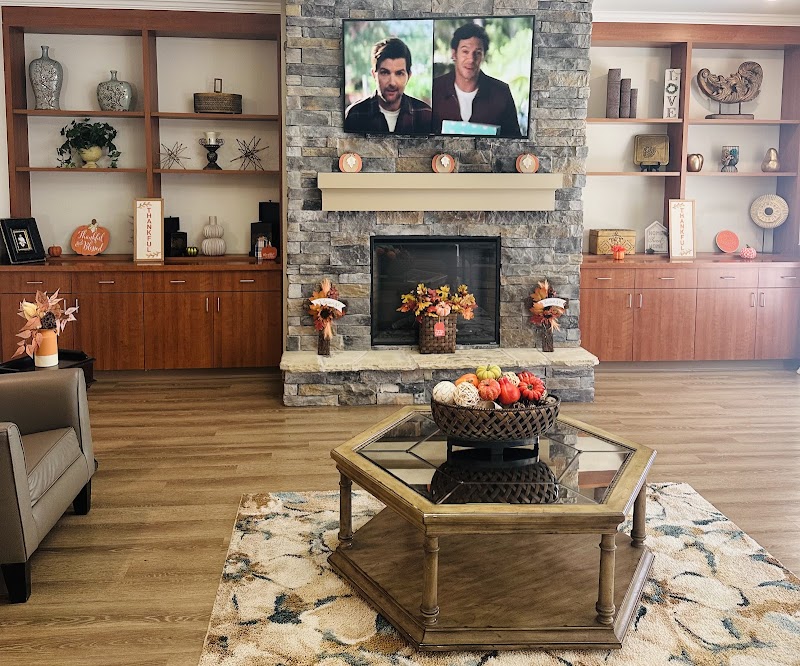
How is Lillington Health And Rehabilitation Center Staffed?

CMS rates Lillington Health and Rehabilitation Center's staffing level at 1 out of 5 stars, which is much below average compared to other nursing homes.

What Have Inspectors Found at Lillington Health And Rehabilitation Center?

State health inspectors documented 35 deficiencies at Lillington Health and Rehabilitation Center during 2023 to 2025. These included: 2 Immediate Jeopardy (the most serious level, indicating potential for serious harm or death), 1 that caused actual resident harm, 29 with potential for harm, and 3 minor or isolated issues. Immediate Jeopardy findings are rare and represent the most serious regulatory concerns. They require immediate corrective action.
Who Owns and Operates Lillington Health And Rehabilitation Center?

Lillington Health and Rehabilitation Center is owned by a for-profit company. For-profit facilities operate as businesses with obligations to shareholders or private owners. The facility operates independently rather than as part of a larger chain. With 129 certified beds and approximately 125 residents (about 97% occupancy), it is a mid-sized facility located in Lillington, North Carolina.

How Does Lillington Health And Rehabilitation Center Compare to Other North Carolina Nursing Homes?

Compared to the 100 nursing homes in North Carolina, Lillington Health and Rehabilitation Center's overall rating (1 stars) is below the state average of 2.8 and health inspection rating (1 stars) is much below the national benchmark.

What Should Families Ask When Visiting Lillington Health And Rehabilitation Center?

Based on this facility's data, families visiting should ask: "What changes have been made since the serious inspection findings, and how are you preventing similar issues?" "What safeguards and monitoring systems are in place to protect residents from abuse or neglect?" "Can you walk me through typical staffing levels on day, evening, and night shifts?" "Can I visit during a mealtime to observe dining assistance and food quality?" These questions are particularly relevant given the facility's Immediate Jeopardy citations, the substantiated abuse finding on record, and the below-average staffing rating.

Is Lillington Health And Rehabilitation Center Safe?

Based on CMS inspection data, Lillington Health and Rehabilitation Center has documented safety concerns. The facility has 1 substantiated abuse finding (meaning confirmed case of resident harm by staff or other residents). Inspectors have issued 2 Immediate Jeopardy citations (the most serious violation level indicating risk of serious injury or death). The facility has a 1-star overall rating and ranks #100 of 100 nursing homes in North Carolina. Families considering this facility should ask detailed questions about what corrective actions have been taken since these incidents.

Do Nurses at Lillington Health And Rehabilitation Center Stick Around?

Lillington Health and Rehabilitation Center has not reported staff turnover data to CMS. Staff turnover matters because consistent caregivers learn residents' individual needs, medications, and preferences. When staff frequently change, this institutional knowledge is lost. Families should ask the facility directly about their staff retention rates and average employee tenure.

Was Lillington Health And Rehabilitation Center Ever Fined?

Lillington Health and Rehabilitation Center has been fined $30,538 across 3 penalty actions. This is below the North Carolina average of $33,384. While any fine indicates a compliance issue, fines under $50,000 are relatively common and typically reflect isolated problems that were subsequently corrected. Families should ask what specific issues led to these fines and confirm they've been resolved.

Is Lillington Health And Rehabilitation Center on Any Federal Watch List?

Lillington Health and Rehabilitation Center is not on any federal watch list. The most significant is the Special Focus Facility (SFF) program, which identifies the bottom 1% of nursing homes nationally based on persistent, serious quality problems. Not being on this list means the facility has avoided the pattern of deficiencies that triggers enhanced federal oversight. This is a positive indicator, though families should still review the facility's inspection history directly.