Autumn Care of Marion
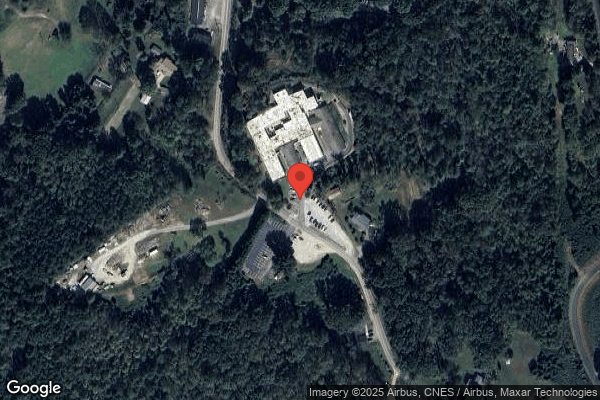
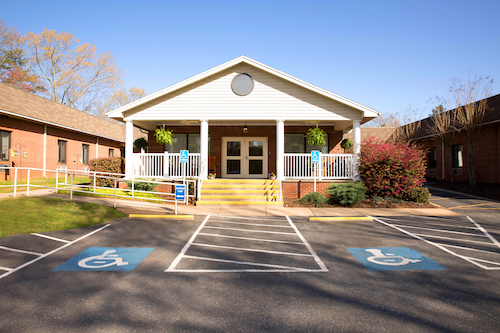
1264 Airport Road, Marion, NC 28752 (828) 652-6701
For profit - Corporation 110 Beds SABER HEALTHCARE GROUP Data: November 2025
Trust Grade
90/100
#7 of 417 in NC
Last Inspection: December 2024

Within standard 12-15 month inspection cycle. Federal law requires annual inspections.

Overview

Autumn Care of Marion has received an excellent Trust Grade of A, indicating that it is highly recommended and performs well among nursing homes. It ranks #7 out of 417 facilities in North Carolina, placing it in the top tier, and is #1 out of 2 in McDowell County, suggesting it is the best option locally. The facility is improving, with issues decreasing from 1 in 2023 to none in 2024. Staffing is a strength here, earning a 4 out of 5 stars and with a turnover rate of 30%, which is significantly below the state average of 49%. While there have been no fines, indicating compliance and good practices, there were some concerns raised by inspectors, including failing to provide necessary nail care for a resident and not properly securing or discarding medications. Additionally, there were lapses in following infection control protocols during the COVID-19 pandemic. Overall, while Autumn Care of Marion has notable strengths in care and staffing, families should be aware of the areas needing attention.
Trust Score
A
90/100
In North Carolina
#7/417
Top 1%
Safety Record
Low Risk
No red flags
Inspections
Getting Better
1 → 0 violations
Staff Stability
○ Average
30% turnover. Near North Carolina's 48% average. Typical for the industry.
Penalties
✓ Good
No fines on record. Clean compliance history, better than most North Carolina facilities.
Skilled Nurses
✓ Good
Each resident gets 44 minutes of Registered Nurse (RN) attention daily — more than average for North Carolina. RNs are trained to catch health problems early.
Violations
✓ Good
Only 3 deficiencies on record. Cleaner than most facilities. Minor issues only.
★★★★★
5.0
Overall Rating
★★★★☆
4.0
Staff Levels
★★★★★
5.0
Care Quality
★★★★★
5.0
Inspection Score
Stable
2023: 1 issues
2024: 0 issues

The Good

  • 4-Star Staffing Rating · Above-average nurse staffing levels
  • 5-Star Quality Measures · Strong clinical quality outcomes
  • Full Sprinkler Coverage · Fire safety systems throughout facility
  • No fines on record
  • Staff turnover below average (30%)

    18 points below North Carolina average of 48%

Facility shows strength in staffing levels, quality measures, fire safety.

The Bad

Staff Turnover: 30%

16pts below North Carolina avg (46%)

Typical for the industry

Chain: SABER HEALTHCARE GROUP

Part of a multi-facility chain

Ask about local staffing decisions and management

The Ugly 3 deficiencies on record

Aug 2023 1 deficiency
CONCERN (D) 📢 Someone Reported This

A family member, employee, or ombudsman was alarmed enough to file a formal complaint

Potential for Harm - no one hurt, but risky conditions existed

ADL Care (Tag F0677)

Could have caused harm · This affected 1 resident

**NOTE- TERMS IN BRACKETS HAVE BEEN EDITED TO PROTECT CONFIDENTIALITY** Based on observations, record reviews, resident and staff interviews, the facility failed to provide a dependent resident with n...

Read full inspector narrative →
**NOTE- TERMS IN BRACKETS HAVE BEEN EDITED TO PROTECT CONFIDENTIALITY** Based on observations, record reviews, resident and staff interviews, the facility failed to provide a dependent resident with nail care for 1 of 3 residents reviewed for providing assistance with activities of daily living (Resident #47). The findings included: Resident #47 was re-admitted to the facility on [DATE] with diagnoses which included diabetes mellitus and dementia. Review of Resident #47's annual Minimum Data Set (MDS) assessment dated [DATE] revealed he was severely cognitively impaired and required extensive assistance of 1 staff member with bathing and limited assistance of 1 staff member with personal hygiene. According to the assessment there were no behaviors and no rejection of care. Review of Resident #47's care plan dated 06/19/23 revealed a focus area for an activities of daily living (ADL) self-care performance deficit related to dementia, impaired cognition, Parkinson's disease, and diabetes mellitus, among others. The resident is at risk for functional decline as dementia and Parkinson's disease progresses. The interventions read in part: bathing/showering - Resident #47 requires 1 staff assistance, encourage resident to complete as much of the task as he is able following set up assistance, and provide assistance as needed to complete task. Review of Resident #47's nursing progress notes revealed no notes regarding the resident refusing showers or personal hygiene care. Review of the NA's documentation revealed no indication that resident refused care. An observation and interview were conducted on 08/14/23 at 9:55 AM with Resident #47. He was lying on his bed watching TV in his room. His fingernails on both hands were observed to be ¼ to ½ inch beyond the ends of his fingers and some appeared to be jagged on the end. Resident #47 stated he didn't like for his fingernails to be long and said he would like for them to be trimmed but he couldn't do it himself and no one had offered to trim his nails for him. Review of the facility's shower schedule revealed Resident #47 was scheduled for showers on Tuesdays and Fridays on 1st shift (7:00 AM to 3:00 PM). An observation and interview were conducted on 08/15/23 at 3:57 PM with Resident #47. The resident stated he had received his shower this morning. Resident #47 stated the Nurse Aide (NA) had not trimmed his fingernails or asked him if he wanted them trimmed after his shower. The resident further stated he would like for his nails to be trimmed. An observation and interview were conducted on 08/16/23 at 9:43 AM with Resident #47. His nails remained long and he stated staff still had not trimmed his nails. An interview on 08/16/23 at 10:08 AM with Nurse Aide (NA) #1 revealed she had been assigned to care for Resident #47 on 08/15/23 during 1st shift (7:00 AM to 3:00 PM). She stated there had been 5 NAs assigned to the 100 hall yesterday and NA #2 had provided Resident #47 with his shower on 08/15/23. NA #1 explained on shower days if the resident needed to be shaved and their fingernails clipped that was part of the shower. She further explained they were able to clip fingernails and toenails unless the resident was diabetic and then they would let the nurse assigned to the resident know their nails needed to be clipped and the nurse clipped their nails. A telephone interview on 08/16/23 at 2:26 PM with NA #2 revealed she had been assigned to give showers on the 100 hall on 08/15/23. She stated she had given Resident #47 his shower as scheduled on that day. NA #2 further stated she had not trimmed his nails after his shower because he was diabetic and she was not allowed to trim nails on diabetic residents. She explained with diabetic residents the NAs usually told the nurse assigned to them their nails needed to be trimmed once they had given the resident their shower. NA #2 further explained she had not noticed Resident #47's fingernails and had not told Nurse #2 the resident needed his fingernails clipped after his shower. NA #2 said she guessed she just forgot but said it was her responsibility to let the nurse know when diabetic residents needed their fingernails or toenails trimmed. An interview on 08/16/23 at 11:19 AM with Nurse #1 revealed she was assigned to Resident #47 today but had not been assigned to him on 08/15/23. Nurse #1 stated Nurse #2 had been assigned to the resident on 08/15/23. Nurse #1 explained it was the responsibility of the NA to let the nurses know when a diabetic resident needed their fingernails trimmed after their shower and the nurse assigned to the resident would trim their nails. An interview on 08/16/23 at 11:42 AM with Nurse #2 revealed she had been assigned to care for Resident #47 on 08/15/23. Nurse #2 explained the NAs were not allowed to cut diabetic residents' nails but it was their responsibility to let the nurse know after resident's showers if their fingernails or toenails needed to be trimmed. She stated NA #2 had not told her that Resident #47 needed his fingernails to be trimmed after she had given him his shower yesterday. An interview on 08/16/23 at 5:00 PM with the Director of Nursing and Administrator revealed it was the responsibility of the Nurse Aide (NA) to tell the nurse when a diabetic resident needed their nails trimmed after their shower because NAs were not allowed to trim diabetic resident's nails.
Apr 2022 2 deficiencies
CONCERN (D)

Potential for Harm - no one hurt, but risky conditions existed

Deficiency F0761 (Tag F0761)

Could have caused harm · This affected 1 resident

Based on observations and staff interviews, the facility failed to secure pre-mixed medications on 1 of 6 medication carts (200 hall medication cart) and discard expired medications in 2 of 6 medicati...

Read full inspector narrative →
Based on observations and staff interviews, the facility failed to secure pre-mixed medications on 1 of 6 medication carts (200 hall medication cart) and discard expired medications in 2 of 6 medication carts (Short hall medication cart and Long hall medication cart). The findings included: 1. An observation of the 200 hall medication cart on 4/12/22 at 8:23 AM revealed 4 plastic cups of clear, colorless liquid were on top of the medication cart. The cups were half-full of approximately 4 ounces of liquid with straws in each cup and were unlabeled with any resident name. The medication cart was locked, and Nurse #1 was observed administering medications to Resident #60 while away from the medication cart. Other staff members were observed walking on the hallway where the 200 hall medication cart was parked. An interview with Nurse #1 on 4/12/22 at 8:28 AM with the Assistant Director of Nursing (ADON) present revealed she had pre-mixed Polyethylene glycol with warm water and the 4 cups that were left on top of the 200 hall medication cart contained this solution. Polyethylene glycol is a laxative used to treat occasional constipation. Nurse #1 stated she had to use warm water to dissolve the medication better and said she had a hard time dissolving Polyethylene glycol right before medication administration, so she had to mix it ahead of time and let it sit until it dissolved. Nurse #1 stated she didn't think it was unacceptable to leave the pre-mixed medication on top of the medication cart. An interview with the ADON on 4/12/22 at 8:30 AM revealed she could understand why Nurse #1 had to pre-mix the Polyethylene glycol ahead of time in order to dissolve it better, but it was probably not acceptable to leave the pre-mixed medication cups on top of the medication cart and unsecured. An interview with the Director of Nursing (DON) on 4/13/22 at 2:31 PM revealed it was not acceptable that Nurse #1 left pre-mixed Polyethylene glycol unsecured on top of the medication cart and she should have pulled and prepared medications right before administration. 2.a. An observation of the Short hall medication cart on 4/13/22 at 10:32 AM with Nurse #2 revealed a sealed bottle of Nitroglycerin tablets available for use on the top drawer labeled with an expiration date of 12/2021 and belonged to Resident #12. Nitroglycerin is a vasodilator (medications that open/dilate blood vessels) used to treat and prevent chest pain. An interview with Nurse #2 on 4/13/22 at 10:35 AM revealed Resident #12 had not received a Nitroglycerin tablet since October 2021 and it had been ordered to be given only if she had chest pain. Nurse #2 stated that was probably why the expired bottle of Nitroglycerin bottle had been missed but all the nurses should be checking the medication carts for expired medications. b. An observation of the Long hall medication cart on 4/13/22 at 10:40 AM with Nurse #3 revealed two opened bottles of Lactulose belonging to Resident #29 available for use on the right third drawer labeled with an expiration date of 1/2022. Lactulose is a laxative and ammonia reducer used to treat constipation. Two opened bottles of Latanoprost eye drops were also available for use on the top drawer. Latanoprost is a medication used to treat glaucoma. One of the Latanoprost eye drop bottles belonged to Resident #70 and was labeled as having been opened on 2/22/22. The other Latanoprost eye drop bottle belonged to Resident #9 and was labeled as having been opened on 2/5/22. Both Latanoprost eye drop bottles had a sticker that read discard after 6 weeks after opening. An interview with Nurse #3 on 4/13/22 at 10:44 AM revealed Resident #29 had been refusing to take the Lactulose and this was probably why they had missed the expiration date on the bottles. Nurse #3 stated the Latanoprost eye drops were scheduled to be given at 8 PM and both Resident #70 and Resident #9 last received it on 4/12/22. Nurse #3 stated all nurses were supposed to be checking the medication carts for expired medications and the evening shift nurse should have looked at the opened dates on the bottles and discarded the expired eye drop bottles. An interview with the Director of Nursing (DON) on 4/13/22 at 2:31 PM revealed the expired medications should have been discarded and not left on the medication cart available for use. The DON stated all nurses were responsible for checking the medication carts for expired medications and they needed to re-educate all the nurses about this responsibility.
CONCERN (D)

Potential for Harm - no one hurt, but risky conditions existed

Infection Control (Tag F0880)

Could have caused harm · This affected 1 resident

Based on record reviews, observations and staff interviews, the facility failed to implement their infection control policies and the Centers for Disease Control and Prevention (CDC) recommended pract...

Read full inspector narrative →
Based on record reviews, observations and staff interviews, the facility failed to implement their infection control policies and the Centers for Disease Control and Prevention (CDC) recommended practices for COVID-19 when 1 of 6 staff members (Housekeeper #1) failed to wear full Personal Protective Equipment (PPE) when entering a resident's room on enhanced droplet precautions (Resident #11). In addition, Nurse Aide #1 failed to disinfect a non-dedicated resident medical equipment in between resident use for 1 of 3 residents (Resident #11) reviewed for infection control. These failures occurred during a COVID-19 pandemic. The findings included: 1. The Centers for Disease Control and Prevention (CDC) guidance entitled, Interim Infection Prevention and Control Recommendations for Healthcare Personnel During the Coronavirus Disease 2019 (COVID-19) Pandemic, updated on 2/2/22 indicated the following statement under Section 2. Recommended infection prevention and control (IPC) practices when caring for a patient with suspected or confirmed SARS-CoV-2 infection: *HCP (Healthcare personnel) who enter the room of a patient with suspected or confirmed SARS-CoV-2 infection should adhere to Standard Precautions and use a NIOSH-approved N95 or equivalent or higher-level respirator, gown, gloves, and eye protection (i.e., goggles or a face shield that covers the front and sides of the face). The facility's policy entitled, Infection Control - Transmission Based Precautions, revised in April 2016 indicated the following statements under Droplet Precautions: A mask is worn for close contact with infectious resident. Gloves, gown, eye protection are worn adhering to Standard Precaution guidelines. The facility's policy entitled, COVID-19 Testing Guidance, updated on 2/7/22 indicated the following statement: Residents with signs or symptoms must be tested and be placed in full Transmission Based Precautions (TBP) pending results. Follow facility protocol once results are received. A progress note dated 4/11/22 at 10:41 AM indicated Resident #11 was coughing this morning and she was placed on enhanced droplet precautions. COVID-19 antigen and PCR (polymerase chain reaction) tests were obtained. An observation on the 100 hall on 4/11/22 at 9:43 AM revealed an enhanced droplet precautions sign posted on the wall beside Resident #11's door. The sign indicated instructions that all healthcare personnel must: clean hands before entering and when leaving room, wear a gown when entering room and remove before leaving, wear N95 or higher-level respirator before entering the room and remove after exiting, protective eyewear (face shield or goggles) and wear gloves when entering room and remove before leaving. A plastic drawer cart which contained N95 masks, face shields, gowns and gloves was located under the sign and beside Resident #11's door. An observation on 4/11/22 at 12:19 PM revealed Housekeeper #1 cleaning inside Resident #11's room while wearing a surgical mask, a face shield, a gown, and gloves. Resident #11 was present in the room and was observed coughing at intervals. A phone interview with Housekeeper #1 on 4/13/22 at 2:20 PM revealed she did not pay attention to the sign beside Resident #11's door and did not realize she was supposed to change into an N95 mask prior to entering Resident #11's room. Housekeeper #1 stated she had received education on Personal Protective Equipment (PPE) use for rooms on enhanced droplet precautions, but she thought she was only required to wear a gown, a face shield, and gloves in addition to her surgical mask. She also stated that the N95 masks that were available on the cart were too big for her face and they were supposed to order her a size small. An interview with the Infection Preventionist (IP) on 4/13/22 at 1:58 PM revealed Housekeeper #1 should have switched her surgical mask into an N95 mask prior to entering Resident #11's room. The IP confirmed that Housekeeper #1 had received training on PPE use for residents who were placed on enhanced droplet precautions. 2. The Centers for Disease Control and Prevention (CDC) guidance entitled, Interim Infection Prevention and Control Recommendations for Healthcare Personnel During the Coronavirus Disease 2019 (COVID-19) Pandemic, updated on 2/2/22 indicated the following statement under Environmental Infection Control: Dedicated medical equipment should be used when caring for a patient with suspected or confirmed SARS-CoV-2 infection. All non-dedicated, non-disposable medical equipment used for that patient should be cleaned and disinfected according to manufacturer's instructions and facility policies before use on another patient. The facility's policy entitled, Infection Control - Transmission Based Precautions, revised in April 2016 indicated the following statement: Care equipment - use disposable non-critical equipment (thermometers, blood pressure cuffs, stethoscope, etc.) or implement resident-dedicated equipment. If common use of equipment is unavoidable, clean and disinfect equipment before use on another resident. A continuous observation on 4/11/22 from 3:39 PM to 3:44 PM revealed Nurse Aide (NA) #1 entering Resident #11's room while pushing a vital sign monitor equipment. NA #1 plugged Resident #11's phone into the charger per Resident #11's request and proceeded to take Resident #11's temperature by placing a disposable probe over the thermometer and putting it inside Resident #11's mouth. When she obtained Resident #11's temperature, she discarded the probe in the trash can and placed the thermometer back into the holder on the vital sign equipment. She obtained Resident #11's blood pressure using the blood pressure cuff on the vital sign equipment and then folded it and placed it back into the holder. NA #1 used hand sanitizer and then washed her hands in Resident #11's room sink prior to leaving Resident #11's room. She did not disinfectant the vital sign equipment that was just used on Resident #11. NA #1 pushed the vital sign equipment and proceeded to go inside Resident #13's room. An interview with NA #1 on 4/11/22 at 3:45 PM revealed she knew she was supposed to sanitize the vital sign equipment before and after using it on each resident. NA #1 stated she used alcohol prep to wipe the thermometer and the inside part of the blood pressure cuff she used on Resident #11. An interview with the Infection Preventionist (IP) on 4/11/22 at 3:56 PM revealed NA #1 should have sanitized the vital sign equipment she used on Resident #11 before using it on another resident. A follow-up interview with the IP on 4/12/22 at 8:25 AM revealed she had talked to NA #1 on 4/11/22 and NA #1 had admitted to her that she did not sanitize the vital sign equipment after she used it on Resident #11. An interview with the Director of Nursing (DON) on 4/13/22 at 2:31 PM revealed all the staff members which included Housekeeper #1 had been told that they should wear an N-95 mask and full PPE when going into an enhanced droplet precaution room. The DON stated he had some N95 masks in his office and Housekeeper #1 should have obtained some from him. He stated Housekeeper #1 had been sized down to a small N95 mask when she was fit-tested, and they had discussed with her that they were ordering her size and they had been available for her to use. The DON also stated NA #1 had told them that she was used to the sign being on the actual door of the resident and not on the wall beside it but she should have received report from the outgoing shift before she took over the hall so she would know Resident #11 had been placed on enhanced droplet precautions. He also stated NA #1 should have sanitized the vital sign equipment prior to using it on each resident.
Understanding Severity Codes (click to expand)
Life-Threatening (Immediate Jeopardy)
J - Isolated K - Pattern L - Widespread
Actual Harm
G - Isolated H - Pattern I - Widespread
Potential for Harm
D - Isolated E - Pattern F - Widespread
No Harm (Minor)
A - Isolated B - Pattern C - Widespread

Questions to Ask on Your Visit

  • "Can I speak with families of current residents?"
  • "What's your RN coverage like on weekends and overnight?"

Our Honest Assessment

Strengths
  • • Grade A (90/100). Above average facility, better than most options in North Carolina.
  • • No major safety red flags. No abuse findings, life-threatening violations, or SFF status.
  • • No fines on record. Clean compliance history, better than most North Carolina facilities.
  • • Only 3 deficiencies on record. Cleaner than most facilities. Minor issues only.
Concerns
  • • No significant concerns identified. This facility shows no red flags across CMS ratings, staff turnover, or federal penalties.
Bottom line: Generally positive indicators. Standard due diligence and a personal visit recommended.

About This Facility

What is Autumn Care Of Marion's CMS Rating?

CMS assigns Autumn Care of Marion an overall rating of 5 out of 5 stars, which is considered much above average nationally. Within North Carolina, this rating places the facility higher than 99% of the state's 100 nursing homes. This rating reflects solid performance across the metrics CMS uses to evaluate nursing home quality.
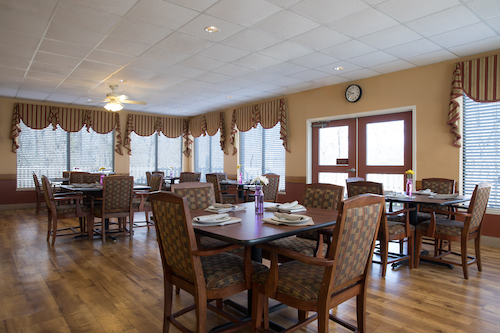
How is Autumn Care Of Marion Staffed?

CMS rates Autumn Care of Marion's staffing level at 4 out of 5 stars, which is above average compared to other nursing homes. Staff turnover is 30%, compared to the North Carolina average of 46%. This relatively stable workforce can support continuity of care.

What Have Inspectors Found at Autumn Care Of Marion?

State health inspectors documented 3 deficiencies at Autumn Care of Marion during 2022 to 2023. These included: 3 with potential for harm.

Who Owns and Operates Autumn Care Of Marion?

Autumn Care of Marion is owned by a for-profit company. For-profit facilities operate as businesses with obligations to shareholders or private owners. The facility is operated by SABER HEALTHCARE GROUP, a chain that manages multiple nursing homes. With 110 certified beds and approximately 102 residents (about 93% occupancy), it is a mid-sized facility located in Marion, North Carolina.

How Does Autumn Care Of Marion Compare to Other North Carolina Nursing Homes?

Compared to the 100 nursing homes in North Carolina, Autumn Care of Marion's overall rating (5 stars) is above the state average of 2.8, staff turnover (30%) is significantly lower than the state average of 46%, and health inspection rating (5 stars) is much above the national benchmark.

What Should Families Ask When Visiting Autumn Care Of Marion?

Based on this facility's data, families visiting should ask: "Can I visit during a mealtime to observe dining assistance and food quality?" "How do you handle medical emergencies, and what is your hospital transfer rate?" "Can I speak with family members of current residents about their experience?"

Is Autumn Care Of Marion Safe?

Based on CMS inspection data, Autumn Care of Marion has a clean safety record: no substantiated abuse findings (meaning no confirmed cases of resident harm), no Immediate Jeopardy citations (the most serious violation level indicating risk of serious injury or death), and is not on the Special Focus Facility watch list (a federal program monitoring the lowest-performing 1% of nursing homes). The facility has a 5-star overall rating and ranks #1 of 100 nursing homes in North Carolina. While no facility is perfect, families should still ask about staff-to-resident ratios and recent inspection results during their visit.

Do Nurses at Autumn Care Of Marion Stick Around?

Autumn Care of Marion has a staff turnover rate of 30%, which is about average for North Carolina nursing homes (state average: 46%). Moderate turnover is common in nursing homes, but families should still ask about staff tenure and how the facility maintains care continuity when employees leave.

Was Autumn Care Of Marion Ever Fined?

Autumn Care of Marion has no federal fines on record. CMS issues fines when nursing homes fail to meet care standards or don't correct problems found during inspections. The absence of fines suggests the facility has either maintained compliance or corrected any issues before penalties were assessed. This is a positive indicator, though families should still review recent inspection reports for the full picture.

Is Autumn Care Of Marion on Any Federal Watch List?

Autumn Care of Marion is not on any federal watch list. The most significant is the Special Focus Facility (SFF) program, which identifies the bottom 1% of nursing homes nationally based on persistent, serious quality problems. Not being on this list means the facility has avoided the pattern of deficiencies that triggers enhanced federal oversight. This is a positive indicator, though families should still review the facility's inspection history directly.