Deer Park Health and Rehabilitation

306 Deer Park Road, Nebo, NC 28761 (828) 652-3032
For profit - Limited Liability company 140 Beds Independent Data: November 2025 8 Immediate Jeopardy citations
Trust Grade
0/100
#333 of 417 in NC
Last Inspection: June 2025

Inspected within the last 6 months. Data reflects current conditions.

Overview

Deer Park Health and Rehabilitation has received a Trust Grade of F, indicating significant concerns and poor quality of care. It ranks #333 out of 417 facilities in North Carolina, placing it in the bottom half, and is ranked #2 out of 2 in McDowell County, meaning only one other local facility is worse. Unfortunately, the facility's trend is worsening, with issues increasing from 16 in 2024 to 20 in 2025. Staffing is below average at 2 out of 5 stars, with an alarming turnover rate of 83%, much higher than the state average. Additionally, the facility has incurred $377,384 in fines, which is concerning as it's higher than 98% of North Carolina facilities, suggesting ongoing compliance issues. Despite having good RN coverage compared to most state facilities, there are serious safety concerns. For example, staff failed to recognize and respond to a diabetic resident's critically low blood sugar, resulting in a delay of emergency care that led to further complications. Another incident revealed that the same resident did not receive timely treatment or transfer to a hospital until family members insisted, which raises alarms about the care provided. Overall, while there are some strengths in staffing coverage, the serious deficiencies and critical incidents highlight significant weaknesses that families should consider.

Trust Score
F
0/100
In North Carolina
#333/417
Bottom 21%
Safety Record
High Risk
Review needed
Inspections
Getting Worse
16 → 20 violations
Staff Stability
⚠ Watch
83% turnover. Very high, 35 points above average. Constant new faces learning your loved one's needs.
Penalties
✓ Good
$377,384 in fines. Lower than most North Carolina facilities. Relatively clean record.
Skilled Nurses
✓ Good
Each resident gets 42 minutes of Registered Nurse (RN) attention daily — more than average for North Carolina. RNs are trained to catch health problems early.
Violations
⚠ Watch
39 deficiencies on record. Higher than average. Multiple issues found across inspections.
★☆☆☆☆
1.0
Overall Rating
★★☆☆☆
2.0
Staff Levels
★☆☆☆☆
1.0
Care Quality
★☆☆☆☆
1.0
Inspection Score
Stable
2024: 16 issues
2025: 20 issues

The Good

  • Full Sprinkler Coverage · Fire safety systems throughout facility
  • No fines on record

Facility shows strength in fire safety.

The Bad

1-Star Overall Rating

Below North Carolina average (2.8)

Significant quality concerns identified by CMS

Staff Turnover: 83%

37pts above North Carolina avg (46%)

Frequent staff changes - ask about care continuity

Federal Fines: $377,384

Well above median ($33,413)

Significant penalties indicating serious issues

Staff turnover is very high (83%)

35 points above North Carolina average of 48%

The Ugly 39 deficiencies on record

8 life-threatening 3 actual harm
Aug 2025 3 deficiencies 3 IJ
CRITICAL (J) 📢 Someone Reported This

A family member, employee, or ombudsman was alarmed enough to file a formal complaint

Immediate Jeopardy (IJ) - the most serious Medicare violation

Notification of Changes (Tag F0580)

Someone could have died · This affected 1 resident

**NOTE- TERMS IN BRACKETS HAVE BEEN EDITED TO PROTECT CONFIDENTIALITY** Based on record review, staff, Nurse Practitioner (NP), and Medical Director interviews, staff failed to consult with the on-cal...

Read full inspector narrative →
**NOTE- TERMS IN BRACKETS HAVE BEEN EDITED TO PROTECT CONFIDENTIALITY** Based on record review, staff, Nurse Practitioner (NP), and Medical Director interviews, staff failed to consult with the on-call provider immediately to obtain treatment orders for hypoglycemia when Resident #1, who had diabetes, had a critically low blood glucose level of 31 (normal 80-100), was lethargic, mumbling, and unable to receive anything by mouth as assessed by Nurse #1. Staff failed to communicate other symptoms that indicated urgent medical attention including abnormal eye movements, and tightness in her hands as assessed by Nurse #2, and inability to receive sugar under her tongue due to a tight jaw, as assessed by Unit Manager #1. Resident #1 was transferred to the hospital on 7/17/25. An emergency medical services (EMS) report dated 7/17/25 indicated when EMS arrived on scene at the facility at 4:48 PM the patient was found lying in her bed, eyes open but only reactive to pain. The EMS report stated Resident #1 was noted to be comatose with seemingly left gaze with inability to follow any types of commands for more detailed assessment. The hospital Discharge summary dated [DATE] indicated Resident #1 did not have improvement in her mental status despite improvement in acute kidney injury and treatment for urinary tract infection. The hospital discharge summary stated, suspect she had prolonged low blood glucose and seizure which led to comatose state. Resident #1 was transitioned to inpatient hospice and passed away on 7/30/25. Immediate jeopardy began on 7/17/25 when staff failed to consult the physician about Resident #1's critically low blood glucose level of 31, abnormal eye movements and tightness in her hands and jaw. Immediate jeopardy was removed on 8/12/25 when the facility implemented a credible allegation of immediate jeopardy removal. The facility remains out of compliance at a lower scope and severity level of D (no actual harm with potential for more than minimal harm that is not immediate jeopardy) to ensure education and monitoring systems put into place are effective. Findings included:Resident #1 was admitted to the facility on [DATE]. Her diagnoses included type-2 diabetes mellitus. Resident #1's July 2025 medication administration record (MAR) revealed an order dated 12/4/23, for glucometer checks before breakfast and at bedtime. The blood sugar goal was a range of 100 - 250. Interventions included to notify the Nurse Practitioner (NP) if the results were greater than 250 consistently. For blood sugar less than 70, offer oral glucose and recheck blood sugar in 1 hour. Notify Medical Doctor (MD), if blood sugar is not improved or patient symptomatic.Review of the medical record revealed the facility did not have standing orders. Review of Resident #1's medical record revealed there were no nursing note entries from Nurse #1 on 07/17/25. The only entry made by Nurse #1 on 7/17/25 was a blood glucose result of 61 entered at 7:35 AM under vital signs. An interview was conducted on 8/7/25 at 9:09 AM with Nurse #1. She was the night shift (11PM-7AM) nurse for Resident #1 on the morning of 7/17/25. Nurse #1 recalled Resident #1 and her low blood sugars on the morning of 7/17/25. Nurse #1 recalled around 5:00 AM she checked Resident #1's blood glucose when she started her morning medication pass. She stated Resident #1's blood sugar was very low. Nurse #1 said Resident #1's blood sugar reading was 31. She remembered Resident #1 was lethargic and in and out of it, she stated Resident #1 would open her eyes and look at her and mumble inaudibly but would then close her eyes and go back to sleep. Nurse #1 said she would not have felt comfortable giving Resident #1 anything by mouth, that she was not alert enough. Nurse #1 explained she had intramuscular (IM) glucagon (emergency medicine used to treat low blood sugar) in the medication cart and administered the IM glucagon to Resident #1 right after she got the blood glucose reading of 31. Nurse #1 said she did not open Resident #1's medication administration record (MAR) or look at her orders for instructions on how to treat her hypoglycemia. She explained a few months ago Resident #1 had an episode of low blood sugar and IM glucagon had been used to treat the low blood sugar. Nurse #1 stated she assumed after that episode Resident #1 had an as needed standing order for IM glucagon. She reported she thought it was standard and that all residents with diabetes had an as needed order for IM glucagon. Nurse #1 stated after she administered the IM glucagon to Resident #1, she rechecked her blood glucose every 15 minutes. She recalled at first Resident #1's blood glucose went up steadily but then started to drop back down. Nurse #1 said the highest she could get Resident #1's blood glucose up to was 61. She reported by the time the day shift Unit Manager (UM #1) came in, around 6:45 AM, Resident #1's blood glucose was back down to 61. Nurse #1 said when UM #1 arrived at the facility she gave over care of Resident #1 to UM #1 because she had worked on Resident #1 for an hour and a half and 61 was the highest, she could get her blood sugar. Nurse #1 reported she asked UM #1 to call the on-call provider to let them know Resident #1 had an episode of hypoglycemia and what had been done to treat it and that what had been done was not effective. Nurse #1 explained she did not call the on-call provider during her shift when Resident #1's blood glucose was 31. Nurse #1 stated she was going to call the on-call provider after she treated Resident #1's hypoglycemia and let them know if it was effective or not. She explained she wrote down Resident #1's blood sugar results and gave them to UM #1. Nurse #1 stated she asked UM #1 if she would call the on-call provider and ask them what to do and to call Resident #1's family member to update them. Nurse #1 stated UM #1 said she would document the blood glucose results, call the on-call provider, and call Resident #1's family. Nurse #1 reported she did not notice any seizure like activity or vomiting for Resident #1. A progress note by the day shift Unit Manager (UM) #1 dated 7/17/25 at 7:13 AM read, night nurse reported resident was experiencing hypoglycemia, blood sugars as follows: 5:30 AM-31, 5:45 AM- 52, 6:00 AM- 56, 6:15 AM-61, 6:30 AM- 66, 6:45 AM- 61. On call notified and was advised to put sugar under her tongue and recheck blood sugar in 30 minutes.An interview was conducted with UM #1 on 8/6/25 at 3:05 PM. UM #1 reported she arrived to work on 7/17/25 between 6:30 AM and 7:00 AM. She did not recall the exact time. She said Nurse #1 reported to her when she arrived that Resident #1 had low blood sugar during the night. UM #1 said Nurse #1 reported she had given Resident #1 IM glucagon. She stated Nurse #1 did not ask her to document Resident #1's blood glucose checks from the night shift. UM #1 reported she did document the blood glucose results reported to her by Nurse #1 because she thought it was prudent to do so. UM #1 also reported Nurse #1 did not ask her to call the on-call provider or Resident #1's family. UM #1 did remember calling the on-call provider about Resident #1's low blood sugar and recalled the on-call provider gave her instructions to put sugar under Resident #1's tongue and recheck her blood sugar in 30 minutes. UM #1 stated when she went to put the sugar under Resident #1's tongue her mouth and jaw were tight, and she could not open her mouth. UM #1 said she did not want to pry open and force Resident #1's mouth open to put the sugar under her tongue. She reported she tried to put the sugar into her cheek as best as she could. UM #1 said she did not recall telling anyone about Resident #1's jaw being tight. She did not recall Resident #1 having tight arms or abnormal eye movement when she was in the room with her. A progress note by Nurse #2 dated 7/17/25 at 7:45 AM read, On coming to shift during report resident was reported to have struggled with low blood sugars throughout the night. Last blood sugar check was 61 at on coming of shift 7:00 AM. I was told to recheck blood sugar at 7:30 AM and call provider back. I rechecked blood sugar at 7:30 AM blood sugar dropped down to 59. I called provider to inform her of blood sugar level. Provider stated to just hold short acting and long-acting insulin for the morning and to recheck in an hour and give her a call back. Resident in bed. Eyes rolling side to side. Moaning. hands tight. Informed unit manager to recheck in an hour and call provider back.An interview was conducted with Nurse #2 on 8/6/25 at 2:53 PM. Nurse #2 was the day shift (7-3) and evening shift (3-11) nurse for Resident #1 on 7/17/25. Nurse #2 stated when she arrived on shift, the night shift (11PM-7AM) nurse (Nurse #1) reported to her Resident #1's blood sugars were extremely low in the 30's. Nurse #1 reported, she said 33 to be exact. Nurse #2 stated Nurse #1 reported to her the on-call provider was aware of Resident #1's low blood sugar and had said to recheck Resident #1's blood sugar around 7:30 AM and call the on-call provider back with what Resident #1's blood sugar was. Nurse #2 said she rechecked Resident #1's blood sugar at 7:30 AM and it was in the 50's, she did not recall the exact number. She reported she called the on-call provider back after checking Resident #1's blood sugar at 7:30 AM and was told by the on-call provider to hold Resident #1's insulin. She stated the provider instructed her to try to give her something to eat to increase her blood sugar and to recheck her blood sugar in an hour. Nurse #2 stated she told the provider she did not have time to do that or keep rechecking Resident #1's blood sugar because she had to pass medications and check blood sugars for her other residents with diabetes, so they sent a Registered Nurse (Nurse #3) to help with Resident #1. Nurse #2 said she did not remember Resident #1 having abnormal eye movements and tight hands during the morning or reporting it to anyone. Nurse #2 said she remembered that more from the evening right before Resident #1 went out. She stated Resident #1's eyes were moving left and right slowly like her head was turning side to side but her head was not moving, and her arms were tight and hard to move. Nurse #2 stated Resident #1 was transferred to the hospital between 4:30 PM and 5:00 PM on 7/17/25. An interview was conducted on 8/6/25 at 4:33 PM with Nurse #3. Nurse #3 said she communicated with the NP about Resident #1 and received orders from the NP throughout the day. Nurse #1 stated she had not noticed seizure symptoms, abnormal eye movements, tightness of hands, arms, or mouth, or foaming at the mouth when she was in Resident #1's room. She said staff had not mentioned those symptoms to her. Nurse #3 explained she left the facility in the afternoon after lunch before 3 PM- 11 PM shift change but was not sure of the exact time. Nurse #3 stated Resident #1's blood sugar had increased to 74 that afternoon before she left but Resident #1 had not had any improvement in her mental status. Review of an EMS report dated 7/17/25, revealed EMS received the emergency call from the facility at 4:33 PM and arrived on scene at the facility at 4:48 PM. The EMS report stated when they arrived the patient was found lying in her bed, eyes open but only reactive pain. Patient is noted to be comatose with seemingly left gaze with inability to follow any types of commands for more detained assessment. Her baseline is reported to be normal with some memory problems however, otherwise able to answer questions and hold conversation. The EMS report stated her blood sugar was 94 and then 84 with direct blood drawn from midline. She was given 125 milliliters (ml) of D10 (10% dextrose (glucose) in water) to see if it improved her mental status. The report stated no improvement in mental status was noted and D10 was stopped after 125 ml. The EMS report said they departed the scene at 5:09 PM. A hospital Discharge summary dated [DATE] indicated Resident #1 arrived to the hospital on 7/17/25 at 5:32 PM. The hospital course said Resident #1 presented to the hospital from the facility secondary to increasing lethargy, somnolence, with concern for acute metabolic encephalopathy. The discharge summary included the hospital workup was remarkable for acute kidney injury (AKI) and likely urinary tract infection (UTI). The hospital course stated Resident #1 did not have improvement in her mental status despite improvement in AKI and treatment for UTI. The discharge summary stated, suspect she had prolonged hypoglycemia and possible seizure which led to comatose state. The Discharge summary included that goals of care were discussed with family, and the decision was made to transitions to comfort care with inpatient hospice. A death certificate for Resident #1 documented she passed away on 7/30/25. Acute metabolic encephalopathy was listed as the cause of death.An interview was conducted on 8/7/25 at 12:15 PM with the NP. The NP reported Nurse #1 should have called the on-call provider when to report Resident #1's hypoglycemia and to get an order for how to treat the low blood glucose prior to giving Resident #1 glucagon. The NP said it had not been reported to her that Resident #1 had abnormal eye movements or tightness of her hands, arms, or mouth. She stated those were seizure symptoms and she was not made aware of that. NP #1 said she would have been worried about seizures if those symptoms had been reported to her and would have sent Resident #1 out that morning if she was concerned about seizures. An interview was conducted with the Medical Director on 8/7/25 at 11:15 AM. He stated the best thing in acute scenarios was to call the provider. He stated a medical provider should have been notified when Resident #1 had a critical blood sugar level of 31 at 5:30 AM on 7/17/25. He said the facility had a physician call service in place to manage hypoglycemia and that was better than paper standing orders. He explained the call service was 24 hours and if the on-call provider did not answer, the call would roll over to a backup on-call provider, and if the backup on-call provider did not answer, then the call would roll over to a second back up on call provider. He said he did not like standing orders because then you had someone with less knowledge making medical decisions. An interview was conducted with the interim Director of Nursing (DON) on 8/7/25 at 11:25 AM. The DON said Nurse #1 should have called the provider to report Resident #1's blood glucose level of 31 and to get an order for the IM glucagon. The DON stated the facility did not have standing orders and nurses needed to call the provider for everything. She reported Nurse #1 should have checked the MAR and called the provider before giving Resident #1 IM glucagon to get orders for how to treat her hypoglycemia. An interview was conducted with the Administrator on 8/7/25 at 3:50 PM. The Administrator said as a nurse she would have done what needed to be done to protect the resident at the time but would expect the nurse to call the provider timely to let them know what was going on. The facility's Administrator was informed of the immediate jeopardy on 8/7/25 at 4:03 PM. The facility submitted the following credible allegation of immediate jeopardy removal. 1. Identify those recipients who have suffered, or are likely to suffer, a serious adverse outcome as a result of the noncompliance. On 7/17/25 at 5:30 AM Resident #1's blood glucose level was 31. Nurse #1 stated she administered intramuscular glucagon to Resident #1 to treat her low blood glucose. Nurse #1 said she did not call the physician or check Resident #1's medical record for hypoglycemia treatment orders before administering the glucagon. Nurse #1 reported when Unit Manager (UM #1) arrived to the facility around 6:45 AM she asked UM #1 to call the physician to notify them about Resident #1's low blood glucose and what had been done to treat her low blood glucose. UM #1 documented she contacted the Provider at 7:13 AM. Unit Manager #1 did recognize that she was unable to place sugar under resident #1's tongue due to her clinched jaw however she failed to notify the MD of resident #1's emergent situation. Nurse #2 failed to notify the MD of abnormal eye movement, and tight hands which were signs of an emergent situations. Failure to notify the physician about Resident #1's critically low blood glucose level could likely result in serious injury, harm, impairment, or death.All residents with diabetes or those taking antidiabetic medications are at risk. On August 8, 2025, the Director of Nursing and the Unit Manager reviewed medical records related to diabetes diagnoses and physician orders for diabetic medications and insulin. This was done to identify residents at risk of hypoglycemic episodes and to ensure that their physician orders were updated according to facility protocol.1. Notify the physician for blood glucose levels below 60 and above 500 or identified as Hi on the glucometer.For blood glucose levels 50 and below: (1) Verify blood glucose level using a finger on the opposite hand, if the blood glucose level remains the same or below 50, then (2) give 1milligram (mg) of Glucagon intramuscularly. (The Glucagon is located in the medication cart of each resident and in the pharmacy e-kit located in the medication room at the nursing units) and (3) notify the physician for additional orders and continue to monitor and evaluate the resident's status, (4) notify the physician of any changes. All licensed nurses, including agency nurses, were educated on 8/11/25 by the Director of Nursing or Unit Manager in person or via phone on notifying the physician of changes in the resident's condition or with an emergent life-threatening event and feel as if the on call/ extended practice provider does not respond to a call or does not address an identified emergent situation as emergent the facility is to contact the Medical Director/Designee. All residents who were transferred to the hospital within the past 30 days were reviewed for life threatening events which included initiation of symptoms, time reported to the physician and time transferred to the hospital by the Director of Nursing on 8/8/25 to ensure proper notification of the physician and management of symptom/changes. No further deficient practices were identified. 2. Specify the action the entity will take to alter the process or system failure to prevent a serious adverse outcome from occurring or recurring, and when the action will be complete.All licensed nurses, including agency nurses, were educated on 8/7/25 by the Director of Nursing or Unit Manager in person or via phone on notifying the physician of changes in the resident's condition or with an emergent life-threatening event. This education included once you identify a change in a resident's baseline (usual) status, the physician must be notified for further direction; and the nurse must document in the resident's medical record the change in condition and physician notification. All staff education began on 8/7/2025 to notify the nurse if a resident emergent situation is identified or suspected and the importance of reporting resident emergent situations. Staff who have not received education by 8/8/2025 will not be allowed to work until education is completed. The Director of Nursing is responsible for ensuring all staff are educated prior to working. Nurse #1 has been suspended pending the completion of this investigation on 8/7/2025Nurse #1 was terminated on 8/8/2025 for deficient practice, failure to identify emergent resident situation, failure to notify MD of emergent situation in status, providing medications without MD order. On 8/8/2025, UM#1 and Nurse #2 received disciplinary action for not identifying an emergent resident situation and failing to notify the MD of emergent situation, by the Director of Nursing.Immediate Jeopardy Removal Date: 8/12/2025 On 8/14/25 the facility's credible allegation of immediate jeopardy removal was validated by the following: Review of facility audits revealed the facility completed an audit of all diabetic residents residing in the building. Review of physician orders for diabetic residents, including non-insulin dependent diabetic residents revealed as needed (PRN) glucagon orders had been added for all residents. Medication cart observations were completed. Each medication cart was overserved to have emergency glucagon kits for individual residents. Review of in-service education logs revealed licensed nurses including UM #1 and Nurse #2 were educated on the facility protocol for treatment of hypoglycemia, when to notify the physician, emergent vs. non-emergent situations, including when to call 911, notifying the physician for change in a residents condition, and when to contact the Medical Director and/or designee if a provider does not treat an identified emergent situation as emergent. Additional in-service logs were reviewed and revealed all staff (including UM #1 and Nurse #2) were educated on the signs/ symptoms of hypoglycemia, emergent situations, including when to call 911, and notifying the nurse of change in condition. Interviews were conducted with licensed nurses, including agency nurses. The nurses confirmed they had received education on the facility protocol for treatment of hypoglycemia, when to notify the physician, emergent vs. non-emergent situations, including when to call 911, notifying the physician when there is a change in resident condition, and when to contact the Medical Director and/or designee if a provider does not treat an identified emergent situation as emergent. The licensed nurses were able to accurately verbalize the education they received. Interviews were conducted with licensed nurses, nurse aides, dietary staff, housekeeping, maintenance, office, administration/management, therapy, and agency staff. Interviews were conducted with staff from different shifts. The staff interviews revealed they had received education on the symptoms of hypoglycemia/ hyperglycemia, emergent situations including when to call 911, and notifying the nurse for change of condition. Staff were able to accurately verbalize the education they had received. Review of provider in-service logs revealed on 8/8/25 providers were educated by the Medical Director on the importance of notifying the medical Director when a resident is identified as having a critically low blood sugar and is showing symptoms that require emergency care. Education included: identification of emergent situation versus nonemergent situation, what is within the capabilities of the facility to properly care for residents with critically low blood sugar, and when to get the resident emergency medical attention. Education included acknowledgement of the devastation this type of scenario could bring if not treated properly. It was verified Nurse #1 no longer worked at the facility. An interview with the Administrator confirmed the involved NP was removed from facility services beginning on 8/7/25. The Administrator stated the facility had contacted the board of nursing and reported the involved NP but had not heard back from the board of nursing. Immediate Jeopardy Removal Date of 8/12/25 was validated.
CRITICAL (J) 📢 Someone Reported This

A family member, employee, or ombudsman was alarmed enough to file a formal complaint

Immediate Jeopardy (IJ) - the most serious Medicare violation

Free from Abuse/Neglect (Tag F0600)

Someone could have died · This affected 1 resident

**NOTE- TERMS IN BRACKETS HAVE BEEN EDITED TO PROTECT CONFIDENTIALITY** Based on observation, record review, staff, resident, family, Medical Director, and Nurse Practitioner (NP) interviews, the faci...

Read full inspector narrative →
**NOTE- TERMS IN BRACKETS HAVE BEEN EDITED TO PROTECT CONFIDENTIALITY** Based on observation, record review, staff, resident, family, Medical Director, and Nurse Practitioner (NP) interviews, the facility failed to protect a resident's (Resident #1) right to be free from neglect when the facility failed to ensure Resident #1 received emergent care extending beyond the capabilities of the facility when she had critically low blood sugar and was symptomatic. Symptoms included lack of responsiveness, eyes moving left to right, obtunded, jaw tightness, inability to swallow, tightness of hands, moaning, foaming at the mouth. Resident #1 was not transferred to the emergency room until her family arrived at the facility and requested, she be transferred. Resident #1 was transferred to the emergency room at 5:09 PM on 7/17/25. Resident #1 was admitted to the hospital on [DATE]. Her hospital diagnoses included acute metabolic encephalopathy (brains function is impaired due to metabolic distubance), prolonged hypoglycemia, acute kidney injury (AKI), and urinary tract infection (UTI). The hospital Discharge summary dated [DATE] said, Resident #1 did not have improvement in her mental status despite improvement in AKI and treatment for UTI. The discharge summary stated, suspect she had prolonged low blood glucose and seizure which led to comatose state. Resident #1 was transitioned to inpatient hospice and passed away on 7/30/25. This deficient practice occurred for 1 of 1 resident reviewed for neglect. Immediate jeopardy began on 7/17/25 when the facility failed to recognize Resident #1 who had critically low blood sugar and was symptomatic, needed emergency medical services extending beyond the capabilities of the facility. Immediate jeopardy was removed on 8/13/25 when the facility implemented a credible allegation of immediate jeopardy removal. The facility remains out of compliance at a lower scope and severity level of D (no actual harm with potential for more than minimal harm that is not immediate jeopardy) to ensure education and monitoring systems put into place are effective. Findings included: This tag is cross referred to:F 684- Based on observations, record review, staff, family, Nurse Practitioner (NP), Physician Assistant and Medical Director interviews the facility failed to recognize that a diabetic resident (Resident #1) with critically low blood sugar (normal 80-100) needed emergency medical care that required transfer to a higher level of care. On 7/17/25 at 5:30 AM Resident #1's blood sugar was 31(a serious life-threatening medical condition) and Resident #1 was lethargic (sluggish), in and out of it, mumbling, and not alert enough to eat or drink. After an intramuscular (IM) injection of glucagon (medication to treat low blood sugar) the resident remained symptomatic and was still lethargic, in and out of it, and not alert enough to eat or drink. Symptoms Resident #1 experienced from the initial low blood sugar of 31 at 5:30 AM on 07/17/25 until her discharge at 5:09 PM on 07/17/25 included lack of responsiveness, eyes moving left to right, obtunded (reduced level of alertness), jaw tightness, inability to swallow, tightness of hands, moaning, and foaming at the mouth. Resident #1's blood glucose level remained less than 70 until 1:08 PM when it was documented her blood glucose level was 77, however she remained obtunded with no verbal response. Resident #1's blood glucose decreased again to 59 at 2:30 PM. Resident #1 was not transferred to the emergency room until her family arrived at the facility and requested, she be transferred. Resident #1 was transferred to the emergency room at 5:09 PM on 7/17/25. Resident #1 was admitted to the hospital on [DATE]. Her hospital diagnoses included acute metabolic encephalopathy (brain dysfunction), prolonged hypoglycemia (low blood sugar), acute kidney injury (AKI), and urinary tract infection (UTI). The hospital Discharge summary dated [DATE] said, Resident #1 did not have improvement in her mental status despite improvement in AKI and treatment for UTI. The discharge summary stated, suspect she had prolonged low blood glucose and seizure which led to comatose state. Resident #1 was transitioned to inpatient hospice and passed away on 7/30/25. This deficient practice affected 1 of 3 residents reviewed for quality of care. F 580- Based on record review, staff, Nurse Practitioner (NP), and Medical Director interviews, staff failed to consult with the on-call provider immediately to obtain treatment orders for hypoglycemia when Resident #1, who had diabetes, had a critically low blood glucose level of 31, was lethargic, mumbling, and unable to receive anything by mouth as assessed by Nurse #1. Staff failed to communicate other symptoms that indicated urgent medical attention including abnormal eye movements, and tightness in her hands as assessed by Nurse #2, and inability to receive sugar under her tongue due to a tight jaw, as assessed by Unit Manager #1. Resident #1 was transferred to the hospital on 7/17/25. An emergency medical services (EMS) report dated 7/17/25 indicated when EMS arrived on scene at the facility at 4:48 PM the patient was found lying in her bed, eyes open but only reactive to pain. The EMS report stated Resident #1 was noted to be comatose with seemingly left gaze with inability to follow any types of commands for more detailed assessment. The hospital Discharge summary dated [DATE] indicated Resident #1 did not have improvement in her mental status despite improvement in acute kidney injury and treatment for urinary tract infection. The hospital discharge summary stated, suspect she had prolonged low blood glucose and seizure which led to comatose state. Resident #1 was transitioned to inpatient hospice and passed away on 7/30/25. The Administrator was notified of immediate jeopardy on 8/11/25 at 3:30 PM. The facility submitted the following credible allegation of immediate jeopardy removal 1. Identify those recipients who have suffered, or are likely to suffer, a serious adverse outcome as a result of the noncompliance.The facility's failure to ensure Resident #1 received emergent care extending beyond the capabilities of the facility had the high likelihood of resulting in serious injury, serious harm, serious impairment or death. Failure to notify the physician about Resident #1's critically low blood glucose level could likely result in serious injury, harm, impairment, or death.On 7/17/25 at 5:30 AM Resident #1's blood glucose level was 31. Nurse #1 stated she administered intramuscular glucagon to Resident #1 to treat her low blood glucose. Nurse #1 said she did not call the physician or check Resident #1's medical record for hypoglycemia treatment orders before administering the glucagon. Nurse #1 reported when Unit Manager (UM #1) arrived to the facility around 6:45 AM she asked UM #1 to call the physician to notify them about Resident #1's low blood glucose and what had been done to treat her low blood glucose. UM #1 documented she contacted the Provider at 7:13 AM. Unit Manager #1 did recognize that she was unable to place sugar under resident #1's tongue due to her clinched jaw however she failed to notify the MD of resident #1's emergent situation. Nurse #2 failed to notify the MD of abnormal eye movement, and tight hands which were signs of an emergent situations. Resident #1 was not transferred to the emergency room until her family arrived at the facility and requested, she be transferred. Resident #1 was transferred to the emergency room at 5:06 PM on 7/17/25. Resident #1 was admitted to the hospital on [DATE]. The hospital course stated, suspect she had prolonged blood glucose and seizure which led to comatose state. Her hospital diagnoses included acute metabolic encephalopathy, prolonged hypoglycemia, acute kidney injury, and urinary tract infection. Resident #1 was transitioned to inpatient hospice and passed away on 7/30/25. All residents in the facility have the potential to be affected by this deficient practice. All residents with diabetes or those taking antidiabetic medications are at risk. On August 8, 2025, the Director of Nursing and the Unit Manager reviewed medical records related to diabetes diagnoses and physician orders for diabetic medications and insulin. This was done to identify residents at risk of hypoglycemic episodes and to ensure that their physician orders were updated according to facility protocol. Notify the physician for blood glucose levels below 60 and above 500 or identified as Hi on the glucometer.For blood glucose levels 50 and below: (1) Verify blood glucose level using a finger on the opposite hand, if the blood glucose level remains the same or below 50, then (2) give 1mg of Glucagon intramuscularly. (The Glucagon is located in the medication cart of each resident and in the pharmacy e-kit located in the medication room at the nursing units) and (3) notify the physician for additional orders and continue to monitor and evaluate the resident's status, (4) notify the physician of any changes. All licensed nurses, including agency nurses, were educated on 8/11/25 by the Director of Nursing or Unit Manager in person or via phone on notifying the physician of changes in the resident's condition or with an emergent life-threatening event and feel as if the on call/ extended practice provider does not respond to a call or does not address an identified emergent situation as emergent the facility is to contact the Medical Director/Designee. 2. Specify the action the entity will take to alter the process or system failure to prevent a serious adverse outcome from occurring or recurring, and when the action will be complete. On August 8, 2025, the Medical Director conducted a training session for all primary care physician extenders. The purpose was to emphasize the importance of notifying the Medical Director when a resident is identified as having critically low blood sugar and is showing symptoms that require emergency care. Education included identification of emergent situation versus nonemergent situation and within the capabilities of the facility to properly care for the resident with critically low blood sugar and when to get the resident emergency medical attention. Additionally, on August 8, 2025, the Director of Nursing, Minimum Data System (MDS) RN, and Weekend RN Unit Manager provided education for all staff. This education covered the signs and symptoms of hypoglycemia and provided guidance on when to notify the nurse, the medical doctor, and when to call 911 if a resident appears to be in an emergency situation. Education included if blood sugar levels fall outside the parameters specified in the physician's orders and the patient exhibits symptoms of hypoglycemia-such as shakiness, chills, nausea, a rapid heartbeat, or hunger-but remains responsive, this is considered a non-emergent situation. Education was provided regarding emergent events, such as non-responsiveness or seizure activity, which would require immediate notification of a physician and a call to 911. The training included the importance of treating hypoglycemia as it can lead to devastation including up to death if left untreated. A100% audit was conducted of all identified diabetic resident's medication orders was completed by the Director of Nursing, and/or Unit Manager on 8/8/25 to identify residents without parameters for when to contact the MD for abnormal glucose blood level. For those residents identified, orders were updated to include the parameters of when to notify the physician. New protocol established:1. Notify the physician for blood glucose levels below 60 and above 500 or identified as Hi on the glucometer.2. For blood glucose levels 50 and below: (1) Verify blood glucose level using a finger on the opposite hand, if the blood glucose level remains the same or below 50, then (2) give 1mg Glucagon intramuscularly. Glucagon is stored in the medication cart for all residents with a diabetic diagnosis, including those on diet control, insulin-dependent residents, and residents taking antidiabetic medications who are at risk for hypoglycemic episodes. Glucagon was added to each resident's medication drawer on 8/8/2025, who was identified as a diabetic. Additionally, it can be found in the pharmacy emergency kit located in the medication room at the nursing station. The following additional actions should be taken: (1) notify the physician for additional orders, (2) continue to monitor the resident, (3) evaluate their condition, and (4) inform the physician of any changes. All licensed nurses, including agency nurses, were educated on 8/7/25 by the Director of Nursing or Unit Manager in person or via phone on notifying the physician of changes in the resident's condition or with an emergent life-threatening event. This education included once you identify a change in a resident's baseline (usual) status, the physician must be notified for further direction; and the nurse must document in the resident's medical record the change in condition and physician notification. All staff education began on 8/7/2025 to notify the nurse if a resident emergent situation is identified or suspected and the importance of reporting resident emergent situations. Staff who have not received education by 8/8/2025 will not be allowed to work until education is completed. The Director of Nursing is responsible for ensuring all staff are educated prior to working. Nurse #1 has been suspended pending the completion of this investigation on 8/7/2025Nurse #1 was terminated on 8/8/2025 for deficient practice, failure to identify emergent resident situation, failure to notify MD of emergent situation in status, providing medications without MD order. On 8/8/2025, UM#1 and Nurse #2 received disciplinary action for not identifying an emergent resident situation and failing to notify the MD of emergent situation, by the Director of Nursing.Nurse Practitioner involved was removed from facility services effective 8/7/2025 by the Facility Director of Operations and the Extended Provider Practice. All staff education began on 8/11/2025 by the Director of Nursing and the Human Resource Director on Abuse, Neglect and Exploitation policy with the emphasis on neglect, such as failure to provide goods and services to a resident that are necessary to avoid physical harm, pain, mental anguish or emotional distress. Staff who have not received education by 8/11/2025 will not be allowed to work until education is completed. The Director of Nursing is responsible for ensuring all staff are educated prior to working. On 8/12/2025 The Facility Administrator filed a report to the North Carolina Board of Nursing regarding Nurse Practitioner involved. Immediate Jeopardy Removal Date: 8/13/2025On 8/14/25 the facility's credible allegation of immediate jeopardy removal was validated by the following: An onsite facility revisit was conducted on 8/14/25. Review of facility audits revealed the facility completed an audit of all diabetic residents residing in the building. Review of physician orders for diabetic residents, including non-insulin dependent diabetic residents revealed as needed (PRN) glucagon orders had been added for all residents. Medication cart observations were completed. Each medication cart was overserved to have emergency glucagon kits for individual residents. Review of in-service education logs revealed licensed nurses including UM #1 and Nurse #2 were educated on the facility protocol for treatment of hypoglycemia, when to notify the physician, emergent vs. non-emergent situations, including when to call 911, notifying the physician for change in a residents condition, and when to contact the Medical Director and/or designee if a provider does not treat an identified emergent situation as emergent. Additional in-service logs were reviewed and revealed all staff (including UM #1 and Nurse #2) were educated on abuse/ neglect including the facility abuse/ neglect policy, the signs/ symptoms of hypoglycemia, emergent situations, including when to call 911, and notifying the nurse of change in condition. Interviews were conducted with licensed nurses, including agency nurses. The nurses confirmed they had received education on the facility protocol for treatment of hypoglycemia, when to notify the physician, emergent vs. non-emergent situations, including when to call 911, notifying the physician when there is a change in resident condition, and when to contact the Medical Director and/or designee if a provider does not treat an identified emergent situation as emergent. The licensed nurses were able to accurately verbalize the education they received. Interviews were conducted with licensed nurses, nurse aides, dietary staff, housekeeping, maintenance, office, administration/management, therapy, and agency staff. Interviews were conducted with staff from different shifts. The staff interviews revealed they had received education abuse/ neglect, on the symptoms of hypoglycemia/ hyperglycemia, emergent situations including when to call 911, and notifying the nurse for change of condition. Staff were able to accurately verbalize the education they had received. Review of provider in-service logs revealed on 8/8/25 providers were educated by the Medical Director on the importance of notifying the medical Director when a resident is identified as having a critically low blood sugar and is showing symptoms that require emergency care. Education included: identification of emergent situation versus nonemergent situation, what is within the capabilities of the facility to properly care for residents with critically low blood sugar, and when to get the resident emergency medical attention. Education included acknowledgement of the devastation this type of scenario could bring if not treated properly. It was verified Nurse #1 no longer worked at the facility. An interview with the Administrator confirmed the involved NP was removed from facility services beginning on 8/7/25. The Administrator stated the facility had contacted the board of nursing and reported the involved NP but had not heard back from the board of nursing. Immediate Jeopardy Removal Date of 8/13/25 was validated.
CRITICAL (J) 📢 Someone Reported This

A family member, employee, or ombudsman was alarmed enough to file a formal complaint

Immediate Jeopardy (IJ) - the most serious Medicare violation

Quality of Care (Tag F0684)

Someone could have died · This affected 1 resident

**NOTE- TERMS IN BRACKETS HAVE BEEN EDITED TO PROTECT CONFIDENTIALITY** Based on observations, record review, staff, family, Nurse Practitioner (NP), Physician Assistant and Medical Director interview...

Read full inspector narrative →
**NOTE- TERMS IN BRACKETS HAVE BEEN EDITED TO PROTECT CONFIDENTIALITY** Based on observations, record review, staff, family, Nurse Practitioner (NP), Physician Assistant and Medical Director interviews the facility failed to recognize that a diabetic resident (Resident #1) with critically low blood sugar (normal 80-100) needed emergency medical care that required transfer to a higher level of care. On 7/17/25 at 5:30 AM Resident #1's blood sugar was 31 (a serious life-threatening medical condition) and Resident #1 was lethargic (sluggish), in and out of it, mumbling, and not alert enough to eat or drink. After an intramuscular (IM) injection of glucagon (medication to treat low blood sugar) the resident remained symptomatic and was still lethargic, in and out of it, and not alert enough to eat or drink. Symptoms Resident #1 experienced from the initial low blood sugar of 31 at 5:30 AM on 07/17/25 until her discharge at 5:09 PM on 07/17/25 included lack of responsiveness, eyes moving left to right, obtunded (reduced level of alertness), jaw tightness, inability to swallow, tightness of hands, moaning, and foaming at the mouth. Resident #1's blood glucose level remained less than 70 until 1:08 PM when it was documented her blood glucose level was 77, however she remained obtunded with no verbal response. Resident #1's blood glucose decreased again to 59 at 2:30 PM. Resident #1 was not transferred to the emergency room until her family arrived at the facility and requested, she be transferred. Resident #1 was transferred to the emergency room at 5:09 PM on 7/17/25. Resident #1 was admitted to the hospital on [DATE]. Her hospital diagnoses included acute metabolic encephalopathy (brain dysfunction), prolonged hypoglycemia (low blood sugar), acute kidney injury (AKI), and urinary tract infection (UTI). The hospital Discharge summary dated [DATE] said, Resident #1 did not have improvement in her mental status despite improvement in AKI and treatment for UTI. The discharge summary stated, suspect she had prolonged low blood glucose and seizure which led to comatose state. Resident #1 was transitioned to inpatient hospice and passed away on 7/30/25. This deficient practice affected 1 of 3 residents reviewed for quality of care. Immediate jeopardy began on 7/17/25 when the facility failed to recognize that Resident #1 had a critically low blood sugar and was symptomatic and needed emergency care extending beyond the capabilities of the facility. Immediate jeopardy was removed on 8/9/25 when the facility implemented a credible allegation of immediate jeopardy removal. The facility remains out of compliance at a lower scope and severity level of D (no actual harm with potential for more than minimal harm that is not immediate jeopardy) to ensure education and monitoring systems put into place were effective. Findings included:Resident #1 was admitted to the facility on [DATE]. Her diagnoses included type-2 diabetes mellitus. She was discharged from the facility on 7/17/25 to an acute care hospital. The quarterly Minimum Data Set (MDS) assessment dated [DATE] indicated Resident #1 had severe cognitive impairment. The MDS documented revealed that she received insulin injections and hypoglycemic medication.A care plan revised on 06/13/25 read, Resident #1 has diabetes mellitus and has fluctuations in blood sugars, sliding scale insulin and capillary blood glucose (CBG) per orders. Resident #1 often refuses meals at times. The care plan goal last revised on 6/13/25 was for Resident #1 to not have any complications related to diabetes through the review date. The care plan interventions included:-monitor/ document/ report as needed any signs or symptoms of hyperglycemia (high blood sugar) (increased thirst and appetite, frequent urination, weight loss, fatigue, dry skin, poor wound healing, muscle cramps, abdominal pain, Kussmaul breathing (a deep and labored breathing pattern), acetone breath (smells fruity), stupor, coma. -Monitor/document/report as needed any signs or symptoms of hypoglycemia (low blood sugar) (sweating, tremor, increased heart rate, pallor, nervousness, confusion, slurred speech, lack of coordination, staggering gait). -The care plan interventions additionally included, diabetes medications as ordered by the doctor, monitor/ document for side effects and effectiveness. Fasting serum blood sugar as ordered by the doctor. Review of Resident #1's July 2025 medication administration record (MAR) revealed the following orders:- An order dated 11/22/22 read, Jardiance (diabetic medication) tablet 25 milligrams (mg) give one tablet by mouth in the morning. The medication was documented by Nurse #2 as not administered on 7/17/25 at 8:00 AM due to drug refused. The MAR documented the medication was also not received on 7/11/25 due to drug refused. Resident #1 received all other doses as ordered for the month of July 2025. -An order dated 12/4/23 read, glucometer (blood sugar) checks before breakfast and at bedtime blood sugar goal-100-250 range. Notify Nurse Practitioner (NP) if greater than 250 consistently. For blood sugar less than 70 offer oral glucose and recheck blood sugar in 1 hour- notify Medical Doctor (MD) if blood sugar is not improved or patient symptomatic. Review of the medical record revealed Resident #1 had blood sugar results that ranged from 30-439 during the month of July 2025. -An ordered dated 2/27/25 read, Humalog (short acting insulin/diabetic medication) Kwik Pen subcutaneous solution pen injector 100 unit/ ml inject as per sliding scale:if 0 - 150 = 0151 - 200 = 2 units 201 - 250 = 4 units 251 - 300 = 6 units 301 - 350 = 8 units 351 - 400 = 10 units401 - 450 = 12 units451 - 999 = call Medical Doctor (MD)Subcutaneously before meals and at bedtime for diabetes. The order was discontinued on 7/17/25 at 1:39 PM. The MAR documented the medication was last administered on 7/15/25 at 8:00 PM. - An order dated 2/28/25 read, Tresiba (long-acting insulin/diabetic medication) FlexTouch subcutaneous solution pen injector 100 unit/ milliliter (ml) inject 45 units subcutaneously in the morning. The MAR documented the medication was last administered on 7/16/25 at 9:00 AM All of Resident #1's morning (8:00 AM and 9:00 AM) and evening (2:00 PM and 5:00 PM) scheduled medications on 7/17/25 were documented as not administered by Nurse #2 due to drug refused. Additional review of Resident #1's medical record revealed that there was no standing order for the administration of IM glucagon. Review of Resident #1's medical record revealed there were no nursing note entries from Nurse #1 on 07/17/25. An interview was conducted on 8/7/25 at 9:09 AM with Nurse #1. She was the night shift (11pm-7am) nurse for Resident #1 on the morning of 7/17/25. Nurse #1 recalled Resident #1 and her low blood sugars on the morning of 7/17/25. Nurse #1 recalled around 5:30AM she checked Resident #1's blood sugar when she started her morning medication pass. Nurse #1 said Resident #1's blood sugar reading was very low and was 31. She remembered Resident #1 was lethargic and in and out of it, she stated Resident #1 would open her eyes and look at her and mumble inaudibly but would then close her eyes and go back to sleep. Nurse #1 said she would not have felt comfortable giving Resident #1 anything by mouth, that she was not alert enough. Nurse #1 explained she had IM glucagon in the medication cart and administered the IM glucagon to Resident #1 right after she got the blood glucose reading of 31. Nurse #1 said she did not open Resident #1's MAR or look at her orders for instructions on how to treat her hypoglycemia. She explained a few months ago Resident #1 had an episode of low blood sugar and IM glucagon had been used to treat the low blood sugar. Nurse #1 stated she assumed after that episode Resident #1 had an as needed standing order for IM glucagon. She reported she thought it was pretty standard and that all diabetic residents had an as needed order for IM glucagon. Nurse #1 stated after she administered the IM glucagon to Resident #1, she rechecked her blood sugar every 15 minutes. She recalled at first Resident #1's blood sugar went up steadily but then it started to drop back down. Nurse #1 said the highest she could get Resident #1's blood sugar up to was 66. She stated by the time the day shift Unit Manger (UM #1) came in around 6:45 AM her blood sugar was back down to 61. Nurse #1 said when UM #1 arrived at the facility she turned over care of Resident #1 to UM #1 because she had worked on Resident #1 for an hour and a half and 61 was the highest, she could get her blood sugar. Nurse #1 reported she asked UM #1 to call the on-call provider to let them know Resident #1 had an episode of hypoglycemia and what had been done to treat it and that what had been done was not being effective. Nurse #1 explained she did not call the on-call provider during her shift when Resident #1's blood glucose was 31. Nurse #1 stated she was going to call the on-call provider after she treated Resident #1's hypoglycemia and let them know if it was effective or not but she did not. She explained she did not document the every 15 minute blood sugar check results in Resident #1's medical record but she did write them down and gave them to UM #1. Nurse #1 stated she had asked UM #1 if she would call the on-call provider and ask them what to do and call Resident #1's family member to update them. Nurse #1 stated UM #1 said she would document the blood sugar results, call the on-call provider, and call Resident #1's family. Nurse #1 reported she did not notice any seizure like activity or vomiting for Resident #1. A progress note by UM#1 dated 7/17/25 at 7:13 AM read, night nurse reported resident was experiencing hypoglycemia, blood sugars as follows: 5:30 AM-31, 5:45 AM- 52, 6:00 AM- 56, 6:15 AM-61, 6:30 AM- 66, 6:45 AM- 61. On call notified and was advised to put sugar under her tongue and recheck blood sugar in 30 minutes. An additional progress note dated 7/17/25 at 8:33 AM by UM #1 read, blood sugar is 61 and resident is still not responding, called provider and left message for NP, as to resident's condition.An order dated 7/17/25 entered at 1:00 PM on the MAR read, please have midline catheter (IV access) placed one time only for 2 days. A progress note dated 7/17/25 at 2:11 PM by UM #1 read, [mobile X-ray vascular company] called to come and start PICC (peripherally inserted central catheter) line, informed they will be here around 3:15 PM. Rocephin (antibiotic) 1 gram, administered IM 1 gram in left hip and 1 gram in right hip, resident obtunded and made no response. [NP] notified. An interview was conducted with UM #1 on 8/6/25 at 3:05 PM. UM #1 reported she arrived at work on 7/17/25 between 6:30 AM and 7:00 AM, but she did not recall the exact time. She said Nurse #1 reported to her when she arrived that Resident #1 had low blood sugar during the night. UM #1 said Nurse #1 reported she had given Resident #1 IM glucagon. UM #1 reported she documented the blood glucose results reported to her by Nurse #1 because she thought it was prudent to do so. UM #1 stated Nurse #1 did not ask her to call the on-call provider or Resident #1's family. UM #1 remembered calling the on-call provider about Resident #1's low blood sugar at the start of her shift but did not recall the exact time. She recalled the on-call provider gave her instructions to put sugar under Resident #1's tongue and recheck her blood sugar in 30 minutes. UM #1 stated when she went to put the sugar under Resident #1's tongue her mouth and jaw were tight, and she could not open her mouth. UM #1 said she did not want to pry open and force Resident #1's mouth open to put the sugar under her tongue. She reported she tried to put the sugar into her cheek as best as she could. She did not recall Resident #1 having tight arms or abnormal eye movement when she was in the room with her and no one had reported that to her. UM #1 said she did not recall Resident #1 having any seizure like activity. UM #1 stated Resident #1 was given another dose of glucagon at some point, but she was not entirely sure when. UM #1 explained she thought there was no more glucagon in the building but that when she looked, she was able to find another dose of glucagon on the other side of the building. She was not sure if it was in the morning or the afternoon when she found the second dose. UM #1 stated she did not administer any glucagon to Resident #1 on 07/17/25. She reported when she found the glucagon she gave it to Nurse #2 to administer. She stated she was not sure if Resident #1 had an order for glucagon but thought it was a standing order for diabetic residents. UM #1 said Resident #1's blood sugar hoovered between 50 and 60 throughout the day, she stated Resident #1's blood sugar never came up above 61. She explained that a Registered Nurse (RN) who worked for the NP provider group (Nurse #3) was at the facility and was in and out of Resident #1's room all day. She said when Nurse #3 arrived at the facility she took over care of Resident #1 and communicated with the NP directly. UM #1 recalled that Nurse #3 attempted several times to start an intravenous (IV) access site on Resident #1 but was unsuccessful. She recalled 5% dextrose in water (D5W) was administered to Resident #1 by hypodermoclysis (clysis) (fluids administered subcutaneous) by Nurse #3. UM #1 recalled talking to the NP about vascular access for Resident #1 and setting that up with the mobile vascular company to come to the facility and place a midline (vascular access) for Resident #1. She stated she called the mobile vascular access company and set up for them to come to the facility to place the midline with an estimated time of arrival at 3:15 PM that day. UM #1 said she was in and out of Resident #1's room during the day and Resident #1 was not awake, not alert, and was not responsive at all the entire time. When asked if Resident #1 was able to eat or drink anything that day, UM #1 stated [NAME] no she was not eating she was somnolent [sleepy/drowsy]. UM #1 did not recall if she asked the NP about sending Resident #1 to emergency room (ER) when she spoke to her on the phone. UM #1 stated if it had been the facility's Medical Director provider group they would have sent Resident #1 out. UM #1 stated if she was the provider she would have sent Resident #1 out to the ER but that that was not a nurse's call to make. UM #1 stated she had no idea why the NP did not send Resident #1 out earlier. UM #1 reported Nurse #2 called Resident #1's family to update them on what was going on but was not sure what time she called. UM #1 explained Resident #1 was sent out the ER that afternoon after Nurse #2 called the family. UM #1 stated she did not see Resident #1 when she went out. A progress note dated 7/17/25 and timed 5:10 PM by Nurse #3 read, Seen today at the request of the nurse for low blood glucose levels. Nurse reports that member with noted blood glucose levels this morning 31-61. It was reported that she received 1 mg glucagon injection prior to my arrival. She is seen lying in bed, eyes open but she appears obtunded. [Capillary Blood Glucose] CBG at that time was 43. Glucagon 1 mg was repeated. NP aware with new order to obtain IV and administer D5 [5% dextrose (sugar) in water]. IV attempted x 3 unsuccessful. Clysis [fluids given subcutaneously] was initiated at that time at 60cc [cubic centimeters]/hr. Blood glucose levels checked periodically after initiation of clysis and slowly increased to 74, however she remained obtunded with no verbal responses. Underlying infection suspected- UA [urinalysis] C&S [culture & sensitivity] ordered, Rocephin [antibiotic] 2 gm IM x 1 dose. Tresiba decreased to 38 units daily- hold for CBG less than 150, SSI [sliding scale insulin] discontinued. Also order to have midline [vascular access] placed for continuous fluid with initial 500 cc bolus of NS [normal saline] and then resume D5 at 125cc/hr for remainder of current liter. She has had no po [by mouth] intake today and NA caring for member reports very little po intake for the previous day. UM updated on orders and reports that call has been placed for midline and approximate ETA [estimated time of arrival] is 3:15 pm. VS [vital signs] ordered every 4 hours x 3 days and CBG every 3 hours x 24 hours. NP left message for son to return call. Administrator also updated. Staff to notify provider group with any concerns or needs. An order dated 7/17/25 entered at 1:30 PM read, ceftriaxone (Rocephin) (antibiotic) injection solution, inject 2 grams (gm) intramuscularly one time only for urinary tract infection (UTI) for 1 day. An order dated 7/17/25 entered at 2:30 PM read, normal saline flush intravenous solution 0.9 %, use 500 ml intravenously one time only for dehydration for 1 day bolus 999 ml /hour (hr.) once midline placed. An order dated 7/17/25 entered at 1:45 PM read, dextrose (glucose) intravenous solution 5 %, use 1 liter intravenously one time only for Dehydration for 1 Day, 60 ml/hr. clysis. Call NP once midline placed. An interview was conducted on 8/6/25 at 4:33 PM with Nurse #3. Nurse #3 worked for the NP's provider group and with the NP which was a separate provider group from the Medical Director provider group. She explained she went to the facility several days a week to check on their patients. She reported she arrived at the facility around 9:00 AM on 7/17/25. She stated the NP called her that morning before she arrived at the facility and updated her that Resident #1 was having problems with low blood sugar. Nurse #3 reported when she arrived at the facility, she went to see Resident #1 first. Nurse #3 explained she checked Resident #1's blood sugar when she arrived and it was 43. Nurse #3 said it was reported to her Resident #1 had been given glucagon before she arrived, she was not sure what time it was given. She explained it was told to her there was no other glucagon available in the building at that time. Nurse #3 said when she arrived, Resident #1 was not her normal self and was not verbally responsive. She said Resident #1 was not able to take fluids, she explained she was not able to swallow the fluids and would just hold the fluids in her mouth. Nurse #3 explained she spoke with the NP and communicated with her throughout the day about Resident #1. She said the NP had wanted her to try to start an IV on Resident #1 to administer fluids. She further explained they had wanted to administer IV fluids because they were worried Resident #1 would aspirate because she was not swallowing and was holding fluids in her mouth. Nurse #3 stated she assumed Resident #1 usually did not have any trouble swallowing because she normally ate and drank. Nurse #3 said she tried three times to place an IV access site unsuccessfully. Nurse #3 reported then the facility found more glucagon and they gave it to Resident #1. She did not see them administer the glucagon and was not sure who administered it to Resident #1, but she thought it was UM #1. She thought it had been sometime between 9:00-10:00 AM but was not sure of the exact time. Nurse #3 was not sure what Resident #1's blood sugar came up to after the second dose of glucagon was administered. Nurse #3 said around 10:00 AM she started D5W administered by hypodermoclysis on Resident #1. She reported Resident #1's eyes were open, but she was not verbally responsive. Nurse #3 said she did not stay at Resident #1's bedside the entire time, she explained she had other patients to see at the facility. She reported she was in and out of Resident #1's room every 15-20 minutes to check on her and recheck her blood sugar. Nurse #3 said Resident #1's blood sugar was 55 at 12:06 PM. She explained she had checked Resident #1's blood sugar before that but did not remember what the blood sugar results were. She further explained she had rechecked her blood sugars to make sure they were going up and not falling, she recalled they had been going up but did not remember the results. Nurse #3 said after the hypodermoclysis was started she spoke to the NP again and the NP thought it would be best to get a mid-line (vascular access) placed for Resident #1. She did not remember what time she talked to the NP but said it was sometime between 10:00 AM- 12:00 PM. She said UM #1 called the mobile vascular access company and they were able to come to the facility at 3:15 PM that day to place the midline. Nurse #3 reported Resident #1 stayed in bed the entire day. She said she had arrived at the facility after breakfast, but the staff reported to her Resident #1 did not eat breakfast. Nurse #3 said Resident #1 did not eat lunch or anything because she was not alert enough to eat. She reported Resident #1's mentation was the same and unchanged the entire time she was there. Nurse #3 said she did not stay at the facility the entire day. She explained she left the facility sometime after lunch before the 3-11 shift change but was not sure of the exact time. She said Resident #1's last blood sugar before she left was 74 and she still had no improvement in her mental status. She explained she spoke with the NP, and they thought maybe there was another issue other than Resident #1's low blood sugar causing her decreased mental status. She explained that was why the NP ordered the intramuscular Rocephin (antibiotic) and a urinalysis (UA) for Resident #1. Nurse #3 said she was not in the room when the Rocephin was administered to Resident #1, but it was reported it had been given to her. Nurse #3 said she had not called the family but that the NP told her she had tried to call and update Resident #1's family. When Nurse #3 was asked if she and the NP discussed transferring Resident #1 to the ER, Nurse #3 said the NP had asked her what her thoughts were. Nurse #3 reported she told the NP she was at the facility and would hang around and see how Resident #1 did. Nurse #3 explained they were doing the fluids with hypodermoclysis and were going to be able to get the midline placed and would be able to get some hydration in her. She further explained the initial concern was her low blood sugar and treating her hypoglycemia. She reported that if Resident #1 had not stabilized after the midline was placed then she would have needed to go the ER. Nurse #3 stated she had not witnessed Resident #1 having any seizure activity. Nurse #3 stated she had not noticed any tightness in Resident #1's hands, arms, or jaw, abnormal eye movements, or foaming at the mouth. A progress note by Nurse #2 dated 7/17/25 at 7:45 AM read: On coming to shift during report resident was reported to have struggled with low blood sugars throughout the night. Last blood sugar check was 61 at on coming of shift 7:00 AM. I was told to recheck blood sugar at 7:30 AM and call provider back. I rechecked blood sugar at 7:30 AM blood sugar dropped down to 59. I called provider to inform her of blood sugar level. Provider stated to just hold short acting and long-acting insulin for the morning and to recheck in an hour and give her a call back. Resident in bed. Eyes rolling side to side. Moaning. hands tight. Informed unit manager to recheck in an hour and call provider back. A progress note dated 7/17/25 at 1:08 PM by Nurse #2 read, [Nurse #3] nurse reported resident's blood sugar increased to 77. Resident does have hypodermoclysis in right low abdominal. Resident is looking around. [Nurse #3] with resident. An interview was conducted with Nurse #2 on 8/6/25 at 2:53 PM. Nurse #2 was the day shift (7-3) and evening shift (3-11) nurse for Resident #1 on 7/17/25. Nurse #2 stated when she arrived on shift, the night shift nurse (Nurse #1) reported to her Resident #1's blood sugars were extremely low in the 30's. Nurse #2 reported, she said 33 to be exact. Nurse #2 stated Nurse #1 reported to her the on-call provider was aware of Resident #1's low blood sugar and had said to recheck Resident #1's blood sugar around 7:30 AM and call the on-call provider back with what Resident #1's blood sugar was. Nurse #2 said she rechecked Resident #1's blood sugar at 7:30 AM and it was in the 50's, she did not recall the exact number. She reported she called the on-call provider back after checking Resident #1's blood sugar at 7:30 AM and was told by the on-call provider to hold Resident #1's insulin. She stated the provider instructed her to try to give her something to eat to increase her blood sugar and to recheck her blood sugar in an hour. Nurse #2 stated she told the provider she did not have time to do that or keep rechecking Resident #1's blood sugar because she had to pass medications and check blood sugars for her other diabetic residents, so the NP's provider group sent a Nurse (Nurse #3) who worked for the NP provider group to help with Resident #1. She explained Nurse #3 was with Resident #1 during her day shift while she worked with the other residents, she was assigned to take care of. She reported UM #1 was also helping with Resident #1 throughout the day. Nurse #2 did not recall Resident #1 having abnormal eye movements and tight hands during the morning or reporting it to anyone. Nurse #2 said she remembered that more from the evening right before Resident #1 went out. She stated Resident #1's eyes were moving left and right slowly like her head was turning side to side but her head was not moving, and her arms were tight and hard to move. She said Resident #1 was not talking or responding. Nurse #2 said Nurse #3 checked Resident #1's blood sugars while she was at the facility and had communicated with the NP. She did not know what the blood sugar results were but reported Nurse #3 told her Resident #1's blood sugar would go up and then drop back down. Nurse #2 stated she did not administer any glucagon to Resident #1. She reported glucagon had not been mentioned to her to administer. Nurse #2 said it was the providers' call for how low someone's blood sugar needed to be before they sent them out to the hospital. Nurse #2 stated Nurse #3 left sometime around the 3-11 shift change. Nurse #2 said she needed someone there to help with Resident #1 because she had other residents to take care of. When she noticed no one was going to be there to watch Resident #1 she spoke to UM #1 and recalled UM #1 had to do something else. Nurse #2 reported she went and checked Resident #1's blood sugar herself and it was low, she said she could not remember the exact number but remembered it was in the 50's once again. Nurse #2 said she asked UM #1 if anyone had called Resident #1's family to let them know what was going on and UM #1 told her she had not. Nurse #2 said she looked in the nursing notes to see if anyone had reached out to the family and saw no one had called, so she called the family to let them know what was going on. She did not recall the exact time she called Resident #1's family. Nurse #2 stated Resident #1's family member arrived at the facility not long after she called them. She said when Resident #1's family member saw Resident #1 they were concerned about the way she looked and requested for her to be sent out to the hospital. Nurse #2 stated she called the provider and let them know Resident #1's family was requesting for her to go out to the hospital. She reported she called the on-call provider and the on-call provider initially said they were going to call the NP, Nurse #2 reported she told the provider her family wanted her to go to the hospital as soon as possible (ASAP) and the provider then said okay. Nurse #2 said she thought Resident #1 needed to go to the hospital that morning and that was why she had called the provider. She explained when someone's blood sugar was that low, she felt it was above the capabilities of the facility and that they could only do so much at the facility. She further explained they had been trying to increase her blood sugar, and it was going up and then dropping back down, she said there was only so much that could be done at the facility. Nurse #2 stated she called Resident #1's family herself because she knew Resident #1's family was usually there for her and had not been there that day, she thought Resident #1's family would want her to be sent out and what the family wanted went above the NP. She reported that Emergency Medical Services (EMS) arrived at the facility quickly after she called them. Nurse #2 stated she thought Resident #1 went out around 4:40 PM.An interview was conducted with Nurse Aide (NA) #1 on 8/6/25 at 5:00 PM. NA #1 recalled she had worked 1st shift (7am-3pm) and 2nd shift (3pm-11pm) on 7/17/25, she did not recall if Resident #1 was assigned to her that day but said she remembered going into her room to provide care to her on 7/17/25. She remembered 7/17/25 was the day she was transferred to the hospital. She recalled she was doing rounds when a nurse was trying to put an IV site in Resident #1, and she could not get to her for rounds. She recalled it had been between 10:00-11:00 AM and Resident #1 had been foaming at the mouth. She said in the afternoon right before Resident #1 went out to the hospital she was foaming at the mouth again, she said it had been around the 3-11 shift change. NA #1 recalled she had asked the nurse why Resident #1 was having foaming at the mouth. She reported the nurse told her they were handling it., She thought the nurse she spoke to was UM #1. An order dated 7/17/25 entered at 1:15 PM read, Glucagon Emergency Injection Kit 1mg, inject subcutaneously as needed for low capillary blood glucose (CBG), recheck CBG in 15 minutes. The glucagon was not documented as administered on the MAR. There were no other orders for glucagon present on the MAR. The order was entered by Nurse #4. An interview was conducted with Nurse #4 on 8/14/25 at 4:15 PM. Nurse #4 said she was not Resident #1's nurse on 7/17/25 but had worked day shift (7am-3pm) that day. She explained she had been an extra nurse and had been trying to help where needed that day. Nurse #4 reported she entered the order for IM glucagon into the electronic medical record for Resident #1 because UM #1 had asked her to. Nurse #4 said she did not know when the glucagon was administered or who had administered it. She remembered seeing Resident #1 during the morning on 7/17/25, she said Resident #1 was not well. Nurse #4 explained Resident #1 had a decreased level of consciousness and her eyes looked weird. She said Resident #1's eyes were set like they were stuck, and she showed no response when you spoke or talked to her. She stated Resident #1's eyes were open, but she was not alert or responsive. Nurse #4 recalled Resident #1's eyes would move but not like she was following or focusing on anything. She further recalled her eyes rocking back and forth moving left and right very slowly but she was not moving her head. Nurse #4 said her eyes were not always like that, that sometimes they would just stare straight off and then other times they would move slowly back and forth. Nurse #4 remembered being in Resident #1's room at mealtime, she did not say what meal but said the NA attempting to assist Resident #1 with her meal stated he could not feed Resident #1 because she would not open her mouth. Nurse #4 reported she told the NA Resident #1 did not look safe to eat. Nurse #4 said as far as she knew Resident #1 did not eat anything that day, she said she was not safe to eat because she was not alert enough. She did not remember the name of the NA. Nurse #4 reported she was in and out of Resident #1's room during her shift just checking on her because she was concerned and curious about what was going on. Nurse #4 stated she saw Resident #1 multiple times during her shift, she said she was trying to be helpful and available if she was needed. Nurse #4 stated she remembered Resident #1's blood sugar was in the 30's multiple times during the day. She was not sure about Resident #1's blood sugars from the night shift but remembered during the day shift her blood sugars were in the 30's and 50's multiple times. Nurse #4 stated she thought one time they were able to get Resident #1's blood sugar up to the 70's but then it dropped again. Nurse #4 said her shift ended at 3:00 PM and she left sometime between 3:00 PM and 4:00 PM that day. She recalled hearing Nurse #2 talking to Resident #1's family on the phone right before she left. Nurse #4 stated Resident #1 did not wake up and was non-responsive the entire time. Nurse #4 said Resident #1 was pretty much the same from the time she got there in the morning until she left at the end of her shift that day. She reported she did not remember seeing anything that lo
Jun 2025 17 deficiencies 2 IJ
CRITICAL (J) 📢 Someone Reported This

A family member, employee, or ombudsman was alarmed enough to file a formal complaint

Immediate Jeopardy (IJ) - the most serious Medicare violation

Quality of Care (Tag F0684)

Someone could have died · This affected 1 resident

**NOTE- TERMS IN BRACKETS HAVE BEEN EDITED TO PROTECT CONFIDENTIALITY** 2. Resident #15 was initially admitted to the facility on [DATE] and was readmitted to the facility on [DATE] with diagnoses tha...

Read full inspector narrative →
**NOTE- TERMS IN BRACKETS HAVE BEEN EDITED TO PROTECT CONFIDENTIALITY** 2. Resident #15 was initially admitted to the facility on [DATE] and was readmitted to the facility on [DATE] with diagnoses that included: displaced intertrochanteric fracture of the right femur, subsequent encounter for closed fracture with routine healing, muscle wasting/atrophy multiple sites, and primary osteoarthritis. Resident #15's care plan was last updated on 11/08/24 as being at risk for falls related to confusion, gait/balance problems, psychoactive drug use, unaware of safety needs, wandering and history of falls and used a reclining chair, with interventions that included fall mat at bedside, anticipate resident's needs, and bed in lowest position while resident is in bed. Resident #15 was also care planned for pain related to arthritis and hepatic (liver) mass with interventions that included administer analgesics as ordered, monitor/document for signs and symptoms of nonverbal pain, monitor/report/record resident complaints of pain to the nurse. Resident #15 had an active physician's order dated 11/11/2024 for oxycodone-acetaminophen (pain medication) oral tablet 7.5-325 milligrams (mg) give one tablet by mouth two times a day for pain management. A quarterly Minimum Data Set (MDS) assessment dated [DATE] revealed Resident #15 was moderately cognitively impaired. Review of a discharge MDS assessment dated [DATE] indicated Resident #15 had a fall with major injury. Review of the progress note dated 12/28/2024 at 4:41pm, written by the Director of Nursing (DON) revealed the DON heard Resident #15 yelling and as the DON arrived at Resident #15's doorway the DON observed Resident #15 as she attempted to get out of bed. The DON was unable to reach Resident #15 before she fell onto her right side onto the fall mat. Resident #15 did not strike head but yelled out my hip is broken. The DON assessed Resident #15, leg length could not be assessed due to mild contraction. Resident #15 expressed pain when area to right hip was touched. Facility Physician Assistant (PA) was contacted and orders received to obtain right hip x-ray and to give a one-time dose of oxycodone 2.5 mg related to acute right hip pain. The progress note indicates Resident #15 was assisted back to bed by staff x 3 and x-ray was pending. Review of Resident #15's orders revealed on 12/28/2024 at 4:25 PM the PA ordered oxycodone HCL 5mg tab- give 0.5 (half) tablet by mouth one time only for right hip pain x 1day. Review of Resident #15's orders revealed on 12/28/2024 at 4:32 PM the PA ordered an x-ray of Resident #15's right hip one time only for pain x 1 day. Review of the x-ray completed on 12/29/2024 with results reported to the facility on [DATE] at 2:09 PM revealed Resident #15 sustained an acute right femoral intertrochanteric fracture. An interview with the DON on 6/20/2025 at 11:04 AM revealed she cared for Resident #15 on 12/28/2024 3:00 PM to 11:00 PM. The DON stated on 12/28/2024 she heard Resident #15 yelling for help and when she came to the door, Resident #15 was attempting to get out of bed and the DON was unable to reach Resident #15 in time, Resident #15 fell out of her bed, onto her right side. The DON stated Resident #15's bed was in the lowest position and Resident #15 had fallen onto her fall mat next to the bed. The DON stated Resident #15 yelled that her hip was broken. The DON stated she immediately assessed Resident #15. The DON stated due to Resident #15's legs being contracted it was difficult to assess the length of Resident #15's legs. The DON stated she called the facility PA to report the fall and received orders for a right hip x-ray and oxycodone 2.5 mg for pain. The DON stated after she received the orders from the PA, she and two staff members transferred Resident #15 back to her bed with a mechanical lift. The DON stated after being transferred back to bed and pain medication was administered, Resident #15 attempted to crawl out of the bed multiple times. The DON stated Resident #15 was then transferred using the mechanical lift into her reclining chair and placed next to the nurse's station. The DON verified when Resident #15 was placed in the reclining chair she was sitting up, unsure of the exact position, but stated it was probably 90 degrees because the reclining chair was not reclined. The DON stated that sitting at a 90 degree angle was not a good position to be in for a resident experiencing hip pain after a fall, but since Resident #15 was continuing to attempt to get up the DON felt it was the best option at that time. The DON verified she instructed the staff to get Resident #15 up into the reclining chair to prevent further falls. The DON stated Resident #15 had a history of yelling out and with her continued movement she did not think Resident #15 had sustained a fracture. The DON stated the PA had only given an order for the x-ray to be obtained, and did not specify it should be a stat (now) order. The DON stated that when Resident #15 was in her chair at the nurse ' s desk, Resident #15 responded she was not in pain when asked. The DON stated she called in the order for the right hip x-ray to the mobile x-ray service. The DON stated the x-ray was not called in stat. The DON stated a mobile x-ray order placed in the evening or on a weekend had the potential to not be completed until the next day. The DON stated she reported to the oncoming shift, Nurse #1, that an x-ray was ordered and was waiting to be completed for Resident #15. The DON stated that typically the mobile x-ray reports were automatically uploaded into the resident electronic medical record and any nurse with access to the medical record could review x-ray reports. If there was positive fracture results the mobile x-ray company would call and alert the facility. Once the facility was notified, she would expect the staff to immediately notify the provider for further orders. The DON added that she believed there was a delay in the facility receiving the x-ray report which also delayed Resident #15 in being transferred to emergency room (ER) for evaluation. During a telephone interview on 6/20/2025 at 12:12 PM Nurse #4, who was scheduled 11:00 PM to 7:00 AM on 12/28/2024 and 12/29/2025, stated he did not recall Resident #15 specifically or any information related to a fall. He stated he may have been scheduled to take care of Resident #15 but did not remember back that far. Review of Resident #15's Medication Administration Record (MAR) dated December 2024 revealed the following documentation: On 12/28/2024 at 6:55 PM oxycodone 2.5 mg was documented as administered by the DON for a pain level of 8 out of 10. On 12/28/2024 at 9:00 PM scheduled oxycodone-acetaminophen 7.5-325 mg was documented as administered by the DON. Pain assessments on 12/29/2024 revealed a documented pain level of 0 out of 10 on all 3 assessments. Pain assessment on 12/30/2024 revealed a documented pain level of 0 out of 10, for the shift 11:00 PM to 7:00 AM. Review of Resident #15's electronic medical record revealed no documentation regarding Resident # 15's right hip or x-ray in the progress notes that were dated 12/29/2024. Review of the 24-hour report sheets from 12/29/2024 indicated Resident #15 was status post fall day 1 and mobile x-ray company was coming 12/29/2024 in AM for right hip x-ray. Review of the x-ray results completed on 12/29/2024 at 1:19 PM revealed Resident #15 sustained an acute right femoral intertrochanteric fracture. Multiple attempts to reach Nurse #17, who worked with Resident #15 on 12/29/2024 from 7:00 AM to 3:00 PM were unsuccessful. Multiple attempts to reach Nurse #18 who worked with Resident #15 on 12/29/2024 from 3:00 PM to 11:00 PM were unsuccessful. During a telephone interview on 6/20/2025 at 4:35 PM Nurse #5 stated she was not at work when Resident #15 fell on [DATE] but worked on 12/30/24 and received the x-ray results. Nurse #5 stated she answered a call from the mobile x-ray company, who called to verify the facility had received the x-ray results for Resident #15. Nurse #5 stated after she received the call, she checked the electronic medical record for radiology results, saw that it indicated a fracture, printed the report and immediately brought it to the facility PA who reviewed the x-ray report and gave orders to send Resident #15 to the emergency room. Nurse #5 stated once she received the order from the PA she immediately called 911 for transport and started the process to send Resident #15 to the hospital. Review of Resident #15's electronic medical record revealed a Physician progress note dated 12/30/2024 at 1:16 PM written by a Nurse Practitioner (NP) that indicated Resident #15 had reported pain at a 10 out of 10 when she was assessed, but in no apparent distress, and no tenderness to palpation of bilateral upper and lower extremities, unable to test range of motion in the right lower extremity due to increased pain, and nursing reports she is being sent to the hospital for right hip fracture. During a telephone interview on 6/20/2025 at 12:56 PM the facility NP stated she had seen Resident #15 on the morning of 12/30/2024 as part of her rounds. Resident #15 complained repeatedly that her pain was 10 out of 10. The NP stated she was not aware of the hip fracture before she saw Resident #15 on 12/30/24. The NP stated after she saw Resident #15, she went to the nursing staff to report the resident's pain and was told Resident #15 was being sent to the hospital. The NP stated she would normally inform the facility PA but since she was informed the Resident was being sent out, she did not talk to the facility PA. Review of progress notes revealed a note dated 12/30/2024 at 9:29 AM written by Nurse #2 revealed x-ray results were received and reported to the facility PA and orders to send Resident #15 to the emergency room for further evaluation and treatment of right hip were received. Report was called to the hospital and Resident #15 was transferred to the hospital. Review of Resident #15's hospital records dated 12/30/24 revealed Resident #15 presented to the hospital on [DATE] with a right intertrochanteric femoral fracture and underwent closed reduction and cephalomedullary (hardware used to fix broken bones) nail fixation. Documentation from hospital physician revealed Resident #15 was confused, voiced right hip pain, no painful response noted when right hip was palpated, and resident had active range of motion in bilateral lower extremities while in bed. During an interview on 6/20/2025 at 8:52 AM the Physician Assistant (PA) stated he had received a call from the DON regarding Resident #15 and a fall on 12/28/24. The PA stated he did not recall the DON reporting that Resident #15 yelled my hip is broken, but that wound not have changed his mind regarding the order for the x-ray and not sending Resident #15 to the hospital on [DATE]. The PA stated Resident #15 was not a reliable historian. The PA stated he had received report Resident #15 did not have leg shortness. The PA stated normally an x-ray would take about 4 hours to be completed, but on evenings and weekends it sometimes took longer. The PA stated he was not aware that Resident #15 had been placed in the reclining chair prior to the x-ray being completed. The PA stated he would expect a resident to stay in bed until the x-ray had been done. The PA stated when he arrived at the facility on 12/30/2024 he was informed of Resident #15's x-ray results and immediately gave orders for Resident #15 to be sent to the hospital for an orthopedic evaluation. The PA stated they have on call providers on the weekend and ideally the x-ray results would have been received on 12/29/2024 and reported to him or the on-call provider and Resident #15 would have been sent to the hospital on [DATE]. During a telephone interview on 6/26/2025 at 11:23 AM the facility Physician stated x-ray reports were faxed to the facility and available in the resident ' s electronic medical record. The Physician stated all nurses would have access to review the x-ray results in the medical record and the fax would come in on the copy machine in the hallway. The Physician stated agency nurses may know to check the copy machine, but she would expect the nurses to answer the phone as soon as they were able and review the chart for results if an x-ray was pending. During a joint interview on 6/20/2025 at 4:35 PM with the Interim DON and Administrator, Interim DON stated she was not going to provide an answer to questions regarding the fall because she thought a loaded question had been asked and did not want to comment on an event she did not have all the details for. The Administrator stated she felt Resident #15 had received appropriate care after her fall on 12/28/2024. The Administrator stated after a fall she expected a nurse to assess the resident, notify the provider and report the findings from the assessment. The Administrator stated she felt the DON did what was appropriate to keep Resident #15 safe. The Administrator stated she would expect a resident with a fracture to be sent to the hospital once they were notified of the fracture. Based on record review, and resident, staff, Nurse Practitioner (NP), Physician Assistant (PA), Physician, and Contract Transport Company Owner interviews, the facility failed to complete a clinical assessment of injury after a fall. Resident #101 was being transported back from a medical appointment in a contract transport van in her specialized wheelchair. Resident #101 was not secured in wheelchair according to the manufacturer's instructions. Driver #1 hit a bump pulling into the facility entrance which caused Resident #101 to fall forward, landing partially out of her wheelchair with her legs under the chair. Driver #1 notified staff at the facility Resident #101 had fallen. Nursing Assistant (NA) #1 and NA #2 entered the van and lifted Resident #101 back into her chair without having the resident assessed for injuries by a nurse or medical provider. NA #2 returned Resident #101 to her room and notified Nurse #1 (agency nurse) who then completed an assessment of Resident #101. NA #1 and NA #2 were not qualified to provide a comprehensive physical assessment to determine if Resident #101 sustained any acute injury. In addition, the facility also failed review a resident's electronic medical record for x-ray results after Resident #15's fall on12/28/24 which resulted in a delay in medical treatment. The x-ray was completed on 12/29/24 and the report was sent to the facility that same day that indicated Resident #15 had an acute right femoral intertrochanteric fracture. The x-ray results were reported to the Nurse Practioner (NP) on 12/30/24 and when assessed by the NP Resident #15 reported a pain level of 10 (based on a scale of 1 to 10 with 10 being the worst pain). Resident #15 was sent to the emergency department on 12/30/24 and underwent a closed reduction and cephalomedullary (hardware used to fix broken bones) nail fixation and returned to the facility on [DATE]. This deficient practice affected 2 of 5 residents reviewed for quality of care (Resident #101 and Resident #15). Immediate Jeopardy began on 03/26/25 when Resident #101 was not assessed for injuries by a nurse or medical provider before being moved from the floor of the transportation van after a fall. The immediate jeopardy was removed on 06/20/25 when the facility implemented an acceptable credible allegation for immediate jeopardy removal. The facility remains out of compliance at a lower scope and severity level of a D (No actual harm with potential for more than minimal harm that is not immediate jeopardy) to ensure completion of education and monitoring systems put into place are effective. Example #2 was cited at a scope and severity of G. The findings included: 1. Resident #101 was initially admitted to the facility on [DATE] and was readmitted to facility on 05/13/25. Resident #101's diagnoses include end-stage kidney disease, cerebral infarction (stroke), muscle weakness, and limited mobility. A review of orders revealed an order dated 11/04/24 for apixaban (blood thinner) 5 milligrams by mouth twice daily. A review of the annual Minimum Data Set (MDS) dated [DATE] revealed Resident #101 was severely cognitively impaired. Resident #101 utilized a wheelchair for mobility, a mechanical lift for all transfers, and had impairments to both upper and lower extremities with contractures. The MDS also noted Resident #101 received an anticoagulant. The care plan originally initiated 02/20/24 for Resident #101 revealed Resident #101 was at risk for falls due to deconditioning. The stated goal was Resident would be free from falls. Interventions included anticipating Resident's needs, staff would ensure call device was in place, and staff would provide reminders for Resident in fall prevention. The mobility care plan stated goal was Resident #101 would have activities of daily living (ADL) care needs met with assistance from staff. Interventions included assistance for all ADL, and Resident #101 was a 2-person transfer using the mechanical lift. A review of Nurse Aide (NA) #2's written statement dated 03/26/25 revealed front-desk staff had asked her to assist getting Resident #101 out of the transport van when Driver #1 notified staff Resident #101 fell on the transport van. NA #2 saw NA #1 and asked for her help and they both went to the transport van without notifying a nurse. NA #2 wrote she observed Resident #101 out of her chair, legs folded up under her, leaning to the right side. NA #2 reported she asked Resident #101 if she was ok or if anything hurt, and Resident #101 responded no. NA #2 further reported she and NA #1 arm and armed Resident #101 back to her wheelchair. NA #2 then brought Resident #101 back to her hall and notified the nurse. An interview with NA #2 (agency staff) on 06/19/25 at 3:35 PM revealed she had walked by the main entrance when Driver #1 told the front desk staff Resident #101 fell on the transport van and needed help. NA #2 stated she could not recall what staff reported fall to her. NA #2 observed Resident #101 on the van with the buckled seatbelt around her breast and had slid down under the seatbelt. NA #2 stated Resident #101 was seated on the wheelchair footrest with both legs positioned under the chair footrest. NA #2 stated she and NA #1 lifted Resident #101 back into the wheelchair by getting her upper and lower body. They removed Resident #101 from the van via the wheelchair lift and brought Resident inside the facility. NA #2 indicated when Resident #101 was returned to her room, she reported the fall to Nurse #1. NA #2 confirmed Resident #101 was not assessed by the nurse prior to being moved from the floor of the van. She stated Resident #101 was returned to her bed for an assessment by Nurse #1. A review of NA #1's undated written statement revealed at 4:45 PM, NA #2 asked for assistance getting Resident #101 out of the transport van after a fall. NA #1 revealed Driver #1 explained Resident #101 was adjusting herself during car ride and while pulling into the parking lot, she slid out into van floor. NA #1 observed Resident #101 lying on the floor of the van on right side with her legs bent against the back of the driver's seat and back was on the footrest of the wheelchair. It was noted the seatbelt was around wheelchair. NA #1 and NA #2 lifted Resident #101 back into her wheelchair. An interview with NA #1 (agency staff) on 06/19/25 at 3:23 PM revealed she recalled NA #2 requested her help on the transport van because Resident #101 had fallen. NA #1 stated, she observed Resident #101 on the floor of the van when she arrived to assist. NA #1 indicated Driver #1 stated Resident #101 had been fidgeting and he pulled into the facility driveway, hit a bump, and Resident #101 slid out of her chair. She reported Resident #101's back rested on the wheelchair footrest, which was extended out, and both of Resident #101's legs were on the floor under the footrest of her wheelchair. NA #1 reported the seat belt was fastened and was sitting on the back seat area of the wheelchair. NA #1 stated it appeared Resident #101 had slid under the seatbelt. NA #1 revealed she and NA #2 lifted Resident #101 back into the wheelchair. NA #1 reported she grabbed Resident #101's upper body and NA #2 grabbed Resident #101's lower body and they transferred Resident #101 from the floor to the wheelchair. She stated no nurse was notified of the fall or had been present for assessment prior to Resident #101 being lifted back into the wheelchair. NA #1 stated Resident #101 denied pain and asked to get up. Once Resident #101 was back in the wheelchair, NA #1 indicated she left and returned to her assigned hall. Review of facility incident report dated 03/26/25 completed by Nurse #1 stated the NA reported Resident #101 was on the floor of the transport van. Driver #1 reported Resident #101 slid from chair in a curve. No injuries were noted upon nurse assessment by Nurse #1. The physician and responsible party were notified. Resident #101 was transferred to the Emergency Department for evaluation after the incident. Review of nursing progress notes written by Nurse #1 dated 03/26/25 revealed a progress note which stated a NA reported to Nurse #1 Resident #101 was on the floor of the transport van. The note stated Resident #101 was placed back in the wheelchair using a sling. Resident #101 was then transferred to the Emergency Department for evaluation per responsible party's request. A second progress note also written by Nurse #1 dated 03/26/25 stated Resident #101's responsible party called facility and reported Resident #101 had been evaluated at the hospital, had no injury, and would return to the facility. A telephone interview with Nurse #1 (agency nurse) on 06/19/25 at 9:02 AM revealed Nurse #1 was assigned to Resident #101 on 03/26/25 during the shift when Resident #101 slid out of her wheelchair while on transport van. Nurse #1 stated she could not recall specifics but thought Resident #101 used a special chair that reclined and not a regular wheelchair. Nurse #1 stated she could not remember if she went to the van to assess Resident #101. Nurse #1 stated if so, she would have directed staff to get the Resident up with a blanket or sheet because Resident #101 used a total lift for transfers. Nurse #1 did not know where Resident #101 had fallen out of the chair during the drive, but believed it was not far from the facility. Nurse #1 stated Resident #101 was placed in Resident's room after the incident and Nurse #1 assessed her. The interview further revealed Nurse #1 was an agency nurse and had not worked at facility for months and could not recall the name of the staff member who reported to her that Resident #101 had fallen, but knew it was an NA. Review of the hospital Discharge summary dated [DATE] revealed Resident #101 was evaluated on 03/26/25 after fall at the Emergency Department. It was noted in the discharge summary that Resident #101 received an anticoagulant. The hospital record stated Resident #101 had no signs of acute injury upon assessment and had no complaints of pain during visit. A computed tomography (CT) of Resident #101's head, thoracic (middle) spine, and lumbar (lower) spine were completed and results indicated no acute injury was noted on the CT. A review of the Transport Company and facility contract dated 08/24/12 revealed the Transport Company would provide safe transit which was defined as transporting patients to required destinations without scare or endangerment. A review of Driver #1's undated statement revealed Driver #1 picked up Resident #101 after her dialysis treatment and secured Resident #101 into the wheelchair inside the transport van using the 4-point anchor system. Driver #1 stated he also secured Resident #101's seatbelt under her arms and snug around her midsection. Driver #1's statement further revealed when he pulled into the facility entrance, Resident #101 had slid out from under her seatbelt and was sliding out of her chair. Driver #1 contacted the facility staff for assistance and observed both NAs lift Resident #101 back into her wheelchair. Driver #1 reported one of the NAs stated Resident #101 needed a belt to better keep her in her chair as Resident #101 cannot sit up properly. Driver #1 left after Resident #101 was taken back into the facility. A phone interview was attempted with Driver #1 but was unable to be reached. Telephone interviews with the Transport Company Owner on 06/19/25 at 12:53 PM and 2:44 PM revealed he did recall the incident on 03/26/25 but could not recall who the driver was but would check his records. Transport Company Owner stated he had no written records of the incident but remembered what the driver told him. The Transport Company owner stated Driver #1 told him Resident #101 had not fallen out of the chair, but her buttocks had come out a little forward in her wheelchair when Driver #1 hit a bump pulling into the facility driveway. He reported the Driver #1 parked the transport van, and Resident #101 was on the edge of her wheelchair seat and her seatbelt still held her in the wheelchair. Driver #1 unfastened the seatbelt and lowered Resident #101 to the floor of the van. Driver #1 then entered the facility and notified the staff who helped get Resident #101 up. The Transport Company Owner stated the Driver #1 resigned from the company 6 weeks ago. The Transport Company Owner explained all drivers were trained to stop the van during any adverse event when safe to do so and tend to the residents' needs which Driver #1 did immediately after Resident #101 fell when he pulled into the facility entrance. An interview with the facility PA on 06/20/25 at 10:08 AM revealed Resident #101 was totally dependent on staff for all activities of daily living. The PA stated Resident #101 was severely cognitively impaired, and Resident had very limited mobility due to upper and lower body contractures. He reported Resident #101 was unable to do anything to brace herself or prevent a fall. The PA stated Resident #101 received an anticoagulant (blood thinner) and thus would be at risk for bleeding with any fall or accident. Due to the use of an anticoagulant, bleeding could occur anywhere in the body. With an anticoagulant, the PA indicated he would be most concerned about the possibility of a head injury with bleeding on or around the brain which would be life threatening. The interview further revealed anytime a Resident fell, they would need to be assessed by a nurse before being moved, who would then notify the provider of the fall or any injury. An interview with the Director of Nursing (DON) on 06/19/25 at 1:11 PM stated NA #1 and NA #2 were agency staff but had fall protocol training prior to starting at facility. The DON stated the NAs should have notified a nurse for a comprehensive assessment prior to Resident #101 being moved. The interview with the Administrator on 06/19/25 at 4:15 PM revealed after the incident, she had interviewed Driver #1 who stated when he had hit a bump pulling into the facility driveway Resident #101 had slid out of the wheelchair. NA #1 and NA #2 stated the driver reported Resident #101 slid out of chair. The two NAs went out to the van, but did not notify a nurse prior to moving Resident #101 for assessment. The Administrator was aware the nurse had not completed an assessment before staff moved Resident #101. From the Administrator's recollection, Resident #101 had been evaluated at the Emergency Department, and had no injury from the fall. The Administrator indicated she would have expected NAs to notify a nurse to assess Resident #101 for injury prior to moving the resident. The facility was notified of immediate jeopardy on 06/19/25 at 7:35 PM. The facility provided the following plan for IJ removal: Identify those recipients who have suffered, or are likely to suffer, a serious adverse outcome as a result of the noncompliance. On 03/26/25, Resident #101 was picked up by a contract transportation company to transport the resident round trip to a dialysis appointment. While on the return route back to the facility the contract driver hit a bump when turning into the facility parking lot, causing Resident #101 to slide forward from the chair. The contract driver notified an employee of the facility Resident #101 had fallen out of chair. Two nursing assistants responded to the contract driver's request for assistance. The nursing assistants went to the transportation vehicle, lifted Resident #101 from the floor of the transportation vehicle, placed Resident #101 back into the wheelchair, then brought the resident into the facility. The nursing assistants notified Nurse #1 of the fall in the transportation vehicle. Resident #101 was assessed by Nurse #1, once the resident arrived at the facility and found no injuries. The physician was notified of the incident with Resident #101 by Nurse #1. The physician gave a verbal order to Nurse #1 to send the resident to the hospital for further evaluation as a precautionary measure. All residents in the facility, who are transported for appointments via contracted transportation company and by the facility transport vehicle have the potential to be at risk of being moved by nurse aides after a fall without having an assessment by qualified personnel. Specify the action the entity will take to alter the process or system failure to prevent a serious adverse outcome from occurring or recurring, and when the action will be complete. As of 06/19/25, the facility will provide transportation services with our facility van unless the residents require stretcher service, then they are transported by EMS (ambulance service). The facility will continue with its current process of determining the appropriateness of wheelchair or stretcher transportation for residents. All residents who lack upper body strength and are unable to sit up in a wheelchair will be transported to appointment via stretcher. All appointments are discussed in the morning meeting daily for the next week with the Director of Nursing, Director of Rehabilitation and Administrator. Any resident identified at time requiring special accommodation for transport will have the change made for transportation. The care plan will be updated when the resident is identified as requiring stretcher transportation, for future reference. The facility van drivers, which included 2 alternate drivers (Maintenance Director and admission Coordinator), were educated by the Director of Facility Services on 06/20/25, to notify a nurse or medical provider if a resident falls while being transported or calling 911 immediately via their personal cell phones. A reminder notice was placed in the transportation vehicle stating to call 911 in case of an emergency. The education also included a nurse or medical provider must conduct a head-to-toe assessment of the resident prior to being moved. On 06/19/25, the Administrator in-serviced all department heads (Director of Rehabilitation, Food Service Manager, Environment Service Manager, Activities Director, Human Resources Director, Social Services, Director of Nursing, Business Office Manager, Staff Development Coordinator, MDS Coordinator and admission Director) on notifying a nurse or medical provider immediately, if notified by the driver of a fall on the van. On 06/19/25 the Staff Development Coordinator, Director of Nursing, Activities Director and Human Resources Director conducted an in-service for all employees in person and via phone including agency personnel, on what to do if they witness a resident fall. Employees, including agency personnel, will not be allowed to complete a shift before completion of this training by the Director of Nursing, Staff Development Coordinator or designee. The Staff Development Coordinator, Director of Nursing and Administrator are responsible for ensuring all employees including agency personnel have completed the training.
CRITICAL (J) 📢 Someone Reported This

A family member, employee, or ombudsman was alarmed enough to file a formal complaint

Immediate Jeopardy (IJ) - the most serious Medicare violation

Accident Prevention (Tag F0689)

Someone could have died · This affected 1 resident

**NOTE- TERMS IN BRACKETS HAVE BEEN EDITED TO PROTECT CONFIDENTIALITY** Based on record reviews, resident, observation, staff, Physician Assistant (PA), Transport Company's Owner, and Driver #1 (Trans...

Read full inspector narrative →
**NOTE- TERMS IN BRACKETS HAVE BEEN EDITED TO PROTECT CONFIDENTIALITY** Based on record reviews, resident, observation, staff, Physician Assistant (PA), Transport Company's Owner, and Driver #1 (Transport Company's Driver) interviews, the facility failed to ensure a resident was safely secured in the transport company's van during the return trip from an appointment back to the facility. On 3/26/25 Driver #1 failed to secure Resident #101 in a specialized wheelchair in the Transport Company's van per manufacturer's instructions and according to Driver #1 when the van hit a bump pulling into facility entrance, Resident #101 fell forward, landing partially out of her wheelchair with her legs under the chair. Resident #101 was assisted back into the wheelchair by facility staff at the facility and was wheeled inside the facility. After being assessed by the nurse, Resident #101 was transported to the Emergency Department (ED) on 03/26/25, evaluated for injury, and then returned to the facility on [DATE] with no injury noted upon assessment at the ED. There was a high likelihood of serious injury, or death, to Resident #101 due to the resident being an unsecured passenger in a specialized wheelchair which was not designed for transportation as she was transported back to the facility from an appointment. The facility also failed to provide effective supervision to prevent a resident-to-resident altercation when Resident #76 hit Resident #58 in the lip when Resident #76 attempted to grab the television remote from Resident #58. When Resident #58 grabbed the remote back, Resident #76 hit Resident #58 on the lip. Resident #58 had a small bruise on top of his left hand, but no visible injury to lip or face. This deficient practice affected 2 of 7 residents reviewed for abuse (Resident #101 and Resident #58). Example #2 was cited at a scope and severity of D. Immediate Jeopardy began on 03/26/25 when Resident #101 was improperly secured in the wheelchair van and slid out of her wheelchair on the transportation company's van while being transported back to the facility from a scheduled appointment. The immediate jeopardy was removed on 06/20/25 when the facility implemented an acceptable credible allegation for immediate jeopardy removal. The facility remains out of compliance at a lower scope and severity level of a D (No actual harm with potential for more than minimal harm that is not immediate jeopardy) to ensure completion of education and monitoring systems put into place are effective. The findings included: 1. A review of the Transport Company's van vehicle anchorage and accessory manufacturer instructions indicated wheelchairs would be anchored to the van using a retractable 4-point anchor tie-down system. Two anchors would be applied to the front base of the wheelchair and two would be attached to the back base of the wheelchair. A detachable lap belt would fasten to the floor anchor system, and chest belt would then be anchored to the side and behind the resident and applied for all wheelchair-bound residents during transport. A review of the Transport Company and facility contract dated 08/24/12 revealed the Transport Company would provide safe transit which was defined as transporting patients to required destinations without scare or endangerment. Resident #101 was initially admitted to the facility on [DATE] and was readmitted to facility on 05/13/25. Resident #101's diagnoses include end-stage kidney disease, encephalopathy (brain disease which caused confusion), cerebral infarction (stroke), muscle weakness, and limited mobility. A review of Resident #101's physician orders revealed an order dated 11/04/24 for apixaban (blood thinner) 5 milligrams by mouth twice daily; and an order dated 12/11/24 for hemodialysis every Monday, Wednesday, and Friday at 11:30 AM at the local dialysis center. A review of the annual Minimum Data Set (MDS) dated [DATE] revealed Resident #101 was severely cognitively impaired. Resident #101 utilized a specialized wheelchair for mobility, a mechanical lift for all transfers, and had impairments to both upper and lower extremities with contractures. The MDS also noted Resident #101 received an anticoagulant (blood thinner) and dialysis. The care plan originally initiated 02/20/24 included the problem for Resident #101 of the resident being at risk for falls due to deconditioning. The stated goal was the resident would be free from falls. The listed interventions included anticipating the resident's needs, staff would ensure the call device was in place, and staff would provide reminders for the resident in fall prevention. A review of Driver #1's undated statement revealed he picked up Resident #101 after her dialysis treatment and secured Resident #101 into her specialized wheelchair inside the transport van using the 4-point anchor system. Driver #1 indicated he also secured Resident #101's seatbelt Under her arms and snug around her midsection. Driver #1's statement further revealed when he pulled into the facility entrance, he noticed Resident #101 had slid out from under her seatbelt and was sliding out of her chair. Driver #1 entered the facility and requested staff assistance. The statement revealed Driver #1 observed [name redacted (NA#1)] and [name redacted (NA #2)] lift Resident #101 back into her wheelchair. Driver #1 reported one of the NA's stated Resident #101 needed a belt to better keep her in her chair as Resident #101 cannot sit up. Driver #1 left after Resident #101 was taken back into the facility. A phone interview was attempted with Driver #1, but he was unable to be reached. A review of nursing progress note dated 03/26/25 written by Nurse #1 revealed the NA reported to Nurse #1 Resident #101 was on the floor of the transport van. Review of a facility incident report dated 03/26/25 completed by Nurse #1 documented the Nursing Assistant (NA) reported Resident #101 was on the floor of the transport van. Driver #1 reported Resident #101 slid from chair in a curve. No injuries were noted upon nurse assessment by Nurse #1. The physician and responsible party were notified. Resident #101 was transferred to the ED for evaluation after the incident on 03/26/25. A review of NA #1's undated written statement revealed at 4:45 PM, NA #2 asked NA #1 to assist Resident #101 in the transport van after a fall. The statement revealed Driver #1 explained to them (NA #1 and NA #2) Resident #101 was adjusting herself during car ride and while pulling into the parking lot, she slid out into van floor. The statement revealed NA #1 observed Resident #101 lying on the floor of the van on her right side with her legs bent against the back of driver's seat and her back was on the footrest of the wheelchair. It was noted the seatbelt was around Resident #101's wheelchair. An interview with NA #1 on 06/19/25 at 3:23 PM revealed she recalled NA #2 had requested her help on the transport van because Resident #101 had fallen. NA#1 stated, she observed Resident #101 on the floor of the van when she arrived to assist. NA #1 indicated Driver #1 told them Resident #101 had been fidgeting and when he pulled into the facility driveway, he hit a bump and Resident #101 slid out of her chair. NA #1 reported Resident #101's back rested on the wheelchair footrest, which was extended out, and both of Resident #101's legs were on the floor under the footrest of her wheelchair. NA #1 reported the seat belt was fastened and rested on the back seat area of the wheelchair. NA #1 stated it appeared Resident #101 had slid under the seatbelt. NA #1 also stated Resident #101 had asked to get up off the van floor and denied any pain. NA #1 revealed once Resident #101 was back into her wheelchair, NA #1 left and returned to her assigned hall. A review of NA #2's written statement dated 03/26/25 revealed staff had asked her to assist getting Resident #101 off of the transport van when Driver #1 notified staff Resident #101 fell. NA #2 saw NA #1 and asked for her help and they both went to the transport van. NA #2 wrote she observed Resident #101 out of her chair, legs folded up under her, leaning to the right side. She reported she asked Resident #101 if she was ok or if anything hurt, and Resident #101 responded no. An interview with NA #2 on 06/19/25 at 3:35 PM revealed NA #2 had walked by the main entrance when Driver #1 told the front desk staff Resident #101 fell on the transport van and needed help. NA #2 observed Resident #101 on the van with the buckled seatbelt around her breasts and she had slid down under the seatbelt. NA #2 stated Resident #101 was seated on the wheelchair footrest with both of her legs positioned under the chair footrest. Review of the hospital Discharge summary dated [DATE] revealed Resident #101 was transferred via Emergency Medical Services (EMS) to be evaluated after fall. It was noted in the hospital discharge summary Resident #101 received an anticoagulant. The hospital record stated Resident #101 had no signs of acute injury upon assessment and had no complaints of pain during examination. A computed tomography (CT) of Resident #101's head, thoracic (middle) spine, and lumbar (lower) spine were completed and results indicated no acute injury was noted on the CT. No acute injuries were reported. No new orders were received and Resident #101 returned to facility on 03/26/25 via EMS. A review of the facility transport van vehicle anchorage and accessory manufacturer instructions, which were a different system than what was used in the transport company van, indicated wheelchairs would be anchored to the van using retractable 4-point anchor tie-down system. Two anchors would be applied to the front base of the wheelchair and two would be attached to the back base of the wheelchair. A detachable lap belt would fasten to the floor anchor system, and chest belt would then be anchored to the side and behind the resident and applied for all wheelchair-bound residents during transport. An interview with Driver #2, who was employed by the facility, on 06/19/25 at 10:50 AM revealed Resident #101 was transferred to her dialysis appointments on Monday, Wednesday, and Friday. Driver #2 reported Resident #101 used a specialized reclining wheelchair during transport. Driver #2 indicated Resident #101 was placed in a high-reclined position, while still upright during transport for resident comfort. The facility transport van had 4 detachable floor anchors that hooked to the wheelchair base which secured the wheelchair to the van. Driver #2 reported the seatbelt was placed over Resident #101's wheelchair armrest because there were no open areas on the armrest of the wheelchair to loop the lap belt through. Driver #2 indicated there was a shoulder strap attached to the lap belt, but since Resident #101 was in the reclined wheelchair, it was often not tight. Driver #2 reported Resident #101 preferred the seat belt loose around her abdomen for comfort. An observation was conducted on 06/19/25 at 1:18 PM of Driver #2 loading Resident #101 into facility transport van, not the transport company van, for a medical appointment. The observation revealed a detachable 4-point wheelchair securement system on transport van in place. Resident #101's specialized wheelchair wheels were locked, and the wheelchair was anchored using a 4-point wheelchair securement system and appeared secure. Observation of application of the lap belt revealed a removable pelvic belt which attached to the floor anchor. The pelvic belt was applied over Resident #101's lap on top of the arm rest of her wheelchair. Resident #101 was reclined slightly in the wheelchair. The detachable shoulder strap was then applied but did not contact Resident #101's body and did not cross her shoulder and chest. During observation, Driver #2 stated Resident #101's wheelchair only allowed the lap belt to go over the wheelchair armrests due to no opening on the side of the armrests. She stated the detachable shoulder strap was positioned loosely due to the type of wheelchair Resident #101 had, but Driver #2 stated she felt Resident was secured. She asked Resident #101 if the belt bothered her to which Resident #101 responded no. An observation and interview with Resident #101 on 06/16/25 revealed she was alert sitting in her specialized wheelchair after her dialysis appointment but was not able to be interviewed due to cognitive loss. An observation of the driveway was performed on 06/19/25 which revealed two entrances to the facility's main entry from the road the facility was on. The first entrance had an inclined curve that led into the parking lot. The second entrance had a short, steeper hill which turned sharply to the left into the parking lot. No discernable speed humps, holes, or bumpy areas were noted. It could not be determined which entrance Driver #1 entered the facility through on 03/26/25. Telephone interviews with the Transport Company Owner on 06/19/25 at 12:53 PM and 2:44 PM revealed he did recall the incident on 03/26/25 but could not recall who the driver was during the first interview but would check his records. He stated he had no written records of the incident but remembered what the driver told him. He stated Driver #1 told him Resident #101 had not fallen out of her chair, but her buttocks had come out a little forward in her wheelchair when Driver #1 hit a bump pulling into the facility driveway. The Transport Company owner reported Driver #1 parked the transport van, and Resident #101 was on the edge of her wheelchair seat and her seatbelt still held her in place in the wheelchair. Driver #1 reported to Transport Company Owner Driver #1 unlatched Resident #101's seatbelt and lowered the resident to the floor. Driver #1 entered the facility and told the staff who helped get Resident #101 up. During the second interview, the Transport Company Owner stated Driver #1 resigned from the company 6 weeks ago and no longer worked for them. The Transport Company Owner stated he voiced concerns to the facility about the chair for Resident #101 and felt it was unsafe. The Owner stated he had not documented this on an incident report, but he spoke with Driver #2 about his concerns. He stated he had recommended a stretcher chair which he had available for use, but the facility would not use it. He reported there were several incidents where Resident #101 would slide down in her wheelchair, and he notified the facility when that occurred, but he stated there was no record of that. He reported after that episode on 03/26/25, he refused to transport Resident #101 due to his safety concerns. He indicated he believed there was no way to place the belt on her wheelchair according to the manufacturer's instructions, thus his company could not transport her safely. An interview with the facility PA on 06/20/25 at 10:08 AM revealed Resident #101 was totally dependent on staff for all activities of daily living. The PA stated Resident #101 was severely cognitively impaired. PA indicated Resident #101 had very limited mobility due to upper and lower body contractures. PA reported Resident #101 was unable to do anything to brace herself or prevent a fall. Resident #101 received an anticoagulant (blood thinner) and thus would be at risk of bleeding with any fall or accident. Due to the use of an anticoagulant, bleeding could occur anywhere in the body. Regarding a fall when Resident #101 was on an anticoagulant, the PA would be most concerned about the possibility of a head injury with bleeding on or around the brain which would be life threatening. The interview with the Administrator on 06/19/25 at 4:15 PM revealed after the incident, she had interviewed Driver #1 who stated he had hit a bump pulling into the facility driveway and Resident #101 had slid out of her wheelchair. The Administrator indicated the transport company owner would not cooperate with the investigation and would not initially provide a statement or records of training the company provided Driver #1, but did eventually provide a written statement to the facility from Driver #1. The Administrator indicated the transport company owner never spoke to her prior to this incident about any concerns related to the safety of Resident #101's wheelchair. After the incident, the transport company owner sent an email dated 04/03/25 to the Administrator that the company had a stretcher chair available for use beginning 04/01/25. Information on the stretcher chair was included in the email. The Administrator reported the stretcher chair the transport company owner recommended had built in restraints that they were not allowed to use. The Administrator recalled at that time; the decision was made to transport Resident #101 by facility van only and no longer use the Transportation Company for Resident #101. The Administrator indicated Resident #101 had never been evaluated by therapy for transport chair needs, but a non-skid mat was added to wheelchair after the incident. The Administrator further stated Resident #101 continued to be transported by the same specialized wheelchair that was used during the 03/26/25 fall. The facility was notified of immediate jeopardy on 06/19/25 at 7:35 PM. The facility provided the following plan for IJ removal: Identify those recipients who have suffered, or are likely to suffer, a serious adverse outcome as a result of the noncompliance On 03/26/25, Resident #101 was picked up by contract transportation Contracted Driver from a scheduled dialysis appointment for transport back to the facility. Prior to leaving the appointment, Driver #1 secured Resident #101's specialized wheelchair to the vehicle but failed to secure Resident #101 to the vehicle. The construction of the specialized chair prevented a snug restraint around Resident #101 and did not stop Resident #101 from falling forward in the chair. Resident #101 had a high likelihood of suffering an adverse outcome related to not being secured to the vehicle to prevent them from falling out of the chair onto the footrest and using a chair not designed for transport in a vehicle. All residents in any type of wheelchair are at risk of an adverse outcome while being transported if the wheelchair used is not secured to the vehicle in compliance with the restraint manufacturer and if they are not in a wheelchair designed for transport. Specify the action the entity will take to alter the process or system failure to prevent a serious adverse outcome from occurring or recurring, and when the action will be complete. All staff and agency staff were in-serviced on 06/20/2025 by the Director of Nursing, Staff Development Coordinator and Human Resources on identifying safe wheelchairs to be used during transportation. This education included that any patient in a specialized wheelchair will be transported by non-emergent ambulance services or in a facility designated transport wheelchair that is designed for vehicle transportation. This education also included the removal of additional objects from the wheelchair that might be placed inappropriately and interfere with the ability to apply the restraint as designed. The contract was cancelled on 06/19/2025 for the outside transportation company used during the adverse incident. We will only use our in-house transportation vehicle except for stretcher services. All residents requiring a specialized chair for transport will be transported by EMS stretcher service until a chair designed for vehicle transportation has been obtained. The in-house transportation driver and all designated back up drivers were in-serviced on 06/20/2025 by the Regional Maintenance Director. This in-service included how to secure residents according to manufacturer's instructions during wheelchair transportation. The manufacturer's manual and restraint system manual were referenced for this training. A return demonstration by all individuals trained was performed as well. Alleged Date of IJ Removal: 06/21/25. The facility's IJ removal plan was validated on 06/21/25 by the following: Interviews with the facility transporters revealed they had received education on restraint system in van and how to secure a resident in the van per manufacturer's instructions, as well as the transport securement form that was to be completed prior to leaving facility with residents. The facility transporters also stated they had to verbalize their understanding of the education they had received and complete a demonstration showing they were capable of securing residents per manufacturer's instructions inside the van for transport. The facility transporters revealed they would only transport residents in standard wheelchairs inside the facility vans at this time and any resident that required a different type of chair for transport would have to be transported by non-emergent EMS transport. The facility cancelled their contract with the Transport Company on 06/19/25. Review of facility orientation education for new hire transport drivers verified the education included the transport securement form and educational material on van restraint system and securing residents per manufacturer's instructions into van prior to transport. Review of the audit tools and the transport securement form was completed with no issues noted. An observation was made on 06/20/25 of the facility transport driver securing a resident into their wheelchair inside the van in accordance with the manufacturer's instructions prior to being transported. Interviews were also conducted with alert and oriented residents who had been transported since 06/20/25 with no concerns and no additional transportation incidents were identified. Interviews with all staff revealed they had been educated on the correct chair to use for resident transport and if a resident required a specialized chair they could only be transported by non-emergent transport via Emergency Medical Services (EMS), making sure all residents are restrained per manufacturer's instructions in their transport chairs, remove any items from transport chairs that might interfere with the residents ability to be restrained per manufacturer's instructions, and notify administration immediately if there are any issues or concerns with a resident's transport chair. An interview with the Administrator revealed she had educated the facility transport drivers on securing residents per manufacturer's instructions into the vans, completing the transport securement form, hands-on observations of drivers securing residents into vans prior to transport, and completed audits with no issues. The Administrator also stated the facility had ordered an approved transport wheelchair but until that chair was delivered, they would only transport residents with standard wheelchairs in their facility vans and residents who required a transport wheelchair would be transported by non-emergent EMS transport. The facility's immediate jeopardy removal date was validated as 06/21/25 and the IJ removal plan completion date was validated as 06/21/25. 2. Resident #76 was admitted to the facility on [DATE] with diagnoses which included unspecified dementia, cerebrovascular disease, and chronic obstructive pulmonary disease (COPD). The quarterly Minimum Data Set (MDS) dated [DATE] revealed Resident #76 was severely cognitively impaired, had no impairment of range of motion to upper or lower extremities, and used a wheelchair for mobility. Resident #76 required moderate assistance with transfers and could propel himself in a wheelchair. A review of Resident #76's care plan noted a plan in place for behavior problems due to resistance to care, yelled at staff, verbally aggressed to roommates, and refused medications at times. The stated goal for the care plan was Resident #76 would have fewer episodes of behavior. Interventions included administering medications, explaining procedures to Resident #76 prior to care, discussing appropriateness of behaviors, and intervening to prevent injury to others. A second care plan in place noted Resident #76 had a mood problem. The stated goal was Resident #76 would demonstrate improved mood state. Interventions included administering medications as ordered. A third care plan is in place for impaired cognition related to dementia. The stated goal for the care plan is Resident #76 would be able to communicate his needs. Interventions include staff to have appropriate communication with Resident #76. Resident #58 was admitted to the facility on [DATE] with diagnoses that included cognitive communication deficit, generalized anxiety disorder, unspecified osteoarthritis, and major depressive disorder. The annual MDS dated [DATE] revealed Resident #58 was cognitively intact. No behaviors were noted on lookback period. Resident #58 used a wheelchair for mobility and both legs were amputated above the knee. MDS noted Resident #58 had no impairment of range of motion to his upper extremities. The care plan for Resident #58 dated 02/22/25 included a care plan for assistance with activities of daily living (ADL) due to amputation of both legs above the knee, and weakness. The stated goal was Resident #58 would be free from a decline in ADL. Interventions included assist Resident #58 with ADL as needed, allow rest, break up tasks into smaller steps, encourage self-care, and observe for changes in ADL and notify the nurse. A review of the initial allegation report completed by the Director of Nursing (DON) for an incident which occurred on 05/27/25 at 1:30 PM. Resident #58 was hit in the face near the lip area by Resident #76. Resident #58 was noted to have a small bruise on the top of his left hand, but no visible injury to lip or face. Resident #76 was noted to have a skin tear to the inside of his left forearm. Resident #76 and Resident #58 were separated by staff immediately and assessed for injuries. Resident #76 agreed to a room change, and his room was changed that day. The DON notified local law enforcement and the Department of Adult Protective Services. The report was signed by the DON on 05/27/25. The completed initial allegation report was faxed to the Division of Health Service Regulation on 05/27/25 at 3:11 PM. A review of the investigation report completed by the DON about the incident which occurred on 05/27/25 at 1:30 PM. Resident #58 was hit in the face near the lip area by Resident #76. Resident #58 was noted to have a small bruise on the top of his left hand, but no visible injury to lip or face. Resident #76 was noted to have a skin tear to the inside of his left forearm. Resident #76 and Resident #58 were separated by staff immediately and assessed for injuries. Resident #76 agreed to a room change, and he was moved that day. The DON notified local law enforcement and the Department of Adult Protective Services on 05/27/25. Corrective actions included Resident #76 room change and corporate maintenance were contacted to provide 2 televisions per room to prevent future altercations. The investigation end date was signed by the DON as 06/02/25. The completed investigation report was faxed to the Division of Health Service Regulation on 06/02/25 at 7:51 PM. An interview with Therapy Staff #1 on 06/19/25 at 1:38 PM revealed she had walked down the hallway towards another resident's room when she heard Resident #58 and Resident #76 yelling at each other from their shared room. She entered the room and observed Resident #76 sitting in his wheelchair beside his bed and Resident #58 was also seated in his wheelchair facing Resident #76 who held the remote. Resident #58 reported to Therapy Staff #1 he had been watching television when Resident #76 grabbed the remote from him and changed the channel. Therapy Staff #1 reported she immediately separated the Residents. Therapy Staff #1 indicated after Residents were separated, she notified the nurse on the hall but could not recall the name of the nurse who was notified. Therapy Staff #1 indicated she did not observe any obvious injury on either Resident. An interview with the Infection Preventionist on 06/19/25 at 1:47 PM revealed she was notified of altercation between Resident #58 and Resident #76 by Therapy Staff #1. Therapy Staff #1 reported to Infection Preventionist Resident #58 and Resident #76 were heard fighting in their shared room. Therapy Staff #1 indicated to the Infection Preventionist that she had immediately separated the Residents. The Infection Preventionist stated she went to Resident #58 and Resident #76's room to assess both residents. Resident #58 stated to Infection Preventionist that Resident #76 took the television remote and changed the channel while Resident #58 was watching the television. Resident #58 further explained when he tried to grab the remote back from Resident #76, Resident #76 hit him (Resident #58) in the face. Upon assessment, Resident #58 had no injury noted to his lip or face, but a small bruise was noted on his left hand. The Infection Preventionist indicated Resident #76 could be confused and had changed rooms prior to this incident for not getting along with his roommates. The Infection Preventionist stated she was not aware of any other incidents of Resident #76 assaulting others. A progress note for Resident #58 dated 05/27/25 at 2:50 PM completed by Infection Preventionist stated Therapy Staff #1 observed Resident #58 and Resident #76 fighting over the television remote. Therapy Staff #1 was able to separate them, and Resident #58 explained he was watching television when Resident #76 came in and took the remote and changed the channel. Resident #58 reported to staff Resident #76 hit him in the face. No injury for Resident #58 noted upon physical assessment. The facility provider was notified of the incident. An additional progress note for Resident #76 dated 05/27/25 at 3:07 PM also completed by the Infection Preventionist stated Resident #58 and Resident #76 were fighting over the television remote. The residents were able to be separated by Therapy Staff #1. The note indicated Resident #58 accused Resident #76 of stealing the remote and changing the channel. Resident #58 also reported to staff Resident #76 hit him in the face. Resident #58 denied hitting Resident #76 back. Resident #58 and Resident #76 were separated. An observation and interview with Resident #58 on 06/16/25 at 11:38 AM revealed him to be alert, sitting upright in his wheelchair in his room watching television. He verbalized he recalled the altercation which occurred on 05/27/25 and reported Resident #76 grabbed the television remote when he was watching something and changed the channel. When Resident #58 attempted to grab the remote back from Resident #76, Resident #76 struck him on the lip. Resident #58 stated he had no injury from the altercation and denied physical pain. He reported he felt safe after Resident #76 was moved to another room, but he tried to avoid him when out of room. An observation and interview with Resident #76 on 06/17/25 at 11:15 AM noted he was alert, sitting upright in his wheelchair in his room. Resident #76 stated he recalled the altercation which occurred with Resident #58 on 05/27/25. He reported Resident #58 would not let him watch what he wanted so he grabbed the remote and hit Resident #58. Resident #76 further stated he did not get hurt and he agreed to move the same day. Resident #76 indicated he had no problems with his current roommate or sharing the television. An interview with the Director of Nursing (DON) on 06/19/25 at 1:55 PM, who reported the Infection Preventionist notified her Resident #58 and Resident #76 were fighting over the television remote. The DON reported she completed an assessment of both Residents on 05/27/25 after the altercation. She indicated Resident #76 had reopened a skin tear on his left forearm which required no treatment; and Resident #58 did not sustain any visible injury to his lip or face but had a small bruise on his left hand. The DON stated Resident #76 agreed to a room change the same day. An interview with the Administrator and Corporate Nurse on 06/20/[TRUNCATED]
SERIOUS (G)

Actual Harm - a resident was hurt due to facility failures

Deficiency F0777 (Tag F0777)

A resident was harmed · This affected 1 resident

**NOTE- TERMS IN BRACKETS HAVE BEEN EDITED TO PROTECT CONFIDENTIALITY** Based on record review, and staff, mobile x-ray company representative, and Physician Assistant and Physician interviews, the fa...

Read full inspector narrative →
**NOTE- TERMS IN BRACKETS HAVE BEEN EDITED TO PROTECT CONFIDENTIALITY** Based on record review, and staff, mobile x-ray company representative, and Physician Assistant and Physician interviews, the facility failed to notify the provider of x-ray results when they were reported to the facility on [DATE], which resulted in Resident #15's right hip fracture not being reported to a provider until 12/30/24 which delayed Resident #15's transfer to the hospital until 12/30/24 for an evaluation and treatment for a right hip fracture that required surgical intervention for 1 of 4 residents reviewed for falls (Resident #15). The findings included: Review of the progress note dated 12/28/2024 written by the Director of Nursing (DON) revealed the DON heard Resident #15 yelling and as the DON arrived at Resident #15's doorway the DON observed Resident #15 as she attempted to get out of bed. The DON was unable to reach Resident #15 before she fell onto her right side onto the floor mat. Resident #15 did not strike her head but yelled out my hip is broken. The DON assessed Resident #15, leg heights could not be assessed due to mild contraction. Resident #15 expressed pain when area was touched. Facility Physician Assistant (PA) was notified and orders were received to obtain right hip x-ray and to give one time dose of oxycodone 2.5 milligrams (mg) related to acute right hip pain. The progress note indicated Resident #15 was assisted back to bed by staff x 3 and x-ray was pending. Review of Resident #15's orders revealed on 12/28/2024 the PA ordered an x-ray of Resident #15's right hip. An interview with the DON on 6/20/2025 at 11:04 AM revealed she cared for Resident #15 on 12/28/2024 3:00 PM to 11:00 PM. The DON stated on 12/28/2024 she heard Resident #15 yelling for help and when she came to the door Resident #15 was attempting to get out of bed and the DON was unable to reach Resident #15 in time, Resident #15 fell out of her bed, onto her right side. The DON stated Resident #15's bed was in the low position and Resident #15 had fallen onto her fall mat next to the bed. The DON stated Resident #15 yelled that her hip was broken. The DON stated she immediately assessed Resident #15. The DON stated due to Resident #15's legs being contracted it was difficult to assess the length of Resident #15's legs. The DON stated she called the facility PA to report the fall and received orders for a right hip x-ray and oxycodone 2.5mg for pain. The DON stated she called in the order for the right hip x-ray to the mobile x-ray service. The DON stated the x-ray was not called in stat. The DON stated when a mobile x-ray was ordered on the evening or weekend the x-ray was sometimes not completed until the next day. The DON stated she reported to 3rd shift that an x-ray was to be completed for Resident #15. The DON stated that typically the mobile x-ray reports were automatically uploaded into the resident electronic medical record. If there was positive fracture results the mobile x-ray company would call and alert the facility. Once the facility was notified, she would expect the staff to immediately notify the provider for further orders. The DON added that she believed there was a delay in the facility receiving the x-ray report which also delayed Resident #15 in being transferred to Emergency Room( ER) for evaluation. During an interview on 6/20/2025 at 8:52 AM the Physician Assistant (PA) stated he had received a call from the DON regarding Resident #15 and a fall. The PA stated he did not recall the DON reporting that Resident #15 yelled my hip is broken, but he did recall the DON reported Resident #15 had voiced pain. The PA stated Resident #15 was not a reliable historian. The PA stated he had received report Resident #15 did not have leg shortness. The PA stated he ordered for a hip x-ray to be completed and a one time extra dose of oxycodone 2.5mg. The PA stated normally it would take the mobile x-ray about company around four hours to arrive and perform an x-ray, but on evenings and weekends it sometimes took longer. Review of Resident #15's electronic medical record (EMR) revealed no documentation regarding Resident # 15's right hip or x-ray in the progress notes that were dated 12/29/2024. During a telephone interview on 6/20/2025 at 12:12 PM Nurse #4, who was scheduled on Resident #15's hall on 12/28/2024 and 12/29/2024 from 11:00 PM until 7:00 AM, stated he did not recall Resident #15 specifically or any information related to a fall. He stated he may have been scheduled to take care of Resident #15 but did not remember back that far. Review of Resident #15's electronic medical record revealed no documentation regarding Resident # 15's right hip or x-ray in the progress notes that were dated 12/29/2024. Review of the x-ray completed on 12/29/2024 with results reported to the facility on [DATE] at 2:09 PM revealed Resident #15 sustained an acute right femoral intertrochanteric fracture. Multiple attempts to reach Nurse #17, who worked with Resident #15 on 12/29/2024 from 7:00 AM to 3:00 PM were unsuccessful. Multiple attempts to reach Nurse #18 who worked with Resident #15 on 12/29/2024 from 3:00 PM to 11:00 PM were unsuccessful. Review of a progress note dated 12/30/2024 written by Nurse #5 revealed x-ray results were received and reported to the facility PA and orders to send Resident #15 to the emergency room for further evaluation and treatment of right hip were received. Report was called to the hospital and Resident #15 was transferred to the hospital. During a telephone interview on 6/20/2025 at 4:35 PM Nurse #5 stated she was not at work when Resident #15 fell but worked on 12/30/24 and received the x-ray results. Nurse #5 she answered a call from the mobile x-ray company, who called to verify the facility had received the x-ray results for Resident #15. Nurse #5 stated after she received the call, she checked Resident #15's Electronic Medical Record (EMR) and was able to view the radiology results. Nurse #5 stated she saw that the report indicated a fracture, she printed the report and immediately brought it to the facility PA who reviewed the x-ray report and gave orders to send Resident #15 to the emergency room. Nurse #5 stated once she received the order from the PA she immediately called 911 for transport and started the process to send Resident #15 to the hospital. Nurse #5 stated nurses can view results or reports from x-rays in the residents EMR, and stated when you are in the residents EMR the radiology and lab section will have an alert that results are available. Review of Resident #15's electronic medical record revealed a progress note dated 12/30/2025 at 1:16 PM written by a Nurse Practitioner (NP) that indicated Resident #15 had reported pain at a 10 out of 10 when she was assessed, but in no apparent distress, and no tenderness to palpation of bilateral upper and lower extremities, unable to test range of motion in the right lower extremity due to increased pain, and nursing reports she is being sent to the hospital for right hip fracture. During a telephone interview on 6/20/2025 at 1:06 PM with the mobile x-ray company Representative , the Representative stated they were notified on 12/28/2024 at 4:32 PM that the facility needed mobile x-ray for a resident, and stated it was not ordered stat, and that stat orders were completed the same day. The Representative stated the x-ray was done on 12/29/24 at 12:52 PM and the images were released at 1:19 PM. The Representative revealed the x-ray report was faxed to the facility at 2:09 PM, which meant the x-ray results would be available in the resident's electronic medical record for the facility to view. The Representative further stated they attempted to call report to the facility five times on 12/29/2024 with no answer by the facility. The Representative reported on 12/29/24 they made the first call at 3:47 PM, and calls were made every 30 minutes four additional times with no answer at the facility. The Representative indicated on 12/30/2024 the mobile x-ray company reached someone at the facility at 8:59 AM and spoke with Nurse #5 and gave her the report findings of positive fracture. During an interview on 6/20/2025 at 2:58 PM the Unit Manager #1 stated an x-ray order called in to the mobile company in the evening could possibly be completed that night if called in as a stat order, but if not called in as a stat order on an evening or weekend it would normally not be completed until the next day. The Unit Manager #1 stated when there is a result of a positive fracture on an x-ray the mobile x-ray company would call the facility to report the results and get the name of the person that received the report. The Unit Manager #1 stated when the mobile x-ray called the facility, the call would ring at the nurses desk and the call would transfer to the other nurses station if not answered. The Unit Manager #1 stated that on the weekend during second shift the phone could have gone unanswered, but the nurses should do their best to answer the phone when it rings especially when an x-ray report was pending. During an interview on 6/20/2025 at 11:51 AM The PA stated when he arrived to the facility on [DATE] he was informed of Resident #15's x-ray results and immediately gave orders for her to be sent to the hospital for an orthopedic evaluation. The PA stated they have on call providers on the weekend and ideally the x-ray results should have been reported to him or the on-call provider when received on 12/29/2024. During a telephone interview on 6/25/2025 at 11:23 AM the facility's Physician stated when x-ray results were released by the mobile x-ray company, and nurse would have access to the reports in a residents EMR. The Physician stated the mobile x-ray company also faxed a report to the facility when x-ray results were released. The Physician stated faxes were received on the copy machine located in the front hallway of the facility and all nurses would have had access to the machine, but not all agency nurses may have known about the fax being received. During an interview on 6/20/2025 at 4:35 PM the Administrator stated she would expect a resident to be sent to the hospital once they were notified of a fracture. The Administrator was unaware the mobile x-ray company had attempted and failed to reach the facility multiple times on 12/29/2024. The Administrator stated she would have wanted to receive the x-ray report as soon as it was available so it could be reported to the provider.
CONCERN (D) 📢 Someone Reported This

A family member, employee, or ombudsman was alarmed enough to file a formal complaint

Potential for Harm - no one hurt, but risky conditions existed

Deficiency F0602 (Tag F0602)

Could have caused harm · This affected 1 resident

**NOTE- TERMS IN BRACKETS HAVE BEEN EDITED TO PROTECT CONFIDENTIALITY** Based on record reviews, and resident, staff, Physician Assistant (PA), and Physician interviews, the facility failed to protect...

Read full inspector narrative →
**NOTE- TERMS IN BRACKETS HAVE BEEN EDITED TO PROTECT CONFIDENTIALITY** Based on record reviews, and resident, staff, Physician Assistant (PA), and Physician interviews, the facility failed to protect resident's right to be free of misappropriation of controlled substances for 1 of 3 residents reviewed for misappropriation of resident property (Resident #117). The findings included: The facility's Abuse, Neglect, Exploitation, and Misappropriation policy, last revised on 09/01/2024, revealed in part the facility would ensure all residents were free from misappropriation of property. Resident #117 was admitted to the facility on [DATE] with diagnoses of left clavicle fracture, multiple fractures of the pelvis, left hip fracture, left leg fracture, and chronic pain. A review of the physician's order dated 11/25/2024 revealed Resident #117 had an order for 10 milligrams (mg) of Methadone (an opioid that acts on the central nervous system to relieve pain); give 35 mg/3.5 tablets twice a day for pain (9:00 AM and 9:00 PM). A review of Resident #117's quarterly Minimum Data Set (MDS) assessment dated [DATE] revealed Resident #117 had moderately impaired cognition. The MDS also revealed Resident #117 received scheduled opioid pain medications during the 7-day look back period. Review of Resident #117's April 2025 Medication Administration Record (MAR) revealed Methadone 35 mg scheduled for 9:00 AM on 04/16/2025 was not administered and was sign off as not available. Review of the Pharmacy Consolidated Delivery Sheet revealed 210 tablets of Methadone 10 mg for Resident #117 was delivered to the facility on [DATE] at 4:00 PM. Review of Resident #117's April 2025 MAR revealed Methadone 35 mg scheduled for 9:00 PM on 04/16/2025 was documented as administered by Nurse #3. Review of Resident #117's declining inventory sheet for Methadone 10 mg tablets; give 35mg/3.5 tablets twice a day for pain revealed one dose of Methadone was signed out by Nurse #3 on 04/16/2025 with no indication of what time the medication was signed out or administered. On 04/17/2025 one dose of Methadone was signed out by Nurse #3 on 04/17/2025 at 10:00 PM. Review of the nursing assignment sheets dated 04/16/2026 revealed Nurse #3 was assigned to Resident #117 from 3:00 PM on 04/16/2025 through 04/17/2025 at 7:00 AM. Nurse #3 was not working on 4/17/25 at 10:00 PM. The initial allegation report dated 04/17/2025 revealed the Director of Nursing (DON) became aware of the misappropriation of resident's property on 04/17/2025 at 12:00 PM when Nurse #2 reported the declining inventory sheet revealed a discrepancy with Resident #117's pain medication on 04/16/2025. On 04/17/2025, an internal investigation was initiated regarding the allegation of misappropriation of property for Resident #117. Nurse #3's agency was contacted, and Nurse #3 was placed on the do not return list. An interview on 06/18/2025 at 1:15 PM with Nurse #2 revealed on 04/17/2025 at approximately 7:15 AM during the medication count, Nurse #2 observed Resident #117's declining inventory sheet for Methadone 35 mg. Resident #117's Methadone was signed out twice between second and third shift on 04/16/2025. Nurse #2 revealed that Nurse #3 stated that she did not write the time down that she gave a dose but that she did give the medication to Resident #117 two times during her shifts. Nurse #2 stated that Nurse #3 did not fill in the time she gave the medication before leaving the facility. Nurse #2 stated Resident #117's medications should have been given every 12 hours at 9:00 AM and 9:00 PM. Nurse #2 also stated that Resident #117 stated he was only given one dose of his Methadone. Nurse #2 stated that she notified the DON at approximately 11:15 AM on 04/17/2025. Review of Nurse #3's telephone statement taken by the DON on 04/18/2025 revealed Nurse #3 stated that Resident #117's medication came in from the pharmacy on her shift around 4:00 PM and she thought it was okay to administer the medication at approximately 6:00 PM in place of the missed morning dose which had not arrived from the pharmacy. Nurse #3 also stated that she did not contact the physician about the missed dose and did not receive a one-time order from the physician to administer the medication early on 04/16/2025. Nurse #3 stated she administered Resident #117's Methadone 35 mg at 6:00 PM and again at 10:00 PM on 04/16/2025. Multiple unsuccessful attempts were made to contact Nurse #3. The investigation report (5-day) dated 04/22/2025 revealed the Director of Nursing (DON) was alerted by Nurse #2 on 04/17/2025 at 12:00 PM that Resident #117's declining inventory sheet revealed Methadone 35 mg was signed out on 04/16/2025 by Nurse #3 with no indication of what time the medication was administered. Nurse #3 signed out a second dose of Methadone with the date and time reading 04/17/2025 at 10:00 PM. Nurse #3 started her shift on 04/16/2025 at 3:00 PM and her shift ended on 04/17/2025 at 7:00 AM. Nurse #3 was not on duty on 04/17/2025 at 10:00 PM. The investigation report revealed statements had been obtained from Nurse #2 and Nurse #3. Nurse #3 was instructed by the DON to contact her agency in regard to submitting a statement and a drug screen. Nurse #3 submitted to drug testing on 04/22/2025 and the results were negative. Per the facility's investigation report dated 04/22/2025, an audit was performed on 04/17/2025 of the declining inventory sheets and each medication on all the medication carts to verify that all narcotic medications and declining inventory sheets were present and accurate. No additional discrepancies were found. The diversion was reported to the local police and the local Department of Social Services on 04/17/2025. Nurse #3 was reported to the Board of Nursing on 04/21/2025. A review of the pharmacy receipt dated 04/22/2025 revealed Resident #117's account was credited for one dose of Methadone 35 mg. An observation and interview was conducted with Resident #117 on 06/17/2025 at 2:13 PM. Resident #117 was sitting up in his wheelchair watching television. Resident #117 appeared comfortable and did not verbalize any complaints of pain or discomfort. Resident #117 stated he has had issues with pain for a long time because he was in an automobile accident in 2023 and suffered severe injuries including multiple broken bones and abdominal trauma. Resident #117 further stated that he had chronic pain as a result of his automobile accident and had received oxycodone for a very long time for pain control, but he was now taking Methadone twice a day. He also stated that the Methadone controlled his pain. Resident #117 stated that he remembered the day when he did not get his morning dose of Methadone. Resident #117 stated that he did not feel well the entire day, and he didn't have any energy, but he did not know if it was because he didn't get his pain medication or not. An interview was conducted with the DON on 06/18/2025 at 3:25 PM. The DON revealed that on 04/17/2025 at approximately 12:00 PM, Nurse #2 notified her that Nurse #3 had signed out 2 doses of Methadone 35 mg on the declining inventory sheet for Resident #117. The DON further explained that Resident #117 stated he only received his nighttime dose of Methadone on 04/16/2025 around 10:00 PM that night. The DON stated that Nurse #3 was on duty in the facility beginning at 3:00 PM on 04/16/2025 and ended her shift at 7:00 AM on 04/17/2025. The DON also stated that she reported the incident to the Administrator and the facility initiated an internal investigation. An interview with the Physician was conducted on 06/19/2025 at 1:19 PM. The Physician revealed she was very familiar with Resident #117, but she was not aware that he missed a dose of his scheduled pain medication. The Physician also stated that she had recently visited Resident #117, and his pain was well controlled with his Methadone. She also stated that Resident #117 had not mentioned anything about having missed a dose of Methadone or having uncontrolled pain or discomfort. An interview with the Physician Assistant (PA) on 06/19/2025 at 2:15 PM revealed he was familiar with Resident #117 who suffered from chronic pain due to an automobile accident which resulted in multiple fractures and a prolonged hospital stay. The PA stated that Resident #117 had received oxycodone (a pain mediation used to treat severe pain) initially when he was admitted to the facility but had transition to Methadone for his chronic pain. The PA revealed he recalled being told about the missing Methadone dose but did not recall the details about it. He stated Resident #117's pain was well controlled with Methadone 35mg twice a day and he didn't think Resident #117 suffered any ill-effects from the missed dose. An interview was conducted with the Administrator on 06/19/2025 at 4:10 PM. The Administrator explained she notified the pharmacy to reimburse Resident #117 for one dose of Methadone. The Administrator further stated they had also reported Nurse #3 to the North Carolina Board of Nursing (NCBON), notified local law enforcement, and the Department of Social Services. She explained they had done in-service education with all staff on abuse and neglect which included misappropriation of resident property. She further explained the education included misappropriation of resident's medications including narcotics for all nursing staff. The education also included the proper procedure for signing out narcotics on the declining inventory sheets. According to the Administrator, since putting these measures in place there had been no further issues with missing narcotic medications. A joint interview was conducted with the Administrator and the Director of Nursing (DON). The DON revealed the facility launched an in-service related to controlled medication process and accountability immediately after the incident to re-educate all the licensed nurses and medication aides. The DON or designee audited the medication carts in-person randomly to ensure all controlled medication counts were conducted appropriately and the declining narcotic count sheets were documented properly. The Administrator stated the interventions were successful as the facility did not have any similar diversion issues since then. The facility provided a plan of correction for past non-compliance with a completion date of 04/23/2025. The plan of correction could not be accepted by the state agency due to lack of interventions to support the prevention of misappropriation of resident property. The plan was not accepted due to the following: 1. The plan did not address a review of the screening and hiring processes. 2. The plan did not include a resident assessment from the physician assistant or the physician, only nursing assessments were included. 3. The plan did not address how the non-interviewable residents were assessed. 4. The plan did not include pharmacy's role in monitoring of controlled substances. 5. The plan did not include how the education on abuse and misappropriation of property was going to prevent further misappropriation.
CONCERN (D)

Potential for Harm - no one hurt, but risky conditions existed

Assessment Accuracy (Tag F0641)

Could have caused harm · This affected 1 resident

**NOTE- TERMS IN BRACKETS HAVE BEEN EDITED TO PROTECT CONFIDENTIALITY** 2. Resident #126 was admitted to the facility on [DATE], readmitted on [DATE] and discharged on 04/10/25. A progress note dated...

Read full inspector narrative →
**NOTE- TERMS IN BRACKETS HAVE BEEN EDITED TO PROTECT CONFIDENTIALITY** 2. Resident #126 was admitted to the facility on [DATE], readmitted on [DATE] and discharged on 04/10/25. A progress note dated 04/10/25 indicated Resident #126 was discharged home with a friend and his medications were given to him upon discharge. Resident #126's discharge Minimum Data Set (MDS) assessment dated [DATE] revealed he was discharged to short term general hospital. During an interview on 06/20/25 at 3:19 PM with the MDS Coordinator and the Regional MDS Coordinator they stated Resident #126 was discharged home with a friend and his assessment was miscoded as being discharged to short term general hospital. The MDS Coordinator stated she would amend the discharge assessment and correct the assessment to reflect the resident was discharged to the community. An interview on 06/20/25 at 4:00 PM with the Administrator revealed she felt like the error was a keying error and the MDS Coordinator was modifying the MDS for resubmission. Based on record reviews and staff interviews, the facility failed to accurately code the Minimum Data Set (MDS) assessment for 1 of 2 residents reviewed for dialysis (Resident #101) and 1 of 1 resident reviewed for hospitalization (Resident #126). Findings included: 1. Resident #101 was initially admitted to the facility on [DATE] and was readmitted to facility on 05/13/25. Resident #101's diagnoses include end-stage kidney disease. A review of physician orders revealed an order dated 12/11/24 for hemodialysis every Monday, Wednesday, and Friday at 11:30 AM at the local dialysis center. A review of the quarterly MDS assessment dated [DATE] revealed dialysis was not coded on the assessment. An interview with the MDS Coordinator on 06/20/25 at 10:37 AM revealed that Resident #101's most recent MDS assessment had been completed by a remote nurse who was in training. The MDS Coordinator stated that the nurse was given a form with Resident #101's information and dialysis was noted on there but was not coded correctly on the assessment. The MDS Coordinator stated the miscoding was an error due to an oversight. An interview with the Director of Nursing (DON) on 06/19/25 at 1:11 PM revealed the resident's MDS assessments should be accurate and reflect the resident's care needs. An interview with the Administrator on 06/19/25 at 4:15 PM revealed that it was important that MDS assessments were completed accurately.
CONCERN (D)

Potential for Harm - no one hurt, but risky conditions existed

Comprehensive Care Plan (Tag F0656)

Could have caused harm · This affected 1 resident

**NOTE- TERMS IN BRACKETS HAVE BEEN EDITED TO PROTECT CONFIDENTIALITY** Based on record review, observation, and resident and staff interviews, the facility failed to develop an individualized person-...

Read full inspector narrative →
**NOTE- TERMS IN BRACKETS HAVE BEEN EDITED TO PROTECT CONFIDENTIALITY** Based on record review, observation, and resident and staff interviews, the facility failed to develop an individualized person-centered comprehensive care plan in the areas of pain management and opioid (pain medication) use for 1 of 4 residents whose comprehensive care plans were reviewed (Resident #117). Findings included: Resident #117 was admitted to the facility on [DATE] with diagnoses of left clavicle fracture, multiple fractures of the pelvis, left hip fracture, left leg fracture, and chronic pain. A review of Resident #117's medication orders revealed: 1. Methadone 35 milligrams (mg) twice a day for pain; start date: 11/25/2024. 2. Cyclobenzaprine 10 mg three times a day for muscle spasms; start date: 11/25/2024. 3. Gabapentin 600 mg three times a day for neuropathy (nerve pain); start date: 11/25/2024. 4. Tylenol 650 mg every 8 hours as needed for pain; start date: 02/14/2025. Review of Resident #117's comprehensive care plan dated 02/01/2024 and revised on 03/01/2025 did not reveal a care plan had been developed related to pain management or the use of opioid medications. A review of Resident #117's quarterly Minimum Data Set (MDS) assessment dated [DATE] revealed Resident #117 had moderately impaired cognition. He received opioid and scheduled pain medication during the look back period. Review of Resident #117's April 2025 Medication Administration Record (MAR) revealed he received all scheduled does of both Cyclobenzaprine and Gabapentin and all but one dose of Methadone, which was documented as not available. He did not request any as needed pain medications. A joint interview was conducted with the MDS Nurse #1 and the Regional MDS Coordinator on 06/18/2025 at 3:00 PM. MDS Nurse #1 stated Resident #117's MDS assessment dated [DATE] revealed he received scheduled pain medication. The Regional MDS Coordinator stated that the quarterly MDS was accurate. She further stated Resident #117s care plan should include pain management and the use of opioids. MDS Nurse #1 further stated that she was not sure how the care plan for pain management and opioid use was overlooked. An interview was conducted with the Administrator on 06/18/2025 at 3:36 PM. The Administrator stated she expected the care plan to reflect the resident's clinical condition and care needs including pain management and opioid use.
CONCERN (D) 📢 Someone Reported This

A family member, employee, or ombudsman was alarmed enough to file a formal complaint

Potential for Harm - no one hurt, but risky conditions existed

Deficiency F0698 (Tag F0698)

Could have caused harm · This affected 1 resident

**NOTE- TERMS IN BRACKETS HAVE BEEN EDITED TO PROTECT CONFIDENTIALITY** Based on observations, record review, and staff, Physician Assistant (PA), and Dialysis Nurse interviews, the facility failed to...

Read full inspector narrative →
**NOTE- TERMS IN BRACKETS HAVE BEEN EDITED TO PROTECT CONFIDENTIALITY** Based on observations, record review, and staff, Physician Assistant (PA), and Dialysis Nurse interviews, the facility failed to follow the physician's orders to remove a dressing to an arterial venous fistula (a surgically created connection between artery and vein in the arm used for dialysis treatments) at 9:00 PM after dialysis treatment to monitor for bleeding at the access site and to prevent potential damage to the access site and provide a bagged meal or snack for 1 of 2 residents reviewed for dialysis (Resident #101). Findings included: a. Resident #101 was initially admitted to the facility on [DATE]. Resident #101's diagnoses include end-stage kidney disease, cerebral infarction (stroke), muscle weakness, and limited mobility. The care plan originally initiated 02/20/24 for Resident #101 revealed Resident #101 required hemodialysis. The stated goal was Resident would have decreased complications from dialysis. Interventions included no blood pressures or blood draws from left arm, monitor labs as ordered, monitor fistula site for bleeding or signs of infection, monitor for signs of decreased renal function, and monitor for edema. A review of dialysis communication sheet dated 10/16/24 written by the Dialysis Nurse revealed a note indicating please ensure dressing removed from access arm each evening after treatment to prevent clotting of access. It does not work well when pressure dressing left on too long. A review of dialysis communication sheet dated 10/20/24 written by the Dialysis Nurse revealed under other concerns a note please remove gauze dressing from dialysis site the night of dialysis. Leaving it on can damage access. A physician's order written on 11/01/24 to remove dressing to left arm dialysis access site at 9:00 PM after return from dialysis each evening on Monday, Wednesday, and Friday. A review of Resident #101's progress notes revealed a note dated 11/08/24 that dialysis clinic notified facility that Resident #101's dialysis dressing should be removed at 9:00 PM on Monday, Wednesday, and Friday after dialysis appointments. A review of dialysis communication sheet dated 11/13/24 revealed directions from the dialysis center per physician order, remove pressure dressing by 9:00 PM on Monday, Wednesday, and Thursday. A phone interview was conducted with the Dialysis Nurse on 06/18/25 at 10:07 AM. The Dialysis Nurse stated that on 11/20/24 Resident #101 was unable to have her scheduled dialysis performed due to pressure dressing from 11/18/24 dialysis appointment still present over dialysis port. The Dialysis Nurse stated because the facility did not remove the dressing for an extended period of time, pressure resulted in swelling to the arterial venous fistula. The Dialysis facility was unable to access the fistula to perform dialysis due to excessive swelling around port on 11/20/24. Dialysis Nurse reported that the facility was notified by telephone that Resident 101's dialysis treatment could not be completed due to pressure dressing left in place. Resident #101's responsible party was also notified on 11/20/24 by Dialysis Nurse. The Dialysis Nurse indicated that instructions to remove Resident #101's pressure dressing at 9:00 PM after dialysis treatments on Monday, Wednesday, and Friday had been repeatedly communicated to facility via dialysis communication form. The Dialysis Nurse stated the risks of missed dialysis would be fluid build-up, electrolyte imbalances, and congestive heart failure due to fluid overload. The Dialysis Nurse reported that Resident 101's dialysis was rescheduled for 11/21/24. Resident #101 was able to have dialysis completed on 11/21/24 because swelling of the dialysis port had decreased. The nurse assigned to Resident #101 on 11/18/24 was not available for interview. A review of Resident 101's November 2024 medication administration record (MAR) revealed an order dated 11/20/24 to remove the dressing to left arm dialysis access site at 9:00 PM on Monday, Wednesday, and Friday. No previous order was noted on the MAR for dialysis port dressing removal. A review of the annual Minimum Data Set (MDS) dated [DATE] revealed Resident #101 was severely cognitively impaired and received dialysis. An interview with the Director of Nursing (DON) on 06/19/25 at 1:11 PM revealed she does not recall the dialysis center report that the pressure dressing had not been removed on 11/18/24 and stated the dialysis center may have spoken to the Administrator. The DON stated that Resident 101's dialysis site would bleed so it was possible the dressing was left on due to bleeding. The DON indicated that if Resident #101 had bleeding to dialysis port, the nurse assigned would notify the provider, contact the dialysis center, and document. The DON reviewed the MAR which had order dated 11/20/24 to remove pressure dressing at 9:00 PM. She stated that she does not think there was an order prior to that date. An interview with the PA on 06/20/25 at 10:26 AM revealed that he was not aware that Resident #101 could not receive her dialysis on 11/20/24 due to Resident 101's dressing not removed after dialysis on 11/18/24 caused swelling to port. He indicated that if the pressure dressing was not removed, it could cause swelling which would prevent access. The PA indicated complications from missed dialysis would include swelling, fluid overload, and heart failure. He reported he was not aware of any complications related to Resident #101's missed dialysis and stated that Resident #101 was stable. An interview with the Administrator on 06/20/25 at 11:59 AM revealed that the dialysis center had notified her via phone on 11/20/24 that Resident #101 could not receive her dialysis due to dressing not removed after 11/18/24 dialysis treatment. The Administrator reported that Resident #101's dialysis port sometimes came back still bleeding and believed that is why the dressing was not removed as ordered. The Administrator stated that the Nurse should have notified the provider if there was complication that prevented dressing from being removed. b. A physician's order written on 12/11/24 revealed Resident to receive dialysis on Monday, Wednesday, and Friday at 11:30 AM at the dialysis center. A phone interview conducted with the Dialysis Nurse on 06/18/25 at 10:07 AM. The Dialysis Nurse stated that Resident #101 had scheduled dialysis on Monday, Wednesday, and Friday at 11:30 AM. The Dialysis Nurse indicated that Resident #101 had not received a bagged lunch or snack from facility during dialysis treatments to her knowledge. The Dialysis Nurse reported that residents undergoing dialysis were able to eat small meal or snack at the dialysis center. The Dialysis Nurse further indicated that some residents get nauseous through treatment but Resident #101 had not reported any nausea or had any vomiting noted. An interview with Nurse #16 on 06/19/25 at 10:13 AM who stated that prior to dialysis the nurse would check Resident #101's vital signs, assess for bruit and thrill at dialysis port, give medications, and Resident #101 would eat breakfast. Nurse #16 reported that she does not know if they send any snacks or a bagged lunch. She stated that the staff that transport Resident #101 would be responsible for that. An interview with Driver #2 on 06/19/25 at 10:50 AM indicated that she does not take a bagged lunch or snack with Resident #101 to dialysis treatment. An interview with the Dietary Manager on 06/18/2025 at 2:50PM indicated bagged lunches were not prepared for residents that went to dialysis. The Dietary Manager revealed she was unaware a bagged lunch needed to be sent with residents who received dialysis. An interview with the Director of Nursing (DON) on 06/19/25 at 1:11 PM revealed she was not aware that a bagged lunch or snack should be sent with Resident #101 to dialysis appointment. The DON stated that Resident #101 would eat breakfast before she went to dialysis. An interview on 06/20/25 at 11:59 AM with the Administrator revealed that Resident #101 usually ate breakfast and got back around dinner time and that they were not allowed to eat at dialysis so no bagged lunch or snacks were sent with Resident #101.
CONCERN (D) 📢 Someone Reported This

A family member, employee, or ombudsman was alarmed enough to file a formal complaint

Potential for Harm - no one hurt, but risky conditions existed

Unnecessary Medications (Tag F0759)

Could have caused harm · This affected 1 resident

**NOTE- TERMS IN BRACKETS HAVE BEEN EDITED TO PROTECT CONFIDENTIALITY** Based on record review, medication administration observations, and staff interviews, the facility failed to maintain a medicati...

Read full inspector narrative →
**NOTE- TERMS IN BRACKETS HAVE BEEN EDITED TO PROTECT CONFIDENTIALITY** Based on record review, medication administration observations, and staff interviews, the facility failed to maintain a medication error rate of less than 5% as evidenced by the omission of two medications due to being unavailable (2 medication errors out of 30 opportunities), resulting in a facility medication error rate of 6.67% for 1 of 13 residents (Resident #106) observed during medication pass. The findings included: Resident #106 was admitted to the facility on [DATE] with diagnoses that included chronic respiratory failure, iron-deficiency anemia, and stage 4 pressure ulcer. A physician order for Resident #106 dated 10/09/24 read: guaifenesin (medication to clear mucus) 20 milliliters (mL) per g-tube (tube in stomach) 4 times per day for chest congestion. A physician order for Resident #106 dated 01/25/25 read: multivitamin liquid 30 milliliters (mL) per g-tube daily. On 06/18/25 at 8:13 AM, Nurse #12 was observed as she prepared Resident #106's medications. Nurse #12 noted there was no multivitamin liquid or guaifenesin liquid on the medication cart for Resident #106. Nurse #12 reported that she had checked the medication room, and neither were available in back-up supply. Nurse #12 then prepared Resident #106's other medications and administered them. Nurse #12 omitted the dose for the multivitamin and guaifenesin for Resident #106 but did not notify the provider that medications were not available. A review of Resident 106's June 2025 medication administration record (MAR) revealed that Nurse #12 documented 9 which meant other-see progress notes under the 8:00 AM multivitamin and guaifenesin administration on 06/18/25. A review of Resident #106's progress notes revealed no progress notes dated 06/18/25 related to medication administration. An interview with Nurse #12 on 06/18/25 at 8:41 AM revealed she was aware that Resident #106's medications were not available. Nurse #12 stated that normally, she would notify the provider to either omit the dose or order an alternative medication. Nurse #12 stated that they do run out of stock medications at times. Nurse #12 indicated she was nervous during the observation and did not call the provider and just omitted the dose of multivitamin and guaifenesin without an order. An interview with the Director of Nursing (DON) on 06/19/25 at 1:11 PM revealed the DON would investigate what caused Nurse #12 to omit the dosages of guaifenesin and multivitamin without provider notification, but it was probably because she didn't have the medication available. The DON stated that Nurse #12 should have notified the provider that medications were not available. The DON stated that the nurses were supposed to follow the five rights of medication administration. The DON stated that if a medication was not available, then medication would need to be reordered by the Unit Manager #3.
CONCERN (D)

Potential for Harm - no one hurt, but risky conditions existed

Deficiency F0760 (Tag F0760)

Could have caused harm · This affected 1 resident

**NOTE- TERMS IN BRACKETS HAVE BEEN EDITED TO PROTECT CONFIDENTIALITY** Based on record reviews and resident, staff, Physician Assistant, and Physician interviews, the facility failed to prevent a sig...

Read full inspector narrative →
**NOTE- TERMS IN BRACKETS HAVE BEEN EDITED TO PROTECT CONFIDENTIALITY** Based on record reviews and resident, staff, Physician Assistant, and Physician interviews, the facility failed to prevent a significant medication error when nursing staff failed to administer a scheduled pain medication as ordered by the physician. Resident #117 was ordered to receive a scheduled pain medication twice a day and failed to receive a morning dose of scheduled pain medication due to the medication not being available at the facility. This deficient practice occurred for 1 of 2 residents reviewed for significant medication errors (Resident #117). The findings included: Resident #117 was admitted to the facility on [DATE] with diagnoses of left clavicle fracture, multiple fractures of the pelvis, left hip fracture, left leg fracture, and chronic pain. Review of the Physician order dated 11/24/2024 stated to administer Methadone 35 milligrams (mg) by mouth twice a day for pain (methadone is a key medication for treating opioid use disorder and can also be used for pain management). A review of Resident #117's quarterly Minimum Data Set (MDS) assessment dated [DATE] revealed Resident #117 had moderately impaired cognition. The MDS also revealed Resident #117 received scheduled pain medications. Review of Resident #117's revised comprehensive care plan dated 03/01/2025 revealed no care plan was developed related to pain management or the use opioid medications. Review of the Medication Administration Record (MAR) for April 2025 revealed Methadone 35 mg twice a day was coded as not available to be administered to Resident #117 as scheduled on 04/16/2025 at 9:00 AM. Review of the Pharmacy Consolidated Delivery Sheet dated 04/16/2025 revealed 210 tablets of Methadone 10 mg was delivered to the facility for Resident #117 at 4:00 PM on 04/16/2025. An observation and interview was conducted with Resident #117 on 06/17/2025 at 2:13 PM. Resident #117 was sitting up in his wheelchair watching television. Resident #117 appeared comfortable and did not verbalize any complaints of pain or discomfort. Resident #117 stated he has had issues with pain for a very long time because he was in an automobile accident in 2023 and suffered severe injuries including multiple broken bones and abdominal trauma. Resident #117 further stated that he had chronic pain as a result of his automobile accident and had received oxycodone for a very long time for pain control, but he was now taking Methadone twice a day. He also stated that the Methadone controlled his pain. Resident #117 stated that he remembered the day when he did not get his morning dose of Methadone. Resident #117 stated that he did not feel well the entire day, and he didn't have any energy, but he did not know if it was because he didn't get his pain medication or not. He also revealed he did not understand why the facility did not keep his scheduled pain medication in stock especially since he had been taking the medication for so long. An interview was conducted with Nurse #2 on 06/18/2025 at 1:15 PM and revealed she recalled Resident #117's scheduled pain medication being unavailable to administer during her morning medication pass on 04/16/2025. She stated she did not contact the physician, but she contacted the pharmacy to request Resident #117's scheduled pain medication and reported it to the on-coming nurse. An additional interview was conducted with Resident #117 on 06/19/2025 at 10:13 AM. Resident #117 revealed he missed his morning dose of his scheduled pain medication on Wednesday 04/16/2025 due to the facility running out of it but the pharmacy was able to send more, and he received his next scheduled dose at 9:00 PM that night. He stated he still did not understand why the facility was not able to keep his scheduled pain medication in stock or why the staff did not send in an order to pharmacy when they would see that his medication was running low. An interview with the physician on 06/19/2025 at 1:19 PM revealed she was not aware of Resident #117 missing a dose of his scheduled pain medication. The physician also stated she would consider Resident #117 missing his scheduled dose of Methadone as a significant medication error. The physician explained that possible negative effects of missing a scheduled dose of Methadone could include sweating, severe nausea and vomiting, abdominal cramping, pain, and diarrhea. An interview with the Physician Assistant (PA) on 06/19/2025 at 2:15 PM revealed he was familiar with Resident #117 who suffered from chronic pain due to an automobile accident which resulted in multiple fractures and a prolonged hospital stay. The PA stated that Resident #117 had received oxycodone (a pain mediation used to treat severe pain) initially when he was admitted to the facility but Resident #117 had transitioned to Methadone for his chronic pain management. The PA explained that he was aware of Resident #117's missed dose of Methadone. He further explained that the facility should always have resident medications available and should not wait until the last dosage of a medication to re-order especially since they account for resident medications on every shift. An interview was conducted with the Director of Nursing (DON) on 06/19/2025 at 3:05 PM. She stated she aware of Resident #117's missing his morning scheduled pain medication on 04/16/2025. She revealed residents should have their medication available to be administered as ordered. The DON stated nursing staff should be re-ordering resident medications prior to the resident's last dose to keep from running out, and if nursing staff is not aware of how to re-order they should notify their unit manager so the medication could be ordered in a timely manner. An interview with the Administrator was conducted on 06/19/2025 at 4:00 PM. She stated she was aware of Resident #117 missing his scheduled pain medication due to the medication not being available. She revealed the facility should have all resident medications available to be administered as ordered, and nursing staff should be re-ordering resident medication prior to them running out.
CONCERN (D)

Potential for Harm - no one hurt, but risky conditions existed

Deficiency F0761 (Tag F0761)

Could have caused harm · This affected 1 resident

2. Review of the manufacturer's recommendations revealed the Acetylcysteine medication vial was good for 96 hours after opening if refrigerated. An observation of the North Hall medication storage ro...

Read full inspector narrative →
2. Review of the manufacturer's recommendations revealed the Acetylcysteine medication vial was good for 96 hours after opening if refrigerated. An observation of the North Hall medication storage room was conducted on 06/17/2025 at 12:07 PM with the Director of Nursing (DON). An opened multi-use vial of Tuberculin Purified Protein Derivative with a manufacturer's expiration date of 01/2028 was found in the North Hall medication room in the refrigerator. The tuberculin vial was not labeled with an open date. An observation of the South Hall medication storage room was conducted with the Director of Nursing (DON) on 06/17/2025 at 12:37 PM. An opened multi-use vial of Acetylcysteine Solution (inhalation medication used to relieve chest congestion due to thick mucus secretions) with a manufacturer's expiration date of 02/2026 was found in the top right drawer of the medication room. The Acetylcysteine vial was not labeled with an open date, and the pharmacy label was illegible. An interview was conducted with the DON on 06/17/2025 at 1:00 PM. The DON stated the tuberculin medication vial should have been labeled with an open date. The DON further explained the tuberculin vial should be labeled with an open date because the Tuberculin medication vials were only good for 30 days after opening. The DON also stated that she did not know the open vial of Acetylcysteine should have been stored in the refrigerator and she did not know how long the medication was good for after being opened. An interview was conducted with the Administrator on 06/17/2025 at 1:44 PM. The Administrator stated that she expected all multi-dose vials to have an open date. The Administrator also stated that she expected all medications be stored and discarded as recommended by the manufacturer. Based on observations, record reviews, and staff interviews, the facility failed to secure 2 medication cards during medication administration for 2 of 13 residents reviewed for medications (Resident #109 and Resident #104). In addition, the facility failed to date an multi-dose medication vial when opened and store a medication vial in the refrigerator per the manufacturer's instructions in 2 of 2 medication storage rooms (North and South hall medication storage rooms). The findings included: During continuous observation of medication administration with Nurse #13, conducted on 06/17/25 at 2:04 PM one medication card of Resident #109's midodrine tablets with 10 doses was left unattended on top of the medication cart. Nurse #13 walked away from the medication cart, into Resident #109's room and behind the privacy curtain out of eyesight of the medication cart. At 2:14 PM, one medication card of Resident #104's gabapentin 300 mg capsules with 24 doses were left unattended on top of the medication cart when Nurse #13 walked away from medication cart, into Resident #109's room and behind the privacy curtain out of eyesight of the medication cart. During an interview with Nurse #13 on 06/17/25 at 2:16 PM Nurse #13 reported that she felt nervous while medication administration was observed and left Resident #109 and Resident #104's medications unsecured on top of the medication cart. She stated she did not realize that medications were left out until she returned to the medication cart. During an interview conducted with the Director of Nursing (DON) on 06/19/25 at 1:11 PM, she stated all nursing staff should be attentive during medication administration to ensure no medications were left unattended in the facility. An interview conducted with the Administrator on 06/19/25 at 4:15 PM indicated all nursing staff should ensure no medications were left unattended on top of the medication cart during medication administration. The facility should remain free of unsecured medications.
CONCERN (E)

Potential for Harm - no one hurt, but risky conditions existed

Deficiency F0658 (Tag F0658)

Could have caused harm · This affected multiple residents

**NOTE- TERMS IN BRACKETS HAVE BEEN EDITED TO PROTECT CONFIDENTIALITY** Based on observation, record review, resident, staff and provider interviews, the facility failed to administer medications as o...

Read full inspector narrative →
**NOTE- TERMS IN BRACKETS HAVE BEEN EDITED TO PROTECT CONFIDENTIALITY** Based on observation, record review, resident, staff and provider interviews, the facility failed to administer medications as ordered by the physician for 1 of 2 residents reviewed for pain medications (Resident # 106). The findings included: Resident #106 was admitted to the facility on [DATE] with diagnosis that included nontraumatic subarachnoid hemorrhage from unspecified intracranial artery (a type of stroke where bleeding occurs in the space between the brain and the skull and the source of the bleeding is not due to trauma or a known cause), chronic respiratory failure with hypoxia, pressure ulcer sacral region stage four, chronic pain and persistent vegetative state. The quarterly minimum data set (MDS) dated [DATE] revealed Resident #106 was in a persistent vegetative state and indicated Resident #106 received opioid medication. Review of Resident #106's care plan revealed Resident #106 was care planned for minimal consciousness secondary to subarachnoid hemorrhage and persistent vegetative state with interventions that included monitor the patients neurological state. Resident #106 was care planned for alteration in neurological status related to non traumatic subarachnoid hemorrhage from unspecified intracranial artery with interventions that included pain management as needed. Resident #106 was care planned for potential/actual pain with interventions that included administer analgesia as per orders and monitor/record/report to nurse any signs or symptoms of nonverbal pain. Resident #106 was care planned for pressure ulcer related to immobility, admitted with stage 4 sacral ulcer present on admission with interventions that included administer medications as order. Review of Resident #106's physicians' orders revealed the following: A physician's order dated 7/4/2024 that read: fentanyl transdermal patch 72 hour 25 micrograms (MCG) per hour apply 1 patch transdermally every 72 hours for pain and remove old patch per schedule. A physician's order dated 8/27/2024 that read: oxycodone HCL oral tablet 5 milligrams (mg) give one tablet via PEG (a feeding tube inserted through the abdominal wall into the stomach) tube three times a day for sacral wound pain. Review of the Medication Administration Record (MAR) for July 2024 revealed documentation on 7/25/2024 by Nurse #6 that Resident #106's fentanyl patch was not applied as ordered due to not being available. Review of progress notes revealed an electronic Medication Administration Record (eMAR) administration note dated 7/25/2024 at 5:26 PM written by Nurse #6 that revealed fentanyl transdermal patch 25 MCG was awaiting order. Nurse #6 was unable to be reached for interview, the facility was unable to obtain a working number. Review of the MAR for September 2024 revealed documentation on 9/11/2024 by Nurse #12 that Resident #106's fentanyl patch was not applied as ordered due to not being available. Review of progress notes revealed an eMAR administration note dated 9/11/2024 by Nurse #12 that revealed fentanyl transdermal patch was awaiting arrival from pharmacy. Provider aware. During an interview on 6/19/2025 at 9:51 AM Nurse #12 stated she was familiar with Resident #106. Nurse #12 did not recall a specific instance when Resident #106 did not have her fentanyl patch available. Nurse #12 stated when a resident needs a controlled medication refilled, the prescription must be printed for the provider to sign and then faxed to the pharmacy. Nurse #12 stated if a resident does not have scheduled medication available, she would notify the provider, and make sure the medication had been reordered from the Pharmacy. Review of the MAR for October 2024 revealed documentation on 10/14/2024 by Nurse #12 that Resident #106 ' s fentanyl patch was not applied as ordered due to not being available. Review of progress notes revealed an eMAR administration note dated 10/14/2024 by Nurse #12 that revealed fentanyl transdermal patch new patch is on order. During an interview on 6/19/2025 at 9:51 AM Nurse #12 stated she normally notified the provider when a medication was not available. Nurse #12 stated she may have forgot to document notification but if she documented it was on order, she had ordered it from the pharmacy and that meant the provider had signed a script. Review of the MAR for April 2025 revealed documentation on 4/12/2025 by Nurse #8 that Resident #106's fentanyl patch was not applied as ordered due to not being available. Review of Progress notes revealed an eMAR administration note dated 4/12/2025 8:47 PM written by Nurse #8 that revealed Resident #106's fentanyl patch was unavailable. During a telephone interview on 6/20/2025 at 3:33 PM Nurse #8 stated she was an agency nurse at the facility and there were times when controlled medications were not available at the facility. Nurse #8 verified she had worked with Resident #106 on 4/12/2025. Nurse #8 stated that when she reordered controlled medications, she clicked the reorder button located on the eMAR, and stated she did not call the provider. Nurse #8 stated she did not know a prescription had to be printed, signed by the provider and faxed to the pharmacy. Nurse #8 stated since she was agency and did not always work the same hall she normally did not reorder controlled medication. Nurse #8 stated recently the unit managers rounded on the carts and reordered controlled medications that were low on supply. Review of the MAR for April 2025 revealed documentation on 4/15/2025 by Nurse #9 that Resident #106's fentanyl patch was not removed or applied as ordered. Review of progress notes revealed an eMAR administration note dated 4/15/2025 at 6:16 PM written by Nurse #9 that read left old patch on until new script is signed for medication to be sent. During a telephone interview on 6/19/2025 at 10:26 AM Nurse #9 verified she worked with Resident #106 on 4/15/2025 from 3:00 PM to 11:00 PM. Nurse #9 stated Resident #106 did not have a fentanyl patch available. Nurse #9 stated she did not leave an old patch on that old patches were removed and wasted so no patch was available to be removed. Nurse #9 stated when a resident did not have a scheduled medication she would check the back up medication, and if the medication was not available she would print off a prescription to be signed by the provider and faxed to the pharmacy. Review of the MAR for May 2025 revealed documentation on 5/12/2025 by Nurse #10 that Resident #106's fentanyl patch was not removed or applied as ordered. Review of progress notes revealed eMAR administration note dated 5/12/2025 at 9:53 PM written by Nurse #10 that read : fentanyl patch not available. Also revealed an eMAR administration note dated 5/12/2025 at 9:54 PM written by Nurse #10 that read: fentanyl patch not removed. Nurse #10 was unable to be reached for interview, the facility was unable to obtain a working number. Review of the MAR for May 2025 revealed documentation on 5/15/2025 by Nurse #11 that Resident #106's fentanyl patch was not available. Review of progress notes revealed eMAR administration note dated 5/15/2025 at 10:46 PM written by Nurse #11 that read: none available. Called on call, and he was unable to order a script but said to take old patch off and get a script tomorrow on day shift. Nurse #11 was unable to be reached for interview, the facility was unable to obtain a working number. An observation of Resident #106 was conducted on 6/16/2025 at 1:45 PM. Resident #106 was lying in her bed. Resident #106 was not able to respond or answer any questions. Resident #106 was observed to have regular breathing and appeared comfortable and in no distress. Resident was noted to have a fentanyl transdermal patch to her left upper chest. During an interview on 6/19/2025 at 11:07 AM Nurse #12 stated she goes through her narcotic drawer every day that she works to see what medications are low, then she prints the scripts for medications that are needed and Nurse #12 or the unit managers deliver the scripts to the provider to be signed and then the scripts are faxed to the pharmacy. Nurse #12 stated she sometimes forgot to look at the patches when she checked the cassettes but when patches were ordered the pharmacy sent them as soon as possible. During an interview on 6/19/2025 at 11:21 AM the Physicians Assistant (PA) stated he did not think it was significant that Resident #106 had missed 1 or 2 applications of her scheduled fentanyl patch because Resident #106 also received scheduled oxycodone and if the staff had been concerned Resident #106 was having increased pain they would have asked for a PRN to be ordered. The PA stated he had signed refill requests for the fentanyl patch but did not recall specific dates. The PA stated he knew they had been out at one point but was not concerned due to Resident #106's scheduled pain medication. During an interview on 6/19/2025 at 1:21 PM the Physician stated Resident #106 is in a vegetative state and non-verbal, and due to her severe brain damage pain response or reaction is hard to judge. The Physician stated she ordered the fentanyl patch for Resident #106 to make sure she was not in pain, but missing one dose would probably not cause significant discomfort, but missing two doses may cause some discomfort. The Physician stated since Resident #106 also had scheduled oxycodone it would help with any withdrawal symptoms. The Physician stated Resident #106 had sweating at her baseline so the only way to know if she had effects from missing her fentanyl doses would be vomiting or diarrhea. The Physician stated a resident who could vocalize might say they felt bad from missing two doses of a fentanyl patch. The Physician stated she was not aware of missed applications of Resident #106's fentanyl patch. During an interview on 6/19/2025 at 5:13 PM the Director of Nursing (DON) stated that she had started to transition to the Unit Managers reordering the narcotics. The DON stated the unit managers would go through the carts at least once a week to print scripts for the narcotics that needed to be reordered, then take the scripts to the provider to be signed then unit managers would fax the scripts to the pharmacy. The DON stated it had only been about a month since she had started this new process. The DON stated she expected the residents to have ordered medications available at the facility to be administered as scheduled. The DON expected narcotics to be reordered when needed and for the nurse to notify the provider of medications that were unavailable. During an interview on 6/20/2025 at 7:55 AM the Administrator stated she expected residents ordered medication to be available from the pharmacy, reordered when the supply is low. The Administrator would expect the provider to be notified if medication was not available.
CONCERN (E) 📢 Someone Reported This

A family member, employee, or ombudsman was alarmed enough to file a formal complaint

Potential for Harm - no one hurt, but risky conditions existed

Respiratory Care (Tag F0695)

Could have caused harm · This affected multiple residents

**NOTE- TERMS IN BRACKETS HAVE BEEN EDITED TO PROTECT CONFIDENTIALITY** Based on observations, record review and staff interviews the facility failed to post cautionary and safety signage outside of r...

Read full inspector narrative →
**NOTE- TERMS IN BRACKETS HAVE BEEN EDITED TO PROTECT CONFIDENTIALITY** Based on observations, record review and staff interviews the facility failed to post cautionary and safety signage outside of resident rooms that indicated the use of oxygen for 13 of 36 residents reviewed for respiratory care (Resident #78, #90, #45, #32, #4,#10, #27, #61, #3, #36, #26, #57, #67). The findings included: a. Resident #78 was admitted to the facility on [DATE]. A review of Resident #78's physician orders revealed an order dated 5/5/25 for oxygen to be administered continuously via nasal cannula at 4 liters per minute (l/min). A review of the quarterly Minimum Data Set (MDS) dated [DATE] indicated Resident # 78 was coded for receiving oxygen during the assessment period. An observation on 6/18/25 at 2:03 PM revealed Resident #78 was lying in bed wearing a nasal cannula with oxygen being administered at 4 l/min. There was no cautionary or safety signage posted at the entrance to Resident #78's room to indicate oxygen was in use. An observation of Resident #78 conducted on 6/19/25 at 11:00 AM revealed he was sitting on the side of his bed with oxygen being administered via nasal cannula at 4 l/min. There was no safety signage posted at the entrance to Resident #1's room to indicate oxygen was in use. b. Resident #90 was admitted to the facility on [DATE]. A review of Resident #90's physician orders revealed an order dated 6/24/24 for oxygen to be administered via nasal cannula at 2 l/min as needed. A review of the quarterly MDS dated [DATE] indicated Resident #90 was coded for receiving oxygen therapy during the assessment period. An observation on 6/18/25 at 2:05 PM revealed Resident #90 was sitting in bed wearing a nasal cannula with oxygen being administered at 2 l/min. There was no cautionary or safety signage posted at the entrance to Resident #90's room to indicate oxygen was in use. An observation on 6/19/25 at 9:45 AM revealed Resident #90 was lying in bed and wearing a nasal cannula with oxygen being administered at 2 l/min. There was no cautionary or safety signage posted at the entrance to Resident #90's room to indicate oxygen was in use. c. Resident #45 was admitted to the facility on [DATE]. A review of Resident #45's physician orders revealed an order dated 10/22/24 for oxygen to be administered via nasal cannula at 2 l/min as needed. A review of the admission MDS dated [DATE] indicated Resident #45 was coded for receiving oxygen therapy during the assessment period. An observation conducted on 6/18/25 at 2:21 PM revealed Resident #45 was lying in bed wearing a nasal cannula with oxygen being administered at 2 l/min. There was no cautionary or safety signage posted at the entrance to Resident #8's room to indicate oxygen was in use. An observation conducted on 6/19/25 at 9:30 AM revealed Resident #45 was lying in bed wearing a nasal cannula with oxygen being administered at 2 l/min. There was no safety signage posted at the entrance to Resident #45's room to indicate oxygen was in use. d. Resident #32 was admitted to the facility 8/9/18. A review of Resident #32's physician orders indicated an order dated 7/16/24 for oxygen to be administered via nasal cannula at 2 l/min continuously. A review of the quarterly MDS dated [DATE] revealed Resident #32 was coded for receiving oxygen therapy during the assessment period. An observation conducted on 6/18/25 at 2:25 PM revealed Resident #32 was lying in bed wearing a nasal cannula with oxygen being delivered at 2 l/min. There was no cautionary or safety signage posted at the entrance to Resident #42's room to indicate oxygen was in use. An observation of Resident #32 was conducted on 6/19/25 at 11:30 AM. Resident #32 was lying in bed wearing a nasal cannula with oxygen being delivered at 2 l/min. There was no safety signage posted at the entrance to Resident #32's room to indicate oxygen was in use. e. Resident #4 was admitted to the facility on [DATE]. A review of Resident #4's physician orders indicated an order dated 5/16/24 for oxygen to be administered via nasal cannula at 2l/min as needed for shortness of breath. A review of the quarterly MDS dated [DATE] revealed Resident #4 was coded for receiving oxygen therapy during the assessment period. An observation conducted on 6/18/25 at 2:28 PM revealed Resident #4 sitting in her room without her oxygen on, concentrator was in room but not running. There was no cautionary or safety signage posted at the entrance to Resident #4's room to indicate oxygen was in use. An observation on 6/19/25 at 11:10 AM revealed Resident #4 sitting in her without her oxygen on, concentrator was in room but not running. There was no cautionary or safety signage posted at the entrance to Resident #4's room to indicate oxygen was in use. f. Resident #10 was admitted to the facility 1/25/17. A review of Resident #10's physician orders indicated an order dated 5/8/24 for oxygen to be administered via nasal cannula at 2L/min at night. A review of the quarterly MDS dated [DATE] revealed Resident #10 was coded for receiving oxygen therapy during the assessment period. An observation conducted on 6/18/25 at 2:30 PM revealed Resident #10 in his room not wearing oxygen, concentrator was in the room but not running, oxygen tubing was draped across the bed. There was no cautionary or safety signage posted at the entrance to Resident #10's room to indicate oxygen was in use. An observation conducted on 6/19/25 at 8:30 AM revealed Resident #10 in his room not wearing oxygen, concentrator was in room but not running, oxygen tubing was draped across the bed. There was no cautionary or safety signage posted at the entrance to Resident #10's room to indicate oxygen was in use. g. Resident #27 was admitted to the facility on [DATE]. A review of Resident #27's physician orders indicated an order dated 4/17/25 for oxygen to be administered continuously via nasal cannula 2l/min. A review of the quarterly MDS dated [DATE] revealed Resident #27 was coded for receiving oxygen therapy during the assessment period. An observation of Resident #27 conducted on 6/18/25 at 2:33 PM revealed Resident #27 in his room wearing a nasal cannula with oxygen being delivered at 2L/min There was no cautionary or safety signage posted at the entrance to Resident #27's room to indicate oxygen was in use. An observation of Resident #27 conducted on 6/19/25 at 10:20 AM revealed Resident #27 in his room wearing a nasal cannula with oxygen being delivered at 2L/min. There was no cautionary or safety signage posted at the entrance to Resident #27's room to indicate oxygen was in use. h. Resident #61 was admitted to the facility on [DATE]. A review of Resident #61's physician orders indicated an order dated 4/13/24 for oxygen to be administered continuously via nasal canula at 2L/min. A review of quarterly MDS dated [DATE] revealed Resident #61 was coded for receiving oxygen therapy during the assessment period. An observation of Resident #61 conducted on 6/18/25 at 2:38 PM revealed Resident #61 in his room wearing a nasal canula with oxygen being delivered at 2L/min. There was no cautionary or safety signage posted at the entrance to Resident #61's room to indicate oxygen was in use. An observation of Resident #61 conducted on 6/19/25 at 11:05 AM revealed Resident #61 in his room wearing a nasal canula with oxygen being delivered at 2L/min. There was no cautionary or safety signage posted at the entrance to Resident #61's room to indicate oxygen was in use. I. Resident #31 was admitted to the facility on [DATE]. A review of Resident #31's physician orders indicated an order dated 1/16/24 for oxygen to be administered continuously via nasal canula at 2L/min. A review of quarterly MDS dated [DATE] revealed Resident #31 was coded for receiving oxygen therapy during the assessment period. An observation conducted on 6/18/25 at 2:40 PM revealed Resident #31 in his room wearing a nasal canula with oxygen being delivered at 2L/min. There was no cautionary or safety signage posted at the entrance to Resident #31's room to indicate oxygen was in use. An observation conducted on 6/19/25 at 12:30 PM revealed Resident #31 in his room wearing a nasal canula with oxygen being delivered at 2L/min. There was no cautionary or safety signage posted at the entrance to Resident #31's room to indicate oxygen was in use. i. Resident #36 was admitted to the facility on [DATE]. A review of Resident #36's physician orders indicated an order dated 3/12/25 for oxygen to be administered continuously via nasal canula at 2L/min. A review of the quarterly MDS dated [DATE] indicated Resident #36 was coded for receiving oxygen therapy during the assessment period. An observation conducted on 6/18/25 at 2:44 PM revealed Resident #36 in his room wearing a nasal canula with oxygen being delivered at 2L/min. There was no cautionary or safety signage posted at the entrance to Resident ##36's room to indicate oxygen was in use. An observation conducted on 6/19/25 at 12:35 PM revealed Resident #31 in his room wearing a nasal canula with oxygen being delivered at 2L/min. There was no cautionary or safety signage posted at the entrance to Resident #36's room to indicate oxygen was in use. j. Resident #26 was admitted to the facility on [DATE]. A review of Resident #26's physician orders indicated an order dated 11/26/24 for oxygen to be administered continuously via nasal canula at 2L/min. A review of quarterly MDS dated [DATE] indicated Resident #26 was coded for receiving oxygen therapy during the assessment period. An observation conducted on 6/18/25 at 2:48 PM revealed Resident #26 in her room wearing a nasal canula with oxygen being delivered at 2L/min. There was no cautionary or safety signage posted at the entrance to Resident #26's room to indicate oxygen was in use. An observation conducted on 6/19/25 at 12:40 PM revealed Resident #31 in her room wearing a nasal canula with oxygen being delivered at 2L/min. There was no cautionary or safety signage posted at the entrance to Resident #26's room to indicate oxygen was in use. k. Resident #57 was admitted to the facility on [DATE]. A review of Resident #57's physician orders indicated an order dated 5/7/25 for oxygen to be administered continuously via nasal canula at 2L/min as needed for shortness of breath. A review of the quarterly MDS dated [DATE] indicated Resident #57 was coded for receiving oxygen therapy during the assessment period. An observation conducted on 6/18/25 at 2:50 PM revealed Resident #57 in his room not wearing a nasal canula, the concentrator was in the room but not in use at the time of observation. There was no cautionary or safety signage posted at the entrance to Resident #57's room to indicate oxygen was in use. An observation conducted on 6/19/25 at 12:20 PM revealed Resident #57 in his room not wearing a nasal canula, the concentrator was in the room but not in use at the time of observation. There was no cautionary or safety signage posted at the entrance to Resident #57's room to indicate oxygen was in use. l. Resident #67 was admitted to the facility on [DATE]. A review of Resident #67's physician orders indicated an order dated 5/22/25 for oxygen to be administered continuously via nasal canula at 3L/min. A review of the quarterly MDS dated [DATE] indicated Resident #67 was coded for receiving oxygen therapy during the assessment period. An observation conducted on 6/18/25 at 2:55 PM revealed Resident #67 in her room wearing a nasal canula with oxygen being delivered at 3L/min. There was no cautionary or safety signage posted at the entrance to Resident #67's room to indicate oxygen was in use. An observation conducted on 6/19/25 at 10:43 AM revealed Resident #67 in her room wearing a nasal canula with oxygen being delivered at 3L/min. There was no cautionary or safety signage posted at the entrance to Resident #67's room to indicate oxygen was in use. m. Resident #31 was initially admitted on [DATE] with diagnoses that included chronic obstructive pulmonary disease (COPD), and chronic respiratory failure with hypoxia (low oxygen levels). Resident #31's physician orders revealed an order dated 01/16/24 for oxygen via nasal cannula continuously at 2 liters per minute. A review of Resident #31's care plan revised on 03/24/25 revealed a plan for oxygen therapy to relieve hypoxia due to COPD. The stated goal was that Resident #31 would have no signs of poor oxygen absorption. Interventions included oxygen via nasal cannula as ordered, monitor for signs of respiratory distress and notify provider if indicated, administer medications as ordered. Resident #31's significant change Minimum Data Set (MDS) dated [DATE] revealed that Resident #31 was severely cognitively impaired, dependent on staff for all activities of daily living, and coded for COPD, respiratory failure, and continuous oxygen use. An observation of Resident #31 on 06/16/25 at 12:18 PM revealed oxygen via nasal cannula in place and oxygen concentrator was in use at 2 liters per minute. No cautionary oxygen in use signage was noted outside of Resident #31's room indicating oxygen in use. A second observation of Resident #31 on 06/1/25 at 2:40 PM revealed the oxygen concentrator administering oxygen to the resident at 2 liters per minute via the oxygen cannula in place. There was no cautionary oxygen in use signage outside of Resident #31's room indicating oxygen in use. During an interview with Nurse #12 on 06/18/25 at 8:14 AM stated Resident #31 received oxygen continuously. Nurse #12 stated that she did not know who was responsible for applying the oxygen in use cautionary signs to resident rooms. Nurse #12 indicated that she had not noticed that Resident #31 did not have a sign on his door. An interview was conducted with the Director of Nursing on 6/18/25 at 3:05 PM indicated safety signage for the use of oxygen should be posted outside the doors of residents' rooms that were using oxygen. The DON explained the staff member who brought the concentrator into the resident's room were responsible to hang the oxygen in use signs but it was ultimately all staff members' responsibility to make sure the oxygen in use signs were in place. An interview was conducted with the Administrator on 6/20/25 at 3:15 PM indicated she had not noticed there were no oxygen in use safety signage posted on the doors of the residents' rooms who were prescribed oxygen. The Administrator stated oxygen in use signs should be posted on all doors of rooms where oxygen was being used, and she felt staff should know this.
CONCERN (E) 📢 Someone Reported This

A family member, employee, or ombudsman was alarmed enough to file a formal complaint

Potential for Harm - no one hurt, but risky conditions existed

Deficiency F0757 (Tag F0757)

Could have caused harm · This affected multiple residents

**NOTE- TERMS IN BRACKETS HAVE BEEN EDITED TO PROTECT CONFIDENTIALITY** Based on record review, staff, and Consulting Pharmacist, Psychiatric Nurse Practitioner, and Physician interviews, the facility...

Read full inspector narrative →
**NOTE- TERMS IN BRACKETS HAVE BEEN EDITED TO PROTECT CONFIDENTIALITY** Based on record review, staff, and Consulting Pharmacist, Psychiatric Nurse Practitioner, and Physician interviews, the facility failed to complete an AIMS (Abnormal Involuntary Movement Scale) assessment for 1 of 5 residents reviewed for unnecessary medications (Resident #15). The findings included: Resident #15 was admitted to the facility on [DATE] with diagnosis that included late onset Alzheimer's disease with behavior disturbance, dementia with mood disturbances, recurrent major depressive disorder, major neurocognitive disorder due to dementia, generalized anxiety disorder, primary insomnia. A review of Resident #15's Physician's orders revealed an order dated 2/6/2024 for Zyprexa (an atypical antipsychotic) 2.5 milligrams (mg) give one tablet by mouth two times a day for mood disorders. A quarterly Minimum Data Set (MDS) assessment dated [DATE] revealed Resident #15 was severely cognitively impaired and indicated Resident #15 received an antipsychotic on a routine basis during the 7-day look back period and that a Gradual Dose Reduction (GDR) clinically contraindicated on 4/2/2025. The MDS also indicated Resident #15 exhibited verbal behaviors symptoms directed toward others. A review of Resident #15's electronic medical record revealed an AIMS test was completed on 5/31/2024. Review of the Consulting Pharmacist recommendations dated 4/18/2025 revealed a recommendation for nursing that read: This resident is taking medications that can cause extrapyramidal side effects. An AIMS test should be done at baseline and every 6 months thereafter. The recommendation indicated the date of Resident #15's last AIMS test was 5/31/2024. Review of the progress notes revealed a note dated 5/15/2025 at 11:24 PM written by the Consulting Pharmacist that read: Medication Regimen Review completed. No Recommendation. A telephone interview was conducted with the Consultant Pharmacist on 6/19/2025 at 1:48 PM. The Consulting Pharmacist stated that it was recommended that residents taking Zyprexa have an AIMS test completed every 6 months. The Consulting Pharmacist verified during the Monthly Regimen Review (MRR) dated 4/18/2025 he recommended that Resident #15 needed an AIMS baseline then every six months, and that the last AIMs documented for resident #15 was 5/31/2024. The Consulting Pharmacist stated an AIMS assessment every 6 months was the recommended best care practice, and he could have recommended the assessment be completed before April of 2025, but the facility had completed one on 5/31/2024. The Consulting Pharmacist stated if they had not completed any monitoring he may have made the recommendation sooner. The Consulting Pharmacist stated when his recommendations were submitted the facility had 30 days to complete the recommendations. During a telephone interview on 6/25/2025 at 10:03 AM the Psychiatric Nurse Practitioner (Psych NP) stated AIMS tests were recommended every 6 months when taking Zyprexa, but Resident #15 was taking a very low dose of Zyprexa. During an interview on 6/18/2025 at 10:27 AM the Weekend Supervisor stated if an assessment was due for a resident, the electronic medical record (EMR) would show an alert or flag in the residents EMR that an assessment was due under a section labeled UDA (Un-done Assessments). The Weekend Supervisor stated nurses were responsible for checking the EMR for assessments that are due, and unit managers also monitored residents electronic medical record to make sure assessments were completed. The Weekend Supervisor stated she helped monitor assessments and would assist the nurses to make sure they were completed when needed, but did not know who entered them into the EMR. During a telephone interview on 6/26/2025 at 11:23 AM the Physician stated residents who received Zyprexa should have an AIMS assessment completed every 6 months per recommendations. During an interview with the Director of Nursing (DON) on 6/19/2025 at 5:20 PM the DON stated the Consulting Pharmacist emailed recommendations to the provider and DON. The DON stated she was responsible for completing nursing recommendations received from the Consulting Pharmacist. The DON stated she had received the April 2025 recommendation which indicated Resident #15 needed an AIMS assessment completed. The DON stated the AIMs assessment should have been completed when the recommendation was received, since the Consulting pharmacist had recommended it be completed every six months. The DON stated the AIMs assessment would be completed in the electronic record under assessments, and she was responsible for completing the recommended assessment. The DON was unsure if the AIMs assessment had been entered into Resident #15 ' s EMR to be completed every 6 months. The DON stated she normally completed the recommendations from the Consulting Pharmacist but did delegate to others at times. The DON stated when the pharmacy recommendation was requested by the surveyor, the DON realized the recommended AIMS assessment for Resident #15 had not been completed. The DON stated she would normally go out and complete the assessment as soon as a recommendation was received, but she must have forgotten to complete the one for Resident #15. During an interview with the Administrator on 6/20/2025 at 7:50 AM the Administrator stated she expected AIMS to be completed per pharmacy recommendations. The Administrator stated it was possible the assessment was completed on paper and had not been uploaded into the electronic chart. No further AIMS assessments for Resident #15 were provided by the Administrator.
CONCERN (E)

Potential for Harm - no one hurt, but risky conditions existed

Menu Adequacy (Tag F0803)

Could have caused harm · This affected multiple residents

**NOTE- TERMS IN BRACKETS HAVE BEEN EDITED TO PROTECT CONFIDENTIALITY** Based on record review, and resident and staff interviews, the facility failed to follow their planned menus for 3 of 3 resident...

Read full inspector narrative →
**NOTE- TERMS IN BRACKETS HAVE BEEN EDITED TO PROTECT CONFIDENTIALITY** Based on record review, and resident and staff interviews, the facility failed to follow their planned menus for 3 of 3 residents reviewed for preferences (Residents #96, #3, #111). The deficient practice had the potential to affect other residents who received food from the kitchen. The findings included: An interview with nursing assistant (NA) #3 on 6/18/25 at 3:15 PM revealed he had noticed residents not getting their dinner meal. He reported the kitchen had ran out of the prepared food items on the menu for the dinner meal. He stated when this happened the residents that had not received the food items on the menu got sandwiches. NA #3 reported it had happened several times although he could not remember an exact number or the exact days it happened on. He did remember it was always the dinner meal. He reported the residents would report to him they did not like getting cold sandwiches and would have preferred a hot meal. He reported the second time it happened he did make the Director of Nursing (DON) aware. An interview with a 1:1 sitter on 6/18/25 at 3:26 PM revealed she had had two occasions where the resident she was responsible for did not get the listed menu items at the dinner meal. She reported they got a sandwich instead. She stated she could not remember the specific resident this happened to, and she had seen other times where residents she was not responsible for also not get the listed menu items for dinner. She was unsure what those residents were given. She reported she did make the nurse on duty aware but she could not remember which nurse it was. An interview with the Dietary Manager (DM) on 6/18/2025 at 3:50 PM revealed [NAME] #1 had been replaced recently due to him frequently not preparing enough of the food items on the menu despite the training he had received. She reported she was unsure if [NAME] #1 was not cooking enough food or if he was serving too much food, but he would frequently run out of food on the dinner meal. DM reported she had tried several times to retrain him by working with him personally during meal times, explaining how to use the recipes and census to determine how much food to cook. She reported she reviewed the serving spoons to determine how much to serve on a plate. She reported her relief cook also worked with him, but the training was not successful. DM stated she also felt [NAME] #1's choices in what to use to replace the menu items were not adequate, however he would not call her with questions or concerns even though she had told him to always call if he was unsure. DM reported there was always adequate food in the kitchen to prepare for the meals on the menu as well as adequate choices for substitutes. a. Resident #96 was admitted to the facility on [DATE]. Review of quarterly Minimum Data Set (MDS) dated [DATE] revealed Resident #96 was cognitively intact and required only set up assistance from staff for eating. Interview with Resident #96 on 6/19/25 at 3:23 PM indicated there have been times when we didn't get what was on the menu because the kitchen ran out of food. He stated it always happened at the dinner meal. Resident #96 reported when the kitchen ran out of food for that meal they substituted with a sandwich. Resident #96 reported he had not been served the dinner meal on the menu at least three times. b. Resident #111 was admitted to the facility on [DATE]. Review of quarterly Minimum Data Set (MDS) dated [DATE] indicated Resident #111 was cognitively intact and required only set up assistance from staff for eating. Interview with Resident #111 on 6/19/25 at 3:35 PM revealed she had not received the dinner meal listed on the menu on at least three different evenings. The last time being 6/16/25. She indicated she was told by staff that the kitchen had ran out of the food items on the menu and she got a sandwich instead. She reported she was not given an option to choose what kind of sandwich she preferred but also revealed she was okay with what the facility staff gave her and did not ask for anything different but would have preferred to been asked. She reported she really liked to have a hot meal for dinner. c. Resident #3 was admitted to the facility on [DATE]. Review of quarterly Minimum Data Set (MDS) dated [DATE] revealed Resident #3 was cognitively intact and required only set up assistance from staff for eating. An interview with Resident #3 on 6/19/25 at 3:45 PM revealed the kitchen had ran out of the food items listed on the menu at the dinner meals three times. She reported she only got a sandwich for these meals instead of what was listed on the menu. Resident #3 indicated the most recent time the kitchen ran out of food was Monday 6/16/25. She reported she was not given a choice of what she wanted since the listed menu items were not available. She reported she would have liked to have had a hot meal instead of a cold sandwich. An interview with [NAME] #1 on 6/20/25 at 10:30 AM revealed he had been a dietary aide at the facility for several months and was moved into the cook position about two months ago. He stated he was thrown into the position without adequate training. [NAME] #1 indicated he was not aware of any formulas or tools that assisted him in determining how much food to cook. He reported he was told to do something quick in the instance he ran out of food. He reported he ran out of food several times usually during the dinner meal, although, he could not remember how many times. He stated he made the residents a sandwich to replace the menu items they did not receive. [NAME] #1 reported he stepped down from this position on 6/2/25. Record Review of personnel file for [NAME] #1 on 6/20/25 at 11:00 AM revealed he was written up for not following the menu on 5/7/25. An interview with [NAME] #2 revealed he had been hired as a cook on 6/2/25. [NAME] #2 reported his training was mostly on the job and he had learned about diets, food temps, hygiene, and looking at census to prepare meals. He reported there is no formula/recipe, and he uses his judgement on how much to cook. He stated if food items on the menu ran out he would use his own judgement of what to make for the residents who didn't get a meal. He reported he was aware residents should have a protein. He stated a meat and cheese sandwich or Peanut Butter & Jelly sandwich would be an adequate replacement meal if we run out of the listed food items on the menu. [NAME] #2 denied running out of listed menu items during the dinner meal on 6/19/25. An interview with Director of Nursing (DON) on 6/20/25 at 1:32 PM indicated residents get three meals a day always but did not know if the food the residents received was actually the food items listed on the menu. There were a few times that it was reported to her that the kitchen had run out of food and some residents did not get the listed menu items but were served a sandwich. She reported she knew the facility had an issue with a cook serving too much or not cooking enough food. She indicated on those days the residents did not get served what was on the menu and she was not sure what they were fed. An interview with the Administrator on 6/20/25 at 1:50 PM revealed she was aware of complaints about running out of the listed menu items during the dinner meal. She reported it was her understanding [NAME] #1 was either serving too big of portions or was not cooking enough. She stated she talked to [NAME] #1 and he let me know he did not feel comfortable in the position because he did not feel he had adequate understanding of how to prepare the food for the facility. She reported the DM and a relief cook provided one on one training with [NAME] #1. She reported he did well for a short time but then began to have problems with having enough food again. She reported at that time, she and the DM began looking for a new cook to fill the position and one was hired on 6/3/25. She indicated that cooks get on the job training with a senior cook. She reported there is no skills check off for this position, that the senior cook or dietary manager determines if the new employee was ready to be independent by observation of their work performance.
CONCERN (E) 📢 Someone Reported This

A family member, employee, or ombudsman was alarmed enough to file a formal complaint

Potential for Harm - no one hurt, but risky conditions existed

Deficiency F0809 (Tag F0809)

Could have caused harm · This affected multiple residents

**NOTE- TERMS IN BRACKETS HAVE BEEN EDITED TO PROTECT CONFIDENTIALITY** Based on observations, and resident and staff interviews, the facility failed to provide evening snacks to residents when reques...

Read full inspector narrative →
**NOTE- TERMS IN BRACKETS HAVE BEEN EDITED TO PROTECT CONFIDENTIALITY** Based on observations, and resident and staff interviews, the facility failed to provide evening snacks to residents when requested for 6 of 6 residents reviewed for frequency of snacks (Residents #3, #37, #44, #96, #105 and #111). This deficient practice had the potential to affect other residents who requested evening snacks. The findings included: a. Resident #3 was admitted to the facility on [DATE] with diagnosis that included type 2 diabetes. A quarterly Minimum Data Set (MDS) dated [DATE] indicated Resident #3 was cognitively intact. An interview with Resident #3 on 6/17/25 at 11:15 AM revealed over the past six months she had been offered or received an evening snack once or twice but not on a consistent basis. She stated she believed dietary staff were supposed to restock the snack rooms at least twice a day but there were never any snacks available during the evening shifts or anytime during the weekends. Resident #3 revealed when she would ask staff about receiving an evening snack, they would tell her there were no snacks available in the snack rooms for them to give to her and she was not aware if staff were able to get snacks from the kitchen after hours or not. b. Resident #37 was admitted to the facility on [DATE] with diagnosis that included type 2 diabetes and malnutrition. A quarterly MDS dated [DATE] indicated Resident #37 was cognitively intact. An interview with Resident #37 on 6/17/25 at 11:17 AM revealed for the past several months she had been offered or received an evening snack on a handful of occasions but not on a consistent basis. She stated she would have her family bring her snacks to keep in her room or buy them herself. Resident #37 revealed when she or other residents would ask staff about receiving an evening snack, they would tell her there were no snacks available for them to give to her. She stated the snack rooms were typically only stocked once a day during first shift and were empty during the evening shift and weekends. c. Resident #44 was admitted to the facility on [DATE]. An annual MDS dated [DATE] indicated Resident #44 was cognitively intact. An interview with Resident #44 on 6/17/25 at 11:20 AM revealed during her stay at the facility she had never received an evening snack on a consistent basis. She stated when she had requested an evening snack from nursing staff, they had told her there were no snacks available, all the snacks had been passed out, they had run out of snacks for the evening, or nursing staff did not have access to the kitchen to refill their snacks. d. Resident #96 was admitted to the facility on [DATE] with diagnosis that included type 2 diabetes. An admission MDS dated [DATE] indicated Resident #96 was cognitively intact. An interview with Resident#96 on 6/17/25 at 11:21 AM revealed since he had been at the facility he had never received an evening snack or been offered an evening snack consistently. He stated sometimes nursing staff would offer a snack and other times you would have to request a snack, and staff would usually come back and say they couldn't find any snacks in the snack room, or they were not able to access the kitchen for more snacks. e. Resident #105 was admitted to the facility on [DATE]. A quarterly MDS dated [DATE] indicated Resident #105 was cognitively intact. An interview with Resident #105 on 6/17/25 at 11:25 AM revealed since he had been at the facility he had been offered or received an evening snack on a handful of occasions but not consistently. He stated that sometimes nursing staff would offer a snack and other times you would have to request a snack, and then staff would usually come back and say they couldn't find any snacks in the snack room, or they were not able to access the kitchen for more snacks. f. Resident #111 was admitted to the facility on [DATE] with diagnosis that included type 2 diabetes. A quarterly MDS dated [DATE] indicated Resident #111 was cognitively intact. An interview with Resident #111 on 6/17/25 at 11:27 AM revealed for the past several months she had been offered or received an evening snack on a handful of occasions but not on a consistent basis. She revealed when she or other residents would ask staff about receiving an evening snack, they would tell her there were no snacks available for them to give to her. She stated the snack rooms were typically only stocked once a day during first shift and were empty during the evening shift and weekends. An observation of nourishment rooms on 6/18/25 at 9:50 AM with Dietary Manager #1 revealed the dietary staff had stocked the refrigerator the previous day with pre-made sandwiches, drinks and juice, crackers, snack cakes and soups available for residents. An interview with Nursing Assistant (NA) #6 on 6/18/25 at 10:17 AM revealed she had worked at the facility for the past two years on both first and second shift and was familiar with resident complaints of not receiving their evening snacks. She stated there had been times when she had gone to the nourishment rooms during evening and weekend shifts and there were no snacks available, no sandwiches, no drinks and dietary staff were informed of the issue. NA #6 revealed dietary staff were responsible for replenishing the nourishment rooms and she was not aware of nursing staff having access to the kitchen after hours to be able to get snacks or drinks for residents. An interview with Dietary Manager (DM) #1 on 6/18/25 at 2:50 PM revealed she had been at the facility since April 2025. DM #1 stated she was not aware of issues with no snacks being available in the nourishment rooms for residents and nursing staff not having access to snacks from the kitchen. DM #1 revealed she was not aware of dietary staff not stocking the nourishment rooms during first and second shift and on the weekends. DM #1 indicated personally stocked the nourishment room herself yesterday and informed nursing staff that it had been stocked and was available for residents. She also stated she had educated dietary staff on making sure the nourishment rooms were stocked with snacks, sandwiches, and drinks to be available for residents and staff. An interview with the Administrator on 6/20/25 at 5:45 PM revealed she expected there to always be snacks available for residents. The Administrator further revealed she was not aware of residents not having snacks available to them upon request and dietary staff should be stocking the nourishment rooms twice a day with enough snacks, sandwiches, and drinks for residents. She stated nursing staff should have notified dietary staff, nursing supervisors, or herself if there was an issue with not having evening snacks available for residents. The Administrator revealed that she orders an overabundance of snacks each month to make sure residents have a variety of options for their snacks and there was no reason why residents should not be receiving their evening snacks.
CONCERN (E)

Potential for Harm - no one hurt, but risky conditions existed

Food Safety (Tag F0812)

Could have caused harm · This affected multiple residents

Based on observations and staff interviews, the facility failed to remove expired food and failed to date perishable food stored for use in 1 of 1 walk-in cooler. This practice had the potential to af...

Read full inspector narrative →
Based on observations and staff interviews, the facility failed to remove expired food and failed to date perishable food stored for use in 1 of 1 walk-in cooler. This practice had the potential to affect food served to residents. The findings included: During the initial tour of the kitchen, with the Dietary Manager, on 6/16/25 from 9:45 AM to 10:15 am, an observation of the walk-in cooler revealed the following: a. a plastic container with cranberry thickener was opened and no date was written on the container b. a plastic container with lemon thickener was opened and no date was written on the container c. a box of blueberry muffins, resealed with plastic wrap had no date written on the container d. an opened bottle of orange flavored juice was opened and no date written on the container. An interview with the Dietary Manager on 6/18/25 at 11:30 AM revealed all food items should be sealed, labeled, and dated when stored. She stated all dietary aides should be checking food items on a regular basis and discard any items that are were not sealed, labeled, dated, or have expired immediately. An interview with the Administrator on 6/20/25 at 3:40 PM revealed all dietary staff had been educated on food storage. She stated all food should be labeled, sealed, dated, and expired foods should be discarded immediately.
CONCERN (E)

Potential for Harm - no one hurt, but risky conditions existed

Infection Control (Tag F0880)

Could have caused harm · This affected multiple residents

Based on observations, record review, and staff interviews, the facility staff failed to implement infection control policy and procedures when Nurse #12 did not don personal protective equipment (PPE...

Read full inspector narrative →
Based on observations, record review, and staff interviews, the facility staff failed to implement infection control policy and procedures when Nurse #12 did not don personal protective equipment (PPE) for enhanced barrier precautions (EPB) when providing high-contact resident care activities for Resident #106 who had a gastrostomy tube (g-tube-a tube that goes into stomach), an indwelling urinary catheter, and a tracheostomy tube (a tube in the throat for breathing). The facility also failed to follow the manufacturer's instructions for cleaning and disinfection of a shared blood glucose meter between resident usage for 2 of 3 residents whose blood sugar levels were checked (Resident #96, Resident #10). Shared glucometers can be contaminated with blood and must be cleaned and disinfected after each use with an approved product and procedure. Failure to use an Environmental Protection Agency (EPA)-approved disinfectant in accordance with the manufacturer's instructions for disinfection of the glucometer potentially exposes residents to the spread of blood borne infections. There were 3 residents with bloodborne pathogens in the facility at the time of the investigation. This deficient practice was identified for 3 of 6 staff members observed for infection control practices (Nurse #12, Nurse #14, Nurse #15). The findings included: 1. A review of facility EBP policy dated 09/01/24 revealed EBP should be applied to include gown, gloves, and mask for high contact care activities such as dressing, bathing, transfers, changing linens, toileting, device care (urinary catheters, feeding tubes, tracheostomy), and wound care. A continuous observation of Nurse #12 on 06/18/25 at 8:13 AM during medication administration revealed Nurse #12 entered Resident #106's room to administer medications and perform tracheostomy care. Nurse #12 failed to don PPE prior to care of Resident #106. Nurse #12 also failed to perform hand hygiene when gloves were removed after administering medications via g-tube for Resident #106. Nurse #12 then donned new gloves and performed tracheostomy care. An interview with Nurse #12 on 06/18/25 at 8:41 AM stated due to nervousness, she forgot to apply PPE during medication administration and tracheostomy care of Resident #106. Nurse #12 stated she also forgot to perform hand hygiene between administration of medication via g-tube and performing tracheostomy care for Resident #106. An interview with the Infection Preventionist on 06/18/25 at 11:51 AM revealed that Nurse #12 should have donned PPE during medication administration and tracheostomy care for Resident #106 who was on EBP. The Infection Preventionist indicated that PPE would include a gown, gloves, and a mask. PPE hangs on door and is stocked regularly by the Infection Preventionist. An interview with the Director of Nursing (DON) on 06/19/25 at 1:11 PM revealed Nurses were to apply PPE for high contact interactions with residents who had urinary catheters, tracheostomy, or g-tubes when medication was administered, or other care was provided. Hand hygiene should also be performed by staff before moving from one body part to another. An interview with the Administrator on 06/19/25 at 4:15 PM revealed Nurses were to apply PPE for high contact interactions with residents with catheters, tracheostomy, or g-tubes. Hand hygiene should be performed by all staff before, during, and after care. 2. A review of the glucometer manufacturer's cleaning and disinfection procedure guide revealed the glucometer should be cleaned with an Environmental Protection Act (EPA) approved germicidal wipe after use on each patient. Manufacturer instructions stated use one germicidal wipe to clean and a second wipe to disinfect. The glucometer manufacturer procedure guide indicated the germicidal disposable wipes that the facility had available on medication cart, were listed as an approved disinfectant on the manufacturer's cleaning instructions. A review of facility policy titled Glucometer Disinfection dated 10/01/24 revealed glucometers will be cleaned and disinfected after each use and according to manufacturer instructions regardless of whether intended for single resident or multiple resident use. The procedure for glucometer disinfection stated retrieve 2 disinfection wipes from the container. Use the first wipe to clean first to remove heavy soil, blood, or other contaminants left on the surface of the glucometer. After cleaning with the first wipe, use the second wipe to disinfect the glucometer thoroughly with the disinfectant wipe. Allow the glucometer to air dry. An observation on 06/18/25 at 12:00 PM of Nurse #14 performing a blood glucose test for Resident #96 with a shared glucometer stored in the medication cart. Nurse #14 gathered supplies (alcohol pad, disposable lancet, and test strips) for blood glucose check. Nurse #14 did not clean the glucometer prior to blood glucose check. Nurse #14 entered Resident #96's room. While wearing gloves, Nurse #14 wiped Resident #96's finger with the alcohol pad, used disposable lancet to obtain a drop of blood from her finger and applied the blood to the test strip inserted into the glucometer. Once the blood glucose results were obtained, Nurse #14 discarded the trash and placed the disposable lancet in the sharps container. Nurse #14 obtained EPA approved germicidal wipes from the medication cart and used 1 wipe to clean the shared glucometer. Nurse #14 failed to use the second germicidal wipe to disinfect the glucometer. An interview with Nurse #14 06/18/25 at 12:05 revealed Nurse #14 only cleaned the glucometer after performing blood glucose checks. Nurse #14 stated to his knowledge, the facility policy stated to clean the shared glucometer after use. Nurse #14 stated glucometer was considered clean prior to use because it had been cleaned after the last glucometer check. An interview with the Infection Preventionist on 06/18/25 at 11:51 AM revealed that glucometers are shared and stored in medication carts. The Infection Preventionist stated glucometers should be disinfected after use with germicidal wipes should be visibly wet for at least 2 minutes. An interview with the Director of Nursing (DON) on 06/19/25 at 1:11 PM revealed Nurses were to disinfect shared glucometers according to facility policy and manufacturer directions. An interview with the Administrator on 06/19/25 at 4:15 PM revealed glucometers needed to be disinfected to prevent blood borne pathogen transmission. Nurses used shared glucometers and had germicidal wipes available to cleanse and disinfect the shared glucometers after each use. 3. An observation on 06/18/25 at 3:31 PM of Nurse #15 performing a blood glucose test for Resident #10 with a shared glucometer stored in the medication cart. Germicidal wipes were observed on the medication cart. Nurse #15 gathered supplies (alcohol pad, disposable lancet, and test strips) for blood glucose check. Nurse #15 did not clean the glucometer prior to blood glucose check. Nurse #15 entered Resident #10's room. Nurse #15 wore gloves, and wiped Resident #10's finger with the alcohol pad, used disposable lancet to obtain a drop of blood from Resident #10's finger and applied the blood to the test strip inserted into the glucometer. Once the blood glucose results were obtained, Nurse #15 discarded the trash and placed the disposable lancet in the sharps container. Nurse #15 obtained EPA approved germicidal wipes from the medication cart and used 1 wipe to clean the shared glucometer. Nurse #15 scrubbed glucometer for 2 minutes using 1 germicidal wipe. Nurse #15 failed to use the second germicidal wipe. Nurse #15 then placed the glucometer on a tissue to dry. An interview on 06/18/25 at 3:36 PM Nurse #15 (agency staff) stated the glucometer was shared between residents. Nurse #15 reported the glucometer should be cleaned after blood glucose checks were performed. Nurse #15 indicated he does not clean the glucometer before use but does use the disinfectant wipes on the glucometer after each use, then placed the glucometer on a tissue to dry before stored back in medication cart. An interview with the Infection Preventionist on 06/18/25 at 11:51 AM revealed that glucometers are shared and stored in medication carts. The Infection Preventionist stated glucometers should be disinfected after use with germicidal wipes and glucometer should be visibly wet for at least 2 minutes. An interview with the Director of Nursing (DON) on 06/19/25 at 1:11 PM revealed Nurses were to disinfect shared glucometers according to facility policy and manufacturer directions. An interview with the Administrator on 06/19/25 at 4:15 PM revealed glucometers needed to be disinfected to prevent blood borne pathogen transmission. Nurses used shared glucometers and had germicidal wipes available to cleanse and disinfect the shared glucometers after each use.
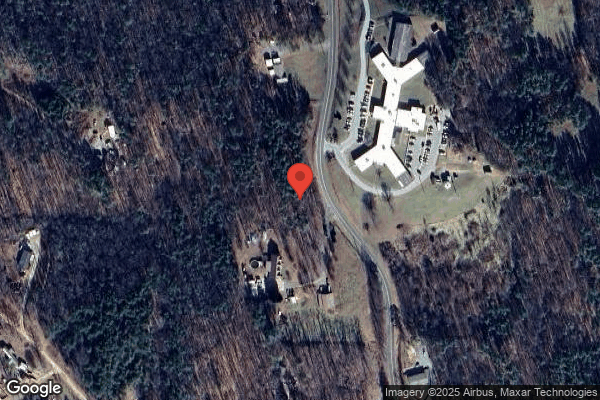
Aug 2024 1 deficiency 1 IJ
CRITICAL (J) 📢 Someone Reported This

A family member, employee, or ombudsman was alarmed enough to file a formal complaint

Immediate Jeopardy (IJ) - the most serious Medicare violation

Accident Prevention (Tag F0689)

Someone could have died · This affected 1 resident

**NOTE- TERMS IN BRACKETS HAVE BEEN EDITED TO PROTECT CONFIDENTIALITY** Based on observations, record review and staff, Physician Assistant, and Medical Director interviews, the facility failed to sup...

Read full inspector narrative →
**NOTE- TERMS IN BRACKETS HAVE BEEN EDITED TO PROTECT CONFIDENTIALITY** Based on observations, record review and staff, Physician Assistant, and Medical Director interviews, the facility failed to supervise a severely cognitively impaired resident with wandering behaviors from exiting the facility unsupervised, without staff knowledge, for 1 of 1 resident reviewed for accidents related to unsafe wandering/elopement (Resident #1). The facility also failed to immediately notify administration of the missing resident. The resident exited the facility which was in a rural residential area and walked 1/3 mile on a two-lane road with no streetlights and no sidewalk without shoes, wearing socks. She was found lying in a ditch beside the road by a neighbor walking his dog. On evaluation by Emergency Medical Service personnel, Resident #1's blood sugar was 500 milligrams per deciliter. She was transported to the hospital for evaluation and treatment where she was given intravenous Insulin and fluids. She was later discharged from the hospital to another long-term care facility's locked memory care unit. Findings included: Resident #1 was admitted to the facility on [DATE] with a diagnosis of dementia and Diabetes Mellitus. Review of Resident #1's physician's orders dated 3/09/24 and 3/12/24 revealed orders for antidiabetic medications (non insulin). She was not on scheduled blood sugar checks. Antidiabetic medications ordered: - 3/09/24 8:00 PM - Metformin 500 mg by mouth two times a day for Diabetes - 3/12/24 00:00 - Dulaglutide 0.75 milligrams (mg) subcutaneous every Tuesday for Diabetes Resident #1's quarterly Minimum Data Set (MDS) dated [DATE] revealed she was severely cognitively impaired. She exhibited wandering behaviors 1-3 days during the lookback period. The lookback period was 7 days prior to the MDS date. She was independent for walking at least 150 feet. She did not use a wander/elopement alarm. Review of Resident #1's wandering/elopement assessment dated [DATE] revealed she had no history of wandering and wandered within the home without leaving the grounds. The progress note section read in part that resident ambulates within facility, does not exit seek. Resident #1's care plan dated 7/19/24 had a focus which read in part that the resident is an elopement risk/wanderer related to disoriented to place, exit seeks. The intervention included to distract resident from wandering by offering pleasant diversions, structured activities, food, conversation, television and book. Another care area focus included the resident had a behavior problem related to dementia. The resident sundowns with increased confusion, wanders, and yells out. The interventions included to divert attention and remove from situation and take to alternate location as needed. Also to monitor behavior episodes and attempt to determine underlying cause. Another care area focus included the resident had Diabetes Mellitus and the interventions included to give Diabetes medication as ordered and monitor for any signs or symptoms of high or low blood sugars. The Weather Underground website revealed the outdoor air temperature where the facility was located on 8/09/24 at 4:54 AM was 71 degrees F with no precipitation. An interview on 8/13/24 at 11:03 AM with Nurse #1 revealed she was the nurse assigned to Resident #1 the night shift of 8/09/24. She stated she had completed a skin assessment on Resident #1 around 3:00 AM and had gone to the nurses' station to document. She heard Nursing Assistant (NA) #2 talking to Resident #1 who had walked out into the hall. Resident #1 did not want to go back to bed and became agitated. Nurse #1 stated she told NA #2 to just let the resident walk in the hall for a little bit. Nurse #1 then left the nurses' station to go to another resident's room and returned to the nurses' station about 20-30 minutes later. Nurse #1 stated that NA #2 was at the nurses' station, and she asked about Resident #1. They looked and Resident #1 was not in her room and they started searching for the resident. Nurse #1 stated that Resident #1 had a history of getting in other resident's beds or going in their rooms. Nurse #1 stated they walked around the outside of the building and were unable to locate the resident. She then informed the Nurse #2 that administration needed to be notified. Nurse #1 stated that they contacted the Director of Nursing (DON) who assisted them in looking at the facility security camera to determine which direction the resident had walked. By looking at the camera, they were able to determine that Resident #1 had walked down the hall toward the front door and had not come back. She stated that the front door was not clearly visualized by the security camera. Nurse #1 was unsure exactly what time the DON had been contacted. She stated she had been educated to notify administration in the event a resident could not be located but was unable to specify a time frame. Nurse #1 stated she did not know how Resident #1 got out the front door. She stated the door was kept locked at all times and required a code to be entered for the door to open. She stated that she had not tested the door during her shift and was unable to state if the door was functioning correctly. An interview on 8/13/24 at 11:35 AM with Nursing Assistant (NA) #1 revealed she was working the night shift and assigned to Resident #1 on the early morning of 8/09/24. She stated around 3:00 AM she and NA #2 were making resident rounds when Resident #1 walked out into the hall. She stated that NA #2 attempted to redirect Resident #1 back to bed, but when the resident got agitated, Nurse #1 just told them to let her walk around the facility. NA #1 stated they continued resident rounds and later Nurse #1 asked them if they had seen Resident #1 and they started searching the facility for her. NA #1 stated she thought this was around 3:50 AM and they looked in and outside the facility for approximately 1 hour prior to calling the DON. NA #1 stated that she had tried all the exit doors when searching for the resident and they were all locked. She stated that she did not know how Resident #1 got out the front door. She also stated that she had seen Resident #1 exit seeking in the past. An interview on 8/13/24 at 11:51 AM with NA #2 revealed that she was working the night shift on the early morning of 8/09/24. She stated that she and NA #1 were making resident rounds when she saw Resident #1 out in the hall. She stated that the resident did not want to go back to bed and Nurse #1 just told them to let the resident walk around. She stated she and NA #1 resumed resident rounds and when they came back to the nurses' station, they noticed Resident #1 was not in her bed. A room-by-room search was initiated for the resident. She stated that she did not know how the resident got outside. An interview on 8/13/24 at 12:15 PM with Nurse #2 revealed that she was in the facility as the Unit Manager on 8/09/24 when Resident #1 eloped. She stated it was around 4:40 AM with the DON was contacted. She stated the DON talked her through accessing the security camera to determine which direction Resident #1 had gone. She stated that she could see the resident go down the hall toward the front door and then didn't see her again. Nurse #2 stated she had no idea how Resident #1 got out the front door and did not believe the resident could have entered the door code. She stated she had observed Resident #1 to exit seek and open doors in the past. Nurse #2 stated she had received education on resident elopement which included notification of administration, and she thought the timeframe for notification was 30 minutes. An interview on 8/13/24 at 1:37 PM with the DON revealed Resident #1 had some wandering behaviors, got confused, and would go in and out of other resident's rooms. She stated that she had no idea how Resident #1 got out the door. She stated that Nurse #2 contacted her at 4:56 AM on 8/09/24 and she drove to the facility. She stated local law enforcement had been notified at 5:19 AM. The DON stated that Resident #1 had never exited the facility in the past. She stated that the staff had looked for the resident for approximately 1 hour prior to notifying her. She stated that the staff had received training on a missing resident which included notifying administration but did not specify a timeframe. Review of Emergency Management Services report dated 8/09/24 revealed they were called to the facility at 6:48 AM and arrived at 7:00 AM. The report narrative read in part that the resident was located sitting in a wheelchair in the front office. She had no obvious injuries and was noted that her blood sugar level was 500 milligrams per deciliter (mg/dL). A normal blood sugar range is 72 to 108 mg/dL. The resident was conscious and alert, however, has severe dementia and is unable to recall any of the events. The resident was transported to the hospital at 7:13 AM. An interview on 8/13/24 at 12:38 PM with the facility Physician Assistant (PA) revealed he had been notified of Resident #1 elopement on 8/09/24 around 7:00 AM and given the order for her to be transported to the hospital for evaluation after she was located. He stated he did not think the resident could have entered the door code. He also stated that he expected the facility to keep the resident safe. Review of the hospital emergency room report dated 8/09/24 at 7:37 AM read in part that this wanderer does not have any apparent injury. The resident was given intravenous Insulin and fluids to bring the blood sugar down to the 200s. The diagnosis read in part that the hyperglycemia was suspected to be stress response. The resident was discharged to a dementia unit in another facility. An interview on 8/13/24 at 10:33 AM with the Maintenance Director revealed when he checked the door on 8/09/24 after Resident #1's elopement, it was working correctly. He stated he tested it with and without the facility electrical power, using the generator, and he was unable to get it to malfunction. He stated the door stayed locked 24/7. An interview on 8/13/24 at 5:17 PM with the Medical Director revealed he had been notified of the situation and it was 'less than ideal'. An interview on 8/13/24 at 5:31 PM with the Administrator revealed that had she had been notified of the elopement after the resident had been located and taken to the hospital. She stated that she and the DON had reviewed the footage and put together a timeline of events. She also stated that staff education and resident elopement assessments had been completed. The Administrator stated that the PA, Medical Director, and resident representatives had all been notified. She stated that the front door had been extensively checked and they were unable to determine how Resident #1 was able to exit the facility. The Administrator stated that Resident #1 was transported from the hospital to another facility with a locked memory care unit which had been approved by the resident representative. An additional interview and observation were completed on 8/13/24 from 2:45 PM until 3:15 PM with the Maintenance Director. The observation was a recreation of the possible path Resident #1 took after exiting the facility front door. As stated by the Maintenance Director, Resident #1 was located by a neighbor walking his dog lying in a ditch calling for help. Maintenance Director stated he had arrived at the facility around 5:00 AM and immediately started looking for the resident. He looked in the wooded area beside the facility and then started looking down the road. The road was a 2-lane paved road with a double yellow line in the center. The posted speed limit was 40 miles per hour. Maintenance Director stated he and the Maintenance Assistant had taken a truck down the road using flashlights to look for the resident. Approximately 3/10th's of a mile down the road they observed the neighbor with the resident. The neighbor had already gotten the resident out of the ditch. The Maintenance Director stated the resident was wearing pants, a sweatshirt, and socks. He stated her clothing was dry and he had not observed any obvious injuries. The Maintenance Director and the Maintenance Assistant had assisted the resident into the truck and brought her back to the facility. The Maintenance Director stated the grass was wet with dew and the roads were dry. He stated that Resident #1 kept saying she was sorry for the trouble and asking for water. Observation of the front door on 8/13/24 at 3:20 PM revealed a single door with a push bar to exit. There was a door code box located on the right side of the door. The exit code was 4 digits with a hashtag to unlock the door. The door automatically closed and locked when released. The door had no audible alarms when opened or when held open. There was no automatic release if the push bar was held down. There was no method to bypass the door code to exit the door. The Administrator was notified of Immediate Jeopardy on 8/13/24 at 5:50 PM. The facility provided a corrective action plan with alleged date of compliance of 8/10/24. The corrective action plan indicated. Problem Identified: Resident #1 was admitted to the facility on [DATE] with the following diagnosis: left femur fracture, diabetes, dementia, cardiovascular disease, hypertension, hyperlipidemia and depression. Resident #1 has a BIMS of 3 as of 5/12/24. On August 9, 2024 at approx. 3:30am Resident #1 had an unsupervised exit via the front door of the facility. Order of events: Approximately 4:15am the facility staff noticed during routine rounds that Resident #1 was not in her bed and began searching for her. The Director of Nursing was notified at 4:56am that Resident #1 was missing and could not be found. The Director of Nursing gave the facility instructions to call the administrator, the police and to continue searching every room, as well as outside. The Director of Nursing arrived at the facility at 5:30am, reviewed the security cameras and noted Resident #1 leaving the facility via the front door at 3:20am. At 5:39am the Director of Nursing notified all management staff that Resident #1 was missing, and all available staff were to report to the facility and search on their way to the building. The sheriff department and Emergency Medical Services first responders arrived at approximately 6:00am and received a description of Resident #1. The Deputy reviewed the security camera footage and issued a silver alert. At approximately 6:30am the Maintenance Director and his assistant located Resident #1 and brought her back to the facility. The Emergency Medical Services with the Director of Nursing present assessed her for injuries and no injuries were identified. Resident #1 was identified as having a blood glucose level in the 500s by Emergency Medical Services. The Nurse Practitioner was notified at 6:45am and based on the resident's glucose levels Resident #1 was sent to the emergency room for further evaluation. Address how corrective action will be accomplished for resident (s) found to have been affected. On 8/9/24 at approximately 6:30am the Maintenance Director and his assistant located Resident #1 and brought her back to the facility. The Emergency Medical Services with the Director of Nursing present assessed her for injuries and no injuries were noted. A full set of vital signs and blood glucose monitoring was also conducted. Resident #1 was identified as having a blood glucose level in the 500's by Emergency Medical Services. The Nurse Practitioner and Medical Director were notified at 6:45am and based on the resident's current condition, orders were given to send the resident to the emergency room for further evaluation. Resident #1 was sent to Mission Hospital at approx. 7:08am. While Resident #1 was in the emergency room arrangements were made with her RP's approval for her to be transferred to a sister facility with a secure unit. Once Resident #1 was cleared to be discharged from the emergency room the facility transported Resident #1 from the emergency room to our sister facility around 12:00pm. Address how corrective action will be accomplished for resident(s) having potential to be affected by the same issue needing to be addressed: A 100% review of residents was conducted for the entire facility on 8/9/2024 to identify residents at risk for elopement to ensure they have an elopement risk assessment and care plan to address their behaviors. This review was completed by the Director of Nursing. Those residents identified were added to the Elopement Risk binder. Elopement binders were reviewed, updated accordingly and placed at each nurses' station by the Unit Manager on 8/9/24. These books contain the list of residents with exit-seeking behaviors, their pictures and resident's description. The admission Coordinator will continue to be responsible for maintaining the elopement binders based on information provided by the Director of Nursing or Administrator. The admission Director was reeducated on this task by the Administrator on 8/12/24 (upon her return from vacation). Also, those residents identified care plans and care guides were updated by the DON and MDS Coordinator on 8/9/24. Door checks were completed on 8/9/2024 by the Regional Director of Facility Maintenance to ensure all doors are locking properly. All doors were locking properly. Address what measures will be put in place and systemic changes made to ensure that the identified issue does not occur in the future. All staff working on 8/9/2024 were educated by the administrative nurses (Director of Nursing and Unit Managers) and Maintenance Director currently in the facility and completed phone education for those not present in the facility regarding the facility elopement policy, the location of the elopement binder to identify residents who are at risk for elopement, ensuring residents who are assessed at risk for elopement are supervised by facility staff, where to locate care plan intervention regarding residents at risk for elopement, immediate notification of the Administrator and Director of Nursing when it is identified a resident maybe missing. Any staff members who have not received the education after 8/9/2024, will not be allowed to work until they have completed the education. This education will be included in the new hire orientation for employees including agency personnel, which is conducted by the Staff Development Coordinator. The Staff Development Coordinator was educated by the Administrator regarding this matter on 8/12/24 (upon her return from vacation). On 8/9/24, the Interdisciplinary Team (IDT) to include but not limited to the Director of Nursing, Unit Manager, Activities Director, Social Worker, MDS Coordinator, Maintenance Director and Dietary Manager were re-educated by the Administrator on the Elopement Policy to include ensuring residents who are assessed at risk for elopement are supervised by facility staff and signs of elopement risk are recognized. Additionally, they were educated on their role in developing plans/interventions in response to any elopement risk. This includes a written care plan with elopement risk interventions formulated. On 8/9/24 all licensed nurses including licensed agency personnel were educated on completion of the Elopement assessments by the Director of Nursing and Unit Managers. They are completed on admission, then quarterly and/or as needed by the Licensed Nurse. Any newly identified residents noted at risk will be communicated by the licensed nurse during shift huddle at the change of each shift. On 8/9/24 the Maintenance Director was educated by the Regional Director of Facility Maintenance on conducting monthly elopement drills and weekly door checks (with all exit doors). Indicate how the facility plan to monitor its performance to make sure that solutions are sustained. The facility must develop a plan for ensuring that correction is achieved and sustained. The plan must be implemented and the corrective action evaluated for its effectiveness. Effective 8/9/24, the Director of Nursing (DON) will review the residents at risk for wandering or exit-seeking behaviors, which will include the residents currently in the elopement binder and any newly identified residents based on their elopement assessment and/or behaviors weekly for 12 weeks to ensure interventions/behaviors are being managed. Residents exhibiting new behaviors of wandering or exit seeking will be reviewed to ensure the wandering/elopement assessment is accurate, care plan updated, and interventions are in place. The Director of Nursing (DON) will report findings monthly to the Quality Assurance Performance Improvement Team (QAPI) for 3 months. The Maintenance Director will conduct monthly elopement drill and weekly door checks (with all exit doors). The findings and validation of this audit/task will be reported to the Quality Assurance Performance Improvement Team (QAPI) Committee monthly for 3 months. Immediate Jeopardy Removal Date: 8/10/24 The credible allegation of immediate jeopardy removal was verified on 8/13/24. Interviews were conducted with a sample of Nursing Assistants, Nurses, and the Maintenance Director to verify education was conducted for elopement. Documentation of in-service records was reviewed. Documentation of an elopement drill was reviewed. An interview with the Maintenance Director on 8/13/24 at 3:15 PM, he stated that he had received education resident elopement. He stated he will be conducting monthly elopement drills and weekly door checks with all exit doors for 3 months. The facility's alleged date of compliance was validated to be effective 8/10/24.
Jul 2024 1 deficiency 1 IJ
CRITICAL (J) 📢 Someone Reported This

A family member, employee, or ombudsman was alarmed enough to file a formal complaint

Immediate Jeopardy (IJ) - the most serious Medicare violation

Accident Prevention (Tag F0689)

Someone could have died · This affected 1 resident

Based on observations and record review the facility failed to remove an accident hazard (grill with 2 propane tanks) from the resident smoking area. In addition, the facility did not have a policy fo...

Read full inspector narrative →
Based on observations and record review the facility failed to remove an accident hazard (grill with 2 propane tanks) from the resident smoking area. In addition, the facility did not have a policy for safe operation of a gas grill in a common area used by residents. The resident smoking area contained 21 of 22 residents who smoked at the facility when the grill and 2 propane tanks were present. Findings included: The facilities smoking policy titled Resident Smoking Deer Park Health and Rehab was last revised on 4/16/24. A review of the policy found it did not include the storage and use of propane tanks in the resident smoking area. An observation of the resident smoking area occurred on 7/2/24 at 1:47 PM. A gas grill with 2 connected propane tanks was found sitting approximately 6 feet from the resident smoking area. The resident smoking area contained 21 residents actively smoking and using vapes, with 4 residents sitting at a table approximately 6 feet from the grill. On 7/2/24 at 1:52 PM the Activity Director stated he was unaware if the gas grill with propane tanks could be near the smoking area. He stated he would ask the Maintenance Director to come to the smoking area. On 7/2/24 at 1:54 PM the Maintenance Director stated he had placed the gas grill in the smoking area on Monday (7/1/24), and he did not know if the grill and propane tanks could be in the smoking area or if the grill and propane tanks needed to be a specific distance away from the smoking area. He said the facility was using the grill for a cookout on 7/4/24. The Maintenance Director removed the grill and propane tanks from the smoking area at that time. The Administrator stated on 7/2/24 at 2:20 PM the gas grill was brought to the smoking area the previous day. She stated she was not aware of any regulation for the distance requirements that the propane and grill should be from the smoking area while residents were smoking. A follow-up interview was conducted with the Administrator on 7/2/24 at 4:10 PM. She stated the facilities smoking policy did not include information about gas grills in the smoking area. The Administrator said the gas grill should be moved away from the smoking area for resident safety.
Apr 2024 14 deficiencies 1 IJ
CRITICAL (J) 📢 Someone Reported This

A family member, employee, or ombudsman was alarmed enough to file a formal complaint

Immediate Jeopardy (IJ) - the most serious Medicare violation

Free from Abuse/Neglect (Tag F0600)

Someone could have died · This affected 1 resident

**NOTE- TERMS IN BRACKETS HAVE BEEN EDITED TO PROTECT CONFIDENTIALITY** Based on observation, record reviews, and resident, resident representatives, staff, psychotherapist, Psychiatric Nurse Practiti...

Read full inspector narrative →
**NOTE- TERMS IN BRACKETS HAVE BEEN EDITED TO PROTECT CONFIDENTIALITY** Based on observation, record reviews, and resident, resident representatives, staff, psychotherapist, Psychiatric Nurse Practitioner (NP), Physician Assistant and Medical Director interviews, the facility failed to protect a resident's right (Resident #3) to be free of sexual abuse from another resident (Resident #52). Resident #3 had severely impaired cognition and Resident #52 had moderately impaired cognition and a history of sexual behaviors. On 3/25/23 Resident #52 was observed by staff inviting Resident #3 into his room and was told by staff to leave the door open. Shortly after, Resident #52 was observed inappropriately touching Resident #3's leg. On 7/25/23 Resident #52 was found in Resident #3's room looking at her while she slept. On 1/30/24 Nurse Aide (NA) #1 heard yelling coming from Resident #3's room. NA #1 and Nurse #1 found Resident #52 in Resident #3's room with his hand inside of her incontinent brief with skin to skin contact. Resident #3 stated stop you're hurting me. Resident #3 was incapable of consenting to the sexual act. Resident #3's Responsible Party (RP) indicated she would have been very upset by the incident. A reasonable person expects to be protected from abuse in their home environment and sexual abuse would cause trauma. In addition, the facility failed to prevent resident to resident abuse when a resident (Resident #264) used his fist to punch Resident #30 on the right side of the face. This deficient practice affected 4 of 12 residents reviewed for abuse. Immediate jeopardy began on 1/30/24 when Resident #3 was not protected from sexual abuse. Immediate jeopardy was removed on 4/22/24 when the facility implemented a credible allegation of immediate jeopardy removal. The facility remains out of compliance at the lower scope and severity level of D (no actual harm with potential for more than minimal harm that is not immediate jeopardy) to ensure education is completed and monitoring systems put into place are effective. Example #2 was cited at a scope and severity of D. The findings included: 1. Resident #52 was admitted to the facility on [DATE] with diagnoses which included cerebral infarction (stroke), and dementia. Resident #52's care plan dated 10/18/22 indicated he had a behavior problem and had been sexually promiscuous with other residents. Resident #52 would deny and was easily redirected. Interventions included to administer medications as ordered, monitor/document for side effects and effectiveness, anticipate and meet the resident's needs, intervene as necessary to protect the rights and safety of others, approach/speak in a calm manner, divert attention, and remove from situation and take to alternate location as needed. The quarterly Minimum Data Set (MDS) dated [DATE] indicated Resident #52 had moderately impaired cognition and had no behaviors. He was independent with all his mobility and used a manual wheelchair. Resident #3 was admitted to the facility on [DATE] with the following diagnoses: cerebral infarction (stroke), dementia with agitation, Alzheimer's disease and Parkinson's disease. Resident #3's care plan dated 12/2/22 indicated at times, Resident #3 had been verbally and sexually inappropriate while in a heavy traffic area of the facility. Her word for sex is [NAME]. Interventions included to assess resident's understanding of the situation, allow time for the resident to express self and feelings towards the situation, and psychiatric/psychogeriatric consult as indicated. The quarterly MDS dated [DATE] indicated Resident #3 had severely impaired cognition and no behaviors. Resident #3 was a partial/moderate assist for her mobility and used a manual wheelchair. A review of Resident #52's medical record indicated a progress note dated 3/26/23 at 11:15 AM documented by Nurse #2. The progress note indicated it was a late entry note for 3/25/23 at 10:00 AM. Nurse #2 documented that Resident #52 was heard by several staff members inviting a female resident down to his room. Staff told him he needed to leave his door open. A few minutes later, as a staff member went by the room, the two were seen touching each other inappropriately and were parted from each other by two staff members. Resident #52 immediately denied inviting her to his room and said he did not want her to come back. A phone interview with Nurse #2 on 4/21/24 at 9:22 AM revealed the female resident who was observed in Resident #52's room on 3/25/23 was Resident #3. Nurse #2 stated she could barely remember all the details but Resident #52 was seen inviting Resident #3 into his room earlier that day. Nurse #2 stated she thought it was fine because they were just talking, and she told Resident #52 to keep his door open. Nurse #2 further stated that a few minutes later, it might have been a housekeeper (she was not certain) who witnessed Resident #52 and Resident #3 touching inappropriately. Nurse #2 stated she did not witness it and both residents denied having done anything. From what she could remember, the staff member reported that Resident #52 was seen touching Resident #3's knee. Nurse #2 removed Resident #3 from Resident #52's room. Nurse #2 stated she reported the incident to an on-call provider, but she could not remember whether she reported it to the Director of Nursing or the Administrator. There were no revisions made to Resident #52's care plan related to sexually promiscuous behaviors after the 3/25/23 incident. Further review of Resident #52's medical record indicated he was seen by the psychotherapist on 3/30/23. Resident #52 reported sadness and depression and missing his family. He also reported increased tiredness and sleeping throughout the day. The therapist provided review of alternative symptoms often experienced with depression: irritability, forgetfulness, and lack of interest to engage in activities. The therapist recommended for Resident #52 to increase time he listened to music. A Psychiatry Follow-up Note dated 4/25/23 by the Psychiatric NP in Resident #52's medical record indicated he was made aware of the incident on 3/25/23 between Resident #52 and Resident #3. He documented that Resident #52 could be sexually inappropriate with staff at times. He was prescribed Paroxetine (a medication used to treat depression) 30 milligrams (mg) daily and Estradiol (hormone essential for modulating libido, erectile function, and spermatogenesis or the process of sperm cell development) 1 mg daily for history of sexual inappropriate behavior. Paroxetine had been increased to 40 mg daily on 3/29/23. He was treated with Paroxetine, Trazodone (antidepressant and sedative), Clonazepam (sedative), and Estradiol. He was agreeable to a visit next month. The Psychiatric NP indicated in his note to monitor him closely. A progress note dated 7/24/23 at 5:21 AM documented by Nurse #3 in Resident #52's medical record indicated Resident #52 had insomnia tonight. He had been wandering in the hallways and going into other residents' rooms but was quickly redirected back to his room. A phone interview with Nurse #3 on 4/22/24 at 1:24 PM revealed that on 7/24/23, Resident #52 kept rolling around near the day room and kept heading towards Resident #3's room. Nurse #3 stated that Resident #52 told her that he was just rolling around. She indicated at approximately 1:30 AM she saw Resident #52 enter Resident #3's room, she went down to the room and saw Resident #52 by Resident #3's bedside and he was just looking at her. Resident #3 was sleeping at the time. Nurse #3 stated that she did not see Resident #52 touch Resident #3, and that she moved him out of the room and back to his room. Nurse #3 indicated she was not aware of the 3/25/23 incident between Resident #52 and Resident #3. She reported she was aware of Resident #52's care plan having a care area identified for inappropriate sexual behaviors, but she did not know the history or why he had this care planned. There were no revisions made to Resident #52's care plan related to behaviors after the 7/24/23 incident. The annual MDS for Resident #3 dated 12/9/23 indicated she was severely cognitively impaired, and had no behavioral symptoms. Resident #3 required substantial/maximal assistance with most activities of daily. Resident #3 used a manual wheelchair and was able to self-propel herself. A review of Resident #52's quarterly MDS dated [DATE] revealed that he was moderately cognitively impaired. He did not display any physical or verbal behavioral symptoms towards others but rejection of care occurred 1 to 3 days during the assessment period. He only required supervision from staff with most activities of daily living including bed mobility and transfers. Resident #52 used a manual wheelchair and was able to self-propel himself. On 1/29/24 the Psychiatric NP saw Resident #52. The note indicated one of the chief complaints was staff reporting resident had become more sexually inappropriate. The NP did an examination and found Resident #52 oriented to person, place and situation and found him to be moderately impaired. His findings were Resident #52 had dementia with behavioral disturbances, depression, anxiety, insomnia and sexually inappropriate behavior. The NP's recommendations were no new psychiatric medications at this time. To continue ongoing supportive/behavioral strategies as currently implemented by staff. To encourage participation in recreational activities. He recommended Buspirone 5 mg three times a day for sexual inappropriate behavior. The NP will assess at the next visit. An incident report dated 1/30/24 completed by Nurse #1 indicated that on 1/30/24 at 1:35 AM during rounds Nurse Aide (NA) #1 and Nurse #1 observed Resident #52 at the bedside of Resident #3 with his hands inside the top of her brief. Resident #3 and #52 were separated immediately. Resident #3 was assessed for injury, and none was identified. Resident #3 was moved to his room and Resident #52 was placed on 15 minute checks. No physical or mental injury/harm was identified. On 1/30/24 at 8:30 AM, the local police department was notified of the incident. An observation was made on 4/14/24 at 9:51 AM of the room locations for Resident #3 and Resident #52 prior to the 1/30/24 incident. The residents resided on the same hall with 1 room in between their rooms. An interview with the assigned police officer was attempted by phone on 4/22/24 at 3:00 PM and was unsuccessful. A written statement dated 1/30/24 by Nurse Aide (NA) #1 indicated during his round, he went to check on Resident #3 and found Resident #52 with his hands down Resident #3's pants. Both residents were separated while the nurse was notified. The incident occurred at 1:35 AM on 1/30/24 in Resident #3's room. On 4/19/24 at 10:48 AM, a telephone interview was conducted with NA #1. He stated on the night shift on 1/30/24 around 1:30 AM, he was doing rounds on the floor and he heard yelling coming from Resident #3's room. When he went to check on Resident #3, he found Resident #52 with his hands under Resident #3's brief. There was skin to skin contact. NA #1 was unable to recall if Resident #3 said anything when he entered the room. NA #1 got Nurse #1 to come down and then they separated Resident #52 and Resident #3. He put Resident #52 back in his room. NA #1 stated he could not remember the details of how he notified the nurse but did say he did not leave the two residents. NA #1 stated he had not ever seen Resident #52 in this resident or any other resident's room before. NA #1 was not aware of any previous incidents of sexual behavior. NA #1 also stated that he could barely remember the details regarding this incident between Resident #3 and Resident #52 and he would go by whatever was indicated in his written statement. A progress note dated 1/30/24 at 2:49 AM in Resident #3's medical record documented by Nurse #1 indicated she was alerted by NA #1 to come to Resident #3's room around 1:35 AM. Upon entering the room, Nurse #1 noted Resident #52 at Resident #3's bedside. Upon further assessment, Resident #52 was noted to have his right hand in Resident #3's brief. Resident #3 was stating, stop you're hurting me. Both residents were immediately separated. A skin assessment was completed on Resident #3 and no injuries were noted. Resident #3 was alert per baseline with confusion. No signs and symptoms of pain, discomfort, or acute distress were noted or reported. Resident #3 was relocated to a different room. On 4/19/24 at 8:20 AM, a telephone interview was conducted with Nurse #1. Nurse #1 stated that she was alerted by NA #1 to come to Resident #3's room and saw Resident #52 sitting at her bedside. Resident #52's hand was in Resident #3's brief and there was skin to skin contact. Nurse #1 stated she didn't remember seeing his hand moving but it looked like he was fondling her under her brief because his hand was right over her pelvic area. Nurse #1 stated as she entered Resident #3's room, she heard Resident #3 stating, stop, you're hurting me. After Nurse #1 told Resident #52 to remove his hand from under Resident #3's brief, she asked him what he was doing and Resident #52 stated to her, She asked for it. The two residents were immediately separated, and Resident #3 was moved to another room and eventually off the hall to the other side of the building in an empty room. Nurse #1 notified the administration and the Physician Assistant who saw the residents on the next shift. Nurse #1 stated that she had never seen Resident #52 go into another female's room prior to this incident. Nurse #1 was not aware of the 3/25/23 or 7/24/23 incidents between Resident #52 and Residents #3. Nurse #1 further stated that she assessed Resident #3 and did not find any physical injury. Prior to this incident, Nurse #1 stated that she saw Resident #52 in his room, but she couldn't remember what time. When Resident #52 went back in his room after the two residents were separated, he kept coming down to the nurses' station, and trying to explain about what happened. Resident #52 stated that Resident #3 invited him to her room. Nurse #1 stated she could not remember anything else that Resident #52 said about the incident. Resident #52 was placed on 15 minute checks starting on 1/30/24 till 2/9/24. Nurse #1 stated that in her opinion, what happened between Resident #52 and Resident #3 was sexual abuse because Resident #52 was alert during the incident and he knew what he was doing, while Resident #3 was not able to give consent. On 4/16/24 at 9:30 AM, Resident #52 was interviewed. Resident #52 stated that Resident #3 used to come to his room, and she would flirt with him. When asked if he remembered the incident on 1/30/24 in Resident #3's room, Resident #52 stated that he did not remember the incident. Resident #52 stated that he was a married Christian man. He denied ever going into Resident #3's room. Resident #52 stated he didn't want to talk about it anymore and refused to answer any more questions. On 4/16/24 at 1:20 PM, a telephone interview with Resident #3's responsible party (RP) was conducted. Resident #3's RP said that he was made aware of the 1/30/24 incident and they ended up moving Resident #3 to another room. He stated that Resident #3 was still very confused by the move. The RP stated that Resident #3 was raped 3 times by the age of 9. The RP also stated that Resident #3 did have a history of touching men at a different facility. He was not aware of any other issues with her and other men at this facility other than on 1/30/24. A follow-up phone interview with Resident #3's RP on 4/24/24 at 3:30 PM revealed Resident #3 was not able to give sexual consent. Resident #3's RP stated that she would be offended by a stranger touching her and she would be very upset. The RP indicated he had not spoken with the police. A progress note dated 2/13/24 by Nurse #3 revealed that she overheard a conversation with Resident #52 and another resident at the nurses desk. Nurse #3 stated that Resident #52 noticed that Resident #3 was no longer in the room on the south hall and Resident #52 stated there's a man in Resident #3's room. She's gone. On 4/19/24 at 2:50 PM, a phone interview was conducted with the Psychotherapist. She stated that she saw Resident #52 once a month. She stated that he had not been very engaging the last few months and was more isolated. She said that she had noticed that his cognition was declining since the start of this year. He had been more confused as time went on. She stated that she had not seen any hypersexuality with him prior to the 1/30/24 incident. She was not aware of any other incidents between Resident #52 and a female resident since the incident on 1/30/24. She stated that she thought he would have had an understanding of what he was doing during the 1/30/24 incident. The Psychotherapist also saw Resident #3 every two weeks. She stated that Resident #3 had declined as well in her cognition. The Psychotherapist stated that she did not observe any changes with Resident #3 after the incident on 1/30/24. She stated that Resident #3 told her that she did not remember the incident. On 4/19/24 at 3:18 PM, a phone interview was conducted with the Psychiatric NP. He stated that he met Resident #52 for the first time on 12/4/23. Resident #52 was seen by a different provider prior to this. The Psychiatric NP stated that he usually saw Resident #52 every 4 to 6 weeks unless there was something acute and he would see him sooner. He stated that he was aware that Resident #52 was sexually inappropriate with another resident (Resident #3) on 1/30/24. He stated that Resident #52 had dementia and his ability to make decisions was not good. He shared that when he spoke with Resident #52, he had no recall of the event. The Psychiatric NP stated that he had seen a cognitive decline with Resident #52 since he started seeing him on 12/4/23. He went on to say that Resident #52's confusion fluctuated, and he had times of clarity and times of confusion. On 1/29/24 when he saw Resident #52, he was alert and oriented to person, place and situation. He stated that when he saw Resident #52 on 1/29/24 one of the chief complaints was that staff were reporting that Resident #52 was becoming more sexually inappropriate. The Psychiatric NP made the recommendation of Buspirone 5 mg three times a day for sexually inappropriate behaviors. The Psychiatric NP stated that he couldn't say how Resident #52's cognition was during the incident without being there himself. The Psychiatric NP further stated that he last saw Resident #3 on 2/26/24. Resident #3 had many diagnoses including Parkinson's disease and dementia. The Psychiatric NP stated that Resident #3's mental cognitive ability also fluctuated. When he saw her on 2/26/24, Resident #3 had no recollection of the incident and could not remember any stressful events happening to her. The Psychiatric NP stated that he was not able to say if Resident #3 could give consent sexually, and that it depended on her cognition at that day and time. On 4/19/24 at 4:00 PM, an interview with the Physician Assistant (PA) revealed that he saw Resident #3 on 1/30/24 after the incident had happened but she (Resident #3) did not remember anything. The PA stated that Resident #3 was very confused. The PA also stated that he saw Resident #52 on 1/30/24 and he denied anything had happened. The PA stated that Resident #52 could also be confused but he also had periods when he was not confused. The PA could not say if the incident was sexual abuse since both residents could have times of confusion. He stated that he didn't think there was any intent from Resident #52 to hurt Resident #3. He added that he had never seen Resident #52 in other resident rooms. On 4/22/24 at 1:24 PM, an interview with the Medical Director (MD) revealed he was unsure where the history of sexually inappropriate behavior came from regarding Resident #52. He stated that when the facility received history and physical from the hospital or wherever the resident was coming from, it generally didn't give much detail. The MD stated that the notes from the psychotherapist would indicate more information about Resident #52's sexually inappropriate behavior. The MD refused to answer any questions regarding the incident on 1/30/24 between Resident #52 and Resident #3. The MD asked for guidance on what the facility could have done to prevent the incident that happened between Resident #52 and Resident #3. On 4/18/24 at 2:57 PM, an interview with the Director of Nursing (DON) revealed that she was an MDS Nurse in the facility at the time of the 1/30/24 incident but she remembered Resident #52 being placed on frequent observations. She indicated she had no idea Resident #52 had a history of sexually inappropriate behaviors prior to the 1/30/24 incident. The DON stated that for the past few months Resident #52 mostly stayed in his room while Resident #3 was out and about all the time. The DON shared that Resident #3 usually didn't go into other residents' rooms and that she just stayed in the hallways. She stated that Resident #3 would make sexual remarks to staff at times. She said that after the 1/30/24 incident the staff kept Resident #3 and Resident #52 separated and they did frequent observations. On 4/19/24 at 12:49 PM, a telephone interview was conducted with the former DON. She stated that she remembered the incident that happened on 1/30/24. The former DON stated that she was not working that day (1/30/24), but she remembered calling the local police department about the incident. The former DON further stated that she did not know the details of the incident in March 2023 involving Resident #52 and Resident #3, but she knew that an incident had happened. The previous DON felt that the facility did not do enough to prevent Resident #52 from getting access to Resident #3. On 4/19/24 at 9:00 AM, the Administrator was interviewed. She stated that she was in training when the incident happened on 1/30/24 between Resident #52 and Resident #3. The Administrator stated she remembered the local police department and the on call psychiatric provider were notified. She stated that she knew Resident #3 would make sexual suggestions but Resident #3 was unable to recall the events on that day. The Administrator stated she did not know of any other incidents that involved Resident #52, but the facility gave Resident #52 a 30-day discharge notice after the incident on 1/30/24 but they had been unsuccessful in finding another facility that would take him. The Administrator stated that they ended up substantiating the allegation of abuse because there were witnesses. The Administrator was notified of immediate jeopardy on 4/19/24 at 6:49 PM. The facility provided the following immediate jeopardy removal plan. Identify those recipients who have suffered, or are likely to suffer, a serious adverse outcome as a result of the noncompliance. On 1/30/24, at approximately 1:30 AM, Resident #52 was sitting in Resident #3's room with his hand inside Resident #3's brief as Nurse Aide (NA) #1 staff entered the room. Resident #3 was severely cognitively impaired and was not capable of consenting to sexual activity. NA #1 alerted Nurse #1 to come to the room. Resident #3 was heard stating stop you're hurting me when Nurse #1 walked into the room. Resident #52 and Resident #3 were separated by NA #1 and Nurse #1 immediately on 1/30/24. Resident #3 was examined by Nurse #1 for any injuries including a skin check and no injuries were noted. Resident #3 was moved to 117 on 1/30/24 at 2:00 AM and then after consideration by the Director of Nursing (DON) and Administrator she was moved to room [ROOM NUMBER] on the other side of the facility at 8:30 AM. Resident #52 was taken to his room and was placed on every 15- minute checks from 1/30/24 to 2/9/24. No sexually inappropriate behavior was observed during the observation period and the Interdisciplinary Team (IDT) discontinued every 15-minute checks on 2/9/24. A review of nursing notes dated 1/30/24 and 1/31/24 revealed Resident #3 did not demonstrate or verbalize anxiety and no emotional or physical distress was observed. The facility's Physician Assistant was informed of the incident on 1/30/24. Resident #3 was examined on 1/30/24 by the Physician Assistant. Full assessment completed by Physician Assistant with no bruising noted and the resident denied the event. Resident #3 was seen by Psychiatric services on 2/8/24. It was determined that Resident #3 was at baseline. Observation by Psychiatric services included resident report of decreased memory recall during the examination. The Psychiatry provider for Resident #52 was notified on 1/30/24 of his inappropriate sexual behaviors and emailed an order on 1/30/24 to change Resident #52's Buspirone to 5 mg po three times for inappropriate sexual behaviors and anxiety. This order was initiated on 1/31/24. Resident #52 was seen by Psychiatric services on 3/11/24. The Physician Assistant examined Resident #52 on 1/30/24. On 4/19/24, Resident #52 was placed on 1:1 observation indefinitely. The Administrator reviewed the schedule to ensure that the facility has an individual assigned by the Staffing Coordinator as 1:1 supervision with Resident #52. Resident #52 is not in hallways or other resident areas unsupervised. Any behaviors identified during the 1:1 supervisor will be documented and reported to the facility Administrator and Director of Nursing. Head to toe skin assessments for residents with Brief Interview for Mental Status (BIMs) lower than 11 were completed by the Administrative Nurses (including the Director of Nursing) on 4/19/24. No concerns were identified. On 04/19/24, the Social Worker interviewed all residents with a BIMs score of 12 or above. The questions included with Social Worker interviews with residents were the following: 1. Have you had ever been inappropriately touched/abused/neglected or experienced misappropriation of resident property by another resident or staff here at the facility? 2. Do you feel safe here at the facility? Based on resident interviews there were no other reported incidents of abuse from any residents. Other residents at risk for abuse and other residents with inappropriate sexual behaviors were discussed and identified with the IDT during the Ad Hoc Quality Assurance and Performance Improvement (QAPI) held on 4/19/24. Staff interviews for those currently in the facility were conducted by the Social Worker and Administrator on 4/19/24 in person which included: 1. Have you witnessed or been made aware of inappropriate touching or any other form of abuse by staff or a resident? Staff not interviewed on 4/19/24 will be interviewed by the Staff Development Coordinator (SDC), Staffing Coordinator, and Nursing Supervisors prior to working their next shift. Interviews will be conducted in person, and via phone. The SDC, Staffing Coordinator, and Nursing Supervisors were notified and educated by the Administrator of this responsibility on 4/19/24. Staff will not be allowed to work before they have been interviewed by either the Staff Development Coordinator, Staffing Coordinator or the Nursing Supervisors. The active employee list will be tracked by the SDC and given to the Staffing Coordinator and Nursing Supervisors to ensure all staff have been interviewed prior to their next working shift via phone or in person. Specify the action the entity will take to alter the process or system failure to prevent a serious adverse outcome from occurring or recurring. The Director of Nursing (DON) educated 100% of facility staff, including agency staff, on abuse/neglect/misappropriation policy as well as identification of sexual abuse in the elderly, and reporting of abuse/neglect/misappropriation per facility policy with a review of the F600 regulation including inappropriate sexual behaviors. Abuse education specifics include definition of abuse, forms of abuse, how to recognize abuse, and what to do if abuse is suspected. In addition, education was completed on signs of Sexual Abuse against the Elderly and verbal descriptions of the typical signs. Staff were educated either in person or by phone on 4/19/24. The Staff Development Coordinator (SDC) will continue education for any staff member including Agency staff not available for education on 4/19/24. Any staff member including Agency staff who was not available to receive the education on 4/19/24 will not be permitted to work until education is completed. The SDC will be responsible for tracking staff, including Agency staff not educated on 4/19/24 by comparing the staffing schedule and active employee roster daily to verify education. The Director of Nursing will verify completion of education. The Director of Nursing and the Staff Development Coordinator were notified of the plan on 4/19/24. Nursing supervisors were provided the abuse education and informed on 4/19/24 by the Director of Nursing and the Staff Development Coordinator of the need to provide the abuse education after hours and on weekends. Nursing Supervisors will be notified by the Staff Development Coordinator of the employees that need the education prior to their next working shift. The abuse education will be included for new hires during orientation by the Staff Development Coordinator. Director of Nursing, Administrative Nurses and Social Worker reviewed the electronic medical records and care plans to identify current residents with behaviors of inappropriate sexual behaviors or potential for behaviors of inappropriate touching on 4/21/24. Care plans were reviewed to ensure interventions were in place and any new interventions were added to the resident's Kardex (care plan interventions) documentation for staff to reference key resident information. Staff will be made aware of residents with behaviors of inappropriate sexual behaviors, or potential for behaviors of inappropriate touching by resident specific Kardex interventions. Nurses, Nurse Aides and Department Heads were educated on how to review resident Kardex's by the Staffing Coordinator in person and via phone on 4/21/24. After 4/21/24 Nurses, Nurse Aides, and Department Heads will not be allowed to work their next shift until they have received the education from the Staffing Coordinator or Nursing Supervisors. The Staffing Coordinator and the Nursing Supervisors will compare the staffing schedule and active employee roster daily to verify education. The Staffing Coordinator and the Nursing Supervisors were notified of the plan by the Administrator on 4/21/24. This education will be included for new hires during orientation by the Staff Development Coordinator. On 4/19/24, the facility completed an Ad Hoc QAPI to review the Immediate Jeopardy for sexual abuse, the immediate jeopardy removal plan, education, and discuss and plan for audits and monitoring. Other residents at risk for abuse and other residents with inappropriate sexual behaviors were discussed and identified with the IDT during the Ad Hoc QAPI held on 4/19/24. The Ad Hoc QAPI meeting was attended by the Administrator, Director of Nursing, Unit Managers, Social Worker, Activities Director, Dietary Manager, Housekeeping Manager, Staffing Coordinator, Business Office Manager, Admissions Director, Maintenance Director, and Regional MDS Consultant. The Medical Director was in attendance via phone. The facility Administrator and Director of Nursing are responsible for continued compliance. The alleged date of immediate jeopardy removal is 4/22/24. On 4/25/24, the facility's credible allegation of immediate jeopardy removal was validated. Resident #52 was observed to have a 1 on 1 staff with him. Documentation regarding staff training on abuse/neglect/misappropriation policy as well as identification of sexual abuse in the elderly and reporting of abuse/neglect/misappropriation per facility policy with a review of the F600 regulation including inappropriate sexual behaviors. Staff interviews revealed receipt of training related to the definition of abuse, forms of abuse, how to recognize abuse, and what to do if abuse was[TRUNCATED]
SERIOUS (G) 📢 Someone Reported This

A family member, employee, or ombudsman was alarmed enough to file a formal complaint

Actual Harm - a resident was hurt due to facility failures

Quality of Care (Tag F0684)

A resident was harmed · This affected 1 resident

**NOTE- TERMS IN BRACKETS HAVE BEEN EDITED TO PROTECT CONFIDENTIALITY** Based on record review and staff, Transportation Driver, Dialysis Nurse, and Medical Director (MD) interviews, the facility fail...

Read full inspector narrative →
**NOTE- TERMS IN BRACKETS HAVE BEEN EDITED TO PROTECT CONFIDENTIALITY** Based on record review and staff, Transportation Driver, Dialysis Nurse, and Medical Director (MD) interviews, the facility failed to assess a resident after a fall prior to moving them from the floor. Resident #103 fell during a transfer at the dialysis center and was moved off the floor prior to being assessed for injuries. Resident #103 sustained a clavicle fracture and right ankle strain. This was for 1 of 2 sampled residents reviewed for quality of care (Resident #103). The findings included: Resident #103 was admitted to the facility on [DATE] and had a diagnosis end stage renal disease, cerebral infarction, muscle wasting and atrophy. Resident #103's admission Minimum Data Set (MDS) assessment, dated 2/27/24, coded Resident #103 as severely cognitively impaired and as totally dependent on staff for transfers. A physician's order dated 3/6/24 read the resident receives dialysis on Monday, Wednesday, and Fridays in the afternoon. An interview with the Transportation Driver was conducted on 4/16/24 at 1:20 PM. The Transportation Driver stated he had witnessed the incident at the dialysis center on 3/25/24. He said he arrived to transport Resident #103 back to the facility and was told by a dialysis nurse he needed to go back to the nursing facility to get a lift sling and nurse aides to transfer Resident #103 from the dialysis chair to her transport chair. The Transportation Driver stated the dialysis nurse told him Resident #103 was transferred to the dialysis chair without the use of her sling and Resident #103 would not be transferred back to the transport chair manually again because it violated the dialysis center's policy. The Transportation Driver said he called the nursing facility and spoke to the Scheduler and reported the situation, and the Scheduler told him she would get some help for him when he returned to the nursing facility. The Transportation Driver then drove to the facility and picked up Nurse Aide (NA) #3 and NA #2 and a sling. The Transportation Driver stated NA #3 and NA #2 went back to the dialysis center with a sling to transfer Resident #103. At the dialysis center, the Transportation Drives said he saw Resident # 103's blanket and a sling in a biohazard bag laying on the floor and was unsure why they were in a bag. NA #3 and #2 then attempted to put the sling under Resident #103 but were unable to roll her in the dialysis chair to place the sling underneath her. NA #3 and #2 tried to manually transfer Resident #103 from the dialysis chair as to the transport chair, but Resident #103's knee buckled under her and she was assisted to the floor on her knees by NA #3 and NA #2. Both NA #3 and NA #2 decided to move Resident #103 from the floor back into her chair. A dialysis tech then went over to assist the NAs with lifting Resident #103 off the floor and into her chair. The Transportation Driver said each NA was lifting Resident #103 by using their arm under the Resident's arm to lift the resident up. The dialysis tech was in front of the Resident with her arms wrapped around the back of the Resident during the lift from the floor. During the lift, the Transportation Driver heard someone say they heard a pop, and Resident #103 made a noise to indicate she had pain. Once Resident #103 was placed into the chair, one of the NAs said the Resident needs to be assessed. The Transportation Driver said EMS was called by the dialysis center and they were told to leave the facility. Nurse Aide (NA) #3 and NA #2 were interviewed together on 4/16/24 at 3:08 PM. NA #3 stated they were unable to get the lift sling they brought from the facility under Resident #103, and it was decided by her and NA #2 to transfer Resident #103 manually. NA #3 said the first attempt to transfer Resident #103 did not work and the resident slid to the floor with assistance from her and NA #2. NA #3 stated they had lifted the resident with their arms under her arms, and when Resident #103 was standing, her knees buckled, and she was lowered onto her knees upright. NA #3 and NA #2 both agreed Resident #103 was not assessed by a nurse when she was assisted from the floor. While Resident #103 was on her knees, a dialysis technician came over to assist with lifting the resident from the floor and into her chair. NA #2 said he was lifting under Resident #103's right arm, NA #3 was at the back of the resident with her arms around the front of the resident, and the dialysis technician was on the residents left side and a gait belt was used for the transfer. NA #2 said when they were lifting Resident #103, he heard a pop, and Resident #103 complained of pain in her left shoulder and said she was feeling nauseous. A dialysis nurse then assessed Resident #103, and then called EMS. The dialysis nurse told NA #3 and NA #2 they could leave. The Dialysis Nurse who was assigned to Resident #103 on 3/25/24 was interviewed on 4/17/24 at 8:45 AM via phone. The Dialysis Nurse stated she did not recall exactly how the NAs tried to transfer Resident #103 out of the dialysis chair, but the resident slipped and fell to the floor on her left side and hurt her shoulder and ankle. The NAs then lifted Resident #103 back into the chair by placing their arms under her arms and lifting. The interview further revealed Resident #103 complained of pain in her left shoulder and was assessed by the Dialysis Nurse. Emergency Medical Services was contacted and Resident #103 was sent to the hospital for an evaluation. Resident #103's hospital Discharge summary dated [DATE] was reviewed. The discharge summary revealed the resident was dropped being transferred at a dialysis center on 3/25/24 the resident complained of left shoulder pain, right ankle, right knee pain and right hip pain. Examination of Resident #103 found left side mid-shaft clavicle fracture, and a right ankle strain. The discharge summary did not indicate any pain medication was ordered, and to follow-up with orthopedics. Resident #103 returned to the facility on the same day. A review of progress notes found a nursing note created on 3/26/24 by Nurse #1 with an effective date of 3/25/24 that read in part as follows: Resident #103 returned to the facility from the hospital via Emergency Medical Services. The resident was alert and responsive and had a sling on her left arm due to a fractured clavicle. The Resident was transferred to bed by paramedics, and the resident was not in any distress. A review of Resident #103's medical administration record (MAR) 3/26/24 through 4/17/24 found Resident #103 received acetaminophen once on 3/26/24 with a pain of 6 on a scale of 1 to 10 (10 being the highest level of pain). The review found no other pain medication given to the resident, and the resident's pain level was monitored every shift. The Director of Nursing (DON) documented a progress note dated 3/26/24 that read in part, the Medical Director was notified of the emergency room (ER) visit last night with report of left clavicle fracture and orders for sling. Resident #103's order for acetaminophen as needed (PRN) for pain. The Resident stated she had pain but it was bearable. No further orders at this time. On 3/28/24 a physician's order was written for Resident #103 to receive oxycodone HCL Oral tablet 5 MG, give by mouth every 12 hours as needed for pain. The DON was interviewed on 4/17/24 at 9:12 AM. The DON did not know if Resident #103 was assessed by a nurse after the fall or when her shoulder was hurt, the NAs present could not assess her. Resident #103 was in the care of the dialysis center while she was there, and she did not know the dialysis center's protocol and policies for a fall or injury. A follow up interview was conducted with the DON on 4/19/24 at 12:09 PM. The DON said the facility's policy was to assess a resident after a fall by a nurse and evaluate if the resident is safe to move. The Medical Director was interviewed on 4/19/24 at 11:49 AM via phone. The Medical Director said after a resident in the care of the nursing facility had a fall, the resident should be assessed by a nurse before moving or lifting.
SERIOUS (G) 📢 Someone Reported This

A family member, employee, or ombudsman was alarmed enough to file a formal complaint

Actual Harm - a resident was hurt due to facility failures

Accident Prevention (Tag F0689)

A resident was harmed · This affected 1 resident

**NOTE- TERMS IN BRACKETS HAVE BEEN EDITED TO PROTECT CONFIDENTIALITY** Based on observation, record review, and resident, family member, Transportation Driver, Dialysis Center staff, and Medical Dire...

Read full inspector narrative →
**NOTE- TERMS IN BRACKETS HAVE BEEN EDITED TO PROTECT CONFIDENTIALITY** Based on observation, record review, and resident, family member, Transportation Driver, Dialysis Center staff, and Medical Director interviews, the facility failed to ensure a resident was transferred safely. Resident #103 sustained a fractured left clavicle and a sprained right foot from a fall when two nurse aides transferred Resident #103 after completion of her dialysis treatment without the use of a total lift. Resident #103 was not cleared by therapy to be transferred manually. The facility also failed to prevent Resident #37 from obtaining skin tears when the nurse aide continued to provide care after the resident became combative and was hitting his arms on the headboard and siderail. This was for 2 of 5 sampled residents reviewed for supervision to prevent accidents (Resident #103, Resident #37). The findings included: 1. Resident #103 was admitted to the facility on [DATE] and had a diagnosis end stage renal disease, cerebral infarction, muscle wasting and atrophy. A review of Resident #103's physician orders found and ordered dated 2/20/24 for acetaminophen 1000 MG every 8 hours as needed for pain via tube. On 2/20/24 to assess the resident every shift for pain monitoring. Resident #103's care plan, updated on 2/22/24, noted Resident #103 required staff assistance for activities of daily living (ADL) care needs related to generalized weakness. One of the interventions dated 2/20/24 identified Resident #103 required 2-person assist with transfers with a mechanical lift. Resident #103's admission Minimum Data Set (MDS) assessment, dated 2/27/24, coded Resident #103 as severely cognitively impaired and as totally dependent on staff for transfers. A physician's order dated 3/6/24 read the resident receives dialysis on Monday, Wednesday, and Fridays in the afternoon. Resident #103's hospital Discharge summary dated [DATE] was reviewed. The discharge summary revealed the resident was dropped being transferred at a dialysis center on 3/25/24 the resident complained of left shoulder pain, right ankle, right knee pain and right hip pain. Examination of Resident #103 found left side mid-shaft clavicle fracture, and a right ankle strain. The discharge summary did not indicate any pain medication was ordered, and to follow-up with orthopedics. Resident #103 returned to the facility on the same day. A review of progress notes found a nursing note created on 3/26/24 by Nurse #1 with an effective date of 3/25/24 that read in part as follows: Resident #103 returned to the facility from the hospital via Emergency Medical Services. The resident was alert and responsive and had a sling on her left arm due to a fractured clavicle. The Resident was transferred to bed by paramedics, and the resident was not in any distress. A review of Resident #103's medical administration record (MAR) 3/26/24 through 4/17/24 found Resident #103 received acetaminophen once on 3/26/24 with a pain of 6 on a scale of 1 to 10 (10 being the highest level of pain). The review found no other pain medication given to the resident, and the resident's pain level was monitored every shift. The Director of Nursing (DON) documented a progress note dated 3/26/24 that read in part, the medical director was notified of the emergency room (ER) visit last night with report of left clavicle fracture and orders for sling. Resident #103's order for acetaminophen as needed (PRN) for pain. The Resident stated she had pain but it was bearable. No further orders at this time. On 3/28/24 a physician's order was written for Resident #103 to receive oxycodone HCL Oral tablet 5 MG, give by mouth every 12 hours as needed for pain. An in-room observation of Resident #103 on 4/15/24 at 8:19 AM found the resident laying in bed without distress or indication of pain or discomfort. Resident #103 verbally indicated she was not in any pain or discomfort when asked. Resident #103's Family Member #1 was interviewed on 4/16/24 at 12:16 PM via phone. He stated Resident #103's broken clavicle happened while she was at her dialysis appointment. Family Member #1's understanding was Resident #103 was taken to her dialysis appointment without the sling needed to transfer her, as she normally had with her. Family Member #1 said 2 or 3 staff, unknown if from the dialysis center or the resident's facility or a combination tried to pick up Resident # 103 to transfer and dropped her to the floor, breaking her clavicle. The dialysis center called EMS, and she was sent to the hospital. An interview with the Transportation Driver was conducted on 4/16/24 at 1:20 PM. The Transportation Driver stated he had witnessed the incident at the dialysis center on 3/25/24. He said he arrived to transport Resident #103 back to the facility and was told by a dialysis nurse he needed to go back to the nursing facility to get a lift sling and nurse aides to transfer Resident #103 from the dialysis chair to her transport chair. The Transportation Driver stated the dialysis nurse told him Resident #103 was transferred to the dialysis chair without the use of her sling and Resident #103 would not be transferred back to the transport chair manually again because it violated the dialysis center's policy. The Transportation Driver said he called the nursing facility and spoke to the Scheduler and reported the situation, and the Scheduler told him she would get some help for him when he returned to the nursing facility. The Transportation Driver then drove to the facility and picked up Nurse Aide (NA) #3 and NA #2 and a sling. The Transportation Driver stated NA #3 and NA #2 went back to the dialysis center with a sling to transfer Resident #103. At the dialysis center, the Transportation Drives said he saw Resident # 103's blanket and a sling in a biohazard bag laying on the floor and was unsure why they were in a bag. NA #3 and #2 then attempted to put the sling under Resident #103 but were unable to roll her in the dialysis chair to place the sling underneath her. NA #3 and #2 tried to manually transfer Resident #103 from the dialysis chair as to the transport chair, but Resident #103's knee buckled under her and she was assisted to the floor on her knees by NA #3 and NA #2. Both NA #3 and NA #2 decided to move Resident #103 from the floor back into her chair. A dialysis tech then went over to assist the NAs with lifting Resident #103 off the floor and into her chair. The Transportation Driver said each NA was lifting Resident #103 by using their arm under the Resident's arm to lift the resident up. The dialysis tech was in front of the Resident with her arms wrapped around the back of the Resident during the lift from the floor. During the lift, the Transportation Driver heard someone say they heard a pop, and Resident #103 made a noise to indicate she had pain. Once Resident #103 was placed into the chair, one of the NAs said the Resident needs to be assessed. The Transportation Driver said EMS was called by the dialysis center and they were told to leave the facility. NA #3 and NA #2 were interviewed together on 4/16/24 at 3:08 PM. NA #2 stated he and NA #3 went to the dialysis center with the Transportation Driver to pick up Resident #103 on 3/25/24. NA #2 said the Scheduler had asked them to go with the Transportation Driver to pick up Resident #103. NA #2 said Resident #103 was in her dialysis chair when they arrived, and observed she did not have a sling under her. The dialysis staff did not provide an explanation why Resident #103 did not have a sling under her in the chair. NA #3 stated they were unable to get the lift sling they brought from the facility under Resident #103, and it was decided by her and NA #2 to transfer Resident #103 manually because Resident #103 was transferred without using a sling earlier by the dialysis staff. NA #3 said the first attempt to transfer Resident #103 did not work and the resident slid to the floor with assistance from her and NA #2. NA #3 stated they had lifted the resident with their arms under her arms, and when Resident #103 was standing, her knees buckled, and she was lowered onto her knees upright. NA #3 and NA #2 both agreed Resident #103 was not assessed by a nurse when she with as assisted to the floor. While Resident #103 was on her knees, a dialysis technician came over to assist with lifting the resident from the floor and into her chair. NA #2 said he was lifting under Resident #103's right arm, NA #3 was at the back of the resident with her arms around the front of the resident, and the dialysis technician was on the residents left side and a gait belt was used for the transfer. NA #2 said when they were lifting Resident #103, he heard a pop, and Resident #103 complained of pain in her left shoulder and said she was feeling nauseas. A dialysis nurse then assessed Resident #103, and then called EMS. The dialysis nurse told NA #3 and NA #2 they could leave. Both NA #3 and NA #2 stated they knew Resident #103 was a total mechanical lift but did not know if the resident was weight bearing at that time. The NAs said they were provided with an in-service from the DON when they returned to the facility that day on the uses of slings and lifts for a resident required a total lift. The Scheduler was interviewed on 4/16/24 at 3:59 PM. She stated the Transportation Driver called her at the facility the evening of 3/25/24. The Transportation Driver told her Resident #103 did not have a sling under her at dialysis and could not be transferred to the transport chair. The Scheduler said Resident #103 had a lift pad under her, and dialysis would not let her return to the nursing facility with it. Resident #103 was working with therapy before her dialysis appointment and was placed in her transport chair without the sling she normally had with her when she went to dialysis. The Transportation Driver said he needed to come back to the nursing facility to get a sling and needed help with the transfer. The Scheduler stated she told NA #3 and NA #2 to get a sling and go with the Transportation Driver to pick up Resident #103. The Scheduler said she thought Resident #103 was weight bearing because she was working with therapy, and knew she required a total lift sling to get up. The Scheduler stated her assumption was Resident #103 would have been transferred using the lift sling the NAs were taking back to the dialysis center. The Dialysis Nurse who was assigned to Resident #103 on 3/25/24 was interviewed on 4/17/24 at 8:45 AM via phone. She stated she saw Resident #103 had arrived at the dialysis center for treatment without a sling under her for transferring to the dialysis chair. The Dialysis Nurse stated Resident #103 had always been transferred using a lift, but they had to transfer her using 4 dialysis staff and a lift pad. The dialysis center Administrator told her after the transfer they could not transfer without using a lift. When Resident #103 finished her dialysis treatment, the Transportation Driver was asked to get help from the nursing facility to transfer Resident #103 out of the dialysis chair because they were not allowed. The Transportation Driver came back to the dialysis center with 2 NAs and a sling, and the NAs were unable to place the sling under the resident. The Dialysis Nurse stated she did not recall exactly how the NAs tried to transfer Resident #103 out of the dialysis chair, but the resident slipped and fell to the floor on her left side and hurt her shoulder and ankle. The NAs then lifted Resident #103 back into the chair by placing their arms under her arms and lifting. The interview further revealed Resident #103 complained of pain in her left shoulder and was assessed by the Dialysis Nurse. Emergency Medical Services was contacted and Resident #103 was sent to the hospital for an evaluation. The DON was interviewed on 4/17/24 at 9:12 AM and stated Resident #103 was in her dialysis chair and did not have her sling for transfer because therapy had worked with her prior to her dialysis treatment and did not use a total lift with her. The dialysis center had transferred Resident #103 into her dialysis chair before her treatment but would not transfer her again when the treatment was completed. The Transportation Driver called the facility and spoke to the Scheduler, because she had left for the day. The Transportation Driver came to the facility, picked up NA #3 and NA #2 and a sling, then went back to the dialysis center for Resident #103. The DON said NA #3 and NA #2 were unable to place the lift sling under the Resident #103 and tried to transfer Resident #103 manually from the dialysis chair. Resident #103's legs buckled and was assisted to her knees on the floor by the NA. The DON said a dialysis technician helped NA #3 and NA#2 lift Resident #103 from the floor to her chair. The DON said NA #2 was on one side of Resident #103 and the dialysis technician was on the other side with NA #3 assisting from the residents back. While lifting, they heard a pop, and the dialysis center called EMS and told the NA's they could leave. The DON stated at that time Resident #103 required the use of a total mechanical lift and was only transferred manually when therapy worked with her. The DON did not know if Resident #103 was assessed by a nurse after the fall or when her shoulder was hurt, the NAs present could not assess her. Resident #103 was in the care of the dialysis center while she was there, and she did not know the dialysis center's protocol and policies for a fall or injury. The DON stated Resident #103 was transported to the dialysis center by non-emergent EMS until she was cleared for mechanical lift. A follow up interview was conducted with the DON on 4/19/24 at 12:09 PM. She stated the NAS should have used a lift to transfer Resident #103 as required by her plan of care. The DON said the facilities policy was to assess a resident after a fall by a nurse and evaluate if the resident is safe to move. The Administrator was interviewed on 4/17/24 at 9:29 AM. On 3/25/24 she was on vacation and returned to work on 3/26/24. The Administrator said her understanding was the dialysis center transferred Resident #103 into the dialysis chair but would not transfer the resident back into the transport chair. The Transportation Driver went back to the facility to get a sling and 2 NAs to help transfer Resident #103 at the dialysis center. The dialysis center would not let the NA's use the lift pad they placed under the resident when she was transferred to the dialysis chair. The Administrator stated NA #3 and NA #2 were manually transferring Resident #103 from the dialysis chair to the transport chair and Resident #103's knees buckled, and she was assisted to her knees on the floor by the NAs. Then, with the help of a dialysis technician, the NAs manually lifted the resident up to the chair and someone said they heard a pop. The Administrator stated the dialysis center called EMS and Resident #103 was sent to the ER. The NAs were provided lift training after the incident, and Resident #103 was transported to dialysis treatments by ambulance. The Dialysis Technician was interviewed on 4/17/24 at 12:13 PM via phone. She stated Resident #103 arrived at the dialysis center and did not have her lift sling underneath her. The dialysis RN asked the transportation driver to get a sling and some help to transfer the resident. The Dialysis Technician stated the two NAs tried to transfer the resident from her dialysis chair to the transportation chair as they lifted the resident from under her arms and out of the chair. Resident #103 was assisted to the floor by the NAs and was sitting on her knees, shins and butt while on the floor. Resident #103 did not fall to the floor on her left side or lay on the floor on her side. The Dialysis Technician said the NAs needed help with getting the resident up off the floor and she went to help them. Resident #103 was not assessed by anyone when she was on the floor prior to her being lifted again, the move from the floor to the chair. She said NA #2 was on one side lifting the resident under her arm and she was in front of the resident with her arms wrapped around the resident's back while they were lifting her. During the lift NA #2 lifted the resident's arm from under her armpit. Resident #103's arm did not provide resistance and went straight up, over the resident's head with NA #2's arm. The Dialysis Technician said she heard a loud pop noise and was placed into the chair. The Dialysis Technician did not see the NAs moving the resident's arm when placed into her chair. The Dialysis Technician then told her nurse that she heard a pop and the resident needed to be assessed. The dialysis center then called EMS to the facility, and the resident was sent to the hospital. The dialysis center administrator was interviewed on 4/17/24 at 2:50 PM via phone. She stated the transportation driver was asked to get a sling and some help to transfer the resident from the dialysis chair to the transportation chair. She told the transportation driver they were a no lift facility and would not transfer the resident without her sling. The administrator said she called the nursing facility and spoke to a nurse about this situation and explained they needed to bring a sling and some help for the transfer. She then went home for the day. While at home it was reported to her that the resident had slid down with assistance when the NAs were transferring her to the transport chair. She was told the Resident #103 hit the floor on her side and then the NAS picked her up from the floor into the chair and someone heard a pop noise. The dialysis nurse then called EMS and sent her out to the hospital. The next day she learned about the clavicle fracture and called the resident's family and spoke to the nursing facility about the incident. The dialysis center administrator stated resident #103 had always arrived to the dialysis center with her sling underneath her. She was unaware why the resident did not have her sling with her on that occasion. The Rehab Director was interviewed on 4/17/24 at 3:30 PM and stated Resident #103 was working on transferring, upper body dressing, lower body dressing, and grooming before the incident. The rehab director said the resident required the use of a mechanical lift and sling for all transfers not being done by the therapist. The Rehab Director stated after the incident the resident was not allowed to be transferred with a sling and the therapists were getting the resident up out of bed. The Rehab Director said when he worked with the resident after the accident, she had not expressed any pain or discomfort in her shoulder area, and they continued to work with her on pivot transfers. The Rehab Director stated on 3/25/24, the day of the incident there was miscommunication that occurred. The therapist we're not aware the resident was going to dialysis after therapy and therefore did not have her sling underneath her as she normally would have had for dialysis. The Medical Director was interviewed on 4/19/24 at 11:49 AM via phone. He stated he expected NAs to follow Resident #103's care plan and use a mechanical lift and sling when indicated. The medical director said after a resident in the care of the nursing facility had a fall, the resident should be assessed by a nurse before moving or lifting. 2. Resident #37 was admitted on [DATE] with diagnosis of dementia, hypertension, and chronic obstructive pulmonary disease (COPD). A review of the quarterly Minimal Data Set (MDS) dated [DATE] coded Resident #37 with severe cognitive impairment. He required extensive 2-person assistance with toileting, transfer, and bed mobility. A review Resident #37's care plan revealed he was care planned for resisting care and yelling for help or nurse and not knowing what he needed (11/17/22). Interventions for the care plan included explaining all procedures to the resident before starting care and allowing the resident to adjust to changes. Resident #37 was care planned for being incontinent with bowel and bladder with an intervention that included check resident for incontinence every care round (5/14/22). Resident #37 had a physician order for Geri-sleeves to bilateral arms as tolerated, every day shift for protection (1/13/24). A review of Nurse #3 progress note dated 3/4/24 at 11:25 PM read in part, Resident #37 was yelling out, so this nurse went to his room to check on him. Upon assessment, Resident #37 had 3 large skin tears on his left forearm and a smaller sing tear on his right upper forearm near the elbow. The geri-sleeves were found pushed down on Resident# 37's wrists. Resident #37 stated your boy done this; your boy done this. Nurse Aide (NA) #2 had just finished a round on that hall, and NA #2 was questioned about what happened. NA #2 told Nurse #3, Resident #37 was combative with care and hit his arm on the side rail. NA #2 was counselled to have 2 NAs assist when providing care if the resident is resistive to care and to notify the nurse before providing care. Resident #37's skin tears were cleaned with wound cleaner and xeroform and bordered gauze dressing was applied. Resident #37 kept telling Nurse #3 I'm alright honey. NA #2 was interviewed on 4/18/24 at 3:09 PM. He stated on 3/4/24 he was completing his last round on the floor around 9:00 PM before the end of his shift. NA #2 stated he went into Resident #37's room and told Resident #37 he was going to provide care to him. NA #2 stated Resident #37 became combative and flailed his arms hitting the headboard and the side rail of the bed. Resident #37 told NA #2 to get out, and NA #2 replied he was there to provide care to him. NA #2 said he continued to provide care (incontinence) and Resident #37 calmed down and stopped flailing his arms once his brief was changed. NA #2 did not hold the resident down while providing care. NA #2 said he did not see any injuries or skin tears on the resident's arms and the resident was wearing protective arm sleeves on both arms. He said he would have reported the injuries to his nurse if he had seen any. NA #2 said the next shift's NA went into Resident #37's room and saw the skin tears and reported them to the nurse. NA #2 said he was sent home and was suspended by the facility for 3 days while they investigated. NA #2 went on to say Resident #37 had a history of being combative with care, and he normally got help when Resident #37 was being resistive to care. He said he was trying to finish his resident rounds before his shift ended on 3/4/24, and he should have stopped when Resident #37 became resistive to care. He stated he should have found another NA or nurse to help him with providing care. NA #2 stated he has not been assigned to work with Resident #37 since that incident, and the Director of Nursing (DON) provided him with education on always getting help for another NA when a resident was resistive to care, or to stop care and reapproach the resident later. The previous facility DON was interviewed on 4/18/24 at 3:50 PM via phone. She stated that she was the DON for the building for that incident but was not in the building when it happened. The former DON stated she could not recall the time she was notified by the Administrator of the incident. She stated the Administrator completed the investigation and she then reviewed the interviews and closed the facility reported incident (FRI) investigation. The former DON said she did have a verbal discussion with NA #2 on providing care before his next scheduled shift and she gave NA #2 a write-up but could not recall the details. The former DON said NA #2 was suspended for 2 or 3 days, after the incident. A review of the investigation report dated 3/5/24 revealed the facility became aware of the new skin tears to the left and right forearm for Resident #37 on morning of 3/5/24. The Administrator was notified at 7:30 AM and the DON was made aware. A facility reported incident (FRI) for injury of an unknow origin was started and a 24-hour report was initiated, and the medical director was notified. Nurse #3 reported Resident #37 stated your boy did it on the night of 3/4/24. NA #2 was interviewed and stated Resident #37 was combative with care the night before and the resident had hit his arms on the headboard, but he did not see any skin tears and Resident #37 did not make any complaints to him during or after care. NA #2 stated he didn't think anything had happened to Resident #37 and that was why he did not report it to the nurse. He left the facility after Nurse #3 questioned him. NA #2 was suspended on 3/5/24 while the incident was being investigated. All residents on NA #2 assigned hall had skin assessments completed and alert and oriented residents did not report any concerns with NA #2. Alert and oriented residents were interviewed were asked if they had witnessed any abuse and if they feel safe here and they all reported they have witnessed no abuse and felt safe in the facility. Resident # 37 was interviewed and had not recollection of the incident. The allegation was completed on 3/7/24 and the allegation was not substantiated due to Resident #37 being unable to recall the incident or identify NA #2 and the resident's injury was not intentional. NA # 2 was educated and counseled to always use 2 staff members for residents that have the ability to be combative, and to leave the resident in a safe position and come back and attempt care later and notify his nurse of any out of the ordinary occurrences. Nurse #3 was unavailable for interview. The Wound Nurse Practitioners (NP) progress note dated 3/6/24 was reviewed. The progress note revealed a new wound area on the left forearm with measurement 20 cm x 8 cm x 0.20 cm. The wound NP recommended the wounds to be treated daily and as needed (PRN) using a wound cleanser with xeroform and gauze to cover the wound. The Wound NP provider was interviewed on 4/18/24 at 1:37 PM via phone. He stated he treated Resident # 37's wounds on 3/6/24 and the wound did not look abnormal to him, the skin tears were like previous skin tears the resident had had. Resident #37 had thin and fragile skin and would receive skin tears easily. He wore a protective sleeve on his arms to prevent skin tears. There were 3 skin tears on Resident #37's left forearm, so he took one generalized measurement of the area for treatment. The Wound NP said the skin tears had been resolved. The Administrator was interviewed on 4/18/24 at 3:54 PM. She stated NA #2 had already been sent home when she was notified by Nurse #3 around 7:30 AM the following day that Resident #37 had skin tears on his arms from being combative receiving care from NA# 2. The Administrator said the next morning she had interviewed NA #2. NA #2 told her Resident #37 had become combative with care, and the resident was flailing his arms while he was providing care. NA #2 said he did not know the resident was injured, or he would have reported it to his nurse. The Administrator said the former DON had counseled NA #2 and had given him a write -up on 3/5/24. NA #2 was suspended for 3 days until the investigation was completed. The Administrator said Resident #37 was interviewed on 3/5/24 and did not remember the incident and was unable to identify any staff. The Administrator said generally, when a resident was combative with care, an NA should stop care and reapproach later or get another NA to help with providing care. The DON was interviewed on 4/19/24 at 12:09 PM. She stated Resident #37 had a history of being combative when he received care. The DON said if a resident was combative with care, NA #2 should have stopped providing care and walked away or gotten help from another NA or nurse before attempting to provide care again.
CONCERN (D)

Potential for Harm - no one hurt, but risky conditions existed

Deficiency F0554 (Tag F0554)

Could have caused harm · This affected 1 resident

**NOTE- TERMS IN BRACKETS HAVE BEEN EDITED TO PROTECT CONFIDENTIALITY** Based on observations, record review, interviews with the resident and staff the facility failed to assess if a cognitively impa...

Read full inspector narrative →
**NOTE- TERMS IN BRACKETS HAVE BEEN EDITED TO PROTECT CONFIDENTIALITY** Based on observations, record review, interviews with the resident and staff the facility failed to assess if a cognitively impaired resident had the ability to self-administer eye drops and a medicated cream that was kept at the beside for 1 of 1 resident reviewed for self-administration (Resident #24). The findings included: Resident #24 was admitted to the facility on [DATE] with diagnoses including dementia. Review of Resident #24's physician orders revealed cyclosporine ophthalmic emulsion 0.05% instill 1 drop in both eyes two times a day for dry eyes dated 1/29/24. There was no active physician order for the use of nystatin cream. There was no physician's order to indicate Resident #24 could self-administer cyclosporine eye drops or nystatin cream. The significant change of condition Minimum Data Set, dated [DATE] revealed Resident #24's cognition was moderately impaired. Review of the medical records revealed there was no assessment to indicate it was clinically appropriate for Resident #24 to self-administer cyclosporine eye drops or nystatin cream. Review of Resident #24's care plan revised on 2/6/24 revealed there was no focus area for self-administration of cyclosporine eye drops or nystatin cream. During an observation and interview on 04/15/24 at 9:31 AM in the room of Resident #24 on the overbed table in clear view was tube of nystatin cream that appeared almost gone and an individual dose of cyclosporine eye drops. The label on the nystatin cream read 30 grams-100,000 units with an expiration date 4/2025 and the label on the eye drops read cyclosporine 0.05% with an expiration date 3/2025. Resident #24 stated she self-administered the eye drops and had been doing so for a long time and was currently using the nystatin cream on her privates gesturing towards her perineal area. During an observation and interview on 04/16/24 at 11:22 AM Nurse #5 revealed she was the assigned nurse for Resident #24. Nurse #5 observed the tube of nystatin cream, but the individual dose of the cyclosporine eye drop was no longer on the overbed table. Nurse #5 revealed Resident #24's ability to self-administer medications would need to be assessed and nystatin cream required a physician's order before using. Nurse #5 revealed she had not noticed the medications on the overbed table and explained to Resident #24 her ability to self-administer would need to be assessed and medications were stored on med cart, and she would need to remove them from the room. During an interview on 04/16/24 at 12:41 PM the Director of Nursing (DON) stated the Interdisciplinary Team would need to complete a self-administer assessment and obtain a physician's order before a resident was allowed to have medications in the room. The DON stated she was not sure if Resident #24 could self-administer eye drops and with no active physician's order the nystatin cream should not be used, and neither should be left in the resident's room. During an interview on 04/16/24 at 1:16 PM the Administrator stated Resident #24 would need to be assessed by the Interdisciplinary Team for the ability to self-administer and the medications would need to be locked up and require a physician's order for the use. The Administrator stated she did not consider Resident #24 was able to self-administer nystatin cream or eye drops.
CONCERN (D) 📢 Someone Reported This

A family member, employee, or ombudsman was alarmed enough to file a formal complaint

Potential for Harm - no one hurt, but risky conditions existed

Report Alleged Abuse (Tag F0609)

Could have caused harm · This affected 1 resident

**NOTE- TERMS IN BRACKETS HAVE BEEN EDITED TO PROTECT CONFIDENTIALITY** Based on record review and staff interviews, the facility failed to file a report with the state agency within 2 hours for an in...

Read full inspector narrative →
**NOTE- TERMS IN BRACKETS HAVE BEEN EDITED TO PROTECT CONFIDENTIALITY** Based on record review and staff interviews, the facility failed to file a report with the state agency within 2 hours for an incident of resident-to-resident abuse (Residents #3, #52) and an allegation of employee to resident abuse (Resident# 37). In addition, the facility failed to file a report with the Adult Protective Services (APS) within the required timeframe for Residents #3 and #52 after an allegation of sexual abuse. This deficient practice affected 3 of 12 residents reviewed for abuse (Residents #3, #37, #52). Th findings included: Deer Park Health & Rehabilitation's Abuse, Neglect & Exploitation policy: VII. Reporting/Response A. The facility will have written procedures that included: 1. Reporting of all alleged violations to the Administrator, state agency, adult protective services and to all other required agencies ( e.g., law enforcement when applicable) within timeframes: a. Immediately, but not later than 2 hours after the allegation is made, if events that cause the allegation involve abuse or result in serious bodily injury, or b. Not later than 24 hours if the events that cause the allegation do not involve abuse and do not result in serious bodily injury. 1. A progress note dated 1/30/24 at 2:49 AM in Resident #3's medical record documented by Nurse #1 indicated: Nurse #1 was alerted to Resident #3's room by NA #1 around 1:35 AM. Upon entering the room, Nurse #1 noted Resident #52 at Resident #3's bedside. Upon further assessment, Resident #52 was noted to have his right hand in Resident #3's brief. Resident #3 was stating, stop you're hurting me. Both residents were immediately separated. Skin assessment completed (on Resident #3) and no injuries noted. Resident #3 was alert per baseline with confusion. No signs and symptoms of pain or discomfort noted. No signs or symptoms of acute distress noted or reported. Plan of care ongoing. Resident #3 was relocated to [another room]. A review of the Initial Allegation Report submitted to the state revealed an allegation of abuse and the facility became aware of the incident on 1/30/24 at 1:35 AM. Further review of the Initial Allegation Report was prepared by the former Director of Nursing on 1/30/24 and was submitted to the state agency on 1/30/24 at 11:35 AM. The allegation details of the Initial Allegation Report stated that at 1:35 AM during rounds the AM staff observed Resident #52 at the bedside of female Resident #3 with his hand inside the top of her brief. The residents were separated immediately. Resident #3 was assessed for injuries, and none were identified. Resident #3 was moved to a different room and Resident #52 was placed on 15-minute checks. Law enforcement was notified on 1/30/24 at 8:30 AM. There was no documentation regarding notification of Adult Protection Services (APS). A review of the Investigation Report submitted to the state on 2/2/24 at 1:40 PM revealed APS was notified about the allegation of sexual abuse on 2/1/24 and the report was prepared and signed by the Administrator in Training on 2/2/24. On 4/19/24 at 12:49 PM a telephone interview was conducted with the former Director of Nursing (DON). She stated that she was not working on 1/30/24 so she was unsure why the Initial Allegation Report was not submitted within the 2-hour timeframe that was required. After hearing about the incident she did come in to the facility on or about 8:30 AM and called law enforcement. The former DON spoke with Resident #3 at 10:00 AM. She remembered the Administrator and Administrator in training were notified. She believed the Social Worker would have called Adult Protective Services. During an interview on 4/19/24 at 9:00 AM the Administrator stated that she was the Administrator in Training when the incident occurred on 1/30/24 between Resident #52 and Resident #3. The Administrator stated that she was going by the federal regulation as she understood it and not following the facility's abuse policy regarding notifying of agencies involved. 2. Resident #37 was admitted on [DATE] with diagnosis of hypertension, and chronic obstructive pulmonary disease (COPD). A review of the quarterly Minimal Data Set (MDS) dated [DATE] coded Resident #37 with severe cognitive impairment. He required extensive 2-person assistance with toileting, transfer, and bed mobility. A review of the initial allegation dated 3/5/24 revealed the facility became aware of the allegation of abuse for Resident #37 on morning of 3/5/24 at 8:00 AM. Resident #37 alleged NA #2 was being rough during care on 3/4/24. The initial incident abuse investigation was completed by the Administrator and time stamped submitted to the State Agency on 3/5/24 at 1:49 PM. A review of Nurse #3 progress note dated 3/4/24 at 11:25 PM read in part, Resident #37 was yelling out, so this nurse went to his room to check on him. Upon assessment, Resident #37 had 3 large skin tears on his left forearm and a smaller sing tear on his right upper forearm near the elbow. Resident #37 stated your boy done this; your boy done this. NA #2 had just finished a round on that hall, and NA #2 was questioned about what happened. NA #2 told Nurse #3, Resident #37 was combative with care and hit his arm on the side rail. NA #2 was counselled to have 2 NAs assist when providing care if the resident was resistive to care and to notify the nurse before providing care. Resident #37's skin tears were cleaned with wound cleaner and xeroform and bordered gauze dressing was applied. Resident #37 kept telling Nurse #3 I'm alright honey. Nurse #3 was unavailable for interview. NA #2 was interviewed on 4/18/24 at 3:09 PM. He stated on 3/4/24 he was completing his last round on the floor around 9:00 PM before the end of his shift. NA #2 stated he went into Resident #37's room and told Resident #37 he was going to provide care to him. NA #2 stated Resident #37 became combative and flailed his arms hitting the headboard and the side rail of the bed. Resident #37 told NA #2 to get out, and NA #2 replied he was there to provide care to him. NA #2 said he finished providing care (incontinence) and Resident #37 calmed down once his brief was changed. NA #2 said he was sent home by Nurse #3 after the incident. An interview was conducted on 04/18/24 at 9:35 AM with the Administrator. The Administrator stated she completed the initial allegation report and followed the instructions included on the form. She revealed when an allegation of abuse was alleged, she used the guidance written on the form that included the requirements for reporting to the State Agency. She read the instruction from the initial allegation report she used and stated the facility was required to report within 2 hours if there was serious bodily injury and if not within 24 hours. The Administrator stated the skin tears to Resident #37 was not considered serious injury and based on the instructions on the form she did not report to the State Agency within 2 hours of becoming aware of the incident. A follow-up interview with the Administrator was conducted on 4/18/24 at 3:54 PM. She stated Nurse #3 notified her of the abuse allegation on 3/5/24 at 8:00 AM.
CONCERN (E) 📢 Someone Reported This

A family member, employee, or ombudsman was alarmed enough to file a formal complaint

Potential for Harm - no one hurt, but risky conditions existed

Deficiency F0561 (Tag F0561)

Could have caused harm · This affected multiple residents

**NOTE- TERMS IN BRACKETS HAVE BEEN EDITED TO PROTECT CONFIDENTIALITY** 2. Resident #69 was admitted to the facility on [DATE]. The Quarterly Minimum Data Set (MDS) dated [DATE] revealed that Resident...

Read full inspector narrative →
**NOTE- TERMS IN BRACKETS HAVE BEEN EDITED TO PROTECT CONFIDENTIALITY** 2. Resident #69 was admitted to the facility on [DATE]. The Quarterly Minimum Data Set (MDS) dated [DATE] revealed that Resident #69 had moderate cognitive impairment. She had range of motion of her upper extremities with no impairment. She used a manual wheelchair. A review of her smoking assessments revealed that Resident #69 was assessed for smoking on 5/31/23, 7/6/23, 10/12/23 and 11/7/23. She was deemed able to smoke safely with supervision. Resident #69 was able to hold, light and use ashtray independently. She was to wear a smoking apron and be supervised. On 4/17/24 at 3:30 PM Resident #69 was observed smoking in the designated smoking area. She was smoking an e-cigarette. Resident #69 was being supervised by staff and had a smoking apron on. On 4/16/24 at 9:05 AM interviewed Resident #69. She was unable to speak and could only shake her head yes or no. Resident #69 was asked if she smoked, and she indicated yes by a head nod. Resident #69 used her hands and held her fingers like she was holding something between her thumb and index finger pinched together and shook her head no. She then held her index and middle finger to her mouth making a v shape indicating holding a cigarette. She was asked if she smoked a vape and she indicated yes with a head nod. She was asked if she ever smoked cigarettes and she indicated yes. Resident #69 was asked if she was smoking cigarettes when she first moved into the facility and she indicated yes. Resident #69 was asked if she now smokes a vape and she indicated yes. Resident #69 was asked if she would like to smoke cigarettes instead of a vape and she indicated yes. 4/16/24 at 12:52 PM an interview was conducted with the Administrator. She stated that she officially became the Administrator on 3/5/24. She stated that the previous Administrator and Director of Nursing (DON) made the decision on 2/1/24 to change the smoking policy. She stated the residents smoking vape materials are kept at the nursing station and/or the activity room and the smoking assessments are completed by the nurse as scheduled. On 4/17/24 at 8:54 AM a telephone interview was conducted with the previous Administrator. He stated that he discussed the changes made to the smoking policy with the residents that smoked and informed them that they would only be allowed to vape. He was not sure of the date when this discussion happened. The previous Administer stated the facilities governing body decided vaping was a safer alternative to smoking. The previous Administrator stated he did not consider that the resident rights were not being honored. He went on to say that the governing body made the decision because they saw smoking residents needing a higher level of supervision and staff were having to hold some of the residents' cigarettes. Also, the higher level of supervision added additional staff needed to supervise. The facility at the time had a lot of smoking residents but he didn't recall any specific smoking incident occurring or any resident voicing they wanted to smoke a cigarette instead of vaping. Based on record review, observations, and interviews with residents and staff, the facility failed to honor the resident's choice to smoke a tobacco cigarette for 2 of 3 residents reviewed for choices (Resident #26 and Resident #69). This practice had the potential to affect residents that smoked cigarettes. The findings included: 1. Resident #26 was admitted to the facility on [DATE]. Review of the care plan focus area for smoking revised 7/12/23 revealed Resident #26 currently smoked or vaped. Interventions included completing a smoking evaluation on admission and quarterly or as needed and wear a smoker apron as needed. Review of the significant change in status Minimum Data Set, dated [DATE] revealed Resident #26's cognition was intact and currently used tobacco. Review of the most recent quarterly smoking safety screen dated 11/7/23 indicated Resident #26 required supervision to safely smoke. During an interview on 04/15/24 at 2:22 PM Resident #26 stated he preferred to smoke tobacco cigarettes, but since the facility changed their smoking policy, he was only allowed to vape using an electronic cigarette. An interview was conducted on 04/16/24 at 12:52 PM with the Administrator. The Administrator revealed the decision to change the smoking policy was made on 02/2024 to only allow smoking residents to vape using an electronic cigarette. She revealed the decision was made by the previous administration including the Former Administrator. She was aware some of the residents preferred to smoke tobacco cigarettes including Resident #26 after he voiced this during the Resident Council Meeting on 3/2024. She revealed being an Administrator in Training when the smoking policy was changed and officially became the Administrator on 3/5/24 and she was currently reviewing the regulations from the Centers for Medicare and Medicaid Services related to smoking. An interview was conducted on 04/17/24 at 8:54 AM with the Former Administrator. The Former Administrator revealed the changes to the facility's smoking policy was discussed with the residents who smoked that they were allowed to vape using an electronic cigarette. He stated the decision was made by the Interdisciplinary Team (IDT) and considered vaping/electronic cigarettes were a safer alternative to smoking a lit cigarette. He revealed the IDT made the decision because they saw smoking residents needed a higher level of supervision and described staff held lit cigarettes and IDT was concerned about infection control and safety of staff and the need of additional staff to provide a higher level of supervisions for residents smoking a lit cigarette. He did not recall any specific resident voiced they wanted to smoke a cigarette instead of vape and stated he did not consider the rights of the residents that were admitted to facility as a smoker were not honored and described using an electronic cigarette was same as smoking a tobacco cigarette but did not require to be lit. During a follow-up interview on 04/16/24 at 2:19 PM the Administrator revealed the facility would need to change the smoking policy to allow residents who smoked tobacco cigarettes prior 02/2024 be, grandfather in. She revealed those residents residing in the facility prior to 02/2024 when the change in the smoking policy was made could continue to smoke tobacco cigarettes or vape using an electronic cigarette per their preference. During a follow-up interview on 04/18/24 at 11:09 AM Resident #26 revealed he was a supervised smoker and staff lit his cigarette for him. He revealed per his preference he was waiting for a family member to bring tobacco cigarettes for him to smoke and he did not want to vape using an electric cigarette.
CONCERN (E) 📢 Someone Reported This

A family member, employee, or ombudsman was alarmed enough to file a formal complaint

Potential for Harm - no one hurt, but risky conditions existed

Safe Environment (Tag F0584)

Could have caused harm · This affected multiple residents

**NOTE- TERMS IN BRACKETS HAVE BEEN EDITED TO PROTECT CONFIDENTIALITY** Based on observations, record review, and interviews with staff the facility failed to maintain areas used by residents by not r...

Read full inspector narrative →
**NOTE- TERMS IN BRACKETS HAVE BEEN EDITED TO PROTECT CONFIDENTIALITY** Based on observations, record review, and interviews with staff the facility failed to maintain areas used by residents by not repairing bathroom doors with missing and splintered wood surfaces (room [ROOM NUMBER], 215, and 219); failed to repaint scuffed areas on metal door frames (rooms [ROOM NUMBERS]); and failed to repair the footboard of a bed with rough and jagged surface areas (room [ROOM NUMBER]-B) on 2 of 2 units observed for environment (North and South). The findings included: 1a. An observation on 04/15/24 at 8:09 AM revealed the bathroom door in room [ROOM NUMBER] had several areas that varied in size and shape where the wood was missing and appeared splintered. Most of the damage was below the doorknob and along the edges of the door. The lower portion of the metal door frame around the bathroom door had several areas where the paint was missing on each side and exposed the bare metal of the frame up to knee height. 1b. Observations on 04/15/24 at 8:51 AM and 04/18/24 at 12:18 PM revealed the bathroom door in room [ROOM NUMBER] had several areas that varied in size and shape where the wood was missing and appeared splintered. Most of the damage was below the doorknob and along the edges of the door. 1c. Observations on 04/15/24 at 11:59 AM and 04/18/24 at 12:16 PM revealed the bathroom door in room [ROOM NUMBER] had several areas that varied in size and shape where the wood was missing and appeared splintered. The lower portion of the metal door frame around the bathroom door had several areas where the paint was missing on each side and exposed the bare metal of the frame up to knee height. 2. An in-room observation on 4/15/24 at 8:59 AM of room [ROOM NUMBER] found the footboard of B bed damaged. The footboard contained an area approximately 16 inches long that included the top, corner, and declining edge with missing and damaged smooth top wood layer. The area was rough when touched with jagged edges. An observation of the room's entrance door found the edge spanning the length of the door was missing its smoother outer veneer and was rough and splintered to touch. A walkthrough observation and interview was completed to share environmental concerns for rooms 111, 214, 215, 219 on 04/19/24 from 12:40 PM through 1:00 PM with the Maintenance Director. The Maintenance Director explained staff reported environment issues using TELS (an online computerized maintenance reporting application) and he received those on his personal cell phone and repair task remained on TELS until he signed off it was complete. He revealed the main task he and the Maintenance Assistant, who was recently hired approximately three months ago, was remodeling the therapy hall that was currently closed with plans to reopen. He stated the North or South units reported issues included repair of doors and blinds that need fixed, and he kept a paper list of those rooms. He revealed the Administrator and him recently completed a walk around of the facility and if wood was missing from doors and sharp edges on furniture were identified he planned to cover the areas on the doors with a plastic molding edge guard and if the middle of door was damaged, he would apply putty and sand and re-stain the area. He observed the bathroom door of room [ROOM NUMBER] and stated he thought that was on his list of repairs and currently the door needed a plastic guard along the edges where damaged, putty, and sanded to fix the missing and splintered wood. He observed the bathroom door and metal frame of rooms [ROOM NUMBERS] and stated the door needed a plastic guard along the edges where damaged, putty, and sanded to fix and the scuff marks on the metal framing needed repainted. He observed the footboard of bed B in room [ROOM NUMBER] and stated he did not know about it. The Maintenance Director revealed the Regional Maintenance Supervisor was supposed to order more plastic guards he used to fix the edges of the doors, but he had not received those yet and it had been approximately one and half months of waiting for the supplies. Review of the Maintenance Directors list of resident rooms that need repairs revealed rooms 111, 214, 215, and 219 were not on the list. During an interview on 04/19/24 at 4:14 PM the Administrator stated the Regional Maintenance Director was ordering supplies to fix the doors but was on leave. She revealed the Maintenance Director kept a list of repairs needed in resident rooms. It was shared with the Administrator that the list did not include environment issues identified and appeared the missing and splintered damage to the surface areas was not recent and affected several areas on the doors. The Administrator stated she would not wait for the Regional Maintenance Director to provide supplies, instead would call a vendor to repair areas of missing and splintered wood to prevent a resident from being injured.
CONCERN (E) 📢 Someone Reported This

A family member, employee, or ombudsman was alarmed enough to file a formal complaint

Potential for Harm - no one hurt, but risky conditions existed

Drug Regimen Review (Tag F0756)

Could have caused harm · This affected multiple residents

**NOTE- TERMS IN BRACKETS HAVE BEEN EDITED TO PROTECT CONFIDENTIALITY** Based on record review and interviews with the resident, staff, and the Consultant Pharmacist, the Consultant Pharmacist failed ...

Read full inspector narrative →
**NOTE- TERMS IN BRACKETS HAVE BEEN EDITED TO PROTECT CONFIDENTIALITY** Based on record review and interviews with the resident, staff, and the Consultant Pharmacist, the Consultant Pharmacist failed to identify drug irregularities and provide recommendations for 1 of 5 residents reviewed for unnecessary medications (Residents #71). The findings included: Resident #71 was admitted to the facility on [DATE] with diagnoses including non-Alzheimer's dementia, anxiety disorder, and depression. The physician's orders dated 11/21/22 revealed Resident #71 had an order to receive 1 tablet of Risperdal (a second-generation antipsychotic medication associated with risk of abnormal involuntary movements disorder) 0.5 milligrams (mg) by mouth three times daily for mood. A review of medication administration records (MARs) indicated Resident #71 had received Risperdal 0.5 mg three times daily as ordered since its initiation on 11/21/22. A review of Resident #71's medical records revealed his last abnormal involuntary movements assessment was completed on 01/08/23. No subsequent abnormal involuntary movements assessment had been documented since then. The annual Minimum Data Set (MDS) dated [DATE] assessed Resident #71 with severe impairment in cognition. A review of Resident #71's medical records revealed the Consultant Pharmacist had conducted medication regimen reviews (MRRs) monthly in the past 12 months in the following date ranges: - March - between 04/01/23 to 04/27/23 - April - between 05/01/23 to 05/24/23 - May - between 06/01/23 to 06/29/23 - June - between 07/01/23 to 07/27/23 - July - between 08/01/23 to 08/29/23 - August - between 09/01/23 to 09/26/23 - September - between 10/01/23 to 10/24/23 - October - between 11/01/23 to 11/28/23 - November - between 12/01/23 to 12/24/23. - December - between 01/01/24 to 01/22/24. - January - between 02/01/24 to 02/22/24. - February - between 03/01/24 to 03/22/24 A further review of Resident #71's medical records revealed no recommendations related to abnormal involuntary movements assessment had been made by the Consultant Pharmacist to the facility in the past 12 months. During an interview conducted on 04/17/24 at 3:34 PM, Nurse #5 confirmed Resident #71 had received Risperdal three times daily in the past 12 months. She could not recall performing any abnormal involuntary movements assessment for Resident #71 in the past 12 months and denied seeing Resident #71 with signs and symptoms of abnormal involuntary movements disorder so far. An attempt to interview Resident #71 on 04/17/24 at 3:39 PM was unsuccessful. He was unable to engage in the interview. During an interview conducted on 04/18/24 at 10:46 AM, the Medical Record Coordinator confirmed the last abnormal involuntary movements assessment completed for Resident #71 was on 01/08/23. She could not find any subsequent abnormal involuntary movements assessment documented for Resident #71 in the past 12 months. An interview was conducted with the Director of Nursing (DON) on 04/18/24 at 12:56 PM. She explained when the facility switched its medical record system from paper based to electronic based more than one year ago, numerous assessments ordered for residents were lost during the transition. It was her expectation for the facility to complete an abnormal involuntary movements assessment at least once every 6 months for residents receiving antipsychotic medication. She expected the Consultant Pharmacist to make a recommendation if the mentioned assessment was not in place. During an interview conducted on 04/18/24 at 4:26 PM, the Administrator stated the DON oversaw all the monitoring and assessments. She added the facility had 4 different DONs in the past 1 year and attributed the incident to frequent changes of leadership in the nursing department. It was her expectation for the facility to conduct abnormal involuntary movements assessment for residents receiving antipsychotic medication. She expected the Consultant Pharmacist to alert the facility when the mentioned assessment was not in place. A phone interview was conducted on 04/19/24 at 10:14 AM with the Consultant Pharmacist. He acknowledged that he had performed MRR monthly for Resident #71 in the past 12 months. He did not notice Resident #71 had not been assessed for abnormal involuntary movements since 01/08/23. He stated residents who received antipsychotic medication should have an abnormal involuntary movements assessment completed at baseline and then at least once every 6 months. Otherwise, it could cause a delay in early detection of movement disorders. He attributed the incident as his oversight.
CONCERN (E) 📢 Someone Reported This

A family member, employee, or ombudsman was alarmed enough to file a formal complaint

Potential for Harm - no one hurt, but risky conditions existed

Medication Errors (Tag F0758)

Could have caused harm · This affected multiple residents

**NOTE- TERMS IN BRACKETS HAVE BEEN EDITED TO PROTECT CONFIDENTIALITY** Based on record reviews, and interviews with staff, Hospice Nurse, Physician Assistant, Medical Director and Consultant Pharmaci...

Read full inspector narrative →
**NOTE- TERMS IN BRACKETS HAVE BEEN EDITED TO PROTECT CONFIDENTIALITY** Based on record reviews, and interviews with staff, Hospice Nurse, Physician Assistant, Medical Director and Consultant Pharmacist interviews, the facility failed to limit the duration of a psychotropic medication (a drug that affects brain activities associated with mental processes and behaviors) ordered on an as needed (PRN) basis to 14 days and/or indicate the duration and rationale for the PRN order to be extended beyond 14 days, when appropriate (Resident #94) and failed to monitor for abnormal involuntary movements on a resident receiving an antipsychotic medication (Resident #71) for 2 of 5 residents reviewed for unnecessary medications. The findings included: 1. Resident #94 was admitted to the facility on [DATE] with diagnoses that included anxiety disorder. A review of Resident #94's medical record indicated an active order dated 12/30/23 for Lorazepam 0.5 milligrams (mg) give 1 tablet by mouth every 24 hours as needed for agitation related to anxiety disorder and an active order dated 2/7/24 for Lorazepam 0.5 mg give 0.5 tablet by mouth in the morning for anxiety. (Lorazepam is a psychotropic medication). A Medication Regimen Review (MRR) dated 1/21/24 indicated a recommendation by the Consultant Pharmacist regarding the order for Lorazepam 0.5 mg every 24 hours as needed for agitation to be limited to 14 days and if the agent was appropriate to be continued beyond 14 days, to document rationale and indicate the duration for the PRN order. The MRR was addressed by the Physician Assistant (PA) on 2/6/24 with a note: Gradual dose reduction (GDR) - will decrease to 0.25 mg every day scheduled. The MRR dated 3/21/24 indicated another recommendation by the Consultant Pharmacist regarding the order for Lorazepam 0.5 mg every 24 hours as needed for agitation to be limited to 14 days and if the agent was appropriate to be continued beyond 14 days, to document rationale and indicate the duration for the PRN order. The MRR was addressed by the PA on 4/16/24 with a note: Disagree, patient still with outburst. The quarterly Minimum Data Set assessment dated [DATE] indicated Resident #94 was severely cognitively impaired, had no behavioral symptoms, took antianxiety medications, and received hospice care. A phone interview with the Hospice Nurse assigned to Resident #94 on 4/18/24 at 10:02 AM revealed the pharmacy recommendations were usually addressed by the facility doctor, and they just let her know if there were any changes with her medications. The Hospice Nurse stated they normally kept an order for PRN Lorazepam and Resident #94 needed it because sometimes she had increased agitation in the afternoons. The Hospice Nurse stated there was no issue with limiting the duration of the PRN Lorazepam to 14 days because it could be renewed if still needed after 14 days. A phone interview with the Consultant Pharmacist (CP) on 4/18/24 at 10:30 AM revealed he had been recommending to the providers about Resident #94's PRN Lorazepam order needing a stop date. The CP stated he would need to talk to them about it because the stop date didn't need to be 14 days. The CP added that the stop date could be 30 days or 90 days depending on their assessment and then they could renew the order afterwards if the PRN Lorazepam was still needed. The CP further stated that orders for prn psychotropics such as Lorazepam were required to have a stop date. An interview with the Physician Assistant (PA) on 4/18/24 at 3:35 PM revealed he usually ordered PRN Lorazepam for 14 days at a time but Resident #94 was still having outburst and behaviors, so he decided to keep her on PRN Lorazepam with no stop date. The PA stated that he had seen when weaning hospice residents off their psychotropics, they would revert back to their behaviors. A phone interview with the Medical Director (MD) on 4/19/24 at 11:33 AM revealed Resident #94 was on hospice, and she needed to keep the PRN Lorazepam order because it was part of her comfort regimen, and it was being utilized. The MD stated he had not seen the pharmacy recommendations, but he wasn't always sure whether the pharmacist reviewed everything including utilization. The MD stated that he would have to talk to the pharmacist further because he was concerned about the medication being available when needed if the 14 day stop date ended on a weekend. An interview with the Director of Nursing (DON) on 4/19/24 at 5:03 PM revealed she had seen the 3/21/24 MRR and the note by the PA to continue but she did not know if he meant to continue for 14 days and then review. The DON stated Resident #94's PRN Lorazepam order should have a stop date. 2. Resident #71 was admitted to the facility on [DATE] with diagnoses including non-Alzheimer's dementia, anxiety disorder, and depression. The physician's orders dated 11/21/22 revealed Resident #71 had an order to receive 1 tablet of Risperdal (a second-generation antipsychotic medication associated with risk of abnormal involuntary movements disorder) 0.5 milligrams (mg) by mouth three times daily for mood. A review of medication administration records (MARs) indicated Resident #71 had received Risperdal 0.5 mg three times daily as ordered since its initiation on 11/21/22. A review of Resident #71's medical records revealed his last abnormal involuntary movements assessment was completed on 01/08/23. No subsequent abnormal involuntary movements assessment had been documented since then. The annual Minimum Data Set (MDS) dated [DATE] assessed Resident #71 with severe impairment in cognition. During an interview conducted on 04/17/24 at 3:34 PM, Nurse #5 confirmed Resident #71 had received Risperdal three times daily in the past 12 months. She could not recall performing any abnormal involuntary movements assessment for Resident #71 in the past 12 months and denied seeing Resident #71 with signs and symptoms of abnormal involuntary movements disorder so far. An attempt to interview Resident #71 on 04/17/24 at 3:39 PM was unsuccessful. He was unable to engage in the interview. During an interview conducted on 04/18/24 at 10:46 AM, the Medical Record Coordinator confirmed the last abnormal involuntary movements assessment completed for Resident #71 was on 01/08/23. She could not find any subsequent abnormal involuntary movements assessment documented for Resident #71 in the past 12 months. An interview was conducted with the Director of Nursing (DON) on 04/18/24 at 12:56 PM. She explained when the facility switched its medical records system from paper based to electronic based more than one year ago, numerous assessments ordered for residents were lost during the transition. It was her expectation for the facility to complete an abnormal involuntary movements assessment at least once every 6 months for residents receiving antipsychotic medication. During an interview conducted on 04/18/24 at 4:26 PM, the Administrator stated the DON oversaw all the monitoring and assessments. She added the facility had 4 different DONs in the past 1 year and attributed the incident to frequent changes of leadership in the nursing department. It was her expectation for the facility to conduct abnormal involuntary movements assessment for residents receiving antipsychotic medication. A phone interview was conducted on 04/19/24 at 10:14 AM with the Consultant Pharmacist. He stated residents who received antipsychotic medication should have an abnormal involuntary movements assessment completed at baseline and then at least once every 6 months. Otherwise, it could cause a delay in early detection of movements disorder.
CONCERN (E) 📢 Someone Reported This

A family member, employee, or ombudsman was alarmed enough to file a formal complaint

Potential for Harm - no one hurt, but risky conditions existed

Deficiency F0761 (Tag F0761)

Could have caused harm · This affected multiple residents

Based on observation, staff interviews, and record reviews, the facility failed to record the opening date for 1 opened insulin, failed to remove 1 expired insulin in 1 of 4 medication carts (Seafoam ...

Read full inspector narrative →
Based on observation, staff interviews, and record reviews, the facility failed to record the opening date for 1 opened insulin, failed to remove 1 expired insulin in 1 of 4 medication carts (Seafoam Hall), and failed to remove expired over the counter (OTC) medications and supplements in accordance with the manufacturer's expiration date for 1 of 4 medication carts (Silver Hall) and 1 of 2 medication storage rooms observed during medication storage checks (South medication storage room). The findings included: A review of manufacturer's package inserts for insulin Lispro revealed an unopened pen or vial should be stored under refrigeration between 36° to 46° Fahrenheit (F) and protected from light. Once it was opened, it could be stored in the refrigerator or at room temperature up to 86° F for up to 28 days. a. A medication storage audit was conducted on 04/16/24 at 3:21 PM in the presence of Nurse #4. The following insulins were found in the medication cart of Seafoam Hall and ready to be used: 1. One used insulin Lantus pen with the strength of 100 unit per milliliter (ml) without an opening and expiration date. 2. One used insulin Lispro pen with the strength of 100 unit per ml opened on 02/20/24 expired on 03/18/24. During an interview conducted on 04/16/24 at 3:27 PM, Nurse #4 confirmed insulin Lantus was undated when it was opened and insulin Lispro was expired. He explained he did not work with the medication cart at Seafoam Hall frequently and did not know when the medication cart was last checked. He stated all the expired medication including insulin should be removed from the medication cart and each insulin should be dated when it was opened. b. A medication storage audit was conducted on 04/16/24 at 3:57 PM in the presence of Unit Manager #1. The following medications were found on the shelf of South medication storage room and ready to be used: 1. One unopened bottle containing 30 soft gels of Coenzyme Q-10 30 milligrams (mg) expired on 02/29/24. 2. Three unopened bottles with each bottle containing 100 tablets of zinc 50 mg supplement expired on 03/31/24. An interview was conducted with Unit Manager (UM) #1 on 04/16/24 at 4:09 PM. She stated she was responsible for the South medication storage room. As the UM, she checked the medication storage room at least once per week to ensure proper storage and free of expired medication. When she received a new shipment of OTC, she would rotate the medications. She explained the expired OTC medications or supplements were rarely used by the residents in recent months. c. A medication storage audit was conducted on 04/16/24 at 4:22 PM in the presence of Nurse #5. The following medications were found in the medication cart for Silver Hall and ready to be used: 1. One used bottle containing 100 tablets of calcium citrate 600 mg supplement expired on 03/31/24. During an interview conducted on 04/16/24 at 4:28 PM, Nurse #5 stated she did not work with the medication cart for Silver Hall on a regular basis. Normally she would check her medication cart in the Blue Hall at least once a week on Sunday and she would recheck each time before administration. She explained calcium citrate was rarely used by resident in recent months and stated all the expired medication should be removed from the medication cart in a timely manner. An interview was conducted with the Director of Nursing (DON) on 04/18/24 at 12:56 PM. She stated all the nurses were instructed to date the insulin when it was opened, audit the entire medication cart at least once in third shift every Sunday, and check the expiration date before administration. She attributed the incidents to nurses' carelessness and constant distraction by the residents or other staff. It was her expectation for the nurses to remove all the expired medications from the medication cart or medication storage rooms according to manufacturer's expiration date and date the insulin once it had been used. During an interview conducted on 04/1/24 at 4:26 PM, the Administrator expected nurses to date the insulin once it was opened and remove all expired medications from the medication carts. It was her expectation for the UM to check the medication storage room at least once weekly to ensure the facility was free of expired medications.
CONCERN (E) 📢 Someone Reported This

A family member, employee, or ombudsman was alarmed enough to file a formal complaint

Potential for Harm - no one hurt, but risky conditions existed

Food Safety (Tag F0812)

Could have caused harm · This affected multiple residents

**NOTE- TERMS IN BRACKETS HAVE BEEN EDITED TO PROTECT CONFIDENTIALITY** Based on observations and staff interviews the facility failed to clean and maintain the walk-in refrigerator, oil deep fryer ar...

Read full inspector narrative →
**NOTE- TERMS IN BRACKETS HAVE BEEN EDITED TO PROTECT CONFIDENTIALITY** Based on observations and staff interviews the facility failed to clean and maintain the walk-in refrigerator, oil deep fryer area, circulatory fans of the walk-in freezer, and a storage shelf for ready-to-use cookware. This practice had the potential to affect all residents. The findings included a. An observation of the walk-in refrigerator on 4/15/24 at 7:48 AM found a build up of grey/black and fuzzy in appearance substance. The substance was found in a vertical line of approximately 1 foot long and 1 inch wide between storage shelves. On 4/18/24 at 10:02 AM a follow-up observation was conducted of the walk-in refrigerator with the Dietary Manager (DM). The grey/black fuzzy substance in the walk-in refrigerator remained unchanged. The DM stated during the observation the walk-in refrigerator is on a cleaning schedule and was last cleaned on 4/4/24. The DM stated the grey/black substance was an oversight. b. On 4/15/24 at 8:00 AM an observation of the oil fryer area found a circular area approximately 3 inches deep and 4 inches wide contained a build-up of food particles and [NAME] grease. On 4/18/24 at 10:13 AM the circular area at the oil fryer area was observed unchanged. The DM stated during the observation they circular area was not a drain but should have been cleaned each night when the floor was cleaned and was overlooked. c. An observation of the walk-in freezer on 4/18/24 at 10:08 AM with the DM found a thick build-up of debris that was crumbly to touch on the circulatory fans. The DM stated during the observation the circulatory fans were not included on the cleaning schedule and would be added to the schedule. d. On 4/18/24 at 10:18 AM the top shelf of a rack that contained ready -to-use utensils/pots/pitchers was observed with a thick, fluffy, and crumbly to touch substance spanning the top shelf. The DM stated during the observation the ready-to-use rack was on a routine cleaning schedule and the top shelf was overlooked. The Administrator was interviewed on 4/19/24 at 1:55 PM and stated the identified areas in the kitchen were overlooked and the cleaning needed to be more detailed.
CONCERN (E) 📢 Someone Reported This

A family member, employee, or ombudsman was alarmed enough to file a formal complaint

Potential for Harm - no one hurt, but risky conditions existed

QAPI Program (Tag F0867)

Could have caused harm · This affected multiple residents

**NOTE- TERMS IN BRACKETS HAVE BEEN EDITED TO PROTECT CONFIDENTIALITY** Based on observations, record reviews, resident, resident representatives, family and staff interviews, and interviews with psyc...

Read full inspector narrative →
**NOTE- TERMS IN BRACKETS HAVE BEEN EDITED TO PROTECT CONFIDENTIALITY** Based on observations, record reviews, resident, resident representatives, family and staff interviews, and interviews with psychotherapist, Psychiatric Nurse Practitioner, Physician Assistant and the Medical Director, the facility's Quality Assessment and Assurance (QAA) Committee failed to maintain implemented procedures and monitor interventions the committee put into place following the recertification and complaint investigation survey conducted on [DATE] and the recertification and complaint investigation survey conducted on [DATE]. This was for repeat deficiencies in the areas of accident hazards/supervision and medication storage that were originally cited on [DATE] during the recertification and complaint investigation survey, and subsequently recited during the recertification and complaint investigation survey completed on [DATE]. In addition, a repeat deficiency in the area of abuse was originally on [DATE] during the recertification and complaint investigation survey, and subsequently recited during the recertification and complaint investigation survey completed on [DATE]. The continued failure of the facility during three federal surveys of record shows a pattern of the facility's inability to sustain an effective QAA program. The findings included: This tag is cross-referenced to: F600 - Based on observation, record reviews, and resident, resident representatives, staff, psychotherapist, Psychiatric Nurse Practitioner (NP), Physician Assistant and Medical Director interviews, the facility failed to protect a resident's right (Resident #3) to be free of sexual abuse from another resident (Resident #52). Resident #3 had severely impaired cognition and Resident #52 had moderately impaired cognition and a history of sexual behaviors. On [DATE] Resident #52 was observed by staff inviting Resident #3 into his room and was told by staff to leave the door open. Shortly after, Resident #52 was observed inappropriately touching Resident #3's leg. On [DATE] Resident #52 was found in Resident #3's room looking at her while she slept. On [DATE] Nurse Aide (NA) #1 heard yelling coming from Resident #3's room. NA #1 and Nurse #1 found Resident #52 in Resident #3's room with his hand inside of her incontinent brief with skin to skin contact. Resident #3 stated stop, you're hurting me. Resident #3 was incapable of consenting to the sexual act. Resident #3's Responsible Party (RP) indicated she would have been very upset by the incident. A reasonable person expects to be protected from abuse in their home environment and sexual abuse would cause trauma. In addition, the facility failed to prevent resident to resident abuse when a resident (Resident #264) used his fist to punch Resident #30 on the right side of the face resulting in injury to the inside of the mouth causing the gum to bleed and redness to the cheek. A reasonable person would not expect to be physically abused in their own home and could experience feelings of fear, intimidation, depression, and anxiety. This deficient practice affected 4 of 12 residents reviewed for abuse. During the recertification and complaint investigation survey on [DATE], the facility failed to protect a resident's right to be free from abuse. On [DATE] while providing care, a nurse aide put her leg on the resident's upper leg to restrain the resident who was being combative. F689 - Based on observation, record review, resident, family and staff interviews, the facility failed to ensure a resident was transferred safely. Resident #103 sustained a fractured left clavicle and a sprained right foot from a fall when two nurse aides transferred Resident #103 after completion of her dialysis treatment without the use of a total lift. Resident #103 was not cleared by therapy to be transferred manually. The facility also failed to prevent Resident #37 from obtaining skin tears when the nurse aide continued to provide care after the resident became combative and was hitting his arms on the headboard and siderail. This was for 2 of 5 sampled residents reviewed for supervision to prevent accidents (Resident #103, Resident #37). During the recertification and complaint investigation survey on [DATE], the facility failed to use two-person transfer assist for a resident which resulted in a fall without injury. F761 - Based on observation, staff interviews, and record reviews, the facility failed to record the opening date for 1 opened insulin, failed to remove 1 expired insulin in 1 of 4 medication carts (Seafoam Hall), and failed to remove expired over the counter (OTC) medications and supplements in accordance with the manufacturer's expiration date for 1 of 4 medication carts (Silver Hall) and 1 of 2 medication storage rooms observed during medication storage checks (South medication storage room). During the recertification survey on [DATE], the facility failed to date opened medication vials and discard outdated medications in medication rooms and medication carts. An interview with the Administrator on [DATE] at 6:38 PM revealed she had only been to one QAPI (Quality Assurance/Performance Improvement) meeting since having started working as the Administrator at the facility. The Administrator shared that she had a list of issues that she and the Director of Nursing had planned on handling since both of them were new. The Administrator stated that a lot of the reasons for the repeat citations had to do with the changeover in management. She further stated that the facility had gone through different administration with different styles and no consistency.
CONCERN (E) 📢 Someone Reported This

A family member, employee, or ombudsman was alarmed enough to file a formal complaint

Potential for Harm - no one hurt, but risky conditions existed

Room Equipment (Tag F0908)

Could have caused harm · This affected multiple residents

Based on observations and staff interviews the facility failed to maintain the two-compartment sink as evidenced by a leaking drainpipe. This had the potential to affect the cleanliness and sanitation...

Read full inspector narrative →
Based on observations and staff interviews the facility failed to maintain the two-compartment sink as evidenced by a leaking drainpipe. This had the potential to affect the cleanliness and sanitation of the kitchen. The findings included: An observation of the kitchen with the Dietary Manager (DM) on 4/18/24 at 10:16 AM found the two-compartment (a sink used to wash, or prep food in) sink's drainpipe leaking onto the kitchen floor. Water was observed dripping from a pipe connection on the sink's drain trap onto the kitchen floor and draining to the floor drain. The DM stated during the observation she was unaware the sink drainpipe had been leaking and was unaware how long it had been leaking, and that the sink had recently been used to rinse food. The DM asked the assistant DM if she was aware of the leaking drainpipe who stated she was not aware of the leaking drain. The Maintenance Manager was interviewed on 4/19/24 at 1:00 PM. He stated he was not aware of the leaking two compartment sink drainpipe and there was not a work order submitted prior to the observation made on 4/18/24. The Maintenance Manager said the leaking pipe would be repaired. The Administrator was interviewed on 4/19/24 at 1:55 PM and stated she was not aware of the leaking two compartment sink drain. The leaking drainpipe should have been reported to the Maintenance Manager to be repaired.
MINOR (B)

Minor Issue - procedural, no safety impact

Assessment Accuracy (Tag F0641)

Minor procedural issue · This affected multiple residents

**NOTE- TERMS IN BRACKETS HAVE BEEN EDITED TO PROTECT CONFIDENTIALITY** 2. Resident #113 was admitted to the facility on [DATE] and was discharged home on 2/21/24. The discharge return not anticipated...

Read full inspector narrative →
**NOTE- TERMS IN BRACKETS HAVE BEEN EDITED TO PROTECT CONFIDENTIALITY** 2. Resident #113 was admitted to the facility on [DATE] and was discharged home on 2/21/24. The discharge return not anticipated Minimum Data Set assessment dated [DATE] indicated under the discharge status, that Resident #113 was discharged to a short-term general hospital. An interview with the Director of Nursing on 4/25/24 at 2:30 PM revealed she was working as the MDS Coordinator in February 2024 and had made an error by accidentally clicking on the wrong thing in Resident #113's MDS. Based on record review and staff interviews, the facility failed to accurately code the Minimum Data Set (MDS) assessments in the areas of behaviors and discharge status for 2 of 13 residents whose MDS were reviewed (Resident #264 and Resident #113). The findings included: 1. Resident #264 was admitted to the facility on [DATE] with diagnoses including dementia with agitation and depression. Resident #264 was discharged to the hospital on [DATE]. A frequent observation worksheet dated 10/14/23 revealed Resident #246's location was being monitored and documented every 15 minutes and included multiple notations of wandering. Review of a nurse progress note dated 10/15/23 at 8:35 AM revealed Resident #264 was in another resident's room and when asked to leave, he initiated a physical altercation. Review of the discharge Minimum Data Set (MDS) dated [DATE] indicated Resident #264 demonstrated physical behavioral symptoms directed toward others but did not include wandering behaviors that intruded on the privacy or activities of others. During an interview on 04/23/24 at 10:30 AM the Social Worker (SW) confirmed she coded the discharge MDS dated [DATE] behavior section for Resident #264. The SW stated the lookback period for coding behaviors was 7 days and included review of the nurse progress notes. After reviewing the nurse's progress note dated 10/15/24 at 8:35 AM the SW stated Resident #264 demonstrated wandering behaviors during the lookback period and coding the discharge MDS incorrectly was an oversight on her part. An interview was conducted with Director of Nursing (DON) on 04/24/24 at 2:32 PM. The DON stated the coding of discharge MDS for Resident #264 behaviors was done by the SW and should be correct. During an interview on 04/24/24 at 2:35 PM the Administrator stated the MDS should reflect Resident #264's behaviors and be correctly coded for wandering.
Dec 2022 3 deficiencies
CONCERN (D) 📢 Someone Reported This

A family member, employee, or ombudsman was alarmed enough to file a formal complaint

Potential for Harm - no one hurt, but risky conditions existed

Deficiency F0578 (Tag F0578)

Could have caused harm · This affected 1 resident

**NOTE- TERMS IN BRACKETS HAVE BEEN EDITED TO PROTECT CONFIDENTIALITY** Based on record review, family interview and staff interview Resident #192 was administered the Covid-19 booster vaccination by ...

Read full inspector narrative →
**NOTE- TERMS IN BRACKETS HAVE BEEN EDITED TO PROTECT CONFIDENTIALITY** Based on record review, family interview and staff interview Resident #192 was administered the Covid-19 booster vaccination by mistake after her health care power of attorney (HCPOA) had declined the vaccination. This was for 1 of 5 residents reviewed for vaccination status (Resident #192). The findings included: Resident #192 was admitted into the facility on [DATE] with diagnosis which included cerebrovascular accident (CVA), anxiety and seizure disorder. Resident #192's quarterly Minimum Data Set (MDS) dated [DATE] revealed she was severely cognitively impaired requiring extensive assistance of one staff member for most activities of daily living (ADL). On 11/29/22 at 3:24 PM an interview was conducted with Resident #192's HCPOA. She stated when she entered the building on 1/19/22 Medical Records staff member #1 stated to her that Resident #192 had just received the Covid-19 booster vaccination. The interview revealed she stated to the staff member the resident shouldn't have received the vaccine because she had refused it to a total of 3 staff members in the building including Nurse Consultant #1, Director of Nursing (DON) and Medical Records Staff Member #1. A Medical Director (MD) note dated 1/26/22 revealed Resident #192 was evaluated on this date for a urinary tract infection. The note revealed the HCPOA was upset because Resident #192 had received the Covid-19 booster vaccination by mistake. The MD documented Resident #192 previously was administered the last two series of Covid-19 vaccinations however the HCPOA had declined the booster. The MD documented he spoke with the HCPOA regarding the incident and stated to her due to Resident #192's health condition the Covid-19 booster would have been indicated. The MD apologized to the HCPOA for the accidental oversight of her declination and the resident receiving the vaccine. The note revealed Resident #192 was experiencing no clinical signs of vaccine side effects. On 11/29/22 at 9:20 AM an interview was conducted with Nurse Consultant #1. During the interview she stated the Director of Nursing who was originally over the vaccination clinic had a family emergency on the day of and she was asked to step in and take over last minute. She stated a pharmacist was in the building administering the vaccinations and she asked Medical Records staff member #1 to go with the pharmacy tech and tell her which residents to administer the vaccinations to. Medical Records staff member #1 was provided with a facility list of all residents to direct the pharmacy tech. She stated they initially set up the clinic in the dining room and were bringing residents to the pharmacy tech but once she finished in the dining room, they started moving room to room for residents that could not go into the dining room. The interview revealed Medical Records staff member #1 came to her and said the pharmacy tech had administered the Covid-19 booster vaccination to Resident #192 without a consent form. She stated she immediately went and asked the pharmacy tech to leave the building, called the HCPOA of the resident, notified the Physician and DON of the incident. She stated she didn't know why the staff members had gone into Resident #192's room and did not know why the Medical Records staff member #1 did not stop the pharmacy tech from administering the vaccine. On 11/30/22 at 9:25 AM an interview was conducted with Medical Records staff member #1. She stated she was asked to take the list of residents for the Covid-19 booster vaccination and go around with the pharmacy tech to let her know which residents to administer the vaccination to. She stated they did not have consent for Resident #192 to receive the vaccination and she told the pharmacy tech, but she stated, you can send it to me later. She stated she observed the pharmacy tech administer the vaccination to Resident #192 and did not stop her. The interview revealed Resident #192's name was on the list provided to her for the pharmacy tech to see and administer a vaccination to. She stated she felt a nurse should have been the one to go around with the pharmacy tech and she did not feel comfortable stopping her from administering the vaccination. On 11/30/22 at 9:34 AM an interview was conducted with the Admissions Coordinator. She stated she was responsible for completing the phone calls to residents HCPOA's to ask for consent of the vaccination. She stated Resident #192's HCPOA had declined the vaccination, so she wrote the declination on a note and placed it on the top of the other resident consent forms for the Director of Nursing. On 11/30/22 at 9:41 AM an interview was conducted with the Director of Nursing (DON). The DON stated she wasn't in the building on the day of the vaccination clinic due to a family emergency but had set everything up for it. She stated she had received the information from the Admissions Coordinator and knew Resident #192 was to not receive the vaccination. She stated when she came back to work, she was told about the incident and the resident receiving the vaccination by mistake. The interview revealed Medical Records staff member #1 was supposed to read off the list of residents who had consented to the pharmacy tech. The DON stated the staff member was not provided with a clear list of who was to receive the vaccine and who wasn't. On 12/01/22 at 12:12 PM an interview was conducted with the Administrator. She stated she spoke with the HCPOA the day the incident occurred and had confirmed the family did not want the resident to receive the vaccination. She stated the vaccination booster was not handled appropriately and the pharmacy tech should have been given a clear list of residents who were to receive the vaccination. The interview revealed Resident #192 was the first resident to receive a vaccination outside of the dining room and the pharmacy tech was stopped following the mistake occurring. The Administrator stated the facility went back and checked the list of residents who had declined the vaccination to ensure no other resident had received the booster by mistake. She stated there were no other errors during the vaccination clinic.
CONCERN (D)

Potential for Harm - no one hurt, but risky conditions existed

Free from Abuse/Neglect (Tag F0600)

Could have caused harm · This affected 1 resident

**NOTE- TERMS IN BRACKETS HAVE BEEN EDITED TO PROTECT CONFIDENTIALITY** Based on record review and staff interviews the facility failed to protect a resident's right to be free from abuse for 1 of 3 r...

Read full inspector narrative →
**NOTE- TERMS IN BRACKETS HAVE BEEN EDITED TO PROTECT CONFIDENTIALITY** Based on record review and staff interviews the facility failed to protect a resident's right to be free from abuse for 1 of 3 residents (Resident #30). On 11/24/2022 while providing care Nurse Aide (NA) #2 rolled Resident #30 over, the resident was being combative, and NA #2 put her leg on Resident #30's upper leg to restrain the resident. The findings included: Resident #30 was admitted to the facility on [DATE] with diagnosis which included dementia. Review of the quarterly Minimum Data Set (MDS) dated [DATE] revealed Resident #30 was severely cognitively impaired and required extensive assistance for majority of activities of daily living (ADL). The MDS further revealed Resident #30 required extensive assistance with two people assist for bed mobility and transfers. The MDS further revealed Resident #30 was not coded for behaviors. Resident #30's care plan revised dated 11/09/22 revealed Resident #30 was unaware of safety needs and requires extensive assistance with two staff members. The care plan's goal indicated Resident #30 will not sustain serious injury through the review date. Review of the facility initial allegation report dated 11/25/22 indicated on 11/24/22 at 12:00 AM an employee, NA #2, was changing the brief of combative Resident #30, and placed her leg to restrain Resident #30 from kicking her. The report further revealed NA #1 witnessed the incident and NA #2, was suspended pending investigation on 11/25/22. The facility substantiated abuse and NA #2 was terminated. Review of the investigation completed by the Director of Nursing on 11/25/22 related to Resident #30's incident revealed the following: Nurse Aide (NA) #1 statement dated 11/25/22 revealed she witnessed NA #2 changing Resident #30 and had her leg bent on top of Resident #30 to keep the resident on his side while NA #2 changed him. An interview conducted with NA #1 on 11/29/22 at 2:05 PM revealed she worked on 11/24/22 during second shift and witnessed NA #2's leg on Resident #30 to restrain him to change him. A phone interview conducted with NA #2 revealed she had worked second shift on 11/24/22 and cared for Resident #30. NA #2 further revealed she had cared for Resident #30 three different rounds on 11/24/22. The NA indicated first round Resident #30 was combative, second round Resident #30 refused care, and third round Resident #30 also was combative. NA #2 revealed she assisted Resident #30 by herself but was aware he was a two person assist. NA #2 further revealed she rolled Resident #30 on his hip and the resident became combative and grabbed NA #2 left hand and bent her finger back. NA #2 stated she placed her right leg on his hip to hold the resident still so she could complete changing him. NA #2 stated Resident #30's bed was in a lower position.NA #2 revealed once she fastened the brief, she took her leg off and pulled away to unlink her fingers from Resident #30. NA #2 stated she continued to work the rest of night with an estimated 20 residents and was let go the next morning without being spoken too. NA #2 stated she should have not put her leg on Resident #30 but did it out of self-defense. NA #2 revealed she had been educated to walk away from Resident #30 when he had become combative during care. An interview conducted with the Director of Nursing on 12/1/22 at 10:00 AM revealed NA #1 should have walked away from Resident #30 when he had become combative and not used her leg to restrain the resident to complete care.
CONCERN (D)

Potential for Harm - no one hurt, but risky conditions existed

Investigate Abuse (Tag F0610)

Could have caused harm · This affected 1 resident

**NOTE- TERMS IN BRACKETS HAVE BEEN EDITED TO PROTECT CONFIDENTIALITY** Based on record review and staff interviews the facility failed to report to Adult Protective Services (APS) and immediately rep...

Read full inspector narrative →
**NOTE- TERMS IN BRACKETS HAVE BEEN EDITED TO PROTECT CONFIDENTIALITY** Based on record review and staff interviews the facility failed to report to Adult Protective Services (APS) and immediately report to nursing or administration which resulted in a lack of protection for Resident #30 and all residents for 1 of 3 residents (Resident #30). On 11/24/2022 while providing care Nurse Aide (NA) #2 rolled Resident #30 over, the resident was being combative, and NA #2 placed her leg on Resident #30's leg to restrain the resident. The findings included: Resident #30 was admitted to the facility on [DATE] with diagnosis which included dementia. Review of the quarterly Minimum Data Set (MDS) dated [DATE] revealed Resident #30 was not severely cognitively impaired and required extensive assistance for majority of activities of daily living (ADL). The MDS further revealed Resident #30 required extensive assistance with two people assist for bed mobility and transfers. Review of the facility initial allegation report dated 11/25/22 on 11/24/22 at 12:00 AM an employee, NA #2, was changing the brief of combative Resident #30, and placed her leg to restrain Resident #30 from kicking her. The report further revealed NA #1 witnessed the incident and NA #2, was suspended pending investigation on 11/25/22. The facility substantiated abuse and NA #2 was terminated. Review of the investigation completed by the Director of Nursing on 11/25/22 related to Resident #30's incident revealed the following: Nurse Aide (NA) #1 statement dated 11/25/22 revealed she witnessed NA #2 changing Resident #30 and had her leg bent on top of Resident #30 to keep the resident on his side while NA #2 changed him. An interview conducted with NA #1 on 11/29/22 at 2:05 PM revealed she worked on 11/24/22 during second shift and witnessed NA #2's leg on Resident #30 to restrain him to change him. NA #1 stated she did not stop NA #2 because she had quickly finished assisting Resident #30. NA #1 further revealed she did not report to nursing staff that evening and reported it to the Director of Nursing (DON) the next morning. NA #1 indicated she was not aware she had to report to nursing staff immediately. A phone interview conducted with NA #2 revealed she had worked second shift until 10:30 PM on 11/24/22 and cared for Resident #30. NA #2 further revealed she had cared for Resident #30 three different rounds on 11/24/22. The NA indicated first round Resident #30 was combative, second round Resident #30 refused care, and third round Resident #30 also was combative. NA #2 revealed she assisted Resident #30 at an estimated time of 9:00 PM by herself but was aware he was a two person assist. NA #2 further revealed she rolled Resident #30 on his hip and the resident became combative and grabbed NA #2 left hand and bent her finger back. NA #2 stated she placed her right leg on his hip to hold the resident still so she could complete changing him. NA #2 stated Resident #30's bed was in a lower position. NA #2 revealed once she fastened the brief, she took her leg off and pulled away to unlink her fingers from Resident #30. NA #2 stated she continued to work the rest of night with an estimated 20 residents and was let go the next morning without being spoken too. An interview conducted with the Director of Nursing on 12/1/22 at 10:00 AM and revealed the incident between NA #2 and Resident #30 was reported to her early morning on 11/25/22 by NA #1. The DON indicated she reported the incident on 11/25/22 to the state agency and law enforcement. The DON further revealed she did not speak to NA #2 about the allegation but terminated her. The DON indicated she did not feel that she needed to interview and receive a written statement from NA #2. The DON stated she did not assess other residents but had assessed Resident #30 on 11/25/22 and he did not obtain any injuries. The DON further revealed NA #1 should had reported it the night of 11/24/22 and a thorough investigation should have been completed. An interview conducted with the Administrator on 12/01/22 at 12:05 PM revealed she is the abuse coordinator but was out of town on 11/24/22 and was not made aware of the incident until 11/28/22. The Administrator further revealed she had expected the DON to complete a thorough investigation and it was not because body audits, training, and interviews had not been completed.
Understanding Severity Codes (click to expand)
Life-Threatening (Immediate Jeopardy)
J - Isolated K - Pattern L - Widespread
Actual Harm
G - Isolated H - Pattern I - Widespread
Potential for Harm
D - Isolated E - Pattern F - Widespread
No Harm (Minor)
A - Isolated B - Pattern C - Widespread

Questions to Ask on Your Visit

  • "What changes have you made since the serious inspection findings?"
  • "What safeguards are in place to prevent abuse and neglect?"
  • "Why is there high staff turnover? How do you retain staff?"
  • "Can I speak with families of current residents?"
  • "What's your RN coverage like on weekends and overnight?"

Our Honest Assessment

Strengths
  • • Licensed and certified facility. Meets minimum state requirements.
Concerns
  • • Multiple safety concerns identified: Federal abuse finding, 8 life-threatening violation(s), Special Focus Facility, 3 harm violation(s), $377,384 in fines. Review inspection reports carefully.
  • • 39 deficiencies on record, including 8 critical (life-threatening) violations. These warrant careful review before choosing this facility.
  • • $377,384 in fines. Extremely high, among the most fined facilities in North Carolina. Major compliance failures.
  • • Grade F (0/100). Below average facility with significant concerns.
Bottom line: This facility has a substantiated abuse finding. Extreme caution advised. Explore alternatives.

About This Facility

What is Deer Park Health And Rehabilitation's CMS Rating?

CMS assigns Deer Park Health and Rehabilitation an overall rating of 1 out of 5 stars, which is considered much below average nationally. Within North Carolina, this rating places the facility higher than 0% of the state's 100 nursing homes. A rating at this level reflects concerns identified through health inspections, staffing assessments, or quality measures that families should carefully consider.

How is Deer Park Health And Rehabilitation Staffed?

CMS rates Deer Park Health and Rehabilitation's staffing level at 2 out of 5 stars, which is below average compared to other nursing homes. Staff turnover is 83%, which is 37 percentage points above the North Carolina average of 46%. High turnover can affect care consistency as new staff learn residents' individual needs. RN turnover specifically is 71%, which is notably high. RNs provide skilled clinical oversight, so turnover in this role can affect medical care quality.

What Have Inspectors Found at Deer Park Health And Rehabilitation?

State health inspectors documented 39 deficiencies at Deer Park Health and Rehabilitation during 2022 to 2025. These included: 8 Immediate Jeopardy (the most serious level, indicating potential for serious harm or death), 3 that caused actual resident harm, 27 with potential for harm, and 1 minor or isolated issues. Immediate Jeopardy findings are rare and represent the most serious regulatory concerns. They require immediate corrective action.

Who Owns and Operates Deer Park Health And Rehabilitation?

Deer Park Health and Rehabilitation is owned by a for-profit company. For-profit facilities operate as businesses with obligations to shareholders or private owners. The facility operates independently rather than as part of a larger chain. With 140 certified beds and approximately 124 residents (about 89% occupancy), it is a mid-sized facility located in Nebo, North Carolina.

How Does Deer Park Health And Rehabilitation Compare to Other North Carolina Nursing Homes?

Compared to the 100 nursing homes in North Carolina, Deer Park Health and Rehabilitation's overall rating (1 stars) is below the state average of 2.8, staff turnover (83%) is significantly higher than the state average of 46%, and health inspection rating (1 stars) is much below the national benchmark.

What Should Families Ask When Visiting Deer Park Health And Rehabilitation?

Based on this facility's data, families visiting should ask: "What changes have been made since the serious inspection findings, and how are you preventing similar issues?" "What safeguards and monitoring systems are in place to protect residents from abuse or neglect?" "How do you ensure continuity of care given staff turnover, and what is your staff retention strategy?" "Can you walk me through typical staffing levels on day, evening, and night shifts?" These questions are particularly relevant given the facility's Immediate Jeopardy citations, the substantiated abuse finding on record, the facility's high staff turnover rate, and the below-average staffing rating.

Is Deer Park Health And Rehabilitation Safe?

Based on CMS inspection data, Deer Park Health and Rehabilitation has documented safety concerns. The facility has 1 substantiated abuse finding (meaning confirmed case of resident harm by staff or other residents). Inspectors have issued 8 Immediate Jeopardy citations (the most serious violation level indicating risk of serious injury or death). The facility is currently on the Special Focus Facility watch list (a federal program monitoring the lowest-performing 1% of nursing homes nationwide). The facility has a 1-star overall rating and ranks #100 of 100 nursing homes in North Carolina. Families considering this facility should ask detailed questions about what corrective actions have been taken since these incidents.

Do Nurses at Deer Park Health And Rehabilitation Stick Around?

Staff turnover at Deer Park Health and Rehabilitation is high. At 83%, the facility is 37 percentage points above the North Carolina average of 46%. Registered Nurse turnover is particularly concerning at 71%. RNs handle complex medical decisions and coordinate care — frequent RN changes can directly impact care quality. High turnover means new staff may not know residents' individual needs, medications, or preferences. It can also be disorienting for residents, especially those with dementia who rely on familiar faces. Families should ask: What is causing the turnover? What retention programs are in place? How do you ensure care continuity during staff transitions?

Was Deer Park Health And Rehabilitation Ever Fined?

Deer Park Health and Rehabilitation has been fined $377,384 across 5 penalty actions. This is 10.2x the North Carolina average of $36,853. Fines at this level are uncommon and typically indicate a pattern of serious deficiencies, repeated violations, or failure to correct problems promptly. CMS reserves penalties of this magnitude for facilities that pose significant, documented risk to resident health or safety. Families should request specific documentation of what issues led to these fines and what systemic changes have been implemented.

Is Deer Park Health And Rehabilitation on Any Federal Watch List?

Deer Park Health and Rehabilitation is currently an SFF Candidate, meaning CMS has identified it as potentially qualifying for the Special Focus Facility watch list. SFF Candidates have a history of serious deficiencies but haven't yet reached the threshold for full SFF designation. The facility is being monitored more closely — if problems continue, it may be added to the official watch list. Families should ask what the facility is doing to address the issues that led to this status.