The Cardinal at North Hills
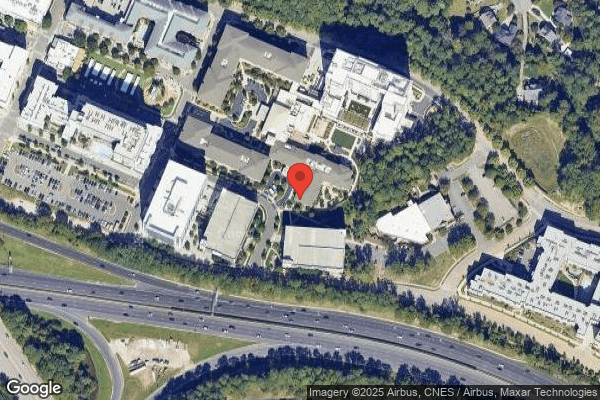
311 Garden at North Hills Street, Raleigh, NC 27609 (984) 204-8444
For profit - Limited Liability company 15 Beds KISCO SENIOR LIVING Data: November 2025
Trust Grade
68/100
#127 of 417 in NC
Last Inspection: September 2025

Inspected within the last 6 months. Data reflects current conditions.

Overview

The Cardinal at North Hills has a Trust Grade of C+, which means it is decent and slightly above average compared to other facilities. It ranks #127 out of 417 nursing homes in North Carolina, placing it in the top half of the state, and #9 out of 20 in Wake County, indicating only a few local options are better. The facility's performance is stable, with the same number of issues reported in both 2023 and 2025. Staffing is rated 4 out of 5 stars, but the turnover rate is concerning at 64%, higher than the state average, suggesting some instability among staff. However, there are some serious concerns to note. In one incident, a resident suffered a cervical fracture during a transfer that was not conducted according to their care plan, highlighting a significant safety risk. Additionally, there were issues with food safety practices, such as failing to label and date opened food items, which could potentially affect residents' health. While there is good RN coverage, more than 81% of facilities in the state, the facility has also faced $7,901 in fines, which is higher than 76% of North Carolina facilities, indicating possible compliance issues. Overall, families should weigh both the strengths and weaknesses when considering this facility.

Trust Score
C+
68/100
In North Carolina
#127/417
Top 30%
Safety Record
Moderate
Needs review
Inspections
Holding Steady
2 → 2 violations
Staff Stability
⚠ Watch
64% turnover. Above average. Higher turnover means staff may not know residents' routines.
Penalties
⚠ Watch
$7,901 in fines. Higher than 98% of North Carolina facilities. Major compliance failures.
Skilled Nurses
✓ Good
Each resident gets 73 minutes of Registered Nurse (RN) attention daily — more than 97% of North Carolina nursing homes. RNs are the most trained staff who catch health problems before they become serious.
Violations
✓ Good
Only 4 deficiencies on record. Cleaner than most facilities. Minor issues only.
★★★★☆
4.0
Overall Rating
★★★★☆
4.0
Staff Levels
★★★☆☆
3.0
Care Quality
★★★★☆
4.0
Inspection Score
Stable
2023: 2 issues
2025: 2 issues

The Good

  • 4-Star Staffing Rating · Above-average nurse staffing levels
  • Full Sprinkler Coverage · Fire safety systems throughout facility
  • No fines on record

Facility shows strength in staffing levels, fire safety.

The Bad

Staff Turnover: 64%

18pts above North Carolina avg (46%)

Frequent staff changes - ask about care continuity

Federal Fines: $7,901

Below median ($33,413)

Minor penalties assessed

Chain: KISCO SENIOR LIVING

Part of a multi-facility chain

Ask about local staffing decisions and management

Staff turnover is elevated (64%)

16 points above North Carolina average of 48%

The Ugly 4 deficiencies on record

1 actual harm
Sept 2025 2 deficiencies
CONCERN (D) 📢 Someone Reported This

A family member, employee, or ombudsman was alarmed enough to file a formal complaint

Potential for Harm - no one hurt, but risky conditions existed

Report Alleged Abuse (Tag F0609)

Could have caused harm · This affected 1 resident

**NOTE- TERMS IN BRACKETS HAVE BEEN EDITED TO PROTECT CONFIDENTIALITY** Based on record review and staff interviews, the facility failed to report an allegation of injury of unknown origin to local la...

Read full inspector narrative →
**NOTE- TERMS IN BRACKETS HAVE BEEN EDITED TO PROTECT CONFIDENTIALITY** Based on record review and staff interviews, the facility failed to report an allegation of injury of unknown origin to local law enforcement and Adult Protective Services (APS) for Resident #3 and also failed to complete the Investigation Report within the required five-day time frame to the State Agency (SA) for 1 of 1 resident reviewed for injury of unknown origin (Resident #3).The findings included:Resident #3 was admitted to the facility on [DATE] with diagnoses including dementia, hypertension, arthritis, and a history of kidney stones.The admission Minimum Data Set (MDS) on 1/15/2025, revealed Resident #3 required full assistance with showering, bathing, and other daily activities. The resident was not able to complete the interview to assess cognitive patterns. The Staff Assessment for Mental Status determined that Resident #3 had long-term and short-term memory impairment and had severely impaired cognitive skills for daily decision making. The Initial Allegation Report submitted by the facility for an injury of unknown origin dated 01/30/2025 was completed by the previous Administrator. The report indicated that on 1/30/2025 around 7:45 AM to 8:00 AM, Nurse Aide (NA) #1 found the resident had six unidentified markings on her inner right forearm. The markings/skin tears were described as open, red and bloody. The affected areas were evaluated by the Nurse #1 on 01/30/2025, and the markings/skin tears were cleaned, and patched with appropriate dressings. The report did not include evidence that local law enforcement or Adult Protective Services (APS) had been notified, as required.Nurse Aide #1's written statement dated 1/30/25 indicated on 1/30/25 at 7:50am Nurse Aide #1 went into Resident #3's to provide care. As Nurse Aide #1 began to give care, six skin tears were found on Resident #3's upper right arm. The unidentified skin tears on the inner right forearm were open cuts that were described as red, and bloody in appearance. Nurse Aide #1 indicated that resident #3 was unable to get out of bed without assistance. Nurse Aide #1 also indicated that at 7:55am, Nurse #1 was notified of the injury. The affected areas were reportedly evaluated by the Nurse #1, cleaned, and patched with appropriate dressings.Nurse #1's written statement dated 1/30/25 indicated on 1/30/25 at 8:00am, Nurse Aide #1 asked Nurse #1 to observe Resident #3's right arm. Nurse #1 observed four skin tears on Resident #3's right arm and indicated that the Resident #3's fingernails had no evidence of blood, and the sleeping area contained no objects that could have caused injury. The statement also noted that Nurse #1 notified the previous Administrator. A telephone interview with NA #1 was attempted on 09/09/2025 at 1:50 PM but was not successful. A telephone interview with Nurse #1 was attempted on 09/09/2025 at 1:55 PM but was not successful. There was no evidence that an Investigation Report was submitted for Resident #3's injury of unknown origin.On 09/09/2025 at 1:21 PM, an attempt was made to contact Resident #3's responsible party (RP) regarding the incident. There was no response to the voice mail that was left requesting a return call.On 09/09/2025 at 1:26 PM, Resident #3's arms were observed. No signs of bruising or open wounds were noted. An attempt was made to interview Resident #3 regarding the injuries during the observation and Resident #3 was unable to provide information about the incident. An interview was completed with the Director of Nursing (DON) on 09/10/2025 at 2:13 PM. The DON revealed that she was not aware of the injury of unknown origin involving Resident #3, as she had only recently been hired. The DON further revealed that she could not obtain additional information because NA #1 and Nurse #1 were no longer employed at the facility, and their contact information was unavailable. An interview with the Social Worker (SW) on 09/10/2025 at 2:45 PM revealed that she was unaware of the injury of unknown origin involving Resident #3, explaining that she works at the facility only on Wednesdays. She explained that she typically received reports of alleged abuse from the DON or Administrator, and her role in the allegation was to interview residents who were alert and oriented, as well as any individuals involved. The SW indicated final reporting decisions were made by the DON or Administrator.During an interview on 09/09/2025 at 1:59 PM, the Administrator revealed that he was not aware of the injury of unknown origin involving Resident #3, as he had recently been hired. He confirmed that the Administrator in place at the time of the injury was no longer employed at the facility and her contact information was unavailable. The Administrator was unable to explain why the Investigation Report for the injury of unknown origin was not available for review, why APS and local law enforcement had not been notified, or why he was unable to locate any of the facility's abuse Investigation Reports. He stated that allegations of abuse were required to be reported to the State Agency within 24 hours, with the Investigation Report submitted within five days.
CONCERN (F)

Potential for Harm - no one hurt, but risky conditions existed

Food Safety (Tag F0812)

Could have caused harm · This affected most or all residents

Based on observation and staff interviews, the facility failed to label, and date repackaged and opened food items in 2 of 2 reach-in freezers and on a preparation station. This deficient practice had...

Read full inspector narrative →
Based on observation and staff interviews, the facility failed to label, and date repackaged and opened food items in 2 of 2 reach-in freezers and on a preparation station. This deficient practice had the potential to affect food served to residents. The findings included:On 9/8/2025 at 11:02 AM an initial tour of the free standing second-floor kitchen included Dietary Aide #1, Administrator, and Executive Chef. The second-floor kitchen was used to serve residents on that floor, and the tour revealed several food items stored in the reach-in freezer ready for use without an open date. a. On 9/8/25 at 11:31 AM the following were observed in reach-in freezer #1 not labeled with an open date:Two bags of carrots stored in plastic zipped bags. Shaved coconut in a plastic zipped bag.Three plastic zipped bags containing chicken tenders. One opened bag of hamburger sliders stored in a plastic zipped bag. On 9/8/2025 at 11:44 AM Administrator advised Dietary Aide #1 to throw the items, without a date in reach-in freezer #1 into the trash. On 9/8/2025 at 11:49 AM the Executive Chef stated the food items should have been dated. An additional observation of reach-freezer #1 on 9/10/25 at 11:15 AM with Dietary Aide #2 present revealed an opened bag of frozen potato chips without an open date. Dietary Aide #2 was interviewed during the observation and stated the bag was recently opened. Dietary Aide #2 stated she opened them because they were serving them for lunch. She stated that she should have dated the bag when she opened them. On 9/10/25 at 11:25 AM the Administrator instructed Dietary Aide #2 to throw the remaining frozen potato chips away and to throw away the cooked chips in the deep fryer. The Administrator instructed the Dietary Aide to get a new unopened bag from first floor kitchen. On 9/10/25 at 12:00 PM an interview with Dietary Aide #2 revealed she was disappointed she forgot to date the frozen potato chips. She stated it was one of her responsibilities to make sure opened items in the freezer were dated. b. On 9/8/25 at 11:37 AM an observation of reach-in freezer #2 occurred with Dietary Aid #1 and the Administrator revealed two opened 5-gallon buckets of ice cream that were not dated when opened.c. On 9/8/25 at 11:41 AM observation of a kitchen preparation station with the Administrator and Executive Chef present revealed two plastic grocery bags that were tied shut containing thick sliced bread that was heavily buttered with no open date. Executive Chef stated during the observation it was going to be served that day.On 9/8/25 at 11:43 AM the Administrator instructed Executive Chef to throw the bread away. Interview with the Executive Chef on 9/10/2025 at 3:11 PM revealed the food items in the reach-in freezers should have been dated with the date the item was opened. The Executive Chef indicated he worked primarily in the first-floor kitchen, and the second-floor kitchen was run primarily by the Dietary Aides. He stated that staff were trained to label food items with an open date before storing them in the freezer. On 9/10/2025 at 4:00 PM interview with the Administrator revealed the kitchen staff should have dated any food that was opened and stored in the freezer. He stated he understood that the food was often removed from its original container and sent up to the second-floor kitchen from the first-floor kitchen, but staff should still make sure they label and date.
Sept 2023 2 deficiencies 1 Harm
SERIOUS (G)

Actual Harm - a resident was hurt due to facility failures

Accident Prevention (Tag F0689)

A resident was harmed · This affected 1 resident

**NOTE- TERMS IN BRACKETS HAVE BEEN EDITED TO PROTECT CONFIDENTIALITY** Based on staff interviews, interview with the Medical Director, and record review, the facility failed to safely transfer a depe...

Read full inspector narrative →
**NOTE- TERMS IN BRACKETS HAVE BEEN EDITED TO PROTECT CONFIDENTIALITY** Based on staff interviews, interview with the Medical Director, and record review, the facility failed to safely transfer a dependent resident from bed to wheelchair using a mechanical lift. On 6/13/23 during a transfer by Nurse Aide (NA) #1, the resident (Resident #6) fell out of the lift and onto the floor resulting in a cervical (neck) fracture of the first and second cervical vertebrae. Resident #6 required a cervical collar (used to support the neck and spine and limit head movement after an injury) and no surgical intervention for the injury. This deficient practice affected 1 of 1 resident reviewed for accidents. Findings included: Resident #6 was admitted to the facility on [DATE]. Diagnosis included, in part, Alzheimer's Disease. A physician (MD) order dated 12/16/20 stated a mechanical lift was to be used for transfers. The quarterly Minimum Data Set (MDS) assessment dated [DATE] revealed Resident #6 had no speech and was rarely understood by others. She exhibited impaired memory and her daily decision making skills were severely impaired. She required extensive assistance with the help of two people for transfers. The MDS further indicated Resident #6 was not on an anti-coagulant medication. The care plan, updated 5/26/23, included a focus area of risk for falls. Care plan interventions stated, Review information on past falls and attempt to determine cause of falls, record possible root causes and educate resident/family/caregivers as to causes. The NA Care [NAME], located at the nurse's desk was reviewed and stated Resident #6 required a mechanical lift for transfers and needed two staff members to complete bed mobility and mechanical lift transfers. An Incident Report dated 6/13/23 and completed by the Staff Development Nurse stated the following: At 7:19 AM on 6/13/23 the resident had a fall in her room while she was being transferred from bed to wheelchair from the mechanical lift. NA #1 was present during the incident. The report further stated Resident #6 was transported to the hospital by Emergency Medical Services (EMS) and the MD and family member were notified. Resident #6 returned to the facility on 6/13/23 with a cervical collar. NA #1 was removed from the floor during the investigation and was no longer employed at the facility. An emergency department note dated 6/13/23 stated, in part, Resident #6 presented to the ED with reports of a mechanical fall. Patient is non-verbal, typically bedbound (although gets up in a wheelchair for a few hours each day) and has contracted extremities .Family arrived shortly after patient did and is able to provide some further history that the patient is not on anticoagulants. She confirmed that Resident #6 was at her baseline mental and physical status. The note further indicated a review of systems was limited since Resident #6 had dementia and was non-verbal. An assessment of Resident #6's neck in the ED revealed a cervical collar was in place and the resident winces with midline palpation. A computerized tomography (CT) cervical spine scan was completed on 6/13/23 and revealed a closed nondisplaced fracture of the first and second cervical vertebrae. According to the ED note, there was no acute, life-threatening, or emergently surgical condition identified after evaluation. Resident #6 was sent back to the facility on 6/13/23 with a cervical collar and a recommendation to follow up with her primary care provider within one week. A MD order dated 6/14/23 revealed, Hydrocodone/acetaminophen 7.5 milligrams (mg)/325mg every six hours. The medication was discontinued on 9/6/23. A MD order dated 7/19/23 revealed the cervical collar was to be discontinued. The quarterly MDS assessment dated [DATE] revealed Resident #6 had no speech and was rarely understood by others. She exhibited impaired memory and her daily decision making skills were severely impaired. She required extensive assistance with the help of two people for transfers. A staff assessment of pain indicated the resident did not have any non-verbal indicators of pain. Attempts to interview NA #1 by telephone were unsuccessful. In an interview with NA #2 on 9/21/23 at 11:33 AM, she explained she looked at a resident's paper chart or the CNA [NAME] book for their transfer status or received the information during shift report. NA #2 had worked with Resident #6 in the past and stated her transfer status was a mechanical lift. She further explained two staff were required to operate the mechanical lift and this had always been the protocol for mechanical lift transfers for every resident in the facility. Interviews were conducted with Nurse #1 on 9/20/23 at 9:18 AM and 11:32 AM. She was at the nurse's desk when Resident #6 fell. She recalled NA #1 came out of Resident #6's room and told her the resident fell. Nurse #1 said she went to Resident #6's room, entered and saw the resident on the floor at the foot of the bed. Nurse #1 observed the mechanical lift positioned behind Resident #6's feet. Nurse #1 stated NA #1 told her the resident had fallen from the lift. Nurse #1 reported she immediately assessed Resident #6, obtained vital signs and called 911. She added the resident had not appeared to be in distress during the assessment. She explained information about a resident's transfer status was in the [NAME] book located at the nurse's desk and titled CNA Care [NAME]. Additionally, nurses also told staff what the transfer status was for each resident. She added if a mechanical lift was required for transfers there needed to be two staff who assisted with the transfer. Nurse #1 stated there were other staff members on the hall that day (NAs and nurses) who could have helped NA #1 with the transfer. She revealed Resident #6 returned from the emergency department with a neck collar and an order for pain medication. She said she had not observed Resident #6 with any non-verbal indicators of pain or discomfort following the fall and return from the emergency department. She added Resident #6 had not fidgeted with the cervical collar, and added, at times, Resident #6's family member removed the collar when she visited the resident. Nurse #1 shared the resident's typical routine prior to her fall was to get up in the morning for breakfast (ate in her room) and then was put back to bed after breakfast where she remained the rest of the day. Nurse #1 said she had not observed a disruption in Resident #6's normal routine when she wore the cervical collar. A review of pain assessments from 6/13/23-9/20/23 revealed Resident #6 did not display any non-verbal indicators of pain. During an interview with Occupational Therapist (OT) #1 on 9/20/23 at 9:42 AM, she stated the therapy department determined the safest method of transfer for a resident and made recommendations. She explained Resident #6 was totally dependent on staff for care and was unable to follow directions. OT #1 added the resident had always needed a mechanical lift for transfers since her admission to the facility and said two staff members were required to operate the mechanical lift. On 9/19/23 at 4:23 PM an interview was conducted with the Staff Development Nurse who stated when she came to the facility on 6/13/23 she was told Resident #6 was being sent out to the hospital. The Staff Development Nurse immediately went to the floor where Nurse #1 told her NA #1 used the mechanical lift by herself and dropped Resident #6 on the floor. The Staff Development Nurse said she went down to the resident's room and observed NA #1 behind the mechanical lift. Resident #6 was on the floor and both feet were over the leg of the mechanical lift. She said the resident's head was on the floor and she was on her back. The Staff Development Nurse explained that nursing staff were educated during orientation to use two people to transfer with a mechanical lift and that NA #1 knew there needed to be two staff members when Resident #6 was transferred with the mechanical lift. A joint interview was conducted with the Director of Nursing (DON) and Staff Development Nurse on 9/21/23 at 11:42 AM. The DON shared the facility protocol was whenever a resident needed a mechanical lift for transfers it required two staff members to operate the lift. She added Resident #6 was assessed as needing a mechanical lift for all transfers. She stated no other staff member witnessed Resident #6's fall from the mechanical lift. The DON said she interviewed NA #1 as part of the fall investigation and when she asked NA #1 why she had not used a second person to assist with the mechanical lift, NA #1 told her she had forgot to get a second person. The DON added NA #1 told her she normally did not operate the mechanical lift by herself and had not felt rushed when she provided care to Resident #6. The DON stated there were three other NAs and two nurses who could have helped NA #1 with the transfer that morning. She explained after the fall, all staff members were re-educated that two staff members were required when using a mechanical lift. In an interview with the Medical Director on 9/20/23 at 9:34 AM, he shared Resident #6 had end stage dementia and was non-verbal. She required total assistance with all her care. He stated he was informed by staff that one NA attempted to transfer the resident with a mechanical lift and she fell from the lift and sustained a non-displaced cervical fracture. The Medical Director further stated it was important that two staff members operated a mechanical lift to prevent falls and injuries for both residents and staff members.
CONCERN (F)

Potential for Harm - no one hurt, but risky conditions existed

Staffing Data (Tag F0851)

Could have caused harm · This affected most or all residents

Based on staff interview and record review, the facility failed to successfully submit payroll data to the Centers for Medicare and Medicaid Services (CMS) and failed to follow up that the information...

Read full inspector narrative →
Based on staff interview and record review, the facility failed to successfully submit payroll data to the Centers for Medicare and Medicaid Services (CMS) and failed to follow up that the information submitted on the Payroll Based Journal (PBJ) report was accepted by CMS. Findings included: The CMS Submission Report, PBJ Final File Validation Report was reviewed for Fiscal Year Quarter 3, 2023 (April 1-June 30). The report indicated PBJ data for Quarter 3, 2023, was submitted on 8/13/23 at 8:10 PM. Further review of the report revealed the entire file was rejected by CMS. The noted reason for rejection in the message column of the report stated, A value submitted for employee identification in the Staffing Hours section must match an existing value for employee identification in the PBJ system. If a match cannot be found, the PBJ submission will be rejected. An interview was conducted with the Executive Director on 9/20/23 at 2:02 PM. He shared he was responsible for submitting PBJ data to CMS and submitted the data once a quarter. He stated PBJ data was not correctly submitted for the past 3 submissions (each submission covered 90 days). He acknowledged there was some confusion on how data was submitted to CMS. He explained the Human Resources department sent all labor data to the home office who then compiled zip files. Once the zip files were completed, the Executive Director sent them to CMS. He explained he submitted the data on time but on the first 2 submissions we were missing a zero on the facility identification number (ID) and therefore CMS did not accept the data. The Executive Director added he didn't know he was supposed to go into the PBJ system within 48 hours to verify the data was received and accepted. He said the PBJ site notified him what the error was with the submissions. The third time he submitted data he learned the employee ID numbers were different than what was in the CMS system and the home office representative was on vacation and could not update the employee ID numbers.
Understanding Severity Codes (click to expand)
Life-Threatening (Immediate Jeopardy)
J - Isolated K - Pattern L - Widespread
Actual Harm
G - Isolated H - Pattern I - Widespread
Potential for Harm
D - Isolated E - Pattern F - Widespread
No Harm (Minor)
A - Isolated B - Pattern C - Widespread

Questions to Ask on Your Visit

  • "Why is there high staff turnover? How do you retain staff?"
  • "Can I speak with families of current residents?"
  • "What's your RN coverage like on weekends and overnight?"

Our Honest Assessment

Strengths
  • • Licensed and certified facility. Meets minimum state requirements.
Concerns
  • • 4 deficiencies on record, including 1 serious (caused harm) violation. Ask about corrective actions taken.
  • • 64% turnover. Above average. Higher turnover means staff may not know residents' routines.
Bottom line: Mixed indicators with Trust Score of 68/100. Visit in person and ask pointed questions.

About This Facility

What is The Cardinal At North Hills's CMS Rating?

CMS assigns The Cardinal at North Hills an overall rating of 4 out of 5 stars, which is considered above average nationally. Within North Carolina, this rating places the facility higher than 99% of the state's 100 nursing homes. This rating reflects solid performance across the metrics CMS uses to evaluate nursing home quality.

How is The Cardinal At North Hills Staffed?

CMS rates The Cardinal at North Hills's staffing level at 4 out of 5 stars, which is above average compared to other nursing homes. Staff turnover is 64%, which is 18 percentage points above the North Carolina average of 46%. High turnover can affect care consistency as new staff learn residents' individual needs. RN turnover specifically is 67%, which is notably high. RNs provide skilled clinical oversight, so turnover in this role can affect medical care quality.

What Have Inspectors Found at The Cardinal At North Hills?

State health inspectors documented 4 deficiencies at The Cardinal at North Hills during 2023 to 2025. These included: 1 that caused actual resident harm and 3 with potential for harm. Deficiencies causing actual harm indicate documented cases where residents experienced negative health consequences.

Who Owns and Operates The Cardinal At North Hills?

The Cardinal at North Hills is owned by a for-profit company. For-profit facilities operate as businesses with obligations to shareholders or private owners. The facility is operated by KISCO SENIOR LIVING, a chain that manages multiple nursing homes. With 15 certified beds and approximately 11 residents (about 73% occupancy), it is a smaller facility located in Raleigh, North Carolina.

How Does The Cardinal At North Hills Compare to Other North Carolina Nursing Homes?

Compared to the 100 nursing homes in North Carolina, The Cardinal at North Hills's overall rating (4 stars) is above the state average of 2.8, staff turnover (64%) is significantly higher than the state average of 46%, and health inspection rating (4 stars) is above the national benchmark.

What Should Families Ask When Visiting The Cardinal At North Hills?

Based on this facility's data, families visiting should ask: "How do you ensure continuity of care given staff turnover, and what is your staff retention strategy?" "Can I visit during a mealtime to observe dining assistance and food quality?" "How do you handle medical emergencies, and what is your hospital transfer rate?" "Can I speak with family members of current residents about their experience?" These questions are particularly relevant given the facility's high staff turnover rate.

Is The Cardinal At North Hills Safe?

Based on CMS inspection data, The Cardinal at North Hills has a clean safety record: no substantiated abuse findings (meaning no confirmed cases of resident harm), no Immediate Jeopardy citations (the most serious violation level indicating risk of serious injury or death), and is not on the Special Focus Facility watch list (a federal program monitoring the lowest-performing 1% of nursing homes). The facility has a 4-star overall rating and ranks #1 of 100 nursing homes in North Carolina. While no facility is perfect, families should still ask about staff-to-resident ratios and recent inspection results during their visit.

Do Nurses at The Cardinal At North Hills Stick Around?

Staff turnover at The Cardinal at North Hills is high. At 64%, the facility is 18 percentage points above the North Carolina average of 46%. Registered Nurse turnover is particularly concerning at 67%. RNs handle complex medical decisions and coordinate care — frequent RN changes can directly impact care quality. High turnover means new staff may not know residents' individual needs, medications, or preferences. It can also be disorienting for residents, especially those with dementia who rely on familiar faces. Families should ask: What is causing the turnover? What retention programs are in place? How do you ensure care continuity during staff transitions?

Was The Cardinal At North Hills Ever Fined?

The Cardinal at North Hills has been fined $7,901 across 1 penalty action. This is below the North Carolina average of $33,158. While any fine indicates a compliance issue, fines under $50,000 are relatively common and typically reflect isolated problems that were subsequently corrected. Families should ask what specific issues led to these fines and confirm they've been resolved.

Is The Cardinal At North Hills on Any Federal Watch List?

The Cardinal at North Hills is not on any federal watch list. The most significant is the Special Focus Facility (SFF) program, which identifies the bottom 1% of nursing homes nationally based on persistent, serious quality problems. Not being on this list means the facility has avoided the pattern of deficiencies that triggers enhanced federal oversight. This is a positive indicator, though families should still review the facility's inspection history directly.