PruittHealth-Rockingham
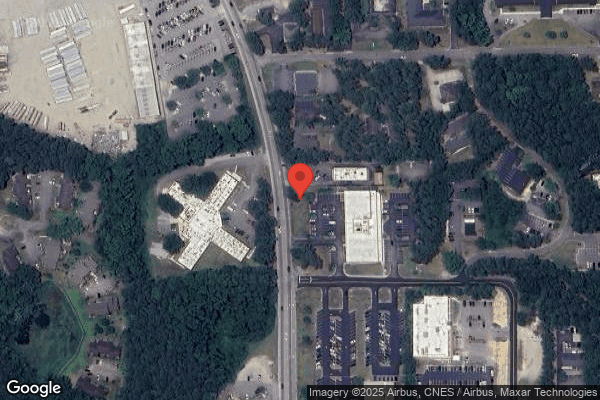
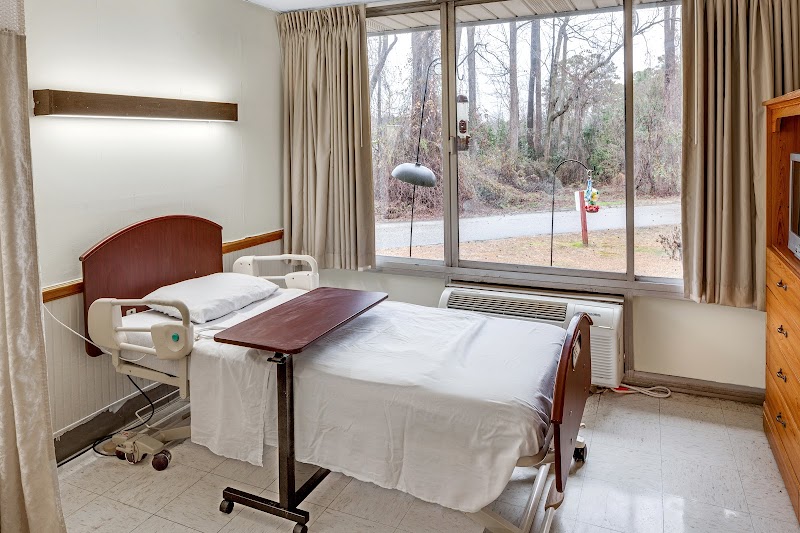
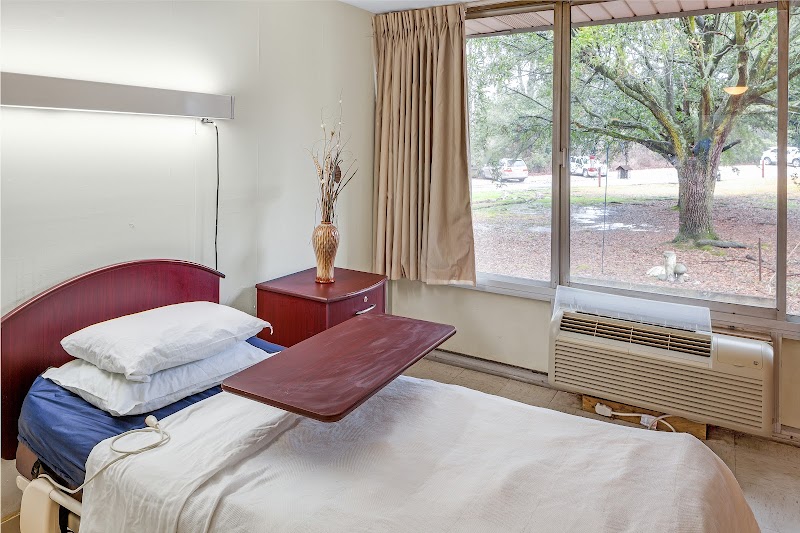
804 South Long Drive, Rockingham, NC 28379 (910) 997-4493
For profit - Corporation 120 Beds PRUITTHEALTH Data: November 2025
Trust Grade
40/100
#378 of 417 in NC
Last Inspection: February 2025

Within standard 12-15 month inspection cycle. Federal law requires annual inspections.

Overview

PruittHealth-Rockingham has a Trust Grade of D, which means it is below average and has some concerning issues. It ranks #378 out of 417 facilities in North Carolina, placing it in the bottom half of the state, and #2 out of 2 in Richmond County, indicating there is only one local option that is better. The facility is showing signs of improvement, with the number of issues decreasing from 12 in 2023 to 9 in 2025. Staffing is a relative strength, earning a 3-star rating with a turnover rate of 47%, slightly below the state average, and it has more RN coverage than 88% of North Carolina facilities, which is beneficial for resident care. However, there have been concerning incidents, including a failure to properly document grievances for 9 months and misappropriation of narcotic medications for multiple residents, which raises serious concerns about safety and accountability.
Trust Score
D
40/100
In North Carolina
#378/417
Bottom 10%
Safety Record
Low Risk
No red flags
Inspections
Getting Better
12 → 9 violations
Staff Stability
⚠ Watch
47% turnover. Above average. Higher turnover means staff may not know residents' routines.
Penalties
✓ Good
No fines on record. Clean compliance history, better than most North Carolina facilities.
Skilled Nurses
✓ Good
Each resident gets 46 minutes of Registered Nurse (RN) attention daily — more than average for North Carolina. RNs are trained to catch health problems early.
Violations
⚠ Watch
34 deficiencies on record. Higher than average. Multiple issues found across inspections.
★☆☆☆☆
1.0
Overall Rating
★★★☆☆
3.0
Staff Levels
★☆☆☆☆
1.0
Care Quality
★★☆☆☆
2.0
Inspection Score
Stable
2023: 12 issues
2025: 9 issues

The Good

  • Full Sprinkler Coverage · Fire safety systems throughout facility
  • No fines on record

Facility shows strength in fire safety.

The Bad

1-Star Overall Rating

Below North Carolina average (2.8)

Significant quality concerns identified by CMS

Staff Turnover: 47%

Near North Carolina avg (46%)

Higher turnover may affect care consistency

Chain: PRUITTHEALTH

Part of a multi-facility chain

Ask about local staffing decisions and management

The Ugly 34 deficiencies on record

Feb 2025 9 deficiencies
CONCERN (D) 📢 Someone Reported This

A family member, employee, or ombudsman was alarmed enough to file a formal complaint

Potential for Harm - no one hurt, but risky conditions existed

Deficiency F0561 (Tag F0561)

Could have caused harm · This affected 1 resident

**NOTE- TERMS IN BRACKETS HAVE BEEN EDITED TO PROTECT CONFIDENTIALITY** Based on record review, observations and staff interviews, the facility failed to honor a resident's choice to receive coffee as...

Read full inspector narrative →
**NOTE- TERMS IN BRACKETS HAVE BEEN EDITED TO PROTECT CONFIDENTIALITY** Based on record review, observations and staff interviews, the facility failed to honor a resident's choice to receive coffee as requested for 1 of 3 residents reviewed for choices (Resident #10). The reasonable person concept was applied for Resident #10 due to his inability to express his feelings and a reasonable person would feel angry and frustrated if their choices were not met. The findings included: Resident #10 was admitted to the facility on [DATE] with diagnoses that included dementia, anxiety disorder and aphasia (difficulty expressing self). An annual Minimum Data Set (MDS) assessment dated [DATE] indicated that Resident #10 had moderately impaired cognition and required setup assistance for eating. On 2/18/25 at 10:59 AM, an interview occurred with the Floor Technician. He explained that on 11/12/24 he witnessed Resident #10 yelling out for coffee in the dining room and Nurse Aide (NA) #1 removed Resident #10 from the dining room instead of providing him with a cup of coffee as requested. A phone interview was conducted with NA #1 on 2/19/25 at 5:51 PM. She explained that on 11/12/24 Resident #10 was in the dining room, had completed his lunch meal and was requested more coffee. She was in the middle of assisting another resident at his table with their lunch and told him, give me a few minutes. She stated Resident #10 became agitated and she removed him from the dining room instead of providing him with coffee. On 2/17/25 at 10:33 AM, Resident #10 was observed sitting up in his bed with a cup of coffee in front of him. He was unable to recall the events of 11/12/24. A phone interview occurred with the Administrator and Director of Nursing (DON) on 2/20/25 at 1:01 PM. They explained that Resident #10 received meals in the dining room per his choice and loved drinking black coffee. The DON indicated that coffee was often used to help ease his anxiety and agitation when present. They both indicated that Resident #10 should have been provided with coffee as requested on 11/12/24.
CONCERN (D)

Potential for Harm - no one hurt, but risky conditions existed

Free from Abuse/Neglect (Tag F0600)

Could have caused harm · This affected 1 resident

**NOTE- TERMS IN BRACKETS HAVE BEEN EDITED TO PROTECT CONFIDENTIALITY** Based on record review, resident and staff interviews, the facility failed to protect a resident's right to be free from staff t...

Read full inspector narrative →
**NOTE- TERMS IN BRACKETS HAVE BEEN EDITED TO PROTECT CONFIDENTIALITY** Based on record review, resident and staff interviews, the facility failed to protect a resident's right to be free from staff to resident abuse when Nurse Aide #1 tilted Resident #10's wheelchair back, let it back down then pushed the wheelchair forcefully down the hall. This was for 1 of 8 residents reviewed for accidents. The findings included: Resident #10 was admitted to the facility on [DATE] with diagnoses that included dementia, anxiety disorder, aphasia (difficulty expressing self) and lack of coordination. Resident #10 resided on the D Hall. A review of the facility Initial Allegation Report, investigation, and statements revealed on 11/12/24 Resident #10 was in the dining room when Nurse Aide (NA) #1 was observed tilting Resident #10's wheelchair back, letting it go back to the ground, pushing Resident #10's wheelchair forcefully down the hall and returning to the dining room without ensuring Resident #10 was safe. NA #1 was suspended pending the outcome of the investigation and then terminated. All staff received education on abuse. An annual Minimum Data Set (MDS) assessment dated [DATE] indicated that Resident #10 had moderately impaired cognition and verbal behavioral symptoms one to three days during the look back period. He had limited range of motion to bilateral lower extremities and utilized a wheelchair for mobility. He was coded with setup assistance for wheelchair mobility of 50 feet with two turns. Resident #10 was coded as weighing 152 pounds and was 72 inches tall. Resident #10's care plan, last reviewed 11/21/24 included the following problem areas: - Resident required assist with Activities of Daily Living (ADL) related to impaired mobility and cognitive status and was at risk for further decline in ADL function. - Resident had physical behavioral symptoms towards others (hitting, kicking, scratching). The interventions included to avoid power struggles, maintain a calm environment and approach to resident and divert resident's behavior as much as possible. On 2/19/25 at 5:51 PM, a phone interview was conducted with NA #1. She was able to recall the events of 11/12/24 and stated she was in the dining room assisting residents with their lunch meal and Resident #10 was asking for coffee. She stated he had finished his meal, and she told him to give me a few minutes. She stated Resident #10 began yelling out, so she attempted to pull him away from the table. She stated he was holding on to the table and his feet were on the floor. NA #1 confirmed she tilted the wheelchair back a little to get Resident #10's feet off the floor so she could wheel the chair and then let it back down. NA #1 stated it was not normal to tilt the wheelchair back but wanted to get his feet off the floor so she could move the wheelchair. She stated, I pushed him through the double doors of D hall and remember the floor technician standing there. NA #1 stated that Resident #10 resided on the D hall. NA #1 confirmed she was suspended pending the investigation and never returned to the facility. On 2/18/25 at 10:59 AM, an interview occurred with the Floor Technician who witnessed the events of 11/12/24. He explained that he was walking up D Hall and could see clearly in the dining room. He heard Resident #10 yelling out for coffee and had his meal tray in front of him. NA #1 was observed pulling Resident #10 away from the table, tilting the wheelchair back where Resident #10's legs were in the air and letting it drop back down to the ground. During this time Resident #10 was heard yelling leave me alone. The Floor Technician stated he began to walk in the dining room to intervene and was told by NA #1 don't touch him. NA #1 was then observed pushing Resident #10 to the double doors of the dining room and D hall, pushing the wheelchair forcefully and returning to the dining room. The Floor Technician stated the wheelchair rolled approximately 20 feet before coming to a stop on its own. He stated he reported the incident immediately to NA #2/staffing scheduler. On 2/18/25 at 2:32 PM, an interview was completed with NA #2/staff scheduler. She explained that she was approached by the floor technician and housekeeper who reported the incident they observed between Resident #10 and NA #1. She recalled they stated Resident #10 was in the dining room at the table and saw NA #1 remove him from the table as he was yelling out leave me alone. NA #1 tilted the wheelchair back, letting it go back down the ground then forcefully pushed Resident #10's wheelchair out on the hallway. It was reported that NA #1 turned around and walked back into the dining room. NA #2 stated she observed Resident #10 sitting in the hallway in a calm demeanor, after the allegation occurred. She reported the allegation directly to the Director of Nursing (DON). A phone interview occurred with the Housekeeper on 2/19/25 at 5:43 PM who observed the interaction between Resident #10 and NA #1 on 11/12/24. She explained she was standing at the nurse's station on the D Hall and observed NA #1 trying to pull Resident #10 away from the dining room table. After she pulled him away from the table, she tilted the wheelchair back where Resident #10's feet were off the ground and then let it go back towards the ground. NA #1 was observed pushing Resident #10's wheelchair roughly through the double doors of the dining room and D hall, turning around and returning to the dining room. She stated the Floor Technician began to walk in the dining room and was told by NA #1 don't touch him. The housekeeper stated that she didn't feel any resident should be treated this way. She reported it immediately to NA #2/staffing scheduler. On 2/17/25 at 10:33 AM, Resident #10 was observed sitting up in his bed with a cup of black coffee in front of him. He was unable to recall the event of 11/12/24. A phone interview was completed with the DON and Administrator on 2/20/25 at 1:01 PM. The DON explained on 11/12/24 she was notified by NA #2/staffing scheduler regarding the allegation of abuse witnessed by the housekeeping staff towards Resident #10. This was reported immediately to the Administrator and NA #1 was removed from the facility. The police department was notified, and the investigation began. The DON stated she assessed Resident #10, no injuries were noted and he had a calm demeanor. The Administrator and DON stated they were able to view video footage at the time that revealed Resident #10 was in the dining room at a table and NA #1 was assisting another resident at his table with the lunch meal. NA #1 was observed going to Resident #10, pulling him away from the table, tilting the wheelchair then putting it back down. She was then seen forcefully pushing the wheelchair at the double doors of the hallway and returning to the dining room. The Administrator stated that they substantiated the allegation of abuse and terminated NA #1. She said there was zero tolerance for abuse at the facility. A phone interview was completed with the Floor Technician on 2/24/25 at 2:56 PM. He explained that NA #1 had no change in her demeanor during the incident on 11/12/24 and was heard telling Resident #10 you need to quit your hollering while she was pushing him towards the doorway. He stated that the wheelchair came to a stop on its own after rolling approximately 20 feet. He recalled Resident #10's feet were on the floor sliding with the wheelchair. He did not witness any verbalizations from the resident during the incident but stated he had a look of surprise on his face. A second phone interview occurred with the DON and Administrator on 2/24/25 at 3:06 PM. They explained that Resident #10 was able to self-propel with his feet when up in the wheelchair. At the time of the incident on 11/12/24 Resident #10 had his feet on the floor sliding along with the wheelchair. They stated the wheelchair came to a stop on its own. On assessment Resident #10 had a calm demeanor. They both indicated that NA #1 was slightly hostile when she was asked to leave the facility on 11/12/24. The DON stated NA #1 stated she was assisting another resident with their meal, Resident #10 kept hollering and she felt like it was bothering the other residents to the reason why she removed him from the dining room. The Administrator stated that NA #1 was approximately 5 feet 7 inches in height. The facility was unable to provide evidence of a thorough, and complete, plan of correction regarding the facility's failure to protect a resident's right to be free from staff to resident abuse which would have allowed the survey team to evaluate if the facility would be eligible for past non-compliance.
CONCERN (D)

Potential for Harm - no one hurt, but risky conditions existed

Comprehensive Care Plan (Tag F0656)

Could have caused harm · This affected 1 resident

**NOTE- TERMS IN BRACKETS HAVE BEEN EDITED TO PROTECT CONFIDENTIALITY** Based on record review and staff interviews, the facility failed to develop an individualized and comprehensive care plan in the...

Read full inspector narrative →
**NOTE- TERMS IN BRACKETS HAVE BEEN EDITED TO PROTECT CONFIDENTIALITY** Based on record review and staff interviews, the facility failed to develop an individualized and comprehensive care plan in the area of anticoagulant medication (Resident #25). This was for 1 of 21 residents whose care plans were reviewed. The findings included: Resident #25 was admitted to the facility on [DATE] with diagnoses that included congestive heart failure and atrial fibrillation. A review of the active medication orders for Resident #25 for February 2025 revealed an order for Xarelto (an anticoagulant medication) 20 milligrams, one tablet once a day for atrial fibrillation. The medication had a start date of 4/7/23. A quarterly Minimum Data Set (MDS) assessment for Resident #25 dated 1/7/25 indicated Resident #25 was cognitively intact. He was coded as receiving an anticoagulant. Resident's #25's active care plan updated 1/8/25 did not have a focus for anticoagulant medication. On 2/20/25 at 2:40 PM an interview was conducted with the MDS nurse. She verified Resident #25 did not have a focus for anticoagulant therapy on the care plan and that it should have included one. She stated that the missing medication focus was an oversight, and she would correct the care plan. The Director of Nursing was interviewed on 2/20/25 at 2:53 PM and stated that Resident #25 should have had an accurate care plan that included a focus that he was taking an anticoagulant medication.
CONCERN (D) 📢 Someone Reported This

A family member, employee, or ombudsman was alarmed enough to file a formal complaint

Potential for Harm - no one hurt, but risky conditions existed

Pressure Ulcer Prevention (Tag F0686)

Could have caused harm · This affected 1 resident

**NOTE- TERMS IN BRACKETS HAVE BEEN EDITED TO PROTECT CONFIDENTIALITY** Based on record review, and Wound Care Practitioner and staff interviews, the facility failed to obtain treatment orders when pr...

Read full inspector narrative →
**NOTE- TERMS IN BRACKETS HAVE BEEN EDITED TO PROTECT CONFIDENTIALITY** Based on record review, and Wound Care Practitioner and staff interviews, the facility failed to obtain treatment orders when pressure areas were identified on readmission from the hospital and nursing staff provided treatments without a physician's order. This deficient practice affected 1 of 7 residents reviewed for pressure ulcers (Resident #221). The findings included: Resident #221 was originally admitted to the facility on [DATE]. She required hospitalization from 4/22/24 to 5/1/24 for acute stroke. Resident #221 had other diagnoses that included peripheral vascular disease, Alzheimer's disease and congestive heart failure. A nursing progress note dated 5/3/24 indicated that Resident #221 had two small skin openings noted on the buttocks. Barrier cream applied during incontinence care. A significant change in status Minimum Data Set (MDS) assessment dated [DATE] indicated that Resident #221 was moderately impaired with decision making skills. She required maximum assistance with bed mobility and was dependent on staff for toileting hygiene and transfers. She was coded with pressure ulcer over a bony prominence and two stage two pressure ulcers. Resident #221's care plan included a problem area dated 5/6/24 for having wounds and was at risk for deterioration in wound status or wound infection. The interventions included provide wound care as ordered and wound consult as ordered and as needed. Resident #221 was hospitalized from [DATE] to 5/9/24. A nursing progress note dated 5/9/24 indicated that Resident #221 had a wound to the sacral area and red area to the left outer heel. A review of the hospital discharge and after visit summaries dated 5/9/24, included no treatment orders for a wound to the sacral area or red area to the left outer heel. A review of the physician orders for Resident #221 from 5/9/24 to 5/13/24 did not include any treatment orders for a sacral wound or red area to the left outer heel. Resident #221 was transferred to the hospital on 5/27/24 for mental status changes and did not return to the facility. A phone interview occurred with Nurse #10 on 2/20/25 at 3:45 PM. She completed the readmission assessment on 5/9/24 and was assigned to care for Resident #221 on 5/10/24. Nurse #10 stated she couldn't recall Resident #221 or what might have happened when she was readmitted to the facility. Nurse #10 further explained that she no longer was employed at the facility but when a resident returned from the hospital with a wound, she would dress the area with a dry dressing to make sure it was clean. She was unable to explain why a physician order was not obtained for treatment to care for the sacral wound or left heel redness on readmission to the facility. On 2/21/25 at 11:48 AM, an interview occurred with Nurse #11 who was assigned to care for Resident #221 on 5/11/24 and 5/12/24. She was unable to recall if Resident #221 had any wounds when she returned from the hospital on 5/9/24. She explained that typically she would make sure a dry dressing was in place until a resident was seen by the wound care provider if someone returned from the hospital with any wounds. She could not recall if she had provided any wound care to Resident #221 on the days she was assigned to care for her. Attempts were made to contact Nurse #12 without success. She had been assigned to care for Resident #221 on 5/13/24. A Wound Care progress note dated 5/14/24 indicated that Resident #221 was seen for evaluation and management of a wound to the sacrum and left heel. Both wounds were classified as pressure in origin. The sacral wound was classified as a Stage 3 wound and measured 4.2 centimeters (cm) in length, 3.8 cm in width and 0.3 cm in depth. There were no signs of acute soft tissue infection. Wound care orders were provided to apply silver alginate daily. The left heel wound was classified as a deep tissue pressure injury and measured 4.2 cm in length and 4 cm in width. Wound care orders were provided to apply Betadine daily. A review of Resident #221's physician orders included the following orders: - An order dated 5/14/24 for Betadine to the left heel every day. - An order dated 5/15/24 to cleanse the sacrum with wound cleanser, apply silver alginate and a foam dressing every day. On 2/20/25 at 11:11 AM, a phone interview occurred with Wound Care Provider #1 who completed the initial evaluation for Resident #221s wounds on 5/14/24. He stated he believed there was a dressing present on the sacrum but didn't document that and was unsure what the facility was using as a treatment prior to his evaluation. He explained that Resident #221 had a stage 3 sacral wound and a deep tissue pressure injury on the left heel. At the time of the evaluation there was no concern for infection. The Wound Care Provider #1 stated he would have expected the facility to obtain wound care orders for the sacral wound and left heel wound prior to her being evaluated on 5/14/24. The Director of Nursing (DON) was interviewed on 2/20/25 at 1:01pm via phone. She verified there was a nursing progress note dated 5/9/24 indicating that Resident #221 readmitted from the hospital with a wound to her sacrum and redness to her left heel. She stated she was unable to find a physician order for the treatment of the sacral wound and left heel redness from 5/9/24 to 5/14/24. The DON stated she had a lot of new nurses during May 2024 and was unable to explain why there was no treatment order obtained for Resident #221 when she was readmitted from the hospital with skin breakdown to her sacrum and redness to her left heel. The DON stated that in May 2024 she did not have a wound care nurse. She recalled being present with the Wound Care Provider on 5/14/24 and felt like there was a dressing on the sacral wound but was unable to state who or when it was placed on the sacral wound.
CONCERN (D)

Potential for Harm - no one hurt, but risky conditions existed

Deficiency F0761 (Tag F0761)

Could have caused harm · This affected 1 resident

Based on observations, record review, and Pharmacist and staff interviews, the facility failed to label an open and in use insulin pen with the resident's name or prescribing information that was stor...

Read full inspector narrative →
Based on observations, record review, and Pharmacist and staff interviews, the facility failed to label an open and in use insulin pen with the resident's name or prescribing information that was stored in 1 of 2 medication carts (D hall cart) and the facility failed to keep unopened insulin pens refrigerated per manufacturer instructions and discard expired medications in 1 of 2 medication carts (A hall cart). The findings included: a. An observation was conducted on 2/18/25 at 11:20 AM of the D hall medication cart with Nurse #2. The observation revealed one (1) Lantus Solostar insulin pen with an open date of 2/10/25, but it did not have a label indicating the resident's name or prescribed dose for whom it was being used. An interview with Nurse #2 conducted at the same time revealed insulin pens should be labeled with the resident's name and the date it was opened. She stated insulin pens should be discarded 28 days after opening. The insulin pen was given to Nurse #2 to discard. b. An observation was conducted on 2/21/25 of the A hall medication cart at 8:15 AM with Nurse #5. The observation of the cart revealed one (1) Tresiba Flex insulin pen that was sealed and one (1) Lantus Solostar insulin pen that was also sealed. A blue sticker on the packages for both insulin pens stated, refrigerate until opened. The observation also revealed an opened and available for use Lantus Solostar insulin pen that was dated 12/12/24. Nurse #5 was interviewed at the time of the observation and stated that unopened insulin pens should be stored in the refrigerator per the manufacturer's instructions until they were opened and in use. She also stated that insulin pens should be discarded 28 days after opening. The medications were given to Nurse #5 to discard. An interview was conducted with the Director of Nursing on 2/21/25 at 8:20 AM. She stated that unopened insulin should be stored in the refrigerator until it was opened and insulin pens should be labeled with the resident's name, prescribing information, and the date they were opened. She stated insulin should be discarded 28 days after opening. The Director of Nursing stated she had the third shift nursing staff check the medication carts, and she had been training the Assistant Director of Nursing to check the carts every week. She further stated that the pharmacist checked the carts when she visited every month. An interview was conducted with the Pharmacist on 2/21/25 at 10:14 AM. She stated that she visited the facility each month to review medications. She stated insulin pens should be stored in the refrigerator until they were opened per the manufacturer's instructions and opened insulin pens should be disposed of after 28 days. She stated during her visit to the facility in January this year that she had removed an insulin pen from one of the carts with a date of 12/12/24, and that staff must have added it back to the cart instead of disposing of it. She stated that insulin pens should be labeled with a resident identifier, and the resident's name is best.
CONCERN (E)

Potential for Harm - no one hurt, but risky conditions existed

Grievances (Tag F0585)

Could have caused harm · This affected multiple residents

Based on record review and staff interviews, the facility failed to maintain documentation of resolved grievances and evidence of the results of all grievances for 9 of 13 months reviewed (December 20...

Read full inspector narrative →
Based on record review and staff interviews, the facility failed to maintain documentation of resolved grievances and evidence of the results of all grievances for 9 of 13 months reviewed (December 2023 to August 2024). Findings included: During an interview with Administrator #1, the current administrator, on 2/17/25 at 4:20 PM she stated the grievances from December 2023 through August 2024 were not available and could not be reviewed because she did not have the grievances. On 2/17/25 at 4:30 PM the Social Worker was interviewed. She stated the former administrator, Administrator #2, would not allow her to assist in the grievance process. She indicated Administrator #2 told her the administrator's role was the grievance official, and that the Social Worker was not to touch the grievances. The Social Worker stated she did not know where the grievance log (which was a record of the grievances) or the copies of grievances were kept. Administrator #2, the former administrator, was interviewed by phone on 2/18/25 at 10:07 AM and stated when she left the facility in August 2024, she gave the grievance log binder to the Director of Nursing in a box of stuff. She further stated the Social Worker also had copies of the grievances during the time she was the Administrator from December 2023 to August 2024. The Director of Nursing (DON) was interviewed on 2/18/25 at 3:51 PM. She stated Administrator #2 had called her in August 2024 after Administrator #2 was no longer employed at the facility and asked the DON to meet at a grocery store parking lot in a nearby town so Administrator #2 could return some papers belonging to the facility. She stated Administrator #2 handed her a box from her car, and the DON indicated she put the box in her car's trunk. The DON stated that she did not open the box to check the contents, but that she placed the box in the Administrator #1's office when she went back to work. The current administrator, Administrator #1, was interviewed on 2/17/25 at 4:20 PM. She stated she began working for the facility on 8/18/24. She stated she had searched her office and throughout the facility, but she had not been able to find the grievances or grievance logs from December 2023 to August 2024. She indicated she was unsure if grievances were recorded before she became the Administrator because she was informed by the Social Worker, the former administrator would not allow the Social Worker to participate in the grievance process. However, she stated she would continue to search for the grievances and the grievance log. During a follow up interview with Administrator #1 on 2/20/25 at 2:22 PM, she stated she began working with the Social Worker to assist with the grievance process when she became the Administrator in August 2024. She indicated grievances were discussed during the morning meeting each day, and each month the Social Worker would report to her regarding any further action required for grievances which were of concern. The facility provided a copy of the Quality Assurance and Performance Improvement (QAPI) meeting minutes dated 8/27/24 and a copy of its Performance Improvement Plan (PIP) dated 8/27/24 to review for a potential determination of past noncompliance. The measures and systemic changes put into place and monitoring in the corrective action plan did not address the deficient practice. As a result, the survey team was unable to make a determination of past noncompliance for grievances.
CONCERN (E) 📢 Someone Reported This

A family member, employee, or ombudsman was alarmed enough to file a formal complaint

Potential for Harm - no one hurt, but risky conditions existed

Deficiency F0602 (Tag F0602)

Could have caused harm · This affected multiple residents

**NOTE- TERMS IN BRACKETS HAVE BEEN EDITED TO PROTECT CONFIDENTIALITY** Based on record reviews, and pharmacist and staff interviews, the facility failed to protect the resident's right to be free fro...

Read full inspector narrative →
**NOTE- TERMS IN BRACKETS HAVE BEEN EDITED TO PROTECT CONFIDENTIALITY** Based on record reviews, and pharmacist and staff interviews, the facility failed to protect the resident's right to be free from misappropriation of narcotic medications (oxycodone and hydrocodone) prescribed to treat pain. This affected 6 of 6 residents reviewed for misappropriation (Residents #6, #54, #223, #55, #27, and #224. The findings included: A review of the facility policy titled Prevention of Patient Abuse, Neglect, Exploitation, Mistreatment, and Misappropriation of Property effective 12/1/01, revised 10/27/20 and reviewed 1/11/24, revealed it is the policy of PruittHealth and its affiliated entities to actively preserve each patient's right to be free from verbal, sexual, physical, and mental abuse, corporal punishment, involuntary seclusion, neglect, exploitation, mistreatment and misappropriation of patient property. The Organization and its partners should assure that best efforts are made to prevent any occurrences of any form of abuse, neglect, and exploitation. Further review of the policy revealed misappropriation of patient property means the deliberate misplacement, exploitation, or wrongful, temporary, or permanent use of a patient's belongings or money without the patient's consent. a. Resident #6 was admitted to the facility on [DATE]. A review of the active physician orders for Resident #6 for August 2024 included an order dated 4/9/24 for Oxycodone-acetaminophen 5-325 milligrams (mg) tablet, one tablet by mouth twice a day; hold for sedation. A review of the controlled drug form revealed Resident #6 was signed out as receiving oxycodone-acetaminophen by Nurse #6 on 8/10/24 at 9:00 PM. Nurse #6 documented the number of pills left was 28. The corrected count completed by the Director of Nursing on 8/11/24 indicated there were 26 pills left. A review of Resident #6's Medication Administration Record (MAR) for August 2024 revealed Nurse #6 administered one oxycodone-acetaminophen tablet at 9:00 PM on 8/10/24. b. Resident #54 was admitted to the facility on [DATE]. A review of the active physician orders for Resident #54 for August 2024 included an order dated 5/29/24 for hydrocodone-acetaminophen tablet, 5-325 mg; one tablet by mouth three times a day as needed for pain. A review of the controlled drug form revealed Resident #54 was signed out as receiving hydrocodone-acetaminophen by Nurse #6 on 8/10/24 at 9:00 PM and at 4:00 AM on 8/11/24. Nurse #6 documented the number of pills left after the first dose was 12 and she documented the number of pills left after the second dose was 11. The corrected count on the Controlled Drug Form completed by the Director of Nursing on 8/11/24 indicated there were 9 pills left. A review of Resident #54's August 2024 MAR revealed Resident #54 did not receive hydrocodone-acetaminophen on 8/10/24 or 8/11/24. c. Resident #223 was admitted to the facility on [DATE]. A review of the active physician orders for Resident #223 for August 2024 included an order dated 8/6/24 for oxycodone 5 mg tablet, one tablet every 8 hours as needed for pain. A review of the Controlled Drug Form revealed Resident #223 was signed out for one oxycodone tablet on 8/10/24 at 9:00 PM by Nurse #6 leaving a remaining number of pills as 26. Resident #223 was also signed out one oxycodone tablet on 8/11/24 at 4:30 AM by Nurse #6 leaving the remaining number of pills at 25. The corrected count on the controlled drug form completed by the Director of Nursing on 8/11/24 indicated there were 23 pills left. A review of Resident #223's August 2024 MAR revealed Resident #223 did not receive oxycodone on 8/10/24 or on 8/11/24. d. Resident #55 was admitted to the facility on [DATE]. A review of the active physician's order for Resident #55 for August included an order dated 6/25/24 for oxycodone 5 mg tablet, one tablet four times a day as needed for pain. A review of the Controlled Drug Form revealed Resident #55 had one oxycodone tablet signed out by Nurse #6 on 8/11/24 at 5:30 AM leaving a total of 25 pills. The corrected count completed by the Director of Nursing on 8/11/24 indicated there were 22 pills left. A review of Resident #55's August 2024 MAR revealed Resident #55 did not receive oxycodone on 8/11/24 at 5:30 AM. e. Resident #27 was admitted to the facility on [DATE]. A review of the active physician's orders for Resident #27 for August 2024 included an order dated 5/11/24 for oxycodone 5 mg tablet, one tablet every six hours as needed for pain. A review of the Controlled Drug Form revealed that Resident #27 had one tablet signed out on 8/10/24 at 11:30 PM by Nurse #6 leaving a total of 17 pills and one signed out on 8/11/24 at 6:00 AM by Nurse #6 leaving a total of 16 pills. The corrected count completed by the Director of Nursing on 8/11/24 indicated there were 14 pills left. A review of Resident #27's August 2024 MAR revealed Resident #27 did not receive oxycodone on 8/10/24 or 8/11/24. f. Resident #224 was admitted to the facility on [DATE]. A review of the active physician's orders for Resident #224 for August 2024 included an order dated 8/8/24 for oxycodone 5 mg tablet, one tablet three times a day as needed for pain. A review of the Controlled Drug Form revealed that Nurse #6 signed out one oxycodone for Resident #224 on 8/10/24 at 9:00 PM leaving a total number of 18 pills left. A review of Resident #224's August 2024 MAR revealed Resident #224 did not receive oxycodone on 8/10/24. An initial report was submitted to the North Carolina Department of Health and Human Services Division of Health Service Regulation by Interim Administrator #3 on 8/11/2024 at 11:20 PM. The allegation of misappropriation of property was made on 8/11/2024 when narcotic discrepancies were found on six resident's narcotic records involving Nurse #6. A review of the facility investigation completed by Administrator #3 on 8/11/2024 revealed on 8/11/2024 at 11:20 PM the Director of Health Services (DHS) was notified by Nurse #3 that Nurse #6 stated she had a migraine and was going to the emergency room. When Nurse #3 went to the unit where Nurse #6 was assigned, Nurse #3 observed medication cups filled with pills with initials written on the cups on top of the medication cart. Nurse #3 called Nurse #7 to assist her with counting the narcotic medication and reviewing pill cups; Nurse #3 and Nurse #7 were unable to account for 10 narcotic pills. No medications had been signed as they were given. Residents who could be interviewed denied receiving medication that evening. Following review by Nurse #3, Nurse #7, and DHS, Nurse #3 and Nurse #7 gave medications to residents in Nurse #6's assignment. The DHS reviewed the facility cameras in Nurse #6's assignment area and medication cart. Other employees were observed walking past the medication cart; nobody had touched the medication cart until reviewed by Nurse #3 and Nurse #7. DHS contacted Nurse #6 and told her she needed to return to the facility to account for the missing narcotic pills; Nurse #6 did not return to the facility at that time. A report was made with the local police department. While the police department was in the facility, Nurse #6 returned to the facility approximately an hour after speaking with the DHS and attempted to retrieve her bag but left the facility again as the DHS was attempting to interview her regarding the occurrence. Nurse #6 stated to the DHS, I don't know what happened to it. Nurse #6 was suspended pending investigation. Nurse #6 went to the facility to retrieve her bag on 8/13/24. She provided a urine sample per request which showed a trace of opiate; urine sample sent per facility protocol for further review. Nurse #6 gave her verbal resignation to the Human Resources Coordinator on 8/13/24. A review of Nurse #6's timecard for 8/10/24 revealed she was scheduled to work from 7:00 PM to 7:00 AM. According to the time captured, she clocked in at 6:50 PM and clocked out at 7:16 AM. Nurse #6's timecard for 8/11/24 revealed she was scheduled to work from 7:00 PM to 7:00 AM. According to the time captured, she clocked in at 7:05 PM and clocked out at 9:03 PM. A witness statement dated 8/11/24 by Nurse #3 read she was made aware Nurse #6 left the facility. The statement read around 10:00 PM she walked to the D hall and noted the medication cart was sitting at the top of the C hall with cups of pills sitting on top of the cart. The statement continued that Nurse #3 and Nurse #4 counted the cart and noted the narcotic count was off. Because of the pills on top of the cart in cups Nurse #3 called Nurse #7 to help go through the pills to see if they matched the narcotics in the cart drawer. It was noted there were 10 pills missing. The Director of Nursing (DON) was then called and made aware. The cart was not touched or any pills given off the cart until the DON arrived and counted the cart with Nurse #3. The DON took the keys and called the Administrator afterwards. An interview with Nurse #3 occurred on 2/19/25 at 5:50 AM, and she stated she worked on the A hall the night of 8/11/24 and was training Nurse #4 regarding the medication pass. She stated Nurse #6 worked the D hall. She indicated Nurse #6 was the lead nurse that night. Nurse #3 stated Nurse #6 complained to her about having a headache and that she was tempted to take a resident's narcotic. Nurse #3 indicated she informed Nurse #6 that would be the dumbest thing she ever did. She did not report the statement to the DON because she did not believe Nurse #6 was serious. Nurse #3 stated that Nurse #6 had called her at some point during the night and wanted Nurse #4 to pass the pills for her before she left the facility. Nurse #3 stated she informed Nurse #6 that Nurse #4 could not pass pills for her. Nurse #3 further stated she had received a text message from Nurse #7 notifying her that Nurse #6 left her cart and went to the hospital. Nurse #3 indicated she did not make it to the D hall until 9:00 or 10:00 PM after she finished the medication pass on the A hall. She stated Nurse #7 had pushed the cart to the top of the hall where she could watch it since the cart had cups of pills on top of it and had noted the keys to the cart were sitting on top of it. Nurse #3 stated that she and Nurse #7 counted the narcotics and noted several were not signed out and missing from multiple residents' medication cards. She indicated she called the DON to report the missing narcotics. A witness statement dated 8/11/24 by Nurse #7 read around 8:30 PM she was approached by Nurse #6 who told her she was going to the emergency room across the street for a migraine cocktail and she would return shortly after. Nurse #7 wrote she informed Nurse #6 that her cart needed to be counted, and Nurse #7 was unable to accept the keys to the cart until this was done. Nurse #7 wrote she continued to pass the medications to the residents on the C hall. Nurse #7 further wrote between 8:45 PM and 9:00 PM she received a call from Nurse #6 stating she had left and was at the emergency room and would not be returning to the facility because she was loopy from the medications she received for her migraine. Nurse #7's statement indicated Nurse #6 had slurred speech. According to the statement, Nursing Assistant (NA) #4 notified Nurse #7 he had seen the D hall medication cart with 25-30 medication cups on top without supervision. Nurse #7 wrote she and NA #4 pulled the medication cart to the top of C hall within her sight while she continued to pass medications to the residents on the C hall. The statement continued at around 10:00 PM Nurse #7 was summoned to go to the D hall cart because Nurse #3 wanted to speak with her and informed her some narcotics were missing from a resident's cup. She stated Nurse #3 called the DON to make her aware of the missing narcotics around 10:15 PM. An interview was conducted with Nurse #7 on 2/20/25 at 11:48 AM, she stated Nurse #6 had reported her head was hurting on the night of 8/11/24. She indicated one of the NAs informed her the medication cart on the D hall had a bunch of medications on top of it. Nurse #7 stated she thought Nurse #6 might be outside smoking so she pulled the medication cart to the hall where she was working so she could keep an eye on it. Nurse #7 indicated she later found out that Nurse #6 had left the facility without asking anyone to count the cart with her. She stated at some point she had received a text from Nurse #6 saying she was not going to return to the facility. Nurse #7 stated until she walked to the D hall cart, she was unaware there were cups of pills or anything laying on that cart. She indicated she also found the keys to the cart lying underneath the straws. Nurse #7 stated Nurse #3 called the DON who came into the facility. She stated the DON counted the narcotics with Nurse #3 and Nurse #7 and found a bunch of medications had been pulled but not given. After counting the narcotics, the cart was left in the DON's hands. A witness statement dated 8/15/24 by NA #4 read on the evening of 8/11/24 he spoke with Nurse #6 who complained to him about having a headache. He wrote he was walking the halls performing his duties of Firewatch when he became concerned when he saw the D hall medication cart in the middle of the hall with at least 25-30 cups full of pills. His statement reflected he notified Nurse #7, and she walked with him to the cart and took control of the situation where she pushed the D hall cart over to the C hall where Nurse #7 was working where the cart remained as far as he knew. NA #4 could not be reached for an interview after multiple attempts were made. Nurse #6 was called for an interview on 2/20/25 at 10:42 AM. After initial phone greetings and introductions she refused to be interviewed and hung up the phone. The Director of Nursing was interviewed on 2/18/25 at 1:30 PM, and she stated she was notified by Nurse #3 on the night of 8/11/24 of the missing narcotics. The DON indicated when she arrived at the facility that night, she began an investigation of the event which included a review of the camera footage for Nurse #6's work area. The DON stated Nurse #6 came in to work her scheduled shift on 8/11/24 but left before it was finished. She indicated that Nurse #6 left her cart down the hall where she was working and that an NA noticed about 16 cups lined up on top of the cart with medications in them. She stated NA #4 reported to the nurse when he saw the medication cups and the nurses on duty counted the medications in the cart when they went to the hall. She further stated after counting, the nurses noted a significant number of narcotics were missing and the nurses called Nurse #6 to ask where the missing medications were. She stated Nurse #6 told the nurses she would be back to handle it. The DON stated she called the Administrator to notify her of the events. The DON reported that she collected the medication cups full of pills from the medication cart and tried to identify the pills in the cups and to whom they might have belonged. She noted all the cups had initials written on them. She stated that Nurse #6 never could tell her what happened to the missing narcotics when she spoke with her by phone. The DON stated all the nurses know to count on and off narcotics at shift change. The nurses know if there are any discrepancies, they need to notify the DON. She further stated the nurses received medication administration training after the event. The Pharmacist was interviewed on 2/19/25 at 4:02 PM. She stated she was notified of the missing narcotics at the facility, but she couldn't recall the date she was notified. The Pharmacist stated it was completely inappropriate. She indicated she visited the facility shortly after the event and completed a medication pass in-service with the nursing staff and taught what was appropriate and what was inappropriate when passing medications. Administrator #3 was interviewed on 2/20/25 at 12:10 PM. She stated she had just taken the interim role of Administrator a day or two before the incident occurred. She indicated the DON had notified her regarding a nurse who left mid-shift leaving medications on the cart and of missing narcotic medications. She stated the DON contacted the Drug Enforcement Administration, the North Carolina Board of Nursing and reported the incident to the State. She stated that the DON was the one who worked on the event.
CONCERN (E) 📢 Someone Reported This

A family member, employee, or ombudsman was alarmed enough to file a formal complaint

Potential for Harm - no one hurt, but risky conditions existed

Deficiency F0658 (Tag F0658)

Could have caused harm · This affected multiple residents

**NOTE- TERMS IN BRACKETS HAVE BEEN EDITED TO PROTECT CONFIDENTIALITY** Based on record reviews, Pharmacist, and staff interviews, the facility failed to follow professional standards to prepare and a...

Read full inspector narrative →
**NOTE- TERMS IN BRACKETS HAVE BEEN EDITED TO PROTECT CONFIDENTIALITY** Based on record reviews, Pharmacist, and staff interviews, the facility failed to follow professional standards to prepare and administer medications to residents one at a time and had pre-poured pills in medication cups left on top of a medication cart (D hall) prepared by Nurse #6 for dispensing during the 9:00 PM medication pass. This affected 13 of 27 residents residing on D hall (#40, #226, #228, #58, #54, #227, #223, #225, #7, #36, #224, #55, and #20). The findings included: A review of the facility policy titled Medication Administration: General Guidelines effective 4/1/98, revised 4/10/24 and reviewed 7/22/24 read in part under the headline titled Procedure: Medications are administered at the time they are prepared. Medications are not pre-poured/pre-set/pre-crushed. Only one patient/resident's medications are prepared and administered at a time. Only the licensed or legally authorized personnel that prepare a medication may administer it. This individual records the administration on the patient/resident's MAR (medication administration record) at the time the medication is given. At the end of each medication pass the person administering the medications reviews the paper MAR or the electronic version of e-MAR (electronic medical administration record) to ascertain that all necessary doses were administered, and all administered doses were documented. In no case should the individual who administered the medications report off-duty without first recording the administration of any medications. The following residents were identified during the facility's investigation completed by the Director of Nursing (DON) as having cups of their evening medications pre-poured and left on top of the D hall medication cart. a. Resident #40 was admitted to the facility on [DATE]. A review of Resident #40's August 2024 active physician orders revealed the following medications: -An order dated 7/25/24 for Doxepin capsule 25 milligrams (mg) 50 mg, 2 capsules by mouth at bedtime. -An order dated 8/3/24 for doxycycline hyclate capsule 100 mg, 1 capsule by mouth twice a day for 10 days to be given at 9:00 AM and 9:00 PM. b. Resident #226 was admitted to the facility on [DATE]. A review of Resident #226's August 2024 active physician orders revealed the following medications: -An order dated 6/14/24 for atorvastatin tablet 10 mg, 1 tablet by mouth once a day at bedtime. -An order dated 6/17/24 for buspirone tablet 7.5 mg, 1 tablet by mouth twice a day at 9:00 AM and 9:00 PM. -An order dated 6/14/24 for gabapentin capsule 100 mg, 1 capsule by mouth three times a day at 09:00 AM, 02:00 PM and, 09:00 PM. -An order dated 6/14/24 for hydralazine tablet 50 mg, 1 tablet by mouth twice a day at 09:00 AM and 9:00 PM. -An order dated 6/14/24 for magnesium oral tablet 400 mg, 1 tablet by mouth once a day at bedtime. -An order for methocarbamol tablet 500 mg, 1 tablet by mouth three times a day at 9:00 AM, 1:00 PM, and 9:00 PM. -An order dated 6/14/24 for metoprolol tartrate tablet 50 mg, 1 tablet by mouth twice a day at 9:00 AM and 9:00 PM. -An order dated 6/14/24 for omeprazole capsule, delayed release 20 mg, 1 capsule by mouth twice a day at 6:00 AM and 9:00 PM. -An order dated 6/14/24 for potassium chloride tablet extended release 10 milliequivalents (mEq), 1 capsule by mouth twice a day at 09:00 AM and 09:00 PM. -An order dated 6/14/24 for tramadol 50 mg, 1 tablet by mouth once a day at bedtime. -An order dated 6/14/24 for Zyrtec (cetirizine) tablet 10 mg, 1 tablet once a day at 9:00 PM. c. Resident #228 was admitted to the facility on [DATE]. A review of Resident #228's August 2024 active physician orders revealed the following medications: -An order dated 1/22/24 for atorvastatin tablet 80 mg, 1 tablet by mouth once a day at bedtime. -An order dated 1/22/24 for duloxetine capsule, delayed release 60 mg, 1 capsule by mouth once a day at bedtime. -An order dated 1/22/24 for ferrous sulfate tablet 325 mg (65 mg iron), 1 tablet by mouth twice a day at 9:00 AM and 9:00 PM. -An order dated 3/27/24 for Remeron oral 22.5mg tablet,1 tablet by mouth once a day at bedtime. d. Resident #58 was admitted to the facility on [DATE]. A review of Resident #58's August 2024 active physician orders revealed the following medications: -An order dated 3/28/24 for Atorvastatin tablet 40 mg, 1 tablet by mouth once a day at bedtime. -An order dated 4/28/24 for colchicine tablet 0.6 mg, 1 tablet by mouth twice a day at 9:00 AM and 9:00 PM. -An order dated 5/29/24 for melatonin tablet 3 mg, 3 tablets (9 mg) by mouth once a day at bedtime. -An order dated 3/28/24 for metoprolol tartrate tablet 25 mg, 1 tablet by mouth every 12 hours at 09:00 AM and 09:00 PM. -An order dated 5/11/24 for omeprazole capsule, delayed release 20 mg, 1 tablet by mouth twice a day at 6:00 AM and 9:00 PM e. Resident #54 was admitted to the facility on [DATE]. A review of Resident #54's August 2024 active physician orders revealed the following medications: -An order dated 3/15/24 for atorvastatin tablet 80 mg, 1 tablet by mouth once a day at bedtime. -An order dated 6/13/24 for Colace (docusate sodium) capsule 100 mg, 1 capsule by mouth twice a day at 9:00 AM and 9:00 PM. -An order dated 3/15/24 for Depakote (divalproex) tablet, delayed release 250 mg, 1 tablet by mouth once a day at 9:00 PM. -An order dated 6/2/25 for Senna-S (sennosides-docusate sodium) 8.6-50 mg tablet, 2 tablets by mouth once a day at bedtime. f. Resident #227 was admitted to the facility on [DATE]. A review of Resident #227's August 2024 active physician orders revealed the following medications -An order dated 7/27/24 for benztropine tablet 1 mg, give 1 tablet by mouth twice a day at 9:00 AM and 9:00 PM -An order dated 7/27/24 for gabapentin capsule100 mg, 1 capsule by mouth twice a day at 9:00 AM and 9:00 PM -An order dated 7/27/24 for potassium chloride capsule, extended release 10 mEq, give 2 capsules by mouth every 12 hours at 9:00 AM and 9:00 PM -An order dated 7/27/24 for senna tablet 8.6 mg, give 1tablet by mouth once a day at bedtime. -An order for Tylenol Extra Strength (acetaminophen) tablet 500 mg, 1 tablet by mouth twice a day at 9:00 AM and 9:00 PM g. Resident #223 was admitted to the facility on [DATE] A review of Resident #223's August 2024 active physician orders revealed the following medications: -An order dated 8/6/24 for acetaminophen extra strength 500 mg tablet, 2 tablets by mouth twice a day at 9:00 AM and 9:00 PM. -An order dated 8/6/24 for atorvastatin tablet 40 mg, 1 tablet by mouth once a day at bedtime. -An order dated 8/6/24 for buspirone 7.5 mg, 1 tablet by mouth twice a day at 9:00 AM and 9:00 PM. -An order dated 8/6/24 for doxazosin 2 mg, 1 tablet by mouth once a day at bedtime. -An order dated 8/6/24 for duloxetine capsule, delayed release, 1 capsule by mouth once a day at bedtime. -An order dated 8/6/24 for gabapentin caplet 300 mg, 1 caplet by mouth twice a day at 9:00 AM and 9:00 PM. -An order dated 8/6/24 for Seroquel (quetiapine) tablet 25 mg, 1 tablet by mouth three times a day at 9:00 AM, 2:00 PM, and 9:00 PM. h. Resident #225 was admitted to the facility on [DATE]. A review of Resident #225's August 2024 active physician orders revealed the following medications: -An order dated 2/11/23 for baclofen tablet 20 mg, 1 tablet twice a day at 9:00 AM and 9:00 PM. -An order dated 1/19/24 for divalproex tablet, delayed release 125 mg, 1 tablet by mouth once a day at bedtime. -An order dated 6/28/24 for ferrous sulfate tablet 325 mg (65 mg iron), 1 tablet by mouth three times a day at 9:00 AM, 2:00PM, and 9:00 PM. -An order dated 2/9/23 for gabapentin capsule 300 mg, 1 capsule three times a day at 9:00 AM, 1:00 PM, and 9:00 PM. -An order dated 2/11/23 for metformin tablet 1,000 mg, 1 tablet by mouth twice a day at 9:00 AM and 9:00 PM. -An order dated 2/11/23 for metoprolol succinate tablet extended release 24-hour 50 mg, 1.5 tablets twice a day at 9:00 AM and 9:00 PM. -An order dated 3/22/23 for Vitamin C (ascorbic acid(vitamin C) tablet 500 mg, 1 tablet by mouth twice a day at 9:00 AM and 9:00 PM. i. Resident #7 was admitted to the facility on [DATE]. A review of Resident #7's August 2024 active physician orders revealed the following medications: -An order dated 11/8/23 for atorvastatin 10 mg, 1 tablet by mouth once a day at bedtime. -An order dated 11/8/23 for Protonix (pantoprazole) tablet, delayed release 40 mg, 1 tablet by mouth twice a day at 6:30 AM and 9:00 PM. j. Resident #36 was admitted to the facility on [DATE]. A review of Resident #36's August 2024 active physician orders revealed the following medication: -An order written 7/25/24 for Risperdal (risperidone) tablet 0.5 mg, 1 tablet by mouth twice a day at 9:00 AM and 9:00 PM. k. Resident #224 was admitted to the facility on [DATE]. A review of Resident #36's August 2024 active physician orders revealed the following medications: -An order dated 7/29/24 for Eliquis (apixaban) tablet 2.5 mg, 1 tablet by mouth twice a day at 9:00 AM and 9:00 PM. -An order dated 7/29/24 for sennosides-docusate sodium tablet 8.6-50 mg, 1 tablet by mouth twice a day at 9:00 AM and 9:00 PM. l. Resident #55 was admitted to the facility on [DATE]. A review of Resident #55's August 2024 active physician orders revealed the following medications: -An order written on 4/18/24 for tamsulosin 0.4 mg, 1 tablet by mouth once a day at 9:00 PM. -An order written on 4/25/24 for trazodone 100 mg, 1 tablet by mouth once a day at bedtime. m. Resident #20 was admitted to the facility on [DATE]. A review of Resident #20's August active physician orders revealed the following medications: -An order written on 5/28/24 for calcitriol capsule 0.25 mg, take 1 capsule by mouth every 12 hours at 9:00 AM and 9:00 PM. -An order written on 5/28/24 for docusate sodium capsule 100 mg, take 1 capsule by mouth every 12 hours on 9:00 AM and 9:00 PM. -An order written on 5/28/24 for donepezil 5 mg, take 1 tablet by mouth once a day at bedtime. -An order written on 6/18/24 for ferrous sulfate tablet 325 mg (65 mg iron), 1 tablet by mouth twice a day at 9:00 AM and 9:00 PM. -An order written on 5/28/24 for memantine tablet 5 mg, 1 tablet by mouth twice a day at 9:00 AM and 9:00 PM. -An order written on 5/28/24 for metoprolol tartrate 12.5 mg take 12.5 mg by mouth twice a day at 9:00 AM and 9:00 PM. -An order written on 5/28/24 for pantoprazole tablet delayed release 40 mg, 1 tablet by mouth twice a day at 9:00 AM and 9:00 PM. -An order written on 7/8/24 for potassium chloride tablet extended release 20 mEq, 1 tablet by mouth twice a day at 9:00 AM and 9:00 PM. A review of Nurse #6's timecard for 8/11/24 revealed she was scheduled to work from 7:00 PM to 7:00 AM. According to the time captured, she clocked in at 7:05 PM and clocked out at 9:03 PM. A witness statement dated 8/11/24 by Nurse #3 read she was made aware Nurse #6 left the facility. The statement read around 10:00 PM she walked to the D hall and noted the medication cart was sitting at the top of the C hall with cups of pills sitting on top of the cart. Because of the pills in cups on top of the cart Nurse #3 called Nurse #7 to help go through the pills to see if they matched the narcotics in the cart drawer. An interview with Nurse #3 occurred on 2/19/25 at 5:50 AM, and she stated she worked on the A hall the night of 8/11/24 and was training Nurse #4 regarding the medication pass. She indicated Nurse #6 worked the D hall and was the lead nurse that night. Nurse #3 stated that Nurse #6 had called her at some point during the night and wanted Nurse #4 to pass the pills for her before she left the facility. Nurse #3 stated she informed her that Nurse #4 could not pass pills for her. Nurse #3 further stated she had received a text message from Nurse #7 later that evening notifying her that Nurse #6 left her cart and went to the hospital. Nurse #3 indicated she did not make it to the D hall until 9:00 or 10:00 PM after she finished the medication pass on the A hall. She stated Nurse #7 had pushed the cart to the top of the hall where she could watch it since the cart had cups of pills on top of it and had noted the keys to the cart were sitting on top of it. Nurse #3 stated she reported the incident to the DON who then came to the facility. She stated the DON removed the cups of pills from the cart and had Nurse #3 and Nurse #7 interview the alert and oriented residents to determine if they had received their evening medications. The DON also reviewed the camera footage of the D hall to determine if the medication pass had been done. After verifying the medication pass had not been done, Nurse #3 and Nurse #7 administered the evening medications to the residents on the D hall from their medications in the cart. A witness statement dated 8/11/24 by Nurse #7 read around 8:30 she was approached by Nurse #6 who told her she was going to the emergency room across the street for a migraine cocktail and she would return shortly after. Nurse #7 wrote she informed Nurse #6 that her cart needed to be counted, and Nurse #7 was unable to accept the keys to the cart until this was done. Nurse #7 wrote she continued to pass the medications on the C hall. Nurse #7 further wrote between 8:45 PM and 9:00 PM she received a call from Nurse #6 stating she had left and was at the emergency room and would not be returning to the facility because she was loopy from the medications she received for her migraine. Nurse #7's statement indicated Nurse #6 had slurred speech. According to the statement, Nursing Assistant (NA) #4 notified Nurse #7 he had seen the D hall medication cart with 25-30 medication cups on top without supervision. Nurse #7 wrote she and NA #4 pulled the medication cart to the top of C hall within her sight while she continued to pass medications to the residents on the C hall. An interview was conducted with Nurse #7 on 2/20/25 at 11:48 AM, she stated Nurse #6 had reported her head was hurting on the night of 8/11/24. She indicated one of the NAs informed her the medication cart on the D hall had a bunch of medications on top of it. Nurse #7 stated she thought Nurse #6 might be outside smoking so she pulled the medication cart to the hall where she was working so she could keep an eye on it. Nurse #7 indicated she later found out that Nurse #6 had left the facility without asking anyone to count the cart with her. She stated at some point she had received a text from Nurse #6 saying she was not going to return to the facility. Nurse #7 stated until she walked to the D hall cart, she was unaware there were cups of pills or anything laying on that cart. She indicated she also found the keys to the cart lying underneath the straws. Nurse #7 stated Nurse #3 called the DON who came into the facility. Nurse #7 stated she, the DON, and Nurse #3 found a bunch of medications had been pulled but not given. After counting the narcotics, the cart was left in the DON's hands. A witness statement dated 8/15/24 by NA #4 read on the evening of 8/11/24 he spoke with Nurse #6 who complained to him about having a headache. He wrote he was walking the halls performing his duties of Firewatch when he became concerned after he saw the D hall medication cart in the middle of the hall with at least 25-30 cups full of pills. His statement reflected he notified Nurse #7, and she walked with him to the cart and took control of the situation where she pushed the D hall cart over to the C hall where Nurse #7 was working where the cart remained as far as he knew. NA #4 could not be reached for an interview after multiple attempts were made. Nurse #6 was called for an interview on 2/20/25 at 10:42 AM. After initial phone greetings and introductions she refused to be interviewed and hung up the phone. The Director of Nursing was interviewed on 2/18/25 at 1:30 PM, and she stated Nurse #6 came in to work her scheduled shift on 8/11/24 but left before it was finished. She indicated that Nurse #6 left her medication cart down the hall where she was working and that an NA noticed about 16 cups lined up on top of the cart with medications in them. She stated the NA #4 reported to the nurse when he saw the medication cups and the nurses on duty counted the medications in the cart when they went to the hall. The DON reported that she collected the medication cups full of pills from the medication cart and took them to her office where she tried to identify the pills in the cups and to whom they might belong and noted all the cups had initials written on them. The DON stated she instructed Nurse #3 and Nurse #7 to administer the medications to the residents on the D hall from the medication cart once they determined the medication pass had not been completed by Nurse #6. She stated medications should not have been sitting on top of the cart without supervision. She further stated the nurses received medication administration training after the event. The Pharmacist was interviewed on 2/19/25 at 4:02 PM. She stated she was notified about the cups of pills sitting on the medication cart at the facility, but she couldn't recall the date she was notified. The Pharmacist stated it was completely inappropriate. She indicated she visited the facility shortly after the event and completed a medication pass in-service with the nursing staff and taught what was appropriate and what was inappropriate when passing medications. Administrator #3 was interviewed on 2/20/25 at 12:10 PM. She stated she had just taken the interim role of Administrator a day or two before the incident occurred. She indicated the DON had notified her regarding a nurse who left mid-shift leaving medications on the cart. The facility's investigation documentation provided during the survey was reviewed. The documentation did not reveal a process for ongoing monitoring to ensure professional standards were observed and met by the nursing staff who were responsible for administering medications to residents which would have allowed the survey team to evaluate if the facility would be eligible for past non-compliance.
MINOR (B)

Minor Issue - procedural, no safety impact

Staffing Information (Tag F0732)

Minor procedural issue · This affected multiple residents

Based on record review and staff interviews, the facility failed to ensure accurate daily Posted Nurse Staffing sheets for 3 of 30 days reviewed (01/24/25, 01/27/25, and 02/07/25). The findings includ...

Read full inspector narrative →
Based on record review and staff interviews, the facility failed to ensure accurate daily Posted Nurse Staffing sheets for 3 of 30 days reviewed (01/24/25, 01/27/25, and 02/07/25). The findings included: A review of the daily Posted Nurse Staffing sheets compared to the Staff Schedule/Assignment sheets from 01/18/25 through 02/18/25 revealed discrepancies in the area of actual unlicensed Nursing Assistants (NAs) that worked. On 01/24/25 during 1st shift (7:00 AM-7:00 PM), the daily Posted Nurse Staffing sheet revealed 7 unlicensed staff worked and the Staff Schedule/Assignment sheet revealed 5 unlicensed staff worked. On 01/27/25 during 1st shift (7:00 AM-7:00 PM), the daily Posted Nurse Staffing sheet revealed 8 unlicensed staff worked and the Staff Schedule/Assignment sheet revealed 5 unlicensed staff worked. On 02/07/25 during 1st shift (7:00 AM-7:00 PM), the daily Posted Nurse Staffing sheet revealed 7 unlicensed staff worked and the Staff Schedule/Assignment sheet revealed 5 unlicensed staff worked. A phone interview was conducted on 02/21/25 at 11:48 AM with the NA #2/Staffing Scheduler. She verified that the daily Posted Nurse Staffing sheets compared to the Staff Schedule/Assignment sheets for 01/24/25, 01/27/25, and 02/07/25 reflected the incorrect number of unlicensed staff. She stated she was unaware she was to count 2 staff as 1 if they were splitting a shift. A phone interview was conducted on 02/21/25 at 11:55 AM with the Administrator. She stated she was unaware the daily Posted Nurse Staffing sheets were incorrect. She indicated the daily Posted Nurse Staffing sheets should accurately reflect the correct number of staff working.
Nov 2023 11 deficiencies
CONCERN (D)

Potential for Harm - no one hurt, but risky conditions existed

Assessment Accuracy (Tag F0641)

Could have caused harm · This affected 1 resident

**NOTE- TERMS IN BRACKETS HAVE BEEN EDITED TO PROTECT CONFIDENTIALITY** Based on record review and staff interviews, the facility failed to code the Minimum Data Set (MDS) accurately in the area of we...

Read full inspector narrative →
**NOTE- TERMS IN BRACKETS HAVE BEEN EDITED TO PROTECT CONFIDENTIALITY** Based on record review and staff interviews, the facility failed to code the Minimum Data Set (MDS) accurately in the area of weight loss. This was for 1 (Resident #14) of 19 residents assessments reviewed. The findings included: Resident #14 was admitted on [DATE]. Review of Resident #14's electronic medical record read a weight of 128 pounds on 7/26/23 and 8/15/23. His weight on 9/18/23 was 114 pounds. Review of Resident #14's quarterly MDS dated [DATE] read his weight was 114 pounds and not coded for any weight loss. An interview was completed on 11/16/23 at 9:30 AM with the Dietary Manager (DM). She stated she coded Resident #14 with no weight loss and it was a mistake. She stated Resident #14 should have been coded to a weight loss. An interview was completed on 11/16/23 at 9:45 AM with the Director of Nursing (DON). She stated Resident #14's quarterly MDS should have been coded for weight loss.
CONCERN (D)

Potential for Harm - no one hurt, but risky conditions existed

Deficiency F0657 (Tag F0657)

Could have caused harm · This affected 1 resident

**NOTE- TERMS IN BRACKETS HAVE BEEN EDITED TO PROTECT CONFIDENTIALITY** Based on record review, interviews with staff and previous Social Worker (SW), the facility failed to revise a care plan in the ...

Read full inspector narrative →
**NOTE- TERMS IN BRACKETS HAVE BEEN EDITED TO PROTECT CONFIDENTIALITY** Based on record review, interviews with staff and previous Social Worker (SW), the facility failed to revise a care plan in the area of advanced directives for 1 of 19 residents (Resident #77) reviewed. The findings included: Resident #77 was admitted to the facility 6/5/2023 with diagnoses that included end stage renal disease and pneumocystis pneumonia. The resident's significant change in status Minimum Data Set (MDS) dated [DATE] indicated the resident had severely impaired decision-making ability. The resident's care plan was last updated 8/23/2023 and contained a focus for advanced directives. The care plan indicated the resident wished to remain a full code. The resident's medical record contained a paper copy of a Do Not Resuscitate (DNR) order dated 8/17/2023. A review of Resident #77's medical record revealed a physician's order for hospice consult/referral. The order was dated 8/17/2023. On 11/15/2023 an interview was conducted with MDS Nurse #1. She stated the lack of communication by the SW and the lack of documentation by the SW lead to the care plan not getting revised on 8/23/2023 to reflect the new DNR order.
CONCERN (D)

Potential for Harm - no one hurt, but risky conditions existed

Deficiency F0658 (Tag F0658)

Could have caused harm · This affected 1 resident

**NOTE- TERMS IN BRACKETS HAVE BEEN EDITED TO PROTECT CONFIDENTIALITY** Based on record review and staff interviews, the facility failed to accurately transcribe the physician order for a protective s...

Read full inspector narrative →
**NOTE- TERMS IN BRACKETS HAVE BEEN EDITED TO PROTECT CONFIDENTIALITY** Based on record review and staff interviews, the facility failed to accurately transcribe the physician order for a protective skin covering (Resident #71) for 1 of 1 resident reviewed for skin impairments. The findings included: Resident #71 was originally admitted to the facility on [DATE] with diagnoses that included weakness and protein-calorie malnutrition. A skin assessment dated [DATE] indicated Resident #71 had an intact pink/red area to her coccyx. Review of the physician orders included an order dated 8/2/23 for a foam dressing to the coccyx area every seven days. The order revealed it to be scheduled on Monday, Wednesday, and Thursday at 9:00 PM. The most recent Minimum Data Set (MDS) assessment dated [DATE] indicated Resident #71 had moderately impaired cognition. She was free from any pressure ulcers or other skin impairments. Resident #71's active care plan, last reviewed 9/12/23, included a problem area for being at risk for development of pressure injuries related to decreased mobility and incontinence. The Director of Nursing (DON) was interviewed on 11/15/23 at 3:30 PM and stated Resident #71 used the foam dressing to her coccyx as protection due to her bony prominence. The DON was the nurse that put the order in on 8/2/23. She explained that the Nurse Practitioner initiated the protective foam dressing for every seven days in Resident #71's electronic medical record. The DON then activated the order to ensure it went on the Medication Administration Record. She further stated she inadvertently put the frequency to change the dressing every Monday, Wednesday, and Thursday instead of once a week as ordered. She felt this was an oversight.
CONCERN (D)

Potential for Harm - no one hurt, but risky conditions existed

Medical Records (Tag F0842)

Could have caused harm · This affected 1 resident

**NOTE- TERMS IN BRACKETS HAVE BEEN EDITED TO PROTECT CONFIDENTIALITY** Based on record review, interviews with staff and Social Worker (SW), the facility failed to have complete and accurate medical ...

Read full inspector narrative →
**NOTE- TERMS IN BRACKETS HAVE BEEN EDITED TO PROTECT CONFIDENTIALITY** Based on record review, interviews with staff and Social Worker (SW), the facility failed to have complete and accurate medical records in the area of social services for 2 of 3 residents (Resident #77, Resident # 51) reviewed for closed records. The findings included: Resident #77 was admitted to the facility 6/5/2023 with diagnoses that included end stage renal disease and pneumocystis pneumonia. The resident's significant change in status Minimum Data Set (MDS) dated [DATE] indicated the resident had severely impaired decision-making ability. A review of Resident #77's medical record revealed a physician's order for hospice consult/referral. The order was dated 8/17/2023. Resident #77's medical record was reviewed on 11/14/2023 did not contain SW notes regarding a referral to hospice or hospice admission prior to the resident's death in the facility on 8/26/2023. On 11/15/2023 at 9:54 AM a phone interview with the previous SW. She stated her last day of employment with the facility was a week ago. The SW stated she sent the referral to [NAME] Health Hospice via email and most of the communication between her and [NAME] Hospice and the Financial Manager was conducted via email. The SW stated she thought she had documented in the resident's medical record. 2. Resident #51 was admitted to the facility on [DATE] with diagnoses that included osteomyelitis of the left foot. Resident #51's medical record contained a discharge assessment by Nurse Practitioner #1 with referral to home health for skilled nursing and aide, physical therapy and/or occupational therapy to evaluate and treat as indicated as well as skilled nursing for wound management. A review of Resident #51's medical record completed on 11/14/2023 did not contain SW notes regarding the resident's disposition, home health referral, or skilled nursing referral for wound management. On 11/14/2023 at 3:38 PM a phone interview was conducted with Resident #51. He stated he initiated the discharge home. The SW told him she sent his referral to home health, and they would contact him to set up a visit. The resident stated after he arrived home, the SW called and informed him the home health company she referred him could not provide service. She told him she would send the referral out to other agencies. The SW made him an appointment with the wound clinic, and he followed up with the wound clinic until he could get home health set up. On 11/14/2023 at 3:47 PM a second phone interview was conducted with the SW. She stated Resident #51 only gave the facility a few hours notice that he was going home with his wife. She discussed an Against Medical Advice (AMA) discharge with the Administrator. The Administrator told her to avoid an AMA discharge, if possible. The SW stated she made the referral to the home health agency that serviced the resident prior to his admission to the facility. The agency declined the referral, and she sent the referral out to several other agencies. Resident #51 discharge home with a vacuum assisted wound device (wound vac). She called the wound clinic and made Resident #51 a follow up appointment until they could get home health in place. The SW stated she did not document any action taken regarding the resident's discharge because she was more concerned with getting the services he needed in place.
CONCERN (D)

Potential for Harm - no one hurt, but risky conditions existed

Deficiency F0849 (Tag F0849)

Could have caused harm · This affected 1 resident

**NOTE- TERMS IN BRACKETS HAVE BEEN EDITED TO PROTECT CONFIDENTIALITY** Based on record review, interviews with staff and previous Social Worker (SW), the facility failed to complete a referral to hos...

Read full inspector narrative →
**NOTE- TERMS IN BRACKETS HAVE BEEN EDITED TO PROTECT CONFIDENTIALITY** Based on record review, interviews with staff and previous Social Worker (SW), the facility failed to complete a referral to hospice for 1 of 3 residents (Resident #77) reviewed for closed records. The findings included: Resident #77 was admitted to the facility 6/5/2023 with diagnoses that included end stage renal disease and pneumocystis pneumonia. The resident's significant change in status Minimum Data Set (MDS) dated [DATE] indicated the resident had severely impaired decision-making ability. The resident's care plan was last updated 8/23/2023 and contained a focus for advanced directives. The care plan indicated the resident wished to remain a full code. The resident's medical record contained a Do Not Resuscitate (DNR) order dated 8/17/2023. A review of Resident #77's medical record revealed a physician's order for hospice consult/referral. The order was dated 8/17/2023. Resident #77's medical record reviewed on 11/14/2023 did not contain SW notes regarding a referral to hospice, hospice admission, hospice care plan, or hospice nursing progress notes prior to the resident's death in the facility on 8/26/2023. On 11/15/2023 at 9:54 AM a phone interview with the previous SW. She stated her last day of employment with the facility was a week ago. The SW stated she sent the referral to [NAME] Health Hospice via email. She further stated with some insurances, the resident will become a private pay when they transition to hospice, so Resident #77 was not transitioned to hospice services with [NAME] Health. She stated she spoke with the business office regarding the referral. She did not send the referral to agencies outside of [NAME] Health. The SW stated she did not know why there were no SW notes regarding the reason for not transitioning the resident to hospice. She explained most of the communication between her and [NAME] Hospice and the Financial Manager was conducted via email. She did not have access to those emails any longer. On 11/15/2023 at 10:25 AM an interview was conducted with the Financial Manager. She stated insurance was not the reason Resident #77 did not get referred to hospice. He was managed Medicaid and that did not prevent the resident from receiving reimbursement for hospice services with [NAME] Health Hospice. She did not recall any communication, email or otherwise, regarding Resident #77's referral to hospice. 11/15/23 10:28 AM Interview with the Regional MDS Consultant. She stated she contacted [NAME] Health Hospice, and they never received a referral for Resident #77. She was not sure why the referral was never made. The SW was responsible for making sure the hospice referral was completed. An interview was conducted with the Director of Nursing (DON) on 11/16/2023. She stated it was her expectation that residents with hospice referrals/consults be provided hospice services if they qualify.
CONCERN (D)

Potential for Harm - no one hurt, but risky conditions existed

QAPI Program (Tag F0867)

Could have caused harm · This affected 1 resident

Based on record reviews, observations, resident, and staff interviews, the facility's Quality Assurance and Performance Improvement (QAPI) committee failed to maintain implemented procedures and monit...

Read full inspector narrative →
Based on record reviews, observations, resident, and staff interviews, the facility's Quality Assurance and Performance Improvement (QAPI) committee failed to maintain implemented procedures and monitor interventions the committee put into place following the annual recertification surveys conducted on 3/26/2021 and 8/31/2022 and during a complaint investigation conducted 5/24/2023. This was for 2 deficiencies that were cited in the area of accurate assessments and care plan revision. The deficient practice areas were recited on the current recertification and complaint survey on 11/16/2023. The duplicate citation of F641 during four federal surveys and F657 during two consecutive federal surveys of record shows a pattern of the facility ' s inability to sustain an effective QAPI program. The findings included: This citation is cross referenced to: F 641: Based on record review and staff interviews, the facility failed to code the Minimum Data Set (MDS) accurately in the area of weight loss. This was for 1 (Resident #14) of 19 residents assessments reviewed. During a complaint investigation conducted 5/24/2023 the facility failed to code the Minimum Data Set assessment accurately in the area of Activities of Daily Living. During the facility's recertification survey 8/31/2022 the facility failed to code the Minimum Data Set (MDS) assessments accurately in the areas of medication, nutrition, cognition, mood, and pain. During the facility's recertification survey 3/26/2021 the facility failed to code the Minimum Data Set (MDS) assessment accurately in the areas of medication, Preadmission Screening and Resident Review Level II, cognition, indwelling urinary catheter, skin conditions, tobacco use, bowel and bladder, and activities of daily living. F 657: Based on record review, interviews with staff and previous Social Worker (SW), the facility failed to revise a care plan in the area of advanced directives for 1 of 19 residents (Resident #77) reviewed. During the facility's recertification survey 8/31/2023 the facility failed to review and revise the care plan in the areas of fall interventions, pressure ulcers, and urinary incontinence. In the absence of the Interim Administrator, an interview was conducted with the Regional MDS Coordinator on 11/16/2023 at 9:50AM. She stated the QAA committee is comprised of all department heads, the Medical Director, Nurse Practitioner, and Pharmacy Consultant. The Regional MDS Consultant stated lack of oversight was the reason for repeat citations.
CONCERN (D)

Potential for Harm - no one hurt, but risky conditions existed

Deficiency F0947 (Tag F0947)

Could have caused harm · This affected 1 resident

Based on record review and staff interviews, the facility failed to ensure annual dementia training was completed for 2 Nursing Assistants (NA #1 and NA #2) of 5 reviewed for staffing. The findings in...

Read full inspector narrative →
Based on record review and staff interviews, the facility failed to ensure annual dementia training was completed for 2 Nursing Assistants (NA #1 and NA #2) of 5 reviewed for staffing. The findings included: NA #1's date of hire (DOH) was 2/6/18. Review of NA #1's Education/In-service records did not include evidence of dementia training. NA #2's DOH was 11/2/21. Review of NA #1's Education/In-service records did not include evidence of dementia training. In an interview on 11/15/23 at 1:10 PM, the Regional Minimum Data Set (MDS) Consultant. She stated the facility did not have a Staff Development Coordinator so when it was discovered that NA #1 and NA #2 did not have annual dementia training, they completed the training today. The Consultant stated there had been a lot of turnover in management staff and due to the lack of oversight.
CONCERN (E)

Potential for Harm - no one hurt, but risky conditions existed

Comprehensive Assessments (Tag F0636)

Could have caused harm · This affected multiple residents

**NOTE- TERMS IN BRACKETS HAVE BEEN EDITED TO PROTECT CONFIDENTIALITY** Based on record reviews and staff interviews, the facility failed to complete comprehensive Minimum Data Set (MDS) assessments w...

Read full inspector narrative →
**NOTE- TERMS IN BRACKETS HAVE BEEN EDITED TO PROTECT CONFIDENTIALITY** Based on record reviews and staff interviews, the facility failed to complete comprehensive Minimum Data Set (MDS) assessments within the required time frame for 4 of 19 residents selected to be reviewed for Resident Assessments (Residents #20, #178, #180 and #182). The findings included: A. Resident #20 was admitted to the facility on [DATE]. A record review was completed 11/15/2023. Resident #20's most recent annual MDS was dated 10/5/23. The electronic medical record indicated this assessment was in process and had not been completed. B. Resident #178 was admitted to the facility on [DATE]. A record review was completd 11/15/2023. Resident #178's most recent MDS was dated 10/9/23 and was coded as an admission assessment. The electronic medical record indicated this assessment was in process and had not been completed. C. Resident #180 was admitted to the facility on [DATE]. A record review was completed 11/15/2023. Resident #180's most recent MDS was dated 10/7/23 and was coded as an admission assessment. The electronic medical record indicated this assessment was in process and had not been completed. D. Resident #182 was admitted to the facility on [DATE]. A record review was completed 11/15/2023. Resident #182's most recent MDS was dated 10/17/23 and was coded as an admission assessment. The electronic medical record indicated this assessment was in process and had not been completed. On 11/15/23 at 9:56 AM, an interview occurred with MDS Nurse #1 who stated the MDS assessments for Residents #20, #178, #180 and #182 had not been completed as required. She explained that there had been an ongoing issue with the former Social Worker not completing her areas of the MDS assessment in the required time frame. She had gone to the former Administrator and created calendars for the Social Worker so she would know when to complete her sections of the MDS assessments. In addition, MDS Nurse #1 stated they were in the process of getting the assessments completed and transmitted.
CONCERN (E)

Potential for Harm - no one hurt, but risky conditions existed

Deficiency F0638 (Tag F0638)

Could have caused harm · This affected multiple residents

**NOTE- TERMS IN BRACKETS HAVE BEEN EDITED TO PROTECT CONFIDENTIALITY** 5. Resident #18 was admitted to the facility on [DATE]. A review of Resident #18's most recent quarterly MDS was dated 10/1/202...

Read full inspector narrative →
**NOTE- TERMS IN BRACKETS HAVE BEEN EDITED TO PROTECT CONFIDENTIALITY** 5. Resident #18 was admitted to the facility on [DATE]. A review of Resident #18's most recent quarterly MDS was dated 10/1/2023. The electronic medical record indicated the assessment was in process and had not been completed. On 11/15/23 at 9:56 AM, an interview occurred with MDS Nurse #1 who stated the quarterly MDS assessment for Resident #18 had not been completed in the time frame required. She stated there had been an ongoing issue with the former Social Worker not completing her areas of the MDS assessment in the required time frame. MDS Nurse #1 stated she made the Administrator aware. MDS Nurse #1 stated the facility was currenly working to transmitt all past due assessments. Based on record reviews and staff interviews, the facility failed to complete quarterly Minimum Data Set (MDS) assessments within the required time frame for 5 of 19 residents selected to be reviewed for Resident Assessments (Residents #10, #63, #64, #18 and #19). The findings included: A. Resident #10 was admitted to the facility on [DATE]. A record review was completed 11/15/2023. Resident #10's most recent MDS was dated 9/29/23 and was coded as a quarterly assessment. The electronic medical record indicated the assessment was in process and had not been completed. B. Resident #63 was admitted to the facility on [DATE]. A record review was completed 11/15/2023. Resident #63's most recent MDS was dated 9/27/23 and was coded as a quarterly assessment. The electronic medical record indicated the assessment was in process and had not been completed. C. Resident #64 was admitted to the facility on [DATE]. A record review was completed 11/15/2023. Resident #64's most recent MDS was dated 8/30/23 and was coded as a quarterly assessment. The electronic medical record indicated the assessment was in process and had not been completed. On 11/15/23 at 9:56 AM, an interview occurred with MDS Nurse #1 who stated the quarterly MDS assessments for Residents #10, #63, and #64 had not been completed as required. She explained that there had been an ongoing issue with the former Social Worker not completing her areas of the MDS assessment in the required time frame. She had gone to the former Administrator and created calendars for the Social Worker so she would know when to complete her sections of the MDS assessments. In addition, MDS Nurse #1 stated they were in the process of getting the assessments completed and transmitted. 4. Resident #19 was admitted on [DATE]. Review of Resident #19's electronic medical record revealed a quarterly Minimum Data Set (MDS) assessment dated [DATE] that read in process and had not yet been completed. Resident #19's next quarterly MDS assessment dated [DATE] that read in process and had not yet been completed. On 11/15/23 at 9:56 AM, an interview was completed with MDS Nurse #1 who stated the quarterly MDS assessments for Resident #19 had not been completed as required. She explained that there had been an ongoing issue with the former Social Worker (SW) not completing her area of the MDS assessment within the required time frame. She stated she informed the former Administrator about the late MDS assessments. The MDS Nurse #1 stated she created and updated calendars for the SW so she would know when she needed to complete her area of the MDS assessments. In addition, MDS Nurse #1 stated they were in the process of getting the assessments completed and transmitted.
CONCERN (E)

Potential for Harm - no one hurt, but risky conditions existed

MDS Data Transmission (Tag F0640)

Could have caused harm · This affected multiple residents

**NOTE- TERMS IN BRACKETS HAVE BEEN EDITED TO PROTECT CONFIDENTIALITY** Based on record review and staff interviews, the facility failed to transmit a discharge Minimum Data Set (MDS) assessment withi...

Read full inspector narrative →
**NOTE- TERMS IN BRACKETS HAVE BEEN EDITED TO PROTECT CONFIDENTIALITY** Based on record review and staff interviews, the facility failed to transmit a discharge Minimum Data Set (MDS) assessment within the required timeframe for 1 of 3 residents reviewed for discharge. (Resident #33). The findings included: Resident #33 was admitted to the facility on [DATE]. A record review was completed 11/15/2023. Resident #33's medical record revealed the resident was discharged to the hospital on [DATE]. The discharge Minimum Data Set (MDS) assessment was not transmitted. During an interview with the MDS nurse on 11/15/2023 at 9:56AM. She indicated she failed to complete the discharge MDS and transmit it. She further stated the Administrator was made aware of the past due assessments. Most were waiting for the Social Worker to complete her part. The Social Worker was no longer employed with the facility and the facility was currently working to transmit all past due MDS assessments. During an interview with the Director of Nursing (DON) on 11/15/23 at 10:00AM, She stated Resident #33 was sent to the hospital directly from the dialysis center on 10/17/2023. The discharge MDS assessment should have been completed and transmitted within the required timeframe.
CONCERN (E)

Potential for Harm - no one hurt, but risky conditions existed

Deficiency F0694 (Tag F0694)

Could have caused harm · This affected multiple residents

**NOTE- TERMS IN BRACKETS HAVE BEEN EDITED TO PROTECT CONFIDENTIALITY** Based on observation, record review, Nurse Practitioner and staff interviews, the facility failed to provide care and maintenanc...

Read full inspector narrative →
**NOTE- TERMS IN BRACKETS HAVE BEEN EDITED TO PROTECT CONFIDENTIALITY** Based on observation, record review, Nurse Practitioner and staff interviews, the facility failed to provide care and maintenance, such as flushing the PICC line and changing the dressing to Resident #179's Peripherally Inserted Central Catheter (PICC) line. This occurred for 1 of 1 resident (Resident #179) reviewed for surgical wounds. The findings included: Resident #179 was admitted to the facility on [DATE] with multiple diagnoses that included sepsis, perforation of the intestine and colostomy status. A review of Resident #179's hospital Discharge summary dated [DATE] indicated that she received intravenous (IV) antibiotics but did not mention a PICC line and did not have any orders for the care or maintenance of the resident's PICC line. The 5-day Minimum Data Set (MDS) assessment dated [DATE] revealed Resident #179 was cognitively intact and was coded with an IV access. She was not coded with any antibiotic use. Review of the active physician orders dated 11/3/23 to 11/13/23 revealed no physician orders for the care and maintenance of Resident #179's PICC line. On 11/14/23 at 1:05 PM, a surgical wound care observation was completed to Resident #179's abdominal wound with Nurse #1. The surgical wound was clean and dry with wound care completed as ordered. Resident #179 had her left arm lifted to her head and a PICC line was observed to the left upper arm. The date on the dressing was 11/3/23 and the site was without redness or drainage. Nurse #1 was interviewed on 11/14/23 at 1:56 PM and stated she was aware Resident #179 had a PICC line but couldn't answer why the resident did not have orders for the care and maintenance of the PICC line. She added that to flush the PICC line and change the dressing, there had to be a physician's order. On 11/16/23 at 8:28 AM, a phone interview was completed with Nurse #3 who was familiar with Resident #179. She was aware there was a PICC line present but was unable to state why there were no orders for the care and maintenance of the PICC line. Nurse #2 was interviewed on 11/16/23 at 855 AM. She was the admitting nurse for Resident #179 on 11/3/23 and stated she was aware a PICC line was present to her left upper arm. Stated a phone call should have occurred to the physician/Nurse Practitioner to either obtain an order to discontinue or for the care and maintenance of the PICC line. She felt it was an oversight that she did not do this. On 11/16/23 at 9:38 AM, a phone interview occurred with the Nurse Practitioner (NP). She stated she was aware of a PICC line being in place which was free from any concerns during her assessments of Resident #179 but thought there were orders already in place for the care and maintenance of the PICC line. During an interview with the Director of Nursing (DON) on 11/15/23 at 3:30 PM, she stated when a resident was admitted with an IV device the admitting nurse should call the physician/NP and either obtain orders to maintain/care for the IV device or have it discontinued. She felt it was an oversight.
May 2023 1 deficiency
MINOR (B) 📢 Someone Reported This

A family member, employee, or ombudsman was alarmed enough to file a formal complaint

Minor Issue - procedural, no safety impact

Assessment Accuracy (Tag F0641)

Minor procedural issue · This affected multiple residents

**NOTE- TERMS IN BRACKETS HAVE BEEN EDITED TO PROTECT CONFIDENTIALITY** Based on record reviews and staff interviews, the facility failed to code the Minimum Data Set assessment accurately in the area...

Read full inspector narrative →
**NOTE- TERMS IN BRACKETS HAVE BEEN EDITED TO PROTECT CONFIDENTIALITY** Based on record reviews and staff interviews, the facility failed to code the Minimum Data Set assessment accurately in the area of Activities of Daily Living (ADLs) for 4 of 13 resident records reviewed (Residents #4, #5, #6 and #8). The findings included: 1. Resident #4 was admitted to the facility on [DATE] with diagnoses that included dementia and a stroke affecting the left side. a. The admission Minimum Data Set (MDS) assessment was dated 1/23/23. The Functional Status section indicated Resident #4 required extensive assistance with dressing, was dependent for personal hygiene and bathing, but toilet use was coded as the activity did not occur during the look back period. The Bladder and Bowel section indicated Resident #4 was always incontinent. b. The quarterly Minimum Data Set (MDS) assessment was dated 4/20/23. The Functional Status section indicated Resident #4 required extensive assistance with dressing, personal hygiene, and bathing, but toilet use was coded as the activity did not occur during the look back period. The Bladder and Bowel section indicated Resident #4 was always incontinent. A review of the nursing progress notes from 1/16/23 through 5/23/23 revealed Resident #4 required assistance with ADLs to include toilet use. On 5/23/23 at 3:00 PM an interview with the MDS Nurse was conducted. She reviewed the 1/23/23 and 4/20/23 MDS assessments and verified the toilet use portion was marked as the activity did not occur during the look back period. She explained she was new to the position and had been taught to code the section that way if the resident did not physically use the toilet due to incontinence. An interview occurred with Nurse #3 on 5/24/23 at 9:12 AM, who was familiar with Resident #4 and stated he required extensive to total assistance for toilet use. Staff provided assistance with incontinence care every two to three hours and as needed. On 5/24/23 at 10:40 AM, the Administrator was interviewed and stated it was his expectation for the MDS assessments to be coded accurately. 2. Resident #5 was admitted to the facility on [DATE] with diagnoses that included history of a stroke and muscle weakness. a. The admission Minimum Data Set (MDS) assessment was dated 1/23/23. The Functional Status section indicated Resident #5 required extensive assistance with dressing, was dependent for personal hygiene and bathing, but toilet use was coded as the activity did not occur during the look back period. The Bladder and Bowel section indicated Resident #5 was always incontinent. b. The quarterly MDS assessment was dated 4/21/23. The Functional Status section indicated Resident #5 required extensive assistance with dressing, was dependent for personal hygiene and bathing, but toilet use was coded as the activity did not occur during the look back period. The Bladder and Bowel section indicated Resident #5 was always incontinent. A review of the nursing progress notes from 1/16/23 to 5/23/23 revealed Resident #5 required assistance with ADLs to include toilet use and incontinence care. An interview occurred with Resident #5 on 5/23/23 at 10:51 AM, who confirmed she was incontinent of bowel and bladder. She stated the staff provided incontinence care every two to three hours and as requested. Nurse Aide (NA) #3 was interviewed on 5/23/23 at 1:57 PM, who was familiar with Resident #5. She explained Resident #5 was incontinent of bowel and bladder and received total assistance with incontinence care every two to three hours and as needed. On 5/23/23 at 3:00 PM, an interview with the MDS Nurse was completed. She reviewed the 1/23/23 and 4/21/23 MDS assessments and verified the toilet use portion was marked as the activity did not occur during the seven-day look back period. She explained she was new to the position and had been taught to code the section that way if the resident did not physically use the toilet due to incontinence. On 5/24/23 at 10:40 AM, the Administrator was interviewed and stated it was his expectation for the MDS assessments to be coded accurately. 3. Resident #6 was admitted to the facility on [DATE] with diagnoses that included muscle weakness and lack of coordination. a. A quarterly Minimum Data Set (MDS) assessment was dated 1/23/23. The Functional Status section indicated Resident #6 required extensive assistance with personal hygiene, was dependent for bathing, but toilet use was coded as the activity did not occur during the look back period. The Bladder and Bowel section indicated Resident #6 was always incontinent. b. A quarterly MDS assessment was dated 4/22/23. The Functional Status section indicated Resident #6 required extensive assistance with personal hygiene and bathing, but toilet use was coded as the activity did not occur during the look back period. The Bladder and Bowel section indicated Resident #6 was always incontinent. A review of the nursing progress notes from 1/1/23 through 5/23/23 revealed Resident #6 required assistance with ADLs to include toilet use. On 5/23/23 at 3:00 PM, an interview with the MDS Nurse was completed. She reviewed the 1/24/23 and 4/22/23 MDS assessments and verified the toilet use portion was marked as the activity did not occur during the seven-day look back period. She explained she was new to the position and had been taught to code the section that way if the resident did not physically use the toilet due to incontinence. Nurse Aide (NA) #2 was interviewed on 5/24/23 at 10:15 AM and explained that Resident #6 was incontinent of bowel and bladder. She required total assistance with incontinence care every two to three hours and as needed. On 5/24/23 at 10:40 AM, the Administrator was interviewed and stated it was his expectation for the MDS assessments to be coded accurately. 4. Resident #8 was admitted to the facility on [DATE] and discharged to another facility on 2/28/23. Her diagnoses included spinal stenosis and degenerative joint disease. The quarterly MDS assessment dated [DATE] indicated Resident #8 received extensive assistance with personal hygiene and bathing, but toilet use was coded as the activity did not occur during the look back period. The Bladder and Bowel section indicated Resident #6 was always incontinent. A review of the nursing progress notes from 1/6/23 to 2/28/23 revealed Resident #8 required assistance with ADLs to include toilet use. Nurse Aide (NA) #1 was interviewed on 5/23/23 at 2:10 PM and explained that Resident #8 was incontinent of bowel and bladder. She required total assistance with incontinence care every two to three hours and as needed. On 5/23/23 at 3:00 PM, an interview with the MDS Nurse was completed. She reviewed the 2/19/23 MDS assessment and verified the toilet use portion was marked as the activity did not occur during the seven-day look back period. She explained she was new to the position and had been taught to code the section that way if the resident did not physically use the toilet due to incontinence. On 5/24/23 at 10:40 AM, the Administrator was interviewed and stated it was his expectation for the MDS assessments to be coded accurately.
Aug 2022 13 deficiencies
CONCERN (D)

Potential for Harm - no one hurt, but risky conditions existed

Assessment Accuracy (Tag F0641)

Could have caused harm · This affected 1 resident

**NOTE- TERMS IN BRACKETS HAVE BEEN EDITED TO PROTECT CONFIDENTIALITY** Based on record reviews and staff interviews, the facility failed to code the Minimum Data Set (MDS) assessments accurately in t...

Read full inspector narrative →
**NOTE- TERMS IN BRACKETS HAVE BEEN EDITED TO PROTECT CONFIDENTIALITY** Based on record reviews and staff interviews, the facility failed to code the Minimum Data Set (MDS) assessments accurately in the areas of medication (Resident #1), nutrition (Residents #18 & #1), and cognition, mood and pain (Resident #29) for 3 of 15 residents reviewed. The findings included: 1. Resident #18 was admitted on [DATE] with diagnoses that included dysphagia (difficulty with swallowing). The resident's medical record included a progress note by the Registered Dietician (RD) dated 7/16/2022. The progress note indicated Resident #18 had a June weight of 151.8 pounds (lbs) and a July weight of 144.2 lbs. The RD noted the resident had a significant weight loss of greater than 5% in the previous thirty days. Resident #18's quarterly Minimum Data Set (MDS) dated [DATE] indicated the resident was dependent with meals and had no weight loss during the assessment period. On 8/24/2022 at 11:09 AM an interview was conducted with the Corporate MDS nurse. She stated the RD noted weight loss on 7/16/2022 therefore, the 7/20/2022 MDS should have been coded for weight loss. An interview was conducted with the Administrator and Director of Nursing on 8/24/2022 at 3:00 PM. The Administrator stated she expected MDS assessments to be coded accurately. 2. Resident # 1 was admitted to the facility on [DATE] with multiple diagnosis including major depressive disorder and end stage renal disease (ESRD). a. Resident #1 had a doctor's order dated 11/7/21 for Abilify (an antipsychotic drug) 15 milligrams (mgs) by mouth daily for major depressive disorder. On 2/1/22, Abilify was decreased to 12 mgs daily and on 3/7/22, Abilify was increased back to 15 mgs daily. The order indicated that a gradual dose reduction (GDR) had been attempted for the Abilify on 2/1/22. Resident #1's quarterly Minimum Data Set (MDS) assessment dated [DATE] indicated that Resident #1 had received an antipsychotic drug for 7 days during the assessment period and a gradual dose reduction (GDR) had not been attempted. b. Resident #1's weights were reviewed and revealed that on 8/4/22, he weighed 415 pounds (lbs.) Resident #1's quarterly Minimum Data Set (MDS) assessment dated [DATE] indicated that Resident #1's weight was 404 lbs. The Corporate MDS Nurse was interviewed on 8/24/22 at 10:50 AM. She reported that the facility did not have a full time MDS Nurse. She stated that the MDS Nurses from other sister facilities were helping complete the MDS at this facility by coming onsite and at times remotely. The Corporate MDS Nurse reviewed Resident #1's doctor's orders, resident's weights and the quarterly MDS assessment dated [DATE]. She had verified that a GDR had been attempted for the Abilify and the resident's weight was 415 lbs. during the assessment period. She stated that the MDS dated [DATE] was coded incorrectly under the medications (GDR) and the nutritional status (weight). The Administrator was interviewed on 8/24/22 at 2:42 PM. She stated that the facility did not have a full time MDS Nurse, and they were trying to recruit one. She indicated that the Corporate MDS Nurse had been helping them in completing their MDS in a timely manner and she expected the MDS to be coded accurately. 3. Resident #29 was admitted to the facility on [DATE]. Review of the quarterly MDS assessment dated [DATE] revealed that Resident #29 had adequate hearing, clear speech and usually able to make self- understood and able to understand others. Sections C (cognitive patterns), D (mood) and J (health conditions) of the assessment were blank. Section C indicated that brief interview for mental status should be conducted with the resident however, CO 200 (repetition of three words), CO 300 (temporal orientation), CO 400 (recall) and CO 500 (summary score) were blank. Section D also indicated that mood interview should be conducted with the resident however, DO 200 (symptoms presence) and DO 300 (total severity score) were blank. Section D indicated that pain assessment interview should be conducted with the resident, however [NAME] 300 (pain presence), [NAME] 400 (pain frequency), [NAME] 500 (pain effect on function), and [NAME] 600 (pain intensity) were blank. The Corporate MDS Nurse was interviewed on 8/24/22 at 10:50 AM. She reported that the facility did not have a full time MDS Nurse. She stated that the MDS Nurses from other sister facilities were helping complete the MDS at this facility by coming onsite and at times remotely. The Corporate MDS Nurse reported that since the quarterly MDS assessment dated [DATE] was completed after the assessment reference (ARD) date, the interview could not be completed. She stated that the resident interview for the cognitive status, mood and pain should have been completed before or on ARD date, but it was not. The Administrator was interviewed on 8/24/22 at 2:42 PM. She stated that the facility did not have a full time MDS Nurse, and they were trying to recruit one. She indicated that the Corporate MDS Nurse had been helping them in completing their MDS in a timely manner and she expected the MDS assessment completed as required.
CONCERN (D)

Potential for Harm - no one hurt, but risky conditions existed

Comprehensive Care Plan (Tag F0656)

Could have caused harm · This affected 1 resident

**NOTE- TERMS IN BRACKETS HAVE BEEN EDITED TO PROTECT CONFIDENTIALITY** Based on staff interviews and record review, the facility failed to comprehensively care plan a resident (Resident #17) for refu...

Read full inspector narrative →
**NOTE- TERMS IN BRACKETS HAVE BEEN EDITED TO PROTECT CONFIDENTIALITY** Based on staff interviews and record review, the facility failed to comprehensively care plan a resident (Resident #17) for refusals of activities of daily living (ADLs). This was for 1 of 15 reviewed for comprehensive care planning. The findings included: Resident #17 was admitted [DATE]. Review of Resident #17's quarterly Minimum Data Set (MDS) dated [DATE] indicated he was cognitively intact. Review of Resident #17's comprehensive care plan indicated it was last revised on 8/19/22. He was care planned for assistance with his ADLs on 5/24/22. Interventions included shower and nail care every Monday, Wednesday and Fridays. There was no care plan for refusals of ADL assistance. Review of Resident #17's nurses notes revealed he refused his shower on 7/22/22 and 8/6/22. On both occasions, he was given a bed bath and shaved. There was no mention of nail care An interview was completed on 8/23/22 at 10:40 AM, with the Assistant Director of Nursing (ADON) and the Director of Nursing (DON). Both stated Resident #17 was known to refuse his ADLs to include showers and nail care. An interview was completed on 8/23/22 at 10:45 AM, Nursing Assistant (NA) #5. She stated Resident #17 was known to refuse his showers and nail care. An interview was completed on 8/24/22 at 11:10 AM with the Corporate MDS Nurse. She stated the comprehensive care plan last revised on 8/19/22 should have included Resident #17's refusals of his ADLs. She stated the facility employed an as needed (prn) MDS Nurse and she along with MDS Nurse's from other facilities had been assisting with the completion of the care plans and it was likely an oversight. An interview was completed on 8/24/22 at 2:27 PM with the Administrator and the DON. Both stated they expected Resident #17's comprehensive care plan be complete and reflect his ADL refusals.
CONCERN (D)

Potential for Harm - no one hurt, but risky conditions existed

Deficiency F0657 (Tag F0657)

Could have caused harm · This affected 1 resident

**NOTE- TERMS IN BRACKETS HAVE BEEN EDITED TO PROTECT CONFIDENTIALITY** Based on observations, record reviews, and staff interviews, the facility failed to review and revise the care plan in the areas...

Read full inspector narrative →
**NOTE- TERMS IN BRACKETS HAVE BEEN EDITED TO PROTECT CONFIDENTIALITY** Based on observations, record reviews, and staff interviews, the facility failed to review and revise the care plan in the areas of fall interventions (Resident #4), pressure ulcers (Resident #1) and urinary incontinence (Resident #17) for 3 of 15 reviewed for care plan revision. The findings included: 1. Resident #4 was admitted on [DATE] with diagnoses that included right sided weakness secondary to cerebral infarct (stroke). Resident #4's quarterly Minimum Data Set (MDS) dated [DATE] indicated the resident had not had any falls since prior assessment. Resident #4's comprehensive care plan was last revised 8/16/2022 by the Director of Nursing (DON) and included a focus for risk of falls. Interventions included keeping the bed in low position and a fall mat next to the bed when resident was in the bed. On 8/22/2022 at 8:44 AM the resident was observed lying in bed eating breakfast. There was no fall mat next to the resident's bed. The bed was in lowest position. On 8/23/2022 at 10:02 AM the resident was observed lying in bed watching TV. Her bed was in low position but there was no fall mat next to the bed. 08/23/2022 at 11:47 AM an interview was conducted with Resident #4's Responsible Party (RP). The RP stated he visited daily and was typically in the facility for either lunch or dinner. He stated the resident had two falls from her bed, but it was a long time ago. He further stated the facility no longer placed a fall mat next to her bed. On 8/23/2022 at 11:51 AM an interview was conducted with Nurse Assistant (NA) #4 who was assigned to Resident #4. She stated the resident had not had a fall in over a year. She further stated they continue to leave the bed in low position when the resident was in bed, but they no longer used a fall mat. On 8/24/2022 at 10:45 an interview was conducted with the DON who stated she was aware Resident #4 did not have a fall mat next to her bed and her care plan interventions included a fall mat. She stated the resident had not had a fall in a long time and a fall mat was no longer being utilized. The care plan should have been updated to reflect the change. 3. Resident #17 was admitted [DATE]. Review of Resident #17's cumulative Physician orders included an order dated 6/30/22 for a indwelling urinary catheter. Review of Resident #17's quarterly Minimum Data Set (MDS) dated [DATE] was coded for the presence of an indwelling urinary catheter and for urinary incontinence. Resident #17's comprehensive care plan last revised 8/19/22 read he was care planned for urinary incontinence and for an indwelling urinary catheter. Observations of Resident #17 on 08/21/22 at 1:44 PM, 8/22/22 at 11:00 AM and 8/23/22 at 10:35 AM revealed the presence of an indwelling urinary catheter. An interview was completed on 8/23/22 at 10:40 AM with the Assistant Director of Nursing (ADON) and the Director of Nursing (DON) indicated Resident #17 required the indwelling urinary catheter to aid in wound healing and has had the urinary catheter in place since March 2022. An interview was completed on 8/24/22 at 11:10 AM with the Corporate MDS Nurse. She stated the care plan last revised on 8/19/22 should have been revised to not include the care area of urinary incontinence. She stated the facility employed an as needed (prn) MDS Nurse and she along with MDS Nurse's from other facilities had been assisting with the completion and revision of care plans and it was likely an oversight. An interview was completed on 8/24/22 at 2:27 PM with the Administrator and the DON. Both stated they expected Resident #17's MDS to be care planned only for the presence of his urinary catheter. 2. Resident #1 was admitted to the facility on [DATE] with multiple diagnoses including end stage renal disease (ESRD) and was on hemodialysis. The dietary note dated 6/30/22 indicated that Resident #1's pressure ulcer on the left heel was healed. Resident #1's skin checks and Treatment Administration Records (TARs) from June, July and August 2022 did not indicate that the resident had a pressure ulcer. Review of Resident #1's care plan initiated on 5/19/22 and was reviewed on 8/4/22 was conducted. One of the care plan problems was resident has a pressure ulcer to left heel. The goal was resident's ulcer will not increase in size and will not exhibit signs of infection. Resident #1 quarterly Minimum Data Set (MDS) assessment dated [DATE] indicated that the resident did not have a pressure ulcer. The Corporate MDS Nurse was interviewed on 8/24/22 at 10:50 AM. She reported that the facility did not have a full time MDS Nurse. She stated that the MDS Nurses from other sister facilities were helping the facility in developing, reviewing and revising the care plans by coming onsite and at times remotely. The Corporate MDS Nurse reviewed Resident #1's medical records and the quarterly MDS assessment dated [DATE]. She had verified that Resident #1 did not have a pressure ulcer. She indicated that the care plan for the pressure ulcer should have been resolved when the care plan was reviewed on 8/4/22. The Administrator was interviewed on 8/24/22 at 2:42 PM. She stated that the facility did not have a full time MDS Nurse, and they were trying to recruit one. She indicated that the Corporate MDS Nurse had been helping them in developing, reviewing and revising the care plans and she expected the care plans to be reviewed and reviewed as indicated.
CONCERN (D)

Potential for Harm - no one hurt, but risky conditions existed

ADL Care (Tag F0677)

Could have caused harm · This affected 1 resident

**NOTE- TERMS IN BRACKETS HAVE BEEN EDITED TO PROTECT CONFIDENTIALITY** Based on observation, staff interviews and record review, the facility failed to provide incontinence care for a resident (Resid...

Read full inspector narrative →
**NOTE- TERMS IN BRACKETS HAVE BEEN EDITED TO PROTECT CONFIDENTIALITY** Based on observation, staff interviews and record review, the facility failed to provide incontinence care for a resident (Resident #20) dependent on staff for assistance with his activities of daily living (ADLS). This was for 1 of 3 residents reviewed for ADLs. The findings included: Resident #20 was admitted on [DATE] with a diagnosis of a Cerebral Vascular Accident. Review of his quarterly Minimum Data Set, dated [DATE] indicated severe cognitive impairment and total assistance with toileting. He was coded for being incontinent of bladder and bowel. Resident #20 was care planned for ADL assistance on 12/4/20 and last revised on 8/4/22. He was also care planned for urinary incontinence on 9/15/20 and last revied on 8/4/22. Neither care plan included the intervention of staff assistance with his toileting, hygiene and incontinence. An observation and interview was completed on 8/23/22 10:52 AM with Nursing Assistant (NA) #4. She confirmed she was assigned Resident #20 on 8/22/22 and 8/23/22. NA #4 removed Resident #20's old brief and it was noted to be saturated all the way up the back of the brief with urine, appeared color of honey and a strong smell of urine. There was also observed stool in between his buttocks. Observation of the cloth pad positioned underneath Resident #20 was noted to be saturated in the center of the pad extending out to but not to the pad edges. The pad had a strong smell of urine. There was no observed dark circle or dark urine in his brief or the pad. NA #4 stated she last changed Resident #20 around 8:00 AM this morning. She stated she normally provided Resident #20 incontinence care when she arrived in the mornings, then before lunch and after that, whenever she got a chance. NA #4 stated Resident #20 was a heavy wetter but was unable to explain why she did not increase his incontinence rounds. An interview was completed on 8/24/22 at 2:27 PM with the Director of Nursing (DON) and the Administrator. The DON stated it was her expectation that Resident #20 receive routine incontinence care and if he was known to need more frequent incontinence care, she stated it should be provided more frequently.
CONCERN (D)

Potential for Harm - no one hurt, but risky conditions existed

Incontinence Care (Tag F0690)

Could have caused harm · This affected 1 resident

**NOTE- TERMS IN BRACKETS HAVE BEEN EDITED TO PROTECT CONFIDENTIALITY** Based on hospital record review, facility record review, staff interviews, and interviews with the Physician and Nurse Practitio...

Read full inspector narrative →
**NOTE- TERMS IN BRACKETS HAVE BEEN EDITED TO PROTECT CONFIDENTIALITY** Based on hospital record review, facility record review, staff interviews, and interviews with the Physician and Nurse Practitioner, the facility failed to implement STAT (immediate) orders on a resident with a change in condition, delaying medical treatment four hours for 1 of 1 reviewed for urinary tract infections (Resident #31). The findings included: Resident #31 was admitted on [DATE] with diagnoses that included urinary retentions with bladder neck obstruction. Resident #31's quarterly Minimum Data Set (MDS) dated [DATE] indicated the resident was severely cognitively impaired, total dependent upon staff for assistance with activities of daily living and had an indwelling urinary catheter during the assessment period. The resident's comprehensive care plan was last revised 4/26/2022 and contained a focus for an indwelling urinary catheter related to bladder outlet obstruction. re-admitted on [DATE] with diagnosis of sepsis, pyelonephritis, nephrolithiasis, and renal failure. Interventions included reporting signs of urinary tract infections. Facility record review revealed Nurse #3 documented Resident #31 was changed from his baseline mental status at 4:00 AM on 4/3/2022. Nurse #3 made on call provider aware resident had temperature of 104.1. The provider on call gave Nurse #3 verbal order for complete blood count (CBC), comprehensive metabolic panel (CMP), urine analysis with culture and sensitivity, and Rocephin (antibiotic) 2 grams (G) to be given intramuscularly. These were STAT (to be completed immediately) orders. At 4:19 AM on 4/3/2022 the hospital laboratory called Nurse #3 and stated they could not run the blood samples due to not having a demographic sheet or face sheet for resident #31. At 4:20 AM Nurse #3 documented she was unable to collect a urine sample via catheter and observed blood on the tip of the urinary catheter when it was removed. At 4:23 AM Nurse #3 documented she made the on-call provider aware she was unable to obtain a urine sample, the lab was unable to run the blood samples due to no demographic sheet, and she was unable to access the PIXUS system to obtain Rocephin or intravenous fluids. Nurse #3 was advised to push oral fluids until day shift nurse arrived. At 8:16 AM Nurse #2 documented she obtained urine and submitted to lab for urine analysis and culture and sensitivity. At 9:00 AM Nurse #2 documented all STAT orders were being implemented, intravenous normal saline was administered and resident received 2G of Rocephin. A phone interview was conducted with Nurse #3 on 8/24/2022 at 4:16 PM. She stated she worked in the facility as a contract nurse in April of 2022 and she recalled Resident #31 very well. She stated she was in the facility with one other nurse, Nurse # 4 who was also a contract nurse. Nurse #3 stated she was not trained on how to print documents for lab specimens, and she did not have access to the PIXUS system. Nurse #4 also did not know how to print documents and did not have access to the PIXUS. Nurse #3 stated she called the on-call provider who also was not familiar with the facility, the resident, or the facility's electronic medical record system. Nurse #3 stated she was given verbal orders to push oral fluids until the day shift nurse arrived to complete the STAT orders. Nurse #3 stated she was concerned about the delay in treatment and had a discussion with the nursing supervisor at the time (now the DON) when she arrived the morning of 4/3/2022. She stated the nursing supervisor was not receptive to her concerns. Attempts to contact Nurse #2 were not successful. An interview was conducted with the Director of Nursing on 8/24/22 at 9:41 AM she stated she was not the DON in April of 2022 and she was not aware the contract staff did not have access to the PIXUS and did not know how to print documents for lab specimens. On 8/24/2022 at 12:22 PM an interview was conducted with the medical director, he stated he was not the provider on call 4/2-4/3/2022. He stated the facility does use an offsite service for coverage sometimes. He further stated if he gave a nurse STAT order for a resident who had a change in condition and the nurse could not complete the orders for any reason, it was his expectation the resident be transferred to the hospital to prevent any further decline that could occur in a 3-4 hour delay. On 8/24/2022 at 2:17 PM an interview was conducted with the Nurse Practitioner, she stated she did not recall getting a call from a nurse regarding Resident #31 and she did not know if she was the provider on call 4/2-4/3/2022. She stated if the nurse called her back and could not complete the STAT order, she would have ordered them to transfer the resident to the hospital. The facility did not provide documentation regarding the on-call provider 4/2/-4/3/2022. An interview was conducted with the Administrator and DON on 8/24/22 at 2:45 PM. The Administrator stated the facility stopped using agency 6/30/2022 because the agency staff were struggling with how things were done in the facility, specifically policy and procedures.
CONCERN (D)

Potential for Harm - no one hurt, but risky conditions existed

Deficiency F0805 (Tag F0805)

Could have caused harm · This affected 1 resident

**NOTE- TERMS IN BRACKETS HAVE BEEN EDITED TO PROTECT CONFIDENTIALITY** Based on observation, interviews and record review, the facility failed to provide a mechanical soft diet according to physician...

Read full inspector narrative →
**NOTE- TERMS IN BRACKETS HAVE BEEN EDITED TO PROTECT CONFIDENTIALITY** Based on observation, interviews and record review, the facility failed to provide a mechanical soft diet according to physician orders for 1 of 3 residents during dining observation (Resident #28). The findings included: Resident #28 was admitted to the facility on [DATE] with diagnoses that included Parkinson's disease, dysphagia, and type 2 diabetes. Resident #28's active physician orders included an order dated 12/3/20 for a consistent carbohydrate/liberal diabetic, mechanical soft diet. Review of a quarterly Minimum Data Set (MDS) assessment dated [DATE], indicated Resident #28 had moderately impaired cognition and received a mechanically altered diet. During a dining observation on 8/23/22 at 8:30 AM, Resident #28 was observed in her room, sitting up in bed with her breakfast tray in front of her. There were 2 pieces of whole bacon on her plate. Resident stated she couldn't eat the bacon like it was served. Review of Resident #28's meal ticket revealed she was on a mechanical soft diet. Review of the meal tray revealed she received cheese grits, scrambled eggs and 2 pieces of regular texture bacon. Resident #28 had consumed her grits and eggs and stated she was full. Nurse Aide (NA) #1 was interviewed on 8/23/22 at 8:50 AM and confirmed she had served Resident #28's breakfast meal. She explained she set up her meal tray but didn't notice she had been served regular textured bacon instead of mechanical soft as ordered. NA #1 stated she should have reviewed the meal ticket at the time the breakfast meal was set up to ensure it was the correct ordered consistency. On 8/23/22 at 9:00 AM, an interview was conducted with the Dietary Manager (DM) and cook. The DM reviewed Resident #28's meal ticket and stated a mechanical soft diet would have ground meat. The cook explained the meal tickets were on the trays and as they passed by, she plated the food with what was listed on the ticket. The cook and DM indicated this was an oversight that Resident #28 received the wrong diet and should have received ground up bacon or sausage.
CONCERN (D)

Potential for Harm - no one hurt, but risky conditions existed

Infection Control (Tag F0880)

Could have caused harm · This affected 1 resident

**NOTE- TERMS IN BRACKETS HAVE BEEN EDITED TO PROTECT CONFIDENTIALITY** Based on record reviews, observations, and interview with staff, the facility failed to follow their Infection Control policy an...

Read full inspector narrative →
**NOTE- TERMS IN BRACKETS HAVE BEEN EDITED TO PROTECT CONFIDENTIALITY** Based on record reviews, observations, and interview with staff, the facility failed to follow their Infection Control policy and the Centers for Disease Control and Prevention (CDC) guidance by not placing an unvaccinated resident who was readmitted after being out of the facility for greater than 24 hours on transmission-based precautions for 1 of 2 (Resident #11) residents reviewed for transmission-based precautions. The findings included: Resident #11 was admitted on [DATE]. The CDC guidance entitled, Interim Infection Prevention and Control Recommendations to Prevent SARS-CoV-2 Spread in Nursing Homes, updated on 02/02/22 indicated the following regarding Managing New Admissions: In general, all residents who are not up to date with all recommended COVID-19 vaccine doses and are new admissions and readmissions should be placed in quarantine, even if they have a negative test upon admission. The facility's policy titled COVID-19 Isolation and Cohorting Process, with effective date of 4/10/2020 and revised date of 8/22/2022 indicated unvaccinated or partially vaccinated residents who left the facility for greater than 24 hours would be treated as new admissions or readmissions and quarantined for 10 days after return. Resident #11's medical record revealed he refused COVID-19 vaccination. The resident was discharged to the hospital on 8/19/2022. The resident was readmitted to the facility on [DATE]. On 8/24/2022 at 1:11 PM Resident #11 was observed in his room with his roommate. There was no signage on the door indicating the resident was quarantined. An interview was conducted with the Infection Control Preventionist (ICP) on 8/24/22 12:57 PM. She stated residents who are readmitted go back into their original room with their roommate, they do not quarantine regardless of vaccination status. When asked if that was in line with CDC guidelines, she stated she did not know CDC guidelines. On 8/24/2022 at 1:21 PM an interview was conducted with the Administrator. She stated readmissions who are not vaccinated should be quarantined for 10 days. Resident #11 should not have gone back into the room with his roommate. It was an oversight. On 8/24/2022 at 2:43 PM an interview was conducted with the Director of Nursing (DON) and the Administrator. The DON stated it was her expectation the ICP nurse have knowledge of the CDC guidelines and unvaccinated readmitted residents be quarantined for 10 days.
CONCERN (E)

Potential for Harm - no one hurt, but risky conditions existed

Deficiency F0698 (Tag F0698)

Could have caused harm · This affected multiple residents

**NOTE- TERMS IN BRACKETS HAVE BEEN EDITED TO PROTECT CONFIDENTIALITY** Based on record review and interview with the Physician and staff, the facility failed to administer the medications, Renvela (u...

Read full inspector narrative →
**NOTE- TERMS IN BRACKETS HAVE BEEN EDITED TO PROTECT CONFIDENTIALITY** Based on record review and interview with the Physician and staff, the facility failed to administer the medications, Renvela (used to lower the amount of phosphorus in the blood of patients receiving dialysis) and Calcium Acetate (used to treat hyperphosphatemia (too much phosphorus in the blood) in patients with ESRD who are on dialysis) as ordered for 1 of 2 sampled residents reviewed for dialysis (Resident #1). Findings included: Resident #1 was admitted to the facility on [DATE] with multiple diagnoses including end stage renal disease (ESRD). The quarterly Minimum Data Set (MDS) assessment dated [DATE] indicated that Resident #1's cognition was intact, and he was receiving dialysis while at the facility. Resident #1's care plans initiated on 5/18/20 and was last reviewed on 8/4/22 was reviewed. The care plan problem was resident receives dialysis three times a week on Monday, Wednesday and Friday related to ESRD. The goal was resident will not exhibit signs or symptoms of infection or clotting at shunt site. The approaches included resident request medications before dialysis. Resident #1 had doctor's orders dated 10/6/21 for Renvela 800 milligrams (mgs.) 3 tablets 3 times a day (9AM, 1PM and 5PM) for ESRD and on 11/7/21 for Calcium Acetate 667 mgs - 4 capsules 3 times a day (9AM, 1PM and 5 PM) for ESRD. Resident #1 had an order dated 10/6/21 to administer his 9AM medications at 6 AM on dialysis days (Monday, Wednesday and Friday). This order was discontinued on 7/19/22. Interview with the Director of Nursing (DON) on 8/23/22 at 9:10 AM revealed that Resident #1 used to leave the facility for dialysis around 6:30 AM. A doctor's order was obtained to administer his medications at 6AM so he would not miss his 9 AM dose. On 7/19/22, the order to administer his medications at 6:00 AM was discontinued since his dialysis time was changed to 12 noon and he had to leave the facility at 11:30 AM. Review of the Medications Administration Records (MARs) revealed that Renvela and Calcium Acetate were scheduled to be administered at 9AM, 1 PM and 5 PM and they were not administered consistently as ordered. The MARs revealed that Renvela was not administered on 5/2/22 (9AM), 5/3/22 (5PM), 5/7/22(1PM), 5/11/22(1PM), 5/13/22 (1PM), 5/18/22 (1PM), 5/23/22 (9AM & 1 PM), 6/1/22 (9AM & 1PM), 6/6/22 (1PM), 6/8/22(9AM), 6/20/22 (9AM & 1PM), 6/22/22 (9AM & 1PM), 6/29/22 (1PM), 7/1/22 (1PM), 7/13/22 (1 PM), 7/15/22 (1PM), 7/18/22 (1PM), 7/22/22 (1PM), 7/25/22 (1 PM), 7/27/22 (1 PM), 7/29/22 (1PM), 8/1/22 (1PM), 8/3/22 (1PM), 8/5/22 (1 PM), 8/8/22 (1 PM) and 8/10/22 (1 PM) due to resident unavailable. The MARS revealed that Calcium Acetate was not administered on 5/2/22 (9AM), 5/3/22(5PM), 5/7/22(1PM), 5/11/22 (1PM), 5/18/22 (1PM), 5/23/22 (9AM & 1PM), 6/1/22 (9am & 1PM), 6/8/22 (9AM), 6/20/22 (9AM & 1PM), 6/22/22 (9AM & 1PM), 6/29/22 (1PM), 7/1/22 (1PM), 7/13/22 (1PM), 7/15/22(1PM), 7/18/22(1PM), 7/22/22 (1PM), 7/25/22(1PM), 7/29/22 (1PM), 8/1/22 (1PM), 8/3/22(1PM), 8/8/22(1PM) and 8/10/22 (1 PM) due to resident unavailable. Resident #1's laboratory results were reviewed. The results were sent to the facility from the dialysis center. His phosphorus level (normal range 3 - 5.5) were: 5/2/22 - 4.5 7/4/22 - 5.7 7/18/22 - 6 8/1/22 - 6.9 - note written on the laboratory result too much phosphorus can cause serious bone and heart problems, itching, sores and red eyes. You can keep your phosphorus at goal by limiting the phosphorus that you eat and by taking a phosphorus binder as prescribed by your doctor. Make sure give binder before meals. In an interview with the Dialysis Nurse on 8/30/22 at 4:11 PM, she stated that the Physician or the Registered Dietician (RD) were responsible for writing notes/orders on the laboratory results, and she was not sure who reviewed the laboratory result dated 8/1/22 for Resident #1. Nurse #1 was interviewed on 8/23/22 at 9:21 AM. She verified that she was assigned to Resident #1 on 8/5/22 and 8/10/22 on day shift. She reported that the resident had to leave the facility around 11:30 AM for dialysis and came back around 5:30 PM. The Renvela and Calcium Acetate were scheduled at 9AM, 1PM and 5 PM and most of the time when he was out, these medications were not administered. The nurse reported she didn't know why the Physician, or the Nurse Practitioner (NP) was not informed but she would call the physician or the (NP) if the administration times could be changed so the resident would not miss any dose. Nurse #1 reported that there was no documentation in the medical records that the dialysis center was made aware that Resident #1 was not consistently receiving his Renvela and Calcium Acetate. Review of Resident #1's orders revealed that the administration times for Renvela and Calcium Acetate were changed to 6AM, 12 Noon and 6 PM on 8/23/22. Nurse #1 reported on 8/23/22 at 3:05 PM that the NP had called back and ordered to change the administration times for the Renvela and Calcium Acetate to ensure Resident #1 would not miss any dose. Resident #1 was interviewed and observed on 8/23/22 at 9:27 AM, He stated that he did not have any itching, sores or red eyes. Nurse #5 was interviewed on 8/24/22 at 9:50 AM. She reported that she just started working at the facility a month ago and she worked on 7/1/22, 7/15/22, 7/18/22, 7/29/22 and 8/3/22 on day shift. She stated that she was assigned to Resident #1. She reviewed the July and August 2022 MARs and indicated that she did not administer the 1 PM dose of Renvela and Calcium Acetate on these dates since the resident was out of the facility on dialysis. In an interview with the Dialysis Nurse on 8/30/22 at 4:11 PM, the Nurse stated that the dialysis center was not informed by the facility that Resident #1 was missing doses of his Renvela and Calcium Acetate when he was out on dialysis. She added that it was important for the dialysis staff including the RD and the physician to know to discuss options to ensure resident's medications were not missed during dialysis days. The Director of Nursing (DON) was interviewed on 8/23/22 at 9:25 AM. The DON stated that at times, she worked on the floor. She reported that she worked on the floor on 5/13/22, 5/18/22, 5/23/22, 6/1/22 and 8/1/22 on day shift. She reviewed the May, June and August 2022 MARs and stated that Renvela and Calcium Acetate were not administered on 5/13/22 (1PM), 5/18/22 (1PM), 5/23/22 (9AM & 1 PM), 6/1/22 (9am &1 PM), and 8/1/22 (1PM) since Resident #1 was out of the facility on dialysis. She reported that the night shift nurses were responsible for administering the Renvela and the Calcium Acetate but there was no documentation that they had administered them at 6AM before the resident had left for dialysis. The Physician was interviewed on 8/24/22 at 12:08 PM. The Physician stated that he expected nursing to administer the medications as ordered for dialysis residents by either giving the medications prior to dialysis or by changing the time of administration On 8/24/22 at 2:42 PM, the Administrator was interviewed. She stated that she expected nursing to administer medications as ordered for dialysis residents.
CONCERN (E)

Potential for Harm - no one hurt, but risky conditions existed

Drug Regimen Review (Tag F0756)

Could have caused harm · This affected multiple residents

**NOTE- TERMS IN BRACKETS HAVE BEEN EDITED TO PROTECT CONFIDENTIALITY** Based on record review and interview with the Pharmacy Consultant and staff, the Pharmacy Consultant failed to identify and to r...

Read full inspector narrative →
**NOTE- TERMS IN BRACKETS HAVE BEEN EDITED TO PROTECT CONFIDENTIALITY** Based on record review and interview with the Pharmacy Consultant and staff, the Pharmacy Consultant failed to identify and to report drug irregularities regarding the facility's failure to administer the medications (Renvela(used to lower the amount of phosphorus in the blood of patients receiving dialysis) and Calcium Acetate (used to treat hyperphosphatemia (too much phosphorus in the blood)) as ordered for 1 of 6 sampled residents whose drug regimens were reviewed (Resident #1). Findings included: Resident #1 was admitted to the facility on [DATE] with multiple diagnoses including end stage renal disease (ESRD). Resident #1 had doctor's orders dated 10/6/21 for Renvela 800 milligrams (mgs.) 3 tablets 3 times a day (9AM, 1PM and 5PM) for ESRD and on 11/7/21 for Calcium Acetate 667 mgs - 4 capsules 3 times a day (9AM, 1PM and 5 PM) for ESRD. The quarterly Minimum Data Set (MDS) assessment dated [DATE] indicated that Resident #1's cognition was intact, and he was receiving dialysis while at the facility. Review of the Medications Administration Records (MARs) revealed that Renvela and Calcium Acetate were scheduled to be administered at 9AM, 1 PM and 5 PM. The MARs revealed that Renvela was not administered on 5/2/22 (9AM), 5/3/22 (5PM), 5/7/22(1PM), 5/11/22(1PM), 5/13/22 (1PM), 5/18/22 (1PM) and 5/23/22 (9AM & 1 PM), 6/1/22 (9AM & 1PM), 6/6/22 (1PM), 6/8/22(9AM), 6/20/22 (9AM & 1PM), 6/22/22 (9AM & 1PM), 6/29/22 (1PM), 7/1/22 (1PM), 7/13/22 (1 PM), 7/15/22 (1PM), 7/18/22 (1PM), 7/22/22 (1PM), 7/25/22 (1 PM), 7/27/22 (1 PM), 7/29/22 (1PM), 8/1/22 (1PM), 8/3/22 (1PM), 8/5/22 (1 PM), 8/8/22 (1 PM) and 8/10/22 (1 PM) due to resident unavailable. The MARS revealed that Calcium Acetate was not administered on 5/2/22 (9AM), 5/3/22(5PM), 5/7/22(1PM), 5/11/22 (1PM), 5/18/22 (1PM), 5/23/22 (9AM & 1PM), 6/1/22 (9am & 1PM), 6/8/22 (9AM), 6/20/22 (9AM & 1PM), 6/22/22 (9AM & 1PM), 6/29/22 (1PM), 7/1/22 (1PM), 7/13/22 (1PM), 7/15/22(1PM), 7/18/22(1PM), 7/22/22 (1PM), 7/25/22(1PM), 7/29/22 (1PM), 8/1/22 (1PM), 8/3/22(1PM), 8/8/22(1PM) and 8/10/22 (1 PM) due to resident unavailable. Resident #1's monthly drug regimen reviews (DRR) revealed that the Pharmacy Consultant had conducted the reviews on 5/26/22, 6/28/22, 7/19/22 and 8/23/22. The reviews did not indicate that the Pharmacy Consultant had identified and had reported to the Physician and or the DON that Resident #1 was not receiving his Renvela and Calcium Acetate as ordered. On 8/30/22 at 3:08 PM, the Pharmacy Consultant was interviewed by telephone. She stated that she was assigned to conduct the monthly DRR at the facility. She reported that she had reviewed Resident #1's drug regimens on 5/26/22, 6/28/22 and 8/23/22. She reported that another Pharmacy Consultant reviewed Resident #1's drug regimen on 7/19/22 and that Consultant had already retired. She stated that it was her understanding that the dialysis clinic was responsible for administering the Renvela and the Calcium Acetate to residents on dialysis. She also stated that she had not seen the laboratory results that were sent to the facility from the dialysis clinic. She reported that she did not know that the laboratory results from the dialysis center were scanned under the dialysis tab on the electronic records and not under the laboratory tab. On 8/31/22 at 10:20 AM, the Director of Nursing (DON) was interviewed. The DON stated that she started as DON in July 2022, and she had not received any report from the Pharmacy Consultant regarding Resident #1's missed doses of Renvela and Calcium Acetate. She also reported that she had not seen the laboratory results sent from the dialysis center. On 8/31/22 at 11:35 AM, the Administrator was interviewed. She stated that she expected the Pharmacy Consultant to identify and to report drug irregularities to the DON and or the Physician.
CONCERN (E)

Potential for Harm - no one hurt, but risky conditions existed

QAPI Program (Tag F0867)

Could have caused harm · This affected multiple residents

**NOTE- TERMS IN BRACKETS HAVE BEEN EDITED TO PROTECT CONFIDENTIALITY** Based on record reviews, observations, resident, Pharmacy Consultant, family, and staff interviews, the facility's Quality Assur...

Read full inspector narrative →
**NOTE- TERMS IN BRACKETS HAVE BEEN EDITED TO PROTECT CONFIDENTIALITY** Based on record reviews, observations, resident, Pharmacy Consultant, family, and staff interviews, the facility's Quality Assurance and Performance Improvement (QAPI) committee failed to maintain implemented procedures and monitor interventions the committee put into place following the annual recertification and complaint survey conducted on 3/26/21. This was for 6 deficiencies that were cited in the areas of Safe/Clean/Comfortable/Homelike Environment, Grievances, Accuracy of Assessments, Activities of Daily Living (ADL) Care Provided for Dependent Residents, Drug Regimen Review/Report Irregular/Act On, and Infection Prevention and Control, previously cited on 3/26/21 and recited on the current recertification and complaint survey of 8/31/22. In addition, Infection Prevention and Control was also cited during an onsite follow-up and complaint survey on 5/19/21. The duplicate citations during three federal surveys of record shows a pattern of the facility's inability to sustain an effective QAPI program. The findings included: This citation is cross referenced to: 1. F584- Based on observations, resident and staff interviews and record review, the facility failed to ensure a resident room were of urine odors (room [ROOM NUMBER]) and resident rooms were clean and in good repair (Room #'s 115, 107, 113, 117, 108, 110, 114, 116 and 127). The facility also failed to clean the Packaged Terminal Air Conditioner (PTAC) and ensure the filters were in place (room [ROOM NUMBER]). This was for 10 of 16 rooms reviewed for safe and clean environment. During the facility's recertification survey of 3/26/21 the facility failed to ensure resident rooms were in good repair for 8 of 9 resident rooms on the A and B hall. In an interview with the Administrator on 8/24/22 at 2:45 PM, she explained that renovations had started about six months ago on a hall that no one resided on. The renovations for the rest of the building were put on hold in attempts to find vendors/contractors that were more reasonably priced. 2. F585- Based on record review and resident, family and staff interviews, the facility failed to provide a written grievance response summary for 2 of 2 residents reviewed for grievances (Residents #22 and #4). During the facility's recertification survey of 3/26/21 the facility failed to follow their grievance policy by not recording a grievance that had been verbally reported to staff for 1 of 1 resident reviewed for grievances. An interview with the Administrator on 8/24/22 at 2:45 PM revealed the facility had experienced some challenges due to staff and administrative turnover, which she thought contributed to the repeat citation. 3. F641- Based on record review and staff interviews, the facility failed to code the Minimum Data Set (MDS) assessments accurately in the areas of medication (Resident #1), nutrition (Resident #18, & Resident #1), behavior (Resident #3) and cognition, mood, and pain (Resident #29) for 4 of 15 residents reviewed. During the facility's recertification survey of 3/26/21 the facility failed to accurately code the MDS assessment in the areas of medications, Preadmission Screening and Resident Review (PASRR), cognition, indwelling catheter, skin conditions, tobacco use, bowel and bladder and Activities of Daily Living (ADLs) for 12 of 27 residents reviewed. An interview with the Administrator on 8/24/22 at 2:45 PM revealed the facility had experienced some challenges due to staff and administrative turnover, which she thought contributed to the repeat citation. The facility currently was utilizing an as needed MDS nurse as well as nurses from other facilities to assist with completing the MDS assessments. 4. F677- Based on observations, staff interviews and record review, the facility failed to provide incontinence care (Resident #20) dependent of staff for assistance with his activities of daily living (ADLS). This was for 1 of 3 residents reviewed for ADLs. During the facility's recertification survey of 3/26/21 the facility failed to provide nail care for 2 of 5 dependent residents reviewed for ADL assistance. An interview with the Administrator on 8/24/22 at 2:45 PM indicated the facility had experienced some challenges due to nursing staff, to include management, turnover. The corporation discontinued the use of agency staff. She added there was a new Staff Development Coordinator (SDC) who would be providing education to the nursing staff. 5. F756- Based on record review and interview with the Pharmacy Consultant and staff, the Pharmacy Consultant failed to identify and to report drug irregularities regarding the facility's failure to administer the medications (Renvela(used to lower the amount of phosphorus in the blood of patients receiving dialysis) and Calcium Acetate (used to treat hyperphosphatemia (too much phosphorus in the blood)) as ordered for 1 of 6 sampled residents whose drug regimens were reviewed (Resident #1). During the facility's recertification survey of 3/26/21, the facility failed to act upon pharmacy recommendations for 3 of 6 residents reviewed for unnecessary medications. An interview occurred with the Director of Nursing and Administrator on 8/31/22 at 11:35 AM. The Administrator indicated the facility had experienced some challenges due to nursing staff and nursing management turnover. 6. F880- Based on record reviews, observations, and interview with staff, the facility failed to follow their Infection Control policy and the Centers for Disease Control and Prevention (CDC) guidance by not placing an unvaccinated resident who was readmitted after being out of the facility for greater than 24 hours on transmission-based precautions for 1 of 2 (Resident #11) residents reviewed for transmission-based precautions. During the facility's recertification and complaint survey of 3/26/21, the facility failed to use hand hygiene after incontinence care and touched other surfaces in the resident's room with dirty, gloved hands for 1 of 1 resident observed. During the facility's onsite follow-up and complaint survey on 5/19/21, the facility failed to use hand hygiene after incontinence care and touched the resident's wound dressing, urinary catheter tubing and other surfaces in the resident's room with dirty, gloved hands for 1 of 2 residents observed. An interview with the Administrator on 8/24/22 at 2:45 PM indicated the facility had experienced some challenges due to nursing staff and management turnover. She added the Infection Control nurse was new to the facility and would be receiving further training regarding infection control guidelines.
MINOR (B)

Minor Issue - procedural, no safety impact

Safe Environment (Tag F0584)

Minor procedural issue · This affected multiple residents

**NOTE- TERMS IN BRACKETS HAVE BEEN EDITED TO PROTECT CONFIDENTIALITY** 2a. On 8/22/22 at 2:30 PM, the following were observed on A hall: - In room [ROOM NUMBER], there were several areas of missing ...

Read full inspector narrative →
**NOTE- TERMS IN BRACKETS HAVE BEEN EDITED TO PROTECT CONFIDENTIALITY** 2a. On 8/22/22 at 2:30 PM, the following were observed on A hall: - In room [ROOM NUMBER], there were several areas of missing baseboards at the corners of the wall and between the closet, with sheetrock exposed. - In room [ROOM NUMBER], several areas of missing baseboard to the corners of the wall and to the wall between the closet, with sheetrock exposed. - In room [ROOM NUMBER], three areas of peeling wall next to bed A. - In room [ROOM NUMBER], 4 tiles had come off from the wall behind the toilet, exposing wood. The Maintenance Director was interviewed on 8/22/22 at 2:40 PM and observed the damaged wall, missing baseboards and tiles. He stated administration was aware the rooms needed repair and there were plans in place for these repairs. On 8/23/22 at 2:10 PM, the Administrator was interviewed and stated renovations had started 6 weeks ago on the D hall and had plans to repair the remaining rooms on A, B, and C halls but it was taking longer to find a less expensive vendor/contractor. Nurse #1 was interviewed on 8/23/22 at 3:30 PM and stated the condition of the rooms on A hall were the same (damaged walls, missing/peeling baseboards, missing floor tiles) since she started working at the facility in May of 2022. She reported management was aware of this. The Administrator provided an action plan on 8/23/22 which was reviewed. The action plan identified the missing tiles from resident rooms and resident rooms needed painting and new baseboards. The plan did not have dates as to when the repairs would start on the residents' rooms occupied on A hall. 2b. On 8/22/22 at 4:20 PM, an observation of room [ROOM NUMBER]'s Packaged Terminal Air Conditioner (PTAC) unit revealed there were 2 missing filters and black scattered areas on the air vent slats. The Housekeeping Director was interviewed on 8/23/22 at 10:06 AM, who stated housekeeping staff only cleaned the outside of the PTAC units with a rag and did not change or replace filters. She stated she was aware of room [ROOM NUMBER] having black spots on the window curtains, window moldings and PTAC vent slats earlier this month (August 2022) and had cleaned the window curtains and moldings but left the PTAC vent cleaning to the maintenance department to complete. On 8/23/22 at 11:00 AM, an observation was made of room [ROOM NUMBER] where the Housekeeping Director was seen cleaning the PTAC unit and vent slats with a rag and brush. She confirmed there had been blackened areas to the vent slats, which was removed with the brush. There was also two filters in place as well. The housekeeping director stated the filters were present when she came in to clean the PTAC unit. The Maintenance Director was interviewed on 8/23/22 at 12:35 PM who stated he had been employed at the facility since June 2022. The Maintenance Director stated he observed the filters to the PTAC were not present during his morning rounds on 8/23/22 and replaced them. He was unable to state how long the filters had not been in place or the reason why. In addition, the Maintenance Director explained the housekeeping department was responsible for cleaning the PTAC unit to include the vent slats and he would continue the maintenance portion of the machines. The Administrator was interviewed on 8/23/22 at 2:10 PM and explained it was the responsibility of the housekeeping department to clean the PTAC filters as well as the outer part and vent slats. Anything that required the cover coming off would be the responsibility of the Maintenance department. She was unaware the filters were missing from the PTAC in room [ROOM NUMBER] but would have expected housekeeping staff to verify the filters were present and clean as well as the vent slats free from any debris when the rooms were cleaned daily. Based on observations, resident and staff interviews and record review, the facility failed to ensure a resident room was free of urine odors (room [ROOM NUMBER]) and resident rooms were clean and in good repair (Room #'s 115, 107, 113, 117, 108, 110, 114, 116 and 127). The facility also failed to clean the Packaged Terminal Air Conditioner (PTAC) and ensure the filters were in place (room [ROOM NUMBER]). This was for 10 of 16 rooms reviewed for safe and clean environment. The findings included: 1. Resident #16 was admitted on [DATE] into room [ROOM NUMBER]. Review of her quarterly Minimum Data Set, dated [DATE] indicated she was cognitively intact. An observation and interview was completed on 8/21/22 at 3:25 PM with Resident #16. She was in her room sitting up in her wheelchair. There was a small area of the floor visible big enough for her wheelchair with a path to her bed. There was a pungent odor noted that smelled like urine but it was unclear if the odor emanating from the resident or the room. She stated the Administrator discussed the need to routinely clean her room sometime back and she agreed to let the Housekeepers (HKs) clean her room as long as they did not to touch or move any of her personal items. An observation was completed of Resident #16's room on 8/22/22 at 3:20 PM. It was unchanged from the previous observation with the same odor noted on 8/21/22. The small area visible on the floor where her wheelchair was sitting yesterday appeared to have what looked like spills that had dried, become dark in color and sticky. The strong smell of urine was again noted. Her bed was unmade but the sheets did not appear to have spills, stains or urine stains. An interview was conducted on 8/23/22 at 8:10 AM with the Administrator. She stated she and the Housekeeping Supervisor spoke with Resident #16 last month about the concerns related to the smell of urine in her room. The Administrator stated the HK Supervisor also tried to convince her to allow her room to be deep cleaned but Resident #16 refused. An observation was completed of Resident #16's room on 8/23/22 at 9:25 AM. It was unchanged from the previous observations. An interview was completed on 8/23/22 at 9:40 AM with HK #1. She stated she had worked at the facility for 13 years and was familiar with Resident #16. She stated Resident #16's room had a very strong smell of old urine. HK #1 stated Resident #16 allowed them to clean the bathroom but would not let them to clean her area of the room where the urine smell was very strong. She stated she was not aware of any occasion that Resident #16's room had been deep cleaned or thoroughly routinely cleaned. An interview was completed on 8/23/22 at 9:47 AM with the HK Supervisor. She stated sometime in July 2022, she and the Administrator met with Resident #16 about allowing her staff to deep clean or at least move some items in order to properly clean her room and surfaces but she refused stating the HK staff could clean around her personal items. The HK Supervisor stated she was aware of the strong urine smell on her side of the room but there was nothing the facility could do about it. An interview was completed on 8/23/22 at 9: 50 AM with HK #2. She stated Resident #16 would not allow the HK staff to properly clean her room to eliminate the urine smell but she refuses. She stated they were only allowed to clean around her personal items but the urine smell was also thought to be in her clothes and some of her personal items. HK #2 further stated Resident #16's room had not been deep cleaned since she was admitted back in April 2022. An interview was completed on 8/23/22 at 10:45 AM, Nursing Assistant (NA) #5. She stated Resident #16 was noncompliant with allowing the staff to assist her with her activities of daily living (ADLs) stated she would do it herself. NA #5 stated the urine smell on her side of the room was so bad that it was difficult to go into the room to assist her roommate with her ADLs. An interview was completed on 8/24/22 at 2:27 PM with the Administrator. She stated all resident rooms including room [ROOM NUMBER] where Resident #16 resided, were to be free of urine odors. 3. On 8/21/22 at 1:35 PM, the following were observed: - In room [ROOM NUMBER], the wallpaper approximately 2 feet was observed peeling off the wall behind and adjacent to the B bed and the baseboard was peeling from the wall in the resident's room. - Three ceiling vents on the hallway of B hall were observed to have black matter around them. On 8/22/22 at 2:30 PM, the following were observed: - In room [ROOM NUMBER], the wallpaper and the baseboard were of same condition, peeling off the wall. - The 3 ceiling vents still with black matter around them. - In room [ROOM NUMBER], the baseboards were missing from the wall near the bathroom and the closet. - In room [ROOM NUMBER], the baseboard was off the wall in the bathroom. - In room [ROOM NUMBER], the baseboard was missing in the room. - In room [ROOM NUMBER], 2 floor tiles were missing and the area where the tiles were missing was black and the remainder of the floor was white tile. On 8/22/22 at 2:40 PM, the Maintenance Director was interviewed. He observed the wallpaper and the baseboards off the wall and the missing floor tiles and stated that the administration was aware of the rooms needed repair. The Maintenance Director stated the Administrator had the plans for these repairs. He also stated that the black matter on the ceiling vents was dusts from the roof and it needed to be cleaned. On 8/23/22 at 2:10 PM, the Administrator was interviewed. She stated that they had started the repair on D hall, and she already had plans to repair the rooms on A, B and C halls but it was taking a long time to find a less expensive vendor/contractor. On 8/23/22 at 3:20 PM, the Housekeeping Supervisor was interviewed. She observed the ceiling vents and stated that the black matter was dusts from the roof. She indicated that the vents were wet from the moisture and dust collected around them. She reported that the housekeepers had not been on this hall much since there was only 1 resident. The Housekeeping Supervisor was observed to brush the ceiling and the vents, and she was able to remove the black matter. On 8/23/22 at 3:30 PM, Nurse #1 was interviewed. She stated that the condition of the rooms on A and B halls were the same (peeling wallpaper, missing/peeling baseboards, missing floor tiles) since she started working at the facility in May of 2022. She reported the management was aware of it. The action plan provided by the Administrator was reviewed on 8/23/22. The action plan identified the tiles missing from resident's rooms and the resident's rooms needed painting and cove base. The plan did not have dates as to when the repairs would start on the residents' occupied rooms on A and B halls. The plan indicated that the floor tiles were ordered and will be replaced by the Maintenance Director. On 8/24/22 at 2:42 PM, the Administrator was interviewed. She stated that she was aware that residents' rooms needed repairs and they were looking for a less expensive vendor/contractor.
MINOR (B)

Minor Issue - procedural, no safety impact

Grievances (Tag F0585)

Minor procedural issue · This affected multiple residents

**NOTE- TERMS IN BRACKETS HAVE BEEN EDITED TO PROTECT CONFIDENTIALITY** 2. The facility's grievance policy dated 3/25/2019 stated the facility's Administrator or designee would be responsible for foll...

Read full inspector narrative →
**NOTE- TERMS IN BRACKETS HAVE BEEN EDITED TO PROTECT CONFIDENTIALITY** 2. The facility's grievance policy dated 3/25/2019 stated the facility's Administrator or designee would be responsible for following up with the resident or resident representative to determine the grievance had been resolved and to ensure the grievance process was understood. A copy of the completed grievance may be given to the complainant. Resident #4 was admitted on [DATE]. Resident #4's quarterly Minimum Data Set (MDS) dated [DATE] indicated the resident had moderately impaired cognition. The grievance log for July 2022 revealed a complaint by Resident #4's Responsible Party (RP) dated 7/25/2022. The grievance summary indicated the DON investigated the concerns. The grievance was signed by the DON and the Administrator and dated 7/25/2022. The grievance was not signed by the RP, nor did it indicate if the RP was satisfied with the resolution. On 8/23/2022 at 11:47 AM an interview was conducted with the resident's RP. He stated he voiced the grievance to the DON. The RP stated there was no follow up after that discussion. He further stated the Administrator in Training (AIT) spoke to him the following day about the grievance. The AIT stated he had spoken to staff and addressed the RP's concerns. The RP stated he did not get a written notice of resolution, nor was he offered a copy of the written resolution. On 8/23/2022 at 11:20 AM an interview was conducted with the Administrator and the AIT. The AIT stated he was responsible for maintain the grievance log and assigning staff to investigate the concerns. The Administrator and the AIT stated they were not aware a written response to a grievance was required. Based on record review and resident, family and staff interviews, the facility failed to provide a written grievance response summary for 2 of 2 residents reviewed for grievances (Residents #22 and #4). The findings included: A review of the facility grievance policy dated 3/25/19, included, in part, the Administrator or designee will be responsible for follow-up with the patient, authorized individual or other representative to determine the grievance has been resolved and to ensure the grievance process is understood. A copy of the completed grievance form, if requested, may be given to the complainant. 1. Resident #22 was admitted to the facility on [DATE]. A quarterly Minimum Data Set (MDS) assessment dated [DATE] indicated she was cognitively intact. Review of the facility grievance logs from April 2022 through August 2022 indicated 4 grievance forms were initiated by Resident #22: - On 5/27/22 a grievance form was initiated regarding food. The form indicated the Dietary Manager spoke with Resident #22 on 5/30/22 and was signed by the Administrator In-Training (AIT) and Administrator on 5/31/22. There was no indication a written summary was offered, requested, or provided. - Another grievance form dated 5/27/22. The form indicated the Activities Director spoke with Resident #22 on 5/31/22 and was signed by the Administrator and AIT on 5/31/22. There was no indication a written response was offered, requested, or provided. - On 6/27/22 a grievance form was initiated regarding the hand sanitizer. The form indicated the Housekeeping Director spoke with Resident #22 on 6/28/22 and was signed by the Administrator on 6/28/22. There was no indication a written response was offered, requested, or provided. - On 8/9/22 a grievance form was initiated regarding environmental concerns. The form indicated the Housekeeping Director investigated the claims on 8/9/22, cleaned the areas, and spoke with Resident #22 regarding the resolution. The Administrator signed the grievance form on 8/10/22. There was no indication a written response was offered, requested, or provided. On 8/23/22 at 11:10 AM, an interview occurred with Resident #22, who stated she had received verbal resolution of her past grievance concerns but had not been offered or provided a summary in writing. The Administrator and AIT were interviewed together on 8/23/22 at 11:20 AM. The AIT stated he maintained the facility grievance log and made sure the staff responsible for investigating the concern completed the form completely. They both stated they thought a written response was only needed when requested. The Administrator added it was her expectation for the facility to adhere to the regulatory guidance regarding written grievance response summaries.
MINOR (B)

Minor Issue - procedural, no safety impact

Staffing Information (Tag F0732)

Minor procedural issue · This affected multiple residents

Based on record review, observation and staff interview, the facility failed to complete and to post the nurse staffing information daily for 3 of 30 days reviewed. Findings included: During an observ...

Read full inspector narrative →
Based on record review, observation and staff interview, the facility failed to complete and to post the nurse staffing information daily for 3 of 30 days reviewed. Findings included: During an observation on 8/21/22 at 2:45 PM and at 5:30 PM, the nurse staffing information posted in the lobby was dated 8/18/22. On 8/21/22 at 2:47 PM, the Director of Nursing (DON) was interviewed. She stated that she was the Director of Nursing (DON) and at times worked as the Registered Nurse (RN) supervisor for the weekend. She observed the nurse staffing information dated 8/18/22 posted in the lobby and indicated that the Scheduler was responsible for completing and posting the nurse staffing information daily. On 8/22/22 at 11:25 AM, the Scheduler was interviewed. She stated that she was responsible for completing and posting the nurse staffing information Monday through Fridays and at times on the weekends. She reported that she came to work late on 8/19/22 (Thursday) and forgot to complete and to post the nurse staffing information. She added that she did not work on 8/20/22 (Saturday) and on 8/21/22 (Sunday) and so the RN supervisor was responsible for completing and posting the nurse staffing information. On 8/24/22 at 9:50 AM, Nurse #5, worked on 8/21/22, was interviewed. The nurse stated that she did not complete the nurse staffing information since she was new to the facility and she didn't know who was responsible for completing and posting the nurse staffing information on the weekends. The Administrator was interviewed on 8/24/22 at 2:42 PM. She reported that the Director of Nursing (DON) was new to her position. She stated that she expected the Scheduler to complete and to post the nurse staffing information Monday through Friday and the nurse working on the floor to complete and to post the nurse staffing information on the weekends (Saturday and Sunday).
Understanding Severity Codes (click to expand)
Life-Threatening (Immediate Jeopardy)
J - Isolated K - Pattern L - Widespread
Actual Harm
G - Isolated H - Pattern I - Widespread
Potential for Harm
D - Isolated E - Pattern F - Widespread
No Harm (Minor)
A - Isolated B - Pattern C - Widespread

Questions to Ask on Your Visit

  • "Can I speak with families of current residents?"
  • "What's your RN coverage like on weekends and overnight?"

Our Honest Assessment

Strengths
  • • No major safety red flags. No abuse findings, life-threatening violations, or SFF status.
  • • No fines on record. Clean compliance history, better than most North Carolina facilities.
Concerns
  • • 34 deficiencies on record. Higher than average. Multiple issues found across inspections.
  • • Grade D (40/100). Below average facility with significant concerns.
Bottom line: Trust Score of 40/100 indicates significant concerns. Thoroughly evaluate alternatives.

About This Facility

What is Pruitthealth-Rockingham's CMS Rating?

CMS assigns PruittHealth-Rockingham an overall rating of 1 out of 5 stars, which is considered much below average nationally. Within North Carolina, this rating places the facility higher than 0% of the state's 100 nursing homes. A rating at this level reflects concerns identified through health inspections, staffing assessments, or quality measures that families should carefully consider.
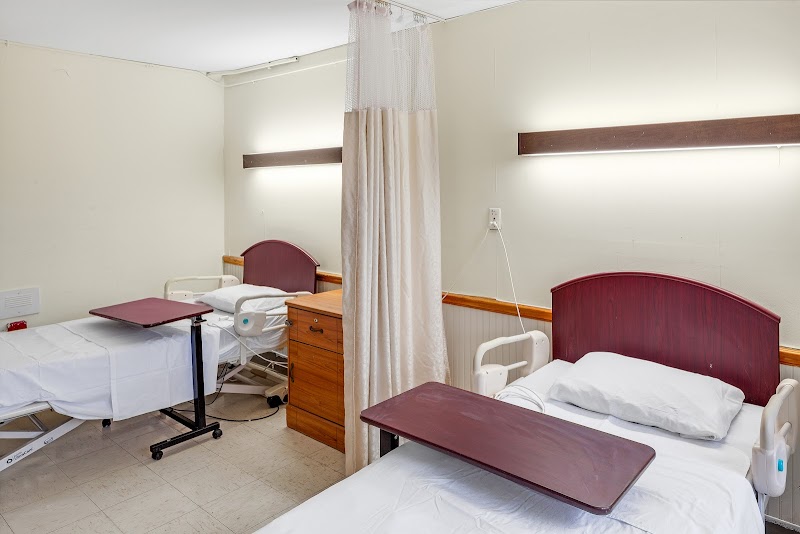
How is Pruitthealth-Rockingham Staffed?

CMS rates PruittHealth-Rockingham's staffing level at 3 out of 5 stars, which is average compared to other nursing homes. Staff turnover is 47%, compared to the North Carolina average of 46%.

What Have Inspectors Found at Pruitthealth-Rockingham?

State health inspectors documented 34 deficiencies at PruittHealth-Rockingham during 2022 to 2025. These included: 29 with potential for harm and 5 minor or isolated issues.
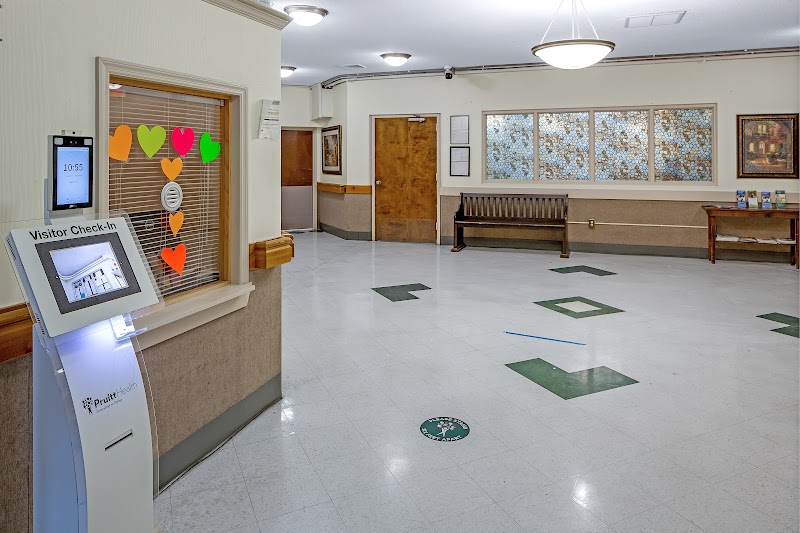
Who Owns and Operates Pruitthealth-Rockingham?

PruittHealth-Rockingham is owned by a for-profit company. For-profit facilities operate as businesses with obligations to shareholders or private owners. The facility is operated by PRUITTHEALTH, a chain that manages multiple nursing homes. With 120 certified beds and approximately 71 residents (about 59% occupancy), it is a mid-sized facility located in Rockingham, North Carolina.

How Does Pruitthealth-Rockingham Compare to Other North Carolina Nursing Homes?

Compared to the 100 nursing homes in North Carolina, PruittHealth-Rockingham's overall rating (1 stars) is below the state average of 2.8, staff turnover (47%) is near the state average of 46%, and health inspection rating (2 stars) is below the national benchmark.

What Should Families Ask When Visiting Pruitthealth-Rockingham?

Based on this facility's data, families visiting should ask: "Can I visit during a mealtime to observe dining assistance and food quality?" "How do you handle medical emergencies, and what is your hospital transfer rate?" "Can I speak with family members of current residents about their experience?"

Is Pruitthealth-Rockingham Safe?

Based on CMS inspection data, PruittHealth-Rockingham has a clean safety record: no substantiated abuse findings (meaning no confirmed cases of resident harm), no Immediate Jeopardy citations (the most serious violation level indicating risk of serious injury or death), and is not on the Special Focus Facility watch list (a federal program monitoring the lowest-performing 1% of nursing homes). The facility has a 1-star overall rating and ranks #100 of 100 nursing homes in North Carolina. While no facility is perfect, families should still ask about staff-to-resident ratios and recent inspection results during their visit.

Do Nurses at Pruitthealth-Rockingham Stick Around?

PruittHealth-Rockingham has a staff turnover rate of 47%, which is about average for North Carolina nursing homes (state average: 46%). Moderate turnover is common in nursing homes, but families should still ask about staff tenure and how the facility maintains care continuity when employees leave.

Was Pruitthealth-Rockingham Ever Fined?

PruittHealth-Rockingham has no federal fines on record. CMS issues fines when nursing homes fail to meet care standards or don't correct problems found during inspections. The absence of fines suggests the facility has either maintained compliance or corrected any issues before penalties were assessed. This is a positive indicator, though families should still review recent inspection reports for the full picture.

Is Pruitthealth-Rockingham on Any Federal Watch List?

PruittHealth-Rockingham is not on any federal watch list. The most significant is the Special Focus Facility (SFF) program, which identifies the bottom 1% of nursing homes nationally based on persistent, serious quality problems. Not being on this list means the facility has avoided the pattern of deficiencies that triggers enhanced federal oversight. This is a positive indicator, though families should still review the facility's inspection history directly.