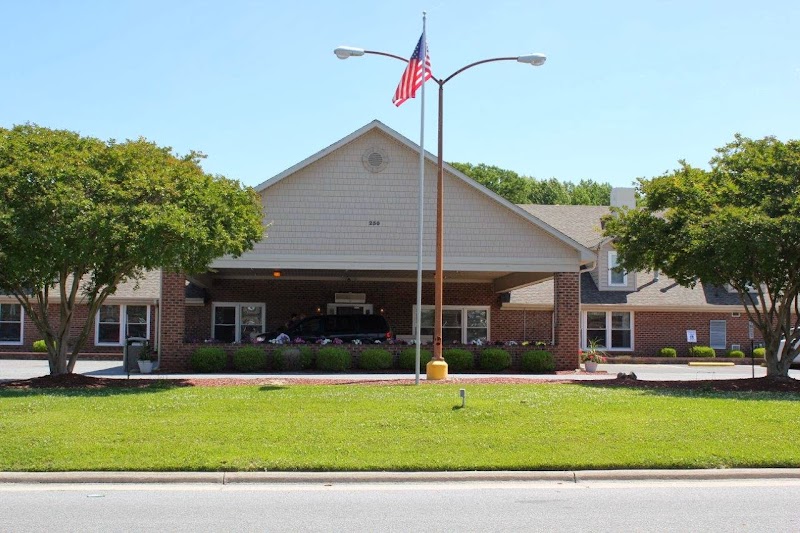
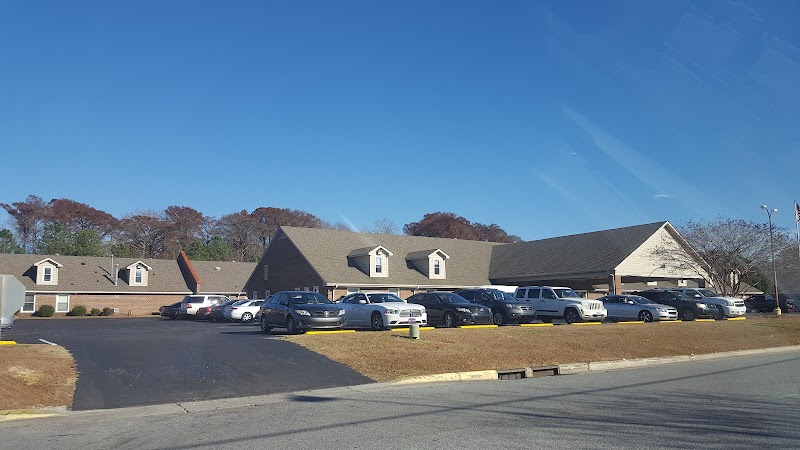
River Trace Nursing and Rehabilitation Center

250 Lovers Lane, Washington, NC 27889 (252) 975-1636
For profit - Corporation 140 Beds PRINCIPLE LONG TERM CARE Data: November 2025 4 Immediate Jeopardy citations
Trust Grade
0/100
#383 of 417 in NC
Last Inspection: August 2025

Inspected within the last 6 months. Data reflects current conditions.

Overview

River Trace Nursing and Rehabilitation Center has received a Trust Grade of F, indicating significant concerns and poor quality of care. Ranking #383 out of 417 facilities in North Carolina puts them in the bottom half, and they are the second-worst option in Beaufort County. The facility's performance is worsening, with reported issues increasing from 5 in 2024 to 12 in 2025. Staffing is a critical area of concern, with a low rating of 1 out of 5 stars and a troubling turnover rate of 65%, higher than the state average. There have been serious safety issues, including incidents where a resident was injured after falling from bed during care and where staff failed to follow proper disinfection protocols for medical equipment, potentially exposing residents to infection. While the facility does have some registered nurse coverage, the issues present significant risks to resident safety and care quality, making it essential for families to carefully consider these factors.

Trust Score
F
0/100
In North Carolina
#383/417
Bottom 9%
Safety Record
High Risk
Review needed
Inspections
Getting Worse
5 → 12 violations
Staff Stability
⚠ Watch
65% turnover. Above average. Higher turnover means staff may not know residents' routines.
Penalties
✓ Good
$34,646 in fines. Lower than most North Carolina facilities. Relatively clean record.
Skilled Nurses
○ Average
RN staffing data not reported for this facility.
Violations
⚠ Watch
31 deficiencies on record. Higher than average. Multiple issues found across inspections.
★☆☆☆☆
1.0
Overall Rating
★☆☆☆☆
1.0
Staff Levels
★★☆☆☆
2.0
Care Quality
★☆☆☆☆
1.0
Inspection Score
Stable
2024: 5 issues
2025: 12 issues

The Good

  • Full Sprinkler Coverage · Fire safety systems throughout facility
  • No fines on record

Facility shows strength in fire safety.

The Bad

1-Star Overall Rating

Below North Carolina average (2.8)

Significant quality concerns identified by CMS

Staff Turnover: 65%

19pts above North Carolina avg (46%)

Frequent staff changes - ask about care continuity

Federal Fines: $34,646

Above median ($33,413)

Moderate penalties - review what triggered them

Chain: PRINCIPLE LONG TERM CARE

Part of a multi-facility chain

Ask about local staffing decisions and management

Staff turnover is elevated (65%)

17 points above North Carolina average of 48%

The Ugly 31 deficiencies on record

4 life-threatening
Aug 2025 11 deficiencies 2 IJ
CRITICAL (J)

Immediate Jeopardy (IJ) - the most serious Medicare violation

Deficiency F0726 (Tag F0726)

Someone could have died · This affected 1 resident

Based on observations, record review, and staff and Medical Director interviews, the facility failed to ensure staff were trained and competent in following manufacturer's guidelines for cleaning and ...

Read full inspector narrative →
Based on observations, record review, and staff and Medical Director interviews, the facility failed to ensure staff were trained and competent in following manufacturer's guidelines for cleaning and disinfecting a shared glucometer for 1 of 1 observed (Resident #34). On 8/20/25 Nurse #1 was observed obtaining Resident #34's blood glucose (sugar) level followed by the nurse cleaning the glucometer with an alcohol wipe that was not an Environmental Protection Agency (EPA)-registered disinfectant. Nurse #1 revealed she worked at the facility since March of 2025, had always used an alcohol wipe to clean the glucometer, had not been trained on how to disinfect the glucometer, and was unaware an EPA-registered disinfectant needed to be used. The Infection Preventionist revealed she was unsure what the manufacturer's guidelines were for cleaning and disinfecting a shared glucometer. Resident #34 resided on the locked unit and this shared glucometer was utilized for 2 other residents (Residents #92 and #97) who resided on that unit. Shared glucometers can be contaminated with blood and must be cleaned and disinfected after each use with an approved product and procedure. Failure to ensure staff are trained and competent to disinfect a shared glucometer in accordance with the manufacturer's instructions has the high likelihood to expose residents to bloodborne pathogens. There were no residents with a blood-borne pathogen in the facility at the time of the investigation. The deficient practice was identified for 1 of 3 nursing staff members (Nurse #1) reviewed for glucometer disinfection competency. Immediate Jeopardy began on 8/20/25 when Nurse #1 failed to demonstrate competency to disinfect a shared glucometer per manufacturer's instructions. Immediate jeopardy was removed on 8/22/25 when the facility implemented an acceptable credible allegation of immediate jeopardy removal. The facility will remain out of compliance at a lower scope and severity of D (no actual harm with potential for more than minimal harm that is not immediate jeopardy) to ensure the completion of education is completed and monitoring systems put into place are effective. Findings included:A continuous observation of Nurse #1 was conducted on 8/20/25 from 12:36 PM through 12:51 PM revealed the following: On 8/20/25 at 12:36 PM, Nurse #1 was standing by the medication cart in the day room of the locked unit with Resident #34 standing next to her. Nurse #1 took the glucometer out of the top left drawer of the cart where it had been stored. Nurse #1 put the glucometer on top of the cart, gathered supplies and obtained Resident #34's blood glucose. The Nurse was observed to clean the glucometer with a small alcohol wipe for less than one minute and place the glucometer back into the top left drawer of the medication cart. In an interview with Nurse #1 during the observation that began on 8/20/25 at 12:36 PM she stated the glucometer was used on all residents in the locked unit that had orders for blood glucose testing. Nurse #1 further stated she had worked in the facility since March of 2025 and had always used an alcohol wipe to clean the glucometer. Nurse #1 indicated she had not been trained on how to disinfect the glucometer with an EPA-registered germicidal wipe. A follow-up interview was conducted with Nurse #1 on 8/20/25 at 1:37 PM. She revealed there was only one resident (Resident #34) who required blood glucose monitoring at lunchtime. Nurse #1 indicated she had completed three blood glucose checks before breakfast on 8/20/25 and used an alcohol wipe to clean the glucometer between each resident (Resident #34, Resident #92 and Resident #97). An interview on 8/20/25 at 12:54 PM with the Infection Preventionist (IP), who was also the Director of Nursing (DON) revealed each medication cart in the facility had one glucometer to be used for all residents on that hall that require blood glucose testing. The IP/DON indicated nurses should be cleaning and disinfecting the glucometers per manufacturer's instruction and facility policy. She stated that she had only been at the facility for three weeks and was unsure when the last in-service/training on glucose monitor disinfection was conducted. The IP further stated she was unsure what the facility policy or manufacturer's instructions for glucometer cleaning and disinfecting instructed. She indicated she was aware that improper disinfection of a shared glucometer could lead to blood-borne pathogens being transferred from one resident to another. A follow-up interview was conducted on 8/20/25 at 2:03 PM with the IP/DON. She stated there were no residents with known blood-borne pathogens in the facility. In an interview with the Administrator on 8/20/25 at 1:08 PM she indicated Nurses should be disinfecting glucometers per manufacturer's instructions between each resident and before use if it is stored with other items such as in the medication cart drawer. The Administrator was unsure when the last in-service training was conducted on the cleaning and disinfecting of glucose monitors. A telephone interview was conducted on 8/21/25 at 8:50 AM with the Medical Director who stated all nursing staff should be educated regarding the cleaning and disinfecting of glucose monitoring before their first shift at the facility. The facility was unable to provide documentation that Nurse #1 was educated on cleaning and disinfecting glucose monitors. They were also unable to provide documentation regarding any in-services that trained nursing staff on cleaning and disinfecting glucometers. The Administrator was notified of immediate jeopardy on 8/21/25 at 9:30 AM. The facility provided the following credible allegation of immediate jeopardy removal: Identify those recipients who have suffered, or are likely to suffer, a serious adverse outcome as a result of the noncompliance: On 8/20/25, Nurse #1 removed a glucometer from the 500-hall medication cart drawer. Nurse #1 performed the blood glucose check on Resident #34 then wiped the glucometer with an alcohol wipe and placed the glucometer back into the medication cart drawer. Nurse #1 stated she was not aware to use an Environmental Protection Agency (EPA) germicidal approved wipe and was not trained regarding the facility's policy/procedures for glucometer disinfection, or which product was approved to disinfect the glucometer. On 8/20/25, the Facility Consultant completed a medical record audit of all residents, including Resident #34, Resident #92, and Resident #97, who received blood glucose checks. This audit was to identify any diagnosed blood-borne pathogen infections to ensure there were no infections related to improper cleaning and disinfecting of glucometers. No residents were identified with a blood-borne pathogen. Specify the action the entity will take to alter the process or system failure to prevent a serious adverse outcome from occurring or recurring, and when the action will be complete: On 8/21/25, the accounts payable will audit all nurses and Medication Aide employee files to verify education and completion of skills checklist to validate competency for disinfecting shared glucometers according to manufacturer's instructions upon hire. The Director of Nursing will ensure all nurses and Medication Aides without education and/or a completed skills checklist will have it completed prior to the employee starting their next scheduled shift.On 8/21/25, the Nurse Consultant educated the Administrator and Director of Nursing regarding the requirements to ensure all facility and agency nurses, and Medication Aides are educated on the policy and procedures for cleaning and disinfecting a glucometer and complete a skills checklist with observation of a return demonstration to validate competency during orientation. On 8/20/25, the Director of Nursing, Assistant Director of Nursing, Treatment Nurse and Unit Managers initiated, in person, education with all nurses to include Nurse #1 and medication aides regarding the importance of following facility and manufacturer's instructions for cleaning and disinfecting a shared glucometer including (1) using a EPA registered germicidal disposable cloth/wipes (2) exposure times (3) dry time (4) the policy/procedure for cleaning and disinfecting glucometers (5) germicidal instructions for cleaning and disinfecting a glucometer are located on the container of the germicidal wipes (6) the risk factors of not properly cleaning shared glucometers (7) approved products for disinfecting a glucometer (8) proper storage of glucometers to prevent cross contamination. The in-service will be completed by 8/20/25. The Director of Nursing will monitor the completion of staff in-services. After 8/20/25, any nurse or medication aide who has not worked or received the in-service will receive the education prior to the next scheduled work shift. All newly hired nurses or medication aides including agency, will be in-serviced by the Director of Nursing, Assistant Director of Nursing or Unit Managers during orientation regarding the importance of following facility and manufacturer's instructions for cleaning and disinfecting a shared glucometer.On 8/20/25, the Director of Nursing (DON), Assistant Director of Nursing (ADON), and Unit Managers initiated in-person return demonstrations of properly cleaning and disinfecting glucometers with all nurses to include Nurse #1 and all medication aides including agency. The purpose of the return demonstrations is to ensure that staff demonstrate knowledge and understanding of the glucometer cleaning and disinfecting procedures, including adhering to the manufacturer's instructions. Staff will be immediately retrained for any identified areas of concern. The return demonstrations will be completed by 8/20/25. Any nurse or medication aide who does not successfully pass the return demonstration will be immediately re-educated and will be required to repeat the return demonstration until successful demonstration is achieved. The return demonstrations were completed by 8/20/25 for all nurses and medication aides who worked. The Director of Nursing will monitor the completion of the glucometer cleaning return demonstrations. After 8/20/25, staff who have not completed the return demonstrations will complete it prior to their next scheduled work shift. On 8/20/25, the Director of Nursing, Assistant Director of Nursing and Unit Managers initiated in person quizzes with all nurses to include Nurse #1 and medications aides, including agency to validate knowledge and understanding of the importance of following facility and manufacturer's instructions for cleaning and disinfecting a shared glucometer. The quizzes included (1) how often do you need to clean a glucometer (2) what should you use to clean and disinfect a glucometer? (3) why is it important to follow the manufacturer's instructions to clean and disinfect a shared glucometer? (4) how do you know the exposure time for the disinfectant you are utilizing? Any nurse or medication aide that does not successfully pass the quiz will be immediately re-educated and will be required to retake the quiz at the time of administration until a successful passing score is achieved. The quizzes were completed by 8/20/25 for all nurses and medication aides who worked. The Director of Nursing will monitor the completion of staff quizzes. After 8/20/25, any nurse or medication aide who has not completed the quiz will complete it prior to their next scheduled work shift. Alleged immediate jeopardy removal date: 8/22/25. Validation of the immediate jeopardy removal plan was conducted on 8/22/25. The facility had compiled a list of nursing staff that were responsible for blood glucose monitoring. All staff were educated on the glucometer disinfection process before being allowed to work. The facility provided an immediate in-service for Nurse #1 with a return demonstration provided. All staff members responsible for blood glucose monitoring also completed a skills validation with return demonstration to the Director of Nursing, Assistant Director of Nursing or Unit Manager. An observation was conducted of glucose disinfection while onsite. The staff member cleaned the glucometer according to manufacturer instructions. Nursing staff interviews revealed they had received education on the disinfection of glucometers.The immediate jeopardy removal date of 8/22/25 was validated.
CRITICAL (J)

Immediate Jeopardy (IJ) - the most serious Medicare violation

Infection Control (Tag F0880)

Someone could have died · This affected 1 resident

Based on observations, record review, staff and Medical Director interviews, the facility failed to implement their infection control policies and procedures when Nurse #1 did not follow the manufactu...

Read full inspector narrative →
Based on observations, record review, staff and Medical Director interviews, the facility failed to implement their infection control policies and procedures when Nurse #1 did not follow the manufacturer's instructions for cleaning and disinfecting a shared blood glucose meter (glucometer) before and after resident usage for 1 of 1 resident observed whose blood glucose (sugar) level was checked (Resident #34). On 8/20/25 Nurse #1 was observed obtaining Resident #34's blood glucose level followed by the nurse cleaning the glucometer with an alcohol wipe that was not an Environmental Protection Agency (EPA)-registered disinfectant. Nurse #1 then stated that she worked at the facility since March of 2025 and had always used an alcohol wipe to clean the glucometer indicating that she was unaware an EPA-registered disinfectant needed to be used. Resident #34 resided on the locked unit and this shared glucometer was utilized for 2 other residents (Residents #92 and #97) who resided on that unit. Shared glucometers can be contaminated with blood and must be cleaned and disinfected after each use with an approved product and procedure. Failure to use an EPA-registered disinfectant in accordance with the manufacturer's instructions for disinfection of the glucometer potentially exposes residents to the spread of blood-borne pathogens. There were no residents with a blood-borne pathogen in the facility at the time of the investigation. The facility staff also failed to change gloves between cleansing a wound and applying a new dressing and failed to perform hand hygiene between the removal of soiled gloves and the application of clean gloves (Wound Care Nurse). Finally, the facility failed to handle soiled linen in a manner that prevented the potential transmission of pathogenic (disease causing) microorganisms (germs) when Nurse Aide (NA) #2 placed soiled linen directly onto the floor. These deficient practices were identified for 3 of 10 staff members (Nurse #1, Wound Care Nurse, and NA #2) reviewed for infection prevention and control. Immediate Jeopardy began on 8/20/25 when Nurse #1 was observed performing a blood glucose check on Resident #34 using a shared glucometer without disinfecting per manufacturer's instructions. Immediate jeopardy was removed on 8/21/25 when the facility implemented an acceptable credible allegation of immediate jeopardy removal. The facility will remain out of compliance at a lower scope and severity of D (no actual harm with potential for more than minimal harm that is not immediate jeopardy) for findings #2 and #3 and to ensure education is completed and monitoring systems put into place are effective. Findings included:1. The blood glucose meter manufacturer's instructions for cleaning and disinfecting dated 09/2024 indicated the meter should be cleaned and disinfected after use on each patient with EPA-registered product. A list of EPA-registered products was listed in the instructions. Additional instructions were to read the manufacturer's instructions for the use of the EPA-registered cleaning and disinfecting product. Alcohol wipes were not listed as an EPA-registered product. Review of the facility policy “Glucometer Disinfection”, undated, indicated that the objective was to prevent infection due to potential blood-borne pathogen exposure. The equipment and supplies were listed as gloves and germicidal disposable cloth/wipes. The procedure for disinfecting glucometers included: Step 1. Apply gloves Step 2. When visible blood or body fluids are present, clean by wiping the external surfaces to remove any visible organic material. A cloth dampened with soap and water, or a germicidal wipe may be used according to the manufacturer’s instructions and then discard. Step 3. After any visible blood or body fluids have been removed, or if no visible blood or bodily fluids are present: a.) Use EPA-registered germicidal disposable cloth/wipe horizontally and vertically to thoroughly wet the entire external surface of the glucometer according to the manufacturer’s instructions. b.) Allow treated surface to remain wet for the germicidal wipe manufacturer’s recommended exposure time. If needed, utilize a new germicidal wipe to keep the glucometer surface wet. Step 4. After allowing the full amount of exposure time according to manufacturer’s product direction, discard the used cloth/wipe and allow the glucometer to thoroughly air- dry. Step 5. Remove and discard gloves. Perform hand hygiene. Step 6. When glucometer is completely dry, it may be used for the next resident or if not proceeding to another resident, store glucometer in med cart or specified storage area. A continuous observation of Nurse #1 was conducted on 8/20/25 from 12:36 PM through 12:51 PM revealed the following: On 8/20/25 at 12:36 PM, Nurse #1 was standing by the 500-hall medication cart in the day room of the locked unit with Resident #34 standing next to her. Nurse #1 took the glucometer out of the top left drawer of the cart where it had been stored. Nurse #1 put the glucometer on top of the cart, gathered supplies and obtained Resident #34’s blood glucose. The Nurse was observed to clean the glucometer with a small alcohol wipe for less than one minute and place the glucometer back into the top left drawer of the medication cart. An EPA-registered container of wipes that was located on top of the medication cart indicated to disinfect nonfood contact surfaces; thoroughly wet surface, allow treated surface to remain wet for two minutes and let air dry. These wipes were an EPA-registered germicidal wipe and approved for blood-borne pathogen use. In an interview conducted with Nurse #1 during the observation that began on 8/20/25 at 12:36 PM she stated the glucometer was used on all residents in the locked unit that had orders for blood glucose testing. Nurse #1 further stated she had worked in the facility since March of 2025 and had always used an alcohol wipe to clean the glucometer. Nurse #1 indicated she had not been trained on how to disinfect the glucometer with an EPA-registered germicidal wipe. A follow-up interview was conducted with Nurse #1 on 8/20/25 at 1:37 PM. She revealed there was only one resident (Resident #34) who required blood glucose monitoring at lunchtime. Nurse #1 indicated she had completed three blood glucose checks before breakfast on 8/20/25 and used an alcohol wipe to clean the glucometer between each resident (Resident #34, Resident #92 and Resident #97). An interview on 8/20/25 at 12:54 PM with the Infection Preventionist (IP), who was also the Director of Nursing (DON), revealed each medication cart in the facility had one glucometer to be used for all residents on that hall that require blood glucose testing. The IP/DON indicated nurses should be cleaning and disinfecting the glucometers per manufacturer’s instruction and facility policy. The IP/DON stated she was unsure what the facility policy on glucometer disinfection said. She indicated she was aware that improper disinfection of a shared glucometer could lead to blood-borne pathogens being transferred from one resident to another. A follow-up interview was conducted on 8/20/25 at 2:03 PM with the IP/DON. She stated there were no residents with known blood-borne pathogens in the facility. In an interview with the Administrator on 8/20/25 at 1:08 PM she indicated nurses should be disinfecting glucometers per manufacturer’s instructions between each resident and before use if it is stored with other items such as in the medication cart drawer. A telephone interview was conducted on 8/21/25 at 8:50 AM with the Medical Director who stated the danger of not cleaning the shared glucometer per manufacturer’s instructions was that blood-borne pathogens could be transmitted between residents. He indicated that all shared glucometers should be cleaned per manufacturers’ instructions between residents and before use when the glucometer is stored with other items in a medication cart drawer. The Administrator was notified of immediate jeopardy on 8/21/25 at 9:30 AM. The facility provided the following credible allegation of immediate jeopardy removal: Identify those recipients who have suffered, or are likely to suffer, a serious adverse outcome as a result of the noncompliance: On 8/20/25, Nurse #1 removed a glucometer from the 500-hall (locked unit) medication cart drawer. Nurse #1 performed the blood glucose check on Resident #34 then wiped the glucometer with an alcohol wipe and placed the glucometer back into the medication cart drawer. Nurse #1 stated she was not aware she was to use an Environmental Protection Agency (EPA) germicidal approved wipe. On 8/20/25, the Facility Consultant completed a medical record audit of all residents, including Resident #34, Resident #92, and Resident #97, who received blood glucose checks. This audit was to identify any diagnosed blood-borne pathogen infections to ensure there were no infections related to improper cleaning and disinfecting of glucometers. No residents were identified with a blood-borne pathogen. Specify the action the entity will take to alter the process or system failure to prevent a serious adverse outcome from occurring or recurring, and when the action will be complete: On 8/20/25, the unit managers and the treatment nurse completed the cleaning and disinfecting of all resident glucometers including Resident #34, Resident #92, and Resident # 97, in accordance with the manufacturer’s instructions for cleaning and disinfecting glucometers. The instructions include utilizing an EPA-registered germicidal wipe, allowing full exposure time according to the manufacturer’s product directions, then discarding the used wipe and allowing the glucometer to thoroughly air-dry before using it for the next resident. On 8/20/25, the Director of Nursing, Assistant Director of Nursing, Treatment Nurse and Unit Managers initiated, in person, education with all nurses to include Nurse #1 and medication aides regarding the importance of following facility and manufacturer’s instructions for cleaning and disinfecting a shared glucometer including (1) using a EPA-registered germicidal disposable cloth/wipes (2) exposure times (3) dry time (4) the policy for cleaning and disinfecting glucometers (5) germicidal instructions for cleaning and disinfecting a glucometer are located on the container of the germicidal wipes (6) the risk factors of not properly cleaning shared glucometers. The in-service will be completed by 8/20/25. The Director of Nursing will monitor the completion of staff in-services. After 8/20/25, any nurse or medication aide who has not worked or received the in-service will receive the education prior to the next scheduled work shift. All newly hired nurses or medication aides including agency, will be in-serviced by the Director of Nursing, Assistant Director of Nursing or Unit Managers during orientation regarding the importance of following facility and manufacturer’s instructions for cleaning and disinfecting a shared glucometer. On 8/20/25, the Director of Nursing (DON), Assistant Director of Nursing (ADON), and Unit Managers initiated in-person return demonstrations of properly cleaning and disinfecting glucometers with all nurses to include Nurse #1 and all medication aides including agency. The purpose of the return demonstrations is to ensure that staff demonstrate knowledge and understanding of the glucometer cleaning and disinfecting procedures, including adhering to the manufacturer’s instructions. Staff will be immediately retrained for any identified areas of concern. The return demonstrations will be completed by 8/20/25. Any nurse or medication aide who does not successfully pass the return demonstration will be immediately re-educated and will be required to repeat the return demonstration until successful demonstration is achieved. The return demonstrations were completed by 8/20/25 for all nurses and medication aides who worked. The Director of Nursing will monitor the completion of the glucometer cleaning return demonstrations. After 8/20/25, staff who have not completed the return demonstrations will complete it prior to their next scheduled work shift. On 8/20/25, the Director of Nursing, Assistant Director of Nursing and Unit Managers initiated in person quizzes with all nurses to include Nurse #1 and medications aides, including agency to validate knowledge and understanding of the importance of following facility and manufacturer’s instructions for cleaning and disinfecting a shared glucometer. The quizzes included (1) how often do you need to clean a glucometer (2) what should you use to clean and disinfect a glucometer? (3) why is it important to follow the manufacturer’s instructions to clean and disinfect a shared glucometer? (4) how do you know the exposure time for the disinfectant you are utilizing? Any nurse or medication aide that does not successfully pass the quiz will be immediately re-educated and will be required to retake the quiz at the time of administration until a successful passing score is achieved. The quizzes were completed by 8/20/25 for all nurses and medication aides who worked. The Director of Nursing will monitor the completion of staff quizzes. After 8/20/25, any nurse or medication aide who has not completed the quiz will complete it prior to their next scheduled work shift. Alleged immediate jeopardy removal date: 8/21/25 A validation of immediate jeopardy removal plan was conducted on 8/22/25. The facility had compiled a list of nursing staff that were responsible for blood glucose monitoring. All staff were educated on the glucometer disinfection process before being allowed to work. The facility provided an immediate in-service for Nurse #1 with a return demonstration provided. All staff members responsible for blood glucose monitoring also completed a skills validation with return demonstration to the Director of Nursing, Assistant Director of Nursing or Unit Manager. An observation was conducted of glucose disinfection while onsite. The staff member cleaned the glucometer according to manufacturer instructions. Nursing staff interviews revealed they had received education on the disinfection of glucometers. The immediate jeopardy removal date of 8/21/25 was validated. 2. A review of the facility policy titled “Handwashing Policy” revised 4/2023 provided by the facility revealed in part: “Personnel are required to wash their hands after each direct or indirect resident contact for which handwashing is indicated by acceptable standards of practice. Personnel should wash their hands: … When indicated between tasks and procedures to prevent cross contamination of different body sites.” During observation on 8/20/25 at 11:29 AM the Wound Care Nurse was observed providing wound care to Resident #4. The wound care nurse was observed to perform hand hygiene and don personal protective equipment including gloves. The Wound Care Nurse was observed to cleanse the sacral wound with wound cleanser. After cleaning the wound, with the same gloves she cleansed the wound with, she then cut the xeroform (a non-adhering protective dressing) gauze to the size of the wound and placed the dressing over the wound bed. She then changed gloves, did not perform hand hygiene, and covered the xeroform gauze with a dry dressing. During an interview on 8/20/25 at 11:35 AM the Wound Care Nurse stated after cleansing the wound she should have performed hand hygiene and changed gloves prior to applying the xeroform gauze and dry dressing to prevent cross contamination and did not because she was nervous. During an interview on 8/20/25 at 11:38 AM the Director of Nursing stated hand hygiene, and a glove change should be performed between cleaning a wound and applying a new dressing to not cross contaminate the area being treated. 3. A review of the facility’s policy dated 3/10/2020 titled “Linen Handling Policy” revealed in part “All soiled linen should be considered contaminated. The risk of actual disease transmission from soiled linen with pathogenic (disease causing) microorganisms (germs) is insignificant if it is handled, transported, and laundered in a way that avoids the transfer of microorganisms. Soiled linen should be bagged or placed in containers at the location where it is used.” On 8/18/25 at 2:55 PM soiled linen including towels and a gown were observed directly on the floor of Resident #1’s room. On 8/18/25 at 2:58 PM an interview with Nurse Aide (NA) #2 outside the room indicated the soiled towels and gown where from the bathing she provided to Resident #1 at approximately 2:45 PM that day. She stated she should have placed these soiled items into a bag and not left them directly on the floor, but she did not. She indicated she had bags available and did not know why she had not done this. She reported she had been educated not to place soiled linen directly onto the floor in resident’s room so that any germs on them did not get tracked around. On 8/22/25 at 11:25 AM an interview with the Director of Nursing (DON) indicated she also served as the facility’s Infection Preventionist. She stated she was glad that NA #2 acknowledged that placing soiled linen directly on the floor in a resident’s room was inappropriate, because this should never occur. She reported all soiled linen should be placed in bags. The DON stated this was for infection control purposes to prevent the spread of germs. On 8/22/25 at 11:38 AM an interview with the Administrator indicated soiled linen should be bagged at the time of removal and never placed directly on the floor.
CONCERN (D) 📢 Someone Reported This

A family member, employee, or ombudsman was alarmed enough to file a formal complaint

Potential for Harm - no one hurt, but risky conditions existed

Resident Rights (Tag F0550)

Could have caused harm · This affected 1 resident

**NOTE- TERMS IN BRACKETS HAVE BEEN EDITED TO PROTECT CONFIDENTIALITY** Based on observation, record review, and staff and resident interviews, the facility failed to treat a resident with dignity and...

Read full inspector narrative →
**NOTE- TERMS IN BRACKETS HAVE BEEN EDITED TO PROTECT CONFIDENTIALITY** Based on observation, record review, and staff and resident interviews, the facility failed to treat a resident with dignity and respect when a staff member did not knock or announce their presence before entering a resident's room (Resident #49) and failed to maintain residents' dignity when a resident had an uncovered urinary catheter drainage bag, leaving the urine visible to the public (Resident #7). The reasonable person concept was applied for Resident #7 as individuals have the expectation of being treated with dignity and would not want urine visible to visitors, staff and other residents. This was for 2 of 7 residents reviewed for dignity (Resident #49, Resident #7).Findings included: 1. Review of Resident #49’s Minimum Data Set assessment dated [DATE] revealed she was assessed as cognitively intact. During observation on 8/19/25 at 8:08 AM Housekeeper #1 was observed to enter Resident #49’s room without knocking or announcing her presence. Resident #49 was in the bed closest the door and the door was fully open during this observation. During an interview on 8/19/25 at 8:10 AM Housekeeper #1 stated if the residents were already awake, she did not need to knock or announce her presence before entering their room but if they were asleep, she knocks. During an interview on 8/19/25 at 8:12 AM Resident #49 stated she would prefer staff knock or announce their presence before entering her room because she liked to know who was in her room and what they were doing. During an interview on 8/19/25 at 2:54 PM the Housekeeping Supervisor stated staff were to always announce their presence before entering a resident's room including if the resident was awake. During an interview on 8/19/25 at 3:03 PM the Administrator stated staff were always to knock or announce their presence prior to entering resident rooms. 2. Resident #7 was admitted to the facility on [DATE] with diagnoses that included obstructive uropathy and non-Alzheimer’s dementia. Resident #7’s comprehensive care plan initiated 7/24/25 revealed he required an indwelling urinary catheter. The 5-day Minimum Data Set (MDS) assessment dated [DATE] for Resident #7 revealed he was moderately cognitively impaired and had an indwelling urinary catheter. An observation conducted on 8/18/25 at 11:45 AM revealed Resident #7 walked around the day room and a urinary catheter bag which contained urine, hung on the right side of his walker. The urine in the bag was visible. There were several residents, a visitor and staff in the day room. An observation was conducted on 8/18/25 at 12:40 PM. Resident #7 was in the day room and a urinary catheter bag hung on the right side of his walker. The urinary catheter bag was one-quarter full of urine and visible to staff, residents and visitors. In an interview with Nurse #1 on 8/18/25 at 12:40 PM she revealed she was not aware a urinary catheter bag should be covered for dignity. Nurse #1 stated she didn’t think the facility had privacy bags available for catheter bags. On 8/18/25 at 12:52 PM an interview was conducted with Nurse Aide (NA) #1. NA #1 stated she was assigned to Resident #7 that day. She further stated she had never seen a urinary catheter bag privacy bag on the unit and if he had one it would be in his room, but she didn’t see one that morning. A follow-up observation was conducted on 8/18/25 at 4:00 PM. Resident #7 was seated in the day room. His urinary catheter bag hung on the right side of his walker and urine was visible through the bag. In an interview with the Director of Nursing (DON) on 8/19/25 at 1:09 PM she stated all urinary catheter bags should have a privacy cover and that the facility supplied them. The DON indicated the covers were to preserve the dignity of residents with indwelling urinary catheters by keeping the urine hidden from the view of visitors, residents and staff. In an interview with the Administrator on 8/19/25 at 2:11 PM, she stated the facility provided privacy bags to cover urinary catheter bags. She further stated all urinary catheter bags should be covered with a privacy bag. The Administrator indicated the cover was for the resident’s privacy and dignity.
CONCERN (D)

Potential for Harm - no one hurt, but risky conditions existed

Deficiency F0554 (Tag F0554)

Could have caused harm · This affected 1 resident

**NOTE- TERMS IN BRACKETS HAVE BEEN EDITED TO PROTECT CONFIDENTIALITY** Based on observations, record review, and staff and resident interviews, the facility failed to assess a resident's ability to s...

Read full inspector narrative →
**NOTE- TERMS IN BRACKETS HAVE BEEN EDITED TO PROTECT CONFIDENTIALITY** Based on observations, record review, and staff and resident interviews, the facility failed to assess a resident's ability to self-administer medications for 1 of 6 residents reviewed for self-administering medications (Residents #101).Resident #101 was admitted to the facility on [DATE] with diagnoses that included chronic kidney disease, anxiety, depression and insomnia.Review of Resident #101's quarterly Minimum Data Set assessment dated [DATE] revealed Resident #101 was cognitively intact with no delusions, behaviors, or rejection of care.Review of Resident #101's medical record revealed no documentation that Resident #101 had been assessed to self-administer medications.Further review of Resident #101's medical record revealed no care plan for self-administration of medications.An observation of Resident #101 on 8/19/25 at 1:00 PM revealed her to be in her room, sitting on the side of the bed eating her lunch. On Resident #101's overbed tray was a medicine cup that contained 8 pills.An interview with Resident #101 on 8/19/25 at 1:01 PM revealed Medication Aide #1 came in and put the medicine cup with the pills on her tray. Resident #101 went on to say she did not know what the medications were or why she took the medications. An interview with Medication Aide #1 on 8/19/25 at 1:10 PM revealed she always left Resident #101's medication on the overbed tray for the resident to take when she wanted to take them. She also stated she did not know if the resident had been assessed to self-medicate, nor did she know where to locate that information. She went on to say she was aware that it was not good practice, and she should never leave medications unattended in a resident's rooms. She identified the medications left in the room as acyclovir (an antiviral medication used to treat infections) 400 milligrams (mg), aspirin 81mg, magnesium oxide 400 tablet, Revlimid (used to treat several types of cancer) 5mg, sertraline (depression) 50 mg, potassium chloride 10MEQ, vitamin D3 50 mcg, and Tylenol 500mg.An interview was held on 8/19/25 at 2:00 pm with the Director of Nursing. She stated her expectation would be that medications were never left at the bedside. She went on to say the medication aide should have stayed in the room until all medications were consumed. If the resident did not consume the medications, they should have been discarded.An interview with the Administrator was conducted on 8/21/25 at 11:00 AM, she revealed she would expect the person passing medications to stay in the resident's room and watch the resident consume all medications.
CONCERN (D)

Potential for Harm - no one hurt, but risky conditions existed

Deficiency F0578 (Tag F0578)

Could have caused harm · This affected 1 resident

**NOTE- TERMS IN BRACKETS HAVE BEEN EDITED TO PROTECT CONFIDENTIALITY** Based on record review and resident, staff and Responsible Party (RP) interviews, the facility failed to ensure a copy of the Me...

Read full inspector narrative →
**NOTE- TERMS IN BRACKETS HAVE BEEN EDITED TO PROTECT CONFIDENTIALITY** Based on record review and resident, staff and Responsible Party (RP) interviews, the facility failed to ensure a copy of the Medical Power of Attorney advanced directive document was obtained and in the resident's medical record. This was for 1 of 3 residents reviewed for advanced directives (Resident #99).Findings included:Resident #99 was admitted to the facility on [DATE] with a diagnosis of dementia.A physician's progress note for Resident #99 dated 8/1/24 revealed in part her family member was listed as her medical power of attorney.Resident #99's care conference record dated 8/2/24 listed her family member as her medical power of attorney.Resident #99's quarterly Minimum Data Set (MDS) assessment dated [DATE] revealed she was cognitively intact.Resident #99's facility face sheet listed her family member as her medical power of attorney and RP.There was no evidence in Resident #99's facility medical record of a copy of her medical power of attorney document.On 8/19/25 at 2:47 PM a telephone interview with Resident #99's RP indicated Resident #99 had executed an advanced directive medical power of attorney (POA) document. He stated he served as Resident #99's RP and medical POA. He reported although he could not say when or to whom he had given it, he had brought a copy of the document to the facility to ensure they had record of it. He reported that if there was an issue, he would be glad to provide another copy.On 8/21/25 at 4:20 PM an interview with Resident #99 indicated her family member was her medical power of attorney. She reported the facility should have a copy of the medical power of attorney document.On 8/19/25 at 3:17 PM an interview with the Medical Records Director indicated he had been responsible for medical records at the facility since December of 2023. He reported that normally, an advanced directive document such as a medical power of attorney would first go to the Social Worker (SW) or Admissions Director who would then provide the document for him to upload in the resident's medical record. He stated he did not have a medical power of attorney document for Resident #99, and there was not one in her medical record.On 8/19/25 at 3:27 PM an interview with SW #1 indicated she would not be the person to obtain or receive a copy of a resident's medical power of attorney document. She stated this would normally go to the Admissions Director or the Medical Records Director.On 8/19/25 at 3:30 PM an interview with SW #2 indicated he would not be the person to obtain or receive a copy of a resident's medical power of attorney document.On 8/21/25 at 4:13 PM an interview with the Admissions Director indicated if a resident or family member brought him a copy of a medical power of attorney or other advanced directive document, he would provide this to the Medical Records Director to upload into the resident's record. He stated he did not recall ever receiving a copy of Resident #99's medical power of attorney document. He reported he did not see a copy of the document in Resident #99's record.On 8/22/25 at 11:26 AM an interview with the Director of Nursing indicated she was not really sure what the facility's process was for ensuring a copy of any advanced directive including a medical power of attorney a resident had executed was present in the resident's medical record. She reported if she needed to know whether or not a resident had a medical power of attorney and who that was, she would be looking in the medical record to see the document itself.On 8/22/25 at 11:38 AM an interview with the Administrator indicated if a resident had executed an advanced directive such as a medical power of attorney, a copy of the document should be obtained by the facility and scanned into the resident's medical record. She reported the facility did not currently have a plan of correction in place for this issue.
CONCERN (D)

Potential for Harm - no one hurt, but risky conditions existed

Comprehensive Care Plan (Tag F0656)

Could have caused harm · This affected 1 resident

**NOTE- TERMS IN BRACKETS HAVE BEEN EDITED TO PROTECT CONFIDENTIALITY** Based on observation, record review and staff interviews, the facility failed to develop an individualized, person-centered comp...

Read full inspector narrative →
**NOTE- TERMS IN BRACKETS HAVE BEEN EDITED TO PROTECT CONFIDENTIALITY** Based on observation, record review and staff interviews, the facility failed to develop an individualized, person-centered comprehensive care plan to include the use of anticoagulant medication (Resident #54) and diabetes mellitus type II (Resident #97) for 2 of 5 residents reviewed for comprehensive care plans (Resident #54 and Resident #97).The findings included: 1. Resident #54 was admitted to the facility on [DATE] with diagnoses that included atrial fibrillation and coronary artery disease. Resident #54's 5-day Minimum Data Set (MDS) assessment dated [DATE] revealed she was severely cognitively impaired and was prescribed an anticoagulant (blood thinning) medication. The comprehensive care plan initiated on 8/4/25 did not reveal a care plan indicating Resident #54 took anticoagulant medication. An interview was conducted with the MDS Nurse on 8/20/25 at 11:43 AM. She indicated the admitting nurse was responsible for adding high risk medications such as anticoagulants to the care plan upon admission. In an interview with the admitting Nurse (Nurse #1) on 8/20/25 at 12:12 PM she stated she did not add medications to care plans when completing an admission. Nurse #1 indicated she was not aware adding medications to the care plan was part of the admission paperwork process. In an interview with the Assistant Director of Nursing (ADON) on 8/20/25 at 12:51 PM, she indicated that staff nurses were supposed to add high risk medication with interventions to the care plan upon admission. She was unaware Resident #54 did not have a care plan for anticoagulant medication. In an interview with the Director of Nursing (DON) on 8/20/25 at 12:54 PM she stated she would expect all residents on anticoagulant medication to have a care plan upon admission given that it was a high-risk drug class. She was unaware Resident #54 did not have a care plan for the medication. An interview was conducted with the Administrator on 8/20/25 at 1:08 PM. She indicated that Resident #54 should have had a care plan for anticoagulant medication upon admission. 2. Resident #97 was admitted to the facility on [DATE] with diagnoses that included diabetes mellitus type II. Resident #97's quarterly MDS assessment dated [DATE] indicated he was severely cognitively impaired and was taking a hypoglycemic medication (used to lower blood sugar levels). Review of Resident #97's physician orders revealed he received sliding scale insulin, blood glucose level checks twice daily, received an oral hypoglycemic medication twice daily and was on a consistent carbohydrate diet used to help control blood glucose levels with diet. Review of Resident #97's comprehensive care plan initiated 4/25/25 revealed there was not a care plan for diabetes mellitus type II. In an interview with the MDS nurse on 8/20/25 at 11:43 AM she stated the admitting Nurse (Nurse #1) would have been responsible for initiating the diabetes mellitus type II care plan upon admission. In an interview with the admitting Nurse (Nurse #1) on 8/20/25 at 12:12 PM she stated she did not add diagnoses to care plans when completing an admission. Nurse #1 indicated she was not aware adding diagnoses to the care plan was part of the admission paperwork process. In an interview with the Assistant Director of Nursing (ADON) on 8/20/25 at 12:51 PM, she indicated that staff nurses were supposed to add high risk diagnoses such as diabetes mellitus type II with interventions to the care plan upon admission. She was unaware Resident #97 did not have a care plan for diabetes mellitus type II. In an interview with the Director of Nursing (DON) on 8/20/25 at 12:54 PM she stated she would expect all residents who have diabetes mellitus type II to have a care plan upon admission as it was a high-risk diagnosis. She was unaware Resident #97 did not have a care plan for diabetes mellitus type II. An interview was conducted with the Administrator on 8/20/25 at 1:08 PM. She indicated that Resident #97 should have had a care plan for diabetes mellitus type II upon admission.
CONCERN (D)

Potential for Harm - no one hurt, but risky conditions existed

Deficiency F0657 (Tag F0657)

Could have caused harm · This affected 1 resident

**NOTE- TERMS IN BRACKETS HAVE BEEN EDITED TO PROTECT CONFIDENTIALITY** Based on record review and staff interviews the facility failed to revise the comprehensive care plan to accurately reflect the ...

Read full inspector narrative →
**NOTE- TERMS IN BRACKETS HAVE BEEN EDITED TO PROTECT CONFIDENTIALITY** Based on record review and staff interviews the facility failed to revise the comprehensive care plan to accurately reflect the code status for 1 of 3 residents reviewed for advanced directives (Resident #108).Findings included:Resident #108 was admitted to the facility on [DATE] with a diagnosis of dementia.Resident #108's active comprehensive care plan revealed a focus area for advanced directives. The goal was for Resident #108's advanced directives to be honored per the established documentation through the next review. An intervention was Cardio-Pulmonary Resuscitation (CPR is a lifesaving procedure performed when someone's heartbeat or breathing has stopped) Full Code.A physician's order for Resident #108 dated [DATE] entered into Resident #108's electronic medical record by the Assistant Director of Nursing (ADON) was Do Not Resuscitate (DNR is the refusal of CPR).On [DATE] at 4:03 PM an interview with the ADON indicated she entered the DNR order into Resident #108's electronic medical record on [DATE]. She stated she would have been responsible for updating Resident #108's comprehensive care plan to accurately reflect Resident #108's code status of DNR at that time. She reported she did not know why she had not.On [DATE] at 11:38 AM an interview with the Administrator indicated the ADON should have updated Resident #108's comprehensive care plan when she entered the physician's order changing Resident #108's code status to DNR.
CONCERN (D) 📢 Someone Reported This

A family member, employee, or ombudsman was alarmed enough to file a formal complaint

Potential for Harm - no one hurt, but risky conditions existed

Deficiency F0773 (Tag F0773)

Could have caused harm · This affected 1 resident

**NOTE- TERMS IN BRACKETS HAVE BEEN EDITED TO PROTECT CONFIDENTIALITY** Based on record review and staff and Medical Director interviews, the facility failed to notify the physician or Nurse Practitio...

Read full inspector narrative →
**NOTE- TERMS IN BRACKETS HAVE BEEN EDITED TO PROTECT CONFIDENTIALITY** Based on record review and staff and Medical Director interviews, the facility failed to notify the physician or Nurse Practitioner (NP) of abnormal laboratory test results. This deficient practice affected 1 of 6 sampled residents (Resident #130).Resident #130 was admitted to the facility on [DATE] with diagnoses that included obstructive sleep apnea, chronic kidney disease, chronic atrial fibrillation (a condition where the heart beats irregularly and often too fast), and congestive heart failure. Resident #130 had a telephone order called in from the NP from the Cardiology office on 10/11/24 for a BMP (basic metabolic panel, which was a common blood test that measures glucose, calcium, sodium, potassium, chloride, carbon dioxide, blood urea nitrogen and creatinine), draw to be done at the facility. The order was signed off by a nurse on 10/14/2024. Several unsuccessful attempts were made to reach the NP that ordered the lab.Review of the lab results report showed the blood specimen was collected on 10/16/2024, reported to the facility on [DATE] and reviewed by the Medical Director on 10/21/2024. The lab results showed out of range for glucose which was 113 with a reference range of 70-99, creatinine which was 1.53 with a reference range of .57-1.00, carbon dioxide which was 19 with a reference range of 20-29, red blood count 3.60 with a reference range of 3.77-5.28, hemoglobin which was 11.0 with a reference range of 11.1-15.9, hematocrit which was 33.6 with a reference range of 34.0-46.6, and iron which was 23 with a reference range of 27-139. An interview was held with the patient access representative at the cardiology office on 8/20/2025 at 12:30 PM. She stated the office never received the results of Resident #130's BMP. She went on to say the NP ordered additional blood work on 10/30/2024 to be completed at an offsite provider and the results were reported to the NP the same day. An interview with the Assistant Director of Nursing was held on 8/20/2025 at 11:00 AM at which time she revealed the facility completes the blood drawings and the results should have been reported to the provider that ordered the blood test.A telephone interview with the facility Medical Director was held on 8/20/2025 at 2:00 PM, and he referred this surveyor back to the Assistant Director of Nursing to see who should have reported the lab results to the ordering provider. He went on to say he did not feel the lack of reporting adversely affected this resident.And interview was conducted with the Director of Nursing on 8/20/2025 at 3:15 PM, she revealed she was not sure of the policy as she was new to the facility. She went on to say typically lab results would be a provider-to-provider conversation.A follow up interview with the Assistant Director of Nursing was conducted on 8/20/2025 at 3:30 PM, she stated the nurse assigned to the hall where the resident lived should have called in the results to the provider that ordered the lab work.An interview with the Administrator was held on 8/20/2025 at 3:40 PM, she revealed she was new to the facility and not sure who should have reported the blood draw results to the provider that ordered the labs.An interview was conducted with the Regional Nurse Consultant on 8/20/2025 at 3:50 PM. She revealed anyone could communicate the results of blood work but typically the unit manager would notify the prescribing provider of the results.
CONCERN (E) 📢 Someone Reported This

A family member, employee, or ombudsman was alarmed enough to file a formal complaint

Potential for Harm - no one hurt, but risky conditions existed

Deficiency F0602 (Tag F0602)

Could have caused harm · This affected multiple residents

**NOTE- TERMS IN BRACKETS HAVE BEEN EDITED TO PROTECT CONFIDENTIALITY** Based on observations, record review, and resident, staff, Medical Director, and Pharmacist interviews, the facility failed to p...

Read full inspector narrative →
**NOTE- TERMS IN BRACKETS HAVE BEEN EDITED TO PROTECT CONFIDENTIALITY** Based on observations, record review, and resident, staff, Medical Director, and Pharmacist interviews, the facility failed to protect the resident's right to be free from the misappropriation of their narcotic medications (oxycodone and hydrocodone) prescribed to treat pain for 4 of 8 residents reviewed for misappropriation of property (Residents #38, #24, #50, and #107).Findings included:1a. Resident #38 was admitted to the facility on [DATE] with a diagnosis of chronic pain.A physician's order for Resident #38 dated 10/17/24 revealed oxycodone 10 milligrams (mg) take 1 tablet orally every 8 hours for chronic pain. A review of a Packing Slip proof of delivery from the facility's Pharmacy revealed 90 tablets of Oxycodone 10 mg were delivered to the facility on [DATE] for Resident #38's prescription number. The packing slip was signed by Nurse #2 and Nurse #3 acknowledging this medication was received. Nurse #2's Interviewee Statement dated 12/23/24 indicated Nurse #2 verified she received 3 cards of 30 Oxycodone 10 mg tablets for Resident #38 on 11/18/24 from the pharmacy. Multiple attempts for a telephone interview with Nurse #2 were unsuccessful. On 8/20/25 at 10:58 AM an interview with Nurse #3 indicated her signature on the Packing Slip from the Pharmacy dated 11/18/24 verified that 90 tablets of Oxycodone 10 mg for Resident #38 were received. She stated there would have been 3 cards of 30 tablets each. Resident #38's Medication Administration Record for November 2024 revealed documentation indicating Oxycodone 10 mg was administered to Resident #38 every 8 hours as ordered by the physician from 11/1/24 through 11/30/24. Resident #38's Medication Administration Record for December 2024 revealed documentation indicating Oxycodone 10 mg was administered to Resident #38 every 8 hours as ordered by the physician from 12/1/24 through 12/08/24. The Controlled Substance Count Record labeled 1 of 3 accounting for 30 tablets of Resident #38's Oxycodone 10 mg was missing. The Controlled Substance Count Records labeled 2 of 3 and 3 of 3 for Resident #38's Oxycodone 10 mg revealed the record labeled 3 of 3 was utilized prior to the record labeled 2 of 3. The Controlled Substance Count Record labeled 3 of 3 for Resident #38's Oxycodone 10 mg revealed documentation indicating the first dose of 30 tablets accounted for on the sheet was administered on 11/19/24 at 1:54 PM and the last dose completing the card was administered on 11/29/24 at 1:30 PM. The Controlled Substance Count Record labeled 2 of 3 for Resident #38's Oxycodone 10 mg revealed documentation indicating the first dose of 30 tablets accounted for on the sheet was administered on 11/29/24 at 9:00 PM and the last dose completing the card was administered on 12/07/24 at 10:00 PM. Resident #38's quarterly Minimum Data Set (MDS) assessment dated [DATE] revealed he was cognitively intact. On 8/20/25 at 12:09 PM an interview with Resident #38 indicated he had no concerns with receiving his narcotic pain medication. On 8/20/25 at 12:18 PM an interview with Corporate Nurse Consultant #1 indicated on 12/8/24, she became aware that Resident #38 required an early refill of his Oxycodone 10 mg medication. She stated an investigation determined Controlled Substance Count Record labeled 1 of 3 for Resident #38's Oxycodone 10 mg and the corresponding 30 doses of Oxycodone 10 mg medication could not be accounted for. Corporate Nurse Consultant #1 confirmed the medication had not been returned to the pharmacy. She reported the unaccounted for medication was replaced by the pharmacy at the facility's expense. She indicated Resident #38 did not miss any doses of the medication. b. Resident #24 was admitted to the facility on [DATE] with a diagnosis of chronic pain. A physician's order for Resident #24 dated 4/29/24 revealed Oxycodone 5 milligrams (mg) take 1 tablet by mouth every 12 hours for pain. A review of a Packing Slip proof of delivery from the facility's Pharmacy revealed 60 tablets of Oxycodone 5 mg were delivered to the facility on [DATE]. The packing slip was signed by Nurse #5 acknowledging this medication was received. Nurse #5's undated Interviewee Statement indicated she confirmed that on 10/14/24 she signed the packing slip for receiving Resident #24's medication. She could not recall any specifics. Attempts to interview Nurse #5 during the investigation were unsuccessful. Resident #24's October 2024 and November 2024 Medication Administration Records revealed documentation Oxycodone 5 mg was administered to Resident #24 every 12 hours as ordered by the physician. The Controlled Substance Count Record labeled 1 of 2 accounting for 30 tablets of Resident #24's Oxycodone 5 mg was missing. The Controlled Substance Count Record labeled 2 of 2 accounting for 30 tablets of Resident #24's Oxycodone 5 mg revealed documentation indicting the first of 30 tablets accounted for on the sheet was administered on 10/23/24 at 8:00 PM and the last dose completing the card was administered on 11/4/24 at 8:00 PM. Resident #24's quarterly Minimum Data Set (MDS) assessment dated [DATE] revealed she was cognitively intact. On 8/20/25 at 4:27 PM an interview with Resident #24 indicated she had no concerns with receiving her narcotic pain medication. On 8/20/25 at 4:00 PM an interview with Corporate Nurse Consultant #1 indicated as a result of an audit into the facility's narcotic process that began on 12/8/24 it was discovered that the facility received 60 tablets of Oxycodone 5 mg for Resident #24 on 10/14/24 on 2 cards of 30 tablets each. She reported a reconciliation of this medication completed by the facility during the investigation revealed 18 doses could be accounted for beginning on 10/14/24 with the evening dose and ending on 10/23/24 with the morning dose but 12 doses of the medication from card 1 of 2 could not be accounted for. She stated both this medication card and the Controlled Substance Count Record were missing. Corporate Nurse Consultant #1 confirmed the medication had not been returned to the pharmacy. She reported the unaccounted-for medication was replaced by the pharmacy at the facility's expense. She indicated Resident #24 did not miss any doses of the medication. c. Resident #50 was admitted to the facility on [DATE] with a diagnosis of dementia. A physician's order for Resident #50 dated 7/1/24 revealed hydrocodone 5 milligrams (mg)-acetaminophen 325 mg take 1 tablet orally every 12 hours as needed for pain. A review of a Packing Slip proof of delivery from the facility's Pharmacy revealed 30 tablets of hydrocodone 5 mg-acetaminophen 325 mg were delivered to the facility on 7/1/24. The packing slip was signed by Nurse #6 acknowledging this medication was received. There was no Controlled Substance Count Record for Resident #50's hydrocodone 5 milligrams (mg)-acetaminophen 325 mg delivered to the facility on 7/1/24 available for review. Resident #50's July 2024 Medication Administration Record revealed documentation accounting for 3 doses of hydrocodone 5milligrams (mg)-acetaminophen 325 mg administered to Resident #50. The dates of administration were 7/2/24, 7/16/24, and 7/23/24. Resident #50's August 2024 Medication Administration Record revealed documentation accounting for 3 doses of hydrocodone 5milligrams (mg)-acetaminophen 325 mg administered to Resident #50. The dates of administration were 8/16/24, 8/23/24, and 8/27/24. Resident #50's September 2024 Medication Administration Record revealed documentation accounting for 1 dose of hydrocodone 5milligrams (mg)-acetaminophen 325 mg administered to Resident #50. The date of administration was 9/21/24. Resident #50's October 2024 Medication Administration Record revealed documentation accounting for 2 doses of hydrocodone 5milligrams (mg)-acetaminophen 325 mg administered to Resident #50. The dates of administration were 10/3/24 and 10/24/24. Resident #50's November 2024 Medication Administration Record revealed documentation accounting for 1 dose of hydrocodone 5milligrams (mg)-acetaminophen 325 mg administered to Resident #50. The date of administration was 11/10/24. A review of a Packing Slip proof of delivery from the facility's Pharmacy revealed 30 tablets of hydrocodone 5milligrams (mg)-acetaminophen 325 mg were delivered to the facility on [DATE] for Resident #50. The packing slip was signed by Nurse #2 and Nurse #7 acknowledging the medication was received. Attempts to interview Nurse #2 and Nurse #7 were unsuccessful. Resident #50's December 2024 Medication Administration Record revealed no documentation accounting for any doses of hydrocodone 5milligrams (mg)-acetaminophen 325 mg administered to Resident #50. There was no Controlled Substance Count Record for Resident #50's hydrocodone 5milligrams (mg)-acetaminophen 325 mg delivered to the facility on [DATE] available to review. Resident #50's quarterly Minimum Data Set (MDS) assessment dated [DATE] revealed she was severely cognitively impaired. On 8/21/25 at 3:44 PM an interview with Resident #50 indicated she sometimes took medication for back pain. She stated she got her pain medication when she needed it. On 8/21/24 at 3:46 PM an interview with Nurse #10 indicated she was familiar with Resident #50 and cared for her regularly from July 2024 through the present. She reported she had not ever had any concerns with not having Resident #50's narcotic pain medication available to give to Resident #50 if she needed it. On 08/22/2025 at 8:44 AM the facility's Corporate Nurse Consultant #1 stated as a result an audit into the facility's narcotic process that began on 12/8/24 it was discovered that there were missing declining count sheets, missing medications and no shift change sheets for the adding or subtracting the medication cards for Resident #50. Corporate Nurse Consultant #1 reported Resident #50 had a total of 50 tablets of hydrocodone 5 mg acetaminophen 325 mg unaccounted for. She confirmed this medication had not been returned to the pharmacy. She stated the unaccounted for medication was replaced by the pharmacy at the facility's expense. She indicated Resident #50 did not miss any doses of the medication. d. Resident #107 was admitted to the facility on [DATE] with a diagnosis of chronic pain. A physician's order for Resident #107 dated 10/24/24 revealed to give 1 tablet of Oxycodone 15 milligrams (mg) by mouth every 8 hours for chronic pain. A review of a Packing Slip proof of delivery from the facility's Pharmacy revealed 90 tablets of Oxycodone 15 mg were delivered to the facility on [DATE] for Resident #107. The packing slip was signed by Nurse #2 and Nurse #11 acknowledging the medication was received. On 8/21/25 at 9:39 AM a telephone interview with Nurse #11 indicated when narcotic medication was delivered from the pharmacy, 2 nurses would sign the packing slip verifying that the medication was received, and then 2 nurses would sign and verify when the medication was added to the medication cart. She stated she really didn't recall specifically signing for Resident #107's medication on 12/3/24. Attempts to interview Nurse #2 were unsuccessful. Resident #107's December 2024 Medication Administration Record revealed documentation indication that Oxycodone 15 mg was administered to Resident #107 every 8 hours daily from 12/1/24 through 12/31/24. There was no Controlled Substance Count Record labeled 1 of 3 for Resident #107's Oxycodone 15 mg to review. The Controlled Substance Count Record labeled 2 of 3 for Resident #107's Oxycodone 15 mg revealed documentation indicating the first dose of 30 tablets accounted for on the sheet was administered on 12/8/24 at 10:00 PM and the last dose completing the card was administered on 12/18/24 at 2:00 PM. The Controlled Substance Count Record 3 of 3 for Resident #107's Oxycodone 15 mg revealed no doses had been administered to Resident #107 of the 30 doses it recorded. Resident #107's quarterly Minimum Data Set (MDS) assessment dated [DATE] revealed he was cognitively intact. On 8/21/25 at 10:23 AM an interview with Resident #107 indicated he got his pain medication when he asked for it. On 8/22/25 at 8:44 AM an interview with the facility's Corporate Nurse Consultant #1 indicated on 12/8/24 the facility began an investigation into their narcotic medication reconciliation and accounting process when it became known that Resident #38 required a refill of his narcotic medication before it would have been due. She reported they audited all residents in the facility who received narcotic medication. She indicated she started comparing packing slips with declining count sheets, shift change count sheets and medications returned to the pharmacy for all residents in the facility that were receiving narcotic medication. She indicated she went back 6 months and found there were additional residents with narcotic medications that couldn't be accounted for. Corporate Nurse Consultant #1 stated there were missing medications, missing count sheets and missing packing slips. She reported Nurse #8 and Nurse #9 were the two staff whose names came up the most, and there were suspicions that they were involved in narcotic medication misappropriation. Corporate Nurse Consultant #1 went on to say the information was reported to the Board of Nursing. She stated it was discovered during this audit that Resident #107 had 30 tablets of Oxycodone 15 mg that could not be accounted for. She confirmed this medication had not been returned to the pharmacy. She stated the unaccounted for medication was replaced by the pharmacy at the facility's expense. She indicated Resident #107 had not missed any doses of the medication. On 8/21/25 at 4:44 PM an email communication with Pharmacist #1 indicated he was the Pharmacist in Charge for the facility's pharmacy. He had been informed by Corporate Nurse Consultant #1 that the missing medications for Resident #38, Resident #24, Resident #50, and Resident #107 were believed to have been misappropriated. He indicated the medications had been paid for by the facility. In a follow up email communication with Pharmacist #1 at 4:57 PM he indicated he was not able to provide specific numbers of doses that were unaccounted for. He further indicated he was not at liberty to provide contact numbers for any other pharmacists involved in the incident. On 8/22/25 at 8:09 AM a telephone interview with Administrator #2 indicated she had been the facility's previous Administrator and participated in the investigation of unaccounted for narcotic medication. She reported Nurse Consultant #1 had also participated. She stated it was discovered that there were missing medications, missing Controlled Substance Count Records, and missing shift change controlled substance count checks. She reported this started in December 2024 and the facility went back 6 months auditing and reconciling narcotic medication starting with the delivery receipt and the count records, cards and comparing to the Medication Administration Records. She stated she filed 2 Drug Enforcement Agency reports for the missing medication. Administrator #2 indicated they did a 100 percent audit of pain for all residents, no residents had reports or signs of unrelieved pain, and no residents missed any doses of medication. She stated that through the course of the investigation, one nurse kept coming up, so they began to suspect her of misappropriation and reported her to the board of nursing. She reported there was a process change implemented with the facility's narcotic reconciliation process, although she could not recall the specifics. She stated the management nurses monitored the narcotic count for all shifts 7 days of the week for some time; they did 100% education of nurses and med aides and completed follow up audits. She reported she did not recall any concerns with the follow up audits or any other missing narcotics. She stated the Medical Director was involved in the incident and the incident was taken through the facility's Quality Assurance and Performance Improvement (QAPI) process. On 08/22/2025 9:59 am a telephone interview with the facility's Medical Director indicated he had been made aware of the situation with unaccounted for narcotic medication by the facility. He reported that he was not aware of any residents who missed doses of medication or who suffered unrelieved pain as a result. He stated the facility had a process in place whereby if a resident was ordered a narcotic and the facility did not have a dose available the nurse would call him, he would ask what was available in the emergency kit, and order something until the facility could obtain a new supply of the original medication. He reported he participated in the facility's QAPI program meetings. On 8/22/25 at 11:35 AM the facility provided the following corrective action plan: Address how corrective action will be accomplished for those residents found to have been affected by the deficient practice. On 12/8/24, the facility was notified by the pharmacist that oxycodone refill request could not be completed due to an early refill request. The assigned nurse pulled the medication from the emergency kit to administer to Resident #38 and the notified the Director of Nursing. The Director of Nursing initiated an investigation into the need to request an early medication refill request. During the investigation, it was identified that one declining count sheet for Oxycodone 10 mg was missing from the medication cart and had not been returned to the pharmacy. The resident did not miss any doses as medication were pulled from the backup emergency kit until the prescription could be refilled. During the investigation of the narcotic process, the facility identified additional residents with narcotic medications that could not be accounted for including Resident #107's 30 tablets of oxycodone 15mg, Resident #50's 50 tablets of Norco 5/325mg, and Resident #24's 12 tablets of oxycodone 5mg. The facility worked with the pharmacy and replaced the medications not able to be located at the facility's expense for the identified residents (Resident #38, Resident #107, Resident #50, and Resident #24). Address how the facility will identify other residents having the potential to be affected by the same deficient practice. On 12/9/24, the Director of Nursing (DON) initiated an audit of the packing slips, narcotic shift change sheets, narcotic declining count sheets and return of drug forms from 10/9/2024-12/9/24. This audit is to ensure the facility followed the chain of custody and that medications were available to be administered or were returned to the pharmacy per facility protocol. The Assistant Director of Nursing (ADON) initiated an investigation into any identified areas of concern. This audit was completed by 12/18/2024 On 12/9/2024 the DON and Assistant Director of Nursing initiated an audit of all resident's Controlled Substance Count sheets in comparison to the narcotic medication blister packs in the medication cart to ensure there were no discrepancies in the count of the medications. During the audit, the unit managers inspected the narcotic blister packs to ensure no evidence of tampering noted. The Director of Nursing addressed all concerns identified during the audit to include returning medications to the pharmacy for any concerns identified and education of staff. This audit was completed by 12/18/2024. On 12/9/2024 ADON initiated an audit of all residents who are unable to report signs/symptoms of pain. The audit was completed by 12/18/2024. There were no concerns identified. On 12/10/24, the Assistant Director of Nursing (ADON) initiated interviews with all alert and oriented residents to include (1) are you currently having pain; (2) if yes, score your pain on a scale of one to 10 with one being mild pain 10 being the worst pain; and (3) do you want anything for pain now? The questionnaires were completed by 12/18/2024. There were no identified concerns. Address what measures will be put into place or systemic changes made to ensure that the deficient practice will not recur. On 12/7/2024, the Administrator initiated a complaint with the North Carolina Board of Nursing against Nurse #8 and Nurse #9 regarding potential misappropriation medications. On 12/10/2024, the payroll manager initiated an audit of all nurse's and medication aides' license verification and Health Care Personnel Investigations (HCPI) checks. This audit was completed by 12/18/24. There were no concerns identified. On 12/18/24, the Regional Nurse Consultant and Regional Assistant [NAME] President of Health Services removed the Health Care Facility (HCF)-254 form dated 2017 and initiated the HCF-257 form revised 7/2024 which included instructions for completing the HCF-257 form and codes indicating the reason medication was added or removed from the medication cart: Shift Change controlled substance count check form for all medication carts to include the E-kit. On 12/16/24, the Administrator initiated the use of a drop safe box for collection of declining count sheets, completed narcotic medication cards and return of drug slips. On 12/10/2024 the Staff Development Coordinator initiated an in-service with all nurses and medication aides regarding (1) Controlled Substance Diversion to include: the definition of diversion and misappropriation, signs of drug diversion, reporting discrepancies and change of custody when handling narcotics, (2) Narcotic Management Process to include (a) process for receiving medications from pharmacy using a 2 nurse verification and adding new medications to shift count sheet (b) shift to shift count process to include documentation of each item removed/added, not writing over previous documentation and a 2 nurse verification of both declining narcotic count sheet and supply on hand at the beginning/end of each shift, (c) procedure for returning controlled substances with emphasis on placing two cards back to back, sealed in appropriate bag for transport, securing medication on a locked cart and counting medication until picked up by designated pharmacy staff and (d) immediately reporting discrepancies to the Director of Nursing. The in-service also included that the nurse should not permit other staff to remove control substances without following the chain of custody with documentation of chain of custody on the declining count sheet and shift change sheet to include verification by two nurses. In-services were completed on 12/18/2024. After 12/18/2024 all nurses or medication aides that have not worked and received the in-service were in-serviced prior to their next scheduled shift. All newly hired nurses and medication aides were in-serviced during orientation regarding Controlled Substance Diversion, Procedure for Returning Controlled Substances and Managing Discontinued Controlled Substances and Controlled Substances of discharged Resident. On 12/18/24, the facility proactively expanded the education to include a return demonstration of shift-to-shift control substance count, return of unused medications, and receiving new control substance medications beginning 12/18/24 to validate staff knowledge and understanding of the education. After 12/18/24, any nurse or medication aide who had not successfully completed the return demonstration was re-educated by the staff facilitator. Any nurse or medication aide who could not successfully complete the return demonstration after two attempts were not allowed to work until additional training was completed. On 12/18/24, an additional onsite education by the pharmacy consultant was completed regarding the Narcotic Management process. The session covered key areas such as the proper use of the Return of Drugs form, safe storage procedures for discontinued medications, the return process involving pharmacy and courier services, and best practices for handling-controlled substances. This education provided additional support to the facility regarding Narcotic Management. Indicate how the facility plans to monitor its performance to make sure that solutions are sustained. The Assistant Director of Nursing, Minimum Data Set Nurse and Staff Facilitator will complete 10 shift change narcotic count observations weekly x 8 weeks then monthly x 1 month to ensure outgoing and incoming nurses perform a correct and accurate count of narcotics to include review of declining count sheet to supply on hand, observation of blister packs for tampering or lose packaging, recording accurate count of narcotic cards/declining count sheets and immediately reporting any discrepancies to the Director of Nursing and/or Administrator. The Assistant Director of Nursing, Minimum Data Set Nurse and Staff Facilitator addressed all concerns identified during the observations to include re-training of staff. The Director of Nursing and/or Assistant Director of Nursing will review the Controlled Substance Audit Tool weekly x 8 weeks then monthly x 1 month to ensure all areas of concern are addressed. The ADON, Minimum Data Set Nurse (MDS) and Staff Facilitator reviewed packing slips for all newly received controlled substance medications, Controlled Substance Count Sheets, medication administration record, and/or return of drug slips to ensure the control substance medications are being administered per physician order or have been returned to pharmacy as required per policy, the nurse or medication aide are completing shift to shift counts accurately and there are no signs of drug diversion weekly x 8 weeks then monthly x 1 month utilizing a Controlled Substance Audit tool. All areas of concern were addressed during the audit to include but not limited to initiating an investigation when indicated and/or re-education of staff. The Administrator reviewed the audits weekly x 8 weeks then monthly x 1 month to ensure all areas of concern were addressed appropriately. The Unit Managers/DON will complete 10 quizzes with nurses and medication aides weekly x 8 weeks then monthly x 1 month. The quiz is to validate staff knowledge and understanding of chain of custody and monitoring of control substances per facility protocol and to identify any concerns related to control substance. The DON addressed all concerns identified during the audit to include but not limited to re-training of staff when indicated. The Administrator or DON presented the findings of the audit tools and quizzes to the Quality Assurance Performance Improvement (QAPI) Committee monthly for 3 months and reviewed to determine trends and/or issues that needed further interventions and the need for additional monitoring. Alleged date of compliance: 12/19/24 The facility's plan of correction was validated on 8/22/25 through interviews with nurses and medication aides, a review of the facility's initial audits, in-service education records, a review of the facility's audit tools, a review of the facility's revised HCF-257 form, a review of the facility's record of replacement of medications at the facility's expense, an observation of medication administration to include narcotic administration and reconciliation, an observation of the lock box and the assistant DON's process for monthly review and accounting for narcotics, and the facility's QAPI. The facility's date of completion of 12/19/24 for the corrective action plan was validated.
CONCERN (E)

Potential for Harm - no one hurt, but risky conditions existed

Pharmacy Services (Tag F0755)

Could have caused harm · This affected multiple residents

**NOTE- TERMS IN BRACKETS HAVE BEEN EDITED TO PROTECT CONFIDENTIALITY** Based on observations, record review, and resident, staff, Medical Director, and Pharmacist interviews, the facility failed to h...

Read full inspector narrative →
**NOTE- TERMS IN BRACKETS HAVE BEEN EDITED TO PROTECT CONFIDENTIALITY** Based on observations, record review, and resident, staff, Medical Director, and Pharmacist interviews, the facility failed to have effective safeguards and systems in place to prevent drug diversion of discontinued controlled narcotic and antianxiety medications (hydromorphone, oxycodone, morphine and lorazepam). This was for 3 of 8 residents reviewed for misappropriation (Residents #8, #115, and #141).Findings included: 1a. Resident #8 was admitted to the facility on [DATE] with a diagnosis of arthritis. A physician's order for Resident #8 dated 11/13/24 revealed hydromorphone (narcotic medication) 2 milligram (mg) tablet take 1 tablet every 4 hours as needed for mild hand amputation pain and 2 tablets as needed every 4 hours for moderate to severe pain. A Packing Slip proof of delivery from the facility's Pharmacy revealed 60 tablets of hydromorphone 2 mg were delivered to the facility on [DATE] for Resident #8. The packing slip was signed by Nurse #6 acknowledging this medication was received. Nurse #6's Interviewee Statement dated 12/26/24 revealed she confirmed she received 2 cards of 30 tablets each of Resident #8's hydromorphone 2 mg from the pharmacy on 11/13/24. It further revealed Nurse #6 indicated the medication would have been placed on the medication cart. Attempts to interview Nurse #6 during the investigation were unsuccessful. On 12/6/24 Resident #8's order for hydromorphone from 11/13/24 was discontinued when he was discharged to the hospital. The Occurrence Investigation Report for Resident #8 dated 12/20/24 revealed in part documentation of administration on his November and December 2024 Medication Administration Records accounted for 12 tablets from the supply of 60 hydromorphone tablets delivered on 11/13/24. This would have been the only supply of hydromorphone available to administer to Resident #8. There was no Controlled Substance Count Record for the hydromorphone. Resident #8's annual Minimum Data Set (MDS) assessment dated [DATE] revealed he was cognitively intact. On 8/20/25 at 2:47 PM an interview with Resident #8 indicated he had no concerns with receiving his pain medication when he needed it until he was discharged to the hospital. On 8/20/25 at 1:10 PM an interview with Corporate Nurse Consultant #1 indicated as a result of an audit into the facility's narcotic process that began on 12/8/24 it was discovered that a number of Resident #8's hydromorphone 2 mg tablets received by Nurse #6 on 11/13/24 were unaccounted for. She reported after a review of Resident #8's Medication Administration Record (MAR), it was determined 12 tablets from this prescription could be accounted for through documentation on the MAR of administration. She went on to say there were no Controlled Substance Count Records, no shift change sheet to confirm the medication was ever added to a medication cart, and no accounting for the remaining 48 tablets of the 60 tablet prescription. She stated the pharmacy had verified that the remaining medication had not been returned to the pharmacy after it was discontinued on 12/6/24 when Resident #8 was discharged to the hospital. Corporate Nurse Consultant #1 reported the facility's process for controlled narcotic medication at that time was for 1 nurse to sign the packing slip with the courier verifying that the medication was received and only one nurse to sign the declining Controlled Substance Count Records sheet verifying the receipt and only one nurse to sign the shift change sheet when adding medication to a cart. She reported that this process had changed since the incident. b. Resident #115 was admitted to the facility on [DATE] with a diagnosis of arthritis. A physician's order for Resident #115 dated 11/5/24 revealed to take 1 tablet of Oxycodone (a narcotic medication) 5 mg every 4 hours as needed for pelvic fracture pain. A Packing Slip proof of delivery from the facility's Pharmacy revealed 30 tablets of Oxycodone 5 mg was delivered to the facility on [DATE] for Resident #115. The packing slip was signed by Nurse #2 and Nurse #11 acknowledging this medication was received. Attempts to interview Nurse #2 were unsuccessful. On 8/21/25 at 9:39 AM a telephone interview with Nurse #11 indicated when narcotic medication was delivered from the pharmacy, 2 nurses would sign the packing slip verifying that the medication was received, and then 2 nurses would sign and verify when the medication was added to the medication cart. She stated she really didn't recall specifically signing for Resident #115's medication on 11/5/24. Resident #115's Medication Administration Records (MARs) for November and December 2024 revealed documentation that 1 tablet of Oxycodone 5 mg was administered to her on 11/10/25 and 11/12/24. There was no Controlled Substance Count Record for the oxycodone. On 12/1/24 Resident #115's order for Oxycodone from 11/5/24 was discontinued. Resident #115's annual Minimum Data Set (MDS) assessment dated [DATE] revealed she was severely cognitively impaired. On 8/20/2025 at 5:06 PM an interview with Medication Aide (MA) #6 indicated she was familiar with Resident #115 and cared for her in November 2024. She reported she had no concerns with not having Resident #115's narcotic pain medication available to administer to her if she needed it. On 8/20/25 at 1:10 PM an interview with Corporate Nurse Consultant #1 indicated as a result of an audit into the facility's narcotic process that began on 12/8/24 it was discovered Resident #115's 30 tablets of Oxycodone 5mg was received on 11/5/24. She reported after reviewing Resident 115's MAR, it was determined 2 tablets from this prescription were accounted for through documentation on the MAR of administration. She went on to say there was no Controlled Substance Count Record and no accounting for the remaining 28 tablets of the 30 tablet prescription. She stated the pharmacy had verified that the remaining medication was not returned to the pharmacy after it was discontinued on 12/1/24.c. Resident #141 was admitted to the facility on [DATE] with a diagnosis of dementia.Resident #114's physician's orders revealed an order dated as initiated on 9/18/24 for Morphine Sulfate (narcotic medication) oral solution 100 milligrams (mg) per 5 milliliters (ml) take 0.25 ml by mouth every 2 hours as needed for pain. An additional physician's order dated as initiated on 9/18/24 was for lorazepam (antianxiety medication) 0.5 mg tablets take 1 tablet by mouth as needed for restlessness. A Packing Slip proof of delivery from the facility's Pharmacy revealed on 9/18/24 30 ml of Morphine Sulfate oral solution 100 mg/5 ml for Resident #141 and 30 tablets of lorazepam 0.5 mg tablets for Resident #141 were delivered to the facility. The packing slip was signed by Nurse #8 acknowledging the medication was received.Nurse #8 no longer worked at the facility and was unavailable for interview.A review of Resident #141's September 2024 Medication Administration Record (MAR) did not reveal any documentation indicating doses of either prescription were administered to him on 9/18/24 or 9/19/24.There was no Controlled Substance Count Record for the morphine sulfate or the lorazepam. A Nursing Progress note for Resident #141 dated 9/19/24 at 1:41 AM revealed Resident #141 had no pulse, and hospice and the Medical Director were notified.On 08/22/2025 8:44 AM The facility's Corporate Nurse Consultant #1 stated initially on 12/8/24 she was alerted of a potential issue with controlled medications when there was an early refill request for a resident's narcotic medication. She reported she started comparing packing slips with declining count sheets, shift change count sheets and medications returned to the pharmacy for all residents in the facility that were receiving narcotic medication. She indicated she went back 6 months and found there were additional residents with narcotic medications [NAME] couldn't be accounted for. Corporate Nurse Consultant #1 stated there were missing medications, missing count sheets and missing packing slips. She reported Nurse #8 and Nurse #9 were the two staff whose names came up the most, and there were suspicions that they were involved in narcotic medication misappropriation. She went on to say the information was reported to the Board of Nursing. She reported there was no documentation indicating many doses from the missing prescriptions were administered and multiple medications were unaccounted for. Corporate Nurse Consultant #1 there was no Controlled Substance Count Record for many prescriptions. She indicated the pharmacy had confirmed the unaccounted for medications had not been returned to them. She stated the unaccounted for medications were reimbursed at the facility's expense.On 8/21/25 at 4:44 PM an email communication with Pharmacist #1 indicated he was the Pharmacist in Charge for the facility's pharmacy. He had been informed by Corporate Nurse Consultant #1 that the missing narcotic medications for Resident #8, Resident #115, and for Resident #141 were believed to have been misappropriated. He indicated the medications had been paid for by the facility. In a follow up email communication with Pharmacist #1 at 4:57 PM he indicated he was not able to provide specific numbers of doses that were unaccounted for. He further indicated he was not at liberty to provide contact numbers for any other pharmacists involved in the incident. On 8/22/25 at 8:09 AM a telephone interview with Administrator #2 indicated she had been the facility's previous Administrator and participated in the investigation of unaccounted for narcotic medication. She reported Nurse Consultant #1 had also participated. She stated it was discovered that there were missing medications, missing Controlled Substance Count Records, and missing shift change controlled substance count checks. She reported this started in December 2024 and the facility went back 6 months auditing and reconciling narcotic medication starting with the delivery receipt and the count records, cards and comparing to the Medication Administration Records. She stated she filed 2 Drug Enforcement Agency reports for the missing medication. Administrator #2 indicated they did a 100 percent audit of pain for all residents, no residents had reports or signs of unrelieved pain, and no residents missed any doses of medication. She stated that through the course of the investigation, one nurses kept coming up, so they began to suspect her of misappropriation and reported her to the board of nursing. She reported there was a process change implemented with the facility's narcotic reconciliation process, although she could not recall the specifics. She stated the management nurses monitored the narcotic count for all shifts 7 days of the week for some time; they did 100% education of nurses and med aides and completed follow up audits. She reported she did not recall any concerns with the follow up audits or any other missing narcotics. She stated the medical director was involved in the incident and the incident was taken through the facility's Quality Assurance and Performance Improvement (QAPI) process. On 08/22/2025 9:59 am a telephone interview with the facility's Medical Director indicated he had been made aware of the situation with unaccounted for narcotic medication by the facility. He reported that he is not aware of any residents who missed doses of medication or who suffered unrelieved pain as a result. He stated the facility had a process in place whereby if a resident was ordered a narcotic and the facility did not have a dose available the nurse would call him, he would ask what was available in the emergency kit, and order something until the facility could obtain a new supply of the original medication. He reported he participated in the facilities QAPI program meetings. On 8/22/25 at 11:35 AM the facility provided the following corrective action plan: Address how corrective action will be accomplished for those residents found to have been affected by the deficient practice. On 12/8/24, the facility was notified by the pharmacist that oxycodone refill request could not be completed due to an early refill request. The assigned nurse pulled the medication from the emergency kit to administer to Resident #38 and the notified the Director of Nursing. The Director of Nursing initiated an investigation into the need to request an early medication refill request. During the investigation, it was identified that one declining count sheet for Oxycodone 10 mg was missing from the medication cart and had not been returned to the pharmacy. The resident did not miss any doses as medication were pulled from the backup emergency kit until the prescription could be refilled. During the investigation of the narcotic process, the facility identified additional residents with narcotic medications that could not be accounted for including Resident #8's 48 tablets of hydromorphone 30 tablets, Resident #115's 28 tablets of oxycodone and Resident #141's 30 ml of morphine sulfate and 30 tablets of lorazepam. The facility worked with the pharmacy and reimbursed for the medications not able to be located at the facility's expense for the identified residents (Resident #8, Resident #115, and Resident #141). Address how the facility will identify other residents having the potential to be affected by the same deficient practice. On 12/9/24, the Director of Nursing (DON) initiated an audit of the packing slips, narcotic shift change sheets, narcotic declining count sheets and return of drug forms from 10/9/2024-12/9/24. This audit is to ensure the facility followed the chain of custody and that medications were available to be administered or were returned to the pharmacy per facility protocol. The Assistant Director of Nursing (ADON) initiated an investigation into any identified areas of concern. This audit was completed by 12/18/2024 On 12/9/2024 the DON and Assistant Director of Nursing initiated an audit of all resident's Controlled Substance Count sheets in comparison to the narcotic medication blister packs in the medication cart to ensure there were no discrepancies in the count of the medications. During the audit, the unit managers inspected the narcotic blister packs to ensure no evidence of tampering noted. The Director of Nursing addressed all concerns identified during the audit to include returning medications to the pharmacy for any concerns identified and education of staff. This audit was completed by 12/18/2024. On 12/9/2024 ADON initiated an audit of all residents who are unable to report signs/symptoms of pain. The audit was completed by 12/18/2024. There were no concerns identified. On 12/10/24, the Assistant Director of Nursing (ADON) initiated interviews with all alert and oriented residents to include (1) are you currently having pain; (2) if yes, score your pain on a scale of one to 10 with one being mild pain 10 being the worst pain; and (3) do you want anything for pain now? The questionnaires were completed by 12/18/2024. There were no identified concerns. Address what measures will be put into place or systemic changes made to ensure that the deficient practice will not recur. On 12/7/2024, the Administrator initiated a complaint with the North Carolina Board of Nursing against Nurse #8 and Nurse #9 regarding potential misappropriation medications. On 12/10/2024, the payroll manager initiated an audit of all nurse's and medication aides' license verification and Health Care Personnel Investigations (HCPI) checks. This audit was completed by 12/18/24. There were no concerns identified. On 12/18/24, the Regional Nurse Consultant and Regional Assistant [NAME] President of Health Services removed the Health Care Facility (HCF)-254 form dated 2017 and initiated the HCF-257 form revised 7/2024 which included instructions for completing the HCF-257 form and codes indicating the reason medication was added or removed from the medication cart: Shift Change controlled substance count check form for all medication carts to include the E-kit. On 12/16/24, the Administrator initiated the use of a drop safe box for collection of declining count sheets, completed narcotic medication cards and return of drug slips. On 12/10/2024 the Staff Development Coordinator initiated an in-service with all nurses and medication aides regarding (1) Controlled Substance Diversion to include: the definition of diversion and misappropriation, signs of drug diversion, reporting discrepancies and change of custody when handling narcotics, (2) Narcotic Management Process to include (a) process for receiving medications from pharmacy using a 2 nurse verification and adding new medications to shift count sheet (b) shift to shift count process to include documentation of each item removed/added, not writing over previous documentation and a 2 nurse verification of both declining narcotic count sheet and supply on hand at the beginning/end of each shift, (c) procedure for returning controlled substances with emphasis on placing two cards back to back, sealed in appropriate bag for transport, securing medication on a locked cart and counting medication until picked up by designated pharmacy staff and (d) immediately reporting discrepancies to the Director of Nursing. The in-service also included that the nurse should not permit other staff to remove control substances without following the chain of custody with documentation of chain of custody on the declining count sheet and shift change sheet to include verification by two nurses. In-services were completed on 12/18/2024. After 12/18/2024 all nurses or medication aides that have not worked and received the in-service were in-serviced prior to their next scheduled shift. All newly hired nurses and medication aides were in-serviced during orientation regarding Controlled Substance Diversion, Procedure for Returning Controlled Substances and Managing Discontinued Controlled Substances and Controlled Substances of discharged Resident. On 12/18/24, the facility proactively expanded the education to include a return demonstration of shift-to-shift control substance count, return of unused medications, and receiving new control substance medications beginning 12/18/24 to validate staff knowledge and understanding of the education. After 12/18/24, any nurse or medication aide who had not successfully completed the return demonstration was re-educated by the staff facilitator. Any nurse or medication aide who could not successfully complete the return demonstration after two attempts were not allowed to work until additional training was completed. On 12/18/24, an additional onsite education by the pharmacy consultant was completed regarding the Narcotic Management process. The session covered key areas such as the proper use of the Return of Drugs form, safe storage procedures for discontinued medications, the return process involving pharmacy and courier services, and best practices for handling-controlled substances. This education provided additional support to the facility regarding Narcotic Management.Indicate how the facility plans to monitor its performance to make sure that solutions are sustained. The Assistant Director of Nursing, Minimum Data Set Nurse and Staff Facilitator will complete 10 shift change narcotic count observations weekly x 8 weeks then monthly x 1 month to ensure outgoing and incoming nurses perform a correct and accurate count of narcotics to include review of declining count sheet to supply on hand, observation of blister packs for tampering or lose packaging, recording accurate count of narcotic cards/declining count sheets and immediately reporting any discrepancies to the Director of Nursing and/or Administrator. The Assistant Director of Nursing, Minimum Data Set Nurse and Staff Facilitator addressed all concerns identified during the observations to include re-training of staff. The Director of Nursing and/or Assistant Director of Nursing will review the Controlled Substance Audit Tool weekly x 8 weeks then monthly x 1 month to ensure all areas of concern are addressed. The ADON, Minimum Data Set Nurse (MDS) and Staff Facilitator reviewed packing slips for all newly received controlled substance medications, Controlled Substance Count Sheets, medication administration record, and/or return of drug slips to ensure the control substance medications are being administered per physician order or have been returned to pharmacy as required per policy, the nurse or medication aide are completing shift to shift counts accurately and there are no signs of drug diversion weekly x 8 weeks then monthly x 1 month utilizing a Controlled Substance Audit tool. All areas of concern were addressed during the audit to include but not limited to initiating an investigation when indicated and/or re-education of staff. The Administrator reviewed the audits weekly x 8 weeks then monthly x 1 month to ensure all areas of concern were addressed appropriately. The Unit Managers/DON will complete 10 quizzes with nurses and medication aides weekly x 8 weeks then monthly x 1 month. The quiz is to validate staff knowledge and understanding of chain of custody and monitoring of control substances per facility protocol and to identify any concerns related to control substance. The DON addressed all concerns identified during the audit to include but not limited to re-training of staff when indicated. The Administrator or DON presented the findings of the audit tools and quizzes to the Quality Assurance Performance Improvement (QAPI) Committee monthly for 3 months and reviewed to determine trends and/or issues that needed further interventions and the need for additional monitoring. Alleged date of compliance: 12/19/24 The facility's plan of correction was validated on 8/22/25 through interviews with nurses and medication aides, a review of the facility's initial audits, in-service education records, a review of the facility's audit tools, a review of the facility's revised HCF-257 form, a review of the facility's record of replacement of medications at the facility's expense, an observation of medication administration to include narcotic administration and reconciliation, an observation of the lock box and the assistant DON's process for monthly review and accounting for narcotics, and the facility's QAPI. The facility's date of completion of 12/19/24 for the corrective action plan was validated.
CONCERN (E)

Potential for Harm - no one hurt, but risky conditions existed

Food Safety (Tag F0812)

Could have caused harm · This affected multiple residents

Based on observation and staff interviews, the facility failed to ensure facial hair was covered during food preparation for 1 of 1 cook observation in the kitchen. This practice had the potential to ...

Read full inspector narrative →
Based on observation and staff interviews, the facility failed to ensure facial hair was covered during food preparation for 1 of 1 cook observation in the kitchen. This practice had the potential to affect food served to residents. Findings include:An observation was conducted on 8/18/2025 at 10:30am revealed the [NAME] was wearing a facial covering however his mustache and sides of his beard were exposed while preparing/cutting food.An interview was conducted on 8/18/2025 at 1:04pm with Dietary Manager Consultant revealed all staff should have a beard restraint that covered all facial hair.An interview was conducted on 8/21/2025 at 8:56pm with Administrator revealed that she was unaware that proper beard restraint was not practiced in the kitchen. She stated it was expected that all staff wear hair restraints and covered all facial hair while in the kitchen and when preparing foods.
Jul 2025 1 deficiency 1 IJ
CRITICAL (J) 📢 Someone Reported This

A family member, employee, or ombudsman was alarmed enough to file a formal complaint

Immediate Jeopardy (IJ) - the most serious Medicare violation

Accident Prevention (Tag F0689)

Someone could have died · This affected 1 resident

**NOTE- TERMS IN BRACKETS HAVE BEEN EDITED TO PROTECT CONFIDENTIALITY** Based on observations, record reviews, and resident, staff, and Medical Director (MD) interviews, the facility failed to provide...

Read full inspector narrative →
**NOTE- TERMS IN BRACKETS HAVE BEEN EDITED TO PROTECT CONFIDENTIALITY** Based on observations, record reviews, and resident, staff, and Medical Director (MD) interviews, the facility failed to provide care in a safe manner. On 6/30/25 Resident #2 rolled off her bed during incontinence care and landed on the floor. Resident #2 sustained a right forearm skin tear and complained of severe pain and was sent to the Emergency Department (ED) for evaluation. The Resident was diagnosed with a closed fracture (the broken bone does not penetrate the skin) at the distal end (just above the knee joint) of the left femur (thighbone) and closed fracture at the distal end of the right femur. In the ED, Resident #2 required intravenous (IV) fentanyl (an opioid drug used to treat severe pain) for pain. The Resident was discharged back to the facility the same day with an immobilizer on her right knee and orders to follow up with orthopedic surgery. Following the incident Resident #2 required oxycodone for pain management with pain levels rated up to a 9 (on a scale of 0 to 10 with 10 being the worst possible pain). On 7/14/25, a new order was entered for methocarbamol (muscle relaxer) for fracture induced muscle spasms. Prior to the incident Resident #2 was getting out of bed daily and attending activities. The Resident stated during interview that she missed attending group activities. This was for 1 of 3 residents reviewed for supervision to prevent accidents (Resident #2).The findings included:Resident #2 was admitted to the facility on [DATE] with diagnoses that included age related osteoporosis, restless leg syndrome, chronic pain and osteoarthritis. Review of a physician's order dated 5/12/2025 revealed an order for Acetaminophen 325 milligram (mg) tablet - Give 2 tablets every 4 hours as needed for general discomfort. A care plan dated 5/13/25 and revealed a focus of Risk for falls characterized by multiple risk factors related to pain and osteoarthritis. The goal was for Resident #2 not to sustain serious injury through the review date. The interventions included: Substantial/maximal assistance with 1 person assistance for bed mobility and toileting hygiene. A care plan initiated 5/13/25 revealed a focus of chronic pain related to osteoporosis, restless leg syndrome. The goal was for Resident #2 to report satisfactory pain control. A care plan dated 5/13/25 revealed a focus of osteoporosis/osteoarthritis: At risk for fractures. The goal was for Resident #2 to remain free from fractures through the next review date. The admission Minimum Data Set (MDS) assessment dated [DATE] revealed Resident #2 was cognitively intact and had no behaviors. She had no impairment of her upper or lower extremities and used a wheelchair for mobility. Resident #2 requires substantial maximal assistance with 1 staff physical assistance for rolling left and right. She was always incontinent of bowel and bladder. Resident #2 was coded as on a scheduled pain medication regiment within the past five days. Resident #2 denied pain during the pain assessment. Resident #2's activity assessment found it somewhat important to do things with a group and she enjoyed participating in religious services or practices. Review of a physician's order dated 6/5/2025 with an end date of 7/5/25 revealed an order for Acetaminophen 325 mg tablet - Give 2 tablets two times a day for acute toe pain. The investigational summary written by the Administrator dated 6/30/25 revealed Nurse Aide (NA) #1 entered Resident #2's room to provide incontinent care. NA #1 was standing on the resident's left side. NA #1 grasped the draw sheet and pulled Resident #2 towards her. NA #1 told Resident #2 to grab the bed rail to turn over. NA #1 was straightening the draw sheet to get ready to place the brief beneath Resident #2. NA #1 indicated Resident #2 grabbed the bed rail with her left hand and rolled over to her right side. NA #1 stated she noticed Resident #2 had crossed her leg over the edge of the bed and continued to roll onto the floor. NA #1 reported she attempted to catch Resident #2 by grabbing her arm but was unsuccessful. Resident #2 landed on her left side on the floor on her left side with her legs slightly bent at the knees and Resident #2 was propping her upper body up with the left arm. Resident #2 complained of pain in her legs. Resident #2 was sent to the emergency department where x-rays and CT (computed topography) scans revealed she had severe osteopenia and diagnoses of fracture to the right and left distal femurs. A nursing progress note dated 6/30/25 and written by Nurse #1 revealed NA#1 stated she was assisting Resident #2 with incontinence care when resident turned to grab bedside rail and resident's legs began to swing off the bed and resident fell off the bed onto the floor. NA #1 came out of Resident #2's room and called a code green. (Code used by the facility to indicate an emergency). Nurse #1 entered Resident #2's room and on visual assessment observed the resident lying on the floor on her left side and holding her upper body up with her left elbow. Resident #2 complained of severe left hip and left ankle pain. Nurse #1 noted a skin tear to Resident #2's right forearm and applied a dressing. 911 was called due to a resident's complaint of severe pain and Resident #2 was transported to the hospital emergency department for evaluation and treatment. During an interview with NA #1 on 7/14/25 at 4:30 PM she revealed she was familiar with Resident #2 and had taken care of her multiple times. NA #1 stated on 6/30/25 during the night shift, she walked into Resident #2's room and announced herself and explained that she was there to provide incontinent care. NA #1 stated she was standing on Resident #2's left side and used the draw sheet to pull the resident closer to her. NA #1 stated she instructed Resident #2 to grab the bed rails. NA #1 stated Resident #2 grabbed the bed rail with her left hand and pulled herself over. NA#1 stated Resident #2's legs continued to roll. NA #1 stated she tried to catch Resident #2 but was unsuccessful. NA#1 stated Resident #2 was still holding on to the bed rail when she landed on the floor. NA#1 stated Resident #2 complained of pain in her legs and ankle. NA #1 stated Resident #2 required one-person physical assistance for turning before she fell. Multiple attempts to interview Nurse #1 who was assigned to Resident #2 at the time of the fall on 6/30/25 were unsuccessful. A review of the Hospital Emergency Department (ED) note dated 6/30/25 revealed Resident #2 had pain in her left ankle and diffusely through her right leg. The ED assessment further revealed Resident #2 was tender over the upper and lower left leg. The Discharge summary dated [DATE] indicated Resident #2 was seen in the emergency department after the fall and found to have a closed fracture at the distal end of the left femur and closed fracture of the distal end of the right femurs and skin tear to right forearm without complications. Resident #2 was evaluated by an Orthopedic surgeon and no surgical interventions were recommended. Resident #2 required intravenous (IV) Fentanyl for pain at the hospital. Resident #2 was placed on non-weight bearing status and prescribed a short course of Oxycodone (an opioid pain medication). Resident #2 was discharged back to the facility with an immobilizer on her right knee and she was to follow up with orthopedic surgery. A nursing progress note written by Nurse #3 dated 6/30/25 at 4:48 PM revealed Resident #2 returned to the facility with an immobilizer intact to her right lower extremity. Review of a physician's order dated 6/30/2025 revealed an order for Oxycodone HCl 5 MG (milligram) oral tablet- Give 5 mg by mouth every 6 hours as needed for moderate pain until 07/03/2025. Review of a physician's order dated 7/2/25 revealed an order for Oxycodone HCl 5 MG oral tablet- Give 5 mg by mouth every 6 hours as needed for moderate pain until 7/5/2025. Review of Resident #2's Medication Administration Record from 6/30/25 to 7/5/25 revealed the following: -On 6/30/25 at 5:35 PM Resident #2 rated her pain at 7/10 and received Acetaminophen 650 mg. Medication effective.-On 6/30/25 at 9:00 PM Resident #2 rated her pain at 5/10 and received scheduled Acetaminophen 650mg. Medication effective.-On 7/1/25 at 7:30 AM Resident #2 rated her pain at 3/10 and received Oxycodone 5mg. Medication effective.-On 7/1/25 at 9:00 AM Resident #2 rated her pain at 3/10 and received scheduled Acetaminophen 650 mg. Medication effective.-On 7/1/25 at 9:00 PM Resident #2 rated her pain at 0/10 and received scheduled Acetaminophen 650 mg. Medication effective.-On 7/2/25 at 9:00 AM Resident #2 rated her pain at 4/10 and received scheduled Acetaminophen 650 mg. Medication effective.-On 7/2/25 at 2:21 PM Resident #2 rated her pain at 7/10 and received Oxycodone 5mg. Medication effective.-On 7/2/25 at 9:00 PM Resident #2 rated her pain at 5/10 and received scheduled Acetaminophen 650 mg. Medication effective.-On 7/2/25 at 11:05 PM Resident #2 rated her pain at 9/10 and received Oxycodone 5mg. Medication effective.-On 7/3/25 at 9:00 AM Resident #2 rated her pain at 5/10 and received scheduled Acetaminophen 650 mg. Medication effective.-On 7/3/25 at 9:00 PM Resident #2 rated her pain at 5/10 and received scheduled Acetaminophen 650 mg. Medication effective.On 7/4/25 at 12:07 AM Resident #2 rated her pain at 8/10 and received Oxycodone 5mg. Medication effective.-On 7/4/25 at 9:00 AM Resident #2 rated her pain at 3/10 and received scheduled Acetaminophen 650 mg. Medication effective.-On 7/4/25 at 9:00 PM Resident #2 rated her pain at 1/10 and received scheduled Acetaminophen 650 mg. Medication effective.-On 7/5/25 at 9:00 AM Resident #2 rated her pain at 4/10 and received scheduled Acetaminophen 650 mg. Medication effective. A review of the Orthopedic Surgery follow-up visit note dated 7/7/25 revealed Resident #2 was seen in the office and rated her pain as 4 out of 10 at its worst level. Resident #2 indicated she had been taking Acetaminophen for pain. She described her pain as on and off achy pain that increased with motion of the knees. Resident #2 also reported she had increased pain with transfers. Orthopedic surgery recommended resident continue with the immobilizer to right knee and recommended an immobilizer for left knee to keep the knees in extension and prevent motion that was painful. The significant Change Minimum Data Set (MDS) assessment dated [DATE] revealed Resident #2 was cognitively intact. Resident #2 had bilateral lower extremity impairment with a diagnosis of fracture. She was assessed as having pain frequently that interfered with her sleeping at night and interfered with performance of daily activities. She described her pain as 10 on a scale of 1 through 10. Resident #2 was coded as having limitations to her daily activities. A physician's progress note dated 7/14/25 revealed Resident #2 was seen for pain control and new onset of muscle spasms related to the bilateral femur fractures. Review of a physician's order dated 7/14/25 revealed an order for Oxycodone HCl 5 MG oral tablet- Give 1 tablet by mouth every 8 hours for bilateral distal femur fracture. Review of a physician's order dated 7/14/25 revealed an order for Methocarbamol (a muscle relaxant) 500 MG Oral Tablet - Give 1 tablet by mouth every 8 hours for fracture induced muscle spasms. An observation of incontinence care conducted on 7/14/25 at 12:55 PM revealed Resident #2 required the assistance of 2 staff for turning and repositioning. Resident #2 was positioned in the middle of the bed after care was rendered. During an interview with Resident #2 on 7/14/25 at 1:30 PM she revealed on 6/30/25 she was awakened in the middle of the night when NA #1 came to assist her with incontinence care. Resident #2 stated NA #1 was standing on the left side of the bed and she was instructed to turn over. Resident #2 stated when she went to roll over to the right, she continued to roll and ended up on the floor. Resident #2 stated the fall happened so fast that before she knew it, she was on the floor. Resident #2 stated she was holding on to the rails when she slid down. Resident #2 stated her left ankle was hurting and her right ankle was bent in an awkward position. Resident #2 stated she was transferred to the hospital emergency department and told both of her lower thigh bones were broken. Resident #2 stated she was now taking strong pain medication for pain to her lower thighs. Resident #2 also stated she had recently received a new medication for spasm to her thigh muscles. Resident #2 stated she had not been taking medication for pain prior to the fall. Resident #2 further stated she missed getting up to the chair daily and going out to activities. Resident #2 stated she had not begun working with therapy yet and movement was very painful. During an interview with Nurse #2 on 7/15/25 at 11:14 AM. Nurse #2 stated she was familiar with Resident #2 and worked with her over the past couple of months. Nurse #2 stated she had been made aware of Resident #2's fall. Nurse #2 reported Resident #2 required only one person assistance for turning in bed prior to the fall. She indicated Resident #2 now required two-person physical assistance for turning and positioning in bed. Nurse #2 stated Resident #2 was not receiving any pain medication prior to the fall. Nurse #2 further stated Resident #2 did get up daily to the chair and participated in group activities prior to the fall but had not been to group activities since the fall due to her non weight bearing status. During an interview with Nurse Aide #2 on 7/15/25 at 11:22 AM she stated Resident #2 was able to assist with turning herself in bed using the handrails prior to the fall on 6/30/25. Nurse Aide #2 stated the resident required 1 staff for assistance with incontinent care before the fall. NA #2 stated she had worked with Resident #2 on multiple occasions and indicated Resident #2 had been participating in activities prior to the fall. NA #2 stated Resident #2 was currently on non-weight bearing status and complained of pain with movement. During an interview with the Medical Director on 7/15/25 at 11:40 AM he stated he was made aware Resident #2 had fallen from the bed and had fractures on her right and left lower femur. The Medical Director stated he felt that Resident #2's fractures were caused by fragility due to her diagnosis of severe osteoporosis. The Medical Director stated he did not feel there was anything the facility could have done differently to prevent the fall. During an interview with the Activities Director on 7/15/25 at 1:30 PM she stated Resident #2 got up to the reclining chair in her room daily and participated in group activities prior to going out to the hospital this last time. The Activity Director stated Resident #2 experienced a lot of pain with movement, so she had not been attending out of room activities. The Activity Director stated Resident #2 had been doing self-directed activities in her room. During an interview with the Director of Nursing on 7/18/25 at 9:02 AM she stated that residents were to be assessed by the nurse after a fall and the physician notified. The DON stated the nurse would follow the orders given by the physician. The DON further stated she was not the DON at the facility when Resident #2 fell. She stated that all resident falls should be investigated, and interventions put into place. The DON stated she expected all care provided to residents would be conducted in a safe manner and immediate education was provided. During an interview with the Administrator on 7/18/25 at 9:05 AM she stated the DON should be contacted when a resident falls and emergency medical services were notified if there was something acute going on. An investigation including statements was initiated and root cause analysis completed. Education was conducted with staff and interventions were put in place. The Administrator was notified of immediate jeopardy on 7/15/25 at 3:03 PM. The facility provided the following corrective action plan with a completion date of 7/7/25. Address how corrective action will be accomplished for those residents found to have been affected by the deficient practice. Resident #2 is alert and oriented with a brief interview mental status (BIM) score of 15/15, indicating the resident is cognitively intact. Diagnoses include osteoporosis, high blood pressure, depression, restless leg syndrome, chronic pain, hypothyroidism and coronary artery disease. On 6/30/25 at approximately 3:00 am Nursing Assistant (NA) #1 entered Resident #2's room to provide incontinent care. NA #1 turned on the light and woke the resident up. Resident #2 was lying on her back in the center of the bed with the head of bed slightly elevated. NA #1 gathered supplies and then lowered the head of the bed to a flat position. NA #1 was standing on the resident's left side. NA #1 grasped the draw sheet and pulled the resident towards the left side. NA #1 then instructed Resident #2 to grasp the bed rail to turn over. Resident #2 grasped the bed rail with her left hand and rolled over to the right side. NA #1 observed Resident #2 continue to roll off the side of the bed. NA #1 attempted to stop the roll by grasping the resident by the arm but was unsuccessful. Resident #2 landed on the left side on the floor still holding on to the bed rail with her legs slightly bent at the knees and the upper body propped up with her left arm. NA #1 immediately notified the nurse. At approximately 3:17 am, the nurse entered the room and assessed the resident. Resident #2 complained of pain to her left ankle and bilateral lower extremities. A skin tear was noted to resident's right forearm. The nurse applied a dressing to the skin tear. The nurse notified emergency medical services (EMS). Resident #2's resident representative was notified of the fall. At approximately 3:29 am, EMS arrived, and Resident #2 was transferred to the emergency room for further evaluation and treatment. At approximately 3:44 am, the provider was made aware by the nurse of Resident #2's emergency transfer. At approximately 4:48 pm Resident #2 returned to the facility with a new diagnosis of bilateral femur fractures and a new order for pain medication every six hours as needed. An immobilizer was present to the right lower extremity. An appointment with orthopedics was scheduled for 7/7/25. At approximately 5:00 pm, the Director of Nursing interviewed Resident #2 upon return to the facility. Resident #2 stated as she rolled herself over, she just kept going, it happened so fast.On 6/30/25, the Administrator completed a root cause analysis for Resident #2's fall from bed. During the investigation it was determined that Resident #2 grasped the bed rail as instructed by NA #1 and independently rolled over in a forward motion away from NA #1 to assist in care. This forward motion positioned the resident out of the center of the bed and further toward the right side of the bed causing the resident to fall. As a result, the facility identified the root cause of the incident to be, ensuring appropriate safety measure are in place to support the resident while self-positioning during care. Address how the facility will identify other residents having the potential to be affected by the same deficient practice.On 6/30/25, the Director of Nursing (DON), Unit Managers, Assistant Director of Nursing (ADON) and/or Staff Development Coordinator initiated an audit, through observation, of all residents positioning in bed. This audit was to identify any resident who was not positioned in the center of bed and away from the edge of bed during care. There were no additional areas of concern. The audit was completed by 7/6/25. On 6/30/25, the Social Workers (SW) initiated resident questionnaires with all alert and oriented residents with BIMs of 13 or higher regarding turning and positioning in bed during care. This questionnaire was to identify any concerns related to turning and positioning during care. There were no additional concerns. The questionnaire was completed by 7/6/25.On 6/30/25, the Director of Nursing (DON), Unit Managers, Assistant Director of Nursing (ADON) and/or Staff Development Coordinator Initiated staff questions with all nurses, nursing assistants to include NA #1 and therapy staff related to turning and repositioning. The audit is to identify any safety concerns during care to include turning and positioning. The Director of Nursing (DON), Unit Managers, Assistant Director of Nursing (ADON) and/or Staff Development Coordinator addressed all areas of concern identified during the audit to include therapy referrals when indicated and initiate interventions for resident safety. The questionnaires were completed by 7/6/25. The Director of Nursing monitored the completion of staff questionnaires. After 7/6/25, any nurse, nursing assistant or therapy staff who have not completed the questionnaire will complete it upon the next scheduled work shift.On 6/30/25, the Director of Nursing (DON) completed an audit of all falls for the past 30 days. This audit is to identify any incidents related to safety concerns during care to include turning and positioning in bed. There were no identified areas of concern. The audit was completed by 6/30/25. Address what measures will be put into place or systemic changes made to ensure that the deficient practice will not recur.On 6/30/25, the Director of Nursing (DON), Unit Managers, Assistant Director of Nursing (ADON) and/or Staff Development Coordinator initiated an in-service, in person, with all nurses, nursing assistants to include NA #1, agency staff and therapy staff regarding (1) Turning and Positioning During Care with emphasis on checking the care guide and providing care according to care plan/care guide for safety, technique for turning and positioning resident when providing care to include pulling the resident toward the side nearest staff prior to turning, positioning resident back in the center of the bed following care after turning and positioning to prevent falls/injury and (2) Safe Handling with emphasis on checking/following care guide when providing care even after a fall to include transfer method. The in-service included a return demonstration to validate staff knowledge and understanding of the education to include technique for turning and positioning and ensuring resident safety during care and how to check care guide on iPad. In-service with return demonstration was completed by 7/6/25. The Director of Nursing monitored the completion of the in-service and return demonstrations. After 7/6/25 any nurse, nursing assistant or therapy staff that has not received the in-service/return demonstration will complete it prior to the next scheduled work shift. All newly hired nurses, nursing assistants, agency staff and therapy staff will be in-serviced by the Staff Development Coordinator (SDC) during orientation regarding turning and positioning during care.Indicate how the facility plans to monitor its performance to make sure that solutions are sustained.On 6/30/25, the decision was made by the Administrator to monitor the plan for ensuring safety during care to include turning and positioning and presented to the Quality Assurance Performance Improvement (QAPI) committee to include the Administrator, Director of Nursing, Assistant Director of Nursing, Unit Managers, Staff Development Coordinator, Medical Records, Social Worker, and Minimum Data Set Nurse on 6/30/25. On 6/30/25, the decision was made by the Administrator for the Director of Nursing (DON), Unit Managers, Assistant Director of Nursing (ADON) and/or Staff Development Coordinator to complete 10 Resident Care Audits-Turning and Positioning/Safe Handling, through observation, weekly x 4 weeks then monthly x 1 month utilizing the Resident Care Audits-Turning and Positioning tool. This audit will be completed during various shifts and various days including weekends. This audit is to ensure staff review care guides prior to providing care, use proper technique for turning and positioning during care and residents are positioned in the center of the bed during care. The Director of Nursing (DON), Unit Managers, Assistant Director of Nursing (ADON) and/or Staff Development Coordinator will address all concerns identified during the audit to include repositioning the resident and re-education of the staff. The Director of Nursing (DON) will review Turning and Positioning/Safe Handling audit tools weekly x 4 weeks then monthly x 1 month to ensure all areas of concern are addressed. The Director of Nursing (DON), Unit Managers, Assistant Director of Nursing (ADON) and/or Staff Development Coordinator were made aware of this responsibility by the Administrator on 6/30/25.The Administrator or Director of Nursing will present the findings of the Turning and Positioning/Safe Handling audit tools to the Quality Assurance Performance Improvement (QAPI) committee monthly for 2 months to review and to determine trends and/or issues that may need further interventions and the need for additional monitoring.Alleged IJ removal date: 7/7/25The corrective action plan was verified on 7/15/25 as evidenced by staff interviews. Staff education was initiated on 6/30/25 regarding (1)Turning and Positioning during Care with emphasis on checking care guide and providing care according to care plan guide for safety, techniques for turning, positioning resident back in center of bed following care after turning and positioning to prevent falls/injury (2) Safe Handling with emphasis on checking and following care guide when providing care even after a fall to include transfer method. All staff interviewed (nurses, nursing assistants and therapy staff) stated they had been educated to check the care guide to review techniques for turning and positioning residents, resident transfers, as well as positioning residents in the center of the bed following care to prevent falls. Staff return demonstrations on checking the care guide and technique for turning and repositioning residents during care were initiated on 6/30/25. Observations of residents during incontinence care revealed correct turning and positioning techniques and positioning of the resident in the center of the bed after care. Audit reports of resident falls for the past 30 days were reviewed. Audits of care plans for turning and positioning in bed, and staff and resident questionnaires were reviewed and completed 7/6/25. Quality Assurance Resident Care Audits to ensure staff reviewed care guide prior to providing care, proper technique for turning and positioning during care and positioning of residents in the center of the bed following care for the dates of 7/8/25 and 7/9/25 were reviewed. The facility's IJ removal date and corrective action plan compliance date of 7/7/25 was validated.
Jul 2024 4 deficiencies
CONCERN (D)

Potential for Harm - no one hurt, but risky conditions existed

Incontinence Care (Tag F0690)

Could have caused harm · This affected 1 resident

**NOTE- TERMS IN BRACKETS HAVE BEEN EDITED TO PROTECT CONFIDENTIALITY** Based on observations, record review, and staff and physician interviews the facility failed to ensure an indwelling urinary cat...

Read full inspector narrative →
**NOTE- TERMS IN BRACKETS HAVE BEEN EDITED TO PROTECT CONFIDENTIALITY** Based on observations, record review, and staff and physician interviews the facility failed to ensure an indwelling urinary catheter drainage bag did not rest on the floor. This was for 1 of 2 residents (Resident #51) whose indwelling urinary catheters were reviewed. This placed Resident #51 at increased risk for infection of the urinary system. Findings included: Resident #51 was admitted to the facility on [DATE] with a diagnosis of chronic obstructive uropathy (a condition in which the flow of urine is blocked). A review of Resident #51's care plan revealed in part a focus area initiated on 6/6/24 for altered pattern of urinary elimination with indwelling urinary catheter at risk for infection. The goal was for Resident #51 to be free from urinary tract infection through the next review. An intervention was to observe for signs and symptoms of urinary tract infection. A review of his admission Minimum Data Set (MDS) assessment dated [DATE] revealed he was moderately cognitively impaired. Resident #51 required maximal assistance with toileting hygiene. He had an indwelling bladder catheter. He received antibiotic medication during the look-back period of the assessment. On 7/25/24 at 10:38 AM a continuous observation of bathing activity was conducted for Resident #51. Resident #51's urinary catheter bag was observed to have a privacy cover in place. His bed was observed to be in a low position, with approximately one half of his urinary catheter drainage bag resting on the floor at the beginning of the activity. Nurse Aide (NA) #1 was observed to raise Resident #51's bed for the bathing activity, which raised his urinary catheter bag up off of the floor. At 11:12 AM, upon completion of Resident #51's bathing activity, NA #1 was observed to lower Resident #51's bed back down to a low position. This resulted in approximately one half of Resident #51's urinary catheter drainage bag coming to rest on the floor. In an interview with NA #1 at that time she stated because Resident #51's bed was in a low position his urinary catheter drainage bag would rest on the floor. NA #1 was then observed to leave Resident #51's room, and report to Medication Aide (MA) #1, who was standing outside Resident #51's room, that Resident #51 requested medication for pain. At 11:20 AM, MA #1 was observed to enter Resident #51's room to administer his medication, and as she left Resident #51's room, her left foot was observed to brush Resident #51's urinary catheter drainage bag which remained with approximately one half of the bag resting on the floor. On 7/25/24 at 11:27 AM an interview with MA #1 indicated she had not noticed Resident #51's catheter bag when she administered his medication. On 7/25/24 at 11:28 AM an observation of Resident #51's urinary catheter bag resting on the floor was conducted with Nurse #1. An interview with Nurse #1 at that time indicated although she was the nurse supervising MA #1, she had not provided any care to Resident #51 that day. She stated Resident #51's urinary catheter drainage bag was definitely resting on the floor, and it should not be. Nurse #1 was observed to raise the knee height of Resident #51's bed, which resulted in Resident #51's urinary catheter bag being positioned up off of the floor. On 7/25/24 at 11:30 AM a follow-up interview with NA #1 indicated she thought that because Resident #51's catheter bag had a cover on it, it was okay for it to rest on the floor. On 7/25/24 at 3:31 PM an interview with the Infection Preventionist (IP) indicated urinary catheter drainage bags should never rest on the floor no matter what position a resident's bed was in. She stated this was an infection control concern which could put the resident at increased risk for urinary infection. In an interview on 7/25/24 at 3:34 PM the Director of Nursing stated resident's urinary catheter drainage bags should never be in contact with the floor. She stated this was an infection control concern. On 7/25/24 at 4:24 PM a telephone interview with Physician #1 indicated he did not feel Resident #51 experienced any ill effects or urinary tract infection as a result of his urinary catheter drainage bag resting on the floor. In an interview on 7/25/24 at 4:34 PM the Administrator stated for infection control purposes, resident's urinary catheter bags should never be resting on the floor.
CONCERN (D)

Potential for Harm - no one hurt, but risky conditions existed

Deficiency F0761 (Tag F0761)

Could have caused harm · This affected 1 resident

**NOTE- TERMS IN BRACKETS HAVE BEEN EDITED TO PROTECT CONFIDENTIALITY** Based on observations and staff interviews the facility failed to secure resident medications stored in an unattended medication...

Read full inspector narrative →
**NOTE- TERMS IN BRACKETS HAVE BEEN EDITED TO PROTECT CONFIDENTIALITY** Based on observations and staff interviews the facility failed to secure resident medications stored in an unattended medication cart (400 hall) for 1 of 5 medication carts. A continuous observation was conducted of the Wing D medication cart on 7/25/24 from 4:27 PM until 4:32 PM. The cart was parked midway down the hall near room [ROOM NUMBER], facing out. The cart was visible from the nurse's station; however, no staff were at the station at that time. The medication cart was observed to have the red dot on the push lock was visible, which meant the push lock was not engaged. There was no staff member with the medication cart. Two Nurse Aide's, one cognitively intact resident, and 2 visitors were observed walking past the unlocked medication cart. Medication Aide #1 came out of resident room [ROOM NUMBER] which was approximately 2 doors down the hall on the opposite side. He returned to the medication cart at 4:32 PM. Medication Aide #1 opened the top drawer without having to unlock the cart. During an interview with Medication Aide #1 at 4:32 PM he stated he left the medication cart unlocked. He further stated the cart should be locked any time he was not using it. An interview with the Director of Nursing (DON) on 7/25/24 4:45 PM was completed. The DON stated the medication cart should have been secured and locked unless the nurse was present at the cart. The DON further stated the Medication Aide or Nurse assigned to the medication cart was responsible for the cart and ensuring it was secured. An interview with the Administrator on 7/26/24 at 10:02 AM revealed medication carts should not be unlocked unless the Medication Aide or Nurse was using it. The Administrator stated the Medication Aide or Nurse assigned to that medication cart was responsible for it for their entire shift.
CONCERN (E)

Potential for Harm - no one hurt, but risky conditions existed

Deficiency F0657 (Tag F0657)

Could have caused harm · This affected multiple residents

**NOTE- TERMS IN BRACKETS HAVE BEEN EDITED TO PROTECT CONFIDENTIALITY** Based on record review, staff and resident interviews, the facility failed to incorporate residents and/or resident representati...

Read full inspector narrative →
**NOTE- TERMS IN BRACKETS HAVE BEEN EDITED TO PROTECT CONFIDENTIALITY** Based on record review, staff and resident interviews, the facility failed to incorporate residents and/or resident representatives in the care planning process for 2 of 2 residents reviewed for care plans (Resident #9 and #24). Findings included: 1. Resident #9 was admitted to facility on 1/24/2019 with diagnoses that included heart disease and Alzheimer's dementia. A review of Resident #9's annual Minimum Data Set (MDS) dated [DATE] revealed she was severely cognitively impaired. A review of Resident #9's Social Service progress notes revealed the last documented Interdisciplinary (IDT) care plan meeting was held on 11/23/22. An interview with the Social Worker on 7/26/24 at 8:59 AM revealed she did not know why the resident hadn't had a care plan meeting since 11/23/22 as they should be held quarterly. In an interview with the Director of Nursing (DON) on 7/26/24 she stated care plan meetings should have been held quarterly. She was unaware Resident #9 had not had a care plan meeting since 11/23/22. In an interview with the Administrator on 7/26/24 she stated she was unaware there had not been a care plan meeting for Resident #9 since 11/23/22. She further stated care plans should be reviewed quarterly and Social Work was responsible for scheduling care plan meetings. 2. Resident #24 was admitted to the facility on [DATE]. Review of Resident #24's Minimum Data Set assessment dated [DATE] revealed he was assessed as moderately cognitively impaired (Brief Interview for Mental Status score of 11). Review of Resident #24's medical record revealed his care plan was last reviewed and updated on 9/21/23. During an interview on 7/24/24 at 8:14 AM Resident #24 stated he had not had a care plan meeting in a very long time. During an interview on 7/26/24 at 7:51 AM the Administrator stated Resident #24 had not had a care plan review and meeting since 9/21/23. She stated she did not know why he had not had a care plan meeting since then and care plans should be reviewed and updated quarterly or with any significant changes. During an interview on 7/26/24 at 8:59 AM the Social Worker stated she did not know why the resident's care plan meetings were missed off the schedule. She concluded care plans should be reviewed and updated quarterly.
CONCERN (E)

Potential for Harm - no one hurt, but risky conditions existed

Food Safety (Tag F0812)

Could have caused harm · This affected multiple residents

Based on observations and staff interviews the facility failed to discard thickened beverages by the manufacturer's use by date and failed to prevent the potential for cross-contamination by storing a...

Read full inspector narrative →
Based on observations and staff interviews the facility failed to discard thickened beverages by the manufacturer's use by date and failed to prevent the potential for cross-contamination by storing a plastic scoop inside the dry ingredient bin allowing the handle to touch the dry ingredient for 1 of 1 kitchen observation. Findings included: 1. During observation on 7/23/24 at 10:14 AM 43 cartons of thickened orange juice with a use by date of 6/12/24 were observed in the kitchen's dry storage available for resident use. During an interview on 7/23/24 at 10:15 AM the Assistant Dietary Manager stated the 43 thickened orange juice cartons were expired. She stated they were stored in the dry storage and were available for use and there were residents on thickened liquid diets currently in the facility. She concluded the thickened orange juice should have been discarded before now as they were expired and should not have been on the shelf available for residents. During an interview on 7/25/24 at 8:05 AM the Administrator stated food item stock should be rotated and outdated foods should be discarded. 2. During observation on 7/23/24 at 10:20 AM the scoop for the dry sugar ingredient bin was observed stored in the in the dry sugar ingredient bin and the handle was in contact with the sugar. During an interview on 7/23/24 at 10:22 AM the Assistant Dietary Manager stated for cross contamination reasons with the scoop's handle, the scoop should not be stored in the dry sugar ingredient bin. It should be stored outside the dry sugar ingredient bin on the dry rack so the handle could not come in contact with the sugar. During an interview on 7/25/24 at 8:05 AM the Administrator stated the scoop for the dry sugar ingredient bin should not have been stored inside the dry sugar ingredient bin.
Jun 2024 1 deficiency 1 IJ
CRITICAL (J) 📢 Someone Reported This

A family member, employee, or ombudsman was alarmed enough to file a formal complaint

Immediate Jeopardy (IJ) - the most serious Medicare violation

Quality of Care (Tag F0684)

Someone could have died · This affected 1 resident

**NOTE- TERMS IN BRACKETS HAVE BEEN EDITED TO PROTECT CONFIDENTIALITY** Based on record reviews and interviews with family, staff, Physician Assistant, and Physician the facility failed to monitor and...

Read full inspector narrative →
**NOTE- TERMS IN BRACKETS HAVE BEEN EDITED TO PROTECT CONFIDENTIALITY** Based on record reviews and interviews with family, staff, Physician Assistant, and Physician the facility failed to monitor and assess a resident's neurological status (an assessment of motor and sensory response to determine if the nervous system is impaired) after an unwitnessed fall for a resident on an anticoagulant (Coumadin) and to recognize the seriousness of a change in condition and immediately seek emergent medical care. On [DATE] at approximately 9:30 AM Resident #1 was found in her room sitting on the floor and was unable to report what happened. At approximately 1:55 PM the resident was identified with lethargy, a change in mental status, and later developed unclear speech. The resident's family requested a transfer to the emergency room (ER) and 911 was called at 5:28 PM. A computerized tomography (CT) revealed multiple abnormalities including a large (9.4 centimeter [cm]) hemorrhagic contusion (bleeding within the skull) and a subdural hematoma (buildup of blood on the surface of the brain) with a 9-millimeter (mm) left-to-right midline shift (displacement of brain tissue along the center of the brain). Resident #1's injury was a life ending event, she was changed to comfort care, and expired on [DATE]. This deficient practice was for 1 of 3 residents reviewed for falls (Resident #1). The findings included: Resident #1 was admitted into the facility on [DATE] with diagnoses of hypertension, non-Alzheimer's dementia, disorder of bone density and structure, anxiety disorder, long term use of anticoagulant, fracture of the superior rim (upper end) of the left pubis (one of the three smaller bones that make up the hip bone), and presence of a prosthetic heart valve. A review of Resident #1's quarterly Minimum Data Set, dated [DATE] included that Resident #1 was severely cognitively impaired, had clear speech, was able to express ideas and wants, and was able to understand verbal content. She received both scheduled and as needed pain medication and her pain assessment indicated she was frequently in pain with pain rating a 7 on a scale of 0 to 10 with 0 meaning no pain at all and 10 meaning very severe pain. It also included that she was taking an anticoagulant medication. A physician order dated [DATE] indicated to keep the order for Coumadin 2.5 milligrams (mg) daily for an International Normalized Ratio (INR) (a test that determines how long it takes blood to clot) of 3.1 and to recheck the INR in 2 weeks. The normal range INR range for a person with atrial fibrillation is 2.0-3.0. An increased INR makes a person more prone to bleeding. Resident #1's medical record indicated on [DATE] Resident #1's INR was 4.4 and orders were received to decrease the dose of her anticoagulant medication to 2.0 mg and to draw the next lab on [DATE]. A physician order dated [DATE] indicated that Resident #1's order for Coumadin was decreased from 2.5 mg to 2 mg. An interview conducted on [DATE] at 3:15 PM with Nurse #3 indicated that the normal protocol for neurological checks were to complete as follows: every 15 minutes x 1 hour, every 30 minutes x 1 hour, every hour for 4 hours and then every 4 hours for 24 hours. An incident report dated [DATE] at 9:30 AM by Nurse #3 indicated that the nurse was called to the room and noted Resident #1 sitting on the floor. Resident #1 was alert, verbal and was assisted to the chair. Resident #1 stated she did not know what to do. There were no injuries observed at the time of the incident and Resident #1's mental status was confused. There were no witnesses to the fall. A progress note by Nurse #1 on [DATE] at 9:30 AM indicated Resident #1 had an unwitnessed fall and Nurse #1 was called to the room and noted the resident was sitting on the floor, was alert and verbal, was assisted to the chair, and stated she did not know what to do. During a telephone interview with Nurse #1 on [DATE] at 10:45 AM she indicated she completed an initial neurological check on Resident #1 when she assessed her after the fall on [DATE]. The results were within normal range except for limited movement to hips which was not abnormal for the resident due to her fractured pubis. A neurological assessment was documented by Nurse #1 on [DATE] at 9:35 AM and was within normal range except for extremity movement indicated limited range of motion to hips. During a telephone interview with Nurse #1 on [DATE] at 10:45 AM she was asked about the timing of the neurological assessments since she had documented one at 9:35 AM which was 5 minutes after the time of her first neurological assessment. She was unable to explain the time but stated that she completed this neurological assessment per protocol. Additional progress notes for Resident #1 dated [DATE] completed by Nurse #1 indicated the following: - At 10:00 AM the neurological assessment was within normal range except for extremity movement of limited range of motion to her bilateral hips. - At 10:15 AM the neurological assessment was within normal range. - At 11:09 AM the neurological assessment was within normal range except for extremity movement: limited range of motion to hips. - At 12:10 PM the neurological assessment was within normal range except for extremity movement was limited range of motion to hips. - At 1:51 PM Nurse #1 documented she had given Resident #1 Oxycodone hydrochloride (opioid pain medication) 2.5 milligrams by mouth for complaints of pain to her hips (this order had been in place since [DATE]). - At 1:55 PM Nurse #1 documented Resident #1 was noted to be lethargic with altered mental status, she was assisted to bed, peri care provided, and noted to be complaining of pain, as needed pain medication was given orally. - At 2:05 PM Nurse #1 documented she had called the Physician Assistant and informed her that Resident #1 was lethargic and complained of pain to her hips. The Physician Assistant stated that the Physician should be there soon and to make sure he sees her. - At 2:47 PM Nurse #1 documented Resident #1 was resting in bed with both eyes closed, bed in lowest position and call bell in reach. A review of Nurse #1's witness statement obtained [DATE] revealed on [DATE] around 9:15 AM an aide hollered that Resident #1 was on the floor and she went and assessed her. Resident #1 stated she didn't know what she was doing, she was alert and verbal and stated she was fine. The nursing assistants put Resident #1 back to bed and Nurse #1 initiated neurological checks which were normal until 1:55 PM. Resident #1 was up in the chair, and she had given Oxycodone, Resident #1 appeared lethargic, and she completed the neurological checks. Resident #1 was able to squeeze Nurse #1's hands equally and Resident #1's pupils were equal and reactive to light. She called the Physician Assistant. Nurse #1 indicated she thought Resident #1 was just sleepy since she was leaning and slow to respond but after incontinence care she seemed better, but she called the Physician Assistant anyway. The Physician Assistant stated that the physician would be there shortly and would assess her (Resident #1) when he got there. The nursing assistants put her (Resident #1) to bed and Nurse #1 reported the events of the day to the next shift. She stopped and checked on Resident #1 on her way off the unit at 3:00 PM and she was in bed with her eyes closed. A telephone interview was conducted on [DATE] with Nurse #1 at 10:45 AM. She stated that she had assessed Resident #1 after the fall and had started neurological assessments which were normal. She then notified the Physician Assistant of the fall and anticoagulant medication and also notified the responsible party of the fall. She stated that later around 2:00 PM Resident #1 had been in the dining room, and she was sleepy and in pain so herself, the therapist, and Nursing Assistant #2 put her bed and provided incontinence care. She then gave Resident #1 pain medication, Oxycodone 2.5 mg, for pain in her hips and notified the Physician Assistant of her findings. She stated that it wasn't unusual for Resident #1 to receive a pain pill due to her fractured pubis and there were times the medication made Resident #1 tired. The Physician Assistant told her the physician would be in later to see Resident #1. She gave a report to the oncoming shift and when she left her shift Resident #1 was resting quietly in her bed with her eyes closed. Nurse #1 indicated that the normal procedure for an unwitnessed fall was to complete neurological checks per protocol. A review of Nurse Assistant #2's witness statement obtained on [DATE] indicated on [DATE] around 9:15 AM he responded to a fall and saw Resident #1 on the floor, sitting on her buttocks with her legs out in front of her. She was alert and verbal and just saying her hips hurt like she always does. Her head was not anywhere near anything she could have hit her head on. The nurse assessed her (Resident #1) and Nurse Assistant #2, Nurse Assistant #1, and Nurse #1 assisted her off the floor and back in bed. Around lunch time, Resident #1 seemed to be a little out of it like she was tired, and Nurse Assistant #2 told Nurse #1 when touching her (Resident #1) leg she (Resident #1) acted like she was in pain and wasn't acting right. The other aide and Nurse Assistant #2 took her (Resident #1) to her room via wheelchair and assisted her to bed. When he (Nurse Assistant #2) left at 3:00 PM, Resident #1 was still in bed with her eyes closed and appeared to be sleeping. A telephone interview was conducted on [DATE] with Nursing Assistant #2 at 10:15 AM he stated couldn't remember a lot about Resident #1 on [DATE], but knew at lunch she seemed tired and out of it so she was put into bed. A telephone interview was conducted on [DATE] with the Physician Assistant at 2:28 PM. She revealed that she was aware of the fall on [DATE] and that Resident #1 was on an anticoagulant medication. She stated that the standard with a fall was that if the resident was at baseline and neurological checks were normal then the resident was monitored, with the expectation that the neurological checks were continued per facility policy. She further revealed that she was under the impression when Nurse #1 had called regarding lethargy that Resident #1 was lethargic related to the pain medication being given, she was not aware that Resident #1 was lethargic prior to receiving the pain medication. She stated that all the conversations with Nurse #1 left her feeling that the resident was at baseline and just tired due to receiving pain medication. Resident #1's progress notes dated [DATE] completed by Nurse #2 indicated the following: - At 3:22 PM Nurse #2 documented she received in report that Resident #1 was lethargic today and that the resident had a fall this morning. The 7AM-3PM nurse reported she contacted the Physician Assistant and made her aware and the Physician Assistant stated that the Physician will see her today. The resident was noted resting in bed, eyes closed, respirations even and non-labored. - At 4:30 PM Nurse #2 documented Resident #1's speech was noted unclear at times. Vital signs were normal except her blood pressure was 145/81 (normal is top number less than 120 and bottom number less than 80). Her respirations were even and non-labored, no signs or symptoms or complaints of pain or discomfort noted status post fall. The Physician was made aware and reported he would come and assess. - At 5:30 PM Nurse #2 documented the Physician was in to assess Resident #1, her family was at bedside requesting resident to be sent to the emergency room. The Assistant Director of Nursing called 911 and the writer called and gave report to the emergency room nurse. An interview was conducted on [DATE] at 10:57 AM with Nurse #2. Nurse #2 worked the 3PM-11PM shift on [DATE]. She indicated that she was told by Nurse #1 in report that Resident #1 was lethargic (which was not normal for Resident #1), she had a fall that morning, and she had received a pain pill which wasn't unusual due to her fractured pubis. She was also told by Nurse #1 that the Physician Assistant had been notified twice and the physician would see her that evening. Nurse #2 stated she had seen her at the beginning of the shift and Resident #1 was resting quietly with no signs of pain, in bed with her eyes closed. At 4:30 PM she was checking on Resident #1 and noticed her speech was unclear/slurred at times which was not normal for her. The Physician was in the building at the time so she and the Medication Aide went and told him of the change, and he stated he would be over to see Resident #1. At 5:30 PM Nurse #2 was notified by the Medication Aide that the family of Resident #1 was at the facility and wanted Resident #1 to be sent to the emergency department. Nurse #2 and the Physician went to the room where the family was waiting, and the Physician said to send her to the emergency department. Emergency medical services were called. A review of Nurse Assistant #3's witness statement obtained on [DATE] indicated that around 3 PM on [DATE] the Medication Aide brought to his attention that Resident #1 did not seem right. He (NA #3) went to Resident #1, she was incoherent, she was babbling and not making much sense, and she (Resident #1) was alert but seemed drowsy. He believed that the Medication Aide told the Nurse because the Medication Aide was in the room. An interview was conducted on [DATE] at 3:45 PM with Nursing Assistant #3 who was assigned to Resident #1 on [DATE] for the 3PM-11PM shift. He stated that he was told by the Medication Aide that Resident #1 had fallen that day. He stated that the Medication Aide was in Resident #1's room around 4:00 PM and had him come in. He reported he noted Resident #1 was pale and her speech was muffled which wasn't normal for her (Resident #1). The Medication Aide notified Nurse #2 and they notified the physician. An interview was conducted on [DATE] at 3:29 PM with the Medication Aide who was assigned to Resident #1 on [DATE] for the 3PM-11 PM shift. She indicated that during report, it was told that Resident #1 had fallen and was sleeping soundly. She stated that around 4-4:30 PM something told her to go check on Resident #1 and she noted her (Resident #1) color was bad she was very pale, her mouth was weird (she couldn't explain it other than using the term weird), and she was not talking right. She indicated by then the family was there and a staff member (unable to recall who) had gone to get the Physician. The family member was upset because of the way Resident #1 looked and was acting which was not normal for Resident #1 and the physician had not been there yet. When the physician came around 5:30 PM Resident #1 was sent to the Emergency Room. A telephone interview was conducted on [DATE] at 9:11 AM with Resident #1's family member, Family Member #1. She stated that when she and another family member (Family Member #2) walked into the door of the facility on [DATE] around 4:15-4:30 PM they could hear someone groaning and realized it was Resident #1. When they walked into Resident #1's room there was no staff present and Resident #1's head and her body was contorted on her right side, and it appeared Resident #1 was about to fall out of bed. Family Member #2 went to Resident #1 to keep her from falling and spoke to Resident #1, but she did not give any acknowledgement. Family Member #1 stated that Resident #1 was staring straight ahead with her right eye wide open but blank and the left eye shut. She revealed that Resident #1 was pulling on her clothes and exposing her top half which the resident would never do especially in front of Family Member #2 (male relative). The resident wouldn't or couldn't talk to her or Family Member #2. Family Member #1 stated that while Family Member #2 was holding Resident #1, she (Family Member #1) went down the hall saying, call 911 call 911. Family Member #1 stated she looked at the Medication Aide and said, call 911, [Resident #1] isn't right and the Medication Aide told her she was going to go get the physician. Family Member #1 stated that she believed about 20 minutes passed, the physician had not appeared, so she went to Nurse Assistant #3 and said to call 911. Nurse Assistant #3 told her the Medication Aide went to go get the physician. The family told Nurse Assistant #3 I know this, but something is very wrong with [Resident #1] and you need to call 911. Family Member #1 stated she then went back into Resident #1's room and finally the physician came, took one step into the room and said call 911 and she never saw the physician again. Family Member #1 stated that when the facility had called her at 11:00 AM they told her Resident #1 was fine but babbling which was unusual for the resident to do and if she had known the extent of the change, she would have told them then to send the resident to the emergency department. The Emergency Medical Service (EMS) record dated [DATE] revealed the call to 911 was received at 5:28 PM. When they arrived at the facility at 5:36 PM Resident #1 was not alert with uneven pupils and non-responsive to verbal only painful stimuli. EMS was informed Resident #1 had fallen earlier around 9:00 AM and had had altered mental status since then. The physician came to check on Resident #1 when the family insisted Resident #1 be taken and seen at the emergency department. Resident #1's hospital record dated [DATE] revealed Resident #1 presented to the emergency department on [DATE] after she was found unresponsive at her skilled nursing facility. Earlier in the day the resident was found on the floor noted to have an unwitnessed fall. After this the resident spent the majority of the time in bed, however later in the day she was found to be difficult to arouse and unresponsive. A computerized tomography of the head was performed which demonstrated multiple abnormalities including multicompartment intracranial hemorrhages most notable for a 9.4 centimeter (cm) x 5.2 cm x 4.3 cm hemorrhagic contusion in the left temporal lobe (area in the brain near temples and ears) with a 9-millimeter left-to-right midline shift in the brain and trace subfalcine (brain tissue is displaced to the other side) and left uncal (occurs from rising pressure in the brain causing brain tissue to move from one compartment to another) herniations, subdural hematoma. It was also revealed that during the physical examination of Resident #1 a parietal scalp contusion. This was discussed with neurosurgery and trauma surgery at tertiary center (higher level of care) and deemed a life altering/ending event. Resident #1 was made comfort care at this time. After approximately 48 hours she was pronounced deceased . An interview was conducted on [DATE] with the Physician at 4:12 PM. He indicated that Resident #1 could have been sent out earlier on [DATE], but it would not have made a difference in the outcome. He thought that there was nothing the facility could have done differently and with her comorbidities of micro abrasions (tiny blood vessel damage) in her frontal lobe (the area of the brain behind the forehead), microvascular ischemic changes (narrowing of small blood vessels in the brain) and parenchymal atrophy (pathological loss of brain functional tissue in the brain) and infarction of the left thalamus (ischemic strokes [a blood clot blocks an artery leading to the brain] that affect the subcortical grey matter [play an essential role in cognitive and motor function]) not to mention anticoagulant therapy that the bleed would have happened regardless of when she was sent to the hospital resulting in the same outcome. An interview was conducted on [DATE] at 2:42 PM with the Director of Nursing. She stated that from her investigation related to the fall that occurred on [DATE] involving Resident #1 that the nurses may have a different perspective regarding urgency or seriousness when a change is noted in a resident's condition. She further stated that the nurses had contacted the Physician Assistant or the Physician and followed orders. The Administrator was notified of Immediate Jeopardy on [DATE] at 5:25 PM. The facility presented the following corrective action plan: Address how corrective action will be accomplished for those residents found to have been affected by the deficient practice: Resident #1 has a diagnosis of acute kidney failure, chronic atrial fibrillation (abnormal heart rhythm), edema, gastroesophageal reflux disease, long-term use of anticoagulants (medications to prevent blood clots), fracture of the right ulna (right lower arm), disorders of bone density and structure, malignant neoplasm (cancer) of the large intestine, thrombocytopenia (low level of platelets that help blood to clot), vitamin D deficiency, allergic rhinitis (inflammation of the lining of the nose), cognitive social or emotional deficit following cerebrovascular disease (stroke), left hip fracture, anxiety disorder, insomnia (difficulty sleeping), muscle weakness, presence of prosthetic heart valve, and severe dementia without behavioral disturbances. The resident was receiving warfarin sodium 2mg to prevent blood clots. On [DATE] at approximately 9:15 am, Resident #1 was observed in the room on the floor next to the bed. The resident was noted to be alert and verbal. Neurological checks were initiated and within normal limits with no signs of head injury at the time of the incident. The physician's assistant was initially contacted by the nurse and notified of the fall and the resident's condition which was at baseline. There were no new orders received. The family was contacted and notified of the fall. At 9:15 am, 9:35 am, 9:55am, 10 am, 10:15am, 11am, and 12:10pm, neurological checks were completed and within normal limits for the resident. At approximately 1:55pm, Resident #1 was up in the chair and noted by the nurse to be lethargic (a state of tiredness or sleepiness) and leaning to the side. The nurse completed a neurological assessment. The resident was able to squeeze the nurse's hands equally and pupils were equal and reactive to light. The physician's assistant was notified of the resident's change in condition. Due to the resident receiving narcotic pain medication, the physician assistant stated to the nurse, the physician was enroute to the facility and would assess the resident upon arrival to determine the course of action. At approximately 3:15 pm, Resident #1 was observed in the room with incoherent speech and appeared drowsy. At approximately 4 pm, vital signs were stable. The resident appeared lethargic but was responsive to tactile and verbal stimuli. The resident did not appear to be in any distress or pain. Pupils were equal, round, and reactive to light/accommodation. The nurse made the physician aware of Resident #1's change of condition. At approximately 5 pm, the physician assessed Resident #1. The resident's family was in the room with the resident at that time and requested the resident be sent out to the hospital for evaluation. The resident was transferred out of the facility via emergency medical services. A hospital CT scan revealed multicompartment intracranial hemorrhages most notable for a 9.4 cm x 5.2 cm x 4.3 cm hemorrhagic contusion in the left temporal lobe, associated mass effects were notable for a 9 mm left-to-right midline shift and trace subfalcine and left uncal herniations. The resident was changed to comfort care and expired on [DATE]. A root cause analysis was completed on [DATE] by the Director of Nursing and determined that the nurse failed to continue neuro checks and identify an emergent acute change after a resident displayed lethargy, altered mental status, and unclear speech following a fall. Address how the facility will identify other residents having the potential to be affected by the same deficient practice. On [DATE], the Assistant Director of Nursing initiated a head-to-toe assessment of all residents including residents with recent falls who are on blood thinners for signs and symptoms of acute change in condition. This audit is to ensure the resident was assessed, interventions initiated as appropriate to include neuro checks or emergent medical treatment, the physician notified for further recommendations, and the resident representative notified with documentation in the electronic record. There were no additional concerns identified during the audit. The audit was completed by [DATE]. On [DATE], the Assistant Director of Nursing reviewed all progress notes for the past 30 days to identify any resident with an acute change including residents with recent falls who are on blood thinners. The purpose of the audit is to ensure the resident was assessed, interventions initiated as appropriate to include neuro checks or emergent medical treatment, the physician was notified for further recommendations and the resident representative was notified with documentation in the electronic record. The Assistant Director of Nursing will address all concerns identified during the audit. The audit was completed by [DATE]. On [DATE], the Assistant Director of Nursing reviewed the past 30 days of fall incident reports to include residents on blood thinners. This audit is to ensure the resident was assessed, interventions initiated as appropriate to include neuro checks or emergent medical treatment, the physician notified for further recommendations, and the resident representative notified with documentation in the electronic record. If the acute change continued, the resident did not improve or the physician was not on-site during an emergency situation, the physician was notified again for further recommendations, or the resident was sent out to the hospital for further evaluation. There were no additional concerns identified during the audit. The audit was completed by [DATE]. Address what measures will be put into place or systemic changes made to ensure that the deficient practice will not recur. On [DATE], the Assistant Director of Nursing initiated an in-service with all nurses to include the agency regarding Acute change with emphasis on 1) assessing changes in condition to include neurological checks, obtaining vital signs, initiating interventions for the acute change, notification of the physician for further recommendations and notifying the resident representative with documentation in the electronic record. 2) If acute change continues, the resident does not improve or the physician is not on-site during an emergent event, the resident should be sent to the emergency room for further evaluation and treatment with notification of the physician and resident representative with documentation in the electronic record. The in-services will be completed by [DATE]. After [DATE], the Director of Nursing monitored staff completion and any nurse who has not worked or received the in-service will complete it before the next scheduled work shift. All newly hired nurses will be educated during orientation by the Director of Nursing regarding Acute Changes. The Administrator confirmed this responsibility with the Director of Nursing on [DATE]. On [DATE], the Assistant Director of Nursing initiated an in-service with all CNAs to include agency staff regarding Notification of Acute Changes with emphasis on immediately reporting to the nurse any change in condition to include but not limited to a decreased level of consciousness. The in-service will be completed by [DATE]. After [DATE], the Director of Nursing monitored staff completion and any nursing assistant who has not worked or received the in-service will complete it before the next scheduled work shift. All newly hired nursing assistants will be educated during orientation. All newly hired nursing assistants will be educated during orientation by the Director of Nursing regarding Notification of Acute Changes. The Administrator confirmed this responsibility with the Director of Nursing on [DATE]. On [DATE], the ADON initiated an in-service with all nurses regarding Incidents with emphasis on investigating all incidents thoroughly including obtaining statements and completion of investigative folder, assessment of the resident to include neuro checks for suspected head trauma to include residents prescribed blood thinners, initiating intervention based on root cause, updating care plans for new safety interventions and notification of MD/RR. The in-services will be completed by [DATE]. After [DATE], the Director of Nursing monitored staff completion and any nurse who has not worked or received the in-service will complete it before the next scheduled work shift. All newly hired nurses will be educated during orientation by the Director of Nursing regarding Incidents. The Administrator confirmed this responsibility with the Director of Nursing on [DATE]. Indicate how the facility plans to monitor its performance to make sure that solutions are sustained; and The decision to monitor the system for residents with acute changes through review of incident reports and progress notes was made on [DATE] by the Administrator and Director of Nursing and presented to the Quality Assurance (QA) Committee on [DATE]. The facility's interdisciplinary team (IDT) including the Administrator, Director of Nursing, Assistant Director of Nursing, and Unit Managers will review progress notes and incident reports 5 times per week x 4 weeks to identify residents with an acute change including residents with falls prescribed blood thinners utilizing the Acute Change Audit Tool. This audit is to ensure the resident was assessed, interventions initiated as appropriate to include neuro checks or emergent medical treatment, the physician notified for further recommendations, and the resident representative notified with documentation in the electronic record. If the acute change continued, the resident did not improve or the physician was not on-site during an emergent situation, the physician should be notified again for further recommendations and notify the resident representative with documentation in the electronic record. The unit managers will address all concerns identified during the audit including but not limited to an assessment of the resident, initiating interventions as appropriate to include neuro checks or emergent medical treatment, notification of the physician for further recommendations, notification of the resident representative with documentation in the electronic record, and/or re-training of staff. The Director of Nursing or Assistant Director of Nursing will review the Change in Condition audits weekly x 4 weeks to ensure all areas of concern were addressed appropriately. The Administrator or Director of Nursing will present the findings of the Acute Change Audit Tools to the Quality Assurance Performance Improvement (QAPI) committee monthly for 1 month to review and to determine trends and/or issues that may need further interventions and the need for additional monitoring. Alleged date of immeidate jeopardy removal and corrective action completion: [DATE] The corrective action plan was validated on [DATE] by reviewing the audit tools used by the facility for all residents who were on anticoagulants and had falls were assessed for acute changes in condition, progress notes were reviewed for the past 30 days for any residents with acute changes to ensure the resident was assessed, interventions initiated as appropriate to include neuro checks or emergent medical treatment, the physician was notified for further recommendations and the resident representative was notified with documentation in the electronic record, and the past 30 days of fall incident reports to include residents on blood thinners. This audit is to ensure the resident was assessed, interventions initiated as appropriate to include neuro checks or emergent medical treatment, the physician notified for further recommendations, and the resident representative notified with documentation in the electronic record. All audits were completed [DATE]. The nursing staff were educated on regarding Acute change with[TRUNCATED]
Aug 2023 1 deficiency
CONCERN (D) 📢 Someone Reported This

A family member, employee, or ombudsman was alarmed enough to file a formal complaint

Potential for Harm - no one hurt, but risky conditions existed

Deficiency F0660 (Tag F0660)

Could have caused harm · This affected 1 resident

**NOTE- TERMS IN BRACKETS HAVE BEEN EDITED TO PROTECT CONFIDENTIALITY** Based on record review, family interview, and staff interviews, the facility failed to have an effective discharge planning proc...

Read full inspector narrative →
**NOTE- TERMS IN BRACKETS HAVE BEEN EDITED TO PROTECT CONFIDENTIALITY** Based on record review, family interview, and staff interviews, the facility failed to have an effective discharge planning process in place that included ensuring a resident who required home health services was referred and accepted for services prior to discharge and durable medical equipment was ordered and available upon discharge for one (Resident #1) of three residents reviewed for discharge planning. Findings included: Resident #1 was admitted to the facility from the hospital on 6/20/2023 with cumulative diagnoses, some of which included diabetes mellitus, diabetic retinopathy, chronic respiratory failure, macular degeneration, and hypokalemia. There was no documentation on the care plan initiated on 6/20/2023 for discharge planning prior to the discharge of Resident #1. The admission Minimum Data Set assessment dated [DATE] revealed Resident #1 was coded as cognitively intact. Documentation in a Social Narrative progress note dated 6/28/2023 revealed a care plan meeting was scheduled with the resident representative of Resident #1. An interview was conducted with the facility Social Worker on 8/3/2023 at 12:30 PM. The Social Worker revealed a care plan meeting was held with the family of Resident #1 on 6/29/2023. She stated on 7/7/2023, during a telephone conversation, the family of Resident #1 indicated there was a possibility they were going to take Resident #1 to their home. Documentation on medical equipment supplier order forms revealed on 7/7/2023 at 3:18 PM a prescription for a three in one commode and a wheelchair package was sent to the supplier from the facility for Resident #1. Documentation on the discharge summary, completed by Nurse #1, dated 7/10/2023 effective 1:51 PM revealed the diagnosis upon admission was Hypokalemia and copy of lab results provided for recent lab work and pertinent clinical findings relevant to discharge. The documentation on the same form stated Resident #1 was discharging, Home with son. Documentation on the discharge instructions, completed by Nurse #1, for Resident #1 dated 7/10/2023 effective 1:51 PM revealed appointment information with a physician, medications were released, vaccination information, and diet information. The documentation on the discharge instructions did not indicate if any community services or equipment were needed. Documentation in a health status note written by Nurse #1 dated 7/10/2023 at 5:52 PM indicated Resident #1 was discharged from the facility at 5:40 PM with her family. Discharge papers were reviewed and signed. Resident was escorted to the car via wheelchair by staff. All medications were sent home with the resident. An interview was conducted with Nurse #1 on 8/3/2023 at 2:02 PM. Nurse #1 revealed she was an agency nurse and on the day of discharge (7/10/2023) for Resident #1 she had been working at the facility for approximately three weeks. Nurse #1 also revealed she had never handled the discharge of a resident from a facility before. Nurse #1 stated she was alerted in the electronic medical record that Resident #1 was discharging home at 5:30 PM that day. Nurse #1 stated that at the time of discharge she printed off the discharge summary and the discharge instructions, went over the resident's medications with the family, gave the family the resident's medications, and assisted Resident #1 into the family's vehicle. Nurse #1 stated Resident #1 was able to stand and pivot into the seat of the vehicle under her supervision. Nurse #1 stated she took the wheelchair back into the facility after Resident #1 left because it was the facility's wheelchair. Nurse #1 stated she assumed someone else in the facility had set up services and equipment for the resident. Resident #1 was unavailable for interview. A phone interview was conducted with the family of Resident #1 on 8/3/2023 at 2:39 PM. The family explained a decision was made to take Resident #1 home on 7/10/2023. The family stated they thought all the services and needed equipment was set up by the facility, but the resident had not received her medical equipment as of 7/10/23 when discharged from the facility. The medical equipment supplier order form (initially sent to the medical equipment supplier on 7/7/2023) revealed on 7/10/2023 at 10:11 AM, 7/10/2023 at 6:25 PM, and 7/11/2023 at 8:31 AM the supplier requested the facility provide signed orders for the requested equipment. The documentation revealed the physician approved the order for the equipment on 7/11/2023 at 10:36 AM and the equipment order was accepted on 7/11/2023 at 12:51 PM. Documentation in email communication sent from the facility Social Worker to the Home Health agency dated 7/11/2023 at 10:32 AM stated, Our resident [Resident #1] [discharged ] home yesterday 07/10 and will need [Physical Therapy/Occupational Therapy/Skilled Nursing. A follow up interview was conducted with the Social Worker on 8/3/2023 at 4:18 PM. The Social Worker revealed she started to set up delivery of needed equipment for the home of Resident #1 on 7/7/2023 but did not set up home health services until 7/11/2023, after the discharge of Resident #1. The Social Worker explained she did not go to work on 7/10/2023, the day of discharge for Resident #1. The Social Worker stated the Director of Admissions was her back up person to handle discharges in her absence. The Social Worker stated she did not know for certain Resident #1 was going to discharge on [DATE] so she did not set up the home health services on 7/7/2023. An interview was conducted with the Director of Admissions on 8/3/2023 at 4:29 PM. The Director of Admissions confirmed she was the back up person when someone was discharging, and the Social Worker was not going to be in the facility. The Director of Admissions also confirmed she put an alert in the electronic medical record on 7/10/2023 stating that Resident #1 was going to be discharged home with home health at 5:30 PM. The Director of Admissions stated that the Social Worker sets up the home health and orders for equipment for residents as specified by the therapy department. The Director of Admissions stated she assumed the Social Worker set up home health for Resident #1. An interview was conducted with the facility Administrator on 8/4/2023 at 9:15 AM. The Administrator stated that although she was not the Administrator at the time of the discharge of Resident #1, the facility had a process for discharging residents that was effective. The Administrator stated an initial care plan meeting was set up to begin planning for discharge or extended services. The Administrator stated that usually the Social Worker sets up home health services and medical equipment prior to discharge but in the case of Resident #1 it appeared discharge planning was not started until 7/7/2023 because the family indicated she would be a long-term resident of the facility in an initial care plan meeting.
Apr 2023 13 deficiencies
CONCERN (D)

Potential for Harm - no one hurt, but risky conditions existed

Deficiency F0554 (Tag F0554)

Could have caused harm · This affected 1 resident

**NOTE- TERMS IN BRACKETS HAVE BEEN EDITED TO PROTECT CONFIDENTIALITY** Based on observations, resident and staff interviews, and record review, the facility failed to determine whether the self-admin...

Read full inspector narrative →
**NOTE- TERMS IN BRACKETS HAVE BEEN EDITED TO PROTECT CONFIDENTIALITY** Based on observations, resident and staff interviews, and record review, the facility failed to determine whether the self-administration of medications was clinically appropriate for 1 of 1 sampled resident (Resident #10) observed to have medications at bedside. Findings included: Resident #10 was admitted to the facility on [DATE] with re-entry from a hospital on 6/25/20. Her diagnoses included stroke, chronic pain, hyperlipidemia, and diabetes mellitus. Review of Resident #10's annual comprehensive Minimum Data Set (MDS) dated [DATE] revealed resident was cognitively intact. The MDS showed Resident #10 required supervision from one staff member with eating. Resident #10's care plan dated 3/17/23 noted she resisted treatment/care related to refusing medications. The resident was not care planned for the self-administration of medications. Resident #10's current physician orders included the following medications scheduled for 8:00 A.M. administration each morning as follows: - Allopurinol Tablet 100 milligrams (mg) (used to treat gout); 2 tablets - Amlodipine Besylate Tablet 5mg (used to treat high blood pressure); 1 tablet - Docusate Sodium Capsule 100mg (used to treat occasional constipation); 1 capsule - Ezetimibe Tablet 10mg (used to treat high cholesterol); 1 tablet - Ferrous Sulfate tablet 325mg (supplement); 1 tablet - Aspirin Enteric Coated tablet delayed release 81mg (used for mild pain); 1 tablet - Atenolol Tablet 50mg (used to treat high blood pressure); 1 tablet - Furosemide tablet 40mg (used to treat swelling); 1 tablet - Polyethylene Glycol give 17 grams by mouth (used to treat constipation); 15 grams powder - Sodium Bicarbonate tablet 650mg (used to treat acid indigestion); 1 tablet - Linagliptin Tablet 5mg (used to treat diabetes); 1 tablet - Icosapent Ethyl Capsule 1gram (used to treat high levels of fat in the blood); 1 capsule - Isosorbide Mononitrate Extended-Release Tablet 60mg (used to treat high blood pressure); 1 tablet - Omeprazole Capsule delayed release 40mg (used to treat acid reflux); 1 capsule - Vitamin D3 Tablet 2000 Unit (supplement); 1 tablet - Metformin Extended Release 1000mg tablet (used to treat diabetes); 1 tablet The physician orders did not include an order for the resident to self-administer any of his medications. An observation was conducted on 4/26/23 at 8:27 A.M. of Medication Aide #1 entering Resident #10's room. On 4/26/23 at 8:30 A.M. the Medication Aide #1 exited Resident #10's room. A continuous observation was conducted on 4/26/23 from 8:32 AM to 9:00 A.M. with Resident #10 sitting in her bed with a bed side table within resident's reach beside the bed. A medicine cup containing multiple tablets and capsules (1 tan tablet, 2 copper-colored tablets, 1 orange capsule, and multiple white tablets) was observed on the bedside table within reach of Resident #10. Also, a plastic cup containing approximately 4 ounces of clear liquid was sitting on the table next to the medication cup. An interview was conducted on 4/26/23 at 8:50 A.M. with Resident #10. During the interview, when asked about the cup of medication on her bedside table, Resident #10 indicated staff normally wait until she has taken the pills. Resident #10 indicated he was new a new staff member, he usually leaves the pills on my table and leaves the room. An interview was conducted on 4/26/23 at 9:02 A.M. with Medication Aide #1. At that time, Medication Aide #1 was standing at the medication cart approximately six resident rooms away from Resident #10's room (Resident #10 was out of his line of sight). Medication Aide #1 was immediately asked to walk to Resident #10's room where the medication cup filled with capsules and tablets was still observed on Resident #10's bed side table. Medication Aide #1 indicated he had put Resident #10's scheduled 8:00 A.M. medication into a medication cup, went to Resident #10's room, and left the medications on the bedside table. During the interview, Medication Aid #1 stated he was not trained to remain present with a resident during medication administration until the resident had taken all the medication and staff were not to leave unattended medication at a resident's bedside. An observation was conducted on 4/26/23 at 9:05 A.M. of Resident #10 began to take the medications in the medication cup on her bedside table with Mediation Aide #1 present in room. An interview was conducted on 4/26/23 at 9:14 A.M. with the Cooperate Clinical Director. During the interview, the Cooperate Clinical Director indicated medications should never be left at a resident's bedside for the resident to self-administer unless the resident had been assessed to self-administer their own medications. The Cooperate Clinical Director indicated Resident #10 had not been assessed for self-administration of medication and the staff should have stayed with her until the medication was taken. An interview was conducted on 4/26/23 at 10:35 A.M. with the Administrator. The Administrator indicated she expected staff to wait for residents to take their medication prior to the staff member leaving the resident's room. During the interview, the Administrator further indicated staff were provided medication administration training that included not leaving medication unattended by their corporation and at the facility prior to being assigned to work on the floor unsupervised with residents.
CONCERN (D) 📢 Someone Reported This

A family member, employee, or ombudsman was alarmed enough to file a formal complaint

Potential for Harm - no one hurt, but risky conditions existed

Deficiency F0561 (Tag F0561)

Could have caused harm · This affected 1 resident

**NOTE- TERMS IN BRACKETS HAVE BEEN EDITED TO PROTECT CONFIDENTIALITY** Based on record review, observation, staff, and resident interviews the facility failed to honor a resident choice when to have ...

Read full inspector narrative →
**NOTE- TERMS IN BRACKETS HAVE BEEN EDITED TO PROTECT CONFIDENTIALITY** Based on record review, observation, staff, and resident interviews the facility failed to honor a resident choice when to have wound care completed for 1 of 2 resident (Resident #45) reviewed for choices. Findings included: Resident #45 was admitted to the facility on [DATE] with multiple diagnoses that included a pressure ulcer of left buttock, stage 4. The quarterly Minimum Data Set (MDS) dated [DATE] revealed Resident #45 was cognitively intact and was documented for one stage four pressure ulcer. The MDS also documented Resident #45 required total assistance with one person for transfers. During an interview with Resident #45 on 4-24-23 at 11:28am, the resident stated she would have liked to have her wound care completed in the morning. Resident #45 discussed staff not wanting to get her out of bed until her wound care was completed and she stated when her wound care was not completed until the afternoon, she was unable to attend activities. Resident #45 explained she had spoken to the wound care nurse and the floor nurses as to her preference of when her wound care was completed but she said when the wound care nurse was not working (days off during the week and on weekends) her wound care was not being completed until the afternoon. The resident was observed to not have her wound care completed at the time of the interview. An interview with the Wound Care Nurse occurred on 4-25-23 at 9:47am. The Wound Care nurse discussed starting her position 3 months ago and stated she kept the schedule the previous Wound Care nurse had to perform wound care. She stated she spoke with Resident #45 in February 2023 who had informed her, she liked to have her wound care completed in the morning. The Wound Care nurse explained she worked Monday through Friday and ensured Resident #45 her daily wound care treatment would be completed by 10:00am. She discussed not working on 4-24-23 and the floor nurses were responsible for Resident #45's wound care. The Wound Care nurse stated she was unable to state why resident #45's wound care was not completed in the morning. Observation of Resident #45's wound care on 4-25-23 at 9:55am revealed Resident #45 had her wound care treatment completed within her preferred time frame. During an interview with Nurse #3 on 4-26-23 at 9:40am, the nurse confirmed he had been responsible for Resident #45's wound care treatment on 4-24-23. The nurse explained when he was responsible for completing wound care on his residents, he completed the treatments when he could and that sometimes he was not able to complete the wound care treatments so he would have to have the next shift (3:00pm to 11:00pm) complete the treatments. Nurse #3 stated he was aware of Resident #45's preference to have her wound care completed in the morning but said he was not always able to cater to the resident's preference. He stated on 4-24-23 he was not able to complete Resident #45's wound care until 2:00pm because of his other duties. Nurse #3 discussed not having any support that was available to assist him in completing his tasks. NA #4 was interviewed on 4-26-23 at 2:45pm. The NA discussed Resident #45 preferring to be up out of bed by 12:00pm so the resident could attend activities. NA #4 stated she was willing to get Resident #45 out of bed without her wound care treatment being completed but said she was told by the floor nurse (the NA could not remember a name) Resident #45 could not get up until her wound care treatment was completed. An interview occurred with the Corporate Clinical Director on 4-26-23 at 4:10pm. The Corporate Clinical Director discussed how the facility tried to honor resident preferences and if the staff could not, it was expected that staff would speak with the resident and arrange an agreeable alternative for the day. She explained it was difficult for the floor nurses to complete wound care due to their other duties but stated there were alternatives to ensure the resident's choice was honored. The Administrator was interviewed on 4-27-23 at 1:25pm. The Administrator stated she expected staff to honor resident choices per the resident request and/or care plan. She also discussed expecting staff to request help if needed to try and accommodate a resident's preference.
CONCERN (D)

Potential for Harm - no one hurt, but risky conditions existed

Deficiency F0582 (Tag F0582)

Could have caused harm · This affected 1 resident

**NOTE- TERMS IN BRACKETS HAVE BEEN EDITED TO PROTECT CONFIDENTIALITY** Based on record review and staff interviews the facility failed to provide a complete Skilled Nursing Facility Advanced Benefici...

Read full inspector narrative →
**NOTE- TERMS IN BRACKETS HAVE BEEN EDITED TO PROTECT CONFIDENTIALITY** Based on record review and staff interviews the facility failed to provide a complete Skilled Nursing Facility Advanced Beneficiary Notice of Non-coverage (SNF ABN) by omitting the estimated cost for 1 of 3 residents reviewed for beneficiary notices (Resident #46). Findings included: Resident #46 was admitted to the facility on [DATE] diagnoses to include stroke, hypertension, and heart failure. The quarterly Minimum Data Set assessment (MDS) dated [DATE] revealed Resident # 46 was cognitively intact. Review of Resident # 46's record indicated the SNF ABN dated 3/24/23 had no estimated cost documented on the form. During an interview on 4/26/23 at 8:09 AM the Social Worker stated she was not informed of the estimated cost needing to be included in the SNF ABN. She concluded she would begin to include the estimated cost in the future. During an interview on 4/26/23 at 8:17 AM the Administrator stated if estimated costs was to be included in the SNF ABN then it should have been completed for Resident #46.
CONCERN (D)

Potential for Harm - no one hurt, but risky conditions existed

Abuse Prevention Policies (Tag F0607)

Could have caused harm · This affected 1 resident

**NOTE- TERMS IN BRACKETS HAVE BEEN EDITED TO PROTECT CONFIDENTIALITY** Based on record review and staff interviews the facility failed to implement their abuse policy for protection, reporting and in...

Read full inspector narrative →
**NOTE- TERMS IN BRACKETS HAVE BEEN EDITED TO PROTECT CONFIDENTIALITY** Based on record review and staff interviews the facility failed to implement their abuse policy for protection, reporting and investigation. This was for 1 of 1 resident (Resident #90) with an allegation of abuse. Findings included: The facility's policy titled Abuse, Neglect, or Misappropriation of Resident Property Policy last revised on 10/15/22 read in part, Any employee who witnesses or suspects that abuse, neglect, exploitation, or misappropriation of resident property has occurred will immediately report the alleged incident to their supervisor, who will immediately report the incident to the Administrator. Allegations of abuse, neglect, exploitation, or misappropriation of resident property and injuries of unknown origin will be investigated by the facility. Employees accused of being directly involved in allegations of abuse, neglect, exploitation, or misappropriation of resident property will be suspended immediately pending the outcome of the investigation. The resident will be examined for any sign of injury as appropriate and emotional support will be provided as needed. The Administrator will ensure for all allegation that involves abuse or results in serious bodily injury, the Division of Health Service Regulation, Health Care Personnel Section, and Adult Protective Services are notified immediately but not later than 2 hours after the allegation is received, and determination of abuse is made. Resident #90 was admitted to the facility on [DATE]. A review of her quarterly Minimum Data Set (MDS) assessment dated [DATE] revealed she was severely cognitively impaired. In an interview on 4/25/23 at 2:46 PM Nurse Aide (NA) #1 stated approximately 2 to 2 and 1/2 weeks ago, she could not recall the exact date, she and NA #3 had been working with Resident #90. She indicated she observed NA #3 swear at Resident #90 and being rough with her during care. She believed NA #3 was physically and verbally abusive to Resident #90. In a follow-up telephone interview on 4/26/23 at 9:38 AM NA #1 stated NA #2 came to Resident #90's room following the incident with NA #3, and she informed her of what happened. NA #1 stated NA #2 told her she would go let the Director of Nursing (DON) know what happened. NA #1 stated she herself did not report the incident to Nurse #2 (the assigned nurse), the DON, or the Administrator that day although she knew she should have. She went on to say she looked for the DON a couple of times that day but couldn't find her. She further indicated NA #3 continued to work the rest of that shift. NA #1 stated while she knew from her abuse training that NA #3 should not have continued to work with residents after the incident, she had not wanted to overstep her authority. She stated she felt that it would have been the DON's responsibility to deal with NA #3. NA #1 stated she did follow up with the DON the next day to make sure NA #2 reported to her. She went on to say she described the incident to the DON and the DON told her the incident had already been reported to her. NA #1 further indicated the DON told her she would be doing some observations of NA #3's interactions with residents. In a telephone interview on 4/25/23 at 6:41 PM NA #2 verified approximately 2 to 2 and a half weeks ago NA #1 informed her she observed NA #3 swear at Resident #90 and being rough with her during care and that she believed this was abuse. She indicated she had immediately gone to the DON and reported to her what NA #1 told her regarding the allegation of NA #3 abusing Resident #90. NA #2 stated the DON told her she would do some observations of NA #3. She went on to say NA #3 did continue to work with residents that day, but she felt like she had done her duty in reporting the incident to the DON, so she did not question it. Record review revealed no evidence this allegation of abuse involving NA #3 and Resident #90 was reported to the state agency. During an interview with the Administrator on 4/25/23 at 4:01 PM she revealed she had not been made aware of any allegation of abuse involving NA #3 and Resident #90. She verified this allegation had not been reported to the state agency and had not been investigated by the facility. On 4/25/23 at 4:07 PM a telephone interview with the DON indicated she did not recall ever receiving any report from NA #1 or NA #2 related to an allegation of resident abuse involving NA #3 and Resident #90. On 4/26/23 at 3:10 PM an interview with the Administrator indicated she had no idea why NA #1 and NA #2 would both recount reporting to the DON that NA #3 had abused Resident #90, but the DON denied this had been reported to her. She stated her concern was that if a staff member reported to the DON a potential incident of abuse by an employee, the first thing that needed to happen was to ensure the resident was safe, the accused employee immediately removed, and an investigation begun.
CONCERN (D)

Potential for Harm - no one hurt, but risky conditions existed

Deficiency F0645 (Tag F0645)

Could have caused harm · This affected 1 resident

**NOTE- TERMS IN BRACKETS HAVE BEEN EDITED TO PROTECT CONFIDENTIALITY** Based on record review and staff interviews, the facility failed to ensure a resident had received a Preadmission Screening and ...

Read full inspector narrative →
**NOTE- TERMS IN BRACKETS HAVE BEEN EDITED TO PROTECT CONFIDENTIALITY** Based on record review and staff interviews, the facility failed to ensure a resident had received a Preadmission Screening and Resident Review (PASRR) prior to admission to the facility for 1 of 1 resident (Resident #50). Findings included: Resident #50 was admitted to the facility on [DATE] with diagnoses which included depression and a history of schizoid personality disorder. Review of Resident #50's electronic medical record revealed a time limited PASRR level II dated 5/24/16 with an expiration date of 7/23/16. Further review revealed, in part, a placement determination of nursing facility placement was appropriate for a 60-day period. Review of Resident #50's North Carolina Medicaid Uniform Screening Tool (NC MUST) PASRR Program detail history revealed his most recent PASRR number dated 9/12/16 ended in the letter X which meant authorization was cancelled and no longer seeking placement/consent not granted. An interview on 4/25/23 at 1:21 PM with the Admissions Director revealed she was unaware Resident #50 did not have a current PASRR. She stated he had been in living in assisted living at the facility and when he moved to a skilled nursing bed on 12/2/22 she had not checked for a current PASRR for him. An interview on 4/25/23 at 2:29 PM with the Administrator revealed Resident #50 should have had another PASRR requested when he moved from assisted living to skilled nursing, and it had just fallen through the cracks.
CONCERN (D)

Potential for Harm - no one hurt, but risky conditions existed

Deficiency F0655 (Tag F0655)

Could have caused harm · This affected 1 resident

**NOTE- TERMS IN BRACKETS HAVE BEEN EDITED TO PROTECT CONFIDENTIALITY** Based on record review and staff interviews the facility failed to initiate a baseline care plan on admission for 1 of 4 residen...

Read full inspector narrative →
**NOTE- TERMS IN BRACKETS HAVE BEEN EDITED TO PROTECT CONFIDENTIALITY** Based on record review and staff interviews the facility failed to initiate a baseline care plan on admission for 1 of 4 residents (Resident #115) for care planning. Findings included: Resident #115 was admitted to the facility on [DATE] with diagnoses that included hip fracture, cancer, heart failure, and dysphagia (difficulty swallowing foods or liquids). Resident #115's medical record revealed no baseline care plan. An interview was conducted on 4/27/23 at 8:59 A.M. with the Activities Assistant. During the interview, the Activities Assistant indicated the nurse who admitted Resident #115 was responsible to initiate the baseline care plan. Resident #115's medical record was reviewed with the Activities Assistant at the time of the interview. The Activities Assistant indicated Resident #115's care plan showed his care plan was started by herself on 12/7/23. She indicated the baseline care plan for Resident #115 was required to be completed within 48 hours from his admission on [DATE]. The Activities Assistant indicated the care plan was not completed on time and she is unsure why nursing staff had not initiated the care plan when he arrived in the facility. An interview was conducted on 4/27/23 at 11:23 A.M. with the Unit Manager. The Unit Manager indicated the admitting nurse, or a manager were responsible to complete a resident's initial baseline care plan. The Unit Manager indicated every resident required an initial care plan to be completed the day they were admitted . During the interview, the Unit Manager indicated Resident #115 not having a base line care plan was an oversite and she was unsure how it was missed by staff. An interview was conducted on 4/27/23 at 11:44 A.M. with the Cooperate Clinical Director. During the interview, the Cooperate Clinical Director indicated staff were expected to begin the initial baseline care plan for residents within 48 hours of their admission.
CONCERN (D)

Potential for Harm - no one hurt, but risky conditions existed

Comprehensive Care Plan (Tag F0656)

Could have caused harm · This affected 1 resident

**NOTE- TERMS IN BRACKETS HAVE BEEN EDITED TO PROTECT CONFIDENTIALITY** Based on record review and staff interviews the facility failed to care plan diabetes mellitus for 1 of 6 residents reviewed for...

Read full inspector narrative →
**NOTE- TERMS IN BRACKETS HAVE BEEN EDITED TO PROTECT CONFIDENTIALITY** Based on record review and staff interviews the facility failed to care plan diabetes mellitus for 1 of 6 residents reviewed for medications (Resident #114). Findings included: Resident #114 was admitted to the facility on [DATE]. Her active diagnoses included diabetes mellitus. Resident #114's quarterly Minimum Data Set (MDS) assessment dated [DATE] revealed she was assessed as severely cognitively impaired. She received insulin injections 7 days of the 7 day lookback period. Review of Resident #114's care plan dated 8/15/22 and revised 10/27/22 revealed she was not care planned for diabetes mellitus. During an interview on 4/25/23 at 2:29 PM the MDS Coordinator stated diabetes and insulin should be care planned and she did not know why it was not done for Resident #114. During an interview on 4/25/23 at 2:41 PM the Cooperate Clinical Director stated diabetes and insulin should be care planned.
CONCERN (D)

Potential for Harm - no one hurt, but risky conditions existed

Deficiency F0688 (Tag F0688)

Could have caused harm · This affected 1 resident

**NOTE- TERMS IN BRACKETS HAVE BEEN EDITED TO PROTECT CONFIDENTIALITY** Based on observations, record review, and resident and staff interviews the facility failed to ensure the continued application ...

Read full inspector narrative →
**NOTE- TERMS IN BRACKETS HAVE BEEN EDITED TO PROTECT CONFIDENTIALITY** Based on observations, record review, and resident and staff interviews the facility failed to ensure the continued application of a left resting hand splint after discharge from therapy services for 1 of 1 residents (Resident #40) reviewed for range of motion. This placed Resident #40 at risk for pain and progression of her contracture (muscle tightening). Findings included: Resident #40 was admitted to the facility on [DATE] with a diagnosis of flaccid hemi-paresis (weakness) affecting the left non-dominant side. A review of her quarterly Minimum Data Set (MDS) assessment dated [DATE] revealed she was cognitively intact. She had functional limitation of range of motion on one side of both her upper and lower extremities. She received 207 minutes of Occupational Therapy (OT) beginning on 3/13/23. Her OT was still ongoing. She had not received any restorative nursing. A review of the In-Service Training Report for Resident #40 dated 3/27/23 revealed OT #1 completed training with nursing staff on placing Resident #40's left resting hand splint every day for at least 6 hours to prevent pain and progressive contracture. It further revealed documentation that Nurse #8 and Nurse Aide #1 had been trained. A physician's order for a left resting hand splint to be placed every day for at least 6 hours to prevent pain and progression of contracture was entered by OT #1 on 3/29/23. The duration of the order was indefinite. The order was discontinued on 3/31/23. A review of the OT Therapist Progress and Discharge Summary for Resident #40 dated 4/13/23 revealed Resident #40's OT therapy began on 3/13/23. She was seen by OT for contracture (muscle tightening) of her left non-dominant side, pain in her left hand and abnormal posture. The discharge plan and instructions included nursing staff were to facilitate Resident #40's splinting program. She was discharged from OT on 4/13/23. On 4/24/23 at 3:30 PM an observation and interview with Resident #40 revealed she was not wearing a left resting hand splint. The splint was observed to be present in her room on her dresser. An interview revealed she was not able to put the splint on herself. She stated her therapist had been putting her splint on, but since her therapy ended no one had been doing it. She stated when she asked NAs about it, she had been told therapy did that. She stated she was not having any pain in her hand and did not feel like it was stiffer. On 4/25/23 at 2:33 PM Resident #40 was not observed to be wearing her left resting hand splint. The splint was observed on her dresser. She stated no one had offered to put her splint on that day. On 4/25/23 at 2:35 PM an interview with NA #1 indicated she received training from therapy on applying Resident #40's left resting hand splint. She stated she was not caring for Resident #40 that day but when she cared for Resident #40 last week, she had put her splint on. She went on to say there was no place for her to document the application of Resident #40's hand splint. She further indicated she had not passed on the information or training she received regarding Resident #40's left resting hand splint to any other NAs. NA #1 stated she had not been told she was supposed to. On 4/25/23 at 2:41 PM an interview with NA #3 indicated he was caring for Resident #40 that day. He stated he was familiar with her and had cared for her before. He went on to say he had never put a left hand splint on Resident #40. He further indicated if he needed to put a splint on for a resident there would be a place for him to document putting the splint on and taking it off. He stated Resident #40 did not have this. On 4/27/23 at 9:20 AM an interview with OT #1 indicated Resident #40 had been having some pain and stiffness in her left hand when she began OT services. She went on to say Resident #40 was good at doing her range of motion exercises for her left hand to decrease the pain and stiffness. She stated Resident #40 was able to do these exercises herself. She further indicated the discharge recommendation had been for Resident #40 to continue wearing a left resting hand splint after her OT therapy had finished. OT #1 stated she completed the training with the nursing staff and the continued application of this splint was to be done by them. She went on to say Resident #40 liked to wear her left resting hand splint but could not place it on herself. She further indicated she entered the physician's order for the left resting hand splint to be placed on Resident #40 daily for 6 hours after she completed the training with nursing staff. OT #1 stated she had not discontinued the physician's order and Resident #40 should still be wearing her splint daily. She went on to say the main risks to Resident #40 from not having her left resting hand splint applied would be pain and increased stiffness although Resident #40 had complained of pain and stiffness in her left hand at times even when she had regularly been working with her. She further indicated Resident #40's left hand contracture was not severe and pain and stiffness in an affected limb were typical after a stroke (damage to the brain from lack of blood flow). On 4/27/23 at 9:46 AM Resident #40 was not observed to have her left resting hand splint in place. The splint was observed on her dresser. On 4/27/23 at 11:18 AM an interview with Nurse #7 indicated she was familiar with Resident #40 and frequently cared for her 3 days a week on the 3PM-11PM shifts. She stated she had never applied a left resting hand splint on Resident #40. She went onto say she did not know anything about one. She further indicated if a resident needed a splint applied it would show up on the resident's Medication Administration Record (MAR) or Treatment Administration Record (TAR) to let the nurse know it was needed. She stated Resident #40 did not have this on her MAR or TAR. Attempts to reach Nurse #8 for a telephone interview were not successful. On 4/27/23 at 11:30 AM an interview with Nurse #9 indicated she was Resident #40's assigned nurse that day. She stated Resident #40 had not had a left resting hand splint on that day that she knew of. She went on to say when a resident needed to have a splint applied, there would be a physician's order for it, and it would appear on the resident's MAR or TAR to let the nurse know it was needed. Nurse #7 stated Resident #40 did not have this on her MAR or TAR. On 4/27/23 at 11:46 AM an interview with the Unit Manager indicated when a resident needed to continue wearing a splint after therapy was completed the therapist would conduct training with staff and would enter a physician's order for the resident. She went on to say this would ensure the splint would show up on the MAR or TAR for the nurses to know it was needed because in the past these had gotten missed. She stated she could not tell who had discontinued Resident #40's physician's order for her splint. On 4/27/23 at 12:45 PM an interview with the Corporate Clinical Director indicated Resident #40's physician's order for her left resting hand splint had been discontinued by the Director of Nursing (DON) on 3/31/23. She stated the DON told her that Resident #40's therapist instructed her to discontinue this order because there needed to be more training done with staff. The DON was not present in the facility and was not available for telephone interview. On 4/27/23 at 1:34 PM an interview with the Regional [NAME] President of Therapy indicated it would not be the process for the therapy department to go back and do more training with nursing staff after the resident had been discharged from therapy. She stated the physician's order for nursing staff to continue applying a left resting hand splint would only have been entered by the therapist after nursing staff training was completed. She went on to say if had been determined afterwards that the nursing staff required more training, it would require a new physician's order for the resident to be seen by therapy and the resident would need to be placed back on the therapy case load. She stated the process was for the nursing staff training to be completed before the resident was discharged from therapy. She went on to say therapy would not discharge a resident before nursing staff training was completed.
CONCERN (D)

Potential for Harm - no one hurt, but risky conditions existed

Deficiency F0698 (Tag F0698)

Could have caused harm · This affected 1 resident

**NOTE- TERMS IN BRACKETS HAVE BEEN EDITED TO PROTECT CONFIDENTIALITY** Based on record review and staff interviews, the facility failed to ensure a resident receiving dialysis had a physician's order...

Read full inspector narrative →
**NOTE- TERMS IN BRACKETS HAVE BEEN EDITED TO PROTECT CONFIDENTIALITY** Based on record review and staff interviews, the facility failed to ensure a resident receiving dialysis had a physician's order for 1 of 1 sampled resident (Resident #24) reviewed for dialysis. Findings included: Resident #24 was admitted to the facility on [DATE] with diagnoses that included end stage renal disease and dependence on renal dialysis. Resident #24's care plan dated 3/5/23 noted he was on hemodialysis related to end stage renal disease. Interventions included to assess resident upon return from dialysis treatment, monitor access site for bleeding and/or signs of infection, and communicate with dialysis treatment center as indicated for adjustments in resident's care. Review of the comprehensive Minimum Data Set (MDS) dated [DATE] revealed the resident was cognitively intact. The MDS was coded Resident #24 as receiving dialysis. Resident #24's medical record was reviewed and revealed there was no physician order for dialysis. An interview was conducted on 4/26/23 at 3:03 P.M. with Nurse #1. During the interview, Nurse #1 reviewed Resident #24's electronic medical record (EMR) and indicated there was no order for dialysis. She indicated the dialysis order for Resident #24 should be in the computer. An interview was conducted on 4/26/23 at 4:13 P.M. with the Unit Manager. During the interview, the Unit Manager indicated Resident #24 should have an order in his EMR for his dialysis treatment that listed the dialysis center and the days he attended dialysis. The Unit Manager indicated Resident #24 had been a resident at the facility for many years and him not having an order for dialysis was an oversite. An interview was conducted on 4/27/23 at 11:44 A.M. with the Cooperate Clinical Director. During the interview, the Cooperate Clinical Director indicated every resident in the facility who received dialysis should have an order for dialysis treatment. She further indicated she was unsure why there was no order for Resident #24.
CONCERN (D)

Potential for Harm - no one hurt, but risky conditions existed

QAPI Program (Tag F0867)

Could have caused harm · This affected 1 resident

Based on observations, resident, physician, and staff interviews and record review, the facility's Quality Assurance (QA) process failed to maintain implemented procedures, monitor, and revise as need...

Read full inspector narrative →
Based on observations, resident, physician, and staff interviews and record review, the facility's Quality Assurance (QA) process failed to maintain implemented procedures, monitor, and revise as needed the action plans developed for the recertification and complaint investigation survey of 12/16/21 in order to sustain compliance. This was for 1 recited deficiency on the current recertification and complaint investigation survey of 4/27/23. The deficiency was in the area of activities of daily living care (F677). The continued failure during these federal surveys of record showed a pattern of the facility's inability to sustain an effective QA program. The findings included: This tag is cross-referenced to: F677 - Based on record review, observation, staff, and resident interviews the facility failed to provide (1) incontinence care hygiene (Resident #13), (2) nail care (Resident #264) and failed to (3) rinse soap from a resident (Resident #88) during a bath for 3 of 3 residents who were dependent on staff for activities of daily living care. During the recertification and complaint investigation survey of 12/16/21 the facility was cited for failing to provide incontinent care. During an interview on 4/27/23 at 4:09 PM the Administrator stated she believed the repeat deficiency was a result of staff turnover, utilization of agencies, and inconsistent core nursing leadership as a result of staff turnover.
CONCERN (D)

Potential for Harm - no one hurt, but risky conditions existed

Deficiency F0883 (Tag F0883)

Could have caused harm · This affected 1 resident

**NOTE- TERMS IN BRACKETS HAVE BEEN EDITED TO PROTECT CONFIDENTIALITY** Based on record review and staff and Responsible Party (RP) interviews the facility failed to provide documentation of the risks...

Read full inspector narrative →
**NOTE- TERMS IN BRACKETS HAVE BEEN EDITED TO PROTECT CONFIDENTIALITY** Based on record review and staff and Responsible Party (RP) interviews the facility failed to provide documentation of the risks versus the benefits of the influenza vaccine and attempted to administer an influenza vaccine to a resident whose RP had not provided informed consent. This was for 1 of 5 residents (Resident #84) reviewed for immunizations. Findings included: A review of the facility policy titled Immunizations last revised on 10/2/2020 revealed in part, Documentation of the immunizations will be noted in the resident's medical record. Physician orders may be obtained for the resident immunization, as indicated. Consent forms should be obtained, as appropriate. Flu Immunization: Residents and employees will be offered the flu vaccine annually from early October to March. Residents or employees cannot be required to receive the vaccine if; it is medically contraindicated, the individual has an allergy to eggs, if the individual has already been immunized during the time period, if after being fully informed of the health benefits and risks, the individual refuses the vaccine. Resident #84 was admitted to the facility on [DATE]. A review of Resident #84's admission Consent/Release form signed by his RP on 9/3/21 revealed in part he had no allergy to eggs. It further revealed his RP did not authorize the administration of the influenza vaccine to Resident #84 based upon educational materials which included the risks and benefits. A review of his quarterly Minimum Data Set (MDS) assessment dated [DATE] revealed he was severely cognitively impaired. He rejected care on 1 to 3 days of the assessment look back period. He received the influenza vaccine at the facility on 11/8/22. A physician's order for influenza vaccine intramuscularly dated 11/8/22 was noted in Resident #84's medical record. A review of the immunization section of Resident #84's medical record revealed documentation by the Infection Preventionist (IP) that consent for the influenza vaccine administration was obtained on 11/17/22. It further revealed documentation by the IP that the influenza vaccine was administered to Resident #84 intramuscularly (in a muscle) in his right deltoid (an arm muscle) on 11/8/22 at 12:00 PM. There was no documentation that Resident #84's RP had been provided education on the risks versus the benefits of this vaccine. A review of the November 2022 Medication Administration Record (MAR) for Resident #84 revealed documentation by Nurse #6 on 11/8/22 an attempt was made to administer the influenza vaccine to Resident #84, but he refused. On 4/26/23 at 12:42 PM a telephone interview with Resident #84's RP indicated he was not able to make decisions for himself. She stated she refused the influenza vaccine for Resident #84 on his admission to the facility when she was asked about it. She went on to say she was aware of the risks versus the benefits of the vaccine. The RP stated Resident #84 had the influenza vaccine one time before his admission to the facility and got very sick after so she would never consent to him having it again. She went on to say she could not recall who called her or exactly when, but the last time someone from the facility called her about Resident #84 receiving the influenza vaccine, she told them again she did not want him to have it. On 4/26/23 at 12:58 PM an interview with the IP indicated she recalled obtaining consent from Resident #84's RP for him to receive the influenza vaccine because he was not able to make that decision for himself. She stated she did not recall the exact date she obtained the consent, but it would have been before the administration of the vaccine. She went on to say she should have documented education on the risks versus the benefits of the vaccine, who she spoke to, and the date and time she obtained the consent in Resident #84's medical record but hadn't. She further indicated this must have been an oversight. On 4/26/23 at 1:41 PM a telephone interview with Nurse #6 indicated she recalled Resident #84. She stated he frequently refused his medication. She stated when she attempted to administer the influenza vaccine to Resident #84 on 11/8/22, he refused. She stated she documented this refusal in his MAR. On 4/27/23 at 12:45 PM an interview with the facility Corporate Clinical Director indicated based on the Chart Codes for Resident #84's MAR the documentation on 11/8/22 by Nurse #6 for the influenza vaccine Resident #84 refused the administration of the vaccine on that date. She went on to say there was not clear documentation in Resident #84's medical record that informed consent was obtained for the vaccine administration. She further indicated staff were instructed when consent was obtained there should be documentation in the medical record of who provided the consent and when the consent was obtained.
CONCERN (E) 📢 Someone Reported This

A family member, employee, or ombudsman was alarmed enough to file a formal complaint

Potential for Harm - no one hurt, but risky conditions existed

ADL Care (Tag F0677)

Could have caused harm · This affected multiple residents

**NOTE- TERMS IN BRACKETS HAVE BEEN EDITED TO PROTECT CONFIDENTIALITY** 3. Resident #88 was admitted to the facility on [DATE] with a diagnosis of diabetes. A review of her quarterly Minimum Data Set ...

Read full inspector narrative →
**NOTE- TERMS IN BRACKETS HAVE BEEN EDITED TO PROTECT CONFIDENTIALITY** 3. Resident #88 was admitted to the facility on [DATE] with a diagnosis of diabetes. A review of her quarterly Minimum Data Set (MDS) assessment dated [DATE] revealed she was cognitively intact. She required the total assistance of one person for bathing. A review of Resident #88's current comprehensive care plan revealed a focus area of activities of daily living preferences. The goal was for her preferences to be provided through the next review. An intervention last revised on 1/26/23 was prefers a bed bath. In an interview on 4/24/23 at 3:38 PM Resident #88 stated there were times when she received a bath that some nurse aides (NAs) didn't rinse off the soap. She went on to say when she asked about this, the NAs told her it was the kind of soap that didn't need to be rinsed off. She further indicated it sometimes made her itchy, but she did not have any rash. Resident #88 stated the soap the NAs used for her bath was orange liquid soap. On 4/25/23 at 9:47 AM an observation of bathing was conducted for Resident #88 with NA #1 and NA #7. The soap used for Resident #88's bath was observed to be orange liquid. The instructions on the bottle indicated to moisten the washcloth, lather, and rinse. NA #7 was observed to prepare a single basin of warm water. During the bathing, NA #7 was observed to squeeze a small amount of orange liquid soap onto a wet washcloth and use this to wash Resident #88. Lather was observed on Resident #88's skin. NA #7 was then observed to use a towel to dry Resident #88 without rinsing her. An interview with NA #7 at that time indicated she knew she should have rinsed the soap from Resident #88's skin before she dried her, but she had been nervous and forgotten. On 4/25/23 at 12:41 PM an interview with the Wound Care Nurse indicated the soap used during Resident #88's bath was not a no rinse soap and should have been rinsed off her skin before she was dried. She stated not rinsing this soap off Resident #88's skin before drying her could cause skin irritation. Based on record review, observation, staff, and resident interviews the facility failed to provide (1) incontinence care hygiene (Resident #13), (2) nail care (Resident #264) and failed to (3) rinse soap from a resident (Resident #88) during a bath for 3 of 3 residents who were dependent on staff for activities of daily living care. Findings included: 1. Resident #13 was admitted to the facility on [DATE] with multiple diagnoses that included protein-calorie malnutrition. The quarterly Minimum Data Set (MDS) dated [DATE] revealed Resident #13 was cognitively intact and required extensive assistance with bed mobility, total assistance with one for dressing and personal hygiene and total assistance with two for toileting. Resident #13's care plan dated 3-5-23 revealed a goal of activities of daily living/personal care would be completed with staff support. The interventions included personal hygiene/grooming required total care for wash and dry face, skin, nails, hands, and perineum. Resident #13 was interviewed on 4-24-23 at 10:55am. The resident discussed being left in urine and feces half the day and not being washed thoroughly when staff changed his brief. An observation of incontinence care occurred on 4-25-23 at 2:38pm with Nursing Assistant (NA) #5. Resident #13's brief was noted to be wet but not saturated with no bowel movement. The resident's skin was observed to be intact with no redness present. NA #5 was observed to use pre-moistened wipes to clean the resident's peri-area. She was observed to not lift the resident's penis but instead wipe one time over the shaft of his penis. The NA then placed the resident on his side and washed his bottom and placed a new brief on the resident. NA #5 was interviewed on 4-25-23 at 2:45pm. The NA discussed how she washed a male's peri-area by cleaning the shaft of the penis, pulling back the foreskin and/or wiping around the opening of the penis. NA #5 acknowledged she did not perform those steps when providing incontinence care to Resident #13. The NA stated she forgot because she was nervous. An interview with Nurse #4 occurred on 4-25-23 at 3:05pm. The nurse explained when performing peri-care on a male resident the NA should remove the brief, pull back the foreskin and clean the area including the head of the penis and around the opening. The Corporate Clinical Director was interviewed on 4-25-23 at 3:07pm. The Corporate Clinical Director stated she would have expected NA #5 to perform good peri-care on all male residents. The Administrator was interviewed on 4-27-23 at 1:25pm. The Administrator stated she would have expected staff perform appropriate peri-care on male residents. 2. Resident #264 was admitted to the facility on [DATE] with multiple diagnoses that included chronic kidney disease stage 4. The admission documentation noted Resident #264 as alert and oriented to person, place, and time. Resident #264's care plan dated 4-18-23 revealed a goal that his activities of daily living/personal care would be completed with staff support. There were no interventions documented for the goal. Resident #264 was interviewed on 4-24-23 at 11:10am. The resident's fingernails were noted to be an inch long and caked with a brown and yellow substance underneath the nail. Resident #264 stated he did not like long fingernails, and he had asked staff (could not remember who) to cut them. He explained he was informed by staff that they were not allowed to cut residents' fingernails in the facility. A Nursing Assistant (NA) #5 was interviewed on 4-25-23 at 2:45pm. The NA was observed completing incontinence care to Resident #264. NA #5 confirmed she was assigned to Resident #264 today (4-25-23) and had provided the resident a full bed bath earlier in the day. She also confirmed she had noticed Resident #264's fingernails were long and dirty but stated she did not have time to clean or cut his nails today. Observation of Resident #264 on 4-25-23 at 2:48pm revealed the resident's fingernails remained long and had a brown/yellow substance caked under the nails. During an interview with Nurse #4 on 4-25-23 at 3:05pm, the nurse explained a nurse, or a NA can cut and clean resident fingernails. She further explained the NA would provide nail care during the bathing process of a resident and she could not explain why Resident #264 had not had his fingernails cut and cleaned. Observation of bathing occurred on 4-26-23 at 10:08am with NA #6. Resident #264's fingernails were observed to be long and dirty. The resident was observed asking NA #6 to cut and clean his nails. NA #6 was heard responding to Resident #264 stating she did not have fingernail clippers to cut his nails. Observation of the bath also revealed NA #6 did not clean under Resident #264's fingernails. During an interview with NA #6 on 4-26-23 at 11:00am, NA #6 explained she did not clean under Resident #264's nails because the matter under the nails was caked in under the fingernails and she was afraid it may hurt the resident to try and clean the fingernails. NA #6 explained she would obtain nail clippers and cut Resident #264's fingernails first and then clean underneath the nails. Resident #264 was interviewed on 4-27-23 at 8:41am. The resident stated no one had come and cut or cleaned his fingernails. He stated he asked staff yesterday to cut and clean them, but no one did. Observation of Resident #264's fingernails revealed they were still long with a brown and yellow substance caked underneath the fingernails. The Corporate Clinical Director was interviewed on 4-27-23 at 9:08am. She explained when a NA provided a bath to a resident, she would expect the NA to clean and/or cut the residents fingernails. The Corporate Clinical Director stated she did not know why the NAs were not cleaning and/or cutting Resident #264's fingernails especially if he had requested his fingernails to be cut. The Administrator was interviewed on 4-27-23 at 1:25pm. The Administrator stated she expected resident fingernails to be cleaned and/or cut during the bathing process.
MINOR (C)

Minor Issue - procedural, no safety impact

Deficiency F0888 (Tag F0888)

Minor procedural issue · This affected most or all residents

Based on observations, record review and staff interviews the facility failed to meet the requirement of 100 percent (%) staff COVID-19 vaccination rate and implement an effective tracking process for...

Read full inspector narrative →
Based on observations, record review and staff interviews the facility failed to meet the requirement of 100 percent (%) staff COVID-19 vaccination rate and implement an effective tracking process for COVID-19 vaccinations when Maintenance Assistant #1 worked without being fully vaccinated and without an exemption. The facility was not in outbreak status and had no positive cases of COVID-19 among residents. The facility's community transmission rate was low. Findings included: A review of the facility's Infection Control Manual last revised 12/12/22 Appendix A: COVID-19 Infection Prevention and Control Program Guidelines revealed in part, 9. Immunization Overview: [The facility] strives to provide and maintain a safe workplace for all employees, residents and visitors. Vaccinations have significantly reduced the mortality rate and provided for a reduction in serious illness of COVID-19 making nursing homes, both as a place to live and work, safer. In light of this, and in accordance with CMS (Centers for Medicare and Medicaid Services) mandates, [the facility] will require that all employees be fully vaccinated with some limited exceptions. Vaccination under this policy is a mandatory condition of employment unless a request for reasonable accommodation is approved. Vaccination Recommendations: a. Mandatory HCP (Health Care Personnel) Vaccination under this policy is a mandatory condition of employment unless a request for reasonable accommodation is approved. Applicants are required to be fully vaccinated, and proof of full vaccination should be required at the time of hire. 3. Partial Vaccination: If the facility hires staff that are in the process of completing their vaccination series, these staff must follow the same guidelines as staff hired with approved exemptions which include wearing source control at all times. It further revealed in part, Applicants for employment are required to be fully vaccinated and provide proof of full vaccination, or have an approved exemption, at the time of hire. If a new hire is allowed to start that is not fully vaccinated, he or she should complete their series of vaccinations outside the facility. The facility should maintain a log of [health care personnel] which includes employees, contracted staff, volunteers, and/or students' vaccination status. A review of the COVID-19 Staff Vaccination Status Matrix provided by the facility on 4/25/23 revealed 1 staff member of 96 total facility staff were partially vaccinated without an exemption resulting in the percent of current staff vaccinated being 99%. A review of the vaccination documentation provided by the facility revealed Maintenance Assistant #1 received his first dose of vaccine on 12/16/22. His date of hire was 1/10/23. He had not received a second dose of vaccine. He did not have an approved exemption. On 4/26/23 at 2:20 PM Maintenance Assistant #1 was observed in the Maintenance Director's office. He was wearing a source control mask. An interview with Maintenance Assistant #1 at that time indicated when he was hired the facility got him in the door and told him he needed to get his second dose as soon as possible. He stated he had been regularly working in the facility since then. He went on to say he sometimes worked in resident rooms when residents were present. He further indicated he always wore a source control mask because he had been told he needed to do that until he got his second dose. Maintenance Assistant #1 stated no one at the facility followed up with him to see whether he had gotten his second dose. He went on to say he hadn't really tried to get a second dose until last week. He further indicated he had gone to a pharmacy to get it and had been told they were not taking any walk-in appointments. Maintenance Assistant #1 stated he then called the local Health Department and was told they were not giving any second doses of the vaccine and were only giving bivalent booster doses. He further indicated he let the Maintenance Director know this and had been told the facility would give him his second dose when they had their next vaccine clinic. He stated he had not been told when this would be. An interview with the Maintenance Director on 4/26/23 at 2:25 PM indicated when Maintenance Assistant #1 was hired he had been told that Maintenance Assistant #1 needed to get his second dose as soon as possible. He went on to say no one had followed up with him regarding this and he had not followed up with Maintenance Assistant #1. He stated last week Maintenance Assistant #1 let him know that he was having trouble getting his second dose. The Maintenance Director went on to say he passed this information on to Human Resources (HR). He further indicated HR #1 told him this week that Maintenance Assistant #1 could get his second dose at the next facility vaccine clinic. He stated he had not been given a date for this. On 4/26/23 at 2:47 PM an interview with the Infection Preventionist (IP) indicated she could not say what happened with Maintenance Assistant #1. She stated she did not keep track of whether employees got their second dose of vaccine. She went on to say Nurse #5 had been keeping up with employee vaccines until she left the facility. She further indicated she did not know who was doing it now. On 4/27/23 at 8:10 AM a telephone interview with Nurse #5 indicated she no longer worked at the facility. She stated she had been the Assistant Director of Nursing at the facility from September 2022 through the end of December 2022 when she became the DON. She went on to say she had been the DON at the facility from the end of December 2022 until she left the facility in February 2023. She stated she had no role in keeping track of employee vaccines. She stated she asked about this and was told someone else was taking care of it. On 4/26/23 at 2:59 PM an interview with the Administrator indicated the DON kept track of employee initial vaccine information and the Assistant Director of Nursing (ADON) followed up with employees if they needed additional doses. She further indicated she was told yesterday Maintenance Assistant #1 was having trouble getting his second dose and he was waiting until the next facility vaccine clinic. She went on to say there had recently been 2 or 3 vaccine clinics scheduled at the facility, but they had to be cancelled because the facility was not able to get doses of the vaccine. The DON was not present in the facility and was not available for interview. The ADON was not present in the facility and was not available for interview. On 4/27/23 at 8:02 AM an interview with HR #1 indicated when she received employee applications for employment, she asked applicants if they had both doses of vaccine and let them know that this was mandatory unless they applied for and were granted an exemption. She stated she did not do any follow-up with employees to determine whether they got any additional doses. She went on to say she did not know who did that. She further indicated she had been made aware last week that Maintenance Assistant #1 was having trouble getting his second dose. HR #1 stated Maintenance Assistant #1 was signed up to get his second dose at the next facility vaccine clinic. She went on to say she did not know when that would be. On 4/27/23 at 12:45 PM an interview with the Corporate Clinical Director indicated the facility policy was that employees could be hired if they received their first dose of the vaccine and were not yet eligible to receive the second dose. She went on to say employees needed to receive their second dose as soon as they were eligible unless they had a waiver. She further indicated the IP should be monitoring and following up with employees to make sure they received their second dose in a timely manner.
Understanding Severity Codes (click to expand)
Life-Threatening (Immediate Jeopardy)
J - Isolated K - Pattern L - Widespread
Actual Harm
G - Isolated H - Pattern I - Widespread
Potential for Harm
D - Isolated E - Pattern F - Widespread
No Harm (Minor)
A - Isolated B - Pattern C - Widespread

Questions to Ask on Your Visit

  • "What changes have you made since the serious inspection findings?"
  • "Why is there high staff turnover? How do you retain staff?"
  • "Can I speak with families of current residents?"
  • "What's your RN coverage like on weekends and overnight?"

Our Honest Assessment

Strengths
  • • Licensed and certified facility. Meets minimum state requirements.
Concerns
  • • Multiple safety concerns identified: 4 life-threatening violation(s), $34,646 in fines. Review inspection reports carefully.
  • • 31 deficiencies on record, including 4 critical (life-threatening) violations. These warrant careful review before choosing this facility.
  • • $34,646 in fines. Higher than 94% of North Carolina facilities, suggesting repeated compliance issues.
  • • Grade F (0/100). Below average facility with significant concerns.
Bottom line: This facility has 4 Immediate Jeopardy findings. Serious concerns require careful evaluation.

About This Facility

What is River Trace Nursing And Rehabilitation Center's CMS Rating?

CMS assigns River Trace Nursing and Rehabilitation Center an overall rating of 1 out of 5 stars, which is considered much below average nationally. Within North Carolina, this rating places the facility higher than 0% of the state's 100 nursing homes. A rating at this level reflects concerns identified through health inspections, staffing assessments, or quality measures that families should carefully consider.

How is River Trace Nursing And Rehabilitation Center Staffed?

CMS rates River Trace Nursing and Rehabilitation Center's staffing level at 1 out of 5 stars, which is much below average compared to other nursing homes. Staff turnover is 65%, which is 19 percentage points above the North Carolina average of 46%. High turnover can affect care consistency as new staff learn residents' individual needs.

What Have Inspectors Found at River Trace Nursing And Rehabilitation Center?

State health inspectors documented 31 deficiencies at River Trace Nursing and Rehabilitation Center during 2023 to 2025. These included: 4 Immediate Jeopardy (the most serious level, indicating potential for serious harm or death), 26 with potential for harm, and 1 minor or isolated issues. Immediate Jeopardy findings are rare and represent the most serious regulatory concerns. They require immediate corrective action.

Who Owns and Operates River Trace Nursing And Rehabilitation Center?

River Trace Nursing and Rehabilitation Center is owned by a for-profit company. For-profit facilities operate as businesses with obligations to shareholders or private owners. The facility is operated by PRINCIPLE LONG TERM CARE, a chain that manages multiple nursing homes. With 140 certified beds and approximately 117 residents (about 84% occupancy), it is a mid-sized facility located in Washington, North Carolina.

How Does River Trace Nursing And Rehabilitation Center Compare to Other North Carolina Nursing Homes?

Compared to the 100 nursing homes in North Carolina, River Trace Nursing and Rehabilitation Center's overall rating (1 stars) is below the state average of 2.8, staff turnover (65%) is significantly higher than the state average of 46%, and health inspection rating (1 stars) is much below the national benchmark.

What Should Families Ask When Visiting River Trace Nursing And Rehabilitation Center?

Based on this facility's data, families visiting should ask: "What changes have been made since the serious inspection findings, and how are you preventing similar issues?" "How do you ensure continuity of care given staff turnover, and what is your staff retention strategy?" "Can you walk me through typical staffing levels on day, evening, and night shifts?" "Can I visit during a mealtime to observe dining assistance and food quality?" These questions are particularly relevant given the facility's Immediate Jeopardy citations, the facility's high staff turnover rate, and the below-average staffing rating.

Is River Trace Nursing And Rehabilitation Center Safe?

Based on CMS inspection data, River Trace Nursing and Rehabilitation Center has documented safety concerns. Inspectors have issued 4 Immediate Jeopardy citations (the most serious violation level indicating risk of serious injury or death). The facility has a 1-star overall rating and ranks #100 of 100 nursing homes in North Carolina. Families considering this facility should ask detailed questions about what corrective actions have been taken since these incidents.

Do Nurses at River Trace Nursing And Rehabilitation Center Stick Around?

Staff turnover at River Trace Nursing and Rehabilitation Center is high. At 65%, the facility is 19 percentage points above the North Carolina average of 46%. High turnover means new staff may not know residents' individual needs, medications, or preferences. It can also be disorienting for residents, especially those with dementia who rely on familiar faces. Families should ask: What is causing the turnover? What retention programs are in place? How do you ensure care continuity during staff transitions?

Was River Trace Nursing And Rehabilitation Center Ever Fined?

River Trace Nursing and Rehabilitation Center has been fined $34,646 across 2 penalty actions. The North Carolina average is $33,425. While any fine indicates a compliance issue, fines under $50,000 are relatively common and typically reflect isolated problems that were subsequently corrected. Families should ask what specific issues led to these fines and confirm they've been resolved.

Is River Trace Nursing And Rehabilitation Center on Any Federal Watch List?

River Trace Nursing and Rehabilitation Center is not on any federal watch list. The most significant is the Special Focus Facility (SFF) program, which identifies the bottom 1% of nursing homes nationally based on persistent, serious quality problems. Not being on this list means the facility has avoided the pattern of deficiencies that triggers enhanced federal oversight. This is a positive indicator, though families should still review the facility's inspection history directly.