Windsor Rehabilitation and Healthcare Center
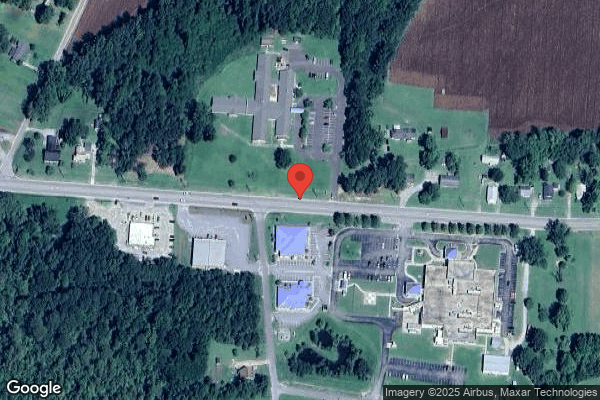
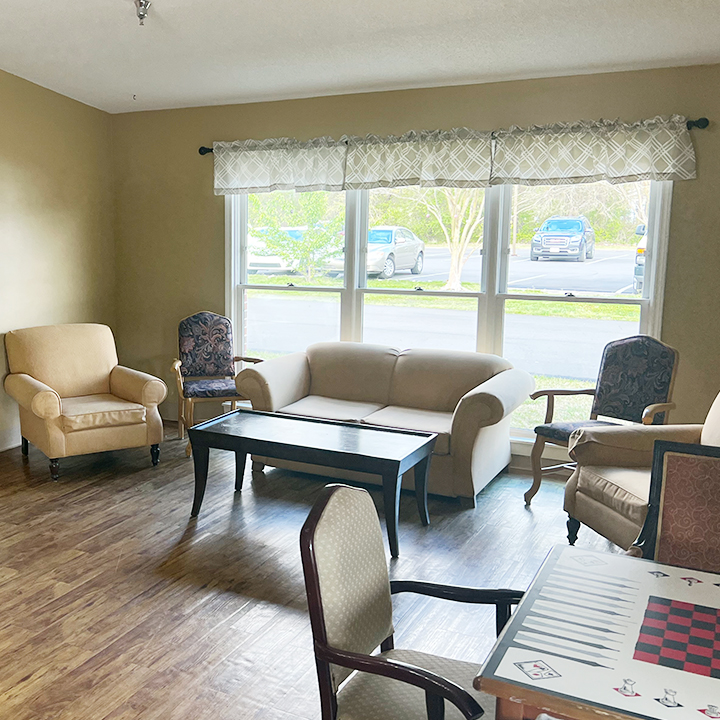
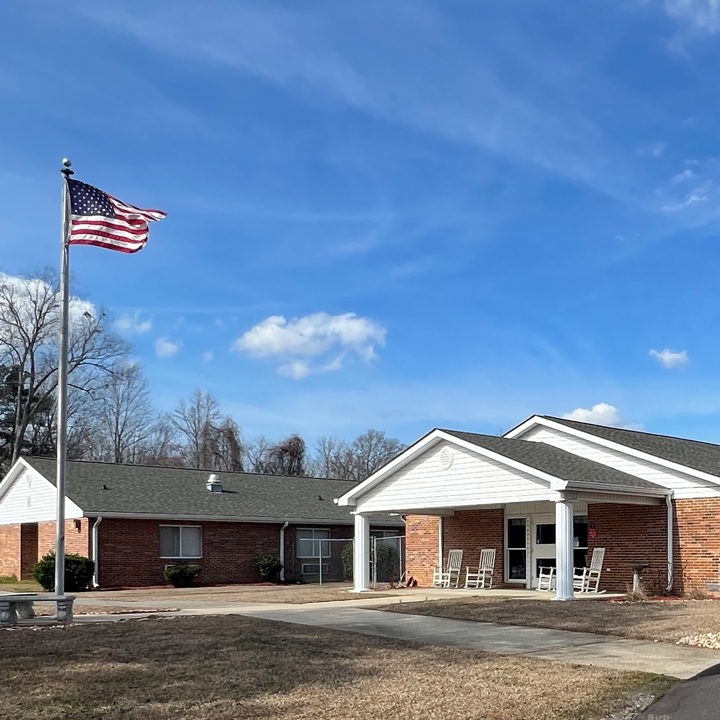
1306 South King Street, Windsor, NC 27983 (252) 794-5146
For profit - Corporation 82 Beds SIMCHA HYMAN & NAFTALI ZANZIPER Data: November 2025 3 Immediate Jeopardy citations
Trust Grade
0/100
#415 of 417 in NC
Last Inspection: October 2024

Within standard 12-15 month inspection cycle. Federal law requires annual inspections.

Overview

Windsor Rehabilitation and Healthcare Center has received a Trust Grade of F, indicating significant concerns with care quality. Ranking #415 out of 417 facilities in North Carolina places it firmly in the bottom half, and #2 out of 2 in Bertie County means there is only one other local option that is slightly better. While the facility is improving from 16 issues in 2024 to 8 in 2025, it still faces serious challenges, including a staffing turnover rate of 84%, which is concerning given the state average of 49%. The facility has faced fines totaling $249,991, higher than 99% of North Carolina facilities, indicating ongoing compliance issues. Specific incidents include a failure to administer critical medication to a resident, resulting in severe health consequences, and multiple instances of resident-to-resident abuse that highlight a lack of adequate protection for vulnerable individuals. Overall, while there are some signs of progress, the facility has numerous weaknesses that families should carefully consider.
Trust Score
F
0/100
In North Carolina
#415/417
Bottom 1%
Safety Record
High Risk
Review needed
Inspections
Getting Better
16 → 8 violations
Staff Stability
⚠ Watch
84% turnover. Very high, 36 points above average. Constant new faces learning your loved one's needs.
Penalties
○ Average
$249,991 in fines. Higher than 54% of North Carolina facilities. Some compliance issues.
Skilled Nurses
○ Average
Each resident gets 30 minutes of Registered Nurse (RN) attention daily — about average for North Carolina. RNs are the most trained staff who monitor for health changes.
Violations
⚠ Watch
44 deficiencies on record. Higher than average. Multiple issues found across inspections.
★☆☆☆☆
1.0
Overall Rating
★☆☆☆☆
1.0
Staff Levels
★☆☆☆☆
1.0
Care Quality
★☆☆☆☆
1.0
Inspection Score
Stable
2024: 16 issues
2025: 8 issues

The Good

  • Full Sprinkler Coverage · Fire safety systems throughout facility
  • No fines on record

Facility shows strength in fire safety.

The Bad

1-Star Overall Rating

Below North Carolina average (2.8)

Significant quality concerns identified by CMS

Staff Turnover: 84%

37pts above North Carolina avg (46%)

Frequent staff changes - ask about care continuity

Federal Fines: $249,991

Well above median ($33,413)

Significant penalties indicating serious issues

Chain: SIMCHA HYMAN & NAFTALI ZANZIPER

Part of a multi-facility chain

Ask about local staffing decisions and management

Staff turnover is very high (84%)

36 points above North Carolina average of 48%

The Ugly 44 deficiencies on record

3 life-threatening 2 actual harm
May 2025 5 deficiencies
CONCERN (D) 📢 Someone Reported This

A family member, employee, or ombudsman was alarmed enough to file a formal complaint

Potential for Harm - no one hurt, but risky conditions existed

Resident Rights (Tag F0550)

Could have caused harm · This affected 1 resident

**NOTE- TERMS IN BRACKETS HAVE BEEN EDITED TO PROTECT CONFIDENTIALITY** Based on record review, and resident and staff interviews, the facility failed to maintain a resident's dignity when a resident ...

Read full inspector narrative →
**NOTE- TERMS IN BRACKETS HAVE BEEN EDITED TO PROTECT CONFIDENTIALITY** Based on record review, and resident and staff interviews, the facility failed to maintain a resident's dignity when a resident wore a nightgown and no makeup to an outside appointment making the resident feel angry and unimportant for 1 of 1 resident (Resident # 4) reviewed for dignity and respect. Finding included: Resident #4 was admitted to the facility on [DATE]. The annual [NAME] Data Set (MDS) dated [DATE] revealed Resident #4 was cognitively intact. An interview with the Transportation Driver at 2:37pm on 5/28/2025 revealed Resident #4 was unaware of her appointment on 5/27/25. He stated that he became aware of the appointment at 4:06am by text message from the Scheduler, after he learned about the appointment, he did call the facility and informed the nurse. Transport driver stated it was the nurse's job to provide verbally communicate appointments to residents. He was aware of Resident #4 was unhappy about wearing her night gown to her doctor's appointment and he tried to console Resident #4 by provided encouragement with positive statements. An interview with Resident #4 on 5/28/2025 at 3:25pm revealed the resident went to a doctor's appointment on 5/27/2025.Resident #4 stated that 2 aids from night shift woke her up and told her about the appointment that was scheduled. Resident #4 stated, she had to wear the night gown and the underwear that she slept in. She stated she did not have time to bathe herself with soap and water, she used wipes instead. Resident #4 revealed if she had known about her appointment that she would have taken a shower, picked out her clothes, brushed her hair piece, and picked out her perfume the night before. Resident #4 stated she would inform 2nd and 3rd shift staff that she had an appointment and to wake her up an hour before she leaves for her appointment. Resident #4 stated if she had time to do her normal morning routine for a doctor's appointment she would have picked out a pair of jogging pants and a logo t-shirt, instead of her night gown, she would also put on her makeup for the appointment. Resident #4 stated that she was angry the whole day and she did not feel important. An interview conducted on 5/28/2025 at 2:19pm with Nurse #7 revealed, Resident #4 liked to go to her appointment with her hair and makeup done. Nurse #7 stated, normally if Resident #4 was aware of her appointments she would inform 3rd shift staff to wake Resident #4 up early. An interview conducted on 5/28/2025 at 9:30am with [NAME] President (VP) of Clinical Services revealed the scheduler has a personal planner that she kept all residents' appointments written down. A review of the appointment schedule revealed Resident #4 had an outside appointment on 5/27/2025 at 9:15am. An interview conducted with the Administrator and VP of Clinical Services at 4:41pm on 5/28/2025 revealed all residents have a right to choose what they want to wear when they go out of the facility.
CONCERN (D) 📢 Someone Reported This

A family member, employee, or ombudsman was alarmed enough to file a formal complaint

Potential for Harm - no one hurt, but risky conditions existed

Grievances (Tag F0585)

Could have caused harm · This affected 1 resident

**NOTE- TERMS IN BRACKETS HAVE BEEN EDITED TO PROTECT CONFIDENTIALITY** Based on record review and staff interviews, the facility failed to maintain evidence of grievance investigation and decisions f...

Read full inspector narrative →
**NOTE- TERMS IN BRACKETS HAVE BEEN EDITED TO PROTECT CONFIDENTIALITY** Based on record review and staff interviews, the facility failed to maintain evidence of grievance investigation and decisions for 3 of 3 residents reviewed for grievances (Resident #1, Resident #2 and Resident #3). Findings included: A review of the facility's grievance policy dated April 2017 stated in part: 4. The investigation and report would include: f.) employee account of the alleged incident and h.) recommendations for corrective action. a.) Resident # 1 was admitted to the facility on [DATE]. A review of the grievance filed by Resident #1 on 1/3/25 revealed she was concerned that third shift Nurse Aides (NA) did not come in and check on her or answer her call bell. Resident #1 was further concerned that she received dry and burnt food from the kitchen. The grievance was not completed, as there was no documentation regarding an investigation, outcome or recommendation for corrective action. b.) Resident #2 was admitted to the facility on [DATE]. A review of the grievance filed by Resident #2 on 12/19/24 indicated she was missing a plaid varsity jacket and had last seen it about 3 weeks before. The grievance was incomplete as it did not include documentation of an investigation, outcome or recommendations for corrective action. c.) Resident #3 was admitted to the facility on [DATE]. Review of the grievance filed by Resident #3 on 12/11/24 revealed he was concerned that the NA assigned to him on 12/10/24 did not assist him with toileting. The grievance was incomplete as it did not include documentation of an investigation, outcome or recommendations for corrective action. An interview was conducted with the Social Worker (SW) on 5/28/25 at 2:10 PM. The SW stated she helped residents fill out the initial information on the grievance form that included the date, time, their name, room number, the department the grievance will go to and their concern. She then gave the grievance form to the pertinent department head, and they did the investigation. After the grievance was investigated, it was given to the Administrator to review and sign, then it came back to her to be filed. The SW was unsure how grievance forms that were not completed ended up filed in her office. In an interview with the Administrator on 5/28/25 at 2:12 PM she stated she was the last stop for grievances. The Administrator revealed she gets the completed form from the responsible department head then checks in with the complainant to ensure the grievance had been resolved.After this she gives the grievance to the SW to be filed. The Administrator was not sure how incomplete grievances ended up going to the SW to be filed.
CONCERN (E) 📢 Someone Reported This

A family member, employee, or ombudsman was alarmed enough to file a formal complaint

Potential for Harm - no one hurt, but risky conditions existed

Deficiency F0945 (Tag F0945)

Could have caused harm · This affected multiple residents

Based on observation, record review, and staff interview, the facility failed to have an effective system in place to train nurses and nurse aides (NAs) and verify their competency with infection cont...

Read full inspector narrative →
Based on observation, record review, and staff interview, the facility failed to have an effective system in place to train nurses and nurse aides (NAs) and verify their competency with infection control policies for Enhanced Barrier Precautions (EBP). The Assistant Director of Nursing (ADON)/Infection Preventionist (IP) who was responsible for training staff on infection control practices and procedures was unaware that residents with chronic wounds and indwelling medical devices required EBP with high contact care. Nurse #1 and NA #1 failed to follow the infection control policy by providing wound care for a resident with chronic wounds without wearing gowns. The facility had 41 residents that required EBP due to chronic wounds or indwelling medical devices. This deficient practice was identified for 3 of 3 staff (ADON/IP, Nurse #1, and NA #1) reviewed for competency and had the potential to affect other facility residents. Findings included: This tag is cross-referenced to: F880: Based on observation, record review and staff interview, the facility failed to: a.) follow their infection control practices and procedures for Enhanced Barrier Precautions (EBP) during high contact care for a resident with a chronic wound when Nurse #1 and Nurse Aide (NA) #1 provided wound care without wearing gowns for 2 of 2 staff observed for infection control (Nurse #1 and NA #1) and b.) to implement their policy for EPB for the 41 residents that required the precautions due to chronic wounds or indwelling medical devices. An interview was conducted with the Assistant Director of Nursing (ADON) on 5/28/25 at 12:11 PM. The ADON revealed she was responsible for training staff on infection prevention but had yet to start a training program. In an interview with the Director of Nursing (DON) on 5/28/25 at 12:31 PM. She indicated she was unaware staff were not trained or competent in the use of EBP. An interview was conducted with the Administrator on 5/28/25 at 1:38 PM. She stated she was unsure if staff received training on EBP at any time.
CONCERN (F) 📢 Someone Reported This

A family member, employee, or ombudsman was alarmed enough to file a formal complaint

Potential for Harm - no one hurt, but risky conditions existed

Infection Control (Tag F0880)

Could have caused harm · This affected most or all residents

Based on observation, record review and staff interview, the facility failed to: a.) follow their infection control practices and procedures for Enhanced Barrier Precautions (EBP) during high contact ...

Read full inspector narrative →
Based on observation, record review and staff interview, the facility failed to: a.) follow their infection control practices and procedures for Enhanced Barrier Precautions (EBP) during high contact care for a resident with a chronic wound when Nurse #1 and Nurse Aide (NA) #1 provided wound care without wearing gowns for 2 of 2 staff observed for infection control (Nurse #1 and NA #1) and b.) to implement their policy for EPB for the current 41 of 61 residents that required the precautions due to chronic wounds or indwelling medical devices. The findings included: The facility policy titled Isolation-Categories of Transmission Based Precautions dated October 2018 stated in part: 1. EBP requires the use of gown and gloves only for high contact resident care activities (unless otherwise indicated as part of Standard Precautions). a.) High contact resident care activities: in the resident room to include: dressing, bathing/showering, transferring, providing hygiene, changing linens, changing briefs or assisting with toileting, device care or use: central line, urinary catheter, feeding tube, tracheostomy/ventilator, wound care: any skin opening requiring a dressing. 2. Residents are not restricted to their rooms and do not require placement in a private room. EBP is intended to be in place for the duration of a resident's stay or until resolution of the wound or discontinuation of the indwelling medical device that placed them at higher risk. 3. Enhanced Barrier Precautions (EBP) are recommended for residents with indwelling medical devices and wounds who do not otherwise meet the criteria for Contact Precautions, even if they have no history MDRO colonization or infection and regardless of whether others in the facility are known to have MDRO colonization. This is because devices and wounds are risk factors that place these residents at higher risk for carrying or acquiring an MDRO and many residents colonized with an MDRO are asymptomatic or not presently known to be colonized. a.) An indwelling medical device provides a direct pathway for pathogens in the environment to enter the body and cause infection. Examples include but are not limited to, central vascular lines including hemodialysis catheters, indwelling urinary catheters, feeding tubes and tracheostomy tubes. b.) A wound is defined as the care of any skin opening requiring a dressing. However, the intent of EBP is to focus on residents with a higher risk of acquiring an MDRO over a prolonged period of time. This generally includes residents with chronic wounds, and not those with only shorter-lasting wounds such as skin breaks or skin tears covered with a Band Aid or similar dressing. Examples of chronic wounds include, but are not limited to, pressure ulcers, diabetic foot ulcers, unhealed surgical wounds, and chronic venous stasis ulcers. The policy further stated that for EBP, appropriate notification was placed above the resident's bed so personnel and visitors are aware of the need for EBP and the signage informs staff of instructions for PPE use while providing high contact resident care activities. a.) An observation of Nurse #1 and NA #1 providing wound care to Resident #5 was conducted on 5/28/25 at 11:55 AM. There was no signage indicating Resident #5 required EBP for high contact care observed inside or outside of the room. NA #1 was present to assist with repositioning Resident #5. Nurse #1 and NA #1 were observed performing hand hygiene and donning gloves before repositioning Resident #5 and starting wound care. Neither Nurse #1 nor NA #1 donned a gown before providing high contact care to Resident #5. An interview was conducted with Nurse #1 on 5/28/25 at 12:30 PM. Nurse #1 indicated she was the facility's Wound Care Nurse, and she had no residents on her wound care list that required EBP. She indicated that Resident #5 had chronic wounds that she treated daily. Nurse #1 further stated she had not received education about EBP at any time since she was hired in February 2025 and was under the impression EBP was for residents with an infectious disease such as influenza. In an interview with NA #1 on 5/28/25 at 12:35 PM she stated she had not been trained on EBP since she was hired and did not have any residents on EBP. NA #1 was not aware of indications for a resident to be on EBP. b.) Observations of resident rooms in all halls on 5/28/25 revealed no signage indicating any resident required EBP, nor any Personal Protective Equipment (PPE) used for EBP readily available. An interview was conducted with the Assistant Director of Nursing (ADON) on 5/28/25 at 12:11 PM. The ADON indicated she was also the Infection Preventionist for the facility. She stated that there were no residents in the facility that required EBP, that she knew it was a new thing for residents with intravenous lines but hadn't looked into it yet as she just started in February 2025. The ADON revealed she was also responsible for training staff on infection prevention and control but had yet to start a training program. The ADON stated she was unaware that residents with chronic wounds and indwelling medical devices would require EBP with high contact care. In an interview with the Director of Nursing (DON) on 5/28/25 at 12:31 PM she stated the facility had no residents on EBP. She was aware EBP was to be used for residents with chronic wounds and indwelling medical devices and was able to give examples of such. She indicated that Nurse #1 and NA #1 should have been wearing gowns while completing wound care for Resident #5. The DON further stated she was unsure why EBP was not implemented in the facility as she had just started there 4 weeks ago. An interview was conducted with the Administrator on 5/28/25 at 1:38 PM. The Administrator was unable to say why EBP was not implemented in the facility or why Nurse #1 and NA #1 were not wearing gowns while proving high contact care for Resident #5. She was unsure if staff received training on EBP at any time and did not know the regulation. A list of 41 residents that had chronic wounds or indwelling medical devices and required EBP was provided by the Administrator on 5/28/25 at 2:10 PM which included resident's names and the reasons they should have been on EBP prior to 5/28/25.
CONCERN (F) 📢 Someone Reported This

A family member, employee, or ombudsman was alarmed enough to file a formal complaint

Potential for Harm - no one hurt, but risky conditions existed

Deficiency F0882 (Tag F0882)

Could have caused harm · This affected most or all residents

Based on record review and staff interviews, the facility failed to designate a qualified Infection Preventionist who was certified in infection prevention and control, to be responsible for the facil...

Read full inspector narrative →
Based on record review and staff interviews, the facility failed to designate a qualified Infection Preventionist who was certified in infection prevention and control, to be responsible for the facility's Infection Control and Prevention Program. This had the potential to affect 72 of 72 residents in the facility. The findings included: During an interview with the Assistant Director of Nursing (ADON) on 5/28/25 at 12:11 PM the ADON indicated she was also the facility's Infection Preventionist (IP) and stated she was responsible for oversight of infection control duties. The ADON further stated she had worked at the facility since late February 2025 and had completed 13 of the 20 modules needed to obtain IP certification through the Centers for Disease Control and Prevention (CDC) IP program. The ADON was not aware she had to have IP certification to hold the position of IP. In an interview with the Director of Nursing (DON) on 5/28/25 at 1:38 PM she stated she was aware the ADON did not yet have an IP certification and the ADON was working on it through the CDC IP program. The DON further stated she had been encouraging the ADON to complete her certification as soon as possible. The DON was not aware the ADON needed to hold an IP certification to be the facility IP. She thought it was adequate that the ADON was working toward her certification. An interview was conducted with the Administrator on 5/28/25 at 2:14 PM. The Administrator stated she was aware the ADON was also the facility's IP but was unaware the ADON did not yet have her IP certification.
May 2025 2 deficiencies 2 Harm
SERIOUS (G) 📢 Someone Reported This

A family member, employee, or ombudsman was alarmed enough to file a formal complaint

Actual Harm - a resident was hurt due to facility failures

Free from Abuse/Neglect (Tag F0600)

A resident was harmed · This affected 1 resident

**NOTE- TERMS IN BRACKETS HAVE BEEN EDITED TO PROTECT CONFIDENTIALITY** Based on record review, staff interview, and family interview, the facility failed to protect the resident's right to be free fr...

Read full inspector narrative →
**NOTE- TERMS IN BRACKETS HAVE BEEN EDITED TO PROTECT CONFIDENTIALITY** Based on record review, staff interview, and family interview, the facility failed to protect the resident's right to be free from abuse for one (Resident #1) of three residents reviewed for physical abuse. Resident #1, a severely cognitively impaired resident, was hit with a belt by a family member resulting in three whip-like marks on her left upper thigh and abdomen. A reasonable person would be traumatized by being hit with a belt. Findings included: Resident #1 was admitted to the facility on [DATE] and had diagnoses of a genetic-related intellectual disability and a neurological condition. Documentation on a quarterly Minimum Data Set (MDS) assessment dated [DATE] revealed Resident #1 was severely cognitively impaired and was dependent on staff for all activities of daily living. Resident #1 was not coded as having any moods or behaviors on the MDS assessment. Documentation on a care plan dated as initiated [DATE] revealed Resident #1 had an activity of daily living, self-care performance deficit relative to muscle weakness and malignant neuroleptic syndrome, a rare and life-threatening reaction to the use of antipsychotic medication. One of the interventions under this focus area was Resident #1's total dependence on staff for repositioning and turning in bed. There were no focus areas for behaviors on the care plan for Resident #1 before [DATE]. Documentation in a nursing progress note dated [DATE] at 7:18 PM written by Nurse #2 stated, This nurse was standing in (the) hallway in front of [readmission] patient room. As this nurse was standing there, I overheard [Resident #1] yelling. This nurse then overheard the sound of someone hitting someone, and then I overheard [Resident #1] yelling again. This nurse then went to inform, (the) unit manager of what was going on. Nurse #2 was interviewed on [DATE] at 12:02 PM. Nurse #2 confirmed she was assigned to Resident #1 on [DATE] for the 7:00 AM to 7:00 PM shift. Nurse #2 provided the following information. Nurse #2 was in a room near Resident #1's room with another resident when she heard a sound like someone was being hit with a whip and someone calling out in pain. Nurse #2 stopped to listen, and she heard it again, the whipping sound and a cry of pain. Nurse #2 went out into the hallway, and she saw that two of the nurse aides (NA #1 and NA #2) had come out of the resident rooms they were in. Nurse #2 asked the two nurse aides if they had heard that too. Nurse #2 then heard the whipping sound and a cry of pain coming from Resident #1's room for a third time. One of the nurse aides stuck their head into Resident #1's room but then both nurse aides turned around and went back to care for other residents. Nurse #2, without going into Resident #1's room, went down the hall to get the Unit Manager. Nurse #2 found the Unit Manager and told her Resident #1 was getting whooped. Nurse #2 stated she let the Unit Manager handle the situation because she knew it was Resident #1's family member in the room. Nurse #2 stated that the Unit Manager spoke with Resident #1's family member and the family member came out of the room to be escorted off the premises. Nurse #2 entered Resident #1's room and assisted the Unit Manager with a skin assessment. Resident #1 was lying on her right side and had 3 marks on her left hip. Nurse #2 completed a pain assessment and a skin assessment. Nurse #2 explained the red raised marks did not require treatment and Resident #1 did not appear to be in pain. Nurse #2 explained that she did not immediately go into Resident #1's room when she heard the whipping sound because there was a family member in the room. Nurse #2 further explained that she had been a nurse for a long time and had numerous training sessions on abuse, but she was in shock, and she had never encountered a family member hitting a resident. NA #1 was interviewed on [DATE] at 12:42 PM. NA #1 confirmed she was in a resident's room during the evening mealtime on [DATE] when she heard clapping and hollering. NA #1 stated she went out into the hallway to see what the noise was and along with NA #2 peaked into Resident #1's room. NA #1 indicated the curtain was pulled so she could not see Resident #1 in the first bed but saw the back of what she assumed was a family member in the room. NA #1 reiterated she did not know what was happening, so she returned to assisting another resident with eating. NA #2 was interviewed on [DATE] at 1:54 PM. NA #2 stated she was assigned to care for Resident #1 for the 3:00 PM to 11:00 PM shift on [DATE]. NA #2 stated she was in the room next door assisting a resident in eating the evening meal when she heard a smacking or clapping sound. NA #2 indicated she stuck her head out of the room because it was an unusual sound and looked into the doorway of Resident #1's room. NA #2 said the curtain was pulled but Resident #1's family member peaked around the curtain and looked at her. NA #2 said she saw Nurse #2 in the hallway and Nurse #2 said she thought the family member was spanking Resident #1. NA #2 said she reentered the room next door to assist the other resident with eating. NA #2 revealed she did not hear any more noises from Resident #1's room. NA #2 confessed she did not know that the family member hitting Resident #1 was considered abuse. NA #2 was later told that it was considered abuse because it happened within the walls of the facility. NA #2 stated that Resident #1 sometimes resisted care but in general she was a sweet person. The family member of Resident #1 was interviewed on [DATE] at 3:01 PM. The family member revealed the following information. Someone from the facility called the family member and told her Resident #1 was exposing herself. The family member did not want to reveal who called her. The family member did not plan to go to the facility that day, but she went to the facility to discipline Resident #1. The family member confirmed she hit Resident #1 with her belt three to five times. The Assistant Director of Nursing (ADON) explained to the family member of Resident #1 that she was not allowed to do that in the facility. The family member stated she did not know it was wrong and considered abuse. If the family member had known disciplining Resident #1 with a belt would have the consequence of having the police called, it wouldn't have happened. The family member stated she was interviewed by the police and explained to them that she loved Resident #1, goes with her to every medical appointment, and stayed with her in the hospital when she almost died. The family member said she told the police she was not out to hurt Resident #1, but she needed to stop the behavior of undressing. The family member was sorry it happened, but she felt she needed to discipline Resident #1 when she entered the room and found her with her arm out of her gown. The family member confirmed Nurse #1 came into Resident #1's room, asked her what she was doing, and requested she leave. The family member stated other family members have been visiting Resident #1 but that she would not visit Resident #1 until all of this blows over. The family member confirmed she was told she could have supervised visits, but she did not want to do that. Documentation in the nursing progress notes dated [DATE] at 7:12 PM by the Unit Manager stated, This nurse was notified around 6:00 PM by the floor nurse that [Resident #1's family member] was whooping her. This nurse immediately went to [Resident #1's] room and observed [Resident #1] laying in the bed, kind of on her right side and [Resident #1's family member] standing beside the bed with her hands on her hips and a belt in her left hand. I immediately asked what was going on and [Resident #1's family member] responded back to me by repeating what I had just asked her. I then asked her if she was hitting her (Resident #1) with the belt that she was holding and [Resident #1's family member] responded that she (Resident #1) was acting out with behaviors. I then proceeded to tell [Resident #1's family member] that she cannot beat/hit her and that while she is here in this facility, she (Resident #1) is our responsibility. I then asked [Resident#1's family member] what behaviors she is referring to and [Resident #1's family member] stated that [Resident #1] had took her gown off and was naked in the bed. I asked [Resident #1's family member] to step out of the room and then I walked to the nursing station and called my DON (Director of Nursing) and Administrator and was informed to tell [Resident #1's family member] to leave and to call 911. 911 was called and [Resident #1's family member] was walked to the front door by staff. The Unit Manager was interviewed on [DATE] at 11:20 AM. The Unit Manager described the following events as happening on the evening of [DATE]. The Unit Manager was coming up to the nursing station from another hallway when Nurse #2 approached her at the nursing station stating, Her [family member] is whopping her. The Unit Manager was confused and asked Nurse #2 who and what was going on. Nurse #2 described Resident #1's location and that it sounded like Resident #1 was being whopped. Nurse #2 explained to the Unit Manager she did not go into the room but described what it sounded like. The Unit Manager went down the hall and entered Resident #1's room to see the family member with her hands on her hips and her belt in one of her hands. The Unit Manager asked the family member what was going on and the family member responded by repeating what she said. The Unit Manager asked the family member if she was hitting Resident #1 and the family member responded that Resident #1 was acting out. The Unit Manager explained to the family member of Resident #1 that although they were family members, she was not allowed to hit her with a belt in the facility because the residents were under their care. The Unit Manager asked her to step out. The Unit Manager observed that Resident #1 was on her right side in bed and when she lifted her gown there were raised red marks like she was hit with a belt. The family member stood in the hallway and the ADON was talking to her. The Unit Manager then called the Administrator and the Director of Nursing, who were not in the building. The Administrator told the Unit Manager to inform the family member of Resident #1 to leave the building and to call 911. The Unit Manager had the ADON walk the family member of Resident #1 to the front door and instruct her not to return to the building until the Administrator or DON called her. The police came to the building to conduct interviews with Nurse #2, NA #1, NA #2, and herself. Resident #1's family left the facility before the police arrived. The police took pictures of the red marks on Resident #1. The Unit Manager was not told by the family member of Resident #1, but it was assumed she hit her with her belt because of the noise described by Nurse #2. The Unit Manager stated this was an unexpected action from the family member and she had never indicated before this that she would do anything like this to Resident #1. The ADON was interviewed on [DATE] at 12:50 PM. The ADON stated on [DATE] she overheard someone talking in the hallway about the family member of Resident #1 whipping Resident #1 with a belt. The ADON revealed she went down the hallway and saw the family member in the hallway. The ADON asked the family member what happened, and she was told by the family member she was spanking her with a belt to discipline her. The ADON revealed she had to explain that she was not allowed to do that in the facility and walked her to the building door so she could leave. An attempt to interview Resident #1 was made on [DATE] at 12:36 PM. Resident #1 was not able to express her recollection of the events of [DATE]. Documentation on a weekly skin assessment dated [DATE] at 6:54 PM revealed Resident #1 as assessed as having Slight redness and whip-like marks to front of left thigh. Small, red whip-like marks to left upper abdomen area. Documentation on a pain interview dated [DATE] at 7:04 PM revealed Resident #1 was in no pain and had no indicators of pain. Documentation in a nursing progress note dated [DATE] at 8:35 PM revealed the nurse practitioner was made aware of the incident with Resident #1 and requested she be sent out to the emergency room for evaluation. Documentation in the nursing progress notes dated [DATE] at 4:04 AM stated, Resident [#1] left the facility via stretcher at [8:50 PM] on [DATE] and returned to the facility by stretcher at [9:50 PM] with no new orders. Skin assessment by the writer noted to be [within normal limits]. No break in skin. Resident alert and oriented. Pleasant mood. No distress noted. Documentation in Resident #1's care plan was updated on [DATE] with the focus area for the potential for harm injury from others relative to cognitive loss and behaviors of undressing. The goal was for Resident #1 to have no injuries due to harm from others and will remain in a safe environment through the next review. The intervention was supervised visits with a family member in a common area with a staff member present. An interview was conducted with the facility Social Worker on [DATE] at 12:08 PM. The Social Worker revealed Resident #1's family member was very involved in her care both attending medical appointments with her and attending care plan conferences. The Social Worker stated she was shocked when she heard Resident #1's family member hit her with a belt. The Social Worker revealed the Administrator requested she call Resident #1's family member on [DATE] to notify her she would only be allowed to have supervised visits with Resident #1 for a period of time. The Social Worker indicated that to her knowledge Resident #1's family member had not been back to the facility. An interview was conducted with the facility Administrator on [DATE] at 1:36 PM. The facility administrator revealed that Resident #1 tried to get the staff's attention without understanding what she was doing because she had a childlike mind. The Administrator indicated the family member of Resident #1 would say things jokingly that would insinuate she would stop Resident #1 from acting out but family dynamics were not seen as an issue. The Administrator explained Resident #1's family member, who struck her with a belt, would often bring Resident #1's young daughter to the facility to visit her. The police and the facility explained to Resident #1 after the incident that the family member would not be allowed to visit her for a while. Resident #1 became inconsolable on the day of the event because in her mind it meant she would not be able to see her daughter and the family member ever again. The Administrator confirmed the Social Worker called the family member to notify her she would only be allowed 20-minute supervised visits with Resident #1 until it was deemed she was safe. The Administrator stated she expected the staff to intervene immediately if abuse occurred in the facility no matter the source or situation.
SERIOUS (G) 📢 Someone Reported This

A family member, employee, or ombudsman was alarmed enough to file a formal complaint

Actual Harm - a resident was hurt due to facility failures

Abuse Prevention Policies (Tag F0607)

A resident was harmed · This affected 1 resident

**NOTE- TERMS IN BRACKETS HAVE BEEN EDITED TO PROTECT CONFIDENTIALITY** Based on record review, and staff and family interviews, the facility failed to immediately identify abuse and respond to interv...

Read full inspector narrative →
**NOTE- TERMS IN BRACKETS HAVE BEEN EDITED TO PROTECT CONFIDENTIALITY** Based on record review, and staff and family interviews, the facility failed to immediately identify abuse and respond to intervene to protect a resident from physical abuse. Facility staff delayed intervention when Resident #1, a severely cognitively impaired resident, was hit with a belt by a family member resulting in three whip-like marks on her left upper thigh and abdomen and a visit to the emergency room. The facility also failed to notify the state agency within two hours of physical abuse that occurred in the facility. This occurred for 1 (Resident #1) of 3 residents reviewed for adherence to abuse policies and procedures during physical abuse investigations. Findings included: a. Documentation on the undated facility abuse policies and procedures revealed under the heading of identification of abuse, neglect, and exploitation, the facility will identify events, occurrences, patterns, and trends that may constitute: . Abuse: The willful infliction of injury, unreasonable confinement, intimidation, or punishment with resulting physical harm, pain, or mental anguish. Documentation on the undated facility abuse policies and procedures also revealed in part, When suspicion of abuse/neglect/exploitation or reports of abuse/neglect/exploitation occurs, the following procedure will be initiated: All staff, where applicable will: Respond to the needs of the resident and protect him/her from further incident. Resident #1 was admitted to the facility on [DATE] and had diagnoses of a genetic-related intellectual disability and a neurological condition. Documentation on a quarterly Minimum Data Set (MDS) assessment dated [DATE] revealed Resident #1 was severely cognitively impaired and was dependent on staff for all activities of daily living. Resident #1 was not coded as having any moods or behaviors on the MDS assessment. Documentation in a nursing progress note dated 4/23/2025 at 7:18 PM written by Nurse #2 stated, This nurse was standing in (the) hallway in front of [readmission] patient room. As this nurse was standing there, I overheard [Resident #1] yelling. This nurse then overheard the sound of someone hitting someone, and then I overheard [Resident #1] yelling again. This nurse then went to inform, (the) unit manager of what was going on. Nurse #2 was interviewed on 5/6/2025 at 12:02 PM. Nurse #2 confirmed she was assigned to Resident #1 on 4/23/2025 for the 7:00 AM to 7:00 PM shift. Nurse #2 provided the following information. Nurse #2 was in a room near Resident #1's room with another resident when she heard a sound like someone was being hit with a whip and someone calling out in pain. Nurse #2 stopped to listen, and she heard it again, the whipping sound and a cry of pain. Nurse #2 went out into the hallway, and she saw that two of the nurse aides (NA #1 and NA #2) had come out of the resident rooms they were in. Nurse #2 asked the two nurse aides if they had heard that too. Nurse #2 then heard the whipping sound and a cry of pain coming from Resident #1's room for a third time. One of the nurse aides stuck their head into Resident #1's room but then both nurse aides turned around and went back to care for other residents. Nurse #2, without going into Resident #1's room, went down the hall to get the Unit Manager. Nurse #2 found the Unit Manager and told her Resident #1 was getting whooped. Nurse #2 stated she let the Unit Manager handle the situation because she knew it was Resident #1's family member in the room. Nurse #2 stated that the Unit Manager spoke with Resident #1's family member and the family member came out of the room to be escorted off the premises. Nurse #2 explained that she did not immediately go into Resident #1's room when she heard the whipping sound because there was a family member in the room. Nurse #2 further explained that she had been a nurse for a long time and had numerous training sessions on abuse, but she was in shock, and she had never encountered a family member hitting a resident. Nurse #2 admitted that if she saw or heard another resident whipping Resident #1 with a belt she would have gone into the room and intervened immediately. NA #1 was interviewed on 5/6/2025 at 12:42 PM. NA #1 disclosed that she was not assigned to care for Resident #1 on the evening shift on 4/23/2025. NA #1 confirmed she was in a resident's room during the evening mealtime on 4/23/2025 when she heard clapping and hollering. NA #1 stated she went out into the hallway to see what the noise was and along with NA #2 peaked into Resident #1's room. NA #1 indicated the curtain was pulled so she could not see Resident #1 in the first bed but saw the back of what she assumed was a family member in the room. NA #1 reiterated she did not know what was happening, so she returned to assisting another resident with eating. NA #2 was interviewed on 5/6/2025 at 1:54 PM. NA #2 stated she was assigned to care for Resident #1 for the 3:00 PM to 11:00 PM shift on 4/23/2025. NA #2 stated she was in the room next door assisting a resident in eating the evening meal when she heard a smacking or clapping sound. NA #2 indicated she stuck her head out of the room because it was an unusual sound and looked into the doorway of Resident #1's room. NA #2 said the curtain was pulled but Resident #1's family member peaked around the curtain and looked at her. NA #2 said she saw Nurse #2 in the hallway and Nurse #2 said she thought the family member was spanking Resident #1. NA #2 said she reentered the room next door to assist the other resident with eating. NA #2 revealed she did not hear any more noises from Resident #1's room. NA #2 confessed she did not know that the family member hitting Resident #1 was considered abuse. NA #2 was later told that it was considered abuse because it happened within the walls of the facility. The family member of Resident #1 was interviewed on 5/6/2025 at 3:01 PM. The family member revealed the following information. Someone from the facility called the family member and told her Resident #1 was exposing herself. The family member did not plan to go to the facility that day, but she went to the facility to discipline Resident #1. The family member confirmed she hit Resident #1 with her belt three to five times. The Assistant Director of Nursing (ADON) explained to the family member of Resident #1 that she was not allowed to do that in the facility. The family member stated she did not know disciplining Resident #1 with a belt was wrong and considered abuse. The Unit Manager was interviewed on 5/6/2025 at 11:20 AM. The Unit Manager described the following events as happening on the evening of 4/23/2025. The Unit Manager was coming up to the nursing station from another hallway when Nurse #2 approached her at the nursing station stating, Her [family member] is whopping her. The Unit Manager was confused and asked Nurse #2 who and what was going on. Nurse #2 described Resident #1's location and that it sounded like Resident #1 was being whopped. Nurse #2 explained to the Unit Manager she did not go into the room but described what it sounded like. The Unit Manager went down the hall and entered Resident #1's room to see the family member with her hands on her hips and her belt in one of her hands. The Unit Manager asked the family member what was going on and the family member responded by repeating what she said. The Unit Manager asked the family member if she was hitting Resident #1 and the family member responded that Resident #1 was acting out. The Unit Manager explained to the family member of Resident #1 that although they were family members, she was not allowed to hit her with a belt in the facility because the residents were under their care. The Unit Manager asked her to step out of the room. The Unit Manager observed that Resident #1 was on her right side in bed and when she lifted her gown there were raised red marks like she was hit with a belt. The Unit Manager was not told by the family member of Resident #1, but it was assumed she hit her with her belt because of the noise described by Nurse #2. The ADON was interviewed on 5/6/2025 at 12:50 PM. The ADON stated on 4/23/2025 she overheard someone talking in the hallway about the family member of Resident #1 whipping Resident #1 with a belt. The ADON revealed she went down the hallway and saw the family member in the hallway. The ADON asked the family member what happened, and she was told by the family member she was spanking her with a belt to discipline her. The ADON revealed she had to explain that she was not allowed to do that in the facility and walked her to the building door so she could leave. Documentation on a weekly skin assessment dated [DATE] at 6:54 PM revealed Resident #1 as assessed as having Slight redness and whip-like marks to the front of left thigh. Small, red whip-like marks to the left upper abdomen area. Documentation in a nursing progress note dated 4/23/2025 at 8:35 PM revealed the nurse practitioner was made aware of the incident with Resident #1 and requested she be sent out to the emergency room for evaluation. Documentation in the nursing progress notes dated 4/24/2025 at 4:04 AM indicated Resident #1 was transported to the emergency room at 8:50 PM on 4/23/2025 via a stretcher for evaluation and returned to the facility at 9:50 PM on 4/23/2025 with no new orders. A skin assessment performed upon her return to the facility revealed Resident #1 did not have any broken or open skin areas. Documentation in the nursing progress notes dated 4/24/2025 at 4:04 AM stated, Resident [#1] left the facility via stretcher at [8:50 PM] on 4/23/25 and returned to the facility by stretcher at [9:50 PM] with no new orders. Skin assessment by the writer noted to be [within normal limits]. No break in skin. Resident alert and oriented. Pleasant mood. No distress noted. An interview was conducted with the facility Administrator on 5/6/2025 at 1:36 PM. The Administrator stated she expected the staff to intervene immediately if abuse occurred in the facility despite the source or situation. b. Documentation on the undated facility abuse policies and procedures revealed in part, The Director of Nursing, Administrator, or designee will notify the appropriate agencies within specified timeframes: Immediately, but no later than 2 hours after the allegation is made if the events that cause the allegation involve abuse or result in serious bodily injury, . Documentation on an initial allegation report revealed the facility became aware of an incident of abuse on 4/23/2025 with the allegation details, It was alleged by staff that [Resident #1's family member], [Family Member Name], physically abused her by beating her with a belt. Details of the physical or mental injury/harm were, [Resident #1] sustained whelps to her lower extremity as a result of the incident. The faxed initial allegation report was sent to the state agency on 4/24/2025 at 10:41 AM. An interview with the facility Administrator was conducted on 5/6/2025 at 3:14 PM. The Administrator stated she was not in the facility when she was called by the Unit Manager notifying her of the allegation Resident #1's family member hit Resident #1 with a belt. The Administrator thought notifying the local police department immediately fulfilled the obligation of notifying the appropriate agencies within 2 hours. The Administrator admitted she came into the facility the next day, 4/24/2025, to fax the state agency of the abuse allegation regarding Resident #1. The Administrator confirmed her first attempt to contact the state agency was on 4/24/2025 at 10:41 AM.
Apr 2025 1 deficiency
CONCERN (D) 📢 Someone Reported This

A family member, employee, or ombudsman was alarmed enough to file a formal complaint

Potential for Harm - no one hurt, but risky conditions existed

Abuse Prevention Policies (Tag F0607)

Could have caused harm · This affected 1 resident

**NOTE- TERMS IN BRACKETS HAVE BEEN EDITED TO PROTECT CONFIDENTIALITY** Based on record review, and staff and Medical Director interviews, the facility failed to implement their policy for abuse, negl...

Read full inspector narrative →
**NOTE- TERMS IN BRACKETS HAVE BEEN EDITED TO PROTECT CONFIDENTIALITY** Based on record review, and staff and Medical Director interviews, the facility failed to implement their policy for abuse, neglect, and misappropriation of property in the areas of reporting and investigating when Nurse #2 and Nurse #3 reported to the Unit Manager, Assistant Director of Nursing, and Director of Nursing allegations that Resident #1's liquid morphine appeared to be tampered with and Nurse #1 appeared impaired. These allegations were not reported to the State Agency, law enforcement, or Adult Protective Services (APS) and were not thoroughly investigated. This deficient practice affected 1 of 4 residents (Resident #1) reviewed for misappropriation of property and placed all facility residents who were ordered narcotic medication at risk of misappropriation of property. The findings included: Review of the facility policy Compliance with Reporting Allegations of Abuse, Neglect, Exploitation last reviewed on [DATE] revealed it was the policy to report all allegations including misappropriation of resident property to the Administrator and other appropriate agencies in accordance with current state and federal regulations within the prescribed timeframes. The policy further noted that when allegations were reported the following procedures would be initiated which included the Director of Nursing, Administrator, or designee notifying the appropriate agencies within specific time frames, obtain statements from direct care staff, suspend the accused team member pending completion of the investigation, and report the results of the investigation. Resident #1 was admitted to the facility on [DATE] with a history of prostate cancer and was on comfort measures. Resident #1 expired at the facility on [DATE]. The Minimum Data Set (MDS) quarterly assessment dated [DATE] revealed Resident #1 had severe cognitive impairment and received opioid medication. Resident #1 had a physician order dated [DATE] for morphine sulfate solution (opioid/narcotic analgesic medication) 20 mg/mL (milligrams per milliliter). Give 0.25 ml by mouth every 4 hours for pain and air hunger. Review of the Medication Administration Record (MAR) for [DATE] revealed Resident #1 was administered his ordered morphine sulfate as scheduled and it was noted as effective. Review of the morphine sulfate narcotic count down sheets revealed no missed doses, no discrepancies with the administration record, and no doses removed without signatures of nurses. Review of the nursing progress notes for [DATE] revealed Resident #1 did not show any pain or distress and continued with the morphine sulfate administration. An interview was conducted with Nurse #2 on [DATE] at 10:41 am who revealed she worked at the facility on [DATE] during the 7:00 pm through 7:00 am shift and was assigned to Resident #1. Nurse #2 stated when she received the shift report from Nurse #1 that evening it took her (Nurse #1) hours to complete the report and Nurse #1 was unable to stand, talk, she kept falling asleep and appeared impaired. Nurse #2 stated she made multiple attempts to contact the Unit Manager and Director of Nursing (DON) by phone to report her observations and request someone come to the facility but she was not successful reaching them. Nurse #2 stated she then called the Assistant Director of Nursing (ADON) who stated she would come to the facility. Nurse #2 stated the Unit Manager returned her call and when she reported her concerns regarding her observations of Nurse #1 the Unit Manager told her that Nurse #1 was on prescription medication and she did not need to be drug tested. Nurse #2 stated Nurse #1's family came to pick her up and Nurse #3 had to help get Nurse #1 to the car because she was unable to walk. Nurse #2 stated when she began her medication pass she poured Resident #1's liquid morphine into the medication cup and it appeared to be diluted and a different shade of blue than it normally was. Nurse #2 stated she had Nurse #3 come look at the medication and she agreed the morphine did not look right. She stated she then went to the cart and went to open the new bottle of morphine and noticed there was a small section of the seal that was open and it appeared to have been tampered with. Nurse #2 stated she contacted the pharmacy regarding her concern about the possible tampering of the medication and requested to obtain Resident #1 a new bottle of morphine but the pharmacy was unable to dispense without a new prescription since the medication had just been received on [DATE]. Nurse #2 stated when the ADON arrived at the facility she observed the liquid morphine and agreed that it did not look the same. Nurse #2 stated the ADON assisted her to obtain a new prescription from the Medical Director for a new bottle of morphine for Resident #1. Nurse #2 stated she wrote a written statement for the DON on [DATE] regarding the state of Nurse #1 and the possible tampering of Resident #1's liquid morphine and was told that since she did not see Nurse #1 take any medication it was defamation of character. A telephone interview was conducted on [DATE] at 2:40 pm with Nurse #3 who revealed Nurse #1 appeared to be impaired during shift report on [DATE] and she needed to help her get to the car when she left work. She stated when Nurse #2 asked her to look at Resident #1's morphine sulfate solution she agreed that the color and viscosity (how thick or sticky a fluid is) did not seem the same as normal morphine. Nurse #3 stated they went to open Resident #1's new bottle and she noticed at that time that there was a small slit in the seal on the bottle and it was wet on top. She stated she and Nurse #2 compared Resident #1's morphine to another resident's bottle and they did not look to be the same color so Nurse #2 did not feel comfortable administering the medication so she called the pharmacy. Nurse #3 stated the ADON arrived at the facility and assisted with getting Resident #1 a new bottle of morphine and spoke to Nurse #1 but she was not sure of the outcome of that conversation. She stated she notified the DON and wrote a written statement on [DATE] to the DON regarding the state of Nurse #1 and Resident #1's morphine but she never received a call from the DON or Administrator to ask any further questions. An interview was conducted with the Assistant Director of Nursing on [DATE] at 2:05 pm who revealed she received a call from Nurse #2 on the night on [DATE] and she reported the concern regarding Nurse #1 and Resident #1's morphine. The ADON stated she was not on call but since Nurse #2 was unable to reach the Unit Manager, who was on call, she went to the facility. She stated when she was on the way to the facility when she received a call from the DON regarding the report and she notified the DON that she was on her way to the facility. The ADON stated when she arrived at the facility Nurse #1 was still present and she agreed that Nurse #1 appeared to be different in some way but she was unable to say for sure if she was impaired. She stated she spoke to Nurse #1 who reported she was tired and stressed about a personal family illness. The ADON stated she observed Resident #1's morphine and she confirmed that the medication did not appear to be the same color blue as it normally was and she notified the DON of her observations. The ADON stated she asked the DON if a drug test should be completed for Nurse #1 and she was told by the DON if they tested Nurse #1 they would need to test all the staff and she was told that Nurse #1 did not need to be tested. The ADON stated she called the Medical Director and notified him of the concern of tampering with Resident #1's morphine and the need for a new prescription so the facility could pull a new bottle from the medication dispensing machine. She stated the Medical Director sent a prescription right over to the pharmacy and they were able to remove a new bottle for Resident #1. The ADON stated the DON instructed her to place Resident #1's morphine bottles that were possibly tampered with in a plastic bag with her name across the opening and she would look at them the next day when she returned to work. The ADON stated she was not sure if the DON completed an investigation regarding Nurse #2's and Nurse #3's reported concerns about Resident #1's morphine and Nurse #1. A telephone interview was conducted with Nurse #1 on [DATE] at 10:50 am who revealed she did not recall anything out of ordinary on her shift on [DATE]. Nurse #1 stated she did recall the DON left her voicemail on [DATE] but she was not available to speak at that time and she never actually spoke to her. She stated she was under a tremendous amount of stress at the facility related to work hours and family illness and decided to resign from the facility effective immediately to focus on her health and family illness. Nurse #1 stated her last day of work was [DATE] and she sent a letter of resignation to the facility. She stated the DON may have sent her a text and asked her to come talk to her after she found out she was resigning but she was out of town and was not able to go to the facility. Nurse #1 stated the DON did not say anything about having to talk about Resident #1's medications or any concerns about work. Nurse #1 stated she did not receive another call from the DON or Administrator and she was not aware there was a concern regarding Resident #1's morphine. An interview was conducted with the Unit Manager on [DATE] at 12:20 pm who confirmed she received a call from Nurse #2 who reported that Resident #1's morphine was tampered with and that Nurse #1 was impaired. The Unit Manager stated she notified the DON of the report from Nurse #2 and was told by the DON that the ADON was on the way to the facility. The Unit Manager stated she was not sure about an investigation regarding Resident #1's morphine or Nurse #1's reported impairment. A telephone interview was conducted with the Medical Director on [DATE] at 10:56 am who revealed he was called by the facility on the evening of [DATE] maybe around 11:00 pm and was told that there were concerns regarding Resident #1's morphine being tampered with. He stated if the facility nurse had a concern then he had a concern so his first concern was to get Resident #1 a new bottle of morphine so he would not experience pain. The Medical Director stated he would have expected the facility to complete a full investigation for the reported tampering of Resident #1's morphine medication but he was not sure if the concern was investigated. An interview was conducted with the DON on [DATE] at 1:50 pm who revealed she was called by Nurse #2 and was told that Resident #1's morphine did not look the same, that it looked watered down and that the new bottle of morphine looked like the seal was lifted up without being opened all the way. She was unable to recall the exact date or the exact time of the call. The DON stated Nurse #2 reported that Nurse #1 was sleeping during the shift and that Nurse #1 may have taken Resident #1's morphine. The DON stated she spoke to the ADON when she (the ADON) was on the way to the facility but did not speak to her regarding her observations of the medication or Nurse #1 at the facility. She stated she instructed the ADON to place Resident #1's morphine bottles in a sealed bag and she would look at them the next day. The DON stated she did not recall that Resident #1's medications looked different. The DON stated she did call Nurse #1 to come in and talk but was not able to speak to her. She stated Nurse #1 resigned her position and did not return to work after [DATE] due to a family medical issue. She stated the staff did not see Nurse #1 take any medications and the narcotic sheets did not have discrepancies when she checked. The DON stated she was not sure of the policy regarding drug testing staff and she was not sure if the facility was able to drug test a staff member if impairment was reported. The DON stated she notified the VP of Clinical Services and the Administrator but did not know if the Administrator reported the allegations to the required people. An interview was conducted with the [NAME] President (VP) of Clinical Services for the facility on [DATE] at 2:55 pm who revealed she was notified about Resident #1's morphine when she came to the facility for a planned visit on [DATE]. She stated she did look at Resident#1's morphine bottles on [DATE] and she did not notice a significant difference in color from each bottle. She stated there was no documentation that Resident #1's morphine was not effective when administered. The VP of Clinical Services stated she did an audit to confirm that all narcotics sent to the facility were accounted for on [DATE] when she visited the facility. An interview was conducted with the Administrator on [DATE] at 11:22 am who revealed she did not report the allegation of misappropriation of resident property for Resident #1 because the facility did not feel it was substantiated because all the medication was accounted for. The Administrator stated that in hindsight she should have completed the appropriate steps to investigate the allegation and report to the required agencies.
Nov 2024 2 deficiencies 2 IJ
CRITICAL (J) 📢 Someone Reported This

A family member, employee, or ombudsman was alarmed enough to file a formal complaint

Immediate Jeopardy (IJ) - the most serious Medicare violation

Deficiency F0760 (Tag F0760)

Someone could have died · This affected 1 resident

**NOTE- TERMS IN BRACKETS HAVE BEEN EDITED TO PROTECT CONFIDENTIALITY** Based on observation, record review, resident interview, staff interview, nurse practitioner interview, physician interview, pha...

Read full inspector narrative →
**NOTE- TERMS IN BRACKETS HAVE BEEN EDITED TO PROTECT CONFIDENTIALITY** Based on observation, record review, resident interview, staff interview, nurse practitioner interview, physician interview, pharmacist, and psychiatry nurse practitioner interview the facility failed to administer 6 doses of a required antipsychotic medication for one (Resident #11) of one resident reviewed for significant medication errors. Resident #11 had an acute psychotic event after missing 6 doses of his antipsychotic medication resulting in a fall with a broken shoulder and hip that required surgical repair, acute blood loss and acute pain. Resident #11 has been bedbound since the incident. Findings included: Resident #11 was admitted to the facility on [DATE] with a diagnosis of paranoid schizophrenia. Resident #11 had a physician's order for 200 milligrams (mg) Clozapine, an antipsychotic, to be administered as one tablet by mouth two times a day for paranoid schizophrenia initiated on 7/9/2024. The administration times listed were 8:00 AM and 8:00 PM. Documentation in the manufacturer's label for Clozapine revealed the average elimination half-life of Clozapine after a singe 75 mg dose, was 8 hours with a range of 4 to 12 hours, while the average elimination half-life after achieving a steady state with 100 mg twice a day dose, of 12 hours. Half-life is the time it takes for the amount of a drug's active substance in the body to reduce by half. Anemia and vitamin B12 deficiency can be a rare side effect of the medication Clozapine. The abrupt stopping of Clozapine has been associated with agitation and a rapid onset of psychosis. Documentation in the assessment and plan portion of a psychiatry progress note date 9/19/2024 revealed Resident #11's paranoid schizophrenia was chronic and stable. The documentation also indicated Resident #11 was adhering to his medication regimen and indicated a stable mental state. Documentation on a quarterly Minimum Data Set assessment dated [DATE] coded Resident #11 as cognitively intact with no moods or behaviors. Resident #11 was coded as requiring set up/cleanup for eating and personal hygiene, but was dependent for toileting, showers/bathing, personal hygiene, and dressing. Resident #11 was coded as requiring substantial assistance with mobility. Resident #11 had a physician's order dated as initiated on 9/19/2024 for blood to be drawn for a complete blood count (CBC) and a complete metabolic panel (CMP) on the night shift every 30 days for anemias and vitamin deficiencies to be completed on 10/19/2024 at 7:00 PM. The pharmacy requires blood tests every 30 days for a resident on the medication Clozapine to monitor the neutrophil counts in the blood. There was no evidence in the electronic medical record of the CBC and CMP test results dated 10/19/2024. Resident #11 had an additional physician's order written by Nurse Practitioner (NP) #1 dated 10/22/2024 at 11:17 AM for the medication Clozapine to be held for 2 days until 10/24/2024. Documentation in a progress note written by NP #1 on 10/22/2024 at 7:55 PM revealed in part, [Resident #11's] schizophrenia appears controlled with current therapy. Will order lab work as indicated and continue with therapy as prescribed. Obtain STAT (immediate) CBC (complete blood count) and CMP (comprehensive metabolic panel). Documentation on a lab results report for Resident #11 revealed the collection date was 10/23/2024 at 10:31 AM, received at 10/23/2024 at 10:31 AM, and reported to the physician on 10/23/2024 at 11:15 AM. Documentation on the October Medication Administration Record (MAR) indicated Resident #11 had the medication Clozapine on hold by the practitioner for the 8:00 PM dose on 10/22/2024, the 8:00 AM dose on 10/23/2024, the 8:00 PM dose on 10/23/2024, and the 8:00 AM dose on 10/24/2024. Documentation on the same MAR indicated Resident #11 did not receive the scheduled Clozapine for the 8:00 PM dose on 10/24/2024, and the 8:00 AM dose on 10/25/2024 indicating an explanation would be in the progress notes. Documentation in the electronic medication administration record (e-MAR) administration notes dated 10/24/2024 at 9:01 PM indicated the medication Clozapine was on order for Resident #11. Documentation in the e-MAR administration notes dated 10/25/2024 at 9:23 AM had no explanation for why the Clozapine dose was not administered to Resident #11. Medication Aide (Med Aide) #1 was interviewed on 11/26/2024 at 9:04 AM. Med Aide #1 confirmed she was assigned to administer medications to Resident #11 on 10/24/2024 and 10/25/2024 on the evening shift. Med Aide #1 recalled that the medication Clozapine was held at one point and then was not available when she was administering medications on the evening shift on 10/24/2024 and 10/25/2024. Med Aide #1 recalled that on the evening shift on 10/24/2024, Resident #11 did not have a good night in that he was acting out with behaviors that made him seem like he was possessed. Med Aide #1 stated she was aware the medication Clozapine required laboratory values monthly and was a very important medication for Resident #11 to take. Med Aide #1 thought she had reported the absence of the medication Clozapine for Resident #11 to a nurse, but she could not remember which nurse or the details of the conversation. Nurse #6 was interviewed on 11/25/2024 at 11:36 AM. Nurse #6 confirmed she was the nurse assigned to administer medication to Resident #11 on the morning of 10/25/2024. Nurse #6 stated she did inform the unit manager (Nurse #5) that the Clozapine for Resident #11 was not available on the morning of 10/25/2024. Nurse #6 stated Nurse #5 contacted the pharmacy and sent the required laboratory report to the pharmacy so that the medication Clozapine would be sent to the facility for Resident #11. NP #1 was interviewed on 11/22/2024 at 9:52 AM. NP #1 revealed the following information. NP #1 was in the facility Monday through Friday as an onsite practitioner. NP #1 explained the reason the Clozapine was put on hold for Resident #11 on 10/22/2024 was because the pharmacy needed laboratory values to be sent to them prior to filling another 30-day supply of the medication to Resident #11. The requirement for the laboratory values to be sent to the pharmacy prior to filling the Clozapine for Resident #11 was well known to the facility and there was a reoccurring order for blood to be drawn from Resident #11 for laboratory values each month. The problem, as explained by NP #1, was that the laboratory tests for Resident #11 were not drawn as ordered on 10/19/2024 and were then not faxed to the pharmacy. NP #1 explained on 10/22/2024 she entered an additional order for a CBC (complete blood count) with differential for Resident #11 to be completed STAT (immediately). (A CBC with differential measures the number and types of cells in your blood to help diagnose a variety of conditions to include anemia, infection, or immunodeficiencies.) Documentation in a physician's progress note for Resident #11 dated 10/25/2024 at 1:00 PM written by Medical Doctor (MD) #1 stated in part, Today, he was quite ornery. He is having acute psychosis event at this point. Very difficult to reconcile, redirect and calm down. He was actually verbally offensive and abusive to many of the staff members as well as me and other residents. The patient became very angry while at the nursing station. Attempted to get out of his wheelchair and I suspect probably attempted to take a swing at a staff member when he fell backward and fell on the ground. We did not move him, but I did assess him the best I could on the floor. He denies complaints at this point. However, I am concerned about his ongoing injury from his fall. He did not strike his head. Neurologically, he had no changes from his fall at this point. Neurological assessment otherwise is his baseline other than psychosis. Brief orthopedic assessment could not be completed after a fall secondary to the patient being stabilized on the ground awaiting EMS (Emergency Medical Services). His vital signs otherwise are stable at this point. Approximately 15 minutes earlier, he received an IM (intermuscular) injection of Benadryl in his arm to calm him down I believe. Benadryl is an antihistamine that can have a sedative effect. An interview was conducted with the physician for Resident #11, MD #1, on 11/22/2024 at 1:23 PM. MD #1 explained that Resident #11 was rolling around in his wheelchair acting very verbally abusively threatening staff, other residents, and MD #1 on 10/25/2024. MD #1 explained Resident #11 was yelling, cussing, speaking in tongues, and acting in a way he had never seen before for this resident. MD #1 explained that Resident #11 rose up out of his wheelchair and what looked like to him attempted to take a swing at one of the staff members nearby, when he fell hard on the ground. MD #1 explained that Resident #11 did periodically have verbal behaviors but this was something else. MD #1 stated he could not definitively say Resident #11 missing the six doses of Clozapine at the time of the incident and fall on 10/25/2024 was a direct cause of the accident because he was unsure of the half-life of the medication. (The half-life provides an accurate indication of the length of time that the effect of the drug persists in an individual.) MD #1 confirmed there was no reason Resident #11 should have missed getting the required lab work completed and missed doses of Clozapine. Documentation in the nursing progress notes dated 10/25/2024 at 1:46 PM written by Nurse #5 revealed, Nurse called pharmacy to check status of resident's Clozapine oral tablet 200 mg. Pharmacist requested to have copy of labs. Nurse [#5] faxed lab per request. [NP #1] made aware. Nurse #5 was interviewed on 11/25/2024 at 9:52 AM. Nurse #5 stated she was the unit manager, and she was in the office adjacent to the nursing station with NP #1 when Resident #11 fell. Nurse #5 revealed Resident #11 usually had a calm demeanor when he received his medication Clozapine, but when he did not receive his antipsychotic medication, he became almost demonic. Nurse #5 explained that the medication Clozapine required lab work to be completed prior to the pharmacy filling the medication. Nurse #5 further explained the nurses working at the facility should know Resident #11 required the medication Clozapine and that the lab work must be sent to the pharmacy for him to obtain it from the pharmacy. Nurse #5 stated the nurses who were working on the medication cart should know to call the pharmacy if Resident #11 did not have his Clozapine and the pharmacy would have readily told the nurse the laboratory report was needed. Nurse #5 stated when she saw the manic state Resident #11 was in on 10/25/2024 she called the pharmacy because she surmised, he probably had not received his antipsychotic medication. Nurse #5 indicated after the pharmacy notified her the laboratory report was needed, she immediately faxed the results to the pharmacy, and the pharmacy sent the Clozapine to the facility. Resident #11 had a physician's order dated 10/25/2024 initiated at 1:46 PM for 50 mg of Benadryl to be injected intramuscularly one time only for agitation for one day and may repeat in one hour if needed. Documentation on a transfer form dated as initiated on 10/25/2024 at 1:57 PM written by Nurse #5 indicated Resident #11 was sent to the hospital because, Resident threw himself on the floor. Documentation on the MAR revealed Resident #11 was administered the ordered dose of Benadryl on 10/25/2024 at 2:30 PM by Nurse #6. Documentation on a SBAR (Situation, Background, Assessment, and Recommendation) communication form and progress note dated 10/25/2024 initiated at 3:15 PM written by Nurse #6 revealed in the nursing assessment, Resident having outburst with behavior toward staff. Documentation in the nursing progress notes dated 10/25/2024 at 3:21 PM written by Nurse #6 stated, Resident up and down the hall in wheel[chair] with noted behavior fussing at staff and other residents. Resident talking to self, having out [bursts] toward others. Resident attempted to stand up to hit at staff when resident fell at nursing station. Resident complained of pain, refused help from staff, [Primary Care Physician] onsite, EMS/Police called to escort resident to ER (emergency room). Resident family aware/unit manager aware. Nurse #6 was interviewed on 11/25/2024 at 11:36 AM. Nurse #6 explained she was an agency nurse and was not very familiar with Resident #11, but she did recall the day he fell at the nurses' station. Nurse #6 stated Resident #11 was rolling all around the facility in a wheelchair in a very agitated state cursing at everybody he encountered. Nurse #6 confirmed that prior to Resident #11 falling at the nurses' station, she had administered Benadryl to him with an order obtained from NP #1. Nurse #6 stated, in addition she went to the unit manager, Nurse #5, to let her know Resident #11 did not have any more Clozapine for administration. Nurse #6 revealed Resident #11 was cursing at MD #1 when he rose up out of his wheelchair and attempted to hit either MD #1 or herself. Nurse #6 stated Resident #11 fell, but was in such a state he would not allow anyone to assess him or for EMS to transport him to the hospital so, the police were called. Documentation on the October MAR indicated Resident #11 did not receive the scheduled Clozapine for the 8:00 PM dose on 10/25/2024 indicating an explanation would be in the progress notes. Documentation in the e-MAR administration notes dated 10/25/2024 at 10:24 PM indicated the medication Clozapine was on order for Resident #11. Record review of an emergency room visit on 10/25/2024 for Resident #11 revealed resident was uncooperative for an x-ray of his left shoulder with continuous refusals. Resident #11 was administered medications intramuscularly to calm him down enough to perform an x-ray of the left shoulder. The x-ray of the shoulder revealed Resident #11 had a fracture of the long bone, between the shoulder and the elbow. Resident #11 was transferred back to the facility with a long-arm splint and sling for support with the recommendation to follow-up with orthopedics the first of the next week. NP #1 was interviewed on 11/22/2024 at 9:52 AM and additional information was provided. NP #1 revealed the CBC with differential was completed as ordered on 10/23/2024, but the results were not faxed to the pharmacy until 10/25/2024, resulting in Resident #11 missing seven doses of his Clozapine until the pharmacy sent another 30- day supply on 10/26/2024. NP #1 indicated the medication Clozapine did not make Resident #11 lucid but did make him manageable, so he was not hollering and yelling all the time. NP #1 stated she was in her office near the nursing station on 10/25/2024 when Resident #11 started yelling obscenities and could be heard threatening everyone around him. NP #1 stated she saw MD #1 step back away from Resident #11, but she did not actually see Resident #11 fall. NP #1 stated Resident #11 hit the ground so hard it could be heard by everyone. NP #1 explained MD #1 immediately ordered for 911 to be called as Resident #11 needed to be sent out. NP #1 indicated Emergency Medical Services (EMS) arrived very quickly but Resident #11 was so belligerent the police had to be called to assist the EMS workers. An interview was conducted with a pharmacist from the facility's pharmacy on 11/22/2024 at 10:25 AM. The Pharmacist revealed the following information. According to the pharmacy records, Resident #11 ran out of the ordered medication Clozapine on 10/22/2024. The Pharmacist called the facility on 10/22/2024 and notified them a new prescription for the Clozapine and a CBC differential for Resident #11 needed to be faxed to the pharmacy so that another 30-day supply of the medication could be sent to the facility. The Pharmacist did not have any record of who she spoke to at the facility. The pharmacist explained the neutrophil count was the value the Pharmacist was monitoring because residents on Clozapine had an increased risk for infection. (Neutrophils are a type of white blood cell that help the body fight infection and heal from injury.) On 11/22/2024 at 11:20 AM a new prescription for Resident #11 for the Clozapine was sent to pharmacy. The required CBC with differential for Resident #11 was not sent to the pharmacy on 10/22/2024. The pharmacy received the CBC with differential dated 10/23/2024 for Resident #11 on 10/25/2024. The pharmacy sent a 30-day supply of the Clozapine to the facility on the morning of 10/26/2024. The Pharmacist stated if the medication Clozapine, used for paranoid schizophrenia, was abruptly stopped there was usually rebound psychosis and increase in behaviors related to Clozapine's short duration of action. Documentation in the Nursing Progress notes dated 10/25/2024 at 5:30 PM written by Nurse #6 revealed, [Resident #11] return from hospital with a [diagnosis] of closed displaced fracture of the surgical neck of the left humerus (the long bone that runs from upper shoulder to the elbow), unspecified fracture morphology. (Unspecified fracture morphology means the doctor does not have enough information to describe the exact shape or pattern of a bone fracture.) New order to go to Orthopedics in 3 days. Sling to left arm noted. Documentation in the nursing progress notes dated 10/30/2024 at 9:10 AM written by the Director of Nursing revealed Resident #11 was transferred to another hospital after a diagnosis of a hip fracture was obtained in a local emergency room. The note further went on to explain the responsible party for Resident #11 was contacted to update health information regarding Resident #11 and discuss the likelihood of Resident #11 sustaining the hip fracture when he fell on [DATE] because Resident #11 had not had any other falls. Documentation in a discharge summary from the hospital revealed Resident #11 had a hospitalization from 10/29/2024 to 11/6/2024 for surgical repair of a left hip fracture. Additionally, while in the hospital Resident #11 had the problem areas and procedures of acute blood loss with transfusion of 2 units of blood and acute pain due to trauma. An interview was conducted with a Nurse Aide (NA) #5 on 11/22/2024 at 12:14 PM. NA #5 revealed she worked on the first (7:00 AM to 3:00 PM) and second (3:00 PM to 11:00 PM) shift routinely. NA #5 indicated she knew the care needs of Resident #11 well. NA #5 stated Resident #11 would occasionally get out of bed with a one person stand and pivot to the wheelchair prior to his fall. NA #5 stated that Resident #11 was a completely different person now and would require a mechanical lift to get out of bed, but he no longer wants to get out of bed. NA #5 stated she knew Resident #11 did not like the mechanical lift. Resident #11 was observed on 11/22/2024 to be asleep in bed laying on his right side 9:46 AM, 11:10 AM, and 1:04 PM. An observation and interview were conducted with Resident #11 on 11/22/2024 at 4:29 PM. Resident #11 was laying on his right side in bed with a sling on his left arm. Resident #11 stated he had consistent pain in his hip, and he longer felt like he could get out of bed. An interview was conducted with MD #1 on 10/25/2024 at 11:22 AM. MD #1 stated he visited with Resident #11 on 11/22/2024 to encourage him to work with therapy. MD #1 stated the mentation of Resident #11 was to just stay in bed and not move at this point. Documentation in a psychiatry progress note dated 11/14/2024 written by NP #2 revealed under the history of present illness portion in part, Patient ran out of his Clozapine a few days ago, which led to a resurgence of his delusions and hallucinations. This incident escalated to the point where he attempted to physically confront a doctor, resulting in a fall. Since resuming his medication, his symptoms have subsided, and he is reported to be doing well again. The goal is to prevent such an occurrence in the future by ensuring consistent access to his medication. His current medication regimen will be continued without changes, with a follow-up planned in a few weeks. NP #2 was interviewed on 11/22/2024 at 1:43 PM. NP #2 stated it was hard to say if the behaviors of Resident #11 on 10/25/2024 were due to him missing 6 doses of Clozapine over two and a half days. NP #2 stated the half-life of Clozapine was 26 to 36 hours. NP #2 revealed she visited the facility every two weeks and usually the facility staff reported occasional verbal behaviors from Resident #11 and never reported physical behaviors. The Director of Nursing was interviewed on 10/22/2024 at 10:45 AM. The Director of Nursing acknowledged the facility initially failed to obtain the needed laboratory report required by the pharmacy for the dispensing of the medication Clozapine on 10/19/2024. The DON also acknowledged NP #1 failed to give a separate order for the faxing of the laboratory report to the pharmacy after it was obtained on 10/23/2024, further delaying the dispensing of the medication Clozapine to Resident #11. The facility was notified of the immediate jeopardy on 11/22/2024 at 3:39 PM. The facility submitted the following corrective action plan on 11/23/2024: Address how corrective action will be accomplished for those residents found to have been affected by the deficient practice: On 10/22/24 at 8:00 pm. Resident #11's medication could not be administered as ordered by the provider due to it not being available. When the nurse notified the pharmacy of the medication not being available to administer the pharmacy stated the medication required lab work to be completed and faxed to the pharmacy prior to dispensing the medication. On 10/22/24 the provider was notified, and an order was obtained to draw stat lab work on 10/22/24. The results of the labs were received on 10/23/24 in the morning and the provider failed to place a physician order to fax the results to the pharmacy so the medication could be dispensed. On 10/25/24 at 1:26 pm the nurse notified the pharmacy the medication was not available to administer. Upon notifying the pharmacy the pharmacy stated they had not received the lab results to dispense the medication. The provider was notified and stated the lab work had been completed and needed to be faxed to the pharmacy. The lab results were faxed to the pharmacy and received by the pharmacy at 1:42PM. The pharmacy dispensed the medication at 1:59pm. The facility received Resident #11's medication on 10/26/24 at 2:00 am. On 10/26/24 Resident #11's medication of Clozapine was administered at 8:00am to the resident as ordered by the provider. Address how the facility will identify other residents having the potential to be affected by the same deficient practice: An audit of all current residents was completed by the Director of Nursing on 10/23/24 to determine if any other residents required lab work previous to medication distribution from pharmacy. No other residents required lab work prior to medication distribution indicating that there were no other residents affected by the deficient practice of significant medication errors. Address what measures will be put into place or systemic changes made to ensure that the deficient practice will not recur: Licensed nurses were educated on the new process that the provider will enter a physician order for lab work. The order will be on the Medication Administration Record. The Licensed Nurse will ensure a lab form is completed and placed in the lab book for the lab to be drawn. Results of the lab are integrated with the electronic medical records system and once the results are received the provider is notified to review. When applicable, a separate order will be placed on the medication administration record when a lab is required to be faxed to the pharmacy for medication distribution. The providers were educated on 11/8/24 of the new process by the Director of Nursing. When the order appears on the Medication Administration record the licensed nurse will ensure the lab results are faxed to the pharmacy. Education was provided by the Director of Nursing to licensed staff and licensed agency staff on 11/12/24 to 11/13/24 that the provider will enter a physician order for lab work. The order will be on the Medication Administration Record. The Licensed Nurse will ensure a lab form is completed and placed in the lab book for the lab to be drawn. Results of the lab are integrated with the electronic medical records system and once the results are received the provider when applicable will order for lab results to be faxed to the pharmacy. The order will be placed on the medication administration record when a lab is required to be faxed to the pharmacy for medication distribution. When the order appears on the medication administration record the licensed nurse will ensure the lab results are faxed to the pharmacy. Indicate how the facility plans to monitor its performance to make sure that solutions are sustained: On 11/4/24 the Quality Assurance team (Administrator, Director of Nursing, Assistant Director of Nursing, nurse practitioner, Medical Director, social services director, admissions director and therapy director) met and a decision was made that the Director of Nursing or Designee will audit that includes the following: the provider entered a physician order for lab work; the order was placed on the Medication Administration Record; a lab form was completed and placed in the lab book for the lab to be drawn; an order was placed to fax the results to pharmacy for medication distribution when applicable; the results were received and faxed to pharmacy when applicable; and the medication is administered as ordered by the provider to prevent a significant medication error; and when the order appears on the Medication administration record the licensed nurse will ensure the lab results are faxed to the pharmacy. All ordered lab work will be reviewed from the previous day to ensure results have been reviewed by the provider and as applicable faxed to the pharmacy timely to prevent a significant medication error on Monday through Friday with ordered lab work through the weekend reviewed Monday for two weeks and then weekly for ten weeks. Results of these audits will be presented by the Director of Nursing or Designee to the facility Quality Assurance and Performance Improvement (QAPI) Committee monthly for three months for review and, if warranted, further action. Alleged date of immediate jeopardy removal date and compliance date: 11/14/2024 The corrective action plan was validated on 11/26/24. Interviews were conducted with a sample of nurses to verify education was conducted for nurses regarding processing lab results and pharmacy notification of lab results. Documentation of in-service records were reviewed. The initial audit was verified as well as the ongoing monitoring audits to identify residents that required labs for medication administration were verified to be completed. In an interview with the Director of Nursing on 11/26/24 at 12:00 pm, she stated that nurses, had been educated on the process for physician orders for medications that required lab monitoring and the completion of labs, to include to fax results to the pharmacy where indicated. The providers were also educated on the new process. Resident #11's medical record revealed the resident had received all prescribed doses of Clozapine from 11/14/24 through present. He had an order for labs and a separate order to fax lab results related to the medication, clozapine to the pharmacy every 28 days. The facility's immediate jeopardy removal date and compliance date of 11/14/24 was validated.
CRITICAL (J) 📢 Someone Reported This

A family member, employee, or ombudsman was alarmed enough to file a formal complaint

Immediate Jeopardy (IJ) - the most serious Medicare violation

Laboratory Services (Tag F0770)

Someone could have died · This affected 1 resident

**NOTE- TERMS IN BRACKETS HAVE BEEN EDITED TO PROTECT CONFIDENTIALITY** Based on observation, record review, resident interview, staff interview, nurse practitioner interview, physician interview, pha...

Read full inspector narrative →
**NOTE- TERMS IN BRACKETS HAVE BEEN EDITED TO PROTECT CONFIDENTIALITY** Based on observation, record review, resident interview, staff interview, nurse practitioner interview, physician interview, pharmacist interview, and psychiatry nurse practitioner interview the facility failed to obtain laboratory tests as ordered and provide laboratory results to the pharmacy as required for antipsychotic medication monitoring for one (Resident #11) of one resident reviewed for laboratory services. Resident #11 had an acute psychotic event after laboratory results were not obtained and faxed to the pharmacy for the renewal of his antipsychotic medication. Resident #11 suffered a fall with a broken shoulder and hip that required surgical repair, acute blood loss and acute pain. Resident #11 has been bedbound since the incident. Abrupt withdrawal from the medication can cause rebound psychosis (sudden return of psychotic symptoms). Findings included: Resident #11 was admitted to the facility on [DATE] with a diagnosis of paranoid schizophrenia. Resident #11 had a physician's order for 200 milligrams (mg) Clozapine, an antipsychotic, to be administered as one tablet by mouth two times a day for paranoid schizophrenia initiated on 7/9/2024. The administration times listed were 8:00 AM and 8:00 PM. Documentation in the manufacturer's label for Clozapine revealed the average elimination half-life of Clozapine after a singe 75 mg dose was 8 hours with a range of 4 to 12 hours, while the average elimination half-life after achieving a steady state with 100 mg twice a day dose, of 12 hours. The abrupt stopping of Clozapine has been associated with agitation and a rapid onset of psychosis. Documentation in the assessment and plan portion of a psychiatry progress note date 9/19/2024 revealed Resident #11's paranoid schizophrenia was chronic and stable. The documentation also indicated Resident #11 was adhering to his medication regimen and indicated a stable mental state. Resident #11 had a physician's order dated as initiated on 9/19/2024 for blood to be drawn for a complete blood count (CBC) and a complete metabolic panel (CMP) on the night shift every 30 days for anemias and vitamin deficiencies to be completed on 10/19/2024 at 7:00 PM. Anemia and vitamin B12 deficiency can be a rare side effect of the medication Clozapine. Documentation on a quarterly Minimum Data Set assessment dated [DATE] coded Resident #11 as cognitively intact with no mood issues or behaviors. Resident #11 was coded as requiring substantial assistance with mobility and transfers. Documentation on the October Medication Administration Record (MAR) revealed on 10/19/2024 at 7:00 PM Nurse #2 completed the order for a CBC and a CMP for Resident #11. There was no evidence in the electronic medical record for Resident #11 of the CBC and CMP laboratory results from 10/19/2024. Nurse #2 was interviewed on 11/22/2024 at 11:01 AM. Nurse #2 explained she worked in the facility on the 7:00 PM to 7:00 AM shift. Nurse #2 acknowledged she checked off on the MAR that Resident #11's CBC and CMP were completed on 10/19/2024, but it was not completed. Nurse #2 further explained the order for laboratory services for Resident #11 involved the nursing staff putting the necessary paperwork into a laboratory book so that when the phlebotomist came to draw blood between midnight and 5:00 AM, they would have the necessary information to do so. Nurse #2 stated that usually the orders for laboratory services for the residents were acknowledged and the information for the laboratory book was completed by the day shift nursing staff. Nurse #2 stated she must have been distracted or just forgot on 10/19/2024 to put the required information into the laboratory book for the phlebotomist who comes to the facility to draw the blood for Resident #11. Nurse #2 stated she did understand the system and process for residents to obtain laboratory services, but she thought this was the first time she had to obtain laboratory services for Resident #11. Resident #11 had an additional physician's order written by Nurse Practitioner (NP) #1 dated 10/22/2024 at 11:17 AM for the medication Clozapine to be held for two days until 10/24/2024 at 11:17 AM. NP #1 was interviewed on 11/22/2024 at 9:52 AM. NP #1 revealed the following information. NP #1 explained the reason the Clozapine was put on hold for Resident #11 on 10/22/2024 was because the pharmacy needed laboratory tests to be sent to them prior to filling another 30-day supply of the medication to Resident #11. The pharmacy requires the CBC because Clozapine puts a resident at higher risk for infections. The requirement for the laboratory tests to be sent to the pharmacy prior to filling the Clozapine for Resident #11 was well known to the facility and there was a reoccurring order for blood to be drawn from Resident #11 for laboratory tests each month ahead of time prior to Resident #11 running out of Clozapine. The problem, as explained by NP #1, was that the laboratory tests for Resident #11 were not drawn as ordered on 10/19/2024 and were then not faxed to the pharmacy. NP #1 explained on 10/22/2024 she entered an additional order for a CBC with differential for Resident #11 to be completed STAT (immediately) when she was notified Resident #11 ran out of his Clozapine. (A CBC with differential measures the number and types of cells in your blood to help diagnose a variety of conditions to include infection.) An interview was conducted with a Pharmacist from the facility's pharmacy on 11/22/2024 at 10:25 AM. The Pharmacist revealed that because of the required laboratory tests, the medication Clozapine was not available for the nurses to remove from an electronic medication dispensing cabinet for Resident #11. The Pharmacist explained the laboratory tests were required before the medication could be dispensed from the pharmacy and there was no other way of obtaining the medication for Resident #11. Documentation in a progress note written by NP #1 on 10/22/2024 at 7:55 PM revealed in part, [Resident #11's] schizophrenia appears controlled with current therapy. Will order lab work as indicated and continue with therapy as prescribed. Obtain STAT (immediate) CBC and CMP. (A CBC and CMP measure the number and types of cells in your blood to help diagnose a variety of conditions to include infection.) Documentation on a lab results report for Resident #11 revealed the collection date was 10/23/2024 at 10:31 AM, received at 10/23/2024 at 10:31 AM, and reported to the physician on 10/23/2024 at 11:15 AM. Documentation on the October Medication Administration Record (MAR) indicated Resident #11 had the medication Clozapine on hold by the practitioner for the 8:00 PM dose on 10/22/2024, the 8:00 AM dose on 10/23/2024, the 8:00 PM dose on 10/23/2024, and the 8:00 AM dose on 10/24/2024. Documentation on the same MAR indicated Resident #11 did not receive the scheduled Clozapine for the 8:00 PM dose on 10/24/2024, the 8:00 AM dose on 10/25/2024, and the 8:00 PM dose on 10/25/2024. Documentation in a physician's progress note for Resident #11 dated 10/25/2024 at 1:00 PM written by Medical Doctor (MD) #1 stated in part, Today, he was quite ornery. He is having acute psychosis event at this point. Very difficult to reconcile, redirect and calm down. He was actually verbally offensive and abusive to many of the staff members as well as me and other residents. The patient became very angry while at the nursing station. Attempted to get out of his wheelchair and I suspect probably attempted to take a swing at a staff member when he fell backward and fell on the ground. We did not move him, but I did assess him the best I could on the floor. He denies complaints at this point. However, I am concerned about his ongoing injury from his fall. He did not strike his head. Neurologically, he had no changes from his fall at this point. Neurological assessment otherwise is his baseline other than psychosis. Brief orthopedic assessment could not be completed after a fall secondary to the patient being stabilized on the ground awaiting EMS [Emergency Medical Services]. His vital signs otherwise are stable at this point. Approximately 15 minutes earlier, he received an IM [intramuscular] injection of Benadryl in his arm to calm him down I believe. Benadryl is an antihistamine that can have a sedative effect. An interview was conducted with the physician for Resident #11, MD #1, on 11/22/2024 at 1:23 PM. MD #1 explained that Resident #11 was rolling around in his wheelchair acting very verbally abusively threatening staff, other residents, and MD #1 on 10/25/2024. MD #1 explained Resident #11 was yelling, cussing, and speaking in tongues and acting in a way he had never seen before for this resident. MD #1 explained that Resident #11 rose up out of his wheelchair and what looked like to him attempted to take a swing at one of the staff members nearby, when he fell hard on the ground. MD #1 explained that Resident #11 did periodically have verbal behaviors but this was something else. MD #1 stated he could not definitively say missing the six doses of Clozapine at the time of the incident and fall on 10/25/2024 was a direct cause of the accident because he was unsure of the half- life of the medication. (The half-life provides an accurate indication of the length of time that the effect of the drug persists in an individual.) MD #1 confirmed there was no reason Resident #11 should have missed getting the required lab work completed and missed doses of Clozapine. Documentation in the nursing progress notes dated 10/25/2024 at 1:46 PM written by Nurse #5 revealed, Nurse called pharmacy to check status of resident's Clozapine oral tablet 200 mg. Pharmacist requested to have copy of labs. Nurse [#5] faxed lab per request. [NP #1] made aware. Nurse #5 was interviewed on 11/25/2024 at 9:52 AM. Nurse #5 stated she was the unit manager, and she was in the office adjacent to the nursing station with NP #1 when Resident #11 fell. Nurse #5 revealed Resident #11 usually had a calm demeanor when he received his medication Clozapine, but when he did not receive his antipsychotic medication, he became almost demonic. Nurse #5 explained that the medication Clozapine required laboratory tests to be completed prior to the pharmacy filling the medication. Nurse #5 further explained the nurses working at the facility should have known Resident #11 required the medication Clozapine and that the laboratory tests must be sent to the pharmacy for the medication to be obtained from the pharmacy. Nurse #5 stated the nurses who were working on the medication cart should have known to call the pharmacy if Resident #11 did not have his Clozapine and the pharmacy would have readily told the nurse the laboratory report was needed. Nurse #5 stated when she saw the manic state Resident #11 was in on 10/25/2024 she called the pharmacy because she surmised, he probably had not received his antipsychotic medication. Nurse #5 indicated after the pharmacy notified her the laboratory report was needed, she immediately faxed the results to the pharmacy, and the pharmacy sent the Clozapine to the facility. Documentation on a SBAR (Situation, Background, Assessment, and Recommendation) communication form and progress note dated 10/25/2024 initiated at 3:15 PM written by Nurse #6 revealed in the nursing assessment, Resident having outburst with behavior toward staff. Documentation in the nursing progress notes dated 10/25/2024 at 3:21 PM written by Nurse #6 stated, Resident up and down the hall in wheel[chair] with noted behavior fussing at staff and other residents. Resident talking to self, having out [bursts] toward others. Resident attempted to stand up to hit at staff when resident fell at nursing station. Resident complained of pain, refused help from staff, [Primary Care Physician] onsite, EMS/Police called to escort resident to [emergency room]. Resident family aware/unit manager aware. Nurse #6 was interviewed on 11/25/2024 at 11:36 AM. Nurse #6 revealed she was an agency nurse who only periodically worked at the facility. Nurse #6 stated that Resident #11 was in an agitated state rolling around the facility in a wheelchair swearing at everyone around him on 10/25/2024. Nurse #6 indicated she notified the charge nurse, Nurse #5, when during her medication pass administration, she noted Resident #11 did not have his antipsychotic medication, Clozapine. Nurse #6 stated Nurse #5 contacted the pharmacy and was told Resident #11 required laboratory tests to be sent to the pharmacy prior to the distribution of the medication by the pharmacy. Record review of an emergency room visit on 10/25/2024 for Resident #11 revealed resident was uncooperative for an x-ray of his left shoulder with continuous refusals. Resident #11 was administered medications intramuscularly to calm him down enough to perform an x-ray of the left shoulder. The x-ray of the shoulder revealed Resident #11 had a fracture of the long bone, between the shoulder and the elbow. Resident #11 was transferred back to the facility with a long-arm splint and sling for support with the recommendation to follow-up with orthopedics the first of the next week. NP #1 was interviewed on 11/22/2024 at 9:52 AM and the following additional information was provided. NP #1 revealed the CBC with differential was completed as ordered on 10/23/2024, but the results were not faxed to the pharmacy until 10/25/2024, resulting in Resident #11 missing seven doses of his Clozapine until the pharmacy sent another 30- day supply on 10/26/2024. NP #1 indicated the medication Clozapine did not make Resident #11 lucid but did make him manageable, so he was not hollering and yelling all the time. NP #1 stated she was in her office near the nursing station on 10/25/2024 when Resident #11 started yelling obscenities and could be heard threatening everyone around him. NP #1 stated she saw MD #1 step back away from Resident #11, but she did not actually see him fall. NP #1 stated Resident #11 hit the ground so hard it could be heard by everyone. NP #1 explained MD #1 immediately ordered for 911 to be called as Resident #11 needed to be sent out. NP #1 indicated Emergency Medical Services (EMS) arrived very quickly but Resident #11 was so belligerent the police had to be called to assist the EMS workers. NP #1 indicated that after the incident on 10/25/2024 she questioned if the results of the CBC from 10/23/2024 were ever faxed to the pharmacy because Resident #11 was acting like he was not on his psychoactive medication. NP #1 stated at that point someone called the pharmacy to check if they received the laboratory results for Resident #11. An interview was conducted with a pharmacist from the facility's pharmacy on 11/22/2024 at 10:25 AM. The Pharmacist revealed the following information. According to the pharmacy records, Resident #11 ran out of the ordered medication Clozapine on 10/22/2024. The Pharmacist called the facility on 10/22/2024 and notified them of a need for a CBC differential for Resident #11 to be faxed to the pharmacy so that another 30-day supply of the medication could be sent to the facility. The Pharmacist did not have any record of who she spoke to at the facility. The Pharmacist explained the pharmacy requires the blood test CBC with differential every 30 days for a resident on the medication Clozapine to monitor the neutrophil counts in the blood. Residents taking Clozapine can develop dangerously low neutrophil counts. Neutrophils are the cells that fight off infection in the body and if someone had very low levels of neutrophils; he or she can be vulnerable to infections. The required CBC with differential for Resident #11 was not sent to the pharmacy on 10/22/2024. The pharmacy received the CBC with differential dated 10/23/2024 for Resident #11 on 10/25/2024. The pharmacy sent a 30-day supply of the Clozapine to the facility on the morning of 10/26/2024. The Pharmacist stated if the medication Clozapine, used for paranoid schizophrenia, was abruptly stopped there was usually rebound psychosis and increase in behaviors related to Clozapine's short duration of action. Documentation in the Nursing Progress notes dated 10/25/2024 at 5:30 PM written by Nurse #6 revealed, [Resident #11] return from hospital with a [diagnosis] of closed displaced fracture of the surgical neck of the left humerus, unspecified fracture morphology. New order to go to Orthopedics in 3 days. Sling to left arm noted. The humerus is the long bone that runs from the upper shoulder to the elbow. Unspecified fracture morphology means the doctor does not have enough information to describe the exact shape or pattern of a bone fracture. Documentation in a nursing progress note dated 10/29/2024 at 6:07 PM revealed that Resident #11 was sent to the emergency room for a difference in legs and swelling to his knee. Documentation in a discharge summary from the hospital revealed Resident #11 had a hospitalization from 10/29/2024 to 11/6/2024 for surgical repair of a left hip fracture. Additionally, while in the hospital Resident #11 had the additional problem areas and procedures of acute blood loss with transfusion of 2 units of blood and acute pain due to trauma. An interview was conducted with a Nurse Aide (NA) #5 on 11/22/2024 at 12:14 PM. NA #5 revealed she worked on the first (7:00 AM to 3:00 PM) and second (3:00 PM to 11:00 PM) shift routinely. NA #5 indicated she knew the care needs of Resident #11 well. NA #5 stated Resident #11 would occasionally get out of bed with a one person stand and pivot to the wheelchair prior to his fall. NA #5 stated that Resident #11 was a completely different person now and required a mechanical lift to get out of bed, but he no longer wants to get out of bed. NA #5 stated she knew Resident #11 did not like the mechanical lift. Resident #11 was observed on 11/22/2024 to be asleep in bed laying on his right side at 9:46 AM, 11:10 AM, and 1:04 PM. An observation and interview were conducted with Resident #11 on 11/22/2024 at 4:29 PM. Resident #11 was laying on his right side in bed with a sling on his left arm. Resident #11 stated he had consistent pain in his hip, and he longer felt like he could get out of bed. An interview was conducted with MD #1 on 10/25/2024 at 11:22 AM. MD #1 stated he visited with Resident #11 on 11/22/2024 to encourage him to work with therapy. MD #1 stated the mentation of Resident #11 was to just stay in bed and not move at this point. Documentation in a psychiatry progress note dated 11/14/2024 written by NP #2 revealed under the history of present illness portion in part, Patient ran out of his clozapine a few days ago, which led to a resurgence of his delusions and hallucinations. This incident escalated to the point where he attempted to physically confront a doctor, resulting in a fall. Since resuming his medication, his symptoms have subsided, and he is reported to be doing well again. The goal is to prevent such an occurrence in the future by ensuring consistent access to his medication. His current medication regimen will be continued without changes, with a follow-up planned in a few weeks. NP #2 was interviewed on 11/22/2024 at 1:43 PM. NP #2 explained that Clozapine had side effects with one of them being the possibility of a severe decrease in white blood cell counts, although rare was a possibility. NP #2 further explained the pharmacy was required to monitor the neutrophils by receiving the laboratory values of Resident #11 monthly prior to sending the Clozapine to the facility to make sure he was not having any adverse side effects. NP #2 stated it was hard to say if the behaviors of Resident #11 on 10/25/2024 were due to him missing 6 doses of Clozapine over two and a half days. NP #2 stated the half-life of Clozapine was 26 to 36 hours. NP #2 revealed she visited the facility every two weeks and usually the facility staff reported occasional verbal behaviors from Resident #11 and never reported physical behaviors. The Director of Nursing (DON) was interviewed on 10/22/2024 at 10:45 AM. The DON stated she felt the root cause of the failure to obtain the Clozapine medication for Resident #11 began with Nurse #2 not following the physician order and not putting the required information in the laboratory book for the laboratory order to be carried out. The DON stated she felt like an additional root cause was the failure of NP #1 to separate out the orders so that one order was to obtain the laboratory services for Resident #1 and then a second order should have been written to fax the results to the pharmacy. The facility was notified of the immediate jeopardy on 11/22/2024 at 3:39 PM. The facility submitted the following corrective action plan on 11/23/2024: Address how corrective action will be accomplished for those residents found to have been affected by the deficient practice: On 10/22/24 at 8:00 pm, Resident #11's medication could not be administered as ordered by the provider due to it not being available. When the nurse notified the pharmacy of the medication not being available to administer the pharmacy stated the medication required lab work to be completed and faxed to the pharmacy prior to dispensing the medication. On 10/22/24 the provider was notified, and an order was obtained to draw stat lab work on 10/22/24. The results of the labs were received on 10/23/24 in the morning and the provider failed to place a physician order to fax the results to the pharmacy so the medication could be dispensed. On 10/25/24 at 1:26 pm the nurse notified the pharmacy the medication was not available to administer. Upon notifying the pharmacy the pharmacy stated they had not received the lab results to dispense the medication. The provider was notified and stated the lab work had been completed and needed to be faxed to the pharmacy. The lab results were faxed to the pharmacy and received by the pharmacy at 1:42PM. The pharmacy dispensed the medication at 1:59pm. The facility received Resident #11's medication on 10/26/24 at 2:00 am. On 10/26/24 Resident #11's medication of Clozapine was administered at 8:00am to the resident as ordered by the provider. Address how the facility will identify other residents having the potential to be affected by the same deficient practice: An audit of all current residents was completed by the Director of Nursing on 10/23/24 to determine if any other residents required lab work previous to medication distribution from pharmacy. No other residents required lab work prior to medication distribution indicating that there were no other residents affected by the deficient practice of not obtaining lab services as ordered by the provider. Address what measures will be put into place or systemic changes made to ensure that the deficient practice will not recur: Licensed nurses were educated on the new process that the provider will enter a physician order for lab work. The order will be on the Medication Administration Record. The Licensed Nurse will ensure a lab form is completed and placed in the lab book for the lab to be drawn. Results of the lab are integrated with the electronic medical records system and once the results are received the provider is notified to review. When applicable, a separate order will be placed on the medication administration record when a lab is required to be faxed to the pharmacy for medication distribution. The providers were educated on 11/8/24 of the new process by the Director of Nursing. When the order appears on the Medication Administration record the licensed nurse will ensure the lab results are faxed to the pharmacy. Education was provided by the Director of Nursing to licensed staff and licensed agency staff on 11/12/24 to 11/13/24 that the provider will enter a physician order for lab work. The order will be on the Medication Administration Record. The Licensed Nurse will ensure a lab form is completed and placed in the lab book for the lab to be drawn. Results of the lab are integrated with the electronic medical records system and once the results are received the provider when applicable will order for lab results to be faxed to the pharmacy. The order will be placed on the medication administration record when a lab is required to be faxed to the pharmacy for medication distribution. When the order appears on the medication administration record the licensed nurse will ensure the lab results are faxed to the pharmacy. Indicate how the facility plans to monitor its performance to make sure that solutions are sustained: On 11/4/24 the Quality Assurance team (Administrator, Director of Nursing, Assistant Director of Nursing, nurse practitioner, Medical Director, social services director, admissions director and therapy director) met and a decision was made that the Director of Nursing or Designee will audit that includes the following: the provider entered a physician order for lab work; the order was placed on the Medication Administration Record; a lab form was completed and placed in the lab book for the lab to be drawn; an order was placed to fax the results to pharmacy for medication distribution when applicable; when the order appears on the medication administration record the licensed nurse ensured the lab results were faxed to the pharmacy, and the results were received and faxed to pharmacy when applicable. All ordered lab work will be reviewed from the previous day to ensure results have been reviewed by the provider and as applicable faxed to the pharmacy timely to prevent an omission of ordered lab services on Monday through Friday with ordered lab work through the weekend reviewed Monday for two weeks and then weekly for ten weeks. Results of these audits will be presented by the Director of Nursing or Designee to the facility Quality Assurance and Performance Improvement (QAPI) Committee monthly for three months for review and, if warranted, further action. Alleged date of immediate jeopardy removal date and compliance date: 11/14/2024 The facility's correction action plan was validated on 11/26/24. Interviews were conducted with a sample of nurses to verify education was conducted for nurses regarding processing lab results and pharmacy notification of lab results. Documentation of in-service records were reviewed. The initial audit was verified as well as ongoing monitoring audits to ensure labs were obtained were verified to be completed. In an interview with the Director of Nursing on 11/26/24 at 12:00 pm, she stated that nurses had been educated on the process for physician orders for medications that required lab monitoring and the completion of labs, to include to faxing results to the pharmacy where indicated. The providers were also educated on the new process. Resident #11's medical record revealed the resident had received all prescribed doses of Clozapine from 11/14/24 through present. He had an order for labs and a separate order to fax lab results related to the medication, clozapine to the pharmacy every 28 days. The facility's immediate jeopardy removal date and compliance date of 11/14/24 was validated.
Oct 2024 13 deficiencies 1 IJ
CRITICAL (J) 📢 Someone Reported This

A family member, employee, or ombudsman was alarmed enough to file a formal complaint

Immediate Jeopardy (IJ) - the most serious Medicare violation

Free from Abuse/Neglect (Tag F0600)

Someone could have died · This affected 1 resident

**NOTE- TERMS IN BRACKETS HAVE BEEN EDITED TO PROTECT CONFIDENTIALITY** Based on record review, observations, and interviews with resident, staff and the Physician, the facility failed to protect the ...

Read full inspector narrative →
**NOTE- TERMS IN BRACKETS HAVE BEEN EDITED TO PROTECT CONFIDENTIALITY** Based on record review, observations, and interviews with resident, staff and the Physician, the facility failed to protect the residents' right to be free from resident to resident abuse for 3 of 5 residents reviewed for abuse (Resident #222, Resident #61, and Resident #41). On 10/19/23 Resident #2, a male resident, entered Resident #222's room (a female resident) and punched her in her legs multiple times with a closed fist as she was sitting on her bed. On 6/22/24 Resident #2 punched Resident #61 (a female resident) in the face multiple times with a closed fist at the nurse's station due to the belief that she was cheating on him. Resident #222 and Resident #61 were vulnerable and were unable to protect themselves. The physical abuse had a high likelihood of resulting in serious physical and psychosocial harm. A reasonable person expects to be protected from physical abuse in their home and would suffer trauma such as feelings of fear, anxiety, and intimidation. Additionally, the facility failed to protect Resident #41 from verbal abuse perpetrated by Resident #6 when he verbally threatened Resident #41 stating he was going to kill her and everyone else in the facility. Immediate jeopardy began on 10/19/23 when Resident #2 punched Resident #222 multiple times in the legs with a closed fist. Immediate jeopardy was removed on 10/11/24 when the facility implemented a credible allegation of immediate jeopardy removal. The facility will remain out of compliance at a lower scope and severity D to ensure education is completed and monitoring systems put in place are effective. Example #2 for Resident #41 was cited at scope and severity D. Findings included: 1. Resident #2 was admitted to the facility on [DATE] with diagnoses that included non-traumatic intracranial hemorrhage (stroke) and hemiplegia (weakness on one side of the body) and hemiparesis (paralysis on one side of the body), schizophrenia and dementia. Review of the care plan for Resident #2 initiated on 4/7/23, identified problems of: Behaviors including swinging at staff, yelling, history of throwing himself on the floor for attention, kicking and hitting at staff, wandering in and out of other resident's rooms, resident to resident altercation and pushing equipment forcefully. The goal was the resident would have no negative outcomes related to behaviors through the next review. Interventions included administer medications as ordered and observe for side effects and effectiveness. Anticipate and meet the resident's needs, explain all procedures to the resident before starting and allow the resident time to adjust to changes. If reasonable, discuss the behavior with the resident and explain/reinforce why the behavior is inappropriate and/or unacceptable. Intervene as necessary to protect the rights and safety of others. Approach/speak in a calm manner, divert attention and remove from the situation and take to an alternate location as needed. Monitor behavior episodes and attempt to determine underlying causes considering location, time of day, persons involved and situations. Document behavior and potential causes. The quarterly Minimum Data Set, dated [DATE] revealed Resident #2 was severely cognitively impaired and required supervision or touching assistance with wheelchair mobility. He was coded as having no hallucinations or delusions and receiving antipsychotic, antianxiety and antidepressant medications. He was coded as having had other behavioral symptoms not directed toward others. The active physician's orders for Resident #2 on 10/19/23 included the following psychotropic medications: - Fluoxetine (antidepressant medication) 10 milligrams (mg) once daily - Olanzapine (antipsychotic medication) 7.5 mg once daily - Ativan (antianxiety medication) 0.5 mg twice daily - Trazodone (antidepressant used for sleep) 75 mg once daily - Depakote (mood stabilizer) 375 mg twice daily - Buspirone (antianxiety medication) 5 mg twice daily. Review of a progress note written by Nurse #2 on 10/19/23 at 2:14 AM stated Resident #2 was going in and out of other residents' rooms. He was cursing at Nurse #2 and became combative when she tried to remove him. Review of a progress note written by Nurse #2 on 10/19/23 at 4:50 AM stated Resident #2 was in the employee break room, removing items from the refrigerator and throwing them on the floor. The note further stated Resident #2 was verbally abusive and physically combative. Nurse #2 indicated they were unable to redirect him. a. Resident #222 was admitted to the facility on [DATE] with diagnoses that included reduced mobility and moderate intellectual disabilities. The admission MDS dated [DATE] revealed Resident #222 was severely cognitively impaired with no behaviors. It further revealed she had no impairment of upper or lower extremities and needed substantial assistance with activities of daily living. A review of Resident #222's comprehensive care plan revealed no care plan for behaviors. A nurse's note written by Nurse #1 on 10/19/23 at 8:23 PM stated she was notified by the Physical Therapist (PT) that Resident #2 hit Resident #222 with a closed fist. The note further stated Resident #2 was fighting and kicking the PT and Nurse Aide (NA) #2 while they removed him from the room. Resident #2 was holding onto the handrails in the hall trying to get back into the room, attempted to hit NA #2 and Nurse #1 in the face with a closed fist. DON #2 attempted to calm Resident #2 but was unsuccessful. Nurse #1 notified Nurse Practitioner #1 and received a one-time order for antipsychotic medication which they gave with no effect. Emergency Medical Services (EMS) and the Sheriff were notified. They arrived at the facility and transported Resident #2 to the hospital. A review of Resident #2's record revealed an order dated 10/19/23 for 2.5 milliliters (ml) of Haldol (antipsychotic medication) injection solution 5 mg/1 ml to be given intramuscularly (injected into a muscle) one time only for behaviors. An interview with the PT who witnessed the resident abuse on 10/19/23 was interviewed on 10/11/24 at 9:40 AM. He stated he heard yelling coming from the room of Resident #222 and went to investigate. When the PT entered the room, he observed Resident #222 sitting on the edge of her bed. Resident #2 had come into her room in his wheelchair and was punching her on the legs repeatedly with a closed fist. Resident #222 was not physically responding. The PT immediately removed Resident #2 from Resident #222's room. The PT further stated Resident #2 held onto furniture and the handrail outside the room when he removed him from the situation. When the PT got Resident #2 into the hall he yelled to Nurse #1 and NA #3 to help. He told them what he had witnessed and immediately went and reported the incident to the Therapy Department Manager. The PT revealed Resident #222 looked surprised but not upset or crying. The PT revealed he was familiar with Resident #2 and he was not surprised he struck another resident as he often hit staff. He further revealed that Resident #2 was unpredictable in his actions and often struck without notice. NA #2 was not available for interview. Nurse #1 was not available for interview. A nurse's note written by DON #2 on 10/19/23 at 8:21 PM revealed she was called to the hallway outside of Resident #222's room at approximately 6:50 PM to help with Resident #2 who was striking and kicking staff and attempting to get back into the room of Resident #222. The note further revealed she brought him in his wheelchair to the nurse's station to attempt to redirect him but was unsuccessful. Resident #222 was taken to the hospital by EMS at approximately 7:10 PM due to his behaviors and being a danger to himself and others. An interview was conducted with DON #2 on 10/9/24 at 3:24 PM. She stated she was called to the hallway outside the room of Resident #222 at approximately 6:50 PM on 10/19/23 because Nurse #1 and NA #3 needed help with Resident #2 who was fighting with staff. When she arrived, Resident #2 was holding onto the handrails in the hall while the PT, Nurse #1 and NA #3 were attempting to have him let go. Resident #2 did let go of the handrail, but then tried to punch DON #2, NA #3 and the PT. DON #2 was able to take him to the nurse's station where she attempted to calm him without success. DON #2 further stated Nurse #1 called Nurse Practitioner (NP) #1 and received a one-time order for a psychotropic medication (Haldol injection) to help calm him without effect. Nurse #1 then called EMS who sent the Sheriff and an ambulance. Resident #2 was then taken to the hospital. He returned to the facility the same evening. DON #2 revealed she assessed Resident #222 approximately 30 minutes after the incident and she was free of physical injury such as bruising or scratches. She further revealed Resident #222 did not recall the incident at that time. DON #2 indicated Resident #222 was not able to defend herself due to her cognitive status. She also indicated staff were afraid of Resident #2 as he was strong enough to push medication, treatment and food carts into them, sometimes backing them into a corner. He also hit, kicked and screamed at staff without warning. NA #3 was not available for interview. Police report dated 10/19/23 indicated that when he responded to the call Resident #2 was at the nurse's station with staff and was calm. It further indicated that Resident #2 was transported to the hospital by EMS. An emergency room note dated 10/19/23 stated Resident #2 was brought to the hospital by ambulance after a combative episode at the facility. He was not combative with hospital staff. The note further stated Resident #2 was given Trazodone and Ativan to help him sleep and basic blood and urine tests were performed to rule out dehydration and infection. The tests were unremarkable. Resident #2 was transported back to the facility the same day with no new orders. A Nurse's note written by Nurse #2 on 10/19/23 revealed Resident #2 returned to facility at 11:35 PM accompanied by two ambulance attendants. He was alert, awake and calm when returned to the facility. Physician's orders dated 10/20/23 indicated Resident #2's olanzapine was changed from 7.5 mg once daily to 5 mg twice daily and clonazepam (antianxiety medication) 0.25 mg three times a day was initiated. A psychiatric note completed by Nurse Practitioner (FNP) #2 on 10/30/23 revealed: Recent medication changes have had mild improvements in his behaviors and DON feels this is the best combination he has been on so far, but there are still concerns about how his behaviors are affecting the safety of himself, other residents and staff. He has impulsivity with rage and loves to terrorize. He reportedly went after a pregnant staff member. He was noted to push medication carts with his wheelchair until staff were backed into a corner or until he hit them with the cart. Staff felt he has no problem hitting or punching people. This has created issues providing care to him as staff were scared of him when he became agitated. The facility has had to involve law enforcement due to his behaviors. He was sneaking into the staff breakroom and will get into whatever is in there and he has been stealing food off other residents' trays. Facility noises appeared to overstimulate him and his behaviors got notably worse at shift change around 4 pm. The note further stated Resident #2 was not a danger to himself or others at that time. Interventions included changes to his psychotropic medication regime and a referral to psychotherapy. NP #2 was unavailable for interview. A telephone interview with the Physician on 10/14/24 at 10:25 AM revealed he did not recall the 10/19/23 incident, and he did not see mention of it in his progress note. The Physician stated Resident #2 was capable of striking other residents in October of 2023 but did not feel he was capable recently due to a decline in function. He further stated the resident has had psychiatric services involved throughout his stay at the facility. b. Resident #61 was admitted to the facility on [DATE] with diagnoses that included encephalopathy (alteration in brain function), decreased renal function and the need for dialysis. A review of the admission MDS dated [DATE] revealed Resident #61 was severely cognitively impaired with no behaviors. She was able to walk less than 10 feet with a walker and substantial assistance. Resident #61's comprehensive care plan revealed she was not care planned for behaviors. A nurse's note completed by Nurse #3 on 6/22/24 at 6:52 PM stated Resident #61 was punched in the face twice by Resident #2 at the nurse's station. Resident #61 was pulled to safety by staff. Resident #2 was still trying to hit the staff. NP #3 was called and ordered a one time dose of a psychotropic medication that was given with no effectiveness. EMS was called and the ambulance and Sheriff arrived. Resident #2 attempted to hit and kick the Sheriff and ambulance crew. He was taken to the hospital for evaluation. Skin check sheet for Resident #61 dated 6/22/24 was completed by Nurse #3 and it revealed there were no injuries to Resident #61. A review of Resident #2's record revealed an order dated 6/22/24 for 2.5 ml of Haldol injection solution 5 mg/1 ml to be given intramuscularly one time only for behaviors. In a telephone interview with Nurse #3 on 10/9/24 at 9:07 AM she stated on 6/22/24 she witnessed Resident #2 wheel his wheelchair to the nurse's station where Resident #61 was sitting in her wheelchair, yelled at her that she had been cheating on him (they were not a couple) and punched her in the nose twice. Resident #2 was removed from the area by an NA and she (Nurse #3) attended to Resident #61. She stated Resident #61 was upset but not crying. Resident #61 had no physical injuries at that time. She further stated Resident #61 was not able to protect herself from an attack due to age and debility. Nurse #3 revealed Resident #2 was unpredictable and volatile at baseline. She stated he would lash out at staff, trying to punch or kick them, go into other residents' rooms, get into the staff break room and throw stuff around and push medication and food carts into staff. Nurse #3 further revealed that many staff were afraid of being, or have been, hurt by him. A nurse's note written by DON #3 on 6/22/24 at 8:56 PM revealed he assessed Resident #61 for bruising or swelling of the nasal area and the area was clear of obvious injury. The police report for 6/22/24 was requested and law enforcement indicated there was no police report. The hospital emergency room visit note dated 6/22/24 revealed Resident #2 was calm and did not recall assaulting Resident #61, staff or the Sheriff. It further stated he appeared to have cognitive deficits and could not hold a full conversation but could answer yes/no questions. Basic labs were run and were reported as unremarkable. No changes or recommendations were made. Resident #2 returned to the facility on 6/23/24. An interview with Resident #61 was conducted on 10/7/24 at 3:00 PM. She did not recall being punched by Resident # 2 on 6/22/24. In a telephone interview with DON #3 on 10/10/24 at 11:16 AM he stated he was not in the building at the time of the 6/22/24 incident but came in and filed a report with the State Agency, Adult Protective Services (APS) and local police. He further stated staff reported Resident #2 came up to Resident #61 at the nurse's station and punched her in the nose twice. DON #3 revealed Resident #2 was unpredictable in his actions such as screaming, kicking out or attempting to strike staff. DON #3 had not known Resident #2 to strike out at other residents, but he had only worked there for less than two weeks at the time of the incident. Resident #2 was observed on 10/7/24 at 9:10 AM lying quietly in his bed. A second observation was conducted on 10/10/24 at 10:15 AM. Resident #2 was sitting up in his wheelchair in his room screaming. When spoken to, he stopped screaming, smiled and waved. Resident #2 continued screaming afterward. An interview with the Physician on 10/14/24 at 10:25 AM revealed he did not recall the incident on 6/22/24 as he was out of the country at the time. The Physician stated Resident #2 was capable of striking other residents in June of 2024 but did not feel he was capable at this time due to a decline in function. He further stated the resident has had Psychiatric services involved throughout his stay at the facility. Administrator #1 was notified of Immediate Jeopardy on 10/10/24 at 9:25 AM. The facility implemented the following credible allegation of immediate jeopardy removal: Identify those recipients who have suffered, or are likely to suffer, a serious adverse outcome as a result of the noncompliance: On 10/19/23 Resident #2 was in Resident #222's room when a staff member heard residents talking. The staff member went into Resident #222's room and observed Resident #222 hitting Resident #2 with a closed fist. Staff immediately removed Resident #222 from the resident's room. Residents were assessed for injuries by the staff nurse on 10/19/23. No injuries were noted. Resident #2 and Resident #222 were unable to recall the events of the incident. Resident #2's physician was notified on 10/19/23. All attempts to calm Resident #2 were unsuccessful. Resident #2 was sent to the hospital emergency department on 10/19/23 for further evaluation. On 10/20/23 Social Services offered emotional support to Resident #222 and documented no signs of distress, discomfort or pain noted. Upon Resident #2 returning to the facility resident was placed on increased supervision and assessed by psychiatric nurse practitioner on 10/30/23. On 6/22/24 Resident #2 was observed punching Resident #61 in the nose with a closed fist twice while both were in their wheelchairs at nurses' station. Staff immediately separated the residents. Resident #2 was sent to emergency room for further evaluation. Resident #61 was assessed with no injuries noted. Resident #2 continues to reside at the facility under psychiatric care and services. Resident #2 continues to receive medications as ordered and has not had any further altercations. He has shown a decrease in overall aggressive behaviors. Resident #222 no longer resides in the facility. Resident #61 continues to reside in the facility without further concerns. All Staff were interviewed by the Scheduler and Administrative Assistant on 10/10/24. All residents that were able to participate in an interview were interviewed by the Social Services and Admissions Director on 10/10/24. The questions that they were asked were the following: Do you know about abuse? Do you know who to report abuse to? Do you feel safe in the facility? Do you have any concerns about abuse (physical, verbal, emotional, sexual, financial)? Any further allegations made will be investigated towards resolution by the Administrator and /or Director of Nurses. All residents were assessed by nurses via skin sweeps for suspicious injuries on 10/10/24. No suspicious injuries (those injuries that would be evident without a reasonable or rational explanation for the injury) were noted at those times. All residents were assessed by the Director of Nursing, Assistant Director of Nursing and Unit Manager for behaviors including verbal abuse, physical aggression to ensure appropriate care plans were in place to prevent resident to resident altercation. Specify the action the entity will take to alter the process or system failure to prevent a serious adverse outcome from occurring or recurring, and when the action will be complete. Education - All staff including nurses, certified nursing assistants, agency/contract staff, all ancillary staff, and all newly hired employees will be educated on the Abuse Prevention Policy. The policy describes the right for residents to be free from abuse, neglect, exploitation or mistreatment. Staff will receive education on managing residents who have aggressive behaviors. Staff will be educated on verbal and nonverbal signs of aggression such as increased agitation, yelling out and clenching of fists. Staff will be educated on techniques to de-escalate residents displaying increased agitation such as removing the residents from the trigger and providing a quiet place for de-escalation. Staff will be trained to use the behavioral monitoring forms to document any aggressive behavior, including what happened before, during, and after the incident. All education will be completed by the DON/ADON designee by 10/10/2024. This education will include 1:1, and group training sessions. The Administrator/designee will be the person who will ensure all licensed nurses, certified nursing assistants, agency/contract staff, all ancillary staff, and all newly hired employees will be educated. No staff will work after 10/10/2024 until education has been received. Alleged date of Immediate jeopardy removal: 10/11/24. Onsite validation of the immediate jeopardy removal plan was completed on 10/11/2024. Interviews confirmed that all staff working on 10/11/24 were educated on the Abuse Prevention Policy. Staff were also educated on managing residents who have aggressive behaviors, verbal and nonverbal signs of aggression such as increased agitation, yelling out and clenching of fists, as well as techniques to de-escalate residents displaying increased agitation such as removing the residents from the trigger and providing a quiet place for de-escalation. Nurses were trained to use behavioral monitoring forms to document any aggressive behavior, including what happened before, during, and after the incident. Nurse aides indicated they would notify the Nurse of any aggressive behaviors, abuse, or incidents involving residents. All other staff indicated they would report to the Nurse, Director of Nursing or Administrator. Verification was completed that all staff scheduled to work 10/11/24 were reeducated prior to returning to duty. The immediate jeopardy removal date of 10/11/24 was validated. 2. Resident #41 was admitted to the facility on [DATE]. Review of Resident #41's Minimum Data Set assessment dated [DATE] revealed she was assessed as cognitively intact. She had no behaviors documented and required supervision with locomotion on and off unit. Review of Resident #6's Minimum Data Set assessment dated [DATE] revealed he was assessed as cognitively intact. He had no behaviors documented. Resident #6's active care plan as of 11/28/23 revealed there was no care plan for behaviors. An investigational summary completed by Previous Director of Nursing #1 dated 12/5/23 revealed on 11/29/23 Resident #41 reported that Resident #6 was outside in the smoking area with her. Resident #6 rolled up to Resident #41 in the wheelchair, stood up getting in her face, and stated he would kill her and other people. She stated she felt threatened and was afraid of him at that moment. She reported this to a staff member who brought her directly to the Previous Director of Nursing #1. Facility staff interviewed both residents and Resident #6 was not able to recall specific details. Resident #41 was able to recite what happened and that Resident #41 immediately removed herself from the situation and told staff about the incident. During an interview on 10/7/24 at 1:57 PM Resident #6 stated he did not remember the incident. During an interview on 10/10/24 at 11:01 AM Resident #41 stated she remembered the incident with Resident #6 a long time ago. She stated she was in the smoking area and as far as she could remember it was just herself and Resident #6 out there. She stated Resident #6 rolled up to her while she was in her wheelchair, stood up in front of her, and yelled at her, I will kill you and everyone here! She stated Resident #6 had never done this to her before or since. She stated at that moment, it made her afraid and she turned around, entered the dining room, and was met by the Activities Director. She told the Activities Director what Resident #6 had said to her and the Activities Director ensured her safety and removed her from the situation. She stated she did not remember much else about the incident, it did not affect her daily life at the facility, and she was not traumatized by the incident. She concluded she was being followed by psychiatric services and the facility set up a psychiatric evaluation following the incident as well as getting her statement. During an interview on 10/10/24 at 11:25 AM the Activities Director stated on 11/29/23 she was in the dining room preparing an activity for the residents. From the dining room she could view the smoking area through the dining room windows. Resident #6 and Resident #41 were in the smoking area at that time. She stated Resident #6 rolled over to Resident #41 and was making gestures in her face. She did not recall him standing up but he was up very close and personal in a threatening manner. The Activities Director went to the door as Resident #41 turned to the door and motioned to the Activities Director to let her come inside. Once inside, Resident #41 told the Activities Director that Resident #6 had threatened to kill her and called her some vulgar names. The Activities Director immediately took the resident to administration at that time and let Resident #41 recount what happened as another staff member took Resident #6 to his room. During an interview on 10/10/24 at 11:41 AM Administrator #1 stated she started working at the facility on 7/29/24. She stated she was not at the facility during the time of the incident. She stated since she became the Administrator, Resident #41 had not indicated to her any concerns of being fearful of Resident #6. She concluded residents should not be verbally threatened to be killed in the facility.
CONCERN (D) 📢 Someone Reported This

A family member, employee, or ombudsman was alarmed enough to file a formal complaint

Potential for Harm - no one hurt, but risky conditions existed

Resident Rights (Tag F0550)

Could have caused harm · This affected 1 resident

**NOTE- TERMS IN BRACKETS HAVE BEEN EDITED TO PROTECT CONFIDENTIALITY** Based on observation, record review, and staff and resident interviews, the facility failed to treat a resident in a dignified m...

Read full inspector narrative →
**NOTE- TERMS IN BRACKETS HAVE BEEN EDITED TO PROTECT CONFIDENTIALITY** Based on observation, record review, and staff and resident interviews, the facility failed to treat a resident in a dignified manner when staff referred to a resident who needed assistance with eating as a feeder for 1 of 3 residents reviewed for dignity (Resident #64). This caused Resident #64 to feel like an animal. Findings included: Resident #64 was admitted to the facility on [DATE]. Resident #64's Minimum Data Set assessment dated [DATE] revealed she was assessed as cognitively intact. She required set up assistance with meals. Resident #64's care plan dated 10/6/24 revealed she was care planned to require assistance to total care with activities of daily living. The interventions included staff to provide assistance with meals. During a dining observation on 10/7/24 at 12:35 PM Nurse Aide #5 was observed to enter Resident #64's room and stated Resident #64 was a feeder within hearing range of Resident #64 as she provided the lunch tray to the resident. During an interview on 10/7/24 at 12:36 PM Nurse Aide #5 stated staff were not supposed to use the term feeder so that the residents would not feel disabled, and she should not have used it. During an interview on 10/7/24 at 12:38 PM Resident #64 stated she often heard staff refer to her as a feeder and it made her feel like an animal. During an interview on 10/7/24 at 12:50 PM the Director of Nursing stated staff were not to use the term 'feeder' for the dignity of the residents.
CONCERN (D) 📢 Someone Reported This

A family member, employee, or ombudsman was alarmed enough to file a formal complaint

Potential for Harm - no one hurt, but risky conditions existed

Deficiency F0561 (Tag F0561)

Could have caused harm · This affected 1 resident

**NOTE- TERMS IN BRACKETS HAVE BEEN EDITED TO PROTECT CONFIDENTIALITY** Based on observations, record review and resident and staff interviews the facility failed to ensure a sufficient number of clea...

Read full inspector narrative →
**NOTE- TERMS IN BRACKETS HAVE BEEN EDITED TO PROTECT CONFIDENTIALITY** Based on observations, record review and resident and staff interviews the facility failed to ensure a sufficient number of clean mechanical lift pads were available to allow a resident to get out of bed in accordance with his preference (Resident #65) and failed to allow a resident who was assessed as a safe independent smoker to smoke in accordance with her preference (Resident #41). This was for 2 of 3 residents reviewed for self-determination. Findings included: 1. Resident #65 was admitted to the facility on [DATE] with a diagnosis of generalized muscle weakness. A review of Resident #65's quarterly Minimum Data Set (MDS) assessment dated [DATE] revealed he was cognitively intact. He was dependent for transfers. A review of Resident #65's care plan dated last revised 9/16/24 revealed a problem area of activities of daily living self-performance deficit. The goal was for Resident #65 to maintain his current level of function through the next review. An intervention was to praise all efforts at self-care. On 10/7/24 at 2:36 PM Resident #65 was observed in bed. An interview with Resident #65 at that time indicated he had not been able to get out of bed for the past several days because his Nurse Aide (NA) could not find a clean lift pad. He stated he asked NA #1 to assist him with getting up out of bed earlier, and she told him she could not find a clean lift pad. He reported he wanted to get out of bed every morning. Resident #65 stated not being able to get out of bed each morning was frustrating and made him feel like he was going to lose what strength and ability he had. On 10/8/24 at 2:07 PM an interview with NA #1 indicated she had been assigned to care for Resident #65 on 10/7/24 on the 7AM-3PM shift. She stated Resident #65 asked her to assist him with getting out of bed that day, but she had not been able to find a clean mechanical lift pad. NA #1 reported the clean lift pads were usually kept in the linen room, but there hadn't been any yesterday. She stated this sometimes happened at the beginning of the month, because residents needed to have their monthly weights completed, this used a lot of lift pads, and then the pads needed to be washed. She went on to say she told Resident #65 yesterday when she wasn't able to assist him with getting up out of bed that she hoped she could get him up today, but she wasn't assigned to care for Resident #65 today. She stated she had not let the nurse know she had not been able to assist Resident #65 with getting up yesterday. On 10/8/24 at 2:14 PM Resident #65 was observed in bed. An interview with Resident #65 at that time indicated he asked the NA caring for him today on and off since 10:30 AM to assist him with getting up out of bed, but she told him she couldn't find a clean lift pad, so he just quit asking. On 10/8/24 at 2:24 PM an interview with NA #9 indicated she was assigned to care for Resident #65 that day on the 7AM-3PM shift. She stated he had asked her for assistance with getting out of bed earlier that day, but she had not been able to find a clean lift pad for him. She reported the clean lift pads were usually kept in the shower room on the 100 Hall, but the door had been locked when she went to check for one. She stated she had not asked anyone for help accessing the room, or let the nurse know she could not assist Resident #65 with getting up that day. NA #9 stated there were also sometimes clean lift pads in the clean linen room, but she had looked there earlier and there had not been any. On 10/8/24 at 2:34 PM an observation of the laundry area was conducted with the Housekeeping Manager. One clean lift pad appropriately sized for Resident #65 was observed, however it was still damp. An interview with the Housekeeping Manager at that time indicated the lift pads could not be put into the dryer and needed to air dry. She stated yesterday NA #1 had come to her and asked for a clean lift pad for Resident #65, but there had not been any available. She reported what was happening was the pads were being left in resident's rooms and were not being returned to the laundry after use. The Housekeeping Manager stated no one had asked her for a lift pad for Resident #65 today. She stated clean lift pads were usually kept in the laundry. On 10/10/24 at 2:01 PM an interview with the Director of Nursing indicated there should be a sufficient number of clean lift pads available to use for all residents when they want to get up out of bed. She stated if the NA was not able to find a clean lift pad when a resident wanted to get out of bed, she would expect the NA to let the nurse know so the issue could be resolved. On 10/10/24 at 3:10 PM Resident #65 was observed in bed. He stated he asked his NA for assistance with getting up earlier that day but had been told they were washing all the lift pads. On 10/10/24 at 3:11 PM an interview with NA #10 indicated she was assigned to care for Resident #65 on the 7AM-3PM shift that day. She stated when Resident #65 asked her for assistance with getting up out of bed there had not been a clean lift pad available. She reported she had not let the nurse know she had not been able to assist Resident #65 with getting out of bed that day. On 10/11/24 at 11:20 AM an interview with the Administrator indicated she had gone around and collected all the lift pads. She stated she determined the pads were being left in residents rooms and closets and were not being returned to the laundry promptly after use so they could be cleaned. She stated a clean lift pad should be available for a resident when they want to get up out of bed. 2. Resident #41 was admitted to the facility on [DATE] with a diagnosis of muscle weakness. A review of Resident #41's quarterly Safe Smoking Evaluation dated 9/6/24 revealed Resident #41 was a safe smoker and no supervision was required. A review of Resident #41's quarterly Minimum Data Set (MDS) assessment dated [DATE] revealed she was cognitively intact. A review of Resident #41's care plan revealed a problem area last revised on 9/12/24 for smoking. The goal was for Resident #41 to suffer no injury from unsafe smoking practices through the next review. An intervention was Resident #41 knew the smoking times and location. On 10/8/24 at 9:21 AM an interview with Resident #41 indicated since the new Administrator started at the facility in July 2024, she had been required to smoke only at the supervised smoking times, and this made her angry. She stated it made her feel like a child. Resident #41 stated she spoke to the Administrator about it, but was told this was just how it was going to be. On 10/9/24 at 3:35 PM Resident #41 was observed sitting in the smoking area. No staff was present. Resident #41 was observed to have an extinguished cigarette in the ashtray in front of her. An interview with Resident #41 at that time indicated she had not been feeling well that day and had missed the assigned smoking times. She reported she had asked Nurse Aide (NA) #11 to assist her outside to smoke. Resident #41 stated she could smoke independently, but just needed help to get outside. She went on to say her cigarettes and her lighter were kept locked up and someone had to give these to her. She stated NA #11 had assisted her outside, and she had been smoking her cigarette when the Director of Nursing (DON) came out, told her it was not the assigned smoking time, and asked her to put the cigarette out. Resident #41 reported she had complied with the request, but it made her angry. She stated she felt like she was in jail. On 10/9/24 at 3:48 PM an interview with NA #11 indicated she was assigned to Resident #41 on the 3PM-11PM shift that day. She stated Resident #41 had asked her for assistance with getting outside for a cigarette and she had assisted her at about 3:30 PM. She reported while Resident #41 was outside smoking her cigarette, the DON had come outside and asked Resident #41 to put her cigarette out because it wasn't an assigned smoking time. NA #11 stated Resident #41 had not seemed angry and had done as the DON requested. NA #11 went on to say the assigned smoking times on the 3PM-11PM shift were 4PM and 7PM. On 10/10/24 at 2:01 PM an interview with the DON indicated she recalled the incident with Resident #41 on 10/9/24. She stated she could see the smoking area from her office window. She went on to say she had seen Resident #41 smoking, it was not an assigned smoking time, and she had gone out and asked Resident #41 to put her cigarette out. She reported she asked NA #11 to return to her assigned hall because NA #11 should have been caring for her assigned residents at that time and not taking time away from this to obtain smoking materials for Resident #41. The DON reported Resident #41 could only go outside to smoke during the assigned smoking times of 9AM, 11:30AM, 1:30 PM, 4PM and 7PM, which were also the supervised smoking times, regardless of her independent smoking status. On 10/11/24 at 11:20 AM an interview with the Administrator indicated when she first started with the facility in July 2024, residents were smoking whenever they wanted to. She stated she had felt this was a safety concern. She reported she felt it was best to enforce the policy that there were set smoking times for everyone regardless of independent smoking status.
CONCERN (D) 📢 Someone Reported This

A family member, employee, or ombudsman was alarmed enough to file a formal complaint

Potential for Harm - no one hurt, but risky conditions existed

Deficiency F0582 (Tag F0582)

Could have caused harm · This affected 1 resident

**NOTE- TERMS IN BRACKETS HAVE BEEN EDITED TO PROTECT CONFIDENTIALITY** Based on record review and staff interviews, the facility failed to provide a complete CMS-10055 (Centers for Medicare and Medic...

Read full inspector narrative →
**NOTE- TERMS IN BRACKETS HAVE BEEN EDITED TO PROTECT CONFIDENTIALITY** Based on record review and staff interviews, the facility failed to provide a complete CMS-10055 (Centers for Medicare and Medicaid Services) Skilled Nursing Facility Advanced Beneficiary Notice of Non-coverage (SNF ABN) by omitting the estimated cost for 1 of 3 residents reviewed for beneficiary notices (Resident #49). Findings included: Resident #49 was admitted to the facility on [DATE] with diagnoses that included metabolic encephalopathy and dementia. Medicare part A services began the day of admission. Review of Resident # 49's record indicated the SNF ABN dated 6/22/24 had no estimated cost documented on the form. The last covered date was 6/26/24 and Resident #49 remained in the facility. The admission Minimum Data Set assessment (MDS) dated [DATE] revealed Resident # 49 was assessed as severely cognitively impaired. During an interview on 10/8/24 at 11:33 AM Social Worker #1 stated the estimated cost on the SNF ABN should be completed to ensure the residents or family have the cost provided to them to make an informed decision about their care. She stated she did not know why the estimate cost was not complete for Resident #49. During an interview on 10/8/24 at 11:43 AM Administrator #1 stated the SNF ABN should be completed, including the estimated cost, to allow the resident or family to make an informed decision about the care they wished to pursue.
CONCERN (D) 📢 Someone Reported This

A family member, employee, or ombudsman was alarmed enough to file a formal complaint

Potential for Harm - no one hurt, but risky conditions existed

Report Alleged Abuse (Tag F0609)

Could have caused harm · This affected 1 resident

**NOTE- TERMS IN BRACKETS HAVE BEEN EDITED TO PROTECT CONFIDENTIALITY** 2. A review of the facility abuse policy dated July 2017 stated: All reports of resident abuse, neglect, exploitation, misapprop...

Read full inspector narrative →
**NOTE- TERMS IN BRACKETS HAVE BEEN EDITED TO PROTECT CONFIDENTIALITY** 2. A review of the facility abuse policy dated July 2017 stated: All reports of resident abuse, neglect, exploitation, misappropriation of resident property, mistreatment and/or injuries of unknown source (abuse) shall be promptly reported to local, state and federal agencies (as defined by current regulations) and thoroughly investigated by facility management. Findings of abuse investigations will also be reported. Resident #3 was admitted to the facility on [DATE]. A review of the quarterly Minimum Data Set (MDS) dated [DATE] revealed she was cognitively intact. An interview with Resident #3 was conducted on 10/7/24 at 8:30 AM where she stated her purse had gone missing several weeks ago and it was never found. She further stated she did get her Social Security card and state identification replaced and that the Social Worker (SW) gave her a new purse to use. Resident #3 revealed there was $60 in cash in her purse as well. In an interview with the SW on 10/8/24 at 12:22 PM she stated she was notified by Nurse Aide (NA) #4 that Resident #3 woke up the morning of 9/2/24 and her purse was missing. The SW informed Administrator #1. She further stated Resident #3 slept with her purse in her bed. The SW, NA #4 and Administrator #1 searched for the purse in the resident's room and around the facility in places such as the dining and activities rooms but it was never located. The SW revealed she brought in a purse of her own to replace it and arranged for facility transportation to take Resident #3 to the Social Security office and Department of Motor Vehicles for replacement identification. The facility was not able to replace the cash as they had no proof Resident #3 had any in her purse. The SW further revealed Resident #3 often misplaced items so she assumed that was what happened and didn't think that it could have been stolen. In an interview with Administrator #1 on 10/8/24 at 2:47 PM she stated she was informed by the SW on 9/2/24 that Resident #3's purse was missing. She further stated she and other staff searched the building, including the trash for the purse and had assumed Resident #3 accidentally threw it away or misplaced it. Administrator #1 revealed she did not report the missing purse to the State Agency, Adult Protective Services or law enforcement because she did not think it was stolen. A facility investigation was not completed. The purse was not found. Administrator #1 further revealed she did have facility transportation take Resident #3 to have her Social Security Card and state identification replaced. Based on record review, staff and resident interviews the facility failed to submit a 5-day investigation report (Resident #172) and an initial 24 hour and 5-day investigation report to the State Agency and report to Adult Protective Services (APS) and local law enforcement after allegations of misappropriation of property (Resident #3). This was for 2 of 6 residents reviewed for misappropriation. Findings included: 1. Resident #172 was re-admitted to the facility on [DATE] A review of an initial 24 hour report dated as submitted to the State Agency on 12/1/23 at 3:51 PM written by the facility's previous Director of Nursing (DON) #2 indicated the facility became aware on 12/1/23 at 1:15 PM that Resident #172 reported a missing bank card and $10.00. Resident #172 had immediately called his bank to have his card cancelled, and the card had not been used. A search for the missing items was conducted, and the items had not been found. A review of the facility's investigation folder of the 12/1/23 allegation of misappropriation for Resident #172 revealed no evidence of the 5 day investigation report. An email from the State Agency on 12/13/23 to DON #2 indicated the investigation report related to the 12/1/23 initial report for Resident #172's allegation of misappropriation of property had not been received. In a telephone interview on 10/11/24 at 10:53 AM DON #2 stated she recalled the incident of Resident #172's missing property on 12/1/23. She went on to say she no longer worked at the facility. She reported she had completed and submitted the initial 24 hour allegation report to the State Agency when Resident #172 first reported the missing items. She went on to say she had done an investigation, and Resident #172's missing bank card and $10.00 had been found pretty quickly. DON #2 stated she did not recall if she had submitted the investigation report to the State Agency, but if she had, it would be in the investigation folder of the incident. On 10/11/24 at 11:12 AM an interview with the Administrator indicated while she had an investigation folder for Resident #172's allegation of missing property on 12/1/23, she did not have any documentation or confirmation that an investigation report had been submitted to the State agency for this allegation. She stated for misappropriation of property, the initial report should be submitted to the State Agency within 24 hours of the allegation and the final investigation report should be submitted to the State agency within 5 days.
CONCERN (D) 📢 Someone Reported This

A family member, employee, or ombudsman was alarmed enough to file a formal complaint

Potential for Harm - no one hurt, but risky conditions existed

Assessment Accuracy (Tag F0641)

Could have caused harm · This affected 1 resident

**NOTE- TERMS IN BRACKETS HAVE BEEN EDITED TO PROTECT CONFIDENTIALITY** Based on record review and staff interviews, the facility failed to code cognition, mood, and behavior for 1 of 24 residents rev...

Read full inspector narrative →
**NOTE- TERMS IN BRACKETS HAVE BEEN EDITED TO PROTECT CONFIDENTIALITY** Based on record review and staff interviews, the facility failed to code cognition, mood, and behavior for 1 of 24 residents reviewed for MDS accuracy (Resident #66). The findings included: Resident #66 was admitted to the facility on [DATE] with diagnoses that included dementia. Resident #66's most recent Minimum Data Set (MDS) assessment dated [DATE], a quarterly assessment revealed he was not assessed for cognition, mood and behaviors. An interview was conducted with the facility Social Worker on 10/9/24 at 10:26 AM who stated she was responsible for conducting the cognition, mood, and behavior section of the assessment. She reported that she could not recall the reason she did not assess Resident #66 for cognition, mood and behavior. The Social Worker stated it may have been an oversight. An interview was conducted with the Administrator on 10/11/24 at 10:10 AM who stated Resident #24's assessment should have been completed accurately.
CONCERN (D) 📢 Someone Reported This

A family member, employee, or ombudsman was alarmed enough to file a formal complaint

Potential for Harm - no one hurt, but risky conditions existed

Comprehensive Care Plan (Tag F0656)

Could have caused harm · This affected 1 resident

**NOTE- TERMS IN BRACKETS HAVE BEEN EDITED TO PROTECT CONFIDENTIALITY** Based on record review, and resident and staff interviews the facility failed to develop a comprehensive care plan that included...

Read full inspector narrative →
**NOTE- TERMS IN BRACKETS HAVE BEEN EDITED TO PROTECT CONFIDENTIALITY** Based on record review, and resident and staff interviews the facility failed to develop a comprehensive care plan that included the use of a mechanical lift device for transfers for 1 of 24 residents (Resident #65) whose comprehensive care plans were reviewed. Findings included: Resident #65 was admitted to the facility on [DATE] with a diagnosis of generalized muscle weakness. A review of Resident #65's quarterly Minimum Data Set (MDS) assessment dated [DATE] revealed he was cognitively intact. He was dependent for transfers. A review of Resident #65's comprehensive care plan dated last revised on 9/16/24 did not reveal any information regarding his use of a mechanical lift device for 2 person dependent transfers or any other transfer status. On 10/7/24 at 2:36 PM an interview with Resident #65 indicated he used a mechanical lift with 2 person assistance for his transfers. A review of Resident #65's [NAME] (an informational sheet) dated 10/8/24 did not reveal any information regarding his use of a mechanical lift for 2 person dependent transfers. On 10/8/24 at 2:07 PM an interview with Nurse Aide (NA) #1 indicated she was caring for Resident #65 on the 7AM-3PM shift that day. She stated she was familiar with Resident #65 and had cared for him before. She reported she did have access to Resident #65's care plan but she had not looked at it recently. NA # stated Resident #65 had required the assistance of 2 people for a mechanical lift transfer since his admission to the facility. On 10/8/24 at 2:18 PM an interview with Nurse #4 indicated she was caring for Resident #65 on the 7AM-7PM shift that day and was familiar with him. She stated Resident #65 was dependent for the use of a mechanical lift with the assistance of 2 people to transfer. She stated this should be on his care plan, but she had not looked at this recently. On 10/9/24 at 8:27 AM a telephone interview with MDS Nurse #1 indicated she worked part-time in the facility 3 days per week filling in until the facility hired someone permanently. She stated while she would have participated in Resident #65's initial and quarterly care plan reviews, she would not have been responsible for including his transfer status in his care plan. She reported she would not have known that Resident #65 required a mechanical lift to transfer. MDS Nurse #1 stated nursing would have been responsible for including this in his care plan. On 10/11/24 at 11:20 AM an interview with the Administrator indicated Resident #65's use of a mechanical lift for transfers was something that should have been included on his care plan. On 10/11/24 at 2:01 PM an interview with the Director of Nursing (DON) indicated the MDS Nurse should have ensured that Resident #65's use of a mechanical lift device with 2 person assistance was included on Resident #65's care plan.
CONCERN (D) 📢 Someone Reported This

A family member, employee, or ombudsman was alarmed enough to file a formal complaint

Potential for Harm - no one hurt, but risky conditions existed

Deficiency F0657 (Tag F0657)

Could have caused harm · This affected 1 resident

**NOTE- TERMS IN BRACKETS HAVE BEEN EDITED TO PROTECT CONFIDENTIALITY** Based on record review, Physician, staff and resident interviews, the facility failed to update care plan interventions (Residen...

Read full inspector narrative →
**NOTE- TERMS IN BRACKETS HAVE BEEN EDITED TO PROTECT CONFIDENTIALITY** Based on record review, Physician, staff and resident interviews, the facility failed to update care plan interventions (Resident # 2) and invite residents to care plan meetings (Resident # 43 and Resident #11) for 3 of 5 residents reviewed for care planning. Findings included: a. Resident #2 was admitted to the facility on [DATE] with diagnoses that included dementia and schizophrenia. The quarterly Minimum Data Set, dated [DATE] revealed Resident #2 was severely cognitively impaired and other behavioral symptoms not directed at others. Review of the Care Plan for Resident #2 initiated on 4/7/23, identified problems of: Behaviors including swinging at staff, yelling, history of throwing himself on the floor for attention, kicking and hitting at staff, wandering in and out of other resident's rooms, resident to resident altercation and pushing equipment forcefully. The goal was that the resident would have no negative outcomes related to behaviors through the next review. Current interventions included one on one, meaning he was to always have a staff member with him. Resident #2's Physician orders revealed no order for one on one supervision. In an interview with Nurse Aide (NA) #12 on 10/09/24 at 8:34 AM she stated Resident #2 did not have one on one supervision. In an interview with Nurse #3 on 10/9/24 at 9:07 AM she stated Resident #2 wandered the facility freely. She did not recall the resident ever having one on one supervision and did not know why that was noted on his current care plan. In an interview with Nurse #7 on 10/09/24 at 8:40 AM she stated she was not aware of a time Resident #2 had one on one supervision and did not know why it was in his current care plan. An interview with the Director Of Nursing (DON) #1 was conducted on 10/9/24 at 8:43 AM and she stated Resident #2 did not have one on one supervision. She further stated he had not had it in the 3 months she had been employed at the facility. DON #1 revealed care plans were reviewed every 3 months or when there is a change, and she did not know why one on one supervision was on his current care plan. An interview on 10/8/24 at 12:09 PM with the Social Worker (SW #1) revealed that she had only worked there for the last four months and did not recall a time Resident #2 had one on one supervision. She stated care plans were reviewed every 3 months and does not know why one on one supervision was on his current care plan. An interview on 10/8/24 at 2:38 PM with the Administrator revealed she did not recall a time Resident #2 had been on one on one supervision since she started working at the facility in June. She was unaware one on one supervision was included in his current care plan. In an interview with the Physician on 10/14/24 at 10:25 AM he stated he did not recall a time Resident #2 had one on one supervision and did not know why that was included in his current care plan. b. Resident #43 was admitted to the facility on [DATE] with diagnoses which included acute on chronic respiratory failure. The quarterly Minimum Data Set, dated [DATE] indicated that Resident #43 was cognitively intact. An interview on 10/8/24 at 8:55 AM with Resident #43 revealed they had not been invited to a care plan meeting at any time since admission. An interview on 10/8/24 at 12:09 PM with the Social Worker (SW #1) revealed that based on Resident #43's record, it appeared he had not had a care plan meeting since admission. She further revealed she had been employed there since July 2024. SW #1 stated Resident #43 had a meeting scheduled in two weeks and his letter would be hand delivered to him since he was his own responsible party. The SW indicated she was aware of the requirement to hold care plan meetings quarterly. Attempts to reach SW #2, who handled care plan meetings before July 2024, were unsuccessful. An interview on 10/8/24 at 2:38 PM with the Administrator revealed she was unaware that Resident #43 had not had a care plan meeting quarterly. She had only been employed at the facility for 4 months. c. Resident #11 was admitted to the facility on [DATE] with a diagnosis of muscle weakness. A review of Resident #11's annual Minimum Data Set (MDS) assessment dated [DATE] revealed she was cognitively intact. A review of Resident #11's care plan revealed it was dated last revised on 8/26/24. On 10/7/24 at 2:03 PM an interview with Resident #11 indicated she did not recall being invited to attend a care plan meeting in some time. She stated had attended one a while ago and would go if she were invited because she felt attending these meetings was important. On 10/8/24 at 4:12 PM an interview with Social Worker (SW) #1 indicated she would have been responsible for inviting Resident #11 to her care plan meeting. She stated the MDS Nurse provided her with a copy of the schedule according to each resident's MDS assessment, and she sent out the invitations to the meetings. She reported she could not find any documentation that a care plan meeting was conducted for Resident #11after her most recent MDS assessment in August 2024. SW #1 stated there should have been documentation this meeting occurred in Resident #11's record, and a meeting attendance signature sheet, but there was not. She went on to say she was not sure why the meeting had not occurred. On 10/9/24 at 8:40 AM a telephone interview with MDS Nurse #1 indicated Resident #11 would have been due for a care plan meeting after her MDS assessment on 8/11/24. She stated she created the monthly care plan meeting schedule in conjunction with resident's MDS assessment dates and provided this to the SW. She went on to say she did not attend care plan meetings or follow-up to make sure they occurred. She reported there should be documentation in a resident's record, and a signature sheet indicating the occurrence of each care plan meeting, and who attended. On 10/10/24 at 2:01 PM an interview with the Director of Nursing indicated residents should be having a care plan meeting at least every 3 months and the resident and/or their representative should be offered the opportunity to participate in the meeting. She stated there should be documentation of these meetings in resident's records. On 10/10/23 at 11:20 AM interview with the Administrator indicated residents should be having a care plan meeting at least every 3 months and the resident and/or their representative should be offered the opportunity to participate in the meeting. She stated there should be documentation of these meetings in resident's records.
CONCERN (D) 📢 Someone Reported This

A family member, employee, or ombudsman was alarmed enough to file a formal complaint

Potential for Harm - no one hurt, but risky conditions existed

Accident Prevention (Tag F0689)

Could have caused harm · This affected 1 resident

**NOTE- TERMS IN BRACKETS HAVE BEEN EDITED TO PROTECT CONFIDENTIALITY** Based on observation, record review and staff interviews, the facility failed to prevent a cognitively impaired resident from ex...

Read full inspector narrative →
**NOTE- TERMS IN BRACKETS HAVE BEEN EDITED TO PROTECT CONFIDENTIALITY** Based on observation, record review and staff interviews, the facility failed to prevent a cognitively impaired resident from exiting the facility without staff knowledge for 1 of 8 residents reviewed for accidents (Resident #2). Resident #2 exited the building through a back door and was found by a staff member sitting outside in his wheelchair facing the door. Findings included: Resident #2 was admitted to the facility on [DATE] with diagnoses that included dementia. The quarterly Minimum Data Set, dated [DATE] revealed Resident #2 was severely cognitively impaired and required supervision or touching assistance with wheelchair mobility. Resident #2 was not coded with wandering behaviors. The care plan for Resident #2, initiated on 4/7/23 and updated on 9/29/23, identified a problem of exit seeking and wandering. The goal was the resident would have no negative outcomes related to exit seeking or wandering through the next review. On 9/29/23 an intervention was added for a Wanderguard alarm system (a sensor worn by the resident that would remotely lock a door if the resident moved too close to the door). Weekly testing of the Wanderguard was added as well. An elopement risk assessment was completed for Resident #2 on 9/26/23 that identified him as at risk of elopement. A Wanderguard bracelet was applied on 9/29/23. A Nurse's progress note written on 10/29/23 by Nurse #2 stated the Administrative Assistant reported to Nurse #2 that she noticed Resident #2 outside when she went down the back hallway to clock out. The Administrative Assistant called staff for help, and they were able to safely return Resident #2 inside the facility. The Director of Nursing (DON) #2 was notified immediately, 30-minute safety checks were initiated immediately, and Resident #2 had no visible injuries. An interview with the Administrative Assistant was conducted on 10/9/24 at 1:30 PM. She stated she was walking down the back hall on 10/29/23 at about 8:15 PM to clock out when she noticed Resident #2 sitting outside the back door. The door was at the end of the hall and next to the break room. The door had a key code lock system, but no Wanderguard system. She stated the door sometimes didn't close the whole way and it didn't alarm if it was left open for any length of time. The door was locked when she opened it to check on Resident #2. The Administrative Assistant further stated Resident #2 was in his wheelchair, a couple of feet from the door, facing the building, waiting to get back inside. He was facing away from the sidewalk that led to the parking lot. He was wearing a short-sleeved shirt, long pants, one sock and no shoes. It was not cold out. The Administrative Assistant revealed Resident #2 stated to her that he was outside looking for food, he was calm and stated he was fine. Resident #2 had a feeding tube and only allowed pureed foods and nectar thick liquids by mouth. She stated he was often looking for food as he did not like his ordered dietary restrictions. After the Administrative Assistant checked on Resident #2, she got Nurse Aide (NA) #7 to help her move him into the building. She stated she wasn't sure she was allowed to bring him in herself, so she went to get a member of nursing staff. The Administrative Assistant further stated there was no traffic in the parking lot as it was between shifts. A review of the website Weather Underground revealed that on 10/29/23 at 8:15 PM the temperature was 63 degrees Fahrenheit with no precipitation or wind. A witness statement by NA #7 dated 10/30/23 stated she last saw Resident #2 at about 8:30 PM at the nurses station in his wheelchair. NA #7 indicated she had gone into another resident's room and when she came out Resident #2 was no longer at the nurses station. She then heard the Administrative Assistant call for help at about 9:00 PM. NA #7 went to get Resident #2 from outside. She stated he came into the building with the resident without issue. NA #7 was unavailable for interview. A witness statement by Nurse #2 dated 11/1/23 stated she last saw Resident #2 at 8:00-8:15 PM at the Nurses station. She indicated it was about 8:30 PM when the Administrative Assistant came to tell her Resident #2 had been outside the back door. Nurse #2 revealed NA #7 brought him inside. Nurse #2 was not available for interview. In an interview with the Maintenance Director on 10/9/24 at 2:57 PM he stated on 10/29/23, the double doors leading to the back door did not have a keypad lock system on them and that was how Resident #2 was able to access that area. He further stated he put a keypad lock on the double doors himself sometime at the end of 2023, but he was unable to produce the exact date. He did remember it was after Resident #2 had eloped on 10/29/23. The Maintenance Director revealed only the front door of the building had was connected to the a Wanderguard system. An observation of the route from the Nurses station (there was only one route) to the back door was completed on 10/9/24 at 2:35 PM. Resident #2 passed four resident rooms, turned right and traveled approximately 50 feet to a set of double doors that lead to the staff break room, the laundry room and the back door. The double doors had a keypad lock. The back door was observed to be closed, locked and to require keypad entry on the inside and the outside of the building. The back door closed and locked on its own after opening. An observation of the building outside the back door revealed a sidewalk about 20 feet long leading to the parking lot at the side of the building. A psychiatric note written on 10/30/23 by Nurse Practitioner (NP) #2 mentioned Resident #2 eloped from the building. NP #2 was not available for interview. In an interview with Administrator #1 on 10/10/24 at 10:19 AM, she stated she was not employed at the facility at the time of the elopement on 10/29/23. Administrator #2, who was employed at the facility on 10/29/23, was not available for interview.
CONCERN (D) 📢 Someone Reported This

A family member, employee, or ombudsman was alarmed enough to file a formal complaint

Potential for Harm - no one hurt, but risky conditions existed

Deficiency F0745 (Tag F0745)

Could have caused harm · This affected 1 resident

**NOTE- TERMS IN BRACKETS HAVE BEEN EDITED TO PROTECT CONFIDENTIALITY** Based on record review, resident and staff interviews, the facility failed to ensure a Resident #322 was driven to her physician...

Read full inspector narrative →
**NOTE- TERMS IN BRACKETS HAVE BEEN EDITED TO PROTECT CONFIDENTIALITY** Based on record review, resident and staff interviews, the facility failed to ensure a Resident #322 was driven to her physician's office in time to attend an 11:00 AM medical appointment. Resident #322 arrived one- and one-half hours late and the physician was unable to see her. The appointment had to be rescheduled for the following week. This deficient practice affected 1 of 1 sampled resident reviewed for medically related social services (Resident # 322). The findings included: Resident #322 was admitted on [DATE] with diagnoses that included an acquired absence of her right leg. Resident #322's admission Minimum Data Set (MDS) assessment dated [DATE] revealed she was cognitively intact with no moods or behaviors. An interview was conducted with Resident #322 on 10/9/24 at 9:45 AM who stated she had an appointment on 4/16/24 at 11:00 AM to have the staples removed from her right leg. She stated she arrived at her appointment two hours late and the doctor could not see her. Her appointment was rescheduled for 4/22/24. She stated she was upset that she had to have staples in her leg for an additional week. An interview with the scheduler on 10/9/24 at 10:29 AM who stated she had been employed as the scheduler since 7/26/24. She reported she looked through the previous scheduler's paperwork and discovered Resident #322 missed an appointment on 4/15/24. The appointment was rescheduled on 4/22/24. An interview was conducted with an employee with the transportation company on 10/9/24 at 11:58 PM. The transporter arrived at the facility at 11:30 AM on 4/16/24. The transportation company employee stated the physician's office was contacted by the transportation company and they agreed to see Resident #322 late. The transportation company employee stated that when the transporter arrived at 12:36 PM on 4/16/24, the physician's office could not see Resident #322. An interview was conducted with the Administrator of the facility on 10/9/24 at 1:26 PM who stated the staff at the transportation company should have arrived to transport Resident #322 to her appointment at 10:00 AM on 4/16/24 in order for her to be seen for her scheduled appointment.
CONCERN (D) 📢 Someone Reported This

A family member, employee, or ombudsman was alarmed enough to file a formal complaint

Potential for Harm - no one hurt, but risky conditions existed

Deficiency F0761 (Tag F0761)

Could have caused harm · This affected 1 resident

Based on observation, and staff interviews, the facility failed to label and date an opened vial of influenza vaccine stored in the medication room refrigerator for 1 of 1 medication storage rooms rev...

Read full inspector narrative →
Based on observation, and staff interviews, the facility failed to label and date an opened vial of influenza vaccine stored in the medication room refrigerator for 1 of 1 medication storage rooms reviewed. Finding included: An observation of the medication storage room was made on 10/9/24 at 8:40 am in the presence of the Assistant Director of Nursing (ADON). An opened 5 milliliter multidose vial of Flucelvax 2024-2025 influenza vaccine was in the refrigerator. The protective plastic cap/tab had been removed and the rubber stopper was noted to have needle entry marks. There was no open date or discard date marked on the vaccine vial. During an interview with the ADON on 10/09/24 at 8:50 am she stated the opened influenza vial should have been labeled with the nurse's initial, date opened, and a discard date that should have been 28 days after it was opened. She stated she did not know when the vial was opened but thought it was 2 weeks ago. The ADON discarded the opened, unlabeled vial. In an interview with the Administrator on 10/11/24 at 11:44 am she stated she expected all medications to be dated when opened with the date opened and a discard date. She stated she thought it was an oversight. In an interview with Director of Nursing on 10/11/24 at 12:05 pm she stated the opened influenza vial should have been labeled with an open date and expiration date at the time the seal was broken, and the vial was opened. She stated she was not sure why it had not been labeled and dated when opened.
CONCERN (D) 📢 Someone Reported This

A family member, employee, or ombudsman was alarmed enough to file a formal complaint

Potential for Harm - no one hurt, but risky conditions existed

Deficiency F0883 (Tag F0883)

Could have caused harm · This affected 1 resident

**NOTE- TERMS IN BRACKETS HAVE BEEN EDITED TO PROTECT CONFIDENTIALITY** Based on record review, staff, and physician interviews the facility failed to provide a pneumococcal vaccine to a resident with...

Read full inspector narrative →
**NOTE- TERMS IN BRACKETS HAVE BEEN EDITED TO PROTECT CONFIDENTIALITY** Based on record review, staff, and physician interviews the facility failed to provide a pneumococcal vaccine to a resident with a signed consent form to receive the vaccine. This was for 1 of 5 residents reviewed for immunizations (Resident #61). Findings included: Resident #61 was admitted to the facility on [DATE]. A review of Resident #61's quarterly Minimum Data Set (MDS) assessment dated [DATE] revealed she was severely cognitively impaired. Her pneumococcal vaccine was not up to date because it had not been offered. A review Resident #61's Pneumococcal Immunization Consent Form dated 9/10/24 revealed in part the date of Resident #61's last pneumococcal vaccination was unknown. It further revealed Resident #61's Responsible Party (RP) accepted pneumococcal vaccine immunization for Resident #61. A review of Resident #61's medical record did not reveal any evidence a pneumococcal vaccine had been administered to her since her admission to the facility. On 10/11/24 at 10:12 AM an interview with the Assistant Director of Nursing (ADON) indicated she assumed responsibility for the immunization of residents in August 2024. She stated when she took over this responsibility, she did an audit of all resident's pneumococcal immunization status, she found some residents had not received their pneumococcal vaccine and planned to get these up to date. She reported Resident #61 had not received her pneumococcal vaccine yet because when Resident #61's RP consented to the vaccine on 9/10/24 she did not have any pneumococcal vaccine in the building. The ADON stated it was her understanding that if she had ordered a pneumococcal vaccine for Resident #61 from the pharmacy, it would only have taken a day or 2 to get it delivered. She reported she had not ordered any of the pneumococcal vaccines. She went on to say she had been working on getting influenza vaccines offered to residents first before she moved on to the pneumococcal vaccine because influenza season was coming. She stated it was her understanding Resident #61's Physician wanted at least 2 weeks between the influenza and pneumococcal vaccines. On 10/11/24 at 10:17 AM an interview with the Director of Nursing indicated she was involved in the plan to ensure all residents immunization status was brought up to date. She reported this plan involved obtaining consents for residents whose pneumococcal immunizations were not up to date including Resident #61. She went on to say although Resident #61's RP consented to have Resident #61 receive a pneumococcal vaccine on 9/10/24, the plan was to first obtain consents and administer the influenza vaccine on 10/1/24 because influenza season was coming, and then wait 2 weeks to administer the pneumococcal vaccine to residents who needed these. She stated it was her understanding Resident #61's Physician wanted at least 2 weeks between the influenza and pneumococcal vaccines. On 10/11/24 at 11:20 AM an interview with the Administrator indicated Resident #61 should have been offered a pneumococcal vaccine upon her admission to the facility. She went on to say Resident #61 should have received a pneumococcal vaccine when the consent for this vaccine was obtained. On 10/11/24 at 11:29 AM a telephone interview with Resident #61's Physician indicated it was good that the facility had completed an audit and implemented a plan to get resident's pneumococcal vaccines up to date. He reported while he liked to have a few days between administration of the influenza vaccine and the pneumococcal vaccine there was no reason why Resident #61 should not have already received a pneumococcal vaccine when her RP consented to one on 9/10/24. He stated it should not have taken a month.
CONCERN (F) 📢 Someone Reported This

A family member, employee, or ombudsman was alarmed enough to file a formal complaint

Potential for Harm - no one hurt, but risky conditions existed

Deficiency F0727 (Tag F0727)

Could have caused harm · This affected most or all residents

Based on record review and staff interviews, the facility failed to provide a Registered Nurse (RN) for 8 consecutive hours per day, 7 days per week for 9 of 163 days reviewed. Findings included: Revi...

Read full inspector narrative →
Based on record review and staff interviews, the facility failed to provide a Registered Nurse (RN) for 8 consecutive hours per day, 7 days per week for 9 of 163 days reviewed. Findings included: Review of the PBJ (Payroll Based Journal) Staffing Data Report Fiscal Year - Quarter 3, 2024 (April 1-June 30, 2024) revealed the facility had no Registered Nurse (RN) coverage on 5/15/24, 5/25/24, 5/26/24, 6/1/24, 6/2/24, 6/8/24, 6/9/24, 6/22/24, and 6/23/24. There were no daily assignment schedules or daily nursing positing available for review for the period that included May 2024 and June 2024. Review of payroll punches revealed no RN's worked any shift on 5/15/24, 5/25/24, 5/26/24, 6/1/24, 6/2/24, 6/8/24, 6/9/24, 6/22/24, and 6/23/24. a. The time sheets for 5/14/24 were reviewed and no RN had worked any shift on 5/14/24. b. The time sheets for 5/25/24 were reviewed and no RN had worked any shift on 5/25/24. c. The time sheets for 5/26/24 were reviewed and no RN had worked any shift on 5/26/24. d. The time sheets for 6/1/24 were reviewed and no RN had worked any shift on 6/1/24. e. The time sheets for 6/2/24 were reviewed and no RN had worked any shift on 6/2/24. f. The time sheets for 6/8/24 were reviewed and no RN had worked any shift on 6/8/24. g. The time sheets for 6/9/24 were reviewed and no RN had worked any shift on 6/9/24. h. The time sheets for 6/22/24 were reviewed and no RN had worked any shift on 6/22/24. i. The time sheets for 6/23/24 were reviewed and no RN had worked any shift on 6/23/24. In an interview with the facility Staffing Coordinator on 10/10/24 at 4:15 pm she stated she was hired 7/25/24 and started doing the schedule 8/1/24. She stated she had RN coverage 8 hours a day 7 days a week since she started doing the scheduling. She stated if she had a problem that the Assistant Director of Nursing (ADON) would cover the 8-hour shift. She further indicated that she was not here in May or June of 2024, and she could not locate the staffing assignment records or the daily staffing posting records for those months. In a interview on 10/10/24 at 4:30 pm with the Payroll and Human Resources Coordinator she verified by payroll punches that there was no RN coverage on the 9 dates reviewed. In an interview with the Administrator on 10/11/24 at 11:41 am she stated she was not employed by the facility in May or June of 2024 and she attempted but could not locate daily staffing schedules or daily nursing posting for that period. She further indicated that the facility should have had RN coverage for 8 consecutive hours 7days a week but could not account for a period that she was not here. She stated she had not had a problem with RN coverage since she was hired on 7/29/24. She stated if they had an RN callout, they used the ADON for coverage.
Aug 2024 1 deficiency
MINOR (B) 📢 Someone Reported This

A family member, employee, or ombudsman was alarmed enough to file a formal complaint

Minor Issue - procedural, no safety impact

Medical Records (Tag F0842)

Minor procedural issue · This affected multiple residents

**NOTE- TERMS IN BRACKETS HAVE BEEN EDITED TO PROTECT CONFIDENTIALITY** Based on staff interviews, Wound Care Physician interview, and record review the facility failed to accurately document treatmen...

Read full inspector narrative →
**NOTE- TERMS IN BRACKETS HAVE BEEN EDITED TO PROTECT CONFIDENTIALITY** Based on staff interviews, Wound Care Physician interview, and record review the facility failed to accurately document treatments on a resident's Treatment Administration Record (TAR) for 1 of 3 residents reviewed for pressure ulcer care. (Resident #1) Findings included: Resident #1 was admitted to the facility on [DATE]. Her active diagnoses included stage 4 pressure wound of the left heel. Review of Resident #1's wound care physician note dated 6/28/24 revealed the wound care physician documented Resident #1's treatment to her left heel was to be changed to sodium hypochlorite solution (dakins) apply once daily for 30 days: half strength; gauze roll (kerlix) apply once daily. Review of Resident #1's Treatment Administration Record (TAR) revealed from 7/1/24 through 7/12/24 there was no treatment documentation for Resident #1's left heel. During an interview on 8/5/24 at 11:29 AM Treatment Nurse #1 stated on 6/28/24 they had placed ½ dakins wet to dry on the wound per the wound care physician in the room at the time. She stated going forward she knew that the wound was to have ½ dakins wet to dry and that was what she was applying to the wound following 6/28/24. Upon review of the TAR, she stated from 7/1/24 through 7/12/24 there was no documentation of treatment to the left heel. She stated she was in the facility on 7/1/24 through 7/12/24 except for 7/6/24 and 7/7/24. She stated on the days she was here she knew she had placed ½ dakins wet to dry with an island boarder gauze on the left heel as had been discussed with the wound care physician on 6/28/24. On 7/6/24 and 7/7/24 Treatment Nurse #2 was the weekend treatment nurse and provided wound care, and she could not speak to if she provided treatment to the resident's left heel on those days. She stated she knew there was an order in place on 6/28/24 for the change in treatment to the wound to the heel and she did not know why it had disappeared from their system in July. She stated when he rewrote the order on 7/5/24 it would have replaced the one on 6/28/24 and been in the system and on the Treatment Administration Record. She stated this order had also disappeared from the system. She stated on 7/12/24 when the wound care physician rounded with her again, she noted that there was no order for the left heel wound and it had disappeared from the system. She stated due to this she reentered the order again as the wound care physician had not changed the order on 7/12/24 and that order had stayed in the system. During an interview on 8/5/24 at 2:56 PM Treatment Nurse #2 stated during the time from 7/1/24 through 7/12/24, she applied ½ dakins wet to dry dressing on Resident #1 as had been discussed with the wound care physician during his rounds on 6/28/24. She stated after the wound care physician finished his rounds each Friday, she and the other treatment nurse would ensure the treatments were correctly entered into their electronic records. She did not know or understand why that order was not showing up in the system as she knew she and Treatment Nurse #1 had placed the order in the record. She stated on 7/6/24 and 7/7/24 she provided dressing change to the left heel with ½ dakins wet to dry as had been discussed with the physician on 6/28/24. She stated she did not know why the order was not showing up in the system but knew that was the wound care she provided on those days. During an interview on 8/5/24 at 3:27 PM the Wound Care Physician stated he remembered Resident #1. He further stated on 6/28/24 he did change the wound care to Resident #1's heel to dakins half strength once daily wet to dry dressing with an island boarder gauze and discussed this with both treatment nurses. He stated based on the wound progression on his following visits on 7/5/24 and 7/12/24, it appeared the treatment nurses were applying this new treatment as he had ordered. During an interview on 8/5/24 at 8:02 AM the Director of Nursing stated treatment orders were to be placed on the Treatment Administration Record and the staff were to ensure they documented the treatments they provided accurately.
Aug 2023 14 deficiencies
CONCERN (D) 📢 Someone Reported This

A family member, employee, or ombudsman was alarmed enough to file a formal complaint

Potential for Harm - no one hurt, but risky conditions existed

Resident Rights (Tag F0550)

Could have caused harm · This affected 1 resident

**NOTE- TERMS IN BRACKETS HAVE BEEN EDITED TO PROTECT CONFIDENTIALITY** Based on observation, record review, and staff interviews the facility failed to avoid the use of the term 'feeder' to refer to ...

Read full inspector narrative →
**NOTE- TERMS IN BRACKETS HAVE BEEN EDITED TO PROTECT CONFIDENTIALITY** Based on observation, record review, and staff interviews the facility failed to avoid the use of the term 'feeder' to refer to a resident who needed assistance with meals for 1 of 1 dining observation (Resident #22). The reasonable person concept was applied as individuals have the expectation of being treated with dignity and would not want to be labeled 'feeders'. Findings included: Resident #22 was admitted to the facility on [DATE]. Review of Resident #22's minimum data set assessment dated [DATE] revealed he was assessed as severely cognitively impaired and required extensive assistance with eating. Review of Resident #22's care plan dated 6/19/23 revealed he was care planned for and activities of daily living self-care performance and mobility deficit related to dementia with behaviors. The interventions included for staff to provide assistance with meals. During observation on 8/7/23 at 12:32 PM Nurse Aide #4 saw Nurse Aide #2 enter Resident #22's room with his lunch tray. Nurse Aide #4 went to the entrance of Resident #22's room and told Nurse Aide #2 to bring the tray back and put it on the cart because Resident #22 was a 'feeder'. Resident #22 and Resident #22's roommate were within an audible distance of both nurse aides when Nurse Aide #4 stated this. During an interview on 8/7/23 at 12:32 PM Nurse Aide #4 stated she misspoke and should not have used the term 'feeder' as it could be a dignity concern. During an interview on 8/7/23 at 1:54 PM the Director of Nursing stated NA should not use the term feeder due to dignity concerns.
CONCERN (D) 📢 Someone Reported This

A family member, employee, or ombudsman was alarmed enough to file a formal complaint

Potential for Harm - no one hurt, but risky conditions existed

ADL Care (Tag F0677)

Could have caused harm · This affected 1 resident

**NOTE- TERMS IN BRACKETS HAVE BEEN EDITED TO PROTECT CONFIDENTIALITY** Based on observations, record review, resident and staff interviews, the facility failed to provide showers, bed baths, or nail ...

Read full inspector narrative →
**NOTE- TERMS IN BRACKETS HAVE BEEN EDITED TO PROTECT CONFIDENTIALITY** Based on observations, record review, resident and staff interviews, the facility failed to provide showers, bed baths, or nail care for 2 of 5 dependent residents reviewed for activities of daily living (Resident #33 & Resident #16). Findings included: 1. Resident #33 was admitted to the facility on [DATE] with diagnoses which included Alzheimer's dementia. The quarterly Minimum Data Set, dated [DATE] revealed that Resident #33 had severe cognitive impairment. He was also coded as total dependence for bathing. He was coded for no rejection of care. Resident #33's care plan last revised on 6/14/23 revealed interventions which included to anticipate and meet needs, use a soft toothbrush, use electric razor, and ensure the resident has an unobstructed path to the bathroom. Review of the facility shower book revealed Resident #33 was scheduled for showers on Tuesday and Friday on the 7:00 AM - 3:00 PM shift. An interview on 8/08/23 at 1:25 PM with NA #2 revealed she provided Resident #33's ADL care often as she was regularly assigned to that hall on the day shift. She stated she had never offered him a shower or bed bath. She also stated that she had never notified the nurse or Director of Nursing that she had not given him a shower or bed bath. NA #2 stated that Resident #33 had never refused care when she was assigned to him. She stated there was a shower book but she had not looked at it to see when Resident #33's showers were scheduled. She had no explanation why she had not provided him with a shower or bed bath. An interview on 8/09/23 at 12:59 PM with Nursing Assistant (NA) #4 revealed she was assigned to provide care for Resident #33 at times on the day shift (7:00 AM - 3:00 PM). She stated she had never given him a shower and he had never refused care when she was assigned to him. NA #4 stated she did not know what his shower schedule was, but she had given him bed baths when she was assigned to him. She stated she had not looked at the shower book this shift and was unaware that one of his scheduled shower days was today on her shift. An interview on 8/09/23 at 1:15 PM with Resident #33 revealed he did not remember if he had a shower or bed bath recently. During this interview, the resident had a very strong body odor, his hair was neat, and his nails were trimmed. An interview on 8/08/23 at 2:40 PM with the Director of Nursing (DON) revealed that the facility had a shower book with the days of the week each resident should receive a shower. She also revealed that the NAs were supposed to fill out a shower sheet for each resident when they are given a shower. This shower sheet should be given to the hall nurse. She stated that Resident #33 should have received a shower twice a week. The DON stated that Resident #33 lack of showering and other ADL care was due to lack of education and monitoring. An interview on 8/09/23 at 1:32 PM with Nurse #3 revealed she was regularly assigned to the hall where Resident #33 resided. She stated that she had never observed Resident #33 go to the shower and had never received a shower sheet from the NA for him. She also stated that the NAs had never told her he refused a shower or bed bath. An interview on 8/09/23 at 10:13 AM with the Administrator revealed that there were no shower sheets for Resident #33 for the past 60 days. She stated that there was insufficient monitoring in place to ensure residents received complete ADL care. 2. Resident #16 was admitted to the facility on [DATE]. His active diagnoses included hemiplegia following cerebral infarction affecting his left non-dominant side. Review of Resident #16's minimum data set assessment dated [DATE] revealed he was assessed as cognitively intact. He had no behaviors and required extensive assistance with personal hygiene. He had functional limitation in range of motion on one side for both upper and lower extremities. Review of Resident #16's care plan dated 6/23/23 revealed he was care planned for an activities of daily living self-care performance and mobility deficit related to a cerebral vascular accident with left hemiplegia and contractures of left arm and left knee. The interventions included to provide assistance with personal hygiene. During observation on 8/7/23 at 11:38 AM Resident #16 was observed to have long fingernails on both hands. During an interview on 8/7/23 at 11:42 AM Resident #16 stated his fingernails were long and he had asked for them to be trimmed but they had not been trimmed. He did not remember who he asked, and he stated he did not ask that morning during his morning bath. During observation on 8/8/23 at 11:21 AM Resident #16 was observed to have long fingernails on both hands. During an interview on 8/8/23 at 11:22 AM Resident #16 stated he forgot to ask that morning for his nails to be trimmed. During an interview on 8/8/23 at 1:47 PM Nurse Aide #2 stated she had not been trained to clip resident nails and did not know where the clippers were. She stated during morning care she noted his nails were long but did not trim them for this reason. She concluded she had not told anyone. During an interview on 8/8/23 at 3:02 PM the Director of Nursing stated residents should have their nails reviewed and trimmed by staff during morning care or least offered to have them clipped by staff.
CONCERN (D) 📢 Someone Reported This

A family member, employee, or ombudsman was alarmed enough to file a formal complaint

Potential for Harm - no one hurt, but risky conditions existed

Quality of Care (Tag F0684)

Could have caused harm · This affected 1 resident

**NOTE- TERMS IN BRACKETS HAVE BEEN EDITED TO PROTECT CONFIDENTIALITY** Based on record review, resident, staff, and Physician interviews, the facility failed to provide a resident (Resident #58) medi...

Read full inspector narrative →
**NOTE- TERMS IN BRACKETS HAVE BEEN EDITED TO PROTECT CONFIDENTIALITY** Based on record review, resident, staff, and Physician interviews, the facility failed to provide a resident (Resident #58) medications after returning from the hospital. This occurred for 1 of 1 resident reviewed. Findings included: Resident #58 was admitted to the facility on [DATE] with multiple diagnosis that included diabetes. The 5-day Minimum Data Set (MDS) dated [DATE] revealed Resident #58 was cognitively intact. Resident #58's July 2023 Medication Administration Record (MAR) was reviewed. The following medications that were to be given between 8:00pm and 9:00pm on 7-26-23 were documented as not provided due to Resident #58 being hospitalized . Crestor (cholesterol medication) 20 (milligrams) mg at bedtime. Gabapentin (pain medication) 100mg 2 capsules at bedtime. Mirapex (treats muscle spasms) 0.25mg 2 tablets at bedtime. Vitamin E 400 units at bedtime. Review of the emergency room documentation for Resident #58 revealed the resident arrived in the emergency room at 2:07pm and was discharged at 5:57pm. Resident #58's medical record was reviewed. There was no documentation of Resident #58's return to the facility. Resident #58 was interviewed on 8-7-23 at 10:21am. The resident discussed not receiving his evening medications on 7-26-23. He stated he asked the nurse around 10:30pm why he had not received his medications and he said the nurse had told him she was unaware he had returned from the emergency room. Resident #58 stated he did not believe he had any ill effects from not receiving his medications. During an interview with Nurse #1 on 8-8-23 at 4:12pm, Nurse #1 confirmed she had been assigned to Resident #58 on 7-26-23 and had worked 7:00am to 7:00pm. The nurse explained when a resident returned from the hospital, the hospital would call with a report and the transportation person would provide the receiving nurse with a packet of the paperwork from the hospital. Nurse #1 also confirmed she would have been on shift when Resident #58 returned from the hospital but stated she had not received a call from the hospital saying the resident was returning nor had she received any paperwork from transport. She stated she had walked down Resident #58's hall prior to leaving at 7:00pm but had not seen the resident in his room and said no other staff had informed her the resident had returned. The nurse explained when the 7:00pm nurse (Nurse #4) had come on shift, she reported to Nurse #4 that Resident #58 was still in the hospital. A telephone interview occurred with Nurse #2 on 8-9-23 at 10:27am. Nurse #2 confirmed she had been working on 7-26-23 on the 7:00pm to 7:00am shift. The nurse explained she did not know the facility's process in receiving a resident who was returning from the hospital but stated the resident would have a packet with them containing the paperwork from their hospitalization. She stated she had not received report from Nurse #1 on 7-26-23 but said she had seen in the computer system the resident was sent to the emergency room earlier that day (7-26-23). Nurse #2 explained she did not know he had returned to the facility. Nurse #3 was interviewed on 8-9-23 at 10:52am. The nurse confirmed she had worked from 7:00am to 7:00pm on 7-26-23. She explained the process for receiving a resident returning from the hospital. She stated the hospital would call with a report and the transportation driver would provide the paperwork to the receiving nurse. Nurse #3 stated she was not assigned to Resident #58 on 7-26-23 and she had not answered any calls from the hospital or received any paperwork from the transportation driver. During a telephone interview with Nurse #4 on 8-9-23 at 3:34pm, Nurse #4 confirmed she had been assigned to Resident #58 on 7-26-23 during the 7:00pm to 7:00am shift. She stated when she arrived to work on 7-26-23 at 7:00pm, she was informed by Nurse #1 that Resident #58 was still in the hospital. Nurse #4 discussed not providing Resident #58 with any of his medications at bedtime because she believed the resident was still hospitalized . She confirmed she had walked down Resident #58's hall several times, but stated she never looked in his room. She also stated the resident never spoke with her during her shift. A Nursing Assistant (NA) #1 was interviewed on 8-9-23 at 3:44pm. The NA stated she was aware Resident #58 had returned from the hospital because he had put his call light on a few times. She said she had provided him with care but had not told the nurses he had returned because she thought they were aware. The Corporate Medical Director was interviewed by telephone on 8-10-23 at 8:36am. The Corporate medical Director discussed Resident #58 missing one dose of his evening medication would not have caused any harm but stated staff should provide medication as ordered. During an interview with the Director of Nursing (DON) on 8-10-23 at 8:58am, the DON discussed when a resident was returning from the hospital, the hospital would call with a report and inform the facility the resident was on their way back. She said when the resident entered the facility, the transportation person would provide the hospital paperwork to the receiving nurse. The DON said on 7-26-23, she had received an email from the facility's hospital liaison informing her the hospital had been trying to call report on Resident #58 but had not been able to get through. She stated she informed Nurse #1 of the attempts from the hospital to call report on Resident #58. The DON also stated when she went to the nursing station, she saw the paperwork from the hospital sitting on the top of the rail at the nursing station, so she stated she placed the paperwork on the desk where Nurse #1 had been sitting. She explained when she learned of what had happened, she spoke with Nurse #1 who had told her she had been at lunch and was unaware the resident had returned. The DON also stated she spoke with Nurse #4 who told her she had been informed at the start of her shift that Resident #58 was still in the hospital, and she had not checked Resident #58's room all shift. The DON discussed expecting staff to call the emergency room prior to changing shifts to find out the status of the resident, perform room rounds with the on-coming staff, read the hospital paperwork and the midnight census report. The Administrator was interviewed on 8-10-23 at 9:11am. The Administrator stated she had not been aware of Resident #58 missing his medications or that staff were unaware of the resident's presence in the facility. She stated she expected the nurses to receive the paperwork from the hospital and would have expected Resident #58 be provided his medications.
CONCERN (D) 📢 Someone Reported This

A family member, employee, or ombudsman was alarmed enough to file a formal complaint

Potential for Harm - no one hurt, but risky conditions existed

Pressure Ulcer Prevention (Tag F0686)

Could have caused harm · This affected 1 resident

**NOTE- TERMS IN BRACKETS HAVE BEEN EDITED TO PROTECT CONFIDENTIALITY** Based on observation, record review, resident, staff, and Physician interviews, the facility failed to follow a physician order ...

Read full inspector narrative →
**NOTE- TERMS IN BRACKETS HAVE BEEN EDITED TO PROTECT CONFIDENTIALITY** Based on observation, record review, resident, staff, and Physician interviews, the facility failed to follow a physician order for a pressure ulcer dressing change for 1 of 2 residents reviewed for pressure ulcers (Resident #39). Findings included: Resident #39 was admitted to the facility on [DATE] with multiple diagnoses that included stage 4 pressure ulcer to the sacrum, hemiplegia, and diabetes. The annual Minimum Data Set (MDS) dated [DATE] revealed Resident #39 was moderately cognitively impaired and was documented as having one stage 4 pressure ulcer. Resident #39's care plan dated 6-23-23 revealed Resident #39 had a potential and actual pressure ulcer related to hemiplegia and diabetes. The goal for Resident #39 was that her pressure ulcer will show signs of healing and remain free from infection. The interventions associated with the goal were administer treatments as ordered, assist with reposition and/or turn frequently, and observe skin integrity. A Physician order dated 6-28-23 revealed to cleanse the stage 4 sacral wound with normal saline or wound cleanser. Skin prep around the wound. Apply collagen powder and calcium alginate to wound bed. Cover with super absorbent silicone dressing daily and as needed. Review of Resident #39's Treatment Administration Record (TAR) for July 2023 revealed no documentation of wound care being performed on the following days. 7-12-23 7-14-23 7-15-23 7-19-23 Documentation of Resident #39's wound care on 7-5-23 revealed her stage 4 sacral wound measured 2.0 centimeters (CM) long by 0.8cm wide by 0.7cm deep with moderate drainage. Documentation of Resident #39's wound care on 7-19-23 revealed her stage 4 sacral wound measured 3.0cm long by 1.5cm wide by 0.9cm deep with moderate drainage. A Physician order dated 7-19-23 revealed to cleanse the stage 4 sacral wound with normal saline or wound cleanser. Skin prep around the wound. Apply iodosorb calcium alginate to wound bed and cover with a gauze island border dressing daily and as needed. Review of Resident #39's TAR from 8-1-23 through 8-6-23 revealed no documentation of wound care being performed on 8-5-23. On 8-7-23 at 11:10am Resident #39 was interviewed. The resident discussed having a pressure ulcer on her bottom and voiced concern the pressure ulcer was getting worse. Resident #39 also stated she was not receiving her wound care every day as ordered. Observation of Resident #39's wound care occurred on 8-8-23 at 11:24am with Nurse #1. The old dressing was observed to be dated 8-7-23. The edges of the wound were within normal limits, there were no signs of maceration. Resident #39's wound bed was observed to be beefy red with minimal drainage and no odor. Nurse #1 was interviewed on 8-8-23 at 11:55am. The nurse explained she was aware of when wound care needed to be completed when the order was highlighted in the computer system. Nurse #1 confirmed she worked on 7-19-23 and was assigned to perform wound care but stated she could not remember if she had completed the wound care for Resident #39. She stated if she had completed the wound care, she would have documented the completion of the resident's TAR. Nurse #1 discussed the facility having a wound care nurse but stated if the wound care nurse was not present then one or two of the nurses working the halls would be assigned to perform wound care. An interview with Nurse #5 occurred on 8-8-23 at 3:27pm. Nurse #5 confirmed she worked on 7-14-23 and was assigned to do wound care. The nurse stated she could not remember if she had completed wound care on Resident #39 on 7-14-23 but said if she had completed the wound care, she would have documented the completion in Resident #39's TAR. During a telephone interview with Nurse #6 on 8-8-23 at 3:37pm, Nurse #6 confirmed she was the wound care nurse on 8-5-23 and responsible for performing wound care on all the residents requiring wound care. The nurse explained she had not worked in the facility before and did not have access to the computer until the end of her shift. Nurse #6 stated she had not performed wound care on Resident #39 because she was unaware the resident required wound care. Nurse #8 was interviewed on 8-9-23 at 10:58am. The nurse stated she was responsible for completing wound care treatments on the residents requiring wound care but said she could not remember if she had completed wound care for Resident #39 on 7-14-23. She explained she would have documented on Resident #39's TAR if she had completed the wound care. The wound care Physician was interviewed by telephone on 8-9-23 at 9:42am. The wound care Physician stated he could not comment if Resident #39's wound could have been prevented. He explained the resident preferred to lay on her back which may have caused the wound. The Physician stated the missed treatments could have caused the deterioration of Resident #39's wound and that he expected staff to complete wound care as ordered. The Director of Nursing (DON) was interviewed on 8-9-23 at 2:27pm. The DON explained the nurse would have to go to the resident's TAR to view what wound care treatments needed to be completed. She stated if the wound care was not completed, the treatment scheduled would turn red in the computer system indicating to the nurse the care had not been done. The DON discussed in the facility's morning clinical meeting, she would review her dashboard to monitor documentation and see what treatments had not been completed. She stated she was aware Resident #39 had missed wound care on the dates stated but said she had not been able to follow up with the nurses related to why the wound care had not been completed due to the lack of management staff. The DON stated she expected staff to complete wound care as ordered. During an interview with the Administrator on 8-10-23 at 9:26am, the Administrator stated she was not aware Resident #39 had missed wound care treatments but expected treatment orders to be followed.
CONCERN (D) 📢 Someone Reported This

A family member, employee, or ombudsman was alarmed enough to file a formal complaint

Potential for Harm - no one hurt, but risky conditions existed

Deficiency F0727 (Tag F0727)

Could have caused harm · This affected 1 resident

Based on record review and staff interviews, the facility failed to schedule a Registered Nurse (RN) for at least 8 consecutive hours a day for 2 days of 19 days (6-11-23 and 7-8-23) reviewed for staf...

Read full inspector narrative →
Based on record review and staff interviews, the facility failed to schedule a Registered Nurse (RN) for at least 8 consecutive hours a day for 2 days of 19 days (6-11-23 and 7-8-23) reviewed for staffing. Findings included: Review of the facility's daily posting from 5-4-23 through 7-30-23 revealed there was no RN coverage for 6-11-23 and 7-8-23. During an interview with the facility's scheduler on 8-8-23 at 1:03pm, the scheduler stated if there was not a RN scheduled, she would reach out to in-house staff first and then contact the agency to try and find coverage. She said she was aware there was supposed to be a RN in the facility at least eight hours a day. The scheduler explained somedays there just isn't any RNs to cover. The scheduler confirmed through timesheets 6-11-23 and 7-8-23 did not have RN coverage. The Director of Nursing (DON) was interviewed on 8-8-23 at 2:13pm. The DON discussed meeting with the scheduler two to three times a week to review the schedule. She stated she was aware there needed to be a RN in the facility at least eight hours a day and said the scheduler had informed her that the weekends often did not have RN coverage. The DON discussed she or the Assistant Director of Nursing often would cover the days when there was not RN coverage. She explained she was unaware there were days when there was not RN coverage and that she expected that there would be RN coverage at least eight hours a day. The Administrator was interviewed on 8-10-23 at 9:35am. The Administrator discussed not being aware there was not RN coverage on 6-11-23 and 7-8-23. She stated the facility had not been checking to make sure there was RN coverage but expected the Administration Team members to be checking to ensure there was RN coverage at least eight hours a day.
CONCERN (D) 📢 Someone Reported This

A family member, employee, or ombudsman was alarmed enough to file a formal complaint

Potential for Harm - no one hurt, but risky conditions existed

Deficiency F0745 (Tag F0745)

Could have caused harm · This affected 1 resident

**NOTE- TERMS IN BRACKETS HAVE BEEN EDITED TO PROTECT CONFIDENTIALITY** Based on record review, staff and physician interviews, the facility failed to schedule an appointment for a mammogram as ordere...

Read full inspector narrative →
**NOTE- TERMS IN BRACKETS HAVE BEEN EDITED TO PROTECT CONFIDENTIALITY** Based on record review, staff and physician interviews, the facility failed to schedule an appointment for a mammogram as ordered by the physician for 1 of 1 resident (Resident #19) reviewed for medically related social services. Findings included: Resident #19 was admitted to the facility on [DATE]. The quarterly Minimum Data Set, dated [DATE] revealed Resident #19 was a [AGE] year old female who had severe cognitive impairment. Review of Resident #19's physician's orders revealed an order dated 5/09/23 which read to obtain a mammogram to bilateral breasts. Review of the physician's progress note dated 5/09/23 revealed the mammogram was ordered at the resident's request. Review of Resident #19's electronic medical record revealed no evidence of a mammogram appointment. An interview on 8/08/23 at 3:02 PM with the Social Worker (SW) revealed she was responsible for scheduling appointments in May 2023. She stated she sent the request to the hospital to get an appointment scheduled in the radiology department as was the normal process. The SW stated she had not heard anything about the appointment, had not followed up to ensure an appointment was scheduled and the resident had not gotten a mammogram. An interview on 8/09/23 at 2:47 PM with the Director of Nursing (DON) revealed she was not employed at the facility in May 2023 and was unaware there was an order for a mammogram for Resident #19. She stated the changes in staffing had caused the appointment to be missed. An interview on 8/09/23 at 3:14 PM with the Administrator revealed that she was unaware of the physician's order for Resident #19 for a mammogram and did not know what happened or why the resident had not gotten the mammogram as ordered. An interview on 8/10/23 at 8:47 AM with the Corporate Medical Director revealed he expected the facility to follow the physician's orders.
CONCERN (D) 📢 Someone Reported This

A family member, employee, or ombudsman was alarmed enough to file a formal complaint

Potential for Harm - no one hurt, but risky conditions existed

Deficiency F0760 (Tag F0760)

Could have caused harm · This affected 1 resident

**NOTE- TERMS IN BRACKETS HAVE BEEN EDITED TO PROTECT CONFIDENTIALITY** Based on record review, resident, staff, and Physician interview the facility failed to prevent a significant medication error b...

Read full inspector narrative →
**NOTE- TERMS IN BRACKETS HAVE BEEN EDITED TO PROTECT CONFIDENTIALITY** Based on record review, resident, staff, and Physician interview the facility failed to prevent a significant medication error by failing to administer a prescribed antibiotic for 2 of 2 residents (Resident #39 and Resident #58) reviewed for medication errors. Findings included: 1. Resident #39 was admitted to the facility on [DATE] with multiple diagnoses that included diabetes, stage 4 sacral pressure ulcer, and hemiplegia and hemiparesis. The annual Minimum Data Set (MDS) dated [DATE] revealed Resident #39 was moderately cognitively impaired. A wound care note dated 8-2-23 by the wound care Physician revealed documentation that Resident #39's sacral wound had deteriorated and the Physician suspected a wound infection. Documentation also revealed the Physician wanted a wound culture to be completed and Bactrim DS (antibiotic) twice a day for 14 days started while the results of the culture were pending. Review of Resident #39's Physician orders from 8-2-23 through 8-6-23 revealed no order for Bactrim DS. Review of Resident #39's Medication Administration Record (MAR) from 8-2-23 through 8-6-23 had no documentation of the resident receiving Bactrim DS. Resident #39's wound culture report dated 8-5-23 revealed Resident #39 had a heavy growth of gram-positive cocci (indicative of an infection). The physician's order dated 8-6-23 revealed an order for Linezolid (antibiotic) 600 milligrams (mg) every 12 hours for 10 days for wound infection. A telephone interview occurred with the wound care Physician on 8-9-23 at 9:42am. The wound care Physician confirmed he had seen Resident #39 on 8-2-23. He described the resident's wound as having increased drainage, an odor, and an obvious infection. The wound care Physician stated he had told the nurse (Nurse #9) he wanted a culture performed and Bactrim DS started, and that the antibiotic could be changed depending on what the culture revealed. He stated he was unaware the Bactrim had not been ordered and explained delaying antibiotic therapy could have adversely affected the wound and Resident #39's overall health. During a telephone interview with Nurse #9 on 8-9-23 at 1:21pm, Nurse #9 confirmed she was the facility's wound care nurse and that she had accompanied the wound care Physician on rounds on 8-2-23. She stated she remembered the Physician telling her he wanted Bactrim DS twice a day for 14 days started and a wound culture to be completed on Resident #39 for a possible wound infection but explained she was not told during her training that she was responsible for placing the wound care Physician orders into the computer system. Nurse #9 said she believed the Physician put his own orders into the computer system. The nurse confirmed she never entered the Bactrim order into the system for Resident #39 to receive. An interview with the Director of Nursing (DON) occurred on 8-9-23 at 2:21pm. The DON discussed it was the responsibility of the wound care nurse to enter any orders from the wound care Physician into the computer system. She also stated the wound care nurse had been trained on the proper procedure for entering the wound care Physician's orders into the computer. The DON explained she had not been aware the Bactrim had not been ordered and Resident #39 had missed seven doses of the antibiotic. She stated she expected the wound care nurse to place orders in the computer system and carry out the Physician's orders. The Administrator was interviewed on 8-10-23 at 9:21am. The Administrator stated she was unaware that the order for Resident #39's Bactrim had not been placed into the computer system causing the resident to miss seven doses of her antibiotic. The Administrator stated she expected residents to receive medications that had been ordered by the Physician. 2. Resident #58 was admitted to the facility on [DATE] with multiple diagnoses that included infection and inflammatory reaction to internal right hip prosthesis. The 5-day Minimum Data Set (MDS) dated [DATE] revealed Resident #58 was cognitively intact and was documented as receiving intravenous (IV) therapy. Resident #58's care plan dated 8-7-23 revealed Resident #58 was receiving IV antibiotic medication. The goal for Resident #58 was not to have any complications related to his IV therapy. The interventions for the goal were to observe for infection at the IV site and any signs or symptoms of leakage at the IV site. A review of a Physician order dated 7-11-23 revealed Resident #58 was to receive Cefazolin (antibiotic) in sodium chloride intravenous solution 2-0.9 grams (GM)/100 milliliters (ml) every eight hours for surgical site infection. Review of emergency room documentation dated 7-26-23 revealed Resident #58 arrived in the emergency room at 2:07pm for possible infiltration of his IV and was discharged back to the facility at 5:57pm. Resident #58's Medication Administration Record (MAR) was reviewed from 7-26-23 to 7-27-23. The review revealed documentation of the resident still at the hospital when his 10:00pm dose of IV antibiotic was to be given on 7-26-23 and his 6:00am dose of antibiotic on 7-27-23. On 8-7-23 at 10:21am, Resident #58 was interviewed. The resident discussed missing two doses of his IV antibiotics on 7-26-23 and 7-27-23. Resident #58 stated he had asked a nurse (could not remember name) why he had not received his IV antibiotics and he said the nurse had told him it was because the previous shift nurse did not know he had returned from the hospital. The resident stated he did not believe he suffered any harm from missing the doses of his antibiotic. An interview with Nurse #1 occurred on 8-8-23 at 4:12pm. Nurse #1 confirmed she was assigned to Resident #58 on 7-26-23 from 7:00am to 7:00pm. She explained she sent the resident to the emergency room because his IV site was red and swollen. The nurse stated when a resident was released from the hospital, the hospital would call with a report and transportation would provide the nurse with paperwork. She said on 7-26-23, the hospital had not called with a report, and she had not received any paperwork, so she was unaware Resident #58 had returned to the facility. The nurse explained when the 7:00pm nurse arrived, she reported to the nurse (Nurse #4) that Resident #58 was still in the hospital. Nurse #4 was interviewed by telephone on 8-9-23 at 3:34pm. Nurse #4 confirmed she was the nurse assigned to Resident #58 on the 7-26-23 from 7:00pm to 7:00am. She explained when she arrived to work at 7:00pm she was informed by the previous shift nurse (Nurse #1) that Resident #58 was still in the hospital. The nurse stated she had walked down Resident #58's hall several times during the shift but had never checked his room. She confirmed she had not provided his 10:00pm IV antibiotic or his 6:00am IV antibiotic but had documented Resident #58 was in the hospital. A telephone interview occurred with the Corporate medical Director on 8-10-23 at 8:36am. The Corporate Medical Director discussed Resident #58 missing two doses of his IV antibiotic would not have affected the resident or caused the infection to worsen. He stated he did expect staff to provide the residents with their medication as ordered. The Director of Nursing (DON) was interviewed on 8-10-23. The DON discussed when a resident was returning to the facility from the hospital, the hospital will call with a report and transportation will provide the hospital paperwork to the nurse. She explained on 7-26-23, she had received an email from the facility's hospital liaison, stating the hospital had been trying to reach the facility to provide a report on Resident #58 as he was returning to the facility. The DON stated she informed Nurse #1 that the hospital was trying to contact her, and that Resident #58 was returning to the facility. She stated she went to the nursing station and saw Resident #58's paperwork on the top of the nursing station. She explained she picked up the paperwork and placed it on the desk where Nurse #1 had been sitting. The DON stated on 7-27-23 in the morning (not sure of the time) she had learned Resident #58 had missed two doses of his IV antibiotic. She stated she spoke with Nurse #1 who had told her she did not see the paperwork and was not aware Resident #58 had returned to the facility. The DON said she also spoke with Nurse #4 who stated she also did not know the resident had returned and she had not checked his room during her shift. The DON stated she expected staff to check on their residents and provide medications as ordered. During an interview with the Administrator on 8-10-23 at 9:11am, the Administrator stated she was unaware Resident #58 had missed his IV medications and said she expected staff to provide medications to the residents as ordered.
CONCERN (D) 📢 Someone Reported This

A family member, employee, or ombudsman was alarmed enough to file a formal complaint

Potential for Harm - no one hurt, but risky conditions existed

Deficiency F0883 (Tag F0883)

Could have caused harm · This affected 1 resident

**NOTE- TERMS IN BRACKETS HAVE BEEN EDITED TO PROTECT CONFIDENTIALITY** Based on record review and staff interviews the facility failed to offer the Pneumococcal 15-valent Conjugate Vaccine (PCV 15) o...

Read full inspector narrative →
**NOTE- TERMS IN BRACKETS HAVE BEEN EDITED TO PROTECT CONFIDENTIALITY** Based on record review and staff interviews the facility failed to offer the Pneumococcal 15-valent Conjugate Vaccine (PCV 15) or Pneumococcal 20-valent Conjugate Vaccine (PCV 20) in accordance with nationally recognized standards for 1 of 5 residents reviewed for immunizations (Resident #31). Findings included: Resident #31 was admitted to the facility on [DATE] and was over [AGE] years of age. Review of Centers for Disease Control and Prevention (CDC) recommendations for pneumococcal vaccination last reviewed 4/27/23 read in part that if an individual 65 years or older, [p]reviously received only PPSV23: 1 dose PCV15 OR 1 dose PCV20 at least 1 year after the PPSV23 dose. If PCV15 is used, it need not be followed by another dose of PPSV23. Review of Resident #31's immunization records revealed he received the pneumococcal polysaccharide vaccine (PPSV23) on 3/19/18 outside of the facility by his primary care provider. There was no documentation that Resident #31 had been offered the PCV 20. Review of Resident #31's minimum data set assessment dated [DATE] revealed he was assessed as moderately cognitively impaired. During an interview on 8/9/23 at 3:28 PM Resident #31 stated he did not remember being offered a vaccine for pneumonia by the facility. During an interview 8/10/23 at 8:26 AM the Director of Nursing stated she was the interim Infection Preventionist and did not know why another dose of the pneumococcal vaccine had not been offered to Resident #31. During an interview on 8/9/23 at 12:37 PM the Area [NAME] President Clinical Director stated Resident #31 should have been offered the Pneumococcal and it was not offered. During an interview on 8/10/23 at 8:43 AM the Corporate Medical Director stated he did not recall what the most recent CDC recommendations were, but the facility should follow CDC recommendations for pneumococcal immunizations.
CONCERN (E) 📢 Someone Reported This

A family member, employee, or ombudsman was alarmed enough to file a formal complaint

Potential for Harm - no one hurt, but risky conditions existed

Deficiency F0561 (Tag F0561)

Could have caused harm · This affected multiple residents

**NOTE- TERMS IN BRACKETS HAVE BEEN EDITED TO PROTECT CONFIDENTIALITY** Based on record review, resident interview, and staff interview, the facility failed to allow residents who were assessed to be ...

Read full inspector narrative →
**NOTE- TERMS IN BRACKETS HAVE BEEN EDITED TO PROTECT CONFIDENTIALITY** Based on record review, resident interview, and staff interview, the facility failed to allow residents who were assessed to be safe smokers the ability to smoke independently per their individual preference for 2 of 8 residents (Resident # 38, and #41) reviewed for preferences. The findings included: 1. Resident #38 was admitted to the facility on [DATE]. A review of Resident #38's Smoking Agreement dated 2/24/2023 revealed he could smoke independently. A review of Resident #38's Annual Care Plan dated 3/30/2023 revealed Resident #38 could smoke unsupervised. A review of the smoking assessments for Resident #38 dated 10/7/2022, 1/22/2023, and 6/8/2023 revealed he was a safe smoker and did not require supervision. The Quarterly Minimum Data Set (MDS) dated [DATE] revealed Resident #38 to be cognitively intact. An interview with Resident #38 on 8/7/2023 at 10:39 a.m. revealed he was required to be supervised at smoke times since June 2023. Resident #38 revealed he had been assessed multiple times by the facility to be a safe smoker, and the facility administration did not explain to him why he must be supervised. Resident #38 stated he did not like the new policy. In an observation on 8/8/2023 at 1:48 p.m. Resident #38 was observed smoking while being supervised by the facility staff. An interview with the Administrative Assistant on 8/8/2023 at 1:45 p.m. revealed she was assigned to supervise residents when they go out to smoke since June 2023. She revealed it was a new facility policy. An interview with the Director of Nursing (DON) on 8/8/2023 at 8:45 a.m. revealed she was aware of a facility protocol requiring all residents who smoke to be supervised despite being assessed to be independent, and not requiring supervision while smoking. During an interview with the Administrator on 8/8/2023 at 2:39 p.m. she revealed a new facility policy from the corporate office since June 2023 required all residents who smoke to be supervised during smoking times. She revealed she received the instructions from the corporate office and had to implement the new policy though some residents were not happy with the new change. 2. Resident #41 was admitted to the facility on [DATE]. A review of Resident #41's Annual Care Plan dated 5/1/2023 revealed she did not require supervision while smoking. A review of the smoking assessment for Resident #41 dated 6/7/2023 revealed she was a safe smoker. A review of Resident #41's Smoking Agreement dated 6/12/2023 revealed she could smoke independently. Resident #41's Quarterly Minimum Data Set (MDS) dated [DATE] revealed Resident #41 to be cognitively intact. An interview with Resident #41 on 8/7/2023 at 10:00 a.m. revealed she signed a smoking agreement as a safe smoker on 6/12/2023. She revealed she was told she must be supervised while smoking. She revealed she was not happy with the new rule but had no choice. Resident #41 stated she felt the administration of the facility was unfair to her. Resident #41 was observed on 8/7/2023, 8/8/2023, and 8/9/2023 smoking under supervision of the facility staff. An interview with the Administrative Assistant on 8/8/2023 at 1:45 p.m. revealed she was assigned to supervise residents when they go out to smoke since Jube 2023. She revealed it was a new facility policy. An interview with the Director of Nursing (DON) on 8/8/2023 at 8:45 a.m. revealed she was aware of a facility protocol requiring all residents who smoke to be supervised despite being assessed to be independent, and not requiring supervision while smoking. During an interview with the Administrator on 8/8/2023 at 2:39 p.m. she revealed a new facility policy from the corporate office since June 2023, requiried all residents who smoke to be supervised during smoking times. She revealed she received the instructions from the corporate office and had to implement the new policy though some residents were not happy with the new change.
CONCERN (E) 📢 Someone Reported This

A family member, employee, or ombudsman was alarmed enough to file a formal complaint

Potential for Harm - no one hurt, but risky conditions existed

Deficiency F0698 (Tag F0698)

Could have caused harm · This affected multiple residents

**NOTE- TERMS IN BRACKETS HAVE BEEN EDITED TO PROTECT CONFIDENTIALITY** Based on observations, record review and staff and physician interviews, the facility failed to obtain post dialysis vital signs...

Read full inspector narrative →
**NOTE- TERMS IN BRACKETS HAVE BEEN EDITED TO PROTECT CONFIDENTIALITY** Based on observations, record review and staff and physician interviews, the facility failed to obtain post dialysis vital signs as ordered by the physician for 1 of 1 resident reviewed for dialysis (Resident #33). Findings included: Resident #33 was admitted to the facility on [DATE] with diagnoses which included end stage renal disease. Review of Resident #33's Physician's orders revealed an order dated 3/28/23 for vital signs post dialysis in the afternoon every Monday, Wednesday, and Friday. The quarterly Minimum Data Set, dated [DATE] revealed that Resident #33 had severe cognitive impairment. He was also coded for dialysis. Review of Resident #33's care plan last revised on 5/05/23 included a focus for renal insufficiency with an intervention to monitor for signs and symptoms of hypovolemia or hypervolemia (fluid imbalances) which included increased pulse, increased respirations, and increased blood pressure. Review of Resident #33's July 2023 Medication Administration Record (MAR) revealed that he was supposed to have post dialysis vital signs at 5:00 PM. Of the 13 days when he went to dialysis, he had 5 days of vital signs documented. There were no documented vital signs on July 3, 5, 10, 14, 17, 21, 24, and 31. Resident #33's vital signs were documented on July 7, 12, 19, 26, and 28. Review of Resident #33's August 2023 MAR revealed that he had no vital signs documented on scheduled dialysis days August 2, 4, and 7, 2023. An interview on 8/09/23 at 1:10 PM with Nurse #3 revealed that she was aware Resident #33 was to have vitals signs post dialysis. She stated Resident #33 was not in the facility at the time for his post dialysis vital signs on the July and August MAR on 7/31/23 and 8/02/23. She stated she documented that the resident was not in the facility at 5:00 PM on the MAR on 7/31/23 and 8/02/23 and the resident had returned after she got off work. An interview was attempted on 8/10/23 at 9:40 AM for Nurse #8. Nurse #8 documented that Resident #33 was not in the facility on the July and August MAR on 7/03/23, 7/05/23, 7/10/23, 7/14/23, 7/17/23, 7/21/23, 7/24/23, and 8/07/23. An interview on 8/09/23 at 3:01 PM with the Director of Nursing (DON) revealed that she was unaware that Resident #33's post dialysis vital signs were not being completed or documented. She stated that she did not know why these were not being completed. An interview on 8/09/23 at 10:13 AM with the Administrator revealed that she was unaware of the post dialysis vital signs not being completed and did not know why this was not being done. The Medical Director was not available for interview. An interview on 8/10/23 at 8:47 AM with the Corporate Medical Director revealed that he felt the facility should follow physician's orders and obtain post dialysis vital signs for Resident #33 to monitor for hypotension.
CONCERN (E) 📢 Someone Reported This

A family member, employee, or ombudsman was alarmed enough to file a formal complaint

Potential for Harm - no one hurt, but risky conditions existed

Deficiency F0761 (Tag F0761)

Could have caused harm · This affected multiple residents

Based on observation and staff interviews the facility failed to date opened insulin for 2 of 3 (Hall 200 and Hall 300) medication carts reviewed for medication storage. Findings included: 1a. Hall 2...

Read full inspector narrative →
Based on observation and staff interviews the facility failed to date opened insulin for 2 of 3 (Hall 200 and Hall 300) medication carts reviewed for medication storage. Findings included: 1a. Hall 200 medication cart was observed on 8-9-23 at 8:10am with Certified Medication Aide (CMA) #1, who was working on the 200 Hall medication cart. The observation revealed the following insulins were open with no date. Aspart 10 cubic centimeter (CC) multi vial insulin bottle. Novolog Flex pen Lantus Flex Pen Glargine Flex Pen CMA #1 was interviewed on 8-9-23 at 8:13am. The CMA explained she had never looked at the insulin because she was not allowed to provide insulin to the residents. She further explained it was the responsibility of the nurse to provide the insulin. The CMA said she did not know who was responsible for checking the medication cart to ensure insulin was dated. 1b. Hall 300 medication cart was observed on 8-9-23 at 8:20am with Nurse #3 who was working on the 300 Hall medication cart. The observation revealed the following insulin had been opened but not dated. Glargine 5cc multi vial insulin bottle Nurse #3 was interviewed on 8-9-23 at 8:22am. The nurse stated she checked her insulin for opened dates prior to providing insulin to the residents however said she was unaware the above insulin had been opened but not dated. Nurse #3 discussed not knowing who was responsible for checking the medication cart to ensure insulins that had been opened were dated. During an interview with the Director of Nursing (DON) on 8-9-23 at 2:37pm, the DON explained the nurses were responsible for checking their medication carts each shift for any expired medication and to ensure all insulin had an opened date. She further explained a CMA was responsible for their medication cart but expected the nurse to follow up and ensure the medication cart did not have any expired medication and that the insulin was dated with the open date. The DON stated she expected every medication cart to be clean, free from expired medication and have all the opened insulin dated. The Administrator was interviewed on 8-10-23 at 9:33am. The Administrator discussed the Pharmacy Consultant checked the medication carts once a month and stated the DON was responsible for making sure the medication carts did not contain any expired medication and that the opened insulin was dated. She said she expected staff to be dating any insulin once it was opened.
CONCERN (E) 📢 Someone Reported This

A family member, employee, or ombudsman was alarmed enough to file a formal complaint

Potential for Harm - no one hurt, but risky conditions existed

QAPI Program (Tag F0867)

Could have caused harm · This affected multiple residents

Based on observations, record review and resident, staff and physician interviews the facility's Quality Assessment and Assurance (QAA) Committee failed to maintain implemented procedures and monitor ...

Read full inspector narrative →
Based on observations, record review and resident, staff and physician interviews the facility's Quality Assessment and Assurance (QAA) Committee failed to maintain implemented procedures and monitor the interventions that the committee put into place following the 9/2/20 focused infection control and complaint investigation survey, the 5/19/22 recertification and complaint investigation survey, the 10/19/22 complaint investigation survey, and the 3/8/23 complaint investigation survey. This was for one deficiency in the area of F880 Infection Prevention and Control that was cited on the 9/2/20 focused infection control and complaint investigation survey, 2 deficiencies in the areas of F550 Resident Rights and F677 Activities of Daily Living (ADL) Care that were cited on the 5/19/22 recertification and complaint investigation survey, 1 deficiency in the area of F745 Medically Related Social Services that was cited on the 10/19/22 complaint investigation survey and 1 deficiency in the area of F550 Resident Rights that was cited on the 3/8/23 complaint investigation survey. These deficiencies were recited on the current recertification and complaint investigation survey of 8/7/23. The continued failure of the facility during two or more federal surveys of record shows a pattern of the facility's inability to sustain an effective QAA. Findings included: This tag is cross referenced to: F550: Based on observation, record review, and staff interviews the facility failed to avoid the use of the term 'feeder' to refer to a resident who needed assistance with meals for 1 of 1 dining observations (Resident #22). The reasonable person concept was applied as individuals have the expectation of being treated with dignity and would not want to be labeled 'feeders'. During the recertification and complaint investigation survey on 5/19/22 the facility was cited for failing knock or announce their presence before entering resident's rooms. During the complaint investigation survey of 3/8/23 the facility was cited for failing to keep a resident's catheter bag covered and urine out of view. F677: Based on observations, record review, resident and staff interviews, the facility failed to provide showers, bed baths, or nail care for 2 of 5 dependent residents reviewed for activities of daily living (Resident #33 & Resident #16). During the recertification and complaint investigation survey on 5/19/22 the facility was cited for failing to provide showers and failing to keep resident's nails clean and filed or trimmed. F745: Based on record review, staff and physician interviews, the facility failed to schedule an appointment for a mammogram as ordered by the physician for 1 of 1 resident (Resident #19) reviewed for medically related social services. During the 10/19/22 complaint investigation the facility was cited for failing to schedule a follow-up oncology appointment. F880: Based on observation, record review, and staff interviews the facility failed to have a staff member stay out of work following testing positive for COVID-19 per the facility's return to work criteria, and the facility failed to don personal protective equipment (PPE) for 2 of 3 residents reviewed for isolation precautions (Resident #31 and Resident #48). During the focused infection control and complaint investigation on 9/2/20 the facility was cited for failing to keep a resident under quarantine for COVID-19 after admission and for staff failing to wear the recommended personal protection equipment (PPE) when caring for residents. On 8/10/23 at 10:04 AM an interview with the Administrator indicated she assumed her position as Administrator for the facility in February 2023 when the facility ownership changed. She stated she did not have access to any of the previous QAA activity or performance improvement plan information from the previous ownership. She went on to say while she had reviewed the facility's last previous recertification survey deficiency information online, she had not been able to view the plan for correction of the deficiencies listed on it. The Administrator stated since she had started with the facility a lack of ADL care had been identified as an issue, but it was difficult for the facility to put effective measures in place to correct it when there were currently so many new administrative staff. She stated she felt this created a lack of effective leadership. She went on to say none of the other areas of repeated concerns had been identified.
CONCERN (E) 📢 Someone Reported This

A family member, employee, or ombudsman was alarmed enough to file a formal complaint

Potential for Harm - no one hurt, but risky conditions existed

Infection Control (Tag F0880)

Could have caused harm · This affected multiple residents

**NOTE- TERMS IN BRACKETS HAVE BEEN EDITED TO PROTECT CONFIDENTIALITY** 2. An observation of Nursing Assistant (NA) #5 on Hall 200 occurred on 8-7-23 from 12:25pm to 12:35pm. NA #5 was observed to ent...

Read full inspector narrative →
**NOTE- TERMS IN BRACKETS HAVE BEEN EDITED TO PROTECT CONFIDENTIALITY** 2. An observation of Nursing Assistant (NA) #5 on Hall 200 occurred on 8-7-23 from 12:25pm to 12:35pm. NA #5 was observed to enter room [ROOM NUMBER] (Resident #31) which had a Special Droplet Contact Precaution sign on the door indicating the NA should clean her hands before entering the room, wear a gown when entering the room, wear a N95 or higher mask when entering the room, wear protective eye wear, and wear gloves when entering the room. When NA #5 was observed entering room [ROOM NUMBER], the NA failed to don a gown or gloves. Upon exiting room [ROOM NUMBER], NA #5 was observed using hand sanitizer and then entering room [ROOM NUMBER] (Resident #48), which was also on Special Droplet Contact Precaution without donning a gown or gloves. During an interview with NA #5 on 8-7-23 at 12:35pm, the NA confirmed room [ROOM NUMBER] and 214 were on precautions due to testing positive for COVID19. She discussed needing to wear a gown, eye protection, and gloves when entering either of the two rooms. NA #5 confirmed she had not donned gloves or a gown prior to entering room [ROOM NUMBER] or 214. She stated she thought there were circumstances when she did not need to wear a gown or gloves when entering a Special Droplet Contact Precaution room. The NA also stated she had not been educated in the different types of precautions. Nurse #12 was interviewed on 8-7-23 at 1:37pm. The nurse stated with rooms on Special Droplet Contact Precaution staff needed to wear a face mask, eye protection, gown, and gloves. She explained that the face mask, eye protection, gown and gloves must be put on prior to entering the room. Nurse #12 stated the items should be worn every time a staff entered the room. The Director of Nursing (DON) was interviewed on 8-7-23 at 1:43pm. The DON discussed the facility of having on-going monitoring for the proper wearing of protective equipment. She also discussed staff needing to don the appropriate protective equipment (face mask, eye protection, gown, and gloves) each time the staff member entered a Special Droplet Contact Precaution room. The DON stated she expected staff to follow the directions on the Special Droplet Contact Precaution sign prior to entering the room. The Corporate Medical Director was interviewed by telephone on 8-10-23 at 8:36am. The Corporate Medical Director discussed not wearing the appropriate protective equipment (face mask, eye protection, gown, and gloves) when entering a positive COVID19 room had the potential for the virus to affect other residents and staff. He also stated staff should be following the proper precautions and wearing the proper protective equipment each time they enter a Special Droplet Contact Precaution room. The Administrator was interviewed on 8-10-23 at 9:30am. The Administrator discussed the last infection control training was 6-19-23 and stated she believed NA #5 had attended the training. She stated she expected all staff to wear the appropriate protective equipment (face mask, eye protection, gown, and gloves) each time they entered a Special Droplet Contact Precaution room. Based on observation, record review, and staff interviews the facility failed to have a staff member stay out of work following testing positive for COVID-19 per the facility's return to work criteria, and the facility failed to don personal protective equipment (PPE) for 2 of 3 residents reviewed for isolation precautions (Resident #31 and Resident #48). Findings included: 1. Review of the facility's return to work criteria for COVID-19 positive staff, last revised 5/16/23, revealed a staff member could return to work after at least 7 days have passed since symptoms first appeared if a negative viral test is obtained within 48 hours prior to returning to work (or 10 days if testing is not performed or if a positive test at day 5-7), and at least 24 hours have passed since last fever without the use of fever-reducing medications, and symptoms (e.g., cough, shortness of breath) have improved. Review of a COVID-19 test for the Transport Driver revealed he tested positive 7/24/23. He had no further COVID-19 tests from that date. Review of the Transport Driver's punch in and out times revealed he clocked in to work on 7/24/23 at 10:08 AM and clocked out at 10:34 AM. He then clocked in on 7/26/23 at 6:08 AM and clocked out at 9:30 PM. He transported 3 residents on 7/26/23. He clocked in on 7/27/23 at 6:09 AM and clocked out at 5:03 PM. He transported no residents on 7/27/23. On 7/28/23 he clocked in on 6:13 AM and clocked out at 10:00 PM. He transported three residents on 7/28/23. On 7/31/23 he clocked in at 6:25 AM and clocked out at 10:01 PM. He transported 5 residents on 7/31/23. On 8/1/23 he clocked in at 6:02 AM and clocked out at 3:46 PM. He did not transport any residents on 8/1/23. None of the residents transported during this time tested positive for COVID-19 following transport on these days. During an interview on 8/9/23 at 8:58 AM the Transport Driver stated on 7/24/23 he was congested and tested positive for COVID-19 at the facility. He left work and went to his primary care physician. The physician told him that he had sinus congestion and gave him some medication and told him if it cleared up, he could return to work. He stated the facility makes workers stay out of work for five days unless they get cleared from the physician. He called the physician's office the next day and told the physician his sinuses were clear, and the medication worked. His primary care physician told him he could go back to work, so he went back to work on 7/26/23. He stated he wore an N95 mask, and the residents also wore a mask as well during transport. During an interview on 8/9/23 at 9:03 AM the Administrator stated the transport driver tested positive on 7/24/23 and left work. He went to his primary physician that day and got some medication. He reported feeling better on 7/25/23 and the physician told him he could return to work. The transport driver returned to work on 7/26/23 and when she questioned the Transport Driver why he was back, he stated that his primary care provider told him he was okay to return to work. She stated she spoke with the health department who indicated quarantine for COVID-19 should be for five days and was unsure why their policy said seven days must pass and a negative viral test obtained within 48 hours prior to returning to work. She stated she allowed him to return because he was released by his doctor and that that guided her decision. During an interview on 8/9/23 at 11:23 AM the Director of Nursing stated she was not aware of the situation with the transport driver and coming back to work the day after he had tested positive. She stated had she been involved in this situation she would have asked for documentation that he could return to work from his physician. She stated she was the interim infection preventionist while they were searching for an infection preventionist, but the Administrator had taken over monitoring the COVID-19 outbreak testing log which was why she was not aware of the full story. During an interview on 8/10/23 at 8:43 AM the Corporate Medical Director stated the staff should be allowed to return to work according to the Centers for Disease Control and Prevention (CDC) recommendations which were the same as the facility's return to work criteria.
MINOR (C)

Minor Issue - procedural, no safety impact

Staffing Information (Tag F0732)

Minor procedural issue · This affected most or all residents

Based on record review and staff interviews the facility failed to post accurate nurse staffing information for 19 of 92 days reviewed for daily posted staffing. Findings included: Review of the dail...

Read full inspector narrative →
Based on record review and staff interviews the facility failed to post accurate nurse staffing information for 19 of 92 days reviewed for daily posted staffing. Findings included: Review of the daily posted staffing from May 2023 through July 2023 revealed the daily posted staffing sheets were missing the daily Registered Nurse (RN) information for the following days: May 2023: 5-4-23 and 5-14-23. June 2023: 6-1-23, 6-11-23, 6-16-23, 6-19-23, 6-22-23, 6-24-23, 6-25-23, 6-26-23, and 6-29-23. July 2023: 7-8-23, 7-9-23, 7-19-23, 7-22-23, 7-23-23, 7-28-23, 7-29-23, and 7-30-23. The facility's scheduler was interviewed on 8-8-23 at 1:03pm. The scheduler explained she was responsible for the daily posted staffing. She also explained when she was not present, the hall nurses were to change the daily posted staffing to reflect the correct working schedule. After reviewing the daily posted staffing from May 2023 through July 2023, the scheduler stated she did not know why there was not a RN documented on some of the daily posted staffing. She discussed being new to the position and stated she had not received training on how to complete the daily posted staffing. During an interview with the Director of Nursing (DON)on 8-8-23 at 2:13pm, the DON discussed the scheduler being responsible for the accuracy of the daily posted staffing. The DON also explained she did not know if the daily posted staffing was reviewed by management. After reviewing the daily posted staffing from May 2023 through July 2023, the DON stated she was unaware there was not a RN documented. She stated she expected the daily posted staffing to be accurate. The Administrator was interviewed on 8-10-23 at 9:35am. The Administrator explained the scheduler was responsible for the daily posted staffing. She also explained the facility had not been checking the daily posted staffing for accuracy but expected the nursing administrative team members to be checking the daily posted staffing for accuracy.
Mar 2023 1 deficiency
CONCERN (D) 📢 Someone Reported This

A family member, employee, or ombudsman was alarmed enough to file a formal complaint

Potential for Harm - no one hurt, but risky conditions existed

Resident Rights (Tag F0550)

Could have caused harm · This affected 1 resident

**NOTE- TERMS IN BRACKETS HAVE BEEN EDITED TO PROTECT CONFIDENTIALITY** Based on observations, record review, resident and staff interviews the facility failed to keep a resident's catheter bag covere...

Read full inspector narrative →
**NOTE- TERMS IN BRACKETS HAVE BEEN EDITED TO PROTECT CONFIDENTIALITY** Based on observations, record review, resident and staff interviews the facility failed to keep a resident's catheter bag covered and urine out of view of the hall for 1 of 3 residents reviewed for dignity (Resident #1). Findings included: Resident #1 was admitted to the facility on [DATE]. His active diagnoses included acute pyelonephritis and obstructive uropathy. Resident #1's minimum data set assessment dated [DATE] revealed he was assessed as moderately cognitively impaired. Resident #1 had an indwelling urinary catheter. Resident #1's care plan dated 12/14/22 revealed he was care planned for the use of an urinary catheter. The interventions included to observe and document output as per facility policy, provide urinary catheter care as ordered, and notify the physician of any signs or symptoms of infection. During observation on 3/7/23 at 10:01 AM Resident #1 was observed lying in bed in his room. Resident #1's urinary catheter bag was observed uncovered and urine was visible from the hallway. During an interview on 3/7/23 at 10:03 AM Resident #1 stated it bothered him that his urinary catheter bag was not covered, and the urine could be seen by anyone on the hall. During an interview on 3/7/23 at 10:22 AM Nurse #1 stated Resident #1 did not have a privacy cover on his catheter bag and the urine was visible from the hallway. She stated urine was to be covered for the resident's dignity and she would go get a privacy cover to put on it. She stated she had not noticed the bag did not have a privacy cover until it was pointed out to her. During an interview on 3/7/23 at 10:26 AM the Director of Nursing stated Resident #1's urine was visible from the hallways and the catheter bag should have had a privacy cover for the resident's dignity. She concluded she was not sure why the catheter bag was missing a privacy cover.
May 2022 5 deficiencies
CONCERN (D)

Potential for Harm - no one hurt, but risky conditions existed

Resident Rights (Tag F0550)

Could have caused harm · This affected 1 resident

**NOTE- TERMS IN BRACKETS HAVE BEEN EDITED TO PROTECT CONFIDENTIALITY** Based on observation, record review, and staff interviews the facility failed to treat a resident with dignity and respect by no...

Read full inspector narrative →
**NOTE- TERMS IN BRACKETS HAVE BEEN EDITED TO PROTECT CONFIDENTIALITY** Based on observation, record review, and staff interviews the facility failed to treat a resident with dignity and respect by not knocking or announcing their presence before entering in a resident ' s room for 2 of 2 resident reviewed for dignity (Resident #27 and Resident #19). Findings included: 1. Resident #27 was admitted to the facility on [DATE]. Resident #27 ' s minimum data set assessment dated [DATE] revealed he was assessed as cognitively intact. During an interview on 5/16/22 at 12:30 PM Resident #27 stated it bothered him when staff did not knock or let him know they were coming in the room before they just walked in. He stated staff would enter his room without knocking often and it would shock him because he might be doing something like using the urinal. During observation on 5/16/22 at 12:32 PM Nurse #1 was observed to enter Resident #27 ' s room and did not knock or announce her presence before opening the door an entering the resident ' s room. During an interview on 5/16/22 at 12:45 PM Nurse #1 stated staff were to knock or announce their presence prior to entering a resident room if the door was closed. She further stated she forgot to knock on Resident #27 ' s room. During an interview on 5/16/22 at 3:00 PM the Administrator stated staff were to knock or announce presence before entering the room. He further stated staff should knock prior to entering a resident ' s room even if the room door is open to promote dignity and a homelike environment. 2. Resident #19 was admitted to the facility on [DATE]. Resident #19 ' s minimum data set assessment dated [DATE] revealed she was assessed as cognitively intact. During observation on 5/16/22 at 12:36 PM Nurse #1 was observed to entered Resident #19 ' s room without knocking or announcing their presence. The door to the resident ' s room was open when the nurse entered. During an interview on 5/16/22 at 12:45 PM Nurse #1 stated staff were to knock or announce their presence prior to entering a resident room if the door was closed. She further stated because Resident #19 ' s door was open; she did not have to knock or announce her presence before entering the room. During an interview on 5/17/22 at 9:09 AM Resident #19 stated she would rather staff knock or announce their presence before entering her room but not all staff did. She stated she preferred staff knocked so she could be prepared when they came in even if the door was open. During an interview on 5/16/22 at 3:00 PM the Administrator stated staff were to knock or announce presence before entering the room. He further stated staff should knock prior to entering a resident ' s room even if the room door is open to promote dignity and a homelike environment.
CONCERN (E)

Potential for Harm - no one hurt, but risky conditions existed

ADL Care (Tag F0677)

Could have caused harm · This affected multiple residents

**NOTE- TERMS IN BRACKETS HAVE BEEN EDITED TO PROTECT CONFIDENTIALITY** 4. Resident #6 was admitted to the facility on [DATE] with diagnoses of left hip fracture and dementia. A review of her 5-day Mi...

Read full inspector narrative →
**NOTE- TERMS IN BRACKETS HAVE BEEN EDITED TO PROTECT CONFIDENTIALITY** 4. Resident #6 was admitted to the facility on [DATE] with diagnoses of left hip fracture and dementia. A review of her 5-day Minimum Data Set (MDS) assessment dated [DATE] revealed she was moderately cognitively impaired. She had no behaviors or rejection of care. Resident #6 required the extensive assistance of 2 people for dressing and the extensive assistance of 1 person for personal hygiene. She was totally dependent for bathing. A review of the current comprehensive care plan for Resident #6 revealed the focus area initiated on 03/03/2022 of activities of daily living (ADL) self-performance deficit related to left hip fracture and dementia. The goal was for Resident #6 to improve her current level of function through the next review. An intervention was assistance with bathing, personal hygiene, and oral care. On 05/17/2022 at 11:14 AM an observation of Resident #6 revealed fingernails on both hands that were broken and jagged. An interview with Resident #6 at that time indicated she got a bath daily. She stated she knew her fingernails needed attention but she was not able to clip or file them because she did not have any equipment. She stated they really didn't bother her and evidently did not bother the staff. She went on to say if someone had offered to trim or file her fingernails, she would have gladly accepted. Resident #6 stated she had not asked staff to trim or file her fingernails because she did not want to be a bother. She went on to say she did not recall staff offering to do this. On 05/17/2022 at 4:00 PM an observation of Resident #6 revealed fingernails on both hands remained broken and jagged. A review of the Nursing Daily Skilled Charting form dated 05/17/2022 at 11:15 AM revealed documentation by Nurse #4 indicating Resident #6's fingernails were clean and trimmed. On 05/18/2022 at 1:09 PM an observation of Resident #6 revealed fingernails on both hands remained broken and jagged. A review of the Nursing Daily Skilled Charting form dated 05/18/2022 at 11:15 AM revealed documentation by Nurse #3 indicating Resident #6's fingernails were not clean and trimmed. On 05/19/2022 at 8:07 AM an observation of Resident #6 revealed fingernails on both hands remained broken and jagged. An interview with Resident #6 at that time indicated she had her bath that morning. On 05/19/2022 at 8:11 AM an interview with NA #3 indicated she provided a bath and ADL care to Resident #6 on 05/18/2022 on the 7AM-3PM shift. She went on to say she was also assigned to Resident #6 today but Resident #6 already had her bath on the previous shift when she got to work this morning. She stated bathing included washing Resident #6's hands. NA #3 went on to say she had not really paid attention to Resident #6's fingernails . She stated she did not notice if they were broken or jagged. She further indicated Resident #6 had not asked and she had not offered to trim or file Resident #6's fingernails. NA #3 went on to say if she noticed a resident's fingernails needed trimming or filing, she would either do this herself or let the nurse know. On 05/19/2022 at 8:13 AM an interview with Nurse #3 indicated he completed the Nursing Daily Skilled Charting form for Resident #6 dated 05/18/2022. He stated he had not noticed Resident #6's broken and jagged fingernails. He further indicated she had not asked and he had not offered to trim or file them. He stated he documented they were not clean and trimmed because he had not done this. He went on to say he didn't really know what the procedure was for the care of a resident's fingernails, but if he noticed fingernails needing cleaning or trimming, he would do it. On 05/19/2022 at 8:18 AM an observation of Resident #6's fingernails was conducted with the Unit Coordinator (UC). An interview with the UC at that time indicated Resident #6 had broken and jagged fingernails on both hands. He stated observation of Resident #6's fingernails was part of her daily bathing care and was included on the Nursing Daily Skilled Charting form. He went on to say either the NA performing Resident #6's bath or the nurse completing the observations for the Daily Skilled Charting form should have noticed Resident #6's broken and jagged fingernails and offered to trim or file them. On 05/19/2022 at 8:24 AM an observation of Resident #6's fingernails was conducted with the Director of Nursing (DON). The DON stated she would have expected the NA assisting Resident #6 with her daily bath or the nurse completing the Daily Skilled Charting form to have noticed her broken and jagged fingernails and offered to trim or file them. On 05/19/2022 at 08:42 AM an interview with Nurse #4 indicated she completed the Daily Skilled Charting form for Resident #6 dated 05/17/2022. She stated she did not actually assess the condition of Resident #6's fingernails. She went on to say she documented that Resident #6's fingernails were clean and trimmed on the Daily Skilled Charting form because staff did do that for residents at times. Nurse #4 further indicated if she had noticed Resident #6's fingernails were broken and jagged she would have offered to trim or file them. On 05/19/2022 at 8:46 AM an interview with NA #2 indicated she provided Resident #6 with her daily bath on 05/16/2022. She stated this included washing Resident #6's hands. NA #2 stated she had not noticed if Resident #6 had broken or jagged fingernails. She went on to say she had not offered to trim or file them. She further indicated if she noticed a resident's fingernails needed trimming or filing, she would do this herself unless the resident was a diabetic. NA #2 stated Resident #6 was not a diabetic. On 05/19/2022 at 10:48 AM an interview with the Administrator indicated care of Resident #6's fingernails should be addressed during her daily bathing care. Based on observations, record reviews, resident and staff interviews, the facility failed to provide showers (Residents #43 and #153) and failed to keep dependent residents' fingernails clean and filed or trimmed (Residents #12 and #6) for 4 of 6 residents reviewed for activities of daily living (ADL) care. Findings included: 1. Resident #43 was admitted to the facility on [DATE] with diagnoses which included Diabetes Mellitus and hemiplegia. The quarterly Minimum Data Set, dated [DATE] indicated Resident #43 was cognitively intact and was coded as 1-person physical help in part of bathing activity. Resident #43's care plan last revised on 5/07/22 revealed she had a focus area for ADL self-care performance with an intervention which read in part that she required assistance by staff with bathing/showering. An interview on 5/16/22 at 11:20 AM with Resident #43 revealed she had not been getting her showers and she wanted them. She stated she had received only 3 or 4 showers since she was admitted to the facility and she didn't know why she had not received them. An interview on 5/17/22 at 3:53 PM with Nursing Aide (NA) #4 she stated she had never given Resident #43 a shower. She stated she had never given any residents at the facility a shower and had been unaware there was a resident shower schedule until that day. An interview on 5/18/22 at 12:43 PM with NA #5 revealed she was assigned Resident #43 some days. She stated she had never given Resident #43 a shower, that she had always given her a bed bath. She stated she documented showers or bed baths on a shower sheet which she gave to the nurse or the Unit Coordinator. An interview on 5/18/22 at 1:04 PM with the Unit Manager revealed he received the shower sheets and documented the shower or bed bath in a nurses' progress note in the electronic medical record. A subsequent interview on 5/19/22 at 8:00 AM with the Unit Manager revealed he was unable to locate any shower sheets or documentation related to Resident #43 having had a shower. An interview on 5/19/22 at 10:06 with the Director of Nursing (DON) revealed that she expected every resident to be offered and/or given a shower on their shower days and she did not know why Resident #43 had not been receiving her showers. An interview on 5/19/22 at 7:41 AM with the Administrator revealed that residents should be showers and refusals should be documented. He further stated that agency staff and facility staff were educated about showers. 2. Resident #153 was admitted to the facility on [DATE]. Resident #153 did not have a completed Minimum Data Set. Resident #153's care plan last revised on 5/16/22 revealed she had a focus area for ADL self-care performance with an intervention which read in part that she required staff assistance with personal hygiene. An interview on 5/16/22 at 11:11 AM with Resident #153 revealed she had not been getting her showers and she wanted them. She stated she had not received a shower since she was admitted to the facility. An interview on 5/17/22 at 3:53 PM with Nursing Aide (NA) #4 she stated she had never given Resident #153 a shower. She stated she had never given any residents at the facility a shower and had been unaware there was a resident shower schedule until that day. An interview on 5/18/22 at 1:04 PM with the Unit Manager revealed he received the shower sheets and documented the shower or bed bath in a nurses' progress note in the electronic medical record. A subsequent interview on 5/19/22 at 8:00 AM with the Unit Manager revealed he was unable to locate any shower sheets or documentation related to Resident #153 having had a shower. An interview on 5/19/22 at 10:06 with the Director of Nursing (DON) revealed that she expected every resident to be offered and/or given a shower on their shower days and she did not know why Resident #153 had not been receiving her showers. An interview on 5/19/22 at 7:41 AM with the Administrator revealed that residents should be showers and refusals should be documented. He further stated that agency staff and facility staff were educated about showers. 3. Resident #12 was admitted to the facility on [DATE]. His active diagnoses included hemiplegia following cerebral infarction affecting left non-dominate side and diabetes mellitus. A review of Resident #12 ' s minimum data set assessment dated [DATE] revealed he was assessed as severely cognitively impaired. He was documented to have no behaviors. Resident #12 required extensive assistance by one staff for personal hygiene. A review of Resident #12 ' s care plan dated 3/23/22 revealed he was care planned for activities of daily living self-care performance deficit related to hemiplegia, cerebrovascular incident, and dementia. The interventions included to provide assistance by staff with personal hygiene. During observation on 5/16/22 at 12:16 PM Resident #12 was observed to have long, untrimmed fingernails. During observation on 5/18/21 at 8:10 AM Resident #12 was observed to again have long, untrimmed fingernails. During an interview on 5/18/22 at 8:11 AM Nurse Aide #1 stated nurse aides did not trim nails for diabetic residents and Resident #12 was diabetic. She further stated during morning care, staff would inform the nurse of any concerns with long nails for diabetic residents. Upon observing Resident #12 ' s nails she stated the nails should have been reported to the nurse prior to now. She concluded she had worked with the resident many times, he got his morning care on the night shift, and she had not noticed his nails being long which was why she had not reported it. During an interview on 5/18/22 at 8:15 AM Nurse #3 stated he had not been informed that Resident #12 ' s nails needed to be trimmed and had not observed them himself. During an interview on 5/18/22 at 8:19 AM the Director of Nursing stated nurse aides would observe the nails on residents during activities of daily living care and if the resident was diabetic, they should report long nails to the nurse to be trimmed. Upon observing Resident #12 ' s nails the Director of Nursing stated the residents ' nails were long should have been reported to the nurse as the resident was diabetic so they could get the nails trimmed.
CONCERN (E)

Potential for Harm - no one hurt, but risky conditions existed

Drug Regimen Review (Tag F0756)

Could have caused harm · This affected multiple residents

**NOTE- TERMS IN BRACKETS HAVE BEEN EDITED TO PROTECT CONFIDENTIALITY** Based on record reviews and staff, Consultant Pharmacist, and Physician interviews, the Pharmacy Consultant failed to identify a...

Read full inspector narrative →
**NOTE- TERMS IN BRACKETS HAVE BEEN EDITED TO PROTECT CONFIDENTIALITY** Based on record reviews and staff, Consultant Pharmacist, and Physician interviews, the Pharmacy Consultant failed to identify and address the need to monitor the Levothyroxine (medication for hypothyroidism) for 1 of 6 residents reviewed for unnecessary medications (Resident #42). Findings included: Resident #42 was admitted to the facility on [DATE] with diagnoses which included hypothyroidism. A Physician's order dated 10/02/20 indicated Levothyroxine Sodium Table 25 micrograms (mcg) to give 1 tablet by mouth one time a day for hypothyroid. A Physician's order dated 10/02/20 indicated Synthroid tablet 100 mcg (Levothyroxine Sodium) to give 2 tablets by mouth one time a day for hypothyroid. Reviews of the Consultant Pharmacist monthly drug regimen reviews for August 2021 through May 2022 for Resident #42 revealed no recommendations to obtain laboratory work to monitor her thyroid level. An interview on 5/19/22 at 9:14 AM with the Consultant Pharmacist revealed she should have recommended laboratory work to monitor Resident #42's thyroid level. She stated that Resident #42 should have had a thyroid level completed in December 2021 or January 2022. She stated she did not know why it had not been done and she had just missed it. An interview on 5/18/22 at 4:24 PM with the Physician revealed that Resident #42 should have had thyroid level laboratory work completed. He stated it must have 'fallen through the cracks.' He also stated that the Consultant Pharmacist should have caught the oversight and recommended it to him. An interview on 5/19/22 at 7:38 AM with the Administrator revealed that he expected the Physician and the Consultant Pharmacist to obtain the necessary laboratory work to ensure residents medications were monitored.
CONCERN (E)

Potential for Harm - no one hurt, but risky conditions existed

Deficiency F0757 (Tag F0757)

Could have caused harm · This affected multiple residents

**NOTE- TERMS IN BRACKETS HAVE BEEN EDITED TO PROTECT CONFIDENTIALITY** Based on record reviews and staff and Physician interviews, the facility failed to monitor the thyroid level (Thyroid-stimulatin...

Read full inspector narrative →
**NOTE- TERMS IN BRACKETS HAVE BEEN EDITED TO PROTECT CONFIDENTIALITY** Based on record reviews and staff and Physician interviews, the facility failed to monitor the thyroid level (Thyroid-stimulating hormone) (TSH) for 1 of 6 residents reviewed for unnecessary medications (Resident #42). Findings included: Resident #42 was admitted to the facility on [DATE] with diagnoses which included hypothyroidism. Review of Resident #42's care plan last revised on 2/27/22 revealed a focus for hypothyroidism with interventions which read in part to obtain lab or diagnostic work as ordered. Review of Resident #42's lab work revealed her most recent TSH had been completed in December 2020. A Physician's order dated 10/02/20 indicated Levothyroxine Sodium Table 25 micrograms (mcg) to give 1 tablet by mouth one time a day for hypothyroid. A Physician's order dated 10/02/20 indicated Synthroid tablet 100 mcg (Levothyroxine Sodium) to give 2 tablets by mouth one time a day for hypothyroid. Reviews of the Consultant Pharmacist monthly drug regimen reviews for August 2021 through May 2022 for Resident #42 revealed no recommendations to obtain TSH laboratory work to monitor her thyroid level. An interview on 5/18/22 at 4:24 PM with the Physician revealed that Resident #42 should have had TSH level laboratory work completed. He stated it must have 'fallen through the cracks.' An interview on 5/19/22 at 10:06 AM with the Director of Nursing (DON) revealed that Resident #42 should have had a TSH level completed and she did not know why it had not been completed. An interview on 5/19/22 at 7:38 AM with the Administrator revealed that he expected the Physician to obtain the necessary laboratory work to ensure residents medications were monitored.
CONCERN (E)

Potential for Harm - no one hurt, but risky conditions existed

Medical Records (Tag F0842)

Could have caused harm · This affected multiple residents

**NOTE- TERMS IN BRACKETS HAVE BEEN EDITED TO PROTECT CONFIDENTIALITY** Based on record review and staff interviews the facility failed to accurately document on a resident ' s medication administrati...

Read full inspector narrative →
**NOTE- TERMS IN BRACKETS HAVE BEEN EDITED TO PROTECT CONFIDENTIALITY** Based on record review and staff interviews the facility failed to accurately document on a resident ' s medication administration record nine times when a medication was not administered. This was evidenced in 1 of 6 residents reviewed for unnecessary medications. (Resident #27) Findings included: Resident #27 was admitted to the facility on [DATE]. His active diagnoses included diabetes mellitus. Resident #27 ' s order dated 8/15/21 revealed he was ordered insulin aspart flexpen 100 units per 1 milliliter insulin pen inject 5 units subcutaneously before meals for diabetes mellitus. Hold insulin if blood sugar was less than 150. Review of the medication administration record for May 2022 revealed on 5/1/22 at 11:30 AM Resident #27's blood sugar was 101 and at 4:30 PM his blood sugar was 121. He was documented with a check mark to have received 5 units of insulin both times. On 5/5/22 at 11:30 AM his blood sugar was 127 and at 4:30 PM his blood sugar was 142. He was documented with a check mark to have received 5 units of insulin both times. On 5/7/22 at 4:30 PM his blood sugar was 118. He was documented with a check mark to have received 5 units of insulin at that time. On 5/8/22 at 11:30 AM his blood sugar was 138 and at 4:30 PM his blood sugar was 122. He was documented with a check mark to have received 5 units of insulin both times. On 5/14/22 at 11:30 AM his blood sugar was 139 and at 4:30 PM his blood sugar was 120. He was documented with a check mark to have received 5 units of insulin both times. These were documented by Nurse #2. During an interview on 5/17/22 at 1:55 PM Nurse #2 stated if there was a check mark on the medication administration record, it meant the medication was given to the resident at that time. She further stated she did not give 5 units of insulin to Resident #27 on the days his blood sugar was below 150 in accordance with the orders, however the program on the computer would not let her continue unless she entered something so she had documented the blood sugar and route and location she would have used if it was over 150. She concluded she did not document correctly on the days his blood sugar was under 150 and she should have written a note and did not. During an interview on 5/17/22 at 2:25 PM the Director of Nursing stated medication administration records should be accurate and documented correctly. She further stated because the nurse was new to the system, she was unaware how to continue charting medication pass without entering the medication as given which resulted in the inaccurate documentation.
Understanding Severity Codes (click to expand)
Life-Threatening (Immediate Jeopardy)
J - Isolated K - Pattern L - Widespread
Actual Harm
G - Isolated H - Pattern I - Widespread
Potential for Harm
D - Isolated E - Pattern F - Widespread
No Harm (Minor)
A - Isolated B - Pattern C - Widespread

Questions to Ask on Your Visit

  • "What changes have you made since the serious inspection findings?"
  • "What safeguards are in place to prevent abuse and neglect?"
  • "Why is there high staff turnover? How do you retain staff?"
  • "Can I speak with families of current residents?"
  • "What's your RN coverage like on weekends and overnight?"

Our Honest Assessment

Strengths
  • • Licensed and certified facility. Meets minimum state requirements.
Concerns
  • • Multiple safety concerns identified: Federal abuse finding, 3 life-threatening violation(s), 2 harm violation(s), $249,991 in fines, Payment denial on record. Review inspection reports carefully.
  • • 44 deficiencies on record, including 3 critical (life-threatening) violations. These warrant careful review before choosing this facility.
  • • $249,991 in fines. Extremely high, among the most fined facilities in North Carolina. Major compliance failures.
  • • Grade F (0/100). Below average facility with significant concerns.
Bottom line: This facility has a substantiated abuse finding. Extreme caution advised. Explore alternatives.

About This Facility

What is Windsor Rehabilitation And Healthcare Center's CMS Rating?

CMS assigns Windsor Rehabilitation and Healthcare Center an overall rating of 1 out of 5 stars, which is considered much below average nationally. Within North Carolina, this rating places the facility higher than 0% of the state's 100 nursing homes. A rating at this level reflects concerns identified through health inspections, staffing assessments, or quality measures that families should carefully consider.
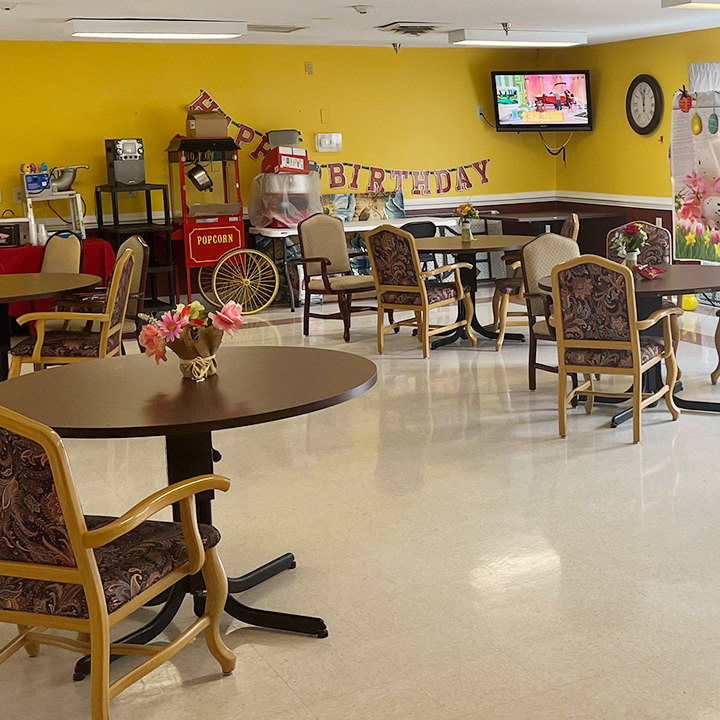
How is Windsor Rehabilitation And Healthcare Center Staffed?

CMS rates Windsor Rehabilitation and Healthcare Center's staffing level at 1 out of 5 stars, which is much below average compared to other nursing homes. Staff turnover is 84%, which is 37 percentage points above the North Carolina average of 46%. High turnover can affect care consistency as new staff learn residents' individual needs. RN turnover specifically is 75%, which is notably high. RNs provide skilled clinical oversight, so turnover in this role can affect medical care quality.

What Have Inspectors Found at Windsor Rehabilitation And Healthcare Center?

State health inspectors documented 44 deficiencies at Windsor Rehabilitation and Healthcare Center during 2022 to 2025. These included: 3 Immediate Jeopardy (the most serious level, indicating potential for serious harm or death), 2 that caused actual resident harm, 37 with potential for harm, and 2 minor or isolated issues. Immediate Jeopardy findings are rare and represent the most serious regulatory concerns. They require immediate corrective action.
Who Owns and Operates Windsor Rehabilitation And Healthcare Center?

Windsor Rehabilitation and Healthcare Center is owned by a for-profit company. For-profit facilities operate as businesses with obligations to shareholders or private owners. The facility is operated by SIMCHA HYMAN & NAFTALI ZANZIPER, a chain that manages multiple nursing homes. With 82 certified beds and approximately 67 residents (about 82% occupancy), it is a smaller facility located in Windsor, North Carolina.

How Does Windsor Rehabilitation And Healthcare Center Compare to Other North Carolina Nursing Homes?

Compared to the 100 nursing homes in North Carolina, Windsor Rehabilitation and Healthcare Center's overall rating (1 stars) is below the state average of 2.8, staff turnover (84%) is significantly higher than the state average of 46%, and health inspection rating (1 stars) is much below the national benchmark.

What Should Families Ask When Visiting Windsor Rehabilitation And Healthcare Center?

Based on this facility's data, families visiting should ask: "What changes have been made since the serious inspection findings, and how are you preventing similar issues?" "What safeguards and monitoring systems are in place to protect residents from abuse or neglect?" "How do you ensure continuity of care given staff turnover, and what is your staff retention strategy?" "Can you walk me through typical staffing levels on day, evening, and night shifts?" These questions are particularly relevant given the facility's Immediate Jeopardy citations, the substantiated abuse finding on record, the facility's high staff turnover rate, and the below-average staffing rating.

Is Windsor Rehabilitation And Healthcare Center Safe?

Based on CMS inspection data, Windsor Rehabilitation and Healthcare Center has documented safety concerns. The facility has 1 substantiated abuse finding (meaning confirmed case of resident harm by staff or other residents). Inspectors have issued 3 Immediate Jeopardy citations (the most serious violation level indicating risk of serious injury or death). The facility has a 1-star overall rating and ranks #100 of 100 nursing homes in North Carolina. Families considering this facility should ask detailed questions about what corrective actions have been taken since these incidents.

Do Nurses at Windsor Rehabilitation And Healthcare Center Stick Around?

Staff turnover at Windsor Rehabilitation and Healthcare Center is high. At 84%, the facility is 37 percentage points above the North Carolina average of 46%. Registered Nurse turnover is particularly concerning at 75%. RNs handle complex medical decisions and coordinate care — frequent RN changes can directly impact care quality. High turnover means new staff may not know residents' individual needs, medications, or preferences. It can also be disorienting for residents, especially those with dementia who rely on familiar faces. Families should ask: What is causing the turnover? What retention programs are in place? How do you ensure care continuity during staff transitions?

Was Windsor Rehabilitation And Healthcare Center Ever Fined?

Windsor Rehabilitation and Healthcare Center has been fined $249,991 across 2 penalty actions. This is 7.0x the North Carolina average of $35,579. Fines at this level are uncommon and typically indicate a pattern of serious deficiencies, repeated violations, or failure to correct problems promptly. CMS reserves penalties of this magnitude for facilities that pose significant, documented risk to resident health or safety. Families should request specific documentation of what issues led to these fines and what systemic changes have been implemented.

Is Windsor Rehabilitation And Healthcare Center on Any Federal Watch List?

Windsor Rehabilitation and Healthcare Center is not on any federal watch list. The most significant is the Special Focus Facility (SFF) program, which identifies the bottom 1% of nursing homes nationally based on persistent, serious quality problems. Not being on this list means the facility has avoided the pattern of deficiencies that triggers enhanced federal oversight. This is a positive indicator, though families should still review the facility's inspection history directly.