Willowbrook Rehabilitation and Care
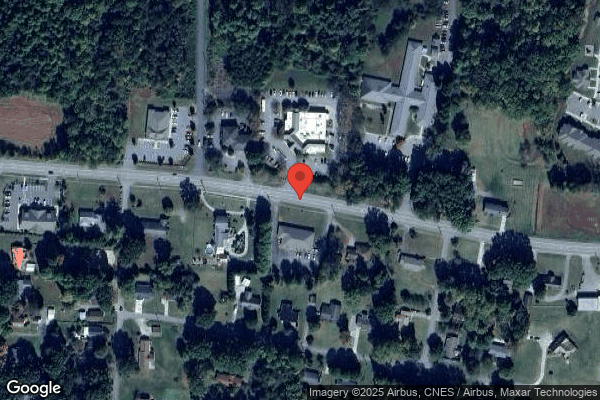
333 East Lee Street, Yadkinville, NC 27055 (336) 679-8028
For profit - Corporation 76 Beds CONSULATE HEALTH CARE/INDEPENDENCE LIVING CENTERS/NSPIRE HEALTHCARE/RAYDIANT HEALTH CARE Data: November 2025
Trust Grade
90/100
#75 of 417 in NC
Last Inspection: July 2024

Within standard 12-15 month inspection cycle. Federal law requires annual inspections.

Overview

Willowbrook Rehabilitation and Care in Yadkinville, North Carolina, has received a Trust Grade of A, indicating it is an excellent facility that is highly recommended. It ranks #75 out of 417 nursing homes in North Carolina, placing it in the top half, and is the best option among the two facilities in Yadkin County. The facility is showing improvement, with issues decreasing from four in 2023 to none in 2024. Staffing is a weakness, receiving a rating of 2 out of 5; however, the turnover rate of 32% is better than the state average of 49%. Additionally, there were no fines recorded, which is a positive sign, though a couple of concerns were noted, such as not developing discharge plans for some residents and leaving a treatment cart unlocked, risking medication safety. Overall, while there are areas for improvement, especially in care planning and staff management, the facility excels in other aspects, making it a notable choice for families.

Trust Score
A
90/100
In North Carolina
#75/417
Top 17%
Safety Record
Low Risk
No red flags
Inspections
Getting Better
4 → 0 violations
Staff Stability
○ Average
32% turnover. Near North Carolina's 48% average. Typical for the industry.
Penalties
✓ Good
No fines on record. Clean compliance history, better than most North Carolina facilities.
Skilled Nurses
⚠ Watch
Each resident gets only 22 minutes of Registered Nurse (RN) attention daily — below average for North Carolina. Fewer RN minutes means fewer trained eyes watching for problems.
Violations
✓ Good
Only 5 deficiencies on record. Cleaner than most facilities. Minor issues only.
★★★★★
5.0
Overall Rating
★★☆☆☆
2.0
Staff Levels
★★★★☆
4.0
Care Quality
★★★★★
5.0
Inspection Score
Stable
2023: 4 issues
2024: 0 issues

The Good

  • 4-Star Quality Measures · Strong clinical quality outcomes
  • Full Sprinkler Coverage · Fire safety systems throughout facility
  • No fines on record
  • Staff turnover below average (32%)

    16 points below North Carolina average of 48%

Facility shows strength in quality measures, fire safety.

The Bad

Staff Turnover: 32%

14pts below North Carolina avg (46%)

Typical for the industry

Chain: CONSULATE HEALTH CARE/INDEPENDENCE

Part of a multi-facility chain

Ask about local staffing decisions and management

The Ugly 5 deficiencies on record

Aug 2023 4 deficiencies
CONCERN (D)

Potential for Harm - no one hurt, but risky conditions existed

Comprehensive Care Plan (Tag F0656)

Could have caused harm · This affected 1 resident

**NOTE- TERMS IN BRACKETS HAVE BEEN EDITED TO PROTECT CONFIDENTIALITY** Based on resident and staff interviews and record review, the facility failed to develop a care plan that addressed discharge go...

Read full inspector narrative →
**NOTE- TERMS IN BRACKETS HAVE BEEN EDITED TO PROTECT CONFIDENTIALITY** Based on resident and staff interviews and record review, the facility failed to develop a care plan that addressed discharge goals and plans for 2 of 17 residents (Residents #1 and #55) reviewed for comprehensive care plans. Findings included: 1. Resident #1 was admitted to the facility on [DATE]. The admission Minimum Data Set (MDS) assessment dated [DATE] revealed an active discharge plan was in place for the resident to return to the community. The quarterly MDS assessment dated [DATE] indicated Resident #1 was cognitively intact. The comprehensive care plan, updated 7/14/23, did not include information that addressed discharge plans or goals. In an interview with Resident #1 on 8/1/23 at 2:36 PM, he shared his discharge plan was to remain in the facility for long term care. On 8/1/23 at 1:57 PM an interview was completed with the Social Worker (SW). She typically wrote the care plan that addressed discharge plans and goals for all the residents. She stated when Resident #1 initially came to the facility, his discharge goal was to return to the community. After he completed therapy, it was determined that he needed a higher level of care and so he remained at the facility for long term care. The SW acknowledged there was not a discharge care plan included in Resident #1's comprehensive care plan and said she thought she hadn't completed one since the resident's discharge plans were uncertain when his care plan was developed by the interdisciplinary team. The MDS Coordinator was unavailable for interview. During an interview with the Executive Director on 8/2/23 at 2:57 PM she stated a discharge care plan needed to be developed whether a resident was short term rehabilitation, long term care, or if the discharge plan was unknown. She added the SW had been new to the SW role at the facility and didn't think she knew she could create a care plan that indicated the discharge plan was unknown. 2. Resident #55 was admitted to the facility on [DATE]. The admission MDS assessment dated [DATE] revealed Resident #55 was cognitively intact and an active discharge plan was in place for the resident to return to the community. The comprehensive care plan, updated 7/12/23, did not include information that addressed discharge plans or goals. On 8/1/23 at 1:57 PM an interview was completed with the SW. She typically wrote the care plan that addressed discharge plans and goals for all the residents. The SW acknowledged there was not a discharge care plan included in Resident #55's comprehensive care plan and said she thought she hadn't completed one since the resident's discharge plans were uncertain when his care plan was developed by the interdisciplinary team. The MDS Coordinator was unavailable for interview. During an interview with the Executive Director on 8/2/23 at 2:57 PM she stated a discharge care plan needed to be developed whether a resident was short term rehabilitation, long term care, or if the discharge plan was unknown. She added the SW had been new to the SW role at the facility and didn't think she knew she could create a care plan that indicated the discharge plan was unknown.
CONCERN (D)

Potential for Harm - no one hurt, but risky conditions existed

Deficiency F0761 (Tag F0761)

Could have caused harm · This affected 1 resident

Based on observations and staff interviews, the facility failed to secure medicated treatments left in an unattended treatment cart for 1 of 1 treatment cart. The findings included: During wound care...

Read full inspector narrative →
Based on observations and staff interviews, the facility failed to secure medicated treatments left in an unattended treatment cart for 1 of 1 treatment cart. The findings included: During wound care observation on 8/1/23 at 10:53 AM, Nurse #1 was observed to push the treatment cart against the wall on the 200 hall and entered a resident room and closed the door to perform wound care. The cart lock was not pushed in indicating a locked position. Observation of Treatment Cart #1 revealed the top drawer to contain topical ointments. The second drawer contained medicated dressings and bandages. The bottom drawer contained resident prescribed medicated creams for both the 100 and 200 halls. On 8/1/23 at 10:58 AM, residents were observed ambulating in the hallway near the unlocked cart. An interview on 8/1/23 at 11:00 AM with Nurse #1 revealed that she was aware the treatment cart should be locked when she walked away from it but she stated that she did not have a key. She stated she had worked at the facility for two months and had made a request for the pharmacy to provide her with a key. She stated that she had to get one from the nurse on the other cart to unlock it and was unable to do that without going back and forth after each wound treatment. Nurse #1 stated that she would turn the cart around so it faced the wall while she was out of sight and in a room with a resident. In an interview with the Administrator on 8/3/23 at 2:30 PM, she stated that she was aware that was a problem when Nurse #1 had begun working at the facility but she had thought it had been taken care of already. She stated that she would contact the pharmacy and have that taken care of immediately.
MINOR (B)

Minor Issue - procedural, no safety impact

Transfer Notice (Tag F0623)

Minor procedural issue · This affected multiple residents

**NOTE- TERMS IN BRACKETS HAVE BEEN EDITED TO PROTECT CONFIDENTIALITY** 2. Resident #58 was admitted to the facility on [DATE]. The quarterly Minimum Data Set assessment dated [DATE] revealed Residen...

Read full inspector narrative →
**NOTE- TERMS IN BRACKETS HAVE BEEN EDITED TO PROTECT CONFIDENTIALITY** 2. Resident #58 was admitted to the facility on [DATE]. The quarterly Minimum Data Set assessment dated [DATE] revealed Resident #58 was not cognitively intact. She was able to ambulate with little assistance. The medical record demonstrated the resident was transferred to the hospital on 5/9/23 and due to a fall. Resident #58 returned to the facility on 5/16/23. No written notice of transfer was documented to have been provided to the resident or Ombudsman. The Social Worker (SW) was interviewed on 8/1/23 at 3:37 PM. She stated typically someone at the facility notified the Ombudsman when a resident was discharged from the facility, but added she was not the staff member responsible for notifying the Ombudsman. On 8/3/23 at 10:30 AM the Administrator stated she was not familiar with the transfer/discharge form that included a portion stating that the ombudsman should be notified of all discharges, including hospital transfers, from the facility. She stated the facility only sent written notification to a resident if it was a 30-day notice of discharge. She stated the facility had not been sending transfer/discharge notices when a resident went to the hospital. Based on resident and staff interviews, interview with the Ombudsman and record reviews, the facility failed to provide the resident a written notification for the reason for transfer to the hospital and failed to provide a copy of the transfer/discharge notice to the Ombudsman for 2 of 4 residents (Resident #56 and Resident #58) reviewed for hospitalization. Findings included: 1. Resident #56 was admitted to the facility on [DATE]. He was listed in the electronic health record as his own responsible party. The medical record demonstrated the resident was transferred to the hospital on 6/28/23 due to a change in condition. Resident #56 returned to the facility on 7/9/23. No written notice of transfer was documented to have been provided to the resident or Ombudsman. The significant change Minimum Data Set assessment dated [DATE] revealed Resident #56 was cognitively intact. On 8/1/23 at 3:26 PM an interview was completed with Nurse #1. She shared Resident #56 demonstrated a change in condition on 6/28/23 and she assisted with his transfer to the hospital. She explained when a resident was transferred to the hospital, the facility sent the following paperwork with the resident: medication administration record, face sheet, recent lab work, and clinical information about the resident. She said she had not sent a written transfer/discharge notice or provided one to Resident #56 when he was sent to the hospital. During an interview with Resident #56 on 8/2/23 at 10:15 AM, he said the facility had not provided him a written notice of transfer when he was sent to the hospital on 6/28/23. The Social Worker (SW) was interviewed on 8/1/23 at 3:37 PM. She stated typically someone at the facility notified the Ombudsman when a resident was discharged from the facility, but added she was not the staff member responsible for notifying the Ombudsman. A telephone interview was conducted with the Ombudsman on 8/1/23 at 3:57 PM. She reported the facility sent her a notice of transfer/discharge when a 30 day notice was provided to the resident by the facility. She said the facility had not sent her notification when a resident was transferred to the hospital and verified she had not been notified when Resident #56 was sent to the hospital. On 8/2/23 at 9:37 AM an interview was completed with the Executive Director. She stated the facility only sent written notification to a resident if it was a true 30 day notice. She verified the facility had not been sending transfer/discharge notices when a resident went to the hospital. She added the facility had kept a log of transfers to the hospital but had not sent the list to the Ombudsman. The Executive Director added it was the responsibility of the SW to send the list of discharges to the Ombudsman monthly, but there had been some changes in the SW department and it had not been consistently done.
MINOR (B)

Minor Issue - procedural, no safety impact

Deficiency F0625 (Tag F0625)

Minor procedural issue · This affected multiple residents

**NOTE- TERMS IN BRACKETS HAVE BEEN EDITED TO PROTECT CONFIDENTIALITY** 2. Resident #58 was admitted to the facility on [DATE]. The quarterly Minimum Data Set assessment dated [DATE] revealed Residen...

Read full inspector narrative →
**NOTE- TERMS IN BRACKETS HAVE BEEN EDITED TO PROTECT CONFIDENTIALITY** 2. Resident #58 was admitted to the facility on [DATE]. The quarterly Minimum Data Set assessment dated [DATE] revealed Resident #58 was not cognitively intact. She was able to ambulate with little assistance. The medical record demonstrated the resident was transferred to the hospital on 5/9/23 and due to a fall. Resident #58 returned to the facility on 5/16/23. No written notice of the facility's bed hold policy was documented to have been provided to the resident's responsible party. The Business Office Manager was interviewed on 8/2/23 at 2:35 PM. She stated the bed hold policy was provided to a resident at the time of admission and then the nurse in charge during the time of transfer would provide anything else that was needed. On 8/3/23 at 3:30 PM, the Executive Director stated that the bed hold policy was provided to the resident and/or resident representative during admission and it was part of the admission documents. She stated she was not aware they needed to send the bed hold policy each time a resident was transferred to the hospital. She also stated that the facility recently moved to computer generated transfer packets and the bed hold may have been a part of the packet in the past but was inadvertently omitted currently. Based on resident and staff interviews and record reviews, the facility failed to provide the resident a written notification of the bed hold policy upon a resident's transfer to the hospital for 2 of 4 residents (Resident #56 and Resident #58) reviewed for hospitalization. Findings included: 1. Resident #56 was admitted to the facility on [DATE]. He was listed in the electronic health record as his own responsible party. The medical record demonstrated the resident was transferred to the hospital on 6/28/23 due to a change in condition. Resident #56 returned to the facility on 7/9/23. No written notice of the facility's bed hold policy was documented to have been provided to the resident. The significant change Minimum Data Set assessment dated [DATE] revealed Resident #56 was cognitively intact. On 8/1/23 at 3:26 PM an interview was completed with Nurse #1. She shared Resident #56 demonstrated a change in condition on 6/28/23 and she assisted with his transfer to the hospital. She explained when a resident was transferred to the hospital, the facility sent the following paperwork with the resident: medication administration record, face sheet, recent lab work, and clinical information about the resident. She said she had not sent the bed hold policy or provided one to Resident #56 when he was sent to the hospital. During an interview with Resident #56 on 8/2/23 at 10:15 AM, he said the facility had not provided him a copy of the bed hold policy when he was sent to the hospital on 6/28/23. The Business Office Manager was interviewed on 8/1/23 at 3:33 PM. She explained the bed hold policy was provided to a resident at the time of admission. Additionally, the charge nurse provided the bed hold policy to the resident when they were transferred to the hospital. On 8/2/23 at 9:37 AM an interview was completed with the Executive Director. She stated staff were supposed to send the bed hold policy when a resident was transferred to the hospital. She explained the nurses used to send a packet of information with the resident that included the bed hold policy. Recently, the facility transitioned from a packet of information that was kept at the nurse's desk to computer generated forms and nurses hadn't included the bed hold policy when they sent a resident to the hospital.
Mar 2022 1 deficiency
MINOR (C)

Minor Issue - procedural, no safety impact

Deficiency F0577 (Tag F0577)

Minor procedural issue · This affected most or all residents

Based on observations and resident and staff interviews, the facility failed to post the availability of the facility's survey results. This practice had the potential to affect all residents in the f...

Read full inspector narrative →
Based on observations and resident and staff interviews, the facility failed to post the availability of the facility's survey results. This practice had the potential to affect all residents in the facility. Findings included: During a tour of the facility including the secured unit on 03/17/22 at 9:06 AM an observation was made that survey results were not posted. There was no notice posted in the facility regarding the availability and location of recent survey results. On 03/17/22 at 9:10 AM Resident #19, the Resident Council President revealed she had no knowledge of the location of the survey results notebook. She stated she was not aware where they were located and had not seen any signage that directed residents to their location. On 03/17/22 at 9:17 AM an interview with a Nurse #1 working on the secured unit revealed there was no survey results notebook on the secured unit. She stated the results were up front. She further stated if family asked about the results, she would take them up front and find them On 03/17/22 at 9:20 AM in an interview with a Nurse Aide #1 regarding the location of the survey results, she stated I would assume they would be up front. She indicated if family asked for the results, she would locate them and inform the family of their location. On 03/17/22 at 9:22 AM in an interview with the Activity Director she indicated the results were posted at the front. On 03/17/22 at 9:22 AM during an interview with the Administrator she pointed at the file holder outside her door where the survey results book was observed. She stated there used to be a sign on the file holder that indicated it contained the survey results notebook. She further stated the results were not posted anywhere else in the facility. She indicated to her knowledge there were no signs posted anywhere else in the facility indicating the location of the survey results. On 03/17/22 at 11:40 AM in a follow-up interview with the Administrator she stated she expected signage to be posted at all nurse stations and in the lobby indicating the location of the survey results. She further stated she expected survey results and the location of survey results to be discussed in Resident Council and that all newly admitted residents were to be made aware of their location.
Understanding Severity Codes (click to expand)
Life-Threatening (Immediate Jeopardy)
J - Isolated K - Pattern L - Widespread
Actual Harm
G - Isolated H - Pattern I - Widespread
Potential for Harm
D - Isolated E - Pattern F - Widespread
No Harm (Minor)
A - Isolated B - Pattern C - Widespread

Questions to Ask on Your Visit

  • "Can I speak with families of current residents?"
  • "What's your RN coverage like on weekends and overnight?"

Our Honest Assessment

Strengths
  • • Grade A (90/100). Above average facility, better than most options in North Carolina.
  • • No major safety red flags. No abuse findings, life-threatening violations, or SFF status.
  • • No fines on record. Clean compliance history, better than most North Carolina facilities.
  • • Only 5 deficiencies on record. Cleaner than most facilities. Minor issues only.
Concerns
  • • No significant concerns identified. This facility shows no red flags across CMS ratings, staff turnover, or federal penalties.
Bottom line: Generally positive indicators. Standard due diligence and a personal visit recommended.

About This Facility

What is Willowbrook Rehabilitation And Care's CMS Rating?

CMS assigns Willowbrook Rehabilitation and Care an overall rating of 5 out of 5 stars, which is considered much above average nationally. Within North Carolina, this rating places the facility higher than 99% of the state's 100 nursing homes. This rating reflects solid performance across the metrics CMS uses to evaluate nursing home quality.

How is Willowbrook Rehabilitation And Care Staffed?

CMS rates Willowbrook Rehabilitation and Care's staffing level at 2 out of 5 stars, which is below average compared to other nursing homes. Staff turnover is 32%, compared to the North Carolina average of 46%. This relatively stable workforce can support continuity of care.

What Have Inspectors Found at Willowbrook Rehabilitation And Care?

State health inspectors documented 5 deficiencies at Willowbrook Rehabilitation and Care during 2022 to 2023. These included: 2 with potential for harm and 3 minor or isolated issues.

Who Owns and Operates Willowbrook Rehabilitation And Care?

Willowbrook Rehabilitation and Care is owned by a for-profit company. For-profit facilities operate as businesses with obligations to shareholders or private owners. The facility is operated by CONSULATE HEALTH CARE/INDEPENDENCE LIVING CENTERS/NSPIRE HEALTHCARE/RAYDIANT HEALTH CARE, a chain that manages multiple nursing homes. With 76 certified beds and approximately 69 residents (about 91% occupancy), it is a smaller facility located in Yadkinville, North Carolina.

How Does Willowbrook Rehabilitation And Care Compare to Other North Carolina Nursing Homes?

Compared to the 100 nursing homes in North Carolina, Willowbrook Rehabilitation and Care's overall rating (5 stars) is above the state average of 2.8, staff turnover (32%) is significantly lower than the state average of 46%, and health inspection rating (5 stars) is much above the national benchmark.

What Should Families Ask When Visiting Willowbrook Rehabilitation And Care?

Based on this facility's data, families visiting should ask: "Can you walk me through typical staffing levels on day, evening, and night shifts?" "Can I visit during a mealtime to observe dining assistance and food quality?" "How do you handle medical emergencies, and what is your hospital transfer rate?" "Can I speak with family members of current residents about their experience?" These questions are particularly relevant given the below-average staffing rating.

Is Willowbrook Rehabilitation And Care Safe?

Based on CMS inspection data, Willowbrook Rehabilitation and Care has a clean safety record: no substantiated abuse findings (meaning no confirmed cases of resident harm), no Immediate Jeopardy citations (the most serious violation level indicating risk of serious injury or death), and is not on the Special Focus Facility watch list (a federal program monitoring the lowest-performing 1% of nursing homes). The facility has a 5-star overall rating and ranks #1 of 100 nursing homes in North Carolina. While no facility is perfect, families should still ask about staff-to-resident ratios and recent inspection results during their visit.

Do Nurses at Willowbrook Rehabilitation And Care Stick Around?

Willowbrook Rehabilitation and Care has a staff turnover rate of 32%, which is about average for North Carolina nursing homes (state average: 46%). Moderate turnover is common in nursing homes, but families should still ask about staff tenure and how the facility maintains care continuity when employees leave.

Was Willowbrook Rehabilitation And Care Ever Fined?

Willowbrook Rehabilitation and Care has no federal fines on record. CMS issues fines when nursing homes fail to meet care standards or don't correct problems found during inspections. The absence of fines suggests the facility has either maintained compliance or corrected any issues before penalties were assessed. This is a positive indicator, though families should still review recent inspection reports for the full picture.

Is Willowbrook Rehabilitation And Care on Any Federal Watch List?

Willowbrook Rehabilitation and Care is not on any federal watch list. The most significant is the Special Focus Facility (SFF) program, which identifies the bottom 1% of nursing homes nationally based on persistent, serious quality problems. Not being on this list means the facility has avoided the pattern of deficiencies that triggers enhanced federal oversight. This is a positive indicator, though families should still review the facility's inspection history directly.