CONCERN
(D)
📢 Someone Reported This
A family member, employee, or ombudsman was alarmed enough to file a formal complaint
Potential for Harm - no one hurt, but risky conditions existed
Resident Rights
(Tag F0550)
Could have caused harm · This affected 1 resident
**NOTE- TERMS IN BRACKETS HAVE BEEN EDITED TO PROTECT CONFIDENTIALITY** Based on observations, record review and staff interviews, the facility failed to promote care in a dignified manner for 3 of 3 ...
Read full inspector narrative →
**NOTE- TERMS IN BRACKETS HAVE BEEN EDITED TO PROTECT CONFIDENTIALITY** Based on observations, record review and staff interviews, the facility failed to promote care in a dignified manner for 3 of 3 residents who were assisted with meals. Staff were observed standing beside the side of the residents' beds while feeding assistance was provided (Resident #62, Resident #14 and Resident # 68).
Findings included:
1. Resident #62 was admitted on [DATE].
Review of the significant change in status Minimum Data Set (MDS) assessment dated [DATE] revealed Resident #62 was assessed as moderately cognitively impaired. The assessment indicated Resident #62 was dependent on staff for eating and was on a therapeutic diet. The assessment indicated the resident had a significant weight loss and was under hospice care.
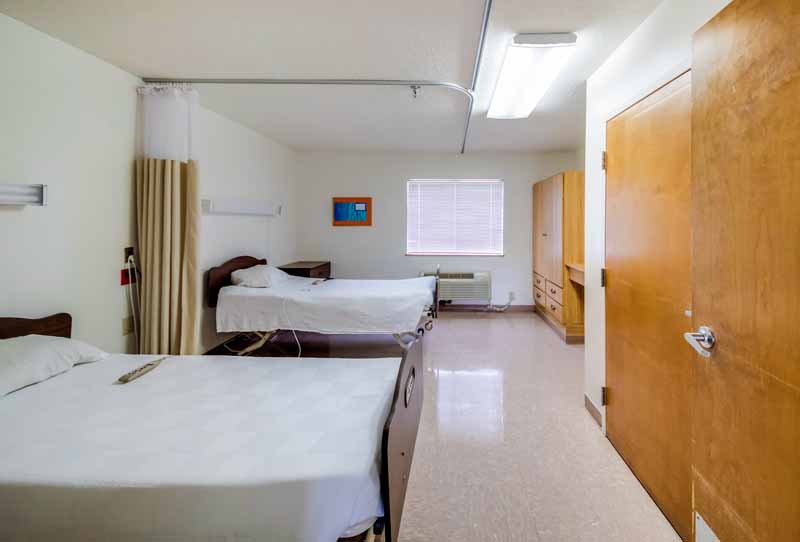
During a continuous lunch meal observation on 2/24/25 from 1:15 PM to 1:20 PM, Resident #62 was observed in bed and Nurse Aide (NA) #2 was observed standing beside Resident #62's bed, leaning over and assisting the resident with eating. There was one chair on the other side of the resident's room. The chair had the resident's roommate's personal item and pillow on it.
During an interview on 2/24/25 at 1:20 PM, NA #2 indicated the Resident #62 needed assistance with feeding. NA #2 stated there was no chair in the room, so she continued to feed the resident while beside his bed. NA #2 stated she frequently assisted Resident #62 with feeding. NA #2 indicated depending on the day or if there was a chair available in residents' room, she would either sit or stand and feed the resident. NA #2 further indicated she just didn't think about sitting down while assisting Resident #62 with feeding.
2. Resident #14 was readmitted to the facility on [DATE].
Review of the admission MDS dated [DATE] revealed Resident #14 was assessed as having unclear speech and severely cognitively impaired. The assessment indicated the resident was dependent on staff assistance for eating.
During a continuous meal observation on 2/24/25 from 1:22 PM to 1:30 PM, NA #1 stood beside Resident #14's bed and assisted Resident #14 with eating while Resident #14 was in bed. There was no chair observed in the resident's room.
During an interview on 2/24/25 at 1:25 PM, NA #1 stated Resident #14 needed assistance with feeding. NA #1 indicated there were no chairs in resident's rooms, so he was feeding the resident while standing beside her bed.
3. Resident #68 was readmitted to the facility on [DATE].
Significant change MDS dated [DATE] revealed Resident #68 was assessed as severely cognitively impaired. The resident was dependent on staff assistance for eating.
Physician orders dated 2/18/25 revealed regular diet with pureed texture, and honey consistency liquids. The order also indicated double protein with meals for risk of malnutrition and compromised skin integrity.
During a continuous observation on 2/24/25 from 1:32 PM to 1:40 PM, Resident #68 was observed lying in bed. Resident #68's meal tray was brought into the room by NA #2. The meal was placed beside the bedside table and NA #2 started feeding the resident. NA #2 was observed standing beside Resident #68's bed, leaning over and feeding the resident. Observation of the room revealed that there was no chair in the room.
During an interview on 2/24/25 at 1:40 PM, NA #2 indicated the resident needed assistance with feeding and she frequently assisted the resident with feeding. NA #2 stated there was no chair in the room and hence she was standing and feeding the resident.
During an interview on 2/26/25 at 10:06 AM, the Administrator stated all nursing staff were frequently trained to sit beside the resident while feeding or while assisting resident with eating. The Administrator indicated all nursing staff would be retrained to ensure the residents who needed feeding assistance were fed with dignity. She acknowledged that no staff should be standing beside the residents' bed while assisting them with eating.
CONCERN
(D)
Potential for Harm - no one hurt, but risky conditions existed
Deficiency F0553
(Tag F0553)
Could have caused harm · This affected 1 resident
**NOTE- TERMS IN BRACKETS HAVE BEEN EDITED TO PROTECT CONFIDENTIALITY** Based on record review, and resident and staff interviews, the facility failed to facilitate a resident's participation in the d...
Read full inspector narrative →
**NOTE- TERMS IN BRACKETS HAVE BEEN EDITED TO PROTECT CONFIDENTIALITY** Based on record review, and resident and staff interviews, the facility failed to facilitate a resident's participation in the development of their plan of care for 1 of 29 residents reviewed for comprehensive care plans (Resident #110).
The findings included:
Resident #110 was admitted to the facility on [DATE] with diagnosis that included Diabetes.
The quarterly Minimum Data Set (MDS) assessment dated [DATE] revealed Resident #110 was cognitively intact.
Record review of copies of the care plan invitation letters sent to the resident revealed Resident #110 was scheduled for care plan meetings on 1/28/24, 5/7/24, 8/29/24, and 1/28/25 but there was no documentation that Resident #110 participated.
During an interview on 2/24/25 at 1:53 p.m. Resident #110 revealed he had not attended his care plan meetings since admission to the facility. Resident #110 revealed he had always received invitation letters from the Social Worker Assistant, but the dates came and went without anyone coming to get him to the meeting.
During an interview with the Social Work Assistant on 2/25/25 at 2:14 p.m. she revealed that she expected Resident #110 to reach out to her to choose a time slot he would be available to participate in his care plan meeting. She further stated it was a miscommunication between her and Resident #110 because he did not come to her to choose a time slot for his meeting. The Social Work Assistant stated that she did not follow up with Resident #110 after handing him the care plan meeting invitation letter to confirm his participation. The Social Work Assistant stated that Resident #110's care plan meetings usually went on without his participation.
In an interview with the Administrator on 2/26/25 at 1:31 p.m. she revealed there was a miscommunication between Resident #110 and the Social Work Assistant. She further stated that the Social Work Assistant will receive an in-service to ensure residents who are able to participate in their care plan meetings are in attendance.
CONCERN
(D)
📢 Someone Reported This
A family member, employee, or ombudsman was alarmed enough to file a formal complaint
Potential for Harm - no one hurt, but risky conditions existed
Deficiency F0602
(Tag F0602)
Could have caused harm · This affected 1 resident
**NOTE- TERMS IN BRACKETS HAVE BEEN EDITED TO PROTECT CONFIDENTIALITY** Based on record review, and staff, Adult Protective Services Social Worker (APS-SW), family and the Arresting Officer interviews...
Read full inspector narrative →
**NOTE- TERMS IN BRACKETS HAVE BEEN EDITED TO PROTECT CONFIDENTIALITY** Based on record review, and staff, Adult Protective Services Social Worker (APS-SW), family and the Arresting Officer interviews, the facility failed to protect a resident's right to be free from misappropriation of property leading to a suspected monetary loss of $11,670.68. The deficient practice was for 1 of 1 resident reviewed for misappropriation of resident property (Resident #400).
Findings included:
Resident #400 was admitted to the facility on [DATE] and discharged on 2/10/25.
The admission Minimum Data Set (MDS) assessment dated [DATE] revealed Resident #400 was cognitively intact.
The initial allegation report dated 2/18/25 stated that it was brought to the facility's attention by the Police Department that Nurse Aide #7 was allegedly using a resident's credit card without permission. The report stated that the family of Resident #400 noted charges on a credit card when the monthly bill was received on 2/18/25 and the family notified the local Police department on 2/18/25 and the police initiated an investigation. The report stated Nurse Aide #7 was suspended.
A review of the 5-day investigation report dated 2/21/25 revealed that on 2/18/25 the Administrator and the Assistant Director of Nursing (ADON) were visited by a local County Deputy [NAME] who stated that Nurse Aide #7 was under investigation for using Resident #400's credit card. The investigation report stated that the Deputy Sheriff stated that the charges on Resident #400's credit card are from 2 days after she was admitted at the facility on 1/14/25. The investigation report stated the family contacted the police when they received Resident #400's credit card statement and saw the suspected charges. The Deputy Sheriff stated that Nurse Aide #7 was under investigation and would be charged in court the following week. The investigation report stated that the Administrator and ADON called Nurse Aide #7 on the phone, and she adamantly denied the allegations, stating it was not her. The investigation report revealed the Administrator explained to Nurse Aide #7 that she could not work or enter the facility until the courts decided on her guilt or innocence.
Attempts made to contact Nurse Aide #7 by phone on 2/25/25 and 2/26/25 were unsuccessful.
During an interview on 2/25/25 at 11:23 a.m. with the APS-SW he revealed that he had received a complaint from the bank via fax on 2/18/25 about the unauthorized use of a credit card belonging to Resident #400 in the amount of approximately $11,670.68. The APS-SW revealed the investigation was still ongoing.
Attempts to speak with Resident #400 by phone on 2/24/25 and 2/25/25 were unsuccessful.
In an interview on 2/27/25 at 9:31 a.m. with Resident #400's family member, he revealed that the charges on the credit card occurred while Resident #400 was at the facility. He further revealed that the missing funds were reimbursed to Resident #400 by credit card company. According to family memebr of the resident, she did not make any purchases or cash withdrawals using her credit while she was hospitalized or admitted at the facility and discharging home on 2/10/25.
During an interview on 2/27/25 at 10:39 a.m. with the Arresting Officer he revealed Nurse Aide #7 was arrested in connection with the unauthorized credit card use. The Arresting Officer stated that he was still working on the case.
During an interview with the Business Office Manager on 2/27/25 at 9:36 a.m. she revealed that she was not aware Resident #400 had a pocketbook and a credit card on her during admission. She revealed they discouraged residents from having cash or credit cards on their person but do provide lock boxes for safe keeping of valuables.
During an interview with the Assistant Director of Nursing (ADON) on 2/26/25 at 8:26 a.m. she stated that she became aware of the theft of funds from Resident #400's credit card on 2/18/25 when the police came to the facility seeking to arrest Nurse Aide #7. She further revealed that Nurse Aide #7 was suspended from work until determination of the court process.
In an interview with the Administrator on 2/26/25 at 1:42 p.m. she revealed that she was not aware that Resident #400's credit card was missing or used by a staff member until the police showed up looking to arrest Nurse Aide #7 on 2/18/25. She stated that the police informed her that the credit card was used from 2 days after Resident #400 was admitted to the facility. She further revealed she contacted Nurse Aide #7 who denied using Resident #400's credit card. She revealed she contacted Resident #400 on 2/18/25 who expressed shock that Nurse Aide #7 had been arrested for using her credit card. The Administrator revealed Resident #400 had stated that her credit card was in her bookbag while she was at the facility. The Administrator revealed that Nurse Aide #7 who had worked at the facility for several years, was suspended pending the court system outcome. The Administrator stated that she revealed she apologized to the family of Resident #400. NA #7 allegedly used the card from 1/14/25 through the first week of February 2025.
The facility provided the following corrective action plan with a completion date of 2/22/25.
Address how corrective action will be accomplished for those residents found to have been affected by the deficient practice.
-An investigation was conducted on 2/18/25 on Resident #400 whose credit card had been misappropriated. Resident #400 was awarded back the funds that had been charged on her credit by the credit company with no financial hardship.
-Incident was reported to Adult Protective Services by the Administrator on 2/18/25.
-The Administrator filed a 24-hour report with NCDHHS on 2/18/25 at 3:41 p.m.
-The ADON suspended Nurse Aide #7 on 2/18/25.
Address how the facility will identify other residents having the potential to be affected by the same deficient practice.
-The Administrator stated that the Business Office Manager will complete inventory of cash and credit and debit cards on new residents starting on 2/18/25. As of 2/18/25 the Business Office Manager reported no residents had a credit or debit card in the facility.
- During the investigation from 2/18/25 through 2/21/25, alert and oriented residents in the facility were interviewed by Business Office Manager , Social Work Assistant and ADON concerning missing money or belongings for a refund or replacement and no concerns/claims noted.
-100% of audit of trust funds by the Business Office Manager for all residents regarding any missing money on 2/18/25. Business Office Manager audited all receipts for purchases made for alert and oriented residents by the activities department. Business Office Manager reported no concerns were identified.
-Responsible parties for non-alert and oriented residents were contacted and interviewed concerning missing money or belongings with no concerns noted on 2/18/25 by Social Work Assistant and ADON.
-discharged residents/responsible parties from 1/14/25 to 2/18/25 were also contacted and interviewed concerning missing money or belongings with no concerns noted.
-Staff members who worked in the facility from 1/14/25 through 2/18/25 when the credit card was taken were interviewed by ADON to see if they had noticed anyone going through resident belongings or any other suspicious activity. No concerns were reported.
Address what measures were be put into place or systemic changes made to ensure that the deficient practice will not recur.
-During the investigation ADON conducted in-service education with all staff in all departments regarding misappropriation of resident money from 2/18/25 through 2/21/25. Staff are required to report to management immediately if they see a credit card lying around.
-The Administrator reported that all newly hired staff will be educated on Abuse, Neglect, and misappropriation of property and policies during the orientation process by the Social Services Director/designee beginning 2/18/25.
-On 2/18/25 the Administrator directed the ADON to provide Abuse, Neglect, and Misappropriation of property in-service education to any agency staff prior to working their first shift-presently no agency staff is being used at this facility.
-The Administrator reported that a decision was made during the Ad Hoc QAPI meeting on 2/18/25 for facility to procure a safe box with a key for each resident with credit cards or cash for safekeeping and monitoring of their use by the Business Office Manager. The Administrator reported they expect the safe boxes to arrive in a week's time and they shall provide education for alert and oriented residents.
-During the investigation from 2/18/25 through 2/21/25, the Business Office Manager performed new background checks on all staff.
Indicate how the facility plans to monitor its performance to make sure that solutions are sustained.
-Administrator or DON will conduct a random interview of ten residents weekly for four consecutive weeks, fifteen residents bi-weekly for 2 months and then twenty residents monthly for 2 months. These residents will be interviewed about experiencing misappropriation of funds.
-Any deficient practice found during the audits will be corrected immediately and education and/or corrective action done by the Administrator as appropriate.
-The audit findings will be reported to the monthly QAPI meeting by the Administrator for a minimum of 3 months.
-The Administrator stated she was the individual responsible for compliance with this POC.
Corrective action completion date: 2/22/25.
Validation:
Onsite validation of the corrective action plan was completed on 2/27/25. Interviews with staff in all departments in the facility confirmed they received in-service training on Misappropriation of resident funds, property, abuse, neglect, and reporting of alleged violations. A review was completed on the training sign-in sheet dated 2/18/25 for all staff, the call logs by the Social Work Assistant to Responsible parties, and all staff background checks done by the Director of Human Resources on 2/18/25.
The compliance date of 2/22/25 was validated.
CONCERN
(D)
📢 Someone Reported This
A family member, employee, or ombudsman was alarmed enough to file a formal complaint
Potential for Harm - no one hurt, but risky conditions existed
Transfer Notice
(Tag F0623)
Could have caused harm · This affected 1 resident
**NOTE- TERMS IN BRACKETS HAVE BEEN EDITED TO PROTECT CONFIDENTIALITY** Based on record review, and Resident Representative and staff interviews, the facility failed to provide the resident and Reside...
Read full inspector narrative →
**NOTE- TERMS IN BRACKETS HAVE BEEN EDITED TO PROTECT CONFIDENTIALITY** Based on record review, and Resident Representative and staff interviews, the facility failed to provide the resident and Resident Representative with a written notification of transfer or discharge including notification of appeal rights when the resident was discharged for 1 of 2 residents reviewed for hospitalization (Resident #200).
The findings included:
Resident #200 was originally admitted to the facility on [DATE].
The discharge Minimum Data Set (MDS) assessment dated [DATE] indicated Resident #200 had severe cognitive impairment. The discharge was coded return not anticipated.
A review of the medical record revealed Resident #200 was transferred to the hospital on 4/3/24 for psychiatric evaluation and involuntary commitment. Resident #200 was transferred back to the facility on 4/7/24 and then discharged on 4/7/24. There was no documentation a notice of transfer/discharge was provided to Resident #200 or the Resident Representative.
A telephone interview was conducted on 2/25/25 11:32 AM with the Resident Representative who stated when Resident #200 was discharged on 4/7/24, she nor the resident received a written notice of transfer or discharge.
An interview was conducted on 2/25/25 at 12:27 PM with Social Worker #1 who stated the discharge process on 4/7/24 was handled by nursing and the Administrator and she was unaware of what notification was provided when the resident was discharged home.
An interview was conducted on 2/27/25 at 9:07 AM, with the Administrator who stated the family was notified by telephone on 4/7/24 of Resident# 200's discharge home and she was unaware the resident and resident representative had to be notified in writing every time a resident was discharged to the hospital or community.
CONCERN
(D)
📢 Someone Reported This
A family member, employee, or ombudsman was alarmed enough to file a formal complaint
Potential for Harm - no one hurt, but risky conditions existed
Safe Transfer
(Tag F0626)
Could have caused harm · This affected 1 resident
**NOTE- TERMS IN BRACKETS HAVE BEEN EDITED TO PROTECT CONFIDENTIALITY** Based on record reviews, and Resident Representative (RR), hospital Case Manager, Physician, and staff interviews, the facility ...
Read full inspector narrative →
**NOTE- TERMS IN BRACKETS HAVE BEEN EDITED TO PROTECT CONFIDENTIALITY** Based on record reviews, and Resident Representative (RR), hospital Case Manager, Physician, and staff interviews, the facility failed to permit a resident to remain in the facility after the hospital assessed Resident #200 as returning to her baseline and discharged her back to the facility for 1 of 2 residents reviewed for discharge (Resident #200).
The findings included:
Resident #200 was originally admitted to the facility on [DATE] with multiple diagnoses including anxiety, depression, schizophrenia and bipolar disorder.
The discharge Minimum Data Set (MDS) assessment dated [DATE] indicated Resident #200 had severely impaired cognition. The discharge was coded as planned with return anticipated.
Review of the nurses' note dated 4/3/24 revealed that Resident #200 needed to be involuntarily committed due to threat to self, staff and other residents. Exhibiting aggressive behaviors and outbursts and refusing all medications. The provider was notified of the resident's behavior and gave orders to have resident involuntarily committed for one day.
Review of the transfer/discharge form dated 4/3/24 revealed (involuntary commitment) was written on the form and the reason for transfer/discharge: The safety of individuals in this facility is endangered due to the clinical or behavioral status of the resident; The health of individuals in this facility would otherwise be endangered.
Review of the hospital Discharge summary dated [DATE] read in part: revealed Resident #200 was admitted on [DATE] and discharged on 4/7/24. Review of the hospital course revealed Resident #200 was seen in the emergency room on 4/3/24 for noncompliance with medications, delusional thought process, hallucinations. The facility staff reported that the resident was currently a safety risk to herself and others at the facility, displaying aggressive behaviors toward self and other residents, both physically and verbally and non-compliant with medications. The facility management stated the resident may return to the facility once mentally stable. Discharge assessment and plan: Resident #200 improved and was taking her medications without issues. She was at her baseline and could return to her skilled nursing facility (SNF). There were no threats to herself or others and no hallucinations. The treatment plan included restarting medications and discharge Resident #200 back to the facility.
On 2/25/ 26 and 2/26/25 attempts were made to contact the hospital nurse and discharge staff to confirm the discharge plan, however, individuals who were involved in the admission and discharge process were unavailable for interview.
Review of a nurses' note dated 4/7/24 at 5:11 PM revealed emergency medical service (EMS) here and with the resident (Resident #200). The report has not been called in. The officer here telling me to move out of the way so EMS can put her in her bed. Facility was not made aware that she was returning. Resident, RP (Resident Representative), and Provider updated.
Review of the nurses' note dated 4/7/24 at 5:17 PM revealed the Resident was refusing to take her medication. Resident, RP, and Provider updated.
Review of the nurses' note dated 4/7/24 at 5:22 PM revealed 911 was called to take her back to the hospital. Resident, RP, and Provider updated.
Review of the nurses' note dated 4/7/24 at 6:40 PM revealed the nurse spoke with another family member. She stated that they were on their way here to pick up Resident #200. Resident, RP, and Provider updated.
Review of the nurses' note dated 4/7/24 at 5:59PM revealed Resident refusing to go with them. A [family member] was notified to come pick up resident. Resident, RP, and Provider updated.
Review of the nurses' note dated 4/7/24 at 7:40 PM revealed Resident #200 wants to go home. Refusing all meds. Refusing supper and liquids. Resident, RP, and Provider updated.
Review of the nurses' note dated 4/7/24 at 8:13PM revealed Resident #200 took bedtime meds. Resident, RP, and Provider updated.
Review of the nurses' note dated 4/7/24 at 10:30 PM revealed Resident #200 arrived via emergency medical services (EMS) at 5:00 PM without report and without facility accepting her back. EMS called the sheriff. The Assistant Director of Nursing (ADON) was notified that the resident had returned to the facility. Family called to make aware of return. The [family member] stated that she was coming to pick up the resident. The provider gave an order to discharge resident with resident representative. Resident Representative and a gentleman came and picked up resident. The resident left the facility in good condition. Resident, RP, and Provider updated.
Review of the nurses' note dated 4/7/24 at 10:49 PM revealed the Resident Representative here to take Resident home. Resident, RP, and Provider updated.
Review of the nurses' note dated 4/7/24 at 11:41 PM revealed the Resident left with resident representative in good condition. Took all belongings. Resident, RP, and Provider update.
A telephone interview on 2/26/25 at 1:47 PM, with Nurse #5 who stated she was unaware Resident #200 was returning until EMS arrived at the facility with the resident on 4/7/24. The nurse further stated EMS dropped the resident off and left, she was not sure if the EMS brought paperwork back to facility. Nurse #5 stated she called the hospital and was told Resident #200 was stable. Nurse #5 did not indicate whether she asked for the discharge orders. She then called the Assistant Director of Nursing and informed her the resident had returned. Nurse #5 further stated the Assistant Director of Nursing told her Resident #200 would not be accepted back to the facility due to the facility being unaware Resident 200's discharge from the hospital; the facility did not have any paperwork and was no longer a resident of the facility and there were no beds available and to call the family and inform them they needed to pick up Resident #200. Nurse #5 stated she called the family member and Resident Representative of Resident #200's return to the facility and the reason why Resident #200 was not accepted back in the facility was based on the instruction of the ADON. Nurse #5 indicated Resident #200's initial response when she returned to the facility she refused her medication. The ADON wanted Resident #200 to return to the hospital and the resident refused. EMS called the police who came to the facility and stated the resident would remain in the facility and allow the resident to return to her room, there was nothing that would be done by the police. Nurse #5 stated she contacted ADON, the provider and the resident representative, and informed her of the status of Resident #200. She indicated the family had asked if Resident #200 could remain in the facility overnight and they were told no by the instructions of the ADON. The family member and Resident Representative stated they had to make the arrangements to pick-up Resident #200 and were on their way. She indicated Resident #200 took her evening medications and did not have any behavior issues. Nurse #5 stated when the family arrived, she reviewed the medication list with them, and they took her personal belongings.
An interview was conducted on 2/25/25 at 2:20 PM with the Assistant Director of Nursing (ADON), who stated she received a call from Nurse #5 and stated Resident #200 returned to the facility on 4/7/24 without discharge paperwork from the hospital. She stated the facility was not made aware of Resident #200's discharge from the hospital. The ADON stated she instructed Nurse #5 not to accept the resident back without the proper paperwork and to contact the family and inform them Resident #200 had returned to the facility and would not be accepted back because she was not readmitted to the facility and the resident representative needed to come pick-up Resident #200. The ADON indicated she was informed the resident was exhibiting behaviors of medication refusal and insisting on going home. She further stated based on the behaviors she wanted Resident #200 to return to the hospital, but EMS refused to return resident to the hospital. The police were also called to assist with the transfer back to the hospital and indicated there was nothing they could do if the resident refused. The ADON stated she did not have the actual discharge summary on hand when she made the decision not to transfer or readmit Resident #200. The ADON was unable to provide documentation of behaviors that were not manageable in the facility when Resident #200 returned to the facility on 4/7/24. The Assistant Director of Nursing reviewed the medical record and confirmed Resident received her antipsychotic medication and remained calm until family arrived. She indicated that no written notice or discharge plans were made due to the Resident Representative agreement to take resident home. The ADON stated she did not contact the hospital about discharge orders until the next morning.
The discharge Minimum Data Set (MDS) assessment dated [DATE] indicated discharge return not anticipated.
A telephone interview was conducted on 2/24/25 at 12:31 PM with the Case Manager at the receiving hospital on 4/7/24. The Case manager stated Resident #200 arrived at the emergency room after midnight with the resident representative for admission. The resident representative reported she received a call from the skilled nursing facility to come and pick up Resident #200 because she was no longer a resident of the facility and there was no bed available. The Case Manager stated Resident #200 and Resident Representative was very upset about the discharge process. Resident #200 was very upset and did not want to return to the skilled nursing facility. The resident representative stated she did not agree to take the resident home because she had just learned the resident had returned to the facility following a hospital stay. The resident representative stated she had no place to take Resident #200 due to her health and age she could provide care for Resident #200, so they took her to the emergency room. The Case Manager stated Resident #200 was admitted to the hospital for multiple health conditions until placement could be found. The family was very upset about the entire discharge process.
A telephone interview was conducted on 2/24/25 at 11:32 with Resident #200's Resident Representative (RR) who stated she received a call from the facility to inform her the resident was discharged from the hospital but was not accepted back to the facility due to no beds being available. In addition, the hospital failed to send discharge paperwork for Resident #200 to be readmitted and the family needed to come pick up the resident. The Resident Representative further stated they requested for the resident to remain in the facility and was told by the facility nurse Resident #200 could not stay without the paperwork from the hospital. The Resident Representative stated she did not tell the facility they wanted to take Resident #200 home, she stated she was unable to care for the resident due to age and health. The RR stated she felt pressured to take Resident #200 home. She further stated they were not familiar with the area and there were no arrangements made for placement, so they brought Resident #200 to the emergency room in their hometown. She indicated the facility did give her a list of Resident #200's medication and she gave the information to the emergency room staff.
Review of the Nurse Practitioner discharge summary note dated 4/18/24 for Resident #200 revealed the chief complaint / nature of presenting problem: Discharge to family care. History Of Present Illness: When the resident returned to the facility from the hospital, the family was made aware that the resident returned. The Resident Representative stated that she was coming to pick up the resident. This provider gave orders to discharge the resident with the resident's representative. Resident Representative and a gentleman came and picked up resident. The resident left the facility in good condition. discharged . Belongings provided to family. discharge: Facility Course: discharged to care of family, no prescriptions provided and no care services. Unplanned discharge.
The Nurse Practitioner was contacted multiple times and was unavailable for interview.
A telephone interview was conducted on 2/26/25 at 2:21PM with the Physician who stated he received a call from the facility Administrator and Assistant Director of Nursing on 2/25/25 to discuss the discharge of Resident #200 4/7/24. He stated the initial discharge on [DATE] was appropriate based on the behaviors exhibited at the time. He stated he reviewed the hospital discharge summary that revealed the resident was clinically stable for discharge. The Physician reported he was not informed Resident #200 had any behaviors when she returned to the facility on 4/7/24. He stated the information presented to him by the facility staff that the discharge was based on the family agreement to take Resident #200 home. He further stated there was no clinical reason why Resident #200 was not readmitted to the facility.
An interview was conducted on 2/25/25 at 12:27 PM with Social Worker #1 worked with Resident #200 at the time of discharge on [DATE] and return on 4/7/24. Social Worker #1 stated the discharge process on 4/7/24 was handled by nursing and the Administrator and she was unaware of what notification was provided when the resident was discharged home.
A telephone interview was conducted on 2/27/25 at 2: 47 PM with the former Social Worker who stated previous discussions had been held with Resident #200 and the Resident Representative about Resident #200 returning home. The Resident Representative was able to provide support in the past, however due to her age and health she was no longer able to assist and support the resident. The former Social Worker stated attempts were made to seek placement in Resident #200's hometown to be closer to the family, but facilities of interest declined admission. She further stated that because she was not directly involved in the readmission process, she was not aware of all the events that took place as to why the resident was not accepted back to the facility. She stated after speaking with the nurse in charge at the time readmission on [DATE] the nurse informed the family of Resident #200's the return to the facility and the management decision not to accept the resident back to the facility. The nurse was following the instruction of the Assistant Director of Nursing. She stated the Resident Representative did call back with questions about the discharge process and she was referred to nursing and the Administrator since they handled the discharge.
An interview was conducted on 2/27/25 at 9:07AM, in conjunction with a record review with the Administrator who stated beds were available at the time of Resident #200's return. Resident #200 was discharged to the hospital on 4/3/24 as an involuntary commitment with no intent for readmission based on resident safety and involuntary commitment status. The Administrator further stated after she reviewed the record there was no clinical reason the resident for the resident to not be readmitted and that a discharge planning meeting should have been held before resident went home.
CONCERN
(D)
Potential for Harm - no one hurt, but risky conditions existed
Comprehensive Assessments
(Tag F0636)
Could have caused harm · This affected 1 resident
**NOTE- TERMS IN BRACKETS HAVE BEEN EDITED TO PROTECT CONFIDENTIALITY** Based on observations, record review and staff interviews, the facility failed to complete an admission Minimum Data Set (MDS) a...
Read full inspector narrative →
**NOTE- TERMS IN BRACKETS HAVE BEEN EDITED TO PROTECT CONFIDENTIALITY** Based on observations, record review and staff interviews, the facility failed to complete an admission Minimum Data Set (MDS) and failed to complete the Care Area Assessments (CAA) within 14 days of admission for 1 of 3 sampled residents reviewed for comprehensive assessments (Resident #15).
The findings included:
a. Resident #15 was admitted to the facility on [DATE].
An admission MDS with an Assessment Reference Date of 12/11/24 was completed on 12/24/24.
b. The CAA for Resident #15 included fall potential related to medications, neuromuscular issues, incontinence and Parkinson's Disease; nutritional problems related to swallowing issues; hydration issues related swallowing issues; and potential for skin breakdown and pressure ulcer development due to incontinence. The CAA was not completed until 12/24/24 and the care plan decisions were not completed until 12/30/24.
The MDS nurses were interviewed on 2/26/25 at 11:02 AM. MDS Nurse #1 reported she was the MDS Director. MDS Nurse #1 reported during December 2024, the MDS staff was low, and the department had difficulty completing assessments on time. MDS Nurse #2 reported the admission MDS assessment and CAA should have been completed 14 days after admission.
The Administrator was interviewed on 2/27/25 at 1:08 PM. The Administrator reported the assessment was late because the facility had a lot of assessments during December 2024 and the MDS department staffing was low. The Administrator reported she was not aware the MDS assessment for Resident #15 was late and she expected the admission MDS assessments and CAA to be completed 14 days after admission to the facility.
CONCERN
(D)
Potential for Harm - no one hurt, but risky conditions existed
Deficiency F0637
(Tag F0637)
Could have caused harm · This affected 1 resident
**NOTE- TERMS IN BRACKETS HAVE BEEN EDITED TO PROTECT CONFIDENTIALITY** Based on observations, record review and staff interviews, the facility failed to complete a significant change Minimum Data Set...
Read full inspector narrative →
**NOTE- TERMS IN BRACKETS HAVE BEEN EDITED TO PROTECT CONFIDENTIALITY** Based on observations, record review and staff interviews, the facility failed to complete a significant change Minimum Data Set (MDS) within 14 days of the Assessment Reference Date for 1 of 3 sampled residents reviewed for significant change assessments (Resident #61).
The findings included:
Resident #61 was admitted to the facility on [DATE].
Review of Resident #61's MDS assessments revealed a significant change MDS assessment with an Assessment Reference Date of 12/13/24. The MDS assessment was signed off as completed on 12/29/24, 16 days after the assessment reference date.
The MDS nurses were interviewed on 2/26/25 at 11:02 AM. MDS Nurse #1 reported she was the MDS director. MDS Nurse #1 reported during December 2024, the MDS staff was low, and the department had difficulty completing assessments on time. MDS Nurse #2 reported the significant change MDS assessment should have been completed 14 days after the Assessment Reference Date for Resident #61.
The Administrator was interviewed on 2/27/25 at 1:08 PM. The Administrator reported the assessment was late because the facility had a lot of assessments during December 2024 and the MDS department staffing was low. The Administrator reported she was not aware the significant change MDS was late for Resident #61, and she expected significant change assessments to be completed within 14 days.
CONCERN
(D)
📢 Someone Reported This
A family member, employee, or ombudsman was alarmed enough to file a formal complaint
Potential for Harm - no one hurt, but risky conditions existed
Accident Prevention
(Tag F0689)
Could have caused harm · This affected 1 resident
**NOTE- TERMS IN BRACKETS HAVE BEEN EDITED TO PROTECT CONFIDENTIALITY** Based on observation, record review and staff interviews, the facility failed to secure smoking materials, specifically, a light...
Read full inspector narrative →
**NOTE- TERMS IN BRACKETS HAVE BEEN EDITED TO PROTECT CONFIDENTIALITY** Based on observation, record review and staff interviews, the facility failed to secure smoking materials, specifically, a lighter for 1 of 4 residents (Resident #16) reviewed for safe smoking.
Findings included:
Resident was readmitted to the facility on [DATE] with diagnoses that included chronic obstructive pulmonary disease with exacerbation, diabetes mellitus type 2, and nicotine dependence.
Review of the safe smoking screening assessment dated [DATE] revealed the staff reviewed the policy related to smoking times and storage of smoking materials with the resident and resident acknowledged understanding. Resident was assessed as safe smoker and could smoke independently.
Review of the annual Minimum Data Set (MDS) assessment dated [DATE] revealed Resident #16 was a tobacco user.
A review of the most recent quarterly MDS dated [DATE] revealed Resident #16 was assessed as cognitively intact. Review of the assessment indicated the resident exhibited verbal behavior towards others and exhibited rejection of care. Resident #16 required partial/ moderate to substantial / maximal assistance with most activities of daily living. The MDS also revealed the resident was able to use her wheelchair for ambulation.
Review of the care plan (last reviewed/ revised on 1/21/25) revealed Resident #16 was care planned to smoke independently per her smoking assessment. The goal was for the resident to be an unsupervised smoker and be free of any injuries related to unsafe smoking practices. Interventions, included the residents' smoking supplies, will be stored at the nurse's station. Charged nurse would be notified if it is suspected that Resident #16 had violated the smoking policy. Resident #16 did not require supervision while smoking.
During a continuous observation on 2/24/25 from 11:20 AM to 11:25 AM, Resident #16 was observed in her wheelchair and smoking outside. Medication Aide (MA) #1 was observed supervising the resident during smoking.
During an interview on 2/24/25 at 11:25 PM, MA #1 stated Resident #16 was a safe smoker and did not need supervision for smoking but added the Resident was on contact precaution and hence has been supervised.
During an observation on 2/24/25 at 11:28 AM, Resident #16 and staff were observed coming inside the building. MA #1 assisted the Resident inside the room. MA #1 went to her medication cart once the resident was in her room.
During an interview on 2/24/25 at 11:30 AM, MA #1 indicated she did not take the Resident's smoking material (cigarettes and lighter) from Resident #16 as the Resident was a safe smoker. MA #1 reiterated that some safe smokers could hold their own smoking material including the lighter. Resident #16 was one of the safe smokers who was allowed to keep her smoking material with her. MA #1 stated she was unsure who gave the resident her lighter.
During an observation and interview on 2/24/25 11:40 AM, the Assistant Director of Nursing (ADON) was observed going into Resident #16 room. The ADON was observed requesting the Resident to hand over her smoking material (cigarettes and lighter). The ADON was observed coming out of the room with 2 packs of cigarettes. One pack had cigarettes, and another had cigarettes and lighter. During an interview, the ADON indicated a staff member notified her about the resident keeping her smoking materials. The ADON further indicated Resident #16 was assessed as a safe smoker. ADON further indicated Resident #16 was holding her lighter and it was in one of the cigarette pack. The ADON stated she was unsure if Resident #16 was one of the safe smokers who could keep smoking materials on her. The ADON further stated she needed to check the resident's medical records to ensure if she could keep her smoking material.
During an interview on 2/25/25 at 2:45 PM, the Assistant Social Worker indicated Resident #16's last smoking assessment was completed on 10/9/24 and the Resident was assessed as safe smoker. The Assistant Social Worker further stated that residents who were assessed as safe smokers could keep their cigarettes with them. The Assistant Social Worker further stated no residents were allowed to keep any lighters on them. All residents who smoked should be assisted with lighting their cigarettes. She confirmed Resident #16 could keep her cigarettes but her lighter or match that can strike a fire should be stored at the nursing station.
During an interview on 2/26/25 at 9:50 AM, the Administrator stated the safe smokers could keep cigarettes with them, as the residents could go to the smoking area at their will. The Administrator further stated that smoking residents were not allowed to have any lighter or matches that could light fire with them. Staff assisted residents with lighting their cigarettes. The Administrator indicated Resident #16 was assessed as safe smoker and should only be having her cigarettes with her and not any lighter.
CONCERN
(E)
Potential for Harm - no one hurt, but risky conditions existed
Deficiency F0679
(Tag F0679)
Could have caused harm · This affected multiple residents
**NOTE- TERMS IN BRACKETS HAVE BEEN EDITED TO PROTECT CONFIDENTIALITY** Based on observations, staff interviews and record review, the facility failed to provide an on-going activity program that met ...
Read full inspector narrative →
**NOTE- TERMS IN BRACKETS HAVE BEEN EDITED TO PROTECT CONFIDENTIALITY** Based on observations, staff interviews and record review, the facility failed to provide an on-going activity program that met the individual interests and needs for 4 of 5 cognitively impaired residents reviewed for activities (Residents #29, Resident #52, Resident #137 and Resident #68).
The findings included:
1a. Resident #29 was admitted to the facility on [DATE]. The diagnoses included cognitive impairment and dementia. Resident #29 resided on the memory care unit.
Resident #29 was coded on the annual Minimum Data Set (MDS) assessment dated [DATE] as having cognition impairment and he needed assistance with activities. The MDS also coded Resident #29's activity interest as very important to participate in favorite activities to include pets, music and news and current events.
The annual activity assessment dated [DATE] revealed Resident #29's preferences included listening to music, news, and current events.
A focus area on the care plan dated 2/18/25 revealed Resident #29 was dependent on staff for meeting emotional, intellectual, physical, and social needs. The goal included Resident #29 would attend/participate in activities of choice. The interventions included: Staff would ensure that the activities the resident was attending are compatible with physical and mental capabilities; compatible with known interests and preferences; adapted as needed, compatible with individual needs and abilities; and age appropriate. Introduce Resident #29 to residents with similar backgrounds, interests and encourage/facilitate interaction. Invite Resident #29 to scheduled activities. Provide a program of activities that is of interest and empowers the resident by encouraging/allowing choice, self-expression and responsibility. Provide Resident #29 with materials for individual activities as desired.
Record review revealed there were no activity notes or documentation available after the 3/27/24 assessment for Resident #29 through 2/26/25 for Resident#29's participation in activities of interest.
Review of the activity calendar for 2/24/25 offered the following activities for the memory care unit: 10:30 AM daily devotion, 11:00 AM table ball and 11:30 senses stimuli.
On 2/24/25 a continuous observation was conducted on the memory care unit from 10:30 AM to 11:30 AM. The unit staff and activity staff provided the other residents with a snack in the dining room. The Activity Assistant sat with 3 out of 30 residents in the unit dining room reading a piece of paper (devotion); none of the other residents were provided with the scheduled devotion activities.
The Activity Assistant left the unit at 10:45 AM and did not return. The 11:00 AM and 11:30 AM scheduled activities did not occur. Resident #29 was at a table with Residents #52 and Resident #137 with no activity or interaction after the snack was served.
Review of the activity calendar for 2/25/25 offered the following activities for the memory care unit: daily devotion at 10:30 AM, puzzles at 11:00 AM and painting with friends at 11:30 AM.
On 2/25/25 a continuous observation was conducted on the memory care unit from 10:30 AM to 11:45 AM. The activity staff provided activities for a select few residents. The devotion activity did not involve all the residents on the unit. There were 30 residents in the dining area. Resident #29 was seated in a corner of the room with several other residents that did not have any hands-on activity during the scheduled activities. There were only a few puzzles available for the entire group, and Resident #29 was not provided with the puzzle or the painting materials for the scheduled activity. The activity staff did not actively engage Resident #29 in the dining area.
An observation was conducted on 2/26/25 at 10:30 AM of the devotion activity. Resident #29 was in the back corner of the dining room with several other residents at a table with no involvement in the activity. Activity Assistant #2 stated she was trying to go around the room and perform the activity. Activity Assistant #2 had no response as to why the activity was not performed as a group activity as scheduled.
1b. Resident #52 was admitted to the facility on [DATE] . The diagnoses included cognitive impairment, and dementia. Resident #52 resided on the memory care unit.
Resident #52 was coded on the annual Minimum Data Set (MDS) assessment dated [DATE] as having cognition impairment and she needed assistance with activities. The MDS also coded Resident 52's activity interest as very important to participate in favorite activities to include music, religious service and outside events.
The annual activity assessment dated [DATE] revealed Resident #52 's preferences included listening to music, religious services, pets, outside activities and group activities.
A focus area on the care plan dated 2/14/25 revealed Resident #52 was dependent on staff for meeting emotional, intellectual, physical, and social needs. The goal included Resident #52 would attend/participate in activities of choice. The interventions included: Ensure that the activities the resident is attending are compatible with physical and mental capabilities; compatible with known interests and preferences; adapted as needed, compatible with individual needs and abilities; and appropriate age. Introduce Resident #52 to residents with similar backgrounds and interests and encourage/facilitate interaction. Invite Resident #52 to scheduled activities. Provide a program of activities that is of interest and empowers the resident by encouraging/allowing choice, self-expression and responsibility. Provide the residents with materials for individual activities as desired.
Record review revealed there were no activity notes or documentation available after the 6/16/24 assessment for Resident #52 through 2/26/25 for Resident#52's participation in activities of interest.
Review of the activity calendar for 2/24/25 offered the following activities for the memory care unit: 10:30 AM daily devotion, 11:00 AM table ball, 11:30 Senses Stimuli.
On 2/24/25 a continuous observation was conducted on the memory care unit from 10:30 AM to 11:30 AM. The unit staff and activity staff provided the other residents with a snack in the dining room. The Activity Assistant sat with 3 out of 30 residents in the unit in the dining room reading a piece of paper (devotion); none of the other residents were provided with the scheduled devotion activities. The Activity Assistant left the unit at 10:45 AM and did not return. The 11:00 AM and 11:30 AM scheduled activity did not occur. Resident #52 was at a table with Resident #29 and Resident #137 with no activity or interaction after the snack was served.
Review of the activity calendar for 2/25/25 offered the following activities for the memory care unit: daily devotion at 10:30AM, puzzles at 11:00 AM and painting with friends at 11:30 AM.
On 2/25/25 a continuous observation was conducted on the memory care unit from 10:30 AM to 11:45 AM. The activity staff provided activities for a select few residents. The devotion activity did not involve all the residents on the unit. There were 30 residents in the dining area. Resident #52 was seated in a corner of the room with several other residents that did not have any hands-on activity during the scheduled activities. There were only a few puzzles available for the entire group, and Resident #52 was not provided with the puzzle or the painting materials for the scheduled activity. The activity staff did not actively engage Resident #52 in the dining area.
1c. Resident #137 was admitted to the facility on [DATE]. The diagnoses included cognitive impairment and dementia.
Resident #137 was coded on the admission Minimum Data Set (MDS) dated [DATE] as having cognition impairment and he needed assistance with activities. The MDS also coded Resident #137's activity interest as very important to participate in favorite activities to include music, religious activities, outside activities and group activities.
The admission activity assessment dated [DATE] revealed Resident #137 's preferences included listening to music, religious activities, outside activities and group activities.
A focus area on the care plan dated 12/13/24 revealed Resident #137 had a functional ability deficit. The goal included encourage Resident #137 to fully participate in activities as much as possible with each interaction and the intervention was to give Resident #137 as many choices as possible about activities.
Record review revealed there were no activity notes or documentation available after the 12/13/24 assessment for Resident #137 through 2/26/25 for Resident #137's participation in activities of interest.
Review of the activity calendar for 2/24/25 offered the following activities for the memory care unit: 10:30 AM daily devotion, 11:00 AM table ball and 11:30 senses stimuli.
On 2/24/25 a continuous observation was conducted on the memory care unit from 10:30 AM to 11:30 AM. The unit staff and activity staff provided the other residents with a snack in the dining room. The Activity Assistant sat with 3 out of 30 residents in the unit in the dining room reading a piece of paper put space here (devotion); none of the other residents were provided with the scheduled devotion activities. The Activity Assistant left the unit at 10:45 AM and did not return. The 11:00 AM and 11:30 AM scheduled activity did not occur. Resident #137 was at a table with Resident #29 and Resident #52 with no activity or interaction after the snack was served.
Review of the activity calendar for 2/25/25 offered the following activities for the memory care unit: daily devotion at 10:30AM, puzzles at 11:00 AM and painting with friends at 11:30 AM.
On 2/25/25 a continuous observation was conducted on the memory care unit from 10:30 AM to 11:45 AM. The activity staff provided activities for a select few residents. The devotion activity did not involve all the residents on the unit. There were 30 residents in the dining area. Resident #137 was seated in a corner of the room with several other residents that did not have any hands-on activity during the scheduled activities. There were only a few puzzles available for the entire group, and Resident #137 was not provided with the puzzle or the painting materials for the scheduled activity. The activity staff did not actively engage Resident #137.
An interview was conducted on 2/26/25 at 6:59 AM, with Nurse Aide #5 who stated if the nurse aides were providing care, they were unable to assist residents at the start of the activity and were only able to take the residents toward the end of the activity.
An interview was conducted on 2/26/25 at 7:00 AM, with the Medication Aide #3 who stated the aides had a difficult time assisting with activities at times due to resident care and behaviors. She reported two activity staff were needed at times, because some residents need one on one attention and/or monitoring for behaviors.
An interview was conducted on 2/26/25 at 7:15 AM, with Nurse Aide #4 who stated the activities staff had not been consistent in providing activities for residents. Nurse Aide #4 explained when activities staff were on the unit they only worked with a select few residents and other residents were left without activities until staff could assist with the group.
An interview was conducted at 2/26/25 5:00 PM, with Nurse #4 who was assigned to the memory care unit who stated activities for the memory care unit had been an on-going concern due to the large number of residents in a group. The activity staff only focused on a few residents at a time and the larger part of the group were not encouraged to participate. When the unit staff were providing care and performing other responsibilities it was difficult to assist with activities. She reported she had asked for additional staff during scheduled activities to help reduce behaviors when the unit staff were attending to behaviors and care while activities were occurring. She reported all activities stopped at 3:30 PM or activity staff don't perform the scheduled activities which resulted in unit staff creating activities when activities should have been done.
An interview was conducted on 2/26/25 at 9:30 AM, with Activity Assistant #1 who stated she was unable to provide activities for all residents in such a large group of residents without assistance from the unit staff. She could not recall why she did not do the table ball and sensory stimulation activity on 2/24/25 and may have gotten pulled away to do other tasks.
An interview was conducted on 2/25/25 at 4:13 PM with the Administrator and Activity Director. The Administrator stated the expectation was for the activities staff to run the activities program as planned. In addition, all staff were expected to encourage resident participation. The Activity Director stated all activities on the memory care unit should take place according to schedule and when residents were not in group activities the individuals should be provided with one-to-one visits in accordance with the care plan. The Activity Director further stated she was unaware the activities on the memory unit were not being done as scheduled.
1d. Resident #68 was admitted to the facility on [DATE] with diagnoses that included metabolic encephalopathy, chronic obstructive pulmonary disease, vascular dementia, and dysphagia.
Review of the significant change Minimum Data Set (MDS) assessment dated [DATE] revealed Resident #68 was assessed as having unclear speech and severely cognitively impaired. The resident was dependent on staff for all Activities of Daily Living. Assessment indicated Resident #68 preferred activities like listening to music: being around animals such as pets, doing things with groups of people, and spending time outdoors.
Review of care plan dated 2/13/25 revealed Resident #68 was care planned for activities and was dependent on staff for meeting emotional, intellectual, physician and social needs. Interventions included were ensuring that the activities the resident attended were compatible with physical and mental capabilities and compatible with known interests and preferences. Interventions also indicated the resident needed 1:1 bedside/in-room visits and activities if unable to attend out of room events.
Observations made on 2/24/25 at 11:46 AM, on 2/25/25 at 3:30 PM and on 2/26/25 at 10:29 AM
revealed Resident #68 was observed lying on her bed. No TV or music playing in the room. Resident #68 was observed staring at the wall. The TV was not connected to the wall.
During an interview on 2/26/25 at 1:50 PM, the Activity Director indicated that she was unaware that the TV was not working in Resident #68's room. The Activity Director stated Resident #68 received 1:1 activities and liked to listen to music (country music), when someone read to her and enjoyed having someone in her room.
On 2/26/25 at 1:55 PM, the individual participation record from 2/9/25 to 2/16/25 was reviewed with the Activity Director. The participation record indicated Resident #68 received 1:1 daily activities. The record further indicated the resident participated in 1:1 activities like listening to music and listening to Television/radio. The resident was daily involved in talking/conversation/ telephone. The document also indicated Resident #68 independently participated in activities like spiritual/religious, relaxation and sensory activities daily. The Activity Director was asked to explain the 1:1 activities and resident's participation. The Activity Director stated the housekeeping staff spend time with resident for some socialization. The Activity Director added there was a resident in the hallway who carried a boom box, and he played music and would go around the hallway. When asked about specific activities conducted by activity staff, the Activity Director stated that Activity staff could only do some activities with the resident when available. The Activity Director was unable to state what kind of activities were done with Resident #68 by the activity staff. The Activity Director stated she was new to this position and has not completed the assessment or documentation of any activities for the residents.
During an interview on 2/26/25 at 3:50 PM, the Administrator stated it was her expectation that the residents received 1:1 activity that enriched her emotionally and intellectually. The Administrator indicated the Activity Director was recently promoted to the position. The Administrator further indicated that Resident #68's 1:1 activities should be reviewed and revised. The Activity Director should document what activities the residents participated in or preferred.
CONCERN
(F)
Potential for Harm - no one hurt, but risky conditions existed
Food Safety
(Tag F0812)
Could have caused harm · This affected most or all residents
Based on observations and staff interviews, the facility failed to keep food preparation areas and food service equipment clean, free from debris, grease buildup, and/or dried spills during two kitche...
Read full inspector narrative →
Based on observations and staff interviews, the facility failed to keep food preparation areas and food service equipment clean, free from debris, grease buildup, and/or dried spills during two kitchen observations. The facility failed to clean the ceiling vents located over the food preparation and food service areas. These practices had the potential to affect food served to residents.
The findings included:
During a kitchen tour on 2/24/25 at 10:32 AM, the following observations were made with the kitchen Regional Dietary Director:
a. The 6- stove burners had heavy grease build-up on the stove burners, walls behind the stove, and front of the stove. There were large amounts of burnt foods, dried, encrusted, liquid and splatters throughout the stove area.
b. The 2-plate warmers had 2 rows of clean plates stored inside the warmer. The inside of warmer had dried liquid spills and food particles inside and dried liquid spills on the outside. The inside also had old food crumbs all around.
c. The 6-compartment steam table had floating food particles in standing water, the lids of the steam table had large volumes of dried food and greasy build up around edges.
d. Two open drying racks had dried food and dried liquid on the inside edges where clean lids were stored.
e. The 10 meal carts with dry food products stored in them had dried liquids, food crumbs and particles inside. The outside cart also had dried liquids running down the fronts/sides of the cart.
A follow-up observation was conducted on 2/25/25 at 9:29 AM, the breakfast meal was served from the meal carts in the main dining rooms and resident halls and the carts had not been cleaned.
f. The 6 ceiling vents had large volumes of black dust/debris blowing over the steam table, clean dry dishware storage racks, food service and preparation surfaces.
A follow-up observation was conducted on 2/25/25 at 11:20 AM, the ceiling vents had not been cleaned from the initial tour on 2/24/25. Staff were observed preparing meals and dust particles were blowing overtop of the food prep table, steam table, clean dry storage racks. The steam tables continued to have food particles in water, meal carts had not been clean, and meals were still served from the dirty carts.
An interview was conducted on 02/25/25 at 12:24 PM, with the Maintenance Director who stated that kitchen vents had not been cleaned in several months and confirmed that they needed to be done and it was an oversight on his part. He further stated he needed to order and replace the current vents.
An interview was conducted on 2/25/25 at 1:11 PM with the Regional Dietary Director who stated that the kitchen staff were required to wipe down kitchen equipment after each meal and deep clean weekly in accordance with the kitchen cleaning checklist. The Regional Dietary Director further stated the Dietary Manager was responsible for ensuring the kitchen staff kept the equipment clean and orderly. The Regional Dietary Director acknowledged the identified kitchen equipment, ceiling vents had not been cleaned in several months.
An interview on 2/25/25 at 2:30 PM with the Administrator who stated the Dietary Manager was responsible for ensuring the kitchen was cleaned and maintained. The Administrator stated the expectation would be for the Dietary Manager to ensure all kitchen cleaning protocols were in place and followed in accordance with kitchen sanitation guidelines. She further stated the Maintenance Director was responsible for ensuring the kitchen ceiling vents were cleaned monthly.
CONCERN
(F)
Potential for Harm - no one hurt, but risky conditions existed
Garbage Disposal
(Tag F0814)
Could have caused harm · This affected most or all residents
Based on observations, and staff interviews, the facility failed to ensure the garbage and refuse was contained in 3 of 3 dumpsters and 1 of 1 grease interceptor container and failed to ensure the sur...
Read full inspector narrative →
Based on observations, and staff interviews, the facility failed to ensure the garbage and refuse was contained in 3 of 3 dumpsters and 1 of 1 grease interceptor container and failed to ensure the surrounding area clean and free from debris. This practice had the potential to attract pests and rodents.
The findings included:
During an initial tour observation on 2/24/25 at 10:45AM, revealed there were 3 dumpsters and 1 grease interceptor container located near a wooded area at the back of the facility that had large amounts trash bags of garbage and refuse overflowing from the tops and loose paper products, boxes, mattresses, furniture old pallets, clothing, blankets and loose food products outside of dumpsters on the ground and surrounding areas. The grease interceptor container was leaking grease on the ground along with the trash onto the parking lot.
A follow-up observation was conducted on 2/25/25 at 7:30 AM revealed the trash bags filled with garbage left on the ground overflowing and the surrounding area had not been thoroughly cleaned evidence by the remaining paper and food products, pallets, blankets, clothing, grease was still on the ground around the sides and backs of the dumpsters.
An interview was conducted 2/25/25 at 12:24 PM, with the Maintenance Director who acknowledged the condition of the dumpster area and the overflowing grease interceptor container. He stated the dumpster area has been in this condition for some time and the contractor to pick up larger items had not been consistent with pick-ups. He further stated housekeeping, dietary and maintenance was responsible for ensuring the dumpster area was maintained daily.
An observation and interview were conducted on 2/25/25 at 1:11 PM with the Regional Dietary Director who stated the housekeeping, dietary and maintenance were responsible for ensuring the dumpster area was cleaned daily. He further stated he was unaware of when grease interceptor container had been cleaned and reported it should have been cleaned monthly.
An interview on 2/25/25 at 2:30 PM, with the Administrator who stated housekeeping, maintenance and dietary staff were responsible for keeping the dumpster area cleaned daily.