MISSOURI SLOPE

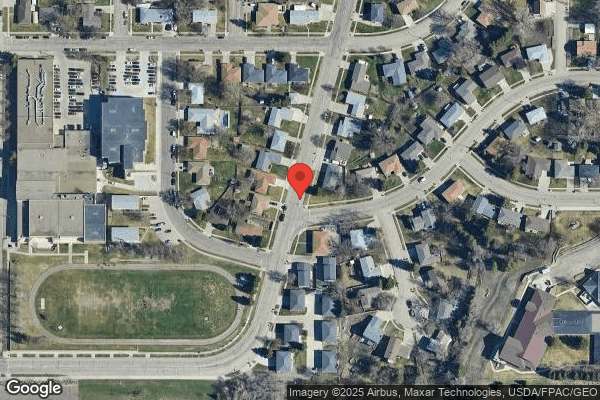
2425 HILLVIEW AVE, BISMARCK, ND 58501 (701) 223-9407
Non profit - Corporation 55 Beds Independent Data: November 2025
Trust Grade
85/100
#6 of 72 in ND
Last Inspection: March 2025

Within standard 12-15 month inspection cycle. Federal law requires annual inspections.

Overview

Missouri Slope in Bismarck, North Dakota has a Trust Grade of B+, which means it is recommended and above average in quality. It ranks #6 out of 72 facilities in the state, placing it in the top half, and is the best-rated nursing home among the six options in Burleigh County. The facility is currently improving, as the number of issues has decreased from three in 2024 to two in 2025. Staffing is a strong point, with a perfect 5/5 star rating, although the 56% turnover rate is average compared to the state average of 48%. There have been no fines, which is a positive sign, but it has less RN coverage than 89% of North Dakota facilities, meaning there may be less oversight in resident care. However, there are some concerns to note. Recent inspections revealed issues such as an ice machine lacking a required air gap that could risk contamination and instances of poor infection control practices, where staff failed to properly follow hand hygiene protocols while assisting residents. Additionally, there was a serious lapse in reporting a case of potential abuse involving a resident who sustained significant bruising, which could put residents at risk. Overall, while Missouri Slope has many strengths, families should be aware of these specific weaknesses when considering care for their loved ones.

Trust Score
B+
85/100
In North Dakota
#6/72
Top 8%
Safety Record
Low Risk
No red flags
Inspections
Getting Better
3 → 2 violations
Staff Stability
⚠ Watch
56% turnover. Above average. Higher turnover means staff may not know residents' routines.
Penalties
✓ Good
No fines on record. Clean compliance history, better than most North Dakota facilities.
Skilled Nurses
✓ Good
Each resident gets 48 minutes of Registered Nurse (RN) attention daily — more than average for North Dakota. RNs are trained to catch health problems early.
Violations
○ Average
6 deficiencies on record. Average for a facility this size. Mostly minor or procedural issues.
★★★★★
5.0
Overall Rating
★★★★★
5.0
Staff Levels
★★★☆☆
3.0
Care Quality
★★★★★
5.0
Inspection Score
Stable
2024: 3 issues
2025: 2 issues

The Good

  • 5-Star Staffing Rating · Excellent nurse staffing levels
  • Full Sprinkler Coverage · Fire safety systems throughout facility
  • No fines on record

Facility shows strength in staffing levels, fire safety.

The Bad

Staff Turnover: 56%

Near North Dakota avg (46%)

Frequent staff changes - ask about care continuity

Staff turnover is elevated (56%)

8 points above North Dakota average of 48%

The Ugly 6 deficiencies on record

May 2025 1 deficiency
CONCERN (D) 📢 Someone Reported This

A family member, employee, or ombudsman was alarmed enough to file a formal complaint

Potential for Harm - no one hurt, but risky conditions existed

Report Alleged Abuse (Tag F0609)

Could have caused harm · This affected 1 resident

Based on record review, review of the facility investigation, review of facility policy, and staff interview, the facility failed to ensure all alleged violations involving possible abuse and/or negle...

Read full inspector narrative →
Based on record review, review of the facility investigation, review of facility policy, and staff interview, the facility failed to ensure all alleged violations involving possible abuse and/or neglect were reported immediately to officials including the State Survey Agency (SSA) for 1 of 1 sampled resident (Resident #1) who sustained significant bruising to the left lower leg. Failure to immediately report alleged violations to the SSA placed Resident #1 and other residents at risk for possible abuse and/or neglect and further injury. Findings include: Review of the facility policy titled Abuse occurred on 05/21/25. This policy, dated September 2024, stated, . Neglect: Failure to provide goods and services necessary to avoid physical harm . The [NAME] President of Resident Services, or his/her designee shall immediately (within 24 hours) report all allegations of staff resident abuse, neglect . to the Stote [sic] Survey and Certification Agency and will report the results of the investigation to the State Survey and Certification Agency within tive [sic] (5) working days ot [sic] the incident. Review of Resident #1's medical record occurred on all days of survey. Diagnoses included atrial fibrillation and localized edema (swelling that occurs when fluid builds up in the body's tissues). Physician's orders, dated April 24-May 1, 2025, included aspirin (helps prevent blood clots from forming) 81 milligrams (mg) daily and enoxaparin (an anticoagulant) 70 mg every 12 hours for 25 days. Resident #1's care plan, dated 04/24/25, stated, . use caution during transfers and bed mobility to prevent striking arms, legs, and hands against any sharp or hard surface . A progress note, dated 05/01/25, stated, 3:14 a.m., Resident requested PRN [as needed] pain medication r/t [related to] left leg pain. this nurse came to bedside for assessment and to discuss intervention options. Upon assessment it was noted that the LEFT Calf was with new localized onset edema, hot to the touch, pain rated by resident as 'the worst,' significant bruising was noted to interior left mid-calf to knee bend. MD [medical doctor] [was] contacted . and gave the order to send to ER [emergency room] by ambulance at this [sic] is the non-surgical leg with no previous known issues . A progress noted, dated 05/01/25 at 8:15 a.m., stated, Called [hospital], resident has been admitted . It was found that [the] resident has an active bleed in the left, lower extremity . The facility's Final Investigation Report, dated 05/05/25, stated, . Day CNA [certified nurse aide] on 04/30/25 indicates that the resident reported her leg got twisted the night before . CNA does not remember seeing any bruising to the left leg that day. During an interview on 05/21/25 at 4:30 p.m., an administrative nurse (#4) confirmed the facility failed to report this incident to the SSA.
Mar 2025 1 deficiency
CONCERN (D) 📢 Someone Reported This

A family member, employee, or ombudsman was alarmed enough to file a formal complaint

Potential for Harm - no one hurt, but risky conditions existed

Deficiency F0658 (Tag F0658)

Could have caused harm · This affected 1 resident

**NOTE- TERMS IN BRACKETS HAVE BEEN EDITED TO PROTECT CONFIDENTIALITY** Based on record review, review of manufacturer's instructions for use, review of facility policy, and staff interview, the facil...

Read full inspector narrative →
**NOTE- TERMS IN BRACKETS HAVE BEEN EDITED TO PROTECT CONFIDENTIALITY** Based on record review, review of manufacturer's instructions for use, review of facility policy, and staff interview, the facility failed to ensure staff followed standards of practice for 1 of 4 residents (Resident #231) who had a continuous glucose monitoring (CGM) sensor/transmitter. Failure to educate nursing staff regarding the CGM device and failure to obtain physician orders regarding CGM device maintenance may result in inaccurate blood glucose monitoring and has the potential to cause harm to the resident. Findings include: Review of the facility policy titled; Continuous Glucose Monitoring (CGM) occurred on 03/05/25. This policy stated, . document in the resident's chart the site, date and time the CGM sensor/transmitter was applied and the date for need of reapplication. assess the CGM insertion site daily and document site assessment. Staff . training will be provided for each nurse . Review of CGM manufacturer's instructions stated, The sensor can be worn up to 14 days. Review of Resident #231's medical record occurred on all days of survey and identified a hospital stay from February 11-27, 2025. The facility staff placed the CGM sensor on 02/28/25. Current physician's order identified, CGM via . monitoring system. Change as directed as needed . The physician's orders failed to include the frequency of changing the [NAME] transmitter and site assessment. Review of Resident #231's February and March 2025 treatment administration record showed staff failed to document CGM device and site assessment. During an interview on 03/04/25 at 3:27 p.m., a staff nurse (#2) stated I've never worked with them [CGM sensors/transmitters] and it's never come up [reapplication of the CGM device], so I've never questioned it. During an interview on 03/05/25 at 12:53 p.m., an administrative nurse (#1) stated no orders were placed, so there is no documentation regarding the placement of the CGM sensor/transmitter, date for reapplication, or site assessments. The facility failed to educate each nurse regarding the CGM sensor/transmitter and failed to add the CGM device to Resident #231's care plan.
Jan 2024 3 deficiencies
CONCERN (D)

Potential for Harm - no one hurt, but risky conditions existed

Assessment Accuracy (Tag F0641)

Could have caused harm · This affected 1 resident

**NOTE- TERMS IN BRACKETS HAVE BEEN EDITED TO PROTECT CONFIDENTIALITY** Based on record review, review of the Long-Term Care Facility Resident Assessment Instrument (RAI) 3.0 User's Manual (Version 1....

Read full inspector narrative →
**NOTE- TERMS IN BRACKETS HAVE BEEN EDITED TO PROTECT CONFIDENTIALITY** Based on record review, review of the Long-Term Care Facility Resident Assessment Instrument (RAI) 3.0 User's Manual (Version 1.18.11), and staff interview, the facility failed to ensure accurate coding of the Minimum Data Set (MDS) for 1 of 3 closed records (Resident #24). Failure to accurately code a location the resident is discharged to may affect discharge planning. Findings include: SECTION A: IDENTIFICATION INFORMATION The Long-Term Care Facility RAI Manual, revised October 2023, pages A-42 and A-43, stated, . A2105: Discharge Status . Review the medical record including the discharge plan and discharge orders for documentation of discharge location. Coding Instructions. Code 01, Home/Community: if the resident was discharged to a private home, apartment . Code 04, Short-Term General Hospital (acute hospital.). Review of Resident #24's medical record occurred on 01/10/24. The physician's orders included, DC [Discharge] home on [DATE] with PT [physical therapy],OT [occupational therapy] Home Health. The discharge return not anticipated MDS, dated [DATE], showed Section A2105 coded as 04, Short-Term General Hospital. During an interview on 01/10/24 at 3:03 p.m., an administrative staff member (#5) confirmed facility staff coded Resident #24's MDS discharge incorrectly.
CONCERN (D)

Potential for Harm - no one hurt, but risky conditions existed

Accident Prevention (Tag F0689)

Could have caused harm · This affected 1 resident

Based on observation, record review, review of the facility's policy, review of an operator's manual, and staff interview, the facility failed to properly utilize assistive devices necessary to preven...

Read full inspector narrative →
Based on observation, record review, review of the facility's policy, review of an operator's manual, and staff interview, the facility failed to properly utilize assistive devices necessary to prevent accidents and/or injury for 2 of 6 sampled residents (Resident #1 and #20) observed during gait-belt or mechanical stand-lift transfers. Failure to use a gait-belt or ensure proper use of a stand-lift during transfers placed residents at risk for injury. Findings include: GAIT BELT Review of the policy titled Transfer/Locomotion occurred on 01/09/24. This policy, dated November 2023, stated, . Use gait belt with all assisted transfer and ambulation unless care planned otherwise. Observation on 01/09/24 at 8:40 a.m., showed a certified nurse aide (CNA) (#6) assisted Resident #20 with toileting. The CNA placed the gait belt around the resident, lifted under the resident's arm, and failed to use the gait belt during the transfer. During an interview on 01/09/24 at 10:08 a.m., an administrative nurse (#3) stated she expected staff to use a gait belt with transfers unless care planned otherwise. MECHANICAL STAND LIFT Review of the [brand name] Stand-Lift Operator's Manual occurred on 01/11/24. The manual stated, . the person being transferred does need some body strength. We encourage anyone being lifted with the [brand name] Stand Lift to use their legs and arms as the lift is doing its' work. Lift the person to a standing position. Now transport the person . Review of Resident #1's medical record occurred on all days of survey. Diagnoses included dementia, hemiparesis affecting left side, and left artificial knee joint/pain. The current care plan stated, . [Resident #1] is at risk for falls . Transfers . [stand lift device] with assist x [times] 2 [staff members]. Observation on 01/09/24 at 9:45 a.m. showed two CNAs (#7 and #8) toileted Resident #1. One CNA (#8) raised Resident #1 approximately twelve inches in the sit-to-stand lift and transferred her into the bathroom. Resident #1 remained in a semi-seated position with the sling straps pulling upward into her armpits, raising her shoulders to ear level. A few minutes later, the CNA (#8) raised Resident #1 approximately six inches in the sit-to-stand lift and transferred her onto the bed. Resident #1 remained in a semi-seated position with the sling straps pulling upward into her armpits, raising her shoulders to ear level. The CNA (#8) failed to ensure Resident #1 could bear weight while in the stand lift.
CONCERN (E)

Potential for Harm - no one hurt, but risky conditions existed

Infection Control (Tag F0880)

Could have caused harm · This affected multiple residents

Based on observation, review of facility policy, and staff interview, the facility failed to follow standards of infection control for 4 of 11 sampled residents (Residents #4, #5, #9 and #175) observe...

Read full inspector narrative →
Based on observation, review of facility policy, and staff interview, the facility failed to follow standards of infection control for 4 of 11 sampled residents (Residents #4, #5, #9 and #175) observed during personal. Failure to practice infection control standards related to hand hygiene and glove use has the potential to spread infections throughout the facility. Findings include: Review of the facility policy titled Hand Hygiene occurred on 01/10/24. This policy, dated November 2023, stated, . Indications for Hand Hygiene: . After removing gloves. - Observation on 01/08/24 at 2:32 p.m. showed two certified nurse aides (CNAs) (#1 and #2) donned gloves and provided toileting assistance for Resident #5. The resident stood up from the toilet and the CNA (#1) provided perineal care. While wearing the same gloves, the CNA (#1) escorted the resident to her recliner, turned on her television, patted her on the back, and gave the resident a coloring book and colored pencils. The CNA (#1) removed her gloves, left Resident #5's room, and completed hand hygiene using hand sanitizer mounted on the hallway wall across from the resident's room. - Observation on 01/08/24 at 3:32 p.m. showed two CNAs (#1 and #2) donned gloves and provided toileting assistance for Resident #9. The resident stood from the toilet, the CNA (#1) provided perineal care, changed gloves without performing hand hygiene, applied barrier cream, and encouraged Resident #9 to sit down for a bowel movement. The CNA (#1) changed gloves without performing hand hygiene. The resident stood from the toilet and the CNA (#1) provided perineal care, changed gloves without performing hand hygiene, applied barrier cream, and removed her gloves without completing hand hygiene. Resident #9 exited the bathroom and the CNA (#1) followed, donning gloves as she walked, settled the resident into her recliner, and gave her a glass of water. The CNA (#1) removed her gloves, exited the room, and used the hand sanitizer on the wall across from the resident's room. - Observation on 01/08/24 at 4:05 p.m. showed a CNA (#1) assisted Resident #175 with toileting. The CNA donned gloves and provided perineal care after the resident had a bowel movement. The CNA (#1) removed her gloves and without performing hand hygiene pulled up the resident's pants, transferred the resident into the wheelchair, and onto the side of the bed. The CNA (#1) removed the resident's gait belt and shoes, handed the resident a glass of water, repositioned the bedside table, and assisted the resident to lie down. The CNA failed to perform hand hygiene after removing her gloves. - Observation on 01/09/24 at 10:07 a.m. showed two CNAs (#6 and #7) donned gloves and transferred Resident #4 onto the bed to check and change him. After checking Resident #4's brief and adjusting his clothing, one CNA (#6) removed her gloves, sanitized her hands, and exited the room for supplies. Upon return, the CNA donned gloves, helped to transfer Resident #4 into his wheelchair, pushed the lift into the bathroom, adjusted Resident #4 nasal cannula, removed her gloves, and exited the room without performing hand hygiene. The CNA (#6) failed to perform hand hygiene prior to exiting the room. During an interview on 01/10/24 at 2:55 p.m., an administrative staff nurse (#3) confirmed the CNAs failed to complete hand hygiene per facility expectations.
Jan 2023 1 deficiency
CONCERN (F)

Potential for Harm - no one hurt, but risky conditions existed

Safe Environment (Tag F0921)

Could have caused harm · This affected most or all residents

Based on observation, review of the North Dakota Plumbing Code, and staff interview, the facility failed to provide an air gap for 2 of 2 active ice machines (kitchen and [NAME] View) observed. Failur...

Read full inspector narrative →
Based on observation, review of the North Dakota Plumbing Code, and staff interview, the facility failed to provide an air gap for 2 of 2 active ice machines (kitchen and [NAME] View) observed. Failure to provide the required air gap for the ice machines has the potential to allow contamination of these machines in the event of a sewer back up. Findings include: Review of the 2018 North Dakota Plumbing Code, section 801.2 Air Gap or Air Break Required, stated, Indirect waste piping shall discharge into the building drainage system through an air gap or air break as set forth in this code. Where a drainage air gap is required by this code, the minimum vertical distance as measured from the lowest point of the indirect waste pipe or the fixture outlet to the flood-level rim of the receptor shall be not less than 1 inch (25.4 mm). Section 801.3.3 Food-Handling Fixtures, stated, Food-preparation sinks, steam kettles, potato peelers, ice cream dipper wells, and similar equipment shall be indirectly connected to the drainage system by means of an air gap. Bins, sinks, and other equipment having drainage connections and used for the storage of unpackaged ice used for human ingestion, or used in direct contact with ready-to-eat food, shall be indirectly connected to the drainage system by means of an air gap. Each indirect waste pipe from food-handling fixtures or equipment shall be separately piped to the indirect waste receptor and shall not combine with other indirect waste pipes. The piping from the equipment to the receptor shall be not less than the drain on the unit and in no case less than 1/2 of an inch (15 mm). Observations on 01/10/23 at 1:04 p.m. and 3:40 p.m. showed the following: * The ice machine drainpipe in the kitchen lacked an air gap. * The drainpipe for the ice machine in [NAME] View lacked an air gap. During an interview on 01/11/22 at 8:35 a.m., the maintenance director (#1) confirmed the ice machines failed to have the required air gaps.
Understanding Severity Codes (click to expand)
Life-Threatening (Immediate Jeopardy)
J - Isolated K - Pattern L - Widespread
Actual Harm
G - Isolated H - Pattern I - Widespread
Potential for Harm
D - Isolated E - Pattern F - Widespread
No Harm (Minor)
A - Isolated B - Pattern C - Widespread

Questions to Ask on Your Visit

  • "Why is there high staff turnover? How do you retain staff?"
  • "Can I speak with families of current residents?"
  • "What's your RN coverage like on weekends and overnight?"

Our Honest Assessment

Strengths
  • • Grade B+ (85/100). Above average facility, better than most options in North Dakota.
  • • No major safety red flags. No abuse findings, life-threatening violations, or SFF status.
  • • No fines on record. Clean compliance history, better than most North Dakota facilities.
Concerns
  • • 56% turnover. Above average. Higher turnover means staff may not know residents' routines.
Bottom line: Generally positive indicators. Standard due diligence and a personal visit recommended.

About This Facility

What is Missouri Slope's CMS Rating?

CMS assigns MISSOURI SLOPE an overall rating of 5 out of 5 stars, which is considered much above average nationally. Within North Dakota, this rating places the facility higher than 99% of the state's 100 nursing homes. This rating reflects solid performance across the metrics CMS uses to evaluate nursing home quality.

How is Missouri Slope Staffed?

CMS rates MISSOURI SLOPE's staffing level at 5 out of 5 stars, which is much above average compared to other nursing homes. Staff turnover is 56%, which is 10 percentage points above the North Dakota average of 46%. High turnover can affect care consistency as new staff learn residents' individual needs.

What Have Inspectors Found at Missouri Slope?

State health inspectors documented 6 deficiencies at MISSOURI SLOPE during 2023 to 2025. These included: 6 with potential for harm.

Who Owns and Operates Missouri Slope?

MISSOURI SLOPE is owned by a non-profit organization. Non-profit facilities reinvest revenue into operations rather than distributing to shareholders. The facility operates independently rather than as part of a larger chain. With 55 certified beds and approximately 31 residents (about 56% occupancy), it is a smaller facility located in BISMARCK, North Dakota.

How Does Missouri Slope Compare to Other North Dakota Nursing Homes?

Compared to the 100 nursing homes in North Dakota, MISSOURI SLOPE's overall rating (5 stars) is above the state average of 3.1, staff turnover (56%) is near the state average of 46%, and health inspection rating (5 stars) is much above the national benchmark.

What Should Families Ask When Visiting Missouri Slope?

Based on this facility's data, families visiting should ask: "How do you ensure continuity of care given staff turnover, and what is your staff retention strategy?" "Can I visit during a mealtime to observe dining assistance and food quality?" "How do you handle medical emergencies, and what is your hospital transfer rate?" "Can I speak with family members of current residents about their experience?" These questions are particularly relevant given the facility's high staff turnover rate.

Is Missouri Slope Safe?

Based on CMS inspection data, MISSOURI SLOPE has a clean safety record: no substantiated abuse findings (meaning no confirmed cases of resident harm), no Immediate Jeopardy citations (the most serious violation level indicating risk of serious injury or death), and is not on the Special Focus Facility watch list (a federal program monitoring the lowest-performing 1% of nursing homes). The facility has a 5-star overall rating and ranks #1 of 100 nursing homes in North Dakota. While no facility is perfect, families should still ask about staff-to-resident ratios and recent inspection results during their visit.

Do Nurses at Missouri Slope Stick Around?

Staff turnover at MISSOURI SLOPE is high. At 56%, the facility is 10 percentage points above the North Dakota average of 46%. High turnover means new staff may not know residents' individual needs, medications, or preferences. It can also be disorienting for residents, especially those with dementia who rely on familiar faces. Families should ask: What is causing the turnover? What retention programs are in place? How do you ensure care continuity during staff transitions?

Was Missouri Slope Ever Fined?

MISSOURI SLOPE has no federal fines on record. CMS issues fines when nursing homes fail to meet care standards or don't correct problems found during inspections. The absence of fines suggests the facility has either maintained compliance or corrected any issues before penalties were assessed. This is a positive indicator, though families should still review recent inspection reports for the full picture.

Is Missouri Slope on Any Federal Watch List?

MISSOURI SLOPE is not on any federal watch list. The most significant is the Special Focus Facility (SFF) program, which identifies the bottom 1% of nursing homes nationally based on persistent, serious quality problems. Not being on this list means the facility has avoided the pattern of deficiencies that triggers enhanced federal oversight. This is a positive indicator, though families should still review the facility's inspection history directly.