GOOD SAMARITAN SOCIETY - BOTTINEAU
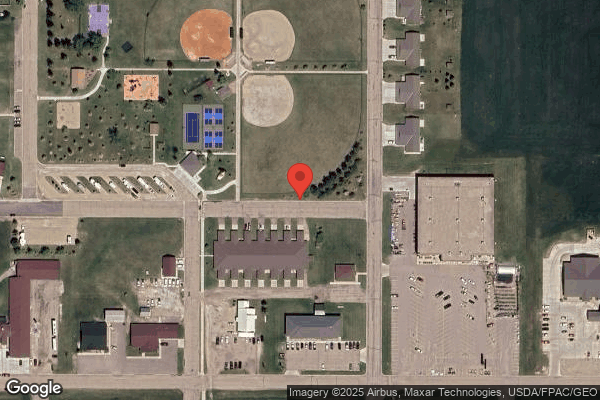
725 E 10TH ST, BOTTINEAU, ND 58318 (701) 228-3796
Non profit - Corporation 52 Beds GOOD SAMARITAN SOCIETY Data: November 2025 4 Immediate Jeopardy citations
Trust Grade
0/100
Last Inspection: March 2025

Within standard 12-15 month inspection cycle. Federal law requires annual inspections.

Overview

Good Samaritan Society - Bottineau has received a Trust Grade of F, which indicates significant concerns about the care provided at this facility. It ranks poorly, with no other facilities in North Dakota performing better, highlighting a lack of options for families in the area. The situation is worsening, as the number of issues reported has increased from 5 in 2024 to 7 in 2025. Staffing is a major concern, with a high turnover rate of 69%, which is significantly above the state average of 48%. Additionally, the facility has accumulated $184,218 in fines, which is higher than 98% of facilities in North Dakota, indicating ongoing compliance issues. On the positive side, the facility offers more registered nurse (RN) coverage than 90% of other facilities in the state, which can help identify problems that other staff might miss. However, there are serious weaknesses, including critical findings where residents were not protected from physical abuse and neglect, leading to fear and anxiety. Incidents included residents being subjected to aggressive behavior from others and unsafe conditions, such as the risk of burns from excessively hot water in the dining room. Overall, families should carefully consider these significant concerns when evaluating this nursing home for their loved ones.

Trust Score
F
0/100
In North Dakota
#112/223
Top 50%
Safety Record
High Risk
Review needed
Inspections
Getting Worse
5 → 7 violations
Staff Stability
⚠ Watch
69% turnover. Above average. Higher turnover means staff may not know residents' routines.
Penalties
○ Average
$184,218 in fines. Higher than 67% of North Dakota facilities. Some compliance issues.
Skilled Nurses
✓ Good
Each resident gets 58 minutes of Registered Nurse (RN) attention daily — more than average for North Dakota. RNs are trained to catch health problems early.
Violations
⚠ Watch
34 deficiencies on record. Higher than average. Multiple issues found across inspections.
☆☆☆☆☆
0.0
Overall Rating
☆☆☆☆☆
0.0
Staff Levels
☆☆☆☆☆
0.0
Care Quality
☆☆☆☆☆
0.0
Inspection Score
Stable
2024: 5 issues
2025: 7 issues

The Good

  • Full Sprinkler Coverage · Fire safety systems throughout facility
  • No fines on record

Facility shows strength in fire safety.

The Bad

Staff Turnover: 69%

23pts above North Dakota avg (46%)

Frequent staff changes - ask about care continuity

Federal Fines: $184,218

Well above median ($33,413)

Significant penalties indicating serious issues

Chain: GOOD SAMARITAN SOCIETY

Part of a multi-facility chain

Ask about local staffing decisions and management

Staff turnover is elevated (69%)

21 points above North Dakota average of 48%

The Ugly 34 deficiencies on record

4 life-threatening 2 actual harm
Jul 2025 2 deficiencies 1 IJ
CRITICAL (J) 📢 Someone Reported This

A family member, employee, or ombudsman was alarmed enough to file a formal complaint

Immediate Jeopardy (IJ) - the most serious Medicare violation

Free from Abuse/Neglect (Tag F0600)

Someone could have died · This affected 1 resident

**NOTE- TERMS IN BRACKETS HAVE BEEN EDITED TO PROTECT CONFIDENTIALITY** Based on review of the facility reported incident (FRI) investigation, record review, review of facility policy, and staff inter...

Read full inspector narrative →
**NOTE- TERMS IN BRACKETS HAVE BEEN EDITED TO PROTECT CONFIDENTIALITY** Based on review of the facility reported incident (FRI) investigation, record review, review of facility policy, and staff interview, the facility failed to provide an environment free of mental/physical abuse for 1 of 1 sampled resident (Resident #1) Failure to prevent Resident #1 form the abusive actions of other residents (Resident #2 and #3) resulted in Resident #1 experiencing fear, anxiety, and injury.During the on-site FRI investigation survey, the team consulted with the State Survey Agency (SSA) on 07/10/25 at 12:19 p.m. and determined an immediate jeopardy (IJ) situation existed on 04/30/25. The facility failed to protect residents from abuse which resulted in resident-to-resident altercations. * 07/10/25 at 12:55 p.m., the survey team notified the Administrator and Director of Nursing (DON) of the IJ situation, provided the IJ template, and requested a removal plan for the IJ. * 07/10/25 at 3:30 p.m., the survey team reviewed and accepted the facility's removal plan. *07/16/25, the survey team verified the implementation of the removal plan and the IJ removal. The deficient practice remained at a G scope and severity following the IJ removal.The removal plan contained the following: * Resident #1 will have 1:1 supervision when mobile in his wheelchair.* The physician referred Resident #1 to Rural Psych Associates.* All staff received education on abuse, resident-to-resident altercations, and reporting. Findings include:Review of the facility policy titled Abuse and Neglect occurred on 07/10/25. This policy, dated April 2025, stated, . The resident . has the right to be free from abuse . residents . must not be subject to abuse by anyone, including, . other residents . Review of Resident #1's medical record occurred on 07/10/25. Diagnoses included Alzheimer's disease, dementia, and anxiety disorder. An annual Minimum Data Set (MDS), dated [DATE], identified the resident severe cognitive impairment. The current care plan identified, . has impaired cognitive function . or impaired thought processes . E/B [evidenced by] confusion, short- and long-term memory loss . Review of Resident #2's medical record occurred on 07/10/25. Diagnoses included dementia, impulsiveness, and expressive language disorder. A quarterly MDS, dated [DATE], identified severe cognitive impairment. The current care plan identified, . becomes uncomfortable at times with groups of people/loud areas E/B raises his voice, yells and at times curses . does not like to be touched by other resident's . h/o [history of] resident to resident interactions . Review of Resident #3's medical record occurred on 07/10/25. Diagnoses included behavioral and emotional disorders. A quarterly MDS, dated [DATE], identified severe cognitive impairment. The current care plan identified, . has hallucinations/delusions . verbal behaviors .-The FRI, dated 04/30/25, stated, . [Resident #1] was sitting in wheelchair in E/W [east/west] commons area next to [Resident #2] who was also sitting in his wheelchair. [Resident #2] grabbed this resident's shirt sleeve and hit him multiple times with a closed fist.Review of facility video footage, dated 04/30/25, showed Resident #2 backed up and parked his wheelchair in front of the nurse's station. Resident #1 propelled his wheelchair toward Resident #2, grabbed his wheelchair, and moved him forward. Resident #2 grabbed Resident #1's sleeve and punched him in the arm three times with a closed fist before staff intervened.-The FRI, dated 05/03/25, stated, . [Resident #1] told [Resident #2] to move old man and then . [Resident #1] was observed slapping at [Resident #2's] hands and forearms. [Resident #2] . slapped back before staff intervened.Review of facility video footage, dated 05/03/25, showed Resident #2 in his wheelchair near the dining room entrance. Resident #1 attempted to propel his wheelchair past Resident #2 and flinched when Resident #2 gestured, like he was going to strike him. Resident #1 attempted to propel his chair past Resident #2, when Resident #2 grabbed his wheelchair and started slapping him. Resident #1 retaliated by slapping Resident #2 before staff intervened. -The FRI, dated 07/06/25, stated, . Floor nurse heard commotion, and two residents [Resident #1 and Resident #3] swearing at each other in the hallway by the conference room. The floor nurse turned the corner and found [Resident #1] tipped backwards in his wheelchair holding his head.Review of facility video footage, dated 07/06/25, showed Resident #1 in his wheelchair and Resident #3 approached him from behind. Resident #1 was attempted to propel his wheelchair forward when Resident #3 grabbed/tipped his chair and put her arm around his neck as he leaned backwards in her lap. During an interview on 07/10/25 at 1:00 p.m., two administrative staff members (#1 and #2) confirmed the altercations occurred and the altercation on 07/06/25 resulted in a large hematoma to the back of Resident #1's head requiring an emergency room visit. Facility staff failed to supervise residents and implement interventions in an effort to prevent Resident #1 from mental and physical abuse from other residents in the facility.
CONCERN (D) 📢 Someone Reported This

A family member, employee, or ombudsman was alarmed enough to file a formal complaint

Potential for Harm - no one hurt, but risky conditions existed

Investigate Abuse (Tag F0610)

Could have caused harm · This affected 1 resident

Based on review of the facility reported incident (FRI) and review of facility policy, the facility failed to conduct a thorough investigation of physical abuse for 3 of 3 sampled residents (Resident ...

Read full inspector narrative →
Based on review of the facility reported incident (FRI) and review of facility policy, the facility failed to conduct a thorough investigation of physical abuse for 3 of 3 sampled residents (Resident #1, #2, and #3). Failure to investigate all allegations of abuse and ensure all residents were protected during the investigation placed Residents #1, #2, and #3 and all facility residents at risk for possible abuse, mental an emotional distress, and/or physical injury. thoroughly investigate allegations of abuse for 1 of 1 sampled resident (Resident #1). Failure to thoroughly investigate all abuse allegations, ensure Resident #1 was protected during each investigation, and implement corrective actions/evaluate their effectiveness following each investigation, placed Resident #1 and other residents at risk for possible abuse. Findings include: Review of the facility policy titled Abuse and Neglect occurred on 07/10/25. This policy, dated April 2025, stated, . 6. The investigation team . will review all events no later than the next working day following the event. 7. Ensure that someone is assigned to complete the investigation and that the care plan has been updated with any new interventions . 8. The investigation may include interviewing employees, residents/clients or other witnesses to the event.The FRI, dated 04/30/25, stated, . [Resident #1] was sitting in wheelchair in E/W [east/west] commons area next to [Resident #2] who was also sitting in his wheelchair. [Resident #2] grabbed this resident's shirt sleeve and hit him multiple times with a closed fist. The FRI investigation report, dated 05/03/25, stated, . [Resident #1] told [Resident #2] to move old man and then . [Resident #1] was observed slapping at [Resident #2's] hands and forearms. [Resident #2] . slapped back before staff intervened.The FRI investigation report, dated 07/06/25, stated, . Floor nurse heard commotion, and two residents [Resident #1 and Resident #3] swearing at each other in the hallway by the conference room. The floor nurse turned the corner and found [Resident #1] tipped backwards in his wheelchair holding his head.The facility lacked evidence of thorough investigations related to abuse and failed to protect all residents during the investigation.
May 2025 2 deficiencies 1 Harm
SERIOUS (G) 📢 Someone Reported This

A family member, employee, or ombudsman was alarmed enough to file a formal complaint

Actual Harm - a resident was hurt due to facility failures

Quality of Care (Tag F0684)

A resident was harmed · This affected 1 resident

**NOTE- TERMS IN BRACKETS HAVE BEEN EDITED TO PROTECT CONFIDENTIALITY** Based on record review, the facility failed to provide necessary care and services for 1 of 1 closed record (Resident #1) who ex...

Read full inspector narrative →
**NOTE- TERMS IN BRACKETS HAVE BEEN EDITED TO PROTECT CONFIDENTIALITY** Based on record review, the facility failed to provide necessary care and services for 1 of 1 closed record (Resident #1) who experienced multiple medical incidents and a decline in health status. Failure to notify the provider and resident representative of the initial choking event and further medical incidents, delayed physician and representative input for testing/monitoring/treatment, contributed to the resident's decline followed by hospitalization, and may have contributed to the resident's subsequent death. Findings include: Review of Resident #1's medical record occurred on 05/13/25. A Minimum Data Set (MDS)Assessment, dated 03/10/25, identified severely impaired cognition, and dependent on staff for all activities of daily living (ADLs). Review of Resident #1's progress notes identified the following: * 03/22/25 at 8:45 a.m. Resident had choking episode. This nurse performed Heimlich [a first aid procedure used to dislodge an obstruction from a person's windpipe] on resident. Resident expelled a small chunk of food and large amount of phlegm. No adverse effects noted. * 03/24/25 at 9:26 a.m. Trial run of pureed food until diet order can be changed. * A fax to Resident #1's medical provider, dated 03/31/25, stated, . Resident continually yells out. Does not answer if asked questions such as if she needs something for pain. This behavior is not normal for her. It started on 3-30-25. The fax addressed the resident's new onset behaviors but failed to include the resident's choking episode on 03/22/25. * 03/31/25 at 1:45 p.m. Dietary is doing a trial of pureed diet to see how she does . Plan to continue to monitor & follow up in 1 month. * 04/4/25 at 3:37 p.m. [Resident #1's name] urine is very strong. Please push water and cranberry juice over the weekend. * 04/10/25 at 12:23 a.m. During routine rounds resident was discovered making usual loud, incomprehensible noises but with a somewhat wet sound. Pt [patient] discovered to have vomited their dinner up . CNA [certified nurse aide] had already begun attending to resident's needs. Resident placed in high-fowler's [semi-sitting position where the head of the bed is elevated between 60 and 90 degrees] and oral suctioning provided with minimal vomitus suctioned into Yaunkur [medical tool used for suctioning secretions from the mouth and throat] [sic] tubing. Resident w/ [with] no verbally expressed needs. resident's lungs w/congestion noted to all four fields. Resident's v/s [vital signs] obtained and found to be hypotensive (abnormally low blood pressure] and tachycardic [fast heart rate]. Resident w/ no other complaints throughout shift. Resident slept remainder of shift. The facility failed to contact the resident's provider and representative related to vomiting, low blood pressure, and tachycardia. * 04/10/25 . 0626 [6:26 a.m.] - Aide [CNA] came to this nurse to report . 79% [oxygen saturation] RA [room air] 0630 [6:30 a.m.] This nurse completed assessment; crackles to all lung fields with externally audible bubbling, O2 [oxygen] sats [saturation] rechecked via finger and ear with reading of 78% and 79%. O2 via NC [nasal cannula] at 3L[liters]/min [per minute] administered. 0635 [6:35 a.m.] - O2 rechecked via ear with reading of 82% 0640 [6:40 a.m.] - Family notified 0648 [6:48 a.m.]- Resident transported to ER [emergency room] 0650 [6:50 a.m.] . The medical record failed to document a provider's notification and order for transport to the ER. * 04/10/25 at 2:45 p.m. Late entry 1130 [11:30 p.m.] Received report from . [name of hospital]. Resident will be admitted to comfort cares r/t [related to] aspiration . and sepsis. The medical record failed to show facility staff consistently notified the provider and obtained orders to ensure proper care and services were provided to the resident after the choking episode, change of diet, odorous urine, and the change in condition on 04/10/25 at 12:23 a.m.
CONCERN (D) 📢 Someone Reported This

A family member, employee, or ombudsman was alarmed enough to file a formal complaint

Potential for Harm - no one hurt, but risky conditions existed

Notification of Changes (Tag F0580)

Could have caused harm · This affected 1 resident

**NOTE- TERMS IN BRACKETS HAVE BEEN EDITED TO PROTECT CONFIDENTIALITY** Based on record review, review of facility policy, and staff interview, the facility failed to notify the resident's physician a...

Read full inspector narrative →
**NOTE- TERMS IN BRACKETS HAVE BEEN EDITED TO PROTECT CONFIDENTIALITY** Based on record review, review of facility policy, and staff interview, the facility failed to notify the resident's physician and/or resident representative of a change in condition for 1 of 1 closed record (Resident #1) who experienced a choking episode and 1 of 3 sampled residents (Resident #2) with a skin tear. Failure to notify the physician and/or resident representative of changes in condition may have prevented the physician from altering treatment/care and prevented the resident representative from making informed decisions regarding medical care. Findings include: Review of the facility policy titled Notification of Change occurred on 05/13/25. This policy, dated December 2024, stated, . The facility must immediately . consult with the resident's physician and notify . the resident representative(s) when there is . A significant change in the resident's physical . status . A need to alter treatment significantly - a need to discontinue or change an existing form of treatment or to commerce a new form of treatment. - Review of Resident #1's medical record occurred on 05/13/25. The nurses' notes identified the following: * 03/22/25 at 8:45 a.m. Resident had choking episode. This nurse performed Heimlich [a first aid procedure used to dislodge an obstruction from a person's windpipe] on resident. Resident expelled a small chunk of food and large amount of phlegm. No adverse effects noted. * 03/24/25 at 9:26 a.m. Trial run of pureed food until diet order can be changed. * 04/04/25 at 3:37 p.m. [Resident #1's name] urine is very strong. Please push water and cranberry juice over the weekend. * 4/10/25 at 12:23 a.m. During routine rounds resident was discovered making usual loud, incomprehensible noises but with a somewhat wet sound. Pt [patient] discovered to have vomited their dinner up . Resident's light was already on as CNA [certified nurse aide] had already begun attending to resident's needs. Resident placed in high-fowler's [semi-sitting position where the head of the bed is elevated between 60 and 90 degrees] and oral suctioning provided with minimal vomitus suctioned into Yaunkur [medical tool used for suctioning secretions from the mouth and throat] (sic) tubing. Resident w/ [with] no verbally expressed needs. resident's lungs w/congestion noted to all four fields. Resident's v/s [vital signs] obtained and found to be hypotensive [abnormally low blood pressure] and tachycardic [fast heart rate]. Resident w/ [with] no other complaints throughout shift. Resident slept remainder of shift. * 04/10/25 at 6:58 a.m. 0626 [6:26 a.m.] - Aide [CNA] came to this nurse . 79% [oxygen saturation] RA [room air] 0630 [6:30 a.m.] This nurse completed assessment; crackles to all lung fields with externally audible bubbling, O2 [oxygen] sats [saturation] rechecked via finger and ear with reading of 78% and 79%. O2 via NC [nasal cannula] at 3L[liters]/min [per minute] administered. 0635 [6:35 a.m.] - O2 rechecked via ear with reading of 82% 0640 [6:40 a.m.] - Family notified 0648 [6:48 a.m.]- Resident transported to ER [emergency room] 0650 [6:50 a.m.] . Resident #1's medical record failed to show the facility informed the resident's physician and representative of the choking episode, change in urine, and acute changes in the resident's status. - Review of Resident #2's medical record occurred on 05/13/25. A nurse's note, dated 04/23/25 at 11:39 a.m., stated, . Resident observed to have ST [skin tear] to posterior [back] upper Lt [left] leg near gluteal [buttock] crease measures approximately 0.3 cm [centimeters] in length by 0.5 cm in width measurements are approximate as Resident was moving . during measurement. Skin approximated [pulled together] and tegaderm [type of dressing] applied. Resident #2's medical record failed to identify the facility informed the resident's representative of the skin tear. During an interview on 05/13/25 at 4:28 p.m., an administrative nurse (#2) stated she/he would expect facility staff to notify Resident #1's medical provider and resident representative of the choking episode, change in urine, and acute changes in the resident's condition, and notify Resident #2's representative about the skin tear.
Mar 2025 2 deficiencies
CONCERN (D) 📢 Someone Reported This

A family member, employee, or ombudsman was alarmed enough to file a formal complaint

Potential for Harm - no one hurt, but risky conditions existed

MDS Data Transmission (Tag F0640)

Could have caused harm · This affected 1 resident

**NOTE- TERMS IN BRACKETS HAVE BEEN EDITED TO PROTECT CONFIDENTIALITY** Based on record review, review of the Long-Term Care Facility Resident Assessment Instrument (RAI) 3.0 User's Manual (Version 1....

Read full inspector narrative →
**NOTE- TERMS IN BRACKETS HAVE BEEN EDITED TO PROTECT CONFIDENTIALITY** Based on record review, review of the Long-Term Care Facility Resident Assessment Instrument (RAI) 3.0 User's Manual (Version 1.19.1), and staff interview, the facility failed to ensure timely electronic data submission of a required Minimum Data Set (MDS) death discharge assessment for 1 of 1 closed record (Resident #18). Failure to follow the MDS data submission specifications did not meet the intended regulatory requirements. Findings include: The Long-Term Care Facility RAI 3.0 User's [NAME], revised October 2024, Page 2-38, stated, . Death in Facility Tracking Record. Must be completed within 7 days after the resident's death . Must be submitted within 14 days after the resident's death. Review of Resident #18's medical record occurred on 03/19/25. The MDS showed a Death in Facility Tracking Record, with an Assessment Reference Date (ARD) date of 01/17/25, as Export Ready. During an interview on 03/19/25 at 1:50 p.m., two administrative staff members (#2 and #3) confirmed the facility failed to submit/export Resident #18's death discharge MDS, with an ARD of 01/17/25.
CONCERN (E) 📢 Someone Reported This

A family member, employee, or ombudsman was alarmed enough to file a formal complaint

Potential for Harm - no one hurt, but risky conditions existed

Infection Control (Tag F0880)

Could have caused harm · This affected multiple residents

Based on observation, record review, review of facility policy, and staff interview, the facility failed to follow standards of infection control and prevention for 1 of 4 sampled residents (Resident ...

Read full inspector narrative →
Based on observation, record review, review of facility policy, and staff interview, the facility failed to follow standards of infection control and prevention for 1 of 4 sampled residents (Resident #32) and 3 supplemental residents (Resident #15, #19, and #30) observed during personal cares. Failure to practice infection control standards related to enhanced barrier precautions (EBP), hand hygiene, and disinfecting equipment has the potential to spread infection throughout the facility. Findings include: Review of the facility policy titled Hand Hygiene occurred on 03/19/25. This policy, dated March 2022, stated, . use waterless alcohol-based hand sanitizer or soap and water to clean their hands: When entering patient room . After removing gloves regardless of task completed . After contact with a patient's non-intact skin, wound . excretions, mucus membranes, . When moving from contaminated body site to a clean body site during patient care . When exiting patient room . Review of the facility policy titled Standard and Transmission Based Precautions occurred on 03/19/25. This policy, dated April 2024, stated, . Enhanced Barrier Precautions (EBP) . refer to the use of gown and gloves during high-contact resident care activities that provide opportunities for transfer of MDROs [multi-drug resistant organisms] to staff hands and clothing . are needed for residents with chronic wounds . High-Contact Resident Care Activities include: Transfers, dressing, assisting during bathing, providing hygiene, changing briefs or assisting with toileting . Resident/Patient Care Equipment and Instruments/Devices. If common use of equipment for multiple residents/patients is unavoidable, clean and disinfect such equipment before use on another resident/patient . - Observation on 03/17/25 at 3:24 p.m. showed a certified nurse aid (CNA) (#4) applied gloves and assisted Resident #30 to sit on the toilet. The CNA lowered the resident's wet pants, and the soiled brief dropped to the floor. The CNA removed the wet pants and placed the soiled brief in the trash. Without changing gloves or performing hand hygiene, the CNA obtained a clean pair of pants and brief from the closet. The CNA (#4) cleansed the resident's perineal area with disposable wipes and used another wipe to clean a smear of bowel movement (BM) off the toilet seat, applied a clean brief, pants, and adjusted the resident's shirt. The CNA (#4) failed to change gloves and perform hand hygiene after she removed a soiled brief and wiped BM from the resident and toilet seat. - Observation on 03/17/25 at 3:55 p.m. showed Resident #15 in bed. Two CNAs (#4 and #5) applied gloves, turned the resident, and removed the soiled brief. The CNA (#5) used disposable wipes to cleanse the perineal area of incontinent BM. The CNA (#5) applied a clean brief, pulled the resident's pants up, and emptied the garbage. Both CNAs placed the sling under the resident and utilized a mechanical lift to transfer Resident #15 from the bed to a chair. The CNA (#5) removed her gloves, placed the mechanical lift in the hallway outside the resident room and failed to disinfect the mechanical lift after use. The CNA #5 failed to change gloves and perform hand hygiene after removing a soiled brief, cleansing the perineal area and before applying a clean brief. - Observation on 03/17/25 at 4:10 p.m. showed Resident #19 in bed, two CNAs (#4 and #5) applied gloves and used a mechanical lift to raise the resident to a semi-standing position. The CNAs (#4 and #5) removed the resident's wet pants and brief. The CNA (#4) cleansed the resident's perineal area, applied a clean brief and pants, and transferred the resident to the wheelchair. The CNA (#5) placed the sit-to-stand lift in the hallway outside the resident room and failed to disinfect the lift after use. The CNA (#4) placed the foot pedals on the wheelchair, removed her gloves and performed hand hygiene. The CNA (#4) failed to change gloves after removing a soiled brief, cleansing the perineal area, and before applying a clean brief. - Review of Resident #32's medical record occurred on all days of survey. The record identified an open sacral (base of the spine) wound. Review of the care plan identified, . The resident requires Enhanced Barrier Precautions (EBP) R/T [related to] open wound. Intervention: [NAME] [apply] gown and gloves when performing high contact care activities including: dressing, bathing, transferring, . repositioning, checking and changing, . Observation on 03/17/25 at 4:20 p.m. showed Resident #32's room with an EBP sign on the door frame. Two CNAs (#4 and #5) applied gloves, utilized a full-body mechanical lift and transferred Resident #32 from the recliner chair to the bed. The CNAs completed a brief change, and with the mechanical lift, transferred the resident into the wheelchair. The CNAs (#4 and #5) failed to apply gowns to complete high-contact care tasks for Resident #32. During an interview on 03/19/25 at 2:56 p.m., an administrative staff member (#2) confirmed she expected staff to change gloves and perform hand hygiene after removing soiled briefs, disinfect mechanical lifts after each resident use, and apply gloves and gowns for residents in EBP when providing high-contact care.
Jan 2025 1 deficiency
CONCERN (D) 📢 Someone Reported This

A family member, employee, or ombudsman was alarmed enough to file a formal complaint

Potential for Harm - no one hurt, but risky conditions existed

Free from Abuse/Neglect (Tag F0600)

Could have caused harm · This affected 1 resident

**NOTE- TERMS IN BRACKETS HAVE BEEN EDITED TO PROTECT CONFIDENTIALITY** Based on review of the facility reported incident and investigation documents, record review, policy review, and resident and st...

Read full inspector narrative →
**NOTE- TERMS IN BRACKETS HAVE BEEN EDITED TO PROTECT CONFIDENTIALITY** Based on review of the facility reported incident and investigation documents, record review, policy review, and resident and staff interview, the facility failed to protect the resident's right to be free from abuse and psychosocial harm for 1 of 3 sampled residents (Resident #1) who experienced abuse by another resident. Failure to ensure an environment free from abusive behavior placed residents at risk for abuse, fear, anxiety, physical injury, and/or psychosocial harm. This citation is considered past non-compliance based on review of the corrective action the facility implemented following the incident. Findings include: The surveyor determined a deficient practice existed on 01/11/25. The facility implemented and completed corrective action on 01/14/25. Review of the facility policy titled Abuse and Neglect - Rehab/Skilled, Therapy & Rehab occurred on 01/22/25. This policy, dated 07/22/24, stated, . Purpose . To ensure that residents are not subjected to abuse by anyone, including . other residents . Review of the facility investigation report occurred on 01/22/25. This undated report stated, . CNA [certified nurse aide] [name] was flagged down by roommate of [Resident #1], stating that there was a man in their room and hurry up. When CNA entered the room she found resident [#5] siting [sic] at the head of [Resident #1's] bed with a pair of scissors in his hand and had them aimed at her throat. CNA attempted to get scissors from [Resident #5] and remove him from the room, but he became aggressive and started to swing his fist at CNA, who called for help and [Resident #5] was removed without further incident. Facility Findings: Care plan measures in place for safety. No mental distress noted to either occupant of room [number] or any other resident. [Resident #5] has dementia with aggressive outburst, was seen by primary doctor and medication changes were made. Review of Resident #5's medical record occurred on 01/22/25. An admission Minimum Data Set (MDS), dated [DATE], identified severely impaired cognition, rejection of cares, wandering, and independent with ambulation. A nurse's note, dated 01/11/25 at 11:05 p.m., stated, . Per CNA, another resident [#6] flagged her down, told her to hurry, there is a man in her room. When CNA got in the room, she observed resident [#5] sitting by resident [#1's] head with a scissor to her throat. CNA politely asked resident [#5] to handle [sic] her the scissors, resident became aggressive and tried to hit her. CNA called for help . Upon arrival . floor nurse observed resident [#5] coming out of [Resident #1's room]. CNA . gave the scissors she took away from resident [#5] to the nurse. Floor nurse went inside the room and assessed resident [#1] for any injuries. No injuries, bruises reported or observed. During an interview on 01/22/25 at 2:10 p.m., Resident #1 stated she felt safe here and denied feeling threatened by other residents. During an interview on 01/22/25 at 2:30 p.m., an administrative nurse (#1) stated the CNA (#2) who took the scissors from Resident #5 on 01/11/25, described them as small and silver in color. The nurse stated they don't know where Resident #5 got the scissors from. He wandered and liked to look out windows and entered other residents' rooms to look out their windows. During an interview on 01/22/25 at 4:58 p.m., Resident #6 stated on the night of the incident she heard rustling, got up from bed and saw Resident #5 sitting by the head of Resident #1's bed. She observed Resident #5 had his hands folded together but was not holding anything she could see. She said Resident #1 was awake as she looked up at Resident #5 at times. Resident #6 asked Resident #5 to leave and called for the CNA. Resident #6 denied she, nor Resident #1, were scared. She stated Resident #5 wandered a lot and they were not frightened of him. During an interview on 01/22/25 at 5:45 p.m., a CNA (#2) stated Resident #5 sat by Resident #1's head on the night of January 11, 2025, and held a scissors by her throat. She didn't know what Resident #5 planned to do with the scissors. She stated Resident #1 was asleep, then she opened her eyes, and it was like she was trying to figure out what was going on. The CNA (#2) stated later she thought Resident #1 looked a little shook up. The CNA described the scissors as small and silver, like from a sewing kit. Based on the following information, non-compliance at F600 is considered past non-compliance. The facility implemented corrective actions as follows: * Room and facility checks performed to assess for/remove sharp objects that could be a safety hazard. * Continued communication with residents involved to assure they feel safe in their environment. * Interviewed random residents to assess their feeling of safety in the facility. * Placed a stop sign on Resident #1's door to deter people from just walking in. * Trauma User Defined Assessment (UDA) completed on 01/13/25 to assess Resident #1 for any effects from the incident. * Close monitoring of Resident #5 by staff during each shift. * Education to all staff via facility texting site and communication log read by staff prior to their shift concerning incident, sharp objects, redirection of wandering and agitated residents per their care plan. * Primary doctor visited and adjusted Resident #5's medications on 01/13/25. * Family care conference held on 01/14/25 with the interdisciplinary team to address Resident #5's behavior.
Sept 2024 4 deficiencies
CONCERN (D)

Potential for Harm - no one hurt, but risky conditions existed

Assessment Accuracy (Tag F0641)

Could have caused harm · This affected 1 resident

**NOTE- TERMS IN BRACKETS HAVE BEEN EDITED TO PROTECT CONFIDENTIALITY** Based on record review, review of the Long-Term Care Facility Resident Assessment Instrument (RAI) 3.0 User's Manual (Version 1....

Read full inspector narrative →
**NOTE- TERMS IN BRACKETS HAVE BEEN EDITED TO PROTECT CONFIDENTIALITY** Based on record review, review of the Long-Term Care Facility Resident Assessment Instrument (RAI) 3.0 User's Manual (Version 1.18.11), and staff interview, the facility failed to ensure accurate coding of the Minimum Data Set (MDS) for 3 of 13 sampled residents (Resident #11, #12, and #26). Failure to accurately complete the MDS does not allow each resident's assessment to reflect their current status/needs and may affect the accurate development of a comprehensive care plan and the care provided to the residents. Findings include: SECTION K: SWALLOWING/NUTRITIONAL STATUS The Long-Term Care Facility RAI 3.0 User's Manual, revised October 2023, page K-11, stated, . Coding Instructions Check all that apply. K0520B, feeding tube - nasogastric or abdominal (PEG). - Review of Resident #26's medical record occurred on all days of survey. The quarterly MDS, dated [DATE], identified a feeding tube. Review of the physician's orders for the assessment period lacked evidence of a feeding tube. SECTION M: SKIN CONDITIONS The Long-Term Care Facility RAI 3.0 User's Manual, revised October 2023, pages M-5 and M-12/13, stated, [M-5] . Coding Instructions Code based on the presence of any pressure ulcer/injury in the past 7 days. Code 1, yes: if the resident had any pressure ulcer/injury (Stage 1, 2, 3, 4, or unstageable) in the 7-day look-back period. [M-12/13] . Stage 2 Pressure Ulcer Partial thickness loss of dermis presenting as a shallow open ulcer with a red or pink wound bed, without slough. May also present an intact or open/ruptured blister. Coding Instructions for . Enter the number of pressure ulcers that are currently present and whose deepest anatomical stage is Stage 2. Enter the number of these 2 pressure ulcers that were first noted at the time of admission/entry AND-for residents who are reentering the facility after a hospital stay, enter the number of Stage 2 pressure ulcers that were acquired during the hospitalization . - Review of Resident #11's medical record occurred on all days of survey. The record showed the resident returned from the hospital on [DATE]. Review of a nurses' note 08/09/24, stated, . Blister to the left heal [sic] is just beginning, . The quarterly MDS, dated [DATE], failed to identify an unhealed pressure ulcer. SECTION N: MEDICATIONS The Long-Term Care Facility RAI 3.0 User's Manual, revised October 2023, pages N-13, stated, . Review the resident's medication administration records to determine if the resident received an antipsychotic medication . Coding Instructions . Code 0, no: if antipsychotics were not received . Code 1, yes: if antipsychotics were received on a routine basis only . - Review of Resident #12's medical record occurred on all days of survey. A physician's order dated 04/12/24 stated, Seroquel [antipsychotic medication] Oral Tablet 100 MG [milligrams] Give 100 mg by mouth two times a day . The quarterly MDS, dated [DATE], failed to reflect the resident's routine use of an antipsychotic medication. During an interview on 09/08/24 at 12:03 p.m., an administrative staff member (#1) confirmed Resident #11, #12, and #26's MDS assessments were coded incorrectly.
CONCERN (D)

Potential for Harm - no one hurt, but risky conditions existed

Deficiency F0658 (Tag F0658)

Could have caused harm · This affected 1 resident

Based on observation, record review, facility policy review, and staff interview, the facility failed to follow professional standards of practice for 2 of 2 sampled residents (Resident #5 and #11) ob...

Read full inspector narrative →
Based on observation, record review, facility policy review, and staff interview, the facility failed to follow professional standards of practice for 2 of 2 sampled residents (Resident #5 and #11) observed with an indwelling catheter. Failure to obtain physician orders for an indwelling catheter, catheter care, and/or maintenance of the catheter may result in an adverse consequence for residents. Findings include: Review of the facility policy titled Catheter: Care, Insertion & Removal, Drainage Bags, Irrigation, Specimen occurred on 09/18/24. This policy, dated 07/30/24, stated. Catheters will be inserted only with a physician's order and will include the type of catheter, size and balloon capacity for indwelling catheter. Indwelling or retention catheters are changed only when necessary and are connected to a closed drainage system. All closed collection systems that become contaminated by inappropriate technique, leaks or other means are immediately replaced. They are also changed when a new catheter is inserted and at other times only when necessary due to encrustations or according to physician's orders. Review of the facility policy titled Physician/Practitioner Orders occurred on 09/18/24. This policy, dated 04/01/24, stated, . The admitting orders are intended to provide guidance on appropriate resident care . Required orders on admission: . Treatments: a treatment order will include the supporting reason (diagnosis/problem) . - Review of Resident #5's medical record occurred on all days of survey. The physician orders, dated 06/26/24, included placement of a foley (indwelling) catheter. Observation on all days of survey showed Resident #5 with an indwelling urinary catheter. The physician orders lacked instructions for catheter changes and/or care and maintenance of the indwelling catheter. During an interview on the morning of 09/18/24, an administrative staff member (#7) confirmed Resident #5's physician orders lacked instructions for the care and management for the indwelling catheter. - Review of Resident #11's medical record occurred on all day s of survey. Observations on September 16 and 17, 2024 showed Resident #11 with an indwelling urinary catheter. The physician orders lacked an order for the catheter, instruction for catheter changes and/or care and maintenance of the indwelling catheter. On the morning of 09/18/24, an administrative staff member (#7) confirmed the facility staff failed to transcribe Resident #11's physician orders for the indwelling catheter.
CONCERN (D)

Potential for Harm - no one hurt, but risky conditions existed

Unnecessary Medications (Tag F0759)

Could have caused harm · This affected 1 resident

Based on observation, review of manufacturer's instructions, and staff interview, the facility failed to ensure a medication error rate of less than five percent for 3 of 5 residents (Resident #9, #17...

Read full inspector narrative →
Based on observation, review of manufacturer's instructions, and staff interview, the facility failed to ensure a medication error rate of less than five percent for 3 of 5 residents (Resident #9, #17, and #25) observed during medication administration. Four medication errors occurred during staff administration of 25 medications, resulting in a 16 percent error rate. Failure to accurately prepare and administer medication may result in residents receiving an ineffective dose and/or experiencing adverse reactions. Findings include: Review of the manufacturer's package insert for Fiasp (fast acting insulin) FlexTouch Pen, dated October 2019, stated, [Preparing Pen] . Step 4: Push the capped needle straight onto the Pen and twist the needle on until it is tight. Step 5: Pull off the needle cap. Do not throw it away. Step 6: Pull off the inner needle cap and throw it away. [Priming Pen] Step 7 Turn the dose selector to select 2 units . Step 9: Hold the pen with the needle pointing up. Press and hold in the dose button until the dose counter shows '0'. The '0' must line up with the dose pointer. A drop of insulin should be seen at the needle tip . [Select dose] . [Giving injection] . Step 13 Press and hold down the dose button until the dose counter shows '0' . Keep the needle in your skin after the dose counter has returned to '0' and slowly count to 6. When the does counter returns to '0', you will not get your full dose until 6 seconds later. Observations of Fiasp insulin administration for Resident #25: - On 09/17/24 at 4:42 p.m. showed a nurse (#3) primed the insulin pen with the needle cap on and pointed down. The nurse (#3) failed to prime the pen with the cap off and the needle pointed up. - On 09/18/24 at 11:49 a.m. showed a nurse (#4) turned the dose selector to 6 units as ordered, attached the needle, and without priming the insulin pen administered the insulin, and removed the pen immediately from the resident's skin. The nurse (#4) failed to correctly attach the needle, prime the pen, and keep the needle in the skin for the recommended amount of time. Manufacturer's directions for polyethylene glycol (a powdered laxative) located on the medication bottle, stated, Directions . fill to the top of the bottle cap which will provide the correct dose (17 g [grams]), stir and dissolve in any 4 to 8 ounces of beverage . then drink . Observations on 09/18/24: - At 7:49 a.m., showed a medication aide (MA) (#5) placed 17 g of polyethylene glycol in a cup, added two to three ounces of water, and stirred. After Resident #9 drank the liquid, residue from the medication remained on the inside of the cup. - At 8:02 a.m., showed the MA (#5) placed 17 g of polyethylene glycol in a cup, added two to three ounces of water, and stirred. The MA (#5) held the cup so Resident #17 could drink the medication through a straw. The resident left half to one ounce of medication, not fully dissolved, in the cup. The MA (#5) failed to use the recommended amount of water to dissolve the ordered dose of polyethylene glycol. During an interview on 09/18/24 at 12:13 p.m., three administrative staff members (#6, #7, and #8) confirmed facility staff failed to administer medications according to manufacturer's recommendations.
CONCERN (D)

Potential for Harm - no one hurt, but risky conditions existed

Infection Control (Tag F0880)

Could have caused harm · This affected 1 resident

Based on observation, record review, facility policy review, and professional reference, the facility failed to follow standards of infection control for 2 of 2 sampled residents (Resident #5, and #11...

Read full inspector narrative →
Based on observation, record review, facility policy review, and professional reference, the facility failed to follow standards of infection control for 2 of 2 sampled residents (Resident #5, and #11) observed during catheter cares. Failure to follow infection control practices during resident cares related to hand hygiene, glove use, emptying urine container, and enhanced barrier precautions (EBP), has the potential to spread infection throughout the facility. Findings include: Review of facility policy titled Catheter: Care, Insertion & Removal, Drainage Bags, Irrigation, Specimen occurred on 09/18/24. This policy, dated 07/30/24, stated. Catheter Drainage Bag Emptying clinical skill check list. perform hand hygiene. Apply gloves. When emptying the catheter bag, place a fluid-impermeable pad beneath the measuring container and avoid placing the measuring container on the floor. Wash and dry measuring container. Remove gloves, perform hand hygiene, . Review of facility policy titled Standard and Transmission-Based Precautions occurred on 09/18/24. This policy, dated 04/02/24, stated. Enhanced barrier precautions . refer to the use of gown and gloves during high-contact resident care activities . are needed for residents with . Indwelling Medical devices ( .indwelling urinary catheters .). High-Contact Resident Care Activities include: Transfers, . while assisting with transfers and mobility, . Kozier & Etb's Fundementals of Nursing: Concepts, Process, and Practice, 11th ed., Pearson Education, Incl, New Jersey, 2021, pages 686-687, stated, Skill 31.2 Applying and Removing Personal Protective Equipment (Gloves, Gown, Mask, Eyewear) . 3. Apply a clean gown. Overlap the gown at the back as much as possible, and fasten the waist ties or belt. 6. Apply clean gloves. - Review of Resident #5's medical record occurred on all days of survey. The care plan indicated EBP related to an indwelling urinary catheter. A supply cart and signage for EBP observed inside the resident's room. Observation on 09/16/24 at 1:17 p.m. showed a certified nurse aide (CNA) (#2) entered Resident #5's room. The CNA positioned Resident #5 next to the bed, reached under the resident's right arm, assisted the resident to a standing position from the wheelchair, and pivot transferred the resident onto the bed. The CNA lifted the resident's legs onto the bed and hung the urine collection bag onto the bed frame. The CNA (#2) donned a gown and gloves, emptied the urine collection bag into a measuring container, discarded the urine into the toilet, held the contaminated container under the sink faucet, of a shared bathroom, obtained water, rinsed, and emptied the contents of the container into the toilet. The CNA (#2) failed to donn a gown or gloves before assisting with a transfer, failed to perform hand hygiene prior to donning PPE, and held a contaminated urine container in the sink of a shared bathroom. - Review of Resident #11's medical record occurred on all days of survey. The care plan indicated EBP related to an indwelling urinary catheter. Signage for EBP was located on the hallway door frame and a supply cart was in the resident's room. Observation on 09/17/24 at 9:07 a.m., showed a CNA (#9) assisted Resident #11 with a brief change. The CNA (#9) wore a gown and gloves, but failed to tie the gown at the waist. The untied gown kept falling into the workspace, and the CNA (#9) stopped cares, lifted her arms, and shrugged both shoulders, to get the gown out of the workspace. The CNA (#9) changed gloves without hand hygiene, obtained a measuring container and without a barrier placed the container on the floor. The CNA (#9) emptied most of the urine into the container, her gown falling forward, stood emptied the urine into the toilet, the gown wrapped around the front half of the toilet, repeated the process a second time to fully empty the urine collection bag, and without rinsing/cleansing the container put it away. The CNA (#9) removed her gown and gloves and without performing hand hygiene left the resident's room to obtain assistance. The CNAs (#9 and #10) entered the resident's room, CNA (#10) entered the bathroom, donned gloves, and returned to the door to don a gown. CNA (#9) donned a gown, tied it only at the neckline and entered the bathroom to don gloves. After the CNAs (#9 and #10) transferred Resident #11, CNA (#10) removed the gown/gloves and washed her hands. CNA (#9) changed gloves and without performing hand hygiene assisted Resident #11 with grooming and mouth care. CNA (#10) collected the garbage, started to disinfect the lift without gloves, stopped donned gloves, disinfected the lift, removed her gloves, and exited the room without performing hand hygiene. The CNAs failed to use PPE appropriately, one CNA (#9) failed to tie the gown at the waist and the other CNA (#10) failed to don the gown and then the gloves.
Jul 2024 1 deficiency 1 Harm
SERIOUS (G) 📢 Someone Reported This

A family member, employee, or ombudsman was alarmed enough to file a formal complaint

Actual Harm - a resident was hurt due to facility failures

Accident Prevention (Tag F0689)

A resident was harmed · This affected 1 resident

**NOTE- TERMS IN BRACKETS HAVE BEEN EDITED TO PROTECT CONFIDENTIALITY** Based on record review, review of facility policy, and staff interview, the facility failed to provide adequate supervision and ...

Read full inspector narrative →
**NOTE- TERMS IN BRACKETS HAVE BEEN EDITED TO PROTECT CONFIDENTIALITY** Based on record review, review of facility policy, and staff interview, the facility failed to provide adequate supervision and interventions to prevent accidents for 1 of 1 closed record (Resident #4) reviewed for falls. Failure to implement and monitor the effectiveness of fall prevention interventions, modify the care plan as necessary, and implement new interventions resulted in Resident #4's continued falls, pain, and subsequent fracture. Findings include: Review of the facility policy, Fall Prevention and Management - Rehab[rehabilitation]/Skilled, Therapy and Rehab, occurred on 07/16/24. This policy, dated 04/02/24, stated, PURPOSE: *To promote resident well-being by developing and implementing a fall prevention and management program. Proactive Approach before a Fall Occurs . Procedure. 2. Complete the Falls Tool . for fall screening and identifying fall risk factors. 3. Care Plan the appropriate interventions . 4. Communicate fall risks and interventions to prevent a fall before it occurs per . care plan and [NAME] . For Fallen Resident . Procedure . 11. Complete the Falls Tool . 17. Review and update the Care Plan with any changes/new interventions. 19. Continue to monitor condition and the effectiveness of the interventions. Review of Resident #4's medical record occurred on 07/16/24. A fall assessment completed on 02/12/24 identified Resident #4 as high risk for falls. Review of Resident #4's care plan stated, Focus: The resident is at risk for falls R/T [related to] cognitive loss, balance deficits, visual deficit. Goal: The resident will be free of falls through the review date. The care plan identified two interventions since admission, Interventions: Educate resident/family about safety reminders and what to do if a fall occurs [initiated 02/27/24]. Provide fall mat to bedside [initiated 04/01/24]. Review of nurses' notes related to Resident #4's falls identified the following: * 03/22/24 at 10:50 a.m., CNA [certified nurse aide] called writer . for resident found on floor in room. Resident laying on blanket on left side of body when writer entered. Vitals stable. Hoyer pad put under resident and mechanical lift used to assist resident back to bed . * 03/29/24 at 6:51 p.m., Resident's Grandson came to visit resident and saw her on the floor and called for assistance. Resident was lying on the floor on her back. Resident was able to move all extremities with no restriction or sign of pain. Resident was not able to follow commands. Resident had slur [sic] speech. Resident was transferred from floor to her wheelchair using a Hoyer assisted by 3. [Name of physician] was notified by fax. * 03/30/24 at 9:17 a.m., This morning, this nurse went to assess resident and noticed bruises on right hip, right ribs, back and coccyx. Resident's son . notified . * 03/31/24 at 2:48 p.m., Resident observed lying on floor in resident's room. Unable to determine cause of fall due to resident's cognitive status and disorientation. No obvious signs of new injuries. Staff advised to keep resident at nurses station or in the common area with other residents for safety. Record showed staff failed to update the care plan regarding this intervention. * 03/31/24 at 9:13 p.m., Who did you talk to/notify?: [names of Resident #4's son and daughter] . [name of daughter] asked this nurse if resident could be seen in the clinic for an x-ray of her right arm. Resident c/o [complains of] pain with ROM. [Name of son] notified . agreed to have her seen. This nurse will place in the appointment book to call for an appointment. * 03/31/24 at 9:46 a.m., Resident disoriented during this night shift. C/o pain to rt [right] arm elbow area. Bruising . noted. Painful to ROM. Family would like a clinic appointment. * 04/01/24 at 12:42 p.m., Returned from appointment at clinic. New orders received. Ice to elbow 3 times day x [times] 1 week. Tylenol 500mg [milligram] po [by mouth] 3x day x 1 week. * 04/01/24 at 11:19 p.m., Staff reported to this nurse that when doing PM [evening] cares it took two aides. Resident is very disoriented, fidgety, and impulsive all PM shift. Could not move whole right side of her body while doing cares. Cried out in pain from her arm. PRN [as needed] Tylenol administered by CMA [medication aide] per this nurse. * 04/04/24 at 5:57 p.m., Resident was sitting on her w/c in the activity area. CNA saw resident trying to get up from w/c and fell forward on her head. Resident had a bump on her forehead right side of 5 cms [centimeters] in diameter and 1 cm high. Resident was complaining of right arm and back pain. Resident is on Plavix [blood thinning medication] and ER was call [sic] for advice which recommended to send resident in to ER. [Name of son] was notified about fall and agreed to send resident to ER. * 04/04/24 at 5:49 p.m., Nurse from ER called to notify that resident was ready to go back to the nursing home. A head scan was done and was negative. Son was notified. * 04/10/24 at 7:50 a.m., This nurse summoned to resident's room. [Names of two certified nursing aides] . in room with resident. Resident was lying in the middle of the floor on her back. ROM was that as before. No injuries noted. She had non-grip socks on, and a blanket was lying on the floor between resident and the bed. * 04/10/24 at 11:29 a.m., Resident was seen for focus visit by [name of physician] . * 04/10/24 at 5:40 p.m., Nurse was called into resident's room around 1700 [5:00 p.m.]. Family was concerned of resident's right arm being warm to touch and of her swollen right ankle. Doctor was called and told nurse it was up to family if they wanted her to be seen tonight by the emergency room or tomorrow in the clinic. Family chose to have her seen tonight via ER. 911 called at 1720 [5:20 p.m.] to pick up and transfer resident. 04/10/24 at 9:29 p.m., Resident returned from [Name of hospital] ER . Resident has right elbow fracture. Denies pain at this time. Resident has a sling to right arm at this time. Review of Fall Tool documents, completed for each of Resident #4's falls identified the following: * 03/22/24 - . Action Plan: Check all that apply: Update care plan . (No additional interventions noted on care plan) * 03/29/24 - . Action Plan: Check all that apply: Refer to provider/practitioner. (No additional interventions noted on care plan) * 03/31/24 - . Action Plan: Check all that apply: [nothing checked] . ('Provide fall mat to beside' added on 04/01/24) * 04/04/24 - . Action Plan: Check all that apply: [nothing checked] . (No additional interventions noted on care plan) * 04/10/24 - . Action Plan: Check all that apply: Update care plan . (No additional interventions noted on care plan) Along with the fall prevention policy, an administrative nurse (#1) provided a document titled, Suggested Resident Interventions to Manage Falls. This undated document identified several different interventions to implement based on the following categories: Fall from bed (resident able to transfer and resident unable to transfer), fall out of wheelchair, falls with cognitively impaired residents, falls for ambulatory residents, and residents with multiple falls. Resident #4 experienced five falls from March 22 to April 10, 2024, and the facility failed to implement any of the several interventions, other than a fall mat. During an interview on the afternoon of 07/26/24, an administrative nurse (#2) confirmed the staff had not updated the care plan with new interventions.
Oct 2023 7 deficiencies
CONCERN (D) 📢 Someone Reported This

A family member, employee, or ombudsman was alarmed enough to file a formal complaint

Potential for Harm - no one hurt, but risky conditions existed

MDS Data Transmission (Tag F0640)

Could have caused harm · This affected 1 resident

Based on record review, review of the Long-Term Care Facility Resident Assessment Instrument (RAI) 3.0 User's Manual (Version 1.17.1), and staff interview, the facility failed to ensure timely electro...

Read full inspector narrative →
Based on record review, review of the Long-Term Care Facility Resident Assessment Instrument (RAI) 3.0 User's Manual (Version 1.17.1), and staff interview, the facility failed to ensure timely electronic data submission of required Minimum Data Set (MDS) discharge assessments for 1 supplemental resident (Resident #42). Failure to follow the MDS data submission specifications does not meet the intended regulatory requirements. Findings include: The Long-Term Care Facility RAI 3.0 User's Manual, revised October 2019, page 2-37, stated, Discharge Assessment-Return Not Anticipated . Must be submitted within 14 days after the MDS completion date. Review of Resident #42's medical record occurred on 10/05/23. The MDS showed a discharge date of 06/26/23 for Resident #42. At 10:27 a.m. on 10/05/23, an administrative nurse (#1) reviewed validation reports and confirmed the Center for Medicare and Medicaid Services (CMS) did not receive the above discharge assessment. The facility failed to submit the discharge assessment to CMS.
CONCERN (D) 📢 Someone Reported This

A family member, employee, or ombudsman was alarmed enough to file a formal complaint

Potential for Harm - no one hurt, but risky conditions existed

Deficiency F0658 (Tag F0658)

Could have caused harm · This affected 1 resident

**NOTE- TERMS IN BRACKETS HAVE BEEN EDITED TO PROTECT CONFIDENTIALITY** Based on record review, review of facility policy, review of professional reference, and staff interview, the facility failed to...

Read full inspector narrative →
**NOTE- TERMS IN BRACKETS HAVE BEEN EDITED TO PROTECT CONFIDENTIALITY** Based on record review, review of facility policy, review of professional reference, and staff interview, the facility failed to follow professional standards of nursing practice for 1 of 2 sampled residents (Resident #29) receiving insulin. Failure to carry out a physician's order and document administration of medication as ordered may result in adverse health effects. Findings include: Review of the facility policy titled Physician/Practitioner Orders - Rehab/Skilled occurred on 10/05/23. This policy, dated 03/29/23, stated, . An order is required to discontinue a current order. Review of the facility policy titled Medication: Insulin Administration, Insulin Pens - Rehab/Skilled & Long Term Care occurred on 10/05/23. This policy, dated 04/26/23, stated, . 11. Document dosage, time and site of injection on the MAR [medication administration record] or TAR [treatment administration record] . [NAME], [NAME], and Frandsen's Kozier & Erb's Fundamentals of Nursing: Concepts, Process, and Practice, 11th ed., Pearson Education, Inc., Massachusetts, page 63, stated, . It is the nurse's responsibility to seek clarification of . orders from the prescriber . the nurse is responsible for carrying it out. Review of Resident #29's medical record occurred on all days of survey. Diagnoses included diabetes. The current physician's orders showed an order for Novolog sliding scale insulin to be administered three times a day before meals and Accu check [sic] finger stick once daily before breakfast and verify it matches reading of continuous glucose monitor. A nurses note, dated 03/29/23 at 10:27 a.m., stated, . Fax received regarding glucose finger sticks. MD [doctor] states 'please check manufacturers [sic] instructions. Some require/recommend fingersticks and some may not'. Ok to use as per manufacturer instruction. Review of the MAR/TARs dated March 1 through October 5, 2023, showed the facility failed to document administration or resident refusal of the Novolog sliding scale insulin 16 times. The medical record also lacked documentation of completion of accucheck finger stick before breakfast. During an interview on 10/04/23 at 9:50 a.m., a nurse (#5) confirmed the accucheck finger stick is not on the MAR/TAR and she does not complete it. During an interview on 10/04/23 at 1:40 p.m., an administrative nurse (#4) confirmed staff failed to document Resident #29's Novolog sliding scale insulin administration/refusal in the MAR/TAR and failed to obtain a physician's order to discontinue the accuchecks when manufacturer guidelines for the continuous glucose monitor were reviewed and indicated that daily accuchecks were not recommended.
CONCERN (D) 📢 Someone Reported This

A family member, employee, or ombudsman was alarmed enough to file a formal complaint

Potential for Harm - no one hurt, but risky conditions existed

ADL Care (Tag F0677)

Could have caused harm · This affected 1 resident

Based on observation, record review, review of facility policy, and staff interview, the facility failed to provide required assistance with activities of daily living (ADLs) for 2 of 9 sampled reside...

Read full inspector narrative →
Based on observation, record review, review of facility policy, and staff interview, the facility failed to provide required assistance with activities of daily living (ADLs) for 2 of 9 sampled residents (Residents #2 and #17) and one supplemental resident (Resident #16). Failure to shave residents may result in poor personal hygiene and decreased self-esteem. Review of the facility policy titled Activities of Daily Living occurred on 10/04/23. This policy, dated 11/29/22, stated, . Policy. Any resident who is unable to carry out activities of daily living will receive necessary services to maintain good nutrition, grooming, and personal and oral hygiene. ADLs are those necessary tasks conducted in the normal course of a resident's daily life. Included in these are the following: General Personal, Daily Hygiene/Grooming: . shaving . - Review of Resident #2's medical record occurred on all days of survey. The current care plan stated, . The resident has an ADL self care performance deficit R/T [related to] mobility/endurance E/B [evidenced by] generalized weakness . PERSONAL HYGIENE: Resident requires assist of 1 staff . Observations on all days of survey showed Resident #2 with visible facial hair on the chin. - Review of Resident #16's medical record occurred on all days of survey. The current care plan stated, . The resident has an ADL self care performance deficit R/T pain, . weakness, limited vision E/B unable to care for self . PERSONAL HYGIENE: Resident requires assist of 1 staff . Observations on all days of survey showed Resident #16 with visible facial hair on the chin and upper lip. - Review of Resident #17's medical record occurred on all days of survey. The current care plan stated, . The resident has an ADL self-care performance deficit R/T Alzheimer's/epilepsy E/B confusion. PERSONAL HYGIENE: Resident requires x1 staff assist. Resident's family prefers staff to shave him in the AM [morning] as he allows . During an observation on 10/03/23 at 10:00 a.m., two certified nurse aides (CNA) ( #6 and #7) assisted the resident with toileting. When asked when residents are shaved, the CNA (#6) stated, They do that on bath day and [Resident #17] is scheduled for today on the evening shift. A review of Resident #17's bathing record showed the resident had a tub bath on 10/02/23 at 10:03 p.m. Observations on all days of survey showed Resident #17 unshaven, with thick facial hair. During an interview on 10/04/23 at 11:50 a.m., an administrative nurse (#4) stated she expects residents to be shaved per policy or refusals to be documented.
CONCERN (D) 📢 Someone Reported This

A family member, employee, or ombudsman was alarmed enough to file a formal complaint

Potential for Harm - no one hurt, but risky conditions existed

Deficiency F0727 (Tag F0727)

Could have caused harm · This affected 1 resident

THIS IS A REPEAT DEFICIENCY FROM THE SURVEY COMPLETED ON 05/24/23. Based on review of nurse staffing schedules and staff interview, the facility failed to provide the services of a registered nurse (R...

Read full inspector narrative →
THIS IS A REPEAT DEFICIENCY FROM THE SURVEY COMPLETED ON 05/24/23. Based on review of nurse staffing schedules and staff interview, the facility failed to provide the services of a registered nurse (RN) for eight consecutive hours a day, seven days a week, for 2 of 96 days reviewed (07/22/23 and 09/10/23). Failure to ensure sufficient, qualified nursing staff are available eight consecutive hours a day has the potential to affect the health and safety of all the residents residing in the facility. Findings include: On 10/04/23, the facility provided a copy of the nurse staffing schedules for the period of July 1 - October 4, 2023. A review of the schedules showed the facility failed to have the required RN coverage on 07/22/23 and 09/10/23. During an interview on 10/04/23 at 2:44 p.m., an administrative staff member (#2) confirmed the facility lacked RN coverage on the above dates.
CONCERN (D) 📢 Someone Reported This

A family member, employee, or ombudsman was alarmed enough to file a formal complaint

Potential for Harm - no one hurt, but risky conditions existed

Unnecessary Medications (Tag F0759)

Could have caused harm · This affected 1 resident

Based on observation, record review, review of facility policy, and staff interview, the facility failed to ensure a medication error rate of less than five percent for 1 of 5 residents (Resident #39)...

Read full inspector narrative →
Based on observation, record review, review of facility policy, and staff interview, the facility failed to ensure a medication error rate of less than five percent for 1 of 5 residents (Resident #39) observed during medication administration. Three medication errors occurred during staff administration of 40 medications, resulting in a 7% error rate. Failure to properly administer medications may result in residents receiving an ineffective dose and experiencing adverse reactions. Findings include: Review of facility policies occurred on 10/04/23. Policies reviewed as follows: * Medication: Topical Application, dated 08/01/23, stated, . Purpose: To relieve pain . to administer medication as ordered. * Metered Dose Inhalers, dated 03/01/23, stated, Policy: Metered Dose Inhalers must be administered in a safe and accurate manner. Corticosteroids: NOTE: The patient should be encouraged to rinse the mouth following use to help prevent oropharyngeal fungal infections. * Medication: Administration Including Scheduling and Medication Aides, dated 03/29/23, stated, Purpose . to administer medications correctly and in a timely manner . Medications are administered to the resident according to the 'Six Rights.' . Procedure . Perform three checks: Read the label on the medication container and compare with the medication administration record (MAR) when removing the container from the supply drawer, when placing the medication in an administration cup/syringe and just before administering the medication. Review of Resident #39's medical record occurred on 10/03/23. Physician's orders included: * Eye Multivitamin Capsule (Multiple Vitamins-Minerals) Give 1 tablet by mouth two times a day. * Advair HFA [propellant] Inhalation Aerosol . 2 puffs, inhale orally two times a day. Rinse mouth after use. * Diclofenac Sodium External Gel [Anti-inflammatory] . Apply to Right shoulder topically two times a day for pain. Observation of medication administration on 10/03/23 at 9:05 a.m. showed a medication assistant (MA) (#8) prepared and administered a multivitamin with minerals tablet rather than an eye vitamin capsule, administered an Advair inhaler without having the resident rinse their mouth following, and applied the Diclofenac gel to both of the resident's shoulders and neck. The MA (#8) failed to administer Resident #39's medications as ordered. During an interview on 10/04/23 at 11:50 a.m., an administrative staff member (#4) stated she expects the MA to administer medications as ordered, or to seek clarification from the charge nurse if unclear about a medication.
CONCERN (E) 📢 Someone Reported This

A family member, employee, or ombudsman was alarmed enough to file a formal complaint

Potential for Harm - no one hurt, but risky conditions existed

Resident Rights (Tag F0550)

Could have caused harm · This affected multiple residents

Based on observation, policy review, and resident and staff interview, the facility failed to provide an environment that maintained, enhanced, and respected each resident's dignity and individuality ...

Read full inspector narrative →
Based on observation, policy review, and resident and staff interview, the facility failed to provide an environment that maintained, enhanced, and respected each resident's dignity and individuality on 1 of 4 days of survey (October 2, 2023). Failure to provide non-plastic silverware did not promote the residents' dignity or enhance their quality of life. Findings include: Review of the facility policy titled Dignity in Dining occurred on 10/04/23. This policy, dated 01/18/23, stated, . Procedure: Employees promote resident independence and dignity in dining by: . Avoiding the use of plastic cutlery and paper or Styrofoam cups, plates, or bowls, as able. Observation on 10/02/23 at 12:20 p.m. showed Resident #4 and Resident #35 seated together at a dining room table. Resident #4 stated, I want real silverware. I'm not at a picnic. I pay all this money to get plastic silverware. Resident #35 held up three plastic spoons and stated, Look at this, what am I supposed to do with three spoons? Observation on 10/02/23 at 12:25 p.m. showed all the residents in the dining room, except one with adaptive silverware, ate their lunch meal with plastic silverware. A dietary staff member (#2) stated they provided residents with plastic silverware because they are short a cook today. During an interview on 10/04/23 at 2:20 p.m., a dietary staff member (#2) stated, It is not normal to use plastic silverware.
CONCERN (E) 📢 Someone Reported This

A family member, employee, or ombudsman was alarmed enough to file a formal complaint

Potential for Harm - no one hurt, but risky conditions existed

Food Safety (Tag F0812)

Could have caused harm · This affected multiple residents

Based on observation, review of the Food and Drug Administration (FDA) 2022 Food Code, and staff interview, the facility failed to store food under sanitary conditions in 1 of 1 kitchen. Failure to st...

Read full inspector narrative →
Based on observation, review of the Food and Drug Administration (FDA) 2022 Food Code, and staff interview, the facility failed to store food under sanitary conditions in 1 of 1 kitchen. Failure to store food in a sanitary environment in the walk-in freezer has the potential to result in contamination of food and could result in a foodborne illness. Findings include: The 2022 Food Code, pages 81-82, stated, 3-305.11 Food Storage. FOOD shall be protected from contamination by storing the FOOD: (1) In a clean, dry location; (2) Where it is not exposed to splash, dust, or other contamination; . 3-305.12 Food Storage, Prohibited Areas. FOOD may not be stored: . (G) Under leaking water lines, including leaking automatic fire sprinkler heads, or under lines on which water has condensed; . or (I) Under other sources of contamination. Observation on 10/02/23 at 12:24 p.m. in the main kitchen showed the floor of the walk-in freezer icy and slippery when stepped on. A maintenance staff member (#6) stated he just scraped the ice off the floor, as the condenser dripped and water spilled on the floor. Observation showed a large amount of ice on the freezer's condenser, which drips into a large sheet pan on the shelf directly under the condenser. A dietary staff member (#7) stated they were told to empty the pan every two to three days, and agreed sometimes the pan overflowed. She stated the water started dripping more than one month ago. Observation showed chunks and layers of ice on the top of several closed boxes of food underneath the condenser. During an interview on 10/04/23 at 2:20 p.m., a dietary staff member (#3) stated staff should probably empty the pan under the condenser every night. During an interview on 10/05/23 at 11:45 a.m., an administrative staff member (#8) stated they identified the condenser ice buildup/leak problem the end of August, contacted a company for possible repair/replacement options, placed a pan under the condenser to collect the dripping water, and educated dietary staff to empty it. The administrative staff member stated she placed a sign on the door to the freezer on Monday (10/02/23). Observation showed the sign stated, Cooks Please check tray and empty every day. Failure to empty the collection pan frequently to prevent spillage and failure to protect food items below the condenser from dripping water may lead to contamination of the food.
May 2023 15 deficiencies 3 IJ (3 affecting multiple)
CRITICAL (K) 📢 Someone Reported This

A family member, employee, or ombudsman was alarmed enough to file a formal complaint

Immediate Jeopardy (IJ) - the most serious Medicare violation

Resident Rights (Tag F0550)

Someone could have died · This affected multiple residents

**NOTE- TERMS IN BRACKETS HAVE BEEN EDITED TO PROTECT CONFIDENTIALITY** Based on observation; information received from the complainant; review of the North Dakota Long Term Care Ombudsman Program's G...

Read full inspector narrative →
**NOTE- TERMS IN BRACKETS HAVE BEEN EDITED TO PROTECT CONFIDENTIALITY** Based on observation; information received from the complainant; review of the North Dakota Long Term Care Ombudsman Program's Guide to Resident Rights; and resident, family, and staff interview, the facility failed to treat residents with respect and dignity and care for residents in a manner and an environment that promotes, maintains, or enhances of their quality of life for 4 of 10 sampled residents (Resident #1, #2, #3, and #9) and 6 supplemental residents (Resident #13, #14, #15, #18, #19, and #20). Failure to protect residents from wandering and aggressive residents and the unwanted physical touch of a visitor violated their right to live in a safe environment free from abuse/neglect and resulted in negative psychosocial outcomes. During the on-site complaint survey, the team determined an Immediate Jeopardy (IJ) situation existed on 05/17/23 at 3:34 p.m. The IJ resulted from multiple resident interviews and observations regarding wandering and physically aggressive residents, and a visitor who comes to the facility. These findings placed residents in situations of feeling afraid and anxious in the environment causing the potential for negative psychosocial outcomes. * 05/17/23 at 4:45 p.m. - The survey team notified the administrator and director of nursing of the IJ situation and requested they develop a plan for removal of the immediate jeopardy. * 05/18/23 at 3:41 p.m. - The survey team reviewed and accepted the facility's removal plan for the IJ. * 05/23/23 at 5:55 p.m. The team notified the administrator of the IJ removal. * On 05/23/23, the survey team verified the implementation of the removal plan and the IJ removal on 05/18/23. The deficient practice remained at an E scope and severity following the removal of the immediate jeopardy. Findings include: The North Dakota Long Term Care Ombudsman Program's Guide to Resident Rights, updated 03/21/23, stated, . You cannot be subjected to verbal, sexual, physical, or mental abuse . You have the right to safe, clean, and comfortable surroundings . Information received from the complainant identified concerns with aggressive/combative resident behaviors and wandering residents. The complainant stated a resident has hit other residents and staff and some residents are afraid to come out of their rooms. The complainant stated the wandering resident enters other residents' rooms at night, which scares them, and often takes their belongings. The complainant voiced concerns about a visitor who comes to the facility and touches residents' faces, hands, and shoulders without permission, some of whom are non-verbal. - During an interview on 5/16/23 at 3:11 p.m., Resident #9 stated she has fears, anxiety, anger, and sometimes does not sleep due to other residents that reside within the facility. When they [Residents #5, #6, and #8] are in my room or around me my anxiety shoots up to a ten plus-plus. I have brought my concerns to Resident Council, but nothing is done about it. - During an interview on 05/16/23 at 4:00 p.m., a staff member (#15) stated a visitor comes daily and is often seen touching the residents' faces and shoulders. She stated she observed the visitor caressing Resident #15's face, and the resident looked scared, I saw her face. She stated the visitor came yesterday and was trying to touch two residents. One of the residents became very upset, she [the resident] was going to get up and hit him. The resident stated, Get the hell out of here and Don't touch me! The other resident stated the visitor does this (touches them) often, and it makes her uncomfortable. The staff member (#15) further stated she has seen the visitor alone in residents' rooms, and one of the residents is not coherent, she wouldn't be able to say if something happened. The staff member (#15) identified an incident when a resident (Resident #4) slapped another resident (Resident #5). The staff member (#15) stated staff do report incidents and voiced concerns regarding a lack of administrative follow-up after reporting of the incidents. - Observation on 5/16/23 at 4:07 p.m. showed the visitor identified in the complaint in the north lounge. He touched Resident #13's face while she played cards. He then stood near the residents playing cards and stared at them for some period of time. The visitor then sat beside Resident #14 and touched her face and hands multiple times and the resident pulled her hands away. Observation showed no facility staff present. - During an interview on 05/16/23 at 4:40 p.m., Resident #2 stated, I don't feel safe here. It's very scary. Resident #2 stated there are several mental patients. Regarding the visitor's interactions with residents, Resident #2 stated, It is inappropriate. He is a problem. He doesn't want to leave. Resident #2 stated the residents have reported these concerns in Resident Council, and have stated, We [the residents] don't feel safe here. - Observation in the dining room on 05/16/23 at 4:51 p.m. showed the visitor stood by Resident #15 holding onto the side of her wheelchair. Resident #15, visibly upset, stated, [Visitor name], no, stop! The visitor then moved to another table of residents, touched their shoulders, and came back to stand beside Resident #15 again. - During an interview on 05/16/23 at 5:05 p.m., Resident #1 stated she has seen Resident #5 hit other residents and staff, and is often unsupervised while wandering in the hallways, entering residents' rooms. Resident #1 stated on one occasion, Resident #5 was on a rampage, and the facility had to call the cops and emergency medical services. Resident #1 expressed frustration that Resident #5 returned to the facility a few hours later and was allowed to wander the hallways unsupervised again. Resident #1 further stated, [The staff] don't do anything, they just redirect. What good does that do? - During an interview on 05/17/23 at 8:05 a.m., Resident #3 stated Resident #8 often enters her room at night. She woke up at 3:00 a.m. and Resident #8 was standing over her bed. When asked if she was afraid, Resident #3 stated, Oh, yeah. My heart skipped quite a few beats. She stated Resident #5 hasn't hit her yet but has given [me] mean looks. You don't know from one minute to the next if they'll smile or hit you. Resident #3 further stated, This is getting way out of hand. I don't feel a bit safe here. I walk on pins because I'm afraid. Regarding the visitor, Resident #3 stated, He gives me the creeps. He grabbed the back of my neck once. I let out a [NAME], and he just laughed. They asked him to leave once and he wouldn't. Resident #3 stated the visitor has touched her many times, it was unwelcome, and it feels creepy. Resident #3 added, I didn't like that, it's inappropriate. - During an interview on 5/17/23 at 8:16 a.m., Resident #14 stated she knows the visitor and does not care to talk with him or have him around her. - During an interview on the morning of 05/17/23, Resident #20 reported she did not feel safe at the facility due to wandering and aggressive residents (Resident #5, #6, and #8). - During an interview on 05/17/23 at 2:00 p.m., Resident #19 stated, I am afraid of [Resident #5]. - During an interview with the family of Resident #18 on 5/17/23 at 2:25 p.m., the family members voiced concerns of Resident #8 coming in and out of their mother's room, touching things, and sleeping in their mother's bed. The family also voiced concerns related to the visitor being around their mother and stated, We do not want our mother touched by this man, we don't want him around her. During the onsite complaint investigation, resident and staff interviews identified concerns with wandering and aggressive residents, and a visitor who comes to the facility nearly every day. The behaviors of wandering and aggressive residents and the actions of the visitor violated the residents' right to a dignified existence in a safe environment that is free from abuse and neglect and placed residents at risk for psychosocial harm. Refer to F565, F600, and F744.
CRITICAL (K) 📢 Someone Reported This

A family member, employee, or ombudsman was alarmed enough to file a formal complaint

Immediate Jeopardy (IJ) - the most serious Medicare violation

Free from Abuse/Neglect (Tag F0600)

Someone could have died · This affected multiple residents

**NOTE- TERMS IN BRACKETS HAVE BEEN EDITED TO PROTECT CONFIDENTIALITY** Based on observation; information received from the complainant; record review; review of facility policy; and resident, family,...

Read full inspector narrative →
**NOTE- TERMS IN BRACKETS HAVE BEEN EDITED TO PROTECT CONFIDENTIALITY** Based on observation; information received from the complainant; record review; review of facility policy; and resident, family, and staff interview, the facility failed to ensure residents remained free from physical abuse and neglect for 4 of 10 sampled residents (Resident #1, #2, #3, and #9) and 6 supplemental residents (Resident #13, #14, #15, #18, #19, and #20) and failed to protect 2 of 2 sampled residents from resident to resident abuse (Resident #5 and #7). Failure to provide services necessary to avoid mental anguish and emotional distress resulted in fear, anxiety, an unsafe environment for residents, and actual psychosocial harm. During the on-site complaint survey, the team determined a potential Immediate Jeopardy (IJ) situation existed on 05/17/23 at 3:34 p.m. The IJ situation resulted from multiple resident concerns regarding wandering and physically aggressive residents, as well as a visitor who comes to the facility. This finding placed residents in immediate danger due to unresolved fear, anxiety, and an unsafe environment. * 05/17/23 at 4:45 p.m. - The survey team notified the administrator and director of nursing of the IJ situation and requested they develop a plan for removal of the immediate jeopardy. * 05/18/23 at 3:41 p.m. - The survey team reviewed and accepted the facility's written plan of correction for the IJ situation. * 05/23/23 at 5:55 p.m. - The survey team removed and reduced the IJ situation from a scope/severity of K to a scope and severity of E. Findings include: Information received from the complainant identified concerns with aggressive/combative resident behaviors and wandering residents. The complainant stated a resident has hit other residents and staff and some residents are afraid to come out of their rooms. The complainant stated the wandering resident enters other residents' rooms at night, which scares them, and often takes their belongings. The complainant voiced concerns about a visitor who comes to the facility and touches residents' faces, hands, and shoulders without permission, some of whom are non-verbal. Review of the facility policy titled Abuse and Neglect occurred on 05/24/23. This policy, dated 10/13/22, stated, . Purpose . To ensure the location has an effective system in place that, regardless of the source, prevents mistreatment, neglect, exploitation, and abuse of residents and misappropriation of their property . To ensure that residents are not subjected to abuse by anyone, including, but not limited to, location employees, other residents, consultants or volunteers, employees of other agencies serving the individual, family members or legal guardians, friends or other individuals . Alleged or suspected violations involving any mistreatment, neglect, exploitation, or abuse including injuries of unknown origin will be reported immediately to the administrator. In the absence of the administrator from the location, the following individuals have the administrative authority of the administrator for purposes of immediate reporting of alleged violations: the director of nursing services or the supervisor of social services. These designated individuals are delegated the authority by the administrator to: 1. Intervene in any situation in order to protect the residents. 2. Remove any individual from the location if necessary for the protection of residents or employees, including but not limited to employees, visitors, contractors, or family members. 3. Call local law enforcement for assistance with interventions necessary for the protection of residents or employees. 4. Call 911 for any type of emergency assistance. The location will have evidence that all alleged or suspected violations are thoroughly investigated and will prevent further potential abuse while the investigation is in process. - Observation on 05/16/23 at 11:43 a.m., showed Resident #6 yelling profanities by the dining room entrance, hitting the wall, and banging the phone on the wall. The resident then walked into dining room, continuing to yell profanities and throwing her walker. Staff observing made no attempts to intervene. - During an interview on 5/16/23 at 3:11 p.m., Resident #9 stated she has fears, anxiety, anger, and sometimes does not sleep due to other residents that reside within the facility. Resident #9 stated, At night when I can't sleep it's because I'm afraid to wake up and see who is standing above me. She goes onto state During the day when I'm in my chair I am helpless because I can't move. I've had residents [#5, #6, and #8] in my room all at one time fighting with each other, picking up my things, and yelling profanities, one time [Resident #5 name] came rushing at me, I thought she was going to hit me but all she did was throw my oximeter at me. Resident #9 states that shes does put on her call light, but it doesn't get answered for some time and by then one of these residents could have hit her or taken/broken her things. When they [Residents #5, #6, and #8] are in my room or around me my anxiety shoots up to a ten plus-plus. I have brought my concerns to Resident Council, but nothing is done about it. - During an interview on 05/16/23 at 3:30 p.m. with Resident #9, observtion showed Resident #5 and #8 entered the room without knocking. The residents picked up Resident #9's belongings and moved them around. Resident #5 approached Resident #9 and touched her things on her overbed table. Resident #9 asked the residents to leave her room, but they continued to linger, argue, and eventually left the resident's room. Resident #9 expressed anxiety and angry and wished something could be done about this. - During an interview on 05/16/23 at 4:00 p.m., a staff member (#15) stated a visitor comes daily and is often seen touching residents' faces and shoulders. She stated she observed the visitor caressing Resident #15's face, and the resident looked scared, I saw her face. She stated the visitor came yesterday and was trying to touch two residents. One of the residents became very upset, she [the resident] was going to get up and hit him. The resident stated, Get the hell out of here and Don't touch me! The other resident stated the visitor does this (touches them) often, and it makes her uncomfortable. The staff member (#15) further stated she has seen the visitor alone in residents' rooms, and one of the residents is not coherent, she wouldn't be able to say if something happened. The staff member further identified an incident of a resident (Resident #4) slapping another resident (Resident #5). The staff member stated staff do report incidents and voiced concerns regarding a lack of administrative follow-up after reporting of the incidents. - Review of Resident #5's medical record occurred on all days of survey. A nurse's note, dated 05/06/23, stated, . Res. continues to walk into other residents [sic] rooms. She was slapped in the face by another resident today in the evening for wanting to take her walker. No injuries. They were both redirected. Refer to F607. - Observation on 5/16/23 at 4:07 p.m. showed the visitor identified in the complaint in the north lounge. He touched Resident (#13) face while she played cards. He then stood near the residents playing cards and stared at them for some period of time. The visitor then sat beside Resident #14 and touched her face and hands multiple times and the resident pulled her hands away. Observation showed no facility staff present. - During an interview on the afternoon of 05/16/23, a staff member (#17) identified the visitor has touched her butt during one of his visits. She reported the incident to administration but no action was taken. - During an interview with Resident #2 on 05/16/23 at 4:40 p.m., the resident stated, I don't feel safe here. It's very scary. Resident #2 stated there are several mental patients. She stated Resident #6 is rowdy, cussing and swearing. [She is] fine one minute, and then she freaks out. They had to call the cops. She stated regarding Resident #8, Half the time, they can't find her. She goes in everyone's rooms, finds an empty bed and she's sleeping in it. She steals things, and [the items] end up in someone else's room. Resident #2 stated she was sleeping, and I woke up and she's [Resident #8] standing over me. Resident #2 stated regarding Resident #5, All of a sudden she'll lash out. She's real feisty. She's punched staff. Resident #2 stated Resident #5 tried to hit me a month ago. I protected myself with my walker, and [Resident #5] came up to me and started hitting at me, she's been in my room several times. Regarding the visitor, Resident #2 stated, It [his touching of residents and staff] is inappropriate. He is a problem. He doesn't want to leave [when he visits]. Resident #2 stated the residents have reported these concerns in Resident Council, and have stated, We [the residents] don't feel safe here. - Observation in the dining room on 05/16/23 at 4:51 p.m., showed the visitor stood by Resident #15 holding onto the side of her wheelchair. Resident #15 was visibly upset, stated, [Visitor name], no, stop! The visitor then moved to another table of residents, touched their shoulders, and came back to stand beside Resident #15 again. - During an interview with Resident #1 on 05/16/23 at 5:05 p.m., the resident stated Resident #8 has come into her room many times, she threw a shoe at her once, and she takes things that don't belong to her from other resident's rooms. Resident #1 reported that Resident #5 hits other residents and staff. Resident #1 stated, If she (Resident #5) ever tried anything, I wouldn't be able to fend for myself. The resident further stated, Afraid? Not exactly, but I would say cautious. They (Resident #5, #6, and #8) make me uneasy. Regarding the visitor, Resident #1 stated he weirds them (the residents) out. - During an interview with Resident #3 on 05/17/23 at 8:05 a.m., the resident stated Resident #8 often enters her room at night. She woke up at 3:00 a.m. and Resident #8 was standing over her bed. When asked if she was afraid, Resident #3 stated, Oh, yeah. My heart skipped quite a few beats. She stated Resident #5 hasn't hit her yet but has given [me] mean looks. You don't know from one minute to the next if they'll smile or hit you. Resident #3 further stated, This is getting way out of hand. I don't feel a bit safe here. I walk on pins because I'm afraid. Regarding the visitor, Resident #3 stated, He gives me the creeps. He grabbed the back of my neck once. I let out a [NAME], and he just laughed. They asked him to leave once and he wouldn't. Resident #3 stated the visitor has touched her many times, it was unwelcome, and it feels creepy. Resident #3 added, I didn't like that, it's inappropriate [for him to touch her]. - During an interview on 5/17/23 at 8:16 a.m., Resident #14 stated she knows the visitor and does not care to talk with him or have him around her. - Observation on 05/17/23 at 8:45 a.m., showed Resident #6 in the main hallway by the dining room. The resident picked up her front wheeled walker (FWW) and threw it down the hallway where other residents were present. - During an interview on the morning of 05/17/23, Resident #20 reported she did not feel safe at the facility due to wandering and aggressive residents (Resident #5, #6, and #8). - During an interview on 05/17/23 at 2:00 p.m., Resident #19 stated, I am afraid of [Resident #5]. - During an interview with the family of Resident #18 on 05/17/23 at 2:25 p.m., the family members voiced concerns of Resident #8 coming in and out of their mother's room, touching things, and sleeping in their mother's bed. The family also voiced concerns related to the visitor being around their mother and stated, We do not want our mother touched by this man, we don't want him around her. - Review of facility incident reports occurred on 05/24/23. A report, dated 04/25/23, stated, . This resident [Resident #7] was hit with a closed fist to the chest by [Resident #5] while he was doing exercises. Another report, dated 04/25/23, stated, . Resident [#5] walked into therapy room and grabbed resident [#7] by the shirt and punched resident with a closed fist. - During an interview on 05/17/23 at 2:55 p.m., when asked if other residents come into his room Resident #7 stated, [Expletive] yeah but I'm not afraid of them, I'm just gonna [expletive] hit them and that will keep them from coming back. During an interview on 05/17/23, a social services staff member (#14) stated the visitor makes some residents and staff uncomfortable, and He scares other residents. He just sits there and stares at them. The staff member stated the residents brought up the visitor at Resident Council last week. The staff member also stated there have been issues of Resident #5 hitting staff or hitting other residents. The staff member identified she has reported the incidents to management but has not gotten a response. During an interview on 05/17/23 at 12:15 p.m., the facility's medical director stated she was unaware of the visitor coming to the facility, and agreed his behavior was inappropriate. The facility failed to protect residents from wandering and combative residents and the unwanted physical touch of a visitor. These failures resulted in fear, anxiety, an unsafe environment for residents, and actual psychosocial harm. Refer to F550, F565, F607, and F744.
CRITICAL (K) 📢 Someone Reported This

A family member, employee, or ombudsman was alarmed enough to file a formal complaint

Immediate Jeopardy (IJ) - the most serious Medicare violation

Accident Prevention (Tag F0689)

Someone could have died · This affected multiple residents

Based on observation, information received from the complainant, record review, and resident and staff interview, the facility failed to ensure an environment free of accident hazards for 1 of 1 coffe...

Read full inspector narrative →
Based on observation, information received from the complainant, record review, and resident and staff interview, the facility failed to ensure an environment free of accident hazards for 1 of 1 coffee/hot water machine in the dining room. Failure to ensure appropriate coffee/water temperatures resulted in serving temperatures above the acceptable range and may result in serious burns/injuries to residents. During the on-site complaint survey, the team determined an Immediate Jeopardy (IJ) situation existed on 05/17/23 at 3:34 p.m. The IJ resulted from temperature readings obtained from the coffee/hot water machine, a lack of temperature monitoring by staff, and an injury to a resident. This finding placed residents in immediate danger due to hot temperatures and the potential for serious burns. * 05/17/23 at 4:45 p.m. The survey team notified the administrator and director of nursing of the IJ and requested they develop a plan for removal of the immediate jeopardy. * 05/18/23 at 3:41 p.m. The survey team reviewed and accepted the facility's removal plan for the IJ. * 05/23/23 at 5:55 p.m. The team notified the administrator of the IJ removal. (can you say this) *On 05/23/23, the survey team verified the implementation of the removal plan and the IJ removal on 05/18/23. The deficient practice remained at an E scope and severity following the removal of the immediate jeopardy. Findings include: Information received from the complainant identified concerns with the temperatures of food/drink served in the dining room, and a resident sustaining a burn due to hot coffee. Observation in the main dining room occurred on 05/16/23 at 11:52 a.m. A staff member brought a cup of hot water and a lid to Resident #17 and made tea. The staff member placed the lid on the table instead of putting it on the resident's cup. Another resident stated to her tablemate, Be careful, it's hot [referring to her cup of tea]. Mine is really hot. -Review of Resident #17's care plan occurred on 05/16/23 and identified, . HOT BEVERAGE AND SOUP SAFETY: Assist/supervise resident with all hot beverages by providing safety cup for coffee at meals . On the afternoon of 05/16/23, the survey team measured the temperature of the coffee, which read 169 degrees Fahrenheit (F). The hot water temperature measured 167.8 degrees F. - Review of Resident #16's medical record occurred on 05/17/23. A nurse's note, dated 04/30/23 at 9:15 a.m. stated, . LATE ENTRY . observe wet coffee stain on resident shirt. skin directly under stain mid chest area red blanchable skin intact no blisters or abnormalities noted at this time. resident states she spilled some coffee but it does not hurt. NP [nurse practitioner] updated via fax . The resident's record lacked further follow-up/assessment related to this incident. On 05/17/23 at 2:58 p.m., a dietary services staff member (#1) stated she measured the temperature of the coffee and it read 178 degrees F. The staff member stated, That's way too hot. It should never be that hot. She stated the temperature should not be above 160 degrees F and confirmed dietary staff do not measure the temperature of the coffee/hot water. During an interview on the afternoon of 05/16/23, an administrative staff member (#2) stated she would expect staff to report and investigate a coffee burn incident.
CONCERN (D) 📢 Someone Reported This

A family member, employee, or ombudsman was alarmed enough to file a formal complaint

Potential for Harm - no one hurt, but risky conditions existed

Abuse Prevention Policies (Tag F0607)

Could have caused harm · This affected 1 resident

Based on information received from the complainant, record review, review of facility policy, and staff interview, the facility failed to implement policies and procedures related to abuse for 1 of 2 ...

Read full inspector narrative →
Based on information received from the complainant, record review, review of facility policy, and staff interview, the facility failed to implement policies and procedures related to abuse for 1 of 2 sampled residents (Resident #4) who struck another resident. Failure to report and investigate an incident of resident-to-resident abuse placed all residents at risk of physical abuse. Findings include: Information received from the complainant identified concerns with resident-to-resident abuse. Review of the facility policy titled Abuse and Neglect occurred on 05/24/23. This policy, dated 10/13/22, stated, . To ensure that residents are not subjected to abuse by anyone, including, . other residents . Alleged or suspected violations involving any mistreatment, neglect, exploitation, or abuse including injuries of unknown origin will be reported immediately to the administrator. The location will have evidence that all alleged or suspected violations are thoroughly investigated and will prevent further potential abuse while the investigation is in progress. - Review of Resident #4's medical record occurred on 05/23/23. A nurse's note, dated 05/06/23, stated, . This res. [resident] got into a conflict c [with] another res. over resident wanting to take walker away from her. This res. slapped 307 [Resident #5] in the face. No injuries. Staff intervened & [and] they were both redirected. - Review of Resident #5's medical record occurred on all days of survey. A nurse's note, dated 05/06/23, stated, . Res. continues to walk into other residents [sic] rooms. She was slapped in the face by another resident today in the evening for wanting to take her walker. No injuries. They were both redirected. When asked for an investigation related to the above incident, the facility provided no further information. On the afternoon of 05/23/23, the administrator (#2) provided a document to the survey staff which stated, . Call Administrator For . Allegation of abuse and neglect . The administrator stated this notice, posted at the nurses' station, is accessible to staff. She confirmed she did not have an investigation for the resident-to-resident incident.
CONCERN (D) 📢 Someone Reported This

A family member, employee, or ombudsman was alarmed enough to file a formal complaint

Potential for Harm - no one hurt, but risky conditions existed

Transfer Notice (Tag F0623)

Could have caused harm · This affected 1 resident

THIS IS A REPEAT DEFICIENCY FROM THE SURVEY COMPLETED ON 07/07/22. Based on record review and staff interview, the facility failed to provide the resident's representative and/or the State Long Term C...

Read full inspector narrative →
THIS IS A REPEAT DEFICIENCY FROM THE SURVEY COMPLETED ON 07/07/22. Based on record review and staff interview, the facility failed to provide the resident's representative and/or the State Long Term Care (LTC) Ombudsman a written notice of transfer for 1 of 2 residents (Resident #18) with a recent hospital transfer. Failure to provide a written copy of the transfer notice does not allow the resident and/or their representative to make an informed decision regarding their rights or inform the Ombudsman of the transfer. Findings include: Review of Resident #18's medical record occurred on 05/23/23 and identified a hospital transfer on 05/13/23. The resident's medical record lacked evidence of a transfer notice given to the resident's representative, and/or the ombudsman received a transfer notice. During an interview on 05/23/23 at 4:25 p.m., an administrative staff member (#2) confirmed the facility failed to provide a transfer notice to Resident #18's representative and/or to the ombudsman.
CONCERN (D) 📢 Someone Reported This

A family member, employee, or ombudsman was alarmed enough to file a formal complaint

Potential for Harm - no one hurt, but risky conditions existed

Deficiency F0625 (Tag F0625)

Could have caused harm · This affected 1 resident

**NOTE- TERMS IN BRACKETS HAVE BEEN EDITED TO PROTECT CONFIDENTIALITY** THIS IS A REPEAT DEFICIENCY FROM THE SURVEY COMPLETED ON 07/07/22. Based on record review and staff interview, the facility fail...

Read full inspector narrative →
**NOTE- TERMS IN BRACKETS HAVE BEEN EDITED TO PROTECT CONFIDENTIALITY** THIS IS A REPEAT DEFICIENCY FROM THE SURVEY COMPLETED ON 07/07/22. Based on record review and staff interview, the facility failed to provide a bed-hold notice to 1 of 2 residents (Resident #18) with a hospital transfer. Failure to provide the facility's bed-hold notice does not allow residents or their legal representatives to make informed choices regarding their readmission rights. Findings include: Review of Resident #18's medical record occurred on 05/23/23 and identified a transfer to the hospital on [DATE]. The record lacked evidence the facility provided a bed hold notice to the resident and/or their representative. During an interview on 05/23/23 at 4:25 p.m., an administrative staff member (#2) confirmed Resident #18's medical record lacked a bed hold notice.
CONCERN (D) 📢 Someone Reported This

A family member, employee, or ombudsman was alarmed enough to file a formal complaint

Potential for Harm - no one hurt, but risky conditions existed

Comprehensive Care Plan (Tag F0656)

Could have caused harm · This affected 1 resident

Based on observation, record review, review of the facility policy, and staff interview, the facility failed to implement the comprehensive care plan for 2 of 11 sampled residents (Resident #3 and #10...

Read full inspector narrative →
Based on observation, record review, review of the facility policy, and staff interview, the facility failed to implement the comprehensive care plan for 2 of 11 sampled residents (Resident #3 and #10). Failure to implement the comprehensive care plan that includes the services to be provided to the resident may negatively impact the resident's quality of care. Findings Include: Review of the facility policy titled Care Plan occurred on 07/19/23. This policy, dated 09/22/22, stated, . Residents will receive and be provided the necessary care and services to attain or maintain the highest practicable well-being in accordance with the comprehensive assessment. - Review of Resident #10's medical record occurred on all days of survey. The care plan stated, . The resident has impaired ability to manage hot beverages . Provide cup with lid. Observation on 07/18/23 at 12:05 p.m. showed Resident #10 sitting at the dining room table with a cup of coffee with no lid. The coffee cup lid sat on the table near the resident. At 12:15 p.m. Resident #10 received her meal and staff moved all the liquids closer to the resident and failed to place the lid on the coffee cup. - Review of Resident #3's medical record occurred on all days of survey. The care plan stated, . The resident has impaired ability to manage hot beverages . Provide cup with lid. Observation on 07/18/23 at 12:20 p.m. showed Resident #3 eating her meal at the dining room table with a cup of coffee with no lid. During an 07/19/23 at 10:55 a.m., two administrative staff members (#2 and #3) confirmed Resident #3 and #10 require a lid on their coffee cup.
CONCERN (D) 📢 Someone Reported This

A family member, employee, or ombudsman was alarmed enough to file a formal complaint

Potential for Harm - no one hurt, but risky conditions existed

Deficiency F0658 (Tag F0658)

Could have caused harm · This affected 1 resident

**NOTE- TERMS IN BRACKETS HAVE BEEN EDITED TO PROTECT CONFIDENTIALITY** Based on observation, record review, review of facility policy, review of professional reference, information received from the ...

Read full inspector narrative →
**NOTE- TERMS IN BRACKETS HAVE BEEN EDITED TO PROTECT CONFIDENTIALITY** Based on observation, record review, review of facility policy, review of professional reference, information received from the complainant, and staff interview, the facility failed to follow professional standards of practice for 2 of 10 sampled residents (Resident #2 and #10) and 1 supplemental resident (Resident #16). Failure to administer medication according to physician orders, and complete a nursing assessment prior to allowing a medication assistant (MA) administer an as needed (PRN) medication (Resident #10); and failure to ensure Resident (#2) consumed her medication may result in a medication error, ineffective management of a resident's condition, and adverse outcomes for the resident. Findings include: Information provided by the complainant indicated nursing staff did not administer Resident #16's Fentanyl patch when it was due to be changed in April 2023. Review of the facility policy titled Medication: Administration occurred on 05/24/23. This policy, dated 03/29/23, stated, . The resident has the right to self-administer medications if the interdisciplinary team determines that this practice is safe for the individual resident and is documented in the care plan. An order from the provider is required for this activity. When the location uses medication aides, the delegating nurse is accountable for assessing a situation and making the final decision to delegate. Prior to delegating medication administration: The nurse assesses the resident's nursing care needs. [NAME], [NAME], and Frandsen's Kozier & Erb's Fundamentals of Nursing: Concepts, Process, and Practice, 10th ed., Pearson Education, Inc., Massachusetts, page 68, states, . Carrying Out a Physician's Order . If the order is neither ambiguous nor apparently erroneous, the nurse is responsible for carrying it out. Observation on 05/16/23 at 12:08 p.m. showed a plastic cup half full of a dark red liquid on Resident #2's bedside. The resident stated, That's cough syrup the staff gave me earlier this morning, I'm going to take it shortly. - Review of Resident #2's medical record occurred on all days of survey. The medical record lacked a physician's order to self-administer medications. During an interview on 05/17/23 at 3:43 p.m., an administrative nurse (#16) confirmed Resident #2 does not have an order to self-administer medications, has not been assessed to self-administer medications and staff should not leave medication on the bedside table. - Review of Resident #10's medical record occurred on all days of survey and included a physician's order for guaifenesin [cough syrup] Give 10 ml [milliliters] by mouth as needed for cough at night time only. During an observation on 05/16/23 at 12:33 p.m., Resident #10 requested her inhaler from a MA (#15). The MA stated, What is the matter are you having trouble breathing? The resident stated, Yes. The MA then stated to the resident, I don't think you have a PRN inhaler, let me check. After a couple minutes the MA returned to the resident and stated, You do not have an order for your inhaler PRN, but here is some cough syrup for you. That should help. During an interview on 05/17/23 at 2:19 p.m., when questioned about giving Resident #10 cough syrup for complaints of trouble breathing, the MA (#15) stated, The nurse delegated to me to give her cough syrup because she has a lot of mucous and that's why she has trouble breathing. When asked if the nurse had completed an assessment prior to administering the cough syrup the MA stated she was unaware if the nurse did an assessment or not. During an interview on 05/17/23 at 3:00 p.m., a staff nurse (#11) stated, She [MA #15] did not tell me about it until after she had already given her the cough syrup. Resident #10's electronic medication administration record showed the resident received guaifenesin cough syrup on 05/11/23 at 8:34 a.m. and 05/16/23 at 12:40 p.m., not at bedtime only per the physician order. - Review of Resident #16's medical record occurred on all days of survey and included a physician's order for a Fentanyl patch (a narcotic pain medication) 25 micrograms/hour, change every 72 hours. Review of Resident #16's April 2023 Medication Administration Record (MAR) lacked documentation staff applied a new patch every three days as ordered on one occasion. During an interview on 05/23/23 at 4:25 p.m., an administrative nurse (#2) confirmed Resident #16 did not have a Fentanyl patch in place for three days, as it was unavailable from the pharmacy.
CONCERN (D) 📢 Someone Reported This

A family member, employee, or ombudsman was alarmed enough to file a formal complaint

Potential for Harm - no one hurt, but risky conditions existed

Deficiency F0744 (Tag F0744)

Could have caused harm · This affected 1 resident

**NOTE- TERMS IN BRACKETS HAVE BEEN EDITED TO PROTECT CONFIDENTIALITY** - Review of Resident #8's medical record occurred on all days of survey. Diagnoses included unspecified dementia, moderate, with...

Read full inspector narrative →
**NOTE- TERMS IN BRACKETS HAVE BEEN EDITED TO PROTECT CONFIDENTIALITY** - Review of Resident #8's medical record occurred on all days of survey. Diagnoses included unspecified dementia, moderate, with anxiety. Current physician's orders included Hydroxyzine HCL 25 mg by mouth every 6 hours as needed for anxiety. Resident #8's current care plan stated, . Focus . The resident has impaired cognitive function/dementia or impaired thought processes R/T dementia E/B confusion . Interventions . Engage resident in simple, structured activities that avoid overly demanding tasks such as: towel folding . Date Initiated: 02/27/2023 . Focus . The resident is on antipsychotic medication therapy R/T Dementia . Interventions . Attempt non-pharmacological interventions offer walks, visits, and snacks. Date Initiated: 02/15/2023 . Focus . The resident has a behavior symptom R/T being resistive to cares, wandering . Interventions . Resident prefers the following diversional activities: 1:1 visits or visits with family, listening to music . Date Initiated: 02/27/2023 . Resident #8's progress notes included the following: * 04/22/23 3:09 p.m. resident was in another resident room, laying in bed the writer woke resident up and asked resident to come to her room and that this was not her room resident became agitated and said it is my room and grabbed this writer arm and twisted and yelled leave me alone, another staff member came to try to redirect resident after several attempts was able to redirect resident back to room, resident was still being combative to staff stepping on feet and swinging at staff . * 04/25/23 3:29 p.m. hydrOXYzine HCl Oral Tablet 25 MG Give 25 mg by mouth every 6 hours as needed for anxiety restlessness roaming exit seeking . * 04/27/23 5:49 p.m. writer in dinning [sic] room alerted by CNA [Resident #8] is out writer ask which door and staff states 400 hall. writer runs to 400 hall door and in route observes staff CNA with resident entering building from side door. resident smiling states 'I was going home' . * 04/28/23 9:45 a.m. resident repeatedly attempts to open doors throughout facility and enters other residents rooms. Staff provides redirection, works for a short time. * 05/01/23 11:20 p.m. Resident is refusing cares. Re-approach attempted unsuccessful. * 05/12/23 11:04 p.m. resident pacing more in halls . * 05/23/23 12:47 p.m. Resident pacing hallways, entering multiple rooms. Staff attempted redirect multiple times with water, food, and activities. Resident refused lunch multiple times. PRN given for anxiety. Observation on the afternoon of 05/16/23 showed Resident #5 wandering in the hallways carrying a stuffed animal. Another wandering resident (Resident #8) attempted to take the stuffed animal from Resident #5. Resident #5 stated, No! and pulled the stuffed animal away when a staff member intervened and redirected the residents back to the commons area. During an observation on the evening of 05/16/23, Resident #8 wandered through the commons area and touched the face and hands of a resident asleep in her wheelchair. Another resident yelled, Stop that! Don't wake her up! Observation on 05/23/23 at 12:15 p.m. showed Resident #8 wandering in the hallways carrying several papers. An unidentified staff member redirected the resident to the dining room table. The resident sat at the table for less than one minute, got up, and started wandering in the hallways again. Resident #8's medical record lacked evidence the facility staff implemented individualized non-pharmacological interventions on a consistent basis, evaluated the effectiveness of the interventions, reviewed/revised existing interventions, and implemented additional interventions as needed. Refer to F550, F565, and F600. Based on observation, information received from the complainants, record review, review of facility policy, and staff interview, the facility failed to provide appropriate dementia care and services for 2 of 3 sampled residents (Resident #5 and #8) with a diagnosis of dementia. Failure to adequately assess and monitor behaviors and implement effective behavior management interventions resulted in a decreased level of psychosocial well-being for Resident #5 and Resident #8 as well as other residents affected by their behaviors. Findings include: Review of the facility policy titled Dementia Care Guidelines occurred on 05/24/23. This policy, dated 02/17/22, stated, . All behavior has meaning and is a means to communicate an unmet need. It is important to gather as much information related to the behavior as necessary to determine why a behavior is occurring. A resident's distress may be related to a variety of factors, including physical needs, emotional needs, the environment or actions of the caregiver. Utilize individualized, non-pharmacological approaches for behaviors since there is no magic pill to eliminate behaviors. Remember that what works on one day may not work another day. Review of the facility policy titled Behavioral Causes and Interventions occurred on 05/24/23. This policy, dated 01/31/23, stated, . When a nursing home accepts a resident for admission, the facility assumes the responsibility of ensuring the safety and well-being of the resident. It is the facility's responsibility to ensure all staff are trained and are knowledgeable in how to react and respond appropriately to resident behavior. A resident's behavior may be related to a variety of factors. Use an interdisciplinary team approach to determine probable causes of the behavior and understand the meaning behind the behavior. Review of the facility policy titled Care Plan occurred on 05/24/23. This policy, dated 09/22/22, stated, . Residents will receive and be provided the necessary care and services to attain or maintain the highest practicable well-being in accordance with the comprehensive assessment. Each resident will have an individualized, person-centered, comprehensive plan of care that will include measurable goals and timetables directed toward achieving and maintaining the resident's optimal medical, nursing, physical, functional, spiritual, emotional, psychosocial, and educational needs. The plan of care will be modified to reflect the care currently required/provided for the resident. The care plan will emphasize the care and development of the whole person ensuring that the resident will receive appropriate care and services. Care plans will also be reviewed, evaluated, and updated when there is a significant change in the resident's condition . Information received from the complainants identified concerns related to Resident #5 and Resident #8's aggressive and/or wandering behaviors. - Review of Resident #5's medical record occurred on all days of survey. Diagnoses included dementia with behavioral disturbance, Alzheimer's disease, and restlessness and agitation. Current physician's orders included Haldol (an antipsychotic) 2.5 milligrams (mg) intramuscular (IM) every four hours as needed (PRN) (started on 05/03/23) for severe agitation related to dementia and Zyprexa (an antipsychotic) 5 mg orally (PO) every 24 hours PRN (started on 05/01/23) for agitation related to restlessness and agitation. Additional physician's orders included twice daily monitoring for mood and behaviors, initiated on 05/05/23. Resident #5's current care plan stated, . Focus . The resident is on antipsychotic medication therapy R/T [related to] Dementia . Interventions . Attempt non-pharmacological interventions: 1:1 [one to one] visit, offer to go for a walk, listens to music . Date Initiated 04/13/2023 . Focus . The resident is on antidepressant medication therapy R/T depression/anxiety . Interventions . Nonpharmacological interventions: offer baby doll, listen to music, 1:1 visit . Date Initiated: 04/13/2023 . Focus . The resident has a mood problem R/T tearfulness, upset, emotional distress . Interventions . Attempt non-pharmacological interventions: sit 1:1 with resident, offer baby doll, look at pictures of kids . Date Initiated: 04/13/2023 . Focus . The resident has a behavior symptom R/T Dementia E/B [evidenced by] wandering at times, throwing objections [sic], aggressive with staff, sleeping in other resident's beds, strikes out at staff/residents, barricades her door with herself, threatens staff with sharp objects, yelling/crying . Interventions . Resident prefers the following diversional activities: offer baby doll, enjoys sitting by windows, 1:1 visits, reading her poems, enjoys pictures of kids, offer hydration and snacks . Date Initiated 05/02/2023 . Revision on: 05/02/2023 . Resident #5's nurses' notes identified the following: *03/31/23 at 3:12 p.m.: . Resident became aggressive with staff. Resident was offered PRN medication and refused. Afterwards she began throwing her water and splashing it at staff. She became increasingly aggressive. Staff attempted to clean water up and resident threw her water cup at staff. Resident then blocked door by standing behind it to prevent staff from entering. Resident did move and exit her room allowing staff to clean up the water. When resident exited room she began to wander into other resident rooms. When redirected she became aggressive and was hitting staff. Resident was separated from others and 1:1 was initiated. *04/07/23 at 8:53 a.m.: . IDT [interdisciplinary team] reviewed residents [sic] potential fall. Resident has history of sitting self on floor, and often sits there by choice. Resident was wearing grippy socks. Resident has advanced dementia. She is able to ambulate independently. Resident likes constant reassurance. Care plan for body pillow when in bed. Resident likes to snuggle her doll and she may sleep better if she feels more secure. *04/09/23 at 2:43 a.m.: . Res. [resident] continues to get up & [and] walk into other residents rooms on NOC's [nights]. She continues to show s/sx [signs and symptoms] of emotional distress. She weeps on nights. Nursing staff reported to this writer the res. was found in another female's bedroom. She was redirected back to her room & encouraged to get some rest. Dolls placed in bed c [with] res. for comfort. She was given PRN Lorazepam [anti-anxiety medication] twice on this shift & its been non - effective. *04/10/23 at 12:22 a.m.: . Res. continues to get up & walk into other residents rooms on NOC's. She continues to show s/sx of emotional distress. She weeps on nights. She was redirected back to her room & encouraged to get some rest. Dolls placed in bed c res. for comfort. She was given PRN Lorazepam on this shift & its been non - effective. *04/11/23 at 1:42 p.m.: . Res. is currently exhibiting behaviors of constantly crying, hanging on to the CNA [certified nurse aide] and then crying frantically when CNA went into the bathroom. *04/12/23 at 7:00 p.m.: . LATE ENTRY . Floor nurse spoke with on call ER [emergency room] provider [name] in regards to resident agitation and being combative towards staff. New orders obtained for One time only Lorazepam 2 mg IM for agitation. *04/12/23 at 7:20 p.m.: . LATE ENTRY . Floor nurse called to [another resident] room. Resident [#5] was in room w/ [with] door closed and refused to open door with body weight holding it closed while yelling word salad [an unintelligible mixture of seemingly random words]. Floor nurse attempted to speak with resident through the door resident would open the door to swing her fist at this nurse. Once resident opened the door resident came towards the nurse pushing nurse while grabbing and squeezing wrists. Floor nurse attempted to break free resident attempted to swing her hands at this nurses face while using her other hand to grab onto floor nurse scrub top. Floor nurse and staff attempted to re-direct by using dolls, teddy bear, talking softly which was unsuccessful. Staff member able to assist nurse with removing resident hands from scrubs. Resident then turned to follow nurse down the hallway. Floor nurse gave a task to attempt to remove other residents out of the area away from resident. Resident continued to be combative towards staff member. Floor nurse called family for consent . After failed attempts of interventions, floor nurse contacted on call ER provider . 04/13/23 at 2:42 p.m.: . Resident is restless and sobbing. She has grabbed staff and refused to let go while attempting to hit them in the face with clinched fists. Resident is difficult to re-direct even with the use of her dolls. Attempts are being made to keep her in quieter environment and away from other residents, this is difficult as she wanders and seeks others with clinched fists. Resident did accept fluids. Currently sitting with NHA [nursing home administrator] as a 1:1. Call has been placed to MD [medical doctor] clinic to request a change in medications. *04/13/23 at 10:09 a.m.: . DON [director of nursing] reviewed behavior and psychotropic use prior to admit. Dtr [daughter] reports that resident had never struck anyone prior to admit. She had thrown her beverages at people in the past. Resident had been on Rispiradal [sic] [an antipsychotic] and was switched to Seroquel [an antipsychotic] for a week and a half and her behaviors of yelling and crying worsened on the Seroquel, so it was d/c'd [discontinued] and she was put back on Risperdal. Residents Risperadal [sic] has been discontinued at facility. Notified dtr that on 4-12-23 resident was physically aggressive to staff members by grabbing their clothing and not releasing them from her grip. She also squeezed their arms and struck them in their faces. This was observed by our other residents and they are fearful of her. Notified dtr of both falls that occurred on 4-12-23 w/o [without] injury. MD had been notified of falls and will be updated today about her aggressive behaviors directed at others. *04/13/23 at 3:31 p.m.: . [provider name] Increase Risperidone to 0.5 mg PO BID [twice a day]. Zyprexa [an antipsychotic] 5 mg IM x1 [one time], may repeat after 2 hours PRN . *04/14/23 at 4:55 a.m.: . Res. continues to walk into other rooms t/o [throughout] the night. No combative behaviors noted on this shift to time. Res. is reluctant to cares & is difficult to redirect & console most of the time. *04/17/23 at 11:05 p.m.: . Upon this writer's arrival to unit it was reported that res. was in the dinning [sic] room hitting staff & grabbed a knife. Res. was blocked from injuring staff & other residents. She was not easily redirected & appeared distressed. She was taken to her room while she was holding her baby which provided some relief/comfort. While she was in the room she appeared calmer but as soon as staff got close she charged & became combative. She was given a PRN to help stabilize her mood. She got up & went to living room space & was walking around. No further attempts to hit staff/residents reported at this time. Nursing staff does report word salad communication rooted in feeling abandoned. You 'left' , 'where did go?' 'I waited.' . *04/18/2023 at 6:46 p.m.: . This AM [Resident #5] was very agitated and upset. She walked up to the Nurse and began to punch her in the arm. In the course of a 1/2 hr. she did this 3 times. The rest of the day there were no further reports of any behaviors. *04/19/2023 at 10:49 p.m.: . resident aggressive with staff hitting, throwing things, charging at staff, yelling, staff tried to redirect resident with no effect, Prn zyprexa injection given . *04/22/23 at 5:45 p.m.: . Resident agitated today crying, staff unable to redirect resident walking in other residents rooms. Zyprexa IM given at 1200 [noon] and was effective for approx [approximately] 3 hours 2nd IM Zyprexa given at 1530 [3:30 p.m.] and was effective as resident in her room lying in bed with eyes open . *04/23/23 at 10:41 p.m.: . Res. was om [sic] her room & became combative at HS [bedtime]. She was unable to be redirected or comforted by nursing staff. She was swinging/punching & attempted to lift w/c [wheelchair]. 1 dose of PRN given -- effectiveness is unknown at this time. She is in tv room area showing s/sx of emotional distress (she walked out of her room into this space) after PRN was given & this writer sat c her for approx 15 mins [minutes] to attempt to console her distress. Res. continues to use unintelligible speech to communicate . *04/25/23 at 4:48 p.m.: . Resident had some agitation today and was running and crying, going in/out of others rooms. Resident came into contact with another resident and hit that resident in the chest. No injuries sustained, but per protocol families are notified . *04/26/23 at 1:44 p.m.: . New orders received from [medical provider] as follows: 1. increase Olanzapine [Zyprexa] to 10 mg po q [every] HS 2. decrease escitalopram [an antidepressant] to 10 mg po daily x5 days, then 5 mg po daily x5 days, then stop 3. start fluoxetine [an antidepressant] 10 mg po q AM. Ok to start now and overlap with #2 . *04/27/23 at 12:05 p.m.: . Due to aggressive behaviors towards others recommend transfer to ER for geriatric psych in pt. [patient] admission. If seems to be doing better after med changes yesterday please let me know. writer called clinic spoke with nurse [name] updating resident had no reports of behaviors thru the night and to current. resident is resting quietly in bed eyes closed at this time. nurse [name] gave verbal update to MD. MD with new verbal orders: if behaviors occur again keep order for prn. MAR [medication administration record] updated. *04/28/23 at 6:38 p.m.: . Res. has become aggressive on shift. Will send to ED [emergency department] per MD direction. *04/29/23 at 12:56 a.m.: . Received order from primary provider to send out resident for aggressive behaviors towards others. Resident had 3 episodes of aggression on this shift. She was swinging & punching staff/others. Res. was transferred out via ambulance & officer was present as well. NP [nurse practitioner] called & reported there might be an open bed for her in another hospital tomorrow. NP reported she had no behaviors while in the hospital. Res. returned via ambulance; no new orders. She was taken to the bathroom & from there made ready for bed. *04/29/23 at 3:07 p.m.: . Received order from primary provider to send out resident for aggressive behaviors towards others. Resident had several episodes of aggression. She was swinging & punching staff/others, picking up objects and trying to swing them at staff. Ambulance assistance called. *04/29/23 at 5:48 p.m.: . Resident returned from ER per facility transport van. New script for Haloperidol lactate [an antipsychotic] injection 5mg IM inj. [inject] q 8 hours PRN for agitation. ER also sent 3 doses with resident due to pharmacy being closed. ER physician stated the have calls out for bed availability in geriatric psychiatry and they will notify our facility when a bed is available. He also advised that EMS [emergency medical services] will be unable to transport resident to an out of town facility and we would have to provide our own transportation. *04/30/23 at 12:04 a.m.: . Res. had ED visit and was given medication to stabilize aggression on day shift. She was quiet on evening shift & was sitting in the dinning [sic] room upon this writers arrival. Wondering [sic]/pacing on evening. At approx. HS a resident [room number] approached this writer to inform them that res. was sleeping in her bed. This resident was visibly upset. A nurse & CNA went to her room & confirmed [Resident #5] in her bed. She was unable to woken [sic] up. Eventually she was arousable & was transferred from bed to w/c. Nursing staff was able to dress her since she was not wearing pants. On the way out res. fell asleep on w/c & while being moved from room into hallway she fell on her knees c her face towards the hallway. Did not acquire at [sic] injuries. *05/01/2023 at 10:12 a.m.: . Spoke with [provider name] in ER regarding [Resident #5]. He was very interested in helping us. He gave the following orders: Olanzipine [sic] po 15 mg qd [daily]. Olanzipine [sic] po 5 mg prn q 24 hours. Ativan 2 mg IM PRN BID. He states to leave the injectable Haldol order in place for now so that we will have another tool at our disposal if it is needed. He wants me to call him on Wednesday to let him know how these interventions have affected her. He states that ER does not find psych placement for geriatric (nursing home) residents, and that is something that is up to the facility. Administrator and DON notified of this. *05/01/23 at 9:04 p.m.: . Ativan 2 mg IM PRN given dt [due to] restlessness & aggression. Res. did allow 2 nursing staff members to sit c her but she became restless & combative. IM given to deltoid on the R) arm at approx. 2030 [8:30 p.m.]. Currently monitoring for effectiveness.' *05/03/23 at 1:07 p.m.: . Records were sent to [facility] for a Geri-psych [geriatric psychiatry] bed. *05/03/23 at 1:14 p.m.: . Resident was seen on rounds this AM by [medical director] with the following order changes: 1. Stop IM Ativan order 2. Decrease Haloperidol lactate to 2.5 mg q 4 hr prn for severe agitation . *05/06/23 at 2:10 a.m.: . Res. continues to walk into other residents rooms. She was slapped in the face by another resident today in the evening for wanting to take her walker. No injuries. They were both redirected. Ns [nursing] sat c [Resident #5]. She was weepy for a little while but was comforted c visiting & holding hands. Ns & res. sat while she colored & drew. She appears to enjoy tactile activities. She responses [sic] well to 'feel' & touch. She likes touching pencils, dolls, drawing lines. *05/11/23 at 5:49 p.m.: . Resident has been pacing, exit seeking and muttering angrily under her breath. Currently able to redirect . *05/12/23 at 11:01 p.m.: . resident pacing in hallway following staff, going into residents room, able to be redirected out of rooms, offered resident snack, resident laying in bed resting at this time . *05/14/23 at 12:36 a.m.: . resident was pacing halls and going into other residents room, had bouts of crying and being agitated with staff, able to redirect, in bed resting . *05/15/23 at 4:32 a.m.: . resident was having increased agitation and crying episodes, increased restlessness and pacing gave prn medication at 1900 [7:00 p.m.] was ineffective resident kept having restlessness and anxiety was able to redirect and helped resident into bed around 1000 pm [10:00 p.m.]. *05/16/23 at 12:42 a.m.: . resident has had behaviors until 10 pm, agitation, pacing, charging at staff prn was given at 1800 [6:00 p.m.] with mild effectiveness, resident was no longer agitated but was tearfull [sic], and pacing and restlessness . *05/16/23 at 3:00 p.m.: . Resident continues to be agitated. Refused multiple attempts with oral medications. Resident was content in North activity area for some time. She recently became more agitated and was pacing, following residents and pulling on residents belongings. Staff was not able to fully redirect resident, she refused food, drink, bathroom and activity. PRN given for severe agitation. *05/16/23 at 11:59 p.m.: . resident restless, pacing in halls, resident was able to be redirected, resident received a whirlpool bath and that seemed to relax resident after resident was out of bath resident went and laid in bed, resident is currently in bed with eyes closed . *05/17/23 at 12:34 p.m.: . Resident was seen by [medical director] this AM for focus visit. The following changes were made: 1. increase Fluoxetine to 20 mg q AM 2. Increase Olanzapine to 20 mg q HS 3. Outpatient psych consult . *05/23/23 at 12:05 p.m.: . Resident woke up from nap crying uncontrollably and yelling at staff. Staff attempted redirection, was able to get her dressed and into chair. Resident still upset. *05/23/23 at 5:38 p.m.: . Resident has been 1:1 with staff since 2pm. She does very well with this. She was content, cooperative, and pleasant looking at picture books and talking to staff. During the period of 03/31/23 to 05/13/23 (44 days) Resident #5 ' s psychotropic medications were adjusted at least ten times by three different providers before ordering a psychiatric consult. Resident #5's medical record lacked evidence the facility staff implemented individualized non-pharmacological interventions on a consistent basis, evaluated the effectiveness of the interventions, reviewed/revised existing interventions, and implemented additional interventions as needed. Review of facility incident reports occurred on 05/24/23. A report, dated 04/25/23, stated, . This resident [Resident #7] was hit with a closed fist to the chest by [Resident #5] while he was doing exercises. Another report, dated 04/25/23, stated, . Resident [#5] walked into therapy room and grabbed resident [#7] by the shirt and punched resident with a closed fist. During an interview on the afternoon of 05/16/23, a staff member (#17) stated Resident #5 has behaviors almost constantly. It's crazy, last week she got slapped by another resident. She hits at residents and staff. People are scared of her. During an interview on 05/17/23 at 10:30 a.m., a social services staff member (#14) stated the facility has had issues related to Resident #5 hitting staff or other residents. She identified a psychiatric provider has not seen Resident #5 since her admission in March 2023, although Resident #5 has seen psychiatry in the past. The staff member also stated she requested the provider order a psychiatric consult on 05/17/23. The facility failed to assess and monitor patterns and trends of behaviors in an effort to minimize these behaviors, recognize unmet needs, or prevent situations/triggers which may lead to behaviors or physical aggression toward other residents. The facility failed to develop an effective behavior management program, consistently implement purposeful and meaningful activities in an attempt to manage the behaviors exhibited by Resident #5, evaluate the behavior management program on an on-going basis, and modify interventions as needed. The facility failed to ensure Resident #5 did not infringe upon the rights of others while still allowing her to achieve her highest level of well-being. These failures resulted in physical contact between Resident #5 and other residents and many residents experiencing fear, anxiety, frustration, and anger related to Resident #5's wandering and physically aggressive behaviors.
CONCERN (D) 📢 Someone Reported This

A family member, employee, or ombudsman was alarmed enough to file a formal complaint

Potential for Harm - no one hurt, but risky conditions existed

Medication Errors (Tag F0758)

Could have caused harm · This affected 1 resident

Based on record review, review of facility policy, and staff interview, the facility failed to ensure residents remained free from unnecessary psychotropic medications for 1 of 1 sampled resident (Res...

Read full inspector narrative →
Based on record review, review of facility policy, and staff interview, the facility failed to ensure residents remained free from unnecessary psychotropic medications for 1 of 1 sampled resident (Resident #5) receiving as needed (PRN) antipsychotic medications. Failure to attempt non-pharmacological interventions prior to administering PRN psychotropic medications and limit PRN psychotropic use to 14 days unless re-evaluated by a practitioner placed the resident at risk of receiving unnecessary medications and experiencing adverse drug effects related to their use. Findings include: Review of the facility policy titled Psychotropic Medications occurred on 05/24/23. This policy, dated 12/09/22, stated, . While the use of PRN psychotropic medications is not encouraged, if a PRN physician's order is received, ensure that the order has clear parameters . It is important to initiate other care plan interventions prior to the use of PRN psychotropic medications. PRN orders for anti-psychotic drugs are limited to 14 days and cannot be renewed unless the attending physician or prescribing practitioner evaluates the resident for the appropriateness of the medication. Review of Resident #5's medical record occurred on all days of survey. Diagnoses included dementia with behavioral disturbance, Alzheimer's disease, and restlessness and agitation. Current physician's orders included Haldol (an antipsychotic) 2.5 milligrams (mg) intramuscular (IM) every four hours PRN (started on 05/03/23) for severe agitation related to dementia and Zyprexa (an antipsychotic) 5 mg orally (PO) every 24 hours PRN (started 05/01/23) for agitation related to restlessness and agitation. Discontinued medication orders included Zyprexa 5 mg IM every 2 hours PRN for aggression/agitation to others (started 04/13/23 and discontinued 04/27/23). The PRN Haldol IM and Zyprexa PO lacked end dates or re-evaluation by the prescriber to continue the medications past 14 days. The medication administration record (MAR) identified Resident #5 received PRN Zyprexa 5 mg PO (with a start date of 05/01/23) on May 15, 19, and 23. Resident #5's current care plan identified non-pharmacological interventions including one on one visits, listen to music, offer to go for walks, offer baby doll, look at pictures of kids, sit by the window, reading poems, and offer snacks and hydration. Resident #5's nurses' notes and MAR identified the following: *04/19/23 at 10:49 p.m.: . resident aggressive with staff hitting, throwing things, charging at staff, yelling, staff tried to redirect resident with no effect, Prn zyprexa injection given . *04/23/23 at 10:41 p.m.: . Res. [resident] was om [sic] her room & became combative at HS [bedtime]. She was unable to be redirected or comforted by nursing staff. She was swinging/punching & attempted to lift w/c [wheelchair]. 1 dose of PRN given -- effectiveness is unknown at this time. She is in tv room area showing s/sx [signs and symptoms] of emotional distress (she walked out of her room into this space) after PRN was given & this writer sat c [with] her for approx [approximately] 15 mins [minutes] to attempt to console her distress. Res. continues to use unintelligible speech to communicate. *04/25/23 at 3:00 p.m.: Zyprexa IM 5 mg - . Restless and agitation . *04/25/23 at 4:48 p.m.: . Resident had some agitation today and was running and crying, going in/out of others rooms. Resident came into contact with another resident and hit that resident in the chest. *05/11/23 at 4:25 p.m.: Zyprexa PO 5 mg - . Delegated by charge nurse for restlessness and agitation . *05/11/23 at 5:49 p.m.: . Resident has been pacing, exit seeking and muttering angrily under her breath. Currently able to redirect. *05/14/23 at 7:01 p.m.: Zyprexa PO 5 mg - . Given per nurse . *05/15/2023 at 4:32 a.m.: . resident was having increased agitation and crying episodes, increased restlessness and pacing gave prn medication at 1900 [7:00 p.m.] was ineffective resident kept having restlessness and anxiety was able to redirect and helped resident into bed around 1000 pm . *05/15/2023 at 6:14 p.m.: Zyprexa 5 mg - . resident aggressive and agitated, needing to be redirected several times . *05/16/23 at 12:42 a.m.: . resident has had behaviors until 10 pm, agitation, pacing, charging at staff prn was given at 1800 [6:00 p.m.] with mild effectiveness, resident was no longer agitated but was tearfull [sic], and pacing and restlessness . *05/16/23 at 3:00 p.m.: . Resident continues to be agitated. Refused multiple attempts with oral medications. Resident was content in North activity area for some time. She recently became more agitated and was pacing, following residents and pulling on residents belongings. Staff was not able to fully redirect resident, she refused food, drink, bathroom and activity. PRN [IM Haldol] given for severe agitation. During an interview on 05/16/23 at 4:00 p.m., a staff member (#15) identified Resident #5 often has behaviors but they gave her Haldol [today] so she isn't quite as bad. In the above instances, staff failed to attempt non-pharmacological interventions as identified in Resident #5's individualized behavior care plans (such as music, looking at pictures, offer baby doll, going for a walk, etc.). Failure to attempt diversional activities developed by staff prior to administering a PRN psychotropic may have resulted in Resident #5 receiving unnecessary psychotropic medications and experiencing adverse consequences related to their use.
CONCERN (D) 📢 Someone Reported This

A family member, employee, or ombudsman was alarmed enough to file a formal complaint

Potential for Harm - no one hurt, but risky conditions existed

Deficiency F0761 (Tag F0761)

Could have caused harm · This affected 1 resident

Based on observation, information received from the complainant, and staff interview, the facility failed to accurately label a multi-dose insulin pen for 1 of 1 resident (Resident #19). Failure to la...

Read full inspector narrative →
Based on observation, information received from the complainant, and staff interview, the facility failed to accurately label a multi-dose insulin pen for 1 of 1 resident (Resident #19). Failure to label a multi-dose insulin pen may result in a resident receiving an inaccurate dose of medication and increases the risk of receiving another resident's insulin pen. Findings include: Observations on 05/16/23 at 11:52 a.m. showed an unlabel Basaglar insulin pen and without a resident label. This pen was in a baggie with a labeled Novolog insulin pen for Resident #19. Staff member #15 stated that the unlabeled Basaglar insulin pen belonged to Resident #19, and that they were waiting on the label. During an interview on 05/17/23 at 11:00 a.m., an administrative staff member (#2) confirmed the pen was without a label and she expected facility staff to label all medication, including insulin pens, with the appropriate resident label. The facility failed to provide a policy on labeling of medications and multi-dose insulin pens.
CONCERN (E) 📢 Someone Reported This

A family member, employee, or ombudsman was alarmed enough to file a formal complaint

Potential for Harm - no one hurt, but risky conditions existed

Grievances (Tag F0585)

Could have caused harm · This affected multiple residents

Based on information provided by the complainants, review of facility policy, review of monthly Resident group meeting minutes, and confidential resident interviews, the facility failed to act upon gr...

Read full inspector narrative →
Based on information provided by the complainants, review of facility policy, review of monthly Resident group meeting minutes, and confidential resident interviews, the facility failed to act upon grievances expressed by 4 of 4 confidential residents (Resident A, B, C, and F) and 4 sampled residents (Resident #1, #2, #3, and #19). Failure to act upon the grievances regarding staffs' failure to change bed linens, manage other resident behaviors/wandering, and answer call lights in a timely manner resulted in continued resident dissatisfaction. Findings include: Information provided by the complainants identified concerns with extended call light response times and indicated staff failed to provide residents with weekly bed linen changes. Review of the policy Call Light occurred on 05/24/23. This policy, dated 10/21/22, stated, . PURPOSE . To promptly answer a resident's call light. Review of the policy Routine Practice occurred on 05/24/23. This policy, dated 11/02/22, stated, POLICY Routine practices are services that are expected to be provided to all residents . These guidelines are considered routine practice . Nursing . Change bed linens on bath day. Review of the policy Grievances, Suggestions or Concerns occurred on 05/24/23. This policy, dated 11/07/22, stated, Purpose To document concerns, investigate findings and plan of correction . Grievances . are deemed to be high priority customer satisfaction issues and will be followed up on in the quickest time frame possible. 3. The individual will be told who will address the problem and provide a response that will include a time frame by which the issue will be addressed. Review of the December 2022-May 2023 Resident group meeting minutes identified the following: * 12/01/22, . lights are being shut off at the desk and nobody coming to the rooms to shut them off, bed linens are not being changed . * 01/05/23, . Beds are not getting changed and linens are not getting passed. * 03/02/23, . Lights are not being answered, staff are turning them off at the desk . * 04/06/23, . All of them [all eleven residents in attendance at resident group meeting] stated that the wonderers [sic] are going in and out of their rooms and taking things and laying in their beds. * 05/11/23 . Wonderers [sic] are scaring residents in the middle of the night they are afraid . Residents do not feel safe or comfortable here anymore, to many wonderers [sic]. Resident interviews included the following: - During an interview on 05/16/23 at 12:08 p.m., Resident C stated, It takes about 45 minutes for them [staff] to come help me when I put my light on. Resident C attends resident group meetings and stated, I've told them [staff] at the resident group meetings lots of times. - During an interview on 05/16/23 at 3:11 p.m., Resident #19 stated, I have to wait 20-30 minutes when I put my call light on. It bothers me because the wandering and aggressive residents could hit me or take/break my things before the call light is answered. Resident #19 also stated, It's the worst [not answering the call light] when I'm sitting on the toilet and it takes them that long, my feet go numb. Sometimes I stand up, try to wipe, and try to pull my brief up. But I'm afraid I will fall. I don't know why it takes so long when they know they just put me on the toilet. - During an interview on 05/16/23 at 3:25 p.m., Resident A expressed concerns regarding bed linens not changed for at least two weeks and sometimes longer than two weeks. Resident A attends resident group meetings and stated, I have brought it up during the meetings and it doesn't ever get addressed. - During an interview on 05/16/23 at 3:30 p.m., Resident B expressed concerns regarding bed linens not changed for several weeks. Resident B attends resident group meetings and stated, We have brought it up at the meetings, but it's been over two weeks now since they have changed my bed sheets. - During an interview on 05/16/23 at 4:40 p.m., Resident #2 voiced concerns regarding wandering and aggressive residents. Resident #2 stated she attends Resident group meetings, the residents have reported these concerns during the meeting, and have stated, We [the residents] don't feel safe here. - During an interview on 05/16/23 at 5:05 p.m., Resident #1 expressed concerns regarding wandering and aggressive residents and extended call light wait times. Resident #1 stated she attends the Resident group meetings, and the group has brought up these concerns before. - During an interview on 05/17/23 at 8:05 a.m., Resident #3 identified concerns with wandering and aggressive residents and extended call light wait times. The resident indicated she attends the Resident group meetings, and the group has discussed these concerns in the past. - During an interview on 05/17/23 at 8:10 a.m., Resident F stated, It takes at least 30-45 minutes for anyone to answer my light the majority of the time. Resident F attends resident group meetings and stated, It has been brought up by a lot of us in the past 4-5 months, but they don't do anything about it. The facility failed to make prompt efforts to resolve grievances and to keep the residents appropriately informed of progress towards a resolution.
CONCERN (E) 📢 Someone Reported This

A family member, employee, or ombudsman was alarmed enough to file a formal complaint

Potential for Harm - no one hurt, but risky conditions existed

Deficiency F0725 (Tag F0725)

Could have caused harm · This affected multiple residents

**NOTE- TERMS IN BRACKETS HAVE BEEN EDITED TO PROTECT CONFIDENTIALITY** Based on information provided by complainant, observation, and staff and resident interviews, the facility failed to provide suf...

Read full inspector narrative →
**NOTE- TERMS IN BRACKETS HAVE BEEN EDITED TO PROTECT CONFIDENTIALITY** Based on information provided by complainant, observation, and staff and resident interviews, the facility failed to provide sufficient nursing staff and related services to meet the residents' needs for 3 of 10 sampled residents (Resident #1, #3, and #9) and 3 of 6 confidential residents (Resident C, D and F). Failure to provide sufficient staffing may result in residents experiencing falls, poor hygiene, incontinence, and skin issues and may negatively affect the residents' physical, mental, and psychosocial well-being. Findings include: Information provided by the complainant identified concerns with extended call light response times, which resulted in incontinent episodes. Review of the facility policy titled Call Light occurred on 05/24/23. This policy, dated 10/21/22, stated, . To promptly answer resident's call light. 2. When resident's call light is observed/heard, go to resident's room promptly. 3. Respond to request as soon as possible. During interviews, when asked about sufficient staff/response to call lights, residents and family members made the following statements: * 05/16/23 at 12:05 p.m., Resident C stated, If you need something, don't expect it to happen anytime soon. If you put your call light on it takes 45-60 minutes before they answer it. * 05/16/23 at 3:11 p.m., Resident #9 stated, Sometimes I have to wait 20-30 minutes when I put my call light on. It bothers me because these other residents could hit me by then or taken or broke my things. Call lights not being answered is the worst when I'm sitting on the toilet and it takes them that long, because my feet go numb. Sometimes I stand up, try to wipe, and try to pull my brief up. But I'm afraid I will fall. I don't know why it takes them that long when they know they just put you on the toilet. * 05/16/23 at 5:05 p.m., Resident #1 stated staff take a long time to answer call lights, sometimes longer than 30 minutes. The resident stated she has had to wait 50 minutes for help to get into her wheelchair, almost two hours for a pain medication, and 20 minutes for assistance off the toilet. She also voiced concerns with staff turning off call lights and not providing assistance. * 05/17/23 at 8:05 a.m., Resident #3 stated, They [the facility] are short staffed. It's getting bad, and call light wait times are a half hour to 45 minutes, half hour minimum at times. She further stated, If you need something, don't count on staff coming to help. * 05/17/23 at 8:10 a.m., Resident F stated, If I need their help, which isn't very often, it takes them usually 30 minutes to answer it [the call light]. * 05/17/23 at 2:00 p.m., Resident D stated, It takes them [the staff] half an hour or an hour usually to answer my call light and most of the time they do not even come in, they just turn my light off at the desk. Review of resident group meeting minutes from December 2022 through May 2023 showed the following: * 12/01/22: . Lights are being shut off at the desk and nobody coming to the rooms . * 03/02/23: . Lights are not being answered, staff are turning them off at the desk . Observation on 05/16/23 3:06 p.m. showed the call light in room [ROOM NUMBER] activated and at 3:09 p.m. the call light deactivated. Observation showed no one entered room [ROOM NUMBER]. During an interview on 05/24/23 at 12:24 p.m., an administrative staff member (#18) stated staff should not be turning the residents call light off at the nurses' station, and she expects staff to answer a residents call light as soon as possible.
CONCERN (E) 📢 Someone Reported This

A family member, employee, or ombudsman was alarmed enough to file a formal complaint

Potential for Harm - no one hurt, but risky conditions existed

Deficiency F0727 (Tag F0727)

Could have caused harm · This affected multiple residents

Based on review of nurse staffing schedules, and staff interview, the facility failed to provide the services of a registered nurse (RN) for eight consecutive hours a day, seven days a week, for ten d...

Read full inspector narrative →
Based on review of nurse staffing schedules, and staff interview, the facility failed to provide the services of a registered nurse (RN) for eight consecutive hours a day, seven days a week, for ten days of the 58-day period reviewed (03/25/23 to 05/21/23). Failure to ensure sufficient, qualified nursing staff are available 8 consecutive hours a day has the potential to affect the health and safety of all the residents residing in the facility. Findings Include: On 05/23/23, the facility provided a copy of the nurse staffing schedules for the period of March 25 - May 21, 2023. A review of the schedules showed the facility failed to have the required RN coverage on 03/25/23, 04/08/23, 04/15/23, 04/16/23, 04/29/23, 04/30/23, 05/06/23, 05/07/23, 05/20/23 and 05/21/23. During an interview on 05/24/23 at 1:03 p.m., an administrative staff member (#1) confirmed the facility lacked RN coverage and stated the facility only has two staff RNs and one contracted RN.
CONCERN (F) 📢 Someone Reported This

A family member, employee, or ombudsman was alarmed enough to file a formal complaint

Potential for Harm - no one hurt, but risky conditions existed

Deficiency F0726 (Tag F0726)

Could have caused harm · This affected most or all residents

Based on record review and staff interview, the facility failed to ensure competent staff for 11 of 11 contract personnel files reviewed (Staff #3, #4, #5, #6, #7, #8, #9, #10, #11, #12 and #13). Fail...

Read full inspector narrative →
Based on record review and staff interview, the facility failed to ensure competent staff for 11 of 11 contract personnel files reviewed (Staff #3, #4, #5, #6, #7, #8, #9, #10, #11, #12 and #13). Failure to provide facility orientation may result in a lack of knowledge related to facility procedures, competencies and skill sets needed to care for residents and increase the risk of physical or psychological harm to the residents through improper care. Findings include: On 05/23/23, the survey team requested information regarding orientation of travel/contract staff for seven travel nurses, and four travel certified nurse aides (CNAs). Review of the facility's orientation files for travel/contract staff identified the facility failed to provide orientation to the travel/contract staff (#3, #4, #5, #6, #7, #8, #9, #10, #11, #12, and #13). During an interview on 05/24/23 at 12:39 p.m., an administrative nurse (#1) confirmed the facility failed to complete orientation with all of their travel/contract staff. Failure to provide orientation increased the potential for lack of appropriate care, services, and monitoring of residents consistent with their individualized plan of care.
Understanding Severity Codes (click to expand)
Life-Threatening (Immediate Jeopardy)
J - Isolated K - Pattern L - Widespread
Actual Harm
G - Isolated H - Pattern I - Widespread
Potential for Harm
D - Isolated E - Pattern F - Widespread
No Harm (Minor)
A - Isolated B - Pattern C - Widespread

Questions to Ask on Your Visit

  • "What changes have you made since the serious inspection findings?"
  • "What safeguards are in place to prevent abuse and neglect?"
  • "Why is there high staff turnover? How do you retain staff?"
  • "Can I speak with families of current residents?"
  • "What's your RN coverage like on weekends and overnight?"

Our Honest Assessment

Strengths
  • • Licensed and certified facility. Meets minimum state requirements.
Concerns
  • • Multiple safety concerns identified: Federal abuse finding, 4 life-threatening violation(s), Special Focus Facility, 2 harm violation(s), $184,218 in fines, Payment denial on record. Review inspection reports carefully.
  • • 34 deficiencies on record, including 4 critical (life-threatening) violations. These warrant careful review before choosing this facility.
  • • $184,218 in fines. Extremely high, among the most fined facilities in North Dakota. Major compliance failures.
  • • Grade F (0/100). Below average facility with significant concerns.
Bottom line: This facility has a substantiated abuse finding. Extreme caution advised. Explore alternatives.

About This Facility

What is Good Samaritan Society - Bottineau's CMS Rating?

GOOD SAMARITAN SOCIETY - BOTTINEAU does not currently have a CMS star rating on record.

How is Good Samaritan Society - Bottineau Staffed?

Staff turnover is 69%, which is 23 percentage points above the North Dakota average of 46%. High turnover can affect care consistency as new staff learn residents' individual needs. RN turnover specifically is 60%, which is notably high. RNs provide skilled clinical oversight, so turnover in this role can affect medical care quality.

What Have Inspectors Found at Good Samaritan Society - Bottineau?

State health inspectors documented 34 deficiencies at GOOD SAMARITAN SOCIETY - BOTTINEAU during 2023 to 2025. These included: 4 Immediate Jeopardy (the most serious level, indicating potential for serious harm or death), 2 that caused actual resident harm, and 28 with potential for harm. Immediate Jeopardy findings are rare and represent the most serious regulatory concerns. They require immediate corrective action.

Who Owns and Operates Good Samaritan Society - Bottineau?

GOOD SAMARITAN SOCIETY - BOTTINEAU is owned by a non-profit organization. Non-profit facilities reinvest revenue into operations rather than distributing to shareholders. The facility is operated by GOOD SAMARITAN SOCIETY, a chain that manages multiple nursing homes. With 52 certified beds and approximately 43 residents (about 83% occupancy), it is a smaller facility located in BOTTINEAU, North Dakota.

How Does Good Samaritan Society - Bottineau Compare to Other North Dakota Nursing Homes?

Compared to the 100 nursing homes in North Dakota, GOOD SAMARITAN SOCIETY - BOTTINEAU's staff turnover (69%) is significantly higher than the state average of 46%.

What Should Families Ask When Visiting Good Samaritan Society - Bottineau?

Based on this facility's data, families visiting should ask: "What changes have been made since the serious inspection findings, and how are you preventing similar issues?" "What safeguards and monitoring systems are in place to protect residents from abuse or neglect?" "How do you ensure continuity of care given staff turnover, and what is your staff retention strategy?" "Can I visit during a mealtime to observe dining assistance and food quality?" These questions are particularly relevant given the facility's Immediate Jeopardy citations, the substantiated abuse finding on record, and the facility's high staff turnover rate.

Is Good Samaritan Society - Bottineau Safe?

Based on CMS inspection data, GOOD SAMARITAN SOCIETY - BOTTINEAU has documented safety concerns. The facility has 1 substantiated abuse finding (meaning confirmed case of resident harm by staff or other residents). Inspectors have issued 4 Immediate Jeopardy citations (the most serious violation level indicating risk of serious injury or death). The facility is currently on the Special Focus Facility watch list (a federal program monitoring the lowest-performing 1% of nursing homes nationwide). The facility has a 0-star overall rating and ranks #100 of 100 nursing homes in North Dakota. Families considering this facility should ask detailed questions about what corrective actions have been taken since these incidents.

Do Nurses at Good Samaritan Society - Bottineau Stick Around?

Staff turnover at GOOD SAMARITAN SOCIETY - BOTTINEAU is high. At 69%, the facility is 23 percentage points above the North Dakota average of 46%. Registered Nurse turnover is particularly concerning at 60%. RNs handle complex medical decisions and coordinate care — frequent RN changes can directly impact care quality. High turnover means new staff may not know residents' individual needs, medications, or preferences. It can also be disorienting for residents, especially those with dementia who rely on familiar faces. Families should ask: What is causing the turnover? What retention programs are in place? How do you ensure care continuity during staff transitions?

Was Good Samaritan Society - Bottineau Ever Fined?

GOOD SAMARITAN SOCIETY - BOTTINEAU has been fined $184,218 across 3 penalty actions. This is 5.3x the North Dakota average of $34,921. Fines at this level are uncommon and typically indicate a pattern of serious deficiencies, repeated violations, or failure to correct problems promptly. CMS reserves penalties of this magnitude for facilities that pose significant, documented risk to resident health or safety. Families should request specific documentation of what issues led to these fines and what systemic changes have been implemented.

Is Good Samaritan Society - Bottineau on Any Federal Watch List?

GOOD SAMARITAN SOCIETY - BOTTINEAU is currently on the Special Focus Facility (SFF) watch list. This federal program identifies the roughly 1% of nursing homes nationally with the most serious and persistent quality problems. SFF facilities receive inspections roughly twice as often as typical nursing homes. Factors in this facility's record include 4 Immediate Jeopardy findings, a substantiated abuse finding, and $184,218 in federal fines. Facilities that fail to improve face escalating consequences, potentially including termination from Medicare and Medicaid. Families considering this facility should ask for documentation of recent improvements and what specific changes have been made since the designation.