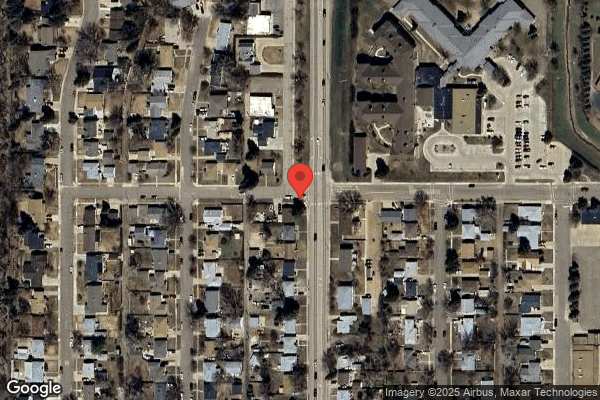
ST LUKES HOME

242 10TH ST W, DICKINSON, ND 58601 (701) 483-5000
Non profit - Corporation 88 Beds Independent Data: November 2025
Trust Grade
83/100
#17 of 72 in ND
Last Inspection: April 2025

Within standard 12-15 month inspection cycle. Federal law requires annual inspections.

Overview

St. Luke's Home in Dickinson, North Dakota has a Trust Grade of B+, indicating it is above average and recommended for families considering long-term care. It ranks #17 out of 72 facilities in the state, placing it in the top half, but is #3 of 3 in Stark County, meaning there are no better local options. The facility is improving, having reduced issues from five in 2024 to just one in 2025. Staffing is a strong point, rated at 5/5 stars, with a turnover rate of 40%, which is lower than the state average of 48%. However, they have faced some concerns, including a serious incident where a resident experienced adverse effects from a medication error and issues with infection control procedures, such as failing to perform proper hand hygiene after removing gloves. While the facility excels in staffing and overall ratings, these incidents highlight areas that need attention.

Trust Score
B+
83/100
In North Dakota
#17/72
Top 23%
Safety Record
Moderate
Needs review
Inspections
Getting Better
5 → 1 violations
Staff Stability
○ Average
40% turnover. Near North Dakota's 48% average. Typical for the industry.
Penalties
✓ Good
$7,443 in fines. Lower than most North Dakota facilities. Relatively clean record.
Skilled Nurses
✓ Good
Each resident gets 74 minutes of Registered Nurse (RN) attention daily — more than 97% of North Dakota nursing homes. RNs are the most trained staff who catch health problems before they become serious.
Violations
⚠ Watch
11 deficiencies on record. Higher than average. Multiple issues found across inspections.
★★★★★
5.0
Overall Rating
★★★★★
5.0
Staff Levels
★★★★☆
4.0
Care Quality
★★★★★
5.0
Inspection Score
Stable
2024: 5 issues
2025: 1 issues

The Good

  • 5-Star Staffing Rating · Excellent nurse staffing levels
  • 4-Star Quality Measures · Strong clinical quality outcomes
  • Full Sprinkler Coverage · Fire safety systems throughout facility
  • No fines on record
  • Staff turnover below average (40%)

    8 points below North Dakota average of 48%

Facility shows strength in staffing levels, quality measures, fire safety.

The Bad

Staff Turnover: 40%

Near North Dakota avg (46%)

Typical for the industry

Federal Fines: $7,443

Below median ($33,413)

Minor penalties assessed

The Ugly 11 deficiencies on record

1 actual harm
Apr 2025 1 deficiency
CONCERN (D)

Potential for Harm - no one hurt, but risky conditions existed

Infection Control (Tag F0880)

Could have caused harm · This affected 1 resident

Based on observation, review of facility policy, and staff interview the facility failed to follow standards of infection control for 1 of 4 sampled residents (Resident #62) observed for morning cares...

Read full inspector narrative →
Based on observation, review of facility policy, and staff interview the facility failed to follow standards of infection control for 1 of 4 sampled residents (Resident #62) observed for morning cares. Failure of staff to perform hand hygiene after removing gloves has the potential to spread infection throughout the facility. Findings include: Review of the facility policy titled Hand Hygiene occurred on 04/10/25. This policy, revised 10/30/24, stated, . All staff will perform proper hand hygiene procedures to prevent the spread of infection to other personnel, residents, and visitors. The use of gloves does not replace hand hygiene. If your task requires gloves, perform hand hygiene prior to donning gloves, and immediately after removing gloves. Observation on 04/08/25 at 10:09 a.m. showed Resident #62 resting in bed wearing oxygen per nasal cannula and his upper denture sitting on the over the bed table. Two certified nurse aides (CNAs) (#1 and #2) entered the resident's room, performed hand hygiene, donned gloves, assisted the resident to sit on the edge of the bed, placed a gait belt, and transferred the resident from the bed to the wheelchair, and onto the toilet. The CNA (#1) removed Resident #62's wet incontinence brief and changed the resident's pants. The CNAs (#1 and #2) assisted the resident to stand, applied a new brief, pulled up the resident's pants, and transferred Resident #62 to the wheelchair. The CNA (#2) removed her gloves and washed her hands. The CNA (#1) removed her gloves, and without performing hand hygiene, transferred the resident from the bathroom to bed via wheelchair while holding the resident's oxygen tubing in her hands. The CNA (#1) donned new gloves, removed the gait belt, oxygen cannula, and Resident #62's shirt. The CNA (#1) washed and dried the resident's face and upper body and applied a clean shirt. The CNAs (#1 and #2) assisted Resident #62 to lay on the bed. The CNA (#1) opened the resident's brief, performed perineal cares, closed the brief, and pulled up the resident's pants. The CNA (#1) removed her gloves, and without performing hand hygiene, assisted the resident to sit on the edge of the bed, applied the gait belt, raised the bed, and with CNA (#2) transferred Resident #62 from the bed to the recliner. The CNA (#1) removed the gait belt, made the resident comfortable in the recliner, assisted with a drink of water, adjusted the resident's oxygen cannula, and with a tissue, removed the dentures from the table, and placed them in a denture cup. The CNA (#1) gathered the garbage and soiled linens, exited Resident #62's room, and entered the soiled utility room. The CNA (#1) failed to perform hand hygiene after removing gloves, before touching other surfaces, and before applying new gloves, and failed to perform hand hygiene prior to exiting Resident #62's room. During an interview on 04/09/25 at 2:00 p.m., an administrative nurse (#3) confirmed she expected staff to perform hand hygiene after glove removal and before touching other surfaces, and prior to exiting resident rooms.
Feb 2024 5 deficiencies
CONCERN (D)

Potential for Harm - no one hurt, but risky conditions existed

Deficiency F0583 (Tag F0583)

Could have caused harm · This affected 1 resident

Based on observation and review of facility policy, the facility failed to promote privacy and confidentiality of medication administration records (MAR) on 1 of 2 Units (Badlands Unit) observed for m...

Read full inspector narrative →
Based on observation and review of facility policy, the facility failed to promote privacy and confidentiality of medication administration records (MAR) on 1 of 2 Units (Badlands Unit) observed for medication administration. Failure to close the MAR may result in unauthorized viewing of resident records by other residents, unlicensed staff, and/or visitors. Findings include: Review of facility policy titled Confidentiality of Social and Medical Information occurred on 02/08/24. This policy, dated 10/15/17, stated, . The facility should keep confidential all information contained in a resident's records, regardless of the form of storage or location of the record, . Keep confidential is defined as safeguarding the content of information including written documentation, video, audio, or other computer stored information from unauthorized disclosure . Observation during medication administration on 02/07/24 showed the medication cart unattended with a resident's MAR visible on the screen during the following times: * 12:16 p.m. to 12:18 p.m. * 12:20 p.m. to 12:22 p.m. * 3:50 p.m. to 3:53 p.m.
CONCERN (D)

Potential for Harm - no one hurt, but risky conditions existed

Assessment Accuracy (Tag F0641)

Could have caused harm · This affected 1 resident

**NOTE- TERMS IN BRACKETS HAVE BEEN EDITED TO PROTECT CONFIDENTIALITY** THIS IS A REPEAT DEFICIENCY FROM THE SURVEY COMPLETED ON 02/09/23. Based on observation, record review, review of the Long-Term ...

Read full inspector narrative →
**NOTE- TERMS IN BRACKETS HAVE BEEN EDITED TO PROTECT CONFIDENTIALITY** THIS IS A REPEAT DEFICIENCY FROM THE SURVEY COMPLETED ON 02/09/23. Based on observation, record review, review of the Long-Term Care Facility Resident Assessment Instrument (RAI) 3.0 User's Manual (Version 1.18.11), and staff interview, the facility failed to ensure accurate coding of the Minimum Data Set (MDS) for 2 of 4 sampled residents (Resident #7 and #51) reviewed with alarms. Failure to accurately complete the MDS does not allow each resident's assessment to reflect their current status/needs and may affect the development of a comprehensive care plan and the care provided to the residents. Findings include: The Long-Term Care Facility RAI User's Manual, revised October 2023, Section P: Restraints and Alarms, page P-10, stated, . Identify all alarms that were used at any time (day or night) during the 7-day look-back period.Code 0, not used: . Code 1, used less than daily: . Code 2, used daily: . Bed alarm includes devices such as a sensor pad placed on the bed or a device that clips to the resident's clothing. Chair alarm includes devices such as a sensor pad placed on the chair or wheelchair or a device that clips to the resident's clothing. - Review of Resident #7's medical record occurred on all days of survey. The care plan identified a tab alarm for a fall/safety intervention, dated 09/15/23. The quarterly MDS, dated [DATE], identified in Section P, alarms not used. Observation on 02/06/24 at 7:23 a.m. showed Resident #7 in bed, and a certified nurse aid (CNA) (#2) removed a tab alarm from the resident's clothing. Observation also showed an alarm on Resident #7's bed and wheelchair. During an interview on 02/08/24 at 8:25 a.m., an administrative nurse (#1) confirmed staff failed to code the alarms in Section P of the MDS for Resident #7. - Review of Resident #51's medical record occurred on all days of survey. The care plan identified an alarm to the bed and chair for a fall/safety intervention, dated 10/27/23. The quarterly MDS, dated [DATE], identified in Section P, alarms not used. During an interview on 02/07/24 at 3:00 p.m., an administrative nurse (#1) confirmed staff failed to code the alarms in Section P of the MDS for Resident #51.
CONCERN (D)

Potential for Harm - no one hurt, but risky conditions existed

Deficiency F0658 (Tag F0658)

Could have caused harm · This affected 1 resident

Based on observation, record review, review of standing orders, and staff interview, the facility failed to follow professional standards regarding physician's orders for 1 of 2 sampled residents (Res...

Read full inspector narrative →
Based on observation, record review, review of standing orders, and staff interview, the facility failed to follow professional standards regarding physician's orders for 1 of 2 sampled residents (Resident #4) and 1 closed record (Resident #82) reviewed for insulin orders. Failure to follow the physician's order regarding notification of high blood sugar levels has the potential to result in adverse events. Findings include: - Review of Resident #4's medical record occurred on all days of survey. Medical diagnoses included Type 2 diabetes mellitus. Observation on 02/07/24 at 11:05 a.m. showed a nurse (#3) checked Resident #4's blood sugar with a glucose meter and obtained a result of 336 milligrams per deciliter (mg/dL). Review of the Medication Administration Record (MAR) for sliding scale insulin identified . Per Sliding Scale . Special Instructions: Call PCP [primary care provider] if Blood sugar greater than 300 [mg/dL] . During an interview on 02/07/24 at 3:07 p.m., the nurse (#3) who obtained Resident #4's blood sugar and administered the sliding scale insulin stated she did not notify the provider as she did not see on the order to call if over 300 mg/dL. Review of Resident #4's blood sugar results from 09/01/23 to 02/07/24 showed six times the blood sugar results were above 300 mg/dL. The medical record lacked documentation staff notified the provider of the blood sugar results over 300 mg/dL. - Review of Resident #82's medical record occurred on 01/08/24. Review of the resident's blood sugar levels showed the following: * 01/06/24 at 7:17 a.m. blood sugar 408 mg/dL * 01/06/24 at 11:38 a.m. blood sugar 404 mg/dL * 01/08/24 at 7:42 a.m. blood sugar 421 mg/dL Resident #82's undated physician standing orders stated, Diabetic Treatment . Blood Sugar > [greater than] 400 mg/dL notify the MD [medical doctor] by telephone. The medical record lacked physician notification of the blood sugars over 400 mg/dL.
CONCERN (D)

Potential for Harm - no one hurt, but risky conditions existed

Deficiency F0849 (Tag F0849)

Could have caused harm · This affected 1 resident

Based on record review and staff interview, the facility failed to ensure residents' records contained the hospice election form for 2 of 2 sampled residents (Resident #72 and #189) receiving hospice ...

Read full inspector narrative →
Based on record review and staff interview, the facility failed to ensure residents' records contained the hospice election form for 2 of 2 sampled residents (Resident #72 and #189) receiving hospice services. Failure to obtain this document limits staff's ability to ensure coordination of care between the facility and the hospice. Findings include: - Review of Resident #72's medical record occurred on all days of survey and identified the resident elected hospice services on 12/06/23. The medical record lacked the hospice election form. - Review of Resident #189's medical record occurred on all days of survey and identified the resident elected hospice services on 01/30/24. The medical record lacked the hospice election form. During an interview on 02/08/24 at 10:33 a.m., an administrative nurse (#1) confirmed the medical record lacked the hospice election form for Resident #72 and #189.
MINOR (C)

Minor Issue - procedural, no safety impact

Transfer Notice (Tag F0623)

Minor procedural issue · This affected most or all residents

Based on record review and facility policy review, the facility failed to provide the resident's representative with a completed notice of transfer for 3 of 4 sampled residents (Resident #11, #23 and ...

Read full inspector narrative →
Based on record review and facility policy review, the facility failed to provide the resident's representative with a completed notice of transfer for 3 of 4 sampled residents (Resident #11, #23 and #72) with hospital transfers. Failure to provide a written notice of transfer which included an appeal date does not allow the resident and/or their representative to make an informed decision regarding their rights. Findings include: Review of the facility policy titled Transfer and Discharge . occurred on 02/08/24. This policy, dated 01/02/17, stated, . 2. f. A copy of the original notice must be given to the resident (sent to hospital with resident and other pertinent papers see letter d.), with a copy given to the resident's representative and a copy placed in the resident's medical record. A review of medical records showed the following residents were transferred to the hospital and received a Notice of Transfer of Hospitalization/Emergency Transfer that lacked a date by which to appeal: * Resident #11 on 01/03/24 * Resident #23 on 10/11/23 * Resident #72 on 08/11/23 and 10/07/23. Resident #72's medical record also identified the resident representative gave verbal permission for the transfers however lacked evidence the representative received a copy of the notice of transfer.
Feb 2023 5 deficiencies 1 Harm
SERIOUS (G)

Actual Harm - a resident was hurt due to facility failures

Deficiency F0760 (Tag F0760)

A resident was harmed · This affected 1 resident

**NOTE- TERMS IN BRACKETS HAVE BEEN EDITED TO PROTECT CONFIDENTIALITY** Based on record review, review of professional reference, review of facility policy, and resident and staff interviews, the faci...

Read full inspector narrative →
**NOTE- TERMS IN BRACKETS HAVE BEEN EDITED TO PROTECT CONFIDENTIALITY** Based on record review, review of professional reference, review of facility policy, and resident and staff interviews, the facility failed to follow professional standards for medication administration for 1 of 1 sampled resident (Resident #33) who experienced adverse side effects as a result of a significant medication error. Failure of staff to administer medications utilizing safe administration practices resulted in an adverse reaction to Resident #33's physical health/safety, and affected the resident's psychosocial well being. Findings include: [NAME], [NAME], Kozier, and Erb's, Fundamentals of Nursing Concepts, Process, and Practice, 10th Edition, Copyright 2016 by Pearson Education, Inc., New Jersey, page 769-771, stated, . Before administering a medication, identify the client correctly using the appropriate means of identification . Errors can and do occur, usually because one client gets a drug intended for another. Review of the facility policy titled Administering Oral Medications occurred on 02/09/23. This policy, revised October 2010, stated, . Purpose: The purpose of this procedure is to provide guidelines for the safe administration of oral medications. 6. Check the label on the medication and confirm the medication name and dose with the MAR [medication administration record]. 10. Confirm the identity of the resident. During an interview on 02/08/23 at 3:38 p.m., Resident #33 stated, About two weeks ago a nurse gave me the wrong medications and after about an hour I started feeling sick to my stomach, having trouble breathing, became very weak and when they checked my blood pressure it was very low, like 77 or 75 over 44. One nurse (#13) kept saying we need to get her to the ER [emergency room] and another nurse (#15) said we need to get her laid down in bed. The resident told the nurses she did not want to go to the ER. I was very scared and I don't want to ever experience that again or want anyone else to experience it. The resident indicated she had to stay in bed the day of the incident and the day after because I was very weak and felt fuzzy. She admitted feeling very anxious now when taking her medications. Review of Resident #33's medical record occurred on all days of survey and showed a blood pressure of 75/44 on 01/24/23 at 8:57 a.m. A quarterly Minimum Data Set, dated [DATE], identified the resident as cognitively intact. Review of the facility's incident report, dated 01/24/23, showed on 01/24/23 at 8:00 a.m. staff administered the wrong medications to Resident #33. Incorrect medications included the following: * Venlafaxine 150 milligrams (mg) (antidepressant) * Keflex 250 mg (antibiotic) * Carvedilol 25 mg (high blood pressure medication) * Isosorbide 24 hours [extended release] 30 mg (heart medication/high blood pressure medication) * Losartan 100 mg (high blood pressure medication) * Pantoprazole 40 mg (anti-reflux medication) The incident report stated a nurse (#13) . grabbed the . medications (sic) were sitting in (sic) side table, handed resident her medication cup, once she handed it back I noted the cup had a different resident and room # [number] written on the side. The incident report identified another nurse (#14) pre-dished the medications and left the wrong medications in Resident #33's room on the bedside table. Staff failed to administer medications utilizing safe administration practices and resulted in Resident #33 experiencing a hypotensive reaction (low blood pressure), weakness and trouble breathing. Resident #33 reported experiencing increased anxiety since the incident. During an interview on 02/09/23 at 7:51 a.m., an administrative nurse (#2) confirmed Resident #33 as cognitively intact, and stated, The resident recalls the events of the incident/medication error accurately. The nurse (#2) confirmed only the two nurses who were involved in the medication error received verbal education at the time.
CONCERN (D)

Potential for Harm - no one hurt, but risky conditions existed

Notification of Changes (Tag F0580)

Could have caused harm · This affected 1 resident

Based on record review, review of facility policy, and resident and staff interviews, the facility failed to notify the resident's physician of a change in condition for 1 of 1 resident (Resident #33)...

Read full inspector narrative →
Based on record review, review of facility policy, and resident and staff interviews, the facility failed to notify the resident's physician of a change in condition for 1 of 1 resident (Resident #33) who experienced low blood pressure, weakness and shortness of breath. Failure to notify the physician of these changes may have prevented the physician from altering the treatment/care provided to the resident. Findings include: Review of the facility policy titled Notify of Changes occurred on 02/09/23. This policy, dated 04/21/22, stated, . The purpose of this policy is to ensure the facility promptly . consults the resident's physician; . when there is a change requiring notification. Compliance Guidelines: The facility must . consult with the resident's physician when there is a change requiring such notification. Circumstances requiring notification include: . 2. Significant change in the resident's physical . condition such as deterioration in health . During an interview on 02/08/23 at 3:38 p.m. Resident #33 indicated about two weeks ago a nurse gave her the wrong medications. The resident stated, Now I am very anxious about taking any medications. The resident stated, After about 1 hour after they gave me the wrong medications I started having trouble breathing, became weak and when they checked my blood pressure it was very low, like 77 or 75 over 44. It was very scary and I don't want to ever experience that again or anyone else to experience it. Review of Resident #33's medical record occurred on all days of survey. The medical record showed a blood pressure of 75/44 on 01/24/23 at 8:57 a.m. Review of the facility's incident report, dated 01/24/23, showed on 01/24/23 at 8:00 a.m. staff administered the wrong medications to Resident #33. Incorrect medications included the following: * Venlafaxine 150 milligrams (mg) (antidepressant) * Keflex 250 mg (antibiotic) * Carvedilol 25 mg (high blood pressure medication) * Isosorbide 24 hours [extended release] 30 mg (heart medication/high blood pressure medication) * Losartan 100 mg (high blood pressure medication) * Pantoprazole 40 mg (anti-reflux medication) The medical record lacked evidence facility staff notified the physician of Resident #33's low blood pressure, weakness and trouble breathing as a result of receiving the wrong medications on 01/24/23. During an interview on 02/09/23 at 9:25 a.m., an administrative nurse (#2) confirmed staff failed to notify the physician of Resident #33's low blood blood pressure and decline in physical health conditions. See F-760
CONCERN (D)

Potential for Harm - no one hurt, but risky conditions existed

Assessment Accuracy (Tag F0641)

Could have caused harm · This affected 1 resident

**NOTE- TERMS IN BRACKETS HAVE BEEN EDITED TO PROTECT CONFIDENTIALITY** THIS IS A REPEAT DEFICIENCY FROM THE SURVEY COMPLETED ON 09/02/21 Based on record review, review of the Long-Term Care Facility ...

Read full inspector narrative →
**NOTE- TERMS IN BRACKETS HAVE BEEN EDITED TO PROTECT CONFIDENTIALITY** THIS IS A REPEAT DEFICIENCY FROM THE SURVEY COMPLETED ON 09/02/21 Based on record review, review of the Long-Term Care Facility Resident Assessment Instrument (RAI) 3.0 User's Manual (Version 1.17.1), and staff interview, the facility failed to complete Minimum Data Sets (MDSs) that accurately reflected the residents' status for 2 of 18 sampled residents (Resident #34, and #63). Failure to accurately code the MDS may negatively affect the development of comprehensive care plans and the care provided to the residents. Findings include: Section A: Identification Information The Long-Term Care Facility RAI Manual, revised October 2019, pages A-21 to A-23, stated, . Section A1500: Preadmission Screening and Resident Review (PASRR) . Coding instructions: Code 0, no, and skip to A1550 . Code 1, yes: if PASRR Level II screening determined that the resident has a serious mental illness . and continue to A1510 . - Review of Resident #34's medical record occurred on all days of survey. Diagnoses included schizoaffective disorder. The record showed a PASRR Level I completed on 09/21/21, followed by the referral and a completed Level II screening. The annual MDS, dated [DATE], showed section A1500 coded 0, as No, which resulted in the staff member failing to code section A1510. During an interview on 02/08/23 at 11:20 a.m., a social services staff member (#4) confirmed staff failed to correctly code A1500. Section N: Medication The Long-Term Care Facility RAI Manual, revised October 2019, pages N-6 to N-7 stated, . Steps for Assessment . Review the resident's medical record for documentation that any of these medications were received by the resident during the 7-day look-back period . N0410F, Antibiotic: Record the number of days an antibiotic medication was received by the resident at any time during the 7-day look-back period . - Review of Resident #63's medical record occurred on all days of survey. Diagnoses included open wound left foot and diabetes. A physician's order dated, 09/16/22, stated, Mupirocin ointment [a topical antibiotic ointment] 2 % Once a day, PRN [as needed] Amount to Administer - Apply Mupirocin ointment with dressing on left foot callous as needed. The quarterly MDS dated [DATE], identified seven days of antibiotic use in section N0410F. The medication administration record (MAR) dated 11/26/22-12/02/22 lacked documentation of administration of an antibiotic during the 7-day look back period. During an interview on 02/09/23 at 8:54 a.m., an administrative nurse (#3) agreed the MAR lacked documentation of an antibiotic administration and staff failed to correctly code N0410F.
CONCERN (D)

Potential for Harm - no one hurt, but risky conditions existed

Unnecessary Medications (Tag F0759)

Could have caused harm · This affected 1 resident

Based on observation, record review, review of facility policy, and staff interview, the facility failed to ensure a medication error rate of less than five percent for 2 of 6 residents (Resident #22 ...

Read full inspector narrative →
Based on observation, record review, review of facility policy, and staff interview, the facility failed to ensure a medication error rate of less than five percent for 2 of 6 residents (Resident #22 and #46) observed during medication pass. Three medication errors occurred during staff administration of 28 medications, resulting in a 10% error rate. Failure to ensure medications are administered correctly may result in an adverse side effects. Findings include: Review of the facility policy titled Use Of Insulin Pens occurred on 02/09/23. This policy, dated 12/14/16, stated, . Insulin pens will be prepared and primed prior to actual dose administration to ensure expelling of air and accuracy of dosage . After needle is in place, do an air shot before injection . To perform air shot do the following . Dial two units . Hold syringe with needle pointing up and tap reservoir gently to remove air bubbles to tip of needle . Press the push button on syringe . until a drop of insulin appears. - Observation on 02/09/23 at 6:53 a.m. showed a licensed nurse (#1) prepared Resident #46's Lantus insulin pen for injection. The nurse (#1) secured the needle on the insulin pen, and failed to perform an air shot to expel air from the pen prior to injection. - Observation on 02/09/23 at 7:07 a.m. showed a licensed nurse (#1) prepared Resident #22's Lyumjev and Toujeo insulin pens for injection. The nurse (#1) secured the needle on the insulin pens and failed to perform an air shot to expel air from the pens prior to injection. During an interview on 02/09/23 at 7:45 a.m., an administrative nurse (#2) stated she would expect the nurse to perform an air shot prior to administering the insulin.
CONCERN (D)

Potential for Harm - no one hurt, but risky conditions existed

Infection Control (Tag F0880)

Could have caused harm · This affected 1 resident

Based on observation, review of facility policy, and staff interview, the facility failed to follow standards of infection control for 2 of 10 sampled residents (Residents #11 and #68) observed during...

Read full inspector narrative →
Based on observation, review of facility policy, and staff interview, the facility failed to follow standards of infection control for 2 of 10 sampled residents (Residents #11 and #68) observed during perineal cares and/or dressing change. Failure to follow infection control standards has the potential for transmission of communicable diseases and infections to residents, staff, and visitors. Findings include: DRESSING CHANGE Review of the facility policy titled Wound Care Dressing Change occurred on 02/13/23. This policy, dated October 2022, stated, . remove soiled dressing. Remove soiled gloves. Perform hand hygiene. Put on clean gloves. Observation on 02/07/23 at 8:15 a.m. showed a nurse (#5) removed Resident #11's right foam heel protector and a blue absorbent pad, and without changing gloves, measured the pressure ulcer, opened the promogram prism (wound treatment), used gloved hands to form it to the open area, and then replaced the absorbed pad and the foam heel cushion. The nurse (#5) failed to remove her gloves and perform hand hygiene after removing the foam heel pad and absorbent dressing. PERINEAL CARE Review of the facility policy titled Hand Hygiene occurred on 02/13/23. This policy, dated October 2022, stated, . Staff will perform hand hygiene when indicated . Before applying and after removing personal protective equipment (PPE), including gloves . after assistance with personal body functions . - Observation on 02/07/23 at 8:30 a.m. showed a certified nurse assistant (CNA) (#6) donned gloves and provided perineal care for Resident #11. The CNA (#6) cleansed the rectal area of stool using a wet wipe. The CNA (#6) washed, rinsed, and dried the buttocks area with a washcloth and towel and the CNA (#6) placed the washcloth and towel directly onto the floor along with the resident's pajamas. The CNA (#6) removed her gloves and without performing hand hygiene, the CNA (#6) assisted in applying a clean brief, applied the right heel bootie, adjusted the resident's clothing, assisted with transferring the resident into the wheelchair, placed the foley catheter bag into a dignity bag, and performed hand hygiene. - Observation on 02/07/23 at 8:50 a.m. showed two CNA's (#7 and #8) assisted Resident #68 on and off the bedpan. The resident voided in the bedpan and the CNA (#7) completed perineal cares, removed her gloves, adjusted the resident's clothing, raised the head of bed, put a pillow under the resident's legs, gave her a drink of water, closed the blinds, and then performed hand hygiene. During an interview on 02/09/23 at 9:05 a.m., two administrative nurses (#2 and #5) confirmed they expect staff to remove gloves and perform hand hygiene after perineal cares before doing other tasks and to change gloves and perform hand hygiene after removing foam heel protector before applying wound treatment.
Understanding Severity Codes (click to expand)
Life-Threatening (Immediate Jeopardy)
J - Isolated K - Pattern L - Widespread
Actual Harm
G - Isolated H - Pattern I - Widespread
Potential for Harm
D - Isolated E - Pattern F - Widespread
No Harm (Minor)
A - Isolated B - Pattern C - Widespread

Questions to Ask on Your Visit

  • "Can I speak with families of current residents?"
  • "What's your RN coverage like on weekends and overnight?"

Our Honest Assessment

Strengths
  • • Grade B+ (83/100). Above average facility, better than most options in North Dakota.
  • • 40% turnover. Below North Dakota's 48% average. Good staff retention means consistent care.
Concerns
  • • 11 deficiencies on record, including 1 serious (caused harm) violation. Ask about corrective actions taken.
Bottom line: Generally positive indicators. Standard due diligence and a personal visit recommended.

About This Facility

What is St Lukes Home's CMS Rating?

CMS assigns ST LUKES HOME an overall rating of 5 out of 5 stars, which is considered much above average nationally. Within North Dakota, this rating places the facility higher than 99% of the state's 100 nursing homes. This rating reflects solid performance across the metrics CMS uses to evaluate nursing home quality.

How is St Lukes Home Staffed?

CMS rates ST LUKES HOME's staffing level at 5 out of 5 stars, which is much above average compared to other nursing homes. Staff turnover is 40%, compared to the North Dakota average of 46%. This relatively stable workforce can support continuity of care.

What Have Inspectors Found at St Lukes Home?

State health inspectors documented 11 deficiencies at ST LUKES HOME during 2023 to 2025. These included: 1 that caused actual resident harm, 9 with potential for harm, and 1 minor or isolated issues. Deficiencies causing actual harm indicate documented cases where residents experienced negative health consequences.

Who Owns and Operates St Lukes Home?

ST LUKES HOME is owned by a non-profit organization. Non-profit facilities reinvest revenue into operations rather than distributing to shareholders. The facility operates independently rather than as part of a larger chain. With 88 certified beds and approximately 86 residents (about 98% occupancy), it is a smaller facility located in DICKINSON, North Dakota.

How Does St Lukes Home Compare to Other North Dakota Nursing Homes?

Compared to the 100 nursing homes in North Dakota, ST LUKES HOME's overall rating (5 stars) is above the state average of 3.1, staff turnover (40%) is near the state average of 46%, and health inspection rating (5 stars) is much above the national benchmark.

What Should Families Ask When Visiting St Lukes Home?

Based on this facility's data, families visiting should ask: "Can I visit during a mealtime to observe dining assistance and food quality?" "How do you handle medical emergencies, and what is your hospital transfer rate?" "Can I speak with family members of current residents about their experience?"

Is St Lukes Home Safe?

Based on CMS inspection data, ST LUKES HOME has a clean safety record: no substantiated abuse findings (meaning no confirmed cases of resident harm), no Immediate Jeopardy citations (the most serious violation level indicating risk of serious injury or death), and is not on the Special Focus Facility watch list (a federal program monitoring the lowest-performing 1% of nursing homes). The facility has a 5-star overall rating and ranks #1 of 100 nursing homes in North Dakota. While no facility is perfect, families should still ask about staff-to-resident ratios and recent inspection results during their visit.

Do Nurses at St Lukes Home Stick Around?

ST LUKES HOME has a staff turnover rate of 40%, which is about average for North Dakota nursing homes (state average: 46%). Moderate turnover is common in nursing homes, but families should still ask about staff tenure and how the facility maintains care continuity when employees leave.

Was St Lukes Home Ever Fined?

ST LUKES HOME has been fined $7,443 across 1 penalty action. This is below the North Dakota average of $33,153. While any fine indicates a compliance issue, fines under $50,000 are relatively common and typically reflect isolated problems that were subsequently corrected. Families should ask what specific issues led to these fines and confirm they've been resolved.

Is St Lukes Home on Any Federal Watch List?

ST LUKES HOME is not on any federal watch list. The most significant is the Special Focus Facility (SFF) program, which identifies the bottom 1% of nursing homes nationally based on persistent, serious quality problems. Not being on this list means the facility has avoided the pattern of deficiencies that triggers enhanced federal oversight. This is a positive indicator, though families should still review the facility's inspection history directly.