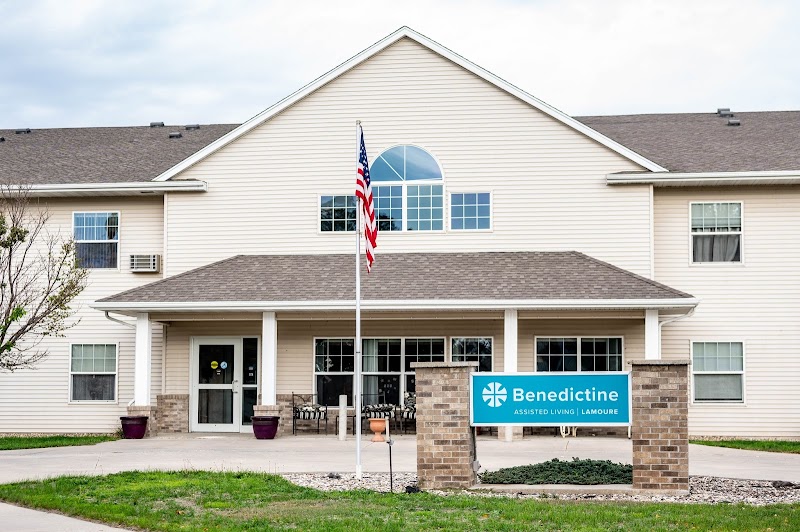
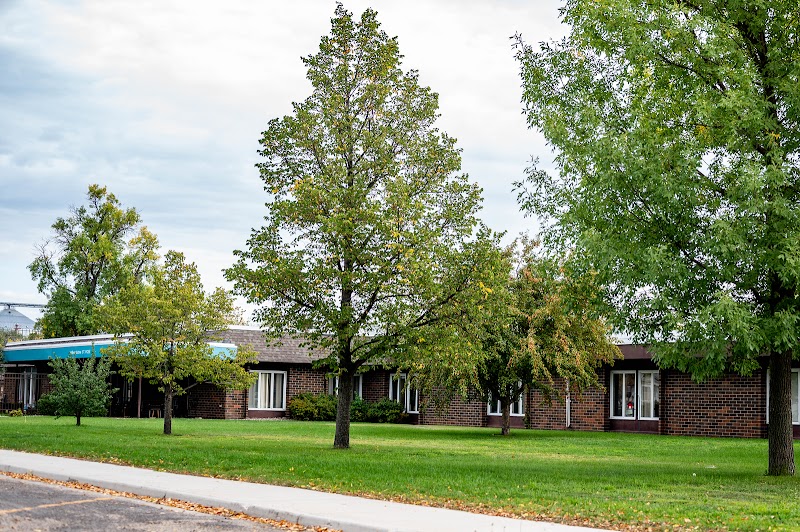
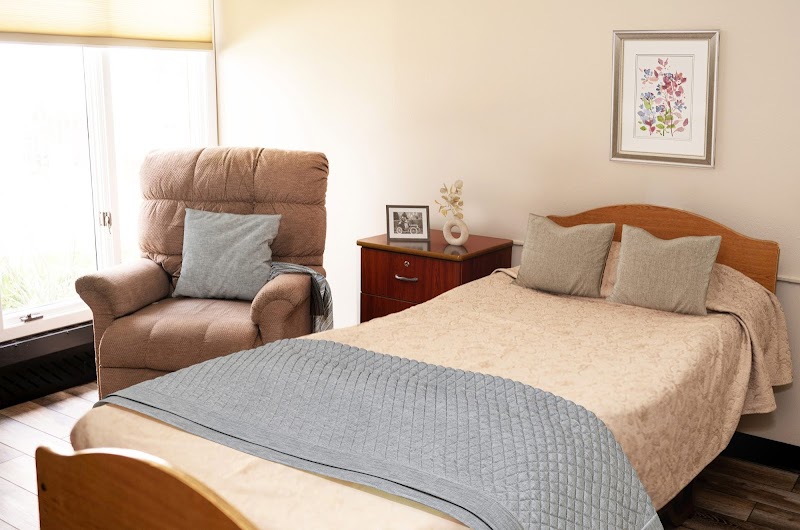
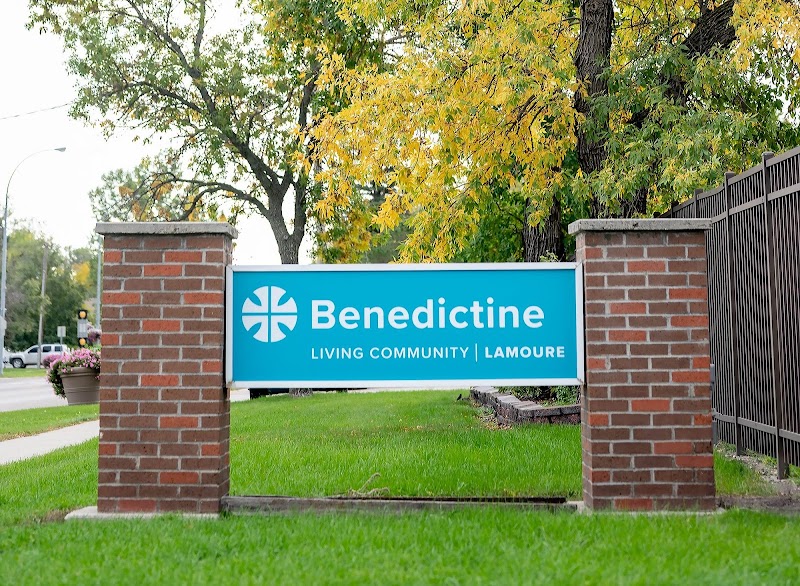
ST ROSE CARE CENTER

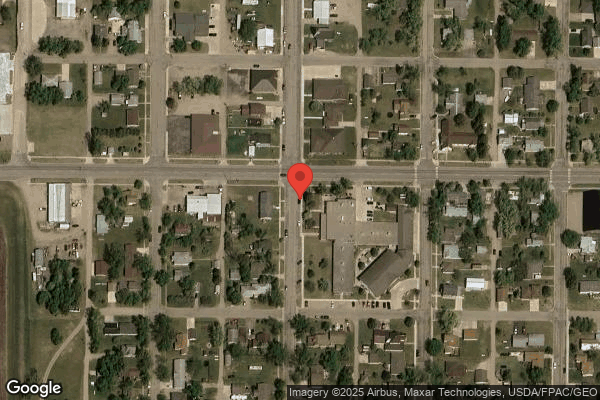
315 1ST ST SE, LAMOURE, ND 58458 (701) 883-5363
Non profit - Corporation 36 Beds BENEDICTINE HEALTH SYSTEM Data: November 2025
Trust Grade
70/100
#30 of 72 in ND
Last Inspection: March 2025

Within standard 12-15 month inspection cycle. Federal law requires annual inspections.

Overview

St. Rose Care Center has a Trust Grade of B, which means it is a good choice for families looking for nursing home care. It ranks #30 out of 72 facilities in North Dakota, placing it in the top half, and it is the only facility in La Moure County. The facility is improving, with the number of issues decreasing from 4 in 2024 to 3 in 2025. Staffing is a concern, with a 79% turnover rate, significantly higher than the state average of 48%. While there have been no fines reported, specific concerns include a lack of a full-time dietary manager, which could lead to food safety issues, and unmaintained heating vents that pose a fall risk for residents.

Trust Score
B
70/100
In North Dakota
#30/72
Top 41%
Safety Record
Low Risk
No red flags
Inspections
Getting Better
4 → 3 violations
Staff Stability
⚠ Watch
79% turnover. Very high, 31 points above average. Constant new faces learning your loved one's needs.
Penalties
✓ Good
No fines on record. Clean compliance history, better than most North Dakota facilities.
Skilled Nurses
✓ Good
Each resident gets 50 minutes of Registered Nurse (RN) attention daily — more than average for North Dakota. RNs are trained to catch health problems early.
Violations
⚠ Watch
12 deficiencies on record. Higher than average. Multiple issues found across inspections.
★★★★☆
4.0
Overall Rating
★★★★☆
4.0
Staff Levels
★★☆☆☆
2.0
Care Quality
★★★★☆
4.0
Inspection Score
Stable
2024: 4 issues
2025: 3 issues

The Good

  • 4-Star Staffing Rating · Above-average nurse staffing levels
  • Full Sprinkler Coverage · Fire safety systems throughout facility
  • No fines on record

Facility shows strength in staffing levels, fire safety.

The Bad

Staff Turnover: 79%

33pts above North Dakota avg (46%)

Frequent staff changes - ask about care continuity

Chain: BENEDICTINE HEALTH SYSTEM

Part of a multi-facility chain

Ask about local staffing decisions and management

Staff turnover is very high (79%)

31 points above North Dakota average of 48%

The Ugly 12 deficiencies on record

Mar 2025 3 deficiencies
CONCERN (D) 📢 Someone Reported This

A family member, employee, or ombudsman was alarmed enough to file a formal complaint

Potential for Harm - no one hurt, but risky conditions existed

Resident Rights (Tag F0550)

Could have caused harm · This affected 1 resident

Based on observation, review of facility policy and staff interview, the facility failed to provide care in a manner that maintained, enhanced, and respected the resident's dignity and individuality f...

Read full inspector narrative →
Based on observation, review of facility policy and staff interview, the facility failed to provide care in a manner that maintained, enhanced, and respected the resident's dignity and individuality for 1 of 1 sampled residents (Resident #22) who received insulin in a public area and in 1 of 1 activity room. Failure to administer insulin in a private area, to address the resident with their preferred name, and remove incontinence pads from chairs in the activity room, does not preserve the resident's personal dignity and has the potential to affect the resident's psychosocial well-being. Findings include: Review of the facility policy titled Resident Rights and Notifications of Resident Rights occurred on 03/20/25. This policy, revised 01/16/24, stated, Resident Rights include . Respect and Dignity . Privacy and Confidentiality . Review of the facility policy titled, Administering Medications occurred on 03/20/25. This policy, revised 2020, stated, . Do not administer . injections in public . - Observation on 03/18/25 at 3:39 p.m. showed a certified nurse aide (CNA) (#3) entered Resident #22's room. The CNA (#3) addressed the resident with the prefix Mister (Mr.). The resident stated, do not call me Mr. It's the name of a TV show and the resident stated some explicative words. The CNA (#3) continued to address the resident incorrectly. - Observation on 03/20/25 at 12:00 p.m. showed Resident #22 in the activity room in a wheelchair. A staff nurse (#1) pulled up the resident's shirt and administered insulin in the resident's abdomen. Witnesses to the event included four residents and three staff members. - Observation on all days of survey showed cloth waterproof incontinence protectors on 5 of 6 chairs in the activity room. The chairs are available for all residents and are publicly viewed by residents, staff, and family members. During an interview on the morning of 03/20/25, an administrative nurse (#2) explained the waterproof incontinence pads are supposed to be on two of the chairs and agreed this could be a dignity issue. During an interview on the afternoon of 03/20/25, an administrative nurse (#2) stated she expected staff to address residents by their individual preference, to respect the privacy of the Resident #22 by not administering insulin in the activity room in front of other residents.
CONCERN (D) 📢 Someone Reported This

A family member, employee, or ombudsman was alarmed enough to file a formal complaint

Potential for Harm - no one hurt, but risky conditions existed

Deficiency F0761 (Tag F0761)

Could have caused harm · This affected 1 resident

Based on observation, record review, review of facility policy, and staff interview, the facility failed to ensure accurate medication labeling for 1 of 1 sampled resident (Resident #20) receiving med...

Read full inspector narrative →
Based on observation, record review, review of facility policy, and staff interview, the facility failed to ensure accurate medication labeling for 1 of 1 sampled resident (Resident #20) receiving medications through a gastrostomy tube (G-tube). Failure to ensure medication labels matched physician orders may result in administration via incorrect route. Findings include: Review of the facility policy titled Administering Medications occurred on 03/19/25. This policy, dated 2020, stated, . To ensure safe administration of resident's medication as indicated and ordered by the provider . To administer resident medications in a safe and accurate manner that will ensure the 6 rights of patient identification for administration . Administer medications following the 6 rights of medication administration: . Right Route . Review of Resident #20's medical record occurred on all days of survey. The medical record identified Resident #20 as NPO (nothing by mouth) and medications administered per a G-tube. Physician's orders for Tylenol, Baclofen (a muscle relaxer), Warfarin (a blood thinner), iron, vitamin D3, and sertraline (an antidepressant) identified administration via G tube; however, observation of medication pass on 03/19/25 at 12:34 p.m. showed the medication labels lacked specific instructions for administration via G tube. During an interview on 03/20/25 at 1:51 p.m., an administrative nurse (#2) confirmed the medication labels did not match the physician orders.
CONCERN (D) 📢 Someone Reported This

A family member, employee, or ombudsman was alarmed enough to file a formal complaint

Potential for Harm - no one hurt, but risky conditions existed

Infection Control (Tag F0880)

Could have caused harm · This affected 1 resident

Based on observation, review of facility policy, and staff interview, the facility failed to follow standards of infection control and prevention for 1 of 5 sampled residents (Resident #28) and 1 supp...

Read full inspector narrative →
Based on observation, review of facility policy, and staff interview, the facility failed to follow standards of infection control and prevention for 1 of 5 sampled residents (Resident #28) and 1 supplemental resident (Resident #2) observed during cares. Failure to practice infection control standards related to hand hygiene has the potential to spread infection throughout the facility. Findings include: Review of the facility policy titled Hand Hygiene occurred on 03/19/25. This policy, revised September 2023, stated, . All associates will be trained and competent . proper hand hygiene practices. Hand hygiene. After removing gloves. Before and after direct resident care . - Observation on 03/18/25 at 3:28 p.m. showed a certified nurse aide (CNA) (#3) assisted Resident #28 with perineal cares. The CNA (#3) applied gloves, performed perineal cares and without removing the gloves, the CNA brushed food crumbs from the bed linen, lifted the resident's legs on to the bed, and lowered the bed. The CNA (#3) failed to remove the soiled gloves and perform hand hygiene after performing perineal care. - Observation on 03/19/25 at 11:08 a.m. showed a nurse (#1) entered Resident #2's room. The nurse applied gloves, completed perineal cares, changed gloves, applied a clean brief, and pulled up the resident's pants. The nurse removed the gloves and assisted the resident into the wheelchair. The nurse (#1) failed to perform hand hygiene between and after removing gloves. During an interview on 03/20/25 at 1:37 p.m., an administrative nurse (#2) stated she expected staff to perform hand hygiene after removing gloves.
Feb 2024 4 deficiencies
CONCERN (D)

Potential for Harm - no one hurt, but risky conditions existed

Notification of Changes (Tag F0580)

Could have caused harm · This affected 1 resident

Based on record review, review of facility policy, and staff interview, the facility failed to notify the resident representative for 1 of 1 sampled resident (Resident #16) reviewed for elopement. Fai...

Read full inspector narrative →
Based on record review, review of facility policy, and staff interview, the facility failed to notify the resident representative for 1 of 1 sampled resident (Resident #16) reviewed for elopement. Failure to notify the resident representative of the elopements does not allow the representative to be fully informed of the resident's current status. Findings include: Review of the facility policy titled Change in Condition occurred on 02/22/24. This undated policy stated, . When a significant change in the resident's physical, mental, or psychosocial status is identified by the licensed nurse, or when there is a need to alter treatment significantly, the licensed nursing associate consults with the attending provider and notify the resident/resident representative. Review of Resident #16's medical record occurred all days of survey. The record identified the resident triggered the wanderguard system by exiting a facility door (elopement) seven times between November 2023-February 2024. The record lacked evidence the facility notified the resident representative on 11/27/23, 12/14/23, and 01/07/24. During an interview on 02/22/24 at 10:28 a.m., an administrative staff member (#1) confirmed staff failed to notify the representative following the three incidents.
CONCERN (D)

Potential for Harm - no one hurt, but risky conditions existed

Assessment Accuracy (Tag F0641)

Could have caused harm · This affected 1 resident

**NOTE- TERMS IN BRACKETS HAVE BEEN EDITED TO PROTECT CONFIDENTIALITY** Based on record review, review of the Long-Term Care Facility Resident Assessment Instrument (RAI) 3.0 User's Manual (Version 1....

Read full inspector narrative →
**NOTE- TERMS IN BRACKETS HAVE BEEN EDITED TO PROTECT CONFIDENTIALITY** Based on record review, review of the Long-Term Care Facility Resident Assessment Instrument (RAI) 3.0 User's Manual (Version 1.18.11), and staff interview, the facility failed to ensure accurate coding of the Minimum Data Set (MDS) for 3 of 3 sampled residents (Resident #12, #14 and #17) reviewed for antiplatelet (medicine that stops blood cells from sticking together and forming a blood clot) use. Failure to accurately complete the MDS does not allow each resident's assessment to reflect their current status/needs and may affect the accurate development of a comprehensive care plan and the care provided to the residents. Findings include: The Long-Term Care Facility RAI User's Manual, revised October 2023, page N-8, states, . N0415I1. Antiplatelet: Check if an antiplatelet medication (e.g., aspirin/extended release, dipyridamole, clopidogrel) was taken by the resident at any time during the 7-day observation period . - Review of Resident #12, #14, and #17's medical record occurred on all days of survey and showed the following: * Resident #12 - Aspirin (an antiplatelet) 81 mg (milligrams) once a morning ordered on 03/23/23. A quarterly MDS, dated [DATE], failed to identify the use of an antiplatelet under Section N. * Resident #14 - Aspirin 81 mg once a morning ordered on 01/10/24. A quarterly MDS, dated [DATE], failed to identify the use of an antiplatelet under Section N. * Resident #17 - Aspirin 81 mg once per day ordered on 06/23/23. A quarterly MDS, dated [DATE], failed to identify the use of an antiplatelet under Section N. During interviews on the morning of 02/22/24, an administrative staff member (#1) confirmed staff coded the MDS incorrectly.
CONCERN (D)

Potential for Harm - no one hurt, but risky conditions existed

ADL Care (Tag F0677)

Could have caused harm · This affected 1 resident

Based on observation, record review, review of facility policy, and staff interview, the facility failed to provide oral hygiene for 1 of 7 sampled residents (Resident #15) dependent on staff for assi...

Read full inspector narrative →
Based on observation, record review, review of facility policy, and staff interview, the facility failed to provide oral hygiene for 1 of 7 sampled residents (Resident #15) dependent on staff for assistance with oral cares. Failure to provide oral care for a dependent resident may result in poor hygiene, increased gum problems, decline in oral intake, and a decreased quality of life. Findings include: Review of the facility policy and procedure titled Activities of Daily Living (ADL) occurred on 02/22/24. This undated policy stated, . Care and services will be provided for residents who are unable to carry out ADLs independently, with the consent of the resident and in accordance with the plan of care, including appropriate support and assistance with: a. Hygiene (bathing, dressing, grooming, and oral care) . During an interview on 02/20/24 at 12:06 p.m., Resident #15 reported staff do not brush her dentures and observation showed a pink substance between the resident's bottom teeth. Review of Resident #15's medical record occurred on all days of survey. The current care plan stated, . I require assistance with dental care. I am missing teeth and wear dentures. Assist x1 [of one staff] with denture cleaning. During an interview on 02/22/24 at 9:22 a.m., Resident #15 confirmed staff did not brush her teeth all week. During an interview on 02/22/24 at 9:29 a.m., a CNA (#3) reported the resident usually does her own mouth care and did not assist the resident with oral cares the morning of 02/22/24. During an interview on 02/22/24 at 9:47 a.m., an administrative nurse (#1) stated she expects staff to brush resident's teeth and assist with oral cares.
CONCERN (F)

Potential for Harm - no one hurt, but risky conditions existed

Deficiency F0801 (Tag F0801)

Could have caused harm · This affected most or all residents

Based on review of dietary department manager employment histories and staff interview, the facility failed to employ a full-time qualified dietary manager to carry out the functions of food and nutri...

Read full inspector narrative →
Based on review of dietary department manager employment histories and staff interview, the facility failed to employ a full-time qualified dietary manager to carry out the functions of food and nutrition services. Failure to ensure qualified staff have the appropriate competencies and skill sets to carry out the functions of the food and nutrition services has the potential to result in foodborne illness and/or adverse consequences to residents, staff, and visitors. Findings include: During an interview on 02/20/24 at 11:45 a.m., a licensed registered dietician (LRD) (#2) stated she is employed at the facility on a part-time basis (approximately 16 hours per week), oversees the kitchen, food, and nutrition services, and the facility has not had a dietary manager for a while. Review of the dietary department manager employment histories identified the facility employed three individuals as DMs over the past year. The individuals failed to complete the required training and certification during their employment. The facility failed to ensure a full-time dietary manager with the necessary qualifications provided oversight of the dietary department.
Feb 2023 5 deficiencies
CONCERN (D)

Potential for Harm - no one hurt, but risky conditions existed

Deficiency F0558 (Tag F0558)

Could have caused harm · This affected 1 resident

**NOTE- TERMS IN BRACKETS HAVE BEEN EDITED TO PROTECT CONFIDENTIALITY** Based on observation, record review, review of facility policy, and resident, family, and staff interview, the facility failed t...

Read full inspector narrative →
**NOTE- TERMS IN BRACKETS HAVE BEEN EDITED TO PROTECT CONFIDENTIALITY** Based on observation, record review, review of facility policy, and resident, family, and staff interview, the facility failed to provide reasonable accommodation of needs for 1 of 6 sampled residents (Resident #9) observed dependent on staff to place the call light in reach. Failure to place Resident #9's call light within reach may result in an ability to call for help, discomfort, incontinence and skin breakdown. Findings include: Review of the facility policy titled Call System occurred on 02/02/23. This policy, revised April 2011, stated, Purpose: . to allow all residents to signal for assistance . Review of Resident #9's medical record occurred on all days of survey. Diagnoses included cerebrovascular accident (CVA) with left sided hemiplegia. The annual Minimum Data Set (MDS), dated [DATE], identified extensive assist of two persons with bed mobility and totally dependent on two persons for transfers. Resident #9's current care plan stated, I have ADL (activities of daily living) self care deficit . please place the call light on the right side of my bed as I am not able to use it if it is on the left side of my bed . Observations of Resident #9 showed the following: * 01/30/23 at 2:32 p.m., lying in bed with the call light draped over the left side bedrail with the push button touching the floor and not within reach. Resident #9 stated he wanted staff help, but could not see or reach the call light. * 01/31/23 at 09:37 a.m., lying in bed with the call light on the left side bedrail and not within reach. * 01/31/23 at 3:40 p.m., lying in bed with the call light on the left side of the bed rail above the level of his head and the call light not within reach. * 02/01/23 at 8:35 a.m., lying in bed and stated he needed help but could not reach his call light. The call light was located on the left side of the bed above his head and out of sight and out of reach. During an interview on the morning of 02/01/23, a family member reported they have observed Resident #9's call light located on the left side of the bed and out of reach and stated, He yells out to staff when he cannot reach his call light. During an interview on 02/02/23 at 10:35 a.m., an administrative nurse (#11) stated it is a standard of care for all residents to have their call light within reach.
CONCERN (D)

Potential for Harm - no one hurt, but risky conditions existed

Deficiency F0582 (Tag F0582)

Could have caused harm · This affected 1 resident

Based on review of Medicare Beneficiary Notices and staff interview, the facility failed to submit a demand bill request for 1 of 3 supplemental residents (Resident #5) reviewed for termination of Med...

Read full inspector narrative →
Based on review of Medicare Beneficiary Notices and staff interview, the facility failed to submit a demand bill request for 1 of 3 supplemental residents (Resident #5) reviewed for termination of Medicare Part A services. Failure to submit a demand bill request violated the resident's right to appeal the termination of Medicare Part A coverage. Findings Include: Review of Resident #5's Skilled Nursing Facility Advance Beneficiary Notice of Non-coverage (SNFABN) identified a Medicare Part A discharge date of 01/11/2023. The resident checked Option 1 on the SNFABN, which identified a request for an appeal of the termination of skilled services (i.e., a demand bill). Resident #5's billing records failed to identify the facility submitted the claim for Medicare review. During an interview on 01/31/2023 at 4:25 p.m., a business office staff member (#3) identified the corporate office is responsible for submitting a demand bill to Medicare after receiving notice from the facility. The business office staff member (#3) confirmed the facility failed to inform the corporate office of a demand bill.
CONCERN (D)

Potential for Harm - no one hurt, but risky conditions existed

Deficiency F0679 (Tag F0679)

Could have caused harm · This affected 1 resident

**NOTE- TERMS IN BRACKETS HAVE BEEN EDITED TO PROTECT CONFIDENTIALITY** THIS IS A REPEAT DEFICIENCY FROM THE SURVEY COMPLETED 09/20/21 Based on observation, record review, review of facility policy, a...

Read full inspector narrative →
**NOTE- TERMS IN BRACKETS HAVE BEEN EDITED TO PROTECT CONFIDENTIALITY** THIS IS A REPEAT DEFICIENCY FROM THE SURVEY COMPLETED 09/20/21 Based on observation, record review, review of facility policy, and resident/staff interviews, the facility failed to provide individualized and meaningful activities for 2 of 4 sampled residents (Resident #4 and #136) dependent on staff for activities in the Peace Garden Suite. Failure to implement group and individual activities designed to meet the interests, and support the physical, mental, and psychosocial well-being of each resident, and failure to attempt to engage the resident may have a negative effect on their quality of life. Findings include: Review of the facility policy titled WELLNESS occurred on 02/02/23. This undated policy stated, . Policy: To involve each resident in an ongoing program of activities that is designed to appeal to his or her interests and needs and to enhance the resident's highest practical level of physical, mental, and psychosocial well-being. This will be reflected in the resident's individualized, person-centered care plan. Complete a comprehensive assessment with the resident and/or resident representative to understand the resident's individual preferences on activities as related to their quality of life. Each resident's activity program should be individualized meeting their interests and needs with the resident's desired outcome . Consider alternative approaches to activities for each resident . activities can occur at any time, not just during formal activities provided by activity staff. For residents with dementia, activities will be tailored to meet the needs of residents: who exhibit unusual amounts of energy, walking without purpose . - Review of Resident #4's medical record occurred on all days of survey. Diagnoses included Alzheimer's disease. The current care plan stated, . I am dependent on staff to give me self directed activities related to inability to make needs known at times. I enjoy sorting nuts and bolts and looking at old tractor books. I enjoy talking about my cattle . Staff failed to offer these activities to Resident #4 during observations. Observations identified the following: 01/30/23 at 3:00 p.m., Resident wandering in the suite. Staff gave blocks to the resident for self -activity. Resident displayed no interest, and staff failed to provide encouragement to engage in the activity. 01/31/23 at 11:02 a.m., A wellness assistant (#6) in the Peace Garden suite to provide the 10:45 a.m. activity. The activity calendar stated Bible Stories. The wellness assistant gave Resident #4 a National Geographic magazine to look at, which the resident did not even open. Staff made no attempt to engage the resident in the scheduled activity. 02/01/23 from 10:31 a.m. to 1:56 p.m., The resident repeatedly stated comments of What can I do, can I help? I would like to have something to do. The resident frequently wandered the hallways and in and out of other residents' rooms. The certified nursing assistant (CNA) (#7) offered the resident activities he/she was not interested in, and made no attempt to engage the resident in the activity or visit with the resident. 02/01/23 at 10:50 a.m., A wellness assistant (#5) gave the resident a newspaper to read for the scheduled AM wellness activity. The February activity calendar identified Color or Draw. Staff failed to offer a coloring or drawing activity to the resident. 02/01/23 at 02:17 p.m., the wellness coordinator (#4) asked the CNA (#7) where the resident's tool kit was located. The CNA stated she did not know. During an interview on 02/01/23 at 4:34 p.m., The wellness coordinator (#4) stated the tractor book and the nuts and bolts kit has been missing since the resident entered the unit about a month ago. - Review of Resident #136's medical record occurred on all days of survey. Diagnoses included Alzheimer's disease and anxiety. The current care plan identified, . I am dependent on staff for activities, as I need assistance to give me the supplies necessary to perform the tasks that I like to do. I like to watch Gunsmoke and old westerns . During an interview 02/01/23 at 4:56 p.m., The wellness coordinator (#4) stated she gave a note to the staff on the Peace Garden suite regarding activities for the resident. The note identified, . I was a very active farmer and I love to tinker with objects, tools, gadgets, etc. I would love to help you clean if you give me the broom or a rag to do some dusting, please keep me busy as much as possible. like to listen to music. On the TV I like to watch Gunsmoke and older westerns and basketball games. Observations identified the following: 01/30/23 at 2:42 p.m., The resident wandered throughout the suite. Staff failed to offer activities. 02/01/23 between 10:11 a.m. and 10:48 a.m The resident wandered throughout the suite, looking in cupboards, and wandered in and out of other residents' rooms. Staff failed to offer activities. 02/01/23 at 10:55 a.m., A wellness assistant (#5) in suite to complete morning wellness activity. The activity calendar stated, Color or Draw. The staff failed to offer the activity to the resident and failed to visit with the resident. 02/01/23 at 11:30 a.m., The resident in the kitchen area moving things around. A CNA (#7) instructed the resident to leave things alone. The CNA brought the resident some puzzles to work on but failed to engage the resident in the activity. During an interview on 02/01/23 at 4:34 p.m., a wellness assistant (#5) confirmed her documentation for Resident #4 and #136's daily participation on February 1, 2023 was as follows: * Religious activity documented for the prayer before meals which she had not observed but stated they are suppose to be doing it. * Physical exercise and games documented for walking with the resident. Observation showed Resident #4 and #136 ambulate independently. * Coffee/[NAME] Cart documented for the afternoon snack the residents received. The wellness assistant confirmed she did not observe this, and stated they are to be getting the snack. The facility failed to provide activities that meet the individual interests for Resident #4 and Resident #136 that supported their physical, mental, and psychosocial well-being, failed to attempt to complete the schedule wellness activity, and failed to attempt to engage Resident #4 and #136 in activities.
CONCERN (E)

Potential for Harm - no one hurt, but risky conditions existed

Accident Prevention (Tag F0689)

Could have caused harm · This affected multiple residents

Based on observation and staff interview, the facility failed to ensure a safe environment for 1 of 4 sampled residents (Resident #26) in the Peace Garden Suite. Failure to properly cover and maintain...

Read full inspector narrative →
Based on observation and staff interview, the facility failed to ensure a safe environment for 1 of 4 sampled residents (Resident #26) in the Peace Garden Suite. Failure to properly cover and maintain a floor heating vent placed residents in the Peace Garden Suite at risk of injury. Findings include: Observation of Resident #4's room on all days of survey identified an approximate four foot long front heater vent cover pulled off about 10-12 inches away from the heating system causing possible fall risk or resident injury. The heater coils inside the floor heater were easily assessable and hot to touch. The heater unit was located approximately four feet from the resident's bed and easily assessable to residents. Review of Resident #4's medical record occurred on all days of survey. Diagnoses included Alzheimer's disease and delusions. The current care plan identified, . I will live in the secure dementia unit at this facility d/t [due to] my cognitive impairment and aimless wandering. high risk for falling due to unsteady balance . cognitive decline. Observation of the Peace Garden Suite on all days of survey identified residents wandering in and out of other resident rooms, and identified Resident #26 up in his room per self on at least one occasion. On 02/01/23 at 11:46 a.m., During observation of Resident #26's heater with the plant operations supervisor (#8) and two administrative staff members (#9 and #10), they agreed the inside coils of the heater were exposed and hot to touch which posed a risk of injury to all residents residing on the Peace Garden Suite. .
CONCERN (E)

Potential for Harm - no one hurt, but risky conditions existed

Safe Environment (Tag F0921)

Could have caused harm · This affected multiple residents

Based on observation, review of the North Dakota Plumbing Code, and staff interview, the facility failed to provide an air gap for 1 of 1 ice machine observed used for needs of the facility. Failure t...

Read full inspector narrative →
Based on observation, review of the North Dakota Plumbing Code, and staff interview, the facility failed to provide an air gap for 1 of 1 ice machine observed used for needs of the facility. Failure to provide the required air gap for the ice machine has the potential to allow contamination of the machine in the event of a sewer back up. Findings include: Review of the 2018 North Dakota Plumbing Code, section 801.2 Air Gap or Air Break Required, stated, Indirect waste piping shall discharge into the building drainage system through an air gap or air break as set forth in this code. Where a drainage air gap is required by this code, the minimum vertical distance as measured from the lowest point of the indirect waste pipe or the fixture outlet to the flood-level rim of the receptor shall be not less than 1 inch (25.4 mm). Section 801.3.3 Food-Handling Fixtures, stated, Food-preparation sinks, steam kettles, potato peelers, ice cream dipper wells, and similar equipment shall be indirectly connected to the drainage system by means of an air gap. Bins, sinks, and other equipment having drainage connections and used for the storage of unpackaged ice used for human ingestion, or used in direct contact with ready-to-eat food, shall be indirectly connected to the drainage system by means of an air gap. Each indirect waste pipe from food-handling fixtures or equipment shall be separately piped to the indirect waste receptor and shall not combine with other indirect waste pipes. The piping from the equipment to the receptor shall be not less than the drain on the unit and in no case less than 1/2 of an inch (15 mm). Observation on 02/01/23 at 8:32 a.m. showed the ice machine located centrally for use by all departments. The ice machine drainpipe lacked an air gap. During an interview on 02/01/23 at 8:32 p.m., the maintenance director (#1) confirmed the ice machine failed to have the required air gap.
Understanding Severity Codes (click to expand)
Life-Threatening (Immediate Jeopardy)
J - Isolated K - Pattern L - Widespread
Actual Harm
G - Isolated H - Pattern I - Widespread
Potential for Harm
D - Isolated E - Pattern F - Widespread
No Harm (Minor)
A - Isolated B - Pattern C - Widespread

Questions to Ask on Your Visit

  • "Why is there high staff turnover? How do you retain staff?"
  • "Can I speak with families of current residents?"
  • "What's your RN coverage like on weekends and overnight?"

Our Honest Assessment

Strengths
  • • No major safety red flags. No abuse findings, life-threatening violations, or SFF status.
  • • No fines on record. Clean compliance history, better than most North Dakota facilities.
Concerns
  • • 12 deficiencies on record. Higher than average. Multiple issues found across inspections.
  • • 79% turnover. Very high, 31 points above average. Constant new faces learning your loved one's needs.
Bottom line: Mixed indicators with Trust Score of 70/100. Visit in person and ask pointed questions.

About This Facility

What is St Rose's CMS Rating?

CMS assigns ST ROSE CARE CENTER an overall rating of 4 out of 5 stars, which is considered above average nationally. Within North Dakota, this rating places the facility higher than 99% of the state's 100 nursing homes. This rating reflects solid performance across the metrics CMS uses to evaluate nursing home quality.

How is St Rose Staffed?

CMS rates ST ROSE CARE CENTER's staffing level at 4 out of 5 stars, which is above average compared to other nursing homes. Staff turnover is 79%, which is 33 percentage points above the North Dakota average of 46%. High turnover can affect care consistency as new staff learn residents' individual needs.

What Have Inspectors Found at St Rose?

State health inspectors documented 12 deficiencies at ST ROSE CARE CENTER during 2023 to 2025. These included: 12 with potential for harm.

Who Owns and Operates St Rose?

ST ROSE CARE CENTER is owned by a non-profit organization. Non-profit facilities reinvest revenue into operations rather than distributing to shareholders. The facility is operated by BENEDICTINE HEALTH SYSTEM, a chain that manages multiple nursing homes. With 36 certified beds and approximately 30 residents (about 83% occupancy), it is a smaller facility located in LAMOURE, North Dakota.

How Does St Rose Compare to Other North Dakota Nursing Homes?

Compared to the 100 nursing homes in North Dakota, ST ROSE CARE CENTER's overall rating (4 stars) is above the state average of 3.1, staff turnover (79%) is significantly higher than the state average of 46%, and health inspection rating (4 stars) is above the national benchmark.

What Should Families Ask When Visiting St Rose?

Based on this facility's data, families visiting should ask: "How do you ensure continuity of care given staff turnover, and what is your staff retention strategy?" "Can I visit during a mealtime to observe dining assistance and food quality?" "How do you handle medical emergencies, and what is your hospital transfer rate?" "Can I speak with family members of current residents about their experience?" These questions are particularly relevant given the facility's high staff turnover rate.

Is St Rose Safe?

Based on CMS inspection data, ST ROSE CARE CENTER has a clean safety record: no substantiated abuse findings (meaning no confirmed cases of resident harm), no Immediate Jeopardy citations (the most serious violation level indicating risk of serious injury or death), and is not on the Special Focus Facility watch list (a federal program monitoring the lowest-performing 1% of nursing homes). The facility has a 4-star overall rating and ranks #1 of 100 nursing homes in North Dakota. While no facility is perfect, families should still ask about staff-to-resident ratios and recent inspection results during their visit.

Do Nurses at St Rose Stick Around?

Staff turnover at ST ROSE CARE CENTER is high. At 79%, the facility is 33 percentage points above the North Dakota average of 46%. High turnover means new staff may not know residents' individual needs, medications, or preferences. It can also be disorienting for residents, especially those with dementia who rely on familiar faces. Families should ask: What is causing the turnover? What retention programs are in place? How do you ensure care continuity during staff transitions?

Was St Rose Ever Fined?

ST ROSE CARE CENTER has no federal fines on record. CMS issues fines when nursing homes fail to meet care standards or don't correct problems found during inspections. The absence of fines suggests the facility has either maintained compliance or corrected any issues before penalties were assessed. This is a positive indicator, though families should still review recent inspection reports for the full picture.

Is St Rose on Any Federal Watch List?

ST ROSE CARE CENTER is not on any federal watch list. The most significant is the Special Focus Facility (SFF) program, which identifies the bottom 1% of nursing homes nationally based on persistent, serious quality problems. Not being on this list means the facility has avoided the pattern of deficiencies that triggers enhanced federal oversight. This is a positive indicator, though families should still review the facility's inspection history directly.