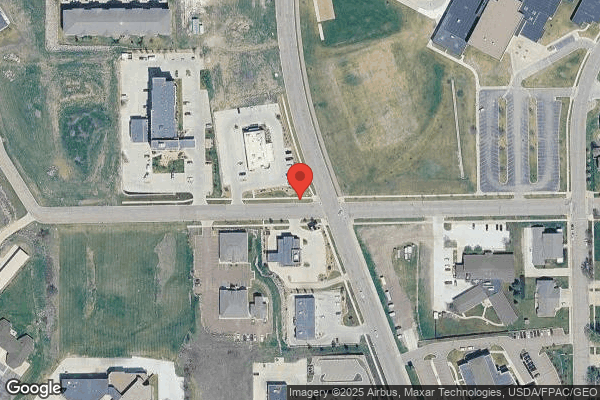
DAKOTA ALPHA

1303 27TH STREET NW, MANDAN, ND 58554 (701) 663-0376
Non profit - Corporation 20 Beds Independent Data: November 2025
Trust Grade
90/100
#4 of 72 in ND
Last Inspection: July 2025

Inspected within the last 6 months. Data reflects current conditions.

Overview

Dakota Alpha has received a Trust Grade of A, indicating it is an excellent choice for care, and is highly recommended. It ranks #4 out of 72 facilities in North Dakota, placing it in the top half, and is the best option among 5 facilities in Morton County. The facility's trend is stable, with 2 reported issues in both 2024 and 2025, showing no worsening of conditions. Staffing is a strong point, with a 5-star rating and a turnover rate of just 30%, well below the state average of 48%. However, there are some concerns, including a lack of proper qualifications for the food services supervisor and cleanliness issues in food preparation areas, which could potentially lead to foodborne illnesses. Additionally, some residents' personal fans were not properly cleaned, which raises concerns about maintaining a safe environment.

Trust Score
A
90/100
In North Dakota
#4/72
Top 5%
Safety Record
Low Risk
No red flags
Inspections
Holding Steady
2 → 2 violations
Staff Stability
○ Average
30% turnover. Near North Dakota's 48% average. Typical for the industry.
Penalties
✓ Good
No fines on record. Clean compliance history, better than most North Dakota facilities.
Skilled Nurses
✓ Good
Each resident gets 86 minutes of Registered Nurse (RN) attention daily — more than 97% of North Dakota nursing homes. RNs are the most trained staff who catch health problems before they become serious.
Violations
○ Average
9 deficiencies on record. Average for a facility this size. Mostly minor or procedural issues.
★★★★★
5.0
Overall Rating
★★★★★
5.0
Staff Levels
★★★☆☆
3.0
Care Quality
★★★★★
5.0
Inspection Score
Stable
2024: 2 issues
2025: 2 issues

The Good

  • 5-Star Staffing Rating · Excellent nurse staffing levels
  • Full Sprinkler Coverage · Fire safety systems throughout facility
  • No fines on record
  • Staff turnover below average (30%)

    18 points below North Dakota average of 48%

Facility shows strength in staffing levels, fire safety.

The Bad

Staff Turnover: 30%

15pts below North Dakota avg (46%)

Typical for the industry

The Ugly 9 deficiencies on record

Jul 2025 2 deficiencies
CONCERN (D) 📢 Someone Reported This

A family member, employee, or ombudsman was alarmed enough to file a formal complaint

Potential for Harm - no one hurt, but risky conditions existed

Deficiency F0658 (Tag F0658)

Could have caused harm · This affected 1 resident

Based on observation, record review, policy review, and staff interview, the facility failed to provide medication in accordance with professional standards for 1 of 5 residents (Resident #5) observed...

Read full inspector narrative →
Based on observation, record review, policy review, and staff interview, the facility failed to provide medication in accordance with professional standards for 1 of 5 residents (Resident #5) observed during medication pass. Failure to ensure the facility's stock medication formulary accommodated physicians' orders and/or staff clarified orders to match the formulary stock medication supply resulted in Resident #5 and possibly other residents receiving an inaccurate medication dose and may result in unintended therapeutic results. Findings include: Review of the facility policy titled Administration of Medications occurred on 07/09/25. This policy, dated 07/01/25, stated, Procedure: Medications are administered . as ordered by the physician . Ensure that the six rights of medication administration are followed: . Right dosage . Review of Resident #5's medical record occurred on 07/08/25. A physician's order, dated 06/01/23, stated, Calcium-Vitamin D Tablet 600-200 MG [milligrams]-UNIT [Calcium 600 mg with Vitamin D 200 units (equivalent to 5 micrograms)] Give 1 tablet by mouth two times a day for OTHER SPECIFIED DISORDERS OF BONE DENSITY AND STRUCTURE. Observation on 07/08/25 at 8:23 a.m. showed a nurse (#1) administered one tablet of Calcium 600 mg with Vitamin D 400 units (equivalent to 10 micrograms) to Resident #5 from the supply of stock medications. The nurse later verified this as the only Calcium with Vitamin D available in the facility's stock supply. During an interview on 07/08/25 at 11:21 a.m., an administrative nurse (#2) stated the facility used the stock Calcium with Vitamin D the consultant pharmacy provided. At 11:55 a.m., the nurse (#2) stated the facility provided stock medications as part of a resident's care and the nurse should have contacted the provider to update the order to match the stock medication available.
CONCERN (D) 📢 Someone Reported This

A family member, employee, or ombudsman was alarmed enough to file a formal complaint

Potential for Harm - no one hurt, but risky conditions existed

Infection Control (Tag F0880)

Could have caused harm · This affected 1 resident

Based on observation, record review, professional reference, and staff interview, the facility failed to follow standards of infection control and prevention for 1 supplemental resident (Resident #7) ...

Read full inspector narrative →
Based on observation, record review, professional reference, and staff interview, the facility failed to follow standards of infection control and prevention for 1 supplemental resident (Resident #7) observed during cares. Failure to practice infection control standards related to enhanced barrier precautions (EBP) has the potential to spread infection throughout the facility. Findings include: Review of the Centers of Disease Control (CDC) guidance at https://www.cms.gov/medicare/health-safety-standards/quality-safety-oversight-general-information/policy-memos-states-and-cms-locations/enhanced-barrier-precautions-nursing-homes-prevent-spread-multidrug-resistant-organisms-mdros, dated March 20, 2024, titled Enhanced Barrier Precautions in Nursing Homes to Prevent Spread of Multidrug-resistant Organisms (MDROs), stated, EBP are indicated for residents with . indwelling medical devices even if the resident is not known to be infected or colonized with a MDRO. Indwelling medical device examples . feeding tubes . Review of Resident #7's medical record occurred on all days of survey. The care plan identified the resident required EBP. Observation on 07/07/25 at 10:47 a.m. showed a sign on Resident #7's door identifying enhanced barrier precautions. A certified nurse aide (CNA #3) completed hand hygiene, applied gloves, performed perineal cares, and transferred Resident #7 from the toilet to the wheelchair using a mechanical sit to stand lift. The CNA (#3) failed to apply a gown before providing perineal cares. During an interview on 07/08/25 at 4:40 p.m., an administrative nurse (#2) stated she expected staff to wear gowns when providing toileting assistance for residents requiring enhanced barrier precautions.
May 2024 2 deficiencies
CONCERN (D)

Potential for Harm - no one hurt, but risky conditions existed

Infection Control (Tag F0880)

Could have caused harm · This affected 1 resident

Based on observation, review of facility policy, and staff interview, the facility failed to follow standards of infection control for 1 of 2 sampled residents (Resident #11) observed during a dressin...

Read full inspector narrative →
Based on observation, review of facility policy, and staff interview, the facility failed to follow standards of infection control for 1 of 2 sampled residents (Resident #11) observed during a dressing change. Failure to place a barrier and establish an area for soiled products has the potential to spread infection throughout the facility. Findings include: Review of the facility policy titled Clean Dressing Change occurred on 05/30/24. This policy, dated 02/09/23, stated, . Set up clean field with needed supplies for wound cleansing and dressing application: a.) If a table is available, wipe clean before use. b.) Place a disposable cloth or linen saver on the overbed table or available surface. Establish area for soiled products to be placed (Chux [disposable pad] or plastic bag). Observation on 05/29/24 at 11:00 a.m. showed a nurse (#2) placed supplies for a dressing change on Resident #11's bedside table. The nurse donned gloves, removed the dressing from the resident's infected toe, removed her gloves, performed hand hygiene, donned gloves, and used gauze and a wound cleanser to cleanse the infected area. The nurse (#2) placed the soiled gauze on the floor and continued with the dressing change. The nurse failed to clean and place a barrier on the bedside table and establish an area for the soiled products. During an interview on 05/30/24 at 10:35 a.m., an administrative nurse (#1) stated she expected staff to use a barrier on the bedside table for supplies and not place soiled gauze on the floor.
CONCERN (E)

Potential for Harm - no one hurt, but risky conditions existed

Food Safety (Tag F0812)

Could have caused harm · This affected multiple residents

Based on observation, review of facility policy, and staff interview, the facility failed to ensure food is prepared and stored in a clean and sanitary manner in 1 of 1 kitchen and 1 of 1 kitchenette ...

Read full inspector narrative →
Based on observation, review of facility policy, and staff interview, the facility failed to ensure food is prepared and stored in a clean and sanitary manner in 1 of 1 kitchen and 1 of 1 kitchenette (Resident Kitchen). Failure to ensure cleanliness of the kitchen, dishware, and food storage areas, to properly store raw and ready-to-eat foods and discard outdated food items has the potential to result in foodborne illness to residents, visitors, and staff. Findings include: Review of the facility policy titled Food Safety Requirements occurred on 05/29/24. This policy, revised 01/31/23, stated, . Food safety practices shall be followed throughout the facility's entire food handling process. Elements of the process include the following: . Storage of food in a manner that helps prevent deterioration or contamination of the food . Preparation of food, including thawing . Equipment used in the handling of food, including dishes, utensils, mixers, grinders, and other equipment that comes in contact with the food. Practices to maintain safe refrigerated storage include: . storing raw meats on shelves below . ready-to-eat foods so that meat juices do not drip onto these foods . Keeping foods covered or in air tight containers. All equipment used in the handling of food shall be cleaned and sanitized, and handled in a manner to prevent contamination. Staff shall follow facility procedures for . cleaning fixed cooking equipment. additional strategies to prevent foodborne illness include . Preventing cross-contamination of foods. Review of the facility policy titled Use and Storage of Food Brought in by Family or Visitors occurred on 05/29/24. This policy, revised 04/16/24, stated, . All food items that are already prepared by the family or visitor brought in must be labeled with the content and dated. The facility may refrigerate labeled and dated prepared items in the nourishment refrigerator. The prepared food must be consumed by the resident within 3 days. If not consumed within 3 days, food will be thrown away by facility staff. Review of the facility policy titled Dishwashing & [and] Kitchen Sanitation Procedure occurred on 05/29/24. This policy, revised 01/31/23, stated, . All cookware, dishes and eating utensils will be cleaned & sanitized according to regulatory guidelines. Dishwasher Usage & Maintenance . Exterior of dishwasher should be wiped down at a minimum of daily with spot-cleaning throughout the work day [sic]. Assigned staff will descale dishwasher on a weekly basis . Observations on 05/28/24 at 9:05 a.m. showed the following: MAIN KITCHEN COOLER * A covered plate of breakfast food with water on top of the plate cover. The water dripped down onto the plate cover from thawing food containers located on a shelf above. The plate cover had an approximate one-inch diameter opening on its top, which would allow water to drip onto the food. A dietary staff member (#4) stated staff saved the plate in the cooler for resident consumption later. * A large baking sheet with two large rolls of thawing ground beef, a sealed package of sliced, ready-to-eat Canadian bacon, and a zip-lock bag of diced, ready-to-eat ham. CLEANLINESS * A silverware divider located inside a drawer contained dried food substances on the side of the teaspoon divider. * The base of a mini blender sticky with loose food particles on it. * A recently washed container for the mini blender placed upside down on the counter adjacent to the blender base. Part of the container set on top of a sticky dried substance on the counter. * A sticky substance on the controls on the coffee machine. * Burnt, loose, debris under all the grates of the gas cooking stove. * A cupboard containing spices and cooking oils with a layer of dust and spice particles, and random areas with a sticky substance throughout the shelves of the cupboard. * Loose lime-scale debris on top of the dishwasher. RESIDENT KITCHEN * A large clear plastic container of outdated cut pineapple located in the bottom drawer of the refrigerator, labeled with a resident's name, and dated 05/11/24. During an interview on 05/28/24 at 4:11 p.m. a dietary manager (#3) confirmed potential for contamination of the stored breakfast plate with the dripping water, and the thawing raw meat and ready-to-eat meats should be stored separately. The manager (#3) stated the cleanliness of the kitchen is on her list to get the staff to do, and confirmed the pineapple in the kitchenette as outdated and discarded it.
Jul 2023 5 deficiencies
CONCERN (D)

Potential for Harm - no one hurt, but risky conditions existed

Deficiency F0568 (Tag F0568)

Could have caused harm · This affected 1 resident

Based on record review, review of facility policy, and family and staff interviews, the facility failed to provide resident representatives copies of the quarterly financial statements for 2 of 3 resi...

Read full inspector narrative →
Based on record review, review of facility policy, and family and staff interviews, the facility failed to provide resident representatives copies of the quarterly financial statements for 2 of 3 residents (Resident #4 and #17) reviewed for personal fund accounts. Failure to provide quarterly statements to the individuals designated by the residents to make financial decisions on their behalf prevented the representatives from verifying transactions and fund balances. Findings include: Review of the facility policy titled Resident Spending Accounts occurred on 07/13/23. This policy, revised 03/09/23, stated, . Dakota Alpha can establish a Resident Spending Account that is separate from Dakota Alpha's operating accounts if the resident chooses. Residents will be given an accounting of their funds held by the Administrative Assistant quarterly, and a copy is placed in their file. Family interviews identified the following: * 07/11/23 at 3:07 p.m., Resident #4's guardian indicated she had not received any quarterly financial statements. * 07/11/23 at 3:18 p.m., Resident #17's family member who manages her finances stated, No, I haven't received one [quarterly statement]. During a staff interview on 07/12/23 at 9:52 a.m., a social services staff member (#8) indicated quarterly financial statements are sent to resident representatives upon request.
CONCERN (D)

Potential for Harm - no one hurt, but risky conditions existed

Deficiency F0658 (Tag F0658)

Could have caused harm · This affected 1 resident

GASTROSTOMY TUBE Review of the facility procedure titled Verifying Placement of Feeding Tube occurred on 07/12/23. This procedure, dated 06/22/23, stated, . For gastrostomy tubes [surgical opening int...

Read full inspector narrative →
GASTROSTOMY TUBE Review of the facility procedure titled Verifying Placement of Feeding Tube occurred on 07/12/23. This procedure, dated 06/22/23, stated, . For gastrostomy tubes [surgical opening into the stomach through the abdominal wall], check that the enteral retention device is properly approximated to the abdominal wall by gently tugging on the tube and taking note of the marking on the tube. Measure the pH [a way to measure the acidity level] of the gastric secretions . Review of Resident #3's medical record occurred on all days of survey. The physician orders, dated 09/22/21, stated, Verify placement of feeding tube before beginning a feeding, flushing tube, or administering medications. three times a day Check that enteral retention device is properly approximated to abdominal wall before checking centimeter markings. Gastric fluid usually has a pH of 5 or less (See Verifying Placement of Feeding Tube policy and procedure) Observation on 07/11/23 at 10:00 a.m. showed the nurse (#6) administered medications and feeding via g-tube for Resident #3. The nurse failed to verify placement of the feeding tube. Observation on 07/12/23 at 9:55 a.m. showed the nurse (#5) administered medications and feeding via g-tube for Resident #3. The nurse failed to verify placement of the feeding tube. During an interview on 07/13/23 at 8:59 a.m., an administrative staff nurse (#2) confirmed when verifying placement of feeding tubes staff would be expected to check the measurement on the g-tube and check the pH of the gastric contents if it is present. MONITORING BLOOD GLUCOSE Review of the facility procedure titled Blood Glucose Monitoring occurred on 07/13/23. This procedure, reviewed/revised 12/01/22, stated, . It is the procedure of this facility to perform blood glucose monitoring to diabetic residents as per physician's orders. Collect blood sample . Read the digital display to receive blood glucose result. Report critical test results to physician timely. Document the procedure. Review of the facility procedure titled Provision of Physician Ordered Services occurred on 07/13/23. This procedure, reviewed/revised 06/08/23, stated, . Qualified nursing personnel will . review the diagnostic test . and communicate the results to the ordering Physician . per the ordering physician's orders. Review of Resident #16's medical record occurred on all days of survey. The current care plan identified, [Resident #16] has Diabetes Mellitus Type II. He is at risk for diabetes related complications, Accuchecks as needed, Notify MD if needed . The current physician's orders showed Resident #16 receives Lantus insulin, Novolog insulin, and Victoza for his diabetes. An order, dated 10/24/22, identified, Accuchecks if symptomatic. Call MD [medical doctor] if < [less than] 50 [milligrams (mg) per deciliter (dL)] or > [greater than] 500. On 05/10/23, the physician changed the parameters to < 50 or > 400. The blood glucose log identified Resident #16 had a blood glucose level of 502 mg/dL on 04/19/23 and 462 mg/dL on 05/17/23. A progress note, dated 04/21/23, identified, . [Resident 16's] blood sugars have been before meals that [sic] last 3 days. 4/18: 362 before supper 4/19: 377, 502, 378, 4/20: 329, 368, not able to get one before supper 4/21: 314 this morning . Review of the progress notes showed staff failed to document Resident #16's symptoms at the time of the 502 mg/dL and 462 mg/dL readings and failed to notify the physician in a timely manner when Resident #16's blood glucose readings fell outside the set parameters. During an interview on 07/11/23 at 3:45 p.m., an administrative nurse (#2) confirmed staff failed to document Resident #16's symptoms and failed to notify the physician in a timely manner when Resident #16's blood glucose readings fell outside the set parameters. Based on observation, record review, review of facility policy, and staff interview, the facility failed to follow professional standards of practice for 3 of 4 residents (Residents #3, #6, and #16) observed during medication administration. Failure to properly prepare insulin pens (Residents #6 and #16), follow physician orders for blood glucose monitoring (Resident #16), and check gastric tube placement (Resident #3), may result in residents receiving inaccurate doses of insulin, adverse reactions due to high blood glucose levels, and medications not delivered to the stomach. Findings include: INSULIN PENS Review of the facility procedure titled Insulin Pen occurred on 07/13/23. This procedure, dated 06/06/23, stated, . 11. g. Attach safety needle: . iv. Twist open and remove outer cover from the pen needle. h. Prime the insulin pen: i. Dial 2 units by turning the dose selector clockwise. ii. With the needle pointing up, push the plunger, and watch to see that at least one drop of insulin appears on the tip of the needle. If not, repeat until at least one drop appears. Observation on 07/12/23 from 7:53 to 8:09 a.m. showed the nurse (#5) failed to remove the needle covers and held the pens horizontally while priming two insulin pens for Resident #16 and one insulin pen for Resident #6. During an interview on 07/13/23 at 1:00 p.m., an administrative staff member (#2) stated nurses are to hold insulin pens upright with the cover off when priming.
CONCERN (D)

Potential for Harm - no one hurt, but risky conditions existed

Deficiency F0742 (Tag F0742)

Could have caused harm · This affected 1 resident

**NOTE- TERMS IN BRACKETS HAVE BEEN EDITED TO PROTECT CONFIDENTIALITY** Based on record review and staff interview, the facility failed to ensure 1 of 1 sampled resident (Resident #19) diagnosed with ...

Read full inspector narrative →
**NOTE- TERMS IN BRACKETS HAVE BEEN EDITED TO PROTECT CONFIDENTIALITY** Based on record review and staff interview, the facility failed to ensure 1 of 1 sampled resident (Resident #19) diagnosed with post-traumatic stress disorder (PTSD) received appropriate treatment and services to meet his assessed needs. Failure to provide appropriate person-centered and individualized treatment and services may result in Resident #19's inability to attain his highest practicable mental and psychosocial wellbeing. Findings include: The facility failed to provide a copy of their policy addressing trauma and/or post-traumatic stress disorder (PTSD). Review of Resident #19's medical record occurred on all days of survey. The quarterly Minimum Data Set, dated [DATE], identified a diagnosis of PTSD. Current medications included antianxiety, antidepressant, and antipsychotics. During an interview on 07/12/23 at 3:30 p.m., an administrative nurse (#2) stated, We do not have a PTSD assessment. We do have the PHQ-9 assessment [Patient Health Questionnaire 9 - Mental Health Screening for depression]. A Bio-Psychosocial History, dated 05/11/23, identified a history of sexual abuse and past thoughts/plan to self-harm . [Resident #19] reports although he is addressing his issue in counseling, it continues to be an unresolved issue for him, and he believes it always will be. The current care plan failed to address Resident #19's emotional/psychosocial needs related to his trauma/PTSD diagnosis, and failed to include any clinically appropriate and person-centered interventions used to avoid re-traumatization. During an interview on 07/13/23 at 2:30 p.m., an administrative nurse (#2) confirmed Resident #19's care plan failed to address his emotional/psychosocial needs related to his trauma/PTSD diagnosis. The facility failed to: * Ensure Resident #19's assessment identified expressions or indications of distress, identified triggers that may cause re-traumatization, and addressed his preferences, * Develop and implement approaches to care that were both clinically appropriate and person-centered, and * Develop an individualized care plan that addressed Resident #19's assessed emotional/psychosocial needs related to his trauma/PTSD diagnosis.
CONCERN (E)

Potential for Harm - no one hurt, but risky conditions existed

Safe Environment (Tag F0584)

Could have caused harm · This affected multiple residents

Based on observation and staff interview, the facility failed to ensure a safe and clean environment for 2 of 3 sampled residents (Resident #8 and #15) and 2 supplemental residents (Resident #4 and #9...

Read full inspector narrative →
Based on observation and staff interview, the facility failed to ensure a safe and clean environment for 2 of 3 sampled residents (Resident #8 and #15) and 2 supplemental residents (Resident #4 and #9) with personal fans. Failure to clean personal fans does not provide a safe/clean environment and has the potential to place the residents at risk for illness. Findings include: Observations on 07/11/23 from 9:50 a.m. to 10:05 a.m., showed the following: * Resident #4 lying in bed with a tower fan (visible dust on the outside grate) blowing air directly toward the resident. * Resident #8 lying in bed with an oscillating stand fan (visible dust on the outside grate covering the fan blade) blowing air directly toward the resident. * Resident #9 lying in bed with a tower fan (visible dust on the outside grate) blowing air directly toward the resident. * Resident #15 lying in bed with a tower fan (visible dust on the outside grate) blowing air directly toward the resident. The facility failed to provide a policy related to the cleaning of residents' personal fans. During an interview on 07/13/23 at 12:56 p.m., an administrative staff member (#2) stated staff are expected to clean dirty equipment in residents' rooms.
CONCERN (F)

Potential for Harm - no one hurt, but risky conditions existed

Deficiency F0801 (Tag F0801)

Could have caused harm · This affected most or all residents

Based on staff interview, the facility failed to ensure 1 of 1 nutrition and food services supervisor (#1) obtained the proper qualifications to serve as the director of food and nutrition services. F...

Read full inspector narrative →
Based on staff interview, the facility failed to ensure 1 of 1 nutrition and food services supervisor (#1) obtained the proper qualifications to serve as the director of food and nutrition services. Failure to ensure staff have the qualifications to carry out the functions of food and nutrition services has the potential to result in foodborne illness to residents, staff, and visitors. Findings include: During an interview on 07/13/23 at 12:36 p.m., the nutrition and food services supervisor (#1) confirmed they have not completed the necessary courses required for the director of food and nutrition services. The facility failed to ensure the supervisor (#1) completed the required education for a certified dietary manager, certified food service manager, or a national certification for food service management and safety from a national certifying body.
Understanding Severity Codes (click to expand)
Life-Threatening (Immediate Jeopardy)
J - Isolated K - Pattern L - Widespread
Actual Harm
G - Isolated H - Pattern I - Widespread
Potential for Harm
D - Isolated E - Pattern F - Widespread
No Harm (Minor)
A - Isolated B - Pattern C - Widespread

Questions to Ask on Your Visit

  • "Can I speak with families of current residents?"
  • "What's your RN coverage like on weekends and overnight?"

Our Honest Assessment

Strengths
  • • Grade A (90/100). Above average facility, better than most options in North Dakota.
  • • No major safety red flags. No abuse findings, life-threatening violations, or SFF status.
  • • No fines on record. Clean compliance history, better than most North Dakota facilities.
  • • 30% turnover. Below North Dakota's 48% average. Good staff retention means consistent care.
Concerns
  • • No significant concerns identified. This facility shows no red flags across CMS ratings, staff turnover, or federal penalties.
Bottom line: Generally positive indicators. Standard due diligence and a personal visit recommended.

About This Facility

What is Dakota Alpha's CMS Rating?

CMS assigns DAKOTA ALPHA an overall rating of 5 out of 5 stars, which is considered much above average nationally. Within North Dakota, this rating places the facility higher than 99% of the state's 100 nursing homes. This rating reflects solid performance across the metrics CMS uses to evaluate nursing home quality.

How is Dakota Alpha Staffed?

CMS rates DAKOTA ALPHA's staffing level at 5 out of 5 stars, which is much above average compared to other nursing homes. Staff turnover is 30%, compared to the North Dakota average of 46%. This relatively stable workforce can support continuity of care.

What Have Inspectors Found at Dakota Alpha?

State health inspectors documented 9 deficiencies at DAKOTA ALPHA during 2023 to 2025. These included: 9 with potential for harm.

Who Owns and Operates Dakota Alpha?

DAKOTA ALPHA is owned by a non-profit organization. Non-profit facilities reinvest revenue into operations rather than distributing to shareholders. The facility operates independently rather than as part of a larger chain. With 20 certified beds and approximately 19 residents (about 95% occupancy), it is a smaller facility located in MANDAN, North Dakota.

How Does Dakota Alpha Compare to Other North Dakota Nursing Homes?

Compared to the 100 nursing homes in North Dakota, DAKOTA ALPHA's overall rating (5 stars) is above the state average of 3.1, staff turnover (30%) is significantly lower than the state average of 46%, and health inspection rating (5 stars) is much above the national benchmark.

What Should Families Ask When Visiting Dakota Alpha?

Based on this facility's data, families visiting should ask: "Can I visit during a mealtime to observe dining assistance and food quality?" "How do you handle medical emergencies, and what is your hospital transfer rate?" "Can I speak with family members of current residents about their experience?"

Is Dakota Alpha Safe?

Based on CMS inspection data, DAKOTA ALPHA has a clean safety record: no substantiated abuse findings (meaning no confirmed cases of resident harm), no Immediate Jeopardy citations (the most serious violation level indicating risk of serious injury or death), and is not on the Special Focus Facility watch list (a federal program monitoring the lowest-performing 1% of nursing homes). The facility has a 5-star overall rating and ranks #1 of 100 nursing homes in North Dakota. While no facility is perfect, families should still ask about staff-to-resident ratios and recent inspection results during their visit.

Do Nurses at Dakota Alpha Stick Around?

DAKOTA ALPHA has a staff turnover rate of 30%, which is about average for North Dakota nursing homes (state average: 46%). Moderate turnover is common in nursing homes, but families should still ask about staff tenure and how the facility maintains care continuity when employees leave.

Was Dakota Alpha Ever Fined?

DAKOTA ALPHA has no federal fines on record. CMS issues fines when nursing homes fail to meet care standards or don't correct problems found during inspections. The absence of fines suggests the facility has either maintained compliance or corrected any issues before penalties were assessed. This is a positive indicator, though families should still review recent inspection reports for the full picture.

Is Dakota Alpha on Any Federal Watch List?

DAKOTA ALPHA is not on any federal watch list. The most significant is the Special Focus Facility (SFF) program, which identifies the bottom 1% of nursing homes nationally based on persistent, serious quality problems. Not being on this list means the facility has avoided the pattern of deficiencies that triggers enhanced federal oversight. This is a positive indicator, though families should still review the facility's inspection history directly.