SUNSET DRIVE - A PROSPERA COMMUNITY
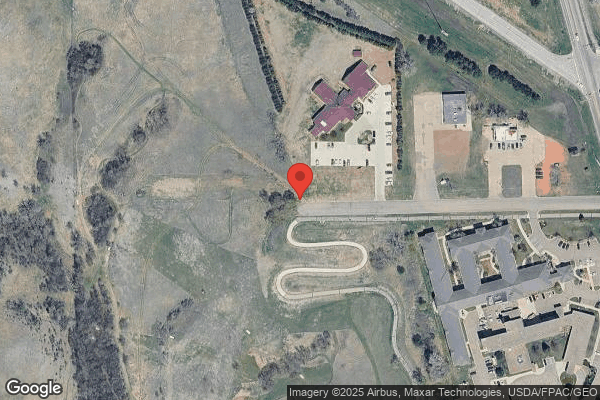
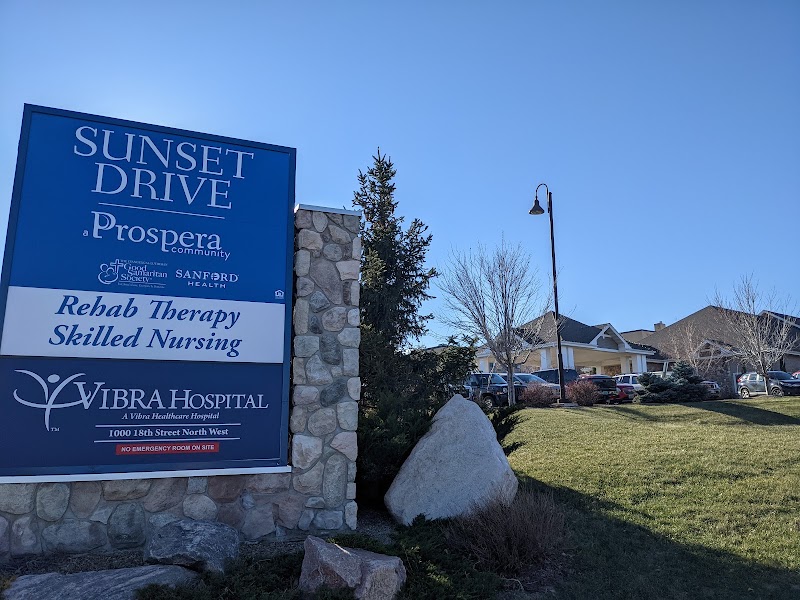
1011 BOUNDARY ST NW, MANDAN, ND 58554 (701) 323-1411
Non profit - Corporation 128 Beds GOOD SAMARITAN SOCIETY Data: November 2025 1 Immediate Jeopardy citation
Trust Grade
0/100
#69 of 72 in ND
Last Inspection: May 2025

Inspected within the last 6 months. Data reflects current conditions.

Overview

Sunset Drive - A Prospera Community has received a Trust Grade of F, indicating significant concerns and a poor overall rating. It ranks #69 out of 72 nursing homes in North Dakota, placing it in the bottom half of facilities statewide, and it is the lowest-ranked option in Morton County. The situation at the facility is worsening, with issues increasing from 18 in 2024 to 30 in 2025. While staffing is rated average with a turnover rate of 56%, the facility has faced $12,735 in fines, which is concerning and indicates ongoing compliance issues. There are critical incidents, such as failure to ensure resident safety during severe weather events and inadequate supervision during transportation, which raises serious concerns about the quality of care and safety for residents.

Trust Score
F
0/100
In North Dakota
#69/72
Bottom 5%
Safety Record
High Risk
Review needed
Inspections
Getting Worse
18 → 30 violations
Staff Stability
⚠ Watch
56% turnover. Above average. Higher turnover means staff may not know residents' routines.
Penalties
✓ Good
$12,735 in fines. Lower than most North Dakota facilities. Relatively clean record.
Skilled Nurses
✓ Good
Each resident gets 46 minutes of Registered Nurse (RN) attention daily — more than average for North Dakota. RNs are trained to catch health problems early.
Violations
⚠ Watch
64 deficiencies on record. Higher than average. Multiple issues found across inspections.
★☆☆☆☆
1.0
Overall Rating
★★★☆☆
3.0
Staff Levels
★★☆☆☆
2.0
Care Quality
★☆☆☆☆
1.0
Inspection Score
Stable
2024: 18 issues
2025: 30 issues

The Good

  • Full Sprinkler Coverage · Fire safety systems throughout facility
  • No fines on record

Facility shows strength in fire safety.

The Bad

1-Star Overall Rating

Below North Dakota average (3.1)

Significant quality concerns identified by CMS

Staff Turnover: 56%

Near North Dakota avg (46%)

Frequent staff changes - ask about care continuity

Federal Fines: $12,735

Below median ($33,413)

Minor penalties assessed

Chain: GOOD SAMARITAN SOCIETY

Part of a multi-facility chain

Ask about local staffing decisions and management

Staff turnover is elevated (56%)

8 points above North Dakota average of 48%

The Ugly 64 deficiencies on record

1 life-threatening 1 actual harm
Aug 2025 1 deficiency
CONCERN (D) 📢 Someone Reported This

A family member, employee, or ombudsman was alarmed enough to file a formal complaint

Potential for Harm - no one hurt, but risky conditions existed

Deficiency F0658 (Tag F0658)

Could have caused harm · This affected 1 resident

Based on observation, record review, review of facility policy, review of professional reference, and staff interview, the facility failed to follow professional standards of practice for 2 of 10 samp...

Read full inspector narrative →
Based on observation, record review, review of facility policy, review of professional reference, and staff interview, the facility failed to follow professional standards of practice for 2 of 10 sampled residents (Resident #1 and #3) observed during mealtime. Failure to follow physician orders for dietary modifications may result in adverse consequences such as choking or aspiration for all residents.Findings include: Review of the facility policy titled “Physician/Practitioner Orders” occurred on 08/25/25. This policy, dated 04/06/25, stated, “. Physician/Practitioner orders are a critical component to providing quality care to residents. Accurate processing of physician/practitioner orders is important.” Kozier & Erb's Fundamentals of Nursing, Concepts, Process and Practice, 11th Edition eText, 2021, Pearson, Boston, Massachusetts, page 63, stated, Nurses are expected to analyze procedures . ordered by the physician or primary care provider. If the order is neither ambiguous nor apparently erroneous, the nurse is responsible for carrying it out. - Review of Resident #1's medical record occurred on 08/25/25. The physicians ordered diet, dated 05/14/25, included, soft and bite-sized texture, thin liquids with no straw, and direct supervision. The current care plan, care guide, and swallow guide contained the specific diet ordered instructions for soft and bite-sized texture, thin liquids with no straw, and direct supervision. Observations of Resident #1 in her room on 08/25/25 showed the following: * At 11:00 a.m. a fluid filled cup with a handle, lid, and straw located on the bedside table next to the resident. * At 12:25 p.m. a staff member delivered a meal tray and two beverage cups, each with a handle, lid, and straw. The staff member placed the meal and drinks on the overbed table, the resident began to eat, and the staff member exited the room. * At 12:32 p.m. the resident continued to eat the meal without staff supervision. * At 12:40 p.m. the resident finished the last bites of the meal without staff supervision. The facility staff failed to remove the straws from beverage cups and failed to provide direct supervision during the meal. During interviews the afternoon of 08/25/25, supervisory staff members (#1 and #2) confirmed Resident #1’s diet orders included direct staff supervision during meals and no straws in beverages. - Review of Resident #3's medical record occurred on 08/25/25. A physician's diet order, dated 03/12/25, identified minced and moist texture, thin liquids with no straw and 1:1 (one-to-one) supervision. The current care plan, care guide, and swallow guide stated minced and moist texture, thin liquids with no straw, and 1:1 supervision. Resident #3's meal ticket identified 1:1 supervision for meals. Observation of the noon meal on 08/25/25 showed Resident #3 at the dining room table, a plate of half-eaten food within reach, and no staff member present. During an interview on 08/25/25 at 12:05 p.m., an administrative dietary staff member (#3) stated expected a staff member present at Resident #3's table as 1:1 supervision is required.
Jul 2025 3 deficiencies 1 IJ (1 facility-wide)
CRITICAL (L) 📢 Someone Reported This

A family member, employee, or ombudsman was alarmed enough to file a formal complaint

Immediate Jeopardy (IJ) - the most serious Medicare violation

Accident Prevention (Tag F0689)

Someone could have died · This affected most or all residents

⚠️ Facility-wide issue

Based on review of facility policy and resident and staff interviews, the facility failed to ensure residents remained free from accident hazards during 2 of 2 severe weather events (06/20/25 and 06/2...

Read full inspector narrative →
Based on review of facility policy and resident and staff interviews, the facility failed to ensure residents remained free from accident hazards during 2 of 2 severe weather events (06/20/25 and 06/27/25). Failure to ensure facility staff took appropriate action/precautions to protect residents during severe weather events placed all residents at risk for physical and emotional harm. During an on-site complaint survey, the survey team consulted with the State Survey Agency (SSA) on 07/24/25 and determined an Immediate Jeopardy (IJ) situation existed on 06/20/25. The facility failed to implement their emergency plan when tornado warnings were issued which placed residents at risk for injury.* 07/24/25 at 5:24 p.m., the survey team notified the acting administrator (#1) and the director of nursing (DON) (#2) of the IJ situation, provided the IJ template, and requested the facility's removal plan for the IJ.* 07/25/25 at 1:41 p.m., the State Agency (SA) reviewed and accepted the removal plan.* 07/28/25 at 3:11 p.m., the survey team verified the implementation of the removal plan as of 07/25/25 and the IJ removal. The deficient practice remained at a F scope and severity following the removal of the IJ.The facility completed the following steps to remove the immediacy and correct the deficient practice:*Completed a comprehensive review of the emergency management resource packet/binder and the policy and procedure for tornado watches and warnings.*Completed a tabletop tornado drill on all four units for leadership, employees, and ancillary/dietary staff working on 07/24/25. *Ordered five new electric/battery powered weather radios on 07/24/25 to be located on each unit and at the main floor reception desk. *Ensured current weather radios were present and working on Units 1 and 3 on 07/24/25. Unit 3 is designated to listen to weather updates and notify Units 1, 2, and 4 when to implement and end the tornado watch and tornado warning protocols. *Educated all staff via OnShift (the facility's text/telephone messaging system) with the education to be completed during their shift and/or prior to their next shift. *Assigned all employees computer training for Workplace Emergencies and Natural Disasters. Findings include:Review of the facility policy titled Tornados occurred on 07/24/25. This undated policy stated, . Each center should have a national weather service radio with an audible alarm in accessible common area. In case of a tornado or threat of tornado, tune into local weather radio or television for information and advice from the National Weather Service and public safety agencies. A WATCH indicates that conditions exist wherein a tornado may develop. 1. Close drapes in resident rooms and common areas. 2. Gather flashlights in case of power failure. 3. Alert all on-duty staff to the potential for a tornado 4. Continue to monitor local TV/radio stations for weather updates. A WARNING indicates a tornado has been sighted or indicated by radar. Upon notification that a tornado had been sighted . the following additional procedures should be implemented: 1. Alert staff that a tornado has been sighted. 2. Move residents/clients, staff, and visitors into first floor interior hallways, bathrooms, or areas away from windows or skylights. Close doors after residents have been evacuated. 3. Charge nurse must have a roster of residents/clients and keep them together. 4. If possible, place resident near protective walls with arms over head. Provide blankets and pillows for protection. If there is no time to get residents to protected areas, have them lie flat on the floor, face down. 5. Use beds, bed covers or mattresses as protection against flying glass and debris where applicable. 7. Stand by for the ALL CLEAR. Stay in the building until the storm has passed.Review of the SEVERE WEATHER ALERT protocol stated, After Hours and Weekends. Unit 3 nurse is the designated leader to listen to weather updates. You will notify Units 1, 2 and 4 when to implement the Tornado Watch or Tornado Warning Policy. Unit 3 nurse will be the leader to notify other units when to end the watch or warning. Weather radios are in MDS [Minimum Data Set] nurses office, 1 for each unit if needed - instructions are also there. Instructions to go to each unit when taking radio the [sic] the unit.During confidential resident interviews on 07/23/25 and 07/24/25, the residents stated the following:*Resident A, Branches hitting my window woke me up. The resident confirmed he remained in his bed with the window blinds and room door open.*Resident B, Notified of everything [severe weather and tornado] on TV [television], They [staff] did nothing, I sat [in a recliner in his room] and waited it out, No one came in when the sirens on the TV went off [to tell me] if it was the real thing. If it was okay, and I am concerned about fire. How will they do this. The resident confirmed the room blinds remained open.*Resident C, Notified of the severe weather from the TV. Staff didn't say a word [about a tornado warning]. The resident confirmed the room door and blinds remained open.*Resident D, I was sleeping. It [weather] woke me up. and I was not aware of any tornados. They [staff] did not tell me one was near. The resident confirmed she remained in bed with the room blinds open.*Resident E, I remember waking up to it [weather] and confirmed she remained in her bed.*Resident F, They [staff] told me nothing about the storm and confirmed she remained in her bed.*Resident G, Confirmed only the TV alerted her to a tornado warning and she remained in her room.*Resident H, I learned of the bad weather on TV, I was watching the trees bend over. I was not aware a tornado was near, and They [staff] just shut the door and said stay in your room.*Resident I, Notified of the severe weather by the TV and she remained lying in bed.*Resident J, Slept during the storm and confirmed he remained in his room lying in his bed.*Resident K, Confirmed she remained in her bed located beside/under her room window with the blinds closed.*Resident L, Notified of the severe weather by the TV. There were so many tornados so close. I didn't feel safe. Nobody cared. and At least they [staff] could have moved me to the first floor. The resident confirmed she remained in her bed located beside/under her window with the blinds closed. I wonder what they would do if there was a fire. Just leave me lay here in my bed?* Resident M, I was asleep and confirmed he remained in his bed with the window blinds and room door open.*Resident N, The only way we [resident's and staff] knew what was going on was on the TV. and We [the residents] were telling them [staff] there was a [tornado] warning.*Residents located on Unit 2 stated staff came in to close their blinds. Residents on Units 1, 3, and 4 stated their blinds remained open and/or they always keep their blinds closed.During an interview on 07/23/25 at 11:30 a.m., a maintenance staff member (#3) stated all units have a binder at the nurse's station which contains the tornado watch and warning protocols. During an interview on 07/24/25 at 2:22 p.m., a management nurse (#2) stated the weather radio located on Unit 3 did not go off because it was not plugged in. That's why they [staff] did not know there was a tornado [warning].The facility failed to take appropriate action/precautions to protect residents during two issued tornado warnings.
CONCERN (D) 📢 Someone Reported This

A family member, employee, or ombudsman was alarmed enough to file a formal complaint

Potential for Harm - no one hurt, but risky conditions existed

ADL Care (Tag F0677)

Could have caused harm · This affected 1 resident

**NOTE- TERMS IN BRACKETS HAVE BEEN EDITED TO PROTECT CONFIDENTIALITY** Based on record review, review of facility policy, and staff interview, the facility failed to ensure residents received the nec...

Read full inspector narrative →
**NOTE- TERMS IN BRACKETS HAVE BEEN EDITED TO PROTECT CONFIDENTIALITY** Based on record review, review of facility policy, and staff interview, the facility failed to ensure residents received the necessary services to maintain oral hygiene for 2 of 2 sampled residents (Resident #1 and #2) dependent on staff for oral cares. Failure to provide oral care for a dependent resident may result in poor hygiene, increased oral/dental problems, and potential for adverse health effects. Findings include:Review of the facility policy titled Activities of Daily Living occurred on 07/24/25. This policy, dated December 2024, stated, . Any resident who is unable to carry out activities of daily living [ADL's] will receive necessary services to maintain good nutrition, grooming and personal and oral hygiene . ADLs are necessary tasks conducted in the normal course of a resident's daily life . included in these are the following: . Daily hygiene/grooming . oral care.-Review of Resident #1's medical record occurred on all days of survey. A Minimum Data Set (MDS), dated [DATE], identified assistance with oral cares. The current care plan stated, . I have ADL deficits . ORAL CARE: I require assistance of 1 for oral care . oral cares every AM and HS [bedtime] and as needed .Resident #1's oral care schedule identified for the months of May and June 2025; facility staff were expected to complete oral cares twice per day (AM and PM) and three times a day and PRN (as needed) for the month of July 2025. Review of documentation from May 2025 to July 18, 2025, identified the following:May 1-31 - PM: 10 days not completed.June 1-30 - AM: 4 days not completed. PM - 8 days not completed.July 1-18 - Scheduled for every shift (AM, PM, NIGHTS, PRN): AM: 3 days not complete. PM: 7 days not completed. Night: 0 days completed. PRN: 0 days completed.-Review of Resident #2's medical record occurred on 7/24/25. The current care plan stated, . I have ADL self-care performance deficit R/T . ORAL CARE: I require set-up assistance . twice per day (AM and PM).Resident #2's oral care documentation for July 10-24, 2025, identified two days AM oral cares were not completed, and 6 days PM oral cares were not completed. During an interview on 07/24/25 at 9:30a.m., an administrative staff member (#2) stated she expected staff to provide oral care to residents as care planned.
CONCERN (D) 📢 Someone Reported This

A family member, employee, or ombudsman was alarmed enough to file a formal complaint

Potential for Harm - no one hurt, but risky conditions existed

Deficiency F0725 (Tag F0725)

Could have caused harm · This affected 1 resident

Based on observations, review of facility policy, review of facility assessment, review of call light logs, and confidential staff interview, the facility failed to provide sufficient nursing staff an...

Read full inspector narrative →
Based on observations, review of facility policy, review of facility assessment, review of call light logs, and confidential staff interview, the facility failed to provide sufficient nursing staff and related services necessary to meet the needs for 5 of 7 sampled residents (Resident #3, #4, #5, #6, and #7) who required staff assistance. Failure to provide sufficient nursing staff may result in residents experiencing unmet needs, poor hygiene, incontinence, and skin issues and may negatively affect the residents' mental, physical and psychosocial well-being.Findings include:Review of the facility policy titled Nursing Services Staff occurred on 07/28/25. This policy, dated October 2024, stated, . The facility must have sufficient nursing staff . to ensure resident safety and attain or maintain the highest practicable, physical, mental, and psychosocial well-being of each resident .Review of the Facility Assessment occurred on 07/28/25. The assessment stated, . Staffing needs are met by providing adequate staff to each of the units and monitored by Nursing Administration and Administrator.A confidential complainant stated, on 07/26/25 at approximately 8:00 p.m., One man could be seen from the doorway calling for help and crying. Observation on 07/28/25 at 12:19 p.m. showed Resident #6's call light activated, and facility staff entered the room at 12:50 p.m. Review of the facility call light log verified Resident #6 activated the call light at 12:17 p.m. and staff responded 33 minutes later.Review of facility call light log on 07/28/25 showed Resident #6 activated the call light at 2:12 p.m. and staff responded 26 minutes later.Observation on 07/28/25 at 12:17 p.m. showed Resident #7s call light activated, and facility staff entered the room at 12:42 p.m. Review of the facility call light log verified Resident #7 activated the call light at 12:16 p.m. and staff responded 25 minutes later. Review of facility call light log for 07/26/25 showed the following:*Resident #3 activated the call light at 7:52 p.m. and staff responded one hour and 30 minutes later.*Resident #4 activated the call light at 6:17 p.m. and staff responded over three hours later.*Resident #5 activated the call light at 8:41 p.m. and staff responded one hour and 38 minutes later.During an interview on 07/28/25 at 10:52 a.m., a confidential staff member (A) stated, We are always short staffed, last week it was terrible. I had residents literally crying because I couldn't get to them to help them. They were sitting in their [stool].During an interview on 07/28/25 at 5:20 p.m., an administrative staff member (#2) stated she expected staff to answer call lights within 15-20 minutes.
Jul 2025 1 deficiency
CONCERN (E) 📢 Someone Reported This

A family member, employee, or ombudsman was alarmed enough to file a formal complaint

Potential for Harm - no one hurt, but risky conditions existed

Deficiency F0658 (Tag F0658)

Could have caused harm · This affected multiple residents

Based on record review, review of professional reference, and staff interview, the facility failed to follow professional standards of practice for timely medication administration for 7 of 7 sampled ...

Read full inspector narrative →
Based on record review, review of professional reference, and staff interview, the facility failed to follow professional standards of practice for timely medication administration for 7 of 7 sampled residents (Resident #1, # 2, #3, #4, #5, #6, and #7). Failure to administer medications in a timely manner may cause adverse effects for the residents. Findings include:The facility failed to provide a policy regarding timely medication administration.Kozier & Erb's Fundamentals of Nursing, Concepts, Process and Practice, 11th Edition eText, 2021, Pearson, Boston, Massachusetts, page 834-835, stated, . administer the medication . at the correct time. Table 35.8 . Process of Administering Medications. NON-TIME-CRITICAL MEDICATIONS . Medications prescribed . within 1 hour before or after the scheduled time. - Review of Resident #1's medication administration record (MAR), dated May 2025 showed staff administered medications over one hour late on ten occasions.- Review of Resident #2's MAR dated May 2025 showed staff administered medications over one hour late on seven occasions.- Review of Resident #3's MAR dated May 2025 showed staff administered medications over one hour late on five occasions.- Review of Resident #4's MAR dated May 2025 showed staff administered medications over one hour late on eight occasions.- Review of Resident #5's MAR dated May 2025 showed staff administered medications over one hour late on ten occasions.- Review of Resident #6's MAR dated July 2025 showed staff administered medications over one hour late on two occasions.- Review of Resident #7's MAR dated July 2025 showed staff administered medications over one hour late on two occasions. During an interview on 07/09/25 at 11:35 a.m., an administrative nurse (#1) stated she expected staff to administer medications within one hour before and one hour after their scheduled time.
May 2025 23 deficiencies 1 Harm
SERIOUS (G) 📢 Someone Reported This

A family member, employee, or ombudsman was alarmed enough to file a formal complaint

Actual Harm - a resident was hurt due to facility failures

Accident Prevention (Tag F0689)

A resident was harmed · This affected 1 resident

**NOTE- TERMS IN BRACKETS HAVE BEEN EDITED TO PROTECT CONFIDENTIALITY** Based on record review, review of the facility reported incident (FRI) and investigation, and resident and staff interviews, the...

Read full inspector narrative →
**NOTE- TERMS IN BRACKETS HAVE BEEN EDITED TO PROTECT CONFIDENTIALITY** Based on record review, review of the facility reported incident (FRI) and investigation, and resident and staff interviews, the facility failed to provide appropriate supervision and/or assistance to prevent an accident for 1 of 1 sampled resident (Resident #55) injured during a facility van transport. Failure to ensure the power control to the motorized scooter (wheelchair) is turned off during transport resulted in an injury to Resident #55's foot and placed all residents with motorized wheelchairs at risk for injury during transports. This citation is considered past non-compliance based on review of the corrective actions the facility implemented immediately following the incident. Findings include: The surveyor determined a deficient practice existed on 02/28/25. The facility implemented and completed corrective action on 03/05/25. Review of Resident #55's medical record occurred on all days of survey. Diagnoses included quadriplegia, immobility, and right foot fracture. The care plan stated, . AMBULATION: Does not ambulate at this time. Resident has proven sufficient in steering his motorized wheelchair independently. Review of the FRI, dated 02/28/25 at 2:20 p.m., stated, Van driver [name] stated that while transferring resident in [the] transportation van, resident was seated in a motorized scooter, in locked position and strapped/seat belted appropriately. The motorized scooter power was not shut off. While van was in motion, the van slowed down, the chair was propelled forward by resident accidentally hitting the forward button causing the chair to move slightly forward. The motorized scooter foot board hit the chair in front of the resident and slightly lifted up toward the resident causing it to hit the resident's right foot. The resident then moved his foot off the foot board and rested it on the van wall ledge. When the resident arrived to his scheduled appointment at the clinic he stated to them his pain of his right foot and what had occurred. The clinic ordered an xray [sic] to be completed and was completed on 02/28/27 [sic]. The xray [sic] finalized 3/4/25 and released with findings inconclusive stating unable to tell if non-displaced [foot bones remain in place] fracture vs [versus] advance bone demineralization. and would require further testing. Provider [name] notified and has no additional orders on 3/4/25. [Provider name] stated she would see resident on 3/5/25 for further evaluation. Review of the x-ray results, completed on 03/09/25, identified a healing change to the first metatarsal head [foot bones] fracture, fracture line remains visible. The facility final report investigation stated, Staff [van driver's name] failed to ensure that the motorized wheelchair power was turned off after she securely buckled/hooked the motorized scooter in place before she put the van in motion. [Van driver's name] was educated immediately after this was reported to administration when she returned to the facility after dropping [Resident #55's name] off for his appointment. All Staff who operate the van were immediately educated and weekly audits will be performed. Resident is able to turn on and off his motorized scooter and utilize his scooter independently . During an interview on 05/12/25 at 3:50 p.m., Resident #55 stated, She [van driver] did nothing negligent. It was an accident. The facility failed to ensure Resident #55's motorized wheelchair control was in the off position prior to transporting the resident. Based on the following information, non-compliance is considered past non-compliance. The facility implemented corrective actions for other residents who may be affected by the deficient practice as follows: * Completed an investigation in Resident's #55's incident and injury. * Provided immediate education to van driver (#27) involved in the incident on 02/28/25. * Educated all van drivers, either in person or by telephone, prior to operation of the van. Last person educated on 03/05/25. * Competency for all van drivers reviewed and in place, dated 07/30/24 through 01/02/25. * Implemented audits for van transports with motorized wheelchairs.
CONCERN (D) 📢 Someone Reported This

A family member, employee, or ombudsman was alarmed enough to file a formal complaint

Potential for Harm - no one hurt, but risky conditions existed

Deficiency F0554 (Tag F0554)

Could have caused harm · This affected 1 resident

Based on observation, record review, review of facility policy, and staff interview, the facility failed to complete an assessment and obtain a physician's order for self-administration of medications...

Read full inspector narrative →
Based on observation, record review, review of facility policy, and staff interview, the facility failed to complete an assessment and obtain a physician's order for self-administration of medications for 1 of 1 sampled resident (Resident #108) observed with medications at the bedside. Failure to evaluate the resident's ability to safely self-administer medications may result in medication errors and/or harm to the resident. Findings include: Review of the facility policy titled Resident Self-Administration of Medication occurred on 05/15/25. This policy, revised 10/29/24, stated, . Complete the Resident Self-Administration of Medications UDA [user defined assessment] to determine if the resident can safely administer medications . A physician's order must be obtained prior to the resident self-administering medications. Review of Resident #108's medical record occurred on all days of survey. The record lacked a facility assessment and physician's order for self-administration of medications. Observation on 05/12/25 at 10:52 a.m. identified two paper medication cups, one cup held several pills, one cup held one pill, and a tube of nystatin (an anti-fungal) cream on the resident's bedside table. During an interview on the afternoon of 05/15/25, an administrative nurse (#1) confirmed the facility failed to complete an assessment and obtain orders for Resident #108 to self-administer medications.
CONCERN (D) 📢 Someone Reported This

A family member, employee, or ombudsman was alarmed enough to file a formal complaint

Potential for Harm - no one hurt, but risky conditions existed

Deficiency F0557 (Tag F0557)

Could have caused harm · This affected 1 resident

Based on observations, record review, and staff interview, the facility failed to promote care in a manner that maintained or enhanced residents' dignity for 1 of 27 sampled residents (Resident #2) an...

Read full inspector narrative →
Based on observations, record review, and staff interview, the facility failed to promote care in a manner that maintained or enhanced residents' dignity for 1 of 27 sampled residents (Resident #2) and 1 supplemental resident (Resident #32) who required assistance with personal hygiene. Failure to ensure the residents face and positioning devices are clean, and doors are closed during toileting does not promote the resident's mental well-being or dignity. Findings include: - Review of Resident #2's medical record occurred on all days of survey. The current care plan identified assistance required for dressing, repositioning, and personal hygiene. Observations of Resident #2 showed the following: * 05/12/25 at 11:21 a.m., seated in a wheelchair in the day room and a chest vest positioning device soiled with debris. * 05/13/25 at 8:04 a.m., seated in a wheelchair at the dining table and a chest vest positioning device soiled with debris. * 05/14/25 at 7:44 a.m., seated in a wheelchair at the dining table with head down, a chest vest positioning device in place soiled with debris. * 05/15/25 at 8:25 a.m., seated in a wheelchair, a white substance noted on the left side of the resident's mouth and chin, and a chest vest positioning device soiled with debris. - Observation on 05/15/25 at 8:45 a.m. showed Resident #32's room door and bathroom door open, and the resident seated on the toilet and visible from the hall with no staff present. Review of Resident #32's medical record occurred on all days of survey. The care plan identified assistance of one required with toilet use. During an interview on 05/15/25 at 2:55 p.m., an administrative nurse (#1) stated she expected staff to keep doors closed during resident cares.
CONCERN (D)

Potential for Harm - no one hurt, but risky conditions existed

Deficiency F0558 (Tag F0558)

Could have caused harm · This affected 1 resident

Based on observation, record review, review of facility policy, and resident interview, the facility failed to ensure reasonable accommodation of needs regarding call lights for 1 of 1 sampled residen...

Read full inspector narrative →
Based on observation, record review, review of facility policy, and resident interview, the facility failed to ensure reasonable accommodation of needs regarding call lights for 1 of 1 sampled resident (Resident #2). Failure to place call lights within reach may result in an inability to call for help, discomfort, increased falls, and/or incontinence.Findings include:Review of the facility policy titled Call Light occurred on 07/09/25. This policy, dated 07/29/24, stated, PURPOSE: To ensure resident always has a method of calling for assistance . PROCEDURE . When leaving the room, place call light within easy reach of resident. Review of Resident #2's medical record occurred on all days of survey. The care plan stated, . Resident is legally blind, describe location of items at bedside. non-ambulatory . Observations on 07/07/25 at 11:37 a.m. and 07/08/25 at 11:15 a.m. showed Resident #2 in bed and the call light placed on a chair located at the foot of the bed. When asked about the call light, Resident #2 stated, Every time they [facility staff] work with me, they move it there [the chair at the foot of her bed], and they forget to give it [call light] to me.The facility failed to ensure Resident #2's call light within reach at all times.
CONCERN (D)

Potential for Harm - no one hurt, but risky conditions existed

Deficiency F0559 (Tag F0559)

Could have caused harm · This affected 1 resident

Based on record review, review of facility policy, and staff interview, the facility failed to provide a written notice of room change for 1 of 1 sampled resident (Resident #1) reviewed with a recent ...

Read full inspector narrative →
Based on record review, review of facility policy, and staff interview, the facility failed to provide a written notice of room change for 1 of 1 sampled resident (Resident #1) reviewed with a recent room change. Failure to provide the resident and/or resident's representative a written explanation of why a move is required prevents the resident and/or representative from making informed decisions significant to the resident's care. Findings include: Review of the facility policy titled Room/Roommate Change occurred on 07/09/25. This policy, dated 12/12/24, stated, . The resident has the right to receive written notice, including the reason for the change, before the resident's room . location is changed. Social services or a designated employee will discuss any proposed change in room with the resident and/or resident representative. The resident and/or representative must be given a reason for the move and provided the opportunity to see the new location and ask questions about the move. Review of Resident #1's medical record occurred on all days of survey and identified a room change. The record also identified the resident has a guardian to help with the resident care decisions. The record lacked evidence the facility notified the resident and/or resident representative of the room change.During an interview on 07/09/25 at 11:20 a.m., two administrative staff members (#1 and #2) confirmed Resident #1's medical record lacked evidence the facility notified or provided a written notice to the resident and/or resident representative of the room change.
CONCERN (D) 📢 Someone Reported This

A family member, employee, or ombudsman was alarmed enough to file a formal complaint

Potential for Harm - no one hurt, but risky conditions existed

Deficiency F0561 (Tag F0561)

Could have caused harm · This affected 1 resident

Based on observation, record review, review of facility policy, and resident and staff interview, the facility failed to honor resident choices for 2 of 2 sampled residents (Resident #55 and #99) who ...

Read full inspector narrative →
Based on observation, record review, review of facility policy, and resident and staff interview, the facility failed to honor resident choices for 2 of 2 sampled residents (Resident #55 and #99) who had personal food items stored in the resident fridge. Failure to honor the resident's choice of personal food items at meals or when requested does not respect their autonomy or right to determine what is significant to their care and well-being. Findings include: Review of the facility policy titled, Safe Food Handling of Personal Food, Outside Food-Food and Nutrition occurred on 05/16/25. This policy, dated 05/13/24, stated, . Employees assist residents in accessing and consuming personal food if the resident is unable to do so on his or her own. Personal food is stored separate from the location's food. Review of a document in the facility admission packet titled Outside Food, occurred on 05/14/25. This undated document stated, Personal fridges are not allowed in individual rooms. Refrigerated food in small amounts can be stored in resident fridge in the main kitchen. All perishable containers of food must be labeled and dated with resident name when brought in or will be discarded. All perishable containers of food will be discarded after 3 days. - During an interview on 05/13/25 at 8:49 a.m., Resident #99 stated the facility lost or threw away food her son had brought into the facility. Observation of the kitchen occurred on 05/14/25 at 9:13 a.m. A dietary supervisor (#8), confirmed a fridge labeled Resident Food is for resident foods purchased or brought in by family. Observation showed foods are separated by facility unit and labeled with the resident's name and date brought in. The Resident Food fridge contained the following items belonging to Resident #99: * Plated dinner of meatloaf, mashed potatoes, and carrots dated 05/11/25. * Chicken fajitas dated 05/11/25. * Salmon patties dated 05/11/25. * Salisbury steak dated 05/11/25. During an interview on 05/14/25 at 11:27 a.m., a dietary supervisor (#8) stated a resident must request food from the Resident Food Fridge, dietary staff will bring the food to the resident, and access to the kitchen is available 24 hours a day. During an interview the morning of 05/14/25, Resident #99 stated she requested the salisbury steak meal yesterday (05/13/25), and staff told it was missing. During an interview on 05/14/25 at 1:18 p.m., a dietary manager (#8) confirmed Resident #99 had requested her salisbury steak meal last night and was told it was missing. The dietary manager (#8) stated she found it this morning, sent it to the resident for the evening meal, and the resident refused. - Observation on 05/14/25 at 10:29 a.m. showed two dietary staff members (#8 and #12) spoke with Resident #55 concerning access to personally purchased flavored coffee creamer from the resident food fridge in the main kitchen. The resident told the staff members (#8 and #12) nursing staff are too busy and won't go downstairs to get it [the creamer] and asked the dietary staff member (#12) if the creamer could be stored in the fridge on the second floor. The staff member (#12) stated there is not enough room in the fridge on the second floor and suggested the resident purchase individual containers of the flavored creamers to keep in his room. The resident stated, They [individual creamers] are too expensive. During an interview on 05/14/25 at 10:54 a.m., the dietary staff member (#12) confirmed staff should store the coffee creamer in the resident food fridge and deliver to him upon request. The facility failed to honor residents' choice/preferences for personal food items stored in the resident fridge.
CONCERN (D) 📢 Someone Reported This

A family member, employee, or ombudsman was alarmed enough to file a formal complaint

Potential for Harm - no one hurt, but risky conditions existed

Free from Abuse/Neglect (Tag F0600)

Could have caused harm · This affected 1 resident

**NOTE- TERMS IN BRACKETS HAVE BEEN EDITED TO PROTECT CONFIDENTIALITY** Based on record review, review of a facility reported incident (FRI), review of facility investigative reports, and staff interv...

Read full inspector narrative →
**NOTE- TERMS IN BRACKETS HAVE BEEN EDITED TO PROTECT CONFIDENTIALITY** Based on record review, review of a facility reported incident (FRI), review of facility investigative reports, and staff interview, the facility failed to ensure residents remained free from abuse for 2 of 2 sampled residents (Resident #47 and #76) with impaired cognition who displayed sexual behaviors towards other residents. Failure to protect residents from sexual abuse may result in fear, anxiety, mental anguish, and physical injury. Findings include: Review of the facility policy titled Abuse and Neglect occurred on 05/15/25. This policy, dated 07/22/24, stated, . PURPOSE: To ensure . an effective system in place that . prevents mistreatment, neglect, exploitation and abuse of resident . The resident has the right to be free from abuse, neglect . and exploitation. Residents must not be subjected to abuse by anyone, including . other residents . Review of a FRI, dated 03/03/25, indicated a medication aide (MA) prepared medications near the dining room and observed Residents #47 and #76 seated at opposite ends of the dining room (approximately 25 feet apart). The MA left to administer the medications, and when she returned, Resident #76 seated next to Resident #47, and Resident #76 kissed Resident #47 on the lips. Review of an undated investigative report related to a resident-to-resident incident, stated, . 4/20/25 at 2200 [10:00 p.m.] [nurses name] reported: taff [sic] saw [Resident #76] coming out of [a] females [Resident #47's] room on his hands and knees. When he [sic] asked him 'what are you doing?' He replied 'oh just getting some exercise I guess.' When staff looked in on [the] female resident [Resident #47] her knees were elevated and she was wide awake. When asked [Resident #76] what was he doing in [the] females [sic] resident [sic] room, he stated, 'I just went to go say hi to her.' Asked 'why would he go into a females [sic] room late at night when she was already asleep when he could say hi in the morning.' He stated, 'oh I suppose I could have.' . When asked [Resident #76] if he kissed [the] female resident and where it was he stated, 'yes on the lips.' When asked if he touched [the] female resident and where, he stated, 'yes I only held her hand.' . When asked [the] female resident [Resident #47] if [Resident #76] touched her . kissed her she mouthed 'no' and shook her head back and forth. When asked what was [Resident #76] doing in her room she mouthed, 'I don't know.' When asked 'was he just crawling on your floor?' she mouthed 'yes' and shook her head up and down. - Review of Resident #47's medical record occurred on all days of survey. Diagnoses included dementia with behavioral disturbance. A quarterly Minimum Data Set (MDS), dated [DATE], identified severely impaired cognition. The care plan stated, . MOOD/BEHAVIOR . sexual behavior toward others including grabbing . BEHAVIOR: The resident displays/has displayed inappropriate sexual advances towards other residents and staff including crude gestures and grabbing others' private areas. Per guardian: resident to not [sic] alone with males in her room due to cognition and lack of safety awareness. Monitor the involved residents and know their whereabouts. Provide involved residents with opportunities for socialization in supervised areas. Ensure alarm on door is working, door open and stop sign is in place over door when resident is in her room alone. No male residents to be left alone with resident within 5 feet without supervision. Check every 15 minutes to ensure resident not alone with a male resident. Staff to redirect any sexually inappropriate advances by resident. A progress note, dated 04/23/25 at 9:20 a.m., stated, . [Resident #47] and I discussed an incident that was reported the night of 4/20 [2025]. When asked if the incident happened, resident could not remember. - Review of Resident #76's medical record occurred on all days of survey. Diagnoses included dementia. A quarterly MDS, dated [DATE], identified moderately impaired cognition. The care plan stated, . SEXUAL BEHAVIOR: The resident may display physical affection toward female peers such as being close to one another or touching or kissing. Resident has history of wandering into female rooms. Behavior contract in affect [sic]. Contract was gone over, approved my [sic] resident and signed. Monitor the involved residents and know their whereabouts. Door alarm to resident room to monitor wandering . Redirect resident if in female resident [sic] room. Resident not to be left alone with female resident in unsupervised areas. Provide involved residents with opportunities for socialization in supervised areas.' Resident #76's progress notes included the following: * 04/23/25 at 9:04 a.m., . [Resident #76] and I discussed an incent [sic] that occurred the night of 4/20. He admitted to crawling under the door alarm and 'stop' sign outside a female resident's room, holding her had [sic], and kissing her . * 05/04/25 at 1:37 p.m., . New dietary staff unaware of res [Resident #76] not being close to female residents. CNA [certified nurse aide] saw res [Resident #76] sitting next to a resident [Resident #47] in dining room and that his hand was on [Resident #47's] knee area. When [sic] CNA told [sic] dietary staff that res wasn't allowed within 5 feet of a male, [Resident #76] stood up and went back to his room. The facility failed to ensure Residents #47 and #76 and all other residents remained free from potential sexual abuse.
CONCERN (D) 📢 Someone Reported This

A family member, employee, or ombudsman was alarmed enough to file a formal complaint

Potential for Harm - no one hurt, but risky conditions existed

Report Alleged Abuse (Tag F0609)

Could have caused harm · This affected 1 resident

Based on record review and review of facility policy, the facility failed to report incidents of potential abuse to the State Survey Agency (SSA) for 2 of 2 sampled residents (Resident #47 and #76) wh...

Read full inspector narrative →
Based on record review and review of facility policy, the facility failed to report incidents of potential abuse to the State Survey Agency (SSA) for 2 of 2 sampled residents (Resident #47 and #76) who displayed sexual behaviors towards other residents. Failure to report events of potential sexual abuse to the SSA placed Resident's #47 and #76 and all other residents at risk for possible abuse, mental and emotional distress, and/or physical injury. Findings include: Review of the facility policy titled Abuse and Neglect occurred on 05/15/25. This policy, dated 07/22/24, stated, . Residents must not be subjected to abuse by anyone, including . other residents . Results of all investigations will be reported . to the state survey and certification agency within five working days of the incident, or sooner as designated by state law . - Review of Resident #47' medical record occurred on all days of survey. A progress note, dated 04/23/25 at 9:20 a.m., stated . [Resident #47] and I discussed an incident that was reported the night of 4/20 [2025]. When asked if the incident happened, resident could not remember. - Review of Resident #76's medical record occurred on all days of survey. A progress noted, dated 04/23/25 at 9:04 a.m., stated, . [Resident #76] and I discussed an incent [sic] that occurred the night of 4/20. He admitted to crawling under the door alarm and 'stop' sign outside a female resident's [Resident #47's] room, holding her had [sic], and kissing her . The facility failed to report the incident between Resident #47 and #76 as potential abuse to the SSA.
CONCERN (D) 📢 Someone Reported This

A family member, employee, or ombudsman was alarmed enough to file a formal complaint

Potential for Harm - no one hurt, but risky conditions existed

Deficiency F0628 (Tag F0628)

Could have caused harm · This affected 1 resident

Based on record review and review of facility policy, the facility failed to provide the resident or their representative and the State Long Term Care Ombudsman a written notice of transfer and bed-ho...

Read full inspector narrative →
Based on record review and review of facility policy, the facility failed to provide the resident or their representative and the State Long Term Care Ombudsman a written notice of transfer and bed-hold notice for 1 of 5 sampled residents (Resident #37) reviewed for hospitalizations. Failure to provide a notice of transfer and a bed-hold notice does not allow the resident and/or their representative to make informed decisions regarding their rights, or inform the Ombudsman of the transfer. Findings include: Review of the facility policy titled Discharge And Transfer occurred on 05/15/25. This policy, dated 03/28/25, stated, . Before a location transfers . the location must: 1. Notify the resident and the resident's representative of the transfer . in writing . the location must send a copy . to a representative of the Office of the State Long-Term Care Ombudsman . Review of the facility policy titled Bed-Hold occurred on 05/15/25. This policy, dated 12/19/24, stated, . PURPOSE: To ensure that the resident/resident representative is made aware of the facility's bed hold and reserve bed payment policy before and upon transfer to a hospital . To determine if resident/resident representative wants to hold the bed. POLICY: At the time of . transfer . the location will provide written information to the resident or resident representative . of the state bed-hold policy . Review of Resident #37's medical record occurred on all days of survey. The record identified a hospitalization on January 30, 2025 through February 2, 2025. The facility failed to complete and/or provide the resident/resident representative with a written notice of transfer and a written bed-hold notice and failed to provide the State Ombudsman a copy of the transfer notice.
CONCERN (D) 📢 Someone Reported This

A family member, employee, or ombudsman was alarmed enough to file a formal complaint

Potential for Harm - no one hurt, but risky conditions existed

MDS Data Transmission (Tag F0640)

Could have caused harm · This affected 1 resident

**NOTE- TERMS IN BRACKETS HAVE BEEN EDITED TO PROTECT CONFIDENTIALITY** Based on record review, staff interview, review of the Long-Term Care Facility Resident Assessment Instrument (RAI) User's Manua...

Read full inspector narrative →
**NOTE- TERMS IN BRACKETS HAVE BEEN EDITED TO PROTECT CONFIDENTIALITY** Based on record review, staff interview, review of the Long-Term Care Facility Resident Assessment Instrument (RAI) User's Manual, and review of the federal database for Long-Term Care Survey, the facility failed to ensure timely electronic data submission of required Minimum Data Set (MDS) assessments for 1 of 27 sampled residents (Resident #281). Failure to follow the MDS data submission specifications does not meet the intended regulatory requirements. Findings include: The Long-Term Care Facility RAI 3.0 User's Manual (Version 1.19), page 2-33 and 2-34, stated, Non-Comprehensive assessments and Entry and Discharge Reporting Discharge Assessment - Return Anticipated . The MDS must be transmitted . electronically no later than 14 calendar days after the MDS completion date . Page 2-38 stated, Entry Tracking Records . Must be submitted no later than the 14th calendar day after the entry . Page 5-1 stated, . All Medicare and/or Medicaid-certified nursing homes . must transmit required MDS data records to CMS' [Center for Medicare and Medicaid Services] Internet Quality Improvement and Evaluation System (iQIES) Assessment Submission and Processing (ASAP) system. Page 5-2 stated, . Comprehensive [admission, annual, and significant change in status] assessments must be transmitted electronically within 14 days of the Care Plan Completion Date . Review of Resident #281's medical record occurred on all days of survey and identified the following: * A discharge return anticipated MDS with a completion date of 03/14/25 and transmitted to iQIES 04/01/25 (4 days late). * A discharge return anticipated MDS with a completion date of 04/07/25 and transmitted to iQIES 04/24/25 (3 days late). * An entry tracking MDS dated [DATE] and transmitted to iQIES 05/09/25 (18 days late). *A significant change in status MDS with a care plan completion date of 04/25/25 and transmitted to iQIES 05/12/25 (3 days late). During an interview on 05/14/25 at 3:26 p.m., an administrative nurse (#11) confirmed the facility transmitted Resident #281's MDSs late.
CONCERN (D) 📢 Someone Reported This

A family member, employee, or ombudsman was alarmed enough to file a formal complaint

Potential for Harm - no one hurt, but risky conditions existed

Deficiency F0658 (Tag F0658)

Could have caused harm · This affected 1 resident

1. Based on observation, review of facility policy, and staff interview, the facility failed to ensure staff followed standards of practice for 1 of 1 supplemental resident (Resident #284) observed du...

Read full inspector narrative →
1. Based on observation, review of facility policy, and staff interview, the facility failed to ensure staff followed standards of practice for 1 of 1 supplemental resident (Resident #284) observed during insulin preparation. Failure to properly prime insulin pens may result in the resident receiving an inaccurate dose of insulin. Findings include: Review of the facility policy titled Medication: Insulin Administration, Insulin Pens, Insulin Pumps occurred on 05/14/25. This policy, dated 09/05/24, stated, . Insulin Pen: . Turn the dosage knob to '2' units to prime the pen. Observation on 05/13/25 at 12:16 p.m. showed a facility nurse (#10) prepare an insulin pen for Resident #284. After placing a new cap on the pen, the nurse (#10) dialed the insulin pen to the prescribed dose without priming the pen. When asked if she had primed the pen, the facility nurse (#10) stated she never primes an insulin pen. During an interview on 05/13/24 at 12:20 p.m., an administrative nurse (#2) confirmed staff should prime insulin pens before dialing to the prescribed insulin dose. 2. Based on record review, review of professional reference, review of facility policy, and staff interview, the facility failed to provide care in accordance with professional standards for 2 of 27 sampled residents (Resident #27 and #281). Failure to obtain, follow, and transcribe provider's orders may result in adverse health effects. Findings include: Kozier & Erb's Fundamentals of Nursing, Concepts, Process and Practice, 11th Edition eText, 2021, Pearson, Boston, Massachusetts, page 63, stated, Nurses are expected to analyze procedures . ordered by the physician or primary care provider. If the order is neither ambiguous nor apparently erroneous, the nurse is responsible for carrying it out. Review of the facility policy titled Physician/Practitioner Orders-Rehab/Skilled occurred on 05/15/25. This policy, revised 04/16/25, stated, . Transcribing/Processing Orders. Orders are processed and transcribed into PCC [PointClickCare]. immediately upon receipt of an order. - Review of Resident #27's medical record occurred on all days of survey. Provider's orders, dated 05/02/25 and 05/06/25, stated, . continue to utilize . Dexcom G7 CGM [Continuous Glucose Monitoring] system to monitor glucose continuously. ensure . phone/receiver is within 20 feet of . sensor at all times to ensure integration of the system. If readings are significantly different than symptoms . then a fingerstick glucose reading should be performed . If Dexcom CGM is reading above 300 mg/dl [milligrams per deciliter] or below 70 mg/dl, a fingerstick glucose reading should be performed . to make sure the appropriate treatment is administered. The medical record lacked evidence facility staff transcribed the orders into electronic health record. During an interview on 05/15/25 at 2:55 p.m., an administrative staff member (#1) confirmed staff failed to transcribe the orders to Resident #27's electronic health record (orders, medication administration record, and care plan). - Review of Resident #281's medical record occurred on all days of survey. Diagnoses included anxiety disorder. A physician's order, dated 07/02/24, identified lorazepam (anti-anxiety medication) 0.5 milligrams (mg) every six hours as needed (PRN) for anxiety and 0.25 mg as needed for anxiety 30 minutes prior to therapy for 90 days. The order identified a stop date of 09/03/24. A nurse's note, dated 10/07/24 at 1:40 p.m., stated, . Resident was given a dose of PRN Lorazepam 0.25mg [sic] following a catheter exchange due to increased anxiety. After administered this writer . noticed that this medication was no longer listed in the TAR [treatment administration record]. After verifying orders it was discovered that the current order for the medication had endedon [sic] 9/30/24. During an interview on 05/15/25 at 9:29 a.m., an administrative nurse (#1) confirmed the nurse administered the medication without an active order.
CONCERN (D) 📢 Someone Reported This

A family member, employee, or ombudsman was alarmed enough to file a formal complaint

Potential for Harm - no one hurt, but risky conditions existed

Deficiency F0679 (Tag F0679)

Could have caused harm · This affected 1 resident

**NOTE- TERMS IN BRACKETS HAVE BEEN EDITED TO PROTECT CONFIDENTIALITY** Based on record review, review of facility policy, and resident and staff interviews, the facility failed to provide an ongoing ...

Read full inspector narrative →
**NOTE- TERMS IN BRACKETS HAVE BEEN EDITED TO PROTECT CONFIDENTIALITY** Based on record review, review of facility policy, and resident and staff interviews, the facility failed to provide an ongoing program of meaningful activities designed to meet the interests and preferences for 1 of 27 sampled residents (Resident #76) and 1 confidential resident (Resident I). Failure to provide meaningful activities for residents limits their ability to reach their highest practicable level of physical, mental, and psychosocial well-being. Findings include: Review of the facility policy titled Activity Services Calendar occurred on 05/15/25. This policy, dated 12/30/24, stated, . The facility must provide, based on the comprehensive assessment and care plan and the preferences of each resident, an ongoing program to support residents in their choice of activities . to meet the interests of and support the physical, mental, and psychosocial well-being of each resident . The activity services calendar of events will be based on resident interests and abilities as well as the care plan goals and interventions . - Review of Resident #76's medical record occurred on all days of survey. A comprehensive Minimum Data Set (MDS), dated [DATE], identified doing favorite activities and group activities are very important. The care plan stated, . Resident's preferred activities are . Games in the evening with other residents, such as cards, dice games. During an interview on 05/13/25 at 9:24 a.m., Resident #76 stated, I wish there were more organized evening activities like Yahtzee and cards. The resident stated evening card games must be self-initiated with other residents on the unit. - Review of Resident I's medical record occurred on all days of survey. A comprehensive MDS, dated [DATE], identified doing favorite activities, group activities, and going outside are very important. The care plan stated, . Resident likes: Watching TV, visiting peers, Puzzles, visiting with staff, newspaper. During an interview on 05/12/25 at 11:25 a.m., when asked about evening activities, Resident I stated, [There's] Nothing. Review of the March 1, 2025 through May 31, 2025 activity calendars showed no scheduled evening activities. During an interview on 05/14/25 at 11:49 a.m., an activity staff member (#17) confirmed there were no scheduled evening activities over the past three months unless resident initiated.
CONCERN (D) 📢 Someone Reported This

A family member, employee, or ombudsman was alarmed enough to file a formal complaint

Potential for Harm - no one hurt, but risky conditions existed

Deficiency F0688 (Tag F0688)

Could have caused harm · This affected 1 resident

**NOTE- TERMS IN BRACKETS HAVE BEEN EDITED TO PROTECT CONFIDENTIALITY** Based on observation, record review, and staff interviews, the facility failed to ensure 1 of 2 sampled residents (Resident #6) ...

Read full inspector narrative →
**NOTE- TERMS IN BRACKETS HAVE BEEN EDITED TO PROTECT CONFIDENTIALITY** Based on observation, record review, and staff interviews, the facility failed to ensure 1 of 2 sampled residents (Resident #6) reviewed for limited range of motion received restorative services as per care plan. Failure to consistently provide restorative nursing/therapy services may adversely affect the resident's ability to maintain their range of motion (ROM). Findings include: Review of Resident #6's medical record occurred on all days of survey. Diagnosis included Parkinsons's disease and abnormal posture. A quarterly Minimum Data Set (MDS), dated [DATE], identified impairment to upper and lower extremities (arms and legs) bilaterally. The current care plan stated, . Resident has a need for restorative intervention R/T [related to] contractures from Parkinsons. Arm and leg exercises both sides. Range of motion [ROM] exercises provided weekly or bath/shower days as available. Stuffed animal to be placed in hands for contractures. Observation of Resident #6 occurred on all days of survey and identified the resident's hands severely contracted in a gripping position, arms tight to chest, and feet pointed downward bilaterally. Observation showed no adaptive devices/stuffed animals in place to the resident's hands or feet. During an interview on 05/15/25 at 8:30 a.m., a certified nurse aide (CNA) (#13) stated the bath aid is to do any ROM that is noted in the white binder in the bath house, and confirmed she is not aware of a ROM program for Resident #6. Review of the white binder in the bath house on 05/25/25 confirmed no documentation for ROM for Resident #6. During an interview on 05/15/25 at 10:26 a.m., a CNA (#14) stated she is unable to open Resident #6's hands to clean them related to contracture and confirmed arm mobility is very limited bilaterally. During an interview on 05/15/25 at 10:30 a.m., a CNA (#15) stated it is very difficult to clean Resident #6's inner hands related to contractures, and stated there is a good chance the resident has skin breakdown to her inner hands. Staff failed to implement interventions for contractures (ROM exercises and the use of staffed animals) as care planned.
CONCERN (D) 📢 Someone Reported This

A family member, employee, or ombudsman was alarmed enough to file a formal complaint

Potential for Harm - no one hurt, but risky conditions existed

Deficiency F0697 (Tag F0697)

Could have caused harm · This affected 1 resident

**NOTE- TERMS IN BRACKETS HAVE BEEN EDITED TO PROTECT CONFIDENTIALITY** Based on observation, record review, review of facility policy, and resident interview, the facility failed develop an effective...

Read full inspector narrative →
**NOTE- TERMS IN BRACKETS HAVE BEEN EDITED TO PROTECT CONFIDENTIALITY** Based on observation, record review, review of facility policy, and resident interview, the facility failed develop an effective pain management regimen and schedule routine pain medications to meet residents' needs for 1 of 3 sampled residents (Resident #67) reviewed for pain management. Failure to develop and implement an acceptable and manageable pain management plan resulted in unresolved pain and discomfort. Findings include: Review of the facility policy titled Pain Management occurred on 05/15/25. This policy, dated 01/31/25, stated, . The licensed nurse will review response to medication intervention and work closely with the physician to assist in the individualized pain management plan. The nurses working directly with residents must continually monitor and observe the resident for success of the pain management plan and report to the nurse manager and prescriber as necessary to keep the resident comfortable. a pain management plan should be person centered . The interdisciplinary team and nurses must have ongoing communication with the resident and monitor and evaluate the pain management plan. Include the resident's goal for control of his or her pain. Review of Resident #67's medical record occurred on all days of survey. Diagnoses included neuropathy [nerve pain], above the knee amputation, and chronic foot ulcers. Medications included acetaminophen 650 milligrams (mg) every 6 hours as needed (PRN) for mild pain, oxycodone (a narcotic) 5 mg PRN every 4 hours for moderate to severe pain, and scheduled gabapentin (treats nerve pain) 300 mg in the morning and 600 mg at bedtime. The care plan stated, . The resident has acute pain/discomfort R/T [related to] RAKA [right above the knee amputation] E/B [evidenced by] resident complaints of pain . Goal. Resident will verbalize adequate relief of pain or ability to cope with incompletely relieved pain . During an interview on 05/12/25 at 11:47 a.m., Resident #67 stated pain pretty much all over and I have to ask for it [pain medication] and on 05/14/25 at 9:38 a.m., stated hurting all over. The resident identified acetaminophen does not work as well as oxycodone and wishes the medication was scheduled so she would not have to ask for it all the time. Observation during a dressing change to Resident #67's left foot occurred on 05/15/25 at 9:23 a.m. The resident reported right stump phantom pains. Observation throughout the dressing change showed the resident continually moved the stump up, down, and in circles with facial grimacing. When finished, the resident requested a pain pill and rated the pain an 8 out of ten. The record showed the resident received an oxycodone. Review of a significant change Minimum Data Set (MDS), dated [DATE], identified moderately impaired cognition and a pain rating of 10 of 10, with pain almost constantly which frequently affected sleep, interfered with therapy activities, and limited day to day activities. Review of Resident #67's progress notes showed the following: * 03/12/25 at 2:32 p.m., . MDS interview completed . Resident confirmed pain in bilateral [both] legs 10/10 [10 of 10] almost constantly. * 04/08/25 at 10:08 a.m., . MDS interview completed . Resident confirms pain almost constantly in lower back 10/10 . Review of Resident #67's April 2025 and May 01-12, 2025 Medication Administration Record (MARs) identified PRN oxycodone administered 67 times and acetaminophen administered eight times. The facility failed to evaluate the resident's pain, notify the provider of the frequent use of PRN pain medications, and consider scheduled pain medications.
CONCERN (D) 📢 Someone Reported This

A family member, employee, or ombudsman was alarmed enough to file a formal complaint

Potential for Harm - no one hurt, but risky conditions existed

Deficiency F0760 (Tag F0760)

Could have caused harm · This affected 1 resident

Based on record review, review of facility policy, and staff interview, the facility failed to ensure residents remained free from significant medication errors for 1 of 1 sampled resident (Resident #...

Read full inspector narrative →
Based on record review, review of facility policy, and staff interview, the facility failed to ensure residents remained free from significant medication errors for 1 of 1 sampled resident (Resident #67) with a medication not held prior to scheduled surgery. Failure to accurately transcribe and follow physician's orders may result in adverse health consequences and/or delayed treatment for the resident. Findings include: Review of the facility policy titled Medication Errors occurred on 05/15/25. This policy, dated 04/08/25, stated, Definitions . Significant Medication Error: One which causes the resident discomfort or jeopardizes his or her health and safety . Medication Error Types . Transcription Error: Inaccurate transcription of an order. Review of Resident #67's medical record occurred on all days of survey. A physician's order, dated 05/09/25, stated, preop [preoperative {before surgery}] instructions for surgery on 5/16/25. hold . ASA [aspirin] . 5 days before surgery. Review of Resident #67's May 2025 medication administration record (MAR) identified the facility failed to hold the aspirin on May 11th, 12th, and 13th, 2025 per physician's orders (until the surveyor brought the medication error to the attention of nursing). During an interview on 05/13/25 at 4:49 p.m., a nurse manager (#26) confirmed staff failed to accurately transcribe and hold the aspirin starting on 05/11/25.
CONCERN (D) 📢 Someone Reported This

A family member, employee, or ombudsman was alarmed enough to file a formal complaint

Potential for Harm - no one hurt, but risky conditions existed

Food Safety (Tag F0812)

Could have caused harm · This affected 1 resident

Based on observation, review of facility policy, and staff interview, the facility failed to store and serve food properly in 1 of 4 units (Grandview) observed during/after meal service. Failure to en...

Read full inspector narrative →
Based on observation, review of facility policy, and staff interview, the facility failed to store and serve food properly in 1 of 4 units (Grandview) observed during/after meal service. Failure to ensure food is stored at proper temperatures and served in a sanitary manner may result in foodborne illness to residents, staff, and visitors. Findings include: Review of the facility policy titled Food Temperature Monitoring occurred on 05/14/25. This policy, dated 12/16/24, stated, . Proper holding temperature - Temperature required for food safety (cold food < [less than] 41 degrees Fahrenheit [F].) - Observation on 05/14/25 at 3:09 p.m. in the Grandview Unit Kitchenette showed the following items in a cold well (open refrigerated area built into the counter) * A half gallon of milk measured 46.8 degrees F * A side salad containing lettuce, egg, and tomato * Containers of grape, cranberry and prune juice. The cranberry juice measured 46.8 degrees F. The cold well had approximately one half inch of frost build up on all four of the inner sides. A facility refrigerator thermometer placed in the cold well showed a temperature of 52 degrees F. During an interview on 05/14/25 at 3:19 p.m., a dietary manager (#8) stated she expected staff to return all the items from the cold well to the refrigerator after meal service and these food items will be discarded. During an interview on 05/14/25 at 3:21 p.m., a dietary aide (#23) stated the juice and milk are located in the cold well when the aide arrives for the evening meal. The dietary aide indicated she did not receive education regarding returning the items to the refrigerator after meal service. - Observation on 05/15/25 at 12:44 p.m. during the Sunset Unit meal service showed a certified nurse aide (CNA) (#15) thumb accidentally touched a resident's jelly sandwich. The CNA cleaned the partial food debris from her thumb onto her pants and proceeded to deliver the resident's sandwich. A survey team member stopped and informed the CNA (#15) of the observed food contact incident.
CONCERN (E) 📢 Someone Reported This

A family member, employee, or ombudsman was alarmed enough to file a formal complaint

Potential for Harm - no one hurt, but risky conditions existed

Deficiency F0578 (Tag F0578)

Could have caused harm · This affected multiple residents

**NOTE- TERMS IN BRACKETS HAVE BEEN EDITED TO PROTECT CONFIDENTIALITY** Based on record review, review of facility policy, and staff interview, the facility failed to ensure the code level status accu...

Read full inspector narrative →
**NOTE- TERMS IN BRACKETS HAVE BEEN EDITED TO PROTECT CONFIDENTIALITY** Based on record review, review of facility policy, and staff interview, the facility failed to ensure the code level status accurately reflected the resident's wishes for 5 of 27 sampled residents (Resident #19, #80, #108, #111, and #119) reviewed for advance directives. Failure to ensure the medical record and other forms of communication accurately reflected the resident's code status limited the facility's ability to communicate to direct care staff and emergency personnel the resident's choice in the event of a medical emergency. Findings include: Review of the facility policy titled Advance Directive including Cardiopulmonary Resuscitation (CPR) and Automated External Defibrillator (AED) occurred on [DATE]. This policy, dated, [DATE], stated, . To define a process to make resident decisions known. Residents have the right to formulate advance directives. Review of Resident #19's medical record occurred on all days of survey and identified palliative care (comfort care). Physician's orders, dated [DATE], stated, DNR/Do Not Attempt Resuscitation (Allow Natural Death), Limited additional Interventions . Transfer to hospital if indicated. A progress note, dated [DATE] at 2:14 p.m., stated, . Family to update POLST (Physician Orders for Life-Sustaining Treatment) to no hospital transfer. Resident #19's progress notes dated [DATE] identified the following: * 7:33 a.m., Resident (#19) transferred to the emergency department (ED). * 7:44 a.m., an administrative nurse (#2) was notified of transfer. * 7:47 a.m., family notified of transfer and family questioned the transfer to the ED. * 7:50 a.m., an administrative nurse (#2) indentified the POLST on file, it stated comfort measures only. * 7:52 a.m., an administrative nurse (#2) notified the ED that the POLST sent with the resident was incorrect and [Resident #19] is on comfort measures only. During an interview on [DATE] at 8:30 a.m., an administrative nurse (#2) confirmed comfort cares for Resident #19 per the updated POLST completed approximately three months ago. - Review of Resident #80's medical record occurred on all days of survey and identified a physician's order which stated, ADVANCE DIRECTIVE: Do Not Resuscitate (DNR). The medical record identified the resident as not capable of making own decisions and has a guardian. The medical record lacked documentation that the facility discussed code status with the resident or the resident's representative. - Review of Resident #108's medical record occurred on all days of survey and identified a physician's order which stated, ADVANCE DIRECTIVE: Resuscitate (CPR). The medical record lacked documentation the facility discussed code status with the resident or resident representative. - Review of Resident #111's medical record occurred on all days of survey and identified a physician's order which stated, ADVANCE DIRECTIVE: Do Not Resuscitate (DNR). The medical record lacked documentation the facility discussed code status with the resident or resident representative - Review of Resident #119's medical record occurred on all days of survey and identified a physician's order which stated, ADVANCE DIRECTIVE: Resuscitate (CPR). The medical record lacked documentation the facility discussed code status with the resident or resident representative. During an interview on [DATE] at 4:46 p.m. an administrative nurse (#1) stated she expected staff to discuss code status/advance directives at the time of admission, at care conferences, and document the discussion in the medical record. She confirmed the medical records lacked documentation staff discussed the resident's code status/advance directive wishes with the resident or resident representative.
CONCERN (E) 📢 Someone Reported This

A family member, employee, or ombudsman was alarmed enough to file a formal complaint

Potential for Harm - no one hurt, but risky conditions existed

Safe Environment (Tag F0584)

Could have caused harm · This affected multiple residents

Based on observation, review of facility policy, and staff interview, the facility failed to ensure a safe, clean, comfortable, and homelike environment for 4 of 27 sampled residents (Resident #14, #6...

Read full inspector narrative →
Based on observation, review of facility policy, and staff interview, the facility failed to ensure a safe, clean, comfortable, and homelike environment for 4 of 27 sampled residents (Resident #14, #67, #69, and #99) and 2 supplemental residents (Resident #70 and #284). Failure to maintain a safe, clean, and sanitary environment may lead to injury from unsafe equipment, does not provide a homelike living area for residents, and does not promote quality of life. Findings include: Review of the facility policy titled Preventative Maintenance-Affordable Housing occurred on 05/15/25. This policy, dated November 2024, stated, . provide a safe environment for our residents . a preventative maintenance program will be implemented to promote the maintenance of buildings and equipment in a state of good repair and condition and free from safety hazards. - Observations on 05/12/25 identified the following: *10:20 a.m., A strong urine odor in Resident # 99's room. *11:50 a.m., Resident #284's bed stripped of all linens. *10:22 a.m., A strong urine odor and a sticky bathroom floor in Resident #70's room. * 10:26 a.m. showed Resident #69's oxygen concentrator covered with dust and the air intake/filter area covered with dust and hanging dust particles. *10:34 a.m., Resident #14's floor dirty with stains and debris. *2:17 p.m., Resident #284's bed stripped of all linens. - Observations on all days of survey showed missing or torn wallpaper approximately 40 inches in length by 15 inches in height behind Resident #69's head board, and dried food particles on the floor. During an interview on 05/14/25 at 5:16 p.m., an administrative nurse (#1) stated she expected staff to immediately place maintenance requests in the maintenance binder. During an interview on 05/15/25 at 8:40 a.m., a managerial staff member (#3) confirmed the maintenance binder did not have a request to fix the wallpaper in Resident #69's room. - Observations on all days of survey showed Resident #67's overbed table had about a six inch area of cracked/raised/peeling laminate on the top and around all edges of the table and water stains on two ceiling tiles above the resident's bed. The maintenance binder failed to contain a request for the repairs. During an interview on 05/15/25 at 9:42 a.m., a staff nurse (#9) confirmed the poor condition of the overbed table and the ceiling tile stains.
CONCERN (E) 📢 Someone Reported This

A family member, employee, or ombudsman was alarmed enough to file a formal complaint

Potential for Harm - no one hurt, but risky conditions existed

Deficiency F0657 (Tag F0657)

Could have caused harm · This affected multiple residents

Based on record review, review of facility policy, and staff interview, the facility failed to review and revise care plans to reflect the residents' current status for 6 of 27 sampled residents (Resi...

Read full inspector narrative →
Based on record review, review of facility policy, and staff interview, the facility failed to review and revise care plans to reflect the residents' current status for 6 of 27 sampled residents (Resident #2, #27, #55, #66, #67, and #119) and 1 supplemental resident (#59). Failure to update care plans limited the staff's ability to communicate needs and ensure continuity of care. Findings include: Review of the facility policy titled Care Plan-R/S, LTC, Therapy & Rehab occurred on 05/15/25. This policy, dated December 2024, stated, Each resident will have an individualized, person-centered, comprehensive plan of care . The care plan will emphasize the care and development of the whole person ensuring that the resident will receive appropriate care and services. - Review of Residents #2, #27, #55, #59, #66, #67, and #119 medical records occurred on all days of survey and identified diagnoses of diabetes, and physician's orders for insulin. These residents' care plans lacked signs and symptoms of hypoglycemia (low blood sugar) and hyperglycemia (high blood sugar) to be monitored and interventions to treat hypoglycemia and hyperglycemia. Resident #67's diagnoses also included a foot ulcer with enhanced barrier precautions (EBP) in place. The resident's care plan failed to include a problem, goals, and interventions for EBP. During an interview on 05/15/25 at 12:44 p.m., an administrative nurse (#1) confirmed staff failed to update the residents' care plans.
CONCERN (E) 📢 Someone Reported This

A family member, employee, or ombudsman was alarmed enough to file a formal complaint

Potential for Harm - no one hurt, but risky conditions existed

ADL Care (Tag F0677)

Could have caused harm · This affected multiple residents

Based on observation, record review, and resident and staff interview, the facility failed to ensure residents received the necessary services to maintain personal hygiene for 4 of 27 sampled resident...

Read full inspector narrative →
Based on observation, record review, and resident and staff interview, the facility failed to ensure residents received the necessary services to maintain personal hygiene for 4 of 27 sampled residents (Resident #2, #29, #55, and #76) and 2 supplemental residents (Resident #88 and #120) who required staff assistance for bathing. Failure to aid residents who cannot perform the bathing and nail care task independently may result in poor hygiene, skin related issues, and decreased self-esteem. Findings include: The facility failed to provide a policy. - Random observations of Resident #2 on all days of survey showed Resident #2's fingernails extended approximately one fourth inch beyond the finger with dark debris under the nails. Review of Resident #2's medical record occurred on all days of survey. The current care plan stated, . The resident has an ADL [activities of daily living] self care performance deficit . BATHING: Resident requires assist x 1 [times one staff] will receive a minimum of one bed bath/shower/bath per week . PERSONAL HYGIENE: Resident requires assist x 2 [times two staff] . Review of the Resident #2's spa/bathing schedule identified showers scheduled twice per week on Monday and Thursdays. The May 1-15, 2025 bathing record identified the resident received one of four scheduled showers and one bed bath. - Review of Resident #29's medical record occurred on all days of survey. Diagnoses included seborrheic dermatitis (scaly patches/dandruff). The care plan stated . Resident will receive a minimum of 1 bath choice, complete bed bath or shower, per week . Review of Resident #29's spa/bathing schedule identified baths scheduled twice per week on Mondays and Fridays. The April 1-30, 2025 bathing record identified the resident received three of eight scheduled baths. The May 1-15, 2025 bathing record showed the resident received two of four scheduled baths. During an interview on 05/12/25 at 1:49 p.m., Resident #29 identified the following: - No bath in over a week. - Always the last to be bathed because of 2 assist with a full body mechanical lift. - Facility short staffed. - Scalp dandruff gets worse and itches due to lack of showering and hair scrubbed. - Feels left behind and forgotten because of not bathing. Observation during the resident interview showed the resident's hair was greasy. - Review of Resident #55's medical record occurred on all days of survey. Diagnoses included candidiasis (fungal infection) of the skin, eczema (inflamed skin), and xerosis cutis (severe dry skin). A physician's order, dated 10/23/24, stated, Resident to receive shower on Mondays and Fridays . at 1330 [1:30 p.m.] . The care plan stated, BATHING: Resident requires 2 staff assist with total lift to get onto shower bariatric shower chair. Requires 2 staff at all times. During an interview on 05/12/25 at 3:50 p.m., Resident #55 stated the following: * Just this morning they [nursing staff] came in [my room]. I asked about my shower today [Monday]. I was told I was given a shower on Friday and she only had to sponge bath me. * She [staff member] said there wasn't a shower aide here today. I did not get a shower today at all. * According to [nurse manager's name], the facility is only required to give a shower once a week. * If I don't accept [the sponge bath on scheduled showered days] I am basically refusing. I say no, I need a shower. * I do not feel clean with a sponge bath. Review of Resident #55's spa/bathing schedule identified showers scheduled twice per week on Mondays and Fridays. The May 1-15, 2025 bathing record showed the resident received 2 of the 4 physician ordered showers, no bed baths, and no refusals. - Review of Resident #76's medical record occurred on all days of survey. The care plan stated, . BATHING: Requires assist x 1 for shower. Independent with sponge bathing. A care plan intervention, dated 03/19/25, stated, Will receive a minimum of one bed bath or shower per week . During an interview on 05/13/25 at 9:24 a.m., Resident #76 stated, I am supposed to have showers on Tuesday and Thursday. Sometimes I go a week or so without a shower. Review of Resident #76's spa/bathing schedule identified showers scheduled twice per week on Tuesdays and Fridays. The May 1-15, 2025 bathing record showed the resident received 2 of 4 scheduled showers, no bed baths, and no resident refusals. - Review of Resident #88's medical record occurred on all days of survey. The care plan stated, . BATHING: Resident requires assist x 1 for all bathing. A care plan intervention, dated 02/13/25, stated, Minimum one shower or bed bath each week. During an interview on 05/12/25 at 12:13 p.m., Resident #88 stated, One week they didn't shower me for 10 days. They said I denied it. That is not true. I never deny my showers. Smelling like [slang words for bowel and urine] during therapy is no good. Review of Resident #88's spa/bathing schedule identified showers scheduled twice per week on Wednesdays and Saturdays. The May 1-15, 2025 bathing record showed the resident received 3 of 4 scheduled showers. The resident indicated he did not receive one of the three documented showers. The spa record showed no baths or refusals. The charting conflicts with the resident's statement. - Review of Resident #120's medical record occurred on all days of survey. The nursing assistant care card (Kardex) stated, . Resident requires assist x 1. The care plan stated, . Resident requires one bed bath/whirlpool/shower per week . Review of Resident #120's spa/bathing schedule identified baths scheduled twice per week on Wednesdays and Saturdays. The May 1-15, 2025 bathing record showed the resident received one of four scheduled baths. During an interview on 05/12/25 at 11:24 a.m., Resident #120 stated baths are on Wednesdays and Saturdays and he/she has had no bath in over a week due to the facility's lack of staff. The resident's daughter came to the facility and provided the shower on 05/11/25. The resident voiced concerns regarding the next scheduled bath on 05/14/25 as he/she had a planned outing with family and did not want to smell. During an interview on 05/14/25 at 7:44 a.m., a staff member (#24) stated bath aides are scheduled Monday, Wednesday, and Friday and the spa/bathing schedule identifies which days the bath aids complete resident baths/showers, which baths/showers completed by the floor staff, and which baths/showers completed on the evening shift. During an interview on 05/14/25 at 1:49 p.m., when asked the difference between a sponge bath and bed bath, the certified nurse aide (CNA) (#21) stated, Oh there is a big difference between them. A sponge bath is when we [CNAs] provide the resident a washcloth to wash their face, eyes, and arm pits. A bed bath is when we [CNAs] have a basin of water, and we [CNAs] do the entire body. During an interview on 05/15/25 at 11:15 a.m., a nursing staff member (#10) confirmed resident baths or showers were not completed on 05/14/25 due to lack of staff, and today (05/15/25) the facility could not guarantee residents would receive a bath or shower because of a lack of a bath aide.
CONCERN (E) 📢 Someone Reported This

A family member, employee, or ombudsman was alarmed enough to file a formal complaint

Potential for Harm - no one hurt, but risky conditions existed

Deficiency F0725 (Tag F0725)

Could have caused harm · This affected multiple residents

Based on review of resident council meeting minutes, confidential resident interviews, and staff interviews, the facility failed to ensure sufficient nursing staff and related services are available a...

Read full inspector narrative →
Based on review of resident council meeting minutes, confidential resident interviews, and staff interviews, the facility failed to ensure sufficient nursing staff and related services are available at all times to meet the residents' needs for 7 of 27 confidential residents (Resident A, B, E, H, I, J, and K) who required staff assistance. Failure to provide sufficient staffing does not promote each resident's rights, physical, mental, and psychosocial well-being, and/or provide a safe environment for the residents. Findings include: Review of the Resident Council meeting minutes, dated 01/13/25 through 04/24/25 identified the following: * 02/23/25, . Staff turning off call lights without meeting the residents needs continue to be addressed as well as call light times. * 02/27/25, . There were several complaints about CNAs [certified nurse aides] turning off lights and not coming back. Residents feel that the call light times are lengthy nursing will look into this issue and report back. * 03/31/25, . There were several complaints about CNAs turning off lights and not coming back. Residents feel that the call light times are a little better but are still lengthy at times. Nursing is looking into call light times. * 04/24/25, . There remain complaints about CNAs turning off calls [sic] lights and not coming back. Confidential interviews conducted during the survey identified the following: * Resident A stated, Staffing is terrible, they are short CNAs and dining servers all the time. * Resident B stated, I was not offered to shower due to being short staffed. I'm supposed to shower on Wednesday & Saturday and have not had one for over a week. My daughter came in and showered me. They are also short on dining room servers. * Resident E stated, There wasn't a shower aide here today. There is constantly not enough help. * Resident H stated the facility is always short staff. He waited approximately 40 minutes for his call light to be answered and I [slang word for bowel] myself twice because they didn't come for almost an hour. That was humiliating for me to ever experience that. That depressed me. After a fall, I laid there for probably 20 minutes on the floor for help. * Resident I stated he feels concerns addressed with staff and during resident council meetings go in one ear and out the other. I don't say nothing [sic] anymore. * Resident J identified long call light times and stated It took an hour yesterday. They come in to see what I need and then will be gone 30 minutes to an hour before they come back. * Resident K stated, My last shower was over a week ago, I know it is because they are short staffed, but I still feel forgotten, and it makes the dandruff on my head worse when I do not shower and get my head scrubbed. I wish they would get enough staff so I could get my showers. * A confidential staff member (A) stated the activity department is short staffed. * A confidential staff member (B) stated, Right now, bath aids are always pulled to the floor to work so residents are not getting scheduled baths. During resident council it comes up that staff are always turning off call lights, not helping, and not getting baths. The kitchen serves one or two units from the main kitchen because of short staffing so when the food gets to the residents it is cold, and the residents are complaining. Refer to citations F557, F561, F578, F640, F677, F679, F688, and F804.
CONCERN (E) 📢 Someone Reported This

A family member, employee, or ombudsman was alarmed enough to file a formal complaint

Potential for Harm - no one hurt, but risky conditions existed

Deficiency F0804 (Tag F0804)

Could have caused harm · This affected multiple residents

**NOTE- TERMS IN BRACKETS HAVE BEEN EDITED TO PROTECT CONFIDENTIALITY** Based on observation, review of facility policy, review of resident council meeting minutes, and resident and staff interviews, ...

Read full inspector narrative →
**NOTE- TERMS IN BRACKETS HAVE BEEN EDITED TO PROTECT CONFIDENTIALITY** Based on observation, review of facility policy, review of resident council meeting minutes, and resident and staff interviews, the facility failed to serve foods at palatable temperatures in 4 of 4 units (Sunset, Edgewater, Grandview, and [NAME]). Failure to serve foods at a temperature acceptable to residents may result in decreased intake, weight loss, and inadequate nutrition. Findings include: Review of the facility policy titled Food Temperature Monitoring - Food and Nutrition Services occurred on 05/15/25. This policy, revised 12/16/24, stated, . Proper serving temperature - a temperature that is . appetizing to the resident . this is the temperature when the food reaches the resident. Test tray monitoring occurs as part of quality assurance monitoring to ensure temperatures are acceptable when the location uses room trays or satellite dining rooms. Test tray is checked after all residents have been served. Confidential resident interviews conducted during the survey identified the following: * Resident A identified staff set trays down before the residents are able to sit down to eat and the food gets cold. * Resident B identified the food is not always good. Sometimes the food is cold. They are short on servers, I don't want to ask them to warm my food, I don't want to be a problem. * Resident C stated, The food is terrible. It's always the same thing. The food is never hot. * Resident D stated, The food is not hot when you get it. * Resident E stated, The infection control [staff] says they cannot take my plate from my room to heat it up again. * Resident F stated, Food is cold and it takes awhile. * Resident G stated, Food is awful. Ice cold. Review of resident council meeting minutes, dated 01/13/25 through 03/31/25 occurred on the afternoon of 05/12/25 and identified the following: * 01/13/25 . they [residents] still sometimes get cold food. [dietary manager] will continue education and make sure staff is temping [taking food temperatures]. * 02/27/25 . Food is coming out cold . * 03/31/25 . The food is coming cold more often than not. Residents asked about hot plates for food. The dietary manager will provide education to staff and look into how food can be served warm. Observation on 05/13/25 at 4:32 p.m. showed a dietary aide (#23) transferred the evening meal, covered with foil from the main kitchen to the Grandview dining room on an open cart. The dietary aide failed to obtain food temperatures before placing food on the steam table. The dietary aide indicated no education on or knowledge of when to take the food temperatures. When asked how room trays are delivered, the dietary aide stated, I just load up the cart with whatever fits and then they [staff] take them to the [resident] rooms. During an interview on 05/13/25 at 5:03 p.m., two dietary managers (#8 and #22) stated they expected staff to obtain food temperatures at the beginning and end of the meal service. During an interview on 05/14/25 at 8:44 a.m., a dietary manager (#8) indicated staff had not completed a test tray quality assurance regarding palatability/temperatures. The dietary manager identified she expected staff to place three room trays on a cart, wrap the food with foil, and utilize a plate cover when staff delivered resident room trays.
CONCERN (E) 📢 Someone Reported This

A family member, employee, or ombudsman was alarmed enough to file a formal complaint

Potential for Harm - no one hurt, but risky conditions existed

Infection Control (Tag F0880)

Could have caused harm · This affected multiple residents

**NOTE- TERMS IN BRACKETS HAVE BEEN EDITED TO PROTECT CONFIDENTIALITY** Based on observation, record review, review of facility policy, and staff interview, the facility failed to follow standards of ...

Read full inspector narrative →
**NOTE- TERMS IN BRACKETS HAVE BEEN EDITED TO PROTECT CONFIDENTIALITY** Based on observation, record review, review of facility policy, and staff interview, the facility failed to follow standards of infection control and prevention for 9 of 10 sampled residents (Resident #2, #3, #6, #19, #26, #29, #67, #107, and #281) observed during cares. Failure to practice infection control standards related to enhanced barrier precautions (EBP), catheter care, dressing changes, glove use, hand hygiene, and disinfecting of shared equipment has the potential to spread infection throughout the facility. Findings include: Review of the facility policy titled Catheter: Care, Insertion & [and] Removal, Drainage Bags, Irrigation, Specimen occurred on 05/15/25. This policy, revised 04/05/25, stated, . Connecting Leg Bag. Following insertion of an indwelling urinary catheter, it is recommended to maintain a closed urinary drainage system. 4. Swab attachment site of catheter with alcohol pad. 5. clamp catheter. 6. After wiping cap with alcohol pad, disconnect catheter and drainage tubing and do not allow ends to touch anything. Review of the facility policy titled Hand Hygiene occurred on 05/15/25. This policy, revised 03/29/22, stated, . All employees in patient care areas . will adhere to the 4 moments of Hand Hygiene . 1. Entering room [ROOM NUMBER]. Before Clean Task 3. After Bodily Fluid/Glove Removal 4. Exiting Room . Gloves are a protective barrier . 2. Hand hygiene should be performed after glove removal. After removing gloves regardless of task completed . After contact with a patient's non-intact skin, wound dressings, secretions, excretions, mucous membranes . when moving from contaminated body site to a clean body site during patient care . When entering healthcare zone (supply drawers, linen drawers or cupboards) . When exiting the patient room . Review of the facility policy titled Safe Resident Handling Program (SRHP) Resource Packet occurred on 05/15/25. This policy, revised 12/23/24, stated, . All Nursing Department employee's responsibilities include: . Follows infection control practice to clean lifts after each use. Review of the facility policy titled Standard, Enhanced Barrier and Transmission-Based Precautions occurred on 05/15/25. This policy, revised 04/06/25, stated, . Enhanced barrier precautions expand the use of personal protective equipment beyond situations in which exposure to blood and body fluids is anticipated and refer to the use of gown and gloves during high-contact resident care activities that provide opportunities for transfer of multidrug-resistant organisms (MDROs) to staff hands and clothing. used for resident who are infected or colonized with a . MDRO . also used for residents with chronic wounds (i.e., pressure ulcers, diabetic foot ulcers .) and residents with indwelling medical devices (i.e., central lines, hemodialysis catheters, indwelling urinary catheters, feeding tubes .) . High-contact resident care activities include transfers, dressing, assisting during bathing, providing hygiene, changing briefs or assisting with toileting, . device care or use . and wound care . - Review of Resident #3's medical record occurred on 05/12/25. The current care plan stated, . The resident needs Enhanced Barrier Precautions (EBP) related to left plantar foot wound and suprapubic [situated above the pubic bone] catheter. Observation on 05/12/25 at 4:21 p.m. showed an EBP sign on Resident #3's door frame and two certified nurse aides (CNAs) (#5 and #6) entered the room. The CNAs performed hand hygiene, applied gloves but failed to apply a gown. The CNA (#5) completed suprapubic catheter cares, removed a soiled brief and without removing the soiled gloves, placed a new brief and sling under the resident and adjusted the resident's shirt. The CNA (#5) removed the soiled gloves and without completing hand hygiene, applied new gloves. The CNAs (#5 and #6) transferred the resident from the bed to the wheelchair with a full body mechanical lift. The CNA (#5) combed Resident #3's hair, adjusted the resident's clothing, and cleaned the resident's bedside table. Without sanitizing the mechanical lift, the CNA (#6) placed it in the hallway outside of the resident's room. - Review of Resident #29's medical record occurred on all days of survey. An annual MDS, dated [DATE], identified an indwelling catheter. The current care plan stated, . resident has indwelling suprapubic catheter . Observation on 05/13/25 at 8:48 a.m. showed an EBP sign on Resident #29's door frame. A CNA (#7) entered Resident 29's room, performed hand hygiene, applied gloves, and failed to apply a gown. The CNA (#7) emptied the catheter, removed the soiled gloves, and without performing hand hygiene applied new gloves, arranged the resident's blankets, moved the bedside table, and gave the resident a soda. The CNA (#7) failed to follow EBP by not applying a gown prior to completing high-contact resident cares, and failed to perform hand hygiene after completing catheter cares. - Review of Resident #19's medical record occurred on all days of survey. Observation on 05/13/25 at 4:42 p.m. showed a CNA (#4) entered Resident #19's room and transferred Resident #19 from the bed to the toilet using a sit to stand mechanical lift., removed her gloves, completed hand hygiene and applied new gloves. After providing cares, the CNA (#4) exited the room with the mechanical lift, placed it outside the resident's room, and failed to disinfect the lift. - Review of Resident #26's medical record occurred on all days of survey. The current care plan stated, . The resident requires Enhanced Barrier Precautions . R/T [related to] history of MRSA [methicillin resistant staph aureus] in nasal, and VRE [vancomycin resistant enterococcus] in urine . Observation on 05/13/25 at 9:01 a.m. showed Resident #26 seated in a wheelchair. A CNA (#19) applied a gown and gloves and transferred the resident from a wheelchair to the toilet. After providing incontinence cares, the CNA (#19) assisted Resident #26 to the wheelchair. The CNA (#19) removed the soiled gloves, applied clean gloves, and assisted the resident to bed. The CNA (#19) removed the gown and gloves, and without performing hand hygiene, removed the breakfast tray and garbage from the room, placed the garbage in the soiled utility room and the dishes in the kitchen, and then the CNA (#19) performed hand hygiene. - Review of Resident #281's medical record occurred on all days of survey. The current care plan stated, . The resident needs Enhanced Barrier Precautions related to . indwelling catheter, and CRE [Carbapenem-resistant Enterobacterales] . Observation on 05/13/25 at 10:53 a.m. showed two CNAs (#18 and #20) performed hand hygiene, applied gowns and gloves. The CNA (#18) applied the gown over the gloves and applied a second pair of gloves on top of the gown and gloves. The CNA (#20) provided incontinence care and emptied Resident #281's catheter bag. During this observation, the clamp of the catheter bag broke. After completing cares, the CNA changed her gloves without performing hand hygiene, and placed a new catheter bag and tubing on the resident's bed. The CNA connected the new tubing to the resident's catheter and failed to clean the connection site with alcohol. - Review of Resident #107's medical record occurred on all days of survey. The current care plan stated, Resident should be toileted . check and change per resident preference. Total lift x2 [full body mechanical lift with two staff] with medium sized sling. - Observation on 05/13/25 at 12:34 p.m. showed a CNA (#16) entered Resident #107's room, performed hand hygiene, and applied gloves. The CNA removed the resident's soiled brief and completed perineal care. Without removing her gloves or completing hand hygiene, the CNA applied a clean brief and adjusted the resident's clothing. A second CNA (#7) entered Resident #107's room to assist with a full body mechanical lift transfer. After the transfer, the CNA (#7) moved the lift to the hallway without sanitizing it. - Review of Resident #2's medical record occurred on all days of survey. The current care plan stated, . requires Enhanced Barrier Precautions . R/T [related to] indwelling catheter . Observation on 05/14/25 at 12:43 p.m. showed Resident #2 seated in a wheelchair next to the bed. Two CNAs (#4 and #19) applied gowns and gloves and transferred the resident from the wheelchair to bed with a mechanical lift. The CNA (#4) performed catheter and incontinence cares. After the cares, the CNA (#4) changed her gloves and failed to perform hand hygiene. The other CNA (#19) left the room to obtain new linens and failed to perform hand hygiene prior to leaving the room. Upon return, the CNA (#19) applied a new gown and gloves and changed the linen on the bed, failing to perform hand hygiene between the handling of soiled linen and clean linen. - Review of Resident #67's medical record occurred on all days of survey and identified a left foot wound and orders for insulin. Observation on 05/15/25 at 9:23 a.m. showed a sign on Resident #67's door indicating EBP. The nurse (#9) brought wound care supplies and an insulin pen into Resident #67's room and placed them on an overbed table. The nurse applied gloves and a gown and removed the soiled dressing. Without changing her gloves or performing hand hygiene, the nurse cleansed the wound and placed a clean dressing. After removing her PPE and performing hand hygiene, the nurse exited the room and placed the supplies on the medication cart. The nurse sanitized the scissors but failed to sanitize the Dakins (wound cleanser ) bottle or insulin pen prior to placing them back in the cart. At 9:42 a.m., the nurse (#9) entered Resident #67's room again, performed hand hygiene, applied PPE, dated the dressing with a marker, and placed the sock and the padded boot to the left foot. With the same gloves, the nurse touched the outside of a juice glass, and the straw, assisted the resident with a drink, and rearranged the resident's personal items on the table. - Review of Resident #6's medical record occurred on all days of survey. The current care plan stated,. The resident needs enhanced barrier precautions related to pegtube. Observation on 05/15/25 at 10:26 a.m. showed a CNA (#14) entered Resident #6's room to complete incontinent care and failed to wear a gown. During an interview on 05/15/25 at 1:40 p.m., an administrative nurse (#9) confirmed she expected staff to perform hand hygiene before applying gloves, after glove removal, disinfect lifts after use, wear proper PPE in rooms, and clean catheter connection sites.
Jan 2025 2 deficiencies
CONCERN (D) 📢 Someone Reported This

A family member, employee, or ombudsman was alarmed enough to file a formal complaint

Potential for Harm - no one hurt, but risky conditions existed

Free from Abuse/Neglect (Tag F0600)

Could have caused harm · This affected 1 resident

**NOTE- TERMS IN BRACKETS HAVE BEEN EDITED TO PROTECT CONFIDENTIALITY** Based on record review, review of facility policy, and resident and staff interviews, the facility failed to ensure residents re...

Read full inspector narrative →
**NOTE- TERMS IN BRACKETS HAVE BEEN EDITED TO PROTECT CONFIDENTIALITY** Based on record review, review of facility policy, and resident and staff interviews, the facility failed to ensure residents remained free from abuse from 2 of 2 sampled residents (Resident #1 and #2) who displayed sexual behaviors towards other residents. Failure to protect residents from sexual abuse may result in fear, anxiety, mental anguish, and physical injury. Findings include: Review of the facility policy titled Abuse and Neglect - Rehab/Skilled occurred on 01/08/25. This policy, revised 07/22/24, stated, . Purpose . To ensure that residents are not subjected to abuse by anyone, including, but not limited to . other residents . To ensure that all identified incidents of alleged or suspected abuse/neglect . are promptly reported and investigated. -Review of Resident #1's medical record occurred on 01/08/25. Diagnoses included dementia. An admission Minimum Data Set (MDS), dated [DATE], identified mild cognitive impairment. The care plan, dated 01/05/25, stated, The resident has a behavior symptom R/T [related to] inappropriate sexual advances E/B [evidence by] entering vulnerable female resident room alone with inappropriate physical behaviors. Review of Resident #1's progress notes identified the following: *11/06/24 at 11:33 a.m., . It was previously reported that he was found in her [Resident #2] room, and her brief was pulled down. -Review of Resident #2's medical record occurred on 01/08/25. Diagnoses included dementia. A quarterly MDS, dated [DATE], identified severe cognitive impairment. The care plan, initiated on 09/10/24, stated, . The resident displays/has displayed inappropriate sexual advances towards other residents and staff. Review of Resident #2's progress notes identified the following: *10/26/24 at 2:54 p.m., It was reported that [Resident #1] was fondling this other resident's private area/groin. *11/05/24 at 4:55 p.m., Spoke with [name] (legal guardian), regarding reported incident . CNA [certified nurse aide] reported seeing a [unidentified] male resident in [Resident #2's] room and lifting her shirt up. *11/06/24 at 11:34 a.m., . reported that . [Resident #1] was found in [Resident #2's] room, and [Resident #2's] brief was pulled down. Review of Resident #2's provider notes identified the following: *09/09/24 at 12:25 p.m., . She [Resident #2] also grabbed a male resident's genitalia and grabbed his [sic] CNA's buttocks. * 01/07/25 at unknown time, . Per nursing staff, on January 5, 2025, a male resident was found in this resident's room while she was lying in bed. His hand was under her covers, touching her. During an interview on 01/08/25 at 2:00 p.m., a random resident stated, one time she [Resident #2] tried touching me and I pushed her hand away. I was embarrassed because she was trying to touch down here (pointing at groin area). I try to avoid her in the dining room. During an interview on 01/08/25 at 4:34 p.m., a staff nurse (#5) stated, [Resident #2] is touchy/feely in the dining room. She tries to touch, blow kisses, and tries to get men to come to her. During an interview on 01/09/25 at 10:00 a.m., a NA [nurse aide] stated while walking toward the dining room, she saw [Resident #1] sitting in his wheelchair with his back to the doorway. The NA then walked up to the bed and observed [Resident #1] pulling his hands out from under the blankets. The NA looked at [Resident #2] and her face was red. During an interview on 01/09/25 at 1:20 p.m., an administrative nurse (#1) stated she was unaware of incidents between Resident #1 and #2, and incidents with other residents prior to the 01/05/25 incident and expected staff to report these behaviors. The facility failed to recognize Resident #1 and Resident #2's behaviors as sexual abuse and implement interventions to prevent the behaviors.
CONCERN (D) 📢 Someone Reported This

A family member, employee, or ombudsman was alarmed enough to file a formal complaint

Potential for Harm - no one hurt, but risky conditions existed

Report Alleged Abuse (Tag F0609)

Could have caused harm · This affected 1 resident

**NOTE- TERMS IN BRACKETS HAVE BEEN EDITED TO PROTECT CONFIDENTIALITY** Based on record review, review of facility policy, and staff interview, the facility failed to report incidents of resident-to-r...

Read full inspector narrative →
**NOTE- TERMS IN BRACKETS HAVE BEEN EDITED TO PROTECT CONFIDENTIALITY** Based on record review, review of facility policy, and staff interview, the facility failed to report incidents of resident-to-resident abuse to the administrator and State Survey Agency (SSA) for 2 of 2 sampled residents (Resident #1 and #2) who exhibited sexual behaviors. Failure to report incidents of sexual abuse may result in unwanted physical and/or sexual contact and may cause all residents to experience fear, anxiety, and psychosocial harm. Findings include: Review of the facility policy titled Abuse and Neglect - Rehab/Skilled occurred on 01/08/25. This policy, revised 07/22/24, stated, . Purpose . To ensure that residents are not subjected to abuse by anyone, including, but not limited to . other residents . To ensure that all identified incidents of alleged or suspected abuse/neglect . are promptly reported and investigated. -Review of Resident #1's medical record occurred on 01/08/25. Diagnoses included dementia. An admission MDS (Minimum Data Set), dated 11/05/24, identified mild cognitive impairment. The care plan, dated 01/05/25, states The resident has a behavior symptom R/T (related to) inappropriate sexual advances E/B (evidence by) entering vulnerable female resident room alone with inappropriate physical behaviors. -Review of Resident #1's progress notes identified the following: *11/06/24 at 11:33 a.m., . It was previously reported that he was found in her room, and her brief was pulled down. -Review of Resident #2's medical record occurred on 01/08/25. Diagnoses included dementia. A quarterly MDS, dated [DATE], identified severe cognitive impairment. The care plan, dated 09/10/24, stated, . The resident displays/has displayed inappropriate sexual advances towards other residents and staff. Review of Resident #2's progress notes identified the following: *10/26/24 at 2:54 p.m., It was reported that [Resident #2] was fondling this other resident's private area/groin. *11/05/24 at 4:55 p.m., Spoke with [name] (legal guardian), regarding reported incident . CNA [certified nurse aide] reported seeing a male resident [Resident #1's] in room and lifting her shirt up. *11/06/24 at 11:34 a.m., . It was also reported that this same [male] resident was found in [Resident #2's] room, and [Resident #2's] brief was pulled down. During an interview on 01/09/25 at 1:20 p.m., an administrative nurse (#1) stated facility staff failed to report the above incidents to the administrative staff therefore the incidents were not reported to the SSA.
Nov 2024 1 deficiency
CONCERN (D) 📢 Someone Reported This

A family member, employee, or ombudsman was alarmed enough to file a formal complaint

Potential for Harm - no one hurt, but risky conditions existed

Notification of Changes (Tag F0580)

Could have caused harm · This affected 1 resident

**NOTE- TERMS IN BRACKETS HAVE BEEN EDITED TO PROTECT CONFIDENTIALITY** Based on record review, review of facility policy, and staff interview, the facility failed to notify the resident's physician o...

Read full inspector narrative →
**NOTE- TERMS IN BRACKETS HAVE BEEN EDITED TO PROTECT CONFIDENTIALITY** Based on record review, review of facility policy, and staff interview, the facility failed to notify the resident's physician of a change in condition for 1 of 2 closed record residents (Resident #6) reviewed. Failure to notify the physician of increased abdominal pain, tenderness, rigidity, and vomiting may have prevented the physician from altering the treatment/care provided to the resident. Findings include: Review of the facility policy titled Notification of Change occurred on November 5, 2024. This policy, dated 12/04/23, stated, . A facility must immediately inform the resident, consult with the resident's physician and notify, consistent with his or her authority, the resident representative(s) when there is: . 2. A significant change in the resident's physical, mental or psychosocial status. 3. A need to alter treatment significantly - a need to discontinue or change an existing form of treatment or to commence a new form of treatment. Review of Resident #6's medical record occurred on November 5, 2024. Diagnoses included gastroesophageal reflux disease, history of gastrointestinal hemorrhage (bleeding), and history of peptic ulcer. Resident #6's care plan stated, . Focus: The resident has constipation R/T [related to] Decreased mobility . Observe/monitor/document/report to health care provider PRN [as needed] s/s [signs/symptoms] of complications related to constipation: . swollen abdomen, vomiting, . abdomen tenderness, guarding, rigidity. A medical provider recertification visit occurred on 10/24/24. The provider note stated, . when visiting with nursing staff there are no issues or concerns at this point. Has no questions or concerns at this time. Code Status: DNR/Do Not Attempt Resuscitation (Allow Natural Death). Review of Systems: Gastrointestinal: Negative for constipation, diarrhea, nausea and vomiting. Physical Exam: . Abdominal: General: Bowel sounds are normal. Palpations: Abdomen is soft. Tenderness: There is no abdominal tenderness. Problem List Items Addressed This Visit: . Gastrointestinal and Abdominal: PUD (peptic ulcer disease) Continue pantoprazole [reduces stomach acid secretion] 40 mg [milligrams] twice a day. At risk for constipation: Continue colace [stool softener] 100 mg daily. The nurses' notes stated the following: * 10/25/24 at 5:11 p.m., Milk of Magnesia [laxative] Concentrate Oral Suspension 2400 MG/10ML [milliliter] Give 10 ml by mouth every 12 hours as needed for Constipation for 14 Days. constipation * 10/25/24 at 6:17 p.m., traMADol HCl [hydrochloride] [opioid] Oral Tablet 50 MG Give 1 tablet by mouth every 6 hours as needed for Pain related to PAIN, UNSPECIFIED (R52) stomach pain * 10/25/24 at 6:40 p.m., Resident continues to complain of abdominal pain, appears to be more pale than this morning. She has active bowel sounds x [times] 4 [quadrants], tender and ridid [sic] to palpation. Vitally she is hypertensive [high blood pressure], otherwise stable, rates pain 10/10. PRN tramadol given. States she feels constipated, gave milk of mag [magnesia] at supper. Resident is laying in bed now, per her request. The resident reported to the nurse that both the Milk of Magnesia and Tramadol were effective for constipation and pain at approximately 7:30 p.m. on 10/25/24. * 10/26/24 at 6:00 a.m., Milk of Magnesia Concentrate Oral Suspension 2400 MG/10ML. Give 10 ml by mouth every 12 hours as needed for Constipation for 14 Days [Note at 7:58 a.m., PRN Administration was: Ineffective] * 10/26/24 at 6:32 a.m., : Resident did not have a BM [bowel movement] on night shift. Another dose of MOM [milk of magnesia] given. active bowel sounds; fluids encouraged. Offered resident fluids again during shift change and she drank 75% [percent] of her jugged water. Upon completing her drink she requested to be put on the commode, of which she is currently on the commode and report given to day shift for onward follow-up. * 10/26/24 at 6:43 a.m., Bisacodyl [laxative] EC [enteric coated] Oral Tablet Delayed Release 5 MG. Give 2 tablet by mouth every 12 hours as needed for Constipation for 14 Days. nurse notified needed and gave prune juice [Note at 7:58 a.m., PRN Administration was: Ineffective] * 10/26/24 at 8:33 a.m., Death. Date and time vital signs ceased: 10/26/25 @ [at] 0833 [8:33 a.m.] absent heart and lung sounds . * 10/26/24 at 8:59 a.m., Resident reported to have increased abdominal pain, started Friday AM, stated she hadn't had BM [bowel movement] in 2 days. She reports to have small hard BM Friday morning. Gave scheduled colace. New order for Milk of Mag [magnesia] and bisacodyl given this AM. No results. Resident vitals stable this AM, had shower and got dressed per routine. Resident states she continues to feel unwell, begins dry heaving. Phenergan gel given. Dry heaving continues and resident spits up morning meds [Medication Aide administered medications at 7:22 a.m.]. When asked if she wants to go to ER to be checked out, she states yes. This RN [registered nurse] called on call provider [name], obtained order to send to [name] ER. This RN called [power of attorney name] x2 with no response, voicemail left stating I had urgent update. [Name] (second contact called and obtained consent to send to ER and for to hold bed). Meanwhile [POA's name] called facility- this RN updated her on status and that we would be sending her to the ER, she was in agreement. This RN continued to get paperwork in order for transfer. CNA [certified nurse aide] instructed to go and grab resident to have her ready. CNA went to resident room, came back out to nurse station stating that I needed to come check on her. This RN ran to resident room. On assessment resident is pale, dusky, warm to touch, faint heart sounds. EMS [emergency medical system] called, reported update to them. During the phone call with EMS heart sounds had ceased. Second nurse [name] called to room, confirmed no heart or lung sounds at 0833 [8:33 a.m.]. Family called immediately with updated. [name]- team lead aware, [name]- provider aware. During an interview on 11/05/24 at 5:50 p.m., an administrative nurse (#1) verified staff failed to notify Resident #6's medical provider of the change in the resident's condition on October 25, 2024.
Oct 2024 1 deficiency
CONCERN (D) 📢 Someone Reported This

A family member, employee, or ombudsman was alarmed enough to file a formal complaint

Potential for Harm - no one hurt, but risky conditions existed

Infection Control (Tag F0880)

Could have caused harm · This affected 1 resident

Based on observation, record review, review of facility policy, and staff interview, the facility failed to follow standards of infection control and prevention for 1 of 1 sampled residents (Resident ...

Read full inspector narrative →
Based on observation, record review, review of facility policy, and staff interview, the facility failed to follow standards of infection control and prevention for 1 of 1 sampled residents (Resident #2) with an indwelling suprapubic catheter observed during cares. Failure to practice infection control standards related to enhanced barrier precautions has the potential to spread infection throughout the facility. Findings include: Review of the facility's policy titled Standard and Transmission Based Precautions, All Service Lines occurred on 10/02/24. This policy, revised 04/02/24, stated, Enhanced Barrier Precautions (EBP) . Enhanced barrier precautions expand the use of PPE (personal protective equipment) beyond situations in which exposure to blood and body fluids is anticipated and refer to use of gown and gloves during high-contact resident care activities that provide opportunities for transfer of multidrug-resistant organisms [MRDOs] to staff hands and clothing. Enhanced barrier precautions are needed for residents with . Indwelling Medical devices (central lines, hemodialysis catheters, indwelling urinary catheters, feeding tubes and tracheotomies). Enhanced Barrier Precautions are intended for the duration of a resident's stay . High-Contact Resident Care Activities include: Transfers, dressing, assisting during bathing, providing hygiene, changing briefs or assisting with toileting . device care. Post clear signage indicating the type of Precautions and required PPE: gown and gloves . gowns and gloves should be readily available outside of the resident room unless contraindicated for a resident-specific need . Review of Resident #2's medical record occurred on all days of survey. The care plan stated, . Bladder/Bowel/toileting . resident has a suprapubic catheter placed . Safety . Instruct staff to wear disposable gloves and a gown when performing high contact Resident care activities and complete hand hygiene before leaving the room . A sign on the resident's door indicated the resident on EBP and observation showed a hanging supply cart located in the resident's room on the door. Observation on 10/02/24 at 1:07 p.m., showed two nurses (#2, #4) and two CNAs (#6, and #7) enter Resident #2's room to provide cares. Staff (#2 and #6) used a full body mechanical lift to transfer the resident from the wheelchair to the bed. While positioned in bed staff (#6 and #7) provided incontinent bowel movement cares and handled the foley catheter. The facility staff failed to wear a gown during the high-contact resident care. During an interview on 10/02/24 at 1:27 p.m., an administrative nurse (#2) stated she expected staff to wear appropriate PPE when assisting residents on EBP during high contact cares.
Jul 2024 5 deficiencies
CONCERN (D) 📢 Someone Reported This

A family member, employee, or ombudsman was alarmed enough to file a formal complaint

Potential for Harm - no one hurt, but risky conditions existed

Resident Rights (Tag F0550)

Could have caused harm · This affected 1 resident

Based on observation, review of the North Dakota Long Term Care Ombudsman Program Guide to Resident Rights, and resident interview, the facility failed to provide care for 2 of 10 sampled residents (R...

Read full inspector narrative →
Based on observation, review of the North Dakota Long Term Care Ombudsman Program Guide to Resident Rights, and resident interview, the facility failed to provide care for 2 of 10 sampled residents (Resident #1 and #2) in a manner that promotes, maintains, or enhances their quality of life. Failure to cover a urinary catheter bag (Resident #1) and failure to provide care in a dignified manner (Resident #2) does not preserve the resident's personal dignity and/or enhance their quality of life and has the potential to affect the resident's psychosocial well-being. Findings include: The North Dakota Long Term Care Ombudsman Program's Guide to Resident Rights, updated 03/21/23, page 16, stated, . The facility must treat you courteously, fairly and with dignity. - Review of Resident #2's medical record occurred on all days of survey and identified assistance of one to two staff for toileting and total assistance with dressing. Observation on 07/30/24 at 3:59 p.m. showed a certified nurse aide (CNA) (#4) entered Resident #2's room to provide incontinence cares. The CNA removed the blankets and revealed the resident's pants pulled down below the brief. When asked why and how often staff leave his/her pants pulled down, Resident #2 stated, They [facility staff] didn't want to pull them up because they are going to have to come back and change me. The resident verified it happened frequently and stated, It would be nice to be dressed. - Review of Resident #1's medical record occurred on 07/31/24 and identified assistance of one to two staff with dressing, personal hygiene, and catheter cares. Observation on 07/31/24 at 1:55 p.m. showed Resident #1 independently propelled in the hallways in a powered wheelchair with an uncovered urinary catheter bag attached to the back of the wheelchair and exposed to residents and visitors.
CONCERN (D) 📢 Someone Reported This

A family member, employee, or ombudsman was alarmed enough to file a formal complaint

Potential for Harm - no one hurt, but risky conditions existed

Incontinence Care (Tag F0690)

Could have caused harm · This affected 1 resident

Based on observation, record review, professional reference review, resident interview, and staff interview, the facility failed to provide appropriate toileting for 1 of 4 sampled residents (Resident...

Read full inspector narrative →
Based on observation, record review, professional reference review, resident interview, and staff interview, the facility failed to provide appropriate toileting for 1 of 4 sampled residents (Resident #2) observed for toileting. Failure to provide toileting assistance as care planned may result in a loss of dignity and placed the resident at risk for skin breakdown, poor grooming/hygiene, decreased self-esteem, and urinary tract infections. Findings include: Kozier & Erb's Fundamentals of Nursing: Concepts, Process and Practice, 11th Edition eText, 2021, Pearson, Boston, Massachusetts, page 892, stated, Fecal and Urinary Incontinence: Moisture from incontinence promotes skin maceration [tissue softened by prolonged wetting or soaking] and makes the epidermis [skin] more easily eroded and susceptible to injury. Page 1221 stated, . scheduled toileting, attempts to keep clients dry by having them void at regular intervals, such as every 2 to 4 hours. The goal is to keep the client dry . Review of Resident #2's medical record occurred on all days of survey. The care plan stated, . TOILET USE: Resident requires check and change. Resident is unaware of when she is wet/soiled. BRIEF USE: Resident uses incontinence products for heavy incontinence. Check every 2-3 hours and prn [as needed]. Observations of Resident #2 on 07/31/24 showed the following: * At 8:41 a.m., seated in a wheelchair in her room watching television. * At 10:54 a.m., remained in the wheelchair in the same position watching television. When asked, Resident #2 reported she has not been toileted since she got up this morning for breakfast. * At 11:15 a.m., remained in the wheelchair in the same position watching television. An unidentified certified nurse aide (CNA) entered the room, and without toileting, assisted the resident to the dining room for lunch. * At 12:54 p.m., returned to her room and remained seated in the wheelchair and watching television. When asked if staff had toileted her since she got up this morning, the resident stated, No and reported My pants are wet. Observation showed the resident's pants visibly wet with urine. During an interview on 07/31/24 at 4:18 p.m., when asked how staff know what cares and assistance residents require, an administrative nurse (#2) stated there are care sheets (printed directly from the resident's care plans) in all the resident bathrooms. They [the CNAs] are supposed to use the care sheets in the bathroom as those are always with the current information. Review of Resident #2's care sheet showed . TOILET USE: Resident requires check and change. Resident is unaware of when she is wet/soiled. Staff should assist resident in her bed for check and changes every 2-3 hours. Assist x1 [one staff] . Review of Resident #2's toileting record for 07/31/24 showed staff assisted with toileting at 6:00 a.m. Further review of the toileting record, dated July 18th through July 30, 2024, identified 24 occasions where staff failed to perform the check and change/toileting every three hours. The log showed gaps of approximately 3.5 to 7 hours between the check and changes with only two documented entries (9:00 a.m. and 1:06 p.m.) on 07/28/24. During an interview on 07/31/24 at 2:18 p.m., an administrative nurse (#1) stated she expects staff to follow what the care plans tells you.
CONCERN (D) 📢 Someone Reported This

A family member, employee, or ombudsman was alarmed enough to file a formal complaint

Potential for Harm - no one hurt, but risky conditions existed

Deficiency F0725 (Tag F0725)

Could have caused harm · This affected 1 resident

Based on observation, review of facility policy, review of the facility call light logs, resident interview, and staff interview, the facility failed to promptly respond to residents' call lights for ...

Read full inspector narrative →
Based on observation, review of facility policy, review of the facility call light logs, resident interview, and staff interview, the facility failed to promptly respond to residents' call lights for 2 of 2 sampled residents (Resident #1 and #8) observed with prolonged call light wait times. Failure to promptly respond to calls for assistance may result in falls and residents experiencing unmet needs and may negatively affect the residents' physical, mental, and psychosocial well-being. Findings include: Review of the facility policy titled Call Light occurred on 07/31/24. This policy, dated 07/29/24, stated, . PURPOSE . To promptly answer resident's call light. PROCEDURE . When resident's call light is observed/heard, go to resident's room promptly. Respond to request as soon as possible. Turn call light off and inquire about resident's request. - Review of Resident #8's medical record occurred on all days of survey. The care plan stated, . The resident has an ADL [activities of daily living] self care performance deficit R/T [related to] deconditioning E/B [evidenced by] generalized weakness/impaired balance. AMBULATION: Assist x 1 [one staff] with FWW [front wheeled walker] . The resident is at risk for falls . E/B right side weakness. Observation on 07/30/24 at 6:21 p.m. showed Resident #8 seated in a chair in her room with a front wheeled walker placed in front of her. A certified nurse aide (CNA) (#3) entered the resident's room and asked the surveyor Did you help her back [from the bathroom]? The surveyor replied, No. Resident #3 confirmed she had her call light on, no one came, and she used her front wheeled walker to walk from the bathroom to her chair. When asked how long she typically waits for her call light to be answered, Resident #8 stated, It takes a while for them [staff to answer her call light]. I tell them if I have to go [to the bathroom] and they [staff] aren't here, I will go myself. - Observations on 07/31/24 at 12:01 p.m. showed Resident #1 and #8's call lights flashing in the hallway. An unidentified CNA answered both call lights approximately 35 minutes later. During an interview on 07/31/24 at 2:18 p.m., an administrative nurse (#1) stated she expects all staff (not just CNAs) to answer call lights and the goal is to answer the lights within 15 minutes. Review of Resident #1 and #8's call light logs occurred during this interview and identified Resident #1's call light activated at 12:01 p.m. and answered 29 minutes and 59 seconds later and Resident #8's call light activated at 11:52 a.m. and answered 33 minutes and 12 seconds later.
CONCERN (D) 📢 Someone Reported This

A family member, employee, or ombudsman was alarmed enough to file a formal complaint

Potential for Harm - no one hurt, but risky conditions existed

Infection Control (Tag F0880)

Could have caused harm · This affected 1 resident

**NOTE- TERMS IN BRACKETS HAVE BEEN EDITED TO PROTECT CONFIDENTIALITY** Based on observation, review of facility policy, and staff interview, the facility failed to follow standards of infection contr...

Read full inspector narrative →
**NOTE- TERMS IN BRACKETS HAVE BEEN EDITED TO PROTECT CONFIDENTIALITY** Based on observation, review of facility policy, and staff interview, the facility failed to follow standards of infection control for 3 of 3 sampled residents (Resident #2, #9, and #10) observed receiving toileting assistance. Failure to follow infection control practices regarding hand hygiene during cares has the potential for transmission of communicable diseases and infections to residents, staff, and visitors. Findings include: Review of the facility policy titled Hand Hygiene occurred on 07/31/24. This policy, dated 03/29/22, stated, . All employees in patient care areas . will adhere to the 4 Moments of Hand Hygiene. 1. Entering room [ROOM NUMBER]. Before Clean Task 3. After Bodily Fluid/Glove Removal 4. Exiting Room . Hand hygiene should be performed after glove removal. Observations on 07/30/24 showed the following: * At 4:15 p.m., two certified nurse aides (CNAs) (#3 and #4) provided toileting cares to Resident #2 while in bed. Both CNAs donned gloves and removed the resident's soiled brief. The one CNA (#3) cleansed the perineal area, removed her gloves, and without performing hand hygiene, donned a new pair of gloves. Both CNAs applied a clean brief, pulled up the resident's pants, rolled the resident onto a lift sling, and transferred the resident to a wheelchair using a full body mechanical lift. Without removing her gloves, the CNA (#3) adjusted the resident's clothing. The CNA (#3) removed her gloves, and without performing hand hygiene, exited the room, pushed the lift down the hall, opened the door to the lift storage room, closed the storage room door without cleaning the lift, and entered another resident's room. The CNA (#3) failed to perform hand hygiene after completing tasks. * At 4:50 p.m., a CNA (#5) donned gloves and assisted Resident #9 with toileting cares in the bathroom. The CNA removed the wet brief, and after voiding, the resident performed own perineal cares. Without changing gloves, the CNA (#5) assisted the resident to stand, applied a new brief, pulled up the resident's pants, and removed her gloves. Without performing hand hygiene, the CNA exited the room, walked the resident to the dining room, and seated the resident at a table. The CNA failed to perform hand hygiene and failed to offer/provide hand hygiene to Resident #9. * At 5:02 p.m., a CNA (#5) donned gloves and assisted Resident (#10) with toileting cares in the bathroom. The CNA pulled down the resident's brief, and after voiding, the resident performed own perineal cares. Without changing gloves, the CNA (#5) assisted the resident to stand, applied a barrier cream to the perineal area, pulled up the resident's brief and pants, transferred the resident into a wheelchair, and removed her gloves. Without performing hand hygiene, the CNA combed the resident's hair, transported her to a table in the dining room, and gave the resident a glass of water. The CNA failed to perform hand hygiene and failed to offer/provide hand hygiene to Resident #10. During an interview on 07/31/24 at 2:18 p.m., an administrative nurse (#1) stated she expected staff to perform hand hygiene per facility policy.
CONCERN (E) 📢 Someone Reported This

A family member, employee, or ombudsman was alarmed enough to file a formal complaint

Potential for Harm - no one hurt, but risky conditions existed

Deficiency F0558 (Tag F0558)

Could have caused harm · This affected multiple residents

Based on observation, review of facility policy, and resident interview, the facility failed to ensure reasonable accommodation of needs regarding call lights for 5 of 10 sampled residents (Residents ...

Read full inspector narrative →
Based on observation, review of facility policy, and resident interview, the facility failed to ensure reasonable accommodation of needs regarding call lights for 5 of 10 sampled residents (Residents #2, #3, #4, #5, #6). Failure to place call lights within a resident's reach may result in an inability to call for help, increased falls, discomfort and/or incontinence. Findings include: Review of the facility policy titled Call Lights occurred on 07/31/24. This policy, dated 07/29/24, stated, . PURPOSE To ensure resident always has a method of calling for assistance . PROCEDURE . When leaving the room, place call light within easy reach of the resident. Random observations on 07/30/24 showed the following: * At 3:25 p.m. and 6:15 p.m., Resident #3 rested in bed with the call light located on the overbed table and out of reach. * At 3:25 p.m., Resident #4 asleep in bed. The call light hung from the bottom rung of the bed rail and out of reach. * At 3:26 p.m. and 6:16 p.m., Resident #5 asleep in bed with the call light located on the bedside table out of reach. * At 3:26 p.m. and 6:18 p.m., Resident #6 seated in a recliner in her room watching television with the call light located across the room wrapped around the bed rail and covered with the bedding. Observation on 07/31/24 at 8:41 a.m. showed Resident #2 seated in a wheelchair in her room watching television with the call light wrapped around the bed rail behind her. When asked how she notified staff for assistance, the resident looked around her wheelchair, then back to her bed, and stated, I guess I don't have a call light. Observations at 10:45 a.m. and 11:15 a.m. showed Resident #2 remained in her wheelchair with the call light out of reach.
Jun 2024 1 deficiency
CONCERN (D) 📢 Someone Reported This

A family member, employee, or ombudsman was alarmed enough to file a formal complaint

Potential for Harm - no one hurt, but risky conditions existed

Deficiency F0604 (Tag F0604)

Could have caused harm · This affected 1 resident

**NOTE- TERMS IN BRACKETS HAVE BEEN EDITED TO PROTECT CONFIDENTIALITY** Based on record review, review of a facility reported incident (FRI), review of facility policy, and staff interview, the facili...

Read full inspector narrative →
**NOTE- TERMS IN BRACKETS HAVE BEEN EDITED TO PROTECT CONFIDENTIALITY** Based on record review, review of a facility reported incident (FRI), review of facility policy, and staff interview, the facility failed to ensure a resident's right to be free of physical restraints imposed for purposes of convenience for 1 of 2 sampled residents (Resident #1) reviewed for restraints. Failure to use a restraint only if required to treat a resident's medical symptoms placed Resident #1 at risk for an unnecessary restraint and injury. This citation is considered past non-compliance based on review of the corrective action the facility implemented immediately after learning of the incident. Findings include: Review of the facility policy titled Restraints occurred on 06/19/24. This policy, dated 12/05/23, stated, . Policy: Residents are free from any physical or chemical restraints imposed for purposes of discipline or convenience and not required to treat the resident's medical symptoms. Physical Restraints - Any . material or equipment attached or adjacent to the resident's body that the individual cannot remove easily that restricts freedom of movement or normal access to one's own body. a. Physical restraints may include . soft ties . that the resident cannot remove. Also included as restraints . Using devices in conjunction with a chair such as trays, tables and belts that prevent a resident from rising. Procedure: . If the device, material or equipment is not a restraint for this resident, then the steps taken to make this decision must be documented in the medical record. Anytime a device, material or equipment is attached or placed adjacent to the resident's body, a determination will be made by a licensed nurse as to whether it is or could be a restraint for the individual resident and a Physical Device and/or Restraint Evaluation and Review UDA [assessment] is completed by a Licensed Nurse. 1. Prior to the application of a non-emergency physical restraint, the following must be completed: . documentation in the legal medical record . to capture the observations that suggest a physical restraint is indicated and response to previous interventions attempted. designate a committee that reviews restraint use. evaluate the environmental, physical and psychosocial causes . review the attempted alternatives and explore further alternatives . The facility's initial report, dated 06/09/24, stated, Friday 6/7/24 9:45pm resident [#1] was secured in her wheelchair with a sheet by [name of a registered nurse (#2)] to prevent a fall. Resident is COVID [coronavirus infection] + [positive] and is a very high fall risk and typically sits out in the living room. It was witnessed by [name of a certified nurse aide (CNA) (#3)] and confronted the nurse about this. No changes were made. At shift report 10:30pm it was witnessed by [name of a CNA (#4)] that resident was sitting in her room with a sheet wrapped around her waist and tied to the wheelchair. At 10:45 pm [CNA (#4)] removed the sheet and put [name of Resident #1] to bed. Review of Resident #1's medical record occurred on June 19, 2024. Diagnoses included dementia. The quarterly Minimum Data Set (MDS), dated [DATE], indicated severely impaired cognition, dependent on staff for all activities of daily living (ADLs), and bed and chair alarms used daily. The record lacked documentation of observations suggesting the need for a restraint, an assessment regarding the use of a sheet tied around the resident to the wheelchair as a possible restraint, less restrictive devices attempted, monitoring of the restraint, and an order for a physical restraint. The current care plan failed to address the use of a restraint. During an interview on 06/19/24 at 10:45 a.m., an administrative nurse (#1) stated they placed the nurse (#2) on administrative leave as soon as they found out about the incident with Resident #1 and terminated the nurse's contract after completion of the investigation. They provided education to the two CNAs who witnessed the restraint and required all staff to read a Restraint PowerPoint and sign a roster after completed. Also, staff were required to complete the Abuse module. The administrative nurse (#1) stated all new hires are required to complete both modules. They planned an all-staff meeting next week to review expectations. Based on the following information, non-compliance at F604 is considered past non-compliance. The facility implemented corrective action for the resident affected by the deficient practice by: * Completing an investigation following the incident, and * Determining the nurse failed to follow policy in implementing a restraint. The facility implemented measures to ensure the deficient practice does not recur as follows: *Placed the nurse (#2) on administrative leave on 06/09/24 to protect all residents during the investigation. The nurse (#2) terminated from her employment on 06/17/24 after completion of the investigation. * Provided the CNAs (#3 and #4) with re-education related to Abuse and Neglect during their interviews on 06/09/24, to include reporting of incidents such as the above to the on-call nurse or Director of Nursing in a timely manner. Additionally, the CNAs were required to review the Proper Use of Restraints PowerPoint by 6/14/2024. * Disseminated the Proper Use of Restraints PowerPoint on 06/14/24 to all units and required all staff to read and acknowledge. * Reassigned all staff the Abuse and Neglect of the Vulnerable Adult module, with a due date of July 15, 2024. Additionally, staff are expected to continue to complete this module annually. * All new hires expected to complete the Abuse and Neglect of the Vulnerable Adult module in the Success Center (online learning program), and review and acknowledge the Proper Use of Restraints PowerPoint. * Review the Abuse and Neglect policy and expectations at an all-staff meeting planned for 06/25/24 at 7:00 a.m. and 2:30 p.m. This surveyor determined a deficient practice existed on 06/07/24. The facility implemented corrective action by 06/14/24 and continues with staff education and monitoring for restraint use.
May 2024 10 deficiencies
CONCERN (D)

Potential for Harm - no one hurt, but risky conditions existed

Notification of Changes (Tag F0580)

Could have caused harm · This affected 1 resident

Based on record review, review of facility policy, and staff interview, the facility failed to notify the physician of a change in condition for 1 of 1 sampled resident (Resident #67) reviewed who exp...

Read full inspector narrative →
Based on record review, review of facility policy, and staff interview, the facility failed to notify the physician of a change in condition for 1 of 1 sampled resident (Resident #67) reviewed who experienced low blood sugars. Failure to notify the physician of blood sugar results below the ordered parameters may result in complications to the resident and prevent the physician from evaluating/prescribing an appropriate treatment plan. Findings include: Review of the facility policy titled Notification of Change occurred on 05/02/24. This policy, revised 12/04/23, stated, . A facility must immediately . consult with the resident's physician . when there is . A significant change in the resident's physical . status . Review of Resident #67's medical record occurred on all days of survey. Diagnoses included type 2 diabetes. Medications included, . NovoLOG [Insulin] . Inject as per sliding scale: if 0 - 60 = call [sic] provider . The current care plan stated, . MEDICATIONS AND BLOOD SUGAR MONITORING PER ORDER TIMING AND DOSING MAY VERY DUE TO RESIDENT BRITTLE DIABETIC STATUS NOTFIY [sic] S/S [signs/symptoms] OF . HYPOGYCEMIA TO PROVIDER . Review of the February-March 2024 Blood Sugars Log showed the following: * 02/23/24, 54 milligrams per deciliter (mg/dL) * 04/14/24, 53 mg/dL A progress note, dated 04/14/24 at 7:48 a.m., stated, . 0630 [6:30 a.m.] - Resident had episode of hypoglycemia in the 50s, OJ [orange juice] x [times] 2 and 1 tube of glutose > [greater than] BS [blood sugar] 113 at 0730 [7:30 a.m.] . Review of the medical record showed the facility failed to notify Resident #67's physician of the low blood sugar readings. During an interview on 05/01/24 at 1:30 p.m., an administrative nurse (#1) confirmed facility staff failed to notify Resident #67's physician of the two low blood sugar readings.
CONCERN (D)

Potential for Harm - no one hurt, but risky conditions existed

Deficiency F0604 (Tag F0604)

Could have caused harm · This affected 1 resident

Based on observation, record review, review of facility policy, and staff interview, the facility failed to assess the use of a wheelchair lap belt as a possible restraint for 1 of 4 sampled residents...

Read full inspector narrative →
Based on observation, record review, review of facility policy, and staff interview, the facility failed to assess the use of a wheelchair lap belt as a possible restraint for 1 of 4 sampled residents (Resident #52) observed with a wheelchair lap belt. Failure to assess the wheelchair lap belt as a possible restraint, monitor the use, and evaluate the need for continued use, placed Resident #52 at risk for an unnecessary restraint and injury related to its use. Findings include: Review of the facility policy titled Restraints occurred on 05/02/24. This policy, revised 12/05/23, stated, . Anytime a device, material or equipment is attached or placed adjacent to the resident's body, a determination will be made by a licensed nurse as to whether it is or could be a restraint . and a Physical Device and/or Restraint Evaluation and review is completed. There will be documentation in the medical record of the resident's response to . and ongoing re-evaluation of the need for the restraint. Observation on 04/30/24 at 11:15 a.m., showed Resident #52 seated in a wheelchair with a lap belt in place. Review of Resident #52's medical record occurred on all days of survey and included diagnosis of CVA (bleeding in the brain), hemiplegia (paralysis of one side of the body), aphasia (disorder that affects a person's ability to communicate) and apraxia (difficulty with skilled movements). A physician's order, dated 12/13/21, stated, Use of lap belt/wheel chair tilt when in wheel chair. Risk and benefits discussed with [family member]. The current care plan stated, Use lap belt when in custom wheel chair. Resident unable to remove belt, is aware that it is present but unable to physically click/unclick it. The record lacked evidence of ongoing assessment and evaluation since 12/13/22 regarding the use of the wheelchair lap belt as a possible restraint, monitoring and evaluation of the continued indication for use. During an interview on 05/02/24 at 10:45 a.m., an administrative nurse (#1) agreed the medical record lacked a current or recent evaluation of the lap belt.
CONCERN (D)

Potential for Harm - no one hurt, but risky conditions existed

Assessment Accuracy (Tag F0641)

Could have caused harm · This affected 1 resident

**NOTE- TERMS IN BRACKETS HAVE BEEN EDITED TO PROTECT CONFIDENTIALITY** Based on record review, review of the Long-Term Care Facility Resident Assessment Instrument (RAI) 3.0 User's Manual (Version 1....

Read full inspector narrative →
**NOTE- TERMS IN BRACKETS HAVE BEEN EDITED TO PROTECT CONFIDENTIALITY** Based on record review, review of the Long-Term Care Facility Resident Assessment Instrument (RAI) 3.0 User's Manual (Version 1.18.11), and staff interview, the facility failed to ensure accurate coding of the Minimum Data Set (MDS) for 3 of 25 sampled residents (Resident #12, #25, and #40). Failure to accurately complete the MDS does not allow each resident's assessment to reflect their current status/needs and may affect the accurate development of a comprehensive care plan and the care provided to the residents. Findings include: The Long-Term Care Facility RAI Manual, revised October 2023, page N-7, stated, . N0415: High-Risk Drug Classes: Use and Indication (cont.) . N0415D 1. Hypnotic: Check if a hypnotic medication was taken by the resident at any time during the 7-day look-back period . - Review of Resident #12's medical record occurred on all days of survey. The quarterly MDS, dated [DATE], showed Item N0415D coded as the resident received a hypnotic medication within the 7-day look back period. The medical record lacked documentation that Resident #12 received a hypnotic during the look-back period. - Review of Resident #25's medical record occurred on all days of survey. The quarterly MDS, dated [DATE], showed Item N0415D coded as the resident received a hypnotic medication within the 7-day look back period. The medical record lacked documentation that Resident #25 received a hypnotic during the look-back period. - Review of Resident #40's medical record occurred on all days of survey. The quarterly MDS, dated [DATE], showed Item N0415D coded as the resident received a hypnotic medication within the 7-day look back period. The medical record lacked documentation that Resident #40 received a hypnotic during the look-back period. During an interview on the afternoon of 05/02/24, an administrative staff member (#1) confirmed she expected the MDS to be coded accurately.
CONCERN (D)

Potential for Harm - no one hurt, but risky conditions existed

Deficiency F0658 (Tag F0658)

Could have caused harm · This affected 1 resident

1. Based on observation, record review, review of professional reference, and staff interview, the facility failed to follow professional standards for 1 of 1 sampled resident (Resident #316) with int...

Read full inspector narrative →
1. Based on observation, record review, review of professional reference, and staff interview, the facility failed to follow professional standards for 1 of 1 sampled resident (Resident #316) with intravenous (IV) administrations. Failure of staff to label, date, and time the IV solution bags may result in medication errors and adverse reactions. Findings include: Review of the facility's policy titled Medication: Intravenous Administration occurred on 05/02/24. This policy, dated 03/29/24, stated, . All IV solution containers will be labeled with the resident's name . time of preparation . Review of Resident #316's medical record occurred on all days of survey. A current physician's order stated, Administer LR [lactated ringers] 100 cc [cubic centimeters]/hr [hour] for 10 hours daily (Total: 1000 cc per 24 hrs [hours]). Observation from 04/29/24 to 04/30/24 showed an IV solution bag of lactated ringer's (an electrolyte solution) not labeled with the resident's name, date, and time. During an interview on 05/02/24 at 2:45 p.m., an administrative nurse (#1) confirmed staff did not follow facility policy regarding labeling the IV bag. 2. Based on observation, record review, and staff interview, the facility failed to follow professional standards 1 of 1 sampled resident (Resident #77) with a tube feeding. Failure to label enteral tube feedings can lead to an outdated product. Findings include: Review of the facility policy titled Tube (Enteral) Feeding occurred on 05/02/24. This policy, revised 02/02/24, stated, System Type- Closed: Change feeding administration set with each new bottle . label the formula container with resident's name, date, time and nurse's initials . Review of Resident #77's medical record occurred on all days of the survey. A physician's order, dated 06/20/23, stated, Enteral feeding via pump, continuous at 47 milliliters [ml] for 21 hours/day via gastrostomy tube [G-tube]. Turn feeding off one hour before each meal three times a day [TID] . change and label tubing for every new feeding bag change. Observation on 04/30/24 at 3:13 p.m., showed a nurse (#21) entered Resident #77's room to give medications via the feeing tube. The resident's enteral tube feeding container was attached to the feeding pump which ran at 47 ml /hour. The formula container was not labeled with the resident's name, date, time, and nurse's initials. The nurse (#21) stated she did not know when the formula was started and verified the container lacked labeling. During an interview on the afternoon of 04/30/24, an administrative nurse (#20) stated she expected staff to follow the physician's orders regarding labeling of tube feedings. 3. Based on observation, record review, and staff interview, the facility failed to provide the necessary care and services for 1 of 1 supplemental resident (#414) with a recent surgical incision. Failure to follow the physician's order related to the incision may have contributed to the resident's increased pain and discomfort. Findings include: Review of Resident $414's medical record occurred on all days of survey. A physician's order, dated 04/17/24, stated, Incisions to chest: Cleanse with normal saline (NS), apply gauze with ACE [compression] wrap until steri strips are removed . put ON in the morning and OFF at night until 05/06/24. Observation on 04/30/24 at 10:31 a.m., showed a nurse (#21) entered Resident #414 room to perform a dressing change to the resident's surgical site. Resident #414 complained of pain from the surgical site. Observation showed the ACE wrap around the resident's chest incision site twisted. The resident stated the ACE wrap caused her chest incisions to hurt more, rating the pain as a nine out of 10 on the pain scale. The resident stated staff did not remove the ACE wrap last evening and it was on all night. During an interview on the morning of 04/30/24, an administrative nurse (#20) confirmed she expected staff to follow the physician's orders.
CONCERN (D)

Potential for Harm - no one hurt, but risky conditions existed

Quality of Care (Tag F0684)

Could have caused harm · This affected 1 resident

1. Based on observation, record review, review of facility policy, and staff interview, the facility failed to provide care and services for 1 of 1 sampled resident (Resident #417) observed during a P...

Read full inspector narrative →
1. Based on observation, record review, review of facility policy, and staff interview, the facility failed to provide care and services for 1 of 1 sampled resident (Resident #417) observed during a PICC [peripherally inserted central catheter] line dressing change. Failure to follow physician's orders regarding dressing changes may result in delayed treatment and the resident experiencing adverse consequences. Findings include: Review of the facility policy titled Peripherally Inserted Central Catheter Line occurred on 05/02/24. This policy, revised 04/01/24, stated, . PROCEDURE: assess the catheter insertion site through the transparent semi-permeable dressing . assess for redness, swelling, drainage . DRESSING CHANGE: REMOVE THE OLD DRESSING . assess the site and skin for signs of inflammation, infection (redness, tenderness, drainage . and assess the arm for pain, warmth, swelling .). Using sterile technique . cleanse the area thoroughly with a chlorhexidine (antiseptic) . before redressing the site, use a sterile tape measure to measure the external length of the catheter from the hub to skin entry to ensure that the catheter hasn't migrated . apply the transparent semipermeable dressing . notify provider of concerns . Review of Resident #417's medical record occurred on all days of survey. Diagnoses included infection due to joint prosthesis. Current physician's orders identified, IV [intravenous] Dressing Change- PICC/Central Catheter: dressing change . transparent dressing change every week and PRN [as needed] . infection control . document for abnormal condition, site observation, (redness, swelling, etc .) . in progress notes, notify provider if external catheter length has changed from last measurement . Observation on 04/30/24 at 5:02 p.m., showed a nurse (#15) entered Resident #417's room to administer IV antibiotics through the resident's right arm PICC line, and observed the dressing missing. The site appeared reddened and slightly swollen. As the nurse proceeded to clean resident #417's PICC line, the resident reported his right arm felt sore and uncomfortable. The nurse failed to measure the catheter length, and applied the transparent dressing upside down to the site. A nurse supervisor (#16) entered Resident #417's room during the care. When asked what she would expect based on this observation, the nurse stated she would notify the primary care provider immediately. During an interview on 04/30/24 at 5:35 p.m., a nurse supervisor (#16) confirmed she expected staff to follow the physician's orders for PICC line care. During an interview on the morning of 04/30/24, an administrative nurse (#20) confirmed she expected staff to follow the physician's orders. 2. Based on observation, record review, review of facility policy, and staff interview, the facility failed to provide care and services for 1 of 1 sampled resident (Resident #58) with an observed bruise. Failure of staff to report signs of skin impairment to the licensed nurse may result in additional bruising if staff fail to identify risk factors that can be removed or modified. Findings include: Review of the facility's policy titled Skin Assessment Pressure Ulcer Prevention and Documentation occurred on 05/02/24. This policy, revised 04/26/24, stated, . A systematic skin inspection will be made daily by the nursing assistant assigned to those residents at risk for skin breakdown. The nursing assistant responsible for this will report any abnormal findings or signs of skin impairment to the licensed nurse. Observations showed the following: * 04/30/24 at 4:11 p.m., a certified nurse aide (CNA) (#8) transferred Resident #58 onto the toilet and placed a pillow behind the resident. The CNA (#8) pointed to a bruise on the resident's upper left shoulder and indicated the bruise resulted from the resident striking the pipe behind the toilet during a previous transfer. * 05/02/24 at 12:35 p.m., a medication aide (MA) (#10) looked at Resident #58's shoulder and stated, Oh, there is a bruise there. Like two-by-two inches. The bruise was brown in color with a dark brown rim. Review of Resident #58's medical record occurred on all days of survey. The current care plan stated, . The resident has potential impairment to skin integrity R/T [related to] use of antiplatelet therapy. High risk for skin injury - use extra caution during transfers . to prevent striking . against any . hard surface. The record lacked documentation related to the bruise. During an interview on 05/02/24 at 2:25 p.m., an administrative nurse (#1) confirmed she expected staff to document bruises on the skin assessment.
CONCERN (D)

Potential for Harm - no one hurt, but risky conditions existed

Pressure Ulcer Prevention (Tag F0686)

Could have caused harm · This affected 1 resident

**NOTE- TERMS IN BRACKETS HAVE BEEN EDITED TO PROTECT CONFIDENTIALITY** Based on observation, record review, and staff interview, the facility failed to provide the necessary care and services to mini...

Read full inspector narrative →
**NOTE- TERMS IN BRACKETS HAVE BEEN EDITED TO PROTECT CONFIDENTIALITY** Based on observation, record review, and staff interview, the facility failed to provide the necessary care and services to minimize the potential for the worsening of pressure ulcers for 1 of 4 sampled resident (Resident #98) with pressure ulcers. Failure to consistently implement dressings and pressure relief interventions on pressure ulcer may result in the worsening of Resident #98's current foot/heel pressure ulcer or the development of new pressure ulcers. Findings include: Review of Resident #98's medical record occurred on all days of survey. The quarterly Minimum Data Set, dated [DATE], identified Resident #98 at risk of pressure ulcers had one unhealed stage 3 pressure ulcer. A physician's order, dated 04/23/24, stated, Left heel derma saver boot or float on pillow at all times, every day and night shift for skin integrity. A physician's order, dated 04/25/24, stated, Left heel: Foam border pressure dressing (Mepilex, or equivalent) for prevention on every day shift, change 2 x/week [twice a week] and PRN [as needed] to ensure skin integrity related to pressure ulcer of left heel, stage 3. The current care plan identified, The resident has actual pressure ulcer development of left heel R/T [related to] immobility . Treatment and dressing changes per orders . dressings to left heel . derma saver boot to left heel or float at all times . Observations identified the following: * On 04/29/24 at 11:06 a.m., Resident #98 laid in bed without a heel boot or dressing on the left heel. Two certified nurse aides (CNA) (#8 and #19) entered the room to perform cares and stated the resident is to have a dressing and pressure reducing boot on at all times. The CNAs stated the dressing and heel boot have not been in place all morning. * On 04/30/24 at 09:40 a.m., Resident #98's left foot lacked a dressing or a boot. A CNA (#8) stated the dressing and boot had not been in place all morning. During an interview on the afternoon of 05/01/24, an administrative nurse (#20) stated she expected staff to provide Resident #98 with the pressure reducing devices and dressings as per the physician orders and the care plan.
CONCERN (D)

Potential for Harm - no one hurt, but risky conditions existed

Accident Prevention (Tag F0689)

Could have caused harm · This affected 1 resident

**NOTE- TERMS IN BRACKETS HAVE BEEN EDITED TO PROTECT CONFIDENTIALITY** THIS IS A REPEAT DEFICIENCY FROM THE SURVEY COMPLETED ON 05/11/23. Based on observation, record review, review of facility polic...

Read full inspector narrative →
**NOTE- TERMS IN BRACKETS HAVE BEEN EDITED TO PROTECT CONFIDENTIALITY** THIS IS A REPEAT DEFICIENCY FROM THE SURVEY COMPLETED ON 05/11/23. Based on observation, record review, review of facility policy, and staff interview, the facility failed to ensure residents received adequate supervision/assistance to prevent accidents for 2 of 20 sampled residents (Resident #30 and #40) observed during transfers. Failure to ensure proper use of a mechanical sit-to-stand lift and/or wheelchair placed Resident #30 and #40 at risk for possible accidents with/without injury. Findings include: Review of the facility policy titled Safe Resident Handling Equipment occurred on 05/02/24. This undated policy stated, . check resident care plan or [NAME] [certified nurse aide (CNA) instructions] prior to transfer for type and size of sling and amount of assistance required . position the harness around the upper body . arms outside the harness . adjust the foot pad as needed . EZ way seat strap if additional lower body support is needed . raises the resident slightly off the seated surface . slide the seat strap under the residents buttocks . Locks breaks of the . wheelchair. The resident should be encouraged to bear weight . - Review of Resident #30's medical record occurred on all days of survey. Diagnoses included cognitive deficits, self care performance deficits related to left sided paralysis of upper and lower extremities, and at risk for falls. The current care plan stated,. TRANSFER: sit to stand assist x [times] 1 large harness . Observation on 04/30/24 at 02:34 p.m., showed two CNA's (#18 and #19) transferred Resident #30 from the wheelchair to the toilet using the sit-to-stand lift. The CNAs attached a medium sized harness and seat strap to the lift, with the seat strap dangling mid-back, resulting in the resident hanging in the lift in a sitting position with the right arm raised to chin level. The CNAs stated the resident is care planned to use large harnesses/straps, but they only had medium sizes in the room. During an interview on 04/30/24 at 3:41 p.m., an administrative nurse (#17) confirmed she expected staff to use the appropriate size equipment when transferring a resident. - Review of Resident #40's medical record occurred on all days of survey. Diagnoses included cognitive deficits, weakness, and repeated falls. A fall assessment, dated 04/29/24, identified Resident #40 as a high risk for falls. The current care plan stated, . TRANSFER Assist x 1 with FWW [front wheeled walker] . Observation on 04/30/24 at 11:01 a.m. showed a CNA (#8) held onto the gait belt with one hand as she cued Resident #40 to stand from an unlocked wheelchair. The wheelchair rolled backwards as Resident #40 held onto his front wheeled walker and attempted to stand. The CNA (#8) failed to lock the brakes on the wheelchair prior to cuing the resident to stand. During an interview on 05/02/24 at 2:25 p.m., an administrative nurse (#1) confirmed she expected staff to lock the brakes on a wheelchair prior to transferring a resident.
CONCERN (D)

Potential for Harm - no one hurt, but risky conditions existed

Deficiency F0761 (Tag F0761)

Could have caused harm · This affected 1 resident

Based on observation, review of facility policy, and staff interview, the facility failed to provide safe and secure storage of medications for 1 of 8 medication/treatment carts (Unit 2) observed duri...

Read full inspector narrative →
Based on observation, review of facility policy, and staff interview, the facility failed to provide safe and secure storage of medications for 1 of 8 medication/treatment carts (Unit 2) observed during medication pass. Failure to store all medications securely may result in unauthorized access to medications. Findings include: Review of the facility policy titled Medication: Administration Including Scheduling and Medication Aides occurred on 05/02/24. This policy, revised 03/29/24, stated, . 5. Medications will be stored in a locked medication cart . Observation on the morning of 04/30/24 showed a nurse (#7) left Unit 2's medication/treatment cart to deliver medications to residents down the hallway. The cart remained unlocked, unattended, and not within the nurse's view. During an interview on the morning of 05/01/24, an administrative nurse (#1) confirmed she expected the medication cart to be locked when not being accessed to dispense medications.
CONCERN (E)

Potential for Harm - no one hurt, but risky conditions existed

Food Safety (Tag F0812)

Could have caused harm · This affected multiple residents

Based on observation, review of facility policies, review of professional reference, and staff interview, the facility failed to ensure food is prepared and stored in a clean and sanitary manner in 1 ...

Read full inspector narrative →
Based on observation, review of facility policies, review of professional reference, and staff interview, the facility failed to ensure food is prepared and stored in a clean and sanitary manner in 1 of 1 kitchen and 1 of 4 kitchenettes (Unit 2). Failure to ensure cleanliness of food preparation and storage areas has the potential to result in a foodborne illness to residents, visitors, and staff. Findings include: Review of the policy titled, Food -Supply Storage occurred on 05/02/24. This policy, dated 05/11/23, stated, . Procedure. 9. Use By. dates are checked on a regular basis; foods/fluids that have expired. for use are discarded. Review of the policy titled, Date Marking occurred on 05/02/24. This policy, dated 04/03/24, stated, . Procedure. 1. b. Observe for USE by date or USE or FREEZE by date. This is an expiration date. d. If the items are removed from the original container/package, individual items are labeled and dated with date. 2. a. Ensure that. foods opened. are clearly date-marked for: 1) The date/time the original container is opened. 3. a.Foods prepared. and held in refrigeration for more than 24 hours shall be clearly marked to indicate the date or day by which the food shall be consumed or discarded. 4. A food item is discarded when: . c. The container or package does not bear a date or day. d. The. item is beyond the USE by date . Review of the policy titled, Food Handling occurred on 05/02/24. This policy, dated 07/21/23, stated, . Policy: Food is handled in a manner that minimizes the risk of contamination. Leftovers. are handled properly to ensure food safety. Leftovers:. 4. Leftover. cold food items will be covered, labeled, dated (sic) and stored. 5. Leftover. cold foods are consumed or discarded within 7 days. The day of preparation shall be counted as day 1. 6. Items that do not have planned use within 72 hours should be dated, labeled. Review of the policy titled, Safe Handling of Personal Food, Outside Food occurred on 05/02/24. This policy, dated 05/12/23, stated, . Procedure. 6. b. Food and beverages without manufacturer expiration date should be dated upon arrive (sic) in the facility and discarded 7 days after date marked. Personal Food Stored in Common Areas: . 3. a. labels, dates (sic) and covers all opened foods that are brought in for the resident. All food must have the resident name and room number clearly visible on the container/package. 4. Employees monitor common food storage areas, clean the equipment (sic) and remove unsafe foods. The 2022 Food and Drug Administration (FDA) Food Code, Annex 3 page 100 states, . Preventing contamination from the premises . 3-305.11 Food Storage. 3-305.12 Food Storage, Prohibited Areas. Pathogens can contaminate and/or grow in food that is not stored properly. Chapter 4 Equipment . 4-101.11 Characteristics . equipment is subject to deterioration because of its nature, i.e., intended use over an extended period of time. Surfaces that are unable to be routinely cleaned and sanitized because of the materials used could harbor foodborne pathogens. Inability to effectively wash, rinse and sanitize the surfaces. may lead to the buildup of pathogenic organisms transmissible through food. Observation of the kitchen occurred on 04/29/24 at 08:43 a.m. with dietary staff member (#6) and showed the following: - Main Kitchen: Floors and baseboards throughout the kitchen soiled with dust and debris. An opened box of two dozen moldy biscuits on a cart (next to ice machine in main kitchen). - Food prep sink drain visibly soiled with grease and food debris. - Dry Food Storage area: Soiled baseboards and floor and spiderwebs behind metal shelving. - Walk-in Cooler: Soiled floor, a plastic container of tuna with an open date of 04/13/24 (expired on 04/20/24), and food storage racks under the fan covered with dust. - Walk-in Freezer: Soiled floor, an open bag of hot dogs dated 02/03/24 with an expiration date of 02/10/24, an unopened box of hot dogs with an expiration date of 12/23/23, and an undated package of beef roast with ice crystal build-up in a box. Observation of the kitchen occurred on 05/01/24 at 08:15 a.m. with dietary staff member (#6) and showed the following: -A double grease fryer covered with cookie sheets contained old oil and remnants of food particles. The dietary manager (#6) stated it hadn't been used in six months. -Limescale, rust, and dirt on the floor drain by the ice machine. Observation of the residents' food refrigerator in the kitchen showed the following: - Two containers of moldy raspberries and three containers of shriveled up blueberries. -Two unlabeled and undated containers of unknown food items. -A labeled container of food dated 04/18/24. -A takeout out box of fried chicken dated 04/07/24. -Two undated plastic containers of fruit. -A plastic container of taco meat dated 04/22/24 and an undated bag of wilted cilantro in a grocery bag. Observations of the kitchenette on Unit 2 occurred on the afternoon of 04/30/24, and the morning of 05/01/24, and showed the following: -Lime scale on the ice and water machine and coffee machine. During an interview on 05/02/24 at 10:00 a.m., administrative dietary staff member (#6) confirmed staff failed to discard expired foods from the resident refrigerator, failed to clean surfaces/floors in the main kitchen, and failed to clean the machines in the kitchenette on Unit 2.
CONCERN (E)

Potential for Harm - no one hurt, but risky conditions existed

Infection Control (Tag F0880)

Could have caused harm · This affected multiple residents

THIS IS A REPEAT DEFICIENCY FROM THE SURVEY COMPLETED ON 05/11/23. Based on observation, record review, facility policy review, and staff interview, the facility failed to follow standards of infectio...

Read full inspector narrative →
THIS IS A REPEAT DEFICIENCY FROM THE SURVEY COMPLETED ON 05/11/23. Based on observation, record review, facility policy review, and staff interview, the facility failed to follow standards of infection control for 7 of 26 sampled residents (Resident #7, #23, #40, #58, #73, #80, and #83) observed during cares. Failure to follow infection control standards with use of personal protective equipment (PPE), during toileting, and colostomy care has the potential to spread infection throughout the facility. Findings include: Review of the facility policy titled Personal Protective Equipment PPE including Putting on/Taking off, All Service Lines - Enterprise occurred on 05/02/24. This policy, revised 12/04/23, stated, Sequence for donning and Removing Personal Protective Equipment - CDC [Centers for Disease Control and Prevention]. The type of PPE used will vary based on the level of precautions required, such as standard and contact, droplet or airborne infection isolation precautions.1. Gown. Fasten in back of neck and waist. 2. Mask or Respirator [N95 mask]. Secure ties. Fit flexable band to nose bridge. fit snug to face and below chin. 3. Goggles or face shield. Place over face and eyes. 4. Gloves. Extend to cover wrist of isolation gown . USE OF PERSONAL PROTECTIVE EQUIPMENT The following observations occurred: * On 04/30/24 at 4:15 p.m., two certified nurses aides (CNAs) (#3, and #4) entered Resident #23's room without face shields and N95 masks. Staff had placed Resident #23 in droplet isolation on 04/28/24. * On 05/01/24 at 10:50 a.m., a CNA (#5) donned PPE before entering Resident #73's room. The CNA (#5) donned a gown without fastening the belt, double gloved, and put a N95 mask over his surgical mask. This prevented the N95 mask from contacting the skin. Staff placed Resident #73 in droplet isolation on 04/26/24. * On 05/01/24, a CNA (#6) collected the lunch tray from Resident #80's room wearing a gown, gloves, and surgical mask. The CNA (#6) failed to don an N95 mask and a face shield. Staff placed Resident #80 in droplet isolation on 04/26/24. During an interview on 05/02/24 at 2:45 p.m., an administrative nurse (#2) said she expected staff to follow the policies and procedures for donning and doffing PPE. TOILETING CARES - Observation on 04/30/24 at 10:44 a.m. showed two CNAs (#8 and #9) gloved and raised Resident #7 from the toilet with the stand lift. One CNA (#9) stated, He was straight cathed yesterday. He has been complaining of it burning [while urinating]. Yesterday and today. The CNA (#9) cleansed Resident #7's buttocks/rectal area, without performing cares to his frontal perineal area. The CNA (#9) failed to cleanse Resident #7's frontal perineal area. - Observation on 04/30/24 at 11:01 a.m. showed a CNA (#8) gloved, cued Resident #40 to stand after toileting, and cleansed the buttocks/rectal area. The CNA (#8) failed to cleanse Resident #40's frontal perineal area. During an interview on 05/02/24 at 2:25 p.m., an administrative nurse (#1) confirmed staff are expected to perform perineal cares for male residents' frontal perineal area. - Review of Resident #58's medical record occurred on all days of survey. The current care plan stated, . The resident has potential impairment to skin integrity R/T [related to] use of antiplatelet therapy. High risk for skin injury - use extra caution during transfers . to prevent striking . against any . hard surface. Observation on 04/30/24 at 4:11 p.m. showed a CNA (#8) gloved, transferred Resident #58 onto the toilet, grabbed a pillow from the bed, and placed it behind the resident with the pillow touching the inner ring of toilet seat and her buttocks. The CNA (#8) stated the bruise on the resident's left shoulder resulted from the resident striking the pipe behind the toilet during a previous transfer. After completing toileting cares, the CNA (#8) tossed the pillow back on the bed as she exited the room with Resident #58. The CNA (#8) failed to utilize a cushion with a cleanable surface to protect Resident #58's skin. COLOSTOMY CARE - Observation on 04/30/24 at 11:40 a.m., showed a CNA (#19) entered Resident #83's room to perform colostomy bag cares. The CNA removed the colostomy bag, full of stool, from the resident's abdomen, walked to the bathroom and emptied the stool in the toilet. The CNA filled the bag with water from the sink, emptied the contents in the toilet and with the same gloves, re-attached the colostomy bag to the resident. During an interview in the afternoon on 05/02/24, an administrative nurse (#17) confirmed she expected staff to perform hand hygiene during colostomy cares.
Sept 2023 1 deficiency
CONCERN (D) 📢 Someone Reported This

A family member, employee, or ombudsman was alarmed enough to file a formal complaint

Potential for Harm - no one hurt, but risky conditions existed

Deficiency F0658 (Tag F0658)

Could have caused harm · This affected 1 resident

Based on record review, review of facility policy, and staff interview, the facility failed to follow professional standards of practice for 1 of 1 sampled resident (Resident #3). Failure to perform n...

Read full inspector narrative →
Based on record review, review of facility policy, and staff interview, the facility failed to follow professional standards of practice for 1 of 1 sampled resident (Resident #3). Failure to perform neurological checks following a head laceration/suspected head injury may result in delayed identification and treatment of the resident's medical condition. Findings include: Review of the facility policy titled Neurological Evaluation occurred on 09/27/23. This policy, dated 02/10/23, stated, . To establish a baseline neurological status upon which subsequent evaluations may be compared and changes in neurological status may be determined. Following a resident event that results in a known or suspected head injury . Initiate and document a baseline neurological evaluation . After the completion of initial neurological evaluation with vital signs, continue with evaluations every 30 minutes x [times] 4, then every eight hours x 3 days or as directed by the provider. Review of Resident #3's medical record occurred on 09/27/23. A progress note dated 09/24/23 at 2:02 a.m. identified, Late Entry: Note Text: Resident found laying on bed by CNA [certified nurse aide] [name of CNA], upon checking on the resident, CNA saw blood on the pillow coming from the resident's back of her head . turned the resident to check to see where the blood was coming from, and found out that the res [resident] had a deep cut at the back of her head . The medical record identified the initial neurological evaluation on 09/24/23 at 7:00 a.m. and a follow-up neuro check at 3:00 p.m. During an interview on 09/27/23 at 2:45 p.m., an administrative staff member (#1) confirmed staff failed to initiate the neurological evaluation(s) following a resident event/suspected head injury.
May 2023 12 deficiencies
CONCERN (D)

Potential for Harm - no one hurt, but risky conditions existed

Resident Rights (Tag F0550)

Could have caused harm · This affected 1 resident

Based on observation, review of facility policy, and staff interview, the facility failed to provide care in a manner and environment that maintained, enhanced, and respected the resident's dignity fo...

Read full inspector narrative →
Based on observation, review of facility policy, and staff interview, the facility failed to provide care in a manner and environment that maintained, enhanced, and respected the resident's dignity for 1 of 3 residents (Resident #102) observed during insulin administration. Failure to provide privacy in a manner/environment that maintained bodily privacy does not preserve the resident's right to privacy or enhance their quality of life. Findings include: Review of the facility's policy titled Resident Dignity occurred on 5/10/23. This policy, revised 10/26/22, stated, . maintain the dignity of all residents . care for the residents in a manner and in an environment that maintains or enhances each resident's dignity and respect . respecting resident's private space . Observations on 05/10/23 at 8:00 a.m. showed a nurse (#11) administer Resident #102's insulin in view of other residents and staff in the dining room and two adjacent hallways. The nurse after preparing the insulin pulled the resident's left shirt sleeve up and administered the dose then with the second insulin repeated the action on the resident's right arm. The nurse failed to administer Resident #102's insulin in an area that provided privacy. During an interview on 05/10/23 at 4:02 p.m., an administrative nurse (#4) stated she expected staff to administer resident insulin in private areas for the consideration of privacy of the resident and other residents.
CONCERN (D) 📢 Someone Reported This

A family member, employee, or ombudsman was alarmed enough to file a formal complaint

Potential for Harm - no one hurt, but risky conditions existed

Notification of Changes (Tag F0580)

Could have caused harm · This affected 1 resident

Based on information provided by the complainant, record review, and review of facility policy, the facility failed to immediately notify the family/power of attorney (POA) of a change in the resident...

Read full inspector narrative →
Based on information provided by the complainant, record review, and review of facility policy, the facility failed to immediately notify the family/power of attorney (POA) of a change in the resident's condition for 1 of 7 residents (Resident #105) with impaired skin integrity. Failure to promptly notify the family/POA of changes in skin integrity limited their ability to make informed decisions regarding medical care. Findings include: The complainant alleged the facility failed to notify the family/POA when a resident experienced a change in their condition. Review of the facility policy titled Notification of Change occurred on 05/11/23. This policy, reviewed/revised on 11/29/22, stated, . A facility must . consult with the resident's . representative(s) . when there is . a significant change in the resident's physical . status . a need to . commence a new form of treatment . Review of Resident #105's medical record occurred on all days of survey. Diagnoses included pressure ulcers to the right heel and coccyx. The current care plan identified . The resident has actual pressure ulcer to right heel. Encourage, assist, supervise with use of assist bar, trapeze bar, etc. for resident to assist with turning, Inform resident/family of any new area of skin breakdown, Notify nurse immediately of any new areas of skin breakdown: redness, blisters, bruises, discoloration, etc. noted during bath or daily care. The progress notes identified the following: * 03/20/23 at 3:57 p.m., Resident written up to see right heel fluid filled blister. Resident states it occurred due to getting foot hit on hoyer left [sic] [full body lift], will treat as unstageable pressure ulcer, applied meplix [sic] [dressing] to be changed twice a week per standing orders. Resident does have pain to location but has Neurotin [sic] for nerve pain and already on Norco for pain control. Placed blue boot for intervention and will continue with repositioning. * 03/28/23 at 1:58 p.m., . Who did you . notify?: . daughter, Summary of discussion . Spoke about questions with heal [sic] wound, educated and answered concerns. The facility notified the family eight days after the blister first appeared on Resident #105's right heel. * 03/29/23 at 4:26 p.m., . [Resident #105] found with 3.7 [centimeter (cm)] x 2.3 [cm] pressure ulcer to coccyx. Did place SO [standing order] for treatments . also placed telephone order for air mattress. * 03/31/23 at 11:19 a.m., . Who did you . notify?: . daughter . Summary of discussion . Called and left voicemail in regards to concern, asked to call back. The facility notified the family two days after the ulcer first appeared on Resident #105's coccyx. The facility failed to promptly notify Resident #105's family/POA of changes in skin integrity.
CONCERN (D)

Potential for Harm - no one hurt, but risky conditions existed

Deficiency F0582 (Tag F0582)

Could have caused harm · This affected 1 resident

Based on review of Medicare Part A letters/notices and staff interview, the facility failed to ensure the completion of the Centers for Medicare/Medicaid Services (CMS) Skilled Nursing Facility Advanc...

Read full inspector narrative →
Based on review of Medicare Part A letters/notices and staff interview, the facility failed to ensure the completion of the Centers for Medicare/Medicaid Services (CMS) Skilled Nursing Facility Advance Beneficiary Notice of Non-coverage (SNFABN) form (CMS-10055) for 2 of 2 sampled residents (Resident #101 and #114) discharged from Medicare Part A services who remained in the facility. Failure to ensure the residents and/or resident representative received all available options for care and the option to appeal the termination of coverage has the potential to hinder the residents' right to an expedited review of a service termination. Findings include: Review of the Medicare Part A letters/notices for Residents #101 and #114 occurred the morning of 05/11/23. The review identified the facility provided the SNFABN form to Resident #101's resident representative on 02/14/23 and failed to obtain documentation of the resident's wishes for continued services and/or the option to appeal the termination of Medicare Part A coverage. The facility failed to provide the SNFABN form to Resident #114 or the resident representative prior to termination of Medicare Part A coverage on 04/19/23. During an interview on 05/11/23 at 8:45 a.m., a business office staff member (#1) confirmed staff failed to obtain the resident/resident representative options on the SNFABN form for Resident #101 and failed to provide the SNFABN form to Resident #114.
CONCERN (D)

Potential for Harm - no one hurt, but risky conditions existed

PASARR Coordination (Tag F0644)

Could have caused harm · This affected 1 resident

Based on record review, review of the North Dakota Provider Manual Preadmission Screening and Resident Review (PASARR) and Level of Care Screening Procedures for Long Term Care Services, and staff int...

Read full inspector narrative →
Based on record review, review of the North Dakota Provider Manual Preadmission Screening and Resident Review (PASARR) and Level of Care Screening Procedures for Long Term Care Services, and staff interview, the facility failed to complete a status change assessment for 1 of 6 sampled residents (Resident #36) reviewed for PASARR. Failure to complete a change in status assessment with a newly diagnosed mental illness may result in the delivery of care and services that are inconsistent with the resident's needs. Findings include: The North Dakota PASARR Provider Manual, revised December 2020, page 13, states, . Change in Status Process . Whenever the following events occur, nursing facility staff must contact [the contracted agency] to update the Level I screen for determination of whether a first time or updated Level II evaluation must be performed. These situations suggest that a significant change in status has occurred: . If an individual with MI, ID, and/or RC [mental illness, intellectual disability, and conditions related to intellectual disability referred to in regulatory language as related conditions or RC] was not identified at the Level I screen process, and that condition later emerged or was discovered. Review of Resident #36's medical record occurred on all days of survey and identified a PASARR completed on 11/04/19. The resident received a new diagnosis of schizoaffective disorder on 12/10/21. The record lacked evidence facility staff completed a PASARR related to the new diagnosis. During an interview on 05/10/23 at 5:35 p.m., a social services staff member (#5) confirmed the facility failed to complete a new PASARR for Resident #36.
CONCERN (D)

Potential for Harm - no one hurt, but risky conditions existed

Accident Prevention (Tag F0689)

Could have caused harm · This affected 1 resident

Based on record review, review of facility policy, and family and staff interviews, the facility failed to ensure residents received adequate supervision/assistance to prevent accidents for 1 of 7 sam...

Read full inspector narrative →
Based on record review, review of facility policy, and family and staff interviews, the facility failed to ensure residents received adequate supervision/assistance to prevent accidents for 1 of 7 sampled residents (Resident #116) who required a stand-lift for transfers. Failure to ensure proper use of a mechanical stand-lift placed all residents at risk for accident and/or injury. Findings include: Review of the facility policy titled Fall Prevention and Management occurred on 05/11/23. This policy, revised 03/29/23, stated, . Fall - refers to unintentionally coming to rest on the ground, floor or other lower level. Communicate that a fall has occurred during shift change and daily stand-up meetings . Complete the Falls Tool UDA [form] if not done in the post-fall huddle. Report to the state regulatory agency when appropriate. Review of Resident #116's medical record occurred on all days of survey. Diagnoses included osteoarthritis, pain, weakness, and a history of falls. The current care plan stated, . The resident has an ADL [activities of daily living] self care performance deficit R/T [related to] weakness E/B [evidenced by] need for assistance with transfers . Pal [stand] lift assist x [times] 1 [staff member] . The progress notes, dated 04/28/23 at 9:30 a.m. and 1:00 p.m., both stated, At around 930 [9:30 a.m.] staff called into resident's bathroom for a fall. Staff was assisting resident to toilet and he became weak and was lowered to the floor by staff. Fall witness [sic] no injury occurred. Resident currently doing well. will continue with current plan of care. During an interview on 05/08/23 at 2:39 p.m., a family member reported Resident #116 fell in the bathroom, between the toilet and the wall. The family member indicated staff failed to use a device [stand lift] while transferring the resident to the toilet and added it was a little painful for him [Resident #116] to get back up. During an interview on 05/10/23 at 11:50 a.m., a managerial nurse (#3) indicated administrative staff were unable to determine how many staff members were in Resident #116's bathroom at the time of the fall and/or whether the staff member(s) utilized a stand lift during the transfer. She stated, We are going to start an investigation now, because the progress note is very vague. During an interview on 05/11/23 at 2:40 p.m., an administrative nurse (#4) reported the nurse on duty failed to notify the Unit Manager of Resident #116's fall. The facility failed to investigate whether staff provided adequate assistance and/or utilized a stand lift while transferring Resident #116 onto the toilet, and failed to report/investigate the fall in a timely manner.
CONCERN (D) 📢 Someone Reported This

A family member, employee, or ombudsman was alarmed enough to file a formal complaint

Potential for Harm - no one hurt, but risky conditions existed

Incontinence Care (Tag F0690)

Could have caused harm · This affected 1 resident

**NOTE- TERMS IN BRACKETS HAVE BEEN EDITED TO PROTECT CONFIDENTIALITY** Based on information provided by the complainant, observation, and record review, the facility failed to provide appropriate toi...

Read full inspector narrative →
**NOTE- TERMS IN BRACKETS HAVE BEEN EDITED TO PROTECT CONFIDENTIALITY** Based on information provided by the complainant, observation, and record review, the facility failed to provide appropriate toileting assistance for 2 of 27 sampled residents (Resident #25 and #172) dependent on staff for toileting. Failure to provide incontinence care may result in a loss of dignity and place residents at risk for skin breakdown. Findings include: Information provided by the complainant indicated staff failed to toilet residents as scheduled. The complainant indicated he/she observed a resident sitting in his/her bed or wheelchair soaked in urine. The facility failed to provide a copy of their policy addressing toileting cares upon request. - Review of Resident #25's medical record occurred on all days of survey. The annual Minimum Data Set (MDS), dated [DATE], identified frequently incontinent of bladder and bowel and required total assistance from two or more staff members for toileting cares. The current care plan stated, . The resident has an ADL [activities of daily living] self care performance deficit R/T [related to] inability to make needs known E/B [evidenced by] impaired cognitive level . TOILET USE: Resident requires assist x [times] 2 with check and change every 2-3 hours . Resident is incontinent of bladder and bowel . An observation on 05/08/23 at 12:51 p.m., showed two CNAs (#12 and #13) entered Resident #25's room. The resident laid in bed on top of a blanket wet with urine. The toileting record, dated May 1-11, 2023, identified staff last toileted Resident #25 at 8:56 a.m. (4 hours prior to the observation). The record showed staff documented a span of 13 hours between toileting attempts on other days. - Review of Resident #172's medical record occurred on all days of survey. The admission MDS, dated [DATE], identified frequently incontinent of urine and required extensive assistance from two or more staff members for toileting cares. The current care plan stated, . TOILET USE: offer restroom upon awakening before and after meals, HS [hour of sleep] and PRN [as needed] . incontinent of urine . Assist x 1 with toilet hygiene. A fall note, dated 01/08/23, stated, Resident was found on the floor by the Medication aid [sic] . On assessment, resident stated that he was trying to self-transfer himself back to bed. Resident was taken to his recliner, as his bed was still noted to be very wet . thereby making the resident to [sic] sit . in his wheelchair for more than four hours. When this writer (RN [registered nurse]) attempted to ask why resident's bed has not been made since 8:30 . the CNA [certified nurse aide] started arguing with the nurse and stated that 'well we were busy toileting other residents.' . Observation on 05/10/23 at 9:00 a.m. showed a CNA (#8) provided incontinence cares for Resident #172, and his unmade bed saturated in urine. The toileting record, dated April 14-May 10, 2023, identified staff last toileted Resident #172 at 8:22 p.m. the previous evening (12.5 hours prior to the observation). The record also showed staff documented a span of 16.5 hours between toileting attempts on other days. The facility failed to ensure staff toileted residents as care-planned.
CONCERN (D)

Potential for Harm - no one hurt, but risky conditions existed

Respiratory Care (Tag F0695)

Could have caused harm · This affected 1 resident

Based on observation, record review, review of facility policy, and staff interview, the facility failed to provide the necessary care and services for 1 of 4 sampled residents (Resident #101) receivi...

Read full inspector narrative →
Based on observation, record review, review of facility policy, and staff interview, the facility failed to provide the necessary care and services for 1 of 4 sampled residents (Resident #101) receiving oxygen. Failure of staff to ensure a physician's order for oxygen flow rate and document an oxygen flow rate may complicate a resident's respiratory status. Findings include: Review of the facility policy titled Oxygen Administration, Safety, Mask Types occurred on 05/10/23. This policy, dated 06/29/22, stated, .Turn gauge to start flow rate at prescribed liters per minute (per physician's orders) . Document as appropriate . Observation on all days of survey showed Resident #101 with continuous oxygen administered at two liters per nasal cannula. Review of Resident #101's medical record occurred on all days of survey and included diagnoses of chronic obstructive pulmonary disease and congestive heart failure. A provider order, dated 03/21/23, indicated, . 02 [oxygen] via nasal cannula to keep sats [saturation] > [greater than] 89. Review of oxygen saturation documentation from 03/21/23 to 05/10/23 showed oxygen saturation rates fluctuated between 90% and 97%. The record lacked documentation of oxygen flow rates and the physician's order failed to include a prescribed oxygen flow rate. During an interview on 05/10/23 at 3:25 p.m., two administrative nurses (#4 and #6) confirmed Resident #101's record lacked documentation of oxygen flow rate and failed to contain a physician's order for oxygen flow rate.
CONCERN (D)

Potential for Harm - no one hurt, but risky conditions existed

Deficiency F0742 (Tag F0742)

Could have caused harm · This affected 1 resident

**NOTE- TERMS IN BRACKETS HAVE BEEN EDITED TO PROTECT CONFIDENTIALITY** - Review of Resident #80's medical record occurred on all days of survey. A provider note, dated 02/23/22, stated, . resident be...

Read full inspector narrative →
**NOTE- TERMS IN BRACKETS HAVE BEEN EDITED TO PROTECT CONFIDENTIALITY** - Review of Resident #80's medical record occurred on all days of survey. A provider note, dated 02/23/22, stated, . resident being seen today for Nursing Home Visit (Behavioral Health referral). Nursing staff is requesting a referral to behavioral health with [name of provider]. Family reports patient was seen [sic] someone in behavioral health when she was back at home. She has had recent trauma in her life including losing everything during hurricane [NAME], . She is agreeable to visit with behavioral health. A Trauma Assessment form, dated 04/29/22, identified Resident #80 responded no to the question: Have you ever experienced some form of trauma or a stressful event (i.e., serious accident or fire, a natural disaster, a physical or sexual assault or abuse, torture, a war, seeing someone be killed or seriously injured or loss of a loved one)? The annual MDS, dated [DATE], identified a diagnosis of PTSD. The current care plan failed to address Resident #80's emotional and psychosocial needs related to the PTSD diagnosis. The care plan failed to include clinically appropriate and person-centered interventions staff should utilize to avoid re-traumatization. During an interview on the afternoon of 05/11/23, an administrative staff member (#4) reported staff refrain from questioning the residents for further details out of concern the memories of the trauma may cause distress and trigger behaviors. The facility failed to: * Ensure the assessments address the residents' experiences, identify expressions or indications of distress, identify triggers that may cause re-traumatization, and address the resident's preferences, * Develop and implement approaches to care that were both clinically appropriate and person-centered, and * Develop individualized care plans that addressed the assessed emotional/psychosocial needs of the residents. Based on record review, review of facility policy, and staff interview, the facility failed to ensure 2 of 2 sampled residents (Resident #80 and #172) with a history of trauma and/or diagnosed with post-traumatic stress disorder (PTSD) received appropriate treatment and services to meet their assessed needs. Failure to provide appropriate person-centered and individualized treatment and services may result in resident's inability to attain their highest practicable mental and psychosocial wellbeing. Findings include: Review of the facility policy titled Trauma Informed Care occurred on 05/11/23. This policy, reviewed/revised on 10/26/22, stated, . individual trauma results from an event, series of events, or set of circumstances that is experienced by an individual as physically or emotionally harmful or life threatening and that has a lasting adverse effect on the individual's functioning and mental, physical, social, emotional, or spiritual well-being. Trauma occurs when a resident's coping mechanisms are overwhelmed by outside events. Staff will ensure that residents who experience trauma receive culturally competent, trauma-informed care in accordance with professional standards of practice and accounting for residents' experiences and preferences in order to eliminate or mitigate triggers that may cause re-traumatization. The Trauma Assessment is required . Document how trauma is currently affecting resident. Individual Care Plan Interventions to avoid re-traumatization . Example: The resident has a psychosocial well-being deficit of reliving trauma of surviving a tornado as evidenced by frequent nightmares. - Review of Resident #172's medical record occurred on all days of survey. The admission Minimum Data Set (MDS), dated [DATE], identified a diagnosis of PTSD. Current medications included Lorazepam (an antianxiety medication), Paroxetine HCl (an antidepressant), Prazosin HCl (an antihypertensive also used to treat nighttime PTSD symptoms), Prazosin HCl (an antihypertensive also used to treat nighttime PTSD symptoms), and Quetiapine Fumarate (an antipsychotic). A provider note, dated 02/10/23, stated, . They [staff] are requesting a mental status examination . they feel that the patient is unable to cognitively make decisions on his own. He has had post-traumatic stress disorder and physical deconditioning. A Trauma Assessment form, dated 04/14/23, identified Reason for use - To understand how trauma currently affects functioning and determine what triggers may cause re-traumatization. The form revealed staff asked Resident #172 the one question: Have you ever experienced some form of trauma or a stressful event (i.e., serious accident or fire, a natural disaster, a physical or sexual assault or abuse, torture, a war, seeing someone be killed or seriously injured or loss of a loved one)? to which he responded, No. Staff's assessment of Resident #172 failed to reflect information they obtained through family interview and/or record review which contradicts the resident's negative response to suffering past trauma. The assessment also failed to address the resident's experiences, identify expressions or indications of distress, identify triggers that may cause him re-traumatization, and/or address his preferences. A provider note, dated 04/19/23, stated, . Nursing staff reports that resident had some confusion and hallucinations yesterday during physical therapy and throughout the day. Physical therapy felt he was slower in responding. The current care plan failed to address Resident #172's emotional/psychosocial needs related to his PTSD diagnosis. The care plan failed to include any clinically appropriate and person-centered interventions used to avoid re-traumatization. During an interview on 05/10/23 at 10:45 a.m., a managerial nurse (#3) confirmed Resident #172's care plan failed to address his emotional/psychosocial needs.
CONCERN (E)

Potential for Harm - no one hurt, but risky conditions existed

Assessment Accuracy (Tag F0641)

Could have caused harm · This affected multiple residents

**NOTE- TERMS IN BRACKETS HAVE BEEN EDITED TO PROTECT CONFIDENTIALITY** Based on observation, record review, review of the Long-Term Care Facility Resident Assessment Instrument (RAI) 3.0 User's Manua...

Read full inspector narrative →
**NOTE- TERMS IN BRACKETS HAVE BEEN EDITED TO PROTECT CONFIDENTIALITY** Based on observation, record review, review of the Long-Term Care Facility Resident Assessment Instrument (RAI) 3.0 User's Manual (Version 1.17.1), and staff interview, the facility failed to ensure accurate coding of the Minimum Data Set (MDS) for 3 of 27 sampled residents (Resident #18, #67, and #83) and one closed record (Resident #117). Failure to accurately complete the MDS does not allow each resident's assessment to reflect their current status/needs and may affect the accurate development of a comprehensive care plan and the care provided to the residents. Findings include: SECTION A: IDENTIFICATION INFORMATION The Long-Term Care Facility RAI Manual, revised October 2019, page A22-A23, states, . A1500: Preadmission Screening and Resident Review (PASRR) . Review the Level I PASRR form to determine whether a Level II PASRR was required. Review the PASRR report provided by the State if Level II screening was required. Code 0, no: . if any of the following apply: PASRR Level I screening did not result in a referral for Level II screening, or Level II screening determined that the resident does not have a serious MI [mental illness] . Code 1, yes: if PASRR Level II screening determined that the resident has a serious mental illness . continue to A1510, Level II Preadmission Screening and Resident Review (PASRR) Conditions. - Review of Resident #18's medical record occurred on all days of survey and identified a Level 2 PASRR completed on 09/20/22 with diagnoses of anxiety, bipolar disorder, dementia, and major depressive disorder. The annual MDS, dated [DATE], failed to identify staff completed a Level 2 PASRR or a serious mental illness. During an interview on 05/11/23 at 3:59 p.m., a social services staff member (#5) confirmed facility staff coded Resident #18's annual MDS incorrectly. The Long-Term Care Facility RAI User's Manual, revised October 2019, page A-32 states, . A2100: Discharge Status. Coding Instructions . Code 02, another nursing home or swing bed: . Code 03, acute hospital: . - Review of Resident #117's medical record occurred on 05/11/23 and a was a transfer to another nursing home. The discharge return not anticipated MDS, dated [DATE], showed Section A2100 coded as 03, acute hospital. During an interview on 05/11/23 at 1:53 p.m., an administrative staff member (#2) confirmed facility staff coded Resident #117's MDS discharge incorrectly. SECTION J: FALLS The Long-Term Care Facility RAI Manual, revised October 2019, page J-28, states, . J1700: Fall History on admission . Coding Instructions for J1700A, Did the Resident Have a Fall Any Time in the Last Month Prior to Admission/Entry or Reentry? . Code 1, yes: if resident or family report or transfer records or medical records document a fall in the month preceding the resident's entry date item . - Review of Resident #83's medical record occurred on all days of survey. A progress note stated, 3/7/2023 10:25 Incident Note Text: Fall: Author called to resident room at 0846, resident found by CNA's [Certified Nursing Aide] . on the floor in resident room in front of bed, facing bed half propped up on side table with back of head resting on legs of side table. [Provider name] gave verbal orders to send resident to ER [emergency room] with significant change in mental status. Resident sent via transportation. The significant change in status assessment MDS, dated [DATE], failed to reflect the resident's fall on 03/07/23. During an interview on 05/10/23 at 04:49 p.m., an administrative staff member (#2) confirmed facility staff coded Resident #83's MDS incorrectly. SECTION N: MEDICATION The Long-Term Care Facility RAI Manual, revised October 2019, page N-6 states, . N0410: Medications Received . Steps for Assessment . Review the resident's medical record for documentation that any of these medications were received by the resident during the 7-day look-back period . N0410A, Antipsychotic: Record the number of days an antipsychotic medication was received by the resident at any time during the 7-day look-back period . - Review of Resident #83's medical record occurred on all days of survey and showed a physician's order for Olanzapine (an antipsychotic medication) 2.5 mg [milligrams] two times a day. The medication administration record dated 03/24/23 - 03/30/23, showed administration of the Olanzapine documented all seven days of the look back period. The significant change in status assessment MDS, dated [DATE], failed to reflect seven days of antipsychotic use. During an interview on 05/10/23 at 04:49 p.m., an administrative staff member (#2) confirmed the MDS was coded incorrectly for Resident #83. SECTION O: SPECIAL TREATMENTS, PROCEDURES, AND PROGRAMS The Long-Term Care Facility RAI User's Manual, revised October 2019, page O-4 states, . Code peritoneal or renal dialysis which occurs at the nursing home or at another facility. - Review of Resident #67's medical record occurred on all days of survey. A physician's order, dated 05/26/21, identified the resident received dialysis on Monday, Wednesday, and Fridays for End Stage Renal Disease. The quarterly MDS, dated [DATE], failed to reflect the resident's dialysis treatments. During an interview on 05/11/23 at 11:17 a.m., an administrative staff member (#2) confirmed facility staff coded Resident #67's MDS incorrectly.
CONCERN (E)

Potential for Harm - no one hurt, but risky conditions existed

Deficiency F0657 (Tag F0657)

Could have caused harm · This affected multiple residents

**NOTE- TERMS IN BRACKETS HAVE BEEN EDITED TO PROTECT CONFIDENTIALITY** Based on record review, review of facility policy, and staff interview, the facility failed to review/revise comprehensive care ...

Read full inspector narrative →
**NOTE- TERMS IN BRACKETS HAVE BEEN EDITED TO PROTECT CONFIDENTIALITY** Based on record review, review of facility policy, and staff interview, the facility failed to review/revise comprehensive care plans to reflect the residents' current status for 6 of 27 sampled residents (Resident #34, #36, #54, #80, #116, and #172). Failure to review/revise the care plans to reflect residents' current status limited the staff's ability to communicate needs and ensure continuity of care for each resident. Findings include: Review of the facility policy titled Care Plan occurred on 05/11/23. This policy, reviewed/revised on 09/22/22, states, . Each resident will have an individualized, person-centered, comprehensive plan of care that will include measurable goals and timetables directed toward achieving and maintaining the resident's optimal medical, nursing, physical, functional, spiritual, emotional, psychosocial, and educational needs.This plan of care will be modified to reflect the care currently required/provided for the resident. It will address the relationship of items or services required and facility responsibility for providing these services. The interdisciplinary team will review care plans at least quarterly. Care plans also will be reviewed, evaluated and updated when there is a significant change in the resident's condition. - Review of Resident #34's medical record occurred on all days of survey. Diagnoses included chronic kidney disease, and neuromuscular dysfunction of bladder. The current care plan stated, . Foley catheter in place, staff to provide foley cares every shift .The resident is at risk for urinary tract infection R/T [related to] Foley and recent urosepsis [sepsis caused by an infection of the urinary tract]. Review of the Resident #34's current physician's orders showed no current order for a Foley catheter. A nursing progress note, dated 03/27/23, stated, . Okay to leave catheter out. Monitor urinary output. The current care plan failed to reflect the removal of Resident #34's Foley catheter. During an interview on 05/11/23 at 2:55 p.m., a managerial nurse (#4) confirmed the care plans failed to reflect Resident #34's current status. - Review of Resident #36's medical record occurred on all days of survey. Diagnosis included schizoaffective disorder. The annual Minimum Data Set (MDS), dated [DATE], identified a diagnosis of schizophrenia. The current care plan failed to address a problem, goal, and interventions related to schizoaffective disorder. - Review of Resident #54's medical record occurred on all days of survey. Diagnoses included end stage renal disease, major depressive disorder, and anemia. The current care plan stated, . Encourage resident to go for scheduled dialysis appointments. TUE [Tuesday] THU [Thursday] SAT [Saturday], wife will transport on Saturdays until note differently. A physician's order, dated 03/31/23, stated, . Outpatient Kidney Dialysis . one time a day every Mon [Monday], Wed [Wednesday], Fri [Friday] for Dialysis . The current care plan failed to reflect the current schedule for Resident #54's dialysis appointments. During an interview on 05/11/23 at 2:55 p.m., a managerial nurse (#4) confirmed the care plans failed to reflect Resident 54's current status. - Review of Resident #80's medical record occurred on all days of survey. A behavioral health progress note, dated 02/28/22, identified a diagnosis of PTSD (Post traumatic stress disorder). The current care plan failed to address a problem, goal, and interventions related to PTSD. - Review of Resident #116's medical record occurred on all days of survey. Diagnoses included abdominal pain, dorsalgia [back pain], gout [arthritis characterized by severe joint pain], lumbago [pain in the muscles and joints of the lower back] with sciatica [radiating sciatic nerve pain], osteoarthritis, right hip pain, and spondylolysis [stress fracture] of the lumbar vertebrae. The current care plan failed to reflect Resident #116's medical needs and current interventions related to pain. - Review of Resident #172's medical record occurred on all days of survey. Diagnoses included congestive heart failure, anxiety disorder, altered mental status, PTSD, and hallucinations. The current care plan failed to reflect Resident #172's medical and emotional/psychosocial needs and current interventions, including those related to his PTSD diagnosis. During an interview on 05/10/23 at 10:45 a.m., a managerial nurse (#3) confirmed the care plans failed to address the resident's current care needs.
CONCERN (E)

Potential for Harm - no one hurt, but risky conditions existed

Food Safety (Tag F0812)

Could have caused harm · This affected multiple residents

1. Based on observations and staff interview, the facility failed to label and date food to ensure food quality in 1 of 1 kitchen and 1 of 2 kitchenettes (Unit 2). Failure to store food with labels an...

Read full inspector narrative →
1. Based on observations and staff interview, the facility failed to label and date food to ensure food quality in 1 of 1 kitchen and 1 of 2 kitchenettes (Unit 2). Failure to store food with labels and dates has the potential to affect quality of food served to residents, staff, and visitors. Findings include: A tour of the kitchen occurred on 05/08/23 at 11:30 a.m. with a dietary staff member (#7). Observation showed the following opened and undated items: * Lemon glazed bread and orange poppy bread * A box of gluten free taco shells * Bags of powdered sugar and brown sugar * A 25-pound container with rice Observation of the Unit 2 kitchenette occurred on 05/11/23 at 10:30 a.m. and showed the following opened and undated items: * Four different types of unidentifiable cereal in plastic containers * A bag of Raisin Bran * A bag of frozen gluten free bread * Plastic wrapped mozzarella and American cheese slices During an interview on 05/08/23 at 11:45 a.m., the dietary staff member (#7) confirmed the opened food items lacked labels and dates. 2. Based on observation, review of facility policy, and staff interview, the facility failed to maintain a clean ice machine filter for 1 of 1 kitchen. Failure to ensure cleanliness of the environment where food is prepared may result in contamination of food and could result in a foodborne illness to residents, staff, and visitors. Review of the facility policy titled Ice Machines Use and Maintenance - Food and Nutrition occurred on 05/11/23. This policy, dated 02/02/23, stated . Clean, descale and change filters according to manufacturer recommendations. A tour of the kitchen occurred on 05/08/23 at 11:30 a.m. with a dietary staff member (#7). Observation showed a build-up of visible dust, cobwebs, and debris on the ice machine air filter. The front of the ice machine stated Clean air filter twice a month. During an interview on 05/08/23 at 11:45 a.m., the dietary staff member (#7) confirmed staff failed to clean the ice machine air filter per manufacturer instructions.
CONCERN (E)

Potential for Harm - no one hurt, but risky conditions existed

Infection Control (Tag F0880)

Could have caused harm · This affected multiple residents

Based on observation, review of facility policy, and staff interview, the facility failed to follow infection control practices for 5 of 5 sampled residents (Resident #25, #36, #57, #172, and #222). F...

Read full inspector narrative →
Based on observation, review of facility policy, and staff interview, the facility failed to follow infection control practices for 5 of 5 sampled residents (Resident #25, #36, #57, #172, and #222). Failure to practice infection control during cares has the potential for transmission of communicable diseases and infections to residents and staff. Findings include: Review of the facility policy titled Hand Hygiene occurred on 05/11/23. This policy, dated 10/21/22 stated, . hand hygiene is the single most important factor in preventing the spread of disease-causing organisms to patients and personnel in healthcare settings . all employees are responsible for maintaining adequate hand hygiene by adhering to specific infection control practices . adhere to the 4 moments of hand hygiene and 2 zones of hand hygiene . entering a room . before clean task . after bodily fluid/glove removal . exiting a room . zones: patient zone and health care zone . Hand hygiene should be performed after glove removal . hand sanitizer . when entering patient room . when gloves used to perform procedure, hand hygiene must be performed .after removing gloves regardless of task completed . after contact with a patient's skin, wounds, secretions, excretions . health care workers will use soap and water to clean their hands . when caring for a patient with known C.Diff. [Clostridium Difficile] . GLOVE USE: Gloves should be utilized whenever contact with blood, body fluid or other potentially infectious matter is present, contact of transmission based precautions . change gloves when moving from a dirty to a clean activity performing hand hygiene in between changing gloves . hand hygiene must be performed after regardless of task . Review of the facility policy titled Clostridium Difficile (C-Diff) occurred on 05/11/23. This policy, dated 05/03/23, stated, . gown and gloves will be worn prior to entering room and removed before exiting . hand hygiene will be performed using soap and water . perform hand hygiene with soap and water after removing gloves . Observations showed the following: * 05/08/23 at 12:51 p.m., two certified nurse aids (CNAs) (#12 and #13) donned gloves, pulled Resident #25's brief down, and turned the resident on the left side. The resident voided on the bed and urine ran down the side of the bed onto the CNA's (#13) shoes and the floor. The CNA (#13) performed perineal care and stepped in the urine on the floor, then walked to the bathroom. Without removing her gloves, the CNA (#13) proceeded to touch the bed, call light, bathroom counter, sink, and other items in the room. The CNA (#13) then removed their gloves, wiped the urine from the floor and bottom of her shoes. The CNA (#12) failed to remove her gloves after completing perineal cares and before touching other items in the room. After cleaning the floor, the CNAs (#12 and #13) failed to perform hand hygiene before moving on to other tasks. The CNA (#13) picked up the soiled bedding from the floor, placed it in a bag, and exited the room without performing hand hygiene. Both CNAs failed to perform hand hygiene after perineal care and before/after completing other tasks. * 05/09/23 at 9:11 a.m., two CNAs (#9 and #10) donned gloves and transferred Resident #222 into bed. One CNA (#9) removed the wet brief, provided perineal care, applied a clean brief, removed her gloves, and without performing hand hygiene, repositioned the pillow, positioned a pillow under the resident's left leg, and adjusted the blanket and the head of the bed. The CNA failed to perform hand hygiene after perineal care and before completing other tasks. * 05/09/23 at 1:51 p.m., a nurse (#14) donned gloves and entered Resident #57 room to perform perineal cares.The resident had a bowel movement (BM) so the nurse turned the resident on their right side and used wipes to clean the BM. Observation showed the nurse's left hand covered with BM. She held it over the wastebasket and BM fell into the basket. The nurse (#14) continued to wipe the resident's perineal/groin and catheter areas with her right hand. The wipes became soiled with BM, and a CNA (#15) failed to obtain clean wipes. The nurse failed to remove the soiled gloves, perform hand hygiene, and don clean gloves to complete cares. * 05/09/23 at 3:24 p.m., two CNAs (#9 and #10) donned gloves and transferred Resident #36 onto the bed. The CNAs provided perineal care, applied a clean brief, removed their gloves, adjusted the resident's clothing, elevated the head of the bed, moved the bed next to the wall, and placed an oxygen nasal cannula on Resident #36 without performing hand hygiene. The CNAs (#9 and #10) failed to perform hand hygiene after providing perineal care and before completing other tasks. * 05/10/23 at 9:00 a.m., a CNA (#8) had donned personal protective equipment (PPE) as Resident #172 required contact precautions. The CNA (#8) provided perineal care, applied a clean brief, adjusted the resident's clothing, assisted him to stand-pivot into the wheelchair, and then set-up personal items next to the sink. As Resident #172 brushed his hair and teeth, the CNA (#8) removed/bagged the soiled linen from the bed, removed her gloves, donned a new pair of gloves, handed Resident #172 a mug of water, attached both foot pedals and an alarm to the wheelchair, removed her PPE, sanitized her hands, and exited the room with the resident. The CNA (#8) failed to wash her hands with soap and water after providing perineal cares and before completing other tasks, and failed to wash her hands and/or cue the resident to wash his hands prior to exiting the room as per facility policy. During an interview on 05/09/23 at 2:10 p.m., a nurse (#14) stated they expected staff to replace their soiled gloves with clean gloves and perform good hand hygiene with cares. During an interview in the morning of 05/11/23, a managerial nurse (#4) stated they expected staff to perform good hand hygiene per facility policy.
Mar 2023 3 deficiencies
CONCERN (D) 📢 Someone Reported This

A family member, employee, or ombudsman was alarmed enough to file a formal complaint

Potential for Harm - no one hurt, but risky conditions existed

Notification of Changes (Tag F0580)

Could have caused harm · This affected 1 resident

Based on information provided by the complainants, record review, policy review, and staff interview, the facility failed to immediately notify the physician of a possible drug interaction for 1 of 1 ...

Read full inspector narrative →
Based on information provided by the complainants, record review, policy review, and staff interview, the facility failed to immediately notify the physician of a possible drug interaction for 1 of 1 discharged resident (Resident #10) with high blood pressure. Failure to promptly notify the physician of a possible drug interaction limited the physician's ability to make an informed decision regarding the resident's medical care. Findings include: The complainants alleged the facility failed to notify the physician when a resident experienced a change in condition. Review of the facility policy titled Notification of Change occurred on 03/09/23. This policy, reviewed/revised on 11/29/22, stated, . A facility must . consult with the resident's physician . when there is . a need to discontinue or change an existing form of treatment . Review of Resident #10's medical record occurred on all days of survey. Diagnoses included a brain tumor, post craniotomy, wound infection, and hypertension. Medications included Linezolid (an antibiotic) via intravenous (IV) daily and Bupropion HCI extended release (an antidepressant) tablet twice day. Review of the resident ' s medication administration record (MAR) showed facility staff administered the medications January 24-30, 2023. A progress note, dated 01/24/23 at 4:44 p.m., stated, . The order you have entered Linezolid Intravenous Solution . Has triggered the following drug protocol alerts/warning(s) . The system has identified a possible drug interaction with the following orders . buPROPion HCI ER . Severity: Severe, Interaction: The manufacturer's literature states that the use of buPROPion HCI ER . with Linezolid Intravenous Solution . is contraindicated due to the potential for hypertensive crisis. The system generated this alert/warning seven times during the resident's one week stay. The medical record included the following blood pressure readings: * 01/24/23 at 2:20 p.m., 126/103 mmHg [millimeter of mercury] * 01/25/23 at 11:35 a.m., 126/99 mmHg * 01/26/23 at 11:04 a.m., 154/67 mmHg * 01/26/23 at 9:19 p.m., 143/69 mm Hg * 01/27/23 at 7:06 a.m., 148/70 mmHg * 01/27/23 at 10:03 p.m., 135/60 mmHg * 01/28/23 at 10:59 a.m., 116/75 mmHg * 01/28/23 at 7:39 p.m., 110/7093 [sic] mmHg * 01/29/23 at 11:14 a.m., 190/77 mmHg * 01/29/23 at 3:39 p.m., 227/132 mmHg The progress notes identified the following: * 01/29/23 at 2:56 p.m., . his daughter also mentioned he c/o [complained of] pain in his head. Describes the pain at [sic] dull, achy, and stabbing. Reports nothing relieves the pain and movement can make it worse. * 01/29/23 at 6:48 p.m., . Resident's daughter reported that she [sic] like the father to be sent to the ER [emergency room] due [sic] intermittent nausea and vomiting and diarrhoea [sic] this afternoon . BP [blood pressure] was high per chart. [Physician] informed who ordered to send resident to [hospital] ER . On the morning of 03/09/23, the facility provided a written statement from the pharmacist (#3). The statement, dated 03/09/23 at 10:15 a.m., read, A significant enough contraindication can come from the dispensing pharmacy, or myself. The dispensing pharmacy would communicate that with the nurse manager on unit directly. My communication would come in the form of a review (or directly contacting the unit if severe enough). Also, when a med [medication] order is entered in PCC [computer system], a warning or contraindication may also be generated by the system. I'm not aware of the specific avenues of communication for these however, they should be getting signed of [sic] by the providers. During an interview on 03/09/23 at 1:29 p.m., an administrative nurse (#2) reported, PCC kicks out this type of info [information (drug protocol alerts/warnings)] all the time. Two administrative nurses (#1 and #2) confirmed Resident #10's medical record lacked evidence staff notified the physician of the possible drug interaction. The nurse (#2) stated, I would expect her [the nurse] to write a note if she did contact him [the physician]. The facility failed to promptly notify the physician of the possible drug interaction between Resident #10's Linezolid and Bupropion HCI ER medications.
CONCERN (D) 📢 Someone Reported This

A family member, employee, or ombudsman was alarmed enough to file a formal complaint

Potential for Harm - no one hurt, but risky conditions existed

Deficiency F0658 (Tag F0658)

Could have caused harm · This affected 1 resident

Based on information provided by the complainants, record review, policy review, and staff interview, the facility failed to follow professional standards of practice for 1 of 1 sampled resident (Resi...

Read full inspector narrative →
Based on information provided by the complainants, record review, policy review, and staff interview, the facility failed to follow professional standards of practice for 1 of 1 sampled resident (Resident #6) and 1 discharged resident (Resident #10) who received scheduled intravenous (IV) antibiotics. Failure to follow the physician's orders/administer Resident #10's antibiotics as scheduled may have impeded the therapeutic effectiveness of those medications. Findings include: The complainants alleged the facility failed to administer scheduled medications as ordered. Review of the facility policy titled Medication: Administration Including Scheduling and Medication Aides occurred on 03/09/23. This policy, reviewed/revised on 08/24/22, stated, . Medications will be scheduled to: Maximize the effectiveness (optimal therapeutic effect) of the medication . antibiotics . Administer medications within at least 60 minutes on each side of ordered time . - Review of Resident #6's medical record occurred on all days of survey. Diagnoses included endocarditis (infection of the heart) and urinary tract infection. On the morning of 03/09/23, the facility provided a medication administration audit report delineating the specific times staff administered Resident #6's antibiotic medications. The audit report identified staff administered Ceftriaxone (an antibiotic) IV Solution outside the 60-minute window on eight occasions. During an interview on 03/09/23 at 1:40 p.m., an administrative nurse (#1) stated she would expect Resident #6's antibiotic medication to be given on time. - Review of Resident #10's medical record occurred on all days of survey. Diagnoses included a brain tumor, post craniotomy, and wound infection. The progress notes included the following: * 01/26/23 at 6:51 p.m., Discussed with [Pharmacy] regarding resident's timing of antibiotics due to schedule change. Pharmacist recommended we use this schedule until we get back on track by 01/28/23. The record showed the pharmacist provided staff a new schedule to ensure the efficiency of the medication. * 01/28/23 at 6:02 p.m., Resident . had 3 episodes of minimal emesis. On this shift, resident was noticed to have two x [times] emesis episodes, though was contemplating if the cause could be due to his taking two strong antibiotics. He was reassured, also told the on-call physician would be contacted. On the morning of 03/09/23, the facility provided a medication administration audit report delineating the specific times staff administered Resident #10's antibiotic medications. The audit report identified staff administered the Linezolid IV Solution outside the 60 minute window on four occasions and the Meropenem on six occasions. During an interview on 03/09/23 at 1:29 p.m., two administrative nurses (#1 and #2) confirmed staff failed to administer Resident #10's antibiotic medications as ordered. The managerial nurse (#2) stated, We would expect it [the medication] to be [administered] within the time frame.
CONCERN (D) 📢 Someone Reported This

A family member, employee, or ombudsman was alarmed enough to file a formal complaint

Potential for Harm - no one hurt, but risky conditions existed

Quality of Care (Tag F0684)

Could have caused harm · This affected 1 resident

Based on information provided by the complainants, record review, review of professional reference, and staff interview, the facility failed to provide the necessary care and services to maintain the ...

Read full inspector narrative →
Based on information provided by the complainants, record review, review of professional reference, and staff interview, the facility failed to provide the necessary care and services to maintain the highest practicable physical well-being for 1 of 1 discharged resident (Resident #10) who experienced high blood pressure. Failure to reassess/monitor Resident #10's blood pressure following an elevated reading may have resulted in physical discomfort and/or adverse health effects. Findings include: The complainants alleged the facility failed to monitor a resident's high blood pressure. Kozier & Erb's Fundamentals of Nursing, Concepts, Process and Practice, 11th Edition eText, 2021, Pearson, Boston, Massachusetts, page 531 and , stated, . A single elevated blood pressure reading indicates the need for reassessment. Hypertension cannot be diagnosed unless an elevated blood pressure is found when measured twice at different times. It is usually asymptomatic and is often a contributing factor to myocardial infarctions (heart attacks). Review of Resident #10's medical record occurred on all days of survey, and included a diagnosis of hypertension. The progress notes identified the following: * 01/28/23 at 6:02 p.m., Resident . had 3 episodes of minimal emesis [on previous shift]. On this shift, resident was noticed to have two x [times] emesis episodes . * 01/28/23 at 6:17 p.m., . resident had emesis again. The medical record included the following blood pressure readings: * 01/24/23 at 2:20 p.m., 126/103 mmHg [millimeter of mercury] * 01/25/23 at 11:35 a.m., 126/99 mmHg * 01/26/23 at 11:04 a.m., 154/67 mmHg * 01/26/23 at 9:19 p.m., 143/69 mm Hg * 01/27/23 at 7:06 a.m., 148/70 mmHg * 01/27/23 at 10:03 p.m., 135/60 mmHg * 01/28/23 at 10:59 a.m., 116/75 mmHg * 01/28/23 at 7:39 p.m., 110/7093 [sic] mmHg * 01/29/23 at 11:14 a.m., 190/77 mmHg * 01/29/23 at 3:39 p.m., 227/132 mmHg The progress notes identified the following: * 01/29/23 at 2:56 p.m., . his daughter also mentioned he c/o [complained of] pain in his head. Describes the pain at [sic] dull, achy, and stabbing. Reports nothing relieves the pain and movement can make it worse. * 01/29/23 at 6:48 p.m., . Resident's daughter reported that she [sic] like the father to be sent to the ER [emergency room] due [sic] intermittent nausea and vomiting and diarrhoea [sic] this afternoon . BP [blood pressure] was high per chart. [Physician] informed who ordered to send resident to [hospital] ER . During an interview on 03/09/23 at 1:29 p.m., a managerial nurse (#2) confirmed she would have expected the nurse to reassess the resident's blood pressure following the first elevated reading (190/77 mmHg).
Understanding Severity Codes (click to expand)
Life-Threatening (Immediate Jeopardy)
J - Isolated K - Pattern L - Widespread
Actual Harm
G - Isolated H - Pattern I - Widespread
Potential for Harm
D - Isolated E - Pattern F - Widespread
No Harm (Minor)
A - Isolated B - Pattern C - Widespread

Questions to Ask on Your Visit

  • "What changes have you made since the serious inspection findings?"
  • "Why is there high staff turnover? How do you retain staff?"
  • "Can I speak with families of current residents?"
  • "What's your RN coverage like on weekends and overnight?"

Our Honest Assessment

Strengths
  • • Licensed and certified facility. Meets minimum state requirements.
Concerns
  • • Multiple safety concerns identified: 1 life-threatening violation(s), Special Focus Facility, 1 harm violation(s). Review inspection reports carefully.
  • • 64 deficiencies on record, including 1 critical (life-threatening) violation. These warrant careful review before choosing this facility.
  • • $12,735 in fines. Above average for North Dakota. Some compliance problems on record.
  • • Grade F (0/100). Below average facility with significant concerns.
Bottom line: This facility is on CMS's Special Focus list for poor performance. Consider alternatives strongly.

About This Facility

What is Sunset Drive - A Prospera Community's CMS Rating?

CMS assigns SUNSET DRIVE - A PROSPERA COMMUNITY an overall rating of 1 out of 5 stars, which is considered much below average nationally. Within North Dakota, this rating places the facility higher than 0% of the state's 100 nursing homes. A rating at this level reflects concerns identified through health inspections, staffing assessments, or quality measures that families should carefully consider.
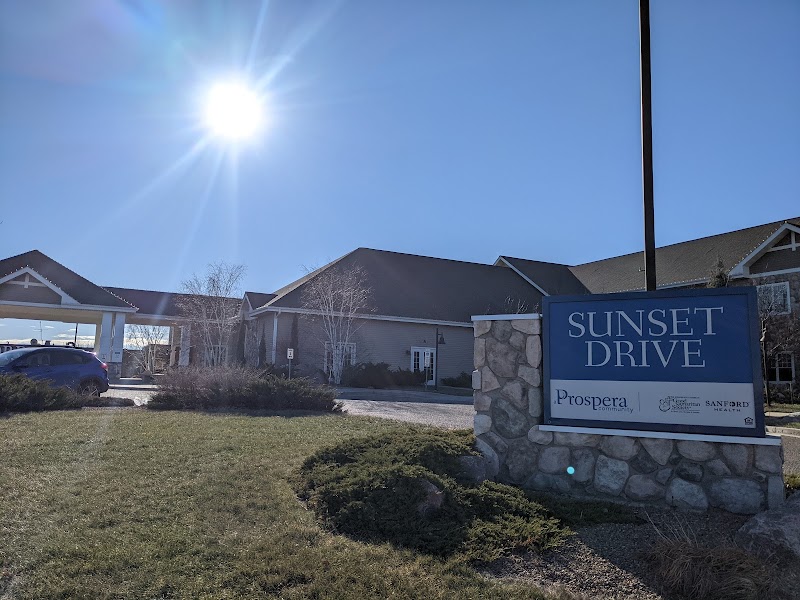
How is Sunset Drive - A Prospera Community Staffed?

CMS rates SUNSET DRIVE - A PROSPERA COMMUNITY's staffing level at 3 out of 5 stars, which is average compared to other nursing homes. Staff turnover is 56%, which is 10 percentage points above the North Dakota average of 46%. High turnover can affect care consistency as new staff learn residents' individual needs.

What Have Inspectors Found at Sunset Drive - A Prospera Community?

State health inspectors documented 64 deficiencies at SUNSET DRIVE - A PROSPERA COMMUNITY during 2023 to 2025. These included: 1 Immediate Jeopardy (the most serious level, indicating potential for serious harm or death), 1 that caused actual resident harm, and 62 with potential for harm. Immediate Jeopardy findings are rare and represent the most serious regulatory concerns. They require immediate corrective action.

Who Owns and Operates Sunset Drive - A Prospera Community?

SUNSET DRIVE - A PROSPERA COMMUNITY is owned by a non-profit organization. Non-profit facilities reinvest revenue into operations rather than distributing to shareholders. The facility is operated by GOOD SAMARITAN SOCIETY, a chain that manages multiple nursing homes. With 128 certified beds and approximately 123 residents (about 96% occupancy), it is a mid-sized facility located in MANDAN, North Dakota.

How Does Sunset Drive - A Prospera Community Compare to Other North Dakota Nursing Homes?

Compared to the 100 nursing homes in North Dakota, SUNSET DRIVE - A PROSPERA COMMUNITY's overall rating (1 stars) is below the state average of 3.1, staff turnover (56%) is near the state average of 46%, and health inspection rating (1 stars) is much below the national benchmark.

What Should Families Ask When Visiting Sunset Drive - A Prospera Community?

Based on this facility's data, families visiting should ask: "What changes have been made since the serious inspection findings, and how are you preventing similar issues?" "How do you ensure continuity of care given staff turnover, and what is your staff retention strategy?" "Can I visit during a mealtime to observe dining assistance and food quality?" "How do you handle medical emergencies, and what is your hospital transfer rate?" These questions are particularly relevant given the facility's Immediate Jeopardy citations and the facility's high staff turnover rate.

Is Sunset Drive - A Prospera Community Safe?

Based on CMS inspection data, SUNSET DRIVE - A PROSPERA COMMUNITY has documented safety concerns. Inspectors have issued 1 Immediate Jeopardy citation (the most serious violation level indicating risk of serious injury or death). The facility is currently on the Special Focus Facility watch list (a federal program monitoring the lowest-performing 1% of nursing homes nationwide). The facility has a 1-star overall rating and ranks #100 of 100 nursing homes in North Dakota. Families considering this facility should ask detailed questions about what corrective actions have been taken since these incidents.

Do Nurses at Sunset Drive - A Prospera Community Stick Around?

Staff turnover at SUNSET DRIVE - A PROSPERA COMMUNITY is high. At 56%, the facility is 10 percentage points above the North Dakota average of 46%. High turnover means new staff may not know residents' individual needs, medications, or preferences. It can also be disorienting for residents, especially those with dementia who rely on familiar faces. Families should ask: What is causing the turnover? What retention programs are in place? How do you ensure care continuity during staff transitions?

Was Sunset Drive - A Prospera Community Ever Fined?

SUNSET DRIVE - A PROSPERA COMMUNITY has been fined $12,735 across 1 penalty action. This is below the North Dakota average of $33,206. While any fine indicates a compliance issue, fines under $50,000 are relatively common and typically reflect isolated problems that were subsequently corrected. Families should ask what specific issues led to these fines and confirm they've been resolved.

Is Sunset Drive - A Prospera Community on Any Federal Watch List?

SUNSET DRIVE - A PROSPERA COMMUNITY is currently an SFF Candidate, meaning CMS has identified it as potentially qualifying for the Special Focus Facility watch list. SFF Candidates have a history of serious deficiencies but haven't yet reached the threshold for full SFF designation. The facility is being monitored more closely — if problems continue, it may be added to the official watch list. Families should ask what the facility is doing to address the issues that led to this status.