LUTHERAN HOME OF THE GOOD SHEPHERD
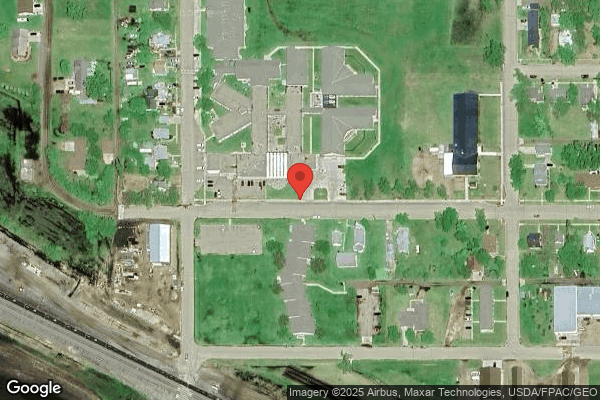
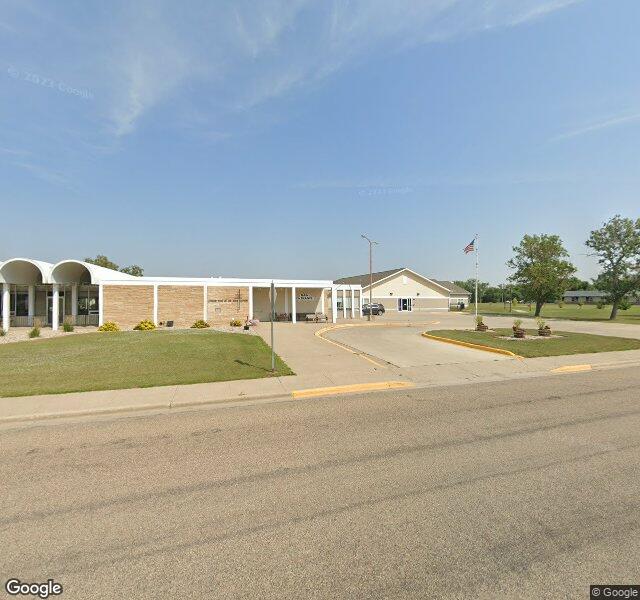
1226 1ST AVE N, NEW ROCKFORD, ND 58356 (701) 947-2944
Non profit - Corporation 51 Beds Independent Data: November 2025 1 Immediate Jeopardy citation
Trust Grade
28/100
#40 of 72 in ND
Last Inspection: July 2024

Within standard 12-15 month inspection cycle. Federal law requires annual inspections.

Overview

Lutheran Home of the Good Shepherd has received a Trust Grade of F, indicating significant concerns with care quality. Ranking #40 out of 72 facilities in North Dakota places them in the bottom half, but as the only option in Eddy County, families may feel limited in choice. The facility is showing improvement, dropping from five issues in 2024 to just one in 2025. Staffing is a strong point, rated 5 out of 5 stars, although the turnover rate is average at 57%. Recent inspections revealed serious issues, including a critical failure in infection control during blood glucose testing that risked residents' health, and a serious incident where a resident sustained a fracture due to inadequate protective measures. While there are strengths, families should be aware of these concerning incidents when considering this nursing home.

Trust Score
F
28/100
In North Dakota
#40/72
Bottom 45%
Safety Record
High Risk
Review needed
Inspections
Getting Better
5 → 1 violations
Staff Stability
⚠ Watch
57% turnover. Above average. Higher turnover means staff may not know residents' routines.
Penalties
✓ Good
$27,624 in fines. Lower than most North Dakota facilities. Relatively clean record.
Skilled Nurses
✓ Good
Each resident gets 55 minutes of Registered Nurse (RN) attention daily — more than average for North Dakota. RNs are trained to catch health problems early.
Violations
○ Average
10 deficiencies on record. Average for a facility this size. Mostly minor or procedural issues.
★★★☆☆
3.0
Overall Rating
★★★★★
5.0
Staff Levels
★★★★☆
4.0
Care Quality
★★☆☆☆
2.0
Inspection Score
Stable
2024: 5 issues
2025: 1 issues

The Good

  • 5-Star Staffing Rating · Excellent nurse staffing levels
  • 4-Star Quality Measures · Strong clinical quality outcomes
  • Full Sprinkler Coverage · Fire safety systems throughout facility
  • No fines on record

Facility shows strength in staffing levels, quality measures, fire safety.

The Bad

3-Star Overall Rating

Near North Dakota average (3.1)

Meets federal standards, typical of most facilities

Staff Turnover: 57%

11pts above North Dakota avg (46%)

Frequent staff changes - ask about care continuity

Federal Fines: $27,624

Below median ($33,413)

Moderate penalties - review what triggered them

Staff turnover is elevated (57%)

9 points above North Dakota average of 48%

The Ugly 10 deficiencies on record

1 life-threatening 1 actual harm
Jun 2025 1 deficiency 1 Harm
SERIOUS (G) 📢 Someone Reported This

A family member, employee, or ombudsman was alarmed enough to file a formal complaint

Actual Harm - a resident was hurt due to facility failures

Free from Abuse/Neglect (Tag F0600)

A resident was harmed · This affected 1 resident

**NOTE- TERMS IN BRACKETS HAVE BEEN EDITED TO PROTECT CONFIDENTIALITY** Based on review of a facility reported incident (FRI) investigation, record review, review of facility policy review, and staff ...

Read full inspector narrative →
**NOTE- TERMS IN BRACKETS HAVE BEEN EDITED TO PROTECT CONFIDENTIALITY** Based on review of a facility reported incident (FRI) investigation, record review, review of facility policy review, and staff interview, the facility failed to ensure residents have the right to remain free from possible physical abuse/neglect for 1 of 1 sampled resident (Resident #3) with a fracture or unknown source. Failure to provide necessary service to protect residents from physical harm resulted in Resident #3 sustaining a fracture from an unknown source. This citation is considered past non-compliance based on review of the corrective action the facility implemented immediately following discovery of the incident. Findings include: The surveyor determined a deficient practice existed on 05/26/25. The facility implemented corrective action immediately, completed corrective action on 05/28/25, and continues with staff education and monitoring. Review of the facility policy titled Safe Operating Procedures (Resident Transfers) occurred on 06/04/25. This policy, revised September 2023, stated, . Hoyer [full-body mechanical lift] Lift Transfer: . Use of 2 staff for all Hoyer lift transfers. Review of Resident #3's medical record occurred on June 4, 2025. Diagnoses included mild dementia, anxiety, and left-side hemiplegia and hemiparesis following cerebral infarction (stroke). The care plan stated, . Hoyer Lift for all transfers for safety. The Minimum Data Set (MDS), dated [DATE], identified a Brief Interview for Mental Status (BIMS) of 14, indicating cognitively intact, and dependent on staff for all transfers. The facility reported incident investigation, dated 05/28/25, stated, . [nurse's name] was informed by [Certified nurse aide (CNA) #1] at 9 AM on 05/25/25 that [Resident #3] was complaining about her foot hurting during a hoyer lift transfer from her bed prior to her bath and during her bath. [Nurse name] then assed [sic] resident's right ankle as the CNA notice swelling with no visible signs of bruising. Per [nurse's name] resident did not appear in any pain unless her right ankle was physically touched. [Nurse's name] did question resident at time of assessment where she thinks she may have obtained her injury. She reported to this nurse that she fell this AM. She reported a CNA had transferred her without using her correct lift and dropped her. She was unable to state how she got back to bed. She pointed at a CNA in the room [CNA #1's name]. [CNA #1] stated that she did not drop her. Upon questioning [CNA #3's name], who worked . the evening before the event . [CNA #3] stated . she assisted her [Resident #3] to bed via hoyer lift around 8:00 PM . It was validated on video that [CNA #3] did go into residents' room during the evening hours with hoyer lift and brought it out after cares. Both [CNA #3's name and CNA #1's name] were suspended . It is the facilities responsibility to have 2 staff assist with hoyer transfers. it's inconclusive of what occurred or that any willful neglect and/or abuse occurred. A physician's progress note, dated 05/27/25, stated, [Right] ankle pain [and ]swelling. New over weekend. Resident reporting possible fall but resident is a hoyer transfer [with] [left] side paralysis post CVA [stroke]. Another note dated the same day, stated, Per my review, appears to have hairline fracture of R) [right] distal fibula, as well as possible hairline fracture of proximal 5th metatarsal. During an interview on 06/04/25 at 2:50 p.m., an administrative nurse (#4) stated on the evening of 05/25/25 the CNA (#3) transferred Resident #3 to bed with the lift by herself, and the CNA (#1) on the day shift of 05/26/25 confirmed she transferred the resident with the Hoyer lift without a second staff present. The CNA (#1) denied dropping her or bumping her leg on anything. The facility failed to ensure two staff assisted while transferring Resident #3 with a mechanical lift. Based on the following information, non-compliance at F600 is considered past non-compliance. The facility implemented corrective actions for all residents who may be affected by the deficient practice as follows: * Completed an investigation into Resident #3's ankle fracture. * Both CNAs were suspended from work until completion of the investigation and then terminated. * Re-education regarding following residents' care plans for method of transfer and use of two staff members for Hoyer transfers sent via Smartlinx (electronic) message to all staff and a memo to all nursing staff at nurses' stations on 05/27/25 and again on 06/03/25. * Staff required to sign they received and read the above education. * Orientation for all agency staff included resident transfer methods.
Jul 2024 5 deficiencies 1 IJ
CRITICAL (J) 📢 Someone Reported This

A family member, employee, or ombudsman was alarmed enough to file a formal complaint

Immediate Jeopardy (IJ) - the most serious Medicare violation

Infection Control (Tag F0880)

Someone could have died · This affected 1 resident

Based on observation, review of manufacturer's instructions, and staff interview, the facility failed to follow infection control standards for 3 of 3 residents (Resident #7, #8, and #41) observed dur...

Read full inspector narrative →
Based on observation, review of manufacturer's instructions, and staff interview, the facility failed to follow infection control standards for 3 of 3 residents (Resident #7, #8, and #41) observed during blood glucose testing. Failure to properly disinfect glucometers may result in the spread of bloodborne pathogens between residents. During the on-site recertification survey, the team consulted with the State Survey Agency (SSA) and determined an Immediate Jeopardy (IJ) situation existed on 07/08/24 at 5:55 p.m. The IJ resulted from a staff member improperly cleaning a glucometer and attempting to use it with another resident. This finding placed residents in immediate danger due to the potential for exposure to bloodborne pathogens. *07/08/24 at 6:27 p.m., The survey team notified the administrator and director of nursing of the IJ situation, provided the IJ template, and requested a plan for removal of the IJ. *07/09/24 at 9:44 a.m., The survey team reviewed and accepted the facility's removal plan for the IJ. The removal plan contained the following: *Immediate disinfection of all glucometers using an approved method (i.e., Sani-Cloths) *Ensured all residents requiring blood glucose checks (accuchecks) were assigned individual glucometers *Education provided to all staff who complete accuchecks on proper disinfecting process *07/09/24 at 10:04 a.m., The survey team verified the implementation of the removal plan as of 07/08/24 and the IJ removal. The deficient practice remained at a D scope and severity following the removal of the IJ. Findings include: Review of the manufacturer's instructions for the Assure Prism blood glucose meter (glucometer) identified, . Cleaning and Disinfecting . The cleaning procedure is needed to clean dirt as well as blood and other body fluids on the exterior of the meter and lancing device before performing the disinfection procedure. The disinfection procedure is needed to prevent transmission of blood-borne pathogens. The meter should be cleaned and disinfected after use on each patient. This Blood Glucose Monitoring System may only be used for testing multiple patients when Standard Precautions and the manufacturer's disinfection procedures are followed. We have validated . PDI Super Sani-Cloth Germicidal Disposable Wipe for disinfecting the Assure Prism multi meter. Only wipes with EPA [Environmental Protection Agency] registration numbers listed in the previous tables have been validated for use in cleaning and disinfecting the meter. The manufacturer's instructions did not list isopropyl alcohol wipes as an approved cleaner/disinfectant. - Observation on 07/08/24 at 4:06 p.m. showed a nurse (#4) checked Resident #8's blood sugar with a glucometer labeled with the resident's name. The nurse then cleaned the meter with an alcohol wipe and placed it back in the case. The nurse stated she normally used a Sani-Cloth to clean the meter but there were none in the cart, and each resident had their own individual glucometer. - Observation on 07/08/24 at 4:18 p.m. showed a nurse (#4) checked Resident #41's blood sugar with a glucometer labeled with the resident's name. The nurse then cleaned the meter with an alcohol wipe and placed it back in the case. - Observation on 07/08/24 at 4:27 p.m. showed a nurse (#4) attempted to check Resident #7's blood sugar using Resident #8's glucometer. The nurse stated, She's [Resident #7] not one we do routinely [check blood sugars], so we use someone else's [glucometer]. Observation showed the nurse took Resident #8's glucometer from the medication cart and attempted to enter Resident #7's room. The surveyor intervened and requested the nurse disinfect the glucometer with a Sani-Cloth. During an interview on the afternoon of 07/08/24, an administrative nurse (#1) stated she expected staff to clean glucometers with Sani-Cloths and not share meters between residents.
CONCERN (D) 📢 Someone Reported This

A family member, employee, or ombudsman was alarmed enough to file a formal complaint

Potential for Harm - no one hurt, but risky conditions existed

Deficiency F0657 (Tag F0657)

Could have caused harm · This affected 1 resident

**NOTE- TERMS IN BRACKETS HAVE BEEN EDITED TO PROTECT CONFIDENTIALITY** Based on observation, record review, review of facility policy, and staff interview, the facility failed to review and revise th...

Read full inspector narrative →
**NOTE- TERMS IN BRACKETS HAVE BEEN EDITED TO PROTECT CONFIDENTIALITY** Based on observation, record review, review of facility policy, and staff interview, the facility failed to review and revise the care plans to reflect residents' current status for 1 of 12 sampled residents (Resident #24). Failure to review and revise the care plan limited staff's ability to communicate needs, ensure continuity of care, and may negatively impact the care provided to the resident. Findings include: Review of the facility policy titled Care Plans occurred on 07/09/24. This policy, dated August 2022, stated, . Care plans are revised as changes in the resident's condition dictates. Review of Resident #24's medical record occurred on all days of survey. The current care plan stated, Transfers with supervision. I like to ambulate throughout the wing but will often refuse staff to walk with me. EZ stand with leg strap. It is recommended that I use a walker to stabilize my gait . I ambulate with a stumped over posture and shuffled gait . Encourage me to take rest periods after walking as I will walk aimlessly. The Minimum Data Set (MDS) dated [DATE], identified the resident utilized wheelchair for mobility. Observations on all days of survey showed Resident #24 in a wheelchair, moving herself throughout the unit using her feet. During an interview on the afternoon of 07/09/24, an administrative staff member (#1) confirmed the facility failed to update Resident #24's care plan regarding the mobility status.
CONCERN (D) 📢 Someone Reported This

A family member, employee, or ombudsman was alarmed enough to file a formal complaint

Potential for Harm - no one hurt, but risky conditions existed

Deficiency F0658 (Tag F0658)

Could have caused harm · This affected 1 resident

**NOTE- TERMS IN BRACKETS HAVE BEEN EDITED TO PROTECT CONFIDENTIALITY** Based on observation, record review, review of facility policy, review of professional reference, and staff interview, the facil...

Read full inspector narrative →
**NOTE- TERMS IN BRACKETS HAVE BEEN EDITED TO PROTECT CONFIDENTIALITY** Based on observation, record review, review of facility policy, review of professional reference, and staff interview, the facility failed to follow professional standards of practice for 1 of 1 sampled residents (Resident #15) observed receiving a topical medication and 1 supplemental resident (Resident #6) observed during medication administration. Failure to obtain a physician's order and to properly administer medications may result in a resident receiving an ineffective dose and/or experiencing adverse reactions. Findings include: Review of the facility policy titled Administration of Medications occurred on 07/10/24. This policy, dated March 2023, stated, 1. Medication administration must safely be performed according to the six rights of administration. e. The medication is given by the right route. 3. Physician orders are obtained through faxing or calling physician for either written or verbal orders. Mosby's 2023 Nursing Drug Reference, 36th ed., Elsevier, Inc., Missouri, page 1046, stated, . Administer Drugs Safely, Accurately, and Professionally . Do not break, crush, or chew ext [NAME] [extended release] tabs [tablets] . - Observation on 07/09/24 at 8:54 a.m., showed a medication aide (#3) applied Nystatin powder to Resident #15's perineal area while completing cares. Review of Resident #15's medical record occurred on 07/09/24. The record lacked a physician's order for Nystatin powder. The medication aide (#3) applied a topical medication without an order. - Observation on 07/10/24 at 8:23 a.m., showed a nurse (#2) crushed and administered a Potassium Chloride tablet in pudding to Resident #6. Review of Resident #6's medical record occurred on 07/10/24. A physician's order stated, Potassium Chloride ER [extended release] oral tablet . give 1 tablet by mouth one time a day . During an interview on the afternoon of 07/10/24, an administrative staff member (#1) confirmed the nurse (#2) administered the tablet incorrectly, and confirmed that all medications should have a physician's order.
CONCERN (D) 📢 Someone Reported This

A family member, employee, or ombudsman was alarmed enough to file a formal complaint

Potential for Harm - no one hurt, but risky conditions existed

Accident Prevention (Tag F0689)

Could have caused harm · This affected 1 resident

1. Based on observation and staff interview, the facility failed to ensure an environment free from accident hazards on 1 of 1 special care unit. Failure to ensure residents do not have access to laun...

Read full inspector narrative →
1. Based on observation and staff interview, the facility failed to ensure an environment free from accident hazards on 1 of 1 special care unit. Failure to ensure residents do not have access to laundry and soiled utility rooms placed them at risk for exposure to chemicals and other accident hazards. Findings include: - Observation on 07/08/24 at approximately 2:10 p.m. showed Resident #23 opened the door to an unlocked laundry room on the special care unit, and the door closed behind her. A few minutes later, an unidentified staff member entered the laundry room to redirect the resident. Observation showed containers of bleach and laundry detergent next to the washing machine. A cupboard contained other laundry detergents, Sani-Cloth disinfecting wipes, and hair spray. Observation on 07/08/24 at 4:08 p.m. showed this door remained unlocked. During an interview on the morning of 07/09/24, an administrative nurse (#1) reported the laundry room door, when closed tightly, should automatically lock. -Observations on 07/08/24 from 4:07 p.m. until 5:37 p.m. showed the door of the soiled utility room on the special care unit unlocked. The room contained Comet disinfecting cleaner with bleach, Clorox urine remover, mop detergent, four bottles of antibacterial liquid hand soap, two containers of hand sanitizer, and Sani-Cloth germicidal disposable wipes. On 07/09/24 at 8:25 a.m., observation showed the soiled utility room door locked. A housekeeping staff member (#7) stated the door should always be locked. During an interview on 07/09/24 at 4:04 p.m., an administrative staff member (#8) stated she expected staff to keep the soiled utility room door locked at all times. 2. Based on observation, record review, review of facility policy, and staff interview, the facility failed to provide appropriate assistance and/or assistive devices for 1 supplemental resident (Resident #25) observed during a toileting transfer. Failure to use a gait belt and provide appropriate assistance during a transfer placed residents at risk for accidents, falls, and/or injuries. Findings include: Review of the facility policy titled Transfers with use of Transfer Belts/Mechanical Lifts occurred on 07/10/24. This policy, dated January 2018, stated, . If a resident needs hands on assistance of trained staff for balance or lifting and maintaining standard position, transfer belt/gait belt must be used, unless otherwise care planned. -Review of Resident #25's medical record occurred on 07/10/24. The care plan stated, . Will ambulate but requires walker, staff using gait belt with hands on assist. Transfers with one assist and FWW [front wheeled walker]. Observation on 07/08/24 at 4:15 p.m. showed two certified nurse aides (CNAs) (#5 and #6) assisted Resident #25 from the wheelchair to a standing position by lifting under the resident's arms and transferred the resident to the toilet without the use of a gait belt. After toileting the resident, both CNAs (#5 and #6) lifted Resident #25 under the arms, and without the use of a gait belt, transferred Resident #25 back to the wheelchair. During an interview on the afternoon of 07/10/24, an administrative staff member (#1) confirmed staff should be following policy and resident care plans.
CONCERN (D) 📢 Someone Reported This

A family member, employee, or ombudsman was alarmed enough to file a formal complaint

Potential for Harm - no one hurt, but risky conditions existed

Deficiency F0761 (Tag F0761)

Could have caused harm · This affected 1 resident

Based on observation, review of professional reference, and staff interview, the facility failed to label medications in accordance with professional standards for 2 of 4 supplemental residents (Resid...

Read full inspector narrative →
Based on observation, review of professional reference, and staff interview, the facility failed to label medications in accordance with professional standards for 2 of 4 supplemental residents (Resident #8 and #22) observed during medication pass. Failure to ensure appropriate labeling of medications placed residents at risk for medication errors. Findings include: Kozier & Erb's Fundamentals of Nursing, Concepts, Process and Practice, 11th Edition eText, 2021, Pearson, Boston, Massachusetts, page 834, stated, . Check Three Times for Safe Medication Administration . First Check . Read the MAR [medication administration record] and remove the medication(s) from the client's drawer. Verify that the client's name and room number match the MAR. Page 838 stated, . Compare the label of the medication container or unit-dose package against the order on the MAR or computer printout. Rationale: This is a safety check to ensure that the right medication is given. If these are not identical, recheck the prescriber's written order in the client's chart. If there is still a discrepancy, check with the pharmacist. - Observation on 07/08/24 at 4:06 p.m. showed a nurse (#4) prepared medications for Resident #8. The nurse removed a bottle of artificial tears from the drawer. The box/bottle lacked a label with identifying information (such as the resident's name). The nurse administered the eye drops to Resident #8. - Observation on 07/09/24 at 8:27 a.m. showed a nurse (#9) removed nasal spray from the medication cart for Resident #22. The label on the medication identified two sprays to each nostril twice daily; however, the MAR and the physician's order identified two sprays each nostril once daily. During an interview on the morning of 07/09/24, an administrative nurse (#1) identified she would clarify the nasal spray order, and staff should label over the counter medications with the resident's name and the date they opened the medication.
Jan 2022 4 deficiencies
CONCERN (D)

Potential for Harm - no one hurt, but risky conditions existed

Deficiency F0578 (Tag F0578)

Could have caused harm · This affected 1 resident

Based on record review, review of facility policy, and staff interview, the facility failed to ensure the residents' rights to request, refuse, and/or discontinue treatment for 1 of 13 sampled residen...

Read full inspector narrative →
Based on record review, review of facility policy, and staff interview, the facility failed to ensure the residents' rights to request, refuse, and/or discontinue treatment for 1 of 13 sampled residents (Resident #30) reviewed for advance directives. Failure of staff to ensure a resident's legal representative (Power of Attorney) signed documentation regarding his/her wishes limited the facility's ability to communicate to direct care staff and emergency personnel the resident's/representative's wishes in the event of a medical emergency. Findings include: Review of the facility policy titled Advance Directives occurred on 01/20/22. This policy, revised October 2017, stated, . The facility will . approach the . legal representative if the resident is determined not to have decision making capacities. During the care planning process, the facility will review with the . legal representative whether they desire to make any changes related to the Advanced directives. - Review of Resident #30's medical record occurred on all days of survey and showed a family member versus the power of attorney signed the code status form on file. The record lacked evidence of a discussion with the power of attorney regarding what his/her current wishes entailed regarding Resident #30's code status. During an interview on 01/20/22 at 1:30 p.m., an administrative staff member (#1) acknowledged staff failed to ensure Resident #30's power of attorney signed the code status form.
CONCERN (D)

Potential for Harm - no one hurt, but risky conditions existed

Notification of Changes (Tag F0580)

Could have caused harm · This affected 1 resident

Based on record review, review of facility policy, and staff and family interviews, the facility failed to notify the resident's representative (family/legal guardian) of a change in condition for 1 o...

Read full inspector narrative →
Based on record review, review of facility policy, and staff and family interviews, the facility failed to notify the resident's representative (family/legal guardian) of a change in condition for 1 of 1 resident (Resident #4) reviewed for a fall with injury. Failure to notify the resident's representative of a change in condition does not allow the representative to be fully informed of the resident's status and limits their ability to make informed decisions regarding their medical care. Findings include: Review of the facility policy titled Incident and Accident occurred on 01/20/22. This policy, dated March 2016, stated, . Notify family of accident, status and orders for care. If incident occurs between 8:00 AM and 10:00 PM the family/legal guardian will be notified in a timely manner as the situation allows. If incident occurs after 10 PM and does not require immediate medical attention, the family will be notified the next morning . Family/Legal guardian must be notified immediately on falls occurring after 10pm requiring immediate medical attention; this would include falls with a head injury . Review of Resident #4's medical record occurred on all days of survey. Nursing progress notes, dated 01/17/22 at 4:45 a.m. stated, Resident found on floor at [4:45 a.m.] bed alarm in place and on at time of fall. CNA [Certified Nursing Assistant] found resident on floor. Upon entering room author noted resident lying on right side next to bed. Blood noted on floor. Resident wearing gripper socks on feet bilat. [bilaterally]. Neuro [Neurological] assessment initiated. PERRLA [Pupils equal, round, reactive to light and accomodation]. Hand grasps strong. speech unchanged. Author noted large bump on right side of forehead. Small cut noted in center of bump. Bleeding ceased with pressure. During an interview on 01/19/22 at 11:39 a.m., Resident #4's Power of Attorney (POA)/Emergency contact stated she came to visit Resident #4 on Monday 01/17/22 and noticed a gash on the resident's forehead. The POA asked staff about the injury's origin and staff informed her of Resident #4's fall earlier that morning. The POA expressed frustration with not being notified of the fall prior to the visit. The medical record lacked evidence staff notified the resident representative of Resident #4's fall. During an interview on 01/20/22 at 1:19 p.m., an administrative staff member (#1) confirmed staff failed to notify the resident representative of Resident #4's fall with injury.
CONCERN (D)

Potential for Harm - no one hurt, but risky conditions existed

Pharmacy Services (Tag F0755)

Could have caused harm · This affected 1 resident

Based on observation, review of facility policy, review of narcotics records, and staff interview, the facility failed to ensure an accurate count for 2 of 2 residents' (Resident #40 and #43) controll...

Read full inspector narrative →
Based on observation, review of facility policy, review of narcotics records, and staff interview, the facility failed to ensure an accurate count for 2 of 2 residents' (Resident #40 and #43) controlled medications. Failure to account for missing controlled medications in a timely manner increases potential for medication error, loss, or diversion. Review of the facility policy titled Controlled Drug Count occurred on 01/20/22. This policy, revised October 2021, stated, . To maintain an accurate count of the controlled drugs in the facility . scheduled 2, 3, 4 and 5 drugs . will be counted every shift by the oncoming and off going nurse . each nurse will mark the count and sign the appropriate place on the form . any discrepancies will be resolved immediately, if unable to resolve, contact the Resident Care Coordinator or the Director of Nursing . - Observation of the Peace medication room on 01/19/22 at 11:46 a.m., showed Resident #40's medication cartridge labeled Tramadol 50 mg [milligrams] take 1 tablet PO [oral] daily at 12 noon. The narcotic count log showed one tablet missing from 12/20/21 to 01/19/22 and staff failed to report the missing narcotic. - Observation of the Peace medication room on 01/19/22 at 11:48 a.m., showed Resident #43's medication cartridge labeled Lyrica 75 mg 1 tablet TID [three times a day] at 1900 [7 PM]. The narcotic count log showed one tablet missing from 12/20/21 to 01/19/22 and staff failed to report the missing narcotic. During an interview on 01/20/22 at 10:29 a.m., a nurse administrator (#1) confirmed staff are expected to immediately report any controlled medication discrepancies.
CONCERN (D)

Potential for Harm - no one hurt, but risky conditions existed

Deficiency F0761 (Tag F0761)

Could have caused harm · This affected 1 resident

Based on observation, review of facility policy and staff interview, the facility failed to label and date 4 of 4 opened multi-dose insulin pens and correctly prime 2 of 4 insulin pens observed during...

Read full inspector narrative →
Based on observation, review of facility policy and staff interview, the facility failed to label and date 4 of 4 opened multi-dose insulin pens and correctly prime 2 of 4 insulin pens observed during medication administration. Failure to correctly label and date insulin pens when opened and correctly prime insulin pens increases the risk of residents receiving outdated medications with reduced efficacy and inaccurate doses of medications. Findings include: Review of the facility policy titled Insulin Pen Storage and Labeling occurred on 01/20/22. This policy, revised October 2021, stated, .To assure appropriate storage and labeling of pens . Insulin pens will be dated and initialed when first opened . Review of the facility checklist titled Insulin Pen Competency checklist occurred on 01/20/22. This checklist, revised July 2021, stated, . prime pen with 2 units pointing the pen with the needle upwards . - Observation on 01/19/22 at 4:15 p.m., showed opened multi-dose insulin pens for Resident #2, #3, #11, and #28 without an open date or initials. During an interview on 01/20/22 at 11:02 a.m., an administrative nurse (#1) confirmed the insulin pens lacked an open date and initials. - Observation during medication administration on 01/19/22 at 4:38 p.m., a nurse (#2) prepared an insulin pen with 22 units of Novolog 70/30 to administer to Resident #28 at the evening meal. The pen was primed in a horizontal position. - Observation during medication administration on 01/19/22 at 4:48 p.m., a nurse (#2) prepared an insulin pen with 12 units of Novolog 70/30 to administer to Resident #2 at the evening meal. The pen was primed in a horizontal position. During an interview on 01/20/22 at 11:02 a.m., an administrative nurse (#1) confirmed the insulin pens should be primed in a vertical position.
Understanding Severity Codes (click to expand)
Life-Threatening (Immediate Jeopardy)
J - Isolated K - Pattern L - Widespread
Actual Harm
G - Isolated H - Pattern I - Widespread
Potential for Harm
D - Isolated E - Pattern F - Widespread
No Harm (Minor)
A - Isolated B - Pattern C - Widespread

Questions to Ask on Your Visit

  • "What changes have you made since the serious inspection findings?"
  • "What safeguards are in place to prevent abuse and neglect?"
  • "Why is there high staff turnover? How do you retain staff?"
  • "Can I speak with families of current residents?"
  • "What's your RN coverage like on weekends and overnight?"

Our Honest Assessment

Strengths
  • • Licensed and certified facility. Meets minimum state requirements.
Concerns
  • • Multiple safety concerns identified: Federal abuse finding, 1 life-threatening violation(s), 1 harm violation(s), $27,624 in fines. Review inspection reports carefully.
  • • 10 deficiencies on record, including 1 critical (life-threatening) violation. These warrant careful review before choosing this facility.
  • • $27,624 in fines. Higher than 94% of North Dakota facilities, suggesting repeated compliance issues.
  • • Grade F (28/100). Below average facility with significant concerns.
Bottom line: This facility has a substantiated abuse finding. Extreme caution advised. Explore alternatives.

About This Facility

What is Lutheran Home Of The Good Shepherd's CMS Rating?

CMS assigns LUTHERAN HOME OF THE GOOD SHEPHERD an overall rating of 3 out of 5 stars, which is considered average nationally. Within North Dakota, this rating places the facility higher than 0% of the state's 100 nursing homes. This mid-range rating indicates the facility meets federal standards but may have areas for improvement.

How is Lutheran Home Of The Good Shepherd Staffed?

CMS rates LUTHERAN HOME OF THE GOOD SHEPHERD's staffing level at 5 out of 5 stars, which is much above average compared to other nursing homes. Staff turnover is 57%, which is 11 percentage points above the North Dakota average of 46%. High turnover can affect care consistency as new staff learn residents' individual needs.

What Have Inspectors Found at Lutheran Home Of The Good Shepherd?

State health inspectors documented 10 deficiencies at LUTHERAN HOME OF THE GOOD SHEPHERD during 2022 to 2025. These included: 1 Immediate Jeopardy (the most serious level, indicating potential for serious harm or death), 1 that caused actual resident harm, and 8 with potential for harm. Immediate Jeopardy findings are rare and represent the most serious regulatory concerns. They require immediate corrective action.

Who Owns and Operates Lutheran Home Of The Good Shepherd?

LUTHERAN HOME OF THE GOOD SHEPHERD is owned by a non-profit organization. Non-profit facilities reinvest revenue into operations rather than distributing to shareholders. The facility operates independently rather than as part of a larger chain. With 51 certified beds and approximately 45 residents (about 88% occupancy), it is a smaller facility located in NEW ROCKFORD, North Dakota.

How Does Lutheran Home Of The Good Shepherd Compare to Other North Dakota Nursing Homes?

Compared to the 100 nursing homes in North Dakota, LUTHERAN HOME OF THE GOOD SHEPHERD's overall rating (3 stars) is below the state average of 3.1, staff turnover (57%) is significantly higher than the state average of 46%, and health inspection rating (2 stars) is below the national benchmark.

What Should Families Ask When Visiting Lutheran Home Of The Good Shepherd?

Based on this facility's data, families visiting should ask: "What changes have been made since the serious inspection findings, and how are you preventing similar issues?" "What safeguards and monitoring systems are in place to protect residents from abuse or neglect?" "How do you ensure continuity of care given staff turnover, and what is your staff retention strategy?" "Can I visit during a mealtime to observe dining assistance and food quality?" These questions are particularly relevant given the facility's Immediate Jeopardy citations, the substantiated abuse finding on record, and the facility's high staff turnover rate.

Is Lutheran Home Of The Good Shepherd Safe?

Based on CMS inspection data, LUTHERAN HOME OF THE GOOD SHEPHERD has documented safety concerns. The facility has 1 substantiated abuse finding (meaning confirmed case of resident harm by staff or other residents). Inspectors have issued 1 Immediate Jeopardy citation (the most serious violation level indicating risk of serious injury or death). The facility has a 3-star overall rating and ranks #100 of 100 nursing homes in North Dakota. Families considering this facility should ask detailed questions about what corrective actions have been taken since these incidents.

Do Nurses at Lutheran Home Of The Good Shepherd Stick Around?

Staff turnover at LUTHERAN HOME OF THE GOOD SHEPHERD is high. At 57%, the facility is 11 percentage points above the North Dakota average of 46%. High turnover means new staff may not know residents' individual needs, medications, or preferences. It can also be disorienting for residents, especially those with dementia who rely on familiar faces. Families should ask: What is causing the turnover? What retention programs are in place? How do you ensure care continuity during staff transitions?

Was Lutheran Home Of The Good Shepherd Ever Fined?

LUTHERAN HOME OF THE GOOD SHEPHERD has been fined $27,624 across 2 penalty actions. This is below the North Dakota average of $33,355. While any fine indicates a compliance issue, fines under $50,000 are relatively common and typically reflect isolated problems that were subsequently corrected. Families should ask what specific issues led to these fines and confirm they've been resolved.

Is Lutheran Home Of The Good Shepherd on Any Federal Watch List?

LUTHERAN HOME OF THE GOOD SHEPHERD is not on any federal watch list. The most significant is the Special Focus Facility (SFF) program, which identifies the bottom 1% of nursing homes nationally based on persistent, serious quality problems. Not being on this list means the facility has avoided the pattern of deficiencies that triggers enhanced federal oversight. This is a positive indicator, though families should still review the facility's inspection history directly.