ROLETTE COMMUNITY CARE CENTER
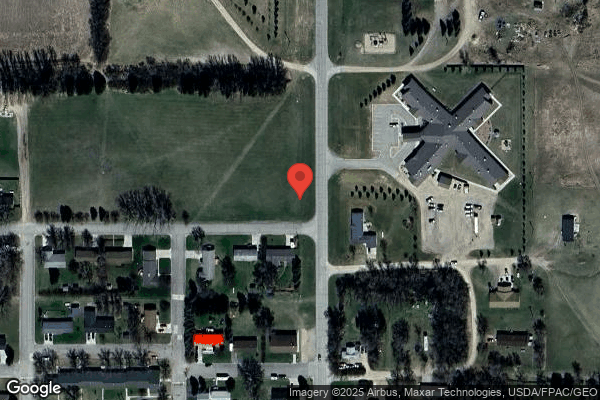

804 STATE STREET, ROLETTE, ND 58366 (701) 246-3786
Non profit - Corporation 31 Beds Independent Data: November 2025 1 Immediate Jeopardy citation
Trust Grade
3/100
#65 of 72 in ND
Last Inspection: September 2024

Within standard 12-15 month inspection cycle. Federal law requires annual inspections.

Overview

Rolette Community Care Center has received a Trust Grade of F, indicating significant concerns about the facility's quality of care. It ranks #65 out of 72 nursing homes in North Dakota, placing it in the bottom half of facilities statewide and #2 out of 2 in Rolette County, meaning there is only one local option that is better. While the staffing rating is strong at 5 out of 5 stars with a turnover rate of 30%, which is much lower than the state average, the facility has accumulated $30,292 in fines, which is higher than 84% of nursing homes in North Dakota, suggesting ongoing compliance issues. There were critical incidents noted, including failures in infection control that could potentially spread disease among residents, and a dietary manager who lacked proper qualifications, raising concerns about food safety. Although the facility's trend is improving, moving from 16 issues to 9, the overall quality remains poor, highlighting the need for families to weigh both strengths and serious weaknesses before making a decision.

Trust Score
F
3/100
In North Dakota
#65/72
Bottom 10%
Safety Record
High Risk
Review needed
Inspections
Getting Better
16 → 9 violations
Staff Stability
○ Average
30% turnover. Near North Dakota's 48% average. Typical for the industry.
Penalties
○ Average
$30,292 in fines. Higher than 55% of North Dakota facilities. Some compliance issues.
Skilled Nurses
✓ Good
Each resident gets 69 minutes of Registered Nurse (RN) attention daily — more than 97% of North Dakota nursing homes. RNs are the most trained staff who catch health problems before they become serious.
Violations
⚠ Watch
37 deficiencies on record. Higher than average. Multiple issues found across inspections.
★☆☆☆☆
1.0
Overall Rating
★★★★★
5.0
Staff Levels
★☆☆☆☆
1.0
Care Quality
★☆☆☆☆
1.0
Inspection Score
Stable
2023: 16 issues
2024: 9 issues

The Good

  • 5-Star Staffing Rating · Excellent nurse staffing levels
  • Full Sprinkler Coverage · Fire safety systems throughout facility
  • No fines on record
  • Staff turnover below average (30%)

    18 points below North Dakota average of 48%

Facility shows strength in staffing levels, fire safety.

The Bad

1-Star Overall Rating

Below North Dakota average (3.1)

Significant quality concerns identified by CMS

Staff Turnover: 30%

15pts below North Dakota avg (46%)

Typical for the industry

Federal Fines: $30,292

Below median ($33,413)

Moderate penalties - review what triggered them

The Ugly 37 deficiencies on record

1 life-threatening
Sept 2024 9 deficiencies 1 IJ (1 affecting multiple)
CRITICAL (K) 📢 Someone Reported This

A family member, employee, or ombudsman was alarmed enough to file a formal complaint

Immediate Jeopardy (IJ) - the most serious Medicare violation

Infection Control (Tag F0880)

Someone could have died · This affected multiple residents

Based on observation, review of facility policy, review of professional reference, and staff interview, the facility failed to follow standards of infection control for 3 of 12 sampled residents (Resi...

Read full inspector narrative →
Based on observation, review of facility policy, review of professional reference, and staff interview, the facility failed to follow standards of infection control for 3 of 12 sampled residents (Resident #1, #3, and #10) and 1 supplemental resident (Resident #14) observed during cares. Failure to follow infection control practices related to enhanced barrier precautions (Resident #1 and #10) and transmission-based precautions (Resident #3 and #14) has the potential to spread infection throughout the facility. During the on-site recertification survey, the team determined an Immediate Jeopardy (IJ) situation existed on 09/09/24 at 1:32 p.m. The IJ resulted from staff failure to properly doff an N95 mask upon exiting the room of a COVID positive resident and before entering the rooms of COVID negative residents, which had the potential to spread the infection to residents, staff and visitors. *09/19/24 at 11:45 a.m. The survey team notified the director of nursing (DON) and administrator of the IJ situation, presented the IJ template, and requested a plan for removal of the immediate jeopardy. *09/19/24 at 3:10 p.m. The survey team reviewed and accepted the facility's removal plan for the IJ. The removal plan contained the following: *Review of Infection Control, Isolation and personal protective equipment (PPE) policies. No changes needed. *Posted signs demonstrating proper donning and doffing of PPE on all doors of COVID positive resident rooms. *Educated all staff on proper application of gowns, masks (including N95), gloves, when to perform hand hygiene, and PPE guidelines for donning and doffing for COVID positive residents and residents in isolation. This education will be conducted either in person or via phone prior to next scheduled shift. *09/19/24 at 3:30 p.m. The survey team verified the implementation of the removal plan and the IJ removal. The deficient practice remained at a E scope and severity following the removal of the immediate jeopardy. Findings include: Review of the facility policy titled Isolation - Categories of Transmission-Based Precautions occurred on 09/11/24. This policy, revised September 2022, stated, . Contact precautions are implemented for residents known or suspected to be infected with microorganisms that can be transmitted by direct contact with the resident or indirect contact with environmental surfaces or resident care items in the resident's environment. Staff and visitors wear gloves . when entering the room . Staff and visitors wear a disposable gown upon entering the room and remove before leaving the room . Droplet precautions are implemented for an individual documented or suspected to be infected with microorganisms transmitted by droplets . that can be generated by the individual coughing, sneezing, talking . Masks are worn when entering the room . Review of the facility policy titled Enhanced Barrier Precautions occurred on 09/11/24. This policy, revised March 2024, stated, Enhanced barrier precautions (EBPs) are utilized to reduce the transmission of multi-drug resistant organisms (MDROs) to residents. EBPs employ targeted gown and glove use in addition to standard precautions during high contact resident care activities when contact precautions do not otherwise apply. Examples of high-contact resident care activities . include: . transferring . device care or use (central line, urinary catheter, feeding tube, . ); and . wound care . Signs are posted in [sic] the door or wall outside the resident room indicating the type of precautions and PPE required. Review of Infection Control Guidance: SARS-CoV-2 [COVID] at https://www.cdc.gov/covid/hcp/infection-control/, dated 06/24/24, stated, . Source control options for HCP [health care providers] include: . A NIOSH [National Institute for Occupational Safety and Health] Approved® particulate respirator with N95® filters or higher . If they are used during the care of patient for which a NIOSH Approved respirator or facemask is indicated . they should be removed and discarded after the patient care encounter and a new one should be donned. During the entrance conference on 09/09/24 at 12:01 p.m., an administrative nurse (#1) identified Resident #3 and #14 as COVID positive. - Observation on 09/09/24 at 1:16 p.m. showed a certified nurse aide (CNA) (#9) wearing a gown, N95 mask, and face shield exited Resident #3's room and carried a trash bag down the hall to a larger trash cart. A sign on the resident's door stated, special droplet/contact precautions. The CNA failed to remove his gown, N95 mask, and face shield prior to leaving the room and completing other tasks. - Observation on 09/09/24 at 1:32 p.m. showed a CNA (#9) wearing an N95 mask and face shield exited Resident #14's room. A sign on Resident #14's door stated, special droplet/contact precautions. The CNA failed to remove the N95 mask and entered Resident #1's room followed by a staff nurse (#3) who wore a surgical mask. The staff transferred the resident from the wheelchair to the bed. The CNA (#9) exited Resident #1's room wearing the N95 mask worn upon entry, and entered two additional resident rooms. The CNA (#9) failed to remove the N95 mask upon exiting the room of a COVID positive resident (Resident #14) and before entering the rooms of COVID negative residents. During an interview on 09/09/24 at 2:12 p.m., the CNA (#9) stated he could wear the same N95 when providing care for COVID positive residents, but not when he provided care for COVID negative residents. During interviews on 09/09/24 at 2:30 p.m., an administrative nurse (#1) confirmed she expected staff to doff N95 masks prior to exiting COVID positive resident rooms and don a new mask prior to caring for COVID negative residents. - Review of Resident #1's medical record occurred on all days of survey and showed Resident #1 had a feeding tube. Observation on 09/09/24 at 1:32 p.m. showed Resident #1's room lacked signs indicating Resident #1 was in EBP. A CNA (#9) and a staff nurse (#3) entered Resident #1's room and transferred the resident from the wheelchair to the bed. Both staff failed to don gown or gloves. During an interview 09/11/24 at 5:35 p.m., an administrative nurse (#1) confirmed she expected staff to properly don/doff PPE. - Observation on 09/10/24 at 9:50 a.m. showed a nurse (#3) prepared to complete wound care on Resident #10. The nurse (#3) donned PPE and entered the room carrying a closed plastic container with the resident's wound supplies. The nurse placed the plastic container on the resident's bedside stand before cleaning the stand, completed the wound care, then exited the room without cleaning the plastic container and placed it in the bottom drawer of the treatment cart. The nurse (#3) failed to clean the plastic container prior to exiting the resident's room and/or before returning the container to the treatment cart. During an interview on 09/11/24 at 5:44 p.m., an administrative nurse (#1) stated she expected staff to clean any supplies with a disinfecting cloth before removing from a resident's room with EBP and before placing in the treatment cart.
CONCERN (D) 📢 Someone Reported This

A family member, employee, or ombudsman was alarmed enough to file a formal complaint

Potential for Harm - no one hurt, but risky conditions existed

Transfer Notice (Tag F0623)

Could have caused harm · This affected 1 resident

Based on record review and staff interview, the facility failed to provide the resident or the resident's representative a written notice of transfer for 1 of 2 sampled residents (Resident #13) transf...

Read full inspector narrative →
Based on record review and staff interview, the facility failed to provide the resident or the resident's representative a written notice of transfer for 1 of 2 sampled residents (Resident #13) transferred to the hospital. Failure to provide a written copy of the transfer notice does not allow the resident and/or their representative to make an informed decision regarding their rights. Findings include: Review of Resident #13's medical record occurred on all days of survey and identified a hospital transfer on 06/28/24. The medical record lacked evidence the facility provided the resident and/or representative with a written transfer notice. During an interview on 09/10/24 at 4:55 p.m., an administrative staff member (#6) confirmed the facility failed to complete a Notice of Transfer for Hospitalization for the resident.
CONCERN (D) 📢 Someone Reported This

A family member, employee, or ombudsman was alarmed enough to file a formal complaint

Potential for Harm - no one hurt, but risky conditions existed

Deficiency F0658 (Tag F0658)

Could have caused harm · This affected 1 resident

**NOTE- TERMS IN BRACKETS HAVE BEEN EDITED TO PROTECT CONFIDENTIALITY** 1. Based on observation, review of professional reference, and staff interview, the facility failed to follow professional stand...

Read full inspector narrative →
**NOTE- TERMS IN BRACKETS HAVE BEEN EDITED TO PROTECT CONFIDENTIALITY** 1. Based on observation, review of professional reference, and staff interview, the facility failed to follow professional standards of practice for 1 of 1 sampled resident (Resident #10) observed for insulin preparation. Failure to prime an insulin pen correctly may result in residents receiving an inaccurate dose. Findings include: Review of the manufacturer's guidelines titled Fiasp insulin aspart injection. Instructions for use. occurred on 09/11/24. This document, dated July 2023, page 8, states, . Priming your . Pen: Step 7: Turn the dose selector to select 2 units. Step 9: Hold the pen with the needle pointing up. Press and hold in the button until the dose counter shows0. A drop of insulin should be seen at the needle tip. Observation on 09/10/24 at 11:53 a.m. showed a nurse (#3) attached a needle to Resident #10's Fiasp FlexTouch insulin pen, selected two units of insulin, and depressed the plunger while the pen was in the horizontal position. The nurse (#3) failed to hold the pen with the needle pointing up while pushing the plunger button. During an interview on the afternoon of 09/10/24, an administrative nurse (#1) confirmed the nurse (#3) failed to prime the insulin pen correctly. 2. Based on observation, record review, review of policies/procedures, review of professional reference, and staff interview, the facility failed to follow physician's orders for 2 of 12 sampled residents (Resident #1 and #7). Failure to follow physician's orders for notification of blood glucose outside of specific parameters (Resident #7), for tardive dyskinesia assessments, range of motion (ROM) exercises, and changing of oxygen/respiratory tubing (Resident #1) placed Residents #1 and #7 at risk for delayed treatment and adverse health events. Findings include: Kozier & Erb's Fundamentals of Nursing, Concepts, Process and Practice, 11th Edition eText, 2021, Pearson, Boston, Massachusetts, page 63, stated, Nurses are expected to analyze procedures and medications ordered by the physician or primary care provider. If the order is neither ambiguous nor apparently erroneous, the nurse is responsible for carrying it out. A review of the facility policy titled Physician Services occurred on 09/11/24. This policy, revised February 2021, stated, . The medical care of each resident is supervised by a licensed physician. Supervising the medical care of residents includes (but is not limited to): . monitoring changes in resident's medical status . - Review of Resident #1's medical record occurred on all days of survey. Diagnoses included cerebral palsy and dependence on supplemental oxygen. Physician's orders identified the following: * 02/11/16 ROM both lower extremities 1-2 x [times] per day, flex extremities at knee 6 reps [repetitions] both extremities . Twice a day. * 12/30/23 change oxygen equipment, date equipment. 1. o2 [oxygen] bag 2. [NAME] [sic] lumen w/c [wheelchair] 3. concentrator 4. neb [nebulizer] (no blue mask) . Every 2 Weeks . * 02/01/24 TD [tardive dyskinesia] Assessment Reglan [anti-nausea medication] every 6 months . Review of Resident #1's point of care (POC) responses (CNA charting), dated 08/01/24 through 09/10/24, showed ROM completed 5 of 41 days. The medical record lacked a tardive dyskinesia assessment completed since 02/01/24. Observations on all days of survey showed Resident #1 wearing oxygen, the oxygen tubing on the concentrator dated 08/24/24, and the nebulizer tubing/mask dated 08/04/24. The facility failed to change oxygen and nebulizer tubing/mask every two weeks as ordered. During an interview on 09/10/24 at 1:59 p.m., a certified nurse aide (CNA) (#8) stated she is the restorative aide and is supposed to work as the restorative aide five times per week but is always on the floor due to staffing. She confirmed Resident #1 did not receive daily ROM exercises. During interviews on 09/10/24 at 2:40 p.m., and 09/11/24 at 8:45 a.m., an administrative nurse (#1) confirmed any CNA can perform ROM exercises for Resident #1, and she expected staff to document each shift if completed/attempted, and staff failed to complete a tardive dyskinesia assessment as ordered. - Review of Resident #7's medical record occurred on all days of survey and included a diagnose of Type 2 Diabetes Mellitus. A physician's order, dated 06/18/24, stated, . If Blood Sugar is less than 100 [mg/dL, milligrams per deciliter], call MD [medical doctor]. If Blood Sugar is greater than 450 [mg/dL], call MD. A physician's order, dated 11/13/23, stated, Accu-check [checks blood sugar levels] PRN [as needed] for symptoms of hypo/hyperglycemia [low blood glucose/high blood glucose] < [less than]100 or > [greater than] 400 CALL PHYSICIAN . Review of Resident #7's blood glucose checks from 08/04/24 through 09/08/24 showed the following: * 09/01/24 5:27 a.m., 63 mg/dL * 08/27/24 7:57 p.m., 403 mg/dL * 08/27/24 11:25 a.m., 55 mg/dL * 08/26/24 5:47 a.m., 80 mg/dL * 08/20/24 5:16 a.m., 421 mg/dL * 08/17/24 7:39 a.m., 430 mg/dL The medical record showed the facility failed to notify the physician of Resident #7's blood glucoses that were less than 100 or greater than 400. During an interview on 09/11/24 at 08:44 a.m., an administrative nurse (#1) confirmed staff failed to notify the provider of Resident #7's blood glucose being out of parameters as ordered.
CONCERN (D) 📢 Someone Reported This

A family member, employee, or ombudsman was alarmed enough to file a formal complaint

Potential for Harm - no one hurt, but risky conditions existed

Medication Errors (Tag F0758)

Could have caused harm · This affected 1 resident

**NOTE- TERMS IN BRACKETS HAVE BEEN EDITED TO PROTECT CONFIDENTIALITY** Based on record review, review of facility policy, and staff interview, the facility failed to ensure residents remained free fr...

Read full inspector narrative →
**NOTE- TERMS IN BRACKETS HAVE BEEN EDITED TO PROTECT CONFIDENTIALITY** Based on record review, review of facility policy, and staff interview, the facility failed to ensure residents remained free from unnecessary psychotropic medications for 2 of 4 sampled residents (Resident #5 and #11) reviewed for psychotropic medication use. Failure to limit as needed (PRN) psychotropic medication use to 14 days unless reevaluated by a practitioner, and failure to monitor the residents on psychotropics placed the residents at risk of receiving unnecessary medications and experiencing adverse drug effects and consequences related to their use. Findings include: Review of the facility policy titled Psychotropic Medication Use occurred on 09/11/24. This policy, dated July 2022, stated, . PRN orders for psychotropic medications are limited to 14 days. PRN orders cannot be renewed unless the attending physician or prescriber evaluates the resident and documents the appropriateness of the medication. Resident receiving psychotropic medications are monitored for adverse consequences, including: . neurologic affects-agitation, distress . tardive dyskinesia . If psychotropic medications are identified as possibly causing or contributing to adverse consequences, the prescriber will determine whether the medication(s) should be continued, and document the rationale. - Review of Resident #5's medical record occurred on all days of survey. The current orders in the electronic medical record and the electronic medication administration record (EMAR) identified alprazolam (medication to treat anxiety) 0.5 milligrams (mg) every 12 hours as needed for uncontrolled anxiety started 08/09/24. The order lacked a stop date. Review of the resident's EMAR for August 1- September 11, 2024 identified the resident received alprazolam on 09/01/24 and 09/02/24. Review of the physician's orders in the resident's paper chart identified an order to discontinue the alprazolam on 07/09/24 with no order to restart the medication. Review of the resident's progress notes failed to identify the provider had given an order for the PRN alprazolam. The resident received two doses of the alprazolam after it was discontinued. The facility failed to write an order for the alprazolam started 08/09/24 and failed to have the physician or prescriber evaluate the resident's need to extend the psychotropic medication beyond the original 14 days. During an interview on 09/11/24 at 4:47 p.m., an administrative nurse (#1) confirmed the facility failed to write the physician's order received via phone for the Alprazolam started on 08/09/24 and failed to have the provider reevaluate the resident for further need of the medication after 14 days. - Review of Resident #11's medical record occurred on all days of survey. Physician's orders included Seroquel (antipsychotic medication) 25 mg at bedtime and a tardive dyskinesia (TD) assessment to be completed every 6 months while on Seroquel (the 6th of every 6th month). The medical record identified an incomplete TD assessment dated [DATE]. During an interview on 09/11/24 at 8:57 a.m., an administrative nurse (#1) confirmed staff failed to fully completed the TD assessment on 02/06/24 and failed to complete another one in the last 6 months.
CONCERN (D) 📢 Someone Reported This

A family member, employee, or ombudsman was alarmed enough to file a formal complaint

Potential for Harm - no one hurt, but risky conditions existed

Deficiency F0761 (Tag F0761)

Could have caused harm · This affected 1 resident

Based on observation, review of facility policy, and staff interview, the facility failed to ensure safe and secure storage of medications for 2 of 2 unlocked and unattended carts (medication and trea...

Read full inspector narrative →
Based on observation, review of facility policy, and staff interview, the facility failed to ensure safe and secure storage of medications for 2 of 2 unlocked and unattended carts (medication and treatment carts). Failure to securely store medications may result in unauthorized access to medications. Findings include: Review of the facility policy titled Medication Labeling and Storage occurred on 09/11/24. This undated policy, stated, Policy Statement. The facility stores all medications. in locked compartments. Medication Storage. 2. The nursing staff is responsible for maintaining medication storage. 3. Compartments (including, but not limited to, drawers, . carts, . ) containing medications. are locked when not in use, . carts used to transport such items are not left unattended if open or otherwise available to others. Observation on 09/11/24 at 8:18 a.m., showed an unlocked/unattended medication cart with medications on the top of the cart and an unlocked/unattended treatment cart in the 200-hallway. During an interview on 09/11/24 at 8:34 a.m., an administrative nurse (#1) stated she expected staff to lock the medication cart and keep all medications in the cart when the nurse or medication aide [MA] are not within sight/accessing them.
CONCERN (E) 📢 Someone Reported This

A family member, employee, or ombudsman was alarmed enough to file a formal complaint

Potential for Harm - no one hurt, but risky conditions existed

MDS Data Transmission (Tag F0640)

Could have caused harm · This affected multiple residents

**NOTE- TERMS IN BRACKETS HAVE BEEN EDITED TO PROTECT CONFIDENTIALITY** Based on record review, staff interview, review of the Long-Term Care Facility Resident Assessment Instrument (RAI) User's Manua...

Read full inspector narrative →
**NOTE- TERMS IN BRACKETS HAVE BEEN EDITED TO PROTECT CONFIDENTIALITY** Based on record review, staff interview, review of the Long-Term Care Facility Resident Assessment Instrument (RAI) User's Manual, and review of the federal database for Long-Term Care Survey, the facility failed to ensure timely electronic data submission of required Minimum Data Set (MDS) assessments for 3 of 12 sampled residents (Resident #4, #5, and #20) and one supplemental resident (Resident #75). Failure to follow the MDS data submission specifications does not meet the intended regulatory requirements. Findings include: The Long-Term Care Facility RAI 3.0 User's Manual (Version 1.18), page 2-34, stated, . The MDS must be transmitted . electronically no later than 14 calendar days after the MDS completion date . Page 2-35 stated, . The ARD [assessment reference date] must be within 92 days after the previous OBRA assessment . The MDS completion date (item Z0500B) must be no later than 14 days after the ARD. Page 2-38 stated, Entry Tracking Records . Must be submitted no later than the 14th calendar day after the entry . Page 5-1 stated, . All Medicare and/or Medicaid-certified nursing homes . must transmit required MDS data records to CMS' [Center for Medicare and Medicaid Services] Internet Quality Improvement and Evaluation System (iQIES) Assessment Submission and Processing (ASAP) system. - Review of Resident #4's medical record occurred on all days of survey and showed a quarterly MDS with an ARD date of 07/29/24 and a completion date of 08/23/24 (completed 30 days late). - Review of Resident #5's medical record occurred on all days of survey and showed a quarterly MDS with an ARD of 6/26/24, a completion date of 06/28/24, and transmitted to iQIES on 09/01/24 (transmitted 44 days late). - Review of Resident #20's medical record occurred on all days of survey and showed the following: * A discharge return anticipated MDS with an ARD of 6/27/24, and a completion date of 08/17/24 (completed 51 days late). * An entry tracking MDS with an ARD of 6/30/24 and transmitted to iQIES 08/13/24 (transmitted 61 days late). * A quarterly MDS with an ARD of 7/6/24, and a completion date of 08/17/24 (31 days late). - Review of Resident #75's MDS occurred on 09/09/24 and showed the facility completed and transmitted quarterly MDSs with ARD dates of 02/27/24 and 08/27/24. The facility failed to submit an MDS 92 days after the MDS dated [DATE]. During a phone interview on 09/12/24, a facility nurse (#5) confirmed staff failed to submit MDSs in a timely manner.
CONCERN (E) 📢 Someone Reported This

A family member, employee, or ombudsman was alarmed enough to file a formal complaint

Potential for Harm - no one hurt, but risky conditions existed

Assessment Accuracy (Tag F0641)

Could have caused harm · This affected multiple residents

**NOTE- TERMS IN BRACKETS HAVE BEEN EDITED TO PROTECT CONFIDENTIALITY** Based on record review, review of the Long-Term Care Facility Resident Assessment Instrument (RAI) 3.0 User's Manual (Version 1....

Read full inspector narrative →
**NOTE- TERMS IN BRACKETS HAVE BEEN EDITED TO PROTECT CONFIDENTIALITY** Based on record review, review of the Long-Term Care Facility Resident Assessment Instrument (RAI) 3.0 User's Manual (Version 1.18.11), and staff interview, the facility failed to ensure accurate coding of the Minimum Data Set (MDS) for 5 of 12 sampled residents (Resident #1, #13, #16, #18, and #20). Failure to accurately complete the MDS does not allow each resident's assessment to reflect their current status/needs and may affect the accurate development of a comprehensive care plan and the care provided to the residents. Findings include: SECTION K: SWALLOWING/NUTRITIONAL STATUS The Long-Term Care Facility RAI 3.0 User's Manual, revised October 2023, pages K-2 through K-11, stated, . K0200: Height and Weight . Weight . Base weight on most recent measure in the last 30 days, . K0520: Nutritional Approaches . PARENTERAL/IV FEEDING Introduction of a nutritive substance into the body by means other than the intestinal tract (e.g., subcutaneous, intravenous). FEEDING TUBE Presence of any type of tube that can deliver food/ nutritional substances/ fluids/ medications directly into the gastrointestinal system. Examples include, but are not limited to . percutaneous endoscopic gastrostomy (PEG) tubes. - Review of Resident #1's medical record occurred on all days of survey and showed a physician's order for Jevity 1.5 cal (a nutritional formula) per PEG Tube, four times a day. The quarterly MDS, dated [DATE], identified parenteral feeding coded incorrectly and failed to identify Resident #1's feeding tube. During an interview on 09/11/24 at 3:55 p.m., an administrative staff member (#5) confirmed staff failed to code the MDS correctly for Resident #1. - Review of Resident #18's medical record occurred on all days of survey. The quarterly MDS, dated [DATE], identified Resident #18's weight as 155 pounds. Review of the record identified Resident #18's weight 167 pounds. The facility failed to use the most recent weight when completing the MDS. SECTION N: MEDICATIONS The Long-Term Care Facility RAI 3.0 User's Manual, revised October 2023, pages N-6 through N-8, stated, . N0415: High-Risk Drug Classes: . Coding Instructions .N0415A1. Antipsychotic: Check if an antipsychotic medication was taken by the resident at any time during the 7-day look-back period . N0415F1. Antibiotic: Check if an antibiotic medication was taken by the resident at any time during the 7-day look-back period . N0415G1. Diuretic: Check if a diuretic medication was taken by the resident at any time during the 7-day look-back period .N0415H1. Opioid: Check if an opioid medication was taken by the resident at any time during the 7-day look back period . N0415I1. Antiplatelet: Check if an antiplatelet medication (e.g., aspirin .) was taken by the resident at any time during the 7-day observation period . N0415J1. Hypoglycemic (including insulin): Check if a hypoglycemic medication was taken by the resident at any time during the 7-day observation period . - Review of Resident #13's medical record occurred on all days of survey. Review of the medication administration record (MAR) for July 2024, showed Resident #13 received the following medications: * clindamycin, an antibiotic * tramadol, an opioid * aspirin, an antiplatelet * Fiasp insulin and Levemir insulin, hypoglycemics The quarterly MDS, dated [DATE], showed staff failed to identify Resident #13 received an antibiotic, opioid, antiplatelet, and hypoglycemics. - Review of Resident #16's medical record occurred on all days of survey. Review of the MAR for June 2024, showed the resident received azithromycin, an antibiotic. The quarterly MDS, dated [DATE], showed staff failed to identify Resident #16 received an antibiotic. - Review of Resident #18's medical record occurred on all days of survey . Review of the MAR for August 2024, showed the resident received bumetanide, a diuretic. The quarterly MDS, dated [DATE], showed staff failed to identify Resident #18 received a diuretic. - Review of Resident #20's medical record occurred on all days of survey. Review of the MARs for June-July 2024, showed Resident #20 received the following medications: * quetiapine, an antipsychotic * amoxicillin, an antibiotic The quarterly MDS, dated [DATE], showed staff failed to identify Resident #20 received an antipsychotic and antibiotic. During an interview on 09/11/24 at 3:59 p.m., an administrative staff member (#5) confirmed staff failed to code the MDS correctly for Resident #13, #16, #18, and #20.
CONCERN (E) 📢 Someone Reported This

A family member, employee, or ombudsman was alarmed enough to file a formal complaint

Potential for Harm - no one hurt, but risky conditions existed

Deficiency F0657 (Tag F0657)

Could have caused harm · This affected multiple residents

Based on observation, record review, review of facility policy, and staff interview, the facility failed to review and revise the comprehensive care plan to reflect the current status for 7 of 12 samp...

Read full inspector narrative →
Based on observation, record review, review of facility policy, and staff interview, the facility failed to review and revise the comprehensive care plan to reflect the current status for 7 of 12 sampled residents (Resident #1, #5, #7, #9, #10, #18, and #20). Failure to review and revise the care plan limited staff's ability to communicate needs and ensure continuity of care. Findings include: Review of the facility policy titled Care Plans, Comprehensive Person-Centered occurred 09/11/24. This policy, revised March 2022, stated, A comprehensive, person-centered care plan that includes measurable objectives and timetables. The comprehensive, person-centered care plan: . describes the services that are to be furnished to attain or maintain the resident's highest practicable physical, mental, and psychosocial well-being . the interdisciplinary team reviews and updates the care plan . - Review of Resident #1's medical record occurred on all days of survey. Diagnoses included gastrostomy status. The current care plan stated, . Feeding Tube . Resident requires tube feeding . Observation on 09/09/24 at 4:08 p.m. showed a medication aide (MA) (#10) don a gown and gloves prior to entering Resident #1's room. When asked why they were wearing the gown and gloves, the MA (#10) stated, For enhanced barrier precautions because he has a feeding tube. The facility failed to update Resident #1's care plan to include enhanced barrier precautions. - Review of Resident #5's medical record occurred on all days of survey. A progress note, dated 03/09/24, at 8:05 p.m., stated, Fall precaution in place bed in low position. The facility failed to update Resident #5's care plan to include the new fall intervention. - Review of Resident #7's medical record occurred on all days of survey. Observation on 09/09/24 at 12:45 p.m. showed the resident using a pommel cushion (supports the body, prevents slipping and relieves lower back pain). The facility failed to update Resident #7's care plan to include the use of the pommel cushion. - Observations on all days of survey identified an isolation cart outside Resident #9 and #10's rooms with signage identifying the resident required enhanced barrier precautions. The facility failed to update Resident #9 and #10's care plans to include enhanced barrier precautions. - Review of Resident #18's medical record occurred on all days of survey. Diagnoses included end stage renal disease and hyperkalemia (high potassium). The current care plan stated, . Nutritional Status . Resident is on a diabetic diet. Long Term Goal . Resident will accept and be satisfied with meals over the next 90 days. Approach . Resident will be provided with diabetic diet as ordered. A dietary note, dated 05/13/24 at 9:12 p.m., stated, . is a new admit . with a medical hx [history] significant for type 2 diabetes, renal disease, . dialysis . receives a nutrition score of 8 indicating she is at high nutrition risk. The facility failed to update Resident #18's care plan to reflect dialysis related nutrition. During an interview on 09/11/24 at 3:30 p.m., an administrative staff (#1) agreed Resident #18's care plan was very vague. - Review of Resident #20's medical record occurred on all days of survey. The current care plan stated, . Urinary Incontinence . Resident requires an indwelling urinary catheter. The facility failed to update Resident #20's care plan to include enhanced barrier precautions. During an interview on 09/11/24 at 5:35 p.m., an administrative staff member (#1) confirmed she expected enhanced barrier precautions to be identified on Resident #1 and #20's care plans.
CONCERN (F) 📢 Someone Reported This

A family member, employee, or ombudsman was alarmed enough to file a formal complaint

Potential for Harm - no one hurt, but risky conditions existed

Deficiency F0801 (Tag F0801)

Could have caused harm · This affected most or all residents

Based on staff interview, the facility failed to ensure 1 of 1 dietary manager (#4) obtained the proper qualifications to serve as the director of food and nutrition services. Failure to ensure staff ...

Read full inspector narrative →
Based on staff interview, the facility failed to ensure 1 of 1 dietary manager (#4) obtained the proper qualifications to serve as the director of food and nutrition services. Failure to ensure staff have the qualifications to carry out the functions of food and nutrition services has the potential to result in foodborne illness to residents, staff, and visitors. Findings include: During an interview on 09/11/24 at 10:40 a.m., an administrative manager (#2) confirmed the dietary manager (#4) lacked the required training for the position. The facility failed to ensure the dietary manager (#4) completed the education for a certified dietary manager, certified food service manager, or national certification for food service management and safety from a national certifying body.
Aug 2023 16 deficiencies
CONCERN (D)

Potential for Harm - no one hurt, but risky conditions existed

Resident Rights (Tag F0550)

Could have caused harm · This affected 1 resident

**NOTE- TERMS IN BRACKETS HAVE BEEN EDITED TO PROTECT CONFIDENTIALITY** Based on observation, record review, review of facility policy, and staff interview, the facility failed to provide care in a ma...

Read full inspector narrative →
**NOTE- TERMS IN BRACKETS HAVE BEEN EDITED TO PROTECT CONFIDENTIALITY** Based on observation, record review, review of facility policy, and staff interview, the facility failed to provide care in a manner that maintained or enhanced dignity for 1 of 2 sampled residents (Resident #12) and 1 supplemental resident (Resident #14) observed while being fed in the dining room. Failure to feed Resident #12 and #14 in a dignified manner does not promote their dignity or enhance their quality of life. Findings include: Review of the facility policy titled Dignity occurred on 08/23/23. The undated policy stated, . Each resident shall be cared for in a manner that promotes and enhances quality of life, dignity, respect and individuality. Demeaning practices and standards of care that compromise dignity are prohibited . - Review of Resident #12's medical record occurred on all days of survey. The quarterly Minimum Data Set (MDS), dated [DATE], identified severely impaired cognition and extensive assistance required for eating. Observation on 08/22/23 at 12:10 p.m. showed Resident #12 sat at an assisted table with a certified nurse aide (CNA) (#11) seated next to her. The CNA (#11) used a spoon to scrape food residue from Resident #12's lips four times during the observation. The CNA (#11) mixed the residue on the spoon with the food on Resident #12's plate and continued feeding her. - Review of Resident #14's medical record occurred on August 21-23, 2023. The quarterly MDS, dated [DATE], identified severely impaired cognition and dependent on staff for eating. Observation on 08/21/23 at 8:35 a.m. showed Resident #14 sat at an assisted table with a medication assistant (MA) (#12) seated next to her. The MA (#12) used a spoon to scrape food residue from Resident #14's lips eight times and from her clothing protector three times during the observation. The MA (#12) mixed the residue on the spoon with the food on Resident #14's plate and continued feeding her. During an interview on 08/23/23 at 4:30 p.m., an administrative nurse (#4) confirmed she expected staff to use a napkin to remove food residue from a resident's face/clothing protector.
CONCERN (D)

Potential for Harm - no one hurt, but risky conditions existed

Deficiency F0578 (Tag F0578)

Could have caused harm · This affected 1 resident

**NOTE- TERMS IN BRACKETS HAVE BEEN EDITED TO PROTECT CONFIDENTIALITY** Based on record review, review of facility policy, and staff interview, the facility failed to ensure the residents' rights to r...

Read full inspector narrative →
**NOTE- TERMS IN BRACKETS HAVE BEEN EDITED TO PROTECT CONFIDENTIALITY** Based on record review, review of facility policy, and staff interview, the facility failed to ensure the residents' rights to request, refuse, and/or discontinue treatment for 1 of 13 sampled residents (Resident #17) reviewed for advance directives. Failure of staff to ensure Resident #17's family/legal representative signed documentation regarding their wishes limited the facility's ability to communicate to direct care staff and emergency personnel the family/representative's wishes in the event of a medical emergency. Findings include: Review of the facility policy titled Advance Directives occurred on [DATE]. This policy, revised [DATE], stated, . The facility will . approach the . legal representative if the resident is determined not to have decision making capacities. During the care planning process, the facility will review with the . legal representative whether they desire to make any changes related to the Advanced directives. - Review of Resident #17's medical record occurred on all days of survey and showed the resident signed a Physician Orders for Life-Sustaining Treatment (POLST) form on [DATE], indicating her wish for . Cardiopulmonary Resuscitation (CPR) . Full Treatment . as indicated to support life. The current face sheet (identifying information) stated, . Directive . Do Not Resuscitate (DNR) . This conflicts with the POLST form stating CPR. The record lacked evidence the facility discussed the conflicting wishes with Resident #17 and the family/legal representative.
CONCERN (D)

Potential for Harm - no one hurt, but risky conditions existed

Transfer Notice (Tag F0623)

Could have caused harm · This affected 1 resident

Based on record review, review of facility policy, and staff interview, the facility failed to provide a written notice of transfer that included all required content, to the resident and/or their rep...

Read full inspector narrative →
Based on record review, review of facility policy, and staff interview, the facility failed to provide a written notice of transfer that included all required content, to the resident and/or their representative for 1 of 2 closed records (Resident #23) reviewed. Failure of the facility to provide a written notice with all required content to the resident/representative limited their ability to make informed decisions. Findings include: Review of the facility policy titled, Transfer or Discharge, Emergency, occurred on 08/23/23. This undated policy stated, Should it become necessary to make an emergency transfer or discharge to a hospital or other related institution, our facility will implement the following procedures . d. Prepare a transfer form to send with the resident; e. Notify the representative (sponsor) or other family member . Review of Resident #23's medical record occurred on 08/23/23 and identified a hospital transfer on 07/12/23. A form titled, Notice of Transfer for Hospitalization, dated 07/12/23, identified the facility notified the resident's representative verbally of the transfer. The form lacked a signature to identify the facility staff member who completed the form and the resident's name. The medical record lacked evidence the transfer notice was given to the resident/representative in writing. During an interview on 08/23/23 at 2:57 p.m., an administrative staff member (#3) confirmed the notice was incomplete and staff failed to notify the resident/representative in writing.
CONCERN (D)

Potential for Harm - no one hurt, but risky conditions existed

Assessment Accuracy (Tag F0641)

Could have caused harm · This affected 1 resident

**NOTE- TERMS IN BRACKETS HAVE BEEN EDITED TO PROTECT CONFIDENTIALITY** Based on record review, review of the Long-Term Care Facility Resident Assessment Instrument (RAI) 3.0 User's Manual (Version 1....

Read full inspector narrative →
**NOTE- TERMS IN BRACKETS HAVE BEEN EDITED TO PROTECT CONFIDENTIALITY** Based on record review, review of the Long-Term Care Facility Resident Assessment Instrument (RAI) 3.0 User's Manual (Version 1.17.1), and resident and staff interviews, the facility failed to ensure accurate coding of the Minimum Data Set (MDS) for 1 of 13 sampled residents (Resident #16) and 1 supplemental resident (Resident #14). Failure to accurately complete the MDS does not allow each resident's assessment to reflect their current status/needs and may affect the accurate development of a comprehensive care plan and the care provided to the residents. Findings include: Section G - The Long-Term Care Facility RAI User's Manual, revised October 2019, pages G-9 and 11 stated, . Code totally dependent in eating: only if resident was assisted in eating all food items and liquids at all meals and snacks . and did not participate in any aspect of eating (e.g., did not pick up finger foods . or assist with swallow or eating procedure). Code 3, two+ person physical assist: if the resident was assisted by two or more staff persons. Review of Resident #14's medical record occurred on August 21-23, 2023. The quarterly MDS, dated [DATE], identified severely impaired cognition and dependent on two or more staff for eating. Observation on 08/21/23 at 8:35 a.m. showed Resident #14 sat at an assisted table with a medication assistant (MA) (#12) seated next to her. The MA (#12) fed Resident #14 breakfast. Observation showed Resident #14 required meal assistance from one staff member. Section O - The Long-Term Care Facility RAI User's Manual, revised October 2019, page O-43 states, . Restorative Nursing Programs . For the 7-day look-back period, enter the number of days on which the technique, training or skill practice was performed for a total of at least 15 minutes during the 24-hour period . Review of Resident #16's medical record occurred on all days of survey. The admission MDS, dated [DATE], identified the resident received seven days of active range of motion exercises. The medical record lacked evidence to show the resident received these services. During an interview on 08/20/23 at 1:42 p.m., Resident #16 stated, I came here for therapy and to get stronger, but nobody has come to do exercises with me since I got here. During an interview on 08/22/23 at 2:35 p.m., an administrative staff member (#1) confirmed staff failed to provide exercises to Resident #16 and coded the MDS incorrectly.
CONCERN (D)

Potential for Harm - no one hurt, but risky conditions existed

PASARR Coordination (Tag F0644)

Could have caused harm · This affected 1 resident

Based on record review, review of the North Dakota Provider Manual for Preadmission Screening and Resident Review (PASARR) and Level of Care Screening Procedures for Long Term Care Services, and staff...

Read full inspector narrative →
Based on record review, review of the North Dakota Provider Manual for Preadmission Screening and Resident Review (PASARR) and Level of Care Screening Procedures for Long Term Care Services, and staff interview, the facility failed to complete a status change assessment for 2 of 2 sampled residents (Resident #3 and Resident #16) with a newly diagnosed mental illness and/or change in treatment. Failure to complete a change in status assessment may result in the delivery of care and services that are inconsistent with residents' needs. Findings include: The North Dakota PASARR Provider Manual, revised 12/29/20, page 13 states, . Change in Status Process . Whenever the following events occur, nursing facility staff must contact Maximus to update the Level I screen for determination of whether a first time or updated Level II evaluation must be performed. These situations suggest that a significant change in status has occurred: . If an individual with MI, ID, and/or RC (mental illness, intellectual disability, and conditions related to intellectual disability [referred to in regulatory language as related conditions or RC]) was not identified at the Level I screen process, and that condition later emerged or was discovered. -Review of Resident #3's medical record occurred on all days of survey. The record showed an initial PASARR completed 05/26/23, prior to the resident's admission to the facility. The PASARR failed to identify the resident's diagnosis of chronic depressive disorder and Effexor (anti-depressant medication) as the current treatment. The record lacked evidence the facility completed a Level I screening/change in status assessment with the diagnosis of chronic depressive disorder. During an interview on 08/22/23 at 3:00 p.m., an administrative staff member (#3) confirmed the facility failed to contact Maximus to update the Level I screen with the diagnosis of chronic depressive disorder. -Review of Resident #16's medical record occurred on all days of survey. The record showed an initial PASARR completed 07/30/23, prior to the resident's admission to the facility. The PASARR identified a diagnosis of major depressive disorder with Sertraline and Wellbutrin (anti-depressant medications) as current treatments. The resident's current physician's orders identified the resident receives Buspar (anti-anxiety medication) as needed and aripiprazole (antipsychotic medication). The record lacked evidence the facility completed a Level I screening/change in status assessment with the addition of the two medications. During an interview on 08/22/23 at 3:00 p.m., an administrative staff member (#3) confirmed the facility failed to contact Maximus to update the Level I screen with the addition of the new medications.
CONCERN (D)

Potential for Harm - no one hurt, but risky conditions existed

Comprehensive Care Plan (Tag F0656)

Could have caused harm · This affected 1 resident

Based on record review, review of the facility policy, and staff interview, the facility failed to develop a comprehensive care plan for 1 of 13 sampled residents (Resident #16). Failure to develop a ...

Read full inspector narrative →
Based on record review, review of the facility policy, and staff interview, the facility failed to develop a comprehensive care plan for 1 of 13 sampled residents (Resident #16). Failure to develop a comprehensive care plan related to psychotropic medication use may negatively impact the resident's quality of care. Findings include: Review of the facility policy titled Care Plans - Comprehensive occurred on 08/23/23. This undated policy stated, . Each resident's comprehensive care plan is designed to: a. Incorporate identified problem areas . Reflect treatment goals, timetables and objectives in measurable outcomes . Review of Resident #16's medical record occurred on all days of survey. Diagnoses included major depressive disorder. Resident #16's current physician's orders identified the following psychotropic medications: *Aripiprazole (antipsychotic medication) 5 milligrams (mg) daily *Buproprion HCI (antidepressant medication) 150 mg daily *Buspirone (antianxiety medication) 10mg as needed *Doxepin (antidepressant medication) 25 mg daily *Sertraline (antidepressant medication) 100 mg daily The care plan failed to address Resident #16's psychotropic medications. During an interview on 08/23/23 at 4:30 p.m., administrative staff members (#1, #4, and #5) confirmed staff failed to care plan goals and interventions to reflect Resident #16's use of psychotropic medications.
CONCERN (D)

Potential for Harm - no one hurt, but risky conditions existed

Deficiency F0676 (Tag F0676)

Could have caused harm · This affected 1 resident

Based on record review, review of facility policy, and staff and resident interviews, the facility failed to provide services to maintain or improve abilities in activities of daily living (ADLs) for ...

Read full inspector narrative →
Based on record review, review of facility policy, and staff and resident interviews, the facility failed to provide services to maintain or improve abilities in activities of daily living (ADLs) for 3 of 9 sampled residents (Resident #12, #16, and #17) with recommendations for restorative therapy (RT). Failure to provide the residents with RT may result in decreased mobility and safety. Findings include: Review of the facility policy titled Restorative Nursing occurred on 08/23/23. This undated policy, stated, . Nursing personnel are trained . maintenance, restorative nursing care . The training may include . assisting with any exercises according to the plan of care. Assisting residents with range of motion exercises, performing passive range of motion for residents unable to actively participate . Residents . will receive services from restorative aides when they are assessed to have a need for such services . These services may include: . Passive or active range of motion. Restorative aides will implement the plan for a designated period of time, performing the activities, and documenting on the Restorative Aide Activity Worksheet. - During an interview on 08/20/23 at 1:42 p.m., Resident #16 stated, I came here for therapy and to get stronger, but nobody has come to do exercises with me since I got here. Review of Resident #16's medical record occurred on all days of survey. Diagnoses included osteoarthritis of the hip/knee and spondylosis (degeneration of the vertebral column). The current care plan stated, . RESTORATIVE . Recommend RA [restorative aide] exercise up to 6 days a week or as tolerates to be completed by RA and nursing staff. The facility failed to provide restorative therapy documentation upon request. During an interview on 08/22/23 at 2:35 p.m., an administrative nurse (#1) confirmed staff failed to provide RT services as care-planned for Resident #16. - Review of Resident #12's medical record occurred on all days of survey. Diagnoses included adult failure to thrive, osteoarthritis, rheumatoid arthritis, and femur fracture. The current care plan stated, . RESTORATIVE: Maintain current status . Recommend RA [Restorative Aide] program up to 6 days a week or as tolerates for PROM [passive range of motion]/AAROM [active range of motion] exercise for UE [upper extremity] and LE [lower extremity] assisted by nursing or RA staff. Recommend gentle hamstring stretching bilaterally. Edited: 05/09/2023 . A progress note, dated 08/16/23 at 1:07 p.m., identified, . Quarterly PT [Physical Therapy] Assessment . Recommend RA program up to 6 days a week or as tolerates for PROM/AAROM exercise for UE and LE assisted by nursing or RA staff. Recommend gentle hamstring and heel cord stretching bilaterally. Goals: 1. The resident to maintain UE and LE PROM to prevent contractures. 2. Resident to maintain UE and LE strength to participate with ADLs and transfers. The facility failed to provide restorative therapy documentation (reflecting the number of sessions Resident #12 attended and specific goals addressed) upon request. - Review of Resident #17's medical record occurred on all days of survey. Diagnoses included adult failure to thrive, cerebrovascular disease with hemiplegia, back pain, and obesity. The current care plan stated, . Needs to improve or maintain functional abilities RESTORATIVE PROGRAM . Daily gentle elbow extension stretch, hamstring and heel cord stretch to be completed by nursing and/or RA staff. Continue with RA exercise for Right UE and LE AROM/AAROM; Left UE/LE AAROM/PROM and gentle left elbow extension stretching, hamstring and heel-cord stretch bilaterally as resident tolerates. The facility failed to provide restorative therapy documentation (reflecting the number of sessions Resident #17 attended and specific goals addressed) upon request. During an interview on 08/23/23 at 10:07 a.m., a physical therapy staff member (#2) indicated the facility has failed to provide ongoing RT services.
CONCERN (D)

Potential for Harm - no one hurt, but risky conditions existed

Deficiency F0679 (Tag F0679)

Could have caused harm · This affected 1 resident

Based on observation, record review, facility policy review, and staff interview, the facility failed to provide an ongoing program of meaningful activities designed to meet the interests and physical...

Read full inspector narrative →
Based on observation, record review, facility policy review, and staff interview, the facility failed to provide an ongoing program of meaningful activities designed to meet the interests and physical, mental, and psychosocial well-being for 1 of 13 sampled residents (Resident #19) dependent on staff for activities. Failure to provide meaningful activities for residents with visual impairments limited Resident #19's ability to reach his highest practicable level of physical, mental, and psychosocial well-being. Findings include: Review of the facility policy titled Activities occurred on 08/23/23. This undated policy, stated, . 'Activities' refer to any endeavor . that is intended to enhance . his sense of well-being and to promote or enhance physical, cognitive, and emotional health. Each resident's interests and needs will be assessed on a routine basis. Activities will . Reflect resident's interests . Special considerations will be made for developing meaningful activities for resident with . special needs. Review of Resident #19's medical record occurred on all days of survey. Diagnoses included bilateral degeneration of the retina (resulting in vision loss) and diabetic retinopathy (damage to the blood vessels at the back of the eye also resulting in vision loss). The care plan stated, . Psychosocial Well-Being: Resident lacks sense of initiative/involvement as he is a new resident . Provide verbal reminders of upcoming activities. Encourage self-initiated activities. The activity care plan failed to reflect Resident #19's interests/preferences, accommodate his visual impairments, and/or identify self-initiated activites. Observations throughout the survey showed Resident #19 sitting/dozing in the recliner in his room with the tv on in the background and not participating in any in-room or group activities. The activity log, date July 1-August 17, 2023, showed staff invited Resident #19 to participate in several group activities, which the resident refused. During an interview on 08/22/23 at 2:00 p.m., an activities staff member (#3) described Resident #19 as blind and an introvert, and indicated he preferred in-room activities. She reported Resident #19 participated in five one-on-one activities and no group activities. During an interview on 08/23/23 at 4:30 p.m., two administrative nurses (#1 and #4) agreed the majority of the activities offered were inappropriate for someone with a significant visual impairments. The facility failed to develop and implement an individualized activity program consistent with the resident's interests/preferences (such as in-room activities appropriate for the visually impaired).
CONCERN (D)

Potential for Harm - no one hurt, but risky conditions existed

Quality of Care (Tag F0684)

Could have caused harm · This affected 1 resident

**NOTE- TERMS IN BRACKETS HAVE BEEN EDITED TO PROTECT CONFIDENTIALITY** Based on observation, record review, review of professional literature, and staff interview, the facility failed to ensure 1 of ...

Read full inspector narrative →
**NOTE- TERMS IN BRACKETS HAVE BEEN EDITED TO PROTECT CONFIDENTIALITY** Based on observation, record review, review of professional literature, and staff interview, the facility failed to ensure 1 of 3 sampled residents (Resident #12) received the services necessary to attain the highest degree of safety possible while being fed in the dining room. Failure to ensure staff provided proper positioning and cueing when giving foods and liquids placed Resident #12 at risk for aspiration. Findings include: The facility failed to provide a policy addressing feeding assistance and/or positioning as requested. Swigert's The Source for Dysphagia, 4th Edition, 2019, Pro-Ed, Inc., Texas, pages 19 and 130 stated, . Signs of Dysphagia . DROOLING/INCREASED SECRETIONS . WEIGHT LOSS . COUGHING OR CHOKING . POCKETING . for the patient seated in a chair, the 90 [degrees] angle is necessary before and during feeding. Being at 90 [degrees] allows the patient to control material in the oral cavity with a minimal impact of gravity. The position must be maintained during and following the meal. Repositioning is frequently required during the meal. - Review of Resident #12's medical record occurred on all days of survey. Diagnoses included adult failure to thrive, blindness, dementia, dysphagia, and significant weight loss. The quarterly Minimum Data Set (MDS), dated [DATE], identified Resident #12 received a mechanically altered diet, demonstrated a loss of liquids/solids from mouth when eating/drinking, held food in cheek/mouth after meals, coughed during meals, and experienced weight loss. The current care plan identified, . Nutritional Status . Have patience assisting to feed [Resident #12] . [Resident #12] wears a clothing protector after and between meals, due to drooling. Staff will monitor . swallowing ability. Staff will assist resident in dining room at meal times. Resident sits at an assisted table due to getting confused due to eyesight. Resident will be provide [sic] pureed diet as ordered. A physician's rounds note, dated 03/09/23, identified, . She [Resident #12] had a bedside swallow eval [evaluation] on 01/20/23 and had extensive coughing with food intake . and as of late, she is on a pureed diet with honey thickened liquids, primarily getting her nutrition from liquids. A progress note, dated 08/16/23 at 1:07 p.m., identified, Quarterly PT [Physical Therapy] Assessment . There is a bilateral lateral trunk support in the w/c [wheelchair] to assist with sitting position as she tends to lean to the right . Observations showed the following: * 08/21/23 at 12:15 p.m., Resident #12 sat in her wheelchair next to an assisted table in the dining room, leaning towards her right side with her head over her shoulder/the arm rest. An administrative nurse (#4) fed her the noon meal. Resident #12 drooled from the right side of her mouth and coughed twice during the meal. When asked if Resident #12 was capable of sitting upright, the administrative nurse (#12) repositioned her with staff assistance. * 08/22/23 at 12:10 p.m., Resident #12 sat in her wheelchair next to an assisted table in the dining room, leaning towards her right side with her head over her right shoulder/the arm rest and chin to chest. Staff had placed a stuffed animal behind Resident #12 (with one leg of the stuffed animal visible on either side of her head) in an effort to position her closer to 90 degrees. A certified nurse aide (CNA) (#11) fed her the noon meal. Resident #12 drooled from the right side of her mouth throughout the meal. On 08/22/23 at 1:30 p.m., an administrative nurse (#4) confirmed staff failed to position/reposition Resident #12 in a manner appropriate for meal intake. She agreed this position contributed to Resident #12's drooling.
CONCERN (D)

Potential for Harm - no one hurt, but risky conditions existed

Pressure Ulcer Prevention (Tag F0686)

Could have caused harm · This affected 1 resident

Based on record review, review of facility policy, and staff interview, the facility failed to provide the necessary treatment/services to promote the healing of pressure ulcers for 1 of 1 sampled res...

Read full inspector narrative →
Based on record review, review of facility policy, and staff interview, the facility failed to provide the necessary treatment/services to promote the healing of pressure ulcers for 1 of 1 sampled resident (Resident #16) identified with a pressure ulcer. Failure to routinely assess, monitor, and measure pressure ulcers may result in delayed interventions to aid in the healing of the pressure ulcer. Findings include: Review of the facility policy titled Pressure Ulcers/Skin Breakdown - Clinical Protocol occurred on 08/23/23. This policy, revised April 2018, stated, . the nurse shall describe and document/report the following: a. Full assessment of pressure sore including location, stage, length, width and depth, presence of exudates or necrotic tissue; . staff and practitioner will examine the skin of newly admitted residents for evidence of existing pressure ulcers or other skin conditions. Review of Resident #16's medical record occurred on all days of survey. Diagnoses included a non-pressure chronic ulcer of the right heel and type 2 diabetes mellitus. A physician's order, dated 07/31/23, stated, Weekly Skin Assessment Once A Day on Sat [Saturday] . The medical record showed the following skin assessment documentation: *07/31/23 Assessment completed . Open areas existing on left buttock with overall area of 3 cm [centimeter] long x [by] 4.5 cm wide - stage 2 ulcer. Mepilex [dressing] applied for protection. The heel of the right foot has an ulcer. Overall wound encompasses a 7 cm long x 9 cm wide area. *08/05/23 Skin assessment: Right heel wound: eschar [dry scab] with surrounding skin peeling. Left buttock has scattered stage 2 ulcers and right buttock has one area of stage 2 ulceration. Wound beds on buttocks are moist and pink. Mepilex placed over buttock wounds . The medical record lacked evidence staff measured the ulcers on 08/05/23 and completed the skin assessments 08/12/23 and 08/19/23 as ordered. During an interview on 08/23/23 at 12:44 p.m., an administrative staff member (#1) confirmed facility staff failed to thoroughly assess and monitor Resident #16's pressure ulcers.
CONCERN (D)

Potential for Harm - no one hurt, but risky conditions existed

Accident Prevention (Tag F0689)

Could have caused harm · This affected 1 resident

Based on observation, record review, review of the facility's policy, and staff interview, the facility failed to ensure residents received adequate supervision/assistance to prevent accidents for 1 o...

Read full inspector narrative →
Based on observation, record review, review of the facility's policy, and staff interview, the facility failed to ensure residents received adequate supervision/assistance to prevent accidents for 1 of 2 sampled residents (Resident #19) observed during stand-lift transfers. Failure to ensure proper use of a mechanical sit-to-stand lift placed Resident #19 and other residents at risk for possible accidents with/without injury. Findings include: Review of the facility policy titled Safe Lifting and Movement of Residents occurred on 08/23/23. This undated policy, stated, . Nursing staff, in conjunction with the rehabilitation staff, shall assess individual residents' needs for transfer assistance on an ongoing basis. Staff will document resident transferring and lifting needs in the care plan. Such assessment shall include the following: . Resident's mobility (degree of dependency) . Weight-bearing ability. - Review of Resident #19's medical record occurred on all days of survey. Diagnoses included adult failure to thrive, bilateral degeneration of the retina (resulting in vision loss) and diabetic retinopathy (damage to the blood vessels at the back of the eye also resulting in vision loss). The current care plan stated, . Recommend the resident to transfer using the mechanical sit to stand lift with assist of 2. Observation on 08/20/23 at 3:50 p.m., 08/21/23 at 3:01 p.m., and the afternoon of 08/22/23, showed multiple certified nurse aides (CNAs) (#9, #11, #14, #15, and #16) transferred Resident #19 on/off the toilet utilizing a mechanical sit-to-stand lift. Resident #19 failed to bear weight and remained in a semi-seated position while they provided pericares and throughout the transfers to/from the bathroom. The harness straps pulled upward into Resident #19's armpits, raising his shoulders to ear level. The CNAs failed to ensure Resident #19 could bear weight while in the stand lift. During an interview on 08/23/23 at 10:07 a.m., a physical therapy staff member (#2) confirmed staff should ensure residents are able to bear weight when utilizing a mechanical sit-to-stand lift.
CONCERN (D)

Potential for Harm - no one hurt, but risky conditions existed

Deficiency F0698 (Tag F0698)

Could have caused harm · This affected 1 resident

**NOTE- TERMS IN BRACKETS HAVE BEEN EDITED TO PROTECT CONFIDENTIALITY** Based on record review, review of facility policy, and staff interview, the facility failed to ensure residents received the car...

Read full inspector narrative →
**NOTE- TERMS IN BRACKETS HAVE BEEN EDITED TO PROTECT CONFIDENTIALITY** Based on record review, review of facility policy, and staff interview, the facility failed to ensure residents received the care and services consistent with professional standards of practice for 1 of 1 sampled resident (Resident #16) receiving hemodialysis outside the facility. Failure to ensure physician's orders for hemodialysis and to assess/monitor hemodialysis vascular access site (arterial-venous fistula) on a regular basis can result in missed dialysis appointments and complications related to the fistula. Findings include: Review of the facility policy titled, Dialysis Arrangement occurred on 08/21/23. This undated policy, stated, . Development and implementation of the resident's care plan: 1. The care plan for all residents receiving dialysis will be developed and implement4ed [sic] and updated by the interdisciplinary team at the [facility name] . the plan of care will include how to handle emergencies and medical complications, medication and adverse effects if indicated, shunt/fistula care, infection control and holistic care of a resident with ESRD. Review of Resident #16's medical record occurred all days of survey. Diagnoses included end stage renal disease and dependence on renal dialysis. The admission Minimum Data Set (MDS), dated [DATE], indicated Resident #16 received dialysis services. Resident #16's medical record lacked physician's orders for dialysis. The care plan failed to address dialysis services and interventions associated with dialysis, such as monitoring the fistula/catheter site. During an interview on 08/23/23 at 4:30 p.m., three administrative staff members (#1, #4 and #5) agreed the facility failed to obtain a physician's order, develop a care plan, and monitor the fistula for Resident #16.
CONCERN (D)

Potential for Harm - no one hurt, but risky conditions existed

Deficiency F0757 (Tag F0757)

Could have caused harm · This affected 1 resident

Based on record review, review of facility policy, and staff interview, the facility failed to ensure a regimen free of unnecessary medications for 1 of 2 sampled residents (Resident #12) with a histo...

Read full inspector narrative →
Based on record review, review of facility policy, and staff interview, the facility failed to ensure a regimen free of unnecessary medications for 1 of 2 sampled residents (Resident #12) with a history of urinary tract infections (UTIs). Failure obtain a culture and sensitivity (lab test to identify the bacteria and antibiotics susceptible to the bacteria) before starting an antibiotic may result in treatment for a non-existent UTI, administration of a wrong antibiotic, and the risk of experiencing side effects related to the antibiotic. Findings include: Review of the facility policy titled Antibiotic Stewardship - Orders for Antibiotics occurred on 08/23/23. This undated policy, stated, . Prior to calling a physician . the nurse will . have the following information available . Clinical signs and symptoms of suspected infection . A history of the present illness . Appropriate indications for use of antibiotics include . criteria met for clinical definition of active infection . pathogen susceptibility, based on culture and sensitivity, to antimicrobial . Review of the facility policy titled Antibiotic Stewardship - Review and Surveillance of Antibiotic Use and Outcomes occurred on 08/23/23. This undated policy stated, . all clinical infections treated with antibiotics will undergo review by the infection preventionist [IP] . Therapy may require further review and possible changes if . the organism is not susceptible to antibiotic chosen . therapy was started awaiting culture, but culture results and clinical findings do not indicate continued need for antibiotics. Review of Resident #12's medical record occurred on all days of survey. Diagnoses included neuromuscular dysfunction of the bladder and bowel/bladder incontinence. On 12/22/22, staff performed a routine urinalysis (UA) due to Resident #12 ' s increased behaviors. The UA identified positive leukocytes and nitrates (abnormal values). The record lacked evidence of a follow up urine culture and sensitivity; however, the physician ordered the antibiotic Ciprofloxacin to treat the potential UTI on 12/23/22. A physician's progress note, dated 01/17/23, identified, . Clarify if treated for UTI in 12/22 and repeat UA if not treated and continued behavior changes. Completed Rx [prescription] [Ciprofloxacin] for UTI few weeks ago. During the interview on 08/22/23 at 11:25 a.m., the administrative nurse (#1) confirmed the physician did not order a culture in December and agreed, because the test had not been done, it is unclear whether the prescribed antibiotic was appropriate to treat Resident #12's infection. The nurse (#1) also acknowledged it is unclear whether Resident #12 actually had a UTI as the progress notes failed to reflect any increased behaviors and/or symptoms of a UTI.
CONCERN (D)

Potential for Harm - no one hurt, but risky conditions existed

Infection Control (Tag F0880)

Could have caused harm · This affected 1 resident

Based on observation, record review, review of facility policy, and staff interview, the facility failed to follow standard infection control practices for 3 of 13 sampled residents (Resident #1, #13,...

Read full inspector narrative →
Based on observation, record review, review of facility policy, and staff interview, the facility failed to follow standard infection control practices for 3 of 13 sampled residents (Resident #1, #13, and #19) observed during personal cares. Failure to follow infection control practices related to hand hygiene/glove use has the potential to transmit infections to other residents, staff, and visitors. Findings include: Review of the facility policy titled Policies and Practices - Infection Control occurred on 08/23/23. This undated policy stated, . infection control policies and practices are intended to facilitate maintaining a safe, sanitary and comfortable environment to help prevent and manage transmission of diseases and infection. Review of the facility policy titled Handwashing/Hygiene occurred on 08/23/23. This undated policy stated, . All personnel shall follow the handwashing/hand hygiene procedures to help prevent the spread of infections to other personnel, residents, and visitors. - Observation on 08/21/23 at 11:31 a.m. showed two certified nurse aides (CNAs) (#9 and #10) performed perineal care for Resident #1 after an incontinent bowel movement. After perineal care, the CNAs (#9 and #10) removed their gloves, and without performing hand hygiene, dressed the resident before transferring him into his wheelchair. Without performing hand hygiene, CNA (#9) then combed Resident 1's hair, performed oral cares, and shaved him. - Review of Resident #13's medical record occurred on all days of survey. The current care plan stated, . Resident engages is [sic] sexual self stimulation at times needing privacy. Observation on 08/20/23 at 4:29 p.m. showed a CNA (#9) assisted Resident #13 with toileting. The CNA (#6) failed to offer/provide Resident #13 hand hygiene after toileting and prior to assisting her to the lounge area. - Observations of Resident #19 showed the following: * 08/21/23 at 3:01 p.m., Two CNAs (#11 and #14) assisted the resident onto the toilet utilizing a mechanical sit-to-stand lift. One of the CNAs (#11) gloved, cleansed Resident #19's buttocks, adjusted his clothing, removed her gloves, and sanitized her hands. * On the afternoon of 08/22/23, Two CNAs (#15 and #16) raised Resident #19 in the mechanical sit-to-stand lift. One of the CNAs (#15) gloved, cleansed Resident #19's buttocks, adjusted his clothing and removed her gloves. The CNA (#15) failed to perform hand hygiene prior to transferring the resident into his recliner, setting up his meal tray, and handing him a glass of water. The CNA (#15) then took the garbage and exited the room without sanitizing her hands. During an interview on 08/23/23 at 4:30 p.m., administrative staff members (#1, #3, #4 and #5) indicated they expect facility staff to follow proper hand hygiene practices during and after perineal cares.
CONCERN (E)

Potential for Harm - no one hurt, but risky conditions existed

Deficiency F0657 (Tag F0657)

Could have caused harm · This affected multiple residents

**NOTE- TERMS IN BRACKETS HAVE BEEN EDITED TO PROTECT CONFIDENTIALITY** THIS IS A REPEAT DEFICIENCY FROM THE PREVIOUS STANDARD SURVEY CONDUCTED ON 06/09/22. Based on observation, record review, review...

Read full inspector narrative →
**NOTE- TERMS IN BRACKETS HAVE BEEN EDITED TO PROTECT CONFIDENTIALITY** THIS IS A REPEAT DEFICIENCY FROM THE PREVIOUS STANDARD SURVEY CONDUCTED ON 06/09/22. Based on observation, record review, review of facility policy, and staff interview, the facility failed to review and revise comprehensive care plans to reflect the current status for 4 of 13 sampled residents (Resident #12, #17, #19, and #20) and 1 closed record reviewed (Resident #22). Failure to review and revise the care plan limited staffs' ability to communicate needs and ensure continuity of care. Findings include: Review of the facility policy titled Care Plans - Comprehensive occurred on 08/23/23. This undated policy stated, . care plans are revised as information about the resident and the resident's condition change. - Review of Resident #12's medical record occurred on all days of survey. The current care plan stated, . ADL [Activities of Daily Living] Functional Status: . Resident uses sit-to-stand [mechanical lift] unless Hoyer [mechanical full body] lift is appropriate for safety and 2 staff to transfer . Observation on 08/20/23 at 4:55 p.m. showed two certified nurse aides (CNAs) (#9 and #13) utilized a Hoyer lift to transfer Resident #12 from the bed to the wheelchair. The care plan lacked clear direction regarding which type of mechanical lift staff are to utilize and failed to identify who makes that determination. - Review of Resident #17's medical record occurred on all days of survey. The current physician's order stated, . honey thick liquids . The current care plan stated, . Dehydration/Fluid Maintenance: Resident is on honey thick liquids . Resident will be provided nectar thickened liquids throughout the day by nursing, dietary and activities. Observation on 08/21/23 at 12:15 p.m. showed Resident #17 seated in the dining room. An administrative nurse (#4) cued/encouraged Resident #17 to drink a honey-thickened supplement and glass of honey-thickened milk. The care plan lacked clear direction regarding the liquid consistency (honey-thick or nectar-thick) deemed safe for Resident #17 to consume. - Review of Resident #19's medical record occurred on all days of survey. Diagnoses included adult failure to thrive, bilateral degeneration of the retina (resulting in vision loss), and diabetic retinopathy (damage to the blood vessels at the back of the eye also resulting in vision loss). The care plan stated, . Psychosocial Well-Being: Resident lacks sense of initiative/involvement as he is a new resident . Provide verbal reminders of upcoming activities. Encourage self-initiated activities. Observations throughout the survey showed Resident #19 sitting/dozing in the recliner in his room with the tv on in the background and not participating in any room or group activities. The care plan failed to address Resident #19's visual impairment, reflect his preferences, and identify self-initiated activites. - Review of Resident #20's medical record occurred on all days of survey. The current care plan stated, Category: Falls . Chair and Bed alarm put to use to avoid falls risk . A quarterly Minimum Data Set (MDS), dated [DATE], identified no alarms in use. Observation on 08/20/23 at 8:39 a.m. showed Resident #20 without bed or chair alarms in place. During an interview on 08/22/23 at 2:36 p.m., an administrative staff member (#1) confirmed Resident #20 had no bed or chair alarms in place and staff failed to revise the resident's care plan. - Review of Resident #22's medical record occurred on all days of survey. A physician's order, dated 07/06/23, stated, . Continue fluids, nutrition and medications as able. Overall plan of care is comfort cares. Resident #22's care plan failed to address the problem, goals, or interventions for comfort care. During an interview on 08/22/23 at 2:36 p.m., an administrative staff member (#1) confirmed Resident #22's care plan failed to reflect individual needs.
CONCERN (E)

Potential for Harm - no one hurt, but risky conditions existed

Food Safety (Tag F0812)

Could have caused harm · This affected multiple residents

Based on observation and staff interview, the facility failed to store and serve food in a safe and sanitary manner in 1 of 1 kitchen. Failure to store and serve food in a safe and sanitary manner may...

Read full inspector narrative →
Based on observation and staff interview, the facility failed to store and serve food in a safe and sanitary manner in 1 of 1 kitchen. Failure to store and serve food in a safe and sanitary manner may result in contaminated food, poor food quality, and potential spread of illness amoung residents, staff, and visitors. Findings include: Observation on 08/21/23 at 3:26 p.m. showed a pool of pale-yellow liquid on the floor and leaking from the ceiling in the walk-in cooler. The liquid leaked onto a cart which contained drinks and pudding for the next meal service and onto and under a bag of thawing hamburger. Observation on 08/21/23 at 12:23 p.m. showed a dietary staff member (#7) touched their hair, face, itched their arms and neck, and drank from a personal soda bottle and failed to sanitize their hands before touching resident plates and serving resident meals. During an interview on 08/21/23 at 3:36 p.m., a dietary manager (#6) stated she was aware of the leak and instructed staff not to store anything by liquid was leaking. During an interview on 8/21/23 at 3:45 p.m., an environmental service director (#8) identified the liquid as ethylene glycol [coolant used to prevent freezing and overheating]. During an interview on 08/22/23 at 5:49 p.m., a dietary manager (#6) stated, I expect staff to use proper hand hygiene practices prior to serving food. The facility failed to keep a clean, safe, and sanitary environment where food is stored and served.
Jun 2022 12 deficiencies
CONCERN (D)

Potential for Harm - no one hurt, but risky conditions existed

Resident Rights (Tag F0550)

Could have caused harm · This affected 1 resident

Based on observation, record review, and staff interview, the facility failed to honor a resident's rights for 1 of 1 sampled residents (Resident #3) observed using a power mobility chair, in a manner...

Read full inspector narrative →
Based on observation, record review, and staff interview, the facility failed to honor a resident's rights for 1 of 1 sampled residents (Resident #3) observed using a power mobility chair, in a manner and environment that maintained, enhanced, and respected the resident's dignity and individuality. Failure to honor residents' wishes, does not preserve the residents' personal dignity, or enhance their quality of life. Findings include: Review of Resident #3's medical record occurred on all days of survey. Diagnoses included aphasia (inability to speak). The current care plan stated, .Resident has a power mobility chair that [resident] uses for independent mobility. [Resident #3] demonstrates good safety awareness and power mobility control to use the device in the facility. The resident has been educated on the safety [sic] use of the chair. staff to monitor for concerns, if concerns remind resident of the safety [sic] use of the chair. Observations showed the following: * 06/08/22 at 11:50 a.m., a staff nurse (#4) gave Resident #3 medications and the resident wrote a note requesting to go outside. The nurse (#4) told Resident #3 they'd have to find someone to go with, stating, Remember since covid you can't go outside by yourself. Resident #3 kept shaking his head no, and again wrote a note wanting to go outside now, and alone. When asked what Covid had to do with a resident going outside alone, Nurse (#4) replied the policy is residents need a staff member with them so that they do not encounter visitors coming into the facility. The nurse also stated [Resident #3] could go out back (of the building) alone but dislikes going out back, stating, It's rough and uneven back there. The nurse (#4) reiterated it was not due to the resident being unsafe going out front alone, but due to Covid. * 06/08/22 at 12:30 p.m., Resident #3 wrote a note asking an unidentified staff member to go outside. The unidentified staff stated they would check if the social worker could take him outside. Resident #3 paced back and forth in the hallway using his power mobility chair for approximately 45 minutes waiting to go outside. During an interview on 06/08/22 at 2:40 p.m., an administrative nurse (#1) stated, We haven't updated our policy for outdoor time. We implemented a facility policy due to Covid and we haven't updated it yet, [Resident #3] could go out the back door but that's uneven so not the best for his wheelchair. During an interview on 06/08/22 at 3:30 p.m., two administrative staff members (#9 and #13) stated Covid had nothing to do with Resident #3 not being able to go outside alone using his power mobility chair and they don't know where staff got that from. The administrative staff members stated Resident #3 is unsafe out front due to cars coming and going in the parking lot but had not discussed the risk with Resident #3. They also said Resident #3 is allowed to go outside alone in the back, but agreed it is unsafe there due to the ground/pavement being uneven. The facility failed to honor the resident's right to go outdoors alone.
CONCERN (D)

Potential for Harm - no one hurt, but risky conditions existed

Deficiency F0583 (Tag F0583)

Could have caused harm · This affected 1 resident

Based on observation, review of professional reference, and staff interview, the facility failed to provide privacy and confidentiality of medication administration records (MAR) for 4 of 4 residents ...

Read full inspector narrative →
Based on observation, review of professional reference, and staff interview, the facility failed to provide privacy and confidentiality of medication administration records (MAR) for 4 of 4 residents (Resident #2, #16, #22, and #23) observed during administration of insulin. Failure to close the MAR may result in unauthorized viewing of resident records by other residents, unlicensed staff, and/or visitors. Findings include: Kozier & Erb's Fundamentals of Nursing, Concepts, Process and Practice, 11th Edition eText, 2021, Pearson, Boston, Massachusetts, page 234, stated, . ensure the privacy and confidentiality of client information stored in computers. Do not leave client information displayed on the monitor where others may see it. Observations on 06/07/22 showed the medication cart located outside of the physical therapy room. The nurse (#1) prepared insulin at the cart and administered insulin to residents in the physical therapy room as follows: *At 5:09 p.m. Resident #23 *At 5:13 p.m. Resident #16 *At 5:17 p.m. Resident #22 *At 5:20 p.m. Resident #2 The nurse (#1) returned to the cart after each resident's insulin injection and failed to close the computer screen prior to returning to the physical therapy room for the next injection with the MAR visible. During an interview on 06/09/22, administrative staff (#1, #9, and #13) agreed nursing staff should to close the computer screen when the medication cart was left unattended.
CONCERN (D)

Potential for Harm - no one hurt, but risky conditions existed

Deficiency F0604 (Tag F0604)

Could have caused harm · This affected 1 resident

Based on observation, record review, review of facility policy, and staff interview the facility failed to assess the use of a seatbelt as a possible restraint for 1 of 2 sampled residents (Resident #...

Read full inspector narrative →
Based on observation, record review, review of facility policy, and staff interview the facility failed to assess the use of a seatbelt as a possible restraint for 1 of 2 sampled residents (Resident #4) observed with a seat belt while in a wheelchair. Failure to assess the seatbelt as a possible restraint, monitor its use, and evaluate the need for continued use placed Resident #4 at risk for an unnecessary restraint and injury related to its use. Findings include: The facility policy titled Use of Restraints occurred on 06/09/22. This undated policy stated, . Restraints shall only be used . and never for . the prevention of falls. Prior to placing a restraint, there shall be a pre-restraining assessment and review to determine the need for restraints. The assessment shall be used to determine possible underlying causes of the problematic medical symptom and to determine if there are less restrictive interventions . Review of Resident #4's medical record occurred on all days of survey and included a diagnosis of dementia. The current care plan failed to address the seat belt use. Nursing progress notes identified the following: 12/28/21 at 8:35 p.m.: . Resident was sitting next to nurses station and fell out of wheelchair. POA (power of attorney) notified, POA thinks resident might need a seat belt so she is safe in her chair, POA was told maybe he would have to talk to the social worker about that concern. DON (director of nursing)/ADMIN, (administrator) SW, (social worker) MDS (minimum data set staff) notified through email . Observation during all days of survey showed Resident #4 seated in her wheelchair with the seat belt across her lap. During an observation on 06/09/22 at 8:50 a.m., a licensed social worker (LSW) (#2) and a nurse (#3) asked Resident #4 to remove her seat belt. The resident removed her top dentures and handed them to the nurse. The nurse and LSW asked the resident several times to remove her seat belt and at one point placed the residents left hand on the seat belt. The resident still did not remove the seat belt. The resident mumbled a few non-sensical words and looked around the room. The record lacked evidence of an assessment regarding the use of the seatbelt as a possible restraint, as well as ongoing monitoring and evaluation of its continued indications for use. The record also lacked evidence of education provided to the resident/her representative regarding the risks and benefits of seatbelt use. During an interview on 06/09/22 at 08:24 a.m., an administrative nurse (#1) confirmed the record lacked a physician's order and the initial assessment or ongoing evaluation and monitoring of Resident #4's continued use of the seat belt.
CONCERN (D)

Potential for Harm - no one hurt, but risky conditions existed

Deficiency F0657 (Tag F0657)

Could have caused harm · This affected 1 resident

Based on record review, review of facility policy, and staff interview, the facility failed to review and revise the comprehensive care plan to reflect the residents' status for 3 of 11 sampled reside...

Read full inspector narrative →
Based on record review, review of facility policy, and staff interview, the facility failed to review and revise the comprehensive care plan to reflect the residents' status for 3 of 11 sampled residents (Resident #13, #15, and #20). Failure to revise the care plans may limit staff''s ability to communicate care needs and ensure continuity of care for each resident. Findings include: Review of the facility policy titled Care Plans Comprehensive occurred on 06/09/22. This undated policy stated, Policy Statement . Assessments of residents are ongoing and care plans are revised as information about the resident and the resident's condition change. - Review of Resident #13's medical record occurred on all days of survey. Diagnoses included dementia with behavioral disturbance, borderline personality disorder-aggression, restlessness and agitation, and wandering. Physician's orders included: * 08/09/21 Ativan (an anti-anxiety) 0.5 mg (milligrams) by mouth every bedtime. * 08/10/21 Seroquel (an anti-psychotic) 100 mg, 1.5 tablets; Special Instructions: give 150 mg Seroquel by mouth every bedtime. * 12/06/21 Seroquel 100 mg 1 tablet; oral Once A Day 04:00 PM * 01/08/22 Seroquel 50 mg 1 tablet; oral; Special Instructions: give one 50mg tablet by mouth before ADLs (Acitivities of Daily Living) in the morning Resident #13's current care plan stated, . Resident can get upset and display disruptive behavioral symptoms . Resident experiences wandering . Resident has behavioral symptoms not directed to others . Resident has socially inappropriate/disruptive behavioral symptoms . Resident has impaired decision making R/T [related to] cognitive loss. Nursing staff failed to care plan Resident #13's use of anti-psychotic and anti-anxiety medications as it relates to behaviors. - Review of Resident #15's medical record occurred on all days of survey. Diagnoses included major depressive disorder. Physician's orders included the following: * 06/01/22 Namenda (a medication used for dementia) 10 mg by mouth twice a day. * 04/29/22 Seroquel 150 mg by mouth every bedtime. * 03/08/22 Seroquel 25 mg 1 tablet; oral twice a day. * 01/31/22 Mirtazapine (an anti-depressant and anti-anxiety) 15 mg 1 tablet once a day. Progress notes included the following: * 04/14/22 12:04 p.m., Dr. [Doctor's name] was notified of residents behaviors. Orders to increase seroquel to 100 mg at HS [bedtime] . * 04/29/22 12:05 p.m., . Resident was hollering out at staff yelling that he was not going to eat. Staff encouraged him to come eat in the dining room. He continued to holler out and yelled at staff, writer asked him to go sit in the dining room. Resident would throw his feet down staff was unable to assist him with placing his foot pedals on. He was also disgruntled while going into the shower this AM yelling that staff was going to choke him. Nursing staff failed to care plan Resident #15's behaviors, use of anti-psychotic, anti-depressant, and anti-anxiety medications. - Review of Resident #20's medical record occurred on all days of survey. Diagnoses include hemiplegia and hemiparesis affecting left non-dominant side and memory deficit. Resident #20's progress notes showed the following: * 05/10/22 11:28 p.m.Found on floor in bathroom, stated he was self transferring from toilet to WC [wheelchair], missed and sat self down on floor. * 05/29/22 06:08 p.m.Resident was found sitting on floor at bedside by aid [certified nursing assistant]. Resident reports that he was trying to scoot himself back into his w/c, didn't lock his breaks while using the hand rail on bed to pull himself up, his w/c slid back and he reports he went to the floor. * 05/30/22 10:29 p.m. Auto breaks [sic] and anti-tipper devices are on order for resident's wheelchair as a fall prevention measure. To be installed when delivery received. In an interview on 06/07/22 at 4:10 p.m., two administrative staff (#1 and #13) confirmed staff have installed the anti-tip bars. The automatic locking brakes have yet to arrive. Resident #20's current care plan states, . Resident has diagnosis of Hemiparesis and is S/P [status post] CVA [cerebral vascular accident]. [Resident #20] also takes psychotropic medications and is at risk for falls. Staff will provide ADL assistance as needed. Staff will be sure [Resident #20] call light is within his reach and will answer [Resident #20] call light promptly. Staff will encourage [Resident #20] to participate in R.A. [Restorative Aide] program to maintain/improve [Resident #20] strength. Nursing failed to revise the care plan to include the addition of the anti-tipping device to the resident's wheelchair. During an interview on the morning of 06/09/22, administrative staff (#1, #9, and #13) agreed the residents' care plans should include the use of psychotropic medications, behaviors, and wheelchair safety devices.
CONCERN (D)

Potential for Harm - no one hurt, but risky conditions existed

ADL Care (Tag F0677)

Could have caused harm · This affected 1 resident

**NOTE- TERMS IN BRACKETS HAVE BEEN EDITED TO PROTECT CONFIDENTIALITY** Based on information received from the complainant, observation, record review, review of facility policy, and staff interview,...

Read full inspector narrative →
**NOTE- TERMS IN BRACKETS HAVE BEEN EDITED TO PROTECT CONFIDENTIALITY** Based on information received from the complainant, observation, record review, review of facility policy, and staff interview, the facility failed to provide the necessary services for 3 of 13 sampled residents (Resident #6, #15, and #24) who required activities of daily living (ADL) assistance. Failure to provide assistance for hygiene and repositioning of residents may result in low self esteem, skin breakdown, and/or pressure ulcers. Findings include: Information received by the department from an anonymous complainant identified concerns with staff not providing necessary activities of daily living (ADL) cares to dependent residents. PERSONAL CARES Review of the facility policy titled Activities of Daily Living, supporting occurred on 06/09/22. This undated policy stated, Residents who are unable to carry out activities of daily living independently will receive the services necessary to maintain good nutrition, grooming and personal hygiene . - Review of Resident #6's medical record occurred on all days of survey. Resident #6's current care plan stated, . Personal Hygiene Extensive with 1 assist . Observations on all days of survey showed Resident #32 with visible facial hair. During an interview on 06/08/22 at 9:54 a.m., Resident #6 stated, They usually only shave me when I get a haircut, I need it more than that. During an interview on 06/09/22 at 11:55 a.m., administrative nurse (#13) stated she expected staff to shave both male and female residents. - Review of Resident #15's medical record occurred on all days of survey and included the diagnosis of weakness. The Minimum Data Set (MDS), dated [DATE] identified extensive assist for toileting. Resident #15's current care plan stated, . Self Care Deficit - Requires staff intervention or assistance to remain clean, neat and free of body odors. Will be clean, dry, odor free . Give prompt assistance to Resident when he asks to go to the bathroom. Observations on 06/06/22 showed the following: * 04:37 p.m., Resident #15 was seated in the recliner in the lounge area and as a certified nursing assistant (CNA) (#6) walked past him, he requested her assistance with going to the bathroom. The CNA stated, Give me a minute. The CNA (#6) did not go back to assist Resident #15 with toileting. * 04:43 p.m., Resident #15 requested assistance to the bathroom a second time. A nurse (#7) acknowledged the resident and stated, Yes ok. * 04:49 p.m., Resident #15 requested assistance to the bathroom a third time. * 04:51 p.m., the nurse (#7) assisted Resident #15 from the recliner to the wheelchair. * 04:52 p.m., the CNA (#6) assisted Resident #15 in his wheelchair to his room. * 04:53 p.m., the CNA (#6) assisted Resident #15 to the bathroom. Observation showed the resident's incontinent product and pants soaked with urine. During an interview on 06/09/22 at 11:50 a.m., administrative staff (#1, #9 and #13) confirmed they expected nursing staff to take all residents to the bathroom immediately upon the resident's request. REPOSITIONING Review of facility policy titled REPOSITIONING occurred on 06/08/22. This undated policy stated, . Repositioning is a common, effective intervention for preventing skin breakdown, promoting circulation, and providing pressure relief. Repositioning is critical for a resident who is immobile or dependent upon staff for repositioning. Residents who are in a chair should be on an every one hour (q1 hour) repositioning schedule. Assist the resident to change his or her position in chair. Monitor the need for toileting or incontinence care when changing position. - Review of Resident #24's medical record occurred on all days of survey and identified diagnoses of limited range of motion and failure to thrive. The resident's quarterly Minimum Data Set (MDS), dated [DATE], identified total dependence and required assistance of two for bed mobility and transfers. The care plan indicated Resident #24 is at risk for pressure ulcers. Observations showed Resident #24 seated in her wheelchair in the same position and location on the following days/times: * 06/06/22 from 2:29 p.m. to 4:15 p.m. * 06/07/22 from 9:22 a.m. to 11:14 a.m. * 06/08/22 from 1:21 p.m. to 3:43 p.m. * 06/09/22 from 8:41 a.m. to 10:49 a.m. During an interview on 06/08/22 at 01:34 p.m., when asked if staff have a toileting or repositioning schedule for Resident #24, the CNA (#15) stated the nurses charted repositioning in the medication administration record (MAR)/treatment administration record (TAR) and staff charted toileting in the vitals section in the medical record. Review of Resident #24's April-June 2022 MAR/TAR showed no documentation for repositioning and review of the May-June 2022 toileting schedule showed limited documentation for Resident #24. During an interview on 06/09/22 at 11:48 a.m., the administrative staff (#1, #9, and #13) agreed staff should reposition Resident #24 every hour while in her wheelchair per facility policy.
CONCERN (D)

Potential for Harm - no one hurt, but risky conditions existed

Accident Prevention (Tag F0689)

Could have caused harm · This affected 1 resident

**NOTE- TERMS IN BRACKETS HAVE BEEN EDITED TO PROTECT CONFIDENTIALITY** SAFE LIFT/REPOSITIONING OF RESIDENTS Review of the facility policy titled Safe Lift and Movement of Residents occurred on 06/09/...

Read full inspector narrative →
**NOTE- TERMS IN BRACKETS HAVE BEEN EDITED TO PROTECT CONFIDENTIALITY** SAFE LIFT/REPOSITIONING OF RESIDENTS Review of the facility policy titled Safe Lift and Movement of Residents occurred on 06/09/22. This undated policy stated, . Manual lifting of residents shall be eliminated when feasible. Staff responsible for direct resident care will be trained in the use of manual (gait/transfer belts, lateral boards) and mechanical lifting devices. Review of the facility policy titled Repositioning occurred on 06/09/22. This undated policy stated, . Repositioning the Resident in Bed . Use two people and a draw sheet to avoid shearing while turning or moving the resident up in bed. - Review of Resident #2's medical record occurred on all days of survey. The current care plan stated, . Resident requires extensive asst [assistance] x 1 [of one staff] with some ADL's [activities of daily living]. Resident uses wheelchair. Observation on 06/06/22 at 4:41 p.m. showed a CNA (#10) assisted Resident #2 from a laying position in bed to a seated position by lifting under the resident's neck with her arm. The CNA (#10) applied a gait belt to the resident, lifted under the resident's right arm, and assisted him to a standing position. The CNA (#10) then used the gait belt to pivot the resident into the wheelchair. - Review of Resident #3's medical record occurred on all days of survey. Diagnoses included paraplegia. The current care plan stated, . Resident requires assistance with ADL's. Is non-ambulatory. Resident uses total lift for all surface to surface transfers with 2 person staff assist. Observation on 06/06/22 at 4:28 p.m. showed two CNAs (#10 and #12) transferred Resident #3 to bed using a full-body mechanical lift. The CNAs attempted to position the resident higher in the bed by placing their arms under the resident's axillae and lifting under the resident's arms. Resident #3 then motioned to be moved to the other side of the bed. The CNA's lifted under the resident's arms, however, the resident's lower body did not move. Resident again motioned a request to be farther over in the bed and the CNAs again lifted under the resident's arms. The resident moved minimally but didn't request to be moved again. During an interview on 06/09/22 at 11:30 a.m., administrative staff (#1, #9 and #13) agreed residents should not be lifted behind the neck or under the arms. GAIT BELTS Review of the facility policy titled Use of Gait Belt Policy occurred on 06/09/22. This undated policy stated, . It is the policy of the Rolette Community Care Center to use gait belts with residents that cannot independently ambulate or transfer for the purpose of safety. - Review of Resident #15's medical record occurred on all days of survey and included a diagnosis of weakness. The current care plan stated, . Resident is limited in ability to balance self while standing . Resident will stand upright with assistance of one with gait belt . Observations showed the following: * 06/06/22 at 2:35 p.m., a CNA (#12) assisted Resident #15 from his wheelchair to stand in the bathroom without using a gait belt and by lifting under his left arm. * 06/06/22 at 4:51 p.m., a nurse (#7) transferred Resident #15 from the recliner to his wheelchair without using a gait belt by lifting under his arms. * 06/06/22 at 4:54 p.m., a CNA (#6) assisted Resident #15 from the wheelchair to stand in the bathroom without using a gait belt by lifting under the resident's arms. * 06/08/22 at 12:10 p.m., a CNA (#14) transferred Resident #15 from the recliner to his wheelchair without using a gait belt by lifting under both his arms. During an interview on 06/09/22 at 11:58 a.m., administrative staff (#1, #9 and #13) indicated they expected staff to use a gait belt with Resident #15. Based on observation, record review, review of facility policy, review of professional reference, and staff interview, the facility failed to provide assistance and/or assistive devices necessary to ensure safety and prevent accidents or injury for 4 of 13 sampled residents (Residents #2, #3, #15 and #76) who required staff assistance for transfers and repositioning. Failure to assess a resident for transfer ability and assistance needs, use a gait belt during transfers, and ensure resident safety during repositioning placed the residents at risk for injury/falls and impaired skin integrity. Findings include: TRANSFER FOR RESIDENT WITH LEFT-SIDED WEAKNESS Kozier & Erb's Fundamentals of Nursing, Concepts, Process and Practice, 11th Edition eText, 2021, Pearson, Massachusetts, pages 1116-1120, stated, Before transferring any client . the nurse must determine the client's physical and mental capabilities to participate in the transfer technique. Gait belts are not appropriate for all clients . They are suitable for clients who can bear weight and require only minimal assistance. before transferring a client, assess the following: . ability to bear weight (full, partial, or none). Ability to position feet on the floor. muscle strength . position equipment appropriately. Place the wheelchair parallel to the bed and as close to the bed as possible. Put the wheelchair on the side of the bed that allows the clients to move toward the stronger side. Transferring a Client with an Injured Lower Extremity [limited or non-weight bearing to the extremity] movement should always occur toward the client's unaffected (strong) side. Review of Resident #76's medical record occurred on all days of survey and identified an admission date of 06/02/22. Diagnoses included dementia, Parkinson's disease, and reduced mobility. Review of Resident #76's progress notes showed the following: * 06/02/22 at 11:48 a.m., . totally dependent on 1 person for all ADL's [activities of daily living]. * 06/02/22 at 12:54 p.m., . Took 2 staff and gait belt to transfer [Resident's name] out [of] a car and into his w/c [wheelchair] to bring him into the facility . Res. [resident] can only bear wt [weight] on Rt [right] leg and he shakes when pivot transfers and grabs out, scared he is going to fall. * 06/03/22 at 8:23 p.m., . Is total patient care with ADLs. Is transferred with pivot transferred [sic] with assist of 2 [staff]. * 06/04/22 at 6:54 p.m., . 2 assist with gait belt and pivot transfer. he shakes and is very scared he is going to fall whenever he is being transferred. * 06/06/22 at 2:46 p.m., . Resident is an assist with two with EZ stand [a sit-to-stand mechanical lift]. * 06/07/22 at 1:44 p.m., . Resident tolerated 2 person pivot lift. Does have severe spasms in left leg . Resident #76's care plan stated, Problem Start Date: 06/06/22 . Resident's ability to transfer extensive . toilet extensive assist. The care plan lacked adequate instruction for staff to safely transfer Resident #76. See F655 Observations of Resident #76 showed the following: * 06/06/22 at 2:38 p.m., a certified nursing assistant (CNA) (#10) placed a gait belt on Resident #76 while sitting at the edge of the bed and then placed a wheelchair diagonal to the bed on the resident's weak side (left side). The CNA (#10) and a nurse (#8) (one on each side of the resident) held the gait belt with both of their hands, raised Resident #76 to a semi-standing position while the resident leaned towards the wheelchair with his left leg bent at the knee and off the floor and bore only partial weight on the right leg. The resident verbally expressed fear of falling. While still holding onto the gait belt, the two staff manually turned the resident and placed him into the wheelchair. * 06/07/22 at 9:53 a.m., Resident #76 seated sideways on the toilet and a gait belt around his waist. After toileting, a CNA (#14) positioned a wheelchair facing the front of the toilet. With the resident's weak leg (left leg) at the front of the toilet and adjacent to the wheelchair, two CNAs (#11 and #14) held the gait belt with both of their hands and manually lifted/maneuvered the resident off the toilet and into his wheelchair. The resident did not bear weight on the left leg and was unable to assist with his right leg. The resident again expressed fear of falling. During an interview on 06/08/22 at 9:40 a.m., when asked how facility staff know what type of assistance a resident requires for transfers, a CNA (#15) pulled a sheet of paper from her pocket, and identified the paper as a resident care card. Observation showed all boxes meant to identify Resident #76's current ADL care needs and assistance were blank. The CNA (#15) stated Resident #76 is a pivot transfer, But I feel he should be a hoyer [a mechanical assistive device used to transfer residents]. When asked how she knew Resident #76 was a pivot transfer, the CNA (#15) stated, from his wife when he came here [upon admission on [DATE]]. The facility failed to assess Resident #76's ability to safely transfer and failed to ensure staff were competent to transfer a resident who was unable to bear weight safely.
CONCERN (D)

Potential for Harm - no one hurt, but risky conditions existed

Deficiency F0726 (Tag F0726)

Could have caused harm · This affected 1 resident

Based on observation and staff interview, the facility failed to ensure 1 of 1 nursing staff (#3) observed using the suction machine knew the location of equipment required to care for the needs of th...

Read full inspector narrative →
Based on observation and staff interview, the facility failed to ensure 1 of 1 nursing staff (#3) observed using the suction machine knew the location of equipment required to care for the needs of the residents. Failure to ensure nursing staff are knowledgeable regarding the location of the suction machine may result in poor resident care and/or outcome. Findings include: Observation on 06/09/22 at 9:32 a.m. showed a staff nurse (#3) located the suction machine and the tubing in a cupboard at the nurses' station, and stated she needed a canister to connect the tubing. The nurse failed to locate a canister in two different store rooms. At 9:40 a.m., the staff nurse asked an administrative nurse (#1) if the facility had canisters for the suction machine. The administrative nurse went to one of the two store rooms and found a canister. At 9:44 a.m., the staff nurse had all the supplies necessary to suction and demonstrated the use of the suction machine. During an interview on 06/09/22 at 11:55 a.m., administrative staff (#1, #9 and #13) stated nursing staff should know how to use the suction machine and have the proper supplies available and ready in case of emergencies.
CONCERN (D)

Potential for Harm - no one hurt, but risky conditions existed

Deficiency F0761 (Tag F0761)

Could have caused harm · This affected 1 resident

Based on observation and staff interview, the facility failed to ensure the safe and secure storage of drugs and biologicals in 1 of 1 medication cart. Failure to lock the medication cart when unatten...

Read full inspector narrative →
Based on observation and staff interview, the facility failed to ensure the safe and secure storage of drugs and biologicals in 1 of 1 medication cart. Failure to lock the medication cart when unattended may result in unauthorized access to medications. Findings include: The facility failed to provide a policy for medication administration or medication storage upon request. Observations on 06/07/22 showed the medication cart located outside the physical therapy room. The nurse (#1) prepared and administered insulin to fourt residents in the physical therapy room at 5:09 p.m., 5:13 p.m., 5:17 p.m., and 5:20 p.m. The nurse (#1) left the medication cart unlocked each time she entered the physical therapy room to administer insulin. During an interview on 06/09/22, administrative staff (#1, #9 and #13) agreed nursing staff should lock the medication cart when it is left unattended.
CONCERN (D)

Potential for Harm - no one hurt, but risky conditions existed

Deficiency F0888 (Tag F0888)

Could have caused harm · This affected 1 resident

Based on review of employee COVID-19 vaccination records, review of facility policy, and staff interview, the facility failed to ensure a 100% COVID-19 vaccination rate for 1 of 5 staff records review...

Read full inspector narrative →
Based on review of employee COVID-19 vaccination records, review of facility policy, and staff interview, the facility failed to ensure a 100% COVID-19 vaccination rate for 1 of 5 staff records reviewed (Staff A). Failure to ensure staff completed all recommended doses of the vaccination series for COVID-19 or obtained an exemption may have allowed staff to work while unvaccinated without proper precautions which placed residents and staff at risk for COVID-19 infection. Finding include: Review of the facility policy titled Determination of Employee COVID-19 Vaccination Status occurred on 06/09/22. This policy, revised 01/01/22, stated, Purpose: Rolette Community Care Center (RCCC) is responsible for providing a safe and healthy workplace. Determination of an employees' COVID-19 vaccination status is part of a workplace hazard assessment used to identify potential hazards related to COVID-19. The information will be used for the purpose of national and state facility reporting as well as providing guidance with physical distancing, personal protective equipment use and physical barriers necessary for the workplace. Policy: RCCC will request from all new employees their status of COVID-19 vaccination and request copy of vaccination card. If provided, this will be kept in their confidential medical file. If unable or unwilling to provide proof of COVID-19 vaccination, they will be considered un-vaccinated for our purposes as described above. The policy failed to address the vaccine requirements. Review of the facility's employee COVID-19 vaccination records occurred on 06/08/22. The record lacked evidence whether Staff A received the COVID-19 vaccine or obtained an exemption. During an interview on 06/09/22 at 9:55 a.m., an infection control nurse (#9) confirmed Staff A failed to provide the facility proof of vaccinations status or exemption. The facility had a 98.4% vaccination rate due to the facility's lack of proof of Staff A's Covid-19 vaccination status or exemption.
CONCERN (E)

Potential for Harm - no one hurt, but risky conditions existed

Deficiency F0655 (Tag F0655)

Could have caused harm · This affected multiple residents

Based on observation, record review, review of facility policy, and staff interview the facility failed to accurately develop a baseline care plan within 48 hours of admission and revise the baseline ...

Read full inspector narrative →
Based on observation, record review, review of facility policy, and staff interview the facility failed to accurately develop a baseline care plan within 48 hours of admission and revise the baseline care plan with changes in resident care needs for 2 of 2 residents (Residents #76 and #77) admitted in the past 30 days. Failure to reflect the resident's immediate needs on the baseline care plan upon admission and then revise the baseline care plan to reflect the resident's needs/changes until staff completed the comprehensive care plan limits the staff's ability to provide safe, effective, and person-centered care for each resident. Findings include: Review of the facility policy titled Baseline Care Plan Policy occurred on 06/09/22. This undated policy stated, . Rolette Community Care Center will develop and implement a baseline care plan for each resident that includes instructions needed to provide effective and person-centered care of the resident that meet professional standards of quality of care. The baseline care plan will: Be developed within 48 hours of a resident's admission. Include the minimum healthcare information necessary to properly care for a resident . Interventions shall be initiated that address the resident's current needs including: Any health and safety concerns to prevent decline or injury, such as elopement, fall . any identified needs for supervision, behavioral interventions, and assistance with activities of daily living. - Review of Resident #76's medical record occurred on all days of survey and identified an admission date of 06/02/22. Diagnoses included dementia with behaviors, Parkinson's disease, reduced mobility, and restlessness and agitation. An admission fall risk assessment completed on 06/02/22 identified Resident #76 as a high fall risk and an admission elopement assessment stated, . is a high elopement risk . wanderguard placed on resident. bed and chair alarm placed for res. [resident] also. Review of Resident #76's progress notes on 06/02/22 showed the following: * At 11:48 a.m., . totally dependent on 1 person for all ADL's [activities of daily living]. * At 12:54 p.m., . Took 2 staff and gait belt to transfer [Resident's name] out [of] a car and into his w/c [wheelchair] to bring him into the facility . fall at home 1 week ago. Res. [resident] can only bear wt [weight] on Rt [right] leg and he shakes when pivot transfers and grabs out, scared he is going to fall. family states he is continent of bowel and bladder. uses the urinal and a bed pan. * At 4:46 p.m., Res got up out of bed. fell to Lt knee, onto fall mat, on floor by bed. * At 7:56 p.m., at approx. [approximately] 1630 [4:30 p.m.] res was so anxious. he tried to go out [the] Locker room door [staff] caught him and redirected [him]. Wander guard put on him. Additional progress notes for Resident #76 showed the following: * On 06/03/22 at 8:23 p.m., . Is total patient care with ADLs. Is transferred with pivot transferred [sic] with assist of 2 [staff]. Does have a bed and chair alarm . Can become physically aggressive and cannot be redirected. Does have episodes of increase [sic] anxiety, Does propel self in w/c on unit. * On 06/04/22 at 6:54 p.m., . 2 assist with gait belt and pivot transfer. he shakes and is very scared he is going to fall whenever he is being transferred. * On 06/06/22 at 2:46 p.m., . Resident is an assist with two with EZ stand [a sit-to-stand mechanical lift].; at 6:11 p.m., seroquel [antipsychotic] 25 mg [milligrams] administered per charge nurse delegation for anxiety/agitation/exit seeking behavior. Resident hard to redirect .; and 8:26 p.m., . requires total patient [assistance] with ADL's. Does feed self after tray has been set up. * 06/07/22 at 1:24 p.m., . Becomes very anxious when attempting to pivot transfer him into wheelchair.; and at 1:44 p.m., . Resident tolerated 2 person pivot lift [transfer]. Does have severe spasms in left leg, PT [physical therapy] in tomorrow to assess transfers. Review of Resident #76's care plan from 06/02/22 (date of admission) through 06/07/22 indicated the following problems/interventions: * Problem Start Date: 06/03/22, Category: Behavioral Symptoms stated, Resident experiences wandering (moves with no rational purpose, seemingly oblivious to needs or safety). Approach Start Date 06/03/22 stated, Equip resident with a device that alarms when wanders. Check for proper functioning of device every [blank] (frequency). * Problem Start Date: 06/06/22, Category: ADL Functional / Rehabilitation Potential stated, Resident's ability to transfer extensive, walk in room (not attempted, walk in corridor (not attempted, dress extensive assist) eat assist of one, toilet extensive assist maintain personal hygiene extensive assist. Approach Start Date: 06/06/22 stated, Provide extensive assist with ADLs. Uses W/C . Observation on 06/06/22 at 2:38 p.m. and 06/07/22 at 9:53 a.m. showed Resident #76 anxious, had difficulty with transfers, unable to bear weight to his left leg, and very fearful of falling during transfers. See F689. Observations throughout survey showed a wanderguard, a bed alarm, a chair alarm, a fall mat in his room, and Resident #76 around the facility in his wheelchair. The facility failed to address the ADL care needs and the amount of assistance Resident #76 required within two days of admission, failed to identify the resident's risk for falls/elopement, and failed to update the care plan as his need for increased assistance with a mechanical lift developed. The facility also failed to identify Resident #76's elopement attempt, use of a bed and chair alarms, use of a fall mat, address the frequency of wanderguard function tests, and develop a problem, goal, and interventions related to the resident's fall incident. - Review of Resident #77's medical record occurred on all days of survey and identified an admission date of 05/26/22. Diagnoses included dementia with behaviors, Alzheimer's disease, urinary incontinence, and restlessness and agitation. An admission fall risk assessment, completed on 05/26/22, identified Resident #77 as a high fall risk. An admission elopement assessment stated, . Wander guard was placed by nurse due to the risk for elopement . A nursing order, dated 05/26/22, stated, Check wander guard activation daily . Wander guard on wheelchair. Review of Resident #77's progress notes showed the following: * On 05/26/22 at 10:40 a.m., . uses a rolling walker with 1 assist and a gait belt for ambulating. is independent with bed [mobility]. * On 05/26/22 at 6:00 p.m., Res was walked to DR [dining room] with 1 assist and a gait belt and his rolling walker. * 05/27/22 at 10:01 p.m., . walked to breakfast using his rolling walker, 1 assist and gait belt. does bend knees and leans forward when walking, with a shuffle gait. * On 05/28/22 at 11:26 a.m., Per [provider's name] due to high fall risk add bed alarm. Resident has tried to transfer self x 2 [twice] today. He has an unsteady gait . He is an assist of 1 with dressing and toileting . Has been walking with walker, assist of 1 with gait belt. * 05/29/22 at 1:22 p.m., . resident is an extensive assist of 1 with dressing and morning ADL's . assist of 1 with gait belt and walker for transfers and walking throughout the building. Resident also used a w/c [wheelchair] as needed today. Needs assistance in the bathroom . Bed alarm in place to mattress as resident is high fall risk and attempts to transfer self throughout the day. * 05/31/22 at 8:59 a.m., Resident was found sitting on [the] floor by bedside stand by CNA [certified nursing assistant], resident's wheelchair alarm was going off . * 05/31/22 at 3:19 p.m., . Resident is an assist of 1 with ADL's and transfers, resident uses w/c for mobility/can self propel. Resident has unsteady gait/ chair and bed alarm to alert staff when attempting to self transfer. * 06/01/22 at 12:55 p.m., Initial PT [physical therapy] Assessment . Functional Assessment: . a high fall risk when he walks with flexed knees and shuffling gait. Recommend . Ambulation with FWW [front wheeled walker], gait belt and assist of 1 with w/c follow as tolerated. Review of Resident #77's care plan from 05/26/22 (date of admission) through 06/07/22 indicated the following problems/interventions: * Problem Date: 05/26/22, Category: Falls, stated, Resident at risk for falls. Approach Start Date: 05/26/22 Call light within reach. Bed in lowest position. Observation on 06/08/22 at 9:40 a.m., showed the resident seated in a recliner with a chair alarm underneath him in the lounge area. Observations throughout survey showed Resident #77 had a wanderguard in place, a bed alarm on his mattress, and a chair alarm in his wheelchair. During an interview on 06/09/22 at 11:40 a.m., administrative staff members (#1, #9, and #13) agreed the 48 hour baseline care plan should reflect a resident's care needs and amount of assistance required and the care plan should be updated when care needs/changes are identified. The facility failed to: * Address the ADL care needs and amount of assistance Resident #77 required within two days of admission. * Identify the resident's risk for elopement. * Update the care plan as his need for increased assistance with use of a wheelchair. * Identify Resident #77's use of bed and chair alarms, and use of a wanderguard. * Develop problems, goals, and interventions related to the resident's ADL care/assistance needs. * Update the care plan to reflect the physical therapist's recommendations after their initial assessment.
CONCERN (E)

Potential for Harm - no one hurt, but risky conditions existed

Deficiency F0658 (Tag F0658)

Could have caused harm · This affected multiple residents

WEIGHTS 1. Based on record review, review of facility policy, and staff interview the facility failed to provide care in accordance with professional standards for 2 of 2 sampled residents ( Resident ...

Read full inspector narrative →
WEIGHTS 1. Based on record review, review of facility policy, and staff interview the facility failed to provide care in accordance with professional standards for 2 of 2 sampled residents ( Resident #13 and #24) with a weight discrepancy. Failure to weigh residents as ordered and/or reweigh residents per facility policy may delay needed treatment for weight loss or gain and alter the resident's ability to maintain a sufficient health/nutritional status. Findings include: Review of the facility policy titled Weight Assessment and Intervention occurred on 06/09/2022. This undated policy showed . Any weight change of 5% or more since the last weight assessment will be retaken the next day for confirmation. If the weight is verified, nursing will immediately notify the Dietitian. - Review of Resident #13's medical record occurred on all days of survey. Diagnoses included dementia with behavioral disturbance. A physician's note, dated 04/05/2022 states: . 2. History of failure to thrive, currently some weight gain. A physician's order, dated 08/03/2021, shows Monthly Weight Once a Day on the 6th of the Month Review of Resident #13's weights from 01/05/2022 through 06/06/2022 showed the following: * 01/06/2022 124 lbs (pounds) * 02/06/2022 no weight recorded * 03/06/2022 130.5 lbs * 04/06/2022 131 lbs * 05/06/2022 139.5 lbs (6% gain in one month) * 06/06/2022 182 lbs (30% gain in one month) A dietary note, dated 04/05/22 stated, .Intake has improved slightly since last review. Current wt of 130.5# [pounds] is below IBW [Ideal Body Weight] of 148-180#. Goal for resident is to increase wt to nearer IBW. A wt gain of 5# in 90 days is noted. Resident #13's care plan, edited on 04/06/2022, stated, .Offer a high calorie high protein supplement indicated with poor intake. Goal for resident is to increase wt [weight] to nearer [sic] 140 lbs [pounds] . During an interview on 06/08/22 at 2:16 p.m., an administrative nurse (#1) agreed staff failed to weigh the resident on 02/06/22 and agreed the 06/06/2022 weight of 182 pounds appeared incorrect and should have flagged for a reweigh when documented. During an interview on 6/08/22 at 3:37 p.m., the administrative staff (#9) confirmed the dietitian performs a quarterly weight assessment and the discrepancy should trigger as a concern needing a correction or confirmation of weight. The staff (#9) was unsure why the 30% weight gain on 06/06/22 (42.5 lbs) did not trigger for a reweigh when documented in the medical record. Failure to follow the physician's orders and obtain monthly and accurate weights may contribute to incorrect assessment of weight changes and failure to initiate nutritional interventions. - Review of Resident #24's medical record occurred on all days of survey. Diagnoses included weight loss and failure to thrive. Review of the Resident #24's weights from 12/10/21 through 05/10/22 identified the following: 12/10/2021 147.5 lbs 01/10/2022 139.5 lbs (5% loss in one month) 02/10/2022 140 lbs 03/05/2022 149.5 lbs (7% gain in one month) 03/10/2022 134.5 lbs (10% loss in one month) 04/10/2022 136 lbs 05/10/2022 147 lbs (8% gain in one month) The facility failed to reweighed Resident #24 when they identified a 5% or more change from the previous weight assessment. Provider's notes indicated the following for Resident #24: *03/08/22, . weight 149 pounds . *04/28/22, . weight is 136 pounds which is down 13 pounds from last rounds [on 03/08/22]. A dietary note, dated 05/16/22, stated, . a current weight of 147# which is above her IBW of 102-124#. [Resident's name] has experienced a significant wt increase in the past 30 days of 8.1%. During an interview on 06/09/2022 at 2:48 p.m., administrative staff members (#1 and #9) agreed staff failed to reweigh Resident #24 per facility policy and may result in inaccurate recommendations/orders by the dietician and the provider. NEUROLOGICAL ASSESSMENT 2. Based on record review, review of facility policy, and staff interview, the facility failed to provide care in accordance with professional standards for 2 of 13 sampled residents (Resident #76 and #77) who experienced an unwitnessed fall. Failure to perform/accurately complete neurological assessments following a fall may result in delayed identification and treatment of signs/symptoms of a closed head injury. Findings include: Review of the facility policy titled Neurological Assessment occurred on 06/09/22. This undated policy stated, . Neurological assessments are indicated . following an unwitnessed fall . Perform neurological checks with the frequency as ordered or per falls protocol. The following information should be recorded in the resident's medical record: The date and time the procedure was performed. All assessment data obtained during the procedure. Report other information in accordance with the facility policy and professional standards. The facility's policy lacked the frequency nursing staff are to perform neurological assessments after a fall. - Review of Resident #76's medical record occurred on all days of survey and identified a diagnoses of Parkinson's disease, reduced mobility, restlessness, and agitation. A nursing progress note, dated 06/02/22 at 4:26 p.m., indicated Resident #76 experienced a fall out of bed. The progress note failed to identify if the fall was witnessed or unwitnessed. Review of a neurological assessment form completed for Resident #76 showed assessment data entered on the following dates and times: * 06/02/22 at 11:00 a.m., 2:45 p.m., 3:00 p.m., 4:15, p.m., and 5:45 p.m. * 06/03/22 no entries recorded * 06/04/22 at 10:00 a.m., and 4:00 p.m. * 06/05/22 at 8:00 a.m., 3:00 p.m., 4:30 p.m., and 9:00 p.m. * 06/06/22 no entries recorded * 06/07/22 1:00 p.m. and 8:00 p.m. A handwritten note at the bottom of this form stated, Timeframe: Initial, then every 30 minutes x 4 [four times], then every 8 hours x 3 days [for three days]. During an interview on the morning of 06/09/22, an administrative staff member (#9) confirmed the handwritten note on the bottom of Resident #76's neurological assessment form as the facility's protocol for frequency of nursing staff to perform and document a resident's neurological assessment data. During an interview on the morning of 06/09/22, administrative staff members (#1 and #9) agreed nursing staff failed to perform Resident #76's neurological assessments at the frequency listed on the assessment form and confirmed the form lacked any data entries for 06/03/22. - Review of Resident #77's medical record occurred on all days of survey and identified diagnoses of Alzheimer's disease, dementia, restlessness, and agitation. A nursing progress note, dated 05/31/2022 at 8:59 a.m., stated, Resident was found sitting on floor by bedside stand by CNA [certified nursing assistant], residents wheel chair alarm was going off . The progress note failed to identify if the fall was witnessed or unwitnessed. Resident #77's medical record lacked evidence staff initiated a neurological assessment after the fall on 05/31/22 and the facility failed to provide a fall assessment/investigation report related to this fall. During an interview on the morning of 06/09/22, administrative staff members (#1 and #9) confirmed Resident #77 had an unwitnessed fall on 05/31/22 and agreed nursing staff failed to initiate neurological assessments after the fall occurred.
CONCERN (E)

Potential for Harm - no one hurt, but risky conditions existed

Infection Control (Tag F0880)

Could have caused harm · This affected multiple residents

THIS IS A REPEAT DEFICIENCY FROM THE PREVIOUS STANDARD SURVEY CONDUCTED ON 04/27/21. Based on observation, review of facility policy, professional reference, and staff interview, the facility failed t...

Read full inspector narrative →
THIS IS A REPEAT DEFICIENCY FROM THE PREVIOUS STANDARD SURVEY CONDUCTED ON 04/27/21. Based on observation, review of facility policy, professional reference, and staff interview, the facility failed to follow infection control practices for 7 of 13 sampled residents (Residents #3, #4, #9, #12, #13, #15, and #24) observed during cares. Failure to follow infection control practices has the potential for transmission of communicable diseases and infections to residents and staff. Findings include: PERSONAL PROTECTIVE EQUIPMENT (PPE) Review of the facility policy titled Infection Prevention and Control Program occurred on 06/09/22. This policy, revised April 2022, stated, Policy: This facility has established and maintains an infection prevention and control program designed to provide a safe, sanitary, and comfortable environment and to help prevent the development and transmission of communicable diseases and infections. Standard Precautions: . All staff shall use personal protective equipment (PPE) according to established facility policy governing the use of PPE. A CDC (Centers for Disease Control) publication with content source from the National Center for Immunization and Respiratory Diseases (NCIRD), Division of Viral Diseases, dated January 28, 2022, states, Procedure Masks . Wear procedure masks with A proper fit over your nose, mouth and chin to prevent leaks . Observations showed the following: * 06/06/22 at 4:40 p.m., a certified nursing assistant (CNA) (#6) entered Resident #3's room with a face mask on her chin, then pulled it over her mouth and nose. * 06/07/22 at 3:41 p.m., a CNA (#6) assisted Resident #12 with cares with her surgical mask positioned on her chin, not covering her mouth and nose. * 06/07/22 at 4:53 p.m., a CNA (#6) assisted Resident #4 with cares with her surgical mask positioned on her chin, not covering her mouth and nose. * 06/07/22 at 5:11 p.m., a CNA (#6) assisted Resident #15 with cares with her surgical mask positioned on her chin, not covering her mouth and nose. FOLEY CATHETER CARES Review of the facility policy titled Emptying a Urinary Drainage Bag occurred on 06/09/22. This undated policy stated, . General Guidelines . Do not allow the drain spout to come into contact with the measuring container, hands, or any other object. (Note: If accidental contamination occurs, wipe the drain spout with an alcohol sponge or swab.) . Steps in the Procedure . Place a paper towel on the floor beneath the drainage bag. Pour urine down the commode. Rinse out the measuring container and return to its designated storage area. - Observation on 06/06/22 at 4:28 p.m. showed a CNA (#10) emptied Resident #3's catheter bag into a urinal. Without putting a paper towel on the floor, the CNA placed the urinal on the floor, opened two alcohol swab packets, setting one on the floor and using the other to cleanse the catheter drain spout. The CNA put the drain spout into the urinal and proceeded to shake the drain spout back and forth. Sometimes there's mucus in the tube and it can take forever to drain it. The CNA shook and milked the drain spout against the sides of the urinal. The CNA removed the alcohol swab from the open packet on the floor, used it to cleanse the drain spout and placed the drain spout back into its holder. The CNA emptied the urinal into the toilet, failed to rinse the urinal, and hung it on the grab bar beside the toilet. During an interview on 06/09/22 at 11:45 a.m., administrative staff (#1, #9, and #13) agreed the catheter drain spout should not intentionally touch the sides of the measuring container when being emptied and a protective barrier should be placed on the floor. CLEANING AND DISINFECTING OF EQUIPMENT Review of the facility policy titled Cleaning and Disinfection of Resident-Care Items and Equipment occurred on 06/09/22. This undated policy stated, Resident-care equipment, including reusable items and durable medical equipment will be cleaned and disinfected according to current CDC [Centers for Disease Control] recommendations for disinfection . Reusable resident care equipment will be decontaminated and/or sterilized between residents . Observations showed the following: * 06/06/22 at 1:12 p.m., two CNAs (#12 and an unidentified CNA) transferred Resident #9 with a full body lift. Upon completion of the transfer, a CNA (#12) failed to clean the lift, removed the lift from the room, and placed it in the shower room down the hall. * 06/06/22 at 2:29 p.m., two CNAs (#12 and #17) transferred Resident #24 with a sit to stand lift. Upon completion of the transfer, a CNA (#12) failed to clean the lift, removed the lift from the room, and placed it in the shower room down the hall. * 06/06/22 at 4:28 p.m., two CNAs (#10 and #12) transferred Resident #3 with a full body lift. Upon completion of the transfer, a CNA (#10) failed to clean the lift, removed the lift from the room, and placed it in the shower room across the hall. * 06/07/22 at 10:42 a.m., two CNAs (#11 and #14) transferred Resident #13 with a full body lift. Upon completion of the transfer, a CNA (#11) failed to clean the lift, removed the lift from the room, and placed it in the shower room across the hall. During an interview on 06/09/22 at 11:45 a.m., administrative staff, (#1, #9, and #13) agreed the lifts should be cleaned with disinfecting wipes after use and before removing the lift from the resident's room.
Understanding Severity Codes (click to expand)
Life-Threatening (Immediate Jeopardy)
J - Isolated K - Pattern L - Widespread
Actual Harm
G - Isolated H - Pattern I - Widespread
Potential for Harm
D - Isolated E - Pattern F - Widespread
No Harm (Minor)
A - Isolated B - Pattern C - Widespread

Questions to Ask on Your Visit

  • "What changes have you made since the serious inspection findings?"
  • "Can I speak with families of current residents?"
  • "What's your RN coverage like on weekends and overnight?"

Our Honest Assessment

Strengths
  • • 30% turnover. Below North Dakota's 48% average. Good staff retention means consistent care.
Concerns
  • • Multiple safety concerns identified: 1 life-threatening violation(s), Special Focus Facility, $30,292 in fines. Review inspection reports carefully.
  • • 37 deficiencies on record, including 1 critical (life-threatening) violation. These warrant careful review before choosing this facility.
  • • $30,292 in fines. Higher than 94% of North Dakota facilities, suggesting repeated compliance issues.
  • • Grade F (3/100). Below average facility with significant concerns.
Bottom line: This facility is on CMS's Special Focus list for poor performance. Consider alternatives strongly.

About This Facility

What is Rolette Community's CMS Rating?

CMS assigns ROLETTE COMMUNITY CARE CENTER an overall rating of 1 out of 5 stars, which is considered much below average nationally. Within North Dakota, this rating places the facility higher than 0% of the state's 100 nursing homes. A rating at this level reflects concerns identified through health inspections, staffing assessments, or quality measures that families should carefully consider.

How is Rolette Community Staffed?

CMS rates ROLETTE COMMUNITY CARE CENTER's staffing level at 5 out of 5 stars, which is much above average compared to other nursing homes. Staff turnover is 30%, compared to the North Dakota average of 46%. This relatively stable workforce can support continuity of care.

What Have Inspectors Found at Rolette Community?

State health inspectors documented 37 deficiencies at ROLETTE COMMUNITY CARE CENTER during 2022 to 2024. These included: 1 Immediate Jeopardy (the most serious level, indicating potential for serious harm or death) and 36 with potential for harm. Immediate Jeopardy findings are rare and represent the most serious regulatory concerns. They require immediate corrective action.

Who Owns and Operates Rolette Community?

ROLETTE COMMUNITY CARE CENTER is owned by a non-profit organization. Non-profit facilities reinvest revenue into operations rather than distributing to shareholders. The facility operates independently rather than as part of a larger chain. With 31 certified beds and approximately 21 residents (about 68% occupancy), it is a smaller facility located in ROLETTE, North Dakota.

How Does Rolette Community Compare to Other North Dakota Nursing Homes?

Compared to the 100 nursing homes in North Dakota, ROLETTE COMMUNITY CARE CENTER's overall rating (1 stars) is below the state average of 3.1, staff turnover (30%) is significantly lower than the state average of 46%, and health inspection rating (1 stars) is much below the national benchmark.

What Should Families Ask When Visiting Rolette Community?

Based on this facility's data, families visiting should ask: "What changes have been made since the serious inspection findings, and how are you preventing similar issues?" "Can I visit during a mealtime to observe dining assistance and food quality?" "How do you handle medical emergencies, and what is your hospital transfer rate?" "Can I speak with family members of current residents about their experience?" These questions are particularly relevant given the facility's Immediate Jeopardy citations.

Is Rolette Community Safe?

Based on CMS inspection data, ROLETTE COMMUNITY CARE CENTER has documented safety concerns. Inspectors have issued 1 Immediate Jeopardy citation (the most serious violation level indicating risk of serious injury or death). The facility is currently on the Special Focus Facility watch list (a federal program monitoring the lowest-performing 1% of nursing homes nationwide). The facility has a 1-star overall rating and ranks #100 of 100 nursing homes in North Dakota. Families considering this facility should ask detailed questions about what corrective actions have been taken since these incidents.

Do Nurses at Rolette Community Stick Around?

ROLETTE COMMUNITY CARE CENTER has a staff turnover rate of 30%, which is about average for North Dakota nursing homes (state average: 46%). Moderate turnover is common in nursing homes, but families should still ask about staff tenure and how the facility maintains care continuity when employees leave.

Was Rolette Community Ever Fined?

ROLETTE COMMUNITY CARE CENTER has been fined $30,292 across 1 penalty action. This is below the North Dakota average of $33,382. While any fine indicates a compliance issue, fines under $50,000 are relatively common and typically reflect isolated problems that were subsequently corrected. Families should ask what specific issues led to these fines and confirm they've been resolved.

Is Rolette Community on Any Federal Watch List?

ROLETTE COMMUNITY CARE CENTER is currently an SFF Candidate, meaning CMS has identified it as potentially qualifying for the Special Focus Facility watch list. SFF Candidates have a history of serious deficiencies but haven't yet reached the threshold for full SFF designation. The facility is being monitored more closely — if problems continue, it may be added to the official watch list. Families should ask what the facility is doing to address the issues that led to this status.