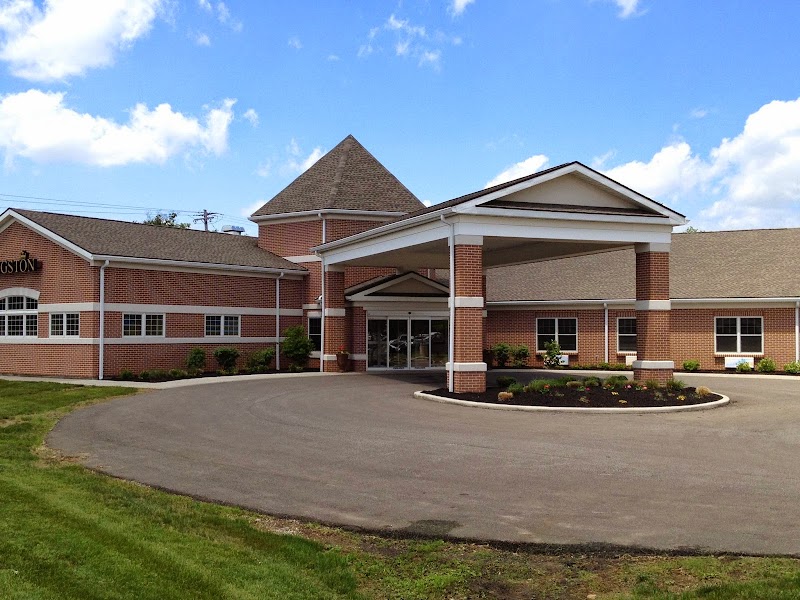
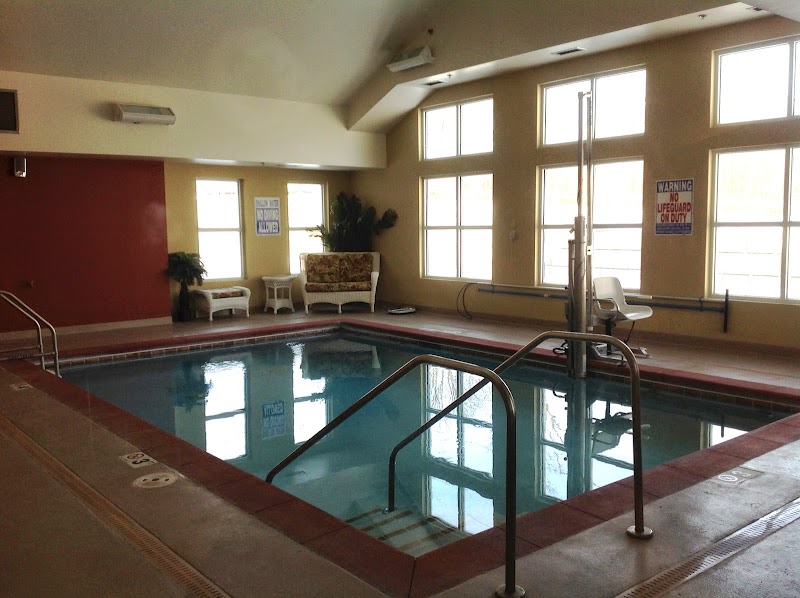
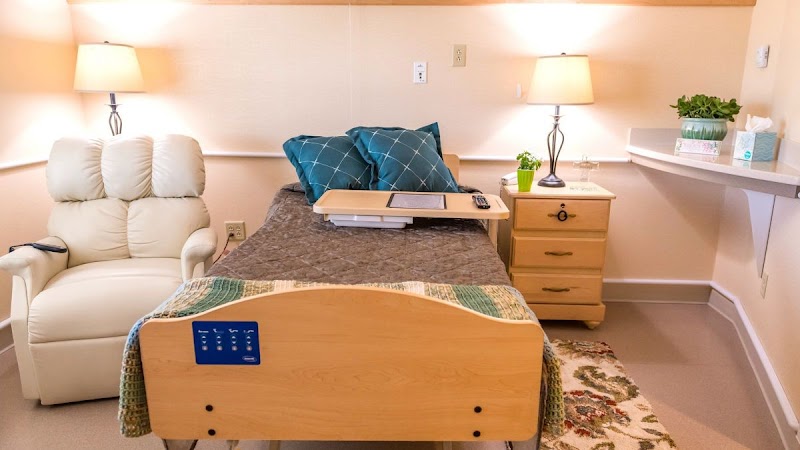
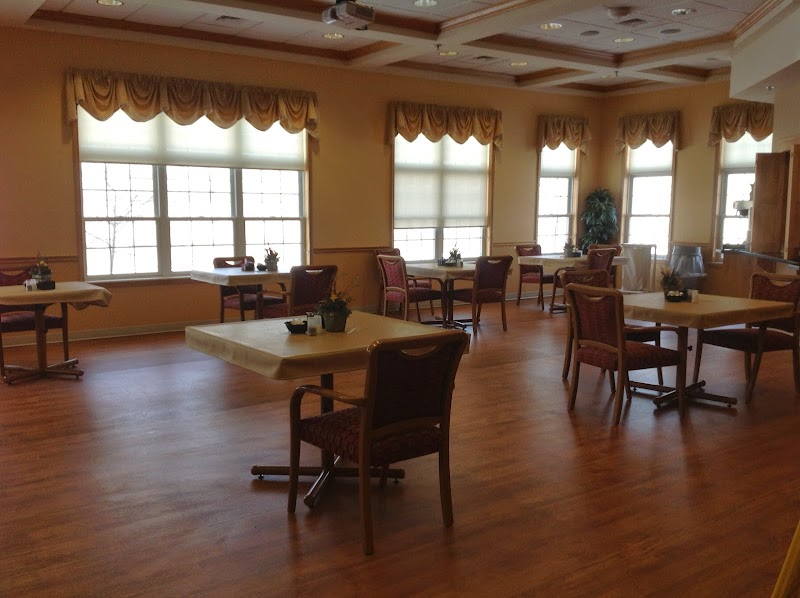
KINGSTON OF ASHLAND

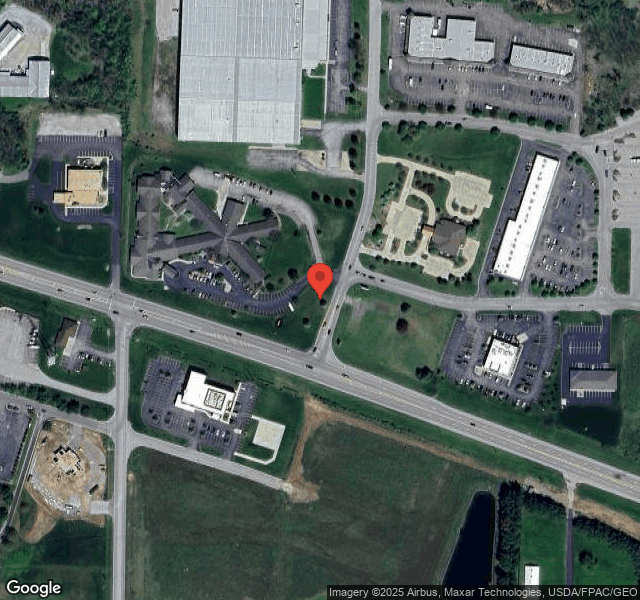
20 AMBERWOOD PKWY, ASHLAND, OH 44805 (419) 289-3859
For profit - Corporation 110 Beds KINGSTON HEALTHCARE Data: November 2025
Trust Grade
45/100
#485 of 913 in OH
Last Inspection: May 2023

Over 2 years since last inspection. Current conditions may differ from available data.

Overview

Kingston of Ashland has received a Trust Grade of D, indicating below-average performance with some concerning issues. It ranks #485 out of 913 nursing homes in Ohio, placing it in the bottom half, and #4 out of 4 in Ashland County, meaning it is the least favorable option in the area. The facility is currently improving, as it has reduced the number of issues from 5 in 2024 to 4 in 2025. Staffing is a concern with a rating of 2 out of 5 stars and a high turnover rate of 62%, which is above the state average. Although there are no fines on record, there have been serious incidents, including a resident experiencing severe post-operative pain due to untimely medication orders and another resident receiving insulin despite a physician's order to hold it, leading to a dangerously low blood sugar level. The facility also struggles with kitchen cleanliness, which could affect the health of residents. Families should weigh these strengths and weaknesses carefully when considering Kingston of Ashland.

Trust Score
D
45/100
In Ohio
#485/913
Bottom 47%
Safety Record
Moderate
Needs review
Inspections
Getting Better
5 → 4 violations
Staff Stability
⚠ Watch
62% turnover. Above average. Higher turnover means staff may not know residents' routines.
Penalties
✓ Good
No fines on record. Clean compliance history, better than most Ohio facilities.
Skilled Nurses
✓ Good
Each resident gets 48 minutes of Registered Nurse (RN) attention daily — more than average for Ohio. RNs are trained to catch health problems early.
Violations
⚠ Watch
33 deficiencies on record. Higher than average. Multiple issues found across inspections.
★★★☆☆
3.0
Overall Rating
★★☆☆☆
2.0
Staff Levels
★★★★★
5.0
Care Quality
★★☆☆☆
2.0
Inspection Score
Stable
2024: 5 issues
2025: 4 issues

The Good

  • 5-Star Quality Measures · Strong clinical quality outcomes
  • Full Sprinkler Coverage · Fire safety systems throughout facility
  • No fines on record

Facility shows strength in quality measures, fire safety.

The Bad

3-Star Overall Rating

Near Ohio average (3.2)

Meets federal standards, typical of most facilities

Staff Turnover: 62%

16pts above Ohio avg (46%)

Frequent staff changes - ask about care continuity

Chain: KINGSTON HEALTHCARE

Part of a multi-facility chain

Ask about local staffing decisions and management

Staff turnover is elevated (62%)

14 points above Ohio average of 48%

The Ugly 33 deficiencies on record

2 actual harm
Apr 2025 3 deficiencies 2 Harm
SERIOUS (G) 📢 Someone Reported This

A family member, employee, or ombudsman was alarmed enough to file a formal complaint

Actual Harm - a resident was hurt due to facility failures

Deficiency F0697 (Tag F0697)

A resident was harmed · This affected 1 resident

**NOTE- TERMS IN BRACKETS HAVE BEEN EDITED TO PROTECT CONFIDENTIALITY** Based on medical record review, interviews with staff, and facility policy review, the facility failed to ensure a comprehensive...

Read full inspector narrative →
**NOTE- TERMS IN BRACKETS HAVE BEEN EDITED TO PROTECT CONFIDENTIALITY** Based on medical record review, interviews with staff, and facility policy review, the facility failed to ensure a comprehensive post-surgical pain management program was maintained to achieve adequate pain control for Resident 93. This resulted in Actual Harm on [DATE] at 1:38 A.M. when Resident #93, who had a surgical amputation of the left leg (below the knee) on [DATE] and had an order for Oxycodone 10 milligrams (mg) immediate release every four hours for moderate pain, complained of severe post-operative pain rated at a 10 out of 10 (on a 0-10 pain scale with 0 representing no pain and 10 representing the worst pain the resident had ever experienced); however, the resident's Oxycodone had not been reordered timely, resulting in no narcotic pain medication available for administration and the resident had to be transferred to the emergency room to receive pain medication. This affected one (Resident #93) of two residents reviewed for pain management. The facility census was 92. Findings Include: Review of the medical record for Resident #93 revealed an admission date on [DATE] and a discharge date on [DATE] with the diagnoses including but not limited to surgical amputation of the left lower leg below the knee, chronic obstructive pulmonary disease (COPD), peripheral vascular disease (PVD), and high blood pressure. Review of the physician orders for Resident #93 revealed an order dated [DATE] for narcotic pain medication Oxycodone 10 mg immediate release tablet, take one tablet by mouth (PO) every four hours as needed (PRN) for moderate pain, and an order dated [DATE] for acetaminophen (Tylenol) oral tablet 325 mg, give three tablets by mouth every eight hours for moderate pain. Review of the admission assessment dated [DATE] revealed Resident #93 reported a pain level of six out of 10 on admission. Further review of Resident #93's admission baseline care plan dated [DATE] revealed Resident #93 was at risk for pain related to surgical procedure of left leg below the knee amputation with interventions including medications as ordered, repositioning and elevation as needed. Review of the Medicare 5-Day Minimum Data Set (MDS) assessment dated [DATE] revealed Resident #93 had intact cognition. Resident #93 required moderate assistance from staff for transfers, mobility, and personal hygiene care. Resident #93 received scheduled and as needed pain medication and Resident #93 had experienced pain five days out of the seven days during the review period. Review of the medication administration record (MAR) dated [DATE] to [DATE] revealed Resident #93 had received the as needed narcotic pain medication Oxycodone 10 mg for a total of 17 doses for pain levels ranging from 7 to 10 with the follow up assessment being marked as effective for pain management of Resident #93. Resident #93 was also receiving scheduled acetaminophen (Tylenol) oral tablet 325 mg, give three tablets by mouth every eight hours for moderate pain. Review of Resident #93's progress note authored by Registered Nurse (RN) #337 dated [DATE] at 1:38 A.M. revealed Resident #93 was yelling and moaning complaining of severe pain. Resident #93 requested narcotic pain medication. RN #337 received in report Resident #93's narcotic pain medication Oxycodone prescription had not been renewed with the pharmacy. RN #337 notified on-call Nurse Practitioner (NP) #339 to request the prescription be renewed. NP #339 denied the request to renew the prescription and instead gave an order for extra strength Tylenol stating will not be giving narcotic orders at 2:00 A.M. RN #337 informed NP #339 Resident #93 would be transferred to the hospital for pain control if requested. Review of Resident #93's progress note authored by RN #337 dated [DATE] at 1:41 A.M. revealed Resident #93 was offered the extra strength Tylenol for pain control, Resident #93 denied the medication and requested to be transferred to the hospital. RN #337 called emergency medical services (EMS) for transport of Resident #93 to the hospital. Resident #93 left the facility at 1:50 A.M. with EMS. Review of the hospital discharge paperwork for Resident #93 dated [DATE] at 2:55 A.M. revealed hospital diagnoses for Resident #93 was postoperative pain with new orders including Oxycodone - Acetaminophen (Percocet) 5-325 mg per tablet, give one tablet by mouth every six hours as needed for pain and an order for Gabapentin (Neurontin) 400 mg give one capsule by mouth three times daily. Review of the MAR dated [DATE] to [DATE] for Resident #93 revealed Resident #93 received Percocet 5-325mg for a total of three doses with pain level ranging from five to seven out of 10 on the pain scale. The follow up documentation revealed the medication was effective in controlling Resident #93's pain. Interview on [DATE] at 10:15 A.M. with RN #337 revealed because Resident #93's prescription for Oxycodone 10 mg had not been renewed, the pharmacy would not give the authorization for RN #337 to remove the narcotic pain medication from the facility's emergency medication machine for administration. Interview on [DATE] at 1:00 P.M. with the Director of Nursing (DON) confirmed Resident #93's narcotic pain medication prescription for Oxycodone 10 mg had not been renewed with the pharmacy and was unavailable when Resident #93 was experiencing a severe pain level of 10 on [DATE] resulting in Resident #93's transfer to the hospital for pain management. The DON stated the original prescription for Resident #93 had been written for a total of 18 doses and expired on [DATE] with the facility not attempting to renew the prescription for Resident #93. Multiple attempts were made on [DATE] during the onsite survey to contact NP #339; however, there was no return contact made with the surveyor. Review of the facility's policy titled Pain Assessment and Management undated revealed pain management is defined as the process of alleviating the resident's pain to a level that is acceptable to the resident and is based on his or her clinical condition and established treatment goals. This deficiency represents non-compliance investigated under Complaint Number OH00163865.
SERIOUS (G) 📢 Someone Reported This

A family member, employee, or ombudsman was alarmed enough to file a formal complaint

Actual Harm - a resident was hurt due to facility failures

Deficiency F0760 (Tag F0760)

A resident was harmed · This affected 1 resident

**NOTE- TERMS IN BRACKETS HAVE BEEN EDITED TO PROTECT CONFIDENTIALITY** Based on review of medical records, interviews with staff and residents, facility policy review, and medication manufacturer gui...

Read full inspector narrative →
**NOTE- TERMS IN BRACKETS HAVE BEEN EDITED TO PROTECT CONFIDENTIALITY** Based on review of medical records, interviews with staff and residents, facility policy review, and medication manufacturer guidelines review, the facility failed to ensure residents were free of significant medication errors. This resulted in actual harm for one resident on 02/16/25 at 7:23 P.M. when Resident #111, who received long-acting insulin and blood glucose monitoring for the management of Type II diabetes, was administered insulin despite a physician order to hold the insulin when the blood glucose level was below 200 milligrams per deciliter (mg/dL) of blood. The resident's blood glucose level was 109 mg/dL (normal range is 70-100 mg/dL). The resident experienced hypoglycemia (low blood glucose level) with a blood glucose level of 44 mg/dL at 1:30 A.M. and was unresponsive. Resident #111 required the administration of glucagon (injection medication to treat hypoglycemia) and emergency medical transport observation until the resident was stable and hourly blood glucose checks per glucometer to monitor and prevent reoccurrence. Additionally, two other residents (#302 and #404) were placed at risk for the potential for more than minimal harm when their physician ordered medications were not administered as prescribed. This affected three (#111, #302 and #404) of five residents reviewed for medication errors. Findings Include: 1. Review of the medical record for Resident #111 revealed an admission date on 04/29/23 with diagnoses including but not limited to Type II diabetes, high blood pressure, asthma, depression, and anxiety. Review of Resident #111's at risk care plan dated 09/03/24 revealed Resident #111 was at risk for fluctuating blood glucose levels related to diagnosis of Type II diabetes with interventions including regularly monitoring blood glucose levels and administering medications as ordered. Review of the quarterly Minimum Data Set (MDS) assessment dated [DATE] revealed Resident #111 had mild cognitive impairment with a Brief Interview of Mental Status score of 12 out of possible 15. Resident #111 had impairment to one side and required limited assistance from staff for personal care, transfers, and medication administration. Resident #111 received insulin injections for seven days during the review period. Review of physician orders for Resident #111 revealed an order dated 02/05/25 for insulin Lantus Solution pen-injector 100 unit/milliliter (ml) inject 55 units subcutaneous (SQ) at bedtime (HS) for glucose control - hold if below (blood glucose level) 200. Blood glucose monitoring four times a day (breakfast, lunch, dinner and bedtime). Insulin Aspart 100 units per ml, give 30 units with all meals. Review of Resident #111's blood glucose results dated 02/16/25 at 7:23 P.M. revealed the result was recorded as 109 mg/dL (the physician orders indicated the resident's Lantus insulin [long-acting insulin which peaks three to four hours after administration]) was to be held (not administered). Review of the February 2025 Medication Administration Record (MAR) for Resident #111 revealed on 02/16/25 at 8:30 P.M., Registered Nurse (RN) #337 administered 55 units of Lantus Insulin to Resident #111. Review of Resident #111's progress note dated 02/17/25 at 1:30 A.M., revealed the resident was observed to be unresponsive and slouching to the right, with their tongue hanging out of their mouth. The resident's blood glucose result was 44 mg/dL of blood per glucometer. The on-call nurse practitioner (NP) was notified, and an order was received for Glucagon 1 milligram (mg) intermuscular and to send Resident #111 to the hospital if needed. Review of Resident #111's progress note dated 02/17/25 at 1:35 A.M. revealed Glucagon 1 mg was administered via intermuscular injection to the left deltoid. Review of Resident #111's progress note dated 02/17/25 at 1:50 A.M. revealed emergency medical services (EMS) were called for transport of Resident #111 to the hospital. Review of Resident #111's progress note dated 02/17/25 at 1:55 A.M. revealed EMS arrived at the facility. Resident #111 remained unresponsive. Blood glucose obtained with result of 65 mg/dL. EMS attempted to initiate intravenous (IV) access and was not successful. Review of Resident #111's progress note dated 02/17/25 at 2:05 A.M. revealed Resident #111 was awake, alert and eating a peanut butter and jelly sandwich. Re-check of blood glucose level with a result of 85 mg/dL. Review of Resident #111's progress note dated 02/17/25 at 2:10 A.M. revealed a recheck of the blood glucose with a result of 98 mg/dL. EMS stated Resident #111 was stable and left the facility. Resident #111 was not transported to the hospital. Review of Resident #111's progress note dated 02/17/25 at 3:47 A.M. revealed the on-call NP was notified Resident #111 remained in the facility with a new order received to obtain blood glucose every hour. Resident #111 and son were notified of the new order. Review of Resident #111's progress note dated 02/17/25 at 7:00 A.M. revealed Resident #111's vital signs were blood pressure 108/70 mmHg (normal 120/60 mmHg), pulse 57 beats per minute (normal range 60-90 bpm), temperature 97.4 degrees Fahrenheit, respirations 18 breaths per minute (normal 12-20 breaths per minute), blood glucose 196 mg/dL. On call NP notified with new order to hold insulin dosage for breakfast. Review of Resident #111's progress note dated 02/17/25 at 10:36 A.M. revealed the NP was notified of Resident #111's blood glucose reading of 249 mg/dL and ordered to continue to hold the resident's insulin. Resident #111 was more alert and talkative and consumed 95% of the breakfast meal. Hourly blood glucose monitoring was discontinued at 8:00 A.M. Review of the facility's medication error report dated 02/17/25 and completed by RN #337 revealed Resident #111 was administered 55 units of Lantus Insulin on 02/16/25 at bedtime. Resident #111's blood glucose reading was 109 mg/dL. The physician order was for Lantus insulin with parameters to hold the insulin if the blood glucose results were below 200 mg/dL. Further review of the February 2025 MAR revealed the resident's scheduled insulin was resumed on 02/18/25. An interview on 03/24/25 at 3:25 P.M. with Resident #111 revealed Resident #111's blood glucose results fluctuate a lot and usually will be low instead of being high. Resident #111's diabetes is monitored by a specialist. An interview on 03/25/25 at 12:47 P.M. with the Director of Nursing confirmed RN #337 had administered Lantus insulin to Resident #111 when the blood glucose result was 109 mg/dL which was below the parameters set for the administration of the Lantus insulin. This resulted in a significant medication error. The resident's Lantus insulin was ordered to be held for a blood glucose level of less than 200 mg/dL, and it wasn't. The resident developed hypoglycemia which warranted the administration of Glucagon and more frequent blood glucose monitoring due to low blood sugar. Review of the facility's policy titled Administering Medications dated 04/01/24 revealed medications shall be administered in a safe and timely manner, and as prescribed. Medications must be administered in accordance with the physician orders, including any required time frame. Review of the manufacturer guidelines for Insulin Glargine (Lantus) revealed the onset of action for Lantus insulin is three to four hours after administration with no pronounced peak effect. 2. Review of the medical record for Resident #302 revealed an admission date of 12/22/23 with diagnoses including right femur fracture, COPD, high blood pressure, atherosclerotic heart disease, and hyperlipidemia. Review of the physician orders for Resident #302 revealed an order dated 09/03/24 for an antiplatelet medication Clopidogrel Bisulfate (Plavix) 75 mg give one tablet by mouth in the morning for atherosclerotic heart disease, and an order dated 09/03/24 for antihypertensive medication Carvedilol (Coreg) 3.125 mg give one tablet by mouth every morning and at bedtime for high blood pressure. Review of the quarterly [NAME] Data Set (MDS) assessment dated [DATE] revealed Resident #302 had cognitive impairment with a BIMS score of 12 out of possible 15 and required assistance from staff for personal hygiene care and medication administration. Review of Resident #302's progress note dated 03/14/25 at 9:20 A.M. revealed Resident #302 had been administered the wrong morning medications during morning medication pass by LPN #330. LPN #330 had administered a lower dose of Coreg and a dose of the anticoagulant medication, Eliquis, to Resident #302 (these medications were not ordered for the resident). Resident #302's vital signs were stable and there was no sign of bleeding. Resident #302's daughter was notified, and the on-call NP was notified. Review of the facility's medication error report dated 03/14/25 completed by LPN #330 revealed Resident #302 had received Resident #300's Eliquis and Coreg medications during the morning medication administration. Resident #302 had a head-to-toe assessment completed by LPN #330 with no negative findings documented. Resident #300's morning medications were removed from the facility's emergency medication machine and administered per physician order. An interview on 03/25/25 at 1:20 P.M. with the DON confirmed on 03/14/25 Resident #302 had been administered Resident #300's morning medications including the anticoagulant Eliquis and high blood pressure medication, Coreg. The DON stated the expectation of the facility nurses was to accurately read the physician orders and check the medications with the resident's MAR and name prior to administration of the medications. Review of the facility's policy titled Administering Medications dated 04/01/24 revealed medications ordered for a particular resident may not be administered to another resident. The individual administering the medications must verify the resident's identity before giving the resident his/her medications. 3. Review of the medical record for Resident #404 revealed an admission date on 01/31/25 with a readmission date from the hospital on [DATE]. The resident had diagnoses including but not limited to diverticulitis of the large intestine, arterial fibrillation (AFib), heart failure, chronic kidney disease Stage 3, Type II diabetes, and peripheral vascular disease (PVD). Review of Resident #404's Medicare 5 - Day MDS assessment dated [DATE] revealed Resident #404 had impaired cognition with a BIMS score of 11 out of 15. Resident #404 required assistance from staff for personal care, transfers, and medication administration. Resident #404 was receiving diuretic medication and heart failure was marked as a diagnosis. Review of the hospital discharge paperwork and physician orders for Resident #404 dated 02/20/25 revealed an order for Furosemide oral tablet (Lasix) 20mg, give one tablet two times per week. Review of Resident #404's physician orders revealed an order dated 02/24/25 for diuretic medication Furosemide oral tablet (Lasix) 20 mg, give one tablet by mouth in the morning every Monday, Thursday, and Saturday for heart failure. Further review revealed a discontinued order dated 02/20/25 to 02/24/25 for diuretic medication Furosemide oral tablet (Lasix) 20 mg, give one tablet twice a day for heart failure. Review of Resident #404's MAR dated 02/20/25 to 02/24/25 revealed Resident #404 had been administered Furosemide 20mg, two times per day for a total of four days. Review of Resident #404's progress note dated 02/24/25 at 12:10 P.M. authored by LPN #217 revealed the order for Furosemide 20 mg and been clarified and changed to administration two times per week instead of two times daily. Review of the facility's medication error report completed by LPN #217 revealed Resident #404's discharged physician order from the hospital dated 02/20/25 for Furosemide 20 mg had been transcribed incorrectly instead of being administered two times weekly, the order had been transcribed to be administered two times per day with Resident #404 receiving the Furosemide 20 mg two times per day for four days resulting in a significant medication error. An interview on 03/25/25 at 8:50 A.M. with LPN #217 revealed on 02/24/25 LPN #217 was reviewing Resident #404's recent laboratory results with NP #312 which indicated abnormal results with kidney function. LPN #217 reviewed Resident #404's hospital discharge medication orders dated 02/20/25 and saw where the Furosemide 20 mg order had been transcribed incorrectly in Resident #404's medical record. NP #312 clarified Resident #404's Furosemide order and LPN #217 updated the Furosemide order to reflect Furosemide 20mg to be administered two times per week. An interview on 03/25/25 at 1:10 P.M. with the DON confirmed Resident #404's hospital discharge order for Furosemide 20 mg, give one tablet by mouth two times per week had been transcribed incorrectly into Resident #404's medical record for Furosemide 20 mg to be given two times daily resulting in a significant medication error. The DON stated the expectation of the facility nurses is to accurately read the physician orders and check the medications with the resident's MAR and name prior to administration of the medications. Review of the facility's policy titled administering medications dated 04/01/24 revealed medications shall be administered in a safe and timely manner, and as prescribed. This deficiency represents non-compliance investigated under Complaint Number OH00163865.
CONCERN (E) 📢 Someone Reported This

A family member, employee, or ombudsman was alarmed enough to file a formal complaint

Potential for Harm - no one hurt, but risky conditions existed

Medical Records (Tag F0842)

Could have caused harm · This affected multiple residents

Based on medical record review, interview and facility policy review the facility failed to maintain accurate medical records by not transcribing physician orders correctly. This deficient practice af...

Read full inspector narrative →
Based on medical record review, interview and facility policy review the facility failed to maintain accurate medical records by not transcribing physician orders correctly. This deficient practice affected one resident (Resident #348) out of five residents reviewed for medication errors. The facility census was 92. Findings Include: Review of the medical record for Resident #348 revealed admission date on 02/22/25 with diagnoses including but not limited to high blood pressure, type two diabetes, Congestive Heart Failure (CHF), and osteoporosis. Review of the hospital discharge orders dated 02/22/25 for Resident #348 revealed an order for Ergocalciferol oral capsule 1.25 milligrams (mg) (50,000 units) give one capsule orally in the morning every Monday for supplemental use. Review of the physician orders for Resident #348 revealed an order dated 02/22/25 for a vitamin D2 supplement Ergocalciferol oral capsule 1.25 milligrams (mg) (50,000 units) give one capsule orally in the morning for supplemental use (daily). Review of the Medication Administration Record (MAR) dated 02/22/25 to 02/28/25 revealed the order for Ergocalciferol oral capsule 1.25 milligrams (mg) (50,000 units) give one capsule orally in the morning (daily) for supplemental use was marked as being administered on 02/23/24 in the morning. Further review of the MAR revealed on 02/24/25 the order was marked as not administrated by Licensed Practical Nurse (LPN) #217. An interview on 03/25/25 at 8:05 A.M. with LPN #217 revealed on 02/24/25 during the morning medication administration for Resident #348 LPN #217 recognized the order for Ergocalciferol oral capsule 1.25 milligrams (mg) (50,000 units) had been transcribed incorrectly during Resident #348's admission process on 02/22/25. LPN #217 notified the physician for clarification and entered the correct order for Ergocalciferol oral capsule 1.25 milligrams (mg) (50,000 units) give one capsule orally in the morning every Monday for supplemental use. An interview on 03/25/25 at 1:18 P.M. with the Director of Nursing (DON) confirmed Resident #348's order for vitamin D2 supplement Ergocalciferol had been incorrectly transcribed during Resident #348's admission process on 02/22/25. A review of the facility's policy titled Administering Medications dated 02/01/23 revealed medications shall be administered in a safe and timely manner, and as prescribed. This deficiency represents non-compliance investigated under Complaint Number OH00163865
Jan 2025 1 deficiency
CONCERN (D) 📢 Someone Reported This

A family member, employee, or ombudsman was alarmed enough to file a formal complaint

Potential for Harm - no one hurt, but risky conditions existed

Medical Records (Tag F0842)

Could have caused harm · This affected 1 resident

**NOTE- TERMS IN BRACKETS HAVE BEEN EDITED TO PROTECT CONFIDENTIALITY** Based on interviews and record review, the facility failed to complete the medical record and accurately document the clinical s...

Read full inspector narrative →
**NOTE- TERMS IN BRACKETS HAVE BEEN EDITED TO PROTECT CONFIDENTIALITY** Based on interviews and record review, the facility failed to complete the medical record and accurately document the clinical status for one resident (Resident #105) of four resident's sampled. The census was 101. Findings Include: Review of the medical record for Resident #105 revealed an admission date of [DATE] with diagnoses including anemia, type two diabetes, paroxysmal atrial fibrillation, congestive heart failure, protein calorie malnutrition, macular degeneration, spinal stenosis, presence of cardiac pacemaker, chronic kidney disease stage three, and cardiomyopathy. Resident #105 expired on [DATE]. Review of the vital sign record on [DATE] revealed Resident #105's vital signs were documented as blood pressure 122/84; temperature was 97.4; pulse was 66; respirations 18; oxygen saturation 95% on room air. No vital signs were documented on [DATE]. Review of physician orders revealed an order to monitor residents confusion and altered mental status, if it progresses, daughter would like resident sent to the Emergency Department (ED) for evaluation, two times a day for monitor for confusion for four administrations, dated [DATE] at 5:29 P.M. Review of the medical record on [DATE] revealed no documented clinical assessments for Resident #105. Interview on [DATE] at 4:35 P.M., Registered Nurse (RN) #150 stated Resident #105's vital signs had been completed and communicated to the facility Nurse Practitioner by way of telephone. RN #150 confirmed medical documentation for vital signs or assessments were not recorded in the electronic medical record on [DATE]. Interview on [DATE] at 5:05 P.M. with the Administrator and Director of Nursing (DON), both confirmed no vital sign documentation was recorded for Resident #105 on [DATE]. Review of the facility policy titled Change in a Resident's Condition or Status dated [DATE], revealed the nurse supervisor/charge nurse will record the residents medical record information relative to changes in the residents medical/mental condition or status.
Sept 2024 4 deficiencies
CONCERN (D) 📢 Someone Reported This

A family member, employee, or ombudsman was alarmed enough to file a formal complaint

Potential for Harm - no one hurt, but risky conditions existed

ADL Care (Tag F0677)

Could have caused harm · This affected 1 resident

**NOTE- TERMS IN BRACKETS HAVE BEEN EDITED TO PROTECT CONFIDENTIALITY** Based on observation, record review and interview, the facility failed to provide timely toileting assistance to Resident #1 who...

Read full inspector narrative →
**NOTE- TERMS IN BRACKETS HAVE BEEN EDITED TO PROTECT CONFIDENTIALITY** Based on observation, record review and interview, the facility failed to provide timely toileting assistance to Resident #1 who required staff assistance for activities of daily living (ADL). This affected one resident (#1) of three residents reviewed for assistance with ADLs. The facility census was 91. Findings include: Review of the medical record revealed Resident #1 was admitted to the facility on [DATE]. Diagnoses included hemiplegia following a cerebral infarction, intracerebral hemorrhage in the brain stem, respiratory failure, dysarthria, obstructive hydrocephalus, depression, hepatitis, osteoarthritis, and history of transient ischemic attack. Review of the admission Minimum Data Set (MDS) assessment dated [DATE] revealed Resident #1 had intact cognition and was occasionally incontinent of bladder and always continent of bowel. Resident #1 required staff assistance for toileting and dressing. Review of Resident Council Minutes dated 08/14/24 revealed the residents at the meeting voiced concerns it took a while for the call lights to be answered. Observation on 09/09/24 at 10:30 A.M. revealed the call light monitor at the nurses' station indicated the call light for Resident #1's room had been on for 44 minutes. On 09/09/24 at 10:30 A.M. an interview with Licensed Practical Nurse (LPN) #296 verified the call light for Resident #1's room had been on for 44 minutes. On 09/09/24 at 10:45 A.M. an interview with Resident #1 revealed she had her call light on because she needed to go to the bathroom and wanted to get up and dressed for therapy. She stated she was supposed to have speech therapy at 9:00 A.M. so she turned her call light on at around 8:00 A.M. She stated the nursing assistant (did not know her name) came in and told her she would be right back but she never came back. She stated at 9:50 A.M. she put her call light on again and it had been on ever since. She stated she should just mess the bed but she does not want to do that. She stated sometime it takes two to three hours to get her call light answered in the morning. On 09/09/24 at 10:50 A.M. an interview with LPN #296 revealed the staff had not been into Resident #1 room yet but they were going into her room after they finished up in the room they were in at that time. On 09/09/24 at 10:58 A.M. the nursing assistant went into take care of Resident #1. On 09/10/24 at 8:30 A.M. an interview with Resident # 92 revealed it could take hours to get a call light answered when she needs help. She stated she has had to sit in her own stool for hours while waiting for assistance and sometimes the staff come in and tell her they will come back to help but they do not. On 09/10/24 at 3:45 P.M. an interview with Resident #106 revealed the call lights have gotten better since she said something in the Resident Council meeting but the problem was that the staff come into your room and tell you they would be back and they never come back then you have to turn the call light on again. On 09/10/24 at 2:55 P.M. an interview with the Director of Nursing (DON) revealed Resident #1 had complained to the staff about her call light being on for so long yesterday and the staff was educated and she requested to be moved to a more visible room and that move was done today. Review of the facility policy titled,Answering the Call Light, dated 02/23 revealed the purpose was to respond to the resident's requests and needs. This deficiency represents noncompliance investigated under Complaint Number OH00157222 and OH00157221.
CONCERN (D) 📢 Someone Reported This

A family member, employee, or ombudsman was alarmed enough to file a formal complaint

Potential for Harm - no one hurt, but risky conditions existed

Quality of Care (Tag F0684)

Could have caused harm · This affected 1 resident

**NOTE- TERMS IN BRACKETS HAVE BEEN EDITED TO PROTECT CONFIDENTIALITY** Based on record review and interview the facility failed to ensure daily weights and laboratory tests were obtained and/or repor...

Read full inspector narrative →
**NOTE- TERMS IN BRACKETS HAVE BEEN EDITED TO PROTECT CONFIDENTIALITY** Based on record review and interview the facility failed to ensure daily weights and laboratory tests were obtained and/or reported as ordered for Resident #110. This affected one resident (#110) of four residents reviewed for quality of care. The facility census was 91. Finding included: 1. Review of the medical record revealed Resident #110 was admitted to the facility on [DATE]. Diagnoses included surgery to the digestive system, colostomy, malignant neoplasm of the sigmoid colon, congestive heart failure, chronic kidney disease, insomnia, dilated cardiomyopathy, and pacemaker. She was discharged to the hospital on [DATE]. Review of the admission Minimum Data Set (MDS) assessment dated [DATE] revealed Resident #110 had intact cognition and had a surgical wound and ostomy. She needed set up assistance for eating and weighed 134 pounds (lbs). Review of the physician's orders revealed Resident#110 was order daily weights and to notify the provider of a weight gain of three pounds (lbs) in one day or five pounds in one week dated 06/05/24. Review of the daily weights for Resident #110 revealed no documentation of daily weights on 06/08/24, 06/10/24, 06/13/24, 06/14/24, 06/18/24, 06/19/24, 06/20/24 and 06/21/24. Review of the weights for Resident #110 revealed she weighed 133.6 lbs on 06/04/24, 133.8 lbs on 06/05/24 and 06/06/24, 139.0 lbs on 06/07/24, 140.2 lbs on 06/09/24, 127.0 lbs on 06/11/24, 123.0 lbs on 06/12/24, 123.7 lbs on 06/15/24, 123.7 lbs on 06/16/24, 123.6 lbs on 06/17/24, 124.6 lbs on 06/22/24, 128.0 lbs on 06/23/24, and 127.8 lbs on 06/24/24. On 09/12/24 at 10:33 A.M. an interview with the Director of Nursing (DON) confirmed the physician was not notified on 06/07/24 for Resident #110 having a 5.2-pound weight gain from 06/06/24 to 06/07/24 or on 06/24/24 for her 3.2-pound weight gain from 06/22/24 to 06/24/24. 2. Review of the medical record revealed Resident #110 was admitted to the facility on [DATE]. Diagnoses included surgery to the digestive system, colostomy, malignant neoplasm of the sigmoid colon, congestive heart failure, chronic kidney disease, insomnia, dilated cardiomyopathy, and pacemaker. She was discharged to the hospital on [DATE]. Review of the admission MDS assessment dated [DATE] revealed Resident #110 had intact cognition and had a surgical wound and ostomy. Review of the physician's orders revealed Resident #110 had an order for a wound culture per the daughters request due to a change in drainage color dated 06/12/24. Review of the physician's orders revealed Resident #110 had an order for levofloxacin 500 milligrams once daily for seven dated for infection dated 06/19/24. Review of the wound culture of the lower abdomen wound with a collection dated of 06/12/24, received date of 06/14/24 and reported date of 06/18/24 revealed the culture was positive for the organism pseudomonas aeruginosa. Review of the Infection Control log revealed Resident #110 had a wound infection on 06/19/24 and was prescribed levofloxacin 500 milligrams. On 09/10/24 at 12:14 P.M. an interview with the DON revealed she was not with the company when the lab test was done for Resident #110 so she does not know why it was drawn on 06/12/24 but not sent to the lab until 06/14/24. She verified that was what the documentation stated. She stated the lab was short staffed just like everyone else and they try to get them to pick up every day but somedays they do not show up. This deficiency represents non-compliance investigated under Complaint Number OH00157221.
CONCERN (D) 📢 Someone Reported This

A family member, employee, or ombudsman was alarmed enough to file a formal complaint

Potential for Harm - no one hurt, but risky conditions existed

Accident Prevention (Tag F0689)

Could have caused harm · This affected 1 resident

**NOTE- TERMS IN BRACKETS HAVE BEEN EDITED TO PROTECT CONFIDENTIALITY** Based on review of the medical record and interview with staff the facility failed to complete a thorough and timely post-fall a...

Read full inspector narrative →
**NOTE- TERMS IN BRACKETS HAVE BEEN EDITED TO PROTECT CONFIDENTIALITY** Based on review of the medical record and interview with staff the facility failed to complete a thorough and timely post-fall assessment and notify the family of a fall for Resident #109. This affected one resident ( Resident #109) of three reviewed for falls. The facility census was 91. Findings included: Review of the closed medical record revealed Resident #109 was admitted to the facility on [DATE]. Diagnoses included hemiplegia of the right side following a cerebral infarction, intracerebral hemorrhage, encephalopathy, pulmonary fibrosis, dysphagia, respiratory disorders, begin prostatic hyperplasia, kidney failure, hypertension, and atherosclerotic heart disease. He was discharged to the hospital on [DATE] where he later expired. Review of the physician's orders dated [DATE] revealed Resident #109 had orders for fall mats to both sides of the bed at bedtime and a low bed. Review of the admission Minimum Data Set assessment dated [DATE] revealed Resident #109 had severely impaired cognition and was incontinent of bladder and bowel. He required partial/moderate assist with eating and was dependent for toileting and bathing. Review of the fall risk assessment dated [DATE] revealed Resident #109 was a high risk for falls. Review of the fall investigation report dated [DATE] revealed Resident #109 was found on [DATE] at 2:30 A.M. lying on the ground next to his bed with his head towards the head of the bed. A blanket was covering him and the call light was pinned to him. The resident was alert with no injuries noted at the time. Resident stated he rolled out of bed. The State Tested Nursing Assistant (STNA) statement reports the resident stated his head hurt then denied anything hurting. Review of the undated, signed, handwritten witness statement from STNA #255 revealed on [DATE] (this was actually [DATE]) at around 2:00 A.M. she was assisting a resident to the bathroom when the nurse came into the room and stated Resident #109 was on the floor. When she walked into the room Resident #109 was on the floor parallel with the bed next to the heating unit, his head was under the red chair in the room and the nurse was standing beside him. Resident #109 was wrapped up in his blanket with his call light still attached to his shirt and his bed was in the low position. She went to get the Hoyer lift so they could get him up off the floor. They got him back into the bed and the nurse felt the back of his head for a goose egg and said there was not one. Resident #109 stated his head hurt then said nothing hurt. When she came back to work on [DATE] she thought Resident #109 did not seem to be doing well so she approached the nurse working that night and asked her what was going on with him because the other night he was talking to her. She asked her if there was any documentation of a fall and the nurse stated no. She told her what had happened on [DATE] ( the date was actually [DATE]) and the nurse told her to report it. She stated there was no assessment or neurological assessment was done. Review of the progress/nursing/skilled notes from [DATE] to [DATE] revealed no documentation of a neurological assessment being completed for Resident #109. Review of the physician's telehealth note dated [DATE] at 3:00 A.M. revealed Resident #109 was being seen due to complaints of pain. He had a diagnosis of chronic pain however he was unable to clearly state where and was not endorsing an exam however the nurse stated he did appear to be in pain. Review of the nursing note dated [DATE] at 12:19 P.M. revealed the family of Resident #109 was notified of a fall on [DATE]. The family was requesting the resident be sent to the hospital for a head scan. Review of the hospital records dated [DATE] revealed Resident #109 had a head scan during the hospitalization which confirmed a brain bleed that was aged/unchanged from prior imaging done in [DATE]. Resident #109 was placed on comfort care with hospice services and expired at the hospital. On [DATE] at 9:18 A.M. in interview with Family Member #400 revealed Resident #109 was admitted to the facility due to the brain bleed and she was concerned about him falling at the facility but he facility stated they would lower his bed and place mats on the floor which they did do. She stated they would be there all the time and it would take forever to get anyone to answer the call light, most times it was up to an hour. She stated on [DATE] her father was not acting right; he was very fidgety and kept holding his head saying oh my over and over. She stated she spent the night with her father on Friday, Saturday, and Sunday ([DATE], [DATE], and [DATE]). She stated on [DATE] her father was complaining of stomach pain and she explained to the nurse (patty) that this was how he was acting prior to the first brain bleed but she would not listen to her. She stated during the night she asked the nurse if her father could have something for a headache and the nurse stated to her is it his head or stomach and I told her to just give him some Tylenol. She stated they had a meeting on [DATE] with the Director of Nursing (DON) and another person because their father was declining so fast and wanted to know what to do and they were told that he had fallen on Thursday night ([DATE]) and it was not reported. They told them they wanted him sent to the hospital. She stated by then he was completely unresponsive. She stated the hospital did a cat scan which was negative but the physician at the emergency room (ER) stated they should have done a Magnetic Resonance Imaging (MRI) because that was the only way to really tell. She stated he was severely dehydrated and had a urinary tract infection. She stated her father passed away at the hospital. On [DATE] at 1:37 P.M. an interview with the DON revealed she was not employed at the facility with Resident #109 had fallen but she verified the documentation revealed he had fallen on [DATE] and it was not reported and there was no documentation of an assessment, vital signs or neurological assessment had been completed. She stated the nurse had been terminated due to the incident. On [DATE] at 2:25 P.M. an interview with Registered Nurse # 401 revealed on the morning of [DATE] right before shift change at 6:00 A.M. she was at the desk charting and the call light for Resident #109 was on and the nursing assistant was in a room helping another resident so she went to answer it. She stated when she went into the room Resident #109 was hanging halfway out of the bed between the bed and the wall. She stated his bed was in the lowest position, the mats were on the floor, he was wrapped up in his blankets and the call light was clipped to the blanket by his head. She stated he said she had to go to the bathroom. She stated she went and got the nursing assistant and they got the Hoyer and put him back into bed. She stated she checked him over and did not see anything wrong him and she asked him if he was in pain and he stated no. She stated they changed his brief because he had been incontinent. She verified she had not charted on the incident or called the family because she did not believe it was a fall. On [DATE] at 2:46 P.M. an interview with STNA #255 revealed she worked 10:00 P.M. to 6:00 A.M. on [DATE] into [DATE]. She stated she walked passed Resident #109 room around 2:00 A.M. and he was lying on the floor mat on the side of the bed between the bed and the wall. She stated he had his blankets wrapped around him with his call light still attached to his blanket. She stated his call light was not on. She stated the nurse was sitting at the nurse's station so she asked her to come to the room because he was on the floor. She stated they got him up off the floor with the Hoyer, the nurse checked him out and there were no other issues with him the rest of the night. She stated she came back to work on [DATE] and she asked the nurse who was working that night if it was documented he had a fall and the nurse stated no and told her to write a statement and turn it so she did. This deficiency represents non-compliance investigated under Complaint Number OH00157236 and OH00157221.
CONCERN (D) 📢 Someone Reported This

A family member, employee, or ombudsman was alarmed enough to file a formal complaint

Potential for Harm - no one hurt, but risky conditions existed

Pharmacy Services (Tag F0755)

Could have caused harm · This affected 1 resident

**NOTE- TERMS IN BRACKETS HAVE BEEN EDITED TO PROTECT CONFIDENTIALITY** Based on record review and interview the facility failed to ensure medication was obtained timely from the pharmacy for Resident...

Read full inspector narrative →
**NOTE- TERMS IN BRACKETS HAVE BEEN EDITED TO PROTECT CONFIDENTIALITY** Based on record review and interview the facility failed to ensure medication was obtained timely from the pharmacy for Resident #20. This affected one resident (#20) of four residents reviewed for pharmacy services. The facility census was 91. Finding included: Review of the medical record revealed Resident #20 was admitted to the facility on [DATE]. Diagnoses included chronic obstructive pulmonary disease, pulmonary fibrosis, chronic duodenal ulcer, hypertensive heart, kidney disease, atrial fibrillation, major depressive disorder, anxiety, chronic pain syndrome, glaucoma, and macular degeneration. Review of the admission Minimum Data Set (MDS) 3.0 assessment dated [DATE] revealed Resident #20 had intact cognition. Review of the Medication Administration Record (MAR) revealed Resident #20 had not received her Entresto (heart failure medication) 24-26 milligram tablet twice a day from admission on [DATE] to [DATE]. Review of the progress notes on [DATE] at 11:08 A.M. revealed Resident #20 to have two plus non-pitting edema in both her legs. Review of the pharmacy delivery slip revealed six Entresto 24-26 milligram tablets were delivered on [DATE]. Review of the progress notes from [DATE] to [DATE] revealed no documentation the physician or nurse practitioner were notified the facility was unable to get Entresto for Resident #20. Review of the physician progress notes dated [DATE] and [DATE] revealed no documentation of Entresto not being available for Resident #20. On [DATE] at 10:45 A.M. an interview with Licensed Practical Nurse (LPN) #351 revealed she had called the pharmacy several times about the Entresto for Resident #20 and they kept telling her it would be delivered but it would never come in. She stated the last time she called they stated it was a billing issue. She stated they finally got it in a few days ago. She stated it was always something with the pharmacy. She verified Resident #20 had developed some edema in both her legs during that time. On [DATE] at 11:30 A.M. an interview with LPN #351 verified she never notified the physician the medication was not available from the pharmacy. On [DATE] at 2:35 P.M. an interview with the Director of Nursing (DON) revealed the Entresto for Resident #20 was expensive and the pharmacy would not send it for Resident #20 because she did not have insurance at that time. She stated Medicare had her as deceased in the system. She stated they were attempting to get to straightened out. She stated she had the medication now. This deficiency represents noncompliance investigated under Complaint Number OH00157222.
Mar 2024 1 deficiency
CONCERN (E) 📢 Someone Reported This

A family member, employee, or ombudsman was alarmed enough to file a formal complaint

Potential for Harm - no one hurt, but risky conditions existed

Deficiency F0565 (Tag F0565)

Could have caused harm · This affected multiple residents

Based on review of the resident council meeting minutes, resident and staff interviews, the facility failed to provide the group with responses, action regarding their concerns of call light response ...

Read full inspector narrative →
Based on review of the resident council meeting minutes, resident and staff interviews, the facility failed to provide the group with responses, action regarding their concerns of call light response times. This affected seven (#22, #24, #30, #47, #48, #52 and #70) of seven residents who regularly attend council meetings. The facility census was 97. Findings include: Review of the resident council meeting minutes was completed with the Activities Director (AD) #1 on 03/06/24 at 2:11 P.M. AD #1 identified she takes the notes for the resident council meetings and documents the concerns resident have. AD #1 identified she started at the facility in October 2023 and is new to the position. The interview confirmed the council did not conduct a meeting in December 2023 due to a COVID outbreak. The minutes identified concerns for call light response times in January and February 2024. The interview identified she has no evidence the resident concerns were shared with anyone and follow up completed. The interview confirmed she also has no evidence the Council President or Administrator signed the minutes following the January or February meeting, as that section on the minutes is blank. Interview with Resident Council President #22 was completed on 03/06/24 at 3:10 P.M. The president confirmed she has not been provided with the completed resident council minutes to review and sign since the new Activities Director started. The interview confirmed there has been no follow up regarding the residents' concerns for call light response times. The interview confirmed that all seven residents had complaints regarding the call light response times during the past two meetings. This deficiency represents non-compliance investigated under Complaint Number OH00151270.
Oct 2023 1 deficiency
CONCERN (D) 📢 Someone Reported This

A family member, employee, or ombudsman was alarmed enough to file a formal complaint

Potential for Harm - no one hurt, but risky conditions existed

Laboratory Services (Tag F0770)

Could have caused harm · This affected 1 resident

**NOTE- TERMS IN BRACKETS HAVE BEEN EDITED TO PROTECT CONFIDENTIALITY** Based on policy review, staff interview, and record review the facility facility failed to transcribe and implement physician or...

Read full inspector narrative →
**NOTE- TERMS IN BRACKETS HAVE BEEN EDITED TO PROTECT CONFIDENTIALITY** Based on policy review, staff interview, and record review the facility facility failed to transcribe and implement physician ordered laboratory testing for Resident #90. This affected one (Resident #90) of three residents reviewed for laboratory services. The facility census was 88. Findings include: Closed medical record review for Resident #90 revealed an admission date of 09/08/23. Diagnoses included osteomyelitis (bone infection) of the right foot and ankle status post surgical debridement and malnutrition. Resident #90 was transferred to the hospital on [DATE]. Review of Resident #90's physician orders, dated 09/08/23, revealed an order for Vancomycin (antibiotic) one gram daily intravenously and Zosyn (antibiotic) 3.375 grams three times daily intravenously to treat osteomyelitis. Review of Resident #90's hand-written physician's orders, dated 09/11/23, revealed laboratory testing to include a complete blood count (CBC), a basic metabolic panel (BMP), a C-Reactive Protein (CRP) level, and a Vancomycin trough (a level for monitoring therapeutic level of the medication in the bloodstream) was to be drawn on 09/13/23. Review of Resident #90's medical record revealed no evidence of the facility nursing staff having transcribed or implemented the physician-ordered laboratory testing during Resident #90's stay at the facility. Interview on 10/04/23 at 11:33 A.M. with the Director of Nursing (DON) verified there was no evidence of Resident #90's physician-ordered laboratory testing having been completed while a resident of the facility. The DON stated the orders must have been missed as they were never put into the electronic medical record, which was integrated with the laboratory provider's system. Review of the policy titled Lab and Diagnostic Test Results - Clinical Protocol, dated 12/27/22, revealed the facility must provide laboratory services or have a contractual agreement with an outside company who can meet the needs of its residents. The facility is responsible for the quality and timeliness of the services. The provider will identify and order diagnostic and lab testing based on diagnostic and monitoring needs. The staff will process test requisitions and arrange for tests, the laboratory, diagnostic or radiology provider or other testing source will report test results to the facility. This deficiency represents non-compliance investigated under Complaint Number OH00146986. This is an example of continued non-compliance from the survey dated 09/26/23.
Sept 2023 2 deficiencies
CONCERN (D) 📢 Someone Reported This

A family member, employee, or ombudsman was alarmed enough to file a formal complaint

Potential for Harm - no one hurt, but risky conditions existed

ADL Care (Tag F0677)

Could have caused harm · This affected 1 resident

**NOTE- TERMS IN BRACKETS HAVE BEEN EDITED TO PROTECT CONFIDENTIALITY** Based on observations, medical record review, resident interview, family interview and staff interviews, the facility failed to ...

Read full inspector narrative →
**NOTE- TERMS IN BRACKETS HAVE BEEN EDITED TO PROTECT CONFIDENTIALITY** Based on observations, medical record review, resident interview, family interview and staff interviews, the facility failed to ensure a resident was provided with assistance of removing facial hair. This affected one (#64) of three residents reviewed for assistance with activities of daily living. The facility census was 93. Findings include: Review of Resident #64's medical record revealed an admission on [DATE], with medical diagnoses including: chronic lymphedema, Alzheimer's disease, history of Covid-19 virus and benign prostatic hypertrophy (BPH) with indwelling urinary catheter. The most recent facility quarterly minimum data set assessment (MDS) dated [DATE] identified the resident had moderately impaired cognition. The assessment identified Resident #64 required one-person physical assistance with Activities of Daily Living (ADL's). Review of a physician order dated 09/09/23 revealed an order for Resident not to shave himself. Observation on 09/25/23 at 8:02 A.M., revealed Resident #64 was in bed and was observed with a large amount of facial hair, that appeared to be growing a beard and mustache. Interview with Resident #64, at this time, revealed he does not want to be growing a beard or mustache and stated, it's way too long. Observation on 09/25/23 at 10:02 A.M., with State Tested Nurse Assistant (STNA) #104 identified Resident #64 can shave himself using an electric razor. STNA #104 verified the resident has not been shaved in a very long time. Interview on 09/25/23 at 12:23 P.M., with Resident #64's son revealed Resident #64 likes to be clean shaven every day. Resident #64's son stated he does not feel the resident is able to safely shave himself any longer and identified staff need to shave him. Observation and interview on 09/25/23 at 12:50 P.M., with the Director of Nursing (DON) verified Resident #64 has a large amount of facial hair at this time and needs shaved. The DON stated it does appear he has not been shaved in a long period of time and the staff should be shaving the resident and not himself. This deficiency represents non-compliance investigated under Complaint Number OH00146181.
CONCERN (D) 📢 Someone Reported This

A family member, employee, or ombudsman was alarmed enough to file a formal complaint

Potential for Harm - no one hurt, but risky conditions existed

Laboratory Services (Tag F0770)

Could have caused harm · This affected 1 resident

Based on medical record reviews, urinary drainage bag instructions, policy review, resident interview, family interview and staff interviews, the facility failed to obtain a urine specimen from urinar...

Read full inspector narrative →
Based on medical record reviews, urinary drainage bag instructions, policy review, resident interview, family interview and staff interviews, the facility failed to obtain a urine specimen from urinary catheter and failed to ensure staff was knowledgeable of the procedure. This affected one (#55) of three residents reviewed with urinary catheters. The facility identified nine current residents utilizing urinary catheters. The facility census was 93. Findings include: 1. Review of Resident #55's medical record identified admission to the facility occurred on 10/07/22, with diagnoses including: stroke, diabetes, and congestive heart failure. Resident #55 was noted in the medical record to have an indwelling urinary catheter. The progress notes identified on 09/22/23 a urine sample was obtained to check for infection. According to the records identified on 09/24/23, the laboratory identified the sample was contaminated and a new sample needed to be recollected. Review of a physician order dated 09/24/23, revealed to recollect Urine for Urinalysis, culture and sensitivity (UA C&S). Interview on 09/25/23 at 8:23 A.M., with Resident #55 and two of Resident #55's family members revealed a few days ago the facility obtained a urine sample, and they were told they had to do it again because it was contaminated. Resident #55 confirmed she is waiting on the new sample results to come back and has lots of pressure in her bladder area. Interview on 09/25/23 at 10:02 A.M., with Licensed Practical Nurse (LPN #101) revealed when asked the process for obtaining a urine sample, from a resident with an indwelling urinary catheter. LPN #101 identified she drains the urine from the catheter into the drainage bag, places a new bag and obtains the urine sample, by draining urine from the bottom of the new bag. Interview on 09/25/23 at 10:11 A.M., with LPN #102 revealed when asked to walk through the process of obtaining a urine sample from a resident with an indwelling urinary catheter. LPN #102 identified she would take the catheter apart from the drainage bag and obtain the urine through the catheter. Interview on 09/25/23 at 10:14 A.M., with LPN #105 revealed when was asked to walk through the process of obtaining a urine sample from a resident with an indwelling urinary catheter. LPN #105 identified she would disconnect the tubing from the catheter, clean with alcohol and get the sample from the catheter tip. Review of the policy titled Cultures, Specimen Collection, dated July 2023, revealed the section for urine culture from indwelling catheter revealed to: a. Validate the physician order for the culture. b. Approximately 30 minutes prior to collection of the specimen, clamp the collection tube to allow urine to accumulate. c. Put on gloves. d. Wipe the sampling port with alcohol. e. Connect a needle into the sampling port at 90-degree angle. f. Insert a needle into the sampling port. g. Aspirate the specimen into the syringe h. Transfer the specimen to a sterile container. I. Unclamp the drainage tube. Observation of the facility package of Urinary Drainage Bags revealed there is a Needless sampling Port. There is additionally a non-return valve, which prevents urine from returning into the tubing. The directions for the use of the Needless sampling are listed directly on the bag. 1. Wash hands 2. Kink Tube 3-4 inches below sample point and wait for urine to collect 3. Clean port with Alcohol Insert syringe with or without needle in to center of port, 4 Aspirate sample 5 Restore urine flow. 6 Clean port Interview on 09/25/23 at 12:50 P.M., with the Director of Nursing (DON) identified she had contacted the facility laboratory to obtain information on how many urine samples in the past three months have been contaminated. The interview identified she was not able to produce this information. The interview confirmed the facility was going to start immediate education of the nursing staff to ensure correct obtaining of urine samples was being completed. This deficiency represents non-compliance investigated under Complaint Number OH00146181.
May 2023 7 deficiencies
CONCERN (D)

Potential for Harm - no one hurt, but risky conditions existed

Deficiency F0569 (Tag F0569)

Could have caused harm · This affected 1 resident

Based on review of resident personal needs accounts (PNA), staff interview, and review of a facility policy, the facility failed to notify residents or resident representatives when resident accounts ...

Read full inspector narrative →
Based on review of resident personal needs accounts (PNA), staff interview, and review of a facility policy, the facility failed to notify residents or resident representatives when resident accounts reached $200 less than the Social Security Income (SSI) resource limit. This affected two (#2 and #12) of five resident PNAs reviewed. The facility census was 79. Findings include: 1. Review of Resident #2's PNA account identified the current balance as of 05/17/23 was $3,911.31. The PNA account included monies from the CARES Act of $2,245.09 that was received on 04/09/21. The PNA account records identified no notifications of the need to spend down following 12 months from the receipt of the CARES Act stimulus check. 2. Review of Resident #12's PNA account identified the current balance as of 05/17/23 was $2,792.41. The PNA account included monies from the CARES Act of $1,617.24 that was received on 04/09/21. The PNA account records identified no notifications of the need to spend down following 12 months from the receipt of the cares act stimulus check. Interview with the Activities Director (AD) #271, stated she also managed the resident's PNAs and confirmed there were no notifications to spend down resident PNAs sent to any resident or resident representatives in the past year. AD #271 stated she believed this should be completed at a cooperate level. Review of facility policy related to resident trust accounts, dated December 2019, revealed a section titled, Allowable Balances, which indicated the policy identified resident trust accounts will be audited monthly to determine if any Medicaid resident has a balance nearing the resource limit. The resident or resident representative will be notified if and when the total amount of funds in the account, plus other nonexempt resource of which the facility had knowledge, reach $200 less than the SSI limit for one person or the maximum amount permitted by a receipt of Medicaid under state law. The resident or resident representative will be advised that if the amount in their account, in additional to the value of other nonexempt resources, reaches the SSI resource limit for one person, eligibility for Medicaid or SSI may be lost. Documentation of the notification will be maintained in the respective folder.
CONCERN (D) 📢 Someone Reported This

A family member, employee, or ombudsman was alarmed enough to file a formal complaint

Potential for Harm - no one hurt, but risky conditions existed

Transfer Requirements (Tag F0622)

Could have caused harm · This affected 1 resident

**NOTE- TERMS IN BRACKETS HAVE BEEN EDITED TO PROTECT CONFIDENTIALITY** Based on medical record review and staff interview, the facility failed to ensure the appropriate documentation was contained in...

Read full inspector narrative →
**NOTE- TERMS IN BRACKETS HAVE BEEN EDITED TO PROTECT CONFIDENTIALITY** Based on medical record review and staff interview, the facility failed to ensure the appropriate documentation was contained in the medical record for residents who were discharged . This affected one (#281) of five residents reviewed for hospitalization. The facility census was 79. Findings include: Review of Resident #281's medical record revealed an admission date of 04/20/23. The resident was discharged from the facility while in the hospital on [DATE]. Diagnoses included acute pyelonephritis, type II diabetes mellitus, chronic obstructive pulmonary disease, chronic kidney disease, end-stage renal disease, and heart failure Review of Resident #281's five-day Medicare Minimum Data Set (MDS) 3.0 assessment, dated 04/27/23, revealed the resident was cognitively intact and required extensive assistance of one staff for a majority of the activities of daily living. The resident received oxygen, dialysis, and intravenous medications. Review of Resident #281's respiratory progress notes dated 04/27/23 and timed 8:25 A.M. revealed the resident was seen by respiratory therapy and was not responding. Resident #281 was sent out to the hospital. Review of Resident #281's nursing progress notes dated 04/27/23 and timed 3:21 P.M. revealed Resident #281's husband called and reported Resident #281 was being admitted to the hospital for a urinary tract infection, was non-responsive, and was concerned the resident had tested positive for the narcotic pain medication Fentanyl. The unidentified nurse who received the telephone call assured Resident #281's husband the resident had not received Fentanyl, as Resident #281 had a prescription for Fentanyl upon admission but Resident #281 and her husband reported Resident #281 had a negative experience with Fentanyl, and was subsequently never entered into her orders. Review of Resident #281's nursing progress notes dated 04/27/23 and timed 6:30 P.M. revealed Resident #281 was admitted to the hospital for acute delirium and urinary tract infection. The nurse at the hospital reported the drug screen only indicated a positive versus negative as opposed to giving an actual blood level of Fentanyl. Emergency department physicians indicated they had no explanation for Fentanyl being in the resident's system. Review of Resident #281's nursing progress notes dated 04/28/23 and timed 2:58 P.M. revealed the nurse practitioner spoke with the hospital social worker to discuss positive Fentanyl results. Resident #281 did not receive Fentanyl while in the facility and positive results indicated use within one day. Review of Resident #281's social service progress notes dated 05/01/23 and timed 9:41 A.M. revealed the resident discharged to the hospital on [DATE]. Review of Resident #281's social service progress notes dated 05/04/23 and timed 10:19 A.M. revealed social services contacted Resident #281's spouse per his request. Resident #281's spouse inquired about why the facility did not accept the resident back after her hospital stay. Rationale regarding declination of readmission was discussed. Resident #281's husband had further nursing questions and would follow up with the nurse practitioner. Resident #281's spouse requested the resident's medical records at this time. Review of Resident #281's paper and electronic medical records revealed no documentation from a physician regarding the resident's discharge. Interview on 05/17/23 at 2:05 P.M. with Social Worker #563 revealed Resident #281 was ultimately discharged due to a controlled substance being found in her system upon admission to the hospital. Interview on 05/17/23 at approximately 4:00 P.M. with the Director of Nursing (DON) verified Resident #281 was discharged from the facility and not accepted back due to Fentanyl being found in her system. The facility had suspicion the resident's husband brought Fentanyl in for the resident and felt the resident was a danger to herself and others. The DON verified there was no physician documentation in the medical record pertaining to this. Review of the facility policy titled, Bed Hold, Transfer, and Discharge Notice, dated September 2018, revealed the facility would provide notice to residents who were transferred or discharged from the facility per applicable federal and state regulations. The policy also stated when a resident was involuntarily discharged , the medical record would contain the basis for transfer or discharge and documentation by a physician when transfer or discharge was necessary for safety reasons.
CONCERN (D)

Potential for Harm - no one hurt, but risky conditions existed

Transfer Notice (Tag F0623)

Could have caused harm · This affected 1 resident

**NOTE- TERMS IN BRACKETS HAVE BEEN EDITED TO PROTECT CONFIDENTIALITY** Based on medical record review, staff interview, and policy review, the facility failed to ensure residents and resident residen...

Read full inspector narrative →
**NOTE- TERMS IN BRACKETS HAVE BEEN EDITED TO PROTECT CONFIDENTIALITY** Based on medical record review, staff interview, and policy review, the facility failed to ensure residents and resident resident representatives received notice of transfer as soon as practicable upon discharge to the hospital. This affected one (#281) of five residents reviewed for hospitalization. The facility census was 79. Findings include: Review of Resident #281's medical record revealed an admission date of 04/20/23. The resident was discharged from the facility while in the hospital on [DATE]. Diagnoses included acute pyelonephritis, type II diabetes mellitus, chronic obstructive pulmonary disease, chronic kidney disease, end-stage renal disease, and heart failure Review of the census records for Resident #281 revealed the resident was transferred to a local hospital on [DATE] and then discharged . Review of both the electronic and paper charts revealed no evidence Resident #281 or the resident representative was provided with a notice of transfer or discharge. A discharge notice was issued when lack of notice was identified and requested during the survey on 05/17/23. Interviews on 05/17/23 at approximately 4:00 P.M. with Regional Manager #734 and the Director of Nursing (DON) verified no notice of discharge was issued for Resident #281 or the resident representative until requested during the survey on 05/17/23. Review of the facility policy titled, Bed Hold, Transfer, and Discharge Notice, dated September 2018, revealed the facility would provide notice to residents who were transferred or discharged from the facility per applicable federal and state regulations.
CONCERN (D)

Potential for Harm - no one hurt, but risky conditions existed

Deficiency F0625 (Tag F0625)

Could have caused harm · This affected 1 resident

**NOTE- TERMS IN BRACKETS HAVE BEEN EDITED TO PROTECT CONFIDENTIALITY** Based on medical record review, staff interview, and facility policy review, the facility failed to provide a resident with the ...

Read full inspector narrative →
**NOTE- TERMS IN BRACKETS HAVE BEEN EDITED TO PROTECT CONFIDENTIALITY** Based on medical record review, staff interview, and facility policy review, the facility failed to provide a resident with the option to hold a bed at the facility following a transfer and failed to ensure an accurate amount of bed hold days were conveyed to a resident. This affected two (#10 and #281) of five residents reviewed for hospitalization. The facility census was 79. Findings include: 1. Review of Resident #281's medical record revealed an admission date of 04/20/23. The resident was discharged from the facility while in the hospital on [DATE]. Diagnoses included acute pyelonephritis, type II diabetes mellitus, chronic obstructive pulmonary disease, chronic kidney disease, end-stage renal disease, and heart failure Review of the census records for Resident #281 revealed the resident was transferred to a local hospital on [DATE] and then discharged . Review of both the electronic and hard charts revealed no evidence Resident #281 or their representative was given a bed hold notice for their discharge to the hospital. A bed hold notice was issued when it was identified and requested during the survey on 05/17/23. Interviews on 05/17/23 at approximately 4:00 P.M. with Regional Manager #734 and the Director of Nursing (DON) verified no bed hold notice was issued for Resident #281 until requested during the survey on 05/17/23.2. Review of the medical record for Resident #10 revealed an admission date of 10/09/22. Diagnoses included chronic obstructive pulmonary disease, diabetes mellitus, heart failure and chronic kidney disease. Review of the Minimum Data Set (MDS) assessment dated [DATE] revealed Resident #10 was moderately impaired cognitively. Resident #10 required extensive assistance of two staff for bed mobility, dressing, and personal hygiene. Resident #10 required total assistance with two staff for transfer and toileting. Further review of Resident #10's medical record revealed Resident #10 was transferred to the hospital on [DATE] at 2:43 A.M. related to chest pain and returned to the facility on [DATE] at 1:35 P.M. Resident #10 was transferred to the hospital on [DATE] at 9:40 A.M. related to respiratory distress and returned to the facility on [DATE] at 6:45 P.M. Resident #10 was transferred to the hospital on [DATE] at 5:44 P.M. related to unresponsiveness and returned to the facility on [DATE] at 6:39 P.M. Review of the most recent Bed Hold Notice dated and signed on 05/04/23 at 1:50 P.M. revealed Resident #10 had 30 days left of bed holds. Interview on 05/17/23 at 2:38 P.M. with Regional Quality Assurance Nurse #801 stated Resident #10 already used 18 bed hold days since 01/01/23 and the bed hold notice dated 05/04/23 should have reflected that Resident #10 had twelve bed hold days left. Interview on 05/18/23 at 7:30 A.M. with Receptionist #546 stated a pre-populated form was printed out and given to Resident #10, and she never changed the amount of bed hold days because there was no way of changing the number of days. Review of the facility policy titled, Bed Hold, Transfer and Discharge Notice, dated September 2018, revealed it was the policy of the facility to provide a notice to residents that are transferred or discharged from the facility per applicable federal and state regulations. The policy also revealed a resident and their representative would be issued the appropriate bed hold notice and bed hold policy within 24 hours of hospitalization.
CONCERN (D) 📢 Someone Reported This

A family member, employee, or ombudsman was alarmed enough to file a formal complaint

Potential for Harm - no one hurt, but risky conditions existed

Safe Transfer (Tag F0626)

Could have caused harm · This affected 1 resident

**NOTE- TERMS IN BRACKETS HAVE BEEN EDITED TO PROTECT CONFIDENTIALITY** Based on medical record review, staff interview, and facility policy review, the facility failed to allow a resident to return t...

Read full inspector narrative →
**NOTE- TERMS IN BRACKETS HAVE BEEN EDITED TO PROTECT CONFIDENTIALITY** Based on medical record review, staff interview, and facility policy review, the facility failed to allow a resident to return to the facility following hospitalization. This affected one (#281) of five residents reviewed for hospitalization. The facility census was 79. Findings include: Review of Resident #281's medical record revealed an admission date of 04/20/23. The resident was discharged from the facility while in the hospital on [DATE]. Diagnoses included acute pyelonephritis, type II diabetes mellitus, chronic obstructive pulmonary disease, chronic kidney disease, end-stage renal disease, and heart failure Review of Resident #281's five-day Medicare Minimum Data Set (MDS) 3.0 assessment, dated 04/27/23, revealed the resident was cognitively intact and required extensive assistance of one staff for a majority of the activities of daily living. The resident received oxygen, dialysis, and intravenous medications. Review of Resident #281's respiratory progress notes dated 04/27/23 and timed 8:25 A.M. revealed the resident was seen by respiratory therapy and was not responding. Resident #281 was sent out to the hospital. Review of Resident #281's nursing progress notes dated 04/27/23 and timed 3:21 P.M. revealed Resident #281's husband called and reported Resident #281 was being admitted to the hospital for a urinary tract infection, was non-responsive, and was concerned the resident had tested positive for the narcotic pain medication Fentanyl. The unidentified nurse who received the call assured Resident #281's husband the resident had not received Fentanyl, as Resident #281 had a prescription for Fentanyl upon admission but Resident #281 and her husband reported Resident #281 had a negative experience with Fentanyl, and was subsequently never entered into her orders. Review of Resident #281's nursing progress notes dated 04/27/23 and timed 6:30 P.M. revealed Resident #281 was admitted to the hospital for acute delirium and urinary tract infection. The nurse at the hospital reported the drug screen only indicated a positive versus a negative as opposed to giving an actual blood level of Fentanyl. Emergency department physicians indicated they had no explanation for Fentanyl being in the resident's system. Review of Resident #281's nursing progress notes dated 04/28/23 and timed 2:58 P.M. revealed the nurse practitioner spoke with the hospital social worker to discuss positive Fentanyl results. Resident #281 did not receive Fentanyl while in the facility and positive results indicated use within one day. Review of Resident #281's social service progress notes dated 05/04/23 and timed 10:19 A.M. revealed social services contacted Resident #281's spouse per his request. Resident #281's spouse inquired about why the facility did not accept the resident back after her hospital stay. Rationale regarding declination of readmission was discussed. Resident #281's husband had further nursing questions and would follow up with the nurse practitioner. Resident #281's spouse requested the resident's medical records at this time. Interview on 05/17/23 at 2:05 P.M. with Social Worker #563 verified residents were normally able to return to their previous bed or the first available bed following hospitalization, but Resident #281 was not allowed to return due to a controlled substance being found in her system upon admission to the hospital. Interview on 05/17/23 at approximately 4:00 P.M. with the Director of Nursing (DON) verified Resident #281 went to the hospital and was not accepted back or allowed to return to the facility due to Fentanyl being found in her system. Review of the facility policy titled, Bed Hold, Transfer, and Discharge Notice, dated September 2018, revealed the facility would provide notice to residents who were transferred or discharged from the facility per applicable federal and state regulations. The policy also stated when a resident was involuntarily discharged , the medical record would contain the basis for transfer or discharge and documentation by a physician when transfer or discharge was necessary for safety reasons. This deficiency represents non-compliance investigated under Master Complaint Number OH00142631 and Complaint Number OH00142457.
CONCERN (E)

Potential for Harm - no one hurt, but risky conditions existed

Deficiency F0757 (Tag F0757)

Could have caused harm · This affected multiple residents

**NOTE- TERMS IN BRACKETS HAVE BEEN EDITED TO PROTECT CONFIDENTIALITY** 3. Review of Resident #17's medical record revealed an admission date of 07/30/19. Diagnoses included urinary tract infection, t...

Read full inspector narrative →
**NOTE- TERMS IN BRACKETS HAVE BEEN EDITED TO PROTECT CONFIDENTIALITY** 3. Review of Resident #17's medical record revealed an admission date of 07/30/19. Diagnoses included urinary tract infection, type II diabetes mellitus, heart failure, depression, retention of urine, and dehydration. Review of Resident #17's plan of care, dated 04/28/23, revealed the resident had recurring urinary tract infections. Interventions included administering antibiotics per physician order and reporting signs or symptoms of urinary tract infections. Review of Resident #17's physician orders revealed a current order dated 04/27/23 for the antibiotic Bactrim oral tablet 400-80 mg, 0.5 tablets via percutaneous endoscopic gastrostomy (PEG) tube. The medication order did not have a stop date and was continuing to be administered daily as of 05/16/23. Interview on 05/16/23 at 1:07 P.M. with Infection Preventionist #274 revealed Resident #17 had been on several prophylactic antibiotics due to a previous history of recurring urinary tract infections. Infection Preventionist #274 reported Resident #17's last urinary tract infection was in 2021. Infection Preventionist #274 verified Resident #17's antibiotic ordered by the physician had no stop date. Review of the facility policy titled, Antibiotic Stewardship Program, dated 10/13/21, revealed prescribing clinicians would be encouraged to utilize the antibiotic time out as a component of the organization's Antimicrobial stewardship program. The policy further revealed a specific end date for the antibiotic should be included in the medication order. Based on observation, medical records review, resident and staff interview, and facility policy review, the facility failed to ensure residents were not administered antibiotics without an appropriate indication for use or a stop date per facility policy. This affected three (#17, #18 and #31) of seven sampled residents reviewed for antibiotic use. The facility identified 16 residents were currently receiving antibiotics. The facility census was 79. Findings include: 1. Review of Resident #18's medical record revealed an admission date to the facility occurred on 06/15/22 with medical diagnoses including chronic kidney disease, urinary tract infection, anxiety, and chronic respiratory failure. Further review of the medical record revealed Resident #18 was in the hospital from [DATE] through 04/19/23 with urosepsis related to an indwelling Foley catheter. The hospital discharge orders included removal of the urinary catheter. Review of the physician orders for Resident #18 revealed an order written by Certified Nurse Practitioner (CNP) #276 dated 04/22/23 for Resident #18 to receive the antibiotic Macrobid 50 milligrams (mg) by mouth daily for recurrent urinary tract infections. The medication order did not have a stop date and continued to be administered daily as of 05/16/23. Interview with CNP #276 on 05/17/23 at 11:04 A.M. confirmed Resident #18's urinary catheter was removed while she was in the hospital on [DATE]. CNP #276 stated the hospital notes identified the urosepesis was believed to be caused by the catheter. The interview additionally confirmed Resident #18's antibiotic had no current stop date and Resident #18's previous urinary tract infection occurred on 09/17/22 at which time she also had a urinary catheter in place. 2. Review of Resident #31's medical record revealed admission to the facility occurred on 04/01/21 with medical diagnoses including diabetes, congestive heart failure, major depression, and stroke. Review of Resident #31's most recent quarterly Minimum Data Set (MDS) assessment dated [DATE] revealed she was cognitively intact and walked with supervision. The assessment identified Resident #31 had no ulcers. Resident #31 received hospice services since her admission. Review of Resident #31's physician orders revealed on 07/22/21 an order for the antibiotic Cephalexin 500 mg by mouth to give daily for prophylaxis for recurrent cellulitis. Review of Resident #31's medication administration records revealed as of 05/17/23 Resident #31 continued to receive the antibiotic daily. The medication administration records revealed no evidence of any attempt to reduce the dose or stop the antibiotic. Interview on 05/16/23 at 12:50 P.M. with Resident #31 stated she had no idea why she received a daily antibiotic. Review of Resident #31's pharmacist medication reviews and recommendations completed on 06/28/22 and 03/27/23 revealed a pharmacist requested a stop date for Resident #31's antibiotic. Further review of the pharmacist medication reviews revealed CNP #276 disagreed with the recommendation with rationale that Resident #31 was a hospice resident and received end of life care. Interview with CNP #276 on 05/17/23 at 11:22 A.M. confirmed there were no attempts to stop Resident #31's antibiotic since it started on 07/22/21.
CONCERN (F)

Potential for Harm - no one hurt, but risky conditions existed

Food Safety (Tag F0812)

Could have caused harm · This affected most or all residents

Based on observation, staff interview, and facility policy review, the facility failed to ensure the kitchen was clean and sanitary. This had the potential to affect all 76 residents who received food...

Read full inspector narrative →
Based on observation, staff interview, and facility policy review, the facility failed to ensure the kitchen was clean and sanitary. This had the potential to affect all 76 residents who received food from the kitchen. The facility identified three (#17, #21 and #284) residents who received nothing by mouth. The facility census was 79. Findings include: Observation during the initial tour of the kitchen on 05/15/23 from 8:02 A.M. through 8:15 A.M. revealed the ceiling and wall were peeling in the dry storage area, the exhaust fan above the dish machine had grease and dust covered on the louvers on the exhaust fan, and the tabletop mixer had dried food on the top where the attachments are inserted and on the bowl holder. Observation in the walk-in refrigerator revealed precooked French toast outside of its original container and sausage patties with no label or date on it. Observation of the reach-in refrigerator revealed standing water inside the refrigerator and there was dried food on the interior walls. Interview with Dietary Manager #298 verified the findings at time of observation of 05/15/23 between 8:02 A.M. and 8:15 A.M. Review of the facility policy titled, Food Storage, dated May 2018, revealed food is stored, prepared, and transported to prevent contamination and all foods should be labeled and dated.
Feb 2020 6 deficiencies
CONCERN (D)

Potential for Harm - no one hurt, but risky conditions existed

Deficiency F0578 (Tag F0578)

Could have caused harm · This affected 1 resident

**NOTE- TERMS IN BRACKETS HAVE BEEN EDITED TO PROTECT CONFIDENTIALITY** Based on medical record review, staff interview and policy review, the facility failed to clarify and accurately reflect a resid...

Read full inspector narrative →
**NOTE- TERMS IN BRACKETS HAVE BEEN EDITED TO PROTECT CONFIDENTIALITY** Based on medical record review, staff interview and policy review, the facility failed to clarify and accurately reflect a resident's advanced directive choices throughout the medical record. This affected one (#38) of one resident reviewed for advanced directives. The facility census was 99. Findings include: Medical record review revealed Resident #38 had an admission date of 09/12/19. Diagnoses included interstitial pulmonary disease, atrioventricular block, dysphagia and anxiety. Review of the quarterly Minimum Data Set (MDS) assessment dated [DATE] revealed the resident had mild cognitive impairment. Review of a physician order dated 09/13/19 revealed a Do Not Resuscitate Comfort Care-Arrest (DNRCC-Arrest)- indicating comfort care protocol would be implemented in the event of a cardiac arrest or a respiratory arrest status. Review of a DNR identification form, signed by the resident's representative and nurse practitioner on 09/16/19, revealed the resident had elected a DNR Comfort Care (DNRCC) Protocol. Review of the electronic medical record dashboard revealed the resident was the resident was listed as a DNRCC-Arrest. Review of the most recent plan of care revealed the resident and family have chosen a DNRCC-Arrest order. Review of an identification sticker on the front of the resident's medical chart indicated the resident was a DNRCC-Arrest. Review of an activities progress note date 12/18/19 at 3:40 P.M. revealed a plan of care meeting was held with the resident's family. The resident's code status was reviewed. Further review of the progress note revealed no additional documentation specifying the resident's elected code status. Interview on 02/25/20 at 1:14 P.M., Licensed Practical Nurse (LPN) #210 verified the code status in the resident's electronic record, medical chart, physician order and DNR identification form were not the same. Interview on 02/27/20 at 10:06 A.M., the Director of Nursing (DON) revealed the nurse practitioner signed the code status identification form but had not written a physician order for the code status change. The DON revealed the nursing staff and the medical records staff used physician orders to update code status changes. Review of the policy titled Advance Directives, dated 01/2018 revealed each resident had the right to make decision concerning health care, including the right to formulate advance directives. Further review of the policy revealed social services would determine whether the resident had any wished regarding the provision of health care and treatment and/or end of life decision and document the same in the record.
CONCERN (D)

Potential for Harm - no one hurt, but risky conditions existed

Quality of Care (Tag F0684)

Could have caused harm · This affected 1 resident

**NOTE- TERMS IN BRACKETS HAVE BEEN EDITED TO PROTECT CONFIDENTIALITY** Based on medical record review, observation, staff interview and review of the facility policy, the facility failed to ensure a ...

Read full inspector narrative →
**NOTE- TERMS IN BRACKETS HAVE BEEN EDITED TO PROTECT CONFIDENTIALITY** Based on medical record review, observation, staff interview and review of the facility policy, the facility failed to ensure a wound treatment was dated, timed and initialed in accordance with the facility policy. This affected for one (#26) reviewed for skin conditions. The facility census was 99. Findings include: Medical record review for Resident #26 revealed admission date 04/05/19. Diagnoses included end stage renal disease, depended on renal dialysis, hypothyroidism, and type II diabetes mellitus with hyperglycemia. Review of the comprehensive Minimum Data Set (MDS) dated [DATE] limited assist of one person for bed mobility, transfers, and set up only for locomotion. Review of the physician orders dated 02/22/20 revealed cleanse wound to right lower anterior leg with normal saline, pat dry, apply silver alginate and cover with Allevyn at bed time. Observation on 02/24/20 at 3:50 P.M., of Resident #26 sitting at bed side in wheelchair has a right lower anterior bandage to leg. The bandage is not dated, timed or initialed. This was verified with Licensed Practical Nurse (LPN) #209. Interview on 02/24/20 at 3:52 P.M., with the LPN #209 revealed the dressing gets changed on the night shift and all dressing changes are to be dated, timed, and initialed when there is a new dressing change completed. Review of facility policy titled Dressing Dry/Clean, undated, revealed staff should pull strips of tape adequate for securing dressing at the end of the procedure. Additionally the policy instructed staff to add date, time and initials to the dressing.
CONCERN (D)

Potential for Harm - no one hurt, but risky conditions existed

Accident Prevention (Tag F0689)

Could have caused harm · This affected 1 resident

Based on medical record review, observation, staff interview and review of the facility policy, the facility failed to follow a physician order for placement/function of a wanderguard. This affected o...

Read full inspector narrative →
Based on medical record review, observation, staff interview and review of the facility policy, the facility failed to follow a physician order for placement/function of a wanderguard. This affected one (#55) of one reviewed for wanderguard placement and function. The facility census was 99. Findings include: Review of the medical record for Resident #55 revealed an admission date of 05/21/19. Diagnoses included traumatic subarachnoid hemorrhage with loss of consciousness and hypertension. Review of the quarterly Minimum Data Set (MDS) assessment, dated 01/24/20, revealed the resident had impaired cognition. The resident required extensive assist of one for bed mobility, transfer, ambulation and identifies motion sensor alarm used daily. Review of the physician orders dated 07/22/19 revealed wanderguard on left ankle-check placement and function every shift. Further review of the medication administration and treatment administration record (MAR/TAR) revealed an order for Resident #55 to wear a wanderguard on the left ankle-check placement and function every shift. Review of the care plan dated 01/24/20 at risk for elopement related to exit seeking behaviors, wanderguard on at all times left ankle. If resident is unable to be redirected by staff, notify friend/family member and let them talk to resident. Observations on 02/25/20 at 3:40 P.M., of Resident #55 sitting in wheelchair in room has wander guard placed on ankle. Interview on 02/26/20 at 8:51 A.M. State Tested Nursing Assistant (STNA) #205 reports she is the resident regular aide and states, I have never done a test on the alarm, I just know we can push her to the door and see if it alarms. On 02/26/20 at 9:07 A.M. an interview with the Director of Nursing (DON) confirmed wanderguards are to be checked for functioning with a special device. The DON confirmed STNA #200 does this testing on the wanderguards and STNA #200 keeps a list of who has the wanderguards. The DON confirmed Resident #55's physician order to check the wanderguard placement is shift and that its actually being completed weekly. Interview on 02/26/20 at 9:05 A.M., with Licensed Practical Nurse (LPN) #204 revealed the wanderguard is checked daily or weekly we can push them up to any out side exit door and it will alarm. Interview on 02/26/20 at 9:23 A.M., with STNA #200 revealed she/he test the wanderguards with a device to scan the wanderguard and it will light up when functioning properly. In addition, reports the functioning of the wander guards are checked weekly on Fridays. Review of the facility policy titled Code Alert Bracelet Policy revealed, to ensure residents have the freedom and opportunity to wander freely within the facility. The code alert bracelets are to alert the staff the resident is moving near an exit door.
CONCERN (D)

Potential for Harm - no one hurt, but risky conditions existed

Medication Errors (Tag F0758)

Could have caused harm · This affected 1 resident

**NOTE- TERMS IN BRACKETS HAVE BEEN EDITED TO PROTECT CONFIDENTIALITY** Based on medical record review, staff interview and policy review, the facility failed to attempt a gradual dose reduction (GDR)...

Read full inspector narrative →
**NOTE- TERMS IN BRACKETS HAVE BEEN EDITED TO PROTECT CONFIDENTIALITY** Based on medical record review, staff interview and policy review, the facility failed to attempt a gradual dose reduction (GDR) for a resident on an antipsychotic medication. This affected one (#29) of five residents reviewed for unnecessary medications. The facility identified 14 residents receiving antipsychotic medications. The facility census was 99. Findings include: Medical record review revealed Resident #29 was admitted to the facility on [DATE]. Diagnoses included Alzheimer's disease, anxiety, hallucinations, and delusional disorders. Review of the quarterly Minimum Data Set (MDS) assessment dated [DATE] revealed the resident had severe cognitive impairment. Review of a physician order dated 11/15/18 revealed Resident #29 was ordered Olanzapine 2.5 milligrams (mg) by mouth in the morning for dementia with behaviors including delusions. Review of a psychiatric progress note dated 05/14/19 revealed a trail discontinuation of the Olanzapine would be considered on the next visit. Further review of the medical record revealed the psychiatrist never returned to evaluate the resident for a GDR. Interview on 02/27/20 at 12:35 P.M., the Regional Quality Assurance Registered Nurse (RQARN) #440 verified psychiatry was following Resident #29 and had not seen the resident since 05/14/19 due to no behaviors. RQARN #440 verified no GDR for the antipsychotic medication were attempted for Resident #29 since the resident began taking the medication. Review of the policy Psychotropic Management Policy, dated 04/15/19 revealed if the facility initiates psychotropic therapy, the facility must attempt a GDR in two separate quarter within the first year, unless clinically contraindicated.
CONCERN (D)

Potential for Harm - no one hurt, but risky conditions existed

Infection Control (Tag F0880)

Could have caused harm · This affected 1 resident

**NOTE- TERMS IN BRACKETS HAVE BEEN EDITED TO PROTECT CONFIDENTIALITY** Based on medical record review, observation, staff interviews, and policy review, the facility failed to ensure a urinary cathet...

Read full inspector narrative →
**NOTE- TERMS IN BRACKETS HAVE BEEN EDITED TO PROTECT CONFIDENTIALITY** Based on medical record review, observation, staff interviews, and policy review, the facility failed to ensure a urinary catheter drainage bag was properly maintained in a sanitary manner. This affected one (#68) of two residents reviewed for urinary catheters. Additionally, the facility failed to ensure staff wore personal protective equipment while caring for a resident on reverse isolation. This affected one (#67) of one resident reviewed for transmission-based precautions. The facility census was 99. Findings include: 1. Medical record review revealed Resident #68 had an admission date of 08/28/15. Diagnoses included multiple sclerosis, neuromuscular dysfunction of the bladder, dementia and Alzheimer's disease. Review of the significant change Minimum Data Set (MDS) assessment dated [DATE] revealed the resident had impaired cognition. Further review of the assessment revealed the resident had an indwelling catheter. Observation on 02/24/20 at 2:19 P.M. revealed the resident's urinary drainage bag was lying in direct contact with the floor between her wheelchair and her bed. Interview on 02/24/20 at 2:19 P.M., Licensed Social Worker (LSW) #420 verified the resident's urinary catheter drainage bag was on the floor. Interview on 02/26/20 at 1:49 P.M., the Director of Nursing (DON) verified a urinary catheter drainage bag should not be in contact with the floor. Review of the policy Indwelling Urinary Catheter Insertion and Maintenance, dated 10/2019, revealed to prevent the transmission of infection staff should not rest the urinary collection bag on the floor. 2. Review of the medical record for Resident #67 revealed an admission date of 01/24/20. Diagnoses included acute kidney failure, non-Hodgkin's lymphoma, small cell B-cell lymphoma, and thrombocytopenia. Review of the comprehensive Minimum Data Set (MDS) assessment, dated 01/31/20 revealed the resident had intact cognition. The resident required limited assist of two for bed mobility, transfer, and ambulation. Review of the progress note dated 02/24/20 revealed Resident #67 had pneumonia, Non-Hodgkin's Lymphoma, Tumor Lysis Syndrome, Small Cell B-Cell Lymphoma, and would be in reverse isolation. Observation on 02/25/20 at 10:10 A.M., of Resident #67 revealed personal protective equipment at doorway with sign to see the nurse before entering. Observation on 02/25/20 at 10:14 A.M., revealed Physical Therapy Assistant (PTA) #430 was in Resident #68's room. PTA #430 was observed in the resident's room without a gown assisting the resident with personal items and moving bedside table. Interview on 02/25/20 at 10:19 A.M., with License Practical Nurse (LPN) #209 revealed Resident #67 was on reverse isolation due to being immunocompromised and all staff including physical therapy, occupational therapy and housekeeping are to wear personal protective equipment when entering the room, they are to wear gloves, gown, and mask. LPN #209 verified physical therapy in room without a gown. Interview on 02/25/20 at 10:23 A.M., with the Director of Nursing (DON) revealed Resident #67 is on reverse isolation and anyone entering the room are to wear personal protective equipment. Review of facility policy titled Protective Isolation (Reverse Barrier Nursing), undated, revealed this policy is to assist staff in practices of Protective Isolation. Protective Isolation is a range of practices used in Nursing Facilities to protect immunocompromised residents from infection or further infection. Isolation gowns should be worn before contact with the resident. This is to prevent the transmission of organisms from clothing of healthcare staff to the resident.
CONCERN (E)

Potential for Harm - no one hurt, but risky conditions existed

Deficiency F0558 (Tag F0558)

Could have caused harm · This affected multiple residents

**NOTE- TERMS IN BRACKETS HAVE BEEN EDITED TO PROTECT CONFIDENTIALITY** Based on medical record review, observation, staff and resident interview and policy review, the facility failed to accommodate ...

Read full inspector narrative →
**NOTE- TERMS IN BRACKETS HAVE BEEN EDITED TO PROTECT CONFIDENTIALITY** Based on medical record review, observation, staff and resident interview and policy review, the facility failed to accommodate resident's need by ensuring resident call lights were within reach. This affected four (#68, #40, #55, #67) of 24 sampled residents. The facility census was 99. Findings include: 1. Medical record review revealed Resident #68 had an admission date of 08/28/15. Diagnoses included multiple sclerosis, dementia, anxiety, depressive disorder and Alzheimer's disease. Review of the significant change Minimum Data Set (MDS) assessment dated [DATE] revealed the resident had impaired cognition. The resident was dependent on two staff for transfers and dependent on one staff for locomotion. Observation on 02/24/20 at 3:08 P.M. revealed Resident #68 was in her bed calling out for help. The resident's call light was on a chair in her room not within the resident's reach. Interview on 02/24/20 at 3:08 P.M., State Tested Nursing Assistant (STNA) #140 verified the resident's call light was not within her reach. Observation on 02/26/20 at 11:43 A.M. revealed the resident was in her wheelchair next to the television. The resident was saying help. The resident's call light was on her bed and not within her reach. Interview on 02/26/20 at 11:43 A.M., Licensed Practical Nurse (LPN) #211 stated she moved the resident closer to the television and forgot to give the resident her call light. 2. Review of the medical record for Resident #40 revealed an admission date of 09/18/19. Diagnoses included Atrial Fibrillation, type II diabetes, hyperlipidemia, major depressive disorder, dementia without behaviors and repeated falls. Review of the quarterly MDS assessment, dated 01/11/20, revealed the resident had impaired cognition. The resident required limited assistance of one for bed mobility, transfers, and ambulation. Observation on 02/24/20 at 9:47 A.M., of Resident #40 sitting in recliner chair in room call light is laying on the bed and not within reach. This was verified with Licensed Practical Nurse (LPN) #209 and reports the resident is to have a call light within reach. 3. Review of the medical record for Resident #55 revealed an admission date of 05/21/19. Diagnoses included traumatic subarachnoid hemorrhage with loss of consciousness, hypertension, and pharyngoesophageal. Review of the quarterly MDS assessment, dated 01/24/20, revealed the resident had impaired cognition. The resident required extensive assist of one for bed mobility, transfer, and ambulation. Observations on 02/25/20 at 03:40 P.M., of Resident #55 sitting in wheelchair in room and call light is laying on bed not in reach. State Tested Nursing Assistant (STNA) #205 verified the call light is out of reach. STNA #205 verified the call light was not in reach and the residents are to have their call light where they can reach them. 4. Review of the medical record for Resident #67 revealed an admission date of 01/24/20. Diagnoses included acute kidney failure, non-Hodgkin's lymphoma, small cell B-cell lymphoma, and thrombocytopenia. Review of the comprehensive MDS assessment, dated 01/31/20, revealed the resident had intact cognition. The resident required limited assist of two for bed mobility, transfer, and ambulation. Observation on 02/26/20 at 10:27 A.M., of Resident #67 revealed sitting in wheelchair reading a newspaper and has a sign posted in room as a reminder to use call light for assistance. The call light was across the room not in reach. Resident #67 states, No, I cannot reach the call light from here and I am to call for help with I need to go to the bathroom. The STNA #101 verified no call light in reach and gave the resident his/her call light and tested the call light for functioning. Review of facility policy titled Answering the call Light, undated, revealed the purpose of this procedure is to respond to the resident request and needs. When a resident is in bed or confined to a chair be sure the call light is within easy reach of the resident. Answer all call lights as soon as possible.
Dec 2018 8 deficiencies
CONCERN (D)

Potential for Harm - no one hurt, but risky conditions existed

Deficiency F0578 (Tag F0578)

Could have caused harm · This affected 1 resident

**NOTE- TERMS IN BRACKETS HAVE BEEN EDITED TO PROTECT CONFIDENTIALITY** Based on medical record review, staff interview and policy review, the facility failed to clarify and accurately reflect a resid...

Read full inspector narrative →
**NOTE- TERMS IN BRACKETS HAVE BEEN EDITED TO PROTECT CONFIDENTIALITY** Based on medical record review, staff interview and policy review, the facility failed to clarify and accurately reflect a resident's advanced directives choices throughout the medical record. This affected one (#82) of 32 residents reviewed for advanced directives. The facility census was 98. Findings include Medical record review revealed Resident #82 had an admission date of [DATE]. Diagnoses included a displaced fracture of the left femur, cardiac arrhythmia, hypertension, and type two diabetes mellitus. Review of Resident #82's medical chart revealed a signed do not resuscitate (DNR) identification form had been signed by the resident and a nurse practitioner on [DATE]. Review of a physician order dated [DATE] revealed Resident #82's advance directives included full code status indicating cardiopulmonary resuscitation (CPR) would be performed when required. Review of electronic and paper monthly physician orders dated 12/2018 revealed Resident #82's advance directives included full code status indicating CPR would be performed when required. Review of the electronic dashboard in the electronic medical record on [DATE] and [DATE] also revealed Resident #82 had a full code status. There was no documentation of Resident #82's DNR code status in the electronic health record. Interview on [DATE] at 8:49 A.M. with Registered Nurse (RN) #300 revealed the clinical directors were responsible for updating a resident's code status. RN #300 revealed during a medical emergency, a resident's code status could be found in the electronic health record or the resident's chart. Interview on [DATE] at 8:49 A.M. with the Director of Nursing (DON) verified Resident #82's full code status had not been updated to a DNR code status in the electronic health record or in the plan of care. Interview on [DATE] at 10:25 A.M. with the DON revealed the nurse practitioner may have placed the DNR identification form back in the chart causing no update of the physician orders and plan of care. Review of the policy titled Advance Directives, dated 01/2018, revealed a resident would be afforded life-sustaining measures and basic cardiac life support unless the resident has executed Advanced Directives. Further review of the policy revealed social services or designee would determine whether the resident had any wishes regarding the provision of health care and treatment and/or end of life decision and document the same in the record.
CONCERN (D)

Potential for Harm - no one hurt, but risky conditions existed

Deficiency F0604 (Tag F0604)

Could have caused harm · This affected 1 resident

Based on observation, medical record review, review of a seat belt manufactures instructions and staff interviews, the facility failed to ensure an alarming seat belt was correctly applied to one (#83...

Read full inspector narrative →
Based on observation, medical record review, review of a seat belt manufactures instructions and staff interviews, the facility failed to ensure an alarming seat belt was correctly applied to one (#83) out of 32 sampled residents. The facility identified no residents who use restraints. Facility census was 98. Findings include: Review of Resident #83's medical record revealed the resident was admitted to the facility on 0 2/06/18 with medical diagnosis including dementia. The record identified Resident #83 was high risk for falling and the facility implemented a alarming seatbelt for Resident #83, to alert staff in the event of an unassisted attempt to rise from the chair. The record identified the alarming belt was implemented on 02/22/18 and was to be evaluated monthly by staff to ensure Resident #83 was able to release the belt. The record identified on 11/10/18 Resident #83 had a fall in which the wheelchair was tipped over sideways. The record identified Occupational Therapist (OT) #1, implemented a lowered seat at the time to attempt to prevent further issues. Observation of Resident #83 on 12/12/18 at 2:58 P.M. with OT# 1 and Registered Nurse (RN) #2 revealed Resident #83 was sitting in her wheelchair in front of the nursing station with the alarming seat belt in place. OT #1 requested Resident #83 to remove the alarming seat belt at that time and after multiple attempts Resident #83 was unable to removed the belt. The observation identified the seat belt was not correctly applied to the wheelchair and was placed backwards. OT #1 correctly applied the seatbelt and Resident #83 was able to removed the belt at that time. At the time of the observation, an interview with RN #2 and OT #1 confirmed the seat belt was installed on the chair inappropriately and would need to be reapplied. The interview confirmed the red releasing strap should be facing outward and was currently facing inward, inappropriately. Review of the undated Velcro seatbelt alarm instructions identified the belt pieces should be installed so the male and female buckles connect with the red release strap facing outward, with a photo to identify proper installation.
CONCERN (D)

Potential for Harm - no one hurt, but risky conditions existed

Deficiency F0657 (Tag F0657)

Could have caused harm · This affected 1 resident

**NOTE- TERMS IN BRACKETS HAVE BEEN EDITED TO PROTECT CONFIDENTIALITY** Based on medical record review, staff interview and policy review, the facility failed to update a resident's advanced directive...

Read full inspector narrative →
**NOTE- TERMS IN BRACKETS HAVE BEEN EDITED TO PROTECT CONFIDENTIALITY** Based on medical record review, staff interview and policy review, the facility failed to update a resident's advanced directives choices in the plan of care. This affected one (#82) out of 32 residents reviewed for care plans. The facility census was 98. Findings include Medical record review revealed Resident #82 had an admission date of [DATE]. Diagnoses included a displaced fracture of the left femur, cardiac arrhythmia, hypertension, and type two diabetes mellitus. Review of Resident #82's medical chart revealed a signed do not resuscitate (DNR) identification form had been signed by the resident and a nurse practitioner on [DATE]. Review of plan of care initiated on [DATE] and last revised on [DATE] revealed Resident #82's advance directives included full code status indicating CPR would be performed when required. Interview on [DATE] at 8:49 A.M. with the Director of Nursing (DON) verified Resident #82's full code status had not been updated to a DNR code status in the electronic health record or in the plan of care. Review of the policy titled Care Plans-Comprehensive, dated 11/2017, revealed assessments of residents were ongoing and care plans were revised as information about the resident and the resident's condition changed.
CONCERN (D)

Potential for Harm - no one hurt, but risky conditions existed

Deficiency F0773 (Tag F0773)

Could have caused harm · This affected 1 resident

Based on medical record review, policy review and staff interviews, the facility failed to ensure a physician was immediately notified of a critical laboratory result. This affected one (#32) out of f...

Read full inspector narrative →
Based on medical record review, policy review and staff interviews, the facility failed to ensure a physician was immediately notified of a critical laboratory result. This affected one (#32) out of five residents reviewed for medications. Facility census was 98. Findings include: Review of Resident #32's medical record identified admission to the facility occurred on 1/11/17 with medical diagnosis including Congestive heart failure (CHF), Alzheimer's disease, atrial fibrillation and long term use of anticoagulants. The medical record identified Resident #32 was receiving anticoagulant Eliquis until 11/05/18, when Resident #32's family elected hospice services, for end of life care. The medication administration record (MAR) dated 10/05/18 confirmed Resident #32 started receiving Coumadin (anticoagulant) medication with Eliquis being discontinued. The MAR further identified Resident #32 was additionally ordered an antibiotic medication starting 10/05/18. These medications when given concurrently can cause significant increase in toxicity. Review of hospice physician notes dated 11/01/18 identified about three weeks ago I discontinued the Eliquis and started Coumadin due to hospice policies, since family did not want to stop anticoagulant therapy. The first reading came back a nine so the Coumadin was held and resumed at a lower dose. Resident #32's medical record identified with the initiation of the newly prescribed Coumadin on 10/05/18, laboratory testing of PT/INR (prothrombin time and international normalized ratio) testing was ordered for 10/09/18. Review of the Treatment Administration Record (TAR) dated 10/09/18 identified the facility completed a in house INR which identified a result of 8.75 (a critical high level). The facility obtained a outside laboratory test to confirm the critical laboratory level on 10/09/18 which confirmed the PT was high at 69.9 and critically high for the INR at 8.78. The laboratory test identified on 10/09/18 at 10:30 A.M. the laboratory called the facility to report the critical test result. Review of the progress notes dated 10/09/18 at 11:28 A.M. identified Resident with INR of 8.75, reported to hospice, new orders received to hold Coumadin until 10/12/18 and recheck INR on that date. The notes identified Resident #32 had no abnormal bleeding at that time. Review of the laboratory test dated 10/12/18 identified a therapeutic PT level of 30.5 and INR of 3.03. Progress notes dated 10/12/18 identified the facility contacted hospice, whom ordered to continue to hold the Coumadin and repeat the laboratory testing on Monday 10/15/18. On 10/15/18 the facility completed an in house evaluation of the INR which showed a level of (sub-therapeutic). Review of physician orders dated 10/15/18 identified Coumadin 2 mg daily with check INR on 10/19/18. Review of the TAR dated 10/19/18 identified an in house testing of the INR level was noted at 1.6 (sub-therapeutic). Progress notes dated 10/19/18 at 4:05 P.M. identified hospice physician was noted and ordered and increase in Coumadin dose from 2 mg to 3 mg, with a recheck of the INR level on 10/22/18. The TAR dated 10/22/18 identified the INR level was completed and identified INR 2.1 (therapeutic). The physician was notified and continued the dose of Coumadin at 3 mg daily and repeat INR level on 10/29/18. Review of the TAR on 10/29/18 identified a critical INR level greater than 8. The facility completed a out of facility laboratory test to confirm the critical result. Review of the laboratory test dated 10/29/18 at 5:26 A.M. confirmed the INR was critical at 6.09 with an elevated PT of 52.5. Review of the progress notes date 10/29/18 at 6:19 A.M. identified the facility called the hospice nurse to report the critical levels, however no evidence of physician notification was noted at that time. Progress noted dated 10/29/18 at 1:26 P.M. (eight hours, following the critical laboratory results being obtained) identified physician orders were received to hold the Coumadin and recheck INR on Friday (11/02/18). Interview with the Director of Nursing (DON) on 12/14/18 at 9:45 A.M. confirmed the facility should immediately ensured a physician was contacted with an critical laboratory testing levels. The DON confirmed Resident #32's physician was not immediately notified of a critically high INR result on 10/29/18. Review of the facilities laboratory and Diagnostic test results protocol identified situations that warrant immediate notification high or toxic drug levels. The procedure further identified a provider should respond within one hour regarding a laboratory test result requiring immediate notification. The procedure identified if the provider does not respond to immediate notification within an hour the nursing staff should contact the Medical Director for assistance.
CONCERN (D)

Potential for Harm - no one hurt, but risky conditions existed

Deficiency F0883 (Tag F0883)

Could have caused harm · This affected 1 resident

Based on review of the pneumococcal immunizations tracking records, review of medical/vaccine records, policy review and staff interviews, the facility failed to ensure policies and procedures were de...

Read full inspector narrative →
Based on review of the pneumococcal immunizations tracking records, review of medical/vaccine records, policy review and staff interviews, the facility failed to ensure policies and procedures were developed and residents were able to chose the newest form of pneumonia vaccine available. This affected two (#20 and #151) out of five residents reviewed for vaccines. The facility identified 50 residents who received the pneumococcal vaccine. Facility census was 98. Findings include: Review of the facilities tracking of all residents vaccines (influenza and pneumococcal vaccines) was conducted with infection control coordinator Registered Nurse (RN) #500,on 12/12/18 at 1:25 P.M. The review/interview confirmed the facility had not administered or offered the new pneumonia vaccine (PPSV-23), which protects against 23 strands of pneumonia to any residents. The interview confirmed at this time the facility only offers and administers PCV-13. Review of Resident #20's medical/vaccine records identified admission to the facility occurred on 08/25/16 with evidence of pneumococcal vaccine being last given on 10/01/14. The records identified no evidence of the PPSV-23 vaccine being offered or administered. Review of Resident #151's medical/vaccine records records identified admission to the facility occurred on 11/27/18. The admission records identified evidence of a pneumococcal vaccine being completed on 10/01/15. The records identified no evidence of the PPSV-23 vaccine being offered or administered. Interview with RN #500 on 12/12/18 at 1:25 P.M. confirmed the facility policies and procedures currently do not address the Center for Disease controls (CDC) updated recommendations for Pneumococcal vaccines. RN #500 confirmed Resident #151 and #20 were documented as receiving the PCV-13 version of the pneumococcal vaccine; however, there is no evidence they were offered and/or received the PPSV-23 version of the vaccine. Review of the facilities pneumococcal vaccines policy dated April 2014 identified all resident will be assessed for eligibility to receive the Pneumonia vaccine. The polices do not address the two available vaccines. The policy does evidence administration of the pneumococcal vaccine or re-vaccination will be made in accordance with current CDC recommendations at the time of the vaccination.
CONCERN (E)

Potential for Harm - no one hurt, but risky conditions existed

Deficiency F0761 (Tag F0761)

Could have caused harm · This affected multiple residents

Based on observation, policy review and staff interviews, the facility failed to ensure all drugs were maintained in locked compartments to ensure unauthorized access. The facility identified seven Re...

Read full inspector narrative →
Based on observation, policy review and staff interviews, the facility failed to ensure all drugs were maintained in locked compartments to ensure unauthorized access. The facility identified seven Residents (#8, #18, #55, #66, #83, #151 and #156), whom resided in close proximity to the unsecured medication and that could potentially be affected. Facility census was 98. Findings include: Observation of the 200/500 medication cart on 12/10/18 started at 11:56 A.M., located outside of the nursing station. The medication cart was noted with a bottle of Dakin's solution; (dilute solution of sodium hydrochloride (corrosive properties/poisonous), used to clean wounds. The medication cart and bottle of medication was noted to be unattended. Continued observation identified Licensed Practical Nurse (LPN) #700 returned to the medication cart on 12/10/18 at 12:06 P.M., obtained medications from the cart and again left the bottle of Dakin's on the top of the cart unsecured. LPN #700 returned to the cart at 12:10 P.M. and removed medications, left the cart and the bottle of Dakin's solution, unattended on top of the medication cart. LPN #700 returned to the medication cart at 12:12 P.M., obtained additional medications and again left the Dakin's solution on top of the medication cart unsecured. Interview with the Administrator on 12/10/18 at 12:14 P.M. confirmed a bottle of Dakin's solution was located on the top of the 200/500 hall medication cart and LPN #700 was no where in sight of the cart. The interview further identified there are seven residents (#8, #18, #55, #66, #83, #151 and #156), whom reside within a close proximately to the location of the medication cart that are confused and independently mobile and that could potentially be affected. Review of the facilities storage of medications policy dated 03/2017 identified medication rooms, carts, and medication supplies are locked when not attended by persons with authorized access.
CONCERN (E)

Potential for Harm - no one hurt, but risky conditions existed

Infection Control (Tag F0880)

Could have caused harm · This affected multiple residents

**NOTE- TERMS IN BRACKETS HAVE BEEN EDITED TO PROTECT CONFIDENTIALITY** Based on medical record review, observation, staff interview and review of facility policy, the facility failed to ensure bed pa...

Read full inspector narrative →
**NOTE- TERMS IN BRACKETS HAVE BEEN EDITED TO PROTECT CONFIDENTIALITY** Based on medical record review, observation, staff interview and review of facility policy, the facility failed to ensure bed pans, and bath basins were properly stored in resident rooms. Additionally, the facility failed to ensure proper placement of a urinary catheter collection bag. This affected nine (#3, #16, #45, #80, #82, #95, #248, #348 and #349) of 32 sampled resident rooms. The facility census was 98. Findings include 1. Observation on 12/12/18 at 1:24 P.M. revealed an uncovered urinal and graduate on the back of the toilet in the room of Resident #45. Interview on 12/12/18 at 1:24 P.M. with State Tested Nursing Assistant (STNA) #102 revealed the urinal and graduate were left uncovered on the back of the toilet. Observation on 12/12/18 at 1:30 P.M. revealed an uncovered bedpan on the back of the toilet in the room of Resident #82. Interview on 12/12/18 at 1:30 P.M. with STNA #102 revealed the bedpan should be stored in a bag. Observation on 12/12/18 at 1:32 P.M. revealed an uncovered bath basin on the floor in the bathroom of Resident #348. Interview on 12/12/18 at 1:32 P.M. with STNA #102 revealed the bath basin should be stored in a bag. Observation on 12/12/18 at 1:34 P.M. revealed an uncovered urinary collection hat on the bathroom handrail and against the wall in the room of Resident #80. Interview on 12/12/18 at 1:34 P.M. with STNA #102 revealed the urinary collection hat was not covered. Interview on 12/12/18 at 1:38 P.M. with Registered Nurse (RN) #2 revealed bedpans and bath basins should be bagged when stored. Observation on 12/12/18 at 1:40 P.M. revealed an uncovered bedpan on the floor in the shared bathroom of Resident #3 and Resident #95. Interview on 12/12/18 at 1:40 P.M. with STNA #101 verified the bedpan was uncovered and on the floor. Observation on 12/12/18 at 1:43 P.M. revealed three uncovered bedpans and two uncovered bath basins piled on the floor in the shared bathroom of Resident #16 and Resident #248. Interview on 12/12/18 at 1:43 P.M. with STNA #101 verified the bedpans and bath basins were uncovered and on the floor. Interview on 12/13/18 at 8:58 A.M. with the Director of Nursing (DON) revealed resident care equipment including bedpans and bath basins should not be stored on the floor. Further interview with the DON revealed the items should be stored in the bathroom cabinet. Review of the policy titled Bedpan/Urinal, Offering, Removal, dated 05/22/17, revealed to store the bedpan or urinal in the bottom drawer of the bedside stand or the cupboard of the bathroom and do not leave it on the floor. Review of the policy titled Giving a Bed bath, dated 04/2018, revealed to clean wash basin and return to the bottom drawer of the bedside stand or the cupboard in the bathroom. 2. Medical record review revealed Resident #349 was admitted to the facility on [DATE]. Diagnoses included metabolic encephalopathy, pneumonia, hematuria, psychotic disorder, paranoid schizophrenia, and benign prostatic hyperplasia with urinary tract infection. Review of a physician order dated 12/10/18 revealed Resident #349 was ordered an indwelling urinary catheter for urinary retention. Random observation on 12/11/18 at 8:10 A.M. revealed Resident #349's urinary catheter collection bag was lying on the floor next to the bed. Interview on 12/11/18 at 8:10 A.M. with Licensed Practical Nurse (LPN) #200 verified Resident #349's urinary catheter collection bag was on lying on the floor. Interview on 12/13/18 at 10:19 A.M. with the Director of Nursing (DON) revealed a urinary catheter collection bag should not be placed on the floor. Review of undated procedure guidelines titled Providing Catheter Care Competency, revealed staff should ensure catheter is secure and in place. There were no specific guidelines pertaining to correct placement of the urinary catheter collection bag.
MINOR (C)

Minor Issue - procedural, no safety impact

Staffing Information (Tag F0732)

Minor procedural issue · This affected most or all residents

Based on observations and staff interview, the facility failed to ensure staffing was accurately posted in a prominent location for residents/visitors to review. This had the potentially to affect all...

Read full inspector narrative →
Based on observations and staff interview, the facility failed to ensure staffing was accurately posted in a prominent location for residents/visitors to review. This had the potentially to affect all 98 residents residing in the facility at the time of the annual survey. Facility census was 98. Findings include: Observations of the front lobby of the facility, near the therapy entrance was conducted on 12/11/18 at 9:35 A.M. The staffing posted was dated 12/10/18 and included the hours worked by the staff for that day. Interview with State Tested Nursing Assistant (STNA) #20 on 12/11/18 at 6:12 P.M. confirmed the posted staffing was for the day prior (12/10/18) and was not posted for the day. STNA #20 identified she fills out the staffing forms and places them in a wall mounted display case.
Understanding Severity Codes (click to expand)
Life-Threatening (Immediate Jeopardy)
J - Isolated K - Pattern L - Widespread
Actual Harm
G - Isolated H - Pattern I - Widespread
Potential for Harm
D - Isolated E - Pattern F - Widespread
No Harm (Minor)
A - Isolated B - Pattern C - Widespread

Questions to Ask on Your Visit

  • "Why is there high staff turnover? How do you retain staff?"
  • "Can I speak with families of current residents?"
  • "What's your RN coverage like on weekends and overnight?"

Our Honest Assessment

Strengths
  • • No fines on record. Clean compliance history, better than most Ohio facilities.
Concerns
  • • 33 deficiencies on record, including 2 serious (caused harm) violations. Ask about corrective actions taken.
  • • Grade D (45/100). Below average facility with significant concerns.
  • • 62% turnover. Above average. Higher turnover means staff may not know residents' routines.
Bottom line: Trust Score of 45/100 indicates significant concerns. Thoroughly evaluate alternatives.

About This Facility

What is Kingston Of Ashland's CMS Rating?

CMS assigns KINGSTON OF ASHLAND an overall rating of 3 out of 5 stars, which is considered average nationally. Within Ohio, this rating places the facility higher than 0% of the state's 100 nursing homes. This mid-range rating indicates the facility meets federal standards but may have areas for improvement.

How is Kingston Of Ashland Staffed?

CMS rates KINGSTON OF ASHLAND's staffing level at 2 out of 5 stars, which is below average compared to other nursing homes. Staff turnover is 62%, which is 16 percentage points above the Ohio average of 46%. High turnover can affect care consistency as new staff learn residents' individual needs. RN turnover specifically is 70%, which is notably high. RNs provide skilled clinical oversight, so turnover in this role can affect medical care quality.

What Have Inspectors Found at Kingston Of Ashland?

State health inspectors documented 33 deficiencies at KINGSTON OF ASHLAND during 2018 to 2025. These included: 2 that caused actual resident harm, 30 with potential for harm, and 1 minor or isolated issues. Deficiencies causing actual harm indicate documented cases where residents experienced negative health consequences.

Who Owns and Operates Kingston Of Ashland?

KINGSTON OF ASHLAND is owned by a for-profit company. For-profit facilities operate as businesses with obligations to shareholders or private owners. The facility is operated by KINGSTON HEALTHCARE, a chain that manages multiple nursing homes. With 110 certified beds and approximately 92 residents (about 84% occupancy), it is a mid-sized facility located in ASHLAND, Ohio.

How Does Kingston Of Ashland Compare to Other Ohio Nursing Homes?

Compared to the 100 nursing homes in Ohio, KINGSTON OF ASHLAND's overall rating (3 stars) is below the state average of 3.2, staff turnover (62%) is significantly higher than the state average of 46%, and health inspection rating (2 stars) is below the national benchmark.

What Should Families Ask When Visiting Kingston Of Ashland?

Based on this facility's data, families visiting should ask: "How do you ensure continuity of care given staff turnover, and what is your staff retention strategy?" "Can you walk me through typical staffing levels on day, evening, and night shifts?" "Can I visit during a mealtime to observe dining assistance and food quality?" "How do you handle medical emergencies, and what is your hospital transfer rate?" These questions are particularly relevant given the facility's high staff turnover rate and the below-average staffing rating.

Is Kingston Of Ashland Safe?

Based on CMS inspection data, KINGSTON OF ASHLAND has a clean safety record: no substantiated abuse findings (meaning no confirmed cases of resident harm), no Immediate Jeopardy citations (the most serious violation level indicating risk of serious injury or death), and is not on the Special Focus Facility watch list (a federal program monitoring the lowest-performing 1% of nursing homes). The facility has a 3-star overall rating and ranks #100 of 100 nursing homes in Ohio. While no facility is perfect, families should still ask about staff-to-resident ratios and recent inspection results during their visit.

Do Nurses at Kingston Of Ashland Stick Around?

Staff turnover at KINGSTON OF ASHLAND is high. At 62%, the facility is 16 percentage points above the Ohio average of 46%. Registered Nurse turnover is particularly concerning at 70%. RNs handle complex medical decisions and coordinate care — frequent RN changes can directly impact care quality. High turnover means new staff may not know residents' individual needs, medications, or preferences. It can also be disorienting for residents, especially those with dementia who rely on familiar faces. Families should ask: What is causing the turnover? What retention programs are in place? How do you ensure care continuity during staff transitions?

Was Kingston Of Ashland Ever Fined?

KINGSTON OF ASHLAND has no federal fines on record. CMS issues fines when nursing homes fail to meet care standards or don't correct problems found during inspections. The absence of fines suggests the facility has either maintained compliance or corrected any issues before penalties were assessed. This is a positive indicator, though families should still review recent inspection reports for the full picture.

Is Kingston Of Ashland on Any Federal Watch List?

KINGSTON OF ASHLAND is not on any federal watch list. The most significant is the Special Focus Facility (SFF) program, which identifies the bottom 1% of nursing homes nationally based on persistent, serious quality problems. Not being on this list means the facility has avoided the pattern of deficiencies that triggers enhanced federal oversight. This is a positive indicator, though families should still review the facility's inspection history directly.