

BRIARFIELD PLACE

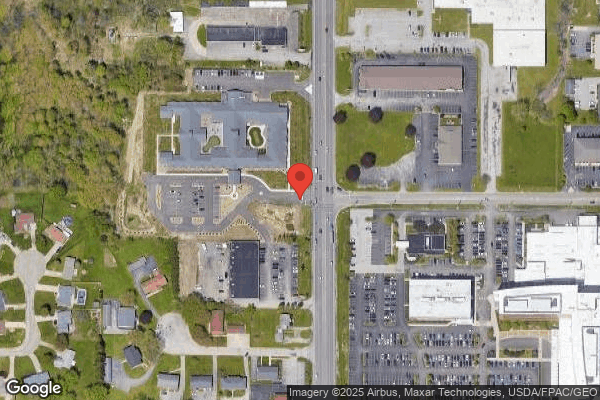
8400 MARKET STREET, BOARDMAN, OH 44512 (330) 758-8855
For profit - Corporation 58 Beds Independent Data: November 2025
Trust Grade
90/100
#34 of 913 in OH
Last Inspection: May 2024

Within standard 12-15 month inspection cycle. Federal law requires annual inspections.

Overview

Briarfield Place in Boardman, Ohio, has received an excellent Trust Grade of A, indicating a high level of care and service. Ranking #34 out of 913 facilities in Ohio places it in the top half, while being #3 out of 29 in Mahoning County shows it has only two local competitors that are better. The facility is improving, having reduced its issues from 6 in 2023 to 3 in 2024. Staffing is a strong point, with a 4/5 rating and a turnover rate of 30%, which is significantly lower than the state average, indicating that staff are stable and familiar with the residents. However, there are some concerns: there have been issues with food sanitation practices, such as a staff member not wearing a beard guard while handling food, and food not being properly labeled or dated, which could affect the health of residents. Additionally, there is less RN coverage than 89% of Ohio facilities, which could impact the level of care provided. Overall, while Briarfield Place has strong staffing and a good reputation, families should be aware of the recent food safety concerns.

Trust Score
A
90/100
In Ohio
#34/913
Top 3%
Safety Record
Low Risk
No red flags
Inspections
Getting Better
6 → 3 violations
Staff Stability
○ Average
30% turnover. Near Ohio's 48% average. Typical for the industry.
Penalties
✓ Good
No fines on record. Clean compliance history, better than most Ohio facilities.
Skilled Nurses
⚠ Watch
Each resident gets only 25 minutes of Registered Nurse (RN) attention daily — below average for Ohio. Fewer RN minutes means fewer trained eyes watching for problems.
Violations
○ Average
9 deficiencies on record. Average for a facility this size. Mostly minor or procedural issues.
★★★★★
5.0
Overall Rating
★★★★☆
4.0
Staff Levels
★★★★★
5.0
Care Quality
★★★★☆
4.0
Inspection Score
Stable
2023: 6 issues
2024: 3 issues

The Good

  • 4-Star Staffing Rating · Above-average nurse staffing levels
  • 5-Star Quality Measures · Strong clinical quality outcomes
  • Full Sprinkler Coverage · Fire safety systems throughout facility
  • No fines on record
  • Staff turnover below average (30%)

    18 points below Ohio average of 48%

Facility shows strength in staffing levels, quality measures, fire safety.

The Bad

Staff Turnover: 30%

15pts below Ohio avg (46%)

Typical for the industry

The Ugly 9 deficiencies on record

May 2024 3 deficiencies
CONCERN (D)

Potential for Harm - no one hurt, but risky conditions existed

Quality of Care (Tag F0684)

Could have caused harm · This affected 1 resident

Based on observation, medical record review, staff interview and policy review the facility failed to ensure peripherally inserted central catheters (PICC) were flushed appropriately and as ordered by...

Read full inspector narrative →
Based on observation, medical record review, staff interview and policy review the facility failed to ensure peripherally inserted central catheters (PICC) were flushed appropriately and as ordered by the physician. This affected one (Resident #113) of five residents reviewed for medications. The facility identified three residents (102, 103 and 113) with current PICC line or intravenous (IV) lines for medication administration. The facility census was 52. Findings include: Observation on 04/30/24 at 12:05 P.M. revealed Licensed Practical Nurse (LPN) #372 administering ceftriaxone (antibiotic) 2000 milligram (mg) through a PICC line for Resident #113. LPN #372 had the medication solution, two 10 milliliter (ml) syringes of 0.9% normal saline (NS) and one 5 ml syringe of heparin (blood thinner) 100 units (u) per ml. LPN prepared the PICC line tubing by cleaning the caps with alcohol and then flushed with 10 ml of NS, then flushed with 3 ml of the heparin and then another flush with 10 ml of NS. At this time LPN #372 connected the ceftriaxone to the PICC line and began the medication infusion. Review of Resident #113's medical record revealed an admission date of 04/25/24 with admission diagnoses that included chronic non-pressure ulcer to the left foot, left foot abscess, diabetes mellitus and hypertension. Physician's orders upon admission revealed the resident was prescribed ceftriaxone 2000mg daily via PICC line. An additional physician's order on 04/29/24 indicated to flush the PICC line with 10ml NS every shift. No evidence of an order from the physician for use of the SASH method (S-Saline 0.9% 5ml via 10cc syringe prior to administering the dose, A-Administration of IV medication, S-Saline 0.9% 5ml via 10cc syringe upon completion of the infusion and H-Heparin 3ml (100u/ml) after previous saline flush) was found within the medical record. Interview with LPN #372 on 04/30/24 at 1:59 P.M. regarding the flushing method to which she responded that the facility followed the SASH flush method, indicating that staff are to flush with NS, and heparin then administer the medication and flush again with NS after the medication has been infused. Interview with the Director of Nursing on 04/30/24 at 2:20 P.M. revealed staff are to flush PICC lines using the facility procedure of the SASH method - NS flush, medication administration, NS flush and finally a heparin flush. Follow up interview with LPN #372 on 04/30/24 at 3:15 P.M. verified she did not flush the PICC line for Resident #113 as per physician order and facility protocol. She verified she flushed with NS, followed by heparin, then NS and finally adminsitered the medication. After the infusion she flushed with NS and then finally heparin. Review of the facility policy PICC/Peripheral/Midline Catheter undated, reviewed by medical director on 05/10/21 indicated nursing staff are to the S-A-S-H method when flushing PICC/Midline catheters. The policy further described the SASH method as: S-Saline 0.9% 5ml via 10cc syringe prior to administering the dose, A-Administration of IV medication, S-Saline 0.9% 5ml via 10cc syringe upon completion of the infusion and H-Heparin 3ml (100u/ml) after previous saline flush.
CONCERN (D)

Potential for Harm - no one hurt, but risky conditions existed

Respiratory Care (Tag F0695)

Could have caused harm · This affected 1 resident

Based on observation, resident interview, medical record review, review of manufacturer's instructions and staff interview the facility failed to ensure respiratory equipment including continuous posi...

Read full inspector narrative →
Based on observation, resident interview, medical record review, review of manufacturer's instructions and staff interview the facility failed to ensure respiratory equipment including continuous positive airway pressure (CPAP) equipment were properly cleaned per manufacturer's instructions. This affected one resident (Resident #9) of three residents reviewed for respiratory equipment use. The facility census was 52. Findings include: Observation of Resident #9 on 04/29/24 at 2:05 P.M. revealed a CPAP machine on the bedside stand. Interview with Resident #9 on 04/29/24 at 2:05 P.M. revealed staff do not clean her CPAP mask, tubing or machine on a routine basis. Review of Resident #9's medical record revealed an admission date of 06/09/22 with diagnoses including obstructive sleep apnea, congestive heart failure and chronic obstructive pulmonary disease. Further review of the medical record revealed on 12/29/23 the resident was ordered the use of a CPAP machine. No evidence of any cleaning of the machine, tubing or mask was found within the medical record. Review of the care plan for Resident #9 revealed the use of a CPAP related to sleep apnea. No evidence of any intervention related to cleaning of CPAP equipment. Review of the manufacturer's guidelines for the ResMed AirCurve 10 CPAP revealed the following instructions for cleaning and care: it is important that you regularly clean your AirCurve 10 device to make sure you receive optimal therapy. Cleaning - you should clean the device weekly as described. Refer to the mask user guide for detailed instructions on cleaning your mask. Wash the humidifier and air tubing in warm water using mild detergent. Rinse the humidifier and air tubing and allow to dry out of direct sunlight and/or heat. Wipe the exterior of the device with a dry cloth. Cleaning you CPAP mask cushion, frame and headgear - cushion should be cleaned daily, headgear and frame should be cleaned weekly. Interview with the Director of Nursing on 04/30/24 at 2:45 P.M. verified no evidence of cleaning for Resident #9's CPAP machine and equipment.
CONCERN (F)

Potential for Harm - no one hurt, but risky conditions existed

Food Safety (Tag F0812)

Could have caused harm · This affected most or all residents

**NOTE- TERMS IN BRACKETS HAVE BEEN EDITED TO PROTECT CONFIDENTIALITY** Based on observation, record review, interview and review of facility policy, the facility failed to ensure food was served in a...

Read full inspector narrative →
**NOTE- TERMS IN BRACKETS HAVE BEEN EDITED TO PROTECT CONFIDENTIALITY** Based on observation, record review, interview and review of facility policy, the facility failed to ensure food was served in a sanitary manner. This had the potential to affect all 52 residents in the facility, as the facility identified all 52 residents received meals from the kitchen. The facility census was 52. Findings include: 1. Observation of the kitchen on 04/30/24 from 11:12 A.M. to 11:26 A.M. revealed Food Service Director (FSD) #406 had a noticeable growth of facial hair and wasn't wearing a beard guard in the kitchen as he ran the bowl and lid to the commercial blender and a spatula through the dish machine. Interview on 04/30/24 at 11:26 A.M. with FSD #406 confirmed he wasn't wearing a beard guard and had never worn a beard guard in the kitchen. Interview on 04/30/24 at 11:26 A.M. with Dietitian #331 stated staff with beards in the kitchen should be wearing beard guards and confirmed FSD #406 had not been wearing a beard guard and should have been. Review of the facility's undated policy Proper Use of Hair Restraints revealed food employees shall effectively restrain hair by wearing hair restraints such as hats, hair coverings or nets, beard restraints, and clothing that covers body hair, that are designed and worn to effectively keep their hair from contacting exposed food, clean equipment, utensils, or linens; or unwrapped single-service or single-use articles. 2. Observation on 04/30/24 between 8:35 A.M. and 8:46 A.M. revealed one cart of resident breakfast trays and one beverage cart with carafes of hot beverages and a tray of empty coffee cups was sitting across from Station two's nurse's station. At 8:40 A.M., State Tested Nursing Assistant (STNA) #369 poured a cup of coffee from the beverage cart and placed the uncovered cup on a resident's meal tray and proceeded to walk past the nurse's station, past the Director of Nursing's office and into room [ROOM NUMBER]. At 8:42 A.M., Licensed Practical Nurse/Wound Care Nurse #341 poured a cup of coffee from the beverage cart and placed the uncovered cup on a resident's tray and proceeded to walk past the nurse's station and one resident's room, and into room [ROOM NUMBER]. At 8:43 A.M. STNA #369 poured a cup of coffee from the beverage cart and placed the uncovered cup on a resident's tray and proceeded to walk past the nurse's station and two resident's rooms, and into room [ROOM NUMBER]. Interview on 04/30/24 at 8:46 A.M. with STNA #369 confirmed she had poured hot coffee from the beverage cart and had walked the coffee uncovered on the meal trays to the residents' room. Observation on 04/30/24 from 8:46 A.M. to 8:48 A.M. revealed one cart of residents' meal trays and one beverage cart with carafes of hot beverages and a tray of empty coffee cups was sitting next to Station One's nursing station. At 8:46 A.M. the Director of Nursing poured a cup of coffee from the beverage cart and placed the uncovered cup on a resident's tray and proceeded to walk past three residents' rooms and into room [ROOM NUMBER]. At 8:48 A.M., STNA #357 poured a cup of coffee from the beverage cart and placed the uncovered cup on the resident's tray and proceeded to walk past four residents' rooms and into room [ROOM NUMBER]. Interview on 04/30/24 at 11:26 A.M. with Dietitian #331 revealed the staff were to take the meal carts and beverages down the hallway as they deliver meal trays. Staff were not to take meal trays with uncovered cups of beverages up and down hallways due to a risk of contamination. Review of facility policy Meal/Tray Delivery, dated 01/01/10, revealed staff would practice universal precautions related to infection control during meal delivery.
Jun 2023 6 deficiencies
CONCERN (D)

Potential for Harm - no one hurt, but risky conditions existed

Deficiency F0578 (Tag F0578)

Could have caused harm · This affected 1 resident

Based on medical record review, interview, and facility policy review the facility failed to ensure a resident's wish regarding end-of-life measures was clearly identified in the medical record. This ...

Read full inspector narrative →
Based on medical record review, interview, and facility policy review the facility failed to ensure a resident's wish regarding end-of-life measures was clearly identified in the medical record. This affected one (Resident #39) of 24 residents screened for Advanced Directives. Findings include: Review of Resident #39's medical record revealed diagnoses including fracture of the left pubis, chronic obstructive pulmonary disease, Parkinson's disease, generalized anxiety disorder, psychosis, chronic ischemic heart disease, severe protein-calorie malnutrition, dementia, adult failure to thrive and cerebrovascular disease. Review of a DNR (Do Not Resuscitate) form dated 10/25/22 revealed a Do Not Resuscitate Comfort Care (DNRCC) order. Review of physician orders revealed an order dated 11/15/22 for a Do Not Resuscitate Comfort Care Arrest (DNRCC-A). Information along the top of the record located near the allergy list and the care plan (initiated 11/29/22) also indicated a DNRCC-A status. On 06/21/23 at 11:59 A.M., the Director of Nursing (DON) stated there was a separate book with code status forms and that Resident #39 returned from the hospital with a DNRCC-A code status, but the form might not have been scanned into the electronic health record. On 06/21/23 at 12:08 P.M., Registered Nurse (RN) #677 stated the only DNR form the facility had was the DNRCC order. Review of the facility's undated DNR (Do Not Resuscitate) policy indicated at the initial care conference the care plan team would provide a copy of the DNR comfort care (DNRCC) protocol. DNRCC and DNRCC Arrest options would be explained. In the event of respiratory failure or cardiac arrest the DNR protocol would be implemented.
CONCERN (D)

Potential for Harm - no one hurt, but risky conditions existed

Deficiency F0657 (Tag F0657)

Could have caused harm · This affected 1 resident

**NOTE- TERMS IN BRACKETS HAVE BEEN EDITED TO PROTECT CONFIDENTIALITY** 2. Review of medical record revealed Resident #16 was admitted to the facility on [DATE] with diagnoses including acute kidney f...

Read full inspector narrative →
**NOTE- TERMS IN BRACKETS HAVE BEEN EDITED TO PROTECT CONFIDENTIALITY** 2. Review of medical record revealed Resident #16 was admitted to the facility on [DATE] with diagnoses including acute kidney failure, chronic kidney disease, major recurrent depressive disorder, and Alzheimer's disease with late onset. Review of the Minimum Data Set 3.0 admission assessment dated [DATE] revealed Resident #16 was severely impaired cognitively; had fluctuating behaviors of disorganized thinking; had four to six days during the assessment reference period where Resident #16 rejected evaluations or care; required limited assistance of two person physical assist for bed mobility and transfers; required extensive assistance of one person for locomotion, dressing, toilet use and personal hygiene; and had received two days of antianxiety and seven days of antidepressant medications during the assessment reference period. Review of 03/28/23 nursing note revealed Resident #16 was moping and crying that the facility was holding her hostage. Review of 03/29/23 psychiatrist progress note dated 03/29/23 revealed Resident #16 wanted to call police and took a long time to redirect. Review of 04/01/12 nursing note revealed Resident #16 was agitated and screaming out for help and stated the facility was poisoning her. Resident #16 was kicking, screaming, and was unable to be redirected. Review of 04/02/23 nursing note revealed Resident #16 slapped the nurse aide and nurse as they tried to redirect Resident #16 out of another resident's room. Review of 04/30/23 nursing note revealed Resident #16 was up most of the night with no sleep and was yelling and was verbally aggressive with staff during attempts to redirect. Review of 05/20/23 nursing note revealed Resident #16 was having frequent outburst of crying and agitation. Review of 05/21/23 nursing note revealed Resident #16 was yelling at staff, swatting medications out of the nurse's hands, and striking out at nurse to hit her. Resident #16 refused offered snack and stated it was probably poisoned. Resident #16 felt she had been kidnapped and was being held against her will. Review of 05/23/23 nursing note revealed Resident #16 had been continuously screaming and was unable to be redirected. Resident #16 was aggressive and combative with staff. Review of psychiatrist progress note dated 05/24/23 revealed staff report Resident #16's behaviors have flared and occur all day. Resident #16 yelled out constantly, hit staff, was very paranoid, and believed staff were poisoning her. Resident #16's family also note increased behaviors. Review of 06/01/23 nursing note revealed Resident #16 was screaming for help and repeatedly told staff to shut up. Review of 06/08/23 nursing note revealed Resident #16 was combative with staff when getting resident out of bed and dressed. Resident #16 had multiple attempts at hitting staff and biting one aide. Review of 06/14/23 nursing note revealed Resident #16 was yelling and striking out at staff who walk past her. Interview on 06/22/23 at 9:40 A.M. with State Tested Nursing Assistant (STNA) #607 revealed Resident#16 would exhibit behaviors where she would spit, bite, yell, scratch, and slap. Review of care plan for Resident #16, dated 03/23/23, revealed Resident # 16's behaviors were not addressed in the care plan. Interview on 06/26/23 at 8:06 A.M. with Licensed Social Worker #622 confirmed Resident #16 had behaviors, and the comprehensive care plan had not been updated to reflect to those behaviors. Review of the undated facility policy Care Plans, Comprehensive Person-Centered revealed the comprehensive, person centered care plan would incorporate identified problem areas and incorporate risk factors associated with identified problems. Assessments of residents would be ongoing and care plans would be revised as information about the residents and the residents' condition changed. Based on medical record review, interview, and facility policy review the facility failed to revise care plans for two residents (#15 and #16) of 27 residents whose care plans were reviewed. The facility census was 49. Findings include: 1. Review of Resident #15's medical record revealed diagnoses including major depressive disorder and generalized anxiety disorder. A care plan initiated 07/08/22 indicated Resident #15 used psychoactive medication and had a history of anxiety, depression, and PTSD (Post Traumatic Stress Disorder). Interventions included monitoring mood and behavior changes, providing medication as ordered, and monitoring mental status. A psychiatrist note dated 03/01/22 indicated Resident #15 had a lot of anxiety and worry. Staff reported increased depression/anxiety especially once the Russian/Ukraine conflicts started. The note indicated Resident #15 had some PTSD issues. Medication changes were made, including discontinuation of trazodone (antidepressant), starting Cymbalta (antidepressant) 30 milligrams (mg) every day for seven days then increase to 60 mg every day, and starting Lidoderm patch to address pain. Laboratory tests were also ordered. A note was made to support/monitor/maintain. On 03/01/23, a diagnosis of PTSD was added. The care plan was not updated regarding any further interventions regarding the newly diagnosed PTSD. On 06/22/23 at 12:40 P.M., the Administrator stated Resident #15 would talk about concentration [NAME] from [NAME]. The Director of Nursing (DON) stated she was unaware of any type of flashbacks/PTSD although Resident #15 would talk about her past at times. The Administrator stated when staff realized the news about Ukraine/Russia was upsetting Resident #15 they attempted to change the channel but Resident #15 would change it back. The Administrator indicated she was not aware of any behaviors. The Administrator indicated the psychiatrist would not necessarily visit Resident #15 again unless staff requested he do so. On 06/22/23 at 12:42 P.M., State Tested Nursing Assistant (STNA) #631 stated one day the week of 06/11/23 to 06/17/23 she must have said something that triggered Resident #15 as she started going off about Nazis. On 06/22/23 at 12:57 P.M., the Administrator acknowledged there was no evidence the facility had updated the plan of care by attempting to identify what, if anything, triggered PTSD reaction by Resident #15 or what action could be implemented by staff to help address the reactions. The Administrator stated she believed Resident #15 was in the concentration [NAME].
CONCERN (D)

Potential for Harm - no one hurt, but risky conditions existed

Deficiency F0692 (Tag F0692)

Could have caused harm · This affected 1 resident

**NOTE- TERMS IN BRACKETS HAVE BEEN EDITED TO PROTECT CONFIDENTIALITY** Based on interview, record review, and review of weight policy revealed the facility did not ensure weights were obtained as ord...

Read full inspector narrative →
**NOTE- TERMS IN BRACKETS HAVE BEEN EDITED TO PROTECT CONFIDENTIALITY** Based on interview, record review, and review of weight policy revealed the facility did not ensure weights were obtained as ordered by the physician and/ or per facility policy. This affected two residents (#161 and #164) out of four residents reviewed for nutrition. The facility census was 49. Findings include: 1. Review of the medical record for Resident #161 revealed an admission date of 06/13/23 with diagnoses including hypertension, retention of urine, and chronic ischemic heart disease. Review of the June 2023 Medication Administration Record (MAR) and June 2023 Treatment Administration Record (TAR) revealed no weights were documented. Review of the BCP (Baseline Care Plan)/Admit/ Readmit Screener dated 06/13/23 revealed per the assessment Resident #161 was on a regular diet with thin liquids. There was nothing else added including he was on daily weights as ordered per the physician as an intervention. Review of the Weight Summary for Resident #161 dated from 06/13/23 to 06/20/23 revealed Resident #161 had one weight recorded on 06/13/23 of 158.6 pounds. No other weights were recorded. Review of the Physician Orders for June 2023 revealed Resident #161 had a current order dated 06/13/23 for a daily weight and to notify the physician if he gained and/ or lost three pounds. Review of the Medical Nutrition Therapy Assessment dated 06/14/23 and completed by Dietitian #659 revealed Resident #161 was on a regular diet with daily weights. The assessment revealed the resident reported weight loss due to decreased appetite. Review of Admission/ Medicare Five- Day Minimum Data Set (MDS) dated [DATE] revealed the assessment was still in progress for Resident #161. Interview on 06/20/23 at 8:55 A.M. Resident #161 revealed he felt the food was terrible as they bring it in, and he sent it right back without eating. He stated he felt he had lost quite a bit of weight due to his dislike of the facility food. Interview on 06/21/23 at 1:56 P.M. with Dietitian #659 verified Resident #161 had a physician order for daily weights and that the physician was to be notified if he had a weight gain or loss of three pounds. She verified the only weight he had per his medical record was on 06/13/23 on admission was 158.6 pounds. She revealed Resident #161 had complained to her that he felt he had lost weight as he had a decrease in appetite while at the facility. Interview on 06/21/23 at 2:03 P.M. with the Director of Nursing revealed she put out sheets on the floor of the weights that were needed, and the staff turned the sheets back in with the weights on them. She revealed she was behind inputting the weights into the medical record and verified the only weight listed in Resident #161's medical record was completed on 06/13/23 and that there were no other weights listed. She began to flip through the pages in a binder of weights that she had in her office and stated she did not see any further weights for Resident #161. She verified Resident #161 was to be weighed daily per the physician order. 2. Review of the medical record for Resident #164 revealed an admission date of 06/08/23 with diagnoses including pulmonary embolism, acute respiratory failure, chronic obstructive pulmonary disease, and cerebral infarction due to occlusion or stenosis of cerebral artery. Review of the undated care plan revealed Resident #164 was at risk for decreased oral intake, choking, weight loss due to history of cardiovascular accident. Interventions included follow diet as ordered, monitor appetite and weight. Review of the Physician Orders for June 2023 revealed Resident #164 had an order for weekly weights time four weeks and then every month. Review of Weight Summary from 06/08/23 to 06/20/23 revealed Resident #164 had one weight dated 06/08/23 of 216.2 pounds documented per her medical record. Interview on 06/21/23 at 4:28 P.M. with the Director of Nursing verified Resident #164 had an order to have her weight completed once a week for four weeks as well as she revealed this was their weight policy. She verified the only weight recorded in Resident #164's medical record was dated 06/08/23 of 216.2 pounds. She revealed Resident #164 was in the hospital from [DATE] to 06/17/23 and most likely was why a weight was not completed but verified Resident #164 should have had a weight completed on her re-admission as this was their policy but that one was not done. Review of the facility policy labeled Weight Protocol dated 11/16/15 revealed all residents would be weighed upon admission, readmission, and weekly for four weeks. The policy revealed thereafter, each resident would be weighed monthly and/ or according to physician orders.
CONCERN (D)

Potential for Harm - no one hurt, but risky conditions existed

Respiratory Care (Tag F0695)

Could have caused harm · This affected 1 resident

Based on interview, observation, record review, and facility policy review the facility did not ensure Resident #167 had an order for oxygen and had appropriate signage indicating oxygen was in use on...

Read full inspector narrative →
Based on interview, observation, record review, and facility policy review the facility did not ensure Resident #167 had an order for oxygen and had appropriate signage indicating oxygen was in use on her door. This affected one resident (#167) out of two residents reviewed for respiratory therapy. This had the potential to affect eight residents (#13, #15, #21, #164, #167, #171, #173, and #258) receiving oxygen. Findings include: Review of the medical record for Resident #167 revealed an admission date of 06/01/23 with diagnoses including acute cystitis with hematuria, plural effusion, hypertension, and chronic ischemic heart disease. Review of the Physician Orders for June 2023 revealed Resident #167 had no current oxygen order as well as no previous oxygen orders in her medical record from 06/01/23 to 06/20/23. Review of the comprehensive care plan dated 06/01/23 revealed Resident #167 did not have a care plan regarding her respiratory issues and need for oxygen. Review of the Oxygen Saturation Summary dated from 06/02/23 to 06/20/23 revealed there was at least one entry per day that Resident #167 had oxygen via nasal cannula in place when her oxygen saturation level was checked. Review of the nursing note dated 06/06/23 at 3:55 P.M. and authored by Registered Nurse (RN) #639 revealed Resident #167 had complained of shortness of breath and was put on oxygen at two liters per minute. Her oxygen saturation level was 94 percent on two liters of oxygen. Review of the Admission/ Medicare Five- Day Minimum Data Set (MDS) 3.0 dated 06/08/23 revealed Resident #167 had impaired cognition as her brief interview for mental status (BIMS) score was a 12. She required limited assistance of one staff with bed mobility and walking. She received oxygen. Review of the nursing note dated 06/09/23 at 5:09 P.M. and authored by Licensed Practical Nurse (LPN) #645 revealed Resident #167 was weaned to one liter of oxygen per nasal cannula and her oxygen saturation level was 95 percent. The note revealed the resident then removed the oxygen and her saturation level maintained at 93 percent on room air. Review of the nursing note dated 06/18/23 at 8:34 P.M. and authored by LPN #675 revealed Resident #167's oxygen saturation level was 96 percent on one liter of oxygen per nasal cannula. She was refusing to titrate to room air at that time. Observation on 06/20/23 at 9:16 A.M. revealed Resident #167 was sitting in her recliner with an oxygen concentrator next to her and oxygen per nasal cannula at one liter being administered. There was no signage on Resident #167's door that indicated oxygen was in use. Interview on 06/20/23 at 9:16 A.M. with Resident #167 revealed she had been using oxygen since she was admitted at the facility as she had pneumonia. Interview on 06/20/23 at 9:38 A.M. with LPN #635 verified Resident #167 had no current physician order for oxygen. She also verified on review that she could not find any previous orders for oxygen that was ordered for Residents #167. She revealed she would contact the physician and obtain an order for clarification. She verified Resident #167 was currently receiving one liter of oxygen per nasal cannula. She also verified there was no signage on the entrance to Resident 167's room indicating oxygen was in use. Interview on 06/26/23 at 11:50 A.M. with LPN/ MDS #603 verified Resident #167 did not have a care plan regarding her respiratory issues and/ or use of oxygen. She verified there was not a physician order for oxygen from 06/01/23 to 06/20/23 and therefore, she was not aware Resident #167 was on oxygen and she did not implement a care plan. Review of the facility undated policy labeled, Oxygen Storage/ Transfilling Recommendations revealed the policy only discussed liquid oxygen and/ or oxygen maintained in E tanks. The policy did not include any information regarding oxygen concentrators. The policy revealed where liquid oxygen was stored No Smoking signs shall be posted at all points of entry. Review of the facility policy labeled, Respiratory Policy and Procedure dated June 2005 revealed a physician must order oxygen therapy. The policy revealed all patients starting on oxygen must have liters per minute and type of oxygen device prescribed the physician. The policy did not include any information regarding ensuring appropriate signage on the residents' room door indicating that oxygen was in use.
CONCERN (E)

Potential for Harm - no one hurt, but risky conditions existed

Deficiency F0655 (Tag F0655)

Could have caused harm · This affected multiple residents

**NOTE- TERMS IN BRACKETS HAVE BEEN EDITED TO PROTECT CONFIDENTIALITY** 4. Review of medical record revealed Resident #56 was admitted to the facility on [DATE] and expired at facility on [DATE]. Diag...

Read full inspector narrative →
**NOTE- TERMS IN BRACKETS HAVE BEEN EDITED TO PROTECT CONFIDENTIALITY** 4. Review of medical record revealed Resident #56 was admitted to the facility on [DATE] and expired at facility on [DATE]. Diagnoses included urinary tract infection, neuromuscular dysfunction of bladder (a disruption between the nervous system and the bladder caused by injury or disease), type two diabetes, fracture of upper end of the right humerus (long bone in the arm that runs from the shoulder to the elbow), muscle weakness, acute cystitis (inflammation of the bladder), and retention of urine. Review of the MDS 3.0 five-day assessment dated [DATE] revealed Resident #56 was cognitively intact; required extensive physical assist of one person for transfers, locomotion, dressing, toilet use, and personal hygiene; required extensive physical assist of two people for bed mobility; had an indwelling catheter and was always incontinent of bowel; and had medically complex conditions. Review of medical record revealed there was no baseline care plan in place within 48 hours of admission for Resident #56. Interviews on [DATE] at 7:41 A.M. and at 8:41 A.M. with the Director of Nursing confirmed the facility had not been completing baseline care plans within 48 hours of admission, and the residents or families were not receiving a copy of the baseline care plans. The Director of Nursing stated the facility had been using physician orders as their base line care plan instead of using the baseline care plan programmed into the electronic medical record program. Interview on [DATE] at 1:16 P.M. with LPN/ MDS #603 revealed she completed the care plans and verified they had not been completing baseline care plans. She also verified residents did not receive a written summary of any goals, objectives and/ or interventions within 48 hours. Interview on [DATE] at 8:21 A.M. with the Director of Nursing verified the facility had not been completing baseline care plans. She revealed the electronic software program had a baseline care plan in place but confirmed the facility was not using this part of the program that the facility was just utilizing the assessment portion of the BCP/ Admit/ Readmit Screener. She verified the facility had not been providing a written summary of the baseline care plan to residents/ and or their responsible party that included goals, objectives, and interventions that addressed the residents' current needs within 48 hours of admission. Review of facility policy labeled, Baseline Care Plan Policy and Procedure dated [DATE] revealed the purpose of the policy was to identify the residents' interdisciplinary needs, goals, and outcome within 48 hours of admission. The policy also revealed the purpose was to ensure that the resident and/ or responsible party had an active role in the interdisciplinary needs, goals, and outcomes. The policy revealed the baseline care plan would be initiated via the electronic [NAME] record and the resident and/ or responsive party would be given a copy of the care plan and sign for receipt. Based on observation, interview, record review, and review of Baseline Care Plan facility policy revealed the facility did not ensure baseline care plans were implemented and/ or that the resident and/ or resident representative received a copy of the baseline care plan within 48 hours of admission that included goals, objectives, and interventions of the residents' current needs. This affected four residents (#56, #161, #165, and #170) out of 26 residents reviewed for care plans. The facility census was 49. 1. Review of medical record for Resident #165 revealed an admission date of [DATE] and she was discharged on [DATE]. Her diagnoses included moderate protein-calorie malnutrition, abnormal involuntary movements, restlessness, agitation, and difficulty walking. No baseline care plan was noted in her medical record that included goals, objectives, and interventions of her current needs. Review of Fall Risk Assessment dated [DATE] and completed by Registered Nurse (RN) #639 revealed Resident #165 was at moderate risk for falls. Review of the BCP (Baseline Care Plan)/ Admit/ Readmit Screener dated [DATE] revealed nothing regarding Resident #165 being at risk for falls and/ or any interventions to prevent falls. Review of Fall reports revealed Resident #165 had falls on [DATE] at 4:48 P.M., [DATE] at 11:25 P.M., [DATE] at 6:39 P.M., and [DATE] at 5:57 P.M. prior to the comprehensive care plan being implemented and the interventions that the facility had put in place per the fall report were not identified on a baseline care plan instead were not identified until the comprehensive care plan was implemented on [DATE]. Interview on [DATE] at 1:16 P.M. with Licensed Practical Nurse (LPN)/ Minimum Data Set (MDS) #603 revealed she completed the care plans and verified they had not been completing baseline care plans. She also verified residents did not receive a written summary of any goals, objectives and/ or interventions within 48 hours. She verified Resident #165 had not had a baseline care plan in place with interventions despite being at moderate risk for falls on admission and/ or having falls while at the facility until she implemented the comprehensive care plan which she stated she completed on [DATE]. She revealed she implemented resident's comprehensive care plans within two weeks after admission. 2. Review of medical record for Resident #161 revealed an admission date of [DATE] with diagnoses including urinary tract infection, retention of urine, hypertension, and myocardial infarction. No baseline care plan was noted in his medical record that included goals, objectives, and interventions of his current needs. Review of the BCP (Baseline Care Plan)/ Admit/ Readmit Screener dated [DATE] under the assessment section for Bladder/ Bowel it had that resident had a 14 French catheter. There were no other goals, objectives and/ or interventions regarding catheter care. Observation on [DATE] at 8:52 A.M. revealed Resident #161 had a Foley catheter bag on the side of his bed that contained dark orange urine. Interview on [DATE] at 8:35 A.M. with Resident #161 revealed he was not provided a baseline care plan or anything in writing on admission regarding goals, objectives and/ or interventions regarding his current needs including his Foley catheter. He revealed he would like to know if they were going to remove the Foley catheter or what they were doing with it. Interview on [DATE] at 11:50 A.M. with LPN/ MDS #603 revealed she completed the care plans and verified they had not been completing baseline care plans. She also verified residents did not receive a written summary of any goals, objectives and/ or interventions within 48 hours. She verified Resident #161 had not had a baseline care plan implemented within 48 hours of admission including for his care of his Foley catheter. She revealed she implemented resident's comprehensive care plans within two weeks after admission. 3. Review of medical record for Resident #170 revealed an admission date of [DATE] with diagnoses including diverticulitis of large intestine, malignant neoplasm of the brain, chronic obstructive pulmonary disease, and atrial fibrillation. No baseline care plan was noted in her medical record that included goals, objectives, and interventions of her current needs. Review of Physician Orders for [DATE] revealed Resident #170 had an order for Piperacillin- Tazobactam intravenous solution 3.375 grams per 50 milliliter dextrose solution intravenously four times a day per her peripherally inserted central catheter (PICC) due to her sigmoid colon abscess. She also was to receive Fiber source enteral tube feeding from 6:00 P.M. to 6:00 A.M. at 80 milliliters per hour. Review of the BCP (Baseline Care Plan)/ Admit/ Readmit Screener dated [DATE] under the section of skin integrity Resident #170 had a PICC line to her right upper antecubital area and she had a percutaneous endoscopic gastrostomy (PEG) tube (tube feeding) to her right iliac crest. She was to receive a regular diet with regular liquids and nocturnal tube feedings. There were no other goals, objectives, and/ or interventions regarding her intravenous antibiotic the therapy, care of the PICC line, and/ or care of her PEG tube site. Interview on [DATE] at 9:14 A.M. with Resident #170 revealed she did not remember getting a care plan on admission or anything like that while at the facility. She revealed she had at the hospital but so far, she had not received a care plan that listed her summary of goals, objectives, ad interventions for her current needs while at the facility. Interview on [DATE] at 1:16 P.M. with LPN/ MDS #603 revealed she completed the care plans and verified they had not been completing baseline care plans. She also verified residents did not receive a written summary of any goals, objectives and/ or interventions within 48 hours. She verified Resident #170 had not had a baseline care plan in place with interventions including for the care of her PICC line, her antibiotic therapy and/ or the care of her PEG tube. Interview on [DATE] at 8:21 A.M. with the Director of Nursing verified the facility had not been completing baseline care plans. She revealed the electronic software program had a baseline care plan in place but confirmed the facility was not using this part of the program that the facility was just utilizing the assessment portion of the BCP/ Admit/ Readmit Screener. She verified the facility had not been providing a written summary of the baseline care plan to residents/ and or their responsible party that included goals, objectives, and interventions that addressed the residents' current needs within 48 hours of admission.
CONCERN (F)

Potential for Harm - no one hurt, but risky conditions existed

Food Safety (Tag F0812)

Could have caused harm · This affected most or all residents

Based on observation, staff interview, and review of the facility policy the facility failed to ensure all food was labeled, dated, and discarded properly. The facility identified all residents receiv...

Read full inspector narrative →
Based on observation, staff interview, and review of the facility policy the facility failed to ensure all food was labeled, dated, and discarded properly. The facility identified all residents received food from the kitchen, which had the potential to affect all 49 residents. Findings include: During the initial kitchen tour conducted on 06/20/23 between 8:22 A.M. and 8:35 A.M. the following was observed and verified with Food Service Director (FSD) #612. Observation of the walk-in freezer revealed: • One gallon storage bag of chicken breasts was not dated. • One gallon storage of sliced unknown meat, according to the FSD #612, was not labeled or dated. • One opened and resealed half full bag of tator tots was not dated when opened. • One gallon storage bag of breaded chicken thighs was not dated. Observation of the walk-in cooler revealed: • One opened and resealed half full bag of shredded mozzarella cheese was not dated when opened. • One opened and resealed bag of cheddar cheese chunks was not dated when opened. • One opened and resealed bag of four croissants was not dated when opened. Observation of the dry goods area revealed: • One opened half full bag of butter noodles, resealed with plastic wrap, was not dated when opened. • One opened one fourth full bag of butter noodles, resealed with plastic wrap, was not dated when opened. • One opened half full bag of penne pasta, resealed with plastic wrap, was not dated when opened. Observation of the two-door reach in cooler revealed: • One square plastic storage container with an open bag of four hotdogs was not dated. • One gallon container of honey mustard dressing was not dated when opened. • One gallon container of dill pickles was not dated when opened. • One gallon container of sweet relish was not dated when opened. • One five-pound opened container of sour cream had a best by date of 06/09/23. • One round storage container of lemon pudding had a date of 06/09/23. Review of the undated facility policy Label & Dating Food Safety revealed all purchased foods when opened should have a date. Manufactured food items must be discarded after the best by date. All in-house prepared foods must be used or discarded within three days of preparation.
Understanding Severity Codes (click to expand)
Life-Threatening (Immediate Jeopardy)
J - Isolated K - Pattern L - Widespread
Actual Harm
G - Isolated H - Pattern I - Widespread
Potential for Harm
D - Isolated E - Pattern F - Widespread
No Harm (Minor)
A - Isolated B - Pattern C - Widespread

Questions to Ask on Your Visit

  • "Can I speak with families of current residents?"
  • "What's your RN coverage like on weekends and overnight?"

Our Honest Assessment

Strengths
  • • Grade A (90/100). Above average facility, better than most options in Ohio.
  • • No major safety red flags. No abuse findings, life-threatening violations, or SFF status.
  • • No fines on record. Clean compliance history, better than most Ohio facilities.
  • • 30% turnover. Below Ohio's 48% average. Good staff retention means consistent care.
Concerns
  • • No significant concerns identified. This facility shows no red flags across CMS ratings, staff turnover, or federal penalties.
Bottom line: Generally positive indicators. Standard due diligence and a personal visit recommended.

About This Facility

What is Briarfield Place's CMS Rating?

CMS assigns BRIARFIELD PLACE an overall rating of 5 out of 5 stars, which is considered much above average nationally. Within Ohio, this rating places the facility higher than 99% of the state's 100 nursing homes. This rating reflects solid performance across the metrics CMS uses to evaluate nursing home quality.

How is Briarfield Place Staffed?

CMS rates BRIARFIELD PLACE's staffing level at 4 out of 5 stars, which is above average compared to other nursing homes. Staff turnover is 30%, compared to the Ohio average of 46%. This relatively stable workforce can support continuity of care.

What Have Inspectors Found at Briarfield Place?

State health inspectors documented 9 deficiencies at BRIARFIELD PLACE during 2023 to 2024. These included: 9 with potential for harm.

Who Owns and Operates Briarfield Place?

BRIARFIELD PLACE is owned by a for-profit company. For-profit facilities operate as businesses with obligations to shareholders or private owners. The facility operates independently rather than as part of a larger chain. With 58 certified beds and approximately 54 residents (about 93% occupancy), it is a smaller facility located in BOARDMAN, Ohio.

How Does Briarfield Place Compare to Other Ohio Nursing Homes?

Compared to the 100 nursing homes in Ohio, BRIARFIELD PLACE's overall rating (5 stars) is above the state average of 3.2, staff turnover (30%) is significantly lower than the state average of 46%, and health inspection rating (4 stars) is above the national benchmark.

What Should Families Ask When Visiting Briarfield Place?

Based on this facility's data, families visiting should ask: "Can I visit during a mealtime to observe dining assistance and food quality?" "How do you handle medical emergencies, and what is your hospital transfer rate?" "Can I speak with family members of current residents about their experience?"

Is Briarfield Place Safe?

Based on CMS inspection data, BRIARFIELD PLACE has a clean safety record: no substantiated abuse findings (meaning no confirmed cases of resident harm), no Immediate Jeopardy citations (the most serious violation level indicating risk of serious injury or death), and is not on the Special Focus Facility watch list (a federal program monitoring the lowest-performing 1% of nursing homes). The facility has a 5-star overall rating and ranks #1 of 100 nursing homes in Ohio. While no facility is perfect, families should still ask about staff-to-resident ratios and recent inspection results during their visit.

Do Nurses at Briarfield Place Stick Around?

BRIARFIELD PLACE has a staff turnover rate of 30%, which is about average for Ohio nursing homes (state average: 46%). Moderate turnover is common in nursing homes, but families should still ask about staff tenure and how the facility maintains care continuity when employees leave.

Was Briarfield Place Ever Fined?

BRIARFIELD PLACE has no federal fines on record. CMS issues fines when nursing homes fail to meet care standards or don't correct problems found during inspections. The absence of fines suggests the facility has either maintained compliance or corrected any issues before penalties were assessed. This is a positive indicator, though families should still review recent inspection reports for the full picture.

Is Briarfield Place on Any Federal Watch List?

BRIARFIELD PLACE is not on any federal watch list. The most significant is the Special Focus Facility (SFF) program, which identifies the bottom 1% of nursing homes nationally based on persistent, serious quality problems. Not being on this list means the facility has avoided the pattern of deficiencies that triggers enhanced federal oversight. This is a positive indicator, though families should still review the facility's inspection history directly.