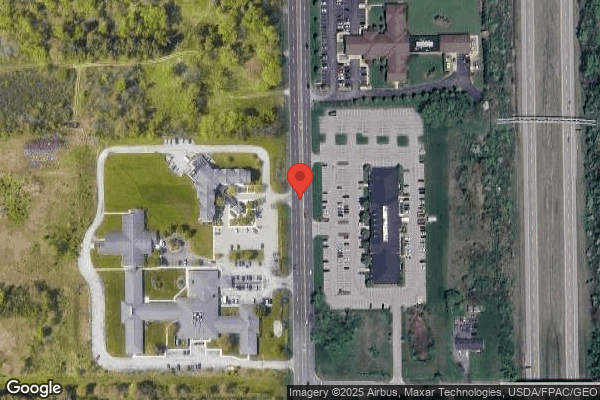

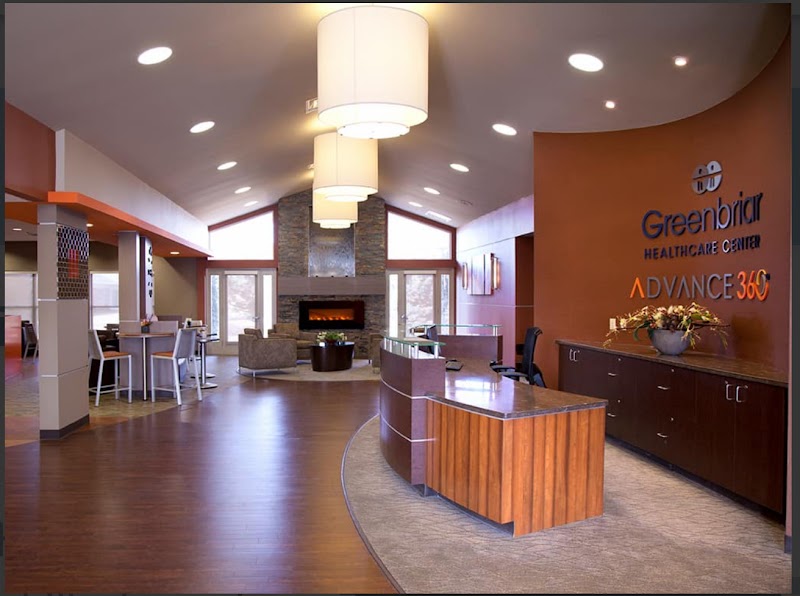

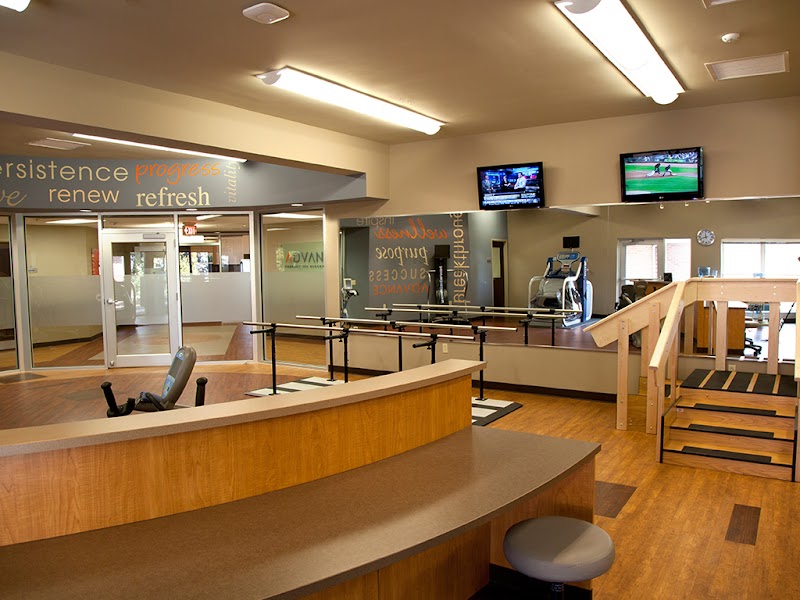
GREENBRIAR CENTER

8064 SOUTH AVENUE, BOARDMAN, OH 44512 (330) 726-3700
For profit - Corporation 120 Beds COMMUNICARE HEALTH Data: November 2025
Trust Grade
33/100
#692 of 913 in OH
Last Inspection: March 2025

Within standard 12-15 month inspection cycle. Federal law requires annual inspections.

Overview

Greenbriar Center in Boardman, Ohio has received a Trust Grade of F, indicating significant concerns about the facility's overall care and quality. Ranked #692 out of 913 in Ohio places it in the bottom half of all nursing homes in the state, and #23 out of 29 in Mahoning County, suggesting there are better local options available. However, the facility is showing some improvement, with a decrease in reported issues from 14 in 2024 to 12 in 2025. Staffing is a relative strength, rated 3 out of 5 stars, with a turnover rate of 43%, which is below the state average. Still, there are serious concerns, such as a failure to adequately manage pain for two residents, which resulted in one resident experiencing increased pain due to missed medication, and another resident suffered significant weight loss because nutritional needs were not met. Overall, while there are some strengths in staffing and signs of improvement, families should weigh these against the serious deficiencies and poor trust grade when considering this facility for their loved ones.

Trust Score
F
33/100
In Ohio
#692/913
Bottom 25%
Safety Record
High Risk
Review needed
Inspections
Getting Better
14 → 12 violations
Staff Stability
○ Average
43% turnover. Near Ohio's 48% average. Typical for the industry.
Penalties
✓ Good
$14,680 in fines. Lower than most Ohio facilities. Relatively clean record.
Skilled Nurses
✓ Good
Each resident gets 44 minutes of Registered Nurse (RN) attention daily — more than average for Ohio. RNs are trained to catch health problems early.
Violations
⚠ Watch
47 deficiencies on record. Higher than average. Multiple issues found across inspections.
★★☆☆☆
2.0
Overall Rating
★★★☆☆
3.0
Staff Levels
★★★★☆
4.0
Care Quality
★★☆☆☆
2.0
Inspection Score
Stable
2024: 14 issues
2025: 12 issues

The Good

  • 4-Star Quality Measures · Strong clinical quality outcomes
  • Full Sprinkler Coverage · Fire safety systems throughout facility
  • No fines on record
  • Staff turnover below average (43%)

    5 points below Ohio average of 48%

Facility shows strength in quality measures, fire safety.

The Bad

2-Star Overall Rating

Below Ohio average (3.2)

Below average - review inspection findings carefully

Staff Turnover: 43%

Near Ohio avg (46%)

Typical for the industry

Federal Fines: $14,680

Below median ($33,413)

Minor penalties assessed

Chain: COMMUNICARE HEALTH

Part of a multi-facility chain

Ask about local staffing decisions and management

The Ugly 47 deficiencies on record

3 actual harm
Jul 2025 5 deficiencies
CONCERN (D) 📢 Someone Reported This

A family member, employee, or ombudsman was alarmed enough to file a formal complaint

Potential for Harm - no one hurt, but risky conditions existed

Deficiency F0602 (Tag F0602)

Could have caused harm · This affected 1 resident

**NOTE- TERMS IN BRACKETS HAVE BEEN EDITED TO PROTECT CONFIDENTIALITY** Based on record review, facility self-reported incident (SRI) review, interview and facility policy review, the facility failed ...

Read full inspector narrative →
**NOTE- TERMS IN BRACKETS HAVE BEEN EDITED TO PROTECT CONFIDENTIALITY** Based on record review, facility self-reported incident (SRI) review, interview and facility policy review, the facility failed to ensure Resident #61 was free from misappropriation. This affected one (Resident #61) of one resident reviewed for abuse, neglect and misappropriation and had the potential to affect all residents residing in the facility. The facility census was 102.Findings include:Review of the medical record for Resident #61 revealed an admission date of 02/13/25 with diagnoses including type two diabetes mellitus with hyperglycemia, acquired absence of right leg below the knee, encounter for orthopedic aftercare following surgical amputation, chronic obstructive pulmonary disease (COPD), need for assistance with personal care, and anxiety. Review of the quarterly Minimum Data Set (MDS) assessment dated [DATE] revealed a Brief Interview for Mental Status (BIMS) score of 15 of 15. Indicating Resident #61 was cognitively intact. Review of the facility SRI tracking number 261140 dated 06/02/25 revealed Resident #61 reported to the facility that 400 dollars was missing from her purse. Review of the investigation into SRI tracking number 261140 revealed Resident #61 counted her money on 06/02/25 at 2:30 A.M. There was 736 dollars in her purse. Resident #61 stated she never left the room until around 9:50 A.M. to go to the shower room. Resident #61 stated she returned to her room around 10:20 A.M. Later that day, Resident #61 checked her purse and there was only 336 dollars in it. Resident #61 then reported it to her nurse who in turn notified the Licensed Nursing Home Administrator (LNHA) and the Director of Nursing (DON). The LNHA and DON reviewed the contents of the purse which contained 336 dollars. A review of video footage within the investigation revealed the only person that entered the room of Resident #61 while she was in the shower was Certified Nurse Aide (CNA) #323. The police were notified.Review of a witness statement by the LNHA dated 06/04/25 revealed a review of video footage. CNA #323 was seated at the nurse's station at 10:05 A.M. on 06/02/25. CNA #323 was then seen looking around, appearing to assess her surroundings, including observing what the nurse at the station was doing. CNA #323 proceeded to walk toward the room of Resident #61 peered inside, then turned and walked down the hallway seemingly to confirm that Resident #61 and staff were still in the shower room. At 10:07 A.M, CNA #323 quickly returned to the room of Resident #61 and entered. CNA #323 did not leave the room until 10:09 A.M. Also, within the witness statement and review of the video footage, it was noted that CNA #323 was the only person to enter the room of Resident #61 during the noted time frame.Review of a statement by the LNHA dated 06/06/25 within the investigation revealed he had contacted [NAME] Police Detective (BPD) #317. BPD #317 stated, based on review of video footage showing CNA #323 entering the room for an extended period, her body language, and her inquiries regarding the status of surveillance cameras, the prosecutor has determined there was sufficient circumstantial evidence to proceed with the case.Review of a court document ticket #25B009852 dated 06/10/25 revealed a warrant to arrest CNA #323 was issued for theft less than 1000 dollars. Review of a time punch for CNA #323 revealed the last day worked was 06/02/25. CNA #323 punched out at 3:00 P.M.Review of the document titled; Employee Investigation Packet that had the name of CNA #323 on it revealed CNA #323 was suspended on 06/02/25. The document further revealed CNA #323 was terminated on 06/17/25 for theft of resident property. Review of an undated document titled; Employee Corrective Action Form revealed CNA #323 was terminated. The reason was listed as Other: Theft.On 06/26/25 at 10:34 A.M. an interview with BPD #317 revealed based on video footage and witness statements reviewed there was enough evidence to prosecute CNA #323. BPD #317 stated a warrant was issued for a misdemeanor first degree theft against CNA #323.On 06/26/25 at 11:00 A.M. an interview with the LNHA verified the contents of the investigation regarding SRI tracking number 261140. The LNHA stated a warrant was issued for the arrest of CNA #323. The LNHA further stated CNA #323 was suspended pending investigation into the event effective 06/02/25 and terminated from employment 06/17/25. On 06/26/25 at 11:05 A.M. an interview with Resident #61 revealed she had been talked to by LNHA and [NAME] police regarding missing money. Resident #61 stated she always keeps her purse with her but on that day, it slipped her mind. Resident #61 stated she counted her money that morning before her shower and had over 700 dollars. Resident #61 stated when she counted her money later that day, she was missing 400 dollars. Resident #61 stated she then reported it. On 06/26/25 at 12:07 P.M. an interview with CNA #290 revealed she was the aide who showered Resident #61 on 06/02/25. CNA #290 stated Resident #61 was incontinent prior to going to shower room so she changed her and remade the bed. CNA #290 further stated she was accompanied by Physical Therapy Assistant (PTA) #243 as therapy was working on transfers with Resident #61. CNA #290 stated she was unaware of any money missing until later that night when CNA #323 contacted her via phone stating she was suspended. CNA #290 stated she asked CNA #323 what she was doing in the room, and CNA #323 stated she was making the bed. CNA #290 further stated she thought that was odd as she had already made the bed. CNA #290 stated CNA #323 also asked her about surveillance cameras.Review of the undated policy titled; Ohio Abuse, Neglect and Misappropriation defined misappropriation as the deliberate misplacement, exploitation, or wrongful, temporary, or permanent use of residence belongings or money without the resident's consent. The document further stated it is the policy of the facility to provide resident centered care that meets the psychosocial, physical and emotional needs and concern of the residents. The policy further stated it is the intent of the facility to prevent the abuse, mistreatment, or neglect of residents or the misappropriation of their property.This deficiency was an incidental finding identified during the complaint investigation.
CONCERN (D) 📢 Someone Reported This

A family member, employee, or ombudsman was alarmed enough to file a formal complaint

Potential for Harm - no one hurt, but risky conditions existed

Deficiency F0627 (Tag F0627)

Could have caused harm · This affected 1 resident

**NOTE- TERMS IN BRACKETS HAVE BEEN EDITED TO PROTECT CONFIDENTIALITY** Based on record review, interview and facility policy review, the facility failed to ensure Resident #106 was safely discharged ...

Read full inspector narrative →
**NOTE- TERMS IN BRACKETS HAVE BEEN EDITED TO PROTECT CONFIDENTIALITY** Based on record review, interview and facility policy review, the facility failed to ensure Resident #106 was safely discharged to another skilled nursing facility. This affected one (Resident #106) of the five residents reviewed for discharge. The facility census was 102. Findings include:Review of the closed medical record revealed Resident #106 was admitted to the facility 05/03/24 with diagnoses of sequelae of cerebral infarction, epilepsy, systemic lupus erythema and autoimmune hepatitis. Resident #106 was cognitively intact and required maximal assistance with toileting hygiene, showers, and dressing along with moderate assistance with personal hygiene and transfers. Review of the progress note dated 03/20/25 at 2:34 P.M. revealed Resident #106 requested to have a referral sent to facilities closer to Akron, Ohio. [NAME] Care in [NAME], Ohio reached out and accepted the referral. All pertinent information requested was sent over for review and the facility accepted. All resident items were packed up by staff. Review of the progress note dated 03/21/25 at 10:08 P.M. revealed Resident #106 had not been transported to the new facility as of yet and all her belongings were gone, and Resident #106 was upset. A call was made to [NAME] Care to check if they had arranged transportation and was informed it was arranged by Greenbriar. Multiple calls were made to local transport companies and transportation was arranged with Emergency Medical Services (EMS) Transport for 03/22/25 with pick-up time between 1:30 P.M. and 3:30 P.M. A call was placed to [NAME] Care to notify them of the date and time of transport. Review of progress note dated 03/22/25 at 10:47 A.M. revealed Social Services confirmed with Admissions Director #239 that transportation had been set up and notified Resident #106. Interview on 06/23/25 at 11:38 A.M. with Social Service Designee (SSD) #211 revealed Resident #106 requested to discharge to a facility closer to where she originally lived which was in Akron, Ohio. On 03/20/25 SSD #211 received a call from [NAME] Care in [NAME], Ohio reporting they set up transportation and would pick up Resident #106 at 2:15 P.M. At 2:07 P.M. SSD #211 was notified there was a pending authorization. At 2:25 P.M. SSD #211 asked if transportation was still coming. After no response was received, SSD #211 sent a follow-up email at 3:29 P.M. to [NAME] Care admission Director #320. At 3:42 P.M. SSD #211 received an email response that said pending. SSD #211 asked if transportation would be pushed back to the following day and on 03/21/25 at 1:19 P.M., [NAME] Care admission Director #320 replied that the authorization was still pending, and transportation was on standby. At 3:25 P.M. SSD #211 asked again if authorization had been received and at 3:27 P.M. [NAME] Care admission Director #320 replied, no. At 3:29 P.M. SSD #211 emailed [NAME] Care admission Director #320 and provided her personal phone number and requested she be contacted if an authorization was received over the weekend. On 03/22/25 Resident #106 complained about not having left yet and Greenbriar Admissions Director #239 contacted [NAME] Care to find out what the holdup was and one of [NAME] Care's nurses read Greenbriar Admissions Director #239 a progress note that stated they were waiting for Greenbriar to set up transportation. Afterwards, Greenbriar admission Director #239 called and set up transportation. On 03/22 at 9:04 A.M. [NAME] Care admission Director #320 emailed SSD #211 at 9:04 A.M. to notify her authorization was still pending. SSD #211reported she did not have remote access to her email so the email from [NAME] Care admission Director #320 was not received until 03/24/25. On 03/24/25 at 3:24 P.M. SSD #211 replied to [NAME] Care admission Director #320 that she was unaware there was no authorization and reported a nurse at [NAME] Care read [NAME] Briar admission Director a progress note that [NAME] was waiting for Greenbriar to arrange transportation. SSD #211 explained she found out a week later that Resident #106 was not admitted to [NAME] Care and was diverted to a hospital where she remained in the emergency department for approximately one week. SSD #211 reported she later found out that [NAME] Care was out of network for Resident #106 and because of that they needed five denials before they could accept her. The Administrator spoke with Resident #106 and offered to allow her to return to Greenbriar, which she declined. SSD #211 stated it was a bad discharge.Review of the email conversation between SSD #211 and [NAME] Care admission Director #320 on 03/20/25 revealed the following: At 2:07 P.M. [NAME] Care admission Director #320 notified SSD #211 that there was a pending authorization from her Managed Care Organization (MCO) which was United Healthcare. At 2:25 P.M. SSD #211 asked if transportation was still coming. At 3:29 P.M. SSD #211 sent a follow-up email asking for an update. At 3:42 P.M. [NAME] Care admission Director #320 responded pending. At 4:08 P.M. SSD #211 asked if transportation would be pushed back to 03/21/25. At 4:15 P.M. [NAME] Care admission Director #320 responded unfortunately. Review of the email conversation between SSD #211 and [NAME] Care admission Director #320 on 03/21/25 revealed the following: At 1:19 P.M. [NAME] Care admission Director #320 reported authorization was still pending and transportation was on standby once approved. At 3:25 P.M. SSD #211 asked if the authorization was received. At 3:27 P.M. [NAME] Care admission Director #320 responded not yet, sorry. At 3:29 P.M. SSD #211 Provided her personal cell phone number and asked [NAME] Care admission Director #320 to give her a call if the authorization came back and she would notify the facility. Review of the email conversation between SSD #211 and [NAME] Care admission Director #320 on 03/22/25 revealed the following: At 9:04 A.M. [NAME] Care admission Director #320 reported the authorization was still pending and she would follow up with SSD #211 on 03/24/25. At 4:20 P.M. [NAME] Care admission Director #320 stated Hello, I got a call from my building that Resident #106 is being transported. We do not have authorization at this time. Review of the email conversation between SSD #211 and [NAME] Care admission Director #320 on 03/24/25 revealed the following: At 9:12 A.M. SSD #211 stated Hello, I wasn't aware that our admissions had set up transportation for her. Our admissions had called your building and was read a note that stated there was transportation issues which is why she hadn't been picked up yet, so she set it up. So, I do apologize for this miscommunication. I truly wasn't aware there was transport set. At 1:41 P.M. [NAME] Care admission Director #320 responded we are trying to work it out with the hospital she was diverted to. Interview on 06/23/25 at 12:35 P.M. with Greenbriar Admissions Director #239 confirmed her involvement in Resident #106's discharge and that a call was made to [NAME] Care to talk to the facility about admissions coming. Resident #106 's room was emptied as her fiance took her items to Akron. Resident #106 was to have also left, became upset, and started crying while waiting for transport. Greenbriar Admissions Director #239 called the accepting facility and spoke to a staff member who stated they were waiting for Resident #106 so a transport company was contacted and transportation arranged for the next day. Five days passed and she found out accepting facility denied Resident #106 and she was at the emergency department. SSD #211 and the administrator took it from there. Interview on 06/30/25 at 9:12 A.M. with [NAME] Care admission Director #320 confirmed Resident #106 arrived at the facility around 10:00 P.M. and that the authorization was still pending at that time. She further explained she had previously asked SSD #211 not to send Resident #106 until the authorization was received. Upon arriving at [NAME] Care Resident #106 was diverted to the hospital because there was no authorization received, and admissions did not receive the Preadmission Screening and Resident Review (PASRR) results stating Resident #106 was appropriate for a skilled nursing facility. Review of the email conversation between SSD #211 and [NAME] Care admission Director #320 confirmed the email communications were identical to those provided by SSD #211. Review of the undated Transfer and Discharge Policy revealed orientation for transfer or discharge must be provided and documented to ensure safe and orderly transfer or discharge from the facility. This deficiency represents non-compliance investigated under Complaint Numbers OH00166058 (1272224) and OH00164151 (1272217).
CONCERN (D) 📢 Someone Reported This

A family member, employee, or ombudsman was alarmed enough to file a formal complaint

Potential for Harm - no one hurt, but risky conditions existed

Pharmacy Services (Tag F0755)

Could have caused harm · This affected 1 resident

**NOTE- TERMS IN BRACKETS HAVE BEEN EDITED TO PROTECT CONFIDENTIALITY** Based on record review, interview and contract review, the facility failed to ensure medications were administered as ordered in...

Read full inspector narrative →
**NOTE- TERMS IN BRACKETS HAVE BEEN EDITED TO PROTECT CONFIDENTIALITY** Based on record review, interview and contract review, the facility failed to ensure medications were administered as ordered in a timely fashion after admission for Resident #111. This affected one (Resident #111) of eight residents who were reviewed for medication administration. The facility census was 102. Findings include:Review of the medical record for Resident #111 revealed an admission date of 06/29/25 at 6:50 P.M. with diagnoses including vesicointestinal fistula, peritoneal abscess, encounter for surgical aftercare following surgery on the digestive system, acute diastolic heart failure, hypothyroidism, arteriosclerotic heart disease, hypertension, and gastroesophageal reflux. Review of the admission assessment dated [DATE] revealed Resident #11 was alert and oriented.Review of the care plan dated 06/29/25 revealed Resident #111 had an infection. Interventions included administering antibiotics per medical providers orders. The care plan also revealed Resident #111 utilizes antidepressant medication. Interventions included administering medications as ordered.Review of the physician's orders included assessing Resident #111's pain level every shift. With each new medication order, the medication may be held until it arrives from the pharmacy, fluoxetine (an antidepressant) 40 milligrams, give two capsules by mouth in the morning for depression, amoxicillin (an antibiotic) 875 milligrams give one tablet by mouth every 12 hours four bacterial infection for five days dated 06/29/25, omeprazole (a medication that reduces stomach acid) 40 milligrams one capsule by mouth in the morning for reflux, metoprolol (a blood pressure medication) 25 milligrams one tablet by mouth daily for hypertension, loratadine (an antihistamine) 10 milligrams one tablet daily for allergies, isosorbide (a medication for coronary artery disease) extended release tablet 60 milligrams one tablet by mouth in the morning for coronary artery disease, levothyroxine (a medication for thyroid gland function) 100 micrograms give one and a half tablets daily for hypothyroidism, diazepam (an antianxiety medication) two milligrams give one tablet by mouth every eight hours as needed for anxiety dated 06/30/25, and oxycodone (a narcotic pain medication) five milligrams give one tablet by mouth every six hours as needed for seven days dated 06/30/25. Review of the medication administration record (MAR) dated 06/01/25-06/30/25 revealed fluoxetine 40 milligrams with a start date of 06/30/25 at 7:00 A.M. was not administered as ordered, isosorbide 60 milligrams with a start date of 06/30/25 at 5:00 A.M. was not administered as ordered, levothyroxine 100 micrograms with a start date 06/30/25 at 5:00 A.M. was not administered, metoprolol 25 milligrams with a start date of 06/30/25 at 7:00 A.M. was not administered, omeprazole 40 milligrams with a start date of 06/30/25 at 5:00 A.M. was not administered and amoxicillin 875 milligrams with a start date of 06/29/25 at 9:00 P.M. was not administered. Review of the facility stock medication list revealed the following medications were available in the facility starter kit (a house stock of medications to be utilized until medications can be delivered from the pharmacy): isosorbide, levothyroxine, metoprolol, omeprazole, and amoxicillin and could have been administered. On 07/02/25 at 8:48 A.M. an interview with Registered Nurses (RNs) #258 and #314 revealed there was an issue starting 06/27/25 with the facility computer system communicating with the pharmacy system regarding new medications. On 07/02/25 at 10:00 A.M. an interview with Resident #111 revealed she did not start getting medications until the evening of 07/01/25. On 07/02/25 at 1:00 P.M. an interview with Corporate Compliance RN #325 verified the house stock medication list, and the medications that could have been started for Resident #111.A review of a document titled; Pharmacy Services Agreement, signed on 05/01/25, revealed the pharmacy will deliver to the facility any prescriptions and supplies at least daily Monday through Sunday. Exhibit A of the document revealed the pharmacy will supply medications to the facility and its residents in a prompt and timely manner, provide house stock of medications to the facility, provide 24 hour seven days a week emergency pharmaceutical services via an on-call pharmacist and provide the facility with a medication administration system. This deficiency represents non-compliance investigated under Master Complaint Number OH00167150 (1272221) and Complaint Numbers OH00166373 (1272215), Complaint Numbers OH00163755 (1272216), and OH00164858 (1272218).
CONCERN (E) 📢 Someone Reported This

A family member, employee, or ombudsman was alarmed enough to file a formal complaint

Potential for Harm - no one hurt, but risky conditions existed

Deficiency F0761 (Tag F0761)

Could have caused harm · This affected multiple residents

**NOTE- TERMS IN BRACKETS HAVE BEEN EDITED TO PROTECT CONFIDENTIALITY** Based on record review, observation, interview and facility policy review, the facility failed to store insulin (a medication us...

Read full inspector narrative →
**NOTE- TERMS IN BRACKETS HAVE BEEN EDITED TO PROTECT CONFIDENTIALITY** Based on record review, observation, interview and facility policy review, the facility failed to store insulin (a medication used to stabilize blood sugars) in a proper manner to ensure efficacy. This affected six (Residents #27, #61, #76, #90, #99, and #109) of 23 (Residents #3, #12, #27, #30, #31, #35, #40, #41, #49, #50, #52, #55, #61, #73, #75, #76, #78, #87, #90, #94, #95, #99, and #109) who were identified as utilizing insulin. The facility census was 102.Findings include: 1. Review of the medical record for Resident #27 revealed an admission date of 02/10/23 with diagnosis including type two diabetes mellitus with diabetic chronic kidney disease, and long-term use of insulin. Significant orders included Fiasp FlexTouch (a fast-acting insulin)100 units per milliliter solution pen-injector: Inject five units subcutaneously before meals for diabetes mellitus. hold for blood sugar less than 130, dated 3/5/25. Review of the quarterly Minimum Data Set Assessment (MDS) assessment dated [DATE] revealed a Brief Interview for Mental Status (BIMS) score of 14 out of 15, indicating Resident #27 was cognitively intact. Review of the care plan dated 06/02/25 revealed Resident #27 had diabetes. Interventions included administering insulin injections per order. On 06/23/25 at 10:25 A.M. an observation of the medication cart for the 400 unit revealed an aspart insulin pen (generic brand of Fiasp) for Resident #27 that was opened and undated. Licensed Practical Nurse (LPN) # 214 verified the aspart insulin pen for Resident #27 was opened and not dated at the time of the observation. 2. Review of the medical record for Resident #90 revealed an admission date of 02/11/23 with diagnosis including type two diabetes mellitus with hyperglycemia, and long-term use of insulin. Significant orders included Insulin Lispro (1 Unit Dial) Subcutaneous Solution Pen-injector 100 Unit/Milliliter (Insulin Lispro) Inject as per sliding scale: if blood sugar is 0 - 150 = 0 units Give 6 units with meals plus mod dose 2 units for every 50 above 150; 151 - 200 = 2 units; 201 - 250 = 4units; 251 - 300 = 6units. If blood sugar is greater than 300 give 8 units, subcutaneously with meals, dated 04/15/25. Review of the quarterly MDS assessment dated [DATE] revealed a BIMS of 15 oout of 15, indicating Resident #90 was cognitively intact.Review of the care plan dated 04/25/25 revealed Resident #90 had diabetes. Interventions included administering insulin injections per order. On 06/23/25 at 10:25 A.M. an observation of the medication cart for the 400 unit revealed a Humalog insulin pen (name brand for lispro) for Resident #90 that was opened and undated. LPN # 214 verified the Humalog insulin pen for Resident #90 was opened and not dated at the time of the observation. 3. Review of the medical record for Resident #99 revealed an admission date of 10/07/20 with diagnosis including type two diabetes mellitus with diabetic polyneuropathy. Significant orders included Fiasp FlexTouch Subcutaneous Solution Pen-injector 100 Unit/Milliliter, Inject eight units subcutaneously before meals for diabetes mellitus. Review of the quarterly MDS assessment dated [DATE] revealed a BIMS of 15 out of 15, indicating Resident #99 was cognitively intact. Review of the care plan dated 04/16/25 revealed Resident #99 had diabetes. Interventions included administering medications per medical provider ordersOn 06/23/25 at 10:25 A.M. an observation of the medication cart for the 400 unit revealed a Fiasp insulin pen for Resident #99 that was opened and undated. LPN # 214 verified the Fiasp insulin pen for Resident #99 was opened and not dated at the time of the observation. 4. Review of the medical records for Resident #61 revealed an admission date of 02/13/25 with diagnoses including type two diabetes mellitus with hyperglycemia. Significant orders included Insulin Lispro Injection Solution 100 Unit/Milliliter, inject as per sliding scale: if blood sugar is 0 - 150 = 0 units; 151 - 200 = 2 units; 201 - 250 = 4 units; 251 - 300 = 6 units; 301 - 399 = 8 units; 400 - 600 = 8 units and call medical doctor for further orders, dated 06/20/25.Review of the quarterly MDS assessment dated [DATE] revealed a BIMS of 15 out of 15, indicating Resident #61 was cognitively intact. Review of the care plan dated 05/15/25 revealed Resident #61 had diabetes. Interventions included administering medication per medical providers orders.On 06/23/25 at 11:00 A.M. an observation of the medication cart on the 200-hall revealed lispro insulin pen for Resident #61 opened and not dated. Registered Nurse (RN) #314 verified the lispro insulin pen for Resident #61 was opened and not dated at the time of the observation. 5. Review of the medical record for Resident #76 revealed an admission date of 01/10/25 with diagnoses including type two diabetes mellitus with diabetic polyneuropathy. Significant orders included glargine insulin subcutaneous solution pen injector 100 Units/Milliliter, inject 25 units subcutaneously two times a day for diabetes, dated 01/10/25.Review of the significant change MDS assessment dated [DATE] revealed a BIMS of 15 out of 15, indicating Resident #76 was cognitively intact. Review of the care plan dated 06/13/25 revealed Resident #76 had diabetes with neuropathy. Interventions included administering medications per medical provider's orders. On 06/23/25 at 11:00 A.M. an observation of the medication cart on the 200-hall revealed a Lantus (brand name for glargine insulin) insulin pen for Resident #76 opened and not dated. RN #314 verified the Lantus insulin pen for Resident #67 was opened and not dated at the time of the observation. 6. Review of the medical record for Resident #109 revealed an admission date of 05/15/25. Resident #109 was discharged on 06/20/25. Significant diagnosis included type two diabetes mellitus without complications. Significant orders included Insulin Lispro (1 Unit Dial) Subcutaneous Solution Pen-injector 100 Unit/Milliliter, inject as per sliding scale: if blood sugar 200 - 249 = 2 units; 250 - 300 = 4 units; 301 - 350 = 6 units if above 350 or below 60 call doctor, subcutaneously at bedtime for diabetes mellitus. Review of the five-day MDS assessment dated [DATE] revealed a BIMS of 15 out of 15, indicating Resident #109 was cognitively intact.Review of the care plan dated 5/15/25 revealed Resident #109 had diabetes. Interventions included administering insulin injections per order.On 06/23/25 at 11:00 A.M. an observation of the medication cart on the 200-hall revealed a Humalog (brand name for lispro insulin) insulin pen for Resident #109 opened and not dated. RN #314 verified the Humalog insulin pen for Resident #109 was opened and not dated at the time of the observation. Review of the facility policy titled; Storage of Medications, dated 08/2020, revealed medications and biologicals are to be stored safely securely and properly. Under Section 3 titled; Expiration Dating sub point #3 revealed certain medications or package types such as IV solutions multiple dose injectable vials, ophthalmic, nitroglycerin tablets and blood sugar testing solutions and strips require an expiration date shorter than the manufacturers' expiration date once opened to ensure medication purity and potency. Sub point #5 revealed when the original seal of a manufacturer's container or vial is initially broken the container or vial will be dated. The nurse shall place a date open sticker on the medication and record the date opened and the new date of expiration. The expiration date of the vial or container will be 30 days from opening, unless the manufacturer recommends another date or regulations/guidelines require a different date.This deficiency was an incidental finding identified during the complaint investigation.
CONCERN (F) 📢 Someone Reported This

A family member, employee, or ombudsman was alarmed enough to file a formal complaint

Potential for Harm - no one hurt, but risky conditions existed

Deficiency F0725 (Tag F0725)

Could have caused harm · This affected most or all residents

**NOTE- TERMS IN BRACKETS HAVE BEEN EDITED TO PROTECT CONFIDENTIALITY** Based on resident interviews, staff interviews, observation and facility policy review, the facility failed to ensure sufficient...

Read full inspector narrative →
**NOTE- TERMS IN BRACKETS HAVE BEEN EDITED TO PROTECT CONFIDENTIALITY** Based on resident interviews, staff interviews, observation and facility policy review, the facility failed to ensure sufficient staff to meet the needs of the residents. This affected four (Residents #83, #49, #42, and #95) interviewed regarding staffing concerns and had the potential to affect all 102 residents residing in the facility. Findings include:Interview on 06/23/25 at 9:33 A.M. with Resident #83 revealed there was only one nurse, and one aide scheduled daily.Interview on 06/23/25 at 9:56 A.M. with Resident #49 revealed the unit was understaffed, and the call light response was poor. Interview on 06/23/25 at 10:28 A.M. with Resident #42 revealed the Certified Nursing Assistants (CNAs) were lazy and would stand in the hallway talking while call lights were sounding which resulted in lengthy call light responses. Interview on 06/23/25 at 10:45 A.M. with Resident #90 revealed there was never enough staff and usually only one nurse and one aide working.Interview on 06/24/25 at 2:25 P.M. with Resident #95 revealed there was a day when there was one aide for 45 residents. Interview on 06/23/25 at 1:36 P.M. with CNA #253 she was scheduled on the Providence unit from 7:00 A.M. to 3:00 P.M. but was moved to the Lifestyle II unit due to there were no CNAs there that morning, which was likely due to call offs or staff running late. CNA #253 reported that inadequate staffing interfered with residents receiving proper care.Interview on 06/23/25 at 2:10 P.M. with CNA #311 revealed staffing levels were always short, CNA's felt overworked at times, and care, such as showers, were not always provided as a result. Interview on 06/23/25 at 10:59 A.M. with Staff Scheduler #211 revealed staffing levels were based on facility census and then staffed by each hallway. For Lifestyle II unit the census was 26. Staff Scheduler #211 reported that the facility was overstaffed.Interview on 06/23/25 at 10:25 A.M. with Licensed Practical Nurse (LPN) #214 revealed there was not enough staff. LPN #214 stated there was only one aide on her unit from 7:00 A.M. until 10:00 A.M. LPN #214 stated she called her supervisor and the scheduler and received no help until 10:00 A.M. LPN #214 was tearful during the interview and stated the residents deserved better. LPN #214 stated this is a frequent occurrence. Interview on 06/24/25 at 11:10 A.M. with LPN #208 revealed she was behind with her medication pass, which was related to not having enough staff. LPN #208 stated there were only two aides on the 100-unit that day and she had to assist with patient care. Interview on 06/25/25 at 10:15 A.M. with CNA #290 revealed staffing was an issue in the facility. CNA #290 reported the 200-unit operated best with four aides, but there were only three that day. CNA #290 reported she barely got her work completed as a result. While incontinence care was always completed, sometimes showers must wait until the next day. CNA #290 also reported Administration was not responsive to resident care needs based on census.Interview on 06/25/25 at 10:35 AM interview with LPN #208 revealed she worked the afternoon shift from 3:00 P.M. to 11:00 P.M. the previous evening with only two CNAs most of shift and made repeated attempts to contact the scheduler. On 06/25/25 at 10:40 A.M. an interview with CNA #212 revealed they often work short staffed due to report offs and tardiness. CNA #212 stated it took hours to get help in and reported most nurses do not help with get ups and call lights. Interview on 06/25/25 at 10:55 A.M. with CNA #211 who was also the scheduler verified there were two aides on the 200-unit on 06/24/25 for 1.5 hours at the beginning of the shift. CNA #211 stated there were three aides on 200-unit from 4:30 P.M. to 5:30 P.M. then two aides again until 7:00 P.M. CNA #211 stated there were three aides for the remainder of the shift. On 06/26/25 at 12:30 P.M. an interview with Physical Therapy Assistant (PTA) #243 revealed staffing was an issue and reported she assisted with answering call lights and had brought staffing issues to the Administrator and Director of Nursing (DON); however, the issues were not addressed. On 06/26/25 at 12:55 P.M. an interview with Occupational Therapist (OT) #321 revealed there was an issue with staff showing up on time; however, staffing issues were addressed in management meetings. Observation on 06/26/25 at 7:19 A.M. revealed only one nurse was present on the Lifestyle II unit. Interview at the time of the observation with LPN #293 confirmed she was the only one on the unit and that no CNAs arrived at 7:00 A.M. as scheduled. LPN #293 did not have a schedule and was unsure which staff were scheduled.Observation on 06/26/25 between 7:19 A.M. and 7:30 A.M. Activity Director #257 and Registered Nurse (RN) #233 were observed asking LPN #293 if there were any CNAs on the unit to which LPN #293 responded, no. Interview on 06/26/25 at 9:32 A.M. with LPN #293 revealed multiple complaints related to inadequate staffing on the Lifestyle II unit were made to Unit Manager #314 and the DON in writing but unattendance and tardiness continued. LPN #293 kept copies of the written staffing complaints and provided them. LPN #293 also confirmed the night shift left promptly at 7:00 A.M., and no one stayed over to assist. LPN #293 also reported multiple staffing complaints were made in writing.Review of the staffing complaints provided to Unit Manager #314 and the DON in writing included the following: Review of a staffing complaint dated 03/01/25 by LPN #293 revealed CNA #256 failed to complete any of documentation for the entire shift and instead, talked on the phone and did schoolwork which was a frequent occurrence which was addressed with CNA #256 multiple times. Review of a staffing complaint dated 04/24/25 by LPN #293 revealed a nurse from another unit called LPN #293 to say she only had one aide and needed another. LPN #293 went to assist as her medication pass, and documentation was completed. Review of a staffing complaint dated 06/08/25 by LPN #293 revealed on 06/08/25 at approximately 7:50 A.M. LPN #293 asked Social Service Designee (SSD) #211 if CNA #256 had called off or reported she was going to be late. LPN #293 and CNA #297 provided care and hoped that CNA #256 would show up by 10 A.M. At 10:45 A.M. LPN #293 reached out to SSD #211 for an update on CNA #256. SSD #211 reported attempts were made to contact CNA #256 but were unsuccessful. At approximately 11:00 A.M. LPN #293 went to another unit and asked CNA #288 if she would assist. At 12:00 P.M. it was still only LPN #293 and CNA #297.The punch detail for 06/15/25 3:00 P.M. to 11:00 P.M. shift for the Providence unit revealed CNA #203 worked 2:59 P.M. to 10:59 P.M.; CNA #292 worked 2:57 P.M. to 10:58 P.M.; CNA #230 worked 3:00 P.M. to 8:00 P.M.; and CNA #281 worked 10:00 P.M. to 11:00 P.M. The punch times reflected there were only two aides from 8:00 P.M. to 10:00 P.M.Interview on 06/26/25 at 9:44 A.M. with Staff Scheduler #211 confirmed there were no CNAs on Lifestyle II unit as scheduled, and she was notified at 7:07 A.M. by RN #233 that no CNAs showed up. Staff Scheduler #211 reported she had not received any call-offs or notifications staff would be [NAME]. Review of the schedules for the nurses and CNAs for 06/15/25 and 06/22/25 to 06/28/25 did not reveal any concerns with staffing levels for the facility. However, review of the punch detail for 06/15/25 (Lifestyle II unit afternoon shift) and 06/26/25 (Lifestyle II unit day shift) revealed inadequate staffing levels on both shifts. The punch detail for 06/26/25 Lifestyle II unit day shift showed CNA #297's start time of 7:09 A.M.; however, she reported to the Regency unit upon arrival instead of Lifestyle II. CNA #297 did not report to the Lifestyle II unit until instructed to do so by Unit Manager #314 at approximately 7:30 A.M. The punch detail for CNA #311 revealed a start time of 8:19 A.M. and reported to Lifestyle II unit upon her arrival. Review of the Facility Assessment revealed Lifestyle II unit day shift was to have one nurse and two to three CNAs. Review of the Providence unit afternoon shift revealed it was to be staffed with two nurses and three to four CNAs. Staffing levels per the Facility Assessment were inadequate for 06/15/25 and 06/26/25. Review of the undated Nurse Staffing Information Policy revealed the facility would provide the sufficient number of staff to care for the resident population. Daily nurse staffing requirements would vary based upon resident census, acuity, and safety needs. This deficiency represents non-compliance investigated under Complaint Numbers OH00166996 (1272220), OH00163755 (1272216), OH00165292 (1272223), OH00164858 (1272218), and OH00164711 (1272222).
Mar 2025 7 deficiencies
CONCERN (D) 📢 Someone Reported This

A family member, employee, or ombudsman was alarmed enough to file a formal complaint

Potential for Harm - no one hurt, but risky conditions existed

Deficiency F0551 (Tag F0551)

Could have caused harm · This affected 1 resident

**NOTE- TERMS IN BRACKETS HAVE BEEN EDITED TO PROTECT CONFIDENTIALITY** Based on record review and interview the facility failed to ensure Resident #101's Power of Attorney (POA) signed Resident #101'...

Read full inspector narrative →
**NOTE- TERMS IN BRACKETS HAVE BEEN EDITED TO PROTECT CONFIDENTIALITY** Based on record review and interview the facility failed to ensure Resident #101's Power of Attorney (POA) signed Resident #101's admission paperwork as the resident's representative. This affected one resident (Resident #101) out of three residents reviewed for admissions. The facility census was 95. Findings include: Review of Resident #101's closed medical record revealed an admission date of 02/04/25 with diagnoses including aphasia, following cerebral infarction, Parkinson's disease, type two diabetes mellitus, chronic kidney disease, muscle wasting and atrophy. Review of POA documents dated 05/29/25 revealed Resident #101's wife was designated POA. Review of Resident #101's admission paperwork revealed all admission paperwork was signed by Resident #101's son-in-law on 02/07/25 who was not an authorized representative of Resident #101 or his POA. Review of Resident #101's discharge Minimum Data Set (MDS) 3.0 assessment dated [DATE] revealed the resident had severely impaired cognition. required supervision or touching assistance for eating, substantial to maximal assistance with dressing and bed mobility. Resident #101 was dependent on staff for oral hygiene, toileting hygiene, showers, and personal hygiene. Interview on 03/10/25 at 2:57 P.M. with Resident #101's family member revealed the POA was not given an opportunity to review and sign Resident #101's admission documents and instead the admissions girl came to Resident #101's room with an ipad stating she needed a family signature to finish some paperwork and had Resident #101's son-in-law sign and the son-in-law was not the POA. Interview on 03/11/25 at 3:30 P.M. with the admission Director (AD) #842 verified Resident #101's son-in-law who was not his POA signed all admission paperwork including the admission Agreement, Guarantor Agreement, Assignment of Benefits, Electronic Medical Record (EMR) photo consent, Vendor Consultation Consent for Ancillary Services or Insurance Plan Enrollment, admission Checklist, Responsible Party/Resident Representative Agreement, Medicare Secondary Payer Determination, Authorization to Share Medical Information, Receipt of Information, and the Pharmacist Consult Agreement for Drug Therapy Management with Physician Patient Authorization and Consent for Care paperwork. AD #842 verified the POA should have signed as the POA for Resident #101. This deficiency represents non-compliance identified during investigation of Complaint Number OH00162996.
CONCERN (D) 📢 Someone Reported This

A family member, employee, or ombudsman was alarmed enough to file a formal complaint

Potential for Harm - no one hurt, but risky conditions existed

Deficiency F0558 (Tag F0558)

Could have caused harm · This affected 1 resident

**NOTE- TERMS IN BRACKETS HAVE BEEN EDITED TO PROTECT CONFIDENTIALITY** Based on observation, interview, record review and review of facility policy, the facility failed to ensure a call light was wit...

Read full inspector narrative →
**NOTE- TERMS IN BRACKETS HAVE BEEN EDITED TO PROTECT CONFIDENTIALITY** Based on observation, interview, record review and review of facility policy, the facility failed to ensure a call light was within reach for Resident #52. The facility also failed to ensure Resident #3 and #28 were reasonably accommodated by staff in response to call light activation for care needs. This affected three residents (Resident #3, #28 and #52) of 31 residents reviewed for call lights. The facility census was 95. Findings include: 1. A review of medical records for Resident #52 revealed a date of admission [DATE]. Significant diagnoses included unspecified head injury, unspecified dementia and cognitive communication deficit. Significant orders included up ad lib with wheeled walker, scheduled toileting to promote continence, and hospice care. Review of the annual Minimum Data Set (MDS) 3.0 assessment dated [DATE] revealed Resident #52 had moderate cognitive impairment. The MDS also revealed Resident #52 had hearing aids, had clear speech and could make self understood. Resident #52 was occasionally incontinent of bowel and bladder. Review of the care plan dated [DATE] revealed Resident #52 had an activity of daily living (ADL) self-care performance deficit. Partial to moderate assistance for toileting (helper does less than half the effort), place call light within reach and remind resident to call for assistance. On [DATE] at 11:00 A.M. an observation revealed Resident #52 was sleeping in bed. The call light activation button was observed on the floor and behind the nightstand. Corporate Registered Nurse (CRN) #932 verified the location of the call light activation button at the time of the observation. 2. A review of medical records for Resident #3 revealed a date of admission of [DATE]. Significant diagnoses included chronic obstructive pulmonary disease and diabetes mellitus type two. Review of the quarterly Minimum Data Set (MDS) 3.0 assessment dated [DATE] revealed Resident #3 had a Brief Interview for Mental Status (BIMS) score of 15 (cognitively intact). The MDS also revealed Resident #3 had no communication issues and was frequently incontinent of bowel and bladder. A care plan dated [DATE] revealed Resident #3 had an activity of daily living (ADL) self-care performance deficit. The care plan also revealed Resident #3 was non-ambulatory and assistance with ADLs may fluctuate. Interventions included to place call light within reach and remind resident to call for assistance. Review of the facility documents titled Resident Council Minutes, dated [DATE] and [DATE] revealed multiple facility staff were in attendance at the meetings. An order of old business was documented to reflect staff were educated on the call lights at night and the staff would continue to be educated on timely answering of the call lights. Also, residents voiced concerns the aides sat at the desk and did not assist them with their needs. A review of the concern logs dated [DATE] and February 2025 revealed concerns for call lights. The Ombudsman was listed as identifying concern with call lights. On [DATE] at 10:00 A.M. an interview with the Ombudsman revealed the Ombudsman had current concerns related to facility staff not answering resident call lights in a reasonable amount of time. On [DATE] at 11:53 A.M. an interview with Resident #3, who regularly attended the resident council meetings, revealed she had expressed concern at the meetings that call lights were not answered timely and the facility administration was aware of this issue. 3. A review of medical records for Resident #28 revealed a date of admission of [DATE]. Significant diagnoses included cerebral infarction, hemiplegia (weakness on one side of the body) to the nondominant left side. Review of the quarterly MDS assessment dated [DATE] revealed a BIMS score of 15 (cognitively intact). The MDS also revealed no communication deficits and Resident #28 was frequently incontinent of bowel and bladder. Review of the care plan dated [DATE] revealed Resident #28 had an ADL self-care performance deficit. Interventions included total dependence for toileting (helper does all the effort), mechanical lift required with transfers with two staff assist and place call light within reach and remind resident to call for assistance. On [DATE] at 10:15 A.M an observation of call lights for Resident #28 revealed the call light was activated by Resident #28 at 10:15 A.M. and as of 10:30 A.M. there was no staff observed entering the resident's room to answer the resident's call light. On [DATE] at 10:40 A.M. an interview with Resident #28 revealed her call light had been on for approximately 15 minutes and no staff had entered the room to help her since she had activated her call light. Resident #28 stated the staff do not answer call lights timely with her longest wait time being up to 45 minutes. A review of the policy titled Resident Rights, undated, revealed residents will have a method to communicate needs to staff. A call light or bell access will be within reach of the resident as one method to communicate needs to staff. Staff will answer call needs promptly. Any staff within the vicinity will answer call light and notify the appropriate personnel for care needs that may not be immediately remedied including but not limited to toileting, medications, and medical care.
CONCERN (D) 📢 Someone Reported This

A family member, employee, or ombudsman was alarmed enough to file a formal complaint

Potential for Harm - no one hurt, but risky conditions existed

Deficiency F0625 (Tag F0625)

Could have caused harm · This affected 1 resident

**NOTE- TERMS IN BRACKETS HAVE BEEN EDITED TO PROTECT CONFIDENTIALITY** Based on record review and interview the facility failed to ensure a bed hold letter was mailed to Resident #101's Power of Atto...

Read full inspector narrative →
**NOTE- TERMS IN BRACKETS HAVE BEEN EDITED TO PROTECT CONFIDENTIALITY** Based on record review and interview the facility failed to ensure a bed hold letter was mailed to Resident #101's Power of Attorney (POA). This affected one resident (Resident #101) of three residents reviewed for notification of bed hold. The facility census was 95. Findings include: Review of Resident #101's closed medical record revealed an admission date of 02/04/25 and a discharge date of 02/16/25. Resident #101's diagnoses included aphasia, following cerebral infarction, Parkinson's disease, type two diabetes mellitus, chronic kidney disease, muscle wasting and atrophy. Review of Resident #101's POA documents, dated 05/29/2013, revealed Resident #101's wife was designated as POA. Review of Resident #101's discharge Minimum Data Set (MDS) 3.0 assessment dated [DATE] revealed the resident had severely impaired cognition, required supervision or touching assistance for eating, substantial to maximal assistance with dressing and bed mobility. Resident #101 was dependent on staff for oral hygiene, toileting hygiene, showers, and personal hygiene. Review of Resident #101's bed hold notice revealed it was never sent via certified mail to the reisdents' POA. Interview on 03/10/25 at 2:57 P.M. with the POA of Resident #101 verified they had not received a notification of bed hold for Resident #101. Interview on 03/11/25 at 3:51 P.M. with the Business Office Manager (BOM) #818 verified Resident #101's bed hold letter was never mailed to the resident's representative/POA. This deficiency represents non-compliance identified during investigation of Complaint Number OH00162996.
CONCERN (D) 📢 Someone Reported This

A family member, employee, or ombudsman was alarmed enough to file a formal complaint

Potential for Harm - no one hurt, but risky conditions existed

ADL Care (Tag F0677)

Could have caused harm · This affected 1 resident

**NOTE- TERMS IN BRACKETS HAVE BEEN EDITED TO PROTECT CONFIDENTIALITY** Based on record review and interview, the facility failed to ensure Residents #9, #13, and #56 received the necessary services f...

Read full inspector narrative →
**NOTE- TERMS IN BRACKETS HAVE BEEN EDITED TO PROTECT CONFIDENTIALITY** Based on record review and interview, the facility failed to ensure Residents #9, #13, and #56 received the necessary services for showers to maintain personal hygiene. This affected three Residents (#9, #13, and #56) out of seven residents reviewed for showers. The facility census was 95. Findings include: 1. Review of the Grievance/Concern log minutes dated 12/03/24, 01/10/25, 01/22/25, 02/27/25, revealed multiple residents voiced concerns about not receiving showers as scheduled. Review of Resident Council meetings dated 01/29/25 and 02/26/25 revealed residents requested shower aides on shifts to help with showers. Medical record review for Resident #56 revealed an admission date of 01/05/23. Diagnoses included hemiplegia and hemiparesis following a cerebral infarction affecting the right dominant side, dysphagia, anxiety, difficulty in walking, cognitive communication deficit. Review of Resident #56's quarterly Minimum Data Set (MDS) 3.0 assessment dated [DATE] revealed the resident had severely impaired cognition. She required setup or clean up assistance for eating and was dependent on two staff members for oral hygiene, toileting hygiene, dressing, personal hygiene, bed mobility and showers. Review of Resident #56's care plan dated 02/26/25 revealed the resident had an Activity of Daily Living (ADL) self-care performance deficit requiring assistance with ADL's due to disease process, gait/balance problems, impaired cognition, bowel and bladder incontinence, weakness, right hand contracture, diagnosis of stroke with right hemiplegia, sleep disorder and restless leg syndrome. Interventions included staff assistance with eating, oral hygiene, toileting hygiene, dressing, personal hygiene, and tub/shower assistance by two or more staff members. Review of the facility shower schedule for Resident #56 revealed they were scheduled to have showers completed on every Tuesday and Saturday. Review of Resident #56's shower documentation dated from 02/24/25 to 03/11/25 revealed Resident #56 received seven out of 11 bed baths. Shower documentation indicated on 02/04/25, 03/01/25, 03/08/25 and on 03/11/25 the resident did not receive a shower or bath due to environmental limitations. Interview on 03/17/25 at 11:30 A.M. with the Director of Nursing (DON) and the Corporate Registered Nurse (CRN) revealed they did not know what the Certified Nursing Assistants (CNA) meant when they documented due to environmental limitations and they indicated it should not even be an option. The DON and CRN verified Resident #56 did not receive showers as scheduled. 2. Medical record review for Resident #13 revealed an admission date of 10/07/20. Diagnoses included epilepsy, paraplegia, chronic obstructive pulmonary disease, obstructive sleep apnea, diabetes mellitus typed two, neuromuscular dysfunction of bladder, and hypertension. Review of Resident #13's quarterly MDS assessment dated [DATE] revealed the resident had intact cognition, was independent with eating, required setup or clean up assistance with oral hygiene, substantial to maximal assistance with toileting hygiene and bed mobility and was dependent on staff for showers and personal hygiene. Review of Resident #13's care plan revealed the resident was totally dependent by two staff members for showers or tub transfers with the resident doing none of the effort. Review of Resident #13's shower documentation from 02/05/25 to 03/11/25 revealed the resident received seven bed baths and no showers. Interview on 03/10/25 at 3:30 P.M. with Resident #13 revealed he only received bed baths and was never taken to the shower room. Resident #13 stated the staff have a gurney to use for showers and they do not use it on him. Resident #13 stated he does not feel clean with only getting bed baths and would like to go to the shower room and had expressed this to administration. Interview on 03/17/25 at 11:30 A.M. with the DON and the CRN revealed they confirmed Resident #13 had only received bed baths and not per his schedule or desire to go to the shower room. 3. Medical record review for Resident #9 revealed an admission date of 10/17/2018. Diagnoses included end stage renal disease, hypertensive heart and chronic kidney disease with heart failure and with stage five chronic kidney disease or end stage renal disease, paraplegia, unspecified, neuromuscular dysfunction of bladder unspecified, type two diabetes mellitus without complications, chronic venous hypertension (idiopathic) with ulcer of left lower extremity, acquired absence of right leg above knee, major depressive disorder, morbid (severe) obesity due to excess calories. Review of the quarterly MDS 3.0 assessment dated [DATE] revealed Resident #9 had a lower extremity (hip, knee, ankle, foot) impairment on both sides, mobility device wheelchair dependent, he had a catheter for urination and was occasionally in continent of bowel. He was totally dependent on two staff for transferring and totally dependent on one staff for set up to bathe and he had intact cognition. He was also assessed to be independent in most of his ADLs. He was assessed to be totally dependent on assistance by staff for transferring, personal hygiene, and set up for showers. Resident #9 had intact cognition. Review of Resident #9's plan of care dated 03/06/25 revealed the resident had ADL self-care performance deficit, required assistance with ADLs related to catheter use, incontinence, pain, paraplegia, weakness, end stage renal disease, functional deficit, right above the knee amputation (AKA), diabetes, morbid obesity and non-ambulatory. Interventions include shower/bathe self required substantial maximal assistance, required mechanical lift for transfers, with two-person support. Review of the skin assessment/shower sheets dated 02/01/25 through 03/11/25 revealed Resident #9 only received 8 showers total and failed to receive a shower on 02/04/25, 02/08/25, and 02/18/25. Review of Resident # 9 's shower scheduled revealed Resident # 9 was to receive a shower every Tuesday and Saturday, but his preference was to have showers every other day and only needed assistance with transferring and shower set up and he preferred to shower himself. Interview with Resident #9 on 03/10/25 at 4:22 P.M. revealed that some weekends, they get showers and some weekends they aren't even dressed until the afternoon, depending on whose working. Interview with the DON on 03/12/25 at 2:43 P.M. revealed Resident #9 did not allow anyone into the shower with him so staff would get him set-up and he did the rest. The DON confirmed Resident #9 did require maximum assistance with a mechanical lift to transfer for showers, and he did not receive showers as scheduled. Review of the ADL policy, undated, revealed it is the policy of this facility to promote resident centered care by attending to the total medical, nursing, physical, emotional, mental, social, and spiritual needs and honor resident lifestyle preferences while in the care of the facility. Providing routine care by a nursing assistant includes but not limited to the following: assisting or provides for personal care bathing, dressing, toileting, eating, and hydration, and assisting with ambulation, transfer, repositioning, or transport. This deficiency represents non-compliance identified during investigation of Complaint Number OH00162996.
CONCERN (D)

Potential for Harm - no one hurt, but risky conditions existed

Deficiency F0698 (Tag F0698)

Could have caused harm · This affected 1 resident

**NOTE- TERMS IN BRACKETS HAVE BEEN EDITED TO PROTECT CONFIDENTIALITY** Based on record review, interview and policy review the facility failed to complete pre and post dialysis assessments for Reside...

Read full inspector narrative →
**NOTE- TERMS IN BRACKETS HAVE BEEN EDITED TO PROTECT CONFIDENTIALITY** Based on record review, interview and policy review the facility failed to complete pre and post dialysis assessments for Resident #94 on each dialysis treatment day. This affected one resident (Resident #94) of one resident reviewed for dialysis. The facility identified four residents (#9, #76, #86 and #94) as being on dialysis. The facility census was 95. Findings include: A review of medical records for Resident #94 revealed a recent admission date of 01/28/25. Significant diagnoses included end stage renal disease and dependence on renal dialysis. Significant orders included assess dialysis shunt for thrill (a palpable vibration felt over the dialysis access shunt) or bruit (a sound of blood flowing through the access shunt) every shift, assess dialysis resident upon return from dialysis, no blood pressures/blood draws or intravenous access in left arm due to dialysis shunt, dialysis days Monday, Wednesday and Friday. Review of the five-day Minimum Data Set (MDS) 3.0 assessment dated [DATE] revealed Resident #94 was cognitively intact. Active diagnoses within the MDS included dependence on renal dialysis. Special treatments within the MDS revealed Resident #94 to be on dialysis. Review of the care plan dated 02/04/25 revealed Resident #94 was on dialysis therapy. Interventions included on dialysis days administer medications before during or after dialysis according to medical provider orders, communicate with dialysis center regarding medications vital signs, weights, any restrictions, diet orders nutritional and or fluid needs, lab results and who to notify with concerns. Interventions also included evaluate the resident following dialysis treatment and report any abnormal findings to medical provider, the nephrologist, the dialysis center, the resident and or resident representative. A review of resident assessments titled Pre-dialysis Assessment dated 03/12/25 within the medical record revealed only one pre-dialysis assessment was completed since Resident #94's recent admission date of 01/28/25. A review of resident assessments titled Post-dialysis Assessment dated 03/12/25 within the medical record revealed only one post-dialysis assessment completed since Resident #94's recent admission date of 01/28/25. On 03/12/25 at 3:45 P.M. an interview with the Assistant Director of Nursing #860 revealed pre and post dialysis assessments are to be done on each dialysis treatment day. On 03/13/25 at 11:00 A.M. an interview with Corporate Registered Nurse (CRN) #934 revealed the only pre and post dialysis assessments completed on Resident #94 were 03/12/25. CRN #934 also verified the facility policy stated to complete pre and post dialysis assessments. On 03/13/25 at 1:50 P.M. an interview with Medical Secretary #935 from the dialysis center revealed Resident #94 had been at the dialysis center for treatment on 02/03/25, 02/05/25, 02/07/25, 02/10/25, 02/12/25. 02/14/25, 02/17/25, 02/19/25, 02/26/25, 03/03/25, 03/05/25, 03/07/25, 03/10/25 and 03/12/25. A review of the policy titled Hemodialysis Care and Monitoring, undated, revealed in section eight and subtitled, Pre-dialysis: Evaluation is completed within 4 hours of transportation to dialysis include and but not limited to accurate weight, blood pressure, pulse, respirations, in temperature. The evaluation should include medications administered or withheld prior to dialysis. The subsection titled pre dialysis also revealed to send a copy of the nursing evaluation with the resident to the dialysis center including the medication administration record and emergency contacts. In section nine, subtitled, Post Dialysis the nurse is to complete a post dialysis evaluation upon return from dialysis center to include but not limited to checking the thrill of the fistula, checking the bruit of the fistula, checking the pulse in the access limb, checking blood pressure, pulse, respirations, and temperature upon return of the facility, visual inspection of the site for bleeding, swelling and or other abnormalities, and any abnormal or unusual occurrence that the resident reports while at the dialysis center.
CONCERN (D) 📢 Someone Reported This

A family member, employee, or ombudsman was alarmed enough to file a formal complaint

Potential for Harm - no one hurt, but risky conditions existed

Deficiency F0760 (Tag F0760)

Could have caused harm · This affected 1 resident

**NOTE- TERMS IN BRACKETS HAVE BEEN EDITED TO PROTECT CONFIDENTIALITY** Based on record review, interview and observation the facility failed to ensure medications were administered as ordered by the ...

Read full inspector narrative →
**NOTE- TERMS IN BRACKETS HAVE BEEN EDITED TO PROTECT CONFIDENTIALITY** Based on record review, interview and observation the facility failed to ensure medications were administered as ordered by the physician. This affected two residents (Resident #70 and #357) of eight residents reviewed for medication administration. The facility census was 95. Findings include: 1. Review of Resident #357's medical record revealed an admission date of 03/07/2025 with diagnoses that included, acute and subacute infective endocarditis, septic arterial embolism, chronic kidney disease, stage two, ST elevation myocardial infarction (STEMI), other psychoactive substance abuse, uncomplicated intravenous drug use with Suboxone, bacteremia, methicillin resistant staphylococcus aureus infection, nicotine dependence. Review of the Minimum Data Set (MDS) 3.0 assessment dated [DATE] revealed Resident #357 had intact cognition. Review of Resident #357 care plan dated 03/08/25 revealed a focus of substance use disorder with interventions to administer medications per medical provider's orders and evaluate the resident for the following symptoms ( but not limited to) and report to medical provider/resident/ resident representative, if present: stumbling, nodding off even when standing or in mid conversation, incoherent speech/slurred speech, rambling, sleepy erratic behavior, hyperactive, threatening, hostile, blood shot eyes, pin point pupils, pale face, sweaty unruly appearance, fumbling, nervous, jerky movements. Further review of Resident #357's medical record revealed Buprenorphine HCL- Naloxone HCL (Suboxone) Sublingual Film 2-0.5MG, give 2 tablets sublingually every 24 hours was ordered with a start date of 03/08/25. Review of the medication administration record (MAR) revealed this medication was not administered as ordered by the physician on 03/08/25, 03/09/25, and on 03/10/25 it was administered at 10:00 P.M. On 03/13/25 it was not administered as ordered. Review of the pharmacy delivery sheets revealed the Suboxone for Resident #357 was delivered on 03/10/25 and 03/12/25. Interview with Resident # 357 on 03/10/25 at 3:33 P.M. revealed that he did not receive his Suboxone as ordered by the physician. Resident #357 reported the nurse informed him it was not available, and he was concerned. Interview with the Administrator and Corporate Registered Nurse (CRN) #934 on 03/17/25 at 9:21 A.M. verified these medications were not administered on 03/08/25, 03/09/25, and 03/13/25 as ordered by the physician and that the medication did not arrive to the facility until 03/10/25. 2. Review of the medical record for Resident #70 revealed an admission date of 03/10/25. Diagnosis included metabolic encephalopathy, acute respiratory failure,endometrial cancer, venous insufficiency, and chronic stage three kidney disease. Review of the MDS 3.0 assessment dated [DATE] revealed the resident had severely impaired cognition, required partial to moderate assistance with eating and oral hygiene, substantial to maximal assistance for bed mobility and was dependent for toileting, showers, dressing, and personal hygiene. Review of Resident #70's physician orders dated 03/10/25 revealed they were prescribed Dronabinol capsule 5 milligrams (mg) by mouth one time a day for appetite stimulant. Review of Resident #70's MAR dated 03/10/25 through 03/17/25 revealed Resident #70 had not received the medication as it was not available for administration. Review of Resident #70's progress notes dated from 03/11/25 through 03/17/25 revealed there was no communication with the Physician, Nurse Practitioner, or the Resident's family informing them the Dronabinol 5 mg was not available for administration, nor was there any documentation with the pharmacy regarding the medication not being available. Interview on 03/17/25 at 10:57 A.M. with CRN #934 verified Resident #70's Dronabinol five milligram (mg) dose used for an appetite stimulant due weight loss was ordered on 03/10/25 and had been marked on the MAR as unavailable to be given from 03/11/25 to 03/17/25. CRN #934 also confirmed there was no communication with the physician as to why it was not available nor was there communication with resident's family the medication was not available. Review of the medication administration policy, dated 2013, stated: It is the policy of this facility to provide resident centered care that meets the psychosocial, physical, and emotional needs and concerns of the residents. Safety of residents, visitors, and employees is a top priority of care. The purpose of this policy is to provide guidance for general medication administration to be provided by personnel recognized as legally able to administer. Administer medications only as prescribed by the provider. This deficiency represents non-compliance identified during investigation of Complaint Number OH00162996 and OH00161861.
CONCERN (D) 📢 Someone Reported This

A family member, employee, or ombudsman was alarmed enough to file a formal complaint

Potential for Harm - no one hurt, but risky conditions existed

Smoking Policies (Tag F0926)

Could have caused harm · This affected 1 resident

**NOTE- TERMS IN BRACKETS HAVE BEEN EDITED TO PROTECT CONFIDENTIALITY** Based on observations, interviews, and record reviews, the facility failed to ensure Residents #53, #55, and #89 were smoking in...

Read full inspector narrative →
**NOTE- TERMS IN BRACKETS HAVE BEEN EDITED TO PROTECT CONFIDENTIALITY** Based on observations, interviews, and record reviews, the facility failed to ensure Residents #53, #55, and #89 were smoking in a safe smoking area and not an area designated as non-smoking. This affected all three Residents #53, #59, and #89 who were reviewed for smoking. The facility census was 95. Findings include: 1.Review of the medical record for Resident #53 revealed an admission date of 10/28/24. Diagnoses included chronic respiratory failure with hypoxia, hemiparesis following cerebral infarction, and atrial fibrillation. Review of the entry Minimum Data Set (MDS) 3.0 assessment dated [DATE] revealed Resident #53 had severe cognitive impairment with a memory problem. Resident #53 required extensive assistance for all activities of daily living. Review of the smoking assessments completed 10/28/24, 01/28/25, and 02/22/25 revealed Resident #53 was an independent smoker. Review of the care plan dated 01/06/25 revealed Resident #53 utilizes nicotine products. Interventions included she will use the products in a safe manner and to educate her on designated smoking areas. 2.Review of the medical record for Resident #55 revealed an admission date of 06/02/21. Diagnoses included cerebrovascular disease, hemiplegia and hemiparesis following cerebral infarction, and atrial fibrillation. Review of the quarterly MDS 3.0 assessment dated [DATE] revealed Resident #55 had mild cognitive impairment. Resident required moderate assistance with all activities of daily living. Review of the care plan dated 01/26/25 revealed Resident #55 utilizes nicotine products. Interventions included that he will use the products in a safe manner and to educate him on designated smoking areas. Review of the smoking assessments completed 08/23/24, 11/23/24, and 02/24/25 revealed Resident #55 was an independent smoker. Review of the nursing progress note dated 10/17/24 revealed Resident #55 was reeducated on the facility smoking policy and the consequences of violating the policy. Resident #55 verbalized understanding and signed the policy j-off. 3.Review of the medical record for Resident #89 revealed an initial admission date of 09/05/24 and a readmission date of 01/08/25. Diagnoses included non-pressure chronic ulcer of the right foot, gangrene, hypertension, diabetes mellitus type two, and cannabis use. Review of the admission MDS 3.0 assessment dated [DATE] revealed Resident #89 had intact cognition. Resident #89 required moderate assistance with all activities of daily living. Review of the care plan dated 01/29/25 revealed Resident #89 utilizes nicotine products. Interventions included that he will use the products in a safe manner and staff will educate him on designated smoking areas. Review of the smoking assessment completed 01/15/25 revealed Resident #89 was an independent smoker. Observation on 03/10/25 at 2:20 P.M. revealed Resident #53, #55 with her visitor, and Resident #89 sitting on the back facility patio smoking. The patio was clearly marked with no smoking. All three Residents confirmed that they were smoking in a non-smoking area because they felt the walk to the smoking area was too far. Interview on 03/11/25 at 8:55 A.M. with the Assistant Director of Nursing (ADON) 910 revealed that the facility does not have supervised smoking. All residents are assessed and if they are an independent smoker they can smoke in designated areas when they want to. Interview on 03/13/25 at 2:03 P.M. with Resident #3 reported she had witnessed several residents smoking on the back patio even though they have another patio designated as the smoking area. Resident #3 stated she hoped the facility enforced the smoking policy. Review of the facility policy titled Resident Smoking Guidelines, undated, revealed it is the policy of this facility to promote resident centered care by providing a safe smoking area for residents that request to smoke and are capable of safe smoking behaviors either independently or with supervision. To provide smoke free areas outside on facility grounds for residents who do not smoke and who desire a smoke free area when outside.
Dec 2024 1 deficiency
CONCERN (D) 📢 Someone Reported This

A family member, employee, or ombudsman was alarmed enough to file a formal complaint

Potential for Harm - no one hurt, but risky conditions existed

Report Alleged Abuse (Tag F0609)

Could have caused harm · This affected 1 resident

**NOTE- TERMS IN BRACKETS HAVE BEEN EDITED TO PROTECT CONFIDENTIALITY** Based on medical record review, review of the facility's self-reported incident (SRI), interviews and review of the facility pol...

Read full inspector narrative →
**NOTE- TERMS IN BRACKETS HAVE BEEN EDITED TO PROTECT CONFIDENTIALITY** Based on medical record review, review of the facility's self-reported incident (SRI), interviews and review of the facility policy, the facility failed to ensure timely and appropriate reporting of suspected verbal abuse and rough handling of Resident #75 by staff. This affected one resident (#75) of 33 residents residing on the Regency unit of the facility. The facility census was 100. Findings include: Review of the medical record revealed Resident #75 revealed an admission date of 09/24/19 with diagnoses including Alzheimer's disease, dementia, mild intellectual disabilities, asthma, atherosclerotic heart disease of the native coronary artery, essential hypertension, iron deficiency anemia, obstructive reflux uropathy, bipolar disorder, muscle weakness, glaucoma, and unspecified chronic kidney disease. Review of the quarterly Minimum Data Set (MDS) 3.0 assessment completed 11/04/24 revealed Resident #75 had severe cognitive impairment and was dependent for toileting hygiene, dressing lower body, application and removal of footwear, and personal hygiene. Further review of the MDS revealed Resident #75 was frequently incontinent of urine and stool and exhibited no behaviors or rejection of care. Review of the care plan dated 11/04/24 revealed Resident #75 was incontinent of urine and was at risk for urinary complications related to malignant neoplasm of the prostate, benign prostatic hyperplasia (BPH), impaired cognition, impaired mobility, and obstructive uropathy. Interventions included the application of barrier creams as needed, wash, rinse, and dry perineum, and change disposable briefs and/or clothing after incontinent episodes. Further review of the care plan revealed Resident #75 had behavior problems related to mild intellectual deficits, bipolar disorder, and impaired cognition, including taking items that did not belong to him, being loud, exhibiting periods of sadness, and agitation when needs not immediately met. Interventions included approaching and speaking with Resident #75 in a calm manner. Review of the progress note dated 11/27/24 at 3:20 P.M. revealed the Executive Director and the Director of Nursing (DON) notified Resident #75's emergency contact that there was an allegation of verbal abuse. Resident #75 could not recall the incident, and no concerns were noted with his skin assessment. Accused staff member was suspended pending further investigation, and the [NAME] police were in the facility to follow-up. There were no progress notes between 11/24/24 and 11/27/24 at 3:20 P.M. indicating report of alleged abuse of Resident #75. Interview on 11/27/24 at 10:51 A.M. with the DON revealed he had received no report of suspected abuse, neglect, or mistreatment of a resident in the past week (review of the complaint intake information revealed the alleged abuse took place between 10:00 A.M. and 11:00 A.M. on 11/24/24). The DON further confirmed immediate reporting was necessary in order for the facility to take necessary steps to ensure immediate resident safety. Interview on 11/27/24 at 10:53 A.M. with the Executive Director (ED) confirmed he had not received any report of allegations regarding abuse or neglect of a resident by staff. The ED further detailed the facility's reporting and investigative process when such allegations occurred and concurred abuse allegations should be reported immediately. Follow-up interview with the ED and the DON on 11/27/24 from 10:58 A.M. to 11:03 A.M. confirmed there was one certified nurse aide (CNA) who had the first name of the staff member identified as the perpetrator in the complaint (CNA #409). During the interview, the ED immediately called the Scheduling Coordinator #365 to verify CNA #409 was not on duty and verbalized CNA #409 would be suspended pending an investigation, and he would file a facility SRI to the state agency. Interview on 11/27/24 at 1:25 P.M. with CNA #409 confirmed she worked on the Regency unit on 11/24/24. During the interview, CNA #409 denied any verbal abuse, physical abuse, or mistreatment of any type to any resident. She further stated this was not the first time she was accused of something in this facility and was tired of false accusations. Interview on 11/27/24 at 2:35 P.M. with the DON confirmed he had just learned a CNA (#379) just admitted to witnessing an incident between CNA #409 and Resident #75 on 11/24/24. At the time of this interview, CNA #379 was being interviewed by the ED, writing her statement, in the process of being suspended, and then would be speaking with the [NAME] police officer waiting outside the EDs office. Interview on 11/27/24 at 3:00 P.M. with CNA #379 confirmed she was instructed by CNA #409 to assist in cleaning up Resident #75 between 10:00 A.M. and 11:00 A.M. during her shift on 11/24/24. CNA #379 stated she witnessed CNA #409 running a large handful of wipes under water, throwing the wipes with force at Resident #75, telling him to clean your [expletive] self, shoving his shoulder to turn him against the wall, and calling him a disgusting [expletive]. Further interview revealed CNA #379 witnessed CNA #409 pull and wipe Resident #75's scrotum and surrounding area so roughly that Resident #75 groaned, and CNA reported Resident #75 to be clenching with a reddened face and a look of confusion and helplessness. During the interview, CNA #379 admitted she was shocked and scared and did not know what to do to help Resident #75. CNA #379 further confirmed she had received training on abuse reporting expectations, but was too afraid, so she called a friend, who was an aide who worked elsewhere, for advice and that friend called and reported an anonymous complaint to the Ohio Department of Health (ODH). During the interview, CNA #379 confirmed she told nobody who worked in the facility she witnessed verbal abuse and rough care by a co-worker (CNA #409) and that co-worker continued to work with the residents of the facility after the witnessed incident. Interview on 12/02/24 at 12:44 P.M. with Resident #75's family confirmed the facility notified her on 11/27/24 that there was an alleged incident of abuse of Resident #75 on Sunday, 11/24/24. The family of Resident #75 confirmed Resident #75 had no recollection of the incident and was unable to provide any details of that day. Interview on 12/02/24 with Resident #75 at 12:50 P.M. confirmed he had no recollection of the incident reported on 11/24/24. Further interview confirmed he felt safe in the facility and could provide no details related to verbal or physical abuse. Review of the in-process investigation for SRI tracking number(#)254531 revealed a witness statement written by CNA #379 on 11/24/24 confirming she witnessed Resident #75 receiving incontinence care from CNA #409 and that CNA #409 was angry, called Resident #75 names, swore at him, shoved his shoulder to the wall to turn him around, and wiped him so hard she was nearly knocking him over. Further review of the witness statement revealed CNA #379 did not intervene and did not report the allegation to anyone in the facility. Further review of the SRI investigation revealed CNA was suspended on 11/27/24 for failure to report allegations of abuse. Review of the undated policy titled Ohio Abuse, Neglect & Misappropriation revealed a covered individual, defined as anyone who is an owner, operator, employee, manager, contractor, or agent of the facility, was obligated to report any reasonable suspicion of a crime against a resident or person receiving care in a long-term care facility. The policy further revealed employees received training on abuse prevention and reporting as part of their orientation, annually, and as needed or indicated. The policy also revealed any suspected abuse or neglect was to be reported directly to the supervisor and reported immediately to the Executive Director or facility designee and investigated timely. This deficiency is an incidental finding identified during the complaint investigation.
Nov 2024 2 deficiencies 1 Harm
SERIOUS (G) 📢 Someone Reported This

A family member, employee, or ombudsman was alarmed enough to file a formal complaint

Actual Harm - a resident was hurt due to facility failures

Deficiency F0697 (Tag F0697)

A resident was harmed · This affected 1 resident

Based on observation, medical record review, and interview, the facility failed to develop and implement comprehensive, effective and individualized pain management programs for all residents. The fac...

Read full inspector narrative →
Based on observation, medical record review, and interview, the facility failed to develop and implement comprehensive, effective and individualized pain management programs for all residents. The facility failed to ensure Resident #104 received pain medication as ordered and the facility failed to ensure Resident #60 was re-assessed timely following complaints of severe pain to determine if changes were needed to his medication regimen. This affected two residents (#60 and #104) of six residents reviewed for pain. Actual harm occurred on 11/14/24 when Resident #104, who had a diagnosis of metastatic (cancer cells have spread to areas other than the original tumor) lung cancer did not receive routine/scheduled pain medication as ordered to achieve effective pain relief/pain management and prevent shortness of breath resulting in complaints of increased pain which included facial grimacing and shortness of breath with pursed lip breathing. Findings include: 1. Review of Resident #104's medical record revealed the resident had diagnoses including malignant neoplasm of the lungs and chronic obstructive pulmonary disease. On 11/13/24 (at 8:00 P.M.) a new order was written for the administration of Morphine Sulfate (an opiate (narcotic) analgesic) 15 milligrams (mg) every four hours for metastatic lung cancer. Review of the medication administration record (MAR) revealed the 8:00 P.M. dose on 11/13/24 was not administered because Resident #104 was sleeping. In addition, the 12:00 A.M. and 4:00 A.M. doses of Morphine were not administered on 11/14/24 with a code to see nursing notes. However, the notes were devoid of a reason the medication was not administered. On 11/14/24 at 8:50 A.M., Resident #104's call light was observed on. The length of time it had been on was unknown at that time. At 8:55 A.M., Resident #104 ambulated to his doorway and spoke to Licensed Practical Nurse (LPN) #240 about getting pain medication. LPN #240 stated she was told Resident #104 did not receive pain medication over night or his morning doses because he was sleeping which Resident #104 denied. LPN #240 stated she would be with Resident #104 when she was done (preparing medication for another resident). At 8:57 A.M., Resident #104 had returned to his room and was sitting on the side of his bed. An interview with Resident #104 at the time of the observation revealed concerns he was having trouble getting his Morphine, stating he was supposed to get it every four hours. Resident #104 stated he had received no Morphine since 9:00 P.M. on 11/13/24. Pursed lip breathing, shortness of breath and facial grimacing were noted. Resident #104 stated the night nurse told him the facility was out of the Morphine. LPN #240 administered Resident #104's medication at 9:05 A.M. including the Morphine 15 mg. An interview on 11/14/24 at 9:09 A.M. with LPN #240 verified Resident #104's Morphine was scheduled every four hours. The last dose was signed out on the narcotic count sheet on 11/13/24 at 6:08 P.M. and she stated the Morphine was ordered for shortness of breath for terminal cancer. Further interview with Resident #104 on 11/14/24 at 9:10 A.M. revealed he was ordered the Morphine for both pain and shortness of breath. Resident #104 rated his pain an eight on a scale of zero to 10 with 10 being the most severe pain. On 11/14/24 at 11:55 A.M., Resident #104 stated he had received little relief from the Morphine administered that morning. His breathing continued to be labored and he rated his pain a six on a scale of zero to ten at that time. On 11/14/24 at 9:45 A.M., an interview with Registered Nurse (RN) #350 revealed he investigated the concern related to Resident #104's Morphine Sulfate administration. RN #350 verified the Morphine Sulfate was not administered in accordance with the physician's order and stated the nurses did not seem to understand when pain medication was ordered on a routine basis that it was necessary to offer it to maintain effective pain control even if a resident was sleeping. On 11/14/24 at 3:40 P.M., Nurse Practitioner (NP) #300 verified the order for Morphine indicated it was to be administered every four hours routine, not while awake or as necessary. The NP revealed attempts had been made to administer the Morphine while awake in the past and it was not effective and the NP indicated it was better to administer the medication around the clock. NP #300 stated it would take a while now for Resident #104 to obtain relief since he had not received the Morphine as ordered and that was why she wanted him to have it on a routine basis. When observations of purse lip breathing were shared with NP #300 she stated that could have been due to his respiratory status alone. Observations of facial grimacing were shared with no additional information/explanation provided. On 11/18/24 at 9:10 A.M., an interview with Hospice Nurse #270 revealed Resident #104's pain medication had been increased because he wasn't getting it routine and he had to wait when he asked for pain medication ordered on an as necessary (prn) basis. Hospice Nurse #270 revealed Resident #104 would not ask consistently for the as needed (prn) pain medication because he did not want to bother staff. 2. Review of Resident #60's medical record revealed diagnoses including osteoarthritis of both hips and osteonecrosis of the left femur (death to the bone that occurs when there is a disruption of blood supply to the thigh bone and could result in destruction of the hip joint and severe arthritis). On 11/01/24 an order was written for the pain medication Ultram 50 mg every eight hours as needed (prn) for pain. Review of the November 2024 MAR revealed pain severity levels recorded with prior administration of Ultram ranged from zero to ten with only one dose on 11/03/24 at 9:28 A.M. being ineffective. Review of the controlled drug administration record revealed the last dose was removed on 11/13/24. The time was difficult to read but appeared to be between 8:00 P.M. and 10:00 P.M. On 11/14/24 at 8:00 A.M., LPN #200 was observed conversing with Resident #60 when she entered his room to administer his medication. Resident #60 was in the bathroom and complained he had been in pain all night. LPN #200 responded the night nurse had reported when she went to administer Resident #60's pain pill the previous night he was sleeping so she and another nurse had to waste it. There were no more Ultram (pain pills) in the cart as the last dose had been wasted LPN #200 stated the Nurse Practitioner (NP) was supposed to be later (on this date) and would address the pain. When Resident #60's medication was administered on 11/14/24 at 8:34 A.M. and included gabapentin 200 milligrams (anticonvulsant which could be used for neuropathic pain) and Naproxen 250 milligrams (anti-inflammatory medication). On 11/14/24 at 11:58 A.M., interview with Resident #60 revealed he rated his pain at an 11 (on a scale of zero to 10). Resident #60 stated he had received Norco at the hospital and it was effective. Resident #60 stated he had discussed this with staff (could not provide names) but it had not been ordered yet. An interview with LPN #200 on 11/14/24 at 12:10 P.M. verified she had not reassessed Resident #60 to determine if his routine medication had been effective in relieving pain. LPN #200 verified she had not seen the nurse practitioner visit yet that day but stated Resident #60's Ultram was supposed to be delivered with medications that night. The November MAR indicated Resident #60 was provided 650 mg of acetaminophen on 11/14/24 at 12:40 P.M. for pain rated at ten on a scale of 0-10. The MAR indicated the acetaminophen was ineffective. On 11/14/24 at 3:40 P.M., NP #300 stated Resident #60 did not generally complain of pain when she visited. Resident #60's Gabapentin had been increased recently and staff were monitoring effectiveness. NP #300 stated Norco (pain medication) probably would be more effective if it had been effective when used previously. On 11/14/24, an order was written for hydrocodone/acetaminophen (Norco a narcotic pain medication) 5/325 mg one tablet every eight hours as needed (prn) for pain. On 11/18/24 at 10:38 A.M., Resident #60's facial expressions were noted to be more relaxed. Resident #60 stated he had been receiving Norco over the weekend and stated he was feeling great. Resident #60 stated he was sleeping better and he was now able to bend and stretch his left leg which he demonstrated. Resident #60 stated he had not been able to move his left hip and leg like that previously due to pain. Review of the facility's Pain Management and Assessment policy (implementation date not recorded) indicated the use of a one to ten pain scale revealed a ten severity represented it being the worst pain a resident had ever experienced. This deficiency represents non-compliance investigated under Complaint Number OH00159033.
CONCERN (D) 📢 Someone Reported This

A family member, employee, or ombudsman was alarmed enough to file a formal complaint

Potential for Harm - no one hurt, but risky conditions existed

Medical Records (Tag F0842)

Could have caused harm · This affected 1 resident

Based on medical record review, review of controlled drug administration records and interview, the facility failed to ensure accuracy of records regarding medication administration. This affected one...

Read full inspector narrative →
Based on medical record review, review of controlled drug administration records and interview, the facility failed to ensure accuracy of records regarding medication administration. This affected one (Resident #60) of six residents reviewed for pain. Findings include: Review of Resident #60's medical record revealed diagnoses including osteoarthritis of the hips and osteonecrosis of the left femur. On 11/01/24, an order was written for ultram (pain medication) 50 milligrams (mg) to be administered every eight hours as necessary for pain. Comparison of the November Medication Administration Record (MAR) and the controlled drug administration record revealed discrepancies described below. The MAR indicated ultram was administered on 11/05/24 at 9:34 A.M. There was no documentation of the withdraw of the ultram for that date and time. The MAR indicated ultram was administered on 11/06/24 at 8:37 P.M. The controlled drug administration record indicated ultram was removed at 10:00 (what appeared to be 10 A.M.). The MAR indicated Resident #60 received ultram on 11/07/24 twice (at 10:51 A.M. and 9:38 P.M.) The controlled drug administration record indicated the withdraw of three doses of ultram that day (the times of one of the doses were difficult to read with the first dose signed out appearing to say 2051 (military time for 8:51 P.M.) but was recorded before doses were signed out at 11:30 A.M. and 9:40 P.M. The MAR indicated ultram was administered on 11/08/24 at 8:01 A.M. and 9:00 P.M. The controlled drug administration record indicated the withdraw of ultram at 5:32 (no indication of A.M. or P.M.), 8:00 A.M. and 9:00 P.M. On 11/10/24 at 9:00 P.M., ultram was withdrawn from the card of medications. There was no documentation on the MAR as to its administration. On 11/13/24 at either 8:00 P.M. or 10:00 P.M. a dose of ultram was removed with no documentation as to it being wasted or administered. On 11/14/24 at 3:20 P.M., the Director of Nursing (DON) verified discrepancies between Resident #60's MAR and controlled drug administration record. On 11/14/24 at 3:50 P.M. Licensed Practical Nurse (LPN) #200 stated she knew the ultram withdrawn on 11/13/24 was wasted as the night shift nurse waited until she arrived and they disposed of it together but she forgot to sign the form.
Oct 2024 2 deficiencies
CONCERN (D) 📢 Someone Reported This

A family member, employee, or ombudsman was alarmed enough to file a formal complaint

Potential for Harm - no one hurt, but risky conditions existed

Deficiency F0554 (Tag F0554)

Could have caused harm · This affected 1 resident

**NOTE- TERMS IN BRACKETS HAVE BEEN EDITED TO PROTECT CONFIDENTIALITY** Based on observation, interview, record review, and review of the facility policy the facility failed to ensure Resident #48, wh...

Read full inspector narrative →
**NOTE- TERMS IN BRACKETS HAVE BEEN EDITED TO PROTECT CONFIDENTIALITY** Based on observation, interview, record review, and review of the facility policy the facility failed to ensure Resident #48, who had an order to self-medicate, kept his medications stored appropriately. This affected one resident (#48) who the facility identified as the only resident in the facility that self-medicated. The facility census was 92. Findings include: Review of the medical record for Resident #48 revealed an admission date of 06/12/24. Diagnoses included type two diabetes mellitus, hypertension, and schizophrenia. Review of the physician's order dated 06/12/24 revealed that Resident #48 may keep his medications at his bedside and administer his medications to himself. Review of the self-administration of medication assessment dated [DATE] revealed that Resident #48 demonstrated secure storage for medication in his room. Review of the quarterly Minimum Data Set (MDS) assessment dated [DATE] revealed that Resident #38 had intact cognition. Resident #48 required minimal assistance with all activities of daily living. Review of the care plan dated 09/18/24 revealed Resident #48 prefers to administer his own medication. Interventions included assist Resident #48 in securing his medication after administration, and to educate him on proper storage of the medications to prevent unauthorized access. Interview on 09/25/24 at 9:50 A.M. with Resident #48 revealed he had no concerns with his medications because he administered them to himself. He reported he gets his medications prefilled from a local pharmacy and he keeps them in his room and gives them to himself. Resident #48 reported he does not have a lock box for his medications because he does not need one. Observation during the interview revealed a cardboard box sitting in a paper bag next to his bed with Resident #48's information on it full of prefilled packets for administration. The outside of the box listed the medications inside and they included: • Coreg 3.125 milligrams (mg) (medication to treat high blood pressure) • Metformin 500 mg (medication to treat diabetes) • Lisinopril 10 mg (medication to treat high blood pressure and heart failure) • Prilosec 20 mg (medication to treat heartburn, a damaged esophagus, stomach ulcers, and gastroesophageal reflux disease) • Lasix 40 mg (diuretic) • Multivitamin tablets (supplement) • Vitamin D3 5000 units (supplement) • Colesevelam 625 mg (medication to treat high cholesterol and type two diabetes) • Atorvastatin 10 mg (medication to treat high cholesterol and triglyceride levels) • Jardiance 10 mg (medication to help lower blood sugar levels and treat type two diabetes) Interview on 09/25/24 at 11:20 A.M. with the Director of Nursing (DON) confirmed Resident #48's medications were not locked in storage. He reported Resident #48 was instructed to keep his medications in his drawer which did not have a lock. Interview on 09/25/24 at 11:50 A.M. with the Regional Nurse #504 confirmed Resident #48 did have his medications unlocked in his room because he removed the lock from his drawer. Review of the undated facility policy titled Resident Self-Administration of Medication revealed assessments will include addressing the following and documenting in the care plan to include storage of the medication. Review of the facility policy titled Storage of Medications, revised August 2020, revealed the medication supply is accessible only to licensed nursing personnel, pharmacy personnel, or staff members lawfully authorized to administer medications. Medication rooms, carts and medication supplies are locked when they are not attended by persons with authorized access. This deficiency is an incidental finding identified during the complaint investigation.
CONCERN (D) 📢 Someone Reported This

A family member, employee, or ombudsman was alarmed enough to file a formal complaint

Potential for Harm - no one hurt, but risky conditions existed

Quality of Care (Tag F0684)

Could have caused harm · This affected 1 resident

**NOTE- TERMS IN BRACKETS HAVE BEEN EDITED TO PROTECT CONFIDENTIALITY** Based on observation, interview, record review, and facility policy review the facility failed to administer medications to Resi...

Read full inspector narrative →
**NOTE- TERMS IN BRACKETS HAVE BEEN EDITED TO PROTECT CONFIDENTIALITY** Based on observation, interview, record review, and facility policy review the facility failed to administer medications to Resident #31 in accordance with professional standards of practice. This affected one resident (#31) of two residents observed for medication administration. The facility census was 92. Findings include: Review of the medical record for Resident #31 revealed an admission date of 08/08/23. Diagnoses included chronic kidney disease, type two diabetes mellitus, chronic obstructive pulmonary disease, and peripheral vascular disease. Review of the annual Minimum Data Set (MDS) assessment dated [DATE] revealed Resident #31 had intact cognition. Resident #31 required extensive assistance for all activities of daily living and had an indwelling urinary catheter and was always incontinent of bowel. Review of the care plan dated 08/14/24 revealed Resident #31 required assistance with all activities of daily living. Interventions included to provide set up and clean up assistance for eating and to provide supervision and touching assistance for oral hygiene. Observation of medication administration on 09/25/24 at 8:20 A.M. with Licensed Practical Nurse (LPN) #503 revealed she filled a medication cup with: • Norvasc 10 milligrams (mg) tablet (a medication to treat high blood pressure and chest pain) • Aspirin 81 mg tablet (blood thinner) • Bumex 2 mg tablet (a medication to treat fluid retention and high blood pressure) • Clonidine 0.1 mg tablet (a medication to treat high blood pressure) • Losartan 25 mg tablet (a medication to treat high blood pressure) • Vitamin D 25 micrograms (mcg) tablet (supplement) • Sodium bicarbonate 500 mg tablet (a medication used to treat heartburn, sour stomach, and acid indigestion) • Isosorbide 30 mg tablet 9a medication to treat chest pain) • Cilostazole 25mg tablet (vasodilator) • Coreg 25 mg tablet (a medication to treat high blood pressure and heart failure) • Colace 100 mg tablet (stool softener) • Iron 65 mg tablet (supplement) • Symbicort inhaler (medication to treat asthma and chronic obstructive pulmonary disease) LPN #503 entered the room for Resident #31. She administered two puffs of the inhaler to Resident #31 and then encouraged him to rinse his mouth. Resident #31 had hand contractures and did not grab his water. LPN #503 then immediately handed the medication cup with the 12 tablets and instructed Resident #31 to take his medications. Resident #31 threw all 12 tablets into his mouth. LPN #503 then immediately left the room and went into the hallway to her medication cart out of sight of Resident #31. Resident #31 struggled to grab his glass of water and began to attempt to swallow his medications. Resident #31 then began to take sips of water and struggled and coughed to get his medications down. Resident #31 stated after he swallowed his pills wow that was tough. Interview on 09/25/24 at 8:25 A.M. with LPN #503 confirmed she did not watch and ensure Resident #31 swallowed all his pills safely. She reported that she also did not ensure Resident #31 rinsed his mouth after administering his inhaler. Review of the undated facility policy titled Medication Administration revealed it is the policy of this facility to provide resident centered care that meets the psychosocial, physical, and emotional needs and concerns of the residents. Safety of residents, visitors and employees is a top priority of care. It revealed all inhaled medications residents will rinse mouth after steroid inhaler. It also revealed that nurses must remain with the resident until the medication has been swallowed. This deficiency is an incidental finding identified during the complaint investigation.
Sept 2024 1 deficiency
CONCERN (D) 📢 Someone Reported This

A family member, employee, or ombudsman was alarmed enough to file a formal complaint

Potential for Harm - no one hurt, but risky conditions existed

ADL Care (Tag F0677)

Could have caused harm · This affected 1 resident

Based on interview, medical record review, and review of facility policy, the facility failed to ensure bathing was completed for Resident #55 and Resident #87 as scheduled. This affected two resident...

Read full inspector narrative →
Based on interview, medical record review, and review of facility policy, the facility failed to ensure bathing was completed for Resident #55 and Resident #87 as scheduled. This affected two residents (Residents #55 and #87) of three residents reviewed for bathing. The facility census was 114. Findings include: 1. Review of the medical record for Resident #55 revealed an admission date of 02/24/24 with diagnoses including primary hypertension, atrial fibrillation, type two diabetes mellitus, dysphagia, osteoarthritis, cerebral infarction affecting the left non-dominant side, and hemiplegia. Review of the care plan dated 02/25/24 revealed Resident #55 required assistance with activities of daily living (ADLs) related to pain, impaired mobility, weakness, and hemiplegia. Interventions included two staff for all shower transfers and one, sometimes two, staff to complete all the effort for bathing. Review of the quarterly Minimum Data Set (MDS) 3.0 assessment completed on 06/07/24 revealed Resident #55 had intact cognition and impaired range of motion of the upper and lower extremities on one side. Further review of the MDS assessment revealed Resident #55 was dependent on others for bathing/showering. Review of the shower documentation revealed Resident #55 was bathed on 08/07/24, 08/14/24, 08/20/24, 08/21/24, and 09/03/24. Interview on 09/04/24 at 5:43 P.M. with State Tested Nurse Aide (STNA) #329 revealed resident baths got missed by the STNAs because the bathing schedule was not always printed at the nurses' station and the information in the electronic record that should populate to the STNAs documentation tab was not always updated properly, so the STNAs never knew if a bath was missed unless the resident complained. Interview on 09/05/24 at 1:20 P.M. with Resident #55 revealed she was supposed to be bathed three times a week. Resident #55 further verbalized the facility did not adhere to the three times a week schedule a few months ago (dates unspecified), and recently Resident #55 went two weeks without any bathing at all. During the interview, Resident #55 said bathing resumed this week, but had not occurred for the two preceding weeks. Interview on 09/05/24 at 2:42 P.M. with STNA #372 revealed if a bath/shower was offered to a resident, it would be documented in the electronic medical record, whether the resident received the bath, refused the bathing task, or was not in the facility at the time the bath was scheduled. Interviews conducted on 09/05/24 between 5:40 P.M. and 6:05 P.M. with Nursing Staff Scheduler #395 confirmed Resident #55's shower schedule was every Monday, Wednesday, and Friday and there was no documentation of bathing between 08/21/24 and 09/03/24. Review of the undated policy titled Routine Resident Care revealed routine resident care was necessary to promote quality of life and dignity and included assistance with activities of daily living, such as bathing and dressing. The policy further revealed the facility was to promote resident-centered care and honor resident lifestyle preferences while attending to the total medical, nursing, physical, emotional, mental, social, and spiritual needs of each resident. 2. Review of the medical record for Resident #87 revealed an admission date of 04/1/24 with diagnoses including unspecified fracture of the lumbar vertebrae, low back pain, essential (primary) hypertension, chronic obstructive pulmonary disease (COPD), heart failure, type two diabetes mellitus, liver disease, osteoarthritis, and need for assistance with personal care. Review of the quarterly Minimum Data Set (MDS) assessment completed 07/22/24 revealed Resident #87 had intact cognition and was dependent for bathing. Review of the care plan dated 04/16/24 revealed Resident #87 required assistance with activities of daily living (ADLs) related to functional deficits and pain. Interventions included one helper to perform all the bathing effort for Resident #87. Review of the shower documentation revealed Resident #87 refused a bath or shower on 08/03/24, received a bed bath on 08/14/24, 08/17/24, 08/21/24, 08/28/24, 08/31/24, and documentation the bath or shower was Not Applicable on 09/04/24. There was no documentation a bath or shower was offered between 08/03/24 and 08/14/24 or between 08/21/24 and 08/28/24. Interview on 09/04/24 at 5:35 P.M. with Medication Aide #351 confirmed there is a shower schedule at the nurses' station and Resident #87 gets showered during the afternoon shift (3:00 P.M. to 11:00 P.M.), but the STNAs were preparing to transfer Resident #87 to a different unit during that shift and she was uncertain about his shower schedule for that evening. Interview on 09/04/24 at 5:43 P.M. with State Tested Nurse Aide (STNA) #329 confirmed uncertainty as to whether Resident #87 was scheduled to be bathed on this date, and that if he was, it would not be done on that unit because they were getting ready to move him to another unit. STNA #329 further revealed resident baths get missed by the STNAs because the bathing schedule is not always printed at the nurses' station and the information in the electronic record that should populate to the STNAs documentation tab is not always updated properly, so the STNAs never know if a bath is missed unless the resident complains. Interview on 09/05/24 at 3:00 P.M. with Resident #87 confirmed he had not received a shower on 09/04/24 and he denied refusing a bath or shower on 09/04/24. During the interview, Resident #87 emphatically stated, as he pointed to a box of personal items on his nightstand, that if the facility could not take the time to unpack his personal items (packed in a box from the room change), then how did the surveyor suppose they found time to give him a shower last night. Interview on 09/05/24 at 6:05 P.M. with Nursing Staff Scheduler #395 confirmed Resident #87 was on the shower schedule every Wednesday and Saturday and the available documentation does not reflect Resident #87 received a bath/shower twice a week for the past 30 days, including 08/03/24, 08/10/24, 08/24/24, and 09/04/24. Review of the undated policy titled Routine Resident Care revealed routine resident care was necessary to promote quality of life and dignity and included assistance with activities of daily living, such as bathing and dressing. The policy further revealed the facility was to promote resident-centered care and honor resident lifestyle preferences while attending to the total medical, nursing, physical, emotional, mental, social, and spiritual needs of each resident. This deficiency represents non-compliance investigated under Complaint Number OH00156864.
Feb 2024 8 deficiencies
CONCERN (D)

Potential for Harm - no one hurt, but risky conditions existed

Deficiency F0558 (Tag F0558)

Could have caused harm · This affected 1 resident

**NOTE- TERMS IN BRACKETS HAVE BEEN EDITED TO PROTECT CONFIDENTIALITY** Based on record review, observation and interview, the facility failed to ensure the resident's call light was within reach. Thi...

Read full inspector narrative →
**NOTE- TERMS IN BRACKETS HAVE BEEN EDITED TO PROTECT CONFIDENTIALITY** Based on record review, observation and interview, the facility failed to ensure the resident's call light was within reach. This affected one (Resident #8) of five residents reviewed for call lights. The facility census was 94. Findings include: Review of the medical record for Resident #8 revealed an admission date of 10/25/22 with diagnoses including hemiplegia (paralysis) to the left side and dementia. Review of Resident #8's care plan dated 10/26/22 stated she required assistance with activities of daily living related to balance problems, impaired cognition, safety awareness and weakness. The staff were to place her call light within reach so she could call for assistance. Review of Resident #8's quarterly Minimum Data Set (MDS) 3.0 assessment dated [DATE] revealed she had impaired cognition and was dependent on staff for activities of daily living. Observation on 02/13/24 at 8:44 A.M. of Resident #8 revealed her call light cord to be wrapped around the side rail but the call button dangling on the floor. Resident #8 stated she had a headache and was cold. Interview on 02/13/24 at 8:49 A.M. with Licensed Practical Nurse (LPN) #246 verified Resident #8's call light was not within reach. LPN #246 stated Resident #8 was able to utilize her call light. Observation on 02/14/24 at 8:40 A.M. of Resident #8 revealed her call light cord to be wrapped around the side rail but the call button dangling on the floor. Resident #8 was observed to be sleeping. Interview on 02/14/24 at 8:40 A.M. with State Tested Nurse Aide (STNA) #250 verified Resident #8's call light was not within reach. Observation on 02/15/24 at 8:31 A.M. of Resident #8 revealed her call light cord to be wrapped around the side rail but the call button dangling on the floor. Interview on 02/15/24 at 8:32 A.M. with STNA #208 verified Resident #8's call light was not within reach.
CONCERN (D)

Potential for Harm - no one hurt, but risky conditions existed

ADL Care (Tag F0677)

Could have caused harm · This affected 1 resident

**NOTE- TERMS IN BRACKETS HAVE BEEN EDITED TO PROTECT CONFIDENTIALITY** 2. Review of Resident #54's medical record revealed an admission date of 06/29/18 and diagnoses including legal blindness, schiz...

Read full inspector narrative →
**NOTE- TERMS IN BRACKETS HAVE BEEN EDITED TO PROTECT CONFIDENTIALITY** 2. Review of Resident #54's medical record revealed an admission date of 06/29/18 and diagnoses including legal blindness, schizoaffective disorder, glaucoma, anxiety, epilepsy, adjustment disorder with depressed mood and obesity. Review of a quarterly Minimum Data Set (MDS) 3.0 assessment dated [DATE] revealed Resident #54 was cognitively intact and was dependent on staff for bathing and hygiene care. Review of a facility shower schedule as of 02/14/24 revealed Resident #54 was to receive showers on Tuesdays, Thursdays and Saturdays. Review of Resident #54's shower data revealed showers and/or bed baths were recorded for the last 60 days on 12/13/23 (Wednesday), 12/14/24 (Thursday), not applicable was marked on 12/16/24 (Saturday), a refusal was noted on 12/19/23 (Tuesday), not applicable was marked on 12/21/23 (Thursday), 12/23/23 (Saturday), not applicable was marked on 12/26/23 (Tuesday), 12/29/23 (Friday), 12/31/23 (Sunday), 01/02/24 (Tuesday), 01/05/24 (Friday), not applicable was marked on 01/06/24 (Saturday), a refusal was noted on 01/16/24 (Tuesday), 01/18/24 (Thursday), 01/20/24 (Saturday), 01/24/24 (Wednesday), 01/31/24 (Wednesday), a refusal was noted on 02/01/24 (Thursday), 02/04/24 (Sunday), 02/07/24 (Wednesday), not applicable was marked on 02/10/24 (Saturday), and 02/13/24 (Tuesday). No data was available for 12/16/23 (Saturday), 12/21/23 (Thursday), 12/26/23 (Tuesday), 12/28/23 (Thursday), 12/30/23 (Saturday), 01/04/24 (Thursday), 01/09/24 (Tuesday), 01/11/24 (Thursday), 01/13/24 (Saturday), 01/23/24 (Tuesday), 01/25/24 (Thursday), 01/27/24 (Saturday), 01/30/24 (Tuesday), 02/03/24 (Saturday), 02/06/24 (Tuesday) and 02/08/24 (Thursday). Review of Resident #54's nurses' notes covering 12/23/23 to 02/08/24 did not illustrate any showers or bed baths given or refused on 12/16/23 (Saturday), 12/21/23 (Thursday), 12/26/23 (Tuesday), 12/28/23 (Thursday), 12/30/23 (Saturday), 01/04/24 (Thursday), 01/09/24 (Tuesday), 01/11/24 (Thursday), 01/13/24 (Saturday), 01/23/24 (Tuesday), 01/25/24 (Thursday), 01/27/24 (Saturday), 01/30/24 (Tuesday), 02/03/24 (Saturday), 02/06/24 (Tuesday) and 02/08/24 (Thursday). Interview on 02/12/24 at 8:04 P.M. with Resident #54 revealed her care including bathing was often interrupted by staff and not completed. Resident #54 stated at times she had to have a shower canceled since they only had one staff on the unit. Resident #54 stated she was not getting even two showers or bed baths a week. Interview on 02/14/24 at 10:57 A.M. with Licensed Practical Nurse (LPN) #212 revealed Resident #54 did not refuse care including showers. Interview on 02/14/24 at 11:06 A.M. with State Tested Nursing Assistant (STNA) #256 confirmed Resident #54 was not getting her showers and likely was getting one shower every two weeks. STNA #256 stated there was a new sheet for showers that now had the times 7:00 A.M. to 7:00 P.M. but used to split between 7:00 A.M. to 3:00 P.M. and 3:00 P.M. to 11:00 P.M. STNA #256 stated the 3:00 P.M. to 11:00 P.M. staff were not completing their charting or showers so the sheet changed and more showers got bumped to day shift. STNA #256 explained often times there would be one staff member from 3:00 P.M. to 7:00 P.M. and they could not complete bathing for both the 300 and the 400 halls. STNA #256 also shared not applicable on the charting meant a shower or bed bath was not given. Interview on 02/14/24 at 11:18 A.M. with STNA #284 revealed Resident #54 did not refuse care including showers. Review of a policy, Routine Resident Care, no date revealed the facility would promote resident-centered care by attending to the total medical, nursing, physical, emotional, mental, social and spiritual needs and honor resident lifestyle preferences while in the care of this facility. Routine care by a nursing assistant includes personal care including bathing. Based on record review and interview, the facility failed to ensure showers were completed as scheduled. This finding affected two residents (Residents #54 and #350) of five residents reviewed for activities of daily living (ADLs). The facility census was 94. Findings include: 1. Review of Resident #350's medical record revealed the resident was admitted on [DATE] with diagnoses including difficulty in walking, radiculopathy and pain in the right hip. Review of Resident #350's admission Minimum Data Set (MDS) 3.0 assessment dated [DATE] revealed the resident exhibited intact cognition and required substantial/maximal assistance with shower/bathing. Review of Resident #350's shower documentation revealed the resident was scheduled for showers on Tuesday, Thursday and Saturday on nightshift and he had received a bed bath on 02/06/24, refused on 02/09/24 and received a bed bath on 02/10/24. Interview on 02/12/24 at 7:33 P.M. with Resident #350 confirmed he was admitted for approximately two weeks and staff had not offered him a shower. Interview on 02/14/24 at 2:24 P.M. with Licensed Practical Nurse (LPN) #202 confirmed the documentation did not reveal evidence Resident #350 was offered a shower. LPN #202 stated she stopped by and interviewed Resident #350 who reported that he was not offered a shower at any point. She stated she would put the resident on the shower schedule.
CONCERN (D)

Potential for Harm - no one hurt, but risky conditions existed

Quality of Care (Tag F0684)

Could have caused harm · This affected 1 resident

**NOTE- TERMS IN BRACKETS HAVE BEEN EDITED TO PROTECT CONFIDENTIALITY** Based on observation, record review and interview, the facility failed failed to ensure Resident #347's intravenous (IV) fluids ...

Read full inspector narrative →
**NOTE- TERMS IN BRACKETS HAVE BEEN EDITED TO PROTECT CONFIDENTIALITY** Based on observation, record review and interview, the facility failed failed to ensure Resident #347's intravenous (IV) fluids were discontinued after use and Resident #26's right foot dressing was completed as ordered. This finding affected one (Resident #347) of one resident reviewed for IV therapy and one (Resident #26) of three residents reviewed for general skin conditions. The facility census was 94. Findings include: 1. Review of Resident #347's medical record revealed the resident was admitted on [DATE] with diagnoses including encounter for surgical aftercare following surgery on the genitourinary system, unspecified intestinal obstruction and essential hypertension. Review of Resident #347's admission Minimum Data Set (MDS) 3.0 assessment dated [DATE] revealed the resident exhibited moderate cognitive impairment. Review of Resident #347's physician orders revealed an order dated 02/09/24 for dextrose-sodium chloride intravenous solution 5-0.45% (percent), use 75 ml (milliliters) per hour intravenously every shift for an ileus for two days. Review of Resident #347's IV team form dated 02/10/24 at 12:45 P.M. revealed a new peripheral IV line was started in the resident's left forearm. Review of Resident #347's medication administration records (MARS) from 02/01/24 to 02/14/24 revealed the IV fluids were administered as ordered. Review of Resident #347's progress note with the effective date of 02/12/24 at 4:30 P.M. created on 02/14/24 at 11:29 A.M. authored by Registered Nurse (RN) Clinical Manager #258 revealed a new bag of fluids were hung per the order. The IV site infiltrated over the weekend and the nurse clamped the IV to check the orders. The IV fluids were completed. Observation on 02/12/24 at 7:05 P.M. with RN #320 revealed Resident #347 was lying in bed with IV tubing attached to left the peripheral IV access site on the resident's left wrist and the tubing was attached to a bag of D5-0.45% IV fluids which was observed hanging on a pole by the resident's bed. Observation of Resident #347's left forearm revealed the IV fluids and tubing were clamped at the resident's wrist area with a white clamp and the fluids were not infusing. Interview on 02/14/24 at 11:13 A.M. with RN Clinical Manager #258 confirmed she had clamped Resident #347's IV fluids on 02/12/24 around 4:30 P.M. to 5:00 P.M. and she forgot to tell the nurse prior to going home. She confirmed the discontinued IV fluids were hanging on the IV pole with clamped tubing on Resident #347's left wrist for approximately two hours when the fluids should have been discontinued immediately after the resident had received the IV fluids for two days as ordered. Review of the Obtaining and Transmitting Infusion Therapy Orders dated 12/2019 indicated all orders written for infusion therapies must be complete and promptly communicated to pharmacy staff to assure safe and appropriate care of the patient. 2. Review of Resident #26's medical record revealed the resident was readmitted on [DATE] with diagnoses including atherosclerotic heart disease, low back pain and cardiomegaly. Review of Resident #26's physician orders revealed an order dated 06/27/23 to apply a dry dressing between the right great toe and 2nd toe to protect every night shift. Review of Resident #26's treatment administration records (TARS) from 01/01/24 to 02/14/24 revealed the wound care to the right great toe was completed as ordered. Observation on 02/14/24 at 9:39 A.M. with State Tested Nursing Assistant (STNA) #313 of Resident #26's right foot revealed a reddened blister on the inner aspect of the right great toe which was reddened. No dressing was observed on the right great toe as ordered. Interview on 02/14/24 at 9:42 A.M. with Resident #347 revealed the staff did not complete the dressing to her right great toe as ordered. Interview on 02/14/24 at 9:45 A.M. with Registered Nurse (RN) Clinical Manager #258 confirmed Resident #347's right great toe dressing was not completed as ordered. Review of the undated Skin Care and Wound Management Overview policy revealed the facility staff strive to prevent resident/patient skin impairment and to promote the healing of existing wounds.
CONCERN (D)

Potential for Harm - no one hurt, but risky conditions existed

Deficiency F0694 (Tag F0694)

Could have caused harm · This affected 1 resident

**NOTE- TERMS IN BRACKETS HAVE BEEN EDITED TO PROTECT CONFIDENTIALITY** Based on observation, record review and interview, the facility failed failed to ensure Resident #347's intravenous (IV) fluids ...

Read full inspector narrative →
**NOTE- TERMS IN BRACKETS HAVE BEEN EDITED TO PROTECT CONFIDENTIALITY** Based on observation, record review and interview, the facility failed failed to ensure Resident #347's intravenous (IV) fluids were discontinued after use. This finding affected one (Resident #347) of one resident reviewed for IV therapy. Findings include: Review of Resident #347's medical record revealed the resident was admitted on [DATE] with diagnoses including encounter for surgical aftercare following surgery on the genitourinary system, unspecified intestinal obstruction and essential hypertension. Review of Resident #347's admission Minimum Data Set (MDS) 3.0 assessment dated [DATE] revealed the resident exhibited moderate cognitive impairment. Review of Resident #347's physician orders revealed an order dated 02/09/24 for dextrose-sodium chloride intravenous solution 5-0.45% (percent), use 75 ml (milliliters) per hour intravenously every shift for an ileus for two days. Review of Resident #347's IV team form dated 02/10/24 at 12:45 P.M. revealed a new peripheral IV line was started in the resident's left forearm. Review of Resident #347's medication administration records (MARS) from 02/01/24 to 02/14/24 revealed the IV fluids were administered as ordered. Review of Resident #347's progress note with the effective date of 02/12/24 at 4:30 P.M. created on 02/14/24 at 11:29 A.M. authored by Registered Nurse (RN) Clinical Manager #258 revealed a new bag of fluids were hung per the order. The IV site infiltrated over the weekend and the nurse clamped the IV to check the orders. The IV fluids were completed. Observation on 02/12/24 at 7:05 P.M. with RN #320 revealed Resident #347 was lying in bed with IV tubing attached to left the peripheral IV access site on the resident's left wrist and the tubing was attached to a bag of D5-0.45% IV fluids which was observed hanging on a pole by the resident's bed. Observation of Resident #347's left forearm revealed the IV fluids and tubing were clamped at the resident's wrist area with a white clamp and the fluids were not infusing. Interview on 02/14/24 at 11:13 A.M. with RN Clinical Manager #258 confirmed she had clamped Resident #347's IV fluids on 02/12/24 around 4:30 P.M. to 5:00 P.M. and she forgot to tell the nurse prior to going home. She confirmed the discontinued IV fluids were hanging on the IV pole with clamped tubing on Resident #347's left wrist for approximately two hours when the fluids should have been discontinued immediately after the resident had received the IV fluids for two days as ordered. Review of the Obtaining and Transmitting Infusion Therapy Orders dated 12/2019 indicated all orders written for infusion therapies must be complete and promptly communicated to pharmacy staff to assure safe and appropriate care of the patient.
CONCERN (D)

Potential for Harm - no one hurt, but risky conditions existed

Medical Records (Tag F0842)

Could have caused harm · This affected 1 resident

Based on record review and staff interviews, the facility failed to ensure complete and accurate documentation for Residents #15 and #62. This affected one of three residents reviewed for restorative ...

Read full inspector narrative →
Based on record review and staff interviews, the facility failed to ensure complete and accurate documentation for Residents #15 and #62. This affected one of three residents reviewed for restorative care (#62) and one of one record reviewed for transmission-based precautions (#15). The facility census was 94. Findings Include: 1. Review of medical records for Resident #15 revealed an admission date of 10/07/20. Resident #15 was diagnosed with MRSA (Methicillin Resistant Staphylococcus Aureus) in the urine on 06/13/23 and was subsequently placed on transmission-based precautions (contact precautions). Contact Precautions were not discontinued after completion of the appropriate antibiotic therapy. Review of Resident #15's medical records revealed the order for contact precautions was discontinued on 02/14/24. Review of the Medication Administration Record (MAR) indicated Resident #15 remained on contact precautions from 06/13/23 through 02/13/24. Nursing staff was documenting on the MAR daily the resident was currently on contact precautions. Observation on 02/14/24 at 12:13 PM revealed no signage on the door indicating Resident #15 was on contact precautions. Interview on 02/14/24 at 2:14 PM with Registered Nurse (RN) #322 indicated Resident #15 had been removed from contact precautions following the completion of antibiotic therapy. RN #322 confirmed the order for contact precautions remained on the MAR from 06/20/23 through 02/14/24 and was being signed daily by nursing staff. 2. Review of the medical record for Resident #62 revealed an admission date of 01/05/23 with a history of cerebral infarction (stroke) and right side hemiplegia (paralysis on the right side of the body), muscle weakness, lack of coordination, contracture of the right hand, and cognitive communication deficit. Resident #62 had an order to receive restorative nursing, that included passive ROM (range of motion) for 15 minutes every day. Review of Resident #62's care plan, dated 04/18/23, revealed the nurses and nursing assistants were responsible for restorative nursing services. Review of the Restorative Task Form from 01/16/24-02/13/24 revealed no documentation of nursing staff providing Passive ROM for the dates of 01/21/24, 01/24/24, 01/27/24, 01/30/24, 02/09/24, and 02/10/24. Interviews with State Tested Nursing Assistant (STNA) #311 and STNA #313 on 02/14/24 revealed that Passive ROM was performed daily with Resident #62 during daily activities when getting dressed and ambulating. However, documentation was sometimes not done due to time constraints. Interview with Licensed Practical Nurse (LPN) #202 verified the lack of documentation on the Restorative Nursing Form and stated they have been working to improve documentation.
CONCERN (E)

Potential for Harm - no one hurt, but risky conditions existed

Accident Prevention (Tag F0689)

Could have caused harm · This affected multiple residents

**NOTE- TERMS IN BRACKETS HAVE BEEN EDITED TO PROTECT CONFIDENTIALITY** Based on record review, observation, interview and facility policy review, the facility failed to ensure resident smoking materi...

Read full inspector narrative →
**NOTE- TERMS IN BRACKETS HAVE BEEN EDITED TO PROTECT CONFIDENTIALITY** Based on record review, observation, interview and facility policy review, the facility failed to ensure resident smoking materials were maintained by the facility staff. This affected four (Residents #15, #64, #77 and #346) of four residents reviewed for smoking. The facility census was 94. Findings include: 1. Review of the medical record for Resident #15 revealed an admission date of 03/09/20 with diagnoses including spinal cord disease, paraplegia (paralysis to his legs), chronic obstructive pulmonary disease and nicotine dependence. Review of the Smoking Acknowledgement form revised on 03/30/16, revealed smoking materials could present a safety hazard and the facility had adopted a safety policy and procedure to provide a safe smoking area. Resident #15 signed this form on 06/13/23. Review of the quarterly smoking assessment dated [DATE] revealed Resident #15 was an independent smoker. Review of the quarterly Minimum Data Set (MDS) 3.0 assessment dated [DATE] revealed Resident #15 had impaired cognition. Observation and interview on 02/13/24 at 4:26 P.M. revealed Resident #15 had smoking materials in his room which including dried tobacco and cigarette papers. Resident #15 verified he was able to keep the smoking materials in his room. He stated he also had a lighter in his room but did not smoke in the building. Interview on 02/14/24 at 9:55 A.M. with Director of Admissions #262 verified residents were provided with the Smoking Acknowledgement form and the facility smoking policy upon admission. She verified the smoking materials were to be maintained by the facility staff per the policy. Observation and interview on 02/14/24 at 10:24 A.M. revealed Resident #15 to have five large bags of dried tobacco and ten cartons of cigarettes in his room on the left side of his bed on his floor. There were two cigarette butts laying on the resident's floor. Director of Plant Maintenance #270 was by the doorway of his room and verified smoking materials in Resident #15's room. Review of the facility policy titled, Resident/Patient Smoking, dated 03/25/16, revealed smoking safety instructions for all smokers included that all smoking materials would be maintained by the facility staff and provided to the resident/patient on request. 2. Review of the medical record for Resident #64 revealed an admission date of 10/05/20 with diagnoses including chronic obstructive pulmonary disease and nicotine dependence. Review of the Smoking Acknowledgement form revised on 03/30/16, revealed smoking materials may present a safety hazard and the facility had adopted a safety policy and procedure to provide a safe smoking area. Resident #64 signed this form on 10/06/20. Review of the quarterly smoking assessment dated [DATE] revealed Resident #64 was an independent smoker. Review of the quarterly Minimum Data Set (MDS) 3.0 assessment dated [DATE] revealed Resident #64 had impaired cognition. Observation and interview on 02/14/24 at 9:11 A.M. revealed Resident #64 had smoking materials including cigarettes on his wheelchair that he was pushing back to his room. He stated he had been outside smoking. Resident #64 stated he kept his cigarettes and lighter in his room. Interview on 02/14/24 at 9:55 A.M. with Director of Admissions #262 verified residents were provided with the Smoking Acknowledgement form and the facility smoking policy upon admission. She verified the smoking materials were to be maintained by the facility staff per the policy. Review of the facility policy titled, Resident/Patient Smoking, dated 03/25/16, revealed smoking safety instructions for all smokers included that all smoking materials would be maintained by the facility staff and provided to the resident/patient on request. 3. Review of the medical record for Resident #77 revealed an admission date of 01/18/24 with diagnoses including chronic obstructive pulmonary disease and nicotine dependence. Review of the Smoking Acknowledgement form revised on 10/17/19, revealed smoking materials may present a safety hazard and the facility had adopted a safety policy and procedure to provide a safe smoking area. Residents were not to keep or store their smoking materials themselves and they had to be given to staff to be placed in a locked secured area. Resident #77 signed this form on 01/19/24. Review of the admission smoking assessment dated [DATE] revealed Resident #77 was an independent smoker. Review of the admission Minimum Data Set (MDS) 3.0 assessment dated [DATE] revealed Resident #77 had impaired cognition. Interview on 02/14/24 at 9:55 A.M. with Director of Admissions #262 verified residents were provided with the Smoking Acknowledgement form and the facility smoking policy upon admission. She verified the smoking materials were to be maintained by the facility staff per the policy. Interview on 02/14/24 at 10:52 A.M. with Registered Nurse (RN) #318 revealed Resident #77 kept his own cigarettes and lighter in his room. He stated the only time the staff will manage the smoking materials is if a resident attempts to smoke in their room. Review of the facility policy titled, Resident/Patient Smoking, dated 03/25/16, revealed smoking safety instructions for all smokers included that all smoking materials would be maintained by the facility staff and provided to the resident/patient on request. 4. Review of the medical record for Resident #346 revealed an admission date of 01/18/24 with diagnoses including chronic obstructive pulmonary disease and nicotine dependence. Review of the Smoking Acknowledgement form revised on 10/17/19, revealed smoking materials may present a safety hazard and the facility had adopted a safety policy and procedure to provide a safe smoking area. Residents were not to keep or store their smoking materials themselves and they had to be given to staff to be placed in a locked secured area. Resident #346 signed this form on 01/18/24. Review of the admission smoking assessment dated [DATE] revealed Resident #346 was an independent smoker. Review of the admission Minimum Data Set (MDS) 3.0 assessment dated [DATE] revealed Resident #346 had intact cognition. Interview on 02/14/24 at 9:55 A.M. with Director of Admissions #262 verified residents were provided with the Smoking Acknowledgement form and the facility smoking policy upon admission. She verified the smoking materials were to be maintained by the facility staff per the policy. Interview on 02/14/24 at 10:49 A.M. with Medication Technician #237 verified Resident #346 kept her own cigarettes and lighter in her room. Interview on 02/14/24 at 10:52 A.M. with Registered Nurse (RN) #318 revealed residents kept their own cigarettes and lighters in their rooms. He stated the only time the staff will manage the smoking materials is if a resident attempts to smoke in their room. Review of the facility policy titled, Resident/Patient Smoking, dated 03/25/16, revealed smoking safety instructions for all smokers included that all smoking materials would be maintained by the facility staff and provided to the resident/patient on request.
CONCERN (E)

Potential for Harm - no one hurt, but risky conditions existed

Deficiency F0804 (Tag F0804)

Could have caused harm · This affected multiple residents

Based on observation, interview, menu spreadsheet review and policy review the facility failed to serve palatable meals at appetizing temperatures. This affected 91 residents receiving meals from the ...

Read full inspector narrative →
Based on observation, interview, menu spreadsheet review and policy review the facility failed to serve palatable meals at appetizing temperatures. This affected 91 residents receiving meals from the kitchen as three residents (Residents #23, #86 and #296) were ordered nothing-by-mouth (NPO). The facility census was 94. Findings include: Review of a menu for Day 17 Week Three Tuesday corresponding to 02/13/24 revealed the following for the dinner meal: Rancher's Chicken Thigh, country style tomatoes, oven browned potatoes, cornbread and peanut butter cookie. Interview on 02/12/24 at 7:56 P.M. with Resident #56 revealed food was really cold. Interview on 02/12/24 at 8:01 P.M. with Resident #54 revealed the food was cold more often that not and you would not want to eat it. Interview on 02/12/24 at 8:12 P.M. with Resident #25 revealed the food was sometimes cold. Interview on 02/12/24 at 8:22 P.M. with Resident #31 revealed the food was cold because his room was at the very end of the facility. Interview on 02/13/24 at 8:58 A.M. with Resident #32 revealed the food at dinner was cold. Observation of the dinner meal on 02/13/24 starting at 5:13 P.M. revealed District Manager (DM) #321 took temperatures of the foods to be served with the facility's self-calibrating electronic thermometer as follows: potatoes, 171 degrees Fahrenheit (F); stewed tomatoes, 170 degrees F; and chicken thigh, 183 degrees F. Tray service began at 5:20 P.M. A test tray was requested for the Providence cart which started at 5:38 P.M. and some additional dining room trays were made during this time. A test tray was made at 5:53 P.M., the tray was on the cart at 5:54 P.M., the cart left the kitchen at 5:55 P.M., and the cart was on the unit at 5:57 P.M. Tray pass started at 5:57 P.M. The test tray was sampled at 6:03 P.M. with DM #321 and Culinary Supervisor (CS) #274 and temperatures of the foods to be sampled were as follows: tomatoes, 145 degrees F; chicken, 129 degrees F then continued downward to 116 degrees F and did not rise back up again; and potatoes, 101 degrees F. The Administrator entered the observation during the test tray. The chicken was lukewarm and did not taste palatable at this temperature. The potatoes were cold and were not palatable. DM #321 stated at the time of observation minimum temperatures of the food to be served on tray line was 135 degrees F but did not elaborate further regarding a food temperature at time of tray delivery. DM #321, DS #274 and the Administrator were made aware during the test tray observation that the potatoes and chicken were cold and not palatable and they did not disagree. Review of the facility list of resident diets revealed Residents #23, #86 and #296 were NPO. Review of a policy, Food: Preparation, dated February 2023 revealed all foods would be held at appropriate temperatures greater than 135 degrees F for hot holding. The policy did not specify a minimum temperature at point of service such as when the meal tray was delivered. Review of a policy, Food: Quality and Palatability, dated February 2023 revealed food should be at the appropriate temperature as determined by the type of food to ensure residents' satisfaction and to minimize the risk for scalding and burns. An attachment for resident tray assessment indicated hot foods were to temp at 120 degrees F or higher.
CONCERN (E)

Potential for Harm - no one hurt, but risky conditions existed

Food Safety (Tag F0812)

Could have caused harm · This affected multiple residents

Based on observation, interview and policy review, the facility failed to ensure foods were labeled, dated and not retained when expired. This had the potential to affect 91 residents receiving food f...

Read full inspector narrative →
Based on observation, interview and policy review, the facility failed to ensure foods were labeled, dated and not retained when expired. This had the potential to affect 91 residents receiving food from the facility's kitchen as three residents (Residents #23, #86 and #296) were ordered nothing-by-mouth (NPO). The facility census was 94. Findings include: Observation of the facility's nourishment refrigerators on 02/12/24 starting at 7:24 P.M. with Culinary Supervisor (CS) #274 revealed the following areas of concern: • On the Providence unit, there was a food container with Resident #347's room number and no date. • On the Lifestyles unit, in the freezer there was a freezerburnt container of ground beef dated 10/13/23. In the refrigerator, there was a container of ice cream with Resident #61's name on it dated 06/14, a peanut butter and jelly sandwich dated 02/03/23, two peanut butter and jelly sandwiches without dates, an additional half of a peanut butter and jelly sandwich that was hard to touch and lacked a date, a clear container with a staff member's name on it with half of a sandwich inside with no date and an expired bottle of nutritional supplement dated 02/04/24. • On the Regency unit, there was expired milk dated 02/02/24, there were 2.5 peanut butter and jelly sandwiches that were not dated, there was a meat and cheese sandwich dated 02/02/24, there was a meat and cheese sandwich dated 02/03/24 and there were three pudding cups dated 02/05/24. Interviews with CS #274 verified the above areas of concern at the time of observation. CS #274 stated items should be discarded six days after the date marked on the item and stated dietary staff were to check the dates on the food items in these refrigerators daily and throw out expired food. CS #274 also verified all food items needed to be labeled and dated and nurses would label residents' foods before placing them in the refrigerator. Interview on 02/13/24 at 10:12 A.M. with District Manager (DM) #321 revealed there was no documentation available showing that staff went through these refrigerators to check for expired foods since staff just had to document they delivered snacks. Review of the facility list of resident diets revealed Residents #23, #86 and #296 were NPO. Review of the document, Label and Date In-service, dated 12/15/16 revealed standard dating for prepared foods, puddings, sauces, leftovers, etc. is seven days. All products should be marked with a made on and use by date. Any other items with a clearly marked expiration date such as milk, yogurt or thickened liquids should use that clearly labeled expiration date after opening. Review of the facility policy, Refrigerator Maintenance and Temperature, reviewed 02/25/22, revealed the policy was applicable for all refrigerators wherever they were located. Cleaning referred to discarding outdated produce or products, foods, or liquids suspected of spoilage. Dietary refrigerators will be cleaned and disinfected by dietary staff on a regular schedule.
Dec 2023 3 deficiencies
CONCERN (D) 📢 Someone Reported This

A family member, employee, or ombudsman was alarmed enough to file a formal complaint

Potential for Harm - no one hurt, but risky conditions existed

Quality of Care (Tag F0684)

Could have caused harm · This affected 1 resident

**NOTE- TERMS IN BRACKETS HAVE BEEN EDITED TO PROTECT CONFIDENTIALITY** Based on observations, review of the medical record and interview with the staff, the facility failed to ensure blood sugar test...

Read full inspector narrative →
**NOTE- TERMS IN BRACKETS HAVE BEEN EDITED TO PROTECT CONFIDENTIALITY** Based on observations, review of the medical record and interview with the staff, the facility failed to ensure blood sugar tests and insulin was administered as ordered for Resident #78, failed to ensure the call light was answered timely for Resident #15 and failed to ensure an intravenous antibiotic was initiated timely after admission for Resident #99. This affected two residents (Resident #78 and #99) of three reviewed for medication administration and one resident (Resident #15) of three reviewed for staffing. The facility census was 97. Findings included: 1. Review of the medical record revealed Resident # 78 was admitted to the facility on [DATE]. Diagnoses included cerebral infarction, anemia, acute cystitis, severe protein calorie malnutrition, encephalopathy, diabetes, diabetic neuropathy, cognitive communication, hemiplegia, gastrostomy, and weakness. Review of the Five-Day Medicare Minimum Data Set (MDS) 3.0 assessment dated [DATE] revealed Resident #78 had moderately impaired cognition, he had a tube feed for nutrition and received insulin. Review of the December 2023 Medication Administration Record (MAR) revealed Resident #78 was ordered to be administered 35 units of Lantus insulin subcutaneously two times daily for diabetes and was to be given at 9:00 A.M. and 9:00 P.M Humalog insulin was to be given per sliding scale after blood sugar testing at 7:00 A.M., 11:00 A.M., 4:00 P.M. and 9:00 P.M Lispro insulin eight units was to be given with meals at 8:00 A.M., 11:30 A.M. and 4:00 P.M. Further review of the December 2023 MAR revealed on 12/05/23 the 9:00 A.M. dose of Lantus was administered at 12:57 A.M., the 8:00 A.M. dose of lispro was not administered, the 11:30 A.M. dose of lispro was administered at 1:27 P.M. and the 11:00 A.M. dose of Humalog insulin per sliding scale of four units was administered at 1:27 P.M. for a blood sugar of 278. Observation on 12/05/23 at 12:32 P.M. revealed Registered Nurse (RN) #102 , RN #103 and Regional RN #104 were at the nurse's station passing medications. Further observation of the electronic medication administration computer screen for RN #102 revealed all the medication's to be administered to Resident #78 so far that day were colored red (red meaning they were not administered and were late). RN #102 verified the medications were late as she was still administering the morning medication to Resident #78. On 12/05/23 at 1:15 P.M. an interview with RN #102 revealed she had not administered Resident #78 morning medication until 12:40 P.M. She stated Resident #78 was a peg tube (percutaneous endoscopic gastrostomy tube). She also stated she had not administered his 9:00 A.M. dose of the 35 units of Lantus insulin until almost 1:00 P.M. and she stated she had not administered his 8:00 A.M. or 11:30 A.M. lispro yet but she had just checked his blood sugar, which was 278, and was going to go give him his 11:30 A.M. Lispro now. She stated she would be holding his 8:00 A.M. dose and only administering his 11:30 A.M. dose. She stated they had two nurses call off so the nurse managers were trying to get the medication administered to the residents. Review of the nurse's notes dated 12/05/23 at 5:32 P.M. revealed the Nurse Practitioner was notified of the missed dose of insulin and she had no new orders but to continue to monitor his blood sugars as ordered. 2. Review of the medical record revealed Resident #15 was admitted to the facility on [DATE]. Diagnoses included breast cancer, severe protein calorie malnutrition, hypertension, hypothyroidism , osteoarthritis of bilateral knees, COVID-19, lymphedema, anxiety disorder, congestive heart failure, polyneuropathy, respiratory failure, urogenital implants, and acute myocardial infarction. Review of the Quarterly MDS 3.0 assessment dated [DATE] revealed Resident #15 had intact cognition and was occasionally incontinent of bladder and continent of bowel. Observation on the Providence Unit on 12/05/23 at 10:00 A.M. revealed several call lights were activated including Resident #15's call light. State Tested Nursing Assistant (STNA) # 110 was looking for another nursing assistant to help her transfer a resident with the mechanical lift. STNA #111 was behind the nurse's station looking for something in a cupboard, STNA #112 was standing at the nurse's station filling out an incident report and STNA #113 was in a room providing care. Two nurses were passing medications. Continued observation on the Providence Unit from 10:10 A.M. to 10:35 A.M. revealed the call light for Resident #15 was on the whole time. At 10:35 A.M. this surveyor walked down the hall and passed Resident #15's room while on the way to the LifeStyles unit at the end of the Providence unit, did a short observation of the Lifestyles unit and walked back over to the Providence Unit and stopped at Resident #15's room. On 12/05/23 at 10:40 A.M. an interview with Resident #15 revealed she had to use the bedpan and only had female aides provide her care because she had never been married. She stated she turned her call light on at 10:00 A.M. and STNA #111 had come into her room about 10 minutes after she turned it on and said he would get one of the girls to put her on the bedpan. She stated he was going to turn her call light off but she told him to leave it on because no one would come to help her if he turned it off. She stated it took forever to get someone to do anything for you. On 12/05/23 at 10:43 A.M. an interview with RN #105 verified Resident #15's call light was on but he was not aware of how long it had been on. At this time, he went into her room and asked her what she needed and she told him she was waiting on an aide to put her on the bedpan. H went down to the nurse's station and STNA #112 was still standing at the nurse's station filling out an incident form. He asked her to go answer the call light in Resident #15's room and she told him she needed to fill out the incident report first so she could turn it into the office . He told her resident care took priority. She stated she would get the call light as soon as she was done. She stated it was not like she would not answer the call light. He told her to come with him and they went down to Resident #15's room to assist the resident. 3. Review of the medical record revealed Resident # 99 was admitted to the facility on [DATE] at 5:00 P.M. Diagnoses included infection/inflammation of implants/grafts, bacteremia, chronic kidney disease, diabetes, atrial fibrillation, hypertension, and depression. She was discharged on 11/06/23. Review of the hospital admission orders dated 10/26/23 revealed Resident #99 was to receive intravenous (IV) piperacillin-tazobactam 4.5 grams every 12 hours with an end date of 12/04/23. Review of the progress notes dated 10/26/23 at 5:00 P.M. revealed Resident #99 was admitted to the facility and had a graft site to the left lower arm and refused to allow staff to remove the bandage. Review of the physician's orders revealed Resident #99 had an order for IV piperacillin-tazobactam 4.5 grams every 12 hours dated 10/27/23. Review of the admission MDS 3.0 assessment dated [DATE] revealed Resident #99 had intact cognition. Review of the October 2023 MAR revealed Resident #99 did not receive her first dose of IV piperacillin-tazobactam 4.5 grams every 12 hours until 6:00 A.M. on 10/28/23, which was almost 37 hours after admission. Review of the facility emergency IV kit revealed they had two vials of 2.25-gram Piperacillin Sod-Tazobactam IV solution in stock. On 12/06/23 at 2:30 P.M. an interview with the Director of Nursing (DON) revealed she had looked everywhere and even called pharmacy but she did not know why Resident #99 did not receive her first dose of IV antibiotic. She stated it looked like it was given on 10/27/23 at 6:00 P.M. She stated she was not the DON at that time and did not know the resident. On 12/07/23 at 3:26 P.M. an interview with Registered Nurse #155 revealed if he documented a nine on the MAR for 11/27/23 at 6:00 P.M. then the medication was not available to give. He stated he did not have the medication to administer to Resident #99 and he believed he looked in the house stock kit and it was not available in there either. This deficiency represents non-compliance investigated under Complaint Number OH00148265.
CONCERN (D) 📢 Someone Reported This

A family member, employee, or ombudsman was alarmed enough to file a formal complaint

Potential for Harm - no one hurt, but risky conditions existed

Unnecessary Medications (Tag F0759)

Could have caused harm · This affected 1 resident

**NOTE- TERMS IN BRACKETS HAVE BEEN EDITED TO PROTECT CONFIDENTIALITY** Based on observation, review of the medical record and interview with the staff the facility failed to maintain a medication err...

Read full inspector narrative →
**NOTE- TERMS IN BRACKETS HAVE BEEN EDITED TO PROTECT CONFIDENTIALITY** Based on observation, review of the medical record and interview with the staff the facility failed to maintain a medication error rate of less than five percent. The medication error rate was calculated to be 13.3 percent and included four medication errors of 30 opportunities for error. This affected one resident ( Resident #55) out of four residents observed during medication administration. The facility census was 97. Findings include: Review of the medical record revealed Resident #55 was admitted to the facility on [DATE]. Diagnoses included respiratory failure, COVID-19, hypoxemia, polyneuropathy, chronic kidney disease, benign prostatic hyperplasia, Alzheimer's disease, glaucoma, abdominal aortic aneurysm, atrial fibrillation, adult failure to thrive, weakness, cognitive communitive deficit, and major depressive disorder. Review of the Significant Change Minimum Data Set 3.0 assessment dated 11/2023 revealed Resident #55 had intact cognition. Review of the December 2023 physician's orders revealed Resident #55 had orders for aspirin 81 milligram (mg), multivitamin with minerals, calcium citrate 250 mg, brimonidine tartrate timolol maleate 0.2/0.5 percent ophthalmic drops, Combivent Respimat 20/100 micrograms (mcg), diltiazem 120 mg, Lasix 40 mg, vitamin B12 1000 mcg, losartan 25 mg, and requip 4 mg in the morning. Observation of medication administration on 12/04/23 at 9:45 A.M. revealed Licensed Practical Nurse #100 had begun to prepare the medication for Resident #55. She prepared one tablet of requip 4.0 milligrams (mg), half a tablet of losartan 25 mg, one table of calcium 600 mg with vitamin D 400 mg, one tablet of aspirin 81 mg, one tablet of multivitamin, one tablet of vitamin B12 1000 microgram (mcg), brimonidine tartrate timolol maleate 0.2/0.5 percent ophthalmic drops, and Combivent Respimat 20/100 mcg. She stated he had orders for one tablet of Lasix 40 mg and one tablet of diltiazem 120 mg however they were not in the medication cart so she had to go pull them from the house stock. She placed all the medications for Resident #55 in the top drawer of the medication cart and went to pull the two medications from stock. When she came back from getting the Lasix and diltiazem, she retrieved the medications from the top drawer of her medication cart and went into the room of Resident #55. She never retrieved the brimonidine tartrate timolol maleate 0.2/0.5 percent ophthalmic drops and Combivent Respimat 20/100 mcg and she never rechecked the orders in the computer to make sure she had everything. The nursing assistants were finishing up resident care so she had to wait a few minutes to administer the medications. When they were finished with his care LPN #100 administered the medications to Resident #55 minus the brimonidine tartrate timolol maleate 0.2/0.5 percent ophthalmic drops and Combivent Respimat 20/100 mcg. She left the room and went out to the medication cart and signed off all of his medication in the computer including the brimonidine tartrate timolol maleate 0.2/0.5 percent ophthalmic drops and Combivent Respimat 20/100 mcg, she then moved on to administer medication to Resident #5. These medication errors caused the medication error rate to be 13.3 percent. An interview on 12/04/23 at 10:11 A.M. an interview with LPN #100 verified she had not administered the brimonidine tartrate timolol maleate 0.2/0.5 percent ophthalmic drops and Combivent Respimat 20/100 mcg. She stated she forgot them in the top of the medication cart. She also verified his orders were for multivitamin with minerals and Calcium Citrate 250 mg and she administered a plain multivitamin and Calcium 600 mg with vitamin D 400 mg. This deficiency represents non-compliance investigated under Complaint Number OH00148265.
CONCERN (D) 📢 Someone Reported This

A family member, employee, or ombudsman was alarmed enough to file a formal complaint

Potential for Harm - no one hurt, but risky conditions existed

Infection Control (Tag F0880)

Could have caused harm · This affected 1 resident

**NOTE- TERMS IN BRACKETS HAVE BEEN EDITED TO PROTECT CONFIDENTIALITY** Based on observation, review of the medical record and interviews with staff the facility failed to ensure a clean sanitary envi...

Read full inspector narrative →
**NOTE- TERMS IN BRACKETS HAVE BEEN EDITED TO PROTECT CONFIDENTIALITY** Based on observation, review of the medical record and interviews with staff the facility failed to ensure a clean sanitary environment while providing resident care to Resident #55 and during a dressing change for resident #78. This affected two residents ( Resident #55 and #78) of three residents reviewed for infection control. The facility census was 97. Findings include: 1. Review of the medical record revealed Resident # 78 was admitted to the facility on [DATE]. Diagnoses included cerebral infarction, anemia, acute cystitis, severe protein calorie malnutrition, encephalopathy, diabetes, diabetic neuropathy, cognitive communication, hemiplegia, gastrostomy, and weakness. Review of the Five-Day Medicare Minimum Data Set (MDS) 3.0 assessment dated [DATE] Resident #78 had moderately impaired cognition, he had a tube feed for nutrition and received insulin. Review of the December 2023 physician's orders revealed Resident #78 had an order to cleanse his sacral wound with normal saline, apply hydrogel and silver alginate, cover with border foam every day, and as needed. Observation of wound care on 12/06/23 at 10:20 A.M. revealed Registered Nurse (RN) #120 provided wound care to Resident #78. She gathered all her supplies in the hallway from her treatment cart. She took them into the room and placed them directly on the over the bed table without sanitizing the stand or placing a barrier down. The resident's cell phone and the television remote were still on the over the bed table. She put on gloves without washing her hands first. She opened the prepackaged four by four gauze and opened the ampule of normal saline and pre moistened the four-by-four gauze. She helped raise the bed with the bed control remote and helped reposition him on his right side in bed. She removed the old dressing which was dated 11/05, she stated the nurse must have written the wrong date down. She removed the old dressing and threw it into the trash bag. She picked up the four-by-four moistened gauze and cleaned the sacral wound of Resident #78. She discarded the soiled gauze in the trash and picked up the closed dressing of silver calcium alginate and was unable to open it with her soiled gloves on so she took off her gloves and opened the sliver calcium alginate and collagen wound dressing package with her bare hands. She put on gloves which were laying directly on his over the bed table and picked up the sliver calcium alginate and collagen wound dressing package and placed them directly on his sacral wound and covered the wound and dressing with a border foam dressing. She cleaned up all the dressing supplies and threw them into the trash, she took off her gloves and washed her hands. On 12/06/23 at 10:35 A.M. an interview with RN #120 revealed she had not washed her hands after she entered the room, she touched the bed control remote and helped reposition the resident without washing her hands or donning new gloves. She also verified she had not washed her hands after cleaning the wound and before placing the new dressing. She stated she had put on a new pair of gloves though. 2. Review of the medical record revealed Resident #55 was admitted to the facility on [DATE]. Diagnoses included respiratory failure, COVID-19, hypoxemia, polyneuropathy, chronic kidney disease, benign prostatic hyperplasia, Alzheimer's disease, glaucoma, abdominal aortic aneurysm, atrial fibrillation, adult failure to thrive, weakness, cognitive communitive deficit, and major depressive disorder. Review of the Significant Change MDS 3.0 assessment dated 11/2023 revealed Resident #55 had intact cognition. Observation on 12/04/23 at 9:55 A.M. revealed Licensed Practical Nurse (LPN)#100 went into the room of Resident #55 to administer medications. State Tested Nursing Assistant (STNA)# 110 and STNA# 113 were providing incontinence care to Resident #55. There was wet and soiled bed linen directly lying the floor. STNA #113 picked them up and placed them into a plastic bag. They proceeded to change his lift sheet and pad from under him when STNA #113 tossed the soiled lift sheet and pad directly unto the floor beside his bed. She then placed a clean lift sheet under him. She picked the soiled linens up off the floor a placed them into the plastic bag with the rest of the soiled linens. On 12/04/23 at 10:01 A.M. an interview with LPN #100 revealed they were not to place soiled linens directly on the floor. This deficiency represents non-compliance investigated under Complaint Number OH00148265.
Sept 2023 1 deficiency
CONCERN (F) 📢 Someone Reported This

A family member, employee, or ombudsman was alarmed enough to file a formal complaint

Potential for Harm - no one hurt, but risky conditions existed

Food Safety (Tag F0812)

Could have caused harm · This affected most or all residents

Based on observation, interview, record review, and facility policy review the facility failed to provide a clean and sanitary environment where food was being prepared. This had the potential to affe...

Read full inspector narrative →
Based on observation, interview, record review, and facility policy review the facility failed to provide a clean and sanitary environment where food was being prepared. This had the potential to affect all 92 residents (#1, #2, #3, #4, #5, #6, #7, #8, #9, #11, #12, #13, #14, #15, #16, #17, #18, #19, #20, #21, #22, #23, #24, #25, #26, #27, #28, #29, #30, #31, #32, #33, #34, #35, #36, #37, #38, #39 #40, #41, #42, #43, #44, #45, #46, #47, #48, #49, #50, #52, #53, #54, #55, #56, #57, #58, #59, #60, #61, #62, #63, #64, #65, #66, #67, #68, #69, #70, #71, #72, #73, #74, #75, #76, #77, #79, #80, #81, #82, #83, #84, #85, #86, #87, #88, #89, #90, #91, #92, #93, #94, and #95) who receive their meals from the kitchen. The facility census was 96. Findings include: Observation on 09/06/23 at 8:15 A.M. revealed [NAME] #500 in the kitchen with no hair net covering his beard and mustache. [NAME] #500 was preparing lunch and cleaning up breakfast food service. Interview on 09/06/23 at 8:25 A.M. with [NAME] #500 confirmed he had not and was not wearing his beard and mustache hair net and it was hanging around his neck. [NAME] #500 reported he kept it pulled down off his face because he gets hot. Interview on 09/06/23 at 8:45 A.M. with Dietary Manager #501 confirmed he has had a hard time ensuring his staff wore their hair nets as required. He reported they were constantly complaining it was hot and were taking them down from their facial hair. Observation on 09/06/23 at 11:10 A.M. of tray line revealed [NAME] #503 with long braids hanging well below her shoulders and not in a hair net. [NAME] #503 walked past the tray line carrying a bin of potatoes and went to the other side of the kitchen to begin preparing them. There were two hair nets in her hair but only came across her face and half of the back of her braids. Interview at 11:18 A.M. with [NAME] #503 confirmed her hair had fallen out of her hair net and she was preparing food with her hair down past her shoulders and not in a hair net. Review of the facility policy titled staff attire (for the kitchen), revised September 2017, revealed all staff members will have their hair off the shoulders, confined in a hair net or cap, and facial hair properly restrained.
Jul 2023 2 deficiencies 1 Harm
SERIOUS (G) 📢 Someone Reported This

A family member, employee, or ombudsman was alarmed enough to file a formal complaint

Actual Harm - a resident was hurt due to facility failures

Deficiency F0692 (Tag F0692)

A resident was harmed · This affected 1 resident

**NOTE- TERMS IN BRACKETS HAVE BEEN EDITED TO PROTECT CONFIDENTIALITY** THE FOLLOWING DEFICIENCY REPRESENTS AN INCIDENT OF PAST NON-COMPLIANCE THAT WAS SUBSEQUENTLY CORRECTED PRIOR TO THIS SURVEY. Bas...

Read full inspector narrative →
**NOTE- TERMS IN BRACKETS HAVE BEEN EDITED TO PROTECT CONFIDENTIALITY** THE FOLLOWING DEFICIENCY REPRESENTS AN INCIDENT OF PAST NON-COMPLIANCE THAT WAS SUBSEQUENTLY CORRECTED PRIOR TO THIS SURVEY. Based on observation, record review, facility policy and procedure review and interview, the facility failed to meet the total nutritional needs of Resident #71, who received all nutrition/hydration via a percutaneous enteral gastronomy (peg) tube, to prevent a severe weight loss and abnormal sodium levels. The facility also failed to timely identify the weight loss and implement effective interventions to prevent additional weight loss for the resident. Actual harm occurred beginning on 04/02/23 when Resident #71, who was severely cognitively impaired, received nothing by mouth and received enteral feeding as her only source of nutrition/hydration was noted to have a 14.8-pound weight loss (from 03/21/23 209.4 pounds to 04/02/23 194.6 pounds) with no evidence the facility identified the weight loss or implemented effective interventions to prevent additional weight loss at that time. On 04/17/23 Resident #71 was noted to weigh 180.2 pounds which reflected a severe weight loss of 29.2 pounds/13.9 percent from 03/21/23 to 04/17/23. On 04/19/23 the resident's sodium level was noted to be critically high at 163 milliequivalents per liter (normal 135-148). The facility determined the weight loss and elevated sodium level were a result of the resident being administered an incorrect rate of enteral feeding. This affected one resident (#71) of seven residents reviewed for alternate means of nutrition and hydration. The facility identified five residents (#34, #58, #66, #67, and #71) who received enteral nutrition and hydration through a peg tube. The facility census was 87. Findings include: Review of the medical record for Resident #71 revealed an admission date of 12/14/22 with diagnoses including cerebral infarction (stroke), cognitive communication deficit, aphasia (difficulty speaking), and dysphasia (difficulty swallowing). Review of the nutritional care plan, initiated on 12/29/22, revealed Resident #71 had a potential for altered nutrition status and nutrition related problems due to a therapeutic diet order, percutaneous endoscopic gastrostomy (peg) tube, need for enteral nutrition to meet estimated needs, obesity, history of weight loss, and weight refusals. The goals were for Resident #71 to maintain weight without significant weight loss, maintain/improve skin integrity, remain free of signs or symptoms of dehydration, be without weight loss, and not exhibit any signs or symptoms of aspiration through the next review. Interventions included dental referral as needed, observe for sign and symptoms of aspiration, obtain labs per medical providers order, obtain weekly weights if unplanned weight loss was identified, position resident properly for swallowing, and speech therapy and occupational therapy as needed. Further review of Resident #71's medical record revealed the resident was discharged to the hospital on [DATE] related to a stroke and returned to the facility on [DATE]. The physician orders for enteral feeding, ordered from 01/21/23 to 02/20/23 (hospitalization) consisted of Glucerna 1.5 at 65 milliliters per hour (ml/hr) from 6:00 P.M. to 6:00 A.M., 45 ml/hr of water from 6:00 P.M. to 6:00 A.M., 200 ml bolus of Glucerna 1.5 with a 180 ml water flush twice a day in the A.M. and P.M. Review of the Medication Administration Record (MAR) for February 2023 revealed Resident #71 had no gastric residuals and all enteral feeding was delivered to Resident #71 as ordered. Review of Resident #71's weights dated 01/04/23 208 pounds (lbs), 02/08/23 210 lbs, 03/01/23 210 lbs revealed weights were stable plus or minus two lbs. Review of the physician orders upon readmission from the hospital on [DATE] revealed an enteral tube feeding order of Glucerna (the order did not specify if the Glucerna should be 1.2 or 1.5 calorie per milliliter) to run continuously at 45 milliliters per hour (ml/hr) with 100 ml (water) flush every four hours. Review of the dietary progress notes dated 03/01/23 revealed the registered dietitian completed a readmission assessment of Resident #71 and recommended to resume the prior tube feeding and flushes which had been meeting 100% of Resident #71's needs prior to the hospitalization. Resident #71's power of attorney agreed with the recommendation. Resident #71's care plan was updated on 03/01/23 to include the resident required tube feeding since the resident did not eat by mouth (NPO) with a goal to maintain nutrition and hydration status. Interventions included provide tube feeding per medical provider orders, administer flushes per medical provider's order, administer medications via tube per orders, check for place and residuals, head of bed elevated 30 degrees or higher, notify medical provider and resident representative of unplanned weight changes, nutritional consult on admission, quarterly, and as needed, obtain labs per medical provider's order, provide insertion site care, per orders, provide oral care. Review of the physician order dated 03/06/23 revealed Resident #71 to receive Diabetisource 1.2 at 30 ml/hr with a water flush of 30 ml/hr from 7:00 P.M. to 9:00 A.M and bolus feedings of 250 ml of Diabetasource 1.2 with 120 ml water flush two times a day at 9:00 A.M. and 12:00 P.M. The order was initiated on 03/07/23. Review of the Medication Administration Record (MAR) for March 2023 revealed Resident #71 had no gastric residuals and all enteral feeding was delivered to Resident #71 as ordered. Review of the weight records for March and April 2023 revealed on 03/07/23 Resident #71's weight was 210.8 lbs, on 03/14/23 and 03/21/22 the resident's weight was documented to be 209.4 lbs and on 04/02/23 the resident's weight was noted to be 194.6 lbs. This weight reflected a 14.8-lbs weight loss. There was no re-weight obtained after 04/02/23 in relation to the 14.8 lbs loss. Review of the dietary progress notes dated 04/06/23 and 04/10/23 revealed a recommendation by the dietitian to obtain a reweight to verify accuracy of the weights (referring to the 04/02/23 weight of 194.6 lbs, as there were no other weights documented in the medical record through the dietitian's note on 04/10/23). Review of the physician progress notes dated 02/12/23, 03/02/23, and 04/09/23 and authored by Physician #378 revealed Resident #71 did not have any edema, was not being treated with diuretic medication and there was no reference to her weight of 194.6 lbs on 04/02/23. Review of the Minimum Data Set (MDS) 3.0 assessment dated [DATE], revealed Resident #71 had severe cognitive impairment and was receiving an enteral tube feeding with water flushes through a PEG tube. This assessment included the feeding method provided 51% or more of the resident's calories and 501 cubic centimeter (cc) or more of fluids through the PEG tube. On 04/14/23 a new order was received for Diabetisource 1.2 at 40 ml/hr with the same water flush of 30 ml/hr from 9:00 P.M. to 7:00 A.M. The bolus feedings also remained as ordered on 03/06/23. On 04/17/23 the resident was noted to weigh 180.2 lbs. This was noted to be an unplanned, severe weight loss of 29.2 lbs/13.9 percent from 03/21/23 to 04/17/23 for the resident. On 04/19/23 a re-weight was obtained of 182.6 lbs which continued to reflect a severe weight loss of 26.8 lbs. or 12.7%. A nutritional assessment dated [DATE] and authored by Registered Dietitian (RD) #327 revealed Resident #71 had estimated caloric needs of 1500-1800 per day, 50 to 80 grams protein per day and 1500 ml to 1800 ml fluid per day. With the resident receiving 40 ml of nocturnal enteral feeding of Diabetisource 1.2 over 14 hours, 30 ml water flush over 14 hours, and 250 ml bolus of Diabetisource 1.2 with a 120-cc water flush two times a day, Resident #71 was receiving 1272 kcal, 63 grams of protein, 1524 cc from flushes and tube feeding. Per RD #327, the tube feeding, and flush rate was meeting 85% of the resident's low end of estimated caloric needs of 1500. (It was important to note the tube feeding was meeting 70% of the high end of the estimated daily calorie needs of 1800 calories per day which over time would cause a caloric deficit to support weight loss). RD #327 noted 100% of the low end of estimated protein and fluid needs were being met. (It was also important to note the water flushes were meeting 70% of the high end of the estimated daily fluids which over time could cause a hydration deficit in the body leading to dehydration). The note indicated Resident #71 had lost 6.5 percent between 03/01/23 and 04/02/23 for a significant weight loss. RD #327 recommended to increase Diabetisource to 70 ml for 14 hours which would provide 1176 calories, continue bolus as ordered 250 ml twice a day to provide 600 kcal/500 ml for a total of 1776 kcal, 84 g protein, and 1142 ml free water. RD #327 charted this would meet Resident #71's estimated needs. Review of Resident #71's physician's orders revealed Diabetisource 1.2 was increased to 70 ml/hr on 04/17/23. No changes were made to the Diabetasource 1.2 bolus twice a day and no changes were made to the (water) flushes. Review of laboratory testing for Resident #71, dated 04/19/23, revealed a critically high serum sodium level of 163 milliequivalents per liter (mEq/l) with the normal serum sodium level reference of 135 to 148 mEq/l. An elevated serum sodium level can be an indicator of underhydration. Hypertonic dehydration happens when you lose water from your body but don't lose an equal quantity of electrolytes, specifically sodium. You will have high sodium concentration in your blood and other body fluids. Review of a progress note, dated 04/19/23, revealed the facility had received a call from the lab that Resident #71's sodium level was 163. Nurse Practitioner (NP) #328 was notified with a new order to hold bolus feeds and flushes at this time and start tube feeding of Diabetisource 1.2 continuous at 75cc/hr with water flush at 150cc/hr for two days. Review of Resident #71's physician's orders revealed on 04/19/23 an order was written at 1:00 P.M. to hold Diabetisource 1.2 at 70ml/hr with 30 ml water flush from 7:00 P.M. to 9:00 A.M. and the Diabetisource 250 ml bolus with 120 cc water flush and start Diabetisource 1.2 continuous at 74 cc/hr (this order for the rate of 74cc/hr did not match the 75cc/hr order given by the NP as documented in the 04/19/23 progress note) with 150 ml water flushes every hour for two days. On 04/19/23 at 5:00 P.M. an order was written to decrease the water flush to 100 ml/hr for 24 hours. Review of Resident #71's labs revealed on 04/24/23 the sodium level had improved to 152 mEq but remained elevated. Review of physician's orders for Resident #71 revealed on 04/24/23 water flushes were changed to 100 ml/hr overnight from 7:00 P.M. to 9:00 A.M. Review of a 04/24/23 Significant Change Nutritional Assessment revealed RD #327 charted 04/24 Na H (sodium high) under the lab results section of the assessment, a weight of 182.9 pounds on 04/24, and that weight trends were difficult to assess at the time due to possible scale error. The assessment indicated the resident appeared well hydrated but did not give any specific physical characteristics of the resident to explain how this was assessed. RD #327 indicated the resident was tolerating her tube feeding and 100% of her nutrition and hydration needs were being met. Review of Resident #71's progress note dated 05/01/23 revealed a sodium level of 139 mEq had improved to within normal range. NP #326 gave a new order to decrease the water flush to 50 cc/hr from 7:00 P.M. to 9:00 A.M. Review of Resident #71's physician's orders revealed on 05/01/23, water flushes were decreased to 50 ml/hr from 7:00 P.M. to 9:00 A.M. On 07/11/23 at 11:42 A.M. an interview was conducted with RD #327 who verified Resident #71 had a severe, unplanned weight loss related to a data entry error for the tube feeding orders initiated on 03/07/23. RD #327 explained Resident #71's enteral tube feeding administration rate was incorrectly entered at 30 cc/hr on 03/07/23 when it should have been entered at a higher rate of 70cc/hr on 03/07/23. RD #327 verified on 04/14/23, the rate was increased to 40cc/hr. RD #327 explained Diabetisource 1.2 at 30cc/hr continuous and at 40cc/hr did not meet the full range of Resident #71's nutrition or hydrational needs. RD #327 was unaware the enteral order had been entered incorrectly until it was pointed out to her when Resident #71 was found to have lost a significant amount of weight on 04/17/23. RD #327 explained the tube feeding rate was then increased to Diabetisource at 70 cc/hr. RD #327 stated residents on tube feeding should be weighed weekly, however, Resident #71 had not been weighed weekly between 04/02/23 and 04/17/23. RD #327 stated she gave nursing a list of the residents who needed to be weighed weekly, but she never received the completed list back. RD #327 said if Resident #71 had been weighed weekly as she should have been, the error may have been caught sooner. RD #327 verified Resident #71 was not on a physician ordered weight loss plan and the severe weight loss was not a planned weight loss. Observation on 07/12/23 at 11:15 A.M. of Resident #71 revealed an elderly woman who was alert but disoriented to person, place and time. She was unable to answer simple yes/no questions and was dependent on staff to provide her nutrition and hydration needs via PEG tube. Interview on 07/12/23 at 12:04 P.M. with Nurse Practitioner (NP) #328 revealed NP #328 was informed by the facility that Resident #71 had a significant weight loss identified on 04/17/23 and a critically high sodium level of 163 on 04/19/23. NP #328 verified Resident #71's weight loss and hydration issues required changes to her fluid and enteral feedings. The NP revealed Resident #71 was less alert when the Diabetasource 1.2 was running at 30ml/hr and then 40ml/hr with a flush of 30cc/hr from 7:00 P.M. to 9:00 A.M. between 03/07/23 to 04/17/23. Review of the facility policy titled Resident Weight, revised 05/19/16, revealed resident's weight would be accurately obtained within 24 hours of admission, with a significant change or as ordered by the physician. Weekly weights for four weeks would be obtained on new admissions and residents with unstable weights would be reviewed by the IDT (interdisciplinary team) to determine weekly or other frequency of weights. Residents on tube feedings would be weighted weekly unless otherwise ordered. A plus or minus five-pound weight change in one week would indicated the need for a reweight in 24 hours and notification to the physician, family and IDT is there was a plus or minus five pound confirmed change in weight. Weight loss concerns would be discussed at weekly clinical meetings. Review of the facility policy titled General Enteral Feeding Guideline, revised 08/12/16, revealed residents would be weighed weekly, water flushes would include the rate and interval, nutritional feeding would include the type, strength, amount and rate of the formula and feeding bolus or intermittent feeding would include the type, strength, amount and rate of the formula. The deficient practice was corrected on 04/19/23 when the facility implemented the following corrective actions: • On 04/17/23 chart audits were completed on all resident with nutritional feeding. All residents had the correct orders, were receiving the correct amounts of formula, flushes and gastric residual and tube placement checks were signed off as completed. Also, charts were audited for timely assessments at a minimum of once per month by the dietitian and all of the resident audits were found to be completed appropriately. • On 04/18/23 the DON provided education to RD #327 on enteral feeding orders and the policy and procedures for general enteral feeding and resident weights. • On 04/19/23 the DON provided education to 32 nurses on the list of weekly weights and consistent technique of obtaining resident weights, timely completion of weights, scale types in the facility and accuracy of confirming tube feeding orders to include type and strength of the formula, rate of the formula and water flushes, caloric needs, mechanism of administration, and orders for residual checks and tube placement. • On 04/19/23 the DON reviewed the policies and procedures for general enteral feeding guidelines and resident weights with the 32 nurses. • Beginning on 04/24/23 the facility implemented a plan for weekly chart audits which continued through 05/22/23. All residents were found to have correct orders, correct amounts of enteral feeding formula, flushes and gastric residual checks. In addition, tube placement checks were signed off as completed. Also, charts were audited for timely assessments at a minimum of once per month by the dietitian and found to be complete. • There were no further residents experiencing unplanned, significant weight loss related to incorrect data entry of the tube feeding orders from 04/17/23 through the date of this survey on 07/11/23. This deficiency represents non-compliance investigated under Complaint Number OH00144121.
CONCERN (D) 📢 Someone Reported This

A family member, employee, or ombudsman was alarmed enough to file a formal complaint

Potential for Harm - no one hurt, but risky conditions existed

Free from Abuse/Neglect (Tag F0600)

Could have caused harm · This affected 1 resident

**NOTE- TERMS IN BRACKETS HAVE BEEN EDITED TO PROTECT CONFIDENTIALITY** Based on record review and interview, the facility did not ensure Resident #62 was free from physical abuse. The affected one re...

Read full inspector narrative →
**NOTE- TERMS IN BRACKETS HAVE BEEN EDITED TO PROTECT CONFIDENTIALITY** Based on record review and interview, the facility did not ensure Resident #62 was free from physical abuse. The affected one resident (#62) of three residents reviewed for abuse. The facility census was 87. Findings include: Review of the medical record for Resident #62 revealed an admission date of 09/04/17. Diagnoses included diabetes, depression, chronic obstructive pulmonary disease (COPD) and chronic kidney disease. Review of the quarterly Minimum Data Set (MDS) 3.0 assessment dated [DATE] revealed the resident was cognitively intact. She required extensive assistance of one person for bed mobility and toilet use and supervision of one person for transfers and dressing. Review of a progress note dated 05/07/23 authored by Licensed Practical Nurse (LPN) #214 revealed Resident #62 was watching TV in the activity room and attempted to change the channel when another resident hit her in the left eye. She was assessed and found to have some inflammation and a minor bruise on the left bridge of her nose. Review of the medical record for Resident #88 revealed an admission date of 05/17/18. Diagnoses included seizures, hypertension, asthma and intellectual disabilities. Review of the comprehensive Minimum Data Set, dated [DATE] revealed the resident was severely cognitively impaired. He required extensive assistance of one person for dressing, toilet use and hygiene. He was independent in ambulation. Review of the care plan dated 02/06/23 revealed Resident #88 had a problem with behaviors due to depression and impaired cognition which included agitation and aggression toward others, yelling out and throwing items. Interventions included encouraging participation in activities, intervening when necessary to protect others and minimizing the potential for disruptive behaviors. Review of a progress note dated 05/07/23 revealed Resident #88 got into a physical altercation with another resident. Review of the self reported incident (SRI) dated 05/7/23 and timed 4:40 P.M. revealed Resident #62 reported to the nurse another resident hit her in the face. She stated she and Resident #88 were in the activity room watching television. After Resident #88 left the activity room, she changed the channel on the television. Resident #62 stated when Resident #88 returned to the activity room, Resident #88 became upset, hit her in the left shoulder and across the left side of the face. Resident #88 was taken to his bedroom and provided one to one staffing. Assessments were completed on both residents with no injuries noted. The police department was notified at 5:41 PM and arrived at 6:00 P.M Resident #88 was placed on one-to-one observation until being sent to the hospital for an evaluation. The facility unsubstantiated the allegation of physical abuse. Review of the facility investigation's staff witness statements revealed Licensed Practical Nurse (LPN) #214 was doing medication pass outside the activity room when she heard he just hit me from Resident #62 , Resident #62 was crying and Resident #88 was yelling. LPN #214 immediately separated the residents and had staff remove Resident #88 and place him on a one-to-one in his room. LPN #214 noted Resident #62 had reported initial pain, and initial fear of Resident #88 at the time of the incident, and both the pain and the fear decreased when he was removed from her surrounding area. Review of the progress note entry dated 05/07/23 by LPN #214 revealed Resident #62 was given an ice pack and analgesic pain medication for some inflammantion to her facial area. Review of the social service progress note dated 05/08/23 revealed Resident #62 stated she was ok, her face and shoulder were a little sore but she was otherwise fine and felt safe. Interview on 07/12/23 at 2:15 P.M. with Director of Clinical Operations #325 verified the findings in the SRI and facility investigation regarding the incident between Resident #88 and Resident #62. Review of the facility policy titled Ohio abuse, neglect and misappropriation,undated, revealed the facility would take measures to protect residents from abuse. This deficiency resulted from incidental findings during the investigation of Complaint Number OH00144172.
Jan 2023 4 deficiencies
CONCERN (D) 📢 Someone Reported This

A family member, employee, or ombudsman was alarmed enough to file a formal complaint

Potential for Harm - no one hurt, but risky conditions existed

Deficiency F0558 (Tag F0558)

Could have caused harm · This affected 1 resident

**NOTE- TERMS IN BRACKETS HAVE BEEN EDITED TO PROTECT CONFIDENTIALITY** Based on observation, interview, record review, and facility policy, the facility failed to honor resident shower preferences. T...

Read full inspector narrative →
**NOTE- TERMS IN BRACKETS HAVE BEEN EDITED TO PROTECT CONFIDENTIALITY** Based on observation, interview, record review, and facility policy, the facility failed to honor resident shower preferences. This affected three residents (Residents #7, #19, and #89) of three residents reviewed for showers. The facility census was 94. Findings include: 1. Review of medical record for Resident #19 revealed an admission date of 11/14/22 and a readmission date of 12/16/22. Diagnoses included Parkinson's disease, age-related osteoporosis, major depressive disorder, and anxiety disorder. Review of a facility document titled, Bathing and Showering Preferences, signed by Resident #19 on 11/18/22, revealed she wanted a shower three days a week, preferred a shower over a bath, and would like her shower between 7:00 A.M. and 3:00 P.M. Review of admission minimum data set (MDS) assessment dated [DATE] revealed Resident #19 was cognitively intact and required extensive assist of one staff person for personal hygiene, bed mobility, dressing, and toilet use and required extensive assist of two staff persons for transfers, and physical help for part of bathing activity with one staff person physical assist. Review of the care plan dated 12/05/22 revealed Resident #19 had a self-care performance deficit and required assistance with activity of daily living related to functional deficit with interventions which included one staff person to assist with bathing. Review of the medical record for Resident #19 revealed she was scheduled to be assisted by staff for her showers every Tuesday, Thursday, and Saturday during the day shift. Review of the completed tasks for Resident #19 since readmission on [DATE] through 01/03/23 revealed she received a bed bath on 12/20/22 and a shower on 12/24/22. Observation during facility tour on 01/03/23 at 9:45 A.M. revealed Resident #19 was sitting in her room and her hair appeared greasy. Interview on 01/03/23 at 9:55 A.M. with State Tested Nursing Assistant (STNA) #423 revealed they do not have adequate staffing at the facility. STNA #423 said they can't always get resident showers done. Interview on 01/03/23 at 10:12 A.M. Activity #318 revealed there was not enough staff for resident care at the facility. She indicated there were not enough staff to get residents up and given them their scheduled showers. Observation on 01/03/23 at 10:25 A.M. revealed Resident #19 was sitting in her room and her hair appeared greasy. Interview on 01/03/23 at 10:27 A.M. with Resident #19 revealed she had not been receiving her showers as scheduled and her hair had been washed once since readmission on [DATE]. Resident #19 said she preferred showers but had been receiving bed baths at times. Interview on 01/03/23 at 1:45 P.M. with STNA #332 revealed they did not have enough staff for the residents and indicated resident showers were not being given. Interview with Licensed Practical Nurse (LPN) #305 on 01/04/23 at 8:11 A.M. revealed there was not enough staff at the facility and verified resident showers were not being completed as they should. Interview with LPN #303 on 01/04/23 at 10:40 A.M. confirmed residents showers were not being given as scheduled and per their bathing preference. LPN #303 said sometimes the staff give a bed bath when the resident prefers a shower and this was due to inadequate staffing. Interview on 01/04/23 at 10:40 A.M. with LPN #303 confirmed showers were not given as scheduled and bathing preferences were not honored for Residents#19. Review of the facility policy titled, Routine Resident Care, dated 10/07/22, revealed the facility would promote resident centered care by attending to the physical needs of the residents, which included bathing, and honoring the resident preferences. 2. Review of medical record of Resident #7 revealed an admission date of 03/25/22. Diagnoses included spinal stenosis, low back pain, major depressive disorder, and muscle weakness. Review of the care plan dated 04/13/22 revealed Resident #7 had a self-care deficit and required staff assistance with civilities of daily living (ADLs) related to functional deficits with interventions which included an assist of one staff for bathing. Review of the quarterly MDS assessment dated [DATE] revealed Resident #7 was alert, oriented and cognitively intact and required extensive assist of two staff persons for bed mobility, toilet use, and personal hygiene, extensive assist of one staff person for dressing, and physical help in part from one staff for bathing. Review of the medical record for Resident #7 revealed he was scheduled to be bathed every Tuesday and Friday during the day shift. Review of completed tasks from 11/26/22 to 01/03/23 in the medical record revealed Resident #7 was only assisted to be bathed on 11/28/22, 11/29/22, 12/02/22, 12/16/22, 12/20/22, 12/23/22, and 12/30/22. Interview on 01/03/23 at 9:55 A.M. with STNA #423 revealed they do not have adequate staffing at the facility. STNA #423 said they can't always get resident showers done. Interview on 01/03/23 at 9:58 A.M. with Resident #7 revealed he was not receiving his showers twice a week as scheduled. Interview on 01/03/23 at 10:12 A.M. Activity #318 revealed there was not enough staff for resident care at the facility. She indicated there were not enough staff to get residents up and given them their scheduled showers. Interview on 01/03/23 at 1:45 P.M. with STNA #332 revealed they did not have enough staff for the residents and indicated resident showers were not being given. Interview with LPN #305 on 01/04/23 at 8:11 A.M. revealed there was not enough staff at the facility and verified resident showers were not being completed as they should. Interview with LPN #303 on 01/04/23 at 10:40 A.M. confirmed residents showers were not being given as scheduled and per their bathing preference. LPN #303 said sometimes the staff give a bed bath when the resident prefers a shower and this was due to inadequate staffing. Interview on 01/04/23 at 10:40 A.M. with LPN #303 confirmed showers were not given as scheduled and bathing preferences were not honored for Resident #7. Review of the facility policy titled, Routine Resident Care, dated 10/07/22, revealed the facility would promote resident centered care by attending to the physical needs of the residents, which included bathing, and honoring the resident preferences. 3. Review of medical record for Resident #89 revealed an admission date of 11/28/22. Diagnoses included cerebral infarction (stroke), congestive heart failure, chronic kidney disease, major depressive disorder, and need for assistance with personal care. Review of facility document titled, Bathing and Showering Preferences, signed by Resident #89 but not dated, revealed he wanted a shower two times a week, preferred a bath to a shower, and wanted his showers during dayshift. Review of medical record revealed Resident #89 was scheduled to be bathed every Tuesday and Friday during day shift. Review of admission MDS assessment dated [DATE] revealed Resident #89 had moderately impaired cognition and required total dependence on one staff person for bathing and needed extensive assistance of two staff persons for bed mobility, extensive assist of one staff person for transfers and limited assist of one staff person for dressing and personal hygiene. Review of care plan dated 12/06/22 revealed Resident #89 had a self-care deficit and required staff assistance with ADLs related to functional deficit with interventions which included one staff assist for bathing. Review of the completed tasks from 11/01/22 to 01/03/22 in the medical record revealed Resident #89 was bathed on 11/01/22, 11/04/22, 11/08/22, 11/11/22, 11/15/22, 11/22/22, 11/29/22, 12/02/22, 12/13/22, 12/20/22, 12/27/22, and on 01/03/22. Showers were given were given to Resident #89, except on 11/15/22 and 12/17/22 when a bed bath was given. Interview on 01/03/23 at 9:55 A.M. with STNA #423 revealed they do not have adequate staffing at the facility. STNA #423 said they can't always get resident showers done. Interview on 01/03/23 at 10:04 A.M. with Resident #89 revealed he had not been receiving his showers as scheduled. Interview on 01/03/23 at 10:12 A.M. Activity #318 revealed there was not enough staff for resident care at the facility. She indicated there were not enough staff to get residents up and given them their scheduled showers. Interview on 01/03/23 at 1:45 P.M. with STNA #332 revealed they did not have enough staff for the residents and indicated resident showers were not being given. Interview with LPN #305 on 01/04/23 at 8:11 A.M. revealed there was not enough staff at the facility and verified resident showers were not being completed as they should. Interview with LPN #303 on 01/04/23 at 10:40 A.M. confirmed residents showers were not being given as scheduled and per their bathing preference. LPN #303 said sometimes the staff give a bed bath when the resident prefers a shower and this was due to inadequate staffing. Interview on 01/04/23 at 10:40 A.M. with LPN #303 confirmed showers were not given as scheduled and bathing preferences were not honored for Resident #89. Review of the facility policy titled, Routine Resident Care, dated 10/07/22, revealed the facility would promote resident centered care by attending to the physical needs of the residents, which included bathing, and honoring the resident preferences. This deficiency represents non-compliance investigated under Complaint Number OH00138489.
CONCERN (D) 📢 Someone Reported This

A family member, employee, or ombudsman was alarmed enough to file a formal complaint

Potential for Harm - no one hurt, but risky conditions existed

Deficiency F0676 (Tag F0676)

Could have caused harm · This affected 1 resident

**NOTE- TERMS IN BRACKETS HAVE BEEN EDITED TO PROTECT CONFIDENTIALITY** Based on observation, interview, record review, and facility policy, the facility failed to ensure dependent residents received ...

Read full inspector narrative →
**NOTE- TERMS IN BRACKETS HAVE BEEN EDITED TO PROTECT CONFIDENTIALITY** Based on observation, interview, record review, and facility policy, the facility failed to ensure dependent residents received adequate assistance to get showers/baths as scheduled/preferred. This affected three residents (#7, #19, and #89) of three residents reviewed for showers. The facility census was 94. Findings include: 1. Review of medical record for Resident #19 revealed an admission date of 11/14/22 and a readmission date of 12/16/22. Diagnoses included Parkinson's disease, age-related osteoporosis, major depressive disorder, and anxiety disorder. Review of a facility document titled, Bathing and Showering Preferences, signed by Resident #19 on 11/18/22, revealed she wanted a shower three days a week, preferred a shower over a bath, and would like her shower between 7:00 A.M. and 3:00 P.M. Review of admission minimum data set (MDS) assessment dated [DATE] revealed Resident #19 was cognitively intact and required extensive assist of one staff person for personal hygiene, bed mobility, dressing, and toilet use and required extensive assist of two staff persons for transfers, and physical help for part of bathing activity with one staff person physical assist. Review of the care plan dated 12/05/22 revealed Resident #19 had a self-care performance deficit and required assistance with activity of daily living related to functional deficit with interventions which included one staff person to assist with bathing. Review of the medical record for Resident #19 revealed she was scheduled to be assisted by staff for her showers every Tuesday, Thursday, and Saturday during the day shift. Review of the completed tasks for Resident #19 since readmission on [DATE] through 01/03/23 revealed she received a bed bath on 12/20/22 and a shower on 12/24/22. Observation during facility tour on 01/03/23 at 9:45 A.M. revealed Resident #19 was sitting in her room and her hair appeared greasy. Interview on 01/03/23 at 9:55 A.M. with State Tested Nursing Assistant (STNA) #423 revealed they do not have adequate staffing at the facility. STNA #423 said they can't always get resident showers done. Interview on 01/03/23 at 10:12 A.M. Activity #318 revealed there was not enough staff for resident care at the facility. She indicated there were not enough staff to get residents up and given them their scheduled showers. Observation on 01/03/23 at 10:25 A.M. revealed Resident #19 was sitting in her room and her hair appeared greasy. Interview on 01/03/23 at 10:27 A.M. with Resident #19 revealed she had not been receiving her showers as scheduled and her hair had been washed once since readmission on [DATE]. Resident #19 said she preferred showers but had been receiving bed baths at times. Interview on 01/03/23 at 1:45 P.M. with STNA #332 revealed they did not have enough staff for the residents and indicated resident showers were not being given. Interview with Licensed Practical Nurse (LPN) #305 on 01/04/23 at 8:11 A.M. revealed there was not enough staff at the facility and verified resident showers were not being completed as they should. Interview with LPN #303 on 01/04/23 at 10:40 A.M. confirmed residents showers were not being given as scheduled and per their bathing preference. LPN #303 said sometimes the staff give a bed bath when the resident prefers a shower and this was due to inadequate staffing. Interview on 01/04/23 at 10:40 A.M. with LPN #303 confirmed showers were not given as scheduled and bathing preferences were not honored for Residents#19. Review of the facility policy titled, Routine Resident Care, dated 10/07/22, revealed the facility would promote resident centered care by attending to the physical needs of the residents, which included bathing, and honoring the resident preferences. 2. Review of medical record of Resident #7 revealed an admission date of 03/25/22. Diagnoses included spinal stenosis, low back pain, major depressive disorder, and muscle weakness. Review of the care plan dated 04/13/22 revealed Resident #7 had a self-care deficit and required staff assistance with civilities of daily living (ADLs) related to functional deficits with interventions which included an assist of one staff for bathing. Review of the quarterly MDS assessment dated [DATE] revealed Resident #7 was alert, oriented and cognitively intact and required extensive assist of two staff persons for bed mobility, toilet use, and personal hygiene, extensive assist of one staff person for dressing, and physical help in part from one staff for bathing. Review of the medical record for Resident #7 revealed he was scheduled to be bathed every Tuesday and Friday during the day shift. Review of completed tasks from 11/26/22 to 01/03/23 in the medical record revealed Resident #7 was only assisted to be bathed on 11/28/22, 11/29/22, 12/02/22, 12/16/22, 12/20/22, 12/23/22, and 12/30/22. Interview on 01/03/23 at 9:55 A.M. with STNA #423 revealed they do not have adequate staffing at the facility. STNA #423 said they can't always get resident showers done. Interview on 01/03/23 at 9:58 A.M. with Resident #7 revealed he was not receiving his showers twice a week as scheduled. Interview on 01/03/23 at 10:12 A.M. Activity #318 revealed there was not enough staff for resident care at the facility. She indicated there were not enough staff to get residents up and given them their scheduled showers. Interview on 01/03/23 at 1:45 P.M. with STNA #332 revealed they did not have enough staff for the residents and indicated resident showers were not being given. Interview with LPN #305 on 01/04/23 at 8:11 A.M. revealed there was not enough staff at the facility and verified resident showers were not being completed as they should. Interview with LPN #303 on 01/04/23 at 10:40 A.M. confirmed residents showers were not being given as scheduled and per their bathing preference. LPN #303 said sometimes the staff give a bed bath when the resident prefers a shower and this was due to inadequate staffing. Interview on 01/04/23 at 10:40 A.M. with LPN #303 confirmed showers were not given as scheduled and bathing preferences were not honored for Resident #7. Review of the facility policy titled, Routine Resident Care, dated 10/07/22, revealed the facility would promote resident centered care by attending to the physical needs of the residents, which included bathing, and honoring the resident preferences. 3. Review of medical record for Resident #89 revealed an admission date of 11/28/22. Diagnoses included cerebral infarction (stroke), congestive heart failure, chronic kidney disease, major depressive disorder, and need for assistance with personal care. Review of facility document titled, Bathing and Showering Preferences, signed by Resident #89 but not dated, revealed he wanted a shower two times a week, preferred a bath to a shower, and wanted his showers during dayshift. Review of medical record revealed Resident #89 was scheduled to be bathed every Tuesday and Friday during day shift. Review of admission MDS assessment dated [DATE] revealed Resident #89 had moderately impaired cognition and required total dependence on one staff person for bathing and needed extensive assistance of two staff persons for bed mobility, extensive assist of one staff person for transfers and limited assist of one staff person for dressing and personal hygiene. Review of care plan dated 12/06/22 revealed Resident #89 had a self-care deficit and required staff assistance with ADLs related to functional deficit with interventions which included one staff assist for bathing. Review of the completed tasks from 11/01/22 to 01/03/22 in the medical record revealed Resident #89 was bathed on 11/01/22, 11/04/22, 11/08/22, 11/11/22, 11/15/22, 11/22/22, 11/29/22, 12/02/22, 12/13/22, 12/20/22, 12/27/22, and on 01/03/22. Showers were given were given to Resident #89, except on 11/15/22 and 12/17/22 when a bed bath was given. Interview on 01/03/23 at 9:55 A.M. with STNA #423 revealed they do not have adequate staffing at the facility. STNA #423 said they can't always get resident showers done. Interview on 01/03/23 at 10:04 A.M. with Resident #89 revealed he had not been receiving his showers as scheduled. Interview on 01/03/23 at 10:12 A.M. Activity #318 revealed there was not enough staff for resident care at the facility. She indicated there were not enough staff to get residents up and given them their scheduled showers. Interview on 01/03/23 at 1:45 P.M. with STNA #332 revealed they did not have enough staff for the residents and indicated resident showers were not being given. Interview with LPN #305 on 01/04/23 at 8:11 A.M. revealed there was not enough staff at the facility and verified resident showers were not being completed as they should. Interview with LPN #303 on 01/04/23 at 10:40 A.M. confirmed residents showers were not being given as scheduled and per their bathing preference. LPN #303 said sometimes the staff give a bed bath when the resident prefers a shower and this was due to inadequate staffing. Interview on 01/04/23 at 10:40 A.M. with LPN #303 confirmed showers were not given as scheduled and bathing preferences were not honored for Resident #89. Review of the facility policy titled, Routine Resident Care, dated 10/07/22, revealed the facility would promote resident centered care by attending to the physical needs of the residents, which included bathing, and honoring the resident preferences. This deficiency represents non-compliance investigated under Complaint Number OH00138489.
CONCERN (E) 📢 Someone Reported This

A family member, employee, or ombudsman was alarmed enough to file a formal complaint

Potential for Harm - no one hurt, but risky conditions existed

Deficiency F0940 (Tag F0940)

Could have caused harm · This affected multiple residents

**NOTE- TERMS IN BRACKETS HAVE BEEN EDITED TO PROTECT CONFIDENTIALITY** Based on interview and review of employee completed online learning modules, the facility failed to implement and maintain an ef...

Read full inspector narrative →
**NOTE- TERMS IN BRACKETS HAVE BEEN EDITED TO PROTECT CONFIDENTIALITY** Based on interview and review of employee completed online learning modules, the facility failed to implement and maintain an effective training program for all staff. This affected four of six employees reviewed for completion of required education modules. Findings include: 1. Interview on 01/03/22 at 9:45 A.M. with revealed Dietary #381 revealed she was not up to date with her training in the computer. Dietary #381 indicated she has not had time because she has been too busy and working filling open shifts. Review of the 2022 online learning modules completion status for Dietary #381 revealed 20 of the monthly assigned facility courses had not been completed and included: Infection Control and Prevention due 01/31/22; Sharps Injury Prevention and Response and Tuberculosis Basics due 02/28/22; Natural Disasters and Workplace Emergencies: An Overview and Understanding Bloodborne Pathogens due 03/31/22; Basics of Corporate Compliance and 2020 Compliance-Compliance Review due 04/30/22; Alzheimer ' s Disease and Related Disorders: Behavior and ADL(activity of daily living management) due 05/31/22; A Day in the Life of [NAME]: A Dementia Experience and Teepa Snow: Seeing I Other Side-Chapter 4: What ' s Not Normal due 06/30/22; Fire Safety: The Basics and Fire Prevention and Response: The Basics Self-Pac due 07/31/22; Hazardous Chemicals: SDS (Safety Data Sheets) and Labels and Hazardous Chemicals The Essentials due 08/31/22; About Advance Directives and Preventing, Recognizing, and Reporting Abuse due 09/30/22; Communication and People with Dementia due 10/31/22; Minimizing Trips, Clips and Falls and About Trauma Informed Care due 11/03/22; and Protecting Resident Rights in Nursing Facilities due 12/31/22. Interviews on 01/03/23 at 8:51 A.M. and 2:30 P.M. and on 01/04/23 at 9:59 A.M. with Human Resources #405 confirmed there were gaps in the employee learning process and confirmed Dietary #381 had not completed the assigned online courses by the due dates. Human Resources #405 stated she was to start the progressive discipline process once the assigned online courses were over three months past due, but she said she did not have time to follow-up with employees who had not completed their required online learning due to current staff shortage. Human Resources #405 verified no employee had been put in progressive discipline in the past year for not completing their required courses. 2. Interview with Activities #318 on 01/03/23 at 10:12 A.M. revealed she was slow catching up on her training. She said she had to do it at home since they no longer had the computer available for training at the facility. Review of the 2022 online learning module completion status for Activities #318 revealed eight of the monthly assigned facility courses had not been completed and included: Natural Disasters and Workplace Emergencies: An Overview due 03/31/22; 2020 Compliance-Compliance Review due 04/30/22; Alzheimer ' s Disease and Related Disorders: Behavior and ADL(activity of daily living management) due 05/31/22; Teepa Snow: Seeing It From the Other Side-Chapter 15: Challenging Behavior due 06/30/22; Hazardous Chemicals: The Essentials due 08/31/22; Preventing, Recognizing, and Reporting Abuse due 09/30/22; Minimizing Trips, Slips and Falls and About Trauma Informed Care due 11/30/22; and Protecting Resident Rights in Nursing Facilities due 12/31/22. Interviews on 01/03/23 at 8:51 A.M. and 2:30 P.M. and on 01/04/23 at 9:59 A.M. with Human Resources #405 confirmed there were gaps in the employee learning process and confirmed Activities #318 had not completed the assigned online courses by the due dates. Human Resources #405 stated she was to start the progressive discipline process once the assigned online courses were over three months past due, but she said she did not have time to follow-up with employees who had not completed their required online learning due to current staff shortage. Human Resources #405 verified no employee had been put in progressive discipline in the past year for not completing their required courses. 3. Interview with State Tested Nursing Assistant (STNA) #332 on 01/03/23 at 1:45 P.M. revealed she tried to work on it off the clock when she was at home. Review of the 2022 online learning module completion status for STNA #332 revealed seven of the monthly assigned facility courses had not been completed and included: Hazardous Chemicals: The Essentials due 08/31/22; About Advance Directives and Preventing, Recognizing, and Reporting Abuse due 09/30/22; Communication and People with Dementia due 10/31/22; Minimizing Trips, Slips and Falls and About Trauma Informed Care due 11/30/22; and Protecting Resident Rights in Nursing Facilities due 12/31/22. Interviews on 01/03/23 at 8:51 A.M. and 2:30 P.M. and on 01/04/23 at 9:59 A.M. with Human Resources #405 confirmed there were gaps in the employee learning process and confirmed STNA #332 had not completed the assigned online courses by the due dates. Human Resources #405 stated she was to start the progressive discipline process once the assigned online courses were over three months past due, but she said she did not have time to follow-up with employees who had not completed their required online learning due to current staff shortage. Human Resources #405 verified no employee had been put in progressive discipline in the past year for not completing their required courses. 4. Interview with Licensed Practical Nurse (LPN) #305 on 01/04/23 at 8:11 A.M. revealed she had worked at the facility about two and a half years. She said no management staff had talked to her about doing any training on the computer for two years. Review of the 2022 online learning module completion status for LPN #305 revealed 11 of the monthly assigned facility courses had not been completed and included: Infection Control and Prevention due 01/31/22; Sharps Injury Prevention and Response and Tuberculosis Basics due 02/28/22; Natural Disasters and Workplace Emergencies: An Overview and Understand Bloodborne Pathogens, due 03/31/22; 2020 Compliance- Compliance Review due 04/30/22; Alzheimer ' s Disease and Related Disorders: Behavior and ADL(activity of daily living management) due 05/31/22; About Advance Directives due 09/30/22; Communication and People with Dementia due 10/31/22; About Trauma Informed Care due 11/30/22; and Protecting Resident Rights in Nursing Facilities due 12/31/22. Interviews on 01/03/23 at 8:51 A.M. and 2:30 P.M. and on 01/04/23 at 9:59 A.M. with Human Resources #405 confirmed there were gaps in the employee learning process and confirmed LPN #305 had not completed the assigned online courses by the due dates. Human Resources #405 stated she was to start the progressive discipline process once the assigned online courses were over three months past due, but she said she did not have time to follow-up with employees who had not completed their required online learning due to current staff shortage. Human Resources #405 verified no employee had been put in progressive discipline in the past year for not completing their required courses. This deficiency represents non-compliance investigated under Complaint Number OH00138489.
CONCERN (F) 📢 Someone Reported This

A family member, employee, or ombudsman was alarmed enough to file a formal complaint

Potential for Harm - no one hurt, but risky conditions existed

Deficiency F0725 (Tag F0725)

Could have caused harm · This affected most or all residents

**NOTE- TERMS IN BRACKETS HAVE BEEN EDITED TO PROTECT CONFIDENTIALITY** Based on observation, interview, record review, and facility policy, the facility failed to provide sufficient staffing to provi...

Read full inspector narrative →
**NOTE- TERMS IN BRACKETS HAVE BEEN EDITED TO PROTECT CONFIDENTIALITY** Based on observation, interview, record review, and facility policy, the facility failed to provide sufficient staffing to provide necessary care and services to all residents including showers/baths. This affected three (Residents #7, #19, and #89) of three residents reviewed for staffing and had the potential to affect all 94 residents residing in the facility. Findings include: 1. Review of medical record for Resident #19 revealed an admission date of 11/14/22 and a readmission date of 12/16/22. Diagnoses included Parkinson's disease, age-related osteoporosis, major depressive disorder, and anxiety disorder. Review of a facility document titled, Bathing and Showering Preferences, signed by Resident #19 on 11/18/22, revealed she wanted a shower three days a week, preferred a shower over a bath, and would like her shower between 7:00 A.M. and 3:00 P.M. Review of admission minimum data set (MDS) assessment dated [DATE] revealed Resident #19 was cognitively intact and required extensive assist of one staff person for personal hygiene, bed mobility, dressing, and toilet use and required extensive assist of two staff persons for transfers, and physical help for part of bathing activity with one staff person physical assist. Review of the care plan dated 12/05/22 revealed Resident #19 had a self-care performance deficit and required assistance with activity of daily living related to functional deficit with interventions which included one staff person to assist with bathing. Review of the medical record for Resident #19 revealed she was scheduled to be assisted by staff for her showers every Tuesday, Thursday, and Saturday during the day shift. Review of the completed tasks for Resident #19 since readmission on [DATE] through 01/03/23 revealed she received a bed bath on 12/20/22 and a shower on 12/24/22. Observation during facility tour on 01/03/23 at 9:45 A.M. revealed Resident #19 was sitting in her room and her hair appeared greasy. Interview on 01/03/23 at 9:55 A.M. with State Tested Nursing Assistant (STNA) #423 revealed they do not have adequate staffing at the facility. STNA #423 said they can't always get resident showers done. Interview on 01/03/23 at 10:12 A.M. Activity #318 revealed there was not enough staff for resident care at the facility. She indicated there were not enough staff to get residents up and given them their scheduled showers. Observation on 01/03/23 at 10:25 A.M. revealed Resident #19 was sitting in her room and her hair appeared greasy. Interview on 01/03/23 at 10:27 A.M. with Resident #19 revealed she had not been receiving her showers as scheduled and her hair had been washed once since readmission on [DATE]. Resident #19 said she preferred showers but had been receiving bed baths at times. Interview on 01/03/23 at 1:45 P.M. with STNA #332 revealed they did not have enough staff for the residents and indicated resident showers were not being given. Interview with Licensed Practical Nurse (LPN) #305 on 01/04/23 at 8:11 A.M. revealed there was not enough staff at the facility and verified resident showers were not being completed as they should. Interview with LPN #303 on 01/04/23 at 10:40 A.M. confirmed residents showers were not being given as scheduled and per their bathing preference. LPN #303 said sometimes the staff give a bed bath when the resident prefers a shower and this was due to inadequate staffing. Interview on 01/04/23 at 10:40 A.M. with LPN #303 confirmed showers were not given as scheduled and bathing preferences were not honored for Residents#19. Review of the facility policy titled, Routine Resident Care, dated 10/07/22, revealed the facility would promote resident centered care by attending to the physical needs of the residents, which included bathing, and honoring the resident preferences. 2. Review of medical record of Resident #7 revealed an admission date of 03/25/22. Diagnoses included spinal stenosis, low back pain, major depressive disorder, and muscle weakness. Review of the care plan dated 04/13/22 revealed Resident #7 had a self-care deficit and required staff assistance with civilities of daily living (ADLs) related to functional deficits with interventions which included an assist of one staff for bathing. Review of the quarterly MDS assessment dated [DATE] revealed Resident #7 was alert, oriented and cognitively intact and required extensive assist of two staff persons for bed mobility, toilet use, and personal hygiene, extensive assist of one staff person for dressing, and physical help in part from one staff for bathing. Review of the medical record for Resident #7 revealed he was scheduled to be bathed every Tuesday and Friday during the day shift. Review of completed tasks from 11/26/22 to 01/03/23 in the medical record revealed Resident #7 was only assisted to be bathed on 11/28/22, 11/29/22, 12/02/22, 12/16/22, 12/20/22, 12/23/22, and 12/30/22. Interview on 01/03/23 at 9:55 A.M. with STNA #423 revealed they do not have adequate staffing at the facility. STNA #423 said they can't always get resident showers done. Interview on 01/03/23 at 9:58 A.M. with Resident #7 revealed he was not receiving his showers twice a week as scheduled. Interview on 01/03/23 at 10:12 A.M. Activity #318 revealed there was not enough staff for resident care at the facility. She indicated there were not enough staff to get residents up and given them their scheduled showers. Interview on 01/03/23 at 1:45 P.M. with STNA #332 revealed they did not have enough staff for the residents and indicated resident showers were not being given. Interview with LPN #305 on 01/04/23 at 8:11 A.M. revealed there was not enough staff at the facility and verified resident showers were not being completed as they should. Interview with LPN #303 on 01/04/23 at 10:40 A.M. confirmed residents showers were not being given as scheduled and per their bathing preference. LPN #303 said sometimes the staff give a bed bath when the resident prefers a shower and this was due to inadequate staffing. Interview on 01/04/23 at 10:40 A.M. with LPN #303 confirmed showers were not given as scheduled and bathing preferences were not honored for Resident #7. Review of the facility policy titled, Routine Resident Care, dated 10/07/22, revealed the facility would promote resident centered care by attending to the physical needs of the residents, which included bathing, and honoring the resident preferences. 3. Review of medical record for Resident #89 revealed an admission date of 11/28/22. Diagnoses included cerebral infarction (stroke), congestive heart failure, chronic kidney disease, major depressive disorder, and need for assistance with personal care. Review of facility document titled, Bathing and Showering Preferences, signed by Resident #89 but not dated, revealed he wanted a shower two times a week, preferred a bath to a shower, and wanted his showers during dayshift. Review of medical record revealed Resident #89 was scheduled to be bathed every Tuesday and Friday during day shift. Review of admission MDS assessment dated [DATE] revealed Resident #89 had moderately impaired cognition and required total dependence on one staff person for bathing and needed extensive assistance of two staff persons for bed mobility, extensive assist of one staff person for transfers and limited assist of one staff person for dressing and personal hygiene. Review of care plan dated 12/06/22 revealed Resident #89 had a self-care deficit and required staff assistance with ADLs related to functional deficit with interventions which included one staff assist for bathing. Review of the completed tasks from 11/01/22 to 01/03/22 in the medical record revealed Resident #89 was bathed on 11/01/22, 11/04/22, 11/08/22, 11/11/22, 11/15/22, 11/22/22, 11/29/22, 12/02/22, 12/13/22, 12/20/22, 12/27/22, and on 01/03/22. Showers were given were given to Resident #89, except on 11/15/22 and 12/17/22 when a bed bath was given. Interview on 01/03/23 at 9:55 A.M. with STNA #423 revealed they do not have adequate staffing at the facility. STNA #423 said they can't always get resident showers done. Interview on 01/03/23 at 10:04 A.M. with Resident #89 revealed he had not been receiving his showers as scheduled. Interview on 01/03/23 at 10:12 A.M. Activity #318 revealed there was not enough staff for resident care at the facility. She indicated there were not enough staff to get residents up and given them their scheduled showers. Interview on 01/03/23 at 1:45 P.M. with STNA #332 revealed they did not have enough staff for the residents and indicated resident showers were not being given. Interview with LPN #305 on 01/04/23 at 8:11 A.M. revealed there was not enough staff at the facility and verified resident showers were not being completed as they should. Interview with LPN #303 on 01/04/23 at 10:40 A.M. confirmed residents showers were not being given as scheduled and per their bathing preference. LPN #303 said sometimes the staff give a bed bath when the resident prefers a shower and this was due to inadequate staffing. Interview on 01/04/23 at 10:40 A.M. with LPN #303 confirmed showers were not given as scheduled and bathing preferences were not honored for Resident #89. Review of the facility policy titled, Routine Resident Care, dated 10/07/22, revealed the facility would promote resident centered care by attending to the physical needs of the residents, which included bathing, and honoring the resident preferences. 4. Interview on 01/03/23 2:55 P.M. with Nursing Staff Scheduler #310 confirmed it had been rough the last couple weeks at the facility has they had not had enough staff and had increased staff reporting off work. Interview on 01/03/23 at 5:01 P.M. with Nursing Staff Scheduler #310 confirmed the facility did not meet minimum staffing levels around the holidays and she stated the facility had a lot of call offs between 12/25/22 and 12/31/22 and the agency staff requests for coverage went unfilled. She said the facility staff were not mandated to work to care for the residents as they had already been mandated earlier in the month. 5. Review of Resident Council minutes from 10/15/22 revealed on 10/25/22, residents voiced a concern the facility needed more aides. Review of Resident Council minutes from 12/28/22 revealed residents voiced at their showers were not being completed as scheduled. This deficiency represents non-compliance investigated under Complaint Number OH00138489.
Feb 2022 11 deficiencies 1 Harm
SERIOUS (G)

Actual Harm - a resident was hurt due to facility failures

Deficiency F0688 (Tag F0688)

A resident was harmed · This affected 1 resident

**NOTE- TERMS IN BRACKETS HAVE BEEN EDITED TO PROTECT CONFIDENTIALITY** Based on observation, record review and interview the facility failed to develop and implement a comprehensive and individualize...

Read full inspector narrative →
**NOTE- TERMS IN BRACKETS HAVE BEEN EDITED TO PROTECT CONFIDENTIALITY** Based on observation, record review and interview the facility failed to develop and implement a comprehensive and individualized restorative range of motion plan for Resident #94 to prevent a decline in range of motion and to prevent the development of hand contractures. Actual Harm occurred on 10/12/21 when Resident #94, who was admitted with no impairment in functional range of motion to his bilateral upper extremities developed contractures to both hands, increased pain with hand movement and the loss of function. Prior to the development of the contractures, the facility failed to develop a comprehensive and individualized plan of care for restorative nursing services, failed to consistently implement therapy recommended range of motion (ROM) services and failed to timely identify, report and implement new interventions for the resident to prevent the contractures and then adequately treat limitations in range of motion. This affected one resident (#94) of two residents reviewed for range of motion. Findings Include: Review of Resident #94's medical record revealed an admission date of 02/04/21. Resident #94 had diagnoses including cerebral infarction, type 2 diabetes mellitus, developmental disorder and obesity. A clinical admission evaluation, dated 02/05/21 indicated Resident #94 was able to move all extremities. There was no impairment in functional range of motion (ROM) of the upper or lower extremities. An Occupational Therapy (OT) evaluation, dated 02/06/21 indicated ROM of both upper extremities was within functional limits. An OT Discharge summary, dated [DATE] indicated Resident #94 was referred to restorative nursing for a ROM program for both upper extremities. Record review revealed no restorative plan of care was developed or initiated following the resident's discharge from therapy. Active range of motion (AROM) was added to the electronic task bar to be to be provided by staff but did not indicate a frequency or what joints were to be included. An admission Minimum Data Set (MDS) 3.0 assessment, dated 02/11/21 indicated Resident #94 had no impairment in functional ROM in upper extremities but did have impairment of functional ROM in both lower extremities. Review of the monthly restorative AROM delivery records revealed the following: • March 2021 records revealed two days of refusals and one day with no documentation of AROM being offered/provided. • April 2021 records revealed four days of refusals and 13 days with no documentation of AROM being offered/provided. • May 2021 records revealed one day of refusal and 19 days with no documentation of ROM being offered/provided. • June 2021 records revealed 23 days with no documentation of AROM being offered/provided and one day of which staff documented ROM services were not applicable. • July 2021 records revealed two days of refusals, 11 days with no documentation of AROM being offered/provided and three days marked not applicable. • August 2021 records revealed nine days with no evidence of AROM being offered. • September 2021 records revealed 16 days with no evidence of AROM being offered. • October 2021 records revealed one refusal and 22 days with no evidence of AROM being offered. Review of a nurse practitioner progress note, dated 10/12/21 revealed Resident #94's hands had contractures. The degree of contracture was not indicated and no plan was documented to address the contractures at that time. In addition, there was no evidence the resident was referred to therapy for an evaluation of the contractures and no evidence the previous therapy recommended ROM program was evaluated for effectiveness. Continued review of the monthly restorative delivery revealed November 2021 records reflected 19 days with no evidence of AROM being offered. December 2021 records revealed 12 days with no evidence of ROM being offered. Resident #94 was in the hospital from [DATE] to 12/31/21 (not included in the 12 day count). A skin/wound note, dated 01/04/22 at 1:37 P.M. revealed Resident #94 had decreased ROM and contractures, including of the fingers of both hands. A therapy screen, dated 01/10/22 indicated Resident #94 had increased stiffness in his upper extremities and determined an OT evaluation was indicated. An OT evaluation, dated 01/10/22 indicated the evaluation was completed based on an OT screen for contractures of both hands. Resident #94 had limited functional use of his upper extremities. Resident #94 was assessed with pain at a severity of 5 on a scale of 0-10 (with 10 being the worst pain) when passive ROM was completed to his hands. Upper extremity muscle tone was hypertonic (stiff, difficult to move). Resident #94 had a decreased ability to grasp/release items and was at risk for skin breakdown of his palm. The evaluation indicated OT services were required to increase finger ROM, provide appropriate splints and to design, implement a restorative nursing program, and decrease painful condition of the upper extremities in order to enhance Resident #94's quality of life. An OT Discharge summary dated [DATE] indicated recommendations for a right hand palm guard and passive ROM (PROM). On 02/07/22 at 9:25 A.M. Resident #94 was observed lying in bed with contractures of both hands. A palm protector was in place in the right hand. On 02/07/22 at 1:24 P.M. interview with Resident #94's guardian revealed Resident #94 did not have contractures prior to his admission to the facility. On 02/09/22 at 11:30 A.M. interview with Occupational Therapist (OTR) #1180 revealed therapy screened residents on a quarterly basis. It was during a screen on 01/10/22 Resident #94 was assessed with hand contractures. When asked if the facility had any interventions in place prior to development of the hand contractures to maintain ROM, OTR #1180 stated she did not think so because the resident did not have the tone he used to. OTR #1180 revealed Resident #94 had no functional use of his left hand now and use of his right hand varied. OTR #1180 revealed no one had previously reported a decline in ROM to Resident #94's hands or referred him to therapy for evaluation (prior to the screening done by therapy on 01/10/22). On 02/09/22 at 12:04 P.M. interview with Nursing Assistant (NA) #1090 revealed Resident #94 was totally dependent on staff for all care. NA #1090 revealed she had worked at the facility four months and Resident #94's hands had contractures the entire time. NA #1090 revealed she was unaware Resident #94 was supposed to receive ROM services. On 02/09/22 at 12:20 P.M. interview with State Tested Nursing Assistant (STNA) #820 revealed when Resident #94 was admitted he had limitations in finger ROM of about 10 degrees. STNA #820 revealed she had provided ROM to Resident #94's hands but believed the contractures happened quickly within a few months time. STNA #820 stated she recognized the fingers were getting tighter and tighter until the resident had contractures. When asked if there had been a referral to therapy when the decline was noted STNA #820 offered no additional response. On 02/09/22 at 12:39 P.M. interview with Licensed Practical Nurse (LPN) #235 revealed Resident #94 had received restorative services off and on. During the interview, LPN #235 revealed ROM programs were supposed to be provided every day. On 02/09/22 at 1:33 P.M. interview with the Director of Nursing (DON) revealed she had been working at the facility for seven months and Resident #94 had contractures of his hands for at least that long. The DON verified restorative records did not reveal Resident #94 received ROM services consistently. On 02/09/22 at 1:57 P.M. interview with the DON revealed the facility had a lot of staff turnover and staff probably did not recognize the decline in ROM in order to refer Resident #94 to therapy for services sooner. The DON was unable to provide an explanation as to why the restorative program remained a program for active ROM instead of a change to passive ROM when staff started noting contractures. On 02/10/22 at 7:10 A.M. interview with Certified Nurse Practitioner (CNP) #1200 revealed she noticed Resident #94 exhibiting weakness in July 2021 and first identified the hand contractures in October 2021. CNP #1200 revealed Resident #94 was sickly when he was admitted and progressively worsened. When asked if she believed the contractures were unavoidable she stated not necessarily.
CONCERN (D)

Potential for Harm - no one hurt, but risky conditions existed

Deficiency F0578 (Tag F0578)

Could have caused harm · This affected 1 resident

**NOTE- TERMS IN BRACKETS HAVE BEEN EDITED TO PROTECT CONFIDENTIALITY** Based on record review and interview the facility failed to ensure Resident #5's wishes regarding advance directives/code status...

Read full inspector narrative →
**NOTE- TERMS IN BRACKETS HAVE BEEN EDITED TO PROTECT CONFIDENTIALITY** Based on record review and interview the facility failed to ensure Resident #5's wishes regarding advance directives/code status was clear and consistently noted in both the resident's electronic health record (EHR) and medical chart record (binder). This affected one resident (#5) of 32 residents reviewed for advance directives. Findings Include: Review of Resident #5's medical record revealed diagnoses including chronic obstructive pulmonary disease (COPD), epilepsy, human immunodeficiency virus (HIV), hyperlipidemia and peripheral vascular disease (PVD). An annual Minimum Data Set (MDS) 3.0 assessment, dated [DATE] revealed Resident #5 was able to make himself understood and was able to understand others. Resident #5 was assessed as cognitively intact. A signed Do Not Resuscitate (DNR) form (not dated) was in the resident's medical chart record (binder) on the unit at the nursing station. The EHR indicated Resident #5 wished to have cardiopulmonary resuscitation (full code status). On [DATE] at 11:47 A.M. interview with Licensed Practical Nurse (LPN) #950 verified the code status in the EHR and the medical chart record (binder) was conflicting. On [DATE] at 1:06 P.M. interview with LPN #950 revealed Resident #5's advance directives/code status had been changed from a DNR Comfort Care to a Full Code on [DATE]. The LPN revealed the DNR form should have been removed from the medical chart record (binder) to prevent confusion at that time. On [DATE] at 1:19 P.M. interview with the Director of Nursing (DON) revealed when Resident #5 was admitted he was confused and his sister signed the DNR form. However, Resident #5's condition had improved and the resident was alert and oriented. The DON stated she spoke to Resident #5 about the difference in advance directives/code status and clarified he wished to have CPR administered. The DON revealed the DNR form was to have been removed from the medical chart record (binder).
CONCERN (D)

Potential for Harm - no one hurt, but risky conditions existed

Transfer Notice (Tag F0623)

Could have caused harm · This affected 1 resident

**NOTE- TERMS IN BRACKETS HAVE BEEN EDITED TO PROTECT CONFIDENTIALITY** 2. Review of Resident #4's medical record revealed the resident was admitted to the facility on [DATE], discharged to the hospit...

Read full inspector narrative →
**NOTE- TERMS IN BRACKETS HAVE BEEN EDITED TO PROTECT CONFIDENTIALITY** 2. Review of Resident #4's medical record revealed the resident was admitted to the facility on [DATE], discharged to the hospital on [DATE], readmitted to the facility on [DATE], discharged to the hospital on [DATE] and readmitted on [DATE] with diagnoses including multiple sclerosis, neuromuscular dysfunction of bladder and weakness. The resident's medical record did not have evidence the resident or resident's representative were notified in writing the reason for discharge to the hospital in an easily understood language. Interview on 02/10/22 at 8:26 A.M. with the Director of Nursing (DON) confirmed Resident #4 and/or the resident's representative were not notified in writing the reason for the discharge to the hospital on [DATE] and 12/31/21 in an easily understood language. 3. Review of Resident #87's medical record revealed the resident was admitted to the facility on [DATE], discharged to the hospital on [DATE] and readmitted to the facility on [DATE] with diagnoses including spinal stenosis, muscle weakness and essential hypertension. The resident's medical record did not have evidence the resident or resident's representative were not notified in writing the reason for the discharge to the hospital in an easily understood language. Interview on 02/10/22 at 8:27 A.M. with the DON confirmed Resident #87 and/or the resident's representative were not notified in writing the reason for the discharge to the hospital on [DATE] in an easily understood language. Based on record review and interview the facility failed to provide required transfer/discharge notifications. This affected three residents (#4, #68, and #87) of 32 residents reviewed for hospitalizations. Findings Include: 1. Review of Resident #68's medical record revealed diagnoses including type 2 diabetes mellitus, heart failure, borderline personality disorder, and mild intellectual disabilities. A nursing note, dated 02/04/22 at 4:49 P.M. indicated Resident #68 was vomiting, had garbled speech and weak hand grasps. The note indicated Resident #68 was only alert to person but was usually alert and oriented to person, place and time. Resident #68 was transported to the hospital. There was no evidence of a transfer/discharge notice being provided to Resident #68 or her representative. On 02/09/22 at 4:40 P.M. interview with Regional Director of Clinical Services #1190 revealed the facility did not provide a transfer notice to Resident #68. The Ombudsman was given a list of residents' with discharge date s and discharge location. On 02/09/22 at 4:49 P.M. interview with the Administrator revealed he believed the bed hold notice was consistent with the information required in the discharge notice. After reviewing it, he verified the information did not include information required in the transfer/discharge notice. On 02/10/22 at 9:00 A.M. interview with Social Service Designee (SSD) #395 revealed she was responsible for providing information to the Ombudsman when residents were transferred/discharged . SSD #395 revealed she communicates the resident name, date of the transfer, and general information regarding transfers/discharges (for example, home or hospital) but did not inform the Ombudsman the reason for the transfer/discharge.
CONCERN (D)

Potential for Harm - no one hurt, but risky conditions existed

Assessment Accuracy (Tag F0641)

Could have caused harm · This affected 1 resident

**NOTE- TERMS IN BRACKETS HAVE BEEN EDITED TO PROTECT CONFIDENTIALITY** Based on record review and interview the facility failed to ensure Minimum Data Set (MDS) 3.0 assessments were accurate for all ...

Read full inspector narrative →
**NOTE- TERMS IN BRACKETS HAVE BEEN EDITED TO PROTECT CONFIDENTIALITY** Based on record review and interview the facility failed to ensure Minimum Data Set (MDS) 3.0 assessments were accurate for all residents. This affected three residents (#3, #44 and #95) of 29 resident records reviewed for comprehensive assessments. Findings Include: 1. Review of Resident #44's medical record revealed the resident was admitted to the facility on [DATE] with diagnoses including hemiplegia, major depressive disorder and weakness. Review of Resident #44's comprehensive Minimum Data Set (MDS) 3.0 assessment, dated 12/21/21 revealed the resident received seven doses of a hypnotic medication and zero doses of an anticoagulant medication. Review of Resident #44's medication administration records from 12/15/21 to 12/21/21 revealed the resident did not receive any hypnotic medications and received seven doses of an anticoagulant medication. Interview on 02/09/22 at 9:05 A.M. with Minimum Data Set (MDS) Registered Nurse (RN) #1150 revealed she marked the doses of the anticoagulant medication on the section for hypnotic medication in error. RN #1150 confirmed Resident #44's MDS 3.0 comprehensive assessment dated [DATE] was inaccurate related to the medications. 2. Review of the medical record revealed Resident #3 was admitted to the facility on [DATE] with diagnoses including heart attack, acute respiratory failure with hypoxia and chronic systolic congestive heart failure. Review of the physician's orders revealed an order, dated 10/13/21 for Brilinta twice daily for anticoagulation Review of the comprehensive MDS 3.0 assessment, dated 10/15/21 revealed the resident received an anticoagulant three times in the assessment period. Review of the drug classification for Brilinta revealed the medication was an antiplatelet medication not an anticoagulant. Interview with Registered Nurse (RN) #1150 on 02/09/22 at 9:22 A.M. confirmed Brilinta was an antiplatelet and not an anticoagulant and should not have been coded on the MDS assessment. 3. Review of the medical record revealed Resident #95 was admitted to the facility on [DATE] with diagnoses including paranoid personality disorder and anxiety disorder. Review of the comprehensive MDS 3.0 assessment, dated 08/16/21 revealed the resident received antipsychotic medication routinely for all seven days of the assessment period. However, Section N0450 was marked no antipsychotics were received. Interview with RN #1150 on 02/09/22 at 9:22 A.M. verified N0450 was marked in error.
CONCERN (D)

Potential for Harm - no one hurt, but risky conditions existed

PASARR Coordination (Tag F0644)

Could have caused harm · This affected 1 resident

**NOTE- TERMS IN BRACKETS HAVE BEEN EDITED TO PROTECT CONFIDENTIALITY** Based on record review and staff interview the facility failed to refer Resident #57 for Pre-admission Screening and Resident Re...

Read full inspector narrative →
**NOTE- TERMS IN BRACKETS HAVE BEEN EDITED TO PROTECT CONFIDENTIALITY** Based on record review and staff interview the facility failed to refer Resident #57 for Pre-admission Screening and Resident Review (PASARR) Level Two after a new mental health diagnoses was identified. This affected one resident (#57) of three residents reviewed for PASARR. Findings Include: Record review revealed Resident #57 was admitted to the facility on [DATE] with diagnoses including diabetes insipidus, lymphedema, schizoaffective disorder (added 05/09/19), primary osteoarthritis, left knee, hypothyroidism, type 2 diabetes mellitus, and history of coronavirus disease (Covid-19). Review of Resident #57's PASARR application/form, completed on 05/17/16 revealed Section D, titled indications of serious mental illness was marked no. No other PASARR application/form was completed after 05/17/16. Review of Resident #57's medical records revealed a PASARR application/Level 2 was not completed after the resident was diagnosed with schizoaffective disorder on 05/09/19. Review of the Minimum Data Set (MDS) 3.0 assessment, dated 01/01/22 revealed a Brief Interview for Mental Status (BIMS) score of 15, which indicated the resident was cognitively intact. Interview on 02/08/22 at 11:28 A.M. with the Regional Director of Clinical Operation (RDCO) confirmed the facility had no evidence they submitted a significant change PASARR application for Resident #57 following the new mental health diagnoses on 05/09/19. Interview on 02/09/22 at 03:04 P.M. with the facility social worker confirmed there was no evidence a new/significant change PASARR application for Level 2 services was submitted for Resident #57 following the new mental health diagnoses. Interview on 02/10/22 at 12:50 with the Administrator confirmed the facility had no evidence they submitted a new/significant change PASARR application for Resident #57 following the new mental health diagnoses in 2019.
CONCERN (D)

Potential for Harm - no one hurt, but risky conditions existed

Accident Prevention (Tag F0689)

Could have caused harm · This affected 1 resident

**NOTE- TERMS IN BRACKETS HAVE BEEN EDITED TO PROTECT CONFIDENTIALITY** Based on observation, record review and interview the facility failed to ensure fall interventions were in place for Resident #7...

Read full inspector narrative →
**NOTE- TERMS IN BRACKETS HAVE BEEN EDITED TO PROTECT CONFIDENTIALITY** Based on observation, record review and interview the facility failed to ensure fall interventions were in place for Resident #7 as ordered by the physician and care plan to prevent falls. The facility also failed to implement safe smoking practices to prevent accidents/injuries associated with resident smoking. This affected three residents (#7, #44 and #49) of four residents reviewed for accidents. The facility identified 12 residents (#4, #7, #20, #44, #49, #56, #67, #70, #82, #87, #96 and #98) who smoked in the facility. Findings Include: 1. Review of Resident #7's medical record revealed the resident was admitted to the facility on [DATE] with diagnoses including unspecified dementia without behavioral disturbance, major depressive disorder and difficulty in walking. Review of Resident #7's fall care plan interventions revealed an intervention updated 11/02/20 to encourage the resident to wear socks with shoes daily, encourage the resident to sit back in her wheelchair, assure no items were placed between the wheelchair and seat cushion and apply a new Dycem (non stick pad) to the wheelchair. Another intervention dated 10/22/21 indicated to apply a Dycem to the wheelchair seat to reduce slipping. Review of Resident #7's Occurrence Report form, dated 01/22/21 revealed the resident fell out of her wheelchair after she dropped her cigarettes on the ground. A new intervention, dated 01/22/21 was the addition of a cigarette holder to the resident's wheelchair. Review of Resident #7's physician's orders revealed an order, dated 01/25/21 for a cigarette holder to the resident's wheelchair. Review of Resident #7's quarterly Minimum Data Set (MDS) 3.0 assessment, dated 02/01/22 revealed Resident #7 exhibited intact cognition. Observation on 02/08/22 at 12:20 P.M. revealed Resident #7 was sitting up in her wheelchair in her room. Her tray table was sitting in front of her with the lunch meal on it. Observation revealed the resident's wheelchair did not have a Dycem in place underneath the resident or a cigarette holder in place. Observation on 02/09/22 at 11:30 A.M. with Licensed Practical Nurse (LPN) #350 confirmed Resident #7 did not have Dycem in the wheelchair, above or below the seat cushion. The resident's cup holder was broke off and the cigarette holder was not implemented. These findings were both confirmed with LPN #350 at the time of the observation. Observation and subsequent interview on 02/09/22 at 12:50 P.M. with Maintenance Director (MD) #1160 confirmed Resident #7's wheelchair did not have the cigarette holder implemented. MD #1160 revealed he was unaware the resident actually had an order for the cigarette holder. Interview on 02/09/22 at 12:59 P.M. with Resident #7 revealed she smoked outside independently. 2. The facility identified 12 residents, Resident #4, #7, #20, #44, #49, #56, #67, #70, #82, #87, #96 and #98 who smoked in the facility. Review of Resident #44's medical record revealed the resident was admitted to the facility on [DATE] with diagnoses including hemiplegia, major depressive disorder and muscle weakness. Review of Resident #44's Smoking Acknowledgement form, dated 08/19/20 revealed the resident agreed to abide by the smoking policy. Review of Resident #44's care plan, dated 12/05/20 revealed the resident wished to smoke and had been assessed as an independent smoker. Review of Resident #44's Smoking Assessment form, dated 12/09/21 indicated the resident could safely light a cigarette and was independent for smoking. Review of Resident #44's Minimum Data Set (MDS) 3.0 assessment, dated 12/21/21 revealed the resident exhibited intact cognition. On 02/07/22 at 9:34 A.M. interview with Resident #44 revealed the resident had her cigarettes and lighter in her purse. On 02/08/22 at 1:17 P.M. observation with the Director of Nursing (DON) revealed Resident #44 was outside under a covered patio. The resident was wearing a black coat that had approximately twenty round burn holes in the chest area. Observation of the resident's coat revealed gray ashes were visible on the resident's coat zipper approximately at the mid point of the zipper. On 02/08/22 at 1:20 P.M. interview with Resident #44 with the DON in attendance revealed the holes in her coat were burn holes from ashes off of her cigarette. She indicated the burn holes occurred at least a year ago and were from the wind blowing her cigarette ashes back onto her person causing the holes in her coat. The DON confirmed the resident had visible cigarette ashes on her coat at the time of the observation/interview. Review of the Resident/Patient Smoking policy, revised on 03/25/18 revealed it was the policy of the facility to promote resident centered care by providing a safe smoking area for residents who requested to smoke and were capable of safe smoking behaviors either independent or with supervision unless the facility was designated as non-smoking. The facility would secure smoking materials in a locked area when not in use by the resident for both independent and supervised smokers. Smoking materials would be provided to the resident upon request and would be returned to facility staff upon completion of smoking. The policy revealed non compliance with the smoking policy might lead to discharge notification. 3. Review of the medical record revealed Resident #49 was admitted to the facility on [DATE] with diagnoses including paraplegia, chronic obstructive pulmonary disease, unspecified psychosis, bipolar disorder, anxiety disorder, major depressive disorder and chronic pain due to trauma. Review of a smoking evaluation, dated 03/09/21 revealed the resdient needed to follow the facility policy on location and time of smoking. Review of a smoking assessment, dated 11/08/21 revealed the resident smoked 6-10 cigarettes per day in the afternoon, evening and night. He was able to light his own cigarette and was independent. Review of the care plan, revised on 11/08/21 revealed Resident #49 utilized nicotine products due to lifestyle. Iinterventions included to complete a smoking evaluation, educate the resident on the designated smoking areas and long term side effects of extended nicotine use, educate the resident on the facility smoking policy and obtain the resident's signature, obtain and monitor laboratory studies as ordered. The interventions also noted Resident #49 was an independent smoker. Review of the MDS 3.0 assessment, dated 12/23/21 revealed the resident was alert, oriented and independent in daily decision making ability and he did not display symptoms of psychosis or behaviors. The resident was independent in mobility once he was assisted up in his electric wheelchair. On 02/07/22 at 12:47 P.m. Resident #49 was observed to have multiple packs of cigarettes and an open blister pack of lighters. An interview with the resident at the time of the observation revealed he was an independent smoker and verified he kept his own smoking materials and could go out and smoke anytime. On 02/09/22 at 2:16 P.M. interview with the DON revealed she was aware Resident #49 was an independent smoker and kept his own smoking materials. She was unaware the facility policy indicated all smoking materials were kept by the facility, given to the resident when they went to smoke and returned afterwards. On 02/09/22 at 3:30 P.M. interview with the DON revealed smoking should only occur in the designated smoking area. At the time of the interview, the DON confirmed awareness that some smokers were smoking by the back entrance despite the no smoking sign and was also aware there was a smoking receptacle in that area. On 02/10/22 at 11:30 a.M. interview with Regional Director of Clinical Operations #1190 revealed the resident had signed the substance abuse policy and procedure and no smoking policy. Review of the Resident/Patient Smoking policy, revised on 03/25/18 revealed it was the policy of the facility to promote resident centered care by providing a safe smoking area for residents who requested to smoke and were capable of safe smoking behaviors either independent or with supervision unless the facility was designated as non-smoking. The facility would secure smoking materials in a locked area when not in use by the resident for both independent and supervised smokers. Smoking materials would be provided to the resident upon request and would be returned to facility staff upon completion of smoking. The policy revealed non compliance with the smoking policy might lead to discharge notification.
CONCERN (D)

Potential for Harm - no one hurt, but risky conditions existed

Deficiency F0761 (Tag F0761)

Could have caused harm · This affected 1 resident

**NOTE- TERMS IN BRACKETS HAVE BEEN EDITED TO PROTECT CONFIDENTIALITY** 2. Review of the medical record for Resident #154 revealed an admission date of 07/23/21 with diagnoses including peripheral vas...

Read full inspector narrative →
**NOTE- TERMS IN BRACKETS HAVE BEEN EDITED TO PROTECT CONFIDENTIALITY** 2. Review of the medical record for Resident #154 revealed an admission date of 07/23/21 with diagnoses including peripheral vascular disease, heart failure, type 2 diabetes, atherosclerotic heart disease, occlusion of right carotid artery, hypertension, gastroesophageal reflux disease (GERD) and end stage renal disease. Review of the quarterly Minimum Data Set (MDS) 3.0 assessment dated [DATE] revealed the resident had a Brief Interview for Mental Status (BIMS) score of 12, required the extensive assistance of one staff member for bed mobility, transfers, dressing, and toileting and exhibited no behaviors. Review of the care plan dated 01/25/22 revealed Resident #154 had hypertension, GERD and was at risk for bleeding due to anticoagulant (blood thinner) use. Interventions included administering medications as ordered. Review of the physician's orders for February 2022 revealed orders including Apixaban tablet 2.5 milligrams (mg) give 1 tablet by mouth two times a day for blood thinner, B Complex-C-Folic Acid Tablet give 1 tablet by mouth in the morning for supplement, Clopidogrel Bisulfate Tablet 75 mg give 1 tablet by mouth in the morning for blood thinner, Omeprazole Capsule Delayed Release 20 mg give 1 capsule by mouth two times a day for GERD and Sucralfate Tablet 1 gram (gm) give 1 tablet by mouth two times a day for indigestion. There was no order for Resident #154 to self-administer medications. On 02/07/22 at 2:15 P.M. five pills were observed in a medication cup sitting in front of the resident on her bedside table. There were four white pills and one orange one. Interview with the resident at the time of the observation revealed the medications had been there since this morning, and she would take them in a little bit. The resident indicated the medications were for her heart and blood pressure. Interview on 02/07/22 at 2:18 P.M. with Registered Nurse (RN) #1060 verified the pills were in the cup in front of the resident and stated they were her morning medications that she had not yet taken. RN #1060 also verified there was no physician order for Resident #154 to self-administer medications. Based on observation, record review and interview the facility failed to ensure medications were stored properly. This affected two residents (#100 and #154) of six residents reviewed for medication storage. Findings Include: 1. Review of Resident #100's medical record revealed the resident was readmitted to the facility with diagnoses including diabetes, morbid obesity and weakness. Review of Resident #100's annual Minimum Data Set (MDS) 3.0 assessment, dated 01/19/22 revealed the resident exhibited intact cognition On 02/09/22 at 7:38 A.M. interview with the Director of Nursing (DON) revealed Resident #100's bedside table had six medication bottles including Fish oil, Vitamin D3, Heal-n-soothe (supplement for relieving joint and back pain), Testosterone support (supplement), Exipure supplement (nutritional supplement that aids in weight loss by improving brown adipose tissue) and Coenzyme Q (COQ10 which improves heart health and blood sugar regulation). Interview on 02/09/22 at 7:40 A.M. with the DON confirmed six medication bottles were located on Resident #100's bedside table and the resident did not have a physician's order for the six medications or an order to self-administer his medications.
CONCERN (D)

Potential for Harm - no one hurt, but risky conditions existed

Dental Services (Tag F0791)

Could have caused harm · This affected 1 resident

Based on record review and interview the facility failed to provide timely dental services for Resident #19 with identified decaying teeth. This affected one resident (#19) of 32 residents reviewed fo...

Read full inspector narrative →
Based on record review and interview the facility failed to provide timely dental services for Resident #19 with identified decaying teeth. This affected one resident (#19) of 32 residents reviewed for dental condition. Findings Include: Review of Resident #19's medical record revealed diagnoses including dementia with behavioral disturbance, legal blindness, and anxiety disorder. Record review revealed the most recent dental consult was dated 02/19/21. An annual Minimum Data Set (MDS) 3.0 assessment, dated 11/17/21 indicated Resident #19 was sometimes able to make herself understood and was sometimes able to understand others. The assessment revealed Resident #19 required extensive assistance from staff for personal hygiene. The MDS indicated Resident #19 did not have obvious or likely cavities. Nurse practitioner notes, dated 11/23/21 at 4:37 P.M., 12/10/21 at 2:57 P.M., 12/21/21 at 2:57 P.M., 01/28/22 at 1:56 P.M., 01/31/22 at 10:40 A.M. and 02/04/22 at 6:39 P.M. indicated Resident #19 had decayed teeth. On 02/09/22 at 10:44 A.M., Social Service Assistant #525 revealed the dentist had visited 01/22/22 but she had not been made aware of issues with Resident #19's teeth to ensure she was on the list for the dentist to visit. Social Service Assistant #525 revealed she relied on nursing staff and care conferences to identify residents who needed dental services, particularly if the residents were unable to voice a desire to have dental services. On 02/09/22 at 11:24 A.M., Social Service Assistant #525 verified Resident #19's last dental visit was 02/19/21. On 02/09/22 at 12:10 P.M. Licensed Practical Nurse (LPN) #950 attempted to get Resident #19 to open her mouth without success. On 02/09/22 at 2:58 P.M. interview with State Tested Nursing Assistant (STNA) #820 revealed staff had to provide Resident #19's oral care. Resident #19 had at least two cavities.
CONCERN (F)

Potential for Harm - no one hurt, but risky conditions existed

Food Safety (Tag F0812)

Could have caused harm · This affected most or all residents

**NOTE- TERMS IN BRACKETS HAVE BEEN EDITED TO PROTECT CONFIDENTIALITY** Based on observation, record review and interview the facility failed to ensure food was served in a sanitary manner. This affec...

Read full inspector narrative →
**NOTE- TERMS IN BRACKETS HAVE BEEN EDITED TO PROTECT CONFIDENTIALITY** Based on observation, record review and interview the facility failed to ensure food was served in a sanitary manner. This affected one resident (Resident #77) and had the potential to affect all 107 residents residing in the facility. Findings Include: Review of the medical record for Resident #77 revealed an admission date of 05/05/20 with diagnoses including type 2 diabetes, dysphagia, pleurisy, chronic kidney disease (CKD) stage 3 and peripheral vascular disease. Review of the care plan, dated 01/10/22 revealed Resident #77 had a nutritional deficit related to dysphagia and feeding difficulties. Interventions included adaptive equipment such as a two-handle sipper cup, weighted utensils and a scoop plate with all meals. Food intake was to be monitored and recorded at every meal and staff was to provide feeding assistance as necessary. Review of the quarterly Minimum Data Set (MDS) 3.0 assessment dated [DATE] revealed the resident required the extensive assistance of one staff member for eating. On 02/08/22 at 12:07 P.M. observation of the lunch meal revealed State Tested Nurse Aide (STNA) #860 was observed handing Resident #7 pieces of a cookie to feed himself. STNA #860 did not have gloves on and was holding the cookie with her bare hands. Interview on 02/08/22 at 12:08 P.M. with STNA #860 verified she was handling Resident #77's food with her bare hands. She stated she washed her hands prior to touching his food and was never told to wear gloves when touching resident food for providing feeding assistance. Interview on 02/08/22 at 3:16 P.M. with Regional Director of Clinical Services #1190 verified staff do not wear gloves when feeding residents. Information provided as part of the Centers for Medicare and Medicaid (CMS) guidance with this rule revealed: Employees should never use bare hand contact with any foods, ready to eat or otherwise. Since the skin carries microorganisms, it is critical that staff involved in food preparation and services consistently utilize good hygienic practices and techniques. Staff should have access to proper hand washing facilities with available soap (regular or anti-microbial), hot water, and disposable towels and/or heat/air drying methods. Antimicrobial gel (hand hygiene agent that does not require water) cannot be used in place of proper hand washing techniques in a food service setting. The appropriate use of items such as gloves, tongs, deli paper, and spatulas is essential in minimizing the risk of foodborne illness. Gloved hands are considered a food contact surface that can get contaminated or soiled. Disposable gloves are a single use item and should be discarded between and after each use. In addition, food safety guidance contained in information from Rule 3717-1-03.2 Food: protection from contamination after receiving contained in the Ohio Administrative Code 3717. Chapter 3717-1 State of Ohio Uniform Food Safety Code-1-03.2 revealed except when washing fruits and vegetables as specified under paragraph (G) of this rule or as specified in paragraph (A)(4) of this rule, employees may not contact exposed, ready-to-eat food with their bare hands and shall use suitable utensils such as deli tissue, spatulas, tongs, single-use gloves or dispensing equipment.
CONCERN (F)

Potential for Harm - no one hurt, but risky conditions existed

Infection Control (Tag F0880)

Could have caused harm · This affected most or all residents

Based on observation, interview, facility policy and procedure review and review of the Centers for Disease Control (CDC) guidance the facility failed to maintain adequate infection control practices ...

Read full inspector narrative →
Based on observation, interview, facility policy and procedure review and review of the Centers for Disease Control (CDC) guidance the facility failed to maintain adequate infection control practices after providing incontinence care to Resident #45 and related to screening procedures for COVID-19 to prevent the spread of infection including COVID-19. This affected one resident (#45) and had the potential to affect all 107 residents. Findings Include: 1. On 02/08/22 at 1:30 P.M. State Tested Nursing Assistant (STNA) #820 was observed providing incontinence care to Resident #45. After the care was completed, STNA #820 was observed touching the resident's over bed table to move it, assisting Resident #45 to move up in bed using linen and handled the bed remote to raise the head of the bed with the same gloved hands as were used during incontinence care. On 02/08/22 at 1:45 P.M. interview with Licensed Practical Nurse (LPN) #235, who was present during the provision of incontinence care verified the above observations. LPN #235 revealed the STNA should have removed the gloves and washed her hands after the incontinence care was provided and before touching/contacting the other items in the room. Review of the facility policy titled Perineal Care - Male and Female, effective 03/09/21 revealed after providing incontinence care, disposable items were to be discarded into designated containers, gloves were to be removed and discarded into the designated container, hand hygiene was to be performed, new gloves were to donned (applied), bedcovers repositioned, the resident made comfortable, the call light placed within easy reach of the resident, the bedside stand cleaned and hand hygiene performed. 2. On 02/10/22 beginning at 11:54 A.M. interview with the Director of Nursing (DON) regarding the facility infection control program revealed all visitors were supposed to enter through the front lobby to be screened for COVID 19 symptoms. However, the DON revealed some visitors had been entering the facility through the Providence hall entry door. If visitors entered through the Providence door they were supposed to go to the nursing station and have their temperatures monitored. The DON verified there was not always a staff member at the nursing station and there was no screening process set up at the Providence nursing station. If visitors entered the Providence hall from outside the facility they would have to ambulate through resident living areas to get to the front of the facility to be screened. Observation with the DON at the time of the interview revealed there was a sign outside the door indicating all visitors needed to go to the front of the facility to be screened. There was a keypad outside the door which required a code for entry. The DON revealed someone was giving visitors the code to enter the doors. However, since the facility identified issues with visitors entering the facility through the Providence hall entry (date not provided), the entry code had not been changed to prevent this from occurring. Review of CDC guidance, updated 02/02/22 revealed the CDC recommended routine infection prevention and control (IPC) practices during the COVID-19 pandemic including the establishment of a process to identify and manage individuals with suspected or confirmed SARS-CoV-2 infection and to ensure everyone was aware of recommended IPC practices in the facility. Strategies offered by the CDC included: Post visual alert (e.g., signs, posters) at the entrance and in strategic places (e.g., waiting areas, elevators, cafeterias) with instructions about current IPC recommendations (e.g., when to use source control and perform hand hygiene). Dating these alerts can help ensure people know that they reflect current recommendations. Establish a process to identify anyone entering the facility, regardless of their vaccination status, who has any of the following three criteria so that they can be properly managed: 1) a positive viral test for SARS-CoV-2, 2) symptoms of COVID-19, or 3) close contact with someone with SARS-CoV-2 infection (for patients and visitors) or a higher-risk exposure (for healthcare personnel (HCP). Options could include (but were not limited to): individual screening on arrival at the facility; or implementing an electronic monitoring system in which individuals can self-report any of the above before entering the facility.
CONCERN (F)

Potential for Harm - no one hurt, but risky conditions existed

Antibiotic Stewardship (Tag F0881)

Could have caused harm · This affected most or all residents

Based on record review, review of infection surveillance logs, facility policy review and interview the facility failed to ensure an effective antibiotic stewardship program was maintained. This affec...

Read full inspector narrative →
Based on record review, review of infection surveillance logs, facility policy review and interview the facility failed to ensure an effective antibiotic stewardship program was maintained. This affected one resident (#34) and had the potential to affect all 107 residents residing in the facility. Findings Include: 1. Review of Resident #34's medical record revealed diagnoses including dementia, congestive heart failure, and cerebral infarction. A quarterly Minimum Data Set (MDS) 3.0 assessment, dated 12/07/21 revealed Resident #34 required extensive assistance from staff for toilet use and was always incontinent of bowel and bladder. A nursing note, dated 02/06/22 at 7:43 P.M. indicated the nurse attempted to straight cath Resident #34 per the resident's son's request because he (the son) believed the resident had a urinary tract infection. Another nurse had attempted to catheterize Resident #34 three times unsuccessfully on 02/01/22. Resident #34's son reported the resident was experiencing itching in her perineal area and had a urine smell. The nursing note indicated the son was contacted and requested Resident #34 be placed on a broad spectrum antibiotic. A nursing note dated 02/06/22 at 8:20 P.M. indicated the nurse practitioner was informed of Resident #34's son's request and ordered the antibiotic, Bactrim twice a day for three days. On 02/08/22 at 3:01 P.M., the Director of Nursing (DON) (also the facility Infection Control Preventionist) revealed she had seen the nursing notes and it was not appropriate to use antibiotics based on a resident or family request unless it met the criteria for a urinary tract infection. The DON revealed the recorded symptoms did not meet the criteria of infection or justify the use of antibiotics per McGeer's criteria which were the guidelines used by the facility. On 02/09/22 at 10:35 A.M., the DON revealed she spoke to the Nurse Practitioner who ordered the antibiotic and no additional information was provided. 2. Review of infection logs from August 2021 to January 2022 revealed the facility tracked antibiotic use with record of the resident's name, room number, whether the antibiotic was ordered based on in facility finding or if they were admitted with the order, the infection site, signs and symptoms, if a culture was performed and the treatment. There was no indication the residents were evaluated to determine if the symptoms and laboratory findings met any criteria for the administration of antibiotics. On 01/10/22 at 11:54 A.M. the DON revealed she had not had time to address antibiotic use and if the criteria was met. The DON revealed she knew all the antibiotics ordered did not meet the criteria for infections. The DON indicated if she had time to identify an issue with an antibiotic ordered she would address it with the physician but stated she was not always able to assess if criteria was met for antibiotic use in a timely manner. The DON revealed she had not been able to reboot the antibiotic stewardship program. Review of the facility Antibiotic Stewardship Overview policy, effective 05/01/17 revealed for the program to be a success, communication must be on-going as a top-down and bottom-up system. Policy and practice change to support antibiotic stewardship included implementing an antibiotic review process for antibiotics prescribed in the facility. Clinical situations were to be identified that might promote inappropriate antibiotic use and implement specific interventions to improve use. Process measures included reviewing antibiotic starts to determine the clinical assessment, prescription and documentation and antibiotic selection in accordance with policy and procedures.
Understanding Severity Codes (click to expand)
Life-Threatening (Immediate Jeopardy)
J - Isolated K - Pattern L - Widespread
Actual Harm
G - Isolated H - Pattern I - Widespread
Potential for Harm
D - Isolated E - Pattern F - Widespread
No Harm (Minor)
A - Isolated B - Pattern C - Widespread

Questions to Ask on Your Visit

  • "Can I speak with families of current residents?"
  • "What's your RN coverage like on weekends and overnight?"

Our Honest Assessment

Strengths
  • • 43% turnover. Below Ohio's 48% average. Good staff retention means consistent care.
Concerns
  • • Multiple safety concerns identified: 3 harm violation(s). Review inspection reports carefully.
  • • 47 deficiencies on record, including 3 serious (caused harm) violations. Ask about corrective actions taken.
  • • $14,680 in fines. Above average for Ohio. Some compliance problems on record.
  • • Grade F (33/100). Below average facility with significant concerns.
Bottom line: Trust Score of 33/100 indicates significant concerns. Thoroughly evaluate alternatives.

About This Facility

What is Greenbriar Center's CMS Rating?

CMS assigns GREENBRIAR CENTER an overall rating of 2 out of 5 stars, which is considered below average nationally. Within Ohio, this rating places the facility higher than 0% of the state's 100 nursing homes. A rating at this level reflects concerns identified through health inspections, staffing assessments, or quality measures that families should carefully consider.

How is Greenbriar Center Staffed?

CMS rates GREENBRIAR CENTER's staffing level at 3 out of 5 stars, which is average compared to other nursing homes. Staff turnover is 43%, compared to the Ohio average of 46%. This relatively stable workforce can support continuity of care.

What Have Inspectors Found at Greenbriar Center?

State health inspectors documented 47 deficiencies at GREENBRIAR CENTER during 2022 to 2025. These included: 3 that caused actual resident harm and 44 with potential for harm. Deficiencies causing actual harm indicate documented cases where residents experienced negative health consequences.

Who Owns and Operates Greenbriar Center?

GREENBRIAR CENTER is owned by a for-profit company. For-profit facilities operate as businesses with obligations to shareholders or private owners. The facility is operated by COMMUNICARE HEALTH, a chain that manages multiple nursing homes. With 120 certified beds and approximately 99 residents (about 82% occupancy), it is a mid-sized facility located in BOARDMAN, Ohio.

How Does Greenbriar Center Compare to Other Ohio Nursing Homes?

Compared to the 100 nursing homes in Ohio, GREENBRIAR CENTER's overall rating (2 stars) is below the state average of 3.2, staff turnover (43%) is near the state average of 46%, and health inspection rating (2 stars) is below the national benchmark.

What Should Families Ask When Visiting Greenbriar Center?

Based on this facility's data, families visiting should ask: "Can I visit during a mealtime to observe dining assistance and food quality?" "How do you handle medical emergencies, and what is your hospital transfer rate?" "Can I speak with family members of current residents about their experience?"

Is Greenbriar Center Safe?

Based on CMS inspection data, GREENBRIAR CENTER has a clean safety record: no substantiated abuse findings (meaning no confirmed cases of resident harm), no Immediate Jeopardy citations (the most serious violation level indicating risk of serious injury or death), and is not on the Special Focus Facility watch list (a federal program monitoring the lowest-performing 1% of nursing homes). The facility has a 2-star overall rating and ranks #100 of 100 nursing homes in Ohio. While no facility is perfect, families should still ask about staff-to-resident ratios and recent inspection results during their visit.

Do Nurses at Greenbriar Center Stick Around?

GREENBRIAR CENTER has a staff turnover rate of 43%, which is about average for Ohio nursing homes (state average: 46%). Moderate turnover is common in nursing homes, but families should still ask about staff tenure and how the facility maintains care continuity when employees leave.

Was Greenbriar Center Ever Fined?

GREENBRIAR CENTER has been fined $14,680 across 1 penalty action. This is below the Ohio average of $33,226. While any fine indicates a compliance issue, fines under $50,000 are relatively common and typically reflect isolated problems that were subsequently corrected. Families should ask what specific issues led to these fines and confirm they've been resolved.

Is Greenbriar Center on Any Federal Watch List?

GREENBRIAR CENTER is not on any federal watch list. The most significant is the Special Focus Facility (SFF) program, which identifies the bottom 1% of nursing homes nationally based on persistent, serious quality problems. Not being on this list means the facility has avoided the pattern of deficiencies that triggers enhanced federal oversight. This is a positive indicator, though families should still review the facility's inspection history directly.