VISTA CENTER OF BOARDMAN
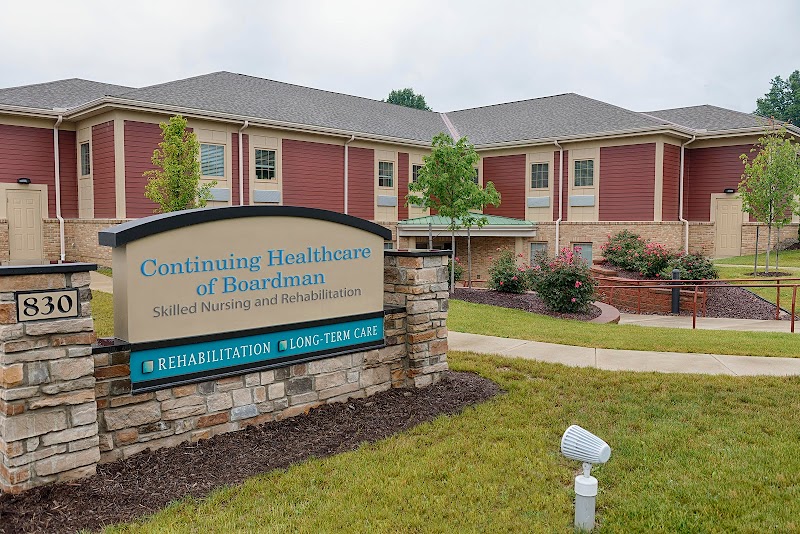
830 BOARDMAN CANFIELD RD, BOARDMAN, OH 44512 (330) 259-9393
For profit - Corporation 60 Beds CONTINUING HEALTHCARE SOLUTIONS Data: November 2025 1 Immediate Jeopardy citation
Trust Grade
33/100
#810 of 913 in OH
Last Inspection: October 2024

Within standard 12-15 month inspection cycle. Federal law requires annual inspections.

Overview

Vista Center of Boardman has received a Trust Grade of F, indicating significant concerns and a poor overall performance. With a state rank of #810 out of 913 in Ohio, the facility is in the bottom half, and it ranks #25 out of 29 in Mahoning County, suggesting there are many better options nearby. The facility’s trend is improving, having reduced issues from 28 in 2024 to 4 in 2025, but it still has a high number of fines totaling $45,997, which is concerning and higher than 88% of Ohio facilities. Staffing is a strength with a 4/5 star rating and good RN coverage, meaning residents receive attentive care; however, there have been troubling incidents, including a resident-to-resident sexual abuse case and failures to provide adequate therapeutic activities. These issues highlight both the potential for quality care and significant risks that families should consider.

Trust Score
F
33/100
In Ohio
#810/913
Bottom 12%
Safety Record
High Risk
Review needed
Inspections
Getting Better
28 → 4 violations
Staff Stability
⚠ Watch
52% turnover. Above average. Higher turnover means staff may not know residents' routines.
Penalties
✓ Good
$45,997 in fines. Lower than most Ohio facilities. Relatively clean record.
Skilled Nurses
○ Average
Each resident gets 41 minutes of Registered Nurse (RN) attention daily — about average for Ohio. RNs are the most trained staff who monitor for health changes.
Violations
⚠ Watch
55 deficiencies on record. Higher than average. Multiple issues found across inspections.
★★☆☆☆
2.0
Overall Rating
★★★★☆
4.0
Staff Levels
★★★★★
5.0
Care Quality
★☆☆☆☆
1.0
Inspection Score
Stable
2024: 28 issues
2025: 4 issues

The Good

  • 4-Star Staffing Rating · Above-average nurse staffing levels
  • 5-Star Quality Measures · Strong clinical quality outcomes
  • Full Sprinkler Coverage · Fire safety systems throughout facility
  • No fines on record

Facility shows strength in staffing levels, quality measures, fire safety.

The Bad

2-Star Overall Rating

Below Ohio average (3.2)

Below average - review inspection findings carefully

Staff Turnover: 52%

Near Ohio avg (46%)

Higher turnover may affect care consistency

Federal Fines: $45,997

Above median ($33,413)

Moderate penalties - review what triggered them

Chain: CONTINUING HEALTHCARE SOLUTIONS

Part of a multi-facility chain

Ask about local staffing decisions and management

The Ugly 55 deficiencies on record

1 life-threatening
Aug 2025 2 deficiencies
CONCERN (D) 📢 Someone Reported This

A family member, employee, or ombudsman was alarmed enough to file a formal complaint

Potential for Harm - no one hurt, but risky conditions existed

Pressure Ulcer Prevention (Tag F0686)

Could have caused harm · This affected 1 resident

Based on observation, record review, interview and policy review, the facility failed to provide interventions to prevent the development of an unstageable pressure ulcer, failed to timely and accurat...

Read full inspector narrative →
Based on observation, record review, interview and policy review, the facility failed to provide interventions to prevent the development of an unstageable pressure ulcer, failed to timely and accurately document the initial assessment and weekly comprehensive assessments of the pressure ulcer, failed to timely coordinate ancillary wound care services to mitigate complications related to pressure ulcers, and failed to follow proper infection control procedures during wound care. This affected one (Resident #41) of two residents reviewed for pressure ulcers. The facility census was 51. Findings include:Review of the medical record for Resident #41 revealed an admission date of 03/09/25 and a re-entry date of 05/28/25. Resident #41 had diagnoses including unspecified dislocation of the right hip, adult failure to thrive, presence of bilateral artificial knee joints, Parkinson's disease, tachycardia, primary hypertension, osteoarthritis, and need for assistance with personal care. Review of the weekly skin assessment completed on 05/28/25 revealed Resident #41 had some bruising on the right arm and right leg but otherwise had intact skin. Review of the care plan dated 05/28/25 revealed Resident #41 was at risk for impaired skin integrity and pressure ulcers related to impaired mobility and incontinence. The care plan listed three interventions: apply barrier cream after each incontinent episode as needed (PRN), elevate heels off mattress, and encourage fluids. The care plan did not include turning or repositioning to redistribute weight off Resident #41's pressure points while in bed. Review of the admission Minimum Data Set (MDS) 3.0 assessment completed on 06/10/25 revealed Resident #41 had intact cognition and was dependent on staff for toileting hygiene, bathing, transfers in and out of bed and required substantial assistance to roll left and right in bed. Further review of the MDS revealed Resident #41 had occasional bladder incontinence and was at risk for pressure injury but had no pressure injuries, ulcers, lesions, rashes, surgical wounds, burns, skin tears, or moisture associated skin damage (MASD) at the time of the assessment. Review of the weekly skin assessment completed on 06/11/25 revealed Resident #41 had redness noted to the coccyx and a barrier cream was applied. There were no progress notes or additional assessment details noted in the medical record related to the size of the reddened area or whether the area was blanchable. No additional interventions were added to the care plan. Review of the orders revealed a physician order dated 06/12/25 (discontinued on 07/10/25) to cleanse the coccyx of Resident #41 with normal saline solution (NSS) and apply calcium alginate and a foam dressing daily and PRN. Review of the Treatment Administration Record (TAR) from June 2025 revealed documentation of wound care treatments daily from 06/12/25 through 06/30/25, except for 06/18/25, when Resident #41 was in the emergency room (ER). Review of the progress notes from 06/12/25 revealed there were no notes related to the new wound care orders for Resident #41's coccyx. Review of all assessments for Resident #41 revealed there were no assessments related to the wound care orders that were initiated on 06/12/25. The care plan revealed no new interventions were added to the skin integrity care plan, and no care plan focus was added related to actual skin impairment until 08/14/25. Review of the assessment titled Skin Grid Pressure 3.0 - V 2 completed on 06/19/25 revealed Resident #41 had a Stage two (II) pressure ulcer (partial thickness loss of dermis presenting as a shallow open ulcer with a red pink wound bed, without slough, may also present as an intact or open/ruptured serum filled blister) to the sacrum that measured 1.5 centimeters (cm) by 1.2 cm by 0.2 cm with an onset date documented as 06/19/25 related to a leave of absence (LOA) or ER visit. The wound tissue was documented as 100 percent (%) pink with moderate serosanguinous exudate (drainage) and no signs of infection. The peri wound (tissue surrounding the wound) was intact, fragile, and moist. The medical record revealed no comprehensive wound assessment or tracking between 06/19/25 and 07/03/25, including the wound size (length, width, depth), wound stage, amount, color, consistency, and odor of wound exudate, wound bed tissue, wound edges and surrounding skin, signs of infection or inflammation, presence of pain, and status (healing, stalled, stable, declined). However, there was a weekly skin assessment completed on 06/25/25 which revealed Resident #41 had an open lesion. The note further revealed Open areas to coccyx. The assessment did not indicate there had been a previously identified pressure area and there was no comprehensive wound assessment documented. Review of the physician orders revealed orders dated 06/26/25 for Resident #41 to have house liquid protein supplements, 30 milliliters (ml), twice daily by mouth for 60 days (the pressure ulcer was first identified on 06/12/25). Review of the Skin Grid Pressure 3.0 - V 2 assessment completed on 07/03/25 revealed Resident #41 had an unstageable pressure area (full thickness tissue loss in which the base of the ulcer is covered by slough (yellow, tan, gray, green or brown) and/or eschar (tan, brown or black) in the wound bed) to the sacrum which measured 2.0 cm by 1.5 cm by an undeterminable depth. The wound was listed as in-house acquired and contained 80% slough. The wound was noted to have a moderate amount of serosanguinous exudate, and the peri-wound area was moist and reddened. The wound status was listed as having declined since the previous assessment. The Skin Grid Pressure 3.0 - V 2 assessment completed on 07/10/25 revealed a full-thickness unstageable pressure ulcer to the sacrum that measured 2.0 cm by 2.0 cm by an undeterminable depth. The wound bed contained 20% granulation tissue and 80% slough with undermining to an undeterminable extent due to the slough. The peri-wound was reddened and Resident #41 experienced tenderness with wound care. The assessment indicated no assessment of the wound healing status. Review of the Encore Wound Care visit note dated 07/10/25 revealed this was the date of the initial wound provider consultation for an unstageable pressure ulcer that was in-house acquired. Further review of the note revealed Resident #41 had a sharp excisional debridement of one square centimeter where loose slough was excised to better visualize the wound base and the debrided tissue went down to the subcutaneous tissue. At the time of the visit, new orders for wound care were initiated and recommendations included offloading pressure, proper nutrition and protein supplementation with a nutrition consult per facility policy, pressure reducing devices to the bed and wheelchair, repositioning per facility protocol, proper hygiene, avoiding contamination, and changing dressings PRN to keep clean and dry. The treatment order was to clean the wound with NSS, pack with silver alginate rope (if the facility was able to order the reinforced silver alginate rope), and cover with a silicone super absorbent dressing daily and PRN. Review of the physician orders dated 07/10/25 revealed Resident #41 was to have the coccyx wound cleansed with NSS, packed with calcium alginate rope, and covered with a foam dressing daily and PRN. There were no progress notes dated 07/10/25 indicating the facility was unable to order reinforced silver alginate rope or silicone super-absorbent dressings or that the facility had discussion with and/or received additional order clarification from Wound Advance Practice Registered Nurse (APRN) #325, the practitioner managing the wound care from Encore Wound Care. Review of the TAR from July 2025 revealed this treatment was documented daily from 07/10/25 through 07/31/25, except 07/21/25, which contained no electronic signature. Review of the assessments, progress notes, and wound provider (Encore) visit notes revealed no comprehensive wound assessment or tracking was completed between 07/10/25 and 07/24/25, although there was a weekly completed on 07/16/25 which noted Resident #41 had a bruise and a previously identified pressure area with a treatment in place. Review of the Encore Wound Care visit note dated 07/24/25 revealed Resident #41 reported the wound was on fire at the time of the visit. Further review of the note revealed the wound had declined and was reclassified as a Stage four (IV) pressure ulcer (Full thickness tissue loss with exposed bone, tendon or muscle. Slough may be present on some parts of the wound bed. Often include undermining and tunneling). The note also revealed Resident #41 had poor nutritional intake, had an overall poor health condition, was incontinent, and had poor compliance with offloading. Review of the visit note revealed the wound had grown to 3.0 cm by 2.8 cm by 1.6 cm with undermining from 12 o'clock to 12 o'clock for a maximum of 1.9 cm depth at three o'clock and 1.2 cm at six o'clock, 60% exposed fascia, and heavy serosanguinous drainage. The wound care orders were changed during this visit due to the heavy drainage with new recommended treatment consisting of cleansing the wound with NSS, packing with calcium alginate rope, and covering with a silicone super absorbent dressing every shift and PRN. Review of the Skin Grid Pressure 3.0 - V 2 assessment completed on 07/24/25 mirrored the assessment from the Encore wound visit note for this date. Review of the orders revealed no new treatment orders after Encore APRN #325 changed the order recommendation during the visit on 07/24/25. Review of the Encore Wound Care visit note dated 07/31/25 revealed Resident #41 was positive for Clostridioides difficile (C. diff., a bacterium that causes diarrhea and inflammation of the bowel), was on oral antibiotics, and appeared not well-nourished. The wound was classified as improving during the visit and no new wound care orders or recommendations were made (the treatment order remained for Resident #41 to have the wound cleansed with NSS, packed with calcium alginate rope, and covered with a silicone super absorbent dressing every shift and PRN). Review of the physician orders revealed a new treatment order dated 08/01/25 which was for Resident #41 to have the sacral wound cleaned with NSS or wound cleanser, pat dry, lightly pack with calcium alginate rope, and cover with a silicone super absorbent dressing every day shift for wound management (not every shift and PRN as specified by Wound APRN #325 on 07/24/25 and 07/31/25). Review of the TAR from August 2025 revealed wound care was documented once daily, except on 08/04/25, where there was no electronic sign-off the treatment had been completed. Review of the Encore Wound Care visit note dated 08/07/25 revealed Resident #41's wound status was measuring 4.0 cm by 3.0 cm by 2.0 cm with deepest undermining at 11 o'clock at 3.0 cm and the wound bed contained 60% granulation, 10% bone, and 30% fascia. Further review of the note revealed Resident #41 was advised that further wound decline was possible and was informed further work-up could be done, which included possible hospitalization and intravenous antibiotics, but Resident #41 declined further evaluation or treatment at that time, and the facility was to continue with the same plan of care for another one to two weeks and then the wound care orders would be reviewed for continued appropriateness. The continued wound care order per Wound APRN #325 was to clean the wound with NSS, pack with calcium alginate rope, and apply a silicone super absorbent dressing every shift and PRN (The August 2025 TAR revealed treatments continued to be performed every day shift instead of every shift). Review of the physician orders revealed an order dated 08/07/25 for Resident #41 to have an alternating pressure air mattress to the bed and staff were to check the mattress for proper functioning every shift. Review of the care plan (initiated on 05/28/25) revealed an update was made on 08/14/25 to reflect Resident #41 had actual impaired skin integrity related to a Stage II pressure ulcer to the sacrum (note: the impaired skin integrity/pressure ulcer initially developed on 06/12/25 and had been reclassified as a Stage IV on 07/24/25). Interventions included referring to a wound physician PRN, administering medications and wound care per physician orders, completing skin documentation and skin assessments per facility policy, explaining procedures prior to care, monitoring signs of infection, and notifying the physician of wound deterioration. Interview on 08/13/25 at 2:35 P.M. with Certified Nurse Aide (CNA) #354 revealed Resident #41 had a large wound that was believed to be noted after a recent hospital visit. CNA #354 denied any concerns related to wound care at the time of the interview. Interview on 08/13/25 at 3:15 P.M. with Licensed Practical Nurse (LPN) #350 revealed Resident #41 had a wound on her coccyx area for a couple weeks that had gotten larger. During the interview, LPN #350 confirmed the wound treatment was scheduled to be completed once a day (Wound APRN #325 ordered for wound care to be completed every shift) and it would get changed on a PRN basis if it was soiled. At the time of the interview, when asked of the dressing change had been completed earlier in the shift, LPN #350 did not respond definitively. Observation on 08/13/25 from 3:18 P.M. to 3:35 P.M. of wound care for Resident #41 performed by LPN #350 revealed a gown, mask, face shield, and two pairs of gloves were donned prior to entering the room of Resident #41. As the personal protective equipment (PPE) was being applied, LPN #350 stated double-gloving would be used to minimize movement around the room during wound care between steps of the procedure so that one pair could be removed once the old dressing was off and the other pair of gloves could be used to continue wound care without stepping away to perform hand washing between glove changes. Before wound care commenced, two normal saline bullets, dry gauze, a package containing calcium alginate rope, and a package containing a silicone absorbent border dressing were laid on the bedside stand without the bedside stand being cleaned or a barrier set-up for the dressing supplies. The packaging for the calcium alginate rope and silicone border dressing were opened slightly (the seal was opened one edge of each package, but the other three edges remained intact, and the packages remained closed over top of the dressing supplies). LPN #350 was observed removing the old dressing, which was undated and soiled in urine and stool, wrapped the old dressing in the top layer of gloves, removed the top layer of gloves, and discarded in the trash can at the bedside. While wearing the bottom layer of gloves, LPN #350 squirted two 15 milliliter (ml) saline bullets onto the wound bed, wiped around the wound bed with dry gauze, used the gloved hands to manipulate the package containing the calcium alginate rope, used the same gloved hands to press the calcium alginate rope into the wound bed and undermined edges, then grabbed the package containing the silicone border dressing, removing the dressing from the package, and secured the border dressing over the wound. With the same gloved hands, LPN #350 repositioned Resident #41 in bed and adjusted the bed linen. At this time, LPN #350 was observed removing the old gloves and applying new gloves to raise the head of the bed for Resident #41 and assisting with a drink of water. No hand hygiene was performed between the glove changes. An interview with LPN #350 on 08/13/25 at 3:40 P.M. confirmed double gloving was the process always used to provide wound care in the facility so there was less need to go back and forth to perform hand hygiene. During this interview, LPN #350 also confirmed no hand hygiene was performed between glove changes after the wound care observation. Interview on 08/14/25 at 9:00 A.M. with the Director of Nursing (DON) confirmed Encore Wound Care was the outside company the facility used to manage wounds. The DON further confirmed residents with any type of wound, not just chronic wounds, were to be referred to Encore Wound Care for an initial consultation and that Wound APRN #325 from Encore is the Provider who managed wound care orders for Resident #41. During the interview, the DON reported Resident #41 acquired the pressure ulcer during an ER visit (on 06/18/25) and presented the Skin Grid Pressure 3.0 - V 2 assessment from 06/19/25 indicating the onset date of 06/19/25 acquired after a leave of absence (LOA) or ER visit. At this time, the DON verbalized uncertainty regarding treatments to the coccyx being initiated one week prior to the facility documented wound onset of 06/19/25 and confirmed if there were wound assessments completed on 06/26/25 and 07/17/25, she would produce them. No documentation of weekly comprehensive wound assessments were presented during the survey. Also, during this interview, the DON confirmed hand hygiene was to be performed between glove changes and double gloving was not common practice for the facility, but she would look further into it. The DON further confirmed nurses were supposed to clean the bedside stand and set up a clean barrier prior to setting up their dressing supplies. Interview on 08/14/25 at 9:42 A.M. with Regional Quality Assurance (QA) Nurse #320 confirmed nurses should not double glove to provide wound care. Interview on 08/14/25 at 3:10 P.M. with Resident #41 confirmed no wound was present upon readmission to the facility (05/28/25) and that the wound was acquired while in the facility, not in the hospital, and that it hurt. Resident #41 further confirmed the wound had already been present and nurses were doing dressings on her backside before any of the visits to the ER. Interview on 08/14/25 at 2:48 P.M. with Regional QA Nurse #320 confirmed the original care plan focus for Resident #41 being at risk for altered skin integrity or pressure ulcer development was not all inclusive of possible preventative measures and the care plan would be re-evaluated. During the interview, Regional QA Nurse #320 confirmed she updated the care plan on 08/14/25 to reflect the actual altered skin integrity and that the alteration noted Resident #41 had a Stage II pressure ulcer. At this time, Regional QA Nurse #320 was notified the pressure ulcer had regressed to a Stage IV as of 07/24/25 and Regional QA Nurse #320 confirmed the care plan would need updated. Telephone interview with LPN #357 on 08/18/25 at 3:39 P.M. confirmed the aide working on the date the new treatment orders were obtained (06/12/25) discovered and reported an open area on the coccyx of Resident #41. During this interview, LPN #357 confirmed the wound was probably the size of a dime with some slough noted, appearing to be an unstageable pressure ulcer. LPN #357 further confirmed an order was obtained from the nurse practitioner and a calcium alginate and foam dressing were applied per orders. During the interview, LPN #357 verbalized a lack of knowledge related to initiating a Skin Grid Pressure 3.0 - V 2 assessment when a new pressure area was identified and confirmed a progress note detailing the new skin concerns must not have been created. Review of the telephone message recorded on 08/19/25 at 5:26 P.M. revealed Wound APRN #325 confirmed that on 07/24/25, the wound care orders for Resident #41 reflected an increase in frequency and were to be performed every shift (twice daily) and that ordered frequency had not been changed since 07/24/25. Review of the undated policy titled Dressing Change - Clean revealed wound care protocol was to clean the bedside stand and establish a clean field prior to wound care. The policy further revealed the process was to perform hand hygiene, apply clean gloves, remove the soiled dressing and discard into the nearby plastic or biohazard bag, perform hand hygiene, open the clean, dry dressing by pulling only the exterior corners outward and only touching the exterior surface of the packaging, open all needed dressing supply products, put on clean gloves, cleanse the wound per orders, apply ordered treatment, remove and discard gloves, wash hands thoroughly, reposition the resident, then perform hand hygiene again. The policy did not mention the practice of double-gloving. Review of the updated policy titled Pressure Ulcer Prevention Intervention revealed residents at risk for pressure ulcers were to be kept clean and dry, avoid sheering and friction, be provided a gel cushion (or equivalent) for sitting, and be repositioned every two hours to relieve or redistribute pressure. Review of the policy further revealed a specialty mattress, which included a low air loss or alternating mattress was to be used for Stage III and Stage IV pressure ulcers, and a Clinitron or comparable specialty mattress was to be used for an unstageable pressure ulcer or a complicated Stage IV pressure ulcer. The policy further revealed a high-protein nutritional supplement should be added for residents at risk for pressure ulcers. This deficiency represents non-compliance investigated under Complaint Number 2570357.
CONCERN (D) 📢 Someone Reported This

A family member, employee, or ombudsman was alarmed enough to file a formal complaint

Potential for Harm - no one hurt, but risky conditions existed

Infection Control (Tag F0880)

Could have caused harm · This affected 1 resident

Based on observation, interview, medical record review, review of facility policy, and review of the Centers for Disease Control and Prevention (CDC) on-line guidance for use of personal protective eq...

Read full inspector narrative →
Based on observation, interview, medical record review, review of facility policy, and review of the Centers for Disease Control and Prevention (CDC) on-line guidance for use of personal protective equipment (PPE) for care of persons with COVID-19 (the novel coronavirus, also known as severe acute respiratory syndrome two or SARS-CoV-2), the facility failed to ensure the appropriate type of transmission-based precautions for Resident #41was identifiable to staff and visitors, failed to ensure proper infection control procedures were maintained during wound care for Resident #41, and failed to ensure appropriate precautions were maintained when providing care for Resident #35. This affected two residents (Residents #35 and #41) but had the potential to affect eight residents who were identified by the facility as having wounds (Residents #21, #28, #33, #41, #42, #44, #45, and #50) and six residents who were in droplet isolation (Residents #19, #21, #26, #27, #35, and #44). The facility census was 51. Findings include: 1. Review of the medical record for Resident #41 revealed an admission date of 03/09/25 and a re-entry date of 05/28/25. Diagnoses included unspecified dislocation of the right hip, adult failure to thrive, presence of bilateral artificial knee joints, Parkinson's Disease, tachycardia, primary hypertension, osteoarthritis, and need for assistance with personal care. Review of the care plan dated 05/28/25 revealed Resident #41 was at risk for infection related to a chronic wound. Interventions included maintaining enhanced barrier precautions (EBP) as indicated. Review of the admission Minimum Data Set (MDS) 3.0 assessment completed on 06/10/25 revealed Resident #41 had intact cognition and was dependent for toileting hygiene, bathing, transfers in and out of bed and required substantial assistance to roll left and right in bed. Further review of the MDS revealed Resident #41 had occasional bladder incontinence and was at risk for pressure injury but had no pressure injuries, ulcers, lesions, rashes, surgical wounds, burns, skin tears, or moisture associated skin damage (MASD) at the time of the assessment. Review of the physician orders revealed an order dated 07/29/25 for Resident #41 to be in contact isolation with no further description or instructions. Further review of the order revealed contact isolation was discontinued on 08/11/25. Review of the physician orders also revealed a treatment order dated 08/01/25 which was for Resident #41 to have the sacral wound cleaned with NSS or wound cleanser, pat dry, lightly pack with calcium alginate rope, and cover with a silicone super absorbent dressing every day shift for wound management. Observation on 08/13/25 at 2:35 P.M. revealed one cart containing PPE, one covered bin for trash, and one covered bin for linen in the hall outside the door to the room of Resident #41. Further observation revealed there were two signs hanging on Resident #41's door, one that specified Resident #41 was in EBP and one identifying Resident #41 as requiring contact isolation. Interview on 08/13/25 at 2:35 P.M. with Certified Nurse Aide (CNA) #354 revealed the belief Resident #41 was in EBP for a large wound and no knowledge as to why the contact isolation sign was on the door. Interview on 08/13/25 with Licensed Practical Nurse (LPN) #350 revealed a statement that contact isolation and EBP were the same thing and the contact isolation sign was probably there to remind staff which PPE to wear when providing care to Resident #41 because she had a large wound. Observation on 08/13/25 from 3:18 P.M. to 3:35 P.M. of wound care for Resident #41 performed by Licensed Practical Nurse (LPN) #350 revealed a gown, mask, face shield, and two pairs of gloves were donned prior to entering the room of Resident #41. As the PPE was being applied, LPN #350 stated double-gloving would be used to minimize movement around the room during wound care between steps of the procedure so that one pair could be removed once the old dressing was off and the other pair of gloves could be used to continue wound care without stepping away to perform hand washing between glove changes. Before wound care commenced, two normal saline bullets, dry gauze, a package containing calcium alginate rope, and a package containing a silicone absorbent border dressing were laid on the bedside stand without the bedside stand being cleaned or a barrier set-up for the dressing supplies. The packaging for the calcium alginate rope and silicone border dressing were opened slightly (the seal was opened one edge of each package, but the other three edges remained intact, and the packages remained closed over top of the dressing supplies). LPN #350 was observed removing the old dressing, which was undated and soiled in urine and stool, wrapped the old dressing in the top layer of gloves, removed the top layer of gloves, and discarded in the trash can at the bedside. While wearing the bottom layer of gloves, LPN #350 squirted two 15 milliliter (ml) saline bullets onto the wound bed, wiped around the wound bed with dry gauze, used the gloved hands to manipulate the package containing the calcium alginate rope, used the same gloved hands to press the calcium alginate rope into the wound bed and undermined edges, then grabbed the package containing the silicone border dressing, removing the dressing from the package, and secured the border dressing over the wound. With the same gloved hands, LPN #350 repositioned Resident #41 in bed and adjusted the bed linen. At this time, LPN #350 was observed removing the old gloves and applying new gloves to raise the head of the bed for Resident #41 and assisting with a drink of water. No hand hygiene was performed between the glove changes. An interview with LPN #350 on 08/13/25 at 3:40 P.M. confirmed double gloving was the process always used to provide wound care in the facility so there was less need to go back and forth to perform hand hygiene. During this interview, LPN #350 also confirmed no hand hygiene was performed between glove changes after the wound care observation. Interview on 08/14/25 at 9:00 A.M. with the Director of Nursing (DON) confirmed hand hygiene was to be performed between glove changes and double gloving was not common practice for the facility, but she would look further into it. The DON further confirmed nurses were supposed to clean the bedside stand and set up a clean barrier prior to setting up their dressing supplies. During this interview, the DON confirmed Resident #41 had previously tested positive for Clostridioides difficile (C. diff., a bacterium that causes diarrhea and inflammation of the bowel), but had completed the antibiotics, was having formed stools, and the sign should no longer be posted outside the door. Interview on 08/14/25 at 9:42 A.M. with Regional Quality Assurance (QA) Nurse #320 confirmed nurses should not double glove to provide wound care. Review of the undated policy titled Dressing Change - Clean revealed wound care protocol was to clean the bedside stand and establish a clean field prior to wound care. The policy further revealed the process was to perform hand hygiene, apply clean gloves, remove the soiled dressing and discard into the nearby plastic or biohazard bag, perform hand hygiene, open the clean, dry dressing by pulling only the exterior corners outward and only touching the exterior surface of the packaging, open all needed dressing supply products, put on clean gloves, cleanse the wound per orders, apply ordered treatment, remove and discard gloves, wash hands thoroughly, reposition the resident, then perform hand hygiene again. The policy did not mention the practice of double-gloving. 2. Review of the medical record for Resident #35 revealed an initial admission date of 07/08/24 and a re-entry date of 07/30/24 with diagnoses including unspecified mood disorder, unspecified psychosis, ulcerative colitis, pulmonary fibrosis, Alzheimer's disease, malignant neoplasm of the colon, and colostomy status. Review of the diagnoses revealed Resident #35 also had COVID-19 as of 08/10/25. Review of the annual MDS 3.0 assessment completed on 07/16/25 revealed Resident #35 had moderately impaired cognition and had been independent with eating, oral hygiene, and toileting hygiene, and required supervision of touching assistance with bathing. Review of the MDS further revealed Resident #35 had an ostomy for bowel elimination. Review of the orders revealed and order dated 08/11/25 for Resident #35 to be in strict isolation with droplet precautions through 08/20/25 secondary to COVID-19 infection. Review of the care plan dated 08/15/25 revealed Resident #35 had an actual infection related to COVID-19 and was in isolation until 08/20/25. Interventions included providing isolation per protocol through the infectious period. Review of the progress notes revealed a noted dated 08/11/25 at 3:10 P.M. indicating Resident #35 tested positive for COVID-19 and droplet precautions were to be maintained. Observation on 08/18/25 at 8:25 A.M. revealed Medication Aide #380 entered the room of Resident #35 with an N-95 mask over a surgical mask, no gown, no gloves, and no face shield or goggles. Medication Aide #380 was observed assisting Resident #35 with drinking sips of orange juice and with eating breakfast. After approximately three minutes into observation, Medication Aide #35 closed the door to the room to assist Resident #35 with additional needs. Interview on 08/18/25 at 8:35 A.M. with Registered Nurse (RN) #371 confirmed Resident #35 was in droplet isolation until 08/20/25 for testing positive for COVID-19. During the interview, RN #371 stated staff were to don gloves, a face shield, and an N-95 mask prior to entering the room of Resident #35 to provide care and any direct personal care would also require a gown. At the time of the interview, RN #371 verbalized that a gown was typically not needed for residents in droplet isolation unless close direct contact was required. Observation on 08/18/25 at 8:46 A.M. revealed Medication Aide #380 exited the room of Resident #35 wearing the N-95 on top of a surgical mask, with the N-95 positioned under her nose (the surgical mask was over the nose) and then clearing a meal tray from the dining room and another resident's room. Interview with Medication Aide #380 at 8:50 A.M. confirmed masks were to be removed and discarded upon exiting rooms with droplet isolation and replaced as necessary. Medication Aide #380 further confirmed no gown, gloves, or face shield were used to assist Resident #35 with breakfast, adding that a face shield was initially put on, but taken off because it was too hot. During the interview, Medication Aide #380 denied the need to gown to enter the room of a COVID-19 positive resident, confirming there was a sign outside the door only indicating a mask and face covering was needed. A nursing progress note dated 08/18/25 at 10:47 A.M. revealed Resident #35 had a temperature of 102.4 degrees Fahrenheit (F), a pulse of 102 beats per minute, poor oral intake of foods, drinks, and medications, and an altered mental status. The note further revealed Resident #35 was to be transferred to the hospital. Interview on 08/18/25 at 1:40 P.M. with the Administrator confirmed there was no facility policy on donning and doffing PPE, but the facility followed CDC guidelines. Interview on 08/18/25 at 2:48 P.M. with Regional Quality Assurance (QA) Nurse #320 confirmed the appropriate PPE required for staff to assist a COVID-19 positive resident with meals included a gown, gloves, mask, and eye protection and that the N95 mask should be removed when leaving the resident's room. Review of the Centers for Disease Control and Prevention (CDC) on-line guidance for use of personal protective equipment (PPE) for care of persons with COVID-19 positive infection dated 06/24/24 revealed health care workers should use a NIOSH Approved particulate respirator with N95 filters or higher, gown, gloves, and eye protection, such as goggles or a face shield, that covered the front and sides of the face. This deficiency was an incidental finding identified during the complaint investigation.
May 2025 2 deficiencies
CONCERN (D) 📢 Someone Reported This

A family member, employee, or ombudsman was alarmed enough to file a formal complaint

Potential for Harm - no one hurt, but risky conditions existed

Infection Control (Tag F0880)

Could have caused harm · This affected 1 resident

**NOTE- TERMS IN BRACKETS HAVE BEEN EDITED TO PROTECT CONFIDENTIALITY** Based on interview, observation, record review and facility policy review, the facility failed to ensure effective infection con...

Read full inspector narrative →
**NOTE- TERMS IN BRACKETS HAVE BEEN EDITED TO PROTECT CONFIDENTIALITY** Based on interview, observation, record review and facility policy review, the facility failed to ensure effective infection control techniques were practiced during incontinence care. This affected one resident (Resident #8) out of five residents reviewed for infection control. The facility census was 43. Findings include: Review of Resident #8's medical record revealed an admission date of 04/19/17. Diagnoses included epilepsy, muscle weakness, abnormal posture, hemiplegia, hemiparesis right dominant side, aphasia, gastrostomy status, and pseudobulbar affect. Review of Resident #8's Minimum Data Set (MDS) assessment dated [DATE] revealed the resident had severely impaired cognition. Resident #8 was dependent on staff for all Activities of Daily Living (ADLs) including eating, oral hygiene, toileting hygiene, showers, dressing, personal hygiene, incontinence care and bed mobility. Review of Resident #8's care plan dated 03/04/25 revealed the resident was incontinent of bowel and bladder. Goals and interventions included the resident would remain clean and odor free. Staff to administer treatments per physician orders, assist with incontinence care every two hours and as needed, apply house barrier cream as needed, monitor for signs and symptoms of urinary tract infections, monitor for skin impairments, and provide peri care as needed. Review of Resident #8's physician orders dated May 2025 revealed Resident #8 was ordered to be in Enhanced Barrier Precautions every shift due to wounds and presence of peg tube for enteral feedings. Observation on 05/01/25 at 2:33 P.M. of incontinence care for Resident #8 by CNA #803 and CNA #804 revealed the resident was in EBP and required staff who were performing hands-on care to wear a gown and gloves, signage was outside of the door on the wall, isolation bins were inside the resident's room with proper PPE in them. CNA #803 and CNA #804 did not put on proper PPE to perform incontinence care. Interview on 05/01/25 at 2:49 P.M. with Certified Nursing Assistant (CNA) #803 and CNA #804 revealed CNA #803 and CNA #804 confirmed Resident #8 was in Enhance Barrier Precautions (EBP) with proper signage outside of room on the wall next to the door and Personal Protective Equipment (PPE) in bins in the resident's room. CNA #803 and CNA #804 confirmed they should have been wearing gowns and gloves for incontinence care and they were not. Review of the facility policy titled Enhanced Barrier Precautions, dated July 2022, revealed the purpose was to reduce the transmission of multidrug-resistant organisms (MDROs) by when high contact resident care activities for residents with known colonized or infected with MDRO as well as those at increased risk to acquire and MDRO. Under the procedure section it stated Residents with the following triggers will receive EBP and indicates it should be followed for any resident in the facility with 1. An open wound requiring a dressing change, 2. Has an indwelling catheter for the duration of their stay and 3. Is colonized with MDROs and contact precautions do not apply. EBP requires the use of gown and gloves during high contact resident care activities that provide opportunities for transfer of MDROs to staff hands and clothing. This deficiency represents non compliance under Complaint Number OH00164239.
CONCERN (E) 📢 Someone Reported This

A family member, employee, or ombudsman was alarmed enough to file a formal complaint

Potential for Harm - no one hurt, but risky conditions existed

ADL Care (Tag F0677)

Could have caused harm · This affected multiple residents

**NOTE- TERMS IN BRACKETS HAVE BEEN EDITED TO PROTECT CONFIDENTIALITY** Based on observation, record review,interview, and facility policy review, the facility failed to ensure Resident #8 received ti...

Read full inspector narrative →
**NOTE- TERMS IN BRACKETS HAVE BEEN EDITED TO PROTECT CONFIDENTIALITY** Based on observation, record review,interview, and facility policy review, the facility failed to ensure Resident #8 received timely incontinence care and failed to ensure Residents #8, #22, #46 and #47 received staff assistance for showering. This affected four residents (#8, #22, #46, and #47) of five residents reviewed for assistance with Activities of Daily Living (ADL) needs. The facility census was 43. Findings include: 1. Review of Resident #8's medical record revealed an admission date of [DATE]. Diagnoses included epilepsy, muscle weakness, abnormal posture, hemiplegia, hemiparesis right dominant side, aphasia, gastrostomy status, and pseudobulbar affect. Review of Resident #8's Minimum Data Set (MDS) assessment dated [DATE] revealed the resident had severely impaired cognition. Resident #8 was dependent on staff for all Activities of Daily Living (ADLs) including eating, oral hygiene, toileting hygiene, showers, dressing, personal hygiene, incontinence care and bed mobility. Review of Resident #8's care plan dated [DATE] revealed the resident was incontinent of bowel and bladder. Goals and interventions included the resident would remain clean and odor free. Staff to administer treatments per physician orders, assist with incontinence care every two hours and as needed, apply house barrier cream as needed, monitor for signs and symptoms of urinary tract infections, monitor for skin impairments, and provide peri care as needed. Review of Resident #8's shower schedule revealed they were to receive showers every Monday, Wednesday and Friday. Review of Resident #8's shower sheets from [DATE] to [DATE] revealed the resident only received six out of the 30 scheduled showers. Observation on [DATE] at 2:33 P.M. of incontinence care for Resident #8 by Certified Nursing Assistant (CNA) #803 and CNA #804 revealed the resident was in Enhanced Barrier Precautions and required staff who were performing hands-on care to wear a gown and gloves, signage was outside of the door on the wall, isolation bins were inside the resident ' s room with proper Personal Protective Equipment (PPE) in them. CNA #803 and CNA #804 did not put on proper PPE to perform incontinence care. Resident #8 was incontinent through brief onto incontinence pad under him and had a strong odor of urine. Interview on [DATE] at 2:49 P.M. with CNA #803 and CNA #804 revealed they confirmed Resident #8 had not received incontinence care since 11:00 A.M. and was dependent on staff and should be completed every two hours and as needed. CNA #803 and CNA #804 confirmed Resident #8 had not received incontinence care in three and a half hours. CNA #803 confirmed Resident #8 had soaked through his brief onto the incontinence pad and had a strong odor of urine. CNA #803 and CNA #804 confirmed Resident #8 was in Enhance Barrier Precautions (EBP) with proper signage outside of room on the wall next to the door and Personal Protective Equipment (PPE) in bins in the resident room. CNA #803 and CNA #804 confirmed they should have been wearing gowns and gloves for incontinence care. CNA #804 confirmed that after she wiped Resident #8 she place the dirty wipes on the fitted sheet instead of putting them in the trash. CNA #803 and CNA #804 confirmed they did not change the fitted sheet on Resident #8 ' s bed after placing dirty wipes on them. 2. Review of Resident #22's medical record revealed an admission date of [DATE]. Diagnosis included acute kidney failure, difficulty in walking, need for assistance with personal care, cognitive communication deficit, type II diabetes, heart failure, hypertension, and artificial left hip. Review of Resident #22's MDS assessment dated [DATE] revealed the resident had impaired cognition but was able to make his needs known. They required setup or clean up assistance with eating, supervision or touching assistance with oral hygiene, upper body dressing, and bed mobility and finally they were dependent on staff for transfers, lower body dressing, toileting hygiene, personal hygiene and showers. Review of Resident #22's care plan dated [DATE] revealed the resident required assistance with ADLs related to weakness, difficulty in walking and cognitive deficit. Goals and interventions included the resident would continue to participate in ADLs as able and have no decline in ADLs through the review date. Staff were to monitor for decline and report to clinical staff as needed, staff to adjust care as needed to meet the resident's needs, staff to encourage residents to participate in ADLs during care, staff were to assist with daily hygiene and were to assist with showering the resident per facility policy. Review of Resident #22's shower schedule revealed they were to receive a shower every Tuesday, Thursday and Saturday. This deficiency represents non-compliance under Complaint Number OH00164239. Review of Resident #22's shower sheets form [DATE] to [DATE] revealed the resident only received one shower in February, eight showers in March, seven showers in April and one shower in May. 3. Review of Resident #46's medical record revealed and admission date of [DATE] and a discharge date of [DATE]. Diagnosis included cerebral infarction, acute respiratory failure with hypoxia, muscle wasting and atrophy, difficulty in walking, hypertension, anxiety and mood disorder, congenital tuberculosis, hemolytic anemia, urinary retention, opioid abuse, rhabdomyolysis, and history of falls. Review of Resident #46's discharge MDS assessment dated [DATE] revealed the resident had intact cognition. They required setup or clean up assistance for eating, and oral hygiene. They required supervision or touching assistance for toileting hygiene, upper body dressing, personal hygiene, and bed mobility. Finally, they required partial to moderate assistance for showers, transfers and lower body dressing. Review of Resident #46's shower schedule revealed they were supposed to receive a shower every Tuesday, Thursday, and Saturday. Review of Resident #46's shower sheets from [DATE] to [DATE] revealed the resident only received two out of 17 scheduled showers on [DATE] and on 03/01.25. 4. Review of Resident #47's medical record revealed an admission date of [DATE] and a discharge date of [DATE]. Resident #47 expired in the facility. Diagnosis included heart failure, cognitive communication deficit, muscle weakness and wasting, need for assistance with personal care, contracture of left and right knee, anxiety, major depressive disorder, history of falling, restless leg syndrome, hypertension and history of pulmonary embolism. Review of Resident #47's quarterly MDS assessment dated [DATE] revealed the resident had intact cognition. They required supervision or touching assistance for eating, partial to moderate assistance for oral hygiene and personal hygiene, substantial to maximal assistance for upper body dressing and bed mobility and finally, the resident was dependent on staff for toileting hygiene, lower body dressing and showers. Review of Resident #47's shower scheduled revealed the resident was to receive showers every Tuesday, Thursday and Saturday. Review of Resident #47's shower sheets dated from [DATE] to [DATE] revealed the resident only received four showers out of 17 scheduled showers. Interview on [DATE] at 10:15 A.M. with Certified Nursing Assistant (CNA) #805 revealed they confirmed they completed their assigned showers gut there were times when they did not get done. Interview on [DATE] at 10:20 A.M. with Licensed Practical Nurse (LPN) #801 the CNAs complete their showers but there are times when the residents complain they are not getting them. Interview on [DATE] at 10:25 A.M. with Registered Nurse (RN) #802 revealed CNAs do not always get to all the showers scheduled on their shift. RN #802 stated it depends on how their day is going but they try hard. Interview on [DATE] at 2:49 P.M. with CNA #803 and CNA #804 revealed they confirmed Resident #8 had not received incontinence care since 11:00 A.M. and was dependent on staff and should be completed every two hours and as needed. CNA #803 and CNA #804 confirmed Resident #8 had not received incontinence care in three and a half hours. CNA #803 confirmed Resident #8 had soaked through his brief onto the incontinence pad and had a strong odor of urine. Additionally, CNA #803 and CNA #804 stated they only complete their assigned showers if they had the time too. Interview on [DATE] at 4:10 P.M. with the Administrator, the DON, and the Interim DON revealed they reviewed and confirmed for Resident #46 she admitted on [DATE] and did not receive their first shower until [DATE] and was supposed to receive at least three a week on Tuesday, Thursday and Saturdays. The Administrator, the DON, and the Interim DON all confirmed Resident #46 only received two showers out of 17 scheduled showers on [DATE] and [DATE]. The Administrator, the DON, and the Interim DON confirmed Resident #47 was to receive three showers a week on Tuesday, Thursday and Saturday. They confirmed Resident #47 only received four showers out of the 17 scheduled showers with no additional documentation provided. The Administrator, DON and Interim DON verified for Residents #8 they only received six out of thirty scheduled showers, and for Resident #22 they only received one shower in February, eight showers in March, and only seven showers in April. Interview on [DATE] at 12:18 P.M. with LPN #809 revealed showers are not always completed as scheduled. LPN #809 stated some residents and families have complained to then regarding not getting showers were scheduled. Interview on [DATE] at 1:45 P.M. with Resident #22 revealed they do not always receive showers as scheduled and had to remind staff they wanted a shower. Interview on [DATE] at 2:15 P.M. with LPN #808 revealed Resident #46 complained to them she was not getting her showers and wanted one. Review of the undated facility policy titled, Bathing, Showering, revealed the purpose was to establish frequency of bathing by resident choice. The procedure included Residents were to be interviewed during the admission process regarding the frequency they want to bathe/shower. If the resident is unable to relay this information, attempts are to be made to obtain this from the responsible party or person that would know the resident. The frequency of the bath/shower is reviewed at least quarterly during the care planning conference with the resident. Changes were to be implemented if indicated by the resident's choice. This policy was reviewed will all staff during the employee orientation and periodically thereafter as well the policy is reviewed with the resident during the admission process and quarterly thereafter.
Oct 2024 19 deficiencies
CONCERN (D)

Potential for Harm - no one hurt, but risky conditions existed

Deficiency F0578 (Tag F0578)

Could have caused harm · This affected 1 resident

**NOTE- TERMS IN BRACKETS HAVE BEEN EDITED TO PROTECT CONFIDENTIALITY** Based on record review, interview, and review of the facility policy, the facility failed to ensure Resident #31's advance direc...

Read full inspector narrative →
**NOTE- TERMS IN BRACKETS HAVE BEEN EDITED TO PROTECT CONFIDENTIALITY** Based on record review, interview, and review of the facility policy, the facility failed to ensure Resident #31's advance directives in the medical record and physician orders matched. The facility also failed to ensure the nurse had knowledge of which code status to follow. This affected one resident (#31) out of four residents reviewed for advance directives and had the potential to affect all 50 residents residing in the facility. Findings include: Review of the medical record for Resident #31 revealed an admission date of [DATE] with diagnoses including obstructive pulmonary disease with exacerbation, acute respiratory failure with hypoxia, seizure disorder, dementia, and schizophrenia. Review of the undated Do Not Resuscitate (DNR) Comfort Care form completed by Nurse Practitioner #701 revealed Resident #31 code status was DNR Comfort Care. This form was in the miscellaneous section of Resident #31's electronic medical record. Review of the nursing note dated [DATE] at 10:30 A.M. authored by Former Director of Nursing (DON) #700 revealed during a quarterly care plan meeting, Resident #31 stated he wanted his code status to be changed to a Full Code. Review of the care plan dated [DATE] revealed Resident #31 wanted his code status to be Full Code. Interventions included advance directives would be placed on the chart, call emergency rescue squad if needed, code status would be reviewed quarterly and as needed, staff to initiate cardiopulmonary resuscitation (CPR) until emergency services arrived, and staff would notify the physician of the residents' wishes. Review of the quarterly Minimum Data Set (MDS) assessment dated [DATE] revealed Resident #31 had intact cognition. Review of the [DATE] physician's orders revealed Resident #31 had an order dated [DATE] to be a Full Code. Interview on [DATE] at 8:29 A.M. with Resident #31 revealed at first, he was not sure what a DNR was, but after the facility explained what it was, he stated he wanted to be resuscitated (Full Code). Interview on [DATE] at 8:41 A.M. with Licensed Practical Nurse (LPN) #535 was asked if she found a resident unresponsive, where she would go to find the resident's code status. She stated she would look in the physician's orders as everyone had an order regarding their code status or she would look in the miscellaneous section of the electronic medical record because DNR forms were located in this area. She was asked what she would do if the order in the physician's orders did not match what she found in the miscellaneous section, and she stated she would go by the state DNR form because that would be the most accurate. Interview on [DATE] at 10:11 A.M. with the DON verified Resident #31's physician order dated [DATE] revealed Resident #31 was to be a Full Code and in the electronic record miscellaneous section, the form indicated he was to be a DNR-Comfort Care. The DON did not have an explanation why the code statuses did not match. Interview on [DATE] at 12:00 P.M. the DON provided a nursing note dated [DATE] at 10:28 A.M. that Resident #31 had a care plan meeting, and Resident #31 wanted to change his code status to Full Code. The DON was informed of an interview with LPN #535 who stated she would have checked the physician orders and the miscellaneous section of the electronic medical record, and if she found a DNR form, she would have gone by the state form, not the physician order. The DON revealed the DNR form remains in the miscellaneous section even if revoked. The DON the facility policy did not reflect what steps the nurse was to follow if they found a resident unresponsive, including where to check for the correct code status, and she had no documented evidence of staff training. She stated she would start training immediately as she verified this could lead to a nurse not following the correct code status chosen by the resident and/or the resident's family. Review of the undated facility policy labeled; Advance Directives revealed the facility would inform the residents about initiating an advance directive, and the facility would maintain written standards and practice guidelines regarding advance directives to assure that the residents' wishes were honored. The facility staff would explain to the residents their right to make health care decisions, including the right to make an advance directive. The facility would document in the clinical record whether the resident executed an advance directive. The facility staff would be provided with education at least annually. The policy revealed the physician would write an appropriate order for the resident related to the advanced directive, and all pertinent information related to advance directives would be documented in the clinical record. There was nothing in the policy regarding where a nurse should go to check if a resident was found unresponsive to find their code status: physician order or miscellaneous section of the electronic medical record and/or what code status to follow.
CONCERN (D)

Potential for Harm - no one hurt, but risky conditions existed

Report Alleged Abuse (Tag F0609)

Could have caused harm · This affected 1 resident

**NOTE- TERMS IN BRACKETS HAVE BEEN EDITED TO PROTECT CONFIDENTIALITY** Based on record review, interview, review of the Ohio Department of Health Gateway, and review of the facility abuse policy, the...

Read full inspector narrative →
**NOTE- TERMS IN BRACKETS HAVE BEEN EDITED TO PROTECT CONFIDENTIALITY** Based on record review, interview, review of the Ohio Department of Health Gateway, and review of the facility abuse policy, the facility failed to report an allegation of resident-to-resident abuse within 24 hours to the state agency after Resident #38 threw a cup of hot coffee on Resident #144 . This affected one Resident (#144) out of one resident reviewed for abuse and had the potential to affect all 50 residents residing in the facility. Findings included: 1. Review of the medical record for Resident #38 revealed an admission date of 07/08/24 and his diagnoses included psychosis, dementia, and malignant neoplasm of colon. Review of the care plan dated 07/26/24 revealed Resident #38 had a behavior problem related to verbal outbursts, exit seeking, and history of physical aggression. Resident #38's wife had an order of protection in place through the sheriff's office due to physical aggression. Interventions included administering medication per order, intervening and redirecting the resident as needed, monitoring and assessing behaviors, and referring to psychiatric services as needed. Review of the Medicare five-day Minimum Data Set (MDS) assessment dated [DATE] revealed Resident #38 had impaired cognition. He had delusions for one to three days during the seven-day assessment reference period. He was independent with most of his activities of daily living (ADL) including transfers and ambulation. Review of the nursing note dated 10/16/24 at 7:35 A.M. authored by Licensed Practical Nurse (LPN) #535 revealed Resident #38 walked up to the nurse at the medication cart and stated, I threw hot coffee in his face. LPN #535 asked who and immediately checked Resident #144, who stated if Resident #38 continued to be his roommate he would kill him. 2. Review of the medical record for Resident #144 revealed an admission date of 10/07/24 with diagnoses including schizoaffective disorder, depression, anxiety, and unspecified psychosis. Review of the GG Usual Performance Nursing Observations dated 10/08/24 and completed by Registered Nurse (RN) #554 revealed Resident #144 was dependent on staff for transfers and refused to ambulate. Review of the Brief Interview for Mental Status (BIMS) assessment dated [DATE] revealed Resident #144 had moderately impaired cognition. Review of the nursing note dated 10/16/24 at 7:51 A.M. with LPN #535 revealed Resident #144 was in bed, and Resident #38 threw coffee on him. Resident #144 was lying in bed unclothed and stated, his roommate threw coffee on him, he didn't know why. Review of the skin assessment dated [DATE] and completed by LPN #535 revealed at the time of the incident, Resident #144 felt burning as the liquid was hot on his skin. The assessment revealed no redness to his skin at that time. Interview on 10/17/24 at 8:22 A.M. with Resident #144 revealed he did not know why, but Resident #38, his roommate, just walked into the room when he was in bed and threw coffee on his left arm and hair. He stated, yes, it was hot it did not leave a mark, but it burned when Resident #38 first threw the coffee on him. He stated, out of the blue, his roommate threw coffee all over him and that it scared him as he was just lying in bed and cannot really go anywhere because he cannot get out of bed by himself. He was asked if he felt the incident was abusive in nature and he stated, well how would you feel, would you not feel it was abusive, I mean, how would you like a whole cup of coffee dumped on you for no reason. Resident #144 verified he felt the incident was abusive in nature. Interview on 10/17/24 at 11:11 A.M. with the Administrator revealed she was informed of the resident-to-resident incident between Resident #38 and Resident #144. She stated they were roommates and both in their room when Resident #38 spilled coffee on Resident #144 while he was in bed. She had not spoken to either resident and had not filed a self-reported incident (SRI) because she did not see the incident as abusive in nature. Interview on 10/17/24 at 11:21 A.M. with the Director of Nursing (DON) revealed she interviewed Resident #38 after the incident on 10/16/24, and he was ranting with a flight of thought. He used the word revenge but could not tell her why he threw the coffee on Resident #144. She verified Resident #38 admitted to throwing the coffee on his roommate, Resident #144. They increased monitoring and then sent him to a psychiatric hospital for evaluation. She had not interviewed Resident #144. Interview on 10/17/24 at 11:28 A.M. with admission Director/Social Service Designee #541 revealed she talked to Resident #144 who had stated, his roommate spilled the coffee and that he did not remember the incident. He stated he felt startled by the incident. Review of the nursing note dated 10/17/24 at 11:35 A.M. authored by admission Director/ Social Service Designee #541 revealed she followed up with Resident #144 regarding the incident and he had stated, I feel little abuse by roommate but not staff. The note revealed Resident #38 looked like he was going to take a sip of coffee and then threw it at him. Resident #144 refused any follow up counseling. Review of the Ohio Department of Health Gateway system for reporting facility SRIs on 10/17/24 at 11:00 A.M. revealed an SRI was not filed regarding the incident that occurred on 10/16/24 at 7:51 A.M. involving Resident #38 throwing hot coffee on Resident #144. The Administrator reported the incident on 10/17/24 at 11:35 A.M. after surveyor questioning (after 24 hours). Review of the facility policy labeled, Abuse, Neglect, and Exploitation of Residents and Misappropriation of Property dated September 2020 revealed residents would not be subjected to abuse, neglect, exploitation and/or mistreatment by anyone. Mistreatment was defined as the action of treating someone poorly. Abuse was defined as the willful infliction of injury. The policy revealed all alleged violations concerning abuse, neglect and misappropriation were reported immediately to the Administrator or designee. Allegations that involve abuse would be reported to the Ohio Department of Health and would not exceed 24 hours.
CONCERN (D)

Potential for Harm - no one hurt, but risky conditions existed

Comprehensive Care Plan (Tag F0656)

Could have caused harm · This affected 1 resident

**NOTE- TERMS IN BRACKETS HAVE BEEN EDITED TO PROTECT CONFIDENTIALITY** Based on record review, interview, and facility policy review the facility failed to ensure accurate care plans were in place fo...

Read full inspector narrative →
**NOTE- TERMS IN BRACKETS HAVE BEEN EDITED TO PROTECT CONFIDENTIALITY** Based on record review, interview, and facility policy review the facility failed to ensure accurate care plans were in place for Residents #19 and #148. This affected two residents (#19 and #148) of four residents who were reviewed for care plans. This had the potential to affect all 50 residents residing in the facility. Findings include: 1. Review of the medical record for Resident #19 revealed an admission date of 04/10/23 with diagnoses including dementia with behavioral disturbances, adult failure to thrive, and other signs and symptoms involving cognitive function. Significant orders included Depakote sprinkles oral capsule delayed releases (used to treat manic or mixed episodes associated with bipolar disorder) 125 milligrams (mg), 125 mg two times daily for behaviors and 250mg daily at bedtime for behaviors. There was also an order stating Do Not Resuscitate Comfort Care Arrest (DNRCCA) meaning life saving measures until the heart stops beating. Review of the care plan dated 09/01/24 revealed Resident #19 had a behavior problem related to profanity, refusals of care, and yelling out. Interventions included administering medication as ordered and monitoring for effectiveness of medication and potential side effects. Depakote and Depakote monitoring were not included in the care plan. In addition, the resident was cared planned as a Full Code status, not a DNRCCA. Review of the quarterly Minimum Data Set (MDS) assessment dated [DATE] revealed Resident #19 had moderate cognitive deficit. The MDS also revealed verbal behaviors occurring one to three days of the seven-day assessment reference period. Review of laboratory results from 01/15/24 to 10/16/24 revealed no Depakote levels were drawn. On 10/16/24 at 1:30 P.M. an interview with Regional MDS Nurse/ Registered Nurse (RN) #567 verified Resident #19 did not have a care plan in place for the medication Depakote for behaviors. Regional MDS Nurse/RN #567 also verified Resident #19 was care planned as a Full Code, not DNRCCA as ordered. A review of the undated policy titled; Care Plan and Advanced Care Plan Process revealed advanced care planning may include but is not limited to discussion about a residents advanced directive, plan of care related to their wishes if a sudden life-threatening occurrence should happen. The policy also revealed the Interdisciplinary Team along with the resident will meet and review the care plan quarterly and annually. The plan of care identifies the date, problem and measurable and realistic goals, time frames for achievement and interventions specific to discipline. 2. Review of the medical record for Resident #148 revealed an admission date of 09/24/24 with diagnoses including hypertension, diabetes, acute myocardial infarction, and atrial fibrillation. Review of the laboratory work revealed on 09/26/24 Resident #148's prothrombin time (PT) was 22 and his international normalized ratio (INR) was 2.1. Primary Care Physician (PCP) #702 reviewed and ordered no new orders. Resident #148 then refused his PT/ INR lab work on 10/03/24, 10/08/24, 10/10/24, 10/14/25, and 10/17/24 resulting in PCP #702 changing his anti-coagulant (medication that increase the time it takes for blood to clot) from coumadin to Eliquis. Review of the admission MDS assessment dated [DATE] revealed Resident #148 had impaired cognition. He was dependent on staff for most of his activities of daily living (ADL) including toileting, transfers, and showers. He was on an anti-coagulant medication. Review of the October 2024 physician orders revealed Resident #148 was on an anticoagulant since admission: Coumadin 5 mg one tablet every night due to atrial fibrillation which was discontinued on 10/18/24 and changed to Eliquis (anti-coagulant) 5 mg twice a day. He was to have a PT/ INR (lab) completed every Monday and Thursday. Interview on 10/17/24 at 3:17 P.M. with Regional MDS Nurse/RN #567 verified Resident #148 did not have an anti-coagulant therapy care plan in place including interventions to monitor any adverse side effects and/or medication management. She revealed the former MDS nurse, Licensed Practical Nurse (LPN)/ MDS #572 was no longer employed less than 24 hours ago and was unsure why there was no care plan but there should have been. Interview on 10/17/24 at 3:55 P.M. with the Director of Nursing (DON) verified Resident #148 did not have an anti-coagulant care plan, and he should have had one, especially since he had been refusing his lab work to monitor his PT/ INR levels and was at risk for adverse effects including bleeding. Review of the undated facility policy labeled, Care Plan and Advance Care Plan Process revealed the interdisciplinary team would coordinate with the resident and/or their responsible party to participate in an appropriate care plan for the residents needs or wishes specific to person centered care. The plan of care identifies the date, problem, measurable and realistic goals, time frames for achievement and specific interventions.
CONCERN (D)

Potential for Harm - no one hurt, but risky conditions existed

Deficiency F0657 (Tag F0657)

Could have caused harm · This affected 1 resident

**NOTE- TERMS IN BRACKETS HAVE BEEN EDITED TO PROTECT CONFIDENTIALITY** Based on record review, interview, and review of the facility policy, the facility failed to ensure timely and accurate care pla...

Read full inspector narrative →
**NOTE- TERMS IN BRACKETS HAVE BEEN EDITED TO PROTECT CONFIDENTIALITY** Based on record review, interview, and review of the facility policy, the facility failed to ensure timely and accurate care plans for Residents #34 and #35. This affected two residents (#34 and #35) of four residents who were reviewed for care plans. This had the potential to affect all 50 residents residing in the facility. Findings include: 1. Review of the medical record for Resident #34 revealed an admission date of 05/08/24 with diagnoses including atrial fibrillation, multiple sclerosis (MS), diabetes mellitus type two, and morbid obesity. Review of the quarterly Minimum Data Set (MDS) assessment dated [DATE] revealed Resident #34 was cognitively intact. Review of the care conferences revealed Resident #34 had an admission care conference on 05/13/24. The next documented care conference was dated 06/03/24. At that meeting, Resident #34 had a change in discharge plans from short-term care to long-term care placement. Review of the care plan dated 08/11/24 revealed Resident #34 was to be discharged home. On 10/17/24 at 12:08 P.M. an interview with Social Service Designee/Admissions Director (SSD/AD) #541 revealed she does the short-term care resident care plan meetings. Once Resident #34 was converted to long-term care, the long-term care SSD was responsible for care plan meetings. SSD/AD #541 stated the long-term care SSD that would have conducted Resident #34's care plan was no longer with the company. SSSD/AD #541 stated there was no one doing long-term care plan meetings presently. On 10/17/24 at 12:12 P.M. an interview with the Director of Nursing (DON) revealed she was doing care plan meetings for long-term care residents. The DON also verified Resident #34 should have had a care plan meeting in September 2024 to review the resident's plan of care. 2. Review of the medical record for Resident #35 revealed an admission date of 05/09/24 with diagnoses including sepsis, absence of the left foot, encounter for orthopedic aftercare following surgical amputation, and diabetes mellitus type two. Review of the quarterly MDS assessment dated [DATE] revealed Resident #35 was cognitively intact. Review of the care plan dated 08/26/24 revealed Resident #35 was to be discharged home. Review of the care plan conference dated 08/27/24 revealed Resident #35 was to be long-term care. The care plan conference dated 08/27/24 was the only documented care plan conference in Resident #35's medical record. On 10/17/24 at 1:00 P.M. an interview with Regional MDS Nurse/Registered Nurse (RN) #567 verified the care conference dated 08/27/24 was the only care plan conference noted in Resident #35's medical record. Regional MDS Nurse/ RN #567 also verified Resident #35 was long-term care, and the care plan dated 08/26/24 stated Resident #35 was to be discharged home. Review of the undated facility policy titled; Care Plan and Advanced Care Plan Process revealed the interdisciplinary team along with the resident will meet and review the care plan. Meetings take place upon admission with initial care conference, seven days after the closure date of the initial MDS assessment, every month for the first three months, quarterly, annually, and within 14 days after significant change status.
CONCERN (D)

Potential for Harm - no one hurt, but risky conditions existed

ADL Care (Tag F0677)

Could have caused harm · This affected 1 resident

**NOTE- TERMS IN BRACKETS HAVE BEEN EDITED TO PROTECT CONFIDENTIALITY** Based on record review, interview, and review of the facility policy, the facility failed to provide oral care for Resident #194...

Read full inspector narrative →
**NOTE- TERMS IN BRACKETS HAVE BEEN EDITED TO PROTECT CONFIDENTIALITY** Based on record review, interview, and review of the facility policy, the facility failed to provide oral care for Resident #194, who had hemiplegia and hemiparesis affecting the right dominant side and required supervision or touching assistance for oral hygiene. This affected one resident (#194) of one resident reviewed for activities of daily living (ADL) care and had the potential to affect all residents except seven residents (#4, #10, #12, #23, #32, #33, and #36) identified by the facility as independent with oral care. The facility census was 50. Findings include: Review of the medical record for Resident #194 revealed an admission date of 10/08/24 with diagnoses including cerebral infarction with hemiplegia and hemiparesis affecting the right dominant side, need for assistance with personal care, and ulcerative colitis. Resident #194 had a physician's order to provide oral care every shift. Review of the care plan dated 10/08/24 revealed Resident #194 required assistance with ADL care related to hemiplegia to the right side. Interventions included providing assistance as needed with daily hygiene. Review of the admission Minimum Data Set (MDS) assessment dated [DATE] revealed Resident #194 was cognitively intact and required supervision or touching assistance for oral hygiene. On 10/15/24 at 10:00 A.M. an observation of Resident #194 revealed teeth with a buildup of food and plaque. Resident #194 was also noted to have poor dentition with several missing teeth noted. On 10/16/24 at 12:00 P.M. an observation of Resident #194 again revealed teeth with food buildup and plaque. An interview with Resident #194 at the time of the observation revealed no one has brushed her teeth since admission. On 10/21/24 at 10:00 A.M. an observation of Resident #194 again revealed teeth with food buildup and plaque. An interview with Resident #194 and her mom at the time of the observation revealed no one has brushed her teeth since admission. Resident #194's mother searched the nightstand, and there were no supplies for oral care. An observation of the bathroom for Resident #194 revealed no supplies for oral care. Resident #194 and her mother verified the lack of supplies for oral care within Resident #194's room. On 10/21/24 at 10:30 A.M. the Director of Nursing (DON) was informed the Resident #194 stated she had not received oral care since admission on [DATE] of the lack of oral care supplies for Resident #194. The DON stated she would get her a toothbrush. Review of the undated policy titled; Personal Care/Bathing revealed residents will receive personal care in the facility according to the resident's plan of care to promote dignity, cleanliness, and general well-being. The policy also stated nailcare, oral care, and shaving are also offered during routine personal care.
CONCERN (D)

Potential for Harm - no one hurt, but risky conditions existed

Deficiency F0692 (Tag F0692)

Could have caused harm · This affected 1 resident

**NOTE- TERMS IN BRACKETS HAVE BEEN EDITED TO PROTECT CONFIDENTIALITY** 3. A review of medical records for Resident #195 revealed an admission date of 10/01/24. Significant diagnoses included mixed si...

Read full inspector narrative →
**NOTE- TERMS IN BRACKETS HAVE BEEN EDITED TO PROTECT CONFIDENTIALITY** 3. A review of medical records for Resident #195 revealed an admission date of 10/01/24. Significant diagnoses included mixed simple and mucopurulent chronic bronchitis and heart failure. Significant orders included bumex (a water pill for fluid retention) 0.5 milligrams, give one tablet by mouth in the morning for fluid retention for seven days dated 10/07/24 and weekly weights times four weeks then monthly. Review of the admission MDS 3.0 assessment dated [DATE] revealed Resident #195 was cognitively intact. A review of weights revealed on 10/02/24 Resident #195 weighed 174.5 pounds. On 10/03/24 Resident #195 weighed 201.6 pounds. There was no reweigh noted. On 10/08/24 Resident #195 weighed 187.0 pounds. There was no reweigh noted. On 10/15/24 Resident #195 weighed 185 pounds. Review of the dietary assessment note dated10/07/24 revealed on 10/03/24 Resident #195 weighed 201.6 by standing scale. The assessment also revealed this was a gain of five percent or more in the last month without being on a weight gain regimen. There was a hospital weight of 145 pounds noted within the assessment. Resident #195 was noted to have three plus pitting edema (swelling) which may have contributed to the weight gain. The note stated there was a significant weight gain since admission. There was a request for additional weights for a baseline. Review of the physician note dated 10/08/24 revealed Resident #195 developed edema to the bilateral lower extremities related to receiving intravenous fluids in the hospital. Edema was noted to the bilateral lower extremities on examination. Review of the care plan dated 10/01/24 revealed Resident #195 was at risk for alterations in nutrition and to expect weight fluctuations related to edema. Additional weights requested on 10/07/24. Interventions included to obtain weights as ordered. On 10/15/24 at 9:52 A.M. an observation of Resident #195 revealed the resident to be sitting in a wheelchair with legs down and feet touching the floor. The bilateral lower extremities were noted to be swollen. An interview with Resident #195 at the time of the observation revealed her legs were painful due to swelling. On 10/16/24 at 2:00 P.M. an interview with the Director of Nursing (DON) revealed recommendations for weights were communicated in risk meetings weekly. A review of the policy titled; Weight Policy and Procedure that was undated revealed all new admissions will be weighed weekly for four weeks after admission. The policy also stated any weight variance (increase or decrease) of 3 pounds in one week or three pounds in one month must be re-weighed within 24 hours. Based on interview, observation, record review and review of facility policy the facility did not ensure weights were timely completed or re-weights were conducted regarding possible inaccurate weights. This affected three Residents (#15, #31 and #195) out of four residents reviewed for nutrition. The facility census was 50. Findings included: 1. Review of the medical record for Resident #15 revealed an admission date of 07/30/24 and diagnoses included Post Traumatic Stress Disorder (PTSD), bipolar disorder, major depression with severe psychotic symptoms and hypertension. Review of weight records revealed on 07/30/24 (admission) his weight was 160.2 pounds, on 08/15/24 his weight was 158.2 pounds, and on 10/08/24 his weight was 1722.0 pounds. There was no September 2024 weight. Review of theNutritional Evaluation dated 08/05/24 and completed by Dietary Tech #600 revealed Resident #15 was on a regular diet and his oral intakes were good as he averaged between 76 to 100 percent of his meals. The assessment revealed he was at risk of malnutrition due to chronic disease and will continue to monitor. Review of care plan dated 08/05/24 revealed Resident #15 had the potential for alteration in nutrition due to bipolar disorder, and dementia. Interventions included diet as ordered, weights as ordered, dietician referral as needed, and honor food preferences as able. Review of the admission Minimum Data Set (MDS) 3.0 assessment dated [DATE] revealed Resident #15 had intact cognition. He ate independently and his weight was 161 pounds with no documented weight loss. Review of October 2024 physician orders revealed Resident #15 was on a regular diet. Interview on 10/15/24 at 9:12 A.M. with Resident #15 revealed if his tray was served last from the cart, his food was often cold which happened quite a bit. He revealed the food was just not very nourishing and he questioned, have you ever had to eat cold food? Resident #15 stated because the hot food was often served cold to him the food was not good. Observations on 10/16/24 at 8:28 A.M., 10/16/24 at 12:04 P.M., 10/16/24 2:42 P.M., and 10/17/24 at 8:31 A.M. revealed Resident #15 was observed pacing from one exit door to the other exit door back and forth walking at a brisk, fast pace. During the survey he received his diet as ordered and had no complaints. Interview on 10/16/24 at 9:40 A.M. with Former Dietician #562 revealed she was the dietician at the facility for the last four years until 08/31/24. She verified all residents were to be weighed monthly unless otherwise specified in the physician orders. She was not aware who oversaw the dietician services after her. Interview on 10/16/24 at 10:40 A.M. with Dietician #563 revealed she began nutritional oversight at the facility on 09/23/24. She verified there was no documentation that a weight for Resident #15 was completed for September 2024. She verified his weight placed into the electronic medical record was recorded as 1722 for 10/08/24 and that the weight was inaccurate. She verified staff should have reweighed Resident #15 and at this time she did not have an accurate weight, so she was unsure if his weight was stable. She also verified all weights were to be completed at least monthly unless the physician order directed them to weigh more often. Interview on 10/16/24 at 12:56 P.M. with [NAME] President of Dietician Consulting Company #571 revealed the facility had a contract with them to provide dietician oversight. She revealed Former Dietician #562's last day at the facility was 08/31/24. She revealed from 08/31/24 until 09/23/24 Dietician #601 provided Dietician oversight remotely until Dietician #563 started at the facility on 09/23/24. Interview on 10/16/24 at 2:02 P.M. with the Director of Nursing verified Resident #15's weight was not completed in September 2024. She verified the last weight the facility had per the electronic medical record was on 10/08/24 and was recorded as 1722 pounds which was not accurate. She verified the last accurate weight they had completed was on 08/15/24 and his weight was 158.2 pounds. 2. Review of thr medical record for Resident #31 revealed an admission date of 10/16/23 and diagnoses included obstructive pulmonary disease with exacerbation, acute respiratory failure with hypoxia, seizure disorder, dementia, and schizophrenia. Review of weight records revealed on admission Resident #31's weight on 10/16/23 (admission) was 221 pounds, on 06/03/24 his weight was 218 pounds, 08/15/24 his weight was 222 pounds, and on 10/08/24 his weight was 146.8 pounds indicating a 33.87 percent weight loss. There was no record of a weight being completed for the months of July 2024 and September 2024. Review of care plan dated 04/29/24 revealed Resident #31 had an alteration in nutrition and hydration due to dysphagia. The care plan indicated he had a significant weight loss during his stay at the facility. Interventions included diet as ordered, weights as ordered, dietician referral as needed, and honor food preferences as able. Review of the quarterly MDS 3.0 assessment dated [DATE] revealed Resident #31 had intact cognition. He ate independently and had no weight loss. Review of the Nutritional Evaluation dated 07/31/24 completed by Former Dietician #562 revealed Resident #31 was on a double portion regular diet. She revealed his oral intakes were good as he averaged 76 percent to 100 percent of each meal. She had no new recommendations at the time of the assessment. Review of the October 2024 physician orders revealed Resident #31 had an order for a regular diet with double portions. He was to receive a house juice supplement every morning. Interview and observation on 10/15/24 at 9:33 A.M. with Resident #31 revealed he felt he had not had a weight loss. Observations on 10/16/24 at 8:29 A.M., 10/16/24 at 12:05 P.M., and 10/17/24 at 8:30 A.M. revealed he received his diet as ordered and had a good appetite. Interview on 10/16/24 at 9:40 A.M. with Former Dietician #562 revealed she was the dietician at the facility for the last four years until 08/31/24. She verified all residents were to be weighed monthly unless otherwise specified in the physician orders. She was not aware who oversaw the dietician services after her. Interview on 10/16/24 at 10:40 A.M. with Dietician #563 revealed she began dietician oversight at the facility on 09/23/24. She verified per the medical record that Resident #31's weight was not completed for the months of July 2024 and September 2024. She verified on 08/15/22 Resident #31's weight was 222 and the last recorded weight was on 10/08/24 indicating his weight was 146.6 pounds (33.87 percent weight loss). She verified the weight completed on 10/08/24 was most likely inaccurate and staff should have reweighed Resident #31. She revealed at this time she did not have an accurate weight, so was unsure if his weight was stable. She also verified all weights were to be completed at least monthly unless the physician order directed them to weigh more often. Interview on 10/16/24 at 12:56 P.M. with [NAME] President of Dietician Consulting Company #571 revealed the facility had a contract with them to provide dietician oversight. She revealed Former Dietician #562's last day at the facility was 08/31/24. She revealed from 08/31/24 till 09/23/24 Dietician #601 provided Dietician oversight remotely until Dietician #563 started at the facility on 09/23/24. Interview on 10/16/24 at 2:02 P.M. with the Director of Nursing verified Resident #31's weight was not completed for July 2024 or September 2024. She verified on August 2024 Resident #31's weight was 222 and the last weight they had per his medical record was completed on 10/08/24 and was 146.6 pounds indicating a significant weight loss. She verified the staff should have had a re-weight completed. Review of undated facility policy labeled, Weight Policy and Procedure revealed weights would be obtained at least monthly to identify those residents who may be at nutritional risk and require further evaluation and monitoring. The policy revealed all monthly weights would be completed by the tenth of every month and any weight variance of three-pound increase or decrease in one month must be reweighed within 24 hours. The policy revealed all weights, and re-weights would be recorded.
CONCERN (D)

Potential for Harm - no one hurt, but risky conditions existed

Deficiency F0699 (Tag F0699)

Could have caused harm · This affected 1 resident

**NOTE- TERMS IN BRACKETS HAVE BEEN EDITED TO PROTECT CONFIDENTIALITY** Based on observation, interview, record review and review of facility policy, the facility failed to ensure Resident #15 receive...

Read full inspector narrative →
**NOTE- TERMS IN BRACKETS HAVE BEEN EDITED TO PROTECT CONFIDENTIALITY** Based on observation, interview, record review and review of facility policy, the facility failed to ensure Resident #15 received culturally competent trauma-informed care including the identification of triggers, and interventions to assist with the management to eliminate or mitigate re-traumatization of the resident. This affected one resident (#15) out of two residents reviewed for Post Traumatic Stress Disorder (PTSD). The facility census was 50. Findings include: Review of the medical record for Resident #15 revealed an admission date of 07/30/24 with diagnoses including PTSD, bipolar disorder, major depression with severe psychotic symptoms, and hypertension. Review of admission Packet- V12 dated 07/30/24 revealed under trauma, Resident #15 was asked if he experienced trauma in his life, and he answered yes. The assessment asked if he had any triggers that reminded him of the trauma, and he answered yes. In the additional comments section, it had listed PTSD/ Vietnam war. Review of the undated comprehensive care plan revealed Resident #15 did not have a care plan regarding PTSD including the identification of triggers and/or interventions to assist in the management of triggers. Review of the admission Minimum Data Set (MDS) assessment dated [DATE] revealed Resident #15 had intact cognition. He displayed verbal behaviors one to three days during the seven-day assessment period. He also displayed rejection of care and wandering behaviors. Review of the Psychiatric Nurse Practitioner (NP) #573's progress note dated 08/06/24 revealed Resident #15 served in war (Vietnam) for 43 months and had been diagnosed with 100 percent disabled from PTSD. Resident #15 had a history of psychiatric hospital inpatient stays and one time when he was in the hospital, Resident #15 expressed that a family member overdosed. Resident #15 also described an incident at a campground where a group of people were playing loud music, and he confronted the group resulting in the police department being involved. Resident #15 expressed frustration and that he felt out of control. The progress note revealed Resident #15 exhibited rapid, tangential speech and frequently changed topics. He demonstrated frustration and difficulty maintaining focus on the conversation. He presented behaviors and speech patterns consistent with manic symptoms. The progress note included under PTSD to continue doxepin 25 milligram (mg) (antidepressant) at bedtime for sleep and anxiety and assess for potential trauma focused therapy options. Psychiatric NP #573 also recommended a stable environment, and manage stress which was crucial for Resident #15's mental health. He recommended engaging in activities that Resident #15 would find fulfilling and relaxing. Review of Psychiatric NP #573's progress note dated 09/16/24 revealed Resident #15 was very agitated, confused, difficult to redirect, and delusional. He had multiple psychiatric diagnoses including bipolar disorder, anxiety, and PTSD. Psychiatric NP #573 recommended continuing current medications, explained the risks and benefits of each treatment option. Resident #15 verbalized understanding of the treatment plan. Interview on 10/15/24 at 9:12 A.M. with Resident #15 revealed he had mental issues as he was a veteran, and he had been at multiple psychiatric places all his life. He revealed he felt he had to provide several of the residents at the facility with their care as the staff just did not do their job. He revealed this morning, 10/15/24, they served syrup with the pancakes, so he had to assist a resident in cleaning the sticky syrup off his hands as staff just picked up his tray without cleaning his hands. Observation on 10/15/24 at 9:16 A.M. revealed Resident #15 came out of his room after the interview and began yelling at Resident #149 who was walking by his room for no apparent reason. Resident #15 stated in a very loud threatening tone he was going to knock Resident #149 out. Resident #15 then proceeded to walk away and start pacing in the hallway from one exit door to another. Observations on 10/16/24 at 8:28 A.M., 10/16/24 at 12:04 P.M., 10/16/24 2:42 P.M., 10/17/24 at 8:31 A.M. revealed Resident #15 was observed pacing from one exit door to the other exit door back and forth walking at a brisk fast pace. Interview on 10/16/24 at 11:53 A.M. with the Director of Nursing (DON) verified Resident #15 did not have a care plan that included the identification of his triggers and/or interventions to assist in the management of PTSD. She was not sure of Resident #15's triggers but revealed Residnet#15's son stated at the campground a group of people were playing loud music and driving their car fast through the campground which resulted in an altercation and the police being called. Resident #15 was transported to a psychiatric hospital. If she had to guess through talking with Resident#15 and Resident #15's son, his triggers would include loud music, parties, and individuals that were rule breakers. She also verified the admission trauma assessment revealed Resident #15 experienced trauma in his life and continued to have triggers that reminded him of the trauma especially as he was in the Vietnam war. The DON verified she had no documented evidence that staff were educated on his PTSD, potential triggers, and how they should manage his PTSD through interventions. Interview on 10/16/24 at 12:36 P.M. with Registered Nurse (RN) Regional MDS #567 revealed the former MDS nurse, Licensed Practical Nurse (LPN)/MDS #572, was no longer employed as of 24 hours ago. She was unsure why Resident #15 did not have a care plan that identified his PTSD triggers and how to manage through interventions but verified that he should have had a care plan. Interview on 10/16/24 at 2:43 P.M. with State Tested Nursing Assistant (STNA) #557 revealed she worked the secured unit She was not aware Resident #15 had PTSD and/or if he had any triggers, except that he was in the war from her conversations with him and was unsure if that played a role in some of his behaviors as at times. Resident #15 would get anxious and become verbal with staff and residents. She was asked if she knew where she could look up any information regarding Resident #15's PTSD and what triggers he may have, and she stated she was not aware of any information and that she had not received any training regarding PTSD. Review of the facility policy labeled; Trauma Informed Care dated October 2022 revealed the facility recognized that residents have had past experiences that have resulted in trauma. Veterans, victims of sexual physical and mental abuse, and crime survivors may be more likely to have trauma and need trauma informed care. The facilities goal was to provide services that were supportive of trauma related experiences to avoid reoccurrence of re-traumatization. Facility staff would be educated upon hire, annually and as needed regarding trauma informed care, precipitating triggers, and approaches to prevent re- traumatization. The facility would assess the resident for potential trauma upon admission quarterly and with significant change. The policy revealed any identified triggers would be documented and care planned. The facility would develop a care plan that addressed triggers and what interventions should be attempted. The policy revealed the facility staff would provide trauma informed care according to the established care plan and document behaviors accordingly.
CONCERN (D)

Potential for Harm - no one hurt, but risky conditions existed

Deficiency F0757 (Tag F0757)

Could have caused harm · This affected 1 resident

**NOTE- TERMS IN BRACKETS HAVE BEEN EDITED TO PROTECT CONFIDENTIALITY** 2. A review of medical records for Resident #19 revealed an admission date of 04/10/23 with diagnoses including dementia in othe...

Read full inspector narrative →
**NOTE- TERMS IN BRACKETS HAVE BEEN EDITED TO PROTECT CONFIDENTIALITY** 2. A review of medical records for Resident #19 revealed an admission date of 04/10/23 with diagnoses including dementia in other diseases classified elsewhere unspecified severity with other behavioral disturbances, adult failure to thrive and other signs and symptoms involving cognitive function. Physician orders included Depakote sprinkles oral capsule delayed releases 125 milligrams (mg), give 125 mg two times daily for behaviors and 250 mg daily at bedtime for behaviors. There were no orders for depakote levels to be drawn. Review of the quarterly Minimum Data Set (MDS) 3.0 assessment dated [DATE] revealed Resident #19 had a moderate cognitive deficit. The MDS also revealed verbal behaviors occurring one to three days in the seven day look back period. Review of the care plan dated 09/01/24 revealed Resident #19 had a behavior problem related to profanity, refusals of care and yelling out. Interventions included administer medication as ordered and monitor for effectiveness of medication and potential side effects. The depakote and depakote monitoring was not care planned. A review of labs from 01/15/24 to current revealed no levels for Depakote were drawn. A review of a psychiatric note dated 05/16/23 revealed Resident #19 was being seen for a psychiatric evaluation and medication management. Resident #19 was to continue current medications, continue the current plan of care and medication reduction would worsen condition. Resident #19 was to have a follow up in one month. A review of the consultant pharmacist medication regimen review dated 08/23/24 revealed Resident #19 has had an order for depakote sprinkles 125 mg two times daily and 250 mg at bedtime. The consultant pharmacist stated to continue the current dose. On 10/16/24 at 5:06 P.M. an interview with the Director of Nursing (DON) revealed no depakote levels have been drawn for Resident #19. The DON also verified the psychiatric note dated 05/16/23 was the last psychiatric note for Resident #19. A review of the policy titled; Psychtropic Drug Use ,undated, revealed under the section unnecessary drugs that each resident must have a drug regimen free of unnecessary drugs/medications. By definition, an unnecessary drug is any medication that is used in excessive doses or duplicate therapy, for excessive duration, without proper monitoring, without indications for use, in the presence of potential adverse consequences that may indicate that the medication should be discontinued, or the dose should be decreased, or any combination of the listed reasons. Based on interview, record review and review of facility policy the facility did not ensure an Abnormal Involuntary Movement Scale (AIMS) test (a rating scale used by clinicians to assess the severity of abnormal movements in patients taking antipsychotic medications) was completed for Resident #15 and appropriate diagnosis and lab monitoring for Resident's #19's Depakote use. This affected two residents (15 and #19) out of five residents reviewed for unnecessary medications. The facility census was 50. Findings included: 1. Review of the medical record for Resident #15 revealed an admission date of 07/30/24 and diagnoses included Post Traumatic Stress Disorder (PTSD), bipolar disorder, major depression with severe psychotic symptoms and hypertension. Review of medical record revealed no AIMS test was completed for Resident #15. Review of the admission Minimum Data Set (MDS) 3.0 assessment dated [DATE] revealed Resident #15 had intact cognition. He displayed verbal behaviors one to three days during the assessment period. He also displayed rejection of care and wandering behaviors. He was on an anti-psychotic medication. Review of the care plan dated 08/13/24 revealed Resident #15 received anti-psychotic medications. Interventions included administering medications as ordered, monitor for potential side effects, obtain and monitor labs and diagnostics as ordered. Review of the care plan dated 08/13/24 revealed Resident #15 received psychoactive medications due to anxiety, depression, and persistent anger towards others. Interventions included AIMS test per policy, discuss feelings of anger and options of appropriate channeling of these feelings and offer suggestions for coping. Review of October 2024 physician orders revealed Resident #15 had an order dated from admission 7/30/24 for Olanzapine 2.5 milligram (mg) give one tablet by mouth two times a day related to severe psychotic symptoms and Resident #15 continued this medication. Interview on 10/16/24 at 11:53 A.M. with the Director of Nursing revealed Resident #15 received Olanzapine which was an anti-psychotic medication since admission [DATE]. She verified an AIMS had not been completed to monitor for any adverse side effects of the medication. Review of undated facility policy labeled; Psychotropic Drug Use revealed qualified staff would monitor the resident for potential undesirable adverse effects that were associated with the use of psychotropic drugs. The policy revealed upon initiation of psychotropic medications and at minimum every six months utilizing the AIMS as well as monitoring for other adverse effects. Review of website labeled, Drugs.com last updated 01/30/24 revealed olanzapine had the potential for serious side effects including change in walking and balance, difficulty swallowing, muscle trembling, jerking or stiffness, shuffling walk, slowed movement and uncontrolled movements especially of the face, neck and back.
CONCERN (E)

Potential for Harm - no one hurt, but risky conditions existed

Deficiency F0570 (Tag F0570)

Could have caused harm · This affected multiple residents

Based on review of the resident funds accounts, review of the surety bond, interview, and review of the facility policy, the facility failed to provide a surety bond large enough to cover the total am...

Read full inspector narrative →
Based on review of the resident funds accounts, review of the surety bond, interview, and review of the facility policy, the facility failed to provide a surety bond large enough to cover the total amount of money in all resident personal funds accounts. This had the potential to affect 20 residents identified as having resident fund accounts (Residents #3, # 4, #5, #7, #9, #10, #11, #12, #13, #20, #21, #23, #25, #26, #27, #31, #32, #33, #38, and #39). The facility census was 50. Findings include: A review of resident fund account for the facility dated 10/17/24 revealed a total amount of 98,931.82 dollars. A review of resident fund accounts revealed Resident #26 made a deposit of 101,801.07 dollars on 06/04/24. Resident #26 had a total of 91,442.68 dollars in the resident fund account on 10/17/24. A review of an email dated 09/26/24 from Business Office Manager (BOM) #533 revealed the active surety bond did not cover the amount in resident fund accounts. A review of the document by Merchants Bonding Company, bond number OH5329260, revealed an effective date of 08/01/24. The document also revealed the surety bond was for 20,000 dollars. A review of the document by Merchants Bonding Company, bond number 5329260 and dated 10/17/24 revealed a change to the surety bond amount to 120,000 dollars. The surety bond was back dated to 08/01/24. On 10/21/24 at 9:00 A.M. an interview with BOM #533 revealed the surety bond amount was for 20,000 dollars until the new bond came on 10/17/24. A review of the policy titled; Resident Personal Funds dated 09/2017 revealed the facility will maintain a surety bond to assure the security of all personal funds of residents deposited in the facility. The policy also stated the bond will be at least equal to the total amount of residents' funds as of the most recent quarter.
CONCERN (F)

Potential for Harm - no one hurt, but risky conditions existed

Deficiency F0679 (Tag F0679)

Could have caused harm · This affected most or all residents

**NOTE- TERMS IN BRACKETS HAVE BEEN EDITED TO PROTECT CONFIDENTIALITY** Based on observation, interview and review of facility documents and policy, the facility failed to provide therapeutic activiti...

Read full inspector narrative →
**NOTE- TERMS IN BRACKETS HAVE BEEN EDITED TO PROTECT CONFIDENTIALITY** Based on observation, interview and review of facility documents and policy, the facility failed to provide therapeutic activities as scheduled and on weekends and evenings to meet the needs and preferences of the resident population. This had the potential to affect all 50 residents in the facility. The facility census was 50. Findings include: Review of the facility activity calendars dated October and September 2024 for the Secured Unit A revealed no activities were scheduled after 3:00 P.M. for the month of October. Review of the September 2024 Activity Calendar for Secure Unit A revealed no activities were scheduled past 4:00 P.M. Review of the October 2024 Unit B/C activity calendar revealed no activities were scheduled after 3:00 P.M. each day except for each Wednesday an activity was scheduled for 5:00 P.M. Review of the activity department staffing schedules for September 2024 and October 2024 which listed former Activities Director (AD) #801, former Activities Aid (AA) #800 and AA #536 as the staff for the department revealed no activity aid was scheduled in the building on Saturday 09/21/24, Thursday 09/26/24, Friday 09/27/24, Saturday 09/28/24, Sunday 09/29/24, Monday 09/30/24, Tuesday 10/01/24, Wednesday 10/02/24, Friday 10/04/24, Saturday 10/05/24, Sunday 10/06/24, Monday 10/07/24, Wednesday 10/08/24, Friday 10/11/24, Saturday 10/12/24, Sunday 10/13/24. Review of the facility job description for the Activity Director revealed they must be a qualified therapeutic recreation specialist or an activities professional who was licensed by this state and was eligible for certification as recreation specialist or as an activity professional. Review of the personnel file for the former AD #801 revealed a date of hire of 05/16/23 as the Activities Director and last day worked was 09/16/24. No certification from the Activity Directors Network was available in the file. Review of the personnel file for the former AA #800 revealed a hire date of 07/25/24 and last day worked was 09/25/24. Review of Behavioral Health Service Agreement dated September 19, 2024 revealed [NAME] Counseling and Recovery was to provide behavioral health and support services. [NAME] Health Services was to provide services Monday to Friday from 9:00 A.M. to 5:00 P.M. each day. There was no evidence in the agreement that BHS was responsible to ensure activities were provided to the residents in the facility. Interview on 10/15/24 at 9:36 A.M. with Resident #18 revealed she had not participated in activities because she felt there was no activities department. Resident #18 stated no activities came to visit her. Interview on 10/16/24 at 2:31 P.M. with the Director of Nursing ( DON) revealed there was no Activity Director for the past month. The facility was utilizing the [NAME] Counseling social worker and two counselors. The facility currently had one activity aid employee. The DON verified no activity department staff were scheduled on Saturday 09/21/24, Thursday 09/26/24, Friday 09/27/24, Saturday 09/28/24, Sunday 09/29/24, Monday 09/30/24, Tuesday 10/01/24, Wednesday 10/02/24, Friday 10/04/24, Saturday 10/05/24, Sunday 10/06/24, Monday 10/07/24, Wednesday 10/08/24, Friday 10/11/24, Saturday 10/12/24, Sunday 10/13/24. Interview on 10/16/24 at 3:19 P.M. with the Assistant Director of Nursing #501 verified no activities were planned after 3:00 P.M. for the Secure Unit A for the month of October 2024 and the facility did not assign a State Tested Nurse Aid over the weekends when the facility Activities Aid was not in the building. Interview on 10/16/24 at 3:57 P.M. with [NAME] counseling Case Manager #566 revealed [NAME] Counseling was in the facility to do one on one counseling with Medicaid and Medicare residents only. No counselors were certified in Activities. No Case Manager from [NAME] Counseling came in on the weekend or worked past 4:00 P.M. Case Manager #566 also stated because the Activities Director and an Activities Aid quit this past month [NAME] Counseling had helped incorporate activities into counseling sessions, but [NAME] Counseling was not the activities department. Case Manager # 566 stated the [NAME] Counseling social worker made the October 2024 Activities Calendar. The facility had one activity aid who worked every other weekend and nursing staff was to provide activities on the weekends the activities aid was not on site. Interview on 10/16/24 at 4:00 P.M. with Resident #33 revealed there was not always activities on the weekends, so the residents have to entertain themselves. Resident #33 also stated it gets boring after 5:00 P.M. because there were no activities. Observation on 10/17/24 at 9:10 A,M. of the Secure Unit A activities room revealed Current Events was scheduled on the activities calendar at 9:00 A.M. on 10/17/24. No staff were in the Secure Unit A activities room and one resident was present but sleeping in the activities room. The Administrator verified at the time of the observation that no staff was engaged with residents at that time. Observation on 10/17/24 at 9:24 A.M. of the B/C Activities room revealed no staff was engaged with residents in the activities room. One resident was sitting in front of the television watching a sitcom. Review of the Activities Calendar for 10/17/24 at 9:00 A.M. an activity was planned for Current Events and coffee. No coffee was available in the activities room. The Administrator verified at the time of the observation that no coffee was in the activities room and no staff was engaged with residents for current events. Observation on 10/17/24 at 10:10 A.M. of the Secure Unit A activities room revealed staff were not engaged with residents during the planned game activity at 10:00 A.M. listed on the October 2024 activities calendar. Residents were scheduled to play a card game. STNA #507 verified there was one aid on the secure unit therefore the aid could not engage in activities at that time. Interview on 10/17/24 at 10:10 A.M. with State tested Nurse Aid ( STNA) #507 revealed STNAs can help with activities on the secure unit if two STNAs were scheduled. If one STNA was scheduled it was difficult to provide the planned activities so activities were not always provided to those residents. STNA #507 revealed the facility did not provide drums for the planned activity titled Drumming to Music for the Secure Unit A activity on 10/21/24 at 10:00 A.M. so the activity was unable to be implemented for the residents. STNA #507 also stated the secure unit did not have an activity aid since the aids stay on the B/C unit's activities room. Observation on 10/17/24 at 10:13 A.M. revealed the cativities room B/C had three residents watching television. All residents were poor historians. Review of the B/C activities calendar revealed relaxation exercises were planned on 10/17/24 at 10:00 A.M. There were no staff conducting relaxation exercises with any of the residents. STNA #507 verified the findings. Interview on 10/21/24 at 10:00 A.M. with [NAME] Counseling Licensed Social Worker (CLSW) #565 revealed [NAME] Counseling Services was not the activities department but were willing to provide activities to the residents. CLSW #565 verified they did not hold certification as a qualified Activity Director. Observation on 10/21/24 at 10:22 A.M. of the activity room for the Secure Unit A revealed four residents sitting in the activity room with the television on. One STNA was in the room playing music on her iPhone. Review of the activity calendar dated October 21, 2024 at 10:00 A.M. indicated an activity was scheduled titled Drumming to Music. Review of the facility policy titled Activity Programming, undated, revealed the Activities Director shall plan and organize a program of activities for residents on a group level and for individuals to meet the resident's interests and preferences. If a particular service or activity was canceled or changed it would be reported to the activity director to assure that proper notification or other personnel and department can be made. The resident should be notified of the change in the schedule and alternatives should be offered. Review of the facility policy titled Activity Programming Secure Unit , revised May 2022, revealed a therapeutic plan of care would be developed to meet the resident's needs and interests and provide social interaction and at the same time protect the resident from environmental over-stimulation. Participation in therapeutic activities would improve self-esteem, self confidence and quality of life.
CONCERN (F)

Potential for Harm - no one hurt, but risky conditions existed

Deficiency F0680 (Tag F0680)

Could have caused harm · This affected most or all residents

**NOTE- TERMS IN BRACKETS HAVE BEEN EDITED TO PROTECT CONFIDENTIALITY** Based on record review, interview and review of facility policy, the facility did not ensure a qualified activity director was o...

Read full inspector narrative →
**NOTE- TERMS IN BRACKETS HAVE BEEN EDITED TO PROTECT CONFIDENTIALITY** Based on record review, interview and review of facility policy, the facility did not ensure a qualified activity director was overseeing the activity department to ensure therapeutic activities were being provided to the residents. This affected all 50 residents living in the facility. The facility census was 50. Findings include: Review of the facility job description for the Activity Director (AD) revealed they must be a qualified therapeutic recreation specialist or an activities professional who was licensed by the state and was eligible for certification as recreation specialist or as an activity professional. Review of the personnel file for the former AD #801 revealed a date of hire of 05/16/23 as the Activities Director and last day worked was 09/16/24. No certification from the Activity Directors Network was available in the file. Interview on 10/16/24 at 2:31 P.M. with the Director of Nursing (DON) revealed there was no Activity Director for the past month. The facility was utilizing the [NAME] Counseling social worker and two counselors to provide activities in the facility. The DON confirmed the facility currently had only one activity aid employed in the activity department. Review of the Behavioral Health Service (BHS) Agreement dated September 19, 2024, revealed [NAME] Counseling and Recovery was to provide behavioral health and support services Monday to Friday from 9:00 A.M. to 5:00 P.M. each day. There was no evidence in the agreement that BHS was responsible to ensure activities were provided to the residents in the facility. Interview on 10/16/24 at 3:57 P.M. with [NAME] counseling Case Manager #566 revealed [NAME] Counseling was in the facility to do one on one counseling with Medicaid and Medicare residents only. No counselors were certified in Activities. No case manager from [NAME] Counseling came in on the weekend or worked past 4:00 P.M. Case Manager #566 also stated because the Activities Director and an Activities Aid quit this past month [NAME] Counseling had helped incorporate activities into counseling sessions, but [NAME] Counseling was not the activities department. Case Manager # 566 stated the [NAME] Counseling social worker made the October 2024 Activities Calendar. The facility had one activity aid who worked every other weekend and nursing staff was to provide activities the weekend the activities aid was not on site. Interview on 10/21/24 at 10:00 A.M. with [NAME] Counseling Licensed Social Worker (CLSW) #565 revealed [NAME] Counseling Services was not the activities department but they were willing to do activities with the residents. CLSW #565 verified they did not hold certification as a qualified Activity Director. Review of facility policy titled Activity Programming, undated, revealed The Activities Director shall plan and organize a program of activities for residents on a group level and for individuals to meet the resident's interests and preferences.
CONCERN (F)

Potential for Harm - no one hurt, but risky conditions existed

Deficiency F0730 (Tag F0730)

Could have caused harm · This affected most or all residents

Based on interview and record review the facility did not ensure each state tested nurse aide (STNA) received no less than twelve hours of annual in-service education. This had potential to affect all...

Read full inspector narrative →
Based on interview and record review the facility did not ensure each state tested nurse aide (STNA) received no less than twelve hours of annual in-service education. This had potential to affect all residents in the facility. The facility census was 50. Findings included: Review of personnel file for STNA #551 revealed her hire date was 02/02/22 and her training record in her file labeled, Course Status Report with Totals printed on 10/16/24 revealed STNA #551 had completed one training on 06/04/24 that was on corporate compliance. The training did not include how long the training was as at the bottom of the report it revealed STNA #551 had zero hours of training out of 20.83 assigned. The training record revealed she was assigned a variety of trainings including abuse, dementia care, infection control, fall management, fire safety, resident rights, and elopement prevention but these training were marked on the sheet as not attempted. Interview on 10/17/24 at 12:37 P.M. with Human Resource Manager #525 verified STNA #551 had not completed the required annual training and the corporate compliance training she believed was approximately one hour in length at the most. She verified there was only one hour of training that she had documentation for STNA #551 of completing. She stated, I assign the training, but I cannot make them do it as she pointed to the report sheet that had a variety of trainings assigned but STNA #551 had not completed. HR Manager #525 did not have a policy regarding in-service training for STNA's.
CONCERN (F)

Potential for Harm - no one hurt, but risky conditions existed

Deficiency F0801 (Tag F0801)

Could have caused harm · This affected most or all residents

Based on record review and interview the facility did not ensure the dietary manager was qualified to oversee dietary service operations. This had the potential to affect all 50 residents receiving me...

Read full inspector narrative →
Based on record review and interview the facility did not ensure the dietary manager was qualified to oversee dietary service operations. This had the potential to affect all 50 residents receiving meals from the kitchen, as the facility did not identify any residents who did not eat by mouth (NPO). The facility census was 50. Findings include: Review of Dietary Manager ( DM) #511's employee file revealed no formal certified dietary manager training nor certificate of completion for the SERV Safe course. Interview on 10/16/24 at 11:32 A.M. with DM #511 revealed there was not a full-time dietitian in the facility. A company called Dietary Solution provided the menu but no kitchen oversight. DM #511 stated she had not passed the SERV Safe exam and was not certified as a dietary manager. DM #511 stated she was a cook for the facility starting January 2024 then was promoted in May 2024 to the DM position and had no additional formal training to qualify as the DM. Interview on 10/21/24 at 8:42 A.M. with Dietary Solution [NAME] President of Operations #571 confirmed a registered dietitian was not on site full-time. A dietitian was scheduled to be on site in the facility one day a week for six hours and two hours remote access during which time they were working clinically and not overseeing the kitchen. Interview on 10/21/24 at 2:01 P.M. with the Administrator confirmed DM #511 did not meet the required qualifications for the position of DM,was not a certified dietary manager but was working on it.
CONCERN (F)

Potential for Harm - no one hurt, but risky conditions existed

Deficiency F0804 (Tag F0804)

Could have caused harm · This affected most or all residents

Based on observation, interview and policy review, the facility failed to ensure palatable food was served to the residents. This had the potential to effect 50 residents who received a meals from the...

Read full inspector narrative →
Based on observation, interview and policy review, the facility failed to ensure palatable food was served to the residents. This had the potential to effect 50 residents who received a meals from the facility kitchen. The facility identified there were no residents who did not eat by mouth (NPO). The facility census was 50. Findings include: Interview on 10/15/24 at 9:12 A.M. with Resident #15 revealed if his tray was served last from the cart, his food was often cold which happened quite a bit. He revealed the food was just not very nourishing and he questioned, have you ever had to eat cold food? Resident #15 stated because the hot food was often served cold to him the food was not good. Interview on 10/15/24 at 11:43 A.M. Resident #196 stated the food did not taste good and the food was cold. Resident #196 had his family bring in outside food because he did not like the quality of the facility food. An observation was conducted on 10/16/24 from 11:43 A.M. to 12:51 P.M. with Dietary Manager ( DM) #511 of the lunch tray line and a test tray. The lunch menu consisted of sauce with meatballs, rigatoni pasta, Italian blend vegetables, wheat bread, cake, coffee or tea. A test tray was requested, and tray line started at 11:30 A.M. The starting food temperatures consisted of 182 degrees Fahrenheit (F) for the meatballs with sauce, 177 degrees F for the Italian vegetables, 186 degrees F for the rigatoni pasta, 34 degrees F for the milk, 186 degrees F for the carrots and 198 degrees F for the coffee. At 12:30 P.M. the test tray was placed on the 200-wing cart to be transported out of the kitchen to the 200 hall. At 12:35 P.M. the test tray reached the 200 hall for staff to pass trays. At 12:51 P.M. all trays were passed, and test tray temperatures were obtained by DM #511 using the facility calibrated thermometer and consisted of carrots 114 degrees F, meatballs in sauce was 121 degrees F, rigatoni noodles were 112 degrees F, coffee was 144 degrees F and milk was 40 degrees F. The food was tasted, and the meatballs with rigatoni were lukewarm and the cooked carrots were hard. DM #511 verified the temperatures of the the carrots, meatballs and noodles were not hot or palatable at those temperatures. Interview on 10/21/24 at 8:39 A.M. Resident #26 stated the food was not good and hot foods were served cold. Interview on 10/21/24 at 8:39 A.M. with Registered Nurse #554 revealed the residents tended to complain about hot foods being served cold to them. Review of facility document titled Temperatures for food safety dated 2013 Federal Food Code, revealed food danger zone temperature to promote rapid bacteria growth zone was 41 Degrees Fahrenheit to 135 Degrees Fahrenheit. The facility did not provide a policy related to palatability of food.
CONCERN (F)

Potential for Harm - no one hurt, but risky conditions existed

Food Safety (Tag F0812)

Could have caused harm · This affected most or all residents

Based on observation, interview and policy review, the facility did not ensure food was stored in a manner to prevent contamination and/or food borne illness. The facility also did not ensure the kitc...

Read full inspector narrative →
Based on observation, interview and policy review, the facility did not ensure food was stored in a manner to prevent contamination and/or food borne illness. The facility also did not ensure the kitchen was maintained in a sanitary manner. This had the potential to affect 50 residents. There were no residents identified by the facility as eating nothing by mouth (NPO). The facility census was 50. Findings include: On 10/15/24 at 8:32 A.M. an initial tour of the kitchen revealed dried noodles and chicken sitting the empty wash bay of the three bay sink. Dietary manager (DM) #511 verified the dried noodles and chicken in this sink at the time of the observation. DM #511 stated the sink was to be cleaned every night and as needed. The initial tour also revealed noodles and white beans in the drain of the dishwasher. DM #511 verified the noodles and white beans in the dishwasher drain. Observation of the dry storage area revealed a dented 113 ounce can of Fancy Midwest Chili Sauce and a dented six-pound 11 ounce can of Manwich. There was a 10-pound bag of pancake mix opened and undated. There was a case of bananas sitting directly on the floor. There was a small plastic three drawer bin located below the preparation counter that contained one pie server, three spatulas and one icing knife in the top drawer. The top drawer had visible dirt in it. The walk-in refrigerator contained a piece of cake on the top shelf that was unwrapped. The walk-in freezer had buildup ice on the floor and icicles hanging from the fan. There was a small white plastic container located under the preparation counter that contained flour. There was a scoop noted in the flour bin. DM #511 verified the findings at the time of the observations. DM #511 was asked to wipe the ice machine where ice was distributed from. A black substance was noted on the paper towel after the ice distribution area was wiped by DM #511. This occurred after wiping the ice distribution area two times. DM #511 verified the black substance on the paper towels. On 10/16/24 at 11:30 A.M. a return observation of the kitchen revealed the freezer contained garlic bread slices and a bag of mini meatballs that were opened, undated and unlabeled. DM #511 verified the garlic bread and the mini meatballs as being opened and unlabeled at the time of the observation. The dry storage area contained a 50-pound bag of rice. The bag of rice was opened and unlabeled. DM #511 verified the rice was opened and unlabeled. A review of the policy titled; Food Storage dated 2023 revealed in point nine, scoops must be provided for bulk foods such as sugar, flour and spices. Scoops should be kept covered in a protected area near the containers rather than in the containers. Point 10 revealed food should be stored a minimum of six inches above the floor. Point 12 revealed leftover food should be stored in covered containers or wrapped carefully and securely and clearly labeled and dated. A review of the policy titled; Food Safety and Sanitation' dated 2023 revealed the purpose was to assure a safe and sanitary food and nutrition service department. In section three subpoint e the policy stated, bulging or leaking cans and cans with severe dents should not be used. In section four, bullet point four the policy stated, All time and temperature control for safety foods including leftovers should be labeled, covered and dated when stored. In section four bullet point 8 the policy stated, Food stored in dry storage will be placed on clean racks at least six inches above the floor. In point four, bullet point nine the policy revealed when a food package is opened the food item should be marked to indicate the open date.
CONCERN (F)

Potential for Harm - no one hurt, but risky conditions existed

Administration (Tag F0835)

Could have caused harm · This affected most or all residents

**NOTE- TERMS IN BRACKETS HAVE BEEN EDITED TO PROTECT CONFIDENTIALITY** Based on record review, review of the administrator job description and interview the facility failed to be administered in a ma...

Read full inspector narrative →
**NOTE- TERMS IN BRACKETS HAVE BEEN EDITED TO PROTECT CONFIDENTIALITY** Based on record review, review of the administrator job description and interview the facility failed to be administered in a manner that enabled it to use its resources effectively and efficiently to attain or maintain the highest practicable physical, mental, and psychosocial well-being of each resident which included failure to ensure the Quality Assurance Performance Improvement (QAPI) committee meetings were held to include the medical director or designee and evidence of meetings as required were maintained, failure to ensure a qualified director of activities was employed in the facility and failure to ensure a therapeutic activities program was being developed and implemented for the residents. This had the potential to affect all 50 residents residing in the facility. Findings include: Review of the job description for the facility Administrator, signed on 04/01/24 by the Administrator, revealed the primary purpose of the Administrator was to direct the day-to-day functions of the facility in accordance with state, federal and local standards, guidelines and regulations that govern nursing facilities to ensure the highest degree of quality of care to the residents at all times. The essential duties and responsibilities included plan, develop, implement, evaluate and direct the facilities programs and activities in accordance with guidelines issued by the governing board, develop and maintain written policies and procedures and professional standards of practice that govern the operations in the facility. Interview with the Administrator was conducted on 10/21/24 at 1:57 P.M. and revealed the Administrator had assumed the position of Administrator in April 2024. During the onsite investigation, the following concerns were identified related to a lack of comprehensive and effective administrative oversight: 1.Review of the attendance signature sheets for the QAPI members revealed Medical Director #702 was not listed as present during the meetings on 04/30/24, 05/21/24, 06/03/24, 07/17/24, 08/21/24, and 09/20/24. There was also no evidence QAPI meetings were held prior to April 2024. Interview on 10/21/24 at 1:57 P.M. with the Administrator confirmed there was no evidence of the medical director's or designee's attendance at the QAPI meetings as required, and the Administrator stated she could not provide any evidence of QAPI meetings prior to April 2024 when she took over as Administrator at the facility. 2. Review of the facility job description for the Activity Director (AD) revealed they must be a qualified therapeutic recreation specialist or an activities professional who was licensed by the state and was eligible for certification as recreation specialist or as an activity professional. Review of the personnel file for the former AD #801 revealed a date of hire of 05/16/23 as the Activities Director and last day worked was 09/16/24. No certification from the Activity Directors Network was available in the file. Interview on 10/16/24 at 2:31 P.M. with the Director of Nursing (DON) revealed there was no Activity Director for the past month. The facility was utilizing the [NAME] Counseling social worker and two counselors to provide activities in the facility. The DON confirmed the facility currently had only one activity aid employed in the activity department. Interview on 10/16/24 at 3:57 P.M. with [NAME] counseling Case Manager #566 revealed [NAME] Counseling was in the facility to do one on one counseling with Medicaid and Medicare residents only. No counselors were certified in Activities. No case manager from [NAME] Counseling came in on the weekend or worked past 4:00 P.M. Case Manager #566 also stated because the Activities Director and an Activities Aid quit this past month [NAME] Counseling had helped incorporate activities into counseling sessions, but [NAME] Counseling was not the activities department. Case Manager # 566 stated the [NAME] Counseling social worker made the October 2024 Activities Calendar. The facility had one activity aid who worked every other weekend and nursing staff was to provide activities the weekend the activities aid was not on site. Interview on 10/21/24 at 10:00 A.M. with [NAME] Counseling Licensed Social Worker (CLSW) #565 revealed [NAME] Counseling Services was not the activities department but they were willing to do activities with the residents. CLSW #565 verified they did not hold certification as a qualified Activity Director. 3. Review of the facility activity calendars dated October and September 2024 for the Secured Unit A revealed no activities were scheduled after 3:00 P.M. for the month of October. Review of the September 2024 Activity Calendar for Secure Unit A revealed no activities were scheduled past 4:00 P.M. Review of the October 2024 Unit B/C activity calendar revealed no activities were scheduled after 3:00 P.M. each day except for each Wednesday an activity was scheduled for 5:00 P.M. Review of the activity department staffing schedules for September 2024 and October 2024 which listed former Activities Director (AD) #801, former Activities Aid (AA) #800 and AA #536 as the staff for the department revealed no activity aid was scheduled in the building on Saturday 09/21/24, Thursday 09/26/24, Friday 09/27/24, Saturday 09/28/24, Sunday 09/29/24, Monday 09/30/24, Tuesday 10/01/24, Wednesday 10/02/24, Friday 10/04/24, Saturday 10/05/24, Sunday 10/06/24, Monday 10/07/24, Wednesday 10/08/24, Friday 10/11/24, Saturday 10/12/24, Sunday 10/13/24. Interview on 10/15/24 at 9:36 A.M. with Resident #18 revealed she had not participated in activities because she felt there was no activities department. Resident #18 stated no activities came to visit her. Interview on 10/16/24 at 2:31 P.M. with the Director of Nursing ( DON) revealed there was no Activity Director for the past month. The facility was utilizing the [NAME] Counseling social worker and two counselors. The facility currently had one activity aid employee. The DON verified no activity department staff were scheduled on Saturday 09/21/24, Thursday 09/26/24, Friday 09/27/24, Saturday 09/28/24, Sunday 09/29/24, Monday 09/30/24, Tuesday 10/01/24, Wednesday 10/02/24, Friday 10/04/24, Saturday 10/05/24, Sunday 10/06/24, Monday 10/07/24, Wednesday 10/08/24, Friday 10/11/24, Saturday 10/12/24, Sunday 10/13/24. Interview on 10/16/24 at 3:19 P.M. with the Assistant Director of Nursing #501 verified no activities were planned after 3:00 P.M. for the Secure Unit A for the month of October 2024 and the facility did not assign a State Tested Nurse Aid over the weekends when the facility Activities Aid was not in the building. Interview on 10/16/24 at 3:57 P.M. with [NAME] counseling Case Manager #566 revealed [NAME] Counseling was in the facility to do one on one counseling with Medicaid and Medicare residents only. No counselors were certified in Activities. No Case Manager from [NAME] Counseling came in on the weekend or worked past 4:00 P.M. Case Manager #566 also stated because the Activities Director and an Activities Aid quit this past month [NAME] Counseling had helped incorporate activities into counseling sessions, but [NAME] Counseling was not the activities department. Case Manager # 566 stated the [NAME] Counseling social worker made the October 2024 Activities Calendar. The facility had one activity aid who worked every other weekend and nursing staff was to provide activities on the weekends the activities aid was not on site. Interview on 10/16/24 at 4:00 P.M. with Resident #33 revealed there was not always activities on the weekends, so the residents have to entertain themselves. Resident #33 also stated it gets boring after 5:00 P.M. because there were no activities. Observation on 10/17/24 at 9:10 A,M. of the Secure Unit A activities room revealed Current Events was scheduled on the activities calendar at 9:00 A.M. on 10/17/24. No staff were in the Secure Unit A activities room and one resident was present but sleeping in the activities room. The Administrator verified at the time of the observation that no staff was engaged with residents at that time. Observation on 10/17/24 at 9:24 A.M. of the B/C Activities room revealed no staff was engaged with residents in the activities room. One resident was sitting in front of the television watching a sitcom. Review of the Activities Calendar for 10/17/24 at 9:00 A.M. an activity was planned for Current Events and coffee. No coffee was available in the activities room. The Administrator verified at the time of the observation that no coffee was in the activities room and no staff was engaged with residents for current events. Observation on 10/17/24 at 10:10 A.M. of the Secure Unit A activities room revealed staff were not engaged with residents during the planned game activity at 10:00 A.M. listed on the October 2024 activities calendar. Residents were scheduled to play a card game. STNA #507 verified there was one aid on the secure unit therefore the aid could not engage in activities at that time. Interview on 10/17/24 at 10:10 A.M. with State Tested Nurse Aid ( STNA) #507 revealed STNAs can help with activities on the secure unit if two STNAs were scheduled. If one STNA was scheduled it was difficult to provide the planned activities so activities were not always provided to those residents. STNA #507 revealed the facility did not provide drums for the planned activity titled Drumming to Music for the Secure Unit A activity on 10/21/24 at 10:00 A.M. so the activity was unable to be implemented for the residents. STNA #507 also stated the secure unit did not have an activity aid since the aids stay on the B/C unit's activities room. Observation on 10/17/24 at 10:13 A.M. revealed the activities room B/C had three residents watching television. All residents were poor historians. Review of the B/C activities calendar revealed relaxation exercises were planned on 10/17/24 at 10:00 A.M. There were no staff conducting relaxation exercises with any of the residents. STNA #507 verified the findings. Interview on 10/21/24 at 10:00 A.M. with [NAME] Counseling Licensed Social Worker (CLSW) #565 revealed [NAME] Counseling Services was not the activities department but were willing to provide activities to the residents. CLSW #565 verified they did not hold certification as a qualified Activity Director. Observation on 10/21/24 at 10:22 A.M. of the activity room for the Secure Unit A revealed four residents sitting in the activity room with the television on. One STNA was in the room playing music on her iPhone. Review of the activity calendar dated October 21, 2024 at 10:00 A.M. indicated an activity was scheduled titled Drumming to Music.
CONCERN (F)

Potential for Harm - no one hurt, but risky conditions existed

Deficiency F0868 (Tag F0868)

Could have caused harm · This affected most or all residents

Based on record review and interview the facility failed to ensure quarterly Quality Assurance Performance Improvement (QAPI)meetings were conducted and failed to have the designated medical director ...

Read full inspector narrative →
Based on record review and interview the facility failed to ensure quarterly Quality Assurance Performance Improvement (QAPI)meetings were conducted and failed to have the designated medical director participate in the QAPI meetings. This had the potential to affect all residents. The facility census was 50. Findings include: Review of the attendance signature sheets for the QAPI members revealed Medical Director #702 was not listed as present during the meetings on 04/30/24, 05/21/24, 06/03/24, 07/17/24, 08/21/24, and 09/20/24. There was also no evidence QAPI meetings were held prior to April 2024. Interview on 10/21/24 at 1:57 P.M. with the Administrator confirmed there was no evidence of the medical director's or designee's attendance at the QAPI meetings as required, and the Administrator stated she could not provide any evidence of QAPI meetings prior to April 2024 when she took over as Administrator at the facility.
CONCERN (F)

Potential for Harm - no one hurt, but risky conditions existed

Infection Control (Tag F0880)

Could have caused harm · This affected most or all residents

**NOTE- TERMS IN BRACKETS HAVE BEEN EDITED TO PROTECT CONFIDENTIALITY** Based on record review, observation, review of Centers for Medicare and Medicaid (CMS) Quality, Safety, and Oversight (QSO) Memo...

Read full inspector narrative →
**NOTE- TERMS IN BRACKETS HAVE BEEN EDITED TO PROTECT CONFIDENTIALITY** Based on record review, observation, review of Centers for Medicare and Medicaid (CMS) Quality, Safety, and Oversight (QSO) Memo 24-08-NH, staff interview, and policy review , the facility failed to ensure enhanced barriers precautions (EBP) were followed for one resident (Resident #194) of nine residents who were identified by the facility as being on EBP (Residents #6, #12, #21, #26, #34, #35, #193, #194, and #196). The facility also failed to ensure annual tuberculosis (TB) signs and symptoms for employes were completed per the TB risk assessment and policy. This had the potential to affect all 50 residents in the facility. The facility census was 50. Findings include: 1. A review of medical records for Resident #194 revealed an admission date of 10/08/24 with diagnoses included cerebral infarction with hemiplegia and hemiparesis affecting the right dominant side, need for assistance with personal care, and ulcerative colitis. Review of physician orders for October 2024 included check placement of gastric tube every shift, cleanse gastric tube daily and as needed, change end cap to midline daily and as needed and total parenteral nutrition (TPN) to run over 16 hours from 8:00 P.M. until 12:00 P.M. daily. Review of an admission Minimum Data Set (MDS) 3.0 assessment dated [DATE] revealed the resident was cognitively intact. Review of a nurse practitioner note dated 10/15/24 revealed the gastric tube was intact and clamped a central line with TPN running to the upper left chest. Review of the care plan dated 10/08/24 revealed Resident #194 was at risk for infection related to the gastric tube and TPN. Interventions included to maintain EBP. On 10/16/24 at 11:15 A.M. observation of the room for Resident #194 revealed signage for EBP to be maintained. There was a well-stocked cart with proper personal protective equipment (PPE). On 10/16/24 at 11:20 A.M. observation of incontinence care for Resident #194 revealed Certified Nurse Assistant (CNA) #531 rendered care without donning a gown. On 10/16/24 at 11:30 A.M. an interview with CNA #531 verified a gown was not donned while incontinence care was rendered to Resident #194. An interview with License Practical Nurse (LPN) #501 who was the infection control nurse, verified Resident #194 was on EBP and a gown should have been worn to render incontinence care. A review of the policy titled; Enhanced Barrier Precautions dated 03/2024 revealed residents with the following triggers will receive EBP and it should be followed for any resident in the facility with wounds and/or an indwelling medical device. Indwelling medical devices may include central lines, urinary catheters, feeding tubes and tracheostomies. The policy further stated EBP was to be used in conjunction with standard precautions and requires use of gown and gloves during high-contact resident care activities. Examples of high contact resident care activities requiring a gown and glove use include changing briefs or assisting with toileting. Review of CMS's QSO-24-08-NH dated 03/20/24 pertaining to Enhanced Barrier Precautions in Nursing Homes revealed CMS was issuing new guidance for [NAME] survey agencies and long-term care facilities on the use of enhanced barrier precautions (EBP) to align with nationally accepted standards. EBP recommendations now included use of EBP's for residents with chronic wounds or indwelling medical devices during high-contact resident care activities regardless of their multi-drug-resistant organism status. The new guidance related to EBP's was being incorporated into F880 Infection Prevention and Control. Guidance under F880 indicated EBP's referred to an infection control intervention designed to reduce transmission of multi-drug-resistant organisms (MDRO) that employs targeted gown and glove use during high contact resident care activities. EBP's were to be used in conjunction with standard precautions and expand the use of personal protective equipment (PPE) to donning of gown and gloves during high-contact resident care activities that provide opportunities for transfer of MDRO's to staff hands and clothing. 2. Review of the personnel file for State Tested Nursing Assistant (STNA) #516 revealed her hire date as 03/10/21 and she received a two-step Mantoux (skin test used to screen for TB) upon hire. There was no annual sign and symptom sheet completed within the last year. Interview on 10/17/24 at 12:51 P.M. with Human Resource (HR) Manager #525 verified there was no annual TB sign and symptom completed as she revealed there should have been one completed March 2023 and March 2024. 3. Review of the personnel file for STNA #551 revealed her hire date as 02/02/22 and she received a two-step Mantoux upon hire. There was no annual sign and symptom sheet completed within the last year. Interview on 10/17/24 at 12:37 P.M. with HR Manager #525 verified there was no annual TB sign and symptom sheet completed as she revealed there should have been one completed February 2023 and February 2024. 4. Review of the personnel file for Licensed Practical Nurse (LPN) #522 revealed her hire date as 10/13/22 and she had received a two-step Mantoux upon hire. There was no annual sign and symptom sheet completed within the last year. Interview on 10/17/24 at 12:43 P.M. with HR Manager #525 verified there was no annual TB sign and symptom sheet as she revealed there should have been one completed October 2023. Interview on 10/17/24 at 12:50 P.M. with HR Manager #525 verified the facility policy stated employees would receive TB screening for symptoms of TB annually and as needed. She revealed she did not track or complete these screenings and was unsure who did. Interview on 10/17/24 at 3:04 P.M. and on 10/21/24 at 11:00 A.M. with the Director of Nursing verified the TB policy stated the facility would annually screen each employee for signs and symptoms of TB. She verified the TB risk assessment revealed the facility would test employees annually and stated the facility was to complete annual TB screenings per a sign and symptom sheet for each employee. She verified nursing does not complete these screenings and revealed she assumed HR was doing the annual screenings. Review of Tuberculosis (TB) Risk Assessment Worksheet dated 02/26/24 revealed the facility was at low risk for TB. The facility assessment revealed they would complete baseline skin testing with a two-step Mantoux for healthcare workers and then test on an annual basis. Review of undated facility policy labeled, Tuberculosis Testing and Monitoring revealed resident and staff would be tested and monitored for TB routinely. The policy revealed that after baseline negative testing for TB, employees would receive TB screening for symptoms of TB annually and as needed. If the results of the symptom review indicated the employee had signs and symptoms of TB a single Mantoux would be administered.
CONCERN (F)

Potential for Harm - no one hurt, but risky conditions existed

Safe Environment (Tag F0921)

Could have caused harm · This affected most or all residents

Based on observation, interview and review of facility policy the facility did not ensure a safe, functional and comfortable environment for all residents. This had the potential to affect all 50 resi...

Read full inspector narrative →
Based on observation, interview and review of facility policy the facility did not ensure a safe, functional and comfortable environment for all residents. This had the potential to affect all 50 residents residing in the facility. Findings include: Observation on 10/21/24 from 11:15 A.M. to 11:27 A.M. with Maintenance Director( MD) #526 revealed the following which were verified by MD #526 at the time of the observation: • Resident #148's side rail was breaking off the bed and able to be pulled off the side of the bed. • A corroded hole in the ceiling leading into the 100 hall was found to be open. MD #526 indicated that the hole was caused by water leaking from the roof and reported that he did not have the necessary materials to repair it. The hole was large enough to allow potential pests such as insects or rodents to enter the hallway in resident occupied areas. • The 100 hall contained a hole measuring 4.5 inches across and 2.5 inches wide with sharp edges exposed. The hole was at the level where a resident passing by could make bodily contact with the sharp edges. MD #526 indicated the hole resulted from heavy items bumping into the railing and suggested that pushing in the sharp edges would better protect the residents from scrapping their skin. • The corner of C hall transition to the B hall revealed a ripped corner molding had caused a sharp piece of the wall to be exposed and stick out. The sharp piece of wall was at the level where a resident passing by, if they bumped into it, could make bodily contact with the sharp piece. • The floor strip leading into Resident #148's room was not glued to the floor causing a tripping hazard. Review of facility policy titled Housekeeping Procedure, dated 12/28/13, revealed the facility would be maintained to meet a home like environment for residents
Mar 2024 9 deficiencies 1 IJ
CRITICAL (J) 📢 Someone Reported This

A family member, employee, or ombudsman was alarmed enough to file a formal complaint

Immediate Jeopardy (IJ) - the most serious Medicare violation

Free from Abuse/Neglect (Tag F0600)

Someone could have died · This affected 1 resident

**NOTE- TERMS IN BRACKETS HAVE BEEN EDITED TO PROTECT CONFIDENTIALITY** Based on medical record review, review of a facility Self-Reported Incident (SRI) and investigation, review of the facility Abus...

Read full inspector narrative →
**NOTE- TERMS IN BRACKETS HAVE BEEN EDITED TO PROTECT CONFIDENTIALITY** Based on medical record review, review of a facility Self-Reported Incident (SRI) and investigation, review of the facility Abuse policy and interviews with staff, resident and family, the facility failed to ensure Resident #5, who was assessed to have severe cognitive impairment and unable to provide consent, was free from resident-to-resident sexual abuse. This resulted in Immediate Jeopardy and the potential for psychosocial and physical harm on 03/12/24 at 3:17 P.M. for Resident #5, when Resident #42, who was cognitively intact, and had a known history of sexual behaviors towards other residents and staff prior to 03/12/24 and without planned interventions, was observed on her knees, naked from the waist down, performing oral sex on Resident #5. During an interview with Resident #5 he stated he would not be sexually interested in anyone but his wife. This affected one resident (Resident #5) of seven residents reviewed for abuse. The facility census was 41. On 03/20/24 at 4:30 P.M. the Administrator and Director of Nursing (DON) were notified Immediate Jeopardy began on 03/12/24 when Resident #5 was sexually abused by Resident #42. Resident #42 was observed performing oral sex on Resident #5, a resident who was assessed to have severe cognitive impairment and lacked the cognitive ability to consent to the sexual activity. The facility failed to address Resident #42's history of sexual behaviors on admission to the facility, failed to address Resident #42's sexual behaviors when observed toward other residents and staff and failed to provide appropriate interventions to prevent sexual interactions/sexual abuse towards residents on the secured unit. At the time the situation occurred, the facility had made no changes to their admission process/review of residents' information prior to accepting residents for admission and failed to make any staffing changes to provide for additional supervision for residents on the secured care unit to prevent situations of sexual abuse. The Immediate Jeopardy was removed on 03/20/24 when the facility implemented the following corrective actions: • On 03/12/24 at 1:50 P.M., upon discovery of the incident in Resident #42's room, State Tested Nursing Assistant (STNA) #110 and Medication Aide #111 immediately separated Resident #5 and #42. Resident #5 was returned to his room. Resident #42 was immediately placed on 1:1 supervision (the resident remained on 1:1 supervision until discharge on [DATE]). At 2:43 P.M. and 2:44 P.M., skin assessments were completed on Resident #5 and #42 with no new findings identified. The assessments were completed by Licensed Practical Nurse (LPN) #116 and Registered Nurse (RN) #137. At 3:04 P.M., Resident #5's physician (Physician #155) and Resident #5's daughter were notified by the Director of Nursing with no new orders. • On 03/12/24 routine staff who work A wing, STNA #100, Medication Aide #107, Medication Aide #111, Medication Aide #112, LPN #115, LPN #116, Medication Aide #141, STNA #135, LPN #147, RN #137, and Medication Aide #145 were interviewed by the DON and Administrator regarding sexual interactions, both physical and verbal, between any residents. • On 03/14/24 from 10:00 A.M. to 11:00 A.M. skin checks were completed for residents not able to be interviewed (Residents #3, #4, #6, #10, #44). The skin checks were completed by LPN #143 and LPN #147 with no findings indicating any suspicion or concern for abuse. • On 03/14/24 residents (Residents #1, #2, #8, #9, #11, #12, #13, #14, #15 and #16) who were able to be interviewed (due to cognitive levels) were interviewed by Activity Director #127 regarding any sexual interactions both physical and verbal with or by another resident with no interactions reported. • On 03/15/24 Resident #42 was discharged from the facility. • On 03/18/24 between 7:00 P.M. and 8:00 P.M. all 56 staff members were provided 1:1 education regarding the abuse policy, reporting behaviors and allegations, if working and by phone if not working at the time, by the Administrator and DON • On 03/19/24 Resident #5 was seen by Psychiatric Nurse Practitioner (NP) #156. With no new orders. Resident #5 remains in the facility with no negative social changes in mood or behavior identified by staff at this time. • On 03/19/24 at approximately 5:30 P.M., the Director of Nursing and Administrator were educated by Regional Quality Assurance (QA) Nurse #157 on reviewing resident referrals for behaviors or history of behaviors and initiating immediate interventions as needed. • On 3/20/24 at 5:00 P.M. the facility admission Form was updated to reflect the inquiry of behaviors and behavioral interventions of referrals by Regional QA Nurse #157. The Admissions Director would complete the Admissions Form and the Administrator and/or Director of Nursing would review the form beginning 03/20/24. On 03/20/2024 at 5:15 P.M. Regional QA Nurse #157 educated Admissions Director #109, the Administrator, and Director of Nursing on utilizing the updated admission Form and to inquire about behaviors and behavior interventions during review of resident referrals. • On 03/20/24 from 5:00 P.M. to 5:30 P.M. the facility conducted additional skin checks for residents unable to be interviewed (Residents #3, #4, #5, #6, and #10). These assessments were completed by LPN #143 with no new findings indicating any suspicion or concern for abuse were identified. • On 03/20/24 from 5:30 P.M. to 6:00 P.M. residents who could be interviewed (Residents #1, #2, #7, #8, #9, #11, #12, #13, #14, #15, and #16) were re-interviewed by Activity Director #127 regarding any sexual interactions, both physical and verbal with or by another resident, with one sexual verbal interaction reported by Resident #1. Resident #1 reported someone had commented on the size of her chest but was unable to recall who said it, when this was said or any details regarding the incident besides it happening before 03/20/24 and Resident #1 had not reported it to the staff. Psychiatric NP #156 visited Resident #1 on 03/19/24 and reported that there were no concerns shared by Resident #1 regarding sexual comments or behaviors at that time. • On 03/20/24 between 6:00 P.M. to 7:00 P.M. all 56 staff members were re-interviewed by the DON, Administrator, Dietary Manager #105, LPN #106, Admissions Director #109, Maintenance Director #138, LPN #143, Business Office Manager #144, and Activity Director #127 regarding resident behaviors on Unit A and were educated one to one on the types of behaviors that could be exhibited and potentially provoke a response from other residents and immediate reporting. No staff reported, at the time, any sexual behaviors they were aware of. • On 03/20/24 at 5:30 P.M. staffing was reviewed by the Regional Director of Operations and was adjusted to add 48 direct care staffing hours to meet the residents' needs. Staffing would include three staff members scheduled to work on the secure unit per shift. The facility model currently was a med tech with two additional aides or three STNAs plus a nurse who oversees the unit. Those staff members would be assigned to be on the unit. As census grows or acuity increases based upon individual resident needs, staffing would be adjusted as needed. • On 03/20/24 a root cause analysis was completed and determined the facility failed to follow policy and procedure as previously educated on processes regarding abuse, sexual behaviors, admission and referral process, and staffing. • On 03/20/24 at approximately 5:45 P.M. the Quality Assurance Performance Improvement team (Administrator, DON, LPN #143, LPN #106, Admissions Director #109, Activity Director #127, Dietary Manager #105, Maintenance Director #138, and Physician #155 (the medical director), reviewed and interpreted all investigation and audit findings as well as a root cause analysis. All ongoing audits and findings would be discussed monthly, or as needed for a minimum of three months or until the pattern of compliance was maintained. • On 3/20/24 between 7:00 P.M. to 8:30 P.M., referral paperwork for existing residents (Residents #1, #2, #3, #4, #5, #6, #7, #8, #9, #10, #11, #12, #13, #14, #15 and #16) were reviewed by LPN #106, the Administrator, the DON, LPN #143, Regional QA Nurse #157, and Admissions Director #109 to ensure the facility was aware of all behaviors and resident plan of care were updated as needed. Newly identified behaviors, if any, were care planned. None of the reviews revealed unidentified sexual behaviors. • Beginning on 03/21/24 the facility implemented a plan for staffing on Unit A to be reviewed each day by the Administrator/Designee to ensure adequate supervision was provided. This would be reviewed for two weeks and then twice per week for two weeks. Three random staff interviews would also be completed to consider unit staffing needs. • Beginning on 03/21/24, Administrator/Designee would complete three random resident interviews and three random staff interviews weekly to ensure any behaviors were identified and interventions initiated for four weeks. The interviews would be directed toward residents and staff on the secure unit and would include staff members over different shifts. • Beginning 03/21/24, the Director of Nursing would review three random resident nurses' notes (residents on the secured unit) daily to ensure any documented behaviors have appropriate interventions initiated as needed for four weeks. Although the Immediate Jeopardy was removed on 03/20/24, the facility remained out of compliance at a Severity Level 2 (no actual harm with potential for more than minimal harm that is not Immediate Jeopardy) as the facility was in the process of implementing their corrective action plan and monitoring to ensure on-going compliance. Findings include: Review of Resident #5's medical record revealed an admission date of 03/29/23 with diagnoses including depression, homicidal and suicidal ideations, and osteoarthritis. Resident #5 resided on the facility secured care unit. Review of the quarterly Minimum Data Set (MDS) assessment dated [DATE] revealed although Resident #5 was able to understand others and make himself understood, he had a Brief Interview for Mental Status (BIMS) score of six of 15, indicating severe cognitive impairment. The MDS assessment revealed the resident had no behavioral symptoms. Review of a nursing note dated 03/12/24 at 3:04 P.M. and authored by the DON indicated Resident #5's daughter was notified of an inappropriate sexual incident involving Resident #5 and that no injury was noted. The note indicated Resident #5 did not voice any upset over the incident. Review of a care plan initiated 03/15/24 revealed Resident #5 had a behavior problem related to thinking other residents were family members and had engaged in sexual activity with other residents. Interventions included intervening and redirecting Resident #5 if needed, monitoring and assessing for behaviors and referring Resident #5 for psychiatry services as needed. Review of a facility initial submission for Self-Reported Incident (SRI), tracking number 245134 revealed on 03/12/24 staff (not identified) made an allegation of sexual abuse. Residents #5 and #42 were in a room together with alleged inappropriate contact. An investigation was initiated. Review of the facility's investigation revealed a statement by the Administrator dated 03/14/24 which indicated the Administrator and DON reviewed camera footage of A wing during the time of the alleged incident between Resident #5 and #42. The statement included it was apparent that Resident #42 stayed inside her room only coming out of the room briefly and then re-entering her room. At 1:09 P.M., Resident #5 was witnessed self-propelling down the hallway past Resident #42's room. Resident #5 stopped, backed up and entered Resident #42's room. It was noted that someone from inside the room pushed the door shut. Forty minutes later, STNA #110 entered the room and Resident #5 was removed immediately by staff. Review of Resident #42's closed medical record revealed an admission date of 12/20/23 with diagnoses including schizoaffective disorder, difficulty walking, bipolar disorder, post-traumatic stress disorder, personality disorder, generalized anxiety disorder, mild cognitive impairment, and psychosis. Resident #42 resided on the facility secured care unit. Review of the referral documentation (from the prior long term care facility in which Resident #42 resided) provided for Resident #42 revealed a progress note dated 07/19/23 at 5:33 P.M. indicating Resident #42 had increased sexually inappropriate behaviors during dinner, poking staff in their buttocks. One on one supervision and redirection were ineffective. Review of the admission assessment authored by LPN #143 and dated 12/20/23 revealed Resident #42 was alert and oriented to date, time and place and was mobile in her wheelchair. Review of the admission physician orders dated 12/20/23 revealed Resident #42 was appropriate to reside on the secured unit. Review of the admission MDS assessment dated [DATE] revealed Resident #42 was cognitively intact and used a wheelchair for mobility. Review of the February 2024 Treatment Administration Record (TAR) revealed on 02/08/24, 02/09/24, 02/10/24, and 02/11/24 Resident #42 exhibited physical behavior toward others. There was no documentation in the nurse's progress notes regarding what the behavior was or who it was directed toward. Review of the March 2024 TAR revealed on 03/05/24 and 03/06/24 Resident #42 exhibited verbal behavior symptoms toward others. There was no further documentation regarding the content of what was said or who it was said to. Review of a nursing note dated 03/12/24 at 3:15 P.M. and authored by the DON revealed the DON spoke to Resident #42's guardian via phone to notify (the guardian) of an incident of inappropriate sexual behavior. The nursing note indicated the guardian was informed Resident #42 did not verbalize any upset over the incident and was informed increased supervision was in place for Resident #42 until a more suitable facility was found for her. A late entry nursing note created on 03/13/24 at 12:24 P.M. by LPN #116 indicated on 03/12/24 at 3:17 P.M. the nurse was walking onto the hallway (secure) to do treatments when the medication tech (later identified as Medication Aide #111) and Occupational Therapist (OT) (not identified) were standing outside of Resident #42's room and stated they had a problem. A State Tested Nursing Assistant (STNA) (later identified as STNA #110) was propelling a male resident (later identified as Resident #5) out of Resident #42's room with his pants pulled halfway up but not exposed and Resident #42 was kneeling next to the bed attempting to put her (incontinence) brief back on. Resident #42 insisted nothing happened. STNA #110 informed LPN #116 she saw Resident #42's head in Resident #5's nude lap. Increased supervision was ongoing. A nursing note dated 03/13/24 and authored by LPN #116 revealed instead of OT being outside the door it was Physical Therapy (PT) (later identified as PT #151). A nursing note dated 03/15/24 at 2:36 P.M. and authored by LPN #147 indicated Resident #42 was discharged to another facility. On 03/18/24 at 12:42 P.M., interview with Medication Aide #141 revealed there needed to be two nursing assistants on the secure unit at all times related to resident behaviors. A follow-up interview at 12:49 P.M. with Medication Aide #141 revealed Resident #42 exhibited inappropriate sexual behaviors toward multiple male residents, grabbing at the men and making obscene gestures toward them. Resident #42 would leave her room dressed inappropriately and was able to transfer herself from the bed to chair independently. Medication Aide #141 revealed there was no one male Resident #42 focused on. Medication Aide #141 stated she was not working the day Resident #42 was observed with Resident #5. However, one day (she was unable to recall the date) she had observed Resident #42 on her knees touching another confused male resident (Resident #15) in his private area over his clothing and had seen Residents #42 and Resident #15 kissing a couple of times (she was unable to recall the dates). Medication Aide #141 stated she reported this to the Administrator (she was unable to recall the dates). Medication Aide #141 stated Resident #42 was aware of what was happening and denied ever witnessing Resident #42 with any confusion. Medication Aide #141 revealed Resident #5 and Resident #15 were both confused. Medication Aide #141 reported Resident #5 thought Resident #42 was his wife or mistress (the medication aide stated she had heard Resident #5 refer to Resident #42 as his wife before). On 03/18/24 at 1:27 P.M., interview with STNA #110 revealed after providing care to another resident on 03/12/24, she was trying to locate Resident #5 to weigh him. STNA #110 stated she inquired if Medication Aide #111 knew of Resident #5's whereabouts. When Medication Aide #111 was unable to state with certainty where Resident #5 was, the smoking area and therapy departments were searched. When Physical Therapist (PT) #151 heard STNA #110 was having difficulty finding Resident #5, she went back to the secure unit with STNA #110 to help search for the resident. A room-by-room search was conducted. STNA #110 stated she located Resident #5 in Resident #42's room, slouched down in his wheelchair, twiddling his thumbs while Resident #42 was on her knees, naked from the waist down, providing him oral sex. STNA #110 stated Resident #42 was alert and oriented. Resident #5 was confused and unable to make independent decisions and would propel around in his wheelchair looking for his wife. Resident #42 and #5 were immediately separated and one on one supervision was started with Resident #42. STNA #110 stated she worked two hours past her scheduled shift on 03/12/24 to provided supervision for Resident #42, who stated to her that she (STNA #110) had entered the room too soon as she (Resident #42) planned on climbing on top of Resident #5. On 03/18/24 at 1:49 P.M. interview with Admissions Director #109 revealed when she received the referral for Resident #42, there was no mention of inappropriate sexual behaviors. Admissions Director #109 stated she had provided a copy of the referral information to the Administrator before she started her maternity leave and a copy to the DON for review. Admissions Director #109 indicated during her interactions with Resident #42 she was alert and oriented. During an interview with Resident #5 on 03/18/24 at 2:25 P.M., Resident #5 believed he had only been at the facility two to three months (instead of almost one year). Resident #5 believed the year was 1953 and he indicated he had been married to his wife for 61 years and would not be interested in having a sexual relationship with anybody but his wife. Resident #5 could not recall the incident with Resident #42. On 03/18/24 at 2:42 P.M. interview with LPN #147 revealed although she had never personally witnessed inappropriate sexual behavior from Resident #42 toward other residents, she had received information during report regarding those behaviors occurring. LPN #147 stated she was not aware of any interventions being implemented prior to the incident on 03/12/24 to prevent them from occurring. LPN #147 stated Resident #42 was alert and oriented but Resident #5 was absolutely not. On 03/18/24 at 3:57 P.M., interview with the DON from Resident #42's referring facility (DON #152), reported Resident #42's behaviors used to include making sexual gestures with her body, making sexual comments and innuendos, trying to grab other residents with her hands, and sticking her tongue out and waving it back and forth. DON #152 stated their facility did not try to hide any behaviors when they referred Resident #42. On 03/18/24 at 4:12 P.M., interview with Activity Director #127 revealed he was aware Resident #42 had sexual encounters and would grab at other resident's private areas and it did not matter who it was although, she did not touch anybody. Resident #42 would talk to staff and other residents stating a certain body part looked good in those clothes or would state she bet the person could do sexual activities (would state a specific activity) good. Activity Director #127 stated he had addressed the behaviors in morning meetings which included the DON, Administrator, and assistant DON. Activity Director #127 indicated Resident #42 was slightly confused at times, but stated she was aware of what she was doing. The Activity Director stated Resident #5 was very confused. On 03/19/24 at 6:48 A.M., interview with RN #139 revealed she had been informed of Resident #42 making inappropriate sexual comments and touching others inappropriately on multiple occasions but was not aware of any specific interventions implemented prior to the incident on 03/12/24 with Resident #5. On 03/19/24 at 7:04 A.M., interview with STNA #122 revealed Resident #42 was always trying to get naked then exit her room. STNA #122 stated Resident #42 would try to go into male residents' rooms and would claim the male residents were her boyfriends. On 03/19/24 at 8:16 A.M., interview with the Administrator verified she had seen Resident #42's name as a referral prior to taking maternity leave but did not review the information. The DON, who was present, stated she did not recall reviewing the information provided when Resident #42 was referred for admission, so she was unaware of inappropriate sexual behaviors prior to admission. On 03/19/24 at 8:35 A.M., interview with the DON verified documentation on Resident #42's February 2024 and March 2024 TAR which revealed physical and verbal behavioral symptoms directed toward others had occurred but there was no documentation to determine what the behavior was or whom it was directed toward. On 03/19/24 at 3:44 P.M., interview with [NAME] President of Clinical Operations #150 revealed corporate always reviewed referrals. However, she was unable to state with certainty that the sexually inappropriate behaviors of Resident #42 were addressed or whom corporate might have spoken to at the referring facility. During the onsite investigation, attempts were made to contact the Medical Director, Physician #155 via calls and voicemail. No return call was provided. On 03/20/24 at 12:24 P.M., interview with the Administrator verified there had been no changes made in the facility's policy or procedure for reviewing potential admissions. However, because Resident #42's referral information revealed a history of inappropriate sexual behaviors, which were not investigated to determine appropriateness of admission, the facility was discussing more thorough reviews of referral information and possibly doing on-site visits prior to residents being admitted to the facility. The Administrator stated there had been no changes in staffing which would increase supervision in the secure unit. The DON was present and agreed. On 03/21/24 at 1:13 P.M., interview with Resident #5's responsible party revealed Resident #5 would have never permitted Resident #42 to provide oral sex if he was not confused. On 03/21/24 at 3:02 P.M., interview with STNA #100 revealed there needed to be more staff on the secure unit due to behaviors and increased supervision needed. On 03/21/24 at 3:36 P.M., interview with the DON revealed she reviewed referrals for admission. However, if the facility believed they could care for a potential resident she did not have to review provided documentation. The DON stated she likely reviewed the paperwork provided by the referring facility, but she did not recall seeing anything about sexual behaviors for Resident #42. On 03/25/24 at 11:39 A.M. interview with the DON revealed had the facility been aware of Resident #42's inappropriate sexual behaviors there would have been a more in-depth discussion regarding admission and placement on the secure unit. The DON stated she was uncertain if Resident #42 would have been admitted had the facility been aware. The DON stated if she had been made aware of behaviors referred to by staff such as making sexual comments to or toward other resident or grabbing at the genitalia of male residents, she would have addressed those behaviors immediately. Review of the facility's admission Process (Secured Unit) policy (last reviewed/revised January 2024) revealed the secured unit was designed to provide specialized care for the cognitively impaired that included but were not limited to special activities, increased staffing, environmental designs and other programs as needed. Based on potential admission referral information provided to the facility, the Admissions Director, DON, and Administrator would determine the need for the secured unit until an assessment was completed. The secondary goal was to decrease, when appropriate, agenda behavior through meaningful interaction with facility staff that would provide the resident with a consistent and comforting response to their behavior. Nursing staff would consult with the physician and responsible party for need for Secured Unit placement. An order would be obtained by the physician for placement into the Secured Unit. Review of the facility's Abuse, Neglect, and Exploitation of Residents and Misappropriation of Property policy (last reviewed/revised in September 2020) revealed residents would not be subjected to abuse by anyone. Sexual abuse was identified as including, but not limited to, sexual harassment, sexual coercion, or sexual assault. Residents identified to be potentially abusive shall have individualized care plans with interventions in an effort to prevent abuse as well as possible psychological services. After all possible interventions were implemented, if the potentially abusive resident continued to be considered threatening to other residents, then the facility would issue a transfer in accordance with government regulations. This deficiency represents non-compliance investigated under Master Complaint Number OH00152116 and Complaint Number OH00152008.
CONCERN (D) 📢 Someone Reported This

A family member, employee, or ombudsman was alarmed enough to file a formal complaint

Potential for Harm - no one hurt, but risky conditions existed

Report Alleged Abuse (Tag F0609)

Could have caused harm · This affected 1 resident

**NOTE- TERMS IN BRACKETS HAVE BEEN EDITED TO PROTECT CONFIDENTIALITY** Based on record review and interview, the facility failed to ensure allegations of sexual abuse were reported to the State Surve...

Read full inspector narrative →
**NOTE- TERMS IN BRACKETS HAVE BEEN EDITED TO PROTECT CONFIDENTIALITY** Based on record review and interview, the facility failed to ensure allegations of sexual abuse were reported to the State Survey agency. This affected two (Residents #15 and #43) of seven residents reviewed for abuse. The facility census was 41. Findings include: Review of Resident #15's medical record revealed diagnoses including severe major depressive disorder with psychotic symptoms, cognitive communication deficit and generalized muscle weakness. A history and physical dated 08/22/23 indicated Resident #15 was a poor historian. A quarterly Minimum Data Set (MDS) assessment dated [DATE] indicated Resident #15 was moderately cognitively impaired (with a Brief Interview of Mental Status score of 10 out of possible 15). Nurse Practitioner (NP) #154 documented on 03/05/24 she was notified by nursing that Resident #15 inappropriately touched a female resident. An ongoing investigation was occurring. During an interview on 03/19/24 at 8:13 A.M., the Administrator identified the female resident referred to in the progress note for Resident #15 on 03/05/24 as Resident #43. When asked if the incident between Resident #15 and #43 was submitted to the State Survey Agency, the Administrator responded the facility had a soft file. Review of Resident #43's closed medical record revealed diagnoses including generalized muscle weakness, psychotic disorder with hallucinations, conduct disorder, and dementia. A mental status assessment dated [DATE] indicated Resident #43 was severely cognitively impaired. A nursing note dated 03/05/24 at 3:46 P.M. indicated Resident #43's daughter was informed of the incident between Residents #43 and #15. Transfer to an all female facility was discussed. A nursing note dated 03/06/24 at 10:17 A.M. indicated Resident #43 was discharged . Review of the soft file indicated the incident between Resident #15 and Resident #43 occurred on 03/04/24 at approximately 6:30 P.M. A written statement by Licensed Practical Nurse (LPN) #147 on 03/04/24 indicated she was informed around 6:30 P.M. that Resident #15 and Resident #43 were in the hallway kissing while Resident #15 had his hand in Resident #43's brief. Both residents were separated before the nurse arrived on the unit. LPN #147 documented Resident #15 stated Resident #43 just needed a little kiss and denied he had his hands in Resident #43's brief. A written statement by State Tested Nursing Assistant (STNA) #153 indicated after she found Resident #15 touching Resident #43 in the private area she separated the residents and notified the nurse. A signed and typed statement by the Director of Nursing (DON) dated 03/04/23 indicated she called STNA #153 following a report of inappropriate contact between Residents #15 and #43. According to STNA #153 Resident #15 was touching Resident #43 in the private area on the outside of her clothes and his hands were never inside Resident #43's pants or brief. A copy of an email revealed the DON informed Physician #55 on 03/04/24 at 9:06 P.M. that Resident #15 was observed touching Resident #43 in her genital area on the outside of her clothing and an investigation was ongoing. Another typed note (not signed but labeled as family notification) indicated STNA #153 had gone into the nursing station briefly and when she walked out she saw Resident #15 touching Resident #43 in her genital area on the outside of her pants. The female resident (Resident #43) was receiving 1:1 supervision. Review of the facility's policy, Abuse, Neglect, and Exploitation of Residents and Misappropriation of Property (last dated September 2020), revealed all alleged violations concerning abuse and neglect were reported immediately to the Administrator/Designee. Allegations that involved abuse would be reported to the Ohio Department of Health as soon as possible but no more than two hours after the alleged incident was discovered. The results of a thorough investigation of the allegation would be reported to the Ohio Department of Health within five working days of the incident.
CONCERN (D) 📢 Someone Reported This

A family member, employee, or ombudsman was alarmed enough to file a formal complaint

Potential for Harm - no one hurt, but risky conditions existed

Deficiency F0657 (Tag F0657)

Could have caused harm · This affected 1 resident

**NOTE- TERMS IN BRACKETS HAVE BEEN EDITED TO PROTECT CONFIDENTIALITY** Based on medical record review and interview, the facility failed to revise a care plan to include and address sexually inapprop...

Read full inspector narrative →
**NOTE- TERMS IN BRACKETS HAVE BEEN EDITED TO PROTECT CONFIDENTIALITY** Based on medical record review and interview, the facility failed to revise a care plan to include and address sexually inappropriate behaviors. This affected one (Resident #15) of seven residents reviewed for abuse. The facility census was 41. Findings include: Review of Resident #15's medical record revealed diagnoses including severe major depressive disorder with psychotic symptoms, cognitive communication deficit and generalized muscle weakness. A history and physical dated 08/22/23 indicated Resident #15 was a poor historian. A quarterly Minimum Data Set (MDS) assessment dated [DATE] indicated Resident #15 was moderately cognitively impaired. Nurse Practitioner (NP) #154 documented on 03/05/24 she was notified by nursing that Resident #15 inappropriately touched a female resident. An ongoing investigation was occurring. There was no indication Resident #15's plan of care was updated regarding inappropriate sexual behaviors or interventions to prevent such behavior in the future. During an interview on 03/19/24 at 12:05 P.M., the Director of Nursing (DON) stated the reason Resident #15's behavior care plan was not revised to indicate he had exhibited inappropriate sexual behaviors was because he had never exhibited inappropriate sexual behaviors before and she did not believe it would have occurred without the presence of Resident #43.
CONCERN (D) 📢 Someone Reported This

A family member, employee, or ombudsman was alarmed enough to file a formal complaint

Potential for Harm - no one hurt, but risky conditions existed

Quality of Care (Tag F0684)

Could have caused harm · This affected 1 resident

Based on medical record review and interview, the facility failed to address recommendations for deep vein thrombosis (DVT) prophylaxis with the attending physician or Nurse Practitioner (NP) for one ...

Read full inspector narrative →
Based on medical record review and interview, the facility failed to address recommendations for deep vein thrombosis (DVT) prophylaxis with the attending physician or Nurse Practitioner (NP) for one (Resident #21) of three residents reviewed for implementation of consultant recommendations/orders. The facility census was 41. Findings include: Review of Resident #21's medical record revealed diagnoses including fracture of the right lower leg, diabetes mellitus, generalized muscle weakness, difficulty walking, chronic pain, and osteoarthritis. Review of documentation from an orthopedic appointment dated 03/13/24 indicated Resident #21 had non-weight bearing on the right lower extremity. Instructions included due to non-weight bearing status on the right lower extremity, a recommendation was made for 325 milligrams of aspirin to be administered twice a day. Review of progress notes and orders revealed no evidence the recommendation was discussed with the attending physician or provided to the physician/nurse practitioner. Further review of the medical record revealed the resident did not receive the aspirin as recommended at the orthopedic appointment. During an interview on 03/25/24 at 3:33 P.M., the Director of Nursing (DON) stated the physician visited the facility on 03/19/24 and would have had access to the orthopedic notes. The DON verified she found no evidence staff had discussed the recommendations for aspirin with the physician or NP. This deficiency represents non-compliance investigated under Master Complaint Number OH00152116.
CONCERN (D) 📢 Someone Reported This

A family member, employee, or ombudsman was alarmed enough to file a formal complaint

Potential for Harm - no one hurt, but risky conditions existed

Respiratory Care (Tag F0695)

Could have caused harm · This affected 1 resident

Based on observation, medical record review, policy review, and interview, the facility failed to ensure oxygen was provided in accordance with physician orders. This affected one (Resident #39) of th...

Read full inspector narrative →
Based on observation, medical record review, policy review, and interview, the facility failed to ensure oxygen was provided in accordance with physician orders. This affected one (Resident #39) of three residents reviewed for oxygen use. The facility census was 41. Findings include: Review of Resident #39's medical record revealed diagnoses including heart failure, generalized anxiety disorder, and cognitive communication deficit. Review of physician orders revealed on 11/27/23 an order was written to initiate oxygen at two liters per minute via nasal cannula to maintain an oxygen saturation of 92% every shift and wean as tolerated. On 03/18/24 at 12:04 P.M., Resident #39 was observed sitting in the wheelchair in her room with oxygen running via concentrator set at four liters per minute (LPM). On 03/18/24 at 12:18 P.M., Licensed Practical Nurse (LPN) #115 verified Resident #39's oxygen concentrator was set at 4 LPM. LPN #115 stated Resident #39's oxygen saturations had been dropping two to four weeks prior to the survey and the oxygen was increased. LPN #115 stated oxygen saturations the morning of 03/18/24, with oxygen set at 4 LPM, was 95%. LPN #115 verified the physician order was 2 LPM and set the concentrator on 2 LPM flow rate. On 03/18/24 at 2:58 P.M., LPN #115 was observed monitoring Resident #38's oxygen saturation level. The level was 95% with oxygen set at 2 LPM which she verified. Review of the facility's Oxygen Therapy policy (undated) revealed instruction to adjust the flow knob to the flow rate which was prescribed. This deficiency represents non-compliance investigated under Complaint Number OH00151695.
CONCERN (D) 📢 Someone Reported This

A family member, employee, or ombudsman was alarmed enough to file a formal complaint

Potential for Harm - no one hurt, but risky conditions existed

Medical Records (Tag F0842)

Could have caused harm · This affected 1 resident

**NOTE- TERMS IN BRACKETS HAVE BEEN EDITED TO PROTECT CONFIDENTIALITY** Based on medical record review, review of a soft file, and interview the facility failed to maintain complete and accurate medic...

Read full inspector narrative →
**NOTE- TERMS IN BRACKETS HAVE BEEN EDITED TO PROTECT CONFIDENTIALITY** Based on medical record review, review of a soft file, and interview the facility failed to maintain complete and accurate medical records. This affected three (Residents #21, #42, and #43) of 15 residents reviewed. The census was 41. Findings include: 1. Review of Resident #15's medical record revealed diagnoses including severe major depressive disorder with psychotic symptoms, cognitive communication deficit and generalized muscle weakness. A history and physical dated 08/22/23 indicated Resident #15 was a poor historian. A quarterly Minimum Data Set (MDS) assessment dated [DATE] indicated Resident #15 was moderately cognitively impaired. Nurse Practitioner (NP) #154 documented on 03/05/24 she was notified by nursing that Resident #15 inappropriately touched a female resident. An ongoing investigation was occurring. During an interview on 03/19/24 at 8:13 A.M., the Administrator identified the female resident referred to in the progress note for Resident #15 on 03/05/24 as Resident #43. When asked if the incident between Resident #15 and #43 was submitted to the State Survey Agency, The Administrator responded the facility had a soft file Review of Resident #43's closed medical record revealed diagnoses including generalized muscle weakness, psychotic disorder with hallucinations, conduct disorder, and dementia. A mental status assessment dated [DATE] indicated Resident #43 was severely cognitively impaired. A nursing note dated 03/05/24 at 3:46 P.M. indicated Resident #43's daughter was informed of the incident between Residents #43 and #15. Transfer to an all female facility was discussed. A nursing note dated 03/06/24 at 10:17 A.M. indicated Resident #43 was discharged . Review of the soft file indicated the incident between Resident #15 and Resident #43 occurred on 03/04/24 at approximately 6:30 P.M. A written statement by Licensed Practical Nurse (LPN) #147 on 03/04/24 indicated she was informed around 6:30 P.M. that Resident #15 and Resident #43 were in the hallway kissing while Resident #15 had his hand in Resident #43's brief. Both residents were separated before the nurse arrived on the unit. LPN #147 documented Resident #15 stated Resident #43 just needed a little kiss and denied he had his hands in Resident #43's brief. A written statement by State Tested Nursing Assistant (STNA) #153 indicated after she found Resident #15 touching Resident #43 in the private area she separated the residents and notified the nurse. A signed and typed statement by the Director of Nursing (DON) dated 03/04/23 indicated she called STNA #153 following a report of inappropriate contact between Residents #15 and #43. According to STNA #153 Resident #15 was touching Resident #43 in the private area on the outside of her clothes and his hands were never inside Resident #43's pants or brief. A copy of an email revealed the Director of Nursing (DON) informed Physician #55 on 03/04/24 at 9:06 P.M. that Resident #15 was observed touching Resident #43 in her genital area on the outside of her clothing and an investigation was ongoing. Another typed note (not signed but labeled as family notification indicated STNA #153 had gone into the nursing station briefly and when she walked out she saw Resident #15 touching Resident #43 in her genital area on the outside of her pants. The female resident (Resident #43) was receiving 1:1 supervision. Review of the 1:1 supervision documentation revealed STNA #153 provided the supervision on 03/04/24 from 6:45 P.M. until 7:15 P.M. STNA #140's signature was initialed on the 1:1 form on 03/04/24 starting at 7:30 P.M. until 6:45 A.M. on 03/05/24. Review of the facility's schedules for 03/04/24 revealed STNA #140 was scheduled to start working at 8:30 P.M. However, she had signed she provided 1:1 monitoring starting 7:30 P.M. and 7:45 P.M. On 03/20/24 at 2:45 P.M., the Administrator stated she was unable to determine why STNA #140 signed off she provided 1:1 supervision for Resident #43 starting at 7:30 P.M. on 03/04/24, agreeing according to STNA #140's time punches she did not clock in until 8:28 P.M. 2. Review of Resident #42's medical record revealed an admission date of 12/20/23. Diagnoses included schizoaffective disorder, difficulty walking, bipolar disorder, post traumatic stress disorder, personality disorder, generalized anxiety disorder, mild cognitive impairment and psychosis. Review of the February 2024 Treatment Administration Record (TAR) revealed on 02/08/24, 02/09/24, 02/10/24, and 02/11/24 Resident #42 exhibited physical behavior toward others. There was no documentation in progress notes regarding what the behavior was or who it was directed toward. Review of the March 2024 TAR revealed on 03/05/24 and 03/06/24 Resident #42 exhibited verbal behavior symptoms toward others. There was no further documentation regarding the content of what was said or who it was said to. During an interview on 03/19/24 at 8:35 A.M., the DON verified documentation on the February 2024 and March 2024 TAR revealed physical and verbal behavioral symptoms directed toward others but there was no documentation to determine what the behavior was or whom it was directed toward. During an interview on 03/25/24 at 12:31 P.M., LPN #106 (MDS nurse) stated it would be beneficial for staff to record what behaviors they observed and any interventions attempted with effectiveness in order to make a more resident-centered care plan with interventions targeted specifically at the residents. 3. Review of Resident #21's medical record revealed diagnoses including fracture of the right lower leg, type two diabetes mellitus, dementia, and overactive bladder. A nursing note dated 03/11/24 at 11:29 A.M. indicated Resident #21 had redness under her abdominal folds. A new order was initiated for house anti-fungal cream twice a day. A physician visit note dated 03/11/24 indicated Resident #21 was noted to have some redness to the abdominal folds. A topical anti-fungal cream was ordered. There was no further documentation regarding the abdominal folds. On 03/20/24 at 2:07 P.M., Licensed Practical Nurse (LPN) #143 indicated she had been monitoring/assessing Resident #21's abdominal folds and jotting down notes but she was behind placing the assessments in the medical record. Review of the facility's policy, Documentation (not dated), indicated the resident's clinical record was a concise account of treatment, response of care, signs, symptoms, and progress of the resident's condition. The policy indicated the chart could be read months or years later for various reasons so each entry must have some meaning.
CONCERN (E) 📢 Someone Reported This

A family member, employee, or ombudsman was alarmed enough to file a formal complaint

Potential for Harm - no one hurt, but risky conditions existed

Deficiency F0565 (Tag F0565)

Could have caused harm · This affected multiple residents

Based on review of resident council meeting minutes and interview, the facility failed to ensure resident concerns were addressed. This affected Residents #25, #29, #35, #36, #37, #38, #39, #46 and #4...

Read full inspector narrative →
Based on review of resident council meeting minutes and interview, the facility failed to ensure resident concerns were addressed. This affected Residents #25, #29, #35, #36, #37, #38, #39, #46 and #47, residents of the B and C hall. The facility identified 25 residents who resided on the B and C halls. The facility census was 41. Findings include: 1. Review of Resident Council Minutes dated 12/20/23 revealed six residents (Residents #29, #36, #38, #39, #46 and #47) attended the meeting. The minutes indicated residents (did not indicate if all residents) reported floors in rooms needed more focus. A resident council concern form indicated the response to the concern was that there was a new maintenance director who was supposed to be starting in December 2023. The form was signed as the issue being resolved and was dated on 12/20/23 as being reviewed by Admissions Director #109 and Maintenance Director #138. No other resolution or remedy was noted. During an interview on 03/25/24 at 4:17 P.M., the Administrator stated, pending the new maintenance director being hired, there was no attempt by staff to determine what the residents' concerns were regarding the floor (i.e. needing swept, needing mopped, stains, cracked tile etc.) to determine if the concern could be addressed pending the start date for the new maintenance director. 2. Review of Resident Council Meeting minutes on 01/22/24 revealed seven residents (Residents #25, #29, #35, #36, #37, #38, and #39) attended. A concern was addressed regarding a resident or residents believed there should be an extra nursing assistant/floater on the floor for help. The facility's response, by the Director of Nursing and the Administrator dated 02/20/24, indicated staffing was reviewed daily. The facility assessment was also reviewed and the facility continued to staff appropriately throughout the building. No other information was available. During an interview on 03/25/24 at 4:17 P.M., the Administrator indicated although the staffing numbers were reviewed, residents were not interviewed further to determine why they believed more staff was needed. The DON was present and provided no other information. This deficiency represents non-compliance investigated under Complaint Number OH00151695.
CONCERN (E) 📢 Someone Reported This

A family member, employee, or ombudsman was alarmed enough to file a formal complaint

Potential for Harm - no one hurt, but risky conditions existed

Safe Environment (Tag F0921)

Could have caused harm · This affected multiple residents

Based on observations and interview, the facility failed to maintain a clean and sanitary environment. This affected Residents #5, #8, #9, #10, #11, #12, #13, #14 and #15 whose rooms were randomly vie...

Read full inspector narrative →
Based on observations and interview, the facility failed to maintain a clean and sanitary environment. This affected Residents #5, #8, #9, #10, #11, #12, #13, #14 and #15 whose rooms were randomly viewed for cleanliness. The census was 41. Findings include: During random observations of residents' rooms and bathrooms on the secure unit, Maintenance Director/Housekeeping Supervisor #138 verified the following: 1. The bathroom between Resident #11 and #12 and the adjoining unoccupied room had a dirty floor. Multiple tile had yellow and brown stains. 2. Resident #14 and #15's room had stained floor tile around the edge of the room and closet. The bathroom they shared with Resident #13 had stained floor tiles especially around the toilet and edges of the room. 3. Resident #9's bathroom shared with an unoccupied room had tiles that were stained. Maintenance Director #138 stated the tile would likely need replaced. 4. Resident #10's floor was dirty under the bed. Tiles were stained with the heavier stains around/under the heater. The bathroom tile between Resident #10 and Resident #8's rooms were stained. 5. The bathroom between Resident #5 and an unoccupied room had multiple heavily stained floor tile. Maintenance Director #138 stated he had worked at the facility for three months and had trained the floor technician the proper way to buff the floors. The buffing started on the B wing. The floors on C wing had not been started either and were in the same condition. Maintenance Director #138 stated the reason the floor buffing had not been completed in the A hall and C hall was because the floor tech had run out of the floor finish and he had to reorder it. Review of a receipt/delivery record revealed the high speed floor finish was ordered 02/19/24 and delivered 02/23/24. On 03/26/24 at 1:39 P.M., the Administrator stated the floor tech worked Monday through Friday but sometimes got pulled to work in housekeeping and laundry. The Administrator verified the dates on the receipt for the ordering and delivery of the floor finish. On 03/27/24 at 11:57 A.M., the Administrator stated the floor tech was pulled from his duties on 03/15/24 and 03/18/24. This deficiency represents non-compliance investigated under Complaint Number OH00151695
CONCERN (F) 📢 Someone Reported This

A family member, employee, or ombudsman was alarmed enough to file a formal complaint

Potential for Harm - no one hurt, but risky conditions existed

Deficiency F0725 (Tag F0725)

Could have caused harm · This affected most or all residents

Based on medical record review, review of a Self-Reported incident and investigation, review of a soft file, review of resident council minutes, and interview, the facility failed to ensure sufficient...

Read full inspector narrative →
Based on medical record review, review of a Self-Reported incident and investigation, review of a soft file, review of resident council minutes, and interview, the facility failed to ensure sufficient staff to provide supervision and timely care. This had the potential to affect all 41 residents. Findings include: 1. Review of resident council meeting minutes on 01/22/24 revealed seven residents (Residents #25, #29, #35, #36, #37, #38, and #39) attended. A concern was addressed regarding a resident or residents believed there should be an extra nursing assistant/floater on the floor for help. The facility's response by the Director of Nursing and the Administrator dated 02/20/24 indicated staffing was reviewed daily. The facility assessment was also reviewed and the facility continued to staff appropriately throughout the building. During an interview on 03/25/24 at 4:17 P.M., the Administrator indicated although the staffing numbers were reviewed, residents were not interviewed further to determine why they believed more staff was needed. The DON was present and provided no other information. 2. Review of a soft file indicated on 03/04/24 around 6:30 P.M. Residents #15 (assessed as moderately cognitively impaired) and #4 (assessed as severely cognitively impaired) were engaged in inappropriate sexual behavior in the hallway. During an interview on 03/19/24 at 11:24 A.M., State Tested Nursing Assistant (STNA) #153 stated Resident #1 informed her of the behavior while she was in the nursing office. STNA #153 stated she had been in the nursing office for approximately 30 minutes taking a break and did not realize the nurse had left the unit so there were no staff supervising the residents on the secure unit (at the time of the incident). 3. Review of the facility's Self-Reported Incident Tracking Number 245134 and facility investigation revealed Residents #5 (assessed as severely cognitively impaired) and Resident #42 (assessed as cognitively intact) were engaged in sexual behavior. The investigation contained a statement by the Administrator dated 03/14/24 indicating camera footage on the secure unit was reviewed and indicated Resident #5 entered Resident #42's room and the door was closed 40 minutes prior to being found by STNA #110. During an interview on 03/18/24 at 1:27 P.M., STNA #110 stated she had been providing care to another resident. Upon exiting that room she searched for Resident #5 to weigh him. STNA #110 stated she inquired of Medication Aide #111 if she knew of Resident #5's whereabouts and she was not. The smoking area and therapy department were searched without Resident #5 being located. A room by room search was initiated before she located Resident #5 in Resident #42's room. 4. During an interview on 03/18/24 at 12:42 P.M., Medication Aide #141 stated there needed to be two nursing assistants on the secure unit at all times related to resident behaviors. 5. During an interview on 03/18/24 at 2:42 P.M. LPN #147 stated she had worked on shifts where there were two nursing assistants and two nurses to cover three units (including the secure unit). It would be beneficial to have additional staff related to behaviors and falls. 6. During an interview on 03/19/24 at 6:48 A.M., Registered Nurse (RN) #139 reported she had worked shifts when there were two nurses and two nursing assistants to cover all three unit, but it was partial shifts at times with additional staff coming in by 11:00 P.M. On those nights staff were constantly doing rounds. 7. During an interview on 03/19/24 at 7:16 A.M., RN #120 stated there was not enough staff at night, indicating the facility needed additional nursing assistants. RN #120 stated she had worked with two nurses and two aides to cover all three units but was not sure of the census on those occasions. RN #120 stated she worked B wing and ½ of A wing (secure unit) on those nights. RN #120 stated she had to cover A wing to relieve the nursing assistant if a resident needed care she was unable to provide. RN #120 stated when nurse to nurse report was provided, she only received report for the ½ of A wing she was scheduled for. While monitoring the entire A unit to permit the nursing assistants to leave and provide care for the resident on B hall she would not know if any residents on the other ½ of A hall needed special monitoring. If she noticed anything unusual she would have to inquire of the other nurse who was assigned the other ½ of A hall. 8. During an interview on 03/21/24 at 3:02 P.M., STNA #100 stated there needed to be more staff on the secure unit due to behaviors. This deficiency represents non-compliance investigated under Master Complaint Number OH00152116.
Sept 2023 2 deficiencies
CONCERN (E) 📢 Someone Reported This

A family member, employee, or ombudsman was alarmed enough to file a formal complaint

Potential for Harm - no one hurt, but risky conditions existed

Deficiency F0925 (Tag F0925)

Could have caused harm · This affected multiple residents

Based on observation and interview, the facility failed to maintain effective pest control on the C-unit for Resident #5, #13, #15, #25, #29, #31, #44, #46 and #49 and failed to maintain effective pes...

Read full inspector narrative →
Based on observation and interview, the facility failed to maintain effective pest control on the C-unit for Resident #5, #13, #15, #25, #29, #31, #44, #46 and #49 and failed to maintain effective pest control on the secured unit in common areas which had the potential to affect all 15 residents (#2, #6, #10, #11, #18, #19, #20, #25, #26, #33, #36, #40, #45, #48 and #51) residing on the secured unit. This affected 24 residents of 50 residents living in the facility. The facility census was 50. Findings include: Observations made throughout the survey on 09/11/23 through 09/13/23 of the general facility environment including resident rooms and common areas on all units revealed multiple fruit flies present in resident rooms on the C-unit for Resident #5, #13, #15, #25, #29, #31, #44, #46 and #49. The secured unit common area also had evidence of multiple, live fruit flies buzzing around in the common area. Interview conducted on 09/11/23 at 1:00 P.M. wth the Maintenance Director (MD) #804 and Licensed Practical Nurse (LPN) #805 revealed fruit flies have been an issue in the facility, the exterminator comes out but the problem has not gotten better. MD #804 verified the fruit flies in the C-unit resident rooms and common area on the secured unit. This deficiency represents non-compliance identified during the investigation of Master Complaint Number OH00146214 and Complaint Number OH00145765.
CONCERN (F) 📢 Someone Reported This

A family member, employee, or ombudsman was alarmed enough to file a formal complaint

Potential for Harm - no one hurt, but risky conditions existed

Safe Environment (Tag F0921)

Could have caused harm · This affected most or all residents

Based on observation and interview, the facility failed to ensure clean and sanitary condition of the ice machine located downstairs by the elevator which provided ice for resident consumption. This h...

Read full inspector narrative →
Based on observation and interview, the facility failed to ensure clean and sanitary condition of the ice machine located downstairs by the elevator which provided ice for resident consumption. This had the potential to affect all residents in the facility excluding Resident #12, #22 and #39 who the facility identified as receiving nothing by mouth. The facility census was 50. Findings include: Observation made on 09/11/23 at 12:42 P.M. with Laundry Aide (LA) #802 of the ice machine located downstairs by the elevator revealed on the ice guard inside of the ice machine there was a moderate and thick build-up of pink biofilm containing specks of a black, mold-like substance . Laundry Aide (LA) #802 confirmed the finding during the observation. Interview on 09/11/23 at 1:00 P.M. with the Maintenance Director (MD) #804 revealed the ice machine was cleaned every three months and was scheduled to be cleaned at the end of September. MD #804 confirmed there was a visible black mold-like substance and a thick, pink biofilm present inside the ice machine and this ice machine provided ice to the nursing staff to use for resident consumption. This deficiency represents non-compliance identified during the investigation of Complaint Number OH00145765.
Mar 2023 2 deficiencies
CONCERN (D) 📢 Someone Reported This

A family member, employee, or ombudsman was alarmed enough to file a formal complaint

Potential for Harm - no one hurt, but risky conditions existed

Quality of Care (Tag F0684)

Could have caused harm · This affected 1 resident

Based on resident interview, medical record review and staff interview, the facility failed to ensure wound care was completed as ordered by the physician. This affected one (Resident #25) of three re...

Read full inspector narrative →
Based on resident interview, medical record review and staff interview, the facility failed to ensure wound care was completed as ordered by the physician. This affected one (Resident #25) of three residents reviewed for wound care. The facility census was 39. Findings include: Interview with Resident #25 on 03/13/23 at 9:45 A.M. revealed he had missed a few wound care treatments by staff during admission. Review of Resident #25's medical record revealed an admission date of 06/24/22 and a readmission date of 01/25/23. admission diagnoses included osteomyelitis, right below the knee amputation, diabetes mellitus and hypertension. Further review of the medical record including the Minimum Data Set (MDS) 3.0 quarterly assessment with a reference date of 02/13/23 revealed Resident #25 had an independent cognition level. Review of Resident #25's physicians orders and Treatment Administration Record (TAR) revealed a physician's order dated 02/02/23 for wound care orders to the right below knee amputation (RBKA) of cleanse with normal sterile saline, pack with calcium alginate ag, apply abdominal pad, kerlix and wrap with bandage twice daily. Further review of the TAR found no evidence of wound care completed as ordered on 02/03/23 A.M., 02/13/23 P.M. and 02/21/21 P.M An additional physician's orders on 02/22/23 changed the RBKA wound care orders to cleanse with normal sterile saline, pack with Aquacel AG, cover with abdominal pad and wrap with kerlix, apply spandigrip to amputation site every day. Review of the TAR revealed no evidence of wound care completed as ordered on 02/28/23 and 03/02/23. Interview with the interim Director of Nursing on 03/13/23 at 12:55 P.M. verified no evidence of wound care completed as ordered for Resident #25 on 02/03/23 A.M., 02/13/23 P.M., 02/21/23 P.M., 02/28/23 and 03/02/23. This deficiency represents non-compliance investigated under Complaint Number OH00140960.
CONCERN (D) 📢 Someone Reported This

A family member, employee, or ombudsman was alarmed enough to file a formal complaint

Potential for Harm - no one hurt, but risky conditions existed

Pharmacy Services (Tag F0755)

Could have caused harm · This affected 1 resident

Based on resident interview, medical record review and staff interview the facility failed to ensure medications were administered as ordered by the physician when readmitted to the facility. This aff...

Read full inspector narrative →
Based on resident interview, medical record review and staff interview the facility failed to ensure medications were administered as ordered by the physician when readmitted to the facility. This affected one (Resident #25) of three residents reviewed for medications. The facility census was 39. Findings include: Interview with Resident #25 on 03/13/23 at 9:45 A.M. revealed he did not receive his medications timely after readmission to the facility at the end of January 2023. Review of Resident #25's medical record revealed an admission date of 06/24/22 and a readmission date of 01/25/23. admission diagnoses included osteomyelitis, right below the knee amputation, diabetes mellitus and hypertension. Further review of the medical record including the Minimum Data Set (MDS) 3.0 quarterly assessment with a reference date of 02/13/23 revealed Resident #25 had an independent cognition level. Review of Resident #25's nursing notes revealed on 01/25/23 at approximately 5:00 P.M., Resident #25 was readmitted to the facility. Further review of the medical record including physician's medication orders and the Medication Administration Record (MAR) revealed the following medications were not timely reordered and administered the evening of 01/25/23 following readmission: carvedilol (antihypertensive) 3.125 milligrams (mg), cefempime (antibiotic) two grams (gm), flucticason (nasal anti-inflammatory) 50 micrograms (mcg) and atrovent (anticholinergic) 0.06%. Additional review of the MAR revealed the following medications not provided on the morning of 01/26/23: duloxetine (antidepressant) 60 milligrams (mg), carvedilol 3.125 mg, cefempime two gm, flucticasone 50 mcg and atrovent 0.06%. Interview with the interim Director of Nursing on 03/13/23 at 12:55 P.M. verified Resident #25 did not have medications ordered timely upon reamdission and did not receive all his medications on the evening of 01/25/23 and the morning of 01/26/23 after readmission to the facility. This deficiency represents non-compliance investigated under Complaint Number OH00140960.
Sept 2022 9 deficiencies
CONCERN (D)

Potential for Harm - no one hurt, but risky conditions existed

Deficiency F0582 (Tag F0582)

Could have caused harm · This affected 1 resident

Based on record review and staff interview, the facility failed to ensure a Notice of Medicare Non-Coverage (NOMNC) was given to two Residents (#255 and #256) upon discontinuation of skilled services ...

Read full inspector narrative →
Based on record review and staff interview, the facility failed to ensure a Notice of Medicare Non-Coverage (NOMNC) was given to two Residents (#255 and #256) upon discontinuation of skilled services and failed to ensure a Skilled Nursing Facility Advanced Beneficiary Notice (SNF ABN) form and was given to three Residents (#12, #255 and #256) upon the discontinuation of skilled services. This affected three (Resident's #12, #255 and #256) of three residents reviewed for proper notices of non-coverage. The facility census was 48. Findings include: Review of the medical record for Resident #12 revealed an admission date of 03/02/22. Resident #12 was given a NOMNC on 04/22/22 which stated skilled services would be discontinued on 04/27/22. Review of census records revealed Resident #12 remained in the facility. Further review of the medical record revealed Resident #12 did not receive a SNF ABN as required. Review of the medical record for Resident #255 revealed an admission date of 06/02/22. Resident #255 did not receive a NOMNC or SNF ABN as required. Resident #255 was discharged from the facility 06/10/22. Review of the medical record for Resident #256 revealed an admission date of 04/29/22. Resident #256 did not receive a NOMNC or SNF ABN as required. Resident #256 was discharged from the facility 08/14/22. Interview on 09/13/22 at 4:38 P.M. with the Administrator verified the NOMNC's were not issued to Residents #255 and #256 and SNF ABN's were not issued to Residents #12, #255 and #256.
CONCERN (D)

Potential for Harm - no one hurt, but risky conditions existed

Transfer Notice (Tag F0623)

Could have caused harm · This affected 1 resident

**NOTE- TERMS IN BRACKETS HAVE BEEN EDITED TO PROTECT CONFIDENTIALITY** Based on record review and interview, the facility failed to ensure the Ombudsman was notified Resident #38 was transferred to t...

Read full inspector narrative →
**NOTE- TERMS IN BRACKETS HAVE BEEN EDITED TO PROTECT CONFIDENTIALITY** Based on record review and interview, the facility failed to ensure the Ombudsman was notified Resident #38 was transferred to the hospital. This affected one (Resident #38) of three residents reviewed for hospitalizations. The facility census was 48. Findings include: Review of the medical record for Resident #38 revealed an admission date of 06/22/22. Diagnoses included cerebral infarction, hyperkalemia, chronic kidney disease, encephalopathy, seizures, and anemia. Review of the Minimum Data Set (MDS) 3.0 assessment dated [DATE] revealed Resident #38 had impaired cognition. He required extensive assistance in most areas of activities of daily living (ADL). Review of a progress noted dated 06/21/22 revealed Resident #38 was transferred to the hospital on [DATE] and admitted with a diagnosis of pancreatitis. Review of a progress note dated 07/18/22 revealed Resident #38 was lethargic and had a high potassium level. The physician was contacted and ordered the resident be sent to the Emergency Department (ED) for evaluation and treatment. There was no documented evidence in the medical record the Ombudsman was notified of the hospital transfers. Review of the discharge tracking for June 2022 and July 2022 revealed no documented evidence the Ombudsman was notified of the hospitalizations. Interview on 09/15/22 at 10:01 A.M. with Activity Director #505 revealed the facility did not notify the Ombudsman of the hospitalizations.
CONCERN (D)

Potential for Harm - no one hurt, but risky conditions existed

Deficiency F0658 (Tag F0658)

Could have caused harm · This affected 1 resident

**NOTE- TERMS IN BRACKETS HAVE BEEN EDITED TO PROTECT CONFIDENTIALITY** Based on observation, interview, record review, and facility policy review the facility failed to provide medication administrat...

Read full inspector narrative →
**NOTE- TERMS IN BRACKETS HAVE BEEN EDITED TO PROTECT CONFIDENTIALITY** Based on observation, interview, record review, and facility policy review the facility failed to provide medication administration according to facility policy for Resident #40. This affected one (Resident #40) of four residents observed for medication administration. The facility census was 48. Findings include: Review of the medical record for Resident #40 revealed an admission date of 08/17/22. Diagnoses included encounter for other orthopedic aftercare, asthma, and type two diabetes mellitus. Review of the physician's order dated 08/18/22 for Resident #40 revealed azelastine HCL 137 micrograms (mcg)/spray (steroid nasal spray) one spray in both nostrils two times a day for allergies. Review of the physician's order dated 08/22/22 for Resident #40 revealed proair HFA aerosol solution 108 mcg/act (emergency inhaler) two puffs inhale four times a day for shortness of breath and wheezing. The order also for the same date revealed fluticasone propionate suspension 50 mcg/act (inhaler) two sprays in each nostril in the morning for allergies. Review of the admission Minimum Data Set (MDS) 3.0 assessment dated [DATE] revealed Resident #40 had no cognitive impairment. Resident #40 required extensive two-staff physical assistance for bed mobility, transfers, and toilet use; extensive one-staff physical assistance for dressing, personal hygiene; and independent with set-up help only for eating. Observation on 09/14/22 at 8:55 A.M. of medication administration with Licensed Practical Nurse (LPN) #547 for Resident #40 revealed LPN #547 prepared aspirin 81 milligrams (mg) (blood thinner), gabapentin 600 mg (nerve pain), meloxicam 7.5 mg (nonsteroidal anti-inflammatory drug), and lactulose 15 mg (laxative). Resident #40 was also due for a finger stick blood sugar check. LPN #547 gathered her supplies and medications and entered Resident #40's room. LPN #547 set the medications down on the bedside table. LPN #547 attempted to check Resident #40's blood sugar and the machine sent an error message. LPN #547 then exited the room and traveled approximately 500 feet to the medication cart, retrieved new supplies and returned to Resident #40's room. LPN #547 then checked Resident #40's blood sugar, he took his pills and requested to take his lactulose liquid medication after he finished his breakfast. She obliged and left the room with the lactulose sitting on his bedside table. Interview on 09/14/22 at 9:10 A.M. with LPN #547 confirmed she did leave the lactulose in Resident #40's room and did not verify that he ingested the medication. Review of the undated facility policy Medication Administration-General Guidelines revealed the resident is always observed after administration to ensure that the dose was completely ingested.
CONCERN (D)

Potential for Harm - no one hurt, but risky conditions existed

Quality of Care (Tag F0684)

Could have caused harm · This affected 1 resident

**NOTE- TERMS IN BRACKETS HAVE BEEN EDITED TO PROTECT CONFIDENTIALITY** Based on interview, record review, and facility policy review the facility failed to ensure Resident #16 received interventions ...

Read full inspector narrative →
**NOTE- TERMS IN BRACKETS HAVE BEEN EDITED TO PROTECT CONFIDENTIALITY** Based on interview, record review, and facility policy review the facility failed to ensure Resident #16 received interventions after three days of no bowel movement per the bowel protocol and failed to ensure neurological (neuro) checks were completed for Resident #39 after an unwitnessed fall. This affected one of one resident (Resident #39) reviewed for falls and one (Resident #16) of five residents (Residents #10, #14, #16, #28, #39) reviewed for unnecessary medication. The census was 48. Findings include: 1. Review of the medical record revealed Resident #16 was admitted on [DATE] with diagnoses including metabolic encephalopathy, type II diabetes, osteomyelitis of vertebra, morbid obesity, chronic respiratory failure, malnutrition, altered mental state, discitis lumbar sacral region, acquired absence of toes, neuropathy, and heart failure. Medications included Percocet 10-325 milligrams (mg) (opioid pain medication) every eight hours as needed for pain. Review of the quarterly Minimum Data Summary (MDS) 3.0 assessment dated [DATE] revealed Resident #16 was cognitively intact, required extensive assist of two staff for activities of daily living (ADL), was always incontinent of bowels and received scheduled and as needed pain medications, including opioids. Review of the care plan of 09/13/22 revealed care areas for an ADL self-care deficit, alteration in cognition, risk of alteration in comfort and incontinence of bowels due to decreased mobility and medications with interventions including having a bowel movement (BM) at least every three days and administering bowel protocol if no BM after three days per facility policy. Review of point of care documentation for 08/28/22 to 09/13/22 revealed Resident #16 had a BM on 09/07/22 and no further BMs until 09/13/22. Review of the medication administration record (MAR) for 09/07/22 to 09/13/22 for Resident #16 revealed no pharmaceutical interventions per the bowel policy. Interview on 09/15/22 at 2:45 P.M. with the Director of Nursing (DON) verified Resident #16 should have received an intervention per the bowel policy after three days without a BM. She was unable to provide documentation of further BMs or constipation interventions. Review of the undated Bowel Management and Treatment policy revealed residents who did not have a BM for three consecutive days would be milk of magnesia (MOM). Refusal of MOM should be documented. The next BM should be documented on the MAR and in nurses' notes. If the resident did not have a BM on the next shift, bowels sounds should be assessed, and a suppository administered. 2. Review of the medical record revealed Resident #39 was admitted on [DATE] with diagnoses including disc degeneration, malignant neoplasm of accessory sinus, upper lobe and right bronchus. The resident received aspirin 81 milligrams (mg) as an anticoagulant. Review of the quarterly MDS 3.0 of 08/04/22 revealed Resident #39 was cognitively impaired, required supervision/set-up only for ADL and was on hospice. Review of the care plan of 08/12/22 revealed Resident #39 was at risk for falls. Review of the progress note of 8/11/2022 revealed Resident #39 informed Licensed Practical Nurse (LPN) #539 that she had head pain and had fallen the previous day and hit her head. There was no documented evidence of neurological (neuro) checks for Resident #39 after the fall. Interview on 09/15/22 at 2:25 P.M. with LPN #539 revealed she started doing neuro checks on paper after Resident #39 reported the fall. Review of the undated handwritten neuro checks provided by LPN #539 revealed checks at 4:15 P.M., 4:56 P.M., 5:10 P.M. and 5:45 P.M. Interview on 09/15/22 at 3:32 P.M. with the DON verified neuro checks should have been completed for 48 hours after Resident #39's fall.
CONCERN (D)

Potential for Harm - no one hurt, but risky conditions existed

Deficiency F0688 (Tag F0688)

Could have caused harm · This affected 1 resident

**NOTE- TERMS IN BRACKETS HAVE BEEN EDITED TO PROTECT CONFIDENTIALITY** Based on observation, interview, record review, and facility policy review the facility failed to develop and implement comprehe...

Read full inspector narrative →
**NOTE- TERMS IN BRACKETS HAVE BEEN EDITED TO PROTECT CONFIDENTIALITY** Based on observation, interview, record review, and facility policy review the facility failed to develop and implement comprehensive and individualized range of motion treatment and services for Resident #28 to address contractures/limitations in range of motion to the resident's upper left hand. This affected one (Resident #28) of five residents reviewed for range of motion. The facility census was 48. Findings include: Observation on 09/12/22 at 2:35 P.M. of Resident #28 revealed a contracture (hardened muscles or tissue, leading to deformity and rigidity of joints) to his left hand. Interview with Resident #28 at the time of the observation revealed he could not move his hand and would like to see a hand doctor. Review of the medical record for Resident #28 revealed an admission date of 09/10/20. Diagnoses included diabetes, cerebral infarction, muscle atrophy, transient ischemic attack (TIA), hypoglycemia, and anemia. Review of the comprehensive Minimum Data Set (MDS) 3.0 assessment dated [DATE] revealed Resident #28 had impaired cognition. Resident #28 required extensive assistance of one staff for dressing, toilet use, and personal hygiene. He required extensive assistance of two staff for bed mobility and transfers. Review of the quarterly MDS 3.0 dated 07/29/22 revealed Resident #28 required extensive assistance of one staff for bed mobility, dressing, toilet use, and personal hygiene. He required extensive assistance of two staff for transfers. Review of the care plan dated 08/24/22 revealed Resident #28 had impaired mobility and the need for assistance with a goal to meet the resident's activity of daily living (ADL) needs. Interventions included providing necessary adaptive equipment, monitoring declines in care, notifying therapy of any changes in decline, and encouraging activity during daily care. Review of the Occupational Therapy (OT) evaluation dated 10/07/20 revealed Resident #28 had functional limitations due to a left-hand contracture. Review of the physician's orders for March 2022 revealed an order for a neurology appointment and an orthopedic surgeon for a left-hand contracture. Resident #28 reported having a hand splint at home to help prevent further contracture. Interview on 09/13/22 at 2:14 P.M. with the Director or Nursing (DON) revealed she was aware Resident #28 was scheduled see an orthopedic physician in February or March but was told he could not be seen because he had a past due balance. The DON revealed she was told the neurology appointment was also cancelled because Resident #28 had a past due balance. Interview on 09/14/22 at 10:31 A.M. with OT #551 revealed Resident #28's left hand could not be splinted and was completely frozen. He could not do any therapeutic work with him. Resident #28 would need to see an orthopedic specialist. Interview on 09/14/22 at 11:32 A.M. the DON revealed she talked to Resident #28 about rescheduling an appointment to address the contracture, and Resident #28 could not provide her with names of any providers, so they did not pursue it. Interview on 09/15/22 at 1:13 P.M. with the DON revealed OT attempted to reach Resident #28's son to bring in the hand splint, but they were never able to make contact. There was no documented evidence of any other attempts to address the residents' hand splint. Review of the progress note dated 09/14/22 revealed Assistant Director of Nursing (ADON) #552 scheduled an appointment with an orthopedic surgeon on 10/11/22. Review of the undated facility policy for restorative nursing revealed a restorative program would help the resident achieve the highest potential possible.
CONCERN (D)

Potential for Harm - no one hurt, but risky conditions existed

Drug Regimen Review (Tag F0756)

Could have caused harm · This affected 1 resident

**NOTE- TERMS IN BRACKETS HAVE BEEN EDITED TO PROTECT CONFIDENTIALITY** Based on interview and record review the facility failed to have a physician acknowledge pharmacy recommendations for Residents ...

Read full inspector narrative →
**NOTE- TERMS IN BRACKETS HAVE BEEN EDITED TO PROTECT CONFIDENTIALITY** Based on interview and record review the facility failed to have a physician acknowledge pharmacy recommendations for Residents #10, #14 and #39. This affected three (Residents #10, #14 and #39) of four residents reviewed for unnecessary medications. The facility census was 48. Findings include: 1. Review of the medical record for Resident #10 an admission date of 03/27/20. Diagnoses included chronic obstructive pulmonary disease, chronic respiratory failure with hypoxia, and morbid obesity. Review of the quarterly Minimum Data Set (MDS) 3.0 assessment dated [DATE] revealed Resident #10 had intact cognition. Resident #10 was independent for bed mobility, transfers, dressing, toilet use, and personal hygiene; and independent with set-up help only for eating. Resident #10 was always continent of bowel and bladder. Review of the pharmacy recommendations for Resident #10 dated 07/31/22 and 08/05/22 revealed Resident #10 had been prescribed Ativan (antianxiety medication) 1 milligram (mg) three times a daily which needed to be addressed by the physician. There was no documented evidence the physician had seen or acknowledged the recommendation. Interview on 09/14/22 at 1:00 P.M. with the Director of Nursing (DON) confirmed the recommendations were not addressed by a physician. 2. Review of the medical record for Resident #14 revealed an admission date of 03/10/22. Diagnoses included chronic combined systolic and diastolic heart failure, dysphagia, and mild protein calorie malnutrition. Review of the quarterly MDS 3.0 assessment dated [DATE] revealed Resident #14 had mild cognitive impairment. Resident #14 required extensive two-staff physical assistance for bed mobility and transfers; extensive one-staff physical assistance for dressing, toilet use, and personal hygiene; and supervision with set-up help only for eating. Resident #14 was always incontinent of urine and bowel. Review of the pharmacy recommendation dated 03/29/22 for Resident #14 revealed a recommendation to check blood work every six months due to Resident #14 taking an iron supplement. There was no documented evidence a physician had seen or acknowledged the recommendation. Review of the pharmacy recommendation dated 07/02/22 for Resident #14 revealed a recommendation to evaluate Resident #14's need for omeprazole (stomach acid reducer) medication for long term use due to potential complications. There was no documented evidence a physician had seen or acknowledged the recommendation. Review of the pharmacy recommendation dated 08/05/22 for Resident #14 revealed a recommendation to discontinue the multivitamin and vitamin B12 due to Resident #14's age and life expectancy. There was no documented evidence a physician had seen or acknowledged the recommendation. Interview on 09/14/22 at 1:00 P.M. with the DON confirmed no physician had seen or acknowledged the recommendations. 3. Review of the medical record revealed Resident #39 was admitted on [DATE] with diagnoses including disc degeneration, malignant neoplasm of accessory sinus, upper lobe and right bronchus. Review of the quarterly MDS 3.0 assessment of 08/04/22 revealed Resident #39 was cognitively impaired, required supervision/set-up only for activities of daily living and was on hospice. The care plan of 08/12/22 revealed care areas including alteration in oxygen exchange, hospice services, behaviors, actual pain related to arthritis/cancer, neuropathy, and risk of falls. Review of the Note to Attending Physician/Prescriber of 07/02/21 and 09/03/21 from the pharmacist reported Resident #39 was taking Hydroxyzine 25 mg (antihistamine) every eight hours as needed (PRN) and Benadryl (antihistamine) every four hours PRN for itching. The pharmacist reported this was duplicate therapy and recommended discontinuing one of the drugs. There was no documented response from the physician. Review of the Note to Attending Physician/Prescriber of 11/01/21 from the pharmacist reported Resident #39 was receiving Lipitor 40 mg ((medication to treat high cholesterol) at night for high cholesterol. The pharmacist recommended accessing the need for the medication considering the resident's age, life expectancy, diagnosis, being on hospice and nursing administration time. There was no document response from the physician. Interview on 09/14/22 1:46 P.M. with the DON verified the facility had no physician response to the pharmacy recommendations of 07/02/21, 09/03/21 and 11/01/22 for Resident #39.
CONCERN (D)

Potential for Harm - no one hurt, but risky conditions existed

Medication Errors (Tag F0758)

Could have caused harm · This affected 1 resident

**NOTE- TERMS IN BRACKETS HAVE BEEN EDITED TO PROTECT CONFIDENTIALITY** Based on interview, record review, and facility policy review the facility failed to provide evidence Resident #10 had an attemp...

Read full inspector narrative →
**NOTE- TERMS IN BRACKETS HAVE BEEN EDITED TO PROTECT CONFIDENTIALITY** Based on interview, record review, and facility policy review the facility failed to provide evidence Resident #10 had an attempted or actual gradual dose reduction of antianxiety medication. This affected one (Resident #10) of four residents reviewed for unnecessary medications. The facility census was 48. Findings include: Review of the medical record revealed Resident #10 had an admission date of 03/27/20. Diagnoses included chronic obstructive pulmonary disorder, chronic respiratory failure with hypoxia, and morbid obesity. Review of the quarterly Minimum Data Set (MDS) 3.0 assessment dated [DATE] revealed Resident #10 had intact cognition. Resident #10 was independent with no help for bed mobility, transfers, dressing, toilet use, and personal hygiene; and independent with set-up help only for eating. Resident #10 was always continent of bowel and bladder. Review of pharmacy recommendations for Resident #10 dated 07/31/22 and 08/05/22 revealed she had been prescribed Ativan (antianxiety medication) 1 milligram (mg) three times a daily which needed to be addressed by the physician. There was no documented evidence that the physician had seen or acknowledged the recommendation. Interview on 09/14/22 at 1:00 P.M. with the Director of Nursing (DON) confirmed the recommendations were not addressed by a physician and no gradual dose reduction was addressed. Review of the undated facility policy titled psychotropic drug revealed the physician will document rationale in the clinical record for dosages that exceed the recommended amount for psychotropic medications, documents that the use of the medication benefits the well-being of the resident, and the benefit outweighs the risk of the medication, or documents contraindications for reductions.
CONCERN (D)

Potential for Harm - no one hurt, but risky conditions existed

Deficiency F0761 (Tag F0761)

Could have caused harm · This affected 1 resident

**NOTE- TERMS IN BRACKETS HAVE BEEN EDITED TO PROTECT CONFIDENTIALITY** Based on observation, interview, record review, and facility policy review the facility failed to have a physician's order for R...

Read full inspector narrative →
**NOTE- TERMS IN BRACKETS HAVE BEEN EDITED TO PROTECT CONFIDENTIALITY** Based on observation, interview, record review, and facility policy review the facility failed to have a physician's order for Resident #40's emergency inhalation medications to be kept at the bedside. This affected one (Resident #40) of four residents reviewed for medication storage. The facility census was 48. Findings include: Review of the medical record for Resident #40 revealed an admission date of 08/17/22. Diagnoses included encounter for other orthopedic aftercare, asthma, and type two diabetes mellitus. Review of the physician's order dated 08/18/22 for Resident #40 revealed azelastine HCL 137 micrograms (mcg)/spray (steroid nasal spray) one spray in both nostrils two times a day for allergies. Review of the physician's order dated 08/22/22 for Resident #40 revealed ProAir HFA aerosol solution 108 mcg/act (emergency inhaler) two puffs inhale four times a day for shortness of breath and wheezing. The order also for the same date revealed fluticasone propionate suspension 50 mcg/act (inhaler) two sprays in each nostril in the morning for allergies. Review of the admission Minimum Data Set (MDS) 3.0 assessment dated [DATE] revealed Resident #40 had no cognitive impairment. Resident #40 required extensive two-staff physical assistance for bed mobility, transfers, and toilet use; extensive one-staff physical assistance for dressing, personal hygiene; and independent with set-up help only for eating. Interview on 09/14/22 at 8:50 A.M. with Licensed Practical Nurse (LPN) #547 reported Resident #40 keeps his inhalers and nasal spray at his bedside. Interview on 09/14/22 at 10:20 A.M. with Resident #40 confirmed he does keep his medications in his room. He reported he keeps them there because if he is having an asthma attack and rings the bell the nurse will never make it on time to give him his medications. Observation during the interview revealed Resident #40 had ProAir, fluticasone, and azelastine nasal spray in his top bedside drawer, unsecured. Interview on 09/14/22 at 11:20 A.M. with the Director of Nursing (DON) confirmed there was no order for Resident #40 to keep those medications stored in his room. She reported she has caught him in the past with possession of those medications and put them back on the medication cart and educated him on the reason why. Review of the undated facility policy medication administration-general guidelines revealed residents are allowed to self-administer medications when specifically authorized by the attending physician and in accordance with procedures for self-administration.
CONCERN (F)

Potential for Harm - no one hurt, but risky conditions existed

Food Safety (Tag F0812)

Could have caused harm · This affected most or all residents

Based on observation, staff interview, and facility policy review the facility failed to ensure food was labeled and dated appropriately. This had the potential to affect 46 residents who received mea...

Read full inspector narrative →
Based on observation, staff interview, and facility policy review the facility failed to ensure food was labeled and dated appropriately. This had the potential to affect 46 residents who received meals from the kitchen. The facility identified two (Residents #13 and #250) who received nothing by mouth. The facility census was 48. Findings include: Observation on 09/12/22 at 8:19 A.M. of the kitchen revealed a freezer which contained a bag of frozen rolls, identified by the Dietary Manager (DM) #517 as cinnamon rolls opened and undated, one pie opened and undated, a bag identified by DM #517 as biscuits opened and undated, a half full box of chocolate magic cups opened and undated, three bags of pureed cinnamon French toast opened and undated, two bags of pureed waffles opened and undated, one piece of fish, as identified as by the DM #517 in a Ziploc bag, opened and undated, a half bag of chopped spinach opened and undated, a bag identified as sweet potato fries by the DM #517 dated 05/28/22, a bag of cheddar cheese sauce expired 04/22, four bags of French toast opened and undated. The cooler had one bag identified as bologna and one bag identified as turkey lunch meat by DM #517 opened and undated, one item labeled ham opened and undated, one bag identified by DM #517 as pork fritters opened, dated 08/01/22. Interview on 09/12/22 at the time of the observation with DM #517 confirmed the foods listed above were either opened and undated, unlabeled and undated or expired, and all foods should have a date when they are opened. Review of the facility policy for Food Storage, dated 2021, revealed all foods should be covered, labeled, and dated.
Sept 2019 10 deficiencies
CONCERN (D)

Potential for Harm - no one hurt, but risky conditions existed

Report Alleged Abuse (Tag F0609)

Could have caused harm · This affected 1 resident

**NOTE- TERMS IN BRACKETS HAVE BEEN EDITED TO PROTECT CONFIDENTIALITY** Based on record review, interview and policy review, the facility failed to report allegations of sexual abuse to the State Surv...

Read full inspector narrative →
**NOTE- TERMS IN BRACKETS HAVE BEEN EDITED TO PROTECT CONFIDENTIALITY** Based on record review, interview and policy review, the facility failed to report allegations of sexual abuse to the State Survey agency. This affected two (Resident #14 and #275) of 40 residents. Findings include: Review of Resident #14's medical record revealed diagnoses including bipolar disorder, major depressive disorder, schizoaffective disorder, multiple sclerosis and dementia. An annual Minimum Data Set (MDS) 3.0 assessment dated [DATE] indicated Resident #14 had no speech, was rarely/never able to make herself understood, and rarely/never understood others. Staff assessed Resident #14 with short and long term memory problems and severely impaired cognitive skills for daily decision making. Resident #14 did not walk and was dependent on staff for transfers and locomotion on and off the unit. A nursing progress note by Licensed Practical Nurse (LPN) #313 dated 08/11/19 at 2:58 P.M. indicated the nurse was notified that a resident was seen by a family member in the C wing dining room being touched between her legs by another resident. Resident #14 was immediately removed from the dining room and taken to her room where a skin check was negative. Resident #14 exhibited no signs of distress or pain. Review of Resident #275's closed medical record revealed an admission date of 08/08/19. Documentation from the facility from which Resident #275 was transferred revealed diagnoses including vascular dementia, Alzheimer's disease, and altered mental status. A social service note from the other facility dated 06/03/19 indicated Resident #275 was housed on the secured men's locked memory unit. Social services had attempted to move Resident #275 off the locked unit in the past but Resident #275 declined. The note indicated Resident #275 was moderately cognitively impaired with a Brief Interview for Mental Status (BIMS) score of 11 out of 15. A nursing note by LPN #313 dated 08/11/19 at 2:52 P.M. indicated the floor nurse notified her that Resident #275 was seen by a family member in the C wing dining room with his hands between the legs of another resident. Resident #275 was placed on 15-minute checks. On 09/03/19 at 4:49 P.M., LPN #313 was interviewed and stated on 08/11/19 Resident #38 and her sister reported they thought they saw Resident #275's hand between Resident #14's legs. Resident #14 was removed, and Resident #275 was placed on 15-minute checks. On 09/04/19 at 10:13 A.M., interview with Resident #38's sister revealed when she reported the incident on 08/11/19 she reported Resident #275's hands were between Resident #14's legs to the nurse on duty but did not know her name. On 09/04/19 at 10:30 A.M., Resident #38's sister clarified Resident #275's hands were at Resident #14's vaginal area. On 09/04/19 at 3:16 P.M., the Administrator verified the allegation of sexual abuse/misconduct on 08/11/19 was not identified as possible abuse, was not reported to the Ohio Department of Health, and an investigation was not completed. On 09/05/19 at 11:10 A.M., Resident #38 verified one day (exact date not recalled) she and her sister were in the dining room. Resident #38 stated she observed Resident #275 run his hand up Resident #14's thigh to her vaginal area with his hand outside of Resident #14's pants. Resident #14 stated she and her sister reported what they saw to staff but was unable to recall who she reported it to. Review of the facility's Abuse, Neglect, and Exploitation of Residents and Misappropriation of Property policy (revised April 2019) revealed all allegations that involved abuse would be reported to the State Survey Agency as soon as possible, but no more than two hours after the alleged incident was discovered.
CONCERN (D)

Potential for Harm - no one hurt, but risky conditions existed

Investigate Abuse (Tag F0610)

Could have caused harm · This affected 1 resident

**NOTE- TERMS IN BRACKETS HAVE BEEN EDITED TO PROTECT CONFIDENTIALITY** Based on review of a Facility Reported Incident, record review and interview, the facility failed to thoroughly investigate alle...

Read full inspector narrative →
**NOTE- TERMS IN BRACKETS HAVE BEEN EDITED TO PROTECT CONFIDENTIALITY** Based on review of a Facility Reported Incident, record review and interview, the facility failed to thoroughly investigate allegations of abuse. This affected two (Residents #14 and #40) of the facility's 40 residents and one additional discharged resident (Resident #275). Findings include: Review of Resident #14's medical record revealed diagnoses including bipolar disorder, major depressive disorder, schizoaffective disorder, multiple sclerosis and dementia. An annual Minimum Data Set (MDS) 3.0 assessment dated [DATE] indicated Resident #14 had no speech, was rarely/never able to make herself understood, and rarely/never understood others. Staff assessed Resident #14 with short and long term memory problems and severely impaired cognitive skills for daily decision making. Resident #14 did not walk and was dependent on staff for transfers and locomotion on and off the unit. A nursing progress note by Licensed Practical Nurse (LPN) #313 dated 08/11/19 at 2:58 P.M. indicated the nurse was notified that a resident was seen by a family member in the C wing dining room being touched between her legs by another resident. Resident #14 was immediately removed from the dining room and taken to her room where a skin check was negative. Resident #14 exhibited no signs of distress or pain. A nursing note dated 08/13/19 at 3:00 P.M. revealed the floor nurse reported she witnessed another resident touching Resident #14 between her legs. Resident #14 was removed from the area. Review of Resident #40's medical record revealed diagnoses including anxiety disorder. A quarterly MDS 3.0 assessment dated [DATE] revealed Resident #40 was usually able to make herself understood and usually understood others. Resident #40 was cognitively intact. Resident #40 transferred and ambulated with supervision. A nursing note dated 08/13/19 at 3:17 P.M. indicated therapy notified the nurse that another resident approached Resident #40 and asked to see her privates. Resident #40 yelled no and told the other resident to get away from her. Therapy staff immediately intervened. Review of Resident #275's closed medical record revealed an admission date of 08/08/19. Documentation from the facility from which Resident #275 was transferred revealed diagnoses including vascular dementia, Alzheimer's disease, and altered mental status. A social service note from the other facility dated 06/03/19 indicated Resident #275 was housed on the secured men's locked memory unit. Social services had attempted to move Resident #275 off the locked unit in the past but Resident #275 declined. The note indicated Resident #275 was moderately cognitively impaired with a Brief Interview for Mental Status (BIMS) score of 11 out of 15. A nursing note by LPN #313 dated 08/11/19 at 2:52 P.M. indicated the floor nurse notified her that Resident #275 was seen by another family member in the C wing dining room with his hands between the legs of another resident. Resident #275 was placed on 15-minute checks. A nursing note by LPN #313 dated 08/13/19 at 1:54 P.M. indicated the floor nurse reported seeing Resident #275 with his hands between the legs of a resident. Resident #275 removed his hand when he saw the nurse and left the dining room. Resident #275 left the dining room and proceeded down the hall to another resident who was sitting in a chair by the B wing dining room pointed at her and asked her to see her private area. A plan of care regarding Resident #275's behaviors was not initiated until after the incidents which occurred on 08/13/19. Review of Facility Reported Incident (FRI) #178665 and the facility's associated investigation revealed evidence of 15-minute checks from 08/11/19 at 4:30 P.M. until 08/13/19 at 7:00 A.M. On 08/13/19 Resident #275 was observed touching Resident #14 between the legs and made inappropriate comments to Resident #40. One on one supervision of Resident #275 was implemented and maintained. Resident #275 was educated on the inappropriateness of his behavior and he verbalized understanding. Resident #275 was also in agreement with one on one supervision. Interventions were implemented to rule out possible contributing factors that may have been affecting Resident #275's behavior. Resident #275 was transferred back to his previous facility. Other than 15-minute checks initiated on 08/11/19, there was no evidence of an investigation into the allegations referred to in Resident #14 and Resident #275's medical records. The investigation into the incidents on 08/13/19 revealed there were only staff statements regarding what was heard/witnessed between Resident #40 and Resident #275. There were no additional interviews of other staff. Resident #14 was the only confused resident who had a physical assessment completed. On 09/03/19 at 4:49 P.M., LPN #313 was interviewed and stated on 08/11/19 Resident #38 and her sister reported they thought they saw Resident #275's hand between Resident #14's legs. Resident #14 was removed and Resident #275 was placed on 15-minute checks. No inappropriate behaviors were noticed on through 7:00 A.M. on 08/13/19 so the 15-minute checks were stopped. Later on 08/13/19 was when the nurse reported observing Resident #275's hand between Resident #14's legs. When Resident #14 was removed from the situation by the nurse, Resident #275 approached Resident #40 asking to see her private area. LPN #313 indicated once the investigation into the 08/13/19 incidents began, she learned a nurse who was working the night shift with a nurse who was familiar with Resident #275 from the previous facility where he resided informed her Resident #275 had a history of inappropriate sexual behaviors toward female residents which was why he was on an all male unit. The nurse did not share the information prior to Resident #275 being removed from 15-minute checks which could have affected how staff proceeded with his care and protection of other residents. On 09/03/19 at 5:15 P.M., LPN #313 verified no other non-verbal residents had skin checks/assessments completed. On 09/03/19 at 5:18 P.M., the Administrator verified she was unaware of Resident #275's history of sexual behaviors until the investigation was started 08/13/19. On 09/04/19 at 10:13 A.M., interview with Resident #38's sister revealed when she reported the incident on 08/11/19 she reported Resident #275's hands were between Resident #14's legs to the nurse on duty but did not know her name. On 09/04/19 at 10:30 A.M., Resident #38's sister clarified Resident #275's hands were at Resident #14's vaginal area. On 09/04/19 at 11:10 A.M., Registered Nurse (RN) #370 verified she was unaware of the allegations made by Resident #38 and her sister on 08/11/19 but she assisted in guiding the investigation into the 08/13/19 allegations. The lack of staff interviews regarding Resident #275's behavior to determine if anyone had knowledge of whether Resident #275 was targeting certain residents or who had knowledge of unusual behaviors was addressed with no additional information provided. RN #370 stated she thought staff did physical assessments of other confused residents (not just of Residents #14 and #40) and was not aware they had not. On 09/04/19 at 3:16 P.M., the Administrator verified the allegation of sexual abuse/misconduct on 08/11/19 was not identified as possible abuse, was not reported to the Ohio Department of Health and an investigation was not completed. On 09/05/19 at 11:10 A.M., Resident #38 verified one day (exact date not recalled) she and her sister were in the dining room. Resident #38 stated she observed Resident #275 run his hand up Resident #14's thigh to her vaginal area with his hand outside of Resident #14's pants. Resident #14 stated she and her sister reported what they saw to staff but was unable to recall who she reported it to. Review of the facility's Abuse, Neglect, and Exploitation of Residents and Misappropriation of Property policy (revised April 2019) revealed a thorough investigation of all allegations was to be conducted.
CONCERN (D)

Potential for Harm - no one hurt, but risky conditions existed

Drug Regimen Review (Tag F0756)

Could have caused harm · This affected 1 resident

Based on medical record review, policy review and interview, the facility failed to establish policies regarding time frames for physicians/prescriber's to respond to irregularities identified by the ...

Read full inspector narrative →
Based on medical record review, policy review and interview, the facility failed to establish policies regarding time frames for physicians/prescriber's to respond to irregularities identified by the pharmacist during monthly medication reviews. This affected one (Resident #36) of five residents reviewed for medication use. Findings include: Review of Resident #36's medical record revealed diagnoses including anxiety. Lorazepam (anti-anxiety medication) 15 milligrams (mg) every 24 hours as needed for insomnia was ordered 08/06/19 with no stop date. A pharmacist recommendation dated 08/13/19 revealed the order exceeded the manufacturer's recommended dosage. The recommendation was to initiate therapy with 7.5 mg at bedtime. Consider reducing the dosage, and the order must be written for a duration of 90 to 120 days. No response was recorded. On 09/05/19 at 1:41 P.M., the Director of Nursing (DON) verified the physician had not responded to the pharmacy review. A request was made for any policies addressing pharmacy monthly medication reviews and time frames for response. On 09/05/19 at 2:01 P.M., the DON indicated she would expect response to the pharmacist's recommendations to be no greater than one week. Review of the facility's policy, Consultant Pharmacist Services Provider Requirements (dated October 2007), revealed Medication Regimen Reviews were to be completed for each resident at least monthly, or more frequently if needed. The pharmacist was required to communicate to the responsible prescriber and the DON potential or actual problems detected and other findings related to medication orders at least monthly. The policy lacked direction as to time frames for the physician to respond to the recommendations.
CONCERN (D)

Potential for Harm - no one hurt, but risky conditions existed

Deficiency F0757 (Tag F0757)

Could have caused harm · This affected 1 resident

Based on medical record review and interview, the facility failed to obtain ordered laboratory tests used to aide physicians in identifying effectiveness of medications and in determining the correct ...

Read full inspector narrative →
Based on medical record review and interview, the facility failed to obtain ordered laboratory tests used to aide physicians in identifying effectiveness of medications and in determining the correct dose of medication to prescribe. This affected two (Residents #36 and #39) of five residents reviewed for medication use. Findings include: 1. Review of Resident #36's medical record revealed an admission date of 07/19/19. Diagnoses included hypothyroidism and hyperlipidemia. Resident #36 had physician orders for Simvastatin 40 milligrams (mg) at bed time for cholesterol and Synthroid 125 micrograms (mcg) in the morning for thyroid. On 07/19/19, an order was written to obtain laboratory tests including a lipid panel, T3, T4, and TSH (thyroid stimulating hormone) starting 08/22/19 and to be obtained every 12 months. No results were able to be located in the medical record. On 09/05/19 at 12:43 P.M., the Director of Nursing (DON) verified Resident #36 had a lipid panel, T3, T4 and TSH ordered 07/19/19 to be obtained every year starting 08/22/19 and the laboratory tests had not been obtained. 2. Review of Resident #39's medical record revealed diagnoses including chronic respiratory failure, vitamin D deficiency, and dysphagia (difficulty swallowing). On 04/26/18 laboratory tests were ordered including a magnesium level to be obtained every May and November. On 11/27/18 an order was written for Magnesium Oxide 400 mg in the mornings. No magnesium levels were able to be located in the medical record. On 09/05/19 at 2:25 P.M., the DON verified she was unable to locate a magnesium level.
CONCERN (D)

Potential for Harm - no one hurt, but risky conditions existed

Medication Errors (Tag F0758)

Could have caused harm · This affected 1 resident

Based on medical record review and interview, the facility failed to ensure an anti-anxiety medication ordered on an as necessary basis was limited to 14 days without documented rationale for extended...

Read full inspector narrative →
Based on medical record review and interview, the facility failed to ensure an anti-anxiety medication ordered on an as necessary basis was limited to 14 days without documented rationale for extended use. This affected one (Resident #36) of five residents reviewed for medication use. Findings include: Review of Resident #36's medical record revealed diagnoses including anxiety. Temazepam (anti-anxiety medication) 15 milligrams (mg) every 24 hours as needed for sleeplessness was ordered 07/19/19 and discontinued 08/06/19. On 08/06/19, an order for Temazepam 15 mg every 24 hours as needed for insomnia was written with no stop date. On 09/05/19 at 10:40 A.M., the Director of Nursing (DON) verified the order for Temazepam was written without any stop date indicated, and stated the pharmacist would have reviewed the order in August. On 09/05/19 at 12:43 P.M., the DON verified she had not located any documented rationale regarding why it was necessary to order Temazepam on an as needed basis extending beyond 14 days. On 09/05/19 at 1:41 P.M., the DON provided the August pharmacy recommendation. The recommendation dated 08/13/19 revealed the order for Temazepam exceeded the manufacturer's recommended dosage. The recommendation was to initiate therapy with 7.5 mg at bedtime. Consider reducing the dosage, and the order must be written for a duration of 90 to 120 days. No response was recorded. On 09/05/19 at 1:41 P.M., the DON verified the physician had not responded to the pharmacy review.
CONCERN (D)

Potential for Harm - no one hurt, but risky conditions existed

Unnecessary Medications (Tag F0759)

Could have caused harm · This affected 1 resident

Based on observation, review of physician orders, review of manufacturer recommendations, policy review and interview, the facility failed to administer medication according to manufacturer recommenda...

Read full inspector narrative →
Based on observation, review of physician orders, review of manufacturer recommendations, policy review and interview, the facility failed to administer medication according to manufacturer recommendations. This affected two (Residents #16 and #249) of six residents during medication administration. Two errors were identified during the administration of 28 medications resulting in a medication error rate of 7.14%. Findings include: 1. On 09/04/19 at 8:55 A.M., Registered Nurse (RN) #348 was observed preparing and offering medication to Resident #249. Among the medication offered was Synthroid 150 micrograms (mcg). After the medication was offered and refused, RN #348 verified the Synthroid was scheduled/offered after breakfast. Review of Resident #249's physician order sheet revealed an order for Levothyroxine (generic Synthroid) 150 mcg in the morning. No specific time frame was noted. Review of manufacturer's guidelines revealed Synthroid was preferably administered on an empty stomach one half hour to one hour before breakfast. On 09/05/19 at 9:41 A.M., Licensed Practical Nurse (LPN) #313 stated it was the facility policy to schedule Synthroid to be administered on an empty stomach, and somebody must have input the administration time into the computer incorrectly. 2. On 09/05/19 at 8:30 A.M., LPN #345 was observed preparing medication for administration to Resident #16. Among the medications prepared was 81 milligrams (mg) of enteric coated aspirin. The enteric coated aspirin was crushed. When asked, LPN #345 stated she could use chewable aspirin, but she had to crush all medication anyway due to the medication needing administered via a feeding tube. Review of Resident #16's physician orders revealed an order for 81 mg of aspirin in the mornings. The order did not indicate enteric coated aspirin was to be administered. Review of the facility's Medication Administration - General Guidelines policy (not dated) revealed long-acting or enteric coated dosage forms should generally not be crushed and an alternative should be sought. On 09/05/19 at 9:41 A.M., LPN #313 was interviewed and stated it was never appropriate for staff to crush enteric coated tablets for administration.
CONCERN (D)

Potential for Harm - no one hurt, but risky conditions existed

Dental Services (Tag F0791)

Could have caused harm · This affected 1 resident

**NOTE- TERMS IN BRACKETS HAVE BEEN EDITED TO PROTECT CONFIDENTIALITY** Based on record review, observation and interviews, the facility failed to ensure Resident #24 received routine dental exams. Th...

Read full inspector narrative →
**NOTE- TERMS IN BRACKETS HAVE BEEN EDITED TO PROTECT CONFIDENTIALITY** Based on record review, observation and interviews, the facility failed to ensure Resident #24 received routine dental exams. This affected one of two residents reviewed for dental services. The facility census was 40. Findings included: Record review was conducted for Resident #24 who was admitted to the facility on [DATE] with diagnoses including type one diabetes mellitus, gastro-esophageal reflux, stroke and oral dysphagia. The admission Record dated 01/09/17 indicated Medicaid was the primary payer source. The Minimum Data Set (MDS) 3.0 assessment dated [DATE] revealed she had severe cognitive impairment, was sometimes able to understand others, sometimes able to make herself understood, required a mechanically altered diet and was dependent on staff for bed mobility, transfers, eating, toileting and hygiene. The plan of care with an initial date of 05/20/16 indicated Resident #24 had an identified problem of having broken, loose or carious teeth. The facility document titled 360 Care Resident Canceled Visit Report for Dental, dated 02/08/18, revealed Resident #24 was unable to be seen and would be rescheduled at the next visit. The form indicated the resident did not refuse to be seen. Interview was conducted on 09/03/19 at 1:58 P.M. with Resident #24's responsible party/family member who revealed it had been over a year since Resident #24 had seen a dentist and she would like her to be seen since she has natural teeth that are not in good repair. An observation was conducted on 09/03/19 at 12:25 P.M. of Resident #24 being fed lunch in the dining room. She was completely dependent on staff for eating and was consuming a pureed diet with thickened liquids. She was unable to hold utensils and cups, and her head leaned to the right upon a specialized head rest connected to her high back wheelchair. She appeared alert and oriented to her caregiver. Interview was conducted on 09/05/19 at 12:12 P.M. with Resident #24 who was alert and able to answer yes and no questions. She verbally communicated with garbled speech and made brief eye contact. When asked if she had her own natural teeth, she said yes. When asked if she wanted to see a dentist, she said yes. Record review was conducted of the facility document titled 360 Care Dental, dated 03/25/19 and was found to not include a visit for Resident #24. The document was a visit report from the dental providers last visit to the facility. Record review and interview was conducted on 09/05/19 at 11:01 A.M. with Social Service Designee (SSD) #701 who verified Resident #24 had a document in her medical record from the dental service provider that indicated she was not able to be seen on 02/08/18 and would be rescheduled at their next visit. SSD #701 explained she had put a call out to the dental provider on 09/04/19 but could only get the voicemail for them. SSD #701 verified the dentist did not see Resident #24 during the 03/25/19 visit so she added Resident #24 to the list for the dentist to see at the next visit to the facility. SSD #701 was not sure when the visit would be scheduled.
CONCERN (D)

Potential for Harm - no one hurt, but risky conditions existed

Deficiency F0883 (Tag F0883)

Could have caused harm · This affected 1 resident

**NOTE- TERMS IN BRACKETS HAVE BEEN EDITED TO PROTECT CONFIDENTIALITY** Based on record review and interviews, the facility did not ensure signed consents or refusals for the influenza vaccine were ob...

Read full inspector narrative →
**NOTE- TERMS IN BRACKETS HAVE BEEN EDITED TO PROTECT CONFIDENTIALITY** Based on record review and interviews, the facility did not ensure signed consents or refusals for the influenza vaccine were obtained for Resident #23 and Resident #24. This affected two of five residents reviewed for infection control. The facility census was 40. Findings included: 1. Record review was conducted for Resident #23 who was admitted to the facility on [DATE] with diagnosis including stroke, depression, anxiety and high blood pressure. The Minimum Data Set (MDS) 3.0 assessment dated [DATE] indicated Resident #23 last received an influenza vaccine on 10/18/17. The medical record did not contain a consent or declination form for the year 2018 or 2019 for the influenza vaccine. 2. Record review was conducted for Resident #24 who was admitted to the facility on [DATE] with diagnoses including stroke, diabetes mellitus type one and asthma. The MDS 3.0 assessment dated [DATE] indicated Resident #24 last received the influenza vaccine on 10/18/17. The medical record did not contain a consent or declination form for the year 2018 or 2019 for the influenza vaccine. Interview was conducted on 09/05/19 at 1:45 P.M. with the Director of Nursing (DON) who revealed she was in the process of earning an infection prevention specialist certification and was appointed the infection control nurse for the facility. The DON explained she had only been the DON for about three weeks and had no records of when the last influenza vaccines were given in the facility. Interview was conducted on 09/05/19 at 2:31 P.M. with Licensed Practical Nurse (LPN) #313 who verified the facility had no signed consents or declination forms for the influenza vaccine for Resident #23 and Resident #24. LPN #313 added since there were no forms to consent or decline those residents would not have been offered the vaccine.
CONCERN (E)

Potential for Harm - no one hurt, but risky conditions existed

Abuse Prevention Policies (Tag F0607)

Could have caused harm · This affected multiple residents

**NOTE- TERMS IN BRACKETS HAVE BEEN EDITED TO PROTECT CONFIDENTIALITY** Based on review of a Facility Reported Incident, record review, interview and policy review, the facility failed to ensure the a...

Read full inspector narrative →
**NOTE- TERMS IN BRACKETS HAVE BEEN EDITED TO PROTECT CONFIDENTIALITY** Based on review of a Facility Reported Incident, record review, interview and policy review, the facility failed to ensure the abuse policy was implemented regarding developing a plan of care when a male resident (Resident #275) exhibited sexually inappropriate behavior toward a female resident (Resident #14). The facility also failed to implement the policy regarding investigating allegations of abuse. This affected one additional resident (Resident #40) and had the potential to affect an additional 23 female residents (Residents #1, #2, #7, #8, #9, #10, #11, #13, #17, #20, #21, #22, #24, #32, #33, #35, #36, #37, #38, #39, #41, #44, and #249), Findings include: Review of Resident #14's medical record revealed diagnoses including bipolar disorder, major depressive disorder, schizoaffective disorder, multiple sclerosis and dementia. An annual Minimum Data Set (MDS) 3.0 assessment dated [DATE] indicated Resident #14 had no speech, was rarely/never able to make herself understood, and rarely/never understood others. Staff assessed Resident #14 with short and long term memory problems and severely impaired cognitive skills for daily decision making. Resident #14 did not walk and was dependent on staff for transfers and locomotion on and off the unit. A nursing progress note by Licensed Practical Nurse (LPN) #313 dated 08/11/19 at 2:58 P.M. indicated the nurse was notified that a resident was seen by a family member in the C wing dining room being touched between her legs by another resident. Resident #14 was immediately removed from the dining room and taken to her room where a skin check was negative. Resident #14 exhibited no signs of distress or pain. A nursing note dated 08/13/19 at 3:00 P.M. revealed the floor nurse reported she witnessed another resident touching Resident #14 between her legs. Resident #14 was removed from the area. Review of Resident #40's medical record revealed diagnoses including anxiety disorder. A quarterly MDS 3.0 assessment dated [DATE] revealed Resident #40 was usually able to make herself understood and usually understood others. Resident #40 was cognitively intact. Resident #40 transferred and ambulated with supervision. A nursing note dated 08/13/19 at 3:17 P.M. indicated therapy notified the nurse that another resident approached Resident #40 and asked to see her privates. Resident #40 yelled no and told the other resident to get away from her. Therapy staff immediately intervened. Review of Resident #275's closed medical record revealed an admission date of 08/08/19. Documentation from the facility from which Resident #275 was transferred revealed diagnoses including vascular dementia, Alzheimer's disease, and altered mental status. A social service note from the other facility dated 06/03/19 indicated Resident #275 was housed on the secured men's locked memory unit. Social services had attempted to move Resident #275 off the locked unit in the past but Resident #275 declined. The note indicated Resident #275 was moderately cognitively impaired with a Brief Interview for Mental Status (BIMS) score of 11 out of 15. A nursing note by LPN #313 dated 08/11/19 at 2:52 P.M. indicated the floor nurse notified her that Resident #275 was seen by a family member in the C wing dining room with his hands between the legs of another resident. Resident #275 was placed on 15-minute checks. A nursing note by LPN #313 dated 08/13/19 at 1:54 P.M. indicated the floor nurse reported seeing Resident #275 with his hands between the legs of a resident. Resident #275 removed his hand when he saw the nurse and left the dining room. Resident #275 left the dining room and proceeded down the hall to another resident who was sitting in a chair by the B wing dining room pointed at her and asked her to see her private area. A plan of care regarding Resident #275's behaviors was not initiated until after the incidents which occurred on 08/13/19. Review of Facility Reported Incident (FRI) #178665 and the facility's associated investigation revealed evidence of 15-minute checks from 08/11/19 at 4:30 P.M. until 08/13/19 at 7:00 A.M. On 08/13/19 Resident #275 was observed touching Resident #14 between the legs and made inappropriate comments to Resident #40. One on one supervision of Resident #275 was implemented and maintained. Resident #275 was educated on the inappropriateness of his behavior and he verbalized understanding. Resident #275 was also in agreement with one on one supervision. Interventions were implemented to rule out possible contributing factors that may have been affecting Resident #275's behavior. Resident #275 was transferred back to his previous facility. On 09/03/19 at 4:49 P.M., LPN #313 was interviewed and stated on 08/11/19 Resident #38 and her sister reported they thought they saw Resident #275's hand between Resident #14's legs. Resident #14 was removed and Resident #275 was placed on 15-minute checks. No inappropriate behaviors were noticed on through 7:00 A.M. on 08/13/19 so the 15-minute checks were stopped. Later on 08/13/19 was when the nurse reported observing Resident #275's hand between Resident #14's legs. When Resident #14 was removed from the situation by the nurse, Resident #275 approached Resident #40 asking to see her private area. LPN #313 indicated once the investigation into the 08/13/19 incidents began, she learned a nurse who was working the night turn with a nurse who was familiar with Resident #275 from the previous facility where he resided informed her Resident #275 had a history of inappropriate sexual behaviors toward female residents which was why he was on an all male unit. The nurse did not share the information prior to Resident #275 being removed from 15-minute checks which could have affected how staff proceeded with his care and protection of other residents. On 09/03/19 at 5:18 P.M., the Administrator verified she was unaware of Resident #275's history of sexual behaviors until the investigation was started 08/13/19. On 09/04/19 at 10:13 A.M., interview with Resident #38's sister revealed when she reported the incident on 08/11/19 she reported Resident #275's hands were between Resident #14's legs to the nurse on duty but did not know her name. On 09/04/19 at 10:30 A.M., Resident #38's sister clarified Resident #275's hands were at Resident #14's vaginal area. On 09/04/19 at 3:16 P.M., the Administrator verified the allegation of sexual abuse/misconduct on 08/11/19 was not identified as possible abuse, was not reported to the Ohio Department of Health and an investigation was not completed. On 09/05/19 at 11:10 A.M., Resident #38 verified one day (exact date not recalled) she and her sister were in the dining room. Resident #38 stated she observed Resident #275 run his hand up Resident #14's thigh to her vaginal area with his hand outside of Resident #14's pants. Resident #14 stated she and her sister reported what they saw to staff but was unable to recall who she reported it to. An additional 23 female residents (Residents #1, #2, #7, #8, #9, #10, #11, #13, #17, #20, #21, #22, #24, #32, #33, #35, #36, #37, #38, #39, #41, #44, and #249) resided in the facility. Review of the facility's Abuse, Neglect, and Exploitation of Residents and Misappropriation of Property policy (revised April 2019) revealed residents identified to be potentially abusive should have individualized care plans with interventions to prevent abuse as well as possible psychological services. Staff members, volunteers, family members and others were encouraged to report concerns, incidents and grievances.
CONCERN (F)

Potential for Harm - no one hurt, but risky conditions existed

Deficiency F0838 (Tag F0838)

Could have caused harm · This affected most or all residents

Based on review of the facility assessment and interview, the facility failed to ensure the facility assessment was comprehensive in determining staffing needs, fully identified the need and use of ou...

Read full inspector narrative →
Based on review of the facility assessment and interview, the facility failed to ensure the facility assessment was comprehensive in determining staffing needs, fully identified the need and use of outside resources, and had a means to monitor staff completion of competencies/training identified as needed to care for their population. This had the potential to affect all 40 residents. Findings include: On 09/05/19 at 2:16 P.M., Licensed Practical Nurse (LPN) #313 stated she was the staff person responsible for completing schedules for nurses and nursing assistants. LPN #313 stated staffing was determined by census and acuity. On 09/05/19 beginning at 2:20 P.M. the Facility Assessment was reviewed with the Administrator. Below are a list of key points (not all inclusive). 1. The Facility Assessment identified staff competencies/training to be completed each month. During the interview, the Administrator stated the training needs identified were decided on a corporate level. The Administrator stated the facility was having difficulty getting staff to complete the assigned training. A new Human Resources person had been hired one to two weeks prior to the survey and would be responsible for ensuring staff completed the assigned training. However, the Facility Assessment had not identified anybody as being responsible prior to that, so multiple staff had not completed the assigned training. 2. The Facility Assessment indicated staffing was based on population and acuity. It identified staff available to provide care and services to residents included registered nurses, licensed practical nurses, state tested nursing assistants, dietary aides, cooks, housekeepers, and maintenance. It indicated at times, staff could be moved between departments, offer overtime or have staff from agency. The Administrator verified the Facility Assessment was vague on determining the number of staff needed to meet the needs of the residents. The Administrator also verified the Facility Assessment did not address the need for a dietitian to assess residents to ensure nutritional needs were addressed. 3. The Facility Assessment indicated they provided hospice services and care of individuals on dialysis. The Assessment was silent to hospice and dialysis contracts nor did it address who was responsible for providing the services in the facility. The Administrator verified the facility had residents receiving hospice and dialysis. The Administrator stated the resident on dialysis were sent to an outside dialysis center, and there was no in-house dialysis being provided. The Administrator also indicated hospice contracts were in place for hospice providers to administer services. The Administrator verified the Facility Assessment did not reveal the use of contractors was how the services would be provided. 4. The Administrator also verified the Facility Assessment was not comprehensive regarding the type of supplies or equipment needed to meet residents' needs. The Administrator verified the Facility Assessment addressed risks associated with equipment failure in the kitchen and laundry but did not refer to other potential emergencies such as power outages and floods and how residents' needs would be met. The Administrator stated the emergencies were addressed under other policies and plans.
Understanding Severity Codes (click to expand)
Life-Threatening (Immediate Jeopardy)
J - Isolated K - Pattern L - Widespread
Actual Harm
G - Isolated H - Pattern I - Widespread
Potential for Harm
D - Isolated E - Pattern F - Widespread
No Harm (Minor)
A - Isolated B - Pattern C - Widespread

Questions to Ask on Your Visit

  • "What changes have you made since the serious inspection findings?"
  • "Can I speak with families of current residents?"
  • "What's your RN coverage like on weekends and overnight?"

Our Honest Assessment

Strengths
  • • Licensed and certified facility. Meets minimum state requirements.
Concerns
  • • Multiple safety concerns identified: 1 life-threatening violation(s), $45,997 in fines. Review inspection reports carefully.
  • • 55 deficiencies on record, including 1 critical (life-threatening) violation. These warrant careful review before choosing this facility.
  • • $45,997 in fines. Higher than 94% of Ohio facilities, suggesting repeated compliance issues.
  • • Grade F (33/100). Below average facility with significant concerns.
Bottom line: Trust Score of 33/100 indicates significant concerns. Thoroughly evaluate alternatives.

About This Facility

What is Vista Center Of Boardman's CMS Rating?

CMS assigns VISTA CENTER OF BOARDMAN an overall rating of 2 out of 5 stars, which is considered below average nationally. Within Ohio, this rating places the facility higher than 0% of the state's 100 nursing homes. A rating at this level reflects concerns identified through health inspections, staffing assessments, or quality measures that families should carefully consider.

How is Vista Center Of Boardman Staffed?

CMS rates VISTA CENTER OF BOARDMAN's staffing level at 4 out of 5 stars, which is above average compared to other nursing homes. Staff turnover is 52%, compared to the Ohio average of 46%.

What Have Inspectors Found at Vista Center Of Boardman?

State health inspectors documented 55 deficiencies at VISTA CENTER OF BOARDMAN during 2019 to 2025. These included: 1 Immediate Jeopardy (the most serious level, indicating potential for serious harm or death) and 54 with potential for harm. Immediate Jeopardy findings are rare and represent the most serious regulatory concerns. They require immediate corrective action.

Who Owns and Operates Vista Center Of Boardman?

VISTA CENTER OF BOARDMAN is owned by a for-profit company. For-profit facilities operate as businesses with obligations to shareholders or private owners. The facility is operated by CONTINUING HEALTHCARE SOLUTIONS, a chain that manages multiple nursing homes. With 60 certified beds and approximately 46 residents (about 77% occupancy), it is a smaller facility located in BOARDMAN, Ohio.

How Does Vista Center Of Boardman Compare to Other Ohio Nursing Homes?

Compared to the 100 nursing homes in Ohio, VISTA CENTER OF BOARDMAN's overall rating (2 stars) is below the state average of 3.2, staff turnover (52%) is near the state average of 46%, and health inspection rating (1 stars) is much below the national benchmark.

What Should Families Ask When Visiting Vista Center Of Boardman?

Based on this facility's data, families visiting should ask: "What changes have been made since the serious inspection findings, and how are you preventing similar issues?" "Can I visit during a mealtime to observe dining assistance and food quality?" "How do you handle medical emergencies, and what is your hospital transfer rate?" "Can I speak with family members of current residents about their experience?" These questions are particularly relevant given the facility's Immediate Jeopardy citations.

Is Vista Center Of Boardman Safe?

Based on CMS inspection data, VISTA CENTER OF BOARDMAN has documented safety concerns. Inspectors have issued 1 Immediate Jeopardy citation (the most serious violation level indicating risk of serious injury or death). The facility has a 2-star overall rating and ranks #100 of 100 nursing homes in Ohio. Families considering this facility should ask detailed questions about what corrective actions have been taken since these incidents.

Do Nurses at Vista Center Of Boardman Stick Around?

VISTA CENTER OF BOARDMAN has a staff turnover rate of 52%, which is 6 percentage points above the Ohio average of 46%. Moderate turnover is common in nursing homes, but families should still ask about staff tenure and how the facility maintains care continuity when employees leave.

Was Vista Center Of Boardman Ever Fined?

VISTA CENTER OF BOARDMAN has been fined $45,997 across 1 penalty action. The Ohio average is $33,539. While any fine indicates a compliance issue, fines under $50,000 are relatively common and typically reflect isolated problems that were subsequently corrected. Families should ask what specific issues led to these fines and confirm they've been resolved.

Is Vista Center Of Boardman on Any Federal Watch List?

VISTA CENTER OF BOARDMAN is not on any federal watch list. The most significant is the Special Focus Facility (SFF) program, which identifies the bottom 1% of nursing homes nationally based on persistent, serious quality problems. Not being on this list means the facility has avoided the pattern of deficiencies that triggers enhanced federal oversight. This is a positive indicator, though families should still review the facility's inspection history directly.