CANFIELD ACRES LLC DBA WINDSOR HOUSE AT CANFIELD
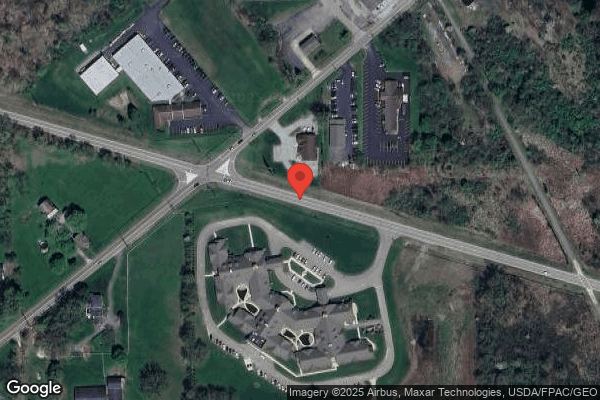
6445 STATE ROUTE 446, CANFIELD, OH 44406 (330) 967-4080
For profit - Corporation 96 Beds WINDSOR HOUSE, INC. Data: November 2025
Trust Grade
60/100
#430 of 913 in OH
Last Inspection: April 2023

Over 2 years since last inspection. Current conditions may differ from available data.

Overview

Canfield Acres LLC, operating as Windsor House at Canfield, has a Trust Grade of C+, indicating that it is slightly above average but not exceptional in quality. It ranks #430 out of 913 nursing homes in Ohio, placing it in the top half overall, and #15 out of 29 in Mahoning County, meaning only 14 local options are better. The facility has shown improvement, reducing issues from 9 in 2023 to 6 in 2024, with staffing rated at 4 out of 5 stars, suggesting that staff are relatively stable, though turnover is at 52%, which is about average for the state. Notably, there have been no fines recorded, which is a positive sign, and the facility has average RN coverage, ensuring some level of oversight in resident care. However, there are some concerning incidents reported by inspectors, such as failures to date and dispose of medications properly, which could affect resident safety. Additionally, there were complaints regarding a lack of weekend activities, leaving some residents feeling disappointed with their engagement options. These highlights indicate that while there are strengths in staffing and compliance, families should also be aware of the facility's areas needing improvement.

Trust Score
C+
60/100
In Ohio
#430/913
Top 47%
Safety Record
Low Risk
No red flags
Inspections
Getting Better
9 → 6 violations
Staff Stability
⚠ Watch
52% turnover. Above average. Higher turnover means staff may not know residents' routines.
Penalties
✓ Good
No fines on record. Clean compliance history, better than most Ohio facilities.
Skilled Nurses
✓ Good
Each resident gets 44 minutes of Registered Nurse (RN) attention daily — more than average for Ohio. RNs are trained to catch health problems early.
Violations
⚠ Watch
25 deficiencies on record. Higher than average. Multiple issues found across inspections.
★★★☆☆
3.0
Overall Rating
★★★★☆
4.0
Staff Levels
★★★☆☆
3.0
Care Quality
★★★☆☆
3.0
Inspection Score
Stable
2023: 9 issues
2024: 6 issues

The Good

  • 4-Star Staffing Rating · Above-average nurse staffing levels
  • Full Sprinkler Coverage · Fire safety systems throughout facility
  • No fines on record

Facility shows strength in staffing levels, fire safety.

The Bad

3-Star Overall Rating

Near Ohio average (3.2)

Meets federal standards, typical of most facilities

Staff Turnover: 52%

Near Ohio avg (46%)

Higher turnover may affect care consistency

Chain: WINDSOR HOUSE, INC.

Part of a multi-facility chain

Ask about local staffing decisions and management

The Ugly 25 deficiencies on record

Oct 2024 1 deficiency
CONCERN (D) 📢 Someone Reported This

A family member, employee, or ombudsman was alarmed enough to file a formal complaint

Potential for Harm - no one hurt, but risky conditions existed

Report Alleged Abuse (Tag F0609)

Could have caused harm · This affected 1 resident

**NOTE- TERMS IN BRACKETS HAVE BEEN EDITED TO PROTECT CONFIDENTIALITY** Based on record review, facility self-reported incident (SRI) review, interviews, and facility policy review, the facility faile...

Read full inspector narrative →
**NOTE- TERMS IN BRACKETS HAVE BEEN EDITED TO PROTECT CONFIDENTIALITY** Based on record review, facility self-reported incident (SRI) review, interviews, and facility policy review, the facility failed to timely report an allegation of physical abuse to the state agency. This affected two residents (Resident #32 and Resident #65) out of three residents reviewed for abuse. The facility census was 63. Findings include: 1. Review of the medical record for Resident #32 revealed an admission date of 11/02/21. Diagnoses included chronic diastolic (congestive) heart failure, major depressive disorder, anxiety disorder, and exudative age-related macular degeneration of the right eye. Review of the annual Minimum Data Set (MDS) assessment dated [DATE] revealed Resident #32 was moderately impaired cognitively with no behaviors or signs or symptoms of delirium and required supervision or touch assistance from staff for sit to stand, transfers, and walking ten feet. Interview on 10/11/24 at 5:56 A.M. with Resident #32 revealed there had been an incident where another resident (Resident #33), who was mentally unstable, hit her with a phone on an unspecified day. Review of the Ohio Department Health's Gateway System of SRI tracking #252676 revealed on 10/05/24 (Saturday) at 3:30 P.M. Resident #32 reported Resident #33 was upset and hit her hand. The facility created an SRI report for physical abuse on 10/06/24 (Sunday)at 9:59 A.M. Review of the witness statement dated 10/06/24 and authored by Licensed Practical Nurse (LPN) #607 revealed on 10/05/24, as she was completing a treatment to Resident #33's leg, when the resident said, that girl next door hit me with my phone. She was swinging it around and it hit my hand. Review of the witness statement dated 10/06/24 authored by State Tested Nursing Assistant (STNA) #651 revealed on 10/05/24, STNA #651 heard Resident #33 shouting. When she went down the hall, STNA #651 observed Resident #33 coming out of Resident #32's room. Resident #32 stated Resident #33 hit her on her hand with Resident #32's phone. Interview on 10/11/24 at 10:11 A.M. with the Administrator confirmed the incident had occurred on Saturday (10/05/24) around 3:30 P.M. and he was not notified of the incident until Sunday morning (10/06/24) around 9:00 A.M. He also confirmed the SRI related to the physical abuse allegation on 10/05/24 was not submitted to the state agency within two hours of discovery as required because he was not notified of the incident until the next morning. 2. Review of the medical record for Former Resident #65 revealed an admission date of 11/04/21 and discharge date of 06/12/24. Diagnoses included multiple sclerosis, anxiety disorder, depression, unspecified psychosis not due to a substance or known physiological condition, delirium due to known physiological condition, and fibromyalgia. Review of the discharge return not anticipated MDS assessment dated [DATE] revealed Resident #65 was independent for daily decision making and had altered level of consciousness which fluctuated. Resident #65 exhibited no behaviors and required partial/moderate assistance from staff for personal hygiene. The resident was dependent on staff for toileting hygiene and transfers, did not walk, and used a motorized wheelchair. Review of the care plan dated 12/20/22 revealed Resident #65 was verbally aggressive and accusatory toward staff related to her ineffective coping skills. Review of the Ohio Department Health's Gateway System of SRI tracking #239096 revealed on 09/12/23 at 8:00 A.M. the facility was notified of a physical abuse allegation between Resident #65 and STNA #678. The facility created an SRI report for physical abuse on 09/12/23 at 2:37 P.M. Review of Corporate Quality Assurance Nurse #670 statement dated 09/12/23 revealed the Administrator informed her he received a voicemail that morning (09/12/23) from Resident #65, which was left the evening after business hours on 09/11/23, in which Resident #65 stated she wanted to talk to someone about an aide that was rough with her. Interview on 09/12/23 with Resident #65 by Corporate Quality Assurance Nurse #670 revealed last Thursday night (09/07/23) STNA #678 was rough while providing care, and the resident felt STNA #678 was intentionally being rough while providing care and was hurting her on purpose. Interview on 10/11/24 at 1:12 P.M. with the Administrator confirmed SRI #238096 was not submitted to the state agency in a timely manner and could not give a reason why it was not submitted to the state agency within two hours as required. Review of the facility policy titled Resident Abuse Prevention Practices, revised October 2022, revealed alleged and suspected, or observed abuse would be thoroughly investigated by the Administrator and the Director of Nursing or the designee and the alleged and suspected violations would be reported immediately to the Department of Health for on-line submission. This deficiency represents non-compliance investigated under Complaint Number OH00158588.
Jun 2024 3 deficiencies
CONCERN (D) 📢 Someone Reported This

A family member, employee, or ombudsman was alarmed enough to file a formal complaint

Potential for Harm - no one hurt, but risky conditions existed

Comprehensive Care Plan (Tag F0656)

Could have caused harm · This affected 1 resident

**NOTE- TERMS IN BRACKETS HAVE BEEN EDITED TO PROTECT CONFIDENTIALITY** Based on record review, interview, and facility policy review the facility failed to ensure Resident #61's hospice care plan and...

Read full inspector narrative →
**NOTE- TERMS IN BRACKETS HAVE BEEN EDITED TO PROTECT CONFIDENTIALITY** Based on record review, interview, and facility policy review the facility failed to ensure Resident #61's hospice care plan and actual skin impairment care plan were in place and updated. This affected one resident (#61) out of three residents reviewed for care plans. The facility census was 60. Findings include: Review of the closed medical record revealed Resident #61 was admitted to the facility on [DATE] and expired on [DATE]. Diagnoses included but was not limited to dementia unspecified, severe, without behavioral disturbance, psychotic disturbance, mood disturbance, anxiety, kidney disease, urine retention, colon cancer, malnutrition. Resident #61 was admitted to hospice on [DATE]. Review of the Minimum Data Set (MDS) assessment, dated [DATE], revealed Resident #61 was cognitively intact. The assessment noted he was at risk for pressure ulcers and had no pressure ulcers. Review of the care plan dated [DATE] revealed the care plan was not updated to include hospice admission on [DATE], three new areas of skin damage and groin swelling on [DATE]. Interview on [DATE] at 12:33 P.M. with Corporate Quality Assurance Registered Nurse (RN) #217 verified Resident #61 did not have a hospice care plan. Interview on [DATE] at 9:26 A.M. with Corporate Quality Assurance RN #217 verified Resident #61 did not have an updated care plan to reflect actual skin impairments to include two new areas of skin impairment (not staged by the facility) to the mid vertebrae, left heel deep tissue injury (DTI) (A purple or maroon localized area of discolored intact skin or blood-filled blister due to damage of underlying soft tissue due to pressure and/or shear. The area may be preceded by tissue that is painful, firm, mushy, boggy, warmer or cooler as compared to adjacent tissue), moisture associated damage (MASD) to bilateral buttocks, and groin swelling. Interview on [DATE] at 11:34 A.M. with MDS Licensed Practical Nurse (LPN) #218 verified Resident #61 did not have a hospice care plan and did not have an updated care plan to reflect actual skin impairments to include two new areas of skin impairment to the mid vertebrae, left heel DTI, MASD to bilateral buttocks, and groin swelling. Interview on [DATE] at 11:40 A.M. with MDS Float RN #219 verified Resident #61 did not have a hospice care plan, have an updated care plan to reflect actual skin impairments to include two new areas of skin impairment to the mid vertebrae, left heel DTI, MASD to bilateral buttocks, and groin swelling. Review of the facility policy titled Care Plans, revised 11/2023, revealed to assure that all disciplines coordinate the care of each resident and develop a resident centered care plan that is consistent with resident rights. This deficiency represents non-compliance investigated under Master Complaint Number OH00154700.
CONCERN (D) 📢 Someone Reported This

A family member, employee, or ombudsman was alarmed enough to file a formal complaint

Potential for Harm - no one hurt, but risky conditions existed

Quality of Care (Tag F0684)

Could have caused harm · This affected 1 resident

**NOTE- TERMS IN BRACKETS HAVE BEEN EDITED TO PROTECT CONFIDENTIALITY** Based on record review, interview, and facility policy review the facility failed to appropriately monitor Resident #61 after a ...

Read full inspector narrative →
**NOTE- TERMS IN BRACKETS HAVE BEEN EDITED TO PROTECT CONFIDENTIALITY** Based on record review, interview, and facility policy review the facility failed to appropriately monitor Resident #61 after a significant change in condition related to signs of urinary tract infection (UTI). This affected one resident (#61) of three residents reviewed for a change of condition. The facility census was 60. Findings include: Review of the closed medical record for Resident #61 revealed an admission date of 09/18/23 and an expiration date of 04/26/24. Diagnoses included dementia, kidney disease, urinary retention, colon cancer, and malnutrition. Review of the quarterly Minimum Data Set (MDS) assessment dated [DATE] revealed Resident #61 was moderately cognitively impaired. He required setup and cleanup help for eating and oral hygiene, supervision for toileting and personal hygiene, and partial to moderate assistance for bathing. He had an indwelling urinary catheter and was frequently incontinent of bowel. Review of the care plan dated 08/22/23 revealed Resident #61 was at risk for recurrent UTI's due to an indwelling urinary catheter. Interventions included encouraging adequate fluid intake, monitoring, documenting, and reporting signs and symptoms of a UTI, and obtaining and monitoring lab work as needed. Review of the nursing progress note dated 03/27/24 at 2:10 P.M. revealed Resident #61 had poor fluid intake and complaints of not feeling well. His indwelling urinary catheter was noted to be draining well with dark yellow urine. Vital signs were obtained, and the physician was notified. An order for Zofran (antiemetic) 4 milligrams (mg) every eight hours as needed (prn) for nausea and vomiting as obtained. Review of the medical record revealed there was no documented evidence Resident #61 was monitored for fluid intake, urinary output and color of urine, vital signs, and complaints of not feeling well from 03/27/24 at 2:10 P.M. after the physician was notified that the resident had poor fluid intake, dark yellow urine, and complaints of not feeling well until 04/01/24 at 4:10 P.M. when the physician was notified of Resident #61's increase in confusion and concern for potential UTI. Review of the nursing note dated 04/01/24 at 4:10 P.M. revealed the physician was notified of Resident #61's increase in confusion and concern for potential UTI. An order was given to obtain a urinalysis culture and sensitivity. Review of the medical record revealed no documentation of when the urine sample was obtained and sent to the lab. Review of the medical record revealed there was no documented evidence Resident #61 was monitored for fluid intake, urinary output and color of urine, vital signs, and complaints of not feeling well from 04/01/24 at 4:10 P.M. after the physician was notified that the resident had increased confusion and concerns for a UTI until 04/05/24 at 12:26 P.M. when the physician gave an order for an antibiotic. Review of the nursing note dated 04/05/24 at 12:26 P.M. revealed the physician was notified of the urine culture sensitivity results and ordered Cipro 250mg by mouth (PO) twice per day (BID) for five days for a UTI. Review of the April 2024 medication administration record (MAR) revealed Resident #61's Cipro was administered as ordered by the physician. Interview on 06/18/24 at 9:33 A.M. with Registered Nurse (RN) #201 confirmed there was no documented evidence Resident #61 was monitored thoroughly between 03/27/24 when he reported not feeling well with poor fluid intake and 04/05/24 when he was ordered to an antibiotic for UTI. Review of the facility policy titled Change of Condition, dated February 2024, revealed a change of condition was identified as any sudden or marked change of output of urine, diarrhea or behavior. When a change of condition was identified, symptoms, assessment, physician orders, treatments and notifications would be documented as well as follow-up nursing assessments and monitoring until the condition had stabilized. This deficiency represents noncompliance investigated under Master Complaint Number OH00154700.
CONCERN (D) 📢 Someone Reported This

A family member, employee, or ombudsman was alarmed enough to file a formal complaint

Potential for Harm - no one hurt, but risky conditions existed

Pressure Ulcer Prevention (Tag F0686)

Could have caused harm · This affected 1 resident

**NOTE- TERMS IN BRACKETS HAVE BEEN EDITED TO PROTECT CONFIDENTIALITY** Based on medical record review, interviews, review of hospice notes, and review of the facility policy the facility failed to pr...

Read full inspector narrative →
**NOTE- TERMS IN BRACKETS HAVE BEEN EDITED TO PROTECT CONFIDENTIALITY** Based on medical record review, interviews, review of hospice notes, and review of the facility policy the facility failed to provide coordination of care between hospice and facility staff for Resident #61 related to pressure ulcer prevention. This affected one resident (#61) out of two residents reviewed for pressure ulcer prevention. The facility census was 60. Findings include: Review of the closed medical record revealed Resident #61 was admitted to the facility on [DATE] and expired on [DATE]. Diagnoses included but were not limited to dementia unspecified, severe, without behavioral disturbance, psychotic disturbance, mood disturbance and anxiety, kidney disease, urine retention, colon cancer, malnutrition. Resident #61 was admitted to the hospice on [DATE]. Review of the Minimum Data Set (MDS) assessment, dated [DATE], revealed Resident #61 was cognitively intact. The assessment noted he was at risk for pressure ulcer development and had no pressure ulcers. Review of Resident #61's physician orders dated [DATE] revealed Skin Check by nurse weekly on Fridays, night shift. Cleanse bilateral upper inner thighs with soap and water, rinse, dry and apply Baza antifungal cream every shift. Cleanse groin with soap and water, pat dry, apply antifungal cream to affected area every shift for fungal infection. Cleanse sacrum with soap and water, pat dry, apply ET mix (four parts Aquaphor, one part stoma powder), every shift for preventive skin maintenance. Offload heels in bed for preventative skin care. Review of the progress noted dated [DATE] at 3:31 P.M., authored by Clinical Director Registered Nurse (RN) #200 revealed she received a call from Resident #61's family who stated he was notified by a hospice nurse that the resident had new skin issues. Clinical Director RN #200 and Director of Nursing (DON) immediately assessed the resident. Findings included two new skin issues noted to mid-upper back on bony prominence of vertebra and one skin area to left heel. Resident #61's daughter was present and notified at that time. Review of the incident report dated [DATE] at 3:40 P.M. revealed new skin areas noted per hospice nurse. The hospice nurse notified Resident #61's family who then called the facility to inquire about the new areas. Two new areas were noted to the bony prominence of mid vertebrae. The areas were red, non-blanchable with darker areas noted in the middle of each area. The first area measured 1.5 centimeter (cm) by (x) 2.0 cm. The second area on mid vertebrae measured 1.0 cm x 2.5 cm, and the entire area with redness measured 6.0 cm x 2.5 cm. The left heel was a deep tissue injury (DTI) (A purple or maroon localized area of discolored intact skin or blood-filled blister due to damage of underlying soft tissue due to pressure and/or shear. The area may be preceded by tissue that is painful, firm, mushy, boggy, warmer or cooler as compared to adjacent tissue.) which measured 1.5 cm x 0.5 cm and redness around the DTI measuring 4.0 cm x 3.0 cm. Review of Resident #61's treatment administration records (TAR) dated [DATE] revealed Skin Check by nurse weekly as per evaluation every Friday, night shift. Cleanse bilateral upper inner thighs with soap and water, rinse, dry and apply Baza antifungal cream every shift. Cleanse groin with soap and water, pat dry, apply antifungal cream to affected area every shift for fungal infection. Cleanse sacrum with soap and water, pat dry, apply ET mix, every shift for preventative skin maintenance. Offload heels in bed for preventative skin care. Review of the hospice visit notes for [DATE] revealed no documentation regarding the skin issues noted. Review of the hospice visit notes for [DATE] reported an addendum noted to include the wound to the posterior coccyx as a stage I pressure ulcer (Intact skin with non-blanchable redness of a localized area usually over a bony prominence. Darkly pigmented skin may not have visible blanching; its color may differ from the surrounding area.) onset date [DATE] measuring 2.50 cm x 2.00 cm x 0.10. No eschar, no slough, no granulation, no epithelial, and 100% clean non-granulating. No drainage, no pain associated with wound, and peri-wound intact. An addendum on [DATE] revealed a left plantar foot - heel pressure ulcer - unstageable deep tissue injury and measured 0.5 cm x 0.50 cm with eschar greater than 25%, no slough, no granulation, epithelial greater that 25%, no drainage, no pain, and per-wound intact. The note stated Resident #61's penis and scrotum swelling 3-4+ edema, to keep the area elevated on towel, and Resident #61 was prescribed Bactrim (antibiotic) for penis/scrotum edema. No documentation in the hospice notes from [DATE] to [DATE] to indicate that the facility nurse was updated on wounds. Review of Resident #61's current care plans (dated [DATE]) revealed he had potential for pressure ulcer development related to decreased mobility, and the resident had potential impairment to skin integrity related to occasional incontinence and need of assistance with activity of daily living (ADL). The care plan was not updated to include hospice care, skin impairment, and/or groin/scrotum swelling. Interview on [DATE] at 10:05 A.M. with Wound Licensed Practical Nurse (LPN) #206 revealed she was does not recall being informed of any new areas to Resident #61. Wound LPN #206 reported Resident #61 had moisture associated skin damage (MASD) to bilateral buttocks which healed and was being treated prophylactically. Wound LPN #206 reported she saw Resident #61 on [DATE] and [DATE] with no new areas noted. Wound LPN #206 reported she saw Resident #61 on [DATE] and saw two dressings close together on the resident's mid back. She removed the dressings and assessed the area with no negative findings noted. Wound LPN #206 reported the hospice nurse was calling the area to the coccyx a Stage I pressure ulcer, but the area was actually MASD. Interview on [DATE] at 1016 A.M. with the Director of Nursing (DON) revealed the facility was never notified by the hospice nurse of Resident #61's skin issues. The DON reported the hospice nurse notified Resident #61's family on [DATE] of new skin issues, and the family called the facility. Resident #61 was immediately assessed by Clinical Director RN #200 and herself. See incident report findings to include two new areas to mid vertebrae and one new area to left heel. Interview on [DATE] at 10:55 A.M. with Hospice RN #213 revealed Resident #61 was admitted to hospice on [DATE] with diagnosis of severe protein calorie malnutrition. Hospice RN #213 reported Resident #61 was seen three times a week by a hospice nurse and three times a week by a hospice aide. Hospice RN #213 reported after every visit, the hospice nurse would leave a care coordination note. Hospice RN #213 reported on [DATE] that Resident #61 was seen by hospice nurse with no skin issues noted. Hospice RN #213 reported it was not surprising in last two weeks of life that Resident #61 had skin breakdowns, it was expected, and the main goal was comfort care. Interview on [DATE] at 11:50 A.M. with Hospice Clinical Manager #214 revealed hospice aides would notify the hospice nurse of any new skin areas during bath. Hospice Clinical Manager #214 reported there would be no documentation of this, it would be reported verbally. The hospice nurse who completed the admission on [DATE] reported she spoke with the facility nurse regarding a skin issue. Hospice Clinical Manager #214 was unable to provide name of the facility nurse she spoke to. Interview on [DATE] at 12:33 P.M. with Corporate Quality Nurse (CQN) #217 verified Resident #61 did not have a hospice care plan. CQN #217 reported the hospice nurse never notified facility of any skin issues. Interview on [DATE] at 1:22 P.M. with Clinical Director RN #200 revealed the facility was never notified by the hospice nurse that Resident #61 had any skin issues. The DON reported that the hospice nurse notified Resident #61's family on [DATE] of new skin issues, and the family called the facility. Resident #61 was immediately assessed by Clinical Director RN #200 and the DON. See incident report findings to include two new areas to mid vertebrae and one new area to left heel. Interview on [DATE] at 9:26 A.M. with CQN #217 verified the care plan was not updated to reflect three new skin areas, MASD, and groin swelling. CQN #217 reported there was not adequate communication from the hospice nurse to the facility staff regarding any skin issues. CQN #217 reported the hospice nurse never notified facility of any skin issues. Review of the facility policy titled Hospice Policy, revised 12/2022, revealed the facility will ensure a hospice agreement/contract is in place that outlines hospice services and responsibilities and the facilities collaboration of care. This deficiency represents non-compliance investigated under Master Complaint Number OH00154700.
Apr 2024 1 deficiency
CONCERN (D) 📢 Someone Reported This

A family member, employee, or ombudsman was alarmed enough to file a formal complaint

Potential for Harm - no one hurt, but risky conditions existed

Medical Records (Tag F0842)

Could have caused harm · This affected 1 resident

Based on medical record review, review of a self-reported incident and interview, the facility failed to ensure medical records were accurate and complete for Residents #2 and #11. This affected two r...

Read full inspector narrative →
Based on medical record review, review of a self-reported incident and interview, the facility failed to ensure medical records were accurate and complete for Residents #2 and #11. This affected two residents (#2 and #11) of three records reviewed for accuracy. The facility census was 70. Findings include: 1. Review of the medical record for Resident #2 revealed an admission date of 07/10/20 with diagnoses including Alzheimer's disease, dementia, intermittent explosive disorder, and anxiety disorder. Further review of the medical record identified no documentation of any complaints of hip or knee pain and possible rotation of the leg for Resident #2. Review of the facility's investigation of Self-Reported Incident (SRI) #245125 revealed Resident #2's skin check identified complaints of pain to the left hip and knee and a slight internal rotation of the left leg. On 04/18/24 at 1:41 P.M., interview with Corporate Quality Assurance Nurse #107 verified Resident #2's skin check, obtained during the investigation of SRI #245125, revealed complaints of pain to his left hip and knee and a slight rotation of his leg. Corporate Quality Assurance Nurse #107 confirmed Resident #2's medical record had no documentation of this identified concern or the Nurse Practitioner's assessment of this potential injury. She also stated the facility had an overall problem with documentation. 2. Review of the medical record for Resident #11 revealed an admission date of 08/18/22 with diagnoses including anxiety, major depressive disorder, difficulty in walking, and muscle weakness. Review of the nurse aide task documentation for bed to chair transfers, dated 03/20/24 to 04/18/24, identified no refusals were documented and there were 34 instances of not-applicable or not attempted. On 04/18/24 at 11:38 A.M., interview with Restorative Therapy State Tested Nurse Aide (STNA) #104 stated Resident #11 liked to stay in bed. On 04/18/24 at 11:40 A.M., interview with STNA #103 stated Resident #11 refused to get out of bed all the time and refusals should have been documented as refusals on the nurse aide tasks instead of not-applicable or not attempted. STNA #103 verified there were no refusals documented in the nurse aide tasks. On 04/18/24 at 11:49 A.M., interview with STNA Supervisor #105 verified Resident #11's nurse aide tasks were inaccurate because there were no refusals documented and he refused to get out of bed a lot. On 04/18/24 at 1:28 P.M., interview with Corporate Quality Assurance Nurse #107 confirmed Resident #11 refused to get out of bed frequently and verified there were no refusals documented on the nurse aide tasks. On 04/18/24 at 1:41 P.M., a follow-up interview with Corporate Quality Assurance Nurse #107 revealed the facility had an overall problem with documentation. This deficiency is an incidental finding identified during the investigation of Complaint Number OH00152071.
Feb 2024 1 deficiency
CONCERN (D) 📢 Someone Reported This

A family member, employee, or ombudsman was alarmed enough to file a formal complaint

Potential for Harm - no one hurt, but risky conditions existed

Accident Prevention (Tag F0689)

Could have caused harm · This affected 1 resident

**NOTE- TERMS IN BRACKETS HAVE BEEN EDITED TO PROTECT CONFIDENTIALITY** Based on interview and record review, the facility failed to provide Resident #70 proper assistance with incontinence to prevent...

Read full inspector narrative →
**NOTE- TERMS IN BRACKETS HAVE BEEN EDITED TO PROTECT CONFIDENTIALITY** Based on interview and record review, the facility failed to provide Resident #70 proper assistance with incontinence to prevent the resident from falling. This affected one Resident (#70). The facility census was 69. Findings include: Review of Resident #70's medical records revealed an admission date of 10/21/22 and a discharge date of 01/31/24. Diagnoses included corticobasal degeneration, hemiplegia and hemiparesis following cerebral infarction affecting left non-dominant side, dysphagia, gastrostomy, abnormal posture, contracture left hand, COVID-19, protein-calorie malnutrition, gastrostomy status, urogenital implants, neuromuscular dysfunction of bladder, pressure ulcer of sacral region, stage 4, diabetes mellitus due to underlying condition with food ulcer, adult failure to thrive, disorder of white blood cells, tachycardia, history of transient ischemic attack (TIA), and hypertension. Review of Resident #70's Minimum Data Set (MDS) assessment dated [DATE] revealed Resident #69 had impaired cognition. Resident #70 required dependent assistance with toileting. Review of care plan dated 10/24/22 revealed Resident #70 had a person-centered plan of care. Interventions included the assistance of two for toileting. Review of Resident #70's progress note dated 12/20/23 at 12:16 P.M. revealed Licensed Practical Nurse (LPN) #143 was called to Resident #70's room with the resident on the floor. State Tested Nursing Assistant (STNA) #158 stated while she was performing peri care the residents leg shifted off the edge of the bed causing her to roll form her grasp and she landed on the floor beside her bed. Review of Resident #70's fall investigation report revealed on 12/20/24 at 11:40 A.M. the STNA alerted the floor nurse that while she was giving hygiene care to the resident, the resident rolled out of bed. When the nurse entered the room the resident was lying on the floor, on the left side of the bed, on her right side. The wound care nurse was called to the room to assist with the head to toe assessment. The resident had a reddened area to the right side of her chin and neck and the area was blanchable. A new abrasion was noted to the right buttocks measuring 0.3 centimeters (cm) by 3.0 cm by 0.1 cm deep. The area was bright red in color with drainage noted. An abrasion was noted to right knee measuring 1 cm by 2 cm with no drainage noted a this time. During this assessment the resident denied any pain or discomfort and range of motion within normal limits for the resident. Neurological checks initiated per facility protocol. Vitals signs were obtained with blood pressure 132/70, temperature 97.7 degrees Fahrenheit, heart rate 84, oxygen 94% on room area. The resident was assisted off floor and back in the bed via hoyer lift with four staff members. Wound care was rendered to new areas using clean technique. Area cleansed with normal saline solution. Areas patted dry, adaptic applied and covered with a Allevyn. Resident #70's brief was changed and the resident was repositioned back in bed. Resident #70 began complaining of pain to the right hip. New orders for stat X-rays of the entire body were ordered. Resident #70's daughter was notified of the incident and she requested that her mother be sent to the emergency room to be evaluated at this time. Resident #70 was admitted to the hospital with pneumonia. Interview on 02/02/24 at 9:56 A.M. with Corporate Nurse (CN) #202 revealed Resident #70 was two assists for incontinence care and STNA #158 provided incontinence care with one assist. CN #202 reported Resident #70 had a fall with no injuries. CN #202 reported physician was notified and ordered x-rays. CN #202 reported the family was notified and refused x-rays and wanted sent to hospital for evaluation. CN #202 reported physician was updated and Resident #70 was sent to hospital. Interview on 02/02/24 at 11:02 A.M. with LPN #143 revealed STNA #158 provided incontinence care with one assist and should have been two assists. LPN #143 reported Resident #70 had a fall with no injuries. CN #202 reported physician was notified and ordered x-rays. CN #202 reported the family was notified and refused x-rays and wanted sent to hospital for evaluation. CN #202 reported physician was updated and Resident #70 was sent to hospital. Interview on 02/02/24 at 11:19 A.M. via phone with STNA #158 revealed on 12/20/23 she provided incontinence care to Resident #70 with only one assist which resulted in a fall with no injuries. STNA #158 reported for incontinence care resident #70 required two staff assistance. Interview on 02/02/24 at 11:34 A.M. with Wound LPN #126 revealed on 12/20/23 STNA #158 provided incontinence care to Resident #70 with only one assist and resulted in a fall with no injuries. Resident #70 was a two person assist for peri care. Interview on 02/02/24 at 11:51 A.M. with Director of Nursing (DON) revealed on 12/20/23 STNA #158 provided incontinence care to Resident #70 with only one assist which resulted in a fall with no injuries. Resident #70 was a two person assist for incontinence care. DON reported [NAME] for Resident #70 listed toileting as two person assist. Interview on 02/02/24 at 12:11 P.M. with Assistant Director of Nursing (ADON) revealed on 12/20/23 STNA #158 provided incontinence care to Resident #70 with only one assist which resulted in a fall with no injuries. Resident #70 was a two person assist for incontinence care. Review of facility policy, Fall Prevention and Fall Management, revised 08/2023, revealed after completion of the assessment a falls plan of care is developed for those residents identified as being at risk for falls and develop a care plan with interventions based on risk review. This deficiency represents non-compliance investigated under Complaint Number OH00150071.
Jun 2023 2 deficiencies
CONCERN (D) 📢 Someone Reported This

A family member, employee, or ombudsman was alarmed enough to file a formal complaint

Potential for Harm - no one hurt, but risky conditions existed

Deficiency F0760 (Tag F0760)

Could have caused harm · This affected 1 resident

**NOTE- TERMS IN BRACKETS HAVE BEEN EDITED TO PROTECT CONFIDENTIALITY** Based on observation, record review, interviews, review of the manufacturer's instructions, and review of the facility policy th...

Read full inspector narrative →
**NOTE- TERMS IN BRACKETS HAVE BEEN EDITED TO PROTECT CONFIDENTIALITY** Based on observation, record review, interviews, review of the manufacturer's instructions, and review of the facility policy the facility failed to ensure medications were given per physician's orders. This effected one resident (#39) of five residents reviewed for medication administration. The facility census was 66. Findings include: Record review for Resident #39 revealed an admission date of 06/09/23. Diagnosis included cystitis, hypertension, type II diabetes mellitus, and depression. Review of Resident #39's five-day Minimum Data Set (MDS) 3.0 assessment dated [DATE] revealed he had intact cognition. He required extensive assistance by two staff members for transfers and toileting. He required an extensive assist by one staff member for wheelchair mobility, dressing, bathing, and was independent with eating. Review of Resident #39's physician's orders dated for June 2023 revealed orders for Lantus (insulin) 15 units (u) subcutaneously twice a day for diabetes mellitus. Observation made on 06/28/23 at 8:30 A.M. of medication administration with Licensed Practical Nurse (LPN) #806 for five residents with 27 opportunities revealed for Resident #39 she did not prime the Lantus insulin needle with two units prior to setting the pen to the ordered dose of 15 units. Interview on 06/28/23 at 9:30 A.M. with LPN #806 revealed she verified she did not prime Resident #39's insulin pen with two units prior to administering 15 units of Lantus as per the manufacturer's instructions. Review of the Manufacturer's instructions for Lantus insulin pen as stated in step three, nursing to test dose of two units daily, hold pen with needle pointing up and lightly tap the insulin reservoir so the air bubbles rise to the top of the needle, press the injection button all the way in, and check to see if insulin comes out of the needle. If no insulin comes out, repeat the test two more times. Step four states to dial up ordered amount of insulin and administer. Review of the facility policy titled Medication Administration Safety and Medication Error Policy, dated November 2015, revealed all medications are to be given per physician's orders and as directed by manufacturer's instructions. This deficiency represents non-compliance investigated under Master Complaint Number OH00144036.
CONCERN (D) 📢 Someone Reported This

A family member, employee, or ombudsman was alarmed enough to file a formal complaint

Potential for Harm - no one hurt, but risky conditions existed

Medical Records (Tag F0842)

Could have caused harm · This affected 1 resident

**NOTE- TERMS IN BRACKETS HAVE BEEN EDITED TO PROTECT CONFIDENTIALITY** Based on record review, interview, and employee personnel file review the facility failed to maintain accurate medical records f...

Read full inspector narrative →
**NOTE- TERMS IN BRACKETS HAVE BEEN EDITED TO PROTECT CONFIDENTIALITY** Based on record review, interview, and employee personnel file review the facility failed to maintain accurate medical records for Resident #67. This effected one resident (#67) of six residents reviewed for accurate medical records. The facility census was 66. Findings include: Review of the closed medical record for the Resident #67 revealed an admission date of 06/15/23 and a discharge date of 06/26/23. Diagnosis included aftercare following joint replacement of right knee, impaired glucose tolerance, osteoarthritis, hypertension, depression, and the presence of right knee artificial joint. Review of Resident #67's five-day Minimum Data Set (MDS) 3.0 assessment dated [DATE] revealed she required limited assist by one staff member for bed mobility, transfers, walking, bathing, wheelchair mobility, dressing, toileting, and personal hygiene. She required set-up help only with eating. Review of the physician's orders for Resident #67 dated June 2023 revealed treatment orders for blisters to residents' right knee at incision site to be cleansed with Betadine (antiseptic), apply Xeroform (Vaseline) gauze pad with abdominal dressing and secure with Ace wrap twice a day and as needed. Review of Resident #67's Treatment Administration Record (TAR) for June 2023, revealed all treatments were initialed and signed off as being completed by nursing staff as ordered. Review of progress notes for Resident #67 revealed there were not any progress notes regarding treatments being signed off in error as completed. Interview on 06/27/23 at 1:35 P.M. with the Corporate Quality Assurance Nurse Registered Nurse (RN) # 801 revealed Licensed Practical Nurse (LPN) #802 was disciplined and issued a write-up for falsification of documentation for signing off treatments for Resident #67 as if they were completed; LPN #802 did not complete the treatments on 06/17/23. Interview on 06/28/23 at 3:30 P.M. with LPN #802 revealed she confirmed she signed of the treatment record for Resident #67 as if she had completed all treatments as ordered; however, she did not complete any of the treatments for the resident. She confirmed the facility administration issued her a write-up for falsification of documentation and instructed her to put in a progress note stating the treatment was signed off in error and was not completed. Review of LPN #802's employee file revealed a disciplinary action for falsification of documentation regarding Resident #67's treatments for 06/17/23. This deficiency represents non-compliance investigated under Master Complaint Number OH00144036.
May 2023 1 deficiency
CONCERN (D) 📢 Someone Reported This

A family member, employee, or ombudsman was alarmed enough to file a formal complaint

Potential for Harm - no one hurt, but risky conditions existed

Safe Environment (Tag F0921)

Could have caused harm · This affected 1 resident

**NOTE- TERMS IN BRACKETS HAVE BEEN EDITED TO PROTECT CONFIDENTIALITY** Based on observation, interview, record review, and review of the facility policy the facility failed to maintain a clean and sa...

Read full inspector narrative →
**NOTE- TERMS IN BRACKETS HAVE BEEN EDITED TO PROTECT CONFIDENTIALITY** Based on observation, interview, record review, and review of the facility policy the facility failed to maintain a clean and sanitary environment for Resident #14 and Resident #49. This affected two residents (#14 and #49) and had the potential to affect all 23 additional residents (#1, #2, #3, #5, #7, #10, #12, #15, #25, #28, #32, #34, #39, #40, #41, #47, #52, #53, #56, #57, and #59) residing on the C lodge unit of the facility. The facility census was 60. Findings include: 1. Review of the medical record for Resident #14 revealed an admission date of 08/11/20. Diagnoses included polycythemia vera, acquired absence of the right leg above the knee, and hemiplegia and hemiparesis following cerebral infarction affecting the right dominant side. Review of the quarterly Minimum Data Set (MDS) assessment dated [DATE] revealed Resident #14 had severe cognitive impairment. Resident #14 required extensive two-person physical assistance for bed mobility, dressing, and personal hygiene; and total dependence of one-person for eating and toilet use. Resident #14 was always incontinent of urine and bowel. Review of the care plan dated 02/28/23 revealed Resident #14 had a self-care deficit related to limited mobility and range of motion. Interventions included assisting with toileting and total dependence with personal hygiene. 2. Review of the medical record for Resident #49 revealed an admission date of 02/12/22. Diagnoses included chronic obstructive pulmonary disease, pulmonary embolism, and traumatic brain injury. Review of the quarterly MDS assessment dated [DATE] revealed Resident #49 had intact cognition. Resident #49 required limited one-person physical assistance for bed mobility, transfers, and toilet use; independent with one-person assistance for dressing; and supervision with set-up help only for eating and personal hygiene. Resident #49 was occasionally incontinent of urine and always continent of bowel. Review of the care plan dated 05/03/23 revealed Resident #49 had a self-care deficit due to a diagnosis of localized edema, and abnormalities of gait, and mobility. Interventions included assisting with activities of daily living as needed and encouraging the resident to do as much for herself as possible. Interview on 05/26/23 at 10:10 A.M. with Resident #49 revealed the facility had a wonderful housekeeper but she has not seen her in over two weeks. She reported her bathroom was dirty, and the floor in her room had not been swept and she had tried to clean it up, but she could only do so much. Observation during the interview revealed stains around the toilet in her bathroom. The floor was sticky, and there were two dirty paper towels on the floor. Observation of the carpeted floor in her room revealed three piles of lint and small paper garbage. Interview on 05/26/23 at 10:13 A.M. with Licensed Practical Nurse (LPN) #522 revealed the facility only had one housekeeper in the facility due to staff leaving. She reported the housekeeper was not in the facility a lot, and she was not sure why. Interview on 05/26/23 at 10:19 A.M. with Resident #14 revealed she had no issues with her care and the cleanliness of her room. Observation during the interview revealed multiple medical equipment trash on the floor underneath and on the sides of her bed from Resident #14's tube feeding supplies. Interview during the observation with LPN #522 confirmed the garbage on the floor. Interview on 05/26/23 at 10:22 A.M. with State Tested Nursing Assistant (STNA) #591 confirmed the stains on the bathroom floor in Resident #49's room. She also confirmed the garbage on the floor in her bathroom and on the carpeting in her room. STNA #591 reported she had not seen the housekeeping staff in a while. Interview on 05/26/23 at 10:33 A.M. with Resident #48 and her husband revealed the housekeeper was going to quit and was off for a while, but the administration brought her back and she is trying to catch up with the cleaning. They reported by next week she will be caught up on all her work. Interview on 05/26/23 at 10:47 A.M. with Housekeeping #579 revealed she is just getting back to her job at the facility. She reported she has been off for a few weeks and just returned to the facility on [DATE]. She reported she has been trying to catch up, but the C lodge had not been caught up yet. Interview on 05/26/23 at 1:12 P.M. with the Administrator revealed he was having staffing issues in the facility. He reported the facility had a job fair on 05/25/23 to just hire housekeeping staff. Review of Resident Council Minutes dated 03/01/23, 04/18/23, and 05/03/23 revealed on 05/03/23 one resident complained that she had to wait for over a day for her paper towels to be replaced due to housekeeping staff not being available. Review of the facility policy titled Physical Environment, dated 1999, revealed the facility will provide a safe, clean, comfortable, and homelike environment. Housekeeping and maintenance services are necessary to maintain a sanitary, orderly, and comfortable interior. This deficiency represents noncompliance investigated under Master Complaint Number OH00142974.
Apr 2023 6 deficiencies
CONCERN (D)

Potential for Harm - no one hurt, but risky conditions existed

Assessment Accuracy (Tag F0641)

Could have caused harm · This affected 1 resident

**NOTE- TERMS IN BRACKETS HAVE BEEN EDITED TO PROTECT CONFIDENTIALITY** 3. Review of the medical record revealed Resident #62 had an admission date of 11/08/22. Diagnoses included displaced communicat...

Read full inspector narrative →
**NOTE- TERMS IN BRACKETS HAVE BEEN EDITED TO PROTECT CONFIDENTIALITY** 3. Review of the medical record revealed Resident #62 had an admission date of 11/08/22. Diagnoses included displaced communicated fracture of shaft of left femur, COVID-19, unspecified lack of coordination, and history of falling. Review of the physician orders dated 01/21/23 revealed an order for an alarm to the chair and an order for an alarm to the bed. Review of the care plan dated 11/16/22 revealed Resident #62 was high risk for falls related to not positioning in bed correctly, not using call light, and self-transferring despite redirection and visual cues to ask for assistance. Interventions included an alarm to the bed and the chair. Review of the quarterly 03/07/23 MDS assessment revealed a bed and chair alarm were not used. Observation on 04/03/23 at 12:25 P.M. revealed Resident #62 had a bed and chair alarm in use. Interview on 04/05/23 at 8:50 A.M. with Registered Nurse #472 confirmed bed and chair alarms not being marked was in error since Resident #62 did have alarms in place during the reference period for the quarterly 03/07/23 MDS. Based on observation, record review, and interview, the facility failed to ensure resident assessments were completed accurately for Residents #2, #3, and #62. This affected three residents (#2, #3, #62) of 21 residents records reviewed. The facility census was 65. Findings include: 1. Review of the medical record for Resident #2 revealed an admission date of 09/10/21. Diagnoses included major depressive disorder, bipolar disorder, and chronic pain. A new diagnosis of schizoaffective disorder was added 01/31/22. Review of the quarterly Minimum Data Set (MDS) assessment dated [DATE] indicated Resident #2 received an antidepressant for zero days out of the previous seven days. Review of the physician's orders identified an order for Fluoxetine HCl (a medication used to treat depression) 20 milligram (mg) tablet once daily. Review of the medication administration record (MAR) for January 2023 revealed Resident #2 received Fluoxetine HCl on 01/21/23, 01/22/23, 01/23/23, 01/24/23, 01/25/23, 01/26/23, and 01/27/23. On 04/05/23 at 4:55 P.M., interview with Corporate Quality Assurance Nurse #480 verified Resident #2 received Fluoxetine HCl for seven days of the seven-day lookback period for the MDS assessment. She also verified the MDS assessment dated [DATE] indicated Resident #2 had received an antidepressant for zero out of seven days. 2. Review of the medical record for Resident #3 revealed an admission date of 11/04/21. Diagnoses included multiple sclerosis, chronic pain syndrome, and fibromyalgia. Review of the quarterly MDS assessment dated [DATE] indicated Resident #3 received hospice services. Review of the physician's orders for April 2023 identified orders for palliative care services. No orders for hospice services were identified. On 04/05/23 at 11:41 A.M., an interview with MDS Nurse #472 verified the MDS assessment for Resident #3 indicated she received hospice services. MDS Nurse #472 confirmed that Resident #3 did not receive hospice services, she received palliative care.
CONCERN (D)

Potential for Harm - no one hurt, but risky conditions existed

PASARR Coordination (Tag F0644)

Could have caused harm · This affected 1 resident

**NOTE- TERMS IN BRACKETS HAVE BEEN EDITED TO PROTECT CONFIDENTIALITY** Based on record review and interview, the facility failed to ensure a Pre-admission Screening and Resident Review (PASARR) Asses...

Read full inspector narrative →
**NOTE- TERMS IN BRACKETS HAVE BEEN EDITED TO PROTECT CONFIDENTIALITY** Based on record review and interview, the facility failed to ensure a Pre-admission Screening and Resident Review (PASARR) Assessment was completed following a new diagnosis of schizoaffective disorder. This affected one resident (#2) of one resident reviewed for PASARR. The facility census was 65. Findings include: Review of the medical record for Resident #2 revealed an admission date of 09/10/21. Diagnoses included major depressive disorder, bipolar disorder, and chronic pain. A new diagnosis of schizoaffective disorder was added 01/31/22. Review of the PASARR assessment dated [DATE] indicated Resident #2 did not have a serious mental illness or developmental disability. No other PASARR Assessments were identified for Resident #2. On 04/03/23 at 4:55 P.M., interview with Social Services Designee (SSD) #406 and SSD #470 verified Resident #2 had a new diagnosis of schizoaffective disorder on 01/31/22. They also confirmed no new PASARR Assessment was completed after the new diagnosis to determine if Resident #2 required mental health services.
CONCERN (D)

Potential for Harm - no one hurt, but risky conditions existed

Deficiency F0660 (Tag F0660)

Could have caused harm · This affected 1 resident

**NOTE- TERMS IN BRACKETS HAVE BEEN EDITED TO PROTECT CONFIDENTIALITY** Based on record review and interview, the facility failed to ensure Resident #20 was provided effective discharge planning. This...

Read full inspector narrative →
**NOTE- TERMS IN BRACKETS HAVE BEEN EDITED TO PROTECT CONFIDENTIALITY** Based on record review and interview, the facility failed to ensure Resident #20 was provided effective discharge planning. This finding affected one resident (#20) of one resident reviewed for discharge planning. The facility census was 65. Findings include: Review of Resident #20's medical record revealed she was admitted on [DATE] and discharged on 03/30/23 with diagnoses including mechanical loosening of the internal left knee prosthetic joint and presence of the left artificial knee. Review of Resident #20's Minimum Data Set (MDS) 3.0 assessment dated [DATE] revealed she exhibited intact cognition. Review of Resident #20's physician orders revealed an order dated 03/22/23 for the resident to return home with physical therapy (PT) and nursing after discharge home with Home Health Care (HHC) #1. Review of Resident #20's progress note dated 03/29/23 at 1:45 P.M. indicated the phone for HCC #1 would not ring and the resident approved HHC #2. Review of Resident #20's Discharge Instructions form dated 03/29/23 revealed she would be discharged on 03/30/23 at 1:00 P.M. with HHC #2 to evaluate and treat for therapy services. Review of Resident #20's progress note dated 04/03/23 at 8:58 A.M. indicated the resident was contacted to check on her condition and she stated she had purchased frozen dinners and her sister-in-law had provided sandwiches. HHC #2 had declined to accept the resident and the resident stated she would contact HHC #1 and she had the phone numbers. Interview on 04/04/23 at 2:06 P.M. with Social Service Designee (SSD) #470 indicated the facility was aware HHC #2 had declined to accept Resident #20 and the referral for HHC #1 was not sent to the company to setup her PT and nursing. Interview on 04/04/23 at 2:13 P.M. with HHC #1 Worker #620 indicated her company had sent a face sheet and visit note on 03/22/23 to the facility and then called the facility on three separate occasions to let them know when Resident #20 would be discharged so that the HHC #1 could be setup. She stated the facility did not contact them to let them know Resident #20 was set to be discharged or that she was actually discharged until Resident #20's physician contacted her on 04/04/23 to setup her PT and nursing services as soon as possible. She stated she did not receive any documentation from the facility related to Resident #20's discharge home or the PT and nursing referral. Interview on 04/05/23 at 8:29 A.M. with HCC #2 Worker #622 indicated they received Resident #20's HHC #2 referral on 03/29/23 at 1:47 P.M. and replied back on 03/29/23 at 2:27 P.M. that they were unable to accept the resident. Interview on 04/05/23 at 9:40 A.M. with Licensed Social Worker (LSW) #406 indicated she attempted to call HHC #1 on several occasions and was unable to get in touch of them, so she sent the consult to HHC #2. She stated she did not get the email that HHC #2 did not accept the resident until after Resident #20 was discharged and did not realize her HHC with HCC #1 was not setup. Review of the Discharge Planning Policy, revised 11/17, indicated the facility reviews discharge planning in the overall admission process as part of the continuous and comprehensive care of the resident. The goal was for the physical, mental, and psychosocial needs to be met without interruption as the resident moves from one level of care to another.
CONCERN (D)

Potential for Harm - no one hurt, but risky conditions existed

Deficiency F0676 (Tag F0676)

Could have caused harm · This affected 1 resident

**NOTE- TERMS IN BRACKETS HAVE BEEN EDITED TO PROTECT CONFIDENTIALITY** Based on record review, resident interview, and staff interview, the facility failed to provide timely assistance with activitie...

Read full inspector narrative →
**NOTE- TERMS IN BRACKETS HAVE BEEN EDITED TO PROTECT CONFIDENTIALITY** Based on record review, resident interview, and staff interview, the facility failed to provide timely assistance with activities of daily living (ADL) for Resident #23. This affected one resident (#23) of two residents reviewed for ADL. The facility census was 65. Findings include: Review of the medical record for Resident #23 revealed an admission date of 04/04/18. Diagnoses included quadriplegia, bipolar disorder, personality disorder, and major depressive disorder. Review of the quarterly Minimum Data Set (MDS) assessment dated [DATE] revealed Resident #23 had no cognitive impairment. Resident #23 required total dependence of two staff for transfers. Review of the care plan revised on 04/19/19 revealed Resident #23 preferred to go to bed at 9:00 P.M. and was totally dependent on two staff for transfers with a Hoyer (mechanical) lift. Review of the physician's orders for April 2023 identified orders for a Hoyer lift for all transfers. On 04/03/23 at 10:36 A.M., an interview with Resident #23 stated his care needs were not being met timely because Resident #3 monopolized the staff. He stated facility staff spent two or three hours at a time with Resident #3 and the needs of the other residents were not met while staff were in Resident #3's room. Resident #23 stated he did not get timely assistance with transfers from his bed to his wheelchair or from his wheelchair to his bed. On 04/03/23 at 3:48 P.M., an interview with Licensed Practical Nurse (LPN) #452 confirmed personal care for Resident #3 took one and a half to two hours each time. LPN #452 also stated there was usually only one nurse and two state tested nurse aides (STNAs) on the unit. On 04/05/23 at 8:45 A.M., an interview with Corporate Quality Assurance Nurse #480 stated Resident #3 required two staff for all care due to a history of being accusatory toward staff. She confirmed there were usually only three staff members on the unit. She said when two staff were providing care to Resident #3, the one staff member who was not in the room would be responsible for meeting the needs of all other residents on the unit until care for Resident #3 was completed. Corporate Quality Assurance Nurse #480 stated Resident #23 was very demanding of staff as well. On 04/06/23 at 7:05 A.M., an interview with Resident #23 stated he was one and a half hours late getting to bed on 04/05/23 because all staff on the B unit were in Resident #3's room. He stated there were no other staff providing care for other residents on the B unit until care for Resident #3 was finished. On 04/06/23 at 7:25 A.M., an interview with LPN #625 verified on the evening of 04/05/23, all three staff members assigned to the B unit were in Resident #3's room for over an hour providing care and there were no other staff on the B unit. She stated Resident #3 had issues that required the attention of both STNAs and the nurse on the B unit. LPN #625 stated multiple residents on the B unit were upset because their care needs were not met timely while care was being provided to Resident #3. She confirmed that care for the other residents on the B unit was delayed because all staff were busy caring for Resident #3. On 04/06/23 at 7:50 A.M., an interview with the Administrator confirmed all three staff members for the B unit were in Resident #3's room on the evening of 04/05/23 and no other staff were called from another unit to assist. On 04/06/23 at 12:09 P.M., an interview with LPN #437 stated care for Resident #3 always took at least an hour and required two staff at all times.
CONCERN (D)

Potential for Harm - no one hurt, but risky conditions existed

Medication Errors (Tag F0758)

Could have caused harm · This affected 1 resident

**NOTE- TERMS IN BRACKETS HAVE BEEN EDITED TO PROTECT CONFIDENTIALITY** Based on interview, record review, black box warning review, and facility policy review, the facility failed to ensure appropria...

Read full inspector narrative →
**NOTE- TERMS IN BRACKETS HAVE BEEN EDITED TO PROTECT CONFIDENTIALITY** Based on interview, record review, black box warning review, and facility policy review, the facility failed to ensure appropriate diagnosis for the use of psychotropic medications. This affected one resident (#21) of five residents reviewed for unnecessary medications. The census was 65 residents. Findings include: Review of the medical record for Resident #21 revealed an admission date of 03/01/19. Diagnoses included cerebral infarction, vascular dementia with agitation, and major depressive disorder. Review of the quarterly Minimum Data Set (MDS) assessment dated [DATE] revealed Resident #21 had severe cognitive impairment. The assessment also indicated Resident #21 had active diagnoses of a stroke, non-Alzheimer's dementia, and depression, and received an antipsychotic medication. Review of the physician's orders for April 2023 identified orders for Seroquel (an antipsychotic medication) 25 milligrams (mg) twice daily for restlessness, yelling out, and disruptive behavior related to vascular dementia. Review of the black box warning for Seroquel indicated Elderly patients with dementia-related psychosis treated with antipsychotic drugs are at an increased risk of death. Quetiapine (Seroquel) is not approved for the treatment of patients with dementia-related psychosis. On 04/04/23 at 1:58 P.M., interview with Corporate Quality Assurance Nurse #480 verified Resident #21 was receiving Seroquel to treat vascular dementia. She also confirmed Resident #21 did not have a diagnosis that warranted the use of Seroquel. On 04/05/23 at 8:40 A.M., interview with Corporate Quality Assurance Nurse #480 stated Resident #21's order for Seroquel was from hospice and there was no gradual dose reduction attempt or monitoring for side effects. She confirmed the black box warning for Seroquel verified it was not approved for the treatment of dementia.
CONCERN (E)

Potential for Harm - no one hurt, but risky conditions existed

Deficiency F0679 (Tag F0679)

Could have caused harm · This affected multiple residents

Based on resident interviews, staff interviews, review of activity calendars, and review of activity policy, the facility failed to ensure group activities were offered and provided per the resident's...

Read full inspector narrative →
Based on resident interviews, staff interviews, review of activity calendars, and review of activity policy, the facility failed to ensure group activities were offered and provided per the resident's preferences and the activity calendar. This finding had the potential to affect 28 residents who participate in group activities including Residents #1, #2, #4, #5, #8, #12, #15, #16, #17, #22, #23, #25, #28, #30, #32, #34, #35, #36, #39, #42, #43, #48, #50, #56, #62, #121, #278, and #281. The facility census was 65. Findings include: On 04/05/23 2:03 P.M. during the Resident Council Meeting, Residents #16 and #56 stated they were unhappy that there were no activities on the weekends. Review of the activity calendar for January 2023 revealed weekend activities planned for 01/07/23 included daily visits, word search, and afternoon chats. 01/08/23 included daily visits, visits with a friend, and afternoon chats. 01/21/23 included daily visits, phone a friend, and afternoon chats. 01/22/23 included daily visits, word scramble, and afternoon chats. Review of the activity calendar for February 2023 revealed weekend activities planned for 02/04/23 included daily visits, phone a friend, and Hallmark movies. 02/05/23 included daily visits, mass on television, and family visits. 02/18/23 included daily visits and be a friend. 02/19/23 included daily visits, mass on television, and family visits. Review of the activity calendar for March 2023 revealed weekend activities planned for 03/04/23 included daily visits and be a friend. 03/05/23 included daily visits and family visits. 03/18/23 included daily visits and phone a friend. 03/19/23 included daily visits and family visits. Interview on 04/05/23 at 2:26 P.M. with Activity Director #449 verified there were no activities every other weekend when Activity Aide #476 was not working due to lack of activity staff. She stated the other activity aide who worked the opposing weekend from Activity Aide #476 quit in 12/22, and the facility had not replaced the activity aide. An additional interview on 04/06/23 at 12:55 P.M. with Activity Director #449 indicated the only activity nursing staff would complete would be for them to occasionally pass out coloring sheets or word puzzles. She stated they did not have time to sit and engage with the residents. Activity Director #449 provided a list of 28 residents (#1, #2, #4, #5, #8, #12, #15, #16, #17, #22, #23, #25, #28, #30, #32, #34, #35, #36, #39, #42, #43, #48, #50, #56, #62, #121, #278, and #281) that participated in group activities. Interview on 04/06/23 at 1:03 P.M. with Activity Aide #476 indicated nursing staff do not complete the activities on the activity calendars on the weekends he was not working. Review of the Activity policy dated revised 03/13 indicated the facility would provide an ongoing program of activities designed to meet, in accordance with the comprehensive assessment, the interest and the physical, mental, and psychosocial well-being of each resident.
Feb 2020 8 deficiencies
CONCERN (D)

Potential for Harm - no one hurt, but risky conditions existed

Accident Prevention (Tag F0689)

Could have caused harm · This affected 1 resident

**NOTE- TERMS IN BRACKETS HAVE BEEN EDITED TO PROTECT CONFIDENTIALITY** Based on interview and record review, the facility failed to ensure falls were thoroughly assessed to determine appropriate inte...

Read full inspector narrative →
**NOTE- TERMS IN BRACKETS HAVE BEEN EDITED TO PROTECT CONFIDENTIALITY** Based on interview and record review, the facility failed to ensure falls were thoroughly assessed to determine appropriate interventions were in place to prevent future falls. This affected Resident #5, one of three residents reviewed for falls. The facility census was 68. Findings include: Record review revealed Resident #5 was admitted to the facility on [DATE] with diagnoses including muscle weakness, orthostatic hypotension (a sudden drop in blood pressure upon sitting or standing up ) and history of syncope (dizziness) and collapse. Review of her admission minimum data set assessment dated [DATE] revealed Resident #5 was severely cognitively impaired and required the extensive assistance of one staff member for her activities of daily living. Review of her fall risk assessment completed on 08/17/19 revealed she was at high risk for falls. Review of her fall care plan dated 08/17/19 revealed Resident #5 was at risk for falls due to confusion gait (walking) problems, history of falls, incontinence and use of certain medications. Interventions included for staff to follow the facility fall protocol and provide a safe environment, non-skid socks, and for staff to keep her call light and frequently used items within her reach. Resident #5 also had a bed alarm ordered, an alarming device that sounds to alert staff if she attempts to get up on her own. Review a nursing note dated 08/17/19 at 10:53 A.M. revealed the nurse heard Resident #5's alarm sounding and found her on the floor. She was not injured. The note indicated the resident was ordered a chair alarm. Review of the fall investigation did not reveal additional information or interviews of staff members who had cared for the resident at the time of the fall. Review of a nursing note dated 11/11/19 at 2:40 A.M. revealed the resident was found on the floor in her room after her alarm was heard sounding. She sustained a bump on her head. Review of the investigation of the fall did not reveal interview statements from staff. A fall investigation was provided by the facility for a fall on 11/21/19 when Resident #5 was found on the floor next to the bed. The medical record did not indicate any information about the fall, including nursing notes or assessments. A nursing note dated dated 01/22/20 at 8:50 P.M. revealed Resident #5 was found on the floor after her bed alarm was heard sounding. She was sent to the hospital for evaluation of a hematoma and laceration to her head. Review of the fall investigation revealed after return to the facility, a stop sign was posted on the resident's door to remind her not to transfer on her own. An interview with the Director of Nursing (DON) on 02/27/20 at 1:03 P.M. revealed staff had not been interviewed about what the resident had been doing before the fall on 08/17/19. He verified the note indicated the resident had a bed alarm ordered, which was sounding at the time of the fall, indicating she had gotten out of bed on her own. The DON verified the intervention to prevent further falls was a chair alarm, although there was no indication that the resident had been in her chair prior to the fall. The DON verified no staff interviews had not been conducted to verify the resident's actions or situation prior to the fall. He verified the investigation did not provide adequate information to support the use of a chair alarm order as an intervention to prevent similar falls. The DON also confirmed staff did not provide statements as to their activities at the time of the fall that Resident #5 sustained on 11/11/19, or how long the alarm had been ringing. He verified that although a perimeter mattress was ordered for the resident there was a lack of information about how long the alarm was ringing, if any cause of the fall was identified or if they identified interventions which would be effective in preventing similar type falls. The DON confirmed the nursing notes did not contain information regarding this fall Resident #5 sustained 11/21/19. For the fall from 01/22/20, the DON confirmed staff did not provide statements as to their activities at the time of the fall, or how long the alarm had been sounding. He verified although a stop sign was added to remind the resident not to transfer alone, the lack of information about how long the alarm was ringing or if staff were available to respond to the alarm in a timely manner was not included. Review of the facility fall prevention policy, revised in August 2018, revealed after a fall, an intervention to reduce the risk of another fall would be determined after review of the initial evaluation and investigation.
CONCERN (D)

Potential for Harm - no one hurt, but risky conditions existed

Deficiency F0757 (Tag F0757)

Could have caused harm · This affected 1 resident

Based on medical record review and interview, the facility failed to ensure medications were administered when medically necessary and according to physician's orders. This affected one (Resident #50)...

Read full inspector narrative →
Based on medical record review and interview, the facility failed to ensure medications were administered when medically necessary and according to physician's orders. This affected one (Resident #50) of five residents reviewed for unnecessary medication use. Findings include: Review of Resident #50's medical record revealed diagnoses including heart failure, autonomic neuropathy, and hypotension (low blood pressure). Resident #50 had a current physician's order for the administration of Midodrine, 15 milligrams three times a day. Midodrine is used to treat orthostatic hypotension (a sudden fall in blood pressure that occurs when a person assumes a standing position). The physician's order indicated the Midodrine was not to be administered if the systolic blood pressure (top number of the blood pressure) was greater than 130 or the diastolic (bottom number) blood pressure was greater than 70. Review of the February 2020 Medication Administration Record (MAR) revealed a blood pressure (BP) of 114/75 was recorded at bedtime on 02/06/20, 104/78 was recorded at bedtime on 02/16/20, 111/77 was recorded at noon on 02/21/20, and 119/80 was recorded at bedtime on 02/23/20. The MAR indicated the Midodrine was administered each of these times although the blood pressure readings were outside the parameters set by the physician for administration. On 02/27/20 at 11:38 A.M., the Director of Nursing (DON) verified the Midodrine had been administered outside parameters as ordered by the physician as noted above in February 2020.
CONCERN (D)

Potential for Harm - no one hurt, but risky conditions existed

Medication Errors (Tag F0758)

Could have caused harm · This affected 1 resident

**NOTE- TERMS IN BRACKETS HAVE BEEN EDITED TO PROTECT CONFIDENTIALITY** Based on medical record review and interview, the facility failed to ensure antipsychotic medication ordered on an as needed bas...

Read full inspector narrative →
**NOTE- TERMS IN BRACKETS HAVE BEEN EDITED TO PROTECT CONFIDENTIALITY** Based on medical record review and interview, the facility failed to ensure antipsychotic medication ordered on an as needed basis had a limit to the time frame for use and failed to ensure attempts were made to implement non-pharmacological interventions prior to the use of as needed antipsychotic medication for insomnia. This affected one (Resident #50) of five residents reviewed for medication use. Findings include: Review of Resident #50's medical record revealed an initial admission date of 01/23/20. Resident #50 had diagnoses including obstructive sleep apnea and insomnia. Resident #50 had a physician's order for Seroquel (an antipsychotic medication) 50 milligrams (mg) at bedtime as needed, with no end date. Review of the January 2020 and February 2020 Medication Administration Records (MARs) revealed between 01/24/20 and 02/09/20, 16 doses of the as needed Seroquel were administered. Resident #50 was hospitalized [DATE] and returned 02/14/20 with the same order for Seroquel as needed for sleep with no end date. Between 02/14/20 and 02/25/20, an additional 10 doses of Seroquel were administered. There was no documentation of non-pharmacological interventions being attempted prior to the administration of the as needed Seroquel. On 02/27/20 at 11:38 A.M., the Director of Nursing verified there was no limit to the number of days as required for the use of the Seroquel medication since as needed antipsychotic medications are to be used no longer than 14 days. On 02/27/20 at 1:15 P.M., Registered Nurse (RN) #505 indicated Resident #50 had used the Seroquel medication at home before admission. RN #505 verified although Resident #50 had a long term history of antipsychotic use, staff should offer non-pharmacological interventions to promote sleep prior to administration of the medication. No evidence was provided indicating staff made any attempts at non-pharmacological interventions. Review of the facility's Psychotropic Medications policy, revised October 2017, revealed residents would not receive psychotropic medications ordered on an as needed basis unless necessary to treat a diagnosis/specific condition that was documented in the clinical record. Staff would attempt non-pharmacological interventions and monitor for effectiveness before administration of the medications ordered on an as necessary basis. As necessary orders for antipsychotic medications were to be limited to 14 days. An as necessary order for antipsychotic medication could not be renewed unless the attending physician/prescriber evaluated the resident to determine if a new as necessary order for the antipsychotic medication was appropriate/needed.
CONCERN (D)

Potential for Harm - no one hurt, but risky conditions existed

Medical Records (Tag F0842)

Could have caused harm · This affected 1 resident

Based on record review and interview the facility failed to ensure accurate and complete documentation/physician orders regarding a fall and hospice services for Resident #5. This affected one of 21 r...

Read full inspector narrative →
Based on record review and interview the facility failed to ensure accurate and complete documentation/physician orders regarding a fall and hospice services for Resident #5. This affected one of 21 residents reviewed for accurate and complete medical records. Findings include: Resident #5 was admitted to facility on 08/08/19 with a diagnosis of weakness, syncope (dizziness) and collapse, and muscle weakness. Resident #5 was on hospice services or end of life care upon admission to the facility. Review of the electronic medical record in Point Click Care (PCC), the electronic medical record system, revealed no physician order for hospice services for Resident #5. Review of a fall investigation revealed Resident #5 had a fall on 11/21/19. Review in Point Click Care (PCC), the electronic medical record, revealed no documentation regarding Resident #5's fall on 11/21/19. Interview on 02/26/20 at 5:00 P.M. with the corporate nurse, Registered Nurse, RN #505, confirmed the electronic medical record did not contain a physician order for hospice services for Resident #5. Interview on 02/27/20 at 12:55 P.M. with the Director of Nursing (DON) confirmed there were no nurse's notes or other documentation in the electronic medical record regarding Resident #5's fall on 11/21/19. The facility policy for Fall Prevention and Fall Management, dated 8/2018, directed staff to document the assessment of the resident and any orders/interventions in the medical record.
CONCERN (D)

Potential for Harm - no one hurt, but risky conditions existed

Infection Control (Tag F0880)

Could have caused harm · This affected 1 resident

**NOTE- TERMS IN BRACKETS HAVE BEEN EDITED TO PROTECT CONFIDENTIALITY** 2. Resident #31 was admitted on [DATE] and diagnoses included diabetes, depression and obesity. Review of the January 2020 medic...

Read full inspector narrative →
**NOTE- TERMS IN BRACKETS HAVE BEEN EDITED TO PROTECT CONFIDENTIALITY** 2. Resident #31 was admitted on [DATE] and diagnoses included diabetes, depression and obesity. Review of the January 2020 medication administration record revealed Resident #31 received an antibiotic, Macrobid, 100 milligrams, once daily for a urinary tract infection from 01/07/20 through 01/13/20. On 02/25/20 between 2:05 P.M. and 2:20 P.M., State Tested Nursing Assistant (STNA) #510 was observed providing catheter care to Resident #31. After catheter care was initiated, STNA #510 realized Resident #31 had a bowel movement. After incontinence care was provided for the bowel movement, STNA #510 removed her gloves. Without washing her hands, a new pair of gloves were applied and urinary catheter care was resumed. On 02/25/20 at 2:23 P.M., STNA #510 verified she changed her gloves after providing incontinence care for the bowel movement but did not wash her hands between the glove change. On 02/25/20 at 3:23 P.M., RN #505 verified STNA #510 should have washed her hands after removing her gloves after providing incontinence care for the bowel movement and before applying gloves to resume catheter care. Review of the facility's Handwashing/Hand Hygiene Policy (reviewed June 2016) revealed handwashing/hand hygiene was to be performed after removing gloves and after contact with body secretions. Based on observation, interview, and record review, the facility failed to communicate and coordinate treatment of an eye infection with the workshop staff, failed to provide education regarding infection control procedures, and failed to address ongoing signs of an eye infection for Resident #41 and the facility failed to follow proper infection control procedures during catheter care for Resident #31. This affected one of two residents reviewed for infections and one of two residents reviewed for urinary catheters. Findings include: 1. Review of the medical record revealed Resident #41 was admitted to the facility on [DATE] with diagnoses including athetoid cerebral palsy, borderline personality disorder, anxiety disorder, essential tremor, bipolar disorder, schizoaffective disorder, intellectual disabilities, conduct disorder (adolescent onset) and major recurrent severe depressive disorder with psychotic symptoms. Review of the service delivery guide from the workshop for intellectual disabilities for 04/30/19 (the next meeting was to be held on 02/27/20) indicated Resident t#41 needed physical support to use the bathroom at least once per day. She received staff support after using the toilet and needed reminders to wash her hands. Review of the comprehensive minimum data set (MDS) assessment dated [DATE] indicated Resident #41 had moderate cognitive impairment in daily decision-making abilities. She displayed verbal behavioral symptoms directed toward others. This assessment did not identify her as having any infections. Review of the current care plan related to drainage of the right eye indicated staff were to apply a warm compress for comfort, give therapeutic ointments/drops as ordered, instruct the resident to not rub her eyes, monitor/document/report to the physician signs and/or symptoms of redness, pain, swelling, tearing, discharge or change in conjunctiva of the eye, use a washcloth or towel on the affected eye only once and then discard it, wipe eyes from inside corner to outer corner in order to prevent the spread of infection, and wash the eye to remove crust and discharge as needed. Review of the nursing progress note dated 01/24/20 at 10:43 A.M. indicated the workshop nurse called and reported Resident #41 had red eyes and they wished for her to be picked up because she had pink eye, an inflammation or infection of the outer membrane of the eyeball and inner eyelid. This is also known as conjunctivitis, which can be highly contagious and spread by contact with the eye secretions. On 01/24/20 at 11:11 A.M., the physician ordered antibiotic eye drops three times a day for seven days. On 01/26/20 at 12:02 A.M., a progress note indicated Resident#41's right eye was noted to be red with a small amount of crusty drainage noted. Warm compresses were applied to remove this crusty drainage. The resident was reminded to not rub her eyes. On 01/27/20 at 11:34 A.M., the nurse's noted the physician gave permission for her to attend workshop this day. On 01/29/20 at 2:47 P.M., the nurse noted Resident #41's right eye was red and crusty with drainage. On 01/30/20 at 1:53 P.M., the nurse's note indicated the last dose of antibiotic eye drops would be on 01/31/20. On 01/31/20 at 2:26 P.M., the nurse's note indicated Resident #41 was reminded not to rub her eyes, said the sclera was less pink/red and discharge from the eye was minimal. There was no further documentation regarding the condition of Resident #41's eye until 02/17/20 at 5:25 P.M. when it was noted Resident #41 was experiencing increased drainage from the right eye. The physician was contacted and ordered warm compresses as needed and Visine redness drops four times a day. On 02/19/20 at 7:17 A.M., the nurse's note indicated the physician changed the order for Visine from routine to as needed due to Resident #41 being asleep at midnight and gone throughout the day for workshop. Again there was no documentation of the monitoring of the condition of Resident #41's eye. Resident #41 was observed on 02/24/20 at 5:43 P.M. upon her return from workshop. Resident #41's right eye was red, the upper and lower eyelashes were crusted with dried drainage, pus was in the corner of her eye and she had drainage dripping down onto her cheek. Resident #41 said her eye hurt. On 02/25/20 at 6:37 A.M., the nurse's noted the guardian called the facility requesting an appointment be made with an optometrist for Resident #41 due to redness, irritation and yellow drainage from her eye. Resident #41 was observed on 02/26/20 at 8:00 A.M. waiting in the common area to go to workshop wearing her coat and with her lunch box in hand. Her right eye was red with crusty material on her upper eyelashes and goopy pus in the corner of her eye. Interview with Registered Nurse (RN) #501 on 02/26/20 at 1:57 P.M. revealed a couple of weeks ago Resident #41 was sent home from workshop with pink eye. She said she notified the physician about the continued redness, discharge and pus but he only ordered Visine. Resident #41 was observed on 02/26/20 at 3:15 P.M. after she was provided care upon return from workshop. Her right eye was red and irritated. She said the State Tested Nurse Aide just cleaned her right eye. Resident #41 said her right was painful all the way to the back and it was itchy. She said it drained all day during workshop. Interview with RN #501 on 02/26/10 at 3:23 P.M. revealed Resident #41's right eye was crusty with dried drainage and still had wet pus in it when she arrived home from workshop. Interview with the Director of Nursing, corporate RN #505, and infection control RN #506 on 02/27/20 at 9:36 A.M. verified the facility had not communicated with the workshop regarding Resident #41's pink eye and were unaware if others at the workshop had the same infection. They verified Resident #41 did not receive the antibiotic eye drops previously ordered by the physician while at the workshop and probably was not provided warm compresses while there. They reported Resident #41 required cuing and assistance to clean herself after using the bathroom and washing her hands. They verified the lack of documentation related to educating Resident #41 regarding appropriate infection control measure and the lack of monitoring of the condition of her eye. They agreed it should not have taken the guardian to request the resident be seen by an eye doctor since the symptoms of infection continued. According to the Centers for Disease Control website, classic symptoms of pink eye (conjunctivitis) included pink or red color in the white of the eyes, watery eyes, itchy or scratchy eyes, discharge from the eye and crusting of the eyelids or lashes. The website indicated to seek medical care when symptoms did not improve after 24 hours of antibiotic use. Review of the standard precaution procedure revised September 2015 indicated all resident blood, body fluids, excretions and secretions other than sweat would be considered potentially infectious. Review of the type and duration of precautions for selected infections and conditions indicated conjunctivitis acute bacterial fell under standard precautions.
CONCERN (E)

Potential for Harm - no one hurt, but risky conditions existed

Assessment Accuracy (Tag F0641)

Could have caused harm · This affected multiple residents

**NOTE- TERMS IN BRACKETS HAVE BEEN EDITED TO PROTECT CONFIDENTIALITY** 4. Resident #5 was admitted to facility on 08/08/19 with the diagnosis of atrioventricular block, right bundle-branch block, ort...

Read full inspector narrative →
**NOTE- TERMS IN BRACKETS HAVE BEEN EDITED TO PROTECT CONFIDENTIALITY** 4. Resident #5 was admitted to facility on 08/08/19 with the diagnosis of atrioventricular block, right bundle-branch block, orthostatic hypotension, and rheumatoid arthritis. Resident #5 had hospice services in place upon admission to the facility. Review of the admission MDS assessment dated [DATE] indicate Resident #5 was receiving hospice services. Review of the quarterly MDS assessment dated [DATE] indicated Resident #5 was not receiving hospice services. Interview on 02/26/20 at 5:00 P.M. with the corporate nurse, RN #505, confirmed Resident #5 was still receiving hospice services and verified it was not accurately reflected on the 02/15/20 MDS assessment. Based on medical record review and interview, the facility failed to ensure accuracy of Minimum Data Set (MDS) assessments for four (Residents #5, #18, #31, and #50) of 22 residents whose assessments were reviewed for accuracy. Findings include: 1. Review of a five day MDS assessment dated [DATE] indicated Resident #31 received anticoagulant medication three days. Review of Resident #31's January 2020 Medication Administration Record (MAR) did not reveal the use of anticoagulant medications. On 02/25/20 at 2:33 P.M., Registered Nurse (RN) #505 verified Resident #31's MDS dated [DATE] was coded incorrectly for anticoagulant use. Resident #31 had received aspirin which was not an anticoagulant. 2. Review of a five day MDS assessment dated [DATE] indicated Resident #18 received anticoagulants seven days. Review of Resident #18's December 2019 MAR did not reveal the use of anticoagulants. On 02/25/20 at 2:33 P.M., RN #505 verified Resident #18's MDS dated [DATE] was coded incorrectly for anticoagulant use. Aspirin was coded as an anticoagulant but should not have been. 3. Review of Resident #50's medical record revealed diagnoses including insomnia and malignant lymphoplasmacytic lymphoma. Resident #50 had a physician's order for Seroquel (an antipsychotic medication) 50 milligrams (mg) at bedtime as necessary and temazepam (a hypnotic medication) 7.5 mg at bedtime as necessary for 30 days. Review of a Medicare five day MDS assessment dated [DATE] indicated Resident #50 received an antipsychotic three days and a hypnotic three days. Review of Resident #50's January 2020 MAR revealed Resident #50 received Seroquel six days and temazepam four days. On 02/27/20 at 1:15 P.M., RN #505 verified the five day MDS assessment dated [DATE] was coded incorrectly for antipsychotic and hypnotic medication use.
CONCERN (F)

Potential for Harm - no one hurt, but risky conditions existed

Deficiency F0761 (Tag F0761)

Could have caused harm · This affected most or all residents

Based on observation, interview and record review, the facility failed to ensure medications were dated when opened and disposed of in a timely manner. This had the potential to affect all 68 resident...

Read full inspector narrative →
Based on observation, interview and record review, the facility failed to ensure medications were dated when opened and disposed of in a timely manner. This had the potential to affect all 68 residents who reside in the facility. Findings include: During a tour of the medication room on the C unit with Registered Nurse #500 on 02/27/20 at 9:20 A.M., a vial of tuberculin (a medication used to test for the presence of tuberculosis) was found in the refrigerator. The vial was half full and was not dated. Additionally, a vial of influenza vaccine was found in the refrigerator. It was dated 10/02/19. A sign on the outside of the refrigerator indicated the influenza vaccine should be discarded 28 days after opening. RN #500 verified these findings. During a tour of the A unit medication room with RN #501 on 02/27/20 at 9:45 A.M., two vials of Vitamin K, a medication used to make blood clot faster, were found in a box of medications. RN #501 identified this as a starter box (a supply of medications to use until a full prescription of a medication arrives from the pharmacy). The manufacturer's date on the vials was 11/01/19. RN #501 verified the vials were outdated and should have been discarded. Review of the undated policy on expired medications revealed multi-dose vials that have been opened for more than 30 days or other medications that have expired, should be removed/discarded. Interview with the corporate nurse, RN #505, on 02/27/20 at 10:00 A.M. confirmed these identified medication were outdated or not dated appropriately.
MINOR (C)

Minor Issue - procedural, no safety impact

Staffing Information (Tag F0732)

Minor procedural issue · This affected most or all residents

**NOTE- TERMS IN BRACKETS HAVE BEEN EDITED TO PROTECT CONFIDENTIALITY** Based on observation, interview and record review, the facility failed to ensure staffing was posted in a prominent area and con...

Read full inspector narrative →
**NOTE- TERMS IN BRACKETS HAVE BEEN EDITED TO PROTECT CONFIDENTIALITY** Based on observation, interview and record review, the facility failed to ensure staffing was posted in a prominent area and contained all of the required information. This had the potential to affect all 68 residents who resided in the facility. Findings include: On entry to the facility on [DATE] at 9:00 A.M., a posting with all required staffing information, indicating how many staff were working was not observed in a visible area. An interview with the Administrator on 02/24/20 at 11:15 A.M. revealed the staffing posting was on a bulletin board in the main hall between the B hall and the C hall. The Administrator verified the facility had two entrances, one in front of the A hall and one in front of the C hall. The B hall was between the two other halls and was accessible from either door. He stated the only posting of staffing information was on the bulletin board. He verified any residents or family members who entered the building to go the A or C hall would have no real reason to enter the main hall where the staffing was posted and would not have the opportunity to review this information. Another interview with the Administrator on 02/27/20 at 12:15 P.M. confirmed the staffing posting, which was still on the bulletin board in the hall, did not contain the resident census, which is required. He also verified the posting in the hall was not posted in an area that was in a prominent area that was readily accessible to all residents and visitors.
Jan 2019 2 deficiencies
CONCERN (D)

Potential for Harm - no one hurt, but risky conditions existed

Abuse Prevention Policies (Tag F0607)

Could have caused harm · This affected 1 resident

**NOTE- TERMS IN BRACKETS HAVE BEEN EDITED TO PROTECT CONFIDENTIALITY** Based on interview and record review the facility failed to implement their abuse policy and procedure for an incident of possib...

Read full inspector narrative →
**NOTE- TERMS IN BRACKETS HAVE BEEN EDITED TO PROTECT CONFIDENTIALITY** Based on interview and record review the facility failed to implement their abuse policy and procedure for an incident of possible abuse involving Resident #146. This affected one of one resident reviewed in a facility self-reported incident (SRI). Findings include: Resident #146 was admitted to the facility on [DATE] with diagnoses which included dementia with behaviors. Review of the quarterly minimum data set (MDS) 3.0 assessment dated [DATE] revealed Resident #146 was cognitively impaired and was not able to be interviewed. This assessment indicated Resident #146 did not have any behaviors. This resident no longer resided at the facility. Review of the SRI dated 08/30/18 revealed an allegation of verbal abuse by Hospice Aid #102 towards Resident #146. Further review on the investigation revealed a witness statement from State Tested Nursing Assistant (STNA) #101 stating she knocked on the residents door which was locked, she waited about one minute and when no one answered she walked away. On 01/04/19 at 11:15 A.M., STNA #101 was interviewed about her witness statement. She revealed she had heard Resident #146 crying out. She knocked on the door and tried to open it but it was locked. She knocked again and no one answered so she walked away. She assumed Hospice Aid #102 was in the room because the resident was suppose to get her shower from hospice staff that day. She verified she did not hear any other voices in the room except for Resident #146. She said Resident #146 would scream, yell and try to fight the staff about 85 percent of the time when staff tried to get her up. She verified she had never experienced a resident's room door being locked before nor did she ever lock any resident room doors. She verified she did not intervene further and she could not say if or to whom she informed about these concerns. On 01/04/19 at 1:50 P.M., interview with Registered Nurse (RN) #103, RN #100 and the Director of Nursing verified the concern that STNA#101 had not reported Resident #146's door being locked, the resident yelling out or the suspicion of Hospice Aid #102 being in the resident's room. Review of the facility's abuse policy and procedure, revised November 2016, revealed the facility would protect all residents from mistreatment, neglect, abuse and/or misappropriation of resident property. All employees would receive training including detecting, reporting, interventions and prevention of abuse. Ongoing education of staff would continue and included the reporting of abuse and neglect, prevention and investigation of allegations of abuse. The facility was to educate all employees to recognize abuse, protect residents and to report possible abuse, neglect /or mistreatment to the appropriate personnel at the time of the event.
CONCERN (D)

Potential for Harm - no one hurt, but risky conditions existed

Deficiency F0757 (Tag F0757)

Could have caused harm · This affected 1 resident

**NOTE- TERMS IN BRACKETS HAVE BEEN EDITED TO PROTECT CONFIDENTIALITY** Based on record review and interview the facility failed to administer medication according to parameters ordered by the physici...

Read full inspector narrative →
**NOTE- TERMS IN BRACKETS HAVE BEEN EDITED TO PROTECT CONFIDENTIALITY** Based on record review and interview the facility failed to administer medication according to parameters ordered by the physician for Resident #11 and Resident #15. This affected two of six residents reviewed for unnecessary medications. Findings include: 1. Resident #11 was admitted to the facility on [DATE] with diagnoses including end stage renal disease, arteriosclerotic heart disease, renal dialysis and cardiac implants. Review of the medication administration records (MARS) revealed a physician's order dated 11/12/18 for Metoprolol tartrate (medication for high blood pressure) 25 milligrams (mg) one half tablet orally daily at bedtime and one half tablet orally in the morning every Tuesday, Thursday, Saturday and Sunday. The order included to hold the medication if the resident's systolic blood pressure (top number) was below 100, diastolic blood pressure (bottom number) below 60 or heart rate below 60. The resident's diastolic blood pressure was below 60 at bedtime on 11/12/18, 11/25/18 and 11/26/18. The resident's systolic blood pressure was below 100 at bedtime on 12/01/18, 12/15/18, 12/21/18, 12/28/18 and 12/29/18 and in the morning on 12/20/18. The medication was not held on any of the identified dates or times. There was no evidence the resident's heart rate was assessed prior to the administration of the medication on any date or time on 11/18/18 or 12/18/18. These concerns were reviewed and verified with Registered Nurse (RN) #10 on 01/03/19 at 4:00 P.M. 2. Resident #15 was admitted on [DATE] with diagnoses including chronic heart failure, type 2 diabetes, and respiratory failure. The minimum data set 3.0 assessment dated [DATE] revealed Resident #15 was alert and oriented with intact cognition and had no behaviors and needed extensive staff assist of one for activities of daily living (ADL). Medications included Humalog insulin 10 units, Tresiba 65 units and Trulicity 1.5 mg for treatment of diabetes/high blood sugar. Review of the MAR for September 2018 revealed an order for Humalog insulin, 15 units three times a day for diabetes and for staff to check blood sugar levels before meals. If the blood sugar was less than 70 nursing staff were to follow the hypoglycemic protocol (procedure to treat low blood sugars). For blood sugars of 400 or greater nursing staff were to call the medical doctor. There were no entries documented for blood sugar level testing in the morning, noon or evening medication passes from 09/06/18 to 09/30/18. Review of the progress notes and vital signs from 09/01/18 to 01/04/19 and interview with Resident #15 on 01/04/18 at 2:33 P.M. revealed the resident suffered no adverse effect from the lack of blood sugar monitoring. Interview on 01/03/19 at 3:58 P.M. with Registered Nurse (RN) #100 verified that the blood sugar levels should be recorded on the MAR as indicated in the physician orders.
Understanding Severity Codes (click to expand)
Life-Threatening (Immediate Jeopardy)
J - Isolated K - Pattern L - Widespread
Actual Harm
G - Isolated H - Pattern I - Widespread
Potential for Harm
D - Isolated E - Pattern F - Widespread
No Harm (Minor)
A - Isolated B - Pattern C - Widespread

Questions to Ask on Your Visit

  • "Can I speak with families of current residents?"
  • "What's your RN coverage like on weekends and overnight?"

Our Honest Assessment

Strengths
  • • No major safety red flags. No abuse findings, life-threatening violations, or SFF status.
  • • No fines on record. Clean compliance history, better than most Ohio facilities.
Concerns
  • • 25 deficiencies on record. Higher than average. Multiple issues found across inspections.
Bottom line: Mixed indicators with Trust Score of 60/100. Visit in person and ask pointed questions.

About This Facility

What is Canfield Acres Llc Dba Windsor House At Canfield's CMS Rating?

CMS assigns CANFIELD ACRES LLC DBA WINDSOR HOUSE AT CANFIELD an overall rating of 3 out of 5 stars, which is considered average nationally. Within Ohio, this rating places the facility higher than 0% of the state's 100 nursing homes. This mid-range rating indicates the facility meets federal standards but may have areas for improvement.

How is Canfield Acres Llc Dba Windsor House At Canfield Staffed?

CMS rates CANFIELD ACRES LLC DBA WINDSOR HOUSE AT CANFIELD's staffing level at 4 out of 5 stars, which is above average compared to other nursing homes. Staff turnover is 52%, compared to the Ohio average of 46%.

What Have Inspectors Found at Canfield Acres Llc Dba Windsor House At Canfield?

State health inspectors documented 25 deficiencies at CANFIELD ACRES LLC DBA WINDSOR HOUSE AT CANFIELD during 2019 to 2024. These included: 24 with potential for harm and 1 minor or isolated issues.

Who Owns and Operates Canfield Acres Llc Dba Windsor House At Canfield?

CANFIELD ACRES LLC DBA WINDSOR HOUSE AT CANFIELD is owned by a for-profit company. For-profit facilities operate as businesses with obligations to shareholders or private owners. The facility is operated by WINDSOR HOUSE, INC., a chain that manages multiple nursing homes. With 96 certified beds and approximately 63 residents (about 66% occupancy), it is a smaller facility located in CANFIELD, Ohio.

How Does Canfield Acres Llc Dba Windsor House At Canfield Compare to Other Ohio Nursing Homes?

Compared to the 100 nursing homes in Ohio, CANFIELD ACRES LLC DBA WINDSOR HOUSE AT CANFIELD's overall rating (3 stars) is below the state average of 3.2, staff turnover (52%) is near the state average of 46%, and health inspection rating (3 stars) is at the national benchmark.

What Should Families Ask When Visiting Canfield Acres Llc Dba Windsor House At Canfield?

Based on this facility's data, families visiting should ask: "Can I visit during a mealtime to observe dining assistance and food quality?" "How do you handle medical emergencies, and what is your hospital transfer rate?" "Can I speak with family members of current residents about their experience?"

Is Canfield Acres Llc Dba Windsor House At Canfield Safe?

Based on CMS inspection data, CANFIELD ACRES LLC DBA WINDSOR HOUSE AT CANFIELD has a clean safety record: no substantiated abuse findings (meaning no confirmed cases of resident harm), no Immediate Jeopardy citations (the most serious violation level indicating risk of serious injury or death), and is not on the Special Focus Facility watch list (a federal program monitoring the lowest-performing 1% of nursing homes). The facility has a 3-star overall rating and ranks #100 of 100 nursing homes in Ohio. While no facility is perfect, families should still ask about staff-to-resident ratios and recent inspection results during their visit.

Do Nurses at Canfield Acres Llc Dba Windsor House At Canfield Stick Around?

CANFIELD ACRES LLC DBA WINDSOR HOUSE AT CANFIELD has a staff turnover rate of 52%, which is 6 percentage points above the Ohio average of 46%. Moderate turnover is common in nursing homes, but families should still ask about staff tenure and how the facility maintains care continuity when employees leave.

Was Canfield Acres Llc Dba Windsor House At Canfield Ever Fined?

CANFIELD ACRES LLC DBA WINDSOR HOUSE AT CANFIELD has no federal fines on record. CMS issues fines when nursing homes fail to meet care standards or don't correct problems found during inspections. The absence of fines suggests the facility has either maintained compliance or corrected any issues before penalties were assessed. This is a positive indicator, though families should still review recent inspection reports for the full picture.

Is Canfield Acres Llc Dba Windsor House At Canfield on Any Federal Watch List?

CANFIELD ACRES LLC DBA WINDSOR HOUSE AT CANFIELD is not on any federal watch list. The most significant is the Special Focus Facility (SFF) program, which identifies the bottom 1% of nursing homes nationally based on persistent, serious quality problems. Not being on this list means the facility has avoided the pattern of deficiencies that triggers enhanced federal oversight. This is a positive indicator, though families should still review the facility's inspection history directly.