PARKSIDE HEALTH CARE CENTER
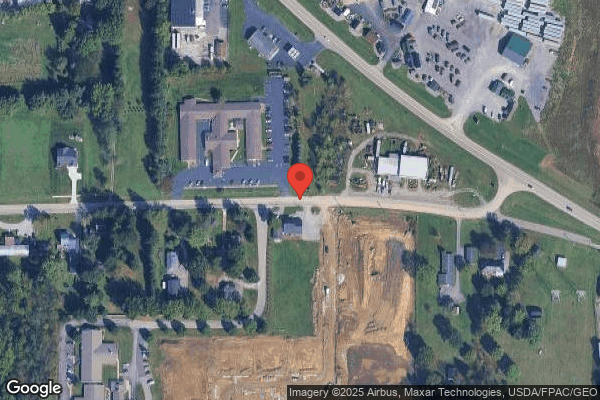
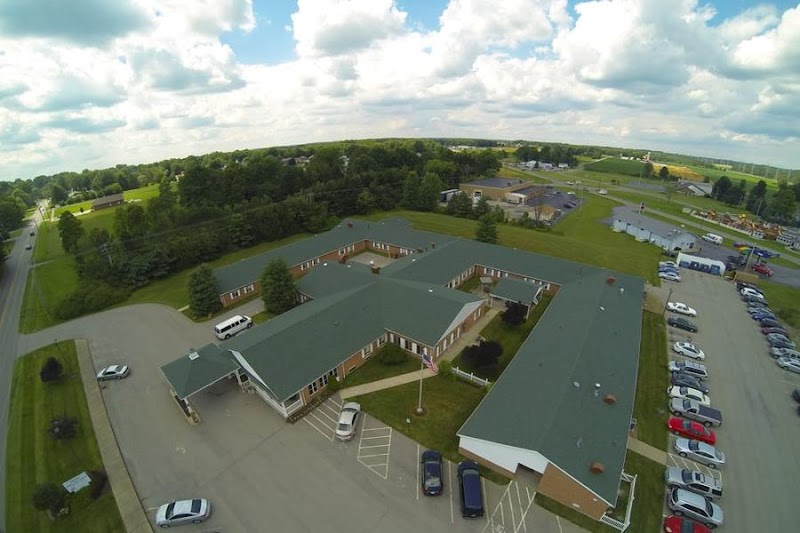
930 EAST PARK AVENUE, COLUMBIANA, OH 44408 (330) 482-5547
For profit - Corporation 95 Beds WINDSOR HOUSE, INC. Data: November 2025
Trust Grade
65/100
#316 of 913 in OH
Last Inspection: September 2022

Over 2 years since last inspection. Current conditions may differ from available data.

Overview

Parkside Health Care Center has a Trust Grade of C+, indicating it is slightly above average but still has room for improvement. It ranks #316 out of 913 nursing homes in Ohio, placing it in the top half, and #4 out of 11 in Columbiana County, meaning there are only three local options that are rated higher. Unfortunately, the facility's trend is worsening, with issues increasing from 1 in 2023 to 8 in 2024. Staffing is a relative strength, with a turnover rate of 36%, lower than the state average, indicating that staff members tend to stay longer, which can benefit resident care. However, there have been incidents of concern, including a serious issue where a resident's ability to move declined due to insufficient care, and the facility failed to hold required quality assurance meetings, which could impact the overall care of residents. While the lack of fines is a positive sign, these specific issues highlight areas that families should consider when evaluating this facility.

Trust Score
C+
65/100
In Ohio
#316/913
Top 34%
Safety Record
Moderate
Needs review
Inspections
Getting Worse
1 → 8 violations
Staff Stability
○ Average
36% turnover. Near Ohio's 48% average. Typical for the industry.
Penalties
✓ Good
No fines on record. Clean compliance history, better than most Ohio facilities.
Skilled Nurses
○ Average
Each resident gets 39 minutes of Registered Nurse (RN) attention daily — about average for Ohio. RNs are the most trained staff who monitor for health changes.
Violations
⚠ Watch
38 deficiencies on record. Higher than average. Multiple issues found across inspections.
★★★★☆
4.0
Overall Rating
★★★☆☆
3.0
Staff Levels
★★★★★
5.0
Care Quality
★★★☆☆
3.0
Inspection Score
Stable
2023: 1 issues
2024: 8 issues

The Good

  • 5-Star Quality Measures · Strong clinical quality outcomes
  • Full Sprinkler Coverage · Fire safety systems throughout facility
  • No fines on record
  • Staff turnover below average (36%)

    12 points below Ohio average of 48%

Facility shows strength in quality measures, fire safety.

The Bad

Staff Turnover: 36%

10pts below Ohio avg (46%)

Typical for the industry

Chain: WINDSOR HOUSE, INC.

Part of a multi-facility chain

Ask about local staffing decisions and management

The Ugly 38 deficiencies on record

1 actual harm
Aug 2024 1 deficiency
CONCERN (D) 📢 Someone Reported This

A family member, employee, or ombudsman was alarmed enough to file a formal complaint

Potential for Harm - no one hurt, but risky conditions existed

Infection Control (Tag F0880)

Could have caused harm · This affected 1 resident

**NOTE- TERMS IN BRACKETS HAVE BEEN EDITED TO PROTECT CONFIDENTIALITY** Based on record review and interview the facility did not ensure contact isolation precautions were implemented timely. This aff...

Read full inspector narrative →
**NOTE- TERMS IN BRACKETS HAVE BEEN EDITED TO PROTECT CONFIDENTIALITY** Based on record review and interview the facility did not ensure contact isolation precautions were implemented timely. This affected one of three residents reviewed for infection control, Resident #61. The facility census was 60. Findings include: Review of the medical record revealed Resident #61 was admitted [DATE] with diagnoses including acute respiratory failure with hypoxia, chronic obstructive pulmonary disease, and parainfluenza virus. Resident #61 required assistance with bathing, dressing, mobility, and toileting. No cognitive deficit was noted, however Resident #61 refused all food and beverages and received hospice care. Review of the hospital after visit summary dated 06/14/24 revealed under the area of continuity of care (COC) instructions Resident #61 was diagnosed with Parainfluenza with an onset date of 06/08/24. Further review of the COC instructions revealed under the area of isolation/infection: isolation. Review of Resident #61's Physician's orders revealed an order dated 06/24/24 indicating enhanced barrier precaution (EBP) during high contact activities related to an indwelling midline medical device for intravenous hydration. Interview on 08/31/24 at 3:20 P.M. with the Infection Preventionist (IP) revealed the nurse who completed the admission was responsible for reviewing the hospital discharge instructions and notifying the IP if there were diagnoses that required isolation including parainfluenza. The IP confirmed he was not made aware Resident #61 was admitted with a diagnosis of parainfluenza and required isolation upon admission. Interview on 08/31/24 at 3:33 P.M. with the Director of Nursing (DON) revealed Resident #61's admission was completed by Registered Nurse (RN) #2 who missed the isolation instructions from the hospital; however, Licensed Practical Nurse (LPN) #21 completed a review of the admission orders on the next shift and noted Resident #61 required isolation. Contact isolation was immediately implemented after LPN #21 reviewed the orders. The DON reported approximately 12 hours passed before the isolation order was implemented from the time of the admission. This deficiency represents non-compliance investigated under Complaint Number OH00155732.
Mar 2024 1 deficiency
CONCERN (D) 📢 Someone Reported This

A family member, employee, or ombudsman was alarmed enough to file a formal complaint

Potential for Harm - no one hurt, but risky conditions existed

Quality of Care (Tag F0684)

Could have caused harm · This affected 1 resident

**NOTE- TERMS IN BRACKETS HAVE BEEN EDITED TO PROTECT CONFIDENTIALITY** Based on record review, policy review, and interview, the facility failed to ensure appropriate care and treatment of Peripheral...

Read full inspector narrative →
**NOTE- TERMS IN BRACKETS HAVE BEEN EDITED TO PROTECT CONFIDENTIALITY** Based on record review, policy review, and interview, the facility failed to ensure appropriate care and treatment of Peripherally Inserted Central Catheters (PICC). This affected three residents (#19, #48 and #60) of three residents reviewed for PICC lines. The facility census was 59. Findings include; 1. Review of Resident #48's medical record revealed a 07/13/23 admission with diagnoses including osteomyelitis, methicillin-resistant staphylococcal aureus, type two diabetes, migraines, gastroesophageal reflux disease, fibromyalgia, urinary incontinence and asthma. The resident was admitted with a PICC line. The infection control log revealed the resident had a wound infection 01/10/24 to a coccyx ulcer. Physician orders included to change the PICC line dressing and cap every Tuesday. Review of the treatment sheets for January, February and March 2024 revealed there was no evidence of a weekly dressing change on 01/23/24, 02/27/24, and 03/12/24. There was no evidence of a cap change on 01/16/24, 01/23/24, 01/30/24, 02/27/24 or 03/12/24. Interview on 03/22/24 at 3:54 P.M. with Corporate Quality Assurance #100 verified there was no evidence of dressing and cap changes as ordered. 2. Review of Resident #19's medical record revealed a 02/23/24 admission with diagnoses including muscle wasting and atrophy, lack of coordination, methicillin-resistant staphylococcal aureus, thoracic spine pain, hyperlipidemia, anxiety disorder, heart disease, arthritis, presence of artificial hip, spinal stenosis, obesity, hypokalemia, hypertension, and gastroesophageal reflux disease. She was admitted with a PICC/Midline with orders for an antibiotic due to an infected hip replacement. Physician orders included to change the PICC line dressing within the first 24 hours of insertion or admission and then to change the dressing and cap weekly every Wednesday. Review of the PICC line dressing change revealed the dressing was changed 02/28/24, 03/03/24, 03/10/24, and 03/19/24. There was no evidence of the cap being changed between admission [DATE] and 03/10/23, 19 days after admission. The next cap change was on 03/20/24. Interview on 03/22/24 at 2:54 P.M. with Corporate Quality Assurance #100 verified there was no evidence of dressing and cap changes the day after admission and weekly as ordered. 3. Review of the closed record for Resident #60 revealed a 12/07/23 admission with diagnoses including hypertension, hyperlipidemia, anxiety disorder, chronic kidney disease, polyarthritis, osteoarthritis, pancreatitis, and malignant neoplasm of pancreas. She was admitted postoperatively with an intra-abdominal abscess, JP drain to the abdomen, midline surgical incision, double lumen line to the right arm and was to receive antibiotic therapy. Physician orders included to change the PICC line dressing within the first 24 hours of admission and then to change the dressing and cap weekly every Friday. Review the treatment sheets revealed the dressing and cap were changed the day after admission on [DATE]. The 12/15/23 signature box was coded 5, refer too progress notes. Review of the progress notes on 12/15/23 included no evidence of a dressing change. There was no evidence of the cap being changed 12/15/23 or 12/22/23. The resident was discharged to the hospital 12/23/23. Interview on 03/22/24 at 2:40 P.M. with Corporate Quality Assurance #100 verified there was no evidence of dressing and cap change 12/15/23 and a cap change 12/22/23. The dressing and cap were not changed weekly as ordered. Review of the facility's undated Midline/PICC catheter dressing changes policy included the dressing was to be changed 24 hours post insertion then every seven days. This deficiency represents non-compliance investigated under Complaint Number OH00151712.
Mar 2024 6 deficiencies
CONCERN (D) 📢 Someone Reported This

A family member, employee, or ombudsman was alarmed enough to file a formal complaint

Potential for Harm - no one hurt, but risky conditions existed

Report Alleged Abuse (Tag F0609)

Could have caused harm · This affected 1 resident

**NOTE- TERMS IN BRACKETS HAVE BEEN EDITED TO PROTECT CONFIDENTIALITY** Based on record review, abuse policies review, resident council minutes review, written statements review and interview, the fac...

Read full inspector narrative →
**NOTE- TERMS IN BRACKETS HAVE BEEN EDITED TO PROTECT CONFIDENTIALITY** Based on record review, abuse policies review, resident council minutes review, written statements review and interview, the facility failed to ensure allegations of verbal allegations were reported to the Administrator in a timely manner and failed to ensure the allegations were reported to the State Survey Agency. This affected two (Residents #1 and #28) of 12 residents interviewed regarding abuse. The facility census was 62. Findings include: 1. Review of Resident #28's open medical record revealed diagnoses including irritable bowel syndrome with diarrhea, obsessive compulsive disorder ( long-lasting disorder in which a person experiences uncontrollable and recurring thoughts (obsessions), engages in repetitive behaviors (compulsions), or both.), somatization disorder (a form of mental illness that causes one or more bodily symptoms, including pain. The symptoms may or may not be traceable to a physical cause.), adjustment disorder with mixed anxiety and depressed mood, histrionic disorder (personality disorder characterized by a pattern of excessive attention-seeking behaviors), and narcissistic personality disorder (a mental health condition in which people have an unreasonably high sense of their own importance). Review of an annual Minimum Data Set (MDS) assessment dated [DATE] indicated Resident #28 had adequate hearing with no hearing devices, was able to make himself understood and was able to understand others. Resident #28 was assessed as cognitively intact. During an interview on 02/27/24 which began at 10:27 A.M., Resident #28 stated the facility had suddenly required two nursing assistants to provide incontinence care for him although he was able to turn in bed and maintain position. Resident #28 stated two staff entered the room one day, with one of the staff members telling the other to just stand there because she was able to provide the incontinence care herself. Resident #28 stated on 02/22/24 State Tested Nursing Assistant (STNA) #100 and STNA #105 entered the room to provide incontinence care. Resident #28 requested STNA #100 provide care and STNA #105 only be in the room to watch. STNA #100 claimed she was going to report this to the Administrator because it meant she had to do all the work. Resident #28 alleged when STNA #100 and STNA #105 left the room he heard STNA #100 state (expletive) you but that she said the actual word. Resident #28 stated he believed it was directed toward him. In regard to the allegation of verbal abuse that Resident #28 stated he heard toward himself on 02/22/24, the facility's self-reported incidents were reviewed with none having been submitted since 10/10/23. During an interview on 02/27/24 at 3:03 P.M., Corporate Registered Nurse (RN) #110 verified Resident #28 made the allegation of a staff member stating (expletive) you toward him after leaving Resident #28's room. Corporate RN #110 indicated she told Resident #28 she was required to report the allegation and she phoned the facility and reported the allegation to the Director of Nursing (DON) and Administrator. Corporate RN #110 stated she visited the facility later that day and was told by the Administrator that he handled it and his investigation had indicated it had not happened. Corporate RN #110 verified the facility had failed to report the allegation of verbal abuse to the State survey agency. Review of the facility's Resident Abuse Prevention Practices Policy (revised September 2019) revealed verbal abuse was identified as any use of oral, written, or gestured language that willfully included disparaging and/or derogatory terms to the residents or their families or within hearing distance, regardless of their age, ability to comprehend or disability. An allegation of abuse was required to be reported to the State Agency and all regulatory agencies as required by law. Review of the facility's Abuse Allegation Investigation Policy, dated October 2022, revealed the Administrator or designee was responsible for ensuring the allegation was reported to the State agency. After an investigation was completed and findings were documented, a final report was to be submitted to the State Agency. 2. Review of Resident Council Minutes dated 12/28/23 indicated a resident reported an STNA verbally abused her and noted the Director of Nursing (DON) was notified. The Problem/Complaint Intake Form generated 12/29/23 indicated Resident #1 stated a staff member swore at her. A social service response indicated Resident #1 was spoken to by the social service designee. The social service statement indicated Resident #1 reported it happened a while ago when the staff member was new to the facility and was learning how Resident #1 preferred her care to be done. The note indicated Resident #1 stated that staff member had given her excellent care. The staff member involved was not identified. Another statement (not signed and no indication who wrote the statement) dated 12/29/23 indicated Resident #1 stated it was a misunderstanding, that the aide was new and did not know how Resident #1 liked to be care for. Resident #1 stated she felt safe. During an interview of Resident #1 on 02/27/24 at 12:01 P.M., prior to questioning about the incident referred to in the resident council meeting minutes, Resident #1 pointed to STNA #115 and stated she called her an expletive. Resident #1's tone had changed to a sharper tone compared to the rest of the conversation. During an interview with Activity Assistant #165 on 02/27/24 at 2:38 P.M., she verified she facilitated the December resident council meeting minutes as Activity Director #170 was not working that day. Activity Assistant #165 stated Resident #1 was hesitant to report the incident for fear of getting anybody in trouble but did state an aide called her a nasty name. Resident #1 would not provide the aide's name at that time. Resident #1 indicated she would like to have the aide explain what happened to upset her so much that the aide would call Resident #1 that name. Resident #1 did indicate she believed it was verbal abuse. Activity Assistant #165 stated she reported the allegation to Activity Director #170 the following day (12/29/23) when she returned to work. Activity Assistant #165 stated she was told the next time such an allegation was made she must report it to another supervisor if Activity Director #170 was not available. During an interview with the Director of Nursing (DON) on 02/27/24 at 2:48 P.M., she stated she was not working in December. She had been told Resident #1 thought an aide called her a name but that was not the case. Another witness was in the room. Generally when an allegation of verbal abuse was made, the facility reported the allegation to the State survey agency. During an interview of the Administrator on 02/27/24 at 2:54 P.M., he stated the social worker spoke to Resident #1 and the incident had happened several weeks before it was reported. The name of the aide was not reported at that time and Resident #1 stated she was not afraid. A Facility Reported Incident was not submitted because Resident #1 stated it was a misunderstanding and the staff was providing excellent care. During an interview of Corporate Registered Nurse (RN) #110 on 02/27/24 at 3:03 P.M., she stated she did not know about the allegations made by Resident #1 but the incident was not reported to the State agency.
CONCERN (D) 📢 Someone Reported This

A family member, employee, or ombudsman was alarmed enough to file a formal complaint

Potential for Harm - no one hurt, but risky conditions existed

Investigate Abuse (Tag F0610)

Could have caused harm · This affected 1 resident

**NOTE- TERMS IN BRACKETS HAVE BEEN EDITED TO PROTECT CONFIDENTIALITY** Based on record review, abuse policies review, resident council minutes review, written statements review and interview, the fac...

Read full inspector narrative →
**NOTE- TERMS IN BRACKETS HAVE BEEN EDITED TO PROTECT CONFIDENTIALITY** Based on record review, abuse policies review, resident council minutes review, written statements review and interview, the facility failed to ensure allegations of verbal abuse were thoroughly investigated and failed to remove staff alleged to have committed the abuse pending the completion of a thorough investigation This affected two (Residents #1 and #28) of 12 residents interviewed regarding abuse. The facility census was 62. Findings include: 1. Review of Resident #28's open medical record revealed diagnoses including irritable bowel syndrome with diarrhea, obsessive compulsive disorder ( long-lasting disorder in which a person experiences uncontrollable and recurring thoughts (obsessions), engages in repetitive behaviors (compulsions), or both.), somatization disorder (a form of mental illness that causes one or more bodily symptoms, including pain. The symptoms may or may not be traceable to a physical cause.), adjustment disorder with mixed anxiety and depressed mood, histrionic disorder (personality disorder characterized by a pattern of excessive attention-seeking behaviors), and narcissistic personality disorder (a mental health condition in which people have an unreasonably high sense of their own importance). Review of a care plan initiated 01/06/22 indicated Resident #28 had a self care deficit as evidenced by weakness related to anxiety disorder, obsessive-compulsive disorder, narcissistic personality disorder and diabetic neuropathy. Interventions included assisting with toileting as applicable and provide only the amount of assistance required to safely perform the task. Review of a care plan initiated 01/06/22 indicated incontinence of bowel due to weakness/psychiatric issues related to anxiety disorder, obsessive-compulsive disorder, narcissistic personality disorder, anemia, severe protein-calorie malnutrition and diabetic neuropathy. Interventions included checking and changing every two hours and as needed. The care plan did not refer to the amount of assistance needed. Review of a care plan initiated 04/07/22 indicated a conflict with staff related to being accusatory of staff, being demanding, being argumentative, refusing medications, refusing showers and or bed baths, refusing to go to doctor's appointments and refusing psychiatric services. Interventions included allowing Resident #28 to talk about his feelings and letting the resident know that staff was empathetic and interacting with Resident #28 in a calm, non-threatening manner. The care plan indicated Resident #28 had accused staff of not providing correct care and talking inappropriately toward staff and yelling at the facility doctor. Review of a care plan initiated 04/07/22 indicated Resident #28 had repeatedly called the police and ombudsman. Resident #28 refused to assist with activities of daily living even with goals to discharge home. Resident #28 was being verbally abusive and accusatory towards staff. Interventions indicated, if reasonable, discuss behaviors with the resident and explain/reinforce why the behavior was unacceptable. Review of a care plan initiated 07/18/22 indicated Resident #28 was verbally aggressive with staff related to narcissistic personality disorder. Interventions included analyzing key times, places, circumstances, and triggers and what de-escalated behavior and document the findings. Assess Resident #28's understanding of the situation. Allow time for the resident to express himself and his feelings toward the situation. Review of an annual Minimum Data Set (MDS) assessment dated [DATE] indicated Resident #28 had adequate hearing with no hearing devices, was able to make himself understood and was able to understand others. Resident #28 was assessed as cognitively intact. During an interview on 02/27/24 which began at 10:27 A.M., Resident #28 stated the facility had suddenly required two nursing assistants to provide incontinence care for him although he was able to turn in bed and maintain position. Resident #28 stated two staff entered the room one day, with one of the staff members telling the other to just stand there because she was able to provide the incontinence care herself. Resident #28 stated on 02/22/24 State Tested Nursing Assistant (STNA) #100 and STNA #105 entered the room to provide incontinence care. Resident #28 requested STNA #100 provide care and STNA #105 only be in the room to watch. STNA #100 claimed she was going to report this to the Administrator because it meant she had to do all the work. Resident #28 alleged when STNA #100 and STNA #105 left the room he heard STNA #100 state (expletive) you but that she said the actual word. Resident #28 stated he believed it was directed toward him. In regard to the allegation of verbal abuse that Resident #28 stated he heard toward himself on 02/22/24, the facility's self-reported incidents were reviewed with none having been submitted since 10/10/23. Review of a written statement by State Tested Nursing Assistant (STNA) #100 dated 02/22/24 revealed when she was in Resident #28's room - in the hall- she stated That's great to STNA #105 in response to the way Resident #28 was acting about staff not being allowed in his room. STNA #100 denied she used profanity in Resident #28's room or the hall regarding him. During an interview with STNA #100 on 02/29/24 at 9:48 A.M., she verified she was asked to write a statement regarding the allegation but she was never asked to leave the unit/stop providing resident care pending the facility conducting an investigation. STNA #100 stated she did not recall there being anybody in the hall at the time but there was a good possibility there might have been other residents in their rooms. During an interview on 02/27/24 at 3:03 P.M., Corporate Registered Nurse (RN) #110 verified Resident #28 made the allegation of a staff member stating (expletive) you toward him after leaving Resident #28's room. Corporate RN #110 indicated she told Resident #28 she was required to report the allegation and she phoned the facility and reported the allegation to the Director of Nursing (DON) and Administrator. Corporate RN #110 stated she visited the facility later that day and was told by the Administrator that he handled it and his investigation had indicated it had not happened. Corporate RN #110 verified the facility had failed to do a thorough investigation although an investigation should have been completed. During an interview on 02/27/24 at 3:16 P.M., the Administrator verified he had not removed staff from providing care while he conducted an investigation. The Administrator stated he got statements from both aides and they both denied the cursing occurred. The Administrator stated he never had problems with the aides and he knew Resident #28's history so he had no reason to suspect the incident occurred. The Administrator verified no additional residents, staff or visitors were interviewed. Review of a witness statement by STNA #105 dated 02/22/24 revealed when walking out of a room (did not identify what room), STNA #100 stated that was great. Resident #28 stated when aides had gone to Resident #28's room he informed her that she (STNA #105) was only allowed to watch care being provided and STNA #100 had to provide all care. STNA #105 documented STNA #100 never made any profanities to or about Resident #28. During an interview with STNA #105 on 02/27/24 at 10:02 A.M., she stated the day of the incident she was asked for a written statement but she and STNA #100 continued to finish the shift like normal. Review of the facility's Resident Abuse Prevention Practices policy (rev. September 2019) revealed verbal abuse was identified as any use of oral, written, or gestured language that willfully included disparaging and/or derogatory terms to the residents or their families or within hearing distance, regardless of their age, ability to comprehend or disability. An investigation would begin immediately after receiving a complaint of abuse. Written statements would be taken and interviews conducted from anyone involved or witnessing the event (alleged victim, alleged perpetrator (if known), witnesses and all who might have knowledge of the allegations). An employee accused of the abuse of a resident would be suspended immediately at the time of the complaint, event or incident by the charge nurse on duty until the investigation was completed. Review of the facility's Abuse Allegation Investigation policy, dated October 2022, revealed the Administrator or designee would ensure steps had been taken to protect the resident from further abuse or retaliation during the investigation, ensure the alleged perpetrator was immediately suspended (staff) pending the investigation. The Administrator or designee was responsible for ensuring the allegation was reported to the State agency, and interviewing all staff, residents and other potential witnesses that might have details regarding the allegation or incident. The policy indicated if a staff member was the alleged perpetrator other staff were to be interviewed about their observations of interactions between the alleged perpetrator and this or other residents as applicable. After the investigation was completed and findings were documented, a final report was to be submitted to the State Agency. 2. Review of Resident Council Minutes dated 12/28/23 indicated a resident reported an STNA verbally abused her and noted the Director of Nursing (DON) was notified. The Problem/Complaint Intake Form generated 12/29/23 indicated Resident #1 stated a staff member swore at her. A social service response indicated Resident #1 was spoken to by the social service designee. The social service statement indicated Resident #1 reported it happened a while ago when the staff member was new to the facility and was learning how Resident #1 preferred her care to be done. The note indicated Resident #1 stated that staff member had given her excellent care. The staff member involved was not identified. Another statement (not signed and no indication who wrote the statement) dated 12/29/23 indicated Resident #1 stated it was a misunderstanding, that the aide was new and did not know how Resident #1 liked to be care for. Resident #1 stated she felt safe. During an interview of Resident #1 on 02/27/24 at 12:01 P.M., prior to questioning about the incident referred to in the resident council meeting minutes, Resident #1 pointed to STNA #115 and stated she called her an (expletive). Resident #1's tone had changed to a sharper tone compared to the rest of the conversation. During an interview with STNA #115 on 02/27/24 at 1:39 P.M., STNA #115 stated she and another aide (STNA #120) were providing care to Resident #1 one day when the resident became aggressive then later accused STNA #115 of calling her a name. During an interview with STNA #120 on 02/27/24 at 2:11 P.M. she indicated she was in the room with Resident #1 and STNA #115 and Resident #1 was informed her head had to be lowered to pull her up in bed. Resident #1 started to yell at STNA #115 who responded she was not trying to be an ass. During an interview of Activity Assistant #165 on 02/27/24 at 2:38 P.M., she verified she facilitated the December resident council meeting minutes as Activity Director #170 was not working that day. Activity Assistant #165 stated Resident #1 was hesitant to report the incident for fear of getting anybody in trouble but did state an aide called her a nasty name. Resident #1 would not provide the aide's name at that time. Resident #1 indicated she would like to have the aide explain what happened to upset her so much that the aide would call the resident that name. Resident #1 did indicate she believed it was verbal abuse. During an interview of the Director of Nursing (DON) on 02/27/24 at 2:48 P.M., she stated she was not working in December. She had been told Resident #1 thought an aide called her a name but that was not the case. Another witness was in the room. Generally, when an allegation of verbal abuse was made, the facility reported the allegation to the State survey agency and documented an investigation. During an interview with the Administrator on 02/27/24 at 2:54 P.M., he stated the social worker spoke to Resident #1 and the incident had happened several weeks before it was reported. The Administrator provided two written statements by a nurse and STNA #115. The Administrator verified no further staff, residents, or potential witnesses were interviewed. During an interview of Corporate Registered Nurse (RN) #110 on 02/27/24 at 3:03 P.M., she stated she did not know about the allegations made by Resident #1 but it did not appear a thorough investigation was completed. During a subsequent interview with the Administrator on 02/27//24 at 3:16 P.M. he verified he did not suspend the STNA accused of calling Resident #1 a derogatory name pending an investigation.
CONCERN (D) 📢 Someone Reported This

A family member, employee, or ombudsman was alarmed enough to file a formal complaint

Potential for Harm - no one hurt, but risky conditions existed

Deficiency F0676 (Tag F0676)

Could have caused harm · This affected 1 resident

Based on medical record review and interview, the facility failed to provide a timely physical therapy (PT) evaluation to assess for a restorative nursing program. This affected one (Resident #28) of ...

Read full inspector narrative →
Based on medical record review and interview, the facility failed to provide a timely physical therapy (PT) evaluation to assess for a restorative nursing program. This affected one (Resident #28) of three residents reviewed for restorative nursing services. The facility identified 39 residents receiving restorative nursing programs. The facility census was 62. Findings include: Review of Resident #28's open medical record revealed diagnoses including type two diabetes mellitus with diabetic neuropathy, irritable bowel syndrome with diarrhea, anemia, obsessive compulsive disorder, diabetic retinopathy with macular edema in both eyes, somatization disorder, adjustment disorder with mixed anxiety and depressed mood, histrionic personality disorder, and narcissistic personality disorder. A plan of care initiated 05/25/22 and revised on 01/24/24 indicated Resident #28 required an ambulation restorative program due to weakness related to diabetes with neuropathy. A nursing note dated 07/26/23 at 10:03 A.M. indicated Resident #28 requested his restorative program be placed on hold. Restorative staff informed Resident #28 when he wanted to restart the program he could let them know and it would be re-initiated. A nursing note dated 01/19/24 at 10:53 A.M. indicated Resident #28 stated he would do therapy if it could be done on his response times. Therapy was notified. Review of a Physical Therapy (PT) evaluation dated 02/23/24 revealed Resident #28 was referred to PT by nursing per Resident #28's request to re-establish a restorative ambulation program. The therapist documented at the beginning of the evaluation Resident #28 reported he actually just wanted to be able to walk to the bathroom at a one assist level. Resident #28 was able to ambulate to/from the bathroom/bed with a front wheeled walker at a one assist level. Resident #28 reported he did not want any further PT services but would like to ambulate with restorative. Resident #28 was informed he could be a one assist to and from the bathroom with a front wheeled walker and the therapist would develop a restorative program based on distance ambulated during the evaluation and he could progress from there. During an interview with Resident #28 on 02/27/24 beginning at 10:27 A.M., he stated he had not ambulated since June of 2023. He had felt weak and sick and requested his restorative program be placed on hold in July 2023. Resident #28 stated he spoke with the Administrator and Therapy Manager #130 in January 2024 about wanting to have a restorative program for ambulation re-initiated. No action had been taken. Resident #28 stated he phoned the Corporate Registered Nurse (RN) to discuss his concerns and she had Corporate Physical Therapist (PT) #135 evaluate him on 02/23/24. His restorative program was initiated the following day. During an interview on 02/27/24 at 1:50 P.M., Licensed Practical Nurse (LPN) #125 stated she recalled Resident #28 telling her in January 2024 that he wanted to receive therapy/restorative services. LPN #125 stated she informed the restorative aides. During an interview with the Administrator on 02/27/24 at 3:16 P.M. he verified Resident #28 had spoken to him about wanting his restorative program resumed in January but he did not want him to ambulate until a physical therapist had evaluated him which was completed on 02/23/24. The Administrator indicated he was not certain why there was a delay between the time services were requested and the PT evaluation was completed. During an interview with Therapy Manager #130 on 02/27/24 at 3:31 P.M., she stated therapy had a large skilled case load in January 2024. Residents who needed Medicare Part B services were placed on a target list and evaluations were completed as time allowed. Since there were no safety concerns communicated for Resident #28 he was not immediately evaluated. Therapy Manager #130 reported Resident #28 had been off the restorative program for a long time and nobody had reported a change in condition. When therapy received referrals it was usually due to documentation of a decline or improvement of a resident. Residents with safety risks were considered a higher priority. During an interview on 02/28/24 at 2:36 P.M., Restorative Aide #140 stated she was informed by a nurse that Resident #28 wanted to be placed back on restorative nursing case load and she informed Restorative Nurse #145. Restorative Nurse #145, who was present, stated she informed the therapy director who did not report Resident #28 would have to be placed on a waiting list. Once a PT evaluation was completed, restorative services began the following day. Restorative Nurse #145 stated staff were surprised since Resident #28 had not ambulated for so long that he was able to ambulate 120 feet on 02/24/24. This deficiency represents non-compliance investigated under Complaint Number OH00151354.
CONCERN (D) 📢 Someone Reported This

A family member, employee, or ombudsman was alarmed enough to file a formal complaint

Potential for Harm - no one hurt, but risky conditions existed

ADL Care (Tag F0677)

Could have caused harm · This affected 1 resident

Based on medical record review and interview, the facility failed to ensure bathing was offered in accordance with bathing schedules and resident preferences. This affected one (Resident #28) of three...

Read full inspector narrative →
Based on medical record review and interview, the facility failed to ensure bathing was offered in accordance with bathing schedules and resident preferences. This affected one (Resident #28) of three residents reviewed for activities of daily living. The facility census was 62. Findings include: Review of Resident #28's medical record revealed diagnoses included type two diabetes mellitus with diabetic neuropathy, irritable bowel syndrome with diarrhea, obsessive compulsive disorder, and anxiety disorder. A care plan regarding development of person-centered care, initiated 12/27/21, indicated Resident #28 required two or more assists for bathing. A care plan initiated 01/06/22 indicated a self care deficit with interventions to bathe per Resident #28's preference. A care plan initiated 04/07/22 indicated Resident #28 had a conflict with staff related to being accusatory of staff, being demanding, being argumentative, and refusing showers and/or bed baths. Review of a plan of care note dated 02/16/23 at 2:46 P.M. indicated Resident #28 requested he have one bed bath a week. The following bathing records were located for the past 30 day period: On 01/26/24 at 2:57 P.M., a nursing note indicated Resident #28 refused a shower, stating he was not feeling well. Staff recorded a bath (type not indicated) on 01/27/24. On 02/02/24 an aide documented Resident #28 was totally dependent for bathing (did not indicate the type of bathing provided). On 02/27/24, aides documented on a shower sheet and in the electronic health record task bar that Resident #28 refused a bath. During an interview on 02/27/24 between 10:27 A.M. and 12:00 P.M., Resident #28 was observed lying in bed with a knit cap covering his head and gloves on both hands. Resident #28 stated he would not take showers due to infection control concerns so he was supposed to get bed baths. Resident #28 stated he wore the gloves due to neuropathy in both hands and he was unable to provide his own bath, hair care or shaving. An odor was noted but Resident #28 also had a bowel movement during that time. Resident #28 stated he was not being offered bed baths on a weekly basis. On 03/01/24 at 9:27 A.M., the Director of Nursing (DON) was informed although bathing records had been requested twice, with some information provided, there was no evidence of Resident #28 being offered a bed bath between 02/03/24 and 02/26/24. The DON did not provide any additional information to support Resident #28 received bed baths per his preference or schedule
CONCERN (D) 📢 Someone Reported This

A family member, employee, or ombudsman was alarmed enough to file a formal complaint

Potential for Harm - no one hurt, but risky conditions existed

Unnecessary Medications (Tag F0759)

Could have caused harm · This affected 1 resident

Based on observation, review of physician orders, policy review, and interview, the facility failed to ensure medications were available for administration resulting in the omission of four medication...

Read full inspector narrative →
Based on observation, review of physician orders, policy review, and interview, the facility failed to ensure medications were available for administration resulting in the omission of four medications being administered out of 25 opportunities resulting in a 16% medication error rate. This affected one (Resident #56) of two residents observed for medication administration. Findings include: During observation of medication administration on 02/27/24 at 8:53 A.M., Licensed Practical Nurse (LPN) #125 was observed preparing medications for administration to Resident #56. LPN #125 searched for, but was unable to locate, the following ordered medications: chewable aspirin 81 milligram (mg), vitamin D 50 micrograms (mcg), bumex 1 mg (mg), fludrocortisone acetate 0.1 mg, and ferrous gluconate 324 mg. LPN #125 stated Resident #56 only had a 14 day supply of medication delivered at any given time. LPN #125 stated she knew she had re-ordered the medications but they were not in the cart. LPN #125 stated when she finished her medication pass she would look to see if any of the medications were available in the starter box. On 02/27/24 at 10:01 A.M., LPN #125 (with assistance of another unidentified nurse) searched the starter box and was able to locate the correct dose of bumex which was administered at 10:06 A.M. The other four medications were not available for administration. At 10:08 A.M. LPN #125 stated pharmacy drop shipped medications in an emergency situation and she would document the medications were held. LPN #125 indicated she would contact pharmacy for delivery that evening. LPN #125 reported she had ordered medications on 02/26/24. (A reorder form with the four medications was unable to be located). Review of the facility's Medication Ordering and Receiving from Pharmacy Provider (not dated) indicated as medication reached a three to five day supply, the reorder sticker is peeled off the prescription and placed on the reorder page. Reorders should be faxed in the morning by 10:00 A.M. Reorders faxed after 10 A.M. would be delivered the next business day unless the medication supply was exhausted and was needed prior to the next delivery. If a new or refill was needed before the next business day, nursing must call the pharmacy and deem the prescription an emergency prescription in order to have it delivered on the same day. The policy indicated for residents who received medication under Medicare Part A pharmacy would deliver medications with a 14 day supply. The medications would be re-ordered by nursing two to four days prior to exhausting the supply. This deficiency represents non-compliance investigated under Complaint Number OH00151064.
CONCERN (D) 📢 Someone Reported This

A family member, employee, or ombudsman was alarmed enough to file a formal complaint

Potential for Harm - no one hurt, but risky conditions existed

Infection Control (Tag F0880)

Could have caused harm · This affected 1 resident

**NOTE- TERMS IN BRACKETS HAVE BEEN EDITED TO PROTECT CONFIDENTIALITY** Based on observation, medical record review, policy review, and interview, the facility failed to ensure catheter tubing was pla...

Read full inspector narrative →
**NOTE- TERMS IN BRACKETS HAVE BEEN EDITED TO PROTECT CONFIDENTIALITY** Based on observation, medical record review, policy review, and interview, the facility failed to ensure catheter tubing was placed in a manner that would limit the potential for introduction of pathogens. This affected one (Resident #1) of three residents reviewed for urinary tract infections. The facility census was 62. Findings include: Review of Resident #1's open medical record revealed diagnoses including type two diabetes mellitus, flaccid neuropathic bladder, and neuromuscular dysfunction of the bladder. A plan of care related to use of an indwelling catheter was initiated 08/18/23. Interventions included keeping the foley (catheter) tubing free of kinks and keeping the bag covered and off the surface of the floor. A quarterly Minimum Data Set (MDS) assessment dated [DATE] indicated Resident #1 was cognitively intact and had an indwelling urinary catheter. A laboratory report for urine collected on 02/19/24 indicated the identification of mixed flora and indicated further work-up and sensitivity testing was not routinely indicated and would not be performed. On 02/27/24 at 9:15 A.M., Resident #1 was observed propelling herself in a wheelchair in the hallway near the therapy department. The urinary catheter tubing was observed dragging on the floor under her wheelchair. At 12:01 P.M., Resident #1 was observed sitting in the wheelchair in her room with the catheter tubing on the floor. While conversing with Resident #64, State Tested Nursing Assistant (STNA) #150 delivered her lunch tray and left the room. On 02/27/24 at 12:10 P.M. STNA #150 was asked to return to Resident #1's room and verified Resident #1's catheter tubing was on the floor. At that time, Resident #1 was eating and STNA #150 stated she would wait until after lunch according to Resident #1's request and reposition the catheter tubing. At 1:50 P.M., Resident #1 was observed being propelled down the hall in the wheelchair. Resident #1 stated it is still not fixed. Observations revealed the catheter tubing was touching the floor. At that time, Licensed Practical Nurse (LPN) #125 verified the catheter tubing was on the floor and instructed a different nursing assistant to go reposition the tubing. Review of the facility's policy, Catheter Management (dated June 2012), revealed instructions to never allow the catheter bag to be raised above the level of the bladder or to let the bag or tubing touch the floor. This deficiency represents non-compliance investigated under Complaint Number OH00151064.
Oct 2023 1 deficiency
CONCERN (D) 📢 Someone Reported This

A family member, employee, or ombudsman was alarmed enough to file a formal complaint

Potential for Harm - no one hurt, but risky conditions existed

Comprehensive Care Plan (Tag F0656)

Could have caused harm · This affected 1 resident

Based on record review and interviews the facility failed to develop a comprehensive behavioral care plan for Resident #53 sexual behaviors. This affected one resident (Resident #53) of three resident...

Read full inspector narrative →
Based on record review and interviews the facility failed to develop a comprehensive behavioral care plan for Resident #53 sexual behaviors. This affected one resident (Resident #53) of three residents reviewed for behavior care plans. Findings include: Review of the medical record for Resident #53 revealed an admission date of 05/12/23. Diagnoses included chronic obstructive pulmonary disease, major depressive disorder and generalized anxiety disorder. Review of the 5-day Minimum Data Set (MDS) assessment revealed Resident #53 required extensive assistance for bed mobility, dressing and personal hygiene. He was totally dependent for transfers and toilet use. He was independent for locomotion and eating. He was cognitively intact and there were no behaviors noted. Review of October 2023's behavior tracking revealed Resident #53's exhibited behavior of making sexually inappropriate remarks. Review of Resident #53's care plan revealed there was no comprehensive care plan in place for any behaviors related to being sexually inappropriate or making inappropriate sexual comments to others. Interviews on 10/16/23 from 11:35 A.M. through 4:55 P.M. interviews with Licensed Practical Nurse (LPN) #239, LPN #241, Registered Nurse (RN) #200, RN #205, State Tested Nursing Assistant (STNA) #244, STNA #259, STNA #269 and STNA #290 revealed Resident #53 was known to staff for making inappropriate sexual comments to the staff, not to the residents. They stated they were not educated on how to manage his behaviors and did not see a care plan in place addressing it. Interview on 10/16/23 at 12:45 P.M. with MDS nurse #200 confirmed there was no behavior care plan in place. She stated social services typically addressed behaviors. She stated social services was out of the building and unavailable for interview during survey. Interviews on 10/16/23 from 12:22 P.M. through 2:45 P.M. with Administrator, Director of Nursing (DON), and Quality Assurance nurse (QA) #201 revealed they were aware Resident #53 would make inappropriate sexual comments to staff.
Dec 2022 2 deficiencies
CONCERN (D) 📢 Someone Reported This

A family member, employee, or ombudsman was alarmed enough to file a formal complaint

Potential for Harm - no one hurt, but risky conditions existed

Deficiency F0660 (Tag F0660)

Could have caused harm · This affected 1 resident

**NOTE- TERMS IN BRACKETS HAVE BEEN EDITED TO PROTECT CONFIDENTIALITY** Based on interview, record review, and policy review, the facility failed to develop and implement an effective discharge plan t...

Read full inspector narrative →
**NOTE- TERMS IN BRACKETS HAVE BEEN EDITED TO PROTECT CONFIDENTIALITY** Based on interview, record review, and policy review, the facility failed to develop and implement an effective discharge plan to ensure intravenous (IV) antibiotic medication was administered. This affected one (Resident #61) of three residents reviewed for discharge. Findings include: Review of the medical record for Resident #61 revealed an admission date of 11/05/22. Diagnoses included hypokalemia, unsteadiness on feet, spinal stenosis, repeated falls, muscle wasting and atrophy, and intraspinal abscess and granuloma. Review of the 14-Day Minimum Data Set (MDS) 3.0 assessment for Resident #61, dated 11/19/22, revealed intact cognition. The resident required extensive, two-person physical assistance with bed mobility, and limited, one-person assistance for toileting and personal hygiene. The resident had no recent weight loss or swallowing issues. The resident received IV therapy. Review of the Care Plan for Resident #61 revealed the resident was on antibiotic therapy related to an intraspinal abscess. Interventions included to administer antibiotic medications as ordered by the physician and to monitor/document side effects and effectiveness every shift. The Care Plan did not reveal any discharge planning. Review of physician order dated 11/22/22, revealed okay to discharge to care of husband. Home health agency (HHA) for physical therapy (PT), occupational therapy (OT), skilled nursing and home health as indicated. Review of social services (SS) progress note, dated 11/22/2022 at 11:47 A.M., revealed Social Services Director (SSD) #102 spoke with Resident #61 and her spouse regarding referral to a HHA to ensure the resident's IV antibiotics (ATB)s would be administered according to orders. The resident and her spouse both agreed to utilize a HHA for skilled nursing services upon discharge. Review of social services (SS) progress note, dated 11/23/2022 at 4:47 P.M., revealed the resident was discharged from the facility on 11/23/22 without proper services in place to enable the administration of her standing order for IV ATBs. SS was informed of questions regarding IV administration of ATB expressed by Resident #61's husband. SS contacted the HHA to confirm the education and administration would be handled for the family. The HHA notified SS that services would not be rendered until Friday, 11/25/22. SSD #102 acknowledged the need for IV ATB every four hours and initiated communication for guidance in the matter. SSD #102 then contacted Resident #61's husband, asking that the resident return to the nursing home facility to have IV ATBs at needed times. SSD #102 expressed to husband and resident how pertinent it was that the resident received the IV doses of medication. SSD #102 notified the necessary individuals of Resident #61 returning to facility. During interview on 12/06/22 at 3:02 P.M., MDS/Registered Nurse (RN) #101 confirmed the plan of care did not include discharge planning. Interview on 12/06/22 at 1:20 P.M. with SSD #102, revealed SSD #102 arranged HHA skilled nursing services assuming this would include IV antibiotic medication administration every four hours. SSD #102 was later informed the HHA could not accommodate IV antibiotic medication administration until 11/25/22. SSD #102 stated within two hours of the resident's discharge from the facility, she became aware of the issue after Resident #61's husband contacted her inquiring about his wife's IV antibiotic medication. SSD #102 notified Resident #61's husband and asked that the resident immediately return to the nursing facility in order to receive her medications as ordered. SSD #102 confirmed the resident returned and received her medications timely and experienced no adverse effects during her absence from the facility. SSD #102 revealed the resident was discharged on 11/29/22 with a different HHA arranged to provide skilled nursing services including IV ATB therapy. Interview on 12/06/22 at 3:05 P.M. with the Director of Nursing (DON), confirmed Resident #61 was discharged home on [DATE] without the appropriate coordination for skilled nursing services arranged to provide IV ATB medication and IV care in the resident's home. The DON further confirmed Resident #61's plan of care was not revised to address discharge planning. Review of the facility's policy, Transfer and Discharge Rights, dated October 2022, revealed except in case of emergency, the resident, the representative, and the attending physician are consulted in advance of the transfer or discharge. Casework services or other means are utilized to assure that adequate arrangements exist for meeting resident's needs through other resources. This deficiency represents non-compliance investigated under Complaint Number OH00137990.
CONCERN (D) 📢 Someone Reported This

A family member, employee, or ombudsman was alarmed enough to file a formal complaint

Potential for Harm - no one hurt, but risky conditions existed

Incontinence Care (Tag F0690)

Could have caused harm · This affected 1 resident

Based on interview, record review, and policy review, the facility failed to provide appropriate treatment to prevent a potential urinary tract infection for a resident with an indwelling urinary cath...

Read full inspector narrative →
Based on interview, record review, and policy review, the facility failed to provide appropriate treatment to prevent a potential urinary tract infection for a resident with an indwelling urinary catheter. This affected one resident (Resident #36) of three residents reviewed for urinary catheters. Findings include: Review of the medical record for Resident #36 revealed an admission date of 06/12/22. Diagnoses included diabetes mellitus, obstructive and reflux uropathy, kidney failure, and anxiety disorder. Review of the quarterly Minimum Data Set (MDS) 3.0 assessment for Resident #36, dated 10/01/22, revealed intact cognition. The resident required extensive, two-person physical assistance with bed mobility, transfers, and toileting. Review of the Care Plan for Resident #36 revealed the resident had an indwelling catheter due to obstructive and reflux uropathy with interventions including to keep catheter covered and off of the floor surface. Observation on 12/06/22 at 10:45 A.M. revealed Resident #36's indwelling urinary catheter bag was secured to the bottom of the bed frame, on the left side, and was in contact with the floor. During interview on 12/06/22 at 10:59 A.M., State Tested Nursing Assistant #210 confirmed Resident #36's catheter bag was touching the floor. Interview on 12/06/22 at 12:45 P.M. with the Director of Nursing (DON), confirmed Resident #36's catheter bag should not be in contact with the floor. The DON stated the resident requested the catheter bag be secured to the bottom of the bed frame, however, when the resident lowers his bed, the catheter bag can contact the floor surface. The DON confirmed the resident does not have a risk agreement regarding the placement of his catheter bag and the potential risk of contamination. Review of the facility's policy, Catheter, Closed Urinary-Application of a Closed Urinary Drainage Bed Bag, dated January 2012, revealed catheter bags are placed on the side of the bottom half of the bed, below the level of the bladder, and should not touch the floor.
Sept 2022 8 deficiencies
CONCERN (D)

Potential for Harm - no one hurt, but risky conditions existed

Deficiency F0569 (Tag F0569)

Could have caused harm · This affected 1 resident

**NOTE- TERMS IN BRACKETS HAVE BEEN EDITED TO PROTECT CONFIDENTIALITY** Based on record review and interview the facility failed to ensure residents who were within $200.00 of the Social Security Inco...

Read full inspector narrative →
**NOTE- TERMS IN BRACKETS HAVE BEEN EDITED TO PROTECT CONFIDENTIALITY** Based on record review and interview the facility failed to ensure residents who were within $200.00 of the Social Security Income (SSI) resource limit of $2,000.00 were appropriately assisted in spending down the money so the resident did not lose their Medicaid eligibility. This affected one resident (#23) of two residents reviewed for personal fund account spend down. Findings include: Review of Resident #23's medical record revealed the resident was admitted to the facility on [DATE] with diagnoses including respiratory diseases, hypertension, depression and dementia. Record review revealed the resident did not have a financial power of attorney or legal guardian. Review of Resident #23's quarterly Minimum Data Set (MDS) 3.0 assessment, dated 07/14/22 revealed the resident was moderately cognitively impaired. Review of Resident #23's personal funds account revealed on 09/29/22 the resident had a balance of $2,364.38 in her personal funds account. As of 11/03/21 Resident #23's account had exceeded the $2,000.00 Social Security Income (SSI) resource limit. A stimulus check, issued 04/07/21 for 1400.00 was included in the amount not spent down within a year (by 04/07/22) and the excess was not sent back to the State. On 09/29/22 at 6:32 P.M. interview with Business Office Manager (BOM) #150 confirmed Resident #23 exceeded the $2,000.00 SSI resource limit. BOM #150 indicated she had noted on Resident #23's quarterly statements her personal funds account exceeded the SSI resource limit and sent letters to the resident's her niece who was in jail. BOM #150 revealed with COVID and the stoppage of outings it had been harder to spend money. BOM #150 indicated she contacted a funeral home in an effort to spend down the money and provided a letter and contract dated 09/23/22 for burial at a funeral home. The BOM revealed she would be sending a check for 2000.00 to the funeral home on friday 09/30/22. However, review of the resident's quarterly statements revealed on 02/25/21 a check for $2,000.00 was deducted from the resident's account for funeral expenses. The resident's file contained a funeral contract for the resident with a receipt from the funeral home dated 03/01/21 confirming receipt (check #5934) for $2000.00 dollars. Review revealed when the facility contacted the funeral home to provide a burial contract (in 09/2022), the funeral home opened a second burial contract for Resident #23. On 09/29/22 at 6:48 P.M. a follow up interview with BOM #150 revealed she forgot the resident already had a burial account and that she had sent $2000.00 in 2021 for burial expenses. The BOM verified the facility initiated a second burial contract at the same funeral home and the resident would have paid for burial twice.
CONCERN (D)

Potential for Harm - no one hurt, but risky conditions existed

Deficiency F0602 (Tag F0602)

Could have caused harm · This affected 1 resident

**NOTE- TERMS IN BRACKETS HAVE BEEN EDITED TO PROTECT CONFIDENTIALITY** Based on record review and interview the facility failed to ensure Resident #17 was free from financial exploitation by Former D...

Read full inspector narrative →
**NOTE- TERMS IN BRACKETS HAVE BEEN EDITED TO PROTECT CONFIDENTIALITY** Based on record review and interview the facility failed to ensure Resident #17 was free from financial exploitation by Former Dietary Aide (DA) #155. This affected one resident (#17) of one resident reviewed for misappropriation/exploitation. Findings include: Review of the medical record for Resident #17 revealed the resident was admitted on [DATE] with diagnoses including encounter for orthopedic aftercare following surgical amputation of left great toe, history of a stroke, type II diabetes and peripheral vascular disease. Review of a facility Self-Reported Incident (SRI), tracking number 218531 initiated 03/02/22 revealed DA #155 asked to borrow $200.00 from Resident #17. The DA reported this to Former Business Office Manager (BOM) #150 on 02/18/22. She was told by the BOM that she should not have done that and needed to give the money back. The DA claimed to have returned the money on 02/19/22 when she placed an envelope with $200.00 in the resident's top drawer. However, no money was found in Resident #17's drawer. The Administrator was informed of the incident on 02/25/22, suspended the DA and began an investigation. As a result of the incident, Resident #17 received his money back from the DA and the DA was terminated. Review of the annual Minimum Data (MDS) 3.0 assessment, dated 07/02/22 revealed the resident was cognitively intact and independent with set up assistance from staff for most activities of daily Living (ADL). On 09/27/22 at 9:45 A.M. interview with Resident #17 verified the DA asked the resident for money since she had been sick and off from work. He also verified he received his money back and there were no further concerns related to the incident. On 09/29/22 at 2:12 P.M. interview with the Administrator verified DA #155 exploited Resident #17 when she asked him for money and then lied about putting the money in the resident's room to repay him. The money was subsequently paid and the DA was terminated. Review of the personnel file for DA #155 revealed she was hired on 08/25/21 and signed the February 2015 Employee Code of Conduct on that date which included prohibition of soliciting residents for monetary or material gain.
CONCERN (D)

Potential for Harm - no one hurt, but risky conditions existed

Investigate Abuse (Tag F0610)

Could have caused harm · This affected 1 resident

**NOTE- TERMS IN BRACKETS HAVE BEEN EDITED TO PROTECT CONFIDENTIALITY** Based on record review and interview the facility failed to ensure an allegation of financial exploitation involving Resident #1...

Read full inspector narrative →
**NOTE- TERMS IN BRACKETS HAVE BEEN EDITED TO PROTECT CONFIDENTIALITY** Based on record review and interview the facility failed to ensure an allegation of financial exploitation involving Resident #17 by former Dietary Aide (DA) #155 was reported to the Administrator timely and failed to ensure the incident was reported to the State agency timely and as required. This affected one resident (#17) of one resident reviewed for misappropriation/exploitation. Findings include: Review of the medical record for Resident #17 revealed the resident was admitted on [DATE] with diagnoses including encounter for orthopedic aftercare following surgical amputation of left great toe, history of a stroke, type II diabetes and peripheral vascular disease. Review of a facility Self-Reported Incident (SRI), tracking number 218531 initiated 03/02/22 revealed DA #155 asked to borrow $200.00 from Resident #17. The DA reported this to Former Business Office Manager (BOM) #150 on 02/18/22. She was told by the BOM that she should not have done that and needed to give the money back. The DA claimed to have returned the money on 02/19/22 when she placed an envelope with $200.00 in the resident's top drawer. However, no money was found in Resident #17's drawer. The Administrator was informed of the incident on 02/25/22, suspended the DA and began an investigation. As a result of the incident, Resident #17 received his money back from the DA and the DA was terminated. Review of the SRI revealed a date of discovery on 02/25/22. The SRI was not created by the facility until 03/02/22 and was completed on 03/08/22. Review of the annual Minimum Data (MDS) 3.0 assessment, dated 07/02/22 revealed the resident was cognitively intact and independent with set up assistance from staff for most activities of daily Living (ADL). Review of personnel file for DA #155 revealed the dietary aide was hired by the facility on 08/25/21. On 09/27/22 at 9:45 A.M. interview with Resident #17 verified the DA asked the resident for money since she had been sick and off from work. He also verified he received his money back and there were no further concerns related to the incident. On 09/29/22 at 2:12 P.M. interview with the Administrator verified DA #155 exploited Resident #17 when she asked him for money and then lied about putting the money in the resident's room to repay him. The money was subsequently paid and the DA was terminated. On 09/29/22 at 4:10 P.M. interview with Former Business Office Manager (BOM) #150 revealed DA #155 told her about borrowing money from Resident #17 as the BOM was walking out of the building on 02/18/22. Since it was a Friday, the BOM informed the DA's supervisor, Dietary Manager (DM) #130, of the incident on Monday morning, 02/21/22 and expected the DM would report it to the Administrator. On 09/29/22 at 4:38 P.M. interview with DM #130 verified BOM #150 told him on 02/21/22 about DA #155 asking Resident #17 for money and stating she was going to pay it back. The DM reported he did not report the incident to the Administrator because he stated he was told the BOM said she would handle it. On 09/29/22 at 4:50 P.M. interview with the Administrator revealed he was informed of DA #155 asking for money from Resident #17 on 02/25/22. The Administrator verified Self-Reported Incident (SRI), tracking number 218531 was filed late. The administrator revealed as a result of the incident he did interview an unknown number of other residents, with no concerns related to financial exploitation by staff, but stated he did not document the interviews and could not identify which residents were interviewed to ensure a thorough investigation had been completed with no other residents experiencing similar concerns.
CONCERN (D)

Potential for Harm - no one hurt, but risky conditions existed

Deficiency F0692 (Tag F0692)

Could have caused harm · This affected 1 resident

**NOTE- TERMS IN BRACKETS HAVE BEEN EDITED TO PROTECT CONFIDENTIALITY** Based on record review, facility policy and procedure review and interview the facility failed to ensure Resident #29 was provid...

Read full inspector narrative →
**NOTE- TERMS IN BRACKETS HAVE BEEN EDITED TO PROTECT CONFIDENTIALITY** Based on record review, facility policy and procedure review and interview the facility failed to ensure Resident #29 was provided timely nutritional intervention following a significant weight loss. This affected one resident (#29) of one resident reviewed for weight loss. The facility identified 11 residents with unplanned weight loss or gain. Findings include: Review of Resident #29's medical record revealed a 12/18/03 admission dated with diagnoses including cerebral palsy, Alzheimer's disease, moderate intellectual disabilities, Stage III (full thickness tissue loss. Subcutaneous fat may be visible but bone, tendon, or muscle are not exposed) pressure ulcer to right buttock, peripheral vascular disease, anemia, Vitamin D deficiency, gastroesophageal reflux disease and dysphagia. Review of the physician's orders revealed a diet order, dated 03/21/19 for no concentrated sweets diet, pureed texture, regular/thin consistency liquids related to dysphagia oropharyngeal phase. An order, dated 05/13/19 for Arginaid (supplement) two times a day. An order, dated 11/16/20 for built up curved spoon at all meals and an order dated, 03/22/21 for [NAME] cups with meals. The resident had a plan of care, dated 10/08/21 for a nutritional problem or potential nutritional problem related to nutrition, hydration and skin/skin concerns, gradual weight loss, multiple diagnoses and multiple medication use. The resident had a therapeutic and mechanically altered diet. Interventions included the resident would have no significant weight change. Additional physician orders revealed orders, dated 10/14/21 for a 2.0 calorie supplement three times a day, an order dated, 11/17/21 indicating when the resident was in bed for meals, a towel roll to left side of neck to increase cervical positioning and an order dated, 12/23/21 to be out of bed for breakfast and dinner to motorized power wheelchair to increase safety of swallow. Review of the 07/26/22 quarterly Minimum Data Set (MDS) 3.0 assessment revealed the resident was severely impaired for daily decision making, totally dependent from staff for bed mobility and transfers and did not walk. The assessment revealed the resident was independent for locomotion on the unit with an electric wheelchair, required extensive assistance from one for eating, had no weight loss or gain and had a Stage III pressure ulcer. The assessment also noted the resident had pressure reducing devices for bed and chair and nutrition or hydration interventions. Review of weight record revealed the resident's weight was stable until 09/02/22 when she had a seven pound weight loss. On 08/08/22 the resident weighed 109 pounds. On 09/02/22 her weight was 102 pounds for a 6.4 percent significant weight loss in less than a month. There was no evidence of a re-weight until 09/12/22 when the resident weighed 103.4 pounds, reflecting a 5.14 significant weight loss in a month. There was no evidence of a dietician evaluation until 9/23/22 when a Weight Variance Note included the 9/12/2022 103.4 pound, 5.1% decrease in one month. The residents ideal body Weight (IBW): median was 85 pounds with a 77-94 pound range. The note indicated the resident's no concentrated sweets, pureed diet intake was variable. Supplements included Arginaid one pack two times a day and 2.0 calorie med pass three times a day with a variable supplement intake. The resident had a right buttock pressure ulcer. The resident continued on multivitamin and Arginaid to aid in healing. Secondary to weight decrease the recommendation was made to add six ounces of house supplement to breakfast and dinner. Monitor and make recommendations as needed. On 09/26/22 a physician's order was noted for six ounces of supplement with breakfast and dinner. On 09/27/22 at 10:03 A.M. Resident #29 was observed in bed on her left side with her feet elevated on pillow. The resident was observed to be edentulous. On 09/28/22 at 12:33 P.M. the resident was observed in bed with the head of bed elevated 90 degrees. The resident was being fed by State Tested Nursing Assistant (STNA) #96 pureed tomato soup, grilled cheese, peach crisp and ice cream. The resident's milk was in a lidded Kennedy cup with a straw. The STNA indicated the resident would usually eat everything and when she ate in the dining room she feeds herself. The STNA revealed sometimes the resident would not drink all her drinks. On 09/29/22 at 01:07 P.M. interview with Registered Dietician (RD) #153 revealed she identified weight loss for residents by going into the computer and going into reports to see variances. The dietician revealed she covered 16 facilities and there was not a certain time frame in which she goes in and checks each facility. She stated when she goes into the weights, she prints them out and checks them against the last weight. If there was a five pound weight difference or more she would circle them, and notify the Director of Nursing, Dietary Manager or the unit manager LPN #71 and ask for a re-weight for the resident. The dietician revealed she would check back to the weight variance sheets to see if the resident had been reweighed. Dietician #153 indicated the re-weight should be done right away when the facility identifies a five pound or more weight difference and was unsure why a facility wouldn't know of a five pound or more weight change. She indicated she was not emailed or notified when a re-weight confirmed a five pound or greater weight gain ot loss. To get the results she periodically checks to see if reweighs had been entered. RD #153 verified there was not a weight variance evaluation for Resident #29 until 21 days after the resident initially was assessed to have a significant weight loss. RD #153 verified additional nutritional interventions (the addition of a supplement) was not started for 24 days. The RD acknowledged there was not an order for weekly weights to keep a closer watch for additional weight loss or success of interventions for the resident. Review of the facility Height/Weight policy, revised 11/2019 revealed anytime there was a weight difference of plus or minus five pounds from the previous weight, a re-weight must be done. Reweighs would be completed as soon as possible, preferably within 24-72 hours. A weight variance committee shall meet monthly and as needed to address problems related to the weight status of the residents and to plan approaches for the individualized care. On 09/29/22 at 2:09 P.M. interview with Registered Nurse (RN) #148 and RD #153 verified there was a delay of 10 days in getting the resident reweighed. There was a delay of 11 days after the re-weight for the dietician weight variance evaluation. Once the dietician wrote a recommendation there was an additional three day delay in getting physician approval and starting an additional supplement. RN #148 and RD #153 verified the systemic process of the dietician periodically checking weights and notifying the facility when a re-weight was to be completed was not efficient and timely. The facility should compare the previous weight with the new weight and enter a re-weight per the company policy without being directed by the dietician. The process of the dietician needing to periodically check weights to learn if there was a significant weight loss or gain had also proven to delay intervention. RN #148 and RD #153 verified the resident did not begin to receive a supplement/intervention until 24 days after the significant weight loss weight was initially noted. The RN and RD verified the current process did not result in timely interventions for weight loss.
CONCERN (D)

Potential for Harm - no one hurt, but risky conditions existed

Respiratory Care (Tag F0695)

Could have caused harm · This affected 1 resident

Based on observation, record review, policy and interview and interview the facility failed to ensure care plans were developed for oxygen use and failed to ensure oxygen tubing was properly dated and...

Read full inspector narrative →
Based on observation, record review, policy and interview and interview the facility failed to ensure care plans were developed for oxygen use and failed to ensure oxygen tubing was properly dated and/or changed to maintain proper infection control practices. This affected two resident (#3 and #5) of two residents reviewed for respiratory care. The facility identified four residents with respiratory treatments. Findings include: 1. Review of Resident #3's medical record revealed a 02/28/17 admission date with diagnoses including hypokalemia, major depressive disorder, osteoarthritis, hypothyroidism, Alzheimer's disease, dementia, chronic kidney disease and need for assist with personal care and anxiety. Review of the 07/02/22 annual Minimum Data Set (MDS) 3.0 assessment revealed the resident was moderately impaired for daily decision making, totally dependent on two staff for bed mobility and transfers and required extensive assistance from one staff for personal hygiene. The assessment revealed the resident had no behaviors. The resident was on anti-psychotic medication, anti-anxiety medication, anti-depressant medication, anti-coagulant medication and opioid medication. In addition, the assessment revealed the resident received oxygen. On 09/27/22 at 10:53 A.M. Resident #3 was observed with oxygen on per nasal cannula at two liters per minute. The tubing was dated 09/11/22. Review of the physician's orders revealed an order for oxygen at one to four for oxygen saturation less than 90 percent as needed. There were no physician orders for the changing of oxygen equipment. Review of the plan of care revealed there was no plan of care for the use of oxygen. Review of the facility Oxygen Mask, Nasal Cannula, and Trachea Mask policy, dated 06/2022 revealed residents who utilized the oxygen apparatus on an as needed basis, the cannula or mask must be kept in a plastic bag, dated when used and changed weekly. Review of the facility Aerosol Therapy policy, dated 06/2022 revealed to change equipment once a week. On 09/28/22 at 11:24 A.M. interview with Licensed Practical Nurse (LPN) #81 verified the resident's oxygen tubing was in use and was dated 09/11/22. LPN #81 indicated oxygen tubing was to be changed weekly on Sundays. LPN #81 verified the tubing had not been changed for 17 days. On 09/30/22 at 3:39 P.M. interview with Registered Nurse #148 verified the resident did not have a plan of care in place related to oxygen use. 2. Review of Resident #5's medical record revealed an 08/26/16 admission date with diagnoses including heart failure, hypertension, iron deficiency anemia, and cerebral infarction. Review of the 06/28/22 annual MDS 3.0 assessment revealed the resident was independent for daily decision making, required extensive assistance from two staff for bed mobility and transfers and was totally dependent on one staff for personal hygiene. The assessment revealed the resident did not receive oxygen. Review of a physician's orders revealed an order, dated 06/01/22 for oxygen per nasal cannula at one to four liters per minute (LPM) for a oxygen saturation less than 90 percent. There were no orders to change the oxygen tubing. Review of the resident's plan of care revealed there was no comprehensive plan of care related to the use of oxygen. There was a 06/19/22 heart failure plan of care with an intervention to administer oxygen as ordered. On 09/27/22 at 10:53 A.M. Resident #5 was observed with oxygen on per nasal cannula at three LPM. The tubing was dated 09/11/22. Interview with the resident at the time of the observation revealed staff do not change her oxygen tubing every week. On 09/28/22 at 11:21 A.M. interview with LPN #81 verified the resident's oxygen tubing was in use and was dated 09/11/22. LPN #81 indicated oxygen tubing was to be changed weekly on Sundays. LPN #81 verified the tubing had not been changed for 17 days. On 09/30/22 at 4:04 P.M. interview with Registered Nurse (RN) #61 verified the resident did not have a specific plan of care related to oxygen use. The RN revealed it fell through the cracks.
CONCERN (E)

Potential for Harm - no one hurt, but risky conditions existed

ADL Care (Tag F0677)

Could have caused harm · This affected multiple residents

Based on observation, record review, facility policy and procedure review and interview the facility failed to ensure Resident #3, Resident #5, Resident #9 and Resident #27, who required staff assista...

Read full inspector narrative →
Based on observation, record review, facility policy and procedure review and interview the facility failed to ensure Resident #3, Resident #5, Resident #9 and Resident #27, who required staff assistance with activities of daily living (ADL) care received timely and adequate nail care to maintain proper hygiene. This affected four residents (#3, #5, #9 and #27) of five residents reviewed for activities of daily living. Findings include: 1. Review of Resident #3's medical record revealed a 02/28/17 admission date with diagnoses including hypokalemia, major depressive disorder, osteoarthritis, hypothyroidism, Alzheimer disease, dementia, chronic kidney disease, need for assist with personal care and anxiety. A plan of care, dated 03/20/19 revealed resident care would be provided according to the plan. An intervention revised 07/13/21 included grooming and hygiene would be provided with assist of one (staff). Review of the 07/02/22 annual Minimum Data Set (MDS) 3.0 assessment revealed the resident was moderately impaired for daily decision making, totally dependent on two staff for bed mobility and transfers and required extensive assistance from one staff for personal hygiene. The assessment revealed the resident had no behaviors. On 09/27/22 at 10:53 A.M. observation revealed all 10 of Resident #3's fingernails were dirty and long. The resident's fingernails were over a quarter inch long with nail polish was coming off. During the observation, the resident stated she had tried to get her nails cut and indicated she had her own polish. On 09/28/22 at 11:24 A.M. observation with Licensed Practical Nurse (LPN) #81 verified all 10 of the resident's fingernails were long and dirty with the middle fingernail of her right hand having the nail partially broken and hanging. Review of the facility Nails, Care of Fingernails policy, dated 11/2021 revealed fingernail care would be done for non diabetic residents by the State Tested Nursing Assistant (STNA) during or after the resident shower/bath and as needed. The STNA would examine the nails of the diabetic resident during their shower and inform the nurse of any issues with the residents fingernails. Fingernail care may also be done by STNA during an activity that involved grooming such as spa day, manicure day. 2. Review of Resident #5's medical record revealed an 08/26/16 admission date with diagnoses including heart failure, hypertension, iron deficiency anemia, and cerebral infarction. Review of the plan of care revealed a plan, dated 03/27/19 indicating resident care would be provided according to the plan. An intervention revised 04/27/21 included grooming and hygiene would be provided with assist of one (staff). Review of the 06/28/22 annual MDS 3.0 assessment revealed the resident was independent for daily decision making, required extensive assistance from two staff for bed mobility and transfers and was totally dependent on one staff for personal hygiene. On 09/27/22 at 10:53 A.M. observation of Resident #5's left hand thumb and index finger nails revealed they were dirty with dark debris under her nail beds. The resident's right thumb nail had dark debris under the nail beds. On 09/28/22 at 11:21 A.M. observation with LPN #81 verified the resident's left hand thumb and index finger nail beds were dark with debris as well as her right thumb. Review of the facility Nails, Care of Fingernails policy, dated 11/2021 revealed fingernail care would be done for non diabetic residents by the State Tested Nursing Assistant (STNA) during or after the resident shower/bath and as needed. The STNA would examine the nails of the diabetic resident during their shower and inform the nurse of any issues with the residents fingernails. Fingernail care may also be done by STNA during an activity that involved grooming such as spa day, manicure day. 3. Review of Resident #9's medical record revealed a 05/26/21 admission date with diagnoses including hemiplegia, parkinson's disease, need for assistance with personal care and cerebral infarction. A plan of care, (revised 08/21/21) revealed care would be provided according to the plan. An intervention, dated 05/17/21 revealed grooming and hygiene would be provided with assist of one (staff). Review of the 07/07/22 quarterly MDS 3.0 assessment revealed the resident was moderately impaired for daily decision making, had no behaviors and was totally dependent on one staff for personal hygiene. Review of the State Tested Nurse Aide TASK documentation revealed on 09/20/22 the resident had a shower and on 09/27/22 the resident had a bed bath. On 09/27/22 at 9:12 A.M. observation revealed Resident #9 had a brace to her left hand. The resident's fingers were curled onto her palm. The resident's finger nails were over a quarter inch long with brown debris in the nail beds the length of some of the nails. At the time of the observation, Resident #9 indicated her fingernails needed cut. The resident also was noted to have white polish coming off. On 09/28/22 at 10:58 A.M. interview with LPN #81 verified all of the resident's fingernails were long and soiled. The LPN indicated it looked like the nails needed to be soaked. On 09/28/22 at 12:37 P.M. interview with State Tested Nurse Aide (STNA) #96 verified residents were to have nail care when showers were completed. Review of the facility Nails, Care of Fingernails policy, dated 11/2021 revealed fingernail care would be done for non diabetic residents by the State Tested Nursing Assistant (STNA) during or after the resident shower/bath and as needed. The STNA would examine the nails of the diabetic resident during their shower and inform the nurse of any issues with the residents fingernails. Fingernail care may also be done by STNA during an activity that involved grooming such as spa day, manicure day. 4. Review of Resident #27's medical record revealed a 01/16/20 admission dated with diagnoses including hypothyroidism, Parkinson's disease, neurocognitive disorder with Lewy bodies, need for assistance with personal care and contracture. A plan of care, dated 01/29/20 revealed the resident had a self care deficit as evidenced by requiring assistance with activities of daily living due to weakness related to Parkinson's Disease and dementia with Lewy Bodies. Review of the 07/21/22 quarterly MDS 3.0 assessment revealed the resident was moderately impaired for daily decision making and totally dependent on two staff for bed mobility, transfers, locomotion and dressing. The assessment revealed the resident required limited assistance from one staff for eating and was totally dependent on one staff for personal hygiene. Record review revealed the person centered plan of care was revised 08/28/22 and included care would be provided according to the plan. An intervention (dated 05/17/21) revealed grooming and hygiene would be provided with assist of one (staff). On 09/27/22 at 10:29 A.M. observation revealed the resident had long finger nails on both hands measuring over a quarter inch long. The nails were discolored with debris in the nail beds. On 09/28/22 at 02:47 P.M. interview with Registered Nurse (RN) #76 verified the resident;s fingernails were long and dirty. Review of the facility Nails, Care of Fingernails policy, dated 11/2021 revealed fingernail care would be done for non diabetic residents by the State Tested Nursing Assistant (STNA) during or after the resident shower/bath and as needed. The STNA would examine the nails of the diabetic resident during their shower and inform the nurse of any issues with the residents fingernails. Fingernail care may also be done by STNA during an activity that involved grooming such as spa day, manicure day.
CONCERN (E)

Potential for Harm - no one hurt, but risky conditions existed

Deficiency F0761 (Tag F0761)

Could have caused harm · This affected multiple residents

Based on observation, manufacturer guidelines review, facility policy and procedure review and interview the facility failed vials of Tuberculin were dated when opened. This affected six residents (#2...

Read full inspector narrative →
Based on observation, manufacturer guidelines review, facility policy and procedure review and interview the facility failed vials of Tuberculin were dated when opened. This affected six residents (#25, #54, #109, #110, #111 and #208) of 58 residents residing in the facility. Findings include: On 09/28/22 at 10:00 A.M. observation of the East medication room refrigerator revealed an opened multi use vial of Tuberculin (purified protein derivative (PPD)) solution, used to detect tuberculosis disease. The bottle did not contain a date when it had been opened. The label indicated the vial was dispensed from the pharmacy on 04/28/22. Directions on the label included discard after 30 days once opened. On 09/28/22 at 10:16 A.M. interview with Licensed Practical Nurse (LPN) #81 confirmed the Tuberculin vial was open and was not dated as to when it had been opened. On 09/28/22 at 10:22 A.M. observation of the North medication room revealed an opened multi use vial of Tuberculin (purified protein derivative (PPD)) solution. The bottle did not contain a date when it had been opened. The label indicated the vial was dispensed from the pharmacy on 09/16/22. The vial had been dispensed and potentially in use longer than 30 days at the time of the observation. On 09/28/22 at 10:32 A.M. interview with LPN #71 verified the medication refrigerator contained an opened undated vial of Tuberculin purified protein derivative (PPD) solution. LPN #71 verified the vial was to be dated when opened. The facility identified Resident #25, #54, #109, #110, #111 and #208 received Tuberculin testing using the above vials between 06/24/22 and 08/31/22. Review of the Par Pharmaceutical manufacturer guidelines, dated 03/2016 revealed manufacturer's instructions for Tuberculin (PPD) solution revealed the vial should be refrigerated and protected from light. Aplisol vials should be inspected visually for both particulate matter and discoloration prior to administration and discard if either was seen. Vials in use more than 30 days should be discarded due to possible oxidation and degradation which may affect potency. Review of the facility undated Medi-RX Expirations policy revealed Tuberculin PPD should be stored in the refrigerator and was only stable for 30 days after opening.
CONCERN (F)

Potential for Harm - no one hurt, but risky conditions existed

Deficiency F0868 (Tag F0868)

Could have caused harm · This affected most or all residents

Based on review of Quality Assessment and Assurance (QAA) sign-in sheets, record review, facility policy and procedure review and interview the facility failed to ensure quarterly QAA meetings were co...

Read full inspector narrative →
Based on review of Quality Assessment and Assurance (QAA) sign-in sheets, record review, facility policy and procedure review and interview the facility failed to ensure quarterly QAA meetings were conducted and failed to ensure all required members, including the Medical Director (MD) participated/attended the meetings as required. This had the potential to affect all 58 residents residing in the facility. Findings include: Review of an undated facility Quality Assessment Performance Improvement (QAPI) member list revealed the MD was listed as a member of the facility QAPI committee. The QAPI list revealed the following facility staff/positions were part of the QAPI committee: The Administrator, Director of Nursing, Medical Director (MD), Clinical Director, Nurse Aide Supervisor, QA Coordinator, Nutrition Services Director, Restorative Supervisor, Wound Nurse, Social Services, Pharmacy and Laboratory. The Activity Director, Maintenance Director, MDS, Admissions Director, Housekeeping/Laundry Supervisor, and Rehabilitation Director were included on the facility monthly meeting list. Review of the QAA sign-in sheets from the meetings conducted from 09/2021 to 08/25/2022 revealed there were no sign in sheets available for review for any meetings in September, October, November or December of 2021 to ensure a meeting was held with all required members during this time period. Review of the first quarter (January to March) of 2022 revealed meetings were held on 01/27/22, 02/24/22 and 03/24/22. However, there was no evidence the Medical Director (MD) was in attendance. On 09/30/22 at 9:58 A.M. interview with the DON verified there was no evidence the Medical Director attended a QAPI meeting during the first quarter of 2022. In addition, the DON revealed QAPI meeting had not been held in 2021 as required. On 09/30/22 at 2:50 P.M. interview with the Administrator revealed the previous DON left in August 2021. Registered Nurse (RN) #62 was the acting DON until the current DON started the end of October 2021. The Administrator revealed he did not recall having any QAPI meetings after the DON left in August 2021. Review of the facility Leadership and Communication policy, revised 08/2018 revealed the the team would meet monthly. Per regulation, the facility must have an ongoing QAA committee that included designated key staff members that met at least quarterly. The committee members must consist of the facility Administrator, DON, Medical Director and at least three other staff members.
Sept 2019 7 deficiencies
CONCERN (D)

Potential for Harm - no one hurt, but risky conditions existed

Notification of Changes (Tag F0580)

Could have caused harm · This affected 1 resident

**NOTE- TERMS IN BRACKETS HAVE BEEN EDITED TO PROTECT CONFIDENTIALITY** Based on record review and interview the facility failed to notify the physician when Resident #20 left on a leave of absence (L...

Read full inspector narrative →
**NOTE- TERMS IN BRACKETS HAVE BEEN EDITED TO PROTECT CONFIDENTIALITY** Based on record review and interview the facility failed to notify the physician when Resident #20 left on a leave of absence (LOA) without her prescribed continuous oxygen. This affected one of three residents reviewed for respiratory care. The facility census was 65. Findings include: Medical record review revealed Resident #20 was admitted on [DATE] with diagnoses including chronic obstructive pulmonary disease (COPD), bipolar disease, and anxiety. Review of the Minimum Data Set (MDS) 3.0 assessment, dated 07/09/19 revealed a Brief Interview for Mental Status (BIMS) score of 15, indicating she was alert, oriented and had intact cognition. The MDS further revealed she was receiving oxygen therapy and had not exhibited any rejection of care behaviors. Review of a physician order, dated 07/09/19, revealed staff were to administer continuous oxygen at one to four liters per nasal cannula, to maintain her oxygen saturation levels above 90%. Review of a nursing progress note, dated 06/05/19, revealed Licensed Practical Nurse (LPN) #22 and the Social Service Worker #61 met with Resident #20 to discuss her upcoming LOA from the facility. The resident was planning to leave on Friday and return to the facility on Sunday. The resident stated that she had all necessary equipment needed for her weekend away from the facility including oxygen. She said she understood the risks of leaving the facility for a long period of time. Review of a nursing progress note, dated 08/02/19 at 8:05 A.M., revealed the resident left the facility for a day at an amusement park with her family and left without the continuous oxygen therapy. The resident was educated on the risks of not having oxygen and she expressed understanding. During interview on 09/09/19 at 12:14 P.M., Resident #20 said she notified the facility, in early June 2019, that her personally owned, portable oxygen concentrator utilized for LOAs was broken and that she did not have another source of portable oxygen to use while out of the facility. Interview on 09/10/19 at 3:36 P.M. with the Director of Nursing (DON) revealed the facility does not allow the residents to take facility provided portable oxygen concentrators out of the building for extended LOA's because the equipment is rented. She confirmed Resident #20 left the faciity on [DATE] without an oxygen concentrator and the physician was not notified. The DON confirmed the LOA was planned and the facility did know the resident's personal oxygen concentrator utilized at home for LOAs was broken and that she would be without oxygenation throughout the day at the amusement park. Interview on 09/10/19 at 3:45 P.M. with LPN #17 revealed she was Resident #20's nurse the morning of 08/02/19 when she left the facility for an LOA to the amusement park with her family without portable oxygen. LPN #17 verified Resident #20 had a physician order for continuous oxygen at one to four liters per nasal cannula. LPN #17 confirmed she did not notify the physician Resident #20 was leaving the facility without oxygen. During interview on 09/10/19 at 3:35 P.M., LPN #22 said the facility policy would be to call the physician and notify him of the resident's plan to leave the facility without portable, continuous oxygen as ordered. Review of the facility's policy titled, Medication, Leave of Absence, dated September 2005, revealed the facility will assure that the resident will have necessary medications before leaving the facility on LOA or a therapeutic leave.
CONCERN (D)

Potential for Harm - no one hurt, but risky conditions existed

Pressure Ulcer Prevention (Tag F0686)

Could have caused harm · This affected 1 resident

**NOTE- TERMS IN BRACKETS HAVE BEEN EDITED TO PROTECT CONFIDENTIALITY** Based on observation, record review and interview, the facility failed to accurately stage Resident #45's pressure ulcer. This a...

Read full inspector narrative →
**NOTE- TERMS IN BRACKETS HAVE BEEN EDITED TO PROTECT CONFIDENTIALITY** Based on observation, record review and interview, the facility failed to accurately stage Resident #45's pressure ulcer. This affected one of three residents reviewed for pressure ulcers. The facility census was 65. Findings include: Medical record review revealed Resident #45 was admitted on [DATE] with diagnoses including hemiplegia (weakness affecting one side of the body), dementia, and diabetes mellitus. Review of Resident #45's skin/wound assessment note, dated 08/14/19, revealed a pressure ulcer located on the right buttock. It was listed as a Stage 1, an area of intact skin with a localized area of non-blanchable erythema (redness) which in darker skin tones, may appear with persistent red, blue, or purple hues. Measurements were documented as 0.7 centimeters (cm) long by 0.8 cm wide and 0.2 cm deep. The wound was described as being beefy red with granulation tissue noted. The skin/wound assessment incorrectly identified this pressure ulcer as a Stage 1, which would have intact skin. This assessment indicated the pressure ulcer had depth and the skin was not intact. Review of Resident #45's Pressure Ulcer Tracking Grid, dated 09/11/19, revealed the pressure ulcer on the right buttock was documented as a Stage 1. Measurements recorded were 0.3 cm long by 0.2 cm wide and 0.1 cm in depth. This skin/wound assessment incorrectly identified this pressure ulcer as a Stage 1, although a depth measurement was recorded indicating the skin was not intact. Observation of incontinence care on 09/11/19 at 2:26 P.M., revealed a Stage 2 pressure ulcer (a partial-thickness loss of skin with exposed dermis, presenting as a shallow open ulcer with a viable, pink or red moist wound bed, or may present as an intact or open/ruptured blister) located on Resident #45's right buttock. Interview with Registered Nurse (RN) #26 on 09/11/19 at 2:53 P.M. revealed Resident #45's pressure ulcer on the right buttock was open with a depth measuring 0.1 cm. RN #26 verified the pressure ulcer was described as a Stage 1 rather than the correct stage, which was a Stage 2. On 09/12/19 at 12:36 P.M., the Director of Nursing (DON) verified Resident #45's pressure ulcer assessments failed to reflect the correct stage of the ulcer, which was a Stage 2 pressure ulcer.
CONCERN (D)

Potential for Harm - no one hurt, but risky conditions existed

Accident Prevention (Tag F0689)

Could have caused harm · This affected 1 resident

Based on observation, record review and interview, the facility failed to ensure fall safety measures were in place and the plan of care updated for a resident with a history of falls. This affected o...

Read full inspector narrative →
Based on observation, record review and interview, the facility failed to ensure fall safety measures were in place and the plan of care updated for a resident with a history of falls. This affected one (Resident #59) of one resident reviewed for accidents. Findings include: Review of Resident #59 revealed an admission date of 02/12/19. Current diagnoses included dislocation of internal right hip prosthesis, high blood pressure, depression, legally blind, abnormal posture, muscle weakness, lack of coordination, displaced fracture of base of neck of right femur, osteoarthritis, senile degeneration of brain, wedge compression fracture of lumbar vertebra, osteoporosis, chronic kidney disease and repeated falls. The admission Morse Fall Risk assessment indicated the resident was a high fall risk due to previous falls, diagnoses, use of wheelchair and weakness while walking. Review of the 08/09/19 quarterly Minimum Data Set (MDS) assessment revealed Resident #59 was severely cognitively impaired for daily decision making, required extensive assistance of two staff for bed mobility, transfers and toileting, had impairment of the leg/foot on one side of the body and had sustained no falls since the last assessment, which was completed 06/11/19. Review of physician orders included an order on 05/07/19 for Resident #59 not to be in her room in her wheelchair unsupervised, secondary to her poor safety awareness; an order on 05/21/19 for the right side of her bed to be against the wall, a stop sign to be placed on the doorway of room, and for the door to her room to be closed she is out of her room; and an order on 08/24/19 for a personal clip alarm to be attacked to Resident #59 when she's in her bed. Record review revealed Resident #59 sustained 15 falls since admission including a fall from bed on 05/03/19 resulting in a closed displaced fracture of the right femoral neck (hip fracture)and a fall on 05/20/19 from bed resulting in a dislocated hip with a likely fracture of the greater trochanter requiring repair. Review of the plan of care related to her high risk for falls initiated 02/13/19 revealed it was not up to date. The 04/26/19 intervention for a three day trial of a passive infrared sensor to her door was not removed. Interventions initiated after a fall on 08/14/19 for staff to toilet Resident #59 before and after meals, after a fall on 08/24/19 for staff to place a blue floor mat to the left side of her bed and after a fall on 09/03/19 for staff to check the resident every hour while in bed were not added to the fall plan of care. Observation on 09/10/19 at 3:18 P.M. revealed Resident #59 was in her low bed on her right side with the blue mat on the floor. The personal alarm box was draped on the wall with a blinking light. The wire to connect the alarm box to the alarm pad was not attached. The check pad light was blinking. Interviews with Licensed Practical Nurse (LPN) #14 and State Tested Nurse Aide (STNA) #47 at that time verified they could not find a pressure mat in the bed or an alarming floor mat to hook the device to the alarm box. STNA #39 revealed the resident was in bed when she arrived at 2:00 P.M. STNA #39 indicated dayshift put her to bed. All of these staff verified Resident #59 was assisted to bed and the physician ordered alarm was not attached. Interview 09/10/19 at 3:28 P.M. with STNA #46 revealed she had placed the resident in bed around 1:00 P.M. with the assist of a trainee. STNA #46 revealed she had read the memo about what safety devices the resident was to have but misunderstood it as an alarming floor mat which the resident did not have in place. Observations on 09/09/19 at 10:51 A.M., 09/10/19 at 12:37 P.M. and 3:28 P.m. and on 09/11/19 at 11:08 A.M. revealed there was no stop sign on the resident's door and the door was not closed when she was not in the room. On 09/12/19 at 2:31 P.M., the Director of Nursing (DON) and Registered Nurse #83 verified the stop sign was at the nurse's station and was not on Resident #59's door as ordered and the room door was open. The DON indicated Resident #59 had a new roommate and the new roommate had not been asked about closing the door. The DON verified the door had not been closed per plan of care. The DON verified the fall risk care plan had not been updated to include the last four falls that occurred and the passive infrared sensor, which was trialed for three days, had not been removed from the plan of care. Review of the 12/2012 Falls Management policy indicated interventions should be included on the care plan and all ordered devices must be in place as ordered and monitored to ensure they are in working order.
CONCERN (D)

Potential for Harm - no one hurt, but risky conditions existed

Deficiency F0745 (Tag F0745)

Could have caused harm · This affected 1 resident

**NOTE- TERMS IN BRACKETS HAVE BEEN EDITED TO PROTECT CONFIDENTIALITY** Based on record review and interview, the facility failed to provide medically-related social services to obtain necessary medic...

Read full inspector narrative →
**NOTE- TERMS IN BRACKETS HAVE BEEN EDITED TO PROTECT CONFIDENTIALITY** Based on record review and interview, the facility failed to provide medically-related social services to obtain necessary medical equipment for Resident #20 to use for during a personal leave of absence (LOA) from the facility. This affected one of three residents reviewed for respiratory care. The facility census was 65. Findings include: Medical record review revealed Resident #20 was admitted on [DATE] with diagnoses including chronic obstructive pulmonary disease (COPD), bipolar disease, and anxiety. Review of the Minimum Data Set (MDS) 3.0 assessment, dated 07/09/19 revealed a Brief Interview for Mental Status (BIMS) score of 15, indicating Resident #20 was alert, oriented and had intact cognition. The MDS further revealed she was receiving oxygen therapy and had not exhibited any rejection of care. Review of a physician order, dated 07/09/19, revealed an order for continuous oxygen at one to four liters per nasal cannula, to maintain oxygen saturation levels above 90%. Review of a nursing progress note, dated 06/05/19, revealed Licensed Practical Nurse (LPN) #22 and the Social Services Worker #61 met with Resident #20 to discuss her upcoming LOA from the facility. The resident was planning to leave on Friday and return to the facility on Sunday. The resident stated that she has all necessary equipment needed for her weekend away from the facility including oxygen and understood the risks of leaving the facility for a long period of time. Review of a nursing progress note, dated 08/02/19 at 8:05 A.M., revealed Resident #20 left the facility for a day at an amusement park with her family. She left the facility without continuous oxygen therapy. The resident was educated on the risks of not having oxygen and she expressed understanding. Review of a nursing progress note, dated 08/03/19 at 7:30 A.M., revealed during the early morning of 08/03/19, the night shift nurse received a call from Resident #20, who was staying with her daughter following a trip to the amusement park the previous day. Resident #20 complained of shortness of breath and she was advised to call 911. Review of a psychosocial progress note, dated 08/06/19, revealed Resident #20 had been admitted to the hospital for her COPD and social services would assist with readjustment upon readmission to the facility. During interview on 09/09/19 at 12:14 P.M., Resident #20 revealed that she notified the facility, in early June 2019, that her personally owned, portable oxygen concentrator was broken and that she did not have another source of oxygen while out of the facility on LOA's with her family. She said Business Office Manager #64 told her that the facility could not allow her to take the oxygen concentrator from the building, for a LOA, because it was rented and could accidentally be broken. Resident #20 said she had spoken with the Business Office Manager #64 and requested assistance with the repair of her portable oxygen concentrator, but was informed that the facility would not cover this expense. Resident #20 said Business Office Manager #64 did not refer her to social services or provide any additional assistance to obtain a portable oxygen concentrator for personal LOAs. Interview on 09/10/19 at 3:36 P.M. with the Director of Nursing (DON) revealed the facility does not allow the residents to take the facility-provided portable oxygen concentrators out of the building for extended leaves, because the equipment is rented. She confirmed Resident #20 left the faciity on [DATE] without a portable oxygen concentrator to go to the amusement park. The DON confirmed the LOA was planned and the facility did know the resident's personal oxygen concentrator, utilized for LOAs, was broken and that she would be without oxygenation throughout the day, until her planned return to the facility later that night. During interview on 09/11/19 at 10:15 A.M., Business Office Manager #64 revealed on the morning of 08/03/19, she was notified by Resident #20's daughter that the facility was restricting her mother from leaving the facility to visit family by not assisting with the provision of portable, continuous oxygen for LOAs. Business Office Manager #64 confirmed that she did not refer the resident to social services or speak to any administrative staff regarding Resident #20's need for assistance for the repair or for obtaining a portable oxygen concentrator for non-medical LOAs. Review of the facility's policy titled, Medication, Leave of Absence, dated September 2005, revealed the facility will assure that the resident will have necessary medications before leaving the facility on an LOA or therapeutic leave.
CONCERN (D)

Potential for Harm - no one hurt, but risky conditions existed

Drug Regimen Review (Tag F0756)

Could have caused harm · This affected 1 resident

Based on record review and interview, the facility failed to ensure the attending physician documented rationale in the resident's medical record when declining recommendations by the pharmacist. This...

Read full inspector narrative →
Based on record review and interview, the facility failed to ensure the attending physician documented rationale in the resident's medical record when declining recommendations by the pharmacist. This affected one (Resident #22) of five residents reviewed for unnecessary medications. Findings include: Review of Resident #22 revealed an admission date of 04/26/17 with diagnoses including vascular dementia with behavioral disturbance, depression, insomnia, dementia with psychosis, and vascular dementia with delusions and delusional disorder. Review of the 07/10/19 quarterly minimum data set assessment revealed the resident was moderately cognitively impaired for daily decision making and displayed no behaviors. This assessment indicated Resident #22 had moods including having little interest or pleasure in doing things, feeling down, and feeling tired or having little energy. There was no evidence of hallucinations, delusions or behaviors. Resident #22 was coded as receiving antipsychotic, antidepressant medications in the seven day look back period. Physician orders included a 11/11/17 order for Remeron, 45 milligrams (mg) for depression and an order on 11/13/17 for Seroquel, an antipsychotic, 25 mg three times a day for vascular dementia. The pharmacy recommendation from 10/09/18 recommended they attempt a dose reduction for the antipsychotic medication, Seroquel 25 mg. The recommendation requested documentation for the clinical reasoning if the dose reduction could not be attempted. The physician wrote, NNO, which means no new orders. No clinical reasoning or rationale was documented. The pharmacy recommendation from 02/07/19 recommended a dose reduction for the antidepressant, Remeron 45 mg daily. The recommendation requested documentation for the clinical reasoning if the dose reduction could not be attempted. The physician wrote, NNO. No clinical reasoning or rationale was documented. The pharmacy recommendation from 04/11/19 again recommended a dose reduction for the medication Seroquel 25 mg. The recommendation requested documentation for the clinical reasoning if the dose reduction could not be attempted. The physician wrote, NNO on Seroquel. No clinical reasoning or rationale was documented. Interview on 09/11/19 at 5:29 P.M. with Registered Nurse (RN) #83 verified there was no rationale given when the physician declined the gradual dose reductions (GDR) for Seroquel and Remeron. There was no evidence a GDR was attempted for the Remeron medication since it was started on 10/09/17. Review of the facility's 01/2014 Antipsychotic Drug Protocol revealed, A gradual dose reduction means, for the purposes, tapering the resident's daily dose to determine if the resident's symptoms can be controlled with a lower dose or to determine if the dose can be eliminated altogether. At a minimum, a resident with a stable condition should be tapered (after no more than six months of therapy) at a minimum of 25 percent (approximately) of the initial dose per month.
CONCERN (D)

Potential for Harm - no one hurt, but risky conditions existed

Medication Errors (Tag F0758)

Could have caused harm · This affected 1 resident

Based on record review and interview, the facility failed to ensure gradual dose reductions were attempted for antipsychotic medications and failed to monitor behaviors for Resident #22. This affected...

Read full inspector narrative →
Based on record review and interview, the facility failed to ensure gradual dose reductions were attempted for antipsychotic medications and failed to monitor behaviors for Resident #22. This affected one of five residents reviewed for unnecessary medications. Findings include: Review of Resident #22 revealed an admission date of 04/26/17 with diagnoses including vascular dementia with behavioral disturbance, depression, insomnia, dementia with psychosis, and vascular dementia with delusional and delusional disorder. A diagnosis of dementia with psychosis was added 05/09/17. Physician orders included an order on 11/11/17 for Remeron, an antidepressant, 45 milligrams (mg) for depression and an order on 11/13/17 for Seroquel, an antipsychotic, 25 mg three times a day for vascular dementia with behavioral disturbance. On 11/27/17 a physician progress note indicated Resident #22 had vascular dementia with delusions and delusional disorder. Pharmacy recommendations on 10/09/18 and 04/11/19 recommended the physician attempt a dose reduction for the antipsychotic, Seroquel 25 mg. These recommendations were declined by the physician without any rationale. On 02/07/19, the pharmacist recommended a dose reduction of the antidepressant, Remeron 45 mg. This recommendation was declined by the physician without any rationale. The 03/28/19 plan of care addressed the psychotropic medication, Seroquel, related to behavior management, due to delusional disorders and psychosis. Interventions included monitoring target behaviors of being demanding of staff, repetitive requests without need and inappropriate response to verbal communication. Review of behavior charting for July 2019 revealed there were four days when behaviors were documented. Resident #22 was described as agitated on the afternoon shift on 07/01/19 with staff intervention including redirection and 1:1 care; on 07/04/19 Resident #22 was described as being agitated and demanding on the day and afternoon shift with staff redirecting, calming 1:1 intervention and removal to a low stimulation area with diversion; and on 07/13/19 and 07/14/19 Resident #22 was described as being demanding with staff interventions including redirection, calm with 1:1, remove to low stimulation and diversion. There were no behaviors documented by nursing staff for Resident #22 in August or September of 2019. There were no behaviors documented by the state tested nursing assistants in the last 30 days in their kiosk documentation. There was no evidence facility staff monitored Resident #22 for delusions, as a targeted behavior associated with the psychosis. There was no documentation of any delusions in the medical record. Review of the 07/10/19 quarterly minimum data set assessment revealed the resident was moderately cognitively impaired for daily decision making with no signs or symptoms of behaviors. Resident #22 was documented as having little interest or pleasure in doing things, feeling down, and feeling tired or having little energy. There was no documentation Resident #22 had hallucinations, delusions or behaviors. This assessment indicated Resident #22 received antipsychotic and antidepressant medications in the last seven day review period. There was no evidence of any attempt of a gradual dose reduction of the antidepressant medication, Remeron, since the medication was started on 10/09/17. There was no evidence of any attempt of a gradual dose reduction of the antipsychotic medication, Seroquel, since 11/11/17. Interview 09/11/19 at 5:29 P.M. with RN #83 verified there was no evidence of monitoring for delusional behaviors related to the use of the antipsychotic Seroquel. RN #83 verified no dosage reductions were attempted for Remeron since 10/09/17 or for Seroquel since 11/11/17. Review of the facility's 01/2014 Antipsychotic Drug Protocol revealed, A gradual dose reduction means, for the purposes, tapering the resident's daily dose to determine if the resident's symptoms can be controlled with a lower dose or to determine if the dose can be eliminated altogether. At a minimum, a resident with a stable condition should be tapered (after no more than six months of therapy) at a minimum of 25 percent (approximately) of the initial dose per month.
CONCERN (E)

Potential for Harm - no one hurt, but risky conditions existed

Infection Control (Tag F0880)

Could have caused harm · This affected multiple residents

Based on observation, record review, and staff interview, the facility failed to properly disinfect the blood sugar testing device, a glucometer. This had the potential to affect eight residents (Resi...

Read full inspector narrative →
Based on observation, record review, and staff interview, the facility failed to properly disinfect the blood sugar testing device, a glucometer. This had the potential to affect eight residents (Resident's #16, #29, #41, #49, #52, #54, #65 and #169) receiving glucometer testing with the glucometer in the medication cart for the East hall and [NAME] short hall. The facility census was 65. Findings include: Observation on 09/10/19 at 3:33 P.M. of glucometer testing, blood sugar testing, was conducted with Licensed Practical Nurse (LPN) #14 on the [NAME] hall. There was one glucometer in the medication cart for use for the residents who received medications from the cart. The cart was used for medications for residents residing on the East and [NAME] halls. LPN #14 indicated the meter had already been cleaned. LPN #14 performed a glucometer test on Resident #29. LPN #14 returned to the medication cart, opened the bottom drawer and pulled out a Clorox bleach wipe manufactured for Clorox Professional Products Company. LPN #14 wiped the surfaces of the outside of the glucometer for less than 10 seconds and placed it on a tissue on the top of the medication cart. LPN #14 threw the bleach wipe in the trash. Observation of the glucometer revealed the glucometer appeared dry in about 15 seconds. The glucometer was picked up and was dry. When asked, LPN #14 verified he/she was unaware of the required contact time for the bleach wipe or any specific amount of contact time needed for proper disinfection of the glucometer. Review of the manufacturer guidelines for the Clorox Healthcare Bleach Germicidal wipes included wipe surface to be disinfected. Use enough wipes for treated surface to remain visibly wet for the contact time listed below. The chart indicated for bloodborne pathogens there should be a one minute contact time. Treated surface must remain visibly wet for a full four minutes. It said to use additional wipes if needed to assure continuous four minute wet contact time. Interview on 09/10/19 at the time of the observation with LPN #14 verified the meter was cleaned with a wipe for several seconds, placed on a tissue and allowed to quickly dry. The process did not meet the manufacturer guidelines for proper disinfection. This had the potential to affect Resident's #16, #29, #41, #49, #52, #54, #65 and #169 who received blood sugar testing with this glucometer from the medication cart for the East and [NAME] short hall.
Aug 2018 12 deficiencies 1 Harm
SERIOUS (G)

Actual Harm - a resident was hurt due to facility failures

Accident Prevention (Tag F0689)

A resident was harmed · This affected 1 resident

**NOTE- TERMS IN BRACKETS HAVE BEEN EDITED TO PROTECT CONFIDENTIALITY** Based on record review and interview the facility failed to ensure Resident #16's left leg was properly positioned on the foot r...

Read full inspector narrative →
**NOTE- TERMS IN BRACKETS HAVE BEEN EDITED TO PROTECT CONFIDENTIALITY** Based on record review and interview the facility failed to ensure Resident #16's left leg was properly positioned on the foot rest of her wheelchair to prevent the resident's leg/foot from falling off the foot rest while being transported by staff resulting in an injury to the resident. Actual harm occurred to Resident #16 on 05/29/18 when her left foot fell off the footrest of the wheelchair and her left foot and leg rolled under the wheelchair resulting in a leg fracture. Following the incident, the resident sustained a decline in her ability to ambulate and required the administration of narcotic analgesic pain medication due to increased pain. This affected one (Resident #16) of 24 residents observed and/or interviewed regarding accidents. Findings include: Review of Resident #16's medical record revealed an admission date of 11/05/16. Diagnoses included repeated falls, Alzheimer's dementia, type 2 diabetes mellitus, muscle weakness, osteopenia, vitamin D deficiency, and congestive heart failure. A quarterly Minimum Data Set (MDS) assessment dated [DATE] indicated Resident #16 was able to make herself understood and she was able to understand others. The MDS 3.0 assessment indicated Resident #16 was moderately cognitively impaired and required extensive assistance from staff for transfers and locomotion on and off the unit. A nursing note, dated 05/30/18 at 9:00 A.M. as a late entry for 05/29/18 at 3:00 P.M. revealed Resident #16 was being taken to the cafe for dinner by a staff member when her left foot fell off the foot rest and her left foot and leg rolled up under her wheelchair. The nursing note indicated Resident #16 started screaming about her knee. The note indicated Resident #16's left knee was very swollen. Physician orders were obtained including an order for a left knee x-ray and an anti-inflammatory medication, Ibuprofen 400 milligrams (mg) every six hours as necessary. A nursing note revealed on 05/29/18 at 11:00 P.M. the Certified Nurse Practitioner (CNP) was notified of the x-ray results. Orders were received for an orthopedic consult, bed rest until further notice and increase Ibuprofen to 400 mg every four hours as necessary. A CNP note dated 05/30/18 indicated Resident #16 was seen as a follow up after an x-ray indicated a fracture of the distal femur. The CNP documented a consult was ordered with an orthopedist whom Resident #16 had seen in the past. In order to facilitate timely follow up, Resident #16 was being transported to the emergency room for further assessment and treatment of the left femur fracture. An emergency room report dated 05/30/18 indicated the physician decided on applying a brace and sending Resident #16 back to the nursing facility. A nursing note dated 05/30/18 at 5:15 P.M. indicated Resident #16 returned from the hospital. Review of the May 2018 Medication Administration Record (MAR) revealed Resident #16 received Tylenol 650 mg every night at bed time. Resident #16 had orders for Tylenol 650 mg every four hours as necessary for pain but none was administered. Resident #16 received Ibuprofen on 05/29/18 at 8:00 P.M., 05/30/18 at 8:00 A.M., and 05/31/18 at 2:30 A.M., 2:30 P.M. and 8:30 P.M. for leg pain. On 05/30/18 an order was written for Percocet (a narcotic pain medication) 5/325 mg three times a day as necessary. The June 2018 MAR indicated Resident #16 received 22 doses of Percocet for left leg/knee pain. On 07/31/18 at 12:08 P.M., interview with State Tested Nursing Assistant (STNA) #192 revealed prior to Resident #16 sustaining the fracture, the resident walked in her room. On 08/01/18 at 4:11 P.M., Licensed Practical Nurse (LPN) #130 revealed she was unaware of any concerns regarding Resident #16's feet falling off her footrests prior to the fracture. On 07/31/18 at 3:20 P.M., interview with STNA #113 revealed Resident #16 used to walk from her room to her bathroom with a walker and one assist prior to the fracture of her femur. STNA #113 stated he was the staff member propelling Resident #16 in her wheelchair at the time she sustained the fracture. STNA #113 stated Resident #16 was groggy on 05/29/18. STNA #113 stated Resident #16 had a history of wearing big clog slippers/moccasins which did not fit well and her feet had a history of slipping off her footrests. STNA #113 stated Resident #16 had straps on the back of the foot rests but they were not used to hold Resident #16's feet in place. On 08/01/18 at 1:54 P.M., interview with STNA #178 revealed prior to Resident #16 sustaining the fracture of her left femur, she had trouble keeping her feet on her wheelchair pedals. Resident #16 would place her feet at the edge of the inner part of the pedals and her feet would drop. On 08/01/18 at 3:59 P.M., interview with Registered Nurse (RN) #101 revealed she was unable to find any documentation indicating Resident #16 had a history of her feet not staying on the footrests of the chair as indicated by direct care staff (STNA #113 and #178). On 08/01/18 at 3:59 P.M., interview with Licensed Practical Nurse (LPN) #189 revealed the facility did have footboards available which could have been applied to Resident #16's wheelchair to prevent her foot from sliding off the foot rest during staff assisted transportation.
CONCERN (D)

Potential for Harm - no one hurt, but risky conditions existed

Deficiency F0561 (Tag F0561)

Could have caused harm · This affected 1 resident

**NOTE- TERMS IN BRACKETS HAVE BEEN EDITED TO PROTECT CONFIDENTIALITY** 2. Record review revealed Resident #15 was initially admitted to the facility on [DATE] and re-admitted on [DATE] with diagnoses...

Read full inspector narrative →
**NOTE- TERMS IN BRACKETS HAVE BEEN EDITED TO PROTECT CONFIDENTIALITY** 2. Record review revealed Resident #15 was initially admitted to the facility on [DATE] and re-admitted on [DATE] with diagnoses including multiple sclerosis and depression. Resident #15's Medicare 14 day MDS 3.0 assessment dated [DATE] revealed his cognition was intact, had impairments on both sides of lower extremities, and required two person physical help in part of bathing. Resident #15's Resident Preference Inventory form dated 06/17/16 revealed he prefers showers twice a week. Resident #15's Interdisciplinary Team Notes from June and July 2018 revealed he refused two showers on 06/28/18 and 07/16/18. There was no other evidence of Resident #15 refusing showers. Review of Resident #15's Daily Shower Sign Off Sheet for June 2018 revealed he received 5 out of 8 scheduled showers. Resident #15 did not receive a shower as scheduled on 06/14/18, 06/21/18 and refused on 06/28/18. Review of Resident #15's Daily Shower Sign Off Sheet for July 2018 revealed he received two out of eight showers scheduled. Resident #15 did not receive a shower as scheduled on 07/02/18, 07/05/18, 07/13/18, refused on 07/16/18, 07/23/18, and 07/26/16. Observation of Resident #15 at 07/30/18 at 8:58 A.M. revealed he was lying in bed and his hair was greasy. Interview with Resident #15 at this time revealed he had not had a shower in three weeks and preferred to shower twice a week. Resident #15 revealed he received bed baths instead of showers. Interview on 07/31/18 at 3:18 P.M. with Licensed Practical Nurse (LPN) #102 confirmed it was not documented that Resident #15 received showers on the dates listed above. LPN #102 explained Resident #15 could be refusing as he is non compliant with a lot of things, and the nurse should document the refusals and write on the shower sheet refuse. Interview on 07/31/18 at 3:56 P.M. with Registered Nurse #101 confirmed there was no evidence Resident #15 received a shower on the above dates. Based on observation, record review, and interview the facility failed to ensure Resident #10 and Resident #15's choices/preferences regarding bathing and retiring time were honored. This affected two residents (Resident #10 and #15) of three residents reviewed for choices. Findings include: 1. Review of Resident #10's medical record revealed diagnoses including type 2 diabetes mellitus, anemia, muscle weakness, history of a stroke, history of falls, personality disorder, and history of a heart attack. A quarterly Minimum Data Set (MDS) 3.0 assessment dated [DATE] revealed Resident #10 was able to make herself understood and understood others. The MDS assessment indicated Resident #10 did not reject care, required extensive assistance with transfers and dressing, and required physical help in part of her bathing activity. A Resident Assessment Interdisciplinary team meeting (ITM) form dated 06/27/18 indicated preferences were reviewed and Resident #10 preferred showers on Sunday and Wednesday and her preferred bed time varied. Review of [NAME] Day Shift Daily Shower Sign Off Sheets from 05/01/18 to 07/31/18 revealed Resident #10 received showers as scheduled except for 05/23/18 and 07/01/18. The sheets indicated on those two days Resident #10 received a bed bath. No explanation was documented regarding why Resident #10's preference for a shower was not honored. On 07/30/18 at 9:18 A.M., Resident #10 reported she occasionally could not get showers related to there not being enough staff to provide showers. Resident #10 reported she was unable to consistently retire (go to bed) when she wanted to because staff would tell her they had to assist residents who used Hoyer lifts for transfers into bed first. On 07/31/18 at 12:08 P.M., State Tested Nursing Assistant (STNA) #192 verified there were times when residents were unable to be provided showers according to their stated preferences. On 07/31/18 at 2:55 P.M., Registered Nurse (RN) #101 verified there was no documentation indicating why Resident #10 received a bed bath instead of the preferred shower on 05/23/18 or 07/01/18. On 07/31/18 at 3:20 P.M., STNA #113 stated staff tried to get Resident #10 to bed before 9:00 P.M. because that was what time last rounds were initiated. If Resident #10 did not agree to go to bed before 9:00 P.M., she sometimes had to wait for night shift to assist her to bed because she was very time consuming.
CONCERN (D)

Potential for Harm - no one hurt, but risky conditions existed

Deficiency F0661 (Tag F0661)

Could have caused harm · This affected 1 resident

**NOTE- TERMS IN BRACKETS HAVE BEEN EDITED TO PROTECT CONFIDENTIALITY** Based on medical record review and staff interview the facility failed to ensure medication orders documented on a discharge sum...

Read full inspector narrative →
**NOTE- TERMS IN BRACKETS HAVE BEEN EDITED TO PROTECT CONFIDENTIALITY** Based on medical record review and staff interview the facility failed to ensure medication orders documented on a discharge summary were written without the use of medical jargon in a language easy to understand and failed to ensure discrepancies in orders between the physician order sheet and medication administration record were clarified prior to discharge. This affected one resident (Resident #75) of one resident reviewed for discharge to the community. Findings include: Review of Resident #75's closed medical record revealed an admission date of 04/04/18. Diagnoses included right displaced femoral neck fracture, falls, multiple sclerosis, Raynauds disease (vascular disorder), spinal stenosis, osteoporosis, and myalgia (pain in muscle or group of muscles). Review of the June 2018 Physician Order Sheet (POS) signed by the certified nurse practitioner 06/06/18 revealed an order for Ultram (pain medication) 50 milligrams (mg) every six hours as necessary. A discharge summary written by the certified nurse practitioner dated 06/06/18 revealed it was okay to discharge Resident #75 home with home health services for occupational therapy, physical therapy, nursing services and home health aide services. The certified nurse practitioner indicated a prescription was written for Ultram 50 mg every six hours as necessary for seven days for chronic pain. Review of a copy of the facility's Discharge summary, dated [DATE] provided to Resident #75 revealed a medication list which included instructions to administer Baclofen (muscle relaxant) 40 mg q hs at 8 P.M., Norvasc (medication that works by relaxing blood vessels so blood can flow more easily) 5 mg q hs at 8 P.M., Baclofen 20 mg two times a day at 0800 and 1600, Ultram 50 mg q 6 hrs. with special instructions: 0000, 0600, 1200, and 1800, and Ibuprofen 400 mg q 6 hrs as needed. There was no indication what q or hs stood for and no clarification what the military time stood for. On 08/02/18 at 2:00 P.M., Registered Nurse (RN) #101 verified it was not appropriate for medical abbreviations to be used when providing residents with discharge instructions. Instructions should be written in a manner which could be easily understood. On 08/02/18 at 2:53 P.M., RN #128 verified she used medical jargon/abbreviations on Resident #75's discharge summary. RN #128 provided orders dated 04/10/18 for Ultram 50 mg every six hours and an order to discontinue Ultram ordered on an as necessary basis. RN #128 provided May and June 2018 Medication Administration Records (MAR) which indicated Resident #75 received Ultram 50 mg four times a day routinely through discharge. RN #128 verified the June 2018 physician order sheet signed by the certified nurse practitioner 06/06/18 indicated an order for Ultram 50 mg four times a day as necessary and the certified nurse practitioner note before discharge indicated she was going to write a prescription for Ultram to be taken on an as necessary basis. RN #128 verified she did not ask for clarification of the Ultram order prior to writing the discharge instructions.
CONCERN (D)

Potential for Harm - no one hurt, but risky conditions existed

ADL Care (Tag F0677)

Could have caused harm · This affected 1 resident

**NOTE- TERMS IN BRACKETS HAVE BEEN EDITED TO PROTECT CONFIDENTIALITY** Based on observation, record review and interview the facility failed to ensure Resident #39 and Resident #18, who required staf...

Read full inspector narrative →
**NOTE- TERMS IN BRACKETS HAVE BEEN EDITED TO PROTECT CONFIDENTIALITY** Based on observation, record review and interview the facility failed to ensure Resident #39 and Resident #18, who required staff assistance for activities of daily living were provided adequate and timely care to maintain proper grooming. This affected two residents (Resident #39 and #18) of four residents reviewed for activities of daily living. Findings include: 1. Record review revealed Resident #39 was admitted to the facility on [DATE] with diagnoses including dementia with behavioral disturbance, anxiety disorder, kyphosis of thoracic region (spinal curvature), and Huntington's Chorea (a movement disorder with involuntary jerking or writhing movements). Review of Resident #39's admission Minimum Data Set (MDS) 3.0 assessment, dated 06/11/18 revealed Resident #39 had severely impaired cognition. During the assessment reference period, Resident #39 also exhibited physical behaviors one to three days and rejection of care one to three days. The MDS 3.0 also revealed Resident #39 was totally dependent on staff for all activities of daily living (ADL) care. Resident #39 was observed on 07/30/18 at 11:00 A.M., 07/30/18 at 2:53 P.M., 07/31/18 at 10:23 A.M., 07/31/18 at 1:10 P.M., 07/31/18 at 2:55 P.M., and 07/31/18 at 4:37 P.M. During the observations the resident's hair was observed to be greasy and her bangs were observed to be tinted orange. Review of Resident #39's shower records from July 2018 revealed Resident #39 did not received a shower five out of ten opportunities based on the resident's shower schedule. Resident #39 did not receive a shower on 07/01/18, 07/08/18, 07/15/18, 07/22/18 or 07/29/18. On 07/31/18 at 3:18 P.M. interview with Licensed Practical Nurse (LPN) #102 verified Resident #39's bangs were orange tinged and stated Resident #39 was scheduled to see the beautician on 08/01/18 because staff was unable to get the orange color out of her hair. On 07/31/18 at 3:54 P.M. interview with Registered Nurse (RN) #101 verified Resident #39 did not receive showers on the above days and there was no evidence to determine that the resident had refused the showers or combative when attempted. On 08/01/18 at 1:41 P.M. interview with Resident #39's sister revealed she had observed the resident's hair to be tinged orange when she visited on 07/31/18. The resident's sister revealed after the resident received a shower on 08/01/18 her hair was no longer discolored orange. 2. Review of Resident #18's medical record revealed the resident was admitted to the facility on [DATE] with diagnoses of dementia, coronary artery disease, renal insufficiency, hypertension, osteoporosis, scoliosis, glaucoma, anxiety, and schizoaffective. The quarterly Minimum Data Set (MDS) 3.0 assessment dated [DATE] revealed the resident had severely impaired cognition and required extensive assistance from staff for activity of daily living (ADL) care. Observations of Resident #39 on 07/30/18 at 8:50 A.M. and 2:25 P.M., on 07/31/18 at 8:34 A.M., 10:04 A.M., and 12:26 P revealed she had long, dirty fingernails. An interview on 07/31/18 at 10:06 A.M. with RN #128 revealed activity personnel would trim residents fingernails unless the resident was a diabetic. An interview on 07/31/18 at 10:09 A.M. with State Tested Nursing Assistant (STNA) #192 indicted the residents were to have their nails trimmed during their bath night and it would be documented on the resident shower sheet/ STNA skin observation sheet. She indicated the STNA staff do not trim the diabetics nails, the nurse would do the nails of those residents with diabetes mellitus. An interview on 07/31/18 at 10:19 A.M. with RN #105 indicated every day there was a shower schedule at the nurse's station indicating which resident(s) were to receive a shower for the day. Each resident would have an individual skin sheet filled out with their bath. The sheet was then given to the nurse working the unit and she would review it. The sheet would then be passed on to the wound nurse. An interview on 07/31/18 at 11:57 A.M., with RN #101 revealed there was no documentation of Resident #18 having her nails trimmed. She indicated the facility could not find any shower sheets for the resident. Review of the facility shower schedule revealed Resident #18 was to receive a shower on Tuesday and Saturday in the afternoon. An interview on 07/31/18 at 3:20 P.M. with LPN #152 verified Resident #18 nails were long and dirty. Review of the facility policy titled, Nail Care, dated 06/2011 revealed the purpose was for cleanliness to prevent infections, injury, odors and to improve self esteem and contribute to a sense of well being. Fingernails were to be done during the resident bath or shower and as needed. Fingernails of diabetic residents were to be cut by the nurse.
CONCERN (D)

Potential for Harm - no one hurt, but risky conditions existed

Quality of Care (Tag F0684)

Could have caused harm · This affected 1 resident

**NOTE- TERMS IN BRACKETS HAVE BEEN EDITED TO PROTECT CONFIDENTIALITY** Based on observation, record review and interview the facility failed to timely identify and treat a fungal infection to Residen...

Read full inspector narrative →
**NOTE- TERMS IN BRACKETS HAVE BEEN EDITED TO PROTECT CONFIDENTIALITY** Based on observation, record review and interview the facility failed to timely identify and treat a fungal infection to Resident #55 long thick fingernails and failed to implement a comprehensive and individualized bowel regimen for Resident #38 who was noted to have irregular bowel movements. This affected one resident (Resident #55) of five residents reviewed for activities of daily living and one resident (Resident #38) of five residents reviewed for unnecessary medication use. Findings include: 1. Record review revealed Resident #55 was admitted to the facility on [DATE] with diagnoses including Alzheimer's Disease, coronary artery disease, diabetes mellitus, anxiety disorder, and depression. Resident #55's quarterly Minimum Data Set (MDS) 3.0 assessment, dated 04/04/18 revealed her cognation was severely impaired and she was totally dependent on staff for dressing and personal hygiene. Record review revealed Resident #55 had a physician order, initiated 09/21/16 for bilateral hand splints, on after breakfast and before dinner. Restorative nursing staff were to apply the splints. Interview on 07/31/18 at 1:30 P.M. with Resident #55's family member revealed Resident #55's nails on her right hand fourth and fifth digit had fungus on them. Resident #55's family member revealed the facility had not addressed her nails with fungus. Observation of Resident #55's nails on her right hand, fourth digit revealed the nails were long, very thick, and yellow. Resident #55 had a splint device in place to both her right and left hand at the time of the observation. Interview on 08/01/18 at 2:17 P.M. with Licensed Practical Nurse (LPN) #189 confirmed Resident #55's right hand fourth and fifth digit nails were thick and long and compared them to how toenails could become. LPN #189 revealed the nails should be cut due to the resident wearing splints so the nails did not cut into her hand. LPN #189 consulted with restorative, who applied the splints, and restorative explained Resident #55's nails had been that way for a long time. Review of Resident #55's medical record revealed no evidence her thick long nails had been treated. 2. Record review revealed Resident #38 was initially admitted to the facility on [DATE] and re-admitted on [DATE] with diagnoses including hypotonic bladder, atrial fibrillation, hypertension, anxiety disorder, morbid obesity, syringomyelia, absence of left leg, major depressive disorder, peripheral vascular disease, osteomyelitis, constipation, and chronic pain. Review of Resident #38's comprehensive care plan related to constipation revealed on 02/06/18 a problem was identified that the resident at times refused interventions for constipation then becomes agitated with staff due to not being able to have a bowel movement. The plan also indicated the resident requested staff to physically help her have a bowel movement. Interventions to address this problem were to monitor bowel movements and give laxatives as ordered and as needed, encourage the use of laxatives, and respect the resident's right to refuse. Review of Resident #38's quarterly MDS 3.0 assessment dated [DATE] revealed her cognition was intact and the resident was always incontinent of bowel. The MDS 3.0 assessment also revealed the resident experienced frequent pain and was on opioid medication. Review of Resident #38's July 2018 physician orders revealed on 07/06/18 the resident was ordered Norco, an opioid pain medication 5/325 milligrams routinely four times a day. On 07/09/18 the Norco medication was decreased to three times a day. On 07/12/18 the Norco medication was decreased to two times a day with an additional as needed Norco ordered every four hours for severe pain. Review of Resident #38's physician orders revealed on 03/12/15 an order was obtained for Milk of Magnesia every 12 hours as needed for constipation and a Fleet enema once a day as needed for constipation. On 03/09/18 Resident #55 was ordered Dulcolax 10 mg as needed every fourth day if no bowel movement. On 07/10/18 she was ordered Dulcolax suppository rectally as needed for constipation if no bowel movement in three days. Review of Resident #38's bowel movement records for July 2018 revealed she did not have a bowel movement from 07/06/18 through 07/09/18 or from 07/13/18 through 07/18/18. Review of Resident #38's medical record revealed no evidence her abdomen was assessed during the periods of no bowel movement from 07/06/18 through 07/09/18, until 07/10/18. Resident #38's Interdisciplinary Team Note, dated 07/10/18 at 12:00 P.M. revealed the resident was without a bowel movement for five days. There was no evidence Resident #38 was assessed from 07/13/18 through 07/18/18. Review of Resident #38's Medication Administration Record (MAR) for July 2018 revealed the resident received Norco pain medication daily. Resident #38's July 2018 MAR revealed she only received as needed medication for constipation on 07/10/18 and 07/18/18 during the periods of no bowel movements. Review of the facility undated bowel movement (BM) Monitoring Sheet revealed the constipation protocol included that the midnight shift staff were to list all residents who had not had a bowel movement in 48 hours. The day shift then was to administer high fiber apple juice with the 8:00 A.M. medication pass and document the results. If no results, the afternoon shift was to do an abdominal assessment and administer Milk of Magnesia with the 4:00 P.M. medication pass and document any results. If no results, midnight shift was to do an abdominal assessment and administer a suppository by 11:00 P.M. and document any results. If not results, the day shift was to do an abdominal assessment and administer Fleets or soap suds edema, and if no results notify the physician. Interview on 07/30/18 at 9:21 A.M. with Resident #38 revealed the staff do not always help her get her stool out. Interview on 08/01/18 at 1:32 P.M. with Registered Nurse (RN) #101 revealed Resident #38 only liked suppositories to relieve constipation. RN #101 confirmed there was no evidence Resident #38 received timely interventions for no bowel movements from 07/06/18 through 07/09/18 and from 07/13/18 through 07/18/18.
CONCERN (D)

Potential for Harm - no one hurt, but risky conditions existed

Incontinence Care (Tag F0690)

Could have caused harm · This affected 1 resident

**NOTE- TERMS IN BRACKETS HAVE BEEN EDITED TO PROTECT CONFIDENTIALITY** 3. Review of Resident #58's medical record revealed the resident was admitted to the facility on [DATE] with diagnoses of weakne...

Read full inspector narrative →
**NOTE- TERMS IN BRACKETS HAVE BEEN EDITED TO PROTECT CONFIDENTIALITY** 3. Review of Resident #58's medical record revealed the resident was admitted to the facility on [DATE] with diagnoses of weakness, vascular dementia, depression, heart failure, hypertension, diabetes, hyperlipidemia, iron deficiency anemia, anxiety disorder, colitis and chronic kidney disease. Review of the plan of care, dated 11/21/17 revealed Resident #58 was to be checked and changed every two hours and allow time in the bathroom if able to use the commode, offer the bed pan at bedtime, and assess with a three day toileting evaluation. Review of bowel and bladder assessment notes dated 02/21/18 revealed Resident #58 was alert and oriented but had some confusion, she was able to voice her needs, she was occasionally incontinent of urine, and was a check and change every two hours and as needed. Review of the bowel and bladder assessment notes dated 03/18/18 revealed Resident #58 was placed on a toileting program to Toilet In Advance of Need ([NAME]) to decrease the amount of times incontinent Review of the quarterly MDS 3.0 assessment dated [DATE] revealed the resident had intact cognition and required limited assistance with her activities of daily living. The facility was unable to determine if she needed a urinary toileting program because the assessment indicated she was currently on a toileting program. The resident was assessed to be occasionally incontinent of bladder and always incontinent of bowel. Review of MDS 3.0 assessments from 11/17/17 through 07/10/18 revealed Resident #58 was occasionally incontinent of bladder during each of the assessments completed. An interview on 07/30/18 at 2:22 P.M. with Resident #58 revealed she had been incontinent for about six months now and she had never been placed on a toileting program. She stated staff just do not take her to the bathroom. Review of Interdisciplinary Team (IDT) notes from 11/30/17 through 06/20/18 revealed documentation Resident #58 was continent of bowel and bladder function. An IDT note dated 07/29/18 revealed Resident #58 was incontinent of bladder function. Review of the STNA bowel and bladder maintenance sheets from 06/01/18 to 07/31/18 reveled numerous circled times and/or blanks with no documentation entered for each day from 12:00 A.M. to 5:00 A.M. indicating Resident #58 was provided incontinence care or taken to the bathroom during these time periods. An interview on 07/31/18 at 3:54 P.M., with STNA #112 revealed Resident #58 was usually incontinent. She indicated staff would take her to the bathroom and sometimes she would go but most of the time she would not urinate. An interview on 08/02/18 at 8:08 A.M., with STNA #191 revealed Resident # 58 was switched to being a Hoyer lift yesterday for transfers so they lay her down in bed and place her on the bed pan, but before yesterday she was a usually already incontinent when staff checked on her so they just changed her. STNA #191 indicated Resident #58 was usually already wet when they went into the room and the resident never turned her call light on the use the toilet. An interview on 08/02/18 at 10:10 A.M., with Resident # 58 revealed she had not been taken to the bathroom or changed since she was assisted out of bed that morning. An interview on 08/02/18 at 10:25 A.M. with STNA #191 verified she had not taken Resident # 58 to the bathroom or checked to see if she was incontinent since the resident was assisted out of bed earlier that morning. An interview on 08/02/18 at 10:17 A.M., with LPN #190 revealed Resident #58 was on a toileting program. She indicated Resident #58 was to be taken to the bathroom upon rising, before and after meals and before bedtime. LPN #190 verified Resident #58 was incontinent of urine. An interview on 08/02/18 at 11:24 A.M., with Registered Nurse (RN) #150 revealed she could not find any bladder assessments completed for Resident #58. She verified at this time there was not documentation Resident #58' bladder function had been assessed. An interview on 08/02/18 at 12:21 P.M. with RN #150 revealed the times circled on the Bowel and Bladder maintenance sheet were the times the staff were to take the resident to the bathroom. She verified there were numerous times from 05/01/18 to 07/31/18 in which there was no evidence of the resident being taken to the bathroom or provided incontinence care during the day per the schedule. She also verified at this time there was no evidence Resident # 58 had been taken to the bathroom or provided incontinence care from 12:00 A.M. to 6:00 A.M. every day from 05/01/18 to 07/31/18. Based on record review and interview the facility failed to ensure residents with new onset incontinence had interventions implemented to restore continence and ensure residents had restorative bowel and bladder programs implemented as written. This affected three residents (Resident #10, #50, and #58) of four residents reviewed for bowel and bladder continence. Findings include: 1. Review of Resident #10's medical record revealed an admission date of 08/26/16. Diagnoses included type 2 diabetes mellitus, hypertension, history of a stroke and heart attach, and anemia. An annual Minimum Data Set (MDS) assessment dated [DATE] indicated Resident #10 was able to make herself understood, was cognitively intact, required extensive assistance of two with transfers and toilet use, and was continent of bowel and bladder. A 14 day MDS assessment dated [DATE] indicated Resident #10 remained cognitively intact and able to make herself understood. The 12/05/17 MDS indicated Resident #10 required extensive assistance for transfers and toilet use. Resident #10 was occasionally incontinent of bowel and bladder with no trial of a toileting program attempted. A plan of care initiated 12/08/17 indicated Resident #10 was occasionally incontinent. Interventions included monitoring for incontinence and providing incontinence care every two hours and as necessary. A Bladder Incontinence assessment dated [DATE] indicated incontinence had begun since Resident #10's last bladder assessment was completed. The bladder assessment identified the type of incontinence as urge and functional. Resident #10's bladder assessment indicated she was alert and oriented and able to voice her needs. The assessment indicated Resident #10 had occasional incontinence at times when she was unable to get to the bathroom at times. The assessment indicated the facility's plan to address Resident #10's incontinence was to check and change her every two hours and as necessary. Bowel and Bladder progress notes dated 03/09/18, 04/24/18, and 05/09/18 indicated Resident #10 was frequently incontinent of bowel and bladder with no change in the plan of care. The bowel and bladder progress note dated 05/09/18 indicated Resident #10 required extensive assistance with toilet use. On 07/31/18 at 2:42 P.M., interview with Registered Nurse (RN) #150 revealed Resident #10 was assessed as being frequently incontinent through review of notes, discussion and staff, and observations. RN #150 stated Resident #10 was aware when she needed to toilet but sometimes would not request to go to the bathroom. On 08/01/18 at 1:00 P.M., interview with RN #150 revealed when she resumed responsibility for the bowel and bladder assessments and programs, Resident #10 was already frequently incontinent of bowel and bladder. RN #150 indicated since Resident #10 was aware when she had to go to the bathroom, no attempts were made to initiate a toileting program. On 08/01/18 at 1:05 P.M., interview with Resident #10 revealed she sometimes had stress incontinence when coughing and urge incontinence. Resident #10 stated she was ill at the beginning of 2018 but did not recall staff ever discussing a toileting plan with her. On 08/01/18 at 1:45 P.M., interview with RN #128 revealed Resident #10 had been ill with pneumonia in March 2018 and an abdominal abscess in April 2018. RN #128 stated the facility was focusing on improving Resident #10's health. RN #128 stated Resident #10 had been getting stronger and could benefit from being re-evaluated regarding her incontinence. 2. Review of Resident #50's medical record revealed an admission date of 02/20/16. Diagnoses included anemia, arthritis, depression, hypertension, osteoarthritis, prolapsed uterus, and degenerative joint disease. A care plan initiated 05/09/17 indicated Resident #50 required a toileting schedule to support reduction of incontinent episodes. Interventions included monitoring toileting success or refusals and evaluation by the restorative nurse quarterly and as necessary. A quarterly MDS 3.0 assessment, dated 07/01/18 indicated Resident #50 was able to make herself understood and understood others. Resident #50 was cognitively intact, required limited assistance with transfers and toilet use, was frequently incontinent of urine and on a toileting program, and was frequently incontinent of bowel and not on a bowel toileting program. A Bowel and Bladder progress note dated 07/13/18 indicated Resident #50 was frequently incontinent of bowel and bladder and was on a toileting program to assist with incontinence. The note did not indicate an evaluation of the bowel and bladder maintenance records or of the overall bowel and bladder plan to address incontinence. Review of Bowel and Bladder Maintenance records since May 2018 revealed toileting times for Resident #50 were 6:00 A.M., 8:30 A.M., 10:30 A.M., 1:00 P.M., 3:30 P.M., 5:30 P.M. and 9:30 P.M. The times remained the same in July as they were in May 2018. No records were found for June 2018. Of the 61 entries at 6:00 A.M., Resident #50 was recorded as incontinent 60 times. Resident #50 had 45 episodes of incontinence at 3:30 P.M. Of 51 entries made at 9:30 P.M., a minimum of 45 times (some documentation not completely legible) staff documented incontinence. On 07/30/18 at 10:09 A.M., interview with Resident #50 revealed she was more incontinent when she was in bed. Resident #50 stated she toileted herself during the day. On 07/31/18 at 3:20 P.M., interview with State Tested Nursing Assistant (STNA) #113 revealed Resident #50 took herself to the bathroom independently during the day and was independent with her activities of daily living. STNA #113 stated Resident #50 was incontinent and changed her own briefs. On 08/01/18 at 5:00 P.M., patterns noted on the Bowel and Bladder maintenance records for May 2018 and July 2018 were discussed with RN #150 who reported Resident #50 historically did not like to be awakened at night for toileting. RN #150 did not indicate she had reviewed the records and notice/address a pattern when assessing Resident #50 for bowel and bladder continence on 07/13/18. RN #150 indicated she planned to discuss the continuation of the bowel and bladder program with staff and Resident #50. On 08/02/18 at 9:40 A.M., RN #150 provided documentation, stating she spoke with Resident #50 on 08/01/18 after discussing patterns noted on the July 2018 restorative Bowel and Bladder maintenance records. RN #150 stated she began a new three day bladder tracker. Resident #50 did not know if time changes related to patterns noted would be effective in improving continence. Resident #50 verified although she was on a scheduled toileting program, she was toileting herself instead of having staff assist in doing so. RN #150 stated she planned to re-evaluate Resident #50 after three day tracking was completed. On 08/02/16 at 10:16 A.M., RN #150 verified there was no documentation of the restorative/maintenance bowel and bladder program being implemented in June 2018.
CONCERN (D)

Potential for Harm - no one hurt, but risky conditions existed

Deficiency F0697 (Tag F0697)

Could have caused harm · This affected 1 resident

**NOTE- TERMS IN BRACKETS HAVE BEEN EDITED TO PROTECT CONFIDENTIALITY** Based on record review and interview, the facility failed to implement an effective and individualized pain management program f...

Read full inspector narrative →
**NOTE- TERMS IN BRACKETS HAVE BEEN EDITED TO PROTECT CONFIDENTIALITY** Based on record review and interview, the facility failed to implement an effective and individualized pain management program for Resident #38 including an assessment of the effectiveness of as needed pain medication. This affected one resident (Resident #38) of one resident reviewed for pain. Findings include: Record review revealed Resident #38 was initially admitted to the facility on [DATE] and re-admitted on [DATE] with diagnoses including hypotonic bladder, atrial fibrillation, hypertension, anxiety disorder, morbid obesity, syringomyelia, absence of left leg, major depressive disorder, peripheral vascular disease, osteomyelitis, constipation, and chronic pain. Resident #38's quarterly Minimum Data Set (MDS) 3.0 assessment, dated 03/27/18 revealed the resident's cognition was intact. The assessment revealed the resident experienced frequent pain and was on opioid medication. Review of Resident #38's pain assessment, dated 06/04/18 revealed she had pain at a level 10 out of 10, frequently, all over, and it was hard to sleep and do day to day activities. On 03/12/15, Resident #38 was ordered Tylenol 325 milligrams, two tablets, every 4 hours as needed for pain. Review of Resident #38's July 2018 physician orders revealed on 07/12/18 she was ordered Norco (an opiod pain medication) 5/325 milligrams (mg) two times a day at 8:00 A.M. and 4:00 P.M. On 07/20/18 she was ordered Norco as needed every six hours for severe pain. Review of Resident #38's Medication Administration Record (MAR) for July 2018 revealed on 07/30/18 Resident #38 received as need Tylenol at 4:00 A.M. for generalized pain with no documented effect of the pain medication. On 07/31/18, Resident #38 received as needed Tylenol at 3:00 A.M. for leg pain with no evidence of the effectiveness of the medication. Interview on 07/30/18 at 9:21 A.M. with Resident #38 revealed she received Norco pain medication on 07/29/18 at 4:00 P.M., and was in pain until her next dose on 07/30/18 at 8:00 A.M. Resident #38 explained she received Tylenol in between doses, but her pain was unrelieved. During a follow up interview on 08/01/18 at 11:38 A.M. with Resident #38 the resident revealed on 07/31/18 she received Norco pain medication at 4:00 P.M., and was in pain until her next dose on 08/01/18 at 8:00 A.M. Resident #38 explained she received Tylenol in between doses, but her pain was unrelieved. Resident #38 revealed nursing staff do not ask her if the pain medication is helpful/effective. During the interview, Resident #38 was unaware of her as needed Norco pain medication order. Interview on 08/01/18 at 1:32 P.M. with Registered Nurse (RN) #101 revealed nursing should be documenting the effectiveness of as needed pain medication. RN #101 confirmed there was no evidence of the effectiveness of Resident #38's use of as needed Tylenol on 07/29/18 and 07/31/18.
CONCERN (D)

Potential for Harm - no one hurt, but risky conditions existed

Deficiency F0883 (Tag F0883)

Could have caused harm · This affected 1 resident

**NOTE- TERMS IN BRACKETS HAVE BEEN EDITED TO PROTECT CONFIDENTIALITY** Based on record review and interview the facility failed to offer Resident #49 and Resident #2 the recommended pneumococcal immu...

Read full inspector narrative →
**NOTE- TERMS IN BRACKETS HAVE BEEN EDITED TO PROTECT CONFIDENTIALITY** Based on record review and interview the facility failed to offer Resident #49 and Resident #2 the recommended pneumococcal immunizations. This affected two residents (Resident #49 and #2) f five residents reviewed for immunizations. Findings include: 1. Record review revealed Resident #49 was admitted to the facility on [DATE] with diagnoses including heart failure, hypertension, Alzheimer's disease, and cerebral palsy. Resident #49's date of birth was 11/03/1937. Resident #49 immunization history revealed she received a pneumococcal vaccine on 09/22/05. Resident #49 Pneumococcal Vaccine consent revealed she agreed to receive the vaccine. The consent was undated. Resident #49's medical record contained no evidence she was offered the Prevnar 13 pneumococcal immunization. Interview on 08/02/18 at 1:51 P.M. with Registered Nurse #101 revealed Resident #49 had the Pneumovax 23 in 2005, and the RN was unsure if she was offered Prevnar 13. Interview on 08/03/18 at 2:00 P.M. with RN #101 revealed the facility physician was offering Prevnar 13 to new admissions, but the facility had not looked at other residents to determine the need for Prevnar 13 pneumococcal vaccination. RN #101 confirmed there was no evidence the physician addressed the need for Resident #49 to receive the Prevnar 13. Review of the facility Influenza/Pneumococcal Immunizations/Vaccines policy, revised 10/2017 revealed the facility would follow Centers for Disease Control (CDC) guidelines for pneumococcal vaccines. The CDC recommends Prevnar 13 and Pneumovax 23 for all adults 65 and older. If a resident already received one or more doses of Pneumovax 23, the dose of Prevnar 13 should be given at least one year after they received the most recent dose of Pneumovax 23. 2. Record review revealed Resident #2 was admitted to the facility on [DATE] with diagnoses including multiple sclerosis, tremors, and malignant neoplasm of bladder. Resident #2's date of birth was 03/28/1956. Resident #2's pneumococcal immunization history revealed he received the Pneumovax 23 vaccination on 03/01/16. Resident #2's Pneumococcal Vaccine consent dated 10/11/6 revealed he agreed to have the vaccine if indicated, and he was given the vaccination in 03/2016. Resident #2's medical record contained no evidence he was offered the Prevnar 13 pneumococcal immunization. Interview on 08/03/18 at 2:00 P.M. with RN #101 revealed the facility physician was offering Prevnar 13 to new admissions, but had not looked at other residents to determine the need for Prevnar 13 pneumococcal vaccination. RN #101 confirmed there was no evidence the physician addressed the need for Resident #2 to receive the Prevnar 13. Review of the facility Influenza/Pneumococcal Immunizations/Vaccines policy, revised 10/2017 revealed the facility would follow Centers for Disease Control (CDC) guidelines for pneumococcal vaccines. The CDC recommends Prevnar 13 and Pneumovax 23 for all adults 65 and older. If a resident already received one or more doses of Pneumovax 23, the dose of Prevnar 13 should be given at least one year after they received the most recent dose of Pneumovax 23.
CONCERN (E)

Potential for Harm - no one hurt, but risky conditions existed

Deficiency F0565 (Tag F0565)

Could have caused harm · This affected multiple residents

Based on record review and interview the facility failed to promptly follow up and resolve resident concerns identified during the Resident Council meetings. This affected 11 residents (Resident #2, #...

Read full inspector narrative →
Based on record review and interview the facility failed to promptly follow up and resolve resident concerns identified during the Resident Council meetings. This affected 11 residents (Resident #2, #7, #47, #10, #225, #53, #30, #37, #31, #38 and #50) of 75 residents residing in the facility. Findings include: Review of Resident Council Meeting minutes from the meeting held on 12/05/17 revealed new concerns about long wait time for the restroom and call lights at meals. In follow up to the concern, State Tested Nursing Assistants (STNA) were inserviced on taking residents to the restroom after meals and on answering call lights during meals. One STNA was to answer call lights during meals. The follow up was dated 12/17/17. Review of Resident Council Meeting minutes from 02/06/18 revealed concerns about long wait related to call lights and waiting to use the restroom after breakfast. As a result, a Memo, dated 02/09/18, was sent out to all STNAs that if there was enough assistance with feeding, residents were to be toileted during breakfast, and if not residents were to be toileted directly after breakfast before laying down residents. Furthermore, one STNA was assigned to answer call lights during meals. Review of Resident Council Meeting minutes from 03/16/18 revealed concerns about call lights during meals. There was no follow up to these concerns. Review of Resident Council Meeting minutes from 04/04/18 revealed concerns that call lights were still a problem. There was no follow up to these concerns Review of Resident Council Meeting minutes from 05/02/18 revealed the council reviewed last the month council meeting minutes, but they did not comment on the action taken regarding call light concerns from 04/04/18. Call lights were not identified under the new business or concerns section. Although call lights were not identified in May 2018, review of Resident Council Meeting minutes from 06/06/18 revealed action taken for last months council meeting included call light concerns during meals. Current concerns regarding call lights were also identified. As a result of the June 2018 call light concerns, STNAs were inserviced on call lights. Review of Resident Council Meeting minutes from 07/03/18 revealed concerns about call lights during meals. In follow-up to these concerns, on 07/23/18 a plan has been put into place to have restorative aides when there were two in the morning to go to the floor and toilet residents that were waiting to use the bathroom. On 07/31/18 at 10:02 A.M. a resident group meeting was held. Resident #2, Resident #7, Resident #47, Resident #10, Resident #225, Resident #53, Resident #30, Resident #37, Resident #31, Resident #38 and Resident #50 participated in the meeting. During the meeting the residents voiced concerns with having to wait for one hour to use the restroom in the shower room. The residents explained it was sometimes easier to use the shower room restroom rather then their own room because the room was bigger, so residents sit outside to door and wait for assistance. The residents also voiced concerns that there was not enough staff on the first or second shift. Residents explained staff sometimes walked right past their door when the call light was on without answering it. Or staff also come in and turn their call light off and walk out without providing care or addressing their need and it could be a while until they came back. The residents explained these concerns had been brought up in resident council over and over again with no resolution. Interview on 08/02/18 at 1:21 P.M. with Activity Director #125 confirmed residents had been complaining about call lights and waiting outside the shower room to go to restroom for a while. Activity Director #125 was unable to provide any additional follow-up to resident concerns identified in Resident Council.
CONCERN (F)

Potential for Harm - no one hurt, but risky conditions existed

Deficiency F0725 (Tag F0725)

Could have caused harm · This affected most or all residents

**NOTE- TERMS IN BRACKETS HAVE BEEN EDITED TO PROTECT CONFIDENTIALITY** Based on observation, record review and interview the facility failed to maintain sufficient levels of nursing staff to ensure a...

Read full inspector narrative →
**NOTE- TERMS IN BRACKETS HAVE BEEN EDITED TO PROTECT CONFIDENTIALITY** Based on observation, record review and interview the facility failed to maintain sufficient levels of nursing staff to ensure all residents received adequate and timely care and treatment to maintain their highest level of well-being. This affected 13 residents (Resident #2, #16, #10, #7, #47, #225, #53, #30, #37, #35, #38, #50 and #15) and had the potential to affect all 75 residents residing in the facility. Findings include: 1. Review of Resident Council Meeting minutes from the meeting held on 12/05/17 revealed new concerns about long wait time for the restroom and call lights at meals. In follow up to the concern, State Tested Nursing Assistants (STNA) were inserviced on taking residents to the restroom after meals and on answering call lights during meals. One STNA was to answer call lights during meals. The follow up was dated 12/17/17. Review of Resident Council Meeting minutes from 02/06/18 revealed concerns about long wait related to call lights and waiting to use the restroom after breakfast. As a result, a Memo, dated 02/09/18, was sent out to all STNAs that if there was enough assistance with feeding, residents were to be toileted during breakfast, and if not residents were to be toileted directly after breakfast before laying down residents. Furthermore, one STNA was assigned to answer call lights during meals. Review of Resident Council Meeting minutes from 03/16/18 revealed concerns about call lights during meals. There was no follow up to these concerns. Review of Resident Council Meeting minutes from 04/04/18 revealed concerns that call lights were still a problem. There was no follow up to these concerns Review of Resident Council Meeting minutes from 05/02/18 revealed the council reviewed last the month council meeting minutes, but they did not comment on the action taken regarding call light concerns from 04/04/18. Call lights were not identified under the new business or concerns section. Although call lights were not identified in May 2018, review of Resident Council Meeting minutes from 06/06/18 revealed action taken for last months council meeting included call light concerns during meals. Current concerns regarding call lights were also identified. As a result of the June 2018 call light concerns, STNAs were inserviced on call lights. Review of Resident Council Meeting minutes from 07/03/18 revealed concerns about call lights during meals. In follow-up to these concerns, on 07/23/18 a plan has been put into place to have restorative aides when there were two in the morning to go to the floor and toilet residents that were waiting to use the bathroom. On 07/31/18 at 10:02 A.M. a resident group meeting was held. Resident #2, Resident #7, Resident #47, Resident #10, Resident #225, Resident #53, Resident #30, Resident #37, Resident #31, Resident #38 and Resident #50 participated in the meeting. During the meeting the residents voiced concerns with having to wait for one hour to use the restroom in the shower room. The residents explained it was sometimes easier to use the shower room restroom rather then their own room because the room was bigger, so residents sit outside to door and wait for assistance. The residents also voiced concerns that there was not enough staff on the first or second shift. Residents explained staff sometimes walked right past their door when the call light was on without answering it. Or staff also come in and turn their call light off and walk out without providing care or addressing their need and it could be a while until they came back. The residents explained these concerns had been brought up in resident council over and over again with no resolution. Interview on 08/02/18 at 1:21 P.M. with Activity Director #125 confirmed residents had been complaining about call lights and waiting outside the shower room to go to restroom for a while. Activity Director #125 was unable to provide any additional follow-up to resident concerns identified in Resident Council. 2. Interview on 07/30/18 at 9:15 A.M. with Resident #38 revealed concerns related to staffing. The resident stated a lot of times there was a shortage of staff during the morning and afternoon shift and residents had to wait a long time to go to restroom. Resident #38 revealed incidents where it has taken 45 minutes to get staff assistance. Interview on 07/30/18 at 10:47 A.M. with STNA #159 revealed there was not enough staff to get residents up when they needed to, staff could not answer call lights timely, and sometimes residents did not get showers. STNA #159 revealed recently weekend staff received write ups (disciplinary action) because residents with tube feeding were not gotten out of bed for the whole day because there was not enough staff working to get these residents up. Interview on 07/30/18 at 10:49 A.M. with STNA #178 revealed she worked day shift and sometimes midnight shift. STNA #178 revealed there was not enough staff to check and change residents every two hours, it was hard to get showers done, and she had been working on days where they were unable to get residents up who have tube feeding. STNA #178 revealed residents who had tube feedings were care planned to get up everyday. On 07/31/18 at 3:47 P.M., interview with STNA #112 revealed the facility had been scheduling four nursing assistants on afternoon shift. STNA #112 stated the staffing was insufficient to provide care in accordance with residents' care plans and standards of practices. STNA #112 stated staff had to prioritize care. Care needs unable to be met included mouth care, repositioning, and showers. If a shower was unable to be completed on scheduled shower days, staff had to wait until the next scheduled shower to provide the resident a shower. 3. Record review revealed Resident #2 was admitted to the facility on [DATE] with diagnoses including multiple sclerosis, tremors, and malignant neoplasm of bladder. Resident #2's quarterly Minimum Data Set (MDS) 3.0 assessment dated [DATE] revealed his cognition was intact and he required extensive two person staff assistance for bed mobility and toilet use. The assessment revealed the resident was totally dependent on staff for transfers. Resident #2's Resident Assessment Interdisciplinary team meeting notes, dated 07/18/18, revealed his preferred arising time varies. Observation on 07/30/18 at 9:44 A.M. revealed Resident #2 was lying in bed and he had his call light on. Housekeeping and dietary staff entered his room, and the call light remained on. Observation on 07/30/18 at 10:31 A.M. revealed Resident #2 was lying in bed and his call light was on. Interview with Resident #2 at this time revealed his call light had been on for one hour, as he was waiting for assistance to get out of bed. Resident #2 revealed he wanted to get up at 9:30 A.M Observation on 07/30/18 at 10:34 A.M., revealed a Stated Tested Nursing Assistant entered Resident #2's room to assist him. Interview on 07/30/18 at 10:38 A.M. with Licensed Practical Nurse (LPN) #170, who was working Resident #2's hall, revealed she was unaware Resident #2's call light had been on that morning. Interview on 07/30/18 at 10:59 A.M. with State Tested Nursing Assistant (STNA) #191 revealed she knew Resident #2 had his light on but they were busy getting residents who had tube feeds out of bed first. STNA #191 revealed she worked days, from 6:00 A.M. to 2:30 P.M., and sometimes afternoon shift. STNA #191 revealed sometimes there was not enough staff to get showers done, and residents were changed (provided incontinence care) twice a shift instead of every two hours. 4. Record review revealed Resident #15 was initially admitted to the facility on [DATE] and re-admitted on [DATE] with diagnoses including multiple sclerosis and depression. Resident #15's Medicare 14 day MDS 3.0 assessment dated [DATE] revealed his cognition was intact, had impairments on both sides of lower extremities, and required two person physical help in part of bathing. Resident #15's Resident Preference Inventory form dated 06/17/16 revealed he prefers showers twice a week. Resident #15's Interdisciplinary Team Notes from June and July 2018 revealed he refused two showers on 06/28/18 and 07/16/18. There was no other evidence of Resident #15 refusing showers. Review of Resident #15's Daily Shower Sign Off Sheet for June 2018 revealed he received 5 out of 8 scheduled showers. Resident #15 did not receive a shower as scheduled on 06/14/18, 06/21/18 and refused on 06/28/18. Review of Resident #15's Daily Shower Sign Off Sheet for July 2018 revealed he received two out of eight showers scheduled. Resident #15 did not receive a shower as scheduled on 07/02/18, 07/05/18, 07/13/18, refused on 07/16/18, 07/23/18, and 07/26/16. Observation of Resident #15 at 07/30/18 at 8:58 A.M. revealed he was lying in bed and his hair was greasy. Interview with Resident #15 at this time revealed he had not had a shower in three weeks and preferred to shower twice a week. Resident #15 revealed he received bed baths instead of showers. During the interview, Resident #15 revealed there was not enough staff, and he has to wait to get up out of bed and wait on simple things. Interview on 07/30/18 at 10:59 A.M. with STNA #191 revealed sometimes there was not enough staff to give Resident #15 his showers. Interview on 07/31/18 at 3:18 P.M. with Licensed Practical Nurse (LPN) #102 confirmed it was not documented that Resident #15 received showers on the dates listed above. LPN #102 explained Resident #15 could be refusing as he is non compliant with a lot of things, and the nurse should document the refusals and write on the shower sheet refuse. Interview on 07/31/18 at 3:56 P.M. with Registered Nurse #101 confirmed there was no evidence Resident #15 received a shower on the above dates. 5. On 07/30/18 at 9:38 A.M., interview with Resident #10 revealed she was usually continent of bowel and bladder but sometimes there was not enough staff and she had to wait an extended time for assistance going to the bathroom, causing incontinence. Resident #10 reported there were days when she was unable to receive showers with the frequency she wanted or retire to bed when she wished due to insufficient staffing. On 07/31/18 at 12:08 P.M., interview with STNA #192 revealed Resident #10 was usually continent during the day. STNA #192 stated at times there was insufficient staff to toilet Resident #10 in a timely manner which resulted in incontinence. STNA #192 stated she had spoken to supervisors, nurses and administrators about staffing and residents' needs not being able to be met but staffing had not improved. STNA #192 stated there were days when there was insufficient staffing to provide all residents showers in accordance with schedules/care plans. STNA #192 stated sometimes staff could not respond to call lights timely. STNA #192 stated sometimes the hall was lit up like a Christmas tree from so many call lights. Although staff attempted to respond to call lights as quickly as they could, wait time for call light response could be lengthy. STNA #192 stated when staffing was low, she believed care to non-verbal residents suffered. STNA #192 stated additional staff were working during the survey so staff response to call lights and residents' requests were not an accurate reflection of typical response times. On 07/31/18 at 3:20 P.M., interview with STNA #113 revealed nursing assistants started doing last rounds at 9:00 P.M. Staff attempted to get Resident #10 to bed before 9:00 P.M. If Resident #10 did not go to bed before 9:00 P.M. she sometimes had to wait for night shift to assist her to bed because she was very time consuming. 6. Review of Resident #16's medical record revealed diagnoses including Alzheimer's dementia, type 2 diabetes mellitus, muscle weakness, and closed fracture of the left femur. A quarterly Minimum Data Set (MDS) 3.0 assessment dated [DATE] indicated Resident #16 was moderately cognitively impaired, did not reject care, required extensive assistance for transfers, and was at risk for development of pressure ulcers. A weekly pressure ulcer tracking and assessment form indicated on 07/30/18 Resident #16 had a Stage II (shallow) pressure ulcer on the coccyx measuring two centimeters (cm) in length by one cm in width with less than 0.1 cm depth. On 07/31/18 at 12:08 P.M., interview with STNA #192 revealed staff attempted to lay Resident #16 down in bed after meals to prevent pressure ulcers and because Resident #16 complained of pain to her buttocks when sitting in the wheelchair for extended times. However, STNA #192 revealed there was usually not enough staff to lay Resident #16 down after meals.
CONCERN (F)

Potential for Harm - no one hurt, but risky conditions existed

Deficiency F0727 (Tag F0727)

Could have caused harm · This affected most or all residents

Based on record review and interview the facility failed to maintain the required registered nurse coverage. This had the potential to affect all 75 residents. Findings include: Review of schedules fo...

Read full inspector narrative →
Based on record review and interview the facility failed to maintain the required registered nurse coverage. This had the potential to affect all 75 residents. Findings include: Review of schedules for registered nurses for July 2018 revealed no registered nurse (RN) was scheduled for eight consecutive hours on 07/01/18, 07/14/18, 07/15/18 or 07/28/18. On 08/03/18 at 11:18 A.M., the administrator verified there was no RN coverage for eight consecutive hours on 07/01/18, 07/14/18, 07/15/18 or 07/28/18. The administrator stated the Director of Nursing (DON) worked the floor as a charge nurse on 07/28/18 and the census was 75. The administrator stated it was the DON's sixth consecutive day working.
CONCERN (F)

Potential for Harm - no one hurt, but risky conditions existed

QAPI Program (Tag F0867)

Could have caused harm · This affected most or all residents

**NOTE- TERMS IN BRACKETS HAVE BEEN EDITED TO PROTECT CONFIDENTIALITY** Based on observation, record review and interview, the facility failed to comprehensively identify and implement an effective qu...

Read full inspector narrative →
**NOTE- TERMS IN BRACKETS HAVE BEEN EDITED TO PROTECT CONFIDENTIALITY** Based on observation, record review and interview, the facility failed to comprehensively identify and implement an effective quality assurance and assessment plan to address concerns related to staffing and call light response. This affected 13 residents (Resident #2, #16, #10, #7, #47, #225, #53, #30, #37, #35, #38, #50 and #15) and had the potential to affect all 75 residents residing in the facility. Findings include: 1. Review of Resident Council Meeting minutes from the meeting held on 12/05/17 revealed new concerns about long wait time for the restroom and call lights at meals. In follow up to the concern, State Tested Nursing Assistants (STNA) were inserviced on taking residents to the restroom after meals and on answering call lights during meals. One STNA was to answer call lights during meals. The follow up was dated 12/17/17. Review of Resident Council Meeting minutes from 02/06/18 revealed concerns about long wait related to call lights and waiting to use the restroom after breakfast. As a result, a Memo, dated 02/09/18, was sent out to all STNAs that if there was enough assistance with feeding, residents were to be toileted during breakfast, and if not residents were to be toileted directly after breakfast before laying down residents. Furthermore, one STNA was assigned to answer call lights during meals. Review of Resident Council Meeting minutes from 03/16/18 revealed concerns about call lights during meals. There was no follow up to these concerns. Review of Resident Council Meeting minutes from 04/04/18 revealed concerns that call lights were still a problem. There was no follow up to these concerns Review of Resident Council Meeting minutes from 05/02/18 revealed the council reviewed last the month council meeting minutes, but they did not comment on the action taken regarding call light concerns from 04/04/18. Call lights were not identified under the new business or concerns section. Although call lights were not identified in May 2018, review of Resident Council Meeting minutes from 06/06/18 revealed action taken for last months council meeting included call light concerns during meals. Current concerns regarding call lights were also identified. As a result of the June 2018 call light concerns, STNAs were inserviced on call lights. Review of Resident Council Meeting minutes from 07/03/18 revealed concerns about call lights during meals. In follow-up to these concerns, on 07/23/18 a plan has been put into place to have restorative aides when there were two in the morning to go to the floor and toilet residents that were waiting to use the bathroom. On 07/31/18 at 10:02 A.M. a resident group meeting was held. Resident #2, Resident #7, Resident #47, Resident #10, Resident #225, Resident #53, Resident #30, Resident #37, Resident #31, Resident #38 and Resident #50 participated in the meeting. During the meeting the residents voiced concerns with having to wait for one hour to use the restroom in the shower room. The residents explained it was sometimes easier to use the shower room restroom rather then their own room because the room was bigger, so residents sit outside to door and wait for assistance. The residents also voiced concerns that there was not enough staff on the first or second shift. Residents explained staff sometimes walked right past their door when the call light was on without answering it. Or staff also come in and turn their call light off and walk out without providing care or addressing their need and it could be a while until they came back. The residents explained these concerns had been brought up in resident council over and over again with no resolution. Interview on 08/02/18 at 1:21 P.M. with Activity Director #125 confirmed residents had been complaining about call lights and waiting outside the shower room to go to restroom for a while. Activity Director #125 was unable to provide any additional follow-up to resident concerns identified in Resident Council. 2. Interview on 07/30/18 at 9:15 A.M. with Resident #38 revealed concerns related to staffing. The resident stated a lot of times there was a shortage of staff during the morning and afternoon shift and residents had to wait a long time to go to restroom. Resident #38 revealed incidents where it has taken 45 minutes to get staff assistance. Interview on 07/30/18 at 10:47 A.M. with STNA #159 revealed there was not enough staff to get residents up when they needed to, staff could not answer call lights timely, and sometimes residents did not get showers. STNA #159 revealed recently weekend staff received write ups (disciplinary action) because residents with tube feeding were not gotten out of bed for the whole day because there was not enough staff working to get these residents up. Interview on 07/30/18 at 10:49 A.M. with STNA #178 revealed she worked day shift and sometimes midnight shift. STNA #178 revealed there was not enough staff to check and change residents every two hours, it was hard to get showers done, and she had been working on days where they were unable to get residents up who have tube feeding. STNA #178 revealed residents who had tube feedings were care planned to get up everyday. On 07/31/18 at 3:47 P.M., interview with STNA #112 revealed the facility had been scheduling four nursing assistants on afternoon shift. STNA #112 stated the staffing was insufficient to provide care in accordance with residents' care plans and standards of practices. STNA #112 stated staff had to prioritize care. Care needs unable to be met included mouth care, repositioning, and showers. If a shower was unable to be completed on scheduled shower days, staff had to wait until the next scheduled shower to provide the resident a shower. 3. Record review revealed Resident #2 was admitted to the facility on [DATE] with diagnoses including multiple sclerosis, tremors, and malignant neoplasm of bladder. Resident #2's quarterly Minimum Data Set (MDS) 3.0 assessment dated [DATE] revealed his cognition was intact and he required extensive two person staff assistance for bed mobility and toilet use. The assessment revealed the resident was totally dependent on staff for transfers. Resident #2's Resident Assessment Interdisciplinary team meeting notes, dated 07/18/18, revealed his preferred arising time varies. Observation on 07/30/18 at 9:44 A.M. revealed Resident #2 was lying in bed and he had his call light on. Housekeeping and dietary staff entered his room, and the call light remained on. Observation on 07/30/18 at 10:31 A.M. revealed Resident #2 was lying in bed and his call light was on. Interview with Resident #2 at this time revealed his call light had been on for one hour, as he was waiting for assistance to get out of bed. Resident #2 revealed he wanted to get up at 9:30 A.M Observation on 07/30/18 at 10:34 A.M., revealed a Stated Tested Nursing Assistant entered Resident #2's room to assist him. Interview on 07/30/18 at 10:38 A.M. with Licensed Practical Nurse (LPN) #170, who was working Resident #2's hall, revealed she was unaware Resident #2's call light had been on that morning. Interview on 07/30/18 at 10:59 A.M. with State Tested Nursing Assistant (STNA) #191 revealed she knew Resident #2 had his light on but they were busy getting residents who had tube feeds out of bed first. STNA #191 revealed she worked days, from 6:00 A.M. to 2:30 P.M., and sometimes afternoon shift. STNA #191 revealed sometimes there was not enough staff to get showers done, and residents were changed (provided incontinence care) twice a shift instead of every two hours. 4. Record review revealed Resident #15 was initially admitted to the facility on [DATE] and re-admitted on [DATE] with diagnoses including multiple sclerosis and depression. Resident #15's Medicare 14 day MDS 3.0 assessment dated [DATE] revealed his cognition was intact, had impairments on both sides of lower extremities, and required two person physical help in part of bathing. Resident #15's Resident Preference Inventory form dated 06/17/16 revealed he prefers showers twice a week. Resident #15's Interdisciplinary Team Notes from June and July 2018 revealed he refused two showers on 06/28/18 and 07/16/18. There was no other evidence of Resident #15 refusing showers. Review of Resident #15's Daily Shower Sign Off Sheet for June 2018 revealed he received 5 out of 8 scheduled showers. Resident #15 did not receive a shower as scheduled on 06/14/18, 06/21/18 and refused on 06/28/18. Review of Resident #15's Daily Shower Sign Off Sheet for July 2018 revealed he received two out of eight showers scheduled. Resident #15 did not receive a shower as scheduled on 07/02/18, 07/05/18, 07/13/18, refused on 07/16/18, 07/23/18, and 07/26/16. Observation of Resident #15 at 07/30/18 at 8:58 A.M. revealed he was lying in bed and his hair was greasy. Interview with Resident #15 at this time revealed he had not had a shower in three weeks and preferred to shower twice a week. Resident #15 revealed he received bed baths instead of showers. During the interview, Resident #15 revealed there was not enough staff, and he has to wait to get up out of bed and wait on simple things. Interview on 07/30/18 at 10:59 A.M. with STNA #191 revealed sometimes there was not enough staff to give Resident #15 his showers. Interview on 07/31/18 at 3:18 P.M. with Licensed Practical Nurse (LPN) #102 confirmed it was not documented that Resident #15 received showers on the dates listed above. LPN #102 explained Resident #15 could be refusing as he is non compliant with a lot of things, and the nurse should document the refusals and write on the shower sheet refuse. Interview on 07/31/18 at 3:56 P.M. with Registered Nurse #101 confirmed there was no evidence Resident #15 received a shower on the above dates. 5. On 07/30/18 at 9:38 A.M., interview with Resident #10 revealed she was usually continent of bowel and bladder but sometimes there was not enough staff and she had to wait an extended time for assistance going to the bathroom, causing incontinence. Resident #10 reported there were days when she was unable to receive showers with the frequency she wanted or retire to bed when she wished due to insufficient staffing. On 07/31/18 at 12:08 P.M., interview with STNA #192 revealed Resident #10 was usually continent during the day. STNA #192 stated at times there was insufficient staff to toilet Resident #10 in a timely manner which resulted in incontinence. STNA #192 stated she had spoken to supervisors, nurses and administrators about staffing and residents' needs not being able to be met but staffing had not improved. STNA #192 stated there were days when there was insufficient staffing to provide all residents showers in accordance with schedules/care plans. STNA #192 stated sometimes staff could not respond to call lights timely. STNA #192 stated sometimes the hall was lit up like a Christmas tree from so many call lights. Although staff attempted to respond to call lights as quickly as they could, wait time for call light response could be lengthy. STNA #192 stated when staffing was low, she believed care to non-verbal residents suffered. STNA #192 stated additional staff were working during the survey so staff response to call lights and residents' requests were not an accurate reflection of typical response times. On 07/31/18 at 3:20 P.M., interview with STNA #113 revealed nursing assistants started doing last rounds at 9:00 P.M. Staff attempted to get Resident #10 to bed before 9:00 P.M. If Resident #10 did not go to bed before 9:00 P.M. she sometimes had to wait for night shift to assist her to bed because she was very time consuming. 6. Review of Resident #16's medical record revealed diagnoses including Alzheimer's dementia, type 2 diabetes mellitus, muscle weakness, and closed fracture of the left femur. A quarterly Minimum Data Set (MDS) 3.0 assessment dated [DATE] indicated Resident #16 was moderately cognitively impaired, did not reject care, required extensive assistance for transfers, and was at risk for development of pressure ulcers. A weekly pressure ulcer tracking and assessment form indicated on 07/30/18 Resident #16 had a Stage II (shallow) pressure ulcer on the coccyx measuring two centimeters (cm) in length by one cm in width with less than 0.1 cm depth. On 07/31/18 at 12:08 P.M., interview with STNA #192 revealed staff attempted to lay Resident #16 down in bed after meals to prevent pressure ulcers and because Resident #16 complained of pain to her buttocks when sitting in the wheelchair for extended times. However, STNA #192 revealed there was usually not enough staff to lay Resident #16 down after meals. 7. Review of schedules for registered nurses for July 2018 revealed no registered nurse (RN) was scheduled for eight consecutive hours on 07/01/18, 07/14/18, 07/15/18 or 07/28/18. On 08/03/18 at 11:18 A.M., the administrator verified there was no RN coverage for eight consecutive hours on 07/01/18, 07/14/18, 07/15/18 or 07/28/18. The administrator stated the Director of Nursing (DON) worked the floor as a charge nurse on 07/28/18 and the census was 75. The administrator stated it was the DON's sixth consecutive day working. 8 Interview on 08/02/18 at 2:30 P.M. with Licensed Practical Nurse (LPN) #189, revealed she was the facility quality assurance nurse. LPN #189 indicated upon her observation of call light responses (time period not identified), she did not identify an issue with call lights, therefore call light concerns were not brought to the facility quality assurance meetings to review/address. Review of the facility Quality Assurance and Performance Improvement Plan, dated 11/2015, revealed the following principles for the Quality Assurance and Performance Improvement Plan included: The use of data from multiple sources to identify potential problems as well as opportunities for improvement. Listening to the voice of residents, family, and staff in setting goals for quality of care, quality of life, and services, as well as evaluating the progress towards the goals. Performing room cause analysis to get to the reason for a problem. Looking at systematic changes to address problems identified through the root cause analysis. Development of performance improvement projects including to monitor, track and immediately investigate adverse events. Implementation of an action plan to prevent recurrences was also included as part of the improvement plan.
Understanding Severity Codes (click to expand)
Life-Threatening (Immediate Jeopardy)
J - Isolated K - Pattern L - Widespread
Actual Harm
G - Isolated H - Pattern I - Widespread
Potential for Harm
D - Isolated E - Pattern F - Widespread
No Harm (Minor)
A - Isolated B - Pattern C - Widespread

Questions to Ask on Your Visit

  • "Can I speak with families of current residents?"
  • "What's your RN coverage like on weekends and overnight?"

Our Honest Assessment

Strengths
  • • No fines on record. Clean compliance history, better than most Ohio facilities.
  • • 36% turnover. Below Ohio's 48% average. Good staff retention means consistent care.
Concerns
  • • 38 deficiencies on record, including 1 serious (caused harm) violation. Ask about corrective actions taken.
Bottom line: Mixed indicators with Trust Score of 65/100. Visit in person and ask pointed questions.

About This Facility

What is Parkside Health's CMS Rating?

CMS assigns PARKSIDE HEALTH CARE CENTER an overall rating of 4 out of 5 stars, which is considered above average nationally. Within Ohio, this rating places the facility higher than 99% of the state's 100 nursing homes. This rating reflects solid performance across the metrics CMS uses to evaluate nursing home quality.
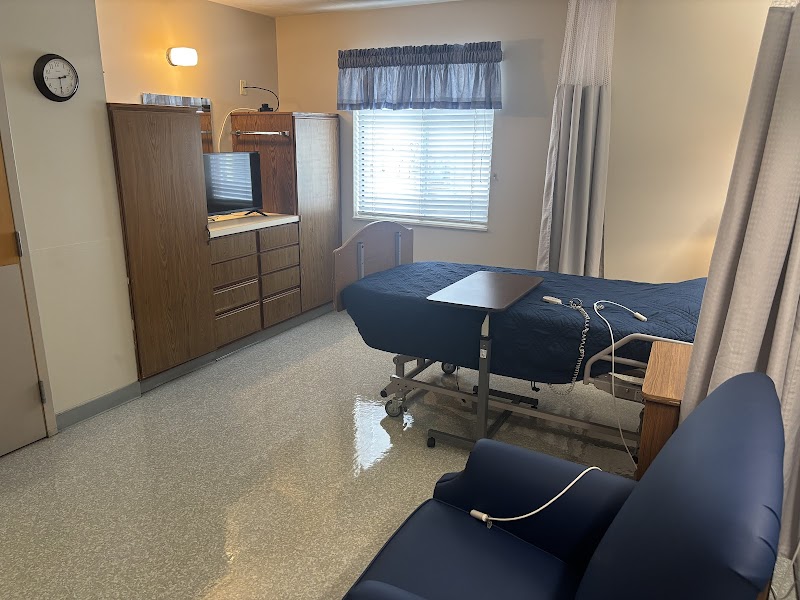
How is Parkside Health Staffed?

CMS rates PARKSIDE HEALTH CARE CENTER's staffing level at 3 out of 5 stars, which is average compared to other nursing homes. Staff turnover is 36%, compared to the Ohio average of 46%. This relatively stable workforce can support continuity of care.

What Have Inspectors Found at Parkside Health?

State health inspectors documented 38 deficiencies at PARKSIDE HEALTH CARE CENTER during 2018 to 2024. These included: 1 that caused actual resident harm and 37 with potential for harm. Deficiencies causing actual harm indicate documented cases where residents experienced negative health consequences.
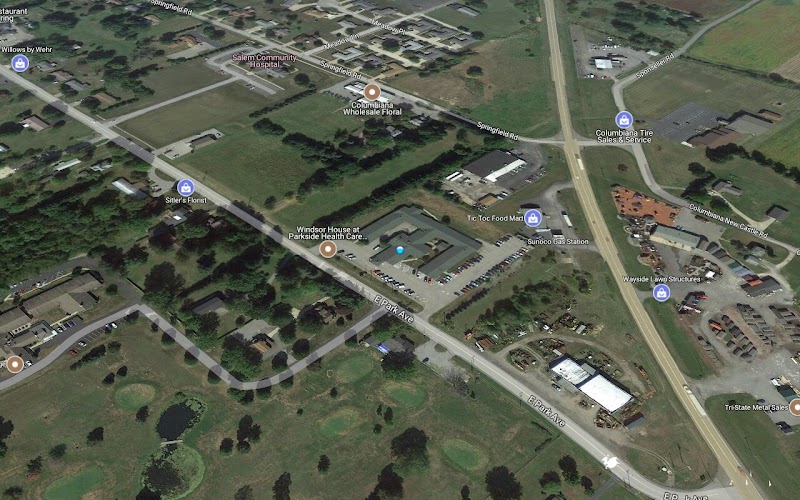
Who Owns and Operates Parkside Health?

PARKSIDE HEALTH CARE CENTER is owned by a for-profit company. For-profit facilities operate as businesses with obligations to shareholders or private owners. The facility is operated by WINDSOR HOUSE, INC., a chain that manages multiple nursing homes. With 95 certified beds and approximately 57 residents (about 60% occupancy), it is a smaller facility located in COLUMBIANA, Ohio.
How Does Parkside Health Compare to Other Ohio Nursing Homes?

Compared to the 100 nursing homes in Ohio, PARKSIDE HEALTH CARE CENTER's overall rating (4 stars) is above the state average of 3.2, staff turnover (36%) is significantly lower than the state average of 46%, and health inspection rating (3 stars) is at the national benchmark.

What Should Families Ask When Visiting Parkside Health?

Based on this facility's data, families visiting should ask: "Can I visit during a mealtime to observe dining assistance and food quality?" "How do you handle medical emergencies, and what is your hospital transfer rate?" "Can I speak with family members of current residents about their experience?"

Is Parkside Health Safe?

Based on CMS inspection data, PARKSIDE HEALTH CARE CENTER has a clean safety record: no substantiated abuse findings (meaning no confirmed cases of resident harm), no Immediate Jeopardy citations (the most serious violation level indicating risk of serious injury or death), and is not on the Special Focus Facility watch list (a federal program monitoring the lowest-performing 1% of nursing homes). The facility has a 4-star overall rating and ranks #1 of 100 nursing homes in Ohio. While no facility is perfect, families should still ask about staff-to-resident ratios and recent inspection results during their visit.

Do Nurses at Parkside Health Stick Around?

PARKSIDE HEALTH CARE CENTER has a staff turnover rate of 36%, which is about average for Ohio nursing homes (state average: 46%). Moderate turnover is common in nursing homes, but families should still ask about staff tenure and how the facility maintains care continuity when employees leave.

Was Parkside Health Ever Fined?

PARKSIDE HEALTH CARE CENTER has no federal fines on record. CMS issues fines when nursing homes fail to meet care standards or don't correct problems found during inspections. The absence of fines suggests the facility has either maintained compliance or corrected any issues before penalties were assessed. This is a positive indicator, though families should still review recent inspection reports for the full picture.

Is Parkside Health on Any Federal Watch List?

PARKSIDE HEALTH CARE CENTER is not on any federal watch list. The most significant is the Special Focus Facility (SFF) program, which identifies the bottom 1% of nursing homes nationally based on persistent, serious quality problems. Not being on this list means the facility has avoided the pattern of deficiencies that triggers enhanced federal oversight. This is a positive indicator, though families should still review the facility's inspection history directly.