CHERITH CARE CENTER AT WILLOW BROOK

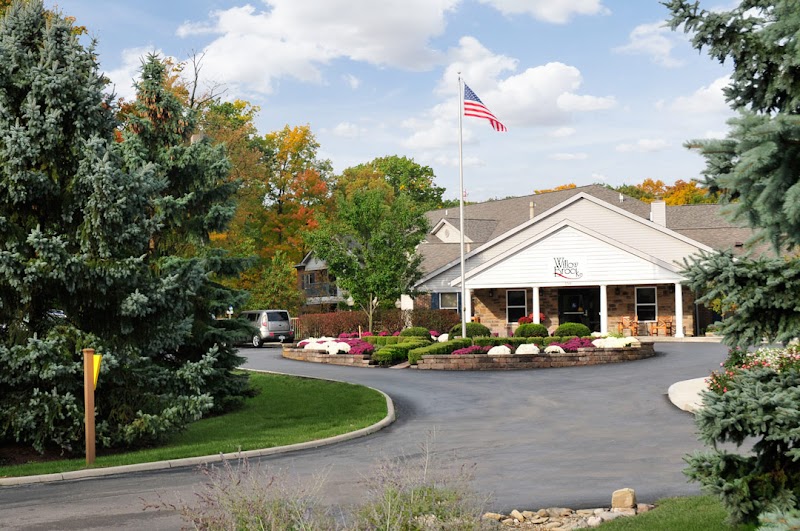
100 WILLOW BROOK WAY, SOUTH, DELAWARE, OH 43015 (740) 369-0048
Non profit - Church related 34 Beds Independent Data: November 2025
Trust Grade
75/100
#239 of 913 in OH
Last Inspection: May 2025

Inspected within the last 6 months. Data reflects current conditions.

Overview

Cherith Care Center at Willow Brook has a Trust Grade of B, indicating it is a good choice for families considering care options. It ranks #239 out of 913 facilities in Ohio, placing it in the top half, and #6 out of 8 in Delaware County, meaning there are only two local options rated higher. Unfortunately, the facility is worsening, with issues increasing from 4 in 2023 to 8 in 2025. Staffing received a 4 out of 5 stars rating, which is solid, but the turnover rate is 54%, just above the state average, suggesting that while some staff remain, there are still challenges in retaining personnel. There have been no fines, which is a positive sign, but there were concerning incidents such as a lack of sufficient RN coverage, with some days having no RN on duty, and unsafe food storage practices in the kitchen that could affect residents' health. Overall, while the center has strengths in its rating and no fines, the trend of increasing issues and specific incidents highlight areas in need of improvement.

Trust Score
B
75/100
In Ohio
#239/913
Top 26%
Safety Record
Low Risk
No red flags
Inspections
Getting Worse
4 → 8 violations
Staff Stability
⚠ Watch
54% turnover. Above average. Higher turnover means staff may not know residents' routines.
Penalties
✓ Good
No fines on record. Clean compliance history, better than most Ohio facilities.
Skilled Nurses
✓ Good
Each resident gets 55 minutes of Registered Nurse (RN) attention daily — more than average for Ohio. RNs are trained to catch health problems early.
Violations
⚠ Watch
14 deficiencies on record. Higher than average. Multiple issues found across inspections.
★★★★☆
4.0
Overall Rating
★★★★☆
4.0
Staff Levels
★★★★☆
4.0
Care Quality
★★★★☆
4.0
Inspection Score
Stable
2023: 4 issues
2025: 8 issues

The Good

  • 4-Star Staffing Rating · Above-average nurse staffing levels
  • 4-Star Quality Measures · Strong clinical quality outcomes
  • Full Sprinkler Coverage · Fire safety systems throughout facility
  • No fines on record

Facility shows strength in staffing levels, quality measures, fire safety.

The Bad

Staff Turnover: 54%

Near Ohio avg (46%)

Higher turnover may affect care consistency

The Ugly 14 deficiencies on record

May 2025 8 deficiencies
CONCERN (D)

Potential for Harm - no one hurt, but risky conditions existed

Deficiency F0582 (Tag F0582)

Could have caused harm · This affected 1 resident

Based on record review, interview and policy review the facility failed to include all required information on the skilled nursing advanced beneficiary notice (ABN). This deficient practice affected t...

Read full inspector narrative →
Based on record review, interview and policy review the facility failed to include all required information on the skilled nursing advanced beneficiary notice (ABN). This deficient practice affected two (Resident #14 and Resident #238) of three residents reviewed for cut letters. The facility census was 40. Finding include: 1. Review of the medical record for Resident #238 revealed an admission date of 02/16/2025. Diagnoses included dementia, difficulty walking, chronic kidney disease, adult failure to thrive, dementia, pressure ulcer of the sacral region, abnormal weight loss, encephalopathy, cognitive communication deficit, and Parkinson's disease. Review of the Skilled Nursing Facility ABN for Resident #238 revealed Beginning on (no date written), you may have to pay out of pocket for this care if you do not have other insurance that may cover these costs. Interview on 05/22/2025 at 2:25 P.M. with Social Worker (SW) #360 confirmed the missing date on the ABN form for Resident #238. SW#360 confirmed that the ABN form should be filled out completely when providing them to residents or their representatives. 2. Review of medical record for Resident #14 revealed an admission date of 03/14/25. Diagnosis included hypertension, chronic obstructive pulmonary disease, chronic pain syndrome, muscle weakness, vascular dementia, difficulty walking, cognitive communication deficit, and dysphagia. Review of the Skilled Nursing Facility ABN for Resident #14 revealed Beginning on (no date written), you may have to pay out of pocket for this care if you do not have other insurance that may cover these costs. The cares you have been receiving during the inpatient skilled nursing facility include: physical and occupational therapy. Further review of Resident #14's ABN revealed We estimate that these services will cost you $ (left blank) per day/item or service. Interview on 05/22/2025 at 2:26 P.M. with Social Worker (SW) #360 confirmed the beginning on date and estimated service cost were not filled out on the ABN form for Resident #14. SW#360 confirmed that the ABN form should be filled out completely when providing them to residents or their representatives. Review of facility policy, Advance Beneficiary Notices dated 2025 revealed, The facility shall inform Medicare beneficiaries of his or her potential liability for payment. A liability notice shall be issued to Medicare beneficiaries and For Part A items and services, the facility shall use the Skilled Nursing Facility Advance Beneficiary Notice Form.
CONCERN (D)

Potential for Harm - no one hurt, but risky conditions existed

Pressure Ulcer Prevention (Tag F0686)

Could have caused harm · This affected 1 resident

Based on record review, interview, observation and policy review the facility failed to ensure physician ordered wound treatments were in place to promote wound healing This affected one (Resident #9)...

Read full inspector narrative →
Based on record review, interview, observation and policy review the facility failed to ensure physician ordered wound treatments were in place to promote wound healing This affected one (Resident #9) of one residents reviewed for pressure ulcers. The facility census was 40. Finding include: Review of the medical record for Resident #9 revealed an admission date of 02/10/2018. Diagnoses included dementia, chronic kidney disease stage 2, cirrhosis of the liver, malignant neoplasm of the breast, urinary incontinence, Alzheimer's disease, anorexia, pressure ulcer of the sacral region, protein calorie malnutrition, and abnormal weight loss. Review of wound- weekly observation tool for Resident #9 dated 04/16/2025 revealed a suspected deep tissue injury (SDTI) (a localized area of discolored, intact skin or a blood-filled blister caused by damage to the underlying soft tissue, typically from pressure or sheer) on the resident's sacrum. Review of wound- weekly observation tool for Resident #9 dated 05/19/2025 revealed the continued presence of SDTI on the resident's sacrum. Review of orders for Resident #9 dated 05/05/2025 revealed to cleanse the sacrum with soap and water, pat dry apply zinc barrier cream and cover with foam dressing every three days and as needed. Review of the care plan dated 05/13/2025 revealed Resident #9 was at risk for skin break down with interventions including to cleanse the sacrum with soap and water, pat dry, apply zinc barrier cream and cover with foam dressing every three days and as needed. Review of the treatment administration record (TAR) revealed the treatment was last completed to the resident's sacrum on 05/15/25. There were no as needed treatments documented on the TAR. Observation on 05/21/2025 at 10:44 A.M. of incontinence care revealed the resident did not have a foam dressing to the sacrum as ordered. The dressing was not observed in bed with the resident and it was not observed to be removed during incontinence care. Interview with Certified Nursing Assistant (CNA) #367 on 05/21/2025 at 10:47 A.M. verified the foam dressing was not observed to the resident's sacrum or in the resident's bed and the dressing was not removed during incontinence care. Interview on 05/21/2025 at 2:53 P.M. with the Director of Nursing confirmed that the expectation is for staff to follow orders as written for wound treatments. Review of the facility, Wound Treatment Management dated 12/2025 revealed wound treatments will be provided in accordance with physician orders, including the cleansing method, type of dressing, and frequency of dressing change.
CONCERN (D)

Potential for Harm - no one hurt, but risky conditions existed

Accident Prevention (Tag F0689)

Could have caused harm · This affected 1 resident

**NOTE- TERMS IN BRACKETS HAVE BEEN EDITED TO PROTECT CONFIDENTIALITY** Based on record review, interview, policy and facility assessment review the facility failed to prevent Resident #88 from exitin...

Read full inspector narrative →
**NOTE- TERMS IN BRACKETS HAVE BEEN EDITED TO PROTECT CONFIDENTIALITY** Based on record review, interview, policy and facility assessment review the facility failed to prevent Resident #88 from exiting the facility unsupervised and failed to complete a comprehensive assessment and thorough investigation following the incident. This affected one resident (Resident #88) of three residents reviewed for accidents. Findings include: Review of the medical record revealed Resident #88 was admitted on [DATE] and readmitted on [DATE] with diagnoses that included Parkinson's disease, type 2 diabetes, atherosclerotic heart disease, hyperlipidemia, mood disorder, benign prostatic hyperplasia, history of transient ischemic accident, and traumatic subdural hemorrhage. Review of hospital records (prior to admission) dated 04/21/25 revealed the resident had Parkinson's Disease with increased forgetfulness which was concerning with dementia. The resident had been placed on delirium precautions in the hospital. The wandering risk assessment dated [DATE] revealed Resident #88 was at low risk for wandering. The fall risk assessment dated [DATE] revealed Resident #88 was at moderate risk for falls. Review of the plan of care for falls dated 04/25/25 revealed Resident #88 was at risk for falls with interventions to anticipate and meet the resident's needs, ensure call light was in place, and personal alarm to bed and chair. The resident did not have an elopement or wandering care plan. A communication note dated 04/27/25 at 9:20 P.M. authored by Registered Nurse (RN) #392 revealed Resident #88's wife was informed that staff could not get Resident #88 to stay in bed or in his room (due to it being bedtime). Resident #88 was wandering in the halls and into other resident rooms. Resident #88's wife talked to Resident #88 on the phone and then stated she would come to the facility and stay with Resident #88 until he fell asleep. Record review revealed no new wandering/elopement risk assessment was completed at this time and no elopement or wandering care plan was implemented . Review of the facility incident log dated 04/28/25 at 1:00 A.M. revealed Resident #88 had wandered off the unit and was found sitting in a grassy area outside of the main entrance. Resident #88 had a scraped right knee and an abrasion to the left lateral knee. Resident #88 was unable to make any meaningful statements regarding the event. One-on-one (supervision) was provided due to Resident #88 having confusion with behaviors. The resident was subsequently moved to the secured unit after the incident. An elopement investigation dated 04/28/25 at 1:00 A.M. authored by RN #392 revealed predisposing environmental factors included a fall alarm, poor lighting, confusion, impaired memory, and recent illness. There was no additional information regarding the resident's unsupervised exit of the facility including employee statements or a root cause analysis of the incident. A behavior note dated 04/28/25 at 1:05 A.M. authored by RN #392 revealed a Certified Nursing Assistant (CNA) notified RN #392 that Resident #88 was not in his room. Each room, bathroom, utility room, and medication room were searched. The hallways and units on the assisted living facility were also searched. A CNA went outside and circled the building and found Resident #88 sitting in the grass near the main entrance. Resident #88 was assisted back to his room and his pajama bottoms were changed. Resident #88 was put in a wheelchair at the nurse's station for one-on-one and then moved to the facility secured unit. An interview on 05/21/25 at 10:26 A.M. with the Licensed Nursing Home Administrator (LNHA) revealed Resident #88 did not go out main entrance but went straight down the hall and out the assisted living entrance. The LNHA stated staff had seen Resident #88 right before he left the building. When staff discovered Resident #88 was not in the building, a CNA went outside to look for Resident #88 and found him in the grass near the building. The LNHA verified there were no statements from the staff, but the nurse stated Resident #88 was only gone a few minutes. The LNHA was unsure if the resident's bed alarm was sounding at the time of the incident to alert staff that Resident #88 had gotten out of bed. The LNHA revealed the exit door did not have an alarm at that time but one had been installed since Resident #88 eloped from the building. An interview on 05/22/25 at 11:15 A.M. with RN #392 revealed Resident #88 had wandered from the day he was admitted , but staff kept an eye on him (the RN did not clarify what she meant by wandering). RN #392 then stated five-minute checks were done to monitor Resident #88. RN #392 stated at the time of the elopement incident, the resident's bed alarm was not sounding. RN #392 stated as a result of the incident, Resident #88 sustained a wound to one knee. RN #392 stated she cleaned the wound and applied antibiotic ointment. RN #392 stated she did not measure the wound because it was the least of her worries. An interview on 05/21/25 at 12:05 P.M. with the LNHA revealed any investigation pertaining to the elopement and fall were not included as part of the resident's medical record. An interview on 05/21/25 at 12:10 P.M. with Resident #88's wife revealed Resident #88 wandered at home and had left their home several times. Resident #88's wife believed the facility was aware Resident #88 was at risk for wandering and elopement when he was admitted . Resident #88's wife revealed at the time of the incident on 04/28/25, she was told Resident #88 was found within minutes of leaving the facility. An interview on 05/22/25 at 1:17 P.M. with Certified Nursing Assistant (CNA) #376 revealed Resident #88 had been walking around and staff stayed near him unless they had to provide care for other residents. On 04/28/25 the CNA indicated staff had laid the resident down in bed right before he left as they then went to provide care to other residents. CNA #376 stated at the time of the elopement, Resident #88's bed alarm was not sounding. The CNA was aware the resident sustained a little scratch on his leg after falling outside. The facility Elopements and Wandering Residents policy revised 2025 defined wandering as a random or repetitive locomotion that may be goal-directed or non-goal directed or aimless. Elopement occurs when a resident leaves the premises or a safe area without authorization and/or any necessary supervision to do so. The facility was equipped with door locks/alarms to help avoid elopements. Alarms were not a replacement for necessary supervision. Staff were to be vigilant in responding to alarms in a timely manner. The policy included the facility shall establish and utilize a systematic approach to monitoring and managing residents at risk for elopement or unsafe wandering, including identification and assessment of risk, evaluation, and analysis of hazards and risks, implementing interventions to reduce hazards and risks, and monitoring for effectiveness and modifying interventions when necessary. The facility assessment dated [DATE] revealed the facility provides care and services based on the needs of residents which included behavioral health issues, pain and pain management.
CONCERN (D)

Potential for Harm - no one hurt, but risky conditions existed

Incontinence Care (Tag F0690)

Could have caused harm · This affected 1 resident

**NOTE- TERMS IN BRACKETS HAVE BEEN EDITED TO PROTECT CONFIDENTIALITY** Based on record review, review of standing orders, and interview, the facility failed to ensure the facility bowel protocol for ...

Read full inspector narrative →
**NOTE- TERMS IN BRACKETS HAVE BEEN EDITED TO PROTECT CONFIDENTIALITY** Based on record review, review of standing orders, and interview, the facility failed to ensure the facility bowel protocol for constipation was followed for Resident #14 and Resident #24. This affected two (Resident #14 and #24) three reviewed for bowel and bladder. Facility census was 30. Findings include: 1. Review of the medical record revealed Resident #14 was admitted on [DATE] with diagnosis that included osteoarthritis, spinal stenosis, anxiety, major depressive disorder, type 2 diabetes, and chronic pain. A plan of care dated 03/18/25 revealed Resident #14 was a risk for constipation due to decreased mobility and medication use. Interventions included to follow facility bowel protocol for bowel management, milk of magnesia (laxative) as needed if no bowel movement in three days, monitor bowel movements every shift, and record bowel movement pattern each day. A significant change Minimum Data Set (MDS) dated [DATE] revealed Resident #14 had cognitive impairment and was frequently incontinent of bowel and bladder. Resident #14 was dependent on staff for toileting. Review of the treatment administration record (TAR) revealed Resident #14 did not have a bowel movement from 05/07/25 through 05/11/25. The TAR did not reveal any as needed laxative medication being administered from 05/07/25 through 05/11/25. Review of the electronic documentation by Certified Nursing Assistants (CNA) revealed no documentation of a bowel movement from 05/07/25 through 05/11/25. Interview on 05/22/25 at 9:26 A.M. Registered Nurse (RN) #389 verified the documentation revealed Resident #14 did not have a bowel movement for five days and there was no documentation of the facility bowel protocol being followed. RN #389 stated bowel movements were documented on paper, in point of care by CNA's, and on the TAR by nurses. RN #389 verified there was not a system in place to make sure the bowel protocol was followed. Review of standing order set revealed Miralax (laxative) 17 grams to be administered daily for constipation persisting three days or more and bisacodyl (laxative) suppository twice a day until the resident had a bowel movement. 2. Review of the medical record revealed Resident #24 was admitted on [DATE] with diagnoses that included major depressive disorder, chronic kidney disease, urinary retention, and anxiety disorder. A plan of care dated 06/30/23 revealed Resident #24 was at risk for constipation. Interventions included fleet enema rectally as needed for constipation, follow facility bowel protocol, glycolax powder every 12 hours as needed for constipation, milk of magnesia as needed for constipation, and Psyllium Husk (fiber) every 24 hours as needed. A significant change MDS dated [DATE] revealed Resident #24 was cognitively intact. The MDS also revealed Resident #24 was always incontinent of bowel and bladder and was dependent on staff for toileting. Review of the TAR revealed Resident #24 did not have a bowel movement from 04/30/25 through the evening of 05/04/25. The TAR did not reveal any as needed laxative medication being administered from 04/30/25 through 05/04/25. Review of the electronic documentation by the CNA's revealed no documentation of a bowel movement from 04/30/25 through the evening of 05/04/25. Interview on 05/22/25 at 9:26 A.M. RN #389 verified the documentation revealed Resident #24 did not have a bowel movement for four days and there was no documentation of bowel protocol being followed. RN #389 stated bowel movements were documented on paper, in point of care by CNA's, and on the TAR by nurses. RN #389 verified there was not a system in place to make sure the bowel protocol was followed. Review of standing order set revealed Miralax (laxative) 17 grams to be administered daily for constipation persisting three days or more and bisacodyl (laxative) suppository twice a day until the resident had a bowel movement.
CONCERN (D)

Potential for Harm - no one hurt, but risky conditions existed

Drug Regimen Review (Tag F0756)

Could have caused harm · This affected 1 resident

**NOTE- TERMS IN BRACKETS HAVE BEEN EDITED TO PROTECT CONFIDENTIALITY** Based on record review, interview, and policy review, the facility failed to ensure a rationale was provided when a gradual dose...

Read full inspector narrative →
**NOTE- TERMS IN BRACKETS HAVE BEEN EDITED TO PROTECT CONFIDENTIALITY** Based on record review, interview, and policy review, the facility failed to ensure a rationale was provided when a gradual dose reduction for psychotropic medications was contraindicated for Resident #24. This affected one (Resident #24) of five residents reviewed for unnecessary medications. Facility census was 30. Findings include: Review of the medical record revealed Resident #24 was admitted on [DATE] with diagnoses that included major depressive disorder, chronic kidney disease, urinary retention, and anxiety disorder. Pharmacy recommendations dated 09/23/24 revealed Resident #24 had been receiving Zoloft (antidepressant) 100 milligram (mg) daily, mirtazapine (antidepressant) 7.5 mg daily, and hydroxyzine (antihistamine also used for anxiety) 25 mg daily without a gradual dose reduction (GDR). Pharmacy asked if a GDR could be attempted in order to be sure Resident #24 was using the minimum effective dose. If a GDR was not warranted, a statement needed to be included explaining why a GDR would be detrimental. The physician signed the recommendations on 09/30/24 and checked the box that a GDR was contraindicated but did not provide a statement why the GDR for Zoloft, mirtazapine, and hydroxyzine would be detrimental. An interview on 05/22/25 at 9:06 A.M. with the Director of Nursing (DON) verified the physician did not provide a rationale why a GDR was contraindicated for Resident #24's Zoloft, mirtazapine, and hydroxyzine. Review of the Medication Monitoring policy dated 10/01/18 revealed if the physician declines or otherwise rejects the consultant pharmacists recommendation, an explanation as to the rationale for the rejection shall be documented in the resident's medical record. If the physician fails to address a recommendation or document a rationale for rejecting a recommendation, the director of nursing will be notified and a summary shall be provided to the quality assurance and performance improvement (QAPI) committee on a periodic basis. The incomplete recommendation should be reviewed with the physician.
CONCERN (D)

Potential for Harm - no one hurt, but risky conditions existed

Medical Records (Tag F0842)

Could have caused harm · This affected 1 resident

**NOTE- TERMS IN BRACKETS HAVE BEEN EDITED TO PROTECT CONFIDENTIALITY** Based on record review, review of the incident and accident log, interview and policy review the facility failed to maintain com...

Read full inspector narrative →
**NOTE- TERMS IN BRACKETS HAVE BEEN EDITED TO PROTECT CONFIDENTIALITY** Based on record review, review of the incident and accident log, interview and policy review the facility failed to maintain complete and accurate medical records related to resident incidents. This affected one resident (Resident #14) of three residents reviewed for accidents. The facility census was 30. Findings include: Review of the medical revealed Resident #14 was admitted on [DATE] with diagnosis that included osteoarthritis, spinal stenosis, anxiety, major depressive disorder, type 2 diabetes, and chronic pain. Review of the incident and accident log revealed on 04/02/25 at 12:00 A.M. a Certified Nursing Assistant (CNA) reported Resident #14 was on the floor. Resident #14 was found sitting on the floor in front of her recliner. The CNA stated Resident #14 was sliding out of the recliner when the CNA attempted to reposition Resident #14 but Resident #14 slid out of the chair onto the floor. A new intervention for a non-slip material was to be placed in the recliner. The Committee Review of Incidents dated 04/02/25 revealed Resident #14 had a fall on 04/02/25 at 12:00 A.M. A Witnessed Fall form dated 04/02/25 that was privileged and confidential and not part of the medical record-do not copy revealed Resident #14 was confused, had gait imbalance, incontinent, and weakness/fainted. The box during transfer was marked. A nurse's note dated 04/04/25 at 3:11 A.M. revealed Resident #14 was status post fall without injury. Resident #14 had no pain at this time. Review of the significant change Minimum Data Set (MDS) dated [DATE] revealed Resident #14 had cognitive impairment. An interview on 05/22/25 at 12:24 P.M. with the Director of Nursing (DON) verified accidents/falls were documented in incidents which was not part of the medical record. The DON verified there was not a nurse's note, vitals, assessment, investigation, or any follow up documentation about the fall Resident #14 had on 04/02/25. Review of the Fall Prevention Program policy revised April 2025 revealed when a resident experienced a fall, the facility will assess the resident, complete an incident report, notify the physician and family, review the resident's care plan and update as indicated, documented all assessments and actions, and obtain witness statements if applicable.
CONCERN (D)

Potential for Harm - no one hurt, but risky conditions existed

Deficiency F0883 (Tag F0883)

Could have caused harm · This affected 1 resident

Based on record review, interview, and policy review the facility failed to obtain resident or resident representative consent and provide education prior to administration of the influenza vaccinatio...

Read full inspector narrative →
Based on record review, interview, and policy review the facility failed to obtain resident or resident representative consent and provide education prior to administration of the influenza vaccination. This affected three resident residents (Resident #9, #10 and #20) of five residents reviewed for vaccinations. Findings include: 1. Review of the medical record for Resident #9 revealed an admission date of 02/10/2018. Diagnoses included dementia, atherosclerotic hear disease of native coronary artery, chronic kidney disease stage 2, cirrhosis of the liver, malignant neoplasm of the breast, Alzheimer's disease, anorexia, dysphagia, pressure ulcer of the sacral region, protein calorie malnutrition, and abnormal weight loss. Review of Resident #9's influenza vaccination 2024 records revealed an inoculation date of 09/17/2024. Further review of the medical record revealed no influenza consent or vaccine information/education was provided Interview on 05/22/2025 at 11:50 A.M. with Minimum Data Set (MDS) Coordinator #389 confirmed the facility gave Resident #9 an influenza vaccination on 09/17/2024. MDS Coordinator #389 confirmed the facility failed to obtain a 2024 consent form for influenza vaccination and failed to document that Resident #9 received education regarding the influenza vaccination. 2. Review of the medical record for Resident #10 revealed an admission date of 11/26/2021. Diagnoses included chronic pain syndrome, orthostatic hypotension, hypothyroidism, hyperlipidemia, repeated falls, major depressive disorder, protein calorie malnutrition, pneumonia, abnormal weight loss, weakness, acute respiratory failure with hypoxia, unspecified dementia, hypotension, cognitive communication deficit, and chronic obstructive pulmonary disease. Review of Resident #10's influenza vaccination 2024 records revealed an inoculation date of 09/25/2024. Further review of the medical record revealed no influenza consent or vaccine information/education was provided Interview on 05/22/2025 at 11:50 A.M. with Minimum Data Set (MDS) Coordinator #389 confirmed the facility gave Resident #10 an influenza vaccination on 09/25/2024. MDS Coordinator #389 confirmed the facility failed to obtain a 2024 consent form for influenza vaccination and failed to document that Resident #10 received education regarding the influenza vaccination. 3. Review of the medical record for Resident #20 revealed an admission date of 08/17/2022. Diagnosis include unspecified dementia, type 2 diabetes, atherosclerosis of aorta, thrombocytopenia, hypertension, glaucoma, hypothyroidism, chronic obstructive pulmonary disease, repeated falls, seizures, adult failure to thrive, abnormal weight loss, hemiplegia and hemiparesis following cerebral infarction, contracture of right hand, contracture of left hand, atrial fibrillation, metabolic encephalopathy, pneumonitis due to inhalation of food, chronic kidney disease, chronic obstructive pulmonary disease, muscle weakness, and nontraumatic intracerebral hemorrhage. Review of Resident #20 influenza vaccination 2024 records revealed an inoculation date of 09/17/2024. Further review of the medical record revealed no influenza consent or vaccine information/education was provided Interview on 05/22/2025 at 11:50 A.M. with Minimum Data Set (MDS) Coordinator #389 confirmed the facility gave Resident #20 an influenza vaccination on 09/17/2024. MDS Coordinator #389 confirmed the facility failed to obtain a 2024 consent form for influenza vaccination and failed to document that Resident #20 received education regarding the influenza vaccination. Review of facility, Influenza Vaccination policy dated 05/19/24 revealed, Prior to the administration of the influenza vaccine, the person receiving the immunization, or his/her legal representative, will be provided a copy of CDC's current vaccine information statement relative to the influenza vaccination. Individuals receiving the influenza vaccine, or their legal representative, will be required to sign a consent form prior to the administration of the vaccine. The completed, signed, and dated record will be filed in the individuals medical record.
CONCERN (F)

Potential for Harm - no one hurt, but risky conditions existed

Deficiency F0727 (Tag F0727)

Could have caused harm · This affected most or all residents

Based on review of the payroll based journal (PBJ), staff interviews and record review, the facility failed to ensure a Registered Nurse (RN) worked at least eight consecutive hours, seven days a week...

Read full inspector narrative →
Based on review of the payroll based journal (PBJ), staff interviews and record review, the facility failed to ensure a Registered Nurse (RN) worked at least eight consecutive hours, seven days a week. This had the potential to affect all facility residents. Facility census 30. Findings include Review of the PBJ report from the review period of 10/01/24 to 12/31/24 revealed the facility triggered for no RN for at least eight hours a day, seven days per week. Review of the registered nurse schedule for October 2024 revealed on 10/05/24, 10/06/24, 10/19/24, and 10/20/24 the facility had no RN working in the nursing home. Review of the registered nurse schedule for November 2024 revealed on 11/02/24, 11/03/24, 11/16/24, 11/17/24 and 11/30/24 had no RN working in the nursing home. Review of the registered nurse schedule for December 2024 revealed on 12/01/24, 12/14/24, 12/15/24, and 12/29/24 the facility had no RN working in the nursing home. Interviews on 05/22/25 from 1:00 P.M. to 3:30 P.M. with the Administrator and Minimum Data Set (MDS) Nurse #389 confirmed the information provided for the PBJ report identified the facility did not always have an RN scheduled to provide care in the facility. They also confirmed the schedules had several days without RN coverage including four days in October and December and five days in November. The Administrator stated the facility had been using the RN that was working in the assisted living as the RN coverage.
May 2023 4 deficiencies
CONCERN (D)

Potential for Harm - no one hurt, but risky conditions existed

Drug Regimen Review (Tag F0756)

Could have caused harm · This affected 1 resident

**NOTE- TERMS IN BRACKETS HAVE BEEN EDITED TO PROTECT CONFIDENTIALITY** Based on staff interviews, review of the facility policy, and record review, the facility failed to ensure pharmacy recommendati...

Read full inspector narrative →
**NOTE- TERMS IN BRACKETS HAVE BEEN EDITED TO PROTECT CONFIDENTIALITY** Based on staff interviews, review of the facility policy, and record review, the facility failed to ensure pharmacy recommendations were followed up and implemented timely. This affected three (Residents #14, #20 and #25) of five residents reviewed for unnecessary medications. The facility census was 31. Findings include 1. Review of the medical record for Resident #20 revealed an admission date of 12/20/21. Diagnoses included gastroesophageal reflux disease (GERD). Review of the Minimum Data Set (MDS) assessment dated [DATE] revealed Resident #20 had moderate cognitive impairment. Review of the physician orders for Famotidine (treats GERD) revealed from 01/14/222 to 04/28/23, Famotidine was to be administered at 40 milligrams (mg) tablet daily. On 04/28/23, the order for Famotidine was changed to 20 mg tablet daily. Review of the monthly pharmacy recommendation dated 03/21/22 revealed it was reviewed by the physician on 03/24/22. The recommendation was for Famotidine 40 mg once daily to be decreased to 20 mg daily. The physician marked agree. However, the physician order was not completed until 04/28/23. Review of the monthly pharmacy recommendation dated 04/27/23 revealed it was reviewed by the physician on 04/28/23. The recommendation was for Famotidine 40 mg daily to be decreased to 20 mg daily. The physician marked agree. Interview on 05/03/23 at 2:10 P.M. with the Director of Nursing (DON) confirmed the decrease in Famotidine was not done timely after the pharmacy recommendation was made and the physician agreed to pharmacy recommendation. 2. Review of the medical record for Resident #25 revealed an admission date of 08/23/21. Diagnoses included polyneuropathy, osteoarthritis and pain in the joints. Review of the annual Minimum Data Set (MDS) assessment dated [DATE] revealed Resident #25 was cognitively intact. Review of the monthly pharmacy recommendation dated 12/29/22 revealed it was reviewed by the physician on 12/30/22. The recommendation was for a complete blood count (CBC) at least every 12 months and a serum creatinine lab every six months due to Eliquis medication. The physician marked agree. Review of the physician orders dated 12/29/22 to 05/03/23 revealed there was no physician order for a serum creatinine lab to be drawn every six months or a CBC draw for every 12 months. Review of the laboratory value results for Resident #25 dated 05/31/22 revealed a serum Creatinine were completed on 05/31/22. From 06/01/22 to 05/03/23, there was no serum Creatinine or CBC completed during this time. Interview on 05/03/23 at 4:10 P.M. with the Director of Nursing (DON) confirmed the last creatine lab was done in 05/2022 and there was no CBC draw from 06/01/22 to 05/02/23. The DON confirmed there was no physician order for this to be completed. 3. Review of the medical record for the Resident #14 revealed an admission date of 11/18/21. Diagnoses included gastroesophageal reflux disease (GERD). Review of the annual Minimum Data Set (MDS) assessment dated [DATE] revealed Resident #14 was cognitively intact. Review of the monthly pharmacy recommendation dated 01/31/23 revealed it was reviewed by the physician on 02/03/23. The recommendation was for Protonix to be reduced from 40 mg to 20 mg. The physician marked agree. Review of Resident #14's physician orders dated from 0/1/31/21 to 05/02/23 revealed an order for Protonix (treats GERD) 40 milligrams (mg) to administer one tablet daily. There was no physician order to administer Protonix 20 mg daily during this time period. Interview on 05/03/23 at 4:10 P.M. with the Director of Nursing (DON) revealed no evidence of the Protonix medication orders being changed or followed up on after the pharmacy recommendation. DON confirmed the pharmacy recommendations were provided to the physician and the physician signs off timely and two nurses should be updating the orders. The DON confirmed the facility had no system in place to ensure the recommendations were followed up on after physician signature. Interview on 05/04/23 at 9:47 A.M. with Medical Director (MD) #606 revealed he receives the pharmacy recommendation and completes within about a week. MD confirmed the signed forms were then provided to the DON for follow up. MD revealed the facility had no process in place to verify orders were implemented in the medical record orders. Review of the facility policy titled Pharmacy Services, dated 2023, revealed the policy stated a pharmacist would be involved with eliminating errors and addressing medication concerns.
CONCERN (D)

Potential for Harm - no one hurt, but risky conditions existed

Unnecessary Medications (Tag F0759)

Could have caused harm · This affected 1 resident

**NOTE- TERMS IN BRACKETS HAVE BEEN EDITED TO PROTECT CONFIDENTIALITY** Based on observation, record review, staff interview, and review of the facility policy, the facility failed to have a medicatio...

Read full inspector narrative →
**NOTE- TERMS IN BRACKETS HAVE BEEN EDITED TO PROTECT CONFIDENTIALITY** Based on observation, record review, staff interview, and review of the facility policy, the facility failed to have a medication error rate less than five percent. There were two medication errors out of 26 opportunities resulting an a 7.69 percent (%) medication error rate. This affected two (Resident #14 and #19) of four residents observed for medication administration. The facility census was 31. Findings include: 1. Review of Resident #19's medical record revealed the resident was admitted to the facility on [DATE]. Diagnoses included supraventricular tachycardia, age related osteoporosis, and dementia with severe agitation. Review of the admission Minimum Data Set (MDS) 3.0 assessment dated [DATE] revealed Resident #19 was severely cognitively impaired, had no delusions, hallucinations, or behaviors documented. Review of Resident #19's physician orders revealed an order for Oyster Shell Calcium (supplement) 500 milligram (mg) - five micrograms (mcg) with Vitamin D twice daily. Observation of medications delivered to Resident #19 from Licensed Practical Nurse (LPN) #603 on 05/02/23 at 8:15 A.M. revealed the following medications were administered to Resident #19 orally: Eliquis (anticoagulant) five mg, Oyster Shell Calcium 500 mg to five mcg, Seroquel (antipsychotic) 25 mg, Seroquel (antipsychotic) 50 mg, Zoloft (antidepressant)100 mg, and Tylenol (antipyretic) 325 mg two tablets. Observation and interview with LPN #603 on 05/02/23 at 12:53 P.M. confirmed the Oyster Shell Calcium 500 mg-five mcg was in the medication cart and was administered to Resident #19. LPN #603 verified she administered Oyster Shell Calcium 500 mg - five mcg to Resident #19 and the medication had no Vitamin D included in the medication. 2. Review of Resident #14's medical record revealed the resident was admitted to the facility on [DATE]. Diagnoses included depression, atrial fibrillation, and diabetes mellitus (DM). Review of the annual Minimum Data Set (MDS) assessment dated [DATE] revealed Resident #14 was cognitively intact, had a diagnosis of DM, and received insulin. Observation of Resident #14 receiving medications from Licensed Practical Nurse (LPN) #601 on 05/02/23 at 11:48 A.M. revealed the resident received Novolog insulin five units via a delivery pen, and Oxybutynin (anticholinergic) five milligrams (mg) orally. LPN #601 was observed to dial the Novolog pen to five units and administer the medication to Resident #14. Interview with LPN #601 on 05/02/23 at 11:53 A.M. confirmed she had primed the Novolog insulin pen with one unit of insulin prior to dialing the five units required for the dose that was administered to the resident. Review of the policy titled Insulin Pen Administration, dated 2022, revealed the facility is to use insulin pens in order to improve the accuracy of insulin dosing, provide increased resident comfort, and serve as a teaching aid to prepare residents for self-administration of insulin therapy upon discharge. The policy explanation and compliance guidelines included insulin pens will be primed prior to each use to avoid collection of air in the insulin reservoir. The instructions state to prime the insulin pen; Dial two units by turning the dose selector clockwise; With the needle pointing up, push the plunger, and watch to see that at least one drop of insulin appears on the tip of the needle. If not, repeat until at least one drop appears; Set the insulin dose; Turn the dose selector to ordered dose. A click will be heard for each unit dialed. If an incorrect dose has been set, dial the dose selector forward or backward until the correct number of units has been set; then check dose a second time. Review of the undated policy titled Medication Administration revealed medications are administered by licensed nurses, or other staff who are legally authorized to do so in this state, as ordered by the physician and in accordance with professional standards of practice, in a manner to prevent contamination or infection. The guidelines included to review Medication Administration Record (MAR) to identify medication to be administered. Compare medication source (bubble pack, vial, etc.) with MAR to verify resident name, medication name, form, dose, route, and time.
CONCERN (D)

Potential for Harm - no one hurt, but risky conditions existed

Deficiency F0760 (Tag F0760)

Could have caused harm · This affected 1 resident

**NOTE- TERMS IN BRACKETS HAVE BEEN EDITED TO PROTECT CONFIDENTIALITY** Based on observation, record review, staff interview, and review of the facility policy, the facility failed to administer insu...

Read full inspector narrative →
**NOTE- TERMS IN BRACKETS HAVE BEEN EDITED TO PROTECT CONFIDENTIALITY** Based on observation, record review, staff interview, and review of the facility policy, the facility failed to administer insulin correctly to a resident, resulting in a resulting in a significant medication error. This affected one (Resident #14) of four residents observed for medication administration. The facility census was 31. Findings include: Review of Resident #14's medical record revealed the resident was admitted to the facility on [DATE]. Diagnoses included depression, atrial fibrillation, and diabetes mellitus (DM). Review of the annual Minimum Data Set (MDS) assessment dated [DATE] revealed Resident #14 was cognitively intact, had a diagnosis of DM, and received insulin. Observation of Resident #14 receiving medications from Licensed Practical Nurse (LPN) #601 on 05/02/23 at 11:48 A.M. revealed the resident received Novolog insulin five units via a delivery pen, and Oxybutynin (anticholinergic) five milligrams (mg) orally. LPN #601 was observed to dial the Novolog pen to five units and administer the medication to Resident #14. Interview with LPN #601 on 05/02/23 at 11:53 A.M. confirmed she had primed the Novolog insulin pen with one unit of insulin prior to dialing the five units required for the dose that was administered to the resident. Review of the policy titled Insulin Pen Administration, dated 2022, revealed the facility is to use insulin pens in order to improve the accuracy of insulin dosing, provide increased resident comfort, and serve as a teaching aid to prepare residents for self-administration of insulin therapy upon discharge. The policy explanation and compliance guidelines included insulin pens will be primed prior to each use to avoid collection of air in the insulin reservoir. The instructions state to prime the insulin pen; Dial two units by turning the dose selector clockwise; With the needle pointing up, push the plunger, and watch to see that at least one drop of insulin appears on the tip of the needle. If not, repeat until at least one drop appears; Set the insulin dose; Turn the dose selector to ordered dose. A click will be heard for each unit dialed. If an incorrect dose has been set, dial the dose selector forward or backward until the correct number of units has been set; then check dose a second time.
CONCERN (F)

Potential for Harm - no one hurt, but risky conditions existed

Food Safety (Tag F0812)

Could have caused harm · This affected most or all residents

Based on observations, staff interview and review of the facility policy, the facility failed to ensure safe and sanitary food storage in the refrigerator and freezer in the main kitchen area. This ha...

Read full inspector narrative →
Based on observations, staff interview and review of the facility policy, the facility failed to ensure safe and sanitary food storage in the refrigerator and freezer in the main kitchen area. This had the potential to affect all 31 residents residing in the facility who received food from the kitchen. Findings include: Observations on 05/01/23 at 9:56 A.M. of the kitchen revealed a cup of creamer or milk left uncovered and had spilled on a tray in the refrigerator; a pre-made plate of sausage with peppers and onions was left undated in the refrigerator; coconut shrimp was in an individually sized portioned zip lock bag and was left open to air in the freezer; a pack of veggie burgers were left open to air in the freezer; a bag of rice was on top of a container with rice bags inside of it. The individual bag was undated; a metal container of hot dogs were left uncovered and open to air in the freezer; a bag of fries was undated and had a hole with food coming out of the hole in the freezer; two pies were left on a rack in the walkway of the kitchen undated and uncovered open to air; a tray of cookies were left on a rack in the hallway of the kitchen undated and uncovered open to air; and a cart of desserts were in left in a cart on shelves and were left uncovered and open to air. Interview on 05/01/23 at 10:15 A.M. with Corporate Coordinator of Culinary Services (CCCS) #605 confirmed the findings and revealed the milk was just left and staff should have removed it and revealed the display plate was not planned to be eaten but was a display for residents in independent living for the meal. CCCS #605 revealed it was unknown if the bag of rice was extra and did not fit in the container below it or it was from the previous container. CCCS #605 confirmed the pies and cookies were not covered and revealed they were recently made and would be cut and put on plates and placed in the cart until time for service. Review of the facility policy titled Food Safety Requirements, dated 2023, revealed the facility policy stated food would be stored in accordance with professional standards for food safety. Food should be stored in a manner that prevents deterioration or contamination of the food. Refrigerator and freezer areas shall maintain safe storage including labeling, dating and monitoring food so it was used by the use-by date and keeping food covered or in tight containers.
Oct 2019 2 deficiencies
CONCERN (D)

Potential for Harm - no one hurt, but risky conditions existed

Deficiency F0578 (Tag F0578)

Could have caused harm · This affected 1 resident

Based on medical record review, staff interview and policy review, the facility failed to ensure code status's in the electronic medical record were accurate. This affected two (#2 and #14) of 16 resi...

Read full inspector narrative →
Based on medical record review, staff interview and policy review, the facility failed to ensure code status's in the electronic medical record were accurate. This affected two (#2 and #14) of 16 residents reviewed during the survey. The census was 31. Findings include: 1. Review of the medical record for Resident #2 revealed an admission date of 11/19/18 with diagnoses including irritable bowel syndrome, depression, and diabetes mellitus type two. Review of the electronic medical record revealed a physician's order dated 02/05/19 for Do Not Resuscitate (DNR) comfort care arrest. Review of the medical record for Resident #2 revealed a signed DNR Form dated 03/19/19 for Resident #2's code status to be DNR comfort care. Interview with Director of Nursing on 10/16/19 at 3:05 P.M. verified Resident #2's code status in the electronic medical record did not match the signed DNR form dated 03/19/19. 2. Review of the medical record for Resident #14 revealed an admission date of 10/16/18 with diagnoses including Parkinson's disease, depression, and hypertension. Review of the electronic medical record revealed a physician's order dated 01/29/19 for DNR comfort care arrest. Review of the medical record for Resident #14 revealed a signed DNR Form dated 05/21/19 for Resident #14's code status to be DNR comfort care. Interview with Director of Nursing on 10/16/19 at 3:05 P.M. verified Resident #14's code status in the electronic medical record did not match the signed DNR form dated 05/21/19. Review of the undated policy titled Cardiopulmonary Resuscitation revealed code status will be updated when changed and indicated in each resident's chart.
CONCERN (D)

Potential for Harm - no one hurt, but risky conditions existed

Deficiency F0657 (Tag F0657)

Could have caused harm · This affected 1 resident

**NOTE- TERMS IN BRACKETS HAVE BEEN EDITED TO PROTECT CONFIDENTIALITY** 2. Review of the medical record for Resident #9 revealed an admission date of 01/28/18 with diagnoses including heart failure, p...

Read full inspector narrative →
**NOTE- TERMS IN BRACKETS HAVE BEEN EDITED TO PROTECT CONFIDENTIALITY** 2. Review of the medical record for Resident #9 revealed an admission date of 01/28/18 with diagnoses including heart failure, peripheral vascular disease, and depression. Further review of the medical record revealed Resident #9 fell out of her wheelchair on 08/07/19. Review of the fall investigation for the Resident #9's fall which occurred on 08/07/19 revealed the intervention taken to prevent the incident from reoccurring was to ensure Resident #9's wheelchair brakes were locked prior to transferring transferring the resident into it as well as to ensure the resident had proper and safe positioning when in her wheelchair. Review of the comprehensive care plan for Resident #9 revealed Resident #9 was at risk for falls. Further review of the comprehensive care plan for Resident #9 revealed the interventions to ensure Resident #9's wheelchair brakes were locked prior to transferring transferring the resident into it and to ensure the resident had proper and safe positioning when in her wheelchair were not included on the comprehensive care plan. Interview with Director of Nursing on 10/17/19 at 10:55 A.M. verified Resident #9's comprehensive care plan was not revised to include the above fall interventions. Review of the facility's undated policy titled Policy & Procedure for Falls revealed the plan of care will be updated as needed between reviews to reflect new or modified interventions. Review of the facility's undated policy titled Care Plans - Comprehensive revealed care plans are revised as changes in the resident's condition dictates. Based on medical record review, staff interview and policy review, the facility failed to update care plan interventions following a resident fall. This affected two (#9 and #79) of two residents reviewed for accidents. Facility census was 31. Findings include 1. Review of medical record revealed Resident #79 was admitted to the facility on [DATE]. Diagnoses included vertebral fracture of thoracic vertebrae 11 and 12, brain cancer, hypertension, and history of falling. Review of the comprehensive assessment dated revealed 10/02/19 revealed the resident had moderate cognitive impairment. Resident #79 required partial to moderate assistance for sit to stand, toilet transfers, and bed to chair transfers. Review of the comprehensive assessment dated [DATE] revealed Resident #79 had a history of falls prior to admission, one of which resulted in a fracture. The resident had fallen since admission and received an injury (not a major injury). Review of progress notes revealed on 09/23/19 Resident #79 was washing his/her hands in the bathroom, reached to get a paper towel while holding onto the walker and lost balance, falling straight back and hitting his/her head on the wall. The state tested nurses assistant (STNA) was in the bathroom with the resident. The nurse, physician and family were notified. Resident #79 was transported to the emergency room (ER) for evaluation. Review of the fall investigation dated 09/23/19 revealed a hematoma was noted to the back of the resident's head. Resident #79 reported a pain level of six and was alert and oriented to person, place, time, and situation. The interdepartmental team (IDT) investigated the fall and identified the STNA was present with the resident in the bathroom but did not have hands on the resident as the resident was washing hands. Staff was reminded to have hands on the resident while ambulating, transferring, and during care. Review of Resident #79's care plan revealed the resident had a self-care performance deficit and required limited assistance of one staff member for toileting. Resident #79's care plan also included a risk area for falls with the following interventions: - Anticipate and meet the resident's needs - Ensure the resident's call light was within reach and encourage the resident to use the call light for assistance as needed. The resident needed prompt response to all requests for assistance - Educate the resident/family/caregivers about safety reminders and what to do if a fall occurred - Encourage the resident to participate in activities that promoted exercise, physical activity for strengthening and improved mobility - Ensure the resident was choosing and wearing appropriate footwear when ambulating or mobilizing in the wheelchair - Tab alarm to bed and chair at all times - The resident needed a safe environment with even floors free from spills and/or clutter; adequate, glare-free light; a working and reachable call light, handrails on walls, personal items within reach. The care plan did not include the new fall intervention identified by the IDT to have hands on the resident while ambulating, transferring, and during care. Interview on 10/17/19 at 10:48 A.M. interview with the Director of Nursing (DON) verified the fall intervention identified by the IDT was not included in Resident #79's care plan.
Understanding Severity Codes (click to expand)
Life-Threatening (Immediate Jeopardy)
J - Isolated K - Pattern L - Widespread
Actual Harm
G - Isolated H - Pattern I - Widespread
Potential for Harm
D - Isolated E - Pattern F - Widespread
No Harm (Minor)
A - Isolated B - Pattern C - Widespread

Questions to Ask on Your Visit

  • "Can I speak with families of current residents?"
  • "What's your RN coverage like on weekends and overnight?"

Our Honest Assessment

Strengths
  • • No major safety red flags. No abuse findings, life-threatening violations, or SFF status.
  • • No fines on record. Clean compliance history, better than most Ohio facilities.
Concerns
  • • 14 deficiencies on record. Higher than average. Multiple issues found across inspections.
Bottom line: Generally positive indicators. Standard due diligence and a personal visit recommended.

About This Facility

What is Cherith At Willow Brook's CMS Rating?

CMS assigns CHERITH CARE CENTER AT WILLOW BROOK an overall rating of 4 out of 5 stars, which is considered above average nationally. Within Ohio, this rating places the facility higher than 99% of the state's 100 nursing homes. This rating reflects solid performance across the metrics CMS uses to evaluate nursing home quality.

How is Cherith At Willow Brook Staffed?

CMS rates CHERITH CARE CENTER AT WILLOW BROOK's staffing level at 4 out of 5 stars, which is above average compared to other nursing homes. Staff turnover is 54%, compared to the Ohio average of 46%. RN turnover specifically is 56%, which is notably high. RNs provide skilled clinical oversight, so turnover in this role can affect medical care quality.

What Have Inspectors Found at Cherith At Willow Brook?

State health inspectors documented 14 deficiencies at CHERITH CARE CENTER AT WILLOW BROOK during 2019 to 2025. These included: 14 with potential for harm.
Who Owns and Operates Cherith At Willow Brook?

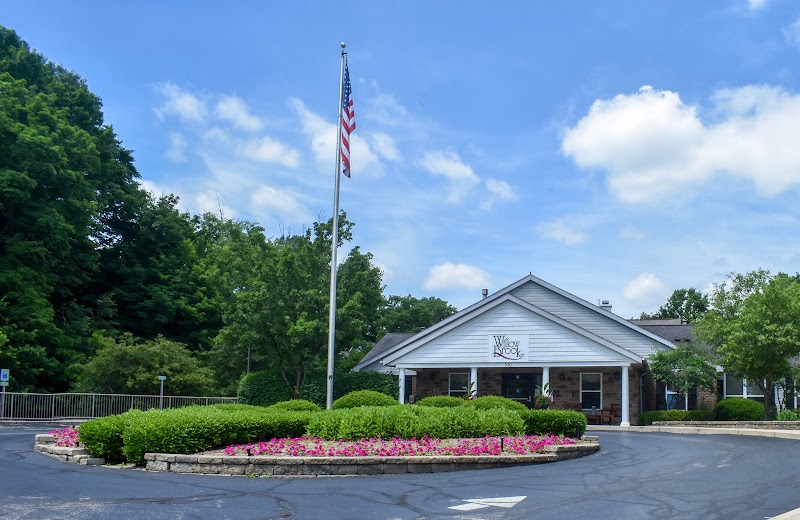
CHERITH CARE CENTER AT WILLOW BROOK is owned by a non-profit organization. Non-profit facilities reinvest revenue into operations rather than distributing to shareholders. The facility operates independently rather than as part of a larger chain. With 34 certified beds and approximately 32 residents (about 94% occupancy), it is a smaller facility located in DELAWARE, Ohio.

How Does Cherith At Willow Brook Compare to Other Ohio Nursing Homes?

Compared to the 100 nursing homes in Ohio, CHERITH CARE CENTER AT WILLOW BROOK's overall rating (4 stars) is above the state average of 3.2, staff turnover (54%) is near the state average of 46%, and health inspection rating (4 stars) is above the national benchmark.

What Should Families Ask When Visiting Cherith At Willow Brook?

Based on this facility's data, families visiting should ask: "Can I visit during a mealtime to observe dining assistance and food quality?" "How do you handle medical emergencies, and what is your hospital transfer rate?" "Can I speak with family members of current residents about their experience?"

Is Cherith At Willow Brook Safe?

Based on CMS inspection data, CHERITH CARE CENTER AT WILLOW BROOK has a clean safety record: no substantiated abuse findings (meaning no confirmed cases of resident harm), no Immediate Jeopardy citations (the most serious violation level indicating risk of serious injury or death), and is not on the Special Focus Facility watch list (a federal program monitoring the lowest-performing 1% of nursing homes). The facility has a 4-star overall rating and ranks #1 of 100 nursing homes in Ohio. While no facility is perfect, families should still ask about staff-to-resident ratios and recent inspection results during their visit.

Do Nurses at Cherith At Willow Brook Stick Around?

CHERITH CARE CENTER AT WILLOW BROOK has a staff turnover rate of 54%, which is 8 percentage points above the Ohio average of 46%. Moderate turnover is common in nursing homes, but families should still ask about staff tenure and how the facility maintains care continuity when employees leave.

Was Cherith At Willow Brook Ever Fined?

CHERITH CARE CENTER AT WILLOW BROOK has no federal fines on record. CMS issues fines when nursing homes fail to meet care standards or don't correct problems found during inspections. The absence of fines suggests the facility has either maintained compliance or corrected any issues before penalties were assessed. This is a positive indicator, though families should still review recent inspection reports for the full picture.

Is Cherith At Willow Brook on Any Federal Watch List?

CHERITH CARE CENTER AT WILLOW BROOK is not on any federal watch list. The most significant is the Special Focus Facility (SFF) program, which identifies the bottom 1% of nursing homes nationally based on persistent, serious quality problems. Not being on this list means the facility has avoided the pattern of deficiencies that triggers enhanced federal oversight. This is a positive indicator, though families should still review the facility's inspection history directly.