OHIO VETERANS HOME - GEORGETOWN
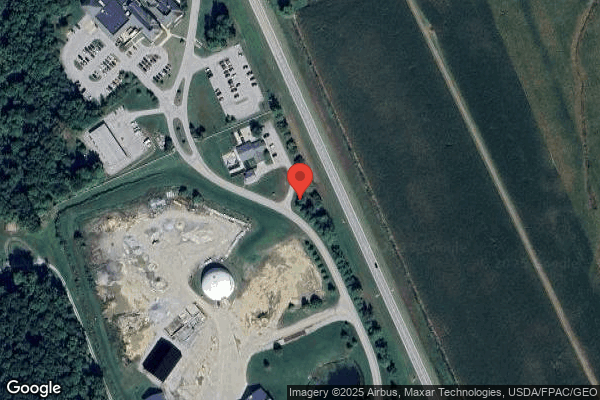
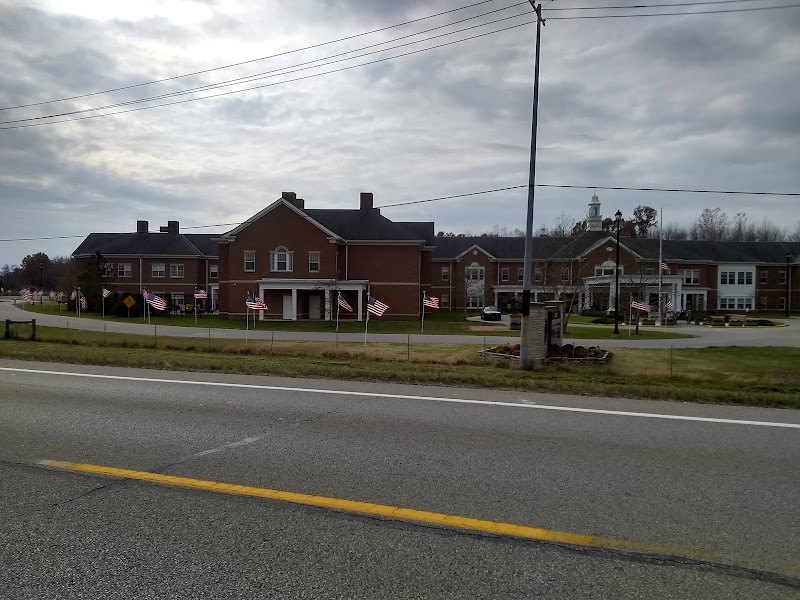
2003 VETERANS BLVD, GEORGETOWN, OH 45121 (937) 378-2900
Government - State 168 Beds Independent Data: November 2025
Trust Grade
85/100
#137 of 913 in OH
Last Inspection: May 2023

Over 2 years since last inspection. Current conditions may differ from available data.

Overview

The Ohio Veterans Home in Georgetown has a Trust Grade of B+, indicating it is above average and recommended for families seeking care. It ranks #137 out of 913 facilities in Ohio, placing it in the top half, and is #2 out of 4 in Brown County, meaning there is only one local facility that ranks higher. The facility's trend is improving, with the number of issues decreasing from 3 in 2023 to 1 in 2025. Staffing is a strong point, with a 5/5 star rating and a turnover rate of 31%, which is significantly lower than the state average of 49%. However, there are some concerns, including less RN coverage than 77% of Ohio facilities, which could impact resident care. Recent inspections have identified several specific concerns. One issue involved the lack of monthly infection control tracking, which poses a risk to all residents. Another finding noted that the facility did not ensure that physician visits occurred every 60 days for certain residents, which is critical for ongoing health assessments. Despite these weaknesses, the absence of any fines and a solid overall rating reflect the facility's commitment to improvement and quality care.

Trust Score
B+
85/100
In Ohio
#137/913
Top 15%
Safety Record
Low Risk
No red flags
Inspections
Getting Better
3 → 1 violations
Staff Stability
○ Average
31% turnover. Near Ohio's 48% average. Typical for the industry.
Penalties
✓ Good
No fines on record. Clean compliance history, better than most Ohio facilities.
Skilled Nurses
○ Average
Each resident gets 41 minutes of Registered Nurse (RN) attention daily — about average for Ohio. RNs are the most trained staff who monitor for health changes.
Violations
⚠ Watch
19 deficiencies on record. Higher than average. Multiple issues found across inspections.
★★★★★
5.0
Overall Rating
★★★★★
5.0
Staff Levels
★★★☆☆
3.0
Care Quality
★★★★☆
4.0
Inspection Score
Stable
2023: 3 issues
2025: 1 issues

The Good

  • 5-Star Staffing Rating · Excellent nurse staffing levels
  • Full Sprinkler Coverage · Fire safety systems throughout facility
  • No fines on record
  • Staff turnover below average (31%)

    17 points below Ohio average of 48%

Facility shows strength in staffing levels, fire safety.

The Bad

Staff Turnover: 31%

15pts below Ohio avg (46%)

Typical for the industry

The Ugly 19 deficiencies on record

Jun 2025 1 deficiency
CONCERN (E) 📢 Someone Reported This

A family member, employee, or ombudsman was alarmed enough to file a formal complaint

Potential for Harm - no one hurt, but risky conditions existed

Deficiency F0712 (Tag F0712)

Could have caused harm · This affected multiple residents

**NOTE- TERMS IN BRACKETS HAVE BEEN EDITED TO PROTECT CONFIDENTIALITY** Based on record reviews and staff interview, the facility failed to ensure regulatory physician visits were conducted by the phy...

Read full inspector narrative →
**NOTE- TERMS IN BRACKETS HAVE BEEN EDITED TO PROTECT CONFIDENTIALITY** Based on record reviews and staff interview, the facility failed to ensure regulatory physician visits were conducted by the physician or authorized designee at least every 60 days. This affected four (#75, #84, #88, and #94) of four residents reviewed for physcian services. The facility census was 102. Findings include: 1. Record review for Resident #88 revealed the resident was admitted to the facility on [DATE] and had diagnoses which included Alzheimer's disease, Diabetes Mellitus, and emphysema. Review of the significant change Minimum Data Set (MDS) assessment, dated 05/28/25, revealed the resident was assessed to have intact cognition. Review of the facility assessments for Resident #88 revealed the most recent regulatory visit and exam had been completed by the physician on 03/24/25. 2. Record review for Resident #75 revealed the resident was admitted to the facility on [DATE] and had diagnoses which included Alzheimer's disease, dementia, and major depressive disorder. Review of the quarterly MDS assessment, dated 04/16/25, confirmed the resident was assessed to have severely impaired cognition. Review of the facility assessments for Resident #75 revealed the most recent regulatory visit and exam had been completed by the physician on 03/24/25. 3. Record review for Resident #74 revealed the resident was admitted to the facility on [DATE] and had diagnoses which included cerebrovascular disease, hemiplegia and hemiparalysis, and seizures. Review of the quarterly MDS assessment, dated 04/09/25, revealed the resident was assessed to have intact cognition. Review of the facility assessments for Resident #94 revealed the most recent regulatory visit and exam had been completed by the Nurse Practitioner (NP) on 03/28/25. 4. Record review for Resident #84 revealed the resident was admitted to the facility on [DATE] and had diagnoses which included non-traumatic brain dysfunction, heart failure, and hypertension. Review of the quarterly MDS assessment, dated 04/23/25, revealed the resident was assessed to have mildly impaired cognition. Review of the facility assessments for Resident #84 revealed the most recent regulatory visit and exam had been completed by the NP on 03/25/25. Interview with the Director of Nursing (DON) on 06/13/25 at 1:00 P.M. confirmed the facility did not currently have a physician to conduct in-person regulatory visits. The DON confirmed the last regulatory visits for four residents (#75, #84, #88, and #94) had been conducted in March 2025. This deficiency represents non-compliance identified during the investigation of Complaint Number OH00165866.
May 2023 3 deficiencies
CONCERN (D)

Potential for Harm - no one hurt, but risky conditions existed

Deficiency F0578 (Tag F0578)

Could have caused harm · This affected 1 resident

**NOTE- TERMS IN BRACKETS HAVE BEEN EDITED TO PROTECT CONFIDENTIALITY** Based on record review and staff interview, the facility failed to ensure a residents' advanced directives matched in the electr...

Read full inspector narrative →
**NOTE- TERMS IN BRACKETS HAVE BEEN EDITED TO PROTECT CONFIDENTIALITY** Based on record review and staff interview, the facility failed to ensure a residents' advanced directives matched in the electronic record and the paper record. This affected one (Resident #14) of two residents reviewed for advanced directives. The facility census was 77. Findings include: Record review for Resident #14 revealed an admission date of 10/03/13. Diagnoses included dementia and Alzheimer's disease. Review of the significant change Minimum Data Set (MDS) assessment dated [DATE] revealed Resident #14 had mildly impaired cognition. Review of Resident #14's electronic medical record on 05/02/23 revealed the electronic record had the resident as a Do Not Resuscitate Comfort Care (DNRCC). Review of Resident #14 paper medical record on 05/03/23 revealed the paper chart had the resident as a Do Not Resuscitate Comfort Care- Arrest (DNRCC-A). Interview with Registered Nurse (RN) #569 on 05/03/23 at 10:35 A.M. verified Resident #14's code status in the paper chart and the electronic record does not match.
CONCERN (D)

Potential for Harm - no one hurt, but risky conditions existed

Transfer Requirements (Tag F0622)

Could have caused harm · This affected 1 resident

**NOTE- TERMS IN BRACKETS HAVE BEEN EDITED TO PROTECT CONFIDENTIALITY** Based on staff interview and record review, the facility failed to have the necessary paperwork for a resident when they discha...

Read full inspector narrative →
**NOTE- TERMS IN BRACKETS HAVE BEEN EDITED TO PROTECT CONFIDENTIALITY** Based on staff interview and record review, the facility failed to have the necessary paperwork for a resident when they discharged to the hospital. This affected one (Resident #12) of three residents reviewed for hospitalization. The facility census was 77. Findings include: Record review for Resident #12 revealed an admission date of 11/23/15. Diagnoses included myocardial infarction, type II diabetes mellitus, dementia, anxiety, and peripheral vascular disease. Review of the Medicare five-day Minimum Data Set (MDS) assessment dated [DATE] revealed Resident #12 was moderately cognitively impaired. Review of a progress note dated 02/28/23 at 7:00 P.M. revealed a state tested nurse aide (STNA) came to the nurse and asked the nurse to check on Resident #12 because he claimed he felt weak and had shortness of breath. Resident #12 did require more assistance to transfer to bed due to generalized weakness, vital signs were taken and the nurse was made aware. The progress note dated 03/01/23 at 10:01 A.M. revealed Resident #12 was admitted to the hospital for pneumonia. Review of the medical record on 05/03/23 revealed the facility did not have discharge documents in the medical record when Resident #12 transferred out to the hospital on [DATE]. Interview with Registered Nurse (RN) #810 on 05/03/23 at 11:12 A.M. verified there was no assessment transfer paperwork in the medical record when Resident #12 transferred to the hospital on [DATE].
CONCERN (D)

Potential for Harm - no one hurt, but risky conditions existed

PASARR Coordination (Tag F0644)

Could have caused harm · This affected 1 resident

**NOTE- TERMS IN BRACKETS HAVE BEEN EDITED TO PROTECT CONFIDENTIALITY** Based on record reviews and staff interview, the facility failed to ensure pre-admission screening and resident review (PASARR) ...

Read full inspector narrative →
**NOTE- TERMS IN BRACKETS HAVE BEEN EDITED TO PROTECT CONFIDENTIALITY** Based on record reviews and staff interview, the facility failed to ensure pre-admission screening and resident review (PASARR) was completed timely after a significant change. This affected one (Resident #63) of four residents reviewed for PASARR during the annual survey. The facility census was 77. Findings include: Record review for Resident #63 revealed the resident was admitted to the facility on [DATE]. Diagnoses included Alzheimer's disease, dementia, post-traumatic stress disorder, and chronic kidney disease. Review of the quarterly Minimum Data Set (MDS) assessment, dated 03/08/23, revealed Resident #63 had minimal cognitive impairments. Review of current medical diagnoses revealed diagnoses of mood disorder and bipolar disorder were added to the resident record on 11/04/21. Review of the PASARR completed on 09/25/20 revealed bipolar disorder and mood disorder were not captured on this review. No other PASARR has been completed after 09/05/20 to reflect the addition of mood disorder or bipolar Disorder. Interview with Social Worker #469 on 05/03/23 at 10:47 A.M. verified a new PASARR has not been completed. She verified the PASARR was completed on 09/25/20 by a sending facility and the diagnoses of mood disorder and bipolar disorder were included on their medical record. She verified both diagnoses were not captured on the PASARR that was completed and a new one was never done.
Mar 2020 14 deficiencies
CONCERN (D)

Potential for Harm - no one hurt, but risky conditions existed

Deficiency F0578 (Tag F0578)

Could have caused harm · This affected 1 resident

**NOTE- TERMS IN BRACKETS HAVE BEEN EDITED TO PROTECT CONFIDENTIALITY** Based on medical record review, staff interview, and review of facility policy the facility failed to ensure residents had valid...

Read full inspector narrative →
**NOTE- TERMS IN BRACKETS HAVE BEEN EDITED TO PROTECT CONFIDENTIALITY** Based on medical record review, staff interview, and review of facility policy the facility failed to ensure residents had valid code status forms in their medical records. The forms were not signed by a physician. This affected one (Resident #404) of 30 residents sampled. The census was 151. Findings include: Review of the medical record for Resident #404 revealed an admission date of 02/12/20 with a diagnosis of bipolar disorder Review of the Minimum Data Set (MDS) dated [DATE] revealed the resident was cognitively intact and was independent with activities of daily living. Further review of the medical record revealed a sticker in the front of the hard chart indicated the resident's code status was do not resuscitate comfort care (DNRCC). Review of the DNRCC form, undated, revealed it was signed by the resident and indicated the resident was a DNRCC. There was no physician signature on the form. Review of social service progress note for Resident #404 dated 02/21/20 revealed the resident desired to be a DNRCC for code status. Interview on 03/03/20 at 9:32 A.M. with Resident #404 confirmed the resident's preference for code status was to be a DNRCC. Interview on 03/03/20 at 10:52 A.M. with Licensed Practical Nurse (LPN) #76 confirmed DNRCC form for Resident #404 was not signed by the attending physician. Review of facility policy date 08/10/18 titled Code Blue: Medical Emergency/Automated External Defibrillator revealed a DNRCC order is invalid if not signed by the resident's physician on the order and also on the DNRCC form.
CONCERN (D)

Potential for Harm - no one hurt, but risky conditions existed

Assessment Accuracy (Tag F0641)

Could have caused harm · This affected 1 resident

**NOTE- TERMS IN BRACKETS HAVE BEEN EDITED TO PROTECT CONFIDENTIALITY** Based on medical record review and staff interview, the facility failed to ensure the accuracy of resident assessments related t...

Read full inspector narrative →
**NOTE- TERMS IN BRACKETS HAVE BEEN EDITED TO PROTECT CONFIDENTIALITY** Based on medical record review and staff interview, the facility failed to ensure the accuracy of resident assessments related to antipsychotic use. This affected one (Resident #59) of five residents reviewed for unnecessary medications. The census was 151. Findings include: Review of the medical record revealed Resident #59 was admitted [DATE]. Diagnoses included Alzheimer's disease and depression. Review of physician orders dated 11/26/19 revealed routine administration of the antipsychotic medication, Seroquel, for treatment of depression with delusions. Review of the Minimum Data Set (MDS) dated [DATE] section N0410 A revealed the resident received antipsychotic medications for seven out of the last seven days. Further review of the MDS section N0450 question A revealed the resident did not receive antipsychotics on a routine basis. Review of section N0450 also revealed the following subsequent questions were not answered due to the negative response to questions N0450 A regarding antipsychotic use: has a gradual dose reduction (GDR) been attempted, date of last attempted GDR, did physician document GDR as clinically contraindicated, date physician documented GDR as clinically contraindicated. Interview on 03/05/20 at 10:04 A.M., Licensed Practical Nurse (LPN) #34 confirmed she completed section N0410 of the MDS for Resident #59 dated 12/18/19 and confirmed the resident had received the routine antipsychotic medication Seroquel daily since fall of 2019. Interview on 03/05/20 at 10:10 A.M. with Social Worker (SW) #182 confirmed she had completed Resident #59's MDS dated [DATE] section N0450 and had coded question N0450 A to indicate the resident had not received antipsychotics. SW #182 further confirmed this was an error, and the resident had received antipsychotics routinely. SW #182 confirmed the subsequent questions included in section N0450 had not been answered due to the erroneous negative response to question N0450 A.
CONCERN (D)

Potential for Harm - no one hurt, but risky conditions existed

Deficiency F0685 (Tag F0685)

Could have caused harm · This affected 1 resident

**NOTE- TERMS IN BRACKETS HAVE BEEN EDITED TO PROTECT CONFIDENTIALITY** Based on medical record review, observation, resident interview, and staff interview, the facility failed to arrange for audiolo...

Read full inspector narrative →
**NOTE- TERMS IN BRACKETS HAVE BEEN EDITED TO PROTECT CONFIDENTIALITY** Based on medical record review, observation, resident interview, and staff interview, the facility failed to arrange for audiological services for residents. This affected one (Resident #59) of one resident reviewed for communication. The census was 151. Findings include: Review of the medical record revealed Resident #59 was admitted on [DATE]. Diagnoses included Alzheimer's disease and depression. Review of the comprehensive admission Minimum Data Set (MDS) dated [DATE] revealed the resident was cognitively impaired, was totally dependent on staff assistance with activities of daily living, had moderate difficulty with hearing, and did not use hearing aids. Review of the Care Area Assessment (CAA) worksheet dated 06/24/19 revealed the resident had hearing deficit and had hearing aids but did not wish to use them. Further review of the worksheet revealed the facility would arrange for hearing evaluations and also observe the resident's ears for wax buildup. Review of the care plan for Resident #59 dated 06/18/19 revealed the resident was hard of hearing and had hearing aids but did not wish to wear them. Interventions included to observe resident's ears for wax build up and arrange audiology consult as needed. Review of the consent form dated 06/18/19 revealed the resident's representative had signed giving written consent for the resident to receive audiology services. Review of monthly physician's orders for Resident #59 for March 2020 revealed an order for the resident to be seen by audiologist as needed. Further review of the medical record revealed no evidence of audiology services for Resident #59. Observation on 03/02/20 at 9:47 A.M. revealed Resident #59 demonstrated moderate difficulty hearing during an interview conducted in his room with minimal background noise. The resident had moderate hearing difficulty and he did not have hearing aids or devices to assist with hearing. Interview on 03/04/20 at 11:00 A.M. with the Director of Nursing (DON) confirmed the resident had not been seen by an audiologist since his admission to the facility. Interview on 03/04/20 at 2:34 P.M. with Customer Service Assistant (CSA) #124 confirmed she scheduled residents for audiological services based on referrals from nursing. CSA #124 confirmed she had no requests to schedule Resident #59 for audiology services. Interview on 03/04/20 at 2:40 P.M. with Licensed Practical Nurse (LPN) #66 confirmed Resident #59 had not been referred for audiology services since his admission to the facility.
CONCERN (D)

Potential for Harm - no one hurt, but risky conditions existed

Deficiency F0688 (Tag F0688)

Could have caused harm · This affected 1 resident

**NOTE- TERMS IN BRACKETS HAVE BEEN EDITED TO PROTECT CONFIDENTIALITY** Based on record review, observation, staff interview, and review of facility policy, the facility failed to ensure splints to ma...

Read full inspector narrative →
**NOTE- TERMS IN BRACKETS HAVE BEEN EDITED TO PROTECT CONFIDENTIALITY** Based on record review, observation, staff interview, and review of facility policy, the facility failed to ensure splints to maintain range of motion were in place. This affected one (Resident #144) of two residents reviewed for positioning and mobility. The census was 151. Findings include: Review of the medical record revealed Resident #144 was admitted on [DATE] with a diagnosis of anoxic brain injury. Review of the Minimum Data Set (MDS) for dated 02/05/20 revealed the resident had severe cognitive impairment, was totally dependent on staff for activities of daily living and had functional impairment to his bilateral upper and lower extremities. Review of care plan dated 01/30/19 revealed Resident #144 had contractures and was at risk for changes in range of motion and pain due to current contractures. Interventions included the following apply dyna splint as ordered to right lower extremity to maintain skin integrity for contracture management related to right lower extremity, soft hand roll in left palm per order, medium hand roll to right hand per order. Review of the monthly physician orders for Resident #144 for March 2020 revealed orders for the following devices: soft hand roll in left palm at all times to maintain range of motion, medium hand roll to the right hand at all times, dyna splint to wear four hours every day as tolerated. Review of the Treatment Administration Record (TAR) for Resident #144 for March 2020 revealed the soft hand roll to the left palm, the medium hand roll to the right hand, and the dyna splint were initialed off to indicate being in place. Further review of the TAR revealed it did not indicate to which extremity the dyna splint was to be applied nor did it indicate the time frame for the four-hour daily application of the dyna splint. Observation of Resident #144 on 03/03/20 at 3:20 P.M. revealed the resident had a splint on his left hand, but no splint or hand roll to his right hand. Further observation revealed the resident had no splints or devices on his lower extremities. Interview on 03/03/20 03:25 P.M. with State Tested Nursing Assistant (STNA) #48 confirmed Resident #144 had a splint on his left hand and no splint or hand roll to his right hand and no splints or devices on his lower extremities. STNA #48 further confirmed she was not sure what devices the resident was supposed to have to maintain range of motion. Interview on 03/03/20 at 3:52 P.M. with Licensed Practical Nurse (LPN) #192 confirmed Resident #144 had orders for the following devices: soft hand roll in left palm at all times to maintain range of motion, medium hand roll to the right hand at all times, dyna splint to wear four hours every day as tolerated. LPN #192 further confirmed the STNAs applied the devices and she was unsure when the dyna splint was to be applied, but she thought it was supposed to be done sometime on day shift. Interview on 03/03/20 at 3:54 P.M. with STNA #181 confirmed Resident #144 was supposed to have hand roll/splint to his right hand but it was not in place. STNA #181 further confirmed the resident did not have splints on his lower extremities and she was unsure if he was supposed to have any. Observation on 03/03/20 at 3:55 P.M. revealed STNA #181 placed a hand splint on Resident #144's right hand. Interview on 03/03/20 at 4:05 P.M. with Director of Rehab, Occupational Therapist (OT) #232 confirmed Resident #144 was always to wear bilateral hand splints to prevent contractures and should wear a dyna splint to his right knee for four hours daily. OT #232 further confirmed Resident #144 was not wearing his dyna splint to his right knee, was not on therapy caseload currently, and nursing was responsible for ensuring resident's splints were in place as ordered. Review of facility policy titled Range of Motion, Balance, and Functional Limitation assessment dated [DATE] revealed staff would ensure appropriate interventions were in place to attempt to prevent decline in range of motion.
CONCERN (D)

Potential for Harm - no one hurt, but risky conditions existed

Respiratory Care (Tag F0695)

Could have caused harm · This affected 1 resident

**NOTE- TERMS IN BRACKETS HAVE BEEN EDITED TO PROTECT CONFIDENTIALITY** Based on record review, observation, staff interview, and review of facility policy the facility failed to ensure respiratory eq...

Read full inspector narrative →
**NOTE- TERMS IN BRACKETS HAVE BEEN EDITED TO PROTECT CONFIDENTIALITY** Based on record review, observation, staff interview, and review of facility policy the facility failed to ensure respiratory equipment was clean and failed to change tubing appropriately. This affected one (Resident #19) of two residents reviewed for respiratory care. The census was 151. Findings include: Review of the medical record revealed Resident #19 was admitted on [DATE] with a diagnosis of unspecified dementia with behavioral disturbance. Review of the Minimum Data Set (MDS) dated [DATE] revealed the resident was cognitively impaired and was totally dependent on staff for activities of daily living. Review of physician orders revealed an order dated 05/14/19 for the resident to receive albuterol solution via handheld nebulizer (HHN) twice daily at 9:00 A.M. and 6:00 P.M. Observation on 03/02/20 at 3:03 P.M. of Resident #19 revealed the tubing to resident's HHN was dated 02/18/20 and the chamber of the nebulizer was partially filled with clear liquid. Interview on 03/02/20 at 3:05 P.M. with Licensed Practical Nurse (LPN) #76 confirmed the tubing to Resident #19's HHN was dated 02/18/20 and the nebulizer tubing was to be changed weekly and dated. LPN #76 also confirmed Resident #19's nebulizer chamber was partially filled with clear liquid. Review of the facility policy dated 05/13/08 titled Nebulizer Equipment revealed new nebulizer tubing should be provided to the resident every week. Further review of the policy revealed following nebulizer treatment the nebulizer should be disassembled with any unused portion of medication poured out and all the nebulizer parts washed with soap and water, rinsed thoroughly and allowed to air dry on paper towels.
CONCERN (D)

Potential for Harm - no one hurt, but risky conditions existed

Medication Errors (Tag F0758)

Could have caused harm · This affected 1 resident

**NOTE- TERMS IN BRACKETS HAVE BEEN EDITED TO PROTECT CONFIDENTIALITY** Based on record review, interview, and review of online resources and Food and Drug Administration (FDA) black box warning the f...

Read full inspector narrative →
**NOTE- TERMS IN BRACKETS HAVE BEEN EDITED TO PROTECT CONFIDENTIALITY** Based on record review, interview, and review of online resources and Food and Drug Administration (FDA) black box warning the facility failed to ensure as needed (PRN) psychotropic medication orders were limited to 14 days or that a rationale and duration of the PRN psychotropic medication was indicated in the medical record. The facility also failed to ensure a resident's antipsychotic medication had appropriate indications for use. This affected three residents (#59, #60 and #133) of five reviewed for unnecessary medications. The facility census was 151. Findings include: 1. Review of the medical record revealed Resident #60 was admitted to the facility on [DATE]. Diagnoses included vascular dementia, hypothyroidism, anemia and cerebrovascular disease. Review of the Minimum Data Set (MDS) assessment dated [DATE] revealed the resident had severe cognitive impairment and required extensive assistance with transfers and bed mobility. Resident #60 also required total dependence with dressing, eating, toileting and personal hygiene. Resident #60 was reported to take antipsychotics, anti-anxiety, anti-coagulants, antibiotics and opioids. Review of physician orders revealed an order dated 10/14/19 for Ativan 0.5 mg PRN by mouth every six hours for anxiety. Physician order dated 10/29/19 for Haldol two milligram (mg) by mouth PRN every six hours for agitation and Haldol inject 0.4 milliliters (ml) into the muscle PRN every six hours if unable to take by mouth. Further review revealed the Ativan was discontinued on 12/10/19, the Haldol injection was discontinued on 02/07/20 and the Haldol by mouth was discontinued on 02/12/20. Resident #60's PRN orders did not have stop dates. Resident #60's physicians orders did not indicate a rationale for the continued use of the resident's PRN orders. Review of Resident #60's physician's notes dated 10/29/19, 10/30/19, 11/05/19, 11/07/19, 12/11/19, 12/18/19, 12/19/19, 01/17/20, 01/24/20 and 02/04/20 revealed no documentation regarding a rationale for the continued use of Resident #60's PRN medications. Interview with the Director of Nursing (DON) on 03/05/20 at 12:25 P.M. verified Resident #60's PRN intramuscular and by mouth Haldol, and PRN Ativan did not have a rationale for exceeding 14 days. The DON also verified the medications exceeded 14 days and did not have stop dates until they were discontinued. 2. Review of the medical record revealed Resident #133 was admitted to the facility on [DATE]. Diagnoses included Alzheimer's disease, dementia, type two diabetes mellitus, cerebral vascular dementia, hypertension, hypercholesterolemia, nocturia, inguinal hernia and lung nodule. Review of the MDS dated [DATE] revealed the resident had severe cognitive impairment and required extensive assistance with transfers, bed mobility, dressing, toileting and personal hygiene. Resident #133 also required supervision with eating. Review of physician orders revealed Resident #133 was prescribed Ativan 0.5 mg by mouth two times a day PRN for anxiety, this order was renewed on 06/29/19, 07/12/19, 07/26/19, 08/09/19, 08/23/19, 09/06/19, 09/21/19, 10/04/19, 10/18/19, 12/12/19, 01/04/20, 01/21/20, 02/04/20 and 02/25/20. Resident #133's orders did not contain a rationale for the continued use of the resident's PRN Ativan. Review of Resident #133's physician notes dated 06/24/19, 07/03/19, 08/27/19, 09/23/19, 09/26/19, 10/01/19, 10/29/19, 11/10/19, 11/19/19, 12/06/19, 01/07/20, 01/30/20, 02/05/20, 02/14/20, 02/25/20 and 03/03/20 revealed no rational was provided for the continued use of the resident's PRN Ativan. Interview with the DON on 03/05/20 at 12:25 P.M. verified Resident #133's medical record did not contain any rationale for the continued use of his PRN Ativan. 3. Review of the medical record revealed Resident #59 was admitted on [DATE] with diagnoses of Alzheimer's disease and depression. Review of the modified MDS dated [DATE] revealed the resident was cognitively impaired and required extensive assistance with activities of daily living. Review of the care plan dated 06/18/19 revealed the resident was at risk for fluctuations in mood and behavior due to diagnoses of major depressive disorder and Alzheimer's disease. Interventions included to encourage to participate in group activities, monitor for signs and symptoms of depression, one on one visit as needed, psychiatric consult as needed, medications as ordered, monitor effectiveness, monitor behaviors. Review of the nurse practitioner progress note dated 10/28/19 revealed the antipsychotic medication, Seroquel was ordered 12.5 milligrams (mg) for depression with delusional behaviors. Review of the consent form dated 10/28/19 revealed it was signed by the resident's representative and the nurse practitioner and indicated the resident was receiving Seroquel for treatment of depression with delusional behavior. Review of the nurse progress note dated 10/30/19 revealed the resident received Seroquel to treat depression. Review of consultant pharmacist report dated 11/09/19 and 02/04/20 revealed the resident was on three medications, Seroquel, Zoloft, and Remeron, and the recommendation was for Remeron be discontinued. The reports did not include a recommendation regarding the use of Seroquel. Review of nurse progress note dated 11/17/19 revealed the Seroquel dose was increased to 25 mg to treat depression with delusions as evidenced by resident calling out and resisting care. Review of the psychiatric consult note dated 11/20/19 revealed the resident was receiving Seroquel for treatment of depression with delusional behavior. Review of the facility quarterly antipsychotic medication assessment dated [DATE] revealed the resident received Seroquel for treatment of depression with delusional behavior. Interview on 03/04/20 at 10:38 A.M. with Social Worker (SW) #182 confirmed Resident #59 received Seroquel since 10/28/19 for treatment of depression with delusions. Interview on 03/05/20 at 11:05 A.M. with the DON confirmed Resident #59 received routine Seroquel since 10/28/19 for treatment of depression with delusions without an attempted gradual dose reduction (GDR) or documentation from the physician that a GDR was clinically contraindicated. Review of the online resource, The Beers Criteria for Potentially Inappropriate Medication Use in Older Adults at http://www.healthinaging.org/medications-older-adults/ revealed use of Seroquel could increase the risk of stroke or even death in older adults with dementia and could also cause tremors and other side effects, as well as increase the risk of falls. Review of the Food and Drug Administration (FDA) black box warning regarding Seroquel https://www.fda.gov/media/72986 revealed Seroquel could cause increased risk of death in elderly resident with dementia and was not appropriate for treatment of psychosis in elderly with dementia.
CONCERN (D)

Potential for Harm - no one hurt, but risky conditions existed

Deficiency F0760 (Tag F0760)

Could have caused harm · This affected 1 resident

**NOTE- TERMS IN BRACKETS HAVE BEEN EDITED TO PROTECT CONFIDENTIALITY** Based on medical record review, observation, staff interview, review of facility policy, and review of online resources the faci...

Read full inspector narrative →
**NOTE- TERMS IN BRACKETS HAVE BEEN EDITED TO PROTECT CONFIDENTIALITY** Based on medical record review, observation, staff interview, review of facility policy, and review of online resources the facility failed to ensure cardiac medication was administered in a safe manner as ordered by the physician. This affected one (Resident #135) of six residents observed for medication administration. The census was 151. Findings include: Review of the medical record revealed Resident #135 was admitted on [DATE] with a diagnosis of chronic ischemic heart disease. Review of the Minimum Data Set (MDS) dated [DATE] revealed the resident was cognitively intact and required extensive assistance of one staff with activities of daily living. Review of March 2020 physician orders revealed an order for Ranexa extended release (ER) twice daily by mouth for angina. Review of the monthly orders also revealed medications could be crushed and given in food unless contraindicated. Observation of medication administration on 03/04/20 at 9:25 A.M. for Resident #135 per Licensed Practical Nurse (LPN) #123 revealed the nurse crushed the Ranexa ER tablet and gave it in in pudding to the resident. Interview at the time of the observation with LPN #123 confirmed she crushed Ranexa ER for Resident #135 prior to administration and gave it to the resident mixed with pudding. Review of a nurse progress note dated 03/04/20 at 2:30 P.M. revealed the nurse notified the resident's physician the Ranexa ER had been crushed and administered to the resident. Further review of the note revealed the physician confirmed the Ranexa should not be crushed and gave an order to monitor the resident and call back if any adverse effects were noted related to the administration. Review of online resource https://www.ismp.org/recommendations/do-not-crush of the Institute for Safe Medication Practices revealed Ranexa should not be crushed because it was supposed to be released slowly. Review of Medscape online resource revealed Ranexa tablets should not be crushed. Review of facility policy titled Medication Administration dated 07/08/19 revealed nurses would be responsible for being knowledgeable about the method of preparation and administration of medications and medications should be administered in a safe manner in accordance with any special precautions related to medication administration of specific medications.
CONCERN (D)

Potential for Harm - no one hurt, but risky conditions existed

Deficiency F0761 (Tag F0761)

Could have caused harm · This affected 1 resident

**NOTE- TERMS IN BRACKETS HAVE BEEN EDITED TO PROTECT CONFIDENTIALITY** Based on record review, observation, staff interview, and review of facility policy and manufacturer recommendation the facility...

Read full inspector narrative →
**NOTE- TERMS IN BRACKETS HAVE BEEN EDITED TO PROTECT CONFIDENTIALITY** Based on record review, observation, staff interview, and review of facility policy and manufacturer recommendation the facility failed to properly store resident medications and failed to discard expired medications. This directly affected Residents #90 and #404 and had the potential to affect all residents. The census was 151. Findings include: 1. Review of the medical record revealed Resident #90 was admitted on [DATE] with a diagnosis of anemia. Observation of the medication storage room on the A2 unit on 03/04/20 at 9:19 A.M. with Licensed Practical Nurse (LPN) # 92 revealed two bottles of ferrous sulfate with Resident #90's name on them had an expiration date of 02/29/20. Interview with LPN #92 at the time of the observation confirmed the two bottles of ferrous sulfate for Resident #90 were expired and should have been discarded. Review of facility policy dated 10/02/14 titled Medication Storage reveled medications were not to be kept after the expiration date, and outdated medications should be immediately removed from stock. 2. Observation of the A1 blue cart on 03/05/20 at 8:15 A.M. with LPN #200 revealed the cart contained an unlabeled plastic cup with three loose pills stored in the top drawer. Interview with LPN #200 at the time of the observation confirmed she did not know who had placed the three loose pills in the cart, what medications they were and if they were intended for a specific resident. Review of facility policy dated 10/02/14 titled Medication Storage revealed medications were to be kept and stored in the containers in which they were received from the dispensing pharmacy until administration. 3. Review of the medical record revealed Resident #404 was admitted on [DATE] with a diagnosis of diabetes. Review of the March 2020 orders for Resident #404 revealed an order for an Ozempic injection once weekly for diabetes. Observation of the medication storage room on the C1 unit on 03/04/20 at 1:20 P.M. with LPN #66 revealed an open undated Ozempic pen for Resident #404 was stored in the refrigerator. Interview with LPN #66 at the time of the observation confirmed Ozempic pen for Resident #404 was opened and undated and she was not sure when it should be discarded. Review of manufacturer's recommendations for Ozempic revealed the medication should be discarded 56 days after opening. Review of facility policy titled Medication Storage dated 10/02/14 revealed multi dose vials of injectable medication should be dated at the time of opening.
CONCERN (E)

Potential for Harm - no one hurt, but risky conditions existed

Deficiency F0625 (Tag F0625)

Could have caused harm · This affected multiple residents

**NOTE- TERMS IN BRACKETS HAVE BEEN EDITED TO PROTECT CONFIDENTIALITY** 3. Review of the medical record revealed Resident #56 was admitted on [DATE]. Diagnoses included anemia, hypertension (HTN), chr...

Read full inspector narrative →
**NOTE- TERMS IN BRACKETS HAVE BEEN EDITED TO PROTECT CONFIDENTIALITY** 3. Review of the medical record revealed Resident #56 was admitted on [DATE]. Diagnoses included anemia, hypertension (HTN), chronic kidney disease, diabetes mellitus (DM) and cerebral vascular accident (CVA). Review of the MDS assessment dated [DATE] revealed the resident was cognitively intact, had no behaviors, did not reject care, and did not wander. The resident required two plus person physical assist, was dependent or required extensive assistance for activities of daily living (ADLs). Review of the nurse's progress notes dated 02/21/20 at 4:52 P.M. by Registered Nurse (RN) #228 revealed the resident was sent to the hospital following a wound physician assessment. There was no evidence the resident and/or the resident's representative was provided a written notice about bed-hold. Based on medical record review and interview, the facility failed to ensure residents received written bed hold notifications upon discharge to the hospital. This affected four (#13, #56, #60 and #98) residents of four reviewed for discharge notification. The facility census was 151. Findings include: 1. Review of the medical record revealed Resident #60 was admitted to the facility on [DATE]. Diagnoses included vascular dementia, hypothyroidism, anemia and cerebrovascular disease. Review of the Minimum Data Set (MDS) assessment dated [DATE] revealed the resident had severe cognitive impairment and required extensive assistance with transfers and bed mobility. Resident #60 also required total dependence with dressing, eating, toileting and personal hygiene on the 12/15/19 MDS. Further review of the medical record revealed the resident was discharged to the hospital on [DATE] with a hip fracture. There was no evidence Resident #60 or his representative received a written bed hold notice upon discharge to the hospital on [DATE]. Interview with the Director of Nursing (DON) on 03/05/20 at 9:33 A.M. verified Resident #60 did not receive a written bed hold notice upon discharge to the hospital on [DATE]. 2. Review of the medical record revealed Resident #98 was admitted to the facility on [DATE]. Diagnoses included anemia, heart failure, hypertension, peripheral vascular disease, diabetes mellitus, hyperlipidemia, thyroid disorder, Alzheimer's disease and dementia. Review of MDS assessment dated [DATE] revealed the resident had severe cognitive impairment and required extensive assistance with bed mobility, transfers, dressing, and toileting. Resident #98 also required total dependence with personal hygiene and eating. Further review of the medical record revealed the resident was discharged to the hospital on [DATE] with aspiration. There was no evidence Resident #98 or his representative received a written bed hold notice upon discharge to the hospital on [DATE]. Interview with the DON on 03/05/20 at 9:33 A.M. verified Resident #98 or his representative did not receive a written bed hold notice upon discharge to the hospital on [DATE]. 4. Review of the medical record revealed Resident #13 was admitted on [DATE]. Diagnoses included HTN, congestive heart failure, and Alzheimer's disease. Review of the MDS dated [DATE] revealed the resident was severely cognitively impaired and required extensive assistance for eating. The resident was totally dependent for bed mobility, and transfer. Further review of the medical revealed Resident #13 went to the hospital on [DATE] and returned 12/30/19. There was no evidence the resident or the residents representative was given a notification of bed hold days. Interview with the DON on 03/05/20 at 10:50 A.M. verified the staff did not give Resident #13 or Resident #56 a bed hold notice when they went to the hospital.
CONCERN (E)

Potential for Harm - no one hurt, but risky conditions existed

Pharmacy Services (Tag F0755)

Could have caused harm · This affected multiple residents

**NOTE- TERMS IN BRACKETS HAVE BEEN EDITED TO PROTECT CONFIDENTIALITY** Based on medical record review, controlled substance sheet review, observation, staff interview, and review of facility policy, ...

Read full inspector narrative →
**NOTE- TERMS IN BRACKETS HAVE BEEN EDITED TO PROTECT CONFIDENTIALITY** Based on medical record review, controlled substance sheet review, observation, staff interview, and review of facility policy, the facility failed to ensure proper procedures were in place regarding the storage and administration of controlled substances. This had the potential to affect a total of 20 Residents (#32, #55, #60, #101, #103, #116 on the A1 Blue Cart, Residents #4, #23, #50, #69, #92, #119 on the A2 Blue Cart, Resident #137 on the C1 Blue Cart, Residents #9, #14, #47, #53, #110, #115, #128 on the C2 Blue Cart who had controlled substances stored. The census was 151. Findings include: 1. Review of the medical record for Resident #50 revealed an admission date of [DATE] with a diagnosis of Parkinson's disease. Review of the physician orders for [DATE] revealed an order for Norco at 9:00 A.M., 1:00 P.M., and 9:00 P.M. for chronic pain. Review of the controlled substance sheet for Resident #50's Norco revealed the 9:00 A.M. routine dose of Norco, tablet #25 for resident had not been signed out as given. Observation of the Norco supply for Resident #50 on [DATE] at 9:10 A.M. with Licensed Practical Nurse (LPN) #92 revealed there were 24 tablets remaining. Interview on with LPN #92 at the time of the observation confirmed there were 24 Norco tablets remaining in the cart for Resident #50. LPN #92 indicated she administered the medication at approximately at 8:00 A.M. but she had not signed out the Norco tablet at the time of administration. 2. Review of the controlled substance shift to shift count record for the A2 Unit blue cart revealed the oncoming nurse had not signed the shift to shift count for 7:00 A.M. on [DATE]. Interview on [DATE] at 9:10 A.M. with LPN #92 confirmed she had counted the controlled substances oat 7:00 A.M. on [DATE] with the off going nurse but she had not signed the count sheet. 3. Review of the closed medical record revealed Resident #137 was admitted on [DATE] with a diagnosis of prostate cancer. The resident expired on [DATE]. Observation of the C1 Blue cart on [DATE] at 1:20 P.M. with LPN #76 revealed the narcotic storage drawer contained a bottle of liquid morphine solution and four Ativan tablets for Resident #137. Interview at the time of the observation with LPN #76 confirmed controlled substances for expired residents were left in the narcotic storage drawer until a Registered Nurse (RN) Supervisor could remove them. Interview on [DATE] at 11:05 A.M. with the Director of Nursing (DON) confirmed the facility did not have a written policy regarding removal of controlled substances from the carts when a resident expired. DON confirmed facility practice was for RN Supervisors to remove the controlled substances from the cart as soon as possible after a resident expired and take them to the facility safe prior to destruction. 4. Review of the controlled substance shift to shift count record for C2 blue cart revealed the oncoming nurse had not signed the shift to shift count for 7:00 A.M. on [DATE]. Interview on [DATE] at 9:41 A.M. with LPN #123 confirmed she had counted controlled substances at 7:00 A.M. on [DATE] with the off going nurse but she had not signed the count sheet. 5. Review of the controlled substance shift to shift count record for the A1 blue cart revealed the oncoming nurse had not signed the shift to shift count for 7:00 A.M. on [DATE] nor was the the time of the count or the total of narcotic sheets and narcotic containers noted. Interview on [DATE] at 8:15 A.M. with LPN #200 confirmed she had not signed the controlled substances sheet at the change of shift on [DATE] at 7:00 A.M Review of the facility policy dated [DATE] titled Security of Controlled Substances revealed narcotic counts must be done at every exchange of keys by nurses of both incoming and off going shifts and recorded on the narcotic count sheet. Further review of the policy revealed the nurse should document administration of narcotic medication at the time of administration and nurses habitually lacking proper documentation regarding narcotics might be reported to the Ohio Board of Nursing by the Director of Nursing (DON).
CONCERN (E)

Potential for Harm - no one hurt, but risky conditions existed

Drug Regimen Review (Tag F0756)

Could have caused harm · This affected multiple residents

**NOTE- TERMS IN BRACKETS HAVE BEEN EDITED TO PROTECT CONFIDENTIALITY** 2. Review of the medical record revealed Resident #55 was admitted to the facility on [DATE]. Diagnoses included dementia, vitam...

Read full inspector narrative →
**NOTE- TERMS IN BRACKETS HAVE BEEN EDITED TO PROTECT CONFIDENTIALITY** 2. Review of the medical record revealed Resident #55 was admitted to the facility on [DATE]. Diagnoses included dementia, vitamin B12 insufficiency, stenosis of lumbar spine, pericardial effusion, gait disturbance, agitation, chronic back pain and congestive heart failure. Review of the Minimum Data Set (MDS) assessment dated [DATE] revealed the resident had severe cognitive impairment and required extensive assistance with transfers, dressing, toileting and personal hygiene. Resident #55 also required limited assistance with bed mobility and supervision with eating. Resident #55 was reported to take anti psychotics and anti depressants. Review of the monthly physician order sheets for January 2020 and February 2020 revealed the consultant pharmacist signed indicating resident medications were reviewed but did not indicate the presence or absence of irregularities noted to the resident's medication regimen. 3. Review of the medical record revealed Resident #60 was admitted to the facility on [DATE] with the following diagnoses; vascular dementia, hypothyroidism, anemia and cerebrovascular disease. Review of the MDS dated [DATE] revealed the resident had severe cognitive impairment and required extensive assistance with transfers and bed mobility. Resident #60 also required total dependence with dressing, eating, toileting and personal hygiene. Resident #60 was reported to take antipsychotics, anti-anxiety, anti-coagulants, antibiotics and opioids. Review of the monthly physician order sheets for January 2020, February 2020 and March 2020 revealed the consultant pharmacist signed indicating resident medications had been reviewed but did not indicate the presence or absence of irregularities noted to the resident's medication regimen. Based on medical record review, staff interview, and review of the facility policy the facility failed to ensure the consultant pharmacist completed a thorough monthly review of each resident's medication regimen which included documentation of the presence or absence of irregularities. This affected four Residents (355, #59, #60, and #110) of five reviewed for unnecessary medications. The census was 151. Findings include: 1. Review of the medical record revealed Resident #59 was admitted on [DATE] with a diagnosis of Alzheimer's disease. Review of the monthly physician order sheets for January 2020, February 2020, and March 2020 revealed the consultant pharmacist signed indicating resident medications had been reviewed but did not indicate the presence or absence of irregularities noted to the resident's medication regimen. 4. Review of the medical record revealed Resident #110 was admitted on [DATE]. Diagnoses included right-sided hemiplegia, diabetes mellitus type II, depression, cirrhosis, chronic obstructive pulmonary disease, Hepatitis C, hypertension, psychosis, anemia, and atherosclerotic heart disease. Review of the MDS dated [DATE] revealed the resident was cognitively intact. The resident was totally dependent on staff for transfers with the use of a mechanical lift at all times. Further review of the medical record revealed the pharmacist reviewed the record monthly but there was no way to determine if there was a recommendation or no irregularities. Interview with the Director of Nursing (DON) on 03/04/20 at 11:00 A.M. confirmed the consultant pharmacist signed the residents monthly physician orders upon review but did not include documentation regarding the presence or absence of irregularities noted to the resident's medication regimen. Review of facility policy entitled Drug Regimen Review dated 03/31/09 revealed the drug regimen of each resident should be reviewed at least once a month by a licensed pharmacist and irregularities should be reported to the attending physician and the DON.
CONCERN (E)

Potential for Harm - no one hurt, but risky conditions existed

Menu Adequacy (Tag F0803)

Could have caused harm · This affected multiple residents

Based on observation, interview, review of dining spreadsheets, review of list of residents receiving pureed meals and review of facility policy the facility failed to ensure the portion sizes reflect...

Read full inspector narrative →
Based on observation, interview, review of dining spreadsheets, review of list of residents receiving pureed meals and review of facility policy the facility failed to ensure the portion sizes reflected in the menu spreadsheet were followed to ensure residents received adequate nutrition. This affected seven residents (#36, #60, #98, #99, #101, #133 and #143) of a total census of 151. Findings include: Review of the dining spreadsheet for lunch for 03/03/20 revealed residents pureed diets were to receive 4 ounces (oz) of pureed chicken Alfredo, 4 oz of pureed fettuccine, 5 oz of pureed broccoli, 4 oz of pureed peaches and 2 oz of pureed garlic bread. Observation of the tray line in the A1 unit kitchenette on 03/03/20 at 11:54 A.M. revealed Food Service Worker #134 prepared a tray for Resident #101. Resident #101 received a regular pureed diet. Food Service Worker #134 was observed to give Resident #101 4 oz of pureed chicken Alfredo, 3 oz of pureed fettuccine, 5 oz of pureed broccoli, 4 oz of pureed peaches and 2 oz of pureed garlic bread. Interview with Food Service Worker #134 at the time of the observation verified giving all pureed diets including Resident #101 only 3 oz of pureed fettuccine. Review of an undated list of residents receiving pureed diets on the A1 unit revealed Resident #36, #60, #98, #99, #101, #133 and #143 were to receive pureed diets. Review of the facility's undated Portion Control policy revealed serving too small of portions results in the resident not receiving the nutrients needed.
CONCERN (E)

Potential for Harm - no one hurt, but risky conditions existed

Food Safety (Tag F0812)

Could have caused harm · This affected multiple residents

**NOTE- TERMS IN BRACKETS HAVE BEEN EDITED TO PROTECT CONFIDENTIALITY** Based on medical record review, observation, interview, review of residents diets and review of facility policy, the facility fa...

Read full inspector narrative →
**NOTE- TERMS IN BRACKETS HAVE BEEN EDITED TO PROTECT CONFIDENTIALITY** Based on medical record review, observation, interview, review of residents diets and review of facility policy, the facility failed to ensure food items on the C2 unit were kept at a safe temperature during food service. The facility also failed to ensure staff utilized sanitary practices when handling a resident's food items. This had the potential to affect 40 Residents (#9, #10, #13, #14, #17, #20, #29, #35, #39, #40, #42, #45, #47, #49, #53, #61, #64, #67, #70, #76, #80, #85, #87, #94, #96, #100, #109, #110, #112, #115, #117, #124, #128, #130, #134, #135, #138, #139, #148 and #254) out of 151 residents residing in the facility. The facility census was 151. Findings include: 1. Review of the medical record revealed Resident #138 was admitted to the facility on [DATE]. Diagnoses included dementia with behavioral disturbance, vascular dementia, depressive disorder, disorder of skin, muscle weakness, glaucoma, knee pain, vitamin D deficiency, history of appendectomy, history of knee surgery, seizure disorder, venous stasis and chronic venous insufficiency. Review of the Minimum Data Sets (MDS) dated [DATE] revealed the resident had severe cognitive impairment and required extensive assistance with transfers, bed mobility, dressing, toileting and eating. Resident #138 also required total dependence with personal hygiene. Review of Resident #138's diet revealed the resident was to receive finger foods. Observation on 03/04/20 at 5:14 P.M. revealed Resident #138 was sitting in the A1 unit dining room for dinner. Hospital Aide #133 was observed sitting next to Resident #138 and was placing food items off his plate into his hands with her bare hands. Hospital Aide #133 was not wearing gloves. Interview with Licensed Practical Nurse (LPN) #144 at the time of the observation verified Hospital Aide #133 was placing food items in Resident #138's hand without wearing gloves. 2. Observation of the tray line in the C2 unit kitchenette on 03/03/20 at 12:45 P.M. revealed Food Service Worker #148 was serving food items from the steam table. Food Service Worker #148 took the temperature of the food items on the steam table in the middle of food service. The noodles were 150 degrees Fahrenheit (F), the chicken [NAME] was 138 degrees F, the broccoli was 121 degrees F, the pureed chicken [NAME] was 120 degrees F, the pureed broccoli was 125 degrees F and the pureed noodles were 110 degrees F. Interview with Food Service Worker #148 at the time of the observation verified the broccoli, pureed chicken Alfredo, pureed broccoli and pureed noodles were not above 135 degrees F. Review of a list of diets dated 03/04/20 for the C2 unit revealed Residents #9, #10, #13, #14, #17, #20, #29, #35, #39, #40, #42, #45, #47, #49, #53, #61, #64, #67, #70, #76, #80, #85, #87, #94, #96, #100, #109, #110, #112, #115, #117, #124, #128, #130, #134, #135, #138, #139, #148 and #254 received regular, mechanical soft and pureed diets. Review of the facility's undated Food Temperatures policy revealed hot food items may not fall below 135 degrees F after cooking.
CONCERN (F)

Potential for Harm - no one hurt, but risky conditions existed

Infection Control (Tag F0880)

Could have caused harm · This affected most or all residents

Based on review of infection control surveillance documents, staff interview review of facility policy the facility failed to maintain an infection prevention and control program that monitored monthl...

Read full inspector narrative →
Based on review of infection control surveillance documents, staff interview review of facility policy the facility failed to maintain an infection prevention and control program that monitored monthly infection control trends. This had the potential to affect all 151 facility residents. Findings include: Review of the infection control surveillance documents revealed there was no evidence of monthly tracking of infection control trends. Interview with Registered Nurse (RN) #131 on 03/05/20 at 11:20 A.M. revealed she was in charge of the infection control program and she verified the facility did not have monthly surveillance of infection control trends including lists of organisms and infections and the location of the residents with the infections. Review of the facility policy titled Infection Prevention Program dated 10/01/19 revealed the surveillance process consists of documenting data on the infection surveillance form and the data is aggregated monthly quarterly and annually and compared monthly quarterly and annually.
Feb 2019 1 deficiency
CONCERN (D)

Potential for Harm - no one hurt, but risky conditions existed

Medication Errors (Tag F0758)

Could have caused harm · This affected 1 resident

Based on medical record review and staff interviews, the facility failed to provide adequate diagnoses for the use of antipsychotic medications. This affected one (#34) of five reviewed for unnecessar...

Read full inspector narrative →
Based on medical record review and staff interviews, the facility failed to provide adequate diagnoses for the use of antipsychotic medications. This affected one (#34) of five reviewed for unnecessary medications. The facility census was 162. Findings include: Record Review of Resident #34's medical record revealed an admission date of 07/09/18, with the following medical diagnoses: dementia, adjustment disorder, Alzheimer's dementia, restlessness and agitation, falls, abnormalities of gait and mobility, ataxia, and cognitive communication deficit. Review of the monthly Physician Orders for February 2019 revealed orders for: Seroquel 25 milligram (mg) one tablet by mouth twice daily for dementia with behaviors; Divalproex 125 mg two capsules by mouth daily in the morning for behavioral psychological symptoms of dementia and Divalproex 125 mg four capsules by mouth twice daily at 1:00 P.M. and 9:00 P.M. for behavioral psychological symptoms of dementia. Interview on 02/13/19 at 11:14 A.M., with the Administrator and the Director of Nursing confirmed this resident is receiving Seroquel and Divalproex with an inappropriate diagnoses of dementia with behaviors. Both stated that the facility has been reviewing charts for inappropriate diagnoses, and this was one that probably had not been reviewed.
Understanding Severity Codes (click to expand)
Life-Threatening (Immediate Jeopardy)
J - Isolated K - Pattern L - Widespread
Actual Harm
G - Isolated H - Pattern I - Widespread
Potential for Harm
D - Isolated E - Pattern F - Widespread
No Harm (Minor)
A - Isolated B - Pattern C - Widespread

Questions to Ask on Your Visit

  • "Can I speak with families of current residents?"
  • "What's your RN coverage like on weekends and overnight?"

Our Honest Assessment

Strengths
  • • Grade B+ (85/100). Above average facility, better than most options in Ohio.
  • • No major safety red flags. No abuse findings, life-threatening violations, or SFF status.
  • • No fines on record. Clean compliance history, better than most Ohio facilities.
  • • 31% turnover. Below Ohio's 48% average. Good staff retention means consistent care.
Concerns
  • • 19 deficiencies on record. Higher than average. Multiple issues found across inspections.
Bottom line: Generally positive indicators. Standard due diligence and a personal visit recommended.

About This Facility

What is Ohio Veterans Home - Georgetown's CMS Rating?

CMS assigns OHIO VETERANS HOME - GEORGETOWN an overall rating of 5 out of 5 stars, which is considered much above average nationally. Within Ohio, this rating places the facility higher than 99% of the state's 100 nursing homes. This rating reflects solid performance across the metrics CMS uses to evaluate nursing home quality.
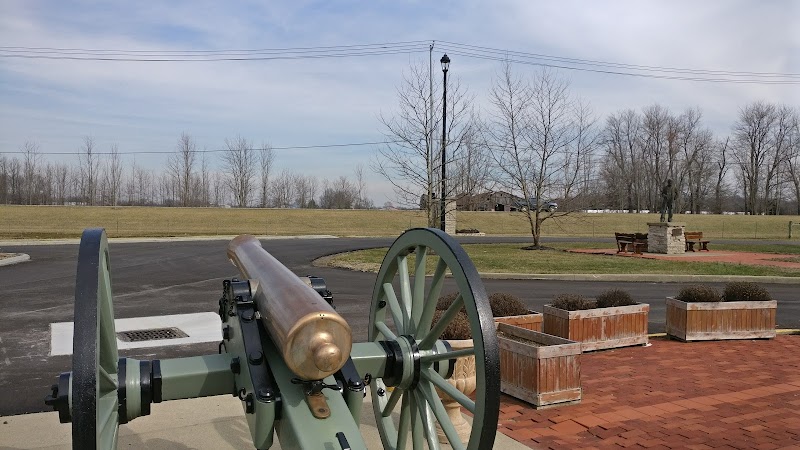
How is Ohio Veterans Home - Georgetown Staffed?

CMS rates OHIO VETERANS HOME - GEORGETOWN's staffing level at 5 out of 5 stars, which is much above average compared to other nursing homes. Staff turnover is 31%, compared to the Ohio average of 46%. This relatively stable workforce can support continuity of care.

What Have Inspectors Found at Ohio Veterans Home - Georgetown?

State health inspectors documented 19 deficiencies at OHIO VETERANS HOME - GEORGETOWN during 2019 to 2025. These included: 19 with potential for harm.
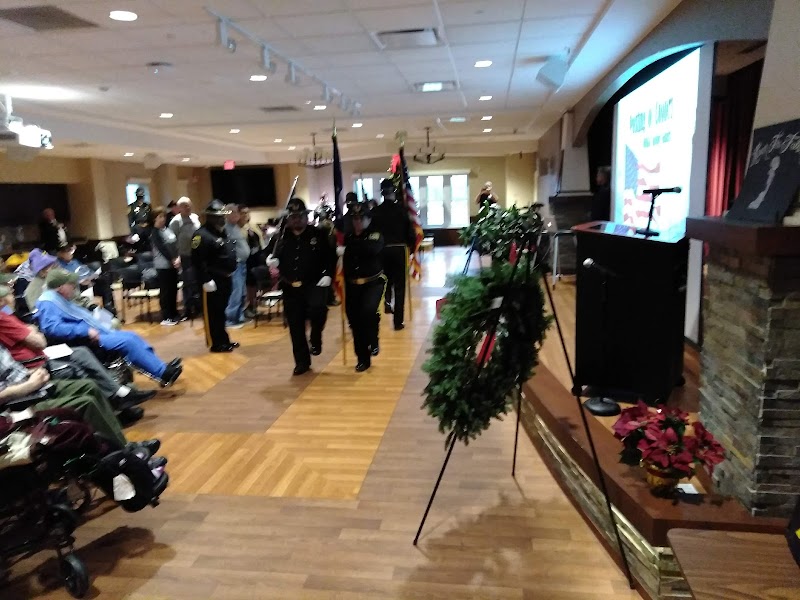
Who Owns and Operates Ohio Veterans Home - Georgetown?

OHIO VETERANS HOME - GEORGETOWN is owned by a government entity. Government-operated facilities are typically run by state, county, or municipal agencies. The facility operates independently rather than as part of a larger chain. With 168 certified beds and approximately 104 residents (about 62% occupancy), it is a mid-sized facility located in GEORGETOWN, Ohio.
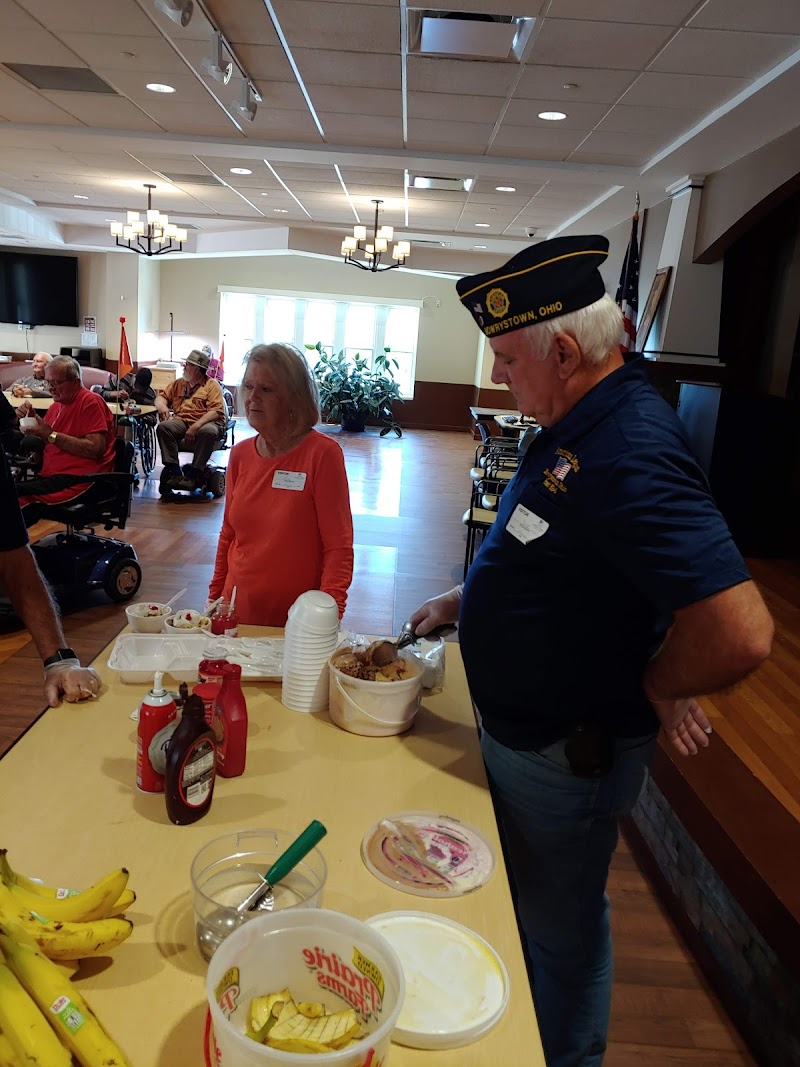
How Does Ohio Veterans Home - Georgetown Compare to Other Ohio Nursing Homes?

Compared to the 100 nursing homes in Ohio, OHIO VETERANS HOME - GEORGETOWN's overall rating (5 stars) is above the state average of 3.2, staff turnover (31%) is significantly lower than the state average of 46%, and health inspection rating (4 stars) is above the national benchmark.

What Should Families Ask When Visiting Ohio Veterans Home - Georgetown?

Based on this facility's data, families visiting should ask: "Can I visit during a mealtime to observe dining assistance and food quality?" "How do you handle medical emergencies, and what is your hospital transfer rate?" "Can I speak with family members of current residents about their experience?"

Is Ohio Veterans Home - Georgetown Safe?

Based on CMS inspection data, OHIO VETERANS HOME - GEORGETOWN has a clean safety record: no substantiated abuse findings (meaning no confirmed cases of resident harm), no Immediate Jeopardy citations (the most serious violation level indicating risk of serious injury or death), and is not on the Special Focus Facility watch list (a federal program monitoring the lowest-performing 1% of nursing homes). The facility has a 5-star overall rating and ranks #1 of 100 nursing homes in Ohio. While no facility is perfect, families should still ask about staff-to-resident ratios and recent inspection results during their visit.

Do Nurses at Ohio Veterans Home - Georgetown Stick Around?

OHIO VETERANS HOME - GEORGETOWN has a staff turnover rate of 31%, which is about average for Ohio nursing homes (state average: 46%). Moderate turnover is common in nursing homes, but families should still ask about staff tenure and how the facility maintains care continuity when employees leave.

Was Ohio Veterans Home - Georgetown Ever Fined?

OHIO VETERANS HOME - GEORGETOWN has no federal fines on record. CMS issues fines when nursing homes fail to meet care standards or don't correct problems found during inspections. The absence of fines suggests the facility has either maintained compliance or corrected any issues before penalties were assessed. This is a positive indicator, though families should still review recent inspection reports for the full picture.

Is Ohio Veterans Home - Georgetown on Any Federal Watch List?

OHIO VETERANS HOME - GEORGETOWN is not on any federal watch list. The most significant is the Special Focus Facility (SFF) program, which identifies the bottom 1% of nursing homes nationally based on persistent, serious quality problems. Not being on this list means the facility has avoided the pattern of deficiencies that triggers enhanced federal oversight. This is a positive indicator, though families should still review the facility's inspection history directly.