ADMIRAL'S POINTE NURSING & REHABILITATION
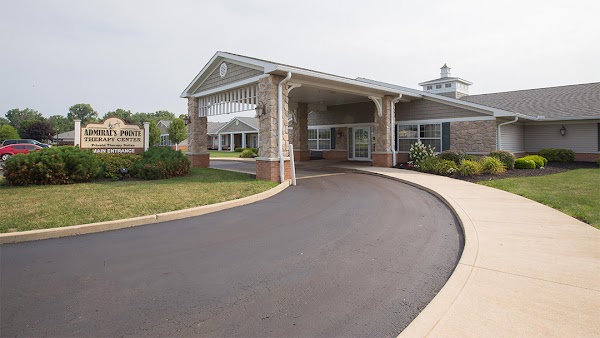
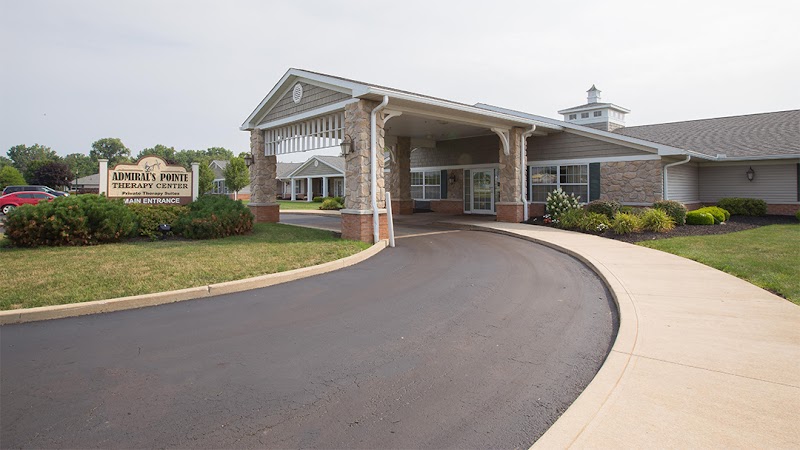
1920 CLEVELAND RD W, HURON, OH 44839 (419) 433-4990
For profit - Corporation 90 Beds FOUNDATIONS HEALTH SOLUTIONS Data: November 2025
Trust Grade
90/100
#2 of 913 in OH
Last Inspection: June 2024

Within standard 12-15 month inspection cycle. Federal law requires annual inspections.

Overview

Admiral's Pointe Nursing & Rehabilitation in Huron, Ohio, has received an excellent Trust Grade of A, indicating it is highly recommended and performs well compared to other facilities. It ranks #2 out of 913 facilities in Ohio and is the top choice among 8 local options in Erie County, showcasing its strong reputation. The facility is improving, with issues decreasing from 4 in 2021 to just 1 in 2024, although staffing is a concern, rated at 2 out of 5 stars, suggesting there may be challenges in staff retention despite a turnover rate of 48%, which is slightly below the state average. Notably, there have been no fines, indicating compliance with regulations, and the RN coverage is average, which ensures some oversight in resident care. However, recent inspections revealed that meals were often served cold, which could affect resident satisfaction, and some residents were not assisted with daily activities like oral hygiene, raising concerns about individualized care.

Trust Score
A
90/100
In Ohio
#2/913
Top 1%
Safety Record
Low Risk
No red flags
Inspections
Getting Better
4 → 1 violations
Staff Stability
⚠ Watch
48% turnover. Above average. Higher turnover means staff may not know residents' routines.
Penalties
✓ Good
No fines on record. Clean compliance history, better than most Ohio facilities.
Skilled Nurses
○ Average
Each resident gets 33 minutes of Registered Nurse (RN) attention daily — about average for Ohio. RNs are the most trained staff who monitor for health changes.
Violations
○ Average
9 deficiencies on record. Average for a facility this size. Mostly minor or procedural issues.
★★★★★
5.0
Overall Rating
★★☆☆☆
2.0
Staff Levels
★★★★★
5.0
Care Quality
★★★★★
5.0
Inspection Score
Stable
2021: 4 issues
2024: 1 issues

The Good

  • 5-Star Quality Measures · Strong clinical quality outcomes
  • Full Sprinkler Coverage · Fire safety systems throughout facility
  • No fines on record

Facility shows strength in quality measures, fire safety.

The Bad

Staff Turnover: 48%

Near Ohio avg (46%)

Higher turnover may affect care consistency

Chain: FOUNDATIONS HEALTH SOLUTIONS

Part of a multi-facility chain

Ask about local staffing decisions and management

The Ugly 9 deficiencies on record

Jun 2024 1 deficiency
CONCERN (D)

Potential for Harm - no one hurt, but risky conditions existed

Deficiency F0676 (Tag F0676)

Could have caused harm · This affected 1 resident

**NOTE- TERMS IN BRACKETS HAVE BEEN EDITED TO PROTECT CONFIDENTIALITY** Based on record review, resident and staff interview and observations, the facility failed to ensure Resident #61 was assisted w...

Read full inspector narrative →
**NOTE- TERMS IN BRACKETS HAVE BEEN EDITED TO PROTECT CONFIDENTIALITY** Based on record review, resident and staff interview and observations, the facility failed to ensure Resident #61 was assisted with the specific activity of daily living (ADL) of brushing her teeth. This had the potential to affect 18 residents on the memory care unit who required assistance with ADL. The facility census was 79. Findings include: Review of Resident #61's medical record revealed an admission date of 03/29/21. Diagnoses included dementia, dysphagia following cerebral infarction, and morbid obesity. Review of the annual Minimum Data Set 3.0 (MDS) assessment dated [DATE] revealed she had moderate cognitive impairment. Her functional ability for oral hygiene revealed she required set up or clean up assistance for personal hygiene. The oral/dental status section revealed she did not have dentures. She had her own natural teeth that were not broken, loose, or likely to have a cavity. There was no abnormal mouth tissue. She did not have inflamed or bleeding gums. She did not have pain, discomfort or difficulty chewing. Her mouth was able to be examined. Review of the care plan dated 04/14/24 revealed Resident #61 has her own teeth with probable decay. Interventions included completing an oral assessment per schedule and refer to the dentist as needed, provide oral care at least every day and more frequently as needed, and provide the resident with all necessary items to perform adequate oral care (i.e. toothbrush, toothettes, toothpaste and mouthwash). The care plan also stated Resident #61 may require assistance with ADLs and may be at risk for developing complications associated with decreased ADL self-performance. Fairly high functioning in controlled setting; level of functioning fluctuates at times. Interventions for oral care was supervision and report any changes in ADL self-performance. Review of the dental appointment list for Resident #61 revealed she had an appointments on 05/01/23 and 01/22/24. The Summary Report dated 05/01/23 revealed Resident #61 had heavy calculus and moderate plaque and flossing was completed. Recommended her to use a proxabrush (a gentle in and out motion to remove plaque and food particles between teeth in hard-to-reach areas thats are missed by brushing alone). The dental documentation from the visit on 01/22/24 revealed oral hygiene instructions were given on brushing any dentition, her tongue and tissues along with rinsing and/or swabbing her mouth out daily to decrease bacteria. There was heavy calculus and heavy plaque. Flossing was unable to be completed. The recommendation was for staff to assist for daily hygiene. Review of the oral care STNA task look back for Resident #61's dated 04/01/24 through 06/25/24 revealed the task was staff provided eight times and 133 times the document stated the resident performed the task. Interview on 06/26/24 at 4:03 P.M. with Resident #61 revealed she brushes her teeth when she thinks about it. It was not always twice or even once a day. Observations on 06/24/24 at 11:15 A.M. and 4:00 P.M., on 06/25/24 at 9:00 A.M. and 2:30 P.M., on 06/26/24 at 8:54 A.M. and at 4:05 P.M. revealed Resident #61's teeth, when she smiled revealed, her teeth were heavy with food debris and plaque. Interview on 06/26/24 at 4:18 P.M. with State Tested Nursing Assistant (STNA) #188 stated she was Resident #61's STNA on 06/25/24, 06/26/24 and 06/27/24, day shift. STNA #188 stated Resident #61 was independent for morning care including brushing her teeth and she brushes her own teeth. The STNA did not brush Resident #61's teeth. Observation on 06/27/24 at 1:39 P.M. revealed Resident #61 did not have a proxabrush in her bathroom. She had a regular toothbrush, a bag of toothettes, a tube of toothpaste and mouth wash.
Dec 2021 4 deficiencies
CONCERN (D)

Potential for Harm - no one hurt, but risky conditions existed

Deficiency F0558 (Tag F0558)

Could have caused harm · This affected 1 resident

**NOTE- TERMS IN BRACKETS HAVE BEEN EDITED TO PROTECT CONFIDENTIALITY** Based on observation, resident and staff interview, and medical record review, the facility failed to ensure a resident's call l...

Read full inspector narrative →
**NOTE- TERMS IN BRACKETS HAVE BEEN EDITED TO PROTECT CONFIDENTIALITY** Based on observation, resident and staff interview, and medical record review, the facility failed to ensure a resident's call light was accessible. This affected two Resident's (#186 and #229) of 24 sampled residents. The facility census was 83. Findings include: 1. Review of the medical record revealed Resident #229 was admitted on [DATE]. Diagnoses include atherosclerotic heart disease of native coronary artery without angina pectoris, essential (primary) hypertension, alcohol dependence, spinal stenosis lumbar region without neurogenic claudication, other intervertebral disc degeneration dysphagia following cerebral infarction, hemiplegia and hemiparesis following cerebral infarction affecting right dominant side, major depressive disorder, anxiety disorder, polyneuropathy, hyperlipidemia, insomnia, vitamin B12 deficiency anemia, and encounter for palliative care. Review of the Minimum Data Set (MDS) assessment, dated 12/03/21 revealed the resident was moderately cognitively impaired. Resident #229 required extensive one person assistance with bed mobility, transfers, and locomotion on unit. Review of the care plan, initiated 11/28/21, revealed Resident #229 is at risk for falls and interventions included keeping the call light within reach, encouraged and reminded to ask for assistance. Review of the fall investigation, dated 12/11/21, revealed Resident #229 had a fall allegedly attempting to transfer from the chair. At the time of the incident, the call light was in hand and not on. Observation on 12/13/21 at 10:50 A.M. and 12:37 P.M. revealed Resident #229 in bed and the call light out of reach laying on the floor near the wall and side table. Interview on 12/13/21 at 12:37 P.M. with State Tested Nursing Assistant #300 verified Resident #229's call light was out of reach. 2. Review of the medical record for Resident #186 revealed the resident was admitted [DATE] after a fall with injury at home. Resident #186 had diagnoses that included dementia, anxiety disorder, major depressive disorder, and fracture of the right femur. Review of the admission Minimum Data Set (MDS) 3.0 assessment for Resident #186, dated 12/01/21, revealed the resident had a moderate degree of cognitive impairment. The assessment indicated Resident #186 required assistance of one for walking in the room and toileting, and assistance of two staff, for transfers. The assessment further indicated Resident #186 was not steady and was only able to stabilize with staff assistance when moving from a seated to standing position, and during surface-to-surface transfers. Review of the care plan for Resident #186 revealed it identified a risk for falls with a goal to be free from injury from a fall. Interventions included placement of the call light within the resident's reach. Observation on 12/15/21 at 4:08 P.M. revealed Resident #186 was sitting in a chair next to the bed. The call light cord was wrapped around the bed's grab bar, on the opposite side of the bed. During this observation, Resident #186 confirmed she was unable to reach the call light. Interview on 12/15/21 at 4:20 P.M. with State Tested Nursing Assistant (STNA) #270 confirmed Resident #186's call light was out of the resident's reach. The aide further confirmed Resident #186 was at a high risk for falls.
CONCERN (D)

Potential for Harm - no one hurt, but risky conditions existed

Quality of Care (Tag F0684)

Could have caused harm · This affected 1 resident

**NOTE- TERMS IN BRACKETS HAVE BEEN EDITED TO PROTECT CONFIDENTIALITY** Based on medical record review, staff interview, and facility policy the facility failed to properly monitor and record blood gl...

Read full inspector narrative →
**NOTE- TERMS IN BRACKETS HAVE BEEN EDITED TO PROTECT CONFIDENTIALITY** Based on medical record review, staff interview, and facility policy the facility failed to properly monitor and record blood glucose levels and failed to notify the physician of blood glucose levels and use of emergency medication. This affected one (Resident #67) of seven residents reviewed for unnecessary medication. The facility census was 83. Findings include: Review of the medical record for Resident #67 revealed an initial admission date of 04/12/17 and re-entry on 11/12/21. Diagnoses included acute kidney failure, unspecified protein calorie malnutrition, type two diabetes mellitus with diabetic chronic kidney disease, hypertensive heart and chronic kidney disease with heart failure, muscle weakness, difficulty in walking, hyperlipidemia, other lack of coordination, unsteadiness on feet, heart failure, hypothyroidism, chronic kidney disease stage 3, other specified anxiety disorders, unspecified osteoarthritis, vitamin B12 deficiency anemia due to intrinsic factor deficiency, hypokalemia, urinary tract infection, and encounter for surgical after following surgery on digestive system. Review of the Minimum Data Set (MDS), dated [DATE], revealed the resident is cognitively intact. The assessment also revealed Resident #67 received insulin. Review of the Blood Sugar Summary, dated 12/08/21 at 6:50 A.M., revealed Resident #67 blood glucose was 45 milligrams per deciliter (mg/dL). The medical record was silent of any additional blood glucose records on 12/08/21 and 12/09/21. Review of physician note, dated 12/08/21, revealed Resident #67 was seen for a follow-up skilled visit. Staff had reported Resident #67 had symptomatic hypoglycemia and required glucagon twice. Review of the Blood Sugar Summary, dated 12/10/21 at 3:41 A.M., revealed Resident #67's blood sugar glucose was 40 mg/dL. The record was silent for record of blood sugar until 8:49 P.M. with a blood sugar level of 156 mg/dL. Review of Resident #67's Medical Administration Record (MAR), dated December 2021, revealed Glucagon Emergency Kit 1 MG (milligram) was administered on 12/08/21, 12/10/21, and 12/14/21. Review of Resident #67's progress notes, dated 12/10/21, were silent of information of low blood glucose, justification for use of emergency medication, and physician notification. Interview on 12/15/21 at 12:15 P.M. with Registered Nurse (RN) verified blood glucose below 70 mg/dL should be reported the physician. Interview on 12/15/21 at 3:30 P.M. with the Director of Nursing (DON) verified no documentation of monitoring and documenting blood glucose levels on 12/08/21 and 12/10/21 after administration of Glucagon Emergency Kit 1 MG. The DON verified there was no notification to the physician on 12/10/21 of the low blood glucose or use of the Glucagon Emergency Kit. Interview on 12/15/21 at 3:44 P.M. with the Assistant Director of Nursing (ADON) #240 verified on 12/08/21 providing care to Resident #67 and reported the blood glucose level was 45 mg/dL. ADON #240 verified not calling the doctor after utilization of the emergency medication. ADON #240 verified on 12/08/21 the physician assessed the resident during rounds and verified not calling the physician to provide an update until 12/14/21. Review of facility policy, Change in Condition, revised April 2013, verified the unit supervisor or charge nurse will notify the resident, physician, and guardian/interested family member of changes or situations requiring notification.
CONCERN (D)

Potential for Harm - no one hurt, but risky conditions existed

Deficiency F0760 (Tag F0760)

Could have caused harm · This affected 1 resident

Based on observation, staff interview and facility policy review ,the facility failed to ensure an extended release medication was administered properly. This affected one Resident (#03) of one reside...

Read full inspector narrative →
Based on observation, staff interview and facility policy review ,the facility failed to ensure an extended release medication was administered properly. This affected one Resident (#03) of one resident observed for administration of potassium chloride extended release tablet. The facility census was 83. FINDINGS INCLUDED: Review of Resident #03's medical record revealed an admission date of 03/17/21. Diagnoses included hypokalemia, schizophrenia and diabetes mellitus. Review of Resident #03's medical record revealed a physician's order dated 02/23/21 for Potassium Chloride ER tablet extended release 20 milliequivalent (mEq) tablet. Directions were to administer one tablet by mouth one time a day for supplementation related to hypokalemia. Observation of medication administration on 12/15/21 at 8:14 A.M. revealed Licensed Practical Nurse (LPN) #210 prepared Resident #03's medication for administration. Further observation revealed LPN #200 pulled a potassium chloride extended release tablet and placed the tablet in a plastic bag stating she would crush the tablet due to Resident #03 having issues swallowing the large tablet. Interview with LPN #210 on 12/15/21 at 8:15 A.M. verified she was attempting to crush the potassium chloride extended release tablet to place in applesauce. Review of the Institute for Safe Medication Practices located at http://www.ismp.org/tools/DoNotCrush.pdf revealed Klor-Con (potassium) should not be crushed. Review of the facility policy titled Medication Administration dated 06/21/17 revealed for tablets that appear on the Do Not Crush List, check with the pharmacist regarding a suitable alternative, and obtain a new order from prescriber, if appropriate, prior to crushing.
CONCERN (F)

Potential for Harm - no one hurt, but risky conditions existed

Deficiency F0804 (Tag F0804)

Could have caused harm · This affected most or all residents

Based on review of the lunch meal menu, resident and staff interview, and observation, the facility failed to ensure appropriate meals were served at an appetizing temperature. This had the potential ...

Read full inspector narrative →
Based on review of the lunch meal menu, resident and staff interview, and observation, the facility failed to ensure appropriate meals were served at an appetizing temperature. This had the potential to affect all residents in the facility except Resident #31 who the facility identified as receiving no food from the kitchen. The facility census was 83. Findings include: Interview on 12/13/21 with Resident #34, #39, and #67 revealed the meals from the kitchen are cold. Review of the lunch menu for 10/27/21 revealed the main entrée hot foods included ham, au gratin potatoes, and carrots that were substituted for a mixed vegetable. Observation on 12/14/21 at 2:01 P.M. of the test tray revealed meal tempting of the hot foods. The ham tempted at 98 degrees Fahrenheit. The potatoes tempted at 110 degrees Fahrenheit. The cooked mixed vegetables tempted at 104 degrees Fahrenheit. The ham was barely warm to the touch. Interview on 12/14/21 at 2:02 P.M. with the Director of Nursing (DON) verified the meal was not tempting to a preferred temperature. Observation on 12/14/21 at 2:04 P.M. of the lunch meal revealed the ham and vegetables were not at a palatable temperature and the potatoes were minimally acceptable. Interview on 12/14/21 at 2:15 P.M. with Resident #34 verified the lunch meal was not a palatable temperature.
May 2019 4 deficiencies
CONCERN (D)

Potential for Harm - no one hurt, but risky conditions existed

Abuse Prevention Policies (Tag F0607)

Could have caused harm · This affected 1 resident

**NOTE- TERMS IN BRACKETS HAVE BEEN EDITED TO PROTECT CONFIDENTIALITY** Based on medical record review, hospital discharge summary review, review of facility Self-Reported Incidents (SRI), staff inter...

Read full inspector narrative →
**NOTE- TERMS IN BRACKETS HAVE BEEN EDITED TO PROTECT CONFIDENTIALITY** Based on medical record review, hospital discharge summary review, review of facility Self-Reported Incidents (SRI), staff interview, and review of facility policy the facility failed to implement their abuse policy when they failed to report an injury of unknown origin and failed to report an allegation of physical abuse between two residents. This affected three (#35, #36, and #54) of four residents reviewed for abuse. The facility census was 87. Findings include: 1. Medical record review revealed Resident #54 admitted to the facility on [DATE]. Diagnoses included multiple sclerosis, major depressive disorder, and muscle weakness. Resident #54 discharged to a hospital on [DATE] and was readmitted on [DATE] with a diagnosis of a fractured right tibia bone. Review of the comprehensive Minimum Data Set (MDS) assessment, dated 05/08/18, revealed the resident's cognition was moderately impaired. Review of a progress note dated 02/24/19, at 7:24 A.M. and 7:25 A.M., revealed Resident #54 had increased swelling and pain in his right foot and lower leg. The physician was notified and ordered for the resident to be sent to the emergency room for an evaluation and treatment. At 12:48 P.M., documentation revealed the resident was being transferred to a different hospital. Review of the hospital Discharge summary, dated [DATE], revealed Resident #54 was transferred to this hospital, from a different hospital, on 02/25/19. The resident's principal problem was a right distal (lower end) tibia fracture. The resident underwent an intramedullary nail fixation (a procedure where a metal rod is forced into the medullary cavity of a bone) to the right tibia. Resident #54 was discharged back to the facility on [DATE]. Interview on 05/19/19 at 1:03 P.M., Resident #54 revealed he suffered a broken leg and had to have surgery to fix it. Resident #54 stated he did not know how his leg got broken. Interview on 05/20/19 at 10:21 A.M., the Director of Nursing (DON) verified on 02/24/19, Resident #54 was sent to the emergency room for increased pain and swelling in his right leg. The DON revealed hospital reports indicated the resident suffered a right distal tibia fracture and required surgery. The DON further verified the cause of the fracture was unknown. Interview on 05/20/19 at 10:23 A.M., the Administrator revealed the DON and herself were responsible for reporting all allegations of abuse, including injuries of unknown origin, to the Ohio Department of Health (ODH) by way of a SRI. The Administrator verified the cause of Resident #54's injury was unknown, and the facility should have submitted an SRI to the ODH. Review of the facilities SRIs revealed the facility had not submitted an SRI since 02/05/18. Review of a facility policy titled, Abuse, Neglect, Exploitation & Misappropriation of Resident Property, dated 11/21/16, defined an injury of unknown source as an injury that was not observed by any person or the source of the injury could not be explained by the resident; and the injury was suspicious because of the extent of the injury, location of the injury, the number of injuries observed at one particular point in time, or over time. The policy revealed all incidents and allegations of Abuse, Neglect, Exploitation, Mistreatment of a resident, or misappropriation of resident property and all injuries of unknown source must be reported immediately to the Administrator or designee who would ensure all alleged violations were reported timely to appropriate officials, including ODH. 2. Medical record review revealed Resident #35 admitted to the facility on [DATE]. Diagnoses included dementia, mood disorder, depression, and anxiety. Review of Resident #35's progress notes, dated 06/05/18 at 8:00 P.M., revealed staff observed Resident #35 walk over to Resident #37 and hit her in the arm while Resident #37 sat in her wheelchair. When staff attempted to intervene, Resident #35 grabbed a hold of Resident #37's wheelchair and pushed it forward. Resident #37 admitted to the facility on [DATE]. Diagnoses included Alzheimer's disease, dementia with behavioral disturbances, and major depressive disorder. Interview on 05/22/19 at 8:15 A.M., the Administrator revealed the she and the DON were responsible for reporting all allegations of abuse to the ODH by way of a SRI. The Administrator further revealed a physical altercation occurred on 06/05/19 between Resident #35 and Resident #37 where Resident #35 slapped Resident #37 and pushed her wheelchair with her in it. The Administrator verified the facility should have submitted a SRI to the ODH. Review of the facilities SRIs revealed the facility had not submitted an SRI since 02/05/18. Review of a facility policy titled, Abuse, Neglect, Exploitation & Misappropriation of Resident Property, dated 11/21/16, defined abuse as the willful infliction of injury, unreasonable confinement, intimidation, or punishment with resulting physical harm, pain or mental anguish. The policy revealed all incidents and allegations of Abuse, Neglect, Exploitation, Mistreatment of a resident, or misappropriation of resident property and all injuries of unknown source must be reported immediately to the Administrator or designee who would ensure all alleged violations were reported timely to appropriate officials, including ODH.
CONCERN (D)

Potential for Harm - no one hurt, but risky conditions existed

Report Alleged Abuse (Tag F0609)

Could have caused harm · This affected 1 resident

**NOTE- TERMS IN BRACKETS HAVE BEEN EDITED TO PROTECT CONFIDENTIALITY** Based on medical record review, review of facility Self-Reported Incidents (SRI) staff interview, and review of facility policy ...

Read full inspector narrative →
**NOTE- TERMS IN BRACKETS HAVE BEEN EDITED TO PROTECT CONFIDENTIALITY** Based on medical record review, review of facility Self-Reported Incidents (SRI) staff interview, and review of facility policy the facility failed to report an injury of unknown origin for Resident #54. The facility further failed to report an allegation of physical abuse between two Residents (#35 and #57). The facility census was 87. Findings include: 1. Medical record review revealed Resident #54 admitted to the facility on [DATE]. Diagnoses included multiple sclerosis, major depressive disorder, and muscle weakness. Resident #54 discharged to a hospital on [DATE] and was readmitted on [DATE] with a diagnosis of a fractured right tibia bone. Review of the comprehensive Minimum Data Set (MDS) assessment, dated 05/08/18, revealed the resident's cognition was moderately impaired. Review of a progress note dated 02/24/19, at 7:24 A.M. and 7:25 A.M., revealed Resident #54 had increased swelling and pain in his right foot and lower leg. The physician was notified and ordered for the resident to be sent to the emergency room for an evaluation and treatment. At 12:48 P.M., documentation revealed the resident was being transferred to a different hospital. Review of the hospital Discharge summary, dated [DATE], revealed Resident #54 was transferred to this hospital, from a different hospital, on 02/25/19. The resident's principal problem was a right distal (lower end) tibia fracture. The resident underwent an intramedullary nail fixation (a procedure where a metal rod is forced into the medullary cavity of a bone) to the right tibia. Resident #54 was discharged back to the facility on [DATE]. Interview on 05/19/19 at 1:03 P.M., Resident #54 revealed he suffered a broken leg and had to have surgery to fix it. Resident #54 stated he did not know how his leg got broken. Interview on 05/20/19 at 10:21 A.M., the Director of Nursing (DON) verified on 02/24/19, Resident #54 was sent to the emergency room for increased pain and swelling in his right leg. The DON revealed hospital reports indicated the resident suffered a right distal tibia fracture and required surgery. The DON further verified the cause of the fracture was unknown. Interview on 05/20/19 at 10:23 A.M., the Administrator revealed the DON and herself were responsible for reporting all allegations of abuse, including injuries of unknown origin, to the Ohio Department of Health (ODH) by way of a SRI. The Administrator verified the cause of Resident #54's injury was unknown, and the facility should have submitted an SRI to the ODH. Review of the facilities SRIs revealed the facility had not submitted an SRI since 02/05/18. Review of a facility policy titled, Abuse, Neglect, Exploitation & Misappropriation of Resident Property, dated 11/21/16, defined an injury of unknown source as an injury that was not observed by any person or the source of the injury could not be explained by the resident; and the injury was suspicious because of the extent of the injury, location of the injury, the number of injuries observed at one particular point in time, or over time. The policy revealed all incidents and allegations of Abuse, Neglect, Exploitation, Mistreatment of a resident, or misappropriation of resident property and all injuries of unknown source must be reported immediately to the Administrator or designee who would ensure all alleged violations were reported timely to appropriate officials, including ODH. 2. Medical record review revealed Resident #35 admitted to the facility on [DATE]. Diagnoses included dementia, mood disorder, depression, and anxiety. Review of Resident #35's progress notes, dated 06/05/18 at 8:00 P.M., revealed staff observed Resident #35 walk over to Resident #37 and hit her in the arm while Resident #37 sat in her wheelchair. When staff attempted to intervene, Resident #35 grabbed a hold of Resident #37's wheelchair and pushed it forward. Resident #37 admitted to the facility on [DATE]. Diagnoses included Alzheimer's disease, dementia with behavioral disturbances, and major depressive disorder. Interview on 05/22/19 at 8:15 A.M., the Administrator revealed the she and the DON were responsible for reporting all allegations of abuse to the ODH by way of a SRI. The Administrator further revealed a physical altercation occurred on 06/05/19 between Resident #35 and Resident #37 where Resident #35 slapped Resident #37 and pushed her wheelchair with her in it. The Administrator verified the facility should have submitted a SRI to the ODH. Review of the facilities SRIs revealed the facility had not submitted an SRI since 02/05/18. Review of a facility policy titled, Abuse, Neglect, Exploitation & Misappropriation of Resident Property, dated 11/21/16, defined abuse as the willful infliction of injury, unreasonable confinement, intimidation, or punishment with resulting physical harm, pain or mental anguish. The policy revealed all incidents and allegations of Abuse, Neglect, Exploitation, Mistreatment of a resident, or misappropriation of resident property and all injuries of unknown source must be reported immediately to the Administrator or designee who would ensure all alleged violations were reported timely to appropriate officials, including ODH.
CONCERN (D)

Potential for Harm - no one hurt, but risky conditions existed

Deficiency F0657 (Tag F0657)

Could have caused harm · This affected 1 resident

**NOTE- TERMS IN BRACKETS HAVE BEEN EDITED TO PROTECT CONFIDENTIALITY** Based on medical record review, hospital discharge summary review and staff interview, the facility failed to ensure resident's ...

Read full inspector narrative →
**NOTE- TERMS IN BRACKETS HAVE BEEN EDITED TO PROTECT CONFIDENTIALITY** Based on medical record review, hospital discharge summary review and staff interview, the facility failed to ensure resident's care plans were revised when a resident had a change in condition. This affected one Resident (#54) of five residents reviewed for care plans. The facility census was 87. Findings include: Medical record review revealed Resident #54 admitted to the facility on [DATE]. Diagnoses included multiple sclerosis, major depressive disorder, and muscle weakness. Resident #54 discharged to a hospital on [DATE] and was readmitted on [DATE] with a diagnosis of a fractured right tibia bone. Review of the comprehensive Minimum Data Sets assessment, dated 05/08/18, revealed the resident's cognition was moderately impaired. Review of a progress note dated 02/24/19, at 7:24 A.M. and 7:25 A.M., revealed Resident #54 had increased swelling and pain in his right foot and lower leg. The physician was notified and ordered for the resident to be sent to the emergency room for an evaluation and treatment. At 12:48 P.M., documentation revealed the resident was being transferred to a different hospital. Review of the hospital Discharge summary, dated [DATE], revealed Resident #54 was transferred to this hospital, from a different hospital, on 02/25/19. The resident's principal problem was a right distal (lower end) tibia fracture. The resident underwent an intramedullary nail fixation (a procedure where a metal rod is forced into the medullary cavity of a bone) to the right tibia. Resident #54 was discharged back to the facility on [DATE]. Review of Resident #54's plan of care revealed no evidence the care plan was revised to address the resident's fractured leg. Interview on 05/21/19 at 7:37 A.M., Registered Nurse (RN) #300 revealed she was responsible for updating resident's care plans. RN #300 further revealed changes in a resident's condition, including fractures, were supposed to be care planned to address any special needs and/or complications the resident was at risk for related to the change. RN #300 verified she did not revise Resident #54's care plan to address the resident's fractured leg.
CONCERN (D)

Potential for Harm - no one hurt, but risky conditions existed

Respiratory Care (Tag F0695)

Could have caused harm · This affected 1 resident

**NOTE- TERMS IN BRACKETS HAVE BEEN EDITED TO PROTECT CONFIDENTIALITY** Based on medical record review, observation, staff interview, and policy review the facility failed to follow a physician order ...

Read full inspector narrative →
**NOTE- TERMS IN BRACKETS HAVE BEEN EDITED TO PROTECT CONFIDENTIALITY** Based on medical record review, observation, staff interview, and policy review the facility failed to follow a physician order for oxygen therapy. This affected one Resident (#7) of one reviewed for oxygen therapy. The facility census was 87. Findings include: Medical record review revealed Resident #7 admitted to the facility on [DATE]. Diagnoses included chronic obstructive pulmonary disease (COPD), acute respiratory failure with hypoxia (a condition in which the body or a region of the body is deprived of adequate oxygen supply at the tissue level), and arteriosclerotic heart disease. Review of physician order dated 02/14/19 revealed the resident was to receive two liters of oxygen per minute, via a nasal cannula, continuously. Observation on 05/19/19 at 10:58 A.M., 2:18 P.M., and 5:17 P.M., revealed the resident's oxygen concentrator was set to deliver one and a half liters of oxygen per minute. An observation on 05/20/19 at 12:30 P.M., revealed the concentrator was set to deliver three and a half liters of oxygen per minute. Interview on 05/20/19 at 12:36 P.M., Licensed Practical Nurse (LPN) #200 confirmed Resident #7's oxygen concentrator was delivering three and a half liters of oxygen per minute. LPN #200 further confirmed Resident #7's physician order was for the resident to receive two liters of oxygen continuous. Review of facility policy titled, Respiratory: Oxygen Per Concentrator, revision date 04/2009, revealed oxygen will be used to correct hypoxic conditions so that residents were adequately oxygenated and to increase comfort and breathing efficiency for resident's with chronic lung disease.
Understanding Severity Codes (click to expand)
Life-Threatening (Immediate Jeopardy)
J - Isolated K - Pattern L - Widespread
Actual Harm
G - Isolated H - Pattern I - Widespread
Potential for Harm
D - Isolated E - Pattern F - Widespread
No Harm (Minor)
A - Isolated B - Pattern C - Widespread

Questions to Ask on Your Visit

  • "Can I speak with families of current residents?"
  • "What's your RN coverage like on weekends and overnight?"

Our Honest Assessment

Strengths
  • • Grade A (90/100). Above average facility, better than most options in Ohio.
  • • No major safety red flags. No abuse findings, life-threatening violations, or SFF status.
  • • No fines on record. Clean compliance history, better than most Ohio facilities.
Concerns
  • • No significant concerns identified. This facility shows no red flags across CMS ratings, staff turnover, or federal penalties.
Bottom line: Generally positive indicators. Standard due diligence and a personal visit recommended.

About This Facility

What is Admiral'S Pointe Nursing & Rehabilitation's CMS Rating?

CMS assigns ADMIRAL'S POINTE NURSING & REHABILITATION an overall rating of 5 out of 5 stars, which is considered much above average nationally. Within Ohio, this rating places the facility higher than 99% of the state's 100 nursing homes. This rating reflects solid performance across the metrics CMS uses to evaluate nursing home quality.
How is Admiral'S Pointe Nursing & Rehabilitation Staffed?

CMS rates ADMIRAL'S POINTE NURSING & REHABILITATION's staffing level at 2 out of 5 stars, which is below average compared to other nursing homes. Staff turnover is 48%, compared to the Ohio average of 46%.

What Have Inspectors Found at Admiral'S Pointe Nursing & Rehabilitation?

State health inspectors documented 9 deficiencies at ADMIRAL'S POINTE NURSING & REHABILITATION during 2019 to 2024. These included: 9 with potential for harm.
Who Owns and Operates Admiral'S Pointe Nursing & Rehabilitation?

ADMIRAL'S POINTE NURSING & REHABILITATION is owned by a for-profit company. For-profit facilities operate as businesses with obligations to shareholders or private owners. The facility is operated by FOUNDATIONS HEALTH SOLUTIONS, a chain that manages multiple nursing homes. With 90 certified beds and approximately 81 residents (about 90% occupancy), it is a smaller facility located in HURON, Ohio.
How Does Admiral'S Pointe Nursing & Rehabilitation Compare to Other Ohio Nursing Homes?

Compared to the 100 nursing homes in Ohio, ADMIRAL'S POINTE NURSING & REHABILITATION's overall rating (5 stars) is above the state average of 3.2, staff turnover (48%) is near the state average of 46%, and health inspection rating (5 stars) is much above the national benchmark.

What Should Families Ask When Visiting Admiral'S Pointe Nursing & Rehabilitation?

Based on this facility's data, families visiting should ask: "Can you walk me through typical staffing levels on day, evening, and night shifts?" "Can I visit during a mealtime to observe dining assistance and food quality?" "How do you handle medical emergencies, and what is your hospital transfer rate?" "Can I speak with family members of current residents about their experience?" These questions are particularly relevant given the below-average staffing rating.

Is Admiral'S Pointe Nursing & Rehabilitation Safe?

Based on CMS inspection data, ADMIRAL'S POINTE NURSING & REHABILITATION has a clean safety record: no substantiated abuse findings (meaning no confirmed cases of resident harm), no Immediate Jeopardy citations (the most serious violation level indicating risk of serious injury or death), and is not on the Special Focus Facility watch list (a federal program monitoring the lowest-performing 1% of nursing homes). The facility has a 5-star overall rating and ranks #1 of 100 nursing homes in Ohio. While no facility is perfect, families should still ask about staff-to-resident ratios and recent inspection results during their visit.

Do Nurses at Admiral'S Pointe Nursing & Rehabilitation Stick Around?

ADMIRAL'S POINTE NURSING & REHABILITATION has a staff turnover rate of 48%, which is about average for Ohio nursing homes (state average: 46%). Moderate turnover is common in nursing homes, but families should still ask about staff tenure and how the facility maintains care continuity when employees leave.

Was Admiral'S Pointe Nursing & Rehabilitation Ever Fined?

ADMIRAL'S POINTE NURSING & REHABILITATION has no federal fines on record. CMS issues fines when nursing homes fail to meet care standards or don't correct problems found during inspections. The absence of fines suggests the facility has either maintained compliance or corrected any issues before penalties were assessed. This is a positive indicator, though families should still review recent inspection reports for the full picture.

Is Admiral'S Pointe Nursing & Rehabilitation on Any Federal Watch List?

ADMIRAL'S POINTE NURSING & REHABILITATION is not on any federal watch list. The most significant is the Special Focus Facility (SFF) program, which identifies the bottom 1% of nursing homes nationally based on persistent, serious quality problems. Not being on this list means the facility has avoided the pattern of deficiencies that triggers enhanced federal oversight. This is a positive indicator, though families should still review the facility's inspection history directly.