TAMARACK RIDGE HEALTH AND REHABILITATION
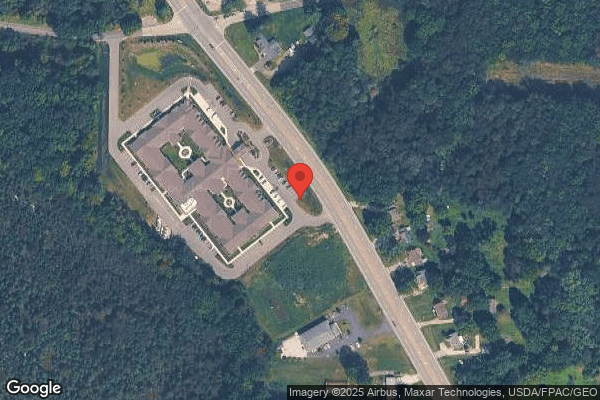
5113 STATE ROUTE 43, KENT, OH 44240 (330) 593-5300
For profit - Corporation 96 Beds FOUNDATIONS HEALTH SOLUTIONS Data: November 2025
Trust Grade
80/100
#347 of 913 in OH
Last Inspection: April 2025

Within standard 12-15 month inspection cycle. Federal law requires annual inspections.

Overview

Tamarack Ridge Health and Rehabilitation in Kent, Ohio, has a Trust Grade of B+, indicating it is above average and generally recommended for families considering care options. It ranks #347 out of 913 facilities statewide, placing it in the top half of Ohio's nursing homes, and #5 out of 10 in Portage County, meaning only a few local options are better. Unfortunately, the facility's trend is worsening, with issues increasing from one in 2024 to four in 2025. Staffing is a weakness, rated at 1 out of 5 stars, with a turnover rate of 53%, which is around the state average, indicating potential inconsistency in care. However, the facility has no fines on record, which is a positive sign, and it provides average RN coverage, ensuring some level of professional oversight. Specific concerns raised by inspectors included failures to maintain accurate advance directive orders for two residents, not applying a resident's ace wraps as per physician orders, and not administering oxygen as prescribed for another resident. While the facility has strengths, such as its good health inspection rating, these issues highlight areas where improvements are needed to ensure resident safety and care quality.

Trust Score
B+
80/100
In Ohio
#347/913
Top 38%
Safety Record
Low Risk
No red flags
Inspections
Getting Worse
1 → 4 violations
Staff Stability
⚠ Watch
53% turnover. Above average. Higher turnover means staff may not know residents' routines.
Penalties
✓ Good
No fines on record. Clean compliance history, better than most Ohio facilities.
Skilled Nurses
○ Average
Each resident gets 36 minutes of Registered Nurse (RN) attention daily — about average for Ohio. RNs are the most trained staff who monitor for health changes.
Violations
✓ Good
Only 5 deficiencies on record. Cleaner than most facilities. Minor issues only.
★★★★☆
4.0
Overall Rating
★☆☆☆☆
1.0
Staff Levels
★★★★☆
4.0
Care Quality
★★★★★
5.0
Inspection Score
Stable
2024: 1 issues
2025: 4 issues

The Good

  • 4-Star Quality Measures · Strong clinical quality outcomes
  • Full Sprinkler Coverage · Fire safety systems throughout facility
  • No fines on record

Facility shows strength in quality measures, fire safety.

The Bad

Staff Turnover: 53%

Near Ohio avg (46%)

Higher turnover may affect care consistency

Chain: FOUNDATIONS HEALTH SOLUTIONS

Part of a multi-facility chain

Ask about local staffing decisions and management

The Ugly 5 deficiencies on record

Apr 2025 4 deficiencies
CONCERN (D)

Potential for Harm - no one hurt, but risky conditions existed

Deficiency F0578 (Tag F0578)

Could have caused harm · This affected 1 resident

**NOTE- TERMS IN BRACKETS HAVE BEEN EDITED TO PROTECT CONFIDENTIALITY** Based on record review and interview, the facility failed to ensure there were accurate advance directive orders and information...

Read full inspector narrative →
**NOTE- TERMS IN BRACKETS HAVE BEEN EDITED TO PROTECT CONFIDENTIALITY** Based on record review and interview, the facility failed to ensure there were accurate advance directive orders and information in place throughout the medical records for Residents #13 and #68. This affected two (#13 and #68) of 31 residents reviewed for advance directives. The facility census was 83. Findings include: 1. Review of Resident #13's medical record revealed the resident was admitted to the facility on [DATE]. Diagnoses included chronic obstructive pulmonary disease, diabetes mellitus, and depression. Review of the Minimum Data Set (MDS) 3.0 assessment dated [DATE] revealed Resident #13 was cognitively intact. Review of the physician's orders for Resident #13 revealed an order dated 12/13/24 for a Do Not Resuscitate Comfort Care Arrest (DNRCC-A) (meaning invasive or extreme life-supporting measures were allowed under any circumstance except for cardiac or respiratory arrest) code status. Review of the electronic chart for Resident #13 revealed a DNRCC-A code status. Review of the hard medical chart for Resident #13 revealed there was no code status in the hard chart. An interview on 03/31/25 at 1:58 P.M. with Registered Nurse (RN) #352 stated she would go to the hard chart to see a signed copy of the advance directive if applicable. RN #352 verified Resident #13's hard chart did not have a code status sheet and the electronic chart stated DNRCC-A for Resident #13. 2. Review of Resident #68's medical record revealed the resident was admitted to the facility on [DATE] with diagnoses including dementia, psychosis, and anxiety disorder. Review of the Minimum Data Set (MDS) 3.0 assessment dated [DATE] revealed Resident #68 was rarely understood. Review of the physician's orders for Resident #68 revealed an order dated 12/13/24 for a Do Not Resuscitate Comfort Care (DNRCC) code status (meaning only comfort measures would be initiated in the event of a medical emergency). Review of the electronic chart for Resident #68 revealed a DNRCC code status signed by the physician. Review of the hard medical chart for Resident #68 revealed there was a DNR paper signed by the physician, but it did not identify if Resident #68's wishes were DNRCC or DNRCC-A. An interview on 03/31/25 at 1:58 P.M. with Registered Nurse (RN) #352 stated she would go to the hard chart to see a signed copy of the advance directive if applicable. RN #352 verified Resident #68's hard chart had a signed DNR in her chart, but it wasn't marked DNRCC-A or DNRCC. RN #352 verified Resident #68's electronic chart stated DNRCC. An interview on 03/31/25 at 02:05 P.M. with Director of Nursing (DON) verified Resident #68's hard chart had a signed DNR in her chart, but it wasn't marked DNRCC-A or DNRCC and the electronic chart stated DNRCC. On 04/01/25 at 8:30 A.M., the DON brought a DNRCC which the resident's power of attorney (POA) signed on 02/13/24. The DON stated it was in Resident 68's hard chart, that was thinned out by medical records. Review of the facility policy titled Residents' Rights: Treatment and Advanced Directives, updated 11/22/16, revealed upon each resident admission, each resident would be provided with written information to formulate an advanced directive. The policy identified documentation must be recorded in the medical record of such a directive and a copy of the directive must be included in the resident's medical record.
CONCERN (D)

Potential for Harm - no one hurt, but risky conditions existed

Quality of Care (Tag F0684)

Could have caused harm · This affected 1 resident

**NOTE- TERMS IN BRACKETS HAVE BEEN EDITED TO PROTECT CONFIDENTIALITY** Based on observations, record review, and resident and staff interviews, the facility failed to ensure a resident had her ace wr...

Read full inspector narrative →
**NOTE- TERMS IN BRACKETS HAVE BEEN EDITED TO PROTECT CONFIDENTIALITY** Based on observations, record review, and resident and staff interviews, the facility failed to ensure a resident had her ace wraps according to physicians' orders. This affected one (#56) of two residents reviewed for edema. The facility census was 83. Findings include: Review of the medical record for Resident #56 revealed an admission date of 01/27/23. Diagnoses included heart failure, dementia, hypertension, and edema. Review of the quarterly Minimum Data Set (MDS) assessment dated [DATE] revealed Resident #56 had intact cognition. Resident #56 required supervision from staff for dressing/personal hygiene. Review of the Medication Administration Record (MAR) for March 2025 revealed Resident #56's ace wraps were to be put on daily in the morning and removed at night. Review of the plan of care dated 02/15/23 revealed the resident was at risk for cardiac symptoms related to diagnosis of hypertension, congestive heart failure and atrial fibrillation. Interventions included taking medications as ordered, monitoring the effectiveness of interventions and ace wrap to bilateral lower extremities on in the morning and off at bedtime. Observation and interview on 03/31/25 at 10:04 A.M. revealed Resident #56 was dressed and sitting in her recliner with her feet on the floor. Resident #56's feet and ankles were swollen, and she had her slippers on. Resident #56 stated she was to have wraps on her feet and ankles and staff will put them on when they have time. Observation on 03/31/25 at 3:00 P.M. revealed Resident #56 did not have ace wraps on her bilateral ankles and feet. Resident #56 was sitting in her recliner with feet on the floor. Subsequent observations on 04/01/25 at 8:58 A.M. and 1:53 P.M. of Resident #56 revealed she was not wearing ace wraps on her bilateral lower extremities. Interview on 04/01/25 at 1:55 P.M. with Licensed Practical Nurse (LPN) #354 stated Resident #56 was to have her ace wraps on in the morning and off at night. LPN #56 verified Resident #56 was not wearing her ace wraps.
CONCERN (D)

Potential for Harm - no one hurt, but risky conditions existed

Respiratory Care (Tag F0695)

Could have caused harm · This affected 1 resident

Based on observations, record review, interview and policy review, the facility failed to ensure Resident #39's oxygen concentrator was administered as physician ordered. This affected one (#39) of on...

Read full inspector narrative →
Based on observations, record review, interview and policy review, the facility failed to ensure Resident #39's oxygen concentrator was administered as physician ordered. This affected one (#39) of one resident reviewed for oxygen administration. The facility identified 13 residents in the facility who were on oxygen therapy. The facility census was 83. Findings include: Review of the medical record for Resident #39 revealed and admission date 10/09/24. Diagnoses included heart failure, atrial fibrillation, and hypertension. Review of the physician orders for April 2025 revealed an order for oxygen per nasal cannula continuous every shift at four liters/minute (LPM). Review of the plan of care dated 12/30/24 revealed Resident #39 has respirator deficiencies and abnormalities of pulmonary function related to heart failure, atrial fibrillation and pulmonary nodule. Interventions included to administer oxygen as ordered. Observation on 03/31/25 at 11:06 A.M. revealed Resident #39 was receiving oxygen via nasal cannula with a flow rate of two LPM. Subsequent observations on 03/31/25 at 3:30 P.M., 04/01/25 at 8:45 A.M., and at 10:50 A.M. revealed Resident #39's oxygen rate was still at two LPM via nasal cannula. Interview and observation on 04/01/25 at 10:52 A.M. with Licensed Practical Nurse (LPN) #354 stated Resident #39 was to be wearing oxygen via nasal cannula at four LPM. Observation with LPN #354 verified Resident #39's oxygen concentrator was set at two LPM not four LPM. LPN #354 verified Resident #39's oxygen was not at the correct flow rate. Review of the facility policy titled Oxygen Administration dated 07/30/24 revealed oxygen is administered to residents who need it. Consistent with professional standards of practice.
CONCERN (D)

Potential for Harm - no one hurt, but risky conditions existed

Deficiency F0760 (Tag F0760)

Could have caused harm · This affected 1 resident

Based on record review, observation, staff interview, review of manufacturer instructions, review of Medscape guidance, and policy review, the facility failed to prime an insulin pen per manufacturer ...

Read full inspector narrative →
Based on record review, observation, staff interview, review of manufacturer instructions, review of Medscape guidance, and policy review, the facility failed to prime an insulin pen per manufacturer instructions prior to administration, resulting in a significant medication error. This affected one (Resident #60) of five residents reviewed for medication administration. The facility identified 14 residents who received insulin via a pen-injector. The facility census was 83. Findings include: Review of the medical record for Resident #60 revealed an admission date of 11/04/24. Diagnosis included type two diabetes mellitus with diabetic chronic kidney disease. Review of the plan of care dated 11/20/24 revealed Resident #60 was at risk for hyper/hypoglycemia related to insulin-dependent diabetes mellitus. Intervention included to administer medications as ordered. Review of the physician orders revealed Resident #60 was ordered Humalog 15 units subcutaneously via pen injector, three times a day and Humalog sliding scale via a pen-injector before meals. Observation on 04/01/25 at 7:21 A.M. revealed Licensed Practical Nurse (LPN) #354 administered seven medications including Humalog to Resident #60. Resident #60's blood sugar was 185, indicating Resident #60 required two additional units in addition to the scheduled 15 units. LPN #354 grabbed the pen-injector and dialed up 17 units of Humalog. LPN #354 failed to prime the pen-injector removing any air before administering insulin to Resident #60. Interview on 04/01/25 at 7:25 A.M. with LPN #354 verified she did not prime the Humalog pen as she should have. LPN #354 stated she was unaware of the need to prime the pen and she had learned something new. Review of the manufacturer instructions for Humalog KwikPen revealed the person should prime before each injection. Priming ensures the Pen is ready to dose and removes air that may collect in the cartridge during normal use. If you do not prime before each injection, you may get too much or too little insulin. Review of the facility policy titled Insulin Administration dated 2017 noted insulin pens require priming or an air-shot prior to administration. Review of Medscape guidance titled Intermittent Insulin Injections Insulin Overview dated 11/05/20 and located at https://emedicine.medscape.com/article/2049311-overview#a1 revealed to avoid air and to ensure proper dose, you will need to prime the syringe each time; to do this, dial two units; hold the pen with the needle pointing up and tap the cartridge gently a few times to get rid of any air bubble; press the push button all the way in until the dose selector returns to zero; a drop of insulin must appear at the needle tip; if not, change the needle and repeat the procedure.
Feb 2024 1 deficiency
CONCERN (D) 📢 Someone Reported This

A family member, employee, or ombudsman was alarmed enough to file a formal complaint

Potential for Harm - no one hurt, but risky conditions existed

Abuse Prevention Policies (Tag F0607)

Could have caused harm · This affected 1 resident

**NOTE- TERMS IN BRACKETS HAVE BEEN EDITED TO PROTECT CONFIDENTIALITY** Based on observation, medical record review, Self-Reported Incident review, witness statement review, police incident report, po...

Read full inspector narrative →
**NOTE- TERMS IN BRACKETS HAVE BEEN EDITED TO PROTECT CONFIDENTIALITY** Based on observation, medical record review, Self-Reported Incident review, witness statement review, police incident report, police report witness statement review, policy review, behavior toolbox review, and interview, the facility failed to ensure staff implemented the abuse policy and procedure and training regarding management of a resident having a catastrophic reaction. This affected one resident (Resident #41) of three residents reviewed for abuse. The census was 94. Findings include: Review of the medical record for Resident #41 revealed an admission date of 07/20/23 with diagnoses of bipolar disorder, hemiplegia and hemiparesis following cerebral infarction affecting left non-dominant side, depression, seizures, psychoactive substance use with induced persisting dementia, anxiety disorder and chronic pain. Review of the plan of care plan dated 08/04/23 revealed Resident #41 was at risk for alteration in comfort, impaired mobility, hemiplegia, excoriation disorder and diagnoses of chronic pain. An intervention was to acknowledge the presence of pain and discomfort. Listen to the resident's concerns. Rest periods as needed. Use pain scale as reported by resident. Review of the Minimum Data Set (MDS) 3.0 quarterly assessment dated [DATE] revealed Resident #41 was cognitively intact, did not have behaviors, required partial/moderate assistance with rolling left and right and required substantial/maximal assistance with toileting. Review of the physician orders from January 2024 revealed Resident #41 was ordered acetaminophen (a medication to treat mild to moderate pain) oral tablet 500 milligrams (mg) give 1000 mg by mouth three times a day for pain, Pregabalin Lyrica (a medication to treat pain from nerve damage) oral capsule 200 mg by mouth three times a day for chronic pain, Baclofen (treats muscle spasms) oral tablet 20 mg give 20 mg by mouth three times a day for muscle spasms, levetiracetam (an anticonvulsant medication) oral tablet 750 mg give 1500 mg by mouth two times a day for bipolar disorder, and alprazolam (a psychotropic medication used to manage anxiety disorders) oral tablet 0.5 mg give 0.5 mg by mouth three times a day for anxiety. Review of the Activity of Daily Living (ADL) note dated 01/24/24 revealed Resident #41 had slightly impaired cognition and was dependent on staff for mobility . Review of the health status note dated 01/24/24 timed 11:30 A.M. revealed State Tested Nurse Aides (STNAs) reported to the Director of Nursing (DON) that Resident #41 scratched, hit and pulled the STNA's hair during care. Two nurses completed a head-to-toe assessment and Resident #41 had complaint of pain to left arm. The nurse practitioner was aware. New order was obtained for Stat x-ray of left arm. Police were notified. Review of the ADL care plan updated 01/24/24 revealed Resident #41 could require assistance with ADLs, had a history of showing inappropriate sexual behaviors toward staff while being showered, Resident #41 would scratch, hit and pull hair of staff members and would make allegations of abuse. There were not any care planned inventions on how staff should respond when Resident #41 displayed sexual and/or physical behaviors. Review of the Self-Reported Incident dated 01/24/24 revealed Resident #41 alleged physical abuse involving STNA #1. At approximately 11:30 A.M. on 01/24/24, two nurse aides were giving personal care in room of Resident #41. At approximately 11:40 A.M., the Administrator was notified Resident #41 became aggressive with the staff members as they were providing personal care. Resident #41 grabbed the arm of one of the aides (STNA #1) then grabbed her by the neck and back of her head pulling out some of her hair. The other aide (STNA #2) came to assist, and Resident #41 then smacked at her face, causing a red mark before all parties could be separated. At approximately 12:15 P.M., the resident alleged that aides were rough during care. The administrator was informed by police that Resident #41 had made an allegation of abuse. When the police spoke with Resident #41 he shared that staff was allegedly rough with him. Resident #41 alleged aides pulled on his right arm, then began hitting him in the center of his back. Review of the witness statement dated 01/24/24 authored by STNA #1 revealed, at 11:30 A.M., [STNA #2] and I went into [Resident #41's room] to provide morning/perineal care. We got bed partially stripped and were in the process of rolling him to the left towards me. I grabbed his right hand and wrist as [STNA #2] was pushing his shoulder and hip. [Resident #41] started yelling, don't grab my arm, [expletive]. I explained I was just trying to roll him. He grabbed my neck and hair pulling me towards him. [STNA #2] yelled at him to stop and let me go. She then pulled his hand out of my hair. He hit her [STNA #2] in the face. We got bed together and got him redressed and [STNA #2] said she was okay with him and for me to leave and get assessed by nursing and management. He left welts on my neck and pulled my hair out. Review of the Police Incident Report dated 01/24/24 revealed on Wednesday, 01/24/24 at 11:46 A.M., Police Officer (PO) #7 was dispatched to [the facility] for a report of an assault; dispatch said that a patient assaulted two nurse assistants. Review of the police report witness statement date 01/24/24 timed 11:45 A.M. authored by STNA #1 revealed, [Resident #41] scratched my neck and grabbed my hair pulling some out during morning/perineal care. [STNA #2] tried to get him to let go, getting hit in the face/neck in the process. Review of the police report witness statement dated 01/24/24 timed 11:45 A.M. authored by STNA #2 revealed, I witnessed [Resident #41] grab the other aide by the back of the head pulling her hair out and proceeded to scratch her. We were assisting him with morning/perineal care when incident happened. I assisted in getting the resident off the other aide then finished with care. We then proceeded to notify the nurse and the higher ups. Review of the witness statement dated 01/24/24 authored by STNA #2 revealed, I, [STNA #2] and other aide went in to change [Resident #41]. We did perineal care and changed resident's sheets. Resident proceeded to attack other aide by pulling her hair and scratching/grabbing her. I proceeded to get resident off the other aide. I then finished making resident's bed. Afterwards the other aide and I went to the nurse to let her know. We then proceeded to go to the higher ups. After talking to the higher ups, I went with another worker to clean up the room. Resident then proceeded to say that his left arm is broke. I witnessed the nurse examine the arm with no pain/redness/bruising/swelling to the affected area. Review of the health status note dated 01/25/24 revealed two view x-ray completed of left arm/wrist, results were negative. Review of the health status note dated 02/05/24 timed 4:02 P.M. revealed Resident #41 was alert and oriented to person. Observation on 02/05/24 at 7:45 A.M. revealed Resident was lying in bed watching television. Interview at the time of the observation revealed Resident #41 was agreeable to talk later about the incident that occurred with the two STNAs. Resident #41 did not know what month or year he was admitted ; he said he had been at the facility for eight months. Interview on 02/05/24 at 8:15 A.M. and 12:00 P.M. with STNA #2 revealed STNA #2 had only worked with Resident #41 a few times prior to 01/24/24 and didn't think STNA #1 had worked with Resident #41 previously. Resident #41's call light was on, so STNA #1 and STNA #2 entered the room together to change his bed linens and give him a bed bath. STNA #1 rolled the resident toward STNA #1 on his right side, toward the door (STNA #2 was aware the resident's left arm was affected from his stroke) and STNA #1 grabbed his left arm (did not pull or yank) to assist him with rolling while STNA #2 applied new linens to the bed. Resident #41 then stated, you stupid [expletive] to STNA #1. As the resident was rolling onto his back, Resident #41 grabbed STNA #1 by the back of head and her hair with his right hand. STNA #2 got his hand free from the STNA's hair and Resident #41 scratched STNA #2's face by accident. STNA #2 called SOS over the Walkie Talkie. STNA #2 finished making his bed, covered him with a sheet and left the room. Interview on 02/05/24 at 9:02 A.M. with Resident #41's family member revealed on 01/24/24, two aides entered his room to change his linens. Resident #41's arm was hurt by the STNA during the incident because the aide was hurrying him and rough with him while changing the linens. The aide ignored him when he told her to stop so he hit the aide since Resident #41 was unable to get away from the STNA because he was paralyzed. Observation on 02/05/24 at 9:38 A.M. revealed Resident #4 was lying in bed holding a remote, watching television. A follow-up interview, during the observation, with Resident #41 revealed when asked if it was a good time to discuss the incident with the STNAs, Resident #41 responded, I can't talk about that. Interview on 02/05/24 at 9:53 A.M. with Registered Nurse (RN) #5 revealed she was familiar with Resident #41 and stated that Resident #41 got frustrated quickly. Resident #41 had a stroke and RN #5 believed his behaviors were a result of the stroke and history of drug use. Resident #41's left arm was affected from his stroke, and he had complained of achy pain in the left arm before. Resident #41 was ordered Tylenol 1000 milligrams three times a day for pain and Lyrica three times a day. Interview on 02/05/24 at 10:17 A.M., 11:01 A.M. and 11:37 A.M. with STNA #1 via telephone revealed STNA #1 and STNA #2 went into Resident #41's room to do ADL care prior to lunch. The STNAs explained to Resident #41 what they were going to do. The STNAs were in the process of rolling him and the resident's left arm was flopping around so STNA #1 placed his left hand in her palm to keep his arm stable. Resident #41 yelled, you're breaking my arm, [expletive] so she told the resident to rest his hand on handrail. As he was rolling onto his back, Resident #41 reached up, grabbed the back of her head/hair, and pulled her head down towards his groin. STNA #2 was able to untangle STNA #1's hair and the resident hit STNA #2 in the face while she was trying to untangle the hair. STNA #1 asked the resident, can we just get finished so you can eat lunch? STNA #1 proceeded to wash his armpits, put a gown on him then exited the room. During the care, Resident #1 kept asking for STNA's #1's name, grabbed her name badge string and pulled it and was trying to throw his legs over the edge of the bed. STNA #1 did not leave the room after Resident #41 grabbed her by the back of the head and pulled her hair because STNA #1 and STNA #2 were in the room together, STNA #1 did not want to leave STNA #2 alone with the resident, and STNA #1 was focused on getting care taken care of then they would leave the room together. STNA #1 did not use her Walkie Talkie to call for assistance because her hands were full with Resident #41. STNA #1 also reported that Resident #41 had a history of cussing at STNA #1 and calling STNA #1 derogatory names and when this happened STNA #1 would notify the nurse. Interview on 02/05/24 at 10:30 A.M. with PO #7 revealed the case involving Resident #41, STNA #1 and STNA #2 had been turned over the County prosecuting attorney to review to determine if any charges would be brought forth to any of the parties. PO #7 revealed none of the three people involved (Resident #41, STNA #1, and STNA #2) had any evidence of assault on their body when he arrived on the scene. Resident #41 was unable to give a written statement, so a verbal statement was recorded by the body camera worn by PO #7. Resident #41 reported that one aide pulled his left arm and the other aide was pushing on his back and it felt like he was being punched. Observation on 02/05/24 at 2:15 P.M. revealed Resident #41 was lying in bed watching television. Interview, during the observation, with Resident #41 revealed he spoke to his mother and his mother told him that he was allowed to speak to the surveyor. Resident #41 stated that STNA #1 seemed mad at him and he had never met her before so he wasn't sure she was actually an STNA. STNA #1 grabbed his left forearm (the resident pointed to the arm between his wrist and elbow) and reached across him and put her whole-body weight on his arm; his arm was in pain. STNA #1 told him he wasn't moving fast enough and started punching him in the back, telling him to move faster. Resident #41 stated the other aide didn't do anything to help him. The resident stated his arm was in pain for three days after the incident. He stated the pain in his arm was usually a four out of 10 on the pain scale and after the incident with the STNAs, he rated his arm pain as a five out of 10. Interview on 02/05/24 at 2:30 P.M. with the Administrator and Director of Nursing verified STNA #1 should not have continued to provide care to Resident #41 after being grabbed and hair pulled and should have immediately exited Resident #41's room. Review of the facility's Abuse, Neglect, Exploitation and Misappropriation of Resident Property dated 11/21/16 revealed the facility would educate it's staff and volunteers upon hire and annually thereafter regarding the facility's policy concerning Abuse, Neglect, Exploitation of residents, and Misappropriation of Resident Property, and how to handle resident-to-resident Abuse and Injuries of Unknown Source. These training sessions were to include, but not necessarily be limited to appropriate interventions to deal with aggressive behaviors and/or extraordinary reactions to residents to ordinary stimuli, such as the attempt to provide care (i.e. Catastrophic Reactions). Review of the undated facility's Behavioral Reference Toolbox for Behavior Reference Strategies for Some Common Behavioral Symptoms in Nursing Home Residents revealed fighting was a severe behavioral symptom because of the potential harm to others. Residents with cognitive loss did not have the skills to end conflict better ways. Separation was the first concern. When personal space was a concern of the resident, stay back a few feet from the person. Give the resident time and space to calm themselves. Verbal aggression: if the verbal aggression is directed to you and the resident is safe, you can leave. Explain your actions and that you will return later. When you return, take something in to use as a distraction. This deficiency represents non-compliance investigated under Complaint Number OH00150725.
Understanding Severity Codes (click to expand)
Life-Threatening (Immediate Jeopardy)
J - Isolated K - Pattern L - Widespread
Actual Harm
G - Isolated H - Pattern I - Widespread
Potential for Harm
D - Isolated E - Pattern F - Widespread
No Harm (Minor)
A - Isolated B - Pattern C - Widespread

Questions to Ask on Your Visit

  • "Can I speak with families of current residents?"
  • "What's your RN coverage like on weekends and overnight?"

Our Honest Assessment

Strengths
  • • Grade B+ (80/100). Above average facility, better than most options in Ohio.
  • • No major safety red flags. No abuse findings, life-threatening violations, or SFF status.
  • • No fines on record. Clean compliance history, better than most Ohio facilities.
  • • Only 5 deficiencies on record. Cleaner than most facilities. Minor issues only.
Concerns
  • • No significant concerns identified. This facility shows no red flags across CMS ratings, staff turnover, or federal penalties.
Bottom line: Generally positive indicators. Standard due diligence and a personal visit recommended.

About This Facility

What is Tamarack Ridge's CMS Rating?

CMS assigns TAMARACK RIDGE HEALTH AND REHABILITATION an overall rating of 4 out of 5 stars, which is considered above average nationally. Within Ohio, this rating places the facility higher than 99% of the state's 100 nursing homes. This rating reflects solid performance across the metrics CMS uses to evaluate nursing home quality.

How is Tamarack Ridge Staffed?

CMS rates TAMARACK RIDGE HEALTH AND REHABILITATION's staffing level at 1 out of 5 stars, which is much below average compared to other nursing homes. Staff turnover is 53%, compared to the Ohio average of 46%.

What Have Inspectors Found at Tamarack Ridge?

State health inspectors documented 5 deficiencies at TAMARACK RIDGE HEALTH AND REHABILITATION during 2024 to 2025. These included: 5 with potential for harm.

Who Owns and Operates Tamarack Ridge?

TAMARACK RIDGE HEALTH AND REHABILITATION is owned by a for-profit company. For-profit facilities operate as businesses with obligations to shareholders or private owners. The facility is operated by FOUNDATIONS HEALTH SOLUTIONS, a chain that manages multiple nursing homes. With 96 certified beds and approximately 85 residents (about 89% occupancy), it is a smaller facility located in KENT, Ohio.

How Does Tamarack Ridge Compare to Other Ohio Nursing Homes?

Compared to the 100 nursing homes in Ohio, TAMARACK RIDGE HEALTH AND REHABILITATION's overall rating (4 stars) is above the state average of 3.2, staff turnover (53%) is near the state average of 46%, and health inspection rating (5 stars) is much above the national benchmark.

What Should Families Ask When Visiting Tamarack Ridge?

Based on this facility's data, families visiting should ask: "Can you walk me through typical staffing levels on day, evening, and night shifts?" "Can I visit during a mealtime to observe dining assistance and food quality?" "How do you handle medical emergencies, and what is your hospital transfer rate?" "Can I speak with family members of current residents about their experience?" These questions are particularly relevant given the below-average staffing rating.

Is Tamarack Ridge Safe?

Based on CMS inspection data, TAMARACK RIDGE HEALTH AND REHABILITATION has a clean safety record: no substantiated abuse findings (meaning no confirmed cases of resident harm), no Immediate Jeopardy citations (the most serious violation level indicating risk of serious injury or death), and is not on the Special Focus Facility watch list (a federal program monitoring the lowest-performing 1% of nursing homes). The facility has a 4-star overall rating and ranks #1 of 100 nursing homes in Ohio. While no facility is perfect, families should still ask about staff-to-resident ratios and recent inspection results during their visit.

Do Nurses at Tamarack Ridge Stick Around?

TAMARACK RIDGE HEALTH AND REHABILITATION has a staff turnover rate of 53%, which is 7 percentage points above the Ohio average of 46%. Moderate turnover is common in nursing homes, but families should still ask about staff tenure and how the facility maintains care continuity when employees leave.

Was Tamarack Ridge Ever Fined?

TAMARACK RIDGE HEALTH AND REHABILITATION has no federal fines on record. CMS issues fines when nursing homes fail to meet care standards or don't correct problems found during inspections. The absence of fines suggests the facility has either maintained compliance or corrected any issues before penalties were assessed. This is a positive indicator, though families should still review recent inspection reports for the full picture.

Is Tamarack Ridge on Any Federal Watch List?

TAMARACK RIDGE HEALTH AND REHABILITATION is not on any federal watch list. The most significant is the Special Focus Facility (SFF) program, which identifies the bottom 1% of nursing homes nationally based on persistent, serious quality problems. Not being on this list means the facility has avoided the pattern of deficiencies that triggers enhanced federal oversight. This is a positive indicator, though families should still review the facility's inspection history directly.