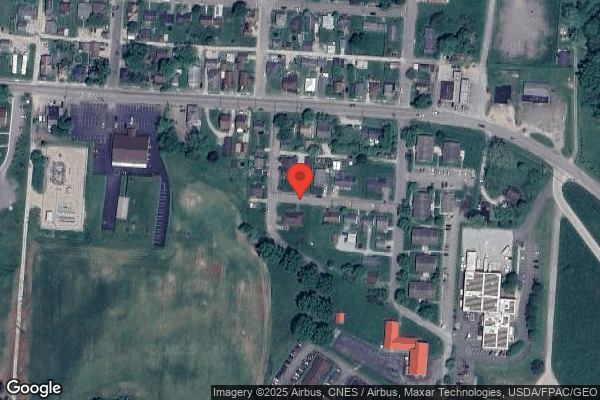
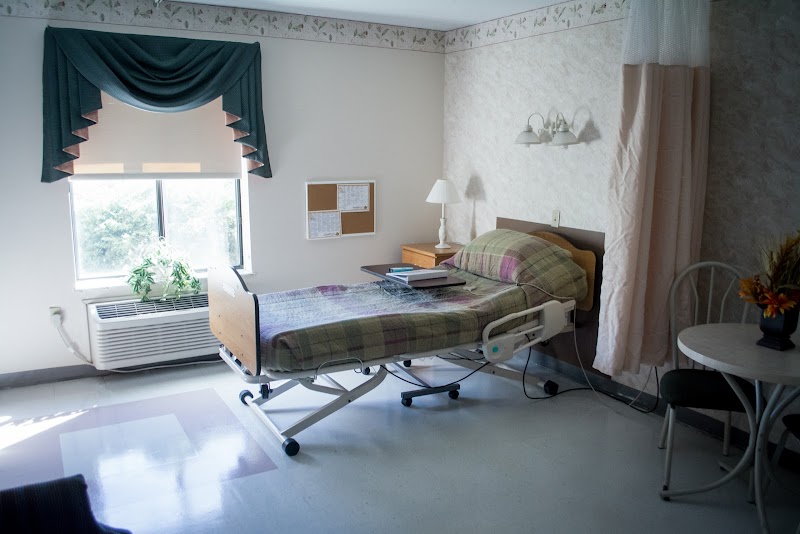
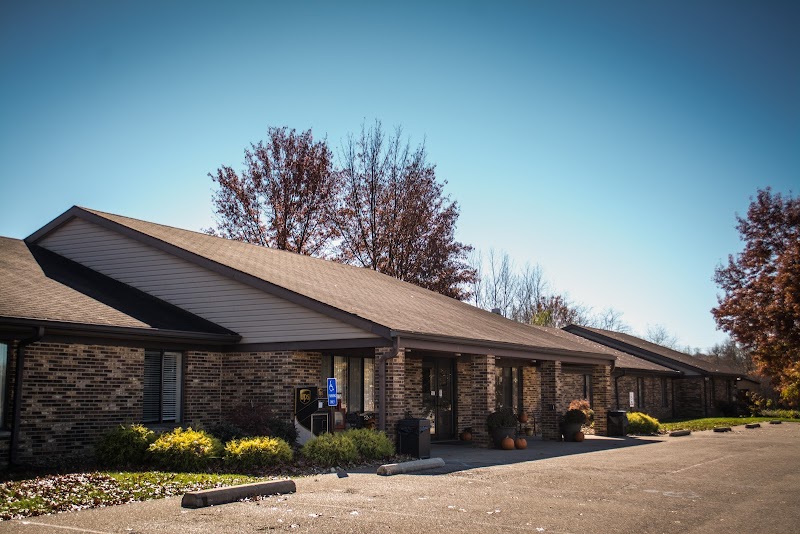
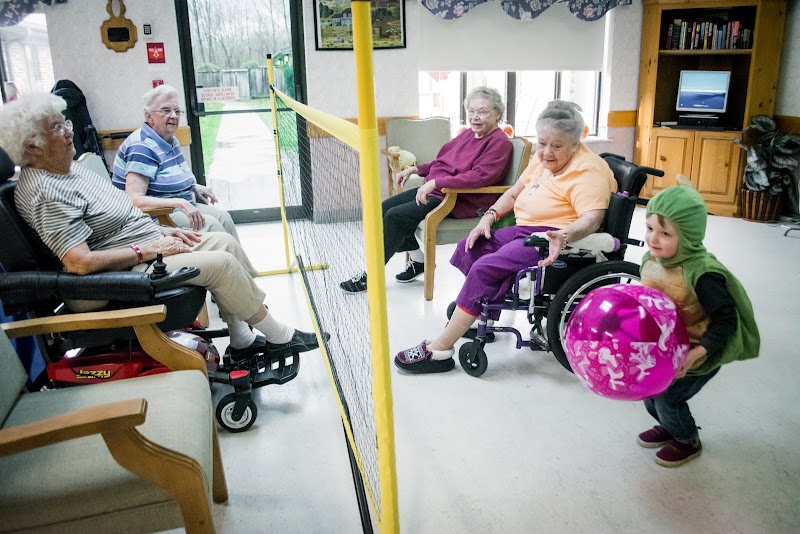
EMBASSY OF LOGAN

300 ARLINGTON AVENUE, LOGAN, OH 43138 (740) 385-2155
For profit - Corporation 135 Beds EMBASSY HEALTHCARE Data: November 2025
Trust Grade
50/100
#254 of 913 in OH
Last Inspection: April 2024

Within standard 12-15 month inspection cycle. Federal law requires annual inspections.

Overview

Embassy of Logan has a Trust Grade of C, which means it is average and sits in the middle of the pack compared to other nursing homes. It ranks #254 out of 913 facilities in Ohio, placing it in the top half, and it is the only option in Hocking County. The facility is on an improving trend, with the number of reported issues decreasing from 12 in 2023 to 9 in 2024. However, staffing is a concern, with a rating of 2 out of 5 stars and a turnover rate of 44%, which, while better than the state average, still indicates challenges in retaining staff. Additionally, the facility has incurred $85,165 in fines, which is higher than 85% of other facilities in Ohio, suggesting some ongoing compliance issues. Specific incidents include a resident who fell and fractured their arm due to unsafe conditions in the parking lot, and another resident who experienced a decline in mobility because the facility failed to implement their restorative nursing program. While the overall care quality received a good rating of 4 out of 5 stars, the health inspection score was only 3 out of 5, indicating that there are areas needing improvement. Overall, while the facility has strengths in maintaining quality measures, there are significant concerns regarding safety and staffing that families should consider.

Trust Score
C
50/100
In Ohio
#254/913
Top 27%
Safety Record
High Risk
Review needed
Inspections
Getting Better
12 → 9 violations
Staff Stability
○ Average
44% turnover. Near Ohio's 48% average. Typical for the industry.
Penalties
✓ Good
$85,165 in fines. Lower than most Ohio facilities. Relatively clean record.
Skilled Nurses
⚠ Watch
Each resident gets only 23 minutes of Registered Nurse (RN) attention daily — below average for Ohio. Fewer RN minutes means fewer trained eyes watching for problems.
Violations
⚠ Watch
36 deficiencies on record. Higher than average. Multiple issues found across inspections.
★★★★☆
4.0
Overall Rating
★★☆☆☆
2.0
Staff Levels
★★★★★
5.0
Care Quality
★★★☆☆
3.0
Inspection Score
Stable
2023: 12 issues
2024: 9 issues

The Good

  • 5-Star Quality Measures · Strong clinical quality outcomes
  • Full Sprinkler Coverage · Fire safety systems throughout facility
  • No fines on record
  • Staff turnover below average (44%)

    4 points below Ohio average of 48%

Facility shows strength in quality measures, fire safety.

The Bad

Staff Turnover: 44%

Near Ohio avg (46%)

Typical for the industry

Federal Fines: $85,165

Well above median ($33,413)

Moderate penalties - review what triggered them

Chain: EMBASSY HEALTHCARE

Part of a multi-facility chain

Ask about local staffing decisions and management

The Ugly 36 deficiencies on record

2 actual harm
Jul 2024 1 deficiency
CONCERN (D) 📢 Someone Reported This

A family member, employee, or ombudsman was alarmed enough to file a formal complaint

Potential for Harm - no one hurt, but risky conditions existed

Pressure Ulcer Prevention (Tag F0686)

Could have caused harm · This affected 1 resident

**NOTE- TERMS IN BRACKETS HAVE BEEN EDITED TO PROTECT CONFIDENTIALITY** Based on record review, interview and facility policy review, the facility failed to document treatments completed on two pressu...

Read full inspector narrative →
**NOTE- TERMS IN BRACKETS HAVE BEEN EDITED TO PROTECT CONFIDENTIALITY** Based on record review, interview and facility policy review, the facility failed to document treatments completed on two pressure ulcers for one resident (#111) of three residents reviewed. The facility census was 96. Findings include: Review of the medical record for Resident #111, revealed an admission date of 09/29/20. Diagnoses included but were not limited to schizophrenia, other reduced mobility pressure ulcer of left buttock stage IV (Full thickness tissue loss with exposed bone, tendon or muscle. Slough or eschar may be present on some parts of the wound bed. Often includes undermining and tunneling) and dependence on other enabling machines and devices. Review of the most recent Minimum Data Set (MDS) 3.0 assessment dated [DATE] revealed a Brief Interview for Mental Status (BIMS) of 15 out of 15 which indicated cognitive intactness. The resident was assessed to require dependence on toilet hygiene, partial/moderate assistance with transfers and independent with bed mobility. The resident was also assessed to have two stage IV pressure ulcers on readmission/reentry with no refusal of care behaviors. Review of Resident #111's active care plans revealed a focus of an actual area of skin impairment related to stage IV pressure to left and right ischial with interventions including but not limited to: treatment order to left and right ischial changed per Nurse Practitioner and treatment as ordered. Review of physician's orders dated for 04/16/24 with a discontinued date of 05/06/24 for Resident #111 revealed two wound orders: cleanse wound to left ischium with normal saline, irrigate wound, pat dry, pack wound with collagen sheet, follow with packing and gauze and secure twice a day and as needed every shift for wound care and cleanse wound to right ischium with normal saline, irrigate wound, pat dry, pack wound with collagen sheet, follow with packing and gauze and secure twice a day and as needed every shift for wound care. Further review of this resident's physicians orders dated for 05/07/24 with a discontinuation date of 06/10/24 revealed two orders: Mupirocin external ointment 2 % apply to left ischium topically every shift for wound care cleanse wound to left ischium with normal saline (irrigate) pat dry, pack wound with Mupirocin covered gauze, cover with dressing, twice a day and as needed and Mupirocin external ointment 2 % apply to right ischium topically every shift for wound care cleanse wound to right ischium with normal saline (irrigate) pat dry, pack wound with Mupirocin covered gauze, cover with dressing, twice a day and as needed. Residents #111's Treatment Administration Record (TAR) for May 2024 revealed for both wound orders dated 04/16/24 had missed treatments for day shift for: 05/04/24, 05/05/24 and 05/07/24. Further review revealed for both wound orders dated 05/07/24 had missed treatments for day shift for: 05/23/24, 05/24/24, 05/28/24, and 05/031/24. Review of active physicians orders dated for 06/10/24 for Resident #111' revealed two wound orders: Mupirocin external ointment 2 % apply to left ischium topically every shift for wound care cleanse wound to left ischium with normal saline (irrigate) pat dry, drop 2-3 drops of Tetracyte into wound bed, pack wound with Mupirocin covered gauze, cover with dressing, twice a day and as needed and Mupirocin external ointment 2 % apply to right ischium topically every shift for wound care cleanse wound to right ischium with normal saline (irrigate) pat dry, drop 2-3 drops of Tetracyte into wound bed, pack wound with Mupirocin covered gauze, cover with dressing, twice a day and as needed. Resident #111's TAR for June 2024 revealed for both wound orders dated 05/07/24 had missed treatments for day shift for: 06/01/24, 06/07/24 and 06/10/24. Further review revealed for both wound orders dated 06/10/24 had missed treatments for day sift for: 06/11/24, 06/12/24, 06/14/24, 06/16/24, 06/17/24, 06/21/24, 06/23/24, and 06/30/24. On 07/02/24 at 9:45 A.M., Resident #111 refused to interview and refused to have his dressing change observed to his right and left ischium. Interview on 07/02/24 at 9:45 A.M. with the Director of Nursing (DON) verified Resident #111 had missed treatments for multiple orders for the left and right ischium for May and June 2024 on the TAR. Interview on 07/02/24 at 10:13 A.M. with Licensed Practical Nurse (LPN) verified Resident #111 had missed treatments for multiple orders for the left and right ischium for May and June 2024 on the TAR and stated, I am the nurse who takes care of him during the week most days and I religiously change it when he lets me. Also verified unable to document late entries for the missed treatments due to the resident does refuse as well and no form of confirmation for what days it was completed and what days he refused. Review of the facility policy titled Medication and Treatment Orders dated 03/01/2022 stated treatment orders .will be documented in PCC and on the TAR. This deficiency represents non-compliance investigated under Master Complaint Number OH00155246.
Apr 2024 8 deficiencies
CONCERN (D)

Potential for Harm - no one hurt, but risky conditions existed

PASARR Coordination (Tag F0644)

Could have caused harm · This affected 1 resident

**NOTE- TERMS IN BRACKETS HAVE BEEN EDITED TO PROTECT CONFIDENTIALITY** Based on medical record review, staff interview, and policy review the facility failed to ensure all resident Pre-admission Scre...

Read full inspector narrative →
**NOTE- TERMS IN BRACKETS HAVE BEEN EDITED TO PROTECT CONFIDENTIALITY** Based on medical record review, staff interview, and policy review the facility failed to ensure all resident Pre-admission Screening and Resident Review (PASRR) documents were accurate to resident current conditions and diagnoses. This affected one (Resident #6) of one residents reviewed for PASRR documents. The facility census was 98. Findings Include: Review of Resident #6's medical record revealed she was admitted to the facility on [DATE]. Her diagnoses included unspecified dementia with agitation/ mood disturbance, anxiety disorder, major depressive disorder (MDD), and delusional disorder. Review of Resident #6's Preadmission Screening and Resident Review (PASRR) Identification Screen dated 11/30/23 revealed under Section (D.) the resident was identified as having a diagnosis of dementia. Under Section (E.) Indications of Serious Mental Illness, the resident was identified as having the diagnosis of a mood disorder and anxiety. Delusional disorder was not marked despite that being a diagnosis the resident was known to have upon admission. Review of a request for a Level of Care Review dated 01/02/24 revealed the facility sent the review request to the Central Ohio Area Agency on Aging for a nursing facility to nursing facility transfer as the resident was admitted to the facility from another nursing facility in Ohio. The Request for a Level of Care Review did not require the facility to include the resident's mental illness diagnoses only an instrumental activities of daily living to show how much assistance the resident needed in areas such as shopping, meal preparation, and laundry/ housekeeping activities. Review of a Pre-admission Screen Determination dated 01/03/24 revealed it was not applicable. An in-person assessment was indicated not to be required. The comment section indicated it was for a delayed exempt and the resident was approved for transfer. On 04/03/24 at 3:26 P.M., an interview with Social Worker #216 revealed she had been the facility's social worker since just after their last annual survey. She reviewed PASRR's upon a resident's admission for accuracy and to ensure the appropriate diagnoses were added to the PASRR. She acknowledged Resident #6 had the diagnosis of delusional disorder that was not included on her PASRR they received from the transferring facility. She confirmed she received the PASRR from the transferring facility and assumed it had been completed accurately. She further confirmed she did not review it for accuracy. She acknowledged there could have been the possibility of the resident triggering for a Level II review if the prior PASRR had been completed accurately. She further acknowledged any such services that could have been required through a Level II review would not have been provided to the resident timely, if the resident required them. Review of the facility's policy on Resident Assessment- Coordination with PASARR Program revised 01/01/24 revealed the facility coordinated assessments with the preadmission screening and resident review (PASARR) program under Medicaid (MCD) to ensure that individuals with a mental disorder, intellectual disability, or a related condition received care and services in the most integrated setting appropriate to their needs. All applicants to the facility would be screened for serious mental disorders or intellectual disabilities and related conditions in accordance with the State's MCD rules for screening. The social services director would be responsible for keeping track of each resident's PASARR screening status, and referring to the appropriate authority.
CONCERN (D)

Potential for Harm - no one hurt, but risky conditions existed

Deficiency F0646 (Tag F0646)

Could have caused harm · This affected 1 resident

**NOTE- TERMS IN BRACKETS HAVE BEEN EDITED TO PROTECT CONFIDENTIALITY** Based on medical record review, staff interview, and policy review, the facility failed to ensure all significant mental health ...

Read full inspector narrative →
**NOTE- TERMS IN BRACKETS HAVE BEEN EDITED TO PROTECT CONFIDENTIALITY** Based on medical record review, staff interview, and policy review, the facility failed to ensure all significant mental health changes were communicated to the state mental health agency. This affected one (Resident #6) of one residents reviewed for PASRR documents. The facility census was 98. Findings Include: Review of Resident #6's medical record revealed she was admitted to the facility on [DATE]. Her diagnoses included unspecified dementia with agitation/ mood disturbance, anxiety disorder, major depressive disorder (MDD), and delusional disorder. Review of Resident #6's Preadmission Screening and Resident Review (PASRR) Identification Screen dated 11/30/23 revealed under Section (D.) the resident was identified as having a diagnosis of dementia. Under Section (E.) Indications of Serious Mental Illness, the resident was identified as having the diagnosis of a mood disorder and anxiety. Delusional disorder was not marked despite that being a diagnosis the resident was known to have upon admission. Review of a request for a Level of Care Review dated 01/02/24 revealed the facility sent the review request to the Central Ohio Area Agency on Aging for a nursing facility to nursing facility transfer as the resident was admitted to the facility from another nursing facility in Ohio. The Request for a Level of Care Review did not required the facility to include the resident's mental illness diagnoses only an instrumental activities of daily living to show how much assistance the resident needed in areas such as shopping, meal preparation, and laundry/ housekeeping activities. Review of a Pre-admission Screen Determination dated 01/03/24 revealed it was not applicable. An in-person assessment was indicated not to be required. The comment section indicated it was for a delayed exempt and the resident was approved for transfer. On 04/03/24 at 3:26 P.M., an interview with Social Worker #216 revealed she had been the facility's social worker since just after their last annual survey. She reviewed PASRR's upon a resident's admission for accuracy and to ensure the appropriate diagnoses were added to the PASRR. She acknowledged Resident #6 had the diagnosis of delusional disorder that was not included on her PASRR they received from the transferring facility. She confirmed she received the PASRR from the transferring facility and assumed it had been completed accurately. She further confirmed she did not review it for accuracy. She acknowledged there could have been the possibility of the resident triggering for a Level II review if the prior PASRR had been completed accurately. She further acknowledged any such services that could have been required through a Level II review would not have been provided to the resident timely, if the resident required them. Review of the facility's policy on Resident Assessment- Coordination with PASARR Program revised 01/01/24 revealed the facility coordinated assessments with the preadmission screening and resident review (PASARR) program under Medicaid (MCD) to ensure that individuals with a mental disorder, intellectual disability, or a related condition received care and services in the most integrated setting appropriate to their needs. All applicants to the facility would be screened for serious mental disorders or intellectual disabilities and related conditions in accordance with the State's MCD rules for screening. The social services director would be responsible for keeping track of each resident's PASARR screening status, and referring to the appropriate authority. Any resident who exhibited a newly evidence or possible serious mental disorder, intellectual disability, or a related condition would be referred promptly to the state mental health or intellectual disability authority for a level II resident review. Examples include a resident whose intellectual disability or related condition was not previously identified and evaluated through PASARR.
CONCERN (D)

Potential for Harm - no one hurt, but risky conditions existed

Quality of Care (Tag F0684)

Could have caused harm · This affected 1 resident

**NOTE- TERMS IN BRACKETS HAVE BEEN EDITED TO PROTECT CONFIDENTIALITY** Based on record review, staff interview, and facility policy review, the facility failed to ensure skin and wound assessments we...

Read full inspector narrative →
**NOTE- TERMS IN BRACKETS HAVE BEEN EDITED TO PROTECT CONFIDENTIALITY** Based on record review, staff interview, and facility policy review, the facility failed to ensure skin and wound assessments were completed thoroughly, accurately, and timely for three residents (#3, #74 and #89) of four reviewed for non-pressure wounds. The facility census was 98. Findings include: 1. Review of the medical record for the Resident #89 revealed an admission date of 06/09/23. Diagnoses included depression, heart failure, diabetes, end stage renal disease, and absence of left leg below the knee. Review of the Minimum Data Set (MDS) assessment dated [DATE] revealed Resident #89 was cognitively intact and required supervision touching assistance for personal hygiene and activities of daily living Review of the plan of care dated 01/2024 revealed Resident #89 was at risk for skin impairments with interventions to inspect for reddened areas during daily care, weekly skin assessments, charge nurse to notify wound nurse, Physician and family of any new areas, and wound care practitioner to eval and treat as indicated. Review of the skin observation assessment dated [DATE] revealed a new red area on the left knee. Review of the skin grid non-pressure assessment dated [DATE] revealed a new skin impairment was noted of a red area blister to knee. Review of the skin observation assessment dated [DATE] revealed no areas identified. It did not indicate if prior redness and blistering had healed. Review of the skin grid non-pressure assessment dated [DATE] revealed multiple scabs to distal finger joints (date acquired 9/22). The assessment marked the wounds as unchanged but identified skin impairments had not been previously assessed or identified. Review of the skin observation assessment dated [DATE] revealed a previously identified area was present. The area included scabs on the right hand and fingers and a scab on the left knee. It did not indicate how many scabs, specific locations or sizes. Several of these scabs were not identified on several previous skin observations or assessments. Review of the skin grid non-pressure assessment dated [DATE] revealed resident had bruising to the left iliac crest. This bruising was marked as unchanged, but skin impairment had not been previously identified or assessed. Review of the skin observation assessment dated [DATE] revealed bruising to left illiac crest. Review of the skin grid non-pressure assessment dated [DATE] revealed bruising to left knee. None of the recent previous skin assessments mentioned concerns of bruising to the left knee. Review of the skin observation assessment dated [DATE] identified scabs to right fingers. Assessment did not provide details of the scabs including amount and sizes. Review of the skin observation assessment dated [DATE] identified scabbed areas on right hand fingers and a bruise on the abdomen. Review of the skin observation assessment dated [DATE] identified a scabbed area on the back of the left hand. Review of the skin observation assessment dated [DATE] identified a scabbed area on the left hand. Review of the skin observation assessment dated [DATE] stated a previous area had been identified and provided no information on which site or description of the skin impairment it was referring to. Review of the skin observation assessment dated [DATE] identified scabbed areas to right hand. Review of the skin observation assessment dated [DATE] stated a previous area had been identified and provided no information on which site or description of the skin impairment it was referring to. Review of the skin observation assessment dated [DATE] identified hand blisters. The assessment did not specify which hand, how many, or the size of the blisters. Review of the skin observation assessment dated [DATE] revealed skin was intact and no areas of skin impairment were identified. Review of the skin observation assessment dated [DATE] identified scabbed areas to bilateral fingers. Review of the skin observation assessment dated [DATE] identified scabbed areas to the right hand fingers. Review of the skin observation assessment dated [DATE] stated a previous area had been identified and provided no information on which site or description of the skin impairment it was referring to. Review of the skin observation assessment dated [DATE] identified scabbed areas to right and left hands. Review of the skin observation assessment dated [DATE] identified scabbed areas to right hand fingers. Review of the skin observation assessment dated [DATE] identified scabbed areas to fingers of right and left hands. Review of the skin observation assessment dated [DATE] identified scabbed areas to right hand fingers. Review of the skin grid non-pressure assessment dated [DATE] identified a skin tear that occurred at the device check appointment. This assessment was updated to state the tear was healed on 02/28/24. Review of the skin observation assessment dated [DATE] identified an area to LFA and scabbed areas to right fingers. Review of the skin observation assessment dated [DATE] stated a previous area had been identified and provided no information on which site or description of the skin impairment it was referring to. Review of the skin grid non-pressure assessment dated [DATE] identified a bruise to the top of the scalp. The assessment revealed this wound was identified at 02/13/24. Review of the skin observation assessment dated [DATE] stated skin was intact with no impairments, but also stated left fingers wound treatments were in place. Review of the skin grid non-pressure assessment dated [DATE] identified a bruise was acquired on 02/13/24. The assessment included no information on description location or size of the bruise. Review of the skin observation assessment dated [DATE] revealed skin was intact and no areas of skin impairment were identified. Review of the skin grid non-pressure assessment dated [DATE] identified scabs on the right fingers that were marked as unchanged, gave no date of when they were acquired and no description or size. Review of the skin observation assessment dated [DATE] revealed skin was intact and no areas of skin impairment were identified. Review of the skin observation assessment dated [DATE] revealed skin was intact and no areas of skin impairment were identified. Review of the skin grid non-pressure assessment dated [DATE] identified scabs on his right fingers. The assessment was marked as unchanged and provided no date the wound was acquired. Review of the skin observation assessment dated [DATE] stated a previous area had been identified and provided no information on which site or description of the skin impairment it was referring to. Review of the skin grid non-pressure assessment dated [DATE] identified scabs on his right fingers. The assessment was marked as unchanged and provided no date the wound was acquired or any size or description of the wound. Review of the skin observation assessment dated [DATE] revealed skin was intact and no areas of skin impairment were identified. Observation and interview on 04/02/24 at 8:56 A.M. with Resident #89 revealed he had several visible wounds on his bilateral hands with a grayish scab on the right middle finger and several additional red colored blisters on his bilateral fingers. Resident stated he had blisters on his hands for several months and also revealed the large grey scab like wound had been there for several months. He revealed it started as a blister and believed it to be caused by his dialysis port causing issues with blood flow to his hand. Interview on 04/03/24 at 2:20 P.M. with Director of Nursing (DON) confirmed facility had an order for the wound practitioner to evaluate and treat as necessary dated 03/2024 and confirmed the wound provider saw resident but had no recommendations and did not document any assessment or findings. 2. Review of the medical record for the Resident #3 revealed an admission date of 11/15/23. Diagnoses included diabetes type 1, respiratory failure, metabolic encephalopathy, heart failure, vascular disease and kidney failure. Review of the Minimum Data Set (MDS) assessment dated [DATE] revealed Resident #3 was cognitively intact and required substantial maximum assistance for lower body dressing, showering and moderate assistance for hygiene and upper body dressing. Review of the plan of care dated 11/16/23 revealed Resident #3 was at risk for alteration in skin integrity with interventions for wound care practitioner to evaluate and treat as indicated. The care pan also stated the resident had an actual area of skin impairment of pressure ulcer to left knee amputation stump with interventions to indicate wound treatment, nursing to observe the wound dressing. Observe and document the character of wound weekly, observe for clinical changes and complete skin observations on bath/shower days. Review of the skin grid non-pressure assessment dated [DATE] identified bruising to the neck. The assessment had marked this finding as new but did not include the date acquired or description. Review of the skin grid non-pressure assessment dated [DATE] identified redness to the back of the right hand. The assessment did not include description or measurements. Review of the skin grid non-pressure assessment dated [DATE] identified redness to the back of left hand. The assessment did not include description or measurements. Review of the skin grid non-pressure assessment dated [DATE] identified a surgical incision to the left illiac crest. The assessment had marked this healed on 11/29/23 and it was included in any other assessments. Review of Physician orders dated 11/16/23 to 11/30/23 to monitor incision cite to left groin each shift for signs of infection. The wound to the left groin was never marked or included in any skin observation assessments or skin grid non-pressure assessment. Another order dated 11/16/23 to 04/01/24 revealed an order for right second toe to cleanse wound with wound cleanser or normal saline, apply betadine, and leave open to air daily. The wound on the second right toe was not documented in the skin assessments. Review of the skin grid non-pressure assessment dated [DATE] identified bruising to the neck. The assessment had marked this finding as new again but did not include the date acquired or description. The assessment also stated the impairment was improved but also that Physician was notified of the decline in skin a few days prior. Review of the skin grid non-pressure assessment dated [DATE] identified redness to the back of the right hand. The assessment had marked this finding as new again but did not include description or measurements. The assessment also stated the impairment was improved. Review of the skin grid non-pressure assessment dated [DATE] identified redness to the back of the left hand. The assessment had marked this finding as new again but did not include description or measurements. The assessment also stated the impairment was unchanged but also that it was healed. Review of the skin grid non-pressure assessment dated [DATE] identified a surgical incision to the left illiac crest. The assessment had marked this finding as new again but did not include description or measurements. The assessment also stated the impairment was unchanged but also that it was healed. Review of the skin observation assessment dated [DATE] revealed skin was not intact, previous areas identified, dressing and treatment in place. The assessment did not include any areas listed or descriptions of wound impairments. Review of the skin observation assessment dated [DATE] revealed skin was not intact, previous areas identified, dressing and treatment in place. The assessment did not include any areas listed or descriptions of wound impairments. Review of the skin observation assessment dated [DATE] revealed skin was not intact, previous areas identified, dressing and treatment in place. The assessment revealed a left knee wound of amputation stump wound. The assessment did not include any descriptions or measurements. Review of the skin observation assessment dated [DATE] revealed skin was not intact, previous areas identified, dressing and treatment in place. The assessment did not include any areas listed or descriptions of wound impairments. Review of the skin observation assessment dated [DATE] revealed skin was not intact, previous areas identified, dressing and treatment in place. The assessment did not include any areas listed or descriptions of wound impairments. Review of the skin observation assessment dated [DATE] revealed skin was intact and no areas of skin impairment were identified. Review of the skin observation assessment dated [DATE] revealed skin was intact and no areas of skin impairment were identified. Review of the skin observation assessment dated [DATE] revealed skin was not intact, previous areas identified, dressing and treatment in place. The assessment revealed a left knee wound of amputation stump wound had an open area. The assessment did not include any descriptions or measurements. Review of the skin observation assessment dated [DATE] revealed skin was not intact, previous areas identified. The assessment revealed a left knee had an open area. The assessment did not include any descriptions or measurements. Review of the skin observation assessment dated [DATE] revealed skin was not intact, previous areas identified. The assessment revealed a skin tear to the left forearm with treatment in place. The assessment did not include any measurements. Review of the skin observation assessment dated [DATE] revealed skin was not intact, previous areas identified, dressing and treatment in place. The assessment did not include any areas listed or descriptions of wound impairments. Review of the skin observation assessment dated [DATE] revealed skin was marked as intact, but also marked with previous areas noted. The assessment identified a scabbed area to the left knee and scabbed area to the right foot. Review of the skin observation assessment dated [DATE] revealed skin was not intact, previous areas identified, dressing and treatment in place. The assessment identified a toe skin impairment but did not include any description or details including if it was the right or left, which toe and what the injury actually was (cut, bruise, scab ect). Review of the skin observation assessment dated [DATE] revealed skin was not intact, marked with previous areas noted. The assessment identified a scabbed area to the left knee. Review of the skin observation assessment dated [DATE] revealed skin was not intact, previous areas identified, dressing and treatment in place. The assessment did not include any areas listed or descriptions of wound impairments. Review of the skin observation assessment dated [DATE] revealed skin was not intact, previous areas identified, dressing and treatment in place. The assessment did not include any areas listed or descriptions of wound impairments. Review of the skin observation assessment dated [DATE] revealed skin was intact and no areas of skin impairment were identified. Physician order dated 03/13/23 revealed wound care practitioner to evaluate and treat as indicated. The order did not specify any specific wounds and assessments before and after the order stated no skin impairments. Review of the skin observation assessment dated [DATE] revealed skin was intact and no areas of skin impairment were identified. Review of the skin observation assessment dated [DATE] revealed skin was intact and no areas of skin impairment were identified. Review of the skin observation assessment dated [DATE] revealed skin was not intact, and marked with previous areas noted. The assessment identified a scabbed area to the left knee. Review of the skin grid non-pressure assessment dated [DATE] identified a an other wound measuring 0.5 by 0.5 and a scab on the second right toe. The assessment had marked this finding as healed but did not specify if both wounds were healed (one had measurements). Review of wound practitioner notes dated 01/15/24, 01/22/24, 01/29/24, 02/05/24, 02/19/24, 02/26/24, 03/04/24, 03/11/24, 03/18/24, 03/25/24, and 04/01/24 revealed the wound practitioner observed and made recommendations regarding the stump pressure wound but had no documentation of assessing any other skin impairments. Review of the Skin grid assessment listing found Resident #3 had not had a skin grid assessment from 11/01/23 to 03/13/24 and then none after 03/13/23. Interview and observation on 04/01/24 at 11:38 A.M. with Resident #3 revealed resident had several visible wounds and scabs on his bilateral lower extremity as well as dried blood on his pillow and a bloody bandage on the floor. Resident revealed he had consistently had various wounds on his legs and feet with scabs and skin tears. 3. Review of the medical record for the Resident #74 revealed an admission date of 08/29/22. Diagnoses included respiratory failure, diabetes, dysphagia, muscle weakness, encephalopathy, and pulmonary embolism. Review of the Minimum Data Set (MDS) assessment dated [DATE] revealed Resident #74 was cognitively impaired and was rarely if ever understood and was dependent for activities of daily living. Review of the plan of care dated 03/04/24 revealed Resident #74 was at risk of skin impairments. Review of the skin grid non-pressure assessment dated [DATE] identified a new scab on the left toes also noted to be an abscess. The assessment marked this finding as unchanged while also marked as worsened with physician notification on 10/24/23 and also marked as healed but gives measurements of 0.5 by 0.5. Review of the skin grid non-pressure assessment dated [DATE] identified a new skin impairment of scabs to the left toes, also identified on 10/24/23. The assessment marked the wound as improved and marked as declined on 10/24/23. Review of the skin observation assessment dated [DATE] revealed skin was intact with no new areas, dressing and treatment were not applicable. The assessment identified a left toe(s) impairment with great toenail ingrown with treatment in place. Review of the skin observation assessment dated [DATE] revealed skin was intact and no areas of skin impairment were identified. Review of the skin observation assessment dated [DATE] revealed skin was intact and no areas of skin impairment were identified. Review of the skin grid non-pressure assessment dated [DATE] identified redness and scab to left toes around the toenail bed. Review of the skin observation assessment dated [DATE] revealed skin was intact and no areas of skin impairment were identified. Review of the skin observation assessment dated [DATE] revealed skin was intact and no areas of skin impairment were identified. Review of the skin observation assessment dated [DATE] revealed skin was intact and no areas of skin impairment were identified. Review of the skin grid assessments revealed resident was missing several skin grid non-pressure assessments. Observations and interview dated 04/01/24 at 10:52 A.M. with Resident #74's representative and Resident #74 revealed resident had wounds to his toes and had a dressing in place. Resident Representative revealed resident had an ingrown toe that was causing issues to his skin around the nailbed. Resident Representative revealed resident had a wound on his toe for the last several weeks and they had not fully healed. Interviews on 04/04/24 from 2:30 P.M. to 3:15 P.M. with DON confirmed wound assessments did not contain thorough information of what wounds were present and when. The assessments also did not contain descriptions of the wounds and document when they were discovered and when they were healed. DON revealed facility had previously identified an issue with nursing assessment documentation not being accurate and detailed and revealed they had completed education on 02/2024 and 03/2024. DON confirmed issues were still present in documentation after the trainings had been completed. DON revealed skin grid assessments non pressure assessments should be completed when a new wound was identified and then weekly thereafter until the wound was healed and confirmed several skin grid assessments were not completed and also skin observation assessments should be completed weekly regardless of wounds being present or healing status. Review of the facility policy titled Licensed Nurse Skin Condition Documentation, dated 03/01/22 revealed it was the practice of the facility to complete weekly wound observations and provide weekly documentation of any wound area in order to identify progress or lack of progress in a wound area. The assessments would include identification of the type of wound and description including color, size/measurements, location and exudate if present. The nurse shall document on forms and place in medical record and will notify physician of any changes.
CONCERN (D)

Potential for Harm - no one hurt, but risky conditions existed

Pressure Ulcer Prevention (Tag F0686)

Could have caused harm · This affected 1 resident

**NOTE- TERMS IN BRACKETS HAVE BEEN EDITED TO PROTECT CONFIDENTIALITY** Based on medical record, skin assessment review, staff interview, and facility policy review, the facility failed to properly do...

Read full inspector narrative →
**NOTE- TERMS IN BRACKETS HAVE BEEN EDITED TO PROTECT CONFIDENTIALITY** Based on medical record, skin assessment review, staff interview, and facility policy review, the facility failed to properly document a newly identified pressure wound. This affected one (Resident #93) of the seven residents reviewed for skin assessment accuracy. The facility census was 98. Findings include: Review of the medical record for Resident #93 revealed an admission date of 11/02/23. Diagnoses included delirium, vascular dementia, hemiplegia affecting the left non-dominant side, and a history of falling. Review of Resident #93's significant change Minimum Data Set (MDS) 3.0 assessment dated [DATE] revealed a Brief Interview for Mental Status (BIMS) score of 03 out of 15 indicating a severely impaired cognition for daily decision making abilities. Resident #93 was noted to display disorganized thinking, inattention, rejection of care and delusions. Resident #92 was noted to to experience impairment to one upper and one lower extremity and required substantial to maximal assistance for bed mobility and turning from side to side. Per assessment, Resident #93 was noted to be incontinent of bowel and bladder function and noted to one stage two pressure ulcer (partial thickness loss of dermis presenting as a shallow open ulcer with a red or pink wound bed) that was not present upon admission to the facility. Review of the plan of care dated 11/02/23 and revised 04/01/24 revealed Resident #93 has an actual area of skin impairment related to pressure area to coccyx. Interventions included to observe the area for clinical changes and document findings and notify the physician. Review of the completed Weekly Skin Observation dated 01/12/24 revealed Resident #93 had no skin issues and skin was intact. Review of the progress note dated 01/14/24 at 11:41 A.M. created by Licensed Practical Nurse (LPN) #220 revealed, Treatment applied to open area to crack of buttocks resident tolerated well. Encouraged turning and repositioning while in bed. Turns back on his back, non-compliant with recommendations. Review of a completed Skin Grid Non-Pressure assessment dated [DATE] revealed Resident #93 was noted to have a new skin problem, abrasion, acquired 01/22/24 to the coccyx measuring 0.5 centimeters (cm) in length, by 1 cm in width, by 0 cm in depth, no staging noted. Review of the progress note dated 01/27/24 at 6:56 P.M. created by LPN #220 revealed, Encouraged turning and repositioning while in bed. Patient non-compliant, moves body even with his left sided weakness (status post stroke with left upper and lower weakness) off his side/ either side he is place on and turns back onto back/ buttocks. Treatment in place and continues to coccyx. Encouraged turning and repositioning. Review of the Skin Grid Pressure assessment dated [DATE] revealed Resident #93 was noted to have a newly identified area to the coccyx noted to measure 1.2 centimeter(cm) in length by 1.2 cm in width by 0.1 cm in depth described as a stage two pressure. No evidence was noted to indicate the physician was notified of this newly identified pressure wound. Interview on 04/04/24 at 10:13 A.M. with Charge Nurse, Licensed Practical Nurse (LPN) #50 verified Resident #93 had a stage two pressure wound that was newly identified per nurses notes on 01/14/24 and per Skin Grid Pressure assessment dated [DATE]. Charge Nurse, LPN #50 also verified there was no evidence noted in the nurses progress notes or skin assessment that the physician had been notified of the newly identified pressure wound. Charge Nurse, LPN #50 claimed the wound physician was notified the following week when the physician was onsite to complete wound treatments for other residents but not notified immediately when the pressure wound was identified. Interview on 04/04/2024 10:52 A.M. with Charge Nurse LPN #220 revealed skin assessment could not be located related to the progress note entered 01/14/23 indicating that a treatment to the coccyx was in place. No skin assessment was noted to have been completed until 01/24/24 and should have been completed when the area was first identified. Review of the facility policy titled Notification of Change, dated 08/22/22 revealed, The purpose of this policy is to ensure the facility promptly informs the resident, consults the resident's physician, and notified, consistent with his or her authority, the resident's representative when there is a change requiring notification. Circumstances requiring notification include: 2. Significant change in the resident's physical, mental or psychosocial condition such as b. Clinical complications or development of a stage two pressure injury. Review of the facility policy titled Licensed Nurse Skin Condition Documentation, dated 03/01/2022 revealed, It is the practice of the facility to complete weekly wound observation and provide weekly documentation of any pressure area(s) and wound area(s) in order to identify progress or lack of progress to any wound area.
CONCERN (D)

Potential for Harm - no one hurt, but risky conditions existed

Deficiency F0757 (Tag F0757)

Could have caused harm · This affected 1 resident

**NOTE- TERMS IN BRACKETS HAVE BEEN EDITED TO PROTECT CONFIDENTIALITY** Based on record review and staff interview, the facility failed to ensure a resident receiving a narcotic pain medication ordere...

Read full inspector narrative →
**NOTE- TERMS IN BRACKETS HAVE BEEN EDITED TO PROTECT CONFIDENTIALITY** Based on record review and staff interview, the facility failed to ensure a resident receiving a narcotic pain medication ordered on an as needed basis (prn) had parameters ordered from the physician on when to administer the medication. This affected one (Resident #6) of five residents reviewed for unnecessary medications. The facility census was 98. Findings include: Review of Resident #6's medical record revealed she was admitted to the facility on [DATE]. Her diagnoses included unspecified dementia, opioid use, and a history of a displaced fracture of the upper end of the left humerus with routine healing. A review of Resident #6's physician's orders revealed she had an order to received Norco (Acetaminophen and Hydrocodone) 5-325 milligrams (mg) one half tablet by mouth (po) twice a day on a scheduled basis beginning on 02/21/24. Her orders also included the use of Norco 5-325 mg one half tablet po every six hours as needed for pain. There was no direction for the nurses to know when to administer the prn Norco such as for moderate to severe pain or for pain levels of 4 to 10 on a 1-10 scale. The resident also had an order to receive Acetaminophen (Tylenol) 650 mg po with instructions to administer every six hours as needed for general discomfort. Her pain was to be monitored every shift for medication monitoring. Review of Resident #6's medication administration record (MAR) for January 2024 revealed the resident was given Norco 5-325 mg one half tablet 18 times that month. She received it less than daily but somedays was given two doses. The nurses administering the prn Norco did not specify what the resident's pain level was when she received it, but did indicate the medication was effective when administered. In addition to the prn Norco, the resident received Acetaminophen 650 mg po as ordered every six hours prn for general discomfort twice that month. The nurses administering the Acetaminophen did include a pain level and recorded the resident's pain level as a 1 and 3 when the Acetaminophen was given. Both doses were indicated to be effective when given. The MAR also documented the resident's pain level each shift when assessed. She denied any pain 50 of the 55 shifts her pain was assessed. She complained of a pain level of 1 out of 10 twice, a 2 out of 10 once, and a 3 out of 10 only two times. Review of Resident #6's MAR for February 2024 revealed the resident began receiving a scheduled dose of Norco 5-325 mg one half tablet po twice a day on 02/21/24, after it had been ordered. She received four doses of the Norco 5-325 mg one half tablet on a prn basis for pain. The nurses administering those prn doses of Norco did not specify what the resident's pain level was at the time the prn medication was given. All four doses were indicated to have been effective. She was not given any of the Acetaminophen 650 mg tablets on a prn basis despite that medication being recorded as having been effective in managing the resident's pain the previous month. Her pain level continued to be monitored every shift as ordered and she was not indicated to have had any pain when assessed. On 04/04/24 at 10:50 A.M., an interview with the Director of Nursing (DON) confirmed Resident #6's physician's orders for the use of prn Norco did not include parameters to direct the nurses on when it should be given. She acknowledged the resident had an order for Acetaminophen 650 mg to be given every six hours prn for general discomfort and the medication was documented as being effective in managing the resident's pain when it was given. She further acknowledged the resident had been given four doses of the prn Norco in February 2024, without the Acetaminophen being used at all on a prn basis for pain. She also confirmed the pain assessment that was being completed every shift as ordered in February 2024 revealed the resident had no complaints of pain when assessed each shift the entire month. She stated she would contact the physician to obtain further orders for parameters on when to use the prn Norco.
CONCERN (D)

Potential for Harm - no one hurt, but risky conditions existed

Deficiency F0773 (Tag F0773)

Could have caused harm · This affected 1 resident

**NOTE- TERMS IN BRACKETS HAVE BEEN EDITED TO PROTECT CONFIDENTIALITY** Based on record review and staff interview, the facility failed to ensure laboratory tests were completed as ordered by the phys...

Read full inspector narrative →
**NOTE- TERMS IN BRACKETS HAVE BEEN EDITED TO PROTECT CONFIDENTIALITY** Based on record review and staff interview, the facility failed to ensure laboratory tests were completed as ordered by the physician. This affected one (Resident #62) of five residents reviewed for unnecessary medications. The facility census was 98. Findings include: Review of Resident #62's medical record revealed the resident was admitted to the facility on [DATE]. Her diagnoses included mood disorder, bipolar disorder, and major depressive disorder. Review of Resident #62's physician's orders revealed the resident had an order to receive Depakote (an anti-convulsant also used in the treatment of bipolar disorder) Delayed Release (DR) 500 milligrams by mouth (po) twice a day for mood disorder. The order had been in place since 10/29/20. Her physician's orders also included the need to obtain a Depakote level every six months and as needed. That order had been in place since 01/20/22. Further review of Resident #62's electronic medical record (EMR) revealed it was absent for evidence a Depakote level had been drawn every six months as ordered. Findings were verified with the Licensed Practical Nurse (LPN) #50. On 04/04/24 at 3:00 P.M., an interview with LPN #50 revealed the last Depakote level they could find for Resident #62 was collected on 08/18/22. She confirmed the resident's physician's orders indicated a Depakote level was to be done every six months. She reported their laboratory system they used for entering a lab test did not allow them to enter it outside the current year they were in. The need to obtain a Depakote level on the resident every six months fell through the cracks, after it was last obtained in August 2022.
CONCERN (E)

Potential for Harm - no one hurt, but risky conditions existed

Notification of Changes (Tag F0580)

Could have caused harm · This affected multiple residents

**NOTE- TERMS IN BRACKETS HAVE BEEN EDITED TO PROTECT CONFIDENTIALITY** Based on record review ,staff interview, and facility policy review, the facility failed to ensure the physician was notified af...

Read full inspector narrative →
**NOTE- TERMS IN BRACKETS HAVE BEEN EDITED TO PROTECT CONFIDENTIALITY** Based on record review ,staff interview, and facility policy review, the facility failed to ensure the physician was notified after a change in condition of a new wound or the worsening of a current wound. This affected four residents (#3, #74, #89, and #93) of seven reviewed for skin impairments. Facility census was 98. Findings include: 1. Review of the medical record for the Resident #89 revealed an admission date of 06/09/23. Diagnoses included depression, heart failure, diabetes, end stage renal disease, and absence of left leg below the knee. Review of the Minimum Data Set (MDS) assessment dated [DATE] revealed Resident #89 was cognitively intact and required supervision touching assistance for personal hygiene and activities of daily living. Review of the plan of care dated 01/2024 revealed Resident #89 was at risk for skin impairments with interventions to inspect for reddened areas during daily care, weekly skin assessments, charge nurse to notify wound nurse, physician and family of any new areas, and wound care practitioner to eval and treat as indicated. Review of the skin observation assessment dated [DATE] revealed a new red area on the left knee. Facility had no evidence of physician notification of this new skin impairment. Review of the skin grid non-pressure assessment dated [DATE] revealed a new skin impairment was noted of a red area blister to knee. Facility had no evidence of physician notification of this new skin impairment. Review of the skin grid non-pressure assessment dated [DATE] revealed multiple scabs to distal finger joints (date acquired 9/22). Facility documented physician was notified 09/25/23, three days after new skin impairments were identified. Review of the skin observation assessment dated [DATE] revealed a previously identified area was present. The area included scabs on the right hand and fingers and a scab on the left knee. It did not indicate how many scabs, specific locations or sizes. Several of these scabs were not identified on several previous skin observations or assessments. Facility had no evidence the physician was notified. Review of the skin grid non-pressure assessment dated [DATE] revealed bruising to left knee. Facility had no documentation of physician being notified. Review of the skin observation assessment dated [DATE] identified scabs to right fingers. Facility did not have evidence of the physician being notified to new skin impairment. Review of the skin observation assessment dated [DATE] identified scabbed areas on right hand fingers and a bruise on the abdomen. Facility had no evidence of the physician being notified of skin impairment or bruising. Review of the skin observation assessment dated [DATE] identified a scabbed area on the back of the left hand. Facility had no evidence of the physician being notified of the skin impairment. Review of the skin observation assessment dated [DATE] identified a scabbed area on the left hand. Facility had no evidence of the physician being notified of the skin impairment. Review of the skin observation assessment dated [DATE] stated a previous area had been identified and provided no information on which site or description of the skin impairment it was referring to. Facility had no evidence of the physician being notified. Review of the skin observation assessment dated [DATE] identified scabbed areas to right hand. Facility had no evidence of the physician being notified of the skin impairment. Review of the skin observation assessment dated [DATE] stated a previous area had been identified and provided no information on which site or description of the skin impairment it was referring to. Facility had no evidence of the physician being notified. Review of the skin observation assessment dated [DATE] identified hand blisters. Facility had no evidence of the physician being notified of the skin impairments. Review of the skin observation assessment dated [DATE] identified scabbed areas to bilateral fingers. Facility had no evidence of the physician being notified of the skin impairment. Review of the skin observation assessment dated [DATE] identified scabbed areas to the right hand fingers. Facility had no evidence of the physician being notified of the skin impairment. Review of the skin observation assessment dated [DATE] stated a previous area had been identified and provided no information on which site or description of the skin impairment it was referring to. Facility had no evidence of the physician being notified. Review of the skin observation assessment dated [DATE] identified scabbed areas to right and left hands. Facility had no evidence of the physician being notified of the skin impairment. Review of the skin observation assessment dated [DATE] identified scabbed areas to right hand fingers. Facility had no evidence of the physician being notified of the skin impairment. Review of the skin observation assessment dated [DATE] identified scabbed areas to fingers of right and left hands. Facility had no evidence of the physician being notified of the skin impairment. Review of the skin observation assessment dated [DATE] identified scabbed areas to right hand fingers. Facility had no evidence of the physician being notified of the skin impairment. Review of the skin grid non-pressure assessment dated [DATE] identified a skin tear that occurred at the device check appointment. This assessment was updated to state the tear was healed on 02/28/24. Facility had no evidence of the physician being notified of the skin impairment. Review of the skin observation assessment dated [DATE] identified an area to LFA and scabbed areas to right fingers. Facility had no evidence of the physician being notified of the skin impairment. Review of the skin observation assessment dated [DATE] stated a previous area had been identified and provided no information on which site or description of the skin impairment it was referring to. Facility had no evidence of the physician being notified. Review of the skin grid non-pressure assessment dated [DATE] identified a bruise to the top of the scalp. The assessment revealed this wound was identified at 02/13/24. Review of the skin observation assessment dated [DATE] stated skin was intact with no impairments, but also stated left fingers wound treatments were in place. Facility had no evidence of the physician being notified. Review of the skin grid non-pressure assessment dated [DATE] identified a bruise was acquired on 02/13/24. Facility had no evidence of the physician being notified of the skin impairment. Review of the skin grid non-pressure assessment dated [DATE] identified scabs on the right fingers. Facility had no evidence of the physician being notified. Review of the skin grid non-pressure assessment dated [DATE] identified scabs on his right fingers. Facility had no evidence of the physician being notified of the skin impairment. Review of the skin observation assessment dated [DATE] stated a previous area had been identified and provided no information on which site or description of the skin impairment it was referring to. Facility had no evidence of the physician being notified. Review of the skin grid non-pressure assessment dated [DATE] identified scabs on his right fingers. Facility had no evidence of the physician being notified of the skin impairment. Interview on 04/03/24 at 2:30 P.M. with Director of Nursing (DON) confirmed facility had an order for the wound practitioner to evaluate and treat as necessary dated 03/2024 and confirmed the wound provider saw resident but had no recommendations and did not document any assessment or findings. 2. Review of the medical record for the Resident #3 revealed an admission date of 11/15/23. Diagnoses included diabetes type 1, respiratory failure, metabolic encephalopathy, heart failure, vascular disease and kidney failure. Review of the Minimum Data Set (MDS) assessment dated [DATE] revealed Resident #3 was cognitively intact and required substantial maximum assistance for lower body dressing, showering and moderate assistance for hygiene and upper body dressing. Review of the plan of care dated 11/16/23 revealed Resident #3 was at risk for alteration in skin integrity with interventions for wound care practitioner to evaluate and treat as indicated. The care pan also stated the resident had an actual area of skin impairment of pressure ulcer to left knee amputation stump with interventions to indicate wound treatment, nursing to observe the wound dressing. Observe and document the character of wound weekly, observe for clinical changes and complete skin observations on bath/shower days. Review of the skin grid non-pressure assessment dated [DATE] identified bruising to the neck. Facility had no evidence of the physician being notified of the skin impairment. Review of the skin grid non-pressure assessment dated [DATE] identified redness to the back of the right hand. Facility had no evidence of the physician being notified of the skin impairment. Review of the skin grid non-pressure assessment dated [DATE] identified redness to the back of left hand. Facility had no evidence of the physician being notified of the skin impairment. Review of the skin grid non-pressure assessment dated [DATE] identified a surgical incision to the left illiac crest. Facility had no evidence of the physician being notified of the skin impairment. Review of the skin observation assessment dated [DATE] revealed skin was not intact, previous areas identified, dressing and treatment in place. The assessment did not include any areas listed or descriptions of wound impairments. Facility had no evidence of the physician being notified of the skin impairment. Review of the skin observation assessment dated [DATE] revealed skin was not intact, previous areas identified, dressing and treatment in place. The assessment did not include any areas listed or descriptions of wound impairments. Facility had no evidence of the physician being notified of the skin impairment. Review of the skin observation assessment dated [DATE] revealed skin was not intact, previous areas identified, dressing and treatment in place. The assessment did not include any areas listed or descriptions of wound impairments. Facility had no evidence of the physician being notified of the skin impairment. Review of the skin observation assessment dated [DATE] revealed skin was not intact, previous areas identified. The assessment revealed the left knee had an open area. The assessment did not include any descriptions or measurements. Facility had no evidence of the physician being notified of the skin impairment. Review of the skin observation assessment dated [DATE] revealed skin was not intact, previous areas identified. The assessment revealed a skin tear to the left forearm with treatment in place. Facility had no evidence of the physician being notified of the skin impairment. Review of the skin observation assessment dated [DATE] revealed skin was not intact, previous areas identified, dressing and treatment in place. The assessment did not include any areas listed or descriptions of wound impairments. Facility had no evidence of the physician being notified of the skin impairment. Review of the skin observation assessment dated [DATE] revealed skin was marked as intact, but also marked with previous areas noted. The assessment identified a scabbed area to the left knee and scabbed area to the right foot. Facility had no evidence of the physician being notified of the skin impairment. Review of the skin observation assessment dated [DATE] revealed a toe skin impairment. Facility had no evidence of the physician being notified of the skin impairment. Review of the skin observation assessment dated [DATE] revealed skin was not intact, marked with previous areas noted. The assessment identified a scabbed area to the left knee. Facility had no evidence of the physician being notified of the skin impairment. Review of the skin observation assessment dated [DATE] revealed skin was not intact. The assessment did not include any areas listed or descriptions of wound impairments. Facility had no evidence of the physician being notified of the skin impairment. Review of the skin observation assessment dated [DATE] revealed skin was not intact. The assessment did not include any areas listed or descriptions of wound impairments. Facility had no evidence of the physician being notified of the skin impairment. Review of the skin observation assessment dated [DATE] revealed skin was not intact. The assessment identified a scabbed area to the left knee. Facility had no evidence of the physician being notified of the skin impairment. 3. Review of the medical record for the Resident #74 revealed an admission date of 08/29/22. Diagnoses included respiratory failure, diabetes, dysphagia, muscle weakness, encephalopathy, and pulmonary embolism. Review of the Minimum Data Set (MDS) assessment dated [DATE] revealed Resident #74 was cognitively impaired and was rarely if ever understood and was dependent for activities of daily living. Review of the plan of care dated 03/04/24 revealed Resident #74 was at risk of skin impairments. Review of the skin grid non-pressure assessment dated [DATE] identified a new skin impairment of scabs to the left toes, also identified on 10/24/23. The assessment marked the wound as improved and marked as declined on 10/24/23. Facility had no evidence of the physician being notified. Review of the skin observation assessment dated [DATE] revealed skin was intact with no new areas, dressing and treatment were not applicable. The assessment identified a left toe(s) impairment with great toenail ingrown with treatment in place. Facility had no evidence of the physician being notified of the skin impairment. Review of the skin grid non-pressure assessment dated [DATE] identified redness and scab to left toes around the toenail bed. Facility had no evidence of the physician being notified. Interviews on 04/04/24 from 2:30 P.M. to 3:15 P.M. with DON confirmed Residents #3, #74 and #89 had numerous wounds and also confirmed facility had no evidence of the physician being notified of these skin impairments. 4. Review of the medical record for Resident #93 revealed an admission date of 11/02/23. Diagnoses included delirium, vascular dementia, hemiplegia affecting the left non-dominant side, and a history of falling. Review of Resident #93's significant change Minimum Data Set (MDS) 3.0 assessment dated [DATE] revealed a Brief Interview for Mental Status (BIMS) score of 03 out of 15 indicating a severely impaired cognition for daily decision making abilities. Resident #93 was noted to display disorganized thinking, inattention, rejection of care and delusions. Resident #93 was noted to to experience impairment to one upper and one lower extremity and required substantial to maximal assistance for bed mobility and turning from side to side. Per assessment, Resident #93 was noted to be incontinent of bowel and bladder function and noted to one stage two pressure ulcer (partial thickness loss of dermis presenting as a shallow open ulcer with a red or pink wound bed) that was not present upon admission to the facility. Review of the plan of care dated 11/02/23 and revised 02/14/24 revealed Resident #93 had the potential for alteration in skin integrity related to incontinence. Interventions included to report to physician for evaluation and treatment as indicated. Review of the Skin Grid Pressure assessment dated [DATE] revealed Resident #93 was noted to have a area to the coccyx noted to measure 1.2 centimeter(cm) in length by 1.2 cm in width by 0.1 cm in depth described as a stage two pressure. No evidence was noted to indicate the physician was notified of this newly identified pressure wound. Review of progress notes from 01/14/2023 through 01/31/2024 revealed no evidence of the physician being notified of the newly identified pressure wound identified for Resident #93. Interview on 04/04/24 at 10:13 A.M. with Charge Nurse, Licensed Practical Nurse (LPN) #50 verified Resident #93 had a stage two pressure wound that was newly identified per nurses notes on 01/14/24 and per Skin Grid Pressure assessment dated [DATE]. Charge Nurse, LPN #50 also verified there was no evidence noted in the nurses progress notes or skin assessment that the physician had been notified of the newly identified pressure wound. Charge Nurse, LPN #50 claimed the wound physician was notified the following week when the physician was onsite to complete wound treatments for other residents but not notified immediately when the pressure wound was identified. Review of the facility policy titled Notification of Change, dated 08/22/22 revealed, The purpose of this policy is to ensure the facility promptly informs the resident, consults the resident's physician, and notified, consistent with his or her authority, the resident's representative when there is a change requiring notification. Circumstances requiring notification include: 2. Significant change in the resident's physical, mental or psychosocial condition such as b. Clinical complications or development of a stage two pressure injury.
CONCERN (E)

Potential for Harm - no one hurt, but risky conditions existed

Safe Environment (Tag F0921)

Could have caused harm · This affected multiple residents

Based on observation and staff interview, the facility failed to ensure residents' rooms were maintained in a safe, functional, and sanitary manner. This affected six residents (Resident #6, #21, #53,...

Read full inspector narrative →
Based on observation and staff interview, the facility failed to ensure residents' rooms were maintained in a safe, functional, and sanitary manner. This affected six residents (Resident #6, #21, #53, #62, #63, and #152) of 32 that were observed for room conditions. The facility census was 98. Findings include: 1. Review of Resident #6's room on 04/01/24 at 11:39 A.M. revealed the overbed light had a bulb that was burning out in the front of the overbed light. The light would turn on, but shined a pinkish-red color and was not fully lit. The resident's wall next to her bed had chipped paint and was in need of being painted. The entry door on the inside was noted to have chipped paint and was in need of being painted. On 04/04/24 at 8:23 A.M., a follow up observation was made of Resident #6's room and her room remained in disrepair. In addition to the above findings, the vent and surrounding ceiling area was noted to be covered in dust. Findings were verified by Maintenance Director #22. 2. Review of Resident #21's room on 04/01/24 at 10:02 A.M. revealed the floor tile next to her bed had a long crack in it. The inside door frame to the room had chipped paint. The vent in the ceiling and the surrounding ceiling was noted to have dust build up on it. On 04/04/24 at 8:25 A.M., a follow up observation was made of Resident #21's room and her room remained in disrepair. In addition to the above findings, the tile floor between bed A and B was noted to have black marred areas and gouges in it in front of resident in bed B's recliner. Findings were verified by Maintenance Director #22. 3. Review of Resident #53's room on 04/01/24 at 10:02 A.M. revealed the floor had cracked tile. Her inside door frame and door was noted to have chipped paint and was in need of being painted. The vent in the ceiling and the surrounding ceiling area had dust build up on it and was in need of being cleaned. On 04/04/24 at 8:26 A.M., a follow up observation of Resident #53's room revealed it remained in disrepair. The vent and the surrounding ceiling still had dust build up present. Findings were verified by Maintenance Director #22. 4. A review of Resident #62's room on 04/01/24 at 1:43 P.M. revealed the residents's wall around the recessed area where her wardrobe was placed was damaged. The dry wall compound had fallen off exposing the metal strip that was used to make a straight edge. The sink in her bathroom had constant running water and could not be shut off. On 04/04/24 at 8:28 A.M., a follow up visit to Resident #62's room revealed it remained in disrepair. The sink was noted to still have water running from it. Findings were verified by Maintenance Director #22. 5. A review of Resident #63's room on 04/01/24 at 2:15 P.M. revealed the recessed wall where her wardrobe was placed had damage to it where the door knob to the entry door had hit it. The metal strip was exposed from where the dry wall compound had come off and there was metal edge strips exposed in other areas across the top of that recessed wall. On 04/04/24 at 8:29 A.M., a follow up observation of Resident #63's room noted it remained in disrepair. Findings were verified by Maintenance Director #22. 6. A review of Resident #152's room on 04/01/24 at 10:53 A.M. revealed there had been two separate areas in which the wall had been patched over wallpaper. The patched areas was on each side of a bulletin board that was hanging on the wall above the resident's bed. There was also an area on the ceiling in which a leak had occurred above the window that had flaking ceiling paint. The recessed wall where the wardrobe was placed had damage to the corner where the door knob had hit it. On 04/04/24 at 8:30 A.M., a follow up observation of Resident #152's room revealed it remained in disrepair. Findings were verified by Maintenance Director #22. On 04/04/24 at 8:24 A.M., an interview with State Tested Nursing Assistant (STNA) #130 revealed they were to report any issues they noted with the facility's environment to the maintenance department. They were able to enter those issues into the computer when repairs were needed. She denied she had reported any environmental issues. On 04/04/24 at 8:31 A.M., an interview with Maintenance Director #22 confirmed any environmental concerns identified by the staff were to be put into the computer. He denied he had any work orders that had been placed for the environmental issues noted above. He claimed he also made daily rounds throughout the building to check in with the staff to see if anything needed fixed. He denied he had been made aware of any of the environmental concerns identified on the 400 hall.
Jul 2023 2 deficiencies
CONCERN (D) 📢 Someone Reported This

A family member, employee, or ombudsman was alarmed enough to file a formal complaint

Potential for Harm - no one hurt, but risky conditions existed

Deficiency F0602 (Tag F0602)

Could have caused harm · This affected 1 resident

**NOTE- TERMS IN BRACKETS HAVE BEEN EDITED TO PROTECT CONFIDENTIALITY** Based on record review, interviews and facility policy review, the facility failed to prevent the misappropriation of Resident #...

Read full inspector narrative →
**NOTE- TERMS IN BRACKETS HAVE BEEN EDITED TO PROTECT CONFIDENTIALITY** Based on record review, interviews and facility policy review, the facility failed to prevent the misappropriation of Resident #16's power wheelchair. This affected one resident (#16) of one resident reviewed for misappropriation. The facility census was 90. Findings Include: Review of the medical record for Resident #16 revealed an initial admission date of 01/16/12 with the latest readmission of 01/22/22 with diagnoses including chronic obstructive pulmonary disease, chronic pain syndrome, dependence on wheelchair, alcoholic cirrhosis, bradycardia, chronic respiratory failure, hypertension, mood disorder, edema, major depressive disorder, carpal tunnel syndrome left upper limb, dysphagia, anxiety disorder, constipation and anemia. Review of the plan of care dated 11/26/14 revealed the resident had impaired physical mobility related to utilize electric wheelchair for mobility related to generalized muscle weakness, impaired vision and use of psychotropic medications. Interventions included ambulation with front wheelchair walker, encourage to turn and reposition with care rounds, encourage to use self-releasing seat belt while utilizing motorized wheelchair, non-skid footwear at all times and trapeze bar to bed. Review of the resident's quarterly Minimum Data Set (MDS) 3.0 assessment dated [DATE] revealed the resident had no cognitive deficit. The resident required supervision with bed mobility, transfers and locomotion on/off the unit. The assessment indicated the resident utilized both a walker and wheelchair for mobility. Review of the monthly physician orders for July 2023 revealed an order (initiated 01/22/22) to encourage use of self-releasing seat belt while utilizing motorized wheelchair, verify able to self release every shift while using. On 07/28/23 at 8:25 A.M., interview with the Administrator revealed Resident #16 had received a new power chair and the resident's old power chair was being stored on the 300 hallway (for several months). The Administrator revealed a roll off dumpster was brought in to clean out the 300 hallway for re-opening and during the clean out the resident's chair was discarded in the dumpster. On 07/28/23 at 9:00 A.M., interview with Resident #16 revealed permission was not given to the facility to discard the power wheelchair and he was not provided the opportunity to remove the chair from the facility. Review of the facility policy titled, Abuse, Neglect, Exploitation & Misappropriation of Resident Property, last revised 10/2020 revealed the facility will not tolerate Abuse, Neglect, Exploitation of its residents or the Misappropriation of Resident property. Misappropriation is defined as the deliberate misplacement, exploitation, or wrongful, temporary, or permanent use of a resident's belongings or money without the resident's consent. This deficiency represents non-compliance investigated under Complaint Number OH00144749.
CONCERN (D) 📢 Someone Reported This

A family member, employee, or ombudsman was alarmed enough to file a formal complaint

Potential for Harm - no one hurt, but risky conditions existed

Pressure Ulcer Prevention (Tag F0686)

Could have caused harm · This affected 1 resident

**NOTE- TERMS IN BRACKETS HAVE BEEN EDITED TO PROTECT CONFIDENTIALITY** Based on observation, record review, interview and facility policy review, the facility failed to maintain acceptable infection ...

Read full inspector narrative →
**NOTE- TERMS IN BRACKETS HAVE BEEN EDITED TO PROTECT CONFIDENTIALITY** Based on observation, record review, interview and facility policy review, the facility failed to maintain acceptable infection control practices to prevent cross contamination of two Stage IV (full thickness tissue loss with exposed bone, tendon or muscle. Slough or eschar may be present on some parts of the wound bed) pressure ulcers during an observed dressing change for Resident #44. This affected one resident (#44) of three residents reviewed for pressure ulcers. The facility census was 90. Findings Include: Review of the medical record for Resident #44 revealed an initial admission date of 09/29/20 with the latest readmission of 09/22/21. Diagnoses including schizophrenia, low back pain, Stage IV pressure ulcer to left buttocks, morbid obesity, anxiety disorder, hyperlipidemia, Vitamin D deficiency, hypothyroidism, bipolar disorder, tremor, anemia, major depressive disorder, insomnia, epilepsy, carpal tunnel syndrome, asthma, gastroesophageal reflux disease (GERD), osteoarthritis (OA), lumbar spina bifida, diabetes mellitus, hypertension and left below the knee amputation. Review of the plan of care dated 01/26/23 revealed the resident had an actual area of skin impairment related to Stage IV pressure ulcer to left ischial and right ischial, Interventions included encourage resident to lay down throughout the day to relieve pressure, air mattress as ordered, encourage to relieve pressure to wound areas, evaluate pain and provide pain relieving interventions as ordered, followed by Nurse Practitioner (NP) and wound care consultants, initiate wound treatment, continue wound treatment as ordered, nursing to observe dressing daily to ensure that the dressing remains intact and there are no signs/symptoms of infection or increased drainage, observe for clinical changes, resident prefers to use scooter without ROHO cushion, refer to dietician to determine need/no need for dietary interventions and skin observation and document on bath/shower days. Review of the resident's quarterly Minimum Data Set (MDS) 3.0 assessment dated [DATE] revealed the resident had no cognitive deficit. The resident required extensive assistance of two for bed mobility and toilet use and dependent on two for transfers. The assessment indicated the resident has an indwelling urinary catheter and was frequently incontinent of bowel. The assessment indicated the resident was at risk for skin breakdown and had one unhealed Stage IV pressure ulcer that was present on admission. Review of the monthly physician orders for July 2023 revealed an order (initiated 03/15/23) to pack wound to left ischium with half strength Dakins soaked Kerlix roll, cover with bordered dressing and change daily and cleanse wound to right ischium with half strength Dakins', pat dry, pack with half strength soaked gauze daily and as needed. Review of a weekly pressure skin grid dated 07/24/23 revealed the resident had a Stage IV pressure ulcer to the right ischium measuring 2.0 centimeters (cm) by 1.0 cm by 3.0 cm. The wound had tunneling at 12 o'clock measuring 2.8 cm. The wound had attached wound edges and macerated peri-wound with a moderate amount of serous drainage. The wound was determined to have been unchanged. Review of the weekly pressure skin grid dated 07/24/23 revealed the resident had a Stage IV pressure ulcer to the left ischium measuring 1 0 cm by 3.0 cm by 4.0 cm with 100% granulation bed, unattached edges, macerated edges and moderate serosanguinous drainage. The wound had tunneling around the clock measuring 4.0 cm. On 07/28/23 at 10:30 A.M., observation of Licensed Practical Nurse (LPN) #110 and #124 provide the physician ordered treatment to Resident #44's Stage IV pressure ulcer to the right and left ischium revealed the LPN's washed their hands and set up the required supplies on a barrier after sanitizing the bedside table. LPN #124 cleansed hands and donned gloves. LPN #124 cleansed the wound to the right ischium with wound cleanser and drain sponge, then dried the wound using a drain sponge. LPN #124 then cleansed the wound with wound cleanser and drain sponge, then dried the wound using a drain sponge. LPN #124 then sanitized her hands and donned gloves. LPN #124 cut two pieces of Kerlix and placed in one half Dakins' solution. LPN #124 then packed the Dakins' soaked packing in the wound to the right ischium using a Q-tip. LPN #124 then obtained another Q-tip and packed the wound to the left ischium with the Dakins' soaked Kerlix. LPN #124 sanitized her hands and donned a pair of gloves. LPN #124 then covered the right ischium wound with a bordered gauze. LPN #124 then covered the wound to the left ischium with a boarded gauze dressing. LPN #124 verified the dressing changes to the two Stage IV pressure ulcers were completed together instead of separate to prevent potential cross contamination. Review of the facility policy titled, Pressure Injury Prevention and Management, dated 08/22/22 revealed the facility was committed to the prevention of avoidable pressure injuries, unless clinically unavoidable and to provide treatment and services to heal the pressure ulcer/injury, prevent infection and the development of additional pressure ulcers/injuries. This deficiency represents non-compliance investigated under Complaint Number OH00144381.
Jun 2023 7 deficiencies 1 Harm
SERIOUS (G)

Actual Harm - a resident was hurt due to facility failures

Accident Prevention (Tag F0689)

A resident was harmed · This affected 1 resident

Based on observation, record review and interview the facility failed to maintain the outside physical environment in a safe manner to prevent Resident #2 from sustaining a fall with injury. Actual ha...

Read full inspector narrative →
Based on observation, record review and interview the facility failed to maintain the outside physical environment in a safe manner to prevent Resident #2 from sustaining a fall with injury. Actual harm occurred on 03/25/23 when Resident #2, who was independent with the use of a motorized (power) wheelchair sustained a fall in the parking lot, when his wheelchair fell into a pot hole resulting in a proximal humerus fracture to his right arm. The resident had increased pain to the area and was unable to use the motorized wheelchair for independent mobility for a period of time following the incident/injury. This affected one resident (#2) of five residents reviewed for accidents. The facility census was 98. Findings include: Review of the medical record for Resident #2 revealed an admission date of 06/08/22 with diagnoses including quadriplegia, peripheral vascular disease, neuralgia, neuritis, depression, chronic pain, wheelchair dependent and on 03/26/23 a diagnosis of fracture of upper end of right humerus. Review of a power wheelchair mobility indoor driving assessment and experience check list dated 12/20/22 revealed Resident #2 was able to safely maneuver the wheelchair including backing up and rate of speed. No updated assessment for the use of the power wheelchair had been completed between this assessment and 03/25/23. Review of a nursing progress note, dated 03/25/23 at 2:14 P.M. revealed a change in surface in the parking lot at 1:30 P.M. (resulting in a resident fall). A full nursing assessment was completed and the resident was assisted back to an upright position. Resident #2 was complaining of pain. The physician was notified and gave an order to send Resident #2 to the emergency room for evaluation and treatment of his injuries. The resident's guardian was notified. Review of the local emergency department notes dated 03/25/23 revealed Resident #2 had an x-ray of right upper extremity that showed a right proximal humerus fracture. Review of the imaging report from the local hospital dated 03/25/23 revealed the resident had an impacted angulated fracture of the anatomic neck of the proximal right humerus. New orders were provided to continue with pain management, ice the area and use a sling to right arm. Review of the facility incident report/investigation, dated 03/26/23 at 1:53 P.M. revealed Resident #2 was witnessed by a staff member tipped forward in his power wheelchair after hitting a pot hole in the (facility) parking lot. The resident was transported to local emergency department for evaluation. Resident #2 returned with diagnosis of right proximal humerus closed fracture injury that was identified as non-surgical. Resident #2 had a follow appointment with an orthopedic physician on 03/29/23. Resident #2 stated at the time of the incident, he was driving backwards due to the wind because he thought he was going to lose his hat. Interventions included to assess the wheelchair for damage and physical therapy services to assist with alternate mobility device until Resident #2 was released by physician to operate power wheelchair independently. The report also noted the power wheelchair representative was to be in the facility on 03/29/23 for assessment of damages to accessory applications to the chair and an order was received to place use of the power wheelchair on hold until the resident was medically cleared for use as the resident operated the wheelchair from the right side and currently had a right arm injury. A new power wheelchair assessment was to be initiated for indoor and outside of the facility when the resident was medically cleared to operate. The assessment revealed predisposing factor related to an uneven surface, physiological factors included pain and immobility and propelling in wheelchair without assistance. A nursing note dated 03/26/23 at 6:53 P.M. revealed Resident #2 returned from the hospital at 12:30 P.M. The Certified Nurse Practitioner (CNP) documented in the progress notes on 03/27/23 at 12:00 A.M. Resident #2's x-ray results from local hospital revealed he had a fracture of right humerus and to follow up with orthopedic physician. The CNP noted per the facility staff, Resident #2 was on leave of absence on 03/25/23 and was riding backwards in his motorized wheelchair. Resident #2 hit a pothole, fell out of his chair and was evaluated at local emergency department. Resident #2 complained of moderate to severe pain of right upper extremity with movement (following the incident). A nursing progress note dated 03/29/23 at 6:27 A.M. revealed the Interdisciplinary Team (IDT) reviewed Resident #2's fall that occurred while he was utilizing his power wheelchair. The IDT was in agreement with immediate interventions of therapy referral, hold independent power wheelchair usage until medically cleared, staff to assist Resident #2 in regular wheelchair for mobility, require power wheelchair mobility operation assessment with therapy and review of safety compliance agreement. Review of the plan of care for Resident #2 dated 03/29/23 revealed potential risk for falls related to decreased physical function and use of a power wheelchair with a goal to be free from significant injury thought next review date. Interventions included encourage the resident to participate in therapy as ordered, ensure call light in reach at all times, a left grab bar to residents bed, use a mechanical lift for all transfers, observe for changes in ability to complete activities of daily living and adjust assistance provided accordingly, power wheelchair use on hold until medically cleared, encourage the resident to utilize alternative mobility chair with staff providing assistance for locomotion on and off the unit until medically cleared to use power wheelchair and therapy interventions to ensure safe usage of power wheelchair. Review of the orthopedic physician note dated 03/29/23 revealed Resident #2 was a quadriplegic who fell from his wheelchair after getting stuck in a pot hole several days ago and fell (out of the chair) on to his right shoulder. The resident was seen at local emergency department and radiographs showed a proximal humerus fracture. The resident was placed in a sling as the fracture was inoperable. Resident #2 complained of pain in the right shoulder area with movement. The orthopedic plan was to increase pain medications, use ice intermittently and wear sling. Review of the resident's pain assessments and medication administration records for March and April 2023 revealed Resident #2 had increased pain after the fall on 03/25/23 rating his pain a six on a scale of one to ten. On 03/27/23 Resident #2's pain level was rated a 10 out of 10 on the day shift and nine out of 10 on evening shift. On 03/28/23 Resident #2's pain level was rated a seven out of 10 on the day shift and nine out of 10 on the evening shift. On 03/29/23 Resident #2's pain level was rated a four out of 10 on day shift and eight out of 10 on the evening shift. As a result of the increased pain a new physician order was given to increase the resident's routine pain medication from Percocet 7.5 milligrams (mg)/325 mg by mouth two times daily to Percocet 10 mg/325 mg by mouth two times daily from 03/30/23 through 04/01/23. Resident #2 also received an extra dose of Percocet 10 mg/325 mg by mouth in the afternoon from 03/30/23 through 04/01/23 for uncontrolled pain. Review of the quarterly Minimum Data Set (MDS) 3.0 assessment, dated 04/02/23 revealed Resident #2 was cognitively intact and required total dependence from two persons for bed mobility, transfers, toileting and bathing. Resident #2 required supervision with locomotion and had impaired range of motion to bilateral upper and lower extremities. Resident #2 used a wheelchair for mobility. An interview on 06/11/23 at 2:20 P.M. with Resident #2 revealed he had an incident in the parking lot/driveway of the facility back in March (2023) while in his power wheelchair. The resident stated as he was returning to the facility and the wind (it was a windy day) started to blow his hat off. Resident #2 stated he could only use one arm, that arm and hand was operating the wheelchair, so he stopped, and was backing up to turn his wheelchair when the wheelchair went in to one of those deep pot holes in the parking lot and flipped him over. The resident stated he broke his arm near his shoulder. Resident #2 stated when he returned from the hospital, he was not able to operate his wheelchair safely due to his right arm fracture and the pain medications he was on. Resident #2 stated he was seen by an orthopedic physician, and around the first of May 2023, the orthopedic physician released him to be able to use his power wheelchair if he passed a safe driving course. Resident #2 stated he passed the safe driving course and was now able to use his chair again to get out of his room. An interview on 06/12/23 at 3:45 P.M. with Physical Therapist (PT) #22 revealed all residents who have a power wheelchair have to complete an indoor safety evaluation and test and if the resident wanted to go outside or in the community, they had to pass the community outdoor evaluation and test. PT #22 revealed Resident #2 passed his first test when he came in to the facility a couple of years ago. PT #22 revealed Resident #2 had an incident recently outside of the building in the parking lot/driveway. Resident #2 was coming back towards the facility, it was a windy day, and his hat was blowing off. Resident #2 stated he had stopped and tried to change direction of the wheelchair and in doing so backed up into one of the huge pot holes out there in the driveway/parking lot area. The chair flipped him over resulting in a broken right humerus to the only good and usable limb the resident had. PT #22 stated the physician had written an order the resident was not safe to drive the power wheelchair and the resident was not allowed to be up in his chair; his only independence. PT #22 revealed some time passed and the doctor gave a new order for the resident to use the chair again. At that point, PT #22 completed the indoor and outdoor safety evaluations for Resident #2, who passed both tests. An interview on 06/13/23 at 8:30 A.M. with the Director of Nursing (DON) revealed the facility had three residents, Resident #2, Resident #31 and Resident #22 who were assessed to be able to go outside in their wheelchairs independently. Outside included the parking lot and driveway area per the DON. An observation on 06/13/23 at 8:40 A.M. revealed the facility driveway had 17 large pot holes from the facility sign to the the facility/building itself. There was a sign indicating to please drive slow and look out for our residents. An interview on 06/13/23 at 3:20 P.M. with the Administrator revealed he was aware of the large pot holes and poor surface of the driveway. The Administrator stated the Maintenance Director had received a few bids on repairing the driveway/parking lot area and when the companies were called only one stated they could actually complete the repairs. The Administrator stated it was still a work in progress. However, on this date (06/13/23), the Maintenance Director purchased several 50 pound bags of asphalt to fill the holes until it can be paved. An observation on 06/13/23 at 3:41 P.M. revealed the Maintenance Director was filling the pot holes with the bags of asphalt.
CONCERN (D)

Potential for Harm - no one hurt, but risky conditions existed

PASARR Coordination (Tag F0644)

Could have caused harm · This affected 1 resident

**NOTE- TERMS IN BRACKETS HAVE BEEN EDITED TO PROTECT CONFIDENTIALITY** Based on medical record review and staff interview, the facility failed to ensure all resident Pre-admission Screening and Resid...

Read full inspector narrative →
**NOTE- TERMS IN BRACKETS HAVE BEEN EDITED TO PROTECT CONFIDENTIALITY** Based on medical record review and staff interview, the facility failed to ensure all resident Pre-admission Screening and Resident Review (PASRR) documents were accurate to resident current conditions and diagnoses. This affected two (Resident #59 and Resident #61) of four residents reviewed for PASRR documents. The census was 98. Findings Include: 1. Resident #59 was admitted to the facility on [DATE]. Her diagnoses were neurocognitive disorder with lewy bodies, chronic obstructive pulmonary disease, major depressive disorder, hyperlipidemia, occlusion and stenosis of unspecified carotid artery, psychotic disorder with delusions due to known physiological condition, other symbolic dysfunctions, insomnia, anxiety disorder, cognitive communication deficit, and mood disorder. Review of her Minimum Data Set (MDS) assessment, dated 04/19/23, revealed she had a mild cognitive impairment. Review of Resident #59 PASRR document, dated 08/24/20, revealed under Section C, the document indicated she did not have a diagnosis of dementia. Also, review of Section D, the diagnoses listed were panic or other severe anxiety disorder and depressive disorder. But review of her diagnoses list, she also had the following diagnoses that should have been indicated/updated on her PASRR document: neurocognitive disorder with lewy bodies, which was added on 01/08/21, psychotic disorder with delusions due to known physiological condition, which was added on 07/23/21, and mood disorder, which was added on 06/13/23. Interview with Social Services #300 on 11/09/22 at 10:37 A.M., 11:15 A.M., and 1:45 P.M. confirmed that PASRR documents are to be updated when there is a significant change in the resident's condition, and the PASRR document answers would change. She confirmed the PASRR documents were not accurate for Resident #59 and she updated them to be accurate. 2. Resident #61 was admitted to the facility on [DATE] with diagnoses including non traumatic intracerebral hemorrhage, atrial fibrillation, congestive heart failure, hemiplegia of right side related to cerebral infarction, and major depressive disorder. Review of the quarterly MDS assessment, dated 04/03/23, revealed he was cognitively intact. Review of Resident #61 PASRR document, dated 10/19/19, revealed under Section D, the only diagnosis listed was major depressive disorder. But review of the diagnoses list revealed Resident #61 also had the following diagnoses that should have been indicated/updated on his PASRR document: anxiety disorder 02/17/22, unspecified mood disorder 05/26/22, and schizoaffective disorder dated 07/07/21. Interview with Social Services Director (SSD) on 06/14/23 at 10:33 A.M. confirmed she was not sure what the process was for nursing/clinical staff notifying her if there were any changes to a residents condition/diagnoses so she could update the PASRR. She confirmed she would update the PASRR document if there was a significant change. She confirmed Resident #61 had major depressive disorder listed on the most current PASRR document. She confirmed Resident #61 had schizoaffective disorder, unspecified mood disorder and anxiety disorder that should have been listed on the PASRR document. Review of facility Resident Assessment - Coordination with PASRR Program Policy, dated 10/01/22, revealed the facility coordinates assessments with the preadmission screening and resident review (PASRR) program under Medicaid to ensure individuals with a mental disorder, intellectual disability, or a related condition receives care and services in the most integrated setting appropriate to their needs. The social services director shall be responsible for keeping track of each resident's PASRR screening status, and referring to the appropriate authority. Any resident who exhibits a newly evident or possible serious mental disorder, intellectual disability, or a related condition will be referred promptly to the state mental health agency or intellectual disability authority for a level II resident review.
CONCERN (D)

Potential for Harm - no one hurt, but risky conditions existed

Deficiency F0646 (Tag F0646)

Could have caused harm · This affected 1 resident

**NOTE- TERMS IN BRACKETS HAVE BEEN EDITED TO PROTECT CONFIDENTIALITY** Based on medical record review and staff interview, the facility failed to ensure all significant mental health changes were com...

Read full inspector narrative →
**NOTE- TERMS IN BRACKETS HAVE BEEN EDITED TO PROTECT CONFIDENTIALITY** Based on medical record review and staff interview, the facility failed to ensure all significant mental health changes were communicated to the state mental health agency. This affected two (Resident #59 and Resident #61) of three residents reviewed for PASRR documents. The census was 98. Findings Include: 1. Resident #59 was admitted to the facility on [DATE]. Her diagnoses were neurocognitive disorder with lewy bodies, chronic obstructive pulmonary disease, major depressive disorder, hyperlipidemia, occlusion and stenosis of unspecified carotid artery, psychotic disorder with delusions due to known physiological condition, other symbolic dysfunctions, insomnia, anxiety disorder, cognitive communication deficit, and mood disorder. Review of her Minimum Data Set (MDS) assessment, dated 04/19/23, revealed she had a mild cognitive impairment. Review of Resident #59 PASRR document, dated 08/24/20, revealed under Section C, the document indicated she did not have a diagnosis of dementia. Also, review of Section D, the diagnoses listed were panic or other severe anxiety disorder and depressive disorder. But review of her diagnoses list, she also had the following diagnoses that should have been indicated/updated on her PASRR document: neurocognitive disorder with lewy bodies, which was added on 01/08/21, psychotic disorder with delusions due to known physiological condition, which was added on 07/23/21, and mood disorder, which was added on 06/13/23. There was no documentation to support these significant mental health changes were communicated to the state mental health agency. 2. Resident #61 was admitted to the facility on [DATE] with diagnosis including non traumatic intracerebral hemorrhage, atrial fibrillation, congestive heart failure, hemiplegia of right side related to cerebral infarction, and major depressive disorder. Review of the quarterly Minimum Data Set (MDS) assessment, dated 04/03/23, revealed he was cognitively intact. Review of Resident #61 PASRR document, dated 10/19/19, revealed under Section D, the only diagnosis listed was major depressive disorder. But review of the diagnoses list revealed Resident #61 also had the following diagnoses that should have been indicated/updated on his PASRR document: anxiety disorder 02/17/22, unspecified mood disorder 05/26/22, and schizoaffective disorder dated 07/07/21. There was no documentation to support these significant mental health changes were communicated to the state mental health agency. Interview with Social Services #300 on 11/09/22 at 10:37 A.M., 11:15 A.M., and 1:45 P.M. confirmed that PASRR documents are to be updated when there is a significant change in the resident's condition, and the PASRR document answers would change. She confirmed the PASRR documents were not accurate for Resident #59 and she updated them to be accurate. She also confirmed there was no documentation to support the state mental health agency was updated with these significant changes. She confirmed that with the significant changes being reported to the state mental health agency that Resident #59 was referred further for level II services. Review of facility Resident Assessment - Coordination with PASRR Program policy, dated 10/01/22, revealed the facility coordinates assessments with the preadmission screening and resident review (PASRR) program under Medicaid to ensure individuals with a mental disorder, intellectual disability, or a related condition receives care and services in the most integrated setting appropriate to their needs. Any resident who exhibits a newly evident or possible serious mental disorder, intellectual disability, or a related condition will be referred promptly to the state mental health agency or intellectual disability authority for a level II resident review.
CONCERN (D)

Potential for Harm - no one hurt, but risky conditions existed

Comprehensive Care Plan (Tag F0656)

Could have caused harm · This affected 1 resident

**NOTE- TERMS IN BRACKETS HAVE BEEN EDITED TO PROTECT CONFIDENTIALITY** Based on interview and record review the facility failed to implement a care plan related to non compliance/refusal of activitie...

Read full inspector narrative →
**NOTE- TERMS IN BRACKETS HAVE BEEN EDITED TO PROTECT CONFIDENTIALITY** Based on interview and record review the facility failed to implement a care plan related to non compliance/refusal of activities of daily living care for Resident #61. This affected one resident (Resident #61) of four residents reviewed for activities of daily living care. The facility census was 98. Findings include: Resident #61 was admitted to the facility on [DATE] with diagnoses including hemiplegia to right side related to cerebral infarction, non traumatic intracerebral hemorrhage, atrial fibrillation, congestive heart failure, and major depressive disorder. Review of the quarterly Minimum Data Set (MDS) dated [DATE] revealed Resident #61 was cognitively intact with no behaviors. Resident #61 required extensive assistance of two persons for bed mobility, transfers, dressing, toilet use, personal hygiene and total dependence of two persons for bathing. Review of the nursing progress notes dated 01/01/23 through 06/10/23 revealed random non compliance with care and treatment. Review of the plan of care revealed no plan to address Resident #61 non compliance and or refusal of care of activities of daily living. An interview on 06/14/23 at 8:00 A.M. with State Tested Nursing Assistant (STNA) #111 revealed Resident #61 often refused to allow the staff to provide care such as clipping his nails, shaving, bathing, turning repositioning, and getting up out of bed. An interview on 06/14/23 at 9:18 A.M. with MDS Nurse #21 confirmed Resident #61 did not have a plan of care addressing his noncompliance/refusal of care related to activities of daily living. Review of the facility policy titled Comprehensive Care Plans dated 08/22/22 revealed the facility would attempt alternate methods for refusal of treatment and services and document such attempts in the clinical record, including discussion with the resident and/or resident representative.
CONCERN (D)

Potential for Harm - no one hurt, but risky conditions existed

Deficiency F0657 (Tag F0657)

Could have caused harm · This affected 1 resident

**NOTE- TERMS IN BRACKETS HAVE BEEN EDITED TO PROTECT CONFIDENTIALITY** Based on observation, interview and record review the facility failed to revise the plan of care of Resident #2 related to being...

Read full inspector narrative →
**NOTE- TERMS IN BRACKETS HAVE BEEN EDITED TO PROTECT CONFIDENTIALITY** Based on observation, interview and record review the facility failed to revise the plan of care of Resident #2 related to being up in his power wheelchair. This affected one ( Resident #2) of five residents reviewed for updated care plan. The facility census was 98. Findings include: Review of the medical record for Resident #2 revealed an admission date of 06/08/22 with diagnoses including quadriplegia, peripheral vascular disease, neuralgia, neuritis, depression, chronic pain, wheelchair dependent and on 03/26/23 a diagnosis of fracture of upper end of right humerus. Review of the quarterly Minimum Data Set (MDS) dated [DATE] revealed Resident #2 was cognitively intact, and was total dependence on two persons for bed mobility, transfers, toileting and bathing. Resident #2 required supervision with locomotion. Review of the progress notes for Resident #2 revealed a Nurse Practioner (NP) note dated 05/10/23 revealed the orthopedic physician wrote an order on 05/09/23 for Resident #2 stating it was okay for the resident to use his motorized wheelchair. Review of the power wheelchair mobility indoor driving assessment and experience check list dated 05/26/23 completed by therapy with Resident #2 revealed the resident safely maneuvered his power wheelchair. A power wheelchair mobility community driving assessment dated [DATE] completed by therapy with Resident #2 revealed the resident passed the test and was safe to drive his power wheelchair in the community. Review of the plan of care dated and last revised on 03/27/23 revealed Resident #2 used a power wheelchair for locomotion. The goal was for Resident #2 to demonstrate safe usage and operation of the power wheelchair for mobility independently with the use of the interventions through the review period. The interventions included the power wheelchair use independently was on hold until medically cleared, the resident would complete and pass the therapy assessment for safe operation of the power wheelchair when medically cleared to participate, upon successful completion of the power wheelchair assessment the resident will review the power wheelchair usage agreement with the Interdisciplinary team with a full agreement to practice safety. An interview on 06/11/23 at 2:20 P.M. with Resident #2 stated he had an accident in the parking lot/driveway of the facility back in March while in his wheelchair. Resident #2 stated he was permitted to go outside and off facility property in his power wheelchair. He was returning to the facility, when the wind (it was a windy day) started to blow his hat off. Resident #2 stated he can only use one arm, that arm and hand was operating the wheelchair, so he stopped, and was backing up to turn his wheelchair when the wheelchair went in to one of those deep pot holes in the parking lot and flipped him over. He broke his arm near his shoulder. Resident #2 stated when he returned from the hospital, he was not able to operate his wheelchair safely due to his right arm fracture and pain medications. Resident #2 stated he was seen by orthopedic physician, and around 05/10/23 the orthopedic physician released him to be able to use his power wheelchair if he passed the safe driving course. Resident #2 stated he passed the safe driving course and was now able to use his chair to get out of his room. An observation on 06/12/23 at 3:30 P.M. of Resident #2 revealed he was up in his power wheelchair in the therapy department. Resident #2 operated the chair safely. An interview on 06/12/23 at 3:45 P.M. with Physical Therapist (PT) #22 revealed Resident #2 was deemed unsafe to drive the power wheelchair by the physician right after his accident in 03/23. However, since then the physician released him to be up in his power wheelchair after passing the driver safety course with therapy. PT #22 stated he completed the safety course with Resident #2 around the last week of 05/23. Resident #2 passed the course was able to drive his power wheelchair safely. An interview on 06/14/23 at 9:18 A.M. with the MDS Nurse #21 revealed care plans were updated with new orders, change of condition, quarterly, annually and as needed. MDS Nurse #21 stated Resident #2's plan of care related to his power wheelchair was not updated to reflect his ability to be up independently in the chair.
CONCERN (D)

Potential for Harm - no one hurt, but risky conditions existed

Deficiency F0688 (Tag F0688)

Could have caused harm · This affected 1 resident

**NOTE- TERMS IN BRACKETS HAVE BEEN EDITED TO PROTECT CONFIDENTIALITY** Based on observations, interviews, record reviews, and review of facility policy, the facility failed to ensure residents receiv...

Read full inspector narrative →
**NOTE- TERMS IN BRACKETS HAVE BEEN EDITED TO PROTECT CONFIDENTIALITY** Based on observations, interviews, record reviews, and review of facility policy, the facility failed to ensure residents received care and services to prevent worsening of contracture's. This affected two residents (#18 and #34) out of the four residents reviewed for limited range of motion during the annual survey. The facility census was 98. Findings include: 1. Record review for Resident #18 revealed this resident was admitted to the facility on [DATE] and had diagnoses including multiple sclerosis, need for assistance with personal care, muscle weakness, and reduced mobility. Review of the admission/5-day Minimum Data Set (MDS) assessment, dated 05/28/23, revealed this resident had mildly impaired cognition evidenced by a Brief Interview for Mental Status (BIMS) assessment score of 11 out of 15. This resident was assessed to require extensive assistance from two staff members for bed mobility, transfers, and toileting and to require extensive assistance from one staff member for eating. This resident was assessed to have functional limitation in range of motion to bilateral upper extremities. Review of the active care plans for this resident revealed no plan of care related to contracture's. Further record review for this resident revealed no instruction for providing care to the residents existing contracture's to prevent worsening. Observation on 06/11/23 at 2:35 P.M. revealed Resident #18 was lying in bed with both hands observed to be severely contracted with no splints or devices in place. Interview with Registered Nurse (RN) #163 on 06/11/23 at 2:41 P.M. verified both hands of Resident #18 were severely contracted and there were not orders for splints or other devices to be in place. Observation on 06/13/23 at 10:25 A.M. revealed Resident #18 was lying in bed with both hands observed to be severely contracted with no splints or devices in place. Interview with Licensed Practical Nurse (LPN) #156 on 06/13/23 at 10:55 A.M. revealed the facility did not have a restorative program in place. LPN #156 stated the State Tested Nursing Assistants (STNA's) provided range of motion exercises to residents during care. Interviews with State Tested Nursing Assistant (STNA) #126 and STNA #204 on 06/13/23 at 11:20 A.M. revealed neither employee had received training on completing range of motion exercises with residents to prevent the development or worsening of contracture's. Both STNA's denied knowledge of where to look to see if a resident needed range of motion exercises completed during care. Interview with the Director of Nursing (DON) on 06/13/23 at 11:45 A.M. verified Resident #18 had contracture's and there was not a plan of care in place to provide instruction to staff on care and services necessary to prevent the worsening of the residents existing contracture's. 2. Record Review of Resident #34 on 06/12/23 at 1:22 P.M. revealed this resident was admitted to the facility on [DATE] with the following medical diagnoses: hemiparesis and hemiplegia, aphagia, cerebral infarction, dysphagia, right hand contracture, thrombophilia, homocystinuria, antiphospholipid syndrome, constipation, epilepsy, duodenal and stomach fistula, cognitive communication deficit, reduced mobility, gastrostomy, and retention of urine. This resident is alert and oriented to person, place, and time with a current BIMS score of 15 out of 15 on the most recent MDS assessment completed on 04/07/23, indicating no cognitive impairment. Resident was diagnosed with a right hand contracture on his admission assessment. Review of Occupational Therapy Notes from 07/28/21 through 09/21/21 revealed this resident was fitted and received services for a right hand splint to prevent worsening to his contracture. The resident had received the splint during this time, with proper fitting and acceptance of the appliance. Notes reflect that on 06/13/23, Occupational Therapy determined the resident had communicated he does not wear the splint because he does not like it. Therapy to rescreen the resident if a different splint is acceptable and if the resident is agreeable to wearing a new hand splint. Review of Physician Orders revealed no outstanding orders for the care of a contracture to the resident's right hand. Review of the Plan of Care revealed no care plan in place for services being provided to prevent a decline in rage of motion due to right hand contracture. Observation of Resident #34 on 06/12/23 at 09:28 A.M. revealed this resident has a severe contracture to his right arm and hand. No splints or corrective devices were noted during this observation. Interview with the Director of Nursing on 06/13/23 at 10:45 A.M. verified the facility is unable to provide any information in regards to nursing care for splinting or daily maintenance of contractures for Resident #34. She stated the resident had been last seen by the therapy department for treatment of his right hand in 2021. She verified there was no other information available for care or medical management of the contracture for this resident. Interview with Resident #34 on 06/14/23 at 10:07 A.M. revealed he has not worn the splint for his right hand for a very long time. He stated it is a custom made, self-donning splint that was provided by the therapy department. Resident could not confirm if his hand has gotten worse, and also denied pain. Resident stated the splint has not been used in so long, that he does not even know where it is located in his room. Observation of Resident #34 on 06/14/23 at 10:07 A.M. revealed no splint device in place. Resident's hand is contracted, but easily opens to reveal the palm of his hand. Fingers are hard to reposition, but no skin issues were observed due to the contracture. Resident denied pain when questioned. Interview with Licensed Practical Nurse #170 on 06/14/23 at 10:21 A.M. verified she is unaware of any splint device or range of motion being ordered for Resident #34. She stated she has been employed with the facility for a long time, and she has never seen him wearing one. 06/14/23 10:43 AM Interview with Licensed Practical Nurse #133 verified she has no knowledge of a splint device ever being used for Resident #34. Review of the facility policy titled Prevention of Decline in Range of Motion, revised 10/01/22, revealed the facility in collaboration with the medical director, director of nurses and as appropriate, physical/occupational consultant shall establish and utilize a systemic approach for prevention of decline in range of motion, including the assessment, appropriate care planning, and preventive care.
CONCERN (D)

Potential for Harm - no one hurt, but risky conditions existed

Medication Errors (Tag F0758)

Could have caused harm · This affected 1 resident

**NOTE- TERMS IN BRACKETS HAVE BEEN EDITED TO PROTECT CONFIDENTIALITY** Based on medical record review, staff interview, and facility policy review, the facility failed to provide proper justification...

Read full inspector narrative →
**NOTE- TERMS IN BRACKETS HAVE BEEN EDITED TO PROTECT CONFIDENTIALITY** Based on medical record review, staff interview, and facility policy review, the facility failed to provide proper justification for the use of psychotropic medications. This affected two (Residents #21 and #64) of five residents reviewed for unnecessary medications. The census was 98. Findings Include: 1. Resident #21 was admitted to the facility on [DATE]. Her diagnoses were dementia, pneumonitis, delirium, muscle weakness, repeated falls, shortness of breath, anxiety disease, major depressive disorder, dysphagia, hyperlipidemia, hypertension, osteoarthritis, cognitive communication deficit, and traumatic subdural hemorrhage. Review of her Minimum Data Set (MDS) assessment, dated 04/02/23, revealed she had a significant cognitive impairment. Review of Resident #21 current physician orders revealed an order for Quetiapine 50 milligrams (mg) twice daily for paranoia and delusional disorder. Review of Resident #21 psychiatric notes, dated 11/09/22 and 01/10/23, revealed she was ordered Quetiapine for a mood disorder. But there was no evidence to support she had a mood disorder, other than listing it as the diagnosis for this medication. Review of Resident #21 MDS Assessment, section I, and current diagnoses list, revealed no diagnosis of mood disorder, paranoia or delusional disorder listed. Interview with Licensed Practical Nurse (LPN) #156 on 06/14/23 ay 11:48 A.M. confirmed they could not find clear and consistent justifications for the use of Resident #21 Quetiapine. 2. Resident #64 was admitted to the facility on [DATE]. Her diagnoses were type II diabetes, anxiety disorder, dementia, muscle weakness, difficulty in walking, need for assistance with personal care, patient's non-compliance with medical treatment, major depressive disorder, repeated falls, cognitive communication deficit, hyperlipidemia, mood disorder, anemia, insomnia, bipolar disorder, necrotizing fasciitis, mood disorder, and hypertension. Review of her MDS assessment, dated 05/22/23, revealed she was cognitively intact. Review of Resident #64 current physician orders revealed she was to be administered Quetiapine 200 mg at bed time for schizoaffective disorder (bipolar type), and Seroquel 150 mg twice daily for schizoaffective disorder. Review of Resident #64 MDS assessment, section I, revealed the diagnosis of schizophrenia and psychotic disorder were indicated as no for her having these diagnosis. Also, there was no indication within Section I, and her current diagnoses list in the electronic medical records, that she had a diagnosis of schizoaffective disorder. Review of Resident #64 psychiatric note, dated 05/15/23, revealed no diagnosis of schizoaffective disorder. Also, it was documented within this note that she was prescribed Seroquel for bipolar disorder; not schizoaffective disorder. Interview with LPN #156 on 06/14/23 at 11:31 A.M. confirmed she could not find data to support Resident #64 had a diagnosis of schizoaffective disorder, other than the physician orders for seroquel. She confirmed it was not clear what the justification for Resident #64 seroquel was for. Review of facility Use of Psychotropic Medication policy, dated 10/01/22, revealed residents are not given psychotropic drugs unless medication is necessary to treat a specific condition, as diagnosed and documented in the clinical record, and the medication is beneficial to the resident, as demonstrated by monitoring and documentation of the resident's response to the medication(s).
Apr 2023 1 deficiency
CONCERN (F) 📢 Someone Reported This

A family member, employee, or ombudsman was alarmed enough to file a formal complaint

Potential for Harm - no one hurt, but risky conditions existed

Safe Environment (Tag F0921)

Could have caused harm · This affected most or all residents

Based on observation and staff interview the facility failed to provide a safe, sanitary, and comfortable environment. This had the potential to affect all the residents living in the facility. The fa...

Read full inspector narrative →
Based on observation and staff interview the facility failed to provide a safe, sanitary, and comfortable environment. This had the potential to affect all the residents living in the facility. The facility census was 93. Findings include: Observation on 04/17/23 at 9:11 A.M. revealed the 400 hall in need of repair. There was missing drywall and chipped paint on the walls, doors and door frames. The 400 shower room had the toilet loose at the base, missing and broken tiles, mold in the shower stall, rusted door frame and walls and door with areas of chipped/missing paint. Observation on 04/17/23 at 9:30 A.M. revealed the 700 hall shower room with broken and missing tiles and the door frame needed painted. Observation on 04/17/23 at 9:38 A.M. of 100 hall shower room revealed mold in the shower stall, rust behind the door and the corner of the floor and the hallway had missing paint. Observation of the 200 hall revealed the shower room with mold in the shower stall. Observation on 04/17/23 from 9:11 A.M. through 9:38 A.M. revealed several resident rooms with only one privacy curtain and two tracks. The one privacy curtain would divide the room but would not provide the resident privacy. Interview and observation on 04/20/23 at 2:00 P.M. with the Administrator during a walk through of the facility, confirmed the facility needed repairs such as mold removed from shower stalls, doors, door frames and walls need painted and drywall needed repaired. The Administrator confirmed several rooms with only one privacy curtain for two residents. Review of the housekeeping cleaning schedule revealed the schedule did not include shower rooms or shower stalls. This deficiency represents non-compliance investigated under Complaint Number OH00139131.
Jan 2023 2 deficiencies
CONCERN (D) 📢 Someone Reported This

A family member, employee, or ombudsman was alarmed enough to file a formal complaint

Potential for Harm - no one hurt, but risky conditions existed

Investigate Abuse (Tag F0610)

Could have caused harm · This affected 1 resident

**NOTE- TERMS IN BRACKETS HAVE BEEN EDITED TO PROTECT CONFIDENTIALITY** Based on record review, review of facility reported incident (FRI) investigation, review of petty cash receipts, review of staff...

Read full inspector narrative →
**NOTE- TERMS IN BRACKETS HAVE BEEN EDITED TO PROTECT CONFIDENTIALITY** Based on record review, review of facility reported incident (FRI) investigation, review of petty cash receipts, review of staffing schedules, interviews, and policy review the facility failed to ensure a thorough investigation was completed and documented for misappropriation of money. This affected one (Resident #3) of two residents reviewed for abuse. Findings included: Record review revealed Resident #3 was admitted to the facility on [DATE] with diagnoses including spinal stenosis, diabetes, and kidney failure. Review of Resident #3's profile revealed the resident was her own responsible party. Review of Resident #3's quarterly Minimum Data Set (MDS) dated [DATE] revealed the resident's cognition was intact. Review of FRI #229798 dated 12/05/22 revealed Resident #3 had reported misappropriation of her money ($250.00) on 12/05/22 at noon to housekeeping staff. The resident was noted to provide meaningful information and felt she was careless with the money. The resident reported she had kept the money in an envelope in her pants pocket. It was last seen last night. Staff searched for the money, but it was not found. The roommate was interviewed and was aware the resident had money and she had lost the money before but found it in her wheelchair. Staff on duty today, 12/05/22, had no knowledge that the resident had money, or her money was missing. Additional staff interviews resulted in no findings. The allegation was unsubstantiated. Resident #3 was agreeable to keep money in account until needed. Staff educated on misappropriation and what to do if a resident gives staff money. Review of the facility's cash receipts for resident funds dated 11/21/22 to 12/05/22 revealed Resident #3 had taken out $50.00 on the following dates: 11/21/22, 11/22/22, 11/23/22, 11/28/22, 11/29/22, 12/02/22, and 12/05/22. Review of State Tested Nurse's Aide (STNA) #7's written statement dated 12/07/22 revealed she had seen Resident #3's money. Resident #3 had always kept an envelope and money with her. Resident #3 either kept it in bed with her or in the wheelchair. Resident #3 had the money envelope laying on the bedside table the night before she reported it missing. Resident #3 stated to staff the night it became missing that she had it folded up in her pocket when she got up. The statement consisted of five questions: If you saw Resident #3 with money, who knew about the money, did you hear of anyone taking the money, what would you do if someone reported missing money, and if a resident gives you money what you should do with it. There were no questions if the resident had visitors or if the resident ever ordered food/items. Review of the floor staff schedules dated 12/03/22 to 12/05/22 reconciled with staff statements revealed no evidence dayshift staff (STNA #8, #9 and Licensed Practical Nurse (LPN) #10) assigned to 100 halls on 12/04/22 were interviewed. Review of a staff statement dated 12/06/22 (but staff' name was not legible) revealed the Resident #3 signed out money with her on 11/21/22, 11/22/22, 11/23/22, 11/28/22, 11/29/22, 12/02/22, and 12/05/22 in the amounts of $50. Interview on 12/29/22 at 10:13 A.M., with Resident #3 revealed she had taken the money out of her account over two months to reach the amount stolen. She did not remember how much she had taken out each time due to it was over a month ago. The facility had offered her a lock box; however, they had never given her one and she had asked several times. Interview on 12/29/22 at 3:14 P.M., with Business Office Manager (BOM) #11 verified Resident#3 doesn't order food/items. Occasionally a niece would visit, and Resident #3 would give her money to put in her son's account at the prison. The BOM #11 reported she had only seen the niece once. BOM #11 confirmed Resident #3 had to take money out of her account, so she doesn't go over the $2,000 liability limit for Medicaid. The facility had asked the resident to keep money at the business office until she needs it after the money came up missing. Resident #3 was provided a lock box today. Interview on 01/03/23 at 9:40 A.M., with Resident #3 revealed she only gives money to her niece; however, her niece had not visited during the time the money came up missing. Resident #3 reported she doesn't get visitors and she doesn't order food or other items. She has to use the facility's phone and needs staff assistance if she mails anything. Interview on 01/03/23 at 1:18 P.M., via phone with STNA #7 confirmed she was a weekend [NAME] and works 7:00 P.M. to 7:00 A.M., mostly. She had seen Resident #3's money envelope on her bedside table the night of the 12/03/22 going into 12/04/22. The resident had always kept the money on her bedside table. The next night 12/04/22 going into 12/05/22 the resident had reported to her that her money envelope was missing. STNA #7 reported the allegation to the nurse and asked the STNA who assisted the resident to bed if she had seen the money. The staff checked the resident clothing and received permission from the resident to search the room. They were not able to find the money envelope. Interview on 01/03/23 at 10:40 A.M. and 4:20 PM with the Administrator confirmed the investigation was not thoroughly conducted due to not all staff that worked on 100 hallway was interviewed. The Administrator reported he was not aware the resident had originally reported the money missing to STNA #7 and the envelope was last seen the night of 12/03/22 going into 12/04/22 due to STNA #7's statement was not clear. The Administrator reported he had contacted STNA #7 after the surveyor's interview and confirmed surveyors' findings. The Administrator confirmed he did not ask staff if the resident had visitors or had ordered food/items during the timeframe the money envelope was last seen until it was reported missing. Interview on 01/04/23 at 12:02 P.M., with the Administrator via phone revealed he had spoken to the nurse that worked the night the money envelope had come up missing. The nurse reported she had completed a concern form and placed the concern form under his door. The Administrator reported he did not find the concern form and was not aware of the incident until the resident had told laundry personnel on 12/05/22. The Administrator verified he had completed additional interviews with nursing and laundry staff that was not completed during the initial investigation and had no additional findings. He did not replace the resident's money due to the resident felt it was her fault the money was missing and did not request to be reimbursed. He believes the resident when she reported she did not spend the money or give it to her niece. Review of the facilities policy Abuse, Neglect, Exploitation, and Misappropriation of Resident Property, undated, revealed misappropriation was the deliberate misplacement, exploitation, or wrongful temporary or permanent use of a resident's belongings or money without the resident's consent. The person investigating the incident should generally take the following actions: Interview all witnesses. Witnesses generally include anyone who: witnessed or heard the incident, came in close contact with the resident the day of the incident, and employees who worked closely with the accused employee and or alleged victim the day of incident. Evidence of the investigation should be documented. This deficiency is based on incidental findings discovered during the course of the investigation for Self-Reported Incident Investigation Complaint Number OH00138609.
CONCERN (D) 📢 Someone Reported This

A family member, employee, or ombudsman was alarmed enough to file a formal complaint

Potential for Harm - no one hurt, but risky conditions existed

Quality of Care (Tag F0684)

Could have caused harm · This affected 1 resident

**NOTE- TERMS IN BRACKETS HAVE BEEN EDITED TO PROTECT CONFIDENTIALITY** Based on medical record review, review of therapy notes, observation, and interview the facility failed to ensure Resident #2's ...

Read full inspector narrative →
**NOTE- TERMS IN BRACKETS HAVE BEEN EDITED TO PROTECT CONFIDENTIALITY** Based on medical record review, review of therapy notes, observation, and interview the facility failed to ensure Resident #2's mobility needs were appropriately met when the resident was out of bed. This affected one (Resident #2) of three residents reviewed for power wheelchairs. Findings included: Record review revealed Resident #2 was admitted to the facility on [DATE] with diagnoses including osteoarthritis of hip (11/28/22), multiple sclerosis, paraplegia, neuromuscular dysfunction of the bladder, nondisplaced intertrochanteric fracture of the right femur (09/29/22), dependence of wheelchair, abnormal posture, muscle weakness, other reduced mobility, and osteoarthritis. Review of Resident #2's quarterly Minimum Data Set (MDS) dated [DATE] revealed the resident Brief Interview for Mental Status (BIMS) score was 15 (cognition intact), no behaviors noted including rejection of care, he was totally dependent of two staff for transfers, supervision with locomotion off the unit, and uses manual/electric wheelchair. Review of Resident #2's plan of care for assistance needed for activities of daily living (ADL) related to reduced mobility, paraplegia, and MS dated 08/31/20 and revised 12/18/20 revealed to encourage the resident to sit up in wheelchair daily as tolerated. On 12/29/22 the intervention was updated to reflect the resident was not to be up in power wheelchair due to unsafe per therapy to be initiated on 12/28/22. The resident required supervision on and off the unit with locomotion. Review of Resident #2's therapy notes dated 10/03/22 to 12/02/22 revealed on 10/06/22 the resident was instructed on wheelchair management, training in wheelchair, maneuvering within the resident's environment, instruction in moving forward/backward and training in maneuvering around obstacles, training in safe maneuvering through doorways, instruction in maneuvering in small spaces, training in obstacle negotiation and training in self correction during task performance. The resident had multiple incidents of sideswiping objects, running into objects and wall railing in hallway requiring verbal instruction for maneuvering wheelchair. On 10/12/22 the resident had participated in power wheelchair management training this date to facilitate improved with performance of power wheelchair management/mobility task performance. The resident completed power wheelchair management tasks involving seat positioning and adjusting overall speed controls noted. The resident completed all power wheelchair mobility tasks of maneuvering oneself in room, through doorways, in one's environment, and in open spaces with obstacles negotiation and supervision was required during task performance. The resident required minimal stand by assist with all power wheelchair management tasks per close supervision with very mild 25% tactile assist required per note. Mild limitation related to safety awareness with positioning control management with resident demonstrating adequate speed selection control management but required further assist for positioning management to facilitate optimal position in power wheelchair for safe mobility task performance. The resident required supervision for power wheelchair mobility task performance per noted distant, supervision with verbal cuing as needed for safety awareness related to obstacle management per resident demonstrating improved overall attention span and speed selection control but did demonstrate continued impairments noted with mild distractions impacting one's overall safety awareness with task performance. Partial left sitting upright in power with safely performing mobility tasks under nursing supervision for safely. On 10/24/22 the resident voiced he was receiving power wheelchair management with a physician/therapist at the university and did not understand why he was receiving training with the facility as well. The resident had received a mild assessment completed via telehealth with the therapist at the mobility clinic. The facility discontinued further power wheelchair mobility management services due to therapy was being provided by another facility's therapist. The indoor power wheelchair assessment was not completed. Review of a letter from Medical Physician #6 from the university hospital dated 11/17/22 revealed Resident #2 required the use of a group 3 power wheelchair to afford him functional mobility in the setting of MS with associated fatigue, spasticity, weakness, sensory deficit, neurogenic bladder, pressure ulcers, joint pain due to osteoarthritis. Review of Resident #2's nursing progress notes and assessments dated 10/01/22 to 12/29/22 revealed the resident had one noted incident regarding power wheelchair on 11/04/22. The resident had exited the building stating he wanted to go to the library. The nurse spoke with the resident and advised him it was unsafe to go without a staff member due to the resident having increased problems with hitting things in his motorized wheelchair. Resident #2 stated he was going anyway, the nurse notified the Director of Nursing (DON) and she went and spoke with the resident, and he was picked up by transportation and brought back to the facility. A late entry was entered on 11/07/22 by the Director of Nursing (DON) indicating on 11/04/22 Resident #2 notified staff he was leaving to go to the library at 11:55 A.M. The resident was noted to be able to make decision for himself (BIMS 15), however he becomes irritable quickly when he feels like he has been challenged. Staff asked the resident to please turn around and go back inside the facility as they needed to have therapy apply a flag to the wheelchair and evaluate the sidewalk accessibility to the library and crossing of the road. The facility offered to obtain books or have bookmobile come to facility while awaiting evaluation. Resident #2 was agreeable to additional evaluation for sidewalk and road travel and returned to the facility. This evaluation had not been completed prior as Resident #2 had not verbalized desire to travel in community on power wheelchair prior to this request. Further review of Resident #2's progress notes revealed the resident received an antibiotic every month for urinary tract infection/urosepsis from 10/01/22 to 12/29/22. Review of Resident #2's physical therapy note dated 12/06/22 revealed the resident had history of MS with dependence on a wheelchair for mobility for several years and received a power wheelchair through a local hospital. The resident was being seen to perform a power wheelchair indoor driving safety assessment to determine the resident's level of safety using the power wheelchair. The resident had received occupational therapy at the facility and physical therapy at an outside hospital for the power wheelchair assessment and training with poor results. The resident was using a manual wheelchair prior and has had a new power wheelchair for the past several months. The resident has cognitive deficits' causing him to be unsafe to use the power wheelchair. The resident had poor prognosis for improving safety in the use of his power wheelchair. The resident scored a 78%. The resident was evaluated only due to poor prognosis for making progress in improving safety during the use of his power wheelchair. The resident had received therapy from occupational and physical with little to no progress. Results of the test were given to the Director of Nursing. Review of Resident #2's Power-Mobility Indoor Driving Assessment Manual (PIDA) dated 12/06/22 revealed The Power-mobility Indoor Driving Assessment (PIDA) is a valid and reliable assessment designed to assess the indoor mobility of persons who use power chairs or scooters and who live in institutions. The instrument was developed to be used clinically, to guide intervention plans. It was designed with two purposes in mind; to describe and evaluate. That is, it has been designed to describe an individual ' s mobility status at a single point in time indicating where and how interventions may be made and it was designed to evaluate change over time. Thus, it should register improvement following an intervention, for example a training program or environmental modification. The instrument has been designed to measure only mobility status and not the level of function on other self-care activities. Review of the PIDA revealed that prior to administering the PIDA, the Mobility Device and Driver Experience Checklist (pp. 4-5) should be completed. As well, it is advisable to allow clients to practice all assessment items (except item 30, unexpected obstacle). This will ensure that in a re-test situation real change is being evaluated rather than simply an increased familiarity with the assessment. It should be noted that the therapists have had many experiences with clients who have visual-perceptual and/or cognitive impairments, yet have satisfactorily completed the PIDA and drive independently within the facility. Review of Resident #2's power mobility indoor driving assessment of mobility device and driver experience check list revealed the physical therapist only completed the first three sections of the first page which include the type of mobility devices, safety accessories, and years of driving experience and the two-page score sheet. The resident scored a 78%. There was no evidence of what the score percentages indicated. There was a box at the end of the assessment the therapist could mark if the resident was able to drive with no restriction or in need of training, however, this box was left blank. The surveyor requested scoring information from therapy on 01/04/23 at 8:04 A.M. and 12:02 P.M., however the information was never provided. Review of Resident #2's physician note dated 12/15/22 revealed nursing had requested to discontinue powerchair per the resident had failed operator testing and therapy and nursing felt the resident was unsafe. The physician wrote to discontinue powerchair access/use. Review of Resident #2's care conference note dated 12/23/22 revealed the resident doesn't feel he can make decisions about his daily care. The resident reported he wanted out of bed more. The further concerns section indicated the resident was upset about wheelchair and had question about failing his driver's test. Review of Resident #2's orders dated 12/28/22 revealed the resident not to be in power chair, resident unsafe per therapy recommendations. Further review of Resident #2's medical record revealed no evidence of notes from the university hospital regarding his therapy service or power wheelchair. The Surveyor requested information to ensure the resident received adequate training of the power wheelchair per the therapist note dated 12/06/22, however the facility never provided the information. Observation on 12/29/22 at 10:12 A.M. revealed Resident #2 was asleep in bed. The power wheelchair was noted by the window filled with clothes, shoes, and paper on the seat. Observation on 12/29/22 at 11:55 A.M., revealed Licensed Practical Nurse (LPN) #1, State Tested Nurse's Aide (STNA) #2 and #3 were transferring Resident #2 via Hoyer lift from his bed into a customized wheelchair and not the power wheelchair observed in the resident room. The resident verbalized that staff refused to use his power wheelchair that a doctor at the university hospital had ordered and wrote the facility a letter that he needed it. LPN #1 reported the resident was seen by therapy and they didn't feel the resident was safe to use the power wheelchair. STNA #2 reported the resident had his own manual wheelchair, however he refuses to use it the last month or so. The wheelchair they are using today belongs to another resident, however the facility had been using it to transport Resident #2 to appointments because he refuses to use his own. Resident #2 reported the wheelchair they put him in for transports was comfortable, but it doesn't belong to him. The resident reported he had not been out of bed except for appointments the last 19 days due to the facility doesn't have a wheelchair he can maneuver, and they refuse to let him use the power wheelchair. Observation on 01/03/23 at 11:36 A.M., of Resident #2's power assist wheelchair with Therapy Manager #5 revealed the chair was in a community shower room along with two other chairs. The chair was located back in the corner of the room and Therapy Manager #5 had to crawl over multiple items to get to it. The chair had a button above the right wheel. Therapy Manager #5 reported she did not know how the chair worked; however, she pushed the button. The button turned green, but the chair did not move. Observation of Resident #2 on 01/03/23 from 9:51 A.M. to 1:33 P.M. revealed the resident was in bed. Interview on 12/29/22 at 12:56 P.M., with the Administrator, DON, and LPN #4 revealed Resident #2 had recently left the facility to go to the library and staff felt the resident was not safe because he was confused from a UTI. The DON reported she got in her car and found the resident at the end of the driveway. She talked the resident into coming back to the facility and the facility staff had set him up with a computer and supplies he needed. The transportation staff then took Resident #2 later to the library. Resident #2 had a UTI and was confused at that time. The therapist had evaluated Resident #2 and deemed he was not appropriate for the power wheelchair and the physician had also written a recommendation on his progress notes to discontinue use of the power wheelchair due to the resident safety. Interview on 01/03/23 at 11:36 AM, 2:46 P.M., with Therapy Manager #5 revealed Resident #2 had failed the test for the use of the power chair. He had a power assist chair previously. He made himself an appointment at a university hospital for a power chair and was receiving therapy/training at university. The facility had to discontinue his therapy because they could not charge for the same services that university was charging for. The facility's physical therapist had sent a letter and notes to university explaining why the resident wasn't safe for a power chair, however the university ordered a power chair anyway and had it delivered to the facility. Therapy Manager #5 did not know if the therapist had saved the information or not and was not able to provide the information. The facility called the vendor and they are coming out tomorrow to look at Resident #2's power assist chair. Therapy was not aware the resident was refusing to use the chair, nor did they receive a communication note from staff. Per Therapy Manager #5, therapy depends on staff to report anything out of the ordinary with assistive equipment, but therapy does look at equipment quarterly. The DON had requested all residents with power wheelchairs be assessed in December 2022 that was why the resident was evaluated. Therapy Manager #5 confirmed Resident #2's BIM score was 15 and felt the resident had adequate training between the two treatments at the facility and the treatments he had received at the university. Interview on 01/03/23 at 12:34 P.M., with STNA #2 confirmed therapy had evaluated Resident #2 and felt the resident was unsafe to use the power wheelchair. The resident had a power assist chair prior to the power wheelchair. It had a button to push to help the wheels to move. The resident declines to get out of bed because he doesn't want to get in the assist power chair and feels more comfortable in the power chair. Interview on 01/03/23 at 12:44 P.M., STNA #3 revealed she was told Resident #2 did not pass his test to use the power wheelchair. The STNA reported she had just started working on 100 unit a few weeks and she had never seen Resident #2's manual power assist wheelchair. The resident does refuse to get out of bed because he only wants in the power chair, except for medical appointments which they use another resident wheelchair. Interview on 01/03/23 at 11:21 A.M. and 1:33 P.M., with Resident #2 revealed the facility did not explain to him why he failed the power chair assessment. The resident pulled up his medical file from the university hospital and showed the surveyor the letter the university sent to the facility regarding the use of the power wheelchair. The resident reported he had an assist power wheelchair prior, and he did not feel safe in it because he was sliding out of it. The battery would not stay charged, and the cushion was not comfortable and causing him sores on his buttocks. The resident confirmed he currently can't walk or bare weight on his legs. He could not recall when he got the new power chair but at that time, he was able to bare weight on his legs. The facility would not help him get a chair to meet his mobility needs, so he went to the university for help to find a chair to help him maneuver around the facility. The resident reported the assist wheelchair had a small battery that would barely push the wheels to get them started then it was up to him to use his hands and arms to move the wheels to propel the wheelchair. The resident reported with the MS he doesn't have the strength to work the wheelchair wheels to move. Interview on 01/03/23 at 4:20 P.M., with the DON revealed she had therapy assess all residents with power wheelchairs in December 2022 for resident safety. Interview on 01/04/23 at 8:04 A.M., via phone with Therapy Manager #5 revealed she will have to call corporate to get procedure the facility follows for the interpretation for the percentages on the power chair evaluation. After she reviewed Resident #2's therapy notes from 2021 she realized the resident had a custom wheelchair prior to getting the power assist and power wheelchair. The staff should have been utilizing that customized chair if the resident was not tolerating the power assist chair per the Therapy Manager. Therapy Manager #5 reported she would have to investigate to see where that customize chair was. She did not know or received a communication form from staff indicating the resident was not using the assist power wheelchair, not getting out of bed, or using another resident wheelchair for transportation appointments. Per Therapy Manager #5, the facility has a lot of turn over and new staff. Therapy had talked to the DON and LPN #5 regarding training on equipment and transfers, however it has not been implemented at this time. The facility can only bill for four training session for education on power wheelchairs. This deficiency represents non-compliance investigated under Complaint Number OH00138778.
May 2021 15 deficiencies 1 Harm
SERIOUS (G)

Actual Harm - a resident was hurt due to facility failures

Deficiency F0676 (Tag F0676)

A resident was harmed · This affected 1 resident

**NOTE- TERMS IN BRACKETS HAVE BEEN EDITED TO PROTECT CONFIDENTIALITY** Based on record review, staff interview and policy review the facility failed to implement a comprehensive and individualized re...

Read full inspector narrative →
**NOTE- TERMS IN BRACKETS HAVE BEEN EDITED TO PROTECT CONFIDENTIALITY** Based on record review, staff interview and policy review the facility failed to implement a comprehensive and individualized restorative nursing ambulation program to ensure Resident #40 received the assistance needed for ambulation to maintain the resident's highest level of functioning ability. Actual Harm occurred for Resident #40 when the resident experienced a decline in functional ability, from only requiring minimum staff assist with the ability to ambulate 50 feet to requiring maximum staff assist with the ability to only ambulate five feet four months after her physical therapy ended and she was referred to a restorative maintenance program for ambulation that was not implemented. This affected one resident (#40) of five residents reviewed for restorative nursing services. Findings include: A review of Resident #40's medical record revealed the resident was admitted to the facility on [DATE] with diagnoses including anoxic brain damage, extrapyramidal and movement disorder, difficulty in walking, reduced mobility, weakness, osteoarthritis, chronic pain, abnormal posture, lack of coordination, contracture in the lower leg, bipolar disorder, borderline personality disorder and anxiety disorder. A review of Resident #40's physical therapy discharge summary for dates of service between 12/10/20 and 01/05/21 revealed the resident required contact guard assist (CGA) at the time of her discharge on [DATE] and was able to ambulate 50 feet. Her prognosis at the time of her discharge to maintain her current level of function was indicated to be good with consistent staff follow through. Her discharge recommendations included a functional maintenance program/ restorative nursing program and assistive device for safe functional mobility. A restorative nursing program was recommended to facilitate the resident to maintain her current level of function and in order to prevent a decline. The development of an instruction in a restorative nursing program that included ambulation and transfers was to be implemented. A review of a therapy discharge recommendation sheet for Resident #40 dated 01/05/20 informational provided instructions for the nursing staff to ambulate the resident up to 50 feet with one person assist and another person to follow with a wheelchair. The resident was to use a front wheeled walker when ambulating. A review of Resident #40's physician's orders revealed no evidence of the resident being on any type of restorative nursing program for transfers or ambulation. The physician's orders did include an order for the resident to be seen by physical therapy (PT) or a physical therapy assistant (PTA) for therapeutic exercise/ activity, transfer/ balance training, gait training and resident/ staff education. The order for PT was given on 05/18/21. Resident #40's medical record was absent for any evidence of her receiving restorative nursing services for transfers and ambulation between 01/05/21 when she was initially discontinued from PT and 05/18/21, when PT was ordered again. A review of Resident #40's quarterly Minimum Data Set (MDS) 3.0 assessment dated [DATE] revealed the resident had adequate hearing and vision. Her speech was clear and she was usually able to make herself understood and was usually able to understand others. Her cognition was severely impaired. Physical behaviors occurred four to six days of the assessment period and verbal behaviors directed at others occurred daily. No rejection of care was noted. She required the extensive assist of two staff for bed mobility, transfers and ambulation in her room. Ambulation in the hall only occurred once or twice and she was a one person assist during those times. There was no indication of her receiving any therapy at that time. The end date of her occupational therapy was 02/03/21 and the end date for PT was 01/05/21. The MDS did not indicate the resident received any restorative nursing services during the look back period of the MDS assessment. A review of Resident #40's care plans revealed she had a care plan in place for activities of daily living (ADL) self care performance deficit and physical mobility deficit related to muscle weakness, difficulty in walking, muscle contracture of the lower leg, tremors, reduced mobility, and an extrapyramidal and movement disorder. Interventions included walking with the assistance of one and a walker and PT/ OT evaluation and treatment as per the physician's orders. Resident #40 had a care plan in place for the potential risk for falls. Her care plans did not include anything regarding her receiving restorative nursing services for ambulation. A review of Resident #40's documentation of walking in her room or corridor for the past 30 days located under the task tab of the electronic health record (EHR) revealed ambulation was not attempted due to the resident's medical condition or safety concerns. There was no evidence of any referrals to physical therapy prior to 05/18/21 when staff deemed the resident's medical condition did not allow them to ambulate her or there were safety concerns. A review of Resident #40's PT evaluation and plan of treatment for a certification period between 05/17/21 and 07/15/21 revealed the resident was referred to PT due to exacerbation of decrease in strength, decrease in functional mobility and reduced functional activity tolerance as well as two falls. Her prior level of function was indicated to be a minimum assist for transfers, minimum assist for level surfaces and a distance level surface of 50 feet with the use of a front wheeled walker. She had been more shaky and declined with the ability to transfer/ ambulate with less safety and two falls. She had been able to safely transfer with minimum staff assist and walk with one assist prior with the use of a front wheeled walker (FWW). Her functional assessment at the time of the evaluation revealed she was a moderate assist with sit to stand transfers, maximum assist with stand pivot, maximum assist with level surfaces and her distance level surfaces was five feet using a FWW. On 05/24/21 at 10:57 A.M., an interview with State Tested Nursing Assistant (STNA) #72 revealed she had been employed by the facility since February 2021 and was familiar with Resident #40. She reported the resident had required limited assist of one for transfers and was able to ambulate to the bathroom with a one person assist. She denied she used a walker when ambulating the resident. She reported the resident shook and her legs were unstable so they had to keep a hold of her. She denied the resident was part of a restorative nursing program in which they ambulated her on a regular basis. She stated they had walked her a few times with a two person assist when the resident asked them to. She was able to ambulate short distances like from the TV area to the nurses station but again stated they had no routine or program they were following. She speculated the resident may ask to walk maybe one or two times a week. She denied a walker was used when walking the resident in the hall either. She reported the resident's ability to ambulate hadn't really changed from her perspective but felt if therapy worked with her more she would be able to walk better. On 05/24/21 at 11:43 A.M., an interview with Registered Nurse (RN) #37 revealed the facility did not have a restorative nursing program. RN #37 revealed he had been employed for a few months and denied they had a restorative program during that time. He felt Resident #40 would benefit from an ambulation program. He also denied he had ever seen a walker in the resident's room or known her to use one when going to the bathroom or ambulating for any other reason. A review of the facility's restorative nursing services policy revised August 2018 revealed a restorative nursing program was utilized to assist residents to achieve and/ or maintain their optimal functional level consistent with their capabilities, goals and preferences. Restorative nursing care consisted of nursing interventions that may or may not be accompanied by formalized rehabilitative services. Residents may be started on a restorative nursing program upon admission, during the course of stay or when discharged from rehabilitative care. Restorative goals and objectives were individualized and resident centered, and were outlined in the resident's plan of care.
CONCERN (D)

Potential for Harm - no one hurt, but risky conditions existed

Resident Rights (Tag F0550)

Could have caused harm · This affected 1 resident

Based on observation, resident interview and staff interview the facility failed to provide respect and dignity for residents when staff did not knock and request permission to enter resident's rooms ...

Read full inspector narrative →
Based on observation, resident interview and staff interview the facility failed to provide respect and dignity for residents when staff did not knock and request permission to enter resident's rooms before doing so. This affected three residents (#37, #44 and #69) of 92 residents residing in the facility. Findings include: 1. On 05/17/21 at 12:49 P.M. State Tested Nursing Assistant (STNA) #26 was observed to open and enter Resident #69's room without first knocking on the resident's door and gaining permission. Upon entering the room, the STNA revealed she did not realize the surveyor was in the room with the resident. On 05/17/21 at 12:50 P.M. interview with Resident #69 revealed staff frequently entered the room without knocking or asking permission to do so. On 05/17/21 at 12:58 P.M. interview with STNA #26 revealed she should have knocked before entering the resident's room. The STNA stated I get busy and forget sometimes. On 05/20/21 at 10:00 A.M. interview with the Administrator revealed all staff were required to knock on every door and ask permission to enter the room. 2. On 05/19/21 at 7:44 A.M. Registered Nurse (RN) #5 was observed administering medications to Resident #37. At the time of the observation, RN #5 did not first knock on the resident's door and gain permission to enter Resident #37's room before entering. The resident was awake and in bed at the time of the observation. On 05/19/21 at 8:00 A.M. interview with RN #5 revealed she forgot to knock on the resident's door before entering. On 05/20/21 at 10:00 A.M. interview with the Administrator revealed all staff were required to knock on every door and ask permission to enter the room. 3. On 05/19/21 at 7:55 A.M. RN #5 was observed administering medications to Resident #44. At the time of the observation, RN #5 did not first knock on the resident's door and gain permission to enter Resident #44's room before entering. The resident was awake and up in chair at the time of the observation. On 05/19/21 at 8:00 A.M. interview with RN #5 revealed she forgot to knock on the resident's door before entering. On 05/20/21 at 10:00 A.M. interview with the Administrator revealed all staff were required to knock on every door and ask permission to enter the room.
CONCERN (D)

Potential for Harm - no one hurt, but risky conditions existed

Deficiency F0582 (Tag F0582)

Could have caused harm · This affected 1 resident

**NOTE- TERMS IN BRACKETS HAVE BEEN EDITED TO PROTECT CONFIDENTIALITY** Based on record review, review of liability notices and staff interview the facility failed to ensure residents received the app...

Read full inspector narrative →
**NOTE- TERMS IN BRACKETS HAVE BEEN EDITED TO PROTECT CONFIDENTIALITY** Based on record review, review of liability notices and staff interview the facility failed to ensure residents received the appropriate liability notices and/ or received timely notification when their skilled services ended. This affected two residents (#32 and #68) of three residents reviewed for liability notices. Findings include: 1. A review of Resident #32's medical record revealed the resident was admitted to the facility on [DATE] with diagnoses including closed fracture of the left ankle, muscle weakness, reduced mobility, difficulty in walking and need for assistance with personal care. A review of Resident #32's nurses' progress notes revealed the resident was admitted to the facility on [DATE] for occupational therapy, physical therapy, and medical management following a surgical repair of a left ankle fracture. He was discharged home on [DATE]. A review of Resident #32's Skilled Nursing Facility (SNF) Beneficiary Protection Notification Review form revealed the resident's Medicare (MCR) Part A skilled service episode start date was on 03/22/21. His last covered day of Part A service was indicated to be 05/17/21. The facility indicated they initiated the discharge from MCR Part A services when the resident's benefit days were not exhausted. The facility indicated a Centers for Medicare and Medicaid Services (CMS) form 10055 was issued to the resident but a CMS 10123 form was not issued as required. The facility indicated a CMS 10123 form was not provided to the resident as they marked the box indicating the beneficiary initiated the discharge. If the beneficiary initiated the discharge, the facility was to provide documentation of those circumstances such as the resident asked the doctor to go home, got orders and discharged the same day or the resident discharged against medical advice (AMA). No documentation was provided to reflect any of those situations applied. On 05/25/21 at 1:30 P.M., an interview with Registered Nurse (RN) #101 revealed she was one of the Minimum Data Set (MDS) nurses who were responsible for completing the MCR liability notices when a resident's skilled service ended. She confirmed she was the one who filled out the liability notice forms for Resident #32. She was not aware there were two different CMS forms to use and did not know which CMS form was required when a resident's skilled service ended and they were discharged home or remained in the facility. She stated she just grabbed a form to fill it out without knowing there were two different ones to choose from. 2. A review of Resident #68's medical record revealed the resident was admitted to the facility on [DATE] with diagnoses including chronic obstructive pulmonary disease, atherosclerotic heart disease and hypothyroidism. She remained in the facility after her skilled service for therapy ended. A review of Resident #68's SNF Beneficiary Protection Notification Review form revealed her MCR Part A skilled service episode start date was 04/16/21. Her last covered day of Part A services was 05/12/21. A review of Resident #68's CMS 10123 form (Notice of MCR Non-Coverage) revealed she was not provided notice of her skilled service ending until 05/11/21, the day before her skilled service ended. She did not receive at least a 48 hour notice before the ending of her skilled service as required. Findings were verified by RN #67. On 05/25/21 at 1:32 P.M., an interview with RN #67 revealed she was one of two staff members that were responsible for issuing the MCR Part A liability notices to the residents when their skilled service ended. She acknowledged Resident #68 was not given a 48 hour notice before her skilled service ended as the date of her last covered Part A service was on 05/12/21 and a notice was not provided until 05/11/21. She stated she attempted to contact the resident's grandson but was unable to reach him. She reported she then went to Resident #68 on 05/11/21 and found out by the resident she was her own responsible party.
CONCERN (D)

Potential for Harm - no one hurt, but risky conditions existed

Deficiency F0583 (Tag F0583)

Could have caused harm · This affected 1 resident

Based on observation, staff interview and policy review the facility failed to maintain confidentiality of medical records for Resident #89 when the resident's list of medications was viewable on the ...

Read full inspector narrative →
Based on observation, staff interview and policy review the facility failed to maintain confidentiality of medical records for Resident #89 when the resident's list of medications was viewable on the computer monitor located on the medication cart on the 700 Hall. This affected one resident (#89) of 92 residents residing in the facility. Findings include: On 05/19/21 at 8:15 A.M. Licensed Practical Nurse (LPN) #78 was observed administering medications to Resident #89. After obtaining and preparing the medications, the nurse left the medication cart to administer the medications to the resident without securing the computer monitor on the 700 Hall medication cart. The medication cart was in the middle of the hallway and viewable to anyone who passed by. Resident #89's name and medication list were clearly viewable on the monitor. The nurse left the medication cart unattended from 8:15 AM to 8:17 AM. An interview with LPN #78 on 05/19/21 at 8:18 A.M. revealed she should have locked the computer monitor before stepping away from the medication cart. On 05/20/21 at 1:45 P.M. an observation of the 700 Hall revealed the medication cart was in the hallway unattended. There were no staff members in sight of the cart. The computer monitor on top of the cart was open and Resident #89's name and medication list were clearly visible for anyone to see. The computer monitor was open until 1:50 PM. An interview with the Regional Director of Nursing (RDON) #142, on 05/20/21 at 1:50 P.M. revealed resident's personal and medical information should always be protected. The RDON revealed all computer monitors should be locked before stepping away from the medication carts. A review of the facility policy titled Confidentiality of Information and Personal Privacy with a revision date of 10/2017 revealed the facility would protect and safeguard resident confidentiality and personal privacy. Access to resident personal and medical records would be limited to authorized staff and business associates.
CONCERN (D)

Potential for Harm - no one hurt, but risky conditions existed

Free from Abuse/Neglect (Tag F0600)

Could have caused harm · This affected 1 resident

**NOTE- TERMS IN BRACKETS HAVE BEEN EDITED TO PROTECT CONFIDENTIALITY** Based on review of facility self reporting incidents (SRI's), record review, interview and policy review the facility failed to ...

Read full inspector narrative →
**NOTE- TERMS IN BRACKETS HAVE BEEN EDITED TO PROTECT CONFIDENTIALITY** Based on review of facility self reporting incidents (SRI's), record review, interview and policy review the facility failed to ensure Resident #67 and Resident #40 were free from incidents of resident to resident sexual abuse. The facility also failed to recognize sexually inappropriate behaviors as sexual abuse and failed to substantiate allegations of sexual abuse when they occurred. This affected two residents (#40 and #67) of two residents reviewed in two separate SRI's involving allegations of sexual abuse. Findings include: A review of Resident #67's medical record revealed the resident was admitted to the facility on [DATE] with diagnoses including schizophrenia, major depressive disorder, panic disorder, hemiplegia (paralysis) and hemiparesis (weakness) following a stroke affecting her left non-dominant side. A review of an incident report for Resident #67 regarding an incident occurring on 04/14/21 revealed Resident #67 was sitting in the front common area alongside a male resident when he reportedly grabbed her left arm and touched her breast. The resident reported Resident #19 grabbed her left arm and touched her breast. A review of a Brief Interview for Mental Status (BIMS) assessment for Resident #67 completed on 04/16/21, as part of the facility's investigation, revealed the resident's cognition was moderately impaired. A witness statement from Resident #67, that was obtained by the facility's social worker, revealed the social worker asked the resident if she felt safe and if she was afraid. Resident #67 stated she did feel safe and was not afraid, as long as Resident #19 stayed away from her. Resident #67 reported to the social worker Resident #19 grabbed her by the arm and pushed her arm toward her breast, attempting to grab her breast. A review of Resident #19's medical record revealed the resident was admitted to the facility on [DATE] with diagnoses including mood disorder, major depressive disorder and other specified mental disorders due to known physiological conditions. The resident was noted to have sexually inappropriate behaviors in the past to include touching female breasts in November 2019 and again in January 2020. He had been involved in six facility SRI's since November 2019, with four of those SRI's involving allegations of sexual abuse and touching the breasts of female residents. His cognition was noted to be moderately impaired. A review of an incident report for Resident #19 regarding the incident occurring on 04/14/21 revealed Resident #19 was sitting in the common area and it was reported that he had inappropriately touched two female residents' breasts. The resident denied doing so when questioned about the alleged incident. A review of a Psych 360 note dated 04/16/21 revealed Resident #19 was seen on that date for a follow up evaluation and a medication check. The visit was completed by teleconference with assistance from a nurse at Psych 360. The note indicated Resident #19 had been having increased sexual behaviors and grabbed the breast of a female. He had been known to have sexual behaviors in the past. The psychiatrist ordered the resident to receive Tagamet 200 milligrams (mg) by mouth twice a day for sexual behaviors. Non-pharmacological interventions (NPI's) were identified for the facility to follow in an effort to manage his sexually inappropriate behaviors. One of the interventions recommended included seating the aggressive resident away from residents he had targeted during social gatherings. There was an addendum added to the psychiatric evaluation note dated 04/22/21 which revealed the incident regarding the alleged inappropriate sexual behavior (grabbing a female's breasts) was investigated by the administration of the facility and was found to be unsubstantiated. It was found that Resident#19 did not grab anyone in the breasts. As a result of the facility's investigation, the psychiatrist discontinued the use of Tagamet for sexually inappropriate behaviors. A review of Resident #19's care plans revealed the facility initiated a care plan for him displaying sexually inappropriate behaviors. The care plan was initiated on 04/19/21. The goal was for the resident to interact and socialize with female/ male peers in an appropriate manner. Interventions included limiting any at risk situations. A review of a facility SRI, tracking number 204931 dated 04/15/21 revealed the facility reported an allegation of sexual abuse involving Resident #19 and Resident #67. Resident #19 was identified as the alleged perpetrator and Resident #67 was identified as the involved resident. The initial source of the allegation was indicated to be a staff member. The date and time of the occurrence was on 04/14/21 at 12:35 P.M. A narrative summary of the incident revealed Resident #67 alleged Resident #19 had reached around and touched her in the breast. The incident was not witnessed but Resident #67 was able to provide meaningful information when she was interviewed. The facility's narrative summary of the incident revealed social services interviewed Resident #67 later and she reported Resident #19 grabbed her by the arm and pushed her arm towards her breast, attempting to grab her breast. Due to the facility's investigation, it was believed Resident #67 was not sexually abused. The facility unsubstantiated the allegation indicating the evidence did not support abuse occurred. As a result of it's investigation, the facility had Resident #19 seen by Psych 360, a consulting psychiatric service used by the facility. On 05/19/21 at 12:45 P.M., an interview with Resident #67 deemed her to be able to be interviewed as she was alert and oriented and responded appropriately to questions asked. Her short term memory was intact but she had a little difficulty with long term memory and required prompting to recall things that happened in her recent past. She was asked vague questions regarding any prior resident to resident altercations she may have had and she denied any concerns. She was asked if she ever had any issues with Resident #19 and denied so. She was then asked if any resident had ever inappropriately touched her and then she recalled the incident occurring on 04/14/21 involving Resident #19. She could not recall the exact date or how long ago it was but gave information consistent with some of what was recorded in SRI with tracking number 204931. She reported Resident #19 grabbed her arm and tried to touch her breast at which time she told him to stop. She reported her and Resident #40 were in the lounge area. Resident #19 was trying to mess around with Resident #40's breasts too. She claimed he was also trying to put his hands down Resident #40's pants. She stated she grabbed his hand and pulled him away from Resident #40 and that was when Resident #19 tried to touch her breast. She stated Resident #19 held her arm down with one of his arms while using his other hand to try to get in her blouse so he could put his hand on her breast. She stated he put his hand on her upper breast area and his hand was in direct contact with her skin. On 05/20/21 at 12:34 P.M., an interview with the facility's Administrator revealed the incident on 04/14/21 that involved Resident #19 and #67 was not made known to the staff until 04/15/21. It was noted by the facility's prior Interim Director of Nursing (DON) that the incident was alleged to have occurred when Resident #67 pointed out Resident #19 as the man that touched her inappropriately the day before. She stated it was at that point they initiated their investigation. She denied any of the facility's staff had any prior knowledge of the incident occurring before it was reported to the Interim DON on 04/15/21. She reported their investigation determined sexual abuse did not occur as there were no witnesses to the alleged incident. She confirmed Resident #19 was seen by 360 psych on 04/16/21 and started on Tagamet for sexual behaviors. She was asked why the Tagamet had been discontinued and she replied, you would have to ask nursing that. She denied she was part of any discussions regarding the Tagamet being discontinued based on their investigation. She verified the addendum note from 360 psych indicated it was concluded the resident did not grab anyone in the breast, which was why the Tagamet was discontinued. She was asked, with the resident's known history of sexually inappropriate behaviors and Resident #67 alleging he had touched her breast, if discontinuing the Tagamet solely based on the outcome of their investigation was in the residents' best interests. She acknowledged, even though their investigation could not conclude sexual abuse occurred based on a lack of any witnesses it could not be concluded that sexual abuse did not occur. She acknowledged, with Resident #19's history of past sexually inappropriate behaviors and Resident #67's reports of what happened it could not be ruled out that sexual abuse did not occur as indicated by Resident #67, they just did not have enough evidence through any witnesses to confirm that it had. A review of a SRI with tracking number 205383 for an allegation of sexual abuse dated 04/26/21 revealed Resident #19 was again identified as the alleged perpetrator. The other involved resident was Resident #40. A staff member was the initial source of the allegation and State Tested Nursing Assistant (STNA) #107 was identified as the witness to the alleged incident. A brief description of the allegation revealed Resident #19 was observed touching the breast of Resident #40. Both involved residents were able to provide meaningful information when interviewed despite Resident #40's cognition being severely impaired and Resident #19's cognition being moderately impaired. The date and time of the occurrence was 04/26/21 at 8:30 A.M. and it occurred in the front lobby (where the prior incident with Resident #67 occurred on 04/14/21). The narrative summary of incident indicated STNA #107 notified the nurse Resident #19 was being sexually inappropriate with Resident #40 in the front lobby. Resident #19 was observed reaching out towards the resident's breast area. Resident #40 was known to yell out frequently for her mother and brother. Resident #19 was known to be passive and it was thought that it was possible Resident #19 was trying to comfort Resident #40. It was believed, based on the facility's investigation, sexual abuse was inconclusive due to the cognition of both residents. The facility's administrator completed the investigation. As a result of the investigation, Resident #19 was placed on frequent checks, evaluated in the emergency room and seen by Psych 360. A review of Resident #40's medical record revealed the resident was admitted to the facility on [DATE] with diagnoses including weakness, reduced mobility, anoxic brain damage, difficulty walking, bipolar disorder, major depressive disorder, anxiety disorder, post traumatic stress disorder, borderline personality disorder and pseudobulbar affect (condition of uncontrollable laughing or crying in inappropriate situations in which those responses were not typical). A review of the incident report for Resident #40 for the alleged incident occurring on 04/26/21 at 11:23 A.M. revealed it was reported the resident was in the lobby with Resident #19. STNA #107 reported she saw Resident #19 reach out and grab Resident #40's right breast. She immediately intervened and separated the residents. Resident #19 went back to his room and was placed on 1:1 (supervision) along with redirection. Resident #40 was not able to provide a description of the incident due to her severely impaired cognition. A review of the incident report for Resident #19 for the alleged incident occurring on 04/26/21 at 11:23 A.M. revealed Resident #19 was in the 100 hall lobby. There was a female resident (Resident #40) sitting in the lobby as well when it was witnessed by a staff member (STNA) that Resident #19 grabbed the breast of the female resident. The STNA intervened and separated the residents. Resident #19 returned to his room and 1:1 was provided. The physician was notified and a new order was received to send the resident to the emergency room (ER) for a psychiatric evaluation. All responsible parties were notified. A written statement by the facility's licensed social worker from an interview with Resident #40 revealed the resident had a Brief Interview for Mental Status (BIMS) score of four, which indicated her cognition was severely impaired. The social worker asked Resident #40 if another resident touched her inappropriately that morning and she responded yes. The social worker then asked Resident #40 if the resident grabbed her breast and she stated yes. She was then asked if she was afraid and feels safe and the resident reported she did feel safe. She did not show any outward signs of fear or anxiety. A written statement by the facility's licensed social worker from an interview with Resident #19 revealed Resident #19 had a BIMS score of nine, which indicated his cognition was moderately impaired. The social worker asked Resident #19 if he touched another resident inappropriately that morning and the resident denied doing so. Resident #19 was on 1:1 and was sitting in the activity room. A written statement from STNA #107 (witness to incident), as part of the facility's investigation, revealed she was walking off of the 200 hall and back towards the 100 hall when she looked over in the lobby where Resident #40 was sitting. She noticed Resident #19 was touching Resident #40 inappropriately on her breast. She then told Resident #19 he better go back to his room until someone came to talk to him. When she said Resident #40's name, Resident #40 then stated she was about to punch him. Resident #40 was facing the TV and Resident #19 was next to her facing the 100 hall when the incident happened. She then followed Resident #19 to his room and reported the incident to the nurse and then the facility's Assistant Director of Nursing (ADON). A nurse's progress note for Resident #19 (included as part of the facility's investigation) revealed the nurse documented, at approximately 8:30 A.M., an aide from the 100 hall came to her on the 300 hall with Resident #19 and stated he was being sexually inappropriate with a female resident on the 100 hall. The nurse stayed with the resident and notified the DON and ADON of the resident's actions. Resident #19 was then placed on one on one with facility staff. He was transferred to the hospital for an evaluation on 04/26/21 at 12:15 P.M. and returned to the facility around 6:18 P.M. He remained on one on one supervision until he was eventually transferred out to a sister facility on 04/29/21 at 3:10 P.M. On 05/19/21 at 12:30 P.M., an interview with STNA #107 (witness to incident on 04/26/21) revealed she had worked at the facility for ten years. She reported she was a float aide but did work the 100/ 200 hall at times. She confirmed she was working on 04/26/21 when the incident occurred between Resident #19 and #40. She stated Resident #40 was sitting in her wheelchair facing the TV and Resident #19 was facing her. He was in a wheelchair next to Resident #40 sitting in hers. His hand was groping/ caressing Resident #40's breast. She stated she called his name and he dropped his hand. When she called out Resident #40's name, Resident #40 told her, if she did not say anything to Resident #19, she was going to punch him. She confirmed his hand was on her breast and in direct contact with Resident #40. She said it was obvious what he was doing and thought Resident #19 had displayed those behaviors before or at least was accused of doing that type of thing. She considered what she saw sexual abuse. She stated she was asked by the nurse and the ADON if Resident #19's hand was in contact with Resident #40's breast and she told them it was. She confirmed she separated the two residents and took Resident #19 back to his room, which was on the 300 hall. She told the 300 hall nurse what he had done and then told the ADON. They provided one on one supervision to Resident #19 and it was continued until he was transferred to an all male facility. On 05/20/21 at 9:21 A.M., an interview with Registered Nurse (RN) #37 revealed he was aware of Resident #19's past sexually inappropriate behaviors and the two incidents that occurred on 04/14/21 and 04/26/21 involving Resident #67 and #40. He confirmed he had been told of the incident on 04/14/21 and reported it to the facility's Administrator, as she was the facility's abuse coordinator. He was then asked about the incident occurring on 04/26/21 between Resident #19 and Resident #40. He confirmed he had been part of that investigation and completed the incident report on behalf of Resident #19's involvement in the incident. He confirmed STNA #107 originally reported it to him. He was told Resident #19 reached out and grabbed Resident #40's breast and was doing a squeezing motion. Resident #40 confirmed Resident #19 did touch her breast but Resident #19 denied doing so when asked. He was asked to re-interview STNA #107 to make sure she did not misconstrue what she saw. He stated STNA #107's report of the incident remained the same. STNA #107 also informed him it had happened before and no one was doing anything about it. He stated he felt something needed to be done about it so he did one on one with the resident until he was sent to the hospital for an evaluation. He reported when Resident #19 got back from the hospital he was placed on every 15 minute checks until he was transferred out of the facility on 04/29/21. He stated he felt the follow up from the facility was lacking. He stated the incident on 04/14/21 of alleged sexual abuse was unsubstantiated but he was not sure it should have been. As a result of the facility's investigation unsubstantiating the allegation of sexual abuse, the team decided to take him off the Tagamet that was initially ordered to treat his sexually inappropriate behaviors. It was considered an unnecessary medication due to it being used for a behavior the facility determined did not occur. He was asked to contact the psychiatrist to see if the Tagamet could be discontinued in which it was. He agreed the facility's investigation into the allegation of sexual abuse on 04/14/21 only showed it could not be substantiated due to the lack of witnesses not that the sexual abuse did not occur. Resident #19's daughter was okay with him receiving the Tagamet as she knew how her dad was. He was not able to explain why the second incident for the allegation of sexual abuse on 04/26/21 was unsubstantiated since they had a witness to the alleged incident that confirmed Resident #19 was touching and squeezing the breast of Resident #40. On 05/20/21 at 12:34 P.M., an interview with the facility's Administrator revealed she could not explain why Resident #19 was allowed to be in the common area of the 100/ 200 hall on 04/26/21, after the first alleged incident occurred in the same area on 04/14/21. She confirmed he resided on the 300 hall, which was the in the middle of the building between the 100/200 hall and the 600/ 700 hall. She acknowledged the psychiatrist from Psych 360 provided them with NPI's to deal with Resident #19's sexually inappropriate behaviors which included seating the aggressive resident away from residents he tended to target during social gatherings. She denied a lack of supervision resulted in allowing the second incident to occur. She was then asked why the facility unsubstantiated the allegation of sexual abuse for the incident on 04/26/21 between Resident #19 and #40 when they had STNA #107 witness the alleged abuse. She reported STNA #107 was inconsistent in what she said as she first said he grabbed Resident #40 with both hands and then indicated it was with only one hand. She reported Resident #19 had paralysis and did not have the use of both hands. She also stated she did not see how it was possible when Resident #40 was in a wheelchair that sat higher up than Resident #19 and she also had a tray in front of her which she did not see how it was possible for him to reach her chest area. She was told the investigation indicated Resident #40 was facing the TV in the common area and Resident #19 was next to her facing the hallway and was not in front of her as she was explaining. She acknowledged STNA #107's witness statement indicated Resident #19 did come in contact with Resident #40's breast and she reported he squeezed her breasts. That was reported to the ADON as well, when he talked with STNA #107 and the ADON reported she was consistent in what she reported with the incident. She acknowledged STNA #107 was interviewed and described Resident #19's actions as groping/ caressing Resident #40's breast. She was asked what she considered to be the definition of sexual abuse. She stated it was taking advantage of a male or female resident by touching, sexual intercourse or unwanted advances. She was asked if touching the breast area of a female resident who was not cognitively intact enough to give consent met the definition of sexual abuse and she reported it did. She was then asked, why she did not substantiate the allegation of sexual abuse at the conclusion of their investigation into the incident on 04/26/21 between Resident #19 and #40 when she had a staff member witness the touching and groping of a females breast, she stated maybe she should have. A review of the facility abuse policy, revised October 2020 revealed the facility would not tolerate abuse of it's residents. Abuse was defined as the willful infliction of injury with resulting physical harm, pain or mental anguish and included sexual abuse. Sexual abuse was defined as non-consensual sexual contact of any type with a resident. Willful means the individual must have acted deliberately, not that the individual must have intended to inflict injury or harm.
CONCERN (D)

Potential for Harm - no one hurt, but risky conditions existed

Deficiency F0625 (Tag F0625)

Could have caused harm · This affected 1 resident

**NOTE- TERMS IN BRACKETS HAVE BEEN EDITED TO PROTECT CONFIDENTIALITY** Based on closed medical record review and staff interview the facility failed to provide written notice of the bed hold policy t...

Read full inspector narrative →
**NOTE- TERMS IN BRACKETS HAVE BEEN EDITED TO PROTECT CONFIDENTIALITY** Based on closed medical record review and staff interview the facility failed to provide written notice of the bed hold policy to Resident #99 and the resident's representative when the resident was transferred to the hospital. This affected one resident (#99) of one resident reviewed for hospitalization. Findings include: Review of the closed medical record for Resident #99 revealed an admission date of 03/10/21 with diagnoses including cirrhosis of the liver. A Minimum Data Set assessment completed 03/17/21 indicated the resident had severely impaired cognition. Review of nurse's notes for 03/22/21 at 9:50 A.M. revealed the nurse practitioner was in to assess the resident due to a noted weight gain with distended abdomen. An order was received to send the resident to the hospital. The note revealed the responsible party and resident were aware and agreed with the plan. The resident was then transferred to the hospital. There was no evidence in the closed medical record the resident or resident's representative were provided with a notice of the bed hold policy when the resident was transferred to the hospital on [DATE]. The resident did not return to the facility. Interview with the Administrator and Regional Director of Nursing #142 on 05/20/21 at 11:20 A.M. revealed Resident #99 went to another nursing home closer to his sister after discharge from the hospital and had since passed away. Interview with Regional Director of Nursing #42 on 05/20/21 at 1:15 P.M. confirmed there was no evidence the resident or responsible party were provided with a notice of the bed hold policy at the time of discharge to the hospital on [DATE].
CONCERN (D)

Potential for Harm - no one hurt, but risky conditions existed

Deficiency F0687 (Tag F0687)

Could have caused harm · This affected 1 resident

Based on observation, medical record review and interview the facility failed to ensure Resident #67 received podiatry services. This affected one resident (#67) of five residents reviewed for activit...

Read full inspector narrative →
Based on observation, medical record review and interview the facility failed to ensure Resident #67 received podiatry services. This affected one resident (#67) of five residents reviewed for activities of daily living. Findings include: Review of Resident #67's medical record revealed an original admission date of 10/10/20 with the latest readmission of 12/20/20. Diagnoses included insomnia, chronic kidney disease, Parkinson's disease, dysphagia, hypothyroidism, gout, panic disorder, gastro-esophageal reflux, gastroparesis, schizophrenia, convulsions, major depressive disorder, hypertension, chronic pain, cerebral infarction with left sided hemiplegia, congestive heart failure and atrial fibrillation. Review of the resident's monthly physician's orders revealed an order dated 12/20/20 that indicated it was okay to utilize facility ancillary services: podiatrist. Review of the resident's most recent quarterly Minimum Data Set (MDS) 3.0 assessment revealed the resident had clear speech, understood others, made herself understood and had a moderate cognitive deficit as indicated by a Brief Interview for Mental Status (BIMS) score of 10. The resident required extensive assistance from one staff for bed mobility, transfers, personal hygiene and ambulation. On 05/17/21 at 11:59 A.M. observation of Resident #67's feet revealed her toenails were long and unkempt. At the time of the observation, interview with Resident #67 revealed her nails were so long it hurt to wear her shoes. On 05/19/21 at 1:31 P.M. interview with Regional Director of Nursing (RDON) #142 verified the resident had not been seen by the facility podiatrist and the resident's toenails were long and unkempt.
CONCERN (D)

Potential for Harm - no one hurt, but risky conditions existed

Accident Prevention (Tag F0689)

Could have caused harm · This affected 1 resident

**NOTE- TERMS IN BRACKETS HAVE BEEN EDITED TO PROTECT CONFIDENTIALITY** Based on observation, record review and staff interview the facility failed to ensure Resident #40's fall prevention interventio...

Read full inspector narrative →
**NOTE- TERMS IN BRACKETS HAVE BEEN EDITED TO PROTECT CONFIDENTIALITY** Based on observation, record review and staff interview the facility failed to ensure Resident #40's fall prevention interventions were in place as per the physician's orders and plan of care. This affected one resident (#40) of six residents reviewed for accidents. Findings include: A review of Resident #40's medical record revealed the resident was admitted to the facility on [DATE] with diagnoses including weakness, reduced mobility, difficulty walking, need for assistance with personal care, extrapyramidal and movement disorder, anoxic brain damage, convulsions, hypotension, abnormal posture, lack of coordination, contracture of a muscle in the lower leg, restlessness and agitation, anxiety disorder and borderline personality disorder. A review of Resident #40's active care plans revealed the resident had the potential risk for falls. Her fall prevention interventions included two assist the resident to the bathroom with use of a walker with care rounds, bilateral assist bars to bed at all times to promote independence in bed mobility and encourage tissues to be in reach while in bed. A review of Resident #40's physician's orders revealed the use of assist handles to her bed for increased independence with bed mobility. The order had been in place since 09/17/19. A review of Resident #40's quarterly Minimum Data Set (MDS) 3.0 assessment, dated 04/02/21 revealed the resident had adequate hearing and vision. She had clear speech and was usually able to make herself understood and was usually able to understand others. Her cognition was severely impaired. Physical behaviors occurred four to six days of the seven day assessment period and verbal behaviors directed at others occurred daily. She was not known to reject care. The resident required the extensive assist of two staff for bed mobility, transfers and ambulation in her room. Ambulation in the hall only occurred once or twice and she was a one person assist. She required extensive assist of one staff for locomotion on the unit and toilet use. She was identified as having had one fall with no injury since her prior assessment. On 05/24/21 at 10:57 A.M., an interview with State Tested Nursing Assistant (STNA) #72 revealed she had been employed at the facility since February 2021. She was familiar with the resident and last cared for her this past weekend. She reported the resident was a limited assist of one for transfers. She was able to be ambulated to the bathroom with the assist of one. She denied a walker was used during ambulation. She stated staff tried to keep the resident's bedside table by her bed with commonly used items such as her water and remote control in reach. She was asked if there were any fall interventions that involved her box of tissues and she reported they were usually on her bedside table next to the bed. On 05/24/71 at 11:18 A.M., an observation of Resident #40 noted her to be lying in bed. The resident's bed did not have assist handles attached to it nor was her box of tissues noted to be in reach. The tissues were on top of a night stand away from the resident's bed and against the wall by the bathroom door. There was no evidence of a walker being in the resident's room to be used during ambulation. Findings were verified by Licensed Practical Nurse (LPN) #75. On 05/24/21 at 11:18 A.M., an interview with LPN #75 revealed Resident #40 should have her box of tissues in her reach as that was one of her fall prevention interventions. She stated she would have to check to see why the resident did not have assist handles on her bed as per physician's orders and plan of care. On 05/24/21 at 11:36 A.M., an interview with Registered Nurse (RN) #37 revealed he was not sure why Resident #40 did not have assist handles on her bed. RN #37 suspected they may have switched the resident's bed out and did not put the assist bars back on her new bed. He was not sure how long they had been off her bed. He also denied knowledge of the resident having a walker in her room to be used when ambulating. He could not recall the last time he saw the resident with a walker in her room. He acknowledged the assist handles and the use of a walker while ambulating were part of the resident's fall prevention interventions as part of her plan of care.
CONCERN (D)

Potential for Harm - no one hurt, but risky conditions existed

Deficiency F0698 (Tag F0698)

Could have caused harm · This affected 1 resident

Based on observation, medical record review, interview and facility policy and procedure review the facility failed to assess and monitor Resident #53's hemodialysis access site to her left clavicle a...

Read full inspector narrative →
Based on observation, medical record review, interview and facility policy and procedure review the facility failed to assess and monitor Resident #53's hemodialysis access site to her left clavicle area and failed to ensure the access site was accurately reflected in the resident's end stage renal failure plan of care. This affected one resident (#53) of one resident reviewed for hemodialysis. The facility identified two residents receiving hemodialysis. Findings include: Review of Resident #53's medical record revealed an original admission date of 05/25/20 with the latest readmission of 10/20/20 with the admitting diagnoses of end stage renal failure (ESRF) with hemodialysis, hepatic failure, alcoholic cirrhosis of liver, diabetes mellitus and chronic viral hepatitis C. Review of the plan of care, dated 10/20/20 revealed the resident was at risk for complications related to diagnoses of ESRF requiring dialysis. Interventions included auscultate shunt site for bruit and thrill per protocol or every shift. Document presence or absence and notify the physician and the dialysis center of absent thrill/bruit, observe shunt site daily for signs and symptoms of infection or bleeding and protect shunt site from injury. Review of the resident's quarterly Minimum Data Set (MDS) 3.0 assessment, dated 04/05/21 revealed the resident had clear speech, understood others, made herself understood and had no cognitive deficit as indicated by a Brief Interview for Mental Status (BIMS) score of 13. The assessment indicated the resident received dialysis. Review of the resident's monthly physician's orders for May 2021 identified no orders related to the resident's shunt site/central line to her left clavicle area used for hemodialysis. On 05/20/21 at 1:30 P.M. observation of the resident's hemodialysis access site revealed a central line to her left clavicle area with the dressing dry and intact. On 05/20/21 at 1:40 P.M. interview with the Regional Director of Nursing (RDON) #142 verified the resident had a central line located in her left clavicle area for hemodialysis and not a shunt (as referenced in the resident's current plan of care). Review of the facility policy titled, Dialysis Care revealed it was the policy of the facility to ensure residents who were undergoing dialysis treatments were safe, well assessed and that the facility meet the needs of the resident in collaboration with the dialysis unit.
CONCERN (D)

Potential for Harm - no one hurt, but risky conditions existed

Deficiency F0757 (Tag F0757)

Could have caused harm · This affected 1 resident

**NOTE- TERMS IN BRACKETS HAVE BEEN EDITED TO PROTECT CONFIDENTIALITY** Based on record review and staff interview the facility failed to ensure resident's drug regimens were free from unnecessary med...

Read full inspector narrative →
**NOTE- TERMS IN BRACKETS HAVE BEEN EDITED TO PROTECT CONFIDENTIALITY** Based on record review and staff interview the facility failed to ensure resident's drug regimens were free from unnecessary medications. Non-pharmacological interventions were not attempted prior to administering pain medication and parameters were not in place for as needed anti-hypertensive and/or pain medications for Resident #30 and Resident #37. This affected two residents (#30 and #37) of five residents reviewed for unnecessary medication use. Findings include: 1. Record review for Resident #30 revealed the resident was admitted to the facility on [DATE] with diagnoses including anxiety disorder, post traumatic stress disorder, dementia and essential hypertension. A review of Resident #30's physician orders, dated May 2021 revealed the resident was ordered Hydralazine HCL 25 milligram (mg) every eight hours as needed for hypertension. The order was dated 06/05/20. The medication order had no parameters as to when to give the medication or for what level of hypertension. A review of Resident #30's Medication Administration Record (MAR) dated 05/2021 revealed the Hydralazine was administered on 05/15/21. There was no blood pressure recorded on the MAR or in the progress notes. An interview with Registered Nurse (RN) #5 on 05/25/21 at 7:35 A.M. verified the order for the resident's Hydralazine had no parameters. The RN revealed she would have to call the physician to see at what level of hypertension to give the medication. An interview with Regional Director of Nursing (RDON) #142 on 05/25/21 at 9:30 A.M. revealed the anti-hypertensive medication, Hydralazine, needed parameters as when to administer. The RDON revealed she would ensure the physician was notified an an order clarification would be obtained. 2. Record review for Resident #37 revealed the resident was admitted to the facility on [DATE] with diagnoses including peripheral vascular disease, essential hypertension, malignant neoplasm of colon and acquired absence of left leg below the knee. A review of Resident #37's physician orders, dated May 2021 revealed the resident was ordered Tramadol HCL 50 milligram (mg) every six hours as needed, for pain (order date of 02/10/20). The resident was also ordered Acetaminophen 650 mg every six hours, as needed for pain (order date 01/14/20). Neither order contained parameters as to which pain medication should be given and for what level of pain. A review of the May 2021 Medication Administration Record (MAR) revealed the resident received had received Tramadol HCL 50 mg nine times, as needed for pain levels ranging from a four to ten, on a pain scale of one to ten. The resident also has received Acetaminophen 650 mg four times, as needed for pain levels ranging from six to ten, on a scale of one to ten. Further review of Resident #37's record revealed there was no evidence non-pharmacological interventions were attempted or documented for the as needed Tramadol order in May of 2021. An interview with RN #5 on 05/19/21 at 8:30 A.M. verified there were no written directions as to what level of pain indicated what, as needed pain medication should be administered. The RN revealed she would give both as needed pain medications if the resident complained of pain. The RN revealed non-pharmacological interventions were to be documented on the MAR or in the resident's progress notes if they were attempted. An interview with RDON #142, on 05/25/21 at 10:35 A.M. revealed the as needed Tramadol and Acetaminophen orders should both have parameters as to when to give the pain medication and for what level of pain. The RDON verified no non-pharmacological interventions were attempted prior to the administration of the as needed Tramadol administrations for the dates reviewed in May 2021.
CONCERN (D)

Potential for Harm - no one hurt, but risky conditions existed

Infection Control (Tag F0880)

Could have caused harm · This affected 1 resident

Based on observation, staff interview and policy review the facility failed to maintain adequate infection control practices during medication administration to prevent the spread of infection. Regist...

Read full inspector narrative →
Based on observation, staff interview and policy review the facility failed to maintain adequate infection control practices during medication administration to prevent the spread of infection. Registered Nurse (RN) #5 failed to wash/sanitize her hands during the medication administration procedure for Resident #37 and failed to provide a barrier for an insulin syringe resulting in the syringe being placed directly on the resident's bedside table. This affected one resident (#37) of three residents observed for medication administration. Findings include: On 05/19/21 at 7:44 A.M. RN #5 was observed administering medications to Resident #37. During the observation, the RN failed to wash or sanitize her hands before or after preparing the medications and before administering the medications, which included an insulin injection to Resident #37. During the observation, the RN was observed to prepare insulin for injection to the resident. The RN placed the insulin syringe directly on the resident's bedside table without first sanitizing the table or placing a barrier between the syringe and the table. On 05/19/21 at 7:46 A.M. interview with RN #5 revealed the nurse stated she forgot to sanitize her hands and place a barrier on the table before placing the insulin syringe on it. The nurse verified she should have washed her hands and used a barrier on the table. A review of the facility policy titled Administering Medications dated 2012 revealed staff shall follow established infection control procedures (handwashing, antiseptic technique, gloves, etc) for the administration of medication.
CONCERN (D)

Potential for Harm - no one hurt, but risky conditions existed

Antibiotic Stewardship (Tag F0881)

Could have caused harm · This affected 1 resident

Based on review of the facility antibiotic surveillance logs, medical record review, staff interview and review of the facility policy related to antibiotic stewardship the facility failed to maintain...

Read full inspector narrative →
Based on review of the facility antibiotic surveillance logs, medical record review, staff interview and review of the facility policy related to antibiotic stewardship the facility failed to maintain an effective and comprehensive antibiotic stewardship program to ensure the appropriate use of antibiotics for residents related to urinary tract infections. This affected three residents (#12, #64 and #77) of 92 residents residing in the facility. Findings include: 1. Review of a facility antibiotic surveillance log for May 2021 revealed Resident #64 was listed as having a urinary tract infection and received an antibiotic. Under the column of McGeer's criteria met, it was documented no. (McGeer's criteria is criteria that define infections and is used to maintain consistency in the determination of infections. Residents must meet criteria from two categories including symptoms of a urinary tract infection and a urine culture indicating a urinary tract infection to meet the criteria for a urinary tract infection). Review of the medical record for Resident #64 revealed an admission date of 11/03/19. Review of nurse's notes revealed on 05/06/21 at 6:47 P.M. the resident was taking fluids well and voiding in ample amounts without complaints of dysuria (painful or difficult urination). On 05/07/21 at 12:53 A.M. no urinary complaints voiced. Drinking well. Voiding in good quantity. There was no further documentation related to symptoms of a urinary tract infection. On 05/10/21 an order was received for a urine culture. (No reason documented). Review of the urine culture results reported on 05/13/21 revealed organisms of Escherichia Coli with a growth of 20-25,000 CFU/mL and Streptococcus Bovis with a growth of 26-30,000 CFU/mL. (The McGeer form used by the facility stated resident must have at least 100,000 CFU/mL to meet the second criteria. Nurse's notes on 05/17/21 at 11:42 A.M. revealed a new order was received for the antibiotic, Levofloxacin 250 milligrams daily for three days for a urinary tract infection. There was no documentation from the physician regarding the need for an antibiotic for a urinary tract infection. Interview with Regional Director of Nursing (DON) #142 on 05/25/21 at 3:00 P.M. confirmed there was no documentation from the physician to indicate why antibiotics were necessary for Resident #64 for a urinary tract infection based on the fact there were no symptoms documented and the urine culture had growth <100,000 CFU/mL. The resident did not meet the McGeer's criteria for antibiotic use. 2. Review of a facility antibiotic surveillance log for May 2021 revealed Resident #12 had a urinary tract infection with proteus, onset date 04/30/21. The log revealed McGeer's criteria was met and the resident received the antibiotic, Macrobid. Review of the McGeer form completed for Resident #12 revealed symptoms of urinary tract infection were marked. However, the second criteria of at least 100,000 CFU/mL was not marked. The form documented the resident met the criteria for a urinary tract infection even though both criteria were not met, as required. Review of the medical record for Resident #12 revealed an admission date of 11/16/15. A nurse's note on 04/28/21 at 3:24 P.M. revealed a urinalysis was pending as the resident expressed burning with urination. On 04/29/21 at 12:09 A.M. it was noted the resident complained of lower back pain. No further symptoms were documented. Review of a urine culture result revealed a report on 05/01/21 which indicated an organism of proteus mirabilis with a growth of 30-40,000 CFU/mL. A nurse's note on 05/01/21 at 7:03 P.M. revealed a new order was received for an antibiotic (Macrobid twice daily for seven days for treatment of urinary tract infection). Review of the urine culture results for 05/01/21 revealed Macrobid was not listed under antibiotic sensitivity as a medication the organism was sensitive to. There was no documentation from the physician regarding the need for an antibiotic for a urinary tract infection. Interview with Regional Director of Nursing (DON) #142 on 05/25/21 at 3:00 P.M. confirmed there was no documentation from the physician to indicate why antibiotics were necessary for Resident #12 for a urinary tract infection based on the fact the urine culture had growth <100,000 CFU/mL. In addition, she further confirmed the antibiotic used was not listed on the urine culture indicating if it was effective against the organism identified. 3. Review of a facility antibiotic surveillance log for April 2021 revealed Resident #77 was listed as having a urinary tract infection and received the antibiotic Amoxicillin. Under the column of McGeer's criteria met, it was documented yes. Review of the McGeer form completed for Resident #77 revealed symptoms of urinary tract infection were marked. However, the second criteria of at least 100,000 CFU/mL was not marked. The form documented that the resident did not meet the criteria for a urinary tract infection. Review of the medical record for Resident #77 revealed an admission date of 06/12/20. Review of nurse's notes revealed on 04/23/21 at 2:33 A.M. the resident was noted to be awake several times this shift going through her closet and dresser rearranging clothes. Noted to have urinated and had a bowel movement on a pile of clothes. On 04/23/21 the physician's assistant was updated on increased incontinence and urinating on clothing. A new order was obtained for a urine culture. On 04/24/21 at 1:42 A.M. nurse's notes indicated the urine test was pending. It further revealed the resident had no behaviors or incontinence noted. On 04/25/21 at 2:02 A.M. nurse's notes indicated the resident had no complaints of pain or burning on urination and had no urinating in inappropriate places. On 04/25/21 at 12:36 P.M. the resident denied pain and stated no increase in urinary frequency. Urine test pending. On 04/26/21 at 11:14 A.M. nurse's notes revealed waiting on labs to come back. No complaints of pain. Review of urine culture results revealed the specimen had been collected on 04/23/21 and reported on 04/25/21. The culture showed 10,000-49,000 CFU/mL of Beta Hemolytic Streptococcus Group B. Susceptibility testing was not done by the lab. Review of nurse's notes on 04/26/21 at 12:12 P.M. revealed the nurse practitioner was notified of the urine culture results and a new order was received for the antibiotic Amoxicillin 500 milligrams twice daily for seven days. Review of a physician's progress note, dated 04/26/21 revealed the resident was being seen for follow up on a urine culture. The note revealed the resident was being seen due to abnormal urine culture showing 10,000-49,000 CFU/mL of group b strep. She was eating and drinking well. There were no symptoms of a urinary tract infection documented. The note revealed acute uti and indicated to let provider know if symptoms were not improved. However, what those symptoms included were not documented. Interview with Regional Director of Nursing (DON) #142 on 05/25/21 at 3:00 P.M. confirmed there was no documentation from the physician to indicate why antibiotics were necessary for Resident #12 for a urinary tract infection based on the fact the urine culture had growth <100,000 CFU/mL. Review of the undated facility policy titled Antibiotic Stewardship revealed antibiotics were powerful tools for fighting and preventing infections. However, widespread use of antibiotics had resulted in an alarming increase in antibiotic-resistant infections and a subsequent need to rely on broad-spectrum antibiotics that might be more toxic and expensive. In addition to the development of antibiotic resistance, antibiotic use was associated with an increased risk of Clostridium difficile infection and adverse drug reactions. Since antibiotics were frequently over or inappropriately prescribed, a concerted effort to decrease or eliminate inappropriate use can make a big impact on resident safety and the reduction of adverse events. It further revealed it was the policy to maintain an antibiotic stewardship program with the mission of promoting the appropriate use of antibiotics to treat infections and reduce possible adverse events associated with antibiotic use. The policy included two levels of criteria to be met for a urinary tract infection. Criteria one included meeting criteria for symptoms including dysuria, fever, hematuria, pain, marked increase in incontinence, urgency or frequency. Criteria two included at least 10 to the fifth power CFU/mL of no more than two species of microorganisms in a voided urine sample or at least 10 to the second power of any number of organisms in a specimen collected by straight catheterization.
CONCERN (E)

Potential for Harm - no one hurt, but risky conditions existed

Deficiency F0761 (Tag F0761)

Could have caused harm · This affected multiple residents

Based on observation, staff interview and policy review the facility failed to ensure all drugs and biological's were kept locked, stored, and labeled, in accordance with currently accepted profession...

Read full inspector narrative →
Based on observation, staff interview and policy review the facility failed to ensure all drugs and biological's were kept locked, stored, and labeled, in accordance with currently accepted professional principles. The 700 Hall medication cart was left unlocked and unattended. Medication in the 300 Hall Medication Room and 300 Hall medication cart were not labeled when opened or discarded when expired. This affected two residents (#37 and #87) and had the potential to affect all residents on the 300 and 700 Halls. The facility census was 92. Findings include: 1. On 05/19/21 at 8:15 A.M. an observation of medication administration revealed Licensed Practical Nurse (LPN) #78 did not lock her medication cart or close the top drawer completely after she had prepared medications for administration and left the cart. The medication cart was unattended and located in the middle of the hallway. The medication cart was left unlocked, unattended, and out of sight of the nurse from 8:15 A.M. to 8:17 A.M. No other staff members were in the hall at the time of the observation. An interview with LPN #78 on 05/19/21 at 8:20 A.M. revealed she usually pulls the medication cart up to the door of the room she was administering medications in. The LPN revealed she had forgotten to lock her cart. The LPN revealed she had not realized the top drawer was not completely shut. A review of the facility policy titled Storage of Medications, dated April 2007 revealed compartments containing drugs and biologicals shall be locked when not in use. 2. On 05/19/21 at 8:05 A.M. observation of the 300 Hall medication cart revealed revealed Lantus Insulin for Resident #37 and Resident #87 was opened and not labeled with a date it had been opened or the date it expired. On 05/19/21 at 8:12 A.M. interview with Registered Nurse (RN) #5 revealed all medications should be labeled with a date when opened. The RN revealed all expired medications should be discarded upon their expiration date. A review of the facility policy titled Storage of Medications, dated April 2007 revealed the facility should not use discontinued or outdated drugs. 3. On 05/19/21 at 8:10 A.M. observation of the 300 Hall Medication Room revealed the following stock medications were being stored, yet were expired: 1 bottle of Ocular Vitamins with an expiration date of 03/2021 1 bottle of Biotin 30 micrograms (mcg) with an expiration date of 04/2021 1 bottle of Swish/Swallow Antacid Diphenhydramine with a discard by date of 05/18/21 On 05/19/21 at 8:12 A.M. interview with RN #5 revealed all expired medications should be discarded upon their expiration date. A review of the facility policy titled Storage of Medications, dated April 2007 revealed the facility should not use discontinued or outdated drugs.
CONCERN (E)

Potential for Harm - no one hurt, but risky conditions existed

Food Safety (Tag F0812)

Could have caused harm · This affected multiple residents

Based on observation, staff interview and policy review the facility failed to store food in accordance with acceptable standards for food service safety to prevent spoilage and unauthorized access. A...

Read full inspector narrative →
Based on observation, staff interview and policy review the facility failed to store food in accordance with acceptable standards for food service safety to prevent spoilage and unauthorized access. An unlocked nourishment cabinet, on the secured 400 Hall contained expired and unlabeled food items. This had the potential to affect all 13 residents (#77, #7, #4, #54, #73, #20, #30, #81, #55, #71, #29, #147, and #62) who resided on the 400 Hall. The facility census was 92. Findings include: On 05/25/21 at 7:45 A.M. an observation on the secured 400 Hall revealed the nutrition cabinet was unlocked. The cabinet was in the common area used by the residents on the hall. The cabinet contained the following items: One container of peanut butter, opened, not dated, with no name and no expiration date. One bag of corn chips, opened, not dated, with no name and an expiration date of 05/03/21. One pudding cup, half open, not dated, with no name and no expiration date. Three pieces of chocolate candy, half opened, with no date, no name and no expiration date. One container of thick and easy, covered with a paper towel, with no date, no name and no expiration date. An interview with Registered Nurse (RN) #5 on 05/25/21 at 07:55 A.M. revealed the cabinet should always be kept locked and the food items should be labeled and dated when opened. The facility identified 13 residents, Resident #77, #7, #4, #54, #73, #20, #30, #81, #55, #71, #29, #147 and #62 who resided on the secured 400 Hall who would have access to the food items in the nutrition cabinet. A review of the facility policy titled Storing Dry Food, dated 2002 revealed all food items should be labeled when opened and the use by date should be part of the labeling.
CONCERN (F)

Potential for Harm - no one hurt, but risky conditions existed

Deficiency F0804 (Tag F0804)

Could have caused harm · This affected most or all residents

Based on observation, record review and interview the facility failed to ensure each resident received and the facility provided food that conserved flavor and food that was palatable. This affected t...

Read full inspector narrative →
Based on observation, record review and interview the facility failed to ensure each resident received and the facility provided food that conserved flavor and food that was palatable. This affected three residents (#87, #53 and #67) and had the potential to affect 90 of 90 residents who received meal trays from the kitchen with the exception of Resident #9 and Resident #46 who received nothing by mouth. Findings include: Review of the facility planned menu for the lunch meal on 05/20/21 revealed the meal consisted of thyme chicken, scalloped corn, green beans, coconut cream pie and a dinner roll. On 05/20/21 at 1:30 P.M. interview with Resident #87 revealed concerns related to the facility meals/food items. The resident indicated the lunch meal served on this date had no taste and was undesirable. On 05/20/21 at 1:34 P.M. interview with Resident #53 revealed she did not eat the lunch meal on this date or when served on the menu because this particular meal had no flavor. On 05/20/21 at 1:38 P.M. interview with Resident #67 revealed she didn't eat the chicken during the lunch meal on this date because it was too watery. Based on the resident meal concerns, a test tray was requested for the 05/20/21 lunch meal. The chicken appeared to have a rubbery consistency and had excessive water expelling from it while being cut. The green beans very bland and had no flavor. At the time the test tray was completed, the concern was shared with the regional dietary manager.
Understanding Severity Codes (click to expand)
Life-Threatening (Immediate Jeopardy)
J - Isolated K - Pattern L - Widespread
Actual Harm
G - Isolated H - Pattern I - Widespread
Potential for Harm
D - Isolated E - Pattern F - Widespread
No Harm (Minor)
A - Isolated B - Pattern C - Widespread

Questions to Ask on Your Visit

  • "Can I speak with families of current residents?"
  • "What's your RN coverage like on weekends and overnight?"

Our Honest Assessment

Strengths
  • • 44% turnover. Below Ohio's 48% average. Good staff retention means consistent care.
Concerns
  • • Multiple safety concerns identified: 2 harm violation(s), $85,165 in fines, Payment denial on record. Review inspection reports carefully.
  • • 36 deficiencies on record, including 2 serious (caused harm) violations. Ask about corrective actions taken.
  • • $85,165 in fines. Extremely high, among the most fined facilities in Ohio. Major compliance failures.
  • • Grade C (50/100). Below average facility with significant concerns.
Bottom line: Mixed indicators with Trust Score of 50/100. Visit in person and ask pointed questions.

About This Facility

What is Embassy Of Logan's CMS Rating?

CMS assigns EMBASSY OF LOGAN an overall rating of 4 out of 5 stars, which is considered above average nationally. Within Ohio, this rating places the facility higher than 99% of the state's 100 nursing homes. This rating reflects solid performance across the metrics CMS uses to evaluate nursing home quality.

How is Embassy Of Logan Staffed?

CMS rates EMBASSY OF LOGAN's staffing level at 2 out of 5 stars, which is below average compared to other nursing homes. Staff turnover is 44%, compared to the Ohio average of 46%. This relatively stable workforce can support continuity of care.

What Have Inspectors Found at Embassy Of Logan?

State health inspectors documented 36 deficiencies at EMBASSY OF LOGAN during 2021 to 2024. These included: 2 that caused actual resident harm and 34 with potential for harm. Deficiencies causing actual harm indicate documented cases where residents experienced negative health consequences.

Who Owns and Operates Embassy Of Logan?

EMBASSY OF LOGAN is owned by a for-profit company. For-profit facilities operate as businesses with obligations to shareholders or private owners. The facility is operated by EMBASSY HEALTHCARE, a chain that manages multiple nursing homes. With 135 certified beds and approximately 97 residents (about 72% occupancy), it is a mid-sized facility located in LOGAN, Ohio.

How Does Embassy Of Logan Compare to Other Ohio Nursing Homes?

Compared to the 100 nursing homes in Ohio, EMBASSY OF LOGAN's overall rating (4 stars) is above the state average of 3.2, staff turnover (44%) is near the state average of 46%, and health inspection rating (3 stars) is at the national benchmark.

What Should Families Ask When Visiting Embassy Of Logan?

Based on this facility's data, families visiting should ask: "Can you walk me through typical staffing levels on day, evening, and night shifts?" "Can I visit during a mealtime to observe dining assistance and food quality?" "How do you handle medical emergencies, and what is your hospital transfer rate?" "Can I speak with family members of current residents about their experience?" These questions are particularly relevant given the below-average staffing rating.

Is Embassy Of Logan Safe?

Based on CMS inspection data, EMBASSY OF LOGAN has a clean safety record: no substantiated abuse findings (meaning no confirmed cases of resident harm), no Immediate Jeopardy citations (the most serious violation level indicating risk of serious injury or death), and is not on the Special Focus Facility watch list (a federal program monitoring the lowest-performing 1% of nursing homes). The facility has a 4-star overall rating and ranks #1 of 100 nursing homes in Ohio. While no facility is perfect, families should still ask about staff-to-resident ratios and recent inspection results during their visit.

Do Nurses at Embassy Of Logan Stick Around?

EMBASSY OF LOGAN has a staff turnover rate of 44%, which is about average for Ohio nursing homes (state average: 46%). Moderate turnover is common in nursing homes, but families should still ask about staff tenure and how the facility maintains care continuity when employees leave.

Was Embassy Of Logan Ever Fined?

EMBASSY OF LOGAN has been fined $85,165 across 1 penalty action. This is above the Ohio average of $33,931. Fines in this range indicate compliance issues significant enough for CMS to impose meaningful financial consequences. Common causes include delayed correction of deficiencies, repeat violations, or care failures affecting resident safety. Families should ask facility leadership what changes have been made since these penalties.

Is Embassy Of Logan on Any Federal Watch List?

EMBASSY OF LOGAN is not on any federal watch list. The most significant is the Special Focus Facility (SFF) program, which identifies the bottom 1% of nursing homes nationally based on persistent, serious quality problems. Not being on this list means the facility has avoided the pattern of deficiencies that triggers enhanced federal oversight. This is a positive indicator, though families should still review the facility's inspection history directly.